Fc Goa Beat Mohammedan SC Sc 2–0 For First ISL 2025–26 Win
Get Rid Of Hips and Thighs Fat Practical, Sustainable Tips
EDITOR & PUBLISHER
Rajesh Ghadge rajesh@rajeshghadge.com
FINANCE &ADMIN
Rajeshree Naik Ghadge info@gpdm.in
CONTENT WRITERS
Aakash Ghadge
Gauri Ghadge write@gpdm.in Maitri Kashyap
LAYOUTS & DESIGN GPDM - A MEDIA COMPANY
info@gpdm.in
SALES & MARKETING GPDM TEAM media@gpdm.in
CONTRIBUTORS
Norbert D’Souza CA Gaurav Kenkre
Amit Chopra
write@gpdm.in
CIRCULATIONS
Aakash Ghadge subscribe@incrediblegoa.org
PHOTOGRAPHY
TEAM IG Info@gpdm.in
STOCK IMAGES www.freepik.com
GOA BEYOND FRAMES
February arrives with a strange clarity in Goa. The crowds are still here, the season still hums, but the noise begins to separate from the truth. And that is exactly where this issue begins—with our cover story, “The Goa You Can’t Post.” It is not an anti-tourism argument,anditisnotnostalgiadressedasromance.Itisawider frame.
At 6:10 a.m., Goa looks nothing like the Goa of reels and reviews. It is the Goa of nets being hauled, kitchens waking up, rooms being turned over, streets being swept, and quiet faith spaces holding their stillness. This cover story asks a simple, urgent question: if we claim to love Goa, do we respect the parts of it that don’t fit inside a perfect frame? It confronts the split betweenGoa-as-packagedandGoa-as-lived,anditremindsus that a destination becomes “premium” not through pricing, but through dignity, especially for the people whose work makes the experiencefeeleffortless.
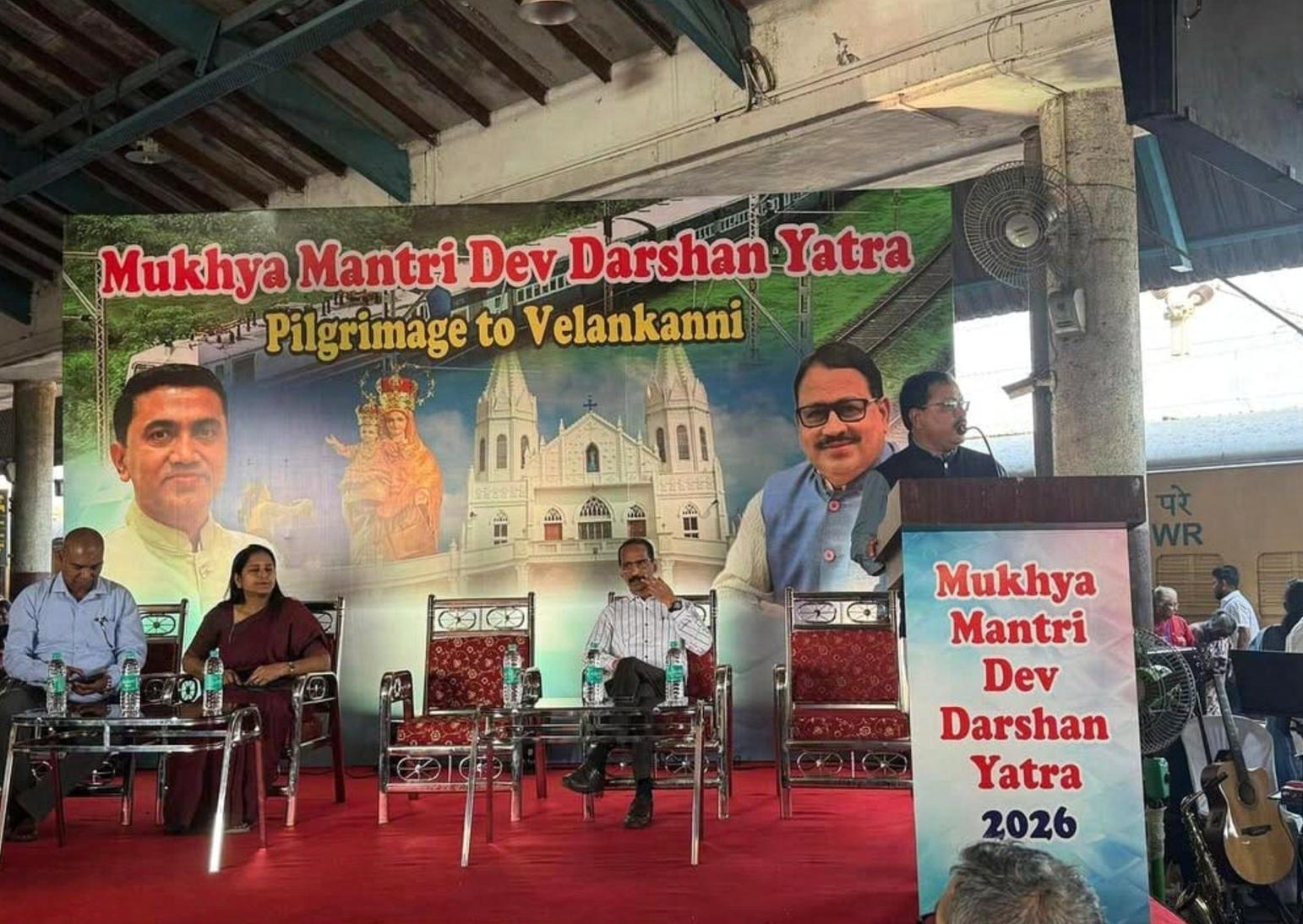
That thread continues across the issue. Purnatva 2.0, our Special Story,showcasesGoa’sstudentenergynotasentertainment,but as capability, discipline, creativity, leadership, and confidence taking shape in real time. In In Focus, the Mukhya Mantri Dev Darshan Yatra Yojana is a powerful reminder that governance is also about tenderness: helping seniors fulfil a lifelong spiritual wishwithsafety,structure,anddignity.
Our Interview with Sachi Suraj Morajkar reflects a new generation building leadership through learning, global exposure anchored in purpose, communication, and social impact. Meanwhile, Hospitality captures Goa’s evolving public life: Panaji’s new riverside event canvas at The Riverfront, the arrival of The Fisherman’s Wharf on the Anjuna–Vagator belt, and newformatsthatblendfood,atmosphere,andstorytelling.
This month also speaks plainly about the pressures behind the postcard “Private Goa,” the weekend invasion, digital scams, attention fatigue, and the truth about sustainability: that recyclingisnotthehero—reductionandreuseare.
If there is one message February leaves us with, it is this: Goa does not need more eyes. It needs better behaviour. And the real Goa—quiet, hardworking, sacred, and deeply human—deserves nothingless.
Rajesh Ghadge Editor rajesh@rajeshghadge.com
Rajesh’s long journey began with an early realization of his writing skills and nearly a superhuman power of vivid imagination; which together led to the birth of a successful media portal. His never-ending spree of learning has made him efficient in varied fields like coding, designing and also marketing. He fuels himself with continuous reading being a history fanatic and bouts of music and movies. Acting as a one-man army he prizes work over almost everything.
rajeshghadgeofficial
rajeshghadgeofficial
rajeshghadge
www.rajeshghadge.com
rajesh@rajeshghadge
shouldnotbethere/needsduecredits/ havingcopyrights, you may pleaseimmediately inform thesameto editor/publisherin written format,theneedfulwillbedoneinthefollowing issue.
GOA BUZZ
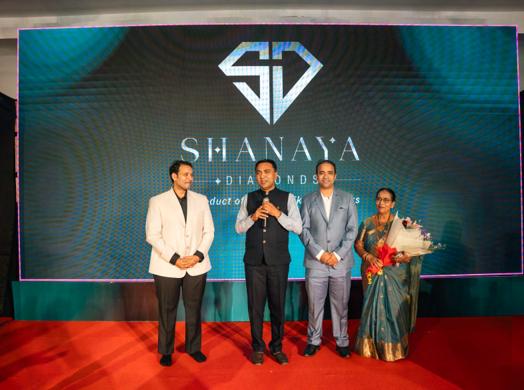
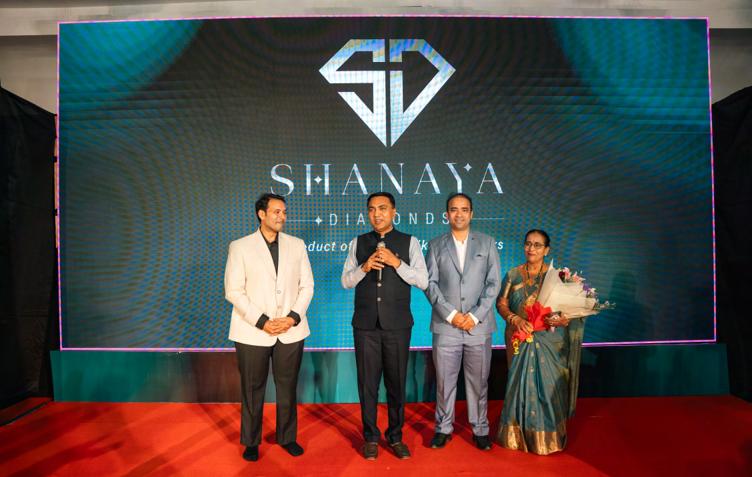
M.S. LOTLIKAR JEWELLERS UNVEILS SHANAYA DIAMONDS AT GRAND 61ST ANNIVERSARY CELEBRATION
Goa'slegacyjewelleryhouseM.S. Lotlikar Jewellers Pvt. Ltd. celebrated its 61st anniversary with grandeur at Taj Cidade de Goa, turning the evening into a memorable milestone for the brand, its patrons, and Goa's luxury retail space. The celebration also marked the official launch of the company's new diamond brand — Shanaya Diamonds — a premium offering thataimstoredefinethediamond experience in Goa with contemporary elegance backed
bydecadesoftrust.
The prestigious evening was graced by Hon'ble Chief Minister Dr. Pramod Sawant, Minister Shri Mauvin Godinho, Vasco MLA Shri
Kamlaprasad Yadav, Deputy Sarpanch (Chicalim Panchayat) Ms. Aishwarya Korgaonkar, and Mormugao Municipal Council (MMC) Chief Officer / CP Mr. Girish Borkar, among several otherdignitaries.
At the heart of the celebration
stood the family that has carried the Lotlikar name forward with resilience and vision. The event acknowledged Mrs. Sushma Bandodkar, daughter of Late Shri Shridhar Lotlikar, as the pillar of the Lotlikar family and the strength behind the brand's continuity and growth. Standing alongside her were her sons — Mr. Krupesh Bandodkar and Mr. Prajesh Bandodkar — who are actively steering the brand into its next era. Also present were the women who form a strong part of the family's foundation — Mrs. Madhura Bandodkar and Mrs. Saili Bandodkar, the daughtersin-lawoftheBandodkarfamily.
The evening paid tribute to the heritage of the brand, founded in 1965 by Late Shri Madhukar Shridhar Lotlikar, which began as a small jewellery repair unit and gradually grew into a trusted name for gold, diamonds and traditional Goan jewellery, with a strong presence in Vasco da GamaandPonda.
A key highlight of the celebration was a glamorous fashion presentation featuring exquisite
pieces from the brand. The show was presented by Anusha Shaikh, and designed to showcase the craftsmanship and luxury appeal ofbothM.S.LotlikarJewellersand the newly launched Shanaya Diamonds. Models walked the ramp adorned in statement collections, and the showstopper Sybil captivated the audience wearing an exclusive necklace fromtheShanayaDiamondsline. The emotional high point of the evening was the appearance of Ms. Shanaya, daughter of Mr. Prajesh Bandodkar and Mrs. Saili Bandodkar, who walked the ramp wearing a striking diamondstudded necklace — reinforcing the symbolism of the new brand and the generational legacy behindit.
The celebration concluded with a vote of thanks by Mr. Prajesh Bandodkar, followed by a sumptuous dinner at Grande Sala,TajCidadedeGoaHeritage — bringing together glamour, gratitude, and the pride of Goa witnessing yet another homegrown brand evolve with scaleandsophistication.
BPCL LAUNCHES 'BHARATGAS LITE'– A LIGHTER, SAFER LPG CYLINDER FOR GOAN HOUSEHOLDS
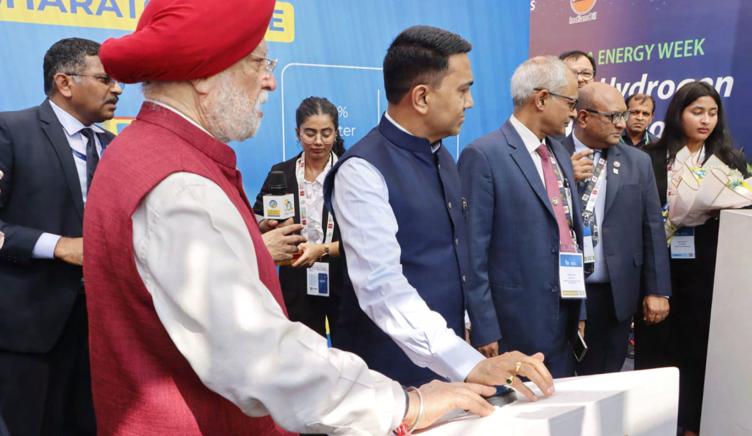
Bharat Petroleum Corporation Limited (BPCL), a Fortune Global 500 company and Maharatna PSU,haslaunchedBharatgasLite, a next-generation LPG cylinder designed to make cooking fuel safer, lighter, and more convenientforGoanhouseholds.
The new composite cylinder was formally inaugurated by Hardeep
Singh Puri, Hon'ble Minister of Petroleum and Natural Gas, Government of India, in the presence of Pramod Sawant, Hon'ble Chief Minister of Goa, along with senior officials including Dr. Neeraj Mittal, Secretary, MoPNG; Shri Sanjay Khanna, Director (Refineries) with Additional Charge of Chairman &
Managing Director, BPCL; and Shri Subhankar Sen, Director (Marketing),BPCL.
Branded as “Naye Bharat Ka Naya Cylinder,” Bharatgas Lite represents a major innovation in the domestic LPG segment. Made from advanced composite material, the cylinder is over 50 percentlighterthanconventional mild steel cylinders, making it easiertolift,transport,andinstall. Its translucent body allows users to check LPG levels instantly, helping households plan refills efficiently and avoid unexpected runouts.
The rust-free composite construction eliminates corrosion-related issues and supports a cleaner kitchen environment. Importantly, the cylinder features an explosionresistant design, significantly enhancing safety under extreme
conditions while reducing the risk ofleakageandexternaldamage.
Speaking on the occasion, Shri T.V. Pandiyan, Business Head –LPG, BPCL, emphasised that Bharatgas Lite reflects BPCL's commitment to customer-centric innovation, combining safety, convenience, and modern design to meet the aspirations of a progressiveIndia.
The cylinder is available for new non-subsidised Bharatgas connections at a security deposit of 2,500.Existing non-subsidised customers can opt for BPCL's uniquecylinderswappingscheme by paying an incremental deposit of300percylinder.
With Bharatgas Lite, BPCL strengthens its leadership in delivering smarter, safer, and more efficient energy solutions formodernIndianhomes.
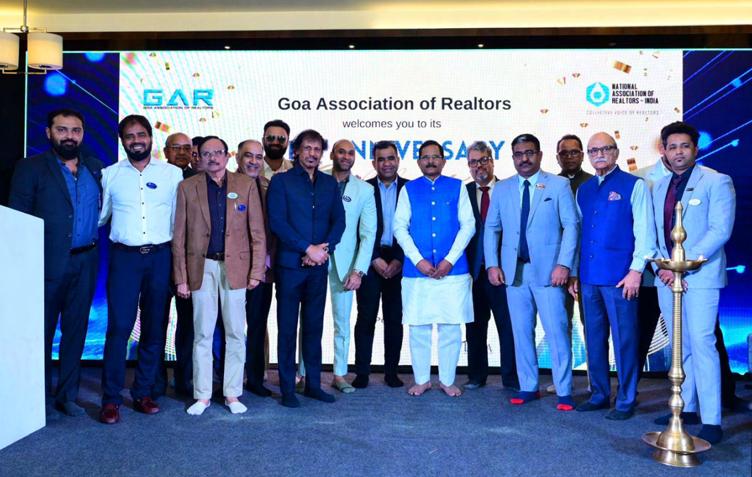
GOA ASSOCIATION OF REALTORS MARKS 10 YEARS WITH A LANDMARK CELEBRATION
The Goa Association of Realtors (GAR) celebrated its 10th Anniversary on 20th February 2026 with a grand event held at The Fern Kadamba Hotel & Spa, commemorating a decade of contribution to Goa's real estate sector.
The milestone celebration brought together distinguished guests, industry leaders, developers, members, and stakeholders from across the
country. The event was graced by Shripad Y. Naik, who attended as Chief Guest. In his address, he applauded GAR's role in promoting ethical real estate practices, enhancing professional standards, and strengthening the property ecosystem in Goa. He emphasised the importance of transparency, regulatory compliance, and sustainable development in shaping the
futureofthesector.
The celebration also witnessed the presence of office bearers from National Association of Realtors India (NAR-India), highlighting the strong nationallevel collaboration enjoyed by the association.
Over the past decade, GAR has played a pivotal role in promoting ethical and transparent practices,organisingprofessional training and knowledge sessions, strengthening collaboration among real estate professionals, and supporting government initiativesandregulatoryreforms.
The evening featured a retrospective presentation tracing GAR's journey from its inception to becoming one of the region's most respected real estate associations. Founding members and past presidents were felicitated for their invaluable contributions, and the association reaffirmed its commitment to uplifting industry standards and empowering
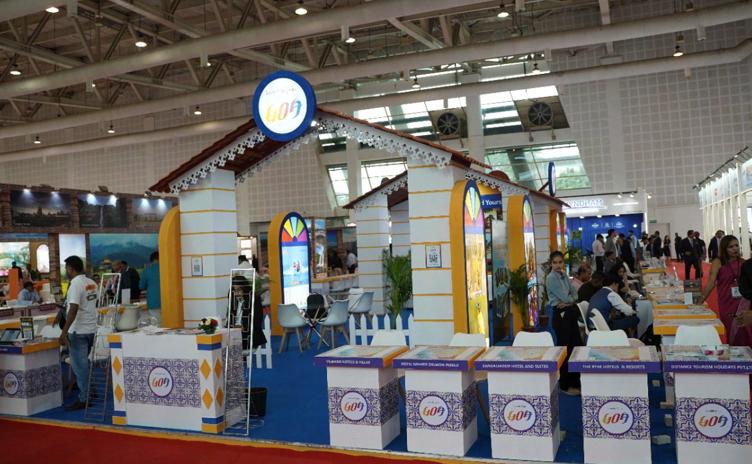
GOA TOURISM TO SHOWCASE REGENERATIVE VISION AT SATTE 2026 IN NEW DELHI
The Department of Tourism, Government of Goa, will participate in the South Asia Travel and Tourism Exchange 2026 (SATTE 2026),scheduledfrom25thto27th February 2026 at Yashobhoomi –India International Convention and Expo Centre, New Delhi. Recognised as one of South Asia's leading travel trade exhibitions, SATTE provides a premier platform for destinations, tour operators,
hospitality brands, and aviation stakeholders to connect and expandbusinesscollaborations.
Goa Tourism will present its offerings at Stall No. A-62, where the delegation will engage with domestic and international stakeholders across the three-day event. The participation will focus on reinforcing Goa's positioning as a year-round, quality-driven destination rooted in regenerative tourism.
The Goa pavilion will highlight curated experiences spanning spiritual circuits such as Ekadasha Teertha, hinterland and village tourism, homestays, wellness retreats, adventure tourism, heritage trails, monsoon experiences, and cultural festivals that reflect the State's living traditions.
The delegation will conduct focused B2B meetings with tour operators, travel agents, destination management companies, hospitality partners, and aviation representatives. The objective is to strengthen strategic partnerships, enhance market visibility, promote responsible travel practices, and attract discerning travellers seeking immersive and meaningfulexperiences.
Speaking on the participation, Rohan Ashok Khaunte, Hon'ble Minister for Tourism, stated that Goa's presence at SATTE 2026 aligns with the State's broader vision of promoting tourism that
realtorsacrossGoa.
Inhisclosingremarks,NitinMehra, President of GAR, expressed gratitude to members, partners, and supporters who have contributed to the association's growth and reiterated GAR's vision of fostering professionalism, innovation, and integrityintherealestatesector.
The 10th Anniversary celebration stood as a strong testament to GAR's dedication to excellence and its continued commitment to serving Goa's real estate community.
empowers local communities, preserves cultural identity, and supportssustainablegrowth.
Director of Tourism Kedar Naik added that SATTE remains a key forum for strengthening engagement with the travel ecosystem and presenting Goa's evolving tourism narrative to priority markets.
Through its participation, Goa Tourism aims to further consolidate its brand presence in domestic and international markets while emphasising sustainability, innovation,andinclusivityascentral pillars of its long-term tourism strategy.
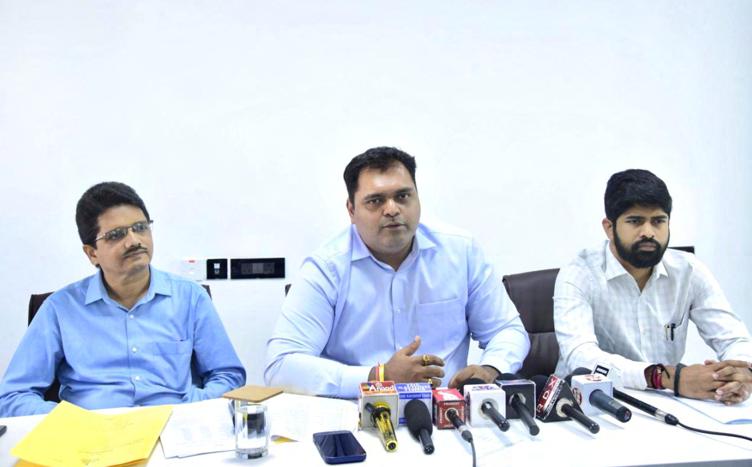
GOA ANNOUNCES GRAND STATEWIDE SHIGMO FESTIVAL 2026 FROM MARCH 5 TO 18
Goa is gearing up to celebrate Shigmo Festival 2026, one of the State's most vibrant cultural extravaganzas, scheduled to be held from March 5 to March 18, 2026, across 19 centres. Showcasing Goa's rich folk traditions through colourful float parades, Romtamel performances, music, and dance, the festival promises to once again unite communities and visitors in a spirited celebration of heritage.
A high-level review meeting to plan the statewide Shigmo float parades was chaired by Rohan A. Khaunte, Hon'ble Minister for Tourism, in the presence of Kedar Naik, Director of Tourism, and Kuldeep Arolkar, Managing Director, Goa Tourism Development Corporation (GTDC). The discussions focused on logistics, adherence to timelines, safety protocols, promotional strategies, and coordinated planning to ensure
smoothexecutionofthefestival. During a subsequent press conference, Shri Kedar Naik officially announced the festival schedule. The celebrations will commence in Ponda on March 5, followed by Calangute (March 6), Panaji (March 7), Mapusa (March 8), Mandrem (March 9), Bicholim (March 10), Sanquelim (March 11), ShirodaandSanguem(March12), Dharbandora and Cuncolim (March 13), Margao (March 14), Porvorim and Vasco (March 15), Valpoi and Curchorem (March 16), Quepem and Canacona (March 17), and will culminate at Pernem onMarch18,2026.
The Department of Tourism will continue its annual support through infrastructure grants and prize money, with an additional enhancement of 1 lakh in infrastructure assistance this year to strengthen arrangements at each centre. New guidelines for Romtamel groups have also been introduced, limiting participation to 150 members per group, with parades to begin by 4:00 PM and
conclude within the stipulated governmenttimeline. With coordinated efforts involving municipal councils, police, traffic authorities, fire services, and tourism officials, Shigmo 2026 is settoonceagaincelebrateGoa's living cultural traditions in all their colourandgrandeur.
https://www.exploregoa.org
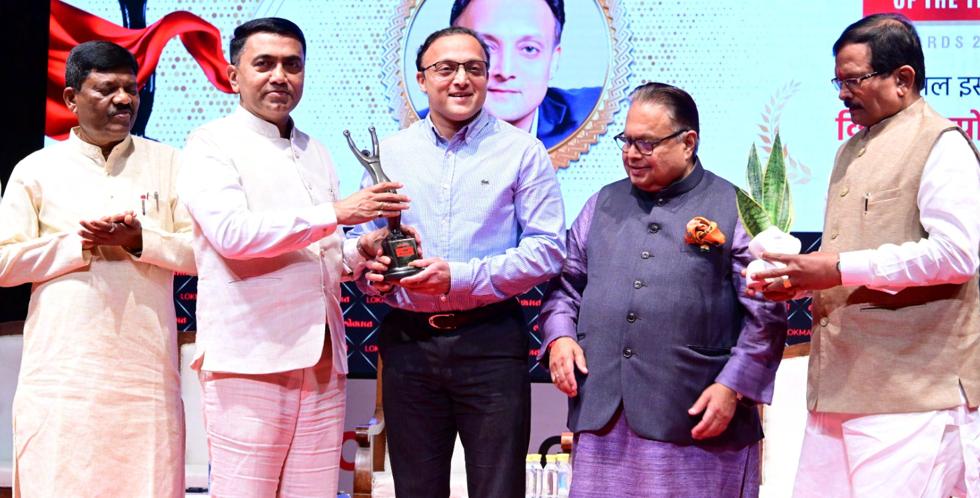
VISION DEMPO HOSPITALITY HONOURED WITH LOKMAT GOAN OF THE YEAR AWARD 2026
Vision Dempo Hospitality and Estates Pvt Ltd was conferred the prestigious Lokmat Goan of the Year Award 2026 in the Real Estate category at a grand ceremony organised by Lokmat MediaPvtLtdatKalaAcademyon February21,2026. The award was received by
Rajesh Dempo, Founder and Managing Director of Vision Dempo Hospitality and Estates Pvt Ltd, from Chief Guest Pramod Sawant. The high-profile event was attended by several distinguished dignitaries, including Shripad Naik, Ganesh Gaonkar, Digambar Kamat,
Subhash Shirodkar, Sadanand Shet Tanawade, and Deviya Rane, among others.
The award recognised Vision Dempo Hospitality and Estates Pvt Ltd's contribution to Goa's real estate landscape. The winners were selected through a combination of public voting and jury evaluation, ensuring both community endorsement and expert assessment.
Lokmat Media Pvt Ltd also honouredseveralotherprominent
Goans across diverse fields including sports, medicine, police services, administration, politics, and environmental conservation. The awards celebrated individuals and organisations that have made significant contributions to the development, growth,andwelfareofGoa.
The recognition further reinforces Vision Dempo Hospitality and Estates Pvt Ltd's standing as a key player in Goa's evolving real estate sector, acknowledging its impact and commitment to excellencewithinthestate.
THE GOA YOU CAN’T POST
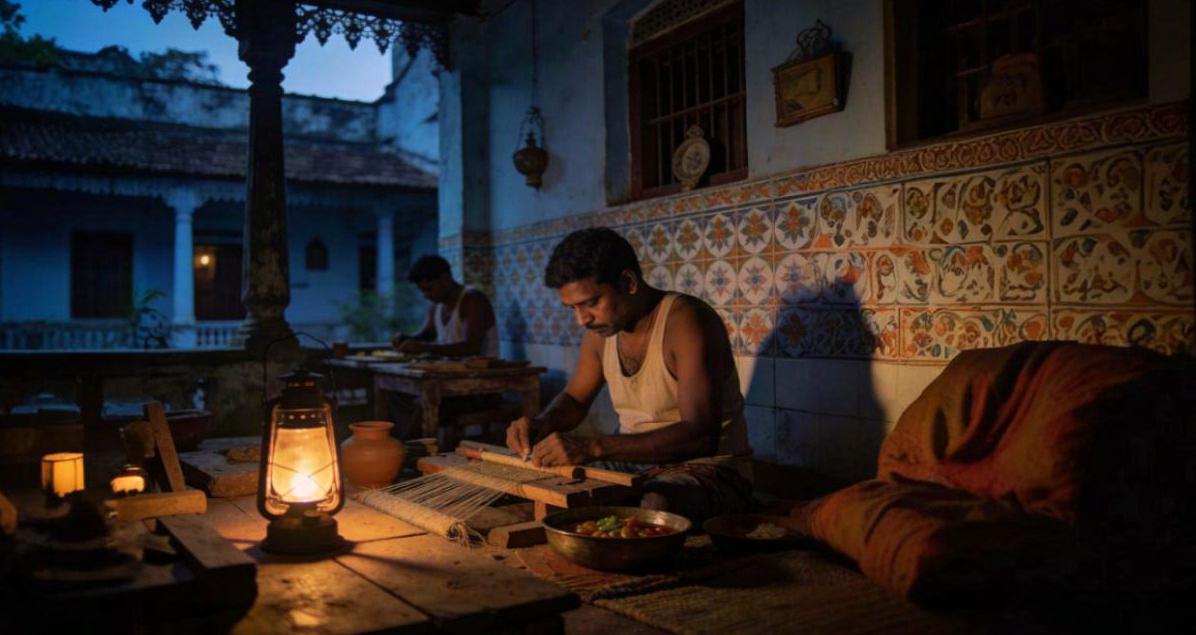
At 6:10 a.m., Goa is almost unrecognisable to anyone who knows it mainly through sunsets, shack playlists, and perfectly framed cappuccinos.The beach is wide and quiet.Alifeguard chair waits for the first whistle. Fisherfolk pull nets ashore with a rhythm that predates every hashtag.Achai stall rattles open. Dogs stretch awake.At the tide line, seaweed is stitched with scraps of plastic, evidence of what the ocean returns.
Atourist jogs past with a phone in hand.The camera lifts toward the sunrise, not toward the labour behind it.
Goa begins long before the first story upload.
That is the point of this cover story. Not to scold, not to romanticise, but to widen the frame. Beyond reels and reviews lies a Goa of back lanes and early mornings, heritage homes and vanishing trades, working waterfronts and village rhythms, quiet faith spaces and local kitchens. It is premium because it is authentic: lived, maintained, and often overlooked.And if Goa is to remain worth visiting, it is this Goa, the one you can’t neatly post—that must be understood, respected, and protected.
By Gauri Ghadge
THE TWO GOAS: LIVED VS PACKAGED
Goa now runs in two parallel realities. One is Goa-by-design: curated, compressed, endlessly replicated. Social media does not merelypopulariseplaces;itselectsthem,ranks them, and turns them into checklists. A state that holds forests, rivers, islands, markets, chapels, temples, fields, fishing villages, and neighbourhood feasts is repeatedly reduced toahandfulofframes:thesamesunsetangles, the same shack signboards, the same party edits, the same villa facades. The algorithm loves repetition, but places do not survive on repetition.Theysurviveonbalance.
The other is Goa-by-daylight: lived, repaired, cooked, cleaned, and quietly endured. It is the Goa of ferry commuters and market vendors, of bakers and mechanics, of lifeguards reading currents, of housekeeping teams turning rooms at speed, of waste collectors doing the unglamorous reset after the night. This Goa sustains the “postable” Goa. Yet it rarely appears in the public imagination, exceptwhensomethingbreaks.
Tourism growth makes this split sharper. Official Goa Tourism Department figures for 2025 report 1,08,02,410 total tourist arrivals, including 1,02,84,608 domestic and 5,17,802 foreignvisitors.
In 2025, charter flights, scheduled internationalservicesandcruisecallstogether brought nearly three lakh foreign arrivals into Goa,sharpeningpeak-daypressureforlocals.
Those numbers are a sign of demand and confidence; they are also a reminder that every peak week is a systems test, roads, water, staffing, waste, policing, and housing. Thepressuresarefeltmostintenselynotonthe feedbutinthelanesbehindit.
THE INVISIBLE WORKFORCE OF PARADISE
Before dawn, Goa’s visitor economy is already running. Shack workers and kitchen teams prep in the dark: ice refilled, grills lit,
vegetables cleaned, deliveries received, chairsaligned.Housekeepingteamsfliprooms at a pace in peak season, turning yesterday’s sand and sunscreen into a fresh-sheet promise. Security guards hold perimeters that most people never notice until there is a problem. Electricians, mechanics, laundry workers, gardeners, and cleaners keep the machinery functioning. Lifeguards scan the sea like a language, managing rip currents, reckless swimmers, and crowds that assume
A DAY IN GOA THAT NO ONE POSTS
6:00 a.m.
Fisherfolk hauling nets; the sea already at work
8:30 a.m.
Housekeeping teams turning rooms; kitchens prepping
Chapel lanes and temple courtyards; quiet faith spaces
9:00 p.m.
Drivers, staff, and security keep the night moving
11:30 p.m.
Clean-up crews are resetting the beach and streets
beauty equals safety. Taxi pilots and riders navigate a season built as much on patience asonfares.
This is the operating system of Goa, and its labour is the most under-credited ingredient in the “effortless” experience. A reputed destinationdoesnotbecomepremiumthrough prices alone. It becomes premium through respect, especially toward the people who makeitpossible.
Yet respect is often the first casualty of hurry. When the state is treated like a product, staff are too easily treated like extensions of
service, not citizens with dignity and limits. The Goayoucan’tpostisfullofhumanwork:hands that sweep, lift, cook, carry, steer, and save. Lookforthem,andtheplacebecomesdeeper. Ignore them, and the place becomes disposable.
HERITAGEISN’TABACKDROP
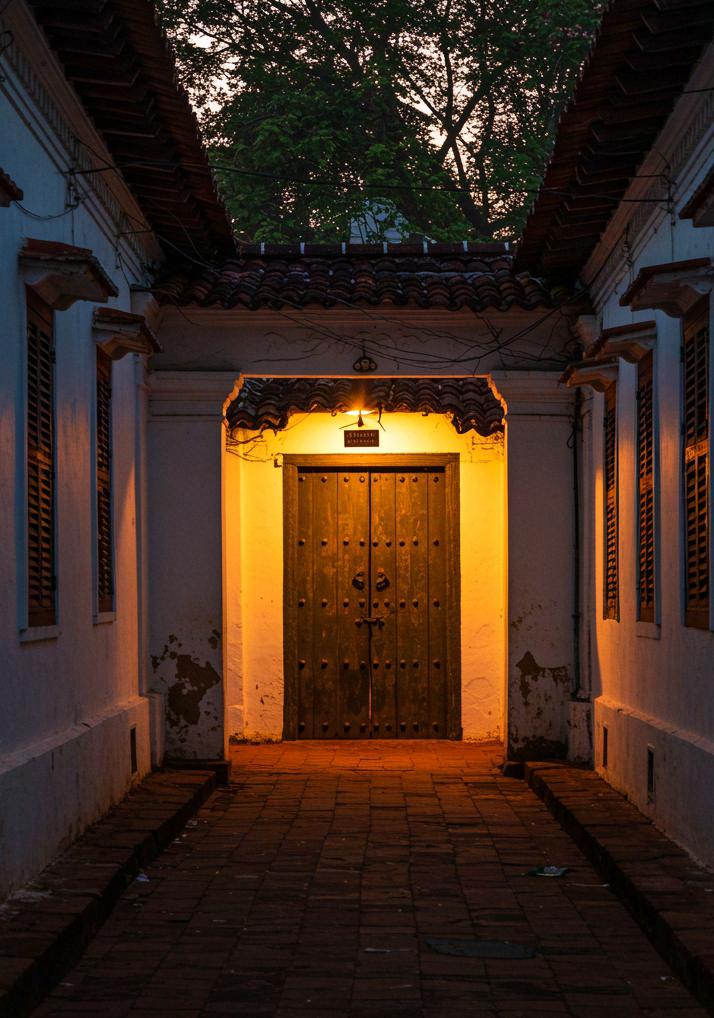
Heritage in Goa is frequently sold as a colour palette: pastel walls, arched windows, tiled roofs, bougainvillea. But heritage is not décor. It is living memory, families, neighbourhoods, faith, music, language, and rituals that survive asdailylife,notassetdesign.
That living heritage is under stress. Old houses cost money to maintain; skilled restoration costs more than quick renovations. Ownership is complicated by inheritance splits and migration. Some homes are converted into rentals or commercial spaces; others decay quietly until a monsoon finishes what time began. In 2025, reporting noted state plans to restore heritage houses, with 122 sites identified on a list for preservation. Complementing this, Goa has also approved a wider heritage policy framework aimed at conserving and promoting the state’s cultural
andhistoricalheritage.
But policy is only one part of the story. The bigger difference is between heritage as aesthetic and heritage as identity. A balcony can be photographed. A neighbourhood cannot be replaced. When heritage becomes a backdrop, it loses roots; when it is treated as memory, it remains alive. The Goa you can’t post asks you to see beyond the façade and into the continuity, the tiatr and mando traditions, village feasts, temple processions, and those small, stubborn rituals that keep belongingintact.
THEBEACHAFTERTHEPICTURE
A beach at 6:10 a.m. is not the same beach at 10:10 p.m. Morning is set-up and routine: nets hauled, stalls opening, staff sweeping the stage. Night is celebration, consumption, and the inevitable “morning after.” Between those twoliestheunglamoroustruththatdoesnotgo viral: waste is a systems test, and peak season isastresstest.
Goa’s rules recognise that cleanliness is part of the tourism contract. The Goa State Shack Policy 2023–2026 places responsibility on shackallottees,individuallyandcollectively,to
THE RULES OF RESPECTFUL GOA
F Keep noise down near villages and residential lanes.
F Don’t litter “because someone will clean”, someone will, but they shouldn’t have to.
F Drive like you belong here: slow, patient, lane-aware.
F Ask before photographing people, homes, or private spaces.
F Dress and behave respectfully in heritage and faith spaces.
F Treat staff like humans, not service extensions.
F Plan smarter: spread visits beyond peak hours and peak weekends.
keep beaches clean and litter-free and to adhere to solid waste management rules. Yet rules on paper do not guarantee clean sand in reality. Execution depends on infrastructure, manpower, enforcement, and, most of all, behaviour. When crowds swell, even good systemscanfalter;whenbehaviouriscareless, evenstrongsystemscrack.
Then there is coastal change, the slow crisis that rarely fits inside a frame. A 2025 report citing an erosion study said 25–27% of Goa’s coastline was affected by erosion, with increased natural and human interventions cited as reasons, and with tourism activity
present on most affected beaches. Another later report highlighted erosion concerns and debates around protection approaches, underscoringthatthecoastlineisdynamicand vulnerable. You do not feel erosion in a weekend. You feel it over the years, in narrowed beaches, damaged dunes, shifting high-tide lines, and the creeping sense that somethingpermanentisslowlymoving.
THEGOATHATHEALS
If this story only listed pressures, it would be incomplete. Goa is also a relief. There is a quieter Goa that rarely trends but stays with youlongerthananyedit.
A chapel lane at dusk with lamps. A temple courtyard on a weekday morning. A village bakery at 7 a.m., where bread and conversation arrive together. A local market before the crowd turns it performative. A ferry crossing with commuters who treat the river not as an “experience” but as a route home. A backwater where you hear more birds than music.
These places are not secret. They are simply unpostable in the modern sense, because they askforpresence,notproof.QuietGoaoffersa different kind of luxury: restoration. It reminds you that the best travel is not always the most documented. Sometimes it is the most absorbed.
THE NEW GOA: OPPORTUNITY ANDFRICTION
Goa is not frozen in time, and it should not be. New money, new lifestyles, remote work, villas, nightlife, and migration are real. Long-stay living has created new businesses and communities. Boutique properties have restored old structures. Global tastes have expanded menus and markets. Investment has improvedamenitiesinmanypockets.
At the same time, change carries costs that locals feel first: pressure on rents, competition for space, more traffic, and sharper friction when residential lanes become commercial corridors. When demand grows faster than infrastructure, every day, Goa carries the stress. This is where a mature cover story refuses easy villains. Goa’s tension is not “tourists versus locals” or “old versus new.” It is the friction of a small state hosting a huge appetitewhiletryingtoremainitself.
The question is not whether Goa can be global. It already is. The question is whether it canbeglobalandstillremainGoa.
ADIFFERENTKINDOFLUXURY
What if the real luxury Goa offers is not exclusivity,butauthenticity?
TheGoayoucan’tpostisnotahiddenclub.Itis the dignity of work at dawn. It is the old home that stands because a family refused to let it
collapse.Itisthemarketvendorwhoknowsthe seasonbysmell.Itisthelifeguardwhowatches theseasoyoucanenjoyit.Itisthecleanerwho resets the beach so the morning looks effortless. It is the ferry that keeps moving, the bakery that keeps baking, the bells that ring whetherornotanyonefilmsthem.
If you want Goa to remain worth visiting, the relationship must evolve from consumption to respect.Thatdoesn’trequireguilt.Itrequiresa wider frame and better behaviour at scale. Visit the famous beach, yes, but arrive with mannersthatmatchthebeauty.Spendinways that strengthen local enterprise, not just viral hype.Keepnoisewherenoisebelongs.Driveas youlivehere.Learnonelocalcustom,onelocal dish, one local story. Above all, treat the peoplewhokeepGoarunningastherealhosts oftheplace.
At 6:10 a.m., the beach does not care how many followers you have. The fishermen still haul nets. The chai stall still opens. The sea still returns what we throw away. Goa still begins beforethefeed.
If you love Goa, learn to love the parts that don’t fit inside the frame, because those parts aretheoneskeepingthewholeplacealive.
WHAT LOCALS WISH VISITORS UNDERSTOOD
F Goa is not a set. It is a home.
F The sea is beautiful, but it is also dangerous; rules exist for a reason.
F Heritage isn’t a photo wall; it is someone’s family history.
F Peak-season pressure is real; respect systems and people.
F Goa welcomes you, but it shouldn’t have to lose itself to host you.
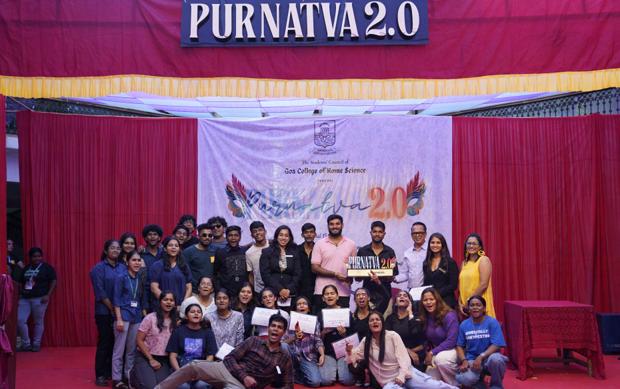
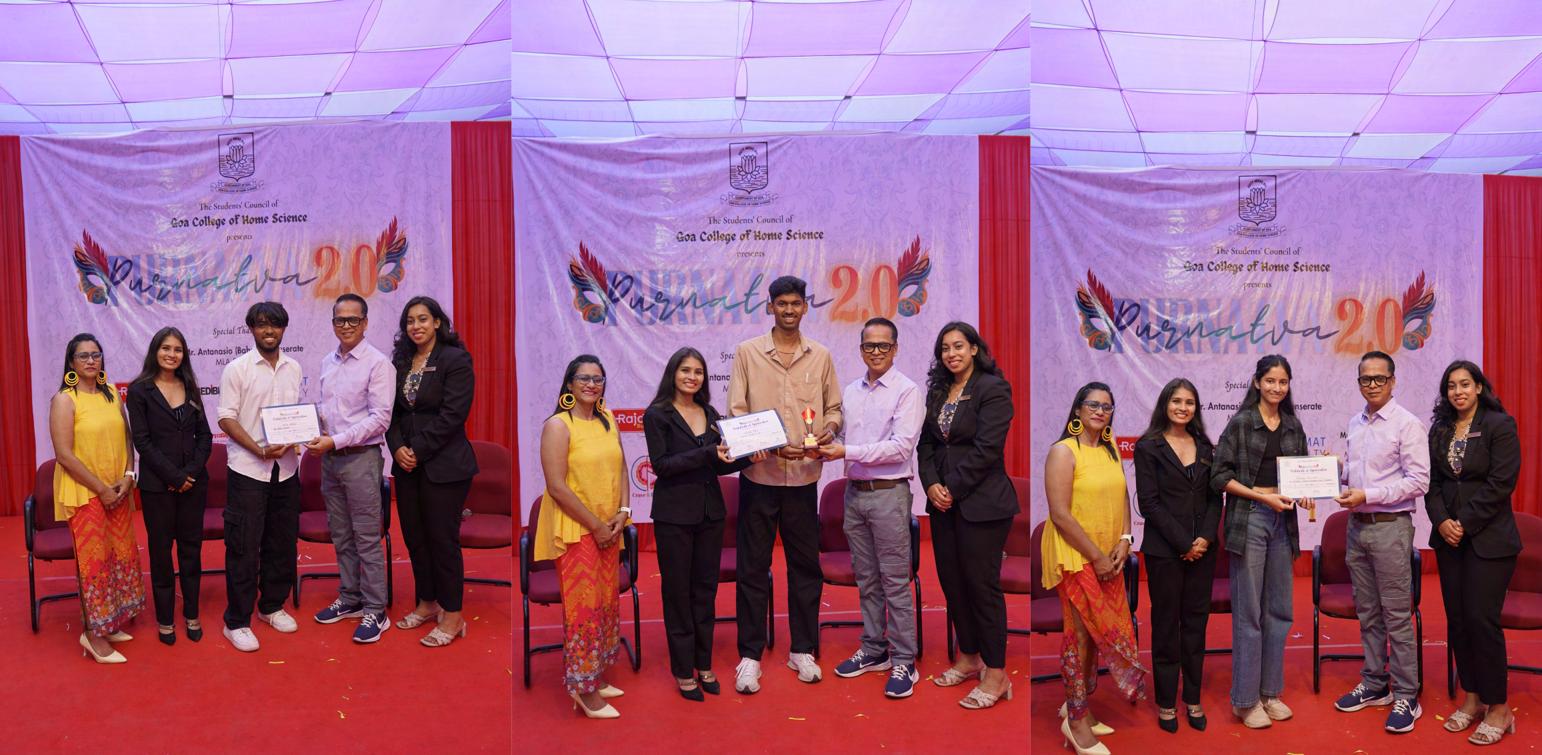
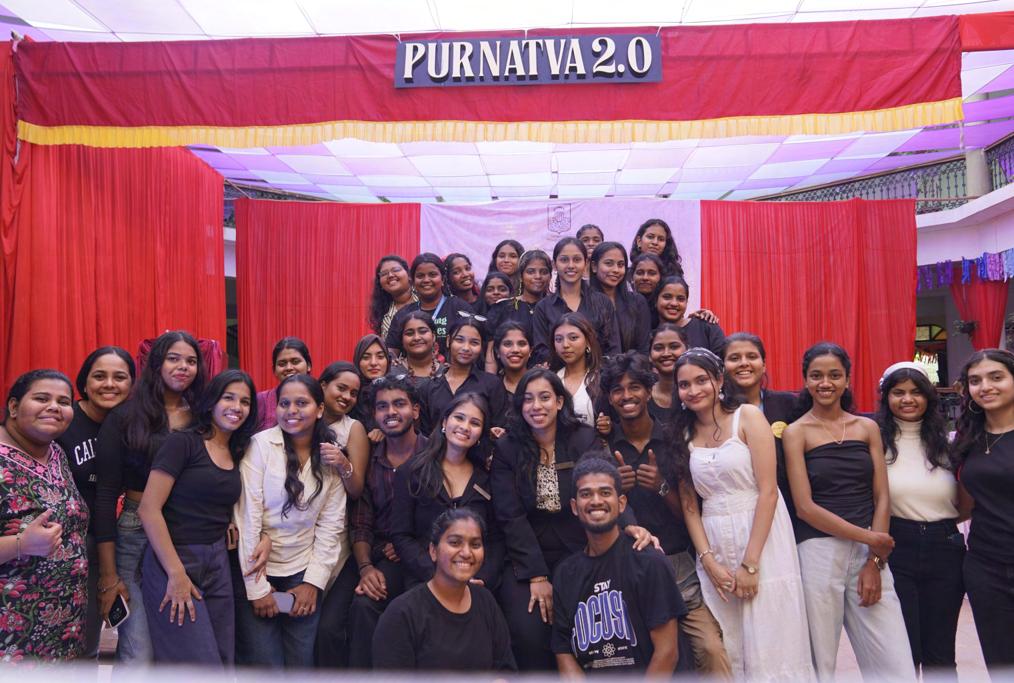
PURNATVA 2.0
A Masquerade of Campus Life Takes Over Goa College of Home Science
By IG TEAM
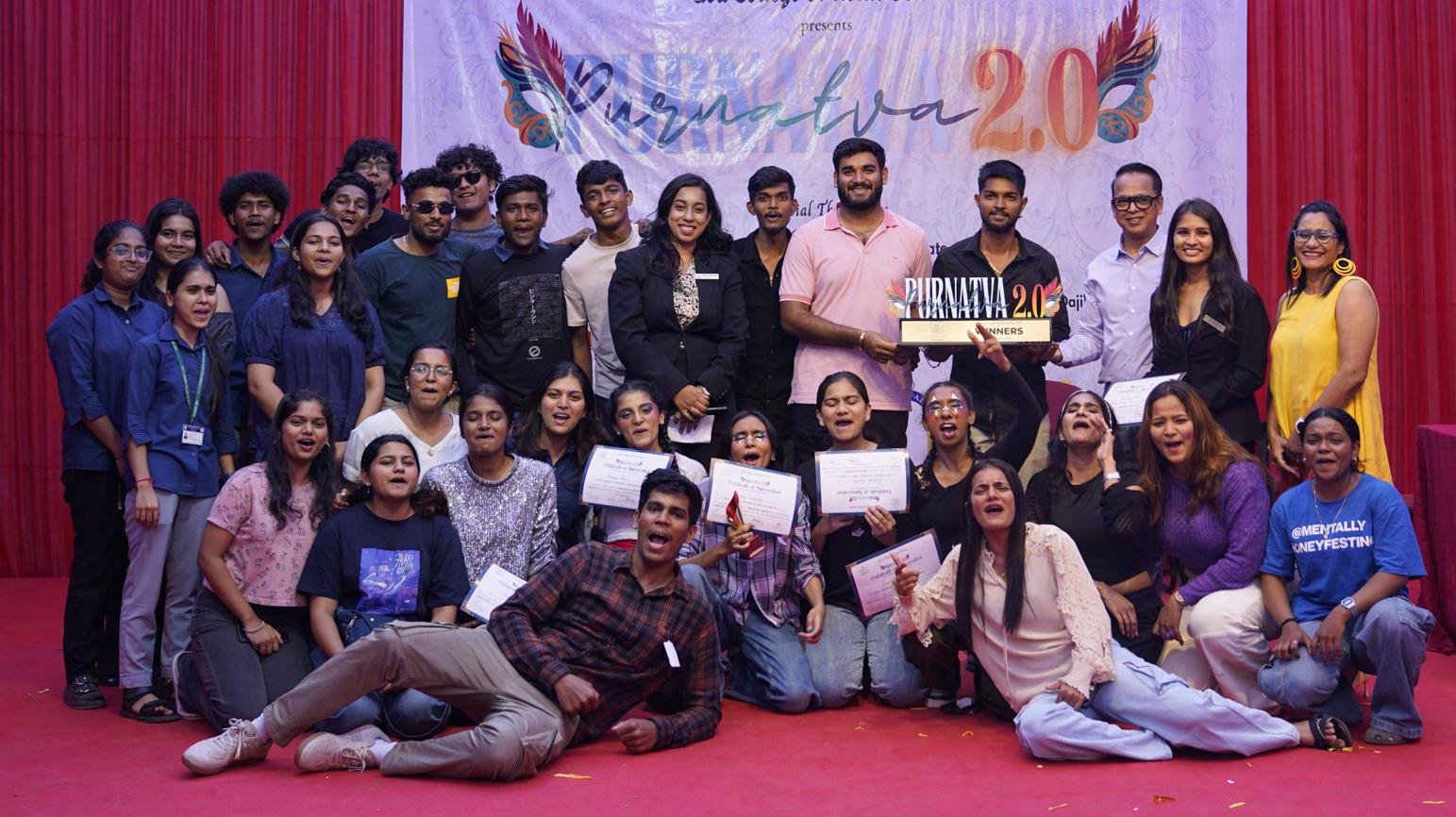
On 20 February 2026, the Goa College of Home Science stepped out of routine and into celebration as Purnatva 2.0 unfolded across the campus. The theme, “Masquerade of Campus Life,” captured the spirit of studenthood: many roles, many talents, many selves—revealed through art, performance, leadership, and confidence. More than a cultural fest, the day became a showcase of how academic life and creative expression cansharethesameheartbeat.
Masquerade-inspired décor, elegant detailing, and a lively ambience created a stage-like setting where students could shine. Thethemealsoservedasametaphor—campus
life is a balancing act of discipline and discovery, responsibility and freedom, hard workandself-expression.
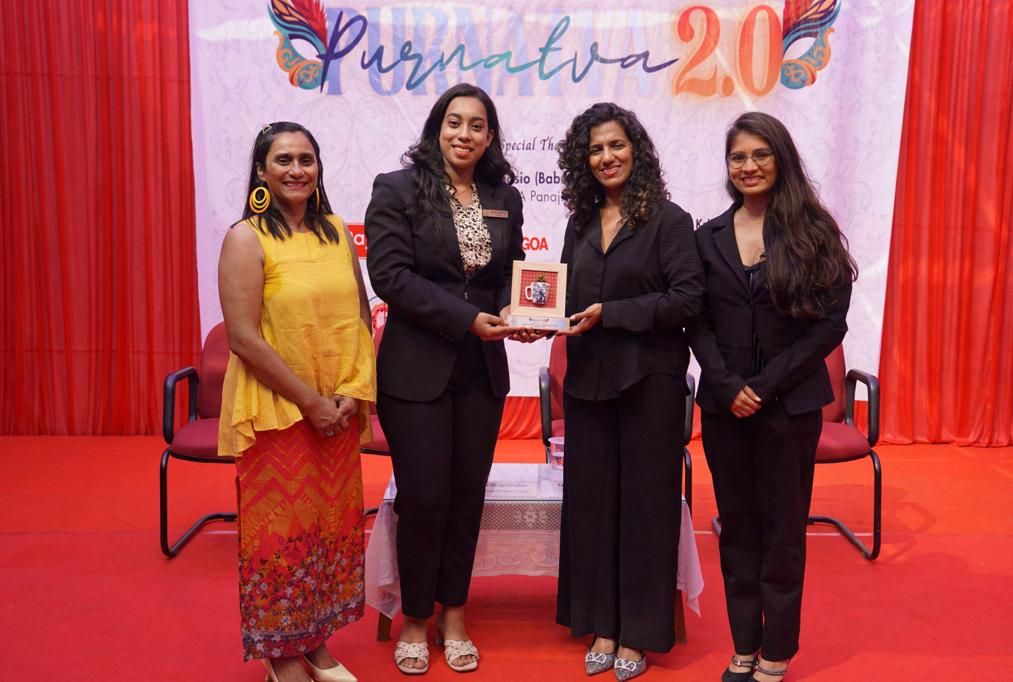
The inaugural ceremony set the tone with warmth and purpose. Chief Guest Lavina Soares, Founder of the Lavina Soares Ensemble, addressed the gathering with a clear message: students must explore their individuality and embrace platforms that nurture confidence and creativity. Her words resonated through the day, as event after event proved that talent grows fastest when it isencouragedandgivenspacetobeseen. Purnatva 2.0 gained its scale and excitement from strong intercollegiate participation.
Eight institutions came together: DCT's Dhempe College of Arts and Science; V. M. Salgaocar College of Law; PES's Rajaram and Tarabai Bandekar College of Pharmacy; Parvatibai Chowgule College of Arts and Science; VVM's Govind Ramnath Kare College of Law; Srinivassa Sinai Dempo College; Don Bosco College, Panjim; and Government College of Arts, Science and Commerce, Khandola. The result was a campus buzzing with new faces, team colours, and shared anticipation.
The Grand Groove, the dance competition, brought instant momentum to the fest. Performers delivered tightly rehearsed
routines, combining choreography with expression and teamwork. Some acts leaned into storytelling; others focused on precision, energy, and crowd impact. Across styles and interpretations, one element remained constant: the discipline behind the performance. The segment was judged by Mr. Swapnil Kuncalkar and Ms. Utkarsha Revodkar, whose artistic experience added depth to the evaluationandaffirmedthestandardoftalent ondisplay.
If dance set the tempo, The Masquerade Mosaic slowed things down in the best way. The mask painting competition invited participants to turn blank masks into finished statements—mysterious, emotional, dramatic, playful, and sometimes deeply symbolic. Each piecereflectedauniquereadingofthetheme, proving that visual art can speak without a singleword.Thecompetitionwasevaluatedby Ms. Lavina Soares and Ms. Harshita Bisht, who appreciated originality, conceptual clarity, andthecouragetotakecreativerisks.
Bringing a contemporary edge was Spin the Reel,areel-makingcompetitionthatcaptured campus life through short, modern narratives. Participants used quick frames and strong ideas to reflect everyday student realities—friendship,hustle,humour,pride,and the small moments that make college memorable. The segment was judged by Mr. Mitanshu Kawlekar and Mr. Mandar Naik, who commended the entries for innovation, storytelling sense, and confident execution. The competition underlined an important shift: students are no longer just part of digital culture—theyshapeit.
One of the day's most anticipated highlights wastheMr.&Ms.PurnatvaFinale.Designedto celebrate personality and presence, the finale included a Talent Round followed by the Walk, Introduction, and Q&A segments. Contestants displayed poise, spontaneity, and stage confidence, embracing the masquerade theme's vibrance while staying authentic to themselves. The judging panel—Mr. Vipul Gaonkar and Ms. Neysa Vaz—applauded the participants for their confidence and composureunderpressure.
The titles were claimed by Rahul Fernandes from PES's Rajaram and Tarabai Bandekar
College of Pharmacy as Mr. Purnatva 2026, and Suhani Naik from Dhempe College of Arts and Science as Ms. Purnatva 2026. Their win stood out not only for performance, but for the ease with which they held the stage—proof that preparation and presence are a powerful combination.
Adding surprise to the schedule was the Mystery Event, centred on convincing skills. It turned into an engaging challenge that encouraged quick thinking, creativity, and spirited participation. The unpredictability of the round brought laughter, applause, and fresh energy—reminding everyone that
confidence is often revealed best in unplannedmoments.
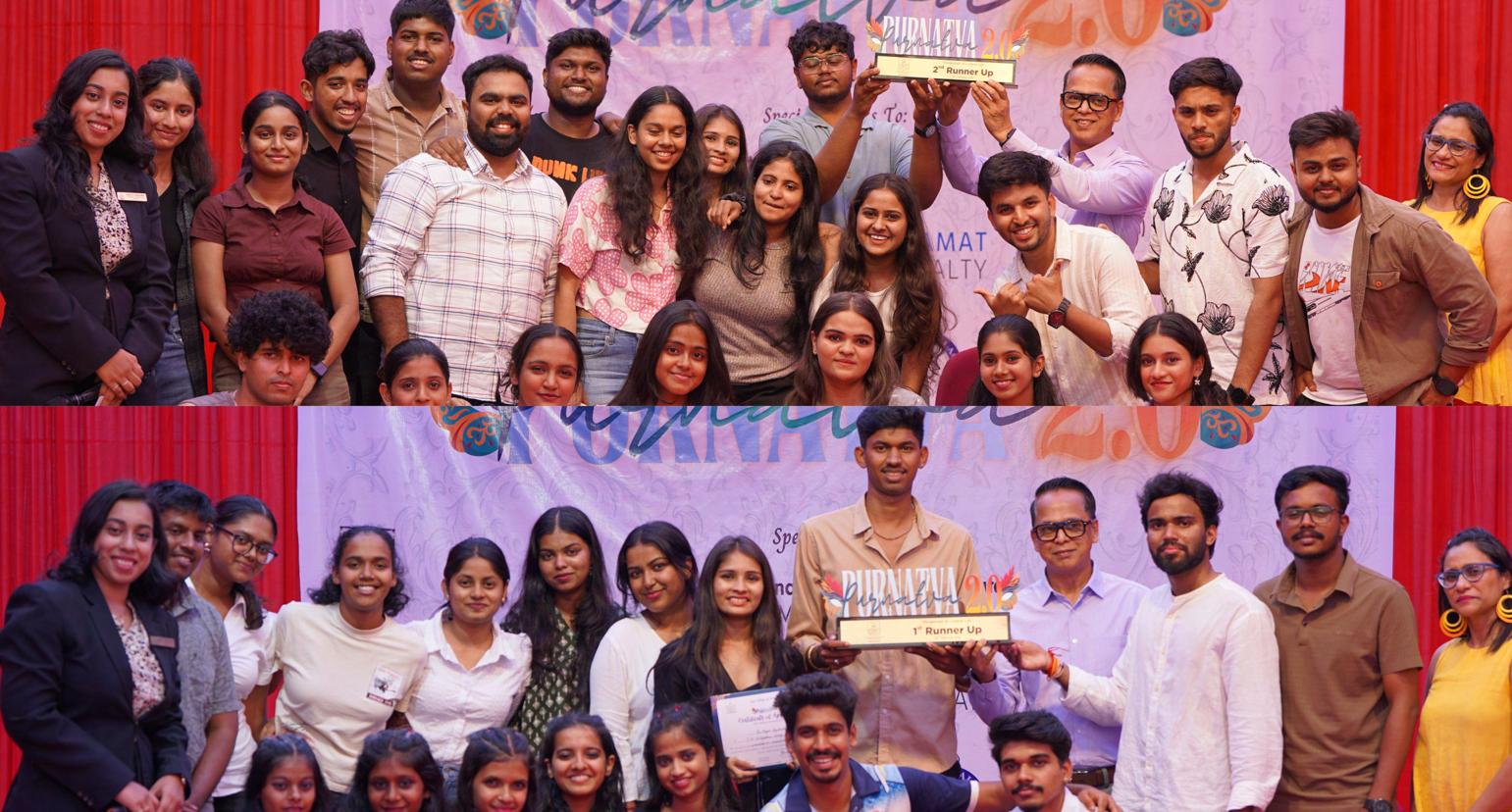
As the competitions concluded and points added up, the championship results reflected the intensity of the day. The overall title of Purnatva 2.0 was secured by DCT's Dhempe College of Arts and Science. V. M. Salgaocar College of Law achieved second place, while PES's Rajaram and Tarabai Bandekar College of Pharmacy secured third—an outcome that mirroredthehighpreparationandexceptional talentdisplayedacrossevents.
Behind the vibrant stage moments was careful coordination. Purnatva 2.0 was orchestrated bytheStudents'Councilundertheguidanceof Chairperson Asst. Prof. Sheryl Afonso, with strong leadership from General Secretary Akshaya Cheerassery and Cultural Secretary Adwita Pai. Supported by a committed team of volunteers, the fest moved seamlessly from segment to segment, with time, logistics, and hospitalityhandledwithprofessionalism.
The larger institutional vision was equally visible. Under the leadership of Principal Dr. MaheshPai,theGoaCollegeofHomeScience continues to encourage holistic development—where academics remain central,butconfidence-buildingopportunities outside the classroom are treated as meaningful. Purnatva 2.0 reflected that philosophy in action: a platform where students learned, led, created, performed, collaborated,andgrew.
The fest concluded with a valedictory
the talent, teamwork, and spirited participation that defined the celebration. Appreciation was also extended to the sponsors and partners who supported the event: Incredible Goa as Exclusive Magazine Partner; Crave & Plate as Food Partner; and supporters including Kamat Realty, Biryani Palace, Rajdeep Builders, Pastry Cottage, and PallaviCollection.
Intheend,Purnatva2.0deliveredexactlywhat its name suggested—a celebration of completeness. It showcased not just winners, but effort; not only competition, but camaraderie. And as the masks came off and the campus returned to its everyday pace, one impression remained: when young people are given a stage built with intent, they don't merely perform—they evolve. And Goa witnessed the future, confident and brilliantly alive.
ceremony graced by Rajesh Ghadge, Founder and CEO of Incredible Goa, who applauded
MUKHYAMANTRIDEVDARSHANYATRAYOJANA
A Lifeline of Faith, Dignity, and Safe Pilgrimage for Goa’s Seniors
By Gauri Ghadge
Some journeys are not taken to “see” a place—theyaretakentocompletealife’squiet wish. For many older citizens, the idea of visiting a sacred shrine outside Goa lives for years as a simple, persistent dream: one that often loses out to health concerns, cost, and the practical anxieties of travelling far from home. The Government of Goa’s Mukhya Mantri Dev Darshan Yatra Yojana steps into that gap with a promise that is both humane
and structured: a one-time, lifetime travel assistance for pilgrimage, designed specifically for senior citizens and operated with clear eligibility, safety checks, and organiseditineraries.
In Focus, this scheme is more than a travel announcement. It is a policy signal—one that recognises spiritual travel as a legitimate social welfare need, and treats it with planning,scale,andaccountability.
ABOUTTHESCHEME
TheMukhyaMantriDevDarshanYatraYojanais a state scheme of the Directorate of Social Welfare. Its core purpose is precise: to provide one-time travel assistance “in a lifetime” to enable eligible senior citizens to visit sacred holy places outside Goa, as per itineraries decidedbytheGovernmentfromtimetotime. This is important: the scheme is not an openended subsidy that can be used repeatedly,
nor is it a self-planned reimbursement programme where individuals choose any destination. It is an organised pilgrimage model, built around government-approved itineraries and executed as a packaged tour throughappointedagencies.
THE 2025–26 PILGRIMAGES:
VAILANKANNIANDAYODHYA
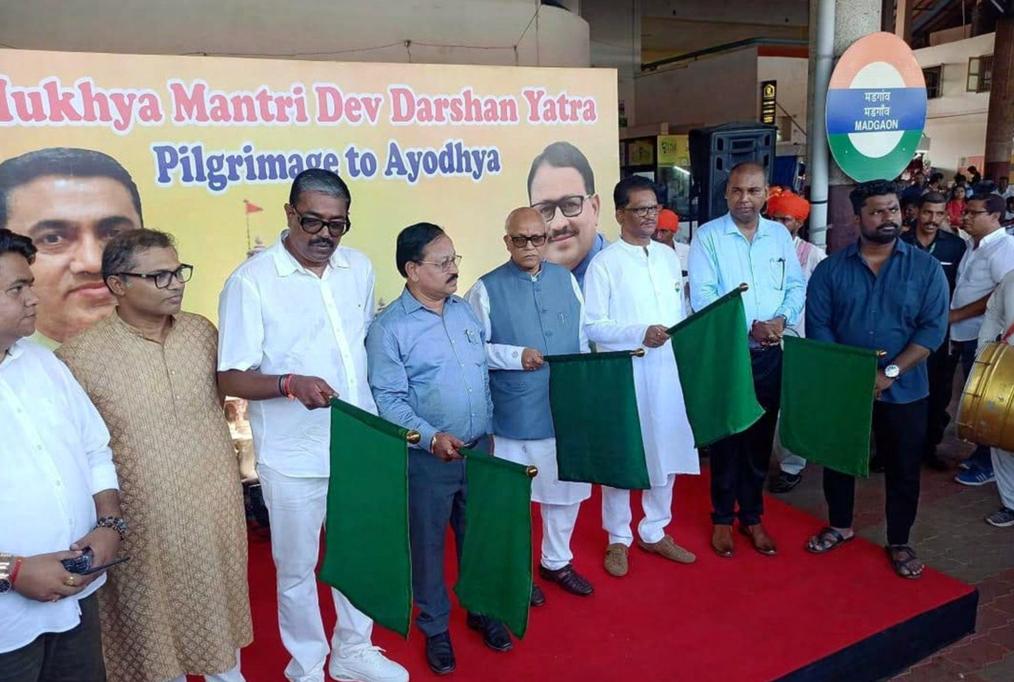
For the financial year 2025–26, the Directorate of Social Welfare has arranged four trips in association with the Goa Tourism Development Corporation Ltd. (GTDC) to two prominent pilgrimage destinations: Vellankani (oftenspeltVailankanni)andAyodhya. Public-facing schedules and registration
pages hosted o also list operational travel timings for the Ayodhya trip, including origin and destination stations and time windows—useful for families planning assistanceanddrop-offs.
A SCHEME BUILT TO MOVE AT SCALE
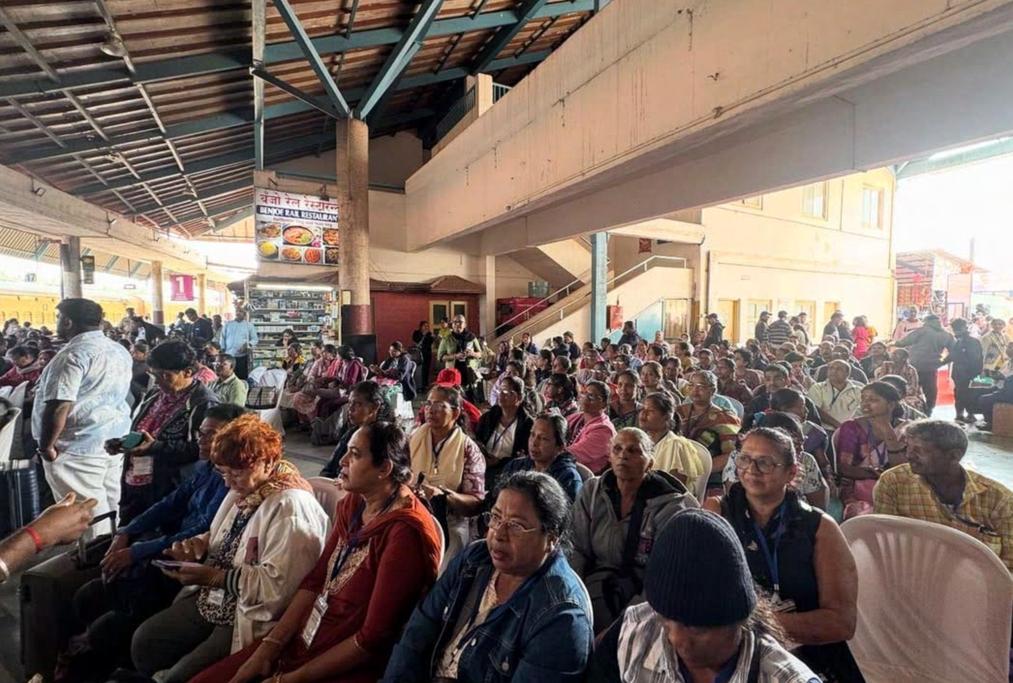
Unlike small, limited-seat pilgrimages, the Dev Darshan model is designed for mass participation.Thetouristobeconductedfora group of not less than 750 persons who wish to visit the holy places, or as per the carrying capacityofthetrain,whicheverislower. That single line reveals the administrative characterofthescheme:itisnotmerelyabout funding; it isansport, food, supervision, medical readiness, and the logistics of moving a large senior citizen cohort safely. To operationalise this, the pilgrimage is conducted “under agency package” as per a Memorandum of Understanding signed by the Government with an agency appointed by the Directorate of Social Welfare from time to time.
WHO CAN APPLY: AGE, ELIGIBILITY, AND THE “ONE ATTENDANT”PROVISION
The scheme’s eligibility window is nt/beneficiary must be not less than 50 years and not more than 70 years. The YatraConnect
registration portal repeats the same range, indicating that age verification is aligned to officialidentitydocumentation.
Oneofthemostpractical,andcompassionate features is the attendant benefit: one attendant is entitled to accompany the applicant free of cost. For many families, this provision transforms the scheme from a “ticket” into a workable journey, especially for seniors who require assistance with mobility andmedication.
HEALTH AND SAFETY: WHY THE SCHEME INSISTS ON FITNESS DECLARATIONS
Any responsible pilgrimage for seniors has to balance access with safety. The scheme explicitly requires that the applicant be physically and mentally sound to perform the journey and not be suffering from communicable diseases such as T.B., heart diseases, leprosy, COVID, and similar conditions, with a self-medical certificate or self-declaration to be submitted on the web portal/app.
This requirement is not a bureaucratic nuisance; it is risk management. A group tour involving hundreds of seniors creates shared exposure: a single uncontrolled health emergency. The declaration framework also signals that the scheme is built to prevent lastminute medical crises during travel and to protectotherparticipants.
THE “ONCE IN A LIFETIME” CLAUSE—ANDWHYITMATTERS
Theschemerequiresaself-declarationstating that the applicant has not availed of benefits under the scheme earlier. That condition
serves two purposes. First, it spreads access more fairly over time. Second, it protects the scheme’s sustainability by preventing repeat claimsthatcoucants.
In policy terms, this turns the scheme into a one-time social opportunity: a public promise that a citizen who has contributed to the state’s life can, at least once, be supported in fulfillingaspiritualaspiration.
HOW TO APPLY: THE OFFICIAL PORTAL AND THE CALL FOR EARLYREGISTRATION
Applicationsaretobesubmittedonlineviathe web portal/app developed for this purpose, with the official portal stating that the
department’s message is direct: eligible and interestedcitizensarerequestedtoregisteron theportalattheearliest.
YatraConnect additional eligibility checks, including permanent residency requirements (as described on the portal) and rules such as allor person, elements that help prevent duplication and maintain clean beneficiary lists.
WHY THIS SCHEME MATTERS NOW
Across India, the social meaning of “senior citizen welfare” is evolving. It is no longer limited to pensions, subsidies, and medical support, though those remain essential. It increasingly includes dignity, mobility, and inclusion in cultural life. The Dev Darshan Yatra Yojana sits in this newer welfare language: it recognises that spiritual journeys are often deeply tied to identity, closure, and emotional well-being.
It also mirrors a broader national pattern of government-supportedpilgrimagesforseniors seen in several states (with varying names, eligibility thresholds, and formats). Goa’s model is distinct in its current age bracket, attendant provision, and the scale of group traveldescribedintheofficialrelease.
WHAT APPLICANTS AND FAMILIESSHOULDPREPARE
For families helping seniors register, success is often decided by readiness. Three practical steps stand out from the scheme’s requirements:
Ÿ Identity and age readiness: since the portal references Aadhaar-based age verificatsupportingIDsareaccessible.
Ÿ Health readiness: ensure the senior can
FOCUS
undertake the journey, can manage medication routines, and can truthfully submit the required self-medical certificate/self-declaration.
Ÿ One-time benefit clarity: do not apply if the beneficiary has already availed the scheme earlier, as a self-declaration is required.
A final note is emotional, but real: speak to the senior about the pace of the journey. Group pilgrimages move on schedules; they require patience.Asupportiveattendantcomforts.
A JOURNEY THAT REFLECTS A STATE’SVALUES
Therearemanywaystomeasureagovernment scheme: numbers enrolled, funds spent, tis another metric that quietly matters, what the scheme says about who the state chooses to carefor,andhow.
TheMukhyaMantriDevDarshanYatraYojanais built on a simple ethic: that faith should not be restricted to those who can afford it, and that age should not be a barrier to fulfilling a sacred wish. By organising pilgrimages at scale, partnering with GTDC for planned trips, providing a free attendant, and insisting on health safeguards, the scheme tries to combinecompassionwithdiscipline.
For Goa’s seniors, it is an invitation to step beyond the familiar shoreline and into a place
they may have carried in prayer for decades. For families, it is a chance to give parents and grandparents something more than a gift: a memorythatfeelslikecompletion.
Andfortherestofus,itisareminderthatgood governance is not only about times, it is also about helping an elderly citizen reach a temple, a shrine, a holy town, and return home withpeace.
CONCLUSION: WHEN WELFARE BECOMESAWISHFULFILLED
Inaworldthatmeasuresprogressinspeed,the Mukhya Mantri Dev Darshan Yatra Yojana stands for something gentler, and in many ways, more meaningful. It recognises that senior citizens carry not only responsibilities and years, but also quiet, unfinished prayers. By organising safe, structured pilgrimages and making them accessible through a one-time lifetime assistance framework, the scheme turns “someday” into “this year,” and transforms faith from a private longing into a supportedpublicright.
What makes this initiative powerful is not merely the destination: Ayodhya or Vellankani, but the dignity of the journey: planned itineraries, scale-backed logistics, an attendant provision that ensures seniors are not left to travel alone, and a clear fitness safeguard that protects the group. And when
a senior returns home from such a yatra, the value is not captured in photographs or souvenirs. It is carried in a softer expression, a lighter heart, and the quiet satisfaction of having completed something that once felt outofreach.
Intheend,thetruesuccessofDevDarshanwill not be counted only in numbers. It will be seen in the faces of parents and grandparents who finally get to stand where they always wished tostand,supportedbyastatethatunderstood that some journeys are not luxuries. They are closures.
FOLLOW US ON
THESILENTSHIFTTO“PRIVATEGOA”
By Gauri Ghadge
At the end of a narrow North Goa lane, the partybeginswheretheroadends.Aguardlifts a boom barrier, headlights sweep across a courtyard, and a convoy slides into a villa that looks less like a home and more like a private stage. Inside, a chef’s team plates canapés with surgical calm. A DJ tests bass against the hush of palms. Wristbands appear. Phones go face-down.Theguestlististight,thegatesare tighter, and the night is designed to feel like Goa—withoutevertouchingGoa.
This is the rise of “Private Goa”: private parties in luxury villas, discreet brand dinners, closedinvitegatherings,andexclusivecirclesthatlive on WhatsApp and vanish before daylight. Goa has always had VIP tables and members-only corners. What’s changed is scale and normalisation. The state’s social energy is increasinglybeingreroutedfrompublicvenues into private compounds, where access is
curated, privacy is promised, and friction is pushedoutward.
Why now? Start with the villa economy. Savills’ North Goa Residential Market Watch notes that gated villas in coastal-belt locations such as Anjuna, Arpora, Baga, Calangute, Candolim and Vagator are preferred—an indicator of how the ‘villa lifestyle’ has expandedacrossthebelt.Thevillaisnolonger only a second home. It has become an asset, a lifestyle statement, and—quietly—a venue. A housewithapool,awall,andstaffsupportcan host a birthday, a “friends-only” gig, or an after-party without ever stepping into a licensednightclub.
Then consider volume. Goa’s Department of Tourism reported total tourist arrivals of 1,08,02,410 in 2025, including 5,17,802 foreign tourists.In January 2026, the Goa State Pollution Control Board reiterated that playing
music beyond 10 p.m. is illegal under central noise rules, with no exceptions for weddings, religious events, political functions, or public gatherings. In the same period, reporting noted that Goa planned to expand noise monitoring stations from 10 to 38—an institutional acknowledgement that noise has becomeastatewidepressurepoint.
When crowds swell at the usual hotspots, the premium buyer looks for control: controlled entry, controlled sound, controlled company. PrivateGoasellsthatcontrolasthenewluxury. THE NEW LUXURY: CONTROL, CURATION, DISCRETION
Public Goa is unpredictable by design. You queue.Younegotiateparking.Yousharespace with strangers and their cameras. A private villa event reverses the logic. It replaces the public’s unpredictability with curated certainty: no queues, no random filming, no
awkward crowd energy, no venue closing pressure. The décor is bespoke, the menu is personalised, and the guest list is engineered tofeellikeacircle,notacrowd.
There is also a deeper cultural reason the model is spreading: privacy is now status. In the age of constant visibility, the most expensive experience is not the loudest one—it’s the one that doesn’t need proof. The invite becomes the currency. The closed gate becomesthebrand.
But privacy is also a loophole if it isn’t matched with responsibility. A party can be private in location and public in impact. Sound does not respect property lines; traffic does not vanish becauseavenueisgated.
WHEN “PRIVATE” BECOMES PUBLIC: NOISE, NEIGHBOURS,ANDTHE10PMLINE
Goa’s noise conflict is not a social media argument; it is a governance issue. In January 2026, the Goa State Pollution Control Board reiterated that playing music beyond 10 p.m. is illegal under central noise rules, with no exceptions for weddings, religious events, political functions, or public gatherings. In the same period, reporting noted that Goa planned to expand noise monitoring stations from 10 to 38—an institutional acknowledgment that noise has become a statewidepressurepoint.
Licensed venues are visible targets for enforcement. They have signboards, entry points, predictable hours, and compliance obligations. Villas disperse nightlife into residential pockets where policing becomes reactive—often complaint-driven. That changes the social dynamic: neighbours become unwilling referees, villages become battlegrounds over sleep, and celebrations that feel “contained” to guests can feel invasivetoeveryoneoutsidethewall. Private Goa, done well, can be elegant. Done poorly,itbecomesanuisanceeconomy.
THE SHADOW MARKET: SCAMS, FAKE LISTINGS,ANDTHECOSTOFDISCRETION
As villas become a commodity, fraud follows. In January 2025, Goa Police uncovered a multi-crore villa rental scam and arrested four people accused of defrauding tourists.The story is a warning label for the private economy:whentransactionshappenremotely, when urgency is used as a weapon, and when the “deal” is wrapped in exclusivity, verification tends to drop. Privacy reduces scrutiny; that is why it is valuable—and why it canbeexploited.
This is also why regulatory clarity matters. Goa has a legal framework for the registration of tourist accommodation and trade, published by the state. Platform guidance aligns with this: Airbnb’s Goa page states that certain listings operating in Goa must be registered
with the Goa Department of Tourism by submitting an application in Form XXIII. Regulation exists; uneven compliance is the problem.
THE UPSIDE: JOBS, RESTORATION, AND A NEWMICRO-ECONOMY
To dismiss Private Goa as pure decadence would be simplistic. The villa event circuit creates work: chefs, bartenders, decorators, drivers, sound technicians, security teams, cleaners, maintenance crews. It can spread spending beyond a few packed beaches and allow some older properties to be maintained rather than abandoned. It also gives guests a safer, more controlled environment—an appeal that grows when public spaces feel chaotic.
In short: Private Goa can reduce pressure on public venues, diversify the tourism economy, and raise service standards. It can also generate resentment if it treats neighbourhoodslikedisposablebackdrops.
THE COST: A STATE THAT FEELS LESS SHARED
Goa’s charm has long been its public intimacy—markets that feel like conversations, ferry rides that feel like community, village feasts and football grounds that hold collective memory. Private Goa changes the grammar.Itturnscelebrationintoaguestlist.It replaces the open street with the controlled compound. It transforms hospitality from welcomingtofiltering.
Even the aesthetics shift. The soundtrack moves from public beach belts into private pools. The night becomes less about a place and more about a curated enclosure within it. Over time, a destination that is experienced mainly through closed doors can begin to feel like an exclusive resort city rather than a living statewithitsownrhythms.
WHAT RESPONSIBLE “PRIVATE GOA” SHOULDLOOKLIKE
Private Goa is not going away. The real questioniswhetheritmatures.
First: legality and transparency. Bookings must run through verifiable channels, with accountable hosts and registered accommodationwhererequired.
Second: noise discipline. If the 10 p.m. line exists to protect public peace, it cannot become optional because the speaker is insideaprivatewall.
Third: community etiquette. No blocking village lanes with parked cars. No midnight fireworks. No treating neighbours as collateral damage. A private weekend does not suspend therightsofresidents.
Finally: cultural maturity. Goa is not an empty stage. It is a home. The best hosts—whether of villas, events, or brands—understand that exclusivity should
nevercomeatthecostoftheplaceitself. Private Goa is a negotiation between lifestyle and law, aspiration and atmosphere, the Goa people buy and the Goa people live. If it evolves with respect, it can become a highvalue layer of the tourism economy. If it grows withoutaccountability,itrisksturningGoainto a patchwork of gated islands where the loudestpartiesaretheleastanswerable. WHY BRANDS AND “CLOSED CIRCLES” ARE MOVINGIN
Private Goa has also become a marketing format. A villa event photographs like a campaign: controlled lighting, controlled faces, controlled angles. Brands get atmosphere without negotiating with a crowdedvenue.Creatorsgetcleanbackdrops and guaranteed access. Guests get the thrill of being “inside” something. In a crowded attention economy, intimacy has become a strategy—fewer people, higher perceived value.
There is a second advantage: a villa can feel informal even when it is professionally produced. That perception is risky. It can create a grey zone where organisers assume rules are softer because the space is private. They aren’t. The moment an event affects public peace, public roads, or public safety, it hassteppedintothecommunity’sdomain. HOW TO ENGAGE WITH PRIVATE GOA WITHOUTHARMINGGOA
For visitors: treat a villa stay like a neighbourhood stay. Ask about quiet hours. Confirm parking arrangements. Keep music respectful and end on time. If you’re booking a villa, avoid “pay-now-or-lose-it” pressure, verify the address, insist on written confirmation, and use official links and paymentpathways.
For hosts and organisers: build compliance into the experience. Share clear house rules, cap guest numbers, and plan transport so lanes don’t choke. Choose quieter formats—sunset dinners, acoustic sets, morning brunches—that feel premium without becomingintrusive.
And the best nights leave no complaints, only memories behind. Goa can handle celebration. What it cannot handle is celebration without consideration. Private Goa becomes beautiful when it behaves like a guestinGoa,notanownerofit.
THE WEEKEND INVASION
How Short Trips Are Reshaping Markets, Rentals, and Local Life
By Gauri Ghadge
Friday evening, and the map changes. Trunks slam. Suitcases roll. Airport gates fill with people carrying the same promise in their eyes: two nights away from routine. The modern Indian getaway is not a vacation in the old sense. It is a compressed experience—48 to 72 hours engineered for maximum release, maximum photos, minimum leave approvals. It feels small because it is short. But repetition is what gives it power. When millions of “small” trips stack up across the calendar, they don’t just boost hotel occupancy; they rewire how destination towns price,rent,hire,andlive.
Goa is a loud example of a quiet national trend. Provisional figures released by Goa Tourism show thatdomesticarrivalsrosefrom81,75,460in2023 to 99,41,285 in 2024, with total visitors crossing
1,04,09,196. Those are annual totals, but anyone who lives in a high-demand tourism belt knows the weekly pulse inside the year: weekday calm, Fridaysurge,Saturdaypeak,Sundayescape.The “weekend city” now arrives so predictably that businesses, landlords, and even local families plantheirlivesaroundit.
THEAGEOFTHETWO-NIGHTESCAPE
Three forces are making short trips explode: frictionless planning, faster connectivity, and the attention economy. Online booking has collapsed decision time from days to minutes. Improved connectivity—especially better roads and more frequent flight options on key routes—has made ‘leave after work on Friday’ realisticformanytravellers.Andsocialmediahas turned travel into a form of personal
broadcasting—proof of taste, freedom, and status. MakeMyTrip’s India Travel Trends report highlights weekend getaways as the highestgrowthdestinationsindomestichotels,reflecting just how strongly travellers are leaning into short breaks.
Inthisnewmodel,timeisthecurrency.Theshorter the trip, the more it must deliver. That changes behaviour on the ground. Visitors arrive with itineraries, not curiosity; checklists, not patience. They want “the best of Goa” in a handful of hours—sunset points, beach clubs, a viral café, a market, a water activity. The destination becomes a stage, and the weekend becomes a performance.
MARKETSTHATNOWPRICEFORPEAKS When demand concentrates, prices follow. The
FEATURE
weekend economy rewards businesses that can scale up instantly: restaurants that can turn tables fast, operators who can surge staff, vendors who can stock for Saturday and survive Monday. But it also creates a new kind of volatility. When a disproportionate share of weekly revenue concentrates into Saturday and Sunday, operations begin orbiting those two days—procurement, staffing, inventory, maintenance,evenmenudesign.
You can see the shift in what local markets carry. In peak tourist zones, shelves tilt toward what weekend travellers buy: mixers, premium snacks, disposable convenience items, party supplies, sunscreen, chargers, quick gifts. The “visitor basket” slowly crowds out the “resident basket.”
In some places, even basic services—vehicle rentals, taxis, parking—begin to feel like dynamic pricing ecosystems. This isn’t greed; it’s economics. The weekend invasion is not a moral story.Itisamarketstory.
THESHORT-STAYHOUSINGSQUEEZE
The most consequential change, however, is not on a menu. It’s on a lease. Short-term rentals—villas, apartments, serviced homes—fit weekend travel perfectly: privacy, groups, kitchens, “home” aesthetics for content. For property owners, the math can be irresistible: a few peak weekends can rival a month of longterm rent. At scale, that incentive can shift housingsupplyawayfromresidents.
A growing body of research links short-term rentalgrowthtoreducedhousingavailabilityand pressure on affordability in high-demand neighbourhoods, even while acknowledging the incomebenefitstohostsandlocalbusinesses.The exactmagnitudevariesbycity,enforcement,and theshareoflistingsthatare“entirehomes”rather than spare rooms. But the direction of risk is consistent enough that many destinations are tightening rules. Reuters has reported on European districts moving toward bans or heavy restrictions, reflecting how closely housing stress and short-term rental density can become politicallylinked.
In places like Goa, such pressure may not announce itself with academic labels. It is often felt as everyday scarcity in high-demand belts: fewerstablerentalsclosetowork,risingdeposits, andagradualshiftofsomehousingstocktoward short-term, weekend-led letting. For young locals, service workers, and small families, the weekend city can feel like a competitor for the sameroof.
LOCALLIFEUNDERTHEWEEKENDSHADOW
There is also the infrastructure bill—the part that doesn’tshowupinglossytourismnumbers.Traffic spikesarenotjustinconvenient;theyareaweekly stress test on roads never designed for festivallevel movement every Saturday. Waste volumes jump. Water demand climbs. Noise complaints rise. Emergency services and policing must scale as if the town is hosting a recurring event—becauseitis.
The social texture shifts too. Weekend crowds tend to be high-energy and time-poor. The
shorter the stay, the less room there is for local nuance: village lanes become shortcuts; sacred or residential spaces become backdrops; nightlife spills into neighbourhood edges. The frictionisnotinevitable,butitispredictablewhen visitor volumes surge without strong norms, enforcement,andplanning.
And yet, the same weekend wave that strains civic life can also sustain livelihoods. For small entrepreneurs, two powerful days can subsidize five slower ones. Domestic tourism spending has become the backbone of many local travel economies, and Goa’s visitor growth in 2024 underlines how central the domestic traveller now is. The weekend invasion creates jobs—drivers, cooks, cleaners, guides, photographers, security, maintenance crews—anditpushesservicestandardsupward.It is both boon and burden, often in the same neighbourhood.
LONGWEEKENDS,LONGERRIPPLES
The weekend invasion is not uniform; it spikes around “calendar physics.” A single Monday holidaycanturntwonightsintothreeandconvert an ordinary weekend into a mini-season. The effect cascades: higher room rates, longer traffic, fuller beaches, and a sharper Monday reset. Short trips can feel more disruptive than longer holidays because they concentrate impactintothesamehoursandhotspots.
THEWORKFORCEBEHINDTHEWEEKEND
Every Saturday surge is built on invisible labour. Housekeeping flips rooms at speed. Security extends shifts. Kitchens run hotter, longer. Drivers and delivery riders chase demand that arrives in waves. The short-trip economy favours flexible, on-callstaffing—usefulforquickincome,difficult for stability. Weekends pay better, but they also eraserest.
WHAT GETS LOST WHEN EVERYTHING BECOMES“WEEKEND-FRIENDLY”
As businesses adapt to short-stay expectations, slower experiences can be squeezed out: small family-run places that can’t scale, markets overwhelmed by crowding, and neighbourhood cafés displaced by higher-rent formats. Not inevitable, but a common pattern when visitor demandoutbidsresidentdemandforspace.
MANAGINGTHETIDE:AGLOBALSIGNAL
Across the world, the policy conversation has moved from “more tourists” to “better tourism.”
Some cities have tightened short-term rental rulesorvotedfordistrict-levelbanswhenhousing andquality-of-lifepressuresmount.Thesemoves are not anti-travel; they are pro-resident—and they signal a broader consensus: if a destination cannot house its people, its tourism model is eatingitsfoundation.
The smartest destinations keep visitors welcome while making the rules visible: clear noise limits, parking plans, and taxes that directly fund cleaning, transport, and affordable housing programs.
WHAT A SMARTER WEEKEND ECONOMY LOOKSLIKE Destinations don’t have to choose between
“tourism” and “locals.” They have to choose between unmanaged volume and managed value.
Measure the week, not just the year. Annual arrivals hide the peak-day reality. Cities should track footfall, waste, water use, traffic flow, and emergencyincidentsbyweekday/weekend,then fundservicesaccordingly.
Regulateshort-term rentalstransparently.Many places now require registration, safety compliance, and tax collection, and cap density in residential zones. The goal is not to punish hosts; it is to prevent residential supply from quietlybecominghotelstock.
Spread demand beyond the same hotspots. Tourism boards and platforms can nudge travel midweek, promote lesser-known circuits, and support public transport links that reduce car pressureinfragilebelts.
Make “visitor pays” systems visible and fair. Parking fees, waste surcharges, and tourism levies—when ring-fenced and transparent—help residentsseebenefitsratherthanonlyburdens. Protect the cultural commons. Codes of conduct, noise enforcement, responsible alcohol policing, and community-led planning keep destinations dignified. Tourism should feel like a guestrelationship,notatakeover.
A CLOSING THOUGHT FOR THE FRIDAY DEPARTURELOUNGE
The weekend trip is a symptom of modern life: time-starved, stress-loaded, hungry for meaning in small parcels. It will only grow as incomes rise and planning gets easier. The real question is whether destinations will keep treating it as “just a weekend,” or recognize it for what it has become: a repeating migration that reshapes marketseverysevendays.
For travellers, the invitation is simple: remember youareenteringsomeoneelse’sweekday.Spend thoughtfully. Respect space. Choose businesses that operate responsibly. For destinations, the task is harder—but essential: plan for the weekend city, regulate the short-stay economy, and protect housing and public life as fiercely as youmarketsunsets.
Because a weekend is short for a visitor. For a place, it is a tide. And tides, left unmanaged, eventuallyredrawthecoast.
INSPIRATIONAWARDS2026
Celebrates Goa's Finest at Zuari Hall, Raj Bhavan
The prestigious Inspiration Awards 2026 was held with grandeur and distinction at Zuari Hall, Raj Bhavan, Goa, honouring outstanding achievers andenterpriseswhohavesignificantlycontributed to Goa's economic growth, innovation ecosystem, andsocialdevelopment.
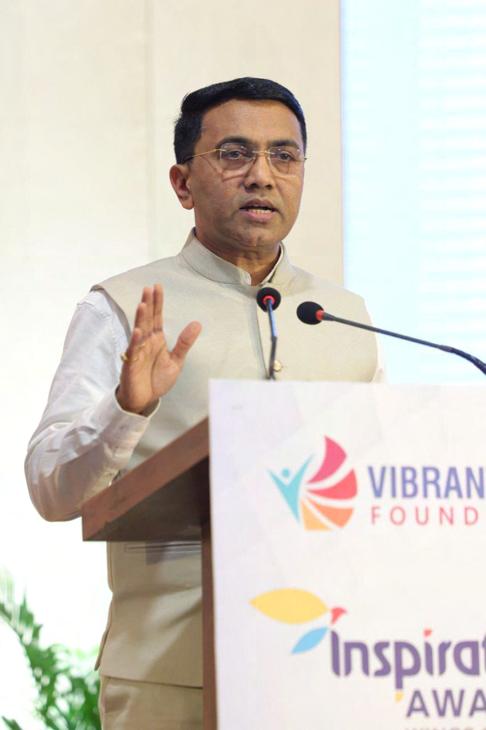
The ceremony was graced by the Hon'ble Chief Minister of Goa, Dr. Pramod Sawant, as the Chief Guest. The Guests of Honour included Shri Mauvin Godinho, Hon'ble Minister for Industries, Government of Goa, and Shri Rohan Khaunte, Hon'ble Minister for Tourism and IT, Government of Goa.
Theeventwitnessedthepresenceofthewho'swho of Goa — leading industrialists, entrepreneurs, policymakers, academicians, senior government officials, and distinguished members of civil society.
The evening commenced with a powerful Keynote Address by Mr. Manoj Chacko, CEO of FLY91, who spoke about Goa's emerging role in connectivity, economic transformation, and the importance of bold entrepreneurial vision in shaping the state's future growth story. His address set the tone for an inspiring celebration of excellence and leadership.
Atotalof17Awardswerepresentedacrossdiverse categories, celebrating excellence in industry, entrepreneurship, exports, education, real estate, tourism, pharmaceuticals, and legacy businesses.
Additionally, two special felicitations were conferred in recognition of exemplary public serviceandleadership.
AWARDWINNERS–INSPIRATIONAWARDS2026
Lifetime Achievement Award - Fomento Group
AudhutTimblo–Chairman
Exporter – MSME Sector - Paul John / John DistilleriesPaulJohn–Chairman
Exporter – Large Category - Kineco Kaman
Mr.ShekharSardessai–Chairman
Service / Merchant Exporter - Umang Software Technologies Pvt Ltd
Young Entrepreneur - YIMBY Gourov V. Pokle –ManagingDirector/Founder
Innovative Entrepreneur - Infinity 3D Pvt Ltd
RyanC.Vaz–FounderDirector
Tourism Brand of Goa - Alcon Victor Group
VarunAlbuquere–Director
Non-Resident Goan Business - PHIL Group
MilindT.Pilgaonkar–Owner
Vintage Business - BIG BOSS FENI
MacVaz–ManagingDirector
Real Estate Company - Manas Developers
TanmayKholkar–Founder
Pharma Company - Geno Pharma
DilipSalgaoncar–VicePresident
Institution
DCT's Srinivassa Sinai Dempo College (Autonomous), Cujira-Bambolim Prof.Dr.ManojS.Kamat–Professor&Principal Business House - Nanu Naik Group PravasNaik
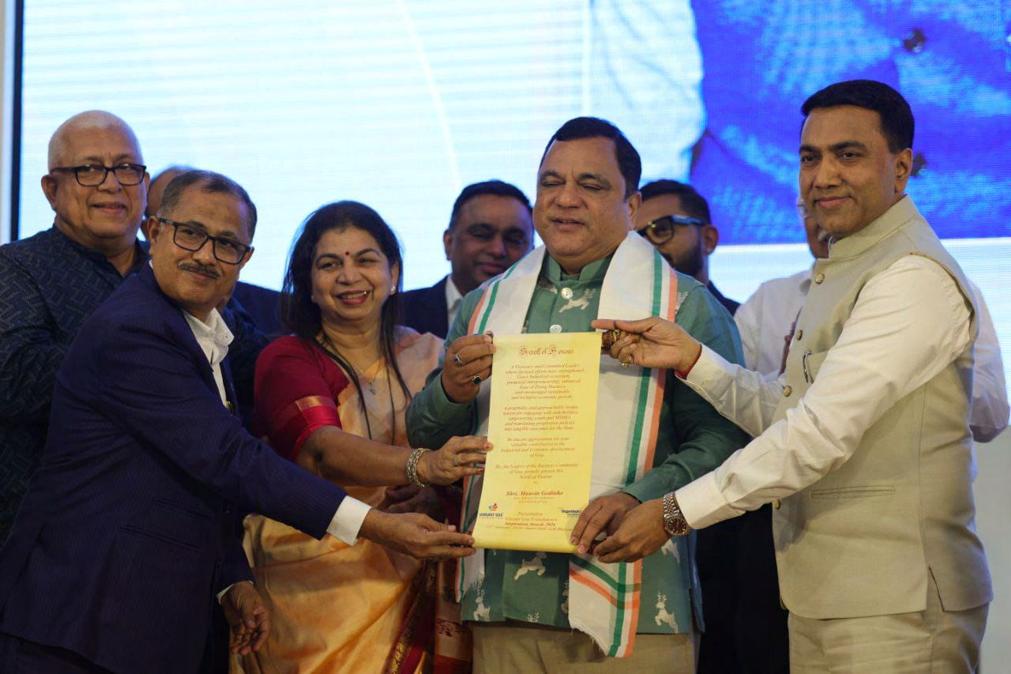
UnstoppableEntrepreneur -AnkurKankonkar Special Felicitations - Shri Mauvin Godinho, Hon'bleMinisterforIndustries,GovernmentofGoa – for his leadership and continuous support towards strengthening Goa's industrial growth andMSMEecosystem.
DIGManojBhatia,AreaCommander,IndianCoast Guard,GoaState–forhisoutstandingserviceand commitment towards coastal security and maritimesafety.
ACelebrationofGoanExcellence
In his address, Hon'ble Chief Minister Dr. Pramod Sawant congratulated the awardees and highlighted the Government's commitment to fostering entrepreneurship, innovation, exports, and sustainable industrial development in Goa. He emphasizedthattheawardeesrepresentthespirit ofaprogressiveandself-reliantGoa.
The Inspiration Awards 2026 reaffirmed Goa's dynamic position as a state that blends legacy businesses with modern innovation, global exports with local enterprise, and public service with privateexcellence.
The evening concluded with a renewed commitmenttocontinuerecognisingandnurturing leaderswhoinspirethenextgenerationofGoans.
Sachi Suraj Morajkar belongs to a new generation of hospitality professionals who don't merely “enter the industry”—they study it, question it, and then build a personal philosophy around it. At 23, she is pursuing Global Hospitality and Business at Les Roches, Marbella, one of the world'smostrespectedhospitality institutions, while simultaneously shaping her own voice through “Offscript with Sachi,” a podcast platform rooted in storytelling, clarity, and social impact. Her journey is not a sprint toward a title; it is a methodical effort to earn leadership through learning, lived exposure, and purposeful communication.
A CHILDHOOD INSIDE REAL DECISIONS
Raisedinafamilydeeplyrootedin real estate and hospitality, Sachi describes an upbringing where business wasn't a distant concept—it was part of daily life. She grew up observing long-term strategy, customer experience decisions, and the often invisible responsibility that comes with building enterprises that serve people and communities. What shaped her most wasn't only what decisions were made, but how they were made—“responsibly, with foresight and with a strong humanfocus.”
Her parents also included her and her younger brother in discussions early on, which she credits for building critical thinking, accountability, and the habit of balancing empathy with reason. Over time, she realised hospitality was quietly training her decision-
making muscle—seeing different viewpoints, predicting outcomes, and staying flexible—skills that now anchor both her professionaloutlookandpersonaldiscipline.
CLARITYCAMEWITHTIME,NOTPRESSURE
Sachi didn't always feel certain about joining the family business. That certainty came with timeandreal-worldexperience.Sherecallsan unexpected turning point—helping a family well-wisher at their hotel in Goa, only to later learn he had come to visit her family. That moment, and the guidance that followed, helped her see how naturally she fit into hospitality. It also pushed her toward the educational choices that could make her contributionmeaningfulratherthansymbolic.
WHYLESROCHESBECAMETHERIGHTFIT
While her background initially influenced her interest, Sachi says it is her academic life at Les Roches that fully drew her into hospitality as a serious, global career. She sees hospitality not as “service roles,” but as leadership, operations, strategy, and experience design—an industry where resilience and decision-making are trained from the ground up through structured learning and practical exposure. She credits experiential learning, real-time problemsolving, and exposure to international standards and trends for strengthening her long-termcommitmenttothefield.
Her earlier schooling at Stonehill International, Bangalore, and the International Baccalaureate (IB) curriculum also shaped her mindset—research, independent thinking, and the ability to question deeply rather than acceptsurfaceanswers.ForSachi,thatglobal outlook isn't a “personality trait”—it's a trained habit.
TWO TRAININGS, ONE INTEGRATED PERSPECTIVE
Sachi's professional training reflects a rare blend: luxury hospitality operations and real estate strategy. At Taj Exotica, The Palm, Dubai, she absorbed the discipline behind luxury—long shifts, consistency, attention to detail, and how systems and structure support seamless guest experiences. Exposure to operational tools such as Opera helped her understand what “excellence” looks like behindthescenes.
At Embassy Group, Bangalore, the learning shifted from operations to strategy—market analysis, competitor research, and consumer behaviour. Together, these experiences helped her understand hospitality, real estate, and business operations as an integrated ecosystem: hospitality adds a people-centric lens, real estate builds long-term value, and operations align everything through systems, planning,andexecution.
MARKETINGASRESPONSIBILITY,NOTHYPE
Sachi's interest in marketing is not driven by trend or aesthetics. She sees it as a strategic tool that can strengthen what her family has built—especially in brand communication, audience engagement, and storytelling. Experimenting with tools like Canva and Adobe taught her how design and messaging shape perception, but she is clear about what excites her most: discovering how creativity and accountability can coexist—using marketing not only to promote, but to communicate values, legacy, and long-term vision.
BUILDINGANIDENTITYBEFORELEADERSHIP
For Sachi, leadership begins with identity. Before stepping into bigger responsibilities, she believes she must build credibility through independent work and purpose-driven contribution. That belief led to “Offscript with Sachi”—aplatformshebuilttohostmeaningful conversations and elevate voices across industries. What makes the podcast more than a personal project is its intent: to guide students and young professionals navigating uncertainty, and over time, to support social causes—including fundraising and awareness formedicaltreatments.
Her podcast idea grew organically—starting from digital content creation, then evolving into a deeper commitment to storytelling that educates and reassures. She speaks openly about uncertainty and self-doubt during her own education, and how conversations with people from diverse paths taught her that feeling“lost”isnotfailure—it'spartoflearning. With her parents' support, she turned that insightintoaplatformdesignedtoserveothers atthesamecrossroads.
WHEN PUBLIC PRESENCE BECOMES
PURPOSE
Recently, Sachi co-hosted the Orchid Awards 2026, an experience she describes as humbling and deeply meaningful. She credits the opportunity to Ms Asha Arondekkar, and highlights the power of public platforms when they celebrate real change—women achievers across arts, education, sports, social work, journalism, business, and more, including women with disabilities and lifetime contributors. Beyond stage presence, the experience taught her a deeper lesson: communication isn't only speaking; it's listening, responding with sensitivity, and honouringthestoriesbeingshared. She believes these platforms—events, podcasting, public speaking—have strengthened her confidence and clarity, shaping skills that matter in hospitality: leadership, human connection, and thoughtful communication.
FAMILYVISION,FUTURESTRATEGY
Sachialsoseesthefutureascollaborative.Her
younger brother, pursuing innovation and entrepreneurship, complements her peoplecentric hospitality lens. Together, they envision integrating strategy with experience-led ventures—strengthening the family enterprise while setting an example for younger cousins toviewlegacyasaplatformforleadershipand sharedresponsibility.
Looking ahead, she outlines specific professional intent: strengthening the family's hospitality presence with global best practices—especially with Hilton Goa Resort being part of their enterprise—and reviving and repositioning Sol de Goa, a project she hopes to bring back as a sought-after, yearround destination through renewed brand identity, guest experience, and market positioning.
AYOUNGWOMAN,ASTEADYMINDSET
As she prepares to enter traditionally maledominated sectors, Sachi anchors herself in a mindsetofself-beliefandcontinuouslearning. She speaks from experience—having never accepted the idea that certain spaces are “not for women,” and having built resilience through participation in environments often labelled male-dominated. She also acknowledges the role of family mentorship—learning operational and strategic aspects through guidance and challenge. Her approach to leadership is not about loud claims; it's about preparation, humility,andconviction.
THEPRINCIPLESHEWON'TLETGOOF
When asked what value she wants to stay rooted in no matter where the journey takes her, Sachi returns to one theme repeatedly: loyalty and commitment—to work, people, responsibility, and purpose. She admits she may feel overwhelmed at times, but insists she is not someone who gives up. For her, loyalty means showing up when things are difficult, and commitment means continuing to learn and deliver even when motivation dips. Success, she says, is not defined by titles, but by impact—creating environments where people feel respected, supported, and inspired.
In a world that rewards speed, Sachi Morajkar'sstorystandsoutforsomethingrarer: steadiness. She is building a future in hospitality with global exposure, local grounding, and a voice that aims to serve as much as it shines—offscript, but never off purpose.
FOLLOW US ON
PANAJI’S NEW SUNSET STAGE
The Riverfront Opens Along the Mandovi
By IG TEAM
Panaji has always known how to gather. From festival evenings that spill into lantern-lit lanes to cultural showcases that turn the city into a living gallery, Goa’s capital carries an instinct for celebration—grounded, graceful, and unmistakably its own. Now, the city has a new addressbuiltforthatverypurpose:TheRiverfront,a recently opened outdoor venue along the River Mandovi, envisioned as Panaji’s largest open-air event space and a fresh riverside landmark for weddings, social celebrations, corporate functions, exhibitions, pop-ups, and cultural evenings.
ANEWLANDMARKONAFAMILIARSTRETCH
Located near the erstwhile Mandovi Hotel—a name thatstillholdsstrongrecallformanyinthecity—The Riverfront stretches across approximately 700 feet along the river banks, creating an expansive waterfront canvas that feels both contemporary anddistinctlyPanajiinspirit.
What makes the venue’s positioning instantly compelling is its relationship with the Mandovi itself. This is not a space that turns its back on the river or treats it as mere scenery. Instead, the venue leans into the setting—promising sunset views over the Mandovi, where the light becomes part of the atmosphere, and the river quietly anchors every gatheringwithitstimelesspresence.
BUILT FOR SCALE, DESIGNED TO STAY
UNDERSTATED
In a state where “grand” venues often attempt to impress through visual loudness, The Riverfront takes a more deliberate route. Developed by the Bengaluru-based MRG Group, the space is described as having modern infrastructure, dedicated service areas, and parking facilities, while keeping the architectural language restrained—so that the event, rather than the venue,shapesthemood.
That design intention is captured neatly in the words of Dr K. Prakash Shetty, Chairman of MRG Group, who frames the venue as an extension of Panaji’s character rather than a departure from it: they wanted a space that feels “natural to Panaji” in openness and accessibility, and one that acknowledges the Mandovi’s role in the city’s identitywithouttryingtodominateit. In practical terms, this restraint is a smart move. It gives planners and hosts the freedom to build their own worlds—whether that’s a minimal modern wedding aesthetic, a heritage-themed celebration, a high-production corporate event, or a cultural evening where the stage is kept simple and the experience is carried by performance and ambience.
CAPACITY,ACCESS,ANDEVENTVERSATILITY
The Riverfront’s strongest claim, and likely its biggest market advantage, is scale. The venue is
statedtoaccommodateupto1,000guests,making it a significant addition to Panaji’s event ecosystem—especially for planners who want the capital’s centrality without compromising on capacity.
Ÿ Private access river jetty, adding a unique arrival/experiencedimensionforselectevents
Ÿ Private car park for 55 vehicles, a notable logistical support in a city where parking can defineeventcomfort
Ÿ A format that suits a wide range of programming—frompop-upsandexhibitionsto large-format celebrations and corporate showcases
This combination—waterfront scale + access + infrastructure—positions The Riverfront as more than just a “venue.” It positions it as a platform for curated public experiences, including large cultural gatherings that want a panoramic river backdropandtheopennesstohostcrowd-friendly, city-scaleprogramming.
A SIGNAL OF PANAJI’S EVOLVING EVENT CULTURE
Panaji’s events are not only about size; they are about context. The capital has a cultural rhythm that is different from beach belts and resort-heavy zones. It values walkability, heritage cues, community energy, and a certain calm sophistication—even when the crowd is large. A space like The Riverfront, located within Panaji’s orbit and intentionally designed to blend in, feels aligned with where the city’s event culture is headed: bigger productions, better infrastructure, but with a softer aesthetic that doesn’t fight the setting.
The venue has already shown its potential as a cultural host as well. It has been used for “Art Stories,” an exhibition featuring collaborative art created by children and adults with different abilities, curated and facilitated through local collaborators—hinting at the venue’s ability to function not only as a celebration space, but as a meaningfulpublic-facingculturalcanvas.
THEDEVELOPERBEHINDTHEPROJECT
MRG Group’s footprint adds another layer of context. The group’s hospitality portfolio includes The Goldfinch brand across multiple Indian cities andhotelsinGoasuchasDoubleTreebyHiltonGoa at Ribandar, alongside other ventures cited in the release. The Riverfront, in that sense, reads like a natural extension of a hospitality-led approach—where guest movement, service areas, and event operations are planned with functional clarity.
GOA, SERVED FRESH
The Fisherman’s Wharf Arrives in Anjuna–Vagator
By IG TEAM
By the time the sky begins to soften over Anjuna–Vagator, this stretch of North Goa changes character. The roads grow louder, the air carries salt and anticipation, and every turn feels like it could lead to a story, music spilling from somewhere unseen, laughter rising like surf, lights warming up for the night. On 4th February, that familiar coastal build-up found a new centre of gravity as The Fisherman’s Wharf Anjuna–Vagator officially opened its doors—an evening where ocean-fresh food met the bold, soulful taste of Goa, and the Goan spirit wasn’t merely present… it wasfelt,tasted,andcelebrated.
Perched along this vibrant belt, where Goa’s freespirited energy meets its bohemian soul—The Fisherman’s Wharf Anjuna–Vagator arrives as more thananewrestaurant.Itarrivesasamood.Aplace designed to hold the real Goa in one frame: the warmth of its hospitality, the confidence of its coastal flavours, the easy joy of good music, and the kind of atmosphere that makes you forget to checkthetime.
A LAUNCH NIGHT THAT DIDN’T FEEL LIKE A FORMALITY
There are openings that feel like events, and then thereareopeningsthatfeellikeGoa.Thelaunchon 4th February belonged firmly to the second kind: unforced, spirited, alive. It carried that unmistakable rhythm of a Goan evening where the table becomes the centre of everything and the night unfolds in waves, one plate, one toast, one burstoflaughteratatime.
invitation promised it plainly: a night where ocean-fresh seafood meets Goa’s soulful taste. And that is exactly what the evening delivered, a sense that this was not just a new address being added to a map, but a new dining ritual taking shape on a coastline that never stops reinventing itself.
SEAFOODATTHECORE,GOAINEVERYNOTE
At the heart of The Fisherman’s Wharf
Anjuna–Vagator is what Goan dining has always done best: freshly sourced seafood, treated with respect and served with flavour that doesn’t whisper. It speaks. It carries spice and brightness. It holds depth. It tastes like the coast, confident, generous,andunapologeticallysatisfying. Yet, this newest Wharf isn’t locked into only what is traditional. Its culinary direction is rooted in authentic Goan favourites, but thoughtfully blended with Indian and global influences—not to dilute Goa, but to expand the experience without losing the soul. It’s the same balance that defines Anjuna and Vagator themselves: grounded in identity, open to the world, and always evolving withoutforgettingwhereitstarted.
THE VIBE: OUTDOORS WHEN YOU WANT CALM, INDOORSWHENYOUWANTENERGY
Anjuna–Vagator is not a one-mood destination. It can be slow and sunlit, then suddenly electric. The Fisherman’s Wharf understands that instinctively, offeringanexperiencethatshiftswithyou. Someeveningsaskfortheoutdoors,theeasygoing, open-air calm where conversation stretches, and
the sea air does half the work of relaxation. Other nights want something more spirited, an indoor energy where the music lifts the room and the atmosphere feels charged with movement. Here, youdon’thavetochoosea“typeofevening”before youarrive.Thespacemeetsyouwhereyouare,and thengentlypullsyoudeeperintothenight.
BEVERAGES
THAT
DON’T JUST PAIR—THEY BELONG
Goa is a place where beverages are not accessories—they are part of the rhythm. The Fisherman’s Wharf Anjuna–Vagator leans into that with refreshing beverages crafted to match the mood,designedtositnaturallybesideboldflavours andalivelysetting.
It’s the kind of detail that matters, because it shapeshowlongpeoplestay.Agooddrinkextends the moment. It keeps the table warm. It turns a dinner into an evening, and an evening into a memory.
FOOD, MUSIC, AND THE SPIRIT OF THE “REAL GOA”
There’s a line in the restaurant’s own promise that stands out: “the unmistakable spirit of the real Goa.” In today’s North Goa, where “Goa” is often packaged into quick clips and perfect frames, that claim is bold. But it also makes sense. Because the realGoaisnotafilter.It’safeeling. Itisthesoundofmusicthatdoesn’ttrytoohard.Itis the joy of a room that welcomes you without performance. It is food that tastes like it came from the coastline, not from a trend. And it is the way an evening becomes communal, strangers turning into neighbours, tables turning into conversations, and timeslowingdownwithoutaskingpermission.
That is exactly what The Fisherman’s Wharf Anjuna–Vagator is building: a place where great food, good music, and Goan spirit come together naturally,withoutforcingthemoment.
A NEW LANDMARK FOR NORTH GOA’S DINING MAP
With this opening, the Anjuna–Vagator stretch gains more than another restaurant. It gains a space that feels tuned to the coastline’s true appetite, for flavour, for atmosphere, for authenticity, for nights that unfold slowly and stay withyouaftertheyend.
For locals, it offers a new place to gather, one that speaks the language of Goa with confidence. For travellers, it offers a chance to experience North Goa beyond the usual chase, through a meal that feelsrooted,lively,andreal.
Because when the seafood is ocean-fresh, the flavours are bold, the beverages match the mood, and the music keeps the room alive, you don’t just dine at The Fisherman’s Wharf Anjuna–Vagator, you feelGoa.
The
HOSPITALITY BUZZ
COPPERLEAFPORVORIMCELEBRATES10GLORIOUSYEARS
A Decade of Elegance, Excellence & Enduring Community Bonds
By IG TEAM
On January 17, 2026, Copperleaf Porvorim marked a remarkable milestone — completing ten years of heartfelt hospitality, culinary excellence, and deep-rooted community engagement. What began in 2016 as a bold culinary vision has today evolved into one of Goa'smostcherishedfine-diningdestinations, known not just for its flavours, but for the relationshipsithasnurturedalongtheway.
The 10th anniversary celebration was more than a commemorative evening. It was a tribute to people, purpose, and progress. The restaurant buzzed with gratitude and joy as patrons, partners, and team members came together to honour a journey defined by consistencyandwarmth.
AnEveningofGratitudeandRecognition
The occasion was graced by distinguished guests including Shri Sagar Shetye, Builder and Businessman; CA Vinesh Pikale, Partner at R. K. Pikale and Associates; Shri Anup Gadgil, Founder of Ochre Design; and Dr. Atul Pai Bir, Senior Medical Officer, Government of Goa and Medical Officer In-Charge at CHC Sanquelim.Theirpresenceaddedsignificance
to an evening dedicated to appreciation and acknowledgment.
Each of the esteemed guests was felicitated for their contribution and continued association with Copperleaf. Special recognition was extended to Shri Sagar Shetye for his steadfast support in various aspects of the restaurant's growth, while CA Vinesh Pikale, Shri Anup Gadgil, and Dr. Atul Pai Bir were honoured for their dedication and encouragement throughout the years. Their words reflected the strong respect Copperleaf commands within Goa's business andhospitalitycircles.
A particularly heartfelt moment came when the Core Team felicitated Shri Shreekant Pai Bir, Chairman of the Vishwamukta Group, which owns and operates the Copperleaf brand. The gesture was a sincere acknowledgment of his visionary leadership and constant guidance, both of which have played a defining role in shaping the brand's growthandaspirations.
HonouringthePillarsBehindtheSuccess One of the evening's most meaningful
highlights was the felicitation of Copperleaf's longest-serving team members. Their loyalty and commitment over the years have been instrumental in building the restaurant's reputation for excellence. By celebrating these individuals, Copperleaf reinforced a core belief — that true success is built on the dedication of people who grow together as a family.
The celebrations were infused with interactive games and lively moments, reflecting Copperleaf's vibrant spirit. Laughter, warmth, and togetherness filled the space, creating memoriesworthyofadecade-longjourney.
ServiceBeyondtheTable
True to its values, Copperleaf ensured that its milestone carried social meaning. On January 13, 2026, ahead of the anniversary celebration, the restaurant organized a Blood Donation Camp in collaboration with Dr. Atul Pai Bir and the medical team from Asilo Hospital. The initiative transformed celebration into contribution, reinforcing the brand's belief that hospitality must extend beyonddining.
Copperleaf's commitment to community welfare has been consistent over the years. The restaurant regularly donates food supplies to institutions such as Amazing Grace Home for the Aged in Guirim, Jeevan Anand SaunsthaninMapusa,andMatruchhayaBalika KalyanAshraminMapusa.
Since September 2022, Copperleaf has also been supporting TB patients at CHC Sanquelim by providing customized nutritional baskets tailored to their dietary requirements. What began with 10 patients has now expanded to 20, underscoring a sustained commitment to health, nourishment, and recovery.
SteppingintotheNextChapter
As Copperleaf Porvorim enters its second decade, it does so with renewed passion and gratitude. The 10-year celebration was not merely about flavours perfected, but about bonds strengthened and responsibilities embraced.
With a promise to continue serving food crafted with love and purpose, Copperleaf moves forward — rooted in excellence, sustained by community, and inspired by the journeythatliesahead.
RECYCLINGISNOTTHEHERO
Why Reduction and Reuse Matter More Than Bins
By Gauri Ghadge
There’s a comforting story we tell ourselves every time we rinse a jar and drop it into the blue bin: I did my part. The bin becomes a moral exit door—an elegant way to keep buying, keep consuming, keep clearing cupboards, while believing the planet will be fine because our waste has been “handled.” Thatstoryisseductive.Itisalsoincomplete. Recycling matters. It saves energy compared with making some materials from scratch, it canreducedemandforvirginresources,andit belongs in any serious waste system. But recycling is not the hero of sustainability. It is,
at best, the clean-up crew. The real hero work happens earlier—before the packaging exists, before the product becomes waste, before trucks and sorting lines and energy-intensive reprocessingtrytoundowhatneverneededto bedone.
That’s not opinion; it’s embedded in the way leading environmental agencies and laws order priorities. The U.S. Environmental Protection Agency’s materials management hierarchy places “source reduction and reuse” above recycling, because preventing waste avoids environmental impacts at the start of
the chain, not just at the end. The European Union’s waste hierarchy does the same: prevention first, then preparing for reuse, then recycling. In other words, if we want a lighter footprint, we don’t start with a better bin—we startwithlessstuff.
WHYTHEBINCAN’TCARRYTHEWEIGHT
The modern recycling myth rests on a simple assumption: if we build enough collection, recycling will scale to match consumption. The world’s plastic numbers expose how fragile thatassumptionis.
The OECD’s Global Plastics Outlook estimates
that after accounting for losses during sorting andprocessing,onlyabout9%ofplasticwaste is ultimately recycled. Nearly half goes to sanitary landfills, around a fifth is incinerated, and the remaining share is disposed of in uncontrolleddumpsites,burnedinopenpits,or leaks into the environment. Those figures are not a small operational glitch; they are a warning that recycling cannot outrun a rising tide of production. When the tap is open wider every year, mopping harder won’t stop the flood.
Why is plastic recycling so stubbornly limited?
Because “plastic” isn’t one material. It’s a family of polymers, additives, dyes, labels, layers, and composites. Many packages are designed for marketing, shelf life, and convenience—not for circularity. Even when items are collected, contamination and mixed materials reduce what can be turned into usable feedstock. Add the economics—virgin plastic often remains cheap, and even within the recycling stream, a large share is lost as sorting and processing residues that still requiredisposal.
And plastics are only one chapter. Recycling systems for glass, paper, metals, and organics vary wildly by region and infrastructure. When recyclingisframedasthemainsolution,werisk turning a complex materials problem into a single feel-good habit—one that, by itself, cannotdeliverthescaleofchangetheclimate andpollutioncrisesdemand.
THE UPSTREAM TRUTH: WASTE IS DESIGNED
Waste is not an accident. It is a design outcome.
Many products arrive with layers of packaging because packaging sells. Portions are
individually wrapped because it’s “premium.” Objects are made non-repairable because replacement is profitable. Takeaway culture multiplies single-use items because speed beats systems. Each of these decisions happens upstream—in factories, in design studios, in boardrooms, in procurement checklists.
If that sounds abstract, consider what “source reduction” really means. It means using less material to deliver the same function: lighter packaging, fewer layers, concentrated products, refill formats, durable goods that last, and services that replace ownership where appropriate. The EPA places source reduction at the top because every gram
avoided is a gram that never needs to be collected,transported,sorted,orprocessed. Now pair that with reuse—systems that keep a product or package in circulation, performing itsjobagainandagain.Reuseisnotnostalgia; it’s logistics. It’s refill stations for household cleaners. It’s deposit-return beverage bottles. It’s takeaway containers that come back. It’s rental, repair, refurbishment, and resale. It is the opposite of the “use once and forget” economy.
UNEPhasbeenexplicitthattacklingsingle-use plastic impacts requires moving away from single-use where possible and promoting fitfor-purpose reusable alternatives, guided by life-cycle thinking. The point isn’t to romanticize reusables. The point is to choose systems that keep resources at their highest value longer, rather than shredding them into low-gradematerialandcallingitcircular.
RECYCLING’S
HIDDEN COSTS: ENERGY, EMISSIONS,ANDDOWNCYCLING
Even “successful” recycling is not a magic rewind button. Every step consumes energy: collection vehicles, sorting facilities, washing, shredding, melting, remanufacturing. And for many materials, recycling often results in downcycling—turning high-quality material into lower-quality uses that cannot be recycled indefinitely. Plastic, in particular, is frequently downcycled, and repeated mechanical reprocessing can degrade material properties, pushing it toward downcyclingoreventualdisposal.
This is why the waste hierarchy matters: it is an environmental logic, not a moral hierarchy. When you reduce, you avoid the entire tail of impacts. When you reuse, you distribute impactsovermanyuses.Whenyourecycle,you
recover some value—but you still pay the costs ofreprocessing.
In short, recycling is a valuable last defense, notafirststrategy.
THE PSYCHOLOGICAL TRAP: “I RECYCLE, THEREFOREI’MSUSTAINABLE”
The bin gives us closure. Reduction and reuse, bycontrast,askforchange:differentshopping habits, different packaging expectations, differentconveniencenorms.Recyclingiseasy to perform and easy to measure; reduction is hard to track; reuse requires systems, not just intention.
That mismatch creates a psychological trap. When we celebrate recycling as the headline act, we can unintentionally grant ourselves permission to consume more, as long as we “recycle it.” But sustainability doesn’t work like that. If your consumption doubles and your recycling improves slightly, your total footprint stillrises.
Ÿ If I do, can I get it in a reusable, refillable, repairableform?
Ÿ If it must be single-use, is it designed and collectedforrealrecycling?
Askthathonestlyforamonthandyou’llfeelthe shift: fewer impulse purchases, more durable choices, and a growing impatience with packaging that exists mainly to be thrown away.
same job with less material—concentrated detergents, bars instead of bottled liquids, minimal packaging, and bulk purchasing where it genuinely reduces waste. It looks like saying no to unnecessary freebies: cutlery you didn’t ask for, extra sachets, redundant boxes insideboxes.
In hospitality and events, reduction looks like “designing out waste” before the first guest arrives: digital-first check-ins, right-sized portions, smarter menu planning to cut food waste, water served in reusable bottles, and procurement standards that reject hard-torecycle composites. It looks like measuring what is thrown away after a banquet and redesigning the system, not just the bin placement.
And reduction scales best when rules and markets support it. Policy frameworks across the world increasingly recognize this upstream leverage—because waste prevention is cheaper than waste management, and because pollution prevention beats cleanup everytime.
WHAT REUSE REQUIRES: INFRASTRUCTURE, NOTGOODINTENTIONS
Reuse succeeds when it is easier than disposal.
That means standard container sizes, convenient return points, deposits that make returns automatic, and cleaning systems that meet health standards. It means brands collaborating on shared infrastructure instead of each building proprietary systems that confuse consumers. It means cities and businesses investing in “reverse logistics”—the pathwayback.
UNEP’s “Turning off the Tap” framing is telling: the solution is a system change that starts by reducing problematic and unnecessary plastic use, and accelerates reuse alongside better recycling. Reuse is not a side project; it is a redesign of how products move through society.
THE NEW HERO STORY WENEED
Try a seven-day reset: carry a bottle and cup, refuse single-use cutlery,chooseonerefill option, repair one item, buy one second-hand product, and track the packaging you throw away. The goal isn’t perfection; it’s visibility. Once you see your waste,youcanredesign yourhabits—withoutguiltorshame. IFRECYCLINGISNOTTHEHERO,THENWHAT IS?
The hero is restraint with style—design that delivers comfort and beauty without excess. The hero is the refill station that makes waste feel archaic. The hero is the durable product that ages well instead of breaking. The hero is the restaurant that treats waste as a design flaw. The hero is the brand that builds reuse into the business model, not into the marketing campaign.
Recycling should still be done, and done better—because the waste we already create needs a responsible destination. But if we want a future that feels breathable—cleaner streets, healthier oceans, lower emissions, less pressureonlandfills—wemuststoptreatingthe binasthemainstage.
Start earlier. Buy less. Choose reuse. Demand designs that don’t turn resources into garbage within minutes. Then, and only then, let recycling do what it was always meant to do: handletheleftovers,notdefinethemeal.
FOLLOW US ON
KANYE WEST INDIA TOUR
Ye to Perform in Delhi on March 29 FOLLOW
For years, India has lived on a steady diet of rumours—“Kanye is coming,” “Kanye is doing Mumbai,” “Kanye is doing an Asia run.” This time, it isn’t a poster floating around a WhatsApp group. Ye (formerly Kanye West) is scheduled to perform in New Delhi on March 29, 2026, with the event listed at Jawaharlal Nehru Stadium and a start time of 8:00 PM. In a live-events market where misinformation travels faster than official announcements, one detail matters as much as the date itself: organisers have stated there are no additional India shows attached to this announcement. That means no “surprise second city,” no last-minute add-on, no parallel Mumbai date hiding behind speculation. It’s being framed as a single, standalone India performance—one night,
one venue, one stage.
The event, the venue, the drop
Ticketing is being routed through District (the event platform commonly associated with Zomato’s events ecosystem), where the listing positions the Delhi concert as a major live performance and indicates that a fresh ticket “drop” is expected. This is where Delhi’s anticipation becomes practical: when an artist of this scale is involved, the first real challenge for fans isn’t the show—it’s navigating ticketing without falling for the fake economy that forms around it.
The only fan guide that matters: don’t get fooled
Big-name concerts attract two crowds: the audience inside the stadium, and the scammers outside it. The most common traps
are predictable—fake “VIP tables,” counterfeit QR tickets, resellers claiming “last few left,” and spoofed customer-care numbers that appear legitimate until they drain your wallet.
So keep it clean:
Buy only from the official platform and verified organiser handles.
Avoid DM-based ticket offers and “offline passes” pitched by unknown sources.
Do not share OTPs, UPI PINs, or screensharing access with anyone claiming to “help” you book.
If a link feels rushed, secretive, or “limited to you only,” assume it’s designed to pressure you.
The scale of the event also means the onground experience will run on rules: earlier entry times, tighter security checks, and heavier traffic movement around the stadium. A stadium show is a marathon, not a sprint—fans who arrive early, travel light, and follow gate instructions usually enjoy the night more than those who treat it like a lastminute club entry.
Why this announcement hits differently Ye’s concerts have never been sold as ordinary performances. Globally, they are often spoken about in the language of spectacle—large-format sound, bold visual design, and a catalogue that shaped modern hip-hop’s production and pop culture vocabulary across decades. Even for listeners who argue with the artist, the influence of the music is undeniable—and that is what makes a Delhi date feel like a moment, not just a gig.
For Delhi, March 29 is now a fixed point on the calendar. For fans, it is simple: confirm details from official sources, buy smart, show up early, and let the night do what live music is meant to do—feel bigger than your screen.
US ON
AWARENESS
The New Tricks, and the Habits That Save Your Money UPI FRAUD & DIGITAL SCAMS
UPI has made daily payments effortless: from cafés and fuel stations to rent, school fees, and quick transfers to family. But the same speed that makes UPI convenient also makes fraud brutally efficient. Today’s scams rarely look like “lottery winnings.” They arrive as a calm WhatsApp message, a polished caller claiming to be “customer care,” or a refund promise that sounds routine. The weapon is urgency: act now, or lose money, a parcel, a booking, or your account.
The most common modern patterns fall into three buckets.
First, the “refund” trap. You are told that a payment failed, a ticket was cancelled, or a product return is approved. Then you are asked to scan a QR code or “verify” by entering your UPI PIN. Remember the rule: a UPI PIN is used to authorise a debit. If you are entering a PIN, you are not receiving
money; you are approving a payment.
Second, the “collect request” ambush. Fraudsters send a money request to your UPI app and push you to approve it quickly, presenting it as a harmless confirmation. It is not. Approving a request and entering your PIN can transfer funds out of your account. If you did not initiate the transaction, decline it. No explanation is required.
Third, the “remote help” con. A caller claims your KYC will be blocked, your SIM will be deactivated, or your account will be frozen unless you install an app. That app may allow screen-sharing or remote control. Once your screen is visible, criminals can guide you into approving payments, reading OTPs, or changing settings.
So how do you protect yourself without becoming fearful of digital payments? Build a simple, repeatable checklist:
• Pause for 30 seconds. Scams collapse when you slow the conversation.
• Verify through official channels. Use your bank’s app or website, or numbers you already trust—not what a caller sends you.
• Never share your UPI PIN or OTP. Not with “bank staff,” “police,” “courier agents,” or “support teams.”
• Don’t install apps from links shared over calls or messages. Use only official app stores.
• Enable phone lock, app lock, and transaction alerts, and keep your device updated.
• Consider setting lower UPI limits if your app or bank allows it.
If you suspect you have been scammed, act immediately. Contact your bank at once to block or secure your account and report the incident to the National Cybercrime Helpline at 1930 or file a complaint on the National Cybercrime Reporting Portal (cybercrime.gov.in). Fast reporting improves the chances of stopping or tracing the transfer.
For small businesses, train staff to confirm credits inside the UPI or bank app; screenshots and “payment successful” messages are not proof. For families, teach seniors and teenagers the PIN rule and keep numbers saved.
UPI is safe when you control the flow. The safest users aren’t the most technical, they’re the calmest. In digital payments, patience is not a delay; it is protection.
STARTUP
SUBSCRIPTIONVSONE-TIMESALES
What Works in India, and Why
In India, pricing is never just arithmetic—it’s behaviour. A customer may like a product and still hesitate at the idea of paying every month. That hesitation is not “cheapness.” It’s a value question: Will I keep using this enough to justify a recurring charge? The answer determines whether a subscription becomes effortless—or feels like a burden.
One-time sales remain popular across many categories because they match a familiar transaction mindset: pay once, receive a clear outcome, and move on. This works especially well when value is immediate and visible—an appliance, a repair, a course, an event ticket, a service package, a hotel stay, a piece of furniture. The customer can see what they bought, and the purchase feels complete. One-time pricing also lowers friction because people don’t have to think about renewals, cancellation, or recurring commitments.
But one-time revenue has a business reality founders learn quickly: it can turn growth into
a treadmill. Every month starts with the same question—where will the next sale come from? Marketing becomes constant, demand may rise and fall seasonally, and revenue predictability is harder.
That is where subscriptions can be powerful—when a business delivers ongoing, repeated value. In the Indian market, subscriptions tend to work best when they feel like one of these:
1) Routine utility. If a product or service becomes part of weekly life—connectivity, entertainment, work tools, convenience services—the recurring payment begins to feel normal rather than forced. India’s scale subscription success stories typically live here.
2) Clear savings or clear convenience. Many consumers accept recurring fees more easily when the benefit is obvious: the subscription replaces multiple small spends, unlocks priority access, reduces effort, or creates predictable costs.
3) Measurable progress.
Learning, fitness, wellness, and business services can work on subscription when the outcome is tangible—skills improved, time saved, consistency built. When results feel vague, churn rises. The challenge is trust.
Consumers globally—and increasingly in India—are wary of auto-renewals, unclear trial terms, and subscriptions that feel hard to exit. That makes transparency non-negotiable: clear pricing, clear renewal reminders, and a cancellation path that doesn’t feel like a maze.
For many startups, a hybrid approach is often the most practical:
A one-time setup/onboarding/product fee to reduce uncertainty and cover initial costs.
A subscription for ongoing access, service, updates, support, or convenience.
An annual plan with genuine savings for customers who are already convinced.
So what works in India? One-time sales win when value is instant and occasional.
Subscriptions win when value is continuous and habitual. The best model is the one that matches how frequently your customer experiences the problem you solve. In the end, the market pays again and again—but only when value keeps showing up.
WEARABLES THAT MATTER
Smartwatches, Sleep Tracking, and the Metrics Worth Your Attention
Wearables have moved beyond “fitness fashion” to something far more useful: a daily dashboard that helps you notice patterns in movement, sleep, and recovery. A smartwatch can track activity, monitor heart rate, estimate sleep, and encourage healthier routines. But more data doesn’t automatically mean better health. The real value of wearables lies in knowing which numbers deserve attention, which should be treated cautiously, and how to turn trends into better habits—without becoming obsessed.
Start with the most practical metric for most people: consistent movement. Step counts aren’t glamorous, and 10,000 isn’t a magic number for everyone. But steps are a simple, reliable way to measure how active your day really was—especially if your routine involves long hours at a desk or in a vehicle. Use steps as a baseline, then aim to improve your weekly average gradually. In real life, frequent moderate movement tends to beat occasional intense bursts followed by long
gaps.
Next, focus on heart-rate trends, not isolated readings. Wearables can show your heart rate throughout the day and during workouts, and the most useful insight is the direction it moves over time. As fitness improves, the same walk or climb may feel easier, sometimes accompanied by a lower average heart rate for that familiar effort. Also watch your resting heart rate trend. A sustained rise over several days can coincide with poor sleep, high stress, dehydration, alcohol use, or the early phase of illness—signals that your recovery may need attention. Then comes the most popular feature: sleep tracking. Most consumer wearables do not measure sleep directly the way a clinical sleep study does; instead, they estimate sleep using signals like movement and heartrelated measurements. Treat the data as a helpful approximation. What’s typically most useful is the big picture: your total sleep time, bedtime consistency, and how often your sleep is interrupted. Sleep stage charts
can be interesting, but they are not precise enough to treat as absolute truth. Use sleep tracking as a mirror for habits, not as a diagnosis.
Another powerful category is recovery awareness—often expressed through HRV (heart rate variability) or “readiness” scores. HRV varies widely between individuals and can fluctuate day to day, so the smart approach is to watch your personal trend rather than fixating on a single number. A consistent dip can reflect higher stress load, reduced sleep, or training that outpaces recovery—useful feedback to choose lighter workouts, more walking, mobility work, or earlier sleep rather than forcing intensity every day.
A few metrics deserve caution. Calories burned are estimates and can be significantly inaccurate. Blood oxygen and ECG-style features may be useful for some people, but they are not a replacement for medical evaluation when symptoms exist. If you want your wearable to truly matter, pick two metrics and act on them for 30 days—steps plus sleep duration, or resting heart-rate trend plus workout consistency. A smartwatch becomes valuable when it changes behaviour. The goal isn’t perfect data; it’s a healthier rhythm you can sustain.
SPORTS
FCGOABEATMOHAMMEDANSC SC 2–0 for First ISL 2025–26 Win
FC Goa registered their first victory of the ISL 2025–26 season with a composed 2–0 win over Mohammedan Sporting Club on Friday, February 20, 2026, at the Kishore Bharti Krirangan in Kolkata. The result provisionally lifted FC Goa to the top of the table with four points from two matches, while Mohammedan remained without a goal after their first two games.
The tone of the evening was set almost immediately. Goa struck in the 4th minute when Dejan Drai’s outswinging corner found Pol Moreno unmarked inside the area, and the defender powered a header past Subhajit Bhattacharjee, leaving the Mohammedan goalkeeper with no chance.
Goa nearly doubled their advantage moments later through another fluent move. Brison Fernandes, left completely unmarked, met Boris Singh’s cross with a diving header that beat the goalkeeper but crashed back into play off the upright. With midfield control firmly in their favour, FC Goa dictated the tempo through possession, while Mohammedan looked to unsettle them with quick counter-attacks. The second goal arrived in the 32nd minute, just before the water break, from the penalty spot. Udanta Singh was fouled inside the box by Subhajit Bhattacharjee, and Drai stepped up to calmly convert the resulting penalty, sending the custodian the wrong
way. FC Goa stayed in control for the rest of the half and created chances to extend the lead, but the score remained 2–0 at the break.
Mohammedan attempted to reset after halftime, with head coach Mehrajuddin Wadoo making three changes at the restart, introducing Md. Fardin Ali Molla, Makan Winkle Chothe and Lalngaihsaka in search of momentum. The substitutions brought added energy, but the hosts’ efforts did not trouble Hrithik Tiwari in the FC Goa goal.
Goa continued to find openings. Muhammed Nemil weaved past defenders and picked out an unmarked Udanta at the far post, only for Sajad Hussain Parray to produce a superb block. Parray then intervened again, rising to deny Moreno from the following corner. Mohammedan’s best chance came in the 72nd minute: a move down the left ended with a cutback for Mahitosh Roy, whose close-range effort was saved brilliantly by Tiwari. The rebound fell invitingly to Makan Winkle Chothe from six yards out, but he could only blaze over the crossbar.
The match finished Mohammedan SC 0, FC Goa 2 (Pol Moreno 4’, Dejan Drai 32’ pen), with Pol Moreno named Player of the Match. For FC Goa, it was a clean, controlled victory—and an authoritative way to get their league season moving.
GTA PROGRESS CUP 2026: CRICKET, CAMARADERIE & GOA'S BUSINESS SPIRIT
The GTA Progress Cup 2026, organised by the Goa Technology Association (GTA), was successfully held on 31st January 2026 at the prestigious MCC Ground, Margao. The muchanticipated cricket tournament brought together leading business and professional associations from across Goa for a day filled with spirited competition, camaraderie, and meaningfulnetworking.
Eight prominent teams — GCCI, CREDAI, ICAI Goa, GSIA, IMA Goa, SGAA, GTA and GIBA —
participated in the tournament, transforming the cricket field into a vibrant platform of unity and sportsmanship. The event was a testament to how sport can strengthen professional relationships while encouraging teamwork beyond boardrooms andoffices.
The tournament was inaugurated by Mr. Sriram Natarajan, CEO of Molbio Diagnostics, whose inspiring address set the tone for the day. Emphasising discipline, collaboration and leadership, he highlighted how sporting
platforms mirror the values essential for success in business andcommunitybuilding. Theclosingceremonywasgraced by Mr. Rohan Gauns Dessai, ExJoint Secretary of the Board of ControlforCricketinIndia(BCCI), who commended GTA for conceptualising an initiative that blends professional networking with healthy competition. His presence added prestige to the grand finale and encouraged participants to continue fostering unitythroughsport.
Adding further excitement to the event, former Goa Ranji and Chennai Super Kings player Mr. Shadab Jakati motivated the players with his words of encouragement.
Sharing insights from his professional cricketing journey, he inspired participants to playwithpassion, integrity and teamspirit.
After an exhilarating series of matches
marked by competitive performances and enthusiastic support from spectators, GCCI Power Hitters emerged victorious. In a thrilling final, they defeated Chartered Avengers to lift the coveted GTA Progress Cup 2026 trophy, earning well-deserved applause for their outstanding teamworkanddetermination. Beyond the boundaries and scorecards, the tournament achieved its larger objective — strengthening bonds among Goa's business community. The event created an atmosphere where industry leaders, entrepreneurs and professionals interacted informally, reinforcing relationships that contribute to the state's economic and social growth.
The success of the GTA Progress Cup 2026 was made possible through the dedicated leadership and vision of Mr. Mangirish Salelkar, President of GTA, whose commitment to promoting collaboration within the business ecosystem continues to inspire impactful initiatives. Special appreciation is also extended to Mr. Rohan Warty, Vice President of GTA, for his dynamic coordination and efforts in ensuring the seamless execution ofthetournament.
The GTA Progress Cup 2026 stands as a shining example of how sport can unite diverse sectors, promote healthy competition, and strengthen the spirit of progress in Goa's vibrant professionalcommunity.
ICAI GOA BRANCH ANNOUNCES OFFICE BEARERS FOR 2026–27
The Institute of Chartered Accountants of India (ICAI) – Goa Branch under the Western India Regional Council (WIRC) has announced its Office Bearers for
the term 2026–27, marking the beginning of a new leadership chapter focused on professional excellence and member engagement.
The newly elected team comprises CA Vinayak V. Dhumatkar as Chairman, CA Vaibhav D. Bale as Vice Chairman, CA Akshay M. Mulgaonkar as Secretary, CA Sneha Menon as Treasurer, CA Venkatesh Shenai as WICASA Chairman, and CA Vishwanath S. S. Bhobe as Immediate Past Chairman.
In his address, Chairman CA Vinayak V. Dhumatkar emphasised the importance of balanced and steady professional growth, strengthening technical knowledge platforms, and building deeper expertise in emerging domains such as technology-driven accounting practices and ESG compliance. He also underlined the need for structured student development initiatives and stronger academic support systems for aspiring CharteredAccountants.
Highlighting the values of collective leadership and disciplinedgovernance,hestated that meaningful engagement with members and students will
remain a key priority during the term. The Goa Branch reaffirmed its commitment to upholding the highest standards of professionalism, enhancing learning opportunities, and contributing to the broader institutional growth of ICAI in the yearahead.
https://www.exploregoa.org
FITNESS
By Norbert D’Souza
HOW TO GET RID OF HIPS AND THIGHS FAT - PRACTICAL, SUSTAINABLE TIPS
Getting rid of hips and thighs fat isn't about punishment—it's about building habits. Train your lower body, eat clean most of the time, stay active daily, sleep well, and stay patient.
Reducing fat around the hips and thighs is one of the most common fitness goals—and also one of the most misunderstood. Many people search for “spot reduction” exercises, but the truth is simpler: you lose fat overall, and your body decideswhereitcomesofffirst.The good news? With the right mix of training, nutrition, and consistency, you can reshape and tone this area effectively. Here'saclear,realisticapproach thatworks.
1. START WITH SMART MOVEMENT (NOT ENDLESS CARDIO)
You don't need hours on the treadmill. What you do need is a combination of strength training + fat-burningcardio.
movement. Focus on controlled formandfullrangeofmotion.
Add 20–30 minutes of brisk walking, cycling, or interval cardio on most days.Shortburstsofhigherintensity (like fast walking followed by recovery) accelerate fat loss more thanslow,steadycardioalone.
2.NUTRITIONDRIVESFATLOSS
Exercise shapes your body—but food determines how fast fat disappears.
You don't need extreme dieting. Instead,followthesebasics: Eat more protein: eggs, paneer, chicken,fish,dal
These don't “burn fat locally,” but they tighten the muscles underneath—giving your hips and thighs a firmer, more sculpted look asfatreduces.
Poor sleep and high stress increase cortisol, a hormone linked to fat storagearoundhipsandthighs.
Aimfor:
7–8hoursofsleep
Shortdailywalks
Atleastonerestdayperweek
Remember: transformation doesn't happen in 7 days. Real change takes 4–8 weeks of consistent effort.
5.AVOIDCOMMONMISTAKES
Ÿ Doingonlyinner-thighmachines
Regular exercise strengthens yourheartandlungsanditcan strengthen bones, slowing down the process of osteoporosis. It can help you move easily by keeping your joints, tendons and ligaments more flexible. Can help you lose weight when combined with good eating habits or maintain ideal weight by burning excess calories and promotesenseofwellbeing.
Strength training builds muscle in your lower body, increases metabolism, and gives shape to your hips and thighs. Cardio helps create the calorie deficit needed forfatloss.
Key lower-body exercises (3–4 timesperweek):
Ÿ Squats
Ÿ Lunges (forward, reverse, walking)
Ÿ Glutebridges/hipthrusts
Ÿ Step-ups
Ÿ Jump squats or bodyweight plyometricexercises Do 3–4 sets of 12–15 reps for each
Reduce sugar, fried foods, and packagedsnacks
Also, drink plenty of water. Dehydration slows metabolism and increasescravings.
A simple rule: eat slowly, stop when you're 80% full, and avoid late-nightsnacking.
3. TRAIN THE CORE AND GLUTES FORBETTERSHAPE
Fat loss comes from overall calorie burn, but toning comes from muscle activation.
Add these 10 minutes at the end of workouts:
Ÿ Glutekickbacks
Ÿ Skippingstrengthtraining
Ÿ Crashdieting
Ÿ Expectinginstantresults
Ÿ Comparing your journey with others
Ÿ Your body has its own timeline. Respectit.
Ÿ FINALWORD
Getting rid of hips and thighs fat isn't about punishment—it's about building habits. Train your lower body, eat clean most of the time, stay active daily, sleep well, and staypatient.
By CAGaurav Kenkre
A BORING BUDGET 2026, BUT WHY BORING IS GOOD
There was a time when Budget Day felt like a cricket final.Not because thecountry'sfiscalmathwassuddenly interesting, but because the Budget used to come with surprises—the kind that changed prices, paperwork, and plansovernight.
WHENBUDGETSWERETHRILLERS
1) The “midnight effect” (and the excise/customs shock) - Earlier, indirect tax proposals—especially customs and central excise—often kicked in almost immediately. The legal mechanism effectively enabled an overnight change in duty incidence, which is why traders, manufacturers,andimporterstreated Budgetdaylikeadeadline.
(wages, industrial relations, social security,OSH).
This is important: when reform is continuous, the Budget stops being theonly“reformwindow”.
Budget 2026: “boring” because it is consistent. If you look at what Budget 2026-27 actually does, it leans into themes that have been strengthened year after year—less “wow”, more “work”.
multiple sectors, signalling that the approach is designed to look unimpressive on Day 1 and compoundingbyYear5.
That larger artwork—often framed in the public narrative as Viksit Bharat @2047—is not built by one spectacular Budget. It is built by repeated, sometimes monotonous choices: keep capex high, keep manufacturing incentives targeted, keep skilling funded, keep defence modernising, and keep the deficit on a believable glide path.
2) A separate Railway Budget meant two headline days.-For decades, the Railways had their own budgetary ritual. That separation ended when the government decided to merge the Railway Budget with the General Budget, starting 2017—removing one whole “event” fromthenationalcalendar.
3) Even the timing amplified drama -Budgets used to be presented late afternoon, which fed into the “overnight impact” narrative. The shift toamorningpresentationandamore process-driven budget cycle reduced thattheatreelement.
Inshort:unpredictabilitywasn'tabug; it was the feature that made the Budget“must-watch”.
Over the years, the Budget has evolved from a single annual economic “shock-and-awe” event to one important node in a year-round policypipeline.
1) Capex and public infrastructure: the steady compounding storyCapital expenditure has become the government's signature macro lever. The public capex outlay was raised again—11.2 lakh crore (FY 2025-26) to about 12.2 lakh crore (FY 202627)—with “effective capital expenditure” (including grants/assistanceetc.)highlightedat ~17.15lakhcrore(~4.4%ofGDP).That is not a one-year spike. It's policy compounding.
2) Defence and strategic capacity: elevated and sustained - Defence allocation in Budget 2026-27 was reported at ~7.85 lakh crore growing at a healthy 9%+ CAGR from 2015, again reinforcing long-run strategic prioritisation rather than a one-off bump.
5) Fiscal deficit: India's fiscal deficit path has shifted from one-off promises to a monitored glide path. Each Budget sets a target (BE), midyear revisions (RE) reflect revenue/expenditure reality, and the eventual actuals show delivery. Prepandemic years generally saw modestslippage,butCOVIDforceda sharpjumpinborrowing,wideningthe BE–actual gap. Since then, consolidation has been gradual and largely sequential—tightening the deficit year after year while protecting growth capex. In FY202425, the Centre's fiscal deficit was 4.8% of GDP (actual); FY2025-26 is 4.4% (BE/RE); and FY2026-27 is targetedat4.3%.Thecredibilityliesin narrowing gaps and publishing realisticREnumbers.
CA Gaurav Kenkre is a CA in practice for the last 11 years. He is a regular speaker at various professional organizations, trade bodies, MNCs and Government bodies. He also writes regularly in local as well as national publications. Besides this he holds various positions in bodies such as ICAI, GCCI, Collegebodies,Rotaryetc.
1) GST moved the “rate drama” away from Budget Day - With GST, manyrate/rulechangesarenolonger a once-a-year Budget surprise. They aredebatedanddecidedthroughthe GST Council, a constitutional body created under Article 279A, functioning as a Centre–State forum. So even when indirect tax policy changes happen, they are structurally de-linked from the Union Budget's “onebigday”character.
2) Big reforms now happen when needed—not only on Budget Day. The government has increasingly pushed structural reforms through separate legislative/administrative routes (oftenoutsidetheBudget).Examples: Corporate tax restructuring for manufacturing via ordinance route, cutting the domestic corporate rate option to 22% and offering 15% for new manufacturing companies (subjecttoconditions).
Four labour codes consolidating 29 central labour laws into four codes
3) Manufacturing: nudged through targeted schemes, not one grand gesture - Instead of a single dramatic reform announcement, Budget 202627continuesthe“buildcapability,derisk supply chains” approach through sectoralinterventions: 2015–2018 (foundation years)The “boring” work here is ecosystembuilding: industrial policy signalling, infrastructure linkage, and steady ease-of-doing-business orientation—less about one dramatic budget day and more about building conditions for investment decisions to stick.
2019 (a clear, structural nudge—not a budget-day gimmick)Corporate tax regime was reset: 22% optional rate for domestic companies and 15% optional rate for new domestic manufacturingcompanies 2020–2021 (capability-building gets formalised into production incentives)The Production Linked Incentive architecture becomes the “boring powerhouse”: Budget 202122 publicly articulated an outlay of 1.97 lakh crore for PLI schemes across keysectors. 2022–2026 (execution >announcement)The continuity is in rolling sector additions/approvals + implementation: by 2025, the same 1.97 lakh crore incentive envelope with applications approved across
6) Tax relief and GST reality: constraints acknowledged, still moving - Recent Budgets have combined(a)fiscalconsolidationwith (b) tax relief and (c) GST's rate/rationalisation dynamics. For example, Budget 2025's new-regime proposal of “no tax payable” up to 12 lakh (within specified conditions) is part of that arc.)And the GST story itselfhasseenratecutsovertime;one widely cited benchmark is the RBIreporteddeclineinweightedaverage GST rate from 14.4% at inception to ~11.6%by2019duetoratereductions. Budget 2026 is “boring” because it doesn't try to manufacture a wow moment.And that is exactly why it is reassuring.
There is no “wow” factor in a student sitting down and working hard every day in the same direction. There is no wow in watching a sculptor slowly chip away at a statue. The wow comes only when the art work is complete.
That larger artwork—often framed in the public narrative as Viksit Bharat @2047—isnotbuiltbyonespectacular Budget. It is built by repeated, sometimesmonotonouschoices:keep capex high, keep manufacturing incentives targeted, keep skilling funded, keep defence modernising, and keep the deficit on a believable glidepath.
So yes—Budget 2026 can be termed “boring”.But it is the good kind of boring:theboringoffocus,repetition, andfollow-through—treadingsteadily towards a set goal, without getting distracted.
ByAmit Chopra
Real estate rewards those who understand legality, maintain financial discipline and have the capacity to hold. Historically, the majority of investors in Goa who purchased with clear titles, proper due diligence and a long-term horizon have seen substantial wealth creation. The asset's relative illiquidity, often seen as a disadvantage, is precisely what protects value from panic-driven volatility.
IS GOA STILL A GOOD INVESTMENT DESTINATION?
Over the past few months, I have been repeatedly asked this question: Is Goa's real estate storyover?
On one side, there are doomsday commentators declaring that returns are finished, that capital appreciation has peaked, and that investors may now face losses. On the other side are aggressive promoters promising extraordinary returns and effortlesswealthcreation. Inmyview,bothextremesmissthe point.
order to complete projects. However, caution is critical. A discountshouldnevercomeatthe cost of delivery risk. A project must remain financially viable for the developer to complete and handover.
Amit Chopra is the Founder of Escala Realty, a Goa-based firm specializing in premium and luxury residential real estate. With over 34 years of industry experience, he leads the firm’s brokerage, project consultancy and development management services, advising investors and developers with a strong focus on due diligence, strategic growth corridors and longtermwealthcreation.
After over three decades in the realestatebusiness,Icansaywith conviction that markets do not reward speculation. They reward knowledge, patience and informed decision making. Those who entered Goa purely as shortterm speculators, often on borrowed funds, may indeed find the environment uncomfortable today.Realtyisnotacasino.Itisa long-term asset class designed to buildgenerationalwealth. Interestingly, slower markets often present the best opportunities. When sentiment cools, serious investors can negotiate better terms, access quality inventory and partner with credible developers who may be willing to offer structured value in
Location remains fundamental, butnotalwaysinthemostobvious way. The most expensive or fashionable micro-markets are not automatically the smartest buys. In my experience, stronger appreciation often comes from well-located areas on the path of infrastructure growth. When new roads, connectivity upgrades or civic improvements are planned, the peripheral zones around established hubs frequently outperformovertime. Equally important is professional guidance. Engage with reputed brokers and Realtors who have witnessed both upcycles and downturns. A seasoned advisor will not pressure you with urgency or exaggerated promises. Instead, they will discuss timelines realistically, explain risks clearly and guide you through title verification and regulatory diligence. Credibility, not charm, should drive your choice of advisor.
Real estate rewards those who understand legality, maintain financial discipline and have the capacity to hold. Historically, the majority of investors in Goa who purchased with clear titles, proper due diligence and a longterm horizon have seen substantial wealth creation. The asset's relative illiquidity, often seen as a disadvantage, is precisely what protects value frompanic-drivenvolatility. So, is Goa still a good investment destination? Yes, for the informed and patient investor. No, for the impulsive speculator seeking instantgains.
As always, understanding the cycle, verifying legality and investing with a steady hand remain the real differentiators betweenriskandreward.
HEALTH TIPS
PHONE ADDICTION & SLEEP: SIMPLE SCREEN RULES THAT IMPROVE RECOVERY
For many of us, the last thing we touch at night is a phone—and the first thing we reach for in the morning. That routine feels normal, even harmless, but it can quietly disrupt sleep quality. Not because phones are “evil,” but because they combine two powerful sleep-disruptors: stimulating content and bright, blue-weighted light close to bedtime. Sleep is where the body does its most important repair work—supporting learning and memory, tissue recovery, immune function, mood stability, and healthy hormone regulation. When sleep gets shortened or fragmented, you feel it the next day: heavier mornings, weaker focus, stronger cravings, and lowerpatience.
Late-night phone use harms sleep in a few predictable ways. First,itpushesbedtimelater:five minutes becomes fifty, and your total sleep time shrinks. Second, it keeps the brain alert. Messages, reels, news, and endless novelty create mental activation when your nervous
system should be winding down.
Third, it interrupts sleep. Notifications, vibrations, and “just one check” can pull you out of deeper stages of rest, even if youfallbackasleepquickly.
The fix doesn’t have to be a dramaticdetox.It’sasmallsetof rules you can repeat daily—simple enough to stick to, strongenoughtowork.
Rule 1: Create a “digital sunset.” Aim to stop scrolling and entertainment screens at least 30–60 minutes before bed. If you must use your phone, keep it strictly functional and lowstimulation—alarm, a calming playlist, or reading something quiet.
Rule 2: Keep the phone out of reach.Distancebeatswillpower. Charge it across the room, outside the bedroom, or at minimumawayfromthebedside. Ifit’swithinarm’sreach,you’lluse it.
Rule 3: Make a wind-down ritual. Your brain loves predictable cues. Choose one calming routine you can repeat: a warm
shower, gentle stretching, a short walk after dinner, journaling, or a few pages of a paper book. Consistency mattersmorethanperfection.
Rule 4: Protect the bed as a sleepzone.Avoidscreensinbed. When the bed becomes a place for work, social drama, or scrolling,yourbrainlearns“bed= wakefulness.” Keep the bed linkedtosleepandrecovery.
Rule 5: Use phone settings like a sleeptool.TurnonDoNotDisturb, silence group chats at night, and disable non-essential notifications. Keep brightness lowintheevening.Ifyou’reprone to compulsive scrolling, try grayscale or app limits to reduce temptation.
Rule 6: Set a morning boundary. Don’t begin your day with highstimulation feeds or stressful messages. Give yourself 15–20 minutes first: water, daylight on your face, and a little movement. This supports a healthier daynight rhythm and makes it easier tofeelsleepyatbedtime. Many people notice
improvement within days to a couple of weeks: quicker sleep onset, fewer awakenings, and clearer mornings. If you slip, don’t punish yourself—reset the next night. Small boundaries, done consistently, create big recoverygainsovertime.