THE ASTOUNDING GROWTH OF THE GAME OF FOOTBALL IN RECENT TIMES
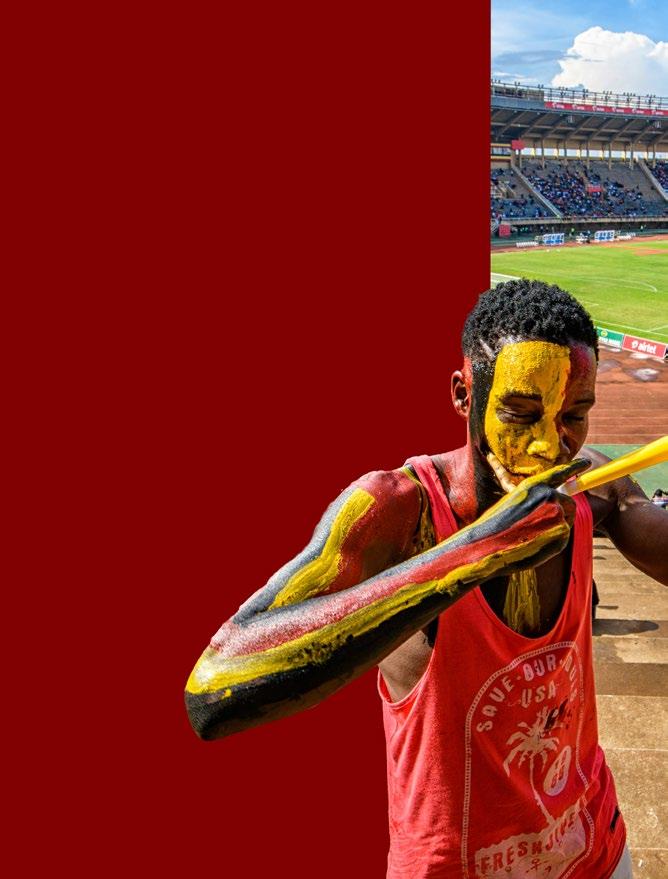
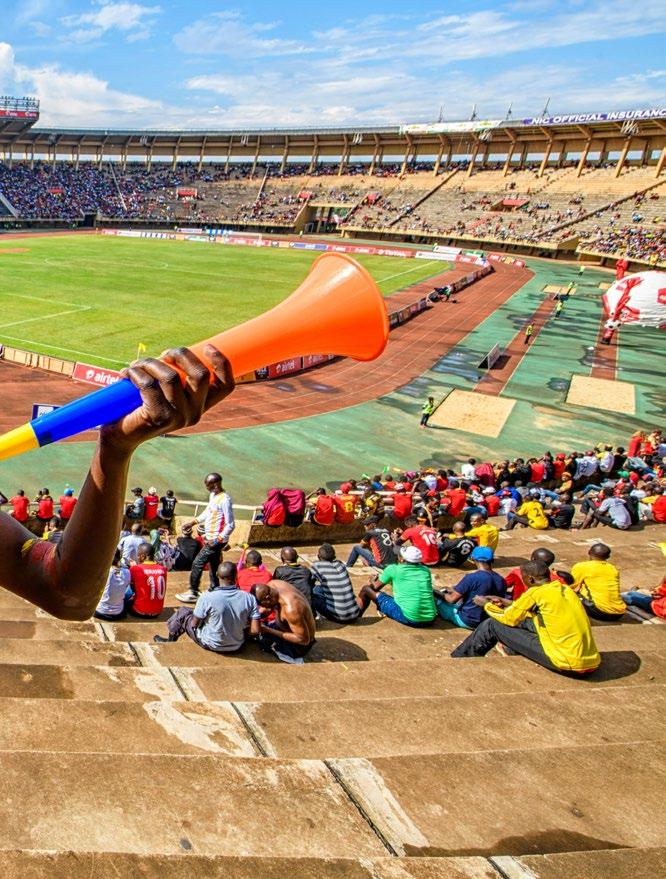
Football, or soccer as it is known in some regions, is more than just a game; it is a global phenomenon. In recent times, it has witnessed ex-traordinary growth, transcending cultural and geographical boundaries to become the most popular sport worldwide. According to Vedantu, the 2018 World Cup alone attracted over 3.5 billion viewers globally. This essay will delve into the remarkable evolution of football, exploring the key factors that have fueled its surge in popularity, the diversification of its appeal, the growing economic impact, the role of technology, and the challenges and opportunities that lie ahead. The enduring appeal of football stems from several fundamental charac-teristics that make it a truly global sport: Simplicity and accessibility: The rules of football are relatively straightforward, making it easy for people from all backgrounds to understand and play. All that is required is a ball and an open space, allowing it to be played in diverse settings, from streets and parks to stadiums. This inherent accessibility has been a ma-jor driver of its global reach, fostering participation and interest in regions with limited resources.
PASSION AND EMOTIONAL CONNECTION: Football evokes deep passion and emotional engagement among fans. From fierce club rivalries to the pride associated with national teams, the sport fosters a strong sense of identity and belonging, often passed down through generations. This emotional connection creates a vibrant and diverse melting pot where fans from various backgrounds unite to celebrate their shared love for the game.
COMPETITIVE NATURE: The highly competitive nature of football, with its em-phasis on skill, teamwork, and endurance, keeps fans
on the edge of their seats. The excitement of close matches and the desire to witness incredible feats of athleticism contribute significantly to the sport’s enter-tainment value.
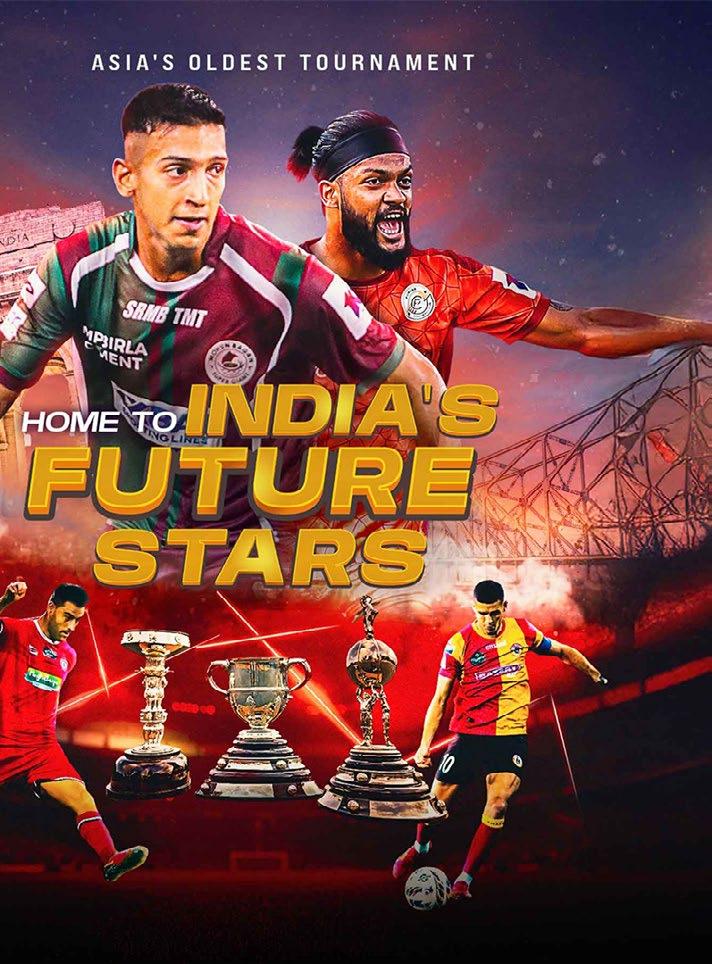
GLOBAL ICONS AND ROLE MODELS: Legendary players like Messi and Ronaldo, along with other popular football figures, have transcended the realm of sports to become global celebrities and inspiring role models for millions of children and aspiring athletes around the world. Their extraor-dinary talent and dedication to the sport have further fueled its popularity and inspired a new generation of players to follow their passion. The rise of professional leagues and international tournaments has been instrumental in football’s exponential growth: Emergence of new mar-kets: While Europe remains dominant, football is witnessing significant growth in new markets like Asia, North America, and Africa. Leagues in these regions, such as the Indian Super League (ISL) and Major League Soccer (MLS) in the United States, are attracting investments, develop-ing local talent, and drawing in growing fan bases.
INTERNATIONAL TOURNAMENTS AS CATALYSTS: Major international tournaments, particularly the FIFA World Cup and the UEFA Champions League, are key drivers of football’s global market growth. These tournaments gener-ate immense excitement and draw billions of viewers worldwide, further solidifying football’s position as a global spectacle. The FIFA World Cup, held every four years, brings together nations in a spirit of unity and friendly competition.
YOUTH PARTICIPATION AND MARKET EXPANSION: The rising popularity of foot-ball is driving increased participation, particularly
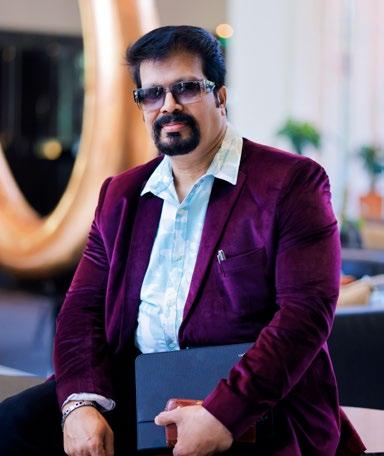
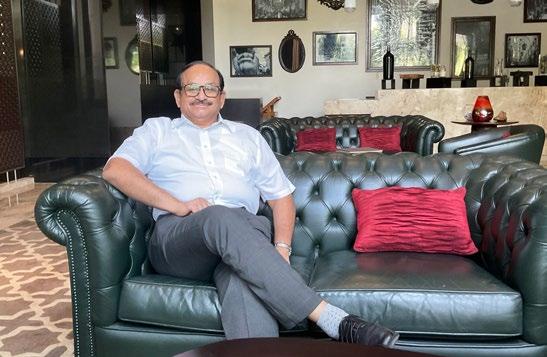
EDITOR -IN - CHIEF From The Desk Of
among youth, leading to a larger consumer base for the football market. Grassroots programs and academies are fostering talent development and creating brand loy-alty towards football from an early age, ensuring a promising future for the sport’s commercial growth. Investment in infrastructure: Govern-ments and sports investors are increasingly recognizing the socio-economic returns of investing in sports infrastructure like stadiums and training facilities. These investments enhance the match-day experi-ence, attract more spectators, and foster stronger community ties.
TECHNOLOGY’S TRANSFORMATIVE IMPACT:
Technological advancements are rapidly reshaping football, revolutionizing its representation, consumption, and even gameplay: Enhanced fairness and precision:VAR (Video Assistant Referee) technology, though initially controversial, has significantly improved refereeing accuracy and reduced human error in critical match moments, leading to fairer outcomes.
DATA ANALYSIS AND PERFORMANCE
OPTIMIZATION: Wearable technology and data analytics provide invaluable insights into player movements, physi-cal exertion, and performance metrics. This data enables coaches and analysts to optimize training programs, devise effective strategies, and make informed decisions during matches. Immersive fan engagement: Digital media platforms, streaming services, and social media have brought fans closer to the action, allowing them to engage with the sport in real-time, access exclusive content, and feel more connected to their favorite teams and players. Virtual and augmented reality technologies are further enhancing the fan experience by creating immersive and in-teractive environments.
REVOLUTIONIZING TALENT IDENTIFICATION: Technology plays a crucial role in talent identification and development, allowing clubs to scout players globally, analyze their performance data, and identify hidden gems. However, a balance needs to be struck between datadriven scouting and traditional methods to account for intangible qualities like judgment, initiative, and teamwork.
Digitalization of sponsorship and revenue streams: Technology has transformed football sponsorship and generated new revenue opportuni-ties through targeted digital advertising, fan engagement campaigns, and partnerships with e-sports and gaming entities. Looking ahead, the future of football remains incredibly promising. Emerging leagues are challenging traditional power structures, potential-ly leading to a more diversified and geographically balanced landscape. Discussions around financial fairness, regulation, and ethical
practices are ongoing, aiming to create a more equitable and sustainable ecosys-tem. Technological advancements will continue to revolutionize the game, influencing how it is played, managed, and consumed. The con-vergence of massive football fandom, the rise of women’s sports, and the increasing influence of streaming platforms and social media will con-tinue to drive the sport’s growth and engagement. In Short, football’s journey from a simple pastime to a global phenome-non is a testament to its unique appeal and universal language. Its re-markable growth in recent times has been driven by a confluence of fac-tors, including its accessibility, passion-inducing nature, competitive spir-it, the presence of global icons, the growth of professional leagues and international tournaments, the expanding economic footprint, and the transformative impact of technology. By maintaining traditional values while embracing innovation and promoting inclusivity, football is poised to continue its extraordinary growth and captivating audiences for genera-tions to come.
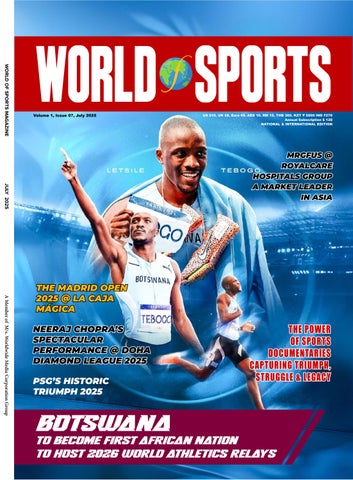
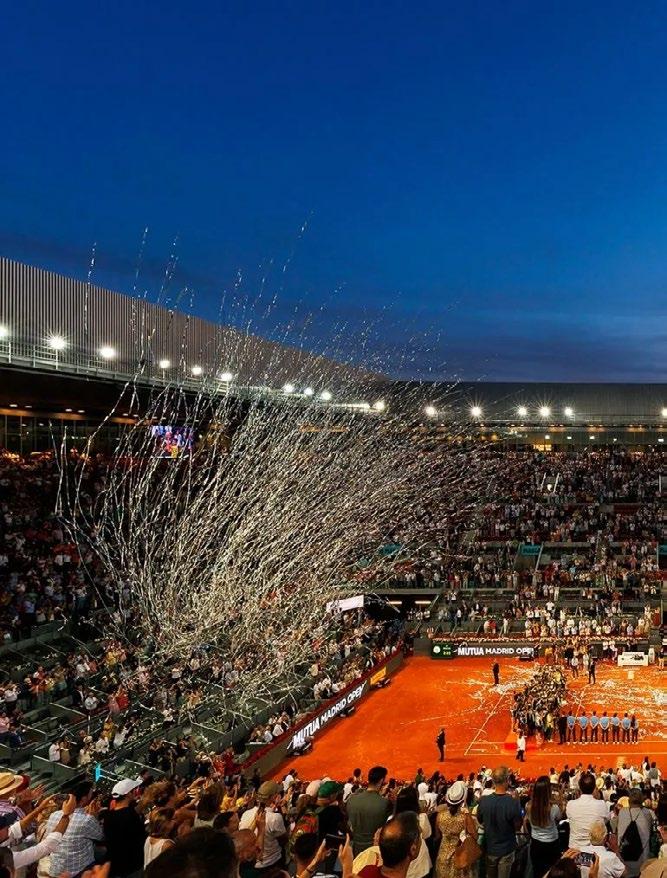
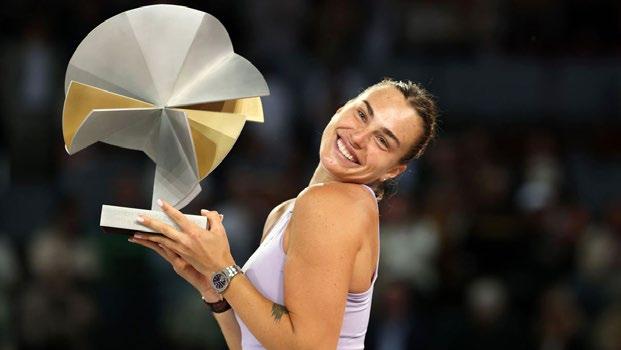
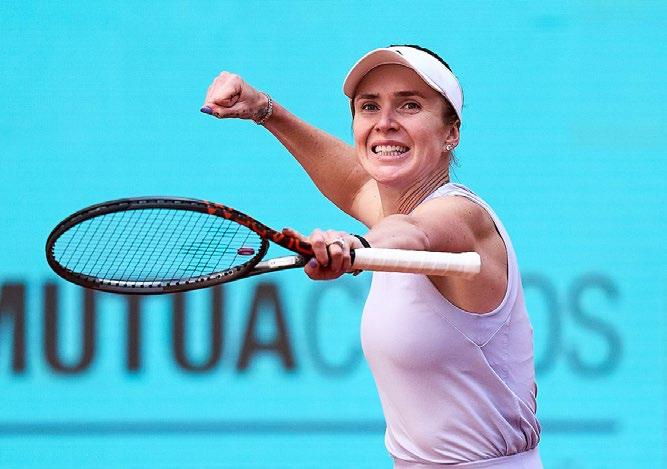
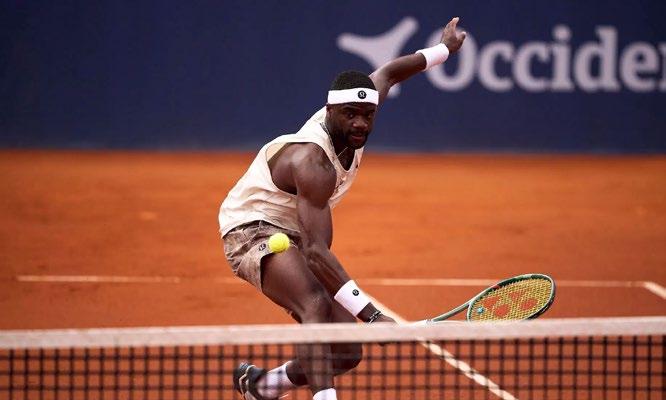
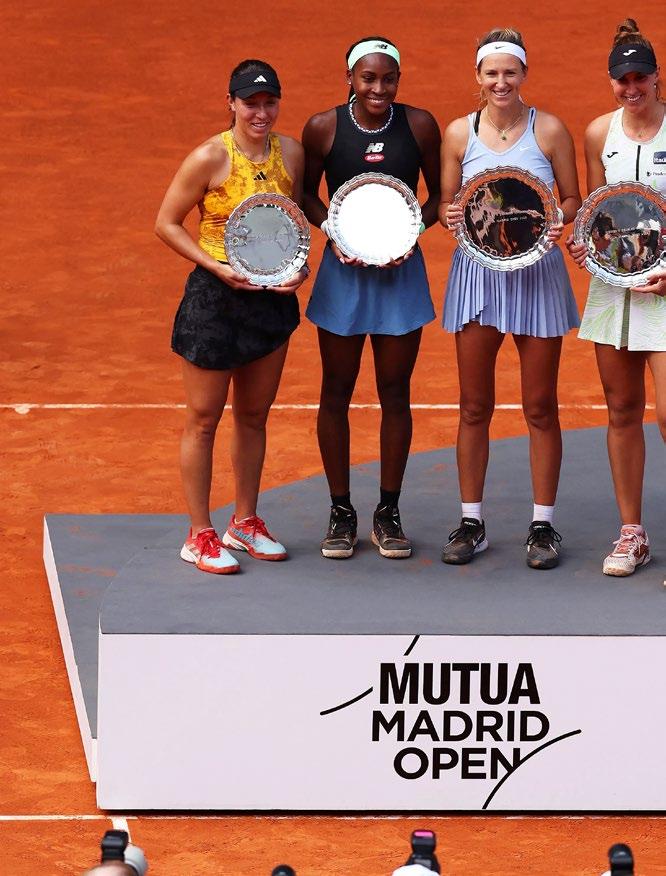
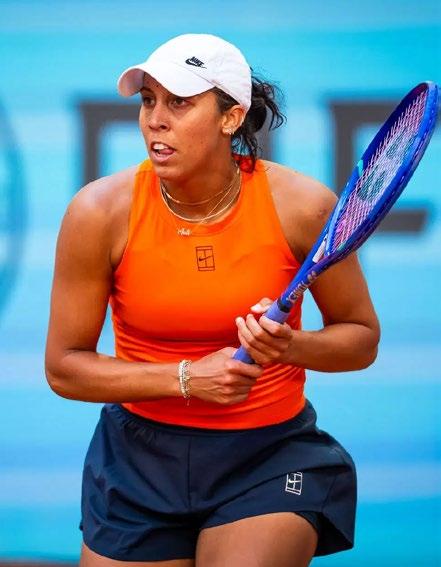
THE MADRID OPEN 2025 A CLAY-COURT SPECTACLE @ LA CAJA MÁGICA
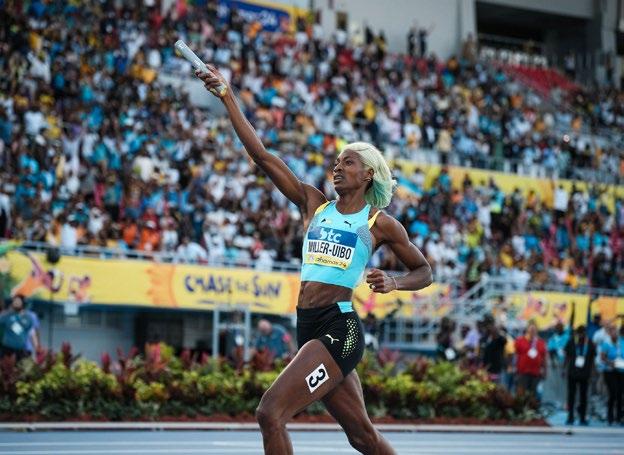
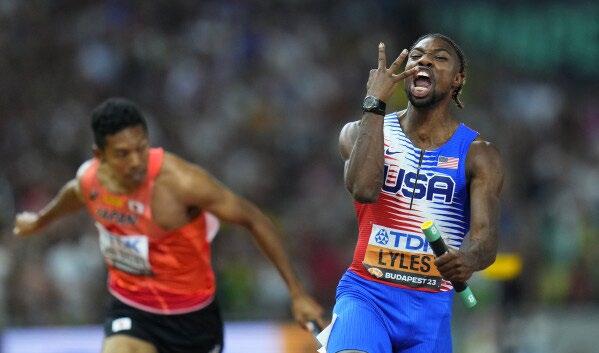
BOTSWANA TO MAKE HISTORY SELECTED AS FIRST AFRICAN NATION TO HOST 2026 WORLD ATHLETICS RELAYS
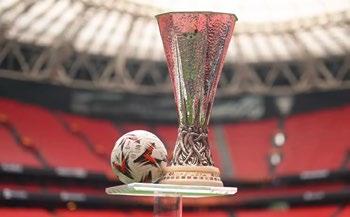
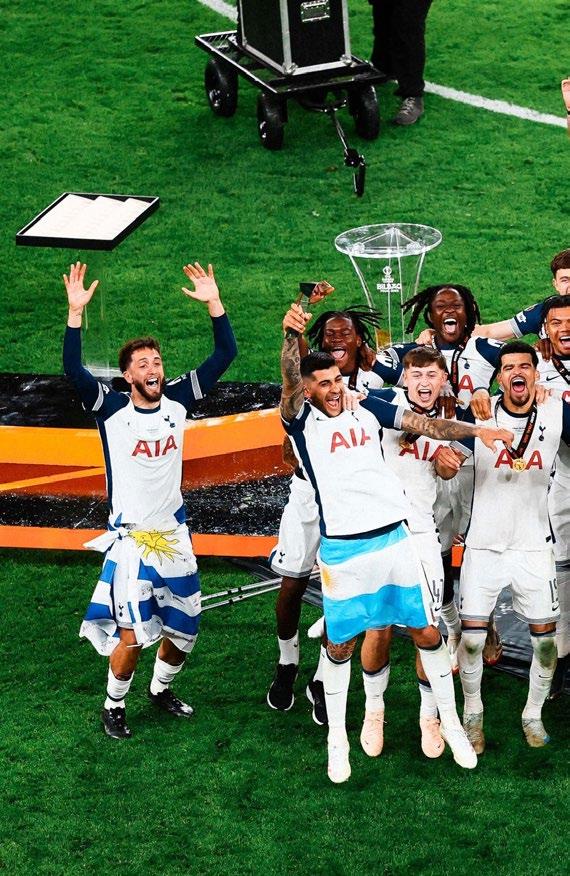
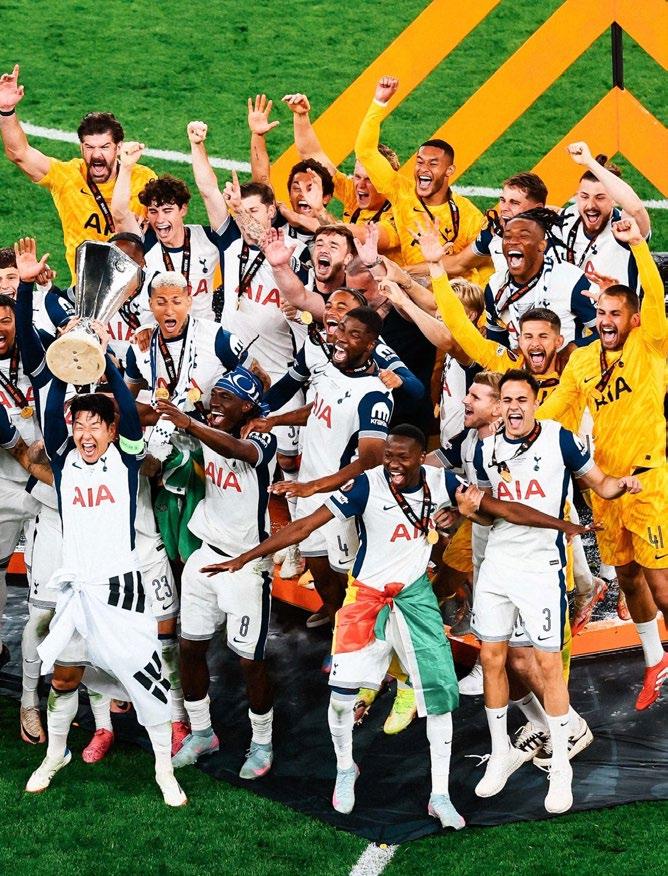
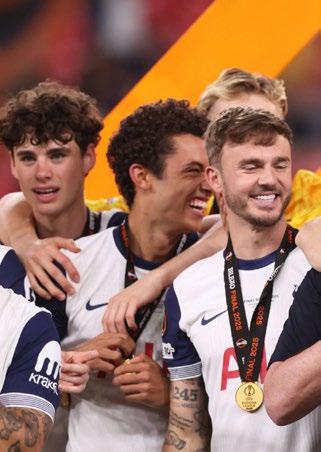
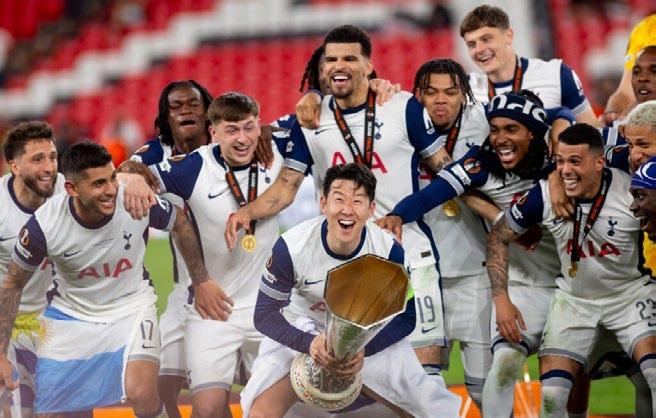
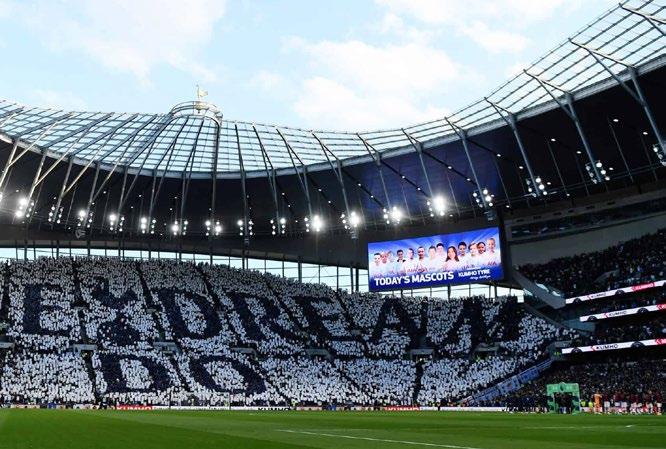
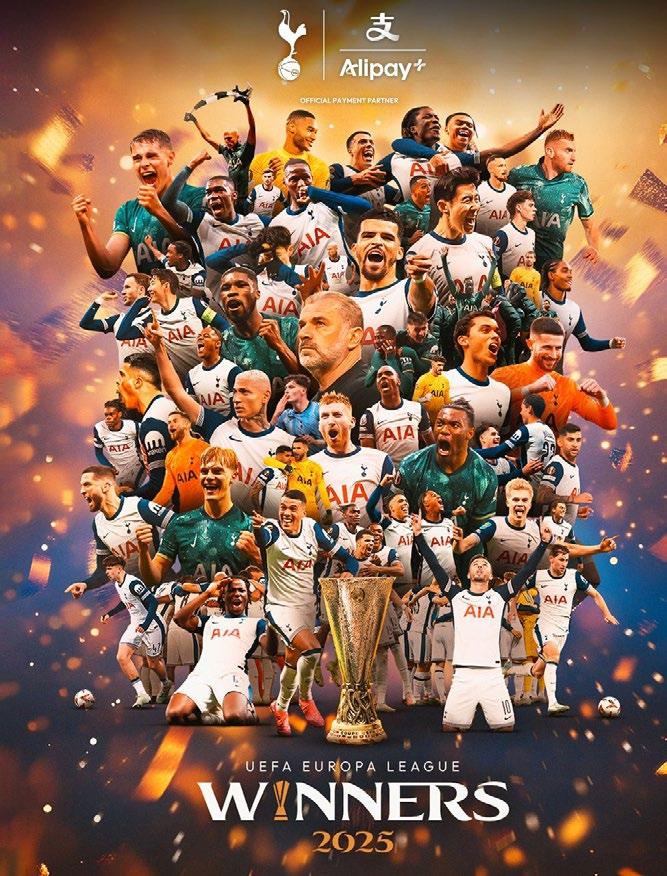
GLORY IN BILBAO TOTTENHAM HOTSPUR’S TRIUMPH ENDS A 17-YEAR QUEST
YOUTUBE SECURES GLOBAL FREE-TO-VIEW RIGHTS FOR NFL GAME
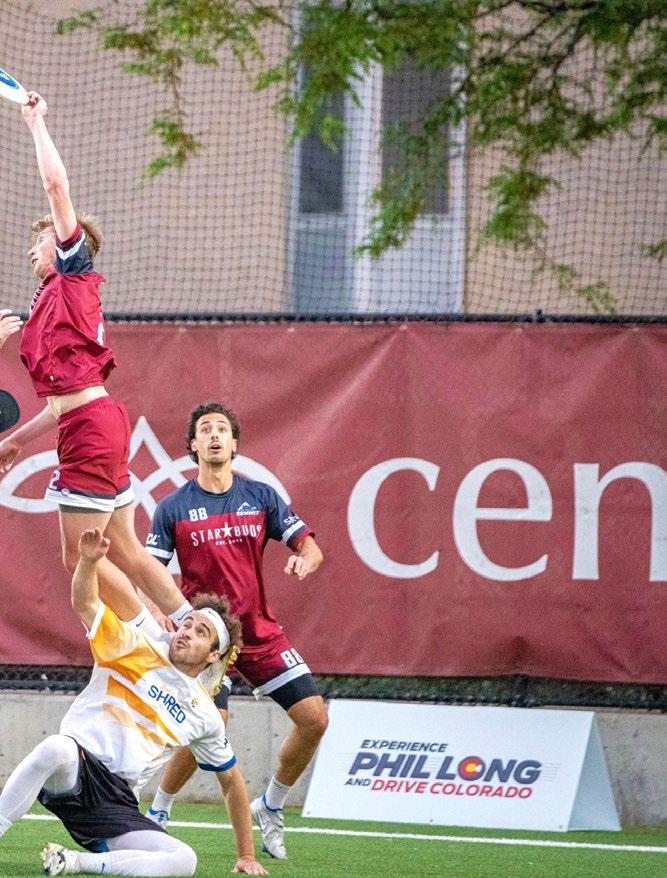
THE SOARING ASCENT OF ULTIMATE FRISBEE A SPORT ON THE RISE
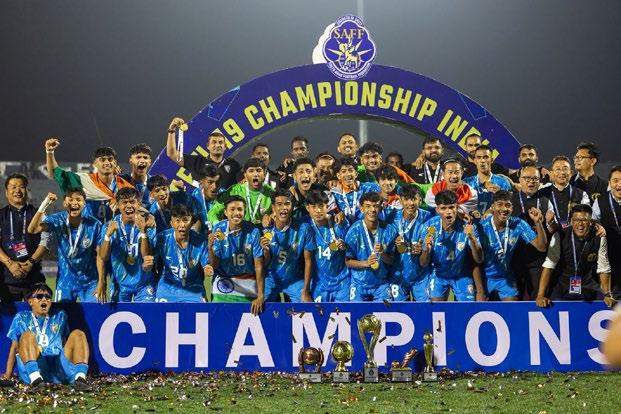
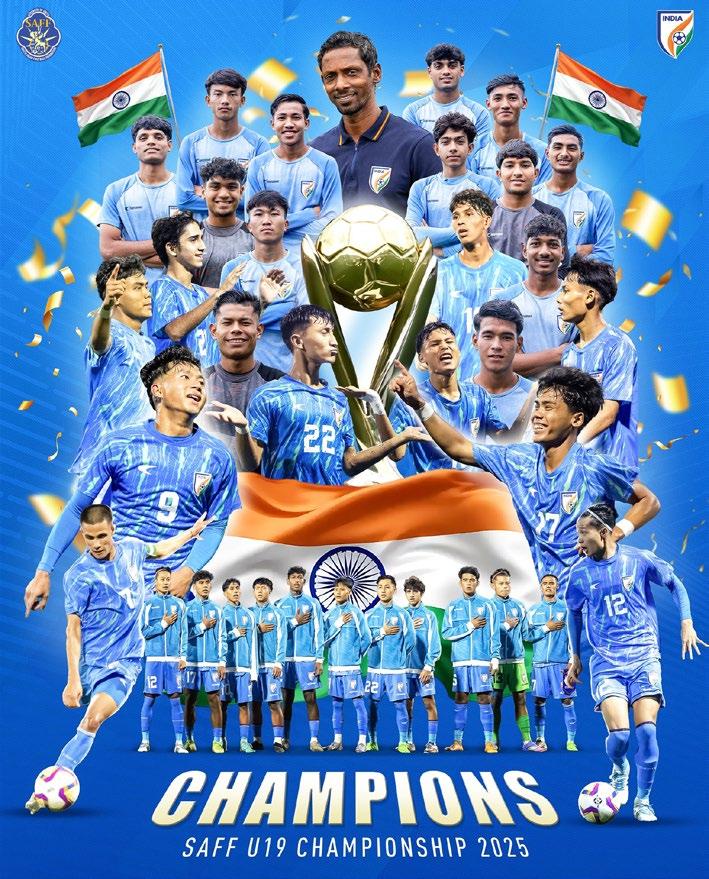
INDIA U19 CLINCHES SAFF U19 CHAMPIONSHIP 2025
MICHAEL SANSONI JOINS MANCHESTER UNITED TO LEAD DATA REVOLUTION
MRGFUS @ ROYALCARE HOSPITALS GROUP A MARKET LEADER IN ASIA
ULTIMATE TABLE TENNIS INKS LANDMARK THREE-YEAR BROADCWAST DEAL WITH JIOSTAR
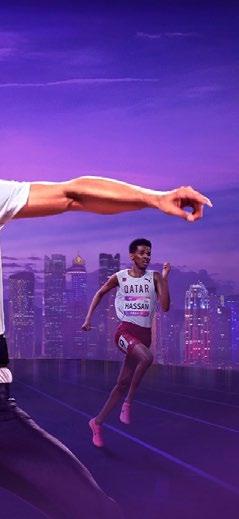
NEERAJ CHOPRA BREAKS 90M BARRIER WITH 90.23M THROW @ DOHA DIAMOND LEAGUE 2025
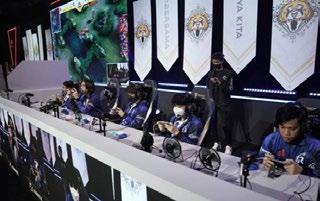
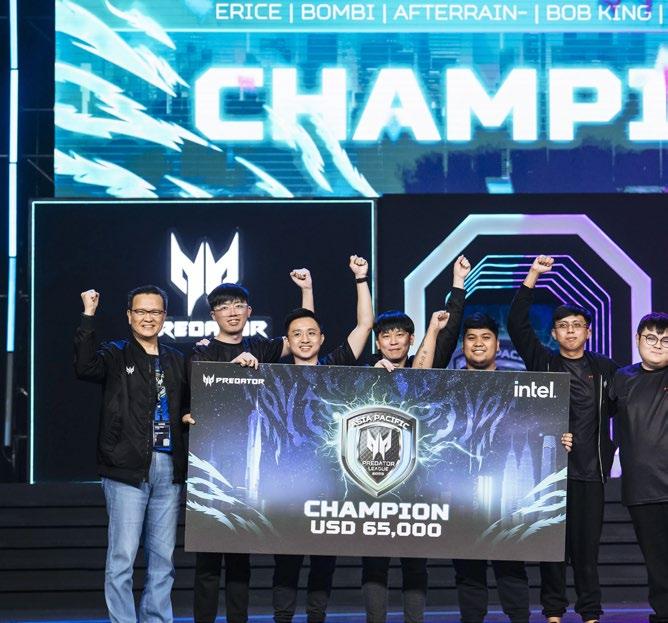
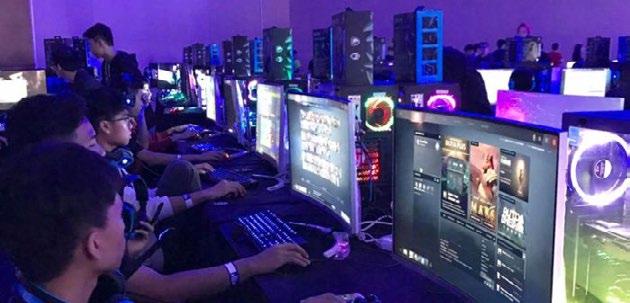
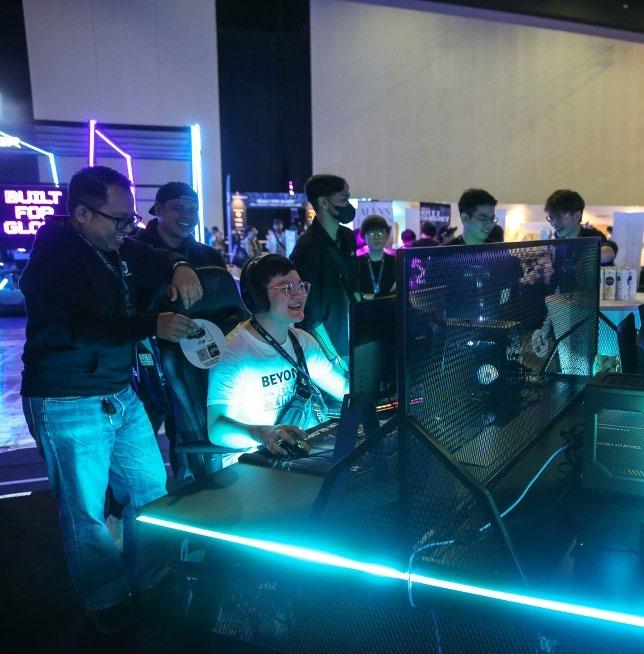
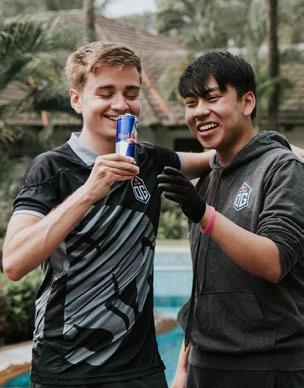
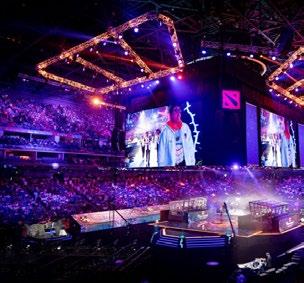
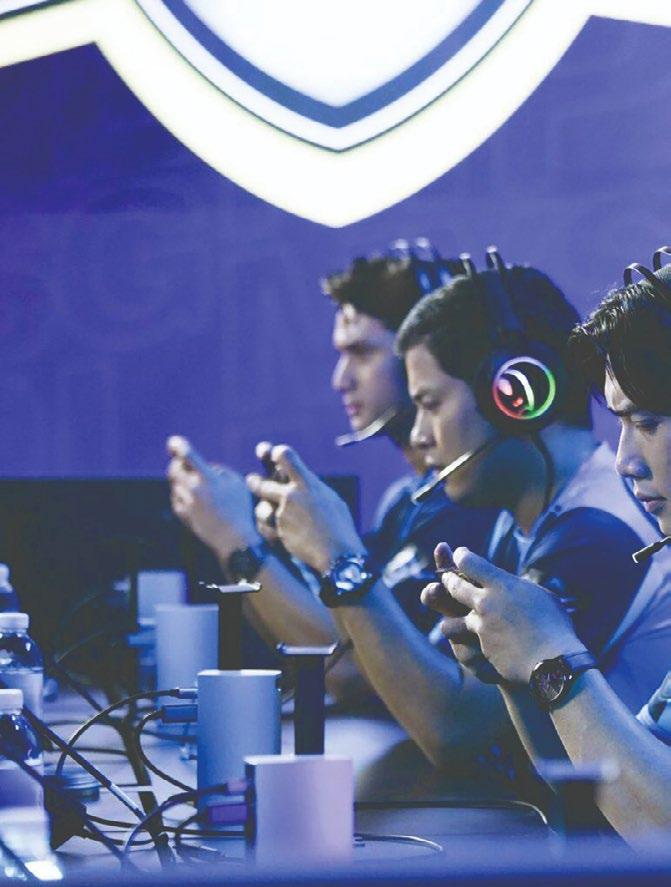
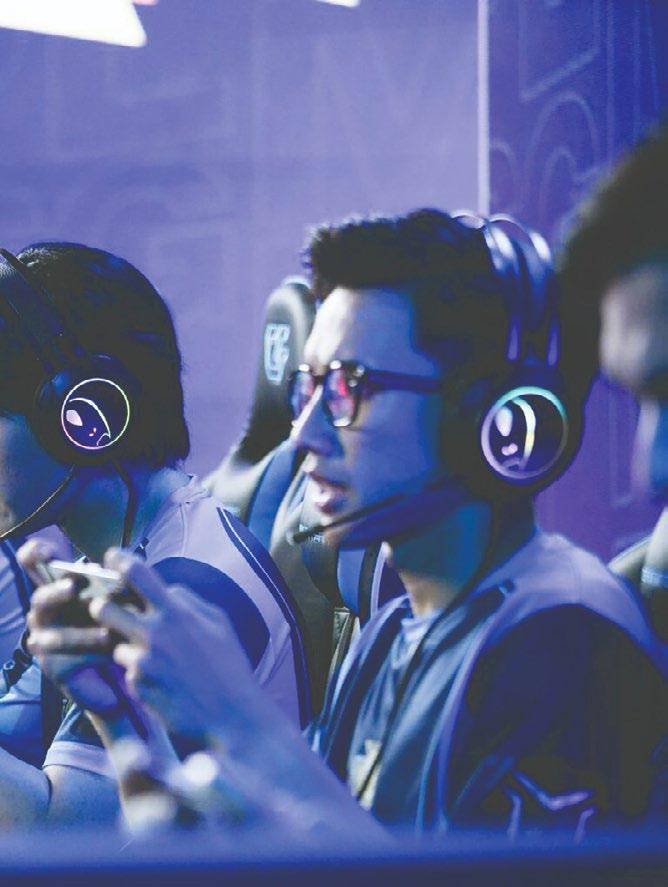
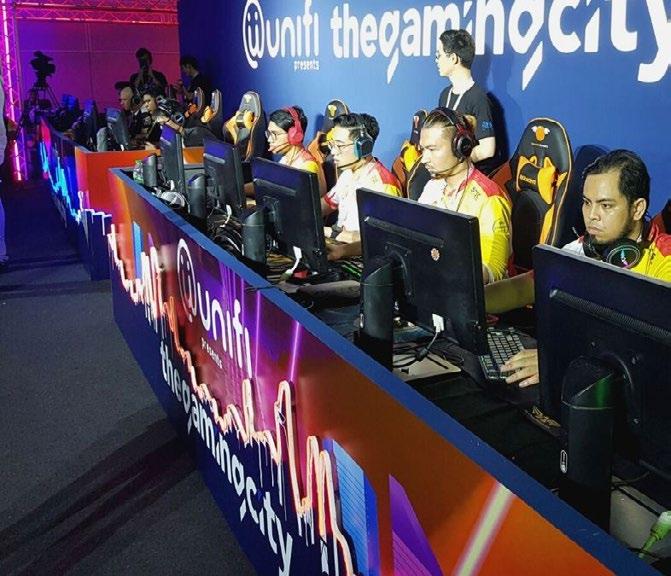
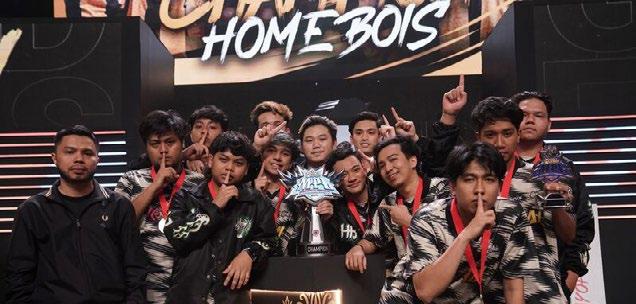
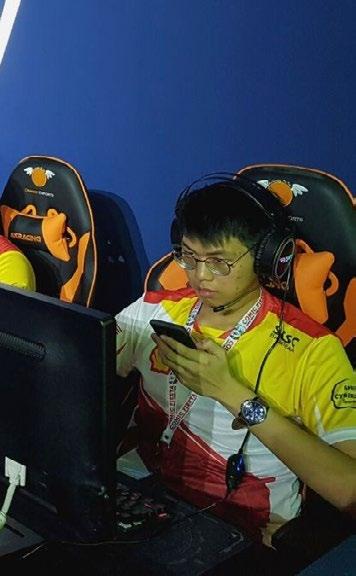
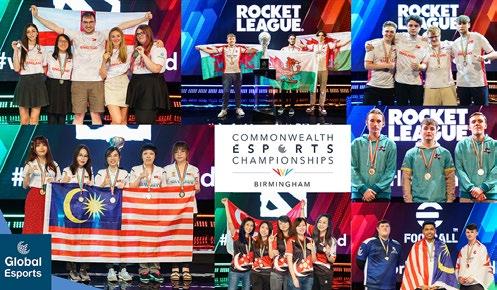
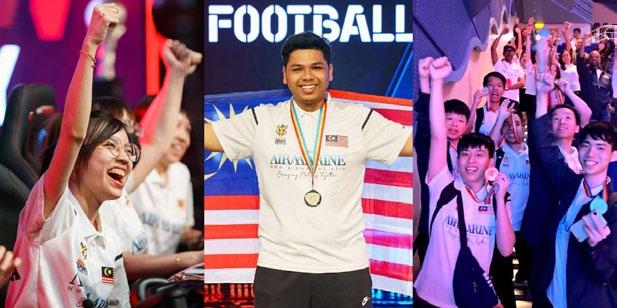
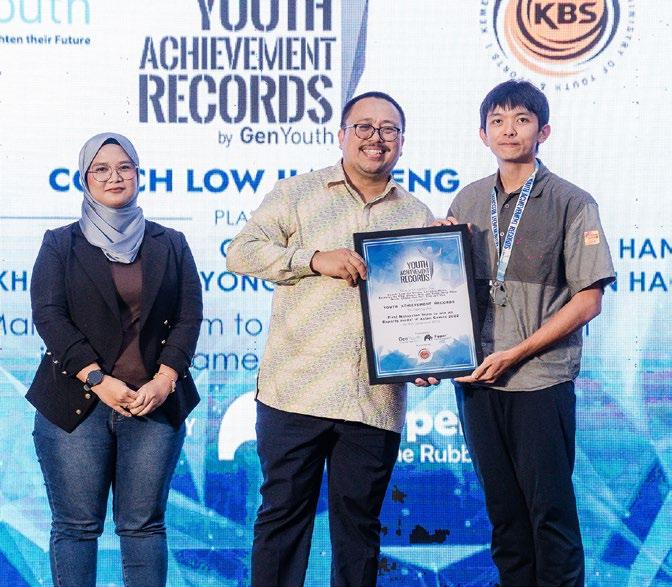
THE RISE OF MALAYSIAN ESPORTS -A NEW ERA OF COMPETITIVE GAMING
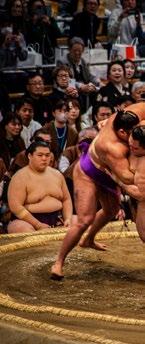
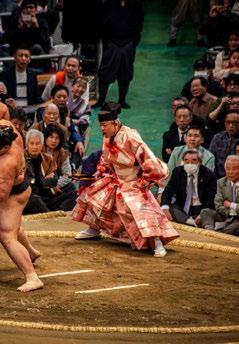
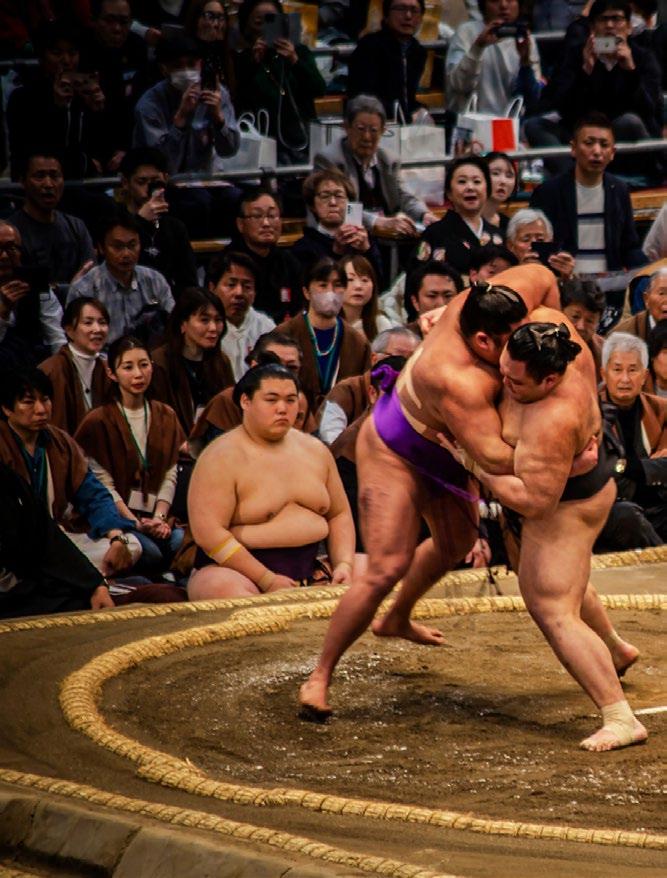
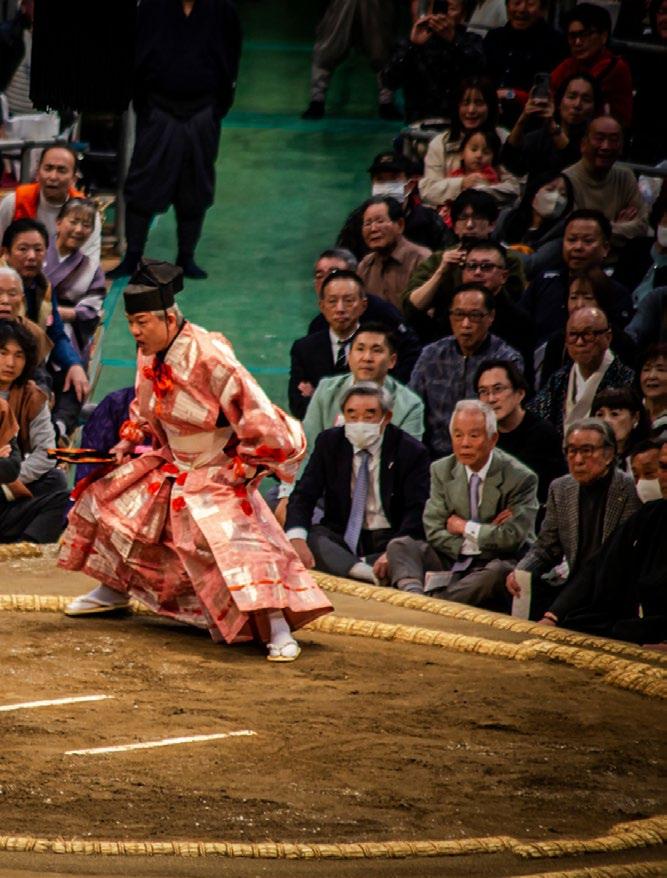
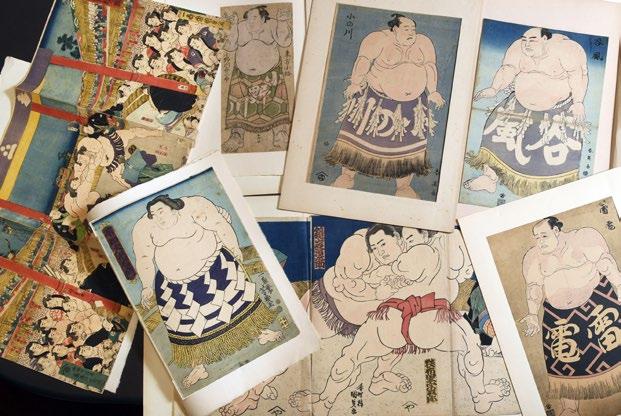
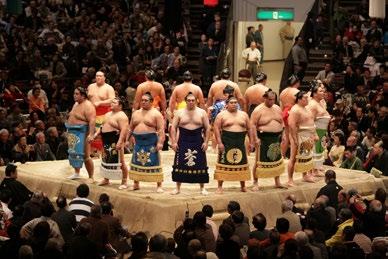
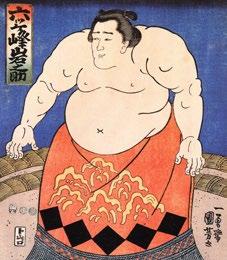
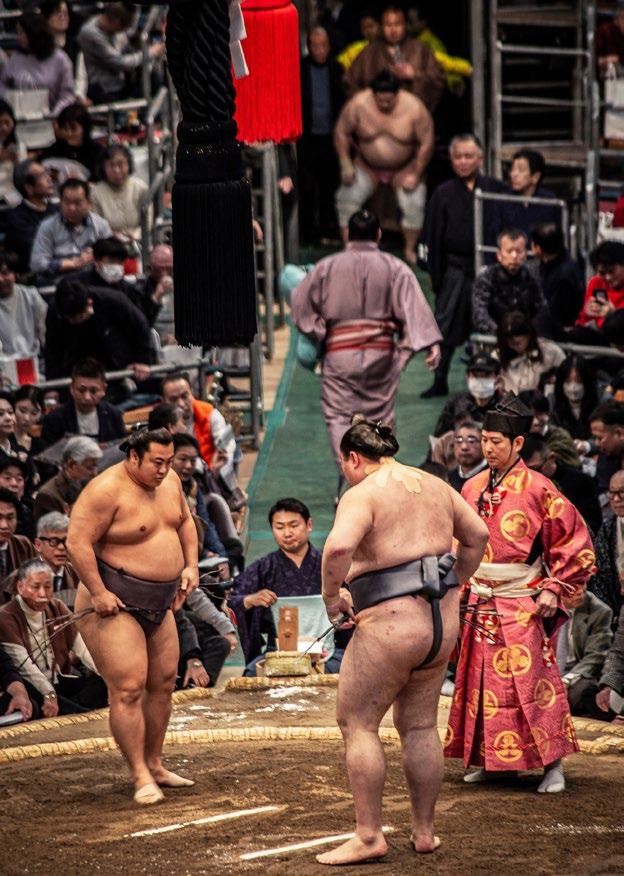
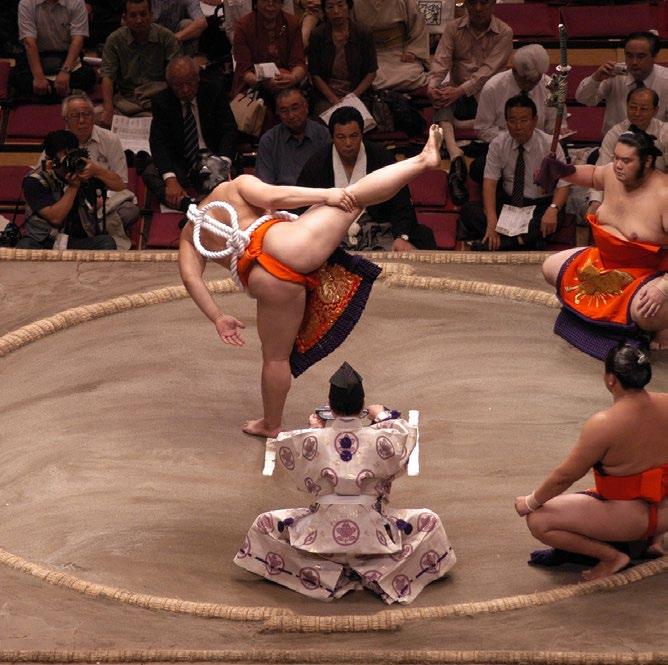
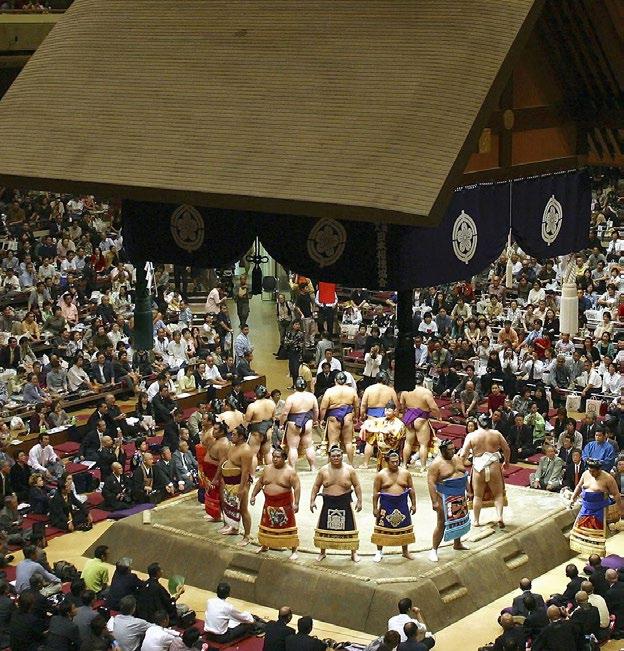
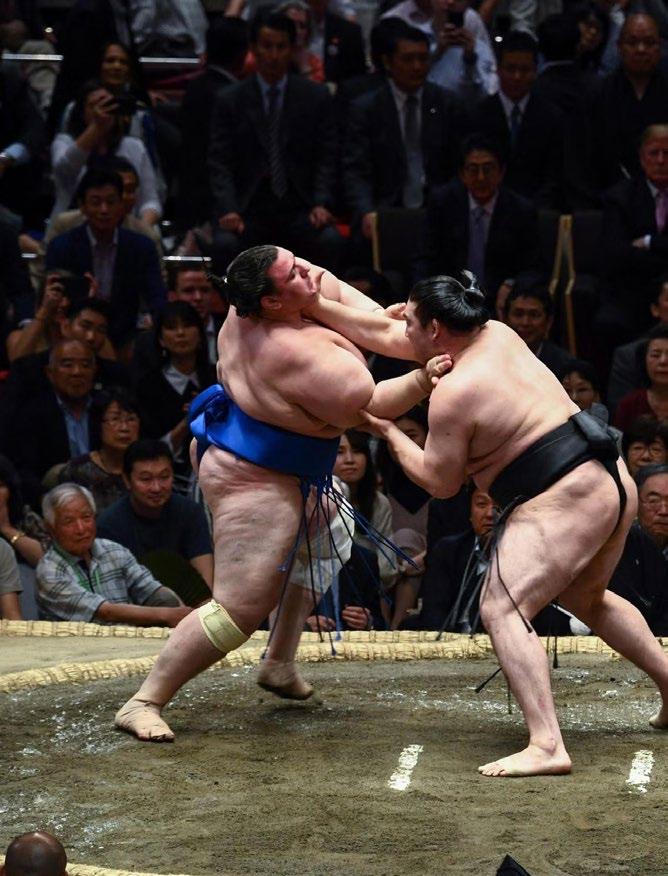
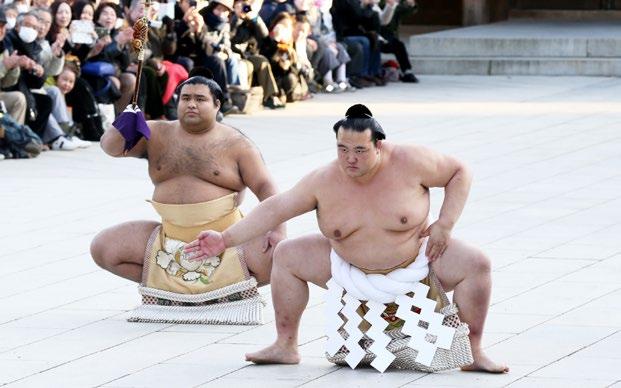
THE ART AND TRADITION OF SUMO WRESTLING
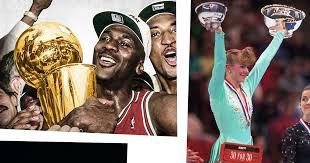
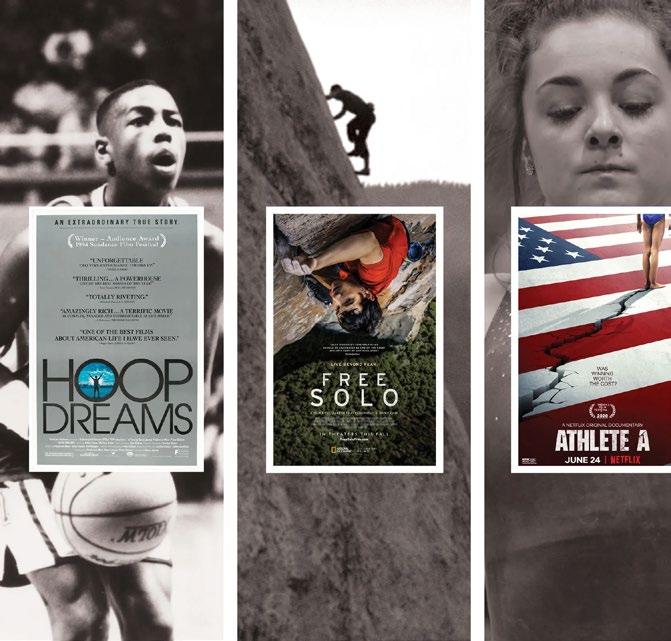
PLEZI SPORTS DRINK A HEALTHIER HYDRATION OPTION FROM STEPHEN & MICHELLE OBAMA THE POWER OF SPORTS DOCUMENTARIES CAPTURING TRIUMPH, STRUGGLE & LEGACY
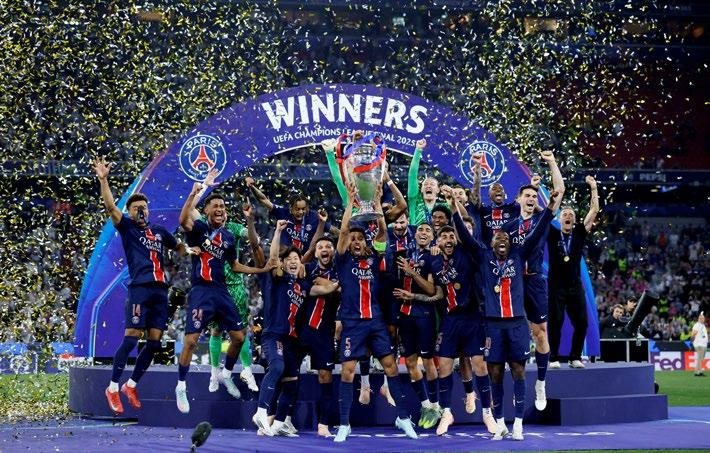
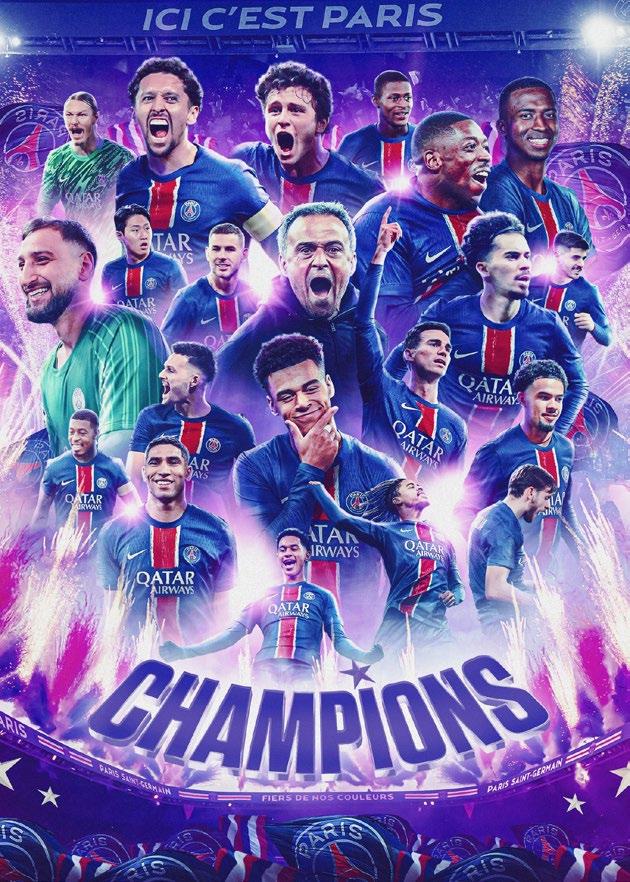
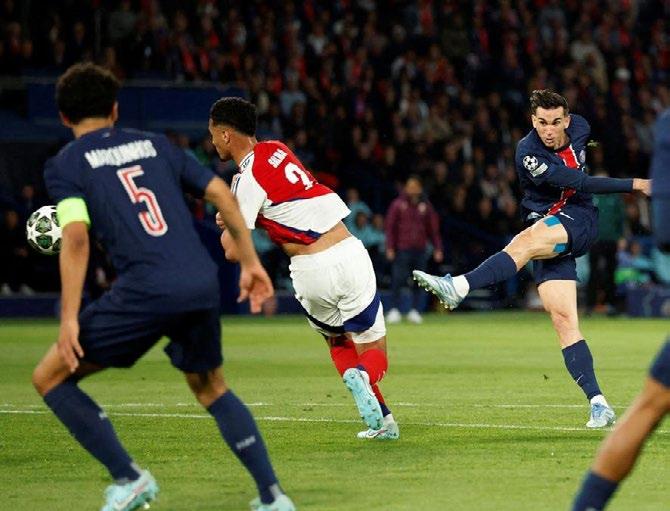
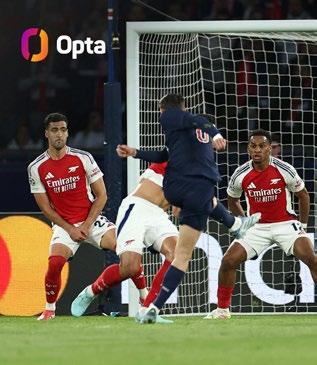
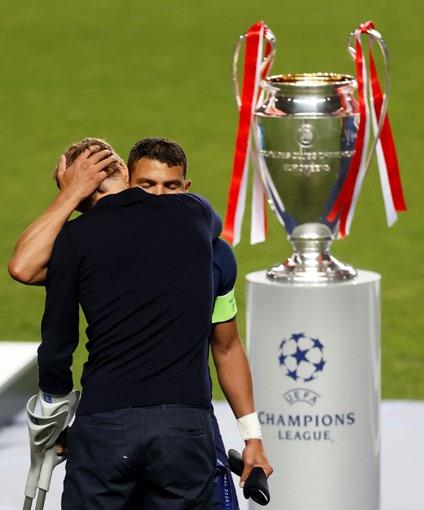
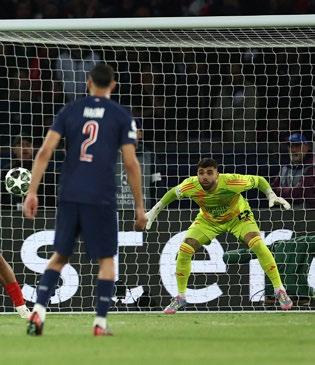
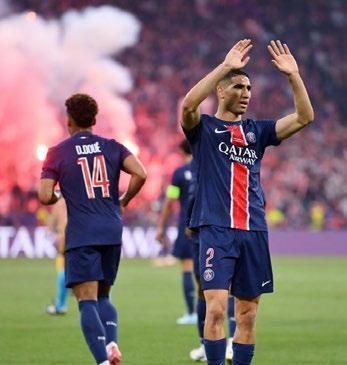
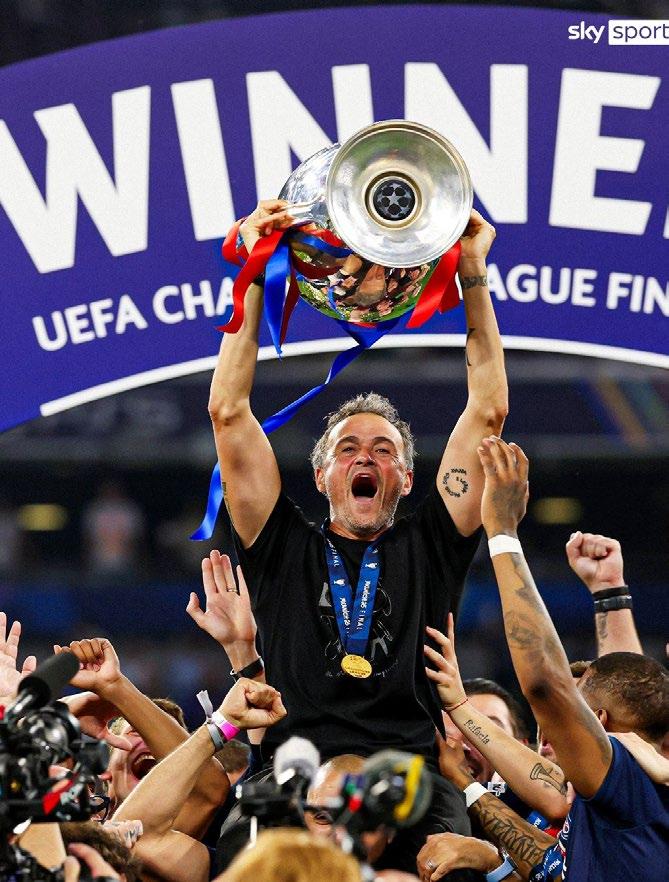
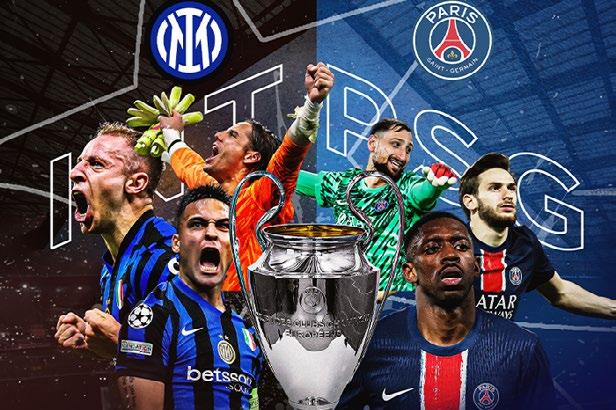
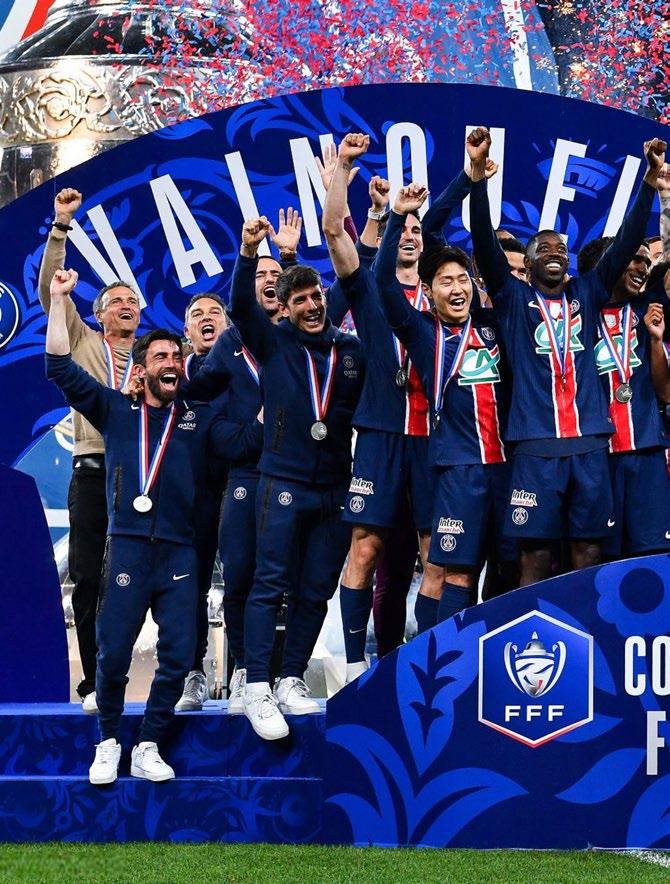
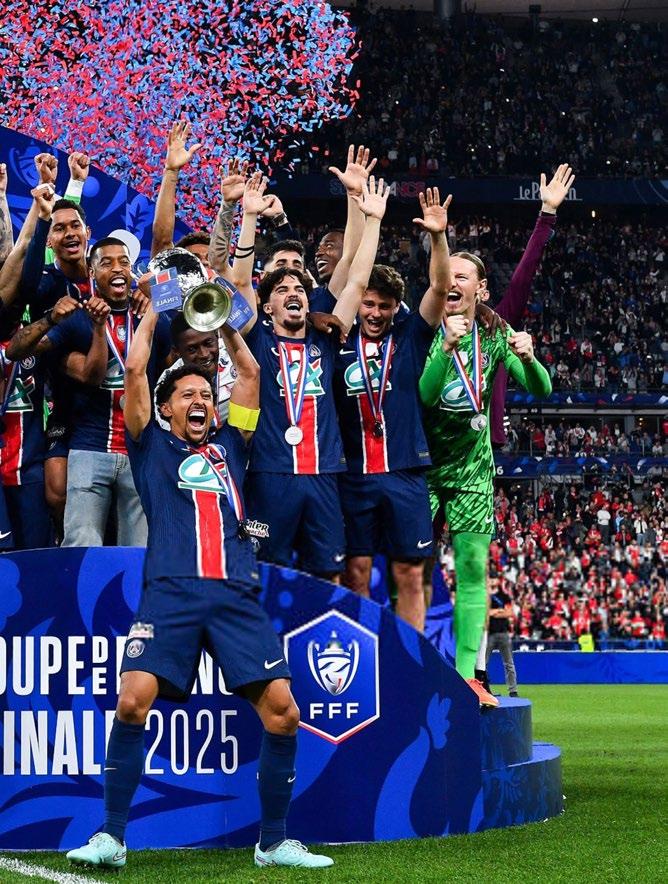
PSG’S HISTORIC TRIUMPH CLINCHING THE 2025 UEFA CHAMPIONS LEAGUE
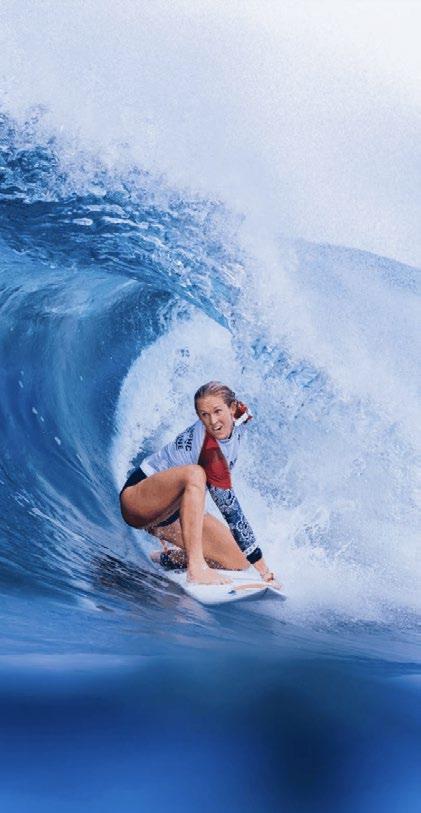
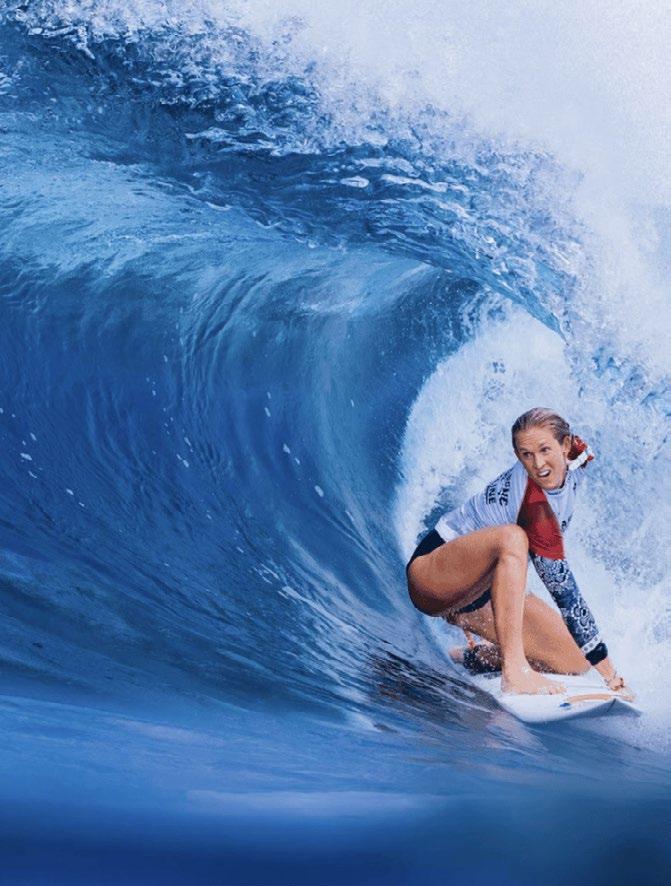
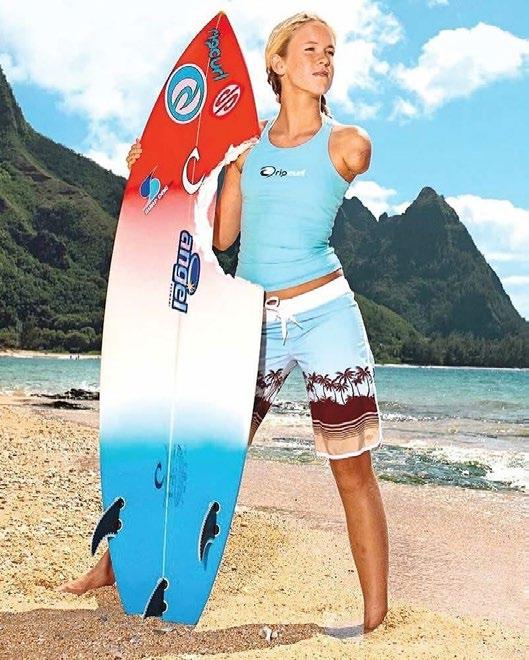
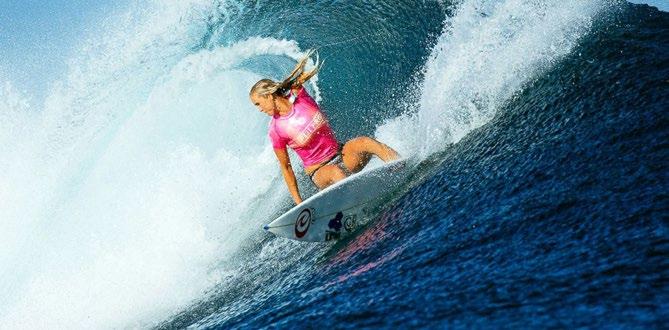
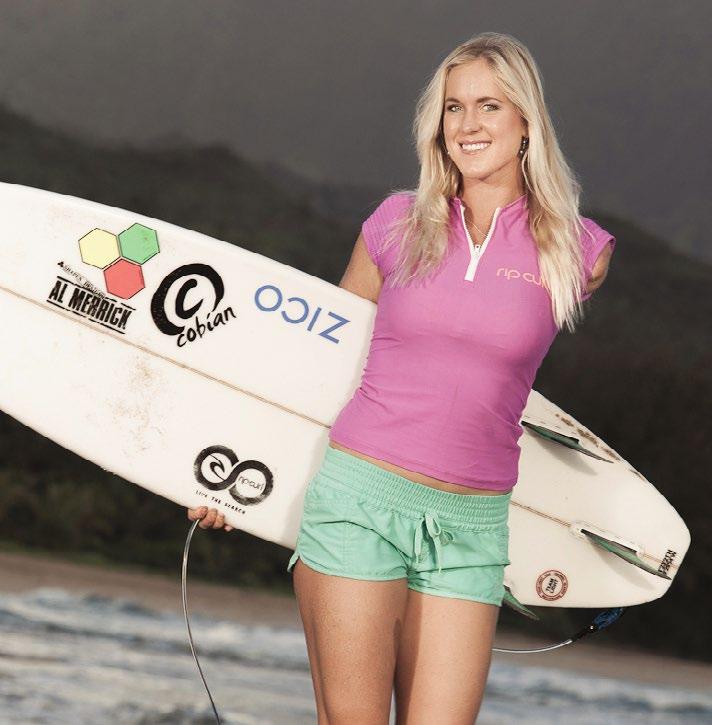
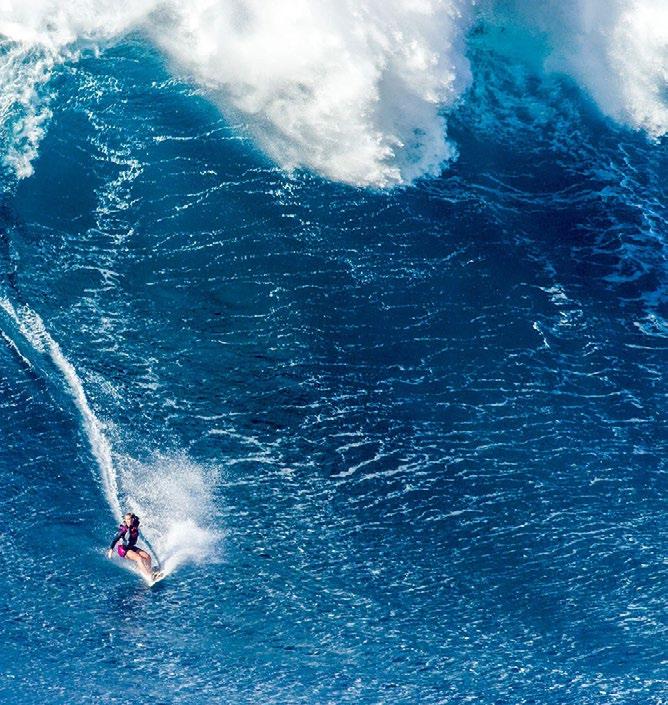
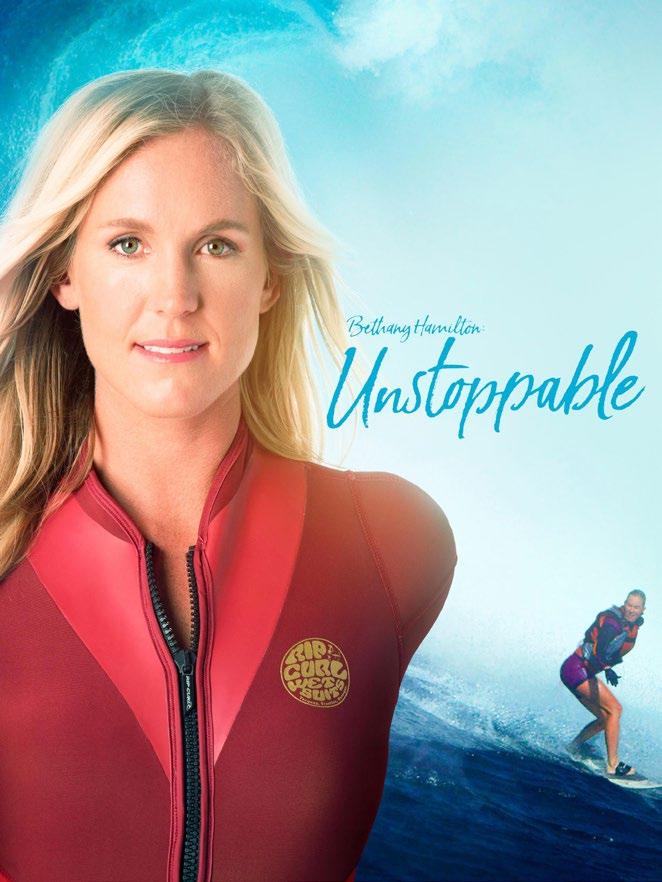
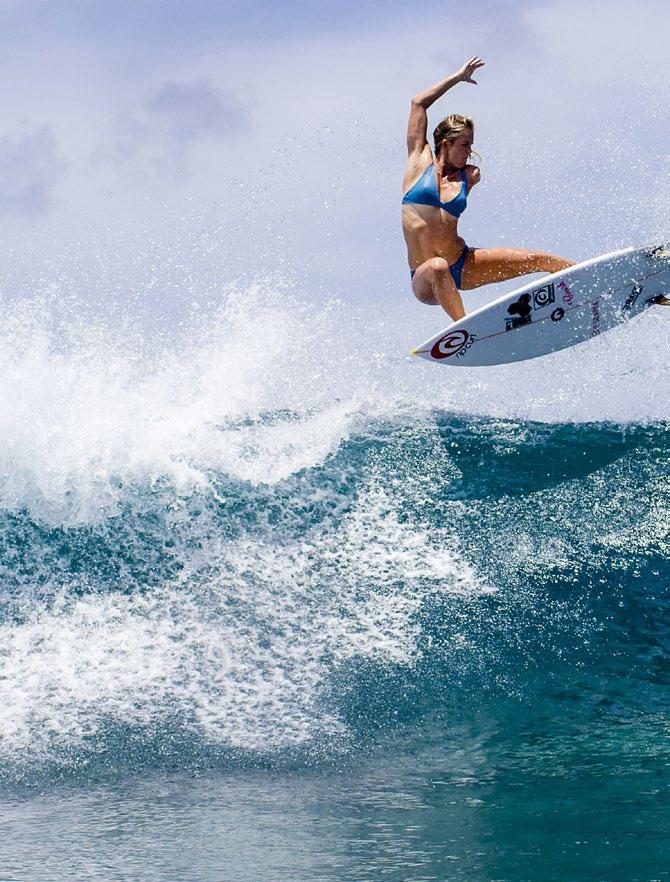
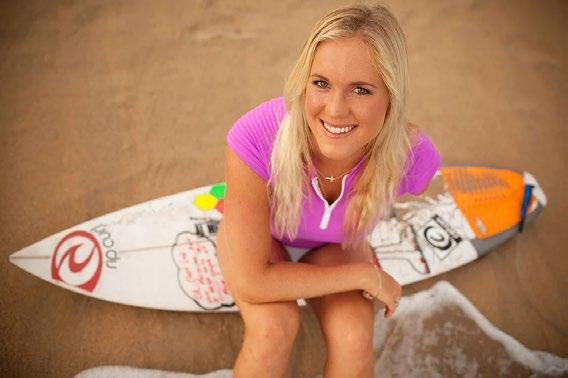
BETHANY HAMILTON’S UNSTOPPABLE WAVE A TRIUMPH OF RESILIENCE IN SURFING
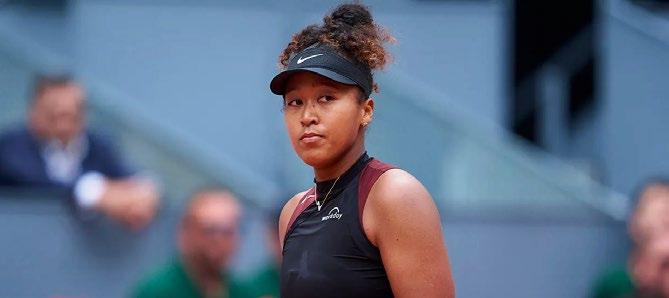
THE MADRID OPEN 2025
A Clay-Court Spectacle @ La Caja Mágica
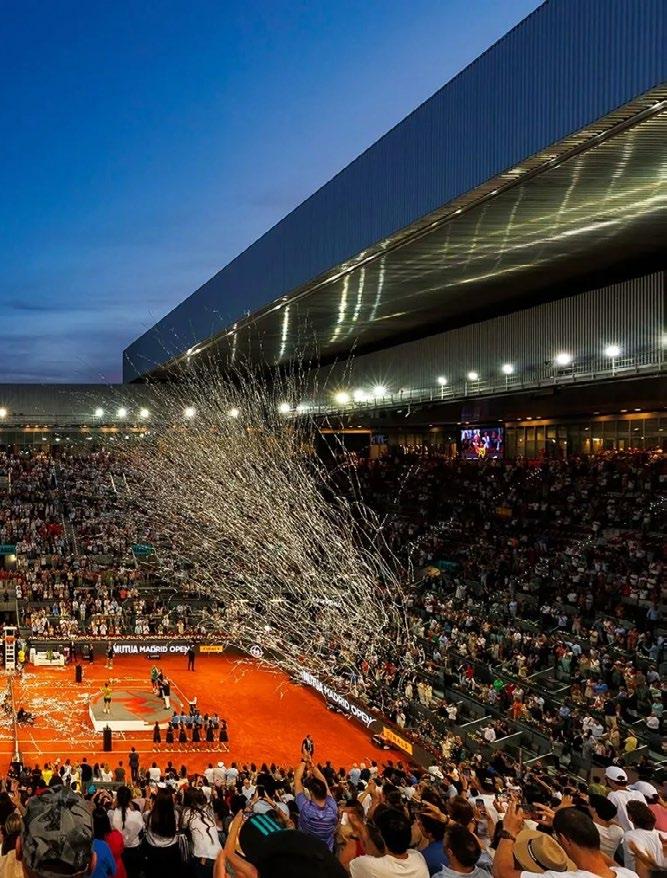
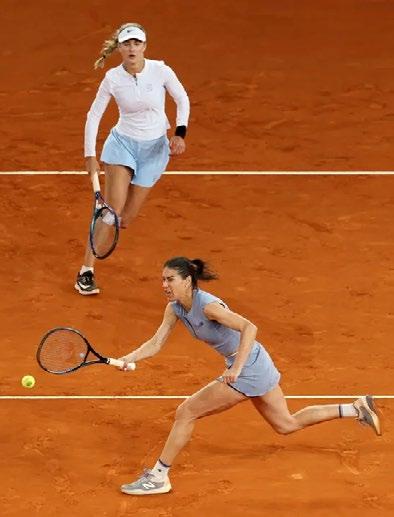
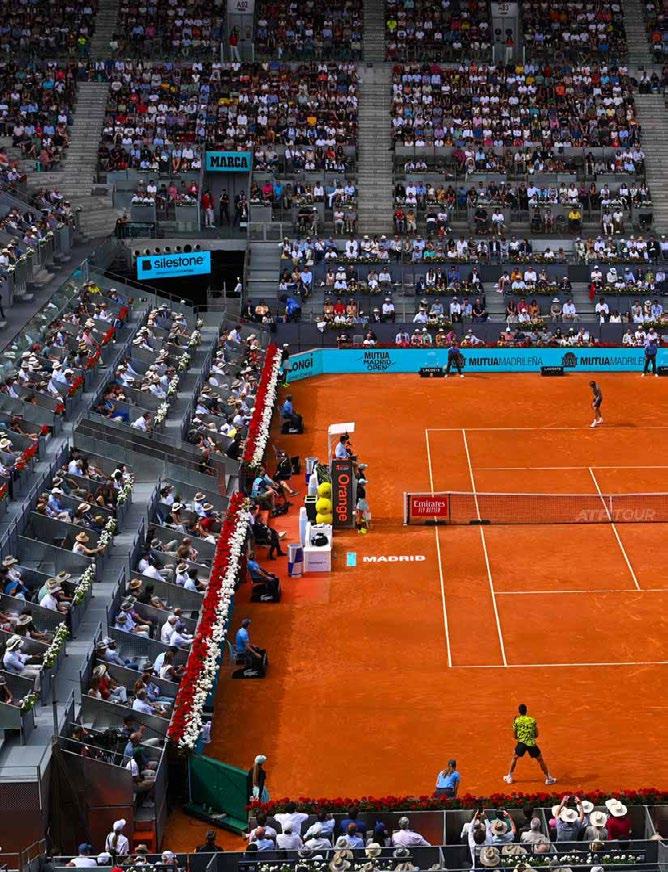
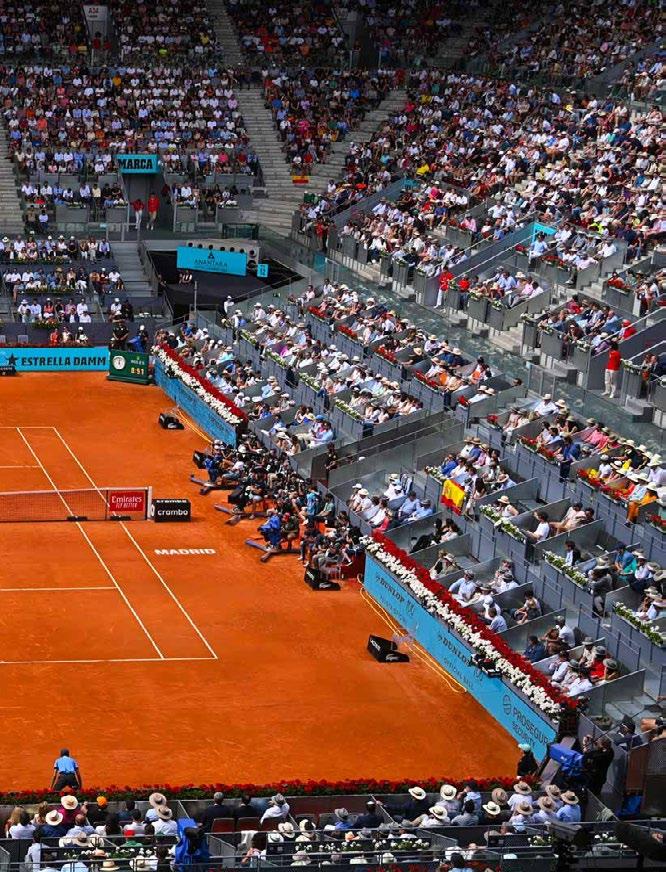
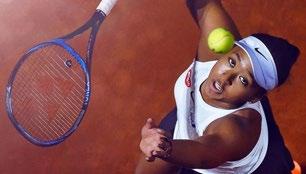
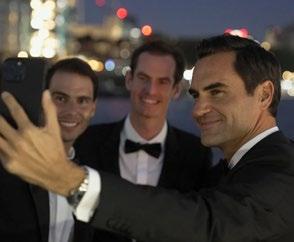
The 2025 Mutua Madrid Open, held from April 22 to May 4 at the iconic La Caja Mágica in Madrid, Spain, delivered two weeks of thrilling tennis on the red clay courts of Park Manzanares. As a premier ATP Masters 1000 and WTA 1000 event, the tournament showcased the world’s top players battling for prestige, ranking points, and a share of the €8,055,385 prize money pool. Despite a dramatic power outage that halted play, the 23rd edition for the ATP and 16th for the WTA solidified Madrid’s place as a cornerstone of the clay-court season, with unforgettable moments and new champions crowned.
A STAR-STUDDED FIELD AND HIGH STAKES
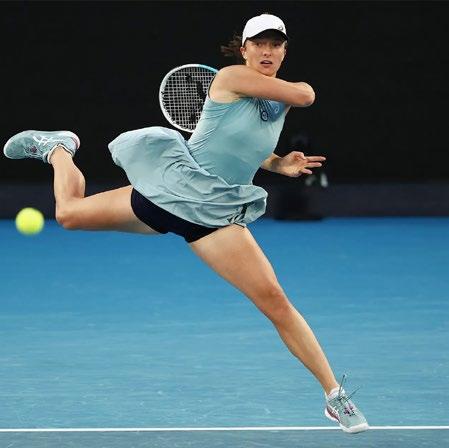
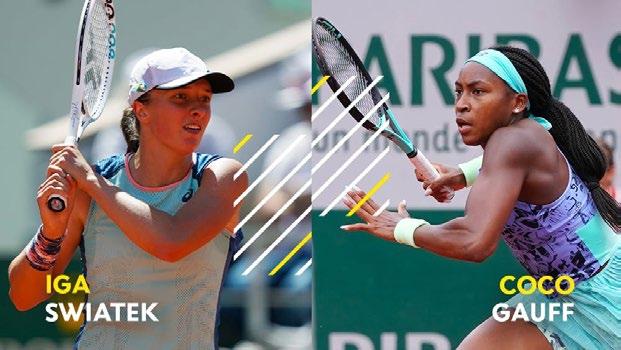
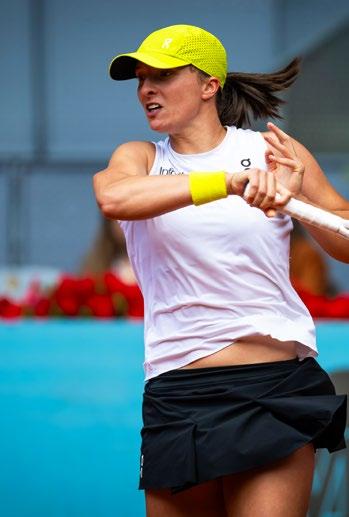
The 2025 Madrid Open attracted a stellar line-up, including home favourite Carlos Alcaraz, 24-time Grand Slam champion Novak Djokovic, and rising stars like Jack Draper and Casper Ruud on the men’s side. The women’s draw featured World No. 1 Aryna Sabalenka, defending champion Iga Swiatek, and American standouts Coco Gauff and Madison Keys. With 1,000 ranking points up for grabs for the singles champions, the tournament was a critical stop in the lead-up to Roland-Garros, testing players’ claycourt prowess and endurance over its extended two-week format.
The Caja Mágica, designed by Dominique Perrault with its three retractable-roof courts, provided a stunning backdrop. The venue’s modern facilities and vibrant atmosphere drew passionate crowds, despite a controversial moment when play was suspended on April 28 due to a widespread power outage across Spain and parts of southern Europe. Players like Frances Tiafoe and Madison Keys took the disruption in stride, with Tiafoe humorously recounting how tournament staff lit candles in the player restaurant as the outage unfolded. Power was restored by the morning of April 29, allowing the tournament to resume with minimal long-term impact.
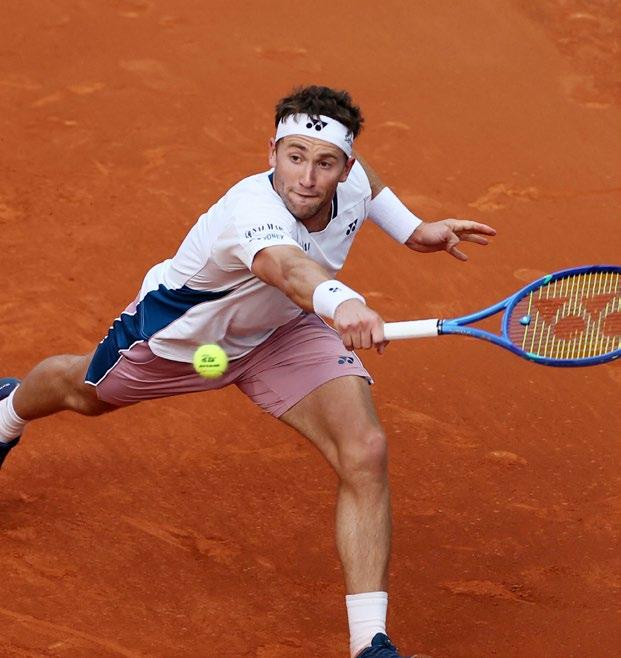
MEN’S SINGLES: CASPER RUUD’S BREAKTHROUGH TRIUMPH
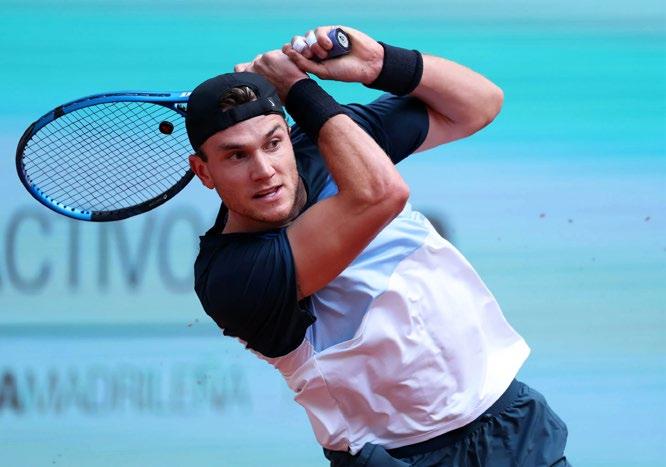
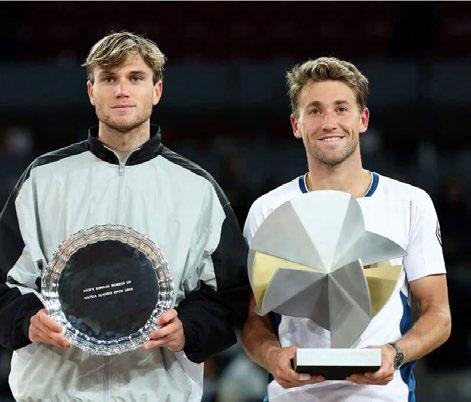
The men’s singles final pitted Norway’s Casper Ruud, a two-time Roland-Garros runner-up, against Great Britain’s Jack Draper, the Indian Wells champion earlier in the season. Ruud, seeded 14th, overcame a rib injury with the aid of painkillers to reach his first Madrid final, defeating Francisco Cerundolo in the semi-finals. Draper, the fifth seed, showcased his meteoric rise by outlasting Lorenzo Musetti in the other semi-final, entering the final without dropping a set and climbing to No. 5 in the live rankings.
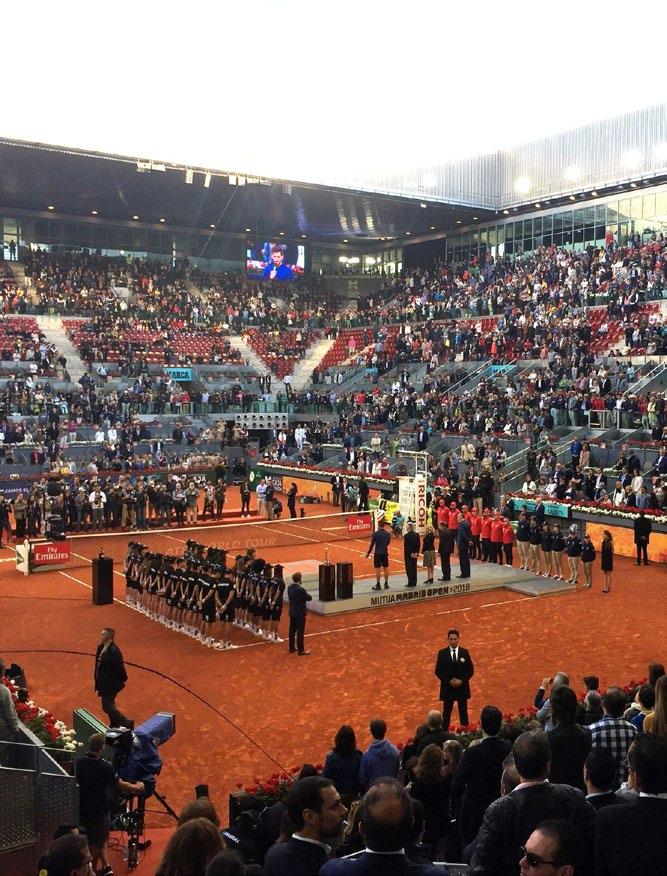
In a gripping final on May 4, Ruud outlasted Draper 7-5, 3-6, 6-4, capturing his maiden ATP Masters 1000 title and becoming the first Norwegian to win at this level. The match, played on Manolo Santana Stadium at 6:30 p.m. local time, showcased Ruud’s clay-court tenacity and Draper’s aggressive baseline game, marking their first career meeting. Ruud’s victory added to his reputation as a clay specialist, while Draper’s run signalled his arrival as a top-tier contender.
WOMEN’S SINGLES: ARYNA SABALENKA’S CLAY-
COURT MASTERY
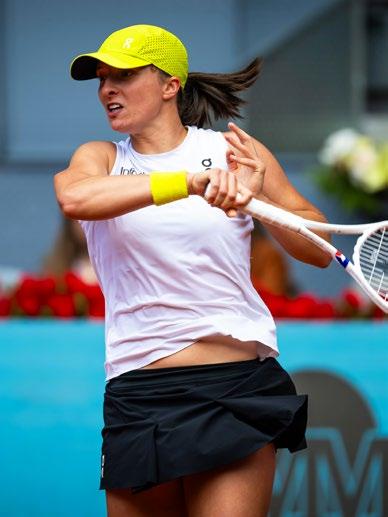
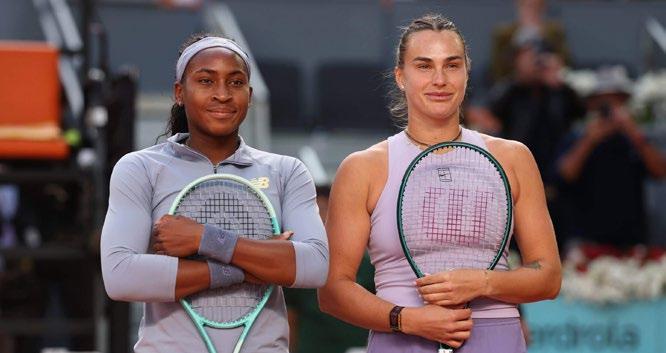
The women’s singles final saw a blockbuster clash between World No. 1 Aryna Sabalenka and No. 4 seed Coco Gauff. Sabalenka, a two-time Madrid champion (2021, 2023), faced a formidable challenge from Gauff, who stunned defending champion Iga Swiatek 6-1, 6-1 in the semi-finals to reach her first Madrid final. Sabalenka’s 17-4 career record in Madrid and her ability to defeat World No. 1s in both of her previous title runs underscored her dominance at La Caja Mágica.
On May 3, Sabalenka secured her third Madrid Open title with a 6-3, 7-6(7-3) victory over Gauff, tying Petra Kvitova’s record for the most women’s singles titles at the tournament. The match highlighted Sabalenka’s powerful groundstrokes and Gauff’s relentless defines, with the secondset tiebreak proving decisive. Sabalenka’s triumph earned her nearly €1 million and 1,000 ranking points, cementing her status as a clay-court force despite her hard-court reputation.
DOUBLES: GRANOLLERS/ ZEBALLOS AND CÎRSTEA/ KALINSKAYA SHINE
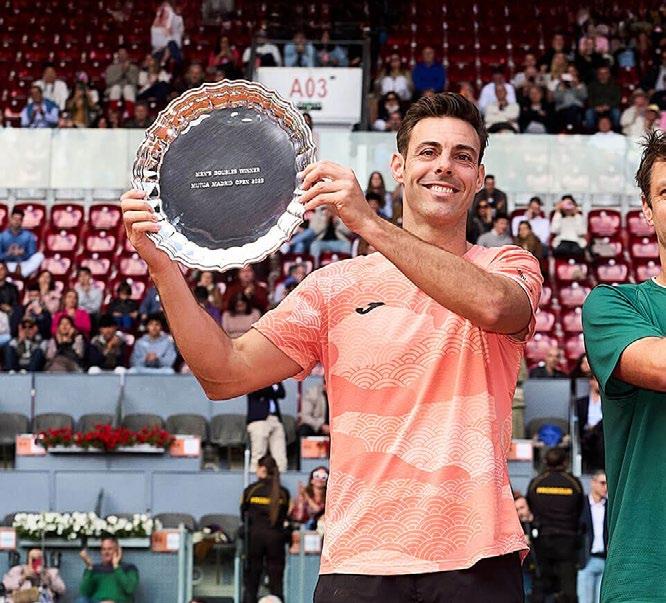
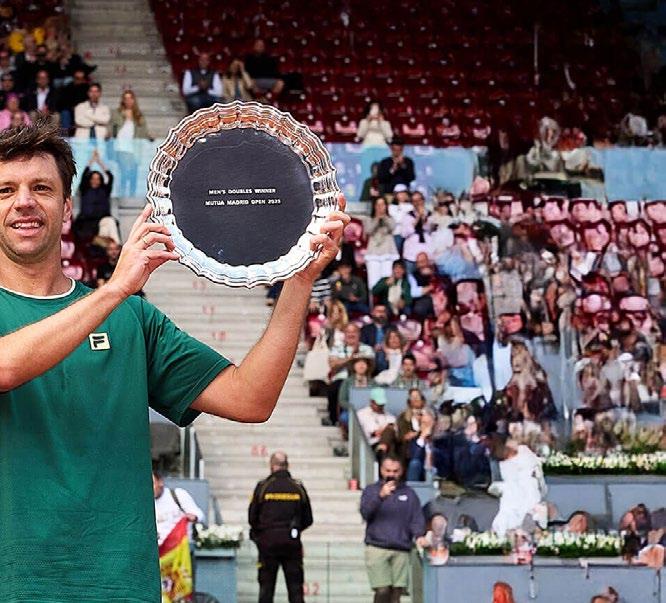
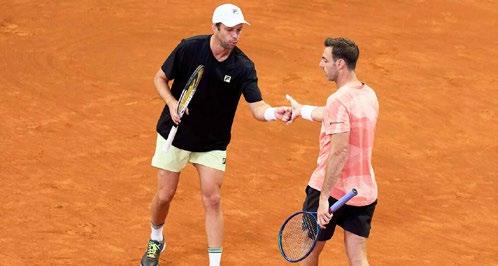
The men’s doubles final saw fifth seeds Marcel Granollers and Horacio Zeballos defeat top seeds Marcelo Arévalo and Mate Pavić 6-4, 6-4 on May 3. The Spanish-Argentine duo capped a flawless tournament run, adding to their 2021 Madrid title and delighting the home crowd. In the women’s doubles, Sorana Cîrstea and Anna Kalinskaya outlasted Veronika Kudermetova and Elise Mertens in a thrilling 6-7(10-12), 6-2, [12-10] final on May 4, showcasing resilience and teamwork.
NOTABLE PERFORMANCES AND SURPRISES
The tournament wasn’t without its shocks. Elina Svitolina’s 6-3, 6-4 upset over Elena Rybakina in the round of 32 and Madison Keys’ strong start against Swiatek highlighted the depth of the women’s field. On the men’s side, qualifier Jacob Fearnley pushed 14th seed Grigor Dimitrov to the brink before falling 6-4, 7-6(3) in a match interrupted by the power outage. Carlos Alcaraz’s reported withdrawal before the tournament, as noted by Spanish sources, was a disappointment for local fans, though the emergence of players like Draper filled the void.
THE MADRID OPEN’S LEGACY AND FUTURE
Since its inception as a men’s event in 2002 and its expansion to include women in 2009, the Madrid Open has grown into a global tennis landmark. Once held on indoor hard courts at the Madrid Arena, it moved to the clay courts of La Caja Mágica in 2009 under the ownership of Ion Țiriac, who sold it to IMG in 2021 for €390 million. The tournament’s economic impact on Madrid exceeds €107 million annually, and its two-week format, introduced in 2023, aligns it with other elite Masters 1000 events like Indian Wells and Miami.
Looking ahead, the 2026 Madrid Open is set for April 20 to May 3, with tickets already generating buzz. Posts on social media also hinted at a $550 million offer from the Italian Tennis Federation to acquire the tournament, potentially aiming to create a “fifth major,” though no deal has been confirmed. For now, Madrid remains a clay-court jewel, blending tradition, innovation, and world-class competition.
The 2025 Mutua Madrid Open was a testament to the enduring allure of claycourt tennis. From Casper Ruud’s career-defining title to Aryna Sabalenka’s record-tying triumph, the tournament delivered drama, resilience, and moments of brilliance. Despite challenges like the power outage, La Caja Mágica once again proved why it’s a magical stage for the sport’s elite. As the tennis world shifts focus to Roland-Garros, Madrid’s legacy as a crucible for champions continues to grow.
BOTSWANA TO MAKE HISTORY SELECTED AS FIRST AFRICAN NATION TO HOST
2026 WORLD ATHLETICS RELAYS
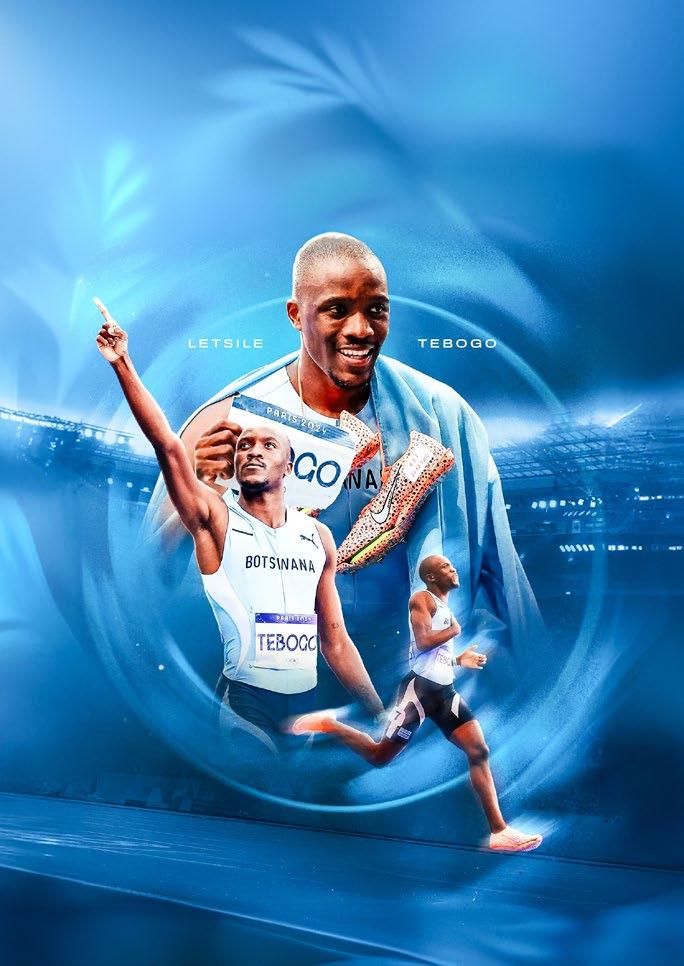
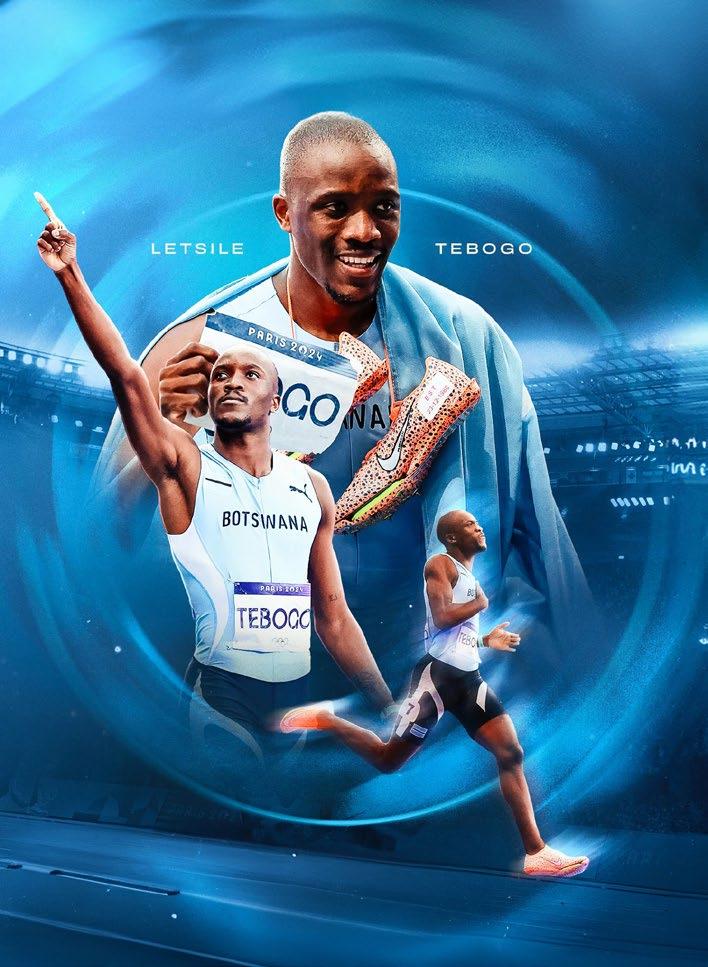
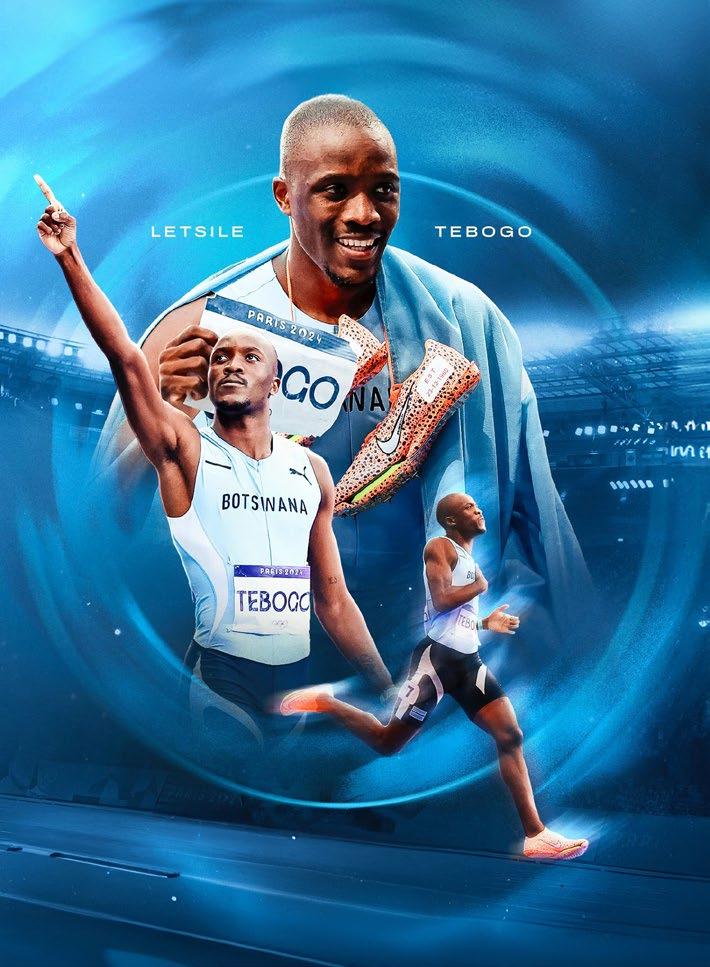
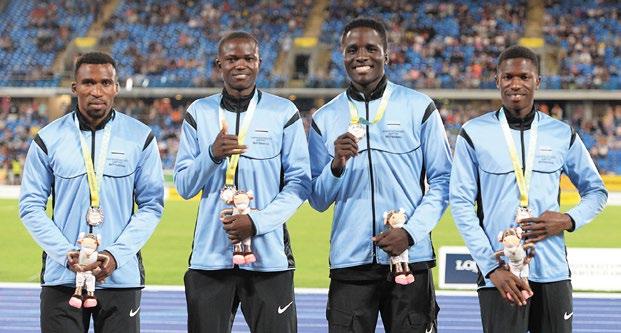
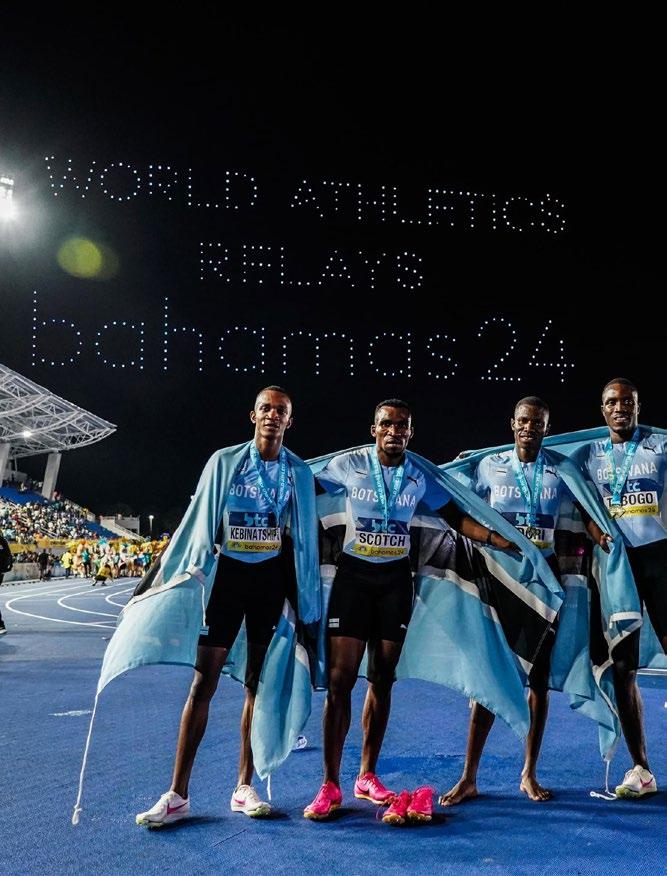
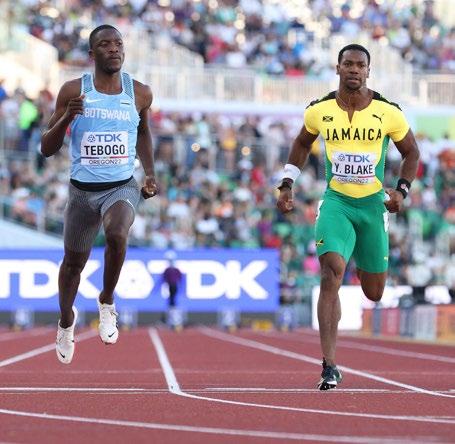
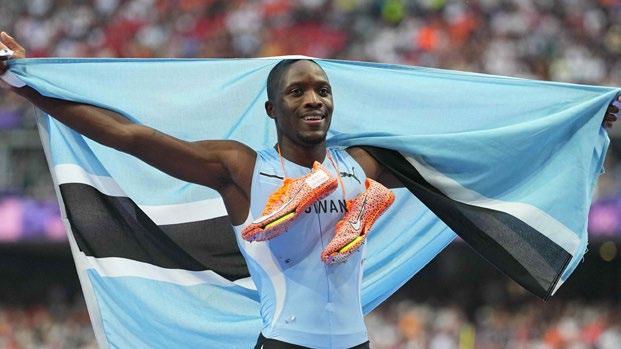
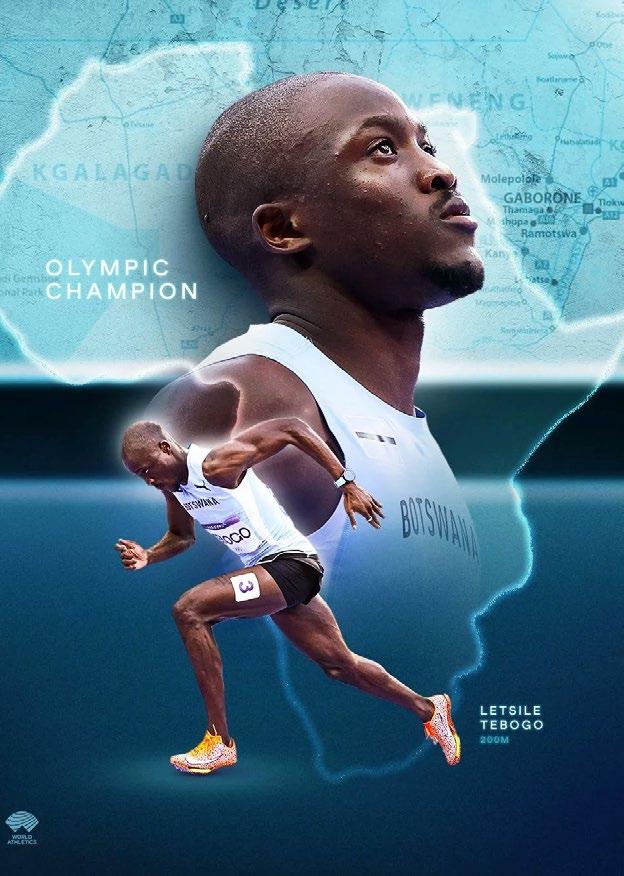
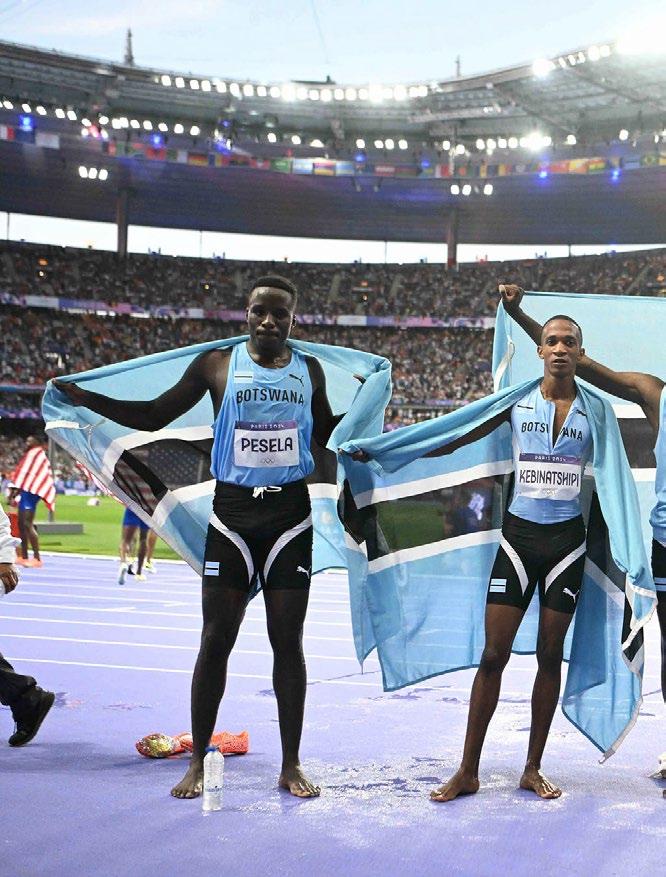
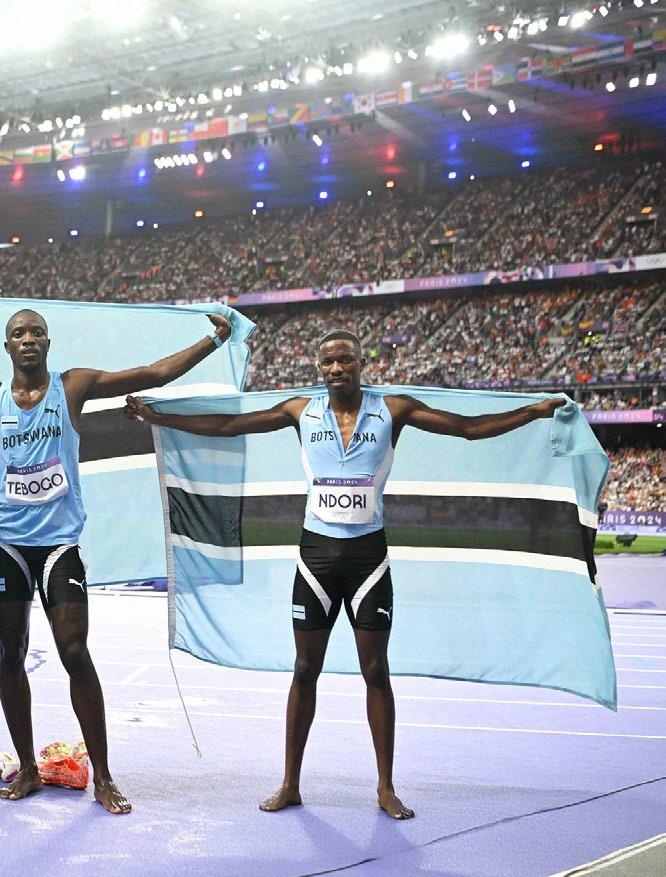
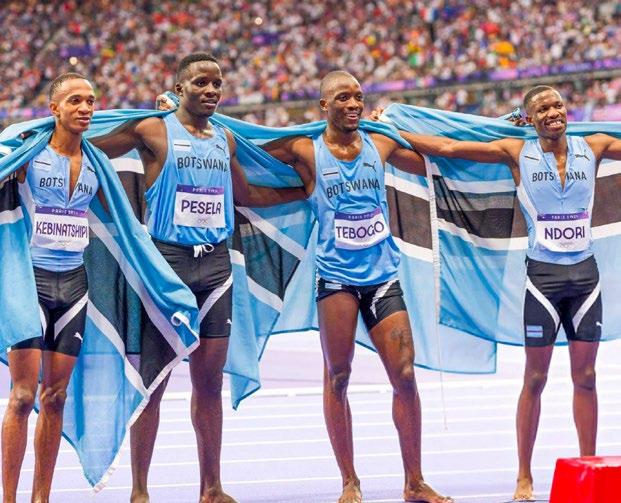
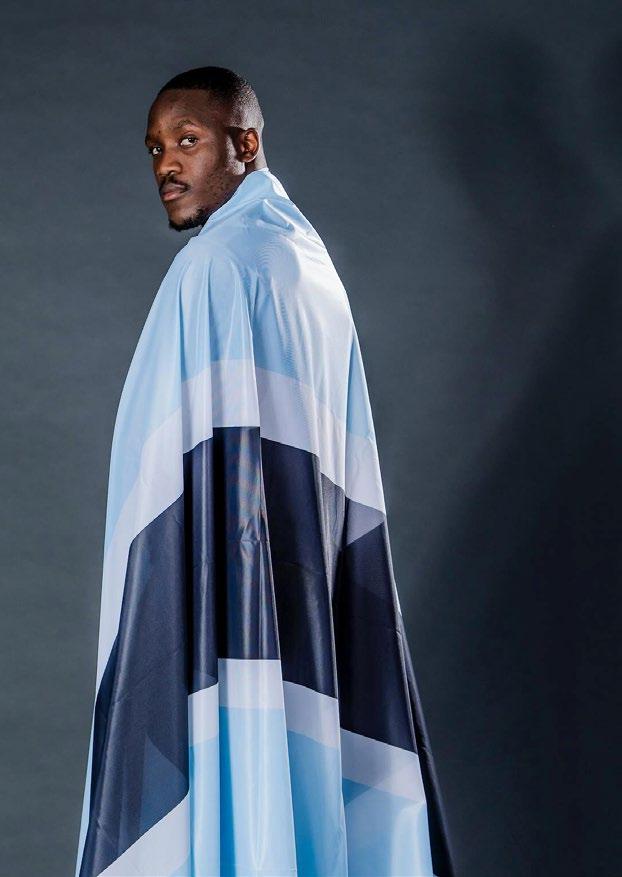
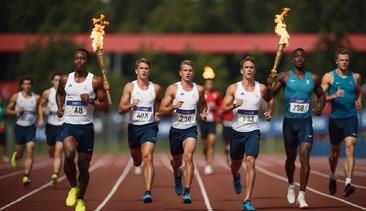
In a ground-breaking moment for African sport, Botswana has been selected to host the World Athletics Relays in 2026, marking the first time the prestigious event will be held on the continent. Announced in early 2025, this decision not only elevates Botswana’s status in global athletics but also shines a spotlight on its golden boy, Olympic 200-meter champion Letsile Tebogo. As the nation prepares to welcome the world’s fastest relay teams, Tebogo stands poised to anchor this historic chapter, blending local pride with international flair.
A Trailblazing Choice
The World Athletics Relays, a showcase of speed and teamwork featuring events like the 4x100m and 4x400m, has traditionally been hosted by nations in Europe, Asia, or the Americas. Botswana’s selection breaks that mould, signalling a shift toward recognizing Africa’s growing influence in track and field. Set for 2026 in Gaborone’s National Stadium, the event will bring together elite athletes from across the globe, placing Botswana—a nation of just over 2.5 million— at the centre of the athletics universe.
World Athletics officials cited Botswana’s recent success on the track, its passionate fan base, and its proven ability to stage international events as key factors in the decision. “Botswana represents the future of our sport,” said a World Athletics spokesperson. “Their commitment to athletics, paired with a world-class talent like Tebogo, made this an exciting choice.” For Africa, it’s a long-overdue milestone, amplifying the continent’s voice in a sport it has long enriched with talent.
Tebogo: The Face of the Future
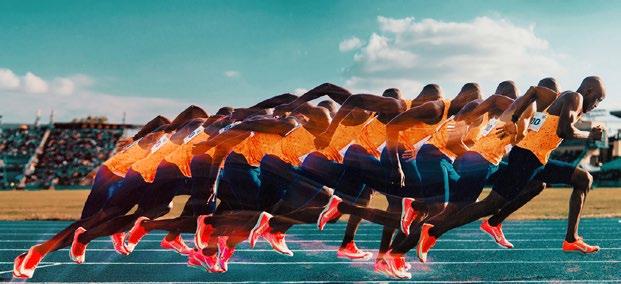
No one embodies Botswana’s rise better than Letsile Tebogo. At 21, the sprinter from Kanye has already made history as Africa’s first Olympic 200m champion, clocking 19.46 seconds to claim gold at the 2024 Paris Games. His electrifying speed, coupled with a magnetic personality, has turned him into a global star—and now, the perfect ambassador for Botswana’s 2026 hosting duties. Tebogo’s reaction to the news was pure excitement. “To have the Relays here, in my home, is a dream,” he said in a recent interview. “I’ll be ready to run for my people and show the world what Botswana can do.” Fans are already buzzing about seeing him anchor a relay team on home soil, his long strides and fearless style promising to ignite the crowd. With two years to prepare, Tebogo could be at the peak of his powers by 2026, potentially chasing world records alongside relay glory.
From Underdog to Host
Botswana’s journey to this moment has been one of steady ascent. The nation first grabbed global attention in 2012 when Nijel Amos won Olympic silver in the 800m, but Tebogo’s emergence has turbocharged its reputation. His Olympic triumph last year sparked celebrations across Gaborone and beyond, cementing athletics as a source of national identity. Hosting the Relays builds on that momentum,
showcasing Botswana’s ability to blend grassroots passion with world-class execution. Preparations are already underway. The National Stadium will undergo upgrades to meet international standards, while local officials plan to infuse the event with Setswana culture—think traditional music, dance, and cuisine alongside the races. For Botswana, it’s not just about hosting; it’s about leaving a lasting impression.
A Symbol of African Ambition
The 2026 Relays carry weight beyond Botswana’s borders. As the first African-hosted edition, they challenge the status quo of global sports hosting, proving that smaller nations with big dreams can step up. The event could inspire other African countries to bid for major competitions, decentralizing athletics and amplifying the continent’s role beyond its athletes’ performances. For Tebogo, it’s personal. Raised in a country where running tracks were once scarce, he’s a product of Botswana’s investment in youth sport. His story—humble beginnings, raw talent, and now global stardom—resonates with fans and mirrors the nation’s own trajectory. By 2026, he’ll be more than a competitor; he’ll be the face of a historic moment, likely leading Botswana’s relay teams against the world’s best.
What Lies Ahead
With the Relays still over a year away, anticipation is building. For Botswana, the event promises economic boosts through tourism and infrastructure, plus a chance to showcase its hospitality. For Tebogo, it’s an opportunity to cement his legacy. Already a contender to challenge Usain Bolt’s 200m world record of 19.19 seconds, he’ll have the home crowd’s energy to fuel his ambitions and bring glory to his nation.
Currently, Botswana’s selection as the 2026 host feels like a starting gun fired early. The nation is gearing up, Tebogo is training, and the world is watching. When the Relays arrive in Gaborone, they’ll bring more than races—they’ll carry the weight of history, the pride of a continent, and the brilliance of a young sprinter ready to run into legend. For Botswana and Letsile Tebogo, 2026 can’t come soon enough.
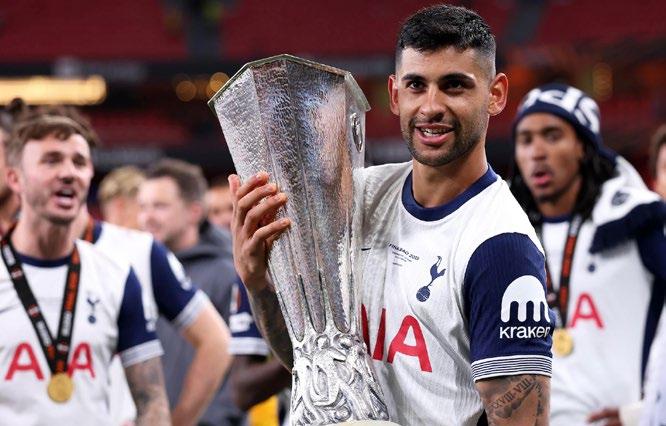
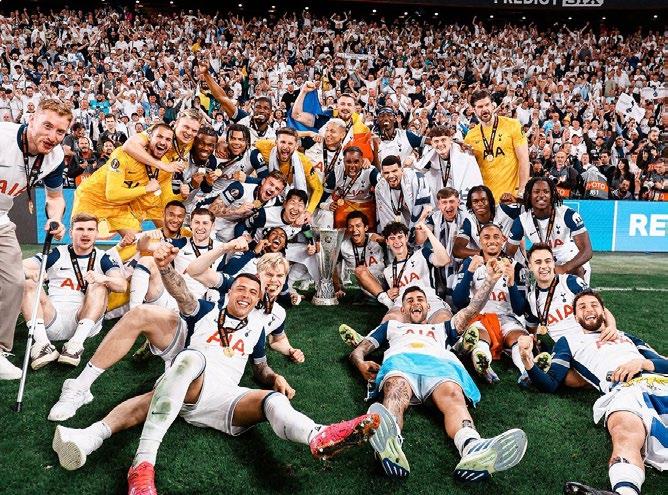
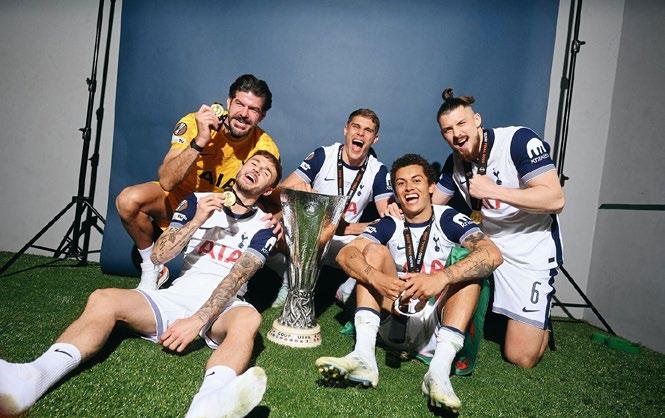
GLORY IN BILBAO Tottenham
Hotspur’s Triumph Ends a 17-Year
Quest for Silverware
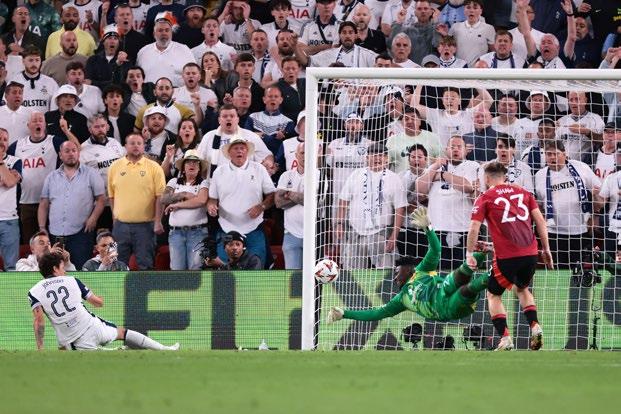
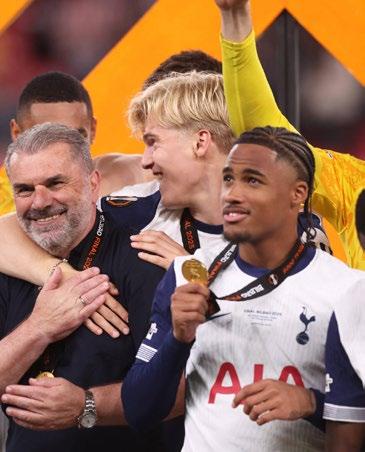
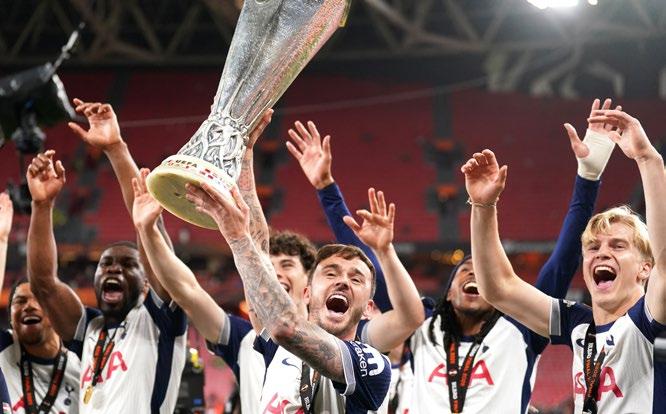
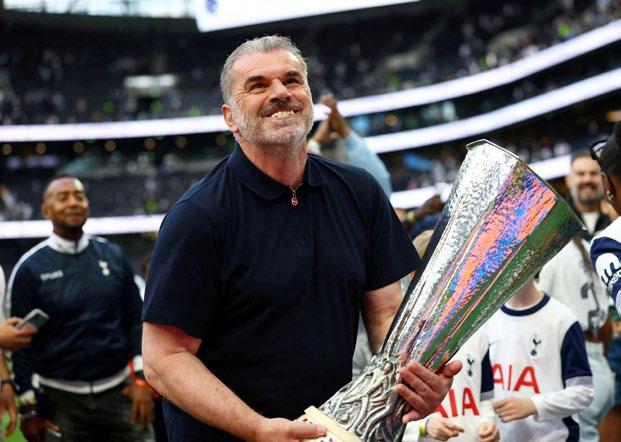
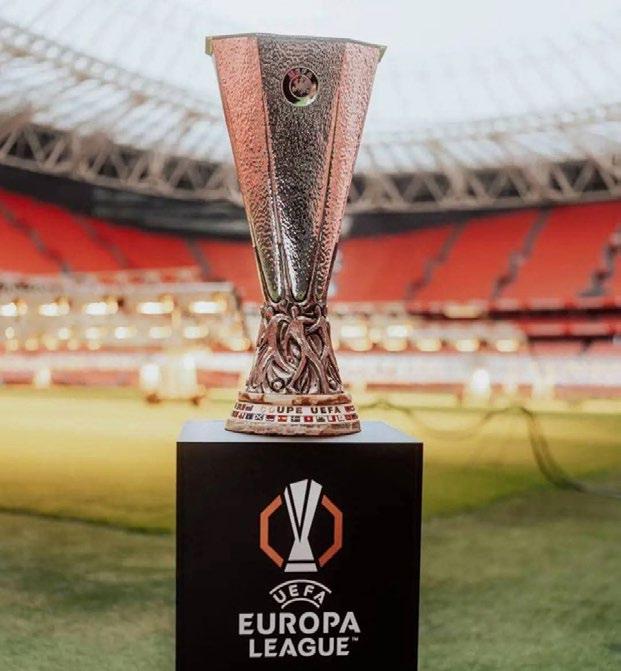
On a balmy evening in Bilbao, Spain, May 21, 2025, Tottenham Hotspur etched their name into European football history once more, clinching the 2024/25 UEFA Europa League title with a gritty 1-0 victory over Manchester United at San Mamés Stadium. This triumph, sparked by a first-half goal credited to Brennan Johnson, marked the end of a 17-year trophy drought for the North London club and secured their third European title, drawing them level with Liverpool as England’s most successful side in the competition’s history. For Spurs, their fans, and manager Ange Postecoglou, this was more than a trophy—it was a statement of intent, a redemption arc, and a springboard for a brighter future.
A Hard-Fought Victory
The final itself was no spectacle of free-flowing football. Described by some as a “scrappy” affair, Tottenham’s win was built on resilience, tactical discipline, and moments of individual brilliance. Brennan Johnson’s goal, a bundled effort from a Pape Matar Sarr cross that deflected off United’s Luke Shaw, proved decisive. UEFA’s decision to credit Johnson with the goal sparked debate, but for Spurs fans, the details mattered little. The team’s defensive solidity, led by Europa League Player of the Season Cristian Romero, stifled Manchester United’s attack, with full-backs Pedro Porro and Destiny Udogie pressing relentlessly to disrupt United’s rhythm. UEFA Technical Observer Steve Cooper praised Tottenham’s “resilient defending” and strategic pressing, noting how they forced United into less dangerous areas, securing their narrow lead until the final whistle.
The victory wasn’t without its quirks. UEFA issued an apology after running out of medals during the post-match ceremony, leaving captain Son Heung-min, Romero, and Rodrigo Bentancur momentarily empty-handed—a rare blemish on an otherwise joyous night. Yet, as Son lifted the trophy in front of a sea of white-clad Spurs supporters, the oversight was quickly forgotten.
Breaking the Trophy Drought
For Tottenham Hotspur, the 2025 Europa League triumph is a watershed moment. The club’s last major trophy came in 2008 with the League Cup, and their last European success was the 1984 UEFA Cup. The intervening years were marked by near-misses, heartbreak, and a reputation as a club that couldn’t “get it done.” As Brennan Johnson put it post-match, “All the fans get battered, we get battered for not winning a trophy. We had to get the first one.” His words captured the weight of expectation that has long hung over Tottenham, a club with a storied history and a passionate fanbase but a trophy cabinet that had gathered dust for too long.
The victory parade on May 23, 2025, saw over 100,000 fans flood the streets of North London, transforming Tottenham High Road into a carnival of white. From Edmonton Green to the Tottenham Hotspur Stadium, supporters celebrated the end of a 17-year wait, chanting for their heroes and their manager, Ange Postecoglou. For fans who witnessed Spurs’ first Europa League (then UEFA Cup) win in 1972, the moment was a poignant reminder of the club’s European pedigree.
Postecoglou’s Redemption
At the heart of this triumph is Ange Postecoglou, the Australian manager who arrived at Tottenham in 2023 with a promise of “glory.” Despite a disappointing 17th-place finish in the 2024/25 Premier League season, Postecoglou’s vision bore fruit in Europe. His high-pressing, attacking philosophy—dubbed “Angeball”—was tempered for the final, with Spurs adopting a more pragmatic approach, recording just 27.7% possession and 115 completed passes, the lowest in a major European final since 2009/10. This tactical flexibility silenced critics who questioned his adaptability, proving he’s “no one-trick pony.”
Postecoglou’s impact extends beyond the pitch. His defiant message during the victory parade—“We can achieve more in the 2025/26 season”—ignited hope among fans and players alike. Despite speculation about his future, with chairman Daniel Levy yet to publicly commit to him, Postecoglou’s stock has never been higher. Captain Son Heung-min and star defender Cristian Romero have both voiced unwavering support, with Romero’s wordless social media post—a photo of him hoisting the trophy—speaking volumes.
A Gateway to the Champions League
The Europa League triumph carries practical rewards as well. By winning the competition, Tottenham secured a spot in the 2025/26 UEFA Champions League, a lifeline after their dismal domestic campaign. This return to Europe’s elite competition is a financial and competitive boost, with the £125 million windfall from the Europa League victory and Champions League qualification easing concerns about summer transfers. It also positions Spurs as an attractive destination for top talent, a critical factor as Postecoglou looks to rebuild for the upcoming season. The victory also reshaped the Premier League’s European landscape. With Tottenham claiming one of six Champions League spots for English clubs, the likes of Liverpool, Arsenal, Manchester City, Newcastle, and Chelsea will face a familiar foe in Europe’s top tier. Meanwhile, Manchester United’s loss compounded their woes, marking their worst season since the 1970s.
A New Chapter for Spurs
Tottenham’s 2025 Europa League win is more than a trophy; it’s a turning point. It restores pride, silences doubters, and rekindles the belief that Spurs can compete at the highest level. The inclusion of four Tottenham players—Cristian Romero, Pedro Porro, Dominic Solanke, and another unnamed star—in UEFA’s Team of the Season underscores the squad’s quality. For fans watching from as far away as Australia, where Postecoglou’s triumph resonated deeply, to the lifelong supporters in North London, this victory is a shared catharsis. As one fan, messaged The Guardian at 3:30 a.m. Spanish time, the emotion of ending the drought hit hard, tangled with homesickness and pride. As Spurs look ahead to a summer of rebuilding, the Europa League trophy stands as a beacon of hope. Postecoglou’s prophecy has come true, and with Champions League football on the horizon, Tottenham Hotspur are ready to write the next chapter. Glory, glory, indeed.
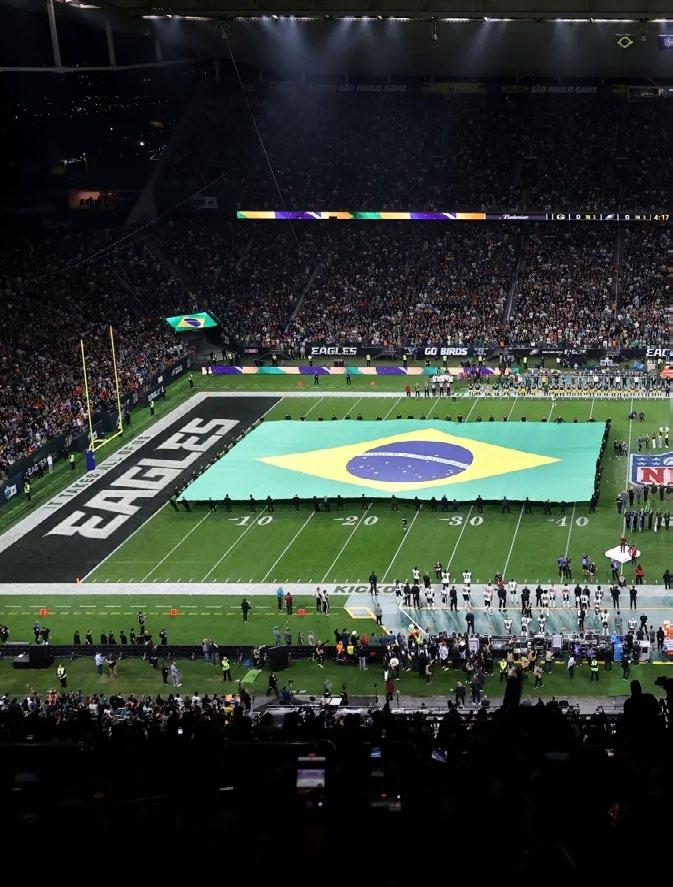
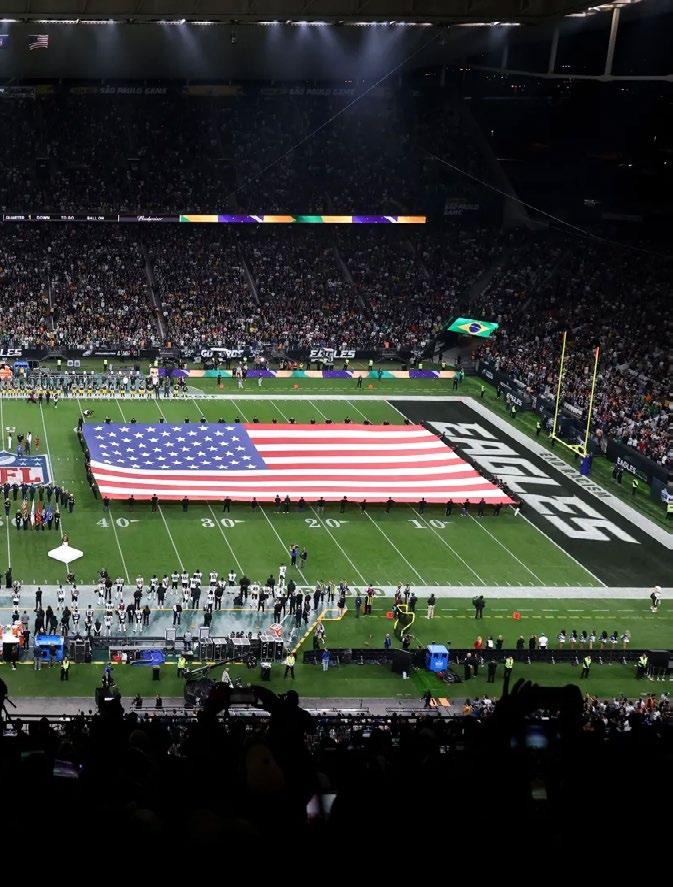
In a groundbreaking move for sports broadcasting, YouTube has secured exclusive global freeto-view streaming rights for an NFL regular-season game, marking its debut as a live NFL broadcaster. The game, set to kick off Week 1 of the 2025 NFL season on September 5, 2025, will take place at the iconic Corinthians Arena in São Paulo, Brazil. The Los Angeles Chargers will face an opponent to be announced later, and the matchup will be available to fans worldwide on YouTube and YouTube TV, with limited exceptions in Canada and select countries. This historic deal not only brings the NFL’s first-ever regular-season game in South America to a global audience but also underscores YouTube’s growing influence in the sports streaming landscape. The game will be accessible for free, a significant departure from traditional paywalled sports broadcasts, and will be complemented by a rich, interactive experience featuring YouTube’s vast network of creators. In 2024, NFL content on YouTube garnered over 350 million hours of viewership, highlighting the platform’s massive reach and its potential to redefine how fans engage with live sports.
A Milestone for the NFL and YouTube
The NFL’s decision to partner with YouTube for this international game reflects the league’s ongoing efforts to expand its global footprint. The São Paulo game is part of the NFL’s International Series, which aims to bring American football to new markets. By choosing YouTube, the NFL is tapping into a platform with unparalleled scale—2.7 billion monthly active users—and a unique ability to blend live sports with creator-driven content.“ This partnership with YouTube is a game-changer for how we connect with fans worldwide,” said NFL Commissioner Roger
Goodell in a statement. “YouTube’s global reach and innovative approach to content creation will deliver an unforgettable experience for both longtime fans and new audiences discovering the NFL.” The broadcast will not only feature the game itself but also integrate YouTube creators who will provide commentary, reactions, and exclusive content to enhance the viewing experience. This interactive element is expected to resonate strongly with younger audiences, who increasingly consume sports through digital and social media platforms.
Accessibility and Additional Viewing Options
While YouTube’s free stream will be the centrepiece of the broadcast, the game will also be available through other channels to ensure broad accessibility. In the United States, fans in the local markets of the participating teams can watch on free overthe-air television. Additionally, NFL+ subscribers will have access to the game on mobile devices within the U.S., while international viewers can tune in via NFL Game Pass on DAZN, the league’s paid streaming service for global markets. The decision to make the game free on YouTube for most of the world aligns with the NFL’s goal of lowering barriers to entry for new fans, particularly in emerging markets like Brazil, where American football is gaining traction. The country’s passionate sports culture and growing interest in the NFL—evidenced by sold-out fan events and increasing viewership—make it an ideal location for this landmark broadcast.
Beyond the Game: A Multi-Year Partnership
YouTube’s deal with the NFL extends beyond the São Paulo game, encompassing a multiyear partnership that includes the Super Bowl Flag Football game and other international flag football events. This collaboration highlights the growing prominence of flag football, which is set to debut as an Olympic sport at the 2028 Los Angeles Games. By aligning with YouTube, the NFL is positioning itself to capture the attention of younger, digitally savvy audiences who engage with sports in non-traditional ways.
The partnership also builds on YouTube’s existing relationship with the NFL. Since 2015, YouTube has served as a key platform for NFL highlights, game recaps, and original content, with channels like NFL Sunday Ticket amassing millions of subscribers. The addition of live game broadcasts represents a natural evolution of this relationship, with YouTube leveraging its technological capabilities to deliver high-quality streams and interactive features.
What This Means for the Future of Sports Broadcasting
YouTube’s foray into live NFL broadcasting signals a broader shift in the sports media landscape, where digital platforms are increasingly challenging traditional broadcasters. With its ability to offer free access, integrate creator content, and deliver seamless streaming across devices, YouTube is poised to redefine how fans experience live sports. The São Paulo game could serve as a blueprint for future partnerships between major sports leagues and digital giants, particularly as streaming continues to dominate media consumption.
For the NFL, the deal is a strategic step toward globalizing the sport while embracing innovative distribution models. By making the game accessible to billions of potential viewers, the league is not only expanding its fanbase but also setting the stage for further international growth. Brazil, with its vibrant sports culture and massive online audience, is a critical market in this vision.
A New Era for NFL Fans
As the NFL and YouTube gear up for the September 5, 2025, kickoff, anticipation is building for what promises to be a historic moment in sports broadcasting. Fans can expect a high-energy broadcast that combines the thrill of NFL football with YouTube’s signature interactivity, from live chats to creator-led watch parties. Whether you’re a die-hard Chargers fan, a curious newcomer in Brazil, or a viewer tuning in from halfway across the globe, this game will be a can’t-miss event. With YouTube at the helm, the NFL is not just playing a game—it’s reimagining the future of sports fandom. Mark your calendars for September 5, 2025, and get ready to watch history unfold on the world’s biggest video platform.
THE SOARING ASCENT OF ULTIMATE FRISBEE A SPORT ON THE RISE
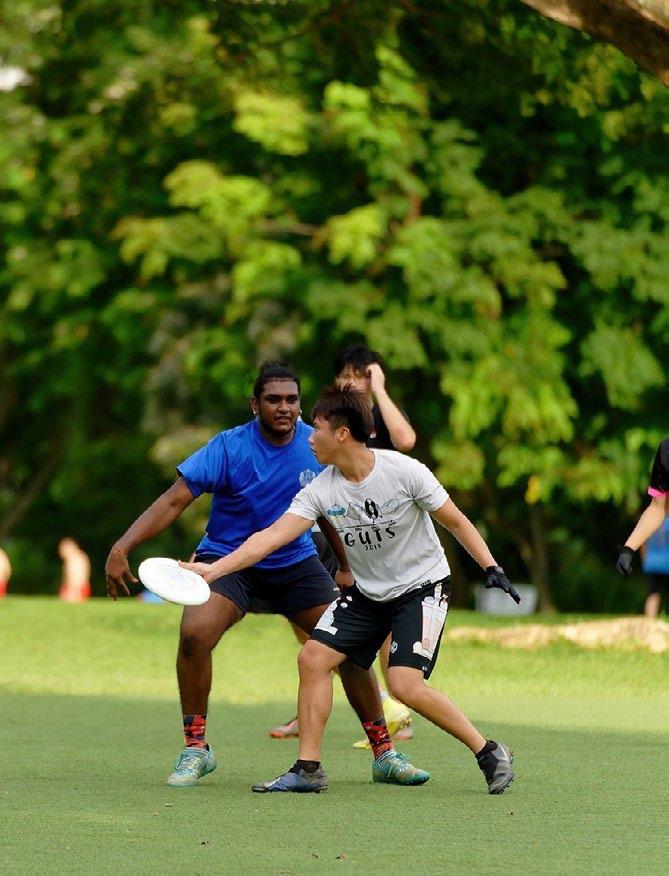
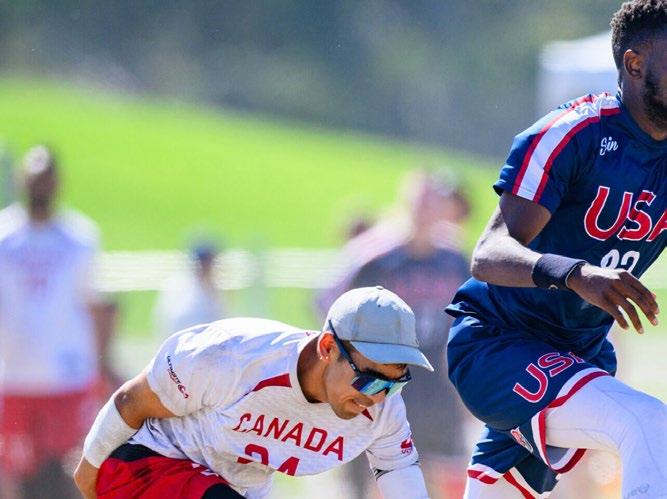
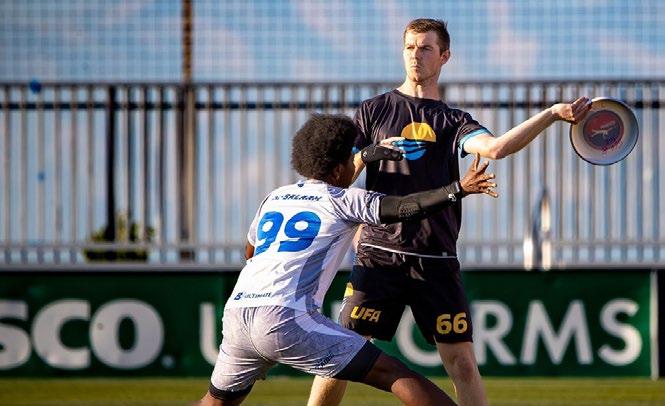
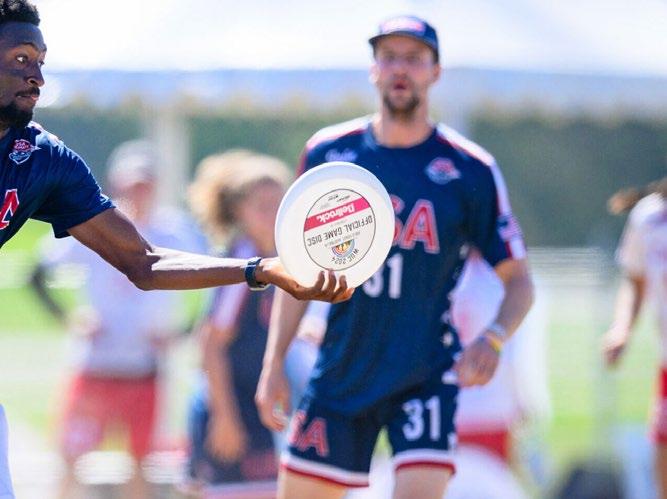
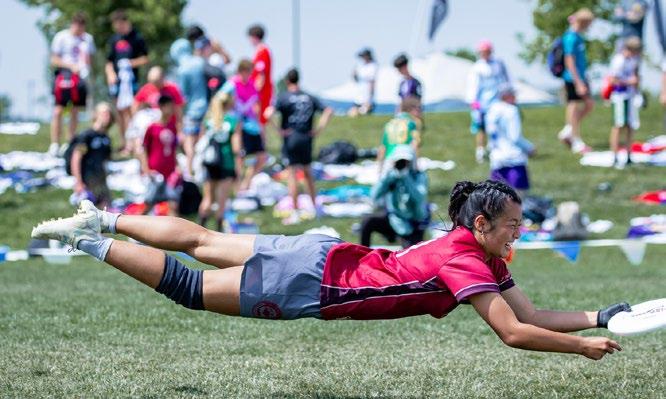
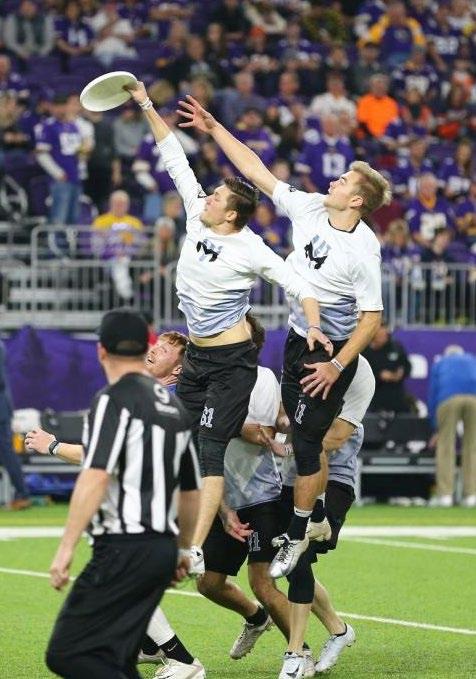
In the pantheon of modern sports, few have experienced a meteoric rise quite like ultimate frisbee. Once dismissed as a casual pastime for college students tossing discs in campus quads, ultimate has evolved into a globally recognized sport with professional leagues, international competitions, and a passionate community driving its growth. With its unique blend of athleticism, strategy, and a countercultural ethos encapsulated by the principle of “Spirit of the Game,” ultimate frisbee is carving out a significant place in the sports world. This article explores the sport’s rapid rise, its cultural and competitive milestones, and the factors fuelling its global expansion.
Origins and Evolution
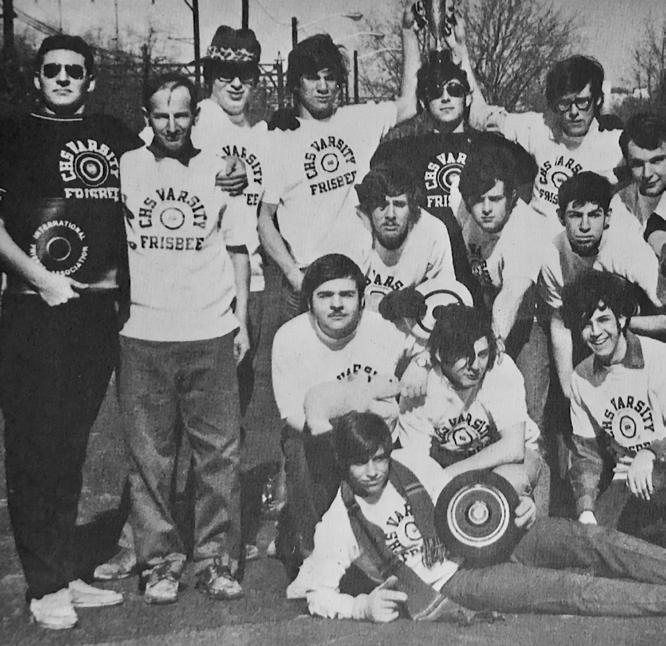
Ultimate frisbee, often simply called “ultimate” to avoid trademark disputes with the term “Frisbee” (a brand name owned by Wham-O), traces its roots to 1968 in Maplewood, New Jersey. Joel Silver, then a high school student, is credited with creating the sport alongside classmates at Columbia High School. Inspired by the free-spirited disc-throwing culture of the 1960s, they formalized rules for a game that combined elements of soccer, basketball, and American football, played with a flying disc. The first official game was played in 1968, and by the 1970s, ultimate had spread to college campuses across the United States. The sport’s early growth was organic, fuelled by its accessibility—requiring only a disc, a field, and enthusiasm—and its inclusive, community-driven ethos. Unlike many traditional sports, ultimate is self-officiated, even at high levels, relying on players to uphold fair play through the “Spirit of the Game.” This principle, emphasizing mutual respect and integrity, became a cornerstone of ultimate’s identity, attracting players who valued camaraderie over cutthroat competition.
Competitive Milestones and Professionalization
Ultimate’s transition from a grassroots activity to a competitive sport gained momentum in the 1980s and 1990s with the establishment of organized tournaments and governing bodies. The Ultimate Players Association, now known as USA Ultimate (USAU), was founded in 1979 to standardize rules and promote the sport. By 2025, USAU oversees a robust network of youth, college, club, and professional competitions, with over 80,000 registered members and thousands of teams competing annually. The sport’s competitive landscape was further elevated by the creation of professional leagues.
In 2012, the American Ultimate Disc League (AUDL) launched as the first professional ultimate league, offering a platform for elite players to showcase their skills. By 2025, the AUDL boasts 24 teams across the United States and Canada, with games broadcast on platforms like FS2 and streaming services, drawing thousands of spectators both in-person and online. The Premier Ultimate League (PUL) and Western Ultimate League (WUL), focusing on women’s and mixed-gender play, have also emerged, further diversifying the professional scene. These leagues have introduced salaries, sponsorships, and media coverage, marking a significant shift from ultimate’s amateur roots.
Internationally, the World Flying Disc Federation (WFDF), founded in 1985, governs ultimate and other disc sports, organizing events like the World Ultimate Championships. The WFDF’s strategic plan for 20232028 emphasizes global expansion, with over 100 member countries by 2025, a testament to ultimate’s worldwide appeal. Notable milestones include ultimate’s recognition by the International Olympic Committee (IOC) in 2015, fuelling speculation about its potential inclusion in future Olympic Games, possibly as early as 2032.
Cultural and Demographic Growth
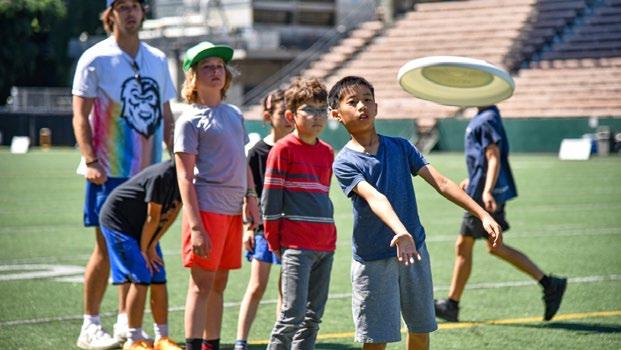
Ultimate’s growth is not just competitive but cultural. The sport has seen a surge in participation across diverse demographics, particularly among youth. USA Ultimate reports that youth participation has grown by approximately 10% annually over the past decade, with programs like the Youth Club Championships fostering talent as young as middle school. High schools have become powerhouses, producing national champions and feeding talent into college and professional teams. The sport’s inclusivity is a key driver of its popularity. Ultimate offers mixed-gender divisions, rare in mainstream sports, allowing men and women to compete together. This format, combined with the sport’s low cost of entry, has made it accessible to a wide range of players, from urban communities to rural areas. Programs and initiatives in countries like Colombia and the Philippines have introduced ultimate to underserved communities, using the sport as a tool for social development and empowerment.
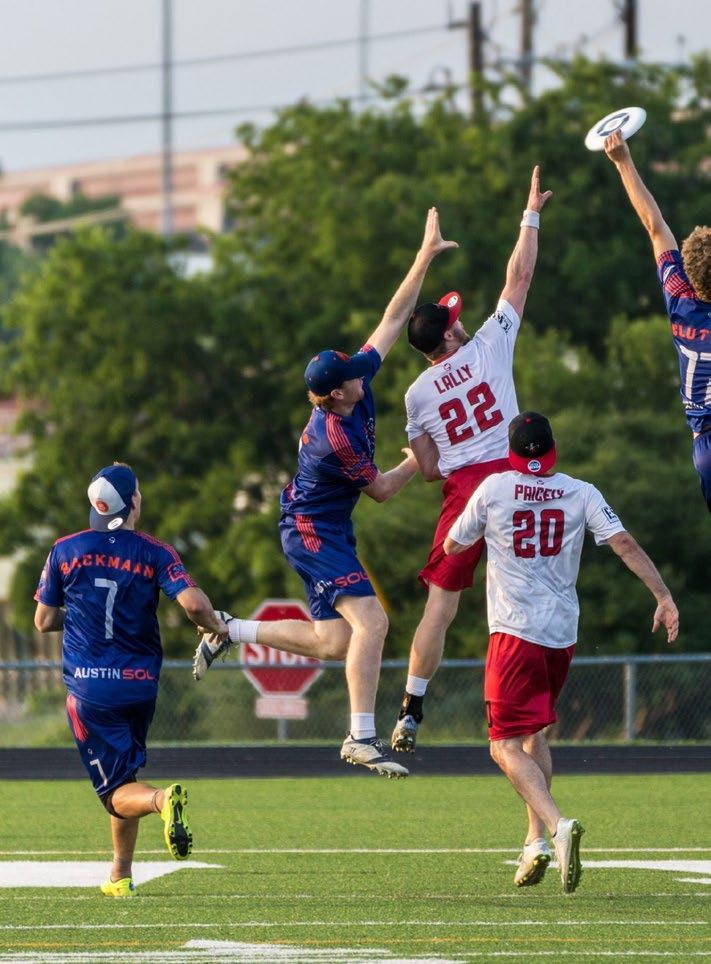
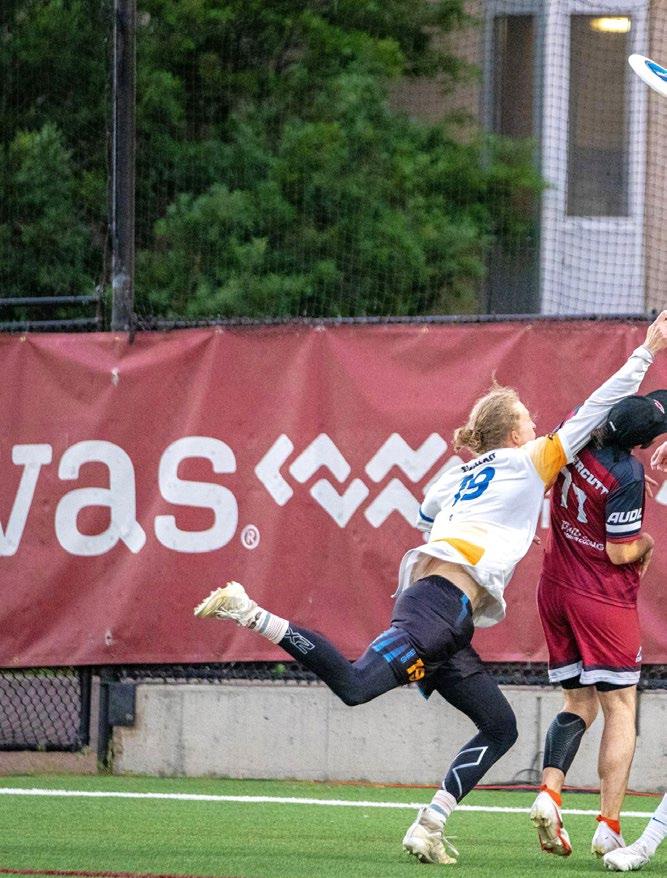
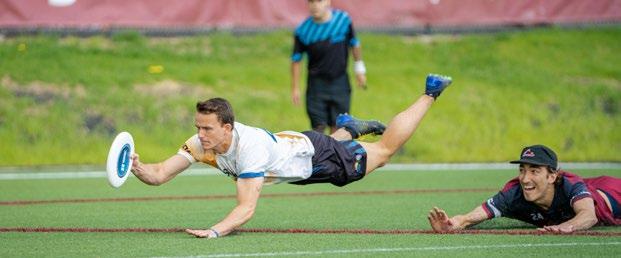
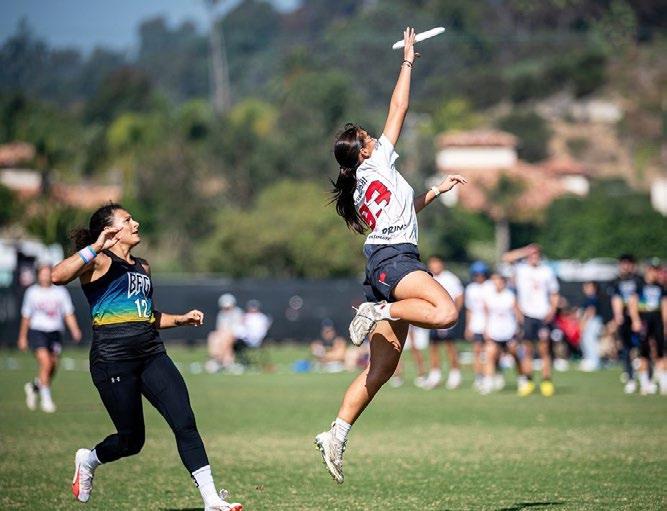
Social media and digital platforms have also amplified ultimate’s reach. Clips of jaw-dropping layouts (dives to catch or block the disc) and pinpoint throws go viral on platforms, showcasing the sport’s athleticism to new audiences. Posts on social media highlight the growing fanbase, with users praising ultimate’s fast-paced action and community spirit. YouTube channels and podcasts, further engage fans by discussing the sport’s rising profile.
Economic and Market Trends
The economic footprint of ultimate frisbee is expanding alongside its participation. A 2025 report from Data Insights Market notes technological advancements in disc design and training equipment, reflecting a growing market for ultimate-related products. The global ultimate frisbee market is projected to grow at a compound annual growth rate (CAGR) of 7.5% from 2023 to 2030, driven by increased participation and professionalization. Sponsorships from brands like Discraft and Five Ultimate, along with media deals, are injecting capital into the sport, supporting everything from grassroots clinics to professional broadcasts. Youth and collegiate programs are also economic engines. Clemson University’s partnership with USA Ultimate in 2025 to develop post-season events underscores the sport’s integration into academic institutions, which often serve as hubs for talent development. Meanwhile, local clubs and tournaments generate revenue for communities through tourism and event hosting, with cities like San Diego and Seattle becoming ultimate hotbeds.
Challenges and Opportunities
Despite its growth, ultimate faces challenges. Self-officiation, while a hallmark of the sport, can lead to disputes in highstakes matches, prompting debates about introducing referees at professional levels. The sport also struggles with mainstream visibility compared to established sports like basketball or soccer. However, the AUDL’s broadcast deals and the potential for Olympic inclusion offer pathways to greater recognition. The push for gender equity is another opportunity. The PUL and WUL are elevating women’s ultimate, addressing historical disparities in visibility and funding. Initiatives like USA Ultimate’s Equity, Diversity, and Inclusion (EDI) programs aim to make the sport more accessible to marginalized groups, ensuring its growth is inclusive.
The Future of Ultimate
As ultimate frisbee soars into 2025, its trajectory is undeniably upward. The sport’s blend of athleticism, accessibility, and community spirit resonates with a generation seeking alternatives to traditional sports. With professional leagues expanding, international participation surging, and the Olympic dream on the horizon, ultimate is poised to become a mainstream staple. Whether you’re a seasoned player diving for a disc or a newcomer tossing one in the park, ultimate frisbee invites everyone to join its ascent. As the sport continues to grow, one thing is clear: the disc is on the rise, and it’s not coming down anytime soon.
PLEZI SPORTS DRINK: A HEALTHIER HYDRATION OPTION
FROM STEPHEN CURRY & MICHELLE OBAMA
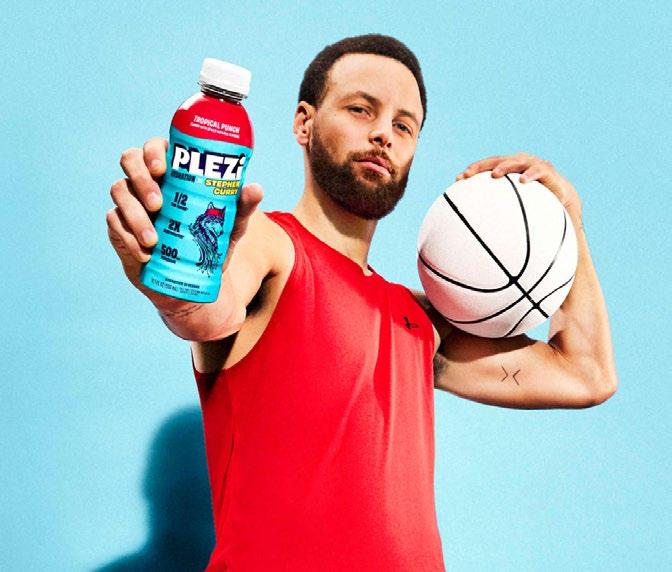
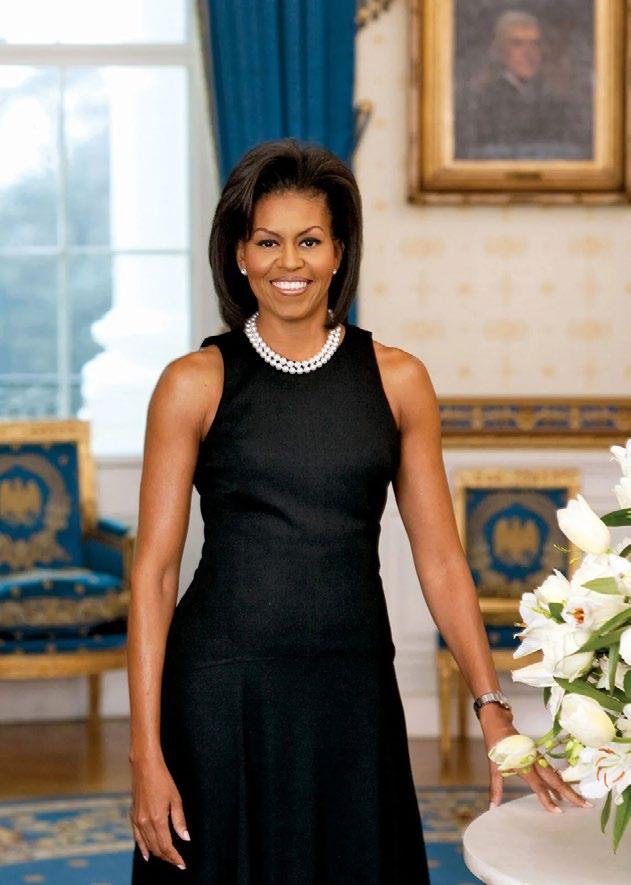
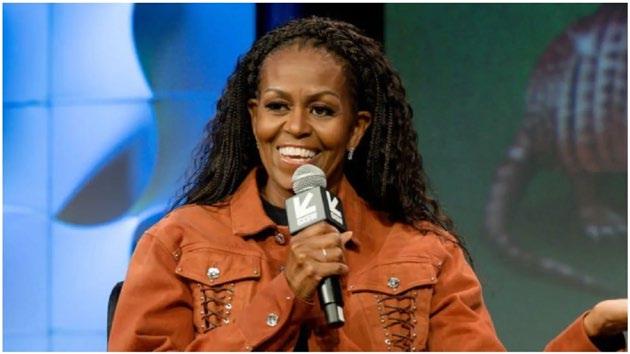
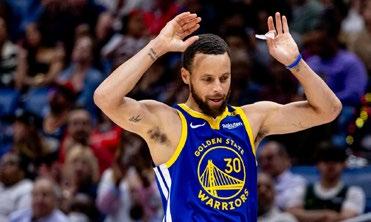
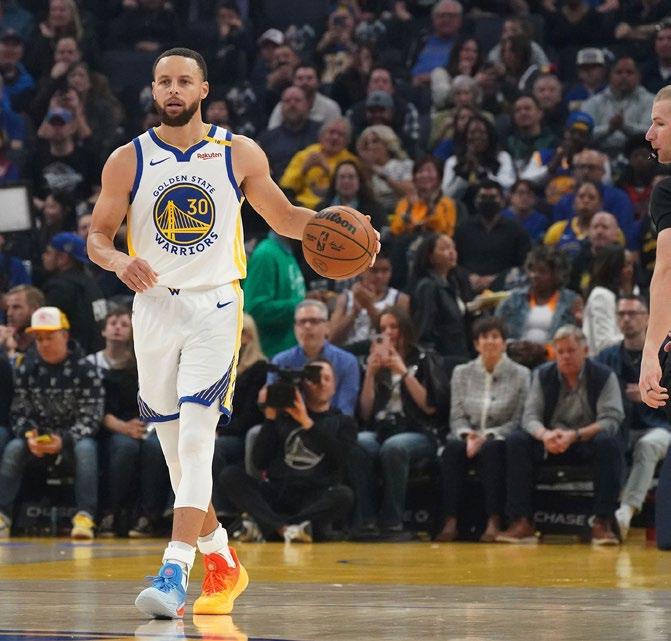
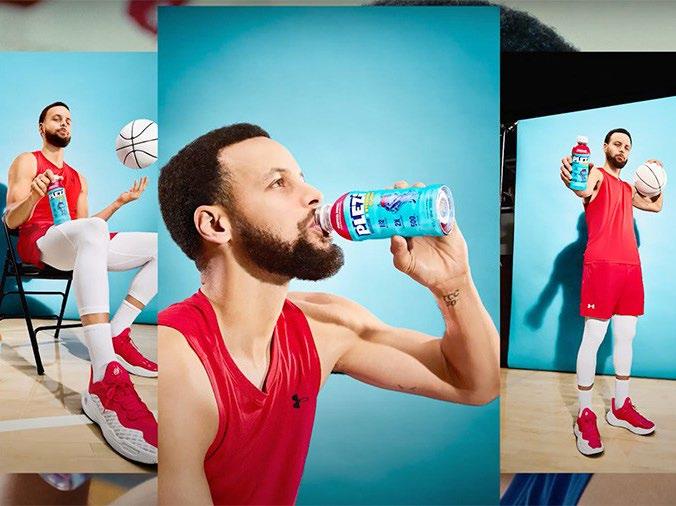
In a surprising yet exciting collaboration, NBA superstar Stephen Curry and former First Lady Michelle Obama have teamed up to launch Plezi Hydration, a new sports drink designed to offer a healthier alternative in the crowded hydration market. Introduced in March 2025, under the umbrella of Michelle Obama’s public benefit company, Plezi Nutrition, this beverage aims to redefine how active individuals fuel their bodies. With a focus on purposeful ingredients, great taste, and a mission-driven ethos, Plezi Hydration is making waves as a game-changer in the $25 billion sports drink industry—a market projected to grow to $32.6 billion by 2028.
The Origins of Plezi Nutrition
Plezi Nutrition, co-founded by Michelle Obama in 2023, emerged from her long-standing commitment to improving children’s health and nutrition. As First Lady, Obama championed initiatives like "Let’s Move!" to combat childhood obesity and promote healthier lifestyles. Plezi, which means "fun" in Haitian Creole, began with a promise to create better-for-you beverage options, starting with low-sugar juice boxes for kids and later expanding to Plezi Fizz, a carbonated drink aimed at tweens and teens. The launch of Plezi Hydration marks the brand’s evolution into a broader demographic, targeting active individuals of all ages, particularly middle and high school-aged kids.
The partnership with Stephen Curry, a fourtime NBA champion and Golden State Warriors icon, brings a new level of credibility and appeal. Curry, along with his wife Ayesha—a chef and entrepreneur—played an instrumental role in developing the drink, contributing to its formulation, packaging, and marketing. Their involvement aligns with Plezi’s mission to combine health, taste, and accessibility, leveraging Curry’s reputation as a fitness role model and Ayesha’s culinary expertise.
What Sets Plezi Hydration Apart?
Plezi Hydration enters a competitive field dominated by giants like Gatorade, BodyArmor, and Prime. However, it distinguishes itself with a nutritional profile designed to prioritize health without sacrificing flavour. Available in three vibrant flavours—Lemon Lime, Tropical Punch, and Orange Mango Twist— each 16.9-ounce bottle retails for $2.29, placing it in the same price range as its rivals. But it’s the ingredients that tell the real story:
No Added Sugar: Unlike many sports drinks laden with high sugar content or artificial sweeteners, Plezi Hydration contains 12 grams of sugar per bottle—less than half the 28 grams found in leading competitors like Gatorade. It uses natural sweeteners like stevia and monk fruit to achieve its taste.
Enhanced Electrolytes: With double the electrolytes of typical sports drinks, Plezi supports hydration and recovery effectively.
Lower Sodium, Higher Potassium: Each bottle has 120 milligrams of sodium (versus 230 milligrams in Gatorade) and 500 milligrams of potassium (versus 70 milligrams), offering a balanced approach to replenishing what the body loses during activity.
Full Dose of Vitamin C: At 90 milligrams per serving, Plezi provides 100% of the daily recommended intake of vitamin C, supporting immune health and muscle repair.
Developed with input from registered dietitians, Plezi Hydration is marketed as a “smarter” choice for anyone looking to stay active, from athletes to casual gym-goers. Stephen Curry has emphasized its purpose, stating, “We’ve created something with smart ingredients and unbeatable flavour, so people can fuel their bodies the right way. No nonsense, no shortcuts—because the next generation deserves better.”
Availability and Marketing Strategy
Plezi Hydration is currently available nationwide on Amazon and in select California grocery stores, including Walmart, Albertsons, Safeway, Vons, and Pavilions—strategically targeting Curry’s home state and the Golden State Warriors’ fanbase. The brand plans to expand its reach over time, aiming to be as ubiquitous as soda or traditional sports drinks.
The marketing approach is a blend of digital and experiential tactics, tailored to its primary audience: “Zalphas,” or 12- to 17-year-olds. Plezi Nutrition has partnered with Havas Formula for media relations and enlisted influencers, micro-influencers, and ambassadors to amplify its message on platforms like Instagram, TikTok, and YouTube. In-person sampling events at retail locations and community gatherings further encourage trial. Stephen and Ayesha Curry serve as the face of the campaign, lending authenticity and star power to the brand’s healthfocused narrative.
A MISSION BEYOND PROFIT
Plezi Nutrition isn’t just about selling drinks—it’s a public benefit company with a broader vision. Michelle Obama has long advocated for systemic change in the food and beverage industry, and Plezi reflects that ambition. “At Plezi, we’re always thinking about how we can change the game when it comes to nutrition,” she said. The company invests 10% of its profits back into initiatives promoting kids’ health, building on an initial $1 million donation to FoodCorps’ Nourishing Futures program in 2023. This mission resonates with Curry, who sees Plezi as a way to support the next generation. His involvement goes beyond endorsement; as an investor and co-founder of the Hydration line, he’s committed to its success both on and off the court.
PUBLIC RECEPTION
Early reactions to Plezi Hydration have been mixed but largely positive. Social media buzz has called it everything from “the most random collab” to a “game-changing” innovation. Consumers appreciate the taste—Orange Mango Twist has been singled out as a standout—and the health benefits, though some note an aftertaste possibly linked to the natural sweeteners. The challenge for Plezi lies in breaking through a saturated market. Established brands like Gatorade and emerging players like Prime (backed by Logan Paul and KSI) have loyal followings and massive marketing budgets. Plezi’s success will hinge on its ability to convert health-conscious consumers and leverage Curry’s and Obama’s influence to build a lasting presence. Plezi Hydration is more than a sports drink—it’s a statement about what hydration can be: flavourful, functional, and forward-thinking. With Stephen Curry’s athletic pedigree and Michelle Obama’s advocacy for wellness, the duo has crafted a product that aligns with today’s demand for transparency and better options. Whether it can carve out a significant share of the sports drink market remains to be seen, but for now, Plezi Hydration is off to a promising start, offering a refreshing take on fuelling the body right.
INDIA U19 CLINCHES SAFF U19 CHAMPIONSHIP 2025
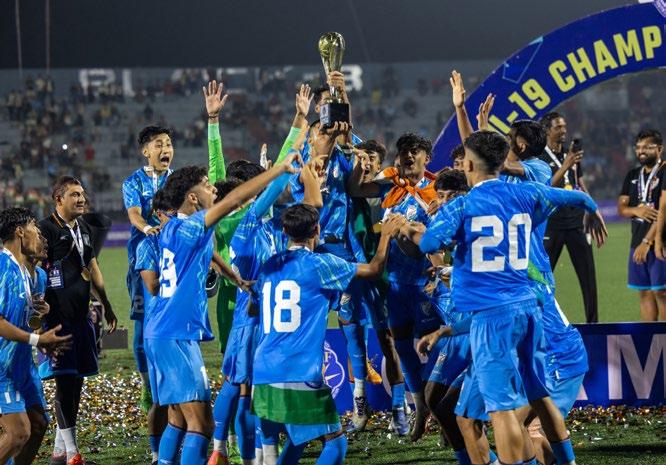
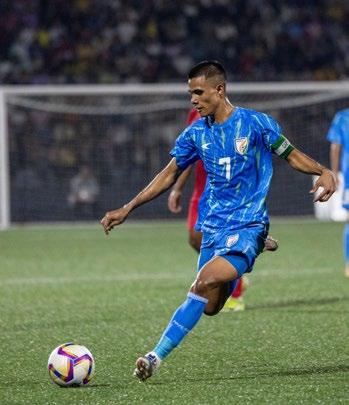
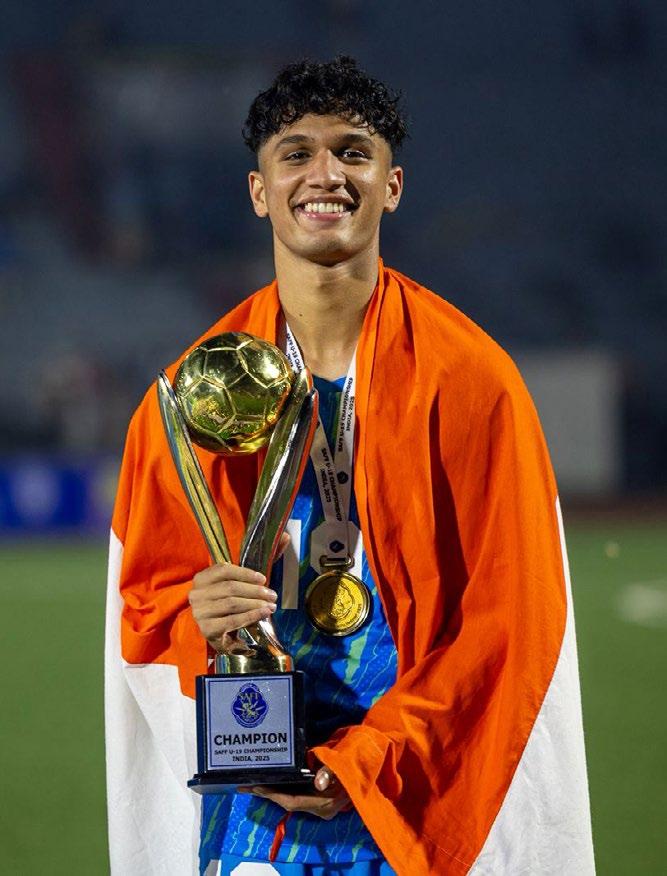
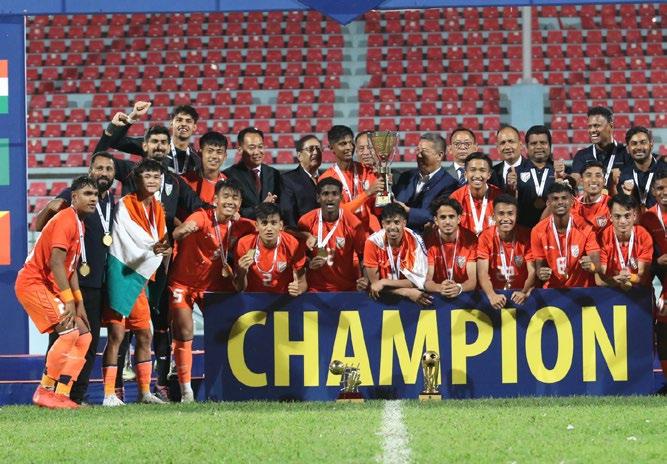
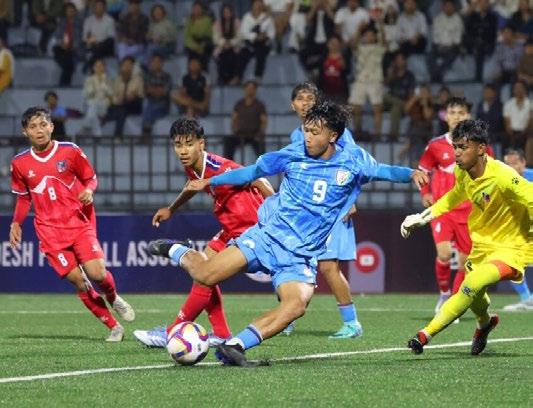
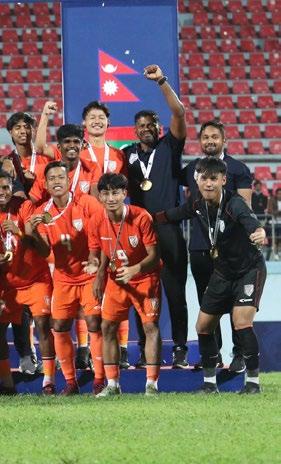
The India U19 men’s football team, affectionately known as the Blue Colts, etched their name in the history books by winning the SAFF U19 Championship 2025, defeating Bangladesh 4-3 in a dramatic penalty shootout after a hard-fought 1-1 draw in the final at the Golden Jubilee Stadium. This triumph marks India’s fourth SAFF U19 title and a successful defence of their 2023 crown, showcasing the rising prowess of Indian youth football.
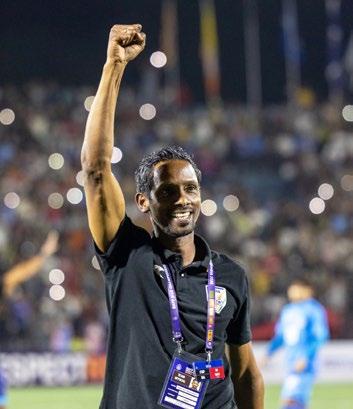
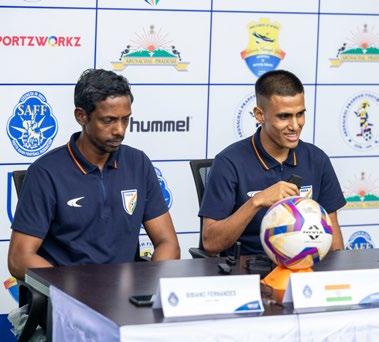
The final was a rollercoaster of emotions, with both teams displaying remarkable skill and determination. India took the lead in the first half through a well-executed goal, igniting hopes among the passionate home crowd. However, Bangladesh, known for their resilience, equalized in the second half, pushing the match into a tense penalty shootout. The Blue Colts held their nerve, with goalkeeper Suraj Singh Aheibam emerging as the hero by making crucial saves, while the team converted four of their penalties to secure the victory. Head coach Bibiano Fernandes praised the team’s grit and unity, stating, “Bangladesh showed their mettle as well, coming back from a goal down. But our boys exhibited tremendous character to keep fighting for the 90 minutes and beyond. I was always positive for the penalties because I have full faith in my players.” The squad’s success was particularly significant for Manipur, as 13 of the team members hailed from the state, turning the victory into a moment of immense pride for the region.
Manipur Chief Minister N. Biren Singh took to social media to congratulate the team, “Proud moment for Manipur as 13 players from our state represented India, with 8 in the starting eleven. Our boys have made Manipur and the entire nation proud. Manipur stands tall, not just as a part of India, but as a driving force in its sporting success. Keep shining, champions!.”
The tournament, hosted in Arunachal Pradesh for the first time, saw India dominate the group stages, finishing atop Group B with wins over Sri Lanka (8-0) and Nepal (4-0), followed by a 3-0 victory against Maldives in the semi-finals. The final against Bangladesh was a fitting climax, with both teams showcasing the growing competitiveness of South Asian youth football. This victory is a significant milestone for Indian football, highlighting the potential of the country’s youth system. The All India Football Federation (AIFF) has been investing heavily in grassroots and youth development, and this triumph underscores the fruits of those efforts. Players like Md Arbash, who was named the tournament’s Most Valuable Player, and goal-scoring sensation Danny Meitei, are now being touted as future stars of Indian football. As the Blue Colts lifted the SAFF U19 trophy amidst roaring applause, the victory sent a clear message: India’s footballing future is bright.
With the AFC U20 Asian Cup qualifiers on the horizon, this young squad has set the stage for bigger challenges, carrying the hopes of a nation eager to see its footballing dreams soar. The SAFF U19 Championship 2025 will be remembered not only for India’s triumph but also for the spirit of unity and passion that defined the tournament. For the Blue Colts, this is just the beginning of what promises to be an exciting journey on the global stage.
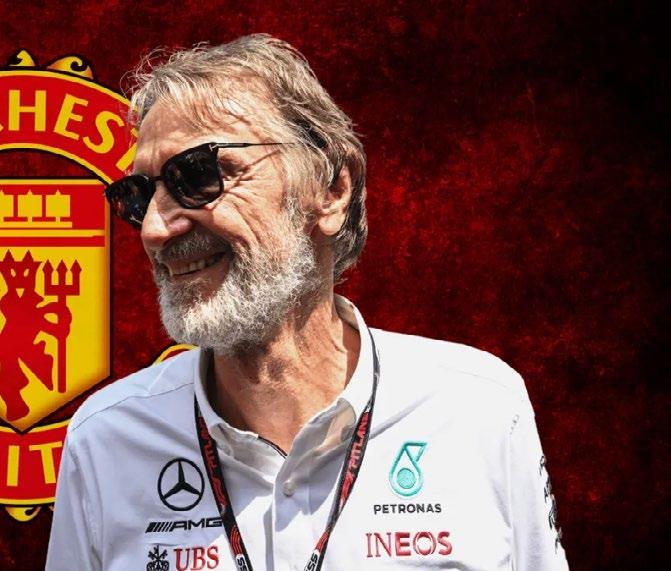
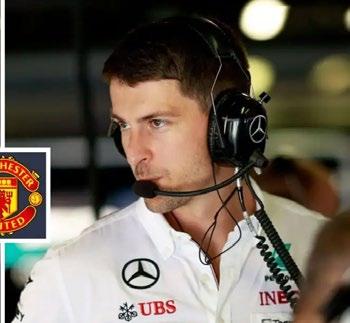
Michael Sansoni Joins Manchester United to Lead Data Revolution
In a bold move highlighting their commitment to modernization, Manchester United have appointed Michael Sansoni as the new head of their data department. The former senior performance simulation engineer from the Mercedes Formula 1 team began his tenure at Old Trafford, bringing a wealth of expertise from one of the most data-driven industries in the world. This appointment, part of Sir Jim Ratcliffe’s ongoing restructuring of the club, underscores United’s ambition to overhaul their analytics processes and regain their competitive edge in the Premier League.
Sansoni’s arrival marks a significant shift for Manchester United, a club whose data analytics capabilities have been described as outdated by insiders. With a proven track record at Mercedes, where he served as head of analytics, Sansoni is tasked with transforming how the club leverages data to inform recruitment, tactics, and performance optimization. His expertise in highperformance environments, where split-second decisions are informed by complex data models, is seen as directly transferable to the fast-paced world of elite football. The decision to recruit from Formula 1 reflects the innovative vision of INEOS, Manchester United’s co-owners, who are driving a broader revolution at the club. Sir Jim Ratcliffe, a key figure behind the move, reportedly views Sansoni as the linchpin for bringing cutting-edge analytical rigour to Old Trafford. Sources have described the hire as “a move within the family,” given INEOS’s ties to both Manchester United and Mercedes F1, highlighting the strategic alignment behind this cross-sport switch.
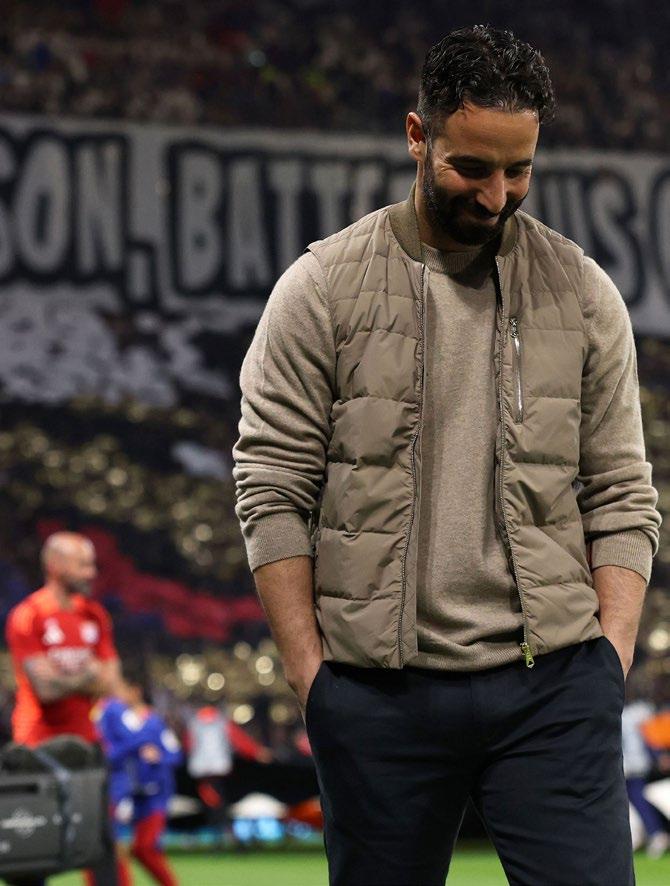
Sansoni’s role will involve overseeing United’s data analytics team, with a focus on enhancing player recruitment and in-game decision-making. The club’s leadership believes that advanced data insights can provide a competitive advantage in identifying undervalued talent and optimizing tactical setups under manager Ruben Amorim. This move comes at a critical juncture for United, who are completed a challenging season, finishing in the bottom half Premier League and facing pressure to rebuild their squad effectively.
The appointment has already generated buzz among fans and analysts, with many drawing parallels to successful data-driven transformations at clubs like Liverpool and Manchester City. Fans have expressed their excitement about Sansoni’s potential impact, with one fan noting, “Michael Sansoni from Mercedes starts this week. He will oversee United’s data analyst team. This is huge for #MUFC.” However, some skepticism remains, as the application of Formula 1 analytics to football is uncharted territory, and results may take time to materialize.
Sansoni’s hire is part of a broader wave of changes at Manchester United, including the recent departure of two senior executives as part of Ratcliffe’s cost-cutting measures. Despite these redundancies, the club is investing in key areas like data and recruitment, signalling a clear intent to modernize operations. As Sansoni settles into his role, all eyes will be on how his analytical expertise translates to the pitch, with hopes that his arrival heralds a new era of data-driven success for the Red Devils. A deal has been agreed and since Ineos is a part-owner in the Mercedes F1 team, this smoothened the process. Sansoni is due to join Manchester United soon and sources say a move to United would be akin to
keeping him in the family and something that would be supported. One of the major issues for United in recent seasons has been recruitment. A gross spend in excess of £900m over the five years from 2019-2024 is a figure exceeded only by Chelsea, Manchester City and Arsenal over the same period. With Manchester United’s plans for the future laid out, the focus is now on starting the new season well, and Sansoni’s appointment represents a long-term investment in the club’s future. If he can replicate even a fraction of Mercedes’ precision and success, United fans may soon have reason to believe that brighter days are ahead.
MRgFUS @ ROYALCARE HOSPITALS GROUP
A MARKET LEADER IN ASIA for TREATMENT OF
PARKINSON’S DISEASE & ESSENTIAL TREMOR
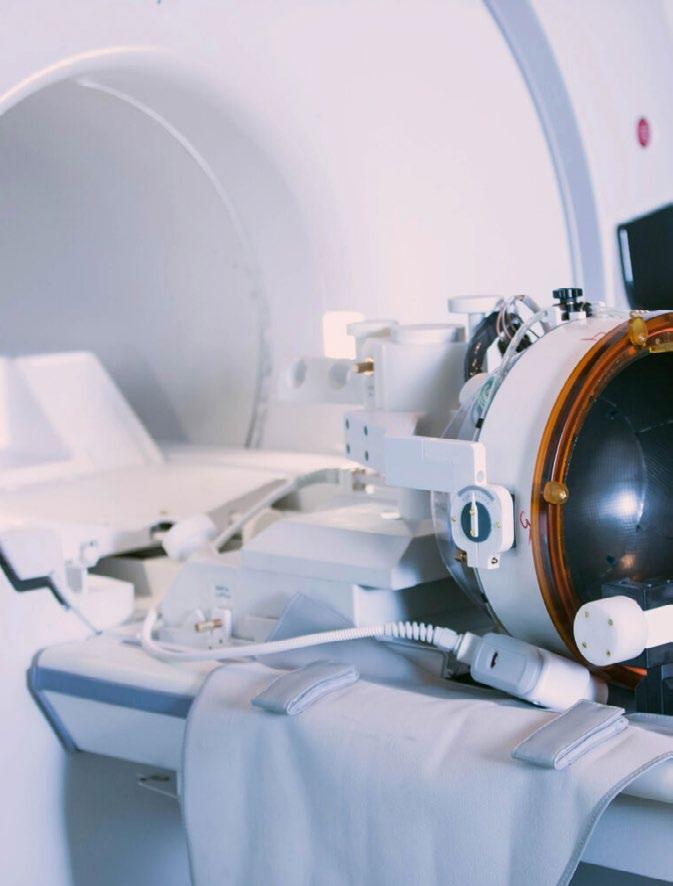
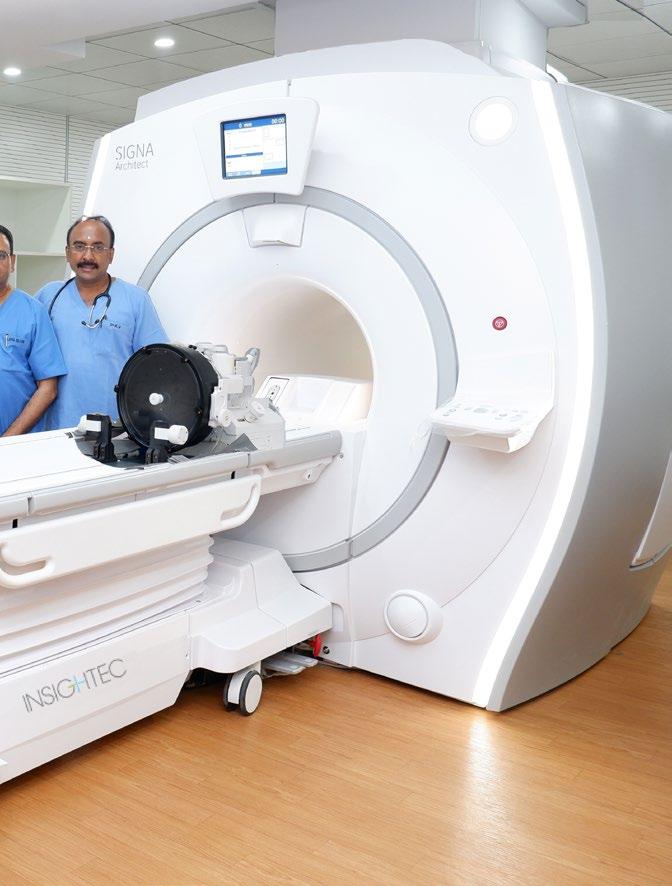
Dr. K. Madeswaran has been known as a Visionary, Missionary and an Unstoppable Dreamer. But what makes him absolutely unique, is his ability to have continual, cumulative and focused Dreams, His fully committed Efforts, highly Determined mindset to pursue his Vision and to see them becoming a Cherished Reality; And in this process of his foresighted vision combined with His Mission of bringing the best of the best Medical Technologies from all around the world and make it available to all; at an affordable cost. As a part of his noble Mission, Royalcare Hospitals Group has purchased and implemented one of the Latest and biggest Breakthroughs in Medical Science, which is the ‘MRI’ Magnetic Resonance Imaging-guided (MRI) Focused Ultrasound Facility @ Royalcare Super-Specialty Hospitals, Neelambur (Coimbatore), Tamil Nadu, India.
Widely regarded as one of the best healthcare providers, Royal Care Super Speciality Hospital, Coimbatore is equipped with advanced medical equipment and technologies, and often has been the first in introducing the latest treatments in the medical field. The newest and the most advanced being the MR-Guided Focused Ultrasound for treatment of Essential tremors and tremor dominant Parkinson’s disease. This procedure is conducted by a team of highly qualified and experienced Neuro Surgeons and Specialists, who have been specifically trained in the Focused Ultrasound technique to target any hard-to-get lesions in the brain and clear them efficiently.
Treatment & Procedure
HOW IT WORKS?
High-Resolution Imaging
Provides a complete anatomical survey of the treatment area
Adjust the Treatment in Real-Time, Outcome Assessment & Intra-Operative To weighted MR Images to verify complete ablation
MRgFUS has been approved by the Central Drugs Standard Control Organization (CDSCO), which is a part of the Ministry of Health and Family Welfare of India and also by the U. S. Food and Drug Administration (FDA).
Causative Diseases:
Essential Tremor: Essential tremors also referred to as familial, idiopathic, or benign tremors, cause uncontrollable shaking in one or several limbs that can profoundly impact a person’s quality of life. As the disease progresses, so does the patient’s tremor scale.
Surgical intervention is often considered the next step when medications fail to offer relief.
Tremor-dominant PARKINSON’S DISEASE:
In an estimated 26% of Parkinson’s disease (PD) patients, their primary symptom is tremors. All these patients initially have tremors, and as the disease progresses, they may experience the onset of other symptoms with an escalation. However, tremors remain the primary symptom that severely impacts their daily activities.
The MIRACULOUS TECHNOLOGY Called - MRgFUS
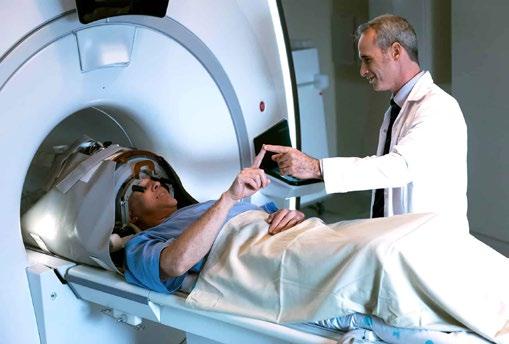
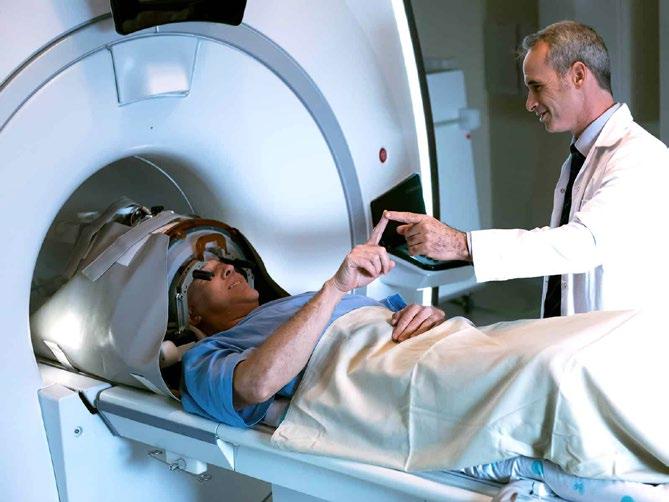
By harnessing acoustic energy, you can treat Essential Tremor and Tremor-dominant Parkinson’s Disease with the therapeutic power of MRgFUS, a Focused Ultrasound platform advancing patient care. MR-guided focused ultrasound (MRgFUS) provides an incisionless treatment option for tremor-dominant Parkinson’s patients who do not respond to medications. MRguided Focused Ultrasound works under the principle of combining two technologies -(MR) Magnetic Resonance Imaging aids and Ultrasound (sound waves). Focused ultrasound is a treatment option that provides tremor control without surgical incisions and with minimal
The TREATMENT: During the treatment, under MRI guidance, sound waves are precisely focused on the small spot in the brain considered to be responsible for causing tremors. Low energy is first applied, which allows the patient to inform the physician of any sensations they feel or other potential side effects. Then the physician can make individualized adjustments to the target. The energy is gradually increased to create a small therapeutic lesion.
The EFFECT: Many patients’ have reported an immediate improvement of tremors with minimal complications. in the treated limbs. Over 3,500 patients (and increasing by the day) have been treated to date around the world.
KNIFELESS BRAIN SURGERY @ ROYALCARE SUPER SPECIALITY HOSPITAL, COIMBATORE:
Experience the transformative power of Incisionless Surgery through MRgFUS (Magnetic Resonance guided Focussed UltraSound) at the only Neuro Centre in the entire Indian Subcontinent. Royal Care Super Speciality Hospital is the only Neurocare Centre in whole of India, facilitated with expertise and technology that provides an MRgFUS (Magnetic Resonance guided Focussed UltraSound) therapy to Essential Tremors and Parkinsons’ patients with tremors.
Best in Neurological Care Imbibing the Best in Innovation: Neurological Care has taken a new transformation with advancements in science and technology. The concept of incision-less surgery has been devised to cure the tremors in patients suffering from Parkinson’s Disease.
FUTURISTIC MEDICINE STARTS RIGHT HERE!
“INNOVATION DEFINING A SAFER & A HEALTHIER FUTURE “
Royal Care MRgFUS (Magnetic Resonance guided Focussed UltraSound) Therapy for patients in Asia & Middle East. Magnetic Resonance-guided Focused Ultrasound (MRgFUS) is a treatment option for patients with essential tremor or tremor dominant Parkinson’s disease who haven’t responded to medication or are not willing to have invasive surgery. The procedure uses focused beams of ultrasonic energy guided by MRI to target areas deep in the brain with no incisions or permanent implants.
UNIQUE & EXCLUSIVE FEATURES OF MRgFUS:
Incisionless Surgery - Little to no risk of infection
No General Anaesthesia Required- No invasive burr holes or implants
Improvement In Hand Tremor -Stably maintained at 3 years
Personalized Treatment-With sub-millimetre target movement
Single Session Treatment-Minimal hospitalization
Safe And Effective- Minimal side effects
Get Back To Ageing Gracefully:
Hand tremors can be effectively treated even when medications don’t help. Life-changing transformations are now possible world-over thanks to innovation in medical technology by our Specialized Neuro Care Technology.
Unique Outpatient Treatments:
Treatment for hand tremors using the therapeutic power of Focused UltraSound is typically a simple single-sitting outpatient procedure. Guided by MRI, precise spots in the brain are targeted using adjustable parameters tailored just for you, to go back home the same day.
Safety &
Risk Information:
MRgFUS (Magnetic Resonance guided Focussed UltraSound) technique is an overall reasonably safe procedure with minimal risks. Patients must discuss with their physician about all treatment options available and the risks involved as a mandate. Complete care that makes you the main point of focus
FDA Approved: You can always count on our expert care. Our physicians are leading the way in research & advanced therapies, paving the path to fearless incisionless treatments.
Minimally Invasive Techniques: Use of high-tech diagnostic tools through minimally invasive surgeries not only help improve your results and recovery, but also make surgeries a comfortable option.
Convenient, Comprehensive Care: You can rest assured find complete neurological care when you need it at our specialized facilities like spine centres, sleep centres, and neuro-rehab locations.
Same-Day Tremor Relief: Even the mildest of Tremors can pose threat to daily activities and make life a struggle. Our advanced Neuro Care technology along with our select neurologic experts marks us as one of the first centres in India offering MRgFUS (Magnetic Resonance guided Focussed UltraSound) solution to tremors; The best, effective, and incision-free option to treat tremors.
For Essential Tremor: Tremors upon outstretched hand postures or simplest hand actions, it is one of the most common movement disorders.
Tremor Dominant Parkinsons: Uncontrollable movements like shaking or stiffness mark this neurodegenerative condition affecting - 1% of people over 60 yrs.
Patient Candidacy: It is vital you discuss your entire medical history with your neurologist and evaluate your suitability for the procedure with accuracy.
How It Works: In simple words, the concept of MRgFUS (Magnetic Radiation guided Focused UltraSound) is a procedure similar to using a high-powered magnifying lens to focus the sun’s energy on a specific spot on a leaf.
Treatment Benefits: tremor Improvement: 40-80% improvement in tremor severity (many with immediate improvement) stably maintained at three years.
EXABLATE NEURO
By harnessing acoustic energy, you can now treat Essential Tremor and Tremor-dominant Parkinson’s Disease patients with the therapeutic power of focused ultrasound. The future of Neurosurgery has arrived. Royal Care Hospital is the first among its peers to introduce to the South Asian market a Focused Ultrasound platform to treat Essential Tremor and Parkinson’s Disease – Delivering up to 1,024 ultrasound waves across select points in the skull to precisely ablate a target deep in the brain, this treatment is performed incision-free in the MRI suite on an outpatient basis. The Focused Ultrasound treatment involves a treating physician sitting at a computer in the MRI control room, using a mouse instead of a scalpel, to expertly mark and create a lesion in the skull. This treatment is guided by MR imaging for the patient-specific treatment planning, with real-time thermal feedback, along with continuous treatment monitoring. MRgFUS (Magnetic Resonance guided Focussed UltraSound) is approved for the treatment of essential tremors that cannot be controlled with medication. Approval is for treatment of one side of the brain only; you must be at least 22 years old. It is also available for tremor-dominant Parkinson’s disease. Approval is for treatment of one side of the brain only; you must be at least 30 years old.
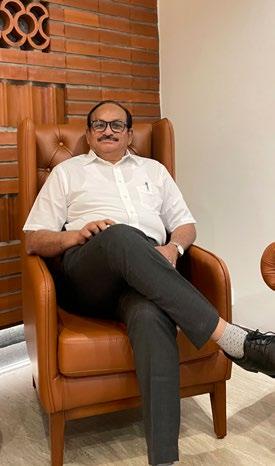
Dr. K. Madeswaran
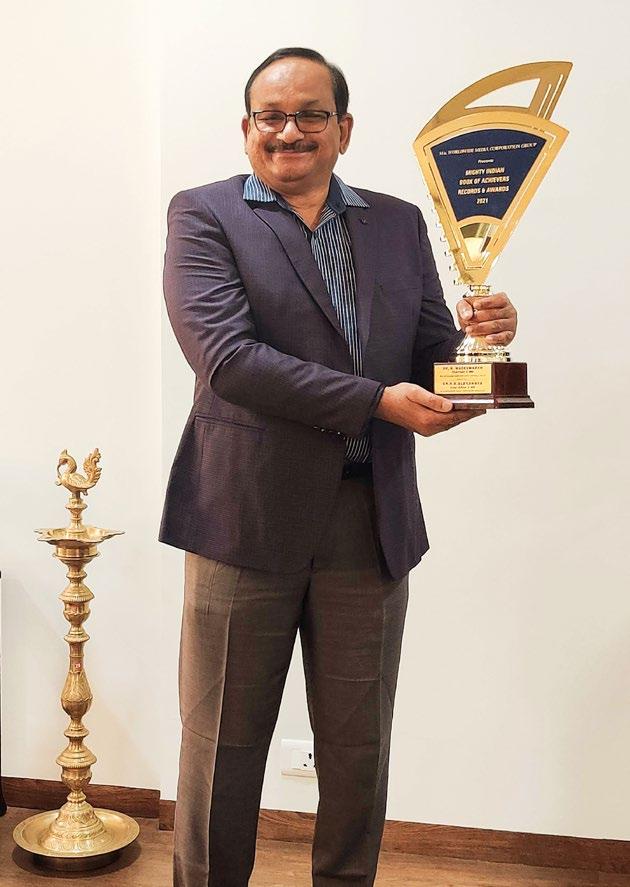
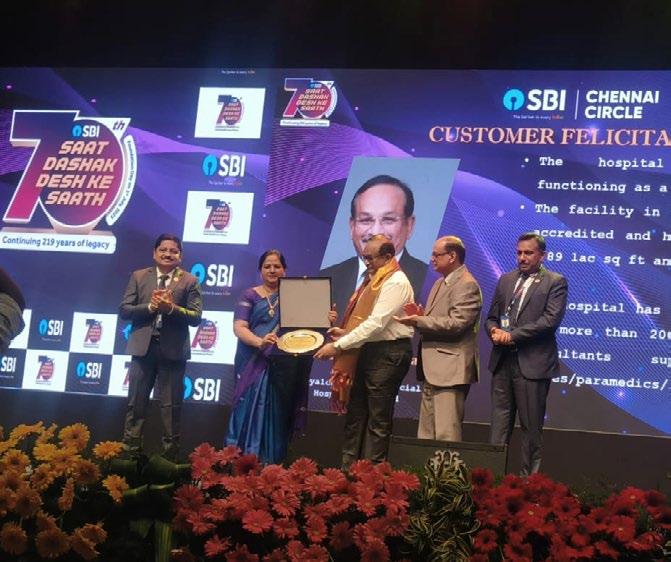
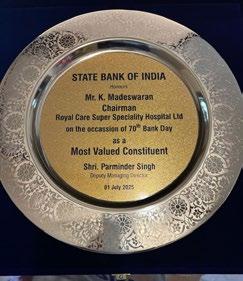
The Founder & CMD of Royalcare International Hospitals Group had been Bestowed with one of the most prestigious award namely “Mighty Indian Book of Achievers Records & Awards for Three consecutive Years viz., 2021, 2022 & 2023
DR. K. MADESWARAN
A WORLD RENOWNED NEUROSURGEON & HEALTHPRENEUR
Dr. K. Madeswaran’s strong commitment to the field of Neurology & Neurosurgery is very evident and affirmative with his amazing Records, Statistics and Awards for having performed over 13,500 successful Neurosurgeries as on date. And, that has positioned Not only Positioned
Dr. K. Madeswaran as One of the Top Ten Neurosurgeons of the World; But, also brought Him Many Prestigious International & National Awards, Honours, Accreditations, Records and Acknowledgements from Many National / International Institutions.
- 2022 - 0901
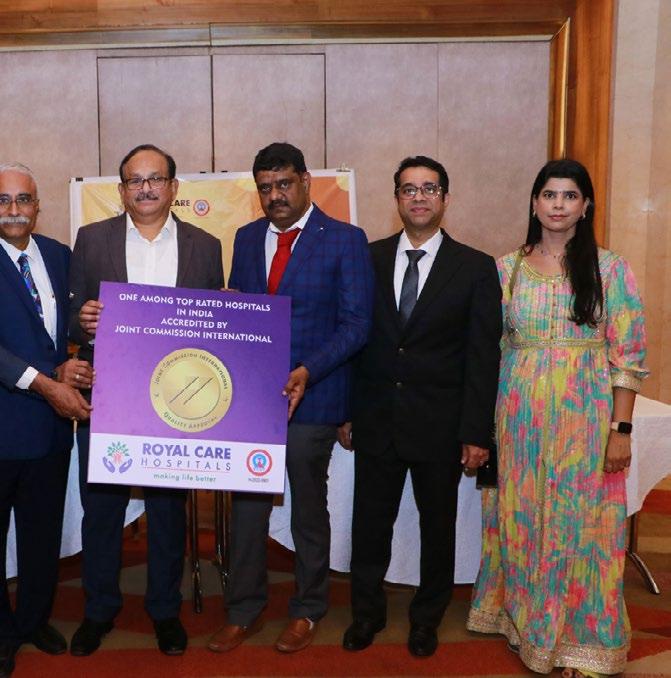
Royal Care Super Speciality Hospital proudly announces its accreditation by the Joint Commission International Certificate of Accrediation for Royalcare Super Speciality Hospital Ltd.
Royal Care Super Speciality Hospital Recently Achieved SRC’s Center of Excellence in Neurosurgery
Royal Care Super Speciality Hospital Recently Achieved NABL - The National Accreditation Board for Testing & Calibration
Throughout his benevolent Professional Career and Entrepreneurship over the last 36 years in Indian Medical, Surgical, Social and healthcare Industry, Dr. K. Madeswaran has been attached with a strong sense of purpose, which is Flawless Health and Joyful Living for All. In addition, Dr. KMD has always been passionate about adhering to a holistic approach to community development and Preserving Global Environment for a Better Tomorrow; as exemplified by His Brain-Child Namely ‘UYIRIN SWASAM’ – through which He and His Team of Global Volunteers have been Planting Trees as far and as wide they could. As on Date’ Uyirin Swasam Foundation’ have planted over (Ten Million) One Crore Trees and they are vigorously Moving Forward with the clear objective and aim of Planting 100 Million Trees with Dr. K. Madeswaran’s Highly determined Vision and Moto of ‘Growing Trees for Global Peace and Prosperity’. All the above serves as a testimony to his most adorable and incredible journey of healing, curing, unconditionally caring, as well as inspiring the Next generations of Surgeons, Doctors and Healthcare Professionals. The fundamental of his legacy is pioneering, developing, innovating, refining and implementing scientific & hi-tech approaches and techniques in the fields of Neuroscience & Neurosurgery.
H
Dr. K. Madeswaran has always been known for his Exemplary and truly remarkable Medical, Surgical, Teaching, Professional and Entrepreneurial career over three to four decades. And majority of the surgeries, those were successfully performed and completed by Dr. K. Madeswaran; were highly Critical and Challenging Cases. And He had taken utmost care, in all those cases; by bringing out best of His skill, knowledge and expertise to ensure that the Patients are cured and sent back to their normal life. Hence, Dr. K, Madeswaran has been fondly called as ‘The Most Legendry Neurosurgeon, who is blessed with the Brain, Heart & Hands Of God’. Dr. K. Madeswaran, with his inborn Skills, Talents and Remarkable Subject Matter Expertise, Not only cured Tens of Thousands of Patients, who have come to him, with the chronic and serious conditions. And, He gave all those Patients and their families the Enduring Joy and legitimate life; to live and rejoice; with their families; But, also taught 1000s of Junior Doctors and Surgeons, who all have been associated with Him and who have been learning directly by being along with Dr. K. Madeswaran in and through all those exemplary and Critical Surgeries and Procedures. And they along with all those beneficiaries of His Medical & Surgical Services, carry the highest level of respect and regard; for his highly committed, timely, sincerely and most valuable Medical & Surgical Contributions, that he made to them; especially at the most crucial time of their life. Dr. K. Madeswaran’s Successful Medical & Surgical Practice led him to accumulate Millions of Followers from all around the world. And with the Flawless Service and Goodwill, his incomparable knowledge, extraordinary skill and expertise in successfully performing Most Complex Surgeries and procedures that he built over a period of three to four decades; Dr. KMD had gained a very high reputation and trust among all sections of the society.
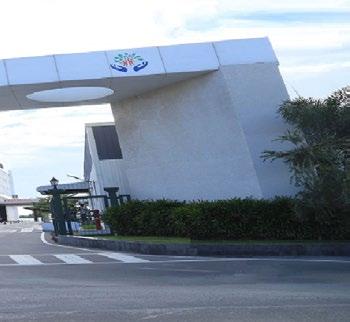
Founded and Commenced by Dr. K. Madeswaran along with His Most Trusted Team of Leading Surgeons, Doctors, Physicians, Medical Professionals, Subject Matter Experts and Management Professionals in the year 2015 as a 50 bedded multi-specialty hospital in One of the Vibrant Cities of India, Namely Coimbatore in the State of Tamil Nadu. Indeed, Dr. KMD’S Royalcare Super Specialty Hospital, within the first Two years of operations, became One of the Most preferred Multi-Super-Specialty Hospital in western Tamil Nadu for emergency, primary and specialty care in virtually all branches of modern medicine. The hospital did continue being, the perfect destination for people seeking superior and Patient friendly healthcare. Functioning with those objectives of making cutting edge healthcare to common man, they provide the best medical
service with highly qualified doctors and highly equipped technologies. This necessitated an imminent expansion and created the need for a larger and more comprehensive tertiary care unit encompassing all the field of medicine. A 1100-bedded ultramodern Hospital facility Plan was thus conceived at Neelambur, Coimbatore By Dr. K. Madeswaran and His Team. RCIHG was Built within a record time of 400 days, the first phase comprising 500 beds were dedicated to the society in November 2016. With over 4,00,000 square feet of modern infrastructure, the Centre contained all necessary facilities to deliver comprehensive care under one roof. With a commitment to make available all facilities on par with the latest advances in the Western World, RoyalCare Super Specialty Hospital became the first Hospital in the country to introduce Bronchial Thermoplasty
ABOUT DR. KMD’S ROYALCARE INTERNATIONAL HOSPITALS GROUP
for the treatment of severe asthma. RoyalCare is also the first hospital in the country to introduce the micro plasmaadvanced oxidation for dialysis feed water disinfection to eliminate endotoxins and to prevent pyrogenic reactions in patients undergoing haemodialysis. Royal Care will strive to ensure that the benefits of modern healthcare reach all strata of society. Apparently, A patient centric culture exists at RoyalCare as they are the focus of everything they do. Every patient will receive warm and committed attention with a smile. Royal Care Super Specialty Hospital aspires to be Ultimate Choice of Hospital for People and Patients from all around the world; in all aspects of Health & Wellness or for people seeking comprehensive healthcare. And that they have been recognized as One of the Top-Class Hospitals for very High Quality and International Standards Health
Services in Asia. And Dr. KMD’s Royalcare International Hospitals Group is going to achieve its Vision of having over 1000 Bedded Most Advanced International Standard Hospitals in the Same Location very shortly. This has been mainly possible by the meticulous involvement and incomparable Contributions of Dr. K. Madeswaran, The Founder & CMD of Royalcare International Hospitals Group, whose vision was to bring together highly talented medical professionals from all around the world on board with phenomenal expertise in their respective fields, establishing cutting edge innovative diagnostic, Latest Hi-Tech Equipment, State-Of-The-Art Infrastructure and therapeutic medical technologies combined with the Most friendly medical and paramedical staff to provide courteous and compassionate and Utmost Care to Patients at all times.
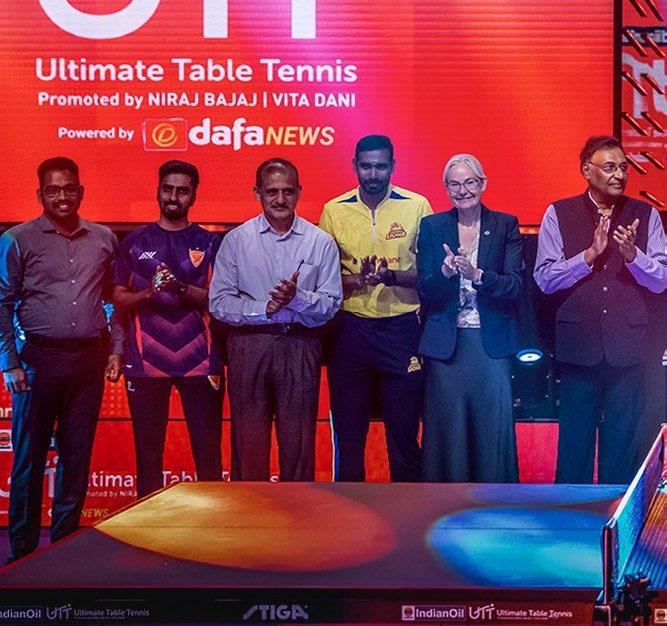
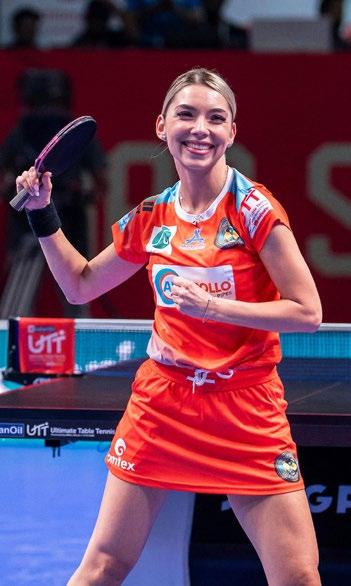
Ultimate Table Tennis
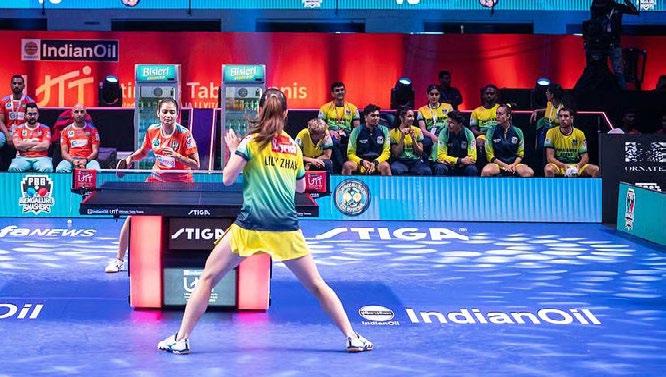
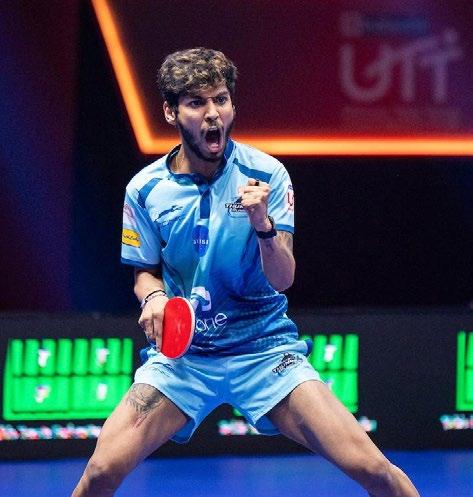
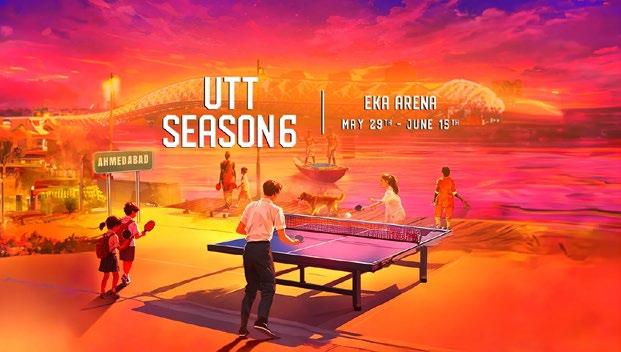
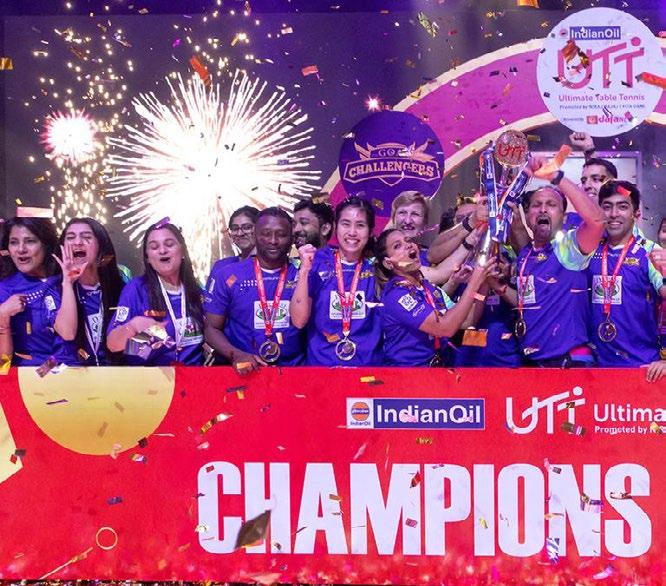
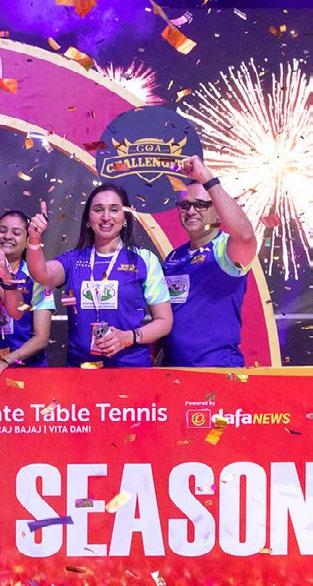
In a transformative development for Indian table tennis, IndianOil Ultimate Table Tennis (UTT) has secured a three-year broadcast and streaming partnership with JioStar, establishing the media powerhouse as the official broadcast partner through 2027. This agreement promises to elevate the sport’s prominence in India, with UTT Season 6 being broadcasted live on Star Sports and streamed on JioHotstar. The multiyear deal is a bold step toward amplifying the reach and appeal of table tennis, showcasing top-tier talent and engaging millions of fans across the country.
The Rise of Ultimate Table Tennis
Launched in 2017 under the aegis of the Table Tennis Federation of India (TTFI), Ultimate Table Tennis is India’s premier professional table tennis league, designed to revolutionize the sport’s landscape in a cricket-dominated nation. UTT brings together top Indian paddlers and international stars in a franchise-based format, delivering high-octane, fastpaced matches that captivate audiences. The league has grown steadily over the years, becoming a vital platform for nurturing talent, fostering competitive spirit, and promoting table tennis as a mainstream sport.
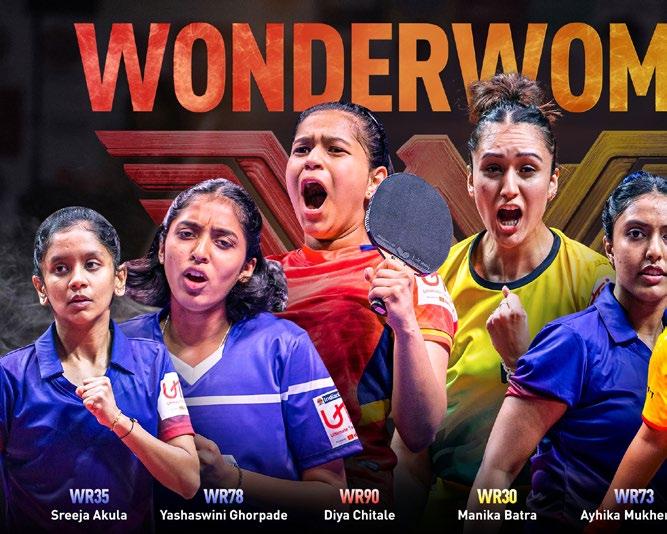
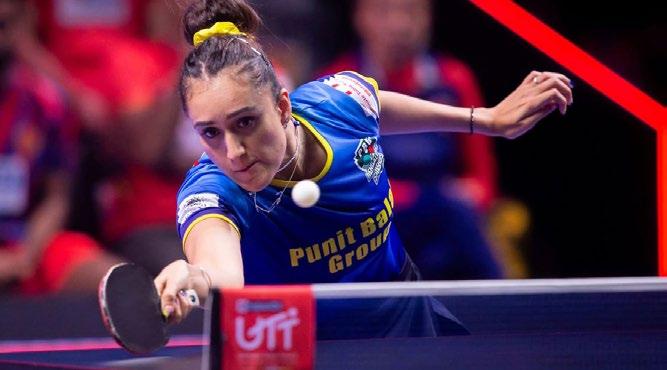
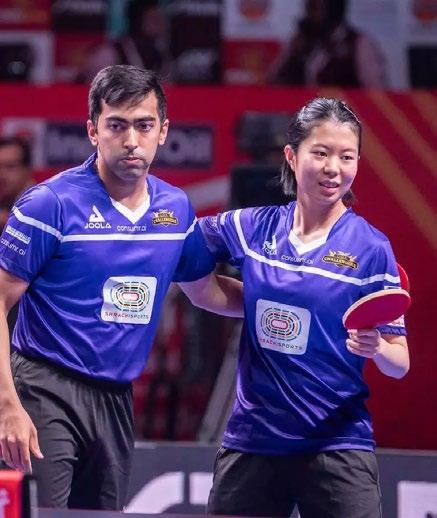
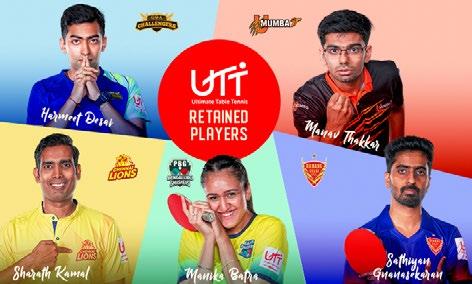
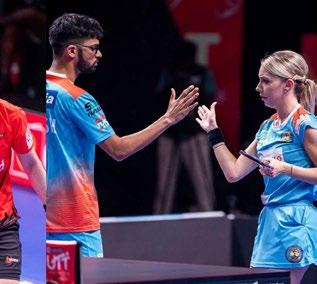
UTT features six to eight franchises, each blending seasoned Indian players, rising stars, and international athletes. The league’s unique format emphasizes team competition, with matches comprising singles and mixed doubles ties, ensuring a dynamic mix of strategy and skill. Past seasons have seen participation from global icons like Nigeria’s Quadri Aruna and Portugal’s Marcos Freitas, alongside Indian stalwarts such as Manika Batra, Sharath Kamal, and Sathiyan Gnanasekaran. This fusion of local and global talent has elevated UTT’s stature, making it a breeding ground for future champions and a showcase for India’s growing prowess in the sport.
A Game-Changing Partnership with JioStar
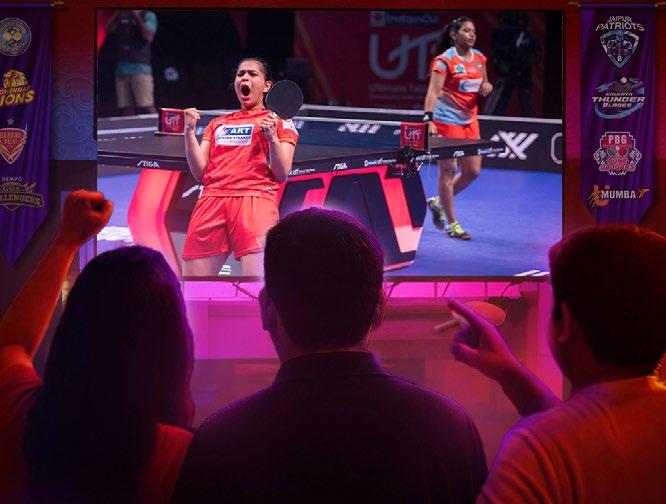
The three-year agreement with JioStar marks a pivotal moment for UTT, leveraging the media giant’s expansive broadcast and digital infrastructure to bring table tennis to a wider audience. Starting with Season 6, fans can watch live matches on Star Sports, one of India’s leading sports broadcasters, and stream them on JioHotstar, a platform with millions of active users. The coverage will be available in multiple languages, including Hindi, English, and regional languages, ensuring accessibility across India’s diverse linguistic landscape. This multiplatform approach caters to both traditional TV viewers and the growing digital audience, making UTT more inclusive and engaging. JioStar’s expertise in sports broadcasting, seen in its coverage of cricket, kabaddi, and other disciplines, positions it as an ideal partner for UTT. The collaboration promises high-quality production,
innovative viewer engagement features, and robust marketing campaigns to amplify the league’s visibility. “This partnership is a milestone for Ultimate Table Tennis,” said a UTT spokesperson. “JioStar’s reach and commitment to sports will help us connect with millions of fans, spotlighting Indian talent and showcasing the thrilling, fast-paced nature of table tennis. We’re thrilled to kick off Season 6 with this momentum.”
Impact on Indian Table Tennis
The timing of this deal is significant, as table tennis in India is experiencing a surge in popularity. Indian players have made remarkable strides on the global stage, with Manika Batra’s Commonwealth Games heroics and Sharath Kamal’s consistent performances inspiring a new generation. UTT has played a crucial role in this resurgence, offering young players a platform to compete against world-class opponents and gain invaluable experience.
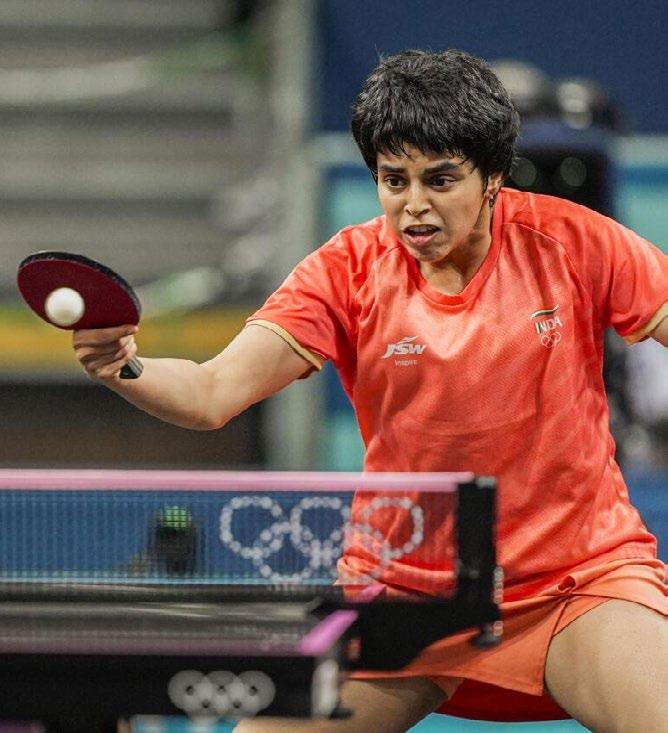
The league’s emphasis on youth development is evident in its inclusion of emerging talents like Diya Chitale and Archana Kamath, who have used UTT as a springboard to international success. The JioStar partnership is expected to further accelerate this growth by bringing professional table tennis into Indian living rooms and smartphones. By showcasing high-stakes matches and compelling player stories, UTT aims to inspire grassroots participation and elevate the sport’s profile. The league’s franchise model, combined with JioStar’s promotional muscle, will also attract sponsors and investors, ensuring long-term sustainability.
A Bright Future for Table Tennis
The UTT-JioStar partnership is more than a broadcast deal; it’s a catalyst for transforming table tennis into a household name in India. By combining UTT’s competitive excellence with JioStar’s unparalleled reach, the collaboration is set to redefine how the sport is perceived and consumed. As Season 6 looms, the stage is set for Indian table tennis to shine brighter than ever, inspiring players, captivating fans, and cementing UTT’s legacy as a trailblazer in Indian sports. For the latest updates on UTT Season 6, including match schedules and player rosters, visit the official UTT website or tune into Star Sports and JioHotstar. With JioStar’s broadcast prowess and UTT’s vision, Indian table tennis is ready to serve up a new era of excitement and achievement.
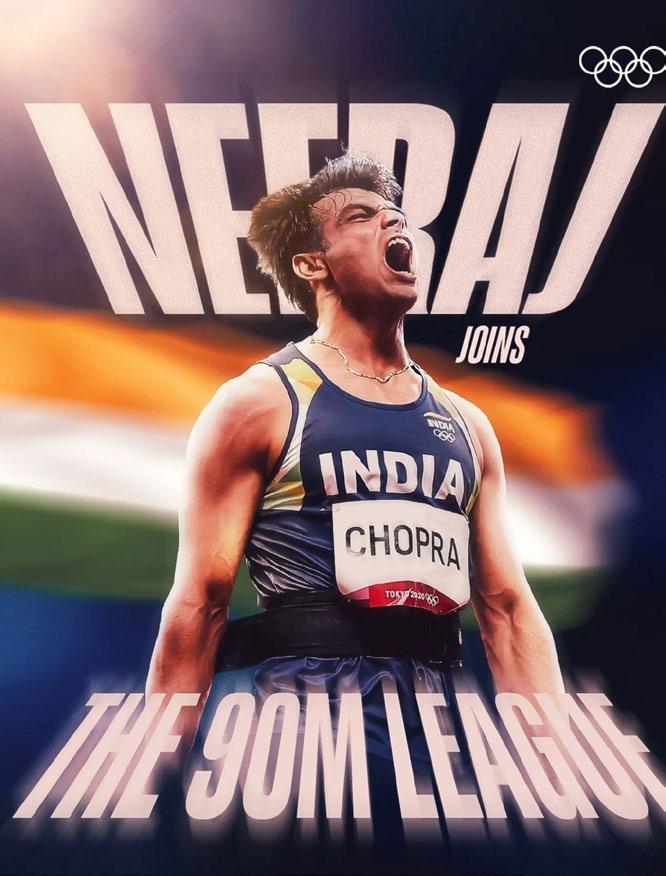
NEERAJ CHOPRA BREAKS 90M BARRIER WITH 90.23M THROW AT DOHA DIAMOND LEAGUE 2025
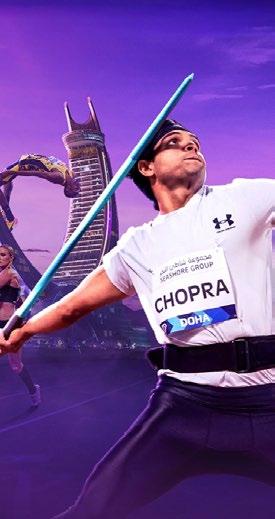
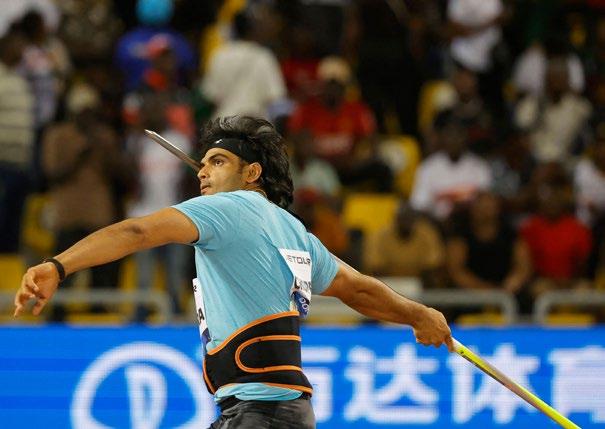
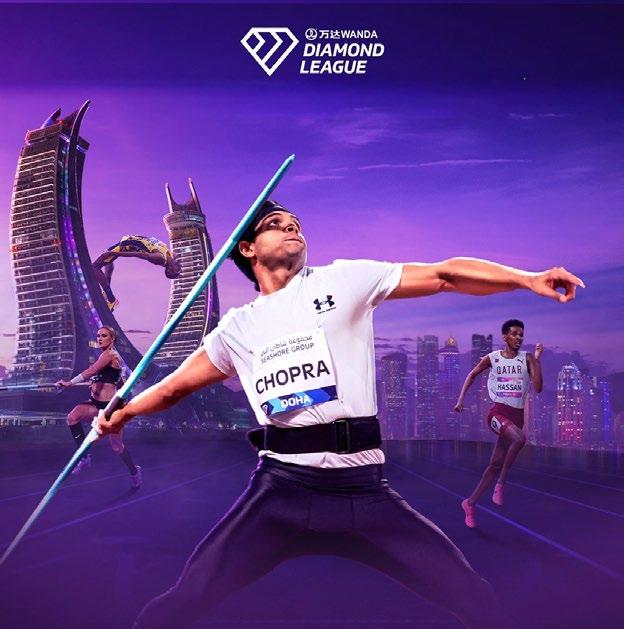
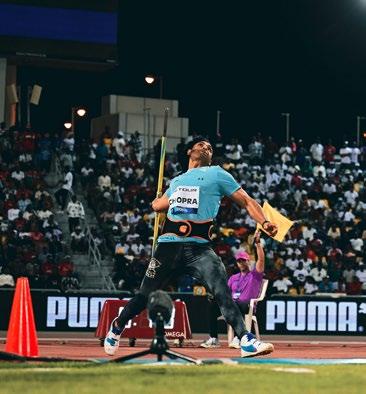
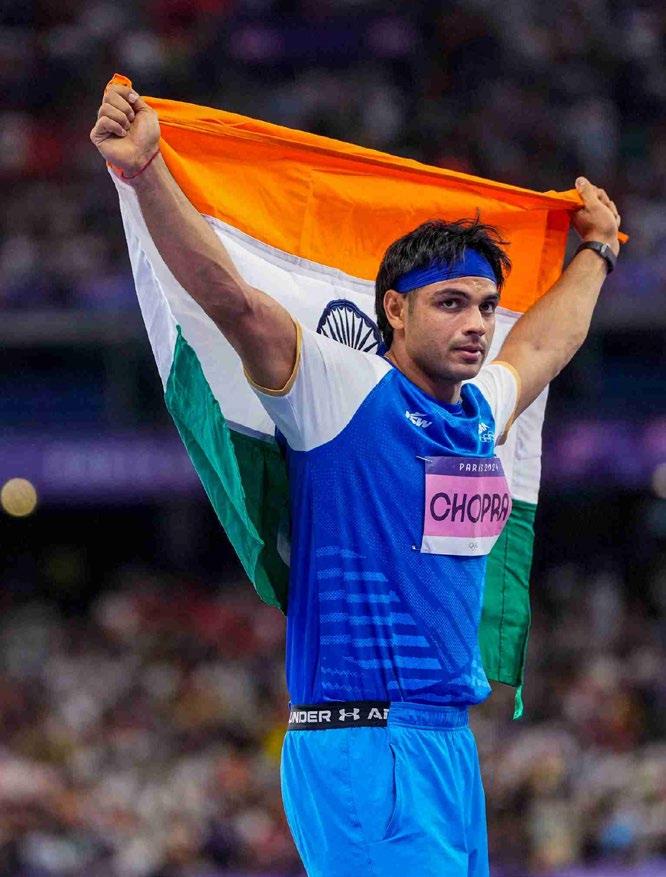
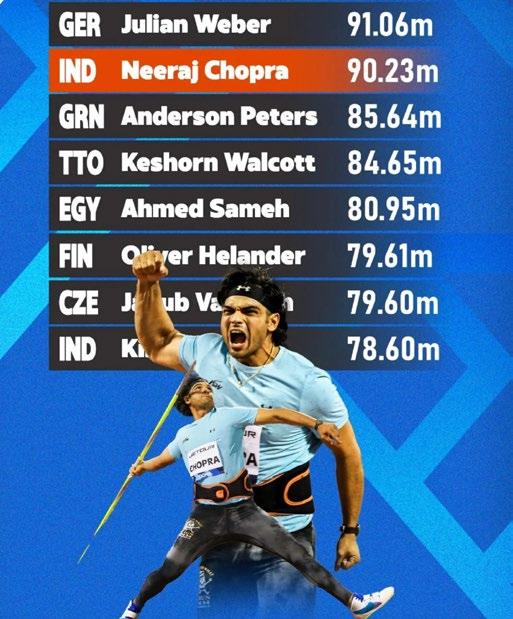
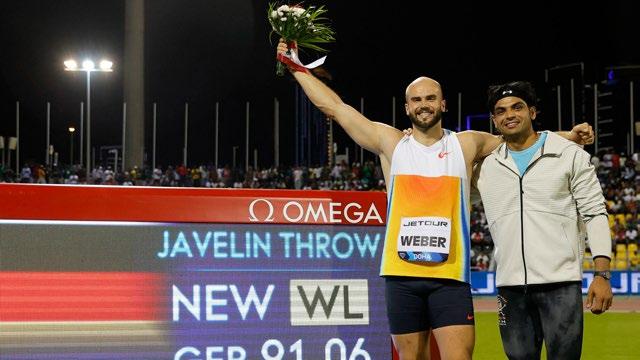
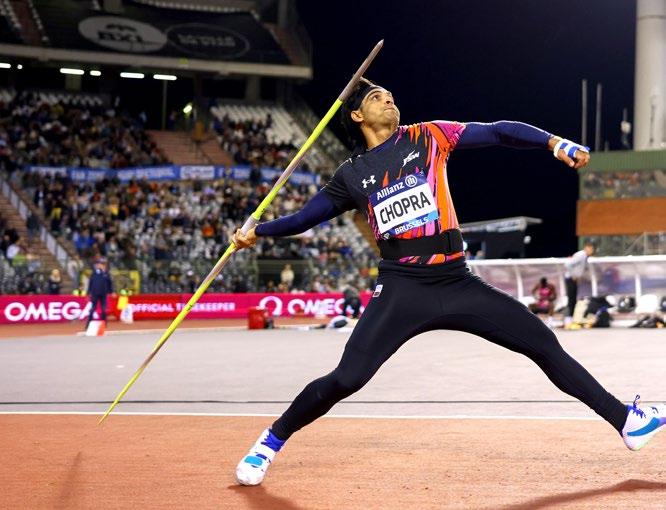
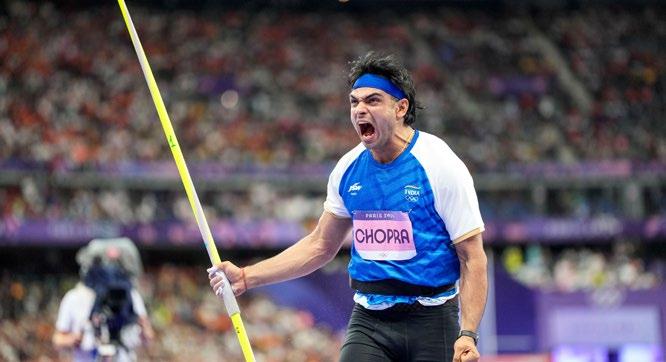
In a historic moment for Indian athletics, Neeraj Chopra, the Olympic and world champion javelin thrower, breached the elusive 90-meter mark with a stunning 90.23m throw at the Doha Diamond League on May 16, 2025. The throw, achieved on his third attempt, not only set a new Indian national record but also marked Chopra’s entry into the prestigious 90m club, a milestone long anticipated by fans and experts alike. Although he finished second to Germany’s Julian Weber, who threw a personal best of 91.06m in the final round, Chopra’s performance was a defining moment in his illustrious career and a powerful statement ahead of the 2025 season.
A Monumental Throw in Doha
The Doha Diamond League, the season-opening event of the prestigious series, provided the perfect stage for Chopra to showcase his prowess. Competing against a strong field, including world-class throwers like Weber, Jakub Vadlejch, and Anderson Peters, Chopra started steadily with an 84.38m throw in the first round, followed by an 86.24m effort in the second. It was his third throw that sent the athletics world into a frenzy—a colossal 90.23m, erasing his
previous national record of 89.94m set in 2022 at the Lausanne Diamond League. The 90m mark has long been a symbolic benchmark in javelin throwing, and Chopra’s achievement made him the first Indian to cross this threshold. The throw solidified his status as one of the sport’s elite, joining an exclusive group of throwers who have surpassed 90m in competition. Reflecting on the moment, Chopra expressed both joy and determination, stating, “Breaking 90m has been a long-standing goal, and doing it here in Doha feels special. But I know there’s more to come, and I’m hungry for bigger throws.”
A Thrilling Competition
Despite leading the competition until the final round, Chopra was overtaken by Weber, whose 91.06m throw clinched the gold. The German thrower’s performance was a testament to the high level of competition at the event, pushing Chopra to second place. Grenada’s Anderson Peters finished third at 85.64m. Chopra’s consistency was evident throughout, with five of his six throws exceeding 86m, including an 88.91m effort in the fifth round.
The Doha crowd, electrified by the back-andforth battle, roared as Chopra’s 90.23m throw was announced, and the Indian contingent in attendance celebrated the milestone with pride. The event underscored Chopra’s ability to perform under pressure and his growing reputation as a clutch competitor on the global stage.
National Pride and Global Recognition
Chopra’s achievement resonated far beyond the athletics world, sparking widespread celebration in India. Prime Minister Narendra Modi led the tributes, posting on X: “Neeraj Chopra’s 90.23m throw is a monumental achievement for Indian sports. His dedication, grit, and talent continue to inspire millions. Congratulations, Neeraj, for rewriting history!” Sports Minister Mansukh Mandaviya also hailed the throw as a “golden moment” for the nation, emphasizing Chopra’s role in elevating India’s stature in global athletics.
The athletics community worldwide joined in the praise. World Athletics President Sebastian Coe congratulated Chopra, noting, “Neeraj’s throw is a landmark for javelin and a sign of his relentless pursuit of excellence.” Fans on social media echoed the sentiment, with posts flooding the platform hailing Chopra as a national hero and a global icon.
A Milestone in a Stellar Career
At 27, Chopra continues to build on an already extraordinary career. The Tokyo Olympic gold medallist (2020), World Championships gold medallist (2023), and defending Diamond League champion has consistently raised the bar for Indian athletics. His previous best of 89.94m, set in Lausanne in 2022, had come tantalizingly close to the 90m mark, making the Doha throw a moment of fulfilment for the athlete and his supporters. Chopra’s journey to 90m was not without challenges. After a groin injury hampered his 2024 season, he underwent surgery in December 2024 and made a remarkable recovery to compete in Doha. His training has focused on refining his technique and building strength, which paid dividends in this record-breaking performance.
Looking Ahead
The Doha Diamond League was just the start of what promises to be an exciting 2025 for Chopra. With the World Athletics Championships in Tokyo and the Asian Games in Riyadh on the horizon, he is poised to add to his legacy. The 90.23m throw has set a new benchmark, but Chopra remains focused on pushing his limits further. “The 90m mark is done, but I’m aiming higher,” he said post-event, hinting at his ambition to challenge the world record of 98.48m set by Jan Zelezny in 1996. For India, Chopra’s achievement is more than a sporting milestone—it’s a symbol of the country’s growing presence in global athletics. As he continues to inspire a new generation of athletes, the nation watches with bated breath to see how far its golden arm will throw next.
THE
RISE OF MALAYSIAN ESPORTS - A NEW ERA OF COMPETITIVE GAMING
In recent years, Malaysia has emerged as a vibrant hub for esports, transforming from a niche pastime into a mainstream phenomenon. With a young, tech-savvy population, robust internet infrastructure, and growing government support, the country is carving out a significant presence in the global esports landscape. This article explores the evolution, current state, challenges, and future prospects of Malaysian esports.
THE GROWTH OF ESPORTS IN MALAYSIA
Esports in Malaysia has seen exponential growth over the past decade, driven by increasing access to high-speed internet and the proliferation of gaming platforms. Titles like Mobile Legends: Bang Bang, Dota 2, PUBG Mobile, and Valorant have captured the imaginations of Malaysian gamers, fostering a passionate community of players and fans. The rise of mobile gaming has been a game-changer, particularly due to Malaysia’s high smartphone penetration rate (over 80% as of 2023). Games like Mobile Legends and Free Fire have made esports accessible to a broader audience, as they require less expensive hardware compared to PC or console gaming. This accessibility has democratized participation, allowing players from diverse backgrounds to compete.
KEY MILESTONES & ACHIEVEMENTS
Malaysia’s esports scene has produced several notable achievements. In 2019, the Malaysian team Geek Fam made waves by qualifying for The International, Dota 2’s premier global tournament, showcasing the country’s potential on the world stage. Similarly, Malaysian players like xNova and MidOne have gained international recognition, competing with top-tier teams globally.
The Mobile Legends: Bang Bang Professional League (MPL) Malaysia has become a cornerstone of the local esports ecosystem, offering a structured platform for aspiring professionals. In 2021, Malaysia’s Todak secured a top-four finish at the Mobile Legends M2 World Championship, cementing the country’s reputation in mobile esports.
The government has also played a pivotal role. In 2019, the Ministry of Youth and Sports recognized esports as an official sport, allocating funds for training programs and infrastructure development. The Malaysia Esports Championship (MEC), organized by the Esports Malaysia Association (ESM), has further nurtured talent and provided pathways to international competitions.
COMMUNITY AND INFRASTRUCTURE
Malaysia’s esports ecosystem thrives on its vibrant community. Local gaming cafes, known as “cyber cafes,” remain popular hubs for casual and competitive gaming, particularly in urban areas like Kuala Lumpur and Penang. These venues often host grassroots tournaments, fostering camaraderie and skill development. Major esports events, such as the Malaysia Esports Awards and Esports Business Summit, have attracted sponsors
like Celcom, Maxis, and Razer, injecting capital into the scene. Universities have also embraced esports, with institutions like Universiti Teknologi MARA (UiTM) and Sunway University offering scholarships and hosting collegiate tournaments. Streaming platforms like Twitch and YouTube have amplified the visibility of Malaysian players, with personalities like Soloz and Syafikah building substantial followings. These streamers not only entertain but also inspire the next generation of gamers.
CHALLENGES FACING MALAYSIAN ESPORTS
Despite its growth, Malaysian esports faces several hurdles. One significant challenge is the lack of consistent funding. While government support exists, it pales in comparison to countries like South Korea or China, where esports is a multibillion-dollar industry. Many Malaysian players rely on sponsorships or prize money, which can be unpredictable.
Another issue is the stigma surrounding gaming as a career. Cultural attitudes often prioritize traditional professions, leading to resistance from parents and educators. This perception is slowly changing, but aspiring esports athletes still face pressure to pursue “stable” careers.
Infrastructure disparities also pose a challenge. While urban areas boast high-speed internet and gaming facilities, rural regions often lack access, limiting participation from talented players outside major cities.
THE ROLE OF GOVERNMENT AND PRIVATE SECTOR
The Malaysian government has taken proactive steps to support esports. The National Esports Development Plan (2020-2025) aims to professionalize the industry through training academies, talent scouting, and international partnerships. Budget allocations, such as the MYR 20 million announced in 2020, have funded events and infrastructure.
Private sector involvement has been equally crucial. Telecom giants like Telekom Malaysia and Maxis have improved internet connectivity, enabling lagfree gaming experiences. Brands like ASUS ROG and Logitech have sponsored tournaments, providing high-quality gear to players. Collaborations with international organizations, such as Tencent and Moonton, have elevated the production quality of local events.
THE FUTURE OF MALAYSIAN ESPORTS
The future of Malaysian esports looks promising, with several trends shaping its trajectory. The integration of esports into education is gaining traction, with universities offering courses in game design and esports management. This could create a sustainable pipeline of talent, from players to coaches and event organizers. The rise of 5G technology is expected to further revolutionize mobile esports, offering faster and more reliable connections. Additionally, the growing popularity of virtual reality (VR) and augmented reality (AR) games could open new avenues for competition and innovation. Malaysia’s strategic location in Southeast Asia positions it as a potential regional esports hub. Events like the Southeast Asia Major
and partnerships with organizations like ONE Esports could attract global attention. Moreover, the country’s multicultural society fosters a diverse gaming community, appealing to international audiences. Malaysian esports has come a long way from its humble beginnings, evolving into a dynamic industry with global aspirations. While challenges like funding and societal perceptions remain, the combined efforts of the government, private sector, and passionate community are driving progress. As Malaysia continues to invest in talent development and infrastructure, it is poised to become a powerhouse in the global esports arena. For gamers and fans alike, the future is bright, and the game is just beginning.
THE ART AND TRADITION OF SUMO WRESTLING
Sumo wrestling, Japan’s ancient and revered sport, is a captivating blend of athleticism, tradition, and cultural significance. Known as the country’s national sport, sumo has a history spanning over 1,500 years, rooted in Shinto rituals and evolving into a professional sport that captivates audiences worldwide. With its unique blend of raw power, intricate ceremonies, and deep cultural symbolism, sumo wrestling is much more than a contest of strength—it’s a living embodiment of Japanese heritage.
ORIGINS AND CULTURAL SIGNIFICANCE
Sumo’s origins are steeped in mythology and Shinto religious practices. According to legend, the Japanese islands were formed after a sumo match between gods, and early sumo bouts were performed to honour deities or ensure bountiful harvests. These ritualistic roots are still evident in modern sumo, where matches are accompanied by elaborate ceremonies, such as the dohyo-iri (ring-entering ceremony), where wrestlers perform stomping rituals to drive away evil spirits. Sumo is deeply tied to Shinto, Japan’s indigenous religion. The dohyo (sumo ring) is considered a sacred space, purified with salt before matches. The referee, or gyoji, wears traditional robes resembling those of Shinto priests, and the canopy above the ring mirrors the architecture of Shinto shrines. These elements underscore sumo’s spiritual dimension, distinguishing it from other combat sports.
THE RULES AND STRUCTURE OF SUMO
At its core, sumo is a straightforward sport. Two wrestlers, or rikishi, face off in a circular dohyo measuring 4.55 meters in diameter. The objective is to force the opponent out of the ring or to make any part of their body (other than the soles of their feet) touch the ground. Matches are often lightning-fast, lasting mere seconds, though they can extend longer in closely contested bouts. Professional sumo is divided into six divisions, with the top tier, Makuuchi, featuring the sport’s elite wrestlers, including the prestigious Yokozuna (grand champion) rank. Tournaments, or basho, are held six times a year in Japan, each lasting 15 days. Wrestlers compete once daily, and the rikishi with the best record at the end of the tournament claims the Emperor’s Cup. Training is gruelling, with rikishi living in communal training stables (heya), where they follow a disciplined lifestyle. Their diet, cantered around a high-calorie stew called chankonabe, fuels their massive physiques, with top wrestlers often weighing between 300 and 400 pounds.
THE LIFE OF A RIKISHI
Becoming a professional sumo wrestler is no small feat. Recruits, often starting in their teens, must endure rigorous physical and mental training. Life in a heya is hierarchical, with lower-ranked wrestlers performing chores for their seniors. The path to the top is arduous, and only a select few reach the Yokozuna rank, which demands not only skill but also exemplary character and dignity. Rikishi wear a traditional mawashi, a belt-like garment, during matches. Their appearance, including the iconic topknot hairstyle, reflects centuries-old traditions. While sumo is a male-only sport in the professional realm, amateur sumo has seen growing participation by women in recent years.
MODERN SUMO AND GLOBAL INFLUENCE
While sumo remains deeply Japanese, its appeal has spread globally. Wrestlers from countries like Mongolia, Georgia, and the United States have risen to prominence, with Mongolian-born Yokozuna like Hakuho and Asashoryu dominating the sport in recent decades. This internationalization has brought new techniques and diversity to sumo, though it has also sparked debates about preserving its traditional essence.
Sumo faces challenges in the modern era, including declining participation among Japanese youth and controversies over issues like hazing in training stables. However, the sport continues to thrive, with packed arenas during basho and growing international interest through media and amateur tournaments.
WHY SUMO ENDURES
Sumo’s enduring appeal lies in its unique blend of athleticism, tradition, and spectacle. The contrast between the quiet reverence of pre-match rituals and the explosive intensity of bouts creates a mesmerizing experience. Beyond the physicality, sumo embodies values like discipline, respect, and perseverance, resonating with audiences across cultures. For those interested in exploring sumo, attending a basho in Japan or watching broadcasts online offers a window into this fascinating world. Whether you’re drawn to the sport’s history, its larger-than-life athletes, or its cultural depth, sumo wrestling remains a powerful testament to Japan’s past and present.
The Age of Bhaarat
INDIA’S AMBITIOUS LEAP INTO AAA GAMING
In a ground-breaking moment for Indian gaming, Tara Gaming Limited has unveiled The Age of Bhaarat, a dark fantasy action RPG poised to bring the rich mythology and epics of ancient India to the global stage. Announced on May 1, 2025, this debut title from the Indian studio is not just a game but a bold statement of ambition: to merge India’s unparalleled storytelling heritage with cutting-edge AAA production values. With a powerhouse team of co-founders—including Bollywood legend Amitabh Bachchan, bestselling author Amish Tripathi, and veteran game developer Nouredine Abboud (Tom Clancy’s Ghost Recon)—The Age of Bhaarat is shaping up to be a landmark project that could redefine India’s place in the global gaming industry.
A Mythical Journey Through Ancient India
Set in a reimagined ancient India, The Age of Bhaarat casts players as a Forest Warden of Anandpur, a spiritual hero tasked with defending the land from a devastating invasion by Rakshasa demons. Drawing inspiration from timeless Indian epics like the Ramayan and Mahabharata, the game weaves a narrative rich with themes of duty, betrayal, and moral choice. The story, penned by Amish Tripathi—known for his Shiva Trilogy and Ram Chandra Series— promises a layered, player-driven experience where choices shape not only the protagonist’s destiny but the fate of the entire world. The game’s world is a breath-taking tapestry of devastated forests, treacherous mountain peaks, mystical lakes, and other landscapes steeped in Indian folklore. Players will explore these environments, uncover hidden paths, and unravel the dark secrets behind the Rakshasa empire. The aesthetic is distinctly Indian, with visuals that aim to capture the grandeur and spirituality of the subcontinent’s cultural heritage, all rendered with cinematic finesse.
Gameplay: A Blend of Innovation and Tradition
The Age of Bhaarat is described as a dark fantasy action RPG with Souls-like combat influences, offering a challenging yet rewarding experience. Players will master an arsenal of traditional Indian weapons— think swords, spears, and chakrams—combined with mystical artifacts and spiritual powers drawn from the forest itself. A standout feature is the unique grappling hook system, which introduces vertical traversal to combat, allowing players to strike and manoeuvre through battles with dynamic flair.
The game supports both solo and multiplayer modes, with co-op gameplay enabling players to team up for mythical adventures. While the trailer suggests two-player co-op, it’s unclear if larger parties will be supported. Combat appears intense and movement-focused, with some observers noting similarities to Black Myth: Wukong, though early pre-alpha gameplay has drawn mixed feedback for its stiff animations. With the game still in development, Tara Gaming has ample time to polish these mechanics.
A Visionary Team with Global Ambitions
Tara Gaming’s mission is to propel India onto the global gaming map, tapping into the country’s “treasure trove of legendary lore” that has remained largely unexplored in video games. The studio’s co-founders bring a unique blend of expertise to the table. Amitabh Bachchan, with over five decades of cinematic legacy and 200+ films, lends his iconic voice and cultural insight to the project. His involvement is a testament to the game’s storytelling ambitions, as he views gaming as the next frontier for Indian narratives. Amish Tripathi’s narrative prowess ensures the game’s story resonates with authenticity and depth, while Nouredine Abboud’s experience at Ubisoft and Novaquark (Dual Universe) guarantees AAA
production quality. Together, they aim to bridge the gap between culturally rooted stories and modern game development, creating a franchise that extends beyond gaming into films, shows, and more.
Reception and Challenges Ahead
The announcement trailer, released on May 1, 2025, has generated significant buzz, with its stunning cinematics earning praise for their authenticity and grandeur. Social media posts reflect excitement, with users comparing it to Black Myth: Wukong for its potential to elevate Indian storytelling in gaming. However, some have critiqued the pre-alpha gameplay’s “janky” animations, urging the team to refine the mechanics before release.
No release date has been confirmed, though Tara Gaming has hinted at a late 2026 launch. The game is slated for PC (via Steam and Epic Games Store) and unspecified consoles, likely PlayStation and Xbox. It’s already available to wishlist, signalling strong early interest.
A Cultural Milestone for Indian Gaming
The Age of Bhaarat is more than a game; it’s a cultural milestone. As India’s first true AAA title, it aims to showcase the mainstream potential of Indian stories while serving as a gateway to the nation’s mythology for global audiences. Tara Gaming’s “Create in India” ambition aligns with a broader cultural storytelling boom in gaming, where diverse narratives are finding a voice. Comparisons to Black Myth: Wukong underscore the game’s potential to put India on par with other emerging gaming powerhouses like China.
However, the road ahead is not without challenges. Delivering a polished AAA experience requires overcoming technical hurdles, especially given the mixed feedback on early gameplay. Tara Gaming will need to balance authenticity with accessibility to appeal to both Indian and international players. If successful, The Age of Bhaarat could pave the way for more Indian studios to compete in the global market, proving that India’s stories are as universal as they are unique.The Age of Bhaarat is a bold, ambitious project that carries the weight of cultural pride and global aspirations. With its stunning visuals, innovative gameplay, and a narrative steeped in Indian mythology, it has the potential to be a game-changer for the industry. As Tara Gaming refines its debut title, the world watches eagerly to see if The Age of Bhaarat can live up to its promise of bringing ancient India’s epics to life. For now, players can wishlist the game and join the journey to defend Anandpur from the Rakshasa threat—a journey that might just redefine what Indian gaming can achieve.
THE POWER OF SPORTS DOCUMENTARIES CAPTURING
Sports documentaries have become a cultural phenomenon, blending raw emotion, gripping narratives, and unparalleled access to the lives of athletes and teams. These films and series transcend the boundaries of sport, offering universal stories of triumph, adversity, and human spirit that resonate with audiences worldwide. From the gritty underdog tales to the behind-the-scenes drama of global sporting events, sports documentaries have carved out a unique space in storytelling. This article explores why these documentaries captivate viewers, their evolution, key examples, and their impact on both sports and entertainment.
WHY SPORTS DOCUMENTARIES RESONATE
At their core, sports documentaries tap into universal themes: perseverance, redemption, teamwork, and the pursuit of greatness. They go beyond the final score to reveal the personal sacrifices, mental battles, and societal pressures athletes face. Whether it’s a boxer rising from poverty, a team defying the odds, or a legend grappling with fame, these stories mirror the human experience, making them relatable to even non-sports fans. The visual medium amplifies this connection. Slowmotion replays of a game-winning shot, candid lockerroom conversations, or tearful reflections from athletes
create an emotional intimacy that written accounts or live broadcasts rarely match.Add to that the high stakes of competition, and you have a recipe for drama that rivals any scripted film. Moreover, sports documentaries often serve as time capsules, preserving moments of cultural and historical significance. They explore issues like race, gender, politics, and class through the lens of sport, offering insights into broader societal dynamics. For instance, documentaries about the 1968 Black Power salute at the Olympics or Billie Jean King’s fight for gender equality in tennis highlight how sports intersect with social change.
THE EVOLUTION OF SPORTS DOCUMENTARIES
Sports documentaries have evolved dramatically over the decades. Early examples, like the 1938 film Olympia by Leni Riefenstahl, focused on aestheticizing athletic prowess, often with propagandistic undertones. By the late 20th century, documentaries began emphasizing narrative depth. Films like Hoop Dreams (1994) followed the lives of two inner-city basketball prospects, blending raw footage with a novelistic arc that set a new standard for the genre.
The 2000s saw a boom in sports documentaries, fuelled by ESPN’s 30 for 30 series, launched in 2009. This anthology delivered cinematic storytelling on topics ranging from the rise and fall of Allen Iverson (No Crossover) to the cultural impact of the 1980s Lakers-Celtics rivalry (Celtics/ Lakers: Best of Enemies). The series’ success proved that sports documentaries could appeal to mainstream audiences, not just diehard fans.
Streaming platforms like Netflix, Amazon Prime, and Hulu have since taken the genre to new heights. Series like The Last Dance (2020), chronicling Michael Jordan’s Chicago Bulls, and Drive to Survive (2019–present), which revitalized Formula 1’s global fanbase, leverage polished production, unprecedented access, and multiepisode formats to create binge-worthy content. These platforms have also democratized the genre, spotlighting niche sports like rock climbing (Free Solo, 2018) or chess (The Queen’s Gambit–inspired documentaries).
KEY EXAMPLES & THEIR IMPACT
The Last Dance (2020)
This 10-part ESPN/Netflix series is a masterclass in sports storytelling. Focusing on Michael Jordan and the 1990s Chicago Bulls, it blends archival footage, presentday interviews, and never-before-seen clips from the 1997–98 season. The series humanized Jordan, revealing his relentless drive, flaws, and the toll of fame. Its release during the COVID-19 pandemic made it a global phenomenon, sparking debates about Jordan’s legacy and introducing younger audiences to his era.
Free Solo (2018)
This Oscar-winning documentary follows climber Alex Honnold’s attempt to free solo El Capitan, a 3,000foot rock face in Yosemite National Park. The film’s heart-stopping cinematography and psychological depth—exploring Honnold’s mindset and the risks he faces—transcend climbing, making it a meditation on fear, focus, and mortality. Free Solo elevated the profile of climbing and inspired a wave of adventure-sport documentaries.
Drive to Survive (2019–present)
Netflix’s series on Formula 1 transformed the sport’s popularity, particularly in the U.S., by turning drivers and team principals into compelling characters. By focusing on rivalries, personal struggles, and behind-the-scenes drama, it made a once-niche sport accessible to millions. The show’s success is credited with boosting race attendance and viewership, proving the power of documentaries to shape a sport’s trajectory.
Hoop Dreams (1994)
This groundbreaking film follows two African-American teens, Arthur Agee and William Gates, as they chase NBA dreams. Over five years, it captures their struggles with poverty, family pressures, and systemic inequality. Hoop Dreams redefined sports documentaries by prioritizing social commentary over athletic glory, influencing filmmakers to tackle deeper themes.
When We Were Kings (1996)
Chronicling the 1974 “Rumble in the Jungle” between Muhammad Ali and George Foreman, this documentary is as much about Ali’s charisma and cultural impact as it is about boxing. It captures a pivotal moment in sports history, blending fight footage with commentary on race, politics, and Ali’s defiance. The film’s enduring popularity underscores Ali’s legacy as a global icon.
THE IMPACT ON SPORTS AND CULTURE
Sports documentaries do more than entertain—they shape perceptions and legacies. They can revive interest in forgotten athletes, as seen with The Last Dance rekindling debates about Jordan vs. LeBron James. They can also rehabilitate controversial figures, like Lance Armstrong in The Armstrong Lie (2013), which grappled with his doping scandal while humanizing his journey.
These films also drive commercial success. Drive to Survive boosted Formula 1’s revenue through new fans and sponsorships, while The Last Dance spurred sales of Jordan-related merchandise. Documentaries can even influence sports policy—Icarus (2017), which exposed Russia’s state-sponsored doping, led to sanctions against Russian athletes in international competitions.
For athletes, documentaries offer a platform to control their narrative or reclaim their story. Serena Williams’ In the Arena: Serena Williams (2024) and Simone Biles’ Simone Biles Rising (2024) provide intimate looks at their personal and professional challenges, countering media narratives with their own voices.
CHALLENGES AND CRITICISMS
Despite their popularity, sports documentaries face criticism. Some argue they glorify athletes at the expense of critical scrutiny, as seen in accusations that The Last Dance was overly deferential to Jordan, who had editorial input. Others point to the genre’s tendency to sensationalize drama, as in Drive to Survive, which has been criticized by drivers like Max Verstappen for exaggerating rivalries. Ethical concerns also arise when documentaries exploit personal struggles for entertainment. The pressure to deliver “access” can lead to invasive portrayals, raising questions about privacy and consent. Additionally, the genre has been slow to diversify, with many stories focusing on male-dominated sports, though recent works like Simone Biles Rising and Naomi Osaka (2021) signal progress.
THE FUTURE OF SPORTS DOCUMENTARIES
As streaming platforms invest heavily in sports content, the genre is poised for further growth. Emerging trends include interactive documentaries, where viewers choose narrative paths, and virtual reality experiences that immerse audiences in an athlete’s perspective. Artificial intelligence could also play a role, analyzing vast archives of footage to create hyper-personalized documentaries. The rise of athlete-driven content, through platforms like The Players’ Tribune or athletes’ own production companies, suggests a future where stars exert greater control over their stories. Meanwhile, the global reach of streaming services is spotlighting sports from underrepresented regions, like cricket in India or sumo wrestling in Japan. Sports documentaries are more than highlight reels—they are windows into the human condition, told through the lens of athletic pursuit. From Hoop Dreams to The Last Dance, they capture the drama, sacrifice, and legacy of sport while reflecting broader societal truths. As technology and storytelling evolve, the genre will continue to inspire, inform, and unite audiences, proving that the best sports stories are about far more than the game itself.
PSG’S HISTORIC TRIUMPH
CLINCHING THE 2025 UEFA CHAMPIONS LEAGUE IN RECORD-BREAKING FASHION
Paris Saint-Germain (PSG) etched their name into football history by winning their first-ever UEFA Champions League title, defeating Inter Milan 5-0 in a commanding performance at Munich’s Allianz Arena. This victory, the largest margin in a Champions League final, marked a defining moment for a club that has long chased Europe’s most prestigious trophy. Under the guidance of manager Luis Enrique, PSG’s youth-driven squad delivered a masterclass, ending years of continental heartbreak and cementing their status as a global football powerhouse.
A Historic Milestone for PSG
PSG’s 2025 Champions League triumph is a landmark achievement for several reasons. Founded in 1970, the club had never won the European Cup or Champions League, despite dominating French football with 13 Ligue 1 titles and a UEFA Cup Winners’ Cup in 1996.
Their closest brush with glory came in 2020, when they lost 1-0 to Bayern Munich in the final. For a club backed by Qatar Sports Investments (QSI) since 2011, with billions invested in star players like Zlatan Ibrahimović, Neymar, Lionel Messi, and Kylian Mbappé, the absence of a Champions League title had been a glaring gap in their trophy cabinet.
The 2025 victory was not just a first but a statement. The 5-0 scoreline surpassed the previous record for the largest margin in a Champions League final, showcasing PSG’s dominance. Achraf Hakimi opened the scoring in the 12th minute, followed by two goals from 19-year-old Désiré Doué, with Khvicha Kvaratskhelia and Senny Mayulu completing the rout. This performance highlighted a strategic shift under Luis Enrique, who transitioned PSG from a reliance on aging superstars to a dynamic, youthful squad featuring players like João Neves, Nuno Mendes, and Bradley Barcola, all 25 or younger. The win also completed a historic treble for PSG, having already secured Ligue 1 and the Coupe de France in the 2024-25 season, with the Trophée des Champions adding to their haul. This made PSG the first French club to achieve a treble, further elevating their legacy. Only Marseille, in 1993, had previously won the Champions League for France, making PSG just the second French club to claim the title.
The Road to Glory
PSG’s journey to the 2025 final was a testament to their resilience and tactical evolution. After defeating Arsenal 3-1 in the semifinals, they faced an Inter Milan side that had won the competition three times, most recently in 2010. Yet, PSG dominated from the first whistle, blending slick passing, relentless pressing, and lethal counter-attacks.
Their third goal, scored by Doué in the 63rd minute, was a highlight, encapsulating Luis Enrique’s attacking philosophy. Luis Enrique’s impact cannot be overstated. Having won the Champions League with Barcelona in 2015, he became one of the few managers to lead two different clubs to the title, a feat made more poignant by a tribute to his late daughter Xana during the celebrations. PSG fans unfurled a giant banner honouring Xana, who passed away in 2019 at age nine, adding an emotional layer to the victory. Enrique’s focus on youth and attacking football transformed PSG into a cohesive unit, stronger than the sum of their parts.
Why It Matters
The 2025 Champions League win is a turning point for PSG and their Qatari owners, who have faced criticism for “sportswashing” and breaching Financial Fair Play rules. QSI’s investment since 2011 turned PSG into a global brand, with revenues exceeding €800 million, but the Champions League was the ultimate validation of their project. The victory also shifts the narrative around PSG, proving they could succeed without megastars like Mbappé, who left for Real Madrid in 2024, only to see his former club triumph without him. For Paris, the win sparked euphoria, though celebrations were marred by tragedy. Despite these incidents, the majority of fans celebrated peacefully, with over 100,000 attending a parade on the Champs-Élysées. The surge in merchandise sales, reported as Fanatics’ highest for a non-U.S. team, underscored the global impact of PSG’s triumph.
A New Era for PSG
PSG’s victory sets the stage for further ambitions. With a young squad, they are already among the favourites for the 2025-26 Champions League, though they face challenges from clubs like Barcelona and Liverpool. Their next test is the Club World Cup in the U.S., where they aim to complete a quadruple, followed by the UEFA Super Cup on August 13, 2025, against Tottenham Hotspur in Udine, Italy. PSG’s 2025 Champions League win is more than a trophy; it’s the culmination of a 14-year quest to conquer Europe. It redefines the club as a force built on youth, strategy, and unity, rather than just financial might. As Luis Enrique said, “We wanted to win it our way,” and they did—spectacularly. For PSG fans, the wait is over, and the future looks brighter than ever.
THE POWER OF PLAY, HOW SPORTS MIRROR AND SHAPE SOCIAL MOVEMENTS
Sports have long been more than just games; they are powerful mirrors of society, reflecting its values, struggles, and aspirations. From the Olympic stage to local fields, sports have consistently intersected with social movements, amplifying voices, challenging norms, and driving change. This article explores how sports serve as a lens for social movements, highlighting key historical and contemporary examples that demonstrate their role in shaping culture and advocating for justice.
SPORTS AS A PLATFORM FOR SOCIAL CHANGE
At their core, sports are a universal language, transcending borders, languages, and cultures. They bring people together, creating shared moments that can galvanize collective action. This unique ability makes sports an ideal platform for social movements to gain visibility and momentum. Athletes, as public figures with significant influence, often leverage their platforms to highlight issues such as racial equality, gender equity, and political freedom.
Historically, sports have been intertwined with social progress. The 1936 Berlin Olympics, for instance, became a stage for confronting fascism. African American athlete Jesse Owens’ four gold medals challenged Nazi ideologies of racial superiority, offering a powerful rebuke to Hitler’s propaganda. Owens’ triumphs were not just athletic but symbolic, resonating with the broader fight against racial oppression.
RACIAL EQUALITY AND THE CIVIL RIGHTS MOVEMENT
The Civil Rights Movement of the 1950s and 1960s found a powerful ally in sports. In 1947, Jackie Robinson broke Major League Baseball’s color barrier by joining the Brooklyn Dodgers, becoming a symbol of integration and resilience. His success on the field challenged deeply entrenched racial prejudices, paving the way for other Black athletes and contributing to the broader push for desegregation.
Perhaps one of the most iconic moments in sports history occurred at the 1968 Mexico City Olympics. American sprinters Tommie Smith and John Carlos, after winning gold and bronze in the 200-meter race, raised their fists in a Black Power salute during the medal ceremony. This silent protest against racial injustice in the United States drew global attention but came at a personal cost—both athletes faced backlash and were expelled from the Games. Their act of defiance became a defining image of the Civil Rights Movement, illustrating how sports can amplify calls for justice.
More recently, Colin Kaepernick’s decision to kneel during the U.S. national anthem in 2016 sparked a nationwide conversation about police brutality and systemic racism. Kaepernick, an NFL quarterback, used his platform to protest racial injustice, inspiring other athletes to join the movement. The backlash he faced, including being effectively blackballed from the league, underscored the risks athletes take when challenging the status quo. Yet, his protest ignited the Black Lives Matter movement’s presence in sports, with teams across leagues adopting gestures of solidarity, such as kneeling or wearing social justice messages on uniforms.
GENDER EQUITY AND WOMEN’S RIGHTS
Sports have also been a battleground for gender equity, reflecting the broader women’s rights movement. The passage of Title IX in the United States in 1972, which mandated equal opportunities for women in education and athletics, marked a turning point. It led to a surge in women’s participation in sports, challenging stereotypes about athleticism and femininity.
Tennis icon Billie Jean King became a trailblazer for gender equality in the 1970s. Her 1973 “Battle of the Sexes” victory over Bobby Riggs was more than a tennis match; it was a cultural statement about women’s capabilities and worth. King’s advocacy extended beyond the court, as she pushed for equal prize money and opportunities for women in sports, laying the groundwork for future generations.
Today, athletes like Serena Williams and Megan Rapinoe continue to champion gender equity. Rapinoe, a star of the U.S. Women’s National Soccer Team, has been a vocal advocate for equal pay, leading her team to sue the U.S. Soccer Federation for gender discrimination. Their 2019 World Cup victory amplified their message, highlighting how women’s sports can drive conversations about fairness and representation.
GLOBAL MOVEMENTS AND POLITICAL PROTEST
Sports have also reflected global political movements, often serving as a stage for dissent. During the Cold War, the Olympics became a proxy for ideological battles between the United States and the Soviet Union, with boycotts in 1980 and 1984 symbolizing geopolitical tensions. More recently, athletes have used international competitions to protest authoritarian regimes. For example, during the 2020 Tokyo Olympics (held in 2021), Belarusian sprinter Krystsina Tsimanouskaya sought asylum after criticizing her country’s regime, drawing attention to political repression.
In 2022, the FIFA World Cup in Qatar faced scrutiny for the host country’s human rights record, including its treatment of migrant workers and LGBTQ+ individuals. Several European teams planned to wear rainbow armbands in solidarity with LGBTQ+ rights, though FIFA’s restrictions limited these protests. Such moments highlight how sports can bring global social issues into sharp focus, even when governing bodies resist.
THE ROLE OF FANS AND COMMUNITIES
Beyond athletes, fans and communities also drive the connection between sports and social movements. Fan activism, such as boycotts or protests against team owners with controversial political ties, can amplify social causes. For instance, in the NBA, fan and player pressure led to the relocation of the 2017 All-Star Game from Charlotte, North Carolina, in response to the state’s discriminatory anti-transgender legislation. Grassroots sports initiatives also reflect social movements. Programs promoting inclusivity, such as adaptive sports for people with disabilities or soccer leagues for refugees, embody the push for diversity and accessibility. These efforts show how sports can foster community and challenge systemic barriers at a local level.
CHALLENGES AND CRITICISMS
While sports can be a force for good, they are not without flaws. Commercialization and corporate interests
sometimes dilute the impact of athlete activism, with brands co-opting social justice messages for profit. Additionally, athletes who speak out often face severe consequences, from loss of sponsorships to public vilification. Governing bodies like the International Olympic Committee have historically penalized political protests, citing neutrality, which critics argue stifles free expression. Moreover, sports can reflect societal divisions as much as they promote unity. Issues like racism in European soccer, where players face abuse from fans, or the exclusion of transgender athletes in certain competitions, reveal ongoing challenges in achieving true inclusivity.
THE FUTURE OF SPORTS AND SOCIAL MOVEMENTS
As social movements evolve, so too will their reflection in sports. The rise of digital platforms, including social media, has given athletes unprecedented reach to advocate for change. Movements like #MeToo and climate activism are increasingly visible in sports, with athletes like Naomi Osaka using their platforms to address mental health and environmental issues.
Technology also plays a role. Data analytics and wearable tech are being used to promote athlete welfare, aligning with broader societal pushes for health equity. Meanwhile, virtual and esports are creating new spaces for inclusivity, challenging traditional notions of athleticism and expanding the reach of social movements. Sports are a microcosm of society, reflecting its triumphs, tensions, and transformations. From Jesse Owens’ defiance of racism to Colin Kaepernick’s kneel for justice, athletes have used their platforms to challenge injustice and inspire change. While obstacles remain, the intersection of sports and social movements continues to shape culture, proving that the playing field is not just a place for competition but a powerful arena for progress. As long as societal issues persist, sports will remain a vital stage for amplifying the voices of those fighting for a better world.
BETHANY HAMILTON’S Unstoppable Wave
A Triumph of Resilience in Surfing
On October 31, 2003, the turquoise waters off Kauai’s North Shore turned crimson for 13-year-old Bethany Hamilton. A 14-foot tiger shark attacked her while she was surfing at Tunnels Beach, severing her left arm just below the shoulder. In that moment, most would have seen their dreams drown. But Bethany, a rising star in competitive surfing, refused to let the ocean—or fear—define her. Her comeback story is one of grit, faith, and an unrelenting love for the sport, inspiring millions worldwide. This article dives into her remarkable journey back to the waves.
THE ATTACK THAT CHANGED EVERYTHING
Bethany Hamilton was no ordinary teenager. By age 9, she was competing in local surf contests in Hawaii, her home state, and showing promise as a future champion. On that fateful Halloween morning, she was surfing with her best friend Alana Blanchard, Alana’s father, Holt, and brother, Byron. Without warning, a tiger shark struck, biting off her arm in a single, swift attack. Bethany’s quick thinking and Holt’s makeshift tourniquet using a surfboard leash saved her life. She lost over 60% of her blood and was rushed to Wilcox Memorial Hospital, where surgeons stabilized her condition.
Despite the trauma, Bethany’s resolve didn’t waver. In her autobiography, Soul Surfer (2004), she recounts telling her father from her hospital bed, “I’m going to surf again.” Doctors warned that surfing with one arm would be nearly impossible—paddling, balancing, and popping up on the board all required strength and coordination most thought she could no longer muster. But Bethany saw it differently: the ocean was her sanctuary, and she wasn’t ready to let it go.
BACK ON THE BOARD: A DEFIANT RETURN
Just 26 days after the attack, on November 26, 2003, Bethany paddled out into the waves again. Using a custom surfboard with a handle to aid paddling, she began relearning the sport she loved. The process was gruelling. Paddling with one arm required her to develop new techniques, relying on her core strength and leg power. She fell repeatedly, but each wipeout fuelled her determination. “I didn’t want to be known as the girl who got attacked by a shark,” she later said in her documentary, Bethany Hamilton: Unstoppable (2018). “I wanted to be known as a surfer.”
By 2004, Bethany was back in competition, stunning the surfing world. She placed fifth in her first post-attack event, the National Scholastic Surfing Association (NSSA) contest in Hawaii. In 2005, she won the NSSA National Championship, a feat that silenced doubters and cemented her comeback. Her story gained global attention, featured in outlets like The New York Times and Sports Illustrated. By 2007, she turned professional, competing on the Association of Surfing Professionals (ASP, now World Surf League) circuit, a testament to her skill and tenacity.
OVERCOMING NEW CHALLENGES
Bethany’s comeback wasn’t just about physical adaptation. The psychological toll of returning to the ocean—where she nearly lost her life—was immense. She leaned heavily on her Christian faith, family, and community for support. In a 2024 interview with Surfer Magazine, she reflected, “Faith gave me the courage to trust God’s plan, even when I couldn’t see it.” She also faced public scrutiny and skepticism about her ability to compete at an elite level. Yet, she thrived, placing in top-tier events like the 2009 Rio Pro, where she reached the quarterfinals. Motherhood added another layer to her journey. After marrying Adam Dirks in 2013, Bethany gave birth to her first son, Tobias, in 2015. She returned to surfing just six months later, competing in events like the 2016 Fiji Women’s Pro, where she finished third. Now a mother of four, she continues to surf professionally while running her Beautifully Flawed Foundation, which supports amputees and shark attack survivors through retreats and surfing events.
RECENT ACHIEVEMENTS AND IMPACT
In recent years, Bethany has shifted from competitive surfing to free surfing, focusing on creative expression and inspiring others. Her 2018 documentary, Bethany Hamilton: Unstoppable, chronicles her journey from the shark attack to her professional career and motherhood. In 2024, she reflected on the 20th anniversary of the attack in a Surfer Magazine piece, emphasizing gratitude and resilience. While she hasn’t competed in the World Surf League (WSL) Championship Tour recently, a 2020 BBC Sport post noted her ambition to qualify for the elite tour after her second child’s birth, showcasing her relentless drive. Bethany’s influence extends beyond the waves. Her foundation, podcast (All Things Possible), and public speaking engagements amplify her message of overcoming adversity. A 2025 Vocal Media article highlighted her use of a custom board with a handle, which she still employs for paddling efficiency. She’s also been vocal about issues in surfing, including her 2023 stance against the WSL’s transgender inclusion policy, which sparked debate but underscored her willingness to stand by her convictions.
A LEGACY OF COURAGE
Bethany Hamilton’s comeback is more than a sports story—it’s a testament to human resilience. She transformed a near-fatal tragedy into a platform for inspiration, proving that limitations are often self-imposed. Her journey, verified through her autobiography, documentaries, and reputable sources like Surfer Magazine and The New York Times, shows a woman who refused to sink. As she wrote on Instagram in 2025, “Follow me to be reminded that you CAN overcome!” Her story continues to ride the waves, inspiring surfers and non-surfers alike to face their fears and reclaim their dreams.
WORLD SPORTS
( A Member M/s. Worldwide Media Corporation Group USA )
Exciting opportunity for all those who want to share their most memorable, Interesting. Amazing, Pro-active & Growth oriented activities & Experiences covering areas such as
• Fashion, Trend & Lifestyle
• Culture, Tradition & Heritage
• Education, Healthcare & Wellnes
• Industries, Investments & Growth
• Travel, Tourisn & Hospitality
With Millions of Readers across the world
Selected Stories/ Articles will be Published with your Photograph &Name.
Post your Stories & Experiences along with High Quality Photos to aseworldwidemedia@gmail.com | worldwidemediaasiapacific@gmail.com
WORLD SPORTS
TEAM WORLDWIDE
by contributing articles, real time experiences, best moments (with or without photographs), coverage, press releases, etc...
Special Coverage & Press Release
Launguage Rights & Overseas Rights
Circulation, Subscription & Global Distributions
Advertisements & Advertorials
Featured Stories & Articles
Feedback & Customer Relationship
Dr. Kevin Francis
Dr. Andre Lubbe
Dr. George Fedrick
WWMCG Global Communications Inc.,
Rishi Wadhwa
Ms. Nancy
Email ID : aseworldwidemedia@gmail.com worldwidemediaasiapacific@gmail.com