


D i s c over The C omplet e World of Fash ion
A l l Under O ne Ro of





D i s c over The C omplet e World of Fash ion
A l l Under O ne Ro of
worldwidemediaasiapacific@gmail.com
Email:


Global Media Chief & MD
Dr. S. E. Alexander
Chief Executive Editor & ED
Dr. Andre Lubbe
Senior Executive Editors & Directors
Dr. Kevin Francis, George Fedrick
Executive Editor & SVP
Thamen, Reetu Bansal
Associate Editor & Regional Directors
Nicolas Flemings, Nitirooge Phoneprasert, Ken Obeng
Regional Director Malaysia
Shariman Abd Rahim
Creative Director
Randy Redstone
Art Directors
Richard Flemings
EVP - Asia Pacific Region Operations
Graham Starmer, Sudhakar Gupta
AGM – Corporate Communication
Swetha Naren
Vice President Operations
Amit, Rahul Shinde, Ruchi Srivatsa
Corporate Advisors & Consultants
Venkat, Mike Dobbertine, Chandrasekar
Senior Sub Editors
Prasad ST, Ram Mohan Rao, Vinu Agarwal
Editorial Consultants, Senior Journalists & Sub Editors
Bruce N Lesly, Edna Ferber, Sreedevi, Nancy, Aarti Mukherjee, Maddy, Rachel D’souza, Vidya, Kruthiga, Ajay Franklin
Regional & Business Managers
Sanjay, Steve Mathews, Nirupama Rao, Sunil Kumar, T.P. Bhaskar, Kiran, Kishore
Circulation Managers
Shewtha Shetty, Alan, Rakesh Khanna, Subbodh Chakraborthy
Photographers
James O Corner, Nikhil, Bosh Winter
Resident Managers & Journalists
Aarthi Agarwal, Sarika, Vikram Kapoor, Swetha
Assistant Managers & Executives
Rocky, Manju, Prakash, Neetu
Senior Creative Designer
Raj, Ryan D’souza
Creative Designers
Ajeesh, Rajesh, Abhijit, Sonam, Reetu, Sonal, Ashish, Chithra





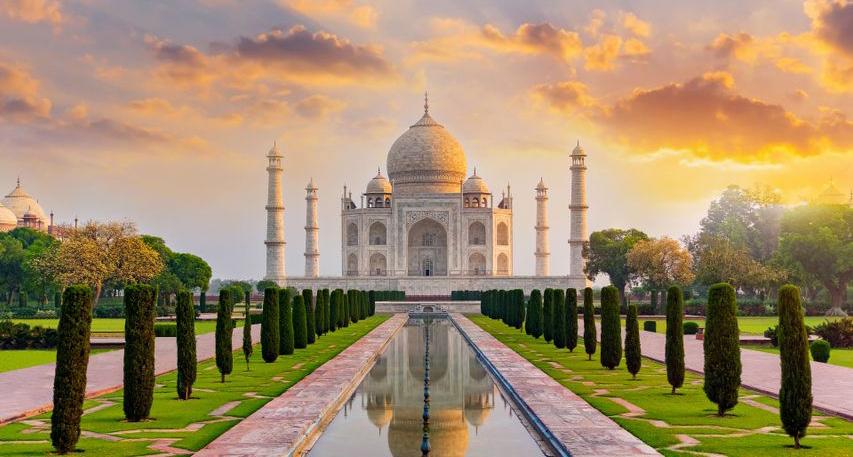
For all those, who have immense passion and love for travel; exploring India could offer numerous travel options and mesmerizing destinations that would provide everlasting memories. Evidently India is a land of diverse cultures, heritage, colours and charisma that will simply make travellers spellbound. Right From the breathtaking beauty of the Himalayas to the tropical lush greeneries of Kerala or from the land of rich culture and heritage like Rajasthan to vast stretches of tea plantations in Eastern India; or from an unimaginable terrain like Thar Desert to the sacred Ganges, India is eclectic, exotic, evergreen, elegant and extravagant. Indians could proudly say that India has countless destinations that the world must see. India is a popular tourism destination due to its incredible diversity, rich cultural heritage, and variety of attractions. From the majestic Himalayas to lush rainforests and vibrant cities, India offers a unique blend of natural beauty, historical sites, and cultural experiences. With its varied, vast and diversified landscapes, India is truly blessed with all kinds of Travel, Holiday and Tourist destinations ranging from most happening Metro cities, Tier II Industrial towns, vast Beaches, most amazing mountain ranges, exotic private resorts, Hill
Stations, Deserts, cultural hubs, Valleys, Islands, Historic Places, Pilgrimage sites, etc.What makes Travel to India more interesting for people is; there’s something for everyone in India. Whether they are scholars or explorers, adventurers, students, health seekers, researchers, holidayers, investors, divine searchers, heritage lovers, job seekers, food lovers or whatever; it’s like, you name it and India has it. And that’s what makes Mighty India as one of the most sought-after destinations for travellers from all around the world. There are countless reasons as to why India stands out as a top tourism destination for all those who love travel and explore. To Name a few: Diversity: India boasts a wide range of landscapes, from the Himalayan mountains to the Arabian Sea coastline, making it a paradise for adventure seekers and nature lovers. Cultural Richness: India is a melting pot of cultures, religions, and traditions, with vibrant festivals, unique cuisines, and diverse languages.
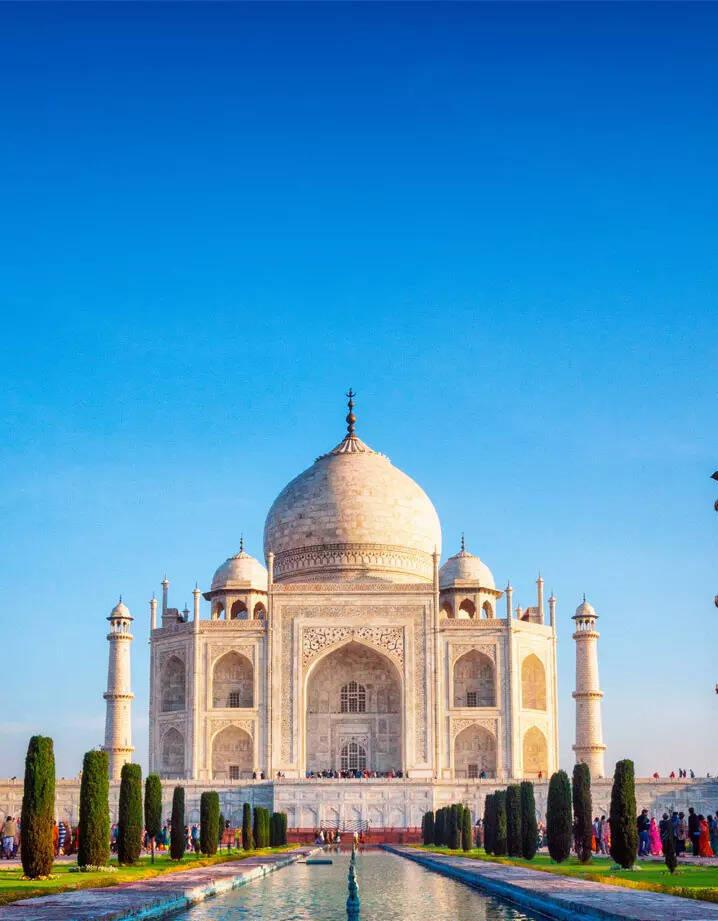
Historical Sites: India is home to numerous historical landmarks and monuments, including the Taj Mahal, the Red Fort, and the Qutub Minar, offering a glimpse into its rich past. Adventure Tourism: The diverse geography of India makes it ideal for
adventure tourism, with activities like trekking, rafting, and skiing available in various regions. Spiritual and Wellness Tourism: India is a popular destination for those seeking spiritual and wellness experiences, with yoga and meditation practices, as well as Ayurvedic treatments. Affordable Travel: Compared to some other popular tourist destinations, India offers affordable travel
options, making it accessible to a wider range of travellers. Warm Hospitality: Indian hospitality is renowned for its warmth and generosity, creating a welcoming environment for tourists. As we know India is a mixture of all type of attractions and one of them is nature. For the nature lovers, India is the correct place where nature makes you feel to rest in a pleasant atmosphere. Mostly foreigners wanted to visit India for natural paradise and a memorable holiday spend in the beauty of nature. Different waterfalls, lakes, rivers, hill stations etc are the tourist attractions. India is rich for natural attractions in large number to the tourists. The atmosphere at waterfalls will make you spend your whole life there with your friends and families. Some lakes in India with beautiful parks is the apt place for photographers, bird lovers, and nature seekers. Hill stations in India are famous for a pleasant and blissful environment. Mostly tourists attract to Hill Stations because of the beautiful atmosphere at the topmost hills. The atmosphere at the hill stations is very cold and chilling.That’s why India is heaven for nature and tourism.
As we all know, India is one of the oldest civilisations in the world, spanning a period of more than 4000 years, and witnessing the fusion of several customs and traditions, which reflects in the rich culture and heritage of the Country. The history of the nation gives a glimpse into the magnanimity of its evolutionfrom a country that’s ruled by many popular emperors, including the British, to one of the most leading economies of the world; within a span of seventy-eight years since its independence. This transformation of the nation instils a sense of pride in the heart and mind of every Indian within the country and abroad. Mighty India’s evolution and progress have been continuously demonstrated remarkably by the Indian Travel, Holiday, Tourism, Hotels and Hospitality Industries. And it had naturally adapted itself to globalisation; without changing its core values, culture and tradition through the Millennial World. Despite one of the toughest times; our Country had gone through in recent days; in the Modern Era; the speed at which Indian Travel, Tourism, Hotels, Restaurants and Hospitality Industry had recovered and bounced back to its glorious past; certainly, deserves applause and appreciation. For all those wonderful people, who love to travel and explore, nature, adventure, culture, food, history, hill stations, beaches and have made Travel and Living as part of their life and lifestyle; Exploring India would provide endless options and opportunities.
And we could confidently say that One life is not enough to Explore Mighty India.
from the desk of
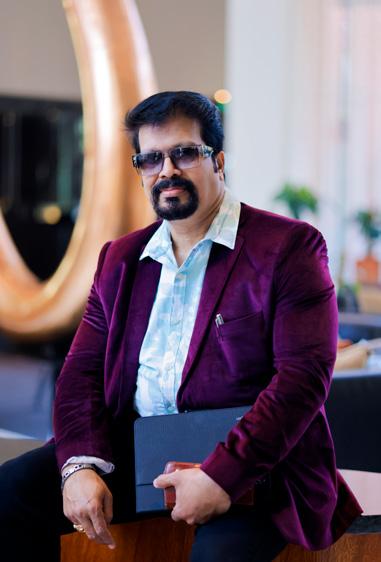

Dr. S. E. Alexander Global Media Chief & MD
• LAKMÉ FASHION WEEK 2025 It’s More About Sensibility
• Indian Stars Shine @ Met Gala 2025 In New York

• Coldplay’s India Tour 2025 A Resounding Success
• Jin Jiji: India’s Artisanal Gin Crowned ‘ Spirit of the Year’

• Nalanda University: The Ancient Beacon of Knowledge
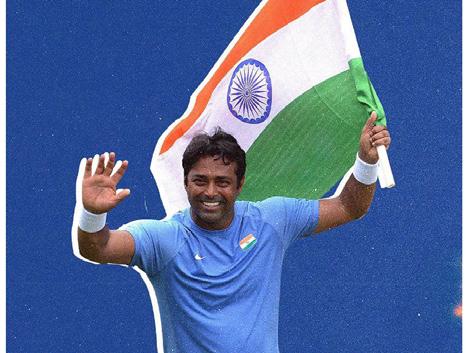
• Leander Paes The Tennis Titan of India
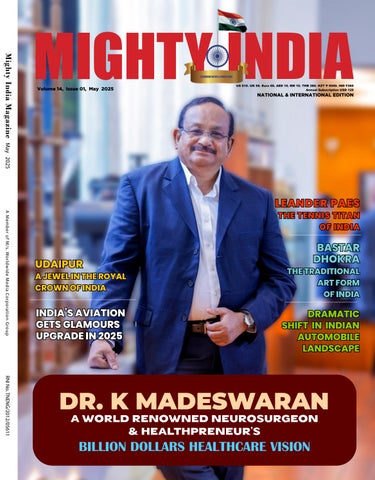
• Dr. K. Madeswaran
• From Waste to Wings Unleashing India’s Potential in Sustainable Aviation Fuel Production
• Sky’s The Limit Three New Indian Airlines Ready to Whisk You Away In 2025

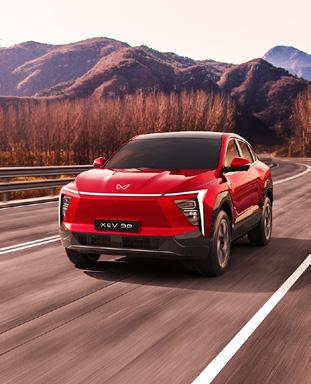
• The Dramatic Shift in Indian Car Buying Trends
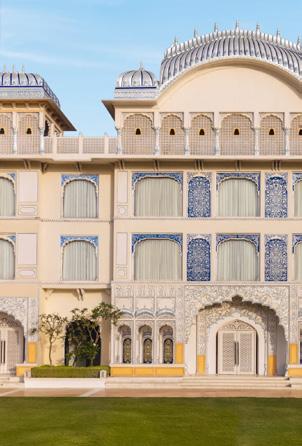
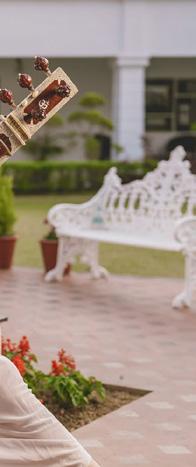
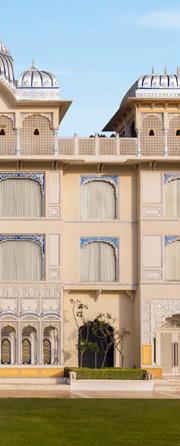
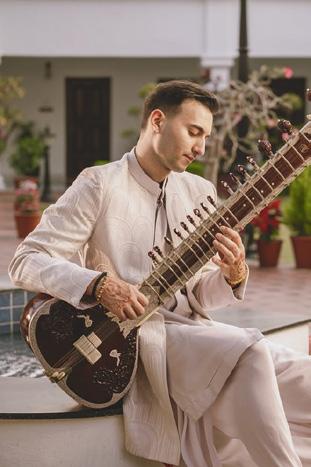
• Rishab Sharma Inspiring Gen Z With the Sitar
• Bastar Dhokra Casting Metal Through Wax
• The Patterned Weaves of Patan Patola
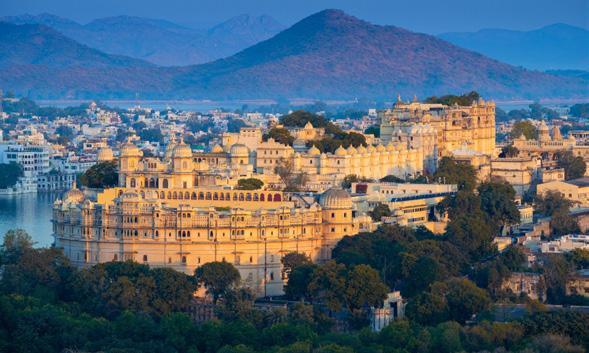
• The Leela Palace Jaipur: An Exemplary Modern Retreat
• UDAIPUR A Jewel in Rajasthan’s Royal Crown



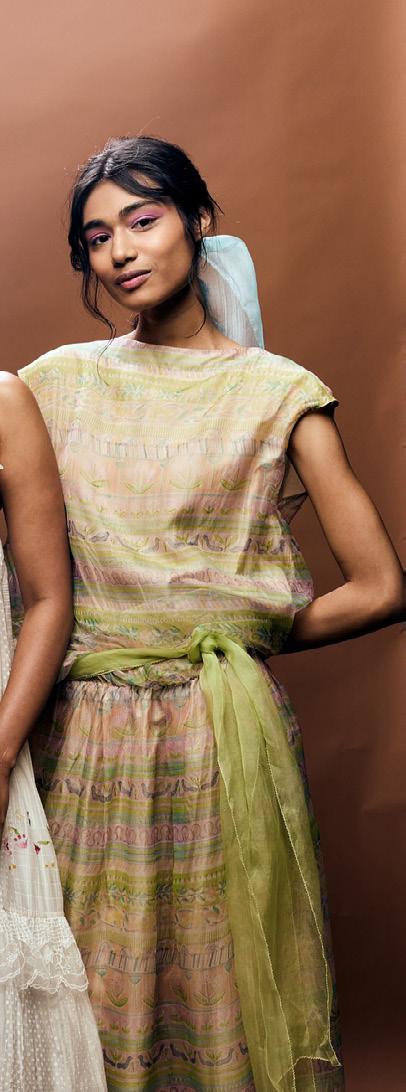




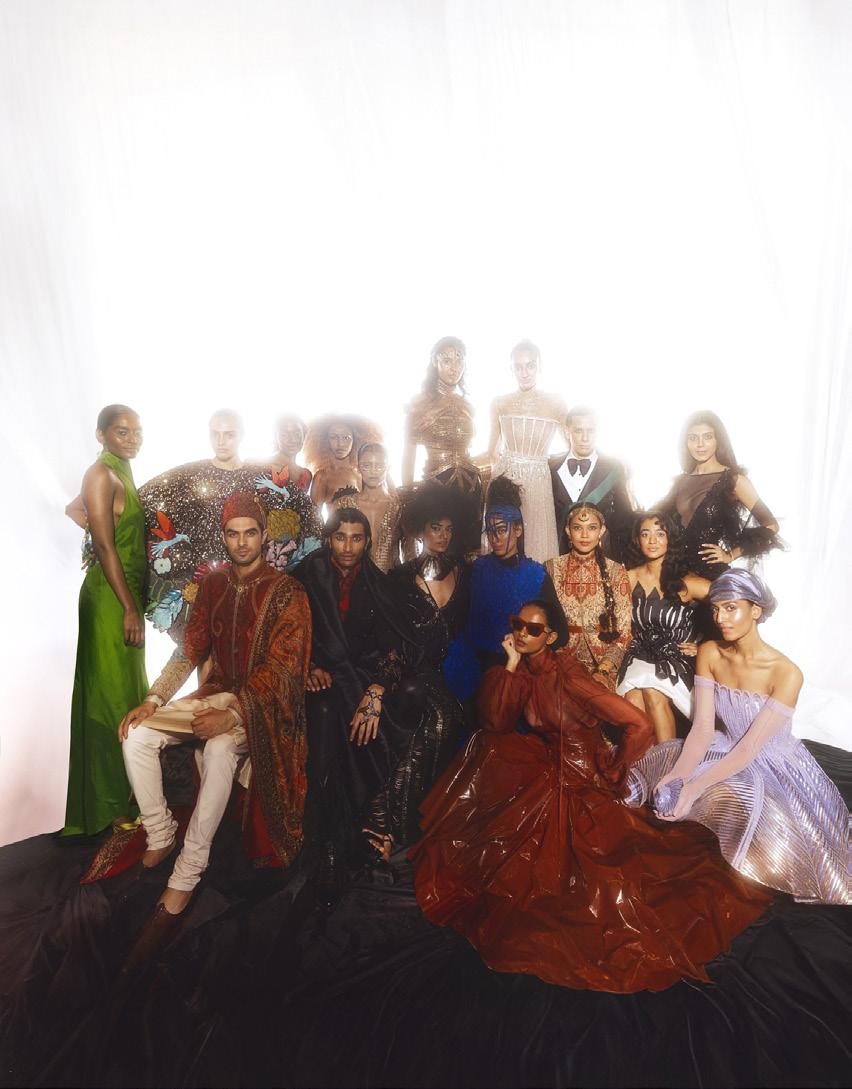
In its 25th year, the Lakmé Fashion Week 2025, in partnership with the Fashion Design Council of India (FDCI) was less about spectacle and more about sensibility. Theatrics took a backseat to thoughtfulness, as designers re-evaluated what fashion means in a climate of change — climatic, cultural, and consumer-driven. There was no singular aesthetic dominating the fiveday showcase, but rather a quiet recalibration of technique, proportion, and intent. From seasoned couturiers to new-gen labels, the collections spoke of dualities — tradition meeting tech, comfort meeting structure, and art meeting wearability. Instead of chasing virality, designers leaned into craft. Surface embellishment was purposeful. Colour palettes were restrained. Gender norms blurred. Heritage, once treated with nostalgia, was now layered with a future-facing lens.


While the West continues to orbit around quiet luxury, Indian designers at Lakmé Fashion Week offered a counterpoint — maximalism, but measured. It was a season of drama laced with discipline; ornamentation wielded with intent. Anamika Khanna’s Silver Collar collection set the tone. Deconstructed tailoring met opulent embroidery — structured bralettes, high-waisted metallic trousers, and chainmail flourishes. It was less about flamboyance, and more about confidence laced with craft.
Rahul Mishra’s The Silk Route, under his prêt label AFEW, drew from flora, folklore, and textile legacies. The collection wove Nature into couture, presenting handembroidered ecosystems that rippled with detail but never tipped into excess. The intricacy was intense, but the message — sustainability and quiet wonder — came through loud and clear. The collection highlighted visual exchanges across borders, mirrored in the parallel evolution of India’s bandhani and Japan’s shibori. A quiet ode to craft, culture and shared histories.
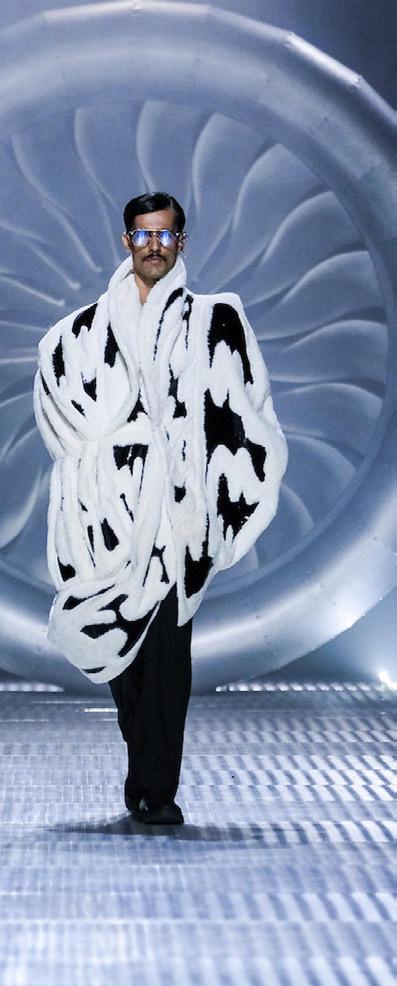
Amit Aggarwal took maximalism in a futuristic direction. His collaboration with tech brand Nothing resulted in a line where Banarasi brocade collided with industrial polymers — ballooning trousers, corseted blouses, and sharp tailoring gave tradition a glossy, sci-fi sheen. The palette was monochrome, but the craftsmanship spoke volumes.
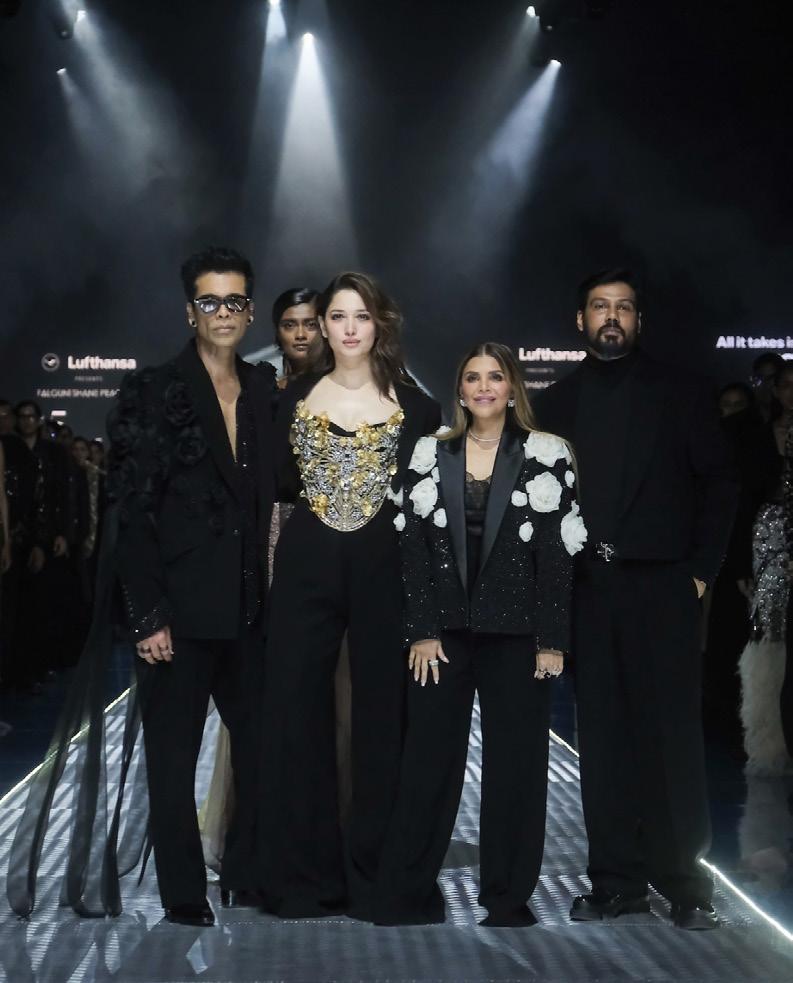
Falguni Shane Peacock, known for high-octane glamour, showed restraint — relatively speaking. Their collection delivered sculptural jackets, crystalstudded corsets and feathered gowns, but with a controlled silhouette and tonal palette that leaned urban rather than theatrical. There was still shimmer and drama, but anchored in a kind of futuristic femininity.



This year, a quieter menswear revolution took shape — one that moved beyond functional staples to embrace emotional nuance, historical references, and craft-led expression. The GenNext designers moved away from minimalism without tipping into costume, offering garments that were expressive, yet wearable.
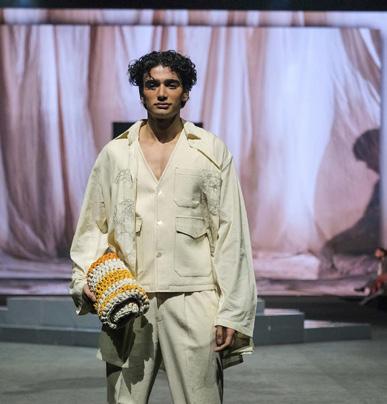
Abhishek Shinde, under his label Abhichiq, offered a Sicilian summer through Ciao — a collection of handwoven, block-printed separates layered with embroidery and nostalgic tailoring. Oversized blazers, striped shackets, and Bermudas hinted at ease but were grounded in artisanal polish. His approach balanced playfulness with longevity, creating resort wear with structure.


Yash Patil, of That Antiquepiece, drew from archival photographs of the Rana queens of Nepal, blending moulded silhouettes, corsetry and ballroom drama. Though presented as womenswear, the constructionheavy garments (a visual treat of rich detailing with braids, jewels and sheer textiles) shared a meticulous, sculptural quality often aligned with contemporary menswear’s move towards androgyny and theatricality.
Somya Lochan’s label Quarter took a more introspective route. Her collection The Dichotomy of Loss was born from a social experiment on grief, translated into garments made from Tanchoi silk and Himroo brocade. Embellished with handmade brass buttons and beaded embroidery, the pieces — boxy jackets, flared trousers, and padded coats — were gender-fluid in structure and emotional in tone.
Together, these designers challenged the binary of menswear as either utilitarian or ostentatious. Their work suggested a middle ground: introspective, referential, and unafraid to be emotionally resonant.


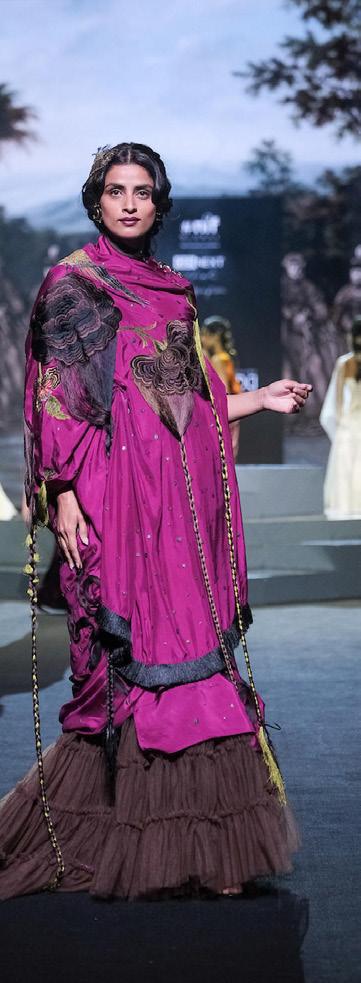
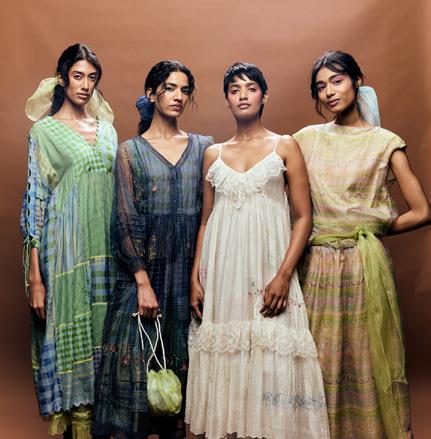
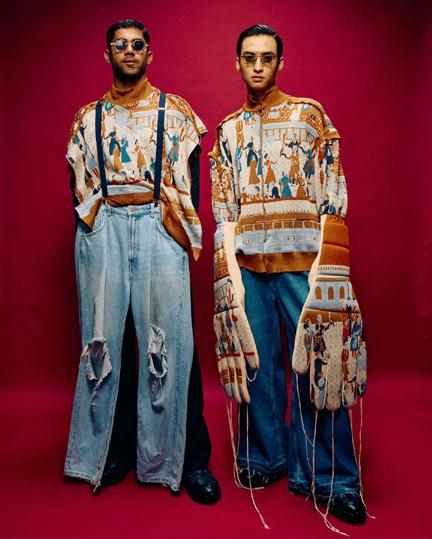

This season, designers brought clarity to a shifting category: clothes that sit comfortably between function, movement, and leisurely indulgence.
Namrata Joshipura continued her exploration of performance-driven fashion with a collection anchored in engineered fabrics like R|Elan Kooltex and GreenGold. Bodysuits, cropped jackets, singlets, and shorts were cut for movement but styled for the street — mirroring the global mood where activewear is no longer confined to the gym. Breathable textiles and recycled fibres underlined the emphasis on wearability and conscious design.



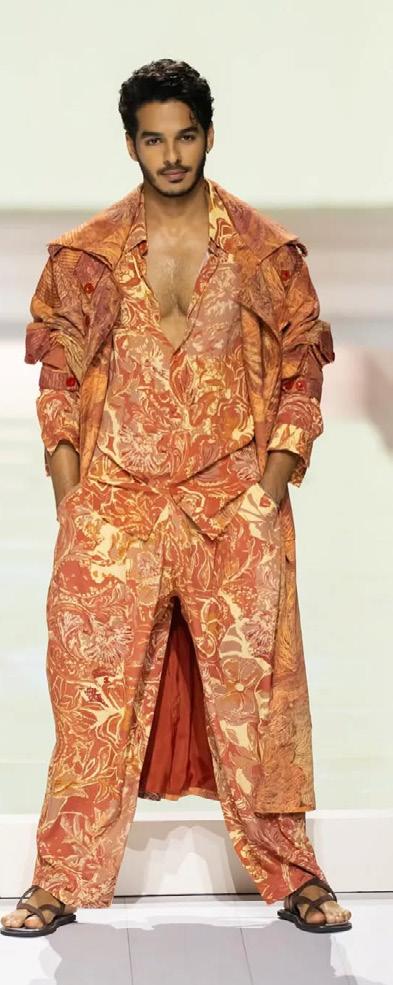
Shivan & Narresh leaned into art-as-leisure with a capsule inspired by French painter-sculptor Fernand Léger. Their resort wear — swim trunks, ponchos, relaxed robes and knit coordinates — tapped into a holiday state of mind, but with deliberate cuts and saturated prints. Textural summer knits and hand-finished accessories created an easy tension between craft and escapism, offering men and women equal space in a wardrobe designed for transit, sea, or poolside pause.
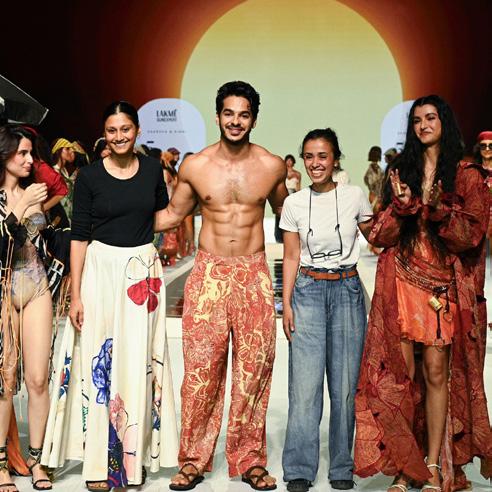
Saaksha & Kinni, through their Myrah collection for Lakmé’s Sun Stopper show, used Gujarat’s Adalaj Stepwell as a springboard. Their silhouettes comprising layered kaftans, printed jackets, and pleated dresses balanced movement with structure. Lycrainfused swimwear sat beside breezy cottons, while sandstone tones and water-inspired blues grounded the palette in place. It was resortwear as a state of cultural storytelling, shaped by geography and intention.

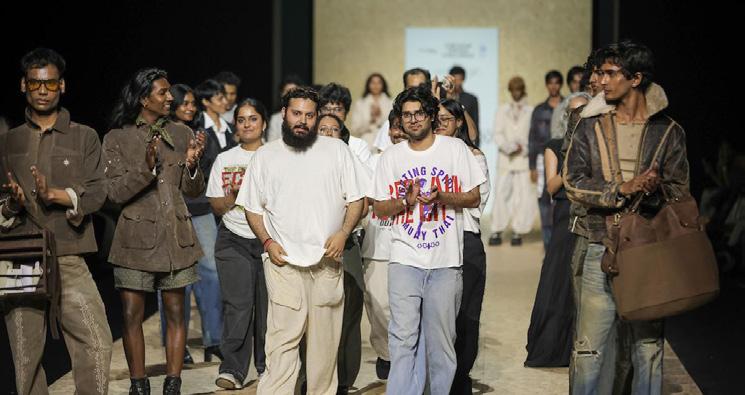
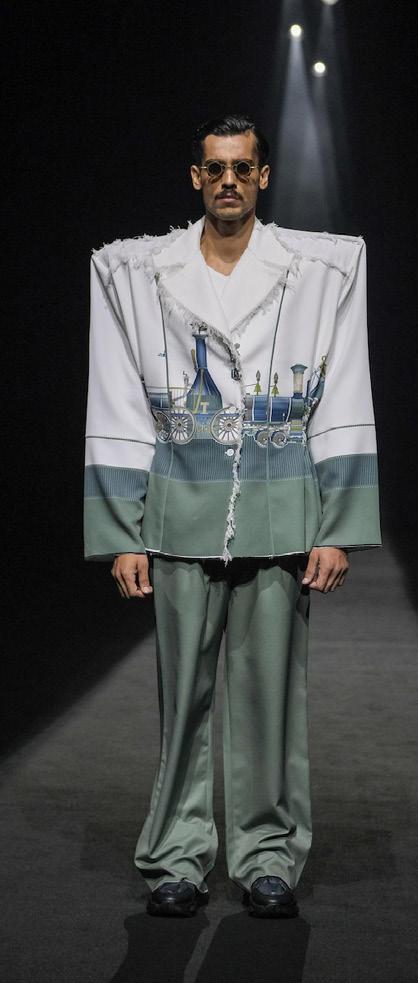

A new wave of designers leaned into a softer, more self-aware fashion — marked by slow techniques, layered storytelling, and a firm sense of identity. Less trend-chasing, more intention. Less gloss, more grit.
Anurag Gupta’s Metamorphosis captured this shift. With a palette drawn from dawn and dusk, and silhouettes that eased between structure and fluidity, the collection explored personal growth as process, not performance. Textures felt grounded, even raw, while 3D-embellished layers and tonal gradients kept things visually sharp. This was not fashion for show, but self-reflection.
Rkive City, the winner of the R|Elan Circular Design Challenge, channelled the same spirit through Reclaim The City. Their pieces comprising overlays, trousers, and shirts, built entirely from salvaged textiles, revived old workwear and rejected garments into fashion that carried memory, place and subculture. Sleeves referenced municipal uniforms; pockets nodded to everyday street life. Nothing flashy. Everything felt lived in.

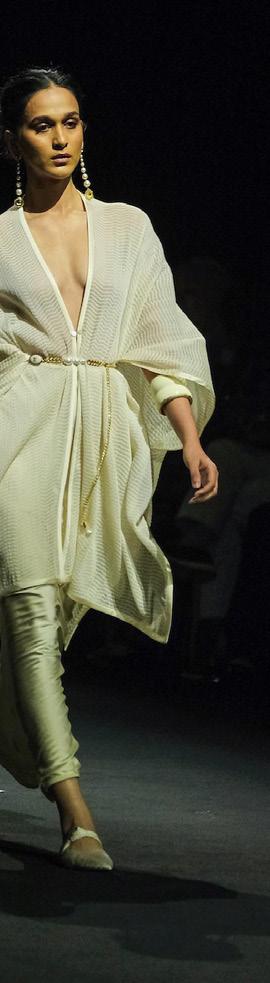

This season, Indian luxury moved out of the drawing room and into daily life.
On the Lakmé Fashion Week runway, designers redefined what it means to invest in fashion: less fantasy, more flexibility.
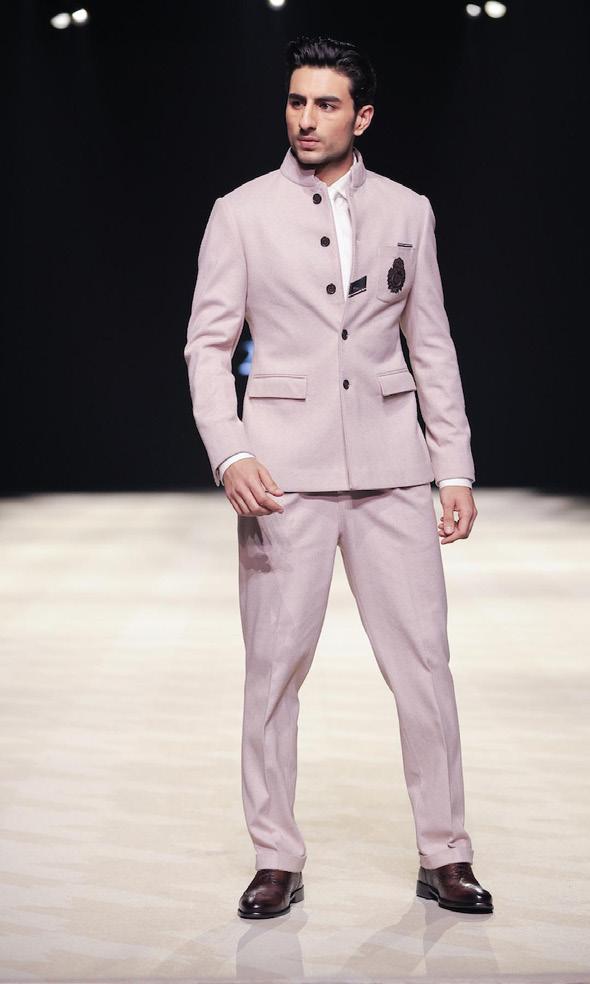
Shantnu & Nikhil’s Piazza Nova marked five years of their bridge-to-luxury label, S&N. The collection reflected the brand’s core idea: heritage tailoring with urban sensibility. Slim bandhgalas, printed shirts, and embroidered jackets allowed wearers to mix statement with staple. Designed for the aspirational buyer, it bridged occasion and everyday through modular pieces that lean modern but nod to tradition.
Tarun Tahiliani’s OTT Season 2 took a similar route. The focus was on fluidity — layered separates, draped gilets, and convertible silhouettes styled live on stage to highlight versatility. Traditional crafts like chikankari and Rabari embroidery were recast in contemporary forms, and archival prints reappeared in fresh palettes. The idea was simple: luxury that adapts to the wearer, not the other way around.
Together, both collections signalled a shift. Luxury was less about exclusivity, more about expression — quietly confident, wearable, and rooted in the idea of fashion as a personal tool, not just a spectacle.
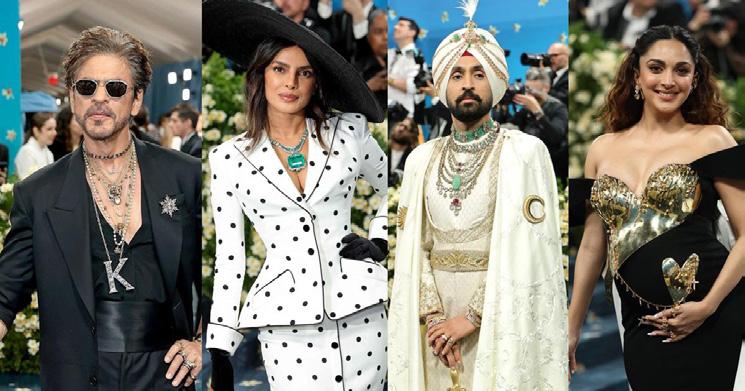
From Shah Rukh Khan’s regal debut in Sabyasachi to Natasha Poonawala’s archival couture and Kiara Advani’s homage to André Leon Talley—India’s presence at the 2025 Met Gala was both a sartorial spectacle and a cultural assertion.
In the fashion circles, the first Monday of May brings with it both excitement and anticipation. It is the day reserved for the Met Gala – officially the ultra-exclusive, inviteonly fundraiser for the New York-based The Metropolitan Museum of Art’s Costume Institute, but unofficially, the party of the year! In the Met Gala, 450 influential guests from across the globe and all corners of culture – fashion,
sports, theatre, film — as well as business walked the Met Gala 2025 red carpet to celebrate this year’s theme, ‘Superfine: Tailoring Black Style’ — centred around the cultural and historical examination of Black style or dandyism. It is also the theme for the spring exhibition of the Costume Institute, which will open on May 10 and run through October 26, 2025.
Like every year, it was an invite-only event even though guests are required to pay $75,000 per person, with brands purchasing tables for $350,000, with all money going towards the benefit of the Costume Institute. The total collection this year was $31 million, the highest ever.
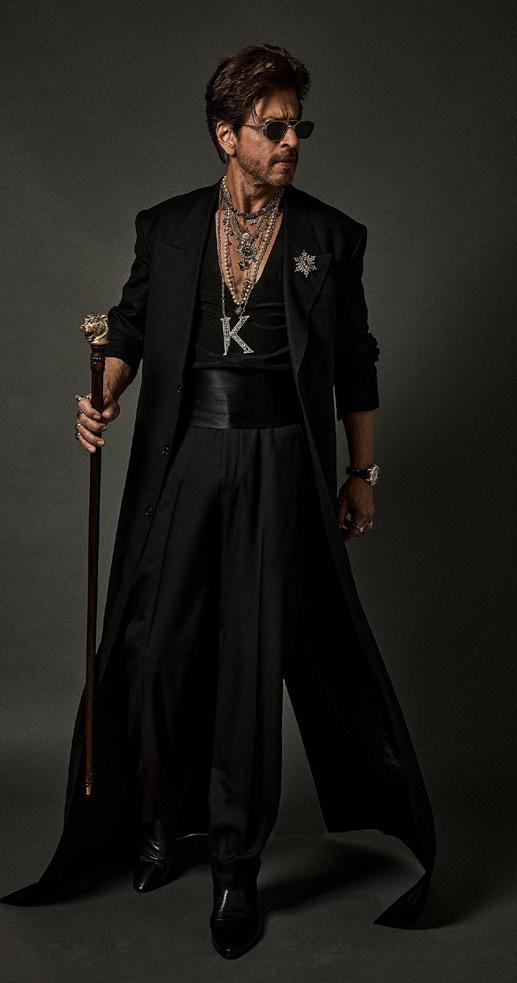
Over the past few years, Indians have been making a splash on the red carpet, and 2025 was no different. If anything, it was better with Shah Rukh Khan making his Met Gala debut in a Sabyasachi outfit. Dressed in a floor-length, elongated black coat in superfine wool with a peak collar and wide lapels, Khan looked every bit the superstar he is. The coat was paired with a black crepe de chine silk shirt and tailored wool trousers. A pleated silk cummerbund completed the bespoke look. He carried a cane also designed by Sabyasachi with a Bengal tiger head crafted in 18k gold with tourmalines, sapphires, old mine cut and brilliant cut diamonds. Khan dressed up the outfit with a stack of necklaces, designer Sabyasachi Mukherjee’s take on the colonial necktie.
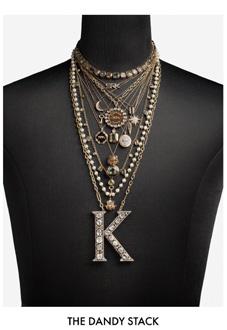
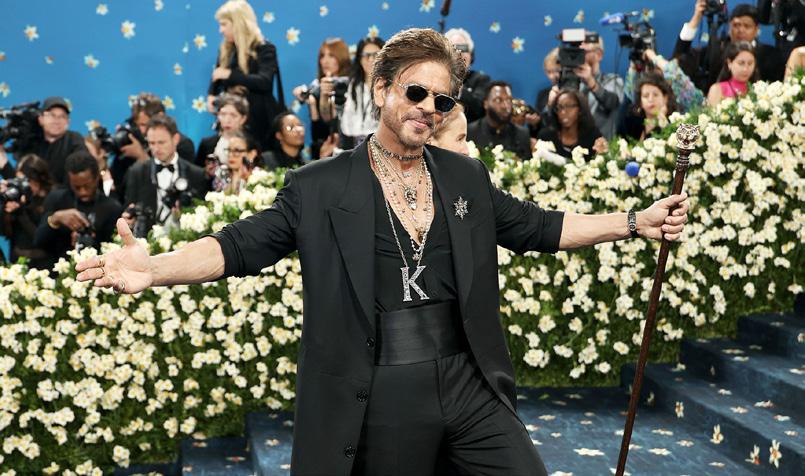
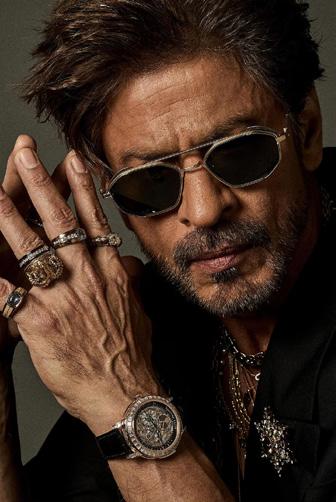

“The tradition of wearing neckties was inherited from the British during the colonial era, where formal dressing was a mark of elegance and refinement. Clubs in India, especially upscale ones, maintain dress codes that require formality, including neckties… In the Sabyasachi world, the necktie has been replaced with handcrafted Indian necklaces; formal for sure and richer indeed,” says a statement from the designer.
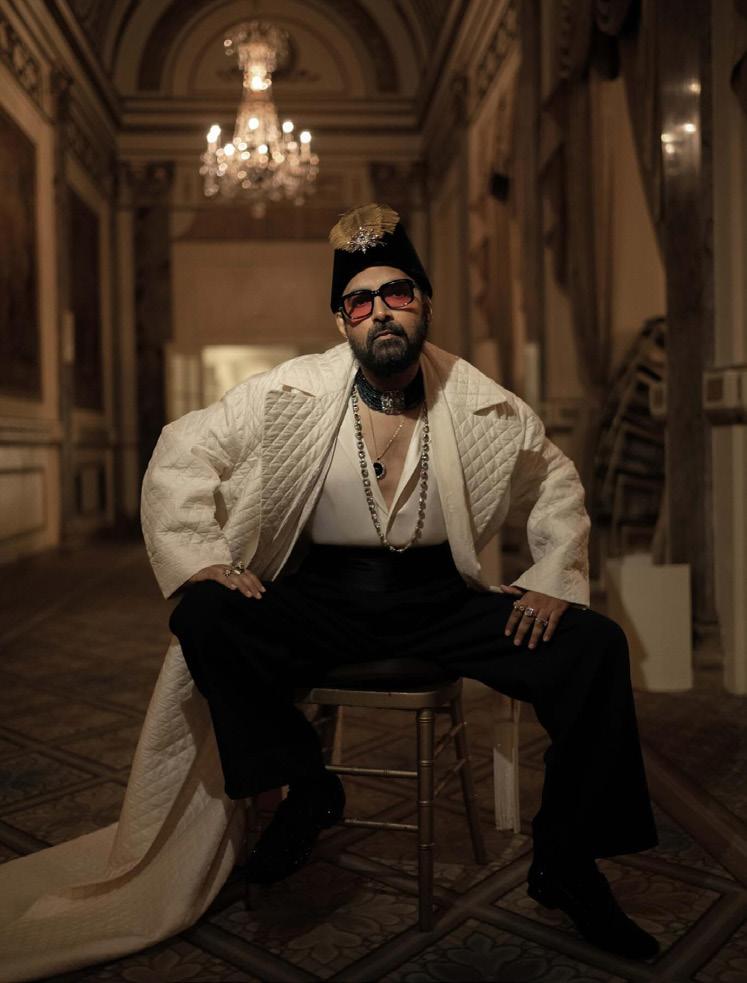
Sabyasachi says he interprets Black Dandyism as self-expression that defies societal, racial and gender norms. It is a tangible protest against the discrimination faced by those excluded from society. He provided an Indian context by reflecting on Jamsetji Tata, the founder of the Taj hotels, who was denied entry to Watson’s Hotel in Bombay, an exclusive Europeanonly establishment that allowed entry only to “Whites.” That experience led him to build the internationally renowned Taj Mahal Palace hotel as a symbol of resistance and empowerment. Sabyasachi accompanied Khan in an ivory oversized quilted silk overcoat and sherwani, layered over a crisp white shirt and black trousers cinched with a cummerbund. A nod to Jamsetji, Mukherjee wore a velvet cap to complete the look. “The Black Dandy is an assertion of being, a powerful statement of self,” says Mukherjee.
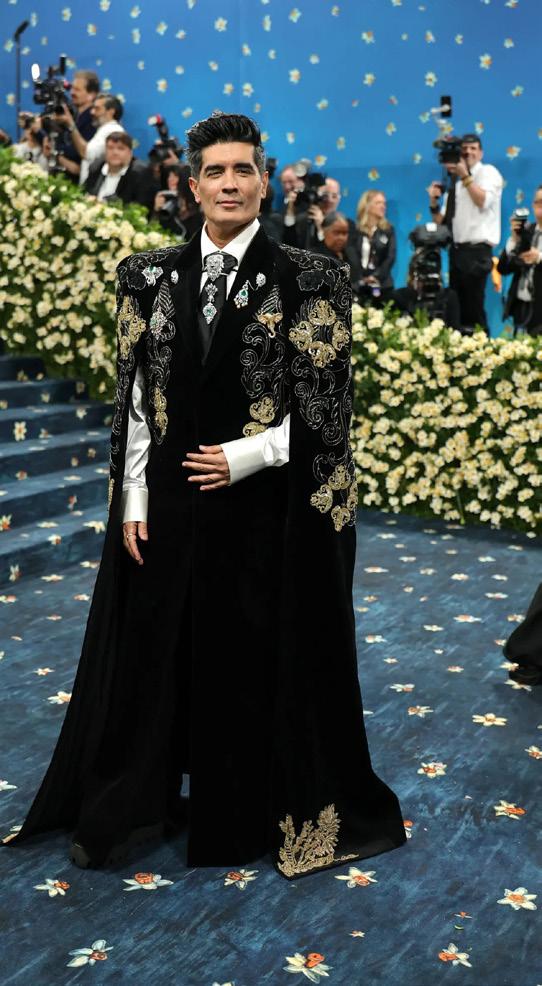
While designer Manish Malhotra is no stranger to red carpets, having dressed up stars for the Golden Globes and Cannes, he made his debut at the Met Gala this year dressed in a velvet sherwani layered with a blazer and a floor-sweeping cape. The ensemble was hand-embroidered, and he paired it with brooches from his own high jewellery collection.
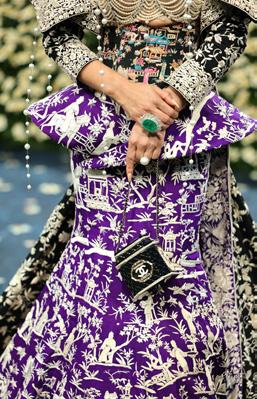
But it was Met Gala veteran, philanthropist and industrialist Natasha Poonawala in a custom Manish Malhotra outfit who turned heads. Poonawala wore a sculptural gown with vintage Parsi gara embroidery, an ode to her roots. The focal point of her ensemble was a sculpted fishtail skirt, created from two vintage Parsi gara sarees, one of which was a century-old treasure from the archives. Complementing the skirt was a corset-cummerbund paired with a vintage French lace bralette with scalloped pearls. To further add to the maximalist look was a black cape also embellished with Parsi gara embroidery. But it was the sculptural lace cravat by Atelier Biser which brought theatre to the final look.

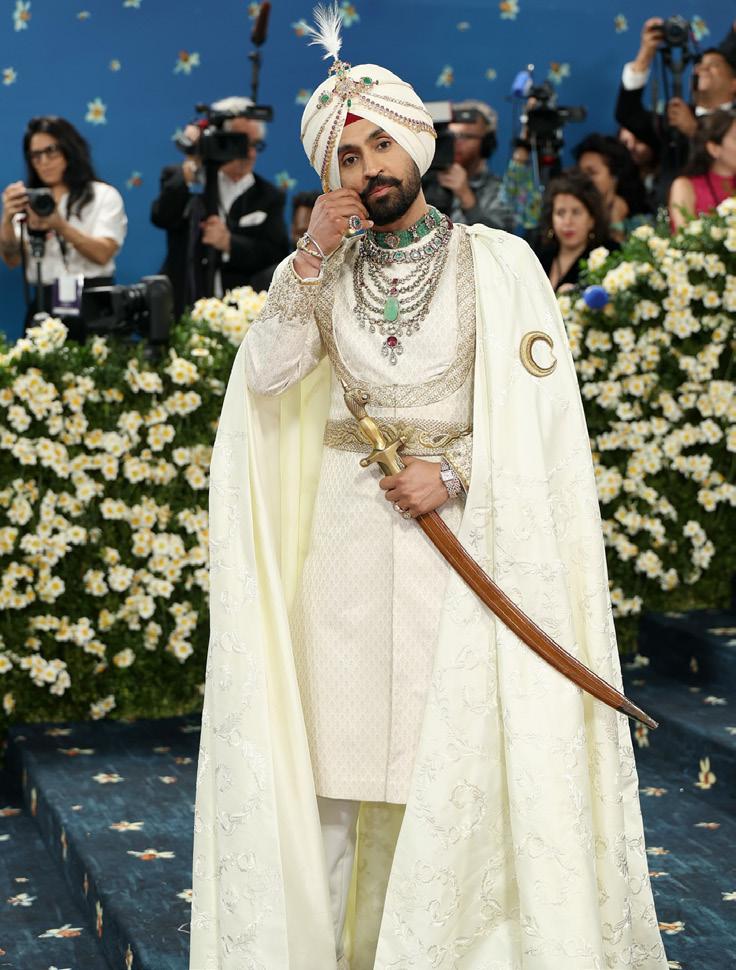
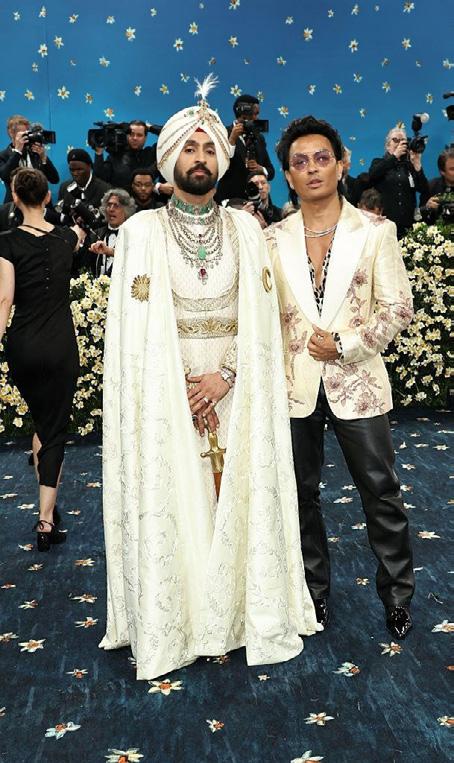
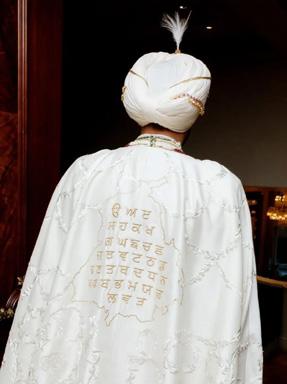
Punjabi singer and actor Diljit Dosanjh also paid a tribute to his roots in a custom white Sikh royal ensemble by New Yorkbased designer Prabal Gurung, complete with turban and ceremonial sword in hand, along with jewellery that referenced Cartier’s famous Maharaja of Patiala necklace. Apparently, his team had requested for the necklace, but it is currently on display at the Victoria and Albert Museum in London and could not be obtained. A similar necklace was then made by Golecha Jewels for his Met Gala debut. Dosanjh wore an ivory and gold sherwani, pants and a cape which had an artistic representation of Punjab as well as the Punjabi script – Gurmukhi.

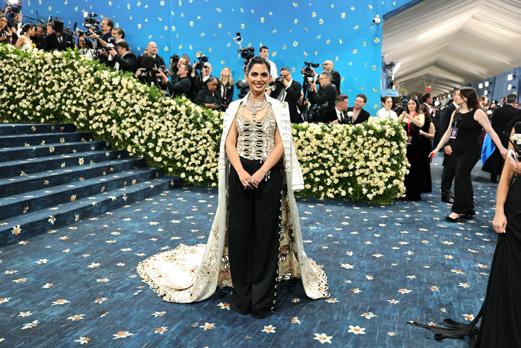


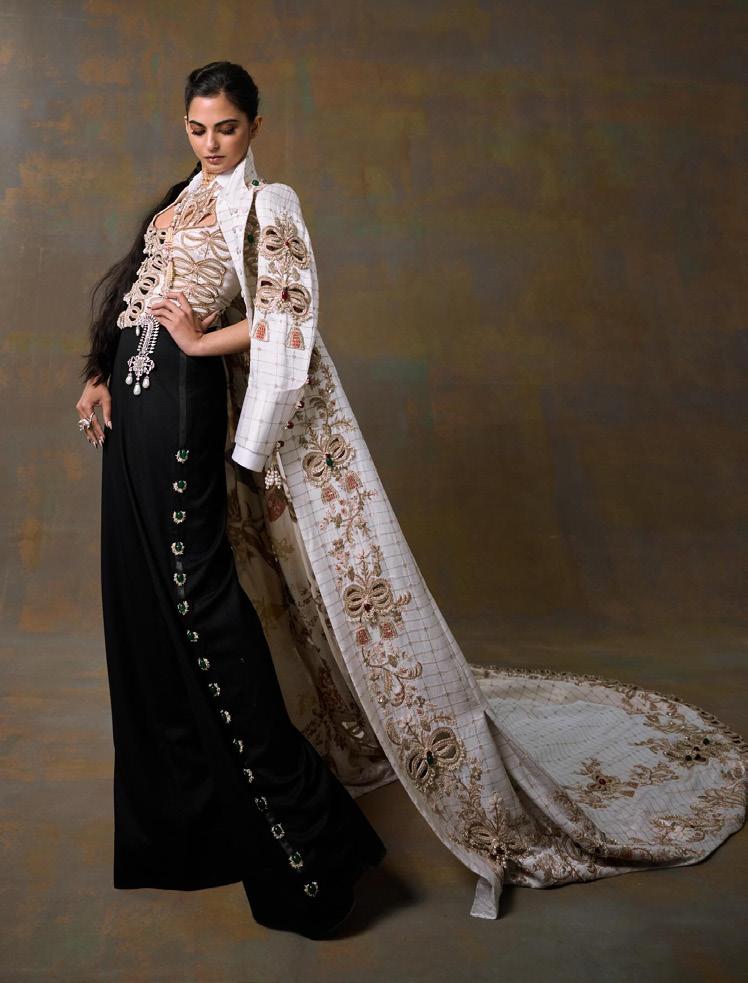
Industrialist Isha Ambani, Director at Reliance Retail Ventures, who has been attending the Met Gala regularly since 2017, dressed up in an Anamika Khanna custom outfit. Incidentally, Reliance Brands Ltd (RBL) has a 60% stake in Anamika Khanna’s label AK-OK.
Khanna — for whom it was her first Met Gala outing — designed a black, white and gold creation, featuring a fully embroidered waistcoat and a floor-grazing cape. The handwoven checked textile was sourced from Swadesh, a handloom store by Reliance. The outfit took over 20,000 hours to create using semi-precious stones and pearls. But it was Ambani’s diamond necklace from her mother Nita Ambani’s collection that attracted the most attention for its egg-sized diamonds.

Wrapping up the Indian contingent was Bollywood actor Kiara Advani, who appeared in a creation by couturier Gaurav Gupta. Advani — who is pregnant — wore a gold metal breastplate shaped like a heart, adorned with crystals. The outfit, called Bravehearts, also had a structured white cape, a nod to American fashion journalist and stylist André Leon Talley’s 2010 Met Gala appearance, to whom Gupta pays homage. Talley’s advocacy of emerging designers redefined fashion’s relationship with power, culture, and identity, as per Gupta. “Bravehearts is about transformation — emotional, physical, generational. In creating this piece for Kiara, we wanted to honour her motherhood and pay homage to the bold elegance of Black style,” says Gupta.


IN A POLKA DOT TAILORED GOWN BY BALMAIN

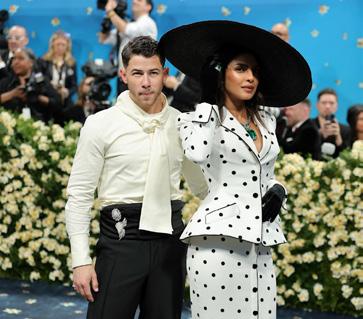
Bollywood and Hollywood actor Priyanka Chopra Jonas, another regular on the Met Gala carpet who is popular for her eclectic looks, played it safe in a polka dot tailored gown and matching blazer by Balmain. She matched it with a wide-brimmed black hat and gloves. But just like Isha Ambani, it was her Bvlgari emerald necklace that got all the attention. The necklace contains a 241.06-carat faceted emerald — the largest ever set by Bvlgari — surrounded by a galaxy of shimmering diamonds.
From centuries-old craftsmanship to state-of-theart robotics, Indian attendees at the Met Gala 2025 delivered a spectacular showcase of diversity, heritage, and innovation. This year’s red carpet was not just a celebration of tailoring, but a platform where Indian identity found a bold, global spotlight—one sequin, silk thread, and diamond at a time.

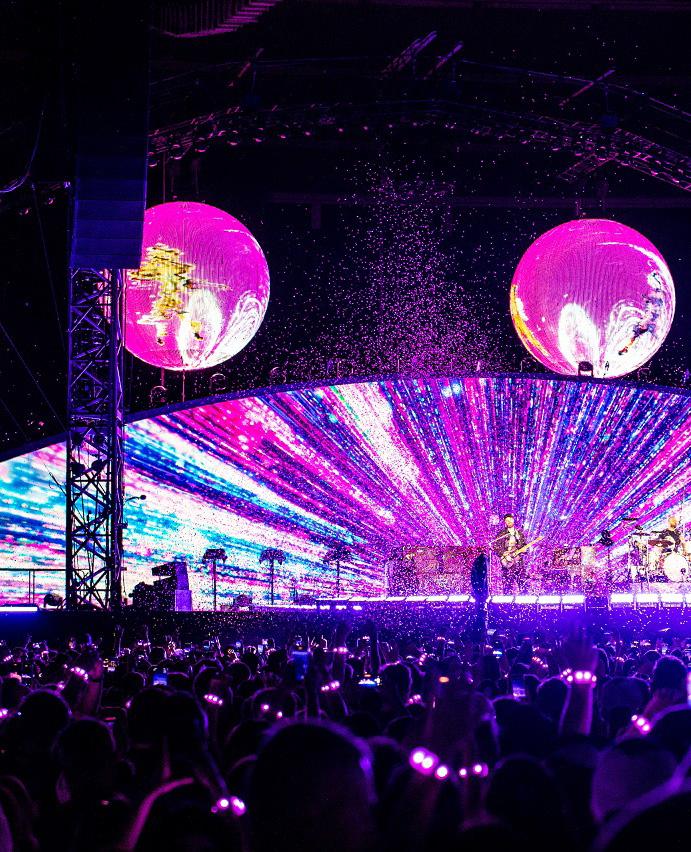
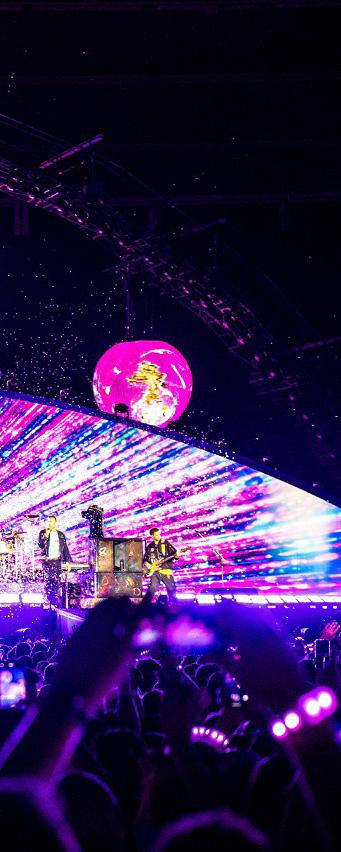


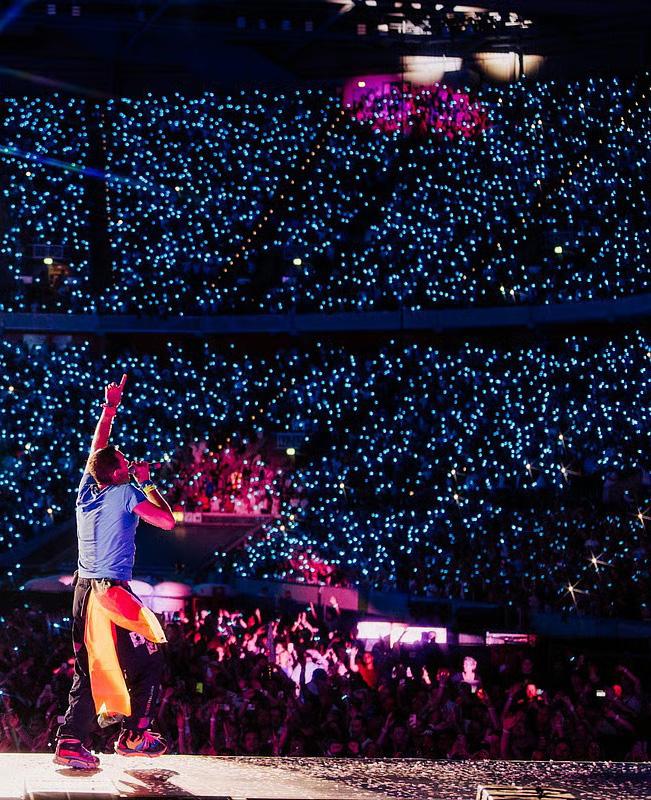
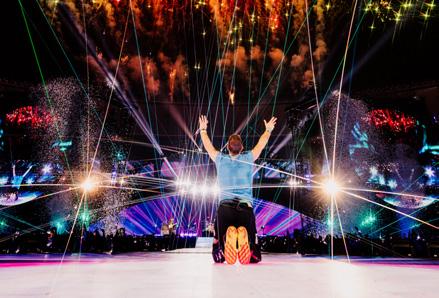
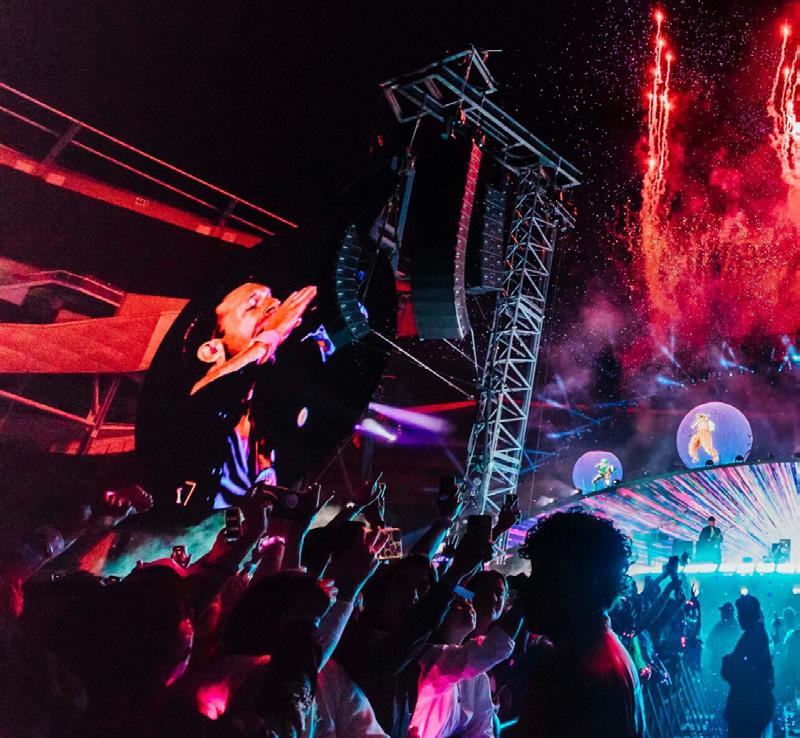
In January 2025, Coldplay’s Music of the Spheres World Tour electrified India with five sold-out concerts across Mumbai and Ahmedabad, marking a historic moment for the country’s live entertainment industry. The British rock band’s return after nearly a decade was met with unprecedented fervour, drawing over 223,000 fans to Ahmedabad’s Narendra Modi Stadium alone, making it the largest stadium concert of the 21st century. This triumph not only showcased Coldplay’s global appeal but also highlighted India’s growing prowess as a hub for world-class live events. The success of these concerts, coupled with India’s evolving infrastructure and market dynamics, signals a bright future for hosting similar large-scale music events.
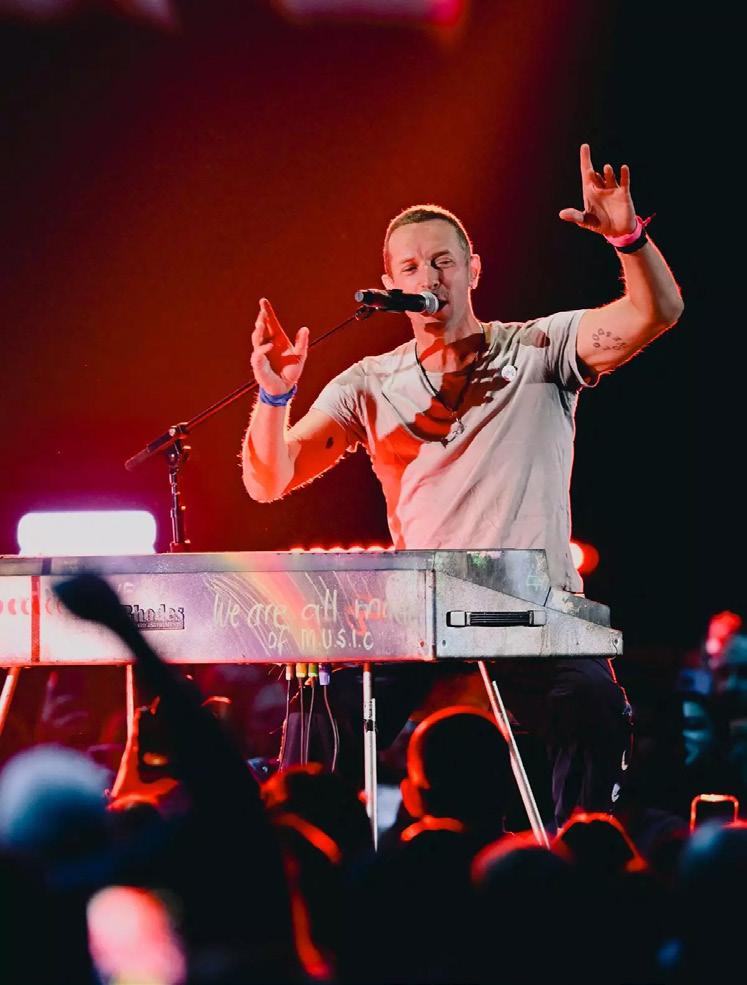
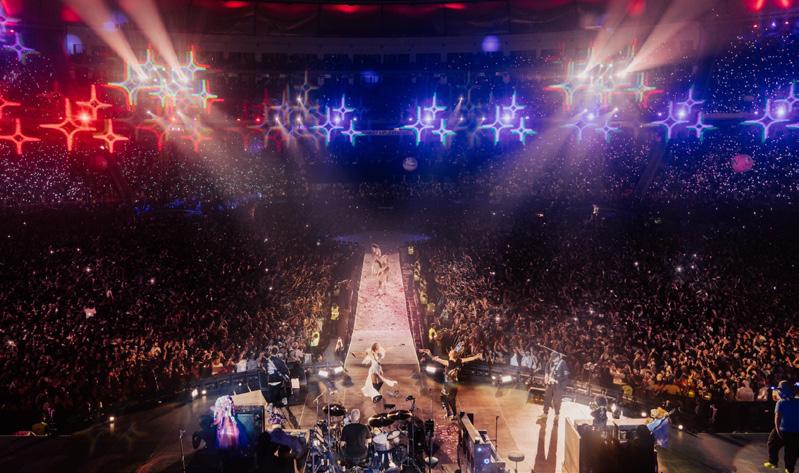
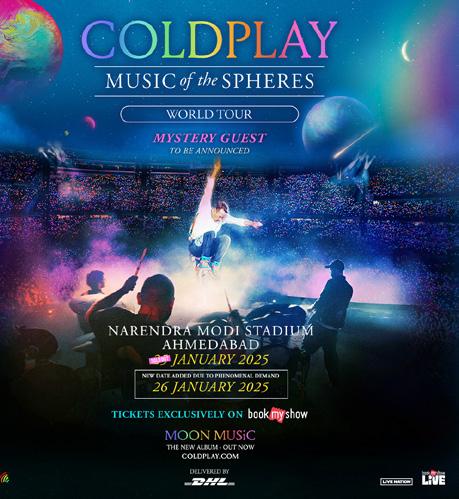
Coldplay’s concerts in India were a testament to the band’s massive fanbase and the country’s appetite for international music acts. When tickets went on sale on September 22, 2024, BookMyShow, the official ticketing partner, reported 13 million logins, crashing the platform momentarily due to overwhelming traffic. The addition of a third show in Mumbai and two in Ahmedabad to meet demand underscored the scale of enthusiasm. Fans strategized across multiple devices, with some, leveraging skills honed from booking train tickets to secure spots. Social media buzzed with memes, excitement, and emotional reactions, amplifying the cultural moment.
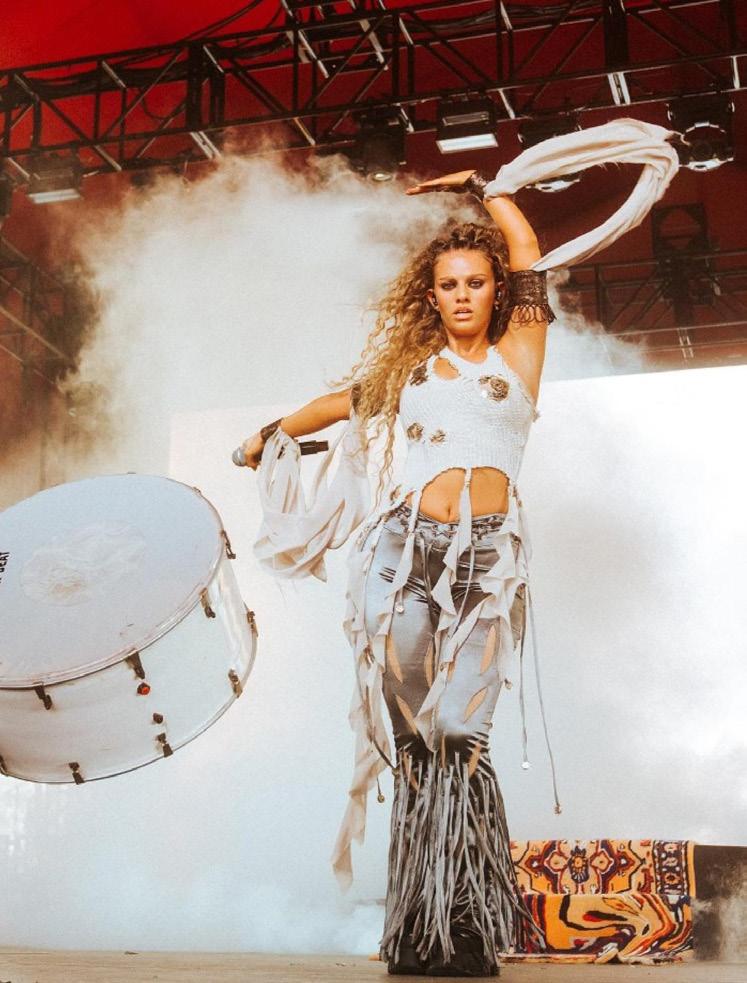
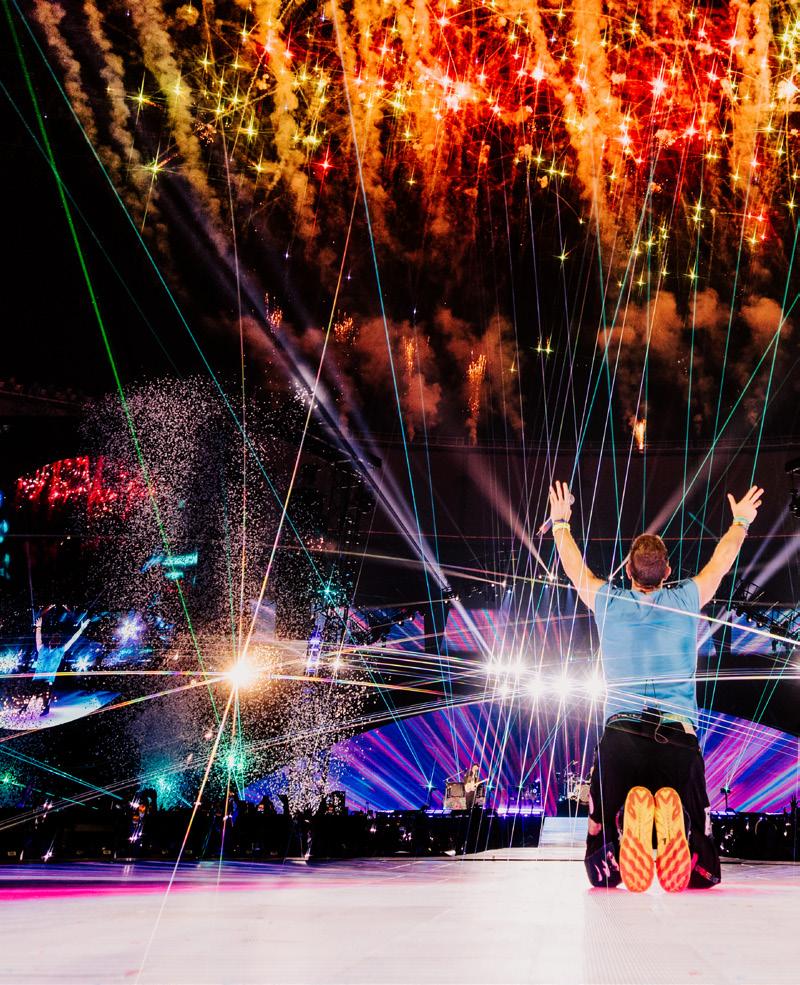
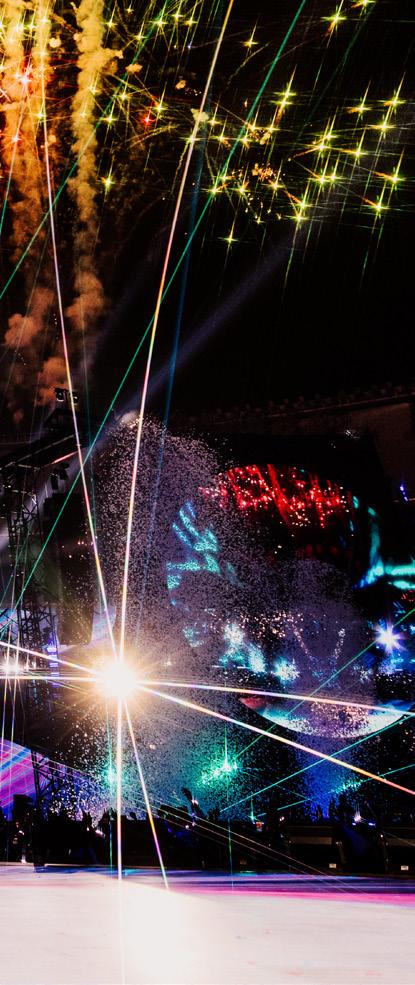
Coldplay’s Music of the Spheres tour is renowned for its high production values, featuring lasers, fireworks, and LED wristbands that sync with the music. In India, these elements were complemented by local touches, such as guest performances by Indian pop star Jasleen Royal and PalestinianChilean artist Elyanna. The band’s setlist blended classics like Yellow and Fix You with new tracks from their upcoming album Moon Music, resonating with diverse audiences. The Ahmedabad concert on January 26 was streamed live on Disney+ Hotstar, allowing fans who couldn’t attend to join the experience, further broadening its reach.
Ahmedabad’s Narendra Modi Stadium, with a capacity of 132,000, hosted Coldplay’s largestever shows, drawing praise for its logistics and infrastructure. Gujarat Home Minister Harsh Sanghavi lauded the Ahmedabad Police, stadium management, and event organizers for managing over 250,000 attendees, including 170,000 out-ofstate visitors, without incidents of misbehaviour or traffic congestion.



The Gujarat Metro Rail Corporation reported a record 213,000 riders during the concert days, surpassing previous highs for cricket matches. Mumbai’s DY Patil Stadium, with a capacity of 45,300, also delivered high-quality sound and sightlines, enhancing the concert experience.
The concerts generated significant economic activity, with estimates suggesting a ₹2,000 crore boost from tickets, food and beverage sales, hotels, and tourism. Hospitality sectors saw near-full occupancy, and local businesses thrived. Culturally, the events positioned India as a global entertainment destination, with Prime Minister Narendra Modi citing the concerts as evidence of a burgeoning “concert economy” that could drive tourism and job creation. The Gujarat BJP even linked the success to Ahmedabad’s bid to host the 2036 Olympics, reflecting the concerts’ broader symbolic significance.
Coldplay’s commitment to sustainability resonated with Indian audiences. The band partnered with DHL to reduce carbon emissions by 50% compared to their 2016-17 tour. Inclusivity measures, such as sign language interpreters, touch tours for visually impaired attendees, and sensory technologies, ensured accessibility. Affordable “Infinity Tickets” priced at ₹2,000 made the concerts accessible to a wider demographic, aligning with India’s diverse socioeconomic landscape.
The success of Coldplay’s 2025 India tour underscores the country’s readiness to host more global music events, driven by several key factors:
India boasts world-class venues like the Narendra Modi Stadium, DY Patil Stadium, and Delhi’s Jawaharlal Nehru Stadium, capable of accommodating tens of thousands. Investments in urban infrastructure, such as metro systems and improved road networks, facilitate crowd management and accessibility. Union Minister Ashwini Vaishnaw noted that the Ahmedabad concerts “showcased India’s capability to host world-class events,” a sentiment echoed by business tycoon
Anand Mahindra, who called the event a defining moment for India’s live entertainment scene.
India’s live events market is projected to grow from ₹88 billion in 2023 to ₹143 billion by 2026, with a CAGR of 17.6%— one of the fastest globally. The ticketed live music segment alone is expected to reach ₹1,864 crore in 2025. This growth is fuelled by a young, urban, English-speaking population eager to spend on premium experiences. Andre Timmins of Wizcraft International Entertainment emphasized that India’s
production values now rival global standards, attracting artists like Ed Sheeran, Shawn Mendes, and Diljit Dosanjh.
Large-scale concerts drive economic activity across hospitality, transport, and retail. Coldplay’s shows demonstrated this, with fans booking flights, trains, and hotels months in advance. Posts on social media highlighted the potential for live events to create jobs and boost tourism, urging government support to amplify this impact. The “Swiftonomics” phenomenon, where Taylor Swift’s tours generated billions, finds a parallel in India’s emerging concert economy.
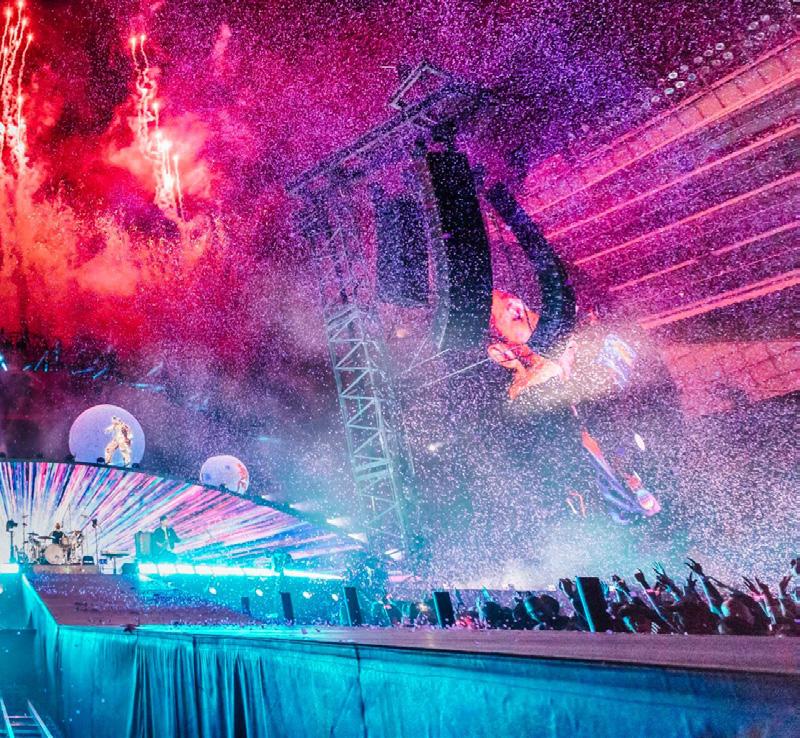


India’s diverse music scene, from Bollywood to indie, complements its openness to international acts. Coldplay’s inclusion of Indian artists and Chris Martin’s nod to the country’s “amazing energy” reflect a mutual cultural exchange. The success of festivals like Sunburn and tours by artists like Karan Aujla and Cigarettes After Sex indicates a broadening audience base, including in tier-2 cities like Shillong and Gandhinagar.
While India’s potential is immense, challenges remain. BookMyShow faced criticism for ticket scalping and platform crashes, prompting an FIR against black-market sales. Infrastructure gaps, such as long queues and overcrowding, and regulatory hurdles like licensing delays need addressing. Safety concerns, highlighted by past crowd management issues, require robust planning. However, the Coldplay concerts’ success demonstrates that with proactive management, these challenges can be mitigated.
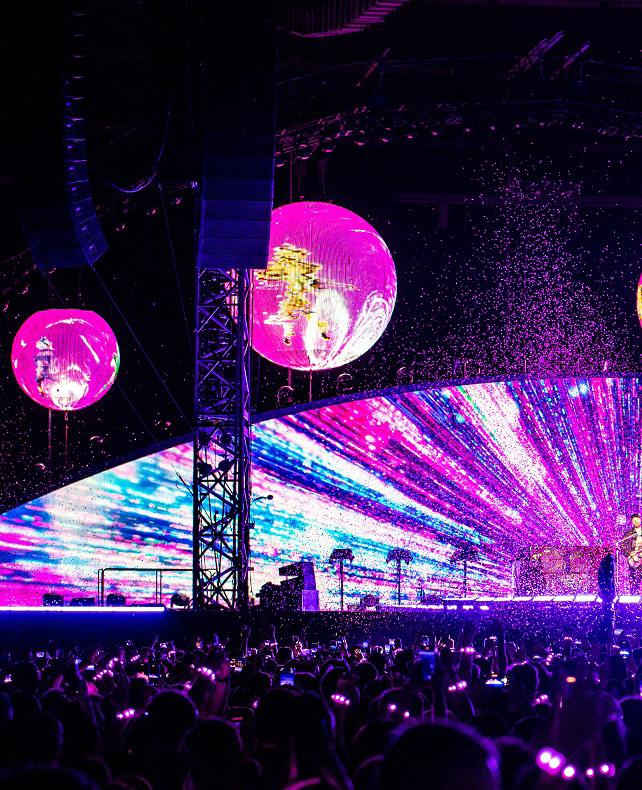
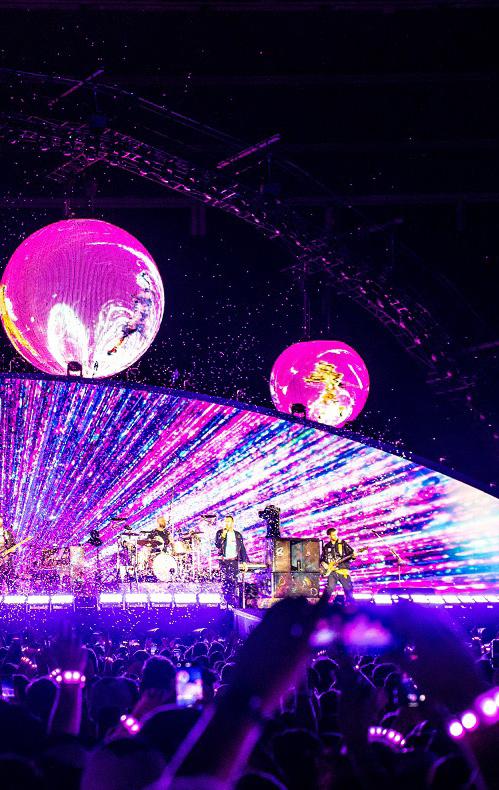

Coldplay’s 2025 India tour has set a global benchmark, proving that India can host mega-concerts with scale, efficiency, and cultural resonance. The events have sparked discussions about India’s role in the global live music industry, with fans and stakeholders calling for more such spectacles. With strategic investments in infrastructure, streamlined ticketing systems, and a focus on safety and inclusivity, India is poised to become a go-to destination for the world’s biggest artists.
In conclusion, Coldplay’s triumphant India tour was more than a musical event—it was a cultural and economic milestone. It showcased India’s ability to deliver world-class experiences and laid the foundation for a vibrant future in live entertainment. As global superstars eye India’s growing market, the stage is set for the country to shine as a global concert powerhouse.


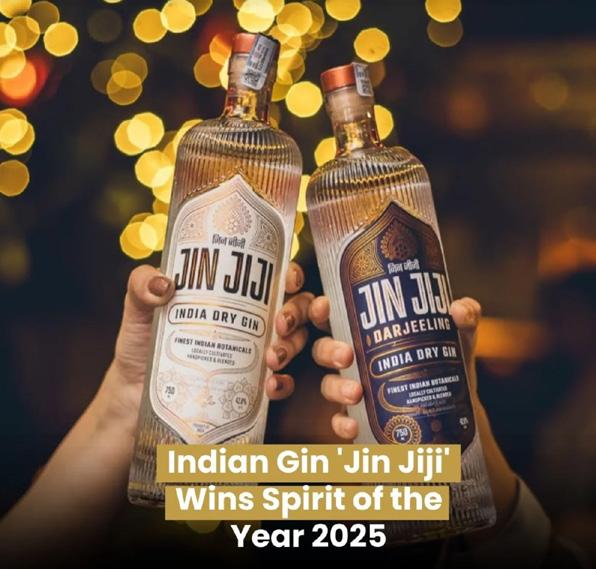


In a landmark moment for Indian craft spirits, Jin Jiji, an artisanal gin crafted by Himmaleh Spirits, has been named the ‘Spirit of the Year’ at the 2025 London Spirits Competition. Scoring an impressive 98 points and securing a Gold Medal, Jin Jiji not only claimed the title of the highest-rated gin globally but also solidified India’s growing presence in the international spirits arena. This triumph, announced in April 2025, marks a historic achievement for a nation traditionally known for its whisky exports, now making waves in the global gin conversation.
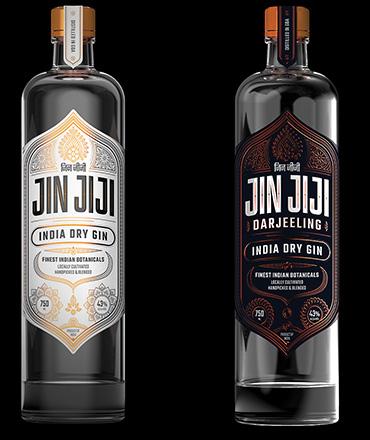
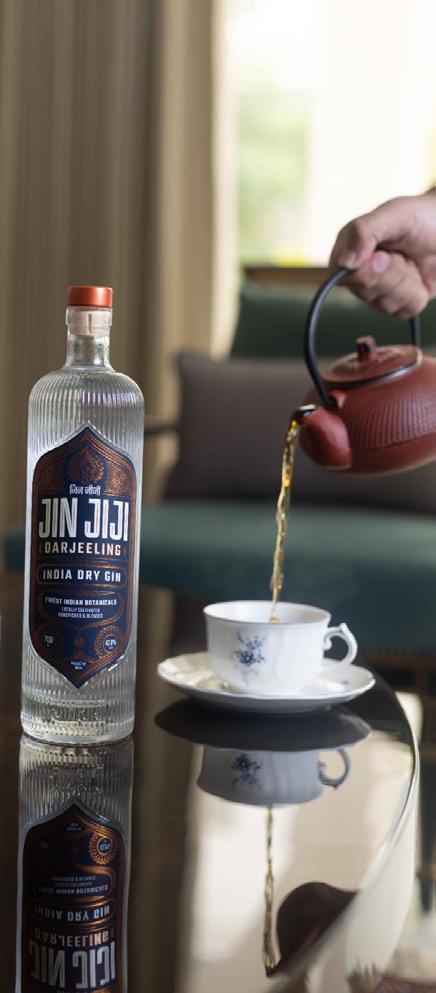

Jin Jiji, derived from the Hindi word Jijivisha— meaning an intense desire to live and thrive— embodies the vibrancy and diversity of India. Crafted at Himmaleh Spirits’ state-of-the-art distillery in Kashipur, Uttarakhand, nestled at the foothills of the Himalayas, the gin is a celebration of India’s rich botanical heritage and cultural nuance. Established in 2023 by founders Ansh Khanna and Samarth Prasad, Himmaleh Spirits operates with a “farm-toglass” philosophy, emphasizing authenticity, sustainability, and local sourcing.
The gin’s unique flavour profile is built around hand-picked Himalayan juniper, which lends an earthy, piney freshness, complemented by a curated selection of Indian botanicals. These include tulsi (holy basil), revered in Ayurvedic medicine and Indian households, chamomile for its floral calm, and black tea inspired by India’s beloved masala chai. Additional botanicals like coriander seed, cardamom, cashew nut, and fennel create a layered complexity, with a silky mouthfeel that distinguishes Jin Jiji from traditional gins. Distilled in small batches using a 1,000-liter Hungarian copper pot still, the gin achieves a smooth, clean spirit with an alcohol by volume (ABV) of 43%, making it versatile for sipping neat or mixing in cocktails.
“India has always had the ingredients for world-class spirits—what we needed was belief and craft,” said Ansh Khanna, co-founder of Himmaleh Spirits. “Being recognized as the world’s top-rated gin and Spirit of the Year is not just a win for us—it’s a win for Indian craftsmanship on a global stage.”

Jin Jiji’s appeal lies in its ability to tell a story with every sip. Unlike conventional gins that rely on standard botanicals like citrus or lavender, Jin Jiji embraces India’s biodiversity, drawing inspiration from its landscapes and traditions. The inclusion of tulsi, often considered a sacred plant, and botanicals reminiscent of masala chai, infuses the gin with a distinctly Indian character. “It’s a drinkable postcard from the foothills of the Himalayas,” one review aptly noted.
The gin’s versatility makes it a favourite among mixologists and enthusiasts alike. Whether enjoyed neat, where its crisp juniper and floral notes shine, or in a cocktail like a negroni or gimlet, Jin Jiji delivers a meditative calm and aromatic depth. Its global availability in markets such as the United States, Europe, Australia, New Zealand, and Singapore has introduced international drinkers to the soul of Indian craft spirits.
Himmaleh Spirits, the visionary force behind Jin Jiji, is redefining India’s spirits industry. The Kashipur distillery, spread across four acres near Jim Corbett National Park, is designed to be a beacon of craft and sustainability. With a zero-waste ethos and a commitment to empowering local communities— particularly women-led cooperatives for botanical sourcing—Himmaleh Spirits blends tradition with innovation. The distillery also aims to drive spirit-based tourism, offering gin tastings and soon, a farm-to-table restaurant showcasing Kumaon’s culinary heritage.
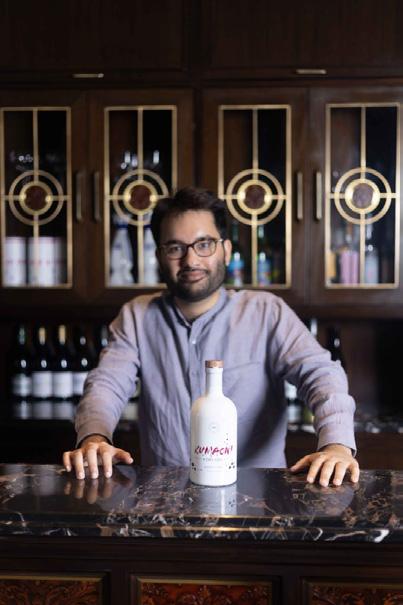
In addition to Jin Jiji India Dry Gin, Himmaleh Spirits produces variants like Jin Jiji Darjeeling, inspired by the region’s iconic black tea, and Jin Jiji High Proof, a nod to the British Navy’s high-strength gins. The distillery’s latest offering, Kumaon & I, is India’s first provincial gin, exclusively sourced from Uttarakhand’s terroir, further showcasing the brand’s commitment to regional storytelling.
in Jiji’s victory at the 2025 London Spirits Competition is more than a win for a single brand— it’s a testament to India’s rising stature in the global craft spirits industry. As Indian gins like Stranger & Sons, Jaisalmer, and Hapusa also gain international acclaim, Jin Jiji’s triumph signals a broader shift.
“Indian craft spirits are not just coming—they’re here, and they’re ready to party,” one commentator Jin Jiji remains accessible, offering world-class quality at a fraction of the cost of many imported spirits. Its success challenges stereotypes about Indian spirits and redefines modern gin with authenticity and innovation.
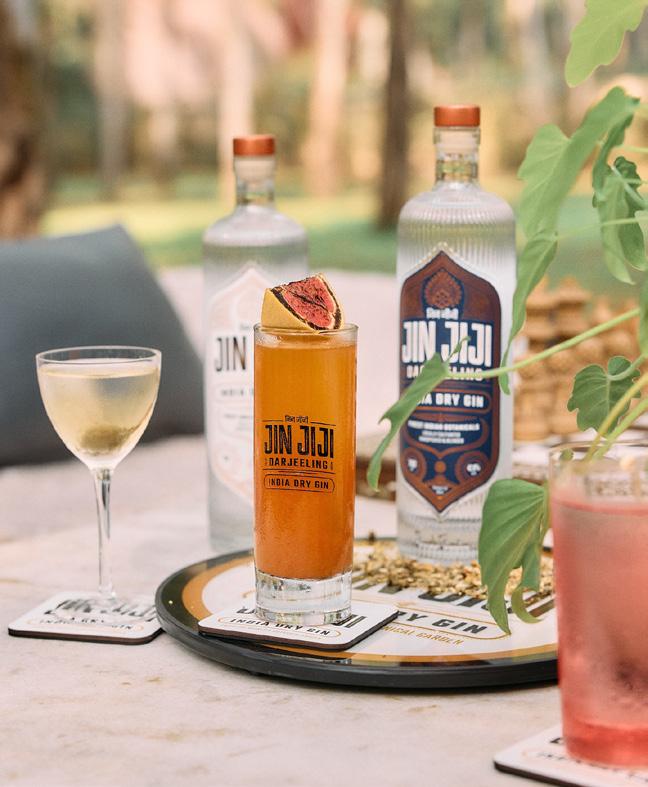

As Jin Jiji continues to captivate palates worldwide, it carries forward the philosophy of Jijivisha—a zest for life, shared through every bottle. From the Himalayan foothills to the world’s finest bars, this Indian gin is not just a drink but a celebration of heritage, craftsmanship, and the boundless potential of India’s craft spirits. With Himmaleh Spirits at the helm, Jin Jiji is poised to inspire a new generation of gin enthusiasts, proving that the essence of India can indeed conquer the global stage.
For those eager to experience this awardwinning gin, Jin Jiji is available across India and internationally, inviting all to raise a glass to Indian ingenuity and the spirit of life itself.

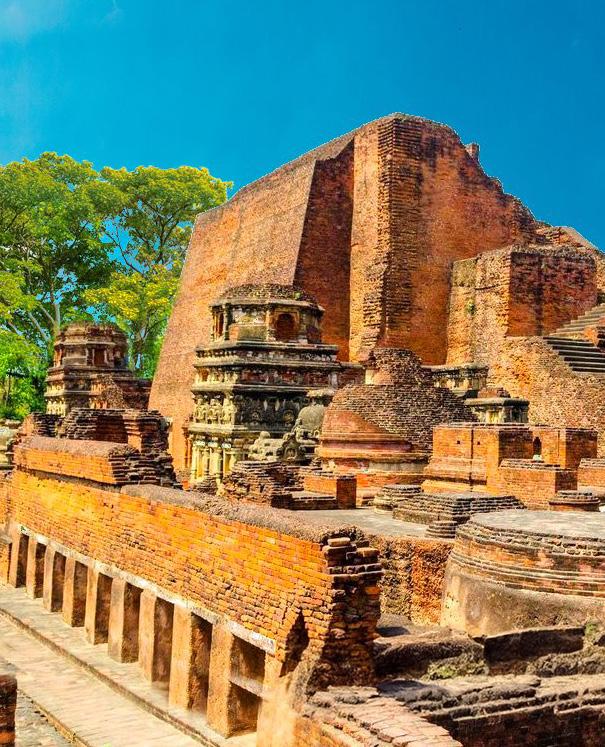
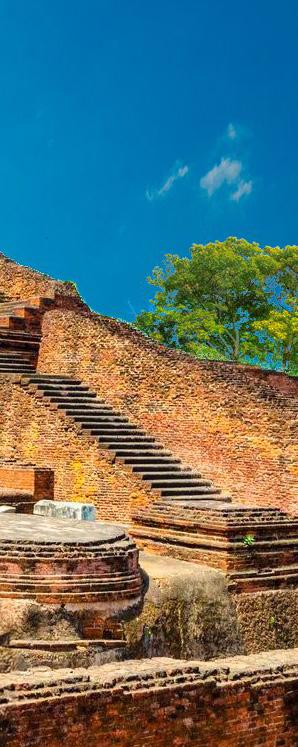
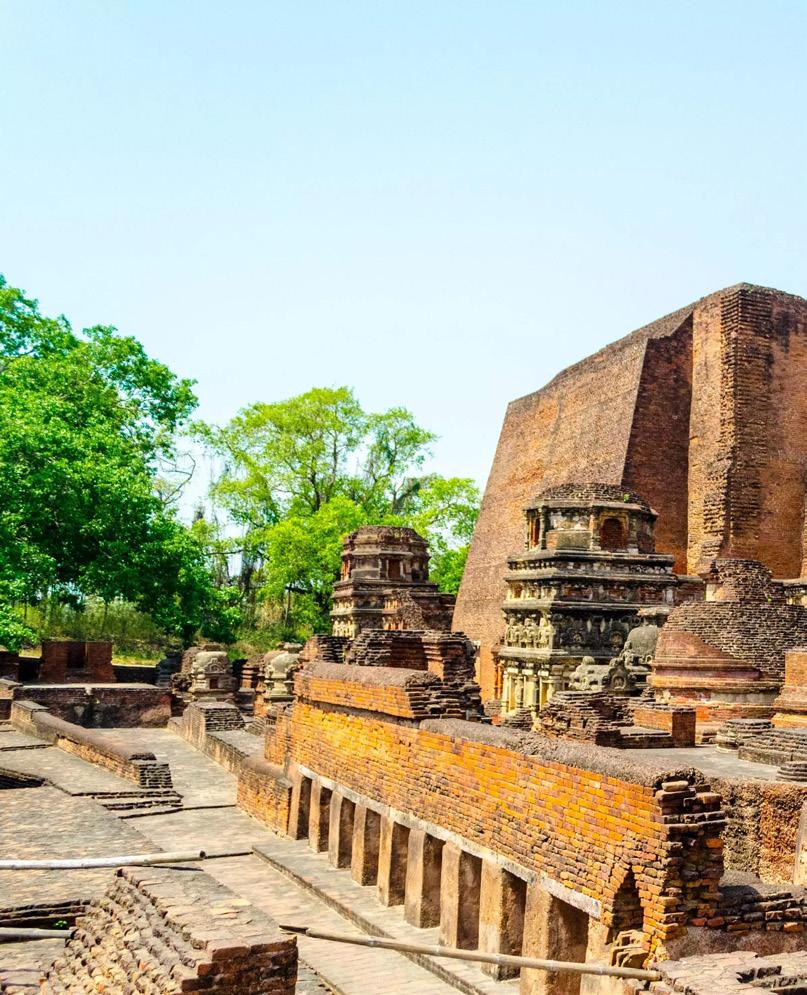

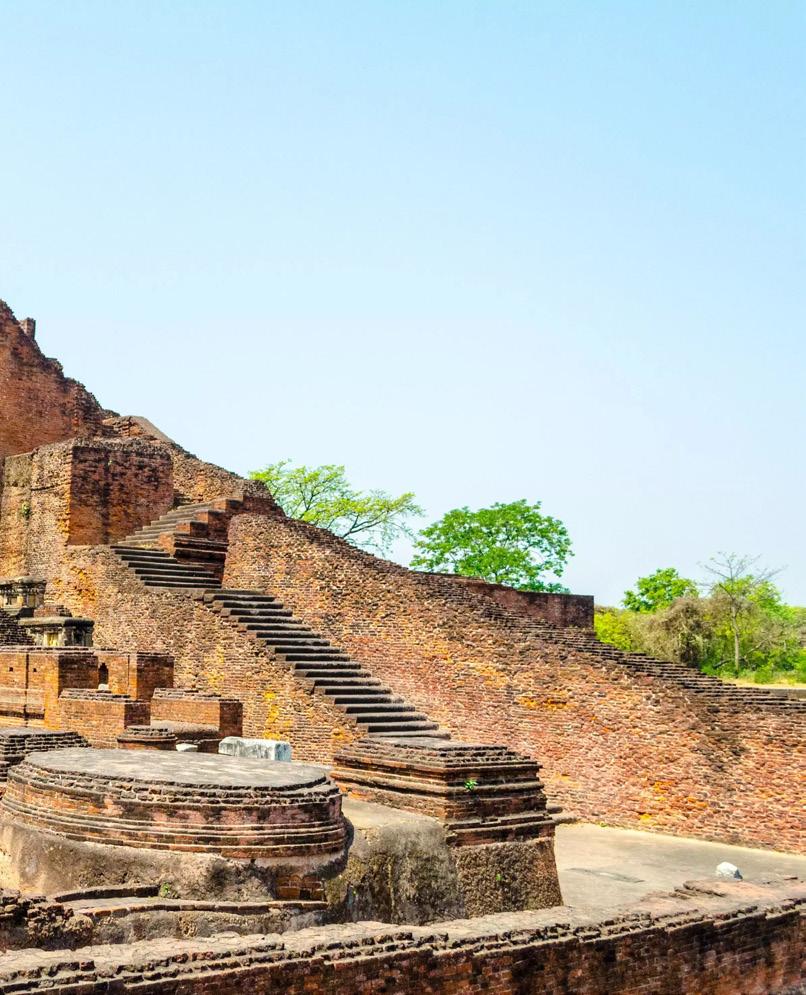
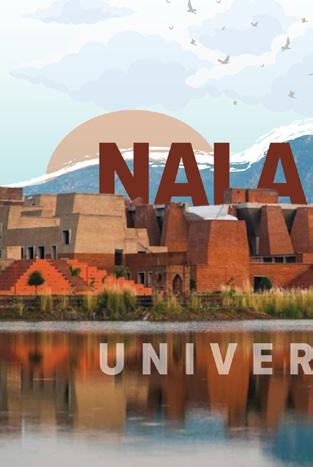
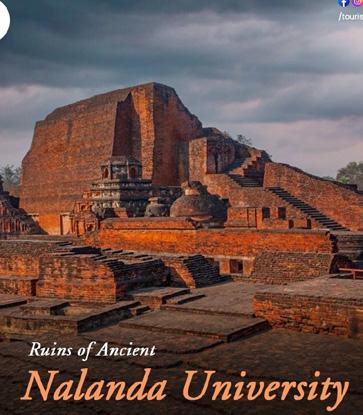
In the heart of modern-day Bihar, India, lie the ruins of Nalanda University, a testament to an era when India was a global epicentre of learning and intellectual pursuit. Flourishing between the 5th and 12th centuries CE, Nalanda was not just a university but a thriving monastic and educational institution that drew scholars from across Asia, leaving an indelible mark on the history of education, Buddhism, and human thought. Today, its excavated remains, recognized as a UNESCO World Heritage Site since 2016, whisper tales of a golden age lost to time.
Nalanda’s roots trace back to the Gupta Empire, often dated to around 427 CE, when it was established under the patronage of Gupta rulers like Kumaragupta I. Built in the birthplace of Buddhism—near Rajgir, where the Buddha himself once taught—it began as a Buddhist monastery that evolved into a full-fledged university. Its name likely derives from “Na-alam-da,” meaning “no end to the gift of knowledge” in Sanskrit, a fitting moniker for an institution that became synonymous with boundless learning.
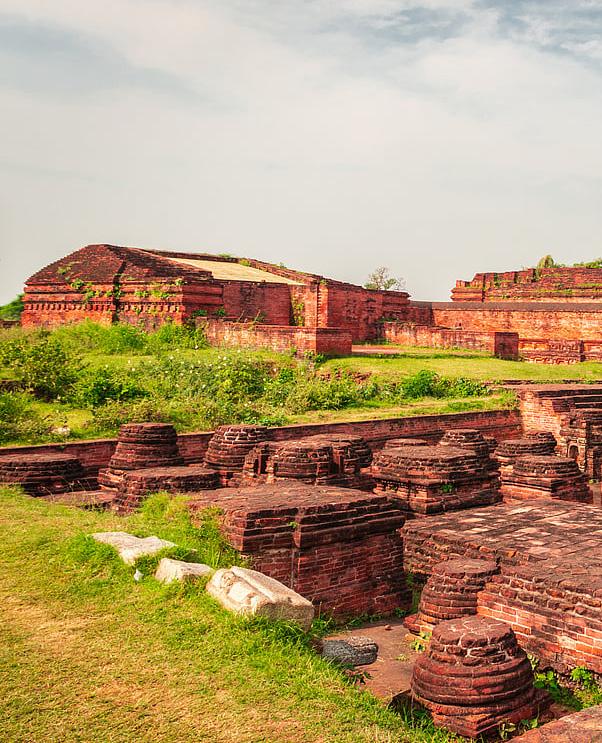
At its peak (7th–8th centuries CE), Nalanda was a sprawling campus of red-brick monasteries, lecture halls, meditation rooms, and stupas, housing up to 10,000 students and 2,000 teachers. It attracted luminaries from China, Korea, Japan, Tibet, Mongolia, and Southeast Asia, making it a true cosmopolitan hub. The Chinese monk Xuanzang, who studied there in the 7th century under the scholar Shilabhadra, described it as a place of unparalleled vibrancy, with debates echoing through its halls and monks poring over texts day and night.
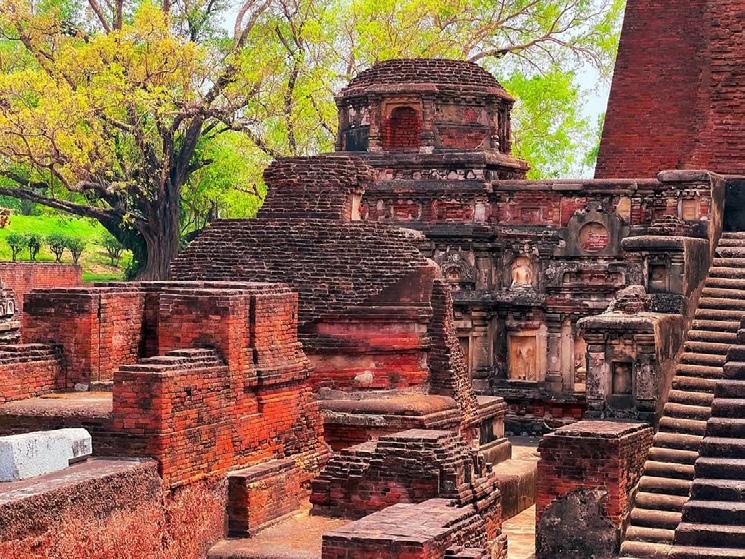
Nalanda’s academic scope was astonishingly broad. While rooted in Mahayana Buddhist philosophy, it transcended religious boundaries, offering courses in logic, grammar, astronomy, mathematics, medicine, metaphysics, and Sanskrit literature. The Nyaya school of logic, refined at Nalanda, influenced Indian philosophy for centuries. Students also studied the Vedas, Jain texts, and even practical sciences—evidence of an inclusive approach rare for its era.
The university’s admission process was rigorous. Prospective students faced oral examinations at the gates, grilled by gatekeepers known as dvara-panditas. Only those with sharp intellects and prior learning—estimated at 20–30% of applicants—gained entry. Once admitted, education was free, sustained by royal endowments and village revenues, ensuring that knowledge, not wealth, determined one’s place.

Nalanda’s crown jewel was its library, known as Dharmaganja (Treasury of Truth), comprising three main buildings: Ratnasagara (Ocean of Jewels), Ratnodadhi (Sea of Gems), and Ratnaranjaka (Jewel-Adorned). The nine-story Ratnodadhi alone reportedly held millions of manuscripts—palm-leaf texts on philosophy, science, and religion. Xuanzang wrote of copying hundreds of sutras to take back to China, while his successor, Yijing, marvelled at the library’s vastness. This repository made Nalanda a living archive of human knowledge, rivalling the Library of Alexandria in its ambition.
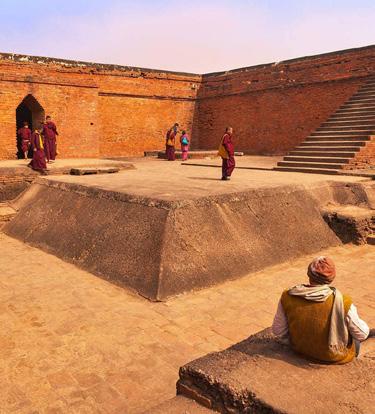
Life at Nalanda was disciplined yet dynamic. Monks and students followed a strict schedule: mornings began with prayers and meditation, followed by lectures, debates, and self-study. The campus buzzed with intellectual sparring—public debates were a hallmark, testing students’ mastery of logic and scripture. Residential quarters, with brick beds and niches for lamps, reveal a spartan existence focused on the mind. Yet, the community was self-sustaining, with kitchens, wells, and even a hospital, reflecting a holistic vision of education.
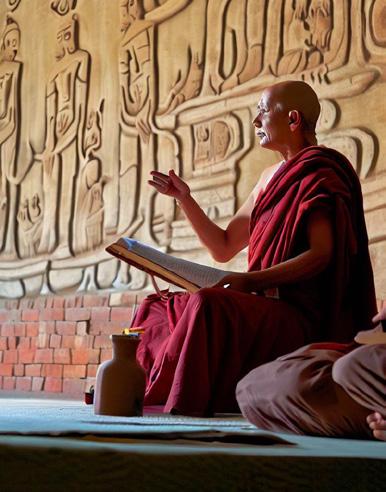
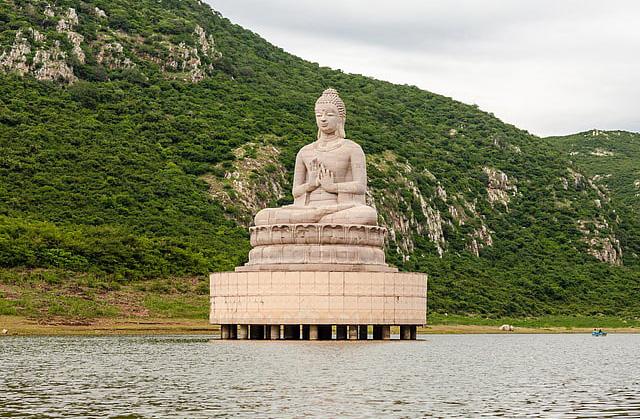
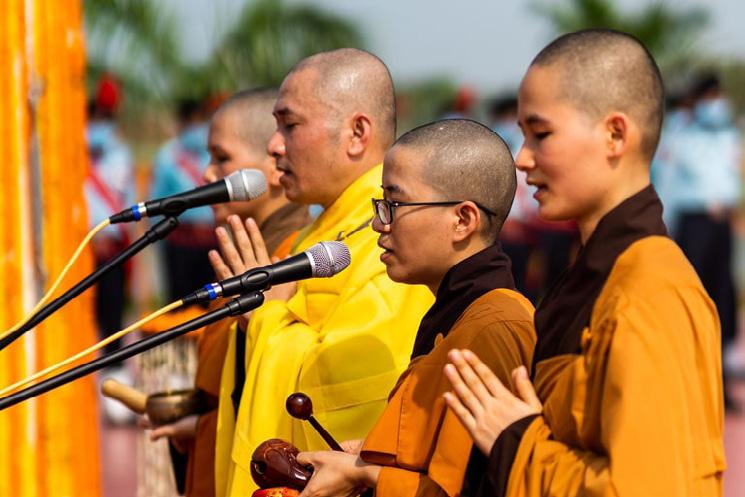
Nalanda’s decline began in the late 12th century as India’s political landscape shifted. The rise of Turkic invasions disrupted patronage from Hindu and Buddhist kings. The fatal blow came in 1193 CE, when the Afghan invader Bakhtiyar Khilji sacked the university. His troops, seeking to eradicate non-Islamic centres of learning, set fire to the campus. Legend holds that the library burned for three months, its smoke a mournful shroud over a dying institution. Archaeological evidence—charred rice grains and scorched walls—confirms the violence of its end. By the 13th century, Nalanda was abandoned, buried under silt and forgotten.
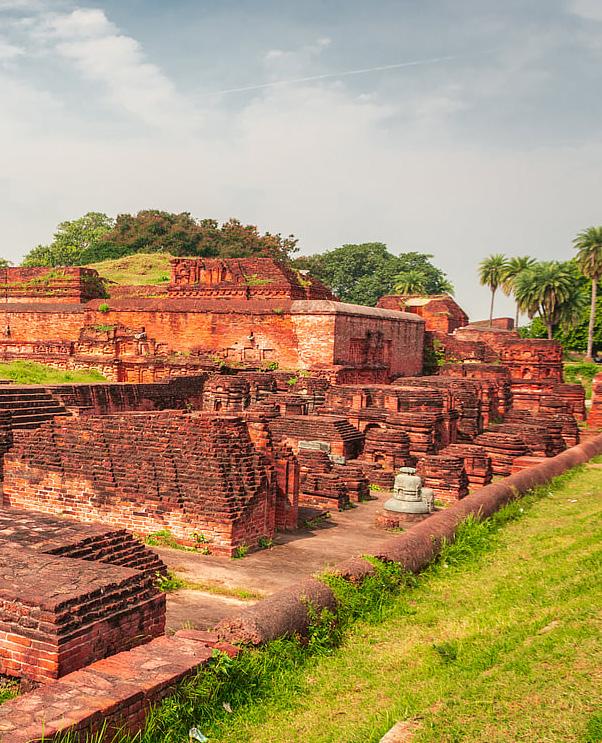
For centuries, Nalanda lay hidden until British surveyor Francis Buchanan-Hamilton stumbled upon its ruins in 1812. Systematic excavations by the Archaeological Survey of India (ASI) in the 19th and 20th centuries unearthed 11 monasteries, 6 temples, and countless artefacts—stupas, statues, and inscriptions. The site, though only partially excavated, spans 14 hectares, hinting at a complex far larger than what’s visible. Nalanda’s influence
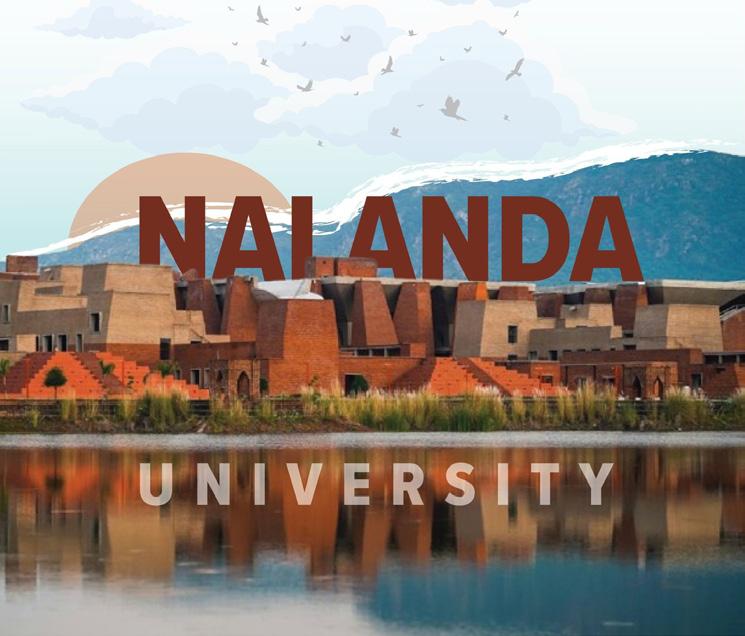
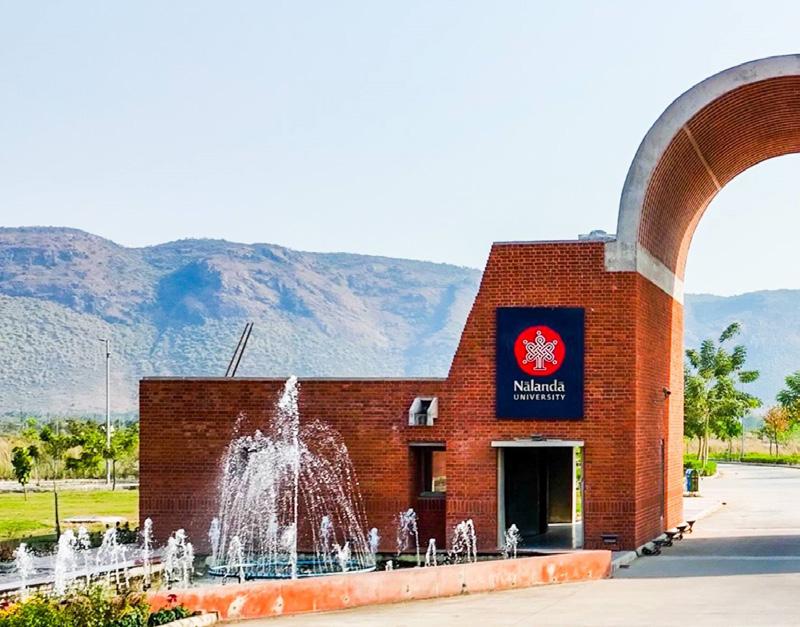
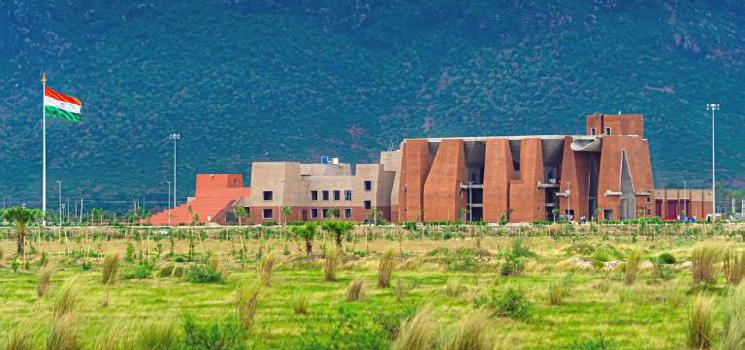
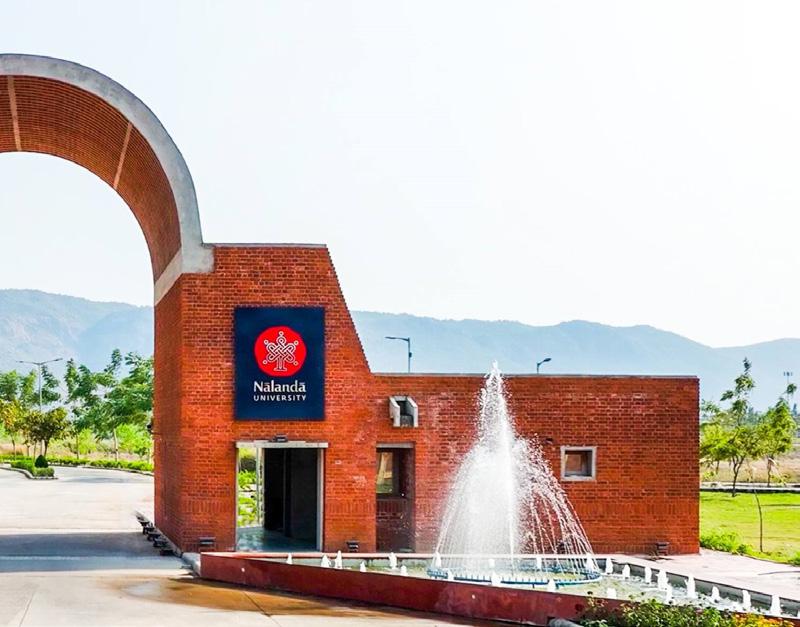
endures. It shaped Buddhist thought across Asia, with alumni like Xuanzang translating texts that preserved Indian ideas in China and beyond. Its model—residential learning, rigorous scholarship, and interdisciplinary study—inspired medieval universities worldwide. In 2010, India revived the Nalanda name with a modern university near the ancient site, aiming to reclaim its intellectual heritage.
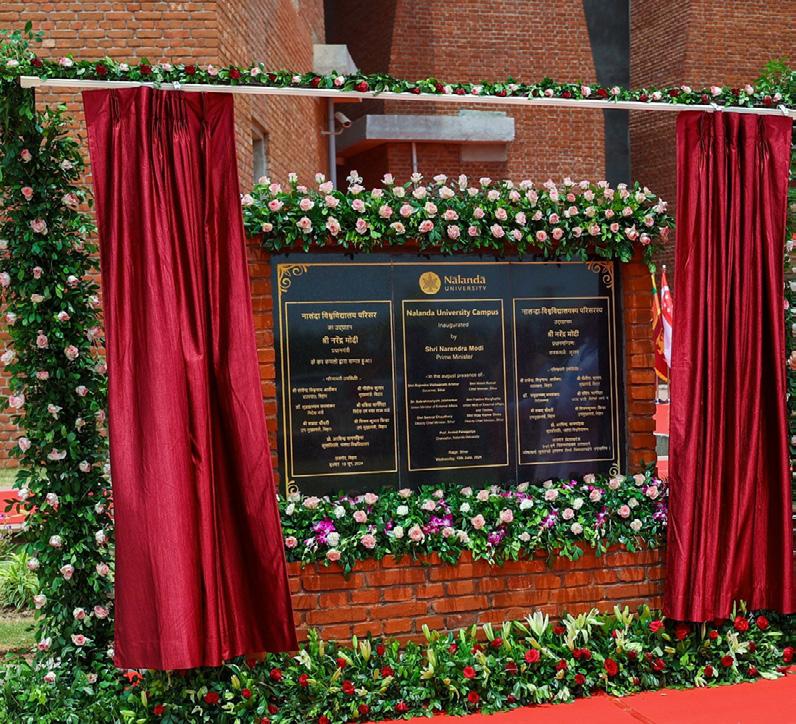
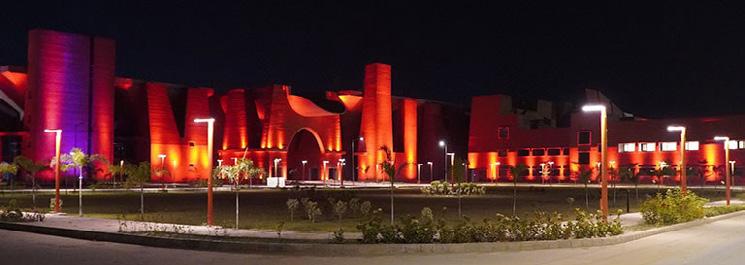

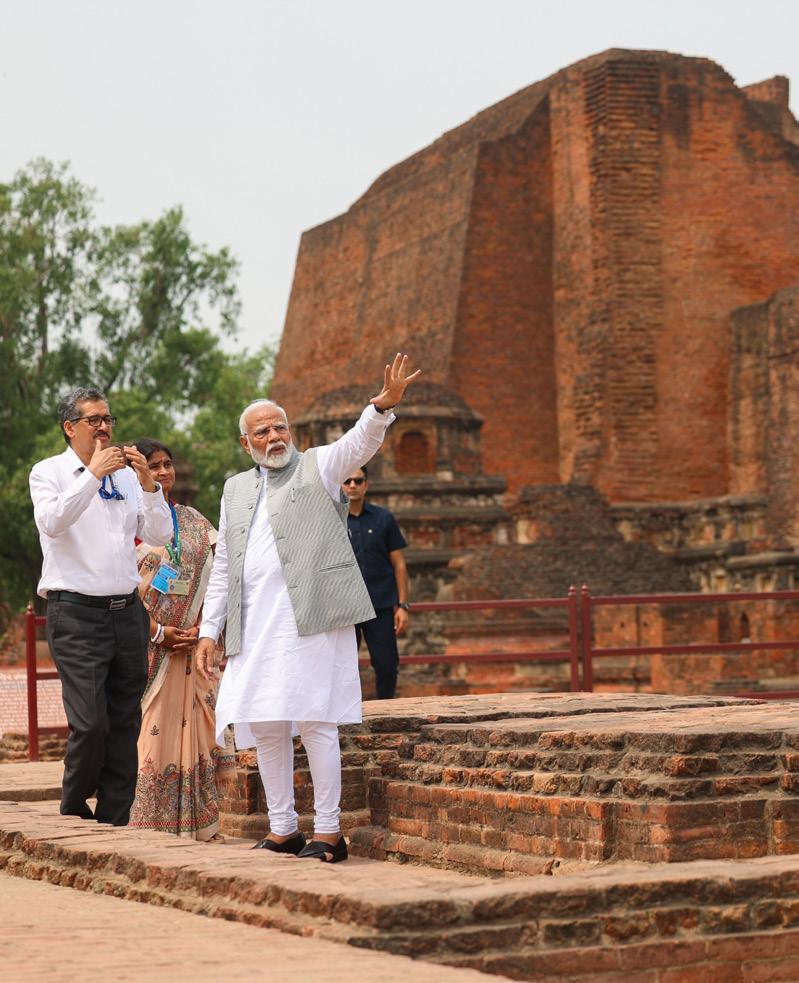
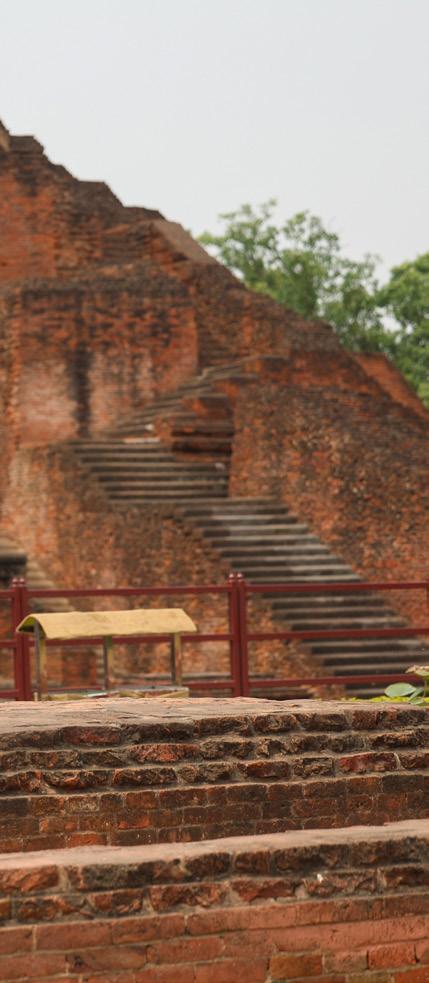
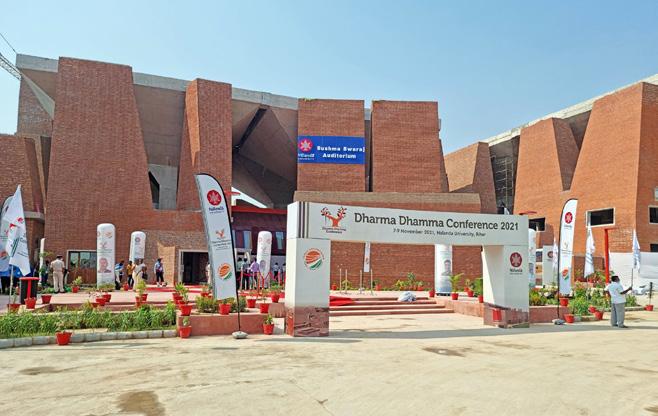
The ruins, 88 kilometres southeast of Patna, are a pilgrimage for history buffs and Buddhists alike. Key sights include the Great Stupa, with its votive shrines, and Monastery 1, the best-preserved residential block. The Nalanda Archaeological Museum nearby displays recovered treasures: sculptures, coins, and seals. Though the library’s manuscripts are lost, the site’s silence speaks volumes about what once was.
Nalanda University stands as a monument to humanity’s thirst for knowledge and the fragility of its institutions. Its destruction reminds us of the cost of intolerance, while its legacy celebrates the power of ideas to transcend borders and time. In an age of digital learning, Nalanda’s story—of monks debating under flickering lamps—remains a beacon, illuminating India’s profound contribution to the world’s intellectual history.






H-2022-0901

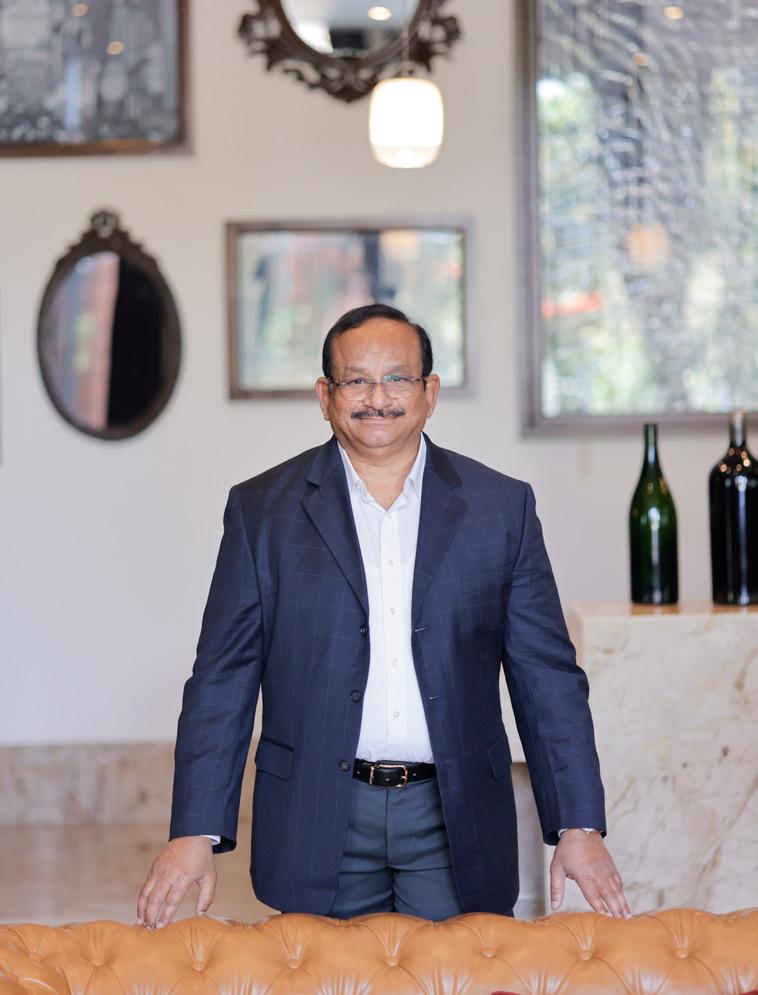
Dr. K. Madeswaran’s strong commitment to the field of Neurology & Neurosurgery is very evident and affirmative with his amazing Records, Statistics and Awards for having performed over 13,500 successful Neurosurgeries as on date. And, that has positioned

Not only Positioned Dr. K. Madeswaran as One of the Top Ten Neurosurgeons of the World; But, also brought Him Many Prestigious International & National Awards, Honours, Accreditations, Records and Acknowledgements from Many National / International Institutions.
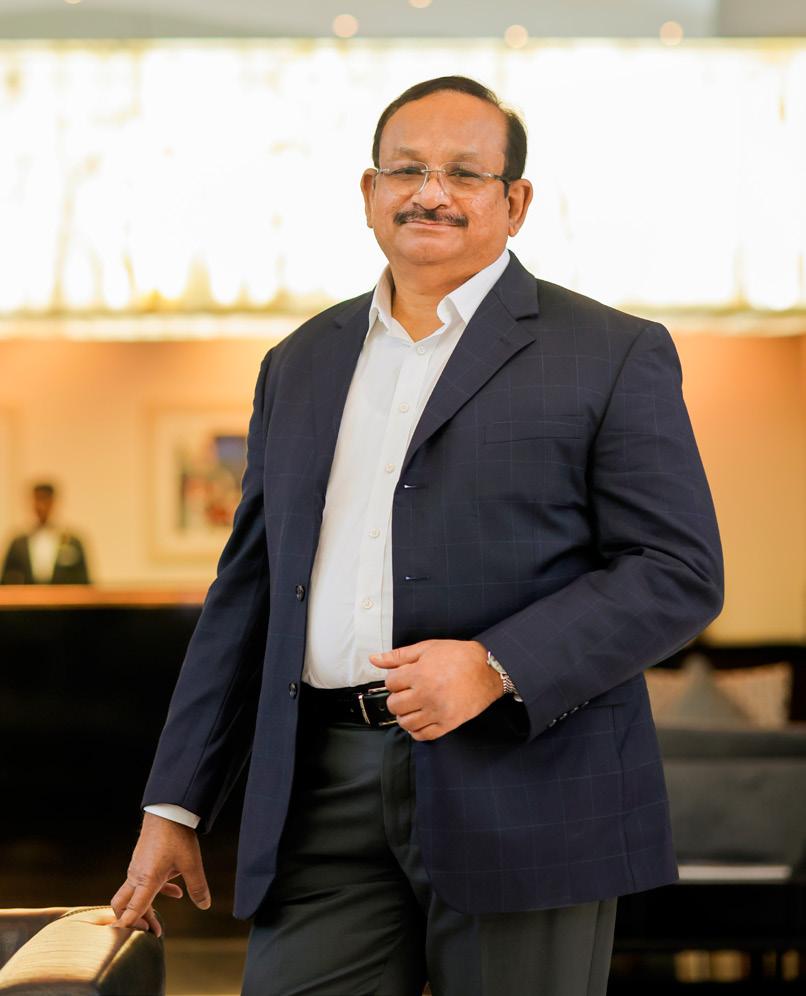
K. MADESWARAN Chairman & Managing Director M/s. Royalcare International Hospitals Group

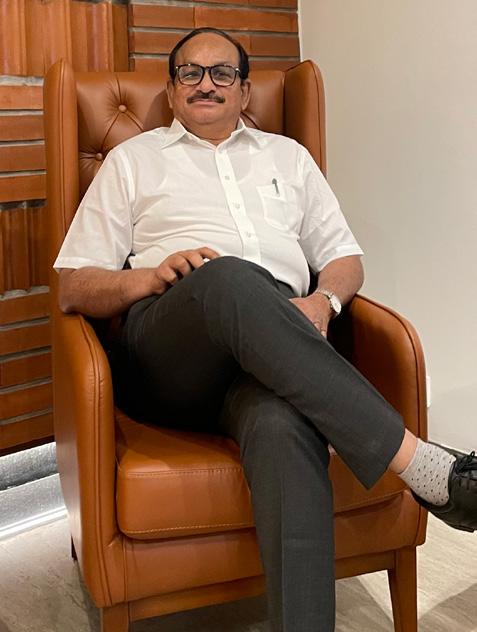
Throughout his benevolent Professional Career and Entrepreneurship over the last 36 years in Indian Medical, Surgical, Social and healthcare Industry, Dr. K. Madeswaran has been attached with a strong sense of purpose, which is Flawless Health and Joyful Living for All.
In addition, Dr. KMD has always been passionate about adhering to a holistic approach to community development and Preserving Global Environment for a Better Tomorrow; as exemplified by His Brain-Child Namely ‘UYIRIN SWASAM’ – through which He and His Team of Global Volunteers have been Planting Trees as far and as wide they could. As on Date’ Uyirin Swasam Foundation’ have planted over (Ten Million) One Crore Trees and they are vigorously Moving Forward with the clear objective and aim of Planting 100 Million Trees with Dr. K. Madeswaran’s Highly determined Vision and Moto of ‘Growing Trees for Global Peace and Prosperity’.
All the above serves as a testimony to his most adorable and incredible journey of healing, curing, unconditionally caring, as well as inspiring the Next generations of Surgeons, Doctors and Healthcare Professionals.
The fundamental of his legacy is pioneering, developing, innovating, refining and implementing scientific & hi-tech approaches and techniques in the fields of Neuroscience & Neurosurgery. Dr. K. Madeswaran has always been known for his Exemplary and truly remarkable Medical, Surgical, Teaching, Professional and Entrepreneurial career over three to four decades. And majority of the surgeries, those were successfully
performed and completed by Dr. K. Madeswaran; were highly Critical and Challenging Cases. And He had taken utmost care, in all those cases; by bringing out best of His skill, knowledge and expertise to ensure that the Patients are cured and sent back to their normal life.
Hence, Dr. K, Madeswaran has been fondly called as ‘The Most Legendry Neurosurgeon, who is blessed with the Brain, Heart & Hands Of God’. Dr. K. Madeswaran, with his inborn Skills, Talents and Remarkable Subject Matter Expertise, Not only cured Tens of Thousands of Patients, who have come to him, with the chronic and serious conditions. And, He gave all those Patients and their families the Enduring Joy and legitimate life; to live and rejoice; with their families; But, also taught 1000s of Junior Doctors and Surgeons, who all have been associated with Him and who have been learning directly by being along with Dr. K. Madeswaran in and through all those exemplary and Critical Surgeries and Procedures.
And they along with all those beneficiaries of His Medical & Surgical Services, carry the highest level of respect and regard; for his highly committed, timely, sincerely and most valuable Medical & Surgical Contributions, that he made to them; especially at the most crucial time of their life.
Dr. K. Madeswaran’s Successful Medical & Surgical Practice led him to accumulate Millions of Followers from all around the world. And with the Flawless Service and Goodwill, his incomparable knowledge, extraordinary skill and expertise in successfully performing Most Complex Surgeries and procedures that he built over a period of three to four decades; Dr. KMD had gained a very high reputation and trust among all sections of the society.
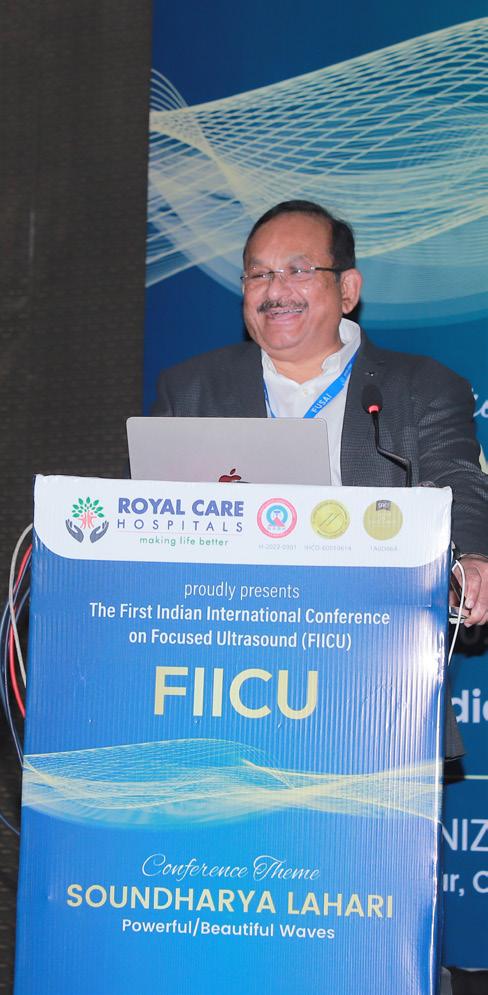
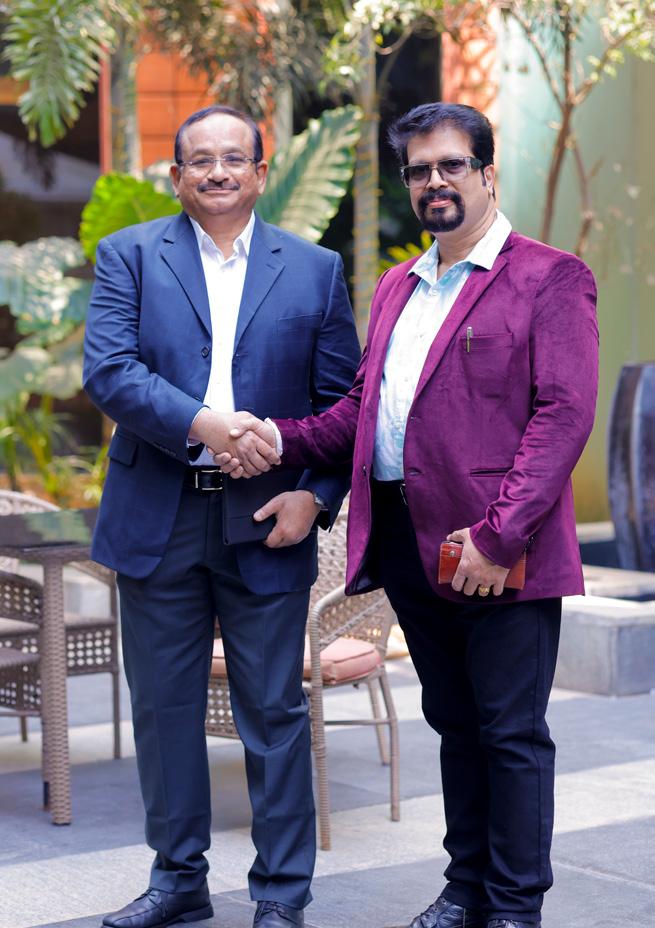
DR. S. E. ALEXANDER, Global Media Chief & MD - M/s Worldwide Media Corporation Group, USA Congratulates DR. K. MADESWARAN, Chairman & Managing Director- M/s ROYALCARE INTERNATIONAL HOSPITALS GROUP for the Exemplary Leadership & Proud Achievements in MultiVarious Fields by Both DR. KMD & HIS INTERNATIONAL HOSPITALS & HEALTHCARE VENTURES.


Highly Respected, Regarded and Idolized globally, Dr. K. Madeswaran have been honoured with Many Internationally renowned Prestigious Awards such as:

Incredible Asia’s ‘The Most Legendary Healthcare Professionals of Asia’ Awards2025’.

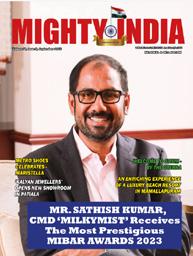
‘Indian Book of Achievers Records & Awards’ (MIBAR Awards) for Five Consecutive Years Viz., 2021, 2022, 2023, 2024 & 2025, in appreciation of his outstanding contributions to the field of Neurology & Neurosurgery.

‘The Best & Pride Of Tamil Nadu Golden Awards of Excellence in Neurosurgery2023’.

‘Food & Health Industry Excellence Awards’, 2021, 2023 & 2024.
‘Most Iconic Neurosurgeon of Mighty India Awards 2024’.
‘Incredible Tamil Nadu Golden Awards of Excellence 2025’; for his Unmatched contributions to the Fields of Health, Medicine, Surgeries, Healing and Social Services along with His unwavering pursuit of excellence in healthcare.

Icon of Coimbatore for Health Services Award
Excellence in Modern Healthcare Award 2021 & 2023
Best Super Specialty Hospital Award 2022
Healthcare Achievers Award 2022
VAANMUGHIL THONDAR Award 2023
Iconic Super Specality Hospital Award 2023
VIRUTCHA MAHAAN Award - 2022
Iyarkai Kaavalan Awards - 2022
Kongu Mamani Award - 2022
RI Dist - 3201 Outstanding Achievement Award for Planting 50,000 Trees – 2018 -19
Rotary Vocational Service Excellence Award - 2016
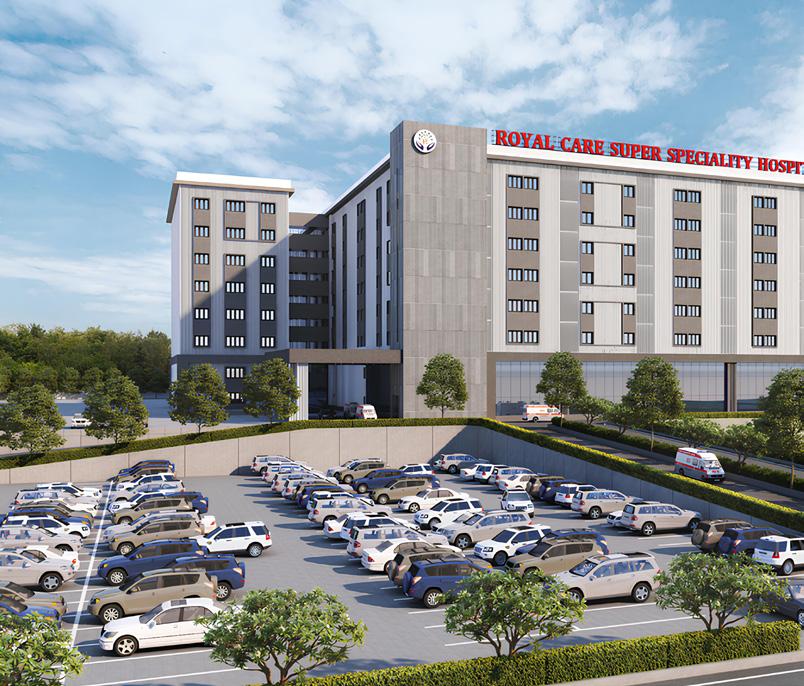
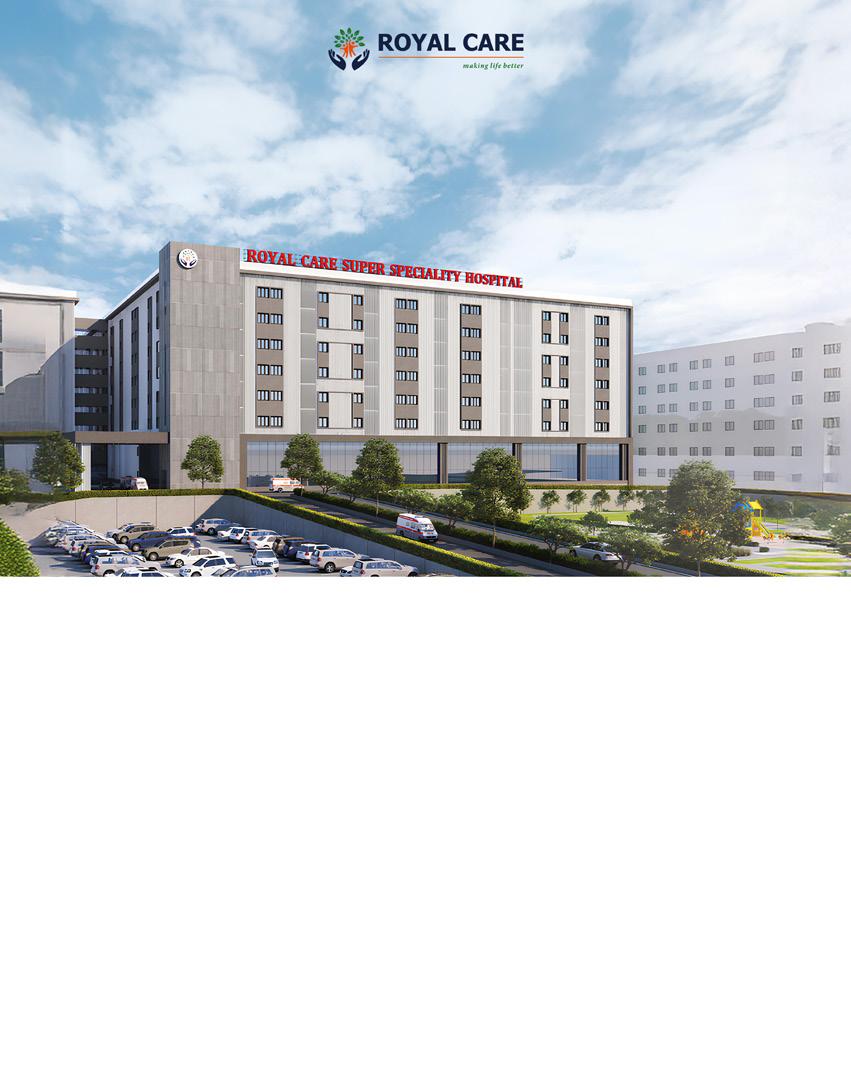
Founded and Commenced by Dr. K. Madeswaran along with His Most Trusted Team of Leading Surgeons, Doctors, Physicians, Medical Professionals, Subject Matter Experts and Management Professionals in the year 2015 as a 50 bedded multi-specialty hospital in One of the Vibrant Cities of India, Namely Coimbatore in the State of Tamil Nadu. Indeed, Dr. KMD’S Royalcare Super Specialty Hospital, within the first Two years of operations, became One of the Most preferred MultiSuper-Specialty Hospital in western Tamil Nadu for emergency, primary and specialty care in virtually all branches of modern medicine.
The hospital did continue being, the perfect destination for people seeking superior and Patient friendly healthcare. Functioning with those objectives of making
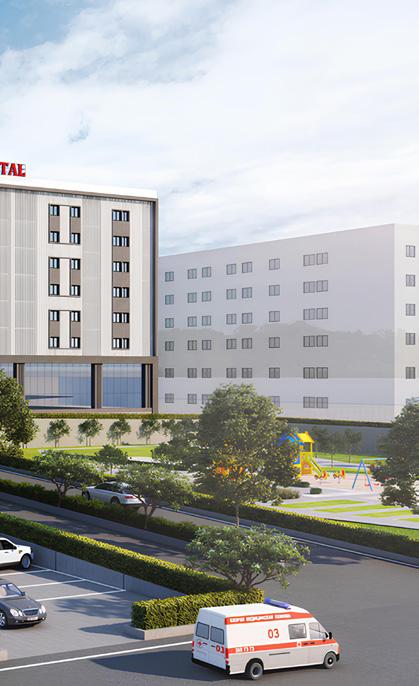
cutting edge healthcare to common man, they provide the best medical service with highly qualified doctors and highly equipped technologies. This necessitated an imminent expansion and created the need for a larger and more comprehensive tertiary care unit encompassing all the field of medicine.
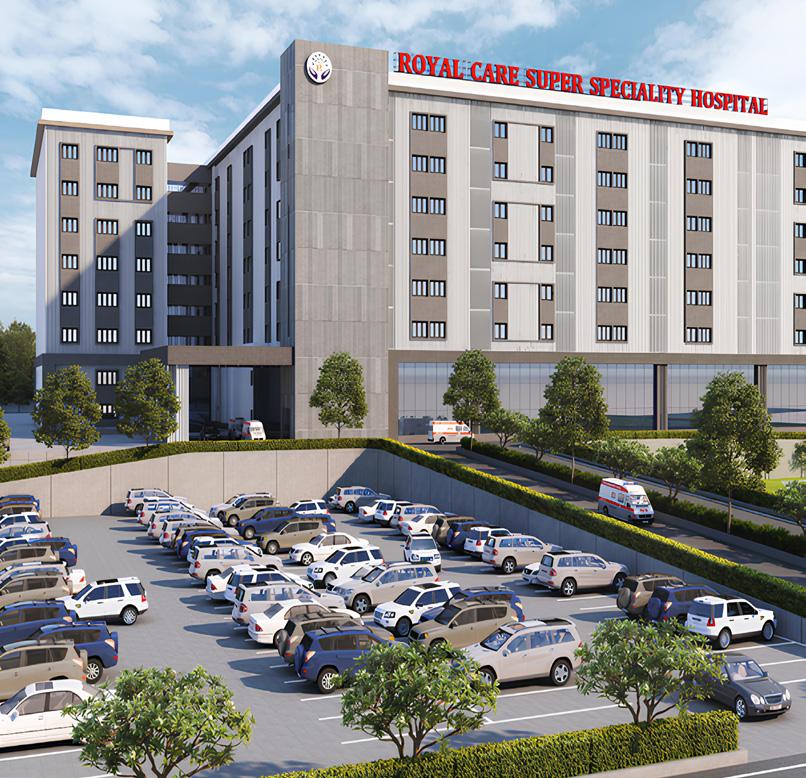
A 1100-bedded ultramodern Hospital facility Plan was thus conceived at Neelambur, Coimbatore By Dr. K. Madeswaran and His Team. RCIHG was Built within a record time of 400 days, the first phase comprising 500 beds were dedicated to the society in November 2016. With over 4,00,000 square feet of modern infrastructure, the Centre contained all necessary facilities to deliver comprehensive care under one roof.
With a commitment to make available all facilities on par with the latest advances in the Western World, RoyalCare Super Specialty Hospital became the first Hospital in the country to introduce Bronchial Thermoplasty for the treatment of severe asthma. RoyalCare is also the first hospital in the country to introduce the micro plasma-advanced oxidation for dialysis feed water disinfection to eliminate endotoxins and to prevent pyrogenic reactions in patients undergoing haemodialysis. Royal Care will strive to ensure that the benefits of modern healthcare reach all strata of society. Apparently, A patient centric culture exists at RoyalCare as they are the focus of everything they do. Every patient will receive warm and committed attention with a smile.
Royal Care Super Specialty Hospital aspires to be Ultimate Choice of Hospital for People and Patients from all around the world; in all aspects of Health & Wellness or for people seeking comprehensive healthcare. And that they have been recognized as One of the Top-Class Hospitals for very High Quality and International Standards Health Services in Asia.
And Dr. KMD’s Royalcare International Hospitals Group is going to achieve its Vision of having over 1000 Bedded Most Advanced International Standard Hospitals in the Same Location very shortly.
This has been mainly possible by the meticulous involvement and incomparable Contributions of Dr. K. Madeswaran, The Founder & CMD of Royalcare International Hospitals Group, whose vision was to bring together highly talented medical professionals from all around the world on board with phenomenal expertise in their respective fields, establishing cutting edge innovative diagnostic, Latest Hi-Tech Equipment, State-Of-The-Art Infrastructure and therapeutic medical technologies combined with the Most friendly medical and paramedical staff to provide courteous and compassionate and Utmost Care to Patients at all times.


H - 2022 - 0901

Certificate of Accrediation for Royalcare Super Speciality Hospital Ltd.
Royal Care Super Speciality Hospital proudly announces its accreditation by the Joint Commission International
Royal Care Super Speciality Hospital Recently Achieved SRC’s Center of Excellence in Neurosurgery
Royal Care Super Speciality Hospital Recently Achieved NABL - The National Accreditation Board for Testing & Calibration
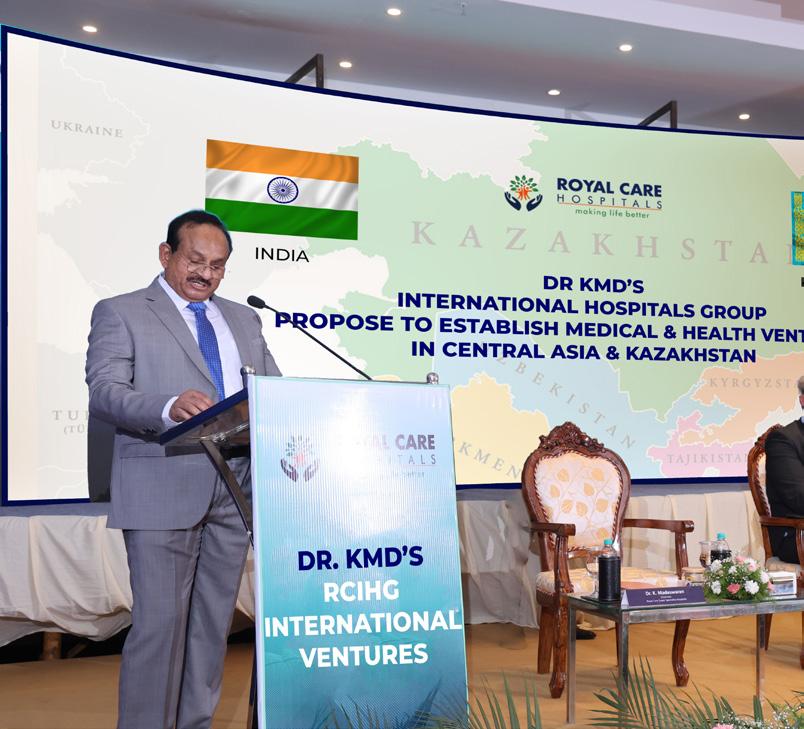
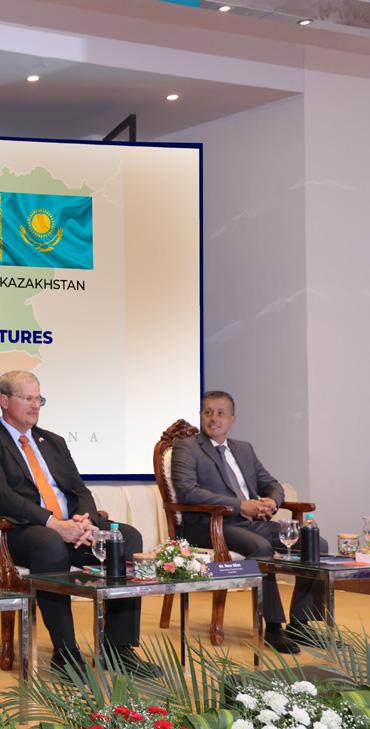
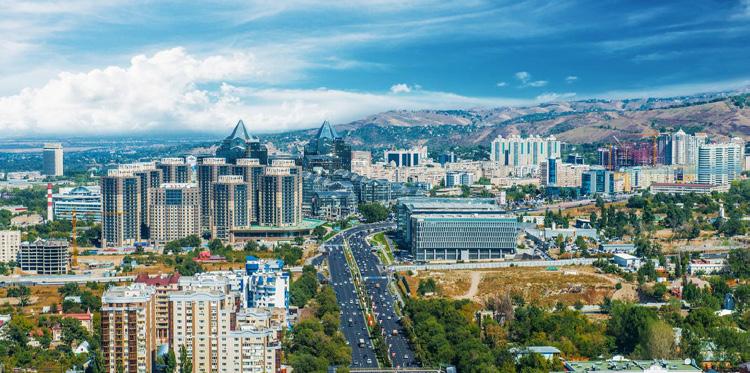
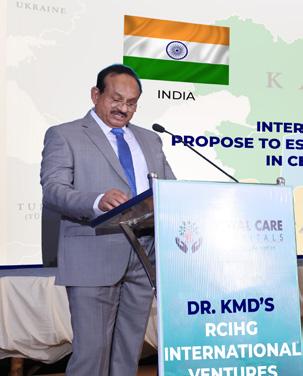
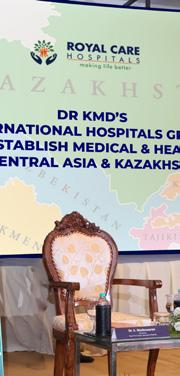
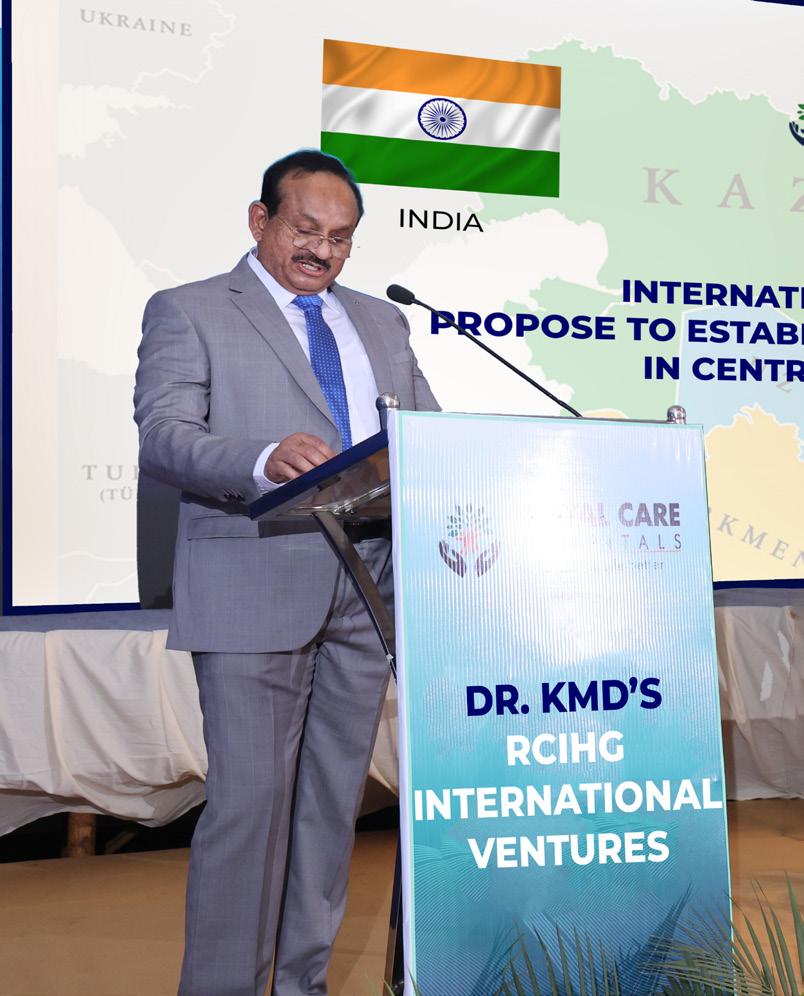
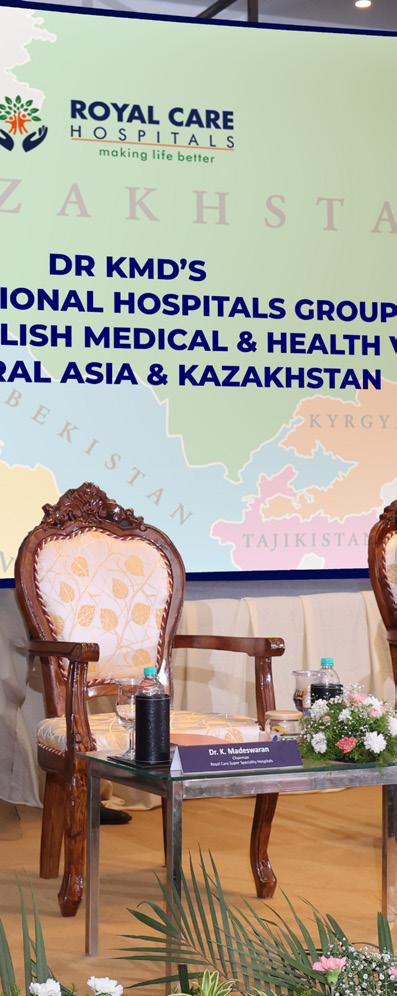
Dr. KMD’s ROYALCARE INTERNATIONAL HOSPITALS GROUP, One of the Leading Multi-Super Specialties Hospitals Group, based in India; has announced their Global Expansion Strategies and Business Plans to Explore, Enter, Establish and Expand their Medical Facilities & Healthcare Services Network in CENTRAL ASIA; especially In and through the Republic of Kazakhstan. Dr. K. Madeswaran, One of the Top 10 Neurosurgeons of the World and The Chairman & Managing Director of Dr. KMD’s Royalcare International Hospitals Group MNC; Said in an Interview that; ‘Our Royalcare International Hospitals Group have been expanding our Business Horizons widely across the Europe & Asia Pacific Region in association with One of the Leading Multinational Mass Media Group, Namely M/s Worldwide Media Corporation Group USA. And, ‘We were given to understand by our Strategic Partners that ‘Central Asia is becoming an important region for investment for a number of reasons, including:
• Economic growth: Central Asia’s economy is growing at a rate of over 4% per year, which is more than double the European Union’s growth rate.
• Natural resources: Central Asia is rich in natural resources, including oil, gas, and minerals.
• Trade hub: Central Asia is a critical trade hub and transit corridor, linking Asia with Europe, Africa, and the Middle East.
• Favorable investment environment: Countries in Central Asia have implemented incentives to attract foreign investment, such as tax exemptions in Free Economic Zones.
• Growing population: The region’s growing population is increasing the market size.
• Geopolitical interests: The Russia-Ukraine conflict and the withdrawal of US forces from Afghanistan have renewed Western interests in the region and so on.
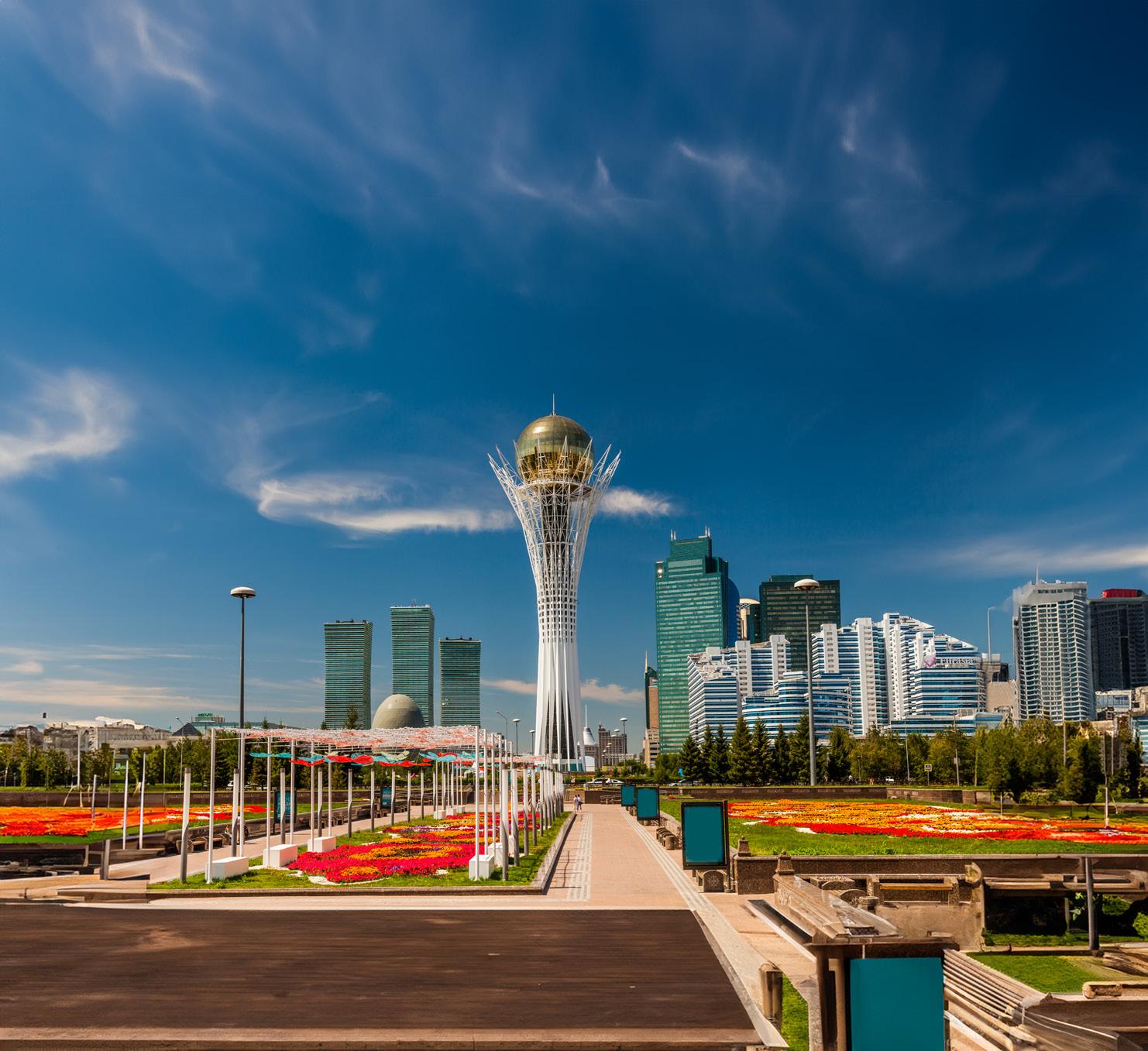
Dr. K. Madeswaran added by saying ‘We were also given to understand that the Kingdom of the Republic of Kazakhstan is the most advanced economy in Central Asia and is a magnet for foreign direct investment (FDI). The country has made significant progress toward creating a market economy and has attracted investment in its mineral, petroleum, and natural gas resources. Endowed with abundant oil resources, Kazakhstan is the most advanced economy in Central Asia. According to the IMF, the central Asian country’s GDP recorded solid growth of 5.1% to exceed US$260 billion in 2023, accounting for more than half of the region’s total’. Dr. KMD says that ‘we were very glad to note that the ‘Republic of Kazakhstan’ leads the entire region not only in terms of GDP and purchasing power, but also in its importance as a business and logistics hub. As a strategic link between China and Europe, its plays a pivotal role in facilitating SinoEuropean trade and logistics. Since the 2000s, Kazakhstan has undergone a process of marketoriented liberalisation, including currency reforms to transform itself into a magnet for foreign direct investment (FDI). Today, Kazakhstan is the most favourable FDI destination in Central Asia, with inward FDI stock growing from US$154.2 billion in 2022 to US$157.2 billion in 2023 and accounting for over 70% of the region’s total. This strong FDI performance reflects the confidence of international investors in the Kazakh’s economy’s stability and growth potential, and its favourable investment environment.
Dr. KMD also says that ‘Anywhere in the world; Development and maintenance of neurosurgical training have always been important, especially nowadays due to improvements in diagnosis and treatment of neurological and neuro-oncological disorders that affect billions of people worldwide. Due to longer lifespans, the proportion of older people is growing in many countries. According to the WHO’s projections, the prevalence of neurological disorders, particularly Alzheimer’s and other dementias and Parkinson’s disease, will increase gradually by 2030. Diseases like brain trauma due to road injuries, ischemic heart disease, and stroke are on the list of the leading causes of deaths and disability worldwide, and the frequent cause of stroke is a condition requiring neurosurgical treatment.
Furthermore, middle-income countries have the highest annual road traffic fatalities affecting the working-age population, mainly caused by brain trauma and whiplash. In addition, the global burden of disability is driven mainly by low-back pain, headache disorders, and depression. Trauma and injuries are the fourth reason for fatality after cancer, cardiovascular, and respiratory diseases in Central Asia Region. Therefore, We understand the importance of collaborative Medical & Scientific research in the fields that affects the Humanity. In addition, substantial improvements and developments could be brought in the areas in which the Medical Education and Innovations could bring in miraculous results that could save humanity from the dangers and risk of Chronic illness and diseases.This shall also be made possible by training the neurosurgeons and surgeons, belonging to other Medical specialities in Kazakshtan and in the Central Asia Region. And those trained resources and surgeons could be made available to cater and serve neurosurgical and other Medical Specialities and disorders, Says Dr. K. Madeswaran.
Hence, Dr. KMD’s Royalcare International Hospitals Group; in association with our Strategic Partner ( M/s Worldwide Media Corporation Group); shall enter into suitable, appropriate and long-term Joint Ventures with able and Interested Organizations or Business Partners either from the Government Sector or from the Private Sector from the Republic of Kazakhstan; In order to Establish a Mutually beneficial, longer-lasting and Sustainable Business Operations in Kazakhstan; both to cater the Medical and Healthcare requirements of Kazakhstan as well as to Make the Republic of Kazakhstan as an Invincible Region / Country to attract all countries in and around the Central Asia Region for their Medical, Healthcare and Health Research Requirements in the future.


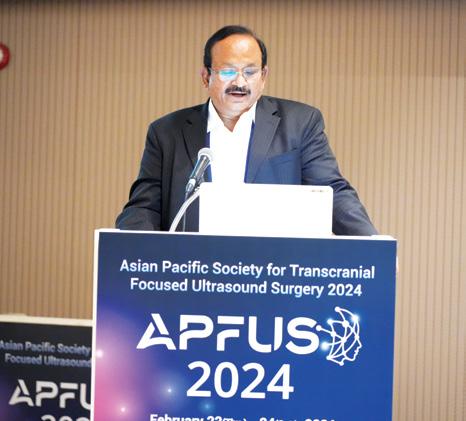
Dr. KMD’s Royalcare International Hospitals Group is one of the Top-Class Hospitals in Asia that offer a comprehensive array of leading-edge medical treatment services for international patients of all ages. And they under the able leadership of Dr. K. Madeswaran, Founder & CMD is highly focused and determined to Improve Health and Health Care Globally. Royalcare Hospitals Group, tailor each patient’s treatment and use advanced approaches, such as multidisciplinary care Involving experts from multiple specialties and work together in order to apply collective skills and experience along with the latest research knowledge. RoyalCare Hospitals Group is committed to caring for the whole patient during complex treatment, including prevention and wellness, acute care, mental health treatment, rehabilitation and care for chronic conditions. And in this regard, they have evolved Comprehensive System that specially Cares for Patients with Complex Needs. Royalcare had very Renowned Team of Specialists, Expert Surgeons, Doctors to handle a Wide Range of Complex Diseases. Their physicians and researchers are leaders in their Lives.
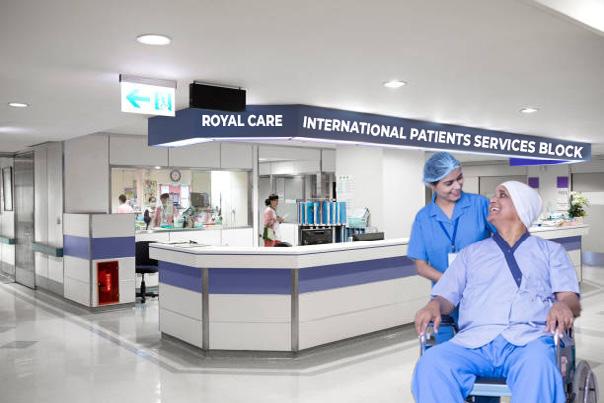
RCIHG’s International Patient Care Centres
Multilingual appointment, registration and finance personnel at International Centres located in RCIHG’s campus, is dedicated to meeting the needs of you and your family, have before you arrive, during your medical appointments and even after your return home; After Completing Your Treatments. International Patient Care Centre staff shall arrange appointments, find interpreters and answer questions about billing, insurance and international health coverage. The staff can guide you in making travel and lodging arrangements and tell you about community services, including shopping, entertainment, banking options and worship. In other words all that you need to come and avail one of the most effective, efficient and the best health solutions for all your healthcare needs.
Royalcare International Hospitals Group’s ‘International Patient Care Centres can also arrange for fee-based travel services, including airline, hotel reservations and ground transportation, including shuttles, limousine service and car rentals. Each International Centre offers patients and visitors a comfortable and relaxing environment where they can feel at home before or after appointments.
Apparently, RCIHG’s Team of Experts will Structure and Create your Comprehensive treatment Plan:
RCIHG’s Patient Centric Care Team includes the best Surgeons, Doctors, Physicians, Specialists and Nurses for all healthcare Needs. The Experts Team is for every medical field of support that you need.



No matter what serious or complex health challenge you're facing, you can be confident that you're receiving the Best of the World’s most advanced care at Royalcare International Hospitals. Royalcare Hospitals Group have established a Top-Class International Healthcare Facility to provide Comprehensive Health, Healthcare & Wellness Services at an affordable cost to patients who come from countries across the world. ‘RCH Medical Tourism & International Patient Services Division’ is though based at their Flagship Hospital, which is situated at ‘Greater Coimbatore (Neelambur), Tamil Nadu, India’. They Have Their Global Network and Liaison Offices spread across the Continents.
This Exclusive Division with State-Of-the Art Facilities of ‘Royalcare International Hospitals Group’ have tied up with one of the ‘Leading Multinational Mass-Media Organizations of the World’ in order to utilize their Corporate Network & Establishments located in 110 countries across the World; with the view to provide most reliable and Patient-friendly Healthcare Services; both at the Country of Origin of Patients as well as at the Country of their Destination, where Advanced & Surgical health services are provided.
With the fully operational Centres of Medical & Clinical Excellence; covering over Eleven Super- Specialties, which are fully packed with Most Ultra-Modern Technologies, Equipment, Highly Trained Doctors and Medical Professionals; Royalcare International Hospitals Group is

considered as one of most preferred and Popular Destinations for Medical Tourists & Patients from all around the world; especially for all those, who seek ‘World-class Healthcare & Surgical-care and Wellness Solutions/ Packages at an Affordable Cost. The most able, renowned and dynamic Medical Team with the Operational Staff of RCH Medical Tourism & International Patient Services Division (RCHMT& IPSD) in association with their Global Business Network & Logistic Partners; offer a wide Portfolio of Travel & Medical Services to their Medical Tourists & International Patients from all over the World.

With the Specific Request, Demand and Pre-defined Requirements of International Patients; ROYALCARE Could provide Services for:
• Remote & Online Medical Consultations.
• Offering Projected Cost Estimates.
• Allocating Exclusive Consultant Doctor for Regular Medical Guidance.
• Customized Medical Treatment Packages.
• Travel & Visa Arrangements.
• Accommodation arrangements for Patients & their Families.
• Airport Pick-up & Drop Facilities (With supported Medial Staff on Demand).
• Translator / Interpreter Services.

LET YOUR FAMILY PAMPHERED WITH INTERNATIONAL STANDARD HEALTHCARE - Experience the Complete World of Luxury Health & Wellness and Pamper Yourself in the Lap of Luxury Healthcare & Wellness: Royalcare’s ‘Golden Club Class – Elite Health Membership for VIPs – is an exclusive and highly personalized Luxury Healthcare Membership Program, which ‘Royalcare Super-Specialty Hospitals Group’ has launched recently. Health & Healthcare Needs are common for all. Similarly, Time is also same for all. But Time has different values for different people depending upon their Lifestyles, Habits, Preferences and what they do with their Time. And hence, this highly Sophisticated & Personalized Health Membership Division has been created with the view to provide ‘Luxury Healthcare & Wellness Affluent Society of India as well as from all around the World.
As a Gold or Platinum Member of this Elite-Health Membership Program for VIPs, one would receive the following Benefits: Comprehensive Healthcare and Wellness Services those are provided by highly qualified and experienced Doctors & Medical Professionals around the Clock. Priority Appointments, Services & Allocation of Facilities. Escorted Services during the Member’s Visit to the Hospital (Right from the arrival of the Member at the ‘VIP Parking Zone’ till the Departure of the Member’s Vehicle).
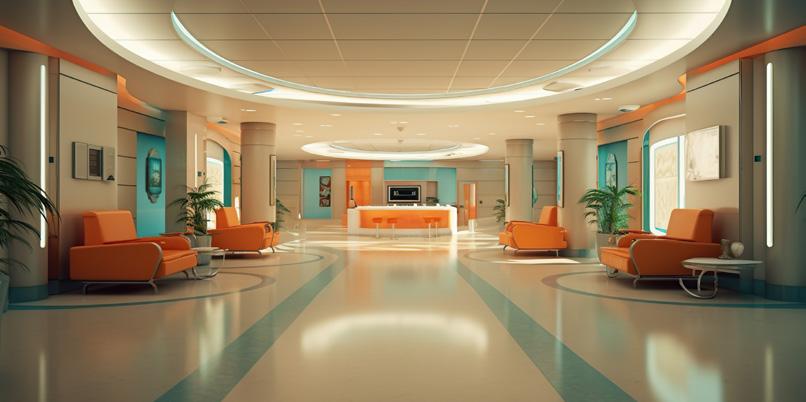
YOUR COMMITMENT OF LESS THAN SIX HOURS WILL ALLOW OUR EXPERTS TO:
• Discover Your Health Index as it where is Identify the potential health problems that you might encounter.
• Target and address risk factors that compromise your health.
• Facilitate prompt, expert and compassionate care for any injuries or illness.
• Promote your wellness, including nutrition, fitness and stress management.
• Ensure that You’ll leave with your own personal roadmap to better health and wellness, feeling confident in your health status and knowing the action steps you need to take. And may you need any specialty consultations, you will have a priority access to over 100s of ‘Royalcare International Hospital Group’s Medical and Surgical Experts’.
Optimal health is key to a fulfilling life. Yet caring for your own health can be challenging and time- consuming. Dr. KMD’s Royalcare International Hospital Group’s healthcare professionals understand this very well. The entire team realize that you need an Exclusive, Personal and a Premium Health Services’ that provide you Optimum Health Benefits despite spending a very minimal waiting period at the Hospital. And keeping the above in mind ‘RCI Hospitals Group’s ‘Golden Club Class - Elite Membership Health Program’ brings you the most comprehensive, streamlined physical examination available, which has been modified and tailored to suit your specific needs. And the Elite Membership Health Program provides an integrated, head-to-toe evaluation that includes appointments with experts in nutrition, exercise physiology and stress management, plus vision, hearing, heart health and lung function assessments, and more. You will have an extended appointment with a personally matched member of our team of physicians, who would provide you, with state-of-the-art, preventionfocused healthcare in as thorough, compassionate and efficient manner as possible.

“Golden Club Class Elite Membership Health’s premier experience focuses on preventive health and wellness. Using the best integrated multi-disciplinary evaluation and health therapeutics, we meet your health goals together.” We offer a comprehensive, holistic Preventive Health Evaluation using a thorough set of evidence- based assessments to develop a complete understanding of your health status. Each Golden Club Class Elite health physical starts with an in-depth meeting with your exclusive health physician to understand your overall health and identify any concerns. Our testing protocol is customized for your stage in life and any risk factors that have been identified.
By scheduling a range of assessments during your visit, we develop an extensive and wide-ranging understanding of your health profile and provide you the convenience of completing these tests in one place at one time. Elite Membership Health Program visits conclude with a detailed meeting with your physician to review your results and develop a plan to improve your health, address any issues that were identified and target any risk factors that may impact your health.
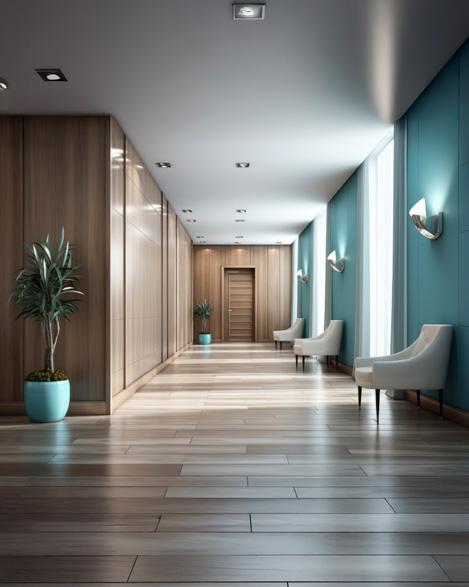
Preventive health and wellness are different for everyone. A key to long-term success is a strong relationship with a medical provider and dedicated time to have a thorough discussion of what is required to attain and maintain peak heath. The Golden Club Class Elite Membership Health Program maximizes your visit time through a customized, comprehensive one-two- or three-day itinerary of exams and tests tailored to your specific needs.
• Comprehensive health assessment and medical history review.
• Full range of Preventive Screening Tests.
• Cardiovascular counselling .
• Review of medications and immunizations.
• Lifestyle assessment.
• Access to Royalcare Intl. Hospital subspecialists, if the need arises.
• In-depth, one-on-one review with your personal executive health physician.
Expect efficient, and a very personalized One-on-One Healthcare that accommodates you and your Health Needs through a very carefully and thoughtfully crafted Health Program: Thus, the Golden Club Class - Elite Membership Health Program combines Royalcare Intl. Hospital’s traditional diagnostic expertise with recent developments in preventive medicine- all designed to get you in and out efficiently and back to what you love.
Your dedicated physician is actively involved throughout your entire evaluation process. Your evaluation starts when you arrive with a comprehensive review of your medical, family and social history, along with a complete physical exam. Next, you and your physician will discuss your specific customized itinerary as well as any additional tests or consults that may be appropriatefor you. Your itinerary will reflect both our assessment of your medical needs and your expressed preferences.
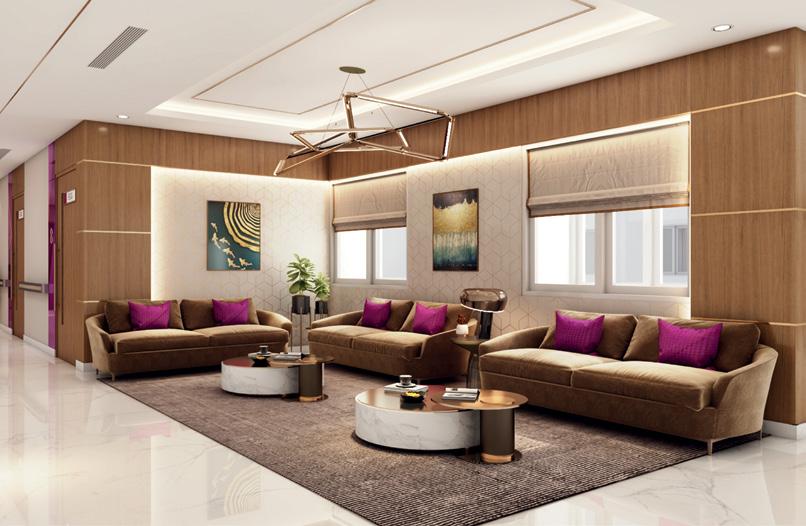
During your visit, you’ll be seen at different testing areas throughout Royalcare Intl. Hospital. If you are International Citizen who come from abroad; then, A typical visit can last from one to three days. After completing your itinerary, you’ll meet with your doctor again to review your results together, and you’ll discuss any next steps. If needed, diagnostic services or treatment can leverage the full depth and medical rigor of Royalcare Intl. Hospital via access to specialists or further recommended follow-up. A summary of your results can be mailed to you or made available in your secure online patient portal shortly after your final visit. A letter outlining these results also can be sent to your local doctor.
• Private Executive Lounge with secure lockers for personal items.
• On-Site Business Services with complimentary Wi-Fi.
• Guide to Restaurants and Transportation options, as well as local attractions and area amenities.
• Dedicated appointment coordinators to ensure your appointments are scheduled efficiently.
• Dedicated insurance coordinators to file claims on your behalf and work with Insurance carriers to resolve claims.
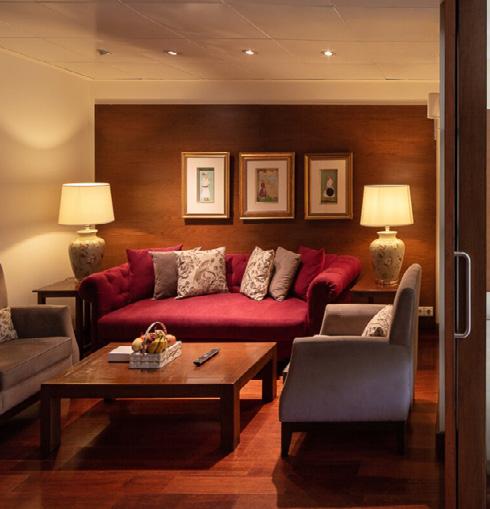
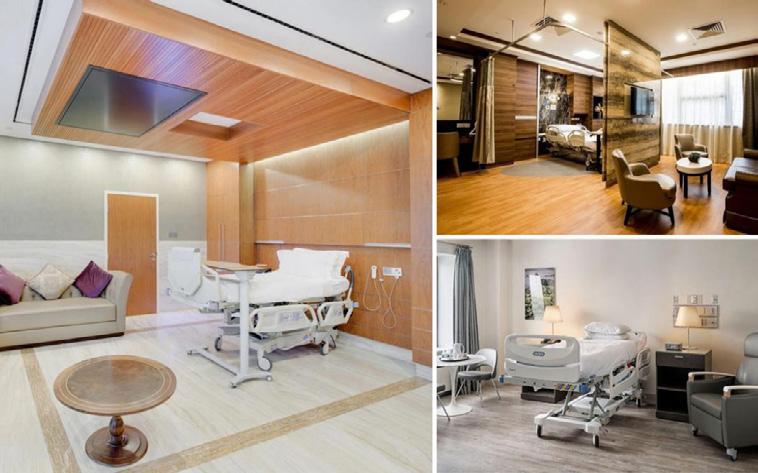

Dr. KMD’s Royalcare Intl. Hospitals Group Offers a specially designed and Structured ‘Executive-Health-Program’; With the View to leverage the full depth and breadth of our nationally recognized expertise to help executives, business owners and entrepreneurs maintain and stay in good health. This customized program is designed to help individuals access Royalcare Intl. Hospitals Group’s preventive care and ultimately gain more healthy years doing what they love in their personal and professional lives. RCIHG’s Mission is to provide individualized, comprehensive care to meet the unique needs of working executives in the demanding stages of their

careers. RCIHG focuses on preventive health and wellness with timely, coordinated access to multidisciplinary care, including advanced diagnostics, state-of-the-art prevention strategies and therapeutics when needed. Many Executive Health Program participants remark that the comprehensive nature of our executive physicals, the ability to customize the assessments based on their needs, dedicated time with physicians and the warmth of our staff are what distinguish our program. The Executive Health Program is available at our Exclusive campus in Coimbatore, Tamil Nadu, India.

Optimal health is key to a fulfilling life. Yet caring for your own health can be challenging and time-consuming. Dr. KMD’s Royalcare International Hospital Group’s healthcare professionals understand this very well. The entire team realize that you need an Exclusive, Personal and a Premium Health Services’ that provide you Optimum Health Benefits despite spending a very minimal waiting period at the Hospital. And keeping the above in mind ‘RCI Hospitals Group’s ‘Executive Health Program’ brings you the most comprehensive, streamlined physical examination available, which has been modified and tailored to suit your specific needs.
And the Executive Health Program provides an integrated, head-to-toe evaluation that includes appointments with experts in nutrition, exercise physiology and stress management, plus vision, hearing, heart health and lung function assessments, and more. You will have an extended appointment with a personally matched member of our team of physicians, who would provide you, with state-of-the-art, prevention-focused healthcare in as thorough, compassionate and efficient manner as possible.
What makes ’The ROYAL Executive Health Experience’ a Most Sought-after and a Sophisticated Necessity:
Dr. KMD’s RCI Hospitals Group’s ‘Exclusive Executive Health Program’ helps you to Maintain your active, productive lifestyle by devoting one day of your busy life to your own health and well-being. And all you need to do is Plan and make a visit to ‘Royalcare Intl. Hospitals Group’s Executive Health Program Division’. Your commitment of six to eight hours will allow our experts to:
• Discover Your Health Index as it where is.
• Identify the potential health problems that you might encounter.
• Target and address risk factors that compromise your health.
• Facilitate prompt, expert and compassionate care for any injuries or illness.
• Promote your wellness, including nutrition, fitness and stress management.
• Ensure that You’ll leave with your own personal roadmap to better health and wellness, feeling confident in your health status and knowing the action steps you need to take.
And may you need any specialty consultations, you will have a priority access to over 100s of ‘Royalcare International Hospital Group’s Medical and Surgical Experts’.
Your Right to Privacy through an ’One-on-One Consultation’
"Executive Health’s premier experience focuses on preventive health and wellness. Using the best integrated multidisciplinary evaluation and health therapeutics, we meet your health goals together." We offer a comprehensive, holistic preventive health evaluation using a thorough set of evidencebased assessments to develop a complete understanding of your health status. Each executive health physical starts with an in-depth meeting with your executive health physician to understand your overall health and identify any concerns. Our testing protocol is customized for your stage in life and any risk factors that have been identified.
By scheduling a range of assessments during your visit, we develop an extensive and wide-ranging understanding of your health profile and provide you the convenience of completing these tests in one place at one time. Executive Health Program visits conclude with a detailed meeting with your physician to review your results and develop a plan to improve your health, address any issues that were identified and target any risk factors that may impact your health. Carefully Designed with Your Precious Time in mind; When we have evolved this Exclusive Health Program; we have taken into account the Importance of your valuable time. Your time is precious and of

course your calendar may be full. And, We fully understand that very well. Thus, our program works within the constraints of your Time-schedule to provide you with the most efficient yet manage to complete medical evaluations.
Our EHP Program Enables You to Spend Your valuable time doing what you love:
"Choosing this program is all about convenience. The efficient planning makes the best use of your time so that you could spend more time; in doing what you love the most. That’s very true. With Dr. KMD’s Royalcare Special Executive Health Program we could derive an International Standard Healthcare Services by spending basic minimum of our Time and receive Optimum Health Benefits delivers and Personalised Healthcare." Says One of the Leading Industrialist and a Celebrity.
What to expect from RCIHG’s ’EXECUTIVE HEALTH PROGRAM’:
Expect efficient, and a very personalized One-on-One Healthcare that accommodates you and your Health Needs through a very carefully and thoughtfully crafted Health Program:

Thus, the Executive Health Program combines Royalcare Intl. Hospital's traditional diagnostic expertise with recent developments in preventive medicine — all designed to get you in and out efficiently and back to what you love. Your dedicated physician is actively involved throughout your entire evaluation process. Your evaluation starts when you arrive with a comprehensive review of your medical, family and social history, along with a complete physical exam.
Next, you and your physician will discuss your specific customized itinerary as well as any additional tests or consults that may be appropriate for you. Your itinerary will reflect both our assessment of your medical needs and your expressed preferences.
During your visit, you'll be seen at different testing areas throughout Royalcare Intl. Hospital. If you are International Citizen who come from abroad; then, A typical visit can last from one to three days. After completing your itinerary, you'll meet with your doctor again to review your results together, and you'll discuss any next steps. A summary of your results can be mailed to you or made available in your secure online patient portal shortly after your final visit. A letter outlining these results also can be sent to your local doctor.
• Private executive lounge with secure lockers for personal items.
• On-site business services with complimentary Wi-Fi
• Guide to restaurants and transportation options, as well as local attractions and area amenities.
• Dedicated appointment coordinators to ensure your appointments are scheduled efficiently.
• Dedicated insurance coordinators to file claims on your behalf and work with insurance carriers to resolve claims.
Corporate Enrolment brings your entire Human-Resources Team on Board:
Today's leading organizations recognize that it takes a healthy executive team to drive a high-performing business. 100’s of leading companies and Industries do offer the Dr. KMD’s Royalcare Intl. Hospitals Group’s ‘Executive Health Program’ to their Management Team, Employees, Members and Staff as an executive benefit to protect and optimize the health of their teams. Each year more than 27,000 executives rely on our program to keep them healthy and functioning at their very best. As a matter of fact; Corporate enrolment in the Royalcare Intl. Hospitals Group’s Executive Health Program offers companies the ability to define their eligible executives, their billing preferences and their coverage options to meet the organization's needs, interests and budget.
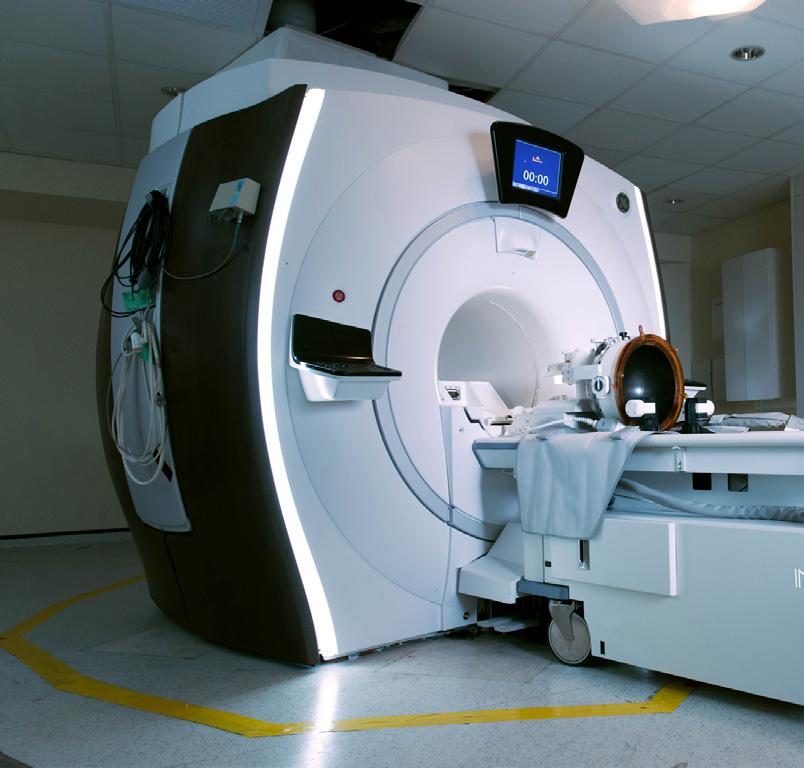
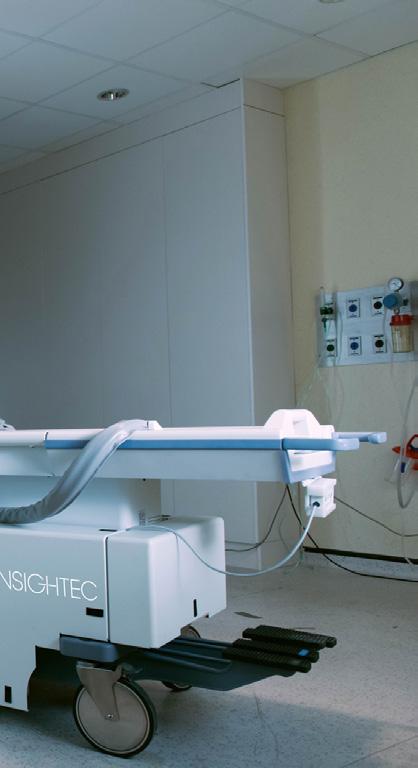
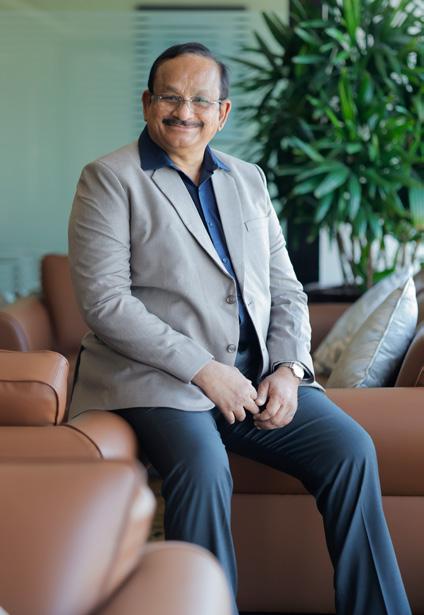
world and make it available to all; at an affordable cost. As a part of his noble Mission, Royalcare Hospitals Group has purchased and implemented one of the Latest and biggest Breakthroughs in Medical Science, which is the ‘MRI’ Magnetic Resonance Imaging-guided (MRI) Focused Ultrasound Facility @ Royalcare Super-Specialty Hospitals, Neelambur (Coimbatore), Tamil Nadu, India.
Dr. K. Madeswaran has been known as a Visionary, Missionary and an Unstoppable Dreamer. But what makes him absolutely unique, is his ability to have continual, cumulative and focused Dreams, His fully committed Efforts, highly Determined mindset to pursue his Vision and to see them becoming a Cherished Reality; And in this process of his foresighted vision combined with His Mission of bringing the best of the best Medical Technologies from all around the
Widely regarded as one of the best healthcare providers, Royal Care Super Speciality Hospital, Coimbatore is equipped with advanced medical equipment and technologies, and often has been the first in introducing the latest treatments in the medical field. The newest and the most advanced being the MR-Guided Focused Ultrasound for treatment of Essential tremors and tremor dominant Parkinson’s disease. This procedure is conducted by a team of highly qualified and experienced Neuro Surgeons and Specialists, who have been specifically trained in the Focused Ultrasound technique to target any hard-to-get lesions in the brain and clear them efficiently.
Experience the transformative power of Incisionless Surgery through MRgFUS (Magnetic Resonance guided Focussed UltraSound) at the only Neuro Centre in the entire Indian Subcontinent. Royal Care Super Speciality Hospital is the only Neurocare Centre in whole of India, facilitated with expertise and technology that provides an MRgFUS (Magnetic Resonance guided Focussed UltraSound) therapy to Essential Tremors and Parkinsons’ patients with tremors.
Best in Neurological Care Imbibing the Best in Innovation: Neurological Care has taken a new transformation with advancements in science and technology. The concept of incision-less surgery has been devised to cure the tremors in patients suffering from Parkinson’s Disease.
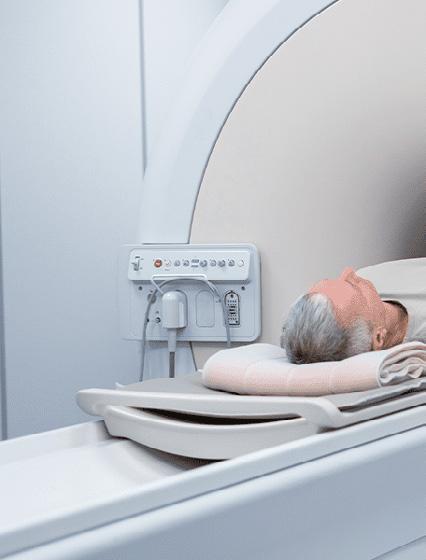
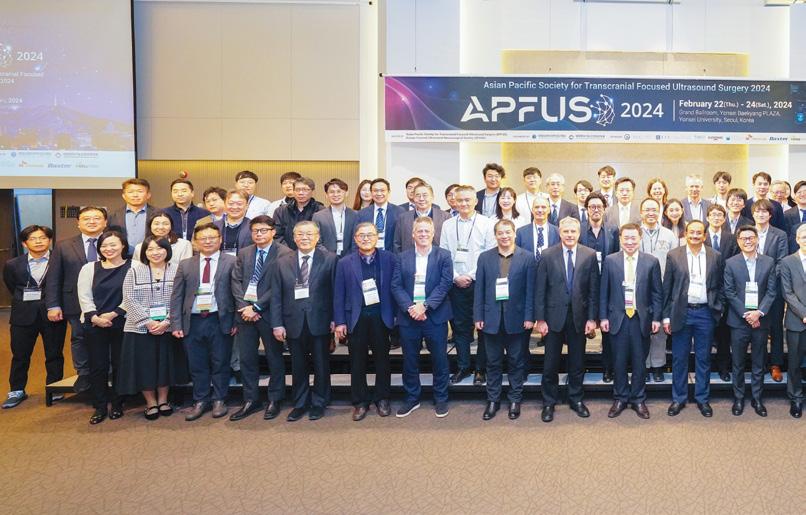
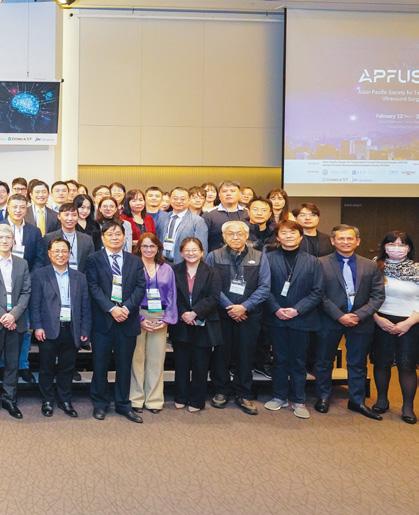
“INNOVATION
Royal Care MRgFUS (Magnetic Resonance guided Focussed UltraSound) Therapy for patients in Asia & Middle East. Magnetic Resonance-guided Focused Ultrasound (MRgFUS) is a treatment option for patients with essential tremor or tremor dominant Parkinson’s disease who haven’t responded to medication or are not willing to have invasive surgery. The procedure uses focused beams of ultrasonic energy guided by MRI to target areas deep in the brain with no incisions or permanent implants.
• Incisionless Surgery - Little to no risk of infection.
• No General Anaesthesia Required- No invasive burr holes or implants.
• Improvement In Hand Tremor -Stably maintained at 3 years.
• Personalized Treatment-With sub-millimetre target movement.
• Single Session Treatment-Minimal hospitalization.
• Safe And Effective- Minimal side effects.
Get Back To Ageing Gracefully:
Hand tremors can be effectively treated even when medications don’t help. Life-changing transformations are now possible world-over thanks to innovation in medical technology by our Specialized Neuro Care Technology.
Unique Outpatient Treatments: Treatment for hand tremors using the therapeutic power of Focused UltraSound is typically a simple single-sitting outpatient procedure. Guided by MRI, precise spots in the brain are targeted using adjustable parameters tailored just for you, to go back home the same day.
Safety & Risk Information: MRgFUS (Magnetic Resonance guided Focussed UltraSound) technique is an overall reasonably safe procedure with minimal risks. Patients must discuss with their physician about all treatment options available and the risks involved as a mandate.
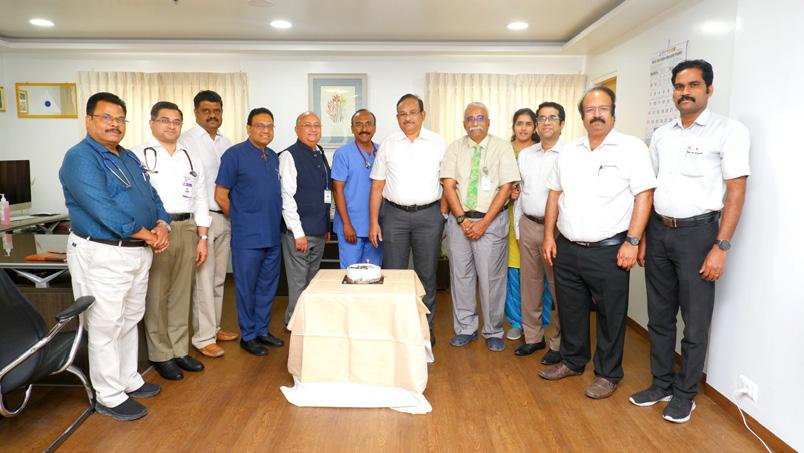
FDA Approved: You can always count on our expert care. Our physicians are leading the way in research & advanced therapies, paving the path to fearless incisionless treatments.
Minimally Invasive Techniques: Use of high-tech diagnostic tools through minimally invasive surgeries not only help improve your results and recovery, but also make surgeries a comfortable option.
Convenient, Comprehensive Care: You can rest assured find complete neurological care when you need it at our specialized facilities like spine centres, sleep centres, and neuro-rehab locations.
Same-Day Tremor Relief: Even the mildest of Tremors can pose threat to daily activities and make life a struggle. Our advanced Neuro Care technology along with our select neurologic experts marks us as one of the first centres in India offering MRgFUS (Magnetic Resonance guided Focussed UltraSound) solution to tremors; The best, effective, and incision-free option to treat tremors.
For Essential Tremor: Tremors upon outstretched hand postures or simplest hand actions, it is one of the most common movement disorders.
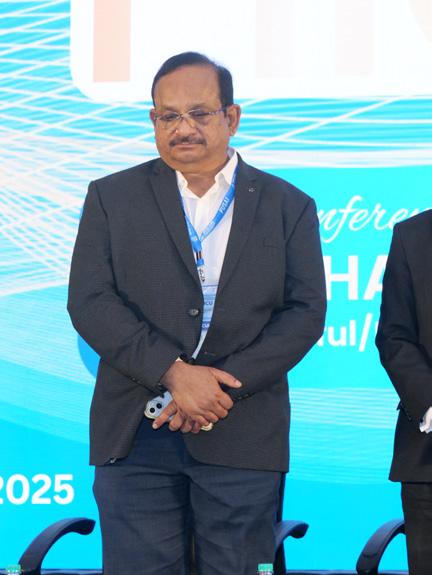
Tremor Dominant Parkinsons: Uncontrollable movements like shaking or stiffness mark this neurodegenerative condition affecting - 1% of people over 60 yrs.
Patient Candidacy: It is vital you discuss your entire medical history with your neurologist and evaluate your suitability for the procedure with accuracy.
How It Works: In simple words, the concept of MRgFUS (Magnetic Radiation guided Focused UltraSound) is a procedure similar to using a high-powered magnifying lens to focus the sun’s energy on a specific spot on a leaf.
Treatment Benefits: tremor Improvement: 40-80% improvement in tremor severity (many with immediate improvement) stably maintained at three years.
By harnessing acoustic energy, you can now treat Essential Tremor and Tremor-dominant Parkinson’s Disease patients with the therapeutic power of focused ultrasound. The
future of Neurosurgery has arrived. Royal Care Hospital is the first among its peers to introduce to the South Asian market a Focused Ultrasound platform to treat Essential Tremor and Parkinson’s Disease – Delivering up to 1,024 ultrasound waves across select points in the skull to precisely ablate a target deep in the brain, this treatment is performed incision-free in the MRI suite on an outpatient basis.
The Focused Ultrasound treatment involves a treating physician sitting at a computer in the MRI control room, using a mouse instead of a scalpel, to expertly mark and create a lesion in the skull. This treatment is guided by MR imaging for the patient-specific treatment planning, with real-time thermal feedback, along with continuous treatment monitoring. MRgFUS (Magnetic Resonance guided Focussed UltraSound) is approved for the treatment of essential tremors that cannot be controlled with medication. Approval is for treatment of one side of the brain only; you must be at least 22 years old. It is also available for tremor-dominant Parkinson’s disease. Approval is for treatment of one side of the brain only; you must be at least 30 years old.
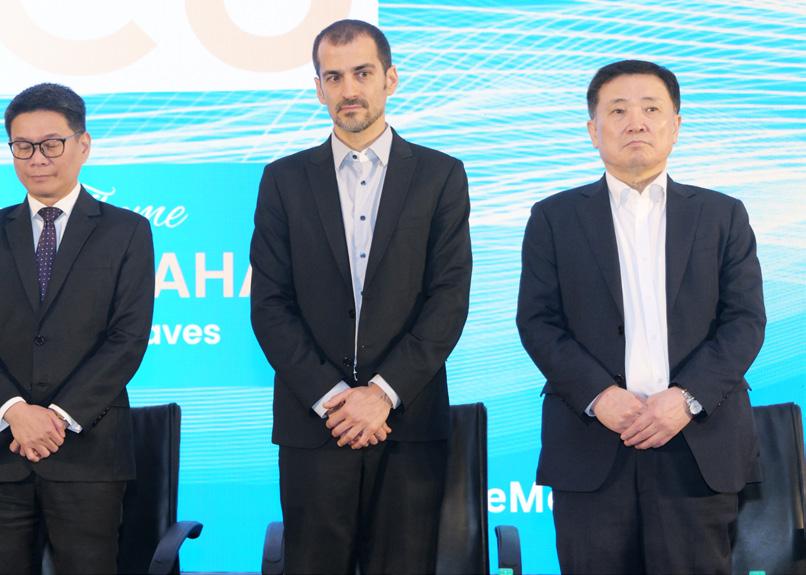

Royalcare Hospital is known for its Medical Excellence with a highorder Medical Expertise in the field of Neurosurgery and Neurology. It is functioning with Two Full-time Neurologists and Three Neurosurgeons. It’s also adding up few more Professional Members to cope up with the increasing demand for Specialists and Surgeons. This is due to the increasing Number of patients, who arrive from various parts of India and also from other countries of the world. Royalcare takes care of the entire spectrum of Neurology and Neurosurgery. And in Neurosurgery, they have been taking care of complete range of services for ‘Trauma Patients, Brain-Tumor Patients, Aneurysms Patients, Brain AVM Patients, Balance Problems, Benign Peripheral Nerve Tumor, Brachial Plexus Injury, Brain Lymphoma, Brain Metastases, Brain Cancer Patients and Other Ailments’.
Royalcare’s Department of Neurosurgery is fully equipped with most modern and latest technologies and is Headed by a Highly Skilled, Competent, Experienced and one of the Most popular Senior Consultants & Surgeons of Asia namely Dr. K. Madeswaran, who is the Founder & Chairman of ‘Royalcare Super- Specialty Hospitals Group’.
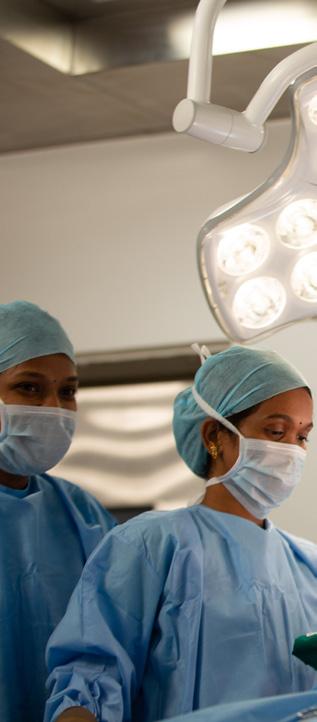
Besides, he has performed more than 10,000 Surgeries in his field of specialization. He and His team of highly qualified Surgeons do handle most complicated Surgeries and cases as well as offer best treatments & cure to millions of people. The Neurosurgeons at Royalcare are known for their clinical & treatment excellence in four main conditions; First one is related to Vessels and the Brain, that is Aneurysms, Rupture, Arteriovenous malformation. At Royalcare, in addition to the Highly qualified Expert Surgeons, they also use Latest technologies like Stereotaxic
Procedure, Neuro Navigation, High-end Microscopes, Ultrasonic Aspirators and so on; while conducting their Neurosurgeries; thus minimize the strain to Patients and Maximize the Success rate, efficiency and effectiveness of the Surgeries. Besides, Stereotaxic and Neuronavigation methods also do guide these expert surgeons to reach out to the precise point of Interest; thus help them in achieving Optimum Success, within the shortest time possible. Dr. K. Madeswaran, the Chairman & Head of the Department is also being one of the Most Popular and Renowned Neurosurgeons of India.

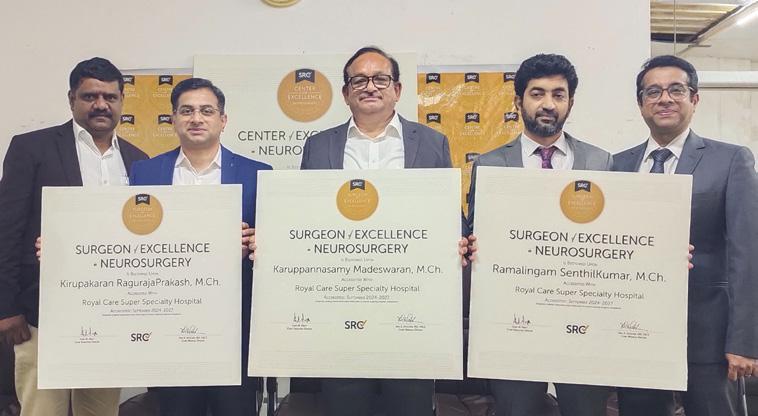
The Department Neurology at Royalcare, takes care of the Entire Spectrum of Neurology. Their Practice consists of taking care of all Health issues, Problems and Challenges those are faced by their Patients on account of Acute stroke, epilepsy, headaches, migraine, brain tumors, brain aneurysms, peripheral neuropathy, sleep disorders, Myasthenia Gravis, Movement disorders, neurodegenerative diseases, such as Parkinson’s disease, Alzheimer’s disease and so on. Royalcare is very popular and highly successful in conducting Epilepsy surgeries and Stroke Management. With the assistance of their highly qualified proessional team of Interventional Neuro Radiologists, who have a rich interventional radiology practice, the Neurologist are able to retrieve and remove Thrombus in the Arteries, especially when the patients come early with the stroke symptoms. The
Department of Neurology at Royalcare has a very high experience in prevention of Stroke by conducting Carotid endarterectomy, Carotid endarterectomy (CEA) is surgery to treat carotid artery disease. The carotid arteries are the main blood vessels that carry oxygen and blood to the brain. In carotid artery disease, these arteries become narrowed. This reduces blood flow to the brain and could cause a stroke. And with enormous experience in this specialised field and having done 100s of such surgeries; the Neurology Department of Royalcare beomes the first choice of destination for all those, who have such health issues. Besides, Royalcare Department of Neurology is highly supported by One of the Best ICU Departments in the World. Will all the above extraordinary features Royalcare is maintaining, A Class Medical Services & Deliverables in this field of Medical Specialisation.

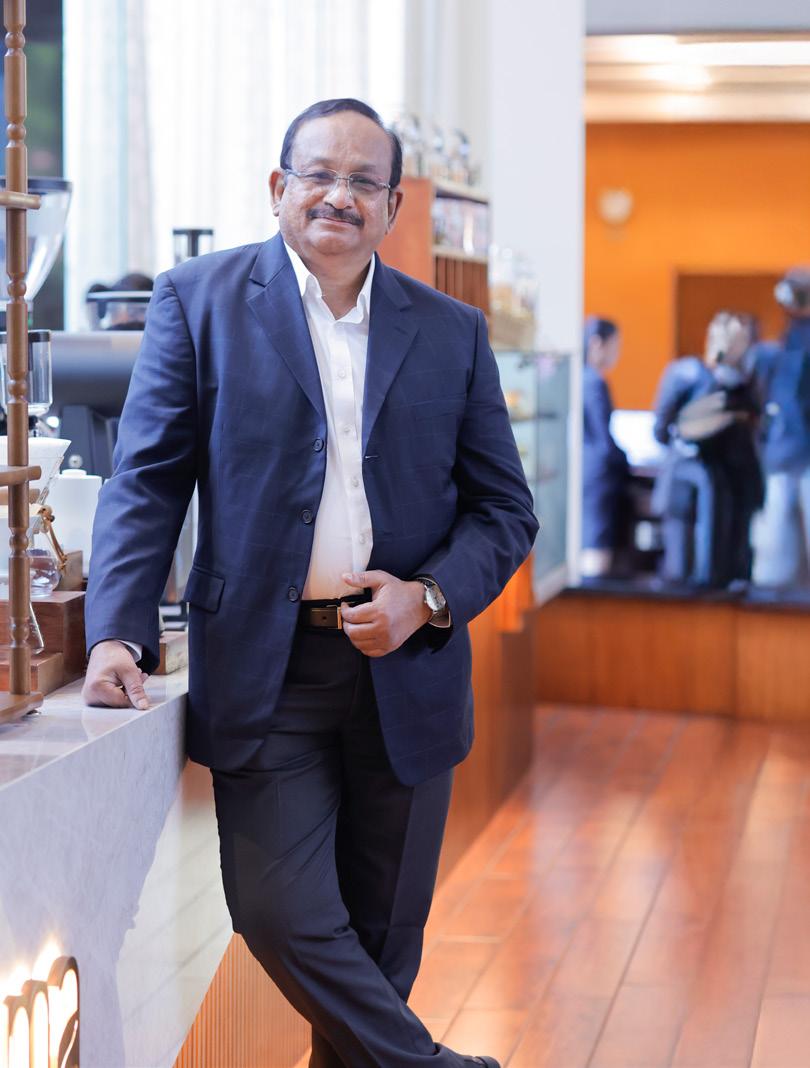
Ranked as One of the Best integrated transplant providers in the nation, RoyalCare Hospital’s Centre of Medical Excellence in TRANSPLANT & the Entire TEAM of Medical Professionals have Rich experience with all Major transplants and accompanying conditions, from common to very rare. Royalcare Hospitals under the Eminent Leadership of Dr. K. Madeswaran ensures that all their surgeons and physicians and hundreds of allied health staff, are specifically trained to Focus and Offer Personal care for transplant patients, who invariably come from various countries of the World and also from other states of the Indian Sub-Continent.
Royalcare Hospitals in Coimbatore, Tamil Nadu, India, is indeed One of the Most Popular and well-regarded destination for international patients seeking transplants. It's recognized for its skilled transplant surgeons and offers both adult and paediatric transplant services. The hospital is known for its high standards of care, advanced infrastructure, and expertise in organ transplantation, making it a trusted choice for international medical tourism.
The RoyalCare Hospitals Group and the Entire Team of Medical Professionals are Highly Committed to produce the best outcomes in the country, including speed to transplant, organ acceptance and patient survival.
The Highly Qualified and Experienced Surgeons / Doctors of Royalcare were always on the leading edge of medicine and they continue to keep their heads high with pride by continually improving and expanding RoyalCare Hospital’s organ transplantation. The RoyalCare Hospitals Group is highly determined to deliver a distinguished adult and paediatric transplant programs, offering heart, liver, kidney, pancreas, lung, hand, face, and blood and bone marrow transplant services. And, Dr. KMD’s International Institute of Medical Science & Research directly and indirectly contributes to the successful outcomes of Organ Transplantation at Royalcare Hospitals Group, Tamil Nadu, India.

Outstanding Outcomes. Transplant recipients at Royalcare Hospitals experience excellent outcomes. The experience of Royalcare Hospitals Surgeons, Doctors, physicians and the integrated team approach results in transplant successes that compare favourably, time after time, with national averages.
Highly Skilled Surgeons: Royalcare Hospitals features experienced transplant surgeons, who are the leaders in the field.
Advanced Facilities: The hospital boasts advanced infrastructure and technology, crucial for successful transplants.
Comprehensive Care: Royalcare Hospitals offers a complete range of services, from pre-transplant evaluations to post-transplant follow-up. All the specialists, tests and procedures a patient needs are available at the same location, where integrated teams coordinate every step from start to finish.
Multisite Practice. Royalcare Hospitals provides transplant programs for adults at all three campuses and for paediatric patients at its Main Hospital located in Coimbatore, Tamil Nadu, India..
International Patient Focus: The hospital has a strong track record of providing care to international patients, with a focus on patient comfort and support throughout their journey.
Expertise in Organ Transplantation: Royalcare Hospitals is not just an Organ transplant centre; it has a strong reputation of Offering Multidisciplinary Healthcare Services and Functioning Over Fifteen Comprehensive Centres of Medical Excellence along with providing International Standard Organ transplant procedures, including liver, cornea, and bone marrow transplants and so on.
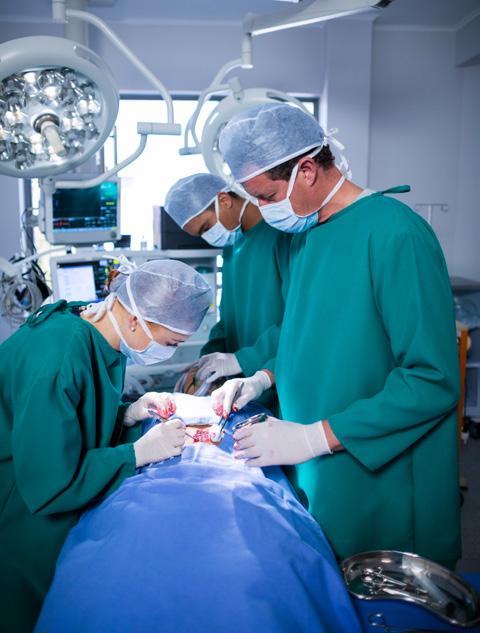
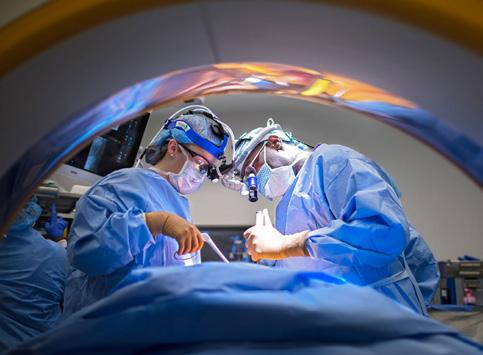

Personalized approach. Royalcare Hospital physicians look at the evidence to determine the safest and most effective approach for every challenge patients face and apply this knowledge to obtain the best possible outcomes.
Whole-Process Support. Royalcare Hospital assigns each patient an experienced transplant medical coordinator to help answer questions and provide support before and after transplantation.
Detailed Follow-Up Practice. Royalcare Hospital physicians monitor patients closely so that each patient gets the care he or she needs when it's needed. This approach ensures the success of the transplant in collaboration with the patient's referring physician. Long-term care, if needed, is seamlessly coordinated with the patient's local physician.
Whole-Person Care. Royalcare Hospitals transplant staff provides a human experience, taking the time to listen to your questions and concerns, which may include medical,
nutritional, social, financial and spiritual issues. Royalcare Hospital's integrated care teams provide all the care necessary for the transplant and related medical needs. RCH makes the experience seamless so that patients can focus on getting better, knowing all their needs are being addressed. Integrated teams of specialists bring fresh, innovative approaches, offering patients answers to complicated medical needs.
. Living-Donor Experience. Royalcare Hospitals transplant surgeons have extensive experience with livingdonor kidney and liver transplants.
An Institution of Firsts. Royalcare Hospitals transplant Experts and their teams have pioneered numerous advances in transplant procedures and transplant care.
Research Excellence. Transplant research at Royalcare Hospitals has contributed significantly to current successful outcomes of organ and bone marrow transplants worldwide.
Multifaceted Approach. Transplant medicine laid much of the groundwork for the field of regenerative medicine. Today, transplantation is one of three approaches being studied and applied by the Royalcare Hospitals & Research Centre for Regenerative Biotherapeutics to restore tissue and organ function.
An Overview:
Organ and tissue transplantation is one of the most complex, serious procedures in medicine. It requires a precise diagnosis, a team of experts from a variety of specialties that understand not just the surgery, but the

underlying health issues making the surgery necessary. And it requires dedicated health providers after the transplant to ensure a full recovery.
Royalcare Hospitals is the ideal environment for the many different types of transplants, from the straightforward, though serious, kidney transplant, to the most complex, multiorgan transplants accompanied by rare disorders. That's because Royalcare Hospitals is made up of teams of experts providing hope and healing in just about every medical specialty-cardiology, cardiac surgery, thoracic surgery, hepatology, nephrology, neurology, pulmonology, haematology, reconstructive surgery, endocrinology, paediatrics, physical medicine and rehabilitation, psychiatry, dermatology, urology, infectious diseases and more.
These experts are part of the largest integrated transplant Team and RoyalCare Centre of Medical Excellence in India. They also produce some of the best outcomes in the country, including patient survival, organ acceptance and how quickly a person receives a transplant.
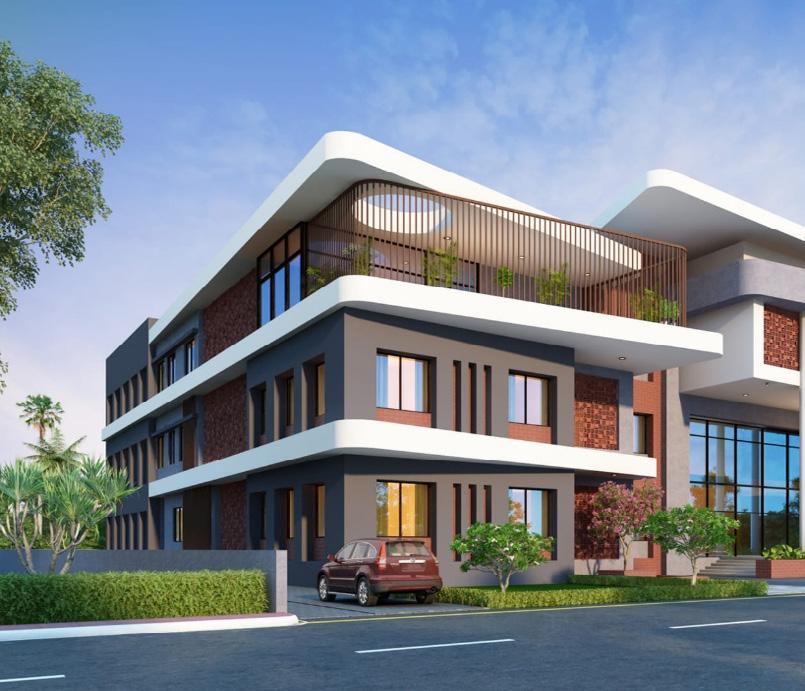
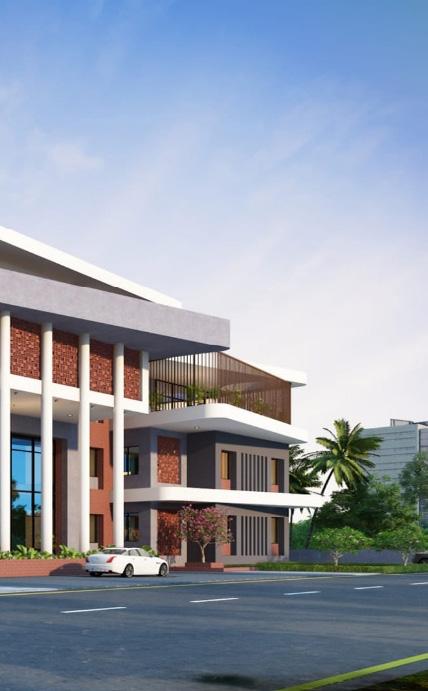
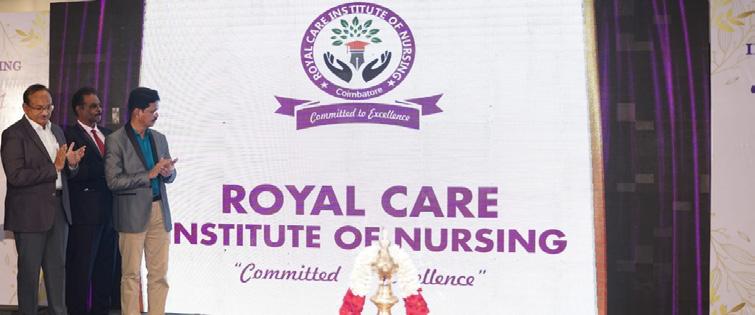
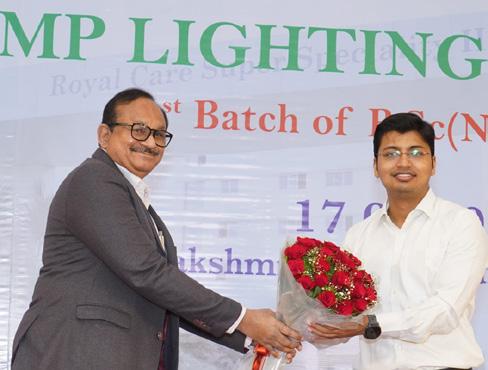
Royal Care Institute of Nursing, established in 2023 as the flagship educational initiative of the Royal Care Trust, is dedicated to advancing the standards of nursing education. With a prime mission to elevate the quality of nursing education, the institution is committed to delivering global standards in education, training, and research within the nursing field. Through its comprehensive programs and innovative approach, Royal Care Institute of Nursing aims to equip future nursing professionals with the knowledge, skills, and resources necessary to excel in their careers and contribute to the advancement of healthcare worldwide. Backed by state-of-the-art infrastructure and complemented by
the expertise and experience of our high-profile faculty, Royal Care Institute of Nursing has swiftly emerged as a renowned academy within a short span of time. Through our advanced facilities and the guidance of seasoned professionals, we strive to nurture the next generation of nursing leaders and ensure they are well-prepared to meet the challenges of the healthcare industry. The primary objective of the Royal Care Trust is to establish educational institutions that adheres to international standards. By prioritizing this goal, the trust aims to create a platform where education is not only accessible but also of exceptional quality, regardless of socioeconomic background.
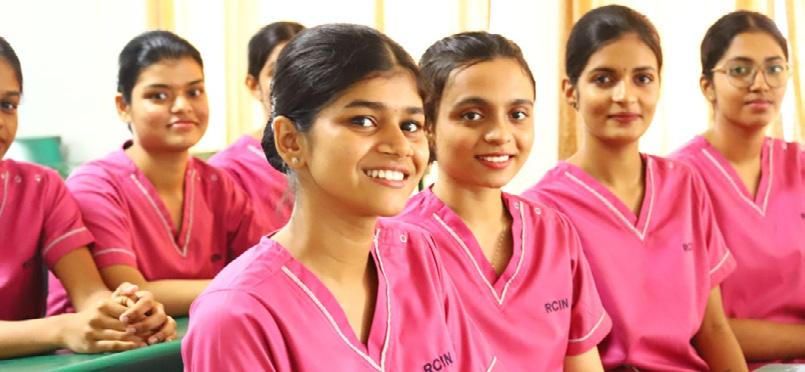
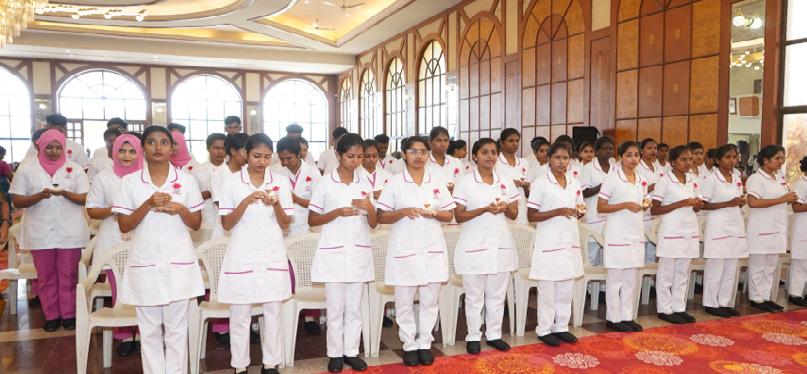
Situated amidst a sprawling 4-acre landscape of serene and verdant surroundings, the Royal Care Institute of Nursing campus embodies a commitment to revolutionizing teaching and learning practices at the graduate level. We aim to introduce a line of programs meticulously crafted to address both the intellectual and career aspirations of individuals in the emerging world. At its launch, the Royal Care Institute of Nursing is proud to offer two distinguished programs to aspiring nursing professionals: Bachelor of Science in Nursing (B.Sc. Nursing) and Diploma in General Nursing and Midwifery (DGNM).
At the Royal Care Institute of Nursing, we are steadfast in our dedication to maintaining the highest standards of education and training in nursing. Our approvals from the Government of Tamil Nadu, the Tamil Nadu Nursing Council, Chennai and Indian Nursing Council, New Delhi and affiliation with The Tamil Nadu Dr. MGR Medical University underscore our unwavering commitment to excellence and our Mission of producing competent and compassionate nursing professionals poised to make a positive impact in the healthcare industry.
Motto Committed To Excellence
Vision
To set a new standard of excellence in the art and science of nursing,with unparalleled educational services that are based on our advanced proven technologies.
Mission
Royal Care Institute of Nursing is dedicated to educate students for a rewarding career through innovative and impactful nursing education, research, practice and service.
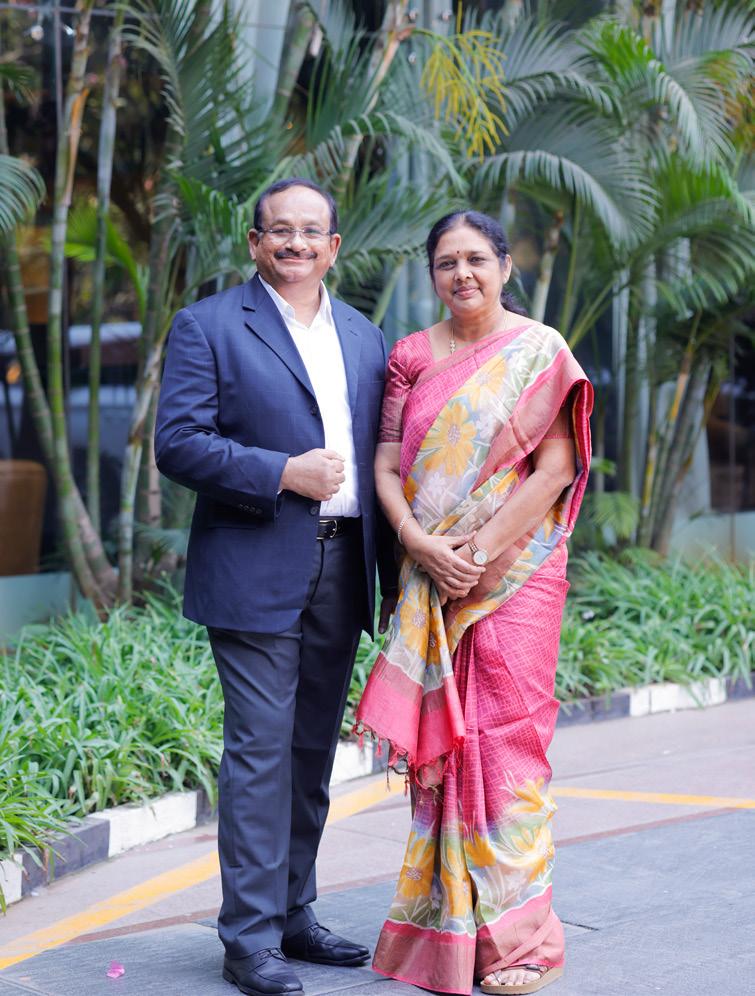
MRS. SHREEKALA MADESWARAN
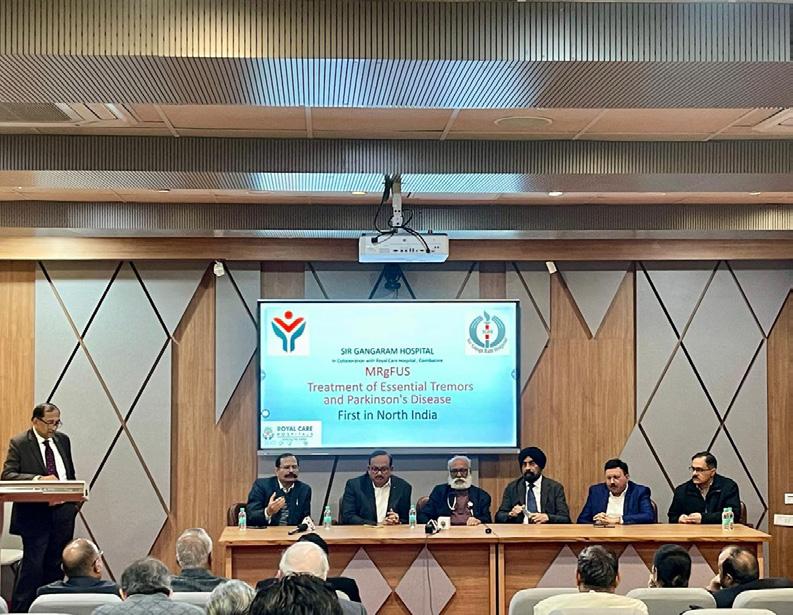
This groundbreaking collaboration means that patients dealing with these debilitating conditions will now have access to a non-invasive, highly effective treatment. MRgFUS offers a new hope for those who haven’t found relief with traditional therapies. The procedure uses focused ultrasound to target specific areas in the brain with pinpoint accuracy, offering lasting symptom relief without the need for surgery. The partnership combines the worldclass medical infrastructure of Sir Ganga Ram Hospital, which will provide a 3Tesla MRI system and expert medical staff, with the proven experience of RCSSH. The team at RCSSH has already performed over 150 successful MRgFUS procedures, and their expertise will be key in helping deliver this innovative treatment to patients in the region.
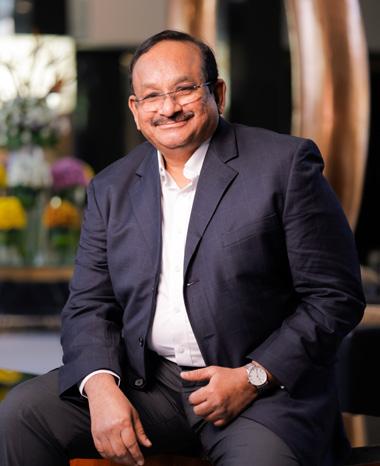
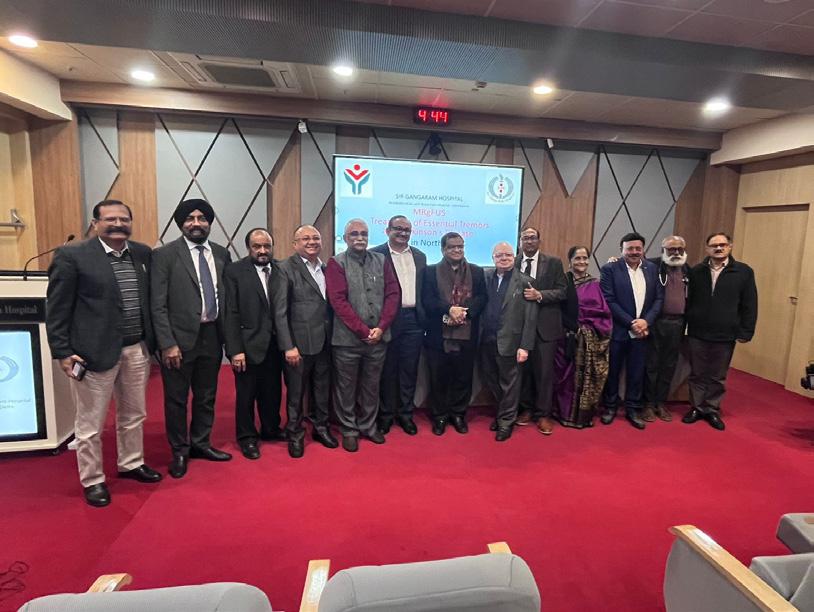
In a significant leap for public health and patient safety, Royal Care Super Speciality Hospital has become the first in the country to implement a cutting-edge innovation in infection control within healthcare settings. This pioneering initiative introduces Plasma Shield, a novel approach designed to drastically reduce the pathogenic microbial load through continuous real-time disinfection. With India facing growing concerns over antimicrobial resistance and infection-related complications, this move places Royal Care Super Speciality Hospital at the forefront of a national healthcare revolution. Deployed in healthcare settings in collaboration with Eta Purification, an innovative technology company supported by the Government of India, this real-time infection control system integrates state-of-the-art plasma technology to create a smarter,
more proactive infection control environment. Speaking to us, Dr. K. Madeswaran, Chairman and Managing Director of Royal Care Super Speciality Hospital, stated, “We are proud to be the first in the nation to introduce this initiative to ensure that our patients receive the very best in healthcare. Preventing infections is the cornerstone of patient safety, and we are proud to lead the way with this state-of-the-art solution. Being the first hospital in Tamil Nadu (outside of Chennai) to have received the Gold Seal JCI accreditation, this initiative is a testament to our commitment to excellence and innovation in patient care. This first-of-itskind implementation is expected to benefit thousands of patients and may serve as a model for replication across the country. This is a landmark moment not just for our hospital but for Indian healthcare as a whole.”
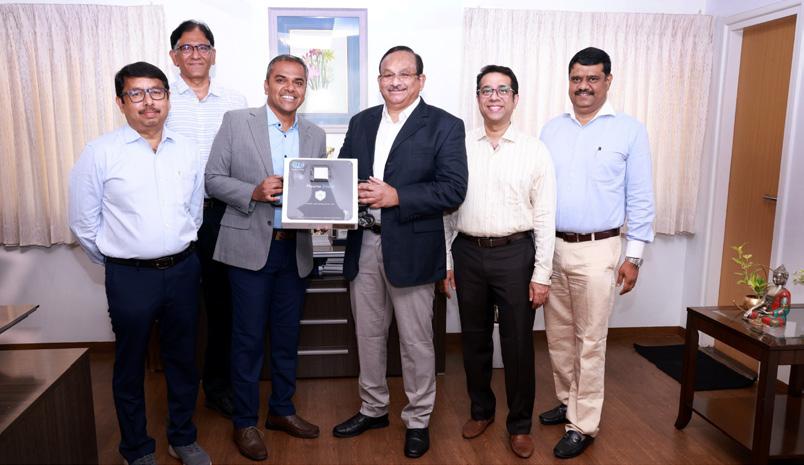
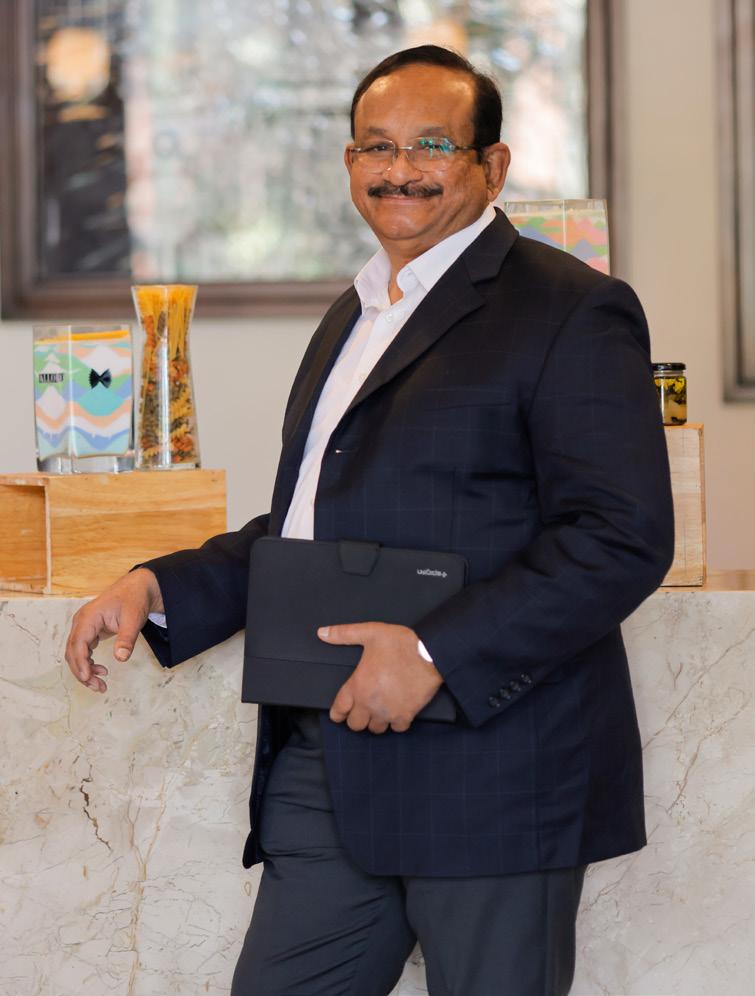
Dr. KMD has been driving success and growth for his organization with the Strong Vision, effective communication, the ability to inspire and motivate others and a strong commitment to continuous learning and improvement Dr. K. Madeswaran is popularly known for His enormous ability to navigate challenges with resilience, adaptability and taking strategic and most timely decision on all subjects that he deals with.Dr. KMD could articulate his vision effectively, inspiring his entire team of investors, stakeholders, doctors, professionals and associates to believe in his vision and achieve their full potential by fostering a positive culture, growth and development beyond their imagination.
Dr. KMD invariably inspires and empowers everyone around Him to accomplish excellence in their respective fields of interest and potential. ensures and work towards achieving them in style. Dr. K. Madeswaran always believes that Success is not just about achieving Financial Goals; But also, about creating a longer-lasting, positive and sustainable impact in the world forever. The Entire Team of M/s Worldwide Media Corporation Group, MNC wishes Dr. K. Madeswaran to Achieve his Mission of Achieving His Novel Billion Dollars Healthcare Vision in Style and Benefit the Flawless Benefits of his Success and Growth enrich all around the world and the generations to come.
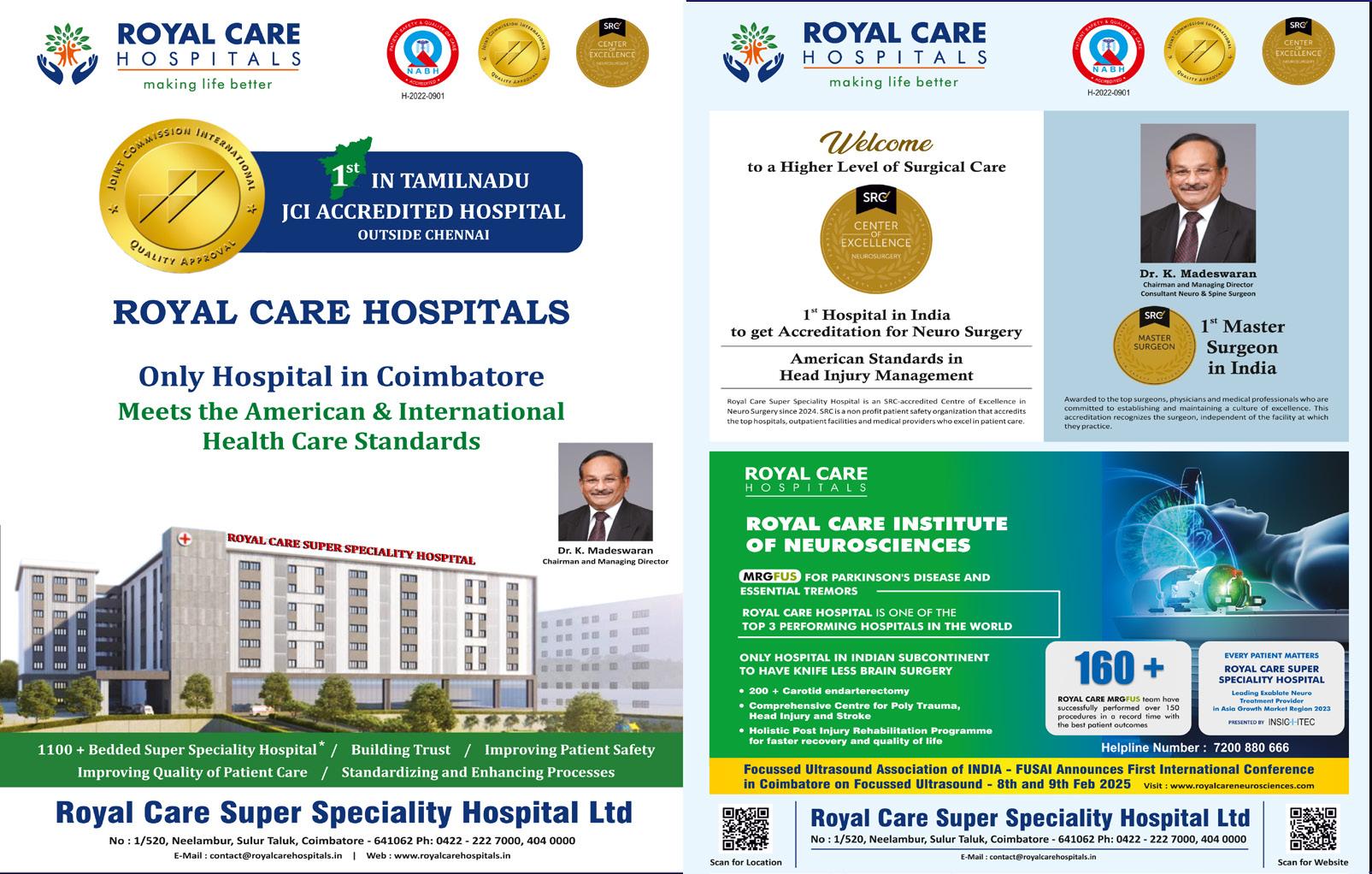
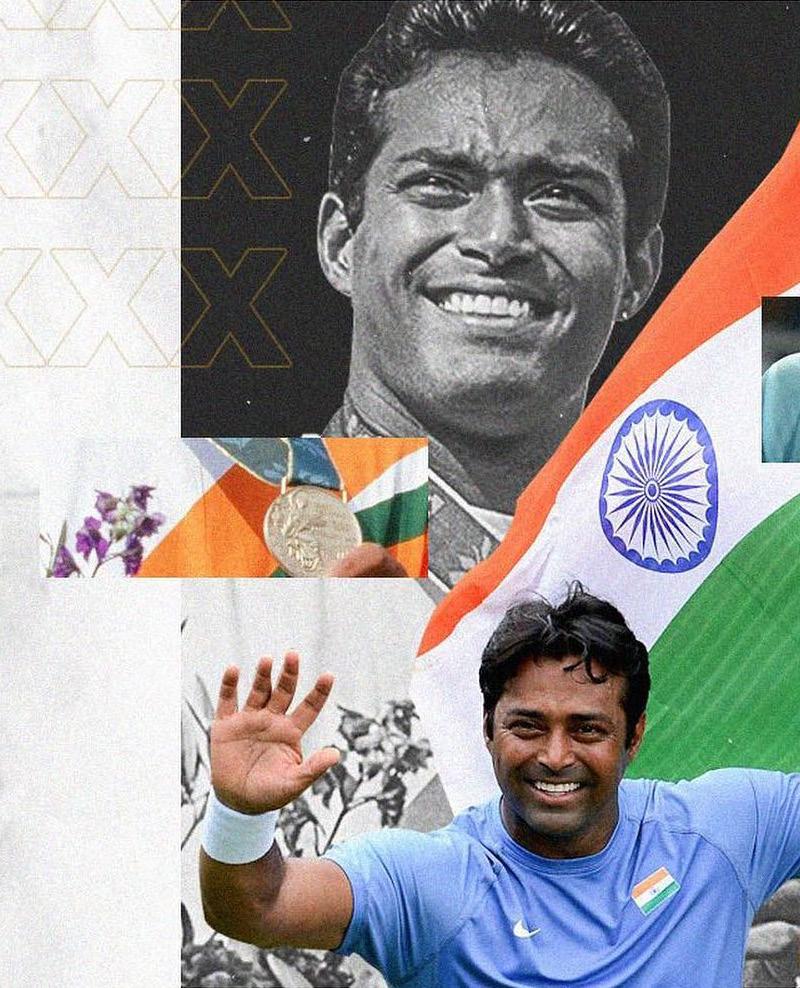

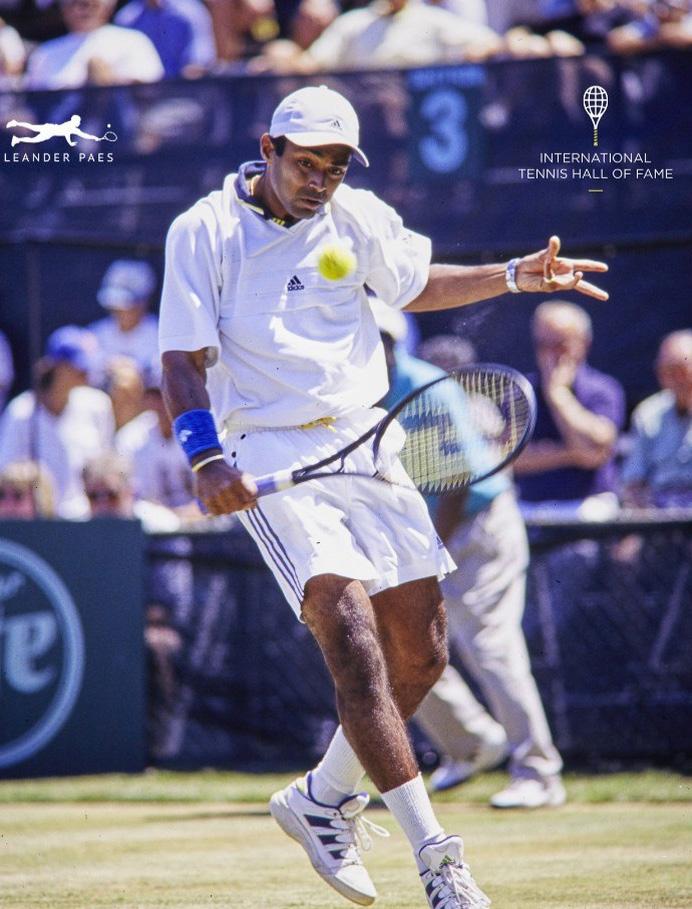
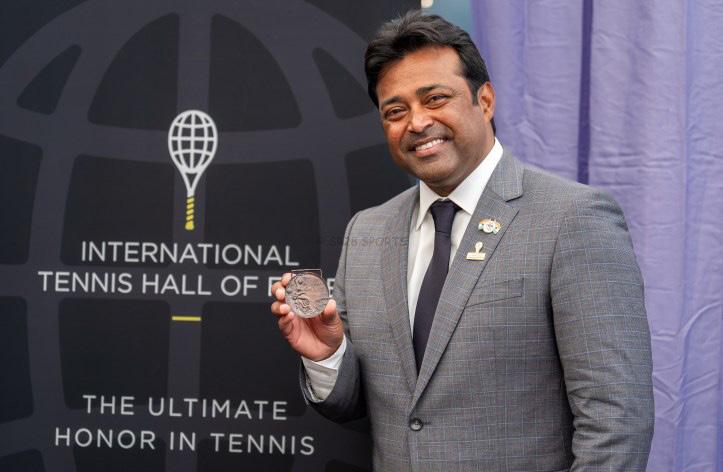
Leander Adrian Paes, a name synonymous with Indian tennis, stands as one of the country’s most celebrated athletes, with a career spanning over three decades. Born on June 17, 1973, in Kolkata, Paes redefined Indian tennis through his extraordinary talent, relentless work ethic, and an infectious passion for the game. With 18 Grand Slam titles, an Olympic bronze medal, and a legacy that inspired generations, Paes is not just a sporting icon but a symbol of resilience and excellence. This article explores his journey, achievements, and enduring impact on Indian sport.
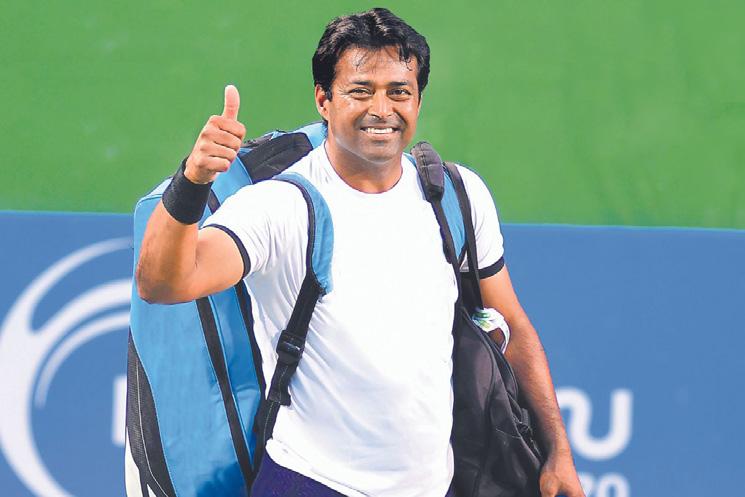
Leander Paes was born into a family steeped in sports. His father, Vece Paes, was a member of India’s 1972 Olympic field hockey team, while his mother, Jennifer Paes, captained the Indian basketball team. This sporting lineage shaped Paes’ early years, as he gravitated toward tennis, a sport then overshadowed by cricket in India. At 12, he joined the Britannia Amritraj Tennis Academy in Chennai, honing his skills under rigorous coaching.
Paes burst onto the global stage as a junior, winning the Wimbledon Junior title in 1990 and reaching the world No. 1 junior ranking. His aggressive net play, lightningfast reflexes, and boundless energy marked him as a prodigy. By 1991, he turned professional, embarking on a career that would redefine Indian tennis.
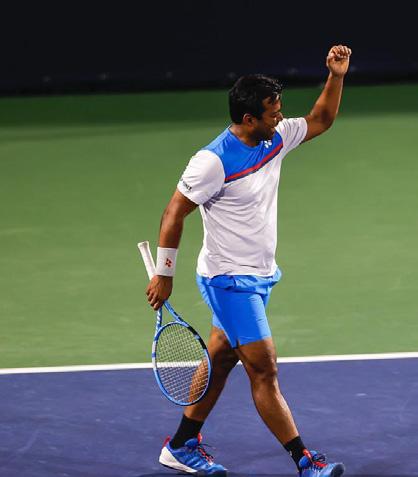
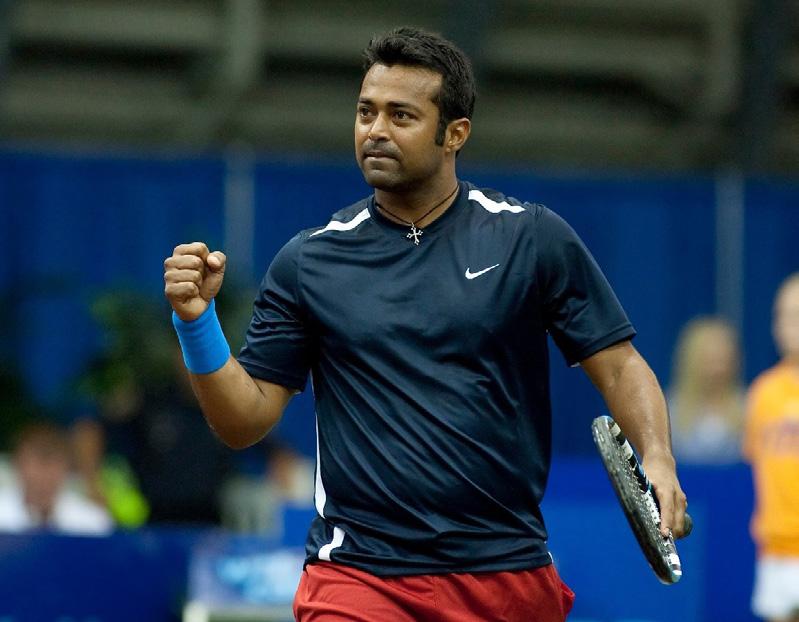
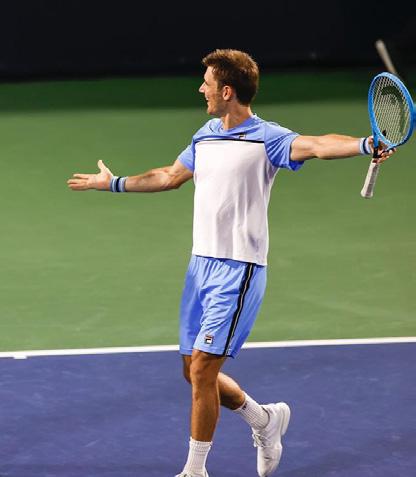
Paes’ first major international breakthrough came at the 1996 Atlanta Olympics. Competing in men’s singles, he displayed remarkable grit, defeating higherranked opponents to reach the semi-finals. Though he lost to Andre Agassi, Paes clinched the bronze medal, defeating Brazil’s Fernando Meligeni. This victory made him the first Indian to win an individual Olympic medal since wrestler K.D. Jadhav in 1952. The image of Paes draped in the Indian flag, tears in his eyes, remains etched in the nation’s memory. In singles, Paes achieved a career-high ATP ranking of No. 73 in 1998. His Davis Cup heroics, including a famous win over France’s Arnaud Boetsch in 1993, showcased his ability to thrive under pressure. While singles laid the foundation, it was in doubles where Paes truly soared.
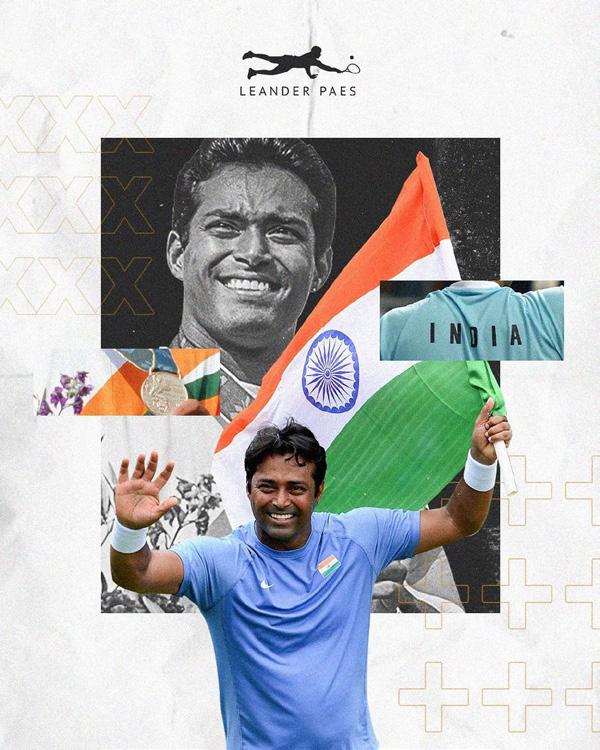
Leander Paes’ doubles career is a testament to his versatility and longevity. Specializing in men’s and mixed doubles, he won 18 Grand Slam titles—8 in men’s doubles and 10 in mixed doubles—placing him among the all-time greats. His first Grand Slam triumph came at the 1999 French Open, partnering with Mahesh Bhupathi to win the men’s doubles title. The duo, dubbed the “Indian Express,” went on to win Wimbledon that same year, marking India’s first men’s doubles Grand Slam victory. Paes’ ability to adapt to different partners was remarkable. He won titles with Bhupathi, Radek Stepanek, and others in men’s doubles, while his mixed doubles partnerships with Martina Navratilova, Cara Black, and Martina Hingis produced iconic moments. His 2016 French Open mixed doubles title with Hingis, at age 42, completed a career Grand Slam in mixed doubles, a feat achieved by only a handful of players.
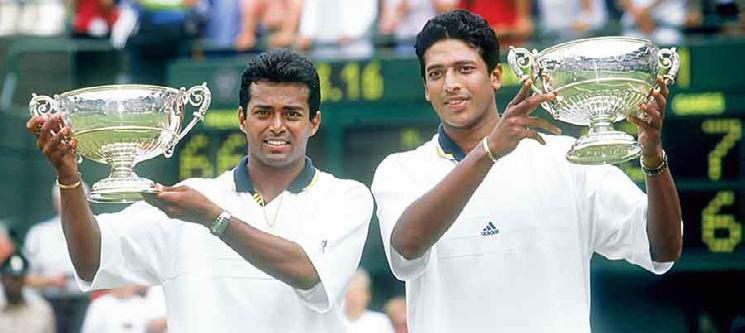
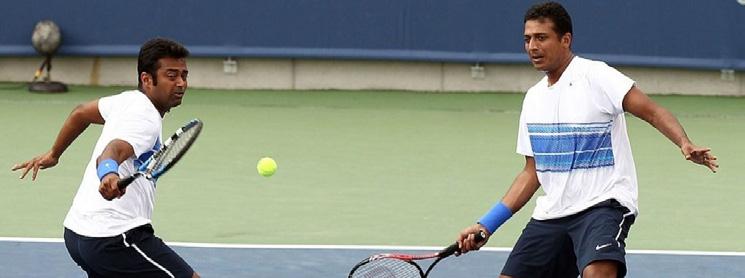
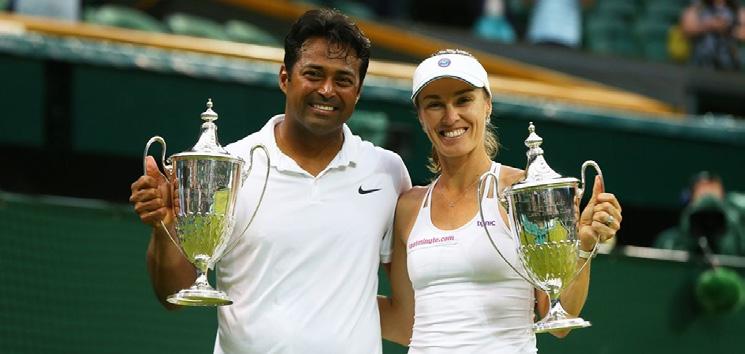
His playing style—marked by quick hands, acrobatic volleys, and uncanny court sense—made him a doubles dynamo. Paes’ mental toughness and ability to elevate his game in clutch moments earned him respect from peers and fans alike. He holds a record for winning Grand Slam titles in three different decades (1990s, 2000s, 2010s), a testament to his enduring excellence.
Paes’ contributions to India’s Davis Cup team are unparalleled. He holds the record for the most doubles wins in Davis Cup history (43 victories). His passion for representing India was evident in every match, whether playing on home soil or in hostile away ties. Memorable performances, like his five-set marathon against France
in 1993 or his partnership with Bhupathi in the 2000s, galvanized Indian tennis fans. Paes’ Davis Cup career, spanning 1990 to 2020, reflects his commitment to national pride.
Paes’ journey was not without hurdles. Injuries, including a wrist injury in 2003, tested his resolve. Offcourt tensions, particularly with Bhupathi, occasionally made headlines, as did controversies over Olympic team selections in 2012. Yet, Paes’ ability to bounce back defined his career. In 2003, he was diagnosed with a suspected brain lesion, later confirmed benign, but returned to compete at the highest level. His mantra—“control the controllables”—reflected his focus and mental fortitude.
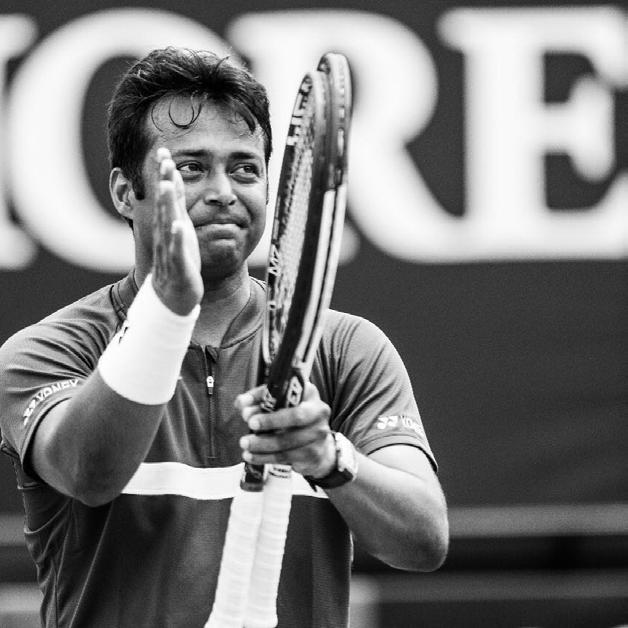
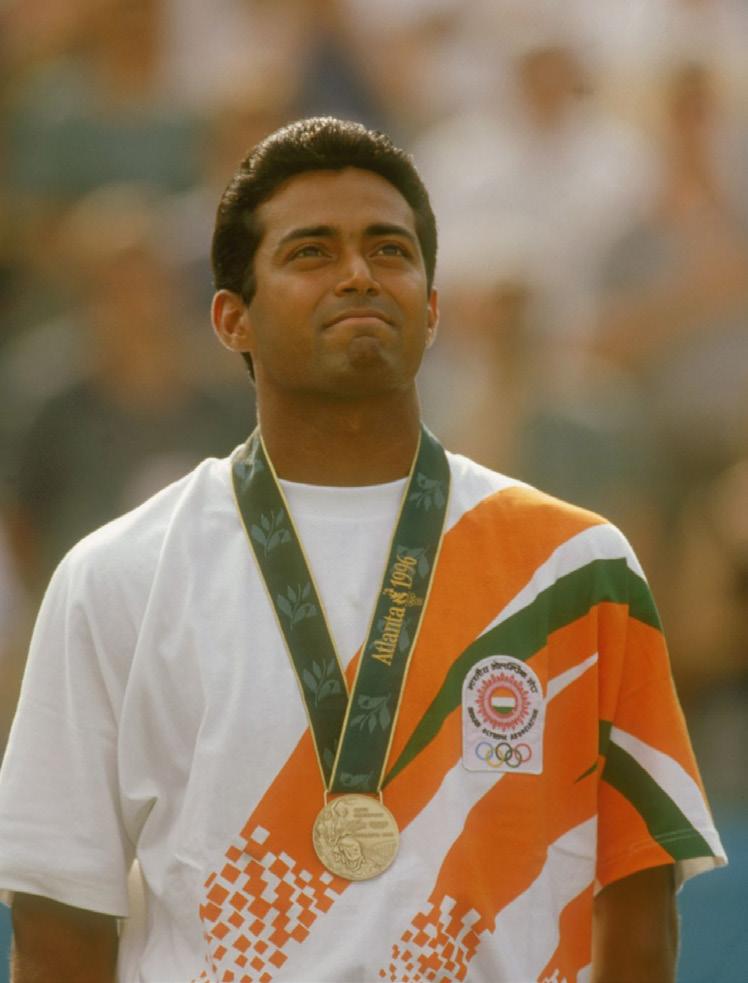
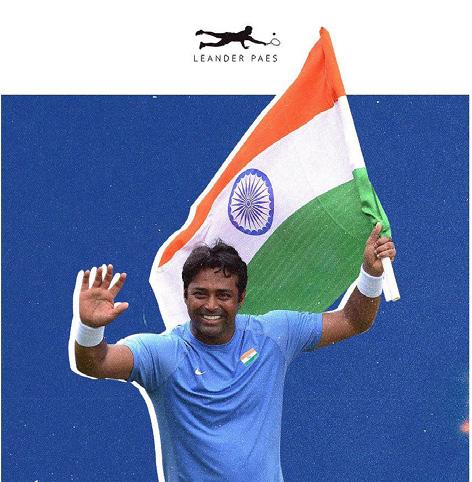
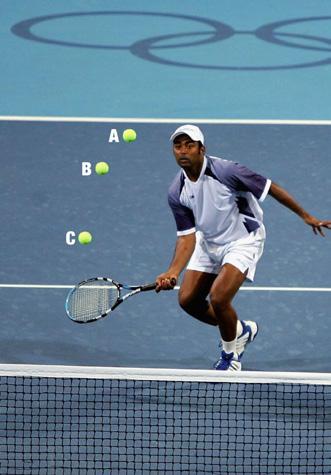
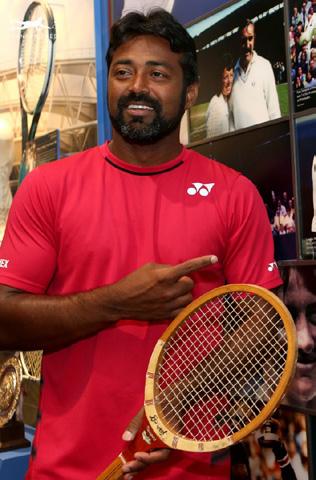
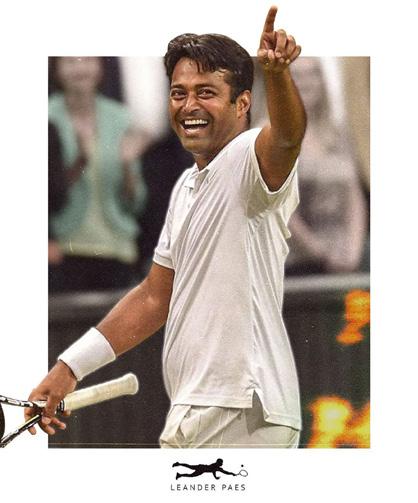

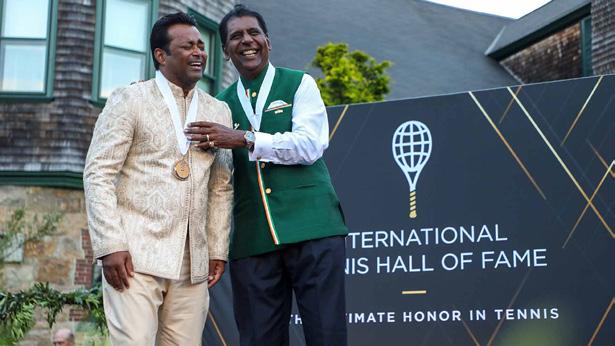
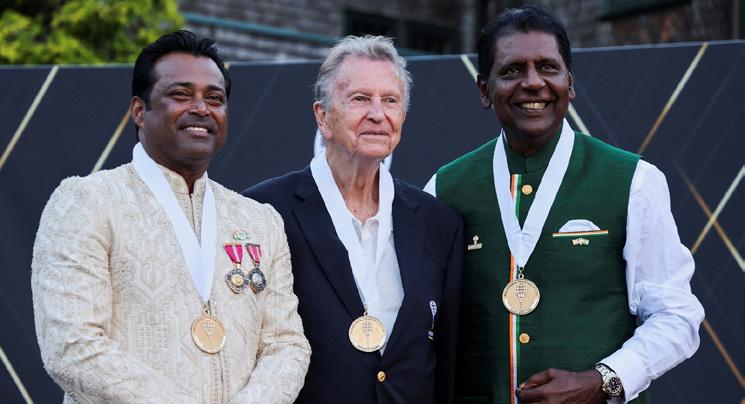
Leander Paes retired from professional tennis in 2020, leaving behind a legacy that transcends statistics. His 18 Grand Slam titles, Olympic bronze, and 54 ATP titles (1 singles, 53 doubles) place him among India’s greatest athletes. He was honoured with the Padma Shri (2001) and Padma Bhushan (2014) for his contributions to Indian sport. Paes’ success elevated tennis in a cricket-obsessed nation, inspiring players like Sania Mirza, Rohan Bopanna, and many more. His academy, the Leander Paes Tennis Academy, nurtures young talent, ensuring his influence endures. Off the court, Paes’ charisma and philanthropy, including
support for children’s education, have endeared him to fans.
Leander Paes’ career is a story of passion, perseverance, and pride. From a young boy in Kolkata to a global tennis legend, he carried India’s flag to the world’s biggest stages. His 18 Grand Slam titles and Olympic medal are monumental, but his true legacy lies in showing that Indian athletes can compete— and conquer—at the highest level. As Paes once said, “I play for the love of the game and the pride of my country.” That love and pride continue to inspire millions, cementing his place as India’s tennis titan.






As the global aviation industry races to decarbonize and meet ambitious net-zero targets by 2050, Sustainable Aviation Fuel (SAF) has emerged as a critical solution. Derived from renewable feedstocks, SAF offers a drop-in alternative to conventional jet fuel, reducing lifecycle carbon emissions by up to 80%. While SAF production globally has relied on sources like used cooking oil, animal fats, and agricultural residues, India—with its vast agricultural base and abundant biomass waste—stands at the cusp of becoming a significant player in this transformative industry. By leveraging its biomass resources, India has the potential to not only reduce aviation emissions but also address waste management challenges and bolster energy security.

India is an agrarian economy, producing over 600 million tons of biomass annually from agricultural activities, forestry, and allied sectors. A significant portion of this—estimated at 230 million tons—remains surplus or waste, including crop residues like rice straw, wheat straw, sugarcane bagasse, and corn stover. Historically, this biomass waste has posed environmental challenges, with practices like stubble burning in states such as Punjab and Haryana contributing to severe
air pollution. Converting this waste into SAF presents a dual opportunity: mitigating pollution and creating a valuable resource for the aviation sector. The country’s diverse agroclimatic zones ensure a steady supply of biomass feedstocks year-round. Rice straw, for instance, is abundant in the northern plains, while sugarcane bagasse is prevalent in Maharashtra and Uttar Pradesh. Additionally, India generates substantial municipal solid waste (MSW) and forestry residues, further expanding the feedstock pool for SAF production. With the right infrastructure and policy support, this biomass can be transformed into biofuels through advanced technologies like gasification, pyrolysis, and the alcohol-to-jet (ATJ) process.

Producing SAF from biomass waste involves converting organic material into synthetic hydrocarbons compatible with existing aircraft engines. Several proven pathways align with India’s biomass profile:
• Hydroprocessed Esters and Fatty Acids (HEFA): While HEFA typically uses oils and fats, integrating biomass-
derived syngas (a mixture of carbon monoxide and hydrogen) can enhance scalability. India could adapt this process to include waste-derived inputs.
• Gasification and Fischer-Tropsch (FT) Synthesis: This method gasifies biomass into syngas, which is then synthesized into liquid hydrocarbons. It’s particularly suited for lignocellulosic biomass like rice straw and wood residues, abundant in India.
• Alcohol-to-Jet (ATJ): Biomass can be fermented into alcohols (ethanol or isobutanol), which are then dehydrated and oligomerized into jet fuel. India’s expertise in ethanol production from sugarcane offers a natural advantage here.


• Pyrolysis: Fast pyrolysis converts biomass into bio-oil, which can be upgraded into SAF. This technology is promising for decentralized production in rural areas with high biomass availability.
These pathways, certified under international standards like ASTM D7566, ensure SAF meets aviation safety and performance requirements. India’s existing biofuel research ecosystem, including institutions like the Indian Institute of Petroleum and DBT-IOC Centre for Advanced Bioenergy Research, provides a strong foundation to scale these technologies.
India’s aviation sector is among the fastest-growing globally, with passenger traffic projected to reach 153 million annually by 2030. This growth, however, amplifies the sector’s carbon footprint, making SAF adoption urgent. Producing SAF domestically from biomass waste could reduce reliance on
imported fossil fuels, saving foreign exchange and enhancing energy security. The International Air Transport Association (IATA) estimates that SAF could constitute 65% of the aviation industry’s emissions reduction strategy, underscoring its economic and environmental value.
On the environmental front, redirecting biomass waste from open burning to SAF production could significantly curb air pollution. For instance, Punjab alone generates 20 million tons of rice straw annually, much of which is burned, releasing greenhouse gases and particulate matter. Converting even a fraction of this into SAF could abate emissions while producing 2-3 million tons of fuel, based on current conversion yields (approximately 100-150 litres of SAF per ton of dry biomass). Economically, SAF production could spur rural development by creating jobs in biomass collection, pre-processing, and biorefinery operations. A 2023 study by the World Economic Forum suggested that bioenergy projects could generate 1.5 million jobs in India by 2030, a prospect that aligns with SAF ambitions.
India’s government has shown commitment to biofuels through initiatives like the National Biofuel Policy (2018), which targets 20% ethanol blending in petrol by 2030. Extending this framework to SAF could accelerate progress. Incentives such as subsidies for biorefineries, tax breaks for SAF producers, and mandates for airlines to blend SAF could drive adoption. The recent launch of India’s first SAF blending facility by Indian Oil Corporation in 2024 signals early momentum.
However, challenges remain. Biomass supply chains are fragmented, with collection and transportation costs posing logistical hurdles. SAF production costs (currently $2-3 per litre versus $0.6-1 for conventional jet fuel) require economies of scale and technological advancements to become competitive. Additionally, land-use conflicts and competition with food production must be managed to ensure sustainability.







India’s potential to produce SAF from biomass waste is immense, but realizing it demands a concerted effort. Public-private partnerships could bridge funding gaps, while international collaboration—with SAF pioneers like the U.S. and EU—could bring technical expertise. Pilot projects, such as converting rice straw in Punjab or bagasse in Maharashtra into SAF, could serve as blueprints for nationwide scaling.
By 2030, with supportive policies and infrastructure, India could produce 5-10 million tons of SAF annually, meeting a significant portion of its aviation fuel demand. This would position the country as a leader in the global SAF market, projected to reach $15 billion by 2030, while advancing its climate goals under the Paris Agreement.
India’s biomass waste is not a liability but an asset waiting to be tapped. By transforming agricultural residues into Sustainable Aviation Fuel, India can soar toward a greener future, marrying environmental stewardship with economic growth. The skies are calling—and India has the raw materials to answer.




Picture this: jetting off to a vibrant Indian city or a dreamy Gulf destination, all while savouring a fresh take on air travel. India’s aviation scene is about to get a glamorous upgrade in 2025 with the arrival of three fabulous new airlines—Shankh Air, Air Kerala, and Alhind Air. These stylish newcomers are set to sprinkle some magic on your travel plans, offering everything from luxe full-service flights to walletfriendly regional hops. With India’s skies buzzing (164–170 million passengers in March 2025!), these airlines are here to make your journeys more exciting, affordable, and oh-so-chic. Let’s dive into the dazzling world of these new carriers and see where they’re taking us!

Imagine stepping onto a flight that feels like a warm embrace of luxury, with a side of Uttar Pradesh pride. Shankh Air, the state’s first full-service airline, is ready to roll out the red carpet from its hubs at the sleek Noida Jewar International Airport and Lucknow. Led by the visionary Sharvan K. Vishwakarma, this airline is all about connecting the heart of India with serious style .
WHAT’S IN STORE: Kicking off with two swanky narrow-body aircraft, Shankh Air plans to grow to five planes within a year, with dreams of wide-body jets for international adventures by 2027. Expect flights linking Uttar Pradesh gems like Lucknow, Varanasi, and
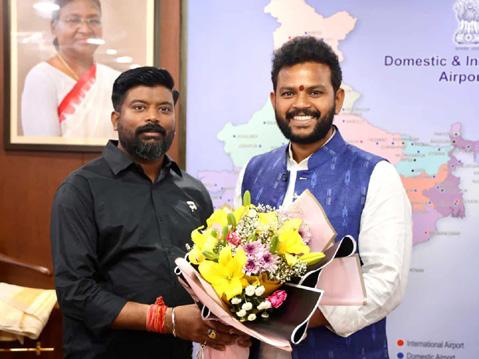

Gorakhpur to buzzing metros like Delhi, Mumbai, and Bengaluru. With $50 million in initial funding and a cool $200 million pledged, Shankh Air is ready to soar in style.
Think gourmet meals, plush seats, and top-notch service—Shankh Air is bringing the full-service sparkle to travellers craving a touch of class. Flying out of the shiny new airport means less chaos and more chic, perfect for
those in the Uttar Pradesh Region. It’s your ticket to exploring Uttar Pradesh’s rich culture, from Varanasi’s ghats to Lucknow’s kebabs, with ease and elegance.
Shankh Air needs to charm budget-conscious flyers in a market ruled by low-cost giants like IndiGo as they set their eyes on establishing themselves as a consumeroriented airlines.
If your travel mantra is “affordable yet awesome,” Air Kerala is your new BFF. Based in the lush, laid-back vibes of Kochi, this airline is India’s first ultra-low-cost carrier (ULCC), dreamt up by UAE-based Malayali entrepreneurs under Zettfly Aviation Pvt. Ltd. It’s all about keeping your wallet happy while whisking you to Kerala’s hidden gems and beyond.
Launching with three ATR 72-600 turboprop planes, Air Kerala will zoom from Cochin International Airport to connect Kerala’s hotspots like Kozhikode, Kannur, and Thiruvananthapuram with cities like Bengaluru, Chennai, and Delhi. Got Gulf dreams? Air Kerala’s eyeing international routes to the Middle East by 2026, perfect for Kerala’s jet-setting diaspora.
Think short, sweet flights that get you to your destination without breaking the bank.
Super-low fares mean more cash for beachside cocktails or shopping sprees in Dubai. Air Kerala’s regional focus makes it a breeze to explore Kerala’s backwaters, spice markets, and coastal charm. It’s part of India’s UDAN scheme, so you’re supporting better connectivity for smaller cities while you travel.
The ULCC model is new to India, and Air Kerala will need to stand out against budget bigwigs like IndiGo. They’re still navigating the regulatory runway for their AOC—here’s hoping for a quick green light!


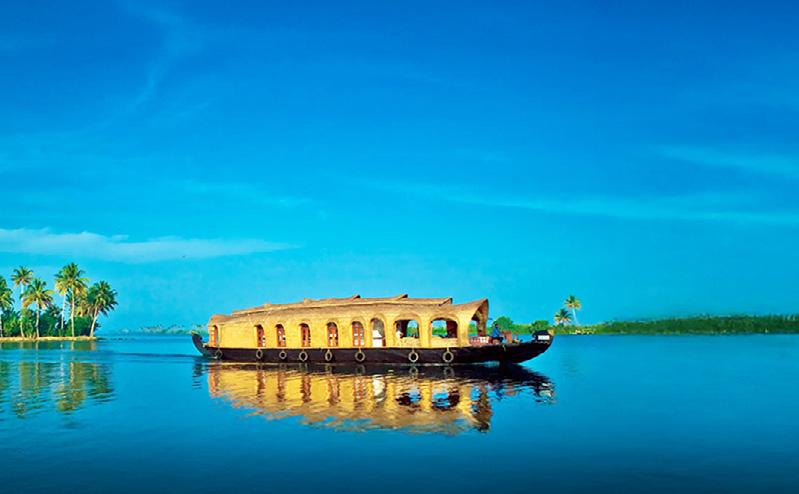

Hailing from Kozhikode, Kerala, Alhind Air is the cool kid backed by the travel-savvy Alhind Group. This airline is all about weaving South India’s vibrant cities into your travel tapestry, with a sprinkle of Gulf-bound glamour on the horizon. It’s regional travel with a side of sophistication.
Starting with two ATR 72-600 aircraft and scaling to seven in its first year, Alhind Air will connect South Indian cities like Kochi, Bengaluru, Thiruvananthapuram, and Chennai. Gulf routes are on the radar for 2027, tapping into Kerala’s love affair with the Middle East. Expect cozy, efficient flights that make hopping around South India a breeze.

Alhind Air’s regional roots mean you’ll discover South India’s hidden treasures, from Chennai’s bustling markets to Bengaluru’s tech-chic cafes. The Alhind Group’s travel expertise promises a seamless booking experience, maybe even with some fabulous travel perks. Affordable fares and a focus on smaller cities make it perfect for spontaneous weekend getaways.
Alhind Air will face off against heavyweights like Air India Express on similar routes, so they’ll need to shine bright.
Fleet expansion and international approvals will take some hustle, but their travel know-how gives them a head start.
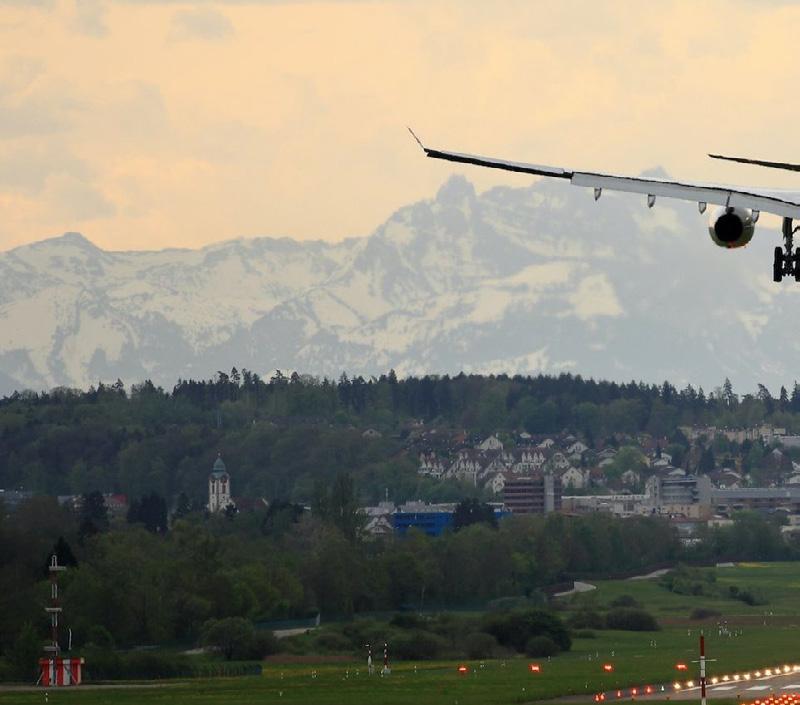
India’s aviation scene is hotter than a Mumbai summer, with 152 million passengers taking to the skies in 2023 and a projected 6–8% growth in 2025. New airports like Noida and Navi Mumbai, plus the government’s UDAN scheme, are making travel more accessible than ever. Here’s why Shankh
More Choices, More Fun: These airlines are shaking up the current aviation industry, giving you fresh vibes and better deals.
REGIONAL ADVENTURES: From Kerala’s beaches to Uttar Pradesh’s temples, these carriers make it
easy to explore India’s diverse corners.
GULF GETAWAYS: Air Kerala and Alhind Air are your go-to for affordable Middle East escapes, perfect for work or play.
NEW AIRPORTS, NEW ENERGY: Flying from cutting-edge hubs like Noida Jewar means less stress and more style.
But let’s keep it real—aviation isn’t all smooth sailing. High costs, tricky regulations, and supply chain hiccups could test these newbies. Plus, they’re up against giants with massive fleets (IndiGo’s got nearly 1,000 planes on order!). Still, with their unique flavours—Shankh’s luxe touch, Air Kerala’s budget cool, and Alhind’s regional charm—these airlines are ready to win your heart.

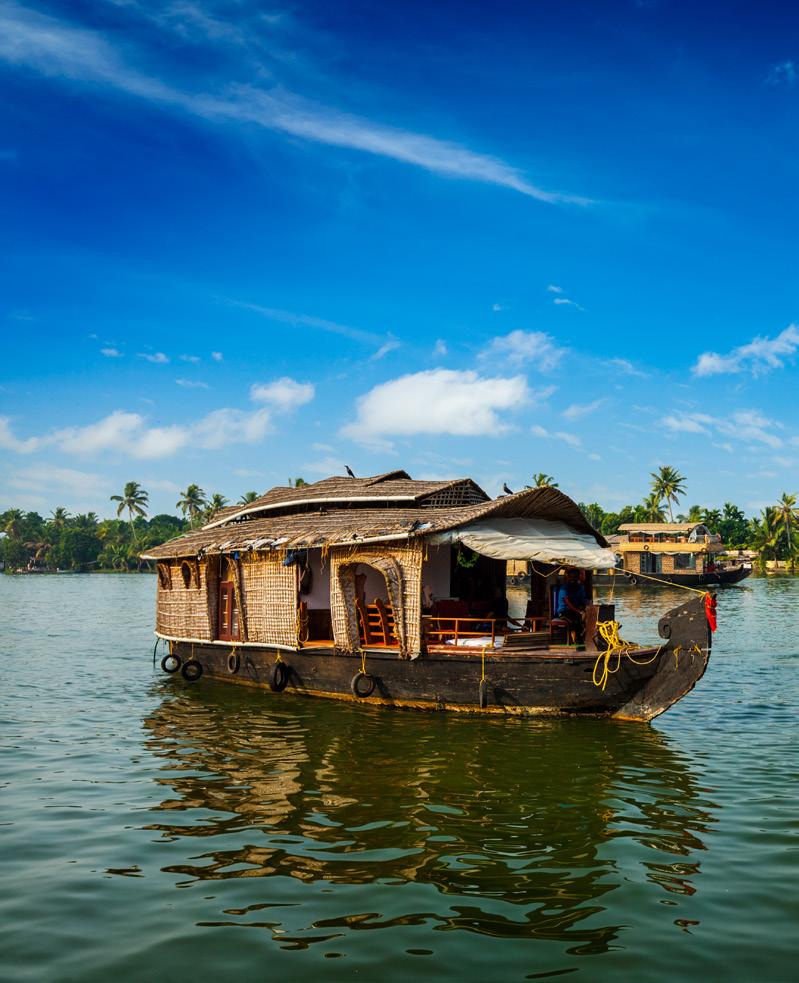


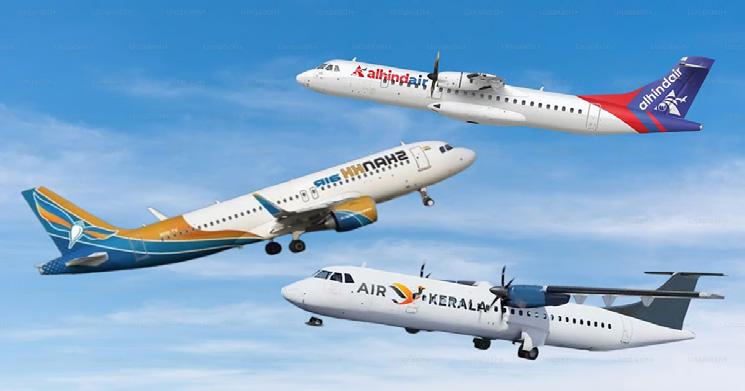
As 2025 unfolds, Shankh Air, Air Kerala, and Alhind Air are set to make your travel dreams soar. Whether you’re craving a posh flight to Mumbai, a quick hop to Kozhikode, or a budget-friendly Gulf getaway, these airlines have you covered with style, savings, and a whole lot of heart. So, dust off your suitcase, book that ticket, and get ready to explore India and beyond like never before. The skies are calling, and these new wings are ready to take you there!
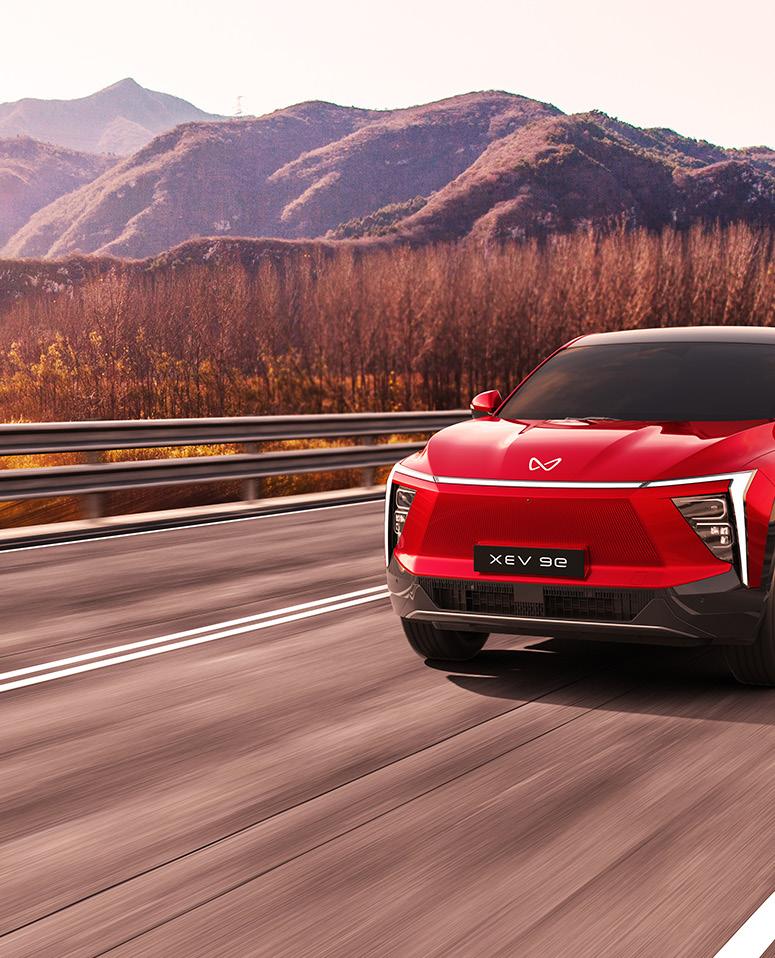



The Indian automotive landscape is undergoing a quiet revolution. Gone are the days when price and fuel efficiency were the sole deciding factors for car buyers. A new wave of priorities—safety, convenience, and advanced technology—is reshaping consumer preferences and pushing automakers to rethink their offerings. Data from industry leaders like Honda Cars India, Mahindra & Mahindra (M&M), and Hyundai Motor India reveals a clear trend: Indian buyers are increasingly opting for premium features, even in a price-sensitive market, signalling a broader shift toward premiumization.

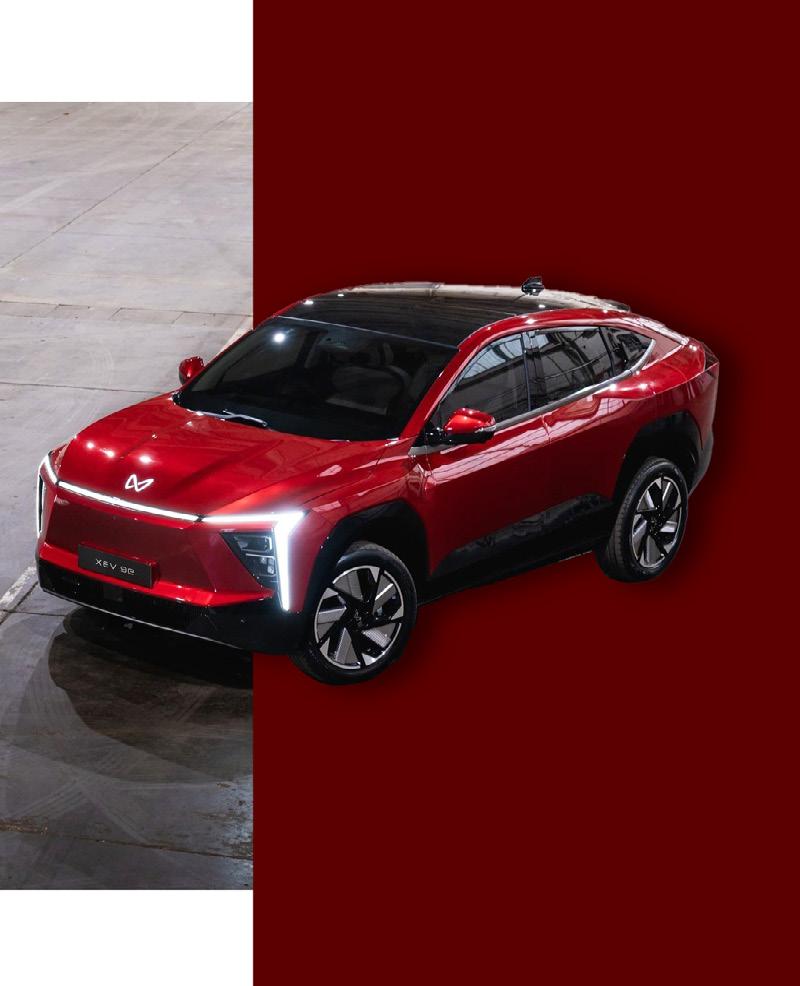
Safety is no longer an afterthought for Indian car buyers—it’s a demand. Honda Cars India, a key player in the sedan and SUV segments, reports that nearly 50% of its City and Amaze sales in recent months have been for top-grade variants equipped with advanced driver assistance systems (ADAS). For its Elevate SUV, that figure climbs to over 60%. ADAS, which includes features like adaptive cruise control, lane-keeping assist, and automatic emergency braking, was once a luxury reserved for high-end models. Now, it’s becoming a benchmark for middle-class buyers who see it as a critical investment in road safety. This shift comes against a grim backdrop: India recorded approximately 188,000 road accident fatalities in 2024, one of the highest rates globally. With rising awareness of such statistics, consumers are pushing manufacturers to prioritize safety features, even in affordable segments. The trend isn’t just about technology—it’s about survival on India’s chaotic roads.

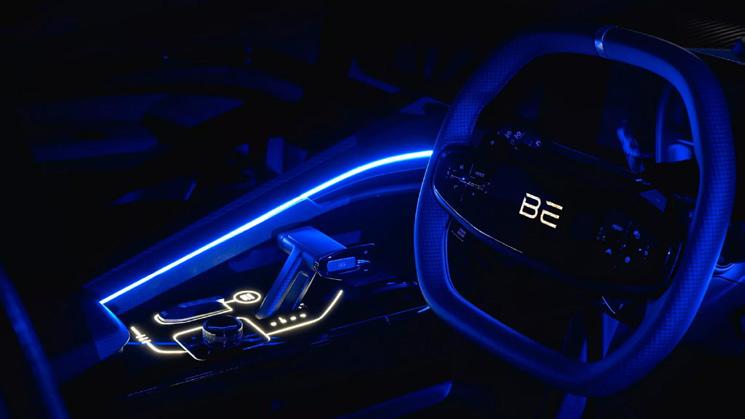

Mahindra & Mahindra (M&M) is taking this evolution a step further by blending cutting-edge technology with affordability. Its latest electric SUVs, the BE 6 and XEV 9e, are turning heads with features like remote-controlled auto-park and augmented-reality heads-up displays (HUD). These innovations, once exclusive to luxury brands like BMW or Tesla, are now accessible at price points that
cater to India’s aspirational middle class. Remote autopark, for instance, allows drivers to manoeuvre their vehicles into tight spots via a smartphone app—a gamechanger in crowded urban centres like Mumbai or Delhi. Meanwhile, AR HUD projects navigation and safety alerts directly onto the windshield, enhancing both convenience and driver focus. M&M’s strategy reflects a broader industry realization: Indian buyers want more than just transportation. They’re seeking an experience—one that simplifies their lives while keeping them ahead of the tech curve. By democratizing these high-end features, Mahindra is not only meeting demand but also setting a new standard for competitors.


Hyundai Motor India offers another lens into this transformation. In the last fiscal year, 53.2% of its vehicle sales included models with sunroofs, up from 48.5% the previous year. While a sunroof might seem like a cosmetic add-on, its growing popularity underscores a deeper trend: Indian consumers are embracing premiumization. They’re willing to spend more for features that elevate their driving experience, whether it’s the open-air feel of a sunroof or the bragging rights that come with it.
This shift aligns with a broader move toward higher-spec variants across brands. Buyers are no longer content with base models; they’re opting for trims that bundle convenience (keyless entry, wireless charging) with tech (touchscreen infotainment, connected car systems). Hyundai’s success here highlights how even small upgrades can tap into the aspirations of a growing middle class with increasing disposable income.




Several factors are fuelling this pivot. First, rising urbanization and disposable incomes have expanded the pool of buyers who can afford feature-rich vehicles. Second, exposure to global trends—via social media, travel, or international brands entering India—has raised expectations. Third, the government’s push for stricter safety norms, like mandatory airbags and Bharat NCAP crash testing, has nudged both consumers and manufacturers toward safer, tech-laden cars. Yet, the transition isn’t without challenges. While rural demand is stabilizing, urban markets are cooling, with passenger vehicle sales growth projected at a modest 2-3% for FY25. This slowdown could pressure automakers to balance premium offerings with affordability—a tightrope walk in a cost-conscious market.
The Indian car buyer of 2025 is a different breed: discerning, tech-savvy, and safety-conscious. Companies like Honda, Mahindra, and Hyundai are responding with agility, embedding advanced features into their line-ups while keeping an eye on price sensitivity. As electric vehicles gain traction and competition intensifies—think Maruti Suzuki’s e Vitara or Kia’s refreshed Carens— this trend is only set to deepen.
For the industry, the message is clear: adapt or be left behind. For consumers, it’s a win-win—safer roads, smarter cars, and a taste of luxury, all within reach. As India’s automotive story evolves, one thing is certain: the journey is just beginning.
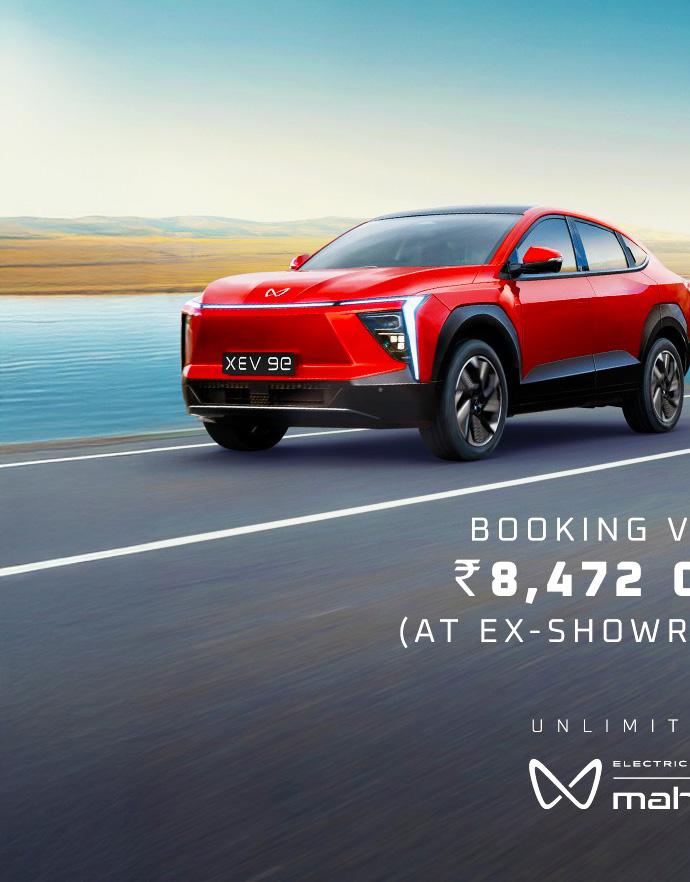

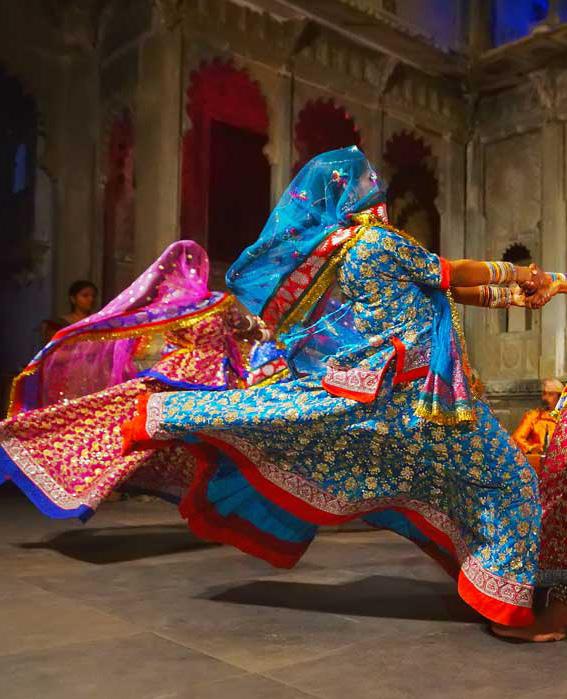
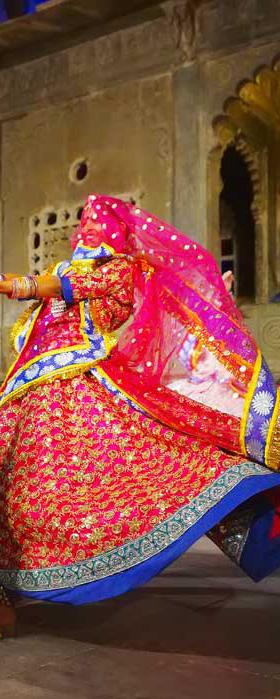
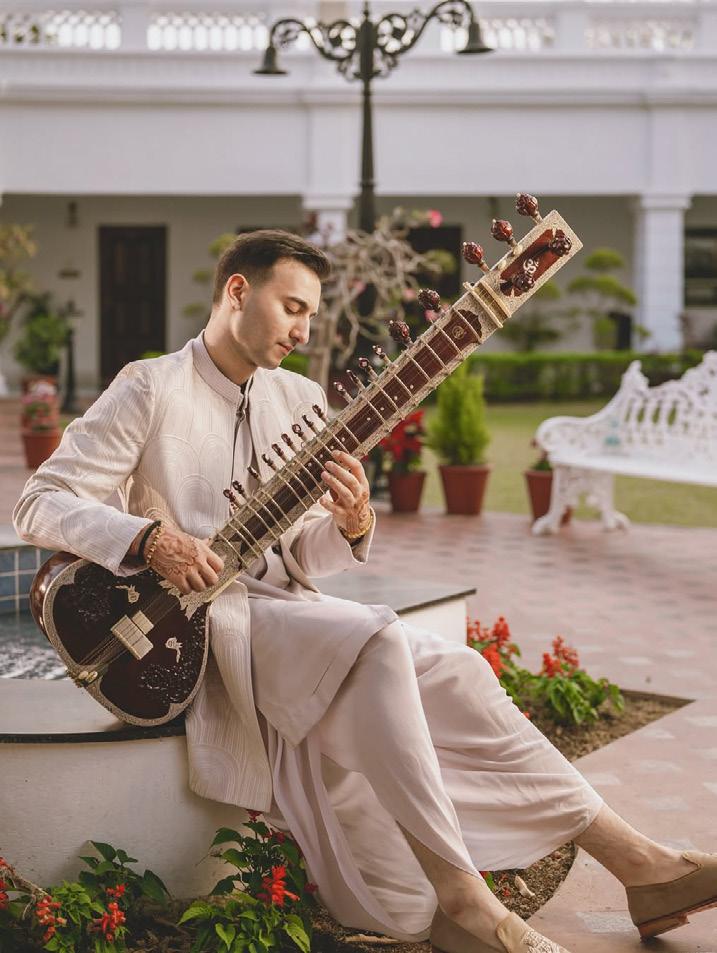
Rishab Rikhiram Sharma was in New York, half a planet away, when his beloved Nanu was admitted to hospital in Delhi. It was late 2020, right in the middle of the COVID-19 pandemic, with no way for him to get home. His only connection to his maternal grandfather—isolated in the hospital ward, with only one visitor allowed—was through FaceTime, and the sitar prodigy would play his favourite songs.
After we lost him, I was broken. It was the lowest point of my life,” remembers 26-year-old Sharma, speaking over Zoom from his living room in Delhi. “I was depressed and dealing with a lot of anxiety. I didn’t leave my room, I wasn’t eating and I completely lost the will to play music.
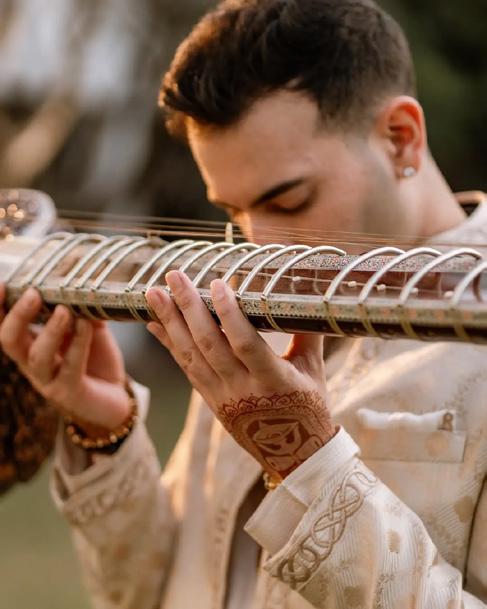
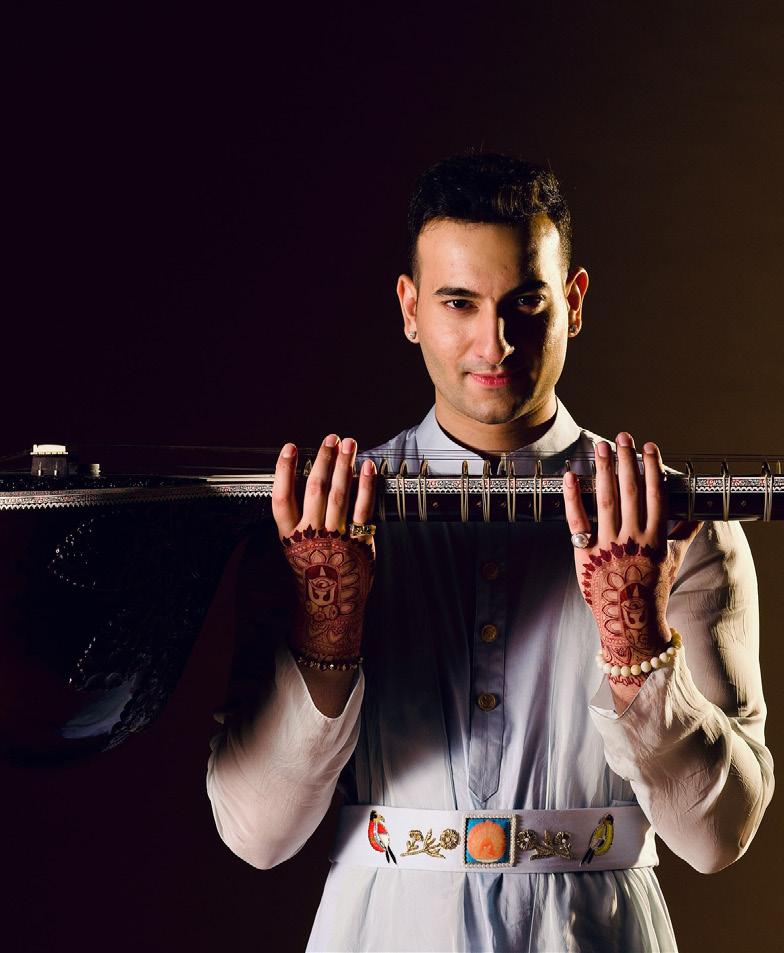
Sharma eventually sought therapy to overcome his depression. In due time, he picked up the sitar again, incorporating music as part of his therapeutic process. He’d go live on Instagram or Clubhouse and play his heart out, imagining that his grandfather was still somewhere out there, listening in. Between songs, he’d talk about his loss and mental health. “It became this virtual room where everyone came together for each other, to share our grief,” says Sharma. “I started calling these sessions Sitar For Mental Health (SFMH) because I was using my voice—the sitar— to talk about mental health.”
This April, Sharma embarked on a ten-city tour of India under the SFMH banner, performing a two-hour set that combined breathing exercises and meditative improvisations on the surbahar and sitar. His original songs went as viral as his sitar covers of pop hits such as ‘Tumhi Dekho Naa’ from Kabhi Alvida Naa Kehna (2006) and Ramin Djawadi’s theme song for Game of Thrones. In 2022, he also became the first sitarist to perform solo at the White House.

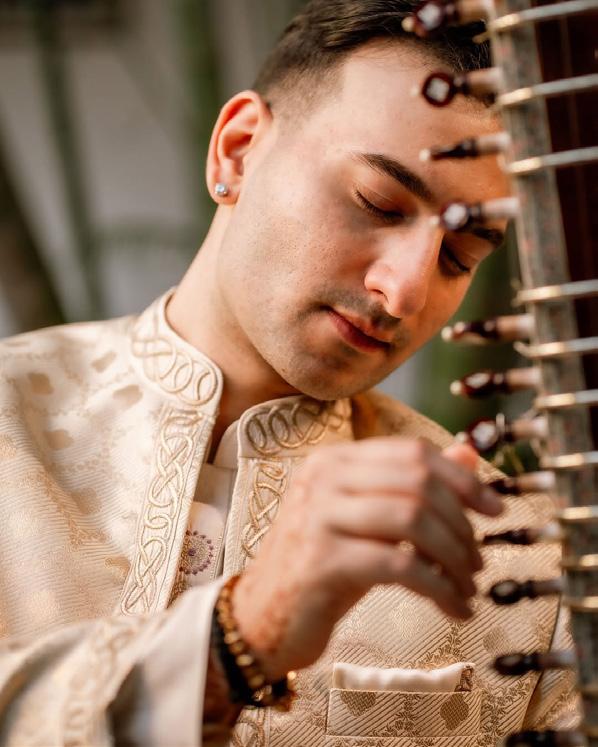
“People think I’m trying to do something new, but I’m actually going back in time to the old traditions because they have such healing power,” says Sharma, who has been exploring the history of Raga Chikitsa or ‘Raga therapy’, an ancient practice focused on the therapeutic use of music to remedy physical and mental ailments. At first glance, Sharma seems an unlikely champion of raga-based healing. When we speak, he’s wearing a backwards-facing baseball cap and diamond earrings. He’s even got diamonds implanted in his teeth. He doesn’t look like the average sitar player, even less like someone who comes from a family of celebrated luthiers whose instruments have been used by everyone from Pandit Vishwa Mohan Bhatt and Talvin Singh to Daler Mehndi.
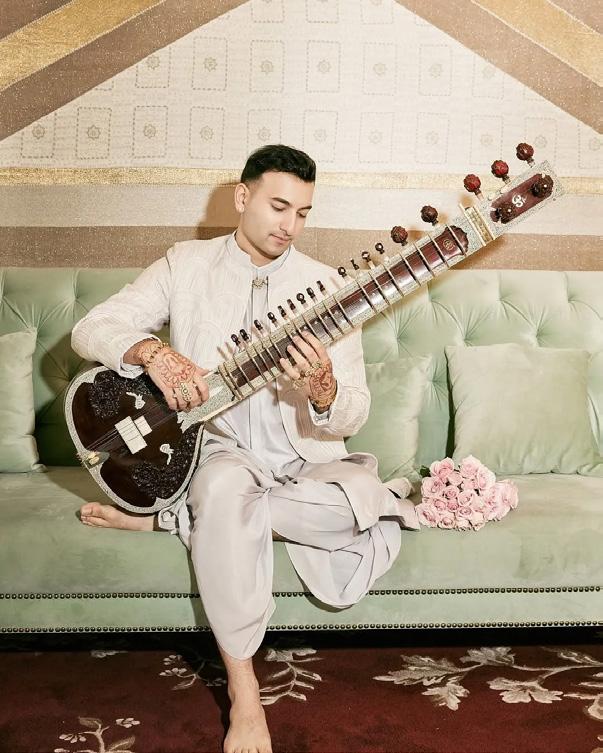
He’s also the last disciple of the late Pandit Ravi Shankar. “Guruji came across a video of me performing and invited us over, and I played a little bit for him,” recalls Sharma. “When he suggested that I learn under him, my parents’ jaws dropped to the floor. It was like God himself had come down and asked to be a teacher to their child.”
Sharma spent his teenage years honing his craft, first under the watchful eye of Shankar, and later, his disciple Pandit Parimal Sadaphal. He moved to New York at 17 to study music production and economics, where he was exposed to the city’s thriving jazz and rap scenes. Those influences are evident on singles like ‘Text Me When You Reach’, which layers sitar over a shuffling lo-fi hip-hop beat, and the Spotify-commissioned ‘Kautilya (The Echo Project)’ with Naveen Kumar and Anuradha Pal, which veers from Hindustani classical to contemporary sitar-trap.
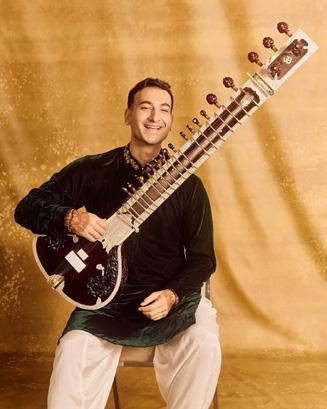
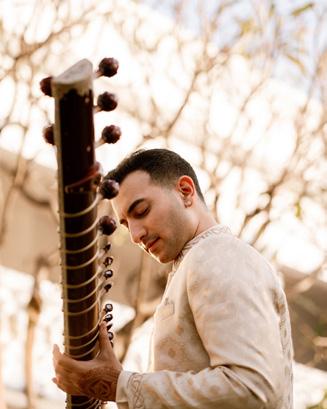
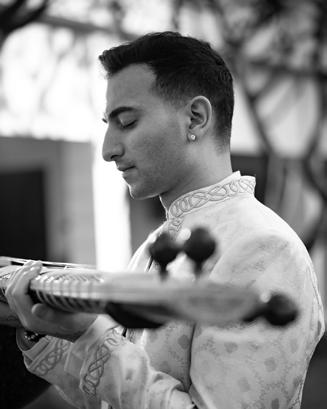
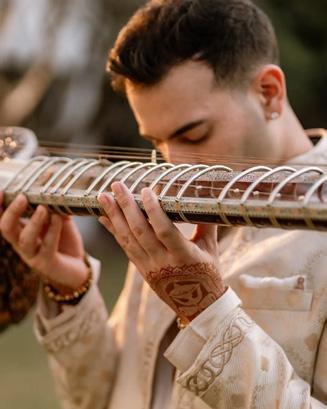
New York and its obsession with streetwear also instilled a love for fashion in the young Sharma. On stage, he trades the traditional white kurta of his confrères for sharp ensembles by Suket Dhir and Agraj Jain (“if you’re wearing a good fit, you feel good and the music that comes out of you is better,” he explains). He’s also taken to wearing mehendi on his hands during live performances and in music videos.
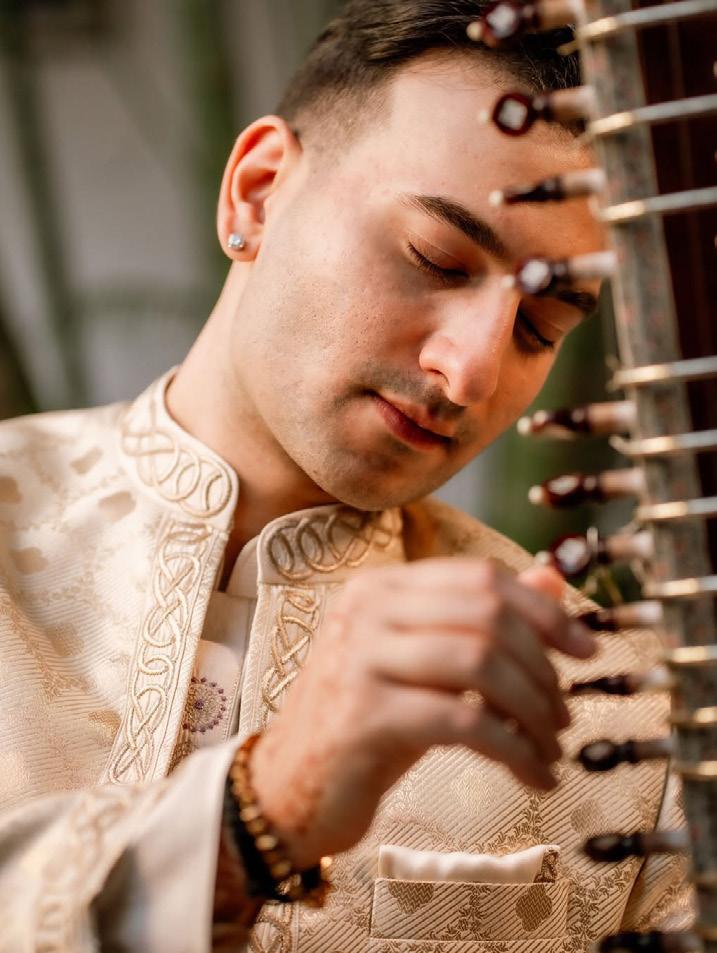
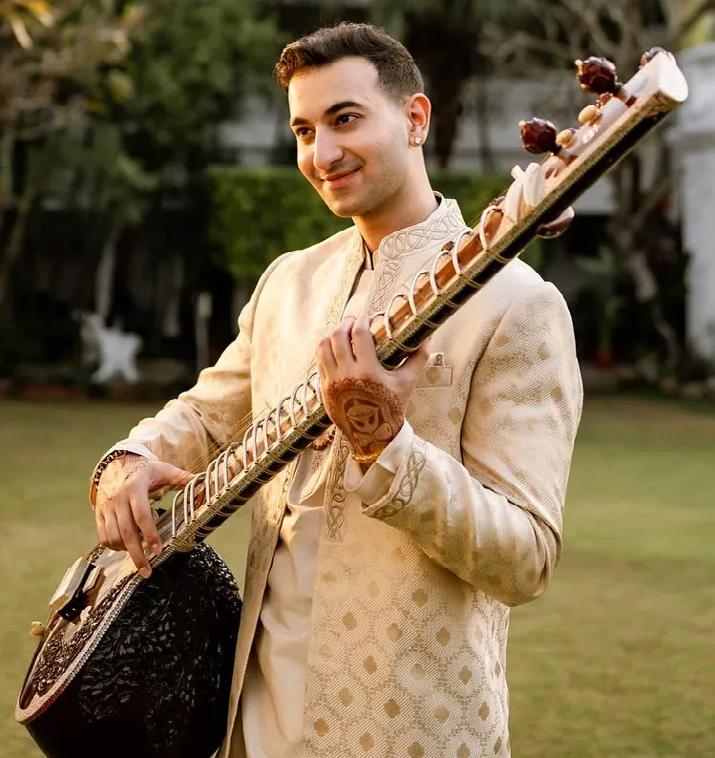
“I was a little worried about doing mehendi because of the stereotype that only women wear it,” he says. “But I decided to try it for the ‘Kautilya’ music video and it looked so good. There’s a spiritual angle too, because a lot of my designs are inspired by Shiva. It’s a way for me to borrow some divine energy and channel it into my instrument.” When he’s not busy with SFMH or working on new music, Sharma still spends time supervising things at the family’s handcrafted musical instruments store in Delhi. It’s where he found the inspiration for his newest project—creating an affordable sitar. “I see kids who are curious about the sitar come into the store, but when their parents see the price they’re like, ‘No, no, no,’” says Sharma. “It’s challenging to lower the cost because these instruments are hand-made. But my goal is ghar ghar sitar—every home in India should have one.”


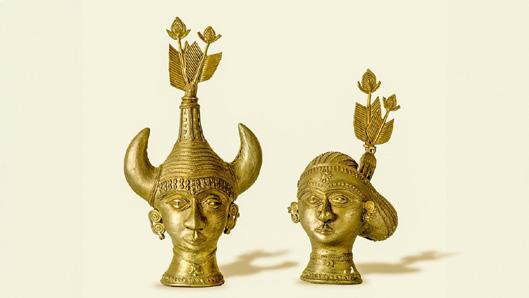
Dhokra is the process of casting brass, bell-metal, and bronze objects through the lost wax technique. This traditional art form is prevalent across various Indian states, with a significant concentration of this practice being in Bastar, Chhattisgarh. This intricately captivating practice holds great cultural significance and is a globally recognised art form. While the exact origins of the craft remain unknown, nomadic communities in eastern and central India popularised its practice.
The process of casting Dhokra products is quite intricate and involves multiple steps. These steps include moulding, sun drying, melting wax, filtering impurities, dewaxing, casting, polishing, and more. This oversimplification of the process does not do justice to the intricacies of the casting process. It is best understood when witnessed in person, giving travellers another thrilling reason to visit Bastar, Chhattisgarh. Wax carvings are employed to shape the metal, producing elegant pieces of work through this captivating process. In the traditional Dhokra process, objects are small in size. Artisans cast and mould these objects individually. In cases where the final product is larger, smaller objects are cast separately and soldered together to complete the look.
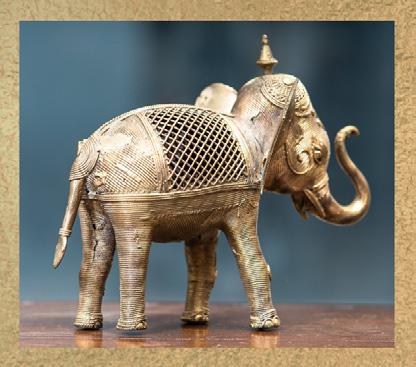
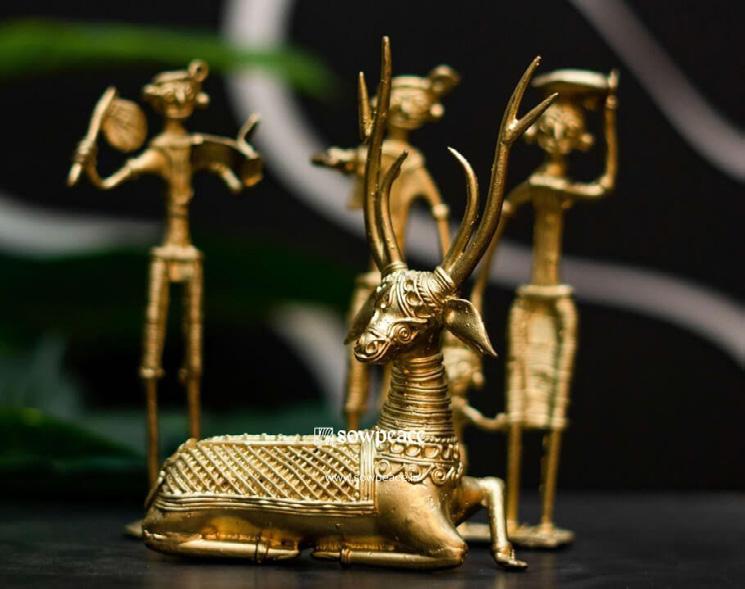


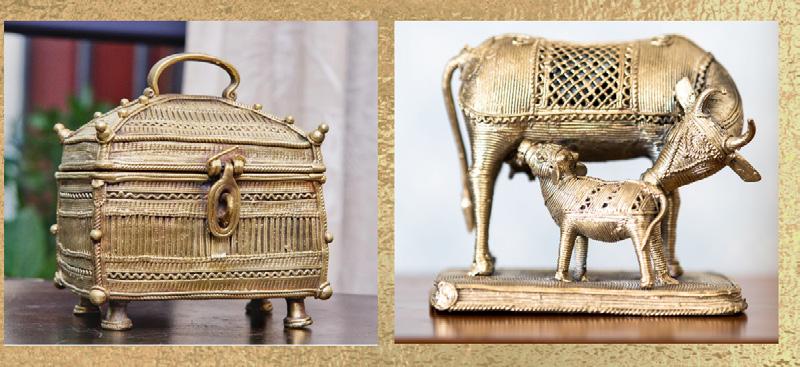
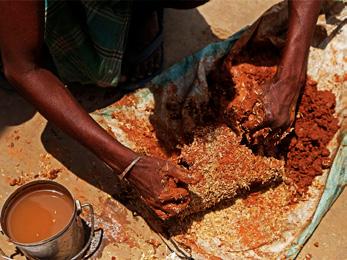
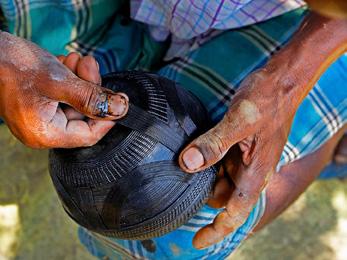
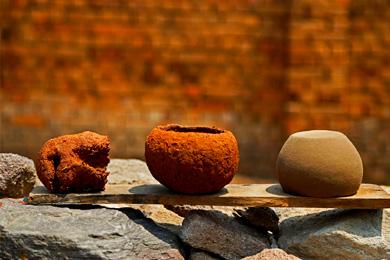
Many raw materials are required to manufacture products through this technique. These include clay, coal, rice husk, paraffin wax or beeswax, nut oil, tree resin, and metal. The metal used in crafting these products originates from discarded scrap metal. Artisans source this scrap metal primarily from utensil shops. Artisans rely on chisels, hammers, pliers, knives, files, wire brushes, and specialised tools for extracting wax threads from wax blocks.
Artisans primarily use the Dhokra technique to produce decorative items, wall art, and curios. One will also encounter ritual and utilitarian objects while strolling the local markets. Jewellery is available in bracelets, anklets, pendants, and amulets. Functional pieces such as nutcrackers, measuring cups, knives, purses, and spoons are also available.
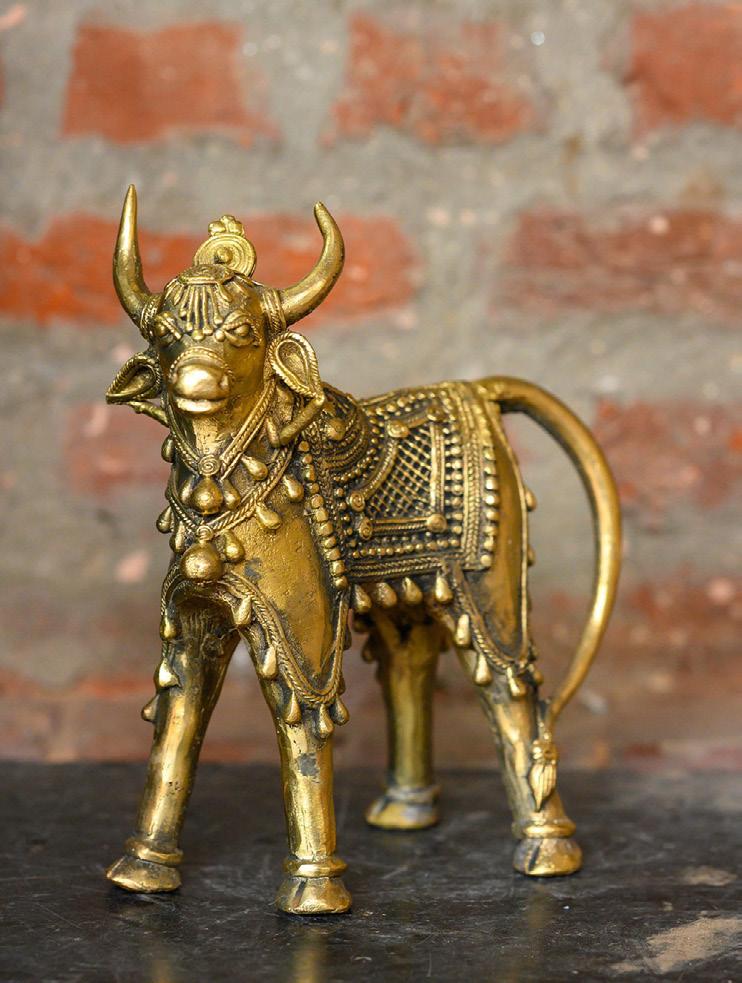




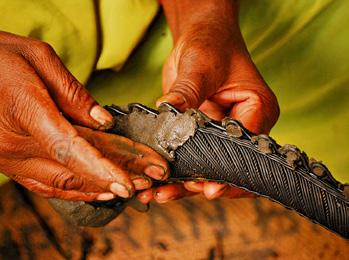
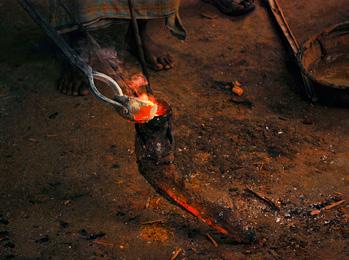
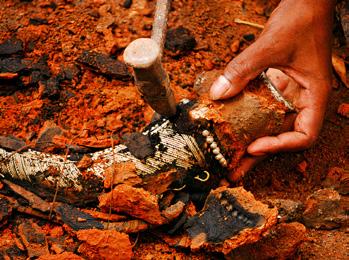
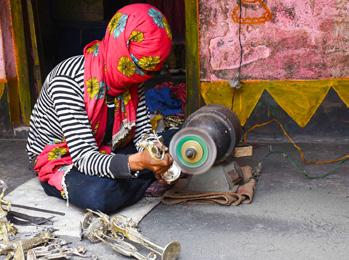
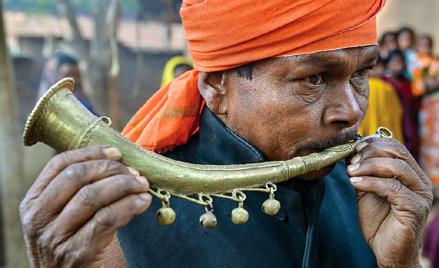
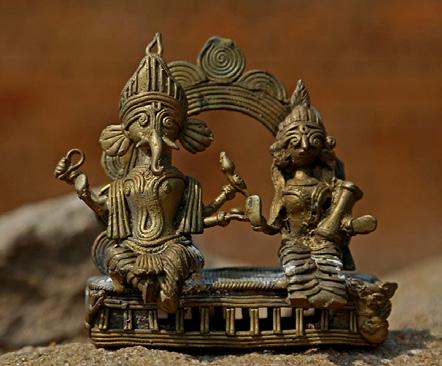
Artisans also produce idols of local and Hindu deities such as Bheemdev, Persa Pen, and Jangubai. These idols are often employed in ritual worship and are visually stunning. One will also find several animal figurines, such as those of a lion, fish, elephant, swan, tortoise, and nandi (bull). A Dhokra wall hanging or a pen stand will also be an ideal addition to one’s collection.
Carry home a piece of Bastar Dhokra as these unique handcrafted items make excellent souvenirs. From trinkets to large sculptures, there’s sure to be something suitable for every taste and budget! Dhokra artefacts are more than mere objects, owning one gives you access to its rich heritage as also helps support the artisans and the art form, ensuring that several more generations get to admire the magnificient creations.
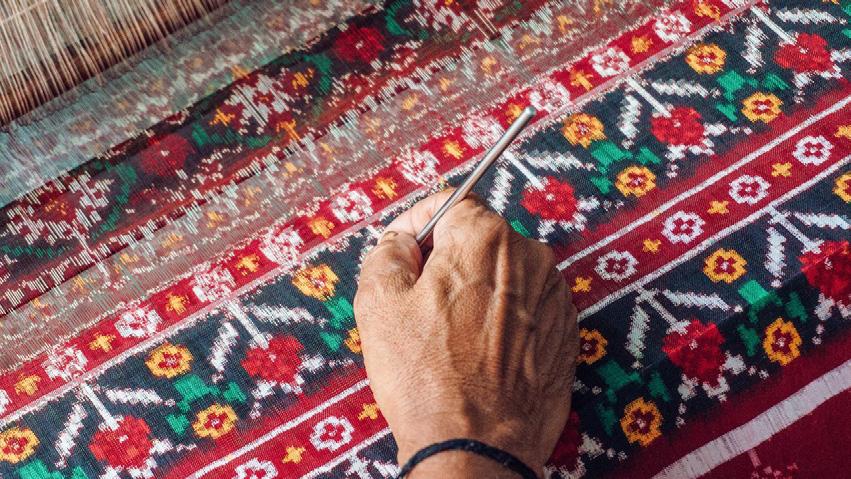
Patan, an ancient fortified town founded in 745 AD by the king of the Chavda kingdom, is located in the Patan district of northern Gujarat. This historic town boasts of a remarkable cultural and textile legacy. One outstanding exhibit of this legacy is the Patan Patola. A gorgeous craft created by weavers since generations, the Patan Patola showcases their timeless artistry and meticulous precision. Renowned for its elaborate, lavish designs, vivid hues, and impeccable weaving, the Patan Patola fabric boasts of an interesting history, weaving techniques, and cultural ties to the lands of Gujarat.
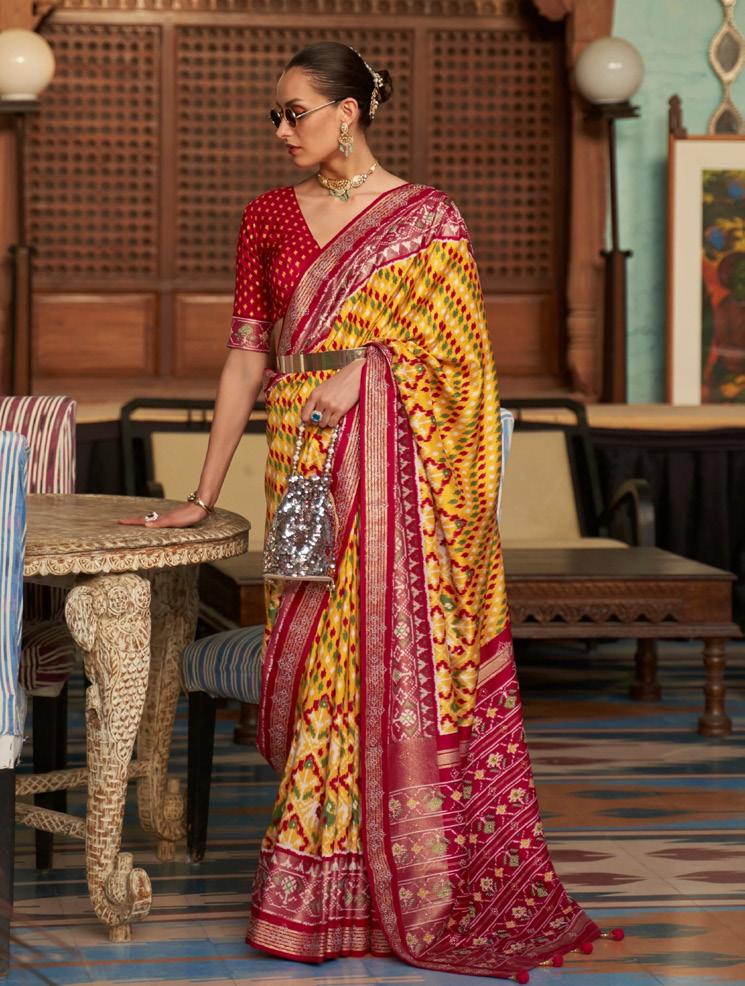
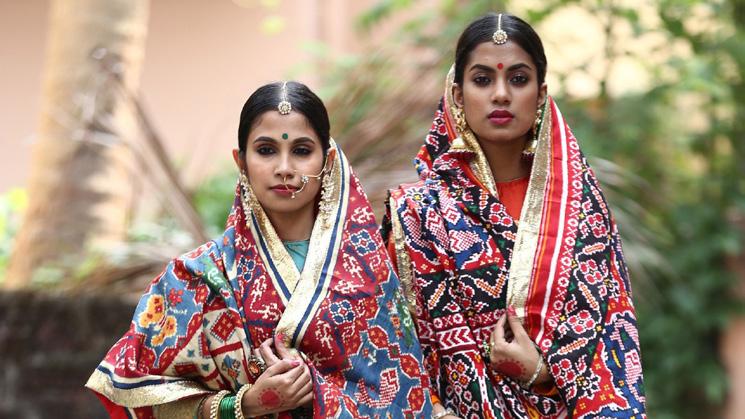
Patan Patola can be traced back to the 10th century. Legends surround the mystery of how weavers in Patan originally came to be here. Some say they came from South India, while others trace their lineage to Rajasthan. What is clear however, is that Patola weaving in Patan is the monopoly of a community of weavers known as the Salvis. Patan Patola is believed to be one of India's oldest textile traditions. The weavers pass down their knowledge through generations so as to preserve its rich traditions of Patola weaving.
The most celebrated works of Patan Patola are the attractive, visually heavy, silk sarees. At first glance, Patola fabrics appear to be printed in how seamless its surface appears, but they are far from it! These patterns are woven using the challenging double Ikat technique, where silken threads of the warp and weft are tied and dyed prior to weaving. The mathematical precision with which these threads are placed and woven determine the unified pattern that will emerge from the interlacing of the threads. No wonder Patan Patola is acclaimed as one of the finest examples of Ikat weaving in the world.
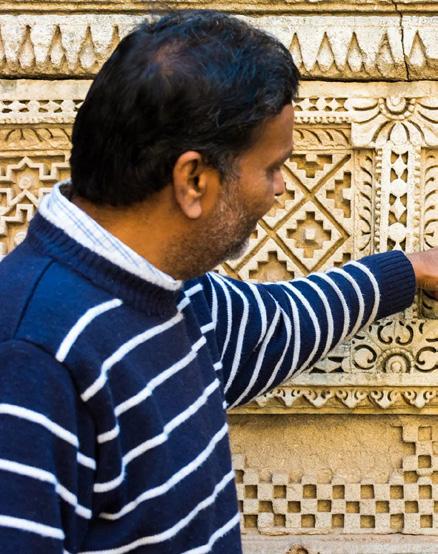

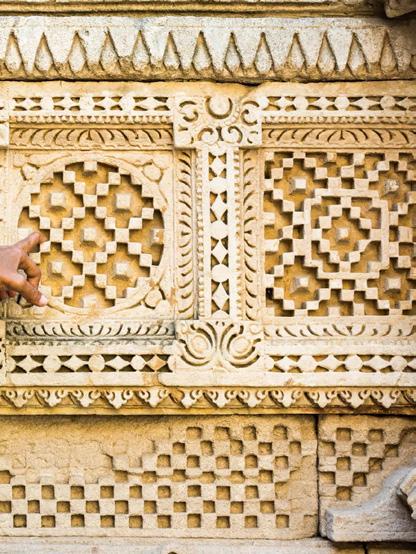
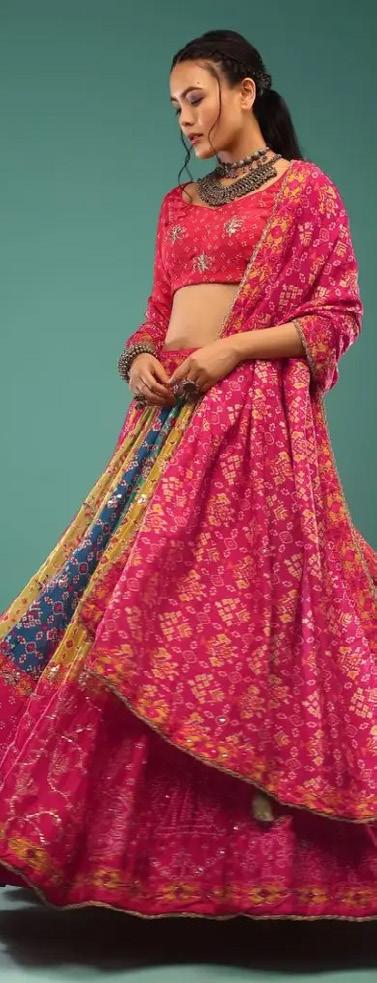
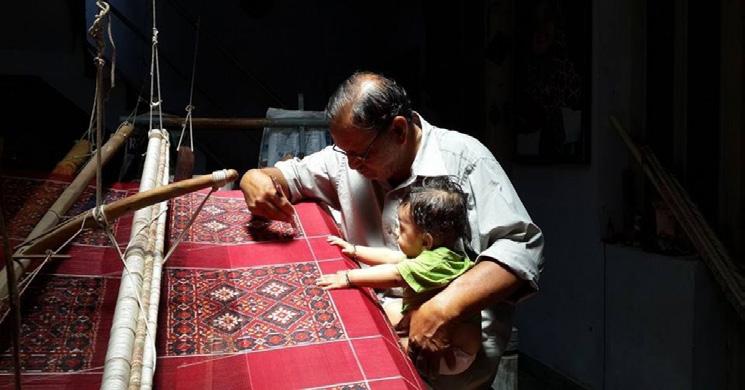
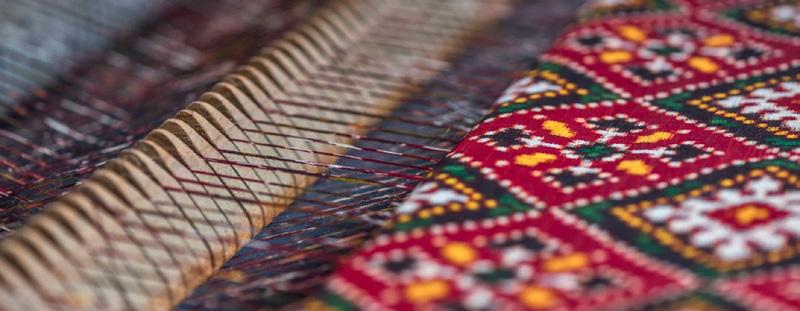
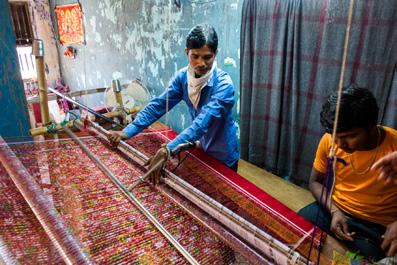
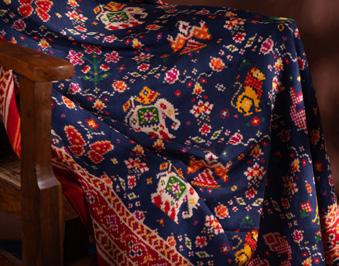

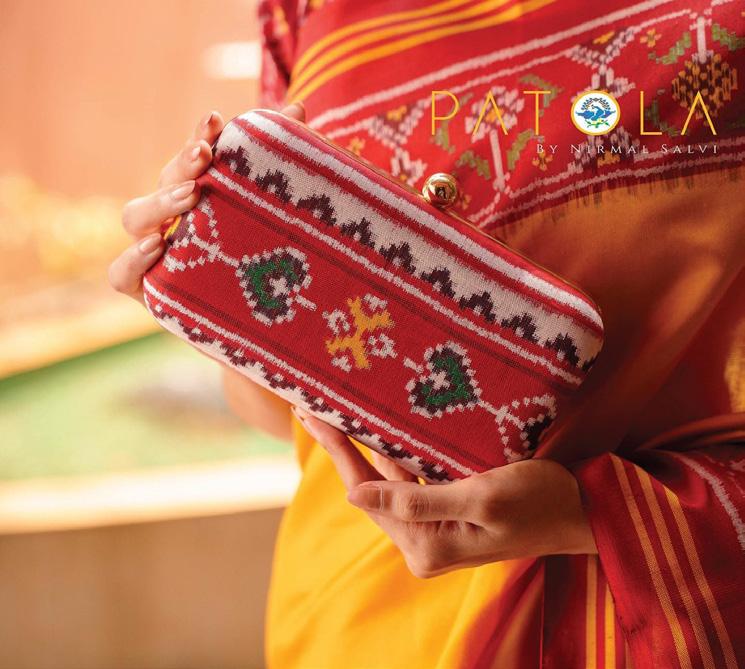
One can imagine the patience, care and skill with which Patan Patola weavers engage in weaving the beautiful silk fabrics. Each thread is individually bound and dyed to produce stunning, reversible designs i.e. be it the front or the back, the cloth displays the same intensity of colour and clarity of design. This process may take months or even years!
Owing to the style of weaving, geometric patterns naturally predominate the eight yards of Patan Patola sarees. Even then, the creatively endowed weavers are able to produce a wide range of plant and zoomorphic patterns. Apart from sarees, Patan Patola weaving can be cherished in the form . One
can observe a changing scene of dazzling patterns in Patan Patola sarees. These include the motifs named Nari Kunjar (elephant), Ratan Chowk (floral motifs in a geometrical pattern), Chhabdi (basket), Chokta (box), Paan (leaf), Phul (flower), Chowkadi (square), Panchphul (five flowers), Laheriya (stripes), Diamond, Star, Butta (vines) etc.
Vegetal dyes from turmeric, indigo, lac, and other natural sources are utilised in dyeing the fabrics in rich hues of vermillion, yellow, orange, pink, green, blue, purple, white and black. Parrots, women, plants, trellis and combination of other motifs (as mentioned above) are used to adorn the body, border and pallu of the Patan Patola sarees.
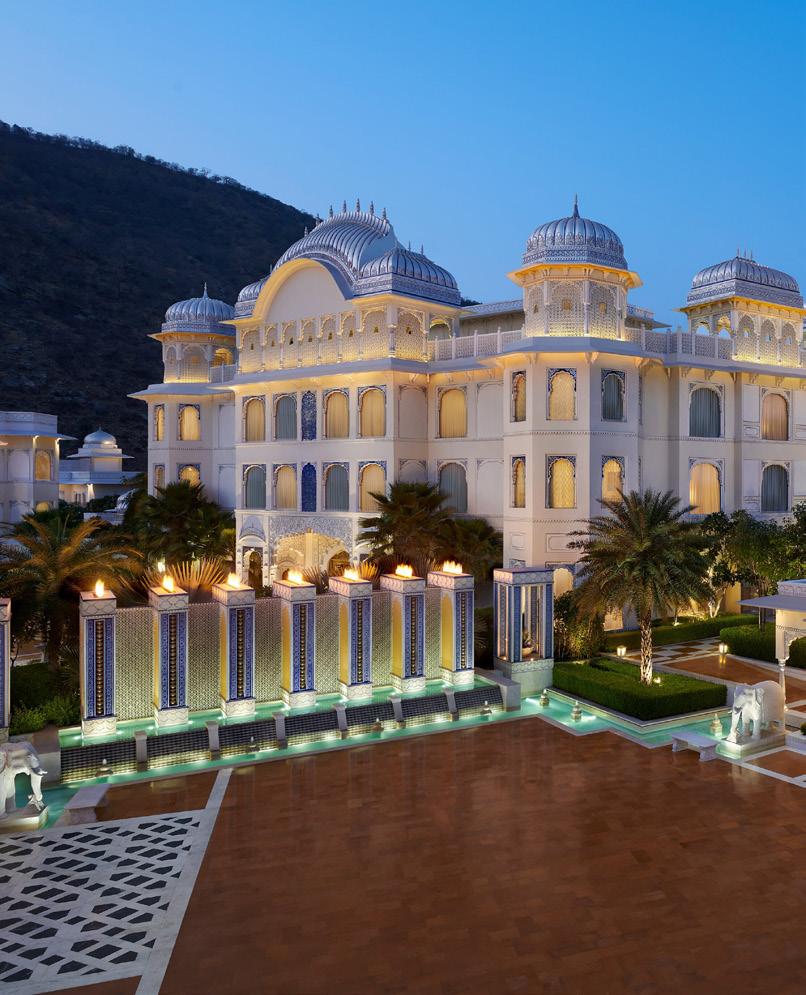
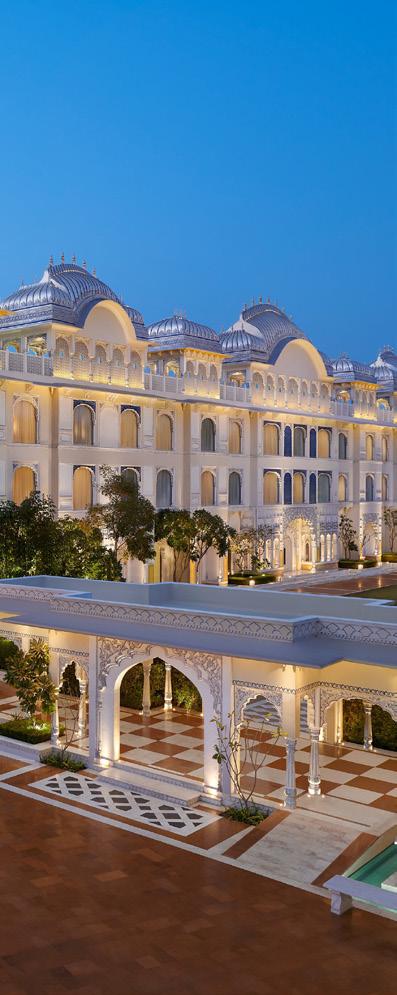
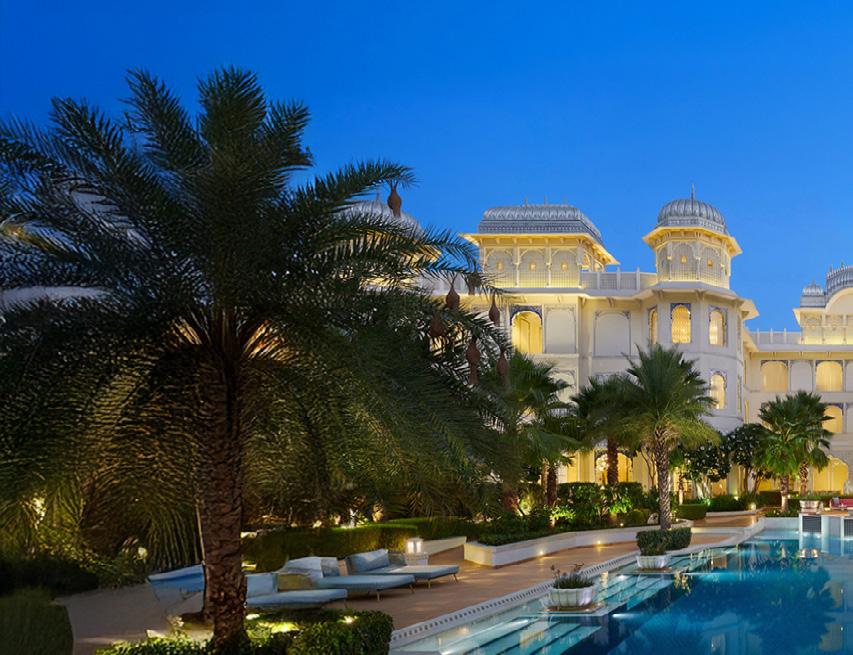
This palace hotel nestled in the green Aravalli hills offers a window into Jaipur’s art, culture, and experiences. The Leela Palace Jaipur lives up to its moniker and is designed as a modern-day royal retreat complete with sumptuous rooms, hand-painted art, pool villas, marble fountains, live Rajasthani folk performances, and if you feel you are missing the elephants, there are several intricately carved marble statues of the pachyderms, playing their part in the overall theme.
A profusion of beautiful frangipani and lotus scent the air as you walk around while water features add to the soundscape, leaving the highway far behind. Leela’s location right within the ecosystem of the Aravallis is an added plus making this a self-contained retreat from the city bustle but with easy access to Jaipur’s museums and markets. The terrace is called Hawa Mahal after
one of Jaipur’s most famous landmarks and just like its counterpart is a perfect vantage point to take in the surroundings. The property stretches across 9 acres in a profusion of white buildings with silver-tipped domes, frangipani trees, potted palms, ponds, marble sculptures, and fountains. Behind, extends the age-old Aravallis rendered green by the monsoon showers.
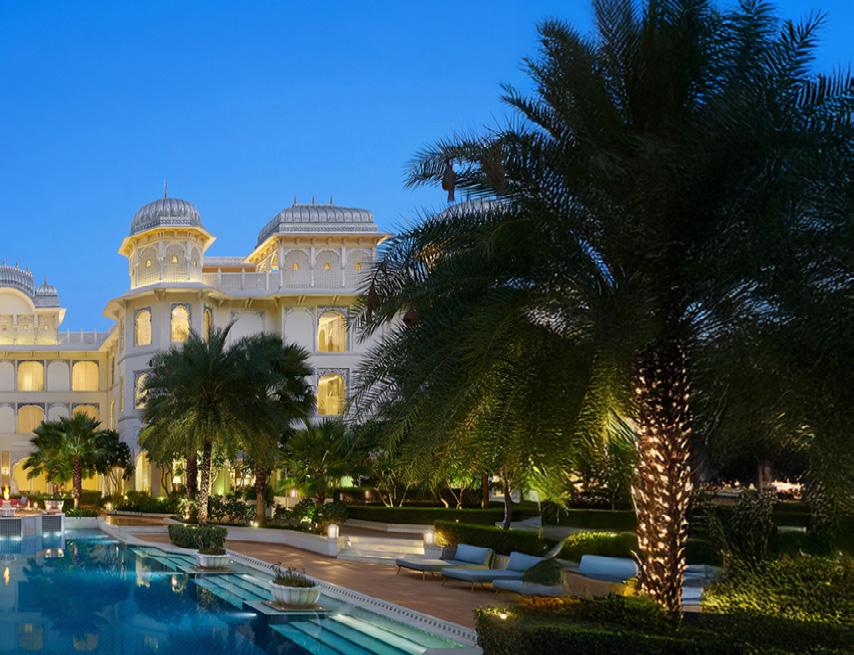
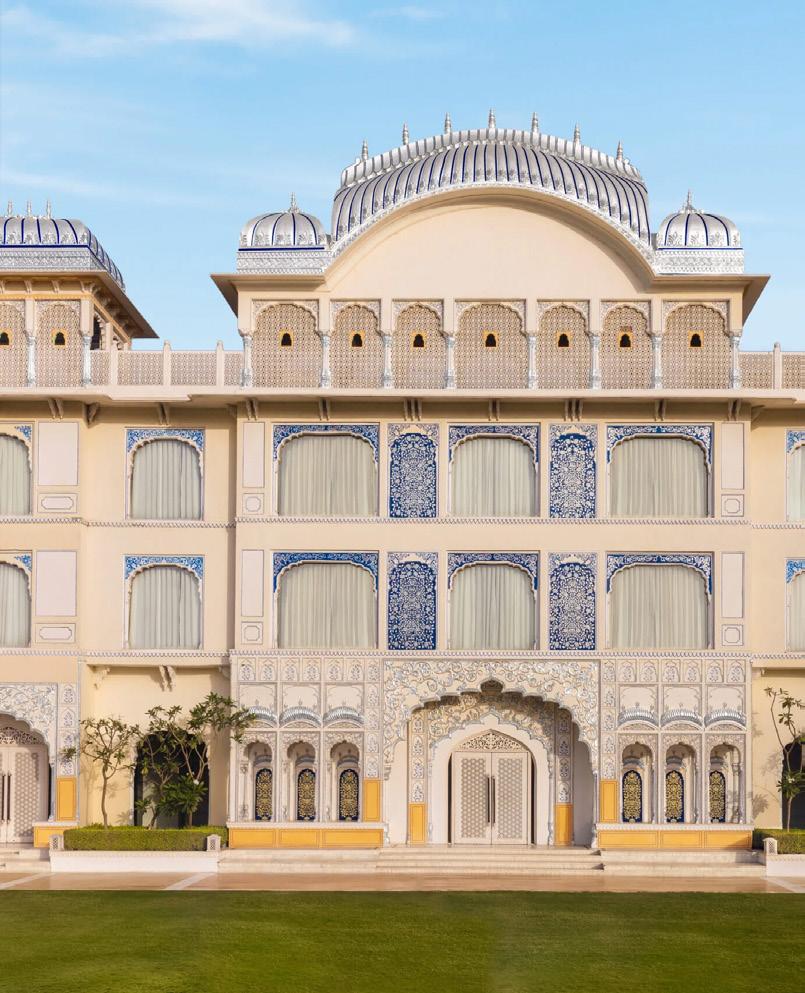

While we were there, a wedding party was setting up the terrace for the haldi (a prewedding ritual where the bride and groom are anointed with turmeric) and the whole place was awash with marigold garlands and yellow chiffon awnings; dholki (folk drum) players kept up a steady beat setting the mood for the festivities to follow. This seems serendipitous for The Leela Palace Jaipur is a resort property geared for western travellers, grand destination weddings, and anyone who wants a taste of Rajasthan’s culture and art albeit in a contemporary format with mod cons like a plunge pool and spa. The suites are arranged such that it is easy to book an entire set of rooms for groups of families or friends with easy access between them. And if that is not enough, the dinner-only Rajasthani speciality restaurant lit by candles reflecting off its glittering mirrored walls is enough reason to check in.
Leela Palace marked its debut in Jaipur in 2021, in the midst of the global pandemic, taking over from the JW Mariott Resort & Spa. While the overall structure remained intact, the all-white buildings got new pops of colour with a new coat of silver on the gumbads (domes), handpainted Rajasthani murals and art on the walls, and plush decor accents from acclaimed designer Sabyasachi. Leela signatures were added including the lotus pond (which is a feature across all their properties), a profusion of lilies as the chosen bloom across the hotel, an excellent butler service, and a rehaul of the F&B programming. Since its inception, the Leela properties have always been associated with luxury with a very strong Indian core and each hotel has its unique identity and sense of place.
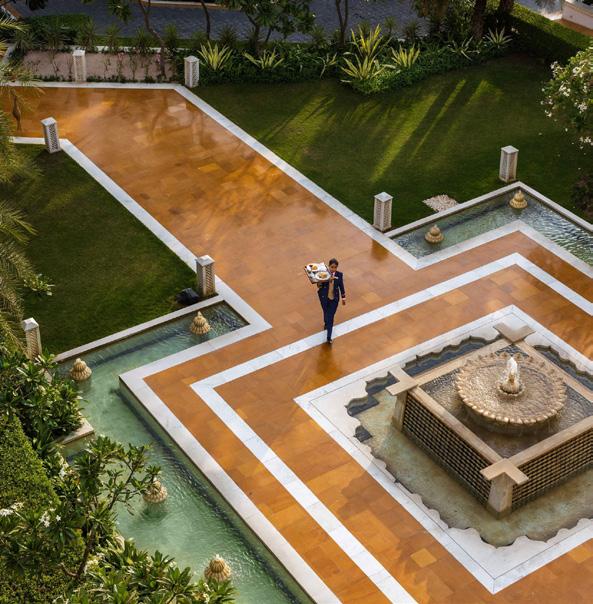
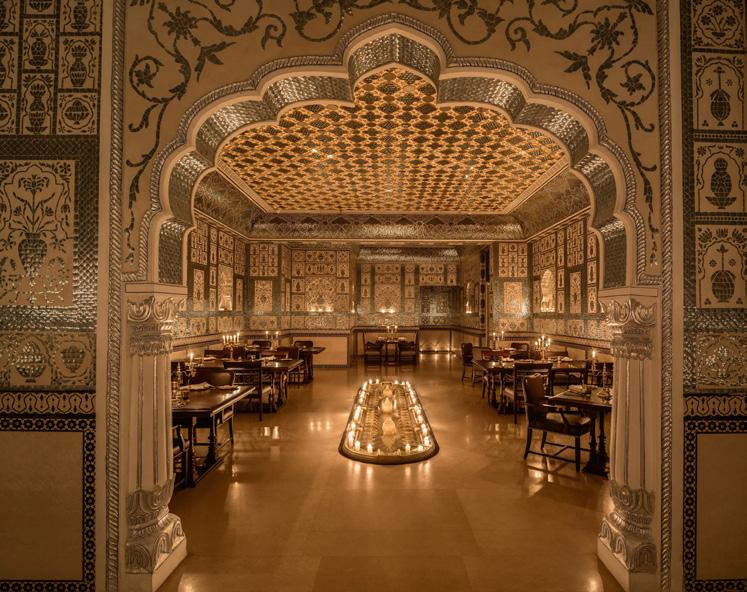
Over the last three years, this hotel has created an identity for itself in a city that has one of the highest concentrations of luxury properties in India. Through a roster of exclusive experiences and cultural programming ranging from the Jaipur Literature Festival to the much-awaited Polo Season.
The 200-key property has eight categories of rooms spread across the hotel from the palace rooms to the grand Maharaja Suite complete with its own private pool and a massive living and dining room and a private butler. My living quarters—the Royal Villa with a plunge pool was a gorgeous space where the inside and outside meld into one cohesive living space.
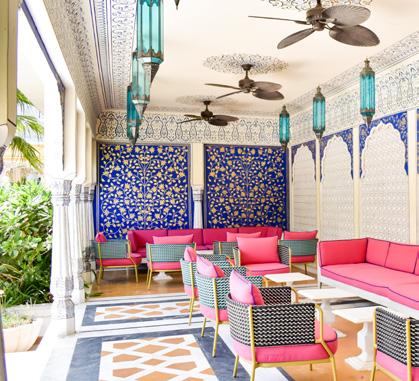
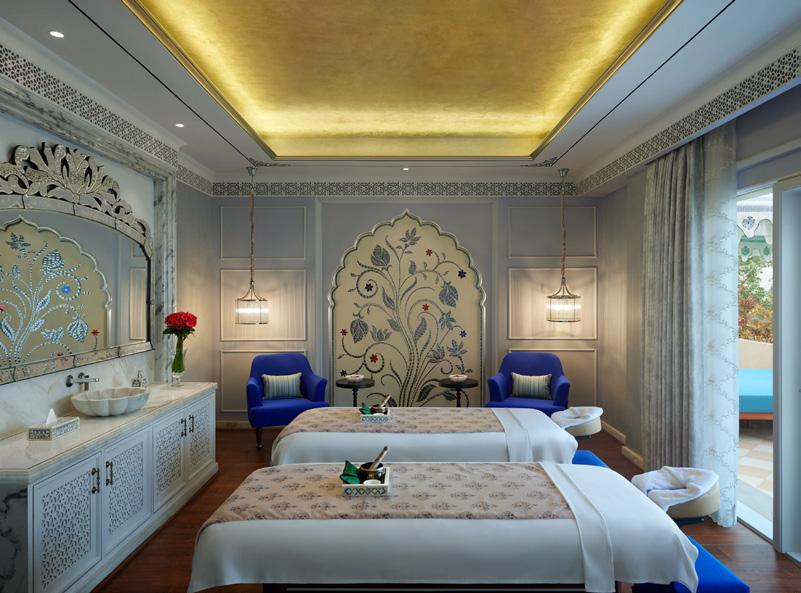
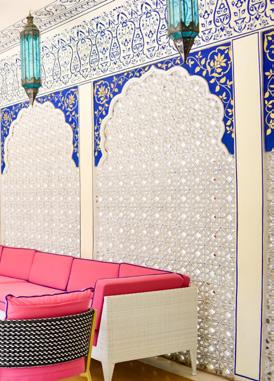
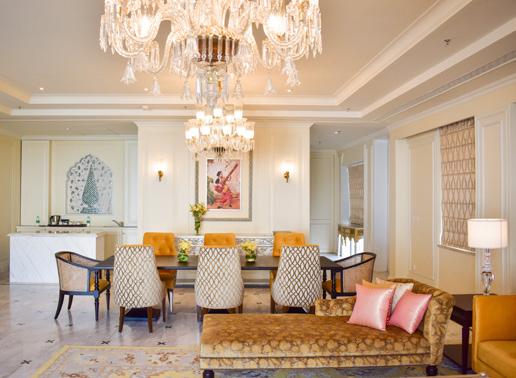
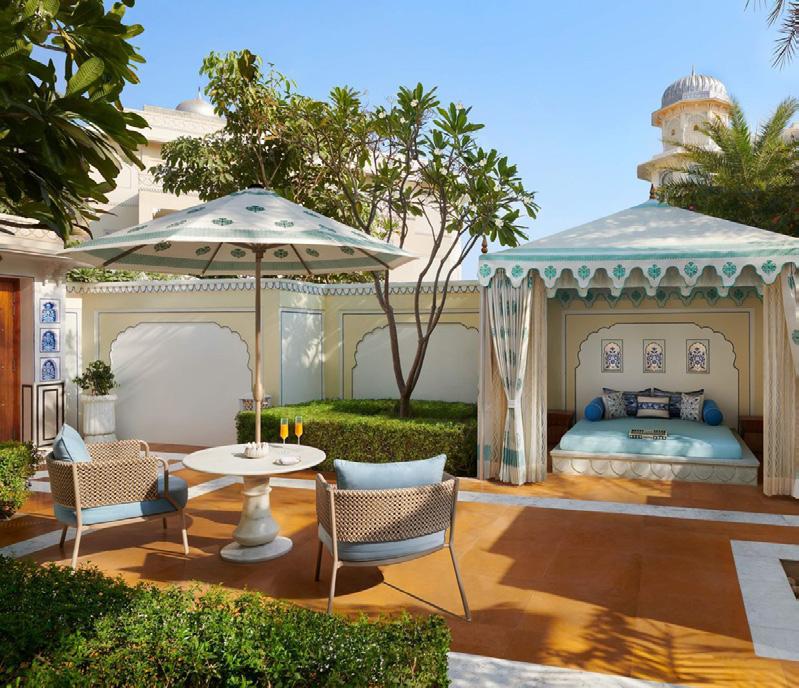
The outside is a walled courtyard with a garden with frangipani trees, a generously apportioned temperaturecontrolled pool, a canopied day bed, a seating area. The bedroom and the freestanding tub in the bathroom are enclosed by glass which opens up to the outside. The walls are a treat with walls covered in the traditional araish finish comprising marble dust and hydraulic lime, which was traditionally used across the forts and palaces of Jaipur to lend the walls a smooth finish and also increase longevity and improve waterproofing capabilities. There are handpainted murals of scenes from life in Rajasthan, blue and white floral designs and miniature-style paintings
in niches. By night, mood lighting transforms the space into a dreamy intimate space where you can settle in for a bottle of bubbly and room service by the pool, never needing to step out. Inside, a cosy sleeping area gives way to the sprawling all-marble bathing area, complete with a freestanding tub. The best part—Leela’s range of inhouse toiletries Tishya, which feel fab on your skin and hair and carry the hotel’s signature perfume. Distilled from kumud (lotus) and neelakurinji (a flower that blossoms once in 12 years), this delicate floral note scent lingers on your skin, the room, the spa and across the hotel’s lobbies.
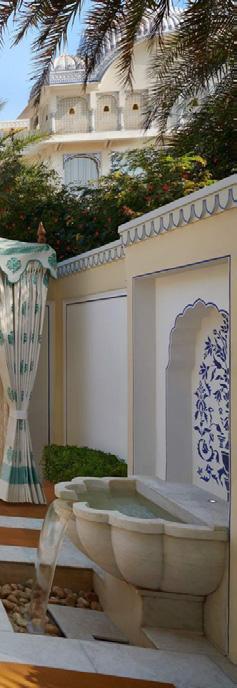
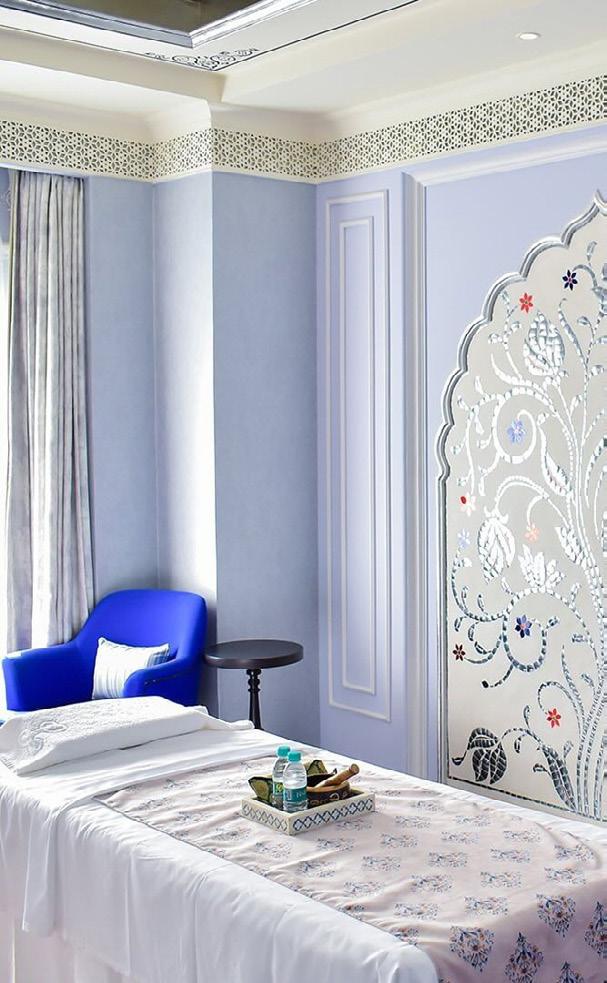
Rajasthani ingredients, traditional recipes and influences appear across the hotel’s f&b offerings in addition to the hotel’s newly launched Aujasya food programme designed as part of The Leela’s overall approach to wellness. Aujasya draws from the Sanskrit term which means vigour of life and this translates into healthy menu options across breakfast, small plates and meals and is available at all Leela restaurants. Think: alternative grains, good fats like organic ghee, unrefined sugars like jaggery, seasonal ingredients, and calorie-counted portions, all of which go into the making of creative dishes that are good for you and also taste really good and include a substantial number of Indian dishes rather than the standard salads and grills. At All-day diner Sukh Mahal, a Rajasthani buffet is there for the taking together with an a la carte Aujasya lunch with an aromatic Chicken broth with a 65-degree poached egg and a Barley and Beetroot Quinotto which is filled with rich earthy flavours and is a lighter take on the traditional risotto made with barley, quinoa and low-fat cheese.
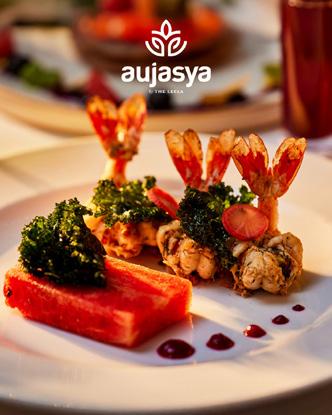
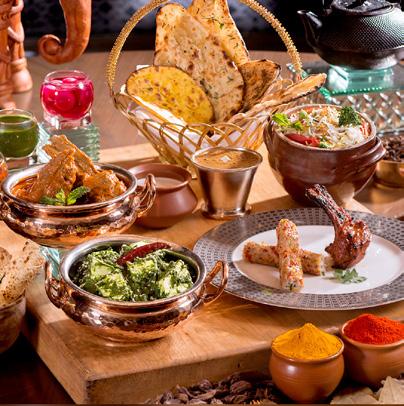
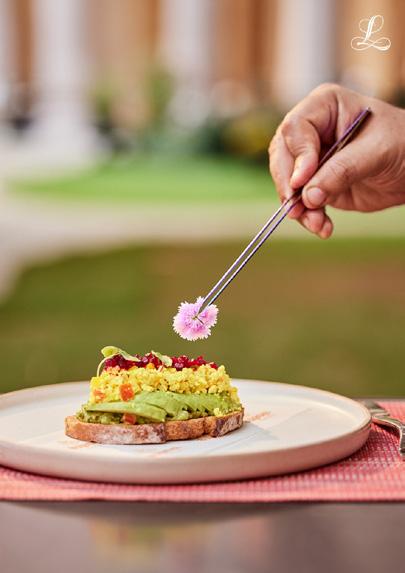
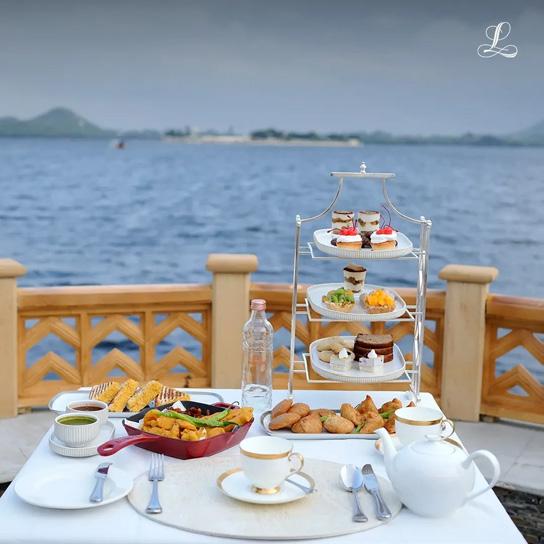
Dessert cravings are taken care of with a delicious popsicle packed full of jamun berries. What is also surprising is that there is an Aujasya menu for cocktails with low sugar, fresh ingredients, spices, and herbal tonics, available at the Jharokha Bar. Executive chef Varun Parashar has also created an alternative for a Rajasthani thali, which is a challenge for most chefs as this cuisine is high in its spice-fat content. This is available at the hotel’s star restaurant—Mohan Mahal. The latter is a spectacularly beautiful dinneronly restaurant, whose design is inspired by the grand Sheesh Mahal (palace of mirrors) at
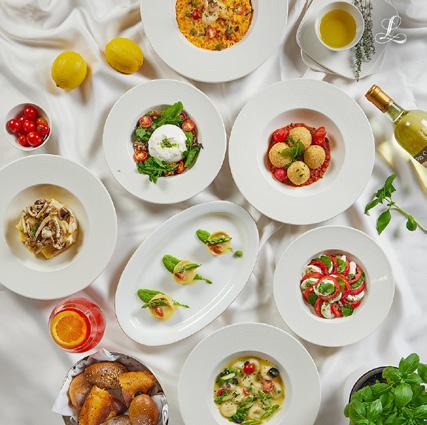
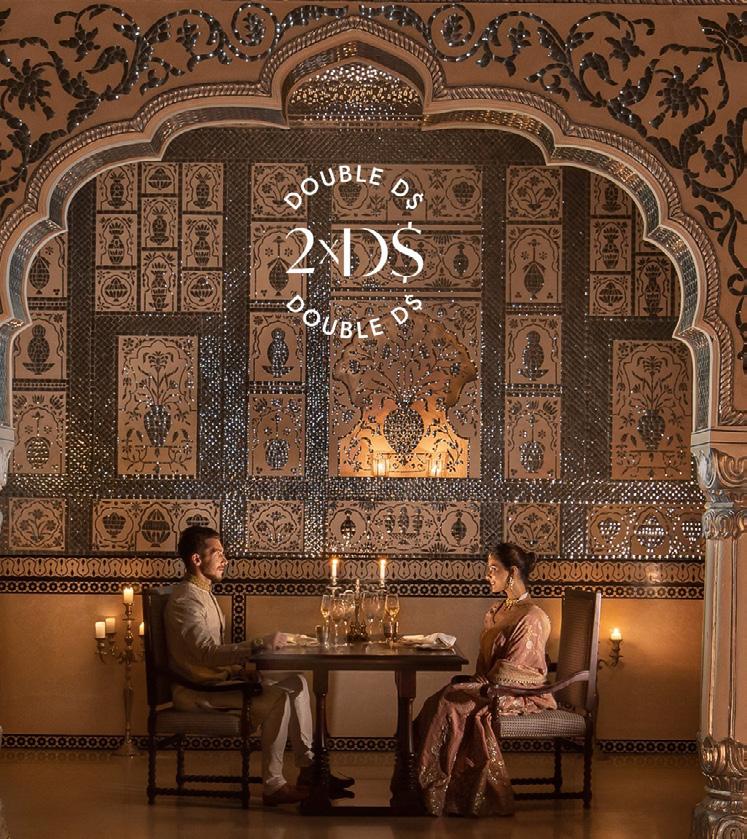
the nearby Amer Fort. Every inch of the wall and roof is covered in Thikri work—a Rajasthani style of embellishment where artisans use small pieces of mirror to painstakingly create intricate patterns by hand. The entire restaurant is lit just by candles; a long fountain runs through the centre and is fringed by a line of earthen lamps which reflect in the water. There is live instrumental Hindustani classical music performed by artists every evening and the menu is a lavish royal thali with an array of Rajasthani specialties.
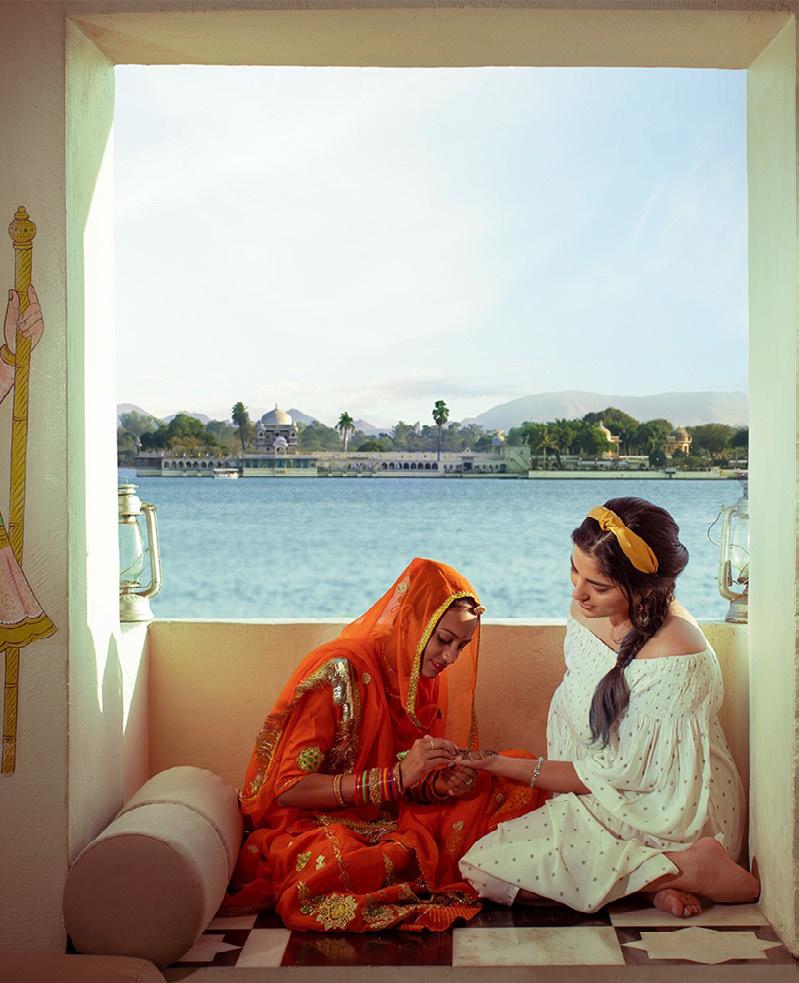

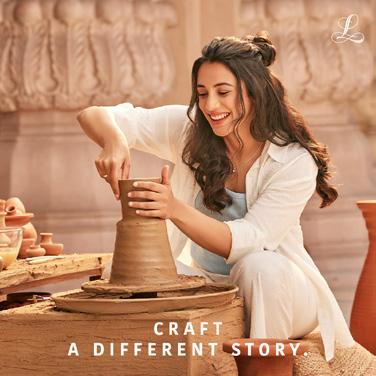
Attentive and unobtrusive, from the spa to the restaurant. While I was there, my butler Sudeshna was there to attend to all my requirements including a request for a simple off-themenu homestyle meal, pillows to suit my shoulder pain, and finding a suitable slot for a spa appointment. She was also at hand for conversations, a walkthrough of the property, and also left thoughtful little gifts on my bed every night including the hotel’s trademark incense sticks and a Rajasthani puppet-inspired set of pencils.
One of the highlights of The Leela Palace Jaipur is its special curation of unique experiences in Jaipur and its complete immersion in the city’s cultural fabric. Sawai Padmanabh Singh, the current maharaja of Jaipur, is part of the group’s Icons of India programme. The hotel is also associated with one of the city’s most well-known events, the Jaipur Literature Festival where it manages the culinary programme and hospitality at the Speakers’ Lounge at the
festival site and also hosts the much-feted grand Writer’s Ball at the hotel’s sprawling banquet hall and garden. With two successful editions of the Leela Maharaja Sawai Man Singh Polo Cup, the hotel has also brought one of the city’s most iconic sports within its fold. It also has a regular roster of events including high fashion showcases, music performances, and culinary pop-ups by star chefs (their recent collabs included a Himalayan table by celebrated chef Prateek Sadhu of NAAR). Apart from an annual calendar of events, guests at the Leela can also book regular experiences including a sunrise yoga session
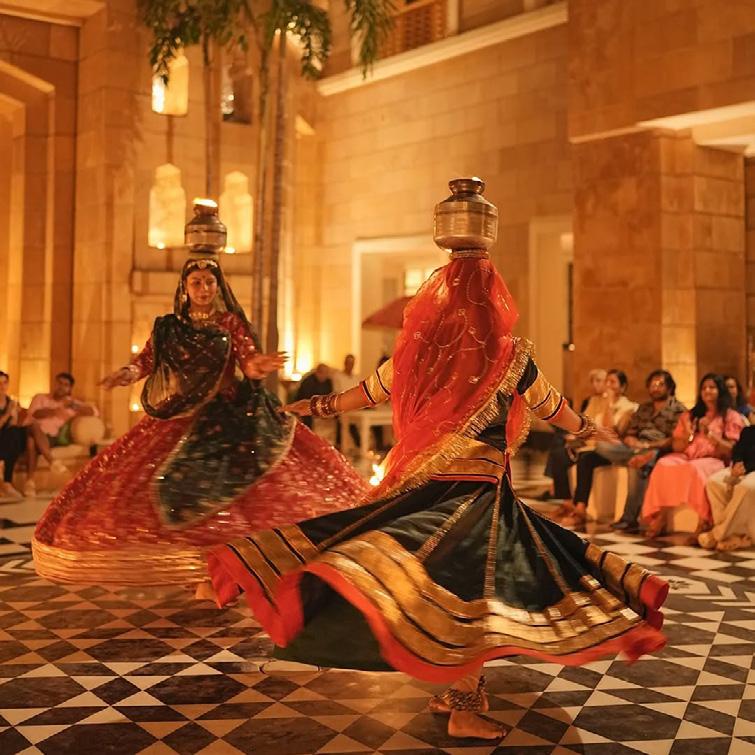
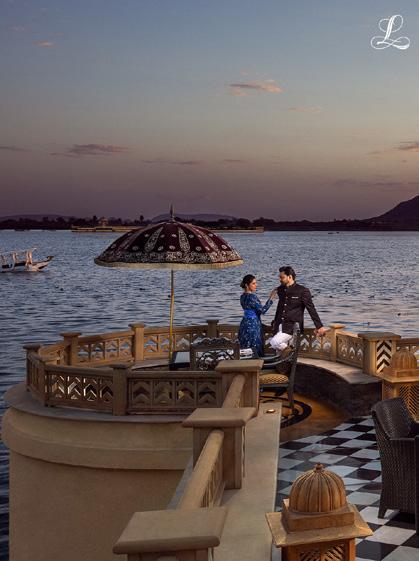
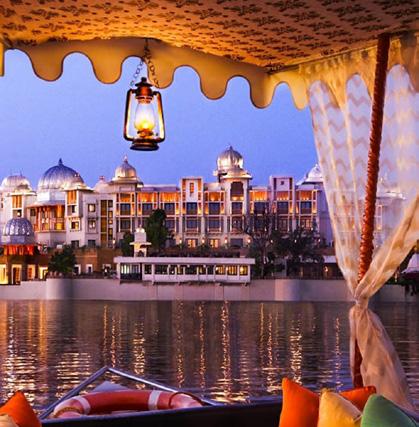
and an Aujasya breakfast at the 18th-century Jaigarh Fort before opening hours. This private access to the fort offers an unbeatable vantage over the Aravalli hills and a moment to enjoy the grand monument minus the crowds. Other immersive experiences include a guided conservation walk through the City Palace followed by a sundowner on the terrace of Chandra Mahal, which remains a private residence for the royal family. One of the highlights of Jaipur’s social calendar is the city’s love for polo and the hotel has put together a short lesson, a tour of a stud farm followed by a high tea.
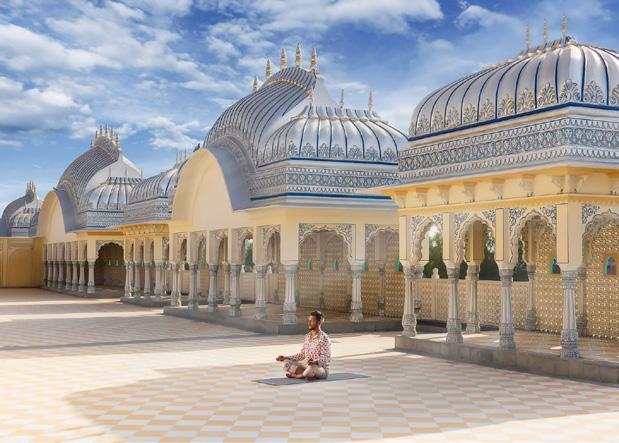
The Leela checks sustainability boxes through its engagement with the local communities by promoting artisans and local performers, ethical sourcing practices, and an onsite bottling plant. This apart, their collaboration with incense brand Phool ensures that all the floral waste from the property has a second life repurposed into incense sticks, infused with the signature Tishya fragrance and used across the property and as special gifts for guests.
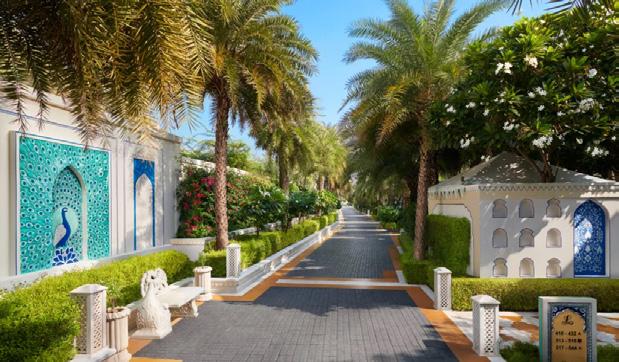

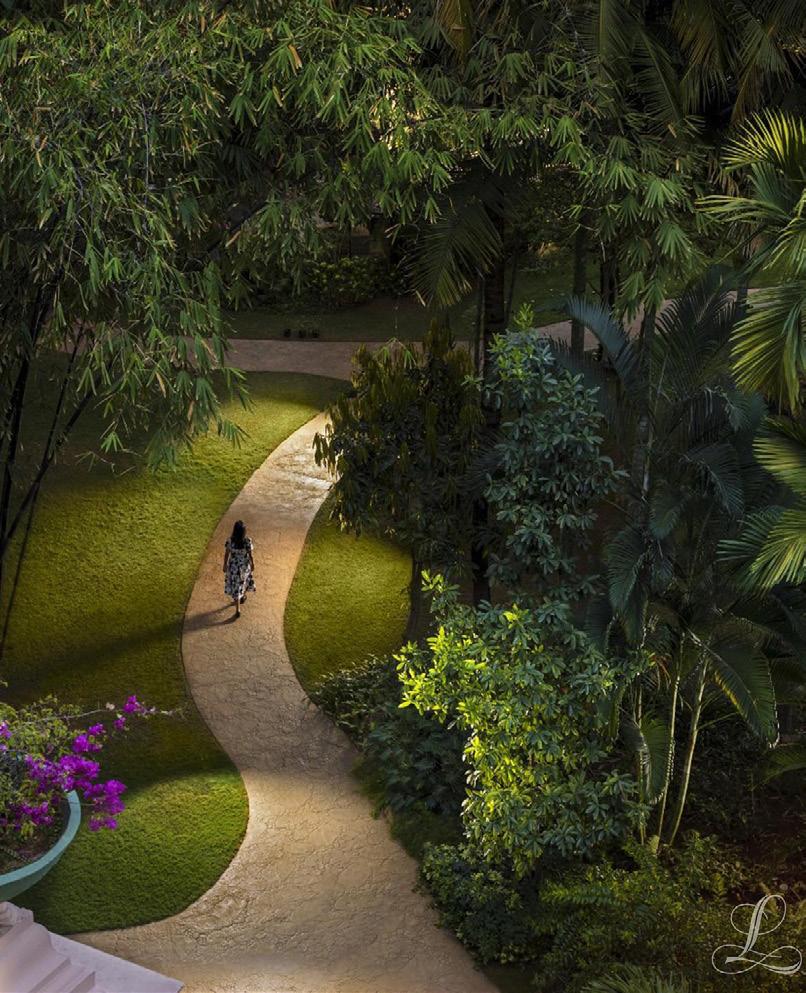


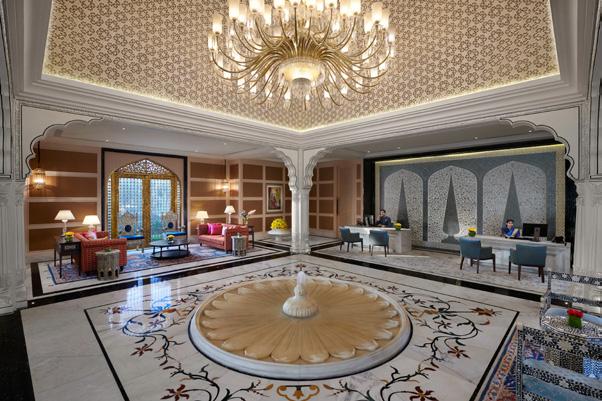

The hotel’s entrance, lobby, restaurants and the rooms in the palace wing plus some of the villas can also be accessed by those with limited mobility.
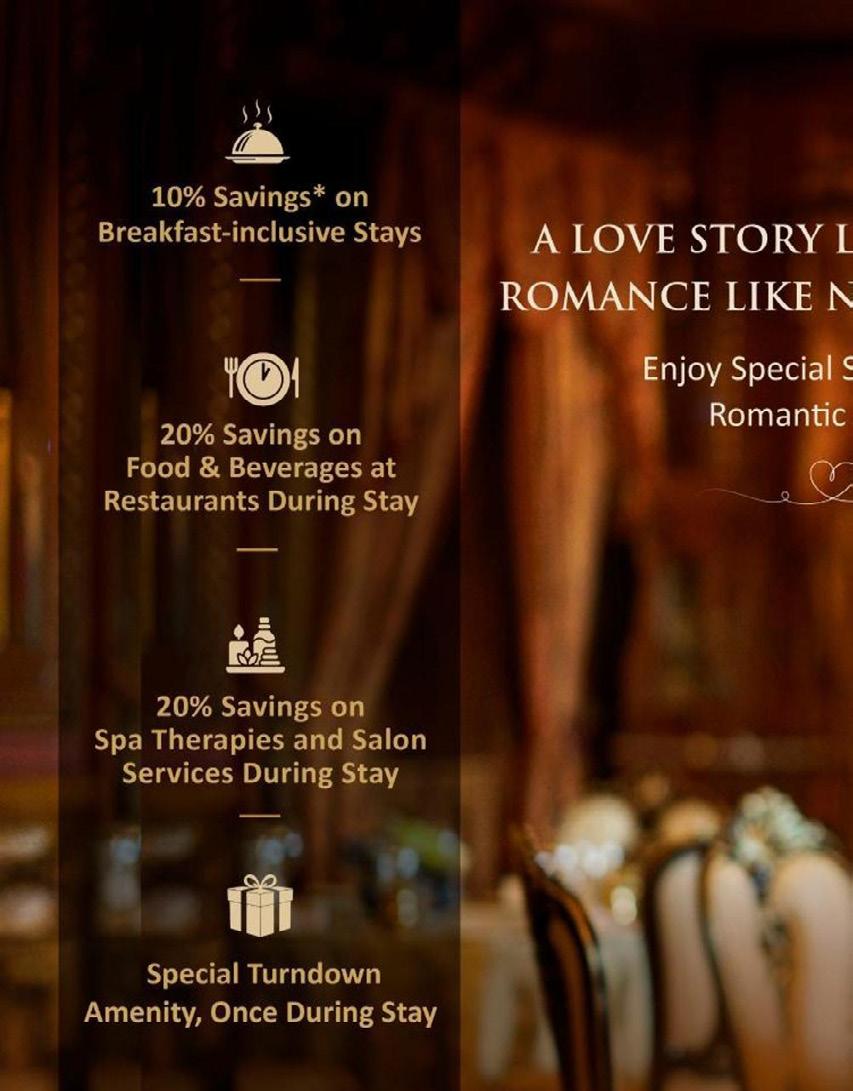

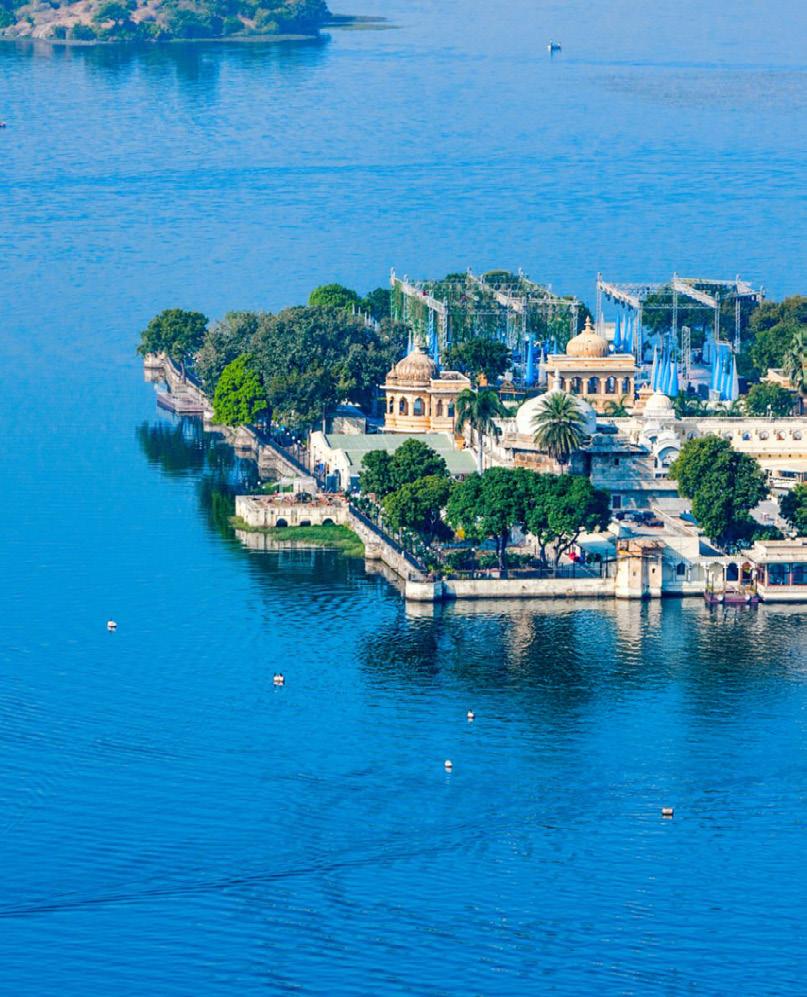

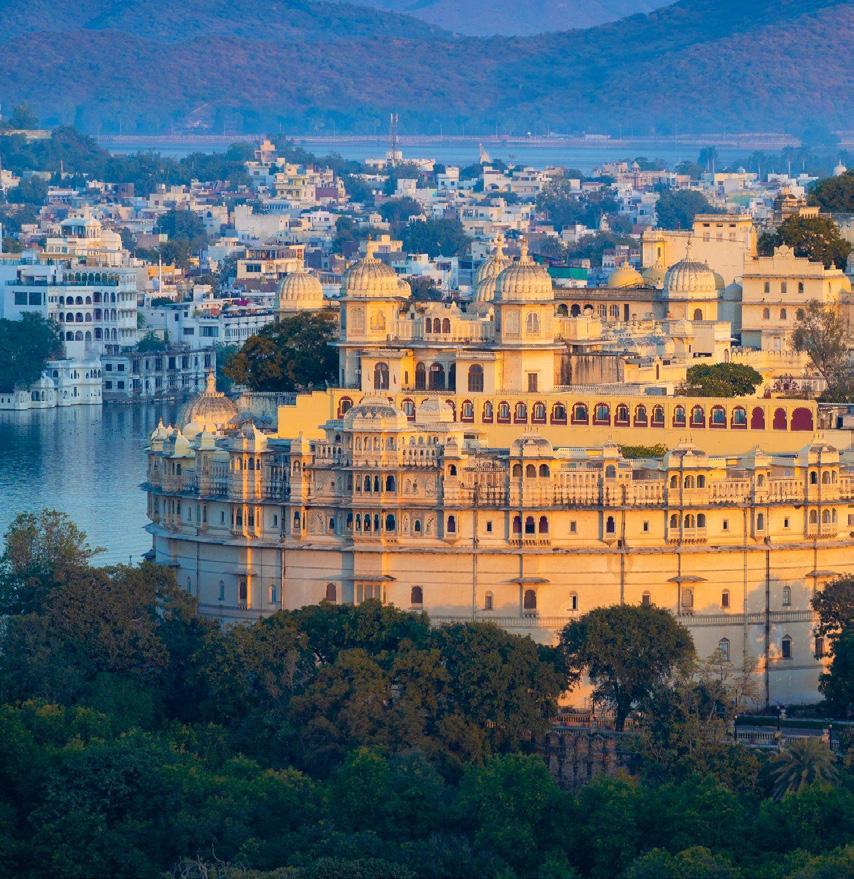

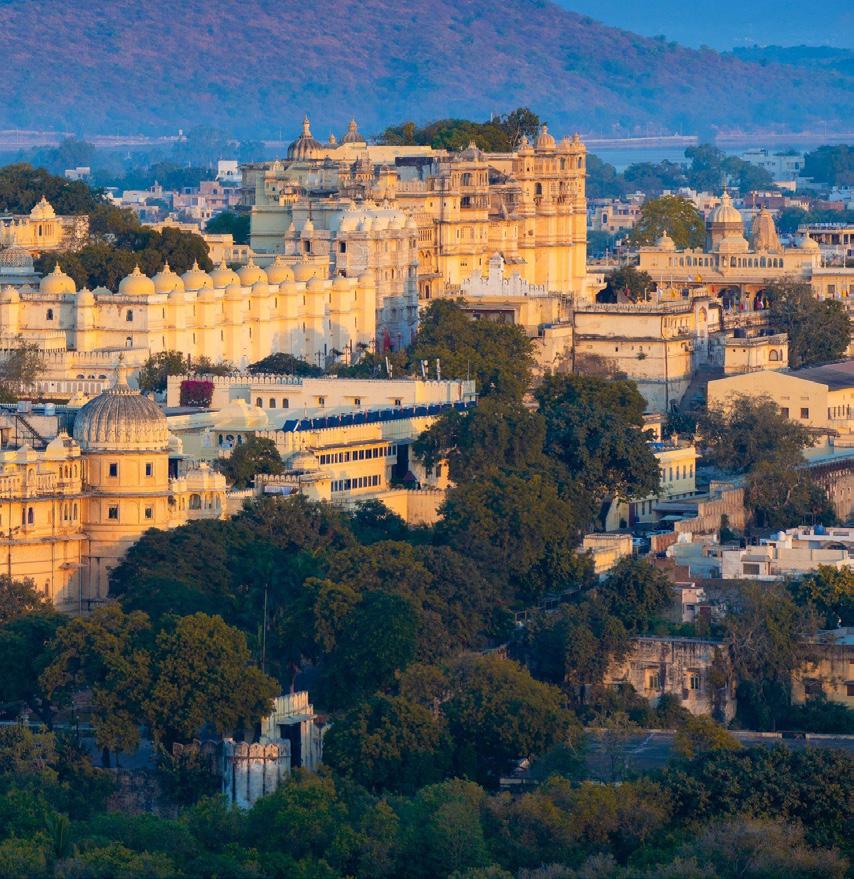
Situated amid the lush green hills of the Aravalli Range of Rajasthan, Udaipur rises like a mirage from the arid landscape. It is a city of shimmering lakes and marble palaces that seem to float between earth and sky. Known as the ‘City of Lakes,’ Udaipur is renowned for its Rajputana grandeur, romantic vistas, and timeless charm that beckon travellers from across the globe. The abundance of lakes has also earned Udaipur the nickname ‘Venice of the East.’ As you first lay eyes on Udaipur, you’ll understand why it’s often hailed as India’s most romantic city. The serene waters of Lake Pichola reflect the ivory facades of palatial buildings, creating a dreamlike panorama that has enchanted visitors
for centuries. This picturesque setting has made Udaipur a favourite among filmmakers, with the James Bond film Octopussy famously showcasing its ethereal beauty to the world. While the lakes are undeniably captivating, Udaipur boasts majestic forts and historic palaces that stand as testaments to the city’s rich heritage. Museums and galleries offer fascinating glimpses into Udaipur’s vibrant culture. Nature enthusiasts will find solace in the city’s natural landscapes. Architectural marvels like temples and intricately designed buildings, lively traditional fairs and festivals add a touch of vibrancy to the city, while delectable cuisine tantalises taste buds with its unique flavours.
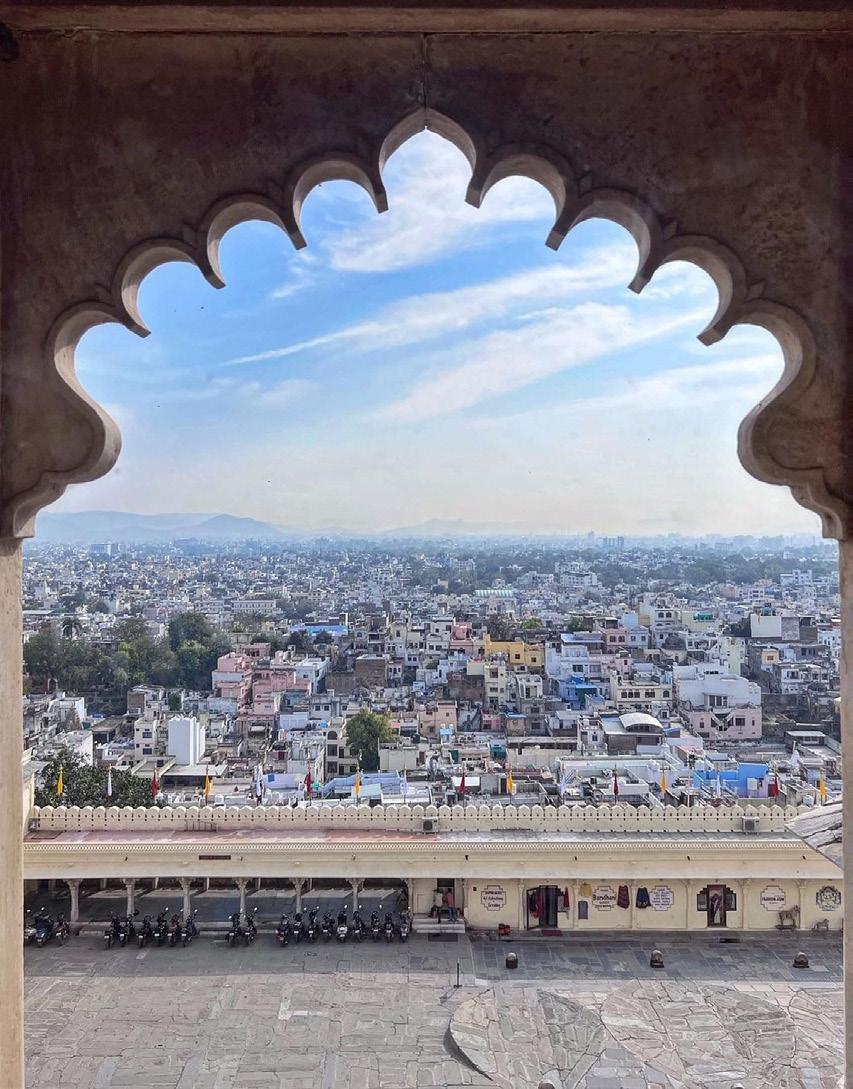
Udaipur’s story unfolds like a captivating legend. Founded by Maharana Udai Singh II in 1553, the city served as a refuge for the Mewar dynasty, known for its valour and resistance against Mughal emperors. Maharana Udai Singh II’s legacy of resistance lives on in the very stones of the City Palace Complex, a sprawling labyrinth of courtyards, museums, and intricately carved buildings where his descendants sought shelter. Within the City Palace, ascend to the Bada Mahal which is known to be the men’s section and marvel at the breathtaking panorama of Lake Pichola, where the majestic City Palace appears to float on the water’s surface. Imagine the grandeur of
the Mewar court as you explore the Crystal Gallery, its collection of glittering crystal ware and chandeliers sparkling under the soft glow of the lights. Jag Mandir Palace, known as ‘The Lake Garden Palace,’ is a striking three-story marble and sandstone structure on Lake Pichola’s southern island. The palace features lifesized marble elephants and architectural gems like the Gul Mahal and Zenana Mahal. It is complemented by lush gardens, a Rajasthani cuisine restaurant, and a museum. Nearby, the Taj Lake Palace, originally Jag Niwas Palace, also on Lake Pichola, was built as a summer retreat and converted into a five-star hotel later.
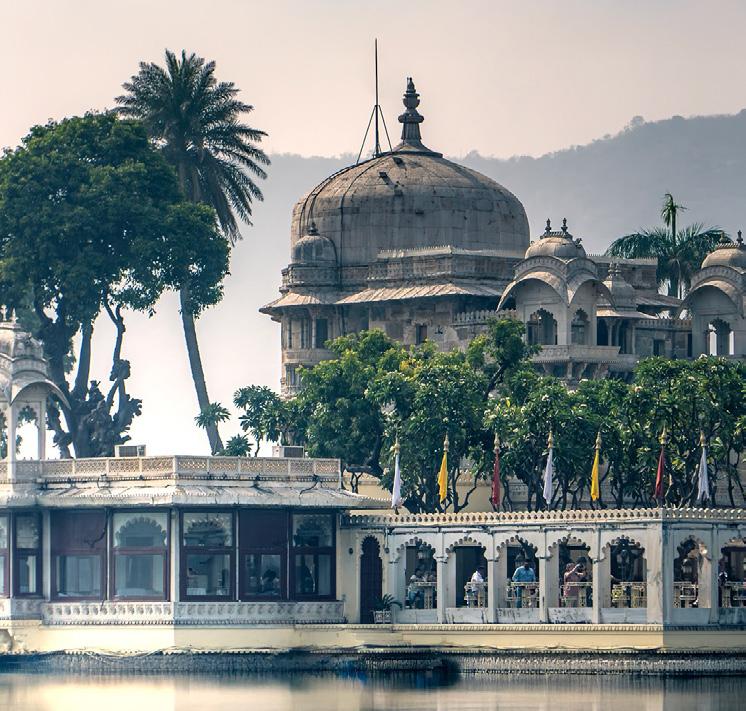
Known as one of the world’s most romantic hotels, it offers opulent décor with ivory white and black marble, luxurious hospitality, recreational activities, and a range of dining options from Rajasthani to European cuisines. Perched atop the Aravalli Range, 85 km away from Udaipur, lies a monumental testament to Rajput valour and architectural brilliance – the Kumbhalgarh Fort. Built in the 15th century by Maharana Kumbha, it spans over 36 kilometres, making it one of India’s largest and most intricate fortresses. You can explore its imposing walls, intricate temples, and royal palaces, immersing yourself in the rich heritage and panoramic vistas it offers.
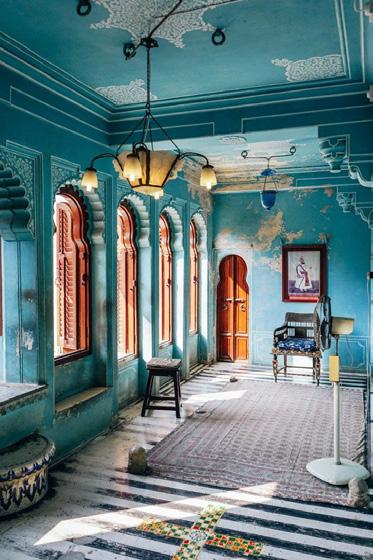
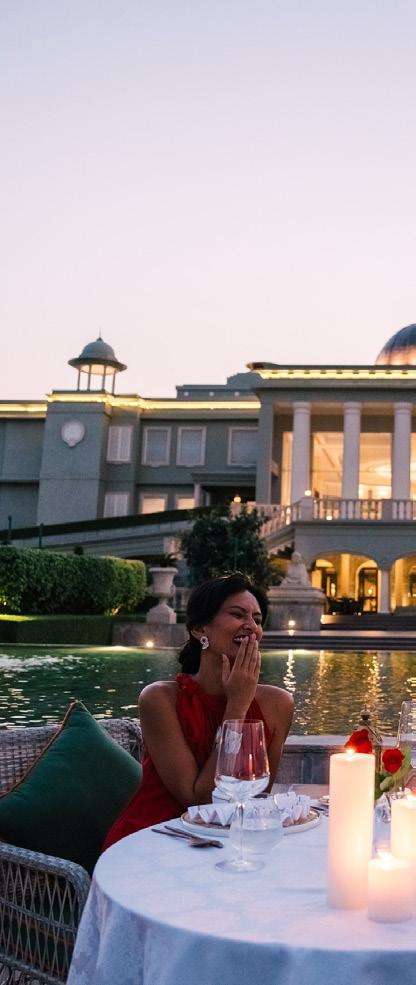
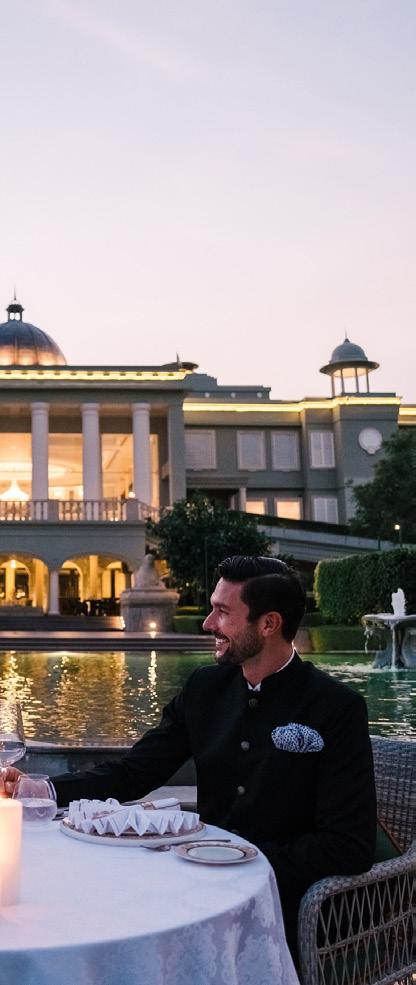
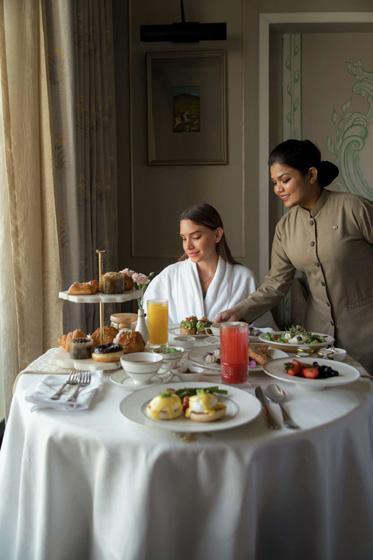
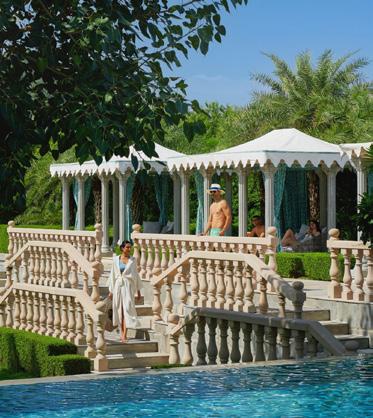
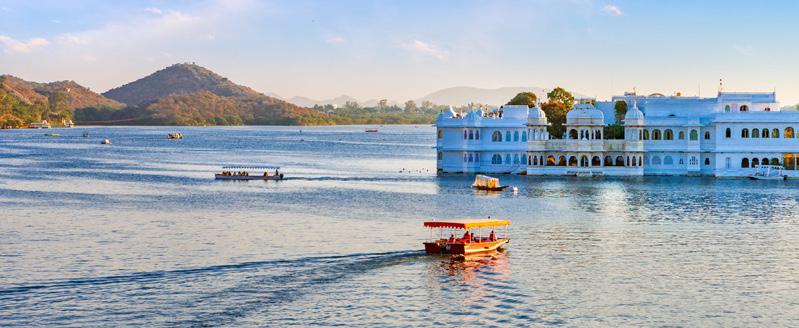
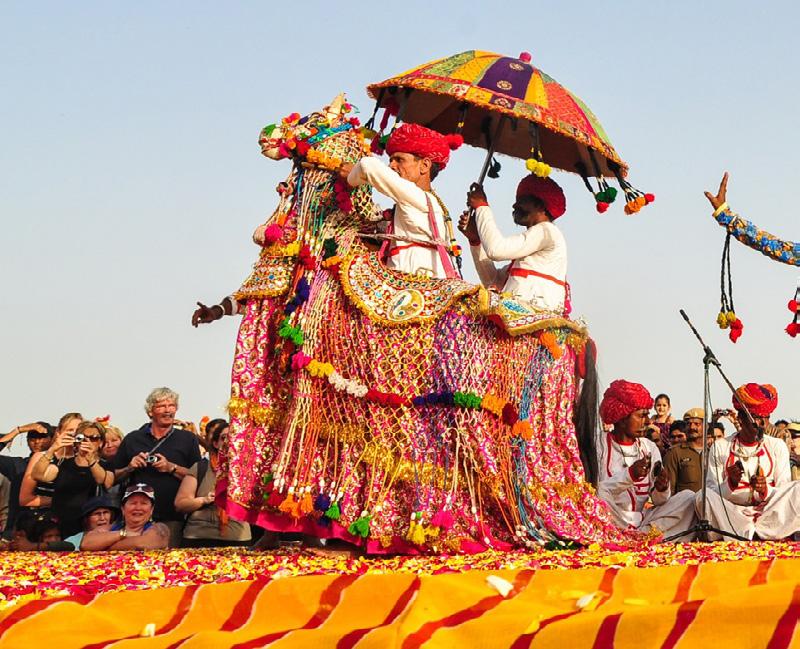
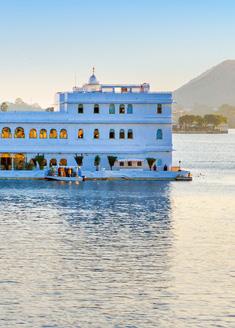
Constructed in the 18th century by a Mewar minister, Bagore Ki Haveli is a historic mansion-turned-museum on the shores of Lake Pichola. The haveli boasts over 100 rooms, each adorned with intricate Rajasthani art, including paintings, glasswork, and carvings that showcase the region’s heritage and architectural elegance. It houses a variety of Rajput-era artefacts, such as copper vessels and jewellery boxes. For a cultural experience, visit in the evening to enjoy the Dharohar Dance Show, where traditional Rajasthani dances like Ghoomar and Kathak are performed. These spirited performances of local music and dance highlight the cultural richness of Rajasthan, making Bagore Ki Haveli a pivotal destination in Udaipur.
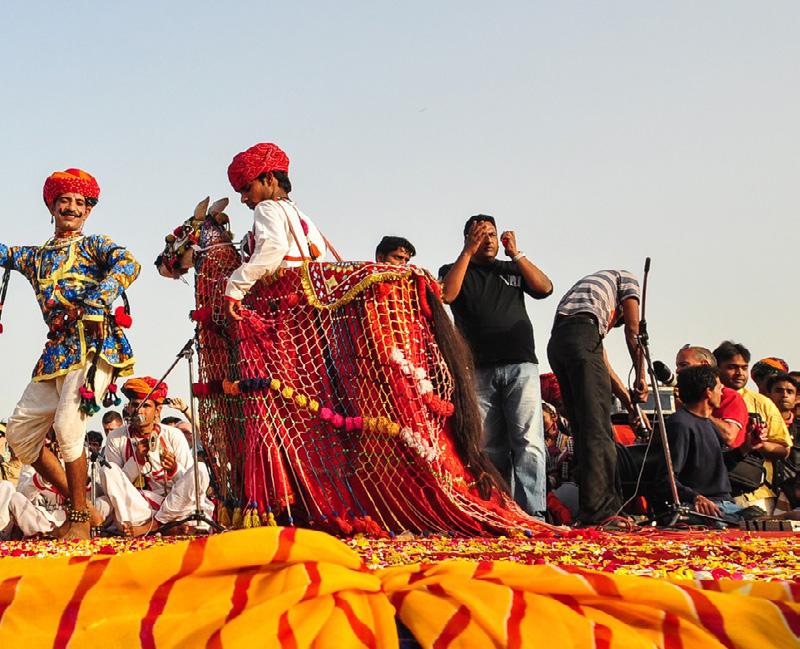
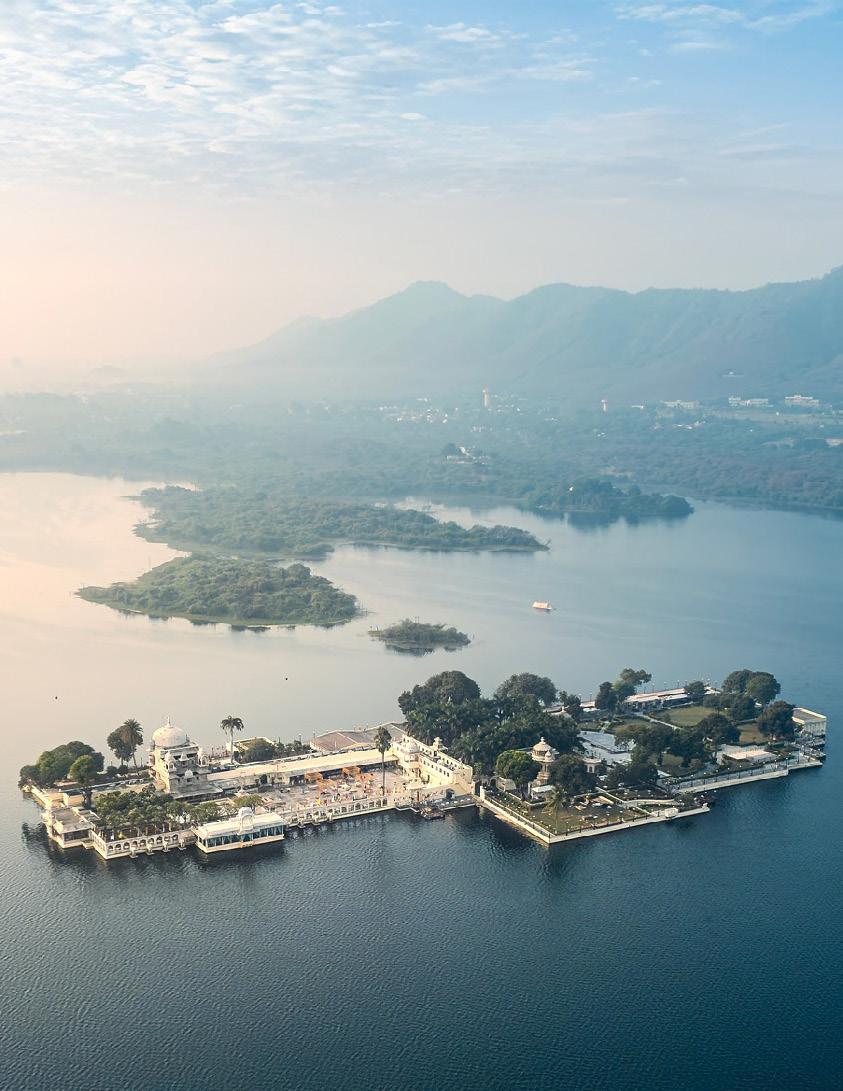
Udaipur weaves its charm around the numerous tranquil bodies of water that dot its landscape. Lake Pichola has stood out as a jewel in the city’s crown since 1362. Take a boat ride on Lake Pichola and enjoy unparalleled views of the majestic City Palace and the mystical Jag Mandir Palace, whose stunning reflections create breathtaking vistas, turning each moment into a living postcard. Fateh Sagar Lake, located northwest of Udaipur and the second-largest in the city, offers picturesque boating experiences. Escape to the tranquil waters of Badi Lake, a sprawling artificial lake outside Udaipur. Ideal for peaceful picnics and refreshing swims, it also offers a scenic trek to the ‘Bahubali’ hilltop, famed for its stunning sunrise and sunset views.
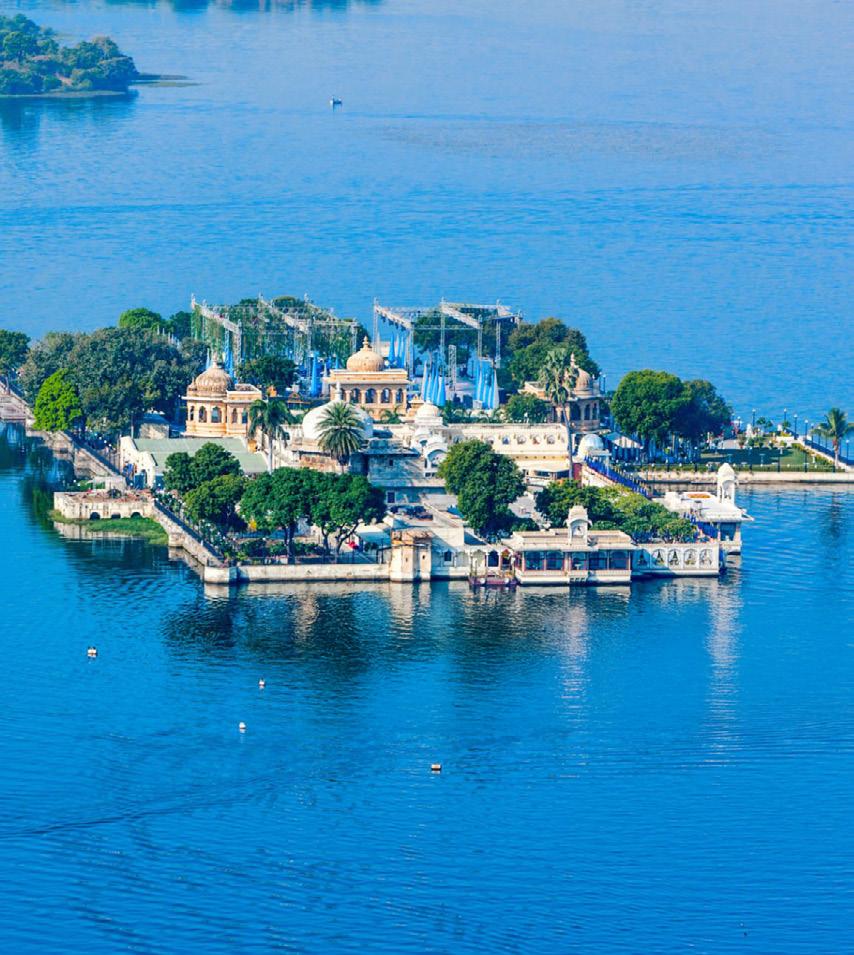
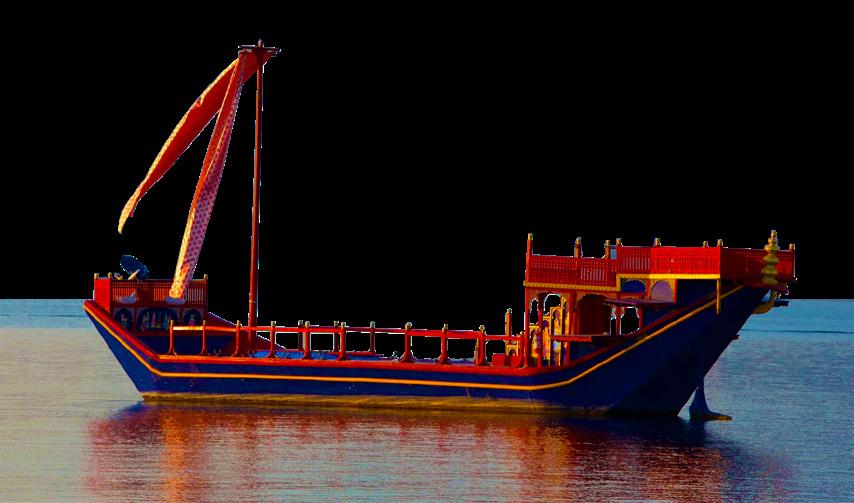
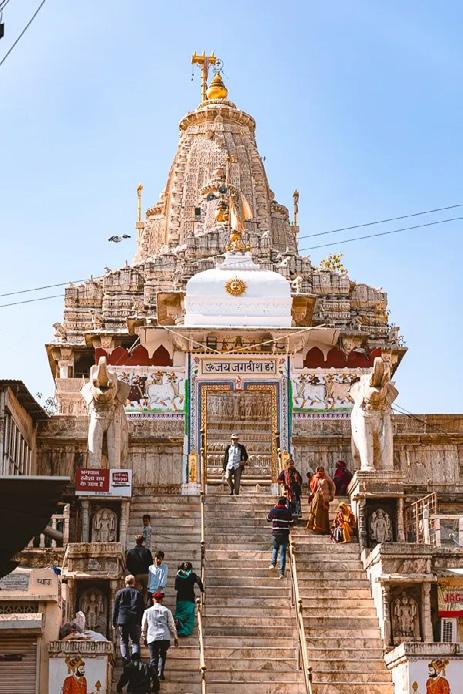
Udaipur is more than just its shimmering lakes and grand palaces; it’s a mosaic of sacred spaces. Seek spiritual solace at the magnificent Jagdish Temple, a three-story architectural marvel adorned with elaborate carvings and sculptures. Climb the temple steps and be rewarded with a breathtaking bird’seye view of the bustling market area and the City Palace complex below. Located on the banks of Fateh Sagar Lake is the Mahakal Mandir, a revered Hindu temple dedicated to Lord Shiva. The temple complex has a serene atmosphere, perfect
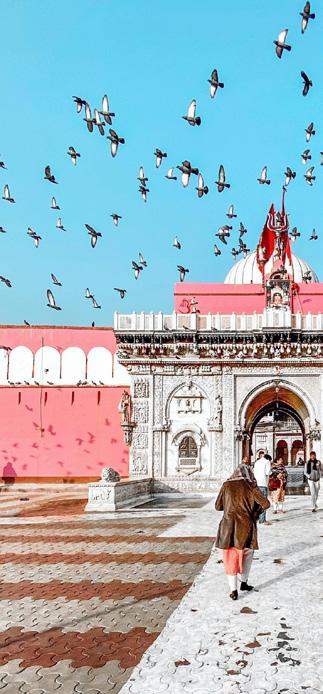
for connecting with both nature and the divine for a memorable spiritual experience. The Mansapurna Karni Mata Temple, once a remote shrine, is now easily accessible via a 387-meter ropeway from Deendayal Upadhyay Park, offering breathtaking views and a quick, comfortable ascent. Further enriching Udaipur’s spiritual landscape, Neemach Mata Temple sits atop Dewali Hill, featuring a grand central shikhar and panoramic views of the city and lake below. The temple, a significant site for Hindu pilgrims, includes a revered idol of Neemach Mata Devi, believed to be the royal family’s household goddess. Located 22 km north of Udaipur, the revered Eklingji Temple, dedicated to Lord Shiva, showcases exquisite architecture dating back to 734 AD. Famous for its four-faced black marble Lord Shiva idol and ornate silver Nandi, this temple remains a cornerstone of Mewar’s spiritual and royal heritage.
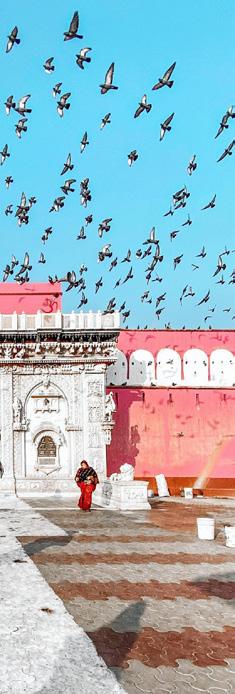
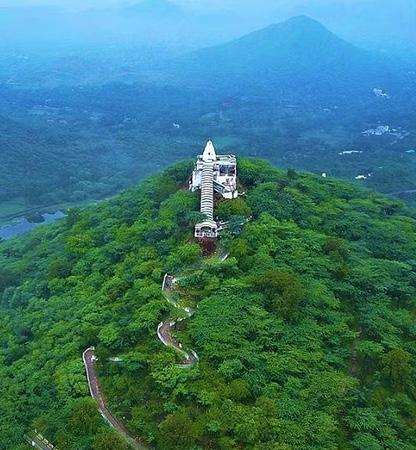
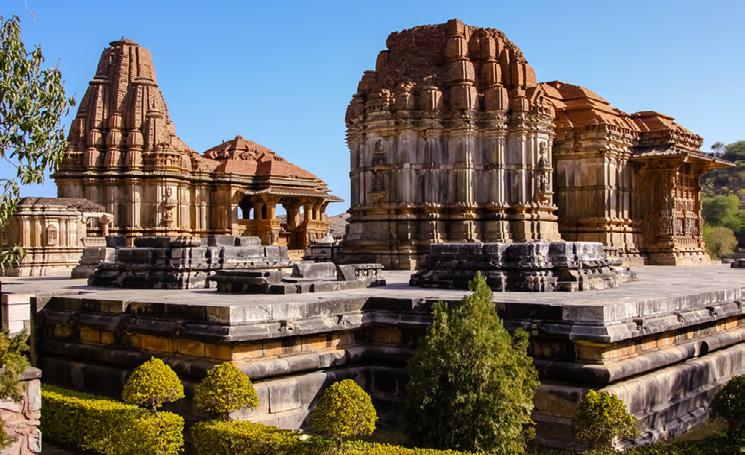
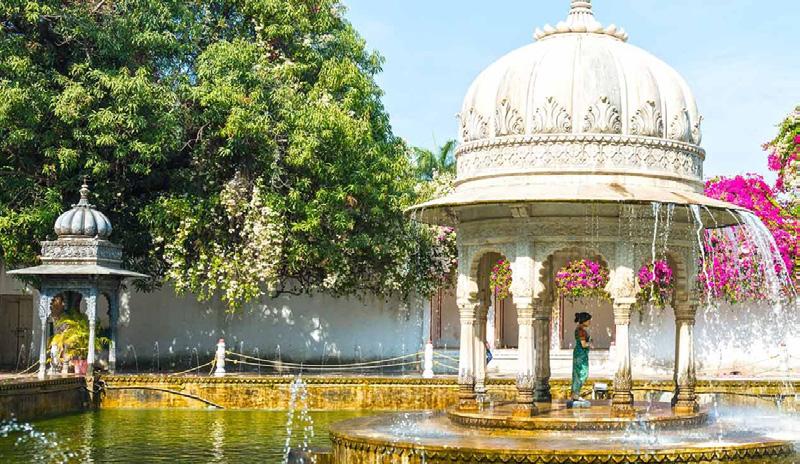
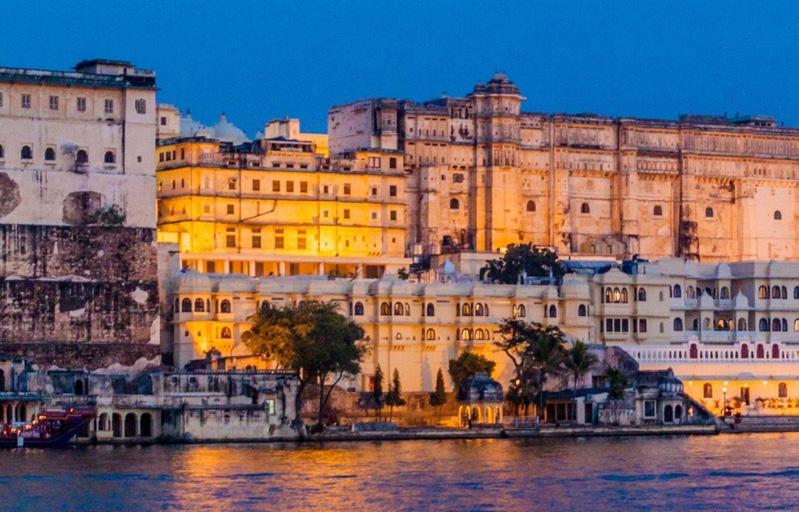
Udaipur is renowned for its dynamic culture and royal history and offers visitors a trio of captivating outdoor attractions. Begin your exploration at Saheliyon Ki Bari, the Garden of the Maidens. This picturesque 18th-century garden, designed for the royal maidens accompanying a newlywed princess, boasts lush greenery, ornate fountains, and shaded walkways along the banks of Fateh Sagar Lake. Nearby, the Ambrai Ghat, also known as Manjhi Ghat, is popular for its serene mornings and lively evenings. It offers a peaceful respite where you can enjoy yoga, lake baths, and stunning views of heritage hotels like Lake Palace and Jag Mandir across the water. With six daily aartis and marble seating, it’s a perfect spot for cultural immersion and relaxation. Lastly, the Doodh Talai Musical Garden provides a harmonious blend of nature and music near the city centre. This rock and fountain garden is an ideal venue for sunset views and is connected to the Karni Mata Temple by an aerial tramway, offering expansive city vistas.
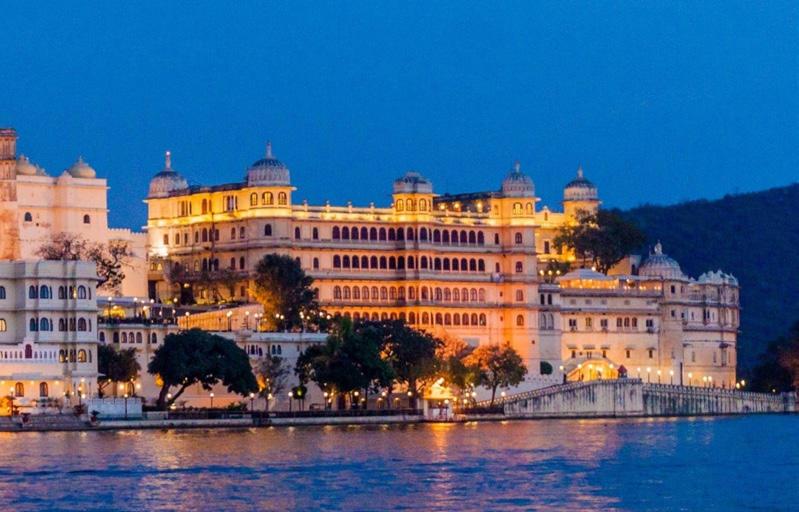
Udaipur’s cuisine is a captivating melody, harmonising the rich history of the Mewar region with its famed regal hospitality. Its roots trace back to the royal kitchens, where skilled chefs meticulously crafted dishes fit for the royal table. Indulge in the region’s must-try traditional dishes like Dal Baati Churma (a hearty combination of lentils, pan-fried wheat balls, and crumbled sweet-fried bread), Gatte ki Sabzi (savoury chickpea flour dumplings in a flavorful gravy), Ker Sangri (a tangy dish featuring dried berries and beans), Laal Maas (a fiery red meat curry) or Bajra Khichdi (a comforting millet porridge). Beyond traditional dishes, explore the bustling lanes for a vibrant street food adventure. Savour specialities like Kachori (crispy fried pastries with savoury fillings), Pyaaz ki Kachori (flaky pastries with a delicious onion filling) or Mawa Kachori (a sweet twist on kachori). Don’t miss the melt-in-your-mouth Ghevar (a local sweet masterpiece made with flour, clarified butter, and sugary syrup). For an unforgettable culinary experience, head to popular foodie havens like Hathi Pol Bazaar or Lake Palace Road.
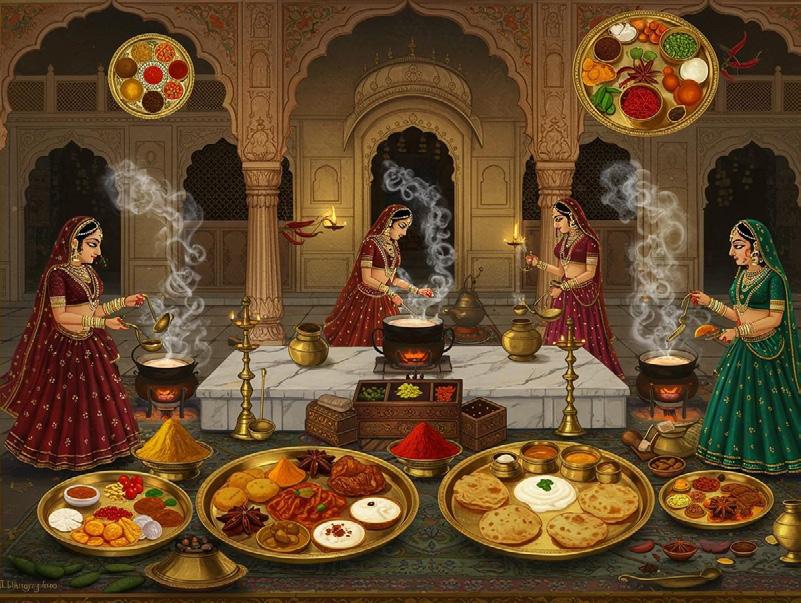
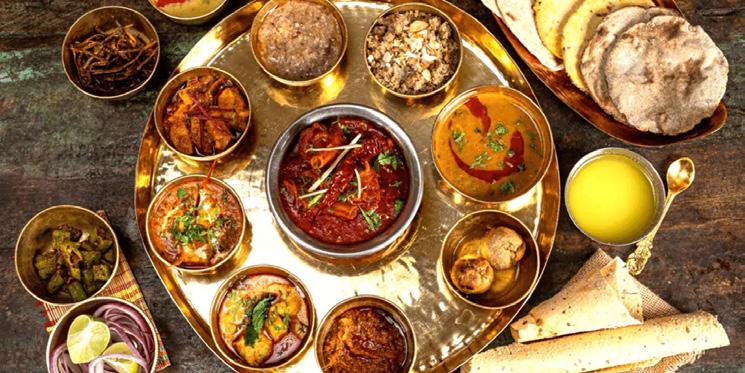
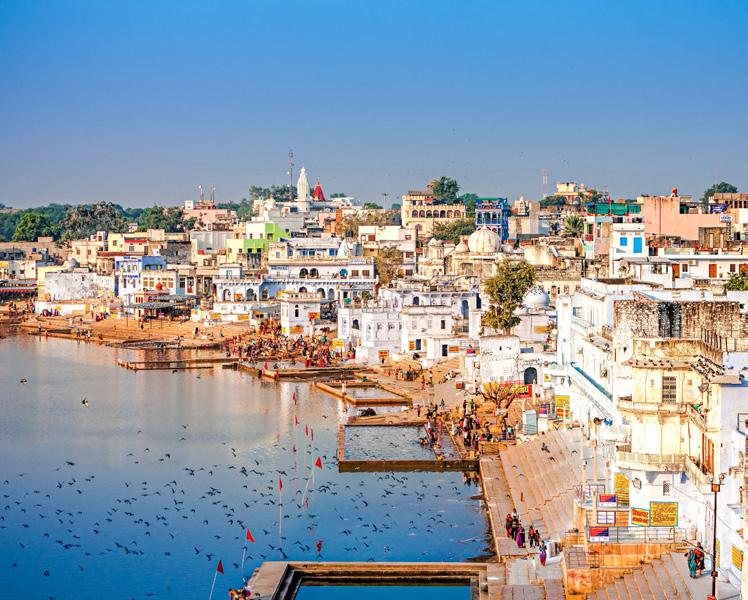
Udaipur offers a diverse and colourful shopping experience that caters to all tastes and preferences. Start your shopping adventure at Hathi Pol Bazaar, a crowded marketplace renowned for its authentic Rajasthani handicrafts, miniature paintings, and phad scrolls, perfect for art enthusiasts. Nearby, Bada Bazar provides a lively atmosphere where you can find everything from traditional clothing and footwear to exquisite silver jewellery and colourful textiles. For a more local feel, head to Bapu Bazar, known for its affordable prices and wide range of goods including textiles, pottery, and brassware. It’s an ideal spot for budget shoppers looking to delve into the local culture. Shilpgram, a crafts village situated just outside the city, offers a unique peek into the rural arts and crafts of the Western India region. Watch skilled artisans at work, learn about different techniques like miniature painting and textile weaving, and take home a unique piece of Rajasthan as a souvenir. Lastly, Chetak Circle is a haven for souvenir seekers, offering a variety of handicrafts, designer jewellery, and wooden toys. It’s a great place where you can buy mementoes that capture the essence of Udaipur.

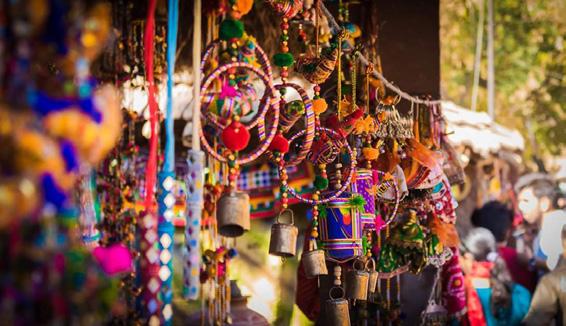
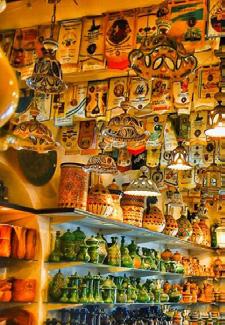

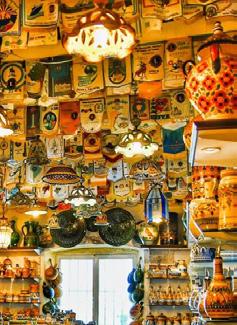
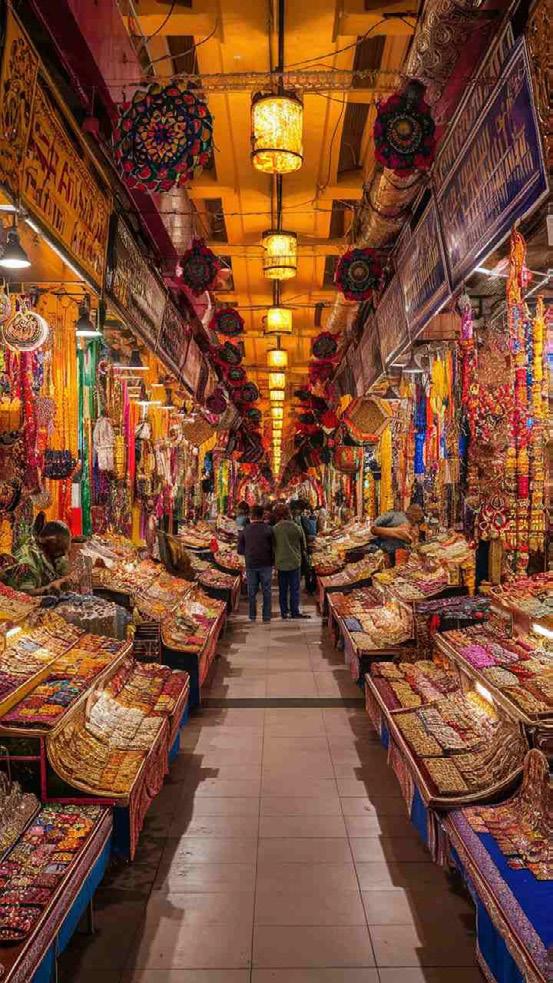
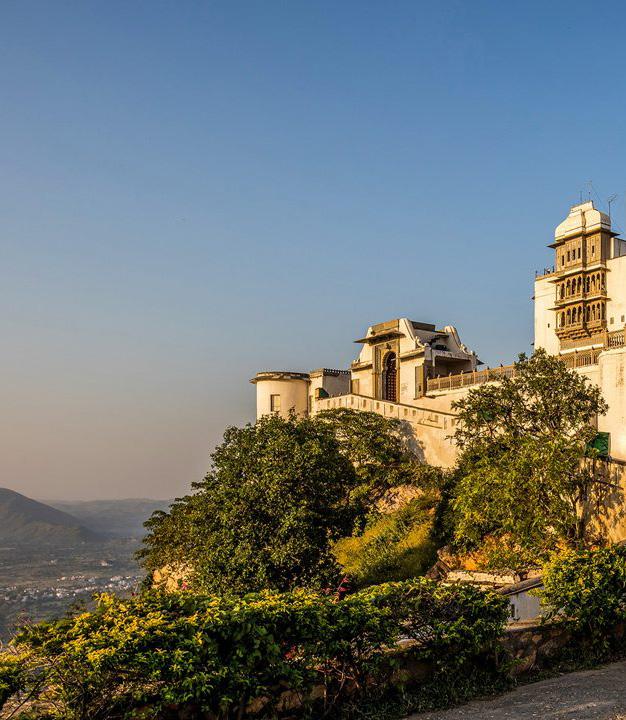
Situated on an island in Udaipur’s Fateh Sagar Lake, the Udaipur Solar Observatory benefits from favourable sky conditions and offers enhanced solar observations. Established in 1976 by Dr Arvind Bhatnagar and inspired by California’s Big Bear Solar Observatory, it hosts various telescopes for high-resolution studies of solar phenomena. Udaipur offers hidden treasures waiting to be discovered. Step back in time at the Vintage Car Museum, a collection of classic cars from the royal era of Mewar, each one a testament to a bygone era of grandeur. For a deeper dive into Rajasthan’s rich folk traditions, visit the Bhartiya Lok Kala Mandal. Here, you can learn about the region’s cultural heritage and be captivated by traditional puppet shows that bring Rajasthan’s folklore to life.
Udaipur’s charm extends beyond its city centre. Venture into the Aravalli Hills and reach the Monsoon Palace (or Sajjan Garh Palace), a captivating structure often shrouded in mist during the monsoon season. Capture panoramic views of the Fateh Sagar Lake, imagining yourself as a member of the royal court who once enjoyed this breathtaking vista. Atop the Moti Magri hill, pay your respects to the legendary warrior king Maharana Pratap at his memorial. Immerse yourself in nature at the Sajjangarh Biological Park, a haven for wildlife enthusiasts, or spot a variety of birds at the serene Udai Sagar Lake. Embark on a short hike up the hill near Jaisamand Lake. The modest effort is rewarded with a breathtaking vista of the entire lake and the forested island located in the midst of the shimmering expanse of the lake. Explore Udaipur’s historical significance at the Ahar Museum, which houses artefacts from ancient empires like the Mauryas and Guptas. Step back in time and uncover the fascinating stories that lie beneath the surface of this vibrant city.
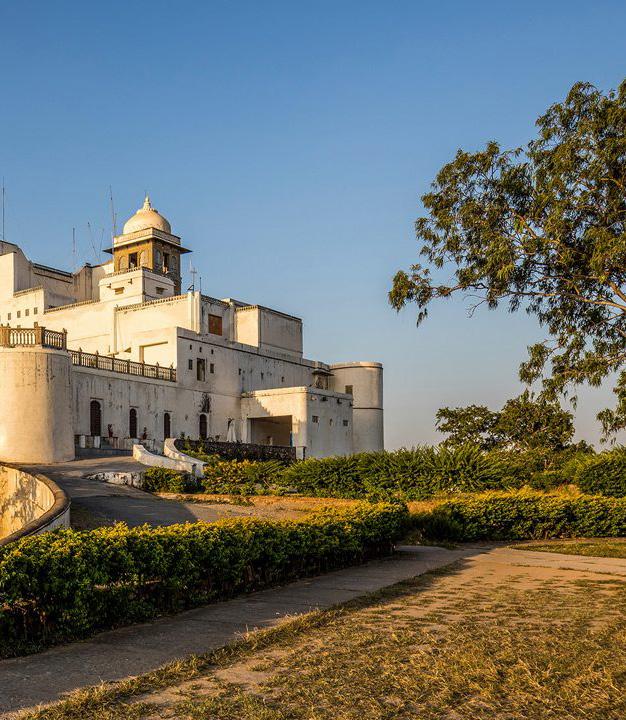

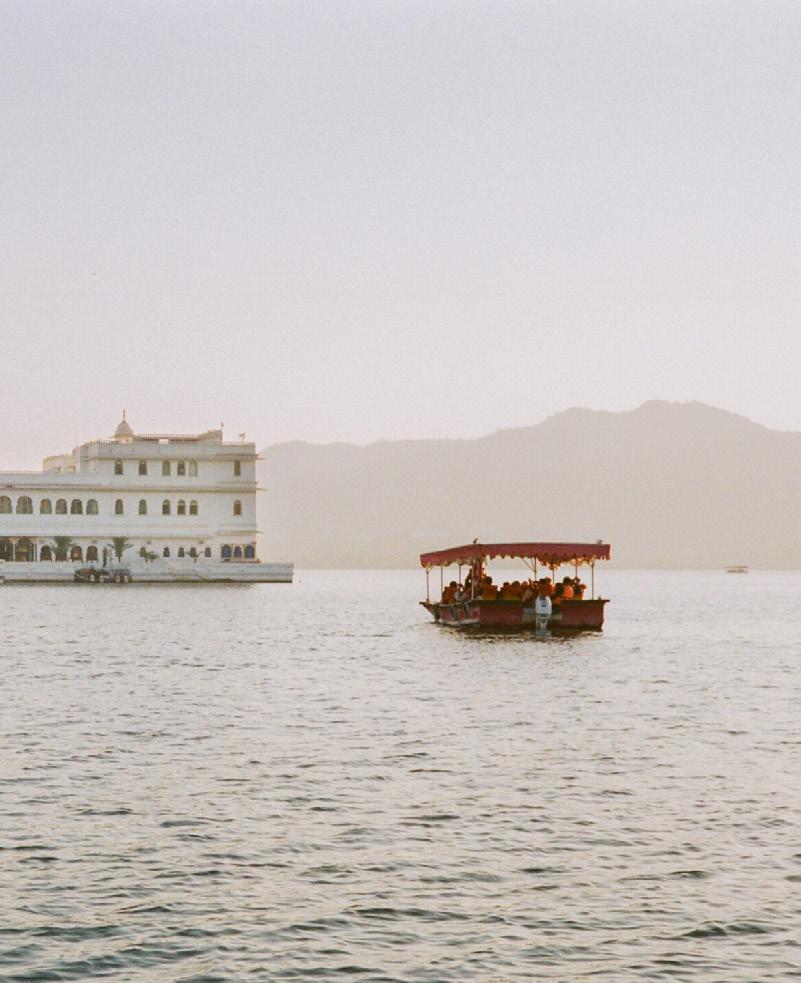
Haldighati, renowned for its turmeric-coloured terrain, is a historic site in the Aravalli range, 44 kilometres from Udaipur. This mountain pass, celebrated for the valiant battle led by Maharana Pratap in 1576 AD, symbolises the bravery that defended the Mewar dynasty. The area also features a marble cenotaph honouring Pratap’s loyal horse, Chetak.
Udaipur is a city that weaves a spell on its visitors. From the grandeur of its palaces to the serenity of its lakes, the vibrancy of its bazaars to the deliciousness of its cuisine, Udaipur offers an unforgettable experience. Whether you seek cultural immersion, historical exploration, or simply a chance to relax amidst breathtaking beauty, Udaipur has something for everyone. The best time to visit the city is between September and March. So come, embark on a journey to this enchanting city and discover its magic for yourself!
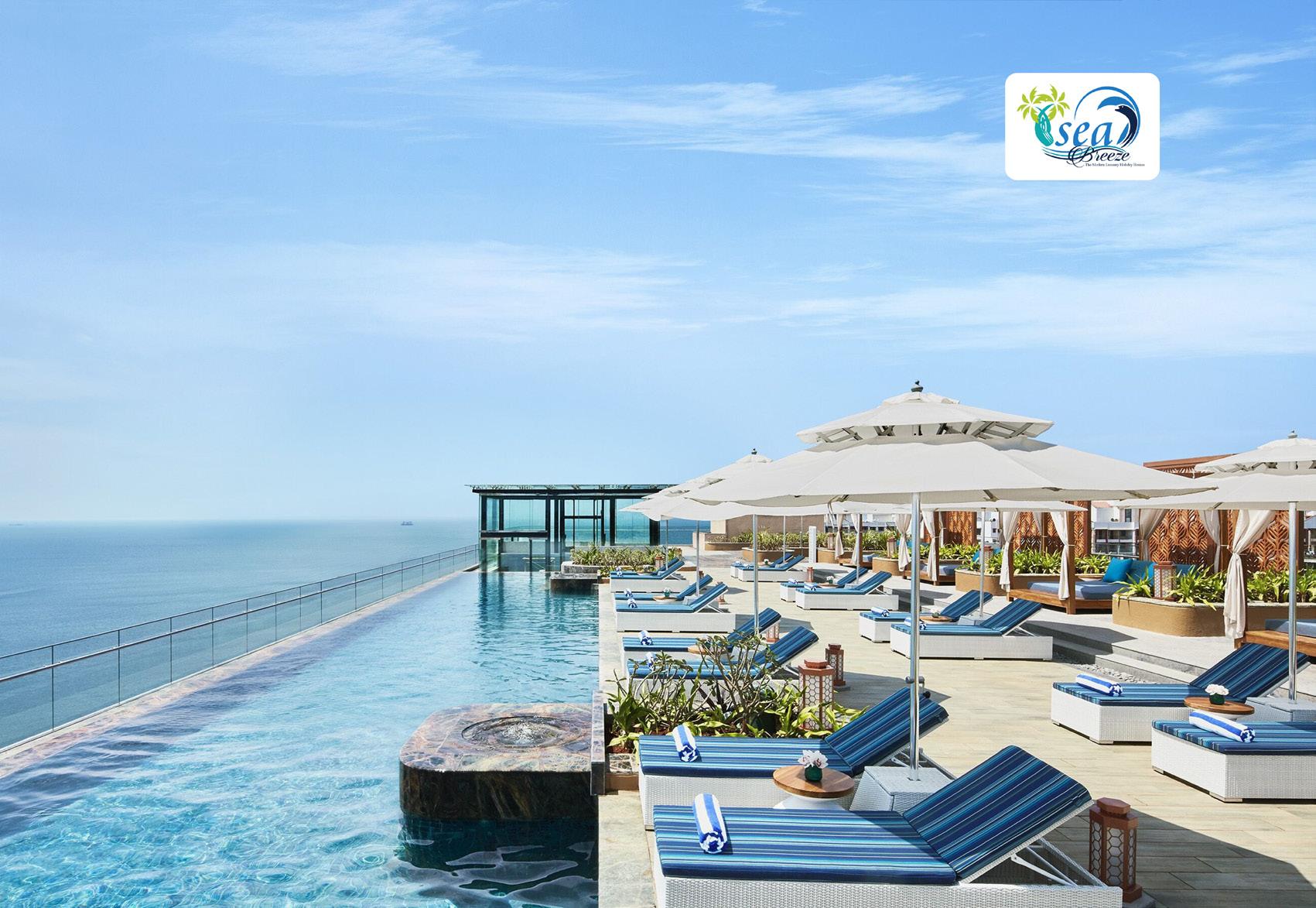



Exciting opportunity for all those who want to share their most memorable, Interesting. Amazing, Pro-active & Growth oriented activities & Experiences covering areas such as
• Fashion, Trend & Lifestyle
• Culture, Tradition & Heritage
• Education, Healthcare & Wellnes
• Industries, Investments & Growth
• Travel, Tourisn & Hospitality With Millions of Readers across the world



Launguage
Circulation,
Advertisements & Advertorials
Featured
Feedback
Email ID : aseworldwidemedia@gmail.com worldwidemediaasiapacific@gmail.com
Website : www.mightyindia.com