Most Significant Events & Noteworthy Activities of ‘THE INCREDIBLE STATE OF KARNATAKA’ in December 2025
The Most Adorable State of Karnataka, under the Dynamic Leaderships focuses and accomplishes many admirable Achievements and Milestones that make the Entire World to turn their heads towards Karnataka. While the Noteworthy Deeds and Accomplishments are too many; I would like to present few of the most recent ones for all those, who love to watch, admire, adore and appreciate this wonderful and ever-progressing state of Karnataka.
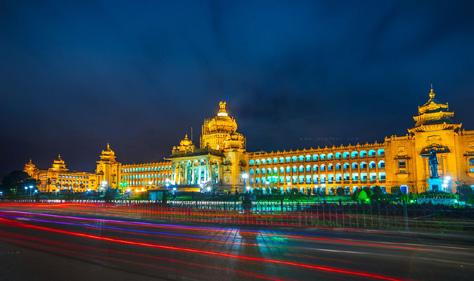
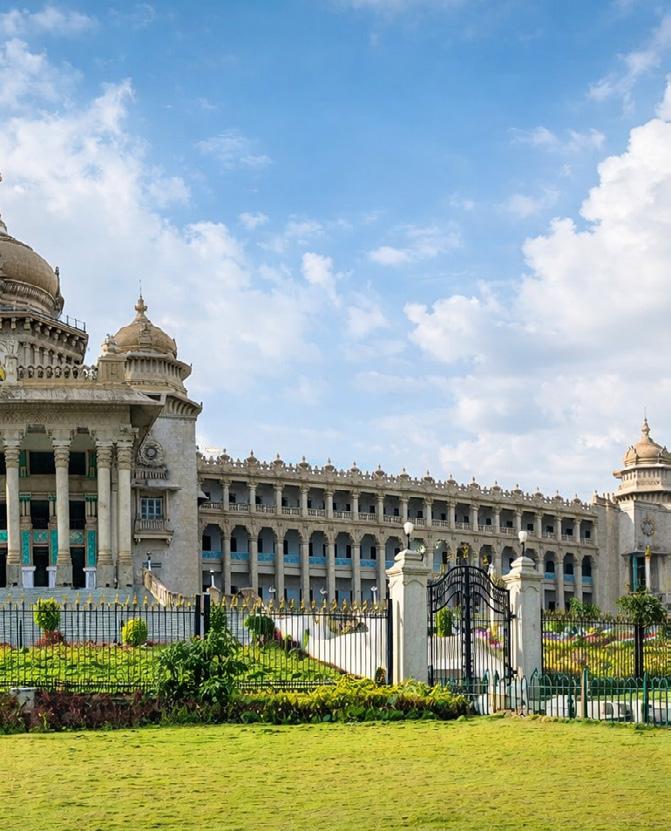
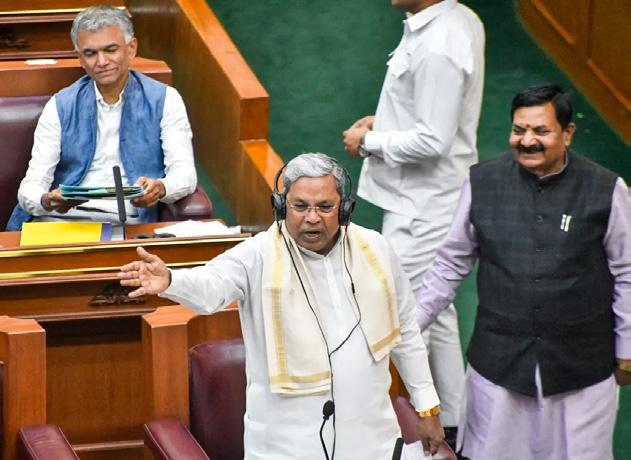
Within Karnataka Legislative Assembly Winter Session: The winter session of the Karnataka Legislature was held at the Suvarna Vidhana Soudha in Belagavi from December 8 to December 19, 2025.
Key Legislative Bills: During the session, the Assembly introduced and discussed over 30 bills, including the Karnataka Hate Speech and Hate Crimes (Prevention) Bill, 2025, the Social Boycott (Prevention) Bill, and the Greater Bengaluru (2nd Amendment) Bill. Government Guarantee Scheme Scrutiny: Amidst legislative debates, debates surfaced regarding the status of payments under the Gruha Lakshmi guarantee scheme. Infrastructure & Development: The state government, through the Bangalore Water Supply and Sewerage Board (BWSSB), announced plans to introduce Black Soldier Fly (BSF) composting to manage waste in Bengaluru. Digital Transformation & Heritage: Plans were initiated for a Digital Heritage Portal and the establishment of India’s first comprehensive Silk Museum in Mysuru. Administrative Measures: A blanket ban on official foreign travel by state officials was enforced, remaining in effect until the end of December 2025.
Across India: Antisocial Behaviour Law: The Karnataka government pushed for stricter laws against social boycotts, impacting national discourse on handling village council-imposed bans. Service Export Dominance: Bengaluru continued to drive a major share of India’s service exports, solidifying Karnataka's position as a national IT and services hub. Environmental Conservation: The State Forest Department initiated advanced technology-driven wildlife protection with Divisional Central Command and Control (CCC) Units, setting a model for other states.
All Over the World (International/Global Outreach): Global Startup Ecosystem Ranking: Bengaluru was ranked 5th among the top 50 AI ecosystems globally in 2025, strengthening the state's international
recognition in AI and quantum computing. International Collaborations for Water: The Greater Bengaluru Authority collaborated with international experts (World Bank-funded) for the Bengaluru Water Resilience Project. International Agriculture Export: Karnataka successfully initiated the export of high-value produce (e.g., jamun) directly from farmer collectives to international markets like London. Karnataka’s Industrial Renaissance: Global Engagements and Economic Milestones in December 2025: the Government of Karnataka reached a pivotal stage in its economic transformation, shifting focus from securing investment commitments to the aggressive implementation of large-scale projects. Following the landmark Invest Karnataka 2025 Global Investors Meet earlier in the year, the state achieved a record 46% conversion rate of its ₹10.27 lakh crore investment pool by year-end. December 2025 for the Government of Karnataka has been characterized by strategic global partnerships, the rollout of the Industrial Policy 2025-30, and a decisive push toward "Beyond Bengaluru" development.
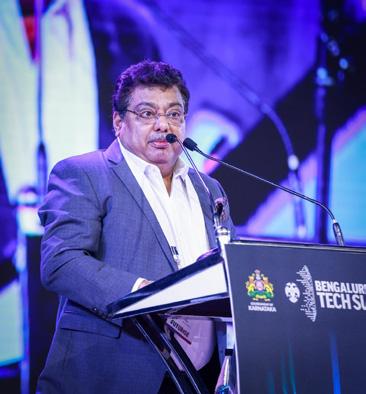
Realizing the "Invest Karnataka 2025" Vision: By December 2025, Karnataka had successfully realized ₹4.71 lakh crore in investments—nearly half of the total commitments made during the February summit. The month saw a flurry of activity as projects moved from Memorandums Of Understanding to ground-breaking ceremonies and factory commissioning. Manufacturing Dominance: The manufacturing sector led the way with a 58% success rate in conversion, seeing ₹3.22 lakh crore in realized projects. Key global players like Foxconn, Volvo, and Safran were instrumental in this surge. Strategic Global MoUs: minister M.B. Patil and state delegations
EDITOR -IN - CHIEF From The Desk Of
continued to secure fresh commitments. By late December, the state had attracted a post-GIM momentum of an additional ₹1.53 lakh crore in new proposals, spanning renewable energy, data centres, and Global Capability Centres.
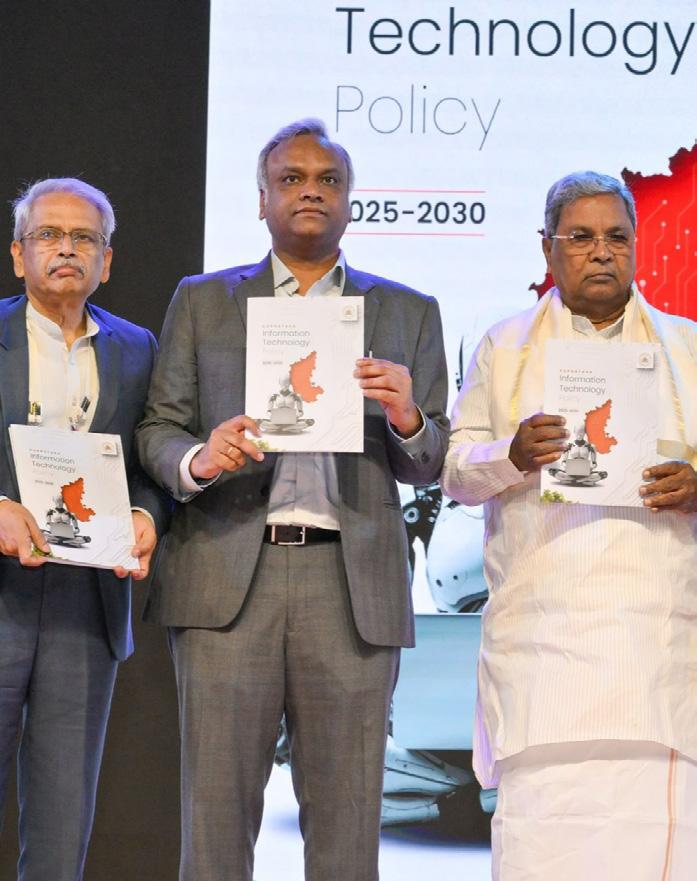
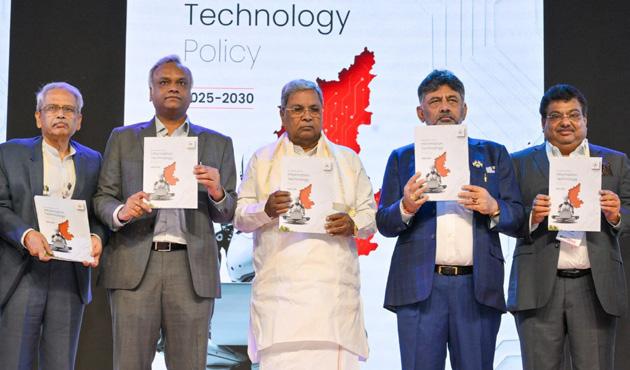
Launch and Implementation of Industrial Policy 2025–30: The Government of Karnataka officially began the full-scale implementation of its New Industrial Policy (2025–30) in December. This blueprint aims to position Karnataka as the top destination for high-tech manufacturing in Asia. Innovative Incentive Structures: For the first time, the policy allowed industries to choose between a 25% Capital Subsidy or a 2.5% Production-Linked Incentive for seven years. Booster Subsidies: December saw the first batch of approvals for "Booster Incentives," which provide an additional 7.5% to 15% subsidy for companies maintaining a female workforce of 50% or more. Sustainability Focus: The state prioritized green manufacturing by offering a 50% capital subsidy for sustainability measures, including Zero Liquid Discharge and energy-efficient equipment.
Global Engagement and FDI Leadership: Karnataka maintained its status as a top destination for Foreign Direct Investment, securing $6.63 billion (approx. ₹55,000 crore) during the 2025 calendar year. International Delegations: In December, the government finalized plans for 2026 ministerial delegations to Germany (focused on aerospace) and the U.K. to further strengthen global ties. Bilateral Success: Successes with Japan and South Korea were highlighted, with Japanese firms alone committing ₹7,500 crore in automotive and industrial automation sectors by the end of 2025. Global Innovation Hubs: Karnataka’s technological prowess was showcased through the growth of KWIN City (Karnataka World Innovation Network), a dedicated zone for AI, space tech, and quantum computing.
"Beyond Bengaluru": Regional Industrial Growth:A significant milestone in December was the realization that over 70% of new investments were flowing into regions outside the Bengaluru district. North Karnataka Surge: Nearly 45% of total investments were concentrated in North Karnataka, driven by projects like the ‘Baldota Steel & Power integrated plant’ (₹54,000 crore) and JSW Group's massive renewable energy and steel initiatives (₹1.2 lakh crore).Industrial Infrastructure: To support this decentralization, the Karnataka Industrial Areas Development Board (KIADB) continued the development of 40 new industrial areas, including massive nodes in Dharwad (3000 acres) and Hubballi.
Key Sectoral Breakthroughs: Semiconductors & Electronics: Lam Research committed ₹10,000 crore for semiconductor equipment manufacturing, reinforcing Karnataka's status as a global supplier of next-gen chips. Aerospace & Defence: The state maintained its dominance, hosting 65% of India’s aerospace manufacturing. Major moves included Safran’s avionics plant and
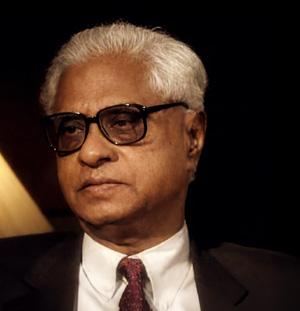
Dr. S. E. Alexander Global Media Chief & MD
TASL’s final assembly line for Airbus helicopters. Future Mobility: Volvo’s ₹1,400 crore EV truck manufacturing unit and Honda’s ₹600 crore EV two-wheeler project entered advanced stages in December. In Short, the Month of December 2025 is the month the State of Karnataka has been successfully transitioned from the "intent" phase of its biennial summit to the "implementation" phase of its industrial strategy. By combining a digital-first Single Window System with world-class incentives, the state closed the year as India’s leading engine for industrial growth and global technological engagement.
FASHION & TRENDS
Bhumi Pednekar’s Wine sari CeleBrates
Bidri art in a Couture revival
manyavar & mohey Fashion & trends
Present the latest sangeet style guide For eFFortless Wedding eleganCe
VIBRANT LIFESTYLE
uB City lighting 2025 Bengaluru’s iCon oF luxury, light& Pride
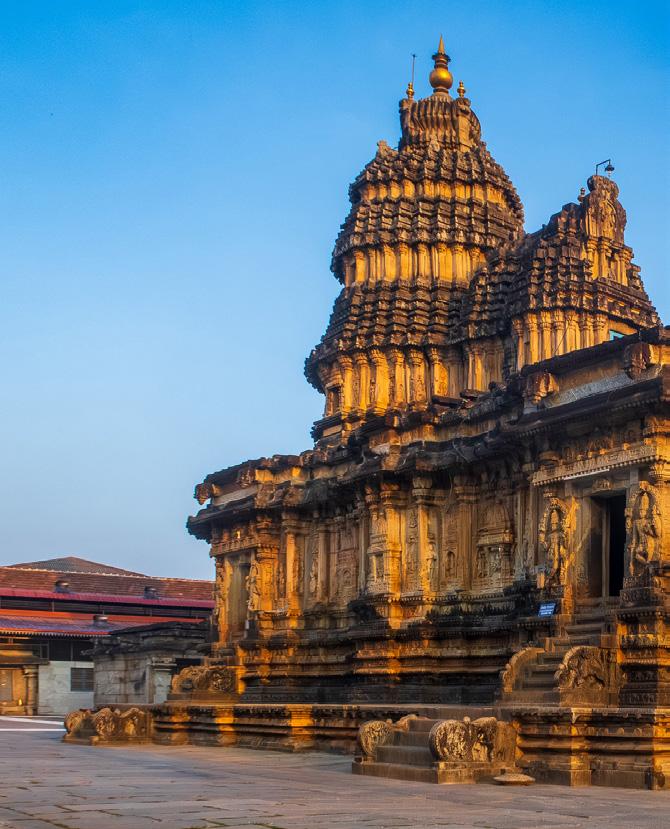
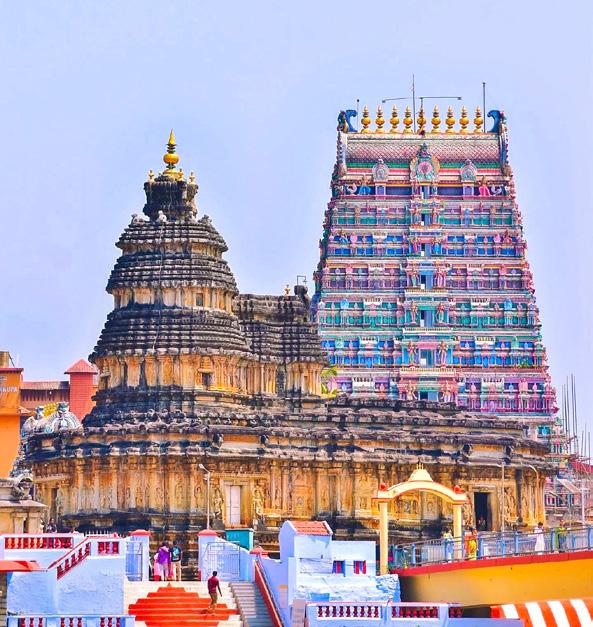
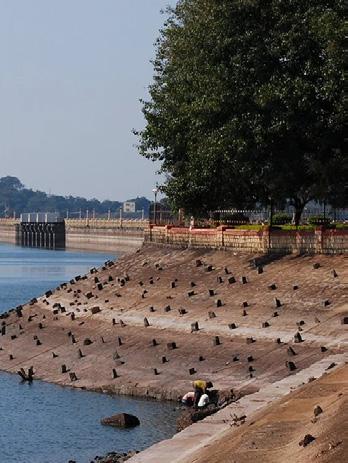
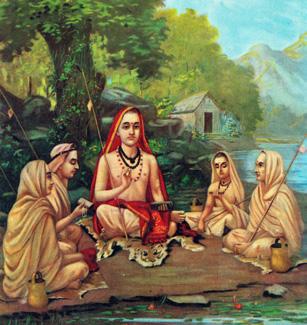
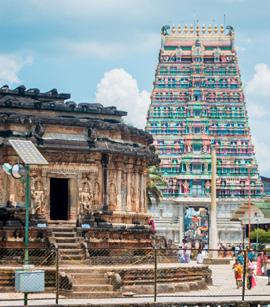
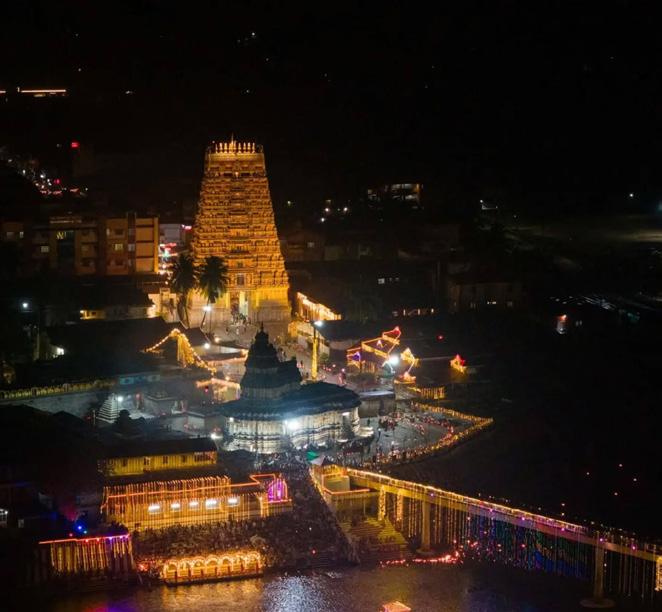
shrinGEri KarnataKa a tiMElEss travEl GuidE to thE sacrEd town on thE banKs oF thE tunGa
FASHION & TRENDS KARNATAKA
Bhumi Pednekar’s Wine Sari Celebrates Bidri Art in a Couture Revival
When heritage craft meets contemporary couture, fashion transcends trend and becomes cultural storytelling. Actor Bhumi Pednekar recently embodied this dialogue between past and present in a striking deep wine silk sari designed by celebrated couturier Tarun Tahiliani. At first glance, the ensemble radiated opulence — a tapestry of zardozi, resham, sequins, and metallic thread shimmering across rich silk. Yet beyond its surface glamour lay something more meaningful for connoisseurs of Indian artistry, particularly those in Karnataka: a design language inspired by the legendary Bidri craft. For a state known for its layered artistic traditions — from Mysore painting to sandalwood carving — seeing Bidri art translated into high fashion is both a moment of pride and a reminder of how regional crafts continue to influence global aesthetics.
Bidri Inspiration: A nod to Karnataka’s artistic legacy
What truly sets the sari apart is its thoughtful reference to Bidar, home to the celebrated metal inlay tradition known as Bidriware. The borders echo Bidri-inspired geometry, translated into antique gold and rose-toned embroidery that feels both architectural and fluid. This design choice subtly anchors the garment in the cultural landscape of
Karnataka, transforming the sari into more than just festive attire — it becomes a wearable homage to regional artistry. Much like Bidri metalwork contrasts dark alloy surfaces with gleaming silver inlay, the embroidery plays with matte and shine, depth and luminosity. The pallu heightens the visual narrative with sequinned latticework and jewel-toned accents, introducing movement and sparkle without disrupting the sari’s overall sophistication. Together, these elements create a tapestry of craft and colour that feels both rooted and refreshingly current.
Where Fashion Meets Craft
At its core, the ensemble celebrates fashion as an art form. Every element — from the elaborate threadwork to the sculpted silhouette — underscores the continuing relevance of handcrafted luxury in an era increasingly dominated by fast trends. Bhumi’s confident styling allows the sari’s craftsmanship to take centre stage, proving that timeless techniques can still feel fresh and directional. The silk drape glows with a refined sheen, while dense embellishments capture light with every movement. Rather than relying solely on colour or silhouette, the look derives its drama from detail, inviting a closer appreciation of the labour-intensive artistry behind couture Indian fashion.
A masterclass in modern bridesmaid elegance
As wedding aesthetics evolve, bridesmaids are increasingly drawn to ensembles that balance tradition with individuality. Bhumi Pednekar’s look offers precisely that blueprint. The deep wine palette lends itself beautifully to evening celebrations — from cocktail soirées and sangeets to grand receptions — where understated drama often speaks louder than excess. The heavily embellished blouse anchors the ornate drape in modern glamour, ensuring the silhouette remains sharp rather than nostalgic. It is a reminder that contemporary Indian fashion thrives not by abandoning tradition, but by reimagining it.
Statement accessories and refined beauty
Bhumi extended the sari’s maximalist vocabulary through accessories that enhanced rather than competed with the ensemble. A ruby-and-pearl choker from Golecha Jewels framed her neckline with regal elegance, while paisleyshaped ruby ear cuffs by Amaris Jewels added sculptural intrigue. An embossed maroon clutch by Meera Mahadevia echoed the textural richness of the sari, tying the look together with quiet sophistication. Her beauty choices leaned toward polished subtlety: softly contoured skin, pink shimmer eyes accented with delicate wings, and a glossy mauve lip created a romantic glow. A sleek bun completed the styling, allowing the craftsmanship — rather than elaborate hairstyling — to command attention.
Couture Rooted In Indian Artistry
Bhumi Pednekar’s appearance captures the essence of Tarun Tahiliani’s couture — ornate yet intelligent, luxurious yet culturally grounded. By drawing inspiration from Bidri and, by extension, Karnataka’s artistic heritage, the designer reinforces an important narrative within Indian fashion: innovation is most powerful when it honours tradition. For the contemporary bridesmaid seeking regal grace with modern ease, this deep wine creation makes a compelling case for returning to the sari — not as a relic of the past, but as a canvas for evolving design. In an industry constantly chasing the new, Bhumi’s look reminds us that the future of fashion often lies in rediscovering the brilliance of craft.
Manyavar & Mohey
PRESENT THE LATEST SANGEET STYLE GUIDE FOR EFFORTLESS WEDDING ELEGANCE
Sangeet nights have evolved into some of the most anticipated celebrations in Indian weddings — evenings defined by rhythm, laughter, coordinated performances, and statement-making fashion. Dressing for such an occasion requires a thoughtful balance between sophistication and ease, ensuring that every step onto the dance floor feels natural. With their Latest collections, Manyavar and Mohey present a vision of festive dressing that seamlessly blends heritage craftsmanship with contemporary design, creating ensembles that are as expressive as the celebrations themselves.
FASHION & TRENDS
THE MODERN SANGEET WARDROBE
Today’s wedding guest is no longer content with attire that looks impressive but feels restrictive. Movement, breathability, and versatility are now essential considerations, especially for events that extend well into the night.
Manyavar addresses this shift with menswear that favours fluid tailoring, lighter constructions, and luxurious fabrics that allow for comfort without compromising visual impact. Mohey complements this approach by offering occasion wear that enhances the celebratory atmosphere through colour, texture, and intricate detailing — ideal for those seeking coordinated elegance across wedding festivities.
LATEST SPOTLIGHT: MANYAVAR MENSWEAR
Manyavar’s Latest collection reinterprets classic silhouettes through a refined modern lens. Rich jewel tones, layered ensembles, and delicately embroidered fabrics dominate the edit, reflecting the grandeur typically associated with winter weddings while maintaining remarkable wearability. The kurta pajama, long considered a cornerstone of festive menswear, receives a sophisticated update through textured silk blends, tonal threadwork, and tailored fits that flatter without restricting movement. Bandhgalas emerge as standout pieces within the collection — structured enough to convey regal charm yet crafted in lighter materials that support hours of celebration. Meanwhile, layered styling featuring Nehru jackets and velvet accents introduces depth and dimension, allowing wearers to personalise their look with understated confidence.
THE ENDURING APPEAL OF THE KURTA PAJAMA
What continues to set the kurta pajama apart is its effortless adaptability. The silhouette encourages freedom of movement, making it particularly suited for high-energy occasions like the sangeet, where spontaneity is part of the charm. Breathable fabrics help regulate comfort even in crowded venues, while contemporary cuts — including asymmetric hems and tapered trousers — ensure the ensemble feels current rather than traditional in the expected sense. This ability to merge comfort with elevated aesthetics explains why the kurta pajama remains a preferred choice for modern celebratory dressing.
MOHEY’S LATEST EDIT: ELEGANCE IN HARMONY
Mohey’s Latest collection captures the romance of the wedding season through ensembles designed to command attention while remaining graceful and wearable. Jewel-toned lehengas in shades of emerald, wine, and midnight blue evoke the
richness of winter celebrations, while lighter pastels offer a softer yet equally striking alternative for those drawn to understated glamour. Intricate zari, sequins, and thread embroidery bring texture to each piece, catching the light beautifully during evening festivities. Despite their visual drama, the silhouettes are thoughtfully constructed to remain comfortable, allowing wearers to move freely from performances to celebrations. The collection pairs naturally with Manyavar’s menswear, encouraging a cohesive aesthetic for couples, families, and wedding parties seeking visual harmony.
STYLING FOR A STATEMENT PRESENCE
Creating a memorable sangeet look often lies in the details. Layering a kurta with a Nehru jacket instantly sharpens the silhouette, while Indowestern pairings — such as kurtas styled with tapered trousers — introduce a contemporary edge. For those drawn to regal dressing, lightweight sherwanis provide grandeur without the heaviness traditionally associated with formal attire.
Accessories should enhance rather than overwhelm. Embroidered mojaris, refined brooches, pocket squares, or a vibrant safa can complete an ensemble with personality while preserving comfort — an essential factor for an evening centred on dance and celebration.
WHERE CRAFTSMANSHIP MEETS COMFORT
At its heart, the perfect sangeet outfit is one that inspires confidence while supporting the energy of the occasion. Manyavar and Mohey’s Latest collections reflect a broader evolution in festive fashion — one that prioritises experience alongside aesthetics. By combining meticulous craftsmanship with modern sensibilities, the collections ensure that wearers no longer have to choose between looking exceptional and feeling at ease.
As the music rises and the celebrations unfold, attire that moves effortlessly with you becomes more than just clothing — it becomes part of the memory. With designs that honour tradition while embracing contemporary lifestyles, Manyavar and Mohey offer a wardrobe ready for every step, spin, and spotlight moment of the sangeet night.
VIBRANT LIFESTYLE KARNATAKA
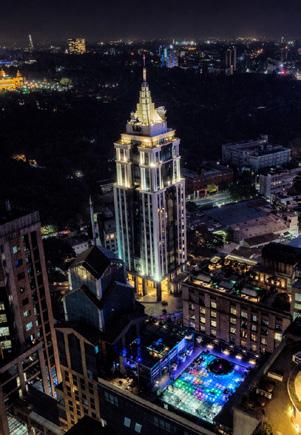
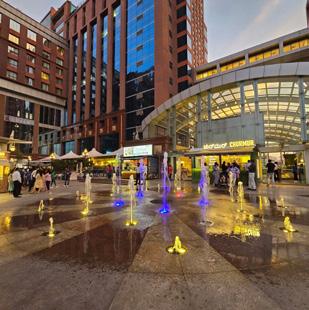
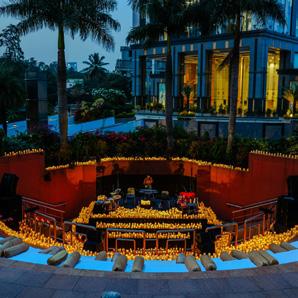
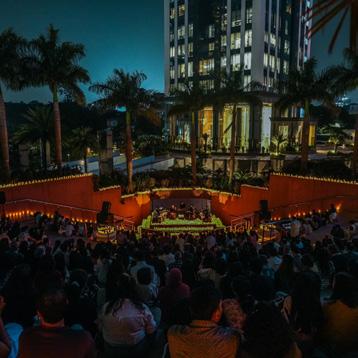
Every December, Bengaluru transforms into a festive tapestry of colour, celebration, and cultural vibrancy. Yet among all the glittering spots that the city offers, UB City stands apart as the most prominent, refined, and globally admired. The UB City Lighting of December 2025 emerges not merely as a decorative phenomenon but as a large-scale urban art expression that symbolizes Bengaluru’s evolving identity.
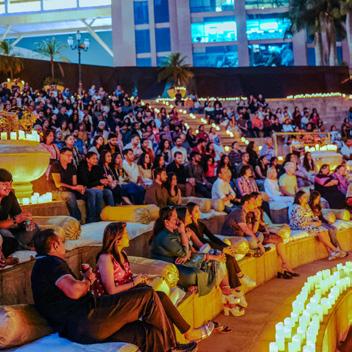
With its glowing towers, illuminated plazza, and immersive ambience, UB City becomes the heartbeat of the city’s festive mood. It is more than a luxury complex; it turns into a radiant emblem of Karnataka’s modern pride. The shimmering lights, innovative designs, and the lively public atmosphere create an unforgettable experience that attracts thousands every evening, making it one of the most iconic and celebrated December attractions of Bengaluru.
UB CITY: THE MODERN CROWN OF BENGALURU
UB City has long represented Bengaluru’s global face, bringing together luxury, architecture, lifestyle, and culture into a single magnificent space. Located on Vittal Mallya Road, the complex stands as a landmark of sophistication and urban ambition. During December, this modern marvel becomes even more enchanting as it undergoes its annual lighting transformation.
The towers glow with carefully coordinated lighting sequences that highlight their architectural lines, while the plazza turns into a warm and inviting gathering space for locals and visitors alike. By 2025, UB City has established itself not only as a luxury destination but also as a cultural centre where the December lighting festival marks the beginning of the city’s holiday season. Its illumination has evolved into a tradition and a point of pride for both Karnataka and its capital city.
THE LIGHTING PHILOSOPHY OF 2025: ART, TECHNOLOGY, AND NARRATIVE
The December 2025 lighting concept at UB City revolves around the theme “Aurora of Urban Dreams,” a design inspired by global lighting festivals while retaining a uniquely Bengaluru charm. The lighting designers curated a visual narrative that symbolically represents the city’s dynamism, multicultural energy, and futuristic direction. The towers shift from deep cool colours to soft golden waves, mimicking the motion of auroras and reflecting the rhythm of urban life. This transformation is achieved through cuttingedge programmable LEDs, geometric projection patterns, and interactive light trails that respond subtly to movement and sound. The goal of the
design was to blend innovation with art, creating a lighting display that feels alive, emotive, and distinctly modern. It is not just illumination but storytelling, turning UB City into a canvas where technology and creativity come together.
SUSTAINABILITY: A RESPONSIBLE FESTIVAL OF LIGHTS
One of the defining aspects of UB City’s 2025 lighting is its commitment to sustainability. With rising awareness around climate consciousness and energy efficiency, the lighting installations are designed to be both stunning and environmentally responsible. The LED systems use minimal energy while producing maximum visual impact, and several installations are integrated with solarassisted power sources. Smart lighting controls ensure that brightness is optimized based on footfall, time of night, and ambient conditions. This responsible approach reflects the broader ecoconscious spirit of Bengaluru and sets a benchmark for urban lighting celebrations across India. The fusion of beauty and sustainability ensures that the festival of lights contributes positively to the city’s environmental vision.
THE GRAND ENTRANCE:
A GATEWAY OF GLOWING DECEMBER MAGIC
The entrance to UB City becomes one of the most captivating parts of the lighting experience.Visitors are greeted by illuminated archways, shimmering pathways, and artistic light sculptures that create an atmosphere of celebration the moment they step in. The entrance lighting is designed to evoke a sense of wonder, preparing visitors for the visual spectacle that lies ahead. The reflections on the glass façades, the soft glow of warm lights, and the festive décor harmoniously come together to create an enchanting welcome.This space becomes a favourite spot for holiday photos, family portraits, and evening strolls, especially during weekends when the area is filled with laughter, music, and festive energy. The grand entrance symbolizes the beginning of the UB City December story, a world where light becomes an experience.
THE PIAZZA: BENGALURU’S OPEN-AIR FESTIVE STAGE
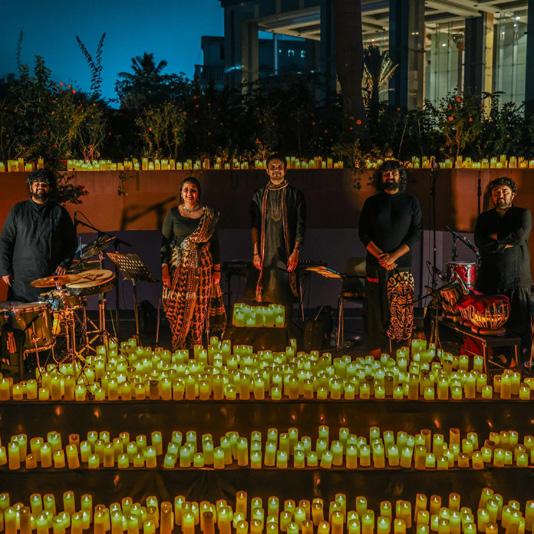
At the heart of UB City lies the Piazza, a Europeanstyle open plaza that transforms into a festive wonderland in December. Under the 2025 lighting theme, the Piazza glows with cascading lights, celestial-inspired installations, and warm ambient illumination that turn the space into a magical culture-filled square. It becomes the venue for December evenings filled with live music, jazz performances, Christmas events, and curated artistic showcases. The Piazza’s charm lies in how it blends global aesthetics with Bengaluru’s cultural warmth. Friends gather for celebratory dinners, families enjoy the festive ambience, and tourists marvel at the open-air luxury setting. The Piazza becomes the emotional centre of the UB City Lighting Festival, where memories are created against the backdrop of shimmering lights.
A CENTRE FOR COMMUNITY, CULTURE, AND PHOTOGRAPHY
One of the most remarkable aspects of UB City during December is how it brings the city’s diverse community together. Young professionals, families, artists, students, creators, and tourists all converge at this glowing destination. The mixture of luxury ambience and accessible public space makes UB City unique compared to many festive zones across the country. By evening, the entire complex becomes a visual delight that attracts photographers and social media creators. In 2025, the lighting installations introduced interactive features that make the experience even more immersive. Certain zones subtly react to footsteps and movement, allowing visitors to feel like they are part of the illumination. This creative integration solidifies UB City’s role as not just a shopping and dining destination but a cultural and aesthetic experience.
DINING UNDER THE LIGHTS: BENGALURU’S DECEMBER LUXURY EXPERIENCE
December is the peak month for outdoor dining at UB City, as restaurants offer spectacular views of the illuminated towers. Whether it is fine-dining terraces overlooking the glow or casual coffee conversations under fairy-lit trees, the lighting transforms every meal into a celebratory experience. Many restaurants create special seasonal menus to complement the festive atmosphere, drawing large crowds every evening. The interplay of culinary elegance and visual ambience makes UB City one of Bengaluru’s most desirable dining destinations during December. The lights not only elevate the aesthetic but also enhance the emotional connection people feel with the place, making celebrations more memorable.
TOURISM, ECONOMY, AND URBAN PRIDE
The UB City Lighting Festival significantly contributes to Bengaluru’s tourism and local economy. December footfall spikes dramatically as both residents and travellers include the lighting event in their must-visit list. Retail stores, restaurants, and galleries experience increased activity, while the overall ambience enhances the city’s reputation as a global destination. For Karnataka, UB City serves as an example of how modern urban spaces can shape cultural identity and international appeal. It sends a strong message about the state’s progressive vision, elevated lifestyle offerings, and ability to blend sophistication with cultural inclusivity. The lighting festival becomes a symbol of pride, projecting Karnataka’s cosmopolitan excellence.
AN ILLUMINATED SYMBOL OF KARNATAKA’S MODERN ASPIRATION
UB City Lighting 2025 is more than a visual spectacle; it is a celebration of Bengaluru’s soul and Karnataka’s modern achievements. It captures the essence of a city known for its innovation, creativity, and cultural diversity.The glowing towers, the radiant piazza, and the joyous gatherings reflect the spirit of a metropolis that is constantly evolving yet deeply connected to its people. As the lights illuminate the December sky, UB City stands as a symbol of pride—a beacon of urban beauty, community celebration, and festive brilliance. It becomes a reminder that Bengaluru is not only the technology capital of India but also a city of art, design, illumination, and unforgettable December charm.
DGTL & 100 PIPERS Travel Gear Bring
Sustainability To The Centre Stage In Bengaluru
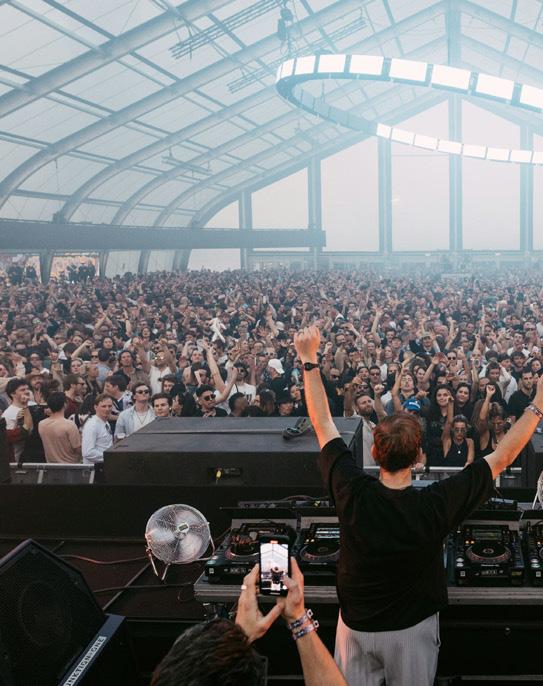
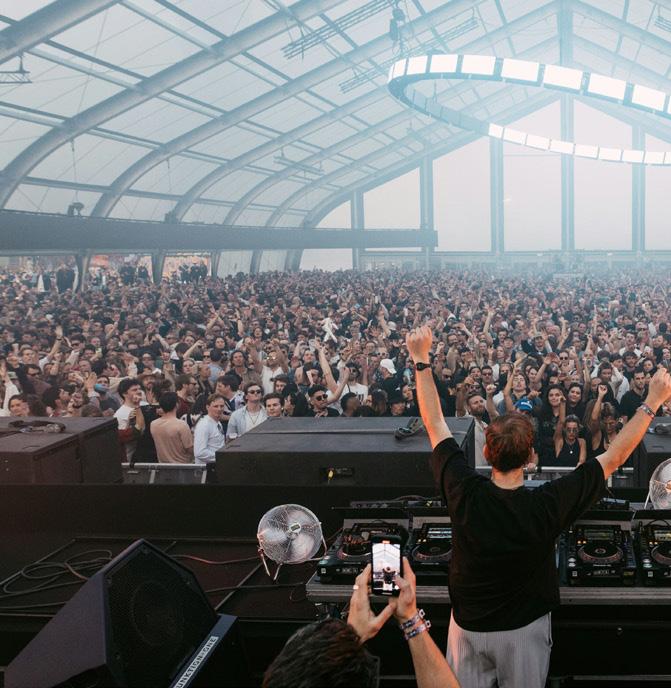
hen global electronic music and arts festival DGTL returned to India for its fifth edition, it arrived with far more than pulsating basslines, immersive lightscapes, and an enviable line-up of artists. The 2025 edition marked a significant shift in how large-scale music festivals in India can operate—placing sustainability not on the sidelines, but firmly at the heart of the experience. In Bengaluru, DGTL partnered with 100 Pipers Travel Gear, transforming the city’s edition into what is widely being regarded as the most environmentally conscious version of the festival in the country so far.
Rooted in discovery, innovation, and inspiration, DGTL has long been known for pushing creative and cultural boundaries. Yet, beyond its reputation for cutting-edge sound and striking stage architecture, the festival has steadily built a global legacy as a pioneer in sustainable event practices. Its Indian chapter is now clearly reflecting that same commitment—adapting global sustainability frameworks to local realities without diluting the festival’s energy or aesthetic.
A Shared Vision of Purpose and Progress
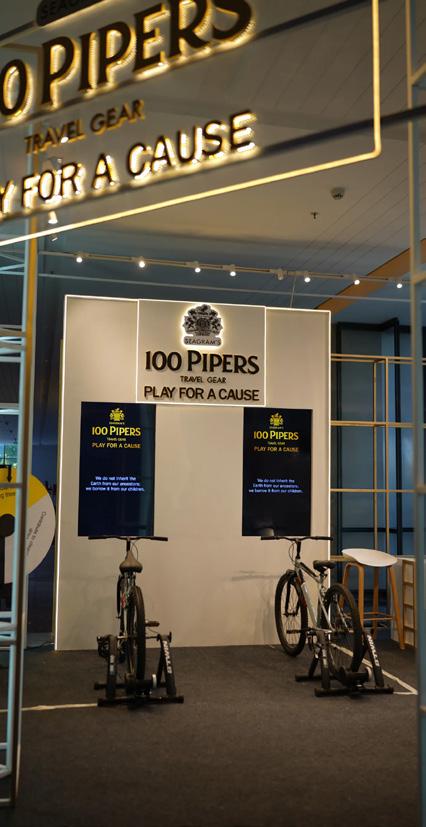
At the core of the collaboration between DGTL India and 100 Pipers Travel Gear was a shared philosophy: that cultural experiences can be both exhilarating and responsible. For 100 Pipers Travel Gear, this partnership aligned seamlessly with its long-standing platform, Play for a Cause, an
initiative that encourages people to go beyond material definitions of success and instead focus on creating a positive impact on the world. Rather than positioning sustainability as a passive message, the collaboration aimed to turn festival-goers into active participants. The idea was simple yet powerful—every dance, every drink, and every interaction at the festival could contribute to a lower environmental footprint. In doing so, the partnership demonstrated that meaningful change does not require sacrificing joy, creativity, or scale.
Music, Art, and EcoConscious Design
DGTL Bengaluru was transformed into a multi-sensory environment where music and sustainability moved in sync. The festival’s iconic Modular stage became the Modular by 100 Pipers Play for a Cause stage, serving as both a visual centrepiece and a symbol of the collaboration’s ethos.
Known for its bold industrial design and immersive lighting, the stage carried added significance this year—representing a shared commitment to responsible innovation. Across the venue, eco-conscious initiatives were thoughtfully integrated into the festival’s infrastructure. Waste reduction, segregation, and recycling systems were put in place to ensure materials were diverted from landfills wherever possible. Reusable beverage cups replaced single-use plastics, significantly cutting down on waste generated over the two-day event. These cups, made from rice husk, stood out not just for their sustainability credentials but also for how effortlessly they blended into the festival experience.
Reimagining Energy
Consumption on the Dancefloor
One of the most striking aspects of the DGTL and 100 Pipers collaboration was how energy was generated and consumed. Traditional festivals often rely heavily on diesel generators, contributing significantly to carbon emissions. DGTL Bengaluru took a different route—reducing generator usage and tapping into greener energy sources available at the venue.
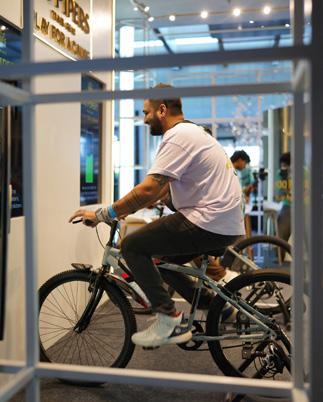
Even more impressively, some on-ground brand experiences were powered by kinetic energy. Human movement—dancing, walking, and interacting— was harnessed to generate electricity for lights and installations. In this way, festival-goers weren’t just attending a sustainable event; they were physically powering parts of it. The dancefloor itself became a site of participation, turning movement into momentum for change.
A Plant-Based Food Philosophy
Food is often an overlooked contributor to a festival’s environmental footprint, but DGTL Bengaluru addressed this head-on. The festival’s food programme was entirely vegetarian and vegan, eliminating meat and dairy to significantly reduce carbon emissions. This approach not only aligned with the festival’s sustainability goals but also showcased the diversity
and creativity of plant-based cuisine. For many attendees, the experience challenged preconceived notions about what festival food can be—flavourful, satisfying, and environmentally responsible. By making sustainability the default rather than an alternative, DGTL subtly reshaped consumption habits without enforcing them.
Waste, Water, and the Circular Mindset
Beyond visible initiatives, the festival implemented comprehensive systems to manage waste responsibly. Clearly marked waste-sorting stations encouraged attendees to segregate materials, while back-end processes ensured recycling and reuse wherever possible. Sanitation facilities were designed with efficiency and water conservation in mind, reinforcing the festival’s holistic approach to sustainability.
This circular mindset—where resources are continually reused rather than discarded—mirrored DGTL’s global practices. Internationally, the festival is known for editions in cities like Amsterdam and Barcelona that run on renewable energy and circular design principles. The Bengaluru edition demonstrated that these ideas are not only transferable but also scalable within India’s complex event ecosystem.
Extending Impact Beyond the Festival Grounds
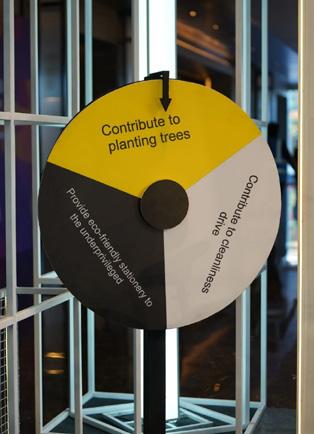
The DGTL and 100 Pipers partnership did not end when the music stopped. Recognising that true sustainability extends beyond the event itself, the collaboration also supported a series of community and partner-led initiatives. These included
“Play
for a Cause” as an Engagement Platform
tree-planting drives, beach clean-ups, and donation campaigns aimed at environmental restoration and social impact. By linking the energy of the festival to long-term initiatives, the collaboration ensured that its impact would be felt well after the final set concluded. It also reinforced the idea that festivals can act as powerful platforms for awareness, mobilisation, and change.
For 100 Pipers Travel Gear, Play for a Cause is not just a campaign—it is an engagement platform built around participation and transformation. At DGTL Bengaluru, this philosophy translated into experiences that invited audiences to rethink what responsible celebration looks like. Rather than relying on overt marketing language, the brand’s presence felt integrated and purposeful.
Recycled materials, zero-waste bars, and kineticpowered installations became touchpoints that communicated values through action. The result was a collaboration that felt authentic, encouraging festival-goers to reflect on their own role in creating positive change.
A Blueprint for India’s Festival Future
As India’s live music and festival culture continues to expand, the need for sustainable frameworks has never been more urgent. Large-scale events inevitably place pressure on resources, infrastructure, and the environment. DGTL’s fifth edition in India offers a compelling blueprint—one that proves sustainability and spectacle can coexist. By localising global best practices and collaborating with a like-minded partner, DGTL demonstrated how festivals can evolve without losing their soul. The Bengaluru edition, in particular, highlighted that audiences are ready for this shift. Far from resisting eco-conscious measures, attendees embraced them—showing that responsibility can enhance, rather than hinder, the collective experience.
Louder, Greener, and Here to Stay
At its core, DGTL Bengaluru 2025 was a celebration—not just of music and art, but of possibility. It showed what can happen when brands, organisers, and audiences come together around a shared purpose. The partnership with 100 Pipers Travel Gear elevated sustainability from a behindthe-scenes operation to a visible, participatory element of the festival narrative.
As the bass echoed across the dancefloor and lights pulsed through the night, a quieter yet more powerful message resonated alongside it: that the future of festivals can be louder, more inclusive, and significantly greener. With initiatives like these setting the standard, India’s festival landscape is clearly ready to dance its way toward a more responsible tomorrow.
RETAIL & SHOPPING KARNATAKA
ECCO OPENS FIRST SOUTH INDIA STORE @ PHOENIX MALL OF ASIA
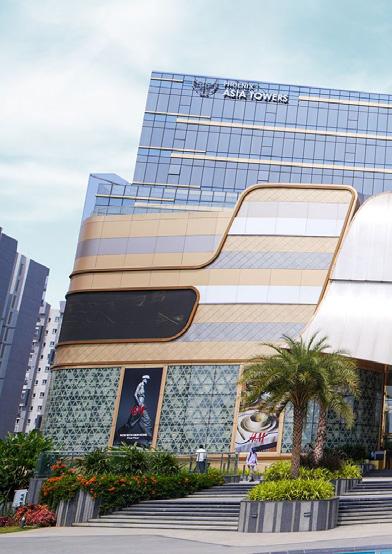
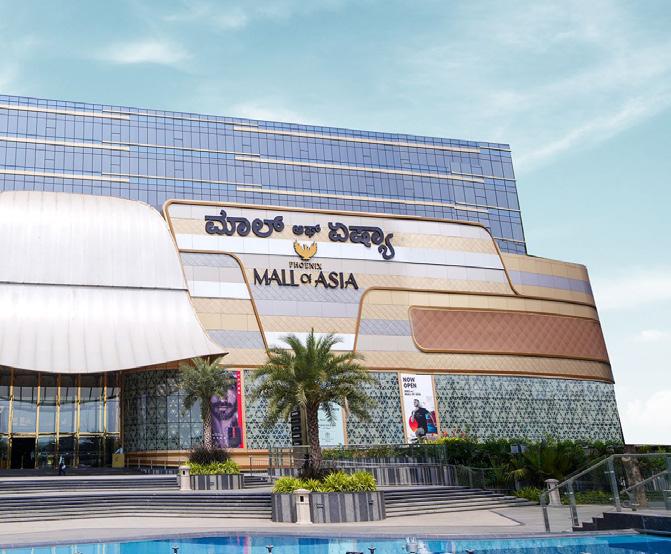
The premium Danish footwear brand ECCO has taken a significant step in its India expansion with the opening of its first store in South India at Phoenix Mall of Asia, Bengaluru. Spanning 1,195 square feet, the new outlet marks ECCO’s seventh store in the country and signals a focused push towards high-potential urban markets with a growing appetite for global brands rooted in quality, comfort, and design. Strategically located in one of Bengaluru’s most upscale and high-footfall retail destinations, the new ECCO store brings the brand’s globally recognised Scandinavian retail identity to Indian consumers. Known for its clean lines, minimalist aesthetics, and product-forward philosophy, the store has been designed to allow footwear to take centre stage, creating a calm and refined shopping environment that aligns with ECCO’s design-first ethos.
A Thoughtfully Designed Retail Experience
The Bengaluru store reflects ECCO’s global retail playbook, where simplicity enhances functionality. The minimalist Scandinavian layout ensures clear sightlines, intuitive zoning, and easy navigation, allowing customers to move seamlessly across categories. By reducing visual clutter, the store encourages faster product discovery, efficient tryons, and a more relaxed shopping experience.
This clean design approach also benefits in-store operations. With concise zoning and a streamlined fit-out, staff can manage peak-hour footfall more effectively, ensuring quicker service and shorter queues. The compact yet efficient footprint supports disciplined inventory management, faster stock turns, and consistent visual merchandising, all of which contribute to a smoother customer journey from entry to checkout.
A Complete Footwear Portfolio Under One Roof
The new ECCO store offers the brand’s full assortment of men’s and women’s footwear, catering to a wide range of lifestyle needs. Shoppers can explore collections across casual, formal, outdoor, and golf categories, making the store a one-stop destination for workwear, weekend essentials, travel-friendly styles, and performancedriven footwear.
ECCO’s reputation for consistent fit, precision-engineered lasts, and premium materials plays a key role in this assortment strategy. With predictable sizing across categories, customers can confidently explore multiple styles in a single visit, reducing the need for returns or repeat size exchanges. This consistency not only enhances customer satisfaction but also supports stable sell-through at full price.
Autumn/Winter 2025 Collection: A First for India
In a first for the Indian market, the Bengaluru store offers an exclusive preview of ECCO’s Autumn/Winter 2025 collection. This early showcase reinforces the brand’s commitment to bringing global collections to India without delay, positioning Indian consumers alongside key international markets.
• Cozmo: Inspired by classic Nordic design, these sandals focus on all-day comfort with cushioned, supportive soles and understated aesthetics, ideal for everyday wear.
• Biom: Modern biomechanical sneakers designed to guide the natural movement of the foot, offering lightweight support, anatomical precision, and performance-led comfort.
• Sculpted: Contemporary block-heeled shoes crafted for extended wear, featuring anatomical support, soft foam soles, and elegant leather uppers that balance style and function.
• Soft: Comfort sneakers known for exceptional softness, flexibility, and foot-hugging support, presented in a versatile, modern silhouette.
• Metropole: Premium leather city shoes that combine sleek, modern design with lightweight construction, suitable for both formal and smartcasual occasions.
Each collection reflects ECCO’s focus on long-wear comfort, reliable support, and timeless design, ensuring footwear that transitions effortlessly across seasons and settings.
A Strategic Move in a High-Growth Market
Commenting on the launch, Sumeet Lohia, Country Manager – ECCO India, described the Bengaluru opening as a defining milestone for the brand’s growth in the country. As ECCO brings its globally trusted comfort and innovation to South India, Phoenix Mall of Asia provides an ideal platform to introduce the brand’s premium experience to a discerning audience. Bengaluru, with its cosmopolitan consumer base and strong demand for international lifestyle brands, plays a key role in ECCO’s urban cluster strategy. The city’s mix of professionals, frequent travellers, and comfort-conscious shoppers aligns closely with ECCO’s value proposition, which sits distinct from purely fashion-driven or athletic footwear brands.
Built on Craftsmanship and Vertical Integration
Founded in 1963, ECCO remains a family-owned company with operations in over 98 countries worldwide. One of the brand’s defining strengths lies in its vertically integrated business model. ECCO controls its entire value chain, from leather production in its own tanneries to design, manufacturing, and retail. This end-to-end control ensures consistent quality, material innovation, and precision craftsmanship across every pair of shoes. Globally, the brand employs more than 20,000 people and continues to invest in comfort technology, advanced manufacturing processes, and sustainable practices. This commitment to craftsmanship and innovation underpins ECCO’s promise of stable fit, durability, and long-term value for customers.
With the opening of its Bengaluru store, ECCO reinforces its focus on premium positioning, disciplined retail expansion, and customer-centric design. The compact 1,195 sq. ft. format encourages efficient inventory planning, faster cash conversion, and healthier margins, while still delivering a complete brand experience.
As ECCO continues to expand its presence across India’s key urban centres, the Phoenix Mall of Asia store stands as a strong statement of intent—bringing global design sensibilities, comfort-driven innovation, and Scandinavian simplicity to Indian consumers who value quality over trends. The Bengaluru launch not only strengthens ECCO’s footprint in India but also sets the tone for its future growth in the region.
CORPORTATE, INDUSTRIES & INVEST
IN KARNATAKA
FUTURE MAKERS CONCLAVE AT BTS 2025 PUTS KARNATAKA’S DEEPTECH
INVESTMENT STRATEGY IN FOCUS
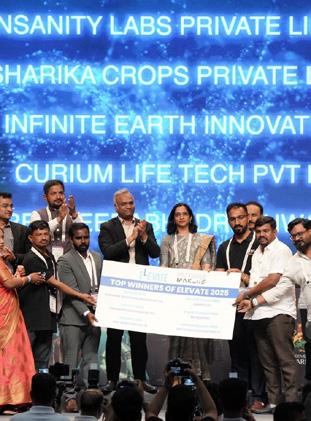
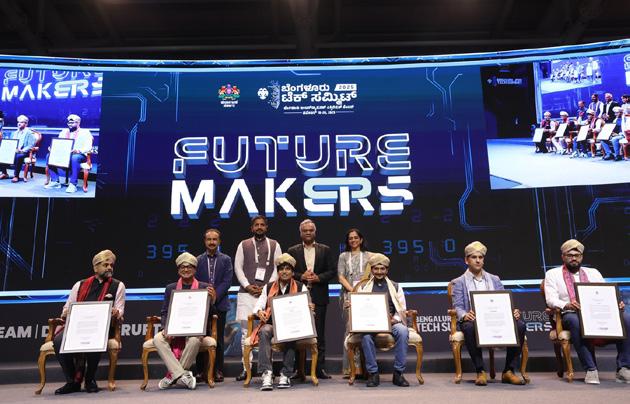
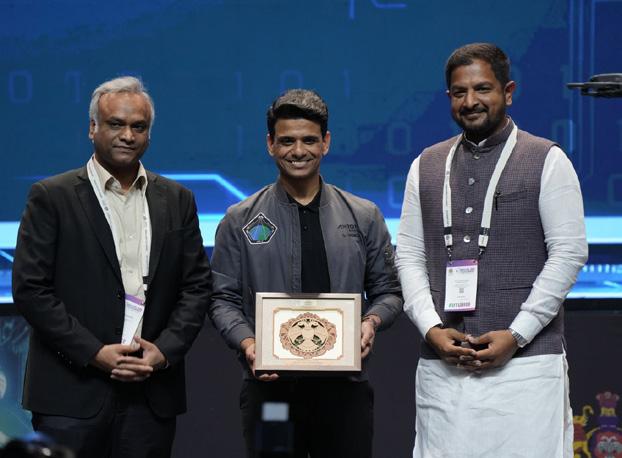
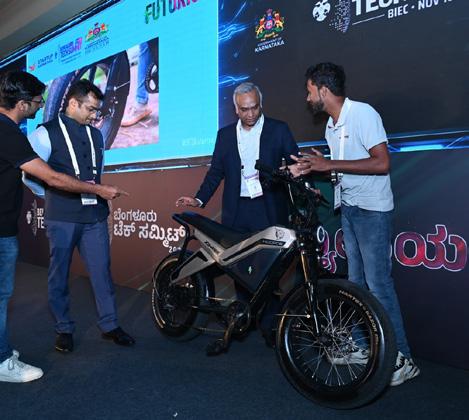
The inaugural Future Makers Conclave at BTS 2025 brought astronauts, unicorn founders, and 143 new Elevate startups together, signaling Karnataka’s bold play to become the world’s deeptech capital. hen astronauts, unicorn founders, and thousands of young innovators gather under one roof, it’s not just an event; it’s a statement of intent. The inaugural edition of Future Makers Conclave at Bengaluru Tech Summit (BTS) 2025, held recently at Bangalore International Exhibition Centre, not only captured the imagination of India’s innovation community but also boldly defined what the next decade of deeptech leadership could look like for Karnataka and the nation.
Conceptualised as a flagship programme on Day 3 of BTS 2025, the conclave emerged as a first-of-its-kind platform blending technology, entrepreneurship, inspiration, and national pride. It brought together an extraordinary spectrum of achievers – from astronaut Group Captain Shubhanshu Shukla, who recently made history as India’s Gaganyaan mission commander, to bestselling authorentrepreneur Ankur Warikoo, sports legends Sania Mirza and Richa Ghosh, superstar mentalist Suhani Shah, and a galaxy of unicorn founders, including Kaivalya Vohra (Zepto), Gaurav Singh Kushwaha (Bluestone), Pavan Guntupalli (Rapido), Swapnil Jain (Ather Energy), S Karthik Venkateswaran (Jumbotail), Ashish Jhina (Jumbotail), and Rajiv Naresh (Navi).
Raw stories, real impact
What made their presence truly special was not celebrity status but their raw stories of ambition, failure, success, and reinvention that they brought to the stage.They spoke of battles fought in silence, ideas that started small, and the persistence required to disrupt at scale.Their journeys gave young innovators in the audience a profound realization that India’s tech icons are not born in boardrooms, but are built through sheer courage, grit, and resilience.
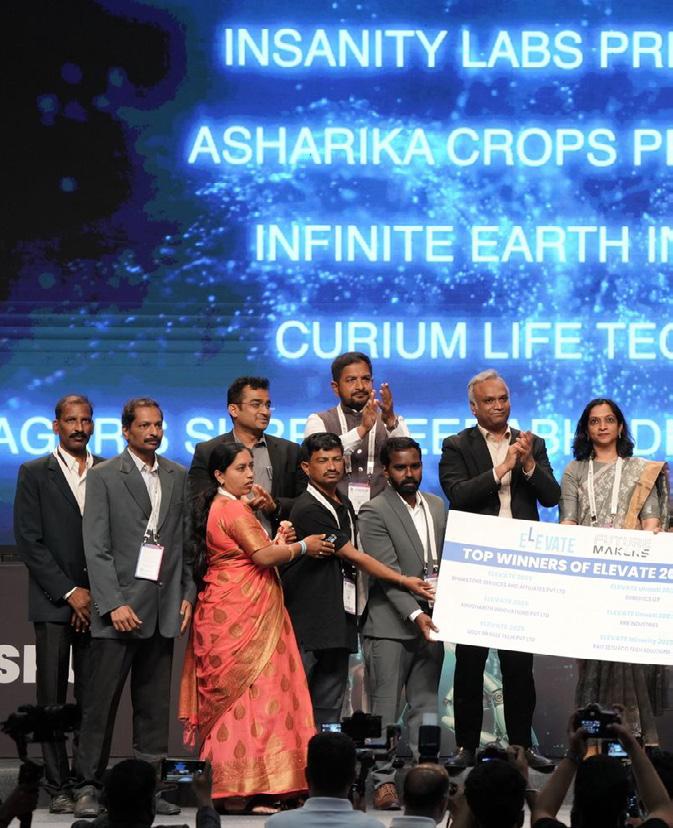
Beyond inspiration: measurable commitments From a deeptech lens, the conclave delivered far more than inspiration. The Government of Karnataka and leading venture capital funds announced investment commitments of nearly Rs 400 crore for promising AI and deeptech startups. A record 143 new Elevate Awardees, of which 6 winners were recognized, with a strong representation from Beyond Bengaluru, strengthening regional innovation clusters and signalling a statewide deeptech expansion. This collaboration between the government, investors, and entrepreneurs showcased a powerful message: deeptech in Karnataka is not just an idea, it is a nurtured, accelerated, national priority.
An ecosystem maturing at a record pace
The Future Makers Conclave and BTS 2025 also highlighted an ecosystem that is maturing at record pace. With the announcement of new Karnataka IT and spacetech policies for 2025-2030, advancements under the LEAP initiatives, and the launch of KEO, a compact, affordable, AI-ready personal computer, Karnataka is positioning itself at the forefront of the global techade. A defining thread across the three-hour programme was Karnataka’s commitment to democratising innovation. The state is building an environment where deep science innovators find believers early, where frontier technologies can be tested, piloted, scaled, and globalised. It’s creating pathways for startups to gain policy and market access inside India first, and ensuring young entrepreneurs see role models who look like them, speak like them, and started exactly where they are today.
A movement taking shape
For the thousands who filled the hall, the conclave felt more like a movement taking shape, one where the next Indian astronaut, the next deeptech unicorn, the next global product pioneer could very well be sitting among them. If this was the very first edition, the future editions of Future Makers Conclave are poised to become the most powerful stage for emerging innovators, accelerating Karnataka’s aspiration to become the deeptech capital of the world. The future didn’t just arrive at BTS 2025. It stood up, roared, and announced that India is ready to lead.
MEN & WOMEN OF GREATER SUBSTANCE
KARNATAKA
K. SUBRAMANYA A MAESTRO OF MEDIA, JOURNALISM, AND
PUBLIC COMMUNICATION
In the ever-evolving landscape of Indian media, where stories unfold at lightning speed and truth often competes with sensationalism, K. Subramanya has emerged as a paragon of journalistic integrity, public engagement, and thoughtful communication. His career, spanning decades, reflects a rare combination of ethical rigor, storytelling finesse, and social responsibility, earning him recognition not just as a journalist, but as a mentor, thought leader, and advocate for public awareness.
Early Life: Roots that Shaped a Visionary
Born in Mysuru, Karnataka, K. Subramanya was immersed in an environment that valued education, culture, and civic responsibility. From a young age, he exhibited a curiosity about the world around him—asking questions, reading extensively, and observing social dynamics with a keen eye. His formative years in Karnataka’s rich cultural milieu instilled a deep respect for tradition, history, and community, all of which later became central themes in his reporting.
Subramanya pursued Mass Communication at a leading university, where he was lauded for his analytical thinking and ability to craft compelling narratives. He later earned a Master’s in Journalism and Media Studies, sharpening skills that would allow him to navigate both the editorial and public communication arenas with equal finesse.
Career Beginnings: From Local Reporter to National Recognition
K. Subramanya began his professional journey as a reporter for a local newspaper in Mysuru, covering civic affairs, education, and community issues. His early reporting stood out for its accuracy, clarity, and empathy, quickly earning him a reputation as a journalist who cared deeply about the impact of his stories. Not long after, he expanded into broadcast journalism, taking on roles as a news anchor and investigative reporter. His natural ability to connect with audiences, combined with rigorous factchecking, allowed him to transition seamlessly into digital media, where he now leads content strategy and public communication campaigns for multiple platforms.
Defining Works and Contributions
Over the years, Subramanya has been instrumental in shaping media discourse in Karnataka and across India. Some highlights include: Investigative Journalism:
• Exposed corruption in local governance and public institutions, prompting legal action and reforms.
• Uncovered systemic gaps in healthcare delivery in rural Karnataka, influencing policy discussions.
Feature Stories:
• Chronicled Karnataka’s rich cultural heritage, including in-depth stories on historical landmarks like the Pattadakal temples and Mysuru Dasara celebrations.
• Explored social initiatives, highlighting grassroots programs in education, women’s empowerment, and environmental conservation. Public Communication Campaigns:
• Designed campaigns to raise awareness about health, literacy, and civic engagement, making complex issues accessible to the general public.
• Advocated for media literacy, helping audiences navigate misinformation in the digital age.
4. Editorial Leadership and Mentorship:
• Guided editorial teams across print, television, and digital platforms, setting high standards for accuracy, ethics, and storytelling.
• Mentored dozens of young journalists, instilling in them the importance of integrity, empathy, and audience-first communication.
Philosophy: Journalism as a Public Trust
At the heart of Subramanya’s career is a guiding principle: “Journalism is not just reporting facts; it is shaping informed citizens.” He believes that every story has a responsibility—not just to present information, but to engage, educate, and empower. Whether covering politics, culture, or social issues, he emphasizes balanced reporting, deep research, and clear communication, ensuring that audiences are informed without bias or sensationalism.
Personal Style and Approach
K. Subramanya is widely admired for his calm demeanor, meticulous approach, and engaging storytelling style. He combines analytical rigor with a human touch, allowing him to report with clarity and compassion. Colleagues describe him as disciplined, thoughtful, and unwaveringly ethical, someone who challenges his teams to uphold the highest standards of journalism while remaining empathetic to the communities they cover.
Impact: Beyond Newsrooms
Subramanya’s influence goes far beyond the stories he writes or edits. His work has:
• Sparked civic engagement and public discourse on critical issues.
• Encouraged transparency and accountability in governance.
• Strengthened media literacy and responsible reporting practices among peers and audiences.
• Inspired a new generation of journalists to approach the profession with ethics and empathy at the forefront.
His initiatives in public communication campaigns have helped simplify complex policy issues for everyday citizens, bridging the gap between governance, media, and the public.
Philosophy: Journalism as a Public Trust
At the heart of Subramanya’s career is a guiding principle: “Journalism is not just reporting facts; it is shaping informed citizens.” He believes that every story has a responsibility—not just to present information, but to engage, educate, and empower. Whether covering politics, culture, or social issues, he emphasizes balanced reporting, deep research, and clear communication, ensuring that audiences are informed without bias or sensationalism.
Legacy and Vision
As he continues to lead in the ever-changing media landscape, K. Subramanya remains focused on ethical reporting, public awareness, and storytelling that matters. His career serves as a blueprint for responsible journalism—one that balances speed with accuracy, innovation with ethics, and ambition with social responsibility. For readers, colleagues, and aspiring journalists, Subramanya’s journey is a testament to the power of truth, integrity, and dedication. His work proves that journalism, when practiced with care and conscience, is not just a profession—it is a force for positive societal change.
In a media world dominated by fleeting headlines, clickbait, and misinformation, K. Subramanya stands as a steadfast guardian of truth. His work exemplifies the timeless values of journalism: accuracy, integrity, and public service. Beyond reporting, he inspires trust, sparks meaningful conversations, and empowers communities with knowledge. For anyone seeking to understand the heart of modern journalism in Karnataka and India, Subramanya’s story is both a guide and an inspiration—a reminder that words, when wielded responsibly, can change the world.
Recognition and Awards
Over the course of his distinguished career, K. Subramanya has earned widespread recognition for his dedication to ethical journalism, public communication, and mentorship. His accolades reflect not only professional excellence but also the enduring influence of his work on media standards and society.
Karnataka State Media Excellence Award
Subramanya received the Karnataka State Media Excellence Award for his investigative journalism that exposed systemic inefficiencies and corruption in local governance. His reports prompted policy reviews and public discourse, demonstrating how responsible journalism can drive accountability and transparency. This award honoured both his meticulous research and his commitment to truth, highlighting his ability to transform facts into meaningful societal impact.
Public Communication Leadership Award
Recognized with the Public Communication Leadership Award, Subramanya’s campaigns in health, education, and civic awareness exemplified his philosophy of engaging, educating, and empowering citizens. By simplifying complex policy issues and reaching diverse audiences, his initiatives enhanced public understanding and encouraged informed decision-making. This award celebrated his skill in bridging the gap between institutions and the public, showing that media can be a catalyst for positive change.
Mentorship Recognition
National journalism associations honoured Subramanya for his exceptional role in mentoring young journalists. Through guidance, training programs, and personal mentorship, he has nurtured the next generation of ethical and skilled media professionals. His recognition underscores his belief that journalism is not just about individual achievement but also about building a community of responsible practitioners who uphold integrity and public trust.
Lasting Impact
These awards and recognitions are not merely accolades—they reflect Subramanya’s lasting influence on media culture, public communication, and society at large. Each honour serves as a testament to his unwavering dedication to truth, clarity, and ethical responsibility, inspiring peers and successors alike to approach journalism with the same rigor and conscience. Through these achievements, K. Subramanya has cemented his legacy as a thought leader, a change maker, and a guardian of public trust in media.
INTERNATIONAL STANDARD EDUCATION OF KARNATAKA
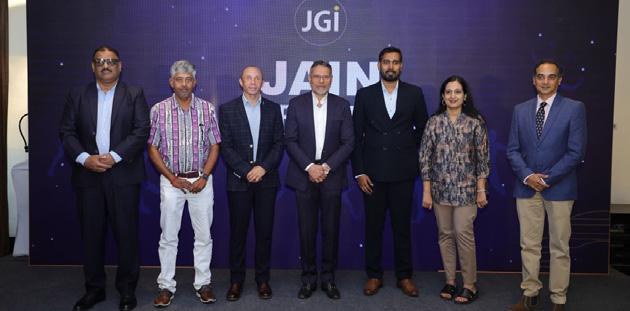
JAIN UNIVERSITY BENGALURU
A Center of Academic Excellence & Holistic Growth
Established in 1990 as Sri Bhagawan Mahaveer Jain College and elevated to the status of a deemed-to-be university in 2009, Jain University, Bengaluru, has steadily evolved into one of India’s most respected private universities. With a student population exceeding 25,000, the university is widely recognized for its strong academic foundation, research-driven environment, and commitment to holistic education. Guided by its enduring motto, “Knowledge, Skill, Values,” Jain University emphasizes intellectual depth, ethical responsibility, and realworld competence, preparing students to excel in a rapidly changing global landscape.
CAMPUSES AND WORLD-CLASS INFRASTRUCTURE
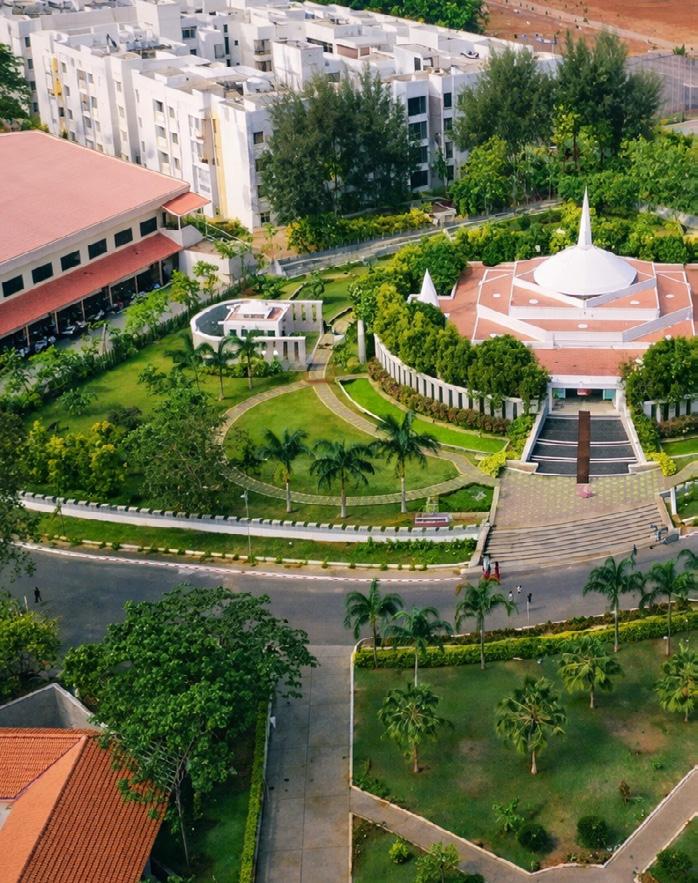
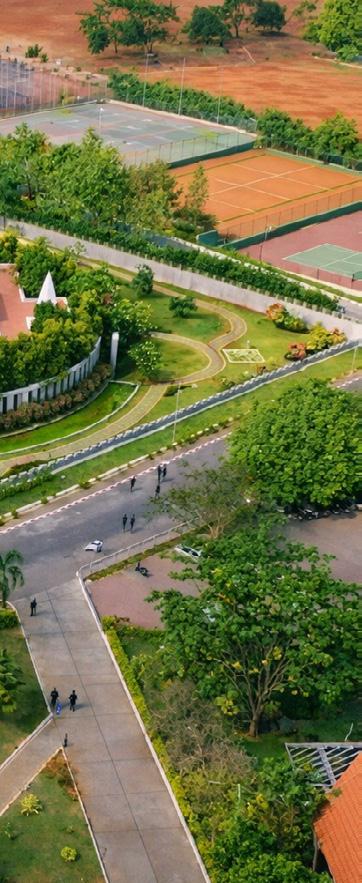
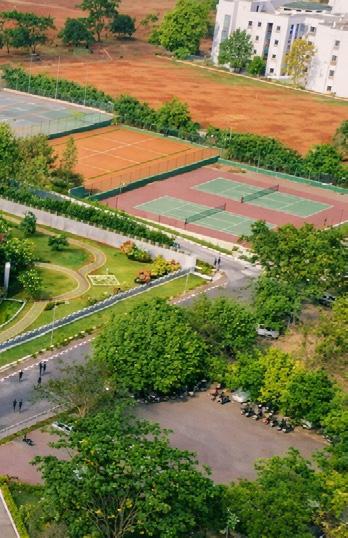
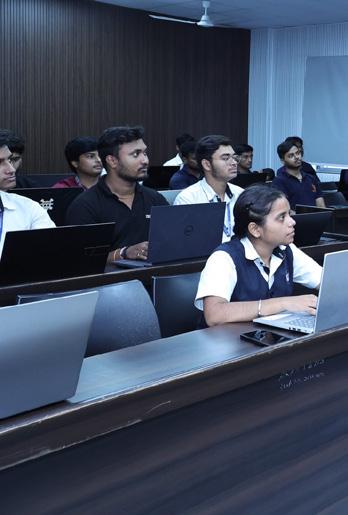
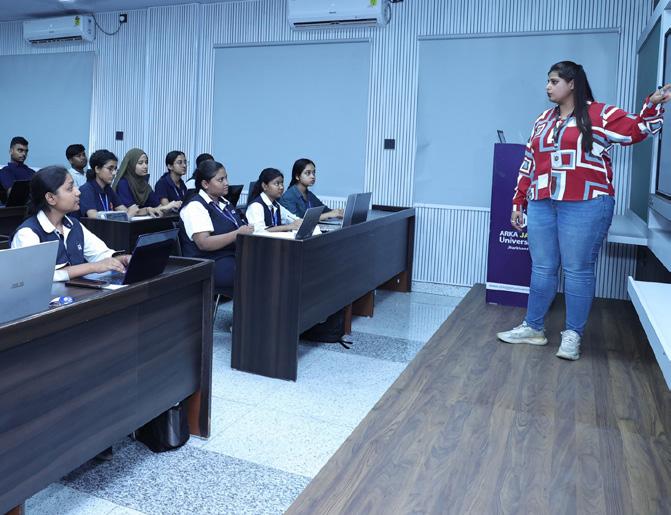
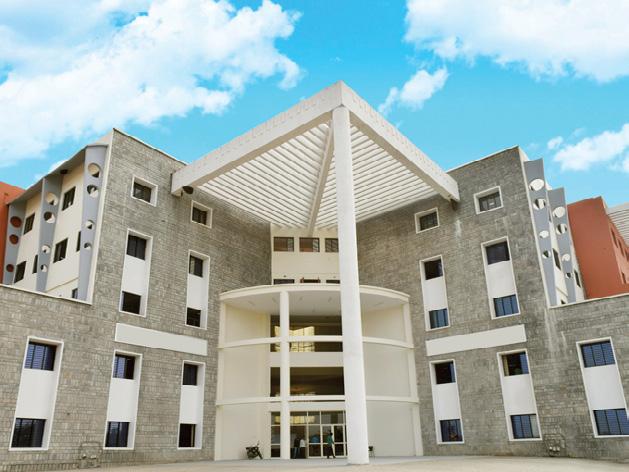
Jain University operates across multiple campuses in Bengaluru, each thoughtfully designed to foster a dynamic and studentfriendly learning environment. The campuses feature smart classrooms with digital boards, advanced laboratories catering to engineering, management, science, and life sciences, and well-equipped libraries housing extensive collections of books, journals, and digital resources. Dedicated research and innovation centres focus on areas such as artificial intelligence, robotics, biotechnology, and entrepreneurship, encouraging applied learning and innovation. Complementing academics are modern hostels, auditoriums, seminar halls, and comprehensive sports and recreation facilities, enabling students to achieve balanced physical, social, and intellectual development.
ACADEMIC PROGRAMS AND SCHOOLS
The university offers a wide spectrum of undergraduate, postgraduate, and doctoral programs through its diverse schools and departments. The School of Commerce and Management delivers industry-oriented programs such as BBA and MBA with strong corporate linkages. The School of Engineering and Technology focuses on future-ready disciplines including artificial intelligence, data science, and computer applications. Programs in sciences and life sciences, humanities and social sciences, law, and arts and design provide interdisciplinary exposure and creative freedom. Jain University’s global collaborations further enrich academic experiences through international student exchanges, joint research initiatives, and overseas internship opportunities.
INNOVATIVE PEDAGOGY AND LEARNING APPROACH
Jain University adopts a student-centered and experiential approach to education. Interactive classrooms emphasize case studies, simulations, project-based learning, workshops, and presentations to enhance engagement and critical thinking. Skill development initiatives focus on leadership, communication, digital literacy, and problem-solving abilities. A strong research orientation encourages students to participate in laboratory work, conferences, publications, and innovation projects. Industry integration through internships, live projects, and mentorship programs ensures that students graduate with practical exposure and professional readiness.
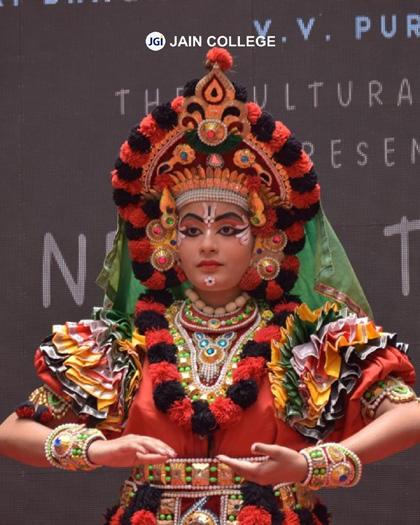
Believing that education extends beyond academics, Jain University actively promotes all-round development. Numerous student clubs and societies in areas such as robotics, entrepreneurship, debate, arts, music, theatre, and social service provide platforms for creativity and leadership. Sports and wellness programs, including yoga and fitness training, promote physical and mental wellbeing. Social responsibility initiatives such as NSS activities, environmental campaigns, blood donation drives, and community outreach programs instill empathy and civic consciousness. Annual cultural festivals, technical expos, and inter-collegiate competitions further enrich campus life and encourage collaboration.
ACHIEVEMENTS, RANKINGS, AND RECOGNITION
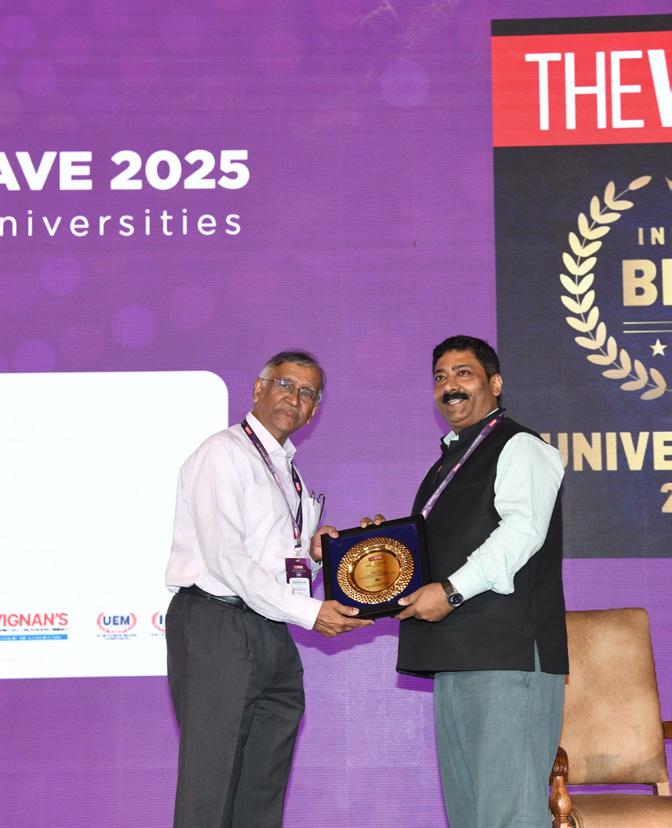
Jain University has earned consistent recognition at national and international levels for its academic excellence and innovative practices. It is recognized by the University Grants Commission and accredited with an NAAC A+ grade. The university regularly features among India’s top private universities for research output, innovation, and employability. Faculty and students actively contribute to peer-reviewed journals, patents, and international conferences, while alumni have gone on to hold influential roles in global corporations, academia, entrepreneurship, and the social sector.
VISION, FUTURE OUTLOOK, AND SUSTAINABILITY
With a forward-looking vision, Jain University continues to expand its academic and research horizons. The institution is introducing interdisciplinary programs in emerging areas such as artificial intelligence, blockchain, sustainability, and entrepreneurship. Strengthening global partnerships, promoting dual-degree programs, and encouraging crosscultural learning remain key priorities. The university is also committed to sustainable campus initiatives, including green energy adoption, waste management, and environmental awareness programs. Entrepreneurial incubation centres support student startups and innovative ventures, reinforcing the university’s focus on future-ready education.
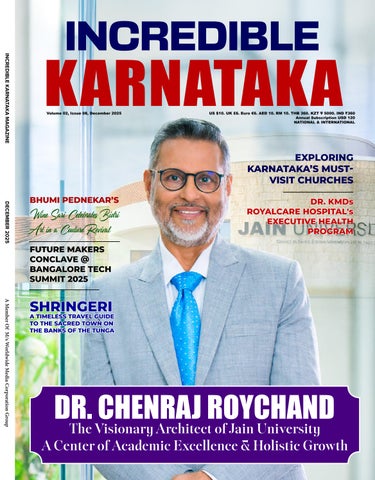
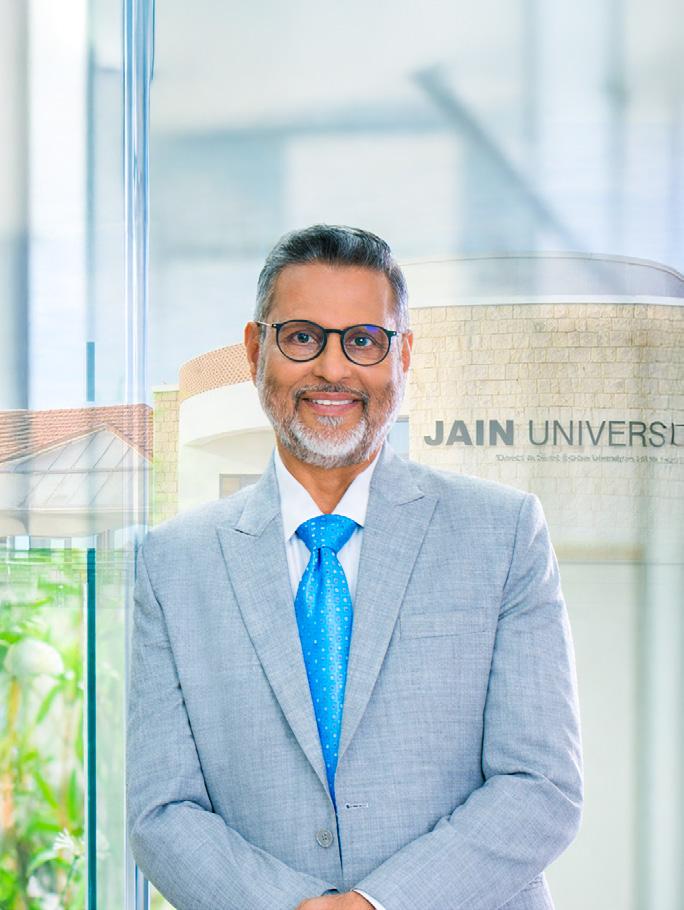
Dr. Chenraj Roychand
DR. CHENRAJ ROYCHAND: THE VISIONARY ARCHITECT OF JAIN UNIVERSITY
Early Life and Entrepreneurial Roots
Born on 7 July 1961, Dr. Chenraj Roychand rose from humble beginnings. His early career involved small entrepreneurial ventures and sales initiatives, experiences that instilled in him a strong work ethic, practical insight, and an understanding of opportunity. These formative years shaped his philosophy that education must be practical, accessible, and empowering.
Founding the JAIN Group of Institutions
In 1990, Dr. Roychand founded Sri Bhagawan Mahaveer Jain College in Bengaluru with a vision to deliver high-quality education rooted in values and real-world relevance. Over time, this initiative expanded into the JAIN Group of Institutions, encompassing schools, colleges, residential institutions, and ultimately JAIN (Deemed-to-be University). His focus was always on integrating academic excellence with entrepreneurship, skill development, and ethical learning.
Leadership as Chancellor
As Chancellor, Dr. Roychand plays a pivotal role in shaping the vision, ethos, and long-term direction of Jain University. His educational philosophy emphasizes holistic development, inclusivity, and innovation. He strongly believes that education should create job creators rather than job seekers and empower students from diverse socio-economic backgrounds to become independent, confident, and socially responsible individuals.
Entrepreneurship, Innovation, and Industry Linkages
To promote entrepreneurial thinking, Dr. Roychand established the R. Chenraj Roychand Centre for Entrepreneurship, which mentors students and young innovators through guidance, resources, and institutional support. This initiative bridges the gap between academics and real-world application, enabling students to transform ideas into viable enterprises and innovative projects.
Emphasis on Sports and All-Round Development
Dr. Roychand advocates the importance of physical fitness, discipline, teamwork, and extracurricular engagement as integral components of education. Under his leadership, Jain University has developed extensive sports infrastructure, including facilities for cricket, football, tennis, swimming, and yoga. He believes that sporting excellence and wellness contribute significantly to character building and leadership development.
Philanthropy, Social Responsibility, and Community Impact
Beyond academics, Dr. Roychand is deeply involved in philanthropic and social initiatives. Programs such as Jain Vidyaniketan provide free education and support to underprivileged children, reflecting his commitment to democratizing education. His involvement in community welfare, healthcare, and environmental initiatives reinforces the belief that education should uplift society as a whole.
Scale, Recognition, and Lasting Legacy
Under Dr. Roychand’s leadership, the JAIN Group has grown into a vast educational ecosystem serving tens of thousands of students across India. The network spans schools, residential institutions, and professional programs across disciplines. His contributions to education, entrepreneurship, and social welfare have been recognized through numerous awards and honors, highlighting his impact as an educationist and social visionary.
Jain University, Bengaluru, stands as a model institution that seamlessly blends academic rigor, research excellence, holistic development, and social responsibility. Anchored in the visionary leadership of Dr. Chenraj Roychand, the university continues to nurture generations of scholars, innovators, and global citizens. Through its unwavering commitment to Knowledge, Skill, and Values, Jain University prepares students not only to succeed professionally but also to lead ethically and contribute meaningfully to society.
AUTOMOBILE, TRANSPORTATION & AVIATION
OF KARNATAKA
THE ALL-NEW KIA SELTOS 2026 MODEL USHERS A FRESH ERA FOR COMPACT SUVS IN INDIA
On 10 December 2025, Kia India officially unveiled the second-generation version of its compact SUV, the 2026 Kia Seltos a bold move that marks a significant milestone for one of India’s most popular SUVs. What makes this launch a watershed moment isn’t just a cosmetic refresh: the new Seltos rides on a fresh platform, carries a dramatic redesign, and brings a suite of updated features that aim to reset expectations in its segment. According to Kia, this isn’t just a facelift it’s a generational shift.
More than six years after the original Seltos debuted in India, the compact-SUV market has evolved fast — and so have buyers’ expectations. With competitors upping their game, the new Seltos is Kia’s statement that it’s staying ahead, offering a more premium, feature-rich, and futureready vehicle for urban and semi-urban families.
What’s New: Design, Dimensions & Features
The 2026 Seltos is substantially reworked. It rides on Kia’s new “K3” platform, and the difference shows in the sharper, more aggressive exterior stance, and a markedly improved cabin packaging.
Exterior & Design Tweaks
The new model stands out with a bolder front fascia: the signature “Digital Tiger Face” grille has been redesigned, flanked by vertically stacked LED headlamps and new LED DRLs that give the Seltos a more futuristic and premium presence. The body proportions too have changed — the SUV now measures around 4,460 mm in length, boasting a longer wheelbase (2,690 mm), greater width (1,830 mm) and height (1,635 mm) compared to the previous generation. On the outside, buyers get 18-inch alloy wheels, redesigned bumpers, LED tail-lamps, more robust skid plates, and added ruggedness without sacrificing sleekness. The overall effect is of a compact-SUV that feels grownup, stable, and confident — a design language well suited for both city driving and occasional highway trips.
Interior and Tech Upgrades
Inside, the Seltos has been elevated to nearpremium levels.While full details vary by trim, early glimpses suggest a more modern, spacious cabin, improved material quality, and enhanced tech — all crucial for buyers looking for comfort, practicality, and long-term value. Given its updated size and wheelbase, rear-seat space and boot capacity are expected to improve, offering better comfort and utility — a critical factor for Indian families. The refined ergonomics and modern design accentuate the impression that this isn’t just a small-SUV — it
aims to compete with slightly larger models in feel and features.
Powertrain and Performance Options
Kia continues with its trusted 1.5-litre engine lineup: aspirated petrol, turbo-petrol, and diesel are expected to carry over, catering to varying buyer needs. However, the biggest talking point is the possible addition of a hybrid variant — a stronghybrid combining the 1.5-litre petrol with electric propulsion for improved efficiency and lower running costs.
This hybrid option, if priced right, could make the new Seltos a compelling choice for urban users seeking fuel efficiency without compromising SUV practicality — a sweet spot many automakers are chasing. On the transmission front, expect a mix: manual, smart-shift automatics (or IVT), and possibly DCT in petrol trims — offering flexibility to buyers across budgets and preferences.
Booking, Pricing and Market Positioning
Bookings for the new Seltos opened shortly after the unveiling, with a booking fee of around RS.25,000. While official price lists will come later, initial estimates suggest an ex-showroom range starting around 12 lakh and extending up to ~RS.21 lakh for higher trims — aligning it tightly within the compact-to-mid-SUV segment. This positioning aims to retain the Seltos’s value-for-money appeal while offering more premium features — a strategy that could shake up the segment, especially against rivals that offer only incremental updates.
What the New Seltos Means for Buyers & the Market
For buyers in Bengaluru, Mysuru, Hubli, or any expanding metro/tier-2 city — the new Seltos promises a “future-proof” ride: a mix of modern looks, better safety and comfort, improved performance, and possibly hybrid efficiency. Its size and build mean it can handle Indian road conditions with ease, yet look contemporary and premium.
With variant and transmission options ranging from budget-friendly to feature-rich, it caters to a wide audience: from first-time SUV buyers and small families to those stepping up to a midsize urban SUV without breaking the bank.
For Kia’s Market Strategy
The 2026 Seltos is more than a product launch; it’s strategic positioning. With the new platform, improved build quality, and hybrid option, Kia aims to challenge not only domestic SUV rivals but also appeal to buyers considering premium SUVs. The broader feature set and modern design make it relevant for 2025+ buyers who increasingly value safety, comfort, and technology. The hybrid option — especially — if launched at competitive pricing, could redefine affordability — making “efficient SUV” a mainstream category rather than a niche.
For the Compact- to Mid-SUV Segment Overall
With the new Seltos, the bar gets raised. Competitors will have to offer significantly more — better build, features, maybe hybrid/petrolhybrid options — to remain relevant. This could spur a broader wave of upgrades across the segment, benefiting Indian buyers in the long run: more choice, more competition, better vehicles. The 2026 Seltos might thus mark a shift where “acceptable mid-tier SUV” becomes “feature-rich, value-for-money vehicle.”
Possible Challenges & What to Watch Out For
A few potential caveats for buyers to weigh:
• Hybrid variant availability & pricing: The hybrid option adds complexity. Its fuel savings and long-term benefit will be clear only if the premium over regular variants is reasonable and maintenance costs stay low.
• Waiting period & demand surge: Given Seltos’s popularity, booking surge may lead to waiting periods, especially on high-end or hybrid trims.
• Real-world ROI vs. features: While features are rich on paper, actual ride comfort, service network, resale value etc. will decide longterm value — especially crucial for buyers outside big metros.
• Competition intensifying: Rivals will respond — stronger competition could mean better choices, but also pricing pressure and variability in resale value.
The Road Forward
With the 2026 model, Kia has redrawn the compact-SUV map in India. The new Seltos aims to combine practicality, modern design and value — a formula that resonates with evolving consumer expectations. As India’s roads get busier, lifestyles more urban, and buyers more discerning, vehicles like this signal a maturation of the market. For prospective buyers in Karnataka — whether in Bengaluru’s city bustle or Mysuru’s quieter lanes — the new Seltos offers a balanced package: SUV style & practicality, without excessive size, and modern features without the luxury-SUV price tag. If the hybrid variant lands successfully and service/ maintenance ecosystem keeps pace, this could become the benchmark for “smart, future-ready SUV.” For now, the new-gen Seltos seems ready for the road — and likely to dominate many of them.
CULTURE & TRADITIONS OF KARNATAKA
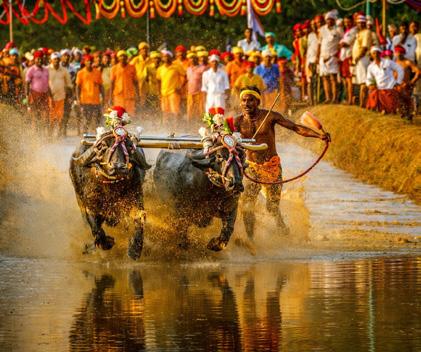
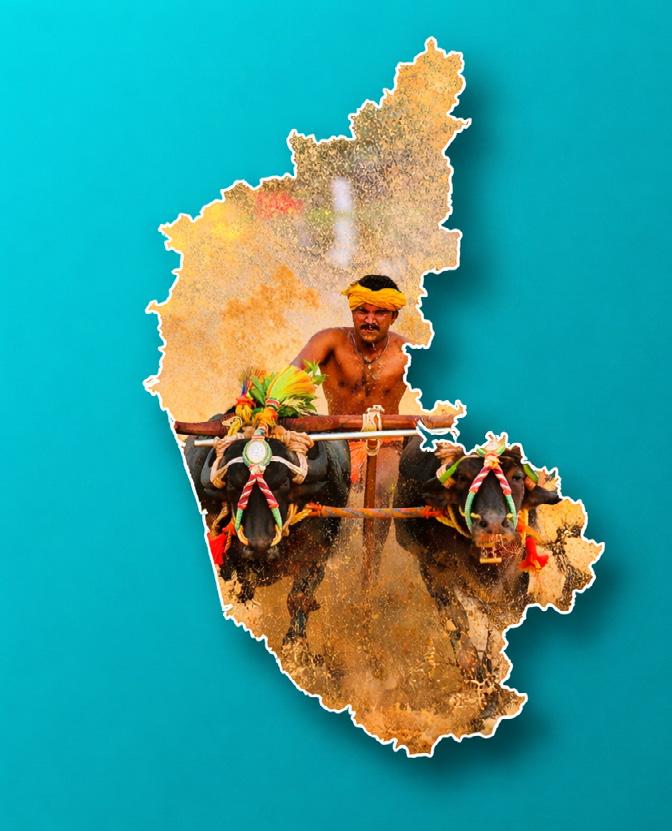
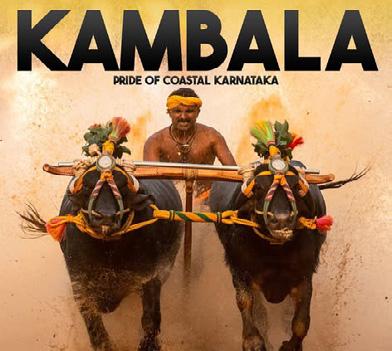
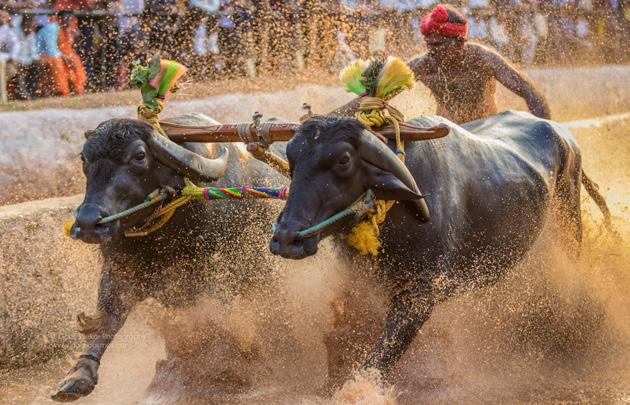
KAMBALA KARNATAKA’S TRADITIONAL BUFFALO RACE GAINS OFFICIAL STATE SPORT STATUS
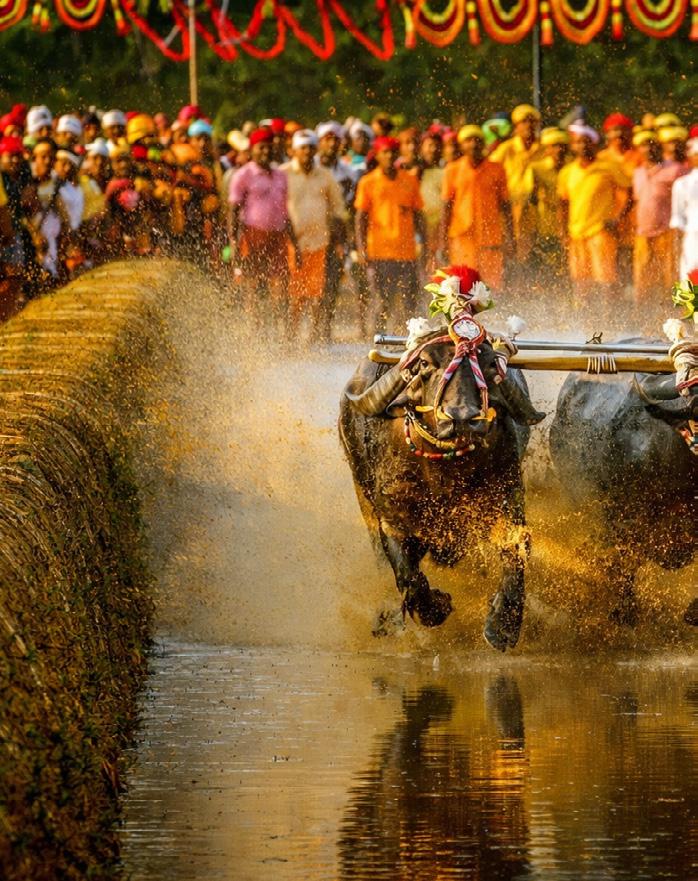
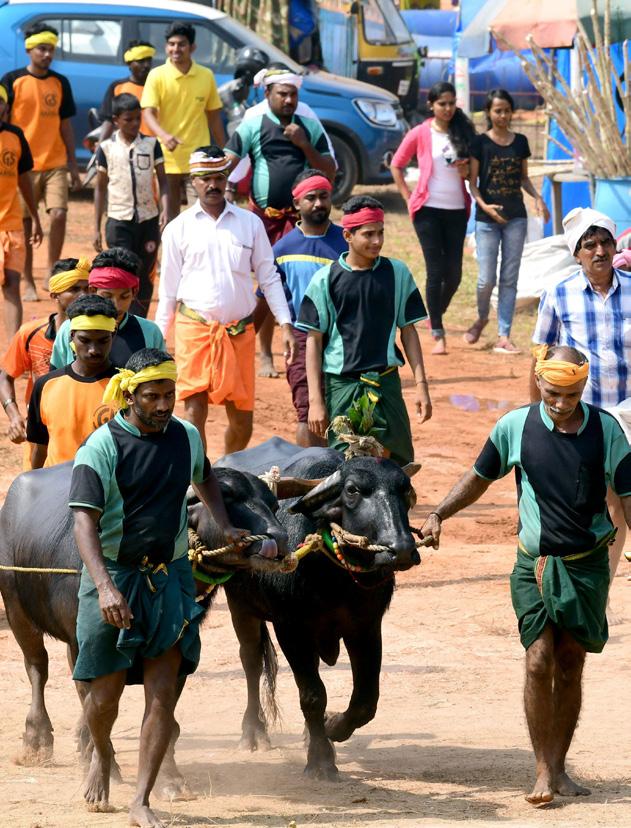
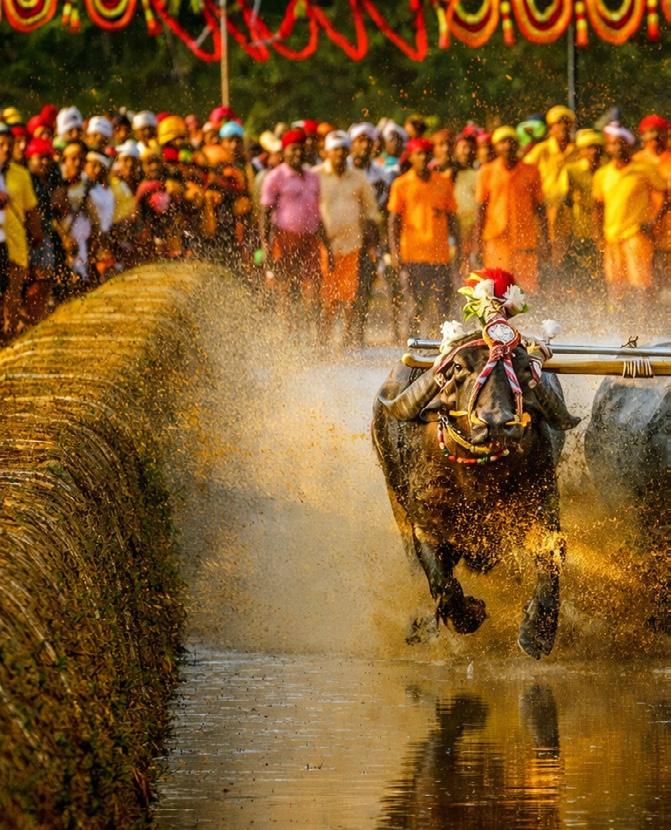
On the lush paddy fields of coastal Karnataka, the rhythmic thunder of buffalo hooves striking wet mud announces more than a race — it heralds a centuries-old celebration of rural pride, tradition, and collective spirit. In October 2025, Kambala, the famed buffalo-slush track race of Karnataka, achieved a historic milestone by receiving official recognition as a state sport. This landmark decision not only safeguards a living cultural heritage but also elevates a folk tradition into the sphere of organized sports governance, bridging ancestral customs with modern institutional support.
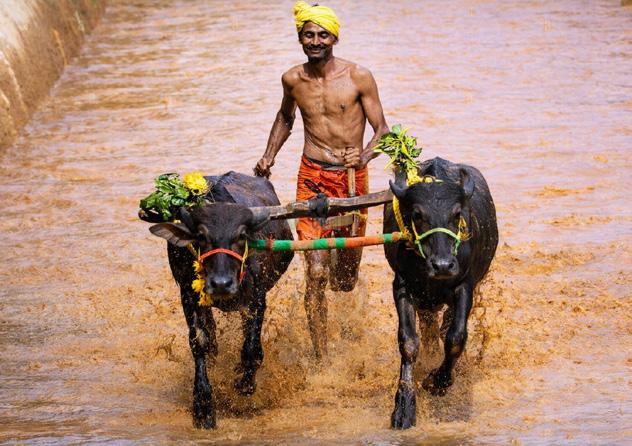
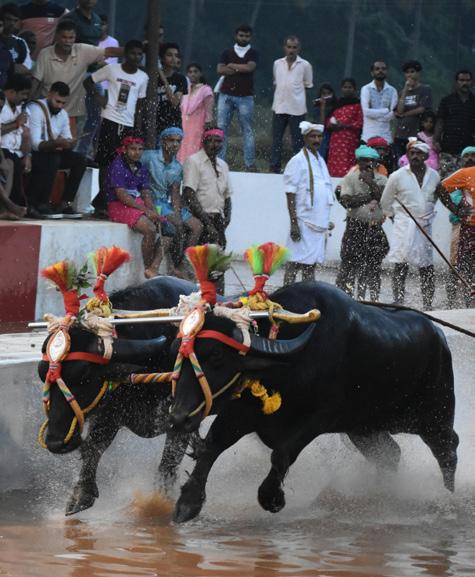
Kambala traces its origins back over six centuries and has long been celebrated in the coastal districts of Udupi, Dakshina Kannada, and Mangalore. Traditionally held after the harvest season, the event began as a ritual of gratitude to local deities for a bountiful yield. Decorated buffalo pairs, yoked together, sprint down slushy tracks as farmers and villagers cheer, turning agricultural fields into arenas of festivity and communal unity. The 2025 recognition formally acknowledges Kambala’s cultural and social importance, affirming Karnataka’s commitment to preserving indigenous traditions while guiding them into a sustainable future.
The pivotal announcement came on October 7, 2025, when the Karnataka government officially recognized the Karnataka State Kambala Association as the governing body for all statelevel Kambala events. This decision introduced structured funding and infrastructure support for organizing competitions, maintaining race tracks, and ensuring safety for both participants and animals. A standardized rulebook was also implemented to guarantee fairness, transparency, and proper adjudication of races. Additionally, farmers, jockeys, and local artisans involved in buffalo decoration and event preparation are now eligible for recognition, stipends, and organized opportunities, strengthening rural livelihoods.
This recognition carries profound significance on multiple fronts. Culturally, it ensures that future generations can continue to learn, participate in, and celebrate Karnataka’s coastal heritage while preserving rituals, chants, and traditional attire. Economically, it opens avenues for government support, improved veterinary care, better safety measures for buffaloes, increased tourism, and promotion of local crafts and festive cuisine. From a sports development perspective, structured competitions and institutional backing inspire youth to engage in indigenous sports, legitimizing folk traditions as credible athletic pursuits. Ethical and sustainable practices have also been prioritized. The state has mandated veterinary check-ups, regulated track conditions, and humane handling of buffaloes, ensuring that tradition thrives without compromising animal welfare. This balance between heritage and ethics aligns Kambala with modern sporting standards while respecting
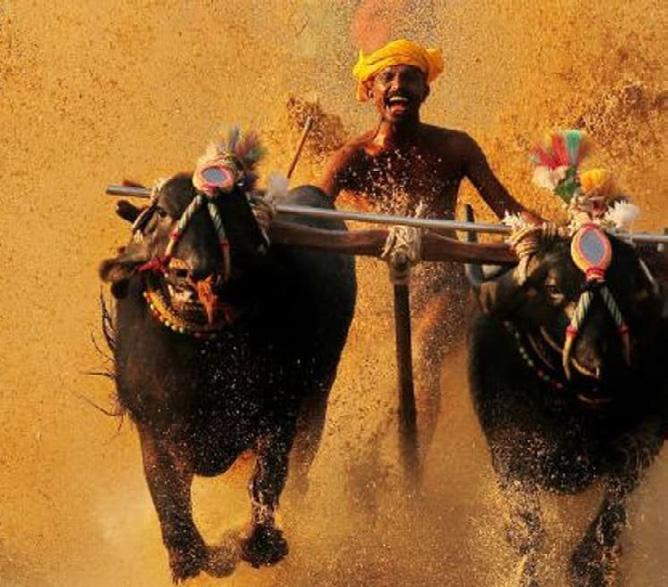
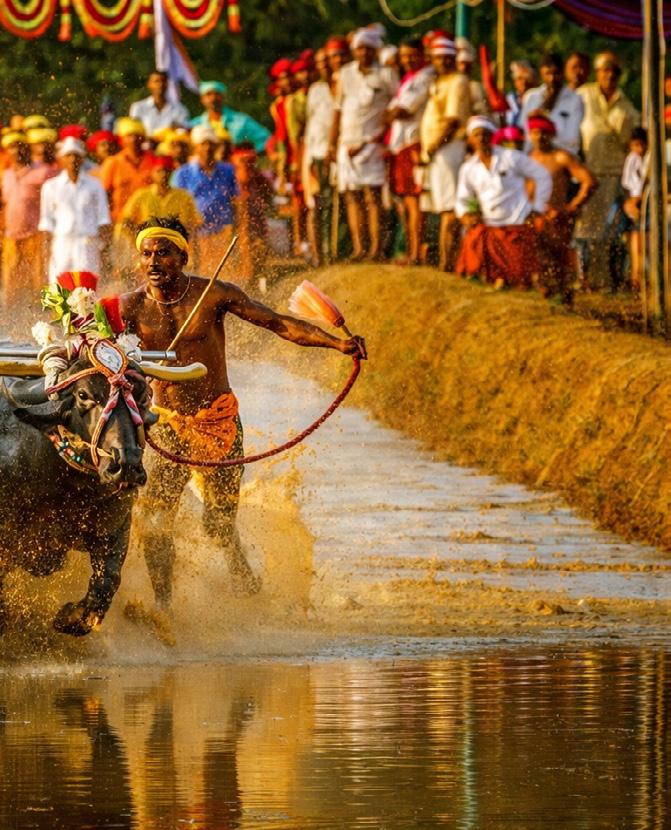
cultural sentiment. Kambala’s revival offers powerful visual storytelling opportunities — slowmotion captures of buffaloes charging through muddy tracks, portraits of determined jockeys and proud farmers, close-ups of ornamented buffaloes, and panoramic views of cheering villages framed by green paddies. Voices from the field reflect this renewed optimism. Local jockeys express pride in gaining professional support, while heritage activists celebrate the newfound respect and sustainability granted to a long-cherished tradition. In a world where globalized sports often overshadow local customs, Karnataka’s decision in October 2025 sends a clear message — heritage matters, rural voices deserve recognition, and tradition can coexist with modern governance. Kambala is no longer merely a muddy spectacle; it is a staterecognized sport, a cultural legacy, and a platform for rural talent to shine.
Kambala — From Agrarian Ritual to Official State Sport
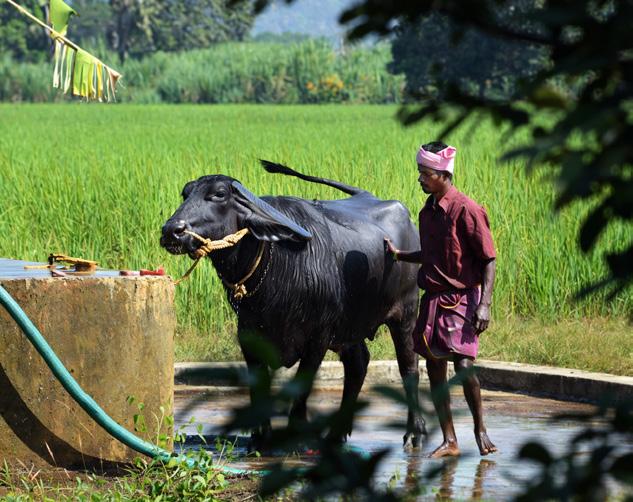
Kambala, the exhilarating buffalo race of coastal Karnataka, is far more than a festival attraction. It is a living sport rooted deeply in agrarian history and community identity. Its official recognition as a state sport in October 2025 marks a historic transition from traditional celebration to formally structured athletic competition. The origins of Kambala lie in the farming communities of Dakshina Kannada and Udupi, where buffaloes were essential for ploughing waterlogged paddy fields. Following the harvest, farmers organized races on these same
fields to honour the animals, express gratitude to deities, and reinforce village unity. Early Kambala events were non-competitive, focusing on ritual and festivity rather than speed or victory. Over time, local rulers and feudal landlords began organizing races to test the strength and stamina of buffaloes, transforming the tradition into a display of agricultural pride and competitive spirit. By the twentieth century, Kambala evolved into a structured sport. Farmers started breeding and training buffaloes specifically for racing, introducing systematic preparation focused on endurance, speed, and coordination. Parallel tracks enabled head-to-head competition, while prizes progressed from symbolic offerings to gold coins, cash awards, and trophies.
This evolution established Kambala as a genuine competitive sport requiring discipline and athletic excellence. Modern Kambala events now follow standardized formats and safety regulations. Two pairs of buffalo’s race side-by-side on slushy tracks under the guidance of sprinting jockeys. Categories are defined by buffalo age, jockey experience, and track type to ensure fair competition. Strict rules govern animal health checks, race distances, track conditions, and humane handling. Both buffaloes and jockeys undergo rigorous training, emphasizing agility, balance, and synchronization. Victory depends on speed, control, and flawless teamwork, making Kambala a rare blend of animal strength and human athletic skill.
The October 2025 recognition formalized Kambala’s governance and institutional support. The Karnataka State Kambala Association now oversees all official competitions. Government funding, structured event calendars, professional training programs, and standardized regulations have transformed Kambala into an organized statelevel sport with over twenty-five scheduled events annually. This recognition elevates Kambala to the
same stature as other recognized sporting disciplines in Karnataka. Sportingly, Kambala presents a unique athletic challenge. Buffaloes demonstrate immense power and speed while sprinting through slippery tracks, while jockeys require extraordinary strength, reflexes, and balance to maintain control. Perfect coordination between buffalo pairs and their handlers determines success, showcasing endurance, strategy, and precision rarely found in any other sport.
From humble post-harvest rituals to officially sanctioned state-level competition, Kambala has transformed without losing its cultural soul. Its recognition as a state sport ensures a structured, ethical, and sustainable future while honouring the skill, courage, and tradition that define it. Kambala is no longer just a festival spectacle; it is a living sport — blending heritage, athletic excellence, and competitive spirit in the muddy fields of coastal Karnataka.
Sarla Aviation has taken a significant, if carefully calibrated, step forward in India’s emerging advanced air mobility landscape by commencing ground testing of its electric vertical take-off and landing (eVTOL) aircraft in Bengaluru. The milestone marks the company’s transition from virtual simulations and laboratory validation to real-world physical testing—an essential phase for any aviation programme seeking long-term viability rather than quick headlines. At the centre of this development is a half-scale prototype named Sylla SYL-X1, which Sarla Aviation describes as the largest privately developed eVTOL prototype at this scale in India. With a wingspan of 7.5 metres, the aircraft represents the tangible outcome of roughly nine months of design, engineering and fabrication work. While global eVTOL programmes often run into hundreds of millions of dollars before reaching a comparable stage, Sarla Aviation says it has achieved this milestone with relatively modest capital expenditure, reflecting a deliberate emphasis on engineering efficiency and staged development.
From concept to concrete hardware
The start of ground testing signals a shift in the company’s trajectory. Until now, Sarla Aviation’s efforts were largely focused on digital design, aerodynamic modelling, simulations and subsystem-level lab testing. The Sylla SYL-X1 prototype allows the team to begin validating those assumptions in the physical world, where factors such as structural behaviour, vibration, thermal management and system integration can diverge significantly from theoretical models. The current test campaign is centred on non-flight evaluations. These include structural load tests, propulsion system integration checks and assessments of the aircraft’s safety architecture. Engineers are closely monitoring how the airframe responds to stresses, how electric propulsion units behave under sustained operation, and how redundancies function in fault scenarios. According to the company, these tests are designed to uncover issues early, before the programme moves towards full-scale development and flight testing.
Engineering discipline over speed
Sarla Aviation’s leadership has repeatedly stressed that the programme is not driven by a race to be “first” in the Indian market, but by a desire to build a durable and certifiable aircraft. Co-founder and chief technology officer Rakesh Gaonkar has characterised the current phase as one focused on engineering discipline rather than speed to market. In an industry where ambitious timelines have often collided with regulatory and technical realities, this approach reflects lessons learned from earlier global eVTOL efforts. The Sylla SYL-X1 is fully electric and is being used to validate the company’s core design philosophy. However, Sarla Aviation has already indicated that the eventual production aircraft will adopt a hybrid configuration. While batteries will power shorter regional routes, a sustainable aviation fuel (SAF)based system is planned to extend range for longer missions. This hybrid strategy is intended to balance environmental considerations with the operational flexibility required in a geographically diverse market such as India.
The evolution of the ‘Shunya’ platform
The half-scale prototype forms part of Sarla Aviation’s broader ‘Shunya’ platform, a branding and design identity introduced earlier this year. The full-scale aircraft currently under development will carry a suffix under the Shunya name and feature a wingspan of approximately 15 metres—double that of the Sylla SYL-X1. This six-seat air taxi concept is designed to reach cruise speeds of up to 250 km/h, positioning it for both intra-city and inter-city applications. The company envisions Shunya as a modular platform rather than a single fixed configuration. Electric-only variants would serve shorter, high-frequency routes, while hybrid versions could connect cities, tourist destinations and regional hubs. This flexibility is seen as critical in India, where infrastructure, population density and travel patterns vary widely between metropolitan regions and smaller urban centres.
A growing team and rising complexity
As the programme has progressed, Sarla Aviation’s internal structure has expanded rapidly. Over the past nine months, the engineering team has grown from just over ten people to nearly 70. This expansion reflects the increasing complexity of the project as it moves from conceptual design into hardware, manufacturing processes and systems integration. Such growth also signals a shift into a more capital- and manufacturing-intensive phase. To date, Sarla Aviation has raised around $13 million to support its first air taxi project. While this figure is modest compared to some international competitors, the company argues that its staged development approach allows it to deploy capital more efficiently, reducing the risk of costly redesigns later in the programme.
Leadership shaped by automotive and aviation experience
Sarla Aviation’s founding team brings together expertise from both the automotive and aerospace worlds. Cofounder and chief executive officer Adrian Schmidt has worked with global carmakers as well as air taxi developers,
giving him exposure to high-volume manufacturing as well as emerging aviation technologies. Gaonkar, meanwhile, brings extensive automotive design experience across multiple international brands, with a focus on durability, systems engineering and production readiness. This blend of backgrounds has influenced the company’s development philosophy. Automotive-style iteration cycles are being adapted to aviation standards, with an emphasis on reliability, maintainability and cost control. At the same time, the team remains acutely aware of the stringent certification requirements that govern aircraft, particularly in a new category such as eVTOLs.
Laying the groundwork for operations
Beyond engineering, Sarla Aviation has begun laying the foundations for eventual deployment. The company has signed memoranda of understanding with the governments of Goa and Karnataka to explore potential air taxi operations. These discussions cover use cases such as tourism-focused routes, city-to-airport connectivity and regional travel corridors. Such partnerships are seen as an important step in integrating advanced air mobility into existing transport ecosystems. By engaging with state governments early, Sarla Aviation hopes to align infrastructure planning, regulatory pathways and public acceptance ahead of commercial launch.
Tourism-heavy regions like Goa, in particular, are viewed as promising early markets where time savings and premium travel experiences could justify higher initial fares.
Manufacturing ambitions and domestic capability
In parallel with testing and operational planning, Sarla Aviation has outlined its manufacturing strategy. The production version of the Shunya air taxi is planned to be built at a new facility in Thimmasamudram, in Andhra Pradesh. The choice of location reflects both logistical considerations and a broader intent to contribute to India’s domestic aerospace manufacturing capability. Establishing a dedicated manufacturing facility is a significant undertaking, particularly for a startup in a capital-intensive sector. However, Sarla Aviation views local production as essential to long-term scalability and cost control. By building supply chains, tooling and assembly processes within India, the company aims to reduce dependence on imports and align with national initiatives to strengthen high-technology manufacturing.
India’s cautious but growing eVTOL ecosystem
Sarla Aviation’s progress comes against the backdrop of a cautiously evolving eVTOL ecosystem in India. While the concept of air taxis has captured public imagination, practical deployment faces challenges ranging from regulatory clarity and airspace integration to infrastructure development and public acceptance. Ground testing milestones such as the Sylla SYL-X1 therefore represent incremental but important steps toward maturity. Unlike some markets where eVTOL development has been driven by aggressive timelines and large funding rounds, India’s approach has tended to be more measured. Startups are balancing ambition with pragmatism, often tailoring designs to local conditions rather than replicating models developed elsewhere. Sarla Aviation’s hybrid strategy, regional focus and emphasis on engineering validation reflect this broader trend.
The road ahead
The commencement of ground testing does not mean that commercial air taxi services are imminent. Significant work remains, including full-scale prototype development, flight testing, certification and infrastructure integration. Each of these stages carries technical and regulatory risks, and timelines are likely to evolve as the programme progresses.
Nevertheless, the Sylla SYL-X1 represents a concrete step beyond concept art and press releases. By moving into physical validation, Sarla Aviation has entered a phase where real-world data will shape design decisions and investment priorities. For India’s advanced air mobility ambitions, such disciplined progress may ultimately prove more valuable than rapid but fragile advances.
As testing continues in Bengaluru and plans take shape across multiple states, Sarla Aviation’s journey offers a glimpse into how India might carve its own path in the global eVTOL landscape—one grounded in incremental engineering, local manufacturing and carefully chosen use cases rather than sheer speed alone.
BENGALURU TECH SUMMIT 2025 MARKS A LANDMARK 28TH EDITION AT BIEC
The Bengaluru Tech Summit concluded its 28th edition from November 18 to 20, 2025, reinforcing Bengaluru’s standing as India’s technology capital and a key node in the global innovation ecosystem. Held for the first time at the Bangalore International Exhibition Centre (BIEC), the summit unfolded at a scale that matched the city’s growing technological ambition. The move to BIEC proved to be a defining shift for the summit. With expansive exhibition halls and upgraded infrastructure, the venue enabled the event to host a larger number of international delegates, exhibitors, startups, and investors than in previous years. The new setting allowed for more immersive showcases, dedicated networking zones, and simultaneous conference tracks, underscoring the summit’s evolution into a truly global platform.
28 Years of Driving Technology Dialogue
Over nearly three decades, the Bengaluru Tech Summit had grown from a regional gathering into one of Asia’s most influential technology conferences. The 2025 edition reflected this journey, bringing together policymakers, industry leaders, entrepreneurs, researchers, and investors to engage in conversations that went beyond trends to address long-term technological and economic impact. Discussions during the summit focused on how technology continued to redefine
business, governance, sustainability, and society at large, with an emphasis on future-ready innovation. The three-day event witnessed strong international participation, with global technology leaders, venture capital firms, and delegations from multiple countries taking part. Keynotes and panel discussions explored themes such as artificial intelligence, semiconductors, biotechnology, climate technology, cybersecurity, fintech, and advanced manufacturing. The exhibition floors at BIEC showcased cutting-edge solutions and emerging technologies, offering visitors a comprehensive view of innovation across industries.
A Platform for Startups and Scaleups
Startups remained at the heart of the summit. Bengaluru’s vibrant entrepreneurial ecosystem was prominently represented, with early-stage ventures and scale-ups gaining exposure to global investors, mentors, and enterprise partners. Startup showcases, pitch sessions, and curated networking opportunities enabled meaningful engagement between innovators and capital providers. For many young companies, the summit served as a critical platform for visibility, collaboration, and global outreach.
Karnataka’s Role in India’s Tech Story
The 2025 summit reaffirmed Karnataka’s leadership in India’s technology landscape. Bengaluru’s contribution to IT exports, deep-tech research, and startup creation formed a recurring theme throughout the event, positioning the state as both a domestic powerhouse and an international technology partner. Hosting the summit at BIEC symbolised the city’s readiness to support worldclass technology events at scale, reflecting the maturity of its innovation ecosystem.
A Defining Moment in a Year of Technology
As Bengaluru Tech Summit 2025 concluded, it left behind a clear message — that Bengaluru continued to be a city where ideas converged, partnerships were forged, and the future of technology took shape. For a December magazine audience, the 28th edition stood out as a defining moment of the year, capturing the momentum, confidence, and global relevance of India’s technology journey.
HOTELS, RESTAURANTS & HOSPITALITY OF KARNATAKA
BENGALURU’S FESTIVE TABLES BRING TOGETHER Christmas Classics & Seasonal indulgence
As the year draws to a close and a festive glow settles over the city, Bengaluru transforms into a culinary playground where the spirit of Christmas is celebrated through flavour, warmth and togetherness. Hotels and restaurants across the city unveil thoughtfully curated menus that blend timeless holiday classics with contemporary flair — inviting diners to gather, indulge and create memorable moments around the table. From lavish dinners and cheerful brunches to elegant high teas and beautifully assembled hampers, the festive offerings capture the essence of the season: comforting aromas, decadent desserts, lively music and the simple joy of sharing a meal. Whether you are planning an intimate celebration, a family outing or searching for the perfect edible gift, the city’s kitchens promise experiences that are as indulgent as they are memorable. Here is a curated round-up of some of Bengaluru’s most inviting festive spreads, each designed to make your Christmas celebrations truly special.
Shangri-La Bengaluru
This festive season, Shangri-La Bengaluru invites you to celebrate with Christmas Eve dinners at b Café, Caprese, Shang Palace and Yataii; a Christmas Day Brunch; festive hightea; gourmet hampers; Butterball turkey to take home; and handcrafted cocktails at Hype. Indulge in seafood, charcuterie, dim sum, sushi, roasted turkey, Truffle Mashed Potatoes, festive desserts, live carving stations and seasonal sips — all wrapped in music, warmth and holiday cheer. INR 3,500 onwards, across the property. December 24 & 25. At Palace Road.
Mykos Craft Kitchen & Bar
Step into a winter wonderland of culinary delight with the curated Christmas menu of Mykos Craft Kitchen & Bar. Giving a modern, creative twist to traditional holiday ingredients, the menu offers dishes like Snowflake Parmesan PullApart Pizza Bloom, Holiday Herb Hummus Ring, Rosemary Snow-Crusted Lamb Chops, HearthBaked Chicken & Feta Christmas Pie to Winter Cottage Zucchini & Herb Parcels. There’s also a wide range of drinks such as Winter in a Glass and Classic Mulled Wine to go perfectly along as a toast. Meal for two: INR 1,600 onwards. On till December 31, 12 pm to 12.30 am. At Bannerghatta Road.
JW Marriott Hotel Bengaluru
Celebrate the magic of the festive season with indulgent Christmas dining experiences at JW Kitchen, where warmth, flavour and holiday cheer come together in signature style. The hotel presents a cosy Christmas Eve Dinner and a lively Christmas Day Brunch, thoughtfully curated to capture the spirit of the season.The lavish festive spread features a generous selection of global and Indian favourites, including Churrasco Chicken, Beijing-style Braised Chicken, Murgh BadamiTikka and Masaledar Tarkari Biryani. Traditional holiday classics such as Roast Turkey and Pot Roast Lamb sit alongside contemporary highlights like Soy Chaap Masaledar and Peri Peri Lamb Cutlet, ensuring there’s something to delight every palate.
No Christmas celebration is complete without dessert, and JW Kitchen delivers with an irresistible line-up of seasonal sweet treats. Guests can look forward to rich Plum Cake, elegant Raspberry Crumble Éclair and the delicate Raspberry Pistachio Financier, among other festive confections.
Priced at INR 4,000 onwards, the Christmas Eve Dinner will be served on December 24 from 7 pm to 10.30 pm, while the Christmas Day Brunch takes place on December 25 from 12.30 pm to 4 pm. The celebrations unfold at the hotel’s prime Vittal Mallya Road address, making it a perfect destination for a memorable festive gathering.
Bengaluru Marriott Hotel
Whitefield
Bringing the flavours of a European Christmas to your table, Bengaluru Marriott Hotel presents a curated range of festive hampers. Each hamper features a classic 500 gms Plum Cake, cookies, a chocolate tree or Santa, Christmas mix, Stollen, Christmas edition chocolates and the Grande option even includes a charming Gingerbread House. Available in Petite, Large and Grande, perfect for gifting or festive indulgence. INR 1,050 onwards. On till January 7. At Whitefield.
Bengaluru Marriott Hotel
Whitefield
Bringing the flavours of a European Christmas to your table, Bengaluru Marriott Hotel presents a curated range of festive hampers. Each hamper features a classic 500 gms Plum Cake, cookies, a chocolate tree or Santa, Christmas mix, Stollen, Christmas edition chocolates and the Grande option even includes a charming Gingerbread House. Available in Petite, Large and Grande, perfect for gifting or festive indulgence. INR 1,050 onwards. On till January 7. At Whitefield.
Four Seasons Hotel Bengaluru at Embassy ONE
Savour the spirit of the holidays with elegant Christmas Eve Dinner and vibrant Christmas Day Brunch celebrations at Four Seasons Hotel Bengaluru at Embassy ONE. The festive experiences unfold across the hotel’s signature restaurants, offering a refined blend of global flavours, seasonal classics and celebratory ambience. At CUR8, the Christmas Eve celebration features a lavish festive buffet with interactive live stations, traditional holiday favourites, mulled wine and live music, enhanced by cheerful moments with Santa. For a more intimate and contemporary setting, Far & East hosts a sophisticated Christmas Eve dinner showcasing modern Asian flavours served amid elegant, winter-inspired décor and live vocals.
Christmas Day continues the festivities with an indulgent brunch at CUR8, complete with festive cocktails, live entertainment and family-friendly cheer, while Far & East offers a refined brunch experience paired with Asianinspired dishes and live instrumental music.
Christmas Eve Dinner: December 24, evening Christmas Day Brunch: December 25, afternoon Venue: CUR8 and Far & East, Four Seasons Hotel Bengaluru at Embassy ONE
FILM, ENTERTAINMENT & NIGHTLIFE
KARNATAKA
SANDHYA ARAKERE THE RISE OF A THEATRE TRAINED STAR IN KANNADA CINEMA
In the vibrant landscape of Kannada cinema, many actors come and go, yet only a few manage to leave an enduring mark with authenticity and emotional depth. In 2025, Sandhya Arakere emerged as one such rare talent. With roots in theatre, a grounded approach to performance, and a breakthrough role in a major film, she is redefining female representation in Sandalwood, setting a benchmark for nuanced storytelling.
EARLY LIFE: ROOTS IN ARAKERE
Sandhya Arakere was born in the village of Arakere, nestled in the Srirangapatna taluk of Mandya district, Karnataka. Her upbringing was modest and deeply rooted in family values, cultural traditions, and the rhythms of rural life. Observing her community, she internalized lessons in discipline, hard work, and humility from an early age. Alongside these formative influences,
Sandhya developed a passion for storytelling and performance, participating in school plays and local cultural events, which ignited her fascination with theatre—a foundation that would shape her future career.he simplicity of village life and the authenticity of its social fabric instilled in her a sense of realism that would later become a hallmark of her acting style. Sandhya often recalls that the values learned in her early years continue to inform her approach to characters, making them relatable and heartfelt.
THEATRE: THE FOUNDATION OF HER CRAFT
Before stepping into cinema, Sandhya honed her craft on the theatre stage—a demanding arena requiring discipline, emotional honesty, and instant audience engagement. Under experienced mentors, she trained rigorously in voice modulation, stage presence, and character immersion. Productions such as Gandhi vs Gandhi, Ambedkar, and Sita Swayamvar challenged her to explore complex emotional landscapes, teaching her that acting extends far beyond memorizing lines—it is about inhabiting a persona fully.
Theatre instilled in Sandhya a keen understanding of emotional authenticity and collaborative storytelling. Every role, whether lead or supporting, demanded the same dedication. She learned resilience through early performances in modest venues, where indifferent audiences or critical reviews tested her commitment. These experiences shaped her patience, precision, and adaptability—qualities that would later define her screen presence.
SITION TO CINEMA: EARLY STEPS
Sandhya’s foray into cinema was gradual and intentional. Starting with minor roles and supporting characters, she familiarized herself with the technical demands of film—camera angles, dialogue modulation, and scene continuity. She also explored short films, including Hinde Gaali Munde Matthe, which allowed her to convey complex emotions within limited timeframes.
Even in these early roles, Sandhya retained her theatre sensibilities. She approached each character with the same sincerity as a lead role, demonstrating that the depth of performance mattered more than screen time. These formative experiences provided the foundation for her breakthrough, honing her versatility and screen adaptability.
BREAKTHROUGH ROLE: SU FROM SO (2025)
Sandhya’s defining moment arrived in 2025 with the Kannada horror-comedy Su From So, directed by J.P. Thuminad and produced with actor-producer Raj B. Shetty. In the film, she portrayed Bhanu, the emotional core of the story—a layered character navigating fear, humor, and personal resilience.Critics and audiences alike praised her ability to imbue Bhanu with warmth, authenticity, and subtlety.Her theatre training allowed her to handle the role’s emotional complexity with finesse, balancing comedic timing with genuine human vulnerability.
While she initially found the role both thrilling and intimidating, her dedication ensured that her performance stood out amidst a strong ensemble cast. The film’s commercial success and critical acclaim cemented Sandhya’s position as a rising star in Kannada cinema.
ACTING PHILOSOPHY AND STYLE
Sandhya Arakere’s approach to acting reflects her theatre roots and deep commitment to authenticity. She emphasizes emotional truth in every gesture, glance, and expression, and maintains that sincerity is more important than the size of the role. She embraces challenging parts as opportunities for growth and actively seeks scripts that offer depth, particularly for female characters, moving beyond conventional stereotypes.Her style is subtle yet impactful—expressive eyes, controlled body language, and the capacity to convey complex emotions without overstatement. In an industry often dominated by glamour, Sandhya stands apart as an artist driven by content and meaningful storytelling.
FILMOGRAPHY OVERVIEW
Sandhya’s body of work charts a deliberate progression from theatre to cinema.
• Early Supporting Roles (Pre-2023): Brief but crucial appearances that familiarized her with film dynamics.
• Short Films: Projects like Hinde Gaali Munde Matthe helped refine her ability to express depth within limited narratives.
• Breakthrough Role – Su From So (2025): Her first major lead, earning acclaim for authenticity and nuanced performance.
• Theatre Productions: Including Gandhi vs Gandhi, Ambedkar, and Sita Swayamvar, which continue to inform her craft. Her prior experiences cumulatively built the skill, discipline, and confidence required for mainstream success, demonstrating a steady and thoughtful approach to her career.
RECEPTION AND INFLUENCE
While formal awards have yet to follow, Sandhya’s portrayal of Bhanu earned widespread recognition from critics, industry peers, and audiences. Her emergence has sparked dialogue around the importance of well-rounded female characters in regional cinema. Industry insiders view her as a role model for aspiring actors, particularly those from theatre backgrounds, highlighting the power of dedication and authenticity over glamour or instant fame.
Looking ahead, Sandhya Arakere is poised for a promising trajectory in Kannada cinema. She seeks roles that explore social issues, character-driven narratives, and stories that challenge traditional gender norms. With her theatre foundation, nuanced performances, and audience connection, she is set to become a defining figure in the industry over the coming decade.Her journey underscores that true success in acting is earned through persistence, humility, and craft mastery. As more filmmakers recognize her abilities, she is likely to receive diverse opportunities that showcase her range, further solidifying her place in Sandalwood.
A NEW VOICE IN KANNADA CINEMA
From a small village in Mandya to the limelight of Kannada cinema, Sandhya Arakere’s journey is one of passion, perseverance, and artistic integrity. Her theatre roots, dedication to emotional authenticity, and breakthrough role in Su From So herald a new era for regional cinema—one where substance triumphs over spectacle and nuanced female characters inspire audiences.Sandhya’s story is a testament to the enduring value of craft, sincerity, and the quiet power of performance. As she continues to evolve as an actor, the best of Sandhya Arakere is yet to come, promising a future where Kannada cinema celebrates both talent and truth on screen.
GLOBAL KARNATAKA
CURRICULUM ASSOCIATES EXPANDS BENGALURU GCC TO POWER GLOBAL PRODUCT INNOVATION
The steady rise of India as a global innovation hub for education technology has received another strong endorsement with Curriculum Associates (CA) announcing a significant expansion of its Global Capability Centre (GCC) in Bengaluru. The US-headquartered edtech company has increased the footprint of its India office from 17,000 sq ft to a new 40,000 sq ft workspace, reinforcing its long-term commitment to India as a core pillar of its global operations. The expansion comes just a year after Curriculum Associates established its India centre in 2024. Since then, the Bengaluru GCC has rapidly evolved from a foundational offshore unit into a full-spectrum capability centre that now contributes across nearly every critical function of the organisation. With close to 250 employees currently on board, the company plans to scale the workforce to over 300 professionals over the next 12 to 18 months, further embedding India into its global product and innovation strategy.
India’s growing role in Curriculum Associates’ global roadmap
Curriculum Associates’ India GCC already accounts for approximately 15 per cent of the company’s global workforce, a figure that underscores how integral the Bengaluru team has become to CA’s overall operations. From engineering and product development to data, insights, finance, marketing, sales support and IT infrastructure, the India centre is now involved in the full lifecycle of the company’s offerings. Speaking on the expansion, Kelly Sia, Chief Executive Officer of Curriculum Associates, highlighted the strategic importance of India in driving innovation. “India now plays a critical role in how we innovate and advance our products. Our team in Bengaluru brings together deep technical expertise and access to world-class talent, accelerating the solutions we can deliver to teachers and students,” she said in a statement. This emphasis on innovation aligns closely with Curriculum Associates’ mission of improving educational outcomes through research-based learning solutions. As classrooms increasingly integrate digital tools and data-driven instruction, the company’s India GCC is playing a key role in shaping how these solutions are built, refined and scaled.
A full-spectrum capability centre by design
Unlike traditional offshore centres that focus on limited backoffice or execution roles, Curriculum Associates’ Bengaluru GCC was conceptualised from the outset as a full-spectrum capability centre. Since its inception, the centre has been involved in core product work, particularly on CA’s flagship digital offerings such as the i-Ready platform.
Today, the scope of the India centre extends far beyond engineering. Teams in Bengaluru oversee:
• Product engineering and development, contributing directly to feature innovation and platform scalability
• Product operations, ensuring smooth delivery and continuous improvement
• IT infrastructure, supporting global systems and security
• Data and insights, driving analytics-led decision-making
• Marketing and sales operations, enabling go-to-market execution
• Customer service and support, strengthening engagement with educators
• Finance and internal operations, supporting organisational efficiency
Bengaluru’s talent advantage
The decision to expand in Bengaluru is closely tied to the city’s reputation as India’s leading technology and innovation hub. With a deep pool of skilled professionals across software engineering, artificial intelligence, data science and product management, Bengaluru continues to attract global companies looking to build high-impact teams.
According to Rajeev Kapoor, Senior Vice President and Country Head of Curriculum Associates India, the expansion reflects both the maturity of the India centre and the broader strength of India’s talent ecosystem. “India’s deep and diverse talent pool makes it the ideal foundation for this growth.While product and engineering remain our largest focal areas, India now powers nearly every function, from applications to AI innovation, building full stack,” he said.
The company’s focus on AI and data-driven solutions is particularly relevant in today’s education landscape, where personalised learning and adaptive assessments are becoming central to classroom instruction. Bengaluru’s strong ecosystem of AI talent enables Curriculum Associates to accelerate development while maintaining the research-driven rigor that defines its products.
Supporting educators at scale
Curriculum Associates is best known for developing research-based print and digital assessments and instructional materials that support teaching and learning across the United States. Its solutions currently serve more than 17 million students and over one million teachers, making the company one of the most influential players in the US K–12 education ecosystem. Platforms like i-Ready are designed to help educators understand student learning levels, identify gaps and personalise instruction based on real-time data. As these platforms continue to evolve, the India GCC plays a critical role in enhancing usability, performance and analytical capabilities, ensuring that educators receive timely, actionable insights. By expanding its Bengaluru centre, Curriculum Associates aims to accelerate its ability to deliver robust, scalable and secure digital learning solutions at a time when schools are increasingly reliant on technology to support diverse learning needs.
India as a long-term strategic hub
The expansion of the Bengaluru GCC signals that India is no longer just a support location for Curriculum
Associates, but a strategic hub influencing the company’s global direction.The fact that the India centre contributes directly to CA’s global product roadmap highlights a shift in how multinational edtech firms view their global teams. This approach mirrors a broader trend across the technology and education sectors, where Global Capability Centres in India are being entrusted with endto-end ownership of products, platforms and innovation initiatives. For Curriculum Associates, this means that ideas, features and technological advancements developed in Bengaluru can have a direct impact on classrooms thousands of miles away.
Infrastructure to match ambition
The move to a larger 40,000 sq ft office space is designed not only to accommodate workforce growth but also to foster collaboration and innovation. Modern GCCs are increasingly being designed as spaces that encourage cross-functional teamwork, agile development and continuous learning—qualities that align closely with Curriculum Associates’ culture. As the company continues to hire across engineering, AI, data, operations and business functions, the expanded office provides the physical infrastructure needed to support this growth while creating an environment that attracts and retains top talent.
Strengthening India–US collaboration in edtech
Curriculum Associates’ expansion also reflects the growing collaboration between India and the United States in the education technology sector. While the company’s primary market remains the US, its reliance on India-based teams for innovation, product development and operational excellence highlights the global nature of modern edtech ecosystems. With India’s engineers, data scientists and product leaders working closely with educators, researchers and teams in the US, Curriculum Associates is able to blend pedagogical expertise with technological excellence—an increasingly essential combination in today’s education landscape.
ROYAL HERITAGE & ARCHITECTURE OF KARNATAKA
Karnataka is famous for its lush landscapes, historic palaces, vibrant festivals, and bustling cities. Yet, hidden within its towns and coastal regions are some of India’s most stunning churches. These sacred spaces are living heritage sites where faith, architecture, and culture converge, making them perfect destinations for travellers, art enthusiasts, and spiritual seekers alike. Exploring these churches offers a unique combination of spiritual reflection, architectural marvels, and cultural immersion, making them essential stops on any Karnataka itinerary.
Perched gracefully atop Lighthouse Hill in Mangalore, St. Aloysius Chapel is often called the “Sistine Chapel of India.” Built in the late 19th century, it is part of St. Aloysius College and houses breath-taking frescoes painted by Italian Jesuit artist Antonio Moscheni. The ceilings and walls depict biblical stories and the life of St. Aloysius Gonzaga, with vivid colours and meticulous details. Visitors are drawn to the serene interiors, high arched ceilings, and stained-glass windows, which create a tranquil retreat from the bustling city. Photography is permitted with prior permission, and travellers often combine their visit with a walk around Lighthouse Hill or a trip to nearby Mangalore beaches. St. Aloysius Chapel is a mustvisit for travellers who love art, history, and spiritual architecture.
Saint Aloysius Gonzaga
Milagres Church, Mangalore
Established in 1680, Milagres Church is one of Karnataka’s oldest churches and a cornerstone of Mangalore’s Christian heritage. Dedicated to Our Lady of Miracles, it showcases neo-Gothic architecture with soaring spires, intricately carved pillars, and beautiful stained-glass windows that create a kaleidoscope of colours inside. The church comes alive during the annual Milagres Feast, attracting thousands of devotees and tourists. Its central location allows travellers to explore nearby markets, local eateries, and other heritage sites. Milagres Church is a perfect destination for those interested in Karnataka’s colonial history, art, and cultural traditions.
Infant Jesus Church, Bangalore
Located in Vivek Nagar, Infant Jesus Church is famous for its miraculous statue of the Infant Jesus, drawing large crowds every week, especially on Thursdays. The church is modern yet maintains a simple elegance that emphasizes the spiritual experience. Spacious halls, landscaped gardens, and peaceful courtyards provide visitors with space for reflection and meditation. Tourists of all faiths are welcomed, making it a cultural as well as spiritual experience. Its proximity to Lalbagh Botanical Garden, Cubbon Park, and other Bangalore attractions makes it easy to combine a visit to the church with a full-day sightseeing itinerary.
Church of St. Francis Xavier, Karwar
Overlooking the Arabian Sea, the Church of St. Francis Xavier in Karwar combines historical significance with scenic beauty. Built in the 17th century by Portuguese missionaries, it features classic Portuguese architecture with whitewashed walls, arched windows, and a prominent bell tower. The church’s elevated position offers panoramic views of the coastline, making it a favorite spot for photography and quiet contemplation.Travelers can pair their visit with nearby beaches and explore the charming coastal town of Karwar.The Church of St. Francis Xavier is ideal for those seeking a mix of spiritual solace and coastal serenity.
Holy Trinity Church, Bangalore
Built in 1851, Holy Trinity Church is one of Bangalore’s oldest Protestant churches, showcasing Gothic revival architecture with pointed arches, high ceilings, and colourful stained-glass windows. Located near Trinity Circle in the cantonment area, the church has served both British military personnel and local congregations for over a century. Visitors can enjoy the quiet interiors, stroll in the surrounding gardens, and participate in cultural events or choir performances. Its central location allows travellers to include it in heritage walking tours of Bangalore, providing an enriching historical and spiritual experience.
Why Explore Karnataka’s Churches
Karnataka’s churches are not just religious sites; they are living monuments of art, culture, and history. Each church reflects the region’s colonial past, missionary efforts, and local craftsmanship. Travelers visiting these sites can admire centuriesold architecture, experience devotional practices, and learn about the cultural narratives woven into each structure.Whether one is a history enthusiast, an art lover, a spiritual seeker, or a casual traveller, Karnataka’s churches provide deeply enriching experiences.
Travel Tips for Church Tourism
• Best Time to Visit: October to March, when weather is pleasant for sightseeing.
• Dress Modestly: Cover shoulders and knees when entering sacred spaces.
• Photography: Seek permission inside sanctums.
• Combine Visits: Many churches are near heritage sites, markets, or beaches — plan your itinerary for maximum cultural exposure.
• Respect Rituals: Churches are active places of worship; maintain silence and follow etiquette.
The Essence of the Experience
Karnataka’s churches are treasures of history, spirituality, and architectural beauty. From the frescoes of St. Aloysius Chapel to the coastal charm of the Church of St. Francis Xavier, each site offers travellers a journey through faith, culture, and artistic heritage. Exploring these sacred spaces allows tourists to experience the state’s diverse heritage, appreciate its architectural brilliance, and enjoy serene moments of reflection. For travellers seeking both spiritual and cultural experiences, Karnataka’s churches are essential destinations that leave lasting impressions and enrich any travel itinerary.
HEALTHCARE KARNATAKA
Experience The ‘INTERNATIONAL STANDARDS EXECUTIVE HEALTH PROGRAM’
@ DR. KMD’s ROYALCARE
INTERNATIONAL HOSPITALS GROUP
Dr. KMD’s Royalcare Intl. Hospitals Group Offers a specially designed and Structured ‘Specially Designed Executive-Health-Program’; With the View to leverage the full depth and breadth of our nationally recognized expertise to help executives, business owners and entrepreneurs maintain and stay in good health. This customized program is designed to help individuals access Dr. KMD’s Royalcare International Hospitals Group’s Preventive Healthcare and ultimately gain more healthy years doing what they love in their personal and professional lives. RCIHG’s Mission is to provide individualized, comprehensive care to
meet the unique needs of working executives in the demanding stages of their careers. RCIHG focuses on preventive health and wellness with timely, coordinated access to multidisciplinary care, including advanced diagnostics, state-ofthe-art prevention strategies and therapeutics when needed. Many Executive Health Program participants remark that the comprehensive nature of our executive physicals, the ability to customize the assessments based on their needs, dedicated time with physicians and the warmth of our staff are what distinguish our program. The Executive Health Program is available at Exclusive campus in Coimbatore, Tamil Nadu, India.
DR KMD’s RCI HOSPITALS GROUP’s Specially designed ‘A WORLD-CLASS EXECUTIVE HEALTH PROGRAM’
Optimal health is key to a fulfilling life. Yet caring for your own health can be challenging and time-consuming.
Dr. KMD’s Royalcare International Hospital Group’s healthcare professionals understand this very well. The entire team realize that you need an Exclusive, Personal and a Premium Health Services’ that provide you Optimum Health Benefits despite spending a very minimal waiting period at the Hospital. And keeping the above in mind ‘RCI Hospitals Group’s ‘Executive Health Program’ brings you the most comprehensive, streamlined physical examination available, which has been modified and tailored to suit your specific needs.
And the Executive Health Program provides an integrated, head-to-toe evaluation that includes appointments with experts in nutrition, exercise physiology and stress management, plus vision, hearing, heart health and lung function assessments, and more.You will have an extended appointment with a personally matched member of our team of physicians, who would provide you, with stateof-the-art, prevention-focused healthcare in as thorough, compassionate and efficient manner as possible.
What makes ‘DR. KMD’s ‘THE ROYAL EXECUTIVE HEALTH EXPERIENCE’
a Most Sought-after and a Sophisticated Necessity:
Dr. KMD’s RCI Hospitals Group’s ‘Specially Designed Executive Health Program’ helps you to Maintain your active, productive lifestyle by devoting one day of your busy life to your own health and well-being.
And all you need to do is Plan and make a visit to ‘Royalcare Intl. Hospitals Group’s Executive Health Program Division’. Your commitment of six to eight hours will allow our experts to:
• Discover Your Health Index as it where is
• Identify the potential health problems that you might encounter
• Target and address risk factors that compromise your health
• Facilitate prompt, expert and compassionate care for any injuries or illness
• Promote your wellness, including nutrition, fitness and stress management
• Ensure that You’ll leave with your own personal roadmap to better health and wellness, feeling confident in your health status and knowing the action steps you need to take.
And may you need any specialty consultations; you will have a priority access to over 100s of ‘Royalcare International Hospital Group’s Medical and Surgical Experts’.
Your Right to Privacy through an ‘Oneon-One Consultation’
“Executive Health’s premier experience focuses on preventive health and wellness. Using the best integrated multi-disciplinary evaluation and health therapeutics, we meet your health goals together.” We offer a comprehensive, holistic preventive health evaluation using a thorough set of evidence-based assessments to develop a complete understanding of your health status. Each executive health physical starts with an in-depth meeting with your executive health physician to understand your overall health and identify any concerns. Our testing protocol is customized for your stage in life and any risk factors that have been identified. By scheduling a range of assessments during your visit, we develop an extensive and wide-ranging understanding of your health profile and provide you the convenience of completing these tests in one place at one time. Executive Health Program visits conclude with a detailed meeting with your physician to review your results and develop a plan to improve your health, address any issues that were identified and target any risk factors that may impact your health. Carefully Designed with Your Precious Time in mind;When we have evolved this Exclusive Health Program; we have taken into account the Importance of your valuable time. Your time is precious and of course your calendar may be full.
And, we fully understand that very well.Thus, our program works within the constraints of your Time-schedule to provide you with the most efficient yet manage to complete medical evaluations.
Our International Standard Executive Health Program (ISEHP) Enables You to Spend Your valuable time doing what you Love:
“Choosing this program is all about convenience. The efficient planning makes the best use of your time so that you could spend more time; in doing what you love the most.That’s very true.With Dr. KMD’s Royalcare Specially Designed Executive Health Program, we could derive an International Standard Healthcare Services by spending basic minimum of our Time and receive Optimum Health Benefits delivers and Personalised Healthcare.” Says One of the Leading Industrialist and a Celebrity.
What to expect from RCIHG’s ‘EXECUTIVE HEALTH PROGRAM’:
Expect efficient, and a very personalized One-on-One Healthcare that accommodates you and your Health Needs through a very carefully and thoughtfully crafted Health Program: Thus, the Executive Health Program combines Royalcare Intl. Hospital’s traditional diagnostic expertise with recent developments in preventive medicine — all designed to get you in and out efficiently and back to what you love.Your dedicated physician is actively involved throughout your entire evaluation process. Your evaluation starts when you arrive with a comprehensive review of your medical, family and social history, along with a complete physical exam.
Next, you and your physician will discuss your specific customized itinerary as well as any additional tests or consults that may be appropriate for you. Your itinerary will reflect both our assessment of your medical needs and your expressed preferences. During your visit, you’ll be seen at different testing areas throughout Royalcare Intl. Hospital. If you are International Citizen who come from abroad; then, A typical visit can last from one to three days. After completing your itinerary, you’ll meet with your doctor again to review your results together, and you’ll discuss any next steps. A summary of your results can be mailed to you or made available in your secure online. patient portal shortly after your final visit. A letter outlining these results also can be sent to your local doctor.
Platinum / Gold Class Executive Health Program - Services
• Private executive lounge with secure lockers for personal items
• On-site business services with complimentary Wi-Fi
• Guide to restaurants and transportation options, as well as local attractions and area amenities
• Dedicated appointment coordinators to ensure your appointments are scheduled efficiently
• Dedicated insurance coordinators to file claims on your behalf and work with insurance carriers to resolve claims
DR. K. MADESWARAN Chairman & Managing Director
Royal Care International Hospitals Group
Corporate Enrolment brings your Entire Human-Resources Team on Board:
Today’s leading organizations recognize that it takes a healthy executive team to drive a high-performing business. 100’s of leading companies and Industries do offer the Dr. KMD’s Royalcare Intl. Hospitals Group’s ‘International Standard Executive Health Program’ to their Management Team, Employees, Members and Staff as an executive benefit to protect and optimize the health of their teams. Each year more than 27,000 executives rely on our program to keep them healthy and functioning at their very best. As a matter of fact; Corporate enrolment in the Royalcare Intl. Hospitals Group’s Executive Health Program offers companies the ability to define their eligible executives, their billing preferences and their coverage options to meet the organization’s needs, interests and budget.
SPORTS & YOUTH WELFARE OF KARNATAKA
KARNATAKA STEPS UP YOUTH DEVELOPMENT & INCENTIVE REFORMS 2025
Karnataka Government reinforced its commitment to sports and youth development through a series of landmark policy announcements. These reforms included raising sports quotas in recruitment, introducing job reservations for outstanding athletes, providing cash incentives and training grants, and expanding investment in sports infrastructure. Together, these measures mark a decisive push to nurture athletic talent across the state, offering young sportspersons greater opportunities, recognition, and long-term security.
Key Reforms and Incentives Announced
Increased Sports Quota in Police Recruitment
One of the major announcements was the increase in the sports quota for police recruitment from 2% to 3%.This initiative opens additional opportunities for talented sportspersons to secure stable government employment while continuing their sporting careers. It also recognizes the discipline and dedication athletes bring to public service roles.
Job Quota for Outstanding Sportspersons
The government announced plans to extend a 2% reservation in state government jobs for medal-
winning athletes at national and international levels. This reservation goes beyond uniformed services, covering multiple state departments. The move aims to provide long-term career security to athletes and reward sporting excellence with meaningful livelihood opportunities.
Cash Incentives and Training Grants
To encourage high-performance sports, the state will provide training grants — including support of up to 10 lakh — for athletes preparing for international competitions, including the Olympics. Additionally, medal winners at Olympic-level events will receive substantial cash rewards and assured job opportunities.
These incentives are designed to motivate young athletes to aim higher and invest in professional training.
Infrastructure Development and Sports Culture Promotion
The government also signaled major investments in sports infrastructure across Karnataka. Plans include developing stadiums, modern training facilities, and grassroots-level access to sports resources. Emphasis has been placed on capacity building and athlete welfare through coaching support, training systems, and long-term development programs, strengthening sports culture across urban and rural regions.
Stability and Opportunity for Athlete Motivation
By offering job quotas and increased recruitment opportunities, talented sportspersons gain financial and career security.This reduces the risk of athletes dropping out due to economic pressures — a longstanding challenge in Indian sports.
Rewarding Excellence and Inspiring Ambition
Cash incentives tied to national and international achievements provide strong motivation for rising athletes. These rewards create credible pathways for young talent to dedicate themselves fully to training and excellence.
Expanding Access from Grassroots to Elite Levels
With improved infrastructure and welfare measures, sports become more accessible to youth across Karnataka. This widens the talent pool, ensures inclusivity, and democratizes opportunities for aspiring athletes from both urban and rural backgrounds.
Transforming Sports into a Viable Career
When sports performance leads to secure jobs and public recognition, families are more likely to support children pursuing athletics. This cultural shift promotes sports as a legitimate career option rather than a hobby, generating long-term benefits for youth development and public health.
Strengthening State Pride and Sporting Identity
Proper support systems, incentives, and visibility for athletes foster a vibrant sporting culture.This builds community participation, healthy competition, and stronger representation of Karnataka in national and international sporting events.
Who Benefits from These Reforms
Young athletes and medal-potential sportspersons gain access to training support, job security, and career prospects. Students and youth from smaller towns benefit from improved infrastructure and greater access to sporting opportunities. Families gain reassurance through financial stability and job assurance for sport-inclined children. Sports academies and coaches experience growth in demand for training and facilities. Ultimately, the state and society benefit through stronger international representation, healthier youth, and enhanced community engagement.
Challenges and Areas to Watch
Effective implementation remains key to ensuring that quotas and incentives reach deserving athletes. Transparency in eligibility criteria and quota allocation is essential to prevent misuse. Balanced infrastructure development is necessary so that both rural and urban athletes benefit equally. Additionally, long-term athlete support must extend beyond jobs and financial incentives to include continuous coaching, mental health care, and facility maintenance.
What to Expect Next
Upcoming developments include recruitment notifications for sports quota positions in police and other government departments. The government will release a detailed list of sports eligible for job and incentive benefits. Investments in new sports complexes and training centers are expected across Karnataka. Grassroots-level talent identification programs will be introduced in schools, colleges, and local sports clubs to ensure early discovery and nurturing of young talent.
A Turning Point for Karnataka’s Sporting Future
Karnataka’s October 2025 youth development reforms — combining enhanced job quotas, cash incentives, and infrastructure expansion — represent a major turning point in the state’s sporting ecosystem. These initiatives provide real pathways for young athletes to pursue sports professionally, dream big, and build sustainable careers. If implemented effectively, Karnataka is poised to emerge as a powerhouse of sporting talent, making athletics a respected and viable career option for thousands of young citizens.
CHIEF MINISTER SIDDARAMAIAH — CHAMPIONING YOUTH, SPORTS, AND INCLUSIVE GOVERNANCE
A Leader Focused on Inclusive Growth
As Karnataka advances toward inclusive development, Chief Minister Siddaramaiah has emerged as a leader deeply invested in youth welfare, athlete empowerment, and grassroots progress. Known for pro-people policies and a strong focus on education, health, and social equity, Siddaramaiah blends political experience with a genuine commitment to social transformation.
Early Life and Education
Born on August 12, 1948, in Mysuru district, Siddaramaiah comes from a humble background. He completed a Bachelor’s degree in Science and earned a Master’s in Arts (Political Science) from the University of Mysore. His academic foundation shaped a strong sense of social responsibility, particularly toward marginalized communities and youth empowerment.
Political Journey
Siddaramaiah entered politics in the early 1970s as a young activist in the Indian National Congress. Over the decades, he rose through Karnataka’s political landscape, serving in multiple key roles. He has been elected as a Member of the Karnataka Legislative Assembly several times and held important portfolios including Finance, Home Affairs, and Revenue. He served as Chief Minister from 2013 to 2018 and returned to office in 2023. His leadership style is widely regarded as inclusive, empathetic, and hands-on, with a consistent focus on welfare-driven governance and development initiatives.
outh Employment and Skill Development
Under Siddaramaiah’s leadership, the government launched programs for job training, career guidance, and entrepreneurship development. Special emphasis has been placed on integrating youth into technology, startup ecosystems, and modern industrial sectors, ensuring future-ready employment opportunities.
Sports and Athlete Incentive Programs
His government has actively promoted sports through increased quotas in police and government recruitment for talented athletes. Job security and cash incentives have been introduced for medal winners at national and international competitions. Significant investments have been directed toward developing sports infrastructure, stadiums, and grassroots-level training centers. The government has also promoted youth-centric sporting events such as mini marathons, youth games, and recognition of traditional sports like Kambala.
Holistic Youth Welfare
Beyond sports, Siddaramaiah’s policies emphasize education, healthcare, and empowerment, enabling youth to pursue careers across sports, arts, science, and entrepreneurship. Special encouragement is provided to young entrepreneurs, particularly in Tier-2 cities and rural Karnataka.
Key Achievements in Governance
His administration has introduced several propeople welfare schemes benefiting farmers, students, and low-income families. A strong commitment to inclusive growth has ensured support for backward communities, women, and children. Major infrastructure projects — including highways, metro expansion, and public amenities — have improved connectivity and quality of life. Simultaneously, cultural and heritage promotion initiatives have supported traditional sports, arts festivals, and Karnataka’s rich cultural identity.
Leadership Style and Vision
Siddaramaiah is recognized for balancing political pragmatism with deep social commitment. He believes that nurturing talent from an early age — through education, sports, and skill-building — contributes directly to long-term prosperity. His vision integrates youth empowerment, economic growth, and social inclusion into a unified development framework.
Impact on Karnataka’s Youth and Sports Landscape
With enhanced job quotas, training incentives, and expanded sports infrastructure, Karnataka has emerged as a leading state in supporting young athletes. Youth participation has increased across both traditional sports such as Kambala and modern disciplines like badminton and athletics. His policies ensure that talent is identified, nurtured, and rewarded, positioning Karnataka as a model for youth and sports development in India.
Building a Future-Focused
Karnataka
Chief Minister Siddaramaiah’s governance reflects vision, empathy, and action. From strengthening youth employment to empowering athletes and investing in grassroots development, his leadership continues shaping Karnataka into a state that uplifts its young citizens while preserving its cultural heritage. Under his guidance, youth development incentives and sports promotion are not merely policies — they represent a future-focused, inclusive Karnataka where talent is supported, ambition is encouraged, and opportunity is accessible to all.
TRAVEL, TOURISM & LEISURE OF KARNATAKA
Karnataka
A Timeless Travel Guide to the Sacred Town on the Banks of the Tunga
Shringeri is not merely a destination on the map of Karnataka; it is an experience that unfolds slowly, quietly, and profoundly. Tucked deep within the lush folds of the Western Ghats, Shringeri rests gently along the banks of the sacred Tunga River, carrying with it more than a thousand years of spiritual heritage, philosophical scholarship, and cultural continuity. For travelers who seek calm over chaos, wisdom over spectacle, and depth over distraction, Shringeri offers a rare and enduring refuge.
Located in the Chikkamagaluru district of Karnataka, Shringeri is best known as the site of the Sringeri Sharada Peetham, one of the four cardinal monastic centers established by the 8th-century philosopher Adi Shankaracharya, the proponent of Advaita Vedanta. Yet Shringeri is far more than a pilgrimage town. It is a living center of learning, a riverside sanctuary, and a cultural landscape where rituals are not preserved as museum artifacts but practiced daily as a way of life.
The air in Shringeri feels different. The pace of life slows, conversations soften, and the presence of the river anchors both residents and visitors in a sense of continuity. The town’s identity is inseparable from the Tunga River, whose gentle flow mirrors the spiritual rhythm of Shringeri itself. From dawn prayers and temple bells to the glow of evening lamps reflected on flowing water, Shringeri is a place where time does not rush—it listens.
Shringeri’s geographical setting plays a crucial role in shaping its spiritual character. Surrounded by dense forests, rolling hills, and mist-covered landscapes of the Western Ghats, the town enjoys a climate that remains pleasant for most of the year. Monsoon rains transform the region into a vivid green haven, while winters bring cool mornings and tranquil evenings ideal for reflection and temple visits.
The Tunga River, originating in the Gangamoola hills, flows calmly through Shringeri, providing both sustenance and sanctity. Unlike the roaring rivers of the plains, the Tunga moves with quiet dignity here, its banks carefully preserved and deeply revered. The river is central to daily rituals, religious ceremonies, and festivals, and its presence defines the physical and spiritual layout of the town.
Shringeri’s natural isolation has historically protected it from excessive urbanization. Even today, development remains restrained, allowing the town to retain its sacred atmosphere. The surrounding hills are dotted with small temples, forest paths, and viewpoints that offer moments of solitude and connection with nature. This harmony between environment and spirituality is one of Shringeri’s most compelling features for travelers.
Historical Origins and the Vision of Adi Shankaracharya
The history of Shringeri is inseparable from the life and legacy of Adi Shankaracharya, one of India’s greatest spiritual thinkers. In the 8th century CE, during his extensive travels across the Indian subcontinent, Shankaracharya sought locations that embodied balance, tranquility, and spiritual potential. According to tradition, it was in Shringeri that he witnessed a remarkable sight: a cobra spreading its hood to shield a frog in labor from the sun. This moment of natural harmony between predator and prey was interpreted as a powerful symbol of peace and non-duality.
Moved by this vision, Shankaracharya chose Shringeri as the site for the southern seat of Advaita Vedanta. He established the Sringeri Sharada Peetham, dedicating it to Goddess Sharada, the embodiment of knowledge, wisdom, and learning. This decision transformed Shringeri into a nucleus of Vedic scholarship, Sanskrit learning, and philosophical discourse.
Over the centuries, Shringeri remained a protected and respected center of learning under the patronage of various South Indian dynasties, including the Hoysalas and the Vijayanagara rulers. Unlike many ancient institutions that faded with political change, Shringeri endured, adapting without losing its essence. Its continuity of spiritual leadership through an unbroken lineage of Jagadgurus stands as a rare testament to institutional longevity in Indian history.
The Sringeri Sharada Peetham: A Living Center of Learning
At the heart of Shringeri lies the Sringeri Sharada Peetham, not merely as a religious institution but as a living embodiment of India’s intellectual and spiritual traditions. The Math functions as a center for the study of the Vedas, Upanishads, Brahma Sutras, and classical Sanskrit literature. Students and scholars from across the country come here to immerse themselves in traditional modes of learning that have remained unchanged
for centuries. The Peetham is guided by the Jagadguru Shankaracharya, whose role extends beyond religious leadership to moral, philosophical, and cultural guidance. Daily routines at the Math include Vedic chanting, scriptural discussions, and ritual worship, creating an atmosphere where knowledge and devotion coexist seamlessly. Visitors to the Peetham often remark on the
sense of order and serenity that pervades the premises. The architecture, though grand, avoids ostentation, reflecting the Advaitic emphasis on inner realization over external display. Shringeri’s reputation as a place of learning has attracted not only devotees but also historians, philosophers, and seekers from diverse backgrounds.
The Sharadamba Temple: The Goddess of Knowledge
The Sharadamba Temple is the spiritual focal point of Shringeri and a powerful symbol of the town’s devotion to learning and wisdom. Dedicated to Goddess Sharada, a form of Saraswati, the temple represents the belief that knowledge is sacred and transformative. The original shrine established by Adi Shankaracharya was later rebuilt in stone, evolving into the elegant structure seen today. The idol of Goddess Sharadamba is depicted seated in a meditative posture, holding symbols of learning and spiritual clarity. Devotees approach her not only for academic success but also for discernment, clarity of thought, and inner growth. Students, artists, scholars, and professionals often begin important journeys or decisions with prayers at this temple.
The daily rituals at the Sharadamba Temple follow ancient Agamic traditions, creating a sense of continuity that transcends centuries. Morning and evening worship draw steady crowds, yet the atmosphere remains calm and contemplative. During festivals, the temple becomes the heart of communal celebration, adorned with flowers, lamps, and devotional music.
The Vidyashankara Temple: Where Architecture Meets Astronomy
Another architectural jewel of Shringeri is the Vidyashankara Temple, dedicated to Lord Shiva. Built during the Vijayanagara period, this temple is renowned for its remarkable blend of architectural styles, incorporating Dravidian, Hoysala, Chalukya, and Vijayanagara elements. The structure reflects a sophisticated understanding of both art and science. One of the temple’s most fascinating features is its integration of astronomy into its design. The inner hall contains twelve pillars, each associated with a zodiac sign. Sunlight is said to fall precisely on the corresponding pillar during each zodiac month, demonstrating the advanced astronomical knowledge of the temple’s architects. This harmonious union of spirituality, mathematics, and cosmic symbolism makes the Vidyashankara Temple a subject of admiration for historians and visitors alike.
The temple’s serene setting near the river further enhances its spiritual presence. Unlike louder pilgrimage centers, the Vidyashankara Temple invites quiet contemplation, encouraging visitors to absorb its subtle grandeur rather than rush through it.
The Tunga River: Lifeline and Sacred Witness
The Tunga River is the silent witness to Shringeri’s spiritual journey through the ages. More than a geographical feature, the river is regarded as a living deity, a purifier of body and mind. Devotees perform daily ablutions on its banks, and the river plays a central role in nearly every religious observance in the town. The sight of sacred fish swimming fearlessly near the river steps is a reminder of the deep reverence afforded to all life forms here. Feeding these fish is considered an act of merit, symbolizing harmony between humans and nature. Early mornings by the river are especially peaceful, with mist rising gently from the water as temple bells echo softly in the distance.
In the evenings, the river becomes a stage for devotional expression, particularly during special ceremonies such as the Tunga Arathi, which reached special prominence during the celebrations held in November 2025. The river, illuminated by countless lamps and accompanied by Vedic chants, transformed into a luminous symbol of divine grace and collective devotion.
The Cultural and Spiritual Significance of Tunga Arathi
The Tunga Arathi is one of Shringeri’s most evocative rituals, embodying the deep bond between the town and its river. Performed on the banks of the Tunga, the arathi is an offering of light, gratitude, and reverence to the sacred waters. While simpler versions of the ritual take place regularly, the ceremony assumes grand proportions during the auspicious month of Kartika. In November 2025, Shringeri witnessed a particularly significant observance of the Tunga Arathi, drawing devotees from across Karnataka and beyond. The riverbank was illuminated with rows of oil lamps, their reflections shimmering on the flowing water, creating an atmosphere of profound beauty and devotion. Priests performed the arathi with rhythmic chants, conch sounds, and traditional instruments, while the gathered devotees participated in silent prayer. The event was not merely a visual spectacle but a deeply spiritual experience. The synchronized movement of flames, the cadence of mantras, and the presence of the river combined to create a moment where time seemed suspended. For many visitors, witnessing the Tunga Arathi in November 2025 became the emotional highlight of their journey to Shringeri, leaving a lasting impression of sacred harmony.
The Journey to Shringeri: Approaching a Sacred Landscape
Traveling to Shringeri is not simply about reaching a destination; it is a gradual transition from the modern world into a quieter, more contemplative space. As travelers move away from major cities like Bengaluru, Mangaluru, or Shivamogga, the landscape begins to change. Urban congestion gives way to winding roads, dense forests, and rolling hills. The Western Ghats slowly close in, and with every passing kilometer, the air grows cooler and fresher, carrying the scent of wet earth and greenery. Approaching Shringeri by road is particularly rewarding. The final stretch passes through forested terrain, small villages, and stretches of coffee plantations typical of the Chikkamagaluru region. Monsoon months heighten the beauty of this journey, as mist drapes the hills and streams cross the roads in silvery ribbons. Even during the drier seasons, the greenery remains lush, reinforcing the sense that Shringeri exists in a protected natural cocoon.
Public buses and private vehicles alike follow this scenic route, but many travelers remark that the moment they cross the bridge over the Tunga River and enter Shringeri, there is an immediate shift in atmosphere. The town feels calmer, as though sound itself softens in deference to the sacred environment. This sense of arrival sets the tone for everything that follows.
Festivals in Shringeri: Sacred Time and Collective Devotion
Festivals in Shringeri are not merely events; they are periods of heightened spiritual energy that transform the entire town. Each celebration follows ancient calendars and traditions, aligning ritual life with cosmic and seasonal rhythms. Among these, Navaratri, Vijayadashami, and Kartika month observances hold special importance. During Navaratri, the Sharadamba Temple becomes the focal point of elaborate worship,
cultural programs, and processions. Devotees gather in large numbers to seek blessings from the goddess, particularly students and artists. The atmosphere during these days is vibrant yet disciplined, reflecting Shringeri’s characteristic blend of celebration and restraint. Kartika month, which usually falls in October or November, is considered especially sacred. Lamps are lit in homes, temples, and along the riverbanks, symbolizing the triumph of knowledge over ignorance. It is during this period that ceremonies like the Tunga Arathi assume greater significance, culminating in moments of shared devotion that resonate deeply with participants.
Accommodation and Staying in Shringeri
Sringeri is a serene temple town, so it does not have conventional five-star chain hotels, but it does offer several premium, boutique, and near-luxury stays that focus on comfort, tranquillity, and proximity to the Sharada Peetham. Among the most preferred upscale options is Kalkuli Comforts Sringeri, known for its modern rooms, clean interiors, and reliable service, making it a favourite among spiritual and leisure travellers alike. Hotel Sharada Elite is another wellregarded property offering refined accommodation close to the temple, balancing convenience with a polished stay experience. For those seeking a quieter and more scenic environment,Villa Wodeyarmutt stands out as a boutique, villa-style property that offers privacy, tasteful design, and a relaxed atmosphere.
Nature lovers often opt for Hosamane Farm Inn, which blends comfort with lush surroundings, creating a resortlike experience amidst greenery. Upscale homestays such as Panchavati Sringeri Home Stay and Temple View Homestay are also popular for their spacious rooms, calm ambience, and personalised hospitality, often appealing to families and longer-stay guests. While understated in scale, these properties together represent the most luxurious and comfortable accommodation choices available in Sringeri, focusing less on opulence and more on peace, cleanliness, and thoughtful service in keeping with the town’s spiritual character.
The Surrounding Natural World: Nearby Attractions in Sringeri
Sirimane Falls: Located near the village of Kigga, Sirimane Falls is one of the most popular natural attractions close to Sringeri. Surrounded by dense forest and rocky terrain, the waterfall cascades down with impressive force during the monsoon and remains scenic even in drier months. The short walk to the falls and the cool mist in the air make it a refreshing escape for nature lovers and photographers alike.
Kigga: Kigga is a traditional Malnad village that offers a glimpse into the region’s rustic charm and mythological heritage. Set amid lush greenery, the village is known for its quiet ambience and strong cultural roots. It serves as a base for visiting Sirimane Falls and is closely associated with ancient legends from the Ramayana.
Rishyashringa Temple: Situated in Kigga, the Rishyashringa Temple is dedicated to Sage Rishyashringa, a revered figure from Hindu mythology. The modest yet ancient temple is surrounded by forests and hills, enhancing its spiritual aura. Devotees visit the shrine seeking blessings for prosperity and well-being, while travellers appreciate its peaceful setting and mythological significance.
Agumbe: Agumbe, often referred to as the ‘Cherrapunji of South India’, is a misty hill village located a short drive from Sringeri. Known for its heavy rainfall, dense rainforests and spectacular sunset views, Agumbe is a haven for nature enthusiasts. The winding roads, cool climate and panoramic viewpoints make it a favourite destination for those looking to experience the raw beauty of the Western Ghats.
Kundadri Hill: Kundadri Hill rises quietly near Agumbe and is crowned by an ancient Jain temple. The hill offers sweeping views of the surrounding forests and valleys, especially during early mornings when mist blankets the landscape.The tranquil environment makes Kundadri an ideal spot for meditation, photography and spiritual retreats away from crowds.
Mallikarjuna Temple: Perched on a hill overlooking Sringeri, the Mallikarjuna Temple is dedicated to Lord Shiva. Reached by a flight of steps, the temple rewards visitors with panoramic views of the town and surrounding greenery. The quiet hilltop setting and cool breeze add to the temple’s spiritual appeal, especially during early morning or evening visits.
Hariharapura: Hariharapura is a peaceful riverside town near Sringeri, known for its historic mathas and temples. Situated along the Tunga River, it carries a strong spiritual legacy and offers a slower pace of life. Visitors often stop here to experience the town’s calm atmosphere and explore its religious institutions rooted in Karnataka’s cultural history.
Temple is one of the most important pilgrimage sites near Sringeri. Dedicated to Goddess Annapoorneshwari, the temple is renowned for its tradition of serving meals to all devotees, symbolising abundance and compassion.The scenic drive through winding ghat roads and lush landscapes makes the journey as enriching as the destination itself.
Bhadra Wildlife Sanctuary
Located within driving distance from Sringeri, the Bhadra Wildlife Sanctuary offers a completely different experience from the region’s temples and towns. Home to diverse flora and fauna, including elephants, deer and a variety of bird species, the sanctuary is ideal for wildlife safaris and nature exploration. Its dense forests and riverine landscapes highlight the ecological richness of the Western Ghats.
Shringeri endures because it has never sought to become something it is not. It remains a place of learning, devotion, and quiet strength, rooted firmly in its Advaitic foundation. The town’s ability to balance tradition with relevance, ritual with introspection, and community with individuality makes it a rare destination in the modern world. The memories of Shringeri linger long after one leaves. They return in moments of silence, in reflections by rivers elsewhere, and in renewed appreciation for simplicity. Events like the Tunga Arathi of November 2025 serve as reminders that ancient practices, when preserved with sincerity, continue to hold profound meaning.
To visit Shringeri is not merely to travel to a sacred town in Karnataka. It is to step into a living tradition that gently invites you to listen, learn, and look inward. In doing so, Shringeri offers not just a journey through space, but a journey into timeless wisdom carried softly by the flowing waters of the Tunga.
Exciting opportunity for all those who want to share their most memorable, Interesting. Amazing, Pro-active & Growth oriented activities & Experiences covering areas such as
• Fashion, Trend & Lifestyle
• Culture, Tradition & Heritage
• Education, Healthcare & Wellnes
• Industries, Investments & Growth
• Travel, Tourisn & Hospitality
With Millions of Readers across the world
Stories/ Articles will be Published with your Photograph &Name.
Circulation,
Advertisements
Featured Stories & Articles Rishi Wadhwa
Feedback & Customer Relationship Ms. Nancy
Email ID : aseworldwidemedia@gmail.com worldwidemediaasiapacific@gmail.com