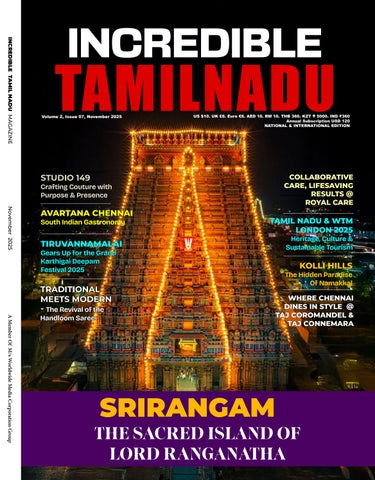
TAMILNADU
STUDIO 149
Crafting Couture with Purpose & Presence
AVARTANA CHENNAI
South Indian Gastronomy
TIRUVANNAMALAI
Gears Up for the Grand Karthigai Deepam Festival 2025
TRADITIONAL MEETS MODERN - The Revival of the Handloom Saree
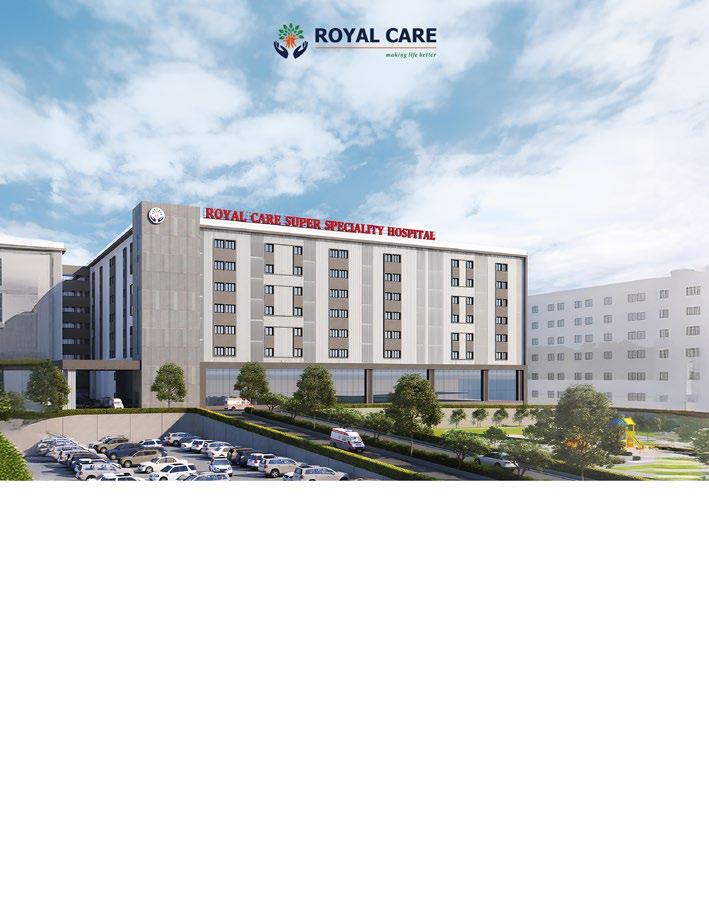
COLLABORATIVE CARE, LIFESAVING RESULTS @ ROYAL CARE
TAMIL NADU & WTM LONDON 2025 Heritage, Culture & Sustainable Tourism
KOLLI HILLS The Hidden Paradise Of Namakkal
WHERE CHENNAI DINES IN STYLE @ TAJ COROMANDEL & TAJ CONNEMARA





INCREDIBLE TAMILNADU
Global Media Chief & MD
Dr. S. E. Alexander
Chief Executive Editor & ED
Dr. Andre Lubbe
Senior Executive Editors & Directors
Dr. Kevin Francis, George Fedrick
Executive Editor & SVP
Thamen, Reetu Bansal
Associate Editor & Regional Directors
Nicolas Flemings, Nitirooge Phoneprasert, Ken Obeng
Regional Director Malaysia
Shariman Abd Rahim
Worldwide Media Corporation Group
aseworldwidemedia@gmail.com
worldwidemediaasiapacific@gmail.com
us at www.facebook.com/Incredible Tamilnadu
Creative Director
Randy Redstone
Art Directors
Richard Flemings
EVP - Asia Pacific Region Operations
Graham Starmer, Sudhakar Gupta
AGM – Corporate Communication
Swetha Naren
Vice President Operations
Amit, Rahul Shinde, Ruchi Srivatsa
Corporate Advisors & Consultants
Venkat, Mike Dobbertine, Chandrasekar
Senior Sub Editors
Prasad ST, Ram Mohan Rao, Vinu Agarwal
Editorial Consultants, Senior Journalists & Sub Editors
Bruce N Lesly, Edna Ferber, Sreedevi, Nancy, Aarti Mukherjee,
Maddy, Rachel D’souza, Vidya, Kruthiga, Ajay Franklin
Regional & Business Managers
Sanjay, Steve Mathews, Nirupama Rao, Sunil Kumar, T.P. Bhaskar, Kiran, Kishore
Circulation Managers
Shewtha Shetty, Alan, Rakesh Khanna, Subbodh Chakraborthy
Photographers
James O Corner, Nikhil, Bosh Winter
Resident Managers & Journalists
Aarthi Agarwal, Sarika, Vikram Kapoor, Swetha
Assistant Managers & Executives
Rocky, Manju, Prakash, Neetu
Senior Creative Designer
Raj, Ryan D’souza
Creative Designers
Ajeesh, Rajesh, Abhijit, Sonam, Reetu, Sonal, Ashish, Chithra


TAMILNADU IS CONSIDERED AS THE THE ETERNAL EPICENTRE OF SPIRITUAL & PILGRIMAGE TOURISM
The Incredible State of Tamil Nadu stands as a unique global destination because it is one of the few places on Earth where a 2,000-year-old civilization is not just a collection of ruins, but a daily, living experience. Tamil Nadu has consistently maintained its position as a top state for both domestic and foreign tourist arrivals, recording over 300 million visits annually. The state's status as an "ideal destination" is driven by its mastery of several distinct tourism niches:
The Eternal Epicentre of Spiritual and Pilgrimage Tourism: Tamil Nadu is often referred to as the "Land of Temples," but this title barely scratches the surface of its profound spiritual depth. With over 38,000 temples, many of which have seen uninterrupted worship for over a millennium, the state is the heart of India’s spiritual consciousness. In 2024 and 2025, Tamil Nadu consistently ranked as the top destination for domestic pilgrims, driven by its unique blend of architectural mastery, living traditions, and sacred geography.
The Architectural Blueprint of the Divine: Decoding the Temples of Tamil Nadu: Tamil Nadu is often described as a "Forest of Temples," but to the discerning eye, it is an open-air archive of one of the world’s most sophisticated architectural systems. The Dravidian Style of Architecture, which flourished under the patronage of the Pallava, Chola, Pandya, and Vijayanagara dynasties, is not merely about aesthetic beauty; it is a complex "Architectural Blueprint of the Divine." These structures were designed as microcosms of the universe, where every stone, proportion, and direction serves a metaphysical purpose.
The Vastu Purusha Mandala: The Spiritual Grid: Every major temple in Tamil Nadu, from the Meenakshi Amman Temple to the smallest village shrine, is built upon the Vastu Purusha Mandala. This is a sacred mathematical grid where the temple is viewed as a reclining primordial being (Purusha). The Garbhagriha (The Soul): The "Womb Chamber" is the most sacred, darkest, and simplest part of the temple. It represents the heart of the deity and the centre of the universe. The Vimana (The Spirit): The tower directly above the Garbhagriha represents the ascent of the soul toward the divine.
In Chola architecture, such as the Brihadeeswarar Temple, the Vimana is the dominant feature, symbolizing the king's direct connection to the heavens.
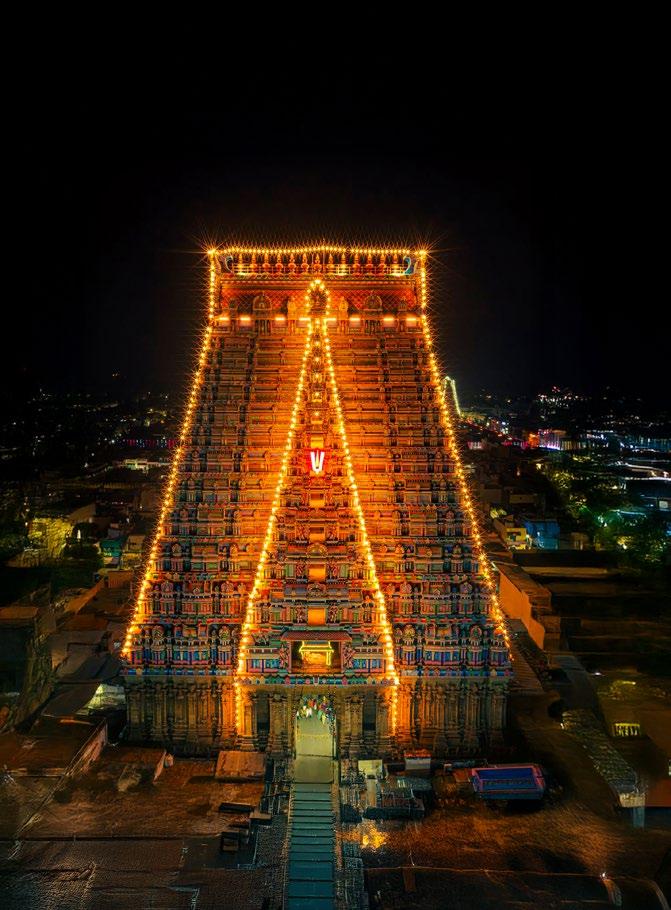
The Evolution of the Silhouette: From Caves to Skyscrapers: The blueprint of Tamil temples evolved through three distinct phases: The Rock-Cut Phase (Pallavas): In the 7th century, the Pallavas at Mahabalipuram literally "sculpted" temples out of mountains. The Five Rathas serve as a stonecarved catalogue of different roof styles and floor plans that would define the next thousand years of construction.The Structural Zenith (Cholas): The Cholas shifted from rockcut to massive structural masonry. The Great Living Chola Temples utilized interlocking granite blocks without the use of mortar, an engineering feat that has withstood over 1,000 years of seismic activity. The Era of Gopurams (Pandyas and Nayakas): In later centuries, the architectural focus shifted from the central tower (Vimana) to the entrance gateways, known as Gopurams. These towers, such as those at Srirangam or Madurai, are encrusted with thousands of stucco figures, acting as "visual encyclopaedias" of Hindu mythology for the masses.
Sacred Geometry and Engineering Marvels: The "Blueprint of the Divine" in Tamil Nadu often defies modern logical explanation, blending advanced physics with spiritual symbolism: The Shadowless Mystery: The 80-ton Kumbam (capstone) of the Thanjavur Big Temple was hoisted via a 6-km ramp. Local legend and observers note that due to its precise geometry, the main tower's shadow never falls on the ground at noon during certain seasons. Acoustic Engineering: In the Airavatesvara Temple at Darasuram, the "singing steps" produce different musical notes when tapped, showcasing the integration of art and science. The Musical Pillars: The Nellaiappar Temple and Madurai Meenakshi Temple feature monolithic pillars that, when struck, vibrate with the distinct sounds of the seven musical notes (Saptaswaras).
The Temple as a Social Hub: The architectural layout was not just for prayer; it was designed for community living. Prakarams (Courtyards): Large temples have multiple concentric enclosures. These served as schools, hospitals,
Editor -in - ChiEf from the desk of
granaries, and town halls. Temple Tanks (Theerthams):
Every temple blueprint includes a water body. These tanks were advanced rainwater harvesting systems that ensured the local water table remained high, linking spiritual purity with ecological survival. The Thousand-Pillar Halls: These massive Mandapams were the "Convention Centres" of the ancient world, hosting debates, dance performances, and royal coronations.
Preservation and Global Allure: Today, these blueprints are protected under the Tamil Nadu Tourism Policy 2023, which emphasizes the conservation of these "Living Heritage" sites. The state’s commitment to maintaining the traditional Agama Shastras (rules of temple construction and worship) ensures that a visitor in 2026 sees the same architectural integrity that a devotee saw in 1026. The divine temples of Tamil Nadu are more than religious sites; they are the high-water mark of human craftsmanship. They represent a time when architecture was the ultimate language of philosophy. For the traveller, walking through these stone corridors is an experience of "frozen music"—a blueprint that successfully bridges the gap between the earthly and the eternal.
Modern Spirituality and Universal Peace:
While ancient temples form the backbone, Tamil Nadu has evolved into a hub for Universal Spirituality and wellness. Isha Yoga Centre: Located at the foothills of the Velliangiri Mountains, the Isha Foundation attracts millions of international visitors for its Dhyanalinga and the iconic Adiyogi statue, symbolizing a shift toward inner-engineering and meditation. Auroville and Sri Aurobindo Ashram: Near Puducherry, Auroville serves as an experimental township dedicated to human unity, drawing spiritual tourists from over 50 nations. Arulmigu Ramana Maharshi Ashram: In Tiruvannamalai, the Sri Ramanasramam remains a silent sanctuary for those seeking "Self-Enquiry," located at the base of the sacred Arunachala Hill.
Thus, Tamil Nadu is the epicentre of pilgrimage because it offers a continuity of faith. It is a place where you can witness a 1,000-year-old ritual performed with the same precision today as it was in the era of kings. It is this "living" aspect that transforms a mere holiday into a soul-stirring journey.
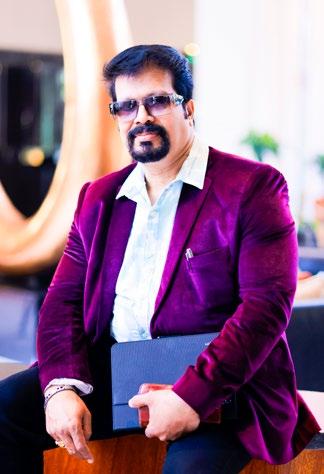

Dr. S. E. Alexander Global Media Chief & MD
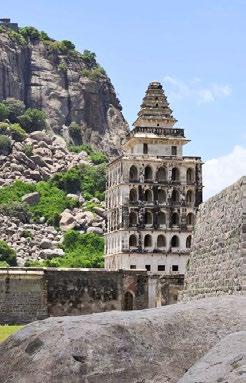
Table of Content
FASHION & TRENDS
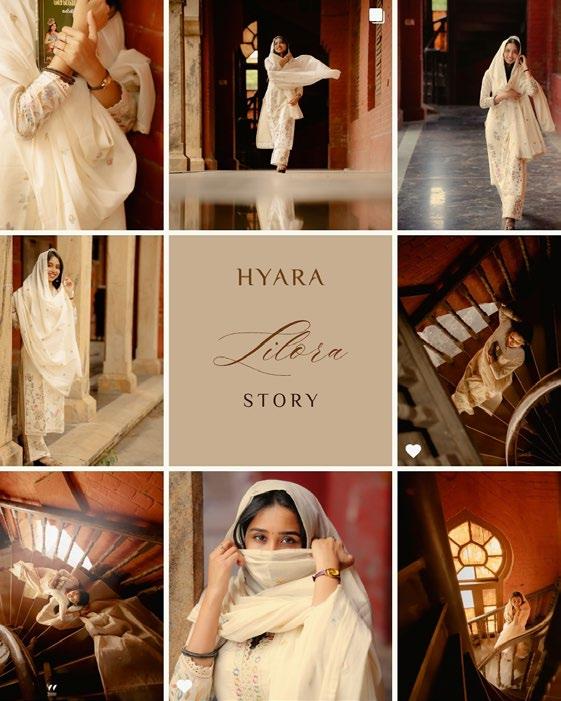
HYARA BY KEERTHANA
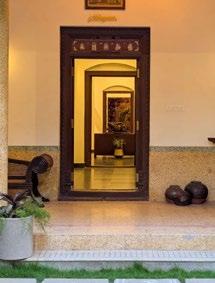
STUDIO 149- SCULPTING SOUTH INDIAN COUTURE WITH PURPOSE & PERSONALITY

VIBRANT LIFESTYLE
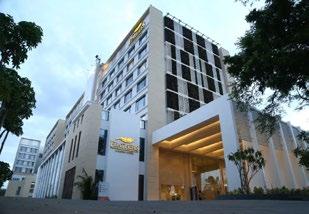
THIS NOvEmBER, LUNCH TAKES ON A CELEBRATORY NOTE @WATERSIDE, FEATHERS HOTEL

RETAIL & SHOPPING OF TAMILNADU
ECO-FRIENDLY FESTIvE
BAzAAR IN mADURAI
A GREEN REvOLUTION IN TAmIL NADU’S FESTIvE SHOPPING
HOTELS, RESORTS & RESTAURANTS
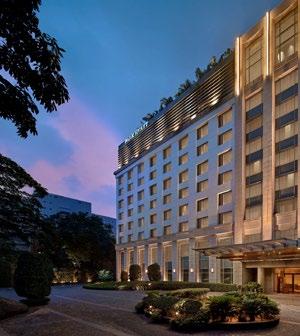
A NOvEmBER OF REFINED INDULGENCE @ PARK HYATT CHENNAI
178
HEALTH & FAMILY WELFARE
BUILDING LIvES THROUGH TEAmWORK: ROYAL CARE’S INTEGRATED APPROACH TO LIvER TRANSPLANTATION
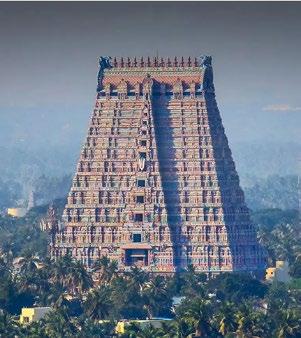
HERITAGE & ARCHITECTURE OF INCREDIBLE TAMILNADU
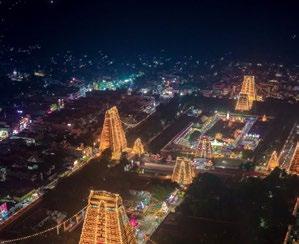
SRIRANGAM THE SACRED ISLAND OF LORD RANGANATHA
220
CULTURE & TRADITION
TIRUvANNAmALAI GEARS UP FOR THE GRAND KARTHIGAI DEEPAm FESTIvAL 2025
150

GLOBAL TAMIL NADU
TAmIL NADU & WTm LONDON 2025
HERITAGE, CULTURE & SUSTAINABLE TOURISm

SPECIAL INTITATIVES OF TAMIL NADU
GST 2.0 SPARKS E COmmERCE SURGE IN TAmIL NADU

236
246
TRAVEL & TOURISM
KOLLI HILLS
THE HIDDEN PARADISE OF NAmAKKAL

268
SPORTS & YOUTH WELFARE VISHAL TK
REWRITES INDIAN ATHLETICS HISTORY WITH RECORD-BREAKING 400M RUN





INCREDIBLE TAMILNADU & Fashion Trends
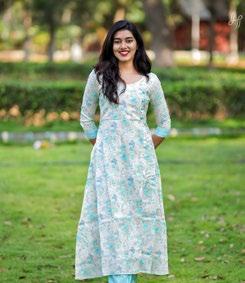
HYARA BY KEERTHANA

FASHION & TRENDS

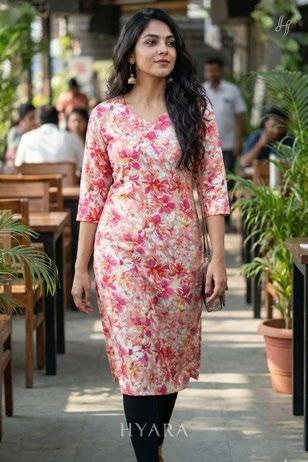
fashion in Tamil Nadu is experiencing a graceful evolution—one that honours tradition while embracing modern sensibilities. Tamil women have always carried elegance effortlessly, blending cultural pride with contemporary confidence. This year, that spirit is reflected most beautifully in luxury kurti designs that prioritise comfort, craftsmanship, and individuality. More than just garments, these kurtis represent a way of life rooted in authenticity and thoughtful living. At the forefront of this movement is HYARA, a brand that redefines luxury through made-toorder design, ethical practices, and timeless aesthetics.
Earthy Elegance: A Return to Natural Palettes
The colour story of 2025 is inspired by nature and calmness. In Tamil Nadu, where climate and culture shape everyday fashion, earthy tones feel both intuitive and refined. Shades such as terracotta, muted greens, soft ivory, and gentle golds dominate the luxury kurti landscape, offering warmth and sophistication. HYARA brings these colours to life through breathable cottons, linen blends, and soft cotton-silk fabrics that sit lightly on the skin. These tones not only complement the Tamil woman’s natural grace but also lend a quiet richness that feels luxurious without excess.


Handcrafted Details: Celebrating Artistry and Soul
In an era moving away from fast fashion, 2025 marks a renewed appreciation for craftsmanship. Women across Tamil Nadu are choosing kurtis that carry the touch of human hands, where embroidery, mirror work, zari accents, and woven textures reflect patience and artistry. HYARA’s designs honour this revival by placing craftsmanship at the centre of every creation. Each kurti is thoughtfully designed, carefully stitched, and infused with cultural depth. These pieces are not merely outfits but wearable expressions of heritage, where every detail holds meaning and emotion.
Modern Silhouettes with Traditional Grace
Luxury in 2025 is defined by how a garment feels as much as how it looks. Tamil women are increasingly drawn to kurtis that offer freedom of movement, breathability, and versatility. HYARA’s silhouettes are designed to flow naturally with the body, blending traditional structure with modern ease. Contemporary cuts, relaxed fits, and fluid shapes allow women to move seamlessly through their day, whether at work, social gatherings, or moments of rest. The made-to-order approach ensures that every kurti fits perfectly, enhancing confidence and comfort without the need for later alterations.


Statement Necklines and Sleeves: Quiet Sophistication
Rather than loud embellishments, 2025 celebrates subtle statement details. Necklines and sleeves play a defining role in elevating luxury kurtis this year. Thoughtfully designed collars, elegant V and square necks, and softly structured sleeves add character while maintaining refinement. HYARA’s handcrafted necklines are designed to enhance the overall silhouette, drawing attention through elegance rather than excess. These details transform simple kurtis into refined pieces suitable for both everyday wear and special occasions.

Sustainable Luxury: Fashion with Meaning
Luxury today is inseparable from responsibility. Tamil women are increasingly conscious of how their clothing is made and who makes it. HYARA’s commitment to sustainability is reflected in its madeto-order philosophy, which eliminates unnecessary waste and avoids mass production. Every kurti is created only after it is ordered, ensuring ethical sourcing, mindful craftsmanship, and long-lasting quality. This approach allows luxury to exist with integrity, offering garments that are as meaningful as
The idea of saving luxury for rare occasions is fading. In 2025, the modern Tamil woman chooses to dress beautifully every day. HYARA designs kurtis that transition between professional settings, festive gatherings, casual outings, and spiritual moments. The versatility of these designs allows women to feel polished without feeling overdone. Luxury is no longer about extravagance but about ease, confidence, and consistency in


Tamil Heritage as Contemporary Inspiration
Tamil Nadu’s rich textile traditions continue to inspire modern fashion narratives. From the handloom legacy of Madurai to the intricate zari craftsmanship of Kanchipuram, HYARA draws deeply from regional heritage. These influences are reimagined through clean lines, minimalist aesthetics, and contemporary tailoring that resonate with today’s women. By blending the past with the present, HYARA positions Tamil-inspired luxury on a global platform while remaining deeply rooted in local culture.

Made-to-Order: The True Definition of 2025 Luxury
Personalisation stands at the heart of luxury fashion in 2025. Tamil women value garments that reflect their individuality, comfort preferences, and lifestyle needs. HYARA’s made-to-order model ensures that every kurti is tailored specifically for the wearer, offering a sense of ownership and authenticity that mass-produced fashion cannot replicate. From fabric choice to fit and finish, each piece is a personal expression rather than a standard product.
The HYARA Touch: Comfort as a Luxury Standard
HYARA’s philosophy is grounded in the belief that true luxury begins with comfort. Each kurti is designed to feel light, breathable, and gentle against the skin. Attention to stitching, lining, and fabric quality ensures that every piece feels effortless to wear throughout the day. Tamil women often describe HYARA kurtis as comforting yet elegant, combining the warmth of tradition with the finesse of modern design


About Keerthna: The Visionary Behind HYARA
Keerthna, the creative force behind HYARA, envisioned a fashion brand that celebrates individuality, craftsmanship, and mindful living. Frustrated by impersonal, mass-produced clothing, she sought to create garments that feel personal, elegant, and perfectly tailored to the wearer. Drawing inspiration from Tamil Nadu’s rich textile heritage, Keerthna blends tradition with contemporary design, creating luxury kurtis that are not just clothing, but stories woven with care and intention. Her philosophy is simple yet profound: luxury is not about excess or labels; it is about comfort, authenticity, and garments that reflect the wearer’s personality. Through HYARA, Keerthna has built a brand that honours the hands that craft each piece, embraces sustainability through a made-to-order model, and empowers women to carry their confidence with elegance in every moment. Under her guidance, HYARA has become synonymous with thoughtful luxury, where every kurti embodies artistry, individuality, and timeless style.Tamil women have always embodied grace, strength, and understated elegance. In 2025, that spirit finds new expression through HYARA’s luxury kurti designs. By blending heritage with innovation, sustainability with style, and comfort with craftsmanship, HYARA redefines what luxury means today.These kurtis are not created to follow trends but to accompany women through real lives and lasting memories. Luxury, after all, is not about being noticed—it is about being remembered.
With its 2025 collection, Hyara Luxury Kurti Designs reinforces its place as a trusted name in contemporary ethnic fashion. The brand’s commitment to quality, comfort, and timeless style ensures that its kurtis remain relevant across changing trends and seasons. For women seeking clothing that reflects tradition without feeling outdated, and modernity without losing cultural depth, Hyara offers the perfect balance. In every stitch, fabric choice, and silhouette, the collection tells a story of grace, heritage, and quiet luxury.


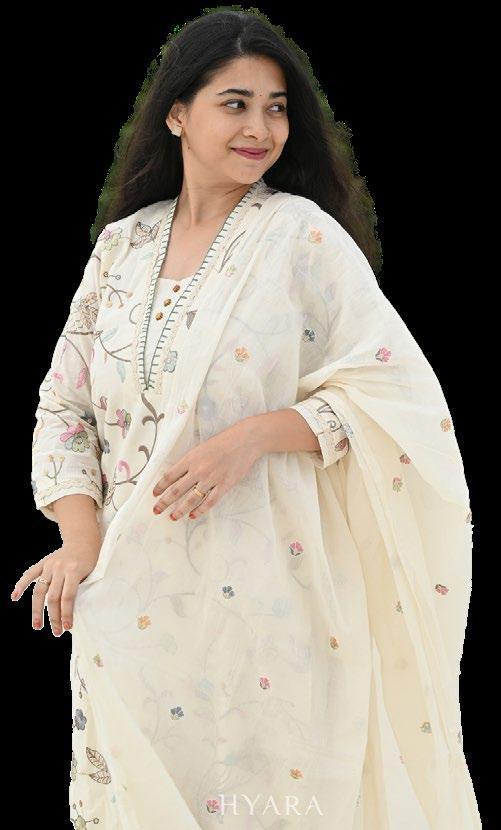
Luxury Kurti Designs 2025 is a celebration of Tamil Nadu’s enduring fashion legacy, reimagined for the modern era. Through elegant designs, premium fabrics, and mindful craftsmanship, the collection offers kurtis that are versatile, comfortable, and timeless.In a world of fast-changing trends, Hyara stands for lasting style— fashion that respects the past, understands the present, and looks confidently toward the future. For women who value elegance with meaning, Hyara remains a symbol of refined contemporary ethnic wear.
Hyara


STUDIO 149
SCULPTING
SOUTH INDIAN
COUTURE WITH PURPOSE & PERSONALITY

FASHION & TRENDS
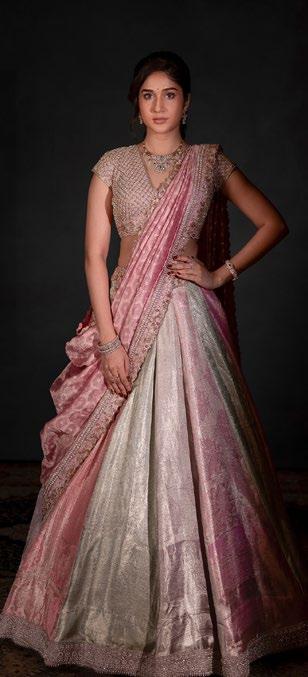
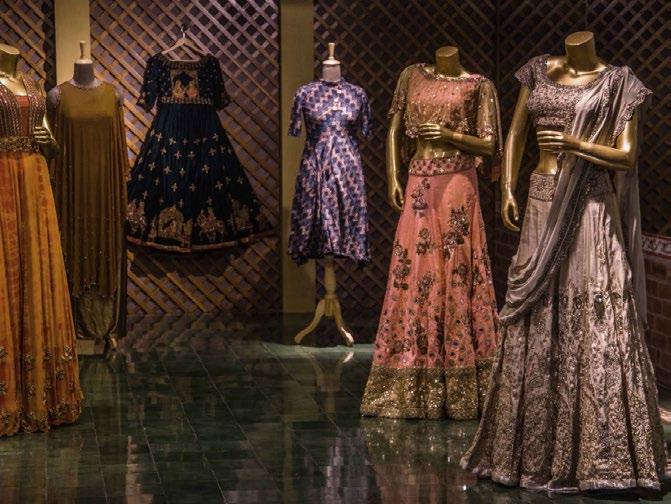
Studio 149 stands as one of Chennai’s most distinctive fashion houses, operating as a dual-location creative powerhouse rooted in South Indian textile heritage and shaped by contemporary couture sensibilities. More than a retail destination, the studio functions as a collaborative atelier where fabric is sculpted to the individual, transforming traditional craftsmanship into modern bridal and occasion wear. With spaces in Anna Nagar and Teynampet, Studio 149 balances legacy and innovation, offering women clothing that is personal, empowering, and deeply considered.

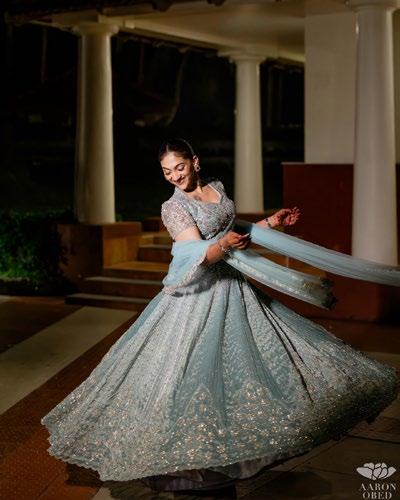
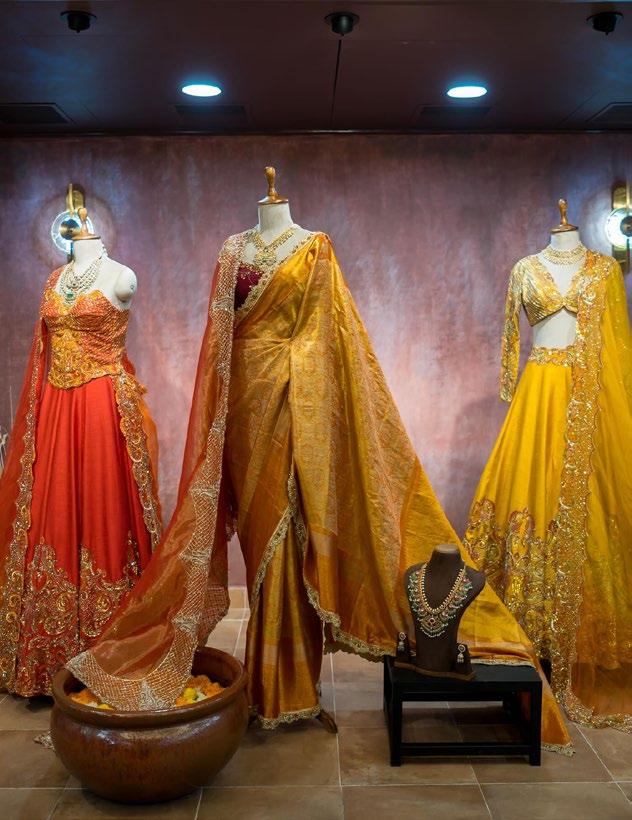
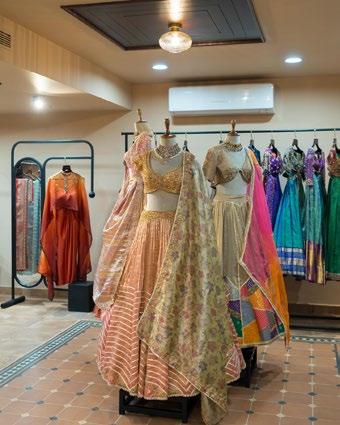
The studio’s design language is built around the idea of “sculpted” couture—where garments are shaped to complement the wearer rather than conform to generic trends. Each piece is made-to-measure, celebrating diverse body types and personalities through thoughtful cuts, fluid drapes, refined silhouettes, and delicate embellishment. Studio 149 believes that true luxury lies in confidence, comfort, and authenticity, not uniformity. Every garment created here passes through what the brand lovingly calls its “village” of craftsmanship. A collective of over fifty artisans— designers, master tailors, embroiderers, zardosi specialists, and stylists—work together under one roof. Each creation becomes a love letter to Indian craftsmanship, blending heritage techniques with a modern design vocabulary.
Two Studios, One Vision
The opening of Studio 149’s Teynampet flagship in late 2024 marked a defining chapter in the brand’s journey. Located at Wescare Towers on Cenotaph
Road and designed by architect Shivani Joshi of Pink Coyote, the space is conceived as an open canvas—minimal yet opulent, bold yet elegant. This studio represents the brand’s contemporary face, housing lighter bridal silhouettes, corset lehengas, and refined pret collections designed for milestones beyond weddings. From book launches to personal celebrations, the Teynampet studio expands the meaning of occasion wear for the modern woman. In contrast, the original Anna Nagar studio at AB 149 on 3rd Main Road remains the soul of the brand. The address that inspired the name Studio 149 continues to be its heritage home, dedicated to traditional South Indian bridal wear. Known for Kanjeevaram silk half-sarees, Muhurtham silks, and richly embellished bridal lehengas, this space offers private bridal consultations where designers curate trousseaus based on a bride’s skin tone, body type, budget, and cultural preferences. Together, the two studios reflect a seamless dialogue between tradition and modernity.


Founder’s Note: A Brand Born Organically
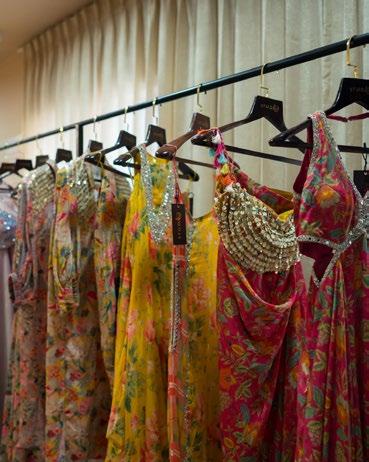
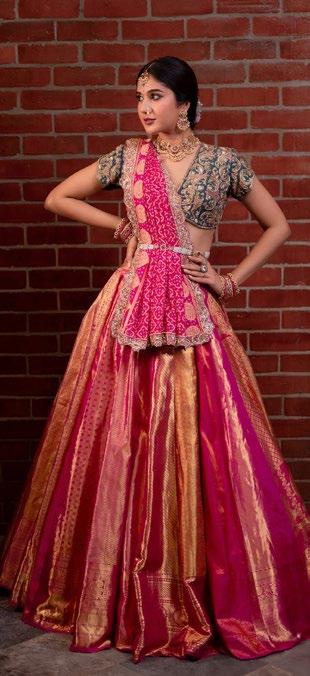
Studio 149 has evolved organically since its inception in 2013.The name, often a subject of curiosity, comes from the address that housed the brand’s first creative space—AB 149, Anna Nagar—where ideas were churned into garments and relationships were built through trust and craftsmanship. That space continues to hold meaning, now also home to readyto-wear collections. From the beginning, Studio 149 has focused on creating exclusive couture for women by paying close attention to nuances in cuts, the eclectic pairing of fabrics, contemporary drapes, flattering silhouettes, and fine embellishment. Our designs are guided by the nature of the women who wear them, ensuring that each creation complements her personality and gives her the confidence to face the world. In an era driven by fleeting trends that suit only a handful, Studio 149 strives to make clothes that suit different body types and personalities while remaining stylish and chic. Fashion, to us, is for everyone. It is a form of self-expression and identity. We believe in creating timeless outfits that become meaningful additions to a woman’s wardrobe. Studio 149 is an ever-evolving label led by a team of young, vibrant designers with diverse perspectives. Together with our skilled craftsmen, we create handcrafted garments that respond to changing fashion seasons while consistently making bold, confident statements.
— Swathi Purushothaman

How We Work
At Studio 149, clients are encouraged to begin by exploring existing collections online or instore. For those who wish to customize, the studio works closely with each individual to bring their dream outfit to life. From fabric selection to silhouette development and final fittings, the process is collaborative and thoughtful, ensuring that each garment reflects both the client’s vision and the studio’s sculpted design philosophy. Virtual consultations and worldwide shipping further extend the Studio 149 experience to a global clientele.
The People Behind the Brand
Swathi Purushothaman, Founder and Creative Director, describes herself as a jack of all trades—a strength that allows her to seamlessly blend design,
architecture, dance, and human relationships into her creative process. What began as making clothes for friends and family evolved organically into Studio 149, a brand she never planned but has nurtured with conviction and care. A move to the UK after her wedding broadened her horizons, reinforcing her belief that every setback strengthens resolve, every mistake teaches growth, and every relationship shapes the designer and entrepreneur she continues to become.
Designer Preetham Gampala draws inspiration from the idea that fashion is about designing dreams. Trained at NIFT Chennai and Lasalle College of the Arts in Singapore, he views clothing as an extension of identity rather than mere function. His strength lies in experimenting with silhouettes, colour palettes, and detailing while ensuring each garment aligns with the wearer’s comfort and personality. Studio 149 has provided him the platform to grow creatively while bringing clients’ visions to life.

Swathi Purushothaman Founder Studio149 bagged both awards for Best Bridal Designer and Best Special occasions Outfit Designer of the year in WVCONNECT Fashion Show.

Bhuvaneshwari’s journey from engineering to fashion began with a defining decision in 2017, when she left her role at Infosys to pursue her passion. Drawn to colour, texture, and design since childhood, she refused to let societal expectations limit her aspirations. Her path at Studio 149 reflects resilience, discipline, and the belief that loving one’s work makes every challenge worthwhile.
For Paritha Agarwal, design is a joyful evolution. From conceptualizing a vision to shaping fabric, detailing stitches, and playing with colour, she finds fulfillment in every stage of the process. Entering the industry at a young age posed challenges, but Studio 149 has shaped her design sensibilities and given her the space to tell stories through garments—stories meant for the right wearer.


Studio 149 Today
As of 2025, Studio 149 has established itself as a design powerhouse in Chennai’s fashion landscape. Known for signature creations like the Kumkum Lehenga and celebrated for its sculptural approach to couture, the brand continues to grow while remaining grounded in its founding values.Whether through the ceremonial richness of Kanjeevaram silk or the refined elegance of contemporary silhouettes, Studio 149 creates garments that hold meaning, memory, and confidence within every stitch—redefining South Indian couture for a new generation where individuality, craftsmanship, and authenticity define true luxury. With its focus on purpose, personality, and craftsmanship, Studio 149 continues to redefine what South Indian couture can be. The brand’s thoughtful approach to design, sustainability, and individuality sets it apart in a crowded fashion landscape. In every creation, Studio 149 reflects a quiet confidence—one that honors heritage, celebrates modern identity, and looks toward the future with clarity and conviction.



TRADITIONAL MEETS MODERN
The Revival of the Handloom Saree
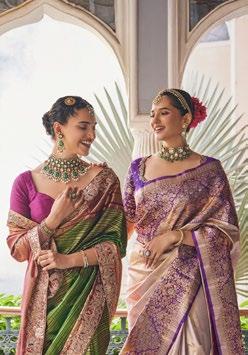
In a world dominated by fast fashion, where trends flicker and fade overnight, a quiet but powerful movement is reshaping India’s style narrative. November 2025 marks a defining moment in the country’s fashion timeline with the triumphant return of handloom sarees, reimagined for the modern generation. From Tamil Nadu’s historic weaving clusters to India’s urban streets, the saree— once considered traditional, ceremonial, or reserved only for special occasions—has found a bold new identity. Today, it stands confidently at the crossroads of culture and contemporary cool.
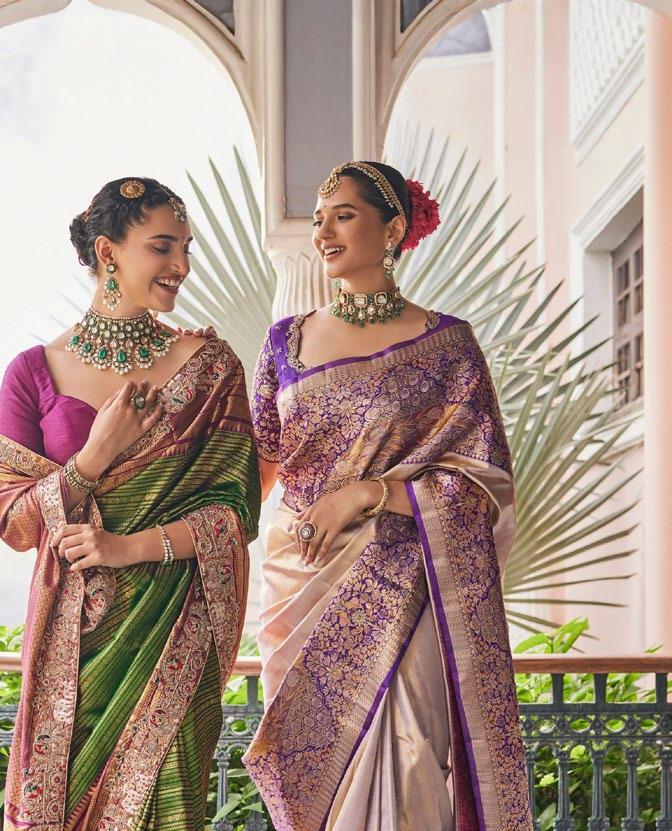
The revival did not happen overnight. Over the past decade, interest in handcrafted textiles has been steadily rising, but November 2025 witnessed an unprecedented surge in demand for authentic handloom sarees across Tamil Nadu. Several forces came together to spark this movement: growing awareness about sustainable fashion, a renewed desire for culturally rooted clothing, and the influence of social media, where young creators began styling sarees with boots, jackets, and belts. At the same time, e-commerce platforms gave rural weavers direct access to global buyers, transforming both visibility and demand. This movement is not nostalgic—it is progressive. It is not about wearing what previous generations wore in the same way, but about reimagining it for today’s world.
Tamil Nadu has emerged as the heart of this revival. Weaving clusters such as Manamedu near Tiruchy, Kancheepuram, and Coimbatore are witnessing renewed demand, with some reporting multicrore annual sales—an impressive jump compared to previous years. Manamedu, in particular, captured national attention in November 2025 as headlines highlighted the soaring demand for its cotton handloom sarees. E-commerce platforms prominently featured these sarees during festivalseason sales, leading to renewed interest in lightweight, breathable cotton fabrics, increased recognition for cluster-specific weaving techniques, and a new generation discovering the beauty of handloom craftsmanship.
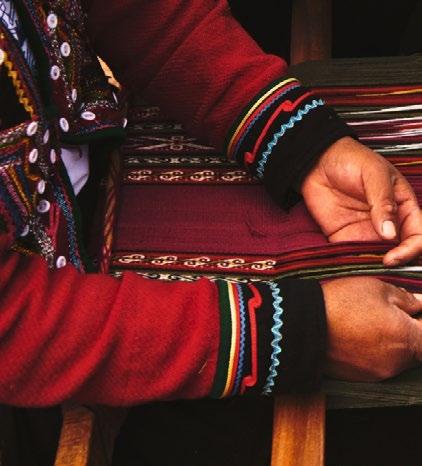


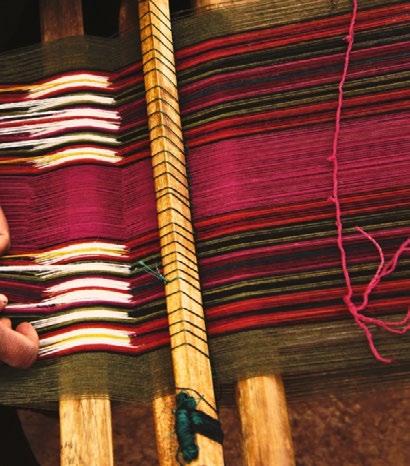
However, concerns remain about the future of the craft, as many young people from weaving families hesitate to continue loom work due to long hours and limited returns. In response, initiatives from NGOs, designers, and government bodies are working actively to sustain and revive the art.
One of the most celebrated aspects of this resurgence is how seamlessly tradition is meeting the runway. In November 2025, several trends stand out: pre-stitched and ready-to-wear sarees designed for working women, cotton and silk sarees styled with crop tops, blazers, belts, and even sneakers, and minimalist drapes suited for daily office wear. Global-inspired colour palettes— muted earth tones, olive, rust, and charcoal—are gaining popularity, along with fusion accessories that pair oxidised silver with modern gold-plated pieces. The new saree aesthetic is effortless, blending traditional drapes with a distinctly global attitude.
Designers across India are playing a crucial role in driving this change. Many are replacing synthetic fabrics with organic cotton, linen, khadi, and tussar silk, while incorporating Tamil typography motifs and region-specific patterns into their
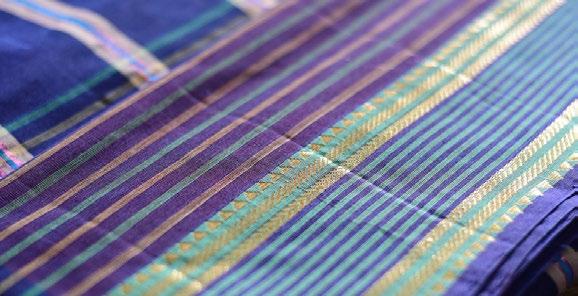

collections. Collaborations with weavers from Tamil Nadu are helping revive rare designs and techniques. The result is a new generation of handloom sarees that feel fresh, breathable, glamorous, and inclusive, proving that heritage textiles can be both stylish and contemporary. Social media has become the engine of this fashion movement. Platforms like Instagram and Reels have been instrumental in making handloom “cool” again. Influencers and stylists regularly post content such as “9-to-5 Office Saree Looks,” “How to Style Your Mom’s Old Saree in a Modern Way,” and “College-Friendly Saree Styling Hacks.” As a result, a whole new generation—especially Gen Z— is embracing sarees not out of obligation, but out of choice and personal expression.
The revival is not only cultural; it is deeply economic as well. In 2025, the positive impact is visible in increased earnings for weaving communities, greater employment within women-led cooperatives, a rise in crossborder exports of Tamil handloom sarees, and renewed interest in preserving traditional looms and natural dyeing methods. This is fashion with purpose—clothing that sustains livelihoods while celebrating craftsmanship.
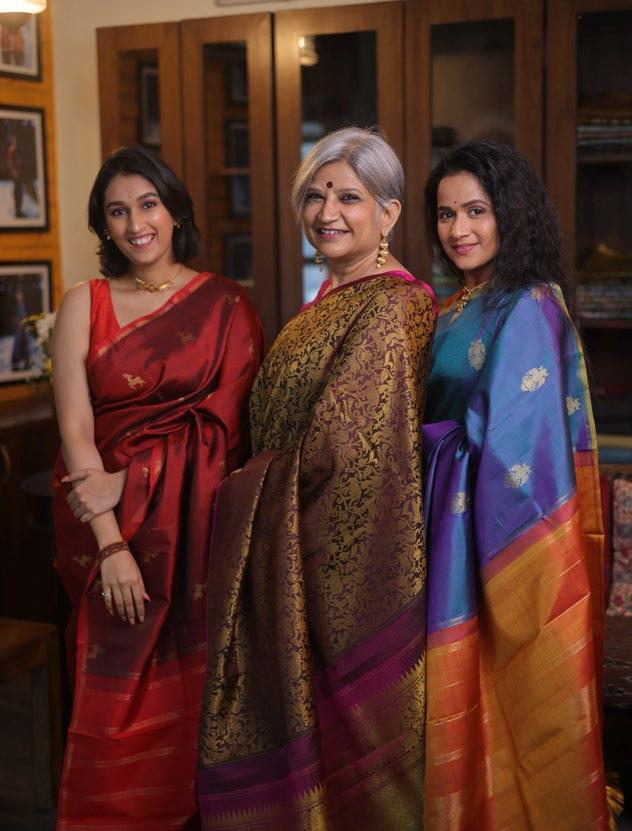
What makes the November 2025 revival truly special is not just the saree’s comeback, but the values it represents. Sustainability, identity, craftsmanship, comfort, and modern confidence have become central to this movement. The saree is no longer just a garment; it is a statement.
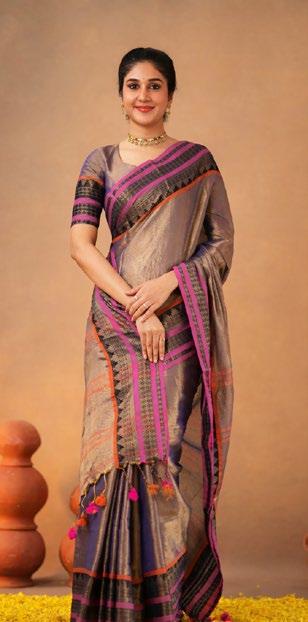

Experts believe this is not a short-lived trend but a long-term shift in fashion culture. Looking ahead to 2026, expectations include more innovations in pre-draped sarees, digital platforms that connect artisans directly with buyers, younger designers entering the handloom fashion space, international fashion houses showcasing Indian textiles, and government-backed programs to train new weavers. The saree’s future is not only bright—it is global.
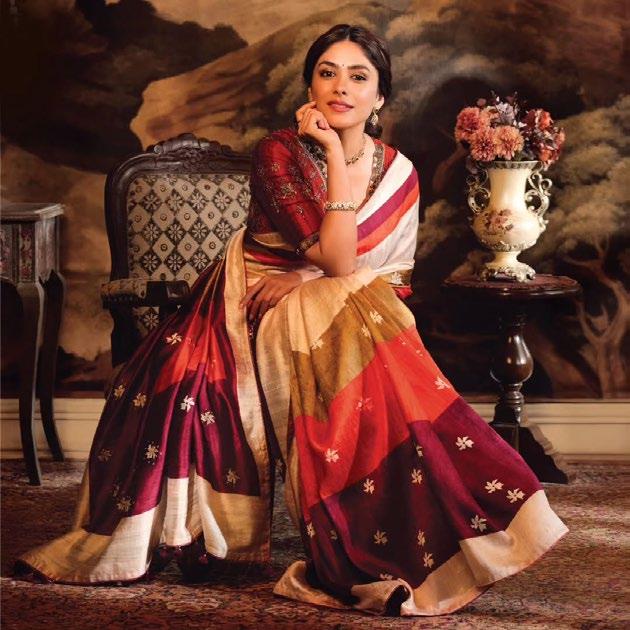
November 2025 will be remembered as the month India fell back in love with its oldest style icon in a completely new way. The handloom saree has crossed generations, mindsets, and borders to become the ultimate modern garment. In the marriage of tradition and trend, the saree stands stronger than ever.Tamil Nadu, with its rich weaving heritage, continues to lead this cultural renaissance, proving that fashion is not just about clothes—it is about identity, legacy, and the threads that connect us across time.

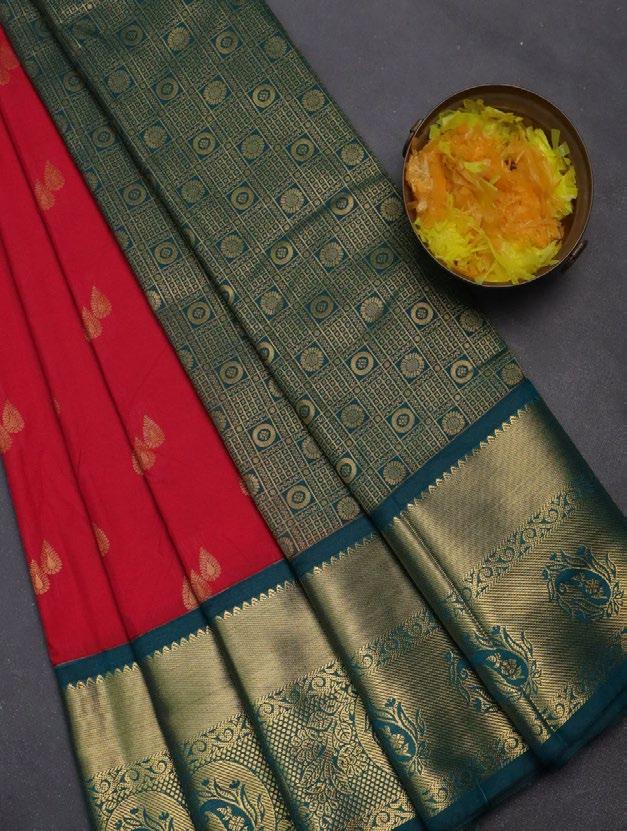
The Timeless Tale of Handloom Sarees: A Legacy Woven Through Centuries
From Ancient Weaves to Modern Fashion – Tamil Nadu’s Enduring Craft
Few garments carry the weight of culture, heritage, and identity like the Indian handloom saree. In Tamil Nadu—one of India’s oldest weaving hubs—the saree is far more than clothing. It is a living story passed from generation to generation, a testament to human skill, patience, and artistic vision.
Handloom weaving in Tamil Nadu dates back over 2,500 years, making it one of the world’s oldest textile traditions. Sangam literature speaks of cotton fields, vibrant plant-based dyes, and the masterful hands of weavers creating cloth “as light as clouds.” Archaeological evidence from sites such as Arikamedu, Kanchipuram, and Madurai shows that Tamil fabrics were prized exports, traded with Rome, Greece, China, and Sri Lanka. Handloom textiles were deeply interwoven with rituals, festivals, and temple culture, serving purposes far beyond everyday attire.
Over centuries, several iconic weaving traditions emerged from the region. Kanchipuram silk sarees, often called the queen of silks, originated during the Pallava period and are crafted using pure mulberry silk and zari in silver and gold, with motifs inspired by temple architecture. These sarees are treasured as heirlooms and symbols of prosperity and elegance.
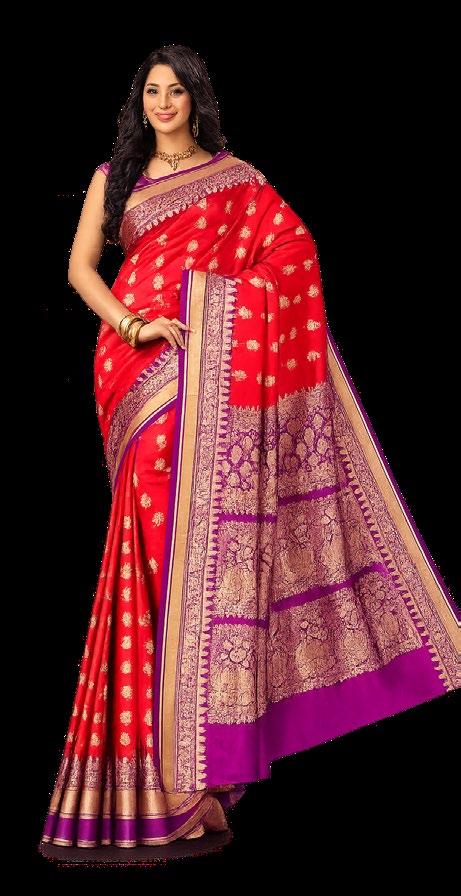
Chettinad cotton sarees, known as Kandaangi, are recognised for their bold checks, earthy tones, and broad borders, designed for comfort in southern India’s hot climate and reflecting the vibrant identity of the Chettiar community. The regions of Coimbatore and Erode are known for soft cotton sarees with intricate jacquard designs that combine everyday practicality with subtle elegance. Madurai Sungudi sarees, created by tying thousands of tiny knots before dyeing to form delicate dotted patterns, were introduced by Saurashtrian weavers centuries ago and remain enduring symbols of craftsmanship and local pride.

The creation of a handloom saree is a craft beyond machines. Each saree is woven manually and can take days or even weeks to complete. The process involves dyeing, winding threads, setting the warp and weft, and carefully weaving intricate designs. Every piece is unique, reflecting the weaver’s patience, precision, and artistry—something that no machine can truly replicate.
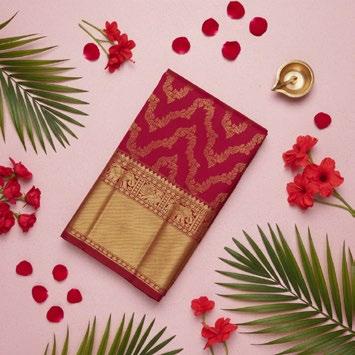
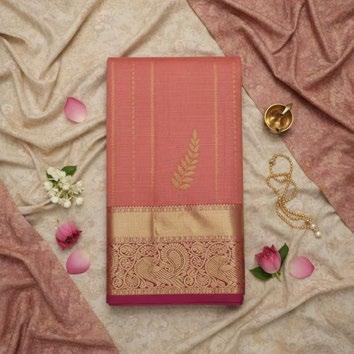
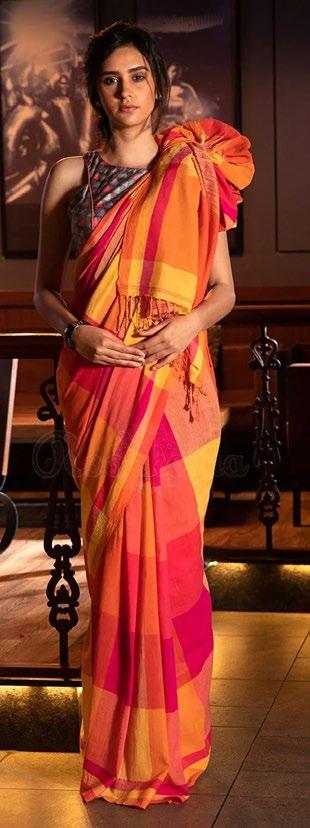
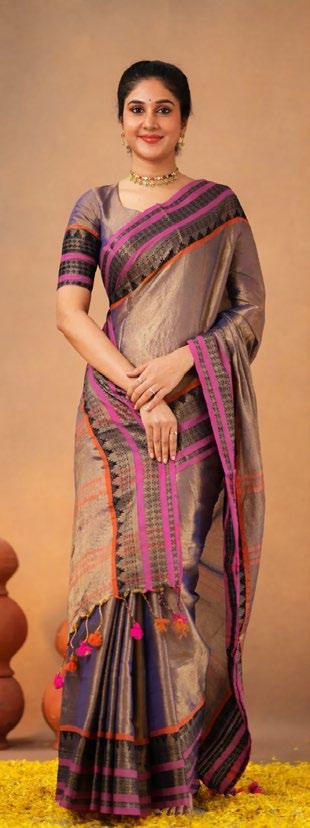
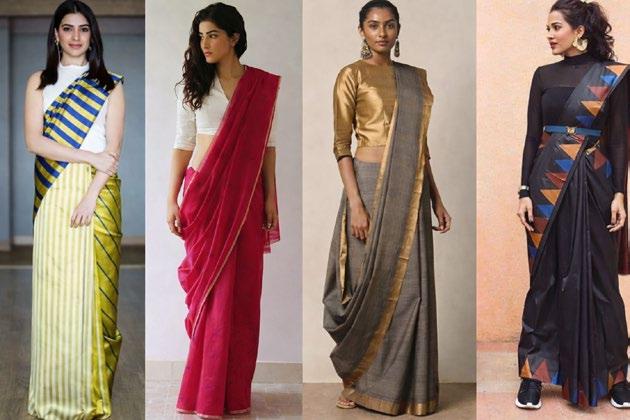
The colonial era posed serious challenges to this tradition. The influx of cheap, machine-made textiles during British rule threatened the survival of handloom weaving, and many artisans lost their livelihoods. However, Tamil Nadu’s cultural attachment to handloom, combined with Mahatma Gandhi’s Swadeshi movement, revived interest in the craft as a symbol of independence, pride, and self-reliance.
The modern revival, especially visible in November 2025, marks a powerful moment where tradition meets trend.This resurgence is driven by sustainable fashion movements, a desire for authenticity and craftsmanship, and the influence of social media, where sarees are styled with crop tops, jackets, and boots. Designers are experimenting with pastels, metallic shades, fusion blouses, and modern motifs, ensuring that handloom sarees are no longer limited to weddings or festivals but have become everyday fashion statements.
This revival has had a meaningful economic and social impact on weavers across Kanchipuram, Erode, Coimbatore, Madurai, and Salem. Government exhibitions, NGO training programs,
and online marketplaces are helping connect artisans directly with buyers. Every saree purchased supports not just a family, but a centuries-old craft and a more sustainable economy.
Today, the handloom saree stands as a symbol of slow fashion, ethical production, cultural pride, and artistic expression. Wearing one is not merely a fashion choice—it is a statement of identity and heritage, connecting the wearer to generations of artisans and their skills.
The handloom saree remains a living testament to India’s rich cultural legacy. From its ancient origins in Tamil Nadu to its global resurgence today, it embodies art, history, and identity. As designers continue to innovate and new generations embrace it, the saree keeps evolving, proving that true tradition never goes out of style. In the marriage of heritage and modernity, handloom sarees remind us that fashion is not just about clothing—it is about storytelling, sustainability, and pride in one’s roots. Tamil Nadu, with its vibrant weaving communities, continues to lead this renaissance, ensuring that these timeless threads are passed on for generations to come.

INCREDIBLE TAMILNADU Vibrant Lifestyle
THIS NOVEMBER, LUNCH TAKES ON A CELEBRATORY NOTE @WATERSIDE, FEATHERS HOTEL
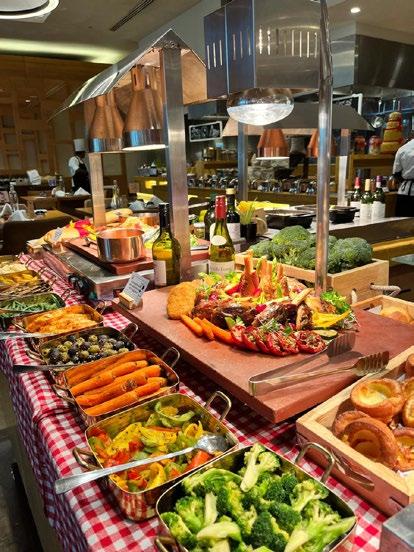
This November, the humble lunch break is getting a deliciously cheerful makeover at Feathers Hotel, Chennai. What was once a routine mid-day pause is now an invitation to slow down, savour, and celebrate— thanks to a thoughtfully curated lunch experience at its much-loved all-day dining restaurant, Waterside.
As the city settles into the rhythm of another busy month, Waterside steps in with a refreshing promise: to turn everyday afternoons into moments worth looking forward to. Whether you’re stepping out with colleagues for an office lunch, meeting friends mid-week, or gathering family around the table, November brings with it a special indulgence—a complimentary draught beer or soft beverage with every lunch buffet, available from Monday to Saturday.
It’s a simple addition, yet one that makes all the difference. A cool sip to accompany a hearty meal, shared laughter across the table, and a setting that encourages you to linger just a little longer—this is what Waterside does best.
VIBRANT LIFESTYLE

A Midday Escape, Right in the City
Lunch, at its best, should feel like a pause button—an opportunity to reset before the day marches on. At Waterside, this pause comes wrapped in warm hospitality and an inviting ambience that effortlessly blends comfort with understated elegance. Sunlit interiors, generous seating, and a relaxed vibe make it a favourite choice for business diners seeking a refined yet unhurried setting, as well as families looking for a dependable goto for quality dining. This November, the experience is elevated with a thoughtful perk that feels celebratory without being overwhelming. The complimentary draught beer or soft beverage adds a light-hearted touch to the afternoon, transforming a weekday lunch into a mini celebration—perfect for boosting mid-week morale or rewarding yourself after a long morning.
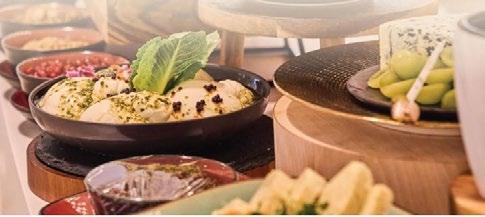
A Buffet That Comforts and Excites
At the heart of the Waterside experience is its well-loved lunch buffet, a spread designed to please diverse palates while maintaining a consistent standard of quality. The buffet is expansive yet well-balanced, offering something for everyone—whether you crave familiar comfort food or enjoy exploring global flavours.
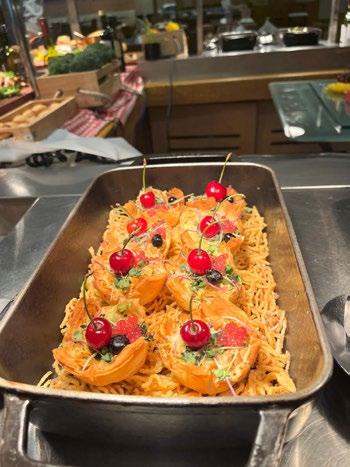
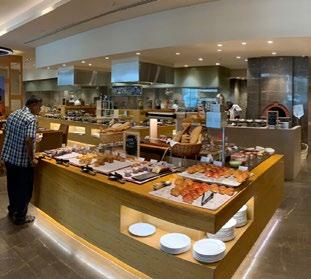
Guests can begin with an array of fresh salads, crisp greens, and thoughtfully composed cold dishes that set a refreshing tone. Moving on, the live stations are always a highlight—bringing an element of theatre to the dining experience while ensuring dishes are prepared just the way you like them.
The global mains showcase a careful selection of Indian and international favourites, each prepared with attention to flavour and presentation. From aromatic curries and hearty continental dishes to Asian-inspired selections, the spread reflects Waterside’s commitment to variety without excess.
And of course, no lunch buffet is complete without a sweet finale. The dessert counter offers indulgent treats that range from classic favourites to chefinspired creations—perfect for ending the meal on a high note or pairing with that final sip of your beverage.
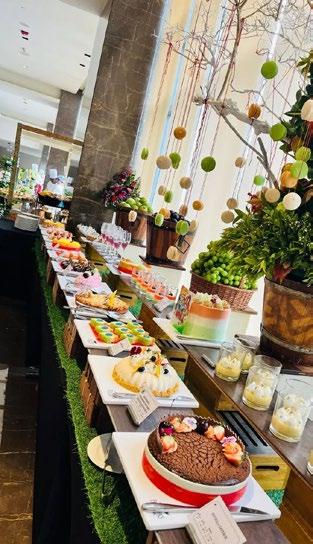


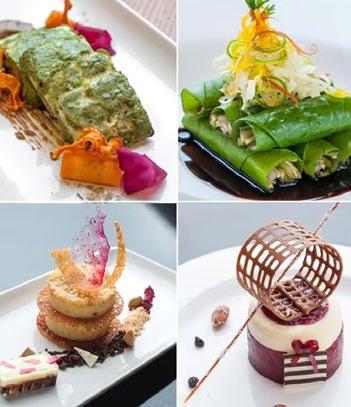
The Perfect Lunch Companion
The addition of a complimentary drink this November feels less like an offer and more like a thoughtful gesture. Whether you choose a chilled draught beer to unwind or a soft beverage to refresh, it completes the meal effortlessly. It’s the kind of detail that turns a good lunch into a memorable one— subtle, enjoyable, and perfectly timed. This offering is especially appealing for office-goers looking to add a dash of indulgence to their weekday routine. It also makes Waterside an attractive option for informal celebrations—team lunches, birthdays, or simply catching up with familiar faces over good food and conversation.
Where Every Afternoon Feels Special
Waterside has long been known for its consistency, comfort, and welcoming atmosphere.This November initiative builds on that reputation, reinforcing the idea that dining doesn’t always have to wait for weekends or special occasions. Sometimes, a relaxed weekday lunch can be celebration enough. As Chennai’s dining scene continues to evolve, experiences like these stand out—not because they are extravagant, but because they understand what diners truly value. A good meal, a chilled drink, attentive service, and an ambience that encourages connection.
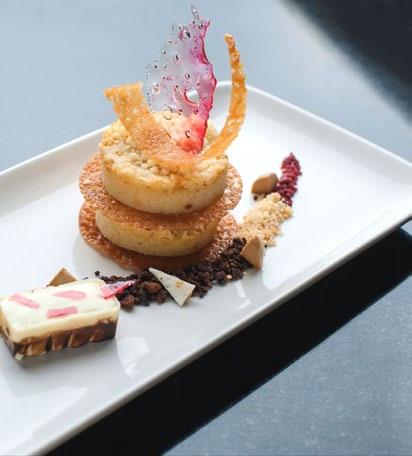
A November Ritual Worth Keeping
Available throughout 1st to 30th November 2025, this lunch offer invites guests to make Waterside part of their monthly routine. It’s an opportunity to reclaim the lunch hour, to enjoy flavours that comfort and excite, and to add a moment of joy to the middle of the day.
After all, the best celebrations don’t always need a reason. Sometimes, all it takes is a well-laid table, a satisfying meal, and a relaxed atmosphere.
A good meal, a chilled drink, and time well spent— that’s Waterside’s idea of the perfect afternoon this November.
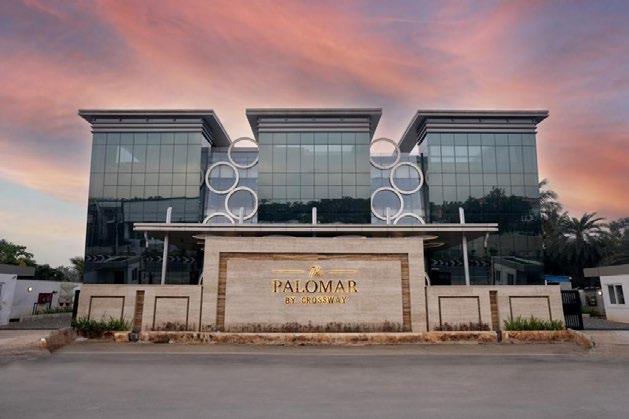
WHEN JAZZ CROSSES BORDERS: THE EAST COAST JAZZ MOVEMENT
– SESSION
II AT THE SPOTTED DEER
Chennai’s vibrant live-music scene welcomes the return of The East Coast Jazz Movement – Session II, an evening that celebrates jazz as a truly global language. Hosted at The Spotted Deer, The Palomar by Crossway, this edition brings together an extraordinary collective of musicians from Chile, Argentina, the Netherlands, and India, creating a dynamic meeting point of cultures, rhythms, and ideas.
More than a concert, The East Coast Jazz Movement is a platform for collaboration and creative exchange. Session II continues this spirit by presenting an immersive performance where diverse musical traditions come together through improvisation. The result is a soundscape that feels organic and fluid—rooted in jazz, yet constantly evolving through classical Indian, Latin American, and contemporary influences. At the heart of the evening is a line-up of five internationally acclaimed artists, each contributing a distinct voice to the ensemble. Moa Guevara (Chile) brings lyrical sensitivity and emotional depth shaped by Latin American musical traditions and modern jazz expression. Her phrasing adds warmth and narrative flow to the performance, drawing listeners into an intimate musical journey.
From Argentina, Gaby Echevarría anchors the group with rhythmic confidence and creative agility. His approach blends jazz sensibilities with contemporary and South American grooves, offering a foundation that is both steady and open to exploration. Representing the Netherlands, Maarten Visser introduces a refined European jazz perspective, marked by textural richness and harmonic curiosity. His playing often acts as a bridge between structure and spontaneity, encouraging the ensemble to venture into new sonic spaces.

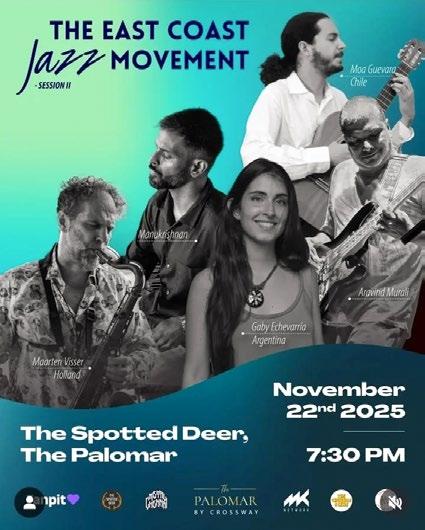

Completing the collective are two outstanding Indian musicians whose contributions add depth and complexity to the performance. Manukrishnan, known for his mastery of classical Indian rhythm, expands the rhythmic vocabulary of the ensemble with subtle, intricate patterns that interact seamlessly with jazz improvisation. Alongside him, Aravind Murali brings a melodic voice shaped by Indian classical traditions while remaining deeply attuned to contemporary global influences. His expressive phrasing adds emotional nuance and balance to the group’s evolving dialogue.
What truly defines The East Coast Jazz Movement is its emphasis on improvisation as conversation. Rather than following rigid compositions, the musicians engage in real-time exchange—listening, responding, and reshaping the music as it unfolds. Melodies transform, rhythms shift, and influences overlap, creating moments that are unrepeatable and deeply alive.

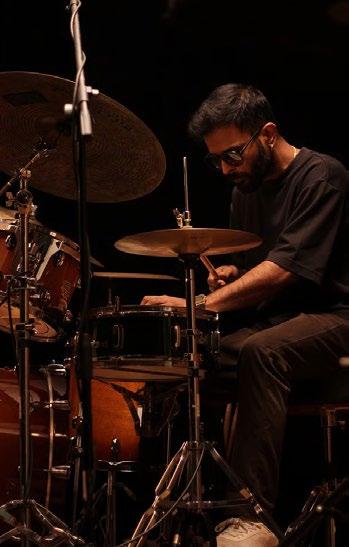

The setting plays an essential role in shaping this experience. The Spotted Deer at The Palomar by Crossway offers an intimate, thoughtfully designed space that encourages focused listening without sacrificing comfort. The venue’s warm ambience allows the audience to feel closely connected to the musicians, making every subtle change in tempo or tone part of a shared experience.
As Chennai continues to broaden its cultural horizons, events like The East Coast Jazz Movement reflect the city’s growing openness to experimental and crossgenre performances. Session II stands as a reminder that jazz, at its best, is not confined by geography or tradition—it thrives on curiosity, collaboration, and creative risk.
For audiences, the evening promises a journey beyond genre—a night where sound becomes a bridge between cultures, and music unfolds as a living, breathing conversation. The East Coast Jazz Movement – Session II invites listeners to experience jazz not just as music, but as a powerful expression of global connection.

CHAITANYA RAO
A Journey of Style, Substance &
Innovation
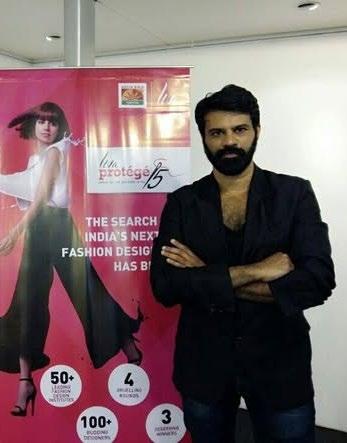
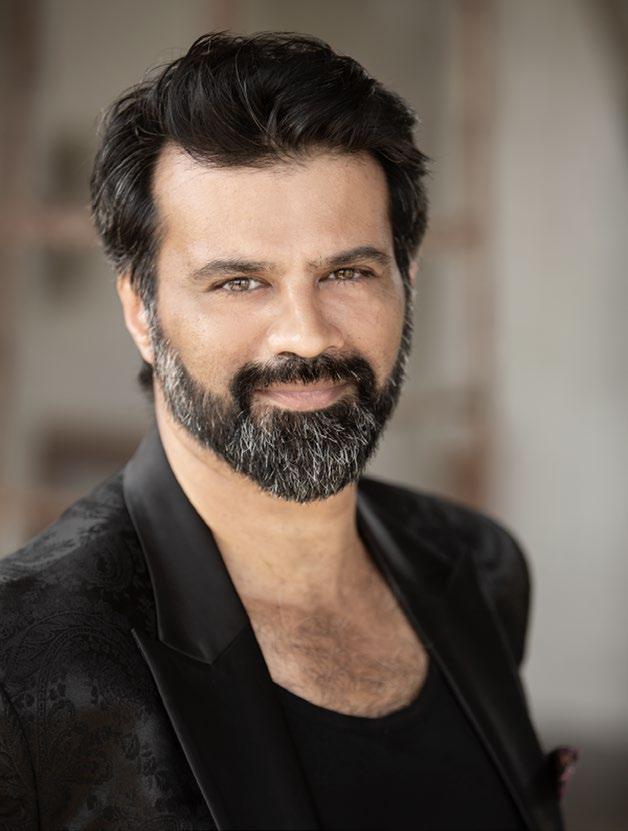
As the Indian fashion industry steps into 2026, few names carry the authority, influence, and quiet reverence that Chaitanya Rao commands. For over three decades, Rao has shaped not just wardrobes but visual identities—bridging cinema, couture, and culture with a sensibility that feels instinctive rather than imposed. His work exists at the intersection of restraint and rebellion, where minimalism meets emotion, and where clothing enhances personality rather than overpowering it. From Tamil and Telugu cinema to national runways and global fashion platforms, Chaitanya Rao’s journey mirrors the evolution of modern Indian style itself.
The Making of a SelfTaught Visionary
Chaitanya Rao’s entry into fashion was neither planned nor conventional. Growing up in Chennai during the 1990s, a time when formal fashion education was scarce in South India, Rao relied entirely on curiosity and instinct. Influenced deeply by his mother’s artistic inclination, he began sketching as early as the age of twelve, poring over international fashion magazines and translating what he saw into his own visual language. Fashion, for Rao, was not about labels or institutions—it was about observation, imagination, and discipline.

While pursuing a degree in Economics and later Visual Communication at Loyola College, Rao found his true classroom far away from textbooks. At just nineteen, he joined the Color Plus factory in Ambattur, spending his mornings immersed in the mechanics of garment production. Under the mentorship of Deepa Meher, he worked extensively with linen, learning the intricacies of fabric behavior, pattern development, dyeing, and finishing. This hands-on exposure to manufacturing became the foundation of his design philosophy. By understanding how a garment is built, Rao learned how to strip it down to its most essential and powerful form. By the time he was managing visual merchandising at Color Plus, Rao had already developed a deep understanding of how clothes interact with space, light, and movement. This sensitivity to proportion and presence would later become a defining feature of his cinematic and couture work.
Cinema as a Canvas: The Early Film Years
Rao’s transition into films began in 1996 when he assisted veteran costume designer Priya Balasubramaniam on Mani Ratnam’s Minsara Kanavu. The experience introduced him to the intensity of film sets, where costumes had to serve storytelling, character psychology, and visual continuity all at once.
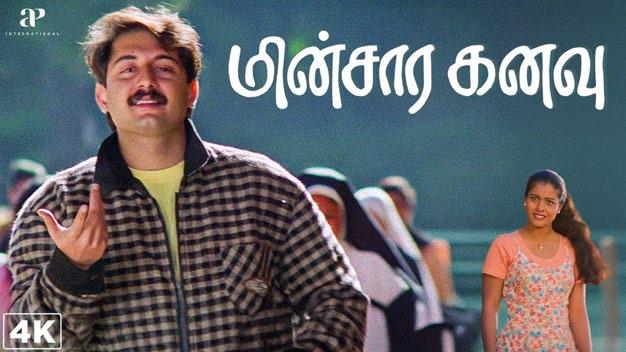
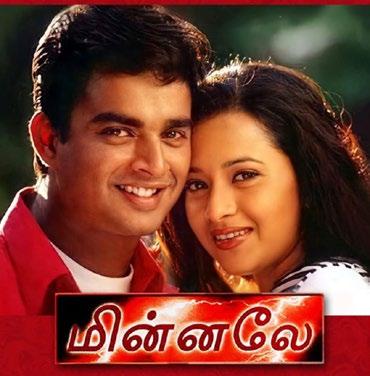
However, it was his independent debut in Gautham Vasudev Menon’s Minnale in 2001 that marked a turning point. Styling Madhavan in Minnale, Rao departed from the exaggerated costumes that dominated Tamil cinema at the time. Instead, he introduced an urban, contemporary aesthetic rooted in clean silhouettes, muted tones, and relatable Western wear. The impact was immediate. The film redefined how male leads were dressed, and Rao became synonymous with a new kind of realism—cool, aspirational, yet accessible. This approach resonated deeply with the youth of Tamil Nadu, who saw themselves reflected on screen for the first time. Rao had unknowingly begun modernizing the visual language of South Indian cinema.
Redefining the South Indian Leading Lady
If Rao transformed male styling in Tamil cinema, his contribution to women’s fashion on screen was nothing short of revolutionary. Over the years, he became the go-to designer for filmmakers seeking to portray strong, contemporary female characters without resorting to excess glamour.
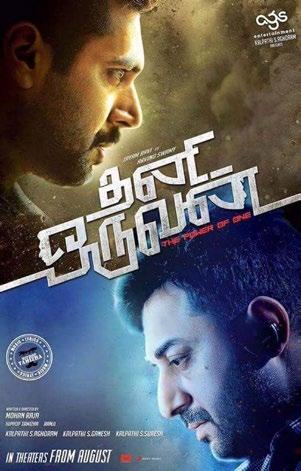
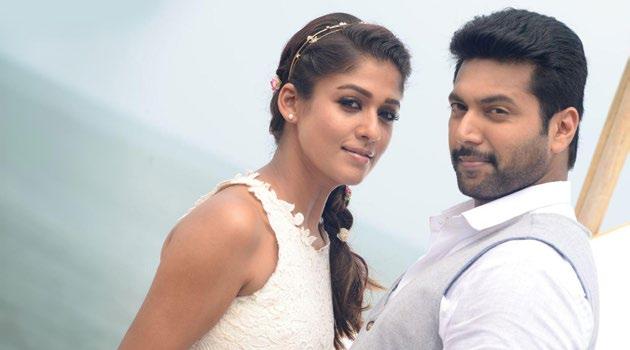
One of Rao’s most enduring professional collaborations has been with Nayanthara. From Raja Rani to Imaikka Nodigal and Thani Oruvan, his styling choices played a crucial role in shaping her on-screen persona—powerful, poised, and effortlessly elegant. Rather than dressing her to impress, Rao dressed her to inhabit her roles fully. His versatility extended to other leading actresses as well. Whether it was crafting traditional-yetmodern looks for Shruti Haasan, high-glamour ensembles for Trisha, or chic fusion wear for Asin in Ghajini, Rao demonstrated an extraordinary ability to adapt his design language to the director’s vision while retaining his minimalist signature. His work never distracted from the narrative; it enhanced it.
Pan-Indian Influence and Cultural Impact
Rao’s influence was not confined to Tamil cinema. His work on Mani Ratnam’s Aayitha Ezhuthu and the Telugu blockbuster Pokiri further cemented his reputation as a designer who understood contemporary India. Styling Mahesh Babu and Ileana D’Cruz in Pokiri, Rao created looks that balanced mass appeal with urban sophistication, defining the “cool hero” aesthetic for an entire generation.

These films marked Rao’s emergence as a pan-Indian stylist, capable of navigating regional sensibilities while maintaining a unified design philosophy. His characters looked current, grounded, and aspirational—qualities that would soon make him indispensable across industries.
From Celluloid to Couture: National and Global Recognition
Despite his dominance in film styling, Rao never abandoned his passion for pure fashion. His transition to the national runway was seamless yet intentional. He became the first designer from South India to have his work featured in Vogue India during an editorial shoot in Paris—a landmark achievement that positioned Chennai on the global fashion map.
Rao’s association with Lakmé FashionWeek spanned over seven seasons, during which he showcased collections that were intellectually driven and culturally layered. Drawing inspiration from pop culture, literature, and subcultures, his lines such as “Neverwhere” and “Silence of the Lambs” earned him the reputation of being the south’s leading minimalist designer. His garments were edgy yet restrained, theatrical yet wearable. This balance of concept and craftsmanship distinguished Rao from his contemporaries and attracted attention from fashion critics and global buyers alike.


LAKME FASHION WEEK


Pageants, Power, and Personality-Driven Fashion
Rao’s expertise extended beyond cinema and couture into national pageantry. In a rare feat, he became the only Chennai-based designer selected to style all three winners of Miss India and Miss Diva, including Harnaaz Sandhu, who later went on to win Miss Universe. His approach to pageant styling was rooted in individuality rather than spectacle. Rather than imposing a singular aesthetic, Rao crafted bespoke looks that amplified each contestant’s personality. This philosophy aligned perfectly with his belief that clothes should never dominate the wearer. The success of these looks further reinforced his status as a designer who understood modern Indian femininity in all its complexity.
The 2025 Pivot: Sustainable Luxury and Quiet Glamour
In 2025, Chaitanya Rao made one of the most defining shifts of his career. Embracing the philosophy of “quiet luxury,” he turned his focus toward sustainability without compromising on sophistication. At a time when organic fabrics were often dismissed as uninspiring, Rao challenged perceptions by redefining organic cotton as sensual, structured, and red-carpet ready. His summer 2025 collection, launched in June, transformed organic cotton into sharply tailored evening wear and edgy Western silhouettes. The collection proved that sustainability could coexist with high fashion, earning critical acclaim and industry admiration. Later that year, Rao headlined the 11th edition of Bangalore Times Fashion Week with a collection titled “Red Carpet Couture.” The showcase reflected global influences fused with Indian craftsmanship, marking a departure from his earlier experimental phases and signaling a more mature, refined design direction.
A Designer and His Muse
Throughout 2025, Rao’s campaigns featured longtime collaborator and actress Andrea Jeremiah. Their creative partnership reflected a shared aesthetic—minimalist, edgy, and unapologetically modern. Andrea’s personal style seamlessly mirrored Rao’s design philosophy, making her the perfect embodiment of his quiet luxury narrative. This collaboration underscored Rao’s belief that fashion works best when it feels lived-in rather than styled for effect.




AMALA PAUL

2026 and Beyond: Fashion with Purpose
As of January 2026, Chaitanya Rao continues to operate his retail studio on Chennai’s Khader Nawaz Khan Road, a destination for those seeking understated couture and refined bridal wear. At the same time, he remains deeply involved in upcoming film projects, maintaining his stronghold in cinema. His recent work includes creating postpartum looks for actress Amala Paul, reinforcing his commitment to “real fashion for real people.” Rao is also rumored to be exploring techintegrated sustainable textiles, pushing the boundaries of innovation while staying rooted in ethics.
Design Philosophy and Enduring Legacy
At the heart of Rao’s work lies a simple yet powerful belief: clothes should enhance, not overshadow. Fit, silhouette, and comfort take precedence over excessive ornamentation. This philosophy has allowed his designs to age gracefully, remaining relevant long after trends fade. With over 25 years in cinema, styling more than 100 films, and features in Vogue, Harper’s Bazaar, Elle, and the Kingfisher Calendar, Chaitanya Rao’s legacy is firmly established. Yet, he remains forward-looking, mentally living a season ahead, constantly refining his craft.From a teenager sketching in Chennai to a maestro shaping Indian fashion narratives, Chaitanya Rao’s journey is not just about style—it is about staying authentic in an industry built on change. As 2026 unfolds, one thing remains certain: his influence will continue to define how India dresses, both on screen and beyond.





INCREDIBLE TAMILNADU & Retail Shopping
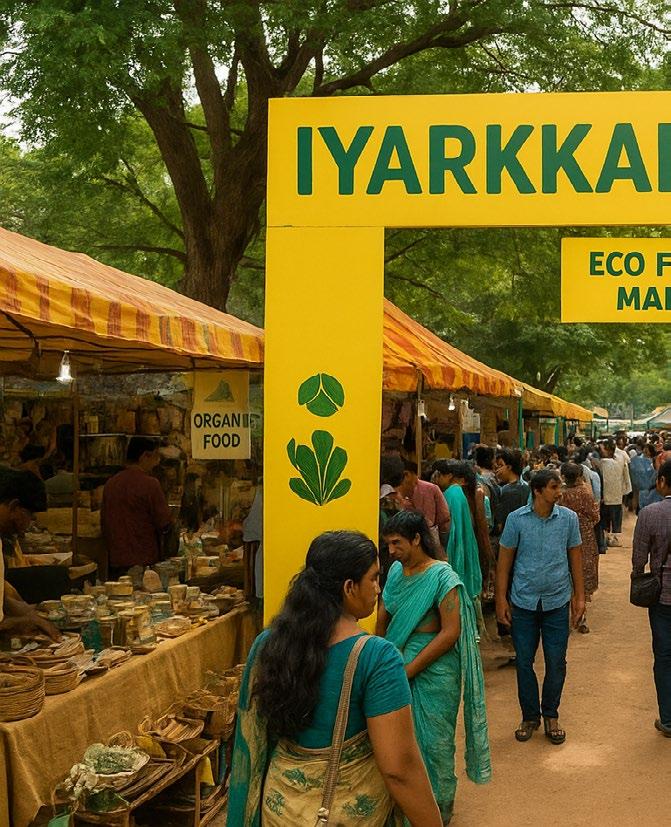
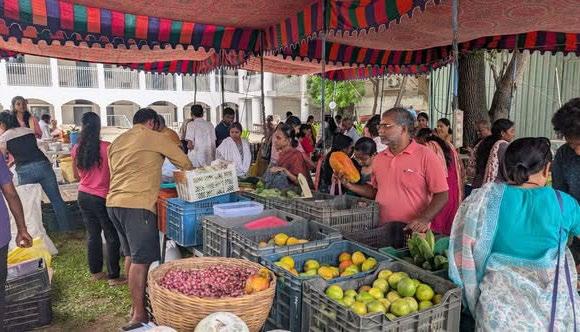
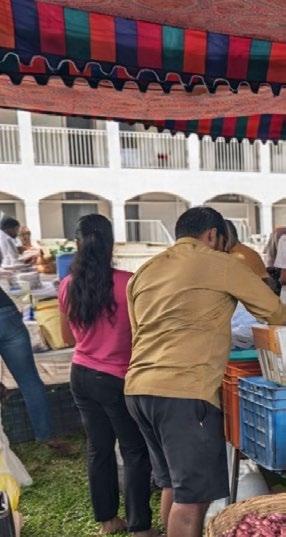
This festive season, Madurai embraced sustainability with renewed energy as the Eco-Friendly Festive Bazaar, popularly known as the Iyarkkai Bazaar, transformed the iconic Tamukkam Grounds into a vibrant hub of conscious retail. Blending tradition, eco-awareness, and community empowerment, the bazaar emerged as one of the city’s most celebrated green initiatives, proving that festive cheer and environmental responsibility can go hand in hand.
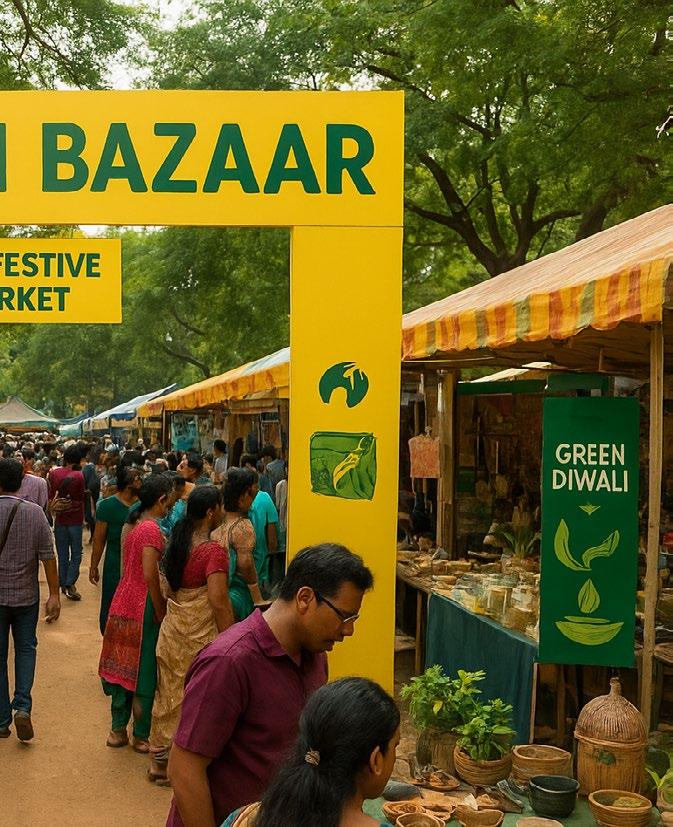
Organised by the to promote handmade, natural, organic, and sustainable products crafted by rural artisans and women-led Self-Help Groups (SHGs). With over 200 stalls, the bazaar showcased the richness of Tamil Nadu’s eco-friendly craftsmanship. Visitors were welcomed to a colourful array of millet-based traditional snacks and sweets, organic vegetables, grains, cold-pressed oils and herbal powders, palm-leaf, bamboo, jute and coir-based handicrafts, eco-friendly décor for Deepavali and Karthigai seasons, and natural skincare items such as herbal soaps, oils, and face packs. The warmth of handmade craftsmanship, combined with the earthy aroma of millets and herbs, made the bazaar a refreshing departure from massproduced festive retail. At the heart of the bazaar lay a powerful social mission — promoting financial independence among rural women. More than 25 SHGs from across Madurai district participated every year, bringing their unique, sustainably crafted products directly to customers. For many women, this platform provided direct income without middlemen, exposure to urban markets, confidence to scale their small enterprises, and recognition for traditional arts and local produce. One SHG member shared, “Every product we bring here is made with care. When customers appreciate natural products, it empowers us to continue our craft.”
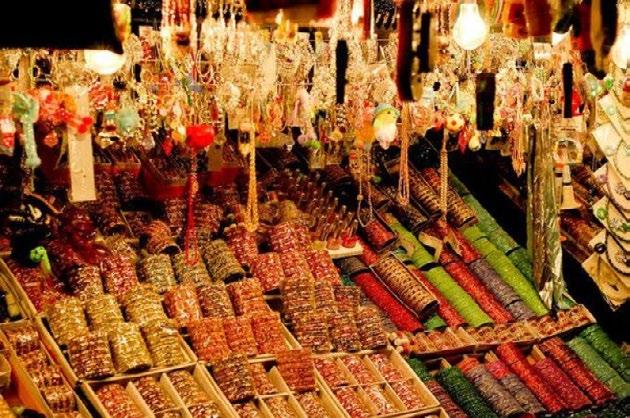
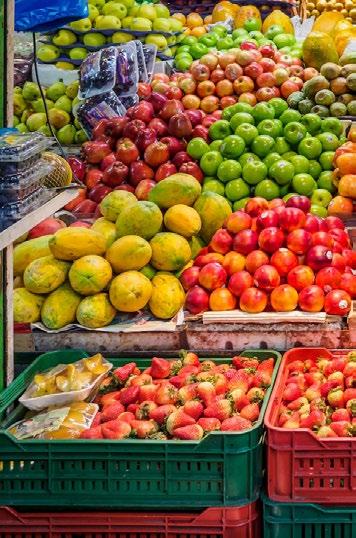
The Tamil Nadu Pollution Control Board (TNPCB) added a strong educational element to the bazaar through its “Green Diwali” awareness stall. The initiative promoted reduced firecracker usage, eco-friendly celebrations, waste segregation, and recycled décor alternatives. A major attraction was TNPCB’s demonstration of a power-free freezer, highlighting the state’s push for energy-efficient innovations. Workshops for children and families made learning fun, from composting techniques to DIY eco-friendly festival décor, helping instil sustainable habits at an early age. Unlike traditional festive shopping spaces, the Iyarkkai Bazaar offered an immersive retail experience with a clear purpose. Live counters served millet dosas, herbal juices, and organically prepared snacks, reconnecting the younger generation with healthy eating. Every product told a story — of a craftswoman, a rural farmer, or a self-taught artisan. Plastic-free packaging, biodegradable décor, and recycled materials created an eco-positive shopping environment, while funds earned helped strengthen rural livelihoods, women’s cooperatives, and traditional trades.

The importance of Iyarkkai Bazaar in 2025 reflects larger state priorities.The bazaar directly benefited small producers and SHGs, aligning with Tamil Nadu’s vision of inclusive economic growth. It responded to the rising demand for eco-friendly living, as consumers increasingly preferred organic foods, natural skincare, and plastic-free products. It also promoted local crafts by giving unique handicrafts of Tamil Nadu greater visibility and respect, while reinforcing the idea that celebrations can remain joyful without causing ecological harm.
K.J. Praveen Kumar, District Collector, described the initiative as “a wonderful example of how festive shopping can support local livelihoods while protecting the environment.” A young visitor shared, “This place feels like a celebration of Tamil culture. I bought millet snacks, herbal kits, and palm-leaf décor — everything feels meaningful.”
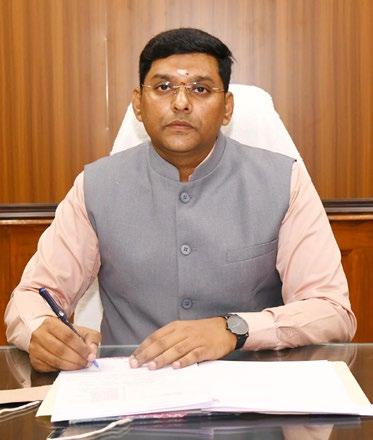
K.J. Praveen Kumar, District Collector
The Eco-Friendly Festive Bazaar has evolved into more than a seasonal market. It has become a movement of mindful living, showcasing Tamil Nadu’s commitment to sustainability, women empowerment, cultural identity, and green innovation. As Madurai embraces this ecoconscious festival culture, the Iyarkkai Bazaar stands as a shining symbol of how tradition meets responsibility in the most beautiful way. This November, the city did not just celebrate a festival — it celebrated a greener future.
Eco-Friendly Festive Bazaar in Madurai: A Green Revolution in Tamil Nadu’s Festive Shopping
Madurai, a city known for its vibrant traditions and grand festive spirit, is now setting an inspiring example for sustainable celebrations. The Eco-
Friendly Festive Bazaar 2025, held in the heart of the city, marks a new shift in how Tamil Nadu celebrates — with awareness, responsibility, and deep respect for the environment. The bazaar has become a model for how festivals can remain joyful while reducing ecological damage, especially at a time when plastic waste and mass-produced décor continue to burden urban ecosystems.
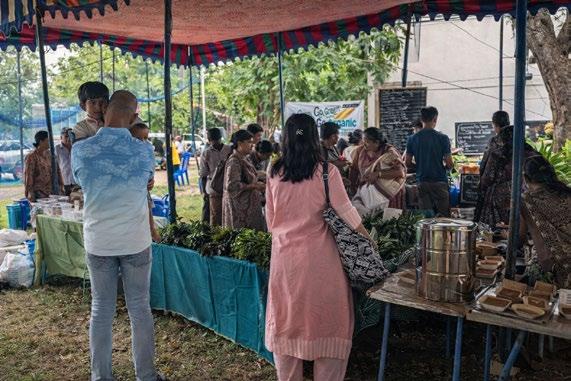
The market brought together local artisans, women’s collectives, and sustainability leaders to showcase a colourful range of eco-conscious festive products. These included clay idols, naturally dyed fabrics, reusable décor, palm-leaf baskets, millet sweets, terracotta crafts, and biodegradable gift items. What made this bazaar unique was not just the products, but the movement behind it — a community-driven effort to support artisans, empower women, and champion green living.
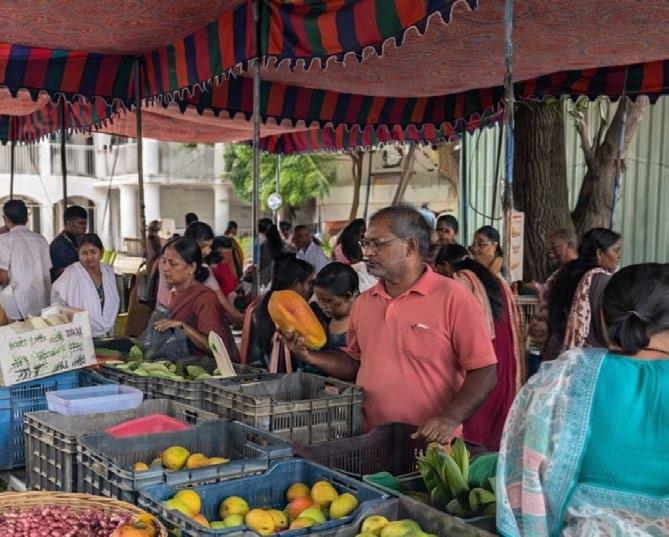
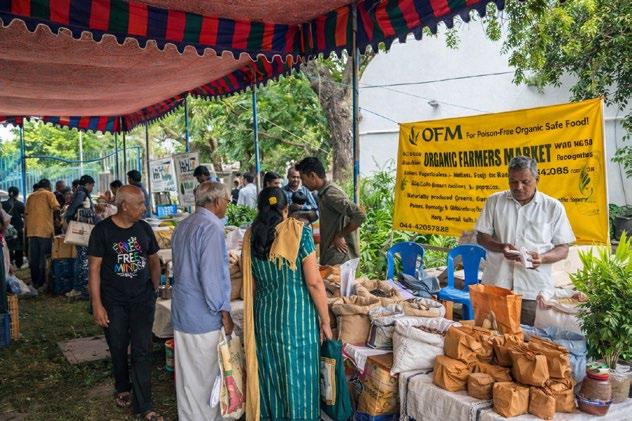
At the centre of the initiative stood the Madurai City Corporation, the principal organiser of the Eco-Friendly Festive Bazaar. As part of its wider mission to promote zero-plastic festivals, improve waste management, and encourage sustainable shopping habits, the Corporation conceptualised and launched the bazaar as a city-level awareness campaign. Its goal was simple yet powerful: to make festive shopping joyful, local, sustainable, and completely eco-friendly.
The Corporation’s involvement ensured dedicated marketplace space, proper waste management systems, vendor training on eco-friendly practices, promotion of local crafts, and strict enforcement of “No Plastic Zone” guidelines. Through this initiative, Madurai positioned itself as a pioneer in Tamil Nadu’s green celebration movement.
The heart of the bazaar was the participation of Women’s Self-Help Groups (SHGs), supported by the Tamil Nadu Corporation for Development of Women (TNCDW). These groups brought the market to life by contributing reusable cloth bags, handmade eco-friendly décor, herbal products, traditional snacks, and organic wellness items. By participating in the bazaar, these women not only promoted sustainability but also gained a stable livelihood platform during the festive season. Their involvement ensured that the event remained rooted in community empowerment and local economic upliftment.

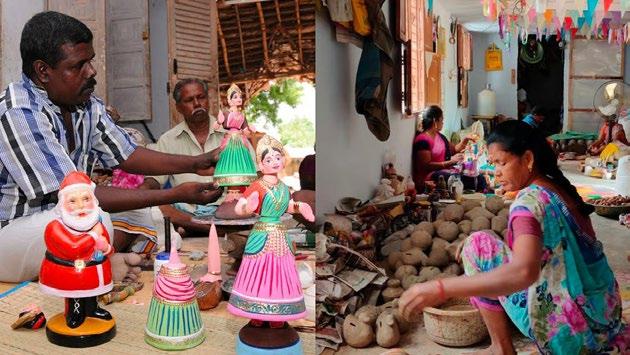
Local artisan communities added authenticity and cultural depth to the bazaar. Artisans from Madurai and surrounding regions, particularly the iconic Vilacheri clay idol makers, attracted large crowds with their eco-friendly terracotta idols, handpainted décor, and traditional craftwork. Alongside them were palm-leaf craft makers, natural textile weavers, terracotta potters, and bamboo and coconut-shell artisans. Their participation reinforced the idea that sustainability is not a new concept, but one deeply rooted in Tamil Nadu’s heritage.

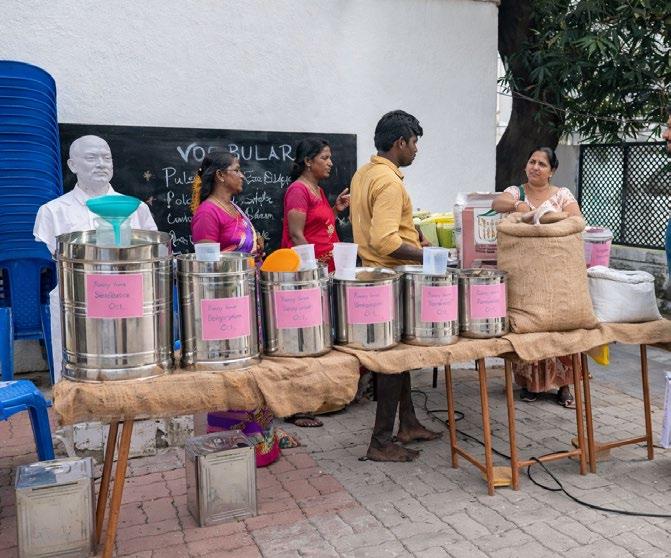
Green NGOs and sustainability groups worked closely with the Corporation to ensure the bazaar achieved its environmental goals. These organisations helped implement waste segregation points, recycling awareness booths, eco-education sessions for children, and carbon-conscious event planning.Their involvement transformed the bazaar from a simple marketplace into a full-fledged awareness festival promoting eco-conscious living.
The Madurai District Administration played a crucial supporting role by coordinating between government departments, ensuring public safety, and promoting the event through official channels. Their involvement helped make the bazaar a wellorganised, large-scale public event with smooth execution.
What truly set the Eco-Friendly Festive Bazaar apart was its message. It transformed shopping into an act of responsibility. Every clay lamp purchased, every palm-leaf basket chosen, and every reusable bag carried became a step towards reducing waste and celebrating festivals in harmony with nature. Shoppers embraced this movement with enthusiasm, making it clear that Tamil Nadu is ready to adopt green celebrations not because it is trendy, but because it is necessary.
The Eco-Friendly Festive Bazaar in Madurai is more than a seasonal event. It marks the beginning of a cultural transformation. By uniting the efforts of the Madurai City Corporation, SHGs, artisans, NGOs, and community leaders, the city has shown how festivals can be both joyful and sustainable.

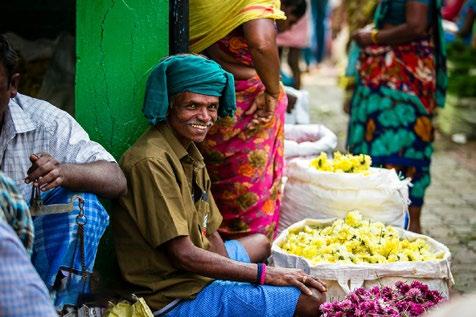
As Tamil Nadu continues to champion green living, Madurai’s model stands as a shining example of what can be achieved when tradition meets innovation. The bazaar’s success proves that the future of festive shopping is not plastic — it is local, handcrafted, eco-friendly, and community-driven.


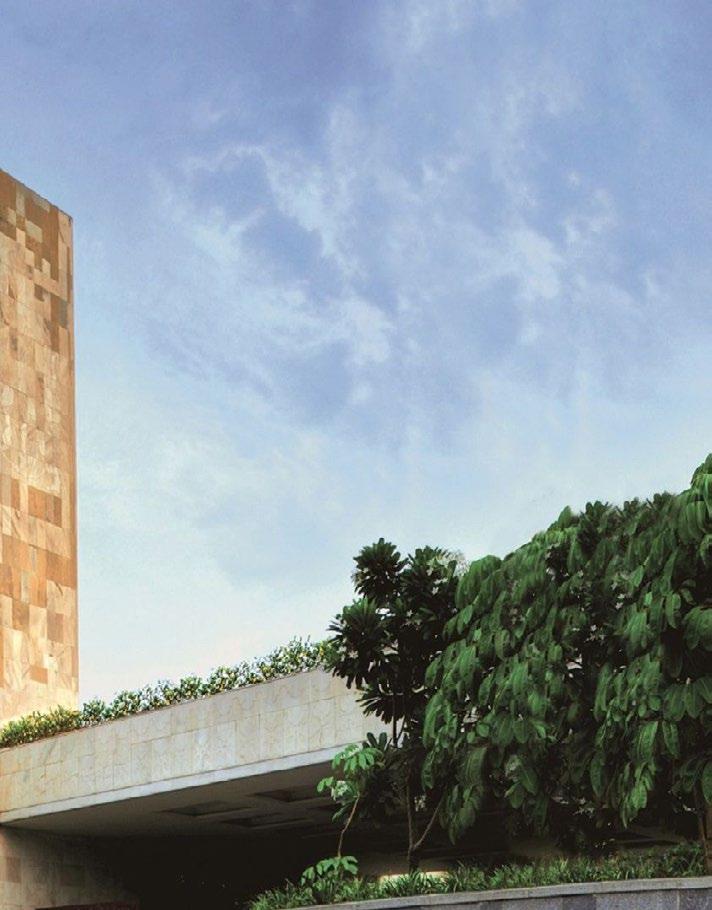
INCREDIBLE TAMILNADU & Hotels, Resorts Restaurants
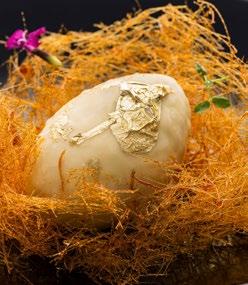
AVARTANA CHENNAI THE FUTURE OF SOUTH INDIAN GASTRONOMY
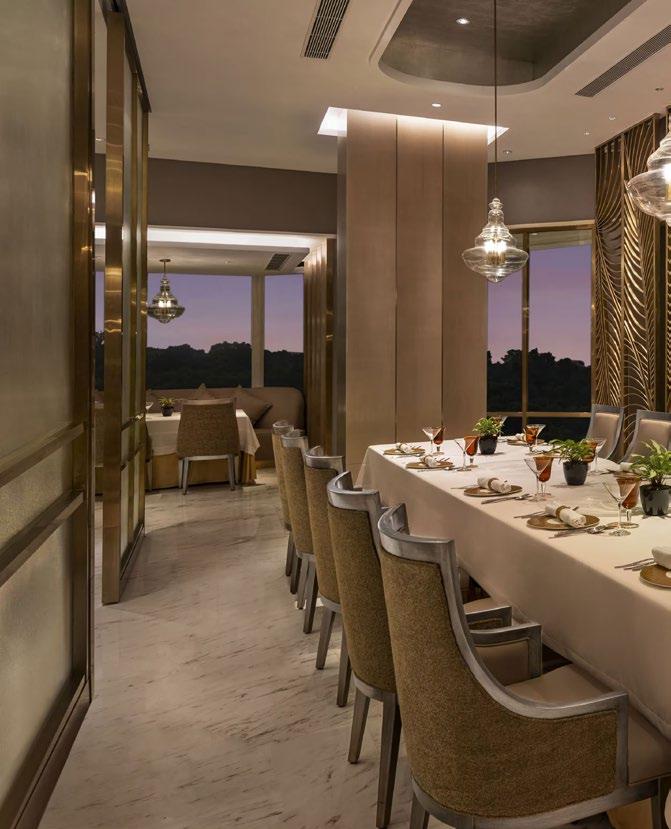
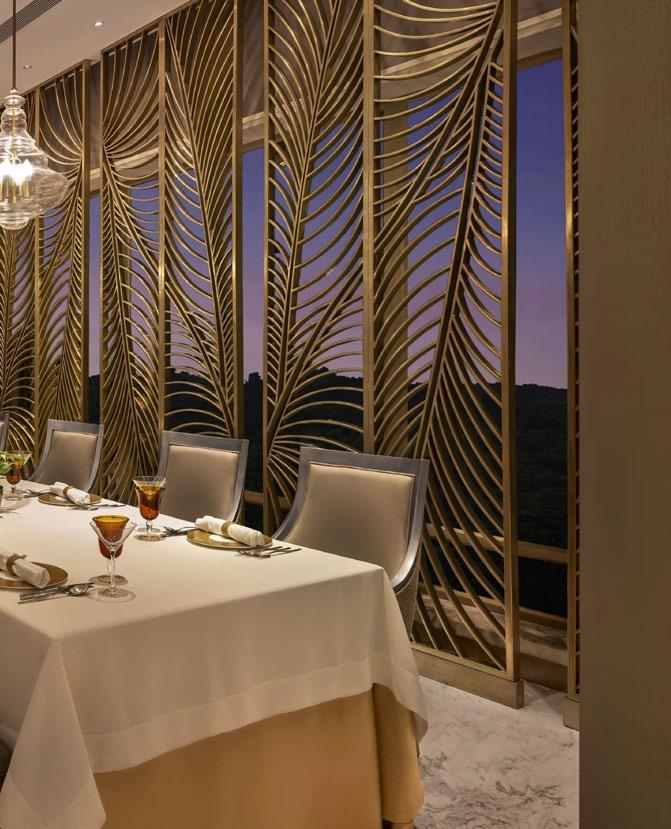
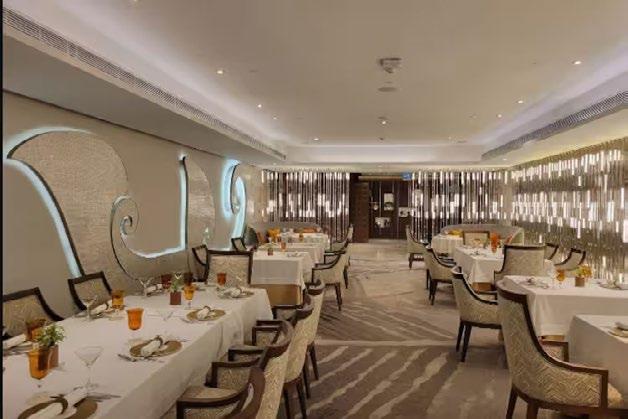
Hidden within the architectural splendour of ITC Grand Chola lies Avartana, a restaurant that has transformed South Indian cuisine into a breath-taking fine-dining experience. Named after the Sanskrit word for “rhythm,” Avartana seamlessly blends traditional flavours with cutting-edge techniques, creating a new benchmark for Indian gastronomy. Today, it stands among India’s most innovative and celebrated dining destinations.
An Immersive Gastronomic Journey
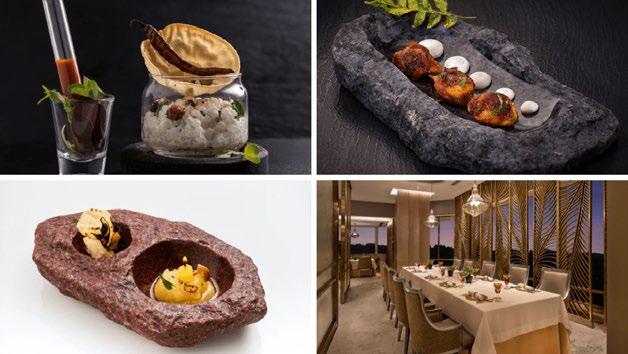
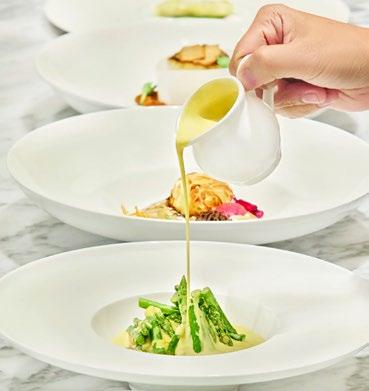
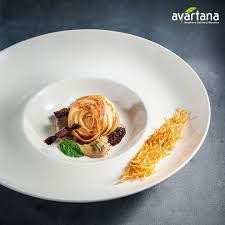
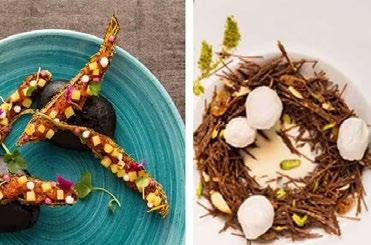
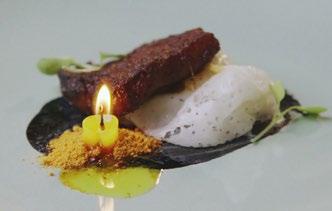
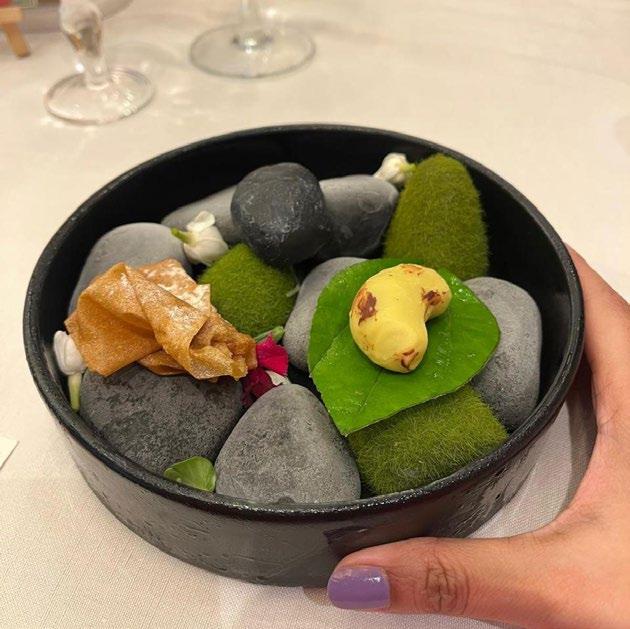
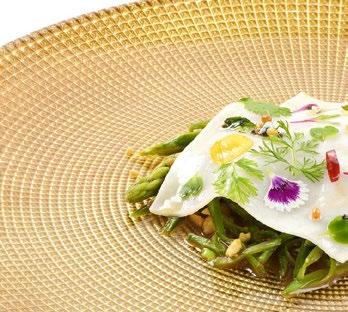
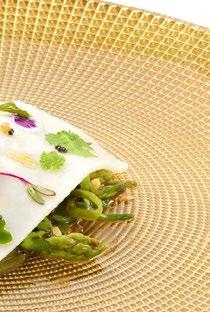
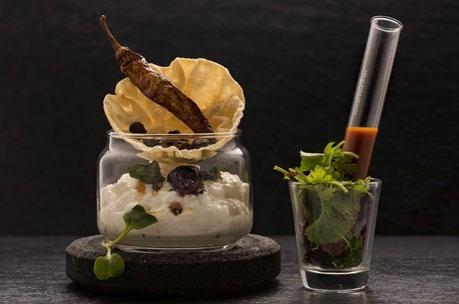
Every visit to Avartana is designed as a sensory expedition. Its curated tasting menus—Kairos, Maya, Anika, Bhojan, and Laya—guide guests through a carefully composed sequence of flavours that balance heritage with imagination. The experience is elevated through signature creations such as coconut ash-coated chicken, lemon rasam sphere, prawn with curry leaf dust, turmeric pepper broth shots, edamame–lentil dumplings, and deconstructed payasam. These dishes embody Avartana’s defining philosophy: familiar flavours presented through modern artistry.
The Masterminds Behind the Magic
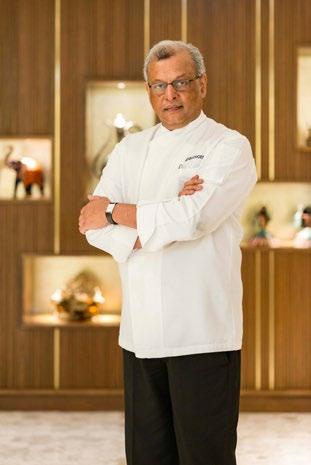
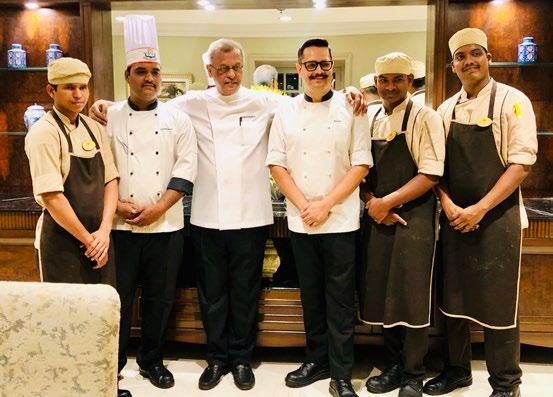
Avartana’s success is shaped by a team of visionary chefs. Chef Ajit Bangera, the Culinary Mentor, is a custodian of regional Indian cuisine and the guiding force behind Avartana’s soul. Chef Nikhil Nagpal, the Technical Innovator, is known for his mastery of molecular precision and reimagined textures. Chef Varun Totlani, the Modernist Creator, is celebrated for sensory, ingredient-forward reinterpretations. Together, they craft tasting menus that feel like theatre on a plate, blending technique, emotion, and storytelling.
The Perfect Setting: ITC Grand Chola
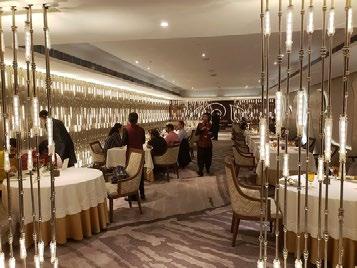
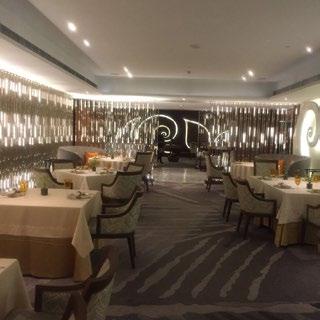
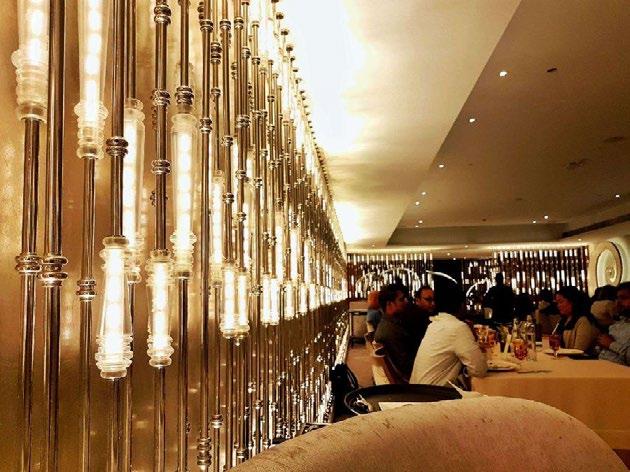
Avartana is housed within ITC Grand Chola, one of India’s most iconic luxury hotels, inspired by the grandeur of the Chola Dynasty. Guided by ITC’s philosophy of Responsible Luxury, the hotel harmonises environmental consciousness with world-class hospitality, providing the ideal backdrop for Avartana’s elevated culinary identity.

Leadership Behind the Vision Sanjiv Puri, Chairman & Managing Director, ITC Limited
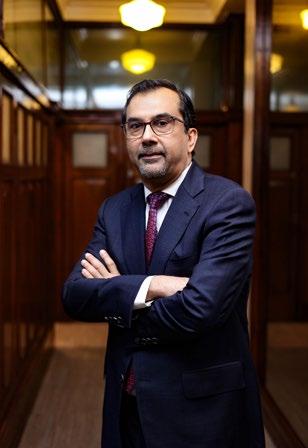
At the helm of ITC’s remarkable evolution is Sanjiv Puri, Chairman and Managing Director of ITC Limited. Under his leadership, ITC has emerged as a global FMCG force, a champion of sustainable luxury hotels, a pioneer in culinary innovation, and a leader in responsible, community-driven growth. His philosophy of Responsible Competitiveness blends performance with purpose, ensuring that growth and responsibility move forward together.
Driving Culinary Excellence Nationwide
Sanjiv Puri has strengthened ITC Hotels’ culinary ecosystem by supporting innovation-driven restaurants, culinary R&D studios, chef-led experimentation, and the global promotion of Indian cuisine. His vision has elevated iconic brands such as Avartana, Dum Pukht, Bukhara, Royal Vega, and Ottimo, each representing India’s rich gastronomic diversity with global finesse.
A Leader Shaping the Indian Future
Under his stewardship, ITC has championed sustainable sourcing and environmental responsibility, digital transformation across operations, farmer empowerment through agri value chains, and world-class hospitality rooted in Indian values. His leadership continues to influence Indian cuisine, enterprise, and sustainability at a national and global scale.
Where Tradition Meets Tomorrow
Avartana is more than a restaurant; it is a movement redefining the global identity of South Indian cuisine. Guided by visionary leadership and a passionate culinary team, Avartana transforms the flavours of Tamil Nadu into world-class gastronomy. As it prepares for expansion across India and beyond, the rhythm of Avartana is set to echo on the world stage, carrying with it the spirit, soul, and sophistication of Indian culinary artistry.

At the helm of ITC’s remarkable evolution stands Sanjiv Puri, a leader whose strategic foresight has reshaped the company into one of India’s most trusted and diversified conglomerates. With a career spanning nearly four decades at ITC, he has championed an organisational culture defined by innovation, sustainability, and nation-building.
Under his dynamic leadership, ITC has emerged as a global FMCG powerhouse. He accelerated the company’s growth in packaged foods, beverages, personal care, home essentials, and lifestyle products. Brands such as Aashirvaad, Sunfeast, Yippee!, Fiama, Engage, Classmate, and Bingo! have strengthened ITC’s leadership in India’s consumer markets. He has also fostered digital-first strategies and AI-driven supply chains, making FMCG one of ITC’s fastest-growing segments.
Puri has also reinforced ITC Hotels’ identity through the philosophy of Responsible Luxury, positioning it as one of the world’s most environmentally responsible hospitality chains. Under his guidance, landmarks such as ITC Grand Chola, ITC Kohenur, ITC Royal Bengal, and restaurants including Avartana, Dum Pukht, Bukhara, and Ottimo have become symbols of Indian sophistication with global acclaim.
A passionate supporter of culinary innovation, he has encouraged chef-led innovation labs, ingredient research, modernist cooking techniques, and farmto-table sourcing. Restaurants like Avartana are a direct reflection of this vision, presenting Indian flavours with precision, artistry, and global flair.
One of his most influential contributions has been embedding sustainability and social impact at the core of ITC’s business strategy. Under his leadership, ITC has remained carbon positive for over 18 years, water positive for over 20 years, and solid waste recycling positive for more than a decade. His commitment to rural empowerment has created large-scale programmes supporting farmer capacity building, watershed development, livelihood generation, afforestation, and climate resilience initiatives. This approach ensures that every business creates value not only for stakeholders, but for society at large.

The Philosophy: Responsible Competitiveness
Central to Puri’s leadership is the principle of Responsible Competitiveness, a philosophy that ensures every strategic decision balances growth with responsibility. It reflects the belief that businesses must be profitable and sustainable, innovation must uplift communities, luxury must respect the environment, and growth must protect future generations. This vision has positioned ITC as a global example of how purpose and progress can coexist.
A Leader Shaping the Future of Indian Enterprise
Sanjiv Puri continues to drive transformation through digital acceleration across businesses, global partnerships in FMCG and hospitality, investment in agri-tech and food processing, expansion of ITC’s luxury and business hotels, promotion of Indian cuisine on global platforms, and strengthening supply chains for farmers and MSMEs. Under his forward-looking leadership, ITC is evolving into a future-ready conglomerate rooted in India’s values yet equipped for international excellence.
About Them The Leaders Shaping ITC’s Hospitality & Culinary Brilliance
Sanjiv Puri, Chairman and Managing Director of ITC Limited, is a strategic visionary who has transformed ITC into a multi-vertical powerhouse. With a deep understanding of Indian consumer behaviour, sustainability, agriculture, and hospitality, he leads ITC’s growth with clarity, discipline, and purpose. His leadership philosophy of Responsible Competitiveness ensures that ITC’s expansion remains rooted in environmental balance, community upliftment, and world-class excellence. Under his guidance, ITC Hotels has evolved into one of India’s strongest hospitality brands, celebrated for luxury, sustainability, and culinary innovation, while pioneering modern Indian gastronomy through restaurants such as Avartana, Bukhara, Dum Pukht, Royal Vega, and Ottimo.
Nakul Anand, Executive Director of ITC Limited, is one of the most respected names in Indian hospitality. He has been instrumental in shaping ITC Hotels into a global benchmark for environmentally conscious luxury, championing the Responsible Luxury philosophy and fostering a culture of culinary excellence across ITC’s hotels. His leadership has guided the growth of some of India’s finest restaurants and the development of innovative dining concepts.
Anil Chadha, Divisional Chief Executive of ITC Hotels, is an industry leader known for operational brilliance. He heads the ITC Hotels division with a strong focus on guest experience, brand expansion, and strategic transformation. Under his guidance, ITC Hotels has strengthened its culinary footprint, modernised its service philosophy, and expanded premium brands such as ITC Hotels, Welcomhotel, Storii, and Fortune.
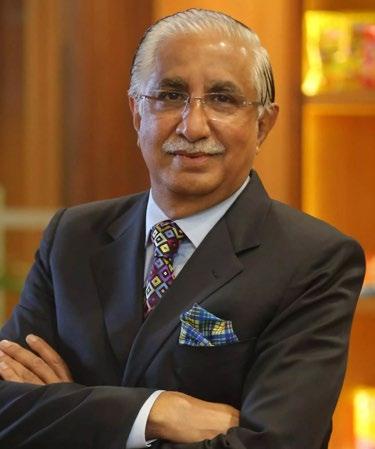
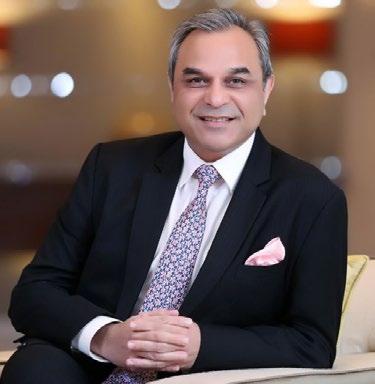
The
Culinary Commanders Behind ITC’s Signature Restaurants
Chef Ajit Bangera, Culinary Mentor at ITC Hotels, is a veteran of Indian cuisine and the guiding force behind Avartana’s soulful interpretation of South Indian flavours. He blends traditional culinary wisdom with modern techniques, mentoring teams across ITC Hotels and driving research-based innovation.
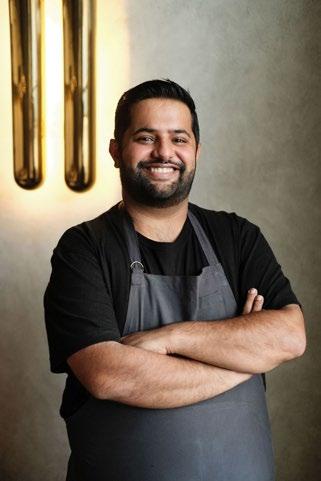
Chef Nikhil Nagpal, the Creative Innovator, is known for his molecular finesse and inventive textures, helping shape Avartana’s modernist vision with technical artistry, precision, and scientific brilliance.
Nakul Anand, Executive Director
Anil Chadha, Divisional Chief Executive
Chef
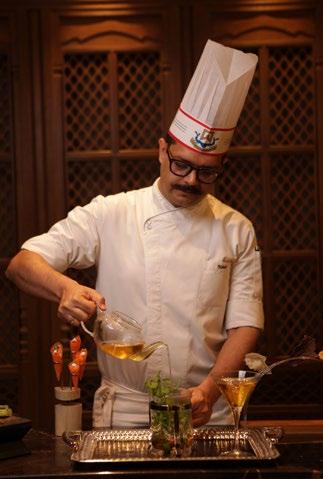
Chef Varun Totlani, the Modernist Craftsman, leads contemporary plating and sensory-driven gastronomy, ensuring that each dish tells a story through flavour, texture, aroma, and presentation.
Together, these leaders define the identity of ITC Hotels, positioning Indian cuisine on global platforms, establishing ITC Hotels as India’s most sustainable luxury chain, elevating Avartana as a world-class fine-dining destination, and reinforcing Tamil Nadu’s place as a proud home of modern Indian gastronomy. Avartana stands today as one of India’s most daring and distinguished culinary experiences—a place where South Indian flavours are not merely served, but elevated, deconstructed, celebrated, and reborn. Backed by the visionary leadership of Sanjiv Puri and the pioneering hospitality ethos of ITC Hotels, Avartana represents the future of Indian cuisine: rooted in heritage yet fearless in innovation.
Every course, every texture, and every aroma speaks of meticulous craftsmanship and artistic precision. From its modernist rasam spheres to its reimagined desserts, Avartana proves that Indian gastronomy can be both deeply traditional and boldly global.
More than a restaurant, it is a gastronomic narrative—one that honours the southern soil, champions responsible luxury, and showcases India’s culinary brilliance on the world stage. In Chennai, amidst the architectural grandeur of ITC Grand Chola, Avartana stands as a beacon of excellence, redefining fine dining and inspiring the next chapter of contemporary Indian cuisine.
Chef Varun Totlani, The Modernist Craftsman
Nikhil Nagpal, The Creative Innovator

WHERE CHENNAI DINES IN STYLE @
TAJ COROMANDEL & TAJ CONNEMARA
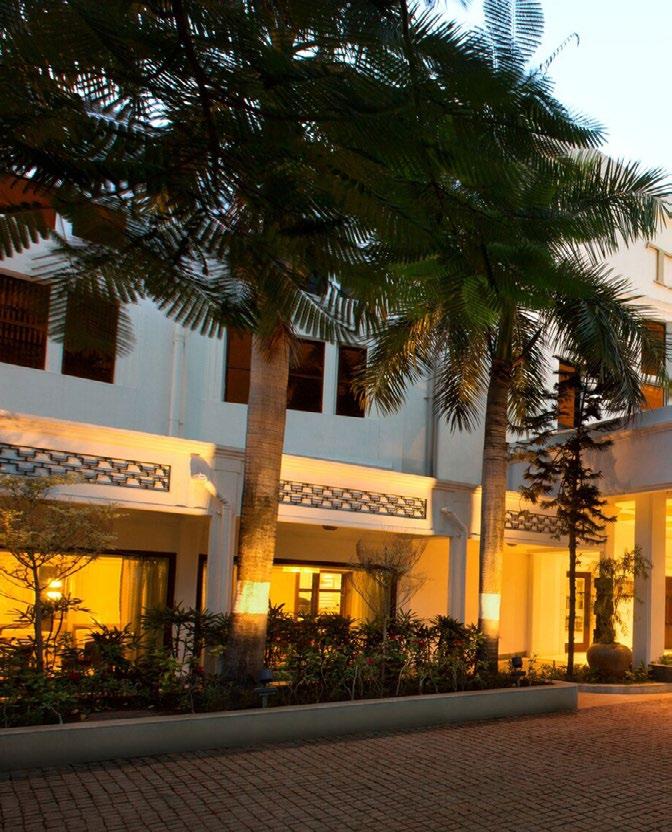
Taj Coromandel holds a special place in Chennai’s hospitality history. Founded in 1974, the hotel opened its doors on 14 April 1974 and became Chennai’s first true luxury hotel. For many years, it stood as the city’s only five-star deluxe address. Built by the group now known as Taj Hotels under Oriental Hotels Limited, it remains one of the flagship properties of the brand in South India. Named after the Coromandel Coast along which Chennai lies, the hotel draws not only from geography but also from local heritage in its architecture and ambience. More than just a businessclass hotel, Taj Coromandel gradually evolved into a landmark associated with diplomacy, luxury stays, and grand celebrations, hosting heads of state, celebrities, dignitaries, business leaders, and travellers from around the world.
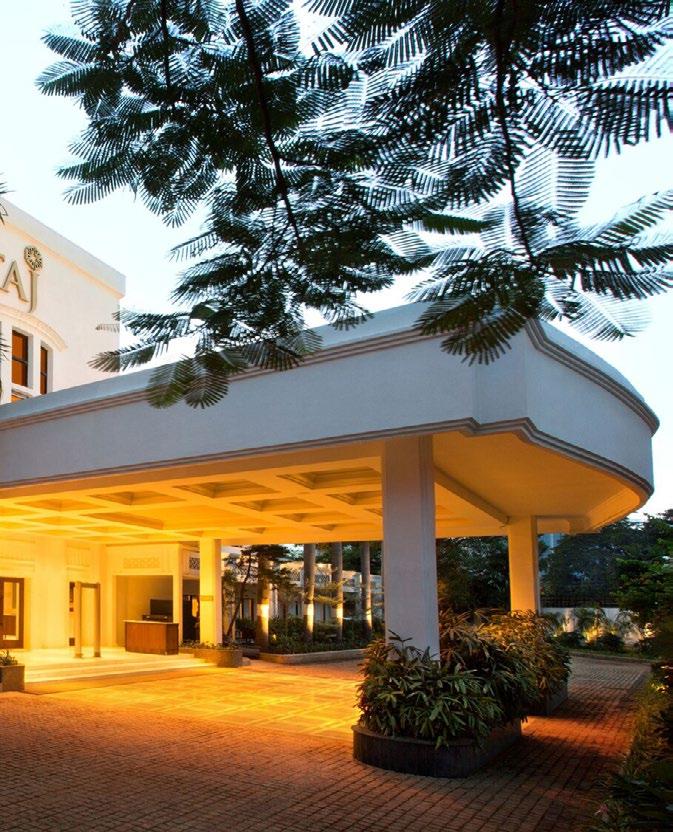
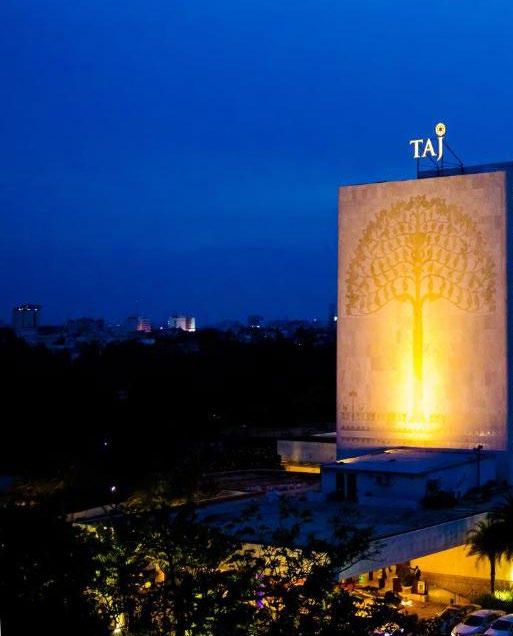
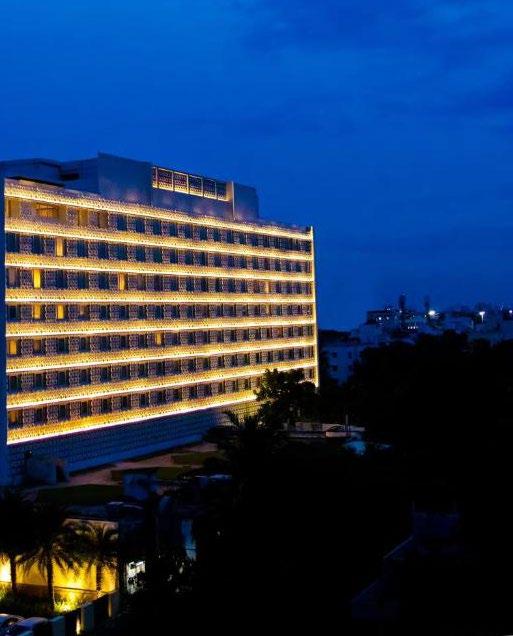
Architecturally,Taj Coromandel represents a refined blend of tradition and elegance. The original design completed in 1974 was inspired by South Indian temple architecture, combining traditional motifs with the requirements of a modern luxury hotel. Carvings on the outer walls, brass chandeliers, and interiors finished in teak and marble pay tribute to regional craftsmanship and aesthetics. One of the hotel’s most distinctive design features is the marble façade mural of the “kalpataru,” or wish-fulfilling tree, constructed from 340 marble panels. This symbolises the hotel’s ethos as a place that offers comfort, luxury, and fulfilled wishes to its guests. Through several renovations, most notably a major facelift completed in 2011, the hotel has preserved its heritage character while upgrading its facilities to meet contemporary luxury standards. This renovation included redesigning the grand lobby, modernising public spaces, and enhancing guest amenities. As a result, Taj Coromandel stands today as a living bridge between heritage and modernity, a rare example of Indian hotel architecture that honours tradition while embracing global luxury benchmarks.
TAJ COROMANDEL
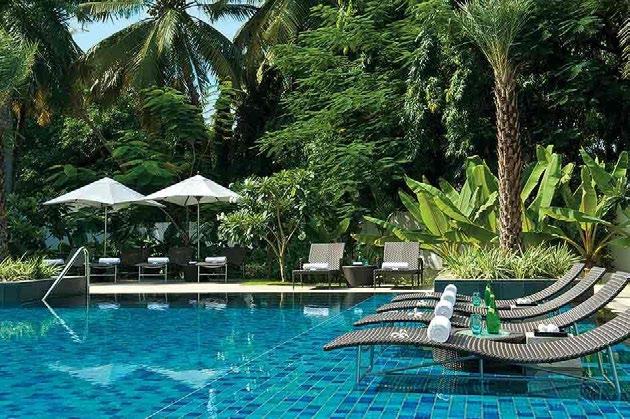
In terms of accommodation, Taj Coromandel offers 212 guest rooms and 11 suites spread across seven floors. For discerning travellers, premium options include top-floor suites with private terraces, Jacuzzis, spacious living and dining areas, luxurious bathrooms, and full access to Taj Club privileges that deliver VIP-style hospitality. Even the standard rooms provide high levels of comfort, featuring quality linens, modern bathrooms, air conditioning,
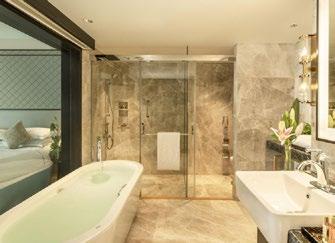
contemporary fittings, Wi-Fi, and attentive service. The hotel successfully balances the needs of business and leisure travellers alike, serving corporate guests who require conference facilities as well as tourists seeking comfort, fine dining, and convenient access to the city’s attractions.
One of Taj Coromandel’s greatest strengths lies in its culinary offerings, which elevate the hotel beyond being just a place to stay. The hotel hosts several renowned dining venues. Southern Spice is its signature restaurant, specialising in South Indian cuisines from across different states and celebrated for both its regional flavours and its ambience inspired by temple architecture. Golden Dragon offers Chinese and Oriental cuisines for those seeking a different culinary palette, while Prego provides an Italian dining experience in a European-style setting. Anise serves as a 24-hour multi-cuisine restaurant catering to travellers at all hours of the day and night. The Tea Lounge and Chipstead Bar offer lighter fare, drinks, and relaxed spaces for unwinding, especially in the evenings. Over the years, these restaurants have earned acclaim, including multiple “Award of Excellence” recognitions from international wine and hospitality organisations, reflecting the global standards of
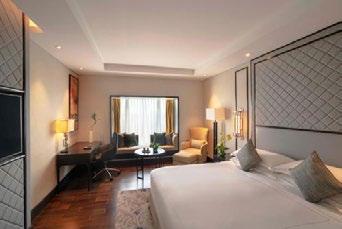
food and service maintained at the hotel. Whether a guest desires traditional Tamil meals, pan-Indian dishes, Oriental flavours, or continental cuisine, Taj Coromandel offers a curated gastronomic journey that makes it a culinary destination in its own right.
Beyond accommodation and dining,Taj Coromandel has long been a preferred venue for business and social events. It regularly hosts business conferences, corporate meetings, and seminars, as well as weddings, receptions, banquets, gala dinners, product launches, exhibitions, and cultural events.
The hotel offers approximately 12,000 square feet of banquet and conference space, including multiple meeting rooms and a grand ballroom, with flexible setups suitable for both intimate gatherings and large-scale functions. Its central location in the heart of Chennai’s business and commercial district further adds to its appeal, making it convenient for guests travelling for work or attending events. In this way, Taj Coromandel remains not only a luxury hotel but also a cultural and business hub integral to the city’s corporate and social life.
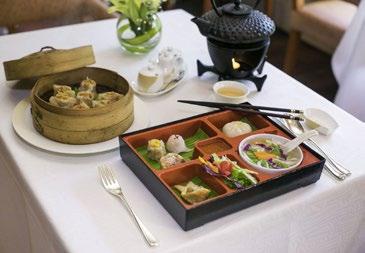
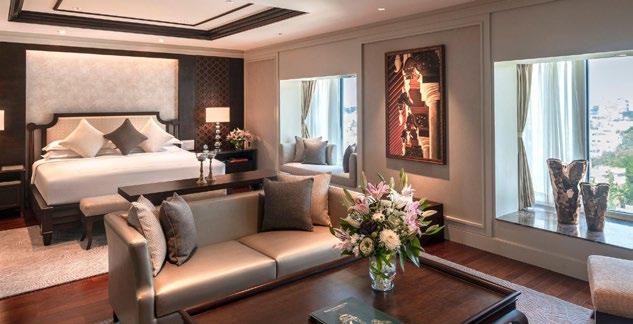

Over the decades, the hotel has built a formidable legacy of distinguished guests and recognition. It has hosted national leaders, global dignitaries, international celebrities, and foreign delegations. Notable guests have included former US Presidents such as Bill Clinton, royal visitors, international heads of state, film stars, and business magnates, all of whom have contributed to the hotel’s storied reputation. In recent years, the hotel has continued to receive accolades. As of 2023, it won “Top Hospitality Honors” at the International Hospitality Day Awards by the International Hospitality Council in London, along with other global recognitions for its restaurants and hospitality standards. Its status is not based solely on past glory; consistent service quality, periodic refurbishments, and adaptation
to the needs of modern travellers ensure that Taj Coromandel remains among the top-ranked hotels in Chennai and India.
Even in 2025, Taj Coromandel continues to matter. It represents heritage-class luxury in Chennai, a hotel that has witnessed generations of guests, evolving tastes, and changing travel trends. It successfully balances tradition and modernity, combining South Indian architectural motifs with contemporary comforts, which keeps it relevant even to younger travellers. It remains a benchmark for luxury, hospitality, and elegance in South India, serving tourists, business travellers, and locals celebrating special occasions alike.

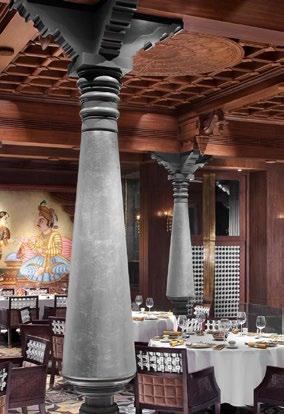
As Chennai continues to evolve, landmarks like Taj Coromandel anchor the city in its cultural history, reminding visitors how far the city has come while still preserving its character. Ultimately, Taj Coromandel is not just a hotel; it is a living chronicle of Chennai’s urban evolution, Indian hospitality, and global travel woven together with tradition. Walking into its marble lobby feels like stepping into a long, rich story of luxury, culture, and service, updated for the modern traveller. Whether one is a tourist, a business traveller, a food lover, or someone seeking a quiet weekend getaway, staying at Taj Coromandel is not merely about getting a room—it is about experiencing a legacy. In a fast-changing world, that sense of continuity and heritage is truly priceless.
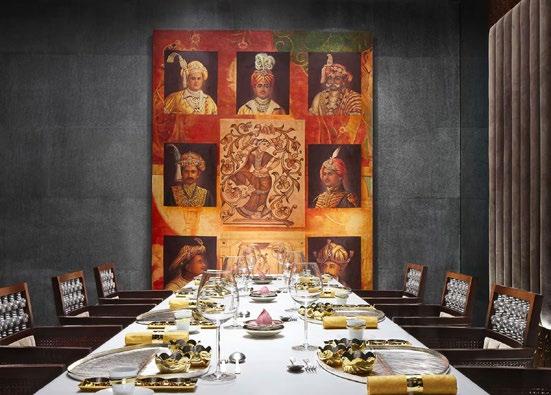
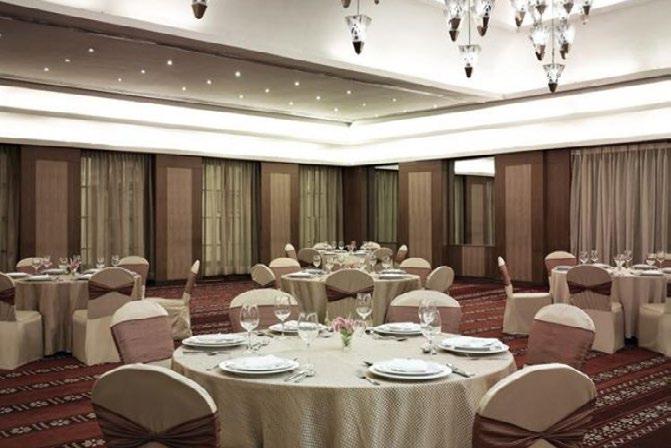
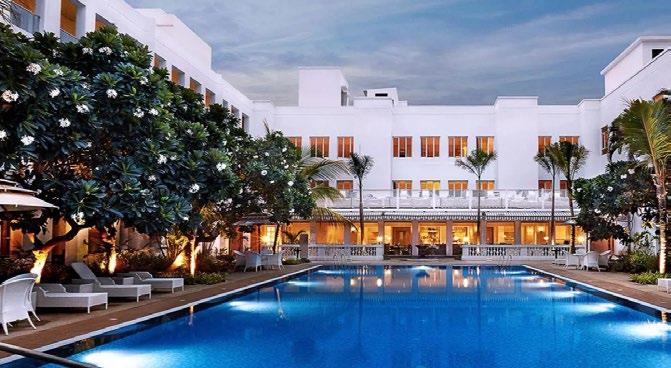
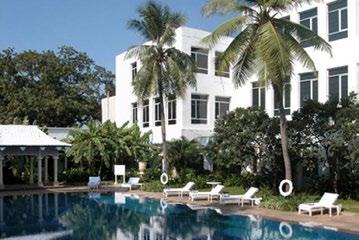
Taj Connemara — A Living Heritage of Chennai

Taj Connemara is one of Chennai’s most historic hotels, with roots that stretch back to 1854, when it first opened as “The Imperial Hotel.” Over time, the property underwent several name changes: in 1886 it became “Albany,” and in 1890 it was reestablished as “The Connemara,” named after the then Governor of Madras, Robert Bourke, Baron of Connemara. Through British colonial times, the early twentieth century, and beyond, the hotel served as a prominent social, political, and cultural address for visitors, elites, and dignitaries. In this sense, Taj Connemara is not merely a hotel but a witness to more than 160 years of Chennai’s history, transformation, and urban evolution.
Architecturally, Taj Connemara reflects rich layers of heritage that combine colonial-era charm, Art Deco elegance, and modern, heritage-conscious restoration. A major renovation in the 1930s gave the hotel its now-famous Art Deco façade and interior styling, elements that remain iconic to this day. Over subsequent decades, the property saw extensions, including a section designed in the 1970s by renowned architect Geoffrey Bawa, who introduced aspects of his “Tropical Modernism” style, blending indooroutdoor sensibilities, greenery, natural light, and modern comfort. Following another major renovation between 2016 and 2018, the hotel retained its heritage essence—preserving original wood carvings and vintage elements—while refurbishing rooms, lobbies, and façades to meet the comfort expectations of twenty-first-century travellers.
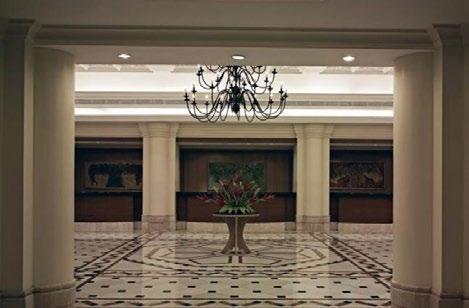
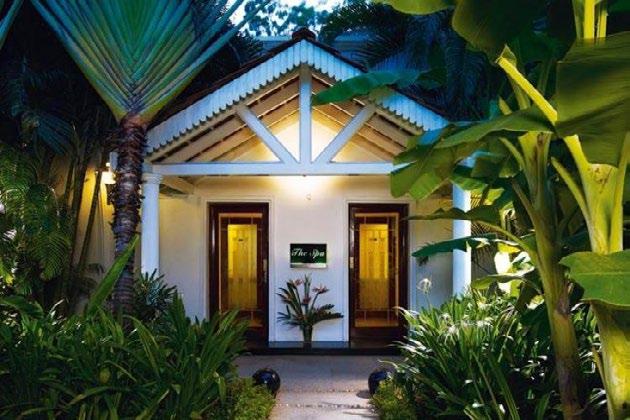
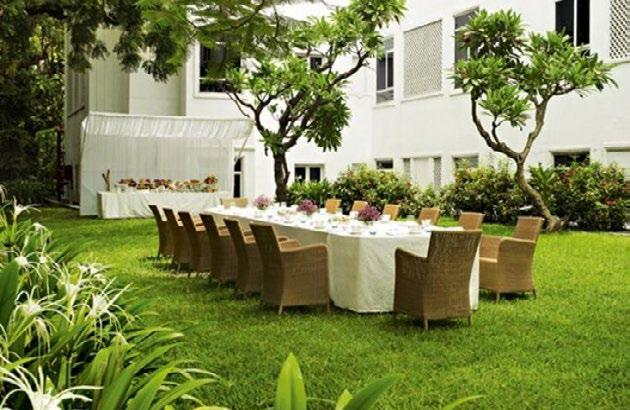
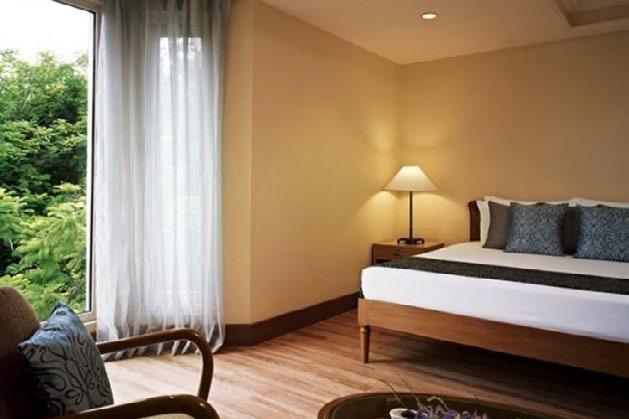
The interiors today mix colonial-era décor such as four-poster beds, high timber ceilings, and vintage furnishings with contemporary amenities, giving each room a distinctive blend of heritage and modern luxury. Walking into Taj Connemara feels like stepping into a living museum of Chennai, where history, architecture, and modern hospitality coexist.
In terms of accommodation and amenities, the hotel offers 147 rooms and suites across its Heritage and Tower wings, providing guests with a choice between classic colonial-style rooms and more modern suites. One of its unique advantages is its 4.5 acres of landscaped gardens and atrium greens, a rare feature for a city-centre hotel in Chennai. Guests also enjoy modern facilities such as wellness and spa services, a swimming pool, and contemporary service standards, all of which combine the charm of old-world luxury with present-day convenience. This makes Taj Connemara equally suitable for business travellers, holidaymakers, luxury seekers, culture lovers, and anyone looking for a timeless stay that blends past and present.
Dining at Taj Connemara is a major attraction and reflects both Chennai’s culture and the hotel’s heritage status. The Verandah, a 24-hour multicuisine restaurant, offers a wide range of AngloIndian dishes, Madras and Tamil Nadu specialities, as well as continental and Indian fare, providing comfort food with a nostalgic touch. Raintree, an open-air restaurant, specialises in Chettinad and South Indian cuisine, serving traditional Tamil flavours in a relaxed, heritage-inspired setting.
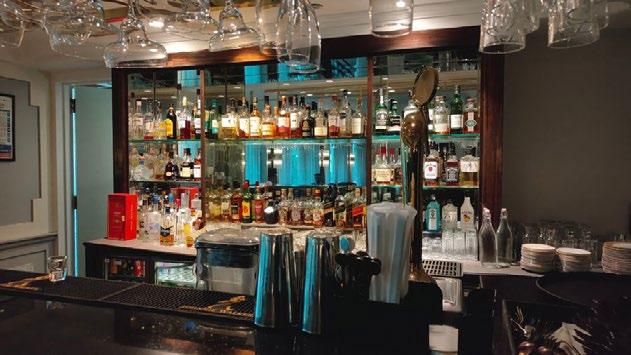

The Lady Connemara Bar and Lounge is historically significant as one of the city’s earliest licensed bars and has been revived and maintained to offer cocktails and classic drinks in a distinctly colonial ambience. For both guests and locals, dining here is more than just a meal; it is an experience that blends heritage ambience, gastronomy, nostalgia, and modern hospitality. Culturally and socially, Taj Connemara has long been more than just a place to stay. Over the decades, it has
functioned as a cultural landmark, hosting social clubs, elite gatherings, diplomatic visitors, and local meetings, and becoming deeply woven into Chennai’s social fabric. The 2018 relaunch of the hotel was more than a renovation project; it was a celebration of Chennai’s identity. The property renewed its commitment to blending past pride with modern elegance, symbolising a city that respects its heritage while continuing to move forward.

In a city that is changing rapidly, Taj Connemara provides a vital living link to earlier times, a place where heritage, memory, hospitality, and history meet. Even in 2025 and beyond, Taj Connemara continues to matter. As one of South India’s oldest and most iconic hotels, it offers urban travellers a rare heritage hotel experience right in the heart of Chennai. For the city itself, it stands as a symbol
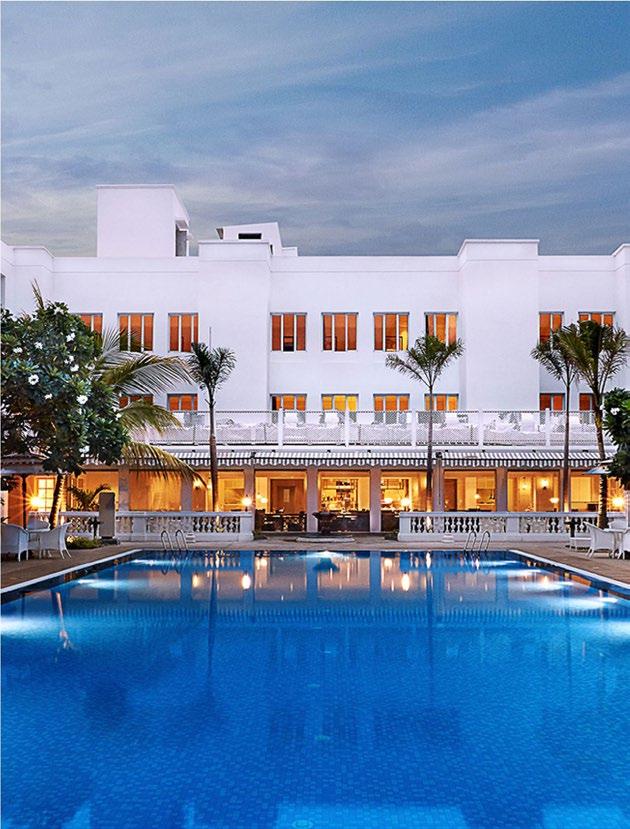
of continuity, maintaining its roots while evolving with the times. For guests, a stay here is not just accommodation; it is a story. As tourism, business travel, and cultural tourism continue to grow in Tamil Nadu, Taj Connemara remains a destination that merges luxury, heritage, and identity in a unique and meaningful way.
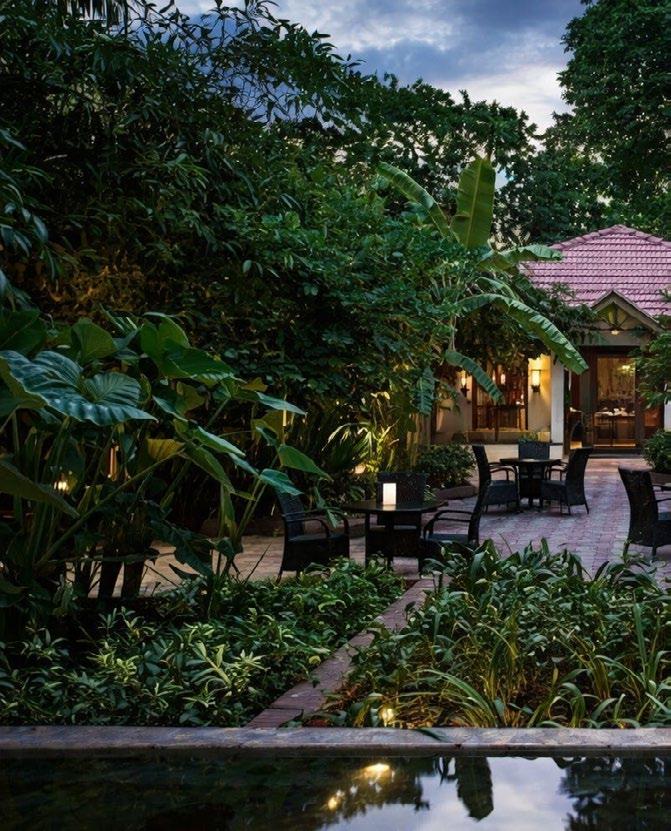
In the end, Taj Connemara is not a relic of the past but a living, breathing legacy. Each time its doors open to welcome a guest, it offers not only a room but also history, stories, and heritage. Whether one walks its corridors, dines under its colonial arches, or sips a cocktail in its heritage bar lounge, one experiences Chennai’s layered past and evolving present, wrapped in world-class hospitality and timeless grace. In a city racing toward the future,Taj Connemara remains the memory—an elegant reminder that places are not just built; they are lived.

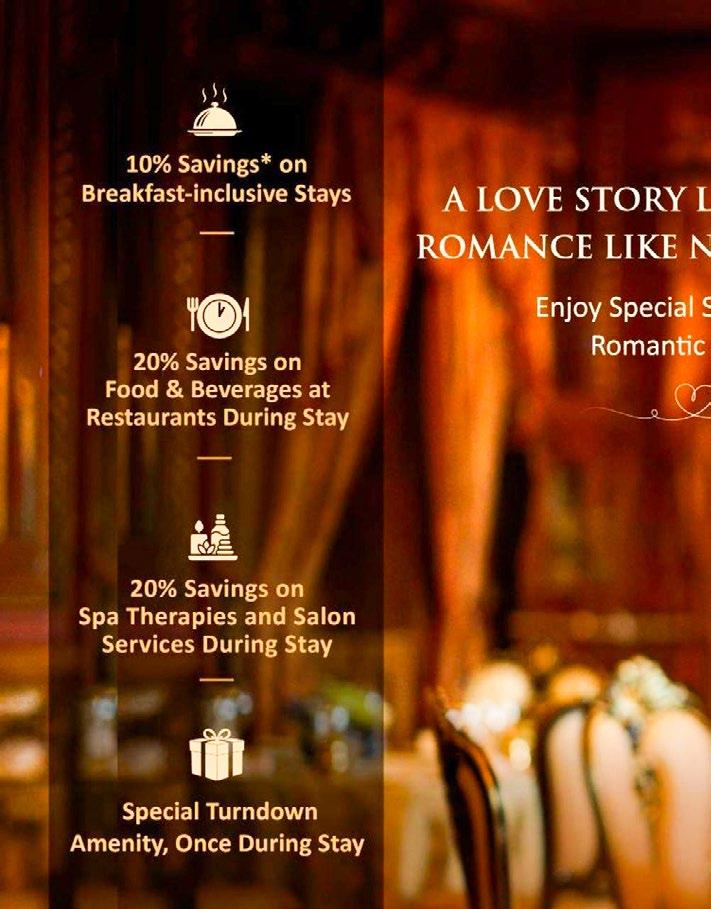

A NOVEMBER OF REFINED INDULGENCE @ Park Hyatt Chennai
As Chennai transitions into the cooler, more relaxed days of November, Park Hyatt Chennai curates a calendar that celebrates the art of fine living through food, wine, and immersive dining experiences. Known for its contemporary elegance and globally inspired gastronomy, the hotel transforms the month into a sensorial journey—one that brings together culinary mastery, seasonal flavours, and intimate social moments. November 2025 at Park Hyatt Chennai is not just about dining; it is about conversations around cuisine, carefully crafted menus, and experiences that linger long after the last course is served.
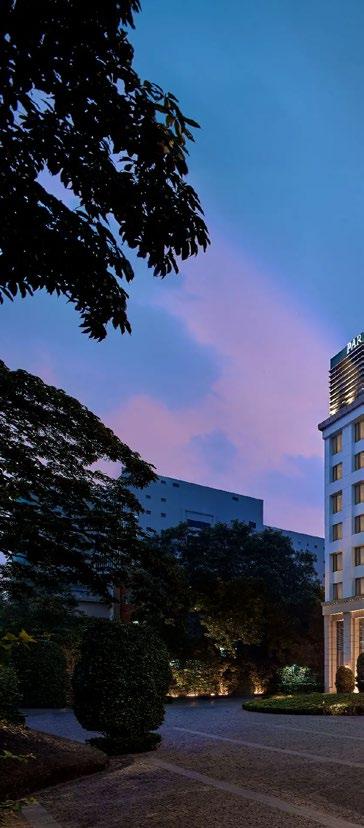
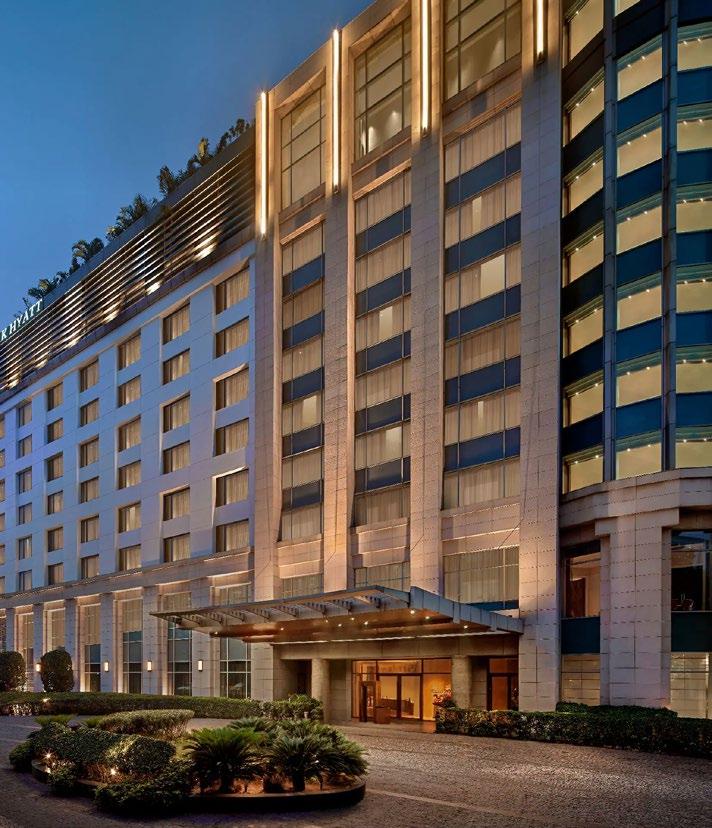
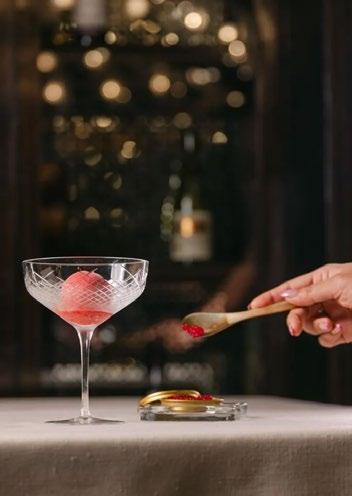
Masters of Food & Wine – A Dining Dialogue
22 & 23 November | The Flying Elephant
At the heart of the month’s offerings lies Masters of Food & Wine – A Dining Dialogue, a signature culinary event hosted over two exclusive evenings at The Flying Elephant. Designed for those who appreciate the nuances of fine food and wine, this experience goes beyond the traditional tasting menu.
Guests are invited into a thoughtfully curated dialogue between chefs and wine experts, where each course is paired with a complementary wine selected to enhance flavour, texture, and aroma. The experience unfolds as a journey—introducing diners to the stories behind ingredients, the philosophy of pairings, and the artistry that connects kitchen and cellar.
Set within The Flying Elephant’s striking, multi-level interiors, the evenings are intimate yet dynamic. The restaurant’s open kitchens and dramatic design create a sense of theatre, allowing guests to witness the precision and creativity behind each dish. From bold flavour combinations to refined plating, the event exemplifies Park Hyatt Chennai’s commitment to experiential luxury dining.
For culinary enthusiasts, wine collectors, and curious gourmands alike, Masters of Food & Wine is a rare opportunity to engage, learn, and indulge in equal measure.
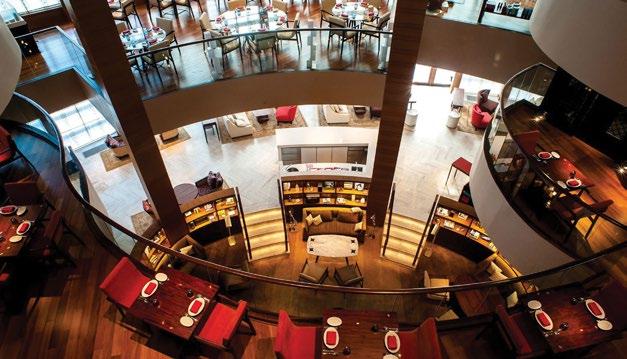
Seasonal Dining & Hyatt Dining Club Offers
From 24 November Onward | Park Brasserie & Hotel Outlets
From 24 November, Park Hyatt Chennai introduces its seasonal dining offerings across Park Brasserie and other hotel outlets, marking a shift towards menus inspired by the flavours and comforts of the season. These offerings reflect a balance between global influences and contemporary classics, crafted with fresh ingredients and thoughtful techniques.
Park Brasserie, the hotel’s all-day dining destination, takes centre stage with menus that cater to varied palates—whether it’s a relaxed breakfast, a power lunch, or an elegant dinner. The seasonal selections are designed to be both comforting and elevated, making them ideal for leisurely meals as well as social gatherings.
Adding to the appeal are exclusive Hyatt Dining Club offers, available across select outlets. These privileges make November an especially rewarding time for members and guests to explore the hotel’s culinary landscape, blending value with refined dining experiences.

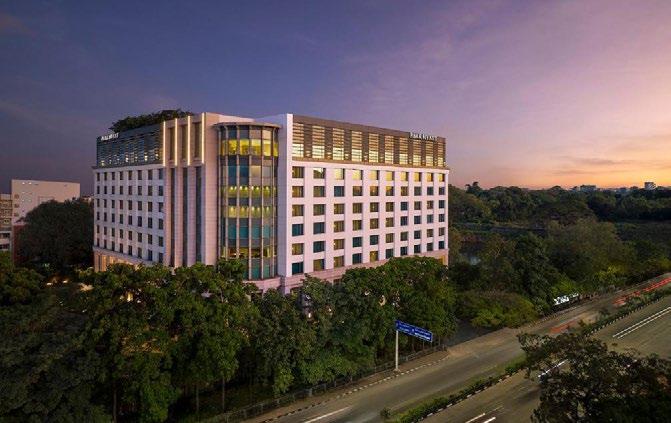
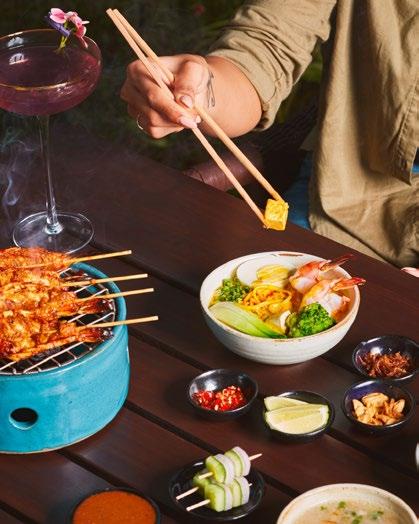
Signature & Themed Dining Experiences
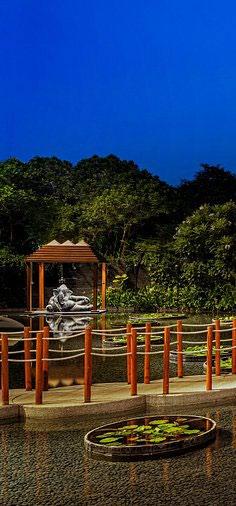
Throughout November | The Flying Elephant, Mr Ong, Park Brasserie
Beyond headline events, Park Hyatt Chennai continues to delight guests with its signature and themed dining experiences throughout the month. Each restaurant within the hotel brings a distinct personality, ensuring a diverse and dynamic gastronomic journey.
The Flying Elephant remains a hub for innovation, offering menus that traverse continents—from Asian and European influences to modern interpretations of global favourites. The restaurant’s themed nights and curated menus keep the experience fresh, appealing to both regular patrons and first-time visitors.
At Mr Ong, modern Asian cuisine takes the spotlight. Known for its bold flavours and contemporary presentation, the restaurant is ideal for intimate dinners and stylish evenings out. Carefully balanced dishes, premium ingredients, and an elegant setting make Mr Ong a standout destination for lovers of Asian gastronomy.
Meanwhile, Park Brasserie continues to offer comfort-driven, internationally inspired cuisine in a relaxed yet polished atmosphere. Its versatility makes it a favourite for families, business diners, and those seeking a dependable yet elevated dining experience.
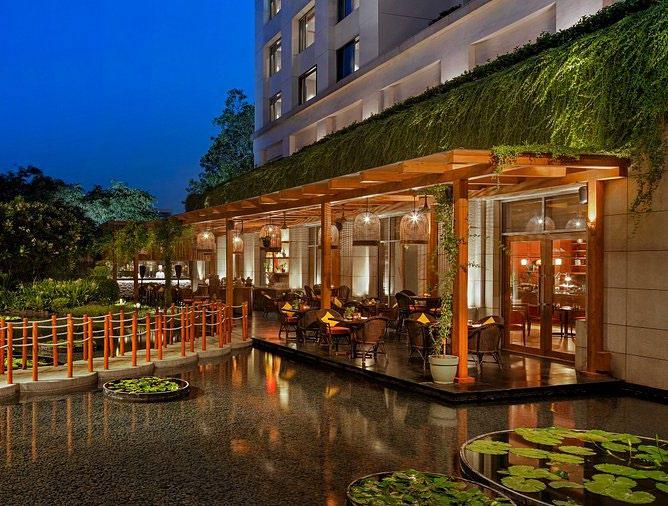
An Address for Culinary Conversations
What sets Park Hyatt Chennai apart is its focus on creating meaningful experiences rather than fleeting trends. Each event and menu is designed to encourage connection—between food and wine, chefs and guests, and people sharing a table. November’s programming reflects this philosophy, offering diners the chance to slow down, savour thoughtfully crafted meals, and engage in conversations that enrich the experience.
The hotel’s understated luxury, attentive service, and carefully curated spaces further enhance these moments, making every visit feel personal and memorable.
A Month Worth Savouring
As November unfolds, Park Hyatt Chennai positions itself as one of the city’s most compelling destinations for fine dining and lifestyle experiences.Whether it’s an immersive wine-paired dinner, a seasonal menu enjoyed at leisure, or a themed evening with friends, the hotel offers countless ways to celebrate the pleasures of the table.
For Chennai’s discerning diners, November 2025 at Park Hyatt Chennai is an invitation— to indulge, to explore, and to savour a month where culinary artistry meets refined hospitality.
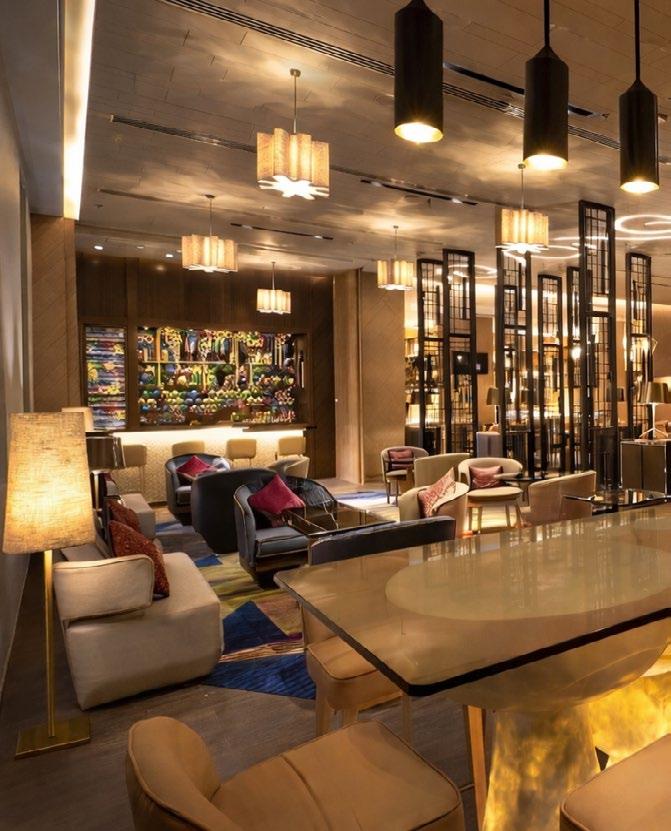
THE COTTON BAR
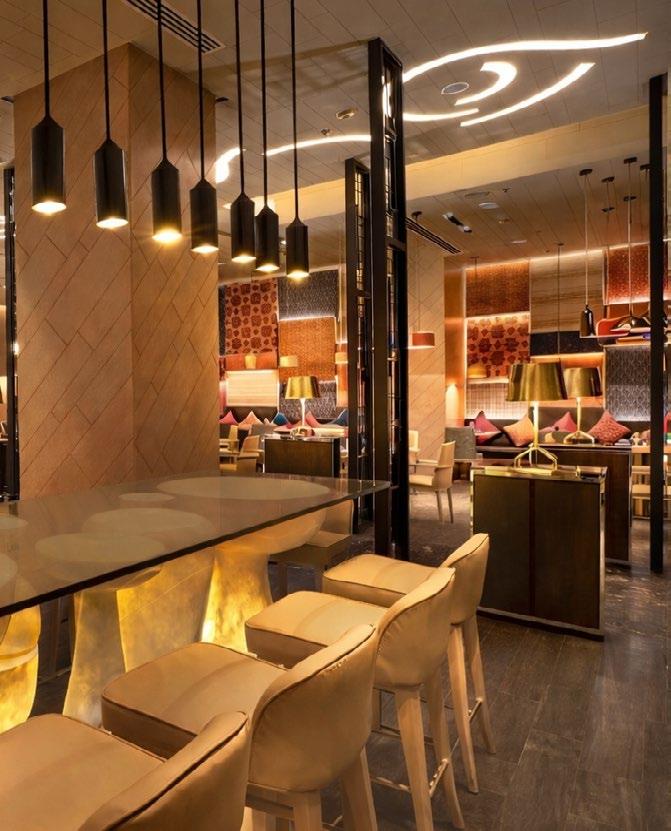
In the evolving hospitality and lifestyle landscape of Tamil Nadu, spaces that seamlessly blend design, taste, and experience are becoming increasingly significant. Among these, The Cotton Bar has emerged as a distinctive destination that reflects modern elegance while maintaining a sense of warmth and approachability. More than just a bar, it represents a thoughtfully curated social environment where refined leisure, creative expression, and contemporary culture converge. The Cotton Bar stands as a testament to how hospitality can be elevated through simplicity, balance, and attention to detail.

The Philosophy Behind the Name
The name “The Cotton Bar” itself carries a subtle yet powerful philosophy. Cotton, as a material, symbolizes comfort, purity, versatility, and timeless appeal. These qualities form the foundation of the bar’s identity. The concept revolves around offering an experience that feels effortless and natural, much like cotton, while still maintaining a premium and polished character. This philosophy is reflected not only in the design and ambience but also in the way guests are welcomed and engaged throughout their visit.
Location and Setting
Situated in Tamil Nadu, The Cotton Bar benefits from a location that aligns with its cosmopolitan yet grounded character. The surroundings complement its role as a social retreat for both locals and visitors.Whether one arrives after a long day of work, during a leisurely weekend outing, or as part of a travel itinerary, the bar offers a sense of escape without feeling disconnected from its environment. Its accessibility and positioning make it an inviting destination for a diverse audience, from professionals and creatives to travelers seeking refined leisure experiences.
Architectural Design and Interiors
The interior design of The Cotton Bar reflects understated luxury rather than overt opulence. Clean lines, neutral color palettes, and thoughtfully chosen textures create an atmosphere that feels both contemporary and timeless. Soft lighting plays a crucial role in shaping the mood, enhancing the space without overwhelming the senses. The layout encourages conversation and connection,
with seating arrangements that balance privacy and openness. Natural elements and refined finishes contribute to an ambience that feels calm, inviting, and visually harmonious.
Atmosphere and Mood
One of the defining characteristics of The Cotton Bar is its ability to transition seamlessly throughout the day and evening. During the earlier hours, the space exudes a relaxed and tranquil vibe, ideal for casual meetings or quiet moments of reflection.
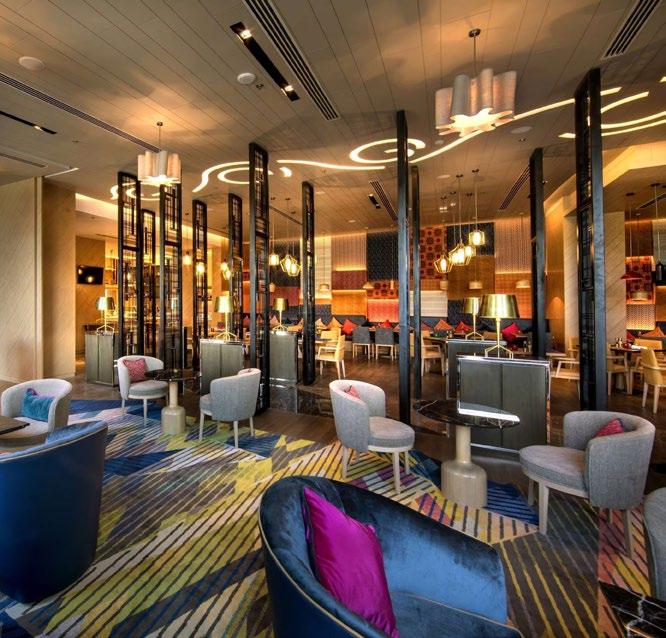
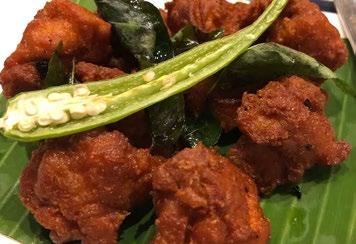
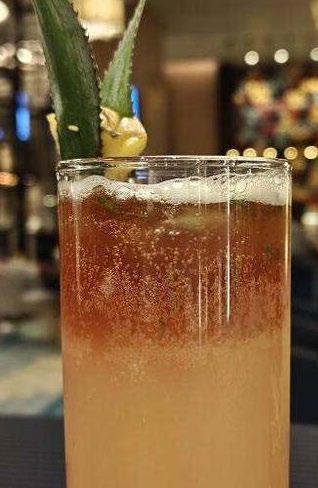
As evening approaches, the atmosphere subtly transforms, with curated music and ambient lighting setting the tone for social interaction and celebration. This fluidity allows the bar to cater to different moods and occasions without losing its core identity.
Beverage Craftsmanship
At the heart of The Cotton Bar’s appeal lies its carefully curated beverage offerings. The bar takes pride in presenting a balanced selection of classic cocktails, modern interpretations, and signature creations. Each drink is crafted with precision, focusing on flavor harmony, quality ingredients, and refined presentation. The beverage philosophy emphasizes consistency and creativity, ensuring that every glass served enhances the overall experience.
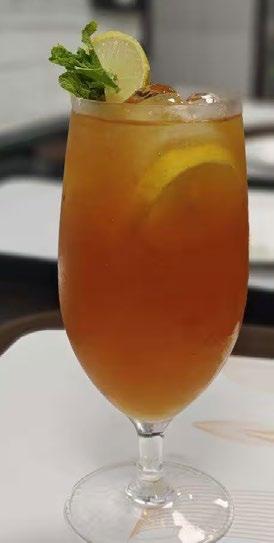
Whether guests prefer timeless favorites or experimental blends, the menu caters to a wide spectrum of tastes.
Signature Creations and Presentation
The Cotton Bar’s signature drinks reflect a blend of global influences and contemporary sensibilities. Attention is given not only to taste but also to visual appeal, making each beverage a sensory experience. Glassware, garnishes, and proportions are thoughtfully considered, reinforcing the bar’s commitment to detail. These elements come together to create drinks that are memorable without being excessive, aligning with the bar’s philosophy of refined simplicity.
Culinary Accompaniments
Complementing the beverage program is a menu of carefully crafted culinary offerings designed to enhance the lounge experience. The food selections focus on flavor balance, texture, and presentation, providing satisfying accompaniments to the drinks without overshadowing them. Drawing inspiration from global cuisines while maintaining subtle local influences, the menu appeals to a broad palate. Each dish is prepared with the intention of encouraging sharing, conversation, and leisurely enjoyment.
Service and Guest Experience
Hospitality at The Cotton Bar is defined by a thoughtful and intuitive approach to service. The staff is trained to be attentive without being intrusive, creating an environment where guests feel comfortable and valued. From the moment of arrival to the final interaction, the emphasis is on ease and warmth. This level of service plays a crucial role in shaping the overall experience, ensuring that visitors associate the space with relaxation, professionalism, and genuine care.
Social Hub and Cultural Relevance
The Cotton Bar has positioned itself as more than a nightlife venue; it functions as a social and cultural hub. It attracts individuals who appreciate quality, ambience, and meaningful interactions. The space often becomes a meeting point for professionals, artists, and travelers, fostering a sense of community through shared experiences. The bar’s inclusive atmosphere encourages dialogue and connection, making it a place where diverse stories and perspectives intersect.
Music and Sensory Experience
Music at The Cotton Bar is carefully curated to complement the ambience rather than dominate it. The playlists are designed to enhance the mood, supporting conversation and relaxation while adding depth to the environment. This attention to auditory elements contributes significantly to the overall sensory experience, ensuring that every aspect of the space works in harmony. The result is an environment that feels cohesive, immersive, and thoughtfully designed.

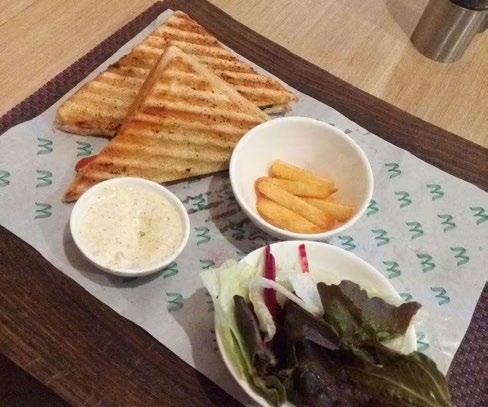

Contemporary Lifestyle Appeal
In a time when consumers increasingly seek experiences over excess,The Cotton Bar resonates strongly with modern lifestyle preferences. It appeals to individuals who value authenticity, quality, and aesthetic harmony. The bar’s design, menu, and service reflect an understanding of contemporary sensibilities, positioning it as a destination that aligns with evolving tastes. Its ability to remain relevant while maintaining a clear identity is a key factor in its growing popularity.
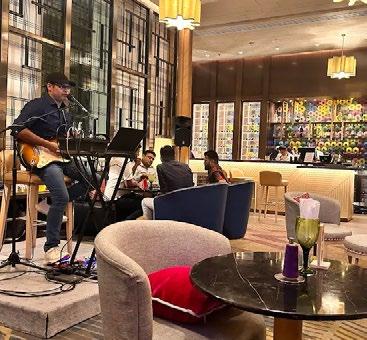
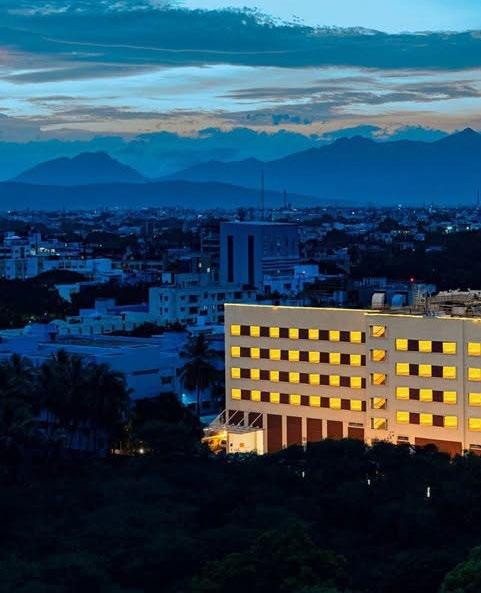
Sustainability and Responsible Practices
While luxury and comfort remain central, The Cotton Bar also demonstrates an awareness of responsible hospitality practices. Efforts toward mindful sourcing, reduced waste, and efficient operations reflect a commitment to sustainability. These practices, though understated, align with a broader movement toward conscious living and ethical consumption. By integrating responsibility into its operations, the bar adds another layer of value to the guest experience.
Guest Perception and Reputation
Patrons often describe The Cotton Bar as elegant, calming, and consistently reliable. The ambience, quality of drinks, and level of service contribute to positive impressions that encourage repeat visits. Many guests appreciate the bar’s ability to offer a refined experience without pretension, making it accessible while still feeling special. This balance has helped build a loyal clientele and a strong reputation within Tamil Nadu’s hospitality scene.
Role in Tamil Nadu's Hospitality Landscape
The Cotton Bar represents a shift in how lounge spaces are perceived and experienced in Tamil Nadu. It reflects a move toward curated environments that prioritize comfort, design, and thoughtful engagement. By setting a standard for contemporary lounge culture, the bar contributes to the region’s evolving hospitality identity. Its presence highlights the growing demand for spaces that offer both aesthetic appeal and meaningful experiences. The Cotton Bar stands as a refined expression of modern hospitality in Tamil Nadu, where elegance meets ease and creativity meets comfort. Through its thoughtful design, curated offerings, and welcoming atmosphere, it offers more than just a place to dine and drink. It provides an experience shaped by balance, attention to detail, and an understanding of contemporary lifestyles. As a destination that encourages connection, relaxation, and appreciation for the finer aspects of leisure, The Cotton Bar continues to redefine what a modern lounge can be, leaving a lasting impression on all who walk through its doors.
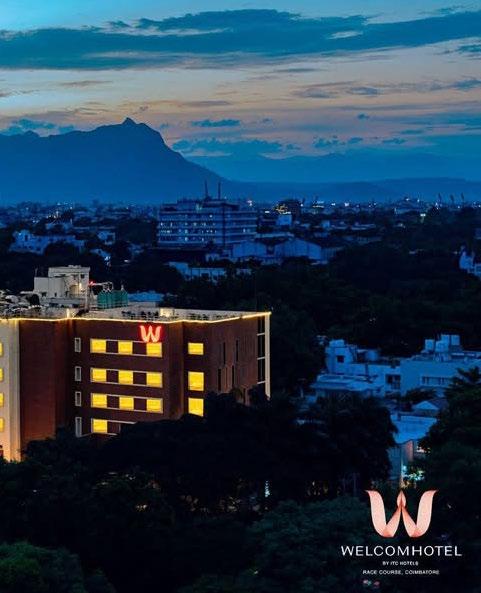
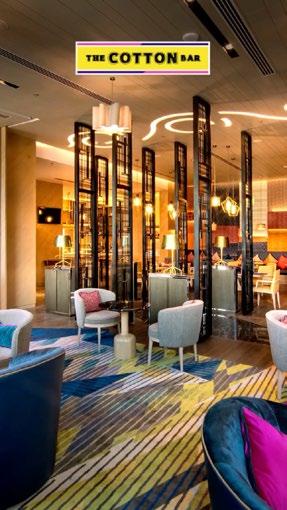
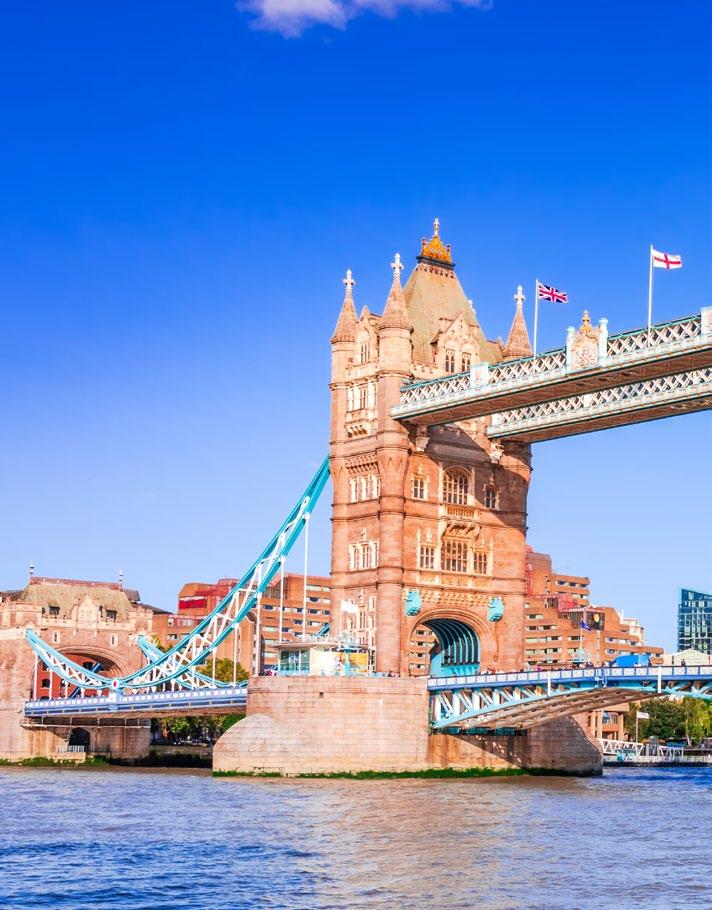
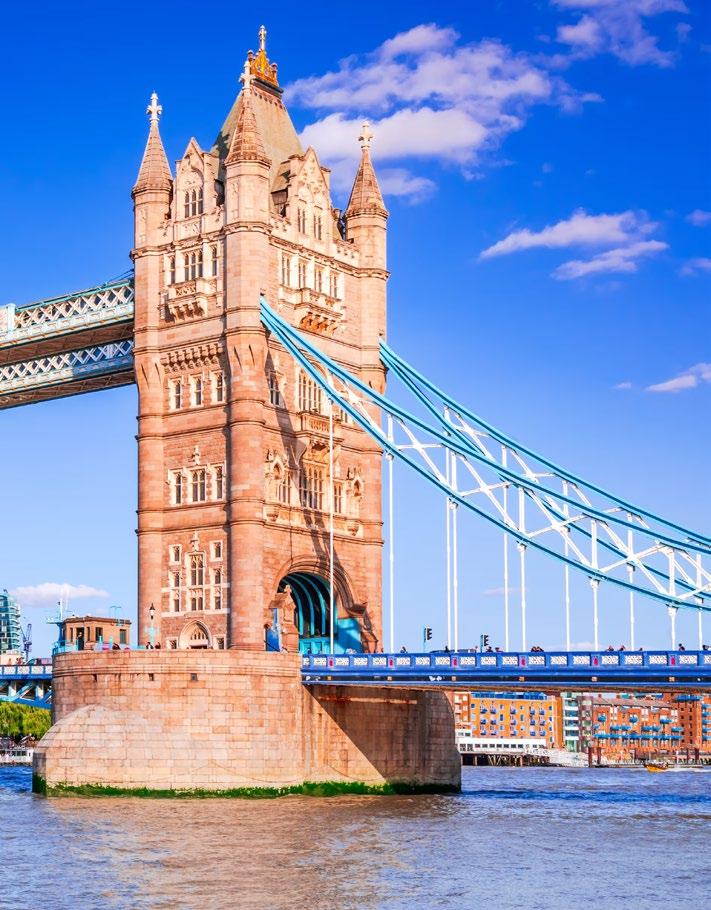
INCREDIBLE TAMILNADU Global Tamil Nadu

TAMIL NADU & WTM
HERITAGE, CULTURE & SUSTAINABLE TOURISM
GLOBAL TAMIL NADU

From 4 to 6 November 2025, the southern Indian state of Tamil Nadu captured the attention of the global travel community at the World Travel Market (WTM) London. With an exclusive pavilion, the state presented a compelling narrative of heritage, culture, eco-tourism, adventure, and wellness, aiming not only to attract international travellers but also to build long-term business partnerships with European tour operators and investors.
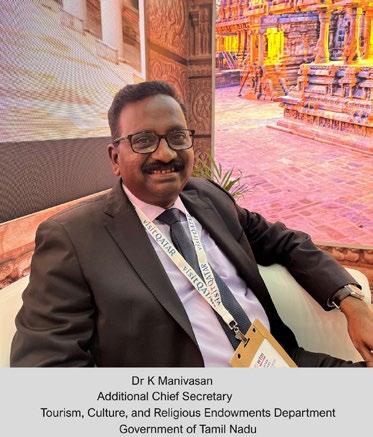
The delegation was led by Dr. K. Manivasan, Additional Chief Secretary for Tourism, Culture and Religious Endowments, and T. Christuraj, Director of Tamil Nadu Tourism and Managing Director of the Tamil Nadu Tourism Development Corporation (TTDC). They were joined by representatives from the Tamil Nadu Wilderness Experiences Corporation, along with hoteliers, travel operators, and cultural specialists, collectively showcasing the state’s diverse and evolving tourism portfolio.
The pavilion featured interactive displays, immersive videos of scenic locations, handicrafts, festival highlights, and specially curated tourist packages. Visitors could experience a virtual journey that moved seamlessly from ancient temples and heritage cities to pristine hill stations, rural villages, and coastal shores, emphasizing Tamil Nadu’s unique blend of culture, history, and natural beauty.
Tamil Nadu’s presentation highlighted its five classical landscapes, or Tinais, from Sangam literature: Kurinji (mountainous regions such as the Nilgiris, Kolli Hills, and Jawadhu Hills), Mullai (forested zones and wildlife sanctuaries), Marutham (fertile agricultural plains), Neithal (coastal regions with beaches and ports), and Palai (arid and semi-arid landscapes with heritage forts).
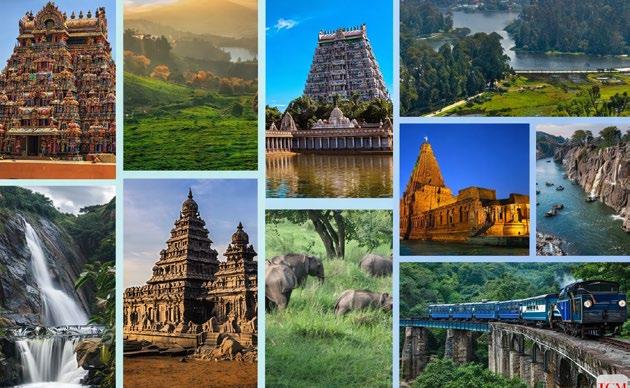
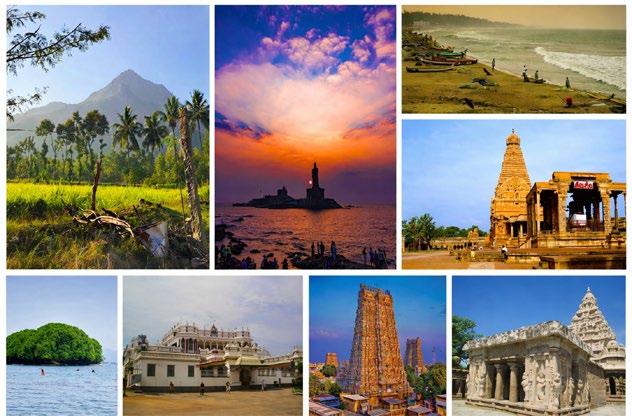
Each landscape was positioned as offering a distinct tourism experience, ranging from trekking and nature walks in the hills to wildlife safaris in forests, traditional farming experiences in the plains, water sports along the coast, and heritage tours in dryland regions. Officials stressed that in Tamil Nadu, heritage and ecology are deeply intertwined, offering travellers immersive experiences that connect history, tradition, and nature.
Heritage and festivals formed a major pillar of the showcase. The state highlighted its millennia-old temples, including UNESCO World Heritage Sites such as the Brihadeeswarar Temple, the Great Living Chola Temples, and the Group of Monuments at Mahabalipuram. Alongside ancient architecture, living traditions were brought to life through representations of festivals such as Pongal, celebrated with traditional music, dance, and food; Jallikattu, the iconic bull-taming sport, with modern arenas
like the 16-acre facility in Madurai; international dance festivals featuring Bharatanatyam, Kuchipudi, and folk performances; and contemporary events like the Tamil Nadu Balloon Festival and Kite Festival. The pavilion recreated miniature festival setups and offered taste samples of traditional foods including sweet Pongal, millet-based dishes, and jackfruit delicacies, creating a multi-sensory cultural experience.
Eco-tourism and adventure tourism were showcased under the banner of “Trek Tamil Nadu,” led by the Tamil Nadu Wilderness Experiences Corporation. Key highlights included trekking routes in the Nilgiris,Agasthiyarmalai, Kolli Hills, and Jawadhu Hills, as well as wildlife and birdwatching experiences featuring rare birds, endemic flora, and protected sanctuaries. Sustainable lodges and community-based homestays were presented as core components of responsible tourism.
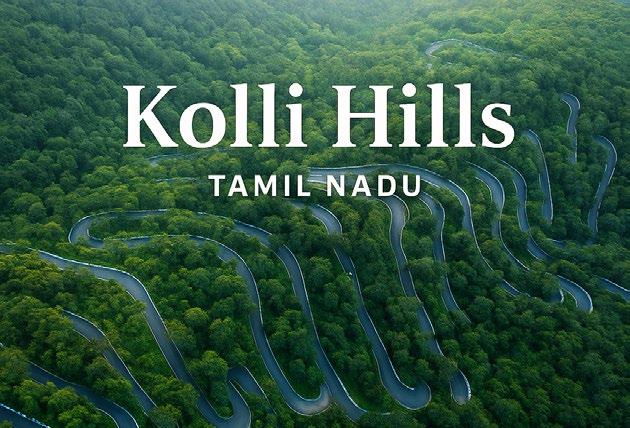
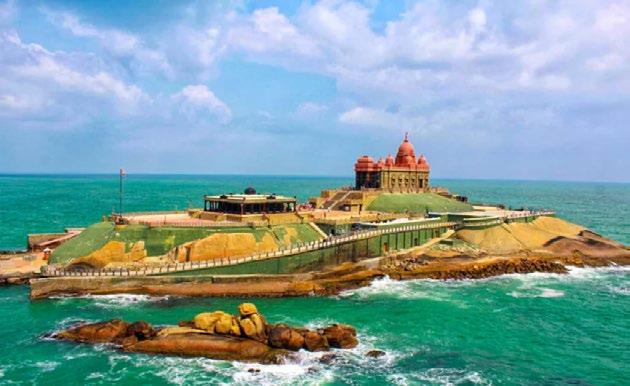
Vivekananda Rock Memorial, KANYAKUMARI



The delegation emphasized that trekking, camping, and nature tours are designed to support forest conservation,tribal communities,and local economies. Visual presentations showed hikers exploring hidden waterfalls, herbal gardens, and panoramic viewpoints, appealing strongly to adventure travellers.
The pavilion also focused on emerging segments such as wellness, rural, and coastal tourism. Tamil Nadu’s strengths in Ayurveda, Siddha treatments, and modern medical infrastructure were highlighted under wellness and medical tourism. Rural tourism was promoted through homestays in tea and spice plantations, village craft workshops, and farm experiences. Coastal tourism featured destinations such as Kanniyakumari, Rameshwaram, and Mahabalipuram for beaches, water sports, and spiritual travel.
Thiruvalluvar Statue
T. Christuraj, Director of Tamil Nadu Tourism & Managing Director of the Tamil Nadu Tourism Development Corporation

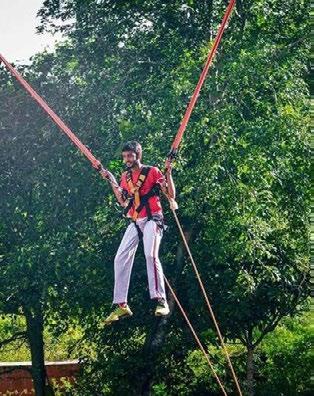
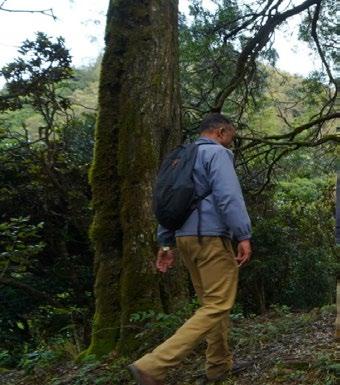
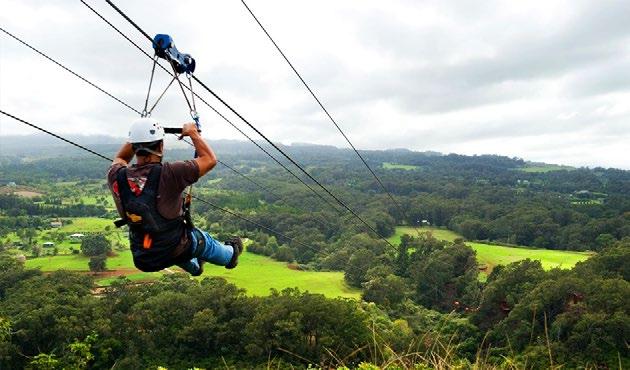

The Thiruvalluvar Statue and the sea-glass bridge in Kanniyakumari were presented as signature attractions, complemented by sound-and-light shows that continue to attract international visitors.
Beyond cultural display, the pavilion functioned as a business hub connecting Tamil Nadu’s travel operators with global partners. Dozens of B2B meetings were held with European tour companies, and a Paris Roadshow scheduled for 7 November 2025 was announced to expand outreach in European markets. The UK Tamil diaspora was also engaged to strengthen cultural and tourism ties. Officials underlined that these initiatives are aimed at boosting international inbound tourism while promoting sustainable, culturally immersive travel.
Sustainability formed the backbone of Tamil Nadu’s tourism strategy, which rests on heritage conservation, eco-tourism, community participation, and sustainable infrastructure. Forest department-led trekking ensures conservation and visitor safety, while community participation allows local populations to benefit economically while preserving traditions.

Niche tourism experiences combining wellness, adventure, and rural immersion were presented as responsible and authentic travel options. Delegates reiterated that Tamil Nadu is seeking long-term partnerships with global operators for mutually beneficial tourism growth.
The state also highlighted its cultural capital and artisan economy, showcasing 69 Geographical Indication (GI) products, including Kanchipuram silk sarees, Tanjore paintings, bronze sculptures, and a wide range of local handicrafts and textiles. Visitors were introduced to community-based homestays, craft workshops, and rural tourism circuits designed to preserve traditional crafts, empower artisans, and provide authentic visitor experiences.
Engagement with the UK Tamil diaspora emphasized heritage tourism, cultural exchange, and diasporaled travel circuits. Diaspora communities were encouraged to promote pilgrimage tourism, temple tours, and artisan visits, while the Paris Roadshow was positioned as a model for similar outreach across Europe. This strategy ensures that cultural diplomacy aligns closely with tourism growth.
Tamil Nadu’s WTM London showcase projected a vision that blends heritage, nature, culture, and modernity. Expected outcomes include curated experiential travel packages combining temple circuits, rural experiences, and eco-trekking, infrastructure improvements in lesser-known destinations such as Kolli Hills, Jawadhu Hills, and Yercaud, expansion of wellness and medical tourism, and greater emphasis on communityled tourism for local economic growth. The overarching message was clear: Tamil Nadu is not just a destination to visit, but a place to immerse, explore, and connect deeply with its land, people, and heritage.
Tamil Nadu’s Landscape – A Living Cultural Map
Tamil Nadu’s pavilion at WTM London 2025 showcased the state’s five classical landscapes, or Tinais, as described in ancient Sangam literature, which has shaped the understanding of Tamil Nadu’s geography, culture, and lifestyle for over two millennia. These five landscapes—Kurinji, Mullai, Marutham, Neithal, and Palai—represent distinct ecological zones, each with its own flora, fauna, culture, and tourism opportunities.


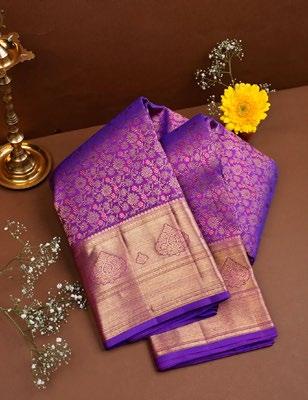

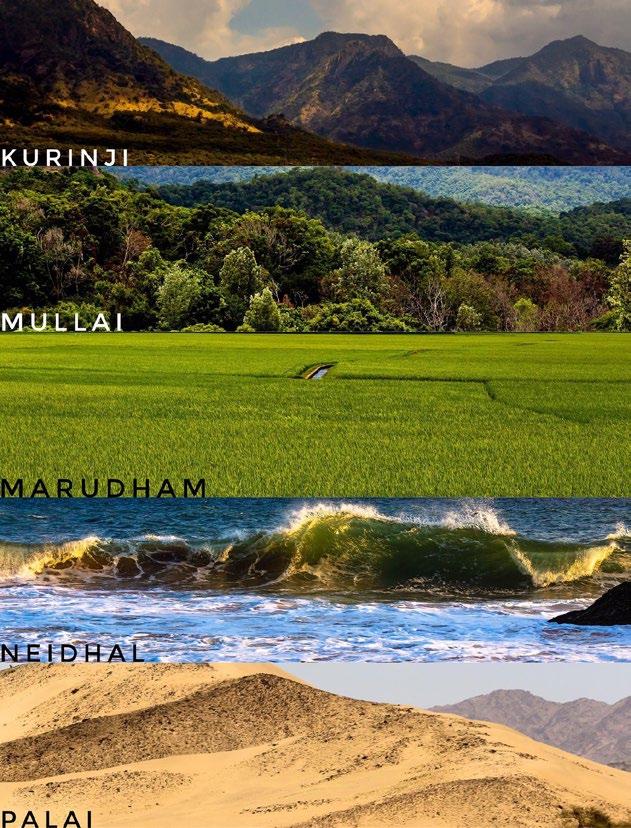
By presenting these landscapes, Tamil Nadu emphasized how heritage, ecology, and tourism are deeply interconnected, offering international visitors experiences that go far beyond conventional sightseeing. The Kurinji landscape represents the mountainous regions of Tamil Nadu, including the Nilgiris, Kolli Hills, and Jawadhu Hills. Known for their cool climate, misty hilltops, and sweeping views, these areas attract travellers seeking relaxation, adventure, and wellness. Visitors can explore trekking and hiking trails that range from gentle walks to challenging routes, discover hidden waterfalls and scenic viewpoints, take part in tea and coffee plantation tours, enjoy birdwatching and nature photography, and stay in eco-friendly resorts and homestays that promote sustainable living. Kurinji landscapes thus provide a balanced mix of adventure, wellness, and eco-tourism, reflecting Tamil Nadu’s commitment to responsible travel.
Mullai refers to the forested regions that include national parks and wildlife sanctuaries.These landscapes attract travellers who want to immerse themselves in nature and observe wildlife in its natural habitat. Highlights include wildlife safaris in sanctuaries such as Mudumalai, Sathyamangalam, and Anamalai, guided eco-tours featuring herbal walks and jungle treks, eco-lodges and jungle camps that minimise environmental impact, and forest education programmes that teach visitors about local flora, conservation, and sustainable living.


The Mullai landscapes encourage deep environmental connection while promoting ecological awareness and responsible tourism. Marutham represents the fertile plains and agricultural heartlands of Tamil Nadu, highlighting the state’s rich farming traditions and rural lifestyle. Here, travellers can participate in farming activities such as rice planting, millet cultivation, and harvest celebrations, stay in village homestays to learn cooking, handicrafts, and folk arts, attend seasonal festivals that celebrate rural culture, and join culinary workshops focused on locally sourced ingredients and traditional recipes. Marutham landscapes offer cultural immersion, allowing visitors to understand sustainable farming practices and engage directly with the agrarian economy.
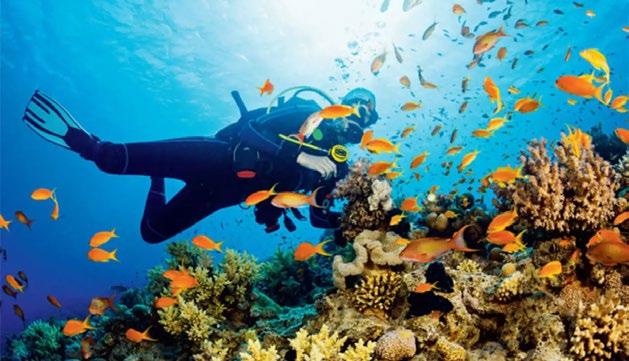
Neithal refers to the coastal regions, showcasing Tamil Nadu’s extensive shoreline, ports, beaches, and marine ecosystems. These landscapes blend recreation, adventure, and cultural experiences. Visitors can enjoy beaches and water sports such as surfing, sailing, kayaking, and scuba diving in areas like Rameshwaram, Mahabalipuram, and nearby coastal regions, explore marine biodiversity through visits to turtle sanctuaries, coral reefs, and wetlands, take part in cultural activities such as visiting lighthouses or observing fishing practices, and stay in luxury or eco-friendly seaside resorts offering wellness treatments and yoga by the sea. Neithal landscapes thus combine adventure, relaxation, and cultural enrichment.


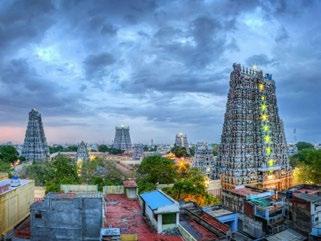
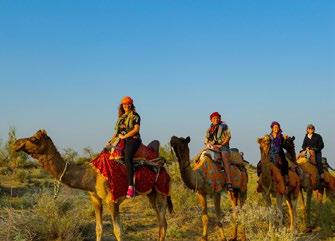
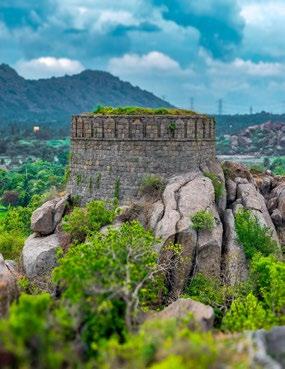
Palai represents the arid and semi-arid regions, where forts, temples, and historic settlements showcase human resilience and architectural ingenuity. Tourists can explore ancient forts and heritage circuits such as Gingee Fort and Madurai’s monuments, take part in camel safaris and desert walks that recreate historic trade routes, engage in cultural experiences involving local crafts and folk performances, and enjoy sunset and stargazing experiences made possible by open, clear skies. Palai landscapes offer a blend of history, adventure, and rural culture, demonstrating how Tamil Nadu balances heritage preservation with tourism development.
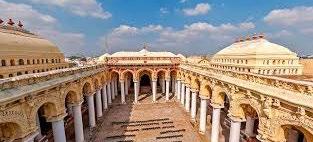
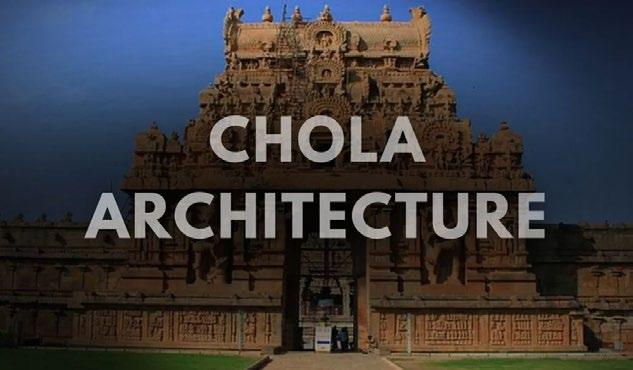
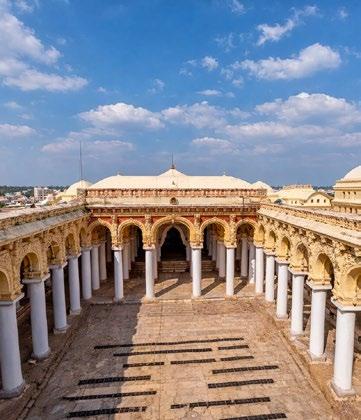
Officials emphasized that these five landscapes are interconnected, with heritage and ecology forming a natural symbiosis. Visitors can explore temples and forts set within ecological zones, choose combined travel packages linking trekking, rural tourism, heritage exploration, and coastal activities, and experience immersive storytelling guided by local communities who share legends, historical narratives, and ecological insights. By weaving together geography, culture, and environmental conservation, Tamil Nadu offers international tourists a deeply immersive and educational travel experience that highlights the state’s extraordinary diversity and cultural richness.
Heritage & Festivals – Living Traditions
At WTM London 2025, Tamil Nadu drew global attention by showcasing its ancient temples, vibrant festivals, and living cultural traditions, presenting a state that seamlessly blends history, spirituality, and contemporary celebration. The pavilion offered a multi-dimensional experience that combined visual, auditory, and culinary elements to bring the state’s heritage to life.
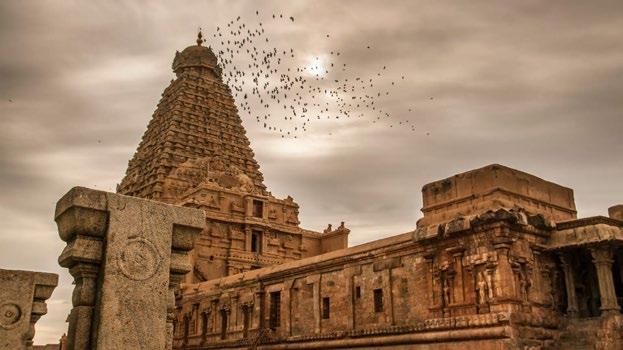
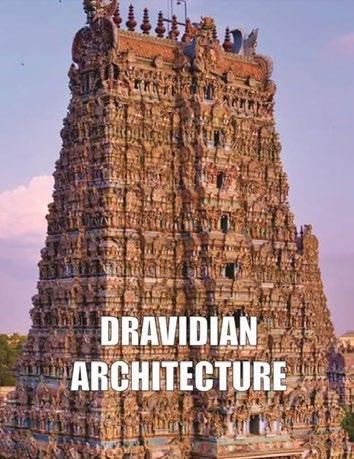
Tamil Nadu highlighted some of the world’s most magnificent temple complexes, beginning with the Brihadeeswarar Temple in Thanjavur, a UNESCO World Heritage Site renowned for its 11th-century architecture, towering vimana, intricate sculptures, and frescoes that represent the pinnacle of Dravidian architecture. The Great Living Chola Temples were presented as enduring examples of Chola architectural brilliance, with their bronze sculptures, carved pillars, and sacred corridors. The Group of Monuments at Mahabalipuram, featuring rock-cut temples, monolithic rathas, and bas-relief sculptures, showcased the region’s temple-building artistry and maritime heritage. Through interactive displays, miniature replicas, and augmented reality modules, visitors could virtually explore these sites and understand their architectural, religious, and cultural significance.

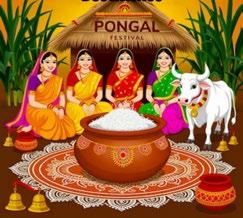
Beyond monuments, Tamil Nadu’s living traditions were brought alive through its the harvest festival celebrated each January, was presented through miniature setups with sugarcane, kolam designs, music, dance, and food tastings such as sweet Pongal, millet delicacies, and regional snacks. Jallikattu, the traditional bull-taming sport of Madurai, was showcased through a model of its modern 16-acre arena, along with interactive videos and storytelling that explained its historical roots, community involvement, and contemporary revival with a focus on safety and regulation. Classical and folk dance festivals featuring Bharatanatyam, Kuchipudi, and regional dance forms were highlighted through live and recorded performances, allowing visitors to interact with artists and understand costume
symbolism and storytelling traditions. Modern cultural events such as the Tamil Nadu Balloon Festival and Kite Festival were also presented, blending contemporary celebration with cultural branding through miniature displays and interactive demonstrations.
The pavilion created a truly multi-sensory experience by offering traditional food tastings, audio-visual storytelling with temple chants and folk music, and walk-through miniature festival setups recreating Pongal huts, decorated streets, and Jallikattu arenas. These elements allowed international audiences to engage all five senses and experience Tamil Nadu’s heritage as a living, breathing tradition rather than a static exhibit.
Officials stressed that Tamil Nadu’s festivals and rituals are not merely cultural displays but powerful tourism assets. They provide opportunities for immersive travel where visitors participate rather than observe, offer cultural education about history, ritual meaning, and community life, and generate economic benefits for local artisans, performers, and rural communities. By integrating heritage, festivals, and gastronomy,Tamil Nadu positions itself as a destination that offers authentic, meaningful, and memorable experiences to global travellers seeking culture, adventure, and connection.
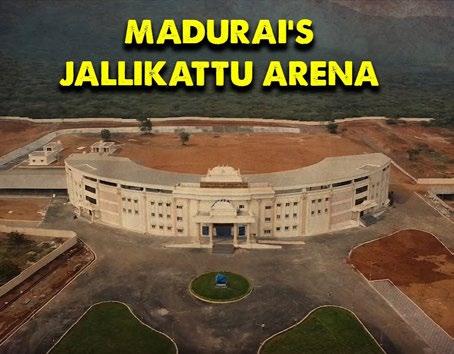

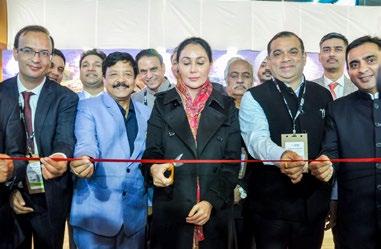
Business & Partnerships – Building Global Bridges
At WTM London 2025, Tamil Nadu’s pavilion functioned not only as a cultural showcase but also as a strategic business hub designed to foster long-term partnerships, investment opportunities, and inbound tourism collaborations. The state used this global platform to engage European tour operators, investors, and the Tamil diaspora, highlighting both the economic potential of tourism and its commitment to sustainable, highquality travel experiences. The pavilion hosted dozens of B2B meetings with leading European travel companies, tour operators, and destination management organisations. These interactions facilitated strategic networking, development of customised tourism packages covering heritage circuits, eco-tourism treks, rural experiences, and coastal adventures, and investment discussions focused on boutique resorts, wellness retreats, and community-based tourism projects.


European partners showed particular interest in experiential tourism, including adventure travel, wellness and medical tourism, and artisan and cultural immersion, reflecting the growing global demand for authentic and sustainable travel. Tamil Nadu also announced a Paris Roadshow scheduled for 7 November 2025 to strengthen its presence in the French market. The Roadshow will feature presentations on heritage sites, hill stations, and coastal destinations, tasting sessions of traditional South Indian cuisine, showcases of artisan crafts and textiles, and networking sessions with French tour operators. This initiative reflects the state’s strategic
approach to European markets and its ambition to position itself as a preferred South Indian destination. Recognising the influence of the UK Tamil diaspora, the pavilion created a dedicated space to engage community leaders as cultural ambassadors, promote heritage tourism through temple circuits, artisan tours, and rural homestays, and develop diaspora-led marketing initiatives using social and cultural networks. Officials emphasised that diaspora engagement strengthens cultural ties and directly contributes to sustainable tourism growth, creating a living bridge between Tamil Nadu and its global community.


Delegates made it clear that WTM London 2025 was part of a long-term strategy rather than a one-time showcase. Priorities include upgrading tourism infrastructure and services to international standards, promoting community-based tourism that benefits local populations, and encouraging eco-friendly, responsible tourism practices that protect natural and cultural heritage. Through this balanced approach, Tamil Nadu demonstrated how business development, cultural diplomacy, and sustainability can work together, making the state an attractive destination for both travellers and investors.
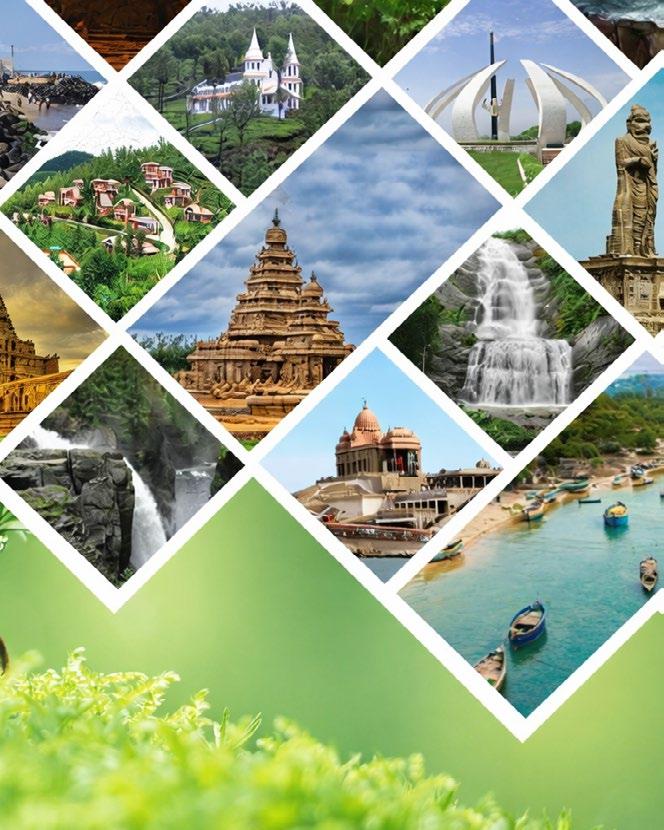


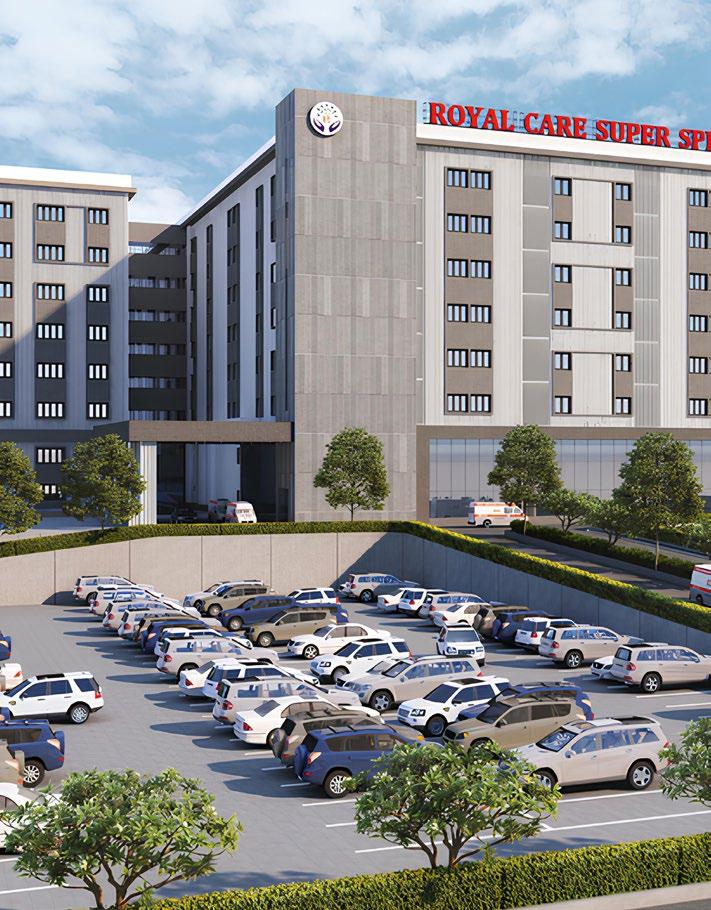
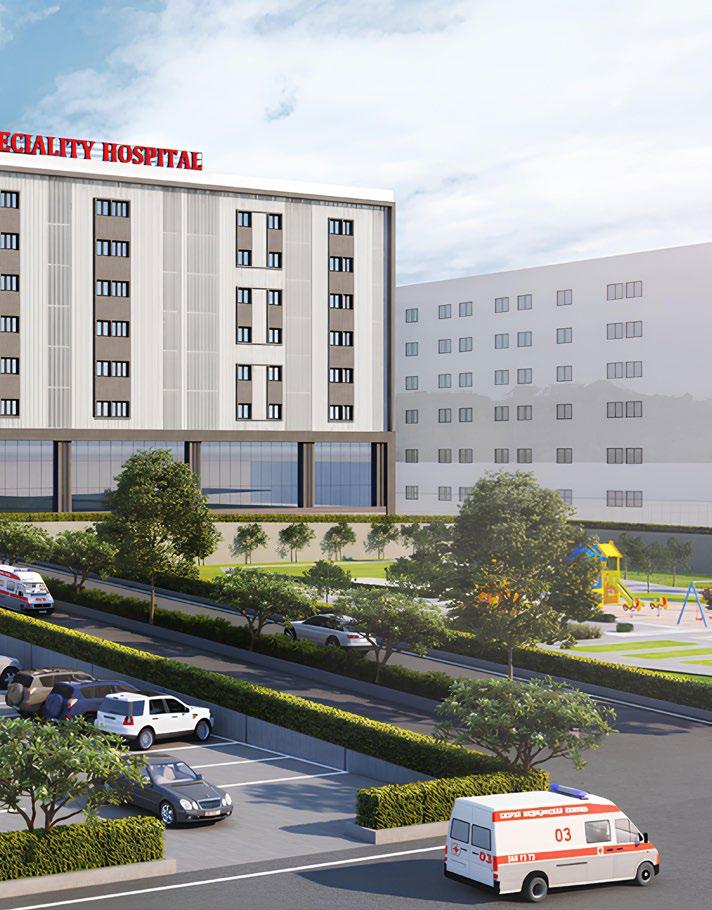
INCREDIBLE TAMILNADU & Health Family welfare


BUILDING LIVES THROUGH TEAMWORK: Royal Care’s Integrated Approach to Liver Transplantation

In modern medicine, few procedures demand as much precision, coordination, and emotional resilience as a liver transplant. It is not a single surgery but a continuum of care—beginning long before the operating theatre and extending years beyond discharge. At Royal Care Super Speciality Hospital, liver transplantation is not just a clinical service; it is a mission driven by expertise, teamwork, and an unwavering commitment to human life.

Behind every successful transplant stands a remarkable Liver Transplant Team—an ecosystem of specialists bound together by trust, discipline, and compassion. Their work has restored health, dignity, and hope to more than a thousand patients and families, making Royal Care one of the region’s most respected centres for liver transplantation.


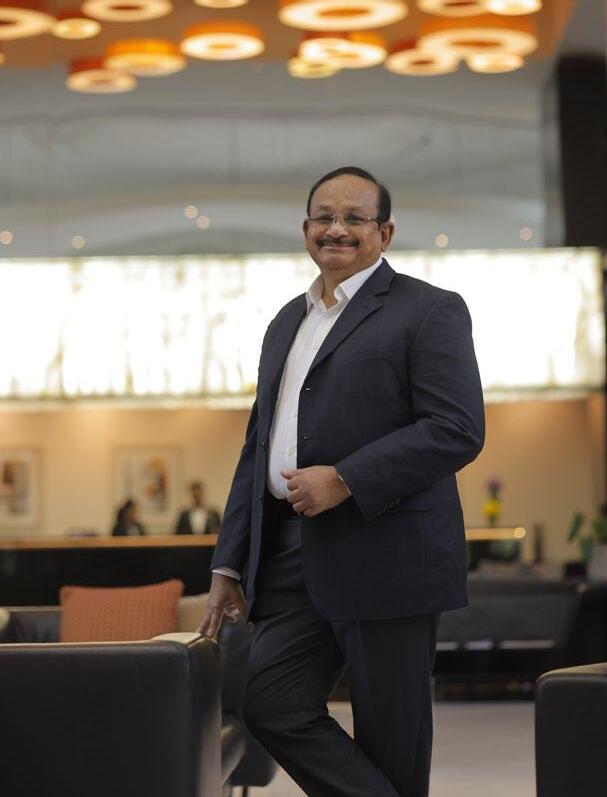
Dr. K. Madeswaran Chairman & Managing Director M/S. Royal Care Hospitals Group
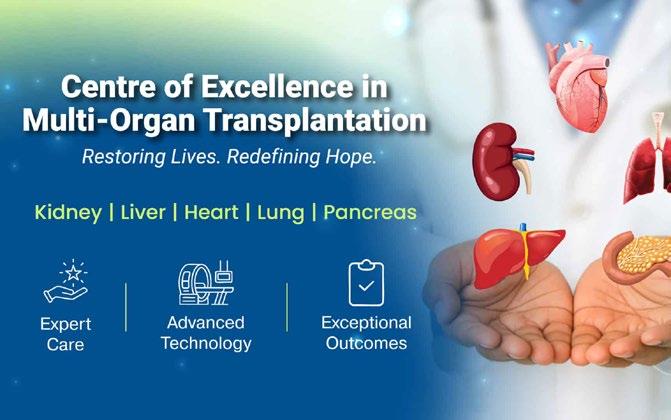
The Philosophy: Where Science Meets Humanity
Royal Care’s liver transplant programme is built on a simple but powerful belief: world-class outcomes emerge when clinical excellence is matched with human empathy. Liver failure often arrives at life’s most vulnerable moments—when patients and families are physically exhausted, emotionally overwhelmed, and searching for certainty in the face of fear.
The team understands this deeply. Every decision is guided not just by protocols and data, but by a clear awareness that each patient represents a life paused, a family waiting, and a future at stake. This philosophy informs every interaction—from the first consultation to long-term follow-up care.
A Multidisciplinary Force of Expertise
Liver transplantation is among the most complex medical undertakings, requiring coordination across numerous specialties. At Royal Care, this complexity is met with clarity through a meticulously structured multidisciplinary model.





THE LIVER TRANSPLANT TEAM INCLUDES:
• Hepatologists specialising in advanced liver disease
• Highly experienced transplant surgeons
• Anaesthesiologists trained in high-risk and prolonged surgeries
• Intensivists managing critical post-operative care
• Radiologists and pathologists providing diagnostic precision
• Transplant coordinators ensuring seamless logistics
• Specialised transplant nurses delivering round-theclock care
• Nutritionists, physiotherapists, and rehabilitation experts supporting recovery
• Psychologists and counsellors addressing emotional well-being
• Each professional contributes a vital piece to the transplant journey. Together, they form a unified team that functions with exceptional coordination and mutual respect.

Pre-Transplant Phase: Precision, Preparation, and Trust
The transplant journey begins long before surgery. Comprehensive pre-transplant evaluation is a cornerstone of Royal Care’s success. Patients undergo rigorous medical assessments to determine transplant eligibility, disease severity, and overall readiness.
Hepatologists conduct in-depth evaluations of liver function, coexisting conditions, and disease progression. Cardiac, pulmonary, renal, and neurological assessments ensure that patients are optimally prepared for surgery. For high-risk cases—such as elderly patients, those with cardiac devices, or multi-organ dysfunction—the evaluation process is even more exhaustive.
Equally important is patient and family counselling. The team invests time in explaining the procedure, risks, expectations, and post-transplant lifestyle changes. Transparency is non-negotiable. This open dialogue builds trust, empowers families, and ensures informed decisionmaking at every step.


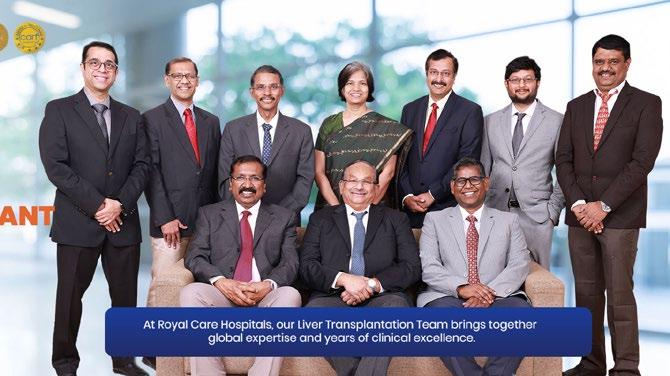
Transplant Coordinators: The Silent Pillars
Often unseen but indispensable, transplant coordinators serve as the backbone of the programme. They navigate complex logistics, coordinate with organ-sharing networks, liaise with donor families, and ensure compliance with ethical and legal frameworks.
For patients and families, coordinators are a constant source of reassurance—available to answer questions, clarify doubts, and guide them through emotionally charged moments. Their role extends beyond administration; they are advocates, educators, and compassionate companions throughout the transplant journey.
The Operating Theatre: Where Skill and Synergy Converge
When a liver transplant enters the surgical phase, preparation reaches its peak. Royal Care’s transplant operating theatres are designed specifically for long, intricate procedures, equipped with advanced monitoring systems and precision instruments.
Transplant surgeons lead the procedure with remarkable focus and discipline, executing complex vascular and biliary reconstructions that demand absolute accuracy.

Anaesthesiologists play an equally critical role, maintaining physiological stability over several hours while managing patients with compromised organ systems. Communication in the operating theatre is seamless. Every move is anticipated, every contingency prepared for. This harmony is the result of years of working together, training together, and trusting one another completely.
Critical Care: Vigilance Beyond the Surgery
The hours following a transplant are as crucial as the surgery itself. Patients are transferred to dedicated transplant intensive care units, where intensivists and specialised nurses provide continuous monitoring.
Here, the focus is on stabilising organ function, preventing infection, and ensuring early signs of graft acceptance. Nurses trained specifically in transplant care observe subtle clinical changes, respond rapidly to complications, and provide meticulous attention to patient comfort.
Daily multidisciplinary rounds bring together surgeons, hepatologists, intensivists, pharmacists, and nurses to review progress and fine-tune care plans. This collaborative approach ensures swift decision-making and optimal recovery trajectories.
Post-Transplant Recovery: Healing Beyond the Physical
Recovery from a liver transplant extends well beyond hospital walls. Royal Care’s team takes a holistic view of healing—addressing physical strength, nutritional health, mental resilience, and long-term disease prevention.
Nutritionists develop personalised dietary plans to support liver function and immunity. Physiotherapists guide patients through gradual rehabilitation, helping them regain strength and independence. Hepatologists closely monitor graft health, medication tolerance, and overall well-being through structured follow-up protocols.
Psychological support plays a vital role during this phase. Patients often experience anxiety, fear of rejection, or emotional adjustment challenges. Counsellors provide support that helps patients rebuild confidence and embrace life after transplantation.
Handling Complexity with Confidence
Royal Care’s Liver Transplant Team is distinguished by its ability to manage complexity. Over the years, the programme has successfully performed transplants on patients with acute liver failure, paediatric liver diseases, metabolic disorders, cardiac comorbidities, and those requiring re-transplantation.
Each complex case is approached with meticulous planning, ethical clarity, and collective wisdom. High-risk does not mean high compromise—every patient receives the same unwavering standard of care.





Ethics, Safety, and Global Standards
Ethical integrity underpins every aspect of Royal Care’s transplant programme. The hospital adheres strictly to national regulations and internationally accepted ethical guidelines governing organ transplantation.
Robust infection control protocols, continuous audits, and adherence to global best practices ensure patient safety and clinical excellence. Regular training programmes keep the team updated with the latest advancements in transplant medicine.
A Culture of Continuous Learning
Medicine evolves, and so does Royal Care. The Liver Transplant Team actively participates in clinical research, academic collaborations, and continuous professional development. Conferences, workshops, and simulation training ensure that the team remains at the forefront of innovation.
Knowledge-sharing within the team is encouraged, creating an environment where experience is passed on, questions are welcomed, and excellence is continuously refined.
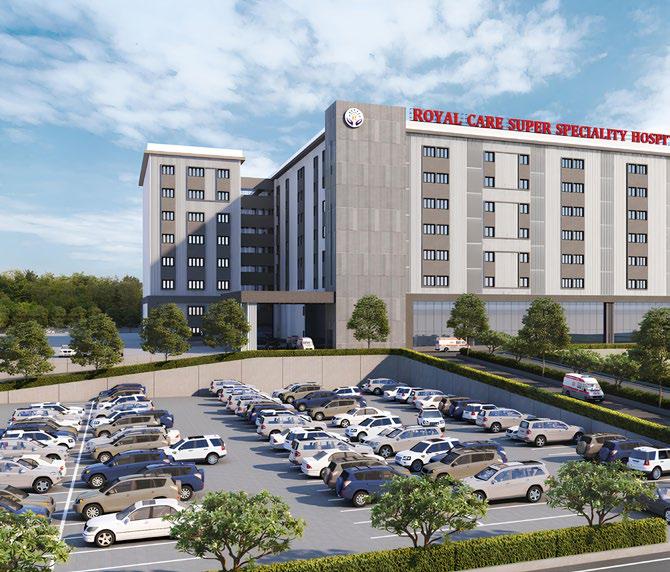
The Human Stories That Define Success
While numbers and outcomes are important, the true measure of success lies in the lives transformed. Patients who once faced terminal illness now return to work, care for families, and pursue dreams once thought impossible.
Families speak of compassion during the darkest hours, of doctors who explained every step, of nurses who offered comfort at midnight, and of coordinators who stood by them relentlessly. These stories are the heartbeat of Royal Care’s transplant programme.
A Milestone Built on Trust
Crossing the milestone of 1,000+ liver transplants is not merely an achievement—it is a reflection of trust earned over years. Trust from patients who placed their lives in the team’s hands. Trust from donor families who made the ultimate gift. Trust from the community that believes in Royal Care’s promise of ethical, world-class healthcare.
Looking Ahead: A Promise Renewed
As Royal Care continues to expand its transplant services, the commitment remains unchanged. The future holds advancements in technology, deeper research, and
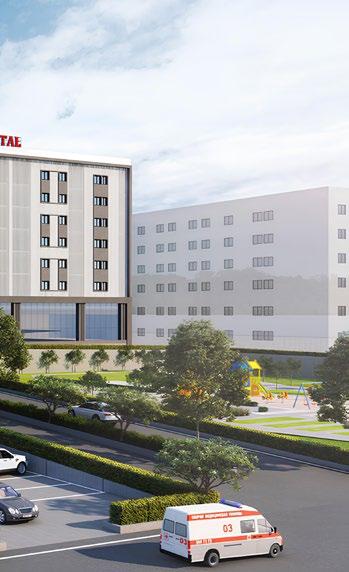

broader access—but the core values will endure. Skill will continue to be sharpened. Synergy will remain the foundation. Compassion will always lead the way.
At Royal Care, liver transplantation is more than a medical procedure. It is a shared journey—walked with expertise, integrity, and heart—at every step.


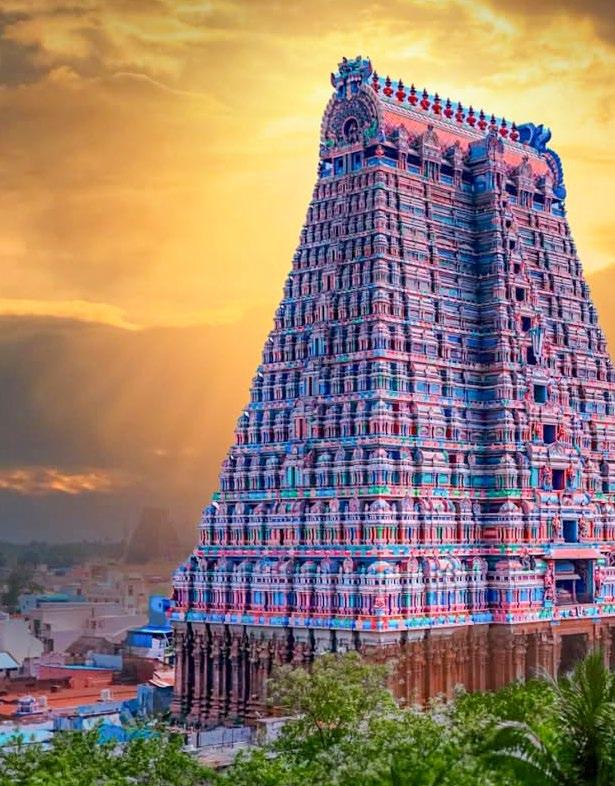
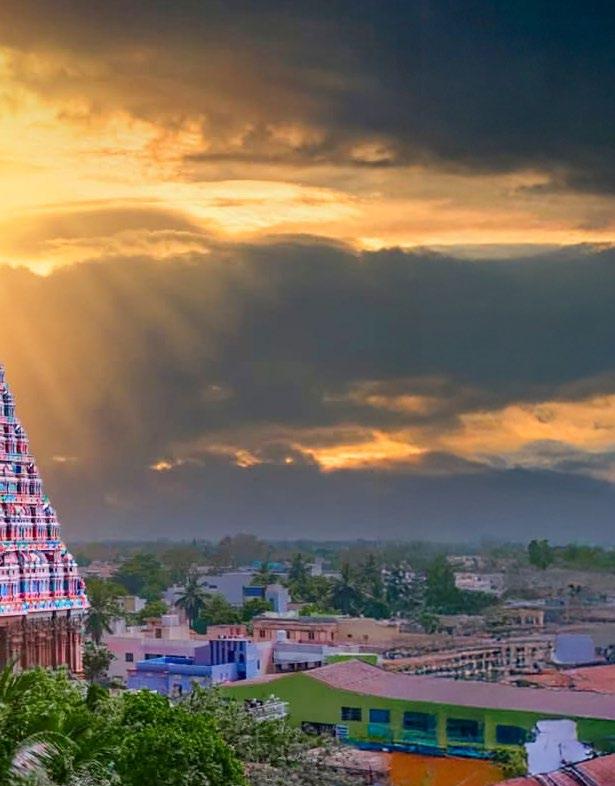
INCREDIBLE TAMILNADU & Heritage Architecture
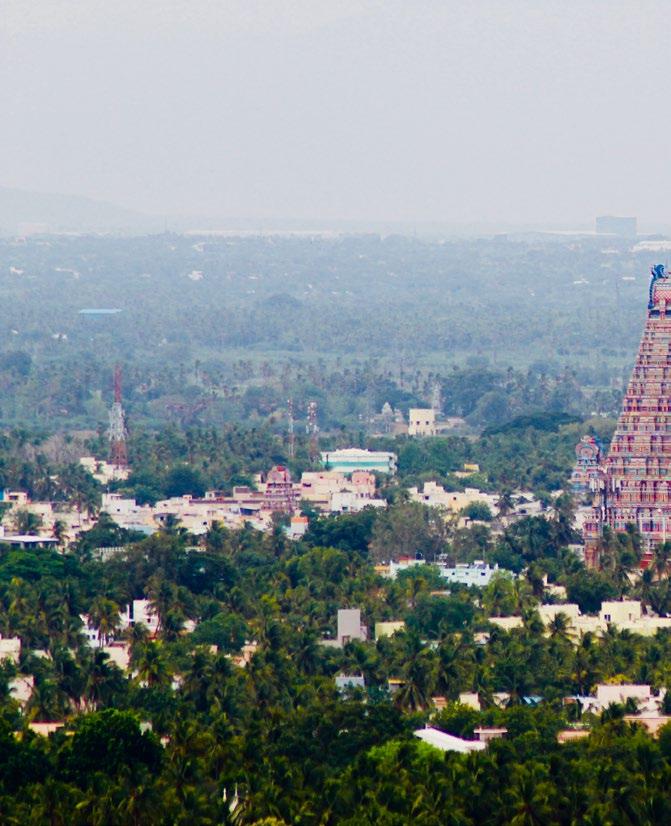
SRIRANGAM THE SACRED ISLAND OF LORD RANGANATHA
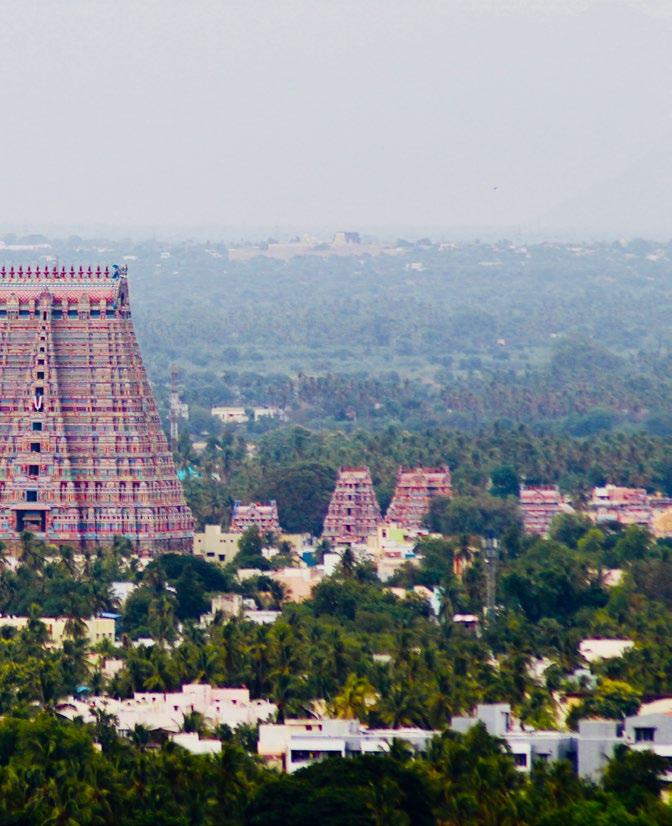
Srirangam, situated in the Tiruchirappalli district of Tamil Nadu, is one of the most revered pilgrimage destinations in South India. Located just 13 kilometers from Tiruchirappalli city, 61 kilometers from Thanjavur, 136 kilometers from Madurai, and 326 kilometers from Chennai, Srirangam is a tranquil river island nestled between the Kaveri River and its distributary, the Kollidam River. This island town is famed for housing the Srirangam Ranganathaswamy Temple, also known as Thiruvarangam or Periya Kovil (the “big temple”), which is considered the largest functioning Hindu temple in the world. The town itself, with its rich religious, historical, and cultural significance, has long attracted pilgrims, scholars, and travelers from across India and abroad.
Srirangam’s spiritual and historical identity is closely tied to Lord Vishnu, worshipped here in the reclining form of Ranganatha, representing the cosmic balance and preservation of the universe. The temple is recognized as the foremost among the 108 Divya Desams, the holiest abodes of Vishnu, making it an essential pilgrimage site for Vaishnavites. Legend holds that the Sriranga idol is selfmanifested (Swayambhu), and the temple is regarded as the first among the eight selfmanifested temples of Lord Vishnu in South India. According to folklore, the island was once a dense, sacred forest known as Vellithirumuthagramam, inhabited by sages, and revered for its spiritual energy. The name Srirangam derives from the Sanskrit word Arangam, meaning “stage,” signifying the place where the divine manifests; in Tamil, it is called Tiruvarangam, symbolizing the sacred abode of Lord Ranganatha.
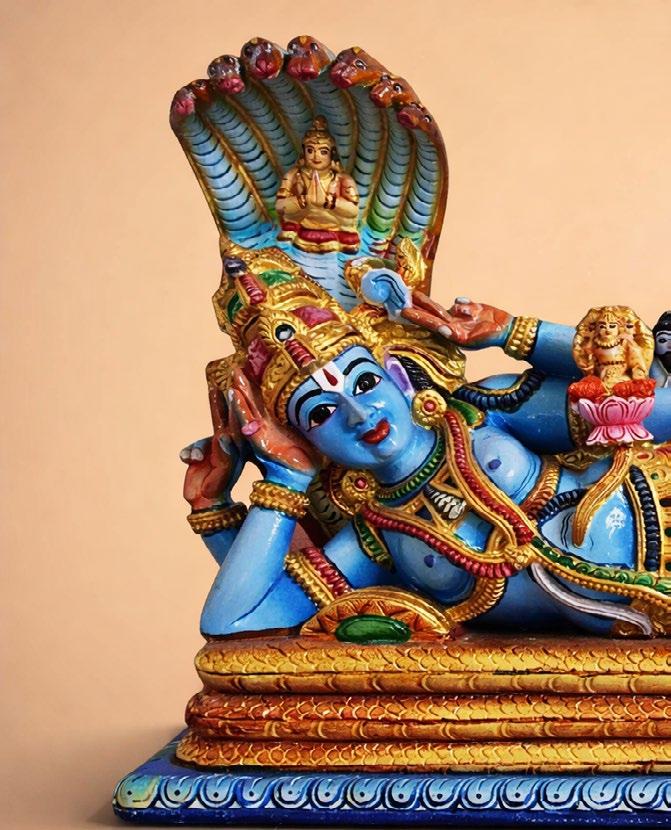
Devotees believe that the island itself, surrounded by rivers, is a sacred entity, and visiting Srirangam is considered equivalent to attaining divine blessings directly from Vishnu. The history of Srirangam spans several centuries and dynasties, each contributing to its architectural grandeur and spiritual prominence. The temple complex, which covers an area of approximately 156 acres, has evolved under the patronage of the Cholas, Pandyas, Hoysalas, Vijayanagara kings, and the Nayakas, who enriched its structure with intricately designed gopurams (tower gateways), pillared halls, and sprawling corridors.
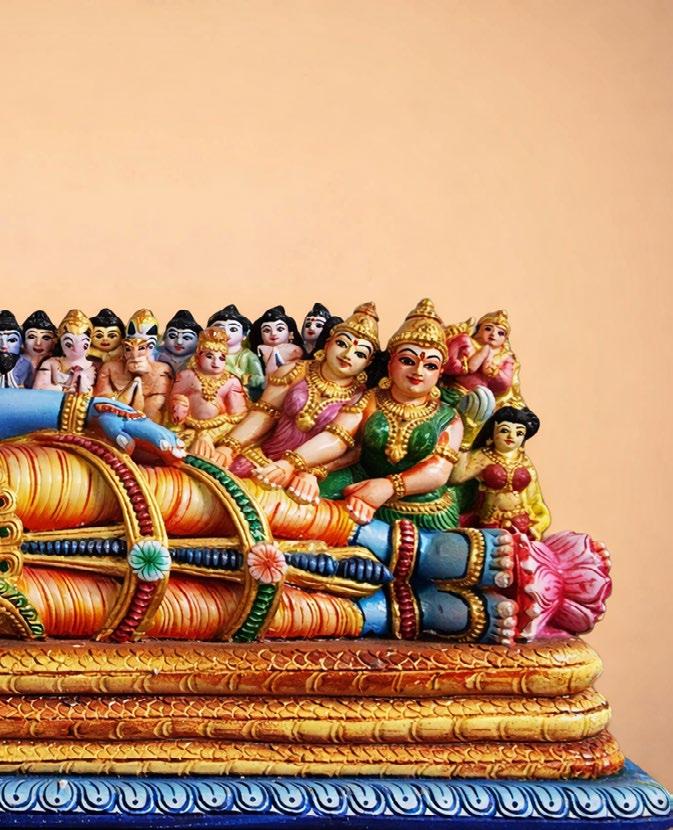
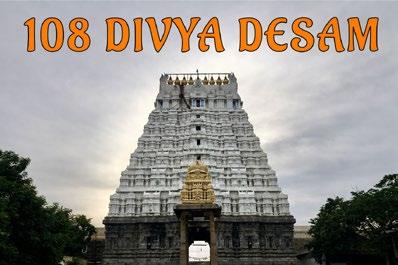
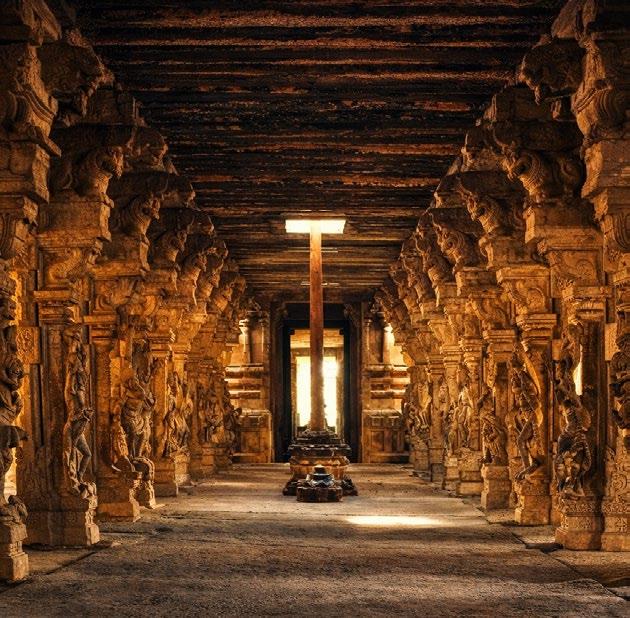

The Chola dynasty, in particular, played a pivotal role in establishing the foundational shrines and expanding the temple’s prominence in the 10th and 11th centuries. The Vijayanagara rulers and Nayakas later enhanced the complex with artistic marvels such as the thousand-pillared hall (Ayiram Kaal Mandapam), intricately carved sculptures, and massive gateways. Each dynasty left its distinct mark on the temple’s architecture, blending functional design with artistic expression, creating a space where devotion, culture, and aesthetics coexist harmoniously.
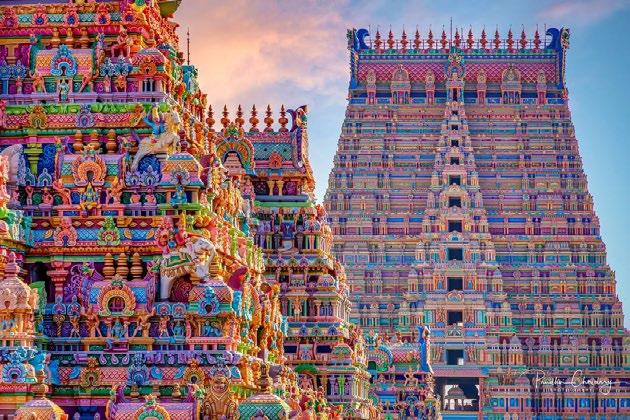
The architectural brilliance of the Srirangam Ranganathaswamy Temple reflects the quintessence of Dravidian temple design, characterized by expansive enclosures, towering gopurams, and ornate mandapas (halls). The temple has seven concentric prakarams (outer corridors), each surrounded by thick stone walls, forming a protective and sacred circuit for devotees. These corridors are punctuated by 21 magnificent gopurams, adorned with intricate sculptures of deities, mythological stories, and celestial beings. The tallest among these is the Rajagopuram, rising approximately 73 meters, which dominates the skyline and serves as a symbolic gateway between the earthly and the divine. Within the sanctum sanctorum resides Lord Ranganatha, depicted in the reclining Anantashayana pose on the serpent Adisesha, symbolizing cosmic preservation and the eternal nature of the universe. The sanctum is considered the spiritual nucleus of the temple, where devotees believe the divine energy of Vishnu is most potent.
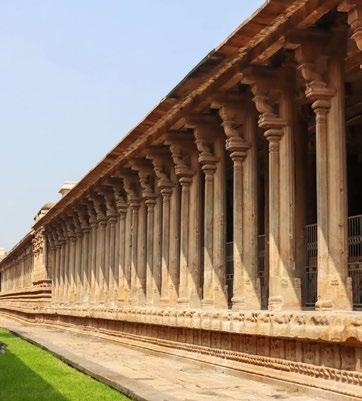
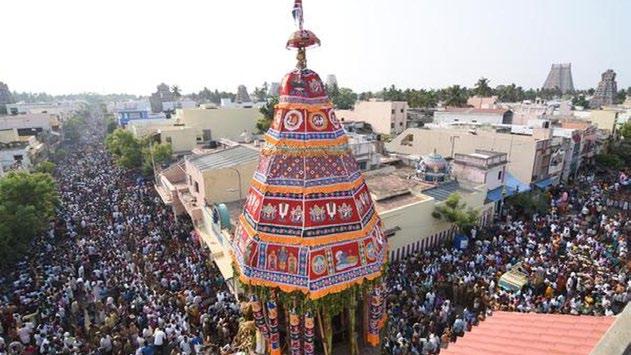
The temple is not only a center of spiritual devotion but also a hub for culture, philosophy, and art. The daily rituals and ceremonial practices at the temple are meticulously observed, with priests conducting elaborate pujas, recitations of the Vedas, and devotional music that imbues the complex with an aura of divine sanctity. One of the most celebrated events is the Vaikunta Ekadashi festival, during which the temple gates, known as Sorga Vasal, are ceremonially opened, allowing devotees to pass through in belief of attaining spiritual liberation. Similarly, the Chithirai Car Festival attracts thousands of devotees who witness the grandeur of richly decorated temple chariots being pulled through the streets of Srirangam, accompanied by music, chanting, and a sense of communal devotion. Other major festivals include Vasantotsavam, Jyeshtaabhishekam, Pavitrotsavam, and Teppotsavam (the float festival), each marked by intricate rituals, ceremonial processions, and deep spiritual fervor.
Srirangam is more than just a temple town; it embodies the integration of religion, culture, and education. The town has historically been a seat of Vaishnavite learning, attracting scholars, philosophers, and theologians who contributed to the development of Sri Vaishnavism, the theological school established by Ramanuja.
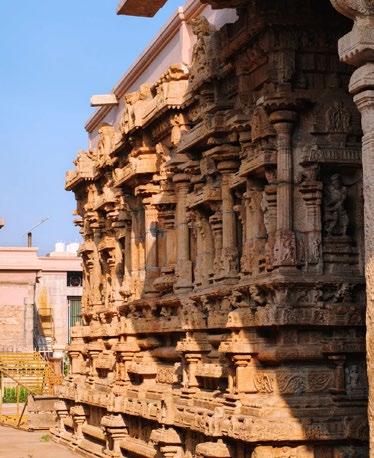
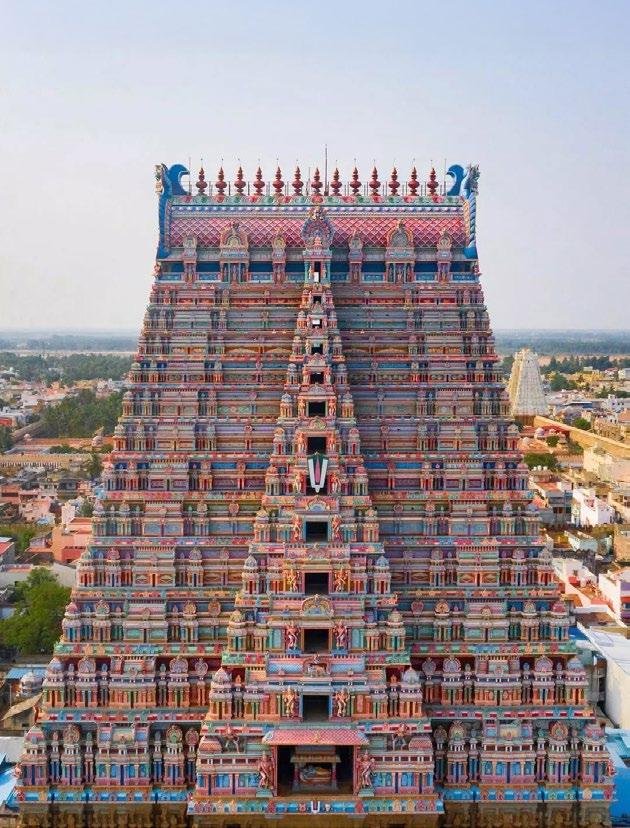
Ramanuja, one of the most revered philosophers of medieval India, served as the head priest of the Srirangam temple, reforming its ritualistic practices, promoting the worship of Lord Vishnu, and codifying religious teachings that continue to influence South Indian Vaishnavites to this day. The temple has thus functioned as both a spiritual sanctuary and a center of intellectual activity, emphasizing the union of devotion, learning, and community service.
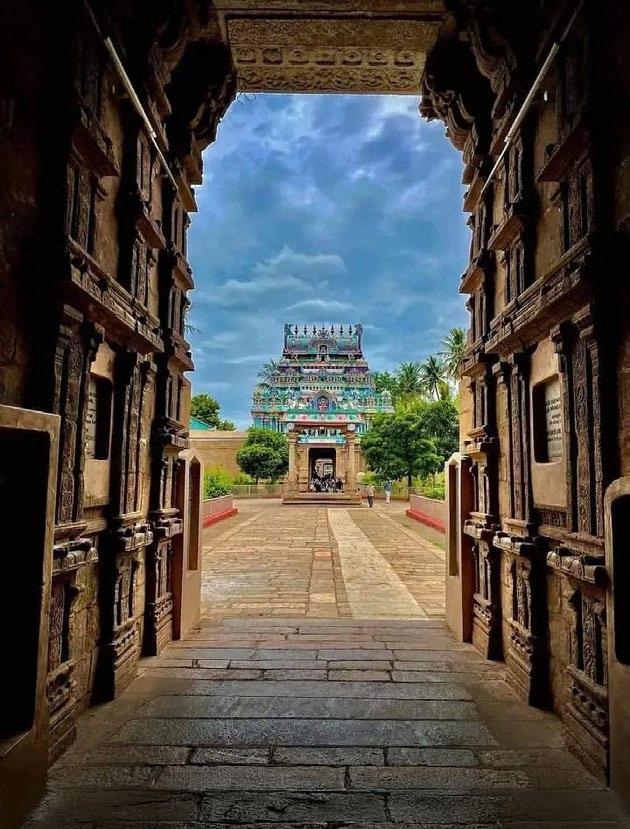
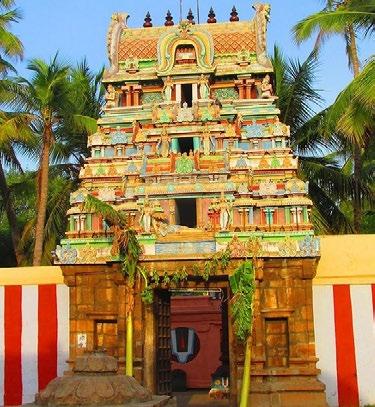
sri vadivazhagiya nambi perumal temple
Apart from the temple itself, Srirangam offers a rich tapestry of surrounding attractions for pilgrims and tourists. These include the Jambukeswarar Temple at Thiruvanaikaval, an important Shaivite shrine; the Uthamar Kovil, Vekkali Amman Temple, and Samayapuram Mariamman Temple, which are popular for their unique legends and architectural beauty. Visitors can also explore historical sites like Kumara Vayalur Temple, Gunaseelam Temple, Sri Vadivazhagiya Nambi Perumal Temple, and the Kaattu Azhagiya Singar Temple, all of which reflect the religious diversity and cultural depth of the region. Additionally, the island’s natural and recreational attractions, such as the Butterfly Park, Kallanai Dam, and the banks of the Kaveri River, provide opportunities for relaxation and appreciation of Srirangam’s serene environment. Travel logistics to Srirangam are convenient, making it accessible for both domestic and international visitors. The Tiruchirappalli International Airport, located about 15 kilometers from Srirangam, offers regular connectivity with cities such as Chennai and Bengaluru. Srirangam is also connected by rail through the Chennai-Kanyakumari line, with select
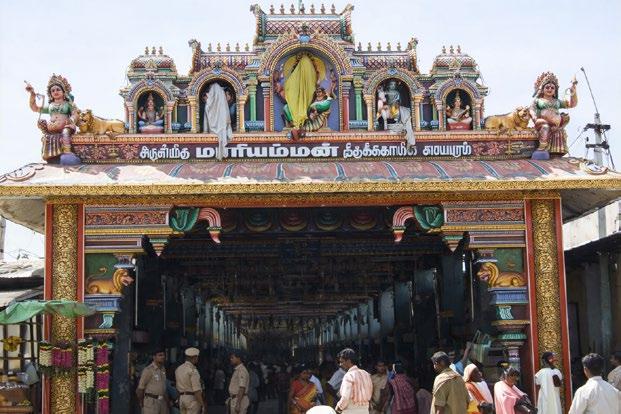
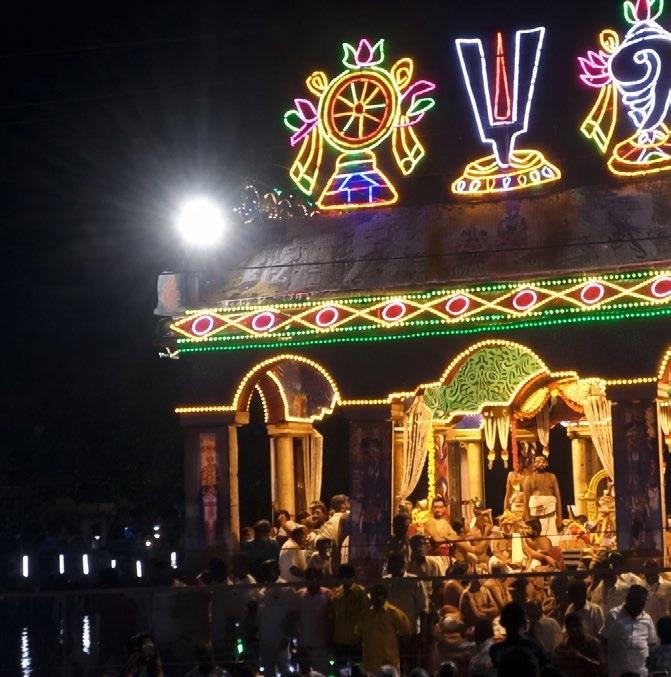
trains stopping at the Srirangam railway station; however, major trains usually stop at the nearby Tiruchirappalli Junction, requiring a short road transfer. The Tiruchirappalli Central Bus Stand, situated approximately 8 kilometers away, provides extensive bus connectivity throughout Tamil Nadu. For local transportation, taxis, auto-rickshaws, and private vehicles are readily available to facilitate travel across the temple complex and town. The
ideal time to visit Srirangam is between October and March, when the weather is moderate and favorable for sightseeing. These months coincide with major festivals, allowing visitors to experience the vibrant religious and cultural life of the town. Peak tourist seasons include November to February, when festivals like Vaikunta Ekadashi, Teppotsavam, and Chithirai Car Festival draw large numbers of devotees and cultural enthusiasts.
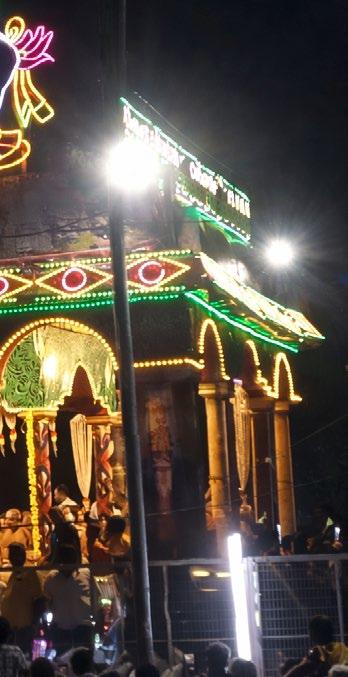
Tourists are advised to wear modest clothing in respect of the sacred environment; traditional attire such as sarees or churidars for women, and dhotis or formal trousers for men, is recommended. Non-Hindus are welcome to explore the temple complex, although access to certain inner sanctums may be restricted to maintain the sanctity of worship.
Srirangam’s influence extends beyond religion, shaping the cultural and artistic identity of Tamil Nadu. The temple’s intricate sculptures, ornate pillars, and expansive halls have inspired generations of artists, particularly in classical dance forms like Bharatanatyam, which developed in tandem with temple rituals. The elaborate depictions of Hindu mythology on temple walls and gopurams serve as visual narratives, educating devotees about divine stories and ethical principles while simultaneously celebrating artistic excellence. Music, dance, and drama are integral to temple life, with the Natya Shastra and Vedic chants forming the foundation of cultural performances that occur during festivals and ceremonial occasions.
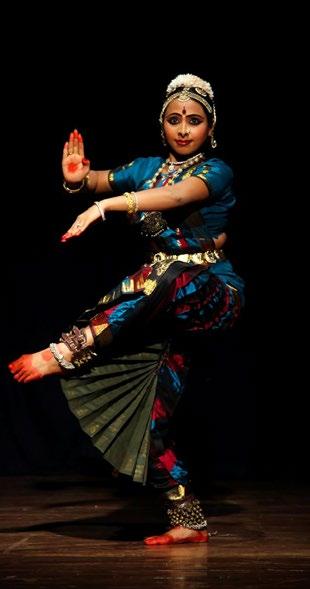

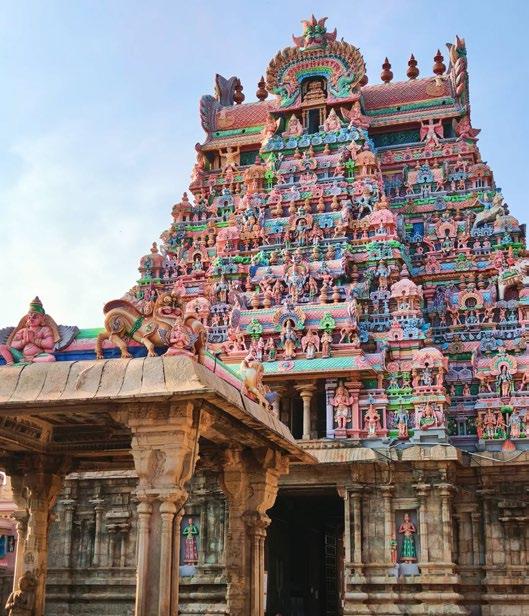
The temple’s environmental setting on a river island adds to its spiritual and aesthetic appeal. Surrounded by the tranquil waters of the Kaveri and Kollidam rivers, Srirangam offers a serene atmosphere conducive to meditation, reflection, and spiritual immersion. Pilgrims often take ritual baths in the river before entering the temple, symbolizing purification and renewal. The lush greenery, waterways, and sacred groves around the temple complex contribute to a unique sense of harmony between nature, architecture, and devotion, enhancing the visitor experience. In conclusion, Srirangam and the Ranganathaswamy Temple represent a confluence of devotion, architecture, history, culture, and spirituality.
The temple stands as a living monument to the enduring legacy of Tamil Nadu’s religious traditions, showcasing the grandeur of Dravidian architecture, the profundity of Vaishnavite philosophy, and the richness of South Indian art and culture. Visitors to Srirangam not only encounter a sacred site of immense spiritual significance but also engage with centuries of artistic, cultural, and intellectual heritage that continue to define the region. The cosmic presence of Lord Ranganatha, the meticulous rituals, the grandeur of festivals, and the island’s serene setting combine to create an unforgettable experience, making Srirangam a timeless pilgrimage and heritage destination.
Where to Stay Near Srirangam
Five Hotels Offering Comfort, Calm and Convenience
Courtyard by Marriott Tiruchirappalli
Courtyard by Marriott Tiruchirappalli represents the pinnacle of contemporary luxury hospitality in the city, seamlessly blending international standards with local sensibilities. Strategically located in the heart of Trichy, the hotel caters to business travellers, pilgrims, and leisure guests seeking refined comfort. The architecture is modern and understated, while the interiors reflect warmth through elegant finishes, natural lighting, and thoughtfully curated spaces.
From the moment guests enter the expansive lobby, the atmosphere conveys calm efficiency and polished service, setting the tone for a premium stay experience. The rooms and suites are designed with both comfort and functionality in mind, featuring plush bedding, ergonomic workspaces, and well-appointed bathrooms. Dining is a strong highlight, with multiple venues offering global cuisine, regional specialities, and relaxed lounge experiences.
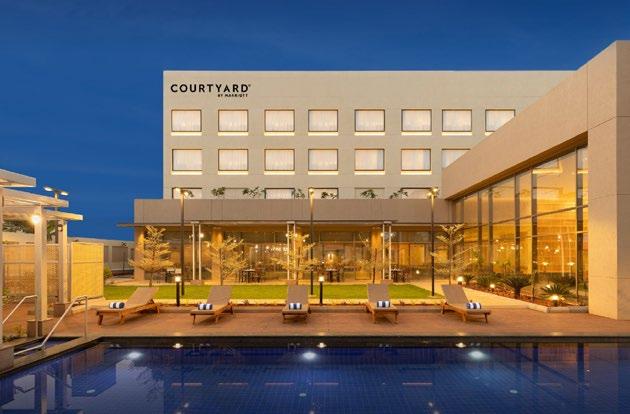
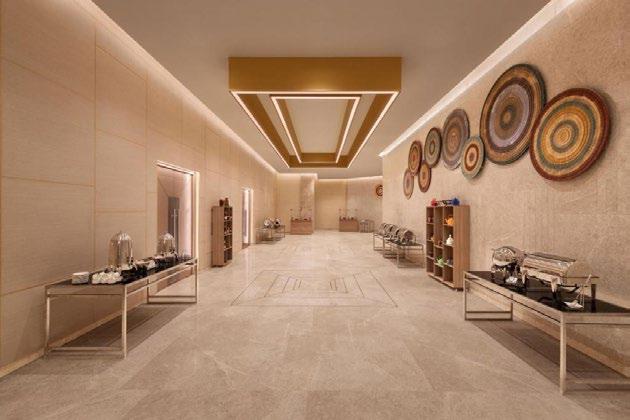
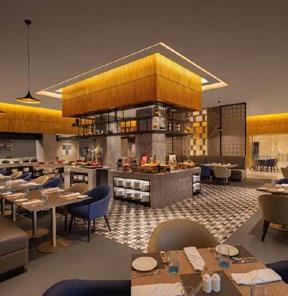
Guests can unwind at the outdoor pool, maintain wellness routines at the fitness centre, or host events in the hotel’s expansive banquet and meeting facilities. Known for attentive staff, consistent service quality, and high standards of cleanliness, Courtyard by Marriott Tiruchirappalli stands as the city’s most trusted address for upscale stays and professional gatherings.
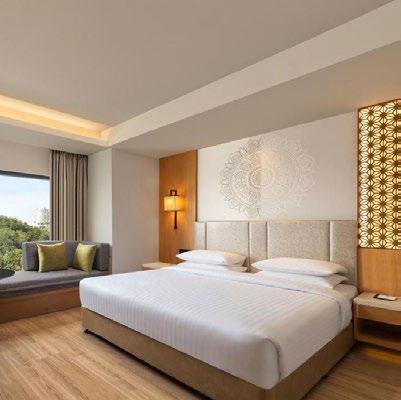
Ramyas Hotels
Ramyas Hotels stands as one of Tiruchirappalli’s most established and recognisable hospitality landmarks, known for its reliability, central location, and consistently warm service. Over the years, the hotel has earned a reputation as a dependable choice for a wide spectrum of travellers, ranging from business professionals and government officials to families, pilgrims, and leisure tourists exploring the cultural heart of Tamil Nadu. Its proximity to key transport hubs—including the railway junction, bus terminals, and arterial city roads—adds to its enduring appeal, allowing guests to navigate the city with ease. The property follows a traditional hotel format that places emphasis on functionality, accessibility, and comfort rather than overt luxury. Rooms are designed to meet everyday travel needs, offering a calm and practical environment for rest and work. Cleanliness, efficient housekeeping, and thoughtful in-room amenities ensure a comfortable stay for both short visits and extended stays. The understated interiors and efficient layouts reflect the hotel’s focus on delivering value and convenience to guests who prioritise comfort and reliability.
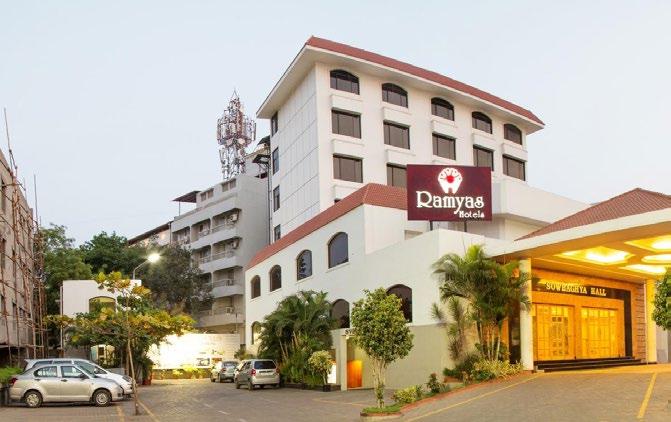
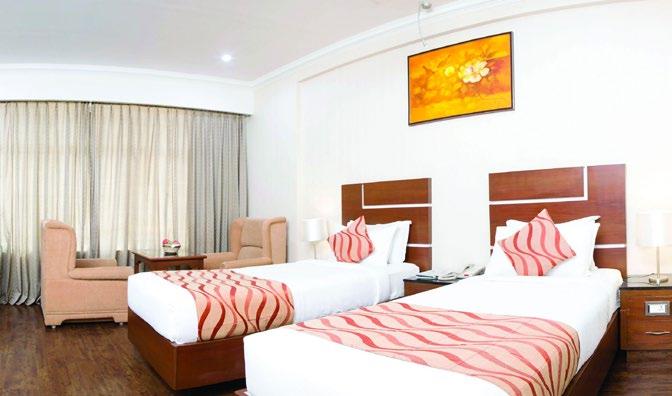
Dining is one of the strongest pillars of Ramyas Hotels and a key reason for its popularity among locals and visitors alike. The hotel houses multiple dining spaces that cater to diverse tastes, serving both vegetarian and non-vegetarian cuisine. South Indian specialities form the heart of the menu, with well-loved regional dishes, generous buffet spreads, and time-tested recipes that enjoy steady patronage. The restaurants are known for their consistency, portion sizes, and ability to accommodate large groups, making them a frequent choice for family meals and business lunches. Beyond accommodation and dining, Ramyas Hotels is also a prominent venue for social and professional gatherings. Its banquet halls and event spaces regularly host weddings, receptions, conferences, and corporate meetings. These venues are appreciated for their capacity, catering support, and experienced event coordination. With its long-standing presence, dependable service standards, and strong culinary reputation, Ramyas Hotels continues to hold its place as a trusted mid-range hospitality option in Trichy— valued for making city stays seamless, comfortable, and reassuringly familiar.
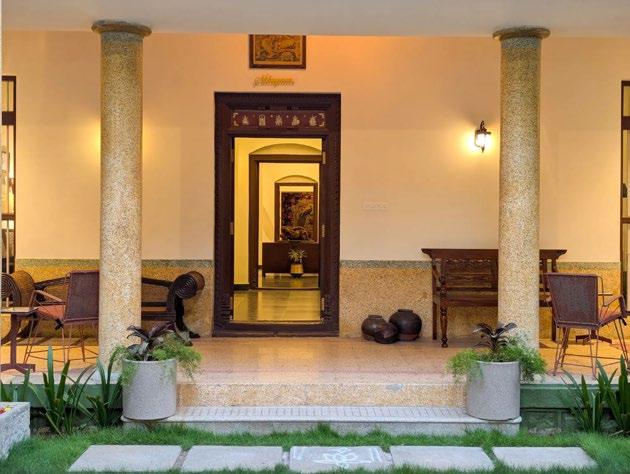
Nilayam by LuxUnlock
Private Villas
Nilayam by LuxUnlock Private Villas represents a refined shift from conventional hospitality, offering guests an experience that feels closer to residing in a thoughtfully designed private home than staying in a hotel. Located in Tiruchirappalli, the property blends discretion, architectural elegance, and residential warmth, making it especially appealing to travellers who prioritise privacy, calm, and aesthetic harmony. Rather than scale or spectacle, Nilayam focuses on intimacy and character, creating an environment where every detail feels intentional. The villa’s design language is understated yet sophisticated. Natural light plays a central role, filtering gently through courtyards and large windows, enhancing the sense of openness and tranquillity. Contemporary furnishings are
paired with subtle artistic accents, lending each space a curated, lived-in elegance rather than a staged luxury. The limited number of rooms ensures a peaceful atmosphere, allowing guests to unwind without the bustle typically associated with city hotels.Accommodation at Nilayam is tailored for comfort and extended stays. Rooms and suites are generously proportioned, thoughtfully laid out, and designed to encourage rest and reflection. The ambience is calm and soothing, making it ideal for couples seeking a quiet escape, professionals on longer assignments, or travellers who prefer immersive, homelike stays. Courtyard spaces add to the sense of retreat, offering pockets of greenery and silence within the urban context of Trichy.
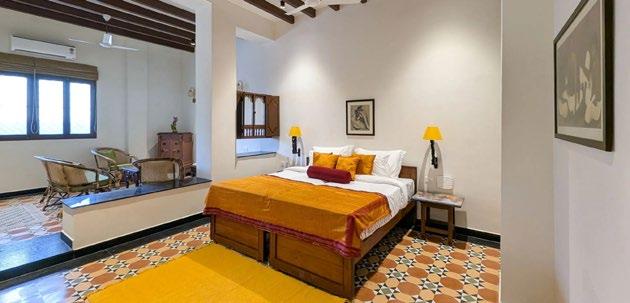
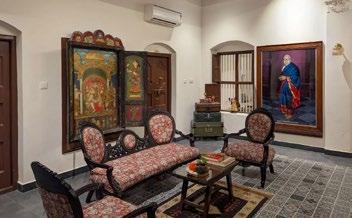
Service at Nilayam by LuxUnlock is deliberately unobtrusive yet deeply attentive. The hospitality philosophy centres on personalised care, allowing guests to enjoy privacy while knowing that assistance is always available when needed. This balance between discretion and warmth reinforces the villa-style ethos that defines the property.What truly distinguishes Nilayam is its ability to offer serenity without isolation. While it feels secluded and restorative, the villa remains well connected to Tiruchirappalli’s key neighbourhoods, cultural landmarks, and business districts. For discerning travellers who value design, calm, and individuality over conventional luxury, Nilayam by LuxUnlock Private Villas delivers a stay that is intimate, elegant, and quietly memorable.
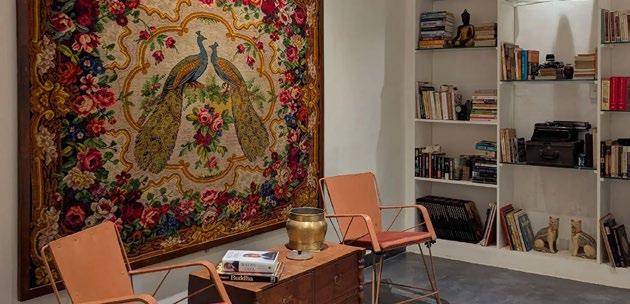
Hotel Tamilnadu Trichy Unit II
Hotel Tamilnadu Trichy Unit II stands out as a dependable mid-range accommodation option that prioritises functionality, comfort, and value. Operated under the Hotel Tamilnadu brand, the property has built a reputation for offering honest hospitality without excess, appealing to travellers who value reliability over luxury. Its location along Race Course Road places guests in a calm, well-organised part of the city while still ensuring convenient access to key administrative offices, transport hubs, and prominent areas of Tiruchirappalli. The hotel’s
overall atmosphere is practical and composed, making it particularly suitable for business travellers, government officials, families, and long-stay guests. The surroundings are relatively quiet, allowing visitors to enjoy a peaceful stay despite being within city limits. The structured layout and no-nonsense design further enhance the sense of order and ease that many guests appreciate, especially those on official or extended visits. Rooms at Hotel Tamilnadu Trichy Unit II are spacious, clean, and thoughtfully maintained.
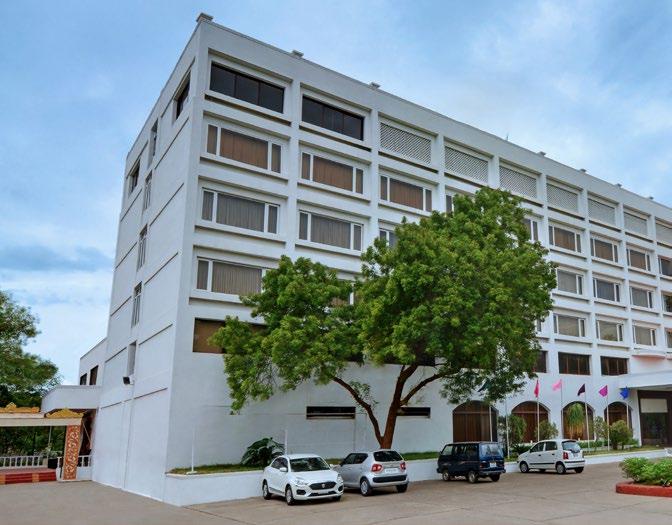

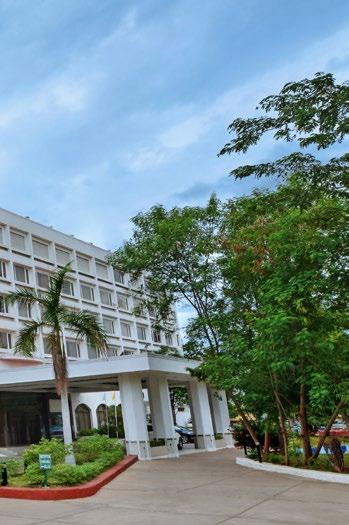
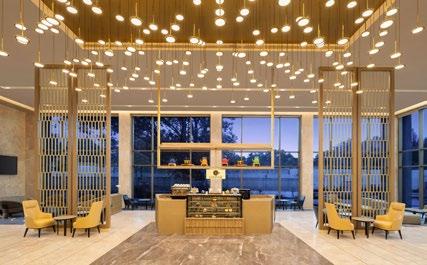
Designed with practicality in mind, they feature comfortable bedding, air-conditioning, and essential in-room amenities that support a restful and efficient stay. While the interiors are simple and unembellished, they deliver exactly what is promised—comfort, cleanliness, and functionality.The emphasis on hygiene and upkeep is a defining strength of the property, contributing to its consistent guest satisfaction. Service is courteous and efficient, reflecting the hotel’s focus on smooth operations rather than personalised luxury. Staff interactions are professional and helpful, ensuring that guest needs are addressed promptly. This dependable service model makes the hotel a preferred choice for repeat visitors who value predictability and ease. Though it does not aim to compete with upscale hotels, Hotel Tamilnadu Trichy Unit II excels in what it sets out to do: provide accessible, affordable, and comfortable accommodation. For travellers seeking straightforward lodging with fair pricing, good location, and dependable standards, it continues to hold a respected place within Tiruchirappalli’s hospitality landscape.
TPC Camphor
TPC Camphor is a contemporary budget hotel that has steadily earned a reputation for delivering comfort, cleanliness, and efficiency at an accessible price point. Situated in a quieter residential area of Tiruchirappalli, the property offers guests a welcome sense of calm while remaining conveniently connected to key parts of the city. This balance between tranquillity and accessibility makes it a preferred choice for business travellers, families, and transit guests alike.
The hotel’s design and ambience lean towards modern simplicity, with an emphasis on functionality and ease of use. Rooms are spacious, well laid out, and neatly furnished, providing a comfortable environment for both short and extended stays. Essential amenities are thoughtfully provided to meet everyday travel needs, ensuring that guests can relax or work without inconvenience. The uncluttered interiors and good natural lighting further contribute to a pleasant, stress-free stay experience.
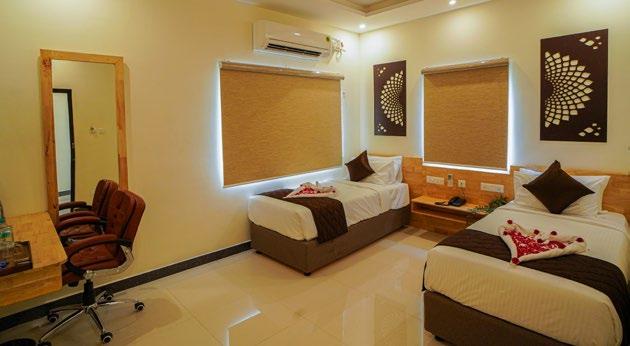
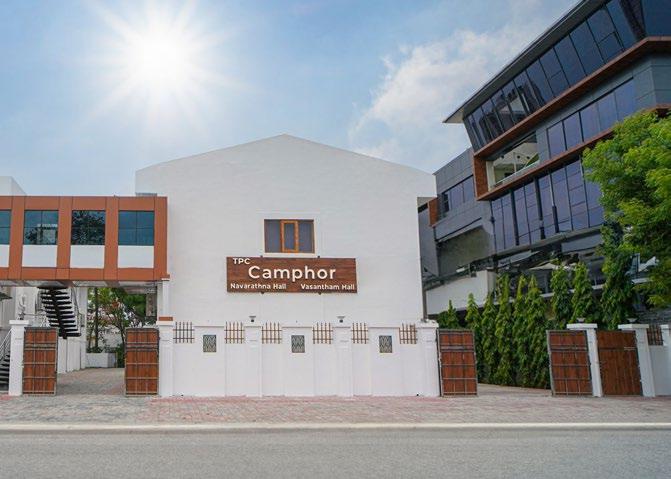

One of the strongest aspects of TPC Camphor is its commitment to cleanliness and maintenance. Guests frequently note the well-kept rooms, tidy common areas, and consistent housekeeping standards, which elevate the overall impression of the property.This attention to detail, combined with a smooth and efficient check-in process, reflects the hotel’s focus on operational excellence and guest satisfaction. Service at TPC Camphor is courteous, professional, and prompt. The staff maintain a friendly yet efficient approach, assisting guests with requirements while respecting their privacy. Although the hotel does
not position itself as a luxury destination, the reliability of its service and the comfort it delivers often exceed expectations for a budget-category property. Overall, TPC Camphor stands out as a dependable and wellmanaged accommodation option in Tiruchirappalli. For travellers seeking modern, clean, and affordable lodging without unnecessary frills, it offers a consistently pleasant stay and excellent value for money within the city’s hospitality landscape.

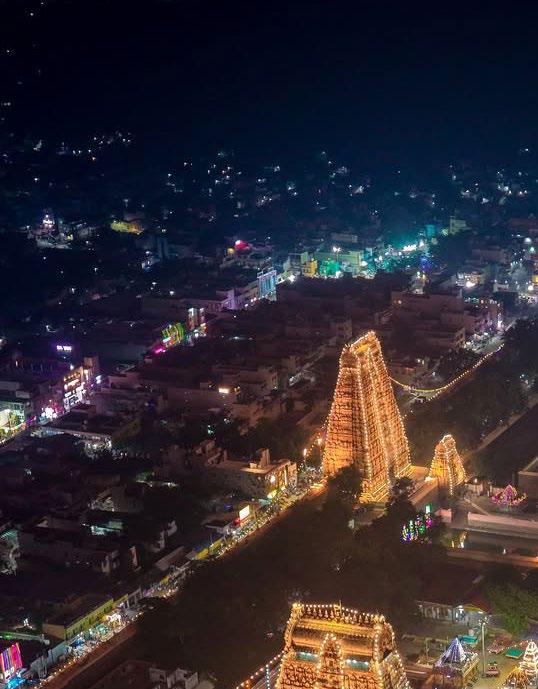
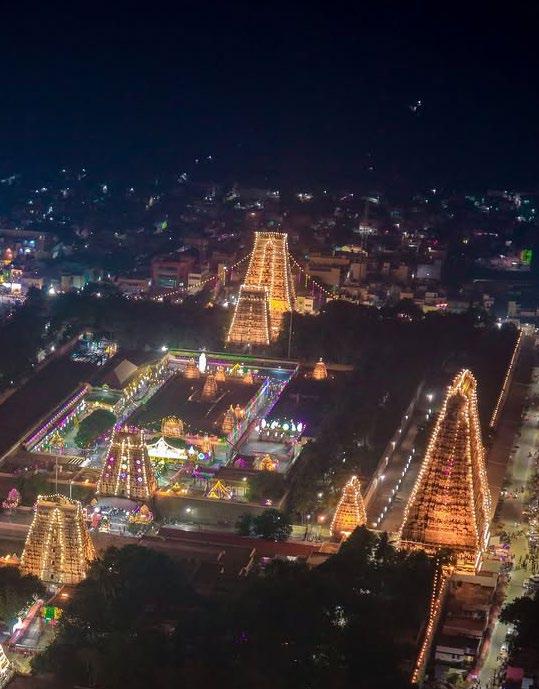
INCREDIBLE TAMILNADU & Culture Traditions
Tiruvannamalai GEARS UP FOR THE GRAND KARTHIGAI
DEEPAM FESTIVAL 2025
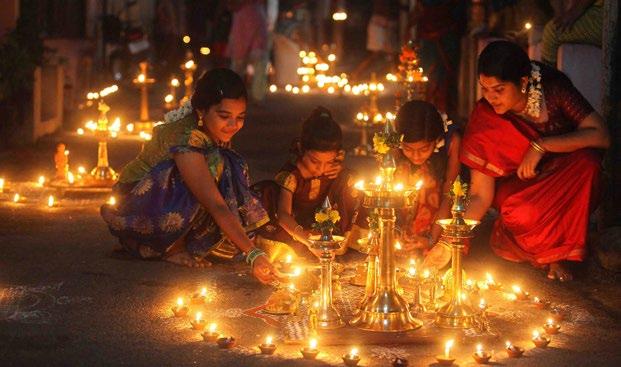
The sacred temple town of Tiruvannamalai is once again preparing to host one of South India’s most ancient, spiritually significant, and visually resplendent festivals — Karthigai Deepam 2025. Observed as a ten-day Brahmotsavam, the festival is deeply rooted in Shaivite philosophy and Tamil religious tradition, culminating in the lighting of the Mahadeepam atop the revered Arunachala Hill. Far more than a single-day observance, Karthigai Deepam unfolds as a continuous spiritual journey marked by rituals, processions, sacred fire ceremonies, and collective devotion. In 2025, the festival assumes even greater importance as lakhs of devotees from across India and abroad are expected to converge on Tiruvannamalai to witness and participate in the ten days of sacred observances, with the grand Mahadeepam lighting forming the spiritual climax of the celebrations.
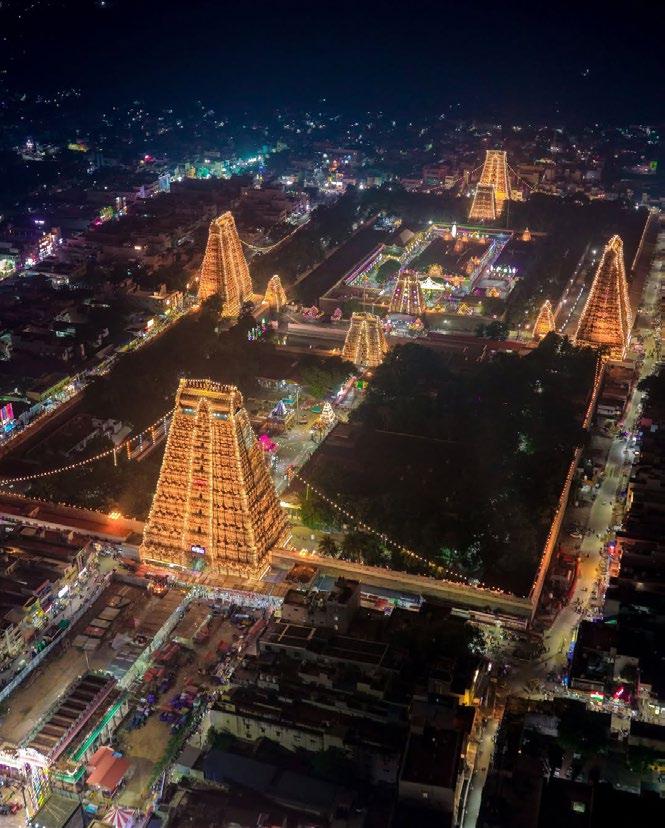
TIRUVANNAMALAI: WHERE GEOGRAPHY BECOMES DIVINITY
Tiruvannamalai is not merely a town with a famous temple; it is a sacred landscape where divinity is believed to manifest in physical form. The town derives its spiritual power from Arunachala, the fire-element manifestation of Lord Shiva. In Shaivite belief, Arunachala is not symbolic but literal — Shiva himself in the form of a hill. Encircling the hill is the revered Girivalam path, a 14-kilometre circumambulatory route walked by devotees as an act of penance, surrender, and inner transformation. During the Karthigai Deepam festival, this path becomes a living river of faith, illuminated by thousands of oil lamps and sustained by continuous prayer.
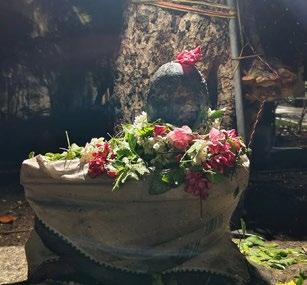
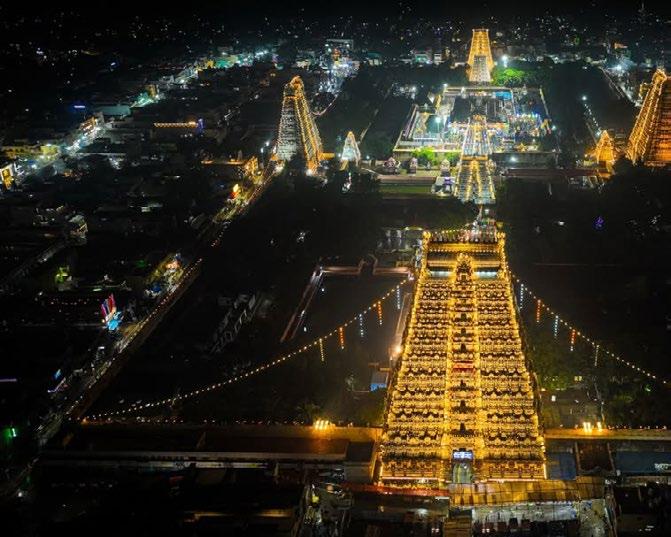
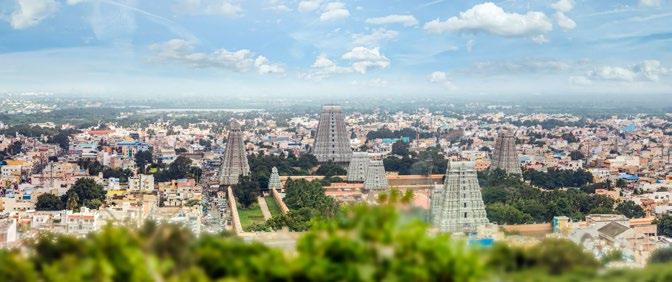

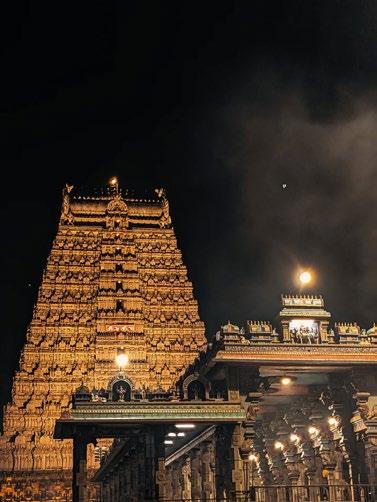
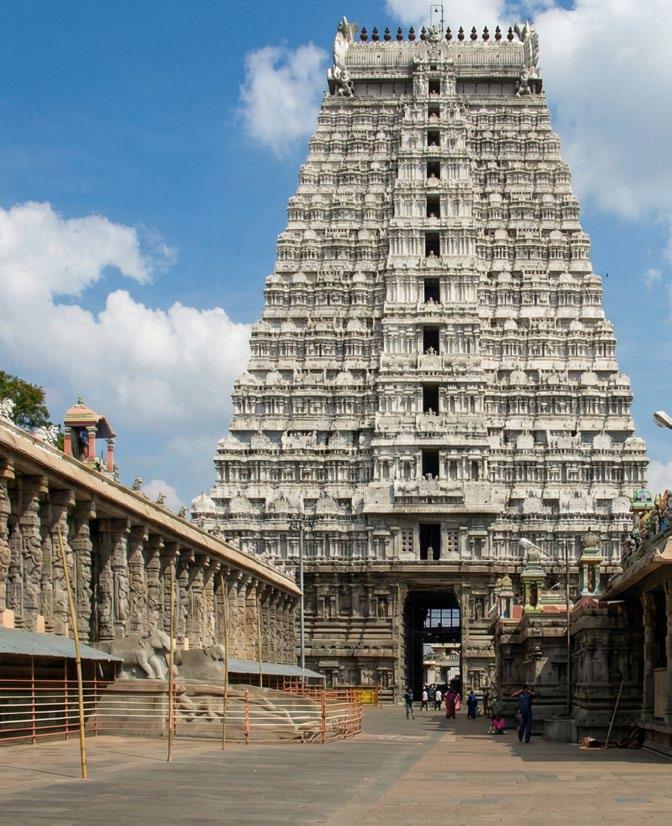
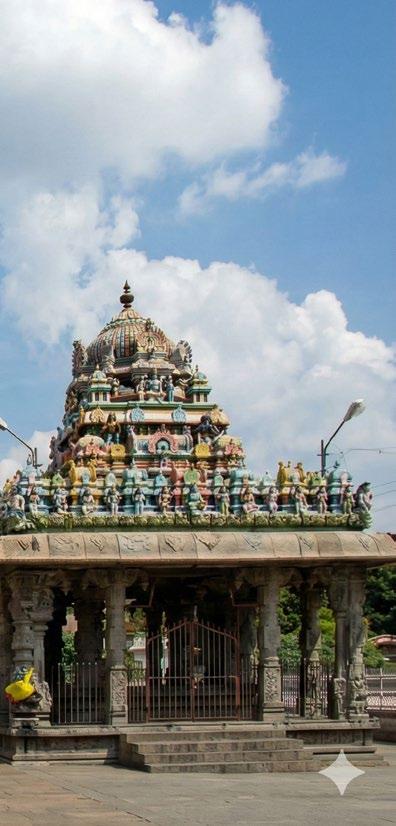
ANNAMALAIYAR TEMPLE: THE CEREMONIAL HEART OF THE FESTIVAL
At the centre of the ten-day celebrations stands the majestic Annamalaiyar Temple, one of the largest and most architecturally significant Shaivite temples in South India. Dedicated to Lord Arunachaleswarar (Shiva) and Goddess Unnamulai Amman (Parvati), the temple has been a focal point of worship for over a millennium. During Karthigai Deepam, the temple transforms into a luminous sacred arena. Its towering gopurams are adorned with lights, its vast corridors echo with Vedic chants, and every shrine glows with rows of oil lamps. Ritual precision, continuity of tradition, and spiritual intensity define the temple’s role throughout the ten days.

THE MYTHOLOGICAL ORIGINS OF KARTHIGAI DEEPAM
The spiritual foundation of Karthigai Deepam is rooted in a profound Shaivite legend. According to sacred lore, Lord Shiva once appeared as an infinite column of fire to resolve a cosmic dispute between Brahma and Vishnu, who sought to determine supremacy. Unable to find the beginning or end of the flame, they realised the boundless nature of Shiva. This manifestation of Shiva as Jyoti, the eternal flame of consciousness, is ritually commemorated during Karthigai Deepam. Arunachala Hill is believed to be the physical remnant of that cosmic fire, making Tiruvannamalai the only place where this divine event is celebrated on such a monumental scale.
THE TEN-DAY BRAHMOTSAVAM: A SACRED TIMELINE
Karthigai Deepam in Tiruvannamalai is formally observed as a ten-day Brahmotsavam, a structured sequence of rituals that elevate the festival from an event to a spiritual continuum.
FLAG HOISTING AND INVOCATION: The festival begins with Dwajarohanam, the ceremonial hoisting of the temple flag. This ritual symbolically invites divine energies and marks the official commencement of the Brahmotsavam. Devotees gather in large numbers to witness the moment,
believing that participation from the first day brings spiritual merit. From this point onward, the temple remains in a state of heightened sanctity, with uninterrupted rituals conducted day and night.
DAILY RITUALS AND VAHANA
PROCESSIONS: Each of the ten days features meticulously performed abhishekam, alankaram, and deeparadhana rituals.The presiding deities are taken out in grand processions on various vahanas (sacred vehicles), each representing symbolic attributes of divinity. These processions move through the temple corridors and surrounding streets, allowing devotees who cannot enter the sanctum to receive darshan. The streets of Tiruvannamalai resonate with devotional hymns, temple drums, and chants, transforming the town into a moving shrine. The Maha Ratham (temple chariot) procession is among the most anticipated events, drawing massive crowds as the towering wooden chariot is pulled by devotees in an act of collective devotion.
BHARANI DEEPAM: THE INNER FLAME
One of the most sacred moments of the festival occurs on the final day with the lighting of Bharani Deepam inside the Annamalaiyar Temple. This flame is considered extremely powerful and is lit at an astrologically significant moment. Bharani Deepam symbolises the inner spiritual fire — the awakening of consciousness within.The flame from this ritual is later used to ignite the Mahadeepam on Arunachala Hill, reinforcing the philosophical connection between inner realisation and cosmic truth.
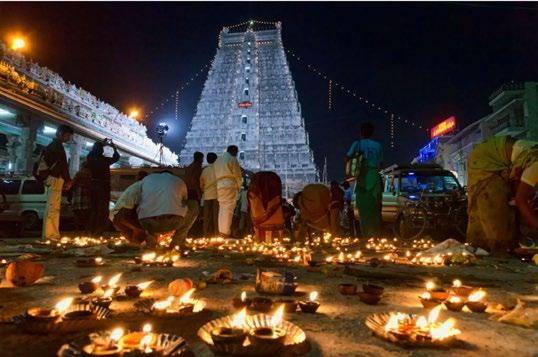


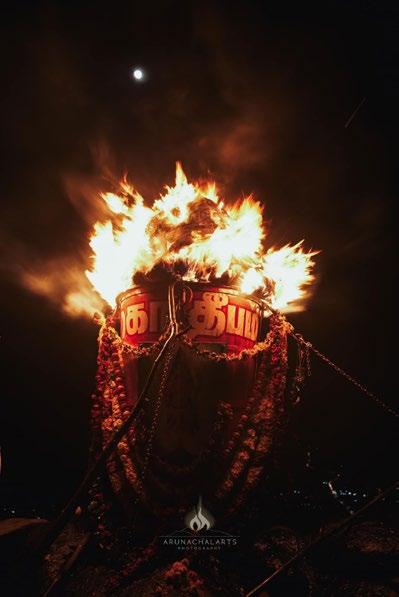
MAHADEEPAM: THE COSMIC FLAME ON ARUNACHALA HILL
The spiritual zenith of Karthigai Deepam arrives at sunset on the final day, when the Mahadeepam is lit atop Arunachala Hill. A massive cauldron filled with ghee and topped with a giant wick is ignited, producing a flame visible from tens of kilometres away. As the flame rises against the twilight sky, the town erupts in chants of devotion, temple bells, and collective silence. For devotees, witnessing the Mahadeepam is believed to erase karmic burdens and bestow spiritual clarity. The hill, crowned with fire, stands as a timeless reminder of Shiva’s formless, infinite nature.
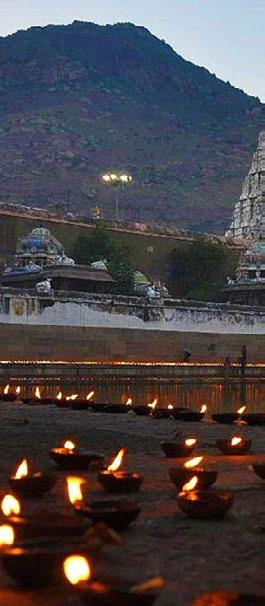
GIRIVALAM DURING KARTHIGAI DEEPAM
Girivalam holds exceptional significance during the festival period. Walking the 14-kilometre path around Arunachala Hill during Karthigai Deepam is believed to multiply spiritual merit manifold. On the night of the Mahadeepam, lakhs of devotees undertake Girivalam barefoot, guided by rows of lamps lining the path. The experience is deeply meditative — a silent communion between the seeker, the sacred hill, and the divine flame above. Beyond the hilltop flame, Karthigai Deepam is equally defined by the countless lamps lit across Tiruvannamalai. Homes, shops, temples, streets, and
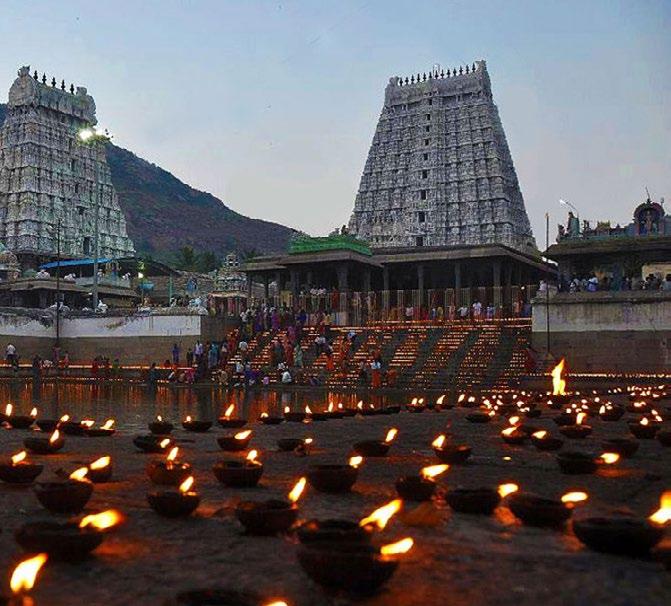
public spaces glow with earthen diyas, creating a unified cityscape of light. Lighting lamps is both a spiritual and social act — families gather at dusk to offer prayers, decorate entrances with kolams, and reaffirm faith through simple yet profound ritual. The collective illumination symbolises the triumph of wisdom over ignorance and hope over darkness. Karthigai Deepam is not only a religious observance but also a cultural and economic lifeline for Tiruvannamalai. Local artisans craft lamps, brassware, ritual vessels, and religious items using traditional techniques passed down through generations. Markets flourish with devotional goods, flowers, textiles, and offerings. Temporary
stalls and food centres serve pilgrims, while hospitality establishments witness peak occupancy. The festival sustains livelihoods while preserving intangible cultural heritage.
In recent decades, Tiruvannamalai has emerged as a global spiritual destination. Seekers from Europe, the Americas, Southeast Asia, and Australia arrive during Karthigai Deepam, drawn by the universal symbolism of light and the spiritual legacy of the town. The teachings of Ramana Maharshi, who spent much of his life at the foot of Arunachala, have contributed significantly to the town’s international spiritual stature.
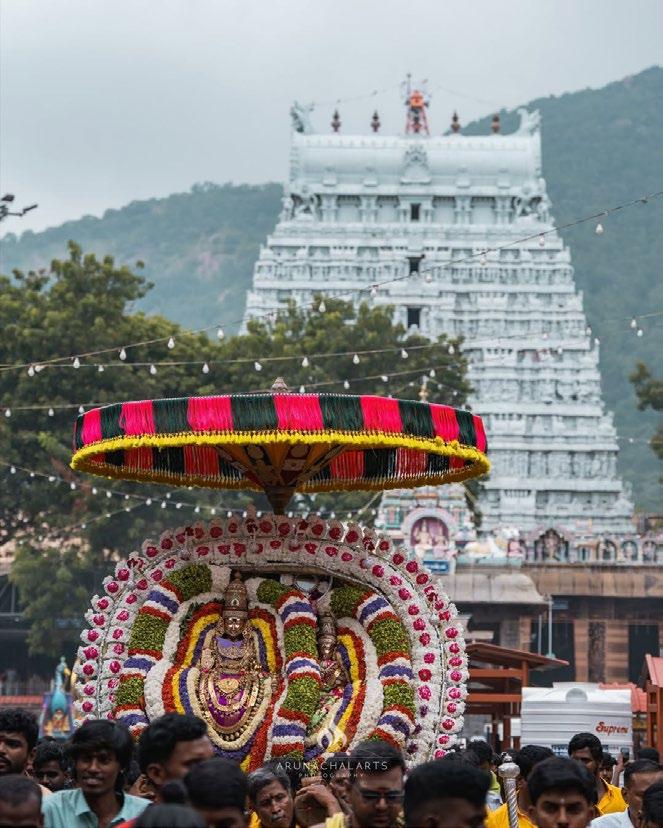
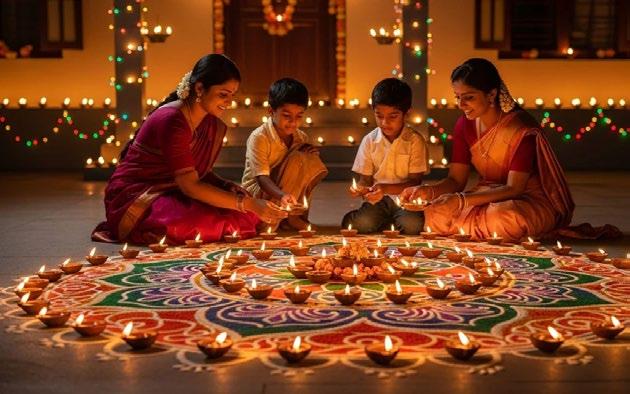
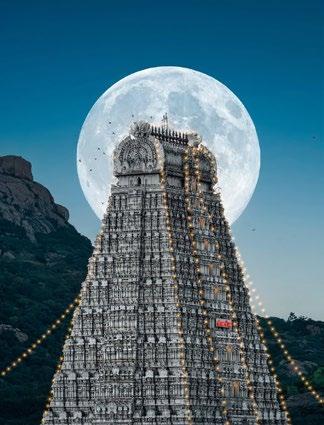
During the festival, ashrams and meditation centres report a convergence of diverse spiritual traditions united by reverence for Arunachala. Hosting a tenday festival of this magnitude requires extraordinary coordination. Temple authorities, civic administration, and volunteers work in unison to manage crowds, ensure safety, maintain sanitation, and provide medical services. Special arrangements are made for elderly devotees, women, children, and persons with disabilities. The seamless integration of traditional observance with modern administration ensures that the sanctity of the festival remains intact even amid vast participation.
KARTHIGAI DEEPAM 2025
As Tiruvannamalai prepares for the ten-day Karthigai Deepam Festival 2025, the celebration stands as a powerful testament to the endurance of faith, ritual, and collective devotion. From the first hoisting of the temple flag to the final blaze of the Mahadeepam atop Arunachala Hill, the festival unfolds as a sacred narrative of light, surrender, and spiritual awakening. In an ever-changing world, Karthigai Deepam remains timeless — a reminder that divine light continues to guide humanity, just as it has for centuries, from the sacred summit of Arunachala to the hearts of millions who gather in Tiruvannamalai year after year.




INCREDIBLE TAMILNADU Special Initiatives


GST 2.0 SPARKS E COMMERCE SURGE IN
TAMIL NADU

Tamil Nadu’s retail landscape is witnessing a significant transformation following the introduction of GST 2.0, a simplified Goods and Services Tax structure aimed at reducing compliance complexity and lowering tax rates on key categories. According to Finance Minister Nirmala Sitharaman, these reforms have dir`y7ectly contributed to a 22% growth in e commerce trade across the state, making November 2025 a landmark month for online retail.

How GST 2.0 Boosted E Commerce
Simplified Tax Structure: GST 2.0 replaced multiple slabs with a more streamlined two-tier system, reducing the tax burden on essential and highdemand products like consumer electronics, home appliances, and fast-moving consumer goods (FMCG).Lower Costs for Consumers: By reducing effective rates, the reforms have lowered product costs, increasing affordability and driving higher volumes in both online and offline channels.
Retailer Participation: Over 1,000 local traders in Coimbatore and surrounding districts actively participated in discussions around GST 2.0, emphasizing the role of tax reforms in boosting business confidence.
E-Commerce and Festive Sales Surge
Online Retail Expansion: Major e commerce platforms operating in Tamil Nadu reported higher order volumes, particularly in electronics, apparel, and consumer goods. Festive Shopping Boom: November coincides with the start of the festive season, amplifying the effect of tax reforms. Dealers reported strong sales in TVs, refrigerators, air conditioners, and smartphones, reflecting increased consumer spending power. Local & Regional Impact: Cities like Chennai, Coimbatore, Madurai, and Tiruchirappalli recorded the highest spikes in e commerce transactions, demonstrating that both metro and tier 2 urban centers are benefiting.

Traders’ Perspective
Traders have welcomed GST 2.0 as a game-changer for small and medium enterprises (SMEs):
“The new GST structure has reduced our tax compliance load and allowed us to offer competitive prices to customers. This festive season, online sales have never been better,” said Ramesh Kumar, president of the Tamil Nadu Vanigar Sangam (Traders’ Association).

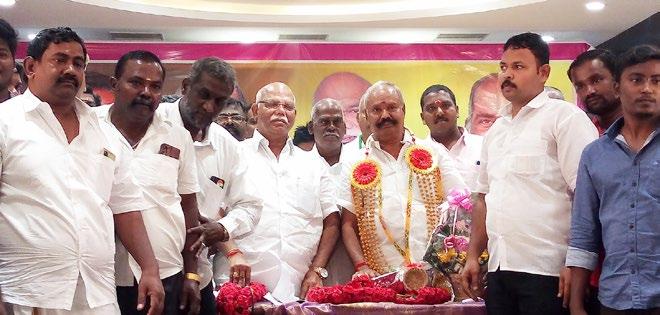

Implications for Tamil Nadu’s Retail Sector
Stronger Consumer Confidence: Lower taxes translate into higher disposable income and greater willingness to spend. Digital Adoption: Small retailers are increasingly integrating with online platforms, ensuring that even local businesses benefit from e-commerce growth. Supply Chain Efficiency: GST 2.0 encourages smoother movement of goods across districts, reducing bottlenecks and inventory costs. Long-Term Growth: With reforms reinforcing e-commerce, Tamil Nadu is emerging as a model state for digital retail innovation and compliance-friendly business environments.
GST 2.0 is more than a fiscal reform; it is a catalyst for modern retail evolution. By driving higher online sales, supporting SMEs, and encouraging consumer spending during festive months, the reform is set to reshape Tamil Nadu’s retail ecosystem. As the state
leverages technology, local production, and smarter tax structures, November 2025 marks a new era of growth and opportunity for retailers, traders, and consumers alike.
GST 2.0 Sparks an E-Commerce Surge in Tamil Nadu
Tamil Nadu is witnessing a powerful digital retail transformation, and at the center of this shift stands GST 2.0 — the improved, technologydriven version of India’s Goods and Services Tax regime. Designed to simplify compliance, reduce paperwork, and boost interstate trade, GST 2.0 has unlocked a new era of growth for online businesses across the state. Once challenged by complex tax processes and logistical hurdles, Tamil Nadu’s e-commerce ecosystem is now growing faster than ever, driven by smoother operations, faster registrations, and unified taxation under GST 2.0.
WHAT IS GST 2.0?
GST 2.0 is the upgraded model of India’s GST system aimed at making business easier. It introduces:
• Faster digital registration and approvals
• Automated invoice matching
• Simplified return filing
• Real-time ITC (Input Tax Credit) updates
• Stronger tracking of online transactions For the first time, small sellers, home-grown brands, and regional businesses in Tamil Nadu can scale online without being overwhelmed by compliance.






WHY TAMIL NADU IS BENEFITING THE MOST
Tamil Nadu has always been a manufacturing and trading powerhouse. With GST 2.0, the state’s natural strengths have accelerated the shift toward online retail.
MSMEs GO DIGITAL
Thousands of small textile, electronics, leather, and FMCG units are joining platforms like Amazon, Flipkart, Meesho, and their own D2C websites because GST 2.0:
• Makes interstate selling easier
• Reduces cost burdens
• Enables transparent tax credits This has opened national markets for Tamil Nadu’s MSMEs.
LOGISTICS & WAREHOUSING BOOM
The state’s strong road networks and manufacturing clusters have attracted large fulfillment centers and last-mile delivery hubs. GST 2.0 has further expanded this by removing state-to-state tax barriers.Chennai, Coimbatore, Tiruppur, and Madurai are emerging as e-commerce logistics hotspots.
RISE OF REGIONAL BRANDS
From fashion labels in Tiruppur to organic brands in Coimbatore and electronics sellers in Chennai, regional Tamil Nadu brands are scaling nationwide thanks to uniform taxation and simpler compliance.
JOB CREATION IN URBAN & RURAL AREAS
E-commerce supported by GST 2.0 has created new jobs in:
• Delivery
• Packaging
• Warehouse handling
• Digital marketing
• Online customer service
This has widened employment opportunities across cities and semi-urban regions.
GEN Z & YOUTH-LED DIGITAL SHOPPING
Tamil Nadu’s young population is one of the most active online shopping groups in India. GST 2.0’s smoother digital ecosystem has encouraged:
• College entrepreneurs launching their own brands
• Influencer-led e-commerce stores
• Quick-commerce growth in Chennai and Coimbatore
The ease of setting up GST numbers and digital invoices has dramatically lowered entry barriers.
THE BIGGER ECONOMIC IMPACT
GST 2.0 is transforming Tamil Nadu’s digital economy by:
• Encouraging transparency
• Reducing compliance fraud
• Improving tax collection
• Increasing trust between online sellers and buyers
With more small businesses entering the formal economy, Tamil Nadu’s overall economic health is strengthening.
GST 2.0 has become the engine driving Tamil Nadu’s e-commerce revolution. By simplifying processes and boosting digital trade, it has unlocked opportunities for MSMEs, empowered young entrepreneurs, and transformed how people shop and sell. As technology, logistics, and policy continue to align, Tamil Nadu is well on its way to becoming one of India’s strongest digital commerce hubs.

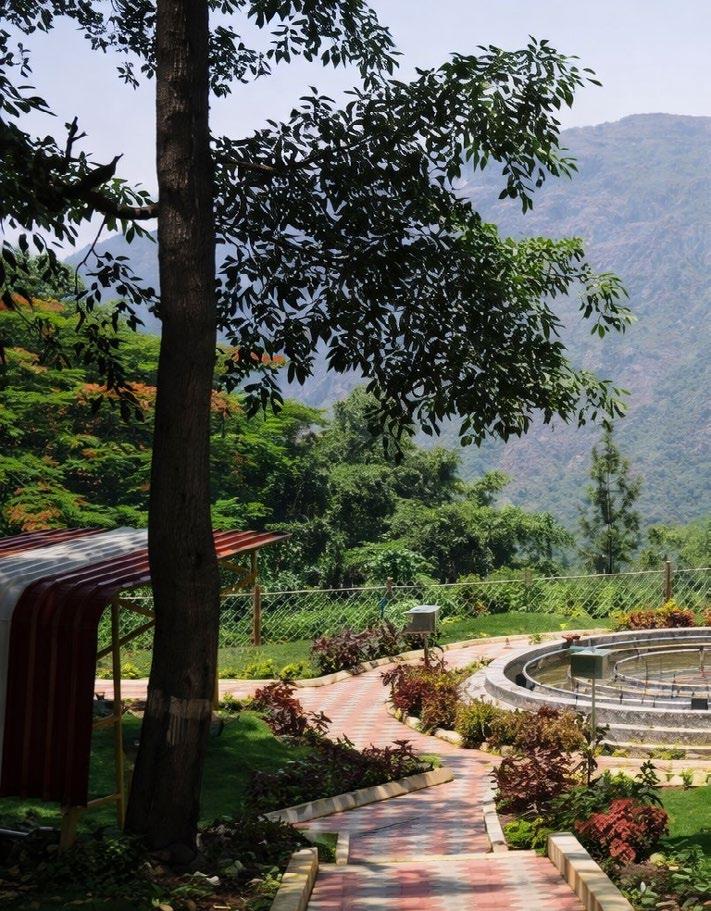
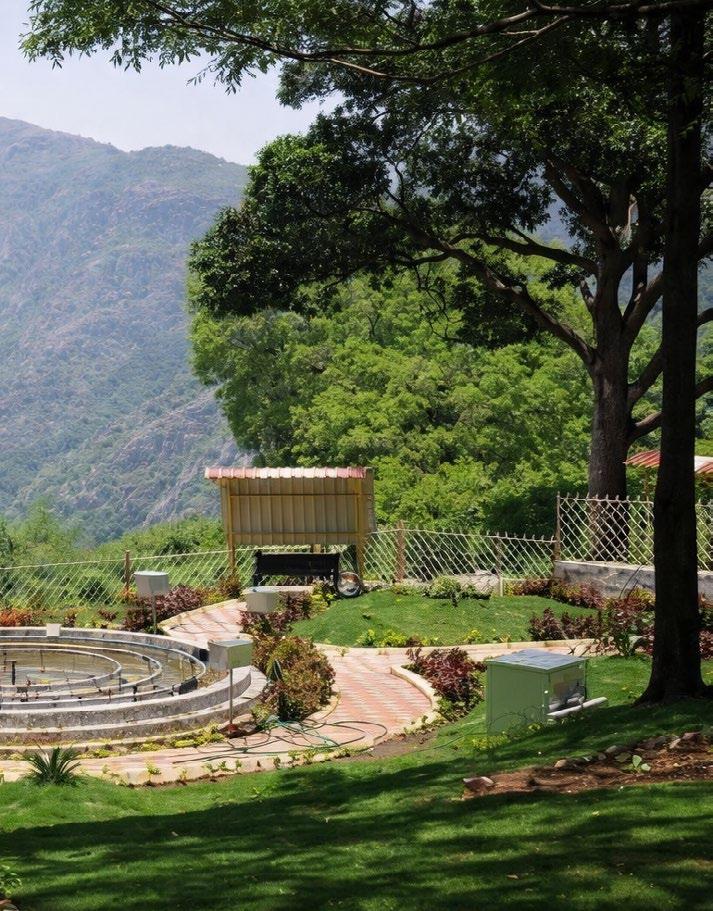
INCREDIBLE TAMILNADU & Travel Tourism
KOLLI HILLS THE HIDDEN
PARADISE OF NAMAKKAL
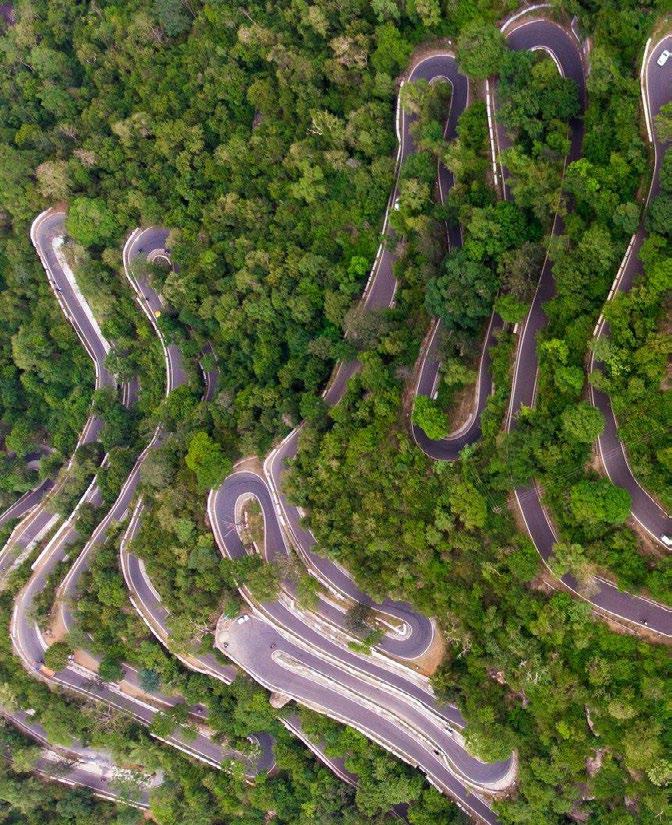
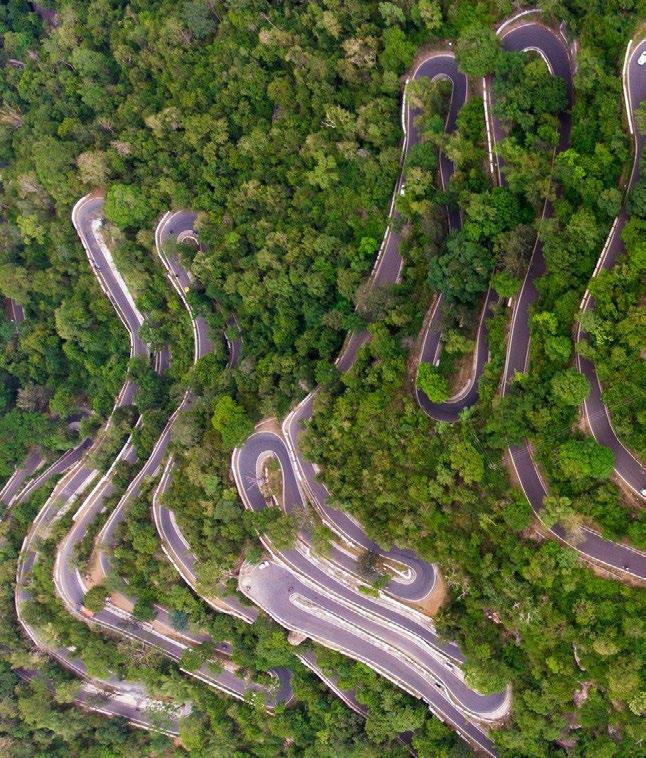
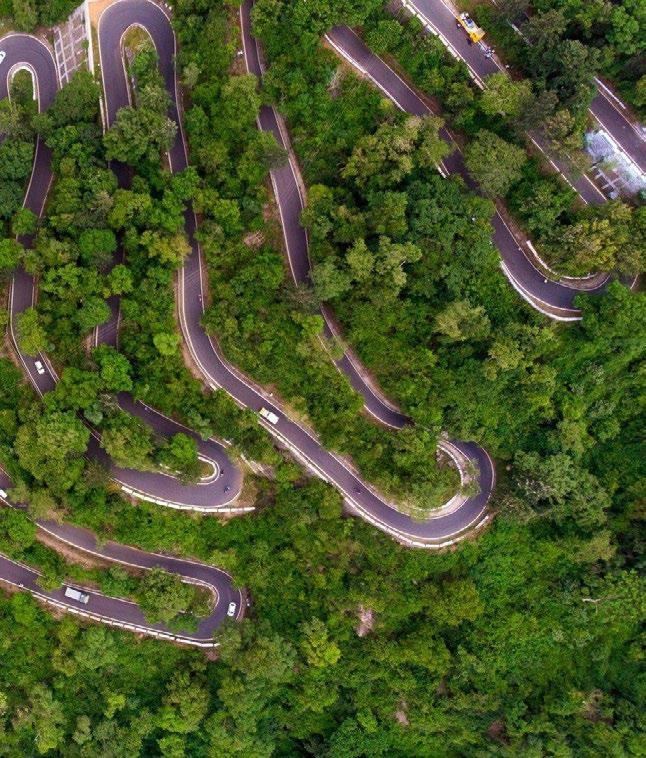
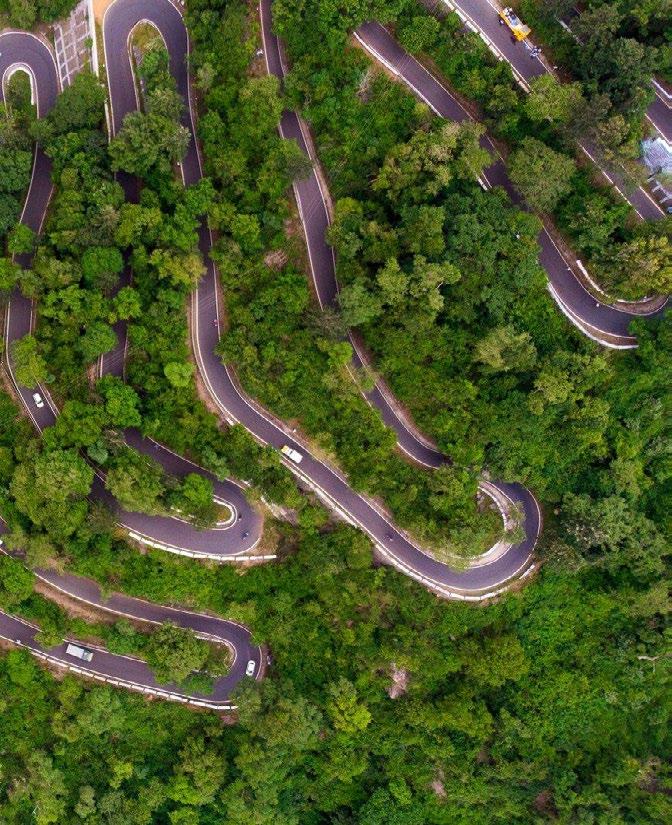
Rising majestically from the plains of Namakkal district, Kolli Hills, or Kolli Malai, is one of Tamil Nadu’s most captivating highland regions. Nestled within the Eastern Ghats, these hills reach an elevation of nearly 1,300 meters above sea level, offering travellers a cool, mist-laden climate throughout the year. Kolli Hills is celebrated not only for its stunning natural beauty, but also for its rich cultural heritage, mystical legends, medicinal plants, and pristine ecological balance. Unlike the heavily commercialized hill stations of the Western Ghats, Kolli Hills retains a peaceful, unspoiled charm, attracting travellers seeking tranquility, adventure, and a connection to nature.
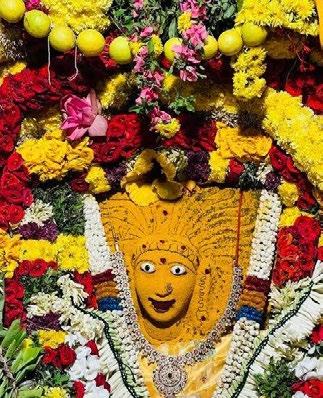
Every visitor to Kolli Hills embarks on more than a journey of sightseeing; it is a journey into history, folklore, wellness, and adventure.
Legends and Historical Significance
The allure of Kolli Hills is deeply entwined with mythology and history. Ancient Tamil literature mentions Kollipavai, the protective spirit of the hills, believed to safeguard the region from evil and misfortune. Local folklore also celebrates Valvil Ori, a legendary chieftain renowned for his exceptional skills in archery, bravery, and magnanimity. Valvil Ori’s reign is remembered for his strategic defines of the hills, promotion of agriculture, and the welfare of his people. Even today, villagers and tribal communities narrate tales of his heroic deeds and wisdom during local festivals and storytelling sessions. The hills are home to the Malayali tribes, whose culture has preserved centuriesold traditions, rituals, and agricultural knowledge. Visitors can interact with these communities, experiencing first-hand their traditional crafts, songs, dances, and medicinal practices, which have been passed down for generations. This cultural immersion transforms a simple visit into a rich educational and spiritual experience.
The Iconic 70 Hairpin Bends
One of the most exhilarating aspects of Kolli Hills is its 70 hairpin bends, a winding mountain road that ascends from the base to the summit. Each bend is numbered, offering travellers a unique sense of progression and discovery. As one climbs higher, the view opens up to panoramic valleys, rolling forests, and cascading waterfalls, providing countless opportunities for photography and reflection. These bends have become a major attraction for bikers, road-trip enthusiasts, and adventure travellers, who are drawn to the thrill of the climb, the crisp mountain air, and the scenic beauty of the Eastern Ghats. Driving through these hairpin curves is not just a journey; it is a test of skill, endurance, and appreciation for nature’s grandeur.


Agaya Gangai Waterfall
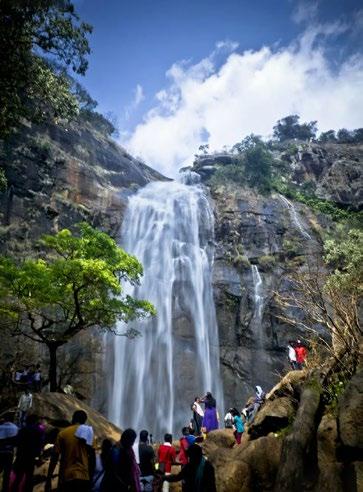
Natural Wonders of Kolli Hills
Agaya Gangai Waterfalls
The most celebrated natural feature of Kolli Hills is the Agaya Gangai Waterfall, aptly nicknamed “The Ganges of the Sky.” Cascading nearly 300 feet into the dense valley below, it is an awe-inspiring sight, especially during the monsoon season when its waters roar with thunderous power. The trek to the waterfall involves descending nearly 1,300 stone steps, meandering through lush forests, medicinal plants, and rocky terrain, culminating in a breathtaking view of mist-laden cascades and vibrant rainbows formed in the spray. The waterfall is both a photographer’s dream and a spiritual experience, as the sound of flowing water and the fragrance of forest flora create a meditative atmosphere.
Arapaleeswarar Temple
Nestled amidst thick forests, the Arapaleeswarar Temple is an ancient shrine dedicated to Lord Shiva, believed to be over 1,000 years old. The temple is a significant spiritual landmark where visitors and devotees alike can experience the serene energy of centuries-old worship. Surrounded by natural springs, dense vegetation, and cool breezes, the temple offers a tranquil retreat that complements the adventure and excitement of the hills.
Other Scenic Highlights
Kolli Hills is dotted with smaller waterfalls such as Silver Cascade and numerous mini falls, each offering picturesque spots for photography, picnics, and refreshing dips. The hills also feature numerous viewpoints, perfect for observing sunrises and sunsets that bathe the valley in golden hues. These natural wonders make every journey through Kolli Hills an experience of continuous discovery and scenic delight.
Special Features That Make Kolli Hills Unique
Medicinal Plants and Herbal Richness
Kolli Hills is home to an extraordinary variety of medicinal plants and herbs, many of which are endemic to the region. Local healers, known as Vaidyas, use these herbs in traditional Siddha and Ayurvedic treatments, making the hills a living sanctuary of natural medicine.Travelers can explore Tampcol Herbal Farm, which cultivates rare species and educates visitors on their healing properties.

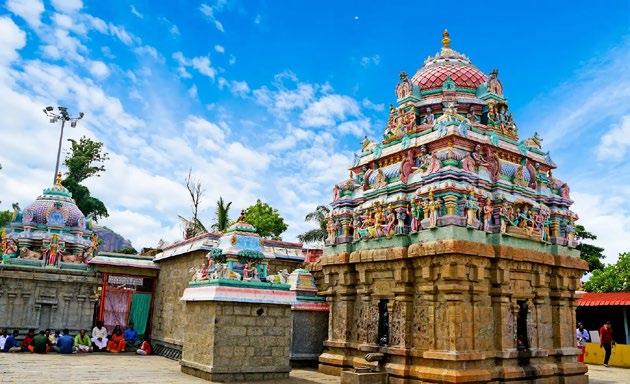
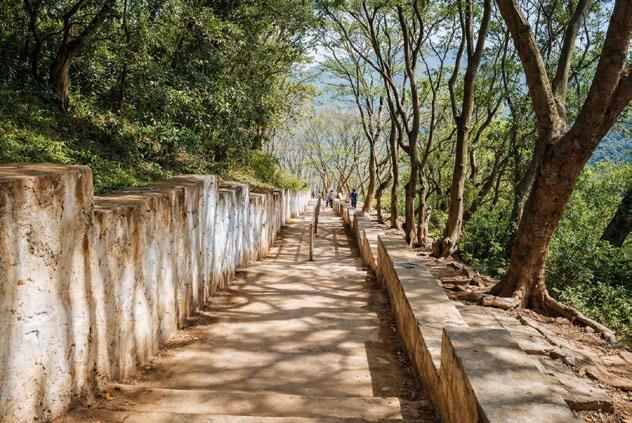
Arapaleeswarar Temple
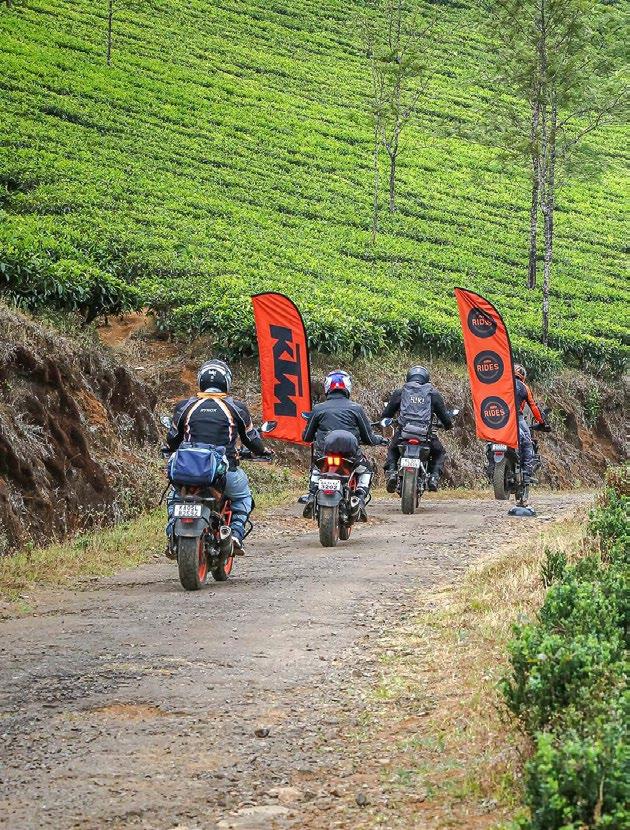
Biodiversity and Wildlife
The hills are rich in flora and fauna, including rare birds, butterflies, reptiles, and endemic plants. Bird watchers and nature enthusiasts often witness species that are found nowhere else in Tamil Nadu, making Kolli Hills a hotspot for eco-tourism and wildlife observation.
Cultural Immersion with Tribal Communities
The Malayali tribes maintain a simple, sustainable lifestyle that is deeply connected to the land. Their festivals feature folk dances, bamboo music, and harvest rituals, providing visitors with an authentic glimpse of tribal culture. Tourists are encouraged to engage respectfully with the community, participate in traditional crafts, and learn about their agricultural and herbal practices.
Organic Farming and Specialty Produce
Kolli Hills produces some of Tamil Nadu’s finest jackfruits, oranges, pepper, small millets, and bananas, all grown organically. Many visitors enjoy tasting fresh fruits, purchasing local produce, or even participating in farm activities, creating a hands-on connection with the land and its people.
Adventure and Outdoor Activities
The hills offer a range of adventure activities such as trekking, mountain biking, nature walks, waterfall exploration, and camping. The challenging terrain, combined with stunning scenery, makes every outdoor activity rewarding, safe, and memorable.
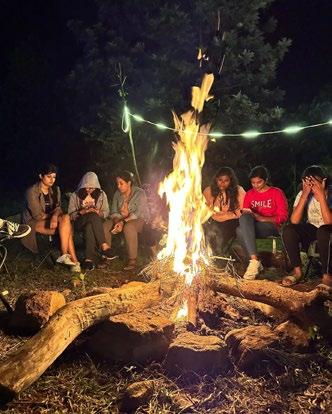
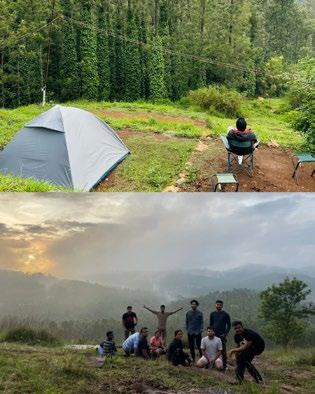

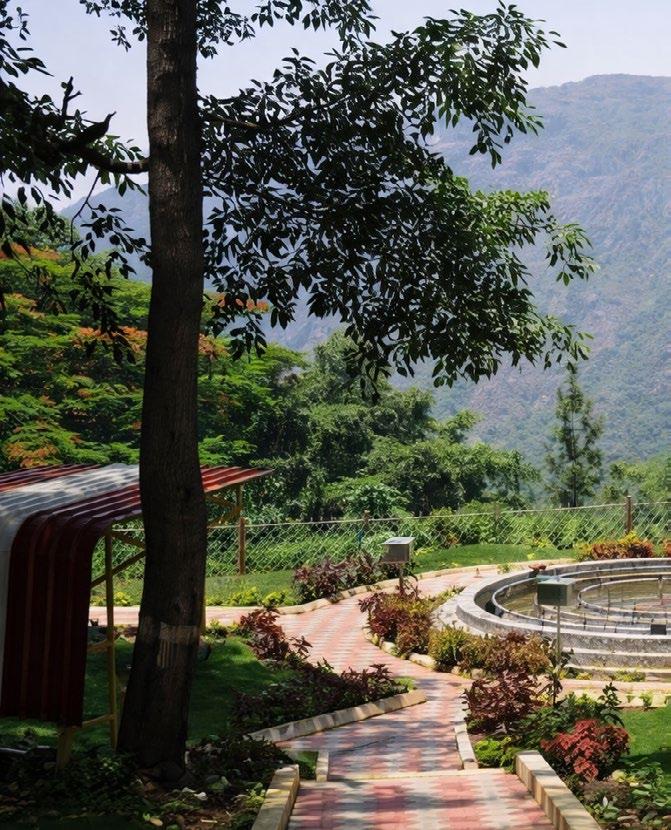
Experiencing Kolli Hills
Visiting Kolli Hills is an immersive journey for all the senses. Early morning mists rise over the valleys, filling the air with a refreshing chill. The forested slopes are alive with the scent of wildflowers, the sound of birdsong, and the distant roar of waterfalls. Travelers often find themselves reconnecting with nature, history, and inner peace. The local cuisine, crafted from millets, jackfruit, bamboo shoots, wild honey, and herbal teas, offers both nourishment and a taste of the region’s authenticity. Dining in a hillside setting with panoramic views enhances the culinary experience, making each meal a reflection of Kolli Hills’ natural abundance and cultural richness.
Why Kolli Hills Is Exceptional
Kolli Hills is distinct from other tourist destinations because it offers a perfect blend of nature, adventure, wellness, and culture. Its unspoiled forests, cascading waterfalls, challenging hairpin roads, and tribal communities remain largely untouched by mass tourism, preserving the ecological and cultural integrity of the region. Travelers are treated to an experience where every bend in the road, every step along a forest trail, and every interaction with the locals tells a story — a story of harmony between humans and nature, history and legend, serenity and thrill.
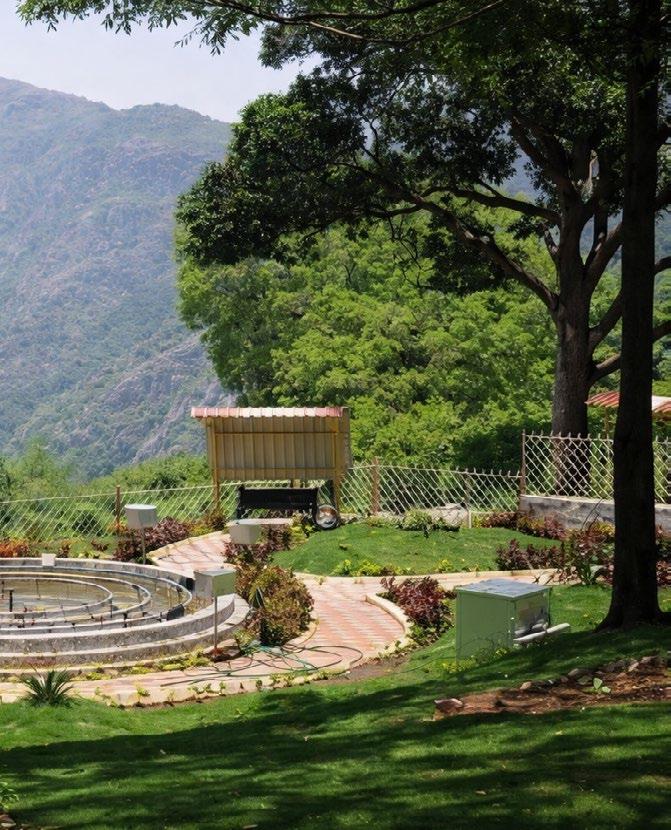
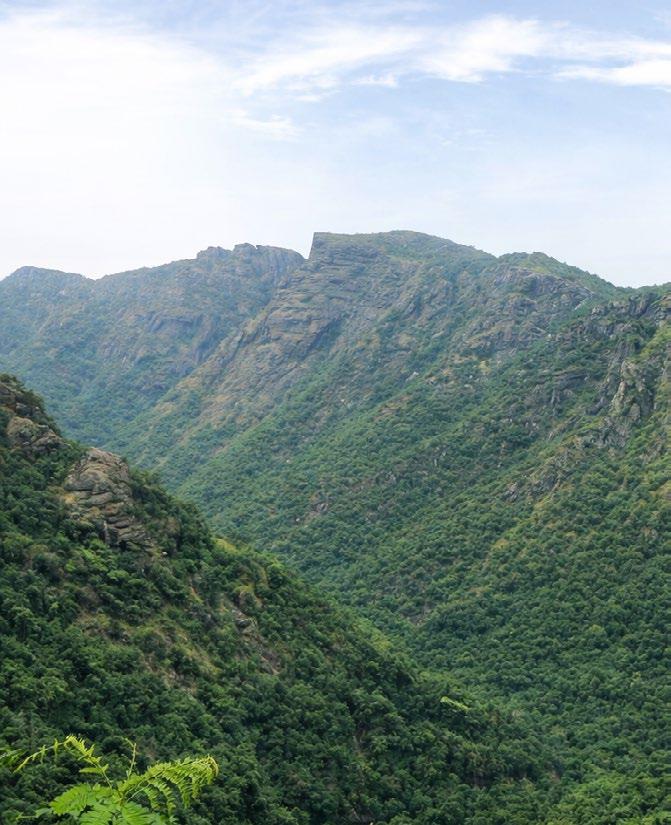
Kolli Hills is more than a destination; it is a sanctuary for the body, mind, and soul. From the roar of Agaya Gangai Waterfall to the serenity of Arapaleeswarar Temple, from the thrill of the 70 hairpin bends to the cultural richness of Malayali tribal life, Kolli Hills offers a holistic experience unlike any other. Its blend of natural beauty, adventure, spirituality, and cultural depth ensures that every visitor leaves with memories of awe, wonder, and rejuvenation. For those seeking to immerse themselves in nature, heritage, and adventure, Kolli Hills stands as a hidden paradise in the heart of Tamil Nadu, ready to inspire and enchant all who journey to its heights.
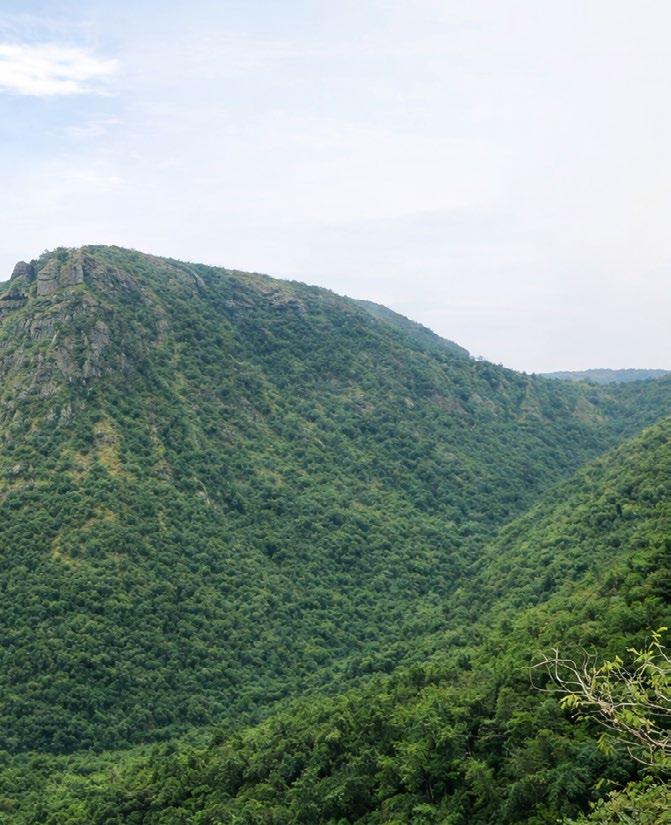
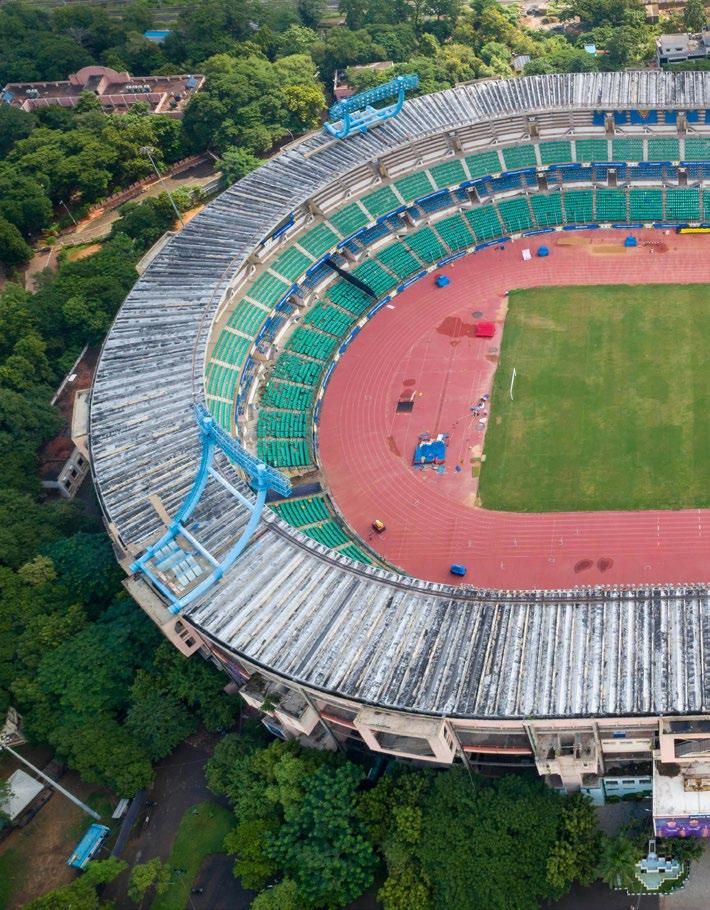
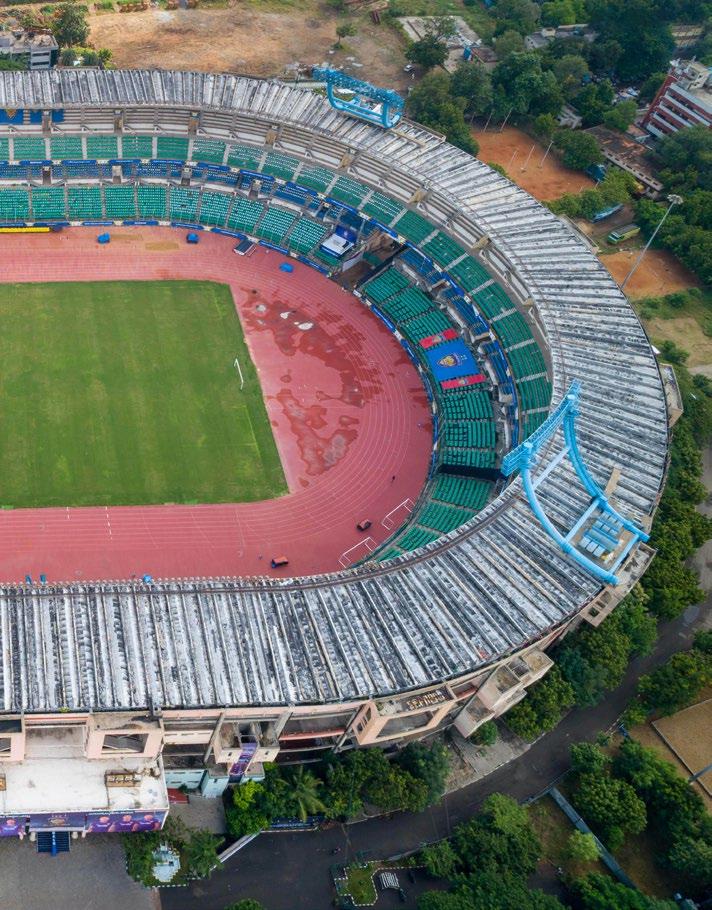
INCREDIBLE TAMILNADU Sports &Youth Development


SPORTS & YOUTH DEVELOPMENT
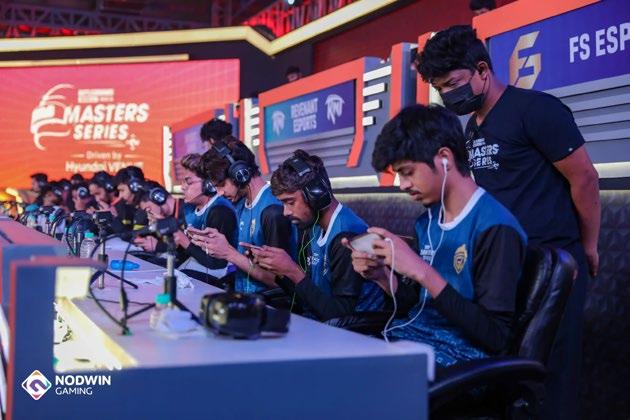
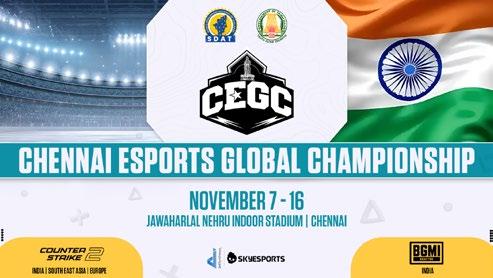
Sports Development Authority of Tamil Nadu’s flagship esports initiative, the Chennai Esports Global Championship (CEGC), has announced two major tournaments featuring Counter-Strike 2 (CS2) and Battlegrounds Mobile India (BGMI) in collaboration with Skyesports. Both will take place at the Ja-waharlal Nehru Indoor Stadium this November, marking one of the most ambitious esports celebra-tions ever hosted in India. The CEGC – Counter-Strike 2 will be held from November 7 to G, bringing together top teams from India, Southeast Asia, and Europe to compete for a USD 50,000 prize pool.This prestigious tournament will be part of the Valve Regional Standings, making it one of the key events to watch and positioning Chennai as a rising destination for global esports. Registrations are open across all three regions, with the top two teams from each qualifier advancing to the Chennai Playoffs.
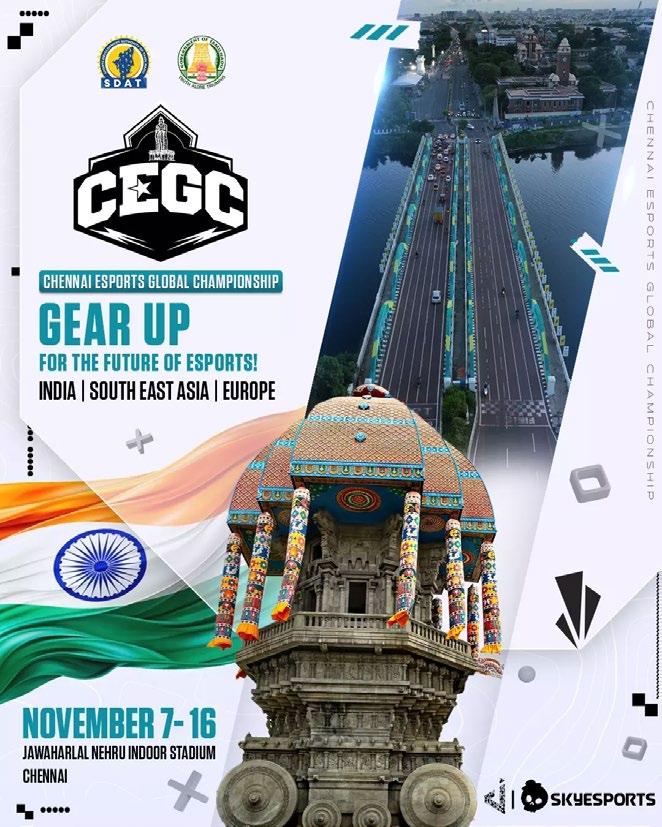


The CEGC – BGMI tournament will follow from November 14 to 16, featuring India’s leading mobile esports teams competing for national glory and share of the INR 50,00,000 prize pool. Details about the tournament format, prize pool, and invited teams will be revealed soon. The Opening Cere-mony on November 7 will bring together global stakeholders, government representatives, and esports leaders to inaugurate the championship. This moment will mark the beginning of a new chapter in India’s esports journey, establishing Chennai as a hub that connects local talent with global opportunity.CEGC isn’t a onetime tournament; it’s the foundation for India’s longterm global esports expansion. It blends community, culture, and competition to build sustainability ra-ther than short-lived spectacle. An official initiative by the Government of Tamil Nadu, envisioned by the Hon’ble Deputy Chief Minister of Tamil Nadu, it represents a historic milestone as the first Indian state governmentbacked international esports championship.
Dr Atulya Misra IAS, Additional Chief Secretary, Youth Welfare and Sports Development Depart-ment, said “Tamil Nadu is proud to pioneer the convergence of technology and sport. Having suc-cessfully incorporated esports into the Chief Minister’s Trophy, we are now ready to showcase our state’s prowess on the world stage. This landmark initiative is aligned with the vision of the Hon’ble Deputy Chief Minister, Thiru. Udhayanidhi Stalin, to promote emerging and futuristic sports disci-plines and empower the state’s massive youth demographic.”
Meghanatha Reddy IAS, Member Secretary of the Sports Development Authority of Tamil Nadu (SDAT), added, “Tamil Nadu is proud to champion this new era of esports in India. The Chennai Es-ports Global Championship reffects our vision to make the state a global esports destination while creating opportunities for young players, creators, and professionals. Beyond competition, it will strengthen industries like broadcasting, production, and content creation, generating jobs and fos-tering growth for our creative economy.” Shiva Nandy, Founder and CEO of Skyesports, said, “The Chennai Esports Global Championship is more than an event. It is India’s declaration that we are ready to build, host, and sustain a global esports ecosystem rooted in local talent and creativity. With the support of SDAT, we aim to make Chennai a bridge between Indian esports and the global scene, much like how Saudi Arabia’s Es-ports World Cup became a worldwide hub for the industry.”
By combining competition, culture, and tourism, the CEGC will deliver a festival-like experience that celebrates both gaming and Tamil Nadu’s heritage, while positioning India within the global esports landscape.


According to IMARC Group, the global esports market was valued at USD 2.08 billion in 2024 and is projected to grow to USD 10.06 billion by 2033, at a CAGR of 17.05 percent. The Asia-Pacific region currently leads the industry, accounting for over 30 percent of global market share. Within this, In-dia continues to rise as one of the fastest-growing gaming markets, with over 453 million gamers in 2023, expected to surpass 730 million by 2028.

VISHAL TK
REWRITES INDIAN ATHLETICS
HISTORY WITH RECORDBREAKING 400M RUN
Indian athletics witnessed a defining moment when Vishal TK delivered a sensational performance in the men’s 400 metres, setting a new national record and announcing the arrival of a new force in the quarter-mile event. Competing at the Inter-State Senior Athletics Championships in Chennai, the young sprinter clocked an astonishing 45.12 seconds, becoming the fastest Indian ever over the dis-tance. The race unfolded at the Jawaharlal Nehru Stadium, where Vishal showcased exceptional com-posure and strength through the final bend and home straight. His timing erased the long-standing national record of 45.21 seconds, which had stood since 2019. With this run, Vishal not only claimed gold but also placed himself firmly among Asia’s emerging 400m talents.

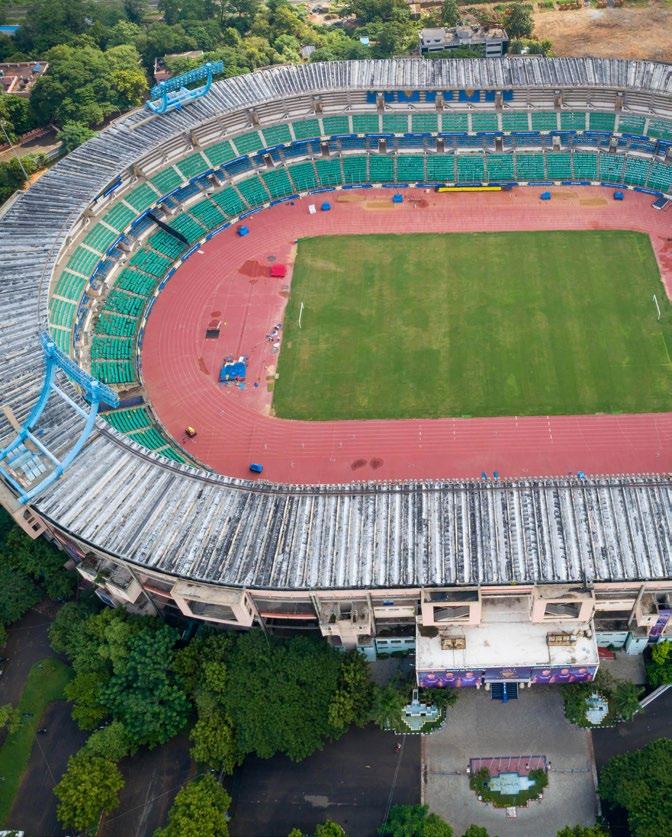
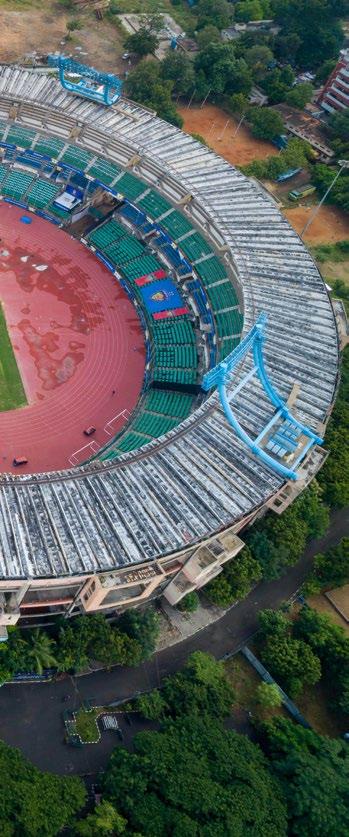
What makes Vishal TK’s achievement even more remarkable is how recently he transitioned to the 400m. Until not long ago, he was primarily focused on the 100m and 200m sprints, events that rely heavily on explosive speed. The move to the 400m — a race that demands a rare blend of speed, endurance, and tactical intelligence — required a complete transformation in training and mindset. His early attempts in the event were challenging, with races that tested his stamina and race con-trol. However, instead of viewing these as setbacks, Vishal treated them as learning experiences. With each competition, he refined his pacing, strengthened his finish, and gradually began to dom-inate the distance.
The Role of Coaching and Discipline
A key factor behind Vishal’s meteoric improvement has been structured coaching and an uncom-promising training routine. Working under the guidance of Jason Dawson,Vishal focused on mastering the fundamentals of the 400m — from efficient stride mechanics and strength conditioning to understanding how to distribute energy across the lap. Dawson has often highlighted Vishal’s ability to absorb feedback and implement it immediately. This coachability, combined with relent-less discipline, helped the sprinter sharpen his technique and gain confidence against experienced competitors. Training sessions emphasized not just physical preparation but also mental resilience, ensuring Vishal could execute his race plan under pressure. The previous national record was held by Muhammed Anas Yahiya, a name synonymous with In-dia’s resurgence in the 400m over the past decade. By surpassing that mark,Vishal has taken on the responsibility of carrying forward India’s legacy in the event — and pushing it further. His 45.12-second run is significant not only nationally but also in the broader Asian context, placing him within striking distance of elite continental standards. For Indian athletics, it signals renewed depth and competition in the men’s 400m, an event that has historically been one of the country’s strongest track disciplines.

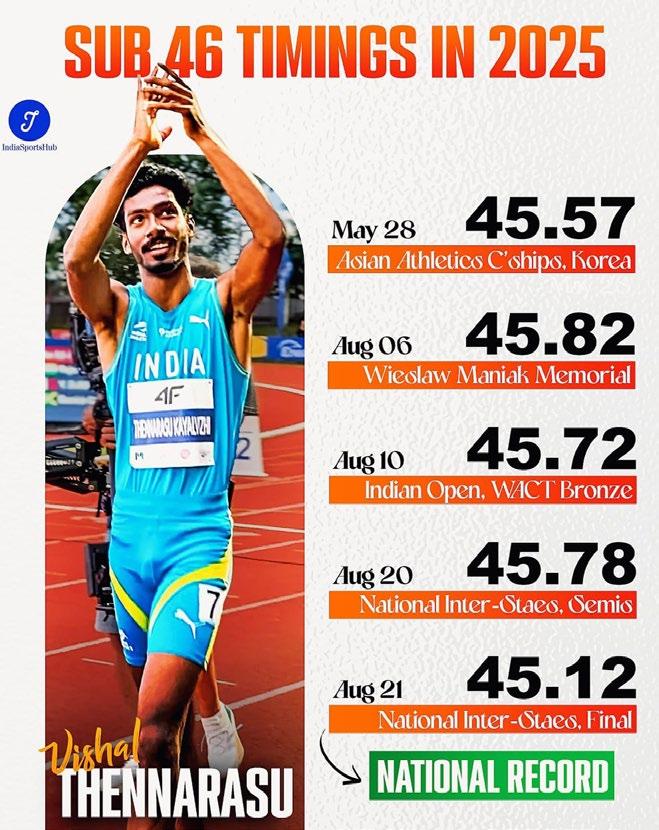
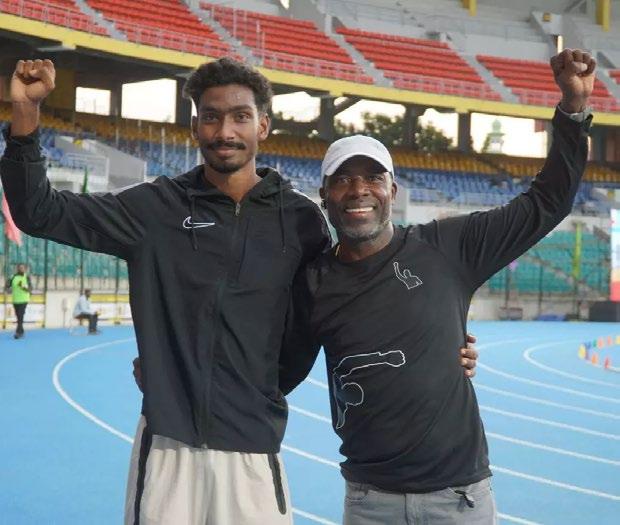
A Moment of Personal Triumph
For Vishal, the record-breaking race was the culmination of months of intense preparation and be-lief. Crossing the finish line, he knew instantly that something special had happened.The emotion of achieving a personal best while setting a national benchmark was evident — a reward for sacri-fices made both on and off the track. Those close to him describe Vishal as focused and grounded, someone who prefers letting performances speak louder than words. His journey from a promis-ing sprinter to a national record-holder reflects not just talent, but patience and perseverance.With the national record now to his name, Vishal TK’s ambitions extend well beyond domestic competitions. The focus is shifting toward major international meets, including upcoming Asian and global championships. The goal is clear: to consistently
run competitive times on the world stage and challenge the best quarter-milers in the region. Experts believe that with continued support, exposure, and injury-free training, Vishal has the potential to lower his own record further. His smooth running style and strong finish suggest there is more to come as he gains experience in high-pressure international races. Vishal TK’s achievement represents more than a single race or record. It marks the rise of a new generation of Indian sprinters who are fearless, well-trained, and globally ambitious. His success serves as inspiration for young athletes across the country, proving that with the right guidance and determination, worldclass performances are within reach. As Indian athletics looks ahead to future championships, Vishal’s name now stands at the forefront of the 400m narrative — a symbol of speed, resilience, and the promise of even faster times ahead.









INCREDIBLE TAMILNADU

( A Member M/s. Worldwide Media Corporation Group USA )
Exciting opportunity for all those who want to share their most memorable, Interesting. Amazing, Pro-active & Growth oriented activities & Experiences covering areas such as
• Fashion, Trend & Lifestyle
• Culture, Tradition & Heritage
• Education, Healthcare & Wellnes
• Industries, Investments & Growth
• Travel, Tourisn & Hospitality
With Millions of Readers across the world
Stories/ Articles will be Published with your Photograph &Name.
INCREDIBLE TAMILNADU
Special Coverage & Press Release
Launguage Rights & Overseas Rights
Circulation, Subscription & Global Distributions
Advertisements & Advertorials
Featured Stories & Articles
Feedback & Customer Relationship
Dr. Kevin Francis
Dr. Andre Lubbe
Dr. George Fedrick
WWMCG Global Communications Inc.,
Rishi Wadhwa
Ms. Nancy
Email ID : aseworldwidemedia@gmail.com worldwidemediaasiapacific@gmail.com
Website : www.incredibletamilnadu.com

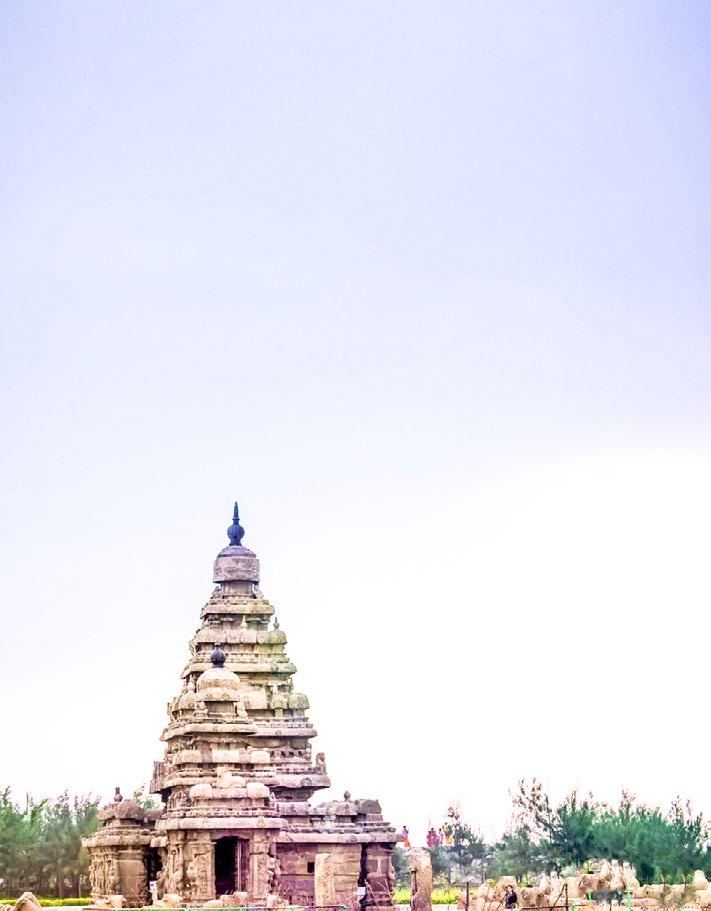



A classic reimagined. The new Datejust 31 in a white Rolesor version that combines Oystersteel with white gold and features an azzurro-blue, floral-motif dial