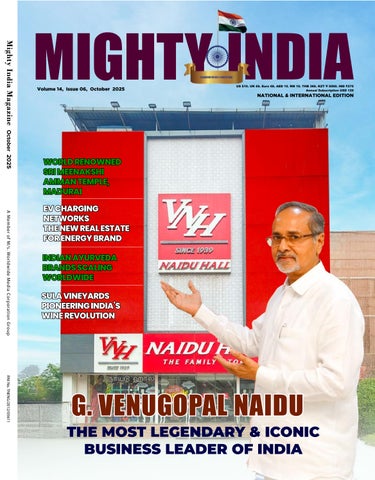
WORLD RENOWNED SRI MEENAKSHI AMMAN TEMPLE, MADURAI
EV CHARGING NETWORKS THE NEW REAL ESTATE FOR ENERGY BRAND
INDIAN AYURVEDA BRANDS SCALING WORLDWIDE
SULA VINEYARDS PIONEERING INDIA’S WINE REVOLUTION










WORLD RENOWNED SRI MEENAKSHI AMMAN TEMPLE, MADURAI
EV CHARGING NETWORKS THE NEW REAL ESTATE FOR ENERGY BRAND
INDIAN AYURVEDA BRANDS SCALING WORLDWIDE
SULA VINEYARDS PIONEERING INDIA’S WINE REVOLUTION


worldwidemediaasiapacific@gmail.com

Global Media Chief & MD
Dr. S. E. Alexander
Chief Executive Editor & ED
Dr. Andre Lubbe
Senior Executive Editors & Directors
Dr. Kevin Francis, George Fedrick
Executive Editor & SVP
Thamen, Reetu Bansal
Associate Editor & Regional Directors
Nicolas Flemings, Nitirooge Phoneprasert, Ken Obeng
Regional Director Malaysia
Shariman Abd Rahim
Creative Director
Randy Redstone
Art Directors
Richard Flemings
EVP - Asia Pacific Region Operations
Graham Starmer, Sudhakar Gupta
AGM – Corporate Communication
Swetha Naren
Vice President Operations
Amit, Rahul Shinde, Ruchi Srivatsa
Corporate Advisors & Consultants
Venkat, Mike Dobbertine, Chandrasekar, Ujagar Singh
Senior Sub Editors
Prasad ST, Ram Mohan Rao, Vinu Agarwal
Editorial Consultants, Senior Journalists & Sub Editors
Bruce N Lesly, Edna Ferber, Sreedevi, Nancy, Aarti Mukherjee, Maddy, Rachel D’souza, Vidya, Kruthiga, Ajay Franklin
Regional & Business Managers
Sanjay, Steve Mathews, Nirupama Rao, Sunil Kumar, T.P. Bhaskar, Kiran, Kishore
Circulation Managers
Shewtha Shetty, Alan, Rakesh Khanna, Subbodh Chakraborthy
Photographers
James O Corner, Nikhil, Bosh Winter
Resident Managers & Journalists
Aarthi Agarwal, Sarika, Vikram Kapoor, Swetha
Assistant Managers & Executives
Rocky, Manju, Prakash, Neetu
Senior Creative Designer
Raj, Ryan D’souza
Creative Designers
Ajeesh, Rajesh, Abhijit, Sonam, Reetu, Sonal, Ashish, Chithra






India's journey in the domains of Computer Science, Information Technology and Digitalization is one of the most compelling narratives of the 21st century. From a nation with nascent technological capabilities at the time of its independence, India has transformed into a global technology superpower. This transformation was not a sudden event but a deliberate evolution shaped by strategic policies, a vast and skilled talent pool, and a relentless entrepreneurial spirit. Today, India is not just a provider of cost-effective services but a hub for innovation, research, and cuttingedge digital infrastructure, driving significant global impact.This article delves deep into the pivotal role India has played in shaping the global tech landscape, from its emergence as an outsourcing giant to its current status as a digital innovator.
THE FOUNDATIONS: Building the Talent Pipeline -The bedrock of India's technological success is its immense human capital. Long before the IT boom, India made strategic investments in education, which would later yield a rich dividend.
ESTABLISHMENT OF PREMIER INSTITUTIONS: The creation of the Indian Institutes of Technology (IITs) in the mid-20th century was a landmark decision. These institutions, along with other top engineering colleges, became crucibles for producing world-class engineers and computer scientists. Their rigorous curriculum and focus on foundational principles ensured that Indian graduates were highly sought after by global corporations.
ENGLISH LANGUAGE PROFICIENCY: A colonial legacy, proficiency in the English language, proved to be an unexpected advantage. It allowed Indian engineers and professionals to seamlessly integrate into international project teams and effectively communicate with clients in Western countries, particularly the United States and the United Kingdom.
EARLY POLICY DECISIONS: In the 1980s, under Prime Minister Rajiv Gandhi, a conscious effort was made to liberalize the computer
import policy, moving away from a protectionist stance. This, coupled with the establishment of organizations like the Centre for Development of Advanced Computing, which developed India's first indigenous supercomputer, PARAM, laid the groundwork for future growth. The Ascent of the IT Services and Outsourcing Industry: The 1990s marked a watershed moment for India's IT sector, fuelled by two major global events.
THE Y2K PHENOMENON: The "millennium bug" created a global need for software maintenance and testing. Indian IT companies, leveraging their large pool of skilled, English-speaking engineers, emerged as the most reliable and cost-effective solution. This period allowed Indian firms like Infosys, TCS, and Wipro to establish their credibility and scale their operations. Globalization and Economic Liberalization: Following the 1991 economic reforms, India opened its markets, encouraging foreign investment and export-oriented growth. Indian IT firms rapidly expanded their global footprint, offering a wide range of services, including custom application development, maintenance, and IT consulting. This model of offshore and near-shore delivery became a blueprint for the global IT industry.
BUSINESS PROCESS OUTSOURCING AND ITES: Building on the success of IT services, India diversified into IT-enabled services and BPO. Call centres, data processing, and back-office operations became a significant part of the Indian IT landscape. Over time, Indian companies moved up the value chain, offering high-end services in knowledge process outsourcing and legal process outsourcing.
THE ERA OF INNOVATION: From Services to Products and Platforms-India's IT industry has matured from a provider of services to a creator of innovative products and platforms. Vibrant Startup Ecosystem: India is now home to the world's third-largest startup ecosystem. Fuelled by increasing venture
capital, government support, and a large domestic market, Indian startups are revolutionizing sectors like FinTech, HealthTech, EdTech, and e-commerce. This shift signifies a move from being an execution-focused hub to an innovationled powerhouse.Global Capability Centres: Over 1,800 multinational corporations have established GCCs in India.
These centres, initially set up for R&D and support, have evolved into strategic innovation hubs. They conduct cutting-edge research in AI, cloud computing, cybersecurity, and advanced product development, leveraging India's deep talent pool.
INDIA'S ROLE IN EMERGING TECHNOLOGIES: India is not just a follower but a key player in the development of emerging technologies. Artificial Intelligence: India has emerged as a significant hub for AI development and talent. With the second-largest AI talent pool and the highest AI skill penetration globally, India is a critical partner in global AI research and innovation. The government's IndiaAI Mission, with substantial funding, is aimed at boosting AI research, infrastructure, and startup growth.
CLOUD COMPUTING: India is a major market and provider of cloud services. The rapid adoption of cloud computing by Indian businesses and government agencies is driving efficiency and innovation. Indian IT companies are at the forefront of cloud modernization and management for global clients. Cybersecurity: With the rapid expansion of digitalization, cybersecurity has become a critical focus area. Indian firms and researchers are contributing to global cybersecurity solutions, protecting data and digital assets from increasingly sophisticated threats.
THE IMPACT ON THE GLOBAL ECONOMY: India's contributions to computer science, IT, and digitalization have had a profound and lasting impact on the global economy. Driving Economic Growth: India's IT and BPM industry is a major contributor to its GDP and a significant source of employment. The industry's export revenue generates billions of dollars, fuelling economic growth not only in India but also in the global economies that rely on Indian IT services.
ENHANCING PRODUCTIVITY AND EFFICIENCY:
Enabling Digital Transformation: Indian IT firms have been at the forefront of helping global businesses navigate their digital transformation journeys. From modernizing legacy systems to adopting new technologies like cloud and AI, Indian talent is a key enabler of global business change.
IN SHORT: India's role in the evolution of computer science, IT, and digitalization is a story of determination, innovation, and strategic foresight. From an outsourcing hub, it has transformed into a global technology powerhouse, shaping not only its own destiny but also influencing the digital landscape of the world. Through its vast talent pool, pioneering digital public infrastructure, and thriving startup ecosystem, India continues to be a key driver of global technological advancement. As the world moves deeper into the era of AI and advanced computing, India's contributions will only grow in importance, solidifying its position as a critical partner in the global digital future.
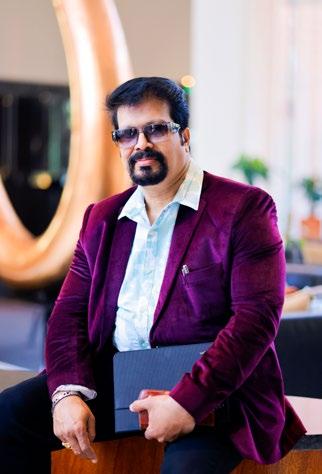

E. Alexander Global Media Chief & MD


• How AR and Virtual Dressing Rooms Are Revolutionizing Shopping in India


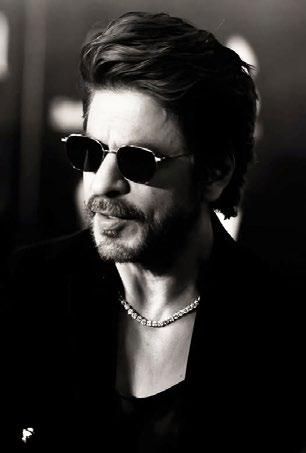
• Shah Rukh Khan Joins Zomato as Brand Ambassador - A Recipe for Success



• How OTT Platforms Have Revolutionized the Indian Movie Industry
• India’s Tier-2 Cities Sparkling Horizons for Luxury Retail in 2025

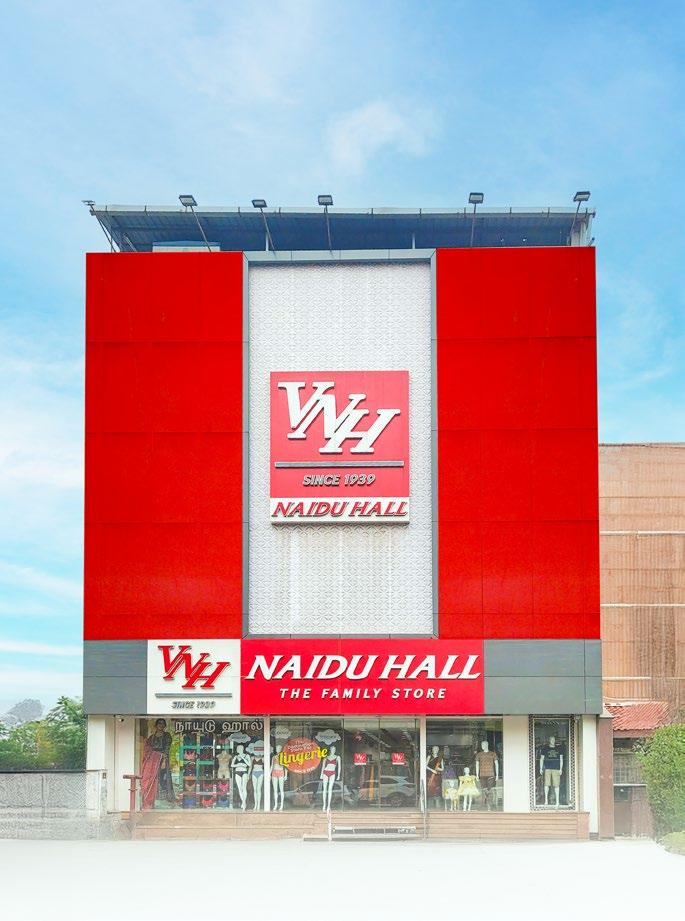
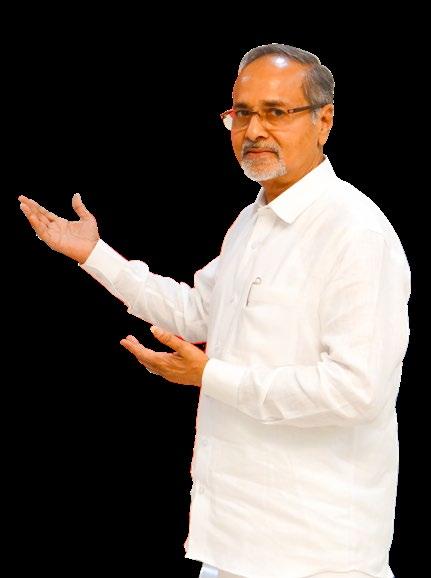
• An Iconic Business Leader with Courage, Acumen & Passion - G. Venugopal Naidu, VNH Naidu Hall
• Zerodha Fund House Launches Zerodha Silver ETF Fund of Fund
• Amit Agarwal Steps into Croma’s CMO Role A New Chapter for Tata’s Electronics
• Indian Brands on Ayurveda Are Scaling Wellness Worldwide

• Savitribai Phule: The Fearless Trailblazer of Women's Education in India:

• Royal Enfield’s Brazilian Bet Powering Growth with CKD Expansion 156
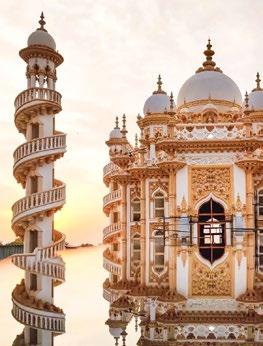

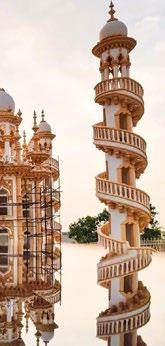

• Mahabat Maqbara The Gothic-Islamic Wonder of Junagadh That Time Forgot
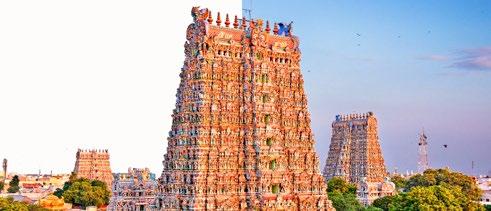
• World Renowned Sri Meenakshi Amman Temple, Madurai

• The Sweet Symphony
• of India The Heart of Indian Festivals
• Sula Vineyards: Pioneering India’s Wine Revolution




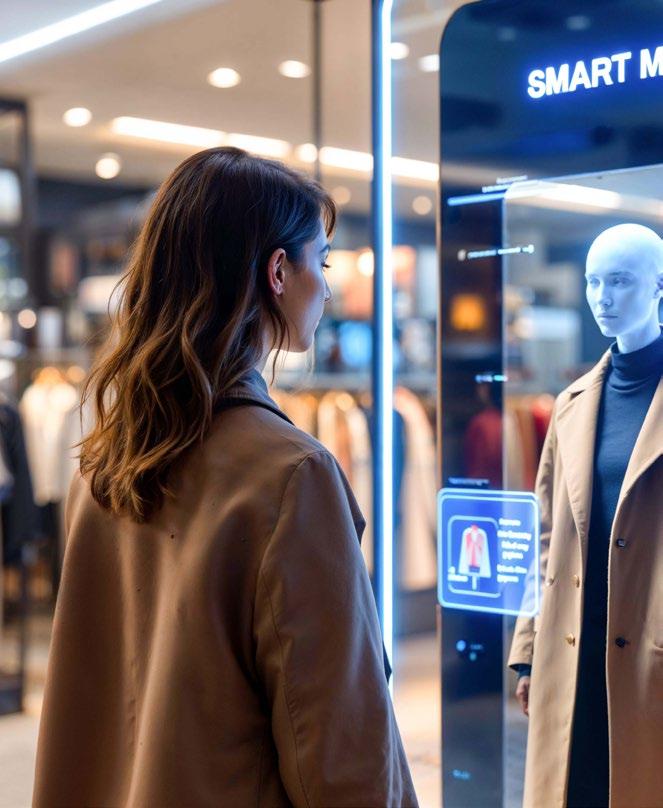
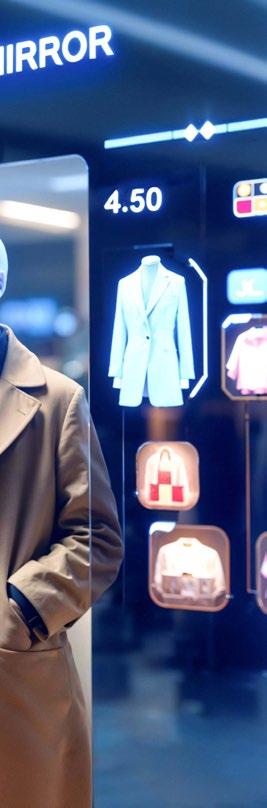




Imagine standing in your living room, trying on a vibrant lehenga or a sleek blazer without stepping foot in a store. Sounds like a scene from a sci-fi movie? Well, welcome to the future of fashion shopping in India, where Augmented Reality (AR) and virtual dressing rooms are turning this dream into reality. With a smartphone in hand and a few taps, Indian shoppers are diving into a digital fashion revolution that’s redefining how we shop, style, and slay. Let’s unpack how AR and virtual try-ons are stitching a new narrative in India’s vibrant retail landscape.
India’s fashion scene is as diverse as its culture— think intricate sarees from Banaras, trendy kurtas from Jaipur, and chic Western wear flooding urban malls. But with bustling cities, packed schedules, and the rise of e-commerce, Indian shoppers are craving convenience without compromising on experience. Enter AR and virtual dressing rooms, the tech-powered game-changers making waves in the $70 billion Indian apparel market.
Augmented Reality overlays digital elements onto the real world, letting you “try on” clothes virtually through your phone or computer. Virtual dressing rooms take it a step further, creating immersive 3D environments where you can mix, match, and model outfits. For a country where 700 million people are glued to their smartphones, this tech is not just a gimmick—it’s a lifestyle shift.

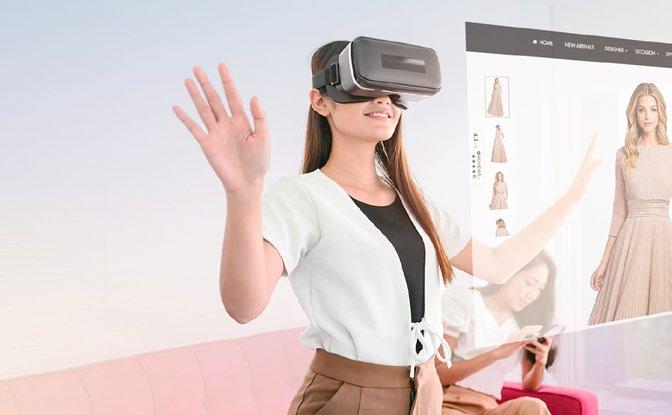

Let’s be real: squeezing into a tiny fitting room at a crowded mall in Mumbai or Delhi, juggling armfuls of clothes, isn’t exactly fun. AR apps let you try on outfits from the comfort of your home. Brands like Myntra and Reliance Trends are rolling out AR-powered features where you can see how that mustard-yellow kurta looks with your favourite jhumkas, all without wrestling with a curtain that won’t close properly.
Indian shoppers love options, whether it’s choosing the perfect shade of emerald for a wedding outfit or finding jeans that fit just right. AR platforms use AI to analyze your body measurements (often just from a quick scan via your phone’s camera) and suggest outfits tailored to your size, style, and even skin tone. Companies are pioneering this in India, offering virtual tryons that feel like having a personal stylist in your pocket.
3. Bridging the Online-Offline Gap
E-commerce giants like Flipkart and Amazon India are betting big on AR to solve the biggest pain point of online shopping: “Will it look good on me?” With virtual dressing rooms, you can see how a dress drapes or how a sherwani fits before hitting “Buy Now.” This tech is slashing return rates—currently a massive 20-30% for apparel in India—saving brands money and shoppers the hassle.
4. A Festive Shopping Game-Changer
India’s festive season—Diwali, Eid, weddings— sees a shopping frenzy like no other. AR is making it easier to navigate the chaos. Imagine trying on 10 different sarees for Diwali in minutes, mixing accessories, and even sharing the look with your bestie for approval—all digitally. Brands like Nykaa Fashion and AJIO are integrating AR to let shoppers experiment during these high-stakes style moments, making festive shopping a breeze.
The digital fashion wave is surging, and Indian companies are riding it with gusto. Myntra’s “Virtual Try-On” feature, powered by AR, lets you visualize outfits in real-time, while their AIdriven “Style Squad” suggests looks based on your vibe. Reliance Trends has partnered with tech startups to roll out AR mirrors in select stores, where you can “wear” outfits by standing in front of a screen. Startups are stealing the show too. Vtry, a Bengaluru-based platform, offers AR try-ons for ethnic wear, letting you see how that Anarkali suit flows in 3D. Zest AI, another homegrown innovator, is working with boutique designers to bring virtual dressing rooms to smaller brands, democratizing access to this tech. Even jewelry brands like Tanishq are experimenting with AR, letting you try on that gold necklace virtually before splurging.
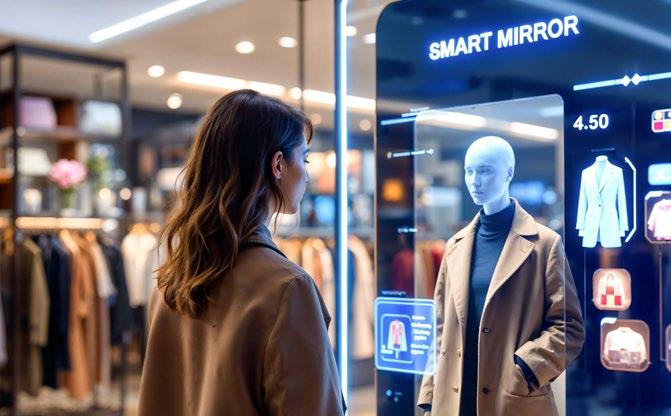


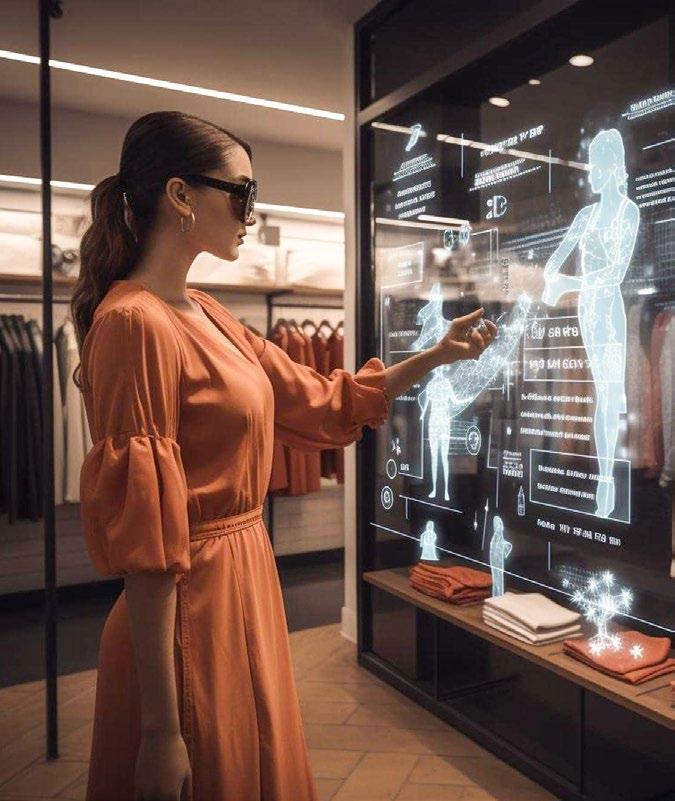
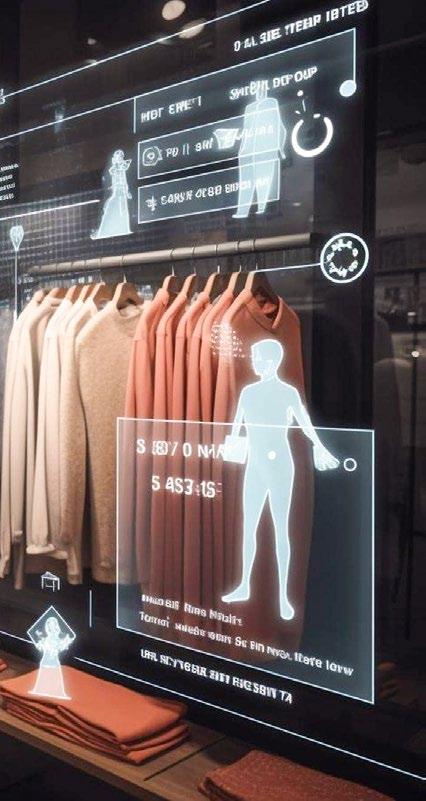
While AR and virtual dressing rooms are dazzling, they’re not without hiccups. For one, the tech requires decent smartphones and stable internet—tough in rural India, where 66% of the population lives and connectivity can be spotty. Data privacy is another concern; scanning your body for measurements raises questions about how that info is stored and used. Plus, the tactile joy of feeling a silk saree or trying on a leather jacket is hard to replicate digitally. Cost is a factor too. Building AR platforms isn’t cheap, and smaller retailers might struggle to keep up with giants like Myntra or Amazon. But as tech becomes more affordable and 5G rolls out across India, these barriers are starting to crumble.
The potential for AR in Indian fashion is massive. By 2027, the country’s e-commerce market is expected to hit $150 billion, with apparel leading the charge. AR could make shopping not just convenient but downright fun—think virtual fashion shows where you’re the model or gamified apps where you mix and match outfits for rewards. Imagine rural artisans showcasing their handwoven designs through virtual showrooms, reaching customers in metros without leaving their villages.
Sustainability is another win. By reducing returns and overproduction (a huge issue in fast fashion), AR can help make India’s fashion industry greener. Plus, with Gen Z and millennials driving trends, the demand for tech-savvy, personalized shopping experiences is only going to skyrocket.




AR and virtual dressing rooms are more than just techy gimmicks—they’re reshaping how India shops for fashion. From bustling metros to tier-2 cities, this tech is making style accessible, fun, and oh-so-convenient. Whether you’re a fashionista in Bengaluru hunting for the perfect cocktail dress or a bride-to-be in Lucknow eyeing that dream lehenga, digital fashion is bringing the store to you. So, grab your phone, strike a pose, and let AR help you slay your next look. The future of fashion? It’s already here, and it’s looking fabulous.

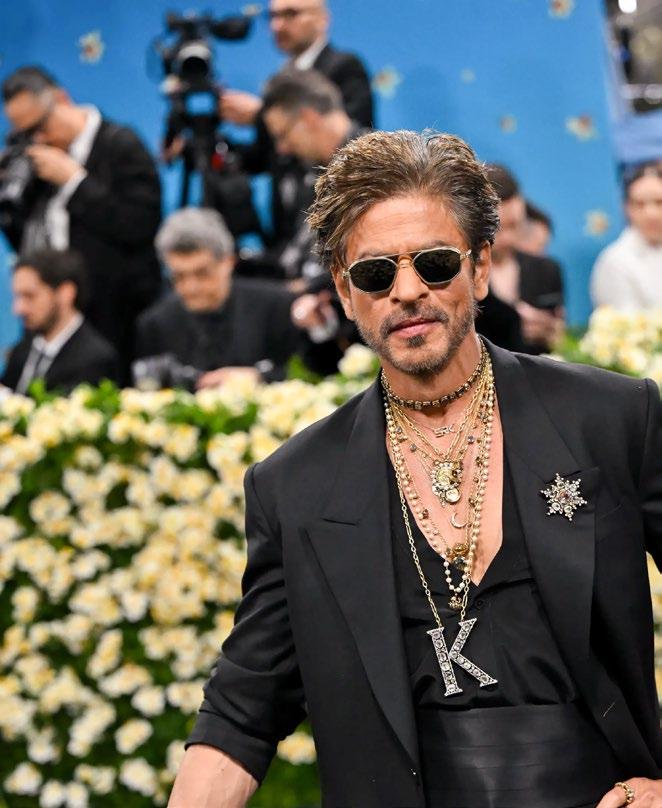


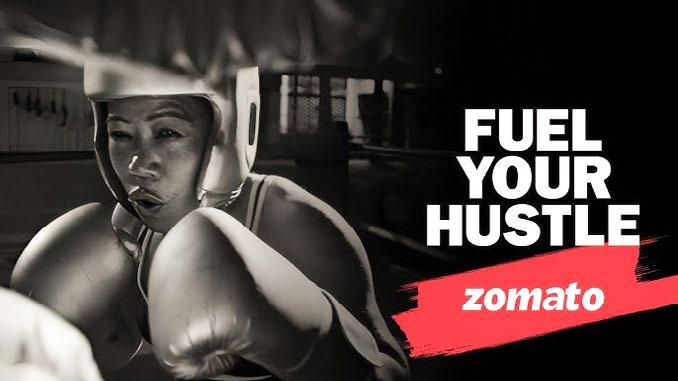
In a move that has sent waves of excitement through fans and foodies alike, Zomato, India’s leading food delivery platform, announced on August 8, 2025, that Bollywood superstar Shah Rukh Khan will be its new brand ambassador. This strategic partnership, unveiled as part of Zomato’s high-energy “Fuel Your Hustle” campaign, is set to redefine how the brand connects with its audience, blending star power with a message of grit, determination, and innovation.

The “Fuel Your Hustle” campaign is a celebration of perseverance, spotlighting individuals who embody relentless drive and ambition. Shah Rukh Khan, often hailed as the “King of Bollywood,” is a natural fit for this narrative. His journey from a middleclass Delhi boy to a global icon mirrors the hustle Zomato champions—whether it’s the late-night coder ordering a quick meal or the entrepreneur grabbing a coffee between meetings. Alongside Khan, the campaign features other Indian luminaries like Olympic medallist Mary Kom, music maestro AR Rahman, and cricket sensation Jasprit Bumrah.
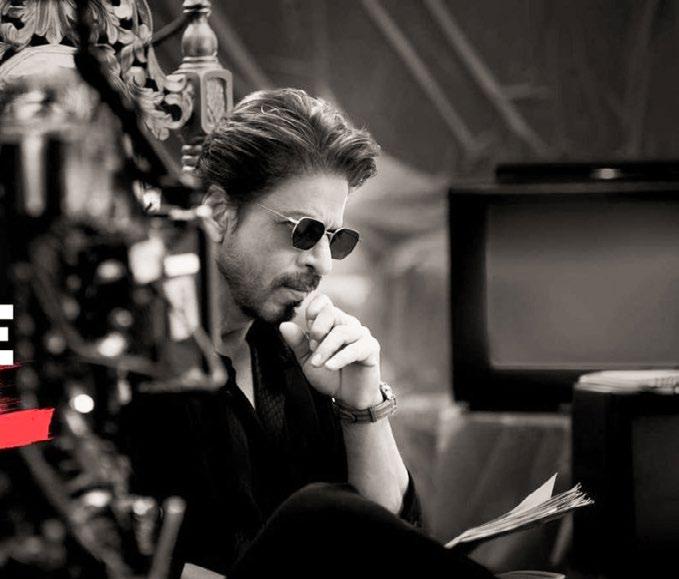

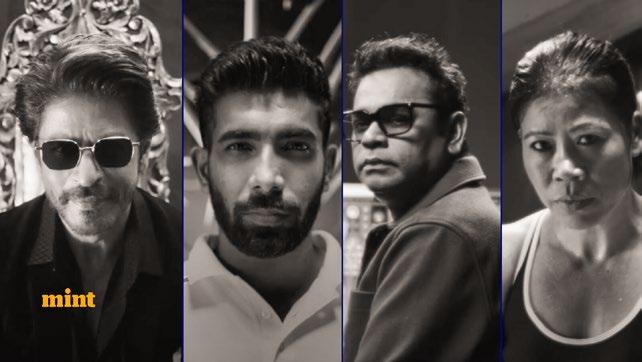

This star-studded lineup underscores Zomato’s mission to fuel the journeys of millions through food, no matter the hour or ambition. Khan’s role as brand ambassador extends beyond a single campaign. Zomato plans to leverage his charisma and universal appeal across multi-platform marketing initiatives, including television commercials, digital campaigns, print advertisements, and outdoor activations. His presence is expected to amplify Zomato’s reach, particularly as the platform continues to innovate in food delivery, dining, and customer experience. With Khan’s infectious energy and relatability, Zomato aims to deepen its emotional connection with users, from Gen Z foodies to families ordering their weekend feasts. What makes this partnership particularly compelling is the synergy between Khan’s persona and Zomato’s brand ethos. Known for his wit, charm, and tireless work ethic, Khan embodies the hustle that Zomato celebrates. In a statement,
Zomato’s leadership highlighted how Khan’s story of overcoming challenges resonates with their goal of being more than just a food delivery app. “Shah Rukh Khan’s journey is an inspiration to millions, and his association with Zomato reflects our commitment to empowering people to chase their dreams with the right fuel—food,” the company noted. For Khan, the collaboration is equally meaningful. A known food enthusiast, he has often spoken about the joy of sharing meals and the role food plays in bringing people together, aligning seamlessly with Zomato’s vision.


The announcement comes at a time when Zomato is riding high, with strong growth in its food delivery and dining verticals. By roping in Khan, Zomato is not only banking on his massive fanbase but also his ability to humanize the brand. Whether it’s a quirky social media post or a heartfelt TV ad, Khan’s involvement is likely to make Zomato’s campaigns more memorable and impactful. As Zomato continues to expand its footprint, from hyperlocal deliveries to sustainable initiatives, Shah Rukh Khan’s star power will undoubtedly add a new flavour to its brand story. This partnership is more than a celebrity endorsement—it’s a celebration of hustle, heart, and the joy of good food, served with a side of Bollywood magic. Fans and customers alike are in for a treat as Zomato and SRK cook up something truly special together.


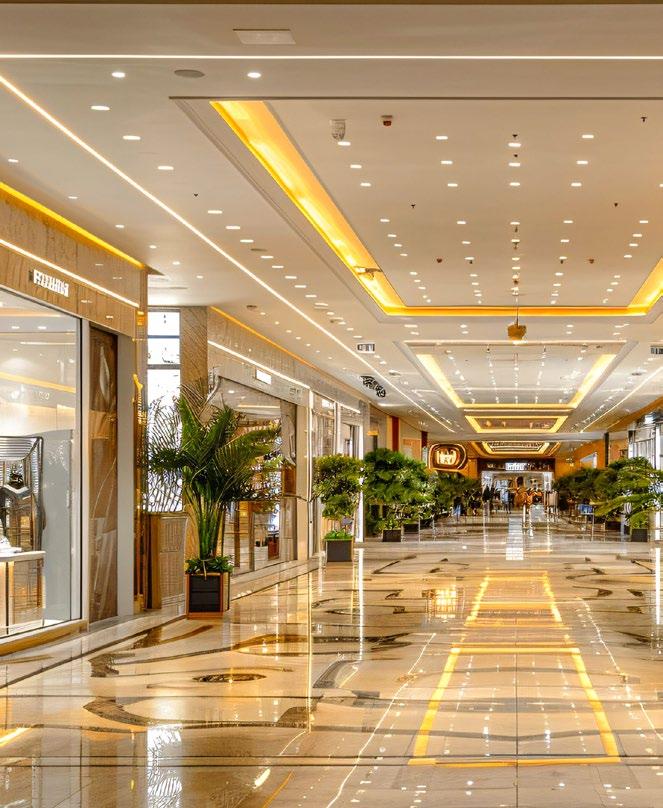
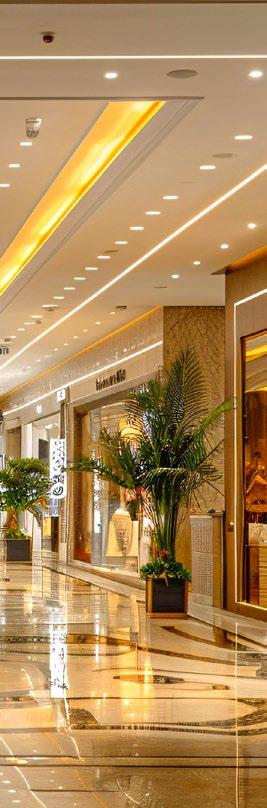
Imagine a wave of opulence sweeping across India’s vibrant heartlands, transforming bustling Tier2 cities into dazzling hubs of high-end fashion and premium experiences. As we step into 2025, the luxury retail scene is bursting with promise, shifting its spotlight from the crowded metros to emerging gems like Jaipur, Chandigarh, Surat, and Lucknow. These cities aren’t just catching up—they’re leaping ahead, fuelled by ambitious consumers with rising incomes and a thirst for the finer things in life. It’s an exhilarating time where luxury brands are discovering untapped treasures, creating a symphony of style and sophistication that resonates deeply with local aspirations.
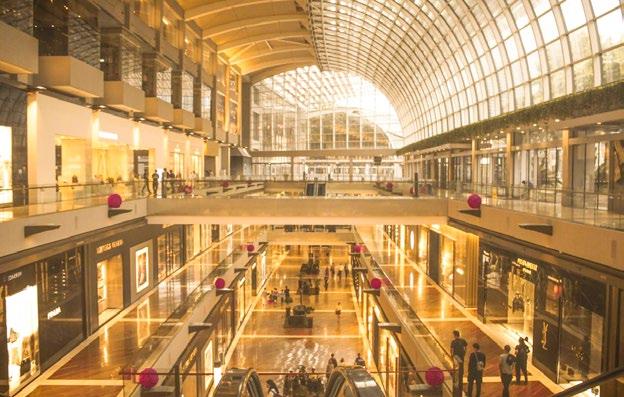
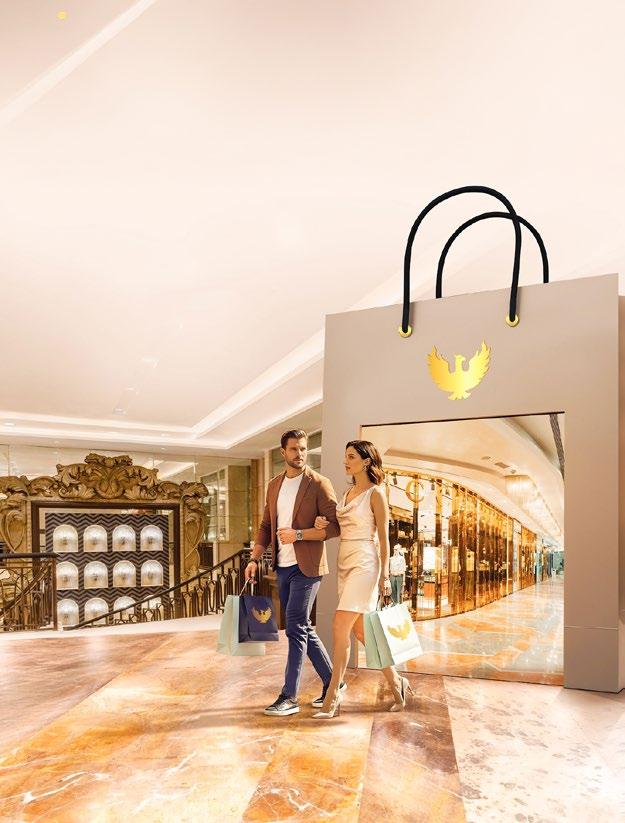
The consumers in these Tier-2 cities are truly coming into their own, radiating confidence and curiosity. From the entrepreneurial spirits in Surat’s diamond districts to the tech-savvy professionals in Coimbatore’s IT corridors, a new breed of affluent shoppers is emerging. They’re not content with everyday essentials; they’re craving the allure of global icons like Gucci and Rolex, inspired by their travels and the endless scroll of social media feeds. Reports from experts highlight a thrilling surge in high-net-worth individuals here, with cities like Jaipur seeing double-digit growth in wealth creation annually. This isn’t just about spending—it’s about celebrating success, where a luxury handbag or a bespoke watch becomes a badge of achievement in these dynamic communities.

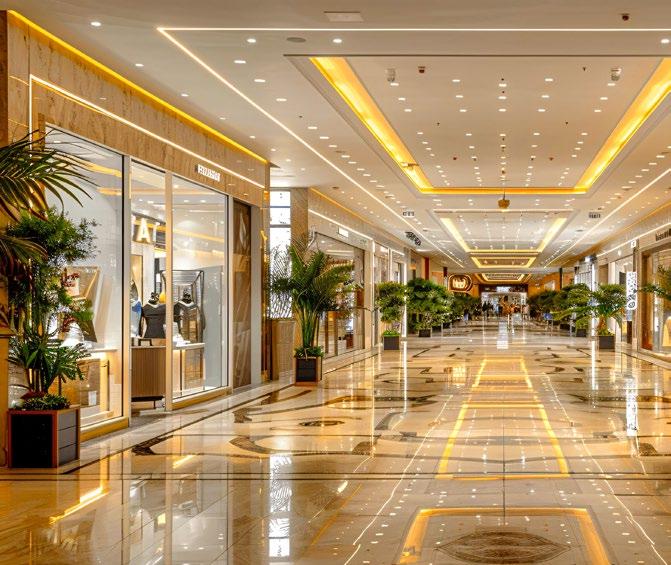


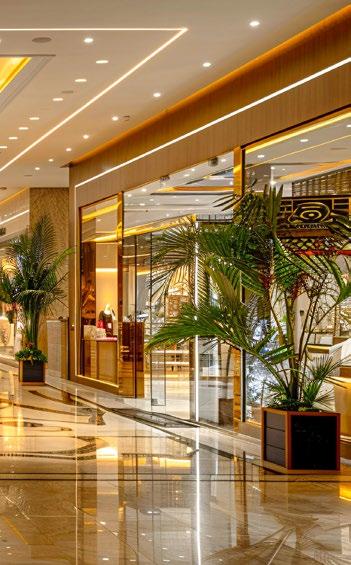
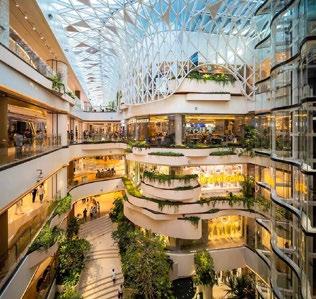
What makes Tier-2 cities such an irresistible playground for luxury retail? For starters, the economics are simply sparkling. Lower real estate costs mean brands can craft stunning flagship stores without the hefty price tags of Mumbai or Delhi, allowing for more creative and expansive setups. Picture wandering through Chandigarh’s Elante Mall or Lucknow’s Lulu Mall, where worldclass luxury awaits in inviting, accessible spaces. And the incomes? They’re soaring, thanks to booming sectors like manufacturing, real estate, and IT, leading to a delightful uptick in discretionary spending. Studies from the Confederation of Indian Industry paint an optimistic picture, with places like Bhubaneswar enjoying a 15% annual boost in splurges on premium goods.
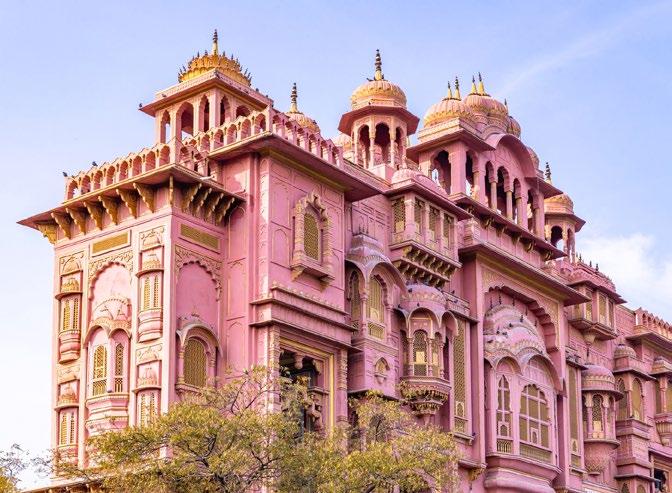



Beyond the numbers, there’s an incredible untapped energy waiting to be harnessed. These markets are fresh and full of potential, where early entrants can forge lasting bonds with eager first-time luxury buyers. Take Titan’s Nebula watches, for example— they’ve seen sales skyrocket by 20% in spots like Indore and Kochi, proving how quickly loyalty can bloom. Plus, the cultural richness of these cities adds a magical layer. In Jaipur, the Pink City’s heritage weaves seamlessly with modern luxury jewellery from brands like Tanishq, creating collections that feel both timeless and thrillingly contemporary.
Luxury brands are embracing this adventure with innovative strategies that make every interaction feel special. They’re tailoring experiences to local flavours, like Sabyasachi’s elegant boutiques in Lucknow and Ahmedabad, where bridal ensembles
blend tradition with trendsetting flair. It’s all about immersion—think BMW’s experience centres in Coimbatore, offering test drives and exclusive events that turn shopping into unforgettable stories. Digital magic plays a starring role too, with platforms like Nykaa Luxe bridging online and offline worlds in cities like Kanpur, complete with virtual tryons and personalized advice that make luxury feel effortlessly accessible. Collaborations are adding even more sparkle, as brands team up with regional influencers to spread the excitement. In Chandigarh, local style stars are showcasing collections on social media, drawing in younger crowds who are buzzing with enthusiasm for high-end fashion. This blend of personalization, technology, and community is turning Tier-2 cities into vibrant ecosystems where luxury isn’t distant—it’s delightfully within reach.

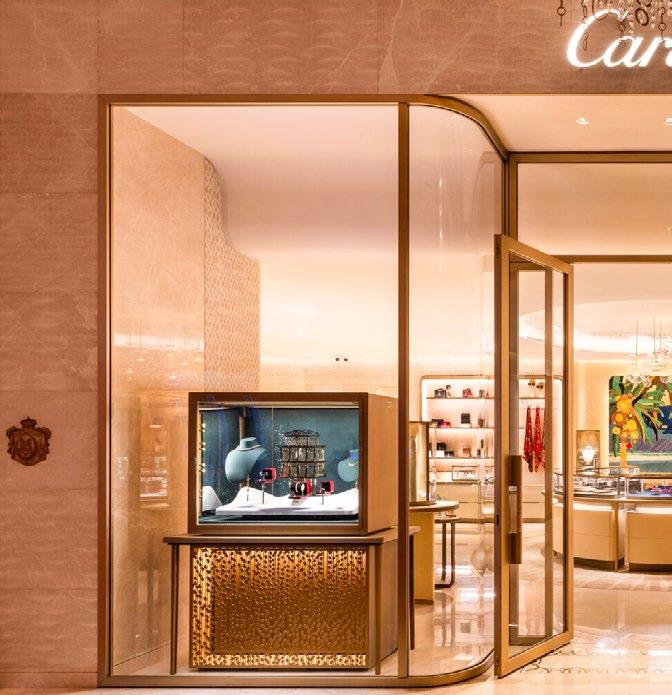
Of course, every great story has its twists, but in Tier-2 luxury retail, these are more like exciting opportunities to innovate. Building awareness for niche brands might take some creative storytelling, and navigating logistics could inspire smarter supply chains. Consumers
here value smart investments, so offering flexible financing or entry-level luxuries opens doors wider. By focusing on education and authentic connections, brands can turn these hurdles into stepping stones, fostering deeper trust and loyalty. As 2025 unfolds, the momentum
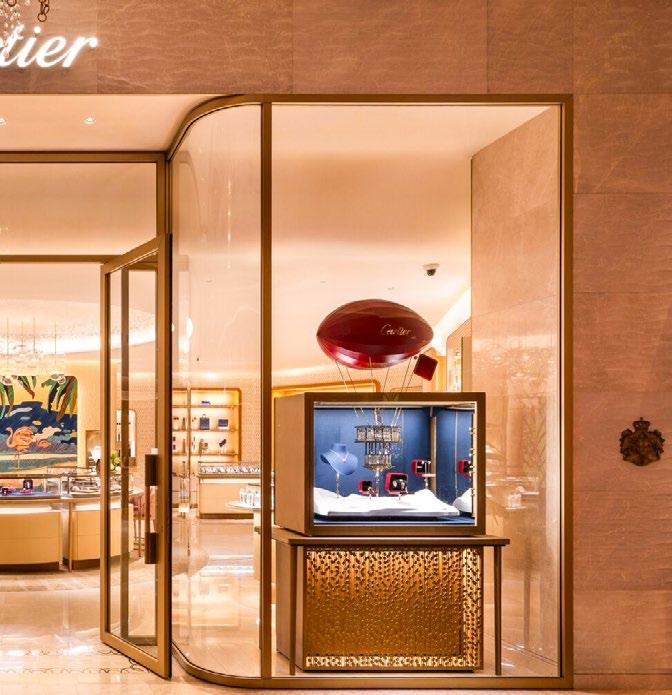
is unstoppable. International powerhouses like Burberry and Cartier are eagerly expanding into Pune and Visakhapatnam, while homegrown favourites strengthen their roots. Malls such as Ahmedabad’s Palladium are evolving into mustvisit destinations, rivalling the best in the world.
India’s Tier-2 cities are shining brighter than ever, proving that luxury’s future is inclusive, innovative, and incredibly inspiring. For brands and shoppers alike, this is the golden era—where the heart of India beats with glamorous possibilities, inviting everyone to join the celebration.
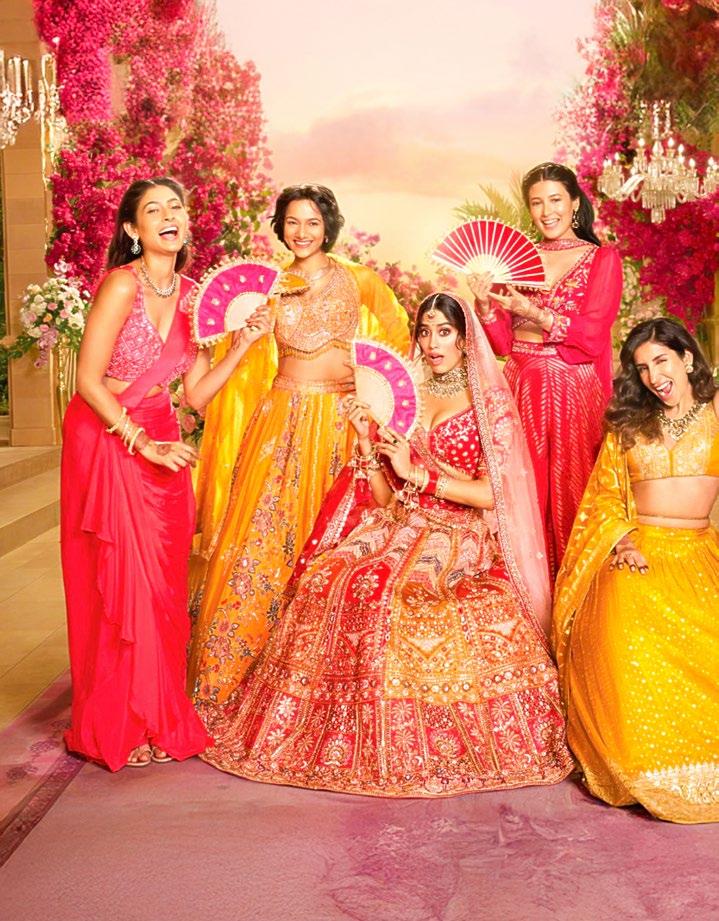
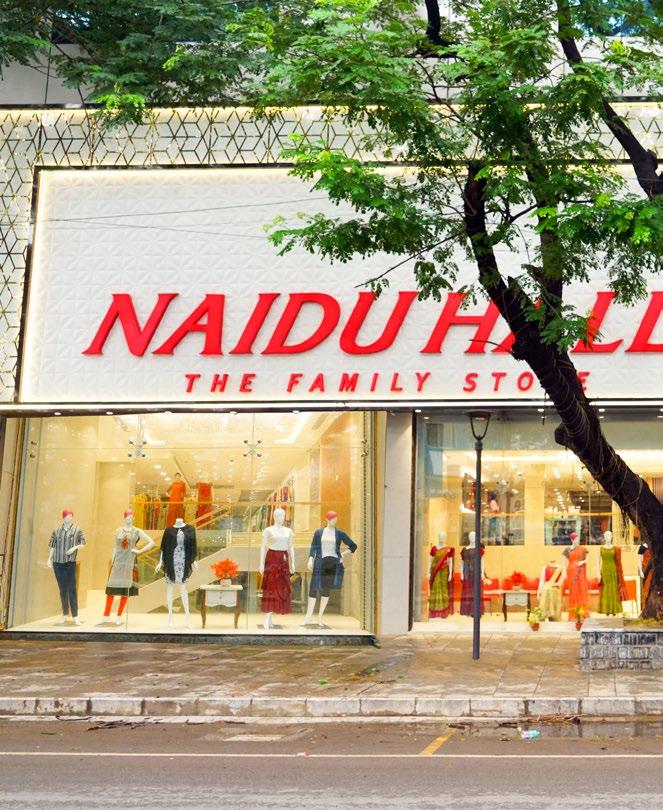
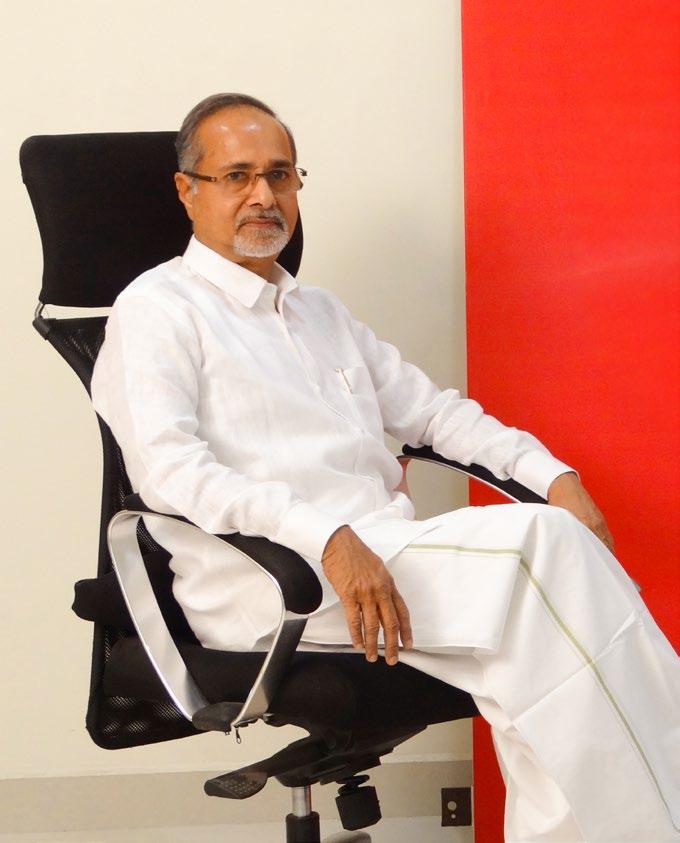


They Say - “A Leader is one who Knows the way, Goes the way, and Shows the way.” “ “
Leadership isn’t always about the titles, recognitions, or even the accolades. True Leadership is much more meaningful, impactful and profound - One that is earned and worked for. A Visionary leader has an undying passion for the business, creates a workplace culture where each member feels genuinely valued, has a futuristic vision and transforms ideas into real-world success stories.
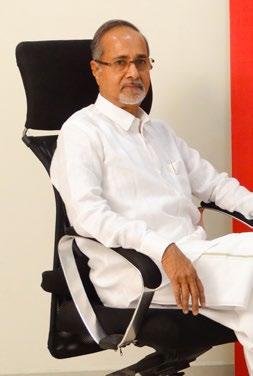
One such quintessential inspirational business leader possessing the right determination and proficiency, Mr. Venugopal Naidu – The Chairman and Managing Director of The Naidu Hall, has consistently demonstrated his ability as a Leader, and is an inspiration to many in continually raising the bar on leadership.
Translating his ambition, dynamism and persistence, Mr. Venugopal Naidu has been the catalyst to growth and taken Naidu Hall to newer heights of success with a keen sense of responsibility towards the organization, its vision and most importantly –‘its People’.
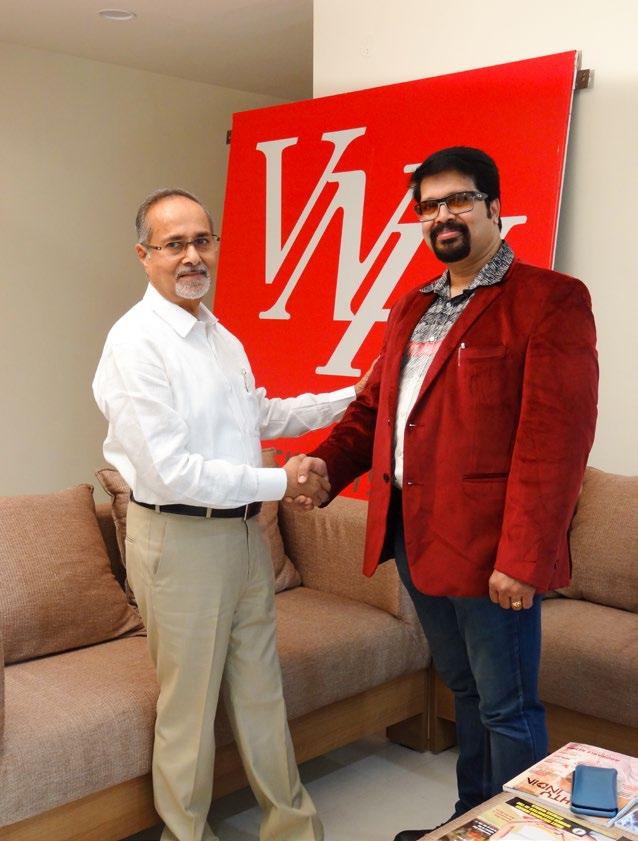
the Most Prestigious Awards of
& AWARDS - 2025'
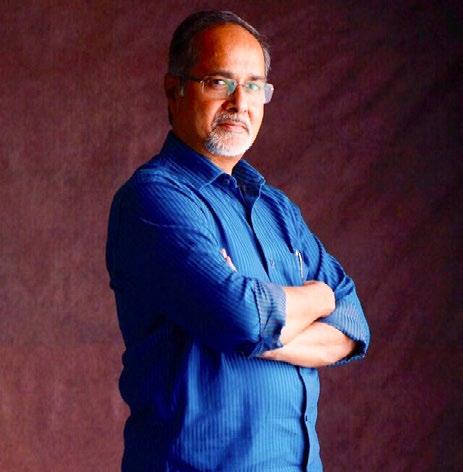
What would you say about a Person, who has been adored, respected, loved, admired and followed by Tens of thousands of people, for the amazing human qualities, wonderful nature, most loveable characters and so on; that he possesses to live and lead by example of How a perfect and well-defined human being should be. And the One, who considers all those people, whoever he come across in his personal, official or social circle; as his own extended family Members and relates to them with genuine love, kindness, care, affection, dignity and respect. It’s not just that, He has also been inspiring millions and millions of people belong to all ages, status, origins, communities and cross sections of the society for his most Charismatic and very effective Leadership Style, Skills and Qualities; that he has been consistently demonstrating for more than 50 years; almost ever since the time, he
had entered into His family business at his young age; following the Footsteps of his Father, who had been an inspiring entrepreneur and business leader of his times. At the time and moment, when He along with his ever-loving family members, friends, business associates, employees, staff, near & dear and also the countless admirers set the perfect stage to celebrate his 75th Birthday; We, M/s Worldwide Media Corporation Group, USA and all their Member Establishments, Mass Media Organisations, Production Houses, Television Channels and Publications wish Shri. G. Venugopal, Chairman of M/s VNH Naidu Hall; the Best of all goodness, grace and blessings to empower him completely that he could live 100s of years and spread love, kindness, peace, prosperity and joy as he does always.Presenting you the Brief Information Memorandum on Shri. G. Venugopal and His amazing Journey to stardom with all our wishes and greetings !!!
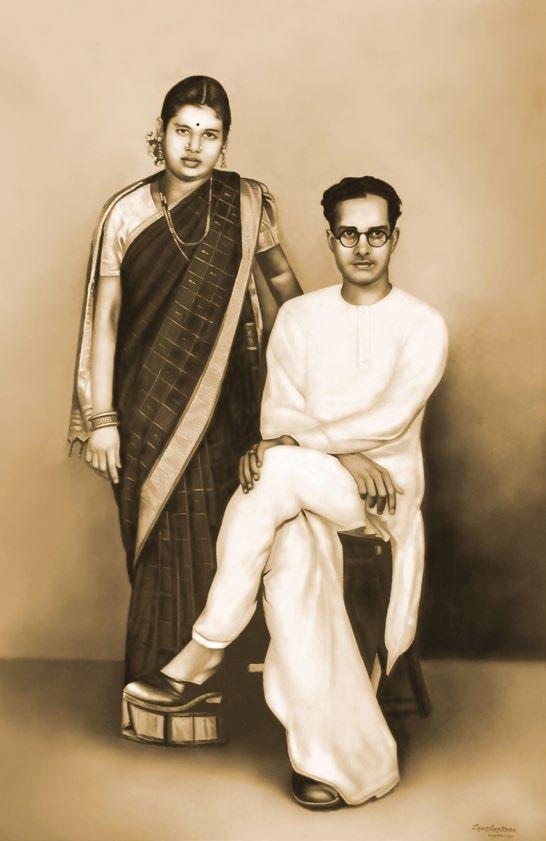
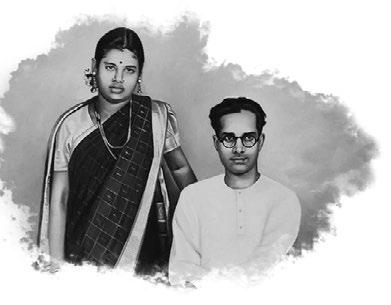
It is said that Leaders are born and not made, and every great leader arises when there is a great need. The dynasty called Naidu Hall was started 86 years back, but the seed for the same was borne much before, when Late M.G Naidu decided to break free from the clutches of just doing something, to be able to do something big and work for a greater change.
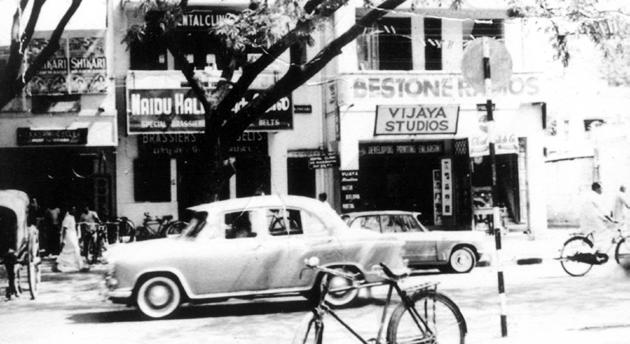
Decades back when lingerie was an alien concept, he not only stitched the first brassiere, but also educated the women on the importance of the same. The path was surprisingly very new and what was an even more astounding aspect was that women during those times were not comfortable talking about it or used to it. His dedication and foresight made him shine high and bring about a change, eventually making Naidu Hall an everyday name for women of every generation.
The emergence of business icons doesn’t really need grand gestures. Surprisingly and quite often, it is the impulsive and extemporaneous choices they make that influence their emergence. What is an established brand of conglomerates today, was a result of an event of an unusual and trivial circumstance that eventually led into the making of the Naidu Hall.
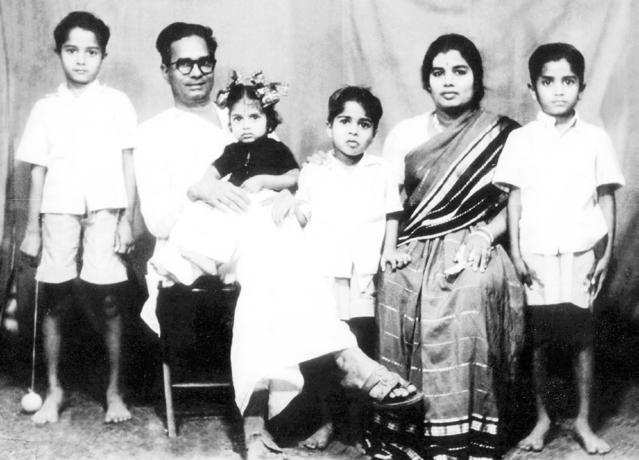
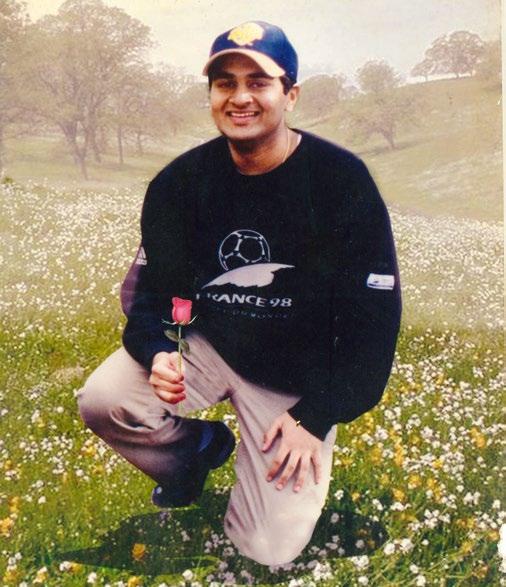
All it took was a spur-of-the-moment, for Late MG Naidu - the founder of Naidu Hall to spring board a business. He left his house at an early age of 7 over a petty fight of killing a goat by his family, which was reared by him– and set out by himself with not a single penny.
Spotted at the railway station by a Muslim family, MG Naidu was taken to Bangalore and took domestic care of their house. Gifted with an inquisitive nature and the willingness to explore new avenues, he took notice of a tailoring unit in the neighborhood, and soon mastered the art of tailoring.
Possibilities are always born under limitations. Small restricted spaces and a motivation to break every boundary to strive ahead, worked wonders for MG Naidu. The aspiring entrepreneur, MG Naidu decided to move to Chennai in 1937 and set out on his entrepreneurial journey. In the beginning, MG Naidu worked in Chettiyar Hall where Chettiyar community did business. Noticing their way of work and art of doing business, he began his own venture and named the same as Naidu Hall.
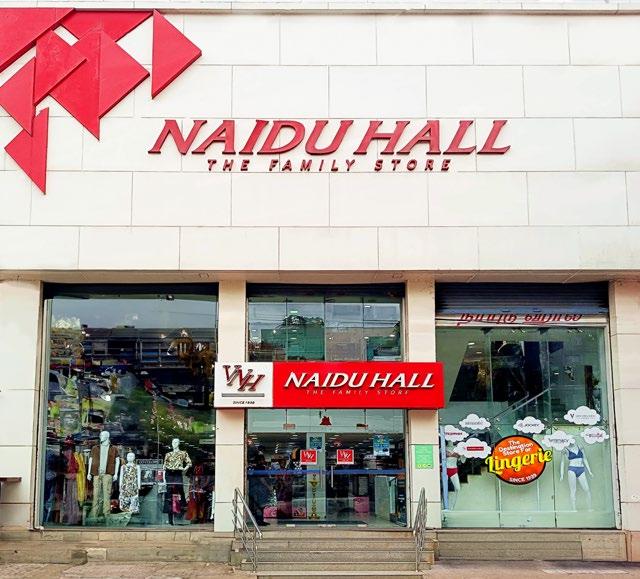
In 1939, he bought a hand-operated sewing machine by pawning a gold ring gifted to him and set up Naidu Hall as a Blouse tailoring unit in a garage. Once he built up a steady clientele, he moved to Pondy Bazaar and added ladies underclothing to his merchandise. Initially it was not an easy affair to sell to the ladies, who hardly stepped out of their homes. Breaking away from this shortcoming, MG Naidu devised a plan and hired sales girls to visit the ladies of the town door to door and throw light on the benefits and the effectiveness of wearing a bra. For a while, this remained their main business until they decided to add salwar, saris and Western wear so that they would have wider appeal. Soon, his captivating designs, proactive thinking and unique marketing strategies, helped him to establish ‘Naidu Hall’ as a household name amongst women.
In 1973, MG Naidu passed away and passed on the succession to his son - Mr. Venugopal Naidu, who spearheads the Naidu Hall family store today. Having accompanied his father to the factory and visiting to the store from an early age of 7, Mr. Venugopal developed a very strong attachment to the entity noticing the joys, the hardships and workmanship at the work place. Although these were small details rather than grand gestures, these small things built in him a strong emotional connection with the business over time.

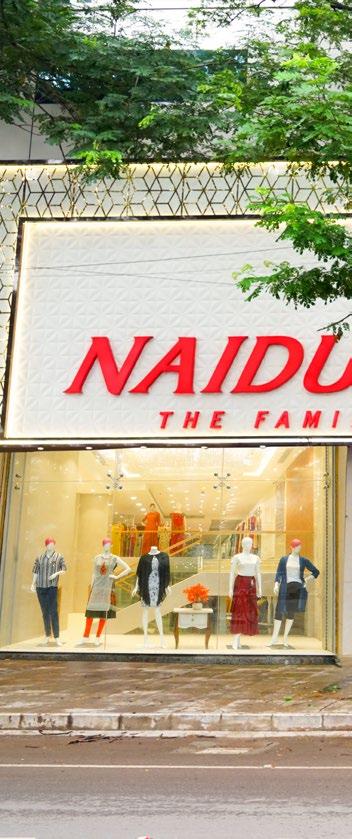
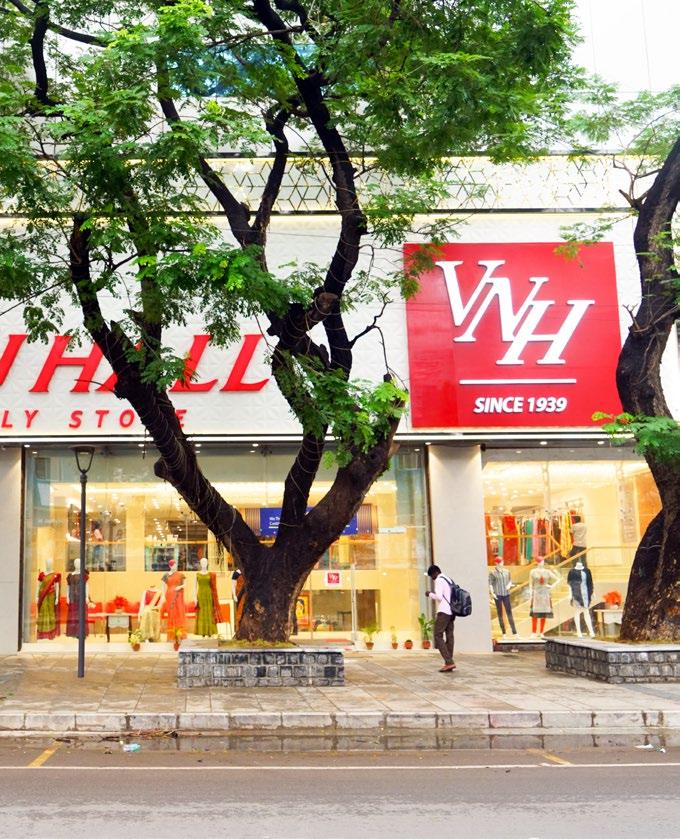
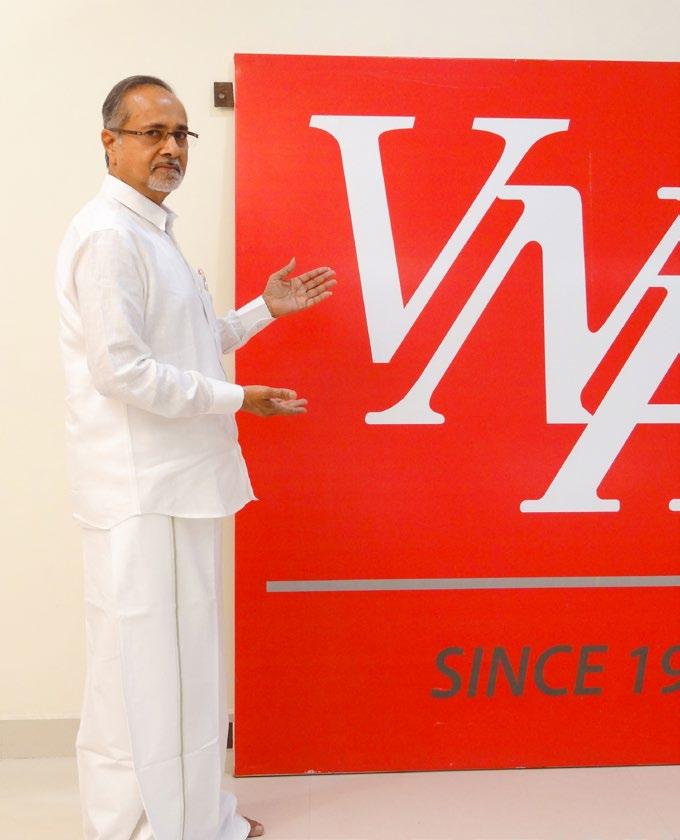
The most successful people are those who follow their dreams and passion. Mr. Venugopal allowed his passion to become his purpose, and eventually become his profession. Although Mr. Venugopal had completed his Bachelors in Commerce at Loyola College and went ahead to Canada to complete his MBA, his unwavering passion and interest for design and fashion made him shift to a fashion designing course within a few months. Refusing a job offered in Paris after completion of the course, he joined the Naidu Hall business with zeal, confidence and credence in 1976, with a will to add value and apply his expertise to the business.
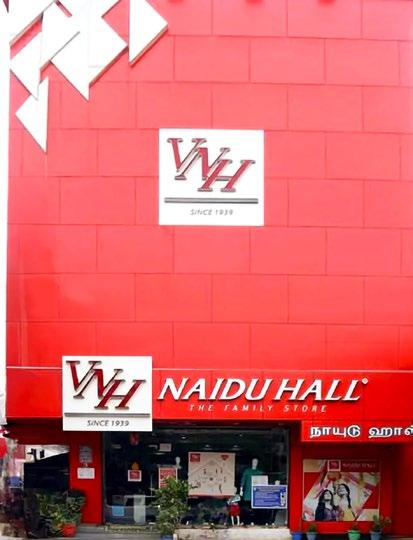
Sticking to his father’s principles of maintaining the highest quality at an affordable price and growing the business with ethics and values, Mr. Venugopal has taken Naidu Hall to newer heights of success. What began in 1939 in a humble 500 sq. ft space is now a 50, 000 sq. ft multibrand retailer store. Under the guidance and leadership of Mr. Venugopal, Naidu Hall has undergone several layers of expansion to finally attribute to a retail network of around 20 Retail stores and with more than 2000 dealers spread across Tamil Nadu, Kerala and Andhra Pradesh. Mr. Venugopal clearly admits that the path his father laid nearly eight decades ago, is that of perfection and the same has been perfected so meticulously, that walking ahead with the same has never been a challenge for the organization or himself.

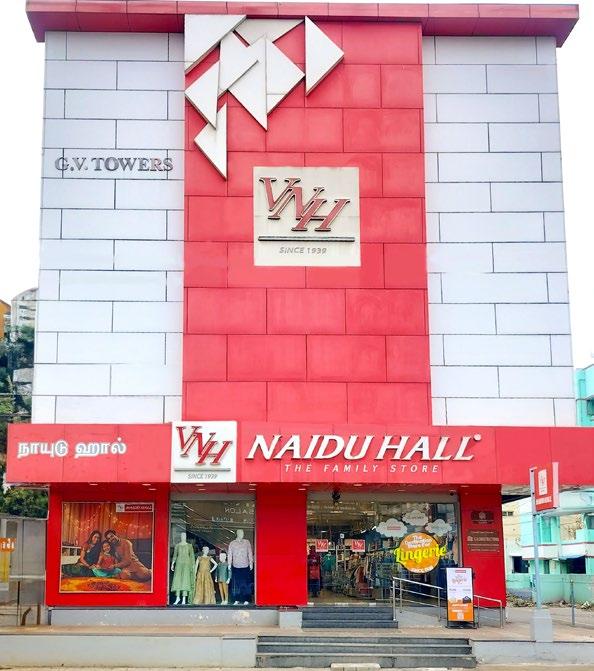
Naidu Hall has always been known to add value and convenience to their customers. In the early 1960s, they were the first to introduce the novel concept of readymade saree blouses and readymade sarees, which

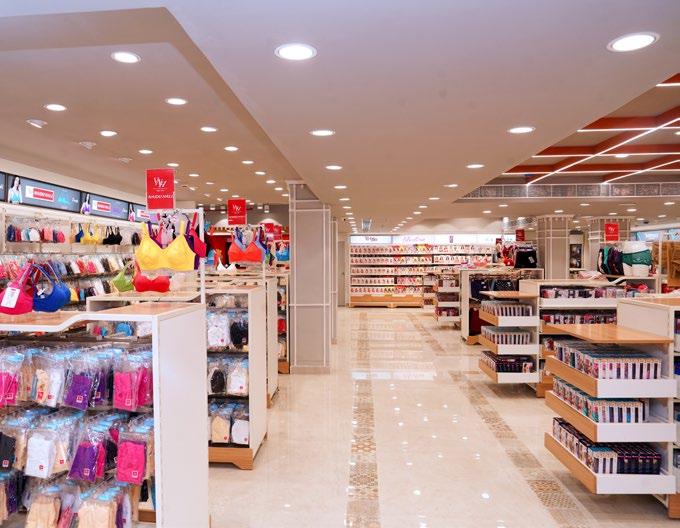
were of great convenience to its customers. Offering to maintain the same level of convenience, today Naidu Hall is the preferred destination for garments all along the category shelf, catering to the needs of every member in the family. It serves basic, medium and premium category brands and products – ‘Intimacy’ for women’s lingerie segment, ‘NH series’ for shirts, jeans and trousers, ‘Enhance’ for premium menswear range, ‘Shreya’ for sarees, and ‘Oh-baby’ for infants.
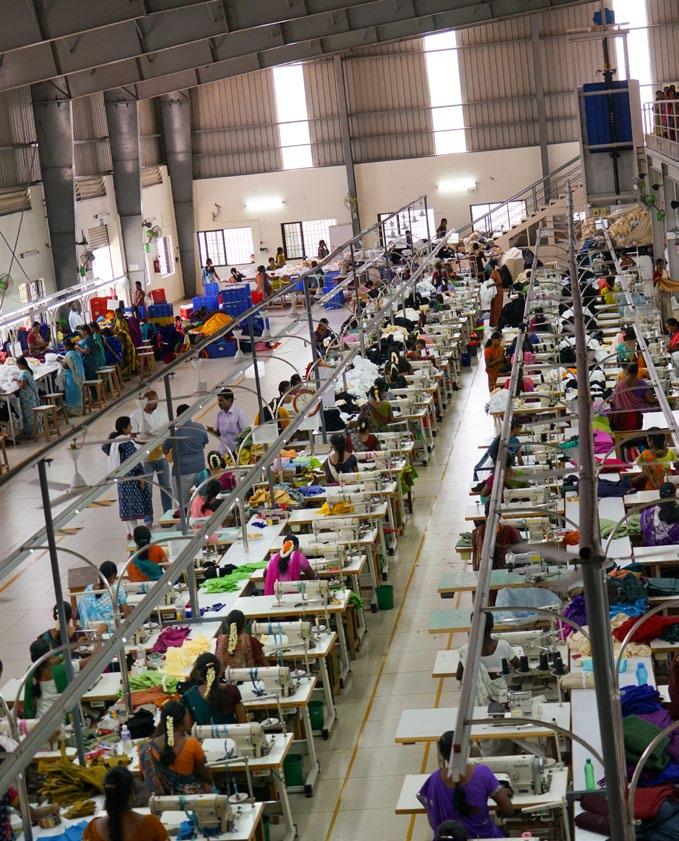
What was planned as pilgrimage in 2002 to his family deity at Pallitheru, a village in Ambur to deal with melancholy emotions, turned out to be a calling for doing a larger good. Feeling drawn to bring about wellbeing and create employment opportunities in a village with just agricultural background, Mr. Venugopal set up a large manufacturing unit in the village. This was the very first factory in the area and contributed to a fair share of the reform that was brought through it in the area, employing close to 2000 workers. Today, each worker associated with the brand feels supported, understood, and fulfilling in what they’re doing.
Apart from redefining the line of business with advanced manufacturing facilities and extensive retail outlets, Mr. Venugopal has also always had the vision to improve and uplift the society by specially paying attention to the prevailing problems of the society.
Instrumental in brightening the future of the next generation and enriching their life with the light of education, Naidu Hall sponsors the education of one child of each employee, and provides scholarship to the children of the village in which their factory is located. In addition, a trust formed by the brand sponsors all the facilities required by schools in the village, empowering children for the rest of their life.
Mr. Venugopal believes in giving back to society with what he is blessed with. Empowerment of women is one such ideal that has always been on the radar for the family and Mr. Venugopal. Nearly 98% of the factory staff are women – a reflection of Naidu Hall’s longstanding vision of empowering women. What began as a decent start, today is a facility housed in two separate two buildings, with the stitching unit alone spreading over 30,000 sq. ft and employing close to 1000 women. Special buses ferry the womenfolk every day, helping them take charge of not just their own lives, but the entire family – emotionally and financially
Beyond the altruistic qualities of selfless love and generosity, Mr. Venugopal has always invested and maintained his relationship with friends, since childhood. Simple, Soft- Spoken and modest - he was never bounded by his success and has stood by friends through thick and thin. Extending his support not just to

his friends, he has also been a pillar of strength to their family members in every way possible. “I have known Venu from his days where he was growing his business to being a business tycoon now. Despite all his success, he remains the same person at heart - helpful, loving, caring and ever smiling”, says a close friend of Mr. Venugopal.
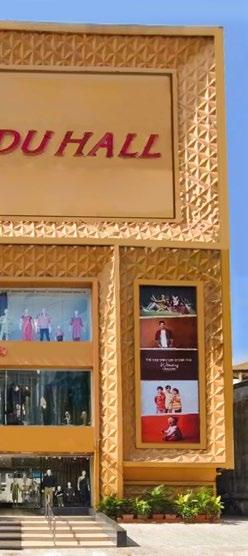
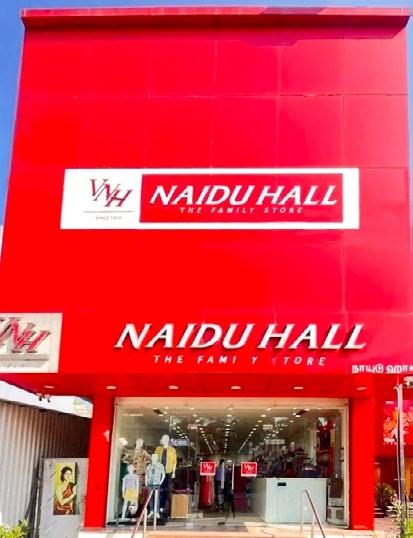
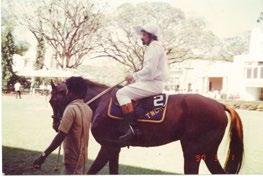
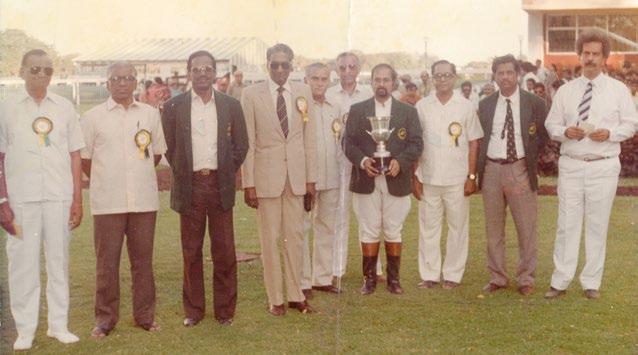
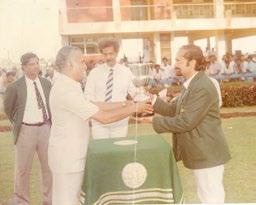
While Mr. Venugopal’s business journey has made him popular, not many know of him as a fine horse- rider. A member of the Andhra Club and Madras Race Course, Mr. Venugopal was an active badminton player and horse-rider until an accident in one of the races, left him injured. Although he discontinued to play post the accident, the qualities of a good sportsman remain with Mr. Venugopal, making him truly aggressive in business, committed to his work, patient, disciplined and focused.
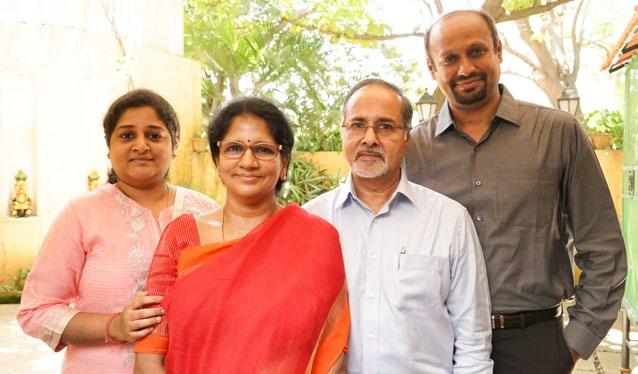
With a loyal patronage of customers over the years, Mr. Venugopal soon plans to expand Naidu Hall to other countries across the globe. To support him in the business, his daughter and son-in-law join the business. Living by example, Mr. Venugopal has imbibed the same values and cultures that he learnt from him father into the next generation, “It’s a great feeling to see them join the business,
and even more satisfying to see my young grandchildren – Shreya and Ananya who are just 8 and 12 years old, also engage in the business from an early age”, he says.From helping others to succeed to having the capability to inspire, an ever-smiling Mr. Venugopal Naidu clearly is a beacon of inspiration, Integrity and Emotional intelligence. With a Far- reaching vision, Passion, Grit and Acumen deeply ingrained, he has helped Naidu Hall grow from strength to strength with a rich Legacy of not only the business they’re carrying on, but also of the values and culture, inspiring and motivating many generations to come.

“In my experience of 22 years in the Apparel Industry, if there is any person who I can think of as a fatherly figure, it would be Shri. G. Venugopal. He has treated me as his son, taking care of not just my professional, but also personal life. His charisma, positive attitude and his contagious smile has always magnetized people and been a source of energy to any person around him.
Always demure and modest, Venugopal is one of the most down to earth humans I have met, with no feelings of superiority ever, and his warmth, hospitality and comforting spirit is something we all need to learn from him. He is always assertive of customer satisfaction, employee contentedness, and superior quality, and ensures the same is imbibed in each person associated with him.
As a leader, if there is any great leader after Mahatma Gandhi, it would be Venugopal. He has always set a right tone in the organization with his continual trust and motivation to the staff and tells them to prioritize their health and happiness, before anything else. I hope and pray that Shri.
G. Venugopal lives for nothing less than 100 years of hale and healthy living, and continues to inspire and motivate many others. He is an irreplaceable asset of Naidu Hall and deserves every felicitation on not just the national level, but also international level. May all his dreams come true and may he be blessed with abundant happiness always.”
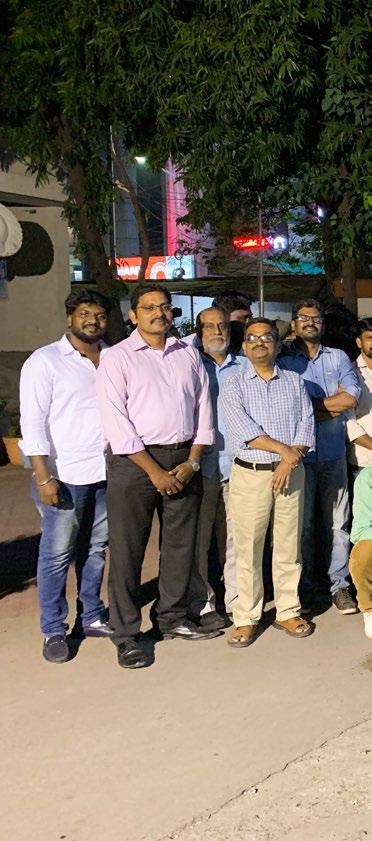

I consider myself extremely lucky to have a friend like Venugopal. Venu and I have known each other for almost 50 years now, and ensure to meet or talk at least once a week. I have seen him grow from an average businessman to a business tycoon with his personal touch to customers, true concern for his workers and his ever-charming smile. Despite all the success in life, he still remains the humble, soft-spoken and caring person he always was. An aggressive businessman, A true Friend, An Agile sportsman, Notable Philanthropist, and a Religious person – Venugopal is well balanced in every aspect of life and a thorough gentleman. May he be blessed with nothing but the best in Life. ““I met Venugopal almost 40 years ago in the Andhra Club and we used to
play badminton together for almost 25 years. Over the years, our friendship has bloomed so strongly that we can sense each other’s feelings just within a few seconds of conversing. One of my closest and the best friend I ever can think of. Venugopal has some amazingly unique and rare traits that make him so special. I haven’t seen any other businessman who is concerned about his workers like him, and has a personal connect with every person he knows. He has stood through thick and thin not just for his friends, but also their families. He has helped his friend’s children progress in life through any situation, and he wouldn’t speak about the goodness he spreads to anyone. He is truly a gem of a person, and I hope each person is as blessed as I am, to have one such friend.”
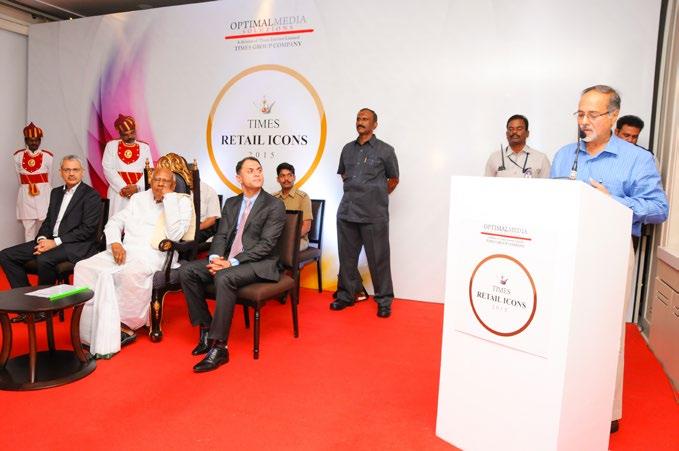
“Venugopal is not just a Friend, but a brother to me. I have known him for almost 45 years now and can vouch that he is the best in his industry. His initiative to improve his workers lives and educate village children is truly commendable and shows the good human he is. I look up to him for always being available to friends and their families at any time. May the industry have many such people like him, who truly impact the lives of many.” “I have known Venugopal since 1962, as we studied together in school from grade 4 to grade 6. Although we were divided in different schools after grade 6, our relation remains consistent even today. Venugopal is humble, modest, forever helpful, and his leadership skills are exemplary. Employing almost 2000 people in his newly set up Ambur factory is a classic example of his excellent leadership skills. I wish him great success in life and in all his endeavors.”
“As a person he is a wonderful person. By wonderful I mean magnanimous, kind, forgiving nature, always cheerful and positive. His forgiving nature is what awes me so much. He never hesitates to offer help. He mingled with all ages.. and in turn they enjoy his company. As a Father, he has always been the sweetest Father. Never scolds us, stood by us even when we have any struggle, i look up to him for giving a good advise, when I’m confused. I learn Everyday from watching him interact with people, how to maintain relationships for years, how to treat people etc. I’m really proud to have him as my Father. He doesn’t like any supplier waiting to see us. He immediately questions us as to why the person is made to wait for long. He respects every supplier whether big or small, and remembers them even if we don’t continue business. And the first thing he asks anyone who enters is what would u like to drink.
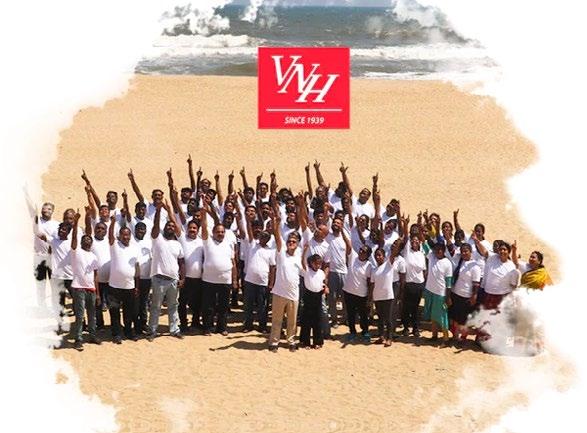
Naidu Hall’s production facilities comprise a state-of-the-art factory at Ambur, Tamil Nadu, the native place of founder M G Naidu’s wife, Jayalakshmi Ammal. Expansion plans include installing additional equipment like auto profile, auto pressing and auto overlock machines, to boost production, quality and capacity.
Naidu Hall strives to maintain consistently superior standards of quality by following the Japanese 5S manufacturing practice – Sort, Set, Shine, Standardize and Sustain. The company also follows the lean manufacturing process.
The goal of establishing the factory was not just to deliver unmatched product quality, but also to improve the quality of life amongst people of the region, through employment opportunities. Nearly 90% of the factory staff are women – a reflection of Naidu Hall’s longstanding vision of empowering women.
As a brand that touches the lives of people, we believe that we should give back to the society. We have established a Heart Foundation in Chennai, through which nearly 40 heart surgeries have been performed. We also have the vision of building a better future for the younger generation.
We are making this a reality by sponsoring the education of one child of each employee and providing free education to the children of the village where our factory is located. We also sponsor all the equipment required by schools in the village. Empowering India’s children is key to a progressive future.
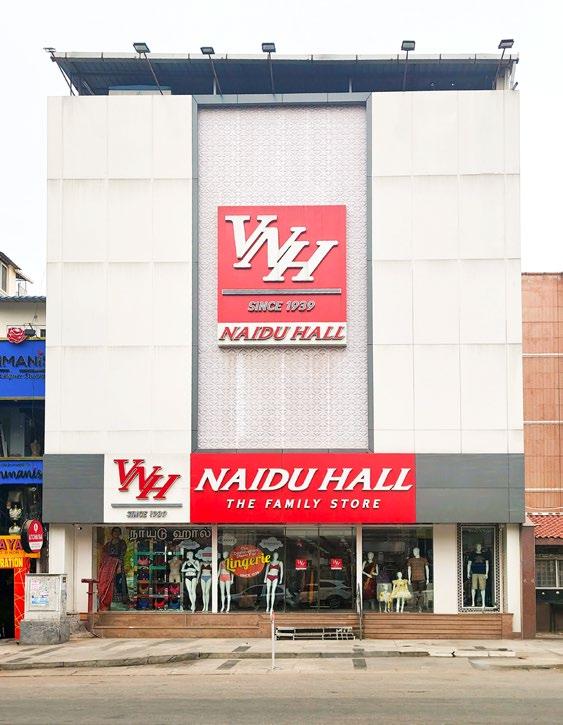
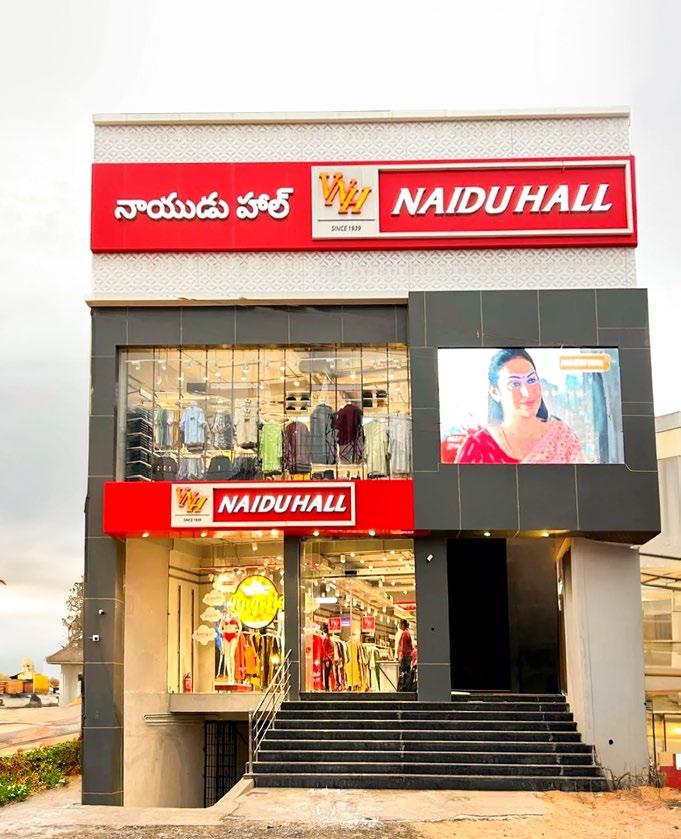
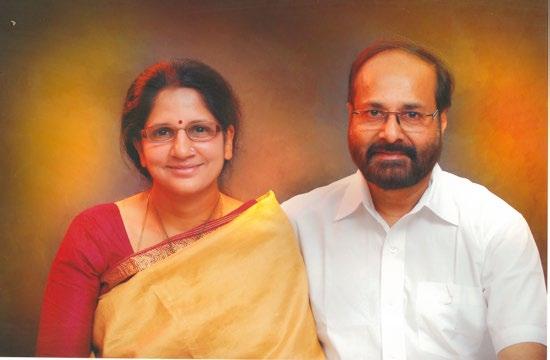
Taking care of the staff by contributing part of their childrens education expenses, He would like to give employment to ‘as many people as possible’, almost 100 children come for tuition in our ambur premises ( and they are given milk and healthy snack) Everyday. He Donates to many deserving NGOs and events that benefit health. He also ensures that everyday food is made fresh in our canteen and taken in a vehicle to give homeless people on the streets of Chennai.
He leads by example. the encouragement he gives all of us to take up more responsibility without fearing the consequences. He forgives people’s mistakes and gives them a higher post to encourage them. And has so much patience with any issue that arises, calmly solving it in a
beautiful way. He has a great sense of humour and presence of mind, and it comes out during every meeting that we have with the entire team. He is sensitive to peoples feelings and gives a lending hand to anyone who wants to meet him with their personal problems. ‘May he be gifted with long years of health, happiness and joy and I wish he is there with us forever’.
“My Husband Venugopal is very focused, careful and dedicated to his work. His love for his business and its people is palpable, and he always ensures that everyone around him is comfortable. He’s been a very kind and loving as a husband, and always makes sure that his entire family and the extended family of workers are happy. We’ve been each other’s support system, and I wish the best of health and happiness for him in the years to come.”
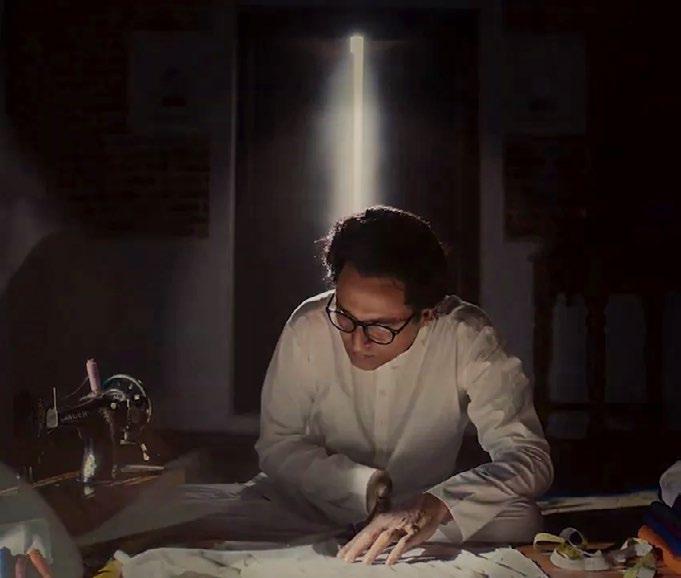
“My grand dad is more of a friend who is loving, caring and pampers me with a lot of gifts. All my friends find him to be really kind and cool. The best part is no matter how busy he is, he finds time for us and makes us feel important. He’d take us to Ambur often, and we get to spend a lot of time with him talking about his love for horse racing, his experiences and his passion. I really admire how he treats his workers as family, and the way he prioritizes customer at the store. This is something I really wish to learn from him. My love for him is immeasurable,
and I hope to be like him when I grow up.”“My relation with Venugopal is much beyond just a father-in law. He’s more of a friend, a Guru constantly guiding and motivating me, and treating me as his own son. A Humble, loving and affectionate person, not just with his family, but also with his workers who he regards as an extended family. He may be a man of few words, but single-handedly having built a mighty empire, is truly commendable of him as a leader. And despite handling an empire, his work-life balance truly astonishes

me. I cannot imagine how he manages to find time once a week to meet up even with school friends or even acquaintance, and he is a great host to people. This is something I truly need to learn from him. Forever young at heart, he gets along with people of any age group and with ease. His greatest quality is his ability to forgive people and trust them without holding any grudges against them. I don’t know of anyone else, who possesses these qualities, the way he does. I consider myself extremely lucky to have him as my father-in-law. A Gentle Person
so loving, affectionate and modest, deserves all the joy in the world, and is blessed with Health and Happiness always. I also hope he now travels the world with his loved ones and lives his dream of extensive travel.” “My Thatha is very sweet and I enjoy spending time with him. He cancels all other plans just to be with me. I enjoy watching TV with him and travelling alone with him. He buys many gifts for me, really pampers me and makes all my dreams come true. I love you, Thatha.”
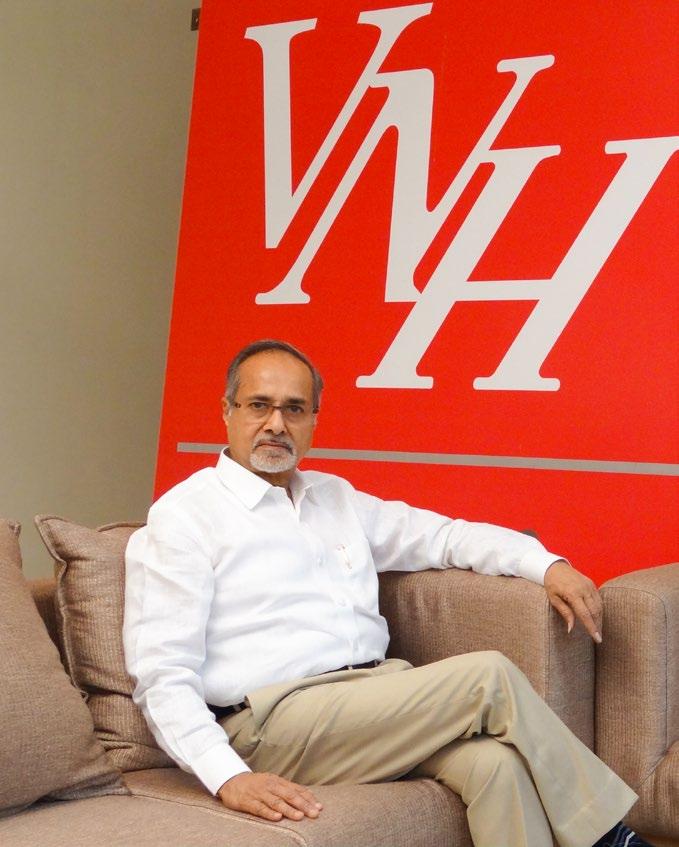
“A Leader is one who knows the way, Goes the way, and Shows the way.”

From helping others to succeed to having the capability to inspire, an ever-smiling Shri. G. Venugopal clearly is a beacon of inspiration, Integrity and Emotional intelligence. With a Far- reaching vision, Passion, Grit and Acumen deeply ingrained, he has helped Naidu Hall grow from strength to strength with a rich Legacy of not only the business they’re carrying on, but also of the values and culture, inspiring and motivating many generations to come..


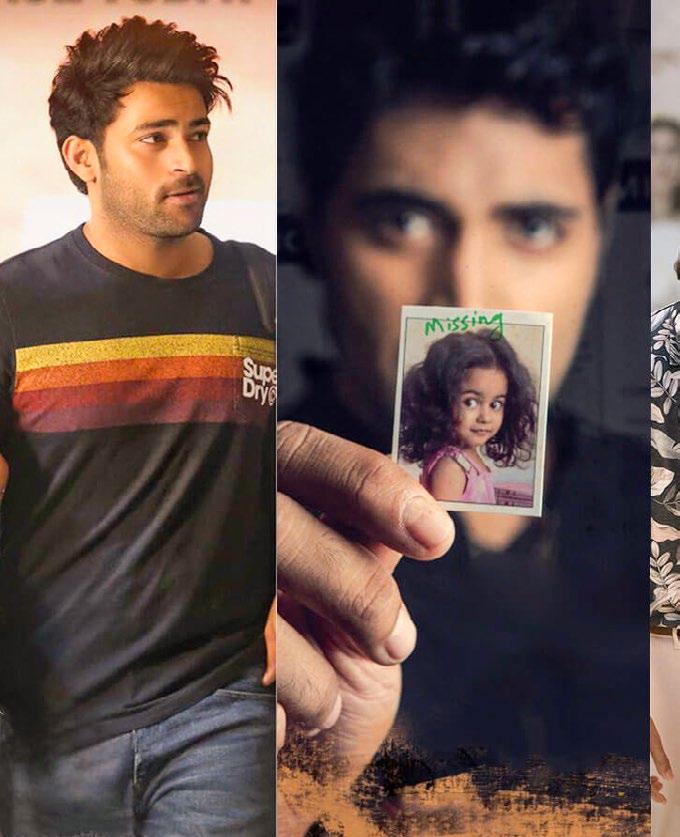



The Indian movie industry, one of the largest and most prolific in the world, has undergone a seismic transformation in recent years, largely driven by the rise of Over-The-Top (OTT) platforms. Platforms like Netflix, Amazon Prime Video, JioHotstar, and ZEE5 have not only changed how audiences consume content but have also reshaped the production, distribution, and creative landscape of Indian cinema. From democratizing access to diverse stories to providing a global stage for regional cinema, OTT platforms have become a game-changer for the industry.


OTT platforms have broken geographical barriers, bringing Indian cinema to global audiences. Unlike traditional theatrical releases, which were often limited to urban centres or specific regions, OTT platforms offer instant access to films across the world. This has been particularly transformative for regional cinema in languages like Tamil, Telugu, Malayalam, and Bengali, which now enjoy a global fanbase. Films like Kantara (Kannada) and RRR (Telugu) gained international acclaim after their OTT releases, showcasing the universal appeal of Indian storytelling. Moreover, OTT platforms have made films accessible to audiences in tier2 and tier-3 cities in India, where cinema halls
may be scarce. With affordable subscriptions and mobile-first viewing, platforms have tapped into a massive, previously underserved audience, expanding the market for Indian films.
The traditional Indian film industry, dominated by Bollywood and big-budget commercial cinema, often prioritized formulaic narratives to ensure box-office success. OTT platforms, however, have given filmmakers the freedom to experiment with unconventional stories, genres, and formats. The absence of box-office pressure has led to a surge in content-driven films that tackle socially relevant themes, complex characters, and niche genres.


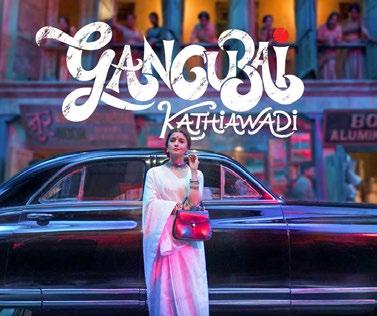
For instance, films like The Lunchbox and Sir explored nuanced human relationships, while thrillers like Andhadhun and Drishyam 2 captivated audiences with gripping narratives. OTT platforms have also championed femaleled stories, with films like Gangubai Kathiawadi and Darlings resonating with viewers for their bold portrayal of women.
One of the most significant contributions of OTT platforms has been the rise of regional cinema. In the past, non-Hindi films struggled to secure theatrical distribution outside their home states. OTT platforms have changed this by providing a level playing field for regional content. Malayalam films like The Great Indian Kitchen (Amazon Prime) and Minnal Murali (Netflix) have garnered critical acclaim and a
nationwide audience, proving that language is no longer a barrier. These platforms have also invested heavily in dubbing and subtitling, making regional films accessible to diverse linguistic groups. This has not only increased the viewership of regional cinema but also fostered a sense of cultural unity by exposing audiences to India’s rich linguistic diversity.
The Indian movie industry has traditionally relied on theatrical releases, satellite rights, and home video for revenue. OTT platforms have introduced a lucrative new revenue stream through direct-to-digital releases and licensing deals. During the COVID-19 pandemic, when theatres were shuttered, films like Laxmii and Sooryavanshi opted for OTT premieres, ensuring financial viability for producers.
Additionally, OTT platforms have enabled smaller-budget films to find an audience without the need for expensive theatrical marketing. This has levelled the playing field, allowing independent filmmakers to compete with big production houses. The subscriptionbased and pay-per-view models of OTT platforms also provide a steady revenue flow, reducing the financial risks associated with theatrical releases.
OTT platforms have opened doors for new talent, both in front of and behind the camera. Directors, writers, and actors who may not have had access to mainstream Bollywood now have a platform to showcase their work. For example, filmmakers like Anurag Kashyap and Dibakar Banerjee have found a creative haven in OTT, producing critically acclaimed films and series like Sacred Games and Cinema Bandi.
Moreover, OTT platforms have encouraged technical innovation in Indian cinema. With audiences demanding high-quality visuals and sound, filmmakers are investing in better cinematography, editing, and sound design to meet global standards. The competition among platforms has also led to increased budgets for original films, enabling creators to push creative boundaries.
OTT platforms have played a pivotal role in taking Indian cinema to international audiences. Netflix and Amazon Prime, with their global presence, have introduced Indian films to viewers in the U.S., Europe, and beyond. This has not only boosted the soft power of Indian cinema but also attracted international collaborations. For instance, films like The White Tiger, produced with global sensibilities, have been nominated for prestigious awards, elevating the industry’s global stature.


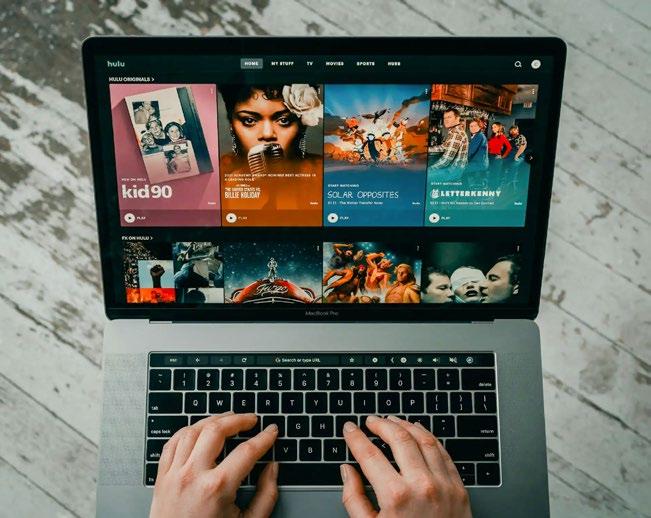

Additionally, OTT platforms have facilitated the export of Indian content by curating dedicated sections for Indian cinema and promoting it through algorithms. This has led to a growing appreciation for Indian films, with non-resident Indians (NRIs) and international audiences discovering both mainstream and indie gems.

While OTT platforms have been a boon, they also pose challenges. The influx of content has led to oversaturation, making it harder for smaller films to stand out. Additionally, the reliance on algorithms to recommend content can sometimes bury unique films under popular titles. The industry must also address concerns about creative control, and platform influence on content to align with their brand or audience preferences. Looking ahead, the synergy between theatrical releases and OTT platforms is likely to define the future of Indian cinema. Hybrid release models, where films have a limited theatrical run followed by an OTT premiere, are gaining traction. This approach maximizes revenue while catering to diverse audience preferences.
OTT platforms have undeniably transformed the Indian movie industry, ushering in an era of creative freedom, inclusivity, and global reach. By championing diverse stories, empowering regional cinema, and providing new revenue streams, these platforms have redefined how Indian films are made, distributed, and consumed. As technology continues to evolve, the partnership between OTT platforms and the Indian movie industry promises to unlock even greater potential, ensuring that Indian cinema remains a vibrant and influential force on the global stage.



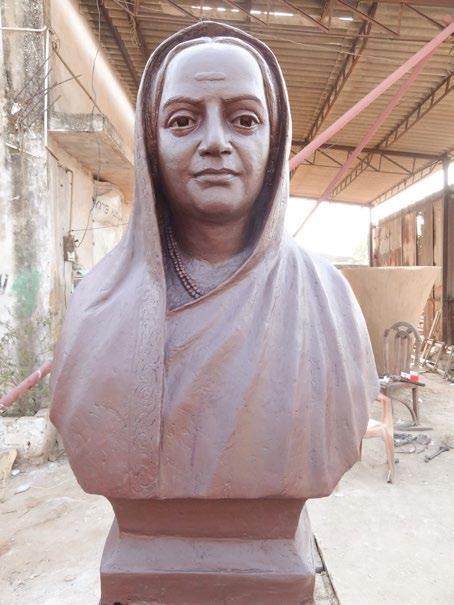
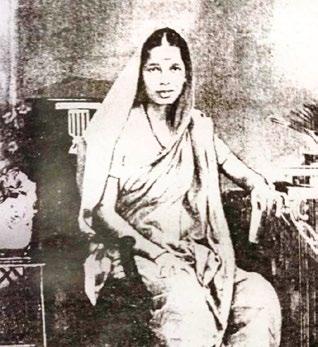
Imagine a world where women were confined to the shadows of their homes, denied the light of knowledge, and silenced by the weight of tradition. In 19th-century India, this was no imagination—it was reality. Yet, in the face of such stifling oppression, one woman dared to ignite a revolution with the power of education. Her name was Savitribai Phule, a name that echoes through history as the pioneer of women’s education in India, a fearless reformer, and a poet whose words cut through injustice like a blade.
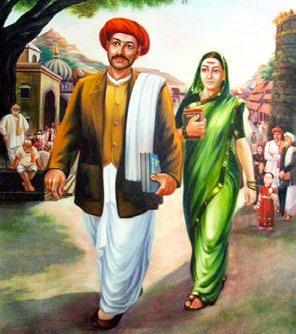
Born on January 3, 1831, in Naigaon, Maharashtra, Savitribai grew up in a society where women, especially those from lower castes, were deemed unworthy of learning. Married at the tender age of nine to Jyotirao Phule, a visionary social reformer, she found not just a partner but a comrade in the fight for equality. Jyotirao recognized her spark and taught her to read and write—a radical act in itself. Little did the world know, this spark would soon become a wildfire.
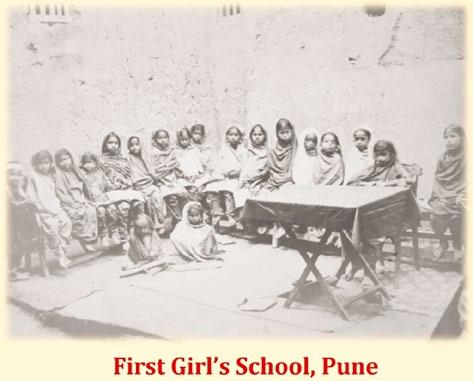
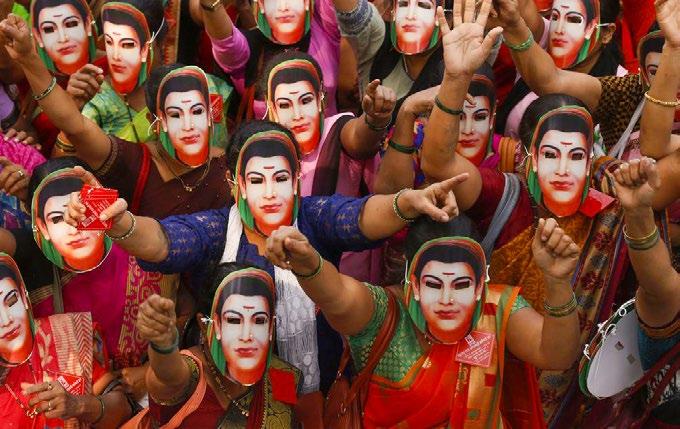
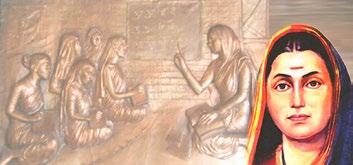
In 1848, Savitribai and Jyotirao took a step that would shake the foundations of Indian society: they opened one of the first girls’ schools in Pune at Bhide Wada. This wasn’t just a school; it was a rebellion. At a time when educating women was considered a sin, Savitribai, barely 17, became India’s first female teacher. Picture her walking through the streets of Pune, books in hand, enduring insults, stones, and even cow dung hurled at her by those who saw her work as a threat to their power. Yet, she pressed on, her resolve unbreakable.
The school started with just a handful of girls, but its impact was monumental. Savitribai didn’t stop at teaching the elite; she and Jyotirao opened their doors to girls from all castes, including those deemed “untouchable.” This was unheard of in a society strangled by caste hierarchy. By 1852, the couple had established three schools, educating over 150

girls. Savitribai’s teaching went beyond the alphabet—she instilled dignity, courage, and the belief that every girl deserved a future shaped by her own dreams. But Savitribai’s fight wasn’t confined to classrooms. She saw the interconnected web of injustices that trapped women and marginalized communities.

In 1852, she and Jyotirao opened a shelter for widows and destitute women, a safe haven for those cast out by society. Widows, often forced into lives of shame or worse, found hope here. Savitribai even adopted a child born to a widow, challenging the stigma head-on. She also campaigned for widow remarriage and fought against child marriage, practices that crushed countless lives.
Her compassion extended to all who suffered. During the devastating plague of 1897, Savitribai worked tirelessly to care for the afflicted, setting up a clinic in Pune. Tragically, while nursing patients, she contracted the disease and passed away on March 10, 1897. Even in her final moments, she chose service over self—a testament to her boundless courage.
Savitribai was also a poet, wielding words as weapons against injustice. In 1854, she published Kavya Phule, a collection of poems that critiqued caste oppression and patriarchy with unflinching clarity. Her poetry wasn’t just
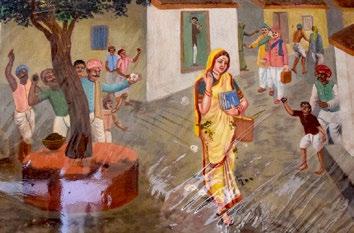
art; it was a call to action, urging people to rise against inequality. Another collection, Bavan Kashi Subodh Ratnakar, followed, cementing her voice as one of resistance and hope.
What makes Savitribai’s legacy so electrifying is her refusal to bow to fear. She faced excommunication, ostracism, and physical attacks, yet she never wavered. Her work laid the groundwork for future generations of women to claim their right to education and equality. Today, schools, universities, and awards bear her name, but her true monument is the millions of women who read, write, and dream because of her.
Savitribai Phule wasn’t just a teacher—she was a revolutionary who lit a torch in the darkest corners of society. Her life reminds us that change begins with courage, and one person’s defiance can spark a movement. So, the next time you pick up a book or chase a dream, think of Savitribai, the woman who fought for your right to do so. Her story isn’t just history; it’s a challenge to keep her fire burning.




The world of work is changing faster than ever, driven by technological advancements, shifting economic demands, and evolving societal needs. To keep pace, education must prepare learners not just to absorb knowledge but to apply it in dynamic, real-world settings. Enter EdTech— educational technology—a transformative force bridging the gap between learning and earning. By leveraging innovative tools, platforms, and methodologies, EdTech is redefining how individuals acquire skills, adapt to change, and thrive in the workforce of the future.






The modern workforce faces a persistent challenge: the skills gap. Rapid advancements in artificial intelligence, automation, and digital technologies have outpaced traditional education systems, leaving many workers underprepared for emerging roles. A 2023 World Economic Forum report estimated that 50% of all employees will need reskilling by 2025 to meet the demands of new technologies. Meanwhile, employers struggle to find candidates with the right blend of technical and soft skills, such as critical thinking, adaptability, and digital literacy.
Traditional education, often slow to adapt, struggles to address this gap. Enter EdTech, which offers scalable, flexible, and personalized solutions to equip learners with the tools they need to succeed. From online courses to immersive simulations, EdTech is revolutionizing how skills are acquired, making education more accessible, relevant, and aligned with workforce needs.

EdTech platforms like Coursera, Udemy, and Khan Academy use data-driven algorithms to tailor learning experiences to individual needs. Adaptive learning systems assess a learner’s strengths, weaknesses, and progress, delivering customized content that maximizes comprehension and retention. For example, platforms like Duolingo gamify language learning, while tools like LinkedIn Learning offer bite-sized courses on everything from coding to leadership. This personalization ensures learners can focus on skills directly relevant to their career goals. A software developer might master Python through interactive coding platforms like Codecademy, while a marketing professional hones data analytics skills via Google’s online certifications. By catering to diverse learning styles and paces, EdTech empowers individuals to upskill efficiently and effectively.

EdTech democratizes education by breaking down geographic and economic barriers. Online platforms provide access to high-quality resources for learners in remote areas or underserved communities. For instance, initiatives like edX partner with top universities to offer free or lowcost courses, enabling anyone with an internet connection to learn from institutions like MIT or Harvard.
This accessibility is critical for workforce development. In regions where traditional education infrastructure is limited, EdTech equips individuals with marketable skills, opening doors to remote work or global job markets. Mobile learning apps further amplify this impact, allowing learners to study on-the-go, fitting education into busy schedules.

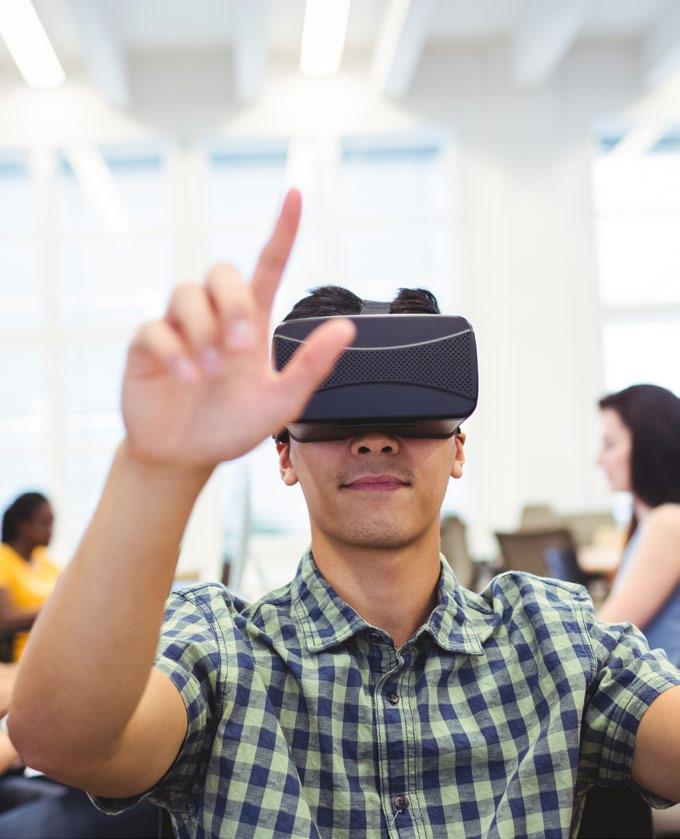
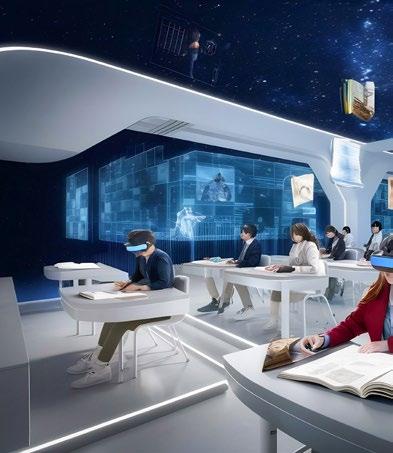
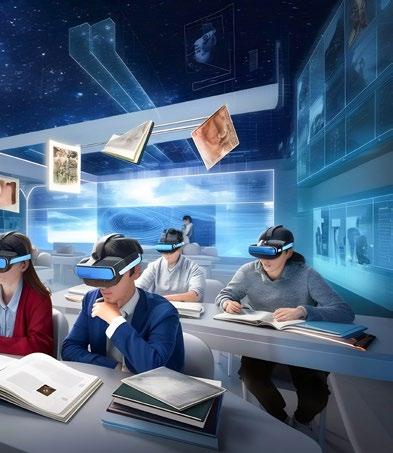
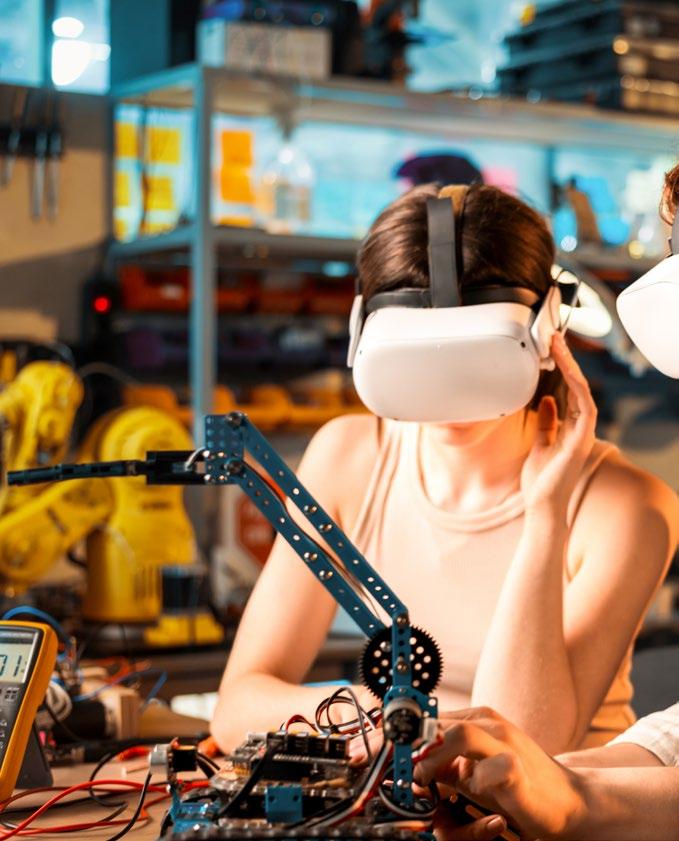
Emerging technologies like virtual reality (VR), augmented reality (AR), and artificial intelligence are transforming how skills are taught. VR simulations, for example, allow medical students to practice surgeries in a risk-free environment, while AR tools help technicians train on complex machinery. Platforms like Immersive Labs use gamified cybersecurity challenges to prepare IT
The concept of a “job for life” is obsolete. Today’s workers must continuously upskill to stay competitive. EdTech supports lifelong learning through micro-credentials, certifications, and modular courses that allow professionals to pivot careers or deepen expertise. Platforms like Degreed and Pluralsight enable users to track their learning journeys and earn credentials recognized by employers. This
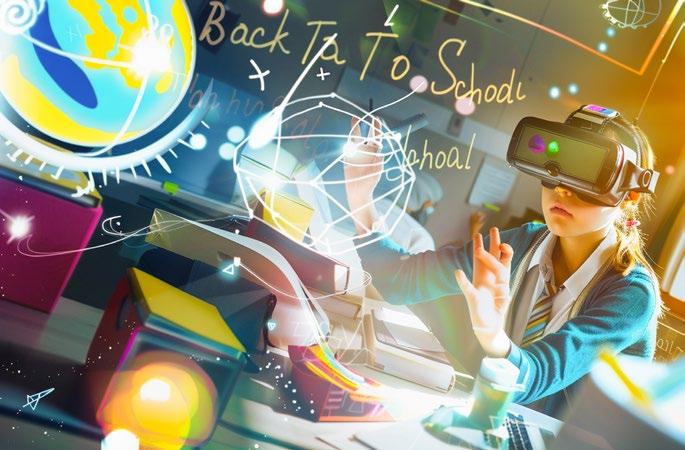
professionals for real-world threats These tools bridge the gap between theory and practice, ensuring learners are job-ready. For instance, Walmart has used VR to train employees in customer service scenarios, improving soft skills like empathy and problem-solving. By simulating workplace challenges, EdTech prepares learners to hit the ground running.
flexibility is crucial in industries like tech, where skills can become outdated within months. For example, Amazon’s AWS Educate program offers cloud computing certifications, helping learners secure roles in a high-demand field. By fostering a culture of continuous learning, EdTech ensures workers remain adaptable in a rapidly evolving economy.





EdTech directly addresses employer needs by aligning curricula with industry demands. Partnerships between EdTech companies and corporations— such as Google’s Career Certificates or Microsoft’s Learn platform—focus on in-demand skills like data analysis, cloud computing, and AI. These programs often include job placement support, creating a direct pipeline from learning to earning.
By making education accessible, EdTech empowers underrepresented groups to enter high-growth fields. Programs like Girls Who Code and Code.org introduce young women and minorities to STEM, addressing gender and racial disparities in tech. Similarly, platforms like FutureLearn offer courses in multiple languages, supporting non-native speakers in global job markets.
The rise of the gig economy demands flexible, self-directed learning. EdTech platforms equip freelancers with skills to compete in fields like graphic design, digital marketing, or software development. For example, Fiverr Learn offers courses tailored to gig workers, helping them stand out in competitive marketplaces.
EdTech is future-proofing the workforce by preparing learners for jobs that don’t yet exist. Courses in AI ethics, blockchain, and sustainable business practices are emerging to meet anticipated needs. By staying ahead of trends, EdTech ensures learners are ready for roles in industries like green tech, cybersecurity, and autonomous systems.





Despite its promise, EdTech faces challenges. Digital divides—such as unreliable internet or lack of devices—limit access for some learners. Quality control is another issue, as not all online courses meet rigorous standards. Additionally, employers must recognize and value EdTech credentials, which requires stronger collaboration between industry and education providers.
To maximize impact, EdTech must evolve. Governments and organizations should invest in digital infrastructure to ensure universal access. EdTech companies should prioritize evidence-based teaching methods and regularly update curricula to reflect market needs. Finally, fostering partnerships between EdTech platforms, universities, and employers can create seamless pathways from education to employment.
EdTech is more than a tool—it’s a catalyst for transforming learners into earners. By personalizing education, enhancing accessibility, and aligning skills with workforce demands, EdTech is shaping a future where individuals can adapt, innovate, and thrive. As technology continues to reshape industries, EdTech will remain at the forefront, empowering the workforce of tomorrow to meet challenges with confidence and competence. From classrooms to boardrooms, the journey from learner to earner has never been more attainable—or more essential.

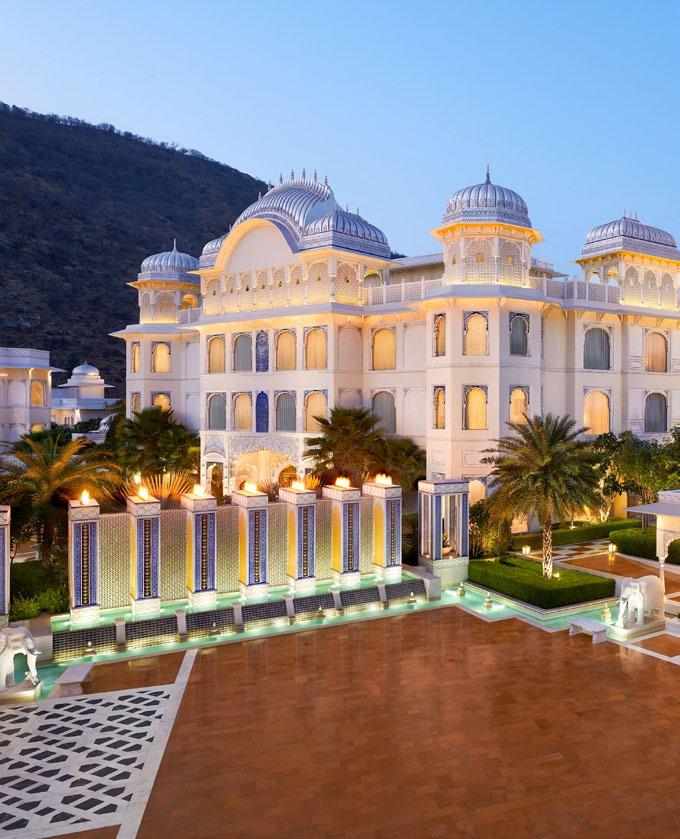
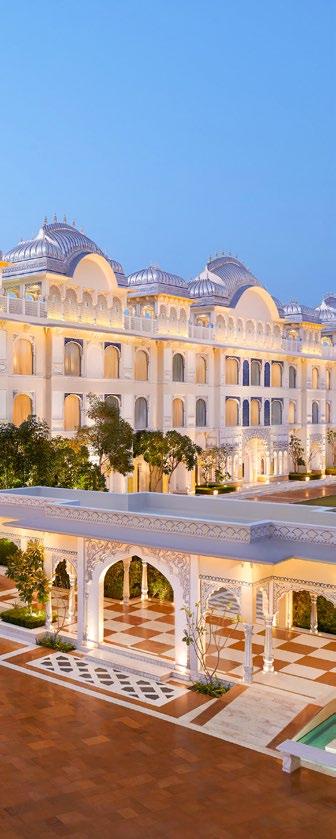



Nestled in the rolling hills of nashik, maharashtra, sula vineyards has become synonymous with indian winemaking, transforming the region into the "napa valley of india." Founded in 1999 by rajeev samant, sula has grown from a bold vision into india’s largest and most awarded wine producer, commanding over 60% market share in the elite and premium wine categories. With its commitment to quality, sustainability, and wine tourism, sula has not only redefined india’s wine culture but also placed indian wines on the global map.



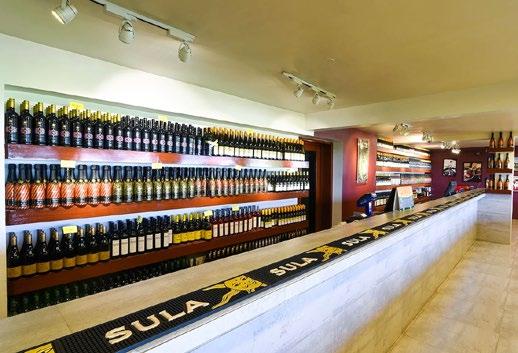


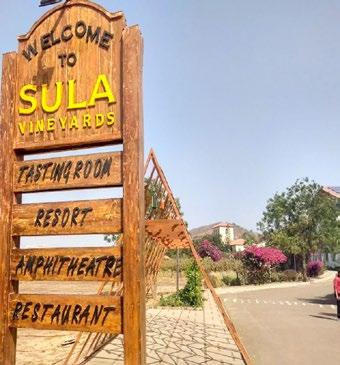
Rajeev Samant, a Stanford alumnus and former Oracle employee, returned to India in the early 1990s with no clear plan but a desire to create something meaningful. A visit to his family’s 30-acre plot in Nashik, a region known for table grape cultivation, sparked an idea. Inspired by the terroir—600 meters above sea level with a climate of cool nights and warm days ideal for wine grapes—Samant saw potential where others saw none. Partnering with Californian winemaker Kerry Damskey, he planted the first vines in 1997, introducing varietals like Sauvignon Blanc and Chenin Blanc to India. Named after his mother, Sulabha, Sula Vineyards was born, marking the start of a wine revolution in a country where wine was virtually unknown. The early years were challenging. India’s wine market was non-existent, and obtaining a winery license was daunting. Yet, Samant’s persistence and Californianinspired approach—opening the winery to the public— set Sula apart. By 2000, Sula sold its first bottle, and in 2002, it earned a five-page feature in Wine Spectator, a milestone for Indian wine.





Sula’s success lies in its diverse and innovative wine portfolio, which includes red, white, rosé, sparkling, and dessert wines. The winery pioneered classic grape varietals in India, such as:
• Chenin Blanc and Sauvignon Blanc (2000)
• Zinfandel (2003)
• Riesling (2008)
• Grenache Rosé, India’s first
• Sparkling Shiraz, a unique offering
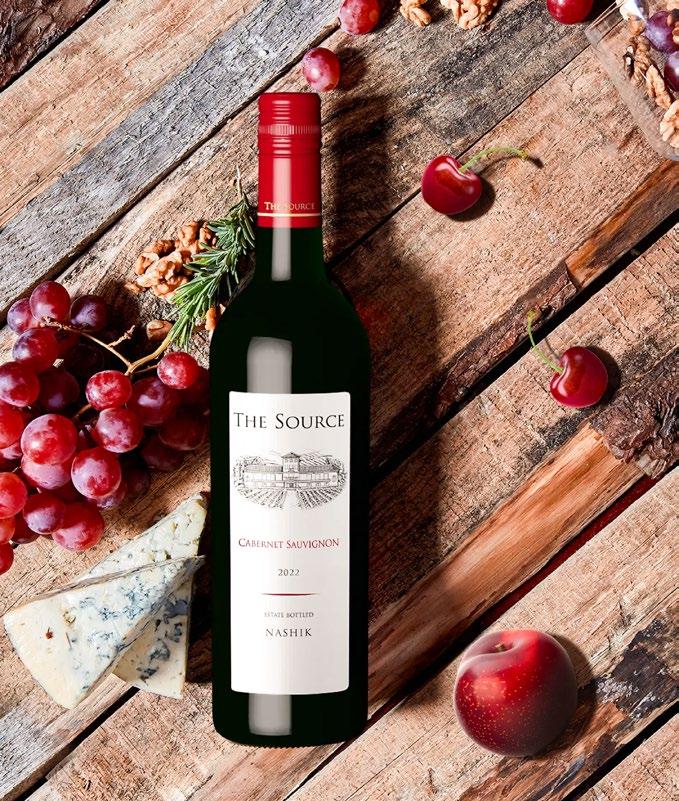
Its flagship brands, including "Sula," "RASA," "Dindori," "The Source," "Satori," "Madera," and "Dia," cater to varied palates. Standouts include the Dindori Reserve Shiraz, the first Indian wine to feature in Wine Enthusiast’s Top 100 Wines, and the Sula Cabernet Shiraz, India’s best-selling red wine. In 2024, Sula celebrated its 25th anniversary with the launch of Sula Merlot, the first addition to its core series in nearly a decade.
Sula’s winemaking philosophy is simple: great wines start with great grapes. The Nashik terroir, with its high acidity from cool nights and optimal ripeness from warm days, is meticulously leveraged. The winery also employs modern techniques, such as microclimate monitoring and early harvesting, to enhance natural flavours and balance acidity, adapting to the region’s hot climate.

Sula’s impact on India’s wine industry is profound. It holds a 52% overall market share and dominates the premium segment with brands like "The Source" and "RASA." The winery has expanded to 1,800 acres and produces three million litres annually, collaborating with thousands of farmers to ensure high-quality grapes. Its innovations, such as canned wine and the Kadu wildlife wine series, reflect its forward-thinking approach. Sula’s financial performance underscores its leadership. In FY25, it reported a record revenue of ₹618.8 crore, up 1.7% year-on-year, despite challenges like urban consumption slowdowns and

election-related disruptions. Its focus on premiumization—emphasizing wines priced above ₹700—has driven 15-20% compound annual growth in the elite segment over the past three years. However, not all quarters were rosy. Q2FY25 saw a 37% drop in net profit to ₹14.48 crore due to weak urban demand and technical issues in key markets like Delhi. Q3FY25 reported a 35% profit decline to ₹28.06 crore, though revenue from own brands grew 1% to ₹194.7 crore. Despite these setbacks, Sula remains optimistic, banking on festive seasons and new market expansions, such as Andhra Pradesh and the CSD (Canteen Stores Department).
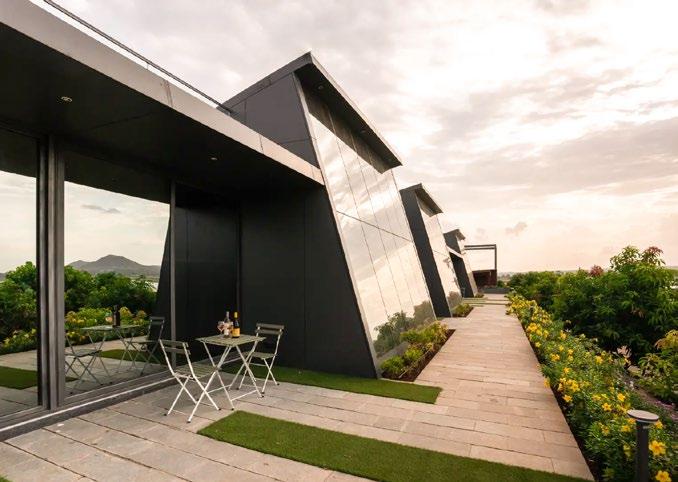
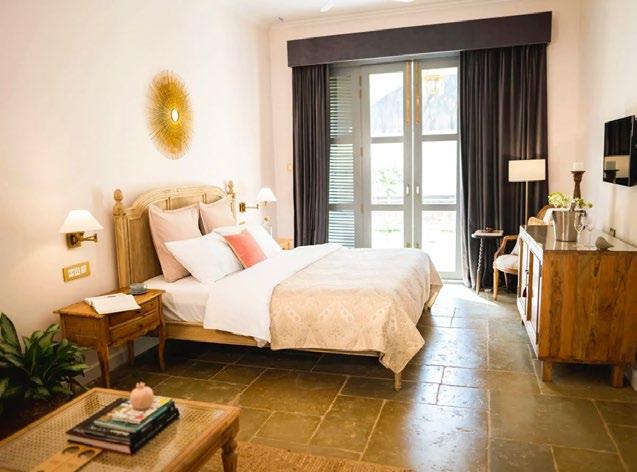
Sula is not just a winery; it’s a destination. Attracting over 400,000 visitors annually, it’s the world’s most visited vineyard. Its Nashik estate, overlooking the Gangapur Dam, offers guided tours, wine tastings, and dining at restaurants like Rasa and Little Italy. The winery’s two luxury properties, The Source at Sula, India’s first heritage winery resort, and Beyond by Sula, with its worldclass infinity pool, provide immersive experiences. In Karnataka, Domaine Sula, located near Bangalore, is a growing hub for wine tourism, featuring tasting rooms and gourmet dining.

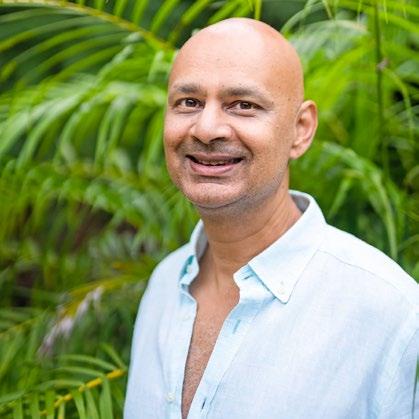
Sula’s wine tourism revenue hit a record ₹16.4 crore in Q3FY25, up 11.5% year-on-year, driven by higher guest spending and events like SulaFest, an annual wine-andmusic festival launched in 2008. The winery is further investing in tourism, with plans for a new tasting room and expanded facilities at its recently acquired ND Wines unit in Maharashtra and its Bengaluru vineyard. Visitors praise the experience. A Tripadvisor review highlights the “stunning vineyard views” and “exceptional hospitality,” though some note that food quality at the tasting room could improve. The monsoon tasting sessions, paired with local dishes like pathrode, offer a unique blend of wine and Indian flavours.

Sula’s commitment to sustainability is a cornerstone of its operations. The winery meets 58% of its energy needs through solar power, uses electric vehicles, and aims for carbon net-zero by 2050. It employs watersaving methods, biogas generation from food waste, and data-driven viticulture to adapt to changing weather patterns. These efforts not only reduce environmental impact but also resonate with eco-conscious consumers.




Despite its dominance, Sula faces challenges. India’s per capita wine consumption remains low at 10 millilitres annually, compared to China’s 400 millilitres. High state duties, such as Maharashtra’s 20% VAT on wine, and interstate trade barriers hinder growth. Urban slowdowns and discretionary spending dips have impacted recent quarters, and a ₹21.45 crore tax assessment order in April 2025 added pressure. Yet, opportunities abound. Sula’s premiumization strategy aligns with India’s growing middle class and evolving tastes. Its focus on education—through WSET (Wine & Spirit Education Trust) courses and tastings—aims to boost consumption to 100 millilitres per capita. International exports and partnerships with global brands like Le Grand Noir and Beluga Vodka strengthen its portfolio. The 2024 grape harvest, described as excellent in quality and quantity, bodes well for future production.

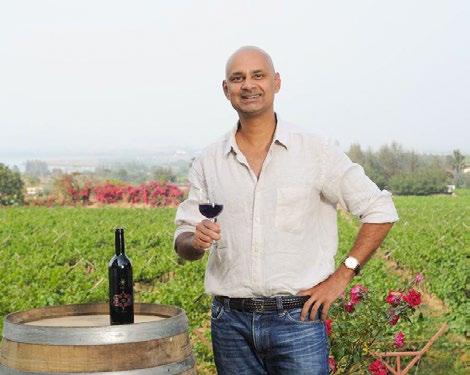

At 25, Sula Vineyards stands as a trailblazer, proving that Indian wines can compete globally. Rajeev Samant, often called the “Mondavi of Mumbai,” envisions sustained double-digit growth over the next five years, driven by premium brands, tourism, and new ranges. With plans to expand facilities, introduce innovative products, and deepen its sustainability efforts, Sula is poised to lead India’s wine industry into a vibrant future.
“It takes great grapes to make great wine.” Sula Vineyards, with its passion, innovation, and commitment to excellence, is crafting not just wine but a legacy— one sip at a time.


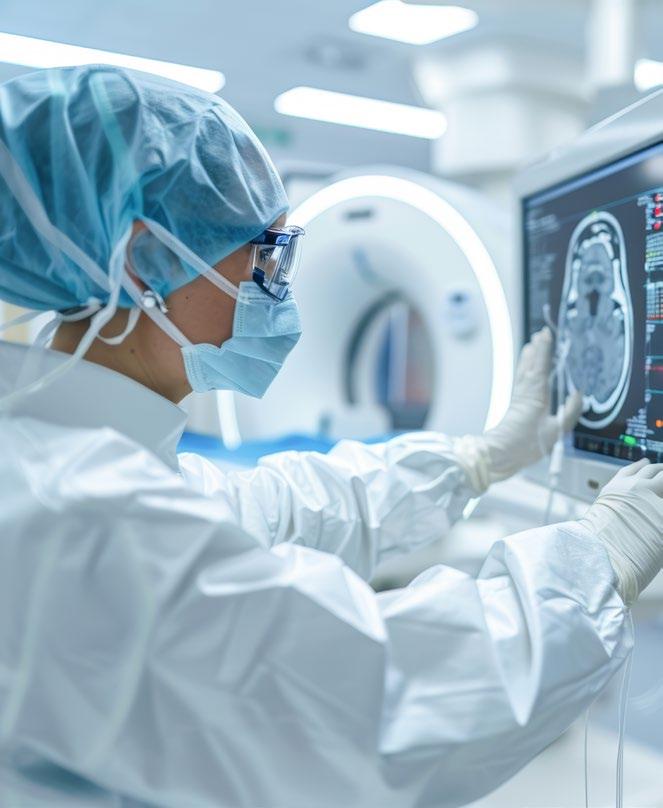




Ayurveda, the ancient Indian system of medicine and wellness, has transcended its cultural roots to become a global phenomenon. With its holistic approach to health—emphasizing balance, natural remedies, and personalized care—Ayurveda is resonating with a world increasingly seeking sustainable and integrative wellness solutions. Indian brands, leveraging centuries-old wisdom, are now at the forefront of this global movement, scaling Ayurveda to meet modern demands while preserving its authenticity. This article explores how Indian Ayurvedic brands are expanding their reach, navigating challenges, and shaping the global wellness industry.

The global wellness market, valued at over $4.5 trillion, is driven by growing consumer awareness of health, sustainability, and natural products. Ayurveda, with its focus on prevention over cure, aligns perfectly with these trends. Its principles—balancing the body’s doshas (Vata, Pitta, Kapha) through diet, herbs, yoga, and lifestyle—offer a counterpoint to the fast-paced, stress-laden modern world. From turmeric lattes to ashwagandha supplements, Ayurvedic ingredients are now staples in global health stores, cafes, and skincare routines.
The rise of e-commerce, social media, and globalization has further fuelled Ayurveda’s appeal. Consumers in the U.S., Europe, and Southeast Asia are drawn to its promise of holistic well-being, backed by a 5,000-yearold legacy. Indian brands, both legacy names and newage startups, are capitalizing on this demand, exporting products, establishing international presence, and adapting to global tastes.

Dabur, one of India’s oldest Ayurvedic companies, has been a pioneer in taking Ayurveda worldwide. With products like Chyawanprash, honey, and herbal toothpaste, Dabur has built a strong presence in over 100 countries, including the U.S., Middle East, and Africa. Its strategy involves tailoring products to local markets—such as introducing smaller, travel-friendly packs for Western consumers—while maintaining Ayurvedic authenticity. Dabur’s global success is also driven by robust supply chains and partnerships with international retailers like Amazon and Walmart.


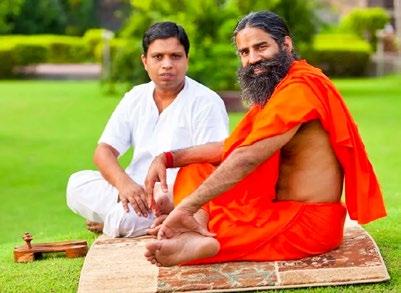
Patanjali, led by yoga guru Baba Ramdev, has transformed from a local brand to a global contender. Its extensive range—spanning food, cosmetics, and medicines—appeals to both Indian diaspora and global consumers seeking affordable, natural products. Patanjali’s international expansion includes stores in the U.S., Canada, and the UK, supported by aggressive marketing and e-commerce platforms. Its focus on “swadeshi” (indigenous) products resonates with consumers wary of synthetic alternatives, though quality consistency remains a challenge in some markets.


Himalaya Wellness has carved a niche by blending Ayurvedic principles with modern science. Its products, like Liv.52 and Neem face wash, are sold in over 90 countries, with a strong foothold in the U.S., Europe, and Southeast Asia. Himalaya’s success lies in its research-driven approach, ensuring products meet global safety and efficacy standards. By investing in clinical trials and certifications like GMP (Good Manufacturing Practices), Himalaya appeals to health-conscious consumers and regulatory bodies alike.


Forest Essentials has positioned Ayurveda in the luxury wellness segment, competing with global brands like L’Occitane. Its handcrafted skincare and haircare products, rooted in Ayurvedic formulations, are sold in high-end stores across the Middle East, Europe, and the U.S. The brand’s emphasis on natural ingredients, sustainable packaging, and sensory experiences (like rose and saffron-infused creams) has made it a favourite among affluent consumers. Collaborations with luxury hotels and spas have further elevated its global profile.

Biotique has made Ayurveda accessible to a global audience with budget-friendly yet authentic products. Its herbal shampoos, creams, and supplements are popular in markets like Southeast Asia and the Middle East. Biotique’s strategy includes localized marketing— highlighting eco-friendly packaging and crueltyfree credentials—to appeal to environmentally conscious consumers. Its online presence on platforms like Nykaa Luxe and Amazon Global has boosted its international reach.

Indian Ayurvedic brands are employing several strategies to scale globally:
- Product Innovation: Brands are adapting traditional formulations for modern lifestyles. For instance, single-serve Ayurvedic teas, capsules, and ready-to-drink herbal shots cater to busy consumers. Himalaya’s ashwagandha gummies and Dabur’s immunity-boosting shots are examples of this trend.
- Digital Presence: E-commerce and social media are critical for global outreach. Brands leverage platforms like Instagram and YouTube to educate consumers about Ayurveda, using influencers and wellness experts to build trust. Patanjali’s tutorials on yoga and Ayurvedic diets have garnered millions of views, driving brand awareness.
- Certifications and Compliance: To enter regulated markets like the U.S. and EU, brands invest in certifications like FDA approval and organic labelling.
- Sustainability and Ethical Branding: Emphasizing eco-friendly packaging, fair trade sourcing, and cruelty-free practices appeals to global consumers. Forest Essentials’ use of recyclable materials and ethically sourced ingredients strengthens its appeal in eco-conscious markets.
- Cultural Sensitivity: Brands localize their messaging to avoid cultural missteps. For example, Himalaya educates Western consumers about Ayurveda’s benefits through science-backed claims, avoiding overly traditional terminology.





Despite their success, Indian brands face hurdles in the global market:
Regulatory Barriers: Strict regulations in countries like the U.S. and EU require compliance with safety and labelling standards. Clinical trials and certifications are costly but necessary to gain market access.
Perception Challenges: Ayurveda is sometimes viewed as “alternative” or unscientific. Brands counter this through research, transparent ingredient lists, and partnerships with global health organizations.
Competition: The global wellness market is crowded with herbal, organic, and natural brands. Indian companies differentiate themselves by emphasizing Ayurveda’s ancient heritage and unique holistic approach.
Supply Chain Issues: Sourcing authentic herbs like ashwagandha or turmeric at scale while maintaining quality is a logistical challenge. Brands like Dabur invest in sustainable farming to ensure supply chain reliability.
The future looks bright for Indian Ayurvedic brands. The global herbal medicine market is projected to reach $400 billion by 2027, with Ayurveda playing a significant role. Trends like personalized wellness— where brands offer dosha-specific products—and the rise of telehealth consultations with Ayurvedic practitioners are driving growth. Additionally, partnerships with global wellness influencers, spas, and yoga studios are amplifying brand visibility. Emerging markets like Africa and Latin America present untapped opportunities, though brands must navigate affordability and awareness challenges. Technology, such as AI-driven apps for personalized Ayurvedic advice, could further democratize access to Ayurveda, making it a household name worldwide.




Indian Ayurvedic brands are successfully scaling wellness worldwide by blending tradition with innovation, authenticity with accessibility, and local heritage with global appeal. Companies like Dabur, Patanjali, Himalaya, Forest Essentials, and Biotique are leading the charge, transforming Ayurveda into a global lifestyle choice. By overcoming regulatory, cultural, and competitive challenges, these brands are not only capitalizing on the wellness boom but also redefining it with a uniquely Indian perspective. As Ayurveda continues to evolve, its holistic ethos promises to shape the future of global wellness, proving that ancient wisdom can thrive in a modern world.


India’s automobile industry is a pulsating engine of growth, innovation, and ambition, propelling the nation into the global spotlight. From the bustling streets of Mumbai to the serene highways of Kerala, vehicles manufactured in India are not just modes of transport but symbols of a dynamic economy on the move. With a rich history, a thriving present, and a future brimming with potential, this sector is steering India toward a new era of mobility.
The Indian automobile industry is one of the largest in the world, contributing significantly to the country’s GDP and employment. In 2024, it accounted for about 7.1% of India’s GDP, employing millions directly and indirectly through its vast ecosystem of manufacturers, suppliers, and dealerships. The sector produced over 25 million vehicles in the last fiscal year, ranging from two-wheelers to heavy-duty trucks, making India a powerhouse in global automotive production. Companies like Maruti Suzuki, Tata Motors, and Mahindra & Mahindra have become household names, blending affordability with innovation to cater to a diverse consumer base. What makes India’s
auto industry so vibrant is its ability to cater to every segment of society. Two-wheelers, for instance, dominate the market, with brands like Hero MotoCorp and Bajaj Auto rolling out millions of motorcycles and scooters annually. These vehicles are the lifeline of urban and rural India, offering affordable mobility to the masses. Meanwhile, the passenger car segment is thriving, with Maruti Suzuki leading the pack, while luxury brands like Mercedes-Benz and BMW have found a growing market among India’s burgeoning middle and upper classes. The commercial vehicle sector, led by stalwarts like Ashok Leyland and Tata Motors, keeps the nation’s logistics and infrastructure humming.



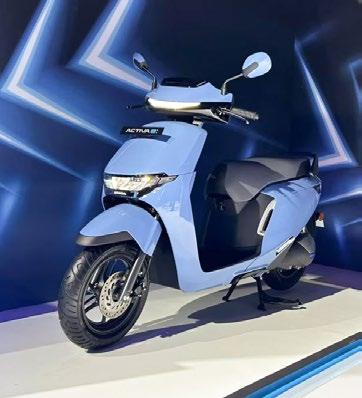
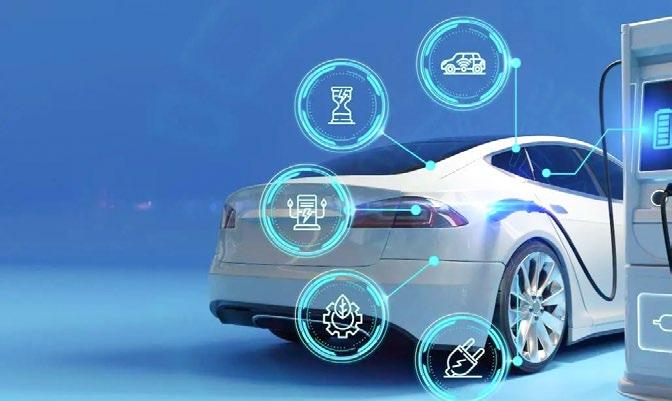



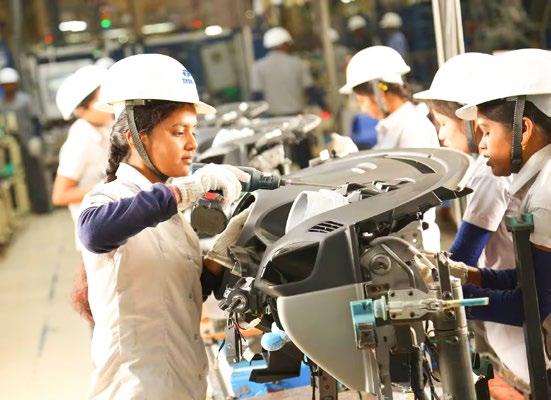
The industry’s optimism is fuelled by innovation, particularly in the realm of electric vehicles (EVs). India is accelerating toward a greener future, with government initiatives like the Faster Adoption and Manufacturing of Electric Vehicles (FAME) scheme providing incentives for EV production and adoption. Tata Motors has emerged as a frontrunner with models like the Nexon EV, while startups like Ather Energy and Ola Electric are revolutionizing the twowheeler EV space. By 2030, the government aims for 30% of new vehicle sales to be electric, and with charging infrastructure expanding, the EV revolution is gaining momentum. This shift not only promises cleaner air but also positions India as a hub for cutting-edge automotive technology.
Exports are another feather in the industry’s cap. India exported over 5 million vehicles in 2024, with markets in Africa, Latin America, and Southeast Asia embracing Indian-made cars and two-wheelers for their reliability and cost-effectiveness. Companies like Bajaj and TVS have made significant inroads globally, showcasing India’s manufacturing prowess. The “Make in India” initiative has further
bolstered this growth, attracting global giants like Hyundai and Kia to set up production hubs in India, leveraging the country’s skilled workforce and competitive costs. The industry’s resilience is noteworthy. Despite challenges like supply chain disruptions and rising raw material costs, it has bounced back with agility. Investments in research and development are at an all-time high, with a focus on autonomous driving, connected vehicles, and sustainable materials. Collaborations between automakers and tech firms are paving the way for smart mobility solutions, ensuring India stays ahead in the global race.
Looking ahead, the future is electric, autonomous, and connected. With supportive policies, a young and aspirational consumer base, and a knack for innovation, India’s automobile industry is not just keeping pace but setting it. From the iconic Ambassador of yesteryears to the sleek EVs of tomorrow, this sector embodies India’s journey—rooted in tradition yet racing toward a sustainable, tech-driven future. Buckle up, because India’s auto industry is on an exhilarating ride, and the world is watching!


In the heart of the Amazon, where the mighty river meets a vibrant motorcycle culture, Royal Enfield is making bold strides. The iconic Indian motorcycle manufacturer, known for its retro-styled, mid-size bikes, has set its sights on Brazil as a cornerstone of its global expansion strategy. With the launch of a state-of-the-art Completely Knocked Down (CKD) assembly facility in Manaus in December 2022, Royal Enfield is not just riding into Brazil—it’s building a legacy. As the company eyes Brazil as a highpotential market, this move underscores its ambition to dominate the mid-size (250-750cc) motorcycle segment in Latin America’s largest economy.

Brazil’s motorcycle market is a dynamic blend of practicality and passion. With over 1.3 million two-wheelers sold annually, the country ranks among the world’s top motorcycle markets. Its diverse terrain—from bustling São Paulo streets to rugged Amazonian trails—demands versatile, reliable machines. Royal Enfield’s rugged, retro-inspired motorcycles, such as the Classic 350, Himalayan, and Meteor 350, resonate deeply with Brazilian riders who crave both style and substance. The brand’s focus on mid-size bikes fills a niche that balances affordability with premium appeal, appealing to a growing middle class eager for adventure and individuality.
Since entering Brazil in 2017 with imported fully built units, Royal Enfield has seen meteoric growth. Sales have surged over 100% since 2019, positioning the brand among the top five in the mid-size segment across Latin America, including Brazil, Argentina, Colombia, Mexico, and North America. By 2022, company executives were already predicting that Brazil could surpass other export markets to become Royal Enfield’s largest outside India. This optimism isn’t just rhetoric; it’s backed by Brazil’s favourable macroeconomic trends, including a rising GDP per capita and a cultural affinity for two-wheeled freedom.

savings to consumers, making its motorcycles more competitive against rivals like Honda and Yamaha. The Manaus facility is Royal Enfield’s fourth CKD plant globally, following those in Thailand, Colombia, and Argentina. It’s a testament to the company’s commitment to localization—a strategy that not only enhances affordability but also fosters job creation and economic goodwill. The plant employs local talent, from assembly line workers to technicians, embedding Royal Enfield in the fabric of Brazil’s industrial landscape. Moreover, local assembly allows for greater flexibility in meeting regional demand, with the potential to customize models for Brazilian preferences, such as vibrant colour schemes or accessories tailored for adventure touring.





Brazil’s appeal goes beyond its market size. The country’s motorcycle culture is deeply ingrained, with two-wheelers serving as affordable transport in urban centres and rugged companions in rural areas. Royal Enfield’s bikes, with their torquey engines and timeless designs, cater to both the practical commuter and the weekend warrior. The Himalayan, for instance, is a favourite among adventure enthusiasts tackling Brazil’s vast hinterlands, while the Classic 350 appeals to urban riders seeking a blend of heritage and modernity.
The Brazilian government’s support for the automotive sector, particularly in the Manaus Free Trade Zone, further sweetens the deal. Tax breaks and streamlined regulations have made it easier for foreign manufacturers like Royal Enfield to invest. Add to that a growing network of 12 dealerships across Brazil’s major cities—São Paulo, Rio de Janeiro, Brasília, and beyond—and the brand’s footprint is expanding rapidly. Events like the Royal Enfield Ride-In and community rides have also fostered a loyal fanbase, with Brazilian “Enfielders” embracing the brand’s ethos of “Pure Motorcycling.”
Of course, the road isn’t without bumps. Brazil’s economic volatility, including currency fluctuations and inflation, poses risks for foreign investors. Competition is fierce, with established players like Honda dominating the two-wheeler market. Yet, Royal Enfield’s focus on the mid-size niche gives it an edge, as does its reputation for durability and character. The company’s plans to expand the Manaus facility’s capacity and introduce new models, such as the upcoming Guerrilla 450, signal confidence in sustained growth.
Sustainability is another area where Royal Enfield is making strides. The company has committed to eco-friendly practices at its CKD plants, including energy-efficient production and waste reduction. In Brazil, where environmental concerns are paramount due to the Amazon’s global significance, such initiatives resonate with consumers and regulators alike.


Royal Enfield’s Brazilian journey is just beginning. With the Manaus facility as its launchpad, the company aims to triple its market share in the mid-size segment by 2030. Plans for additional dealerships, localized marketing campaigns, and potential new model launches tailored for Latin America are in the pipeline. As Brazil’s economy grows and its riders seek motorcycles that blend heritage with adventure, Royal Enfield is poised to become a household name.
For now, the roar of Royal Enfield’s single-cylinder engines echoes through Brazil’s cities and jungles, a sound that signifies not just a motorcycle but a lifestyle. As the company expands its CKD operations and deepens its roots in this vibrant market, one thing is clear: Royal Enfield isn’t just riding through Brazil—it’s here to stay.


The rise of electric vehicles (EVs) has sparked a transformative shift in the energy and transportation sectors, creating a new frontier for energy brands: EV charging networks. As the world accelerates toward a low-carbon future, these networks are emerging as critical infrastructure, akin to the gas stations of the 20th century, but with far greater potential for innovation and market influence. For energy companies, EV charging networks represent not just a business opportunity but a new kind of real estate—one that is reshaping brand visibility, customer engagement, and the global energy landscape.
The global EV market is booming, with over 50 million electric vehicles on the road as of 2025, according to industry estimates. Governments worldwide are pushing for electrification through incentives, stricter emissions regulations, and ambitious net-zero targets. This surge in EV adoption has created a pressing need for accessible, reliable, and fast charging infrastructure. Unlike traditional fuel stations, EV charging networks are not just utilitarian; they are strategic assets that combine energy delivery, technology, and consumer experience.
Charging stations are no longer just a place to “fill up.” They are becoming hubs for digital interaction, renewable energy integration, and brand differentiation. For energy brands— whether traditional oil and gas giants pivoting to renewables or new players in the clean energy space—investing in charging networks is akin to securing prime real estate in a rapidly urbanizing market. The locations, technology, and user experience of these networks are defining the competitive edge of energy companies in the EV era.
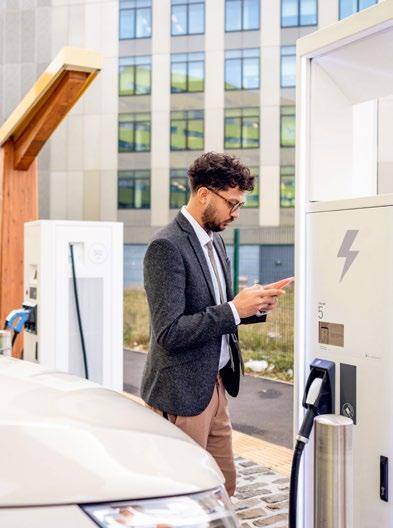



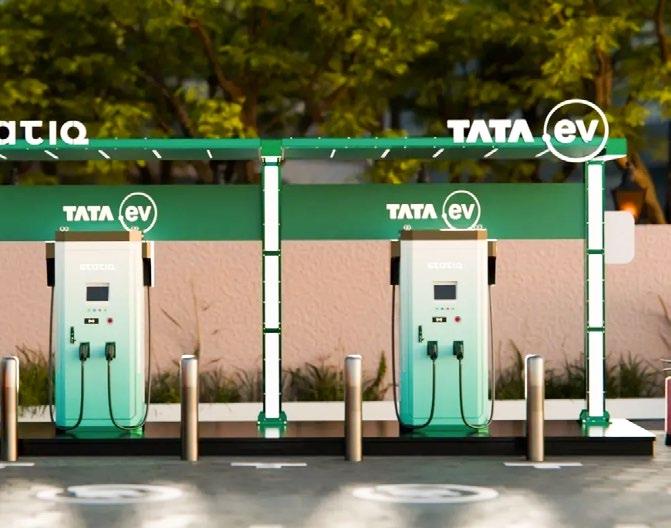
Just as prime retail real estate depends on foot traffic and visibility, EV charging stations thrive on strategic placement. High-traffic urban areas, highway corridors, shopping malls, and workplace parking lots are becoming hotspots for charging infrastructure. Energy brands that secure these locations gain a first-mover advantage, locking in long-term visibility and customer loyalty. For example, companies like Tesla have leveraged their proprietary Supercharger network to create a seamless user experience, enhancing brand loyalty and setting a high bar for competitors.
Charging stations are more than functional infrastructure—they are billboards for energy brands. A well-designed charging hub, complete with sleek interfaces, renewable energy credentials, and amenities like coffee shops or lounges, can transform a routine stop into a memorable brand experience. Companies like BP, Shell, and TotalEnergies are rebranding their fuel stations as “energy hubs,” integrating EV charging with solar panels, battery storage, and digital services to attract eco-conscious consumers. These hubs also collect valuable data on user behaviour, enabling brands to tailor services and marketing strategies.





EV charging networks are a natural fit for renewable energy integration, making them a cornerstone of the clean energy transition. Solar canopies, windpowered chargers, and grid-scale battery storage are being deployed to power these networks, allowing energy brands to showcase their commitment to sustainability. For instance, companies like Enel X and EDF are pairing charging stations with renewable energy sources, creating “green” charging ecosystems that appeal to environmentally conscious consumers and align with global decarbonization goals.
EV charging networks are becoming platforms for technological innovation. Smart chargers equipped with AI can optimize energy distribution, predict demand, and integrate with vehicle-to-grid (V2G) systems, where EVs return stored energy to the grid during peak demand. Energy brands that invest in cutting-edge charging technology can position themselves as leaders in the smart energy ecosystem, gaining a competitive edge over less innovative rivals.
Despite their potential, EV charging networks face significant hurdles. High upfront costs for installation, grid upgrades, and maintenance can deter investment, particularly in rural or underserved areas. Interoperability issues, such as incompatible charging standards or payment systems, can frustrate users and slow adoption. Additionally, the regulatory landscape varies widely across regions, complicating efforts to scale networks globally.
Energy brands must also navigate competition from non-traditional players. Tech giants like Google and Amazon are exploring EV charging as part of their broader smart city and logistics strategies, while automakers like Volkswagen and Ford are investing heavily in their own charging ecosystems. This convergence of industries underscores the need for energy brands to differentiate through superior technology, user experience, and strategic partnerships.
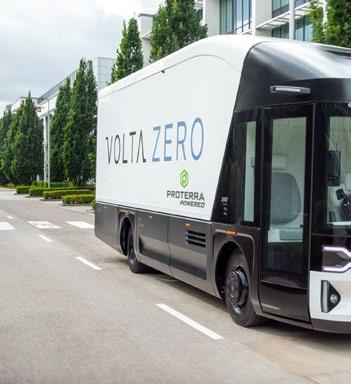
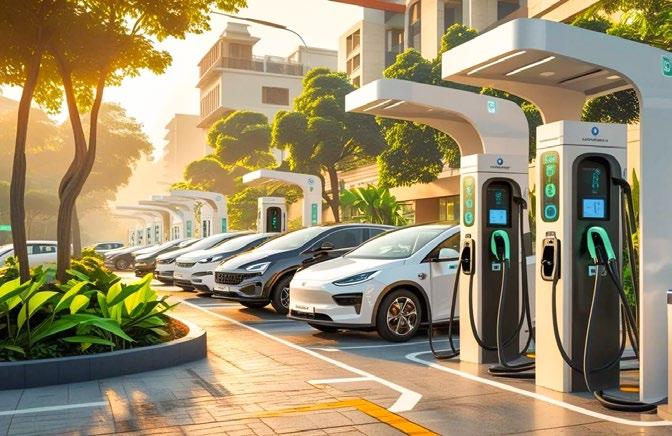
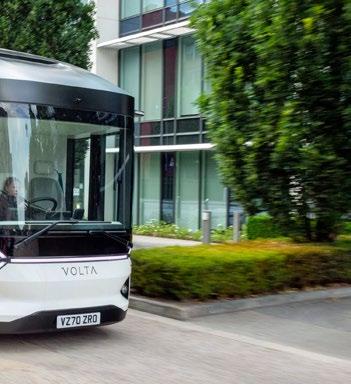

To capitalize on the EV charging boom, energy brands must adopt a forward-thinking approach:
• Partnerships and Ecosystems: Collaborating with real estate developers, retailers, and municipalities can secure prime locations and reduce costs. For example, partnering with shopping malls or fast-food chains can create charging hubs that double as consumer destinations.
• Scalable and Flexible Networks: Investing in modular, scalable charging infrastructure allows brands to adapt to evolving technologies, such as ultra-fast chargers or wireless charging systems.
• Customer-Centric Design: Offering seamless payment systems, loyalty programs, and integrated apps can enhance the user experience, turning charging stops into opportunities for engagement.
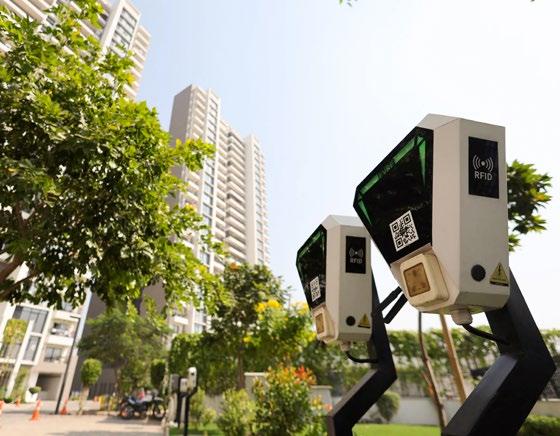




• Sustainability as a Selling Point: Highlighting renewable energy integration and carbon-neutral operations can attract environmentally conscious consumers and align with corporate ESG goals.
As EVs become mainstream, charging networks will evolve into multifaceted energy hubs. These hubs could integrate hydrogen fuelling for heavy vehicles, energy storage for grid stability, and even microgrids for remote communities. For energy brands, the opportunity lies in redefining their role in this ecosystem—not just as fuel providers but as architects of a sustainable, electrified future.
The race to dominate EV charging networks is heating up, and the stakes are high. Energy brands that secure the best locations, invest in innovative technology, and prioritize customer experience will not only capture market share but also redefine their legacy in the age of electrification. In this new era, EV charging networks are more than infrastructure—they are the real estate that will shape the future of energy.


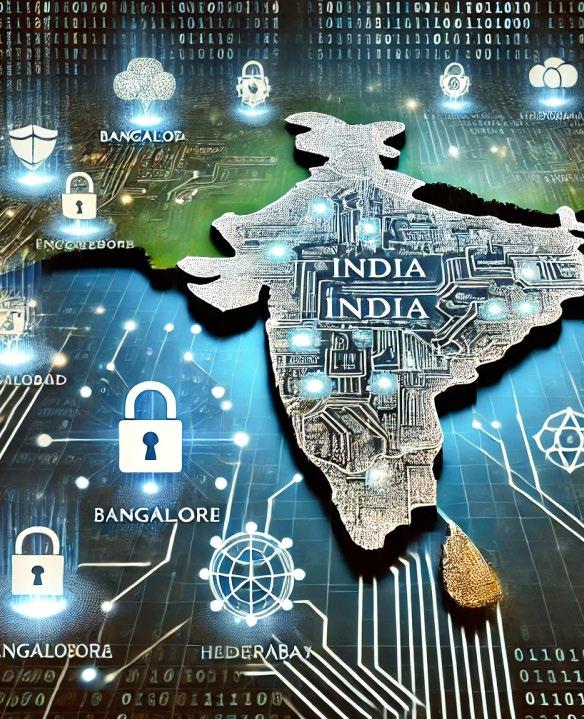




On June 23, 2025, Zerodha Fund House, a rapidly growing name in India’s mutual fund industry, unveiled its latest offering, the Zerodha Silver ETF Fund of Fund (FoF). This new scheme, with its New Fund Offer (NFO), marks a significant step for investors seeking exposure to silver without the complexities of physical ownership. Designed as an openended fund of fund, the scheme primarily invests in the Zerodha Silver Exchange Traded Fund (ETF), offering a passive, cost-effective way to capitalize on silver price movements. This launch aligns with Zerodha’s reputation for democratizing investment opportunities, and it has sparked considerable interest among retail investors.

The Zerodha Silver ETF FoF aims to replicate the performance of domestic silver prices by allocating 95100% of its assets to units of the Zerodha Silver ETF, which directly tracks the price of silver in the Indian market. The remaining 0-5% of the portfolio may be invested in debt or money market instruments to ensure liquidity and manage operational needs. This structure allows investors to gain exposure to silver’s price movements without the logistical challenges of purchasing, storing, or insuring physical silver. The fund’s objective is clear: to provide returns that closely mirror the domestic price of silver, subject to tracking errors and expenses.
The scheme supports investments through Systematic Investment Plans (SIPs), making it accessible for retail investors looking to build wealth gradually. During the NFO period, the minimum investment was set at ₹500, while post-NFO, investors can start with as little as ₹100, making it highly inclusive. Applications were facilitated through Zerodha’s website, its dedicated mutual fund platform Zerodha Coin, and CAMS, ensuring a seamless investment process.






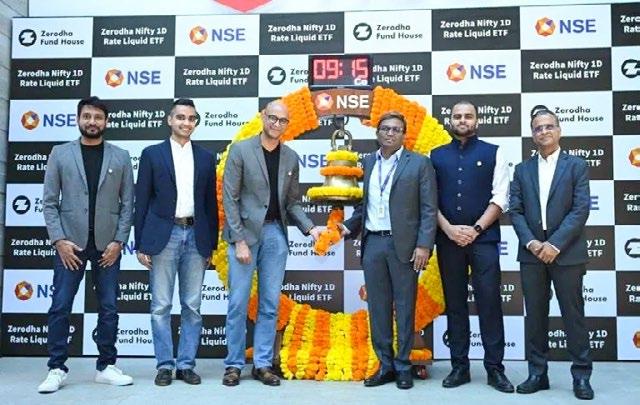
Silver, often overshadowed by gold, is a versatile asset with both industrial and investment appeal. Vishal Jain, CEO of Zerodha Fund House, emphasized silver’s growing relevance in his announcement, pointing to its critical role in industries like renewable energy, electronics, and automotive manufacturing. With the global push toward green technologies, such as solar panels and electric vehicles, silver’s demand is projected to rise, potentially driving its price higher. Historically, silver has also served as a hedge against inflation and economic uncertainty, making it an attractive diversification tool for portfolios heavily weighted in equities or debt.
26.4% of investors chose to invest in gold over silver during the same period, according to a poll on social media, reflecting a preference for gold’s perceived stability. However, silver’s dual role as an industrial and precious metal offers unique growth potential, as Jain noted, making the Zerodha Silver ETF FoF an appealing option for those looking to diversify beyond traditional asset classes.



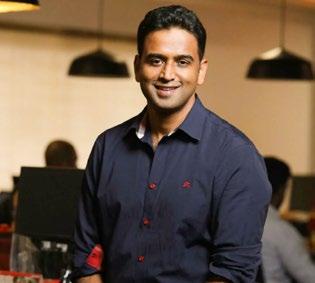

While the Zerodha Silver ETF FoF offers a compelling opportunity, it comes with inherent risks. Tracking error, a common concern with ETFs and FoFs, may cause the fund’s performance to deviate slightly from the actual silver price. Liquidity risk is another factor, as the underlying ETF’s market liquidity could impact the fund’s ability to execute trades efficiently. Concentration risk is notable since the fund is heavily focused on a single commodity, making it vulnerable to silver price volatility. Additionally, regulatory or taxation changes could affect returns, as could unforeseen market disruptions. Investors are advised to carefully review the scheme’s risk factors, as outlined in Zerodha’s communications.



Zerodha Fund House, a joint venture between Zerodha and Smallcase, has gained traction for its low-cost, passive investment products. The launch of the Silver ETF FoF follows the success of its earlier offerings, such as the Zerodha Gold ETF FoF, and reinforces its commitment to providing accessible, transparent investment options. The fund house’s digital-first approach, leveraging platforms like Zerodha Coin, aligns with the preferences of tech-savvy investors who value convenience and low fees.
A recent web analysis indicates that passive funds, including ETFs and FoFs, are gaining popularity in India due to their simplicity and cost efficiency. Zerodha’s entry into the silver investment space taps into this trend, catering to investors seeking exposure to alternative assets. The firm’s focus on investor education, evident in its clear communication about risks and objectives, further enhances its appeal.

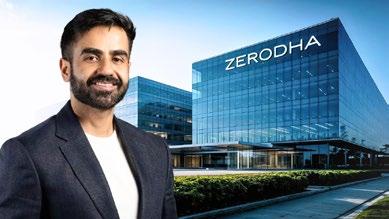


The Zerodha Silver ETF FoF is suitable for investors with a medium to longterm horizon who are comfortable with commodity price volatility. It appeals to those looking to diversify their portfolios beyond equities and fixed-income securities, particularly in light of silver’s industrial demand and inflation-hedging properties. However, investors should assess their risk tolerance, as silver prices can be more volatile than gold due to its dual market drivers.
The launch of the Zerodha Silver ETF Fund of Fund represents a forward-thinking move by Zerodha Fund House to cater to evolving investor preferences. By offering a low-cost, accessible way to invest in silver, the fund taps into the metal’s longterm growth potential driven by industrial demand and economic factors. While risks like tracking error and price volatility exist, the scheme’s structure and Zerodha’s reputation for transparency make it a compelling option for diversification. As the NFO closed on July 4, 2025, investors now have an opportunity to participate in this innovative product through ongoing subscriptions, signalling a new chapter in India’s growing mutual fund landscape.
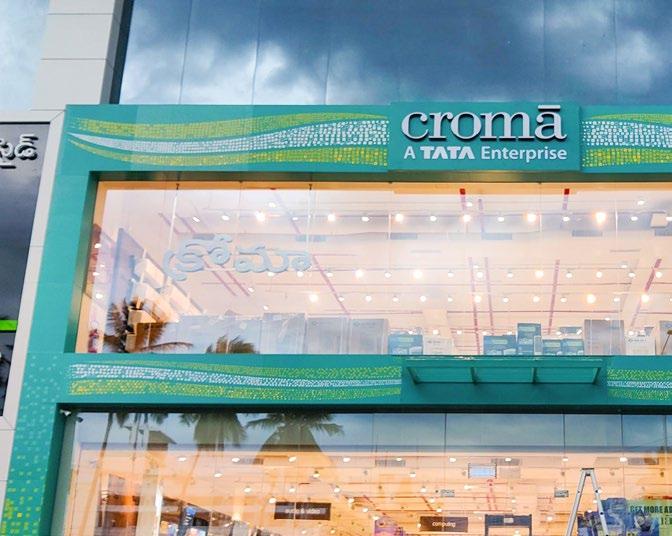
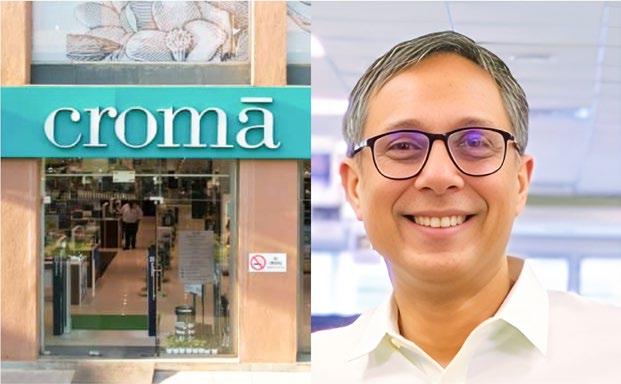
In a strategic move revealing its ambitions in India’s competitive electronics retail landscape, Croma, the Tata Group-owned omni-channel retailer, has appointed Amit Agarwal as its new Chief Marketing Officer (CMO). Announced in late August 2025, Agarwal’s appointment also includes oversight as Business Head for Croma’s Private Label and ZipCare divisions, positioning him to drive innovation and growth in a rapidly evolving market. With over two decades of expertise in brand management, digital marketing, and business leadership, Agarwal’s arrival marks a pivotal moment for Croma as it aims to solidify its position as a household name in consumer electronics.
Agarwal’s professional journey is a masterclass in versatility and impact. Having held leadership roles across FMCG, media, and technology sectors, he brings a wealth of experience to Croma. His notable stints include serving as Executive Vice President (EVP) of Digital Ads at Viacom18, where he shaped digital advertising strategies, and key positions at Google and Unilever, where he honed his skills in global marketing and digital transformation. Agarwal also managed brands like Horlicks at GSK Consumer Healthcare and led global marketing efforts at Jet Airways. Most recently, he spent a year as a fractional Chief Business Officer (CBO) and marketing consultant for digital-first and direct-to-consumer (D2C) startups, giving him a fresh perspective on agile, consumer-centric strategies. This diverse background equips him to navigate the complexities of India’s retail sector, where digital integration and customer experience are paramount.
Croma, with over 550 stores across more than 200 cities, is a powerhouse in India’s electronics retail space. Offering products from 500+ brands, alongside its own private labels, the retailer has built a reputation for quality and accessibility. Its omni-channel approach— spanning physical stores, Croma.com, and the Tata Neu app—has aided its growth, with the company targeting over $3 billion in gross merchandise value (GMV) for FY2024. Agarwal’s role will be critical in amplifying this momentum, particularly through private label expansion and enhancing ZipCare, Croma’s after-sales service arm. His expertise in digital marketing and brand building is expected to elevate Croma’s visibility and deepen its connection with tech-savvy Indian consumers.
In a LinkedIn post, Agarwal expressed his excitement about joining the Tata Group, highlighting its values of integrity and innovation as a personal alignment. “I’m thrilled to be returning to the corporate world.,” he wrote, emphasizing his intent to leverage data-driven marketing and omni-channel strategies to redefine consumer experiences in electronics retail. His vision aligns with Croma’s goal of staying ahead in a market crowded with e-commerce giants and regional players, where differentiation through branding and customer loyalty is key.

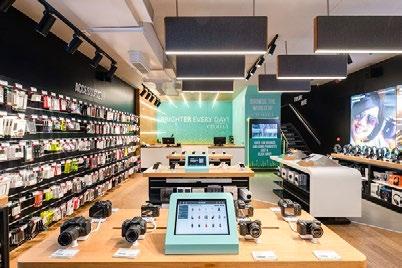

Agarwal’s appointment comes at a time when India’s electronics retail sector is witnessing rapid transformation. Rising disposable incomes, increasing demand for smart devices, and the shift toward online-offline integration are reshaping consumer behaviour. By combining Croma’s robust infrastructure with his strategic acumen, Agarwal is poised to steer the brand toward new heights, blending Tata’s legacy of trust with cutting-edge marketing innovation.
As Croma continues to expand its footprint and refine its offerings, all eyes are on Agarwal to deliver a bold, consumer-first strategy that keeps the retailer ahead of the curve. This new chapter promises to be an exciting one for Croma and its customers alike.
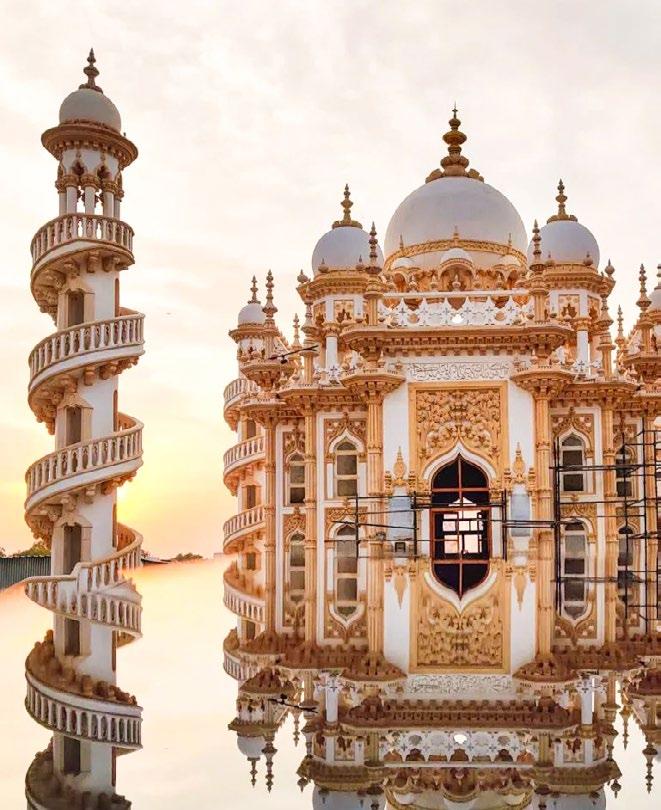
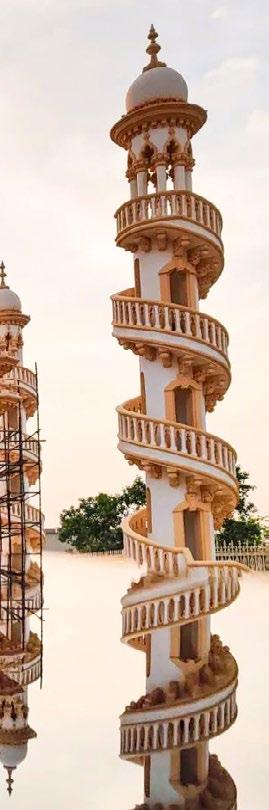
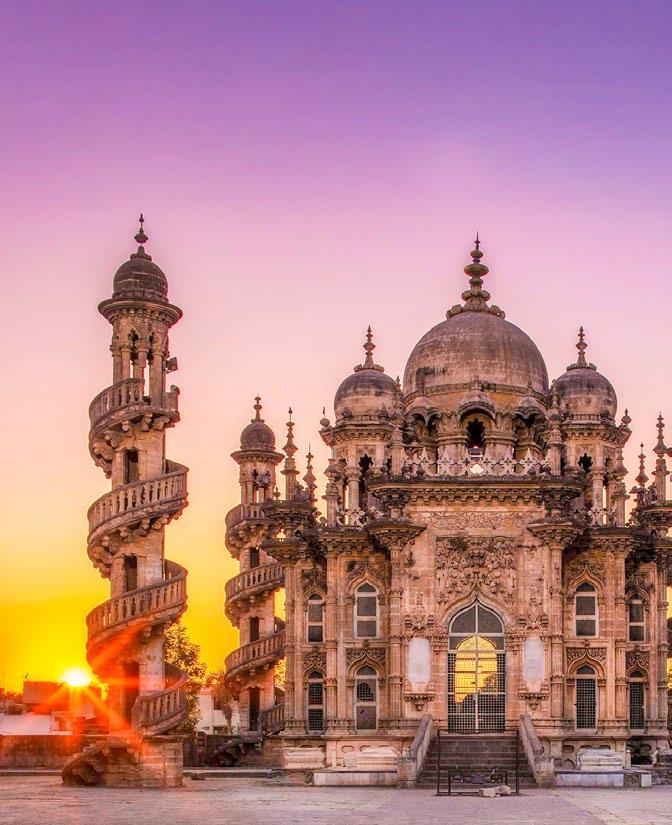
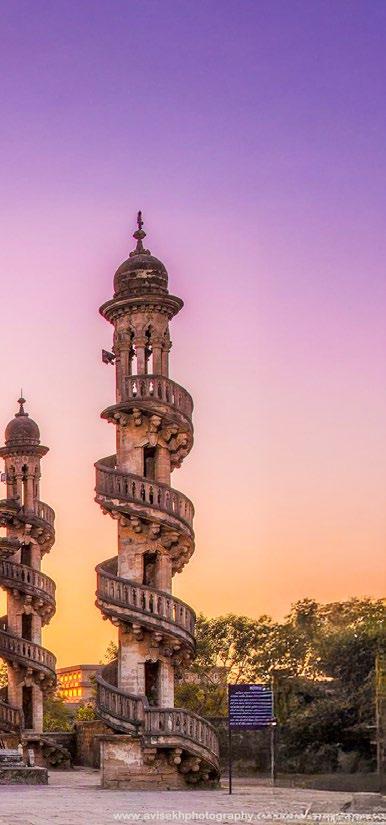
Tucked away in the bustling, dusty streets of Junagadh, Gujarat, stands a monument so breathtaking it could steal the spotlight from any world wonder—yet it lingers in obscurity, a hidden gem known only to a fortunate few. Mahabat Maqbara, a 19th-century mausoleum, is an architectural masterpiece that fuses styles from across continents, whispering tales of a bygone era. With its soaring minarets, intricate carvings, and a surreal blend of Indo-Islamic, Gothic, and European influences, this “Mini Taj” deserves far more than its current status as a forgotten wonder. So, let’s dust off its history and shine a light on why Mahabat Maqbara is a treasure worth rediscovering.
Built between 1878 and 1892, Mahabat Maqbara is the final resting place of Nawab Mahabat Khan II, a ruler of Junagadh whose legacy is etched into the monument’s very stones. Commissioned by his successor, Bahadur Khan III, the mausoleum was designed to honour the Nawab’s grandeur. But this isn’t just a tomb—it’s a bold statement of artistry. The structure, part of a complex that includes the adjacent Bahauddin Maqbara and a Jami Masjid, stands as a testament to Junagadh’s
rich cultural tapestry under its Nawabi rulers. What makes Mahabat Maqbara so captivating is its audacious architectural fusion. Imagine French windows framed by Islamic arches, Gothic columns rising beside onion-shaped domes, and minarets adorned with spiral staircases that seem to dance toward the sky. This isn’t just a building; it’s a love letter to global design, crafted by Muslim architects who dared to blend Indo-Saracenic aesthetics with European flair. The result? A structure that feels both familiar and otherworldly, like stepping into a dream where East meets West.
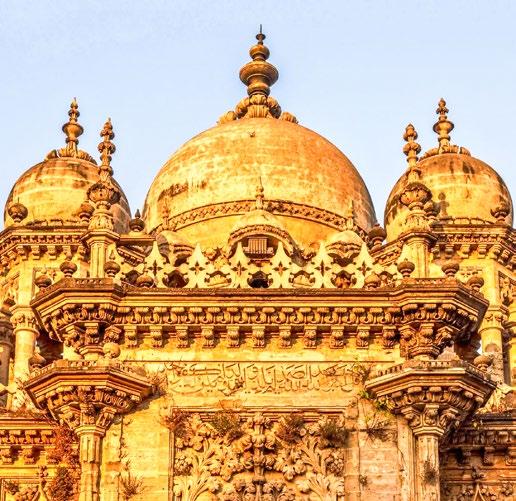

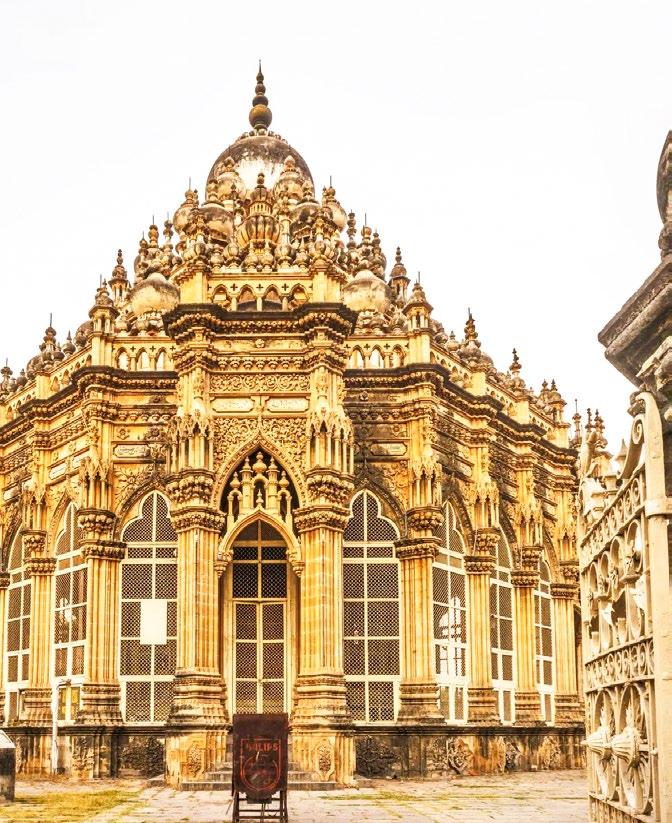
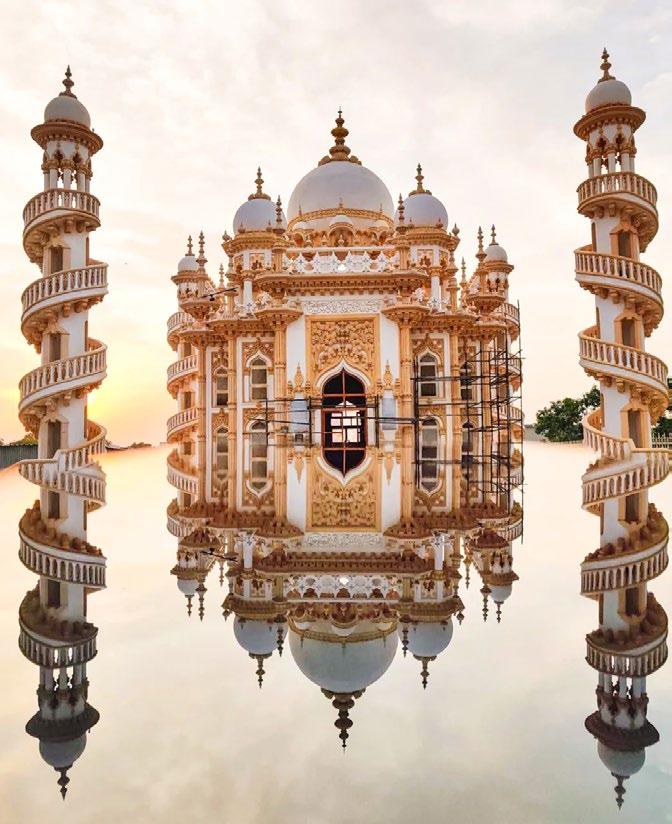

Walk closer, and Mahabat Maqbara reveals its magic in the details. The yellow-walled facade, weathered yet radiant, is adorned with intricate jali work that filters sunlight into delicate patterns. The minarets, four in total, flank a central domed hall, their exterior staircases spiralling upward in a gravitydefying flourish. Inside, the craftsmanship continues with ornate stucco work and arches that draw the eye upward, as if inviting you to marvel at the heavens. The mausoleum’s European touches—think pointed arches and slender columns—lend it a Gothic charm, while the Islamic domes and minarets ground it in South Asian tradition.
It’s no exaggeration to call Mahabat Maqbara a visual symphony. Visiters describe it as an “architectural marvel” and a “stunner to behold,” with travellers sharing snapshots of its vibrant facade against Gujarat’s azure skies. Yet, despite its jaw-dropping beauty, the monument rarely makes it onto India’s must-visit lists. Why?
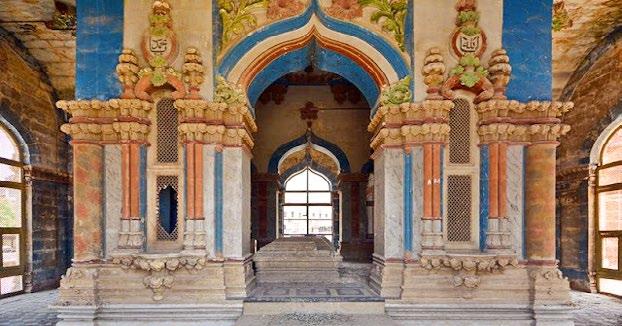
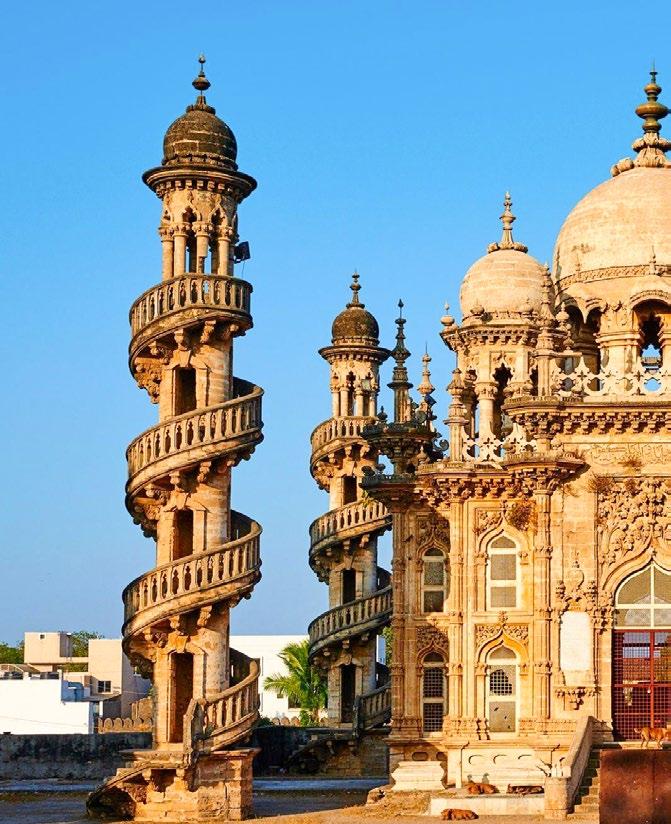
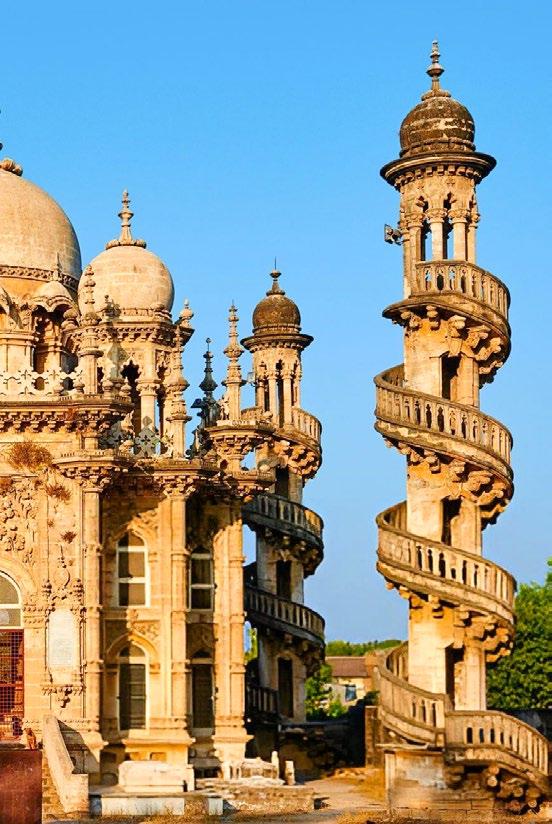
Mahabat Maqbara’s obscurity is a puzzle. Junagadh itself is no stranger to tourists, with attractions like Gir National Park, home to the Asiatic lion, and the historic Uparkot Fort drawing crowds. But the mausoleum, despite its proximity to these sites, often goes unnoticed. Perhaps it’s the shadow cast by India’s more famous monuments, like the Taj Mahal, which Mahabat Maqbara is sometimes compared to as a “gothic sibling” or “Mini Taj.” Or maybe it’s the lack of global marketing— while the Taj graces every travel brochure, Mahabat Maqbara remains a local secret, standing “almost forgotten on a busy dusty street.”
Neglect has also taken its toll. Though the monument is relatively well-preserved compared to other 19th-century structures, it lacks the polish and infrastructure of India’s top-tier heritage sites. Visitors often stumble upon it by chance, as one traveller recounted during a motorcycle tour of Gujarat, marvelling at its unexpected grandeur. Without proper signage, guided tours, or a robust conservation effort, Mahabat Maqbara risks fading further into obscurity.
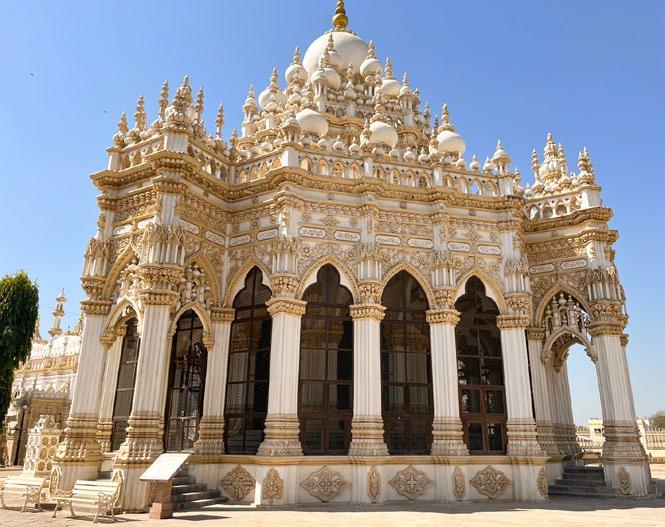
Mahabat Maqbara isn’t just a pretty face—it’s a cultural bridge. Its eclectic design reflects the cosmopolitan spirit of Junagadh’s Nawabs, who embraced influences from Moorish, Hindu, and European traditions. In today’s polarized world, this monument reminds us of a time when cultures didn’t just coexist but collaborated to create something extraordinary. It’s also a gateway to understanding Gujarat’s lesser-known
history, a region often overshadowed by Rajasthan or Delhi in India’s heritage narrative.
The good news? There’s hope for a revival as it is described as a must-see by history lovers, and social media buzz on platforms like X and Instagram is slowly growing. The Mahabat Maqbara Museum, housed within the complex, offers a glimpse into its history, though it could use more investment to rival India’s top museums. If local authorities and tourism boards amplify its story— perhaps with night lighting, cultural festivals, or virtual tours—this forgotten wonder could reclaim its rightful place as a global icon.



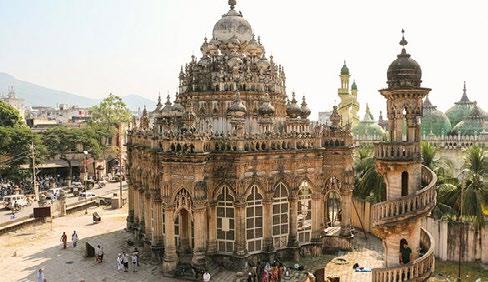
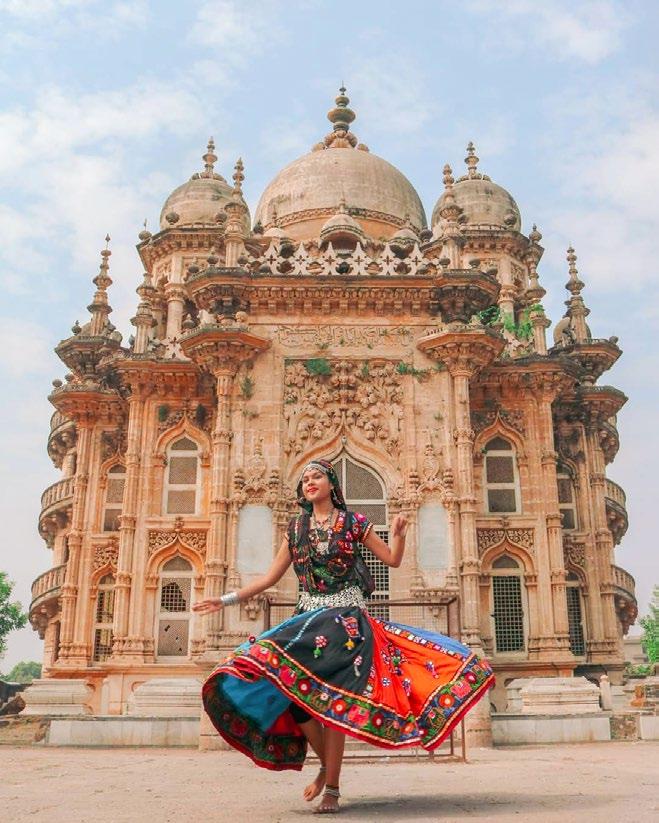
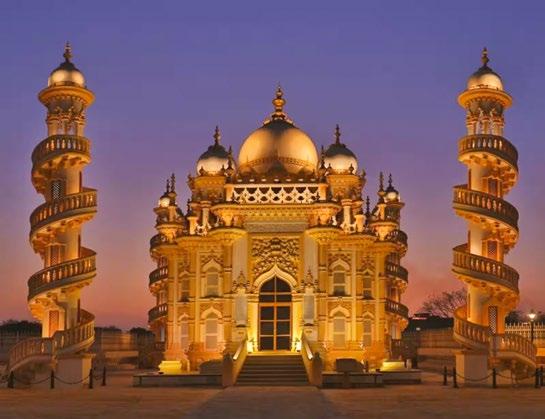
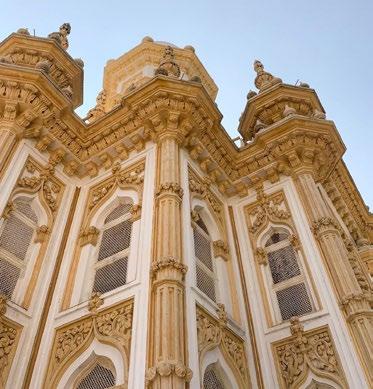
Mahabat Maqbara is more than a mausoleum; it’s a time capsule, and an architectural enigma rolled into one. It’s the kind of place that makes you pause, camera in hand, wondering how something so beautiful could stay so hidden. For travellers seeking offbeat adventures, it’s a must-visit, a chance to stand before a monument that defies categorization and rewards curiosity.
So, next time you’re in Gujarat, skip the usual suspects for a day and head to Junagadh. Let Mahabat Maqbara surprise you with its soaring minarets and silent majesty. Share its story, snap a photo, and help this forgotten wonder find its way back into the world’s heart. Because if there’s one thing Mahabat Maqbara proves, it’s that true beauty, no matter how hidden, always deserves a second look.
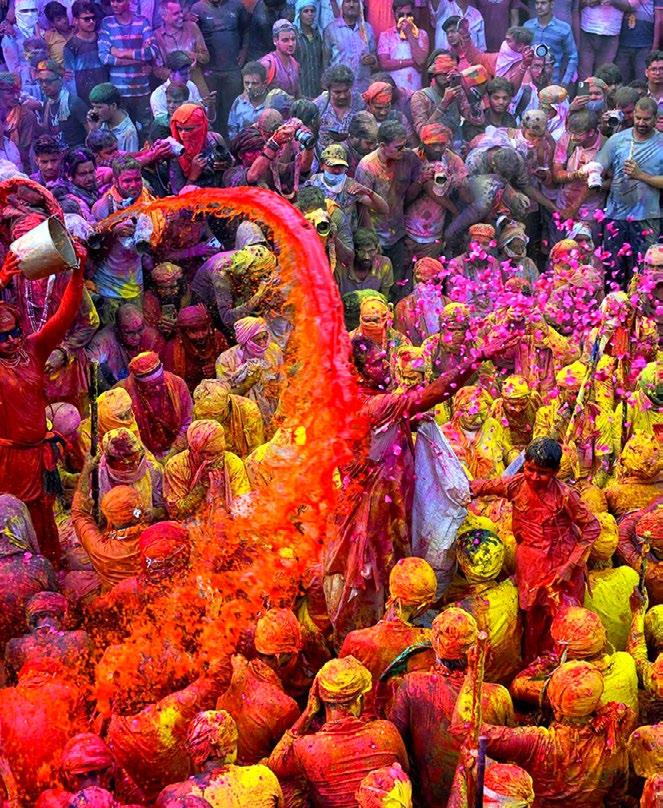
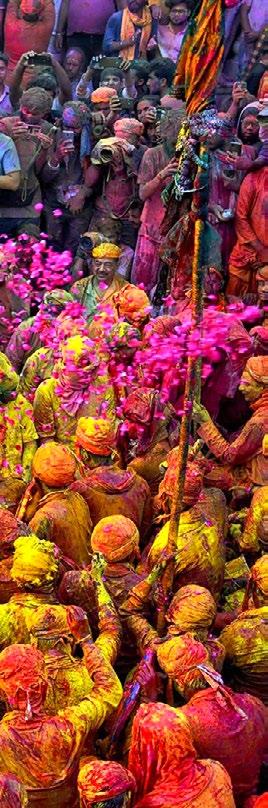
India’s love affair with sweets is as old as its culture, a vibrant tapestry woven with tradition, flavour, and festivity. From the melt-in-your-mouth ladoos to the syrupy delight of jalebis, Indian sweets, or mithai, hold a special place in the hearts of its people. These delectable treats are more than just desserts; they are symbols of joy, prosperity, and togetherness, deeply embedded in the country’s social and cultural fabric. This article explores why Indian sweets are so cherished and how they, alongside savouries, form the heartbeat of Indian festivals.
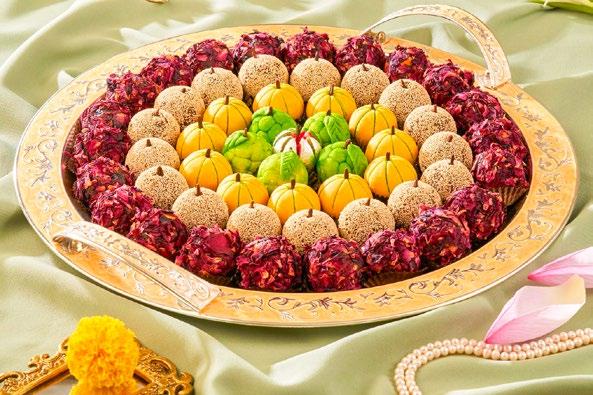

Indian sweets are a testament to the country’s culinary diversity, with each region boasting its unique specialties. In the north, the creamy rasgulla and rich gulab jamun reign supreme, while the south offers the nutty mysore pak and the delicate payasam. Western India tempts with the fudgy peda and Gujarat’s mohanthal, while the east is synonymous with the iconic sandesh. These sweets, often made with ingredients like milk, ghee, sugar, and nuts, are crafted with timehonoured techniques passed down through
generations. The popularity of Indian sweets lies in their ability to evoke nostalgia and comfort. For many, a bite of kheer recalls childhood memories of family gatherings, while the crunch of a soan papdi brings back the excitement of festive gift boxes. The sheer variety ensures there’s something for everyone, whether you prefer the subtle sweetness of a Bengali mishti doi or the bold flavours of a Rajasthani ghevar. Moreover, sweets are affordable and accessible, sold everywhere from roadside stalls to highend confectioneries, making them a universal indulgence.
In India, no festival is complete without sweets and savouries, which serve as culinary ambassadors of celebration. Diwali, the festival of lights, is synonymous with sharing boxes of ladoos, barfis, and jalebis, symbolizing prosperity and goodwill. During Holi, the festival of colours, gujiyas stuffed with khoya and nuts are a must, their crescent shapes a nod to tradition. Raksha Bandhan sees siblings exchanging pedas and kaju katli, reinforcing familial bonds. Even regional festivals like Pongal in Tamil Nadu or Bihu in Assam feature unique treats like chakkara pongal and pitha, respectively.
Savouries, too, play a starring role. Crispy chaklis, spicy sev, and tangy murukkus complement the sweetness, creating a balance that tantalizes the palate. These snacks are often homemade, with families coming together to prepare them in the days leading up to a festival. The act of making and sharing these treats strengthens community ties, as neighbours exchange platters and recipes, fostering a sense of unity.
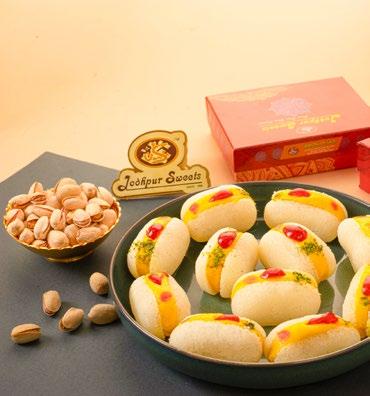

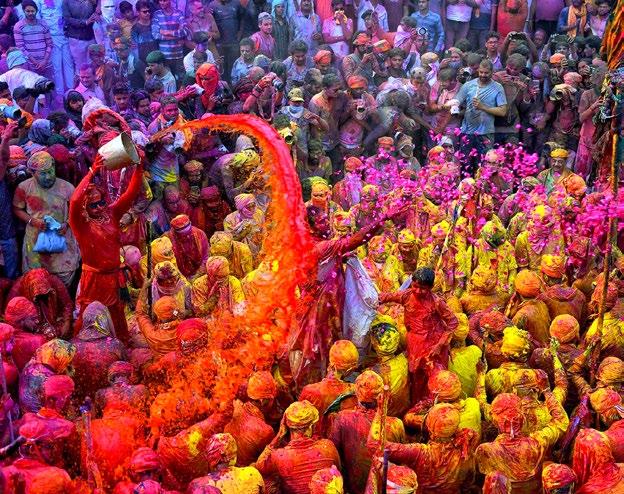

Festivals in India are not just religious or cultural events; they are sensory experiences where food, especially sweets and savouries, becomes a medium of expression. Offering sweets to deities during rituals, distributing them as prasad, or gifting them to loved ones signifies blessings and abundance. The phrase “muh meetha karo” (sweeten your mouth) is a common refrain during celebrations, underscoring the belief that sweets herald auspicious beginnings.
The widespread love for Indian sweets stems from their emotional and cultural resonance. They are not merely desserts but carriers of tradition and sentiment. A box of mithai is a gesture of hospitality, a token of gratitude, or a celebration of milestones like weddings, births, or promotions. Their versatility— suitable for both everyday indulgence and grand occasions—makes them indispensable. Moreover, Indian sweets are often tied to seasonal and agricultural cycles, enhancing their appeal. For instance, til ladoos made with
sesame seeds are popular in winter for their warming properties, while malpua drenched in saffron syrup is a monsoon favourite. The use of local ingredients like jaggery, coconut, and regional spices ensures that sweets remain rooted in the land, resonating with India’s agrarian heritage. The sensory allure of Indian sweets is another factor. The vibrant colours of motichoor ladoo, the glistening sheen of jalebi, and the aromatic notes of cardamom and saffron make them irresistible. Savouries, with their crunch and spice, add a contrasting dimension, ensuring that festive platters cater to diverse tastes.
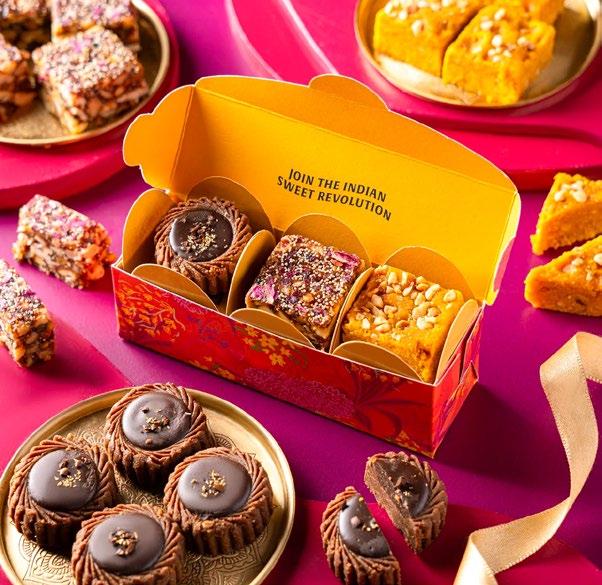
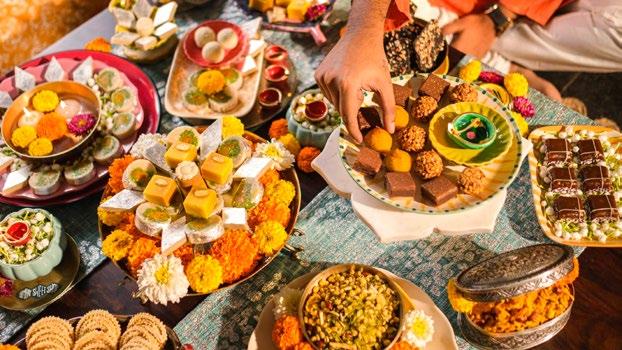
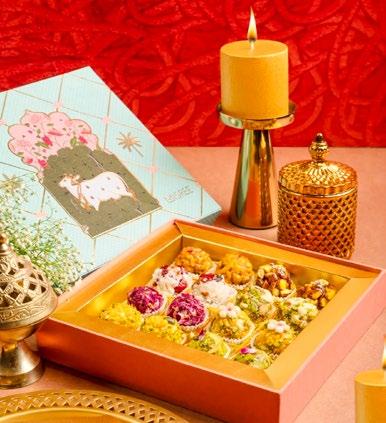
This balance of flavours and textures keeps the tradition alive and relevant, even as modern dessert trends emerge.
While Indian sweets and savouries remain timeless, they are evolving with changing tastes. Fusion sweets like chocolate barfi or mango sandesh appeal to younger generations, while health-conscious consumers opt for sugar-free or jaggerybased versions. Yet, the essence of mithai—its ability to bring people together—remains unchanged. In a country as diverse as India, sweets and savouries are a unifying force, transcending regional and linguistic boundaries. They are the taste of celebration, the flavour of tradition, and the sweetness of shared moments. As festivals light up the Indian calendar, these treats will continue to be the soul of every gathering, proving that in India, happiness is indeed a box of mithai and a handful of crispy snacks.

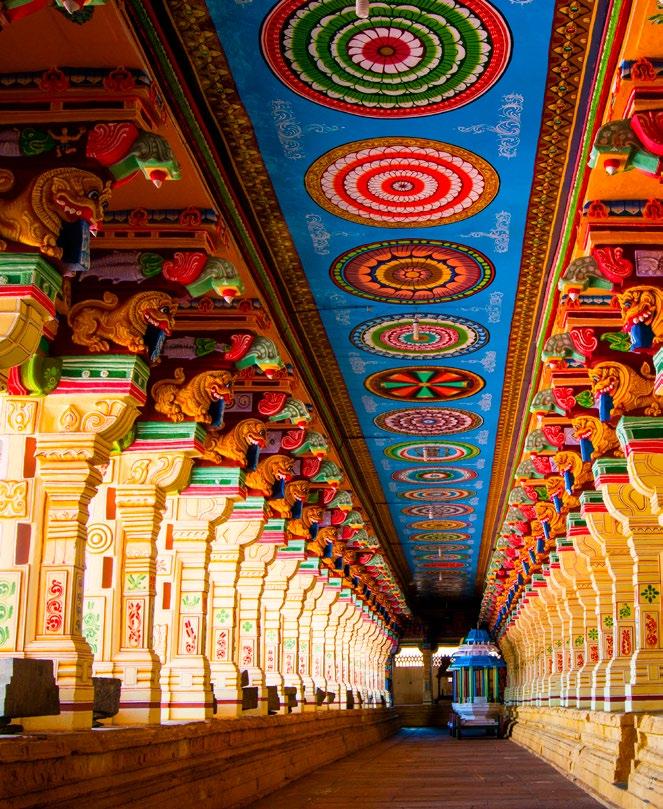
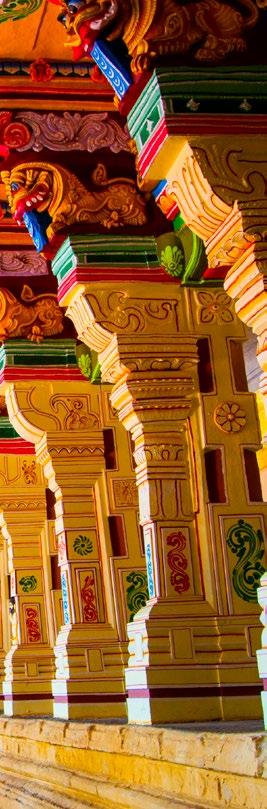
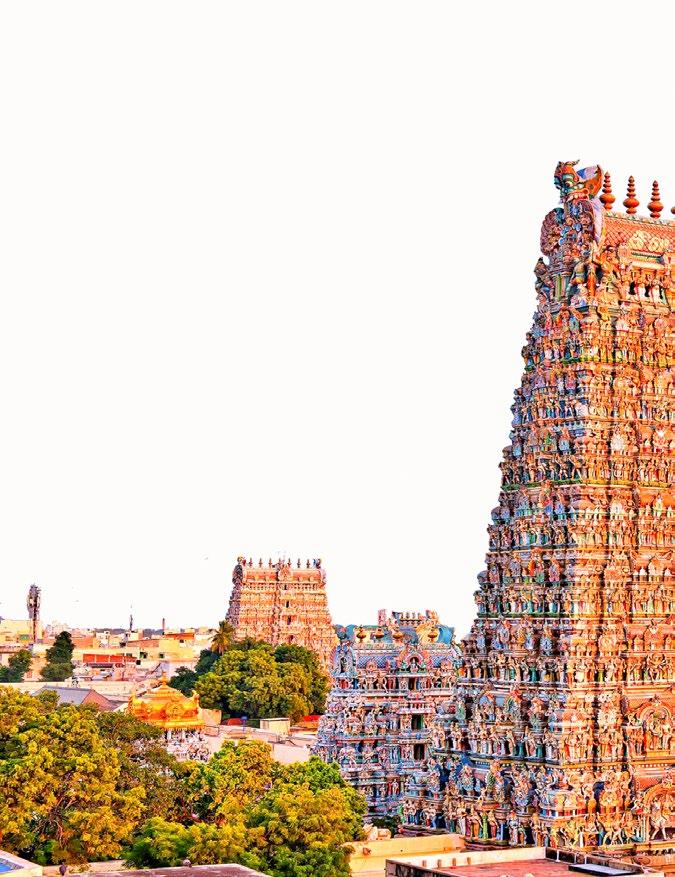
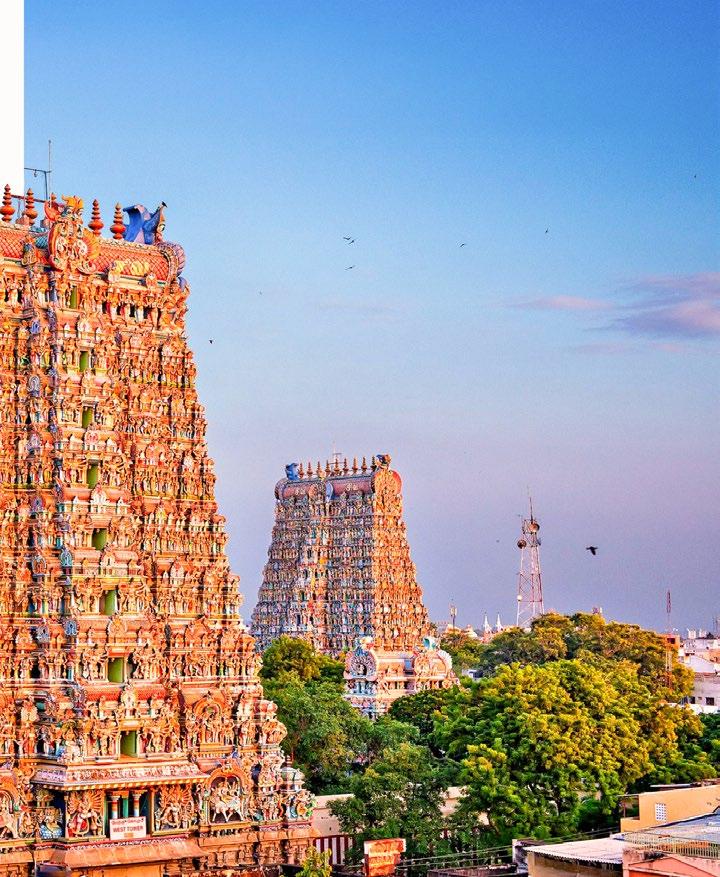
Madurai is synonymous with Sri Meenakshi Amman temple. A famous pilgrimage spot, the temple is renowned for its classic architectural style, stupendous structures and carvings. The temple abounds in legends and myths. It is believed that Indra discovered the presence of Swayambhu lingam during his trip through Madurai and he enshrined it. This temple finds mention in ancient texts and was completely devastated in 1310. The temple was restored to its original glory in the 14th century.
It is quite an architectural marvel with 14 temple towers with a height ranging between 45-50 metres. A 1000 pillared hall is another major feature with exquisitely sculpted pillars. There are musical pillars which produce sounds of different scales. A large water tank lies within the temple complex. The magnificent murals on the corridor walls depict the tales from Thiruvilaiyadal puranam. Scores of devotees attend the Thirukalyanam [divine wedding] during the Chithirai Brahmotsavam which is the most celebrated festival at the Meenakshi Temple Madurai. The festival reenacts the holy marriage of deities Meenakshi Devi and Lord Sundareswarar.
The Navarathri festival held during September – October also draws people in huge numbers. The other major festivals are Avani Moolam Festival during August- September and the Masi Mandala Utsavam during February – March. The mandapam hall also functions as a museum featuring antique items, coins, carvings, rare photographs and idols. Eight forms of Goddess Sakthi are featured as sculptures on the pillars of the mandapam. The Meenakshi Naicker mandapam also features sculptures depicting Goddess Meenakshi and Lord Shiva. The Muthupillai Mandapam constructed in 1613 features statues of saints of Tharukavanam.
Arulmigu Meenakshi Sundareswarar Temple, also known as Arulmigu Meenakshi Amman Thirukkovil, is a historic Hindu temple located on the southern bank of the Vaigai River in the temple city of Madurai, Tamil Nadu, India. It is dedicated to the goddess Meenakshi Amman, a form of Parvati, and her consort, Sundareshwarar, a form of Shiva. The temple is at the centre of the ancient temple city of Madurai mentioned in the Tamil Sangam literature, with the goddess temple mentioned in 6th-century CE texts. This temple is one of the Paadal Petra Sthalams, which are 275 temples of Shiva that are revered in the verses of Tamil Saiva Nayanars of the 6th-9th century CE. The west tower (gopuram) of the temple is the model based on which the Tamil Nadu State Emblem is designed.
Madurai Meenakshi Sundareswarar temple was built by Pandyan Emperor Sadayavarman Kulasekaran I (1190 CE–1205 CE). He built the main portions of the three-storeyed Gopuram at the entrance of Sundareswarar Shrine and the central portion of the Goddess Meenakshi Shrine are some of the earliest surviving parts of the temple. The traditional texts call him a poetsaint king, additionally credit him with a poem called Ambikai Malai, as well as shrines (koil) each for Natarajar and Surya near the main temple, Ayyanar in the east, Vinayagar in the south, Kariamalperumal in the west and Kali in the north. He also built a Mahamandapam. Kulasekara Pandya was also a poet and he composed a
poem on Meenakshi named Ambikai Malai. Maravarman Sundara Pandyan I built a gopuram in 1231, then called Avanivendaraman, later rebuilt, expanded and named as Sundara Pandya Thirukkopuram. Chitra gopuram (W), also known as Muttalakkum Vayil, was built by Maravarman Sundara Pandyan II (1238-1251).
This gopuram is named after the frescoes and reliefs that depict secular and religious themes of Hindu culture. Maravarman Sundara Pandyan II also added a pillared corridor to the Sundareswara shrine and the Sundara Pandyan Mandapam. It was rebuilt after the 14th-century damage, its granite structure was renovated by Kumara Krishnappar after 1595. Though the temple has historic roots, most of the present campus structure was rebuilt after the 14th century CE, further repaired, renovated and expanded in the 17th century by Tirumala Nayaka. In the early 14th century, the armies of Delhi Sultanate led by Malik Kafur plundered the temple, looted it of its valuables and destroyed the Madurai temple town along with many other temple towns of South India. The contemporary temple is the result of rebuilding efforts started by the Vijayanagara Empire rulers who rebuilt the core and reopened the temple.
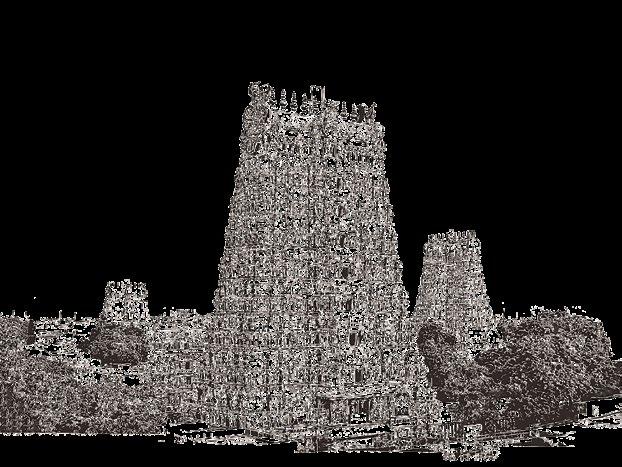

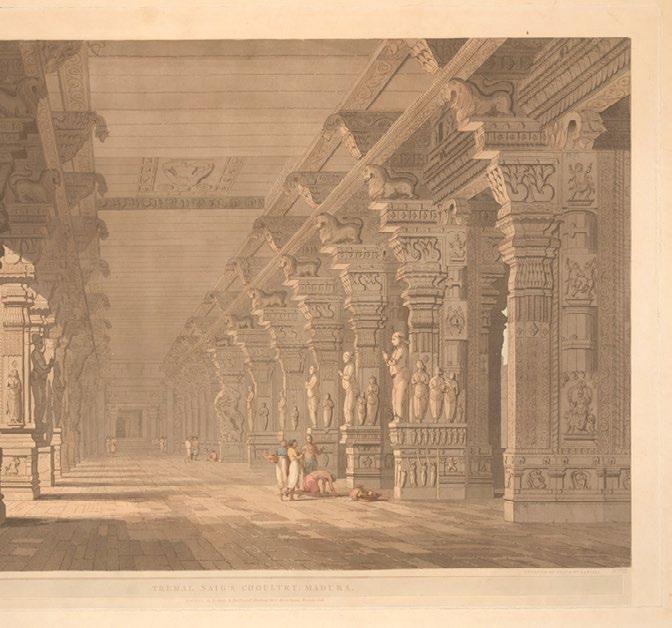
In the 16th century, the temple complex was further expanded and fortified by the Nayak ruler Vishwanatha Nayakar and later others. The restored complex now houses 14 gopurams (gateway towers), ranging from 45–50 m in height, with the southern gopura tallest at 51.9 metres (170 ft). The complex has numerous sculpted pillared halls such as Aayirankaal (1000-pillared hall), Kilikoondu-mandapam, Golu-mandapam
and Pudu-mandapam. Its shrines are dedicated to Hindu deities and Shaivism scholars, with the vimanas above the garbhagrihas (sanctums) of Meenakshi and Sundaresvara gilded with gold. The temple is a major pilgrimage destination within the Shaivism tradition, dedicated to Meenakshi Devi and Shiva. However, the temple includes Vishnu in many narratives, sculptures and rituals as he is considered to be Meenakshi’s brother. This has
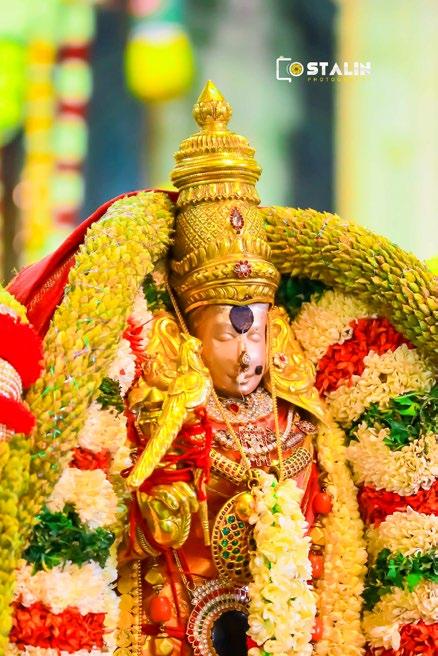

made this temple and Madurai as the “southern Mathura”, one included in Vaishnava texts. The Meenakshi Amman temple also includes Lakshmi, flute playing Krishna, Rukmini, Brahma, Saraswati, and other Vedic and Puranic deities, as well as artwork showing narratives from major Hindu texts. The large temple complex is the most prominent landmark in Madurai and attracts tens of thousands of visitors a day. The temple attracts
over a million pilgrims and visitors during the annual 10-day Meenakshi Tirukalyanam festival, celebrated with much festivities and a ratha (chariot) procession during the Tamil month of Chittirai (overlaps with April–May in the Georgian calendar, Chaitra in North India). The Temple has been adjudged the best ‘Swachh Iconic Place’ in India as on 1 October 2017 under Swachh Bharat Abhiyan.
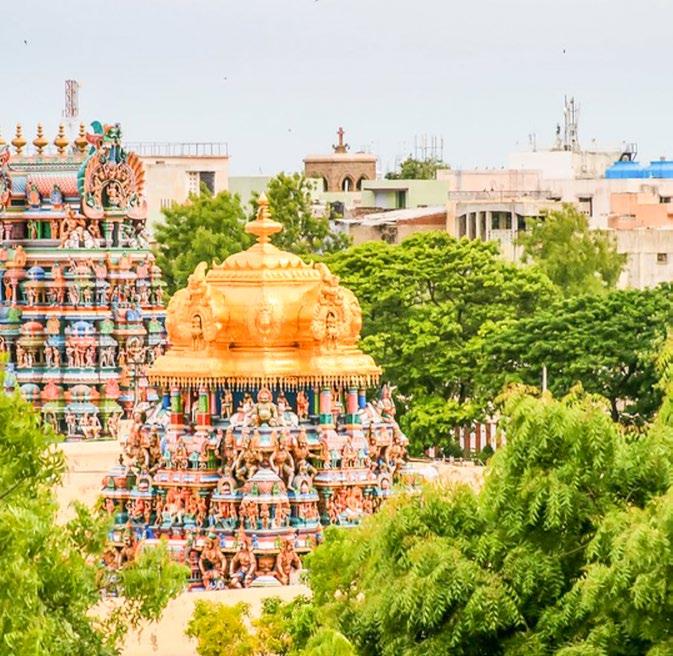
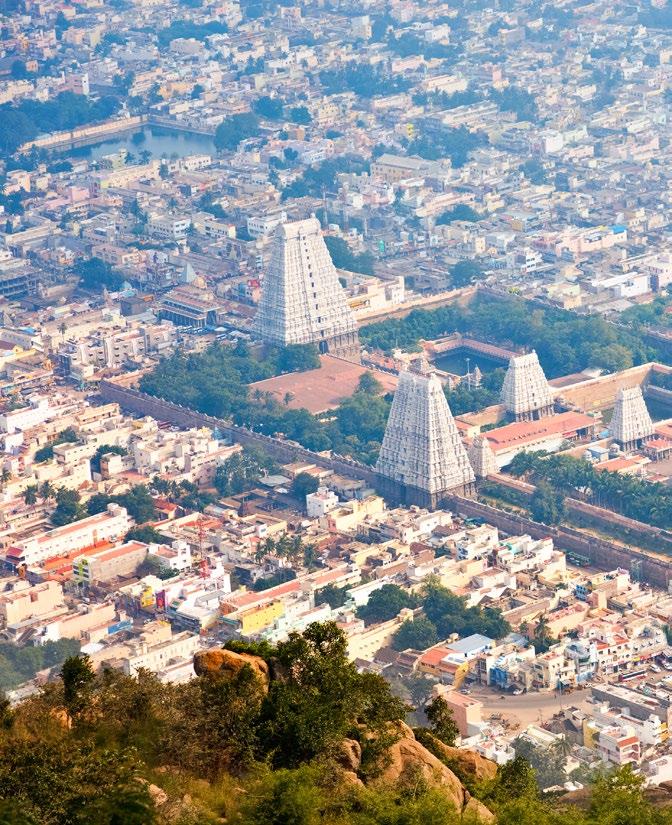
The Meenakshi Amman temple is located in the heart of historic Madurai city, about a kilometre south of the Vaigai River. It is about 460 kilometres (290 mi) southwest of Chennai, the state capital. The temple complex is well connected with a road network (four lane National Highway 38), near a major railway junction and an airport (IATA: IXM) with daily services. The city roads radiate from the temple complex and major ring roads form a concentric pattern for the city, a structure that follows the Silpa Sastra guidelines for a city design. Madurai is one of the many temple towns in the state which is named after the groves, clusters or forests dominated by a particular variety of a tree or shrub and the same variety of tree or shrub sheltering the presiding deity. The region is believed to have been covered with Kadamba Forest and hence called Kadambavanam.
The goddess Meenakshi is the principal deity of the temple, unlike most Shiva temples in South India where Shiva is the principal deity. According to the Tamil text Tiruvilaiyatarpuranam, King Malayadwaja Pandya and his wife Kanchanamalai performed a Yajna seeking a son for succession. Instead, a daughter was born out of the fire who was already 3 years old and had three breasts. Shiva intervened and said that the parents should treat her like a son, and when she meets her husband, she will lose the third breast. They followed the advice.
The girl grew up, the king crowned her as the successor and when she met Shiva, his words came true, she took her true form of Meenakshi. According to Harman, this may reflect the matrilineal traditions in South India and the regional belief that “penultimate [spiritual] powers rest with the women”, gods listen to their spouse, and that the fates of kingdoms rest with the women. According to Susan Bayly, the reverence for Meenakshi is a part of the Hindu goddess tradition that integrates with the Hindu society where the “woman is the lynchpin of the system” of social relationships. The marriage of Meenakshi and Shiva was a grand event, with all gods, goddesses and living beings gathered. Vishnu is believed to be the brother of Meenakshi, giving her away to Shiva at the wedding.
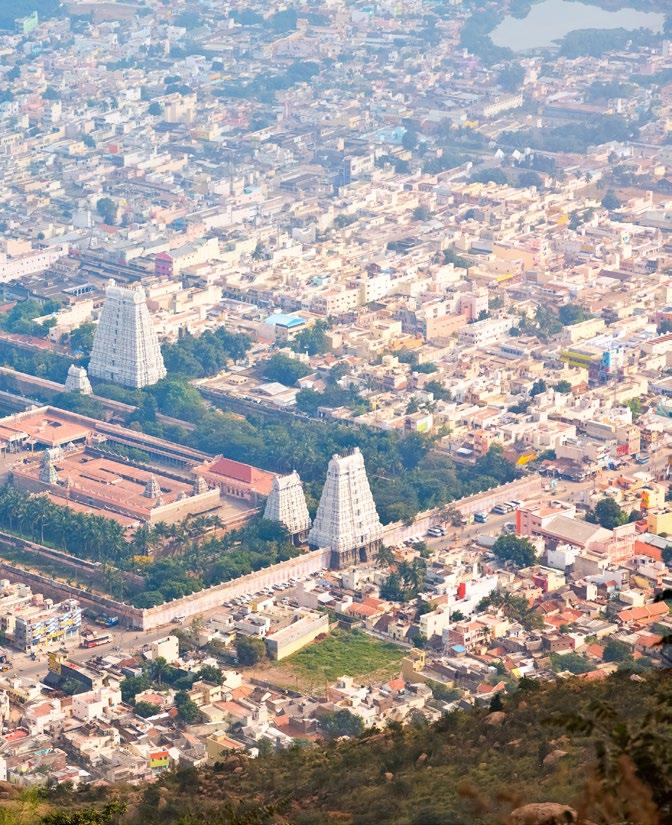
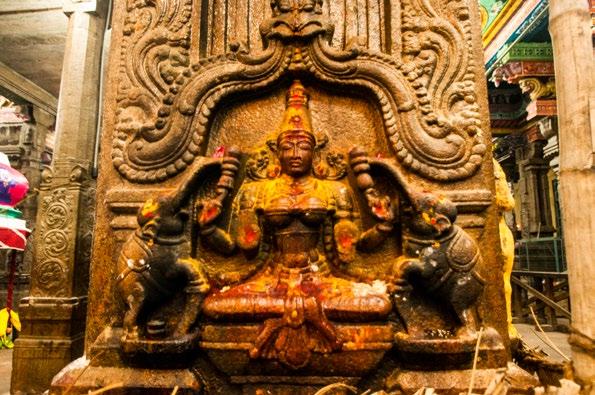
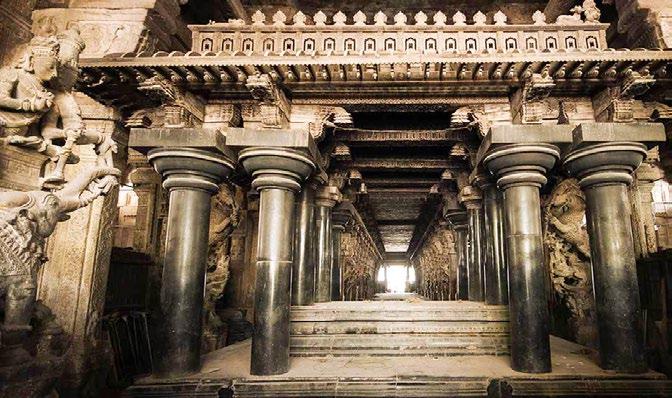
The town of Madurai is ancient and one mentioned in Sangam era texts. These are dated to be from the 1st to 4th century CE. Some early Tamil texts call Madurai as Koodal, and these portray it as a capital and a temple town where every street radiated from the temple. Goddess Meenakshi is described as the divine ruler, who along with Shiva were the primary deities that the southern Tamil kingdoms such as the Pandya dynasty revered. The early texts imply that a temple existed in Madurai by the mid-6th century. In medieval literature and inscriptions, it is sometimes referred to as Kadambavanam (lit. “forest of Kadamba”) or Velliambalam (lit. “silver hall” where Shiva danced). It was described to be the Sangam of scholars, or a place where scholars meet. It is mentioned in the Tamil text Tiruvilayadalpuranam and the Sanskrit text Halasya Mahatmya. It is one of the shrines of the 275 Paadal Petra Sthalams.
Early Tamil texts mention the temple and its primary deity by various epithets and names. Thirugnanasambandar, the famous Hindu saint of Saiva philosophy for example, mentioned this temple in the 7th century, and described the deity as Aalavaai Iraivan. The origin of the temple is mentioned in these early Tamil texts, some in the regional Puranam genre of literature. All of these places the temple in ancient times and include a warrior goddess, but the details vary significantly

and are inconsistent with each other. Some link to it deities they call Aalavaai Iraivan and Aalavaai Annal, or alternatively Angayar Kanni Ammai.
The Islamic invasion in the 14th century brought an abrupt end to the patronage of Tamil Hindu temple towns. The Tamil Hindus revived these towns but in some places such as Madurai, it took a long while. After the conquest and destruction, the Delhi Sultan Muhammad bin Tughluq appointed a Muslim governor in Madurai named Jalaluddin Ahsan Khan, who seceded in 1335 from the Delhi Sultanate and began the Madurai Sultanate. The Sultanate sought tributes from the temple towns, instead of supporting them, and on some occasions damaged them heavily and imposed tyranny upon the local populace. The Muslim Madurai Sultanate was relatively short-lived, with the Hindu Vijayanagara Empire under Bukka Raya removing it in 1378 CE. According to one poetic legend called Madhura Vijayam attributed to Gangadevi, the wife of the commander Kumara Kampana, she gave him a sword, urged him to liberate Madurai, right the wrongs, and reopen the Meenakshi temple out of its ruins. The Vijayanagara rulers succeeded, cleared the ruins and reopened the temple for active worship. They restored, repaired and expanded the temple through the 16th century, along with many other regional temples.
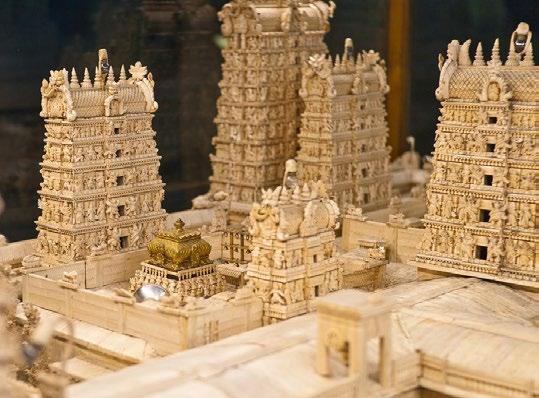
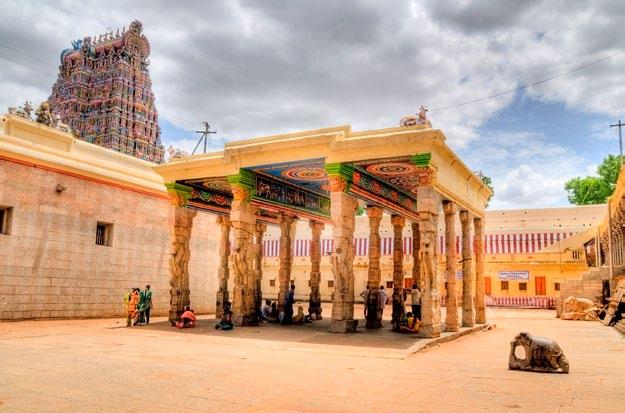
The temple was rebuilt by the Hindu Nayak dynasty ruler Vishwanatha Nayak in the 16th and 17th centuries. The Nayaka rulers followed the Hindu texts on architecture called the Shilpa Shastras in redesigning the temple city plan and the Meenakshi temple. The city was laid out in the shape of concentric squares and ring roads around them, with radiating streets culminating in the Meenakshi-Sundaresvara temple. These streets use traditional Tamil Hindu month names, such as Adhi, Chitrai, Avani-moola, Masi and others. In each of these months, the Hindus started their tradition of taking the temple bronzes festively through the street of the same name.The temple and the city were once again east facing to greet the rising Surya (Sun God). The temple city grew again around the new temple, with human settlements structured as per their castes, with the royalty, Kshatriyas and Vaishya merchants living on the southeast side of the temple, the Brahmins in a special quarter close to the temple, while others in other areas and fringes of the city. The king started a procession tradition linked to the temple to link his authority with the divine and maintain the social system.
In contrast, the procession reflects the traditional matrilineal social values, the brother-sister-groom kinship values that better explain its popularity. The warrior goddess worship tradition is ancient in the
Tamil Hindu tradition, and it dramatically expanded after the 14th-century wars. The work completed by Vishwanatha Nayaka in 1560 was substantially expanded to the current structure during the reign of Tirumala Nayaka (1623–55). Tirumala Nayaka, a Hindu king, took considerable interest in erecting many complexes inside the temple. His major contributions are the Vasantha Mandapam for celebrating Vasanthotsavam (spring festival) and Kilikoondu Mandapam (corridor of parrots). The corridors of the temple tank and Meenatchi Nayakar Mandapam were built by Rani Mangammal. The initiative for some changes to the structure was under the supervision of Ariyanatha Mudaliar, the prime minister of the Nayaka Dynasty.
During the colonial era, the population around the Meenakshi temple attracted a hub of Christian missionary activity headed by competing missions from Portugal and other parts of Europe. The British rulers first gave endowments to the temple and the British troops participated in temple festivities to gain socio-political acceptance. Lord Clive, for example, donated jewels looted by the East India Company from Sringapatam, but in 1820 they withdrew from their roles as temple patrons and participated in temple festivities. The missionaries ridiculed the temple artwork and criticized the temple practices while introducing themselves as “Roman Brahmins” and “Northern Sanniasis” [sic].
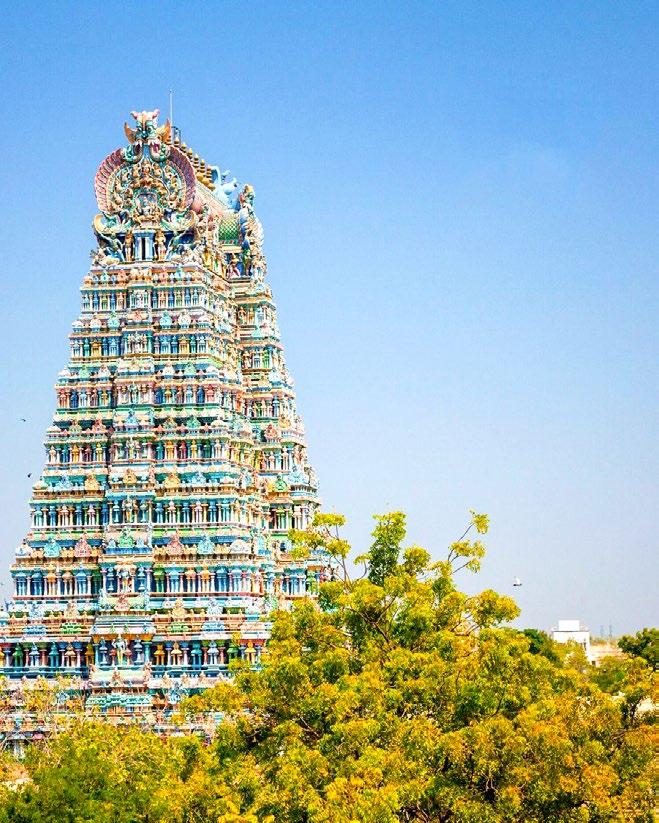
The missionary efforts were largely unsuccessful with people continuing to patronize the temple after baptizing. The missionaries wrote back that the Tamils were “baptizing, but not converting”, for they baptize if “someone wants a wife who is Christian” or medical aid when they have a disease, and material aid if they are poor. After the end of the Nayakas, the start of the Madras presidency and the withdrawal of the colonial British from support, the temple condition degraded. In 1959, Tamil Hindus began collecting donations and initiated restoration work in consultation with engineers, Hindu monasteries, historians and other scholars. The completed restoration was celebrated with a Kumbhabhishekam in 1995. The temple is sometimes spelt as Minaksi and the city as Madura in 17th to early 20th-century texts.
The temple has its traditional version of history that it calls Shiva-lilas (sports of Shiva), and sixtyfour of these episodes are painted as murals around the temple walls. These depict the many destructions of Madurai and the temple, then its rise from the ashes and ruins of the destruction every time.
The temple complex is the centre of the old city of Madurai. It consists of monuments inside several concentric enclosures; each layer fortified with high masonry walls. The outer walls have four towering gateways, allowing devotees and pilgrims to enter the complex from all four directions. After the city’s destruction in the 14th century, the Tamil tradition states that the king Vishwantha Nayaka rebuilt the temple and the Madurai city around it under the principles laid down in the Shilpa Shastras. The city plan is based on concentric squares with streets radiating out from the temple. Early Tamil texts mention that
the temple was the centre of the city and the streets happened to be radiating out like a lotus and its petals. The temple prakarams (outer precincts of a temple) and streets accommodate an elaborate festival calendar in which processions circumambulate the temple complex. The vehicles used in the processions are progressively more massive the further they travel from the centre. The temple complex is spread over about 5.7 hectares (14 acres). The courtyard is close to a square with each side of about 240 metres (800 ft), but more accurately a rectangle with one side about 15 metres (50 ft) longer. The complex has numerous shrines and mandapas, of which the most important and largest are the two parallel shrines in the innermost courtyard, one for Meenakshi (B on the plan) and the other for
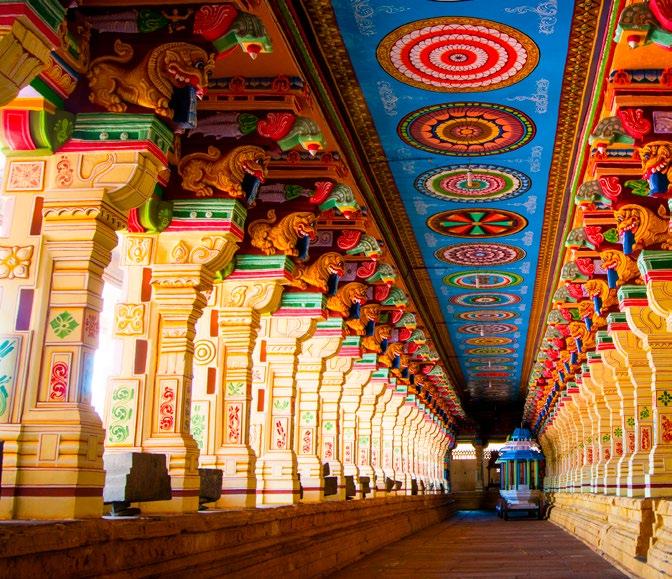
Sundareshvara (A). Additionally, the complex has a golden lotus sacred pool (L) for pilgrims to bathe in, a thousand-pillar hall choultry with extensive sculpture (Q), the kalyana mandapa or wedding hall, many small shrines for Hindu deities and for scholars from the Sangam (academy) history, buildings which are religious schools and administrative offices, elephant sheds, equipment sheds such as those for holding the chariots used for periodic processions and some gardens.
The temple is embedded inside a commercial hub and traditional markets. According to Holly Reynolds, a closer examination of the temple plan, as well as the old city, suggests that it is a mandala, a cosmic diagram laid out based on principles of symmetry and loci.

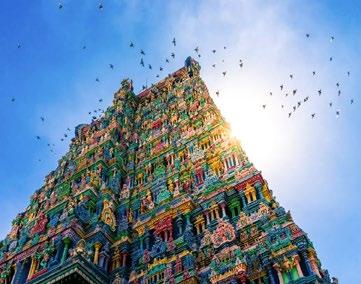
The temple complex has had a living history, has been in use for almost all of its history except for about 60 years when it was closed and in ruins after its destruction in the 14th century. The temple has continued to evolve in the modern era. For example, before the colonial era, the temple complex itself was inside another layer of the old city’s fortified walls. The British demolished this layer of fortification in the early 19th century. The surviving plan of the temple complex places it within the old city, one defined by a set of concentric squares around the temple.
The ancient temple complex was open. The courtyard walls were added over time in response to the invasion and the plunder of the temple complex. According to the text Thirupanimalai, the Vijayanagara commander Kumara Kampana after completing his conquest of Madurai, rebuilt the pre-existing structure and built defensive walls around the temple in the 14th century. Lakana Nayakar added the defensive walls around the first prakara (courtyard), as well as expanded and renovated the Mahamandapa and Meenakshi shrine in the middle of the 15th century. After the destruction of the Hindu Vijayanagara Empire in the late 16th century by a coalition of Islamic Deccan sultanates north of Karnataka, the Madurai region declared its sovereignty. Visvanatha Nayak then poured resources to heavily fortify the temple complex, and set a new plan for the temple complex. The Nayaka ruler also gilded the vimana of the primary shrines with gold. Chettiappa Nayakkar rebuilt the Dvarapala mandapam in front of the Sannadhi gopuram, as well as the north colonnade of the Golden Lotus Tank, the second protective wall around the Meenakshi Devi’s shrine.
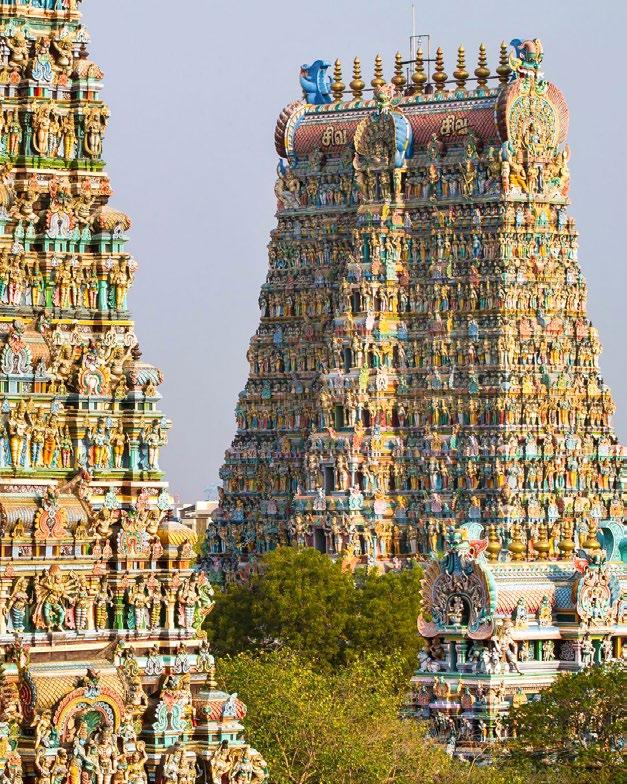
The shrines of Meenakshi temple are embedded inside three walled enclosures and each of these have four gateways, the outer tower growing larger and reaching higher to the corresponding inner one. The temple has 14 gopurams, the tallest of which is the southern tower, which rises to over 170 ft (52 m) and was rebuilt in the late 16th century. The oldest gopuram is the eastern one (I on plan), built by Maravarman Sundara Pandyan during 1216–1238.[68] Each gopuram is a multi-storeyed structure, covered with sculpture painted in bright hues. The outer gopurams are high pyramidal tower serving as a landmark sign for arriving pilgrims, while the inner gopuram are smaller and serve as the entrance gateways to various shrines.
The temple complex has 4 nine-storey gopurams (outer, raja), 1 seven-storey gopuram (Chittirai), 5 five-storey gopurams, 2 three-storey, and 2 one-storey gold-gilded sanctum towers. Of these, five are gateways to the Sundareshvara shrine and three to the Meenakshi shrine. The towers are covered with stucco images, some of whom are deity figures and others are figures from Hindu mythology, saints or scholars. Each group or sets of panels in each storey present an episode from regional or pan-Hindu legend. The four tallest gopurams on the outer walls alone depict nearly 4,000 mythological stories.
Some of the major gopurams of the Meenakshi temple complex are:
Portions of the three-storeyed gopura at the entrance of Sundareswarar Shrine and the central portion of the Goddess Meenakshi Shrine are some of the earliest surviving parts of the temple. These were constructed by King Kulasekara Pandya (1190–1216 CE).
The traditional texts call him a poet-saint king, additionally credit him with a poem called Ambikai Malai, as well as shrines (koil) each for Natarajar and Surya near the main temple, Ayyanar in the east, Vinayagar in the south, Kariamalperumal in the west and Kali in the north. He also built a
Mahamandapam. Kulasekara Pandya was also a poet and he composed a poem on Meenakshi named Ambikai Malai. Maravarman Sundara Pandyan I built a gopura in 1231, then called Avanivendaraman, later rebuilt, expanded and named as Sundara Pandya Thirukkopuram.
Chitra gopuram (W), also known as Muttalakkum Vayil, was built by Maravarman Sundara Pandyan II (1238–1251). This gopuram is named after the frescoes and reliefs that depict secular and religious themes of Hindu culture. Maravarman Sundara Pandyan II also added a pillared corridor to the Sundareswara shrine, and the Sundara Pandyan Mandapam.[9] It was rebuilt after the 14th-century damage, its granite structure was renovated by Kumara Krishnappar after 1595. MVembaturara Ananda Nambi built the early version of the three-tiered gopuram in 1227. Like other gopurams, it too was destroyed in the 14th century and later rebuilt. This gopuram is found between Meenakshi shrine and the Kilikuttu (parrot) mandapam. Some inscriptions refer to it as Vembathurar gopuram.
The gopuram east to the Sundareshwara shrine is 5 storeyed. It was completed about 1372 by Vasuvappan after the Vijayanagara rulers reopened the temple complex after remaining in ruins and dormant for about five decades. The gopuram west to the Sundareshwara shrine is also 5 storeyed, and was completed around 1374 by Mallapan. According to the inscriptions found on the foundation of the gateways, Visvappa Nayakkar built the Nayaka gopuram in the second prakara around 1530, while Palahai gopuram was built about the same time by Mallappan. Both the gopuram have similar style and architecture, likely built by a collaborating group of same artists. Kadaka Gopuram in Meenakshi’s shrine was built by Tumpichi Nayakkar around the mid-16th century, but different texts give different dates. It is fivestoreyed, was walled up and closed through 1963 for unclear reasons. This gopura was reopened after the renovations were completed in 1963.
The gopuram near the Ganesha shrine (Mukkuruni Vinayakar), also called the Nadukkattu gopuram or Idaikattu gopuram, was built by the Siramalai Sevvanthimurti Chetti family. It is called Nadukkattu because it is between the shrines of Meenakshi and Sundareswarar. They also rebuilt and renovated the Idabhakkuri Gopuram, a five-storey tower on the northern segment of the Adi Street. The nine-storey southern gopura, the highest tower, was also built by the Siramalai Sevvanthimurti Chetti family, a wealthy Hindu who lived near Thiruchirapalli. It was completed in the second half of the 16th century. The gopuram is notable for its extensive artwork with over 1,500 mythological characters in panels that narrate legends from the Hindu texts, particularly the Puranas.Mottai gopuram (lit. “bald” gateway) was started by Krishnappa Nayakkar, also called the North Raya gopuram (this is not on the plan, below the bottom edge). It was completed by the Amaravati Purur Vayinagaram Chettiyar family in 1878 CE. The Mottai gopuram for nearly three centuries did not have a roof structure, is simpler and has fewer stucco images than the other major entrances, giving it a relatively bald appearance and the local name. Before its completion in the 19th century, the gopuram made of stone and brick had even fewer stucco images.
The Meenakshi temple has two separate shrines for the goddess Meenakshi (Parvati, Devi, Amman) and god Sundaresvara (Shiva, Deva, Cuvami), just like most Shaiva temples.[73] Both are open to the east. The Devi shrine is on the south side (B), while the Deva shrine is more centrally placed, to the north (A), thus placing the goddess as the pradhana murti or the “more important” right side within the complex, states Fuller. The goddess shrine has the green stone image of Meenakshi, standing in bentleg posture. Her raised hand holds a lotus, on which sits a green parrot. Her left-hand hangs by her side. This image is set in a square garbha griya (central sanctum). A copy of this image has been made from metal and is kept in the temple complex. The metal version is used for a festive procession. A distinct feature of Meenakshi in terms of iconography is the presence of parrot in her right hand. The parrot is generally associated with the Sri Vaishnava Alvar Andal.
The Sundareswarar shrine has a stone linga in its square plan sanctum, and this anicon is shaded under a stone cobra hood. In the northeast corner is another stone image of his consort. None of these travel during a festive procession.
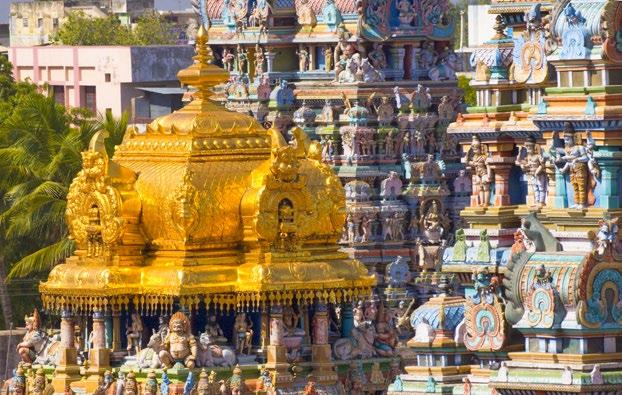
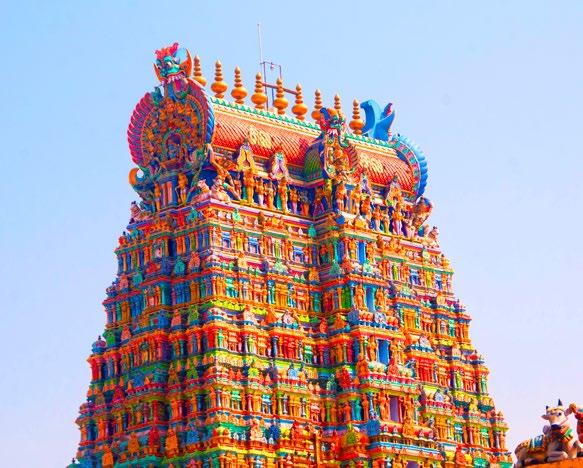
Rather, Sundareswarar is represented in the form of anthropomorphic Somaskanda image. There is another metal symbolic image of Shiva called the Cokkar, which is merely a pair of embossed feet on a metal stool. This symbol is kept near Sundareswarar sanctum all day, then carried in a palaki daily to Meenakshi’s chamber every evening so that the two can symbolically spend the night together. In the morning, the temple volunteers wake the divine couple and the symbolic Cokkar image is carried back to the Sundareswarar sanctum.
The shrine for Sundareswarar is the largest within the complex and its entrance is aligned with the eastern gopuram. The shrine for Meenakshi is smaller, though theologically more important. Both the Meenakshi and Sundareswarar shrines have gold plated Vimanam (tower over sanctum). The golden top can be seen from a great distance in the west through the apertures of two successive towers. The tall sculpture of Ganesh carved of single
stone located outside the Sundareswarar shrine in the path from Meenakshi shrine is called the Mukuruny Vinayakar. A large measure of rice measuring three kurini (a measure) is shaped into a big ball of sacrifice and hence the Ganesh is called Mukkurni Vinayagar (three kurinis). Kumara Kampana, states the Thirupanimalai text, donated jewels and made grants to cover the expenses for daily operations of the two shrines in the 14th century. The Tamil Hindus who had hidden the temple idols in Nanjil Nadu, brought them back and reconsecrated them ending the nearly five decades era when the temple had been closed under the Madurai Sultanate rule.
The temple inscriptions suggest that the Vijayanagara rulers participated worship ceremonies in the temple and donated gold, through the 16th century. Lakana Nayakar built the Paliarai (bed chamber) in the mid15th century for the icon goddess and god to symbolically spend their night together.
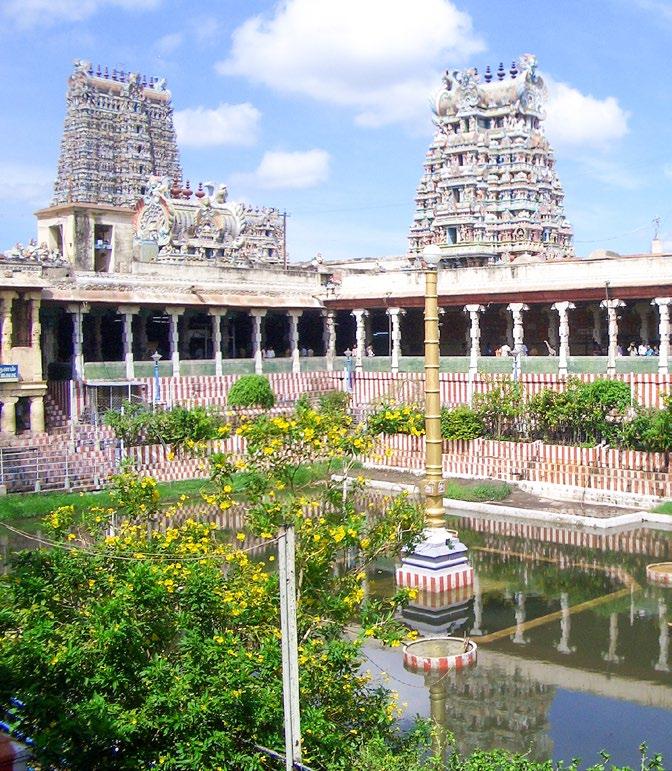
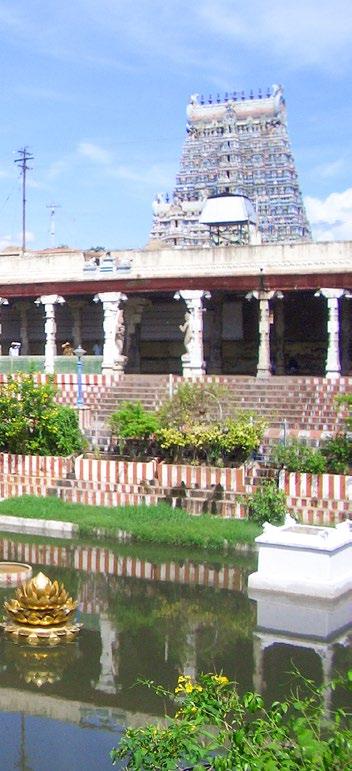
The Nataraja shrine was also added in the 15th century by Arulalan Sevahadevan Vanathirayan, who also renovated the Thiruvalavaudaiyar shrine. The temple has other shrines, such as for Murugan in the northwest corner of the second courtyard. It was built by Krishnappa Nayakar II.
The Nayakas, who were the local governors for the Vijayanagara rulers, expanded the temple complex. In 1516, Saluvanarasana Nayaka added the sacred pool for pilgrims to take a dip, naming it Ezhukadal (seven seas, Saptasaharam). Chettiappa Nayakkar rebuilt the north colonnade of the Golden Lotus Tank, as well as Dvarapala mandapam in front of the Sannadhi gopuram. The sacred temple tank is called Porthamarai Kulam (“Pond with the golden lotus”). It is also referred to as Adhi Theertham, Sivaganga and Uthama Theertham. The pool is 165 ft (50 m) by 120 ft (37 m) in size. The pool walls were painted with frescoes. Only a fraction of 17th- and 18thcentury paintings of Nayak period survives and one such portion is found in the small portico on the western side of the tank. It depicts the marriage of Sundareswarar and Meenkashi attended by Vijayaranga Chokkanatha and Rani Mangammal. The painting is executed on a vivid red background, with delicate black linework and large areas of white, green and ochre. The celestial couple is seated inside an architectural frame with a flowering tree in the background. The small six-pillared swing mandapam (Unjal) was built by Cheventhi Murthi Chetti during this period, and this remains in use currently for a Friday ritual and it also houses the model of the entire temple complex created in 1985.
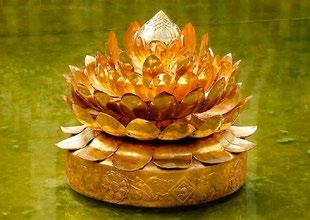

The temple complex has many mandapas (pillared-halls) built by kings and wealthy patrons over the centuries. They are choultry, or a place for the pilgrims to rest. Some of these mandapas include:
Chinnappa Nayakkar constructed the 100-pillared Mandapa Nayaka Mandapam in the northeastern part of second courtyard in 1526. This mandapa houses the
famed Nataraja statue with his “right” leg up in dance mudra, instead of the left leg typically found in Nataraja bronzes The small six-pillared swing mandapam (Unjal, oonjal) was built by Cheventhi Murthi Chetti during this period, and this remains in use currently for a Friday ritual. The images of Meenakshi and Sundareswarar are placed on the swing every Friday evening and swung. The shrine has a 3-storied gopuram flanked by two Dvarapala (guardians) and supported by golden, rectangular columns that bear lotus markings. Along the perimeter of the chamber, granite panels of the divine couple are present. The hall is situated in the
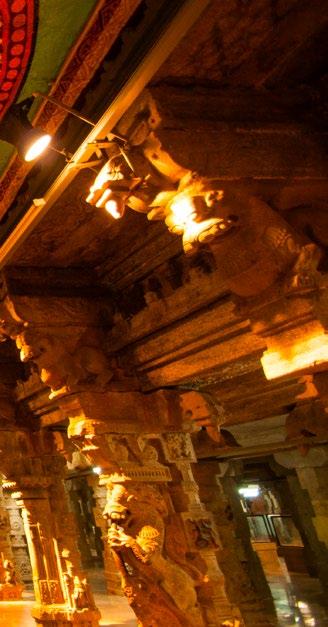
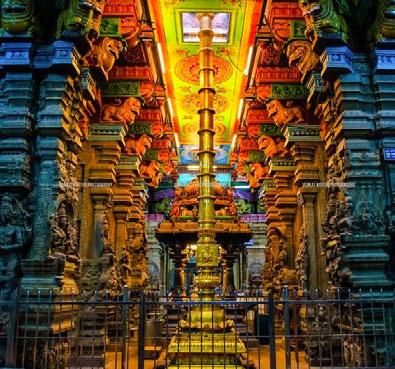
Ashta Shakthi Mandapam (“Hall of eight goddesses”, O on plan) was built by two queens. It is the hall near the East gopuram, between the main entrance for visitors and the smaller gopuram leading to the Meenakshi shrine tower. The passage was named for eight forms of goddess Shakti carved on its pillars: Koumari, Roudri, Vaishnavi, Maha-lakshmi, Yagnarupini, Shyamala, Maheswari and Manonmani. These reflect the feminine and power aspects of all major traditions of Hinduism. Other sculptures and paintings depict the Tiruvilayadal (holy games of Shiva). The sculptures of heroes of Mahabharata, the Pancha pandavas can be seen in the Pancha Pandava Mandapam (Hall of Pandavas). The hall also has four sculptures of Shiva scholars, as well as a statue of Mahatma Gandhi added in 1923 while the Indians were midst their independence struggle from the colonial British rule.
western bank of the temple tank. This mandapam also houses the model of the entire temple complex created in 1985. Kambathadi mandapam (H) was built by Krishna Virappa Nayakkar (1572–1595). This choultry hall is known for intricately carved sculptures and eight Shiva forms: Ardanarishwara (half Parvati, half Shiva), Rudra (angry Shiva), Bhikshadanamurti (Shiva as a monk), Dakshinamurti (Shiva as yoga teacher, guru), Lingobhava (Shiva emerging out of a linga), Ekapathamurti, Rishaba, Somaskanda (Shiva, Parvati and Skanda), Chandrasekara, Nataraja (dancing Shiva) and Somasundara.
Kilikoondu Mandapam, also called Sangili mandapam (E), is near the Meenakshi shrine. The word Kilikondu means “parrot cage”, and in past the parrots kept here were trained to say “Meenakshi”. This pillared hall was completed in 1623 by Muthu Veerappa Nayakar. The cages were later removed. In contemporary times, girls perform the kolattam dance, a type of stick dance that involves acrobatics and forming chains with long ropes hanging from the ceiling, which is why it is called sangili. These dances celebrate Hindu festival days. The Kilikoondu Mandapam is notable for its sculpture of characters from the Mahabharata, a Hindu epic. It also has a yali sculpture on a pillar, inside whose mouth is carved a stone ball that freely rotates.
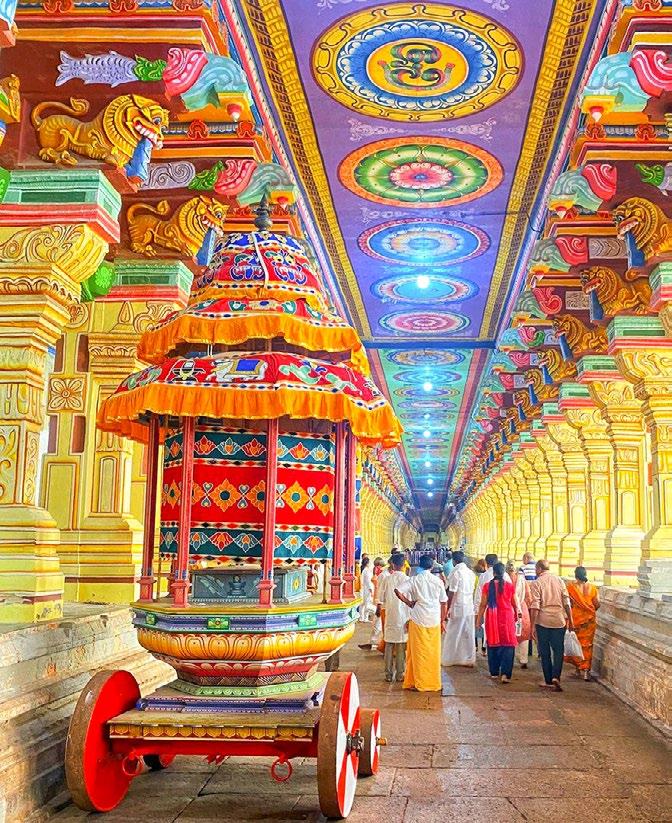

The Kambatadi Mandapam (“Hall of temple tree”) with its seated Nandi (sacred bull) has various manifestations of Shiva carved and also contains the famous “Marriage of Meenakshi” sculpture. Other sculptures here include those Shiva and Kali in a dance competition, a golden flagstaff, Durga as Siddar. The Vira vasantha raya mandapam (R) is to the south of the 1000-pillar mandapam, and was completed in 1611 by Muthu Veerappa Nayakar I. It contains a Nandi facing the main Sundaresvara sanctum. To the south of this hall is the kalyana mandapam, or wedding hall. It is here that the marriage of Shiva and Parvati is celebrated every year during the Chithirai festival which falls sometime in or abouts April.
Pudumandapam, also called Vasantha mandapam (bottom of plan) was completed by Thirumalai Nayak in the 17th century. It is in front of the eastern tower, outside the current walled complex. It leads to the unfinished Eastern gopuram. It has 124 pillars, each with intricately carved sculptures of Meenakshi’s wedding to Shiva, Kali, Nataraja, Surya, Chandra as well as common life scenes such as elephants eating sugarcane stalks are found in this mandapam. Its popularity led to shopkeepers occupying the pillared hall, some of which hide or make a complete view of the sculpture difficult. Golu mandapam was built by Thittiyappa Chetti, a common man, in 1565 during the rule of
Krishnappa Nayakkar. This mandapam is used during the Navaratri festival every year when goddess Meenakshi is decorated like a Golu doll, in nine different forms on each of the nine days of the autumn festival. The ThousandPillared Hall (Q) contains 985 (instead of 1000) carved pillars, with two shrines occupying the space of the remaining 15. The hall was built by Ariyanatha Mudaliar in 1569 and blends engineering skill and artistic vision. Ariyanatha Mudaliar was prime minister and general of Viswanatha Nayaka, the first Nayaka of Madurai (1559–1600).
At the entrance of the hall is the statue of Ariyanatha Mudaliar seated on a horse-back, flanking one side of the entrance to the temple. Each pillar in the hall is a carved sculpture. The more prominent among the carved figures are those of Rati (wife of Kama), Karthikeya, Ganesha, Shiva as a wandering mendicant. The Meenakshi Nayakkar Mandapam (“Hall of 1000 pillars”) has two rows of pillars carved with images of yali (mythological beast with body of lion and head of an elephant). It is situated to the north of Sundareswarar flag staff hall. There is a Temple Art Museum in the hall where icons, photographs, drawings, and other exhibits of the temple are displayed. Just outside this hall, towards the west, are the Musical Pillars. Each pillar, when struck, produces a different musical note.
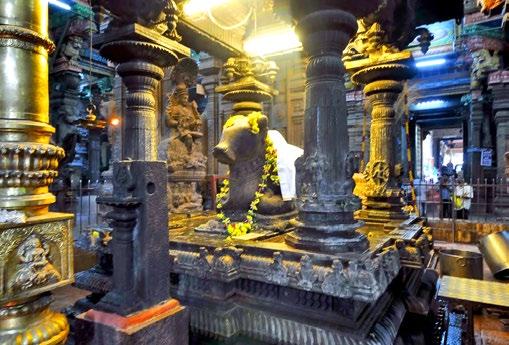
The Meenakshi Temple is a theologically and culturally significant temple for Hindus. Professor Christopher Fuller signifies that through the wedding of Meenakshi and Sundaresvara the “supremely important rite of passage” for women, the cultural concept of “Sumangala” or “auspicious married woman” who lives with her husband but is also independent, organizer of the social connections and who is central to Tamilian life.
The marriage of the goddess and god is a symbolic paradigm for human marriage. This event is commemorated with an annual festive procession that falls sometimes around April. The temple is also significant because it implies an affinal, protective relationship between Shaivism and Vaishnavism traditions of Hinduism, by making Shiva the husband of Meenakshi, and Vishnu her brother, a significant relationship in Dravidian kinship system. Meenakshi herself is a central part of the Shaktism tradition of Hinduism, and represented as the dominant figure of the pair in this temple. The temple thus symbolically celebrates all three of its major traditions.
According to the Tiruvilaiyatal Puranam, of the list of 68 pilgrimage places in Shaivism, four are most important: Kashi (Varanasi), Chidambaram, Tirukkalatti and Madurai. The sacrality of Madurai is from this temple. The shrine of Sundareswarar is considered one of the Pancha Sabhai (five courts), where the Tamil Hindu tradition believes Shiva performed cosmic dance. The Tamil word velli means silver and ambalam means stage or altar. This massive Nataraja sculpture is enclosed in a huge silver altar and hence called “Velli Ambalam” (silver abode).
The temple is a popular site for Hindu weddings, though it is not the exclusive site. The short main ceremony is completed in the temple, followed by receptions and other rituals elsewhere. The Meenakshi temple is not only a religious centre, but is also an economic centre. The goods and services for temple-related pilgrims and visitors is a significant part of the Madurai economy. Tamil Nadu state emblem is based on the West Gopuram. Though, sometimes it is wrongly mentioned that the State emblem is based on Srivilliputhur temple Gopuram, the artist R Krishna Rao the one who designed the Emblem has stated that he designed it based on the Madurai Meenakshiamman West Gopuram.


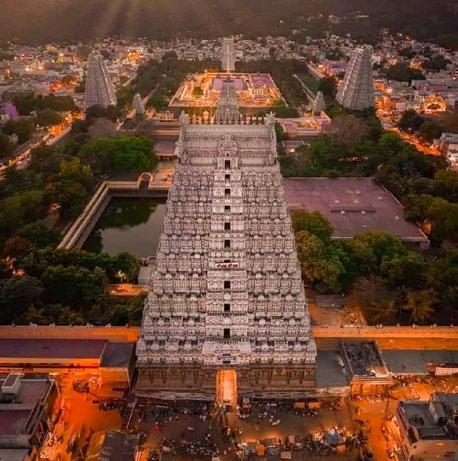
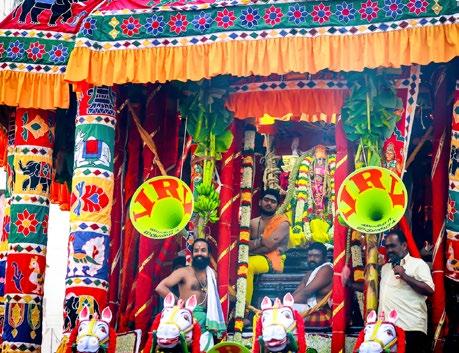
The Meenakshi Amman temple is an active house of Hindu worship. Priests perform the puja ceremonies on a daily basis and during festivals. Volunteers and temple staff also participate in daily rituals, such as symbolically moving an icon of Sundaresvara in a palanquin to Meenakshi’s chamber every night so that they can be together, then waking the two and returning Sundaresvara to his shrine every morning. There are periodic ratha (chariot) processions where one of the metal copy icons of the goddess is taken out of the temple in an elaborate car shrine decorated with colourful clothes and flowers, with volunteers pulling the car through the streets of Madurai and circumambulating the temple complex on one of the concentric roads in the old city. This symbolizes her mythical conquests and her presence in the secular life of the people. The temple has a six-time pooja calendar every day, each comprising four rituals namely abhisheka (sacred bath), alangaram (decoration), neivethanam (food offerings and deepa aradanai (lamp ceremony) for both Meenakshi and Sundareswarar. The rituals and festivals are accompanied with music with nadhaswaram (pipe instrument) and tavil (percussion instrument), recitation of the Vedas. The Hindus generally circumambulate the shrines clockwise first before entering the shrine for a darshana. Meenakshi is typically visited before Sundareswarar by the pilgrims,
she considered the primary deity of the complex. Like most Shakti temples in Tamil Nadu, the Fridays during the Tamil months of Aadi (July–August) and Thai (January–February) are celebrated in the temple by thousands of devotees. “Avani Moola Utsavam” is a 10-day festival mainly devoted to Sundareswarar describes his various Thiruvilayadal meaning Shiva’s sacred games.
The Meenakshi temple hosts a festival in each month of the Tamil calendar. Some festivals attract significant participation, with the Meenakshi wedding-related festival attracting over a million people over 12 days. It is called the “Meenakshi Thirukalyanam”. The festival is celebrated in the Chithirai month, which typically falls about April. It marks the divine marriage of Meenakshi, and is the most attended festival. The wedding of the divine couple is regarded as a classic instance of south Indian marriage with matrilineal emphasis, an arrangement referred as “Madurai marriage”. This contrasts with the “Chidambaram marriage”, with patrilineal emphasis, reflected by Shiva’s dominance, ritual and mythology at the Shiva temple of Chidhambaram. The festival includes a procession, where Meenakshi and Sundareshwara travel in a chariot pulled by volunteer devotees, and Vishnu gives away his sister in marriage to Shiva.
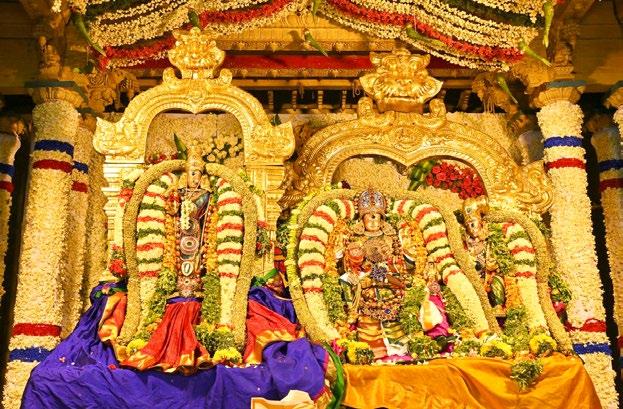

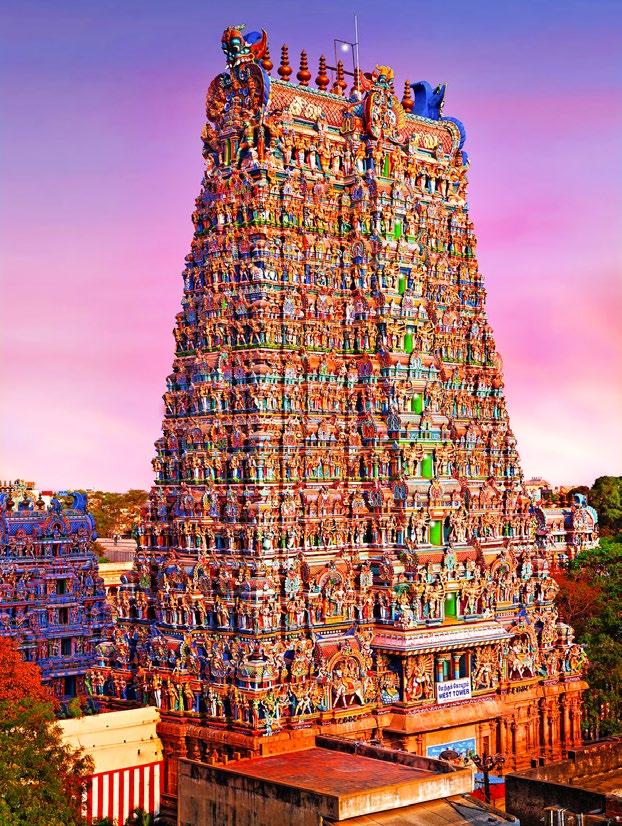
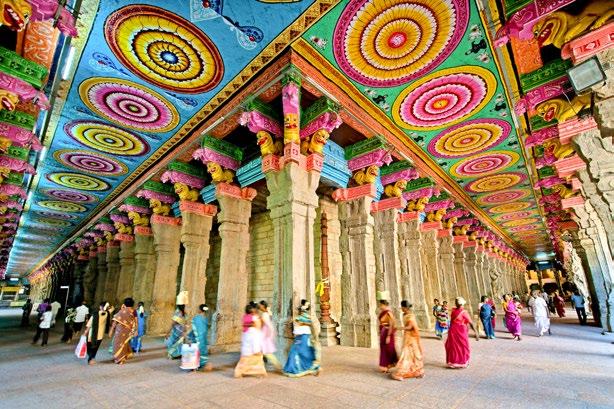
Meenakshi, the bride, is the royal monarch. During the one-month period, there are a number of events including the “Ther Thiruvizhah” (chariot festival) and “Theppa Thiruvizhah” (float festival). Other festivals include the Vasantham festival is celebrated in Vaikasi month. The Unjal Festival in Aani, the Mulai-Kottu festival in Aadi, the Aavani Moolam Aavani, the Kolattam festivals of Ayppasi and Karthikai months, the Arudhra Dharsan festival of Margali month, the Thai month utsavam that co-celebrated with the Mariyamman temple in Madurai, the Masi utsavam and Vasamtham utsavam in Panguni.
In the Tamil month of Purattasi, the temple celebrates the Navarathri festival, also known as Dasara or Dussehra elsewhere. During this autumn festival, the temple complex is lit up at night with garlands of lights and with colourful displays during the day. The mandapam halls display mythological scenes from Hindu texts using golu dolls. These displays are particularly popular with children, and families visit the displays in large numbers.
Over the centuries, the temple has been a centre of education of culture, literature, art, music and dance. The temple is famed location where Tamil tradition believes Sambandar helped establish Tamil Shiva bhakti. Kumaraguruparar, a 17th-century Tamil poet, composed Meenakshi Pillaitamil in praise of presiding deity of this temple. King Tirumalai Nayak’s patronage of the poet Kumaraguruparar has an important place in the history of Pillai-Tamil (a genre of Tamil literature). Kumaraguruparar visited a lot of temples and when he visited this temple, he composed Meenakshi Pillai-Tamil dedicated to the goddess Meenakshi. Shyama Shastri, one of the Trinity of Carnatic music, had composed a set of nine Telugu songs in praise of Meenakshi of Madurai, which are referred to as Navaratnamalika(Garland of nine gems). According to legend, when Sastri sang these songs in front of presiding deity, the goddess had responded visibly.












Exciting opportunity for all those who want to share their most memorable, Interesting. Amazing, Pro-active & Growth oriented activities & Experiences covering areas such as
• Fashion, Trend & Lifestyle
• Culture, Tradition & Heritage
• Education, Healthcare & Wellnes
• Industries, Investments & Growth
• Travel, Tourisn & Hospitality With Millions of Readers across the world



Special Coverage & Press Release Dr. Kevin Francis
Launguage Rights & Overseas Rights
Dr. Andre Lubbe
Circulation, Subscription & Global Distributions Dr. George Fedrick
Advertisements & Advertorials WWMCG Global Communications Inc.,
Featured Stories & Articles Rishi Wadhwa
Feedback & Customer Relationship
Ms. Nancy
Email ID : aseworldwidemedia@gmail.com worldwidemediaasiapacific@gmail.com
Website : www.mightyindia.com