



Global Media Chief & MD
Dr. S. E. Alexander
Chief Executive Editor & ED
Dr. Andre Lubbe
Senior Executive Editors & Directors
Dr. Kevin Francis, George Fedrick
Executive Editor & SVP
Thamen, Reetu Bansal
Associate Editor & Regional Directors
Nicolas Flemings, Nitirooge Phoneprasert, Ken Obeng
Regional Director Malaysia
Shariman Abd Rahim
Worldwide Media Corporation Group
aseworldwidemedia@gmail.com
worldwidemediaasiapacific@gmail.com
us at www.facebook.com/Incredible Tamilnadu
Creative Director
Randy Redstone
Art Directors
Richard Flemings
EVP - Asia Pacific Region Operations
Graham Starmer, Sudhakar Gupta
AGM – Corporate Communication
Swetha Naren
Vice President Operations
Amit, Rahul Shinde, Ruchi Srivatsa
Corporate Advisors & Consultants
Venkat, Mike Dobbertine, Chandrasekar
Senior Sub Editors
Prasad ST, Ram Mohan Rao, Vinu Agarwal
Editorial Consultants, Senior Journalists & Sub Editors
Bruce N Lesly, Edna Ferber, Sreedevi, Nancy, Aarti Mukherjee,
Maddy, Rachel D’souza, Vidya, Kruthiga, Ajay Franklin
Regional & Business Managers
Sanjay, Steve Mathews, Nirupama Rao, Sunil Kumar, T.P. Bhaskar, Kiran, Kishore
Circulation Managers
Shewtha Shetty, Alan, Rakesh Khanna, Subbodh Chakraborthy
Photographers
James O Corner, Nikhil, Bosh Winter
Resident Managers & Journalists
Aarthi Agarwal, Sarika, Vikram Kapoor, Swetha
Assistant Managers & Executives
Rocky, Manju, Prakash, Neetu
Senior Creative Designer
Raj, Ryan D’souza
Creative Designers
Ajeesh, Rajesh, Abhijit, Sonam, Reetu, Sonal, Ashish, Chithra
Email:


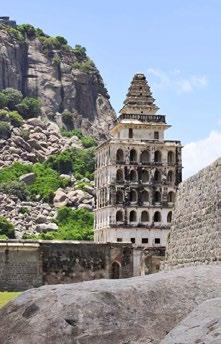
Tamil Nadu is a highly sought-after destination for travel enthusiasts and pilgrims from all over the world due to a confluence of deeply spiritual, historical, and architectural factors. The state's ancient temples offer more than just religious significance; they represent a rich tapestry of culture, art, and timeless traditions that provide a profoundly enriching experience for visitors regardless of their faith.
The State of Tamil Nadu is very much renowned for its ancient temples that stands testimony of the long historical timeline of temple construction under successive dynasties, the evolution of the distinctive Dravidian architectural style, the intricate historical, political, and socio-economic roles the temples played, and the lasting cultural and spiritual significance they hold.
Architectural Masterpieces and Historical Depth:
Tamil Nadu's temples are prime examples of the Dravidian architectural style, characterized by towering, colorfully sculpted gateways called gopurams. The intricate carvings and artistic details showcase centuries of craftsmanship and engineering genius, leaving a lasting impression on all who witness them. The historical evolution of this architecture is also a significant draw.
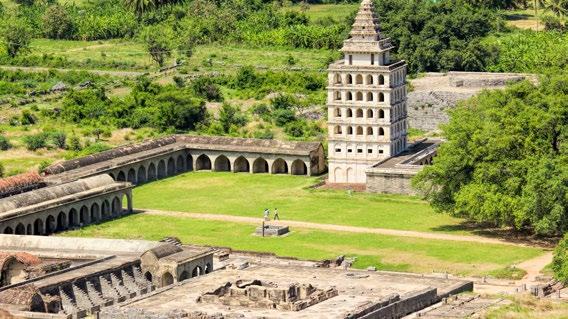
UNESCO World Heritage Sites: The Great Living Chola Temples: This site includes the Brihadeeswarar Temple in Thanjavur, the temple at Gangaikonda Cholapuram, and the Airavatesvara Temple at Darasuram. These 11th and 12th-century structures are a testament to the Chola dynasty's imperial power and artistic sophistication. The Group of Monuments at Mahabalipuram: Carved from rock by the Pallava dynasty between the 7th and 8th centuries, these monuments feature rock-cut caves, monolithic temples shaped like chariots, and the stunning seaside Shore Temple.
A legacy of royal patronage: The construction of Tamil Nadu's temples is tied to a history of patronage from successive powerful dynasties, each leaving a distinct mark on the evolving architectural style.
Pallavas (6th–9th centuries): They pioneered the use of stone, moving from rock-cut cave temples to monolithic Ratha’s (chariots) and later to free-standing structural temples. The UNESCO-listed Group of Monuments at Mahabalipuram are prime examples of their rock-cut achievements, with the Shore Temple being a magnificent structural masterpiece.
Cholas (9th–13th centuries): The Cholas took Dravidian architecture to its zenith with grand, towering temples. The
UNESCO-listed "Great Living Chola Temples"—including the Brihadeeswarar Temple in Thanjavur, the Brihadisvara Temple at Gangaikonda Cholapuram, and the Airavatesvara Temple at Darasuram—are celebrated for their massive scale, intricate carvings, and towering vimanas (sanctuary towers).
Pandyas and Nayakas (13th–17th centuries): During these periods, the focus shifted to expanding temple complexes and building colossal gopurams, which became the most prominent feature of the temples. The Meenakshi Amman Temple in Madurai is a testament to this phase, with its numerous vibrant and elaborately sculpted gateways.
Iconic Temples of Tamil Nadu with Unique Features: Meenakshi Amman Temple (Madurai): Known for its vibrant, multi-colored gopurams decorated with a dazzling array of mythological sculptures. Sri Ranganathaswamy Temple (Srirangam): Considered one of the largest functioning Hindu temple complexes in the world, with twenty-one magnificent gopurams. Ramanathaswamy Temple (Rameswaram): Famous for having the longest temple corridor in India, adorned with intricate carvings.
Kanyakumari Devi Temple, Kanyakumari: Situated at India’s southern tip, this temple is dedicated to Goddess Kanyakumari, an incarnation of Parvati. The confluence of three seas nearby enhances the spiritual aura of the place. Thillai Nataraja Temple, Chidambaram: This temple celebrates Lord Shiva as the cosmic dancer, Nataraja. A unique blend of spirituality and art, it is also associated with Tamil culture and the ancient Natya Shastra. Brihadeeswarar Temple, Thanjavur: A UNESCO World Heritage Site, this grand temple built by Raja Raja Chola I is dedicated to Lord Shiva. Its massive structure and spiritual aura make it both an architectural and divine marvel. Kanchipuram Temples: Known as the “City of Thousand Temples,” Kanchipuram is home to sacred shrines like Ekambareswarar and Kamakshi Amman Temple. The town is also a seat of learning for Hindu philosophy.
Swamimalai Murugan Temple: One of the six sacred abodes of Lord Murugan, this temple near Kumbakonam holds great religious importance. It is believed to be the place where Murugan taught the meaning of “Om” to Lord Shiva. Kapaleeshwarar Temple, Chennai: Nestled in Mylapore, this temple dedicated to Lord Shiva and Goddess Karpagambal is known for its colorful festivals, traditional music, and strong cultural vibes in the heart of the city.
Diverse spiritual significance: Tamil Nadu's temples are not homogenous; they offer diverse spiritual experiences tied to various Hindu deities and mythological tales. This variety caters to a wide range of spiritual seekers. Pancha Bhoota Stalas: Five Shiva temples dedicated to the five elements of nature (earth, water, fire, air, and space), located at Kanchipuram, Thiruvanaikaval, Tiruvannamalai, Kalahasti (Andhra Pradesh), and Chidambaram. Arupadaiveedu: The six sacred abodes of Lord Murugan, located at Palani, Tiruchendur, Thirupparamkunram, Swamimalai, Thiruthani, and Pazhamudircholai.
Divya Desams: A circuit of 108 Vishnu temples revered by the Alvar saints. The Sri Ranganathaswamy Temple in Srirangam is one of the most prominent of these. Diverse Religious Sites: Beyond Hinduism, Tamil Nadu is home to important sites for other faiths, such as the Basilica of Our Lady of Good Health in Velankanni, also known as the "Lourdes of the East"
Immersive cultural and festive experiences:
For many travel enthusiasts, the pilgrimage to Tamil Nadu is as much about cultural immersion as it is about spiritual devotion. The temples are dynamic cultural hubs that host vibrant festivals and artistic performances, offering an authentic glimpse into local traditions.
Lively festivals: The state's calendar is packed with temple festivals, such as Pongal, the harvest festival, and the annual car festivals, during which massive, decorated temple chariots are pulled through the streets. Living traditions: The temples are centers for classical music and dance, most notably Bharatanatyam, performances of which can still be witnessed in temple premises. Rituals and customs: Travelers can observe ancient rituals and traditions that have been practiced for millennia, offering a unique window into the spiritual life of the community. Integration with scenic beauty and other attractions: Tamil Nadu's pilgrimage sites are often located in areas of natural beauty, allowing travelers to combine spiritual exploration with other attractions. Coastal towns: Pilgrim towns like Rameswaram and Mahabalipuram are situated along the coast, offering beautiful beaches and stunning sunrises. Mountain retreats: Some temple towns, like Palani, are located in the scenic hills, providing a tranquil escape.
In Short: Tamil Nadu’s spiritual trail is not just about temples; it’s about experiencing devotion, history, and timeless traditions. A visit to these sacred places is sure to leave you with peace and divine energy.
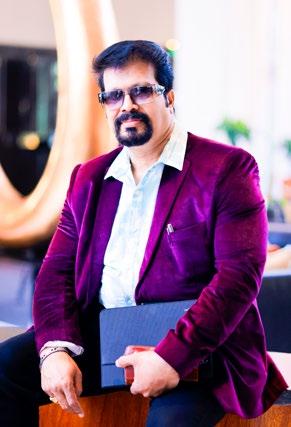

Dr. S. E. Alexander Global Media Chief & MD




Ira by NallI WeavINg DIWalI Dreams IN sIlk
From seNses To sTory
The experIeNTIal WorlD oF mrIgaNka

beauTIFul homes WITh verNacular archITecTure IN coNTemporary sT yles @ cheNNaI
& SHOPPING OF
peTTagam @ karaIkuDI, by luxury JeWellery DesIgNer meeNu subbIah
VBJ’s Grand Jhumka Festival for the new gen
The DIsTINcTIve craFTsmaNshIp by ToDa TrIbe oF NIlgIrI hIlls

ST. THOMAS MOUNT CHURCH A SACRED HILL OF FAITH IN TAMIL NADU
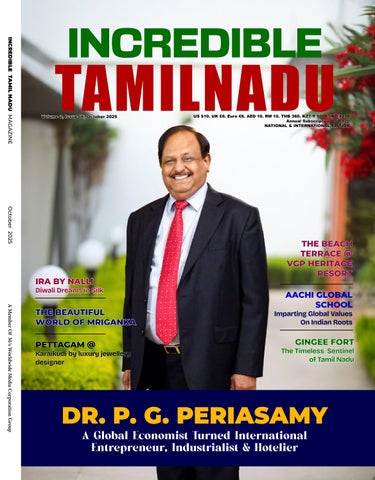
A GLOBAL ECONOMIST TURNED INTERNATIONAL ENTREPRENEUR, INDUSTRIALIST & HOTELIER

ImparTINg global values oN INDIaN rooTs - ms. rebekah abhIsek oF aachI global school.




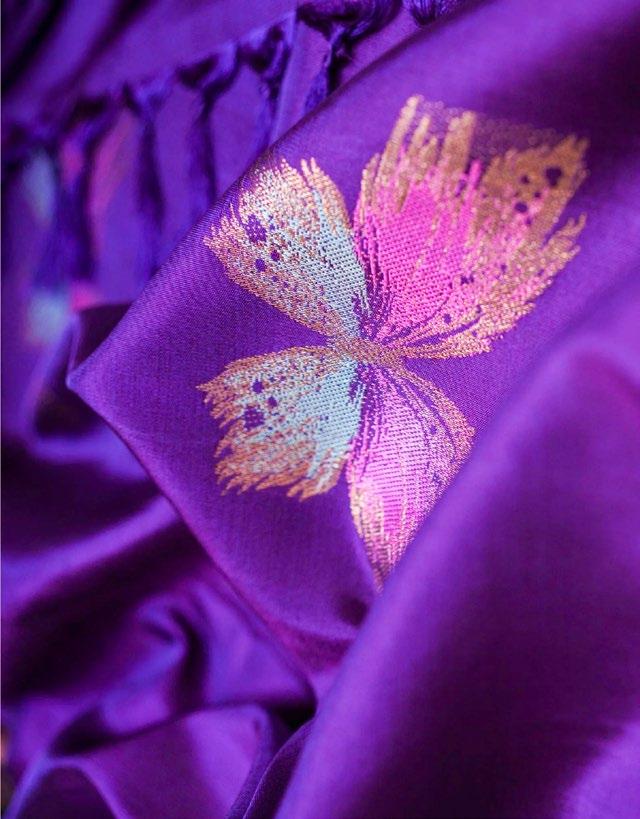
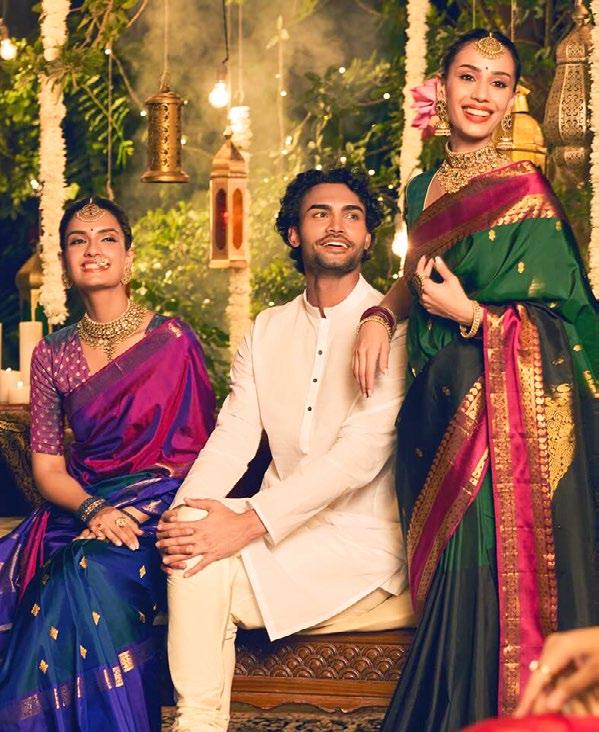
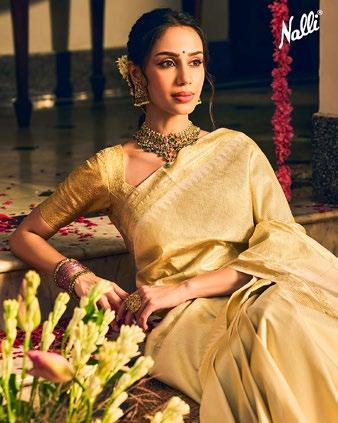
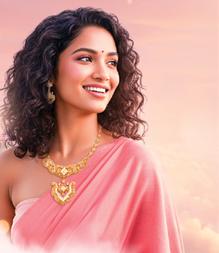
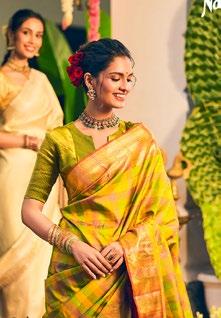
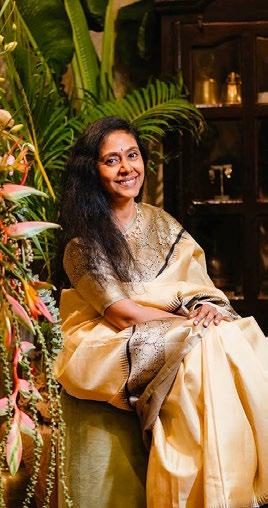
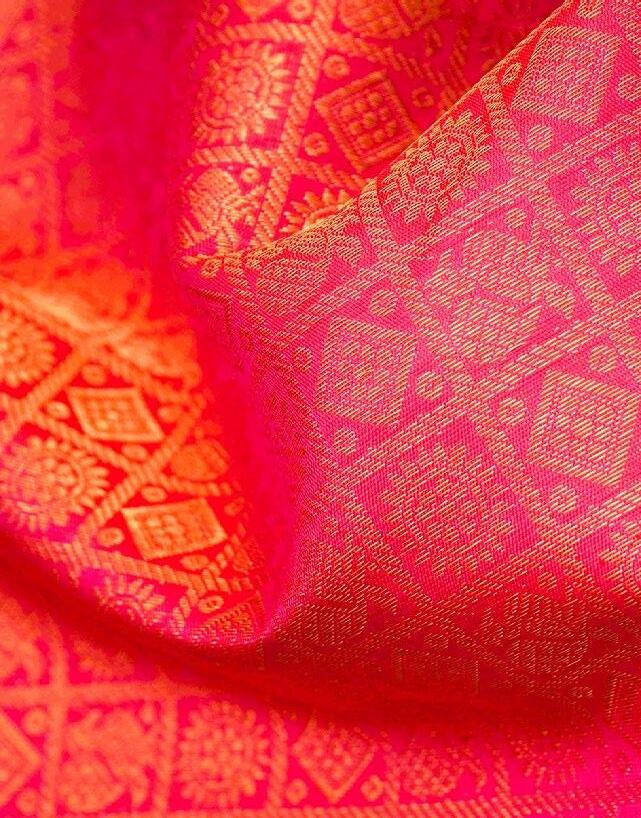
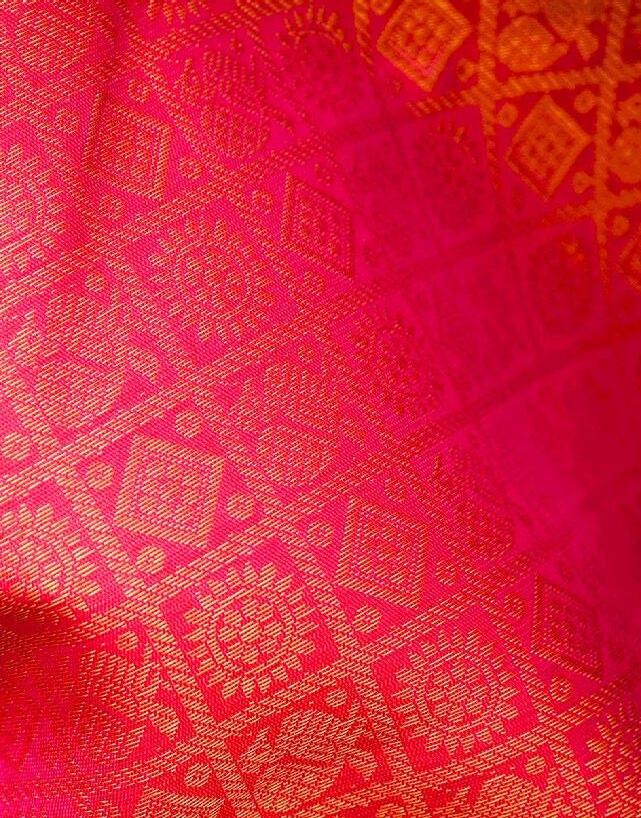
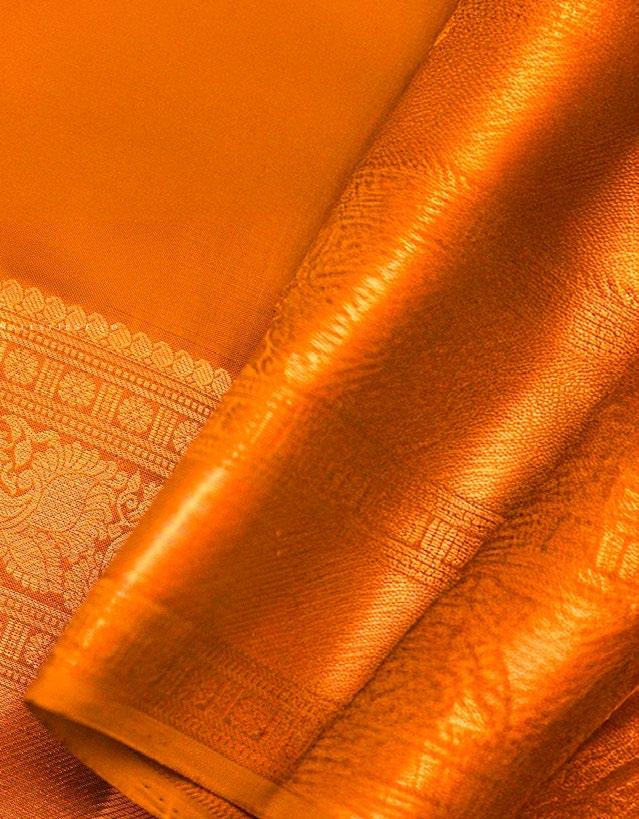
As the golden glow of Diwali lights up homes across Tamil Nadu, one name once again captures the essence of the festival in threads of resplendent silk — Nalli. This year, the legendary brand unveils its Ira Collection 2025, a poetic homage to heritage, light, and feminine grace. For generations, Nalli has been more than a saree house; it has been a storyteller of South Indian tradition, weaving history into the warp and weft of its silks. With Ira, that legacy takes on a new brilliance — one that speaks to the modern woman who celebrates her roots with quiet grandeur.
Diwali in Tamil Nadu is a sensory symphony — the scent of jasmine, the sparkle of kolams, the laughter of families gathered for the early morning oil bath, and the rustle of new silk sarees. It is not merely a festival; it is a reaffirmation of identity, prosperity, and joy. For over nine decades, Nalli has been an inseparable part of that celebration. This year’s Ira Collection emerges as a visual hymn to Diwali’s soul — pure, radiant, and deeply emotional.
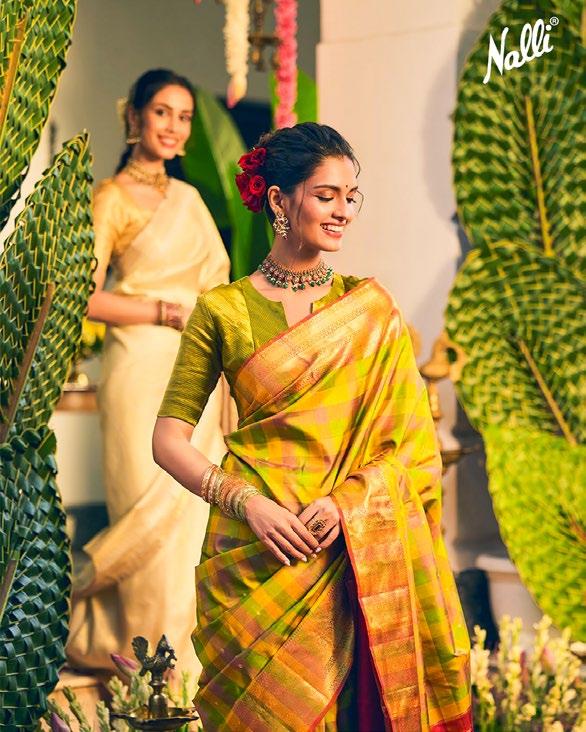
Each saree from the collection is designed to mirror a facet of the festival: the blush of dawn, the gold of lamps, the midnight blue of firework-lit skies. The designers at Nalli have reimagined the essence of festivity through a palette that ranges from regal ruby reds and temple golds to soft peach pinks and dew-kissed pastels. Every drape feels like a whisper of luxury — subtle yet striking, traditional yet surprisingly modern.
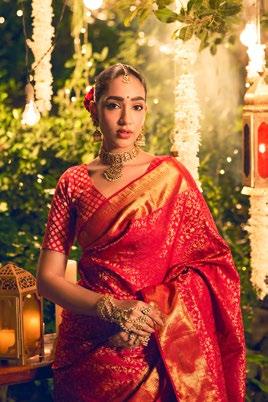
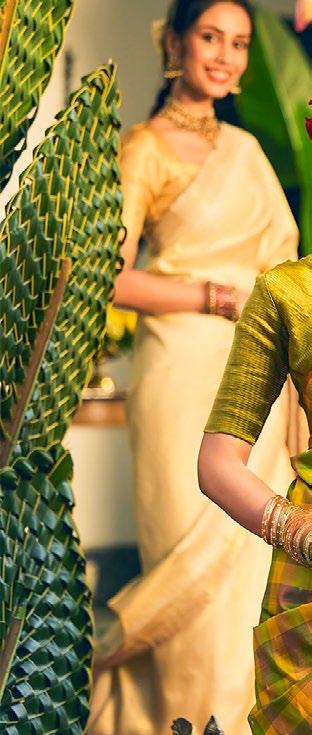
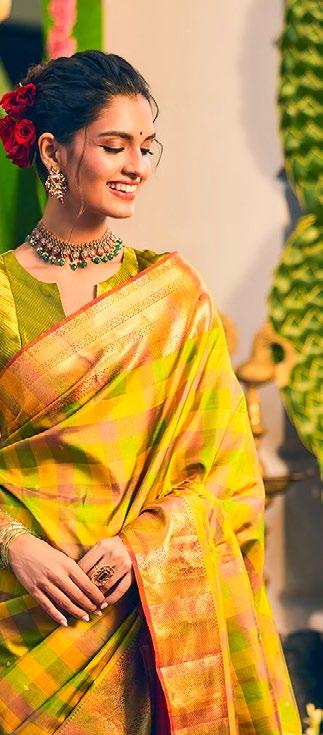

In Tamil, Ira evokes purity, divinity, and essence — qualities that resonate perfectly with Nalli’s creative vision for Diwali 2025. The collection name draws inspiration from the idea of light as life: Ira represents illumination from within, a concept beautifully woven into the fabrics through delicate zari patterns and radiant silk textures.
Behind every saree lies a story of artistry — of handloom weavers in Kanchipuram who translate centuries of skill into every motif. The Ira line honours these artisans, giving their craftsmanship a contemporary interpretation. Nalli’s design team collaborated with master weavers to introduce innovative weave structures that add fluidity to traditional Kanchipuram silks, making them lighter, softer, and effortlessly elegant for today’s woman.
Nalli’s Ira Collection stands at the crossroad of heritage and evolution.The classic motifs — mango buttas, temple borders, rudraksha designs — remain timeless, yet their execution feels refreshingly new. Subtle metallic hues replace heavy contrast borders, while delicate tissue overlays lend a dreamlike translucence to otherwise
bold drapes. This careful balance is what defines Nalli’s design ethos. The collection is not about reinvention for the sake of novelty; it is about refinement. A pale lilac Kanchipuram with silver threadwork becomes the epitome of quiet luxury. A coral pink saree with antique gold zari narrates a story of understated opulence. Each piece feels intimate, designed for women who understand the beauty of restraint.
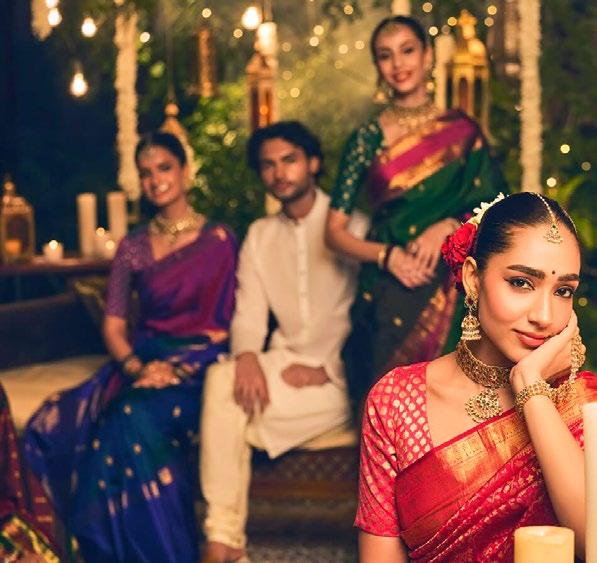
The Ira Collection embodies precision in every fold. The silks are sourced from select looms in Tamil Nadu’s traditional weaving clusters, where hand-spun threads are treated with natural dyes and woven with the soft luster of mulberry silk. The borders and pallus carry motifs drawn from temple carvings and flora native to South
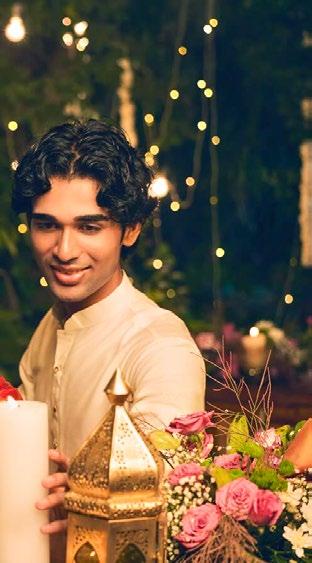

India — jasmine creepers, lotus ponds, and the sacred vilva leaf. New to this year’s collection is the Luminous Weave technique — an innovation that creates a gentle shimmer effect without adding weight. This lends the saree a fluid drape, ideal for festive evenings that stretch from pooja to celebration dinners. The zari is woven in fine 100% silver thread, coated with a micro-layer of gold, giving each saree a natural glow that catches candlelight effortlessly.
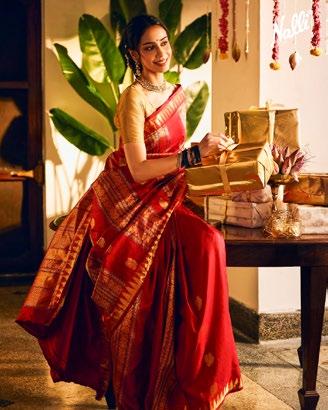
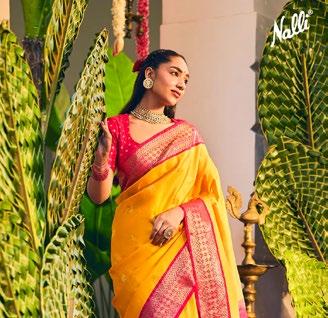
Colour is the soul of Ira. Nalli’s designers have embraced both vibrance and subtlety to create moods that suit every celebration. The Ananda Blue reflects calm divinity; Kumkum Red speaks of auspiciousness; Champaka Gold glows with prosperity; Vrindha Green evokes renewal; and Ivory Whisper carries serenity for temple rituals.
For younger shoppers, Nalli has also introduced modern shades like rose quartz, peach dust, and twilight lilac — hues that pair beautifully with minimal jewellery and contemporary blouses. This inclusivity in design language bridges generations, ensuring Ira appeals to the modern bride as much as it does to the traditional matriarch.
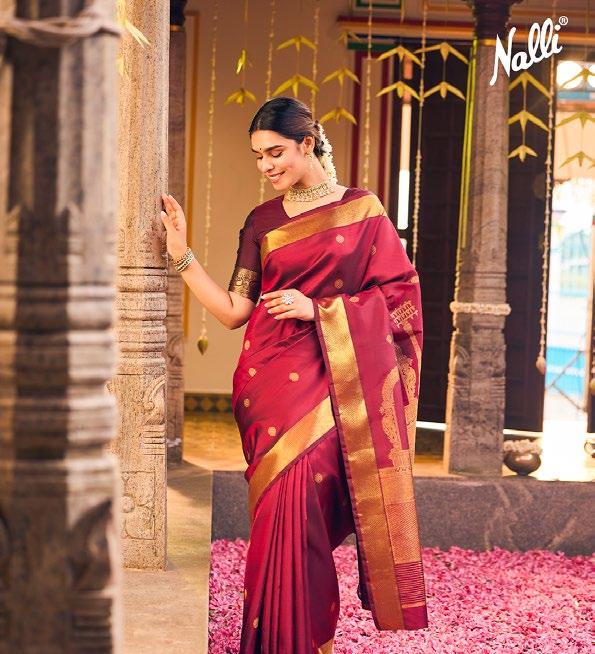
What makes Ira remarkable is its versatility. While every saree retains a classical framework, it can be styled in endless ways. Nalli’s in-house stylists suggest pairing heavier gold-bordered sarees with antique temple jewellery for traditional functions, while lighter pastels complement pearl chokers and statement earrings for contemporary looks.
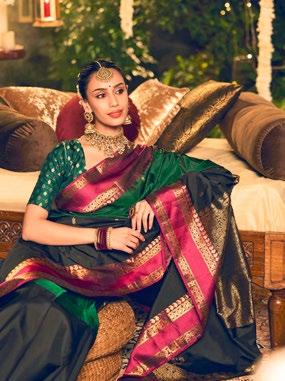
The brand has also introduced a limited-edition line of matching silk blouses — intricately embroidered with motifs inspired by the sarees’ pallus. The blouse designs feature modern silhouettes: boat necks, deep U-backs, and elbow-length sleeves with ornate detailing. Each pairing transforms the saree from classic to couture, ready for festive soirées or heritage-inspired photoshoots.
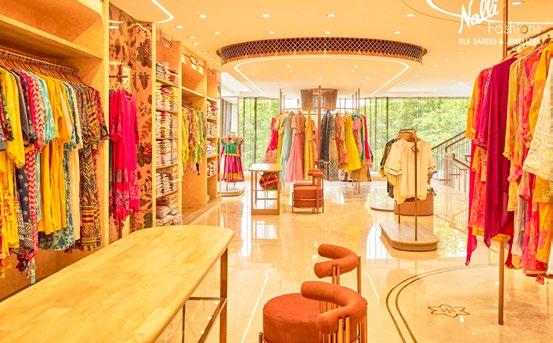
Walking into a Nalli store during Diwali is an experience in itself. The air carries the fragrance of sandalwood and the sheen of freshly stacked silks. The Chennai flagship store in T. Nagar glows with warm golden lighting and curated festive displays of Ira drapes cascading from ceiling to floor. Every section tells a story — from Kanchipuram grandeur to soft Banarasi reinterpretations — all underlined by the quiet elegance that defines Nalli.
Shoppers are treated to personalized service; staff trained in the nuances of silk help customers find a saree that suits their complexion, occasion, and emotion. During Diwali 2025, the store also introduces immersive installations — including digital touchscreens that narrate the making of each saree and highlight the artisan communities behind them.
In an age of fast fashion, Nalli’s commitment to sustainability adds depth to its beauty. The Ira Collection champions ethical sourcing and responsible craftsmanship. By working directly with handloom weavers and minimizing synthetic dyes, Nalli ensures that every saree supports a living heritage. Packaging for the collection has also been redesigned — reusable silk pouches and recycled paper boxes that echo the brand’s eco-conscious philosophy.
For Tamil women across generations, Nalli sarees are more than fabric — they are milestones. A Nalli silk marks weddings, festivals, and every special memory in between. With Ira, that emotional bond deepens. The collection arrives not as a reinvention but as a reaffirmation of what makes Tamil Nadu’s culture timeless — grace, craftsmanship, and reverence for light.
As diyas flicker and homes hum with festive warmth, Nalli’s Ira becomes part of that glow — an heirloom for the present, woven in tradition, wrapped in dreams. Whether draped for a temple visit at dawn or an elegant family gathering at dusk, each Ira saree transforms the wearer into a living celebration of Diwali itself.
From the looms of Kanchipuram to the lights of every Tamil home, Ira by Nalli is a reminder that true fashion is not fleeting — it’s eternal. In the gleam of zari and the softness of silk lies a story of identity and pride that outlives trends. This Diwali, as Tamil Nadu glows with devotion and joy, Nalli’s Ira stands as both muse and masterpiece — weaving not just silk, but the very spirit of celebration.
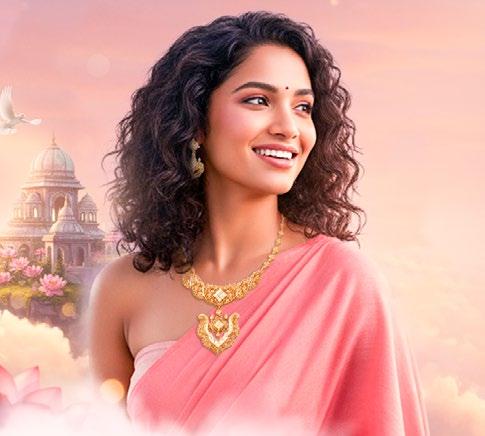
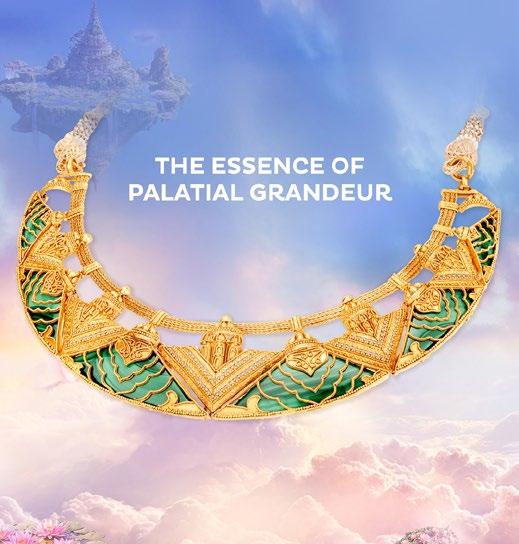
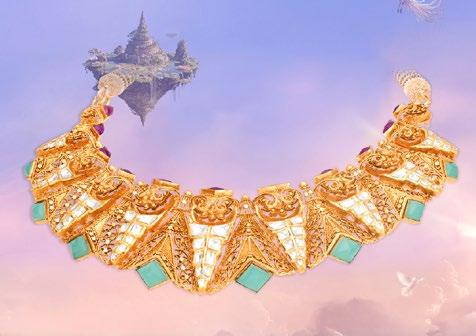
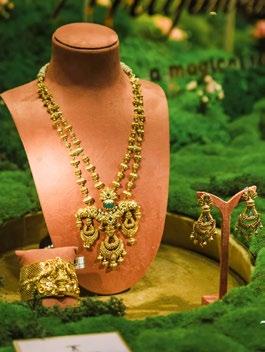
Jewellery is more than just adornment; it’s an experience that engages every sense. The Mriganka Collection by Tanishq invites you into a world where touch, sight, and story weave together into something truly magical. It is an experience that begins with the senses and ends with a story. Every curve, every gleam, every note of gold carries a rhythm of its own. It hums softly like temple bells at dawn, glows like lamplight at dusk, and feels alive under the fingertips. This jewellery for Diwali invites you to not just wear art, but to feel it, to hear its whispers of heritage, to see its celestial shimmer, and to carry its timeless poetry wherever you go.
Diwali is a celebration of ‘light and life and Mriganka‘ embodies both. Each piece of Diwali jewellery is designed to capture that sacred glow, a play of radiance and reflection that celebrates beginnings and beauty in equal measure. From intricate gold
There’s something almost nostalgic about a gold jhumka design: the soft sway, the intricate filigree, the gentle chime when it moves. In Mriganka, this heritage form is reimagined as sculpture. The intricate layering, the rhythmic patterns, and the playful weightlessness make them wearable works of art. Designed to inspire awe yet crafted for comfort, these jhumkas sing the stories of ancient artisans while embracing today’s festive styles.
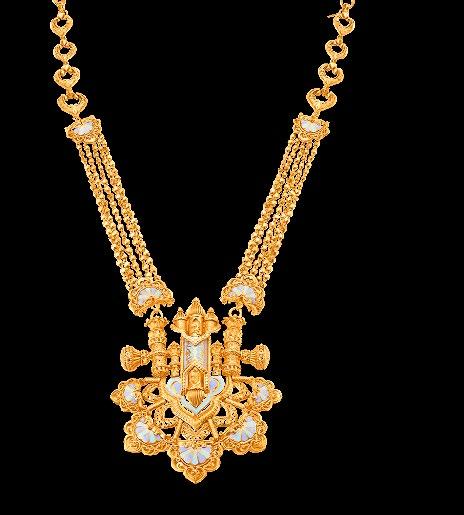
Mriganka transforms Diwali jewellery into narrative art. Every design holds meaning: a motif inspired by a mythical creature, a curve that recalls ancient palaces rising through clouds, a gem that feels like a fragment of the moon. This is not jewellery made to adorn; it’s jewellery made to speak. It carries the stories of the hands that crafted it, the dreams that shaped it, and the light that inspired it.
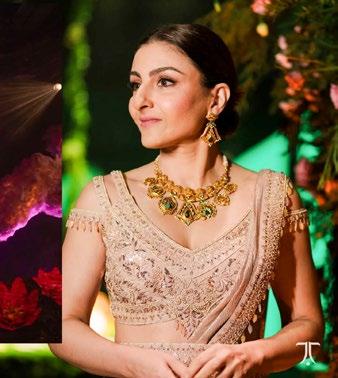
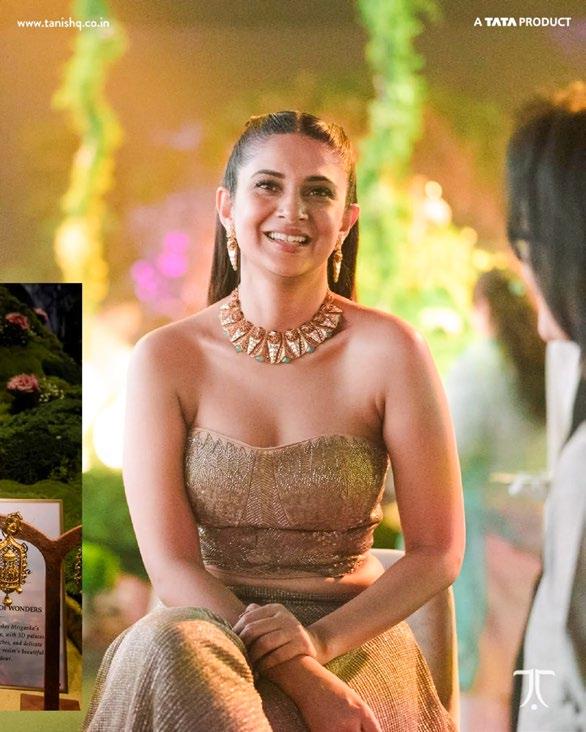
In the Mriganka Collection, earrings for Diwali become storytellers. Each pair balances delicacy with drama: petals unfurl in gold, stars glint in diamond, and geometry finds grace in movement. These designs transcend fashion; they become sensory expressions of joy, meant to be seen, felt, and remembered.
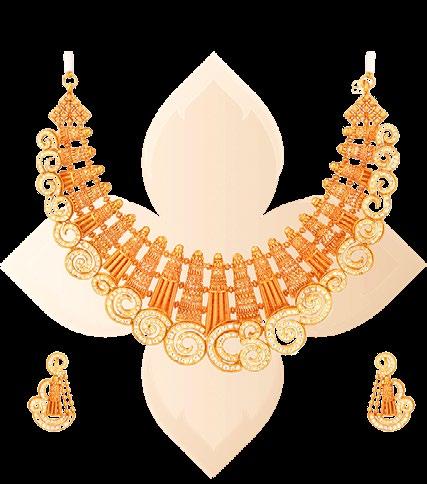
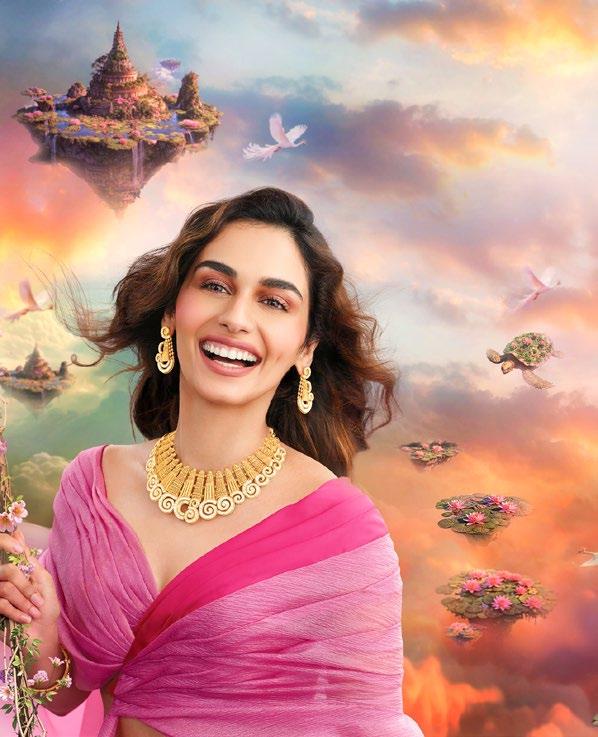
A Diwali necklace from Mriganka feels like a rhythm frozen in time. The fluid lines, celestial detailing, and gentle fall of gold together create a quiet spectacle. Each piece is designed to stir emotion: regal, yet intimate; traditional, yet otherworldly. It is wearable poetry composed in gold and light.

The gold bangles design in Mriganka captures the cyclical beauty of tradition: circles that never end, gleaming loops that connect past and present. These Diwali bangles are not just adornments; they’re symbols of continuity and craft. Textured, polished, and radiant, they wrap your wrist like an embrace, one that binds memory to the moment.
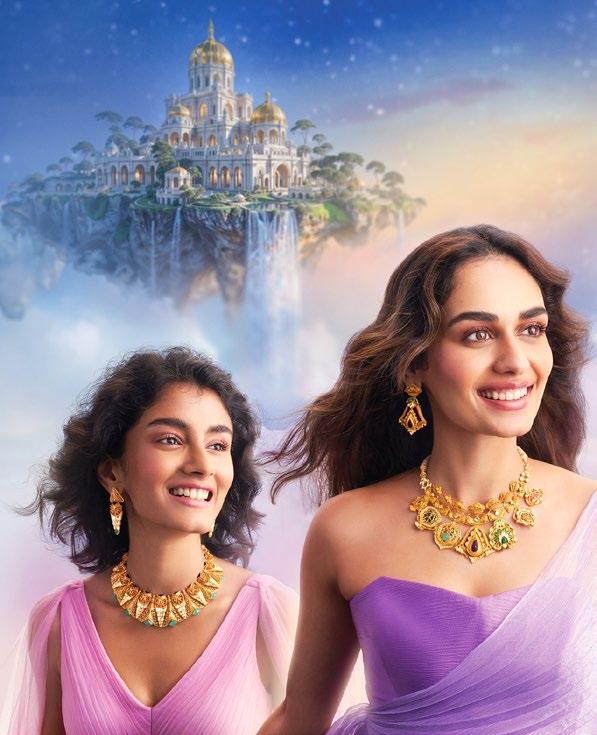
Every story finds its centre and in Mriganka, it’s found in the Diwali rings. Designed with thoughtful proportion and mystical charm, each ring completes the celestial circle. They are pieces you don’t just wear; you inherit their aura. From simple bands to ornate creations, every ring carries a trace of fantasy, the kind only Mriganka can conjure. Floral scrolls, celestial stone placement, and ergonomically comfortable shapes allow each ring to speak of feminine power and festive grace, completing the full sensory journey of the collection.
The Mriganka Collection is a world of senses turned into stories of sound and shimmer, touch and texture, memory and imagination. Through Diwali necklaces, gold bangles design, earrings for Diwali, and gold jhumka designs, it brings alive a universe where jewellery transcends function and becomes art. Art that breathes, tells tales, and makes you feel.

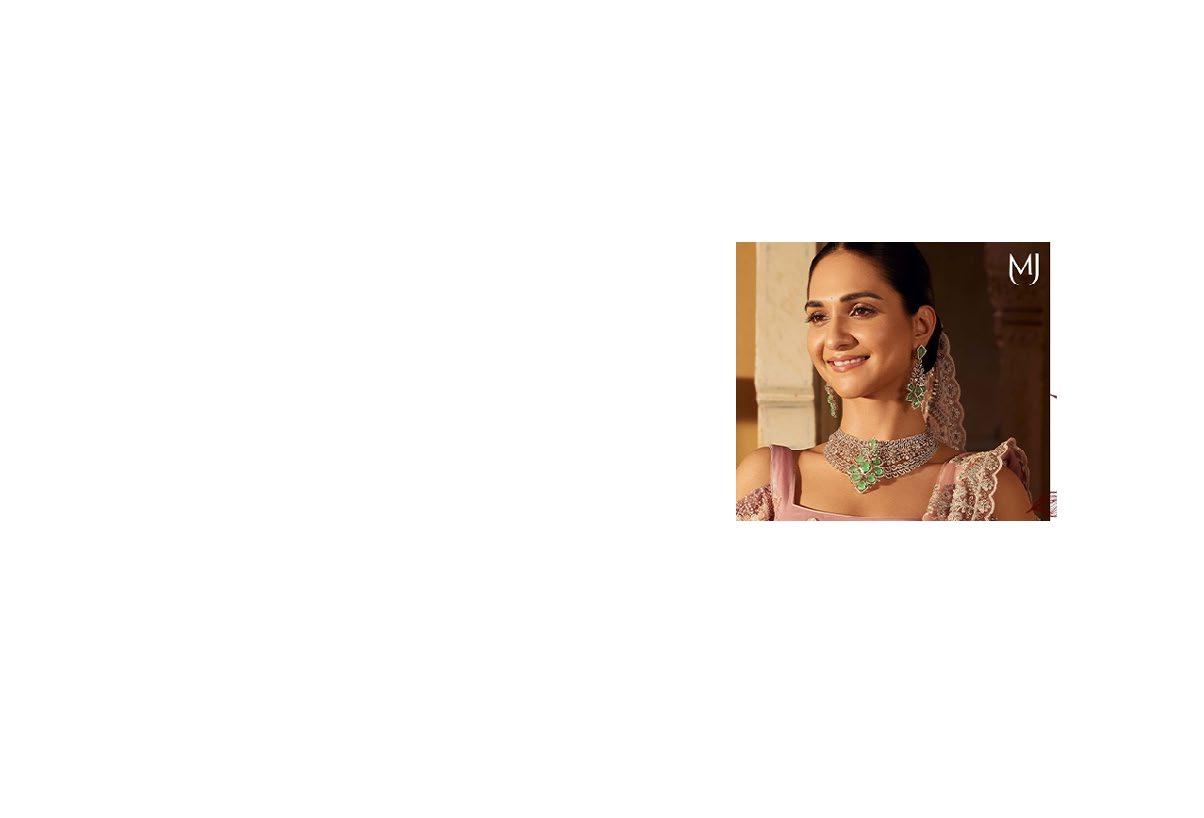
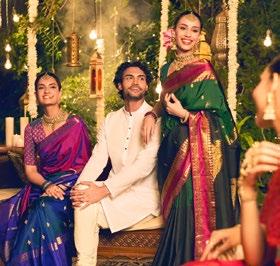
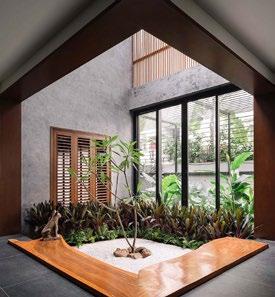
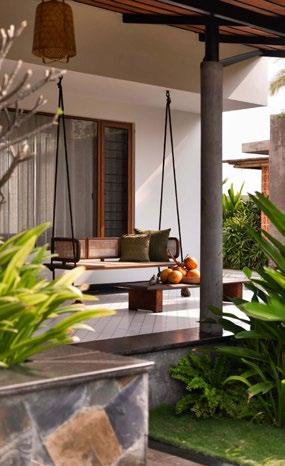
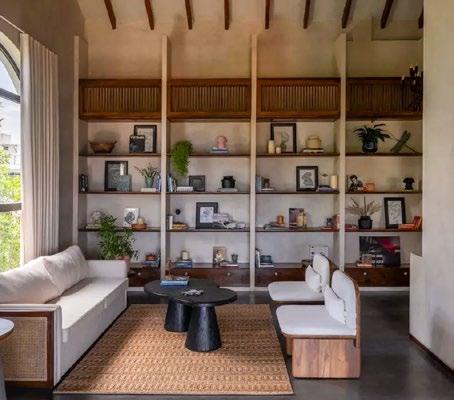
With spaces inspired by the sea, vernacular architecture, and a variety of contemporary styles, it’s safe to say that there is no dearth of beautiful homes in Chennai. Each of these homes represents a unique facet of the city and brings out the personality and eccentricities of its residents.
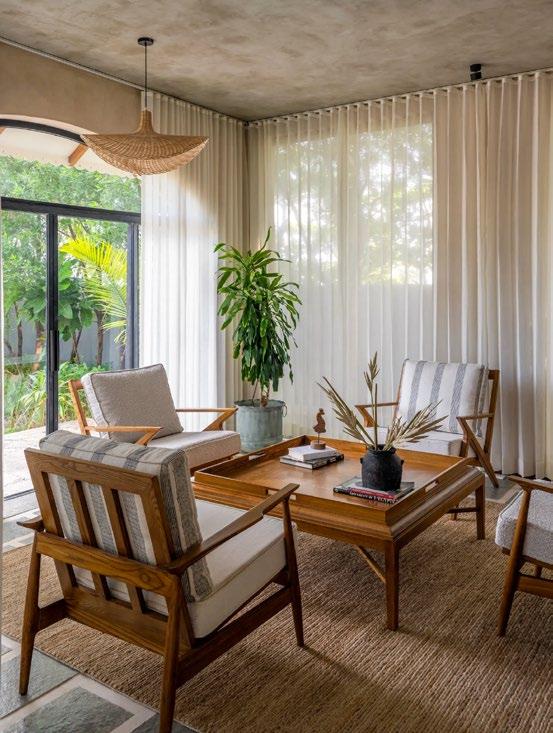
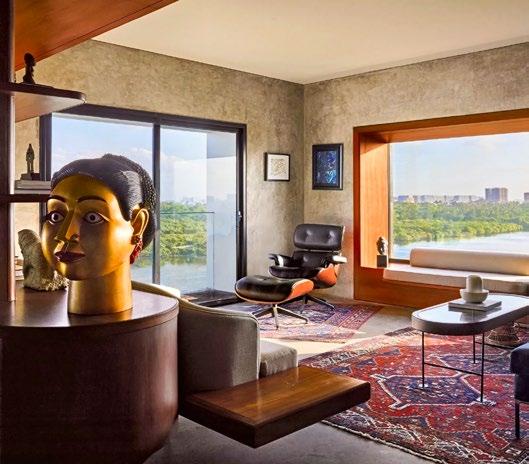
Ask Jaiveer Johal how he came to be a collector and the Delhi-raised, Chennai-based entrepreneur instantly answers “I’ve done it for as long as I can remember.” He recalls, as a child, he’d squirrel away pretty things: crystal bowls, beautiful briefcases, silver plates. “If anything ever went missing, people always knew where to find it,” he adds, quickly
clarifying that said thieved objects “were limited to the confines of my own home”. As he grew up, so did his interest in collecting. First it was books, then antique maps, and afterwards, during his years in London where he moved to study global politics, piquant art of all manner. As far as design considerations for his new home went, Johal knew three

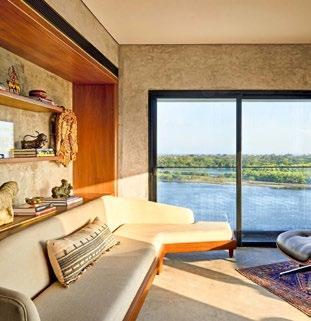
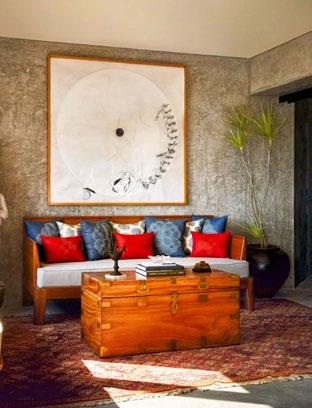
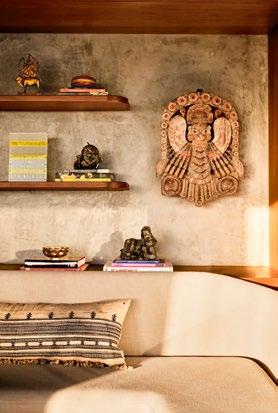
things for certain: that the walls should wear concrete, that there should be no straight lines, and that the bedroom should overlook the calming river rather than the sea. “I wanted the home to be designed around the art, not the other way around,” says Johal, whose acquisitions for the home included no new art. He already owned everything he needed and brought in stylist Samir Wadekar to curate the collection and oversee the art hang. Johal imagined a space that was fluid and amorphous, something that evolved to suit the occasion.
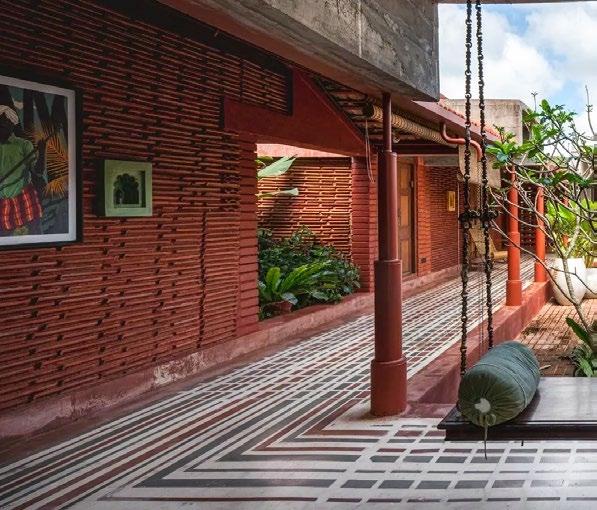
Four-directional sloping roofs composed of the standard interlocking Mangalore tiles cover the rooms extending onto corridors. The intricate combination of functional, native elements and natural materials are often found in traditional Indian design. And this home by RAIN Studio of Design by architects Sriram Adhitya, Vamsi Krishna, Ankita Alessandra Bob and Gokulraj Vijayakumar
is a testament to the same. Pentalpha was the structural consultant for this project. Sprawling across 8,200-square-foot, this weekend home near Chennai is located in the serene vicinity of coastal Kuvathur, Tamil Nadu. The architects concentrated on the spatial aspects and reclaimed and repurposed material palettes. Considering the balmy and humid climate of coastal regions, using
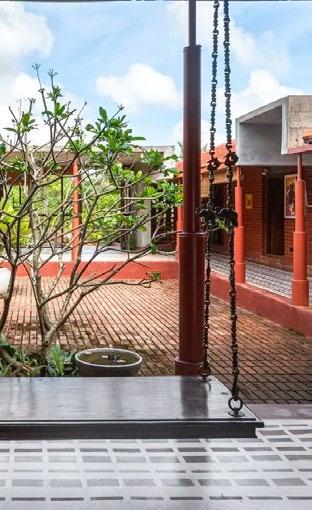
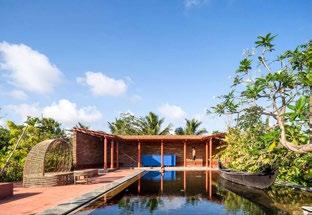
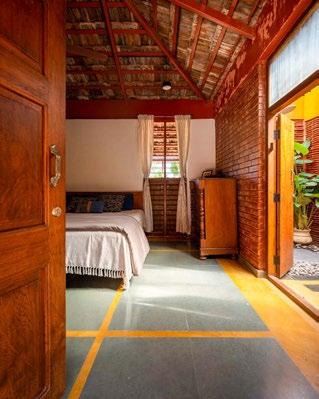
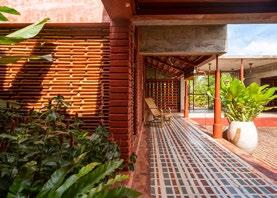
climate-friendly, locally-sourced materials and reinterpreted vernacular architecture within a modern precinct was essential. The clients’ primary requirements included four rooms with attached baths and sea views. All the living spaces lie around the linear brick-laid court.
In this simple home, there are no surface treatments, cladding or ornamentation.
Brick is brick and concrete is concrete.
“The clients were certain that they wanted exposed brick…the juxtaposition of concrete is our contribution,” says Kavya Rajendra of Studio One by Zero. “A need to go back to their roots and live on a farm just like their grandparents was a perfect move for retirement.” The brief detailed a twobedroom farmhouse with eco-conscious and vernacular building elements. Rajendra’s interpretation was to create a sense of nostalgia while ensuring that the design is contemporary and timeless, with the brick aging organically over time.
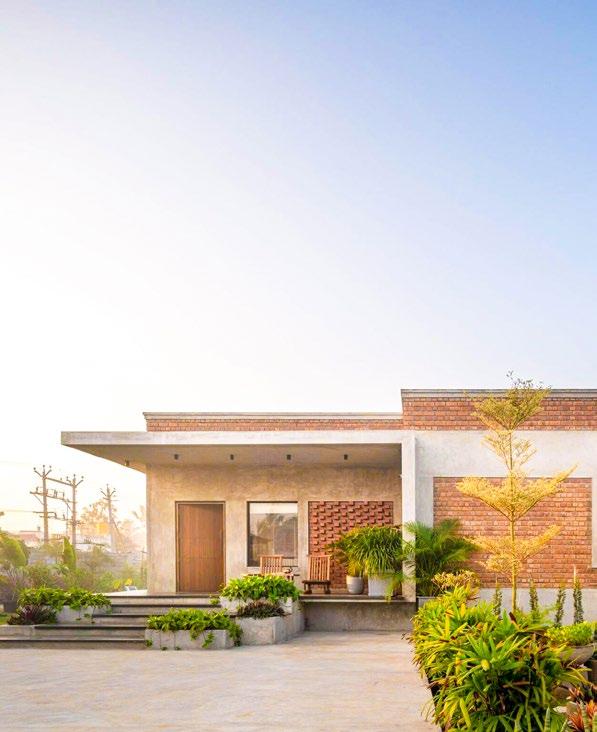
A dual courtyard in the heart of the Chennai farmhouse along the east-west direction connects both sides of the house. The living room and kitchen are placed at one end whereas the bedrooms are placed at the other. “It all worked out rather well…the dining area and courtyard are the coolest parts of the home even in the blistering heat of Chennai. The air circulation is very efficient and due to the overhangs, direct sunlight enters the courtyard only for a short time at about 3:00 pm. This space is used for all meals by the owners and is very popular even amongst guests during parties which the clients host frequently.”

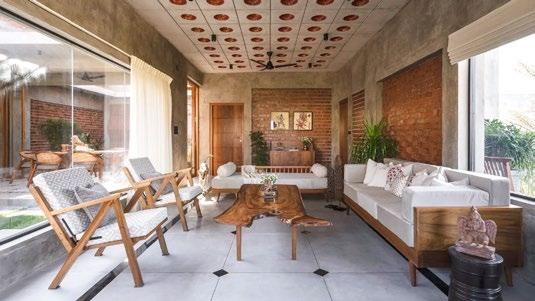
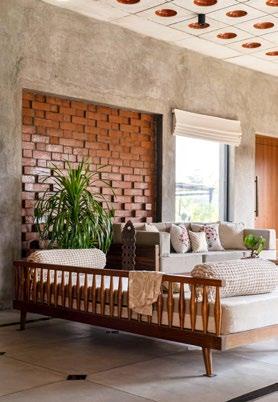
Someone once said that the ultimate luxury is time, but that someone, insists interior designer Manmeet Arora, had probably never lived by the sea. If there’s one thing the founder and principal of the Goa-based LOC Design House has firmly come to learn since moving from Mumbai to Goa during COVID, it’s that living by the coast can be good for the soul—so good, in fact, that you might consider never leaving, unless it involves travelling to another coastline just as special.
In Arora’s case, that somewhere special was Chennai—an opportunity that came knocking in the guise of a beach house begging for an interior refresh. As she recalls, inspiration struck the moment she stepped inside. The brief was a unique one. “They wanted a home designed for gathering and rendezvous. There was only one bedroom, while all the other spaces were created for get-togethers of varying sizes,” says Arora of the beach house, which features a dining area that can seat up to eighteen people, along with three distinct living and lounging zones—each designed to foster a different kind of interaction.


The thing about moving from one country to another, more often than not, is that there are some things you will miss and some things you won’t. “The things you won’t are never as memorable as the things you will,” jests architect Raghuveer Ramesh, one half of Chennaibased architecture practice Studio Context. He would know—if not first-hand, at least by virtue of his latest project, which involved designing a beachside villa in Chennai for a multigenerational family that had lived for three decades in the American countryside. “When they moved back to Chennai, they wanted their children to connect with their roots while also enjoying the same sense of space they had previously enjoyed.” The expectation was simple—to design a large, airy and light-


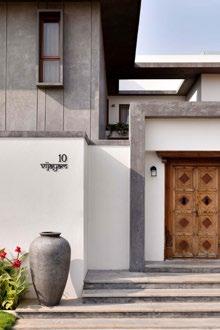

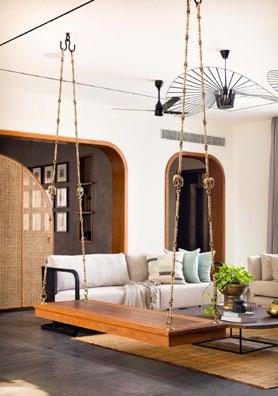
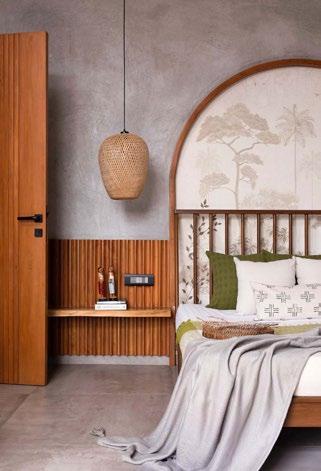
filled house that looked out to nature— but the execution, not so much. The architects situated the home along two intersecting axes—one cutting across the front door, the foyer, the living and dining rooms and the koi pond at the end, and the other connecting the courtyard on the west, the living room at the centre and the swimming pool to the east. “The move was meant to keep the outdoors close, no matter where you are,” shares Raghuveer, citing the living room— ensconced between a courtyard and the swimming pool and outfitted with pocket doors that blur the line between indoors and outdoors. They took a similar approach upstairs, respectively orienting the bedrooms and family lounge towards the swimming pool and the beach.
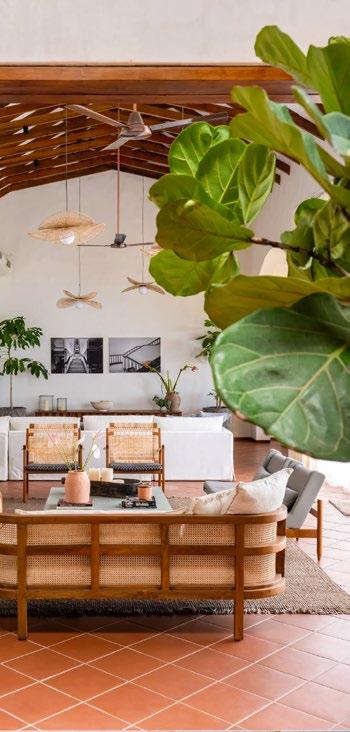
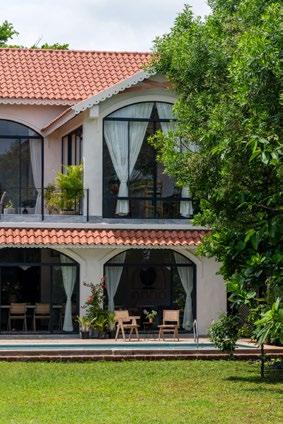
The thing about being a wedding planner is that the crazy always outweighs the calm. Such was the case for one entrepreneur, for whom the quest for quiet, and a desire to be independent, meant only one thing: to find a place of her own. Luckily, it wasn’t long before she found her bachelorette pad in Chennai. Eager to make it liveable, she tapped Sunita Yogesh of her eponymous interior design studio to lend life to the bare shell. Her brief was simple — to evoke the essence of a carefree Spanish holiday, while also making it functional and fuss-free for a solo dweller. Being a creative herself, she was comfortable giving Yogesh free rein over the design. What followed was a transformation that could easily have jumped out of a postcard from Andalusia, but with a spirit that harked to its homeland.
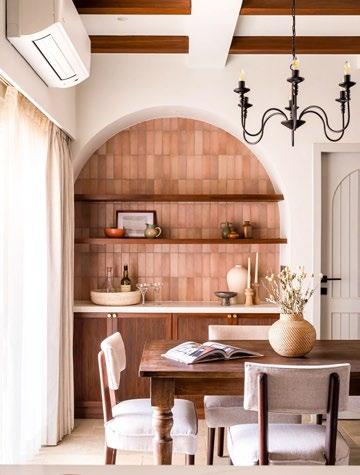


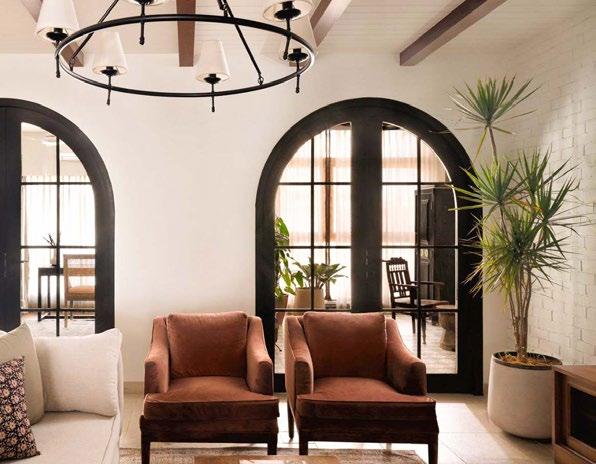


The home brims with Spanish flourishes through coats of warm white adorning the walls and reclaimed wooden elements. In the living room, arched glass doors nod to the colonial revival architecture of the Mediterranean state, while wooden rafters and cane panels inspire a country casa. For the flooring, Yogesh achieved a smorgasbord of styles, opting for a stone finish for the living room, Mediterranean patterns for the guest bedroom and sunroom, a warm terracotta for the home office, and wooden panelling for the primary bedroom. She kept the overarching palette muted, counterbalancing the white shell with infusions of beige, taupe, grey, olive green, terracotta, and black.
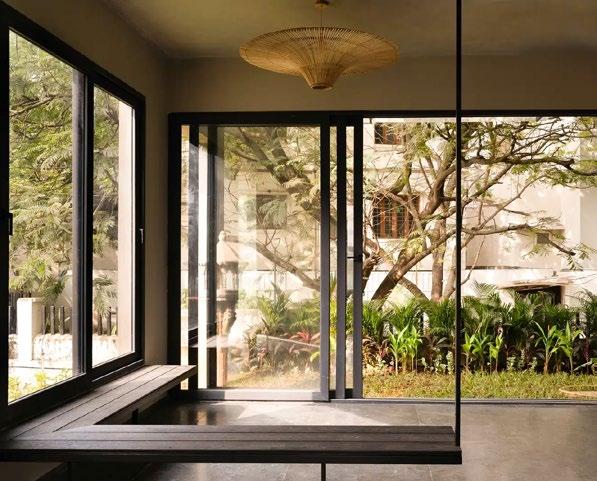




Hearing the name Design DNA might make you think the architects behind it are hardwired for design—but few would expect that their specialty is the unapologetically eccentric kind. “Guilty!” chuckles architect Karthik Arcot when asked about the accuracy of said description. It’s an unsurprising confession, given the studio’s latest project on Chennai’s East Coast Road—or more specifically, the short flight of stairs leading up to it—which Arcot took on with in-house architects Thejaswini Pandurangan and Sreesha.
Few architects turn on the quirk for a home that isn’t theirs, and Arcot was no exception. “It was designed and built for me,” he smiles, “but life had other plans.” Those plans included an awardwinning Tamil director and actor, who visited the home wanting to lease it, and left wanting to buy
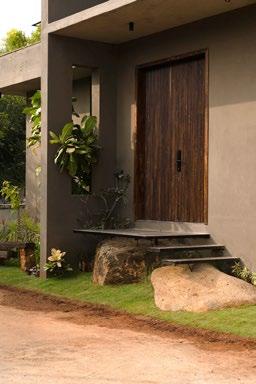
it. “Maybe it was because he found it quirky like his approach to cinema, or because he had never seen architecture like this before, but he felt a strong connection to the home, and we found ourselves changing course midway, to mould it into his instead.” Still, the architects did little to dial down the quirk—that was, after all, the drawcard for the client. “We thought in shades of grey,” says Arcot, “and introduced variation through texture.” The result was striking: floors darkened in hand-cut basalt and leather-finished granite, and walls calmed in exposed concrete and smooth stucco. Skewing dark was one thing, but skewing too dark was quite another. “It’s easy to overwhelm a space with brutalist elements, so we erred on the side of lightness with floating elements like stairs and study ledges,” notes Arcot.
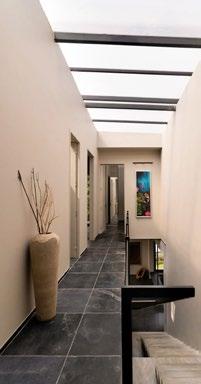
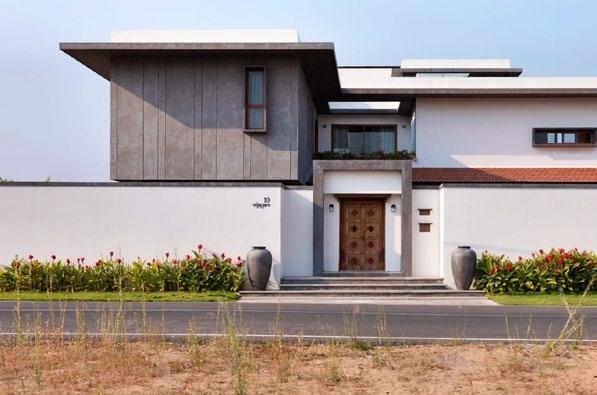
In Chennai’s Mahalingapuram hides a bungalow with an antique Chettinad front door. But besides the door, there’s hardly anything Chettinad about the house. “It’s a wild combination of Neo Gothic and Japanese styles,” says Raghuveer Ramesh, co-founder and principal architect of Studio Context. For a home so curious, the brief had to have been equally so. “Well, we knew in our heads the kind of home we wanted and we definitely envisioned something minimal, with just a touch of the unusual,” say the homeowners, adding that the initial brief was detailed but conflicted in parts. “Luckily, [Raghuveer and his team] were helpful in figuring it out with us and pushing the envelope when necessary.”
The original home was dark, dingy and featured a series of tiny rooms. “While we had full freedom to take down the walls, we weren’t to touch any of the structural members,” says Ramesh. Considering they
were downsizing from five bedrooms to two, planning was one of the biggest challenges, particularly coming up with an entirely different layout under the existing structural setup while also maintaining the proportions of the new spaces. For Ramesh, the other challenge lay in stepping outside his comfort zone, at least in terms of style. “As brilliant as they are in their respective fields of work (she is a plastic surgeon, he an orthopaedic surgeon), they also share a great passion for art and quirky things,” he reveals. “The wife, in particular, is very fond of Gothic culture and loves dark and mysterious spaces. Our portfolio until then had mainly consisted of minimal tropical interiors with a lot of traditional elements.” With black as the point of departure, putting it all together was an effort, he confesses. As it turned out, the effort paid off—making this one of the most beautiful homes in Chennai.



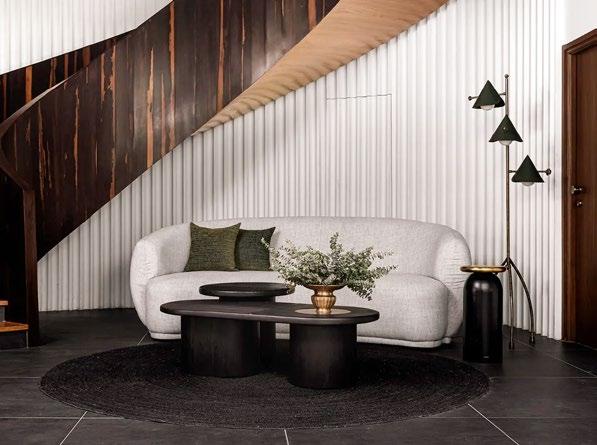

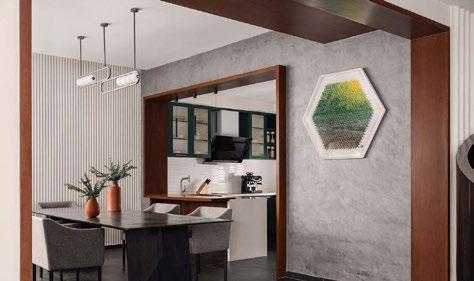
Nestled in Kilpauk, at the heart of Chennai’s city centre, a modest 1,000-square-foot ancestral apartment recently found new custodians in a middle-aged couple, who inherited it following their father’s passing. The residence is a poignant testament to its heritage and cherished memories forged by the family over the years. Bangalore-based interior design studio Weespaces saw this residence as a canvas to capture the unique personalities of its current homeowners. The ancestral home underwent a transformative redesign to reflect the couple’s global perspective, love for travel, and deep ties to their roots in Madras.
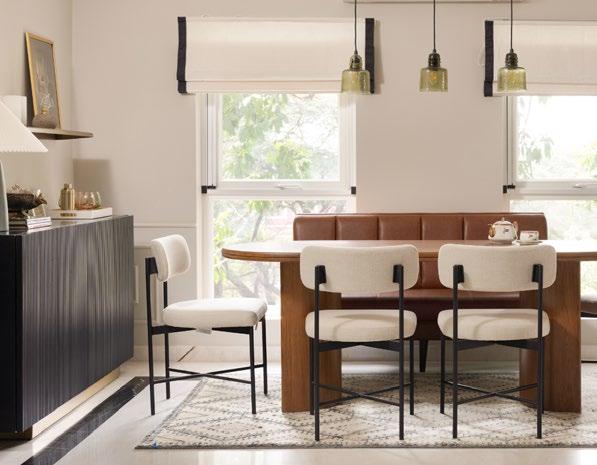



“This renovation demonstrates compact family living at its finest, emphasising an open plan living-dining focusing on drawing in natural light and views, a soothing material palette, and a series of indoor-outdoor spaces,” principal designer Vinithra explains. Unified by a palette of book-matched white marble accented with classic black marble trim, the family’s living space—encompassing the living, dining, and kitchen areas exudes a timeless aesthetic. Greige-toned panelled walls, complemented by period furniture, establish an effortless European aesthetic. The minimal palette is enhanced by pops of colour visible in the tiles, wallpaper, and rugs, while brass and sharp black accents provide a striking contrast. Connected by a consistent palette, heirloom pieces, and modern touchpoints, this home blends time-honoured and contemporary in a considered and sensitive way. This pied-àterre invites an extended stay, making it a daily haven to return to throughout the week.



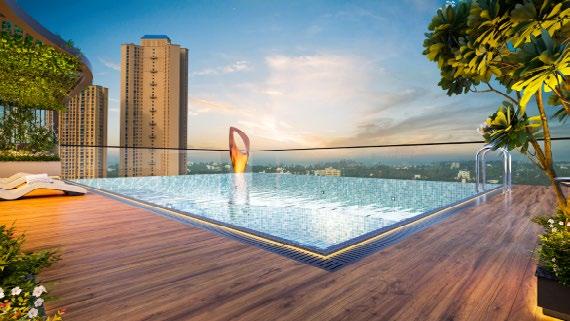
Renowned for trust and design excellence, DRA Homes, the fast-emerging Indian real estate pride brand from Chennai, today announced the launch of DRA iHEART - Chennai’s first branded sea-view residences in Navalur on OMR. Spanning 3.42 acres with 271 thoughtfully designed homes along the main road, iHEART sets a new standard in living. The project integrates over 650 carefully selected premium-standard products - from foundation materials such as cement, steel and structural fittings to luxury brand finishes and amenities such as chrome fittings, designer tiles, high-end windows, stylish doors and an infinity-edge swimming pool. Together, DRA iHEART delivers an authentic luxury living experience in the INR 1.5 to 2 crore segment, a first-of-its-kind in Chennai.




In a pioneering first for the Indian residential real estate sector, DRA Homes has partnered with Slate AI, a global leader in construction intelligence technology. This exclusive collaboration enables real-time monitoring throughout every stage of iHEART’s construction, ensuring quality, transparency and timely project delivery. By harnessing AI-driven analytics and predictive insights, DRA Homes demonstrates its forward-thinking commitment, becoming the first Indian developer to integrate this advanced platform in a residential project.
The project features spacious 3 and 4 BHK homes (1,595-2,927 sq. ft.) with select units including dedicated maid rooms. All homes are Vastu-compliant and designed for comfort, elegance and functionality within a Basement + Stilt + 19-floor structure that offers panoramic sea views. Commenting on the launch, Mr. Ranjeeth Rathod, Managing Director, DRA Homes said, “We are excited to launch Chennai’s first branded residences in the luxury segment, combining premium-standard construction with luxury brand finishes. iHEART delivers a distinctive lifestyle experience in the Rs. 1.5 to 2 crore range, fulfilling the luxury living aspirations of to-be affluent families. Partnering with Slate AI ensures we maintain the highest quality standards and timely delivery.”
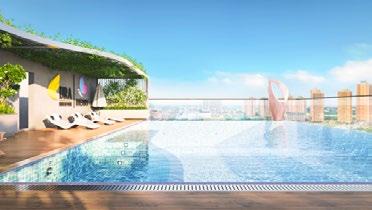
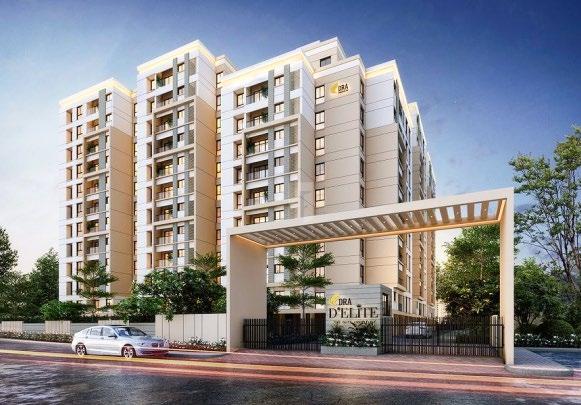


Strategically located on the main road of Navalur, DRA iHEART offers unmatched connectivity to Chennai’s IT hubs, educational institutions, healthcare facilities, vibrant entertainment centres, and the ECR beach just a short drive away. Together, iHEART makes it a perfect choice for combining luxury living, work, lifestyle and leisure in one location. The project underscores DRA Homes’ unwavering commitment to trust, transparency and exceptional quality, ensuring residents make a lasting investment in a home of pride and value.
DRA, with an impressive legacy of 40 years, has become a trusted name in the real estate industry, delivering world-class projects across Chennai. With more than 12,000 satisfied customers DRA is synonymous with trust, transparency, and timely delivery. Under the visionary leadership of Mr. Ranjeeth Rathod, Managing Director, DRA goes beyond just building apartments by offering its customers a ‘Home of Pride’ - thoughtfully designed
living spaces that cater to evolving lifestyles and embody a sense of accomplishment and belonging. Innovations like the ‘Timeline Meter’ for project updates and the ‘Customer Delight Meter’ reflect their unwavering focus on customer satisfaction, while their online customer portal ensures hasslefree access to project details and documentation. Signature developments such as DRA Pristine Pavilion, Tuxedo, Ascot, Skylantis, Elite, Infinique and many others exemplify their commitment to blending modernity with value-driven investments. Recognized with awards like FICCI’s REISA and Times Business Awards, DRA holds the distinction of being Chennai’s first developer with CRISIL’s 7-star grading. Their social responsibility initiatives include pond restoration and nurturing young sporting talent, which highlight their dedication to the community. Upholding their motto “Timeless Home, Timely Delivery, DRA continues to inspire pride and trust in every home they create, turning dreams into lasting legacies.

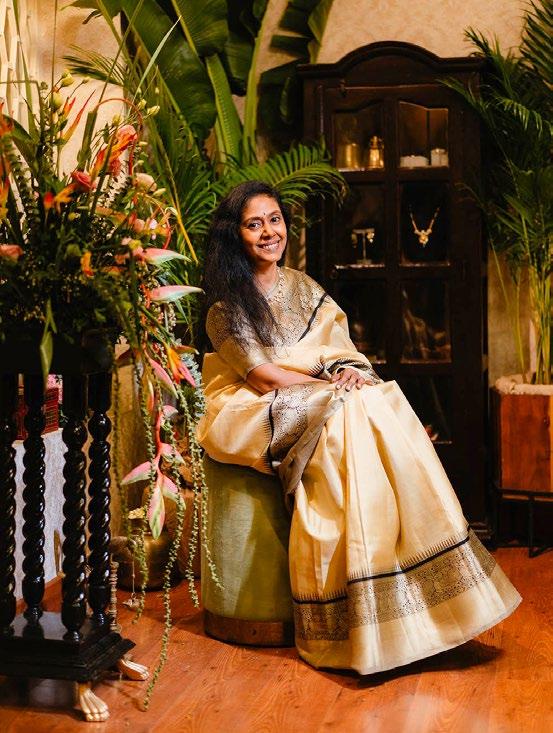
By Luxury Jewellery Designer Meenu Subbiah
Karaikudi, Tamil Nadu, the strong vaults of Chettinad jewellery are unlocked with the opening of Pettagam by luxury jewellery designer Meenu Subbiah. Let’s takes a tour to the museum that lies at the intersection of Nattukkotti Nagarathar’s history, their worldly travels, trade, rituals, and a taste for finer things in life.
In the Chettinad region of Tamil Nadu, home to the centuries-old community of Chettiars, every house is said to have a pettagam. It is not just a traditional chest, but a strong iron-made chamber where families keep their valuables like jewels, land documents, promissory notes, heirlooms, and more. Some of these pettagams used to be so complex, having over 16-18 locks and a guiding map to reach the treasure trove, that till date many families are not able to open it!
Intrigued by the story of pettagam, we travelled all the way from Delhi to the heart of Chettinad in Karaikudi. The sleepy city, which is home of Chettiars, unfolded like a lucid dream coming true.
Colourful Chettiar mansions stood as remnants of the past on meandering roads surrounded by idyllic lotus ponds. Magenta and white bougainvillea crept onto the walls and crevices of the mansions as if holding onto the legacy of Chettiars — a fierce business-merchant class who traded with the world and built these heritage houses from the mid-19th to the 20th century. They stand as an insignia of their affluence and influence in the region.
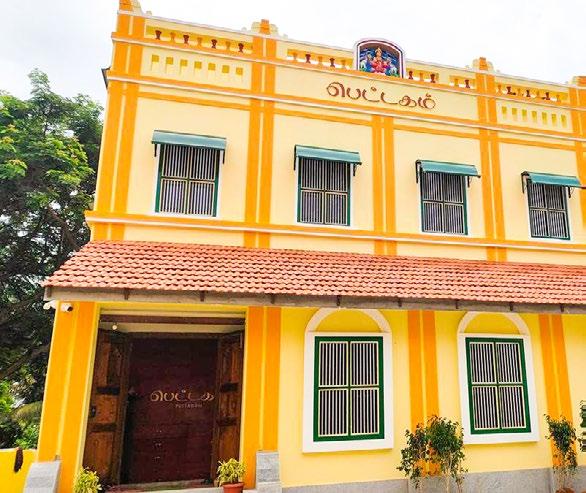
Our car stopped on SRM street in front of one such edifice. Designed as a Chettinad mansion, washed in pale hues of yellow that shone bright
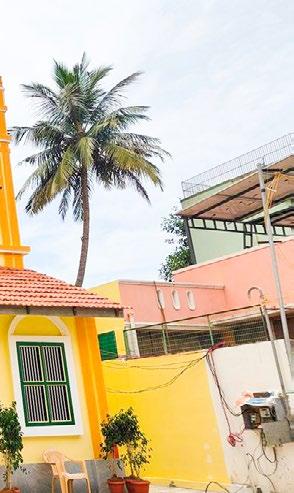
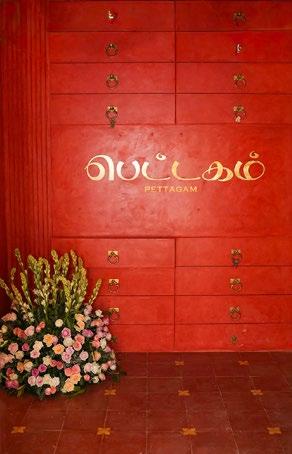
under the sun-kissed morning and featuring wood-carved windows, we stepped inside the mansion and were floored by its pettagam-looking entrance! Painted like a bright red vault sectioned into 18 drawers with metal pulls, it felt like entering a chamber guarding Chettinad’s trove of tales. We were at India’s first private museum of Chettinad jewellery, Pettagam.
It is envisioned by luxury jewellery designer Meenu Subbiah, one of South India’s first few Graduate Diamonds from Gemological Institute of America (GIA-USA), who helms her eponymous brand, started in 1993 with her father, SM Subbiah, specialising in diamond jewellery.
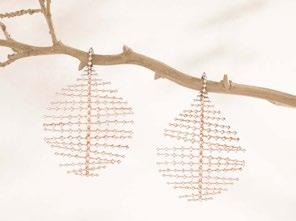
Subbiah, a Nagarathar Chettiar, had an earnest desire since her early years to document the glittering yet lesser-known legacy of the Chettiad jewellery. “A lot has been documented on Chettiar mansions, art, textiles, and cuisine. But jewellery has not been well documented,” Subbaiah tells Outlook Luxe, beginning the walk-through of Pettagam.
Subbiah has been studying traditional Chettinad jewellery for the last 30 years. It means talking to elders in the community, looking for references in literature, in music, and sifting through hundreds of sepia-toned photographs of gorgeously dressed Aachis (Chettiar women) wearing sparkling diamonds. Further, she went an extra mile to find members from the Chettiar community in Malaysia, Singapore, and Sri Lanka for deeper insights on Chettinad jewellery. “I thought of presenting the mammoth research in a book. But the idea of a jewellery museum was more fascinating and engaging for visitors, and thus Pettagam was born,” she tells us.
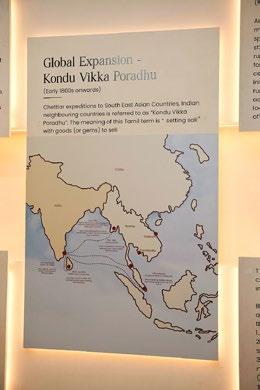
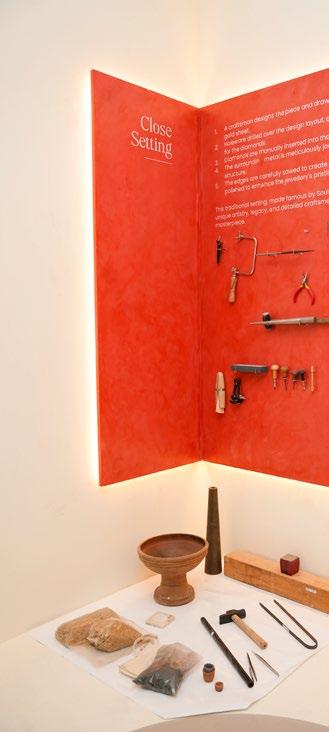

Stepping inside Pettagam was a journey back into time. We traced the origins of Chettinad jewellery through its makers — the Nattukkottai Nagarathars from Tamil Nadu. They were fearless traders and sea-farers who crossed oceans and brought the world to Chettinad, even finding mentions in the Tamil epic of Silappadhikaram. A map at the museum spotlighted their worldly travels to Southeast Asian countries, such as Burma, Cambodia, Vietnam, Malaysia, Sri Lanka, as well as Europe with whom they traded in precious stones like corals, emeralds, rubies, sapphires, pearls and diamonds, besides textiles, tea, rice, coconuts, rubber, and salt from 1800-1965. “Nagarathar, with their adaptiveness to many places and an eye for finer things, spotted what was unique to a certain place. They had a way of getting it back to Chettinad and integrating it into its architecture, jewellery, cuisine, and art. From teak wood from Burma used in intricately carved doorways and pillars in Chettinad mansions, floorings from Italy, cutlery from Yugoslavia, light-refracting colourful Belgian glasses used in windows, to toys from Japan, they truly showed that they were art connoisseurs,” Subbiah tells us at the museum.
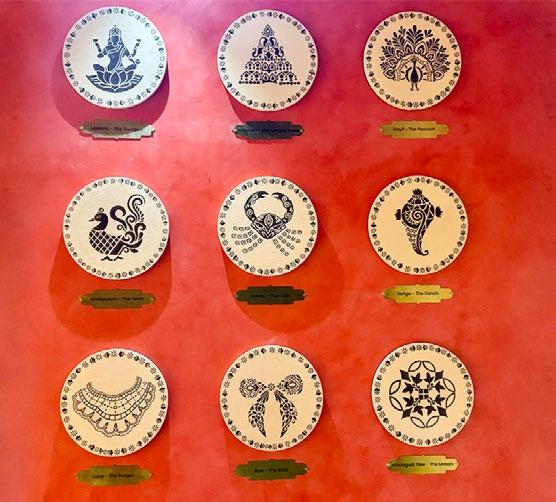
The ground floor of Pettagam, layered with the handcrafted Athangudi tiles, had a display of nine key motifs, often seen in Chettinad jewellery. From Sangu (conch), Mayil (peacock), Athangudi tiles, Lace, Bow, Annapakshi (swan), Nandu (crab), Goddess Lakshmi, Gopuram (temple tower), each one indicates Chettinad jewellery’s intersection with faith, rituals, sea-faring routes, European influences, mythical lore, and temple architecture. Subbiah has incorporated these motifs in her three jewellery lines – Vilasam (Chettinad jewellery), Vamsam (Indian heritage), and Menaya (contemporary design) displayed at Pettagam. Telling us about European influences in the jewellery, she says, “Nagarathar’s influence across the oceans was so widespread that they were specially invited to
Queen Victoria‘s coronation during the 1850s. They borrowed motifs such as bows, brooches, and the Art Deco style of jewellery.” We found its reflection in the Regal Harmony Padhakkam featuring a European bow motif running throughout the long chain neckpiece, leading to an ornate pendant. However, it was the Conch and the Crab motifs that were the most important, borrowed from Nagarathar’s sea-braving journeys in their catamarans. “The seafarers used to follow the tortoise route, but Nagarathars followed the crab route as it was faster. They incorporated the crab and gopuram motif in one of the most important pieces of wedding jewellery, the Thirumangalyam (marriage necklace),” says Subbiah, showing us the heavyweight gold necklace, featuring tabular form with sharp

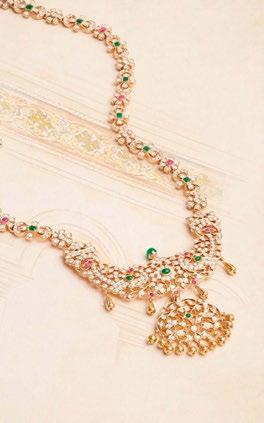
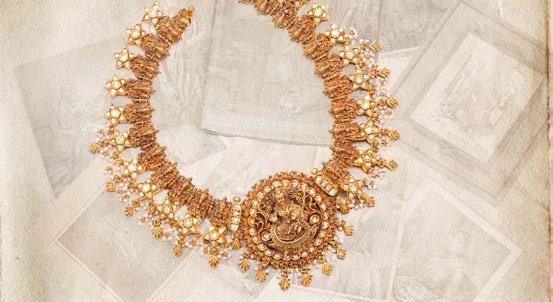
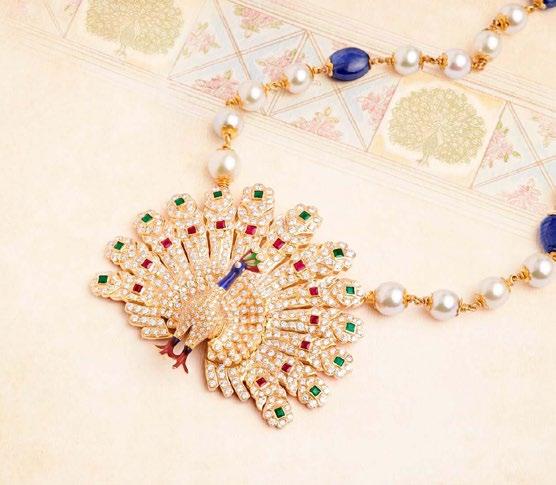
spikes worn exclusively by Nattukkottai Chettiar women on their wedding and special occasions like ‘Sashtiabdhapoorthi‘, the sixtieth birthday celebrations of their husbands. Another stand-out piece was the Mayil Maguri necklace from Vilasam line showing a fully open dancing peacock pendant crafted with diamonds, rubies, emeralds, and a string of pearls accented with sapphires.
We reached the first floor of Pettagam, where heritage melded with modern innovation. Subbiah’s family jewels were displayed alongside re-imagined heritage jewellery from India. From the classic Poocharams, Kandacharams, and Mullaicharams from Chettinad to the rich Kasu Mala of Kerala, the intricate Jali work-inspired pieces from the Mughal era, Kundan necklaces from Rajasthan to the temple Jewellery (Arakku) of Chola and Pandya Kings, it was culture served through the prism of old and contemporary designs.
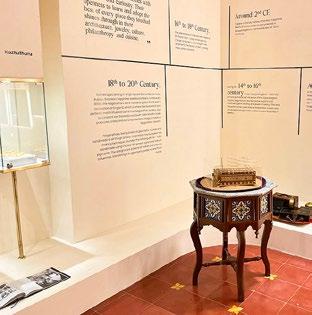
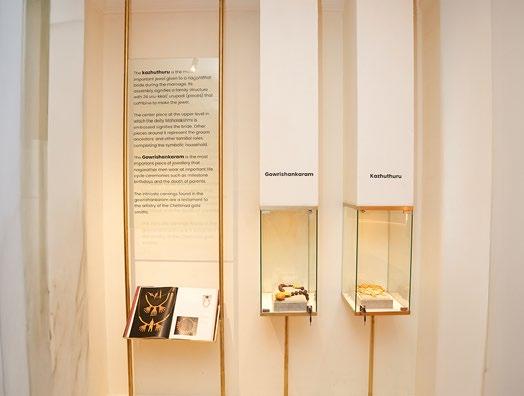
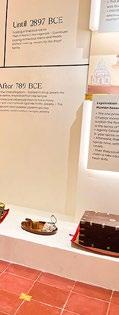
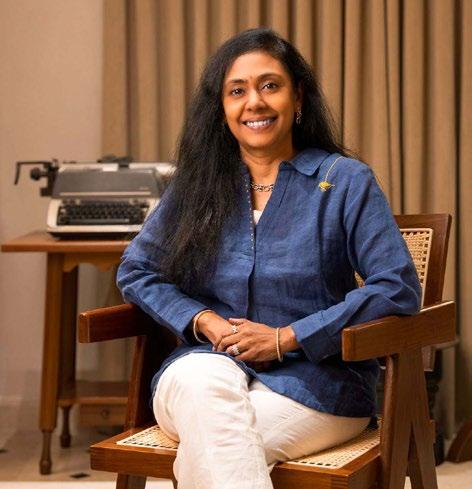
“During research, I was inspired by the jewellery sculpted in stone in the Virupaksha Temple in Hampi, understood how the Nizams have used pearls to embellish their jewellery, and how the Jadau artisans of Rajasthan merge intricate work and opulence to create pieces,” says Subbiah. The first floor will soon have rotational displays of Chettinad jewellery sourced from different families of the region, for the visitors to explore.
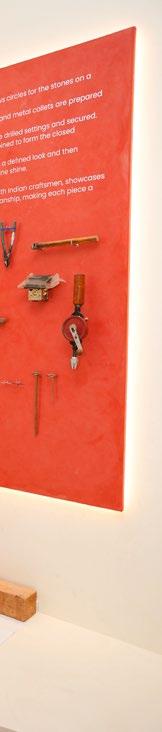
Chettinad jewellery is unique due to the distinct close setting technique. “Close setting is where jewellery is crafted from one single sheet of metal and diamonds are securely encased in the
design to create a monolithic look. It is tough, painstaking, timeless, and a dying art used in less than 10% of traditional jewellery worldwide,” tells Subbiah, who is preserving this craft with her Aasaris(craftspeople) having their ancestral roots in the Chola and Pandya kingdoms. They carry forward techniques that have been mastered and passed down through centuries.
As our tour ended, it felt as though we had unlocked a Pettagam not confined to a Chettiar household, but one that belongs to every visitor eager to look at Chettinad jewellery through the lens of art, design, architecture, travel, history, and most importantly, a Chettiar like Meenu Subbiah’s vision to document her glorious community.


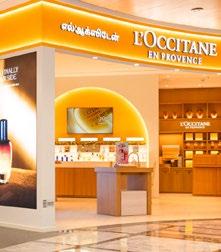
L’Occitane En Provence has opened its new boutique in Chennai, featuring the brand’s global Haute Provence Concept. This renovated store introduces a retail approach centered around lifestyle, design, and sustainability, creating a contemporary setting for the French beauty brand in India.
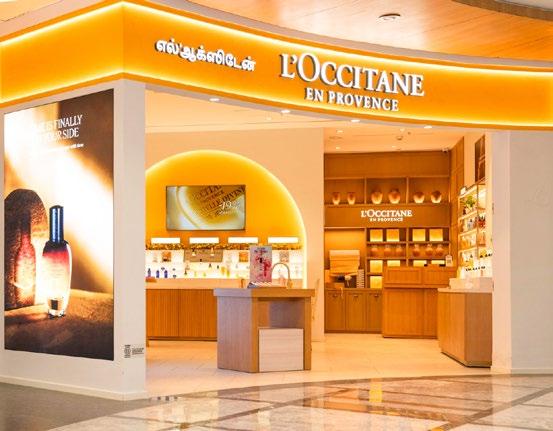



The boutique integrates five key focus areas: Provencal storytelling, nature-inspired architecture, immersive customer experiences, lifestyle-led design, and a sustained commitment to environmental responsibility. Each pillar is reflected in various sections of the store. The Art of Scent section displays L’Occitane’s fragrances, body milks, and hand creams, providing visitors with tactile and olfactory experiences. The Expertise Zone hosts the brand’s fountain testing experience, allowing for personalized bodycare consultations. A dedicated Beauty Room provides signature services, consultations, and diagnostics in a private setting.
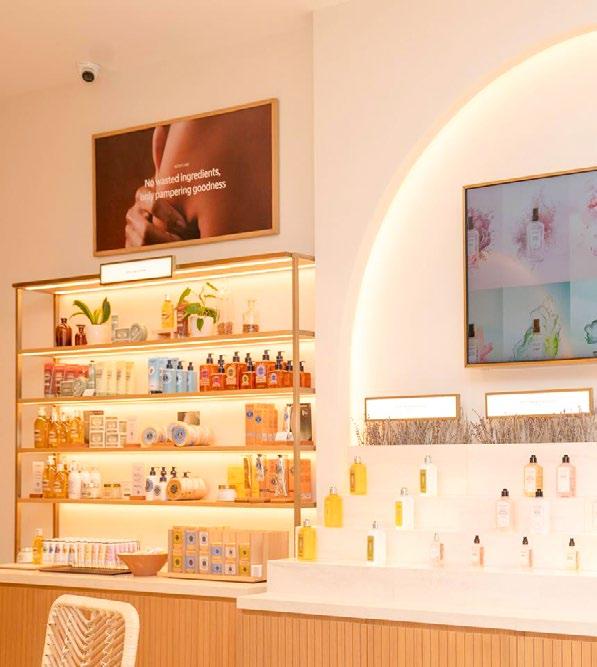


The Home and Gifting Zone features curated selections for home and gifting, arranged on wooden shelving. Signature yellow gift boxes remain a central visual element, reflecting the brand’s presence and occasion-driven focus. Simi Dewan, General Manager of L’Occitane India said, “We are absolutely delighted to unveil our new Chennai boutique; a space that truly brings the spirit of Provence to life. The Haute Provence Concept is more than a design evolution; it’s an invitation to pause, explore, and indulge in the sensory richness that defines L’Occitane. From the scent of lavender to the touch of natural textures, every detail has been thoughtfully curated to create moments of joy, connection, and discovery. We’re excited to welcome our Chennai customers to experience beauty the Provençal way where every visit feels like an escape to the sun-drenched South of France.”
Through this store relaunch, L’Occitane En Provence aims to establish its Chennai location as a destination for both beauty and experiential retail, emphasizing mindful shopping and customer engagement.

Diwali, the festival that lights up homes and hearts across India, is treasured as a time for reflection, renewal, and connection. Every diya, sweet box, and smile exchanged is rooted in tradition and hope for prosperity. But amidst the sparkle and celebration, there is an unspoken desire to make gifts matter, to find that perfect symbol of affection and good wishes. In this spirit, Michael Kors watches have quickly risen among the best Diwali gifts, embodying the energy of the moment and the promise of lasting memories.

From New York runways to Mumbai’s Diwali parties, Michael Kors watches is synonymous with accessible luxury. Each timepiece is crafted to make a statement, clean lines, rose gold hues, and sparkling crystals converge to create styles that work for every generation. No matter if you’re shopping for Diwali gifts for family, searching for unique Diwali gifts for friends, or curating Diwali gift hampers for loved ones, Michael Kors epitomizes both sophistication and joy, making it the best gift for Diwali and beyond.
Gone are the days when watch gift boxes or Diwali gifts for men were afterthoughts. Today, gifting a watch for Deepavali, especially one as stylish as Michael Kors, is a blessing for new beginnings. It quietly says, “May every moment ahead be your best.” Watches as gifts appeal to every age and gender, making them versatile for Diwali gift hampers, Diwali gifts for employees, or close friends.
Michael Kors Mini Parker: For the woman who loves a blend of subtle sparkle and daily practicality, the Mini Parker is an ideal women’s watch gift. Its slim case, crystal bezel, and clean bracelet make it perfect for festive get-togethers, elegant dinners, or Diwali kurta for women. Slip it into a Diwali gift box, and you have the best Diwali gift for girlfriend, wife, sister, or mom.
Michael Kors Darci: Darci redefines classic glam. With a pavé-encrusted dial, flawless mesh or metal strap, and iconic MK branding, this model elevates every Diwali party outfit, from saree to Diwali suit for women. Add to your Diwali gifts for friends or as a Diwali gift for girlfriend who loves Western and traditional looks alike.
Michael Kors Pyper and Silver-Tone Bracelet Set: Why just gift one accessory? Combine a sleek watch with a bracelet and you have the best Diwali gifts for her or a festival-ready couple watches set. These sets also make unique Diwali presents for new brides and stylish aunts.




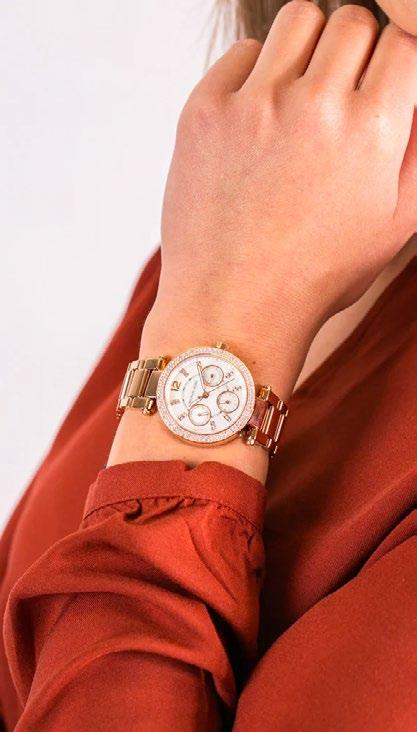


Lexington Chronograph: Blending boldness and subtlety, the Lexington Chronograph is a men’s watches gift that suits both office and celebration. Its masculine silhouette, multifunction dials, and sturdy steel bracelet pair well with Diwali kurta for men and formal attire, making it a good Diwali gift for fathers, brothers, or the special man starting a new venture.
Michael Kors Dylan Black: With its sporty edge, contrasting black case, blue dial, and slips of gold-tone, Dylan is an ideal watch for gifting men who like their Diwali gifts adventurous. Tuck it into a Diwali gift basket for sons, boyfriends, or best friends who appreciate standout detail in a classic package.
Michael Kors Gage Brown Leather: Gage’s brown leather and minimalist face make it timeless, a thoughtful Diwali gift for husband or a sentimental gift men watch for grandfathers.


No Diwali celebration is complete without honouring the bond of togetherness. Michael Kors couple watches set, and bracelet and watch set options are among the most sought-after Diwali presents for married couples, soon-to-be-weds, or those cherishing years together. These his and her watch combinations look stunning in any Diwali
hamper ideas and underscore “may your time together always be precious.”
Versatile Design: From festival wear to office looks, Michael Kors pairs seamlessly with everything, including that new Diwali suit for women or kurta men for Diwali.
Reliability: Every model is built for lasting value, stainless steel, scratch-resistant glass, trusted Japanese movements, and secure clasps. No wonder Michael Kors tops the list of best Diwali gifts for family.
Easy Personalization: Engravable casebacks, custom Diwali gift packaging, and inclusion in unique Diwali hampers or Diwali gift sets make these watches exceptional and memorable candles among the diyas of Diwali.
Diwali gifts for employees, Diwali gift for staff, or Diwali gifts for clients under 10000 INR, corporate and family gifting both find perfect fits in Michael Kors’s accessible collections. Watches as gifts


transcend boundaries, turning Diwali gift ideas for employees and friends into useful Diwali gifts that will be cherished long after the last diyas candle is out. Add a Michael Kors to your Diwali gift hampers under 10000, or combine a watch with dry fruits, sweet boxes, or Diwali chocolate box for an elevated, luxurious festive present.



When shopping for Michael Kors watches in India, always choose reliable multi-brand boutiques or large format stores that guarantee authenticity and offer post-festival warranty support. Retailers like Zimson, or other authorized dealers, have the widest variety of Diwali gifts online and in-store, making your Diwali shopping both safe and inspired.
Personalize every watch gift box with a message or engraving. Pair a watch set with decorated diyas for Diwali or a curated Diwali gift hamper basket. Present a Michael Kors in a Diwali gift box filled with Diwali mithai box or Diwali sweets gift box for
extra happiness. Use creative Diwali gift packaging or combine your watch gift with a Diwali sweet box for a delightful surprise.
Choosing the best Diwali gifts means finding presents that are both meaningful and beautiful, ones that outlast the festival and bring joy every day. Michael Kors fashion watches are more than watches as gifts; they are timekeepers of family, friendship, dreams, and milestones. So whether you’re selecting for Diwali gifting ideas for clients, curating best Diwali gifts for employees, or searching for Diwali gift for girlfriend or husband, look to Michael Kors for the perfect blend of cosmopolitan chic and heartfelt sentiment. Light up this Diwali with a gift that says you care not just for a moment, but for every moment to come.

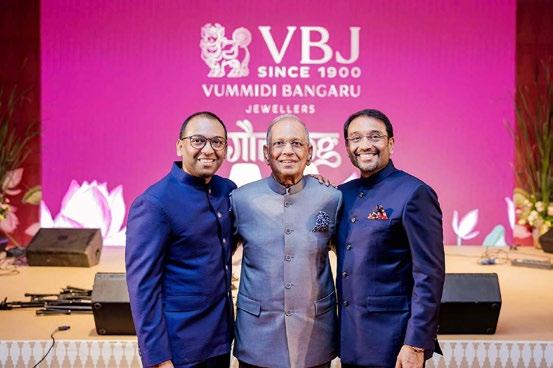
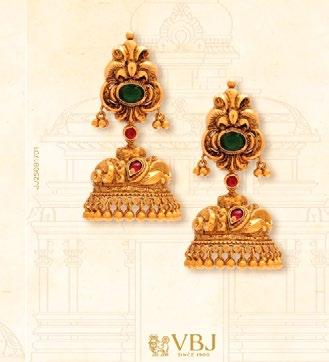
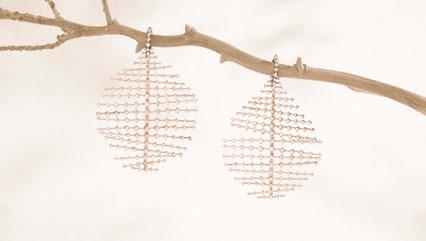
VBJ Since 1900 has launched its first-ever Grand Jhumka Festival, a month-long celebration of India’s iconic jhumka jewellery. Showcasing gold, diamond, and silver designs that blend South Indian heritage with modern elegance, the collection caters to Gen Z buyers, working professionals, and seasoned collectors, highlighting timeless craftsmanship, versatility, and contemporary style.
VBJ Since 1900 (Vummidi Bangaru Jewellers), one of India’s most trusted heirloom jewellery houses, has unveiled its maiden Grand Jhumka Festival—a month-long celebration dedicated to one of India’s most iconic jewellery forms. Running from October 1 to 31, the festival presents a diverse curation of gold, diamond, and silver jhumkas that pay homage to tradition while embracing modern sensibilities.
Reimagined for today’s woman, the collection spans temple-inspired heritage designs, diamondstudded silhouettes, statement occasion wear, and petite “baby jhumkas” crafted for lightweight elegance. With styles suited for Gen Z buyers, working professionals, and seasoned collectors, the range balances accessibility, versatility, and timeless charm.VBJ’s legacy as a fifth-generation family-run brand adds historical weight to the festival. Known most notably as the makers of the Sengol—the sacred sceptre rediscovered after 72 years and now enshrined in India’s new Parliament—the brand continues to link tradition with contemporary relevance.
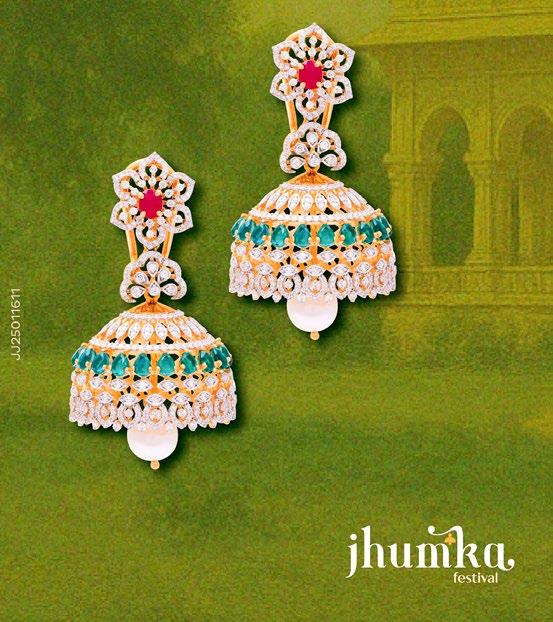
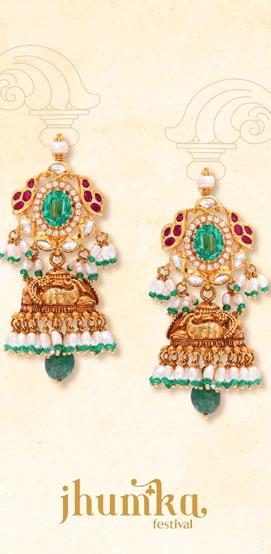
“For 125 years, VBJ has honoured India’s jewellery traditions while evolving with changing times. This festival elevates the jhumka from a staple to a hero piece—crafted for movement, identity, and expression,” said Amarendran Vummidi, Managing Partner, VBJ Since 1900. “A jhumka is more than an ornament—it holds memory, character, and emotion. With this festival, we celebrate a form that resonates across generations, offering timelessness with relevance,” added Jithendra Vummidi, Managing Partner, VBJ Since 1900.
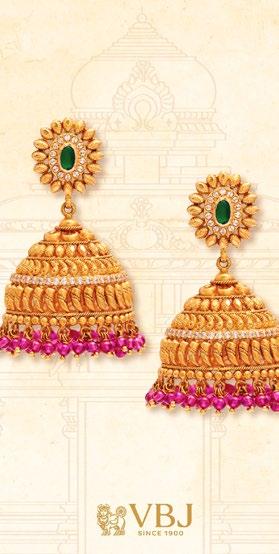
The festival’s craftsmanship highlights include South Indian close settings, coloured stone accents, tassel-inspired motion-friendly forms, and weightoptimised silhouettes that combine luxury with everyday wearability. Adding a nostalgic twist, the campaign tagline “Jhumka gira re...VBJ ke bazaar mein” bridges generations with wit and cultural resonance. The VBJ Jhumka Festival Collection is now available at all VBJ stores and online, with select customisation options extending the brand’s tradition of bespoke service.
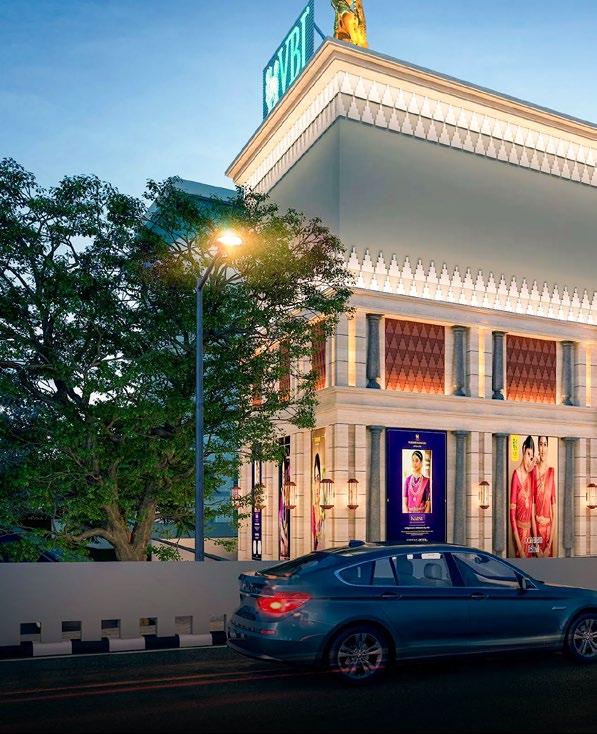
Renowned as one of the best jewellery showrooms in Chennai, the flagship space stands as a symbol of timeless elegance and cultural pride. With a legacy built over generations, it has earned the trust of countless patrons by offering more than exquisite ornaments — it offers an experience steeped in heritage, artistry, and luxury. Every visit becomes a celebration of craftsmanship and tradition.
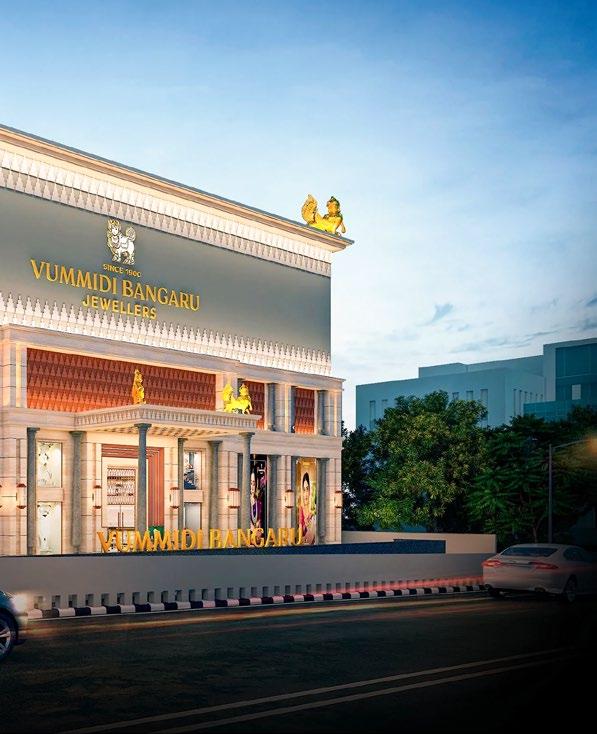
Beyond fine jewellery, this showroom serves as a lifestyle hub that reflects the richness of Indian culture. Each design tells a story — blending heritage with contemporary sophistication. Visitors are invited to immerse themselves in a world where jewellery is not just an adornment but a reflection of identity and artistry, curated to celebrate life’s most precious moments.
The showroom remains dedicated to quality, innovation, and customer satisfaction. Expert designers and consultants offer personalized attention to every guest. Maintaining the highest standards of safety, hygiene, and comfort, the space ensures a secure and memorable shopping experience — reaffirming its reputation as Chennai’s most trusted destination for fine jewellery.



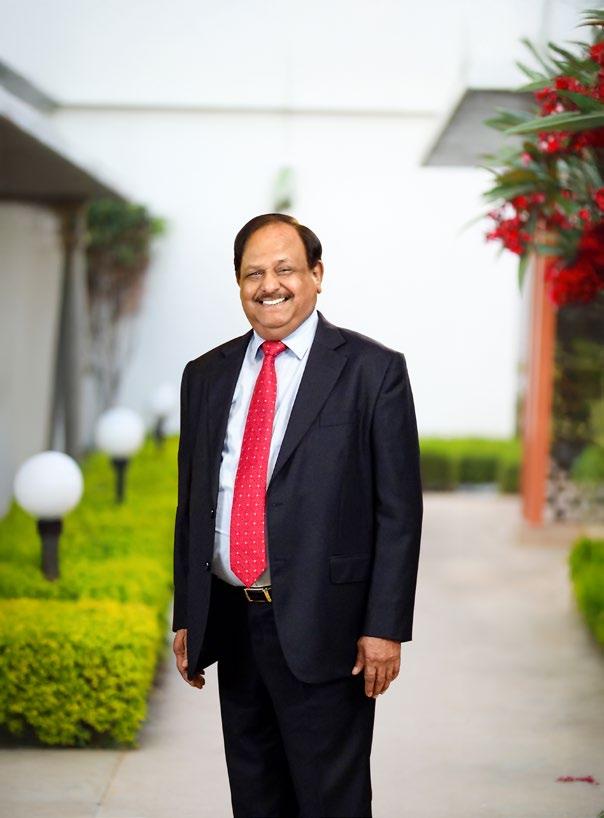
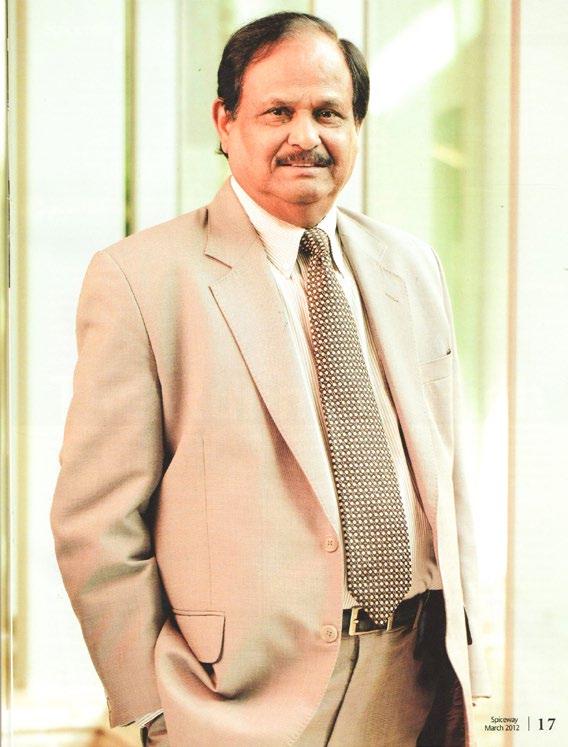
DR.P.G.PERIASAMY
In the History of World, there were many people, who have searched for the precise alchemy of ingredients and formula that constitute adorable successful both in personal and public life. And those were admired by millions of people all around the world and worshiped as leaders by generations through centuries. M/s Worldwide Media Corporation Group MNC, appreciates and regards all those amazing personalities, who have been contributing significantly to the society and human welfare. In order to make them known to the world at large and with the view to sculpture their accomplishments in the History they have brought- out one of the most respectable and prestigious Awards & Records in association with the Government of India. It would showcase Dr. Palani G Periasamy, and amazing and inspriring leaders to lead the generations to come by their wonderful examples.
One such Leader and Amazing Personality who rose from Simple life to the Pinnacle of success is Dr. Palani G Periasamy and M/s Worldwide Media Corporation Group MNC has been Conferred one of the Most Prestigious Awards of India Namely ‘MIGHTY INDIAN BOOK OF ACHIEVERS RECORDS & AWARDS for Five Consecutive Years Viz., 2020, 2021, 2022 2023 & 2025.
As we all know Dr. P.G. Periasamy, is the Founder & Chairman of PGP Group of Companies, which Owns and operates multi-facet business enterprises including that of the leading Landmark Luxury Hotel Brands namely Hotel Le Royal Meridien @ Chennai & Coimbatore, India. He has achieved an exemplary success story and has been adored as a Dynamic, hardworking and successful Business Leader, an Educationist & Industrialist, who has not only dedicated but also celebrate his life and lead by example, even at the age of 80. Fascinating warmth, Magnetizing energy and Genuinely modest, but always sure of his ambitions and achievements.
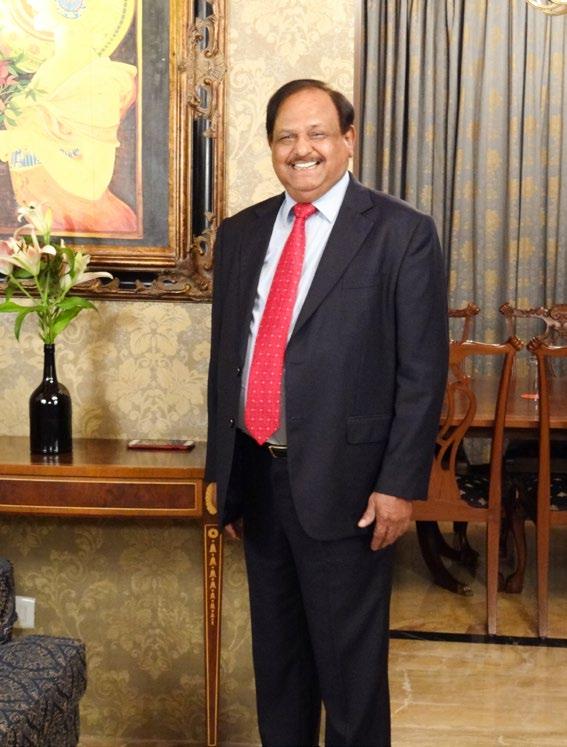
DR.P.G.PERIASAMY CHAIRMAN & MD
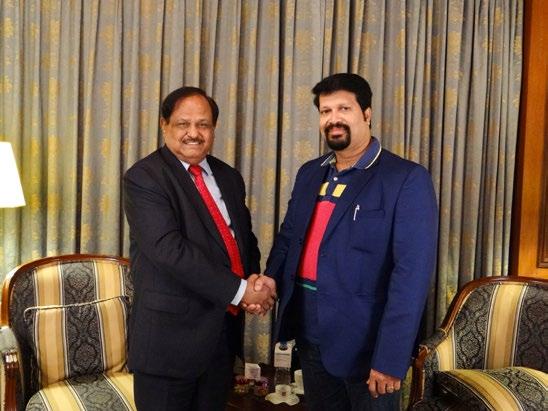
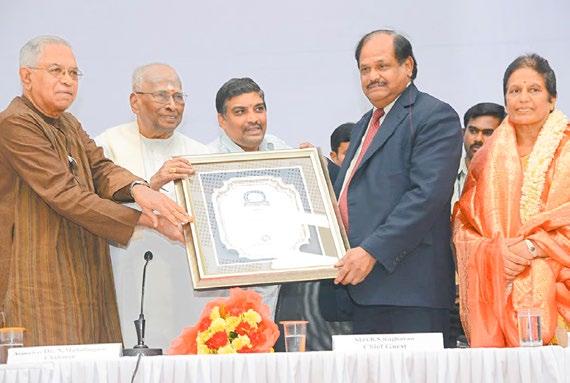
Dr. P. G. Periasamy Chairman & MD - PGP Group of Companies Being Congratulated by Dr. S. E. Alexander Global Media Chief & MD, M/s. Worldwide Media Corporation Group USA., For Being Awarded with one of the Most Prestigious Awards of India Namely, ‘MIGHTY INDIAN BOOK OF ACHIEVERS RECORDS & AWARDS - For Five Consecutive Years Viz 2020, 2021, 2022, 2023 & 2025’
An inspirAtionAl story of dr. pGp:
Rome could not be built over-night, So, is the Journey and the Success Story of this iconic Business Leader. It’s easy to look at successful Business houses and marvel at their accomplishments. Yet, these successful achievers don’t just appear out of thin air. They worked towards success with humble beginnings beyond all obstacles, to becoming successful with dedication and effort.
Whether it is Construction of Rome or building large Business Empires or great achievements in life, everything takes lot of time and patience. And only those, who master the art of that secret formula reach to the point of zen.
forEsiGHt & proActivE ApproAcH
Exploring international opportunities way ahead of the time before globalization set in, one step at a time, Dr. P.G. Periasamy, motivates us for persistent hard work in life. It has been a long and arduous journey for Dr. P.G Periasamy, who now owns and effectively operates a 1000 crore Business Empire. A journey that involved constant business takeover threats, pivoting business models and changes in the Indian hospitality industry over the years. But amidst all these drawbacks, he never failed to push the boundaries and help steamroll his business success into the universal acclaim that it presently holds. Which for obvious reasons makes him a benchmark for entrepreneurs world over to take notice and draw lessons from.
from HumblE bEGinninGs to ExtrAordinAry succEss
Dr. P.G Periasamy’s family was always involved in agriculture in a remote rural area. He has vivid memories of his childhood days. “I grew up in a village where our family owned large tracts of agriculture land. We cultivated paddy, tapioca, tobacco, and peanut,” he says. Hailing from Muthugapatti, a village near Namakkal in the Kongu belt of western Tamil Nadu, Dr. P.G. Periasamy’s childhood was a quintessential journey of Indian

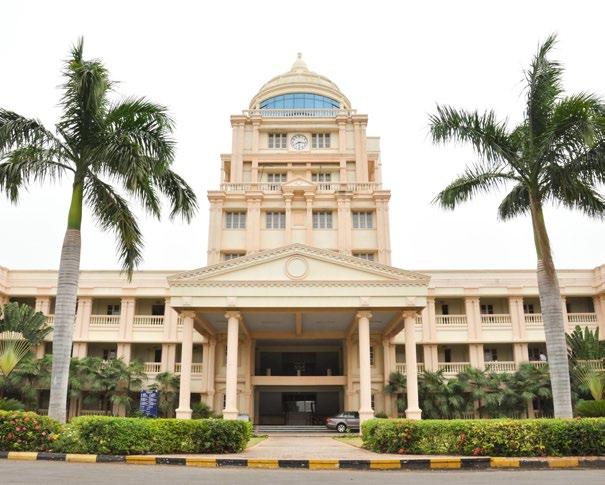
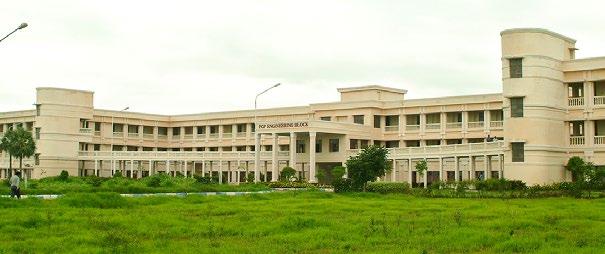
villages in the early 1940s – no major social or physical infrastructure and lack of almost every amenity. It is however rare to find an ordinary man born in a small village of 4000 inhabitants to look beyond the unpromising circumstances and yet, pull himself up by the bootstraps and manage to become a great success in life. Dr. P.G. Periasamy, who started his journey with humble beginnings, now heads a Rs 1,000-crore turnover PGP Group of Companies, that has interests in the hotel, sugar, finance, real estate and education sectors.
Dr. P.G. Periasamy started his education in a government school called Sendhamangalam High School and recalls walking close to 14kms, only to attend school and return home. He studied in Tamil medium until SSLC and joined Alagappa College in Karaikudi for his PUC (Pre-University College) - where the medium of teaching was English. A University gold medalist in BA Economics from St. Joseph’s, Trichy, Dr. P. G Periasamy recalls the traits imbibed in him all through his education.
“My sense of discipline was inculcated by one of my teachers during my undergraduate days at St Joseph’s College. Rev Father Siqueira was a stickler for punctuality and discipline. Every meeting, he had would begin and end precisely at the stroke of the clock. That helped mould my sense of discipline,” he claims. Further, he got elected as leader of the students’ union while doing his post-graduation at Presidency College, Chennai, during 1960-62. During this period he was in contact with leaders like Kamaraj of Indian National Congress, Subramaniam (former finance minister of Indian Government). It was at this time that he realized the leader in him, which helped him come a long way in life at all stages.
Education in the time of Dr. Periasamy required an intermediate before graduation. Completing his intermediate in Alagappa Arts College, he re-applied for graduation at St. Josephs College. On investigation for being refused admission for the second time, Mr. Periasamy was informed that his marks were appropriate for a medicine. However, adamant on taking over his administrative passion as an IAS officer, he convinced the authorities about his vision. Proving his dedication and passion for the subject, he was A University gold medalist in BA Economics.
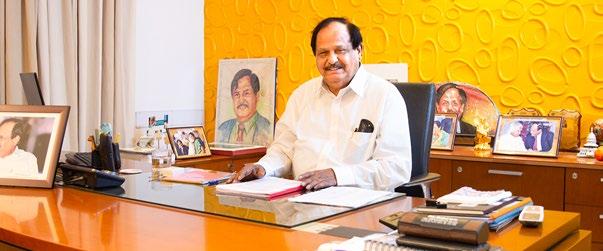
Despite being at a young age when India had its independence, it had an emotional impact on him. Recollecting memories of seeing Mahatma Gandhi and Jawaharlal Nehru, Dr. Periasamy cites the experience had a lasting impact on him. In addition, Namakkal which was then run by British Deputy Commissioners and being a part of various independence processions, a sense of authority crept into him, to an extent where he aimed to be a Collector when he grew up. At a time when technology and modern communication hadn’t paved way, Dr. Periasamy recalls the exuberant feeling of Indian Independence through the only medium of information like All India Radio, Newspapers or school teachers.

Later, he got elected as President of the students’ union while doing his postgraduation at Presidency College, Chennai, during 1960-62. During this period he was in contact with leaders like Kamaraj of Indian National Congress, Subramaniam (former finance minister of Indian Government). It was at this time that he realized the leader in him, which helped him come a long way in life at all stages.
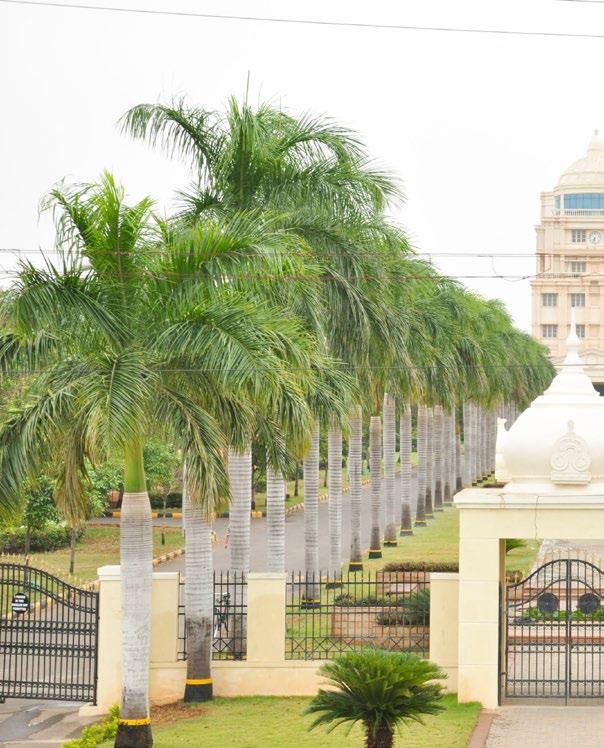
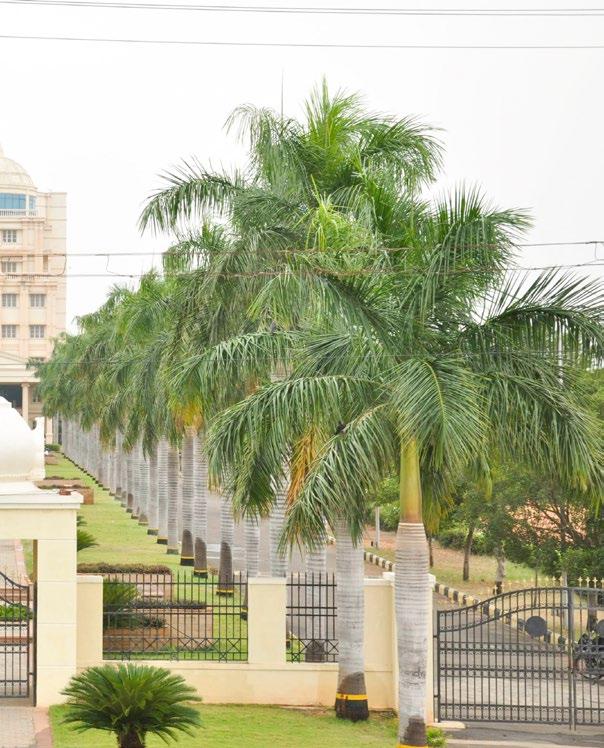
He joined BA Economics in St. Joseph’s, Trichy, only with the aim of cracking the civil service exam. However, by the time he completed his post-graduation he was found to be over-aged for the competitive exam, due to wrong information in school certificates.However, he got a job offer for the post of an executive from a leading private company in Chennai for a salary of Rs 640. Had he taken up the job, his life would have moved in a different direction, but he listened to the advice of Professor Velayudham, head of economics department at Presidency College, and took up a lecturer’s job – for a lesser salary of Rs 245 - at PSG Arts College, Coimbatore. About a year later, he joined Tagore Arts College in Pondicherry, where he worked from 1963 to 1967, until he left for the US to do his doctorate.
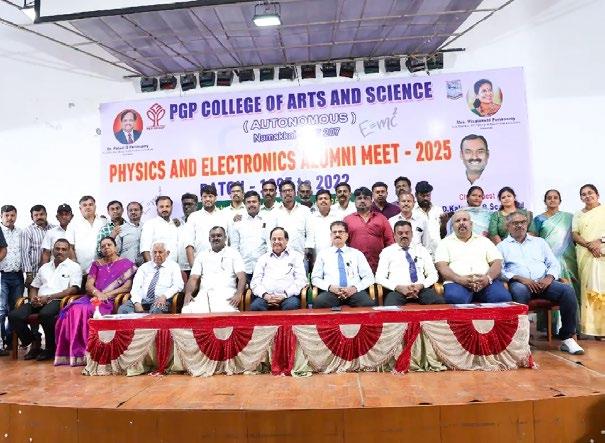
The Indian Institute of Economic growth, Delhi provisionally selected him for PhD, on being a gold medalist. Recalling a few questions during the course of the interview, if he supported Nehru’s agricultural policies. Coming from an agricultural family, he expressed his thoughts about disliking the policies, unaware that the interviewer was the person who proposed these policies. His provisional selection stood cancelled. This planted the seeds in him to go study abroad and prove himself. Within a month, he left for America to pursue his postgraduation.
Dr. Periasamy was given just 7 dollars to survive in US for his Post-Graduation. However, being a gold medalist, he was given a reserve of 52000 dollars to complete his postgraduation along with an exchange license. This license was given on the mere basis of his achievements. In 1967, when currency exchange looked impossible, Mr. Ganguly, assistant of foreign exchange at Reserve bank of India, put his trust in Dr. Periasamy and issued this license to him. On completion of post-graduation, Dr. Periasamy could have sold this license for thrice the amount.
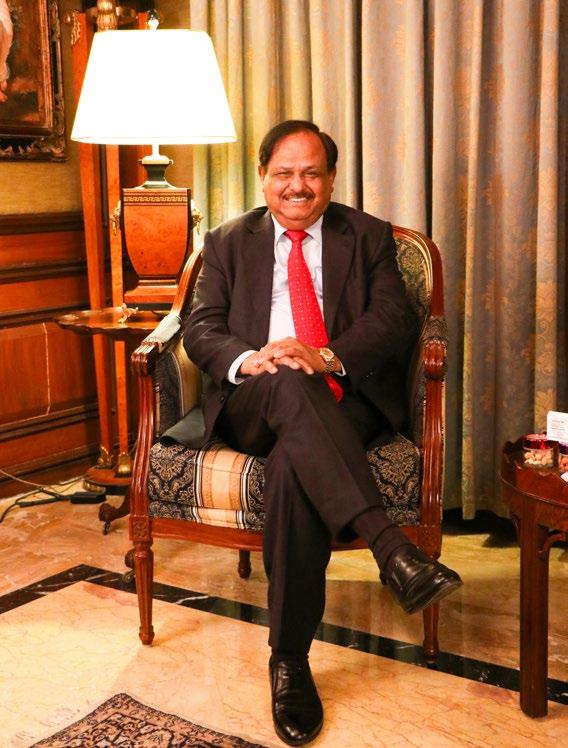
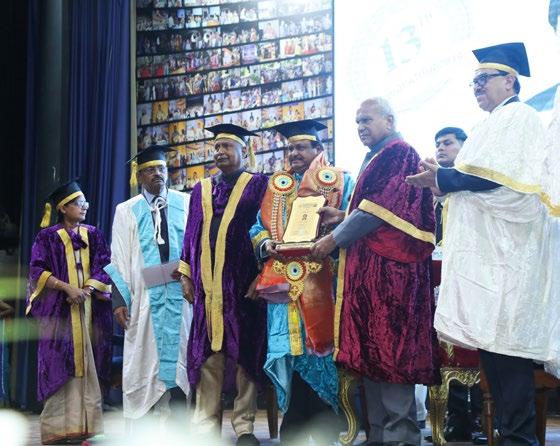
However, he returned the license with a letter asking the reserve bank to help others like him to benefit out of this scheme. This letter was eventually displayed at the Reserve bank of India, Chennai. His entrepreneurial journey started in the US where he had gone to do his doctorate, and later worked at University of Baltimore from 1973 to 1987.
lookinG bEyond obstAclEs
Looking beyond all the obstacles, he had to face, the teachings of Reverent Father Siqueira, helped him during his stay in US. His teaching imbibed in him Benevolence, Discipline, Punctuality and most importantly, an open eye for opportunity. These qualities had a major impact on Dr. Periasamy.
His beginning in US, wasn’t very comfortable. He had to study, earn and maintain himself. These qualities helped him sail through further to which, he took up a part time job as an educator during the day and a desk supervisor in the evening. Career in the U.S
Dr. Periasamy wanted to return to India on completion of his post-graduation. However, on advice from one the faculty members, Marina Whitman, he decided to stay back and started his journey as an educator at Washington College. A year later, he joined University of Baltimore in 1979. America recognized his hard work and also nominated twice as outstanding educator in America.
cHAritAblE contributions
What started as a small effort to help Indians from America by pitching 5 dollars a month along with his friends, he is now the founder of TamilNadu Foundation, one of the largest Tamil trusts across all 50 states of America and Tamilnadu to help people.
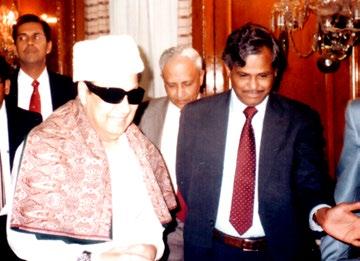
Dr. Periasamy first met MGR when he visited the US in 1981. He was then the president of Tamil Sangams of Washington, Maryland and Virginia. He planned MGR’s itinerary and coordinated all his engagements in the US in the absence of MGR’s secretary and that association developed into a lifetime friendship.
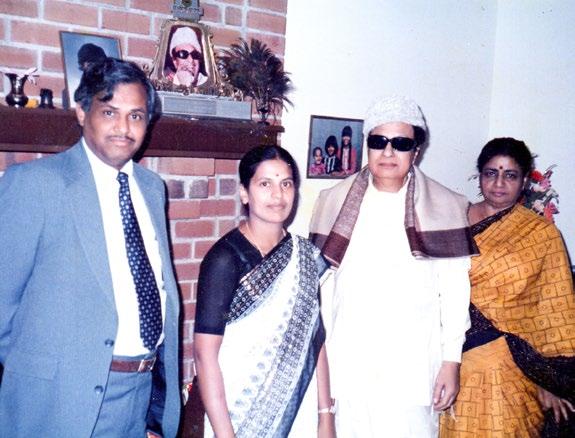
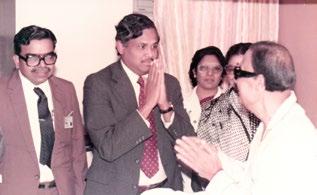
Later, in 1984 Dr. Periasamy had arranged for MGR’s medical treatment at Brooklyn Hospital in New York where the latter underwent a kidney transplant. While MGR was at Brooklyn the Tamil Nadu assembly elections was held. MGR contested from Andipatti in that election. “It was my idea to shoot a video of MGR at the hospital to show that he was alive and to put an end to rumors about his death,” reveals Dr. Periasamy.
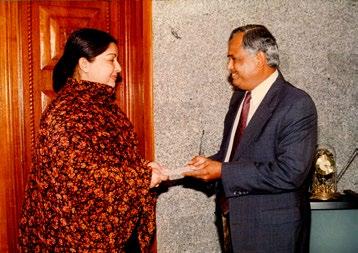
The video played a major role in turning the tide in favor of AIADMK, which returned to power with a thumping majority and MGR became the chief minister again. Post the victory, Periasamy was offered to role of a vice-chancellor or Minister of AIADMK. Dr. Periasamy however ignored these options. He did not want people to assume that he had grown in business with financial support from MGR. he had made a lot of money in the US and invested it well.
When in America, many affluent Indian doctors living in the US sought his advice on making investments in that country to avail tax benefits. Being an economist with knowledge of American laws, he was able to offer them proper guidance. With the goodwill he developed with all of them, Periasamy formed PGP Industrial & Financial Consultant Corporation in 1976 and started investing in real estate in the US.
He formed more companies, purchased many buildings and shopping malls. In addition, they also renovated the properties, rented them, and later sold it for profit. Dr. Periasamy is also the founder of PGP Educational & Welfare Society, which owns several colleges and schools to provide good education to rural areas in Tamil Nadu. His first project in Tamil Nadu was Dharani Cements, a cement factory, in Ariyalur. Established in 1987 it was sold to the Aditya Birla Group in 1998.
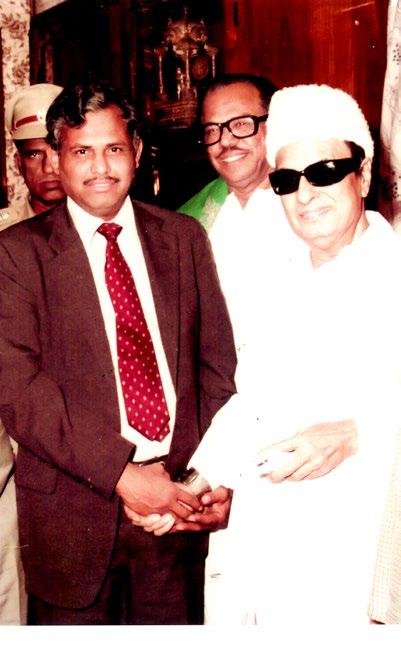

“I was able to start all these industries only because of the trust my friends in US reposed in me and investors who came forward to invest in all my ventures. On my part, I worked hard to maintain the trust,” says Periasamy, who has come a long way from his humble beginnings.
Dr. Periasamy after surrendering his US citizenship, came to India with a plan to build a hotel. Initially started in 1985 as a joint venture with the government of India at a location in the heart of the city near Chennai railway stadium, things changed overnight after his friend MGR passed away.
Millions of dollars were invested and major layout was planned which included 650 rooms, 17 restaurants, largest convention halls and a lake. MGR also laid the foundation stone. However, after the party came to ruling after MGR’s death, the plan was called off.
Seeking legal action wasn’t of much help either. With political pressure on him which asked him to choose between his cement industry or hospitality industry, Dr. PGP chose the hospitality sector.
Adamant of chasing his dream, Dr. Periasamy finally opened Le Royal Meridien in 2000, beyond all barriers. Confident on his conviction, he was very clear about his business approach. This helped him stabilize his relation with many political leaders, which helped him take the plan back in action.
The 250-room five-star deluxe hotel, belongs to the Rs 88 crore turnover Appu Hotels Limited – a part of PGP Group - which also owns Hotel Le Meridien in Coimbatore and Hotel River Side Resorts & Spa at Kumbakonam. Dr. Periasamy aimed to start a chain of hotels in various two-tier cities lie Pune, Jaipur. However, for an effective span of control, he stuck to two properties.
mEssAGE to buddinG EntrEprEnEurs
Maintaining a balance between Personal life and Professional life is essential to scale up in Life, claims Dr. Periasamy. Although this balancing act takes careful planning and preparation, but it is possible and goes a long way.

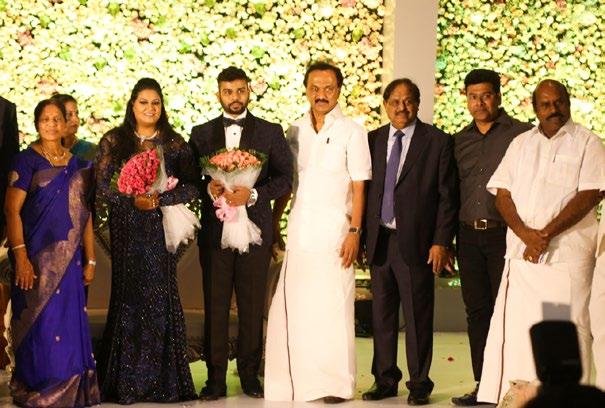
Dr. Periasamy states that Management is all about people. With a divisional concept and a decentralized American system of management, he ensures that the concept is defined, delegated and each individual is held responsible for their roles. While every company under the brand is compartmentalized, the corporate office in Chennai helps maintain the functions of each of the industries.
A strong team of leaders and committed executives have helped him in his management. Mr. Sennimalai, Joint Managing Director, has been a pillar of strength supporting him on his entrepreneurial endeavors in India since 1981. Along with him, a team of people who support his ideologies, have helped him manage the system effectively. Valuing honesty and purity, Mr. Periasamy feels blessed to have a supportive team which he has never has had to suspect or reprimand.
Dr. Periasamy’s wife Visalakshi, a BBA graduate and a qualified Systems Analyst, takes care of the PGP group of
educational institutions. “She has stood by me during all my difficult times,” he praises his life partner of 53 years. He was 25 and Visalakshi was 17 when they got married in 1964. He has four daughters. The eldest, Jayanthi, who has one son, Vikram, is a psychiatrist based in New Jersey. Two other daughters, Shanthi, who holds a doctorate in Counseling Psychology and Nalini, an MBA graduate, are also settled in the US. His third daughter, Ananthi, is based in Chennai. A business administration graduate from Towson University, Maryland, she assists him in business.
Recollecting each phase of his life to be a milestone, starting from post-graduation to stay in US to returning India and developing friendship with MGR, Dr. Periasamy feels beyond each milestone, the sheer joy of enhancing people’s lives through him is inexplicable. Currently, he has 5000 people working full time for him, 30000 - 40000 farmers and 12000 seasonal employers working for him. Beyond all the obstacles he faced, he feels blessed to have changed and add value to their lives.



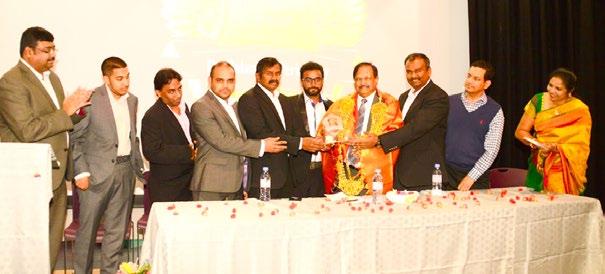


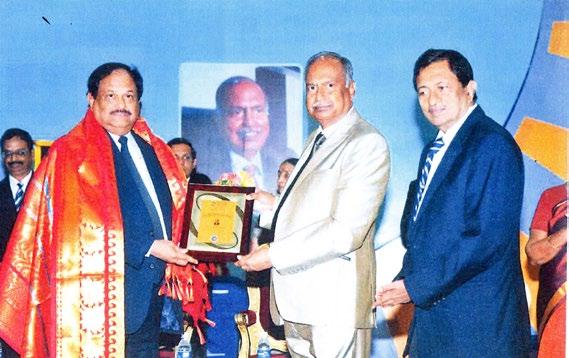
Dr. PGP has been Conferred one of the Most Prestigious Awards of India Namely ‘MIGHTY INDIAN BOOK OF ACHIEVERS RECORDS & AWARDS for Five Consecutive Years Viz., 2020, 2021, 2022 2023 & 2025.
Dr. PGP had also been Felicitated and Honored with ‘Indian Food & Health Industry Excellence Awards 2022 & 2023.
Dr. Palani G Periasamy had also won ‘The Lifetime Achievement Award’ in the Year 2023; For the Most valuable and Meritorious Contributions. That he had made in Creating, Developing and Sustaining Many Industries in Tamil Nadu & for the Global Economic Growth throughout His Life.
Dr. PGP has been Conferred ‘The Best & Pride of Tamil Nadu - Golden Awards of Excellence - in the Fields of Hospitality, Industries, Finance, Education & Agriculture for Two Consecutive Years 2024 & 2025.
He had over the years held various positions including Member of American Economic Association, Member of Eastern Economic Association, Member of Atlantic Economic Society and Member of Society of Government Economists.
He was Chairman, University Committee, School of Business 1979-80 and was President of Chesapeake Association of Economic Educators, USA.
He was also the first Non-US President of the Association.
He had been conferred with various awards, principal among them being “Outstanding Educator of America” award for two consecutive years in 1975 and 1976 and the “National Unity Award 1993” from the All India National Unity Conference, New Delhi.
President of PGP International Inc. U.S.A

Once a tiny fishing village, Chennai formerly Madras is now a lively metropolis and the capital of the state of Tamil Nadu. Situated on 3.5 acres of exquisitely landscaped gardens, the architectural wonder of Le Royal Meridien Chennai inspires guests to explore the city's allegiance to ancient traditions. Located between the international airport and the business district, Le Royal Meridien Chennai features meeting and banquet space for up 1,500 guests, five restaurants and bars, a state-ofthe-art fitness center and a splendid outdoor pool with whirlpool. A travel desk is in the hotel's lobby that assists guests as they experience the sights of Chennai, including the Marina Beach, temple architecture, a vibrant theater scene and a five week-long Music Season, one of the world's largest cultural events.
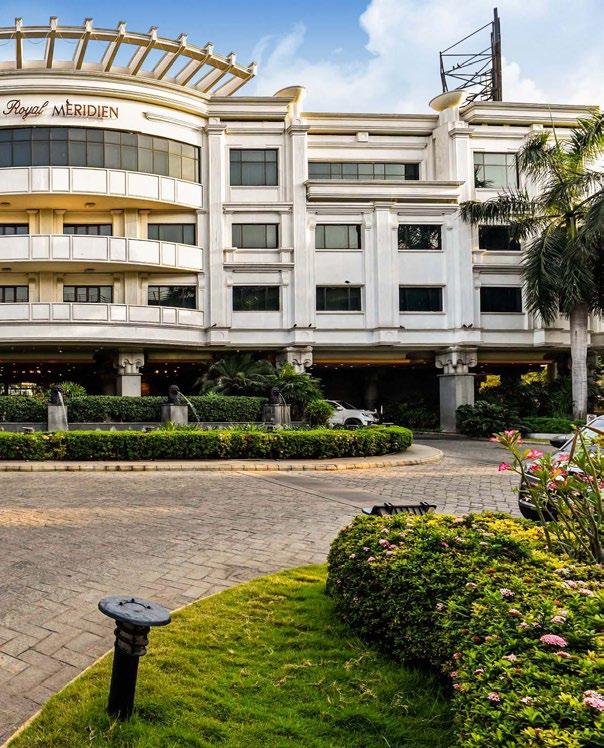
The hotel is built on a 3.44 acres land with about one third of the area being a landscaped one. The hotel has 240 rooms, of which 112 are standard rooms, 57 deluxe and 41 Royal Club bedrooms, 22 deluxe suites, seven executive suites, three Royal suites and one presidential suite. The hotel's banquet halls can accommodate up to 1,500 people and the hotel has about 12 meeting spaces. It has
Discover serenity at Le Mirage Spa, Le Royal Méridien Chennai. Indulge in signature massages, Ayurvedic rituals & luxury therapies designed to refresh body, mind & soul. A perfect retreat for business, leisure & local guests.
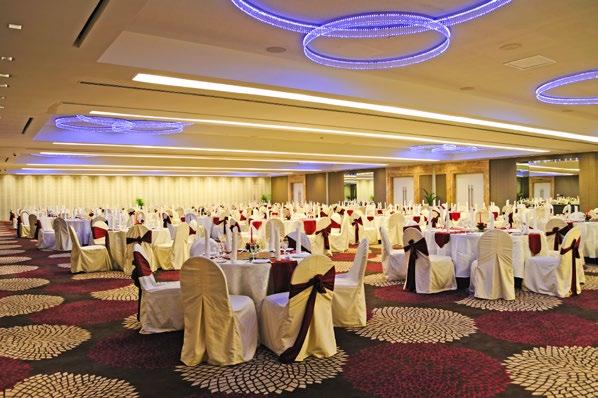
restaurants, namely, Navaratna (serving royal Indian cuisine), Cilantro (a 24-hour international dining restaurant serving Indian, Continental, Chinese, and South-East Asian cuisine) and bars such as The Dome Bar, Flame Le Club and Le Gourmandise. The hotel has a 9,200 sq ft ballroom known as the Grand Madras Ballroom, which was claimed to be the largest pillar-less ballroom in the city when it was built.
A modern reinterpretation of the traditional hotel lobby, Le Méridien Hub offers an array of opportunities for guests to gather, connect and simply savor the moment. Learn more about the unique signature food and beverage programs.
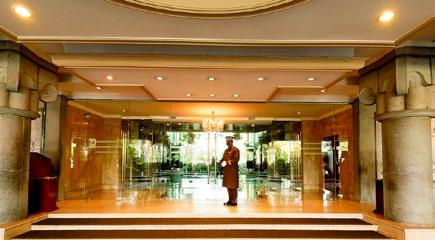
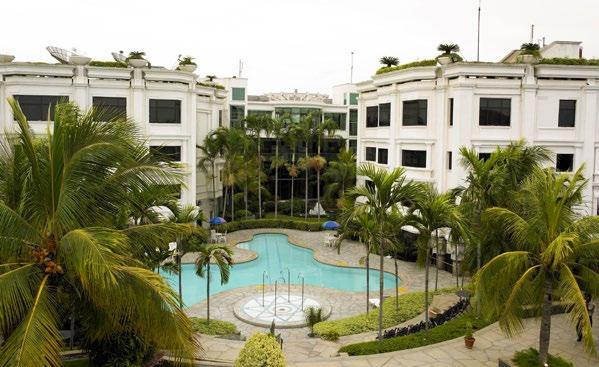
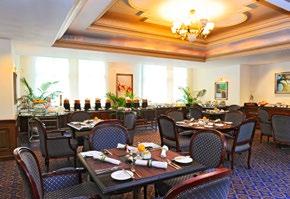
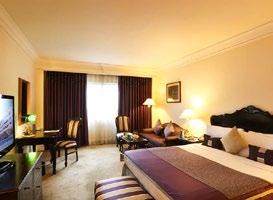
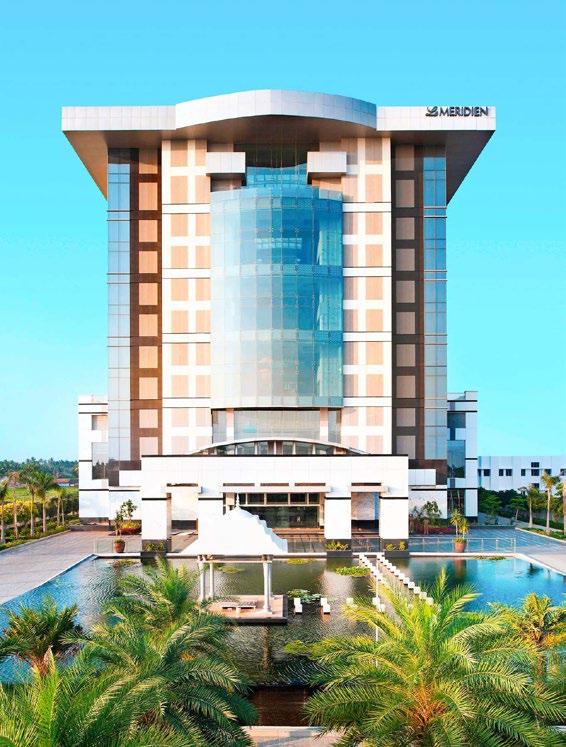
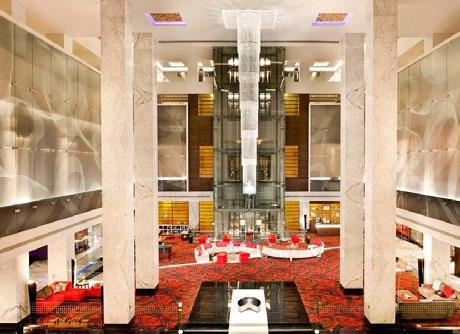
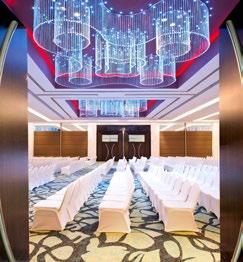
In the recent times, the southern part of India has witnessed a considerate boom in the segment of Meetings, Incentives, Conferencing and Exhibitions (MICE). Entrepreneurs from all across the globe are now travelling with their fledgling businesses to the south of India. While larger cities like Chennai and Bangalore are already present on the Indian Convention map, the tide may well be turning now. Attracting enough talent and funds, even tier II cities are now playing a substantial role in encapsulating the conference requirements and providing professional support.
One of the most enterprising cities and fastest growing Industrial manufacturing hub in the south of India, the city of Coimbatore has witnessed an immense influx of business travelers and is touted as a potential destination for MICE. Built on entrepreneurship, the city has a strong local MICE flavor with exhibitions on a variety of industrial subjects; banking and financial expos; textiles and apparels and many similar fairs.
Focused on supporting the rapid growth and expansion of these conferences, Le Meridien, Coimbatore offers world class hospitality, keeping in mind the requirements of the national and international travelers. A lot of business meetings, conferences and exhibitions are now being shifted to Coimbatore, considering their exceptional service and venue. A part of the Marriott International brand, it started operations on 11.11.2011. Benchmarking itself with the exquisite offerings, it also has a special position of being the 100th property acquired by the brand.
Located at one of the most vibrant areas in the city - Avinashi road, Hotel Le Meridien is perfect blend of a cosmopolitan lifestyle and the cultural heritage of Coimbatore.
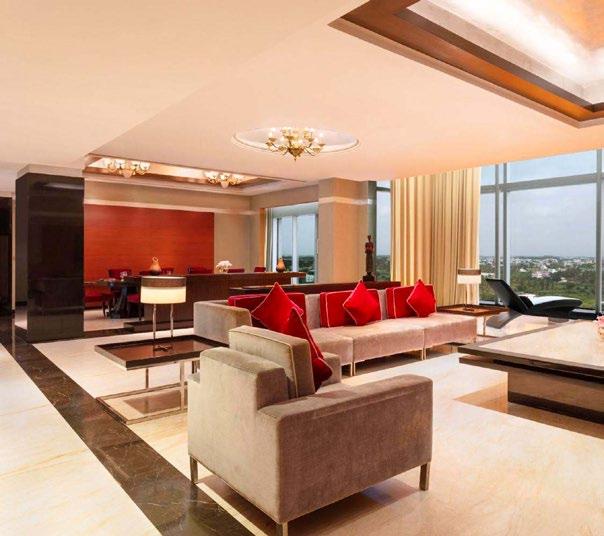
Strategically located near the Coimbatore airport, the hotel provides a great location bringing convenience to travel across the city, connecting all the key business and tourist hubs. An ideal space for sophisticated business conferences, travelers can stay away from the hustle and bustle of the city.
Always emphasizing on comfort and technology, each room evokes individuality and creativity. Featuring engaging décor and flexible work space, the rooms offer an urban escape for the well-
travelled. With 254 well-appointed rooms and suites, they offer unique experiences and varied choices of Rooms and Suites. Each of these rooms is equipped with the ultimate comfort to help you relax your time and have a delightful stay at the hotel. Driven by a professional and friendly team, they ensure that the stay is covered with ultimate comfort.
A 24 hours contemporary and interactive coffee shop called as Latest Recipe, is popularly known for its scrumptious platter of a wide range of international

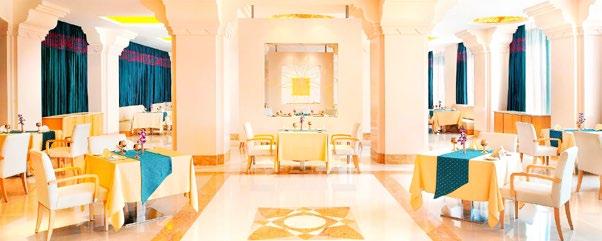
Whether you are planning for an art exhibition, conference, or private meeting rooms and boardrooms - the exemplary design of each of the 20 banquet rooms are crafted to add a unique aura to the event. The banquet halls contain ample space to organize the finest events starting from a crowd of 50 to 2500 people, with modern audio-visual technology and all other amenities.
With a variety of options and locations available, the hotel makes a great choice for every function and weddings. An opulent open area, called the Peacock lawn has the advantage of entertaining hundreds of guests. Be it a pool side party, or a
cuisines and delicacies. Buffets are served during breakfast, lunch, dinner. While the décor of the restaurant is perfectly arranged to signify grandeur, guests can savor the tantalizing signature dishes and also enjoy the finest blends of flavors. Offering a warm, comfortable atmosphere, Peacock offers the finest of Indian food, both North and South. Ponzu offers delicious Asian food in a welcoming, clean setting. Favola, overlooking the pool offers lip smacking Italian food. With a variety of options to choose from, the dining options available ensure you unwind with friends and family after a long day at work.
great reception, temple wedding or a DJ party; Le Meridien perfectly caters to the celebrations depending on the needs and requirements of the guests.
Operational from 10 Am to 10 Pm, Le Spa at Le Meridien Coimbatore, ignites a sense of bliss and relaxation with their Ayurvedic Full body massages, Foot reflexology, Facials and Head massage.
Whether guests wish to beat the heat and relax by the pool or stick to their fitness regime even when on a holiday, the hotel is fully equipped with all services, to ensure the stay is comfortable and rejuvenating.
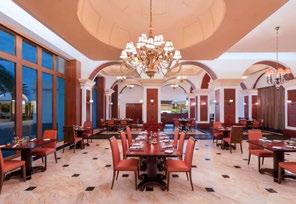
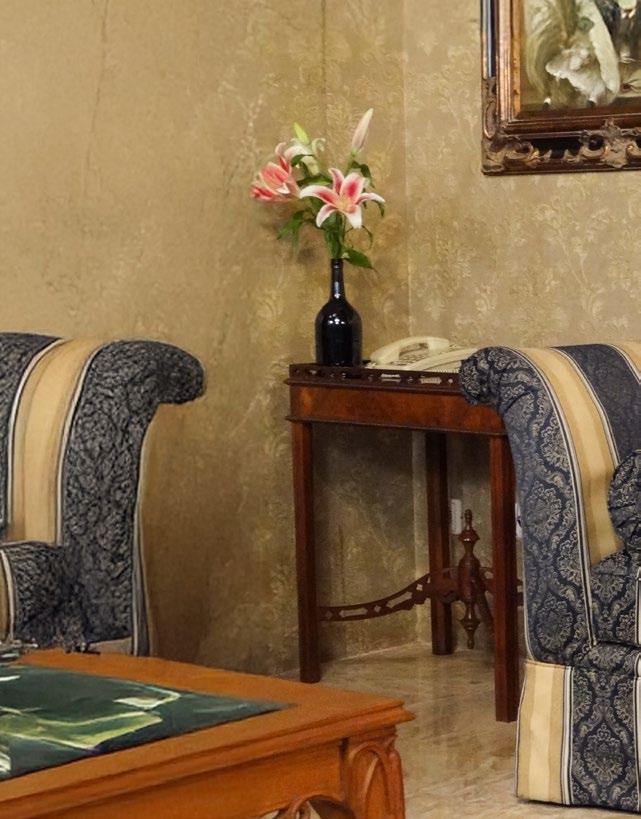

It Is Said That Hard Work And Compassion Go A Long Way In Helping A Person Becoming Better. Dr. P. G. Periyasamy Has Not Only Built An Empire But Also Maintained His Success Over The Years, Be It As An Educationalist On Helping People Invest, On In The Hospitality Sector And Has Been Instrumental To Light The Lives Of People All Along The Way. M/S. Worldwide Media Corporation Group Usa Wishes Dr. P. G. Periyasamy Many More Years Of Success And Good Health, As He Continues To Lead The Way.
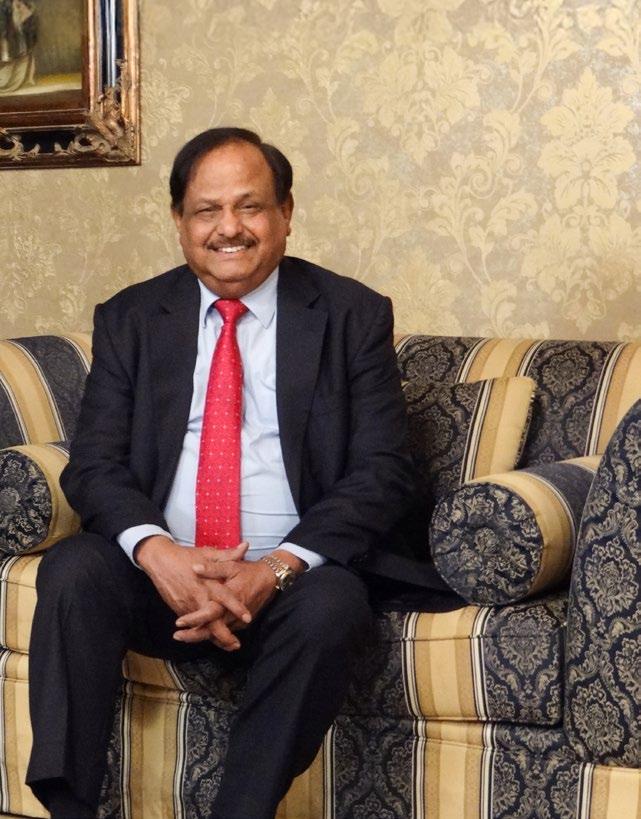
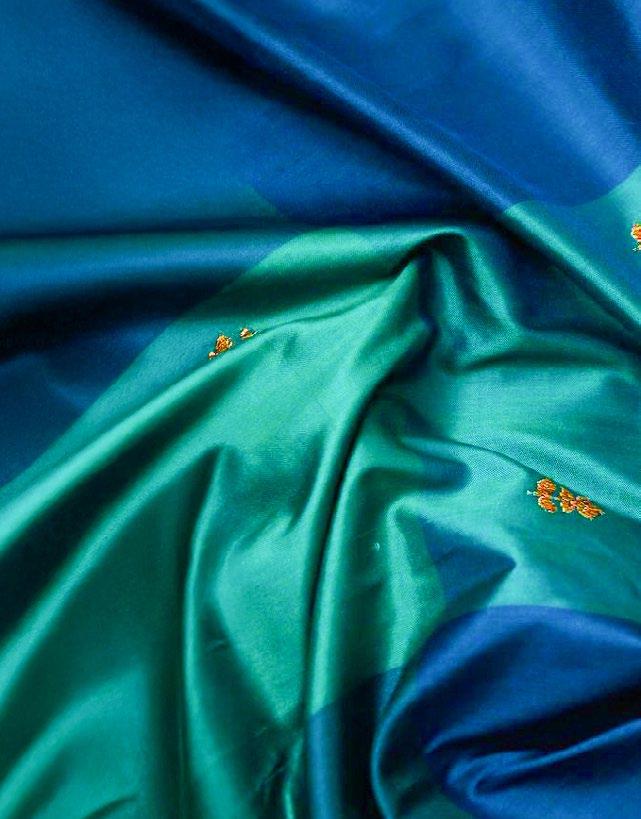

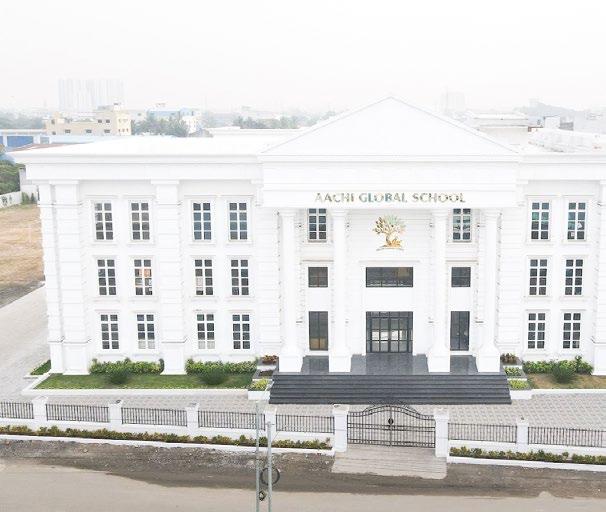
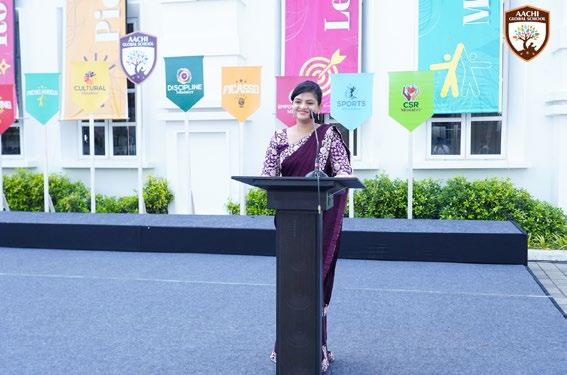


As an aspirational India looks to contribute in every aspect of the global economy and society, we are confronted with a pertinent question that begs an urgent answer. How do we prepare our children to meet these aspirations? Is our current education system inadequate to do this job?
The need of the hour is an institution in the education system that provides global education for quality learning, teaches students to be well informed and be updated with time, in a way that they are not just well educated, but well informed. Thereby, offer millennial children an opportunity to join the larger student global community as equals.
Realizing this gap in quality education as a mother and recognizing that quality education has diluted over the years, Ms. Rebekah Abhisek - Founder of Aachi Global School decided to step up and bring about a change in the current education system.
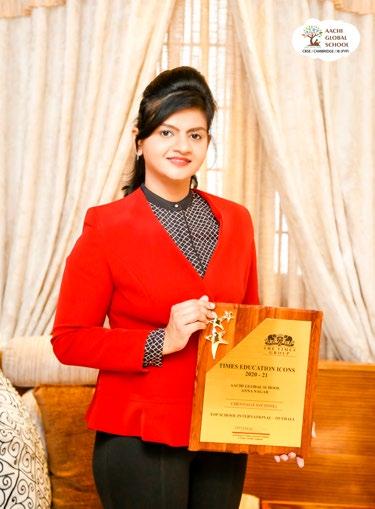
Every Mother always wants best for her child and never wants to compromise on anything related to her child. From protecting their to providing them all the comfort and qualities for a better life - a mother always wants the best of both worlds for her children. And when any of these fails to match her expectation - few like Ms. Rebekah take charge to prove the true power of a Mother’s Unconditional Love for her children.

Founder and Trustee Rebekah Abishek, says, “My journey as an educationist began with my parental anxiety, as I was looking to admit my daughter into a school with a sensible curriculum which bestowed wholesome education. I realized the inadequacies of the education that was available. That is when I decided to take charge in 2015 and launch Aachi Global School to help not just my own child, but many other children have the best education available at their disposal.”
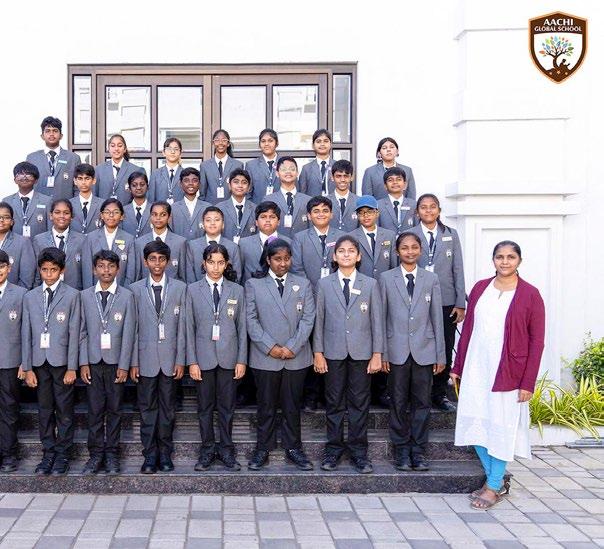


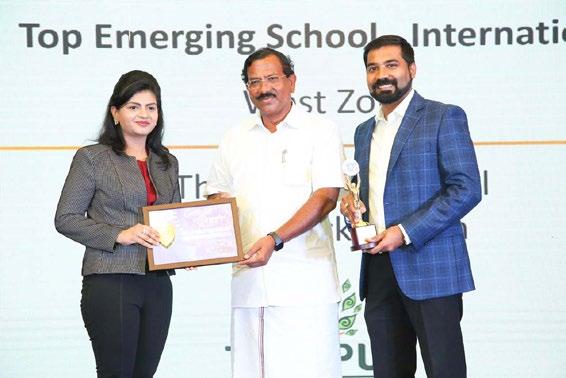
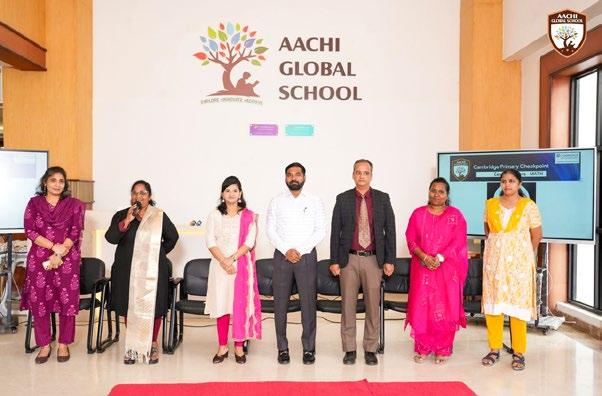
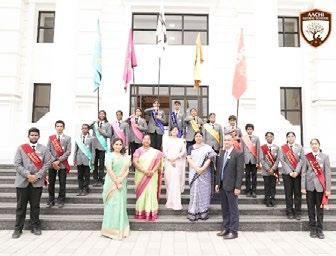
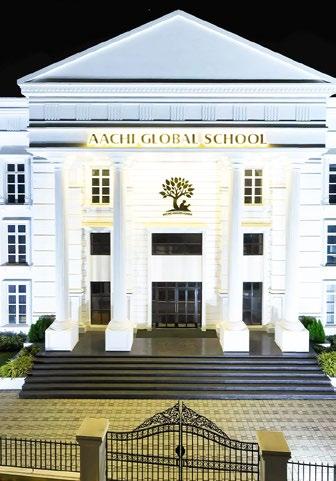

A stable, safe, healthy, comfortable and culturally relevant environment are crucial to a child’s growth. At Aachi Global School each child is made to understand their unique learning style, and the school’s way of teaching helps the children discover their creative and artistic potential. The management believes that the purpose of education is not fact accumulation but to learn by understanding. They envision the school to be a place where children are nurtured to be lifelong learners, creative thinkers and responsible global citizens.
“At Aachi Global School, we are against the rote- and exam-centric, chalk-and-talk education. I believe children need more handson experience and learning that would be helpful in their real life. We work towards creating a well-informed mind, develop their creative and critical faculties, and help them to become empathetic and caring individuals who are committed, global citizens,” Ms. Rebekah added.
Let’s face it. The world is a completely different place today, from when we were students a few years ago. The advancement of technology has completely transformed the way we learn, work, live and communicate.
“At our school all activities nurture highly valued character attributes in children. The classroom activities and educational trips encourage young minds to be inquirers and thinkers. Our curriculum focusses on enquirybased learning where children are encouraged to ask more questions, an in turn this creates an affinity towards learning. These attributes also form the bedrock upon which they can build a higher education and career suited to their talents and dispositions.”
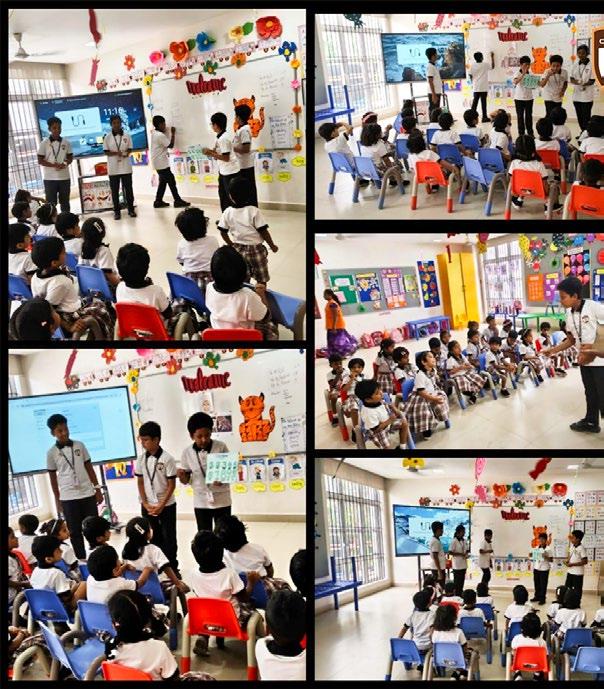

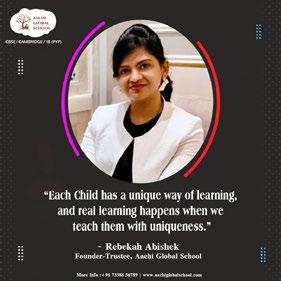
The management believes that the quality and nature of a child’s early experiences in life lay the foundation and brain architecture for all the learning and behaviour that follow. The educators act as facilitators who partner with the children, to develop explorations and extend thinking through careful observation, documentation, thoughtful questions and deep reflections.
“Right from the formative period, we instill in children the ability to adapt to change, differences in views and approaches - and how they need to work together to solve issues,” Ms. Rebekah claims.
While parents are opting for international schools when it comes to admission of their children at the beginning of schooling, is the system adaptable for those who want to shift midway? Rebekah feels that students who come from other boards might face an issue for a month or two. “They are used to a different system, where the emphasis is on memorizing. But in a span of three months, they adapt well to the new curriculum,” she says.

Education should be such that the interest in the student is nurtured. “And the curriculum we follow does evoke an interest in academics in the students. Parents come with a certain amount of trepidation and for most of them, this is an unfamiliar terrain. For instance, they are very used to the idea of homework, which isn’t followed here. But the results they see in their kids over time are reassuring.”
We regularly invite foreign faculty for seminars, as the experience encourages learning about other cultures, promotes an interest to understand the similarities and differences between cultures and also appreciate each other. We also conduct regular exhibitions for students, giving them a chance to choose a topic of their own interest, investigate, do their research with the help of the educators and deliver their findings to their parents and others. Periodic field trips are conducted so that children get the touch and feel of the environment and subject of the study.
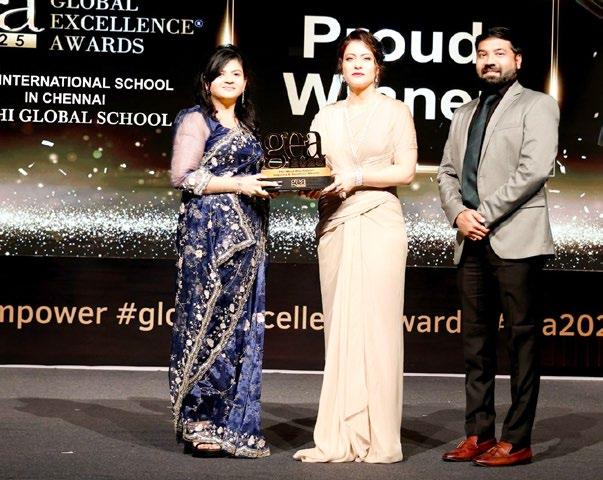
Our school offers International Baccalaureate / Cambridge and CBSE curriculum for children from Play Group to Grade VII. In the days to come, we plan to move into Cambridge syllabus also and also looking to collaborate with international brands.
“Just like the brand Aachi Food Group is synonymous with Quality, Aachi Global School will keep up with the brand values and impart good quality education. My constant endeavor is to diversify into many curriculums and make a mark across various cities,” The Founder states confidently.
Gone are the days when specific games or interests were restricted to children based on the gender. Today, as the world marches towards equality, educationalist and schools also take conscious efforts to bring up a world that believes in team work.
“At Aachi Global School, there is nothing which is gender specific. Boy or girl - they play the same games, have the experiment and activities. For instance, we teach Robotics from grade 1 in our school. Girls and boys equally long for it and enjoy it. Team work is continually emphasized here. It is up to the curriculum and the facilitator to ignite the interest in children.”



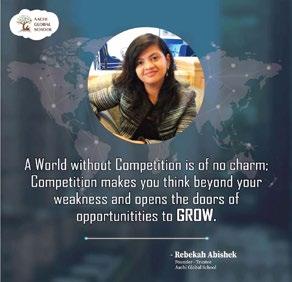
While we continue to offer world-class curriculum with life skills encompassing good manners, etiquette, moral ethics, cognitive thinking, empathy, systematic learning strategies and a structured framework, we aim to set up business schools in the days and years to come. There are universities which provide equivalent education. We should soon be collaborating with other colleges like science colleges, business schools to help children get continual access to global level of education.
In the society there are few women who are encouraged, there are few suppressed to pursue their dreams. Family support is crucial to any woman looking to spread her wings, whilst managing her responsibilities at home.
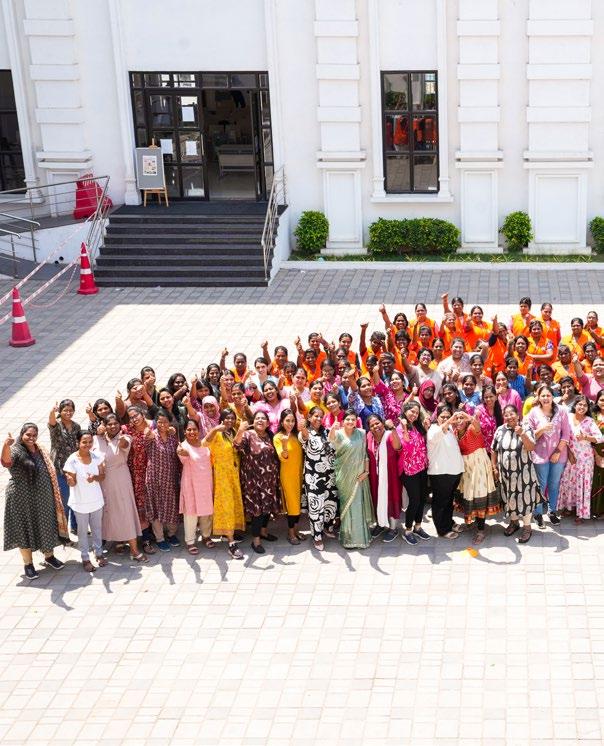
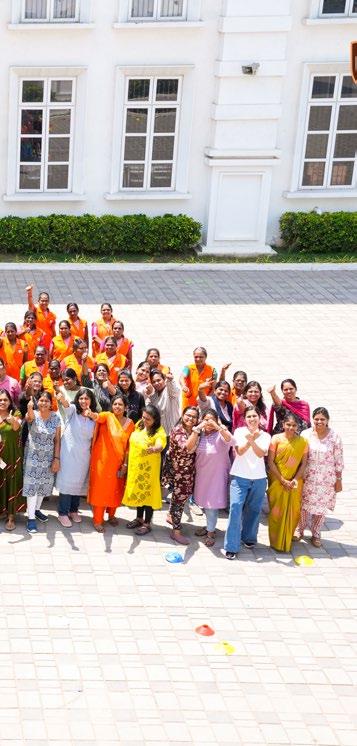
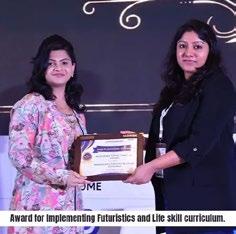
“The family support I have received, especially from my husband has been instrumental in helping me strike the perfect work-home balance and be able to achieve my dreams. Today, Aachi Global School may be a seed, but soon we will spread our branches producing socially responsible people. I am confident. This confidence comes from my family.”
Women in general are emotional beings. But understanding from a young age that one needs to look beyond emotions, to truly be successful - Ms. Rebekah always knew she would forge her way into business. “I was born in Tuticorin and brought up in a business family.So I was never fantasized by the comfort and ease of staying at home. I enjoyed balancing work and personal life. And once I got married to Abhishek and moved to Chennai, luckily, I saw the same business culture here. We discuss business over lunch and share our experiences and challenges at the table. This is how we bond,” Ms. Rebekah smiles.
There is no doubt I miss spending time with my 2 daughters. But I ensure to spend time as and when we can. I take them along to school and play a dual role - mother and teacher. It’s all about Multi-tasking and prioritizing. Women need to capitalize on individual strengths and be driven by passion. Success will automatically follow.

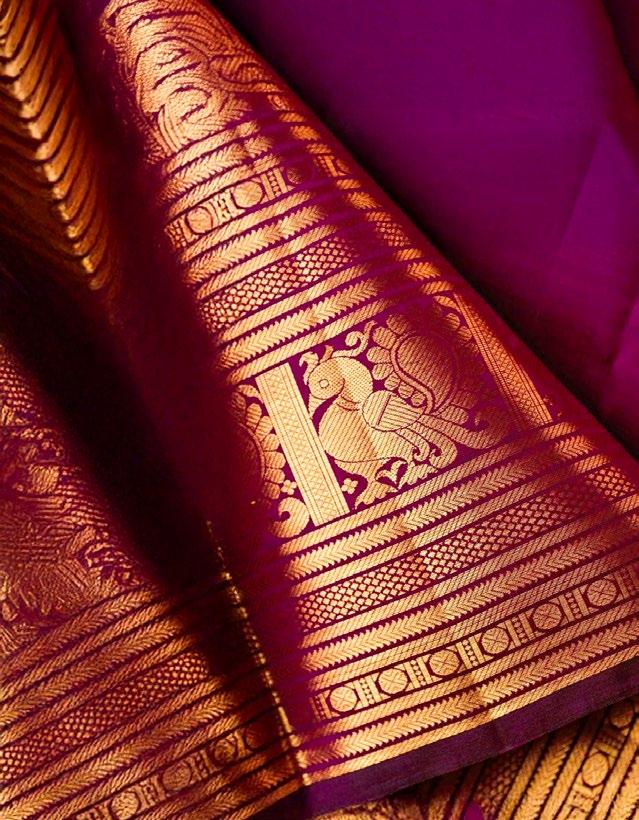
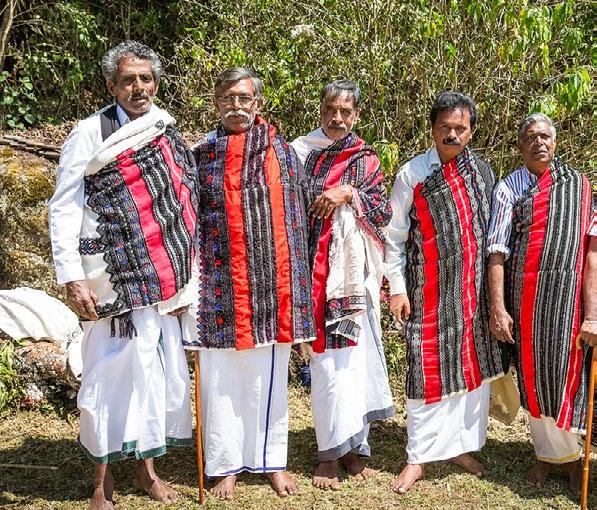
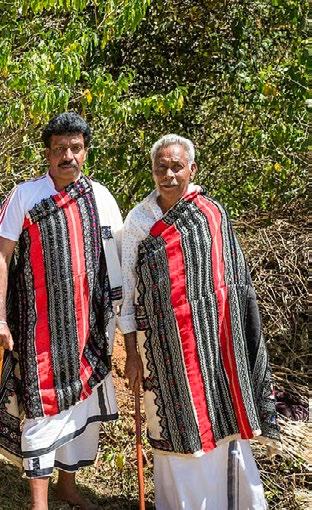
The Toda tribe are an indigenous community residing in the Nilgiri Hills of Tamil Nadu, known for their intricate art of embroidery. Tamil Nadu’s multifaceted cultural heritage comprises many local art forms beyond the state’s popular dance and music. Among the state’s treasure trove of crafts is Toda embroidery, practised by the eponymous indigenous community. The Toda tribe, an indigenous community residing in the Nilgiri Hills of Tamil Nadu, is known for its distinctive cultural practices and craftsmanship. Their intricate art of embroidery is one of the most notable aspects of their culture. Locally referred to as Pukhoor, this unique form of needlework has been passed down through generations of Toda women and remains an important part of their heritage today.

Toda embroidery, or Pukhoor, is a detailed and precise craft that involves the use of red and black acrylic wool on white or off-white cotton fabric. The designs are characterised by their geometric patterns, which are said to be inspired by both nature and mythology. The embroidery is done on both sides of the fabric, making it versatile and giving it a unique texture and appearance. This craft has endured for centuries, with its roots traced back to ancient times. Anthropological studies and early ethnographic records have mentioned Toda women engaging in this craft on the western part of the Nilgiri plateau. The embroidered motifs often appear on various textiles, such as shawls, dupattas, kurtas, pyjamas, skirts, and jackets, reflecting the diversity of the tribe’s creations. The traditional Puthukuli (shawl), which remains a symbol of grandeur, is still highly regarded in Toda culture.

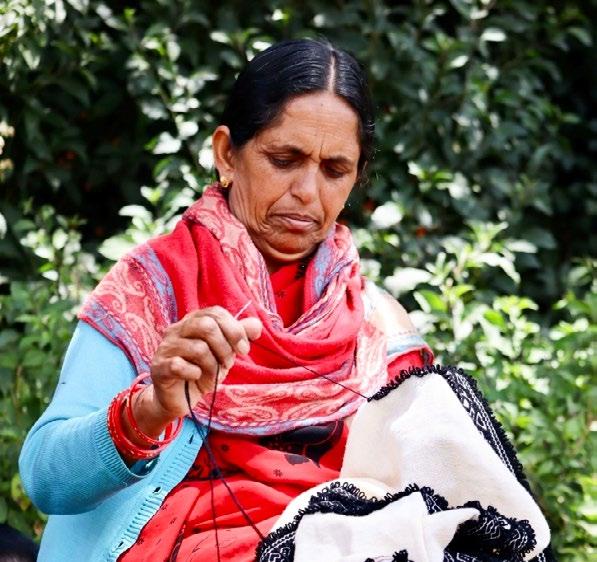
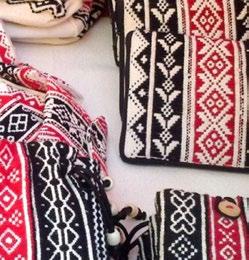

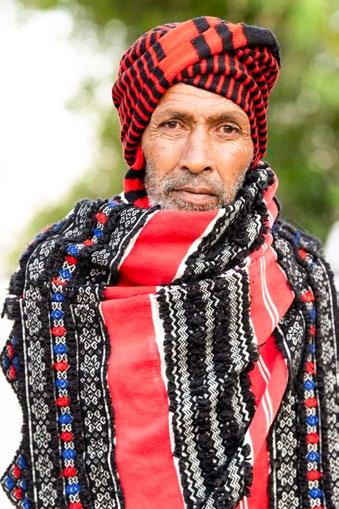
Over time, the embroidery has extended beyond traditional garments and is now also used in creating key chains, mufflers, purses, and other smaller items. These handcrafted products are sold at various prices, ranging from a modest INR 100 to INR 25,000, depending on the complexity and size of the piece.
The Todas are a small ethnic group with a population of about 1,600 people spread across 69 settlements in the Nilgiri Hills. The community primarily resides in the higher elevations of the Nilgiri plateau, an area known for its scenic beauty and unique biodiversity.Traditionally, the Todas are pastoralists, with the majority of the tribe engaged in the herding of buffaloes and cultivating the grasslands. However, the influence of modernisation and interaction with the outside world has led many to diversify into other occupations.
Although their numbers are small, the Toda tribe holds a significant place in the cultural history of the Nilgiris. They are believed to have been the original inhabitants of the region, having lived there even before the British colonisation of India. Their presence predates the 18th century, and they are considered one of the most ancient Dravidian groups in southern India.
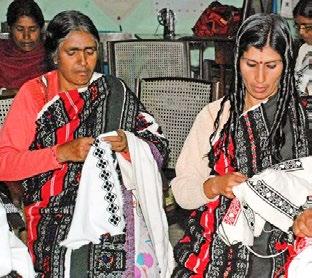
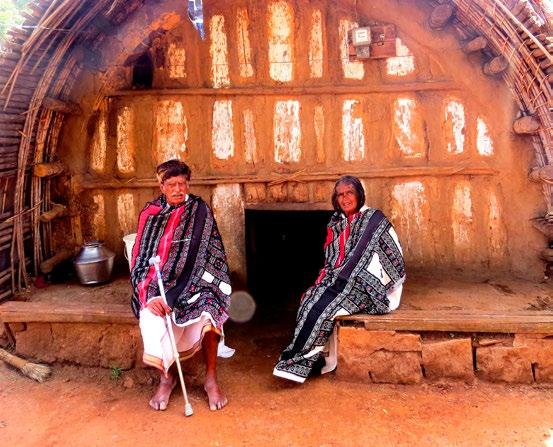
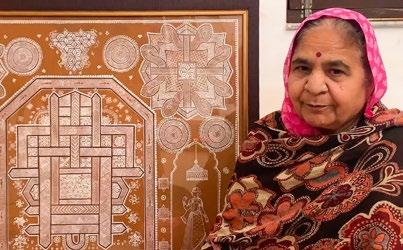
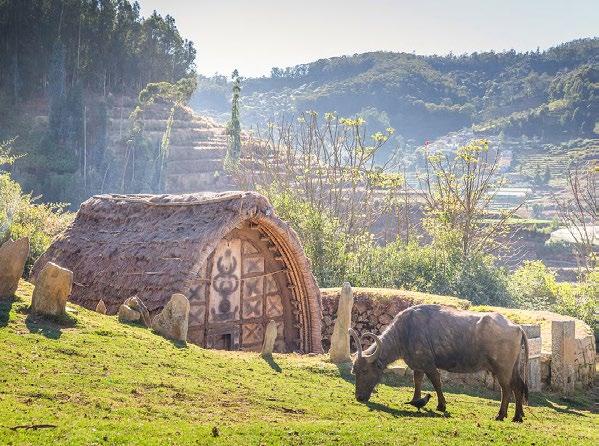
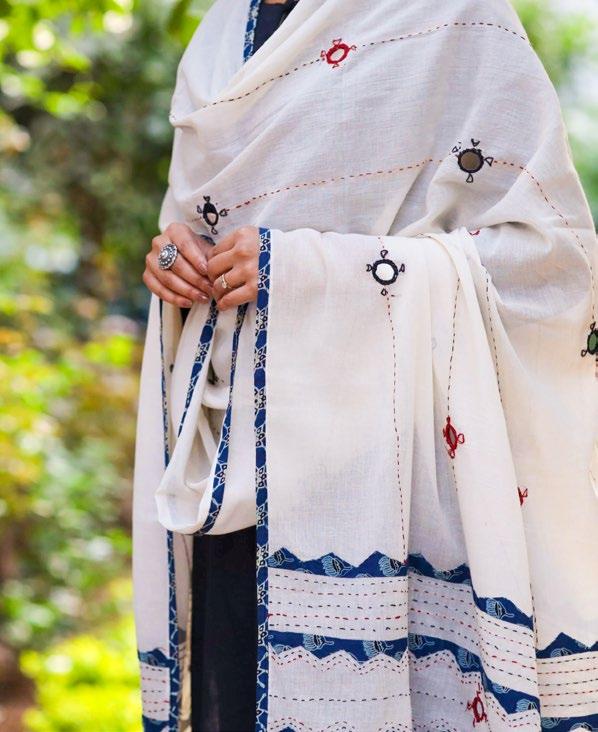
Toda embroidery plays a central role in the cultural identity of the tribe, particularly for the women who are responsible for its creation. The skill is often taught from a young age, and the intricate patterns are seen as a mark of social status within the community. Murray Emeneau, a prominent linguist, documented nine distinct Toda embroidery designs in his 1937 paper, helping preserve the knowledge of these traditional patterns for future generations. The craft is not just an artistic expression but also a means of preserving the Toda language and culture.
Aspects of mythology and daily life are embedded in the designs, giving each piece a unique cultural significance. The influence of nature is especially evident, with motifs inspired by the flora and fauna of the Nilgiri Hills. Known for its fine craftsmanship and use of natural dyes from local plants, this embroidery illustrates a commitment to tradition and sustainable practices. A visit to the Nilgiris is not complete without experiencing the life of the Toda tribe, who continue to live in traditional settlements located about 15 km from Ooty. These villages offer a glimpse into the tribe’s unique way of life, where traditional practices such as buffalo herding, agriculture, and embroidery continue to be central to their existence.
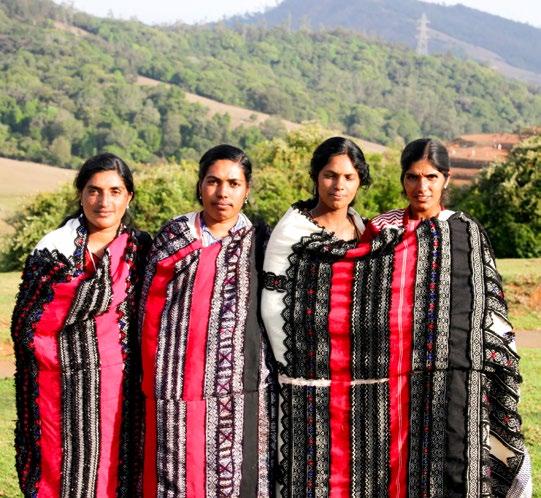
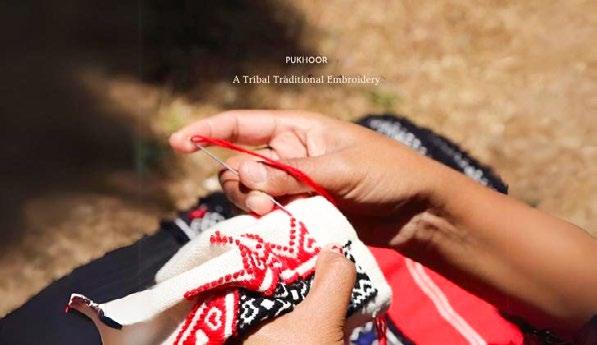
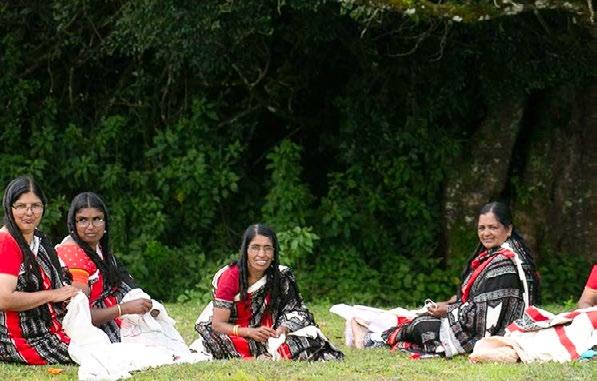
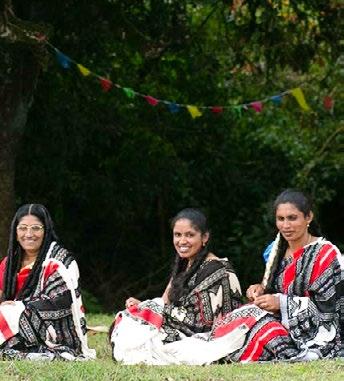
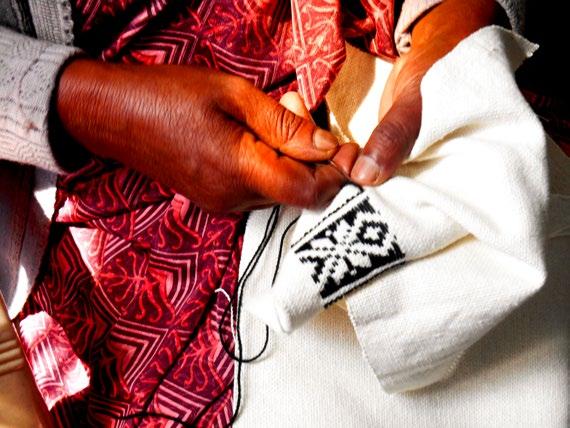
The Toda people maintain a deep connection to the forests, with their faith in the natural world influencing their lifestyle and rituals. They are knowledgeable about the forest’s plants and products, using them for medicinal and cultural purposes. Despite the challenges posed by modernisation and technological advancements, the Toda tribe has managed to retain its cultural identity, making it an important part of the heritage of Tamil Nadu.
Toda huts, called munds, are semi-barrel-shaped structures made of bamboo, cane, and grass. These huts adapt well to the high-altitude climes of the Nilgiris while also highlighting the tribe’s unique architectural style. The Toda people are deeply religious and have a temple with a thatched roof and carved entrance similar to their huts


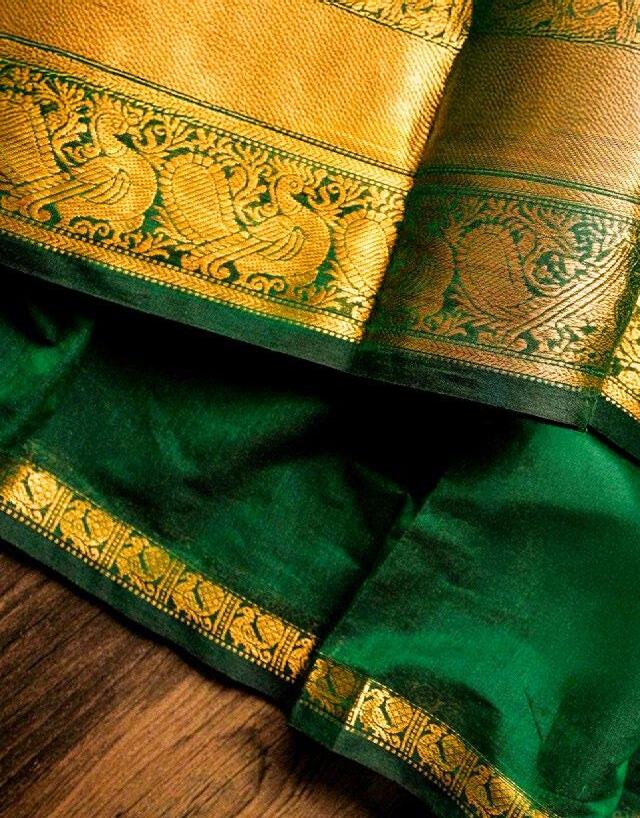
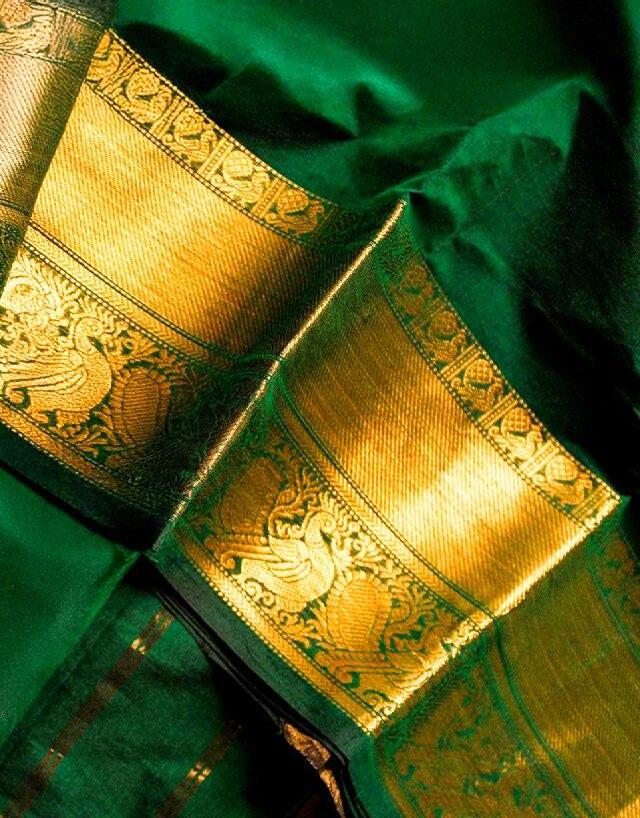
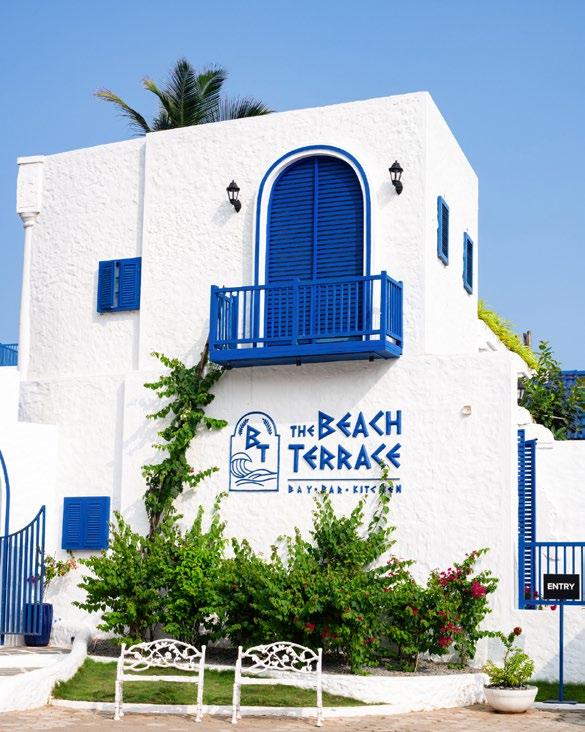
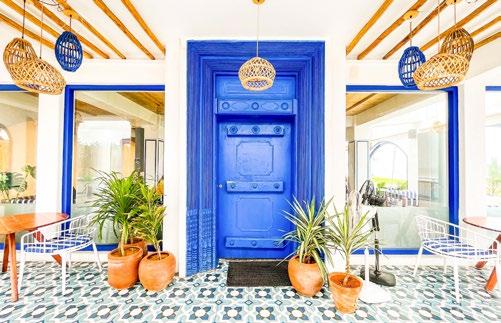
Where the charm of the Aegean meets the rhythm of Chennai’s coast, The Beach Terrace at VGP Heritage Resort invites guests to experience seaside dining and celebrations like never before. It’s not just a destination — it’s a feeling, a canvas painted with sunlight, sea breeze, and the unmistakable spirit of joy that defines Tamil Nadu’s coast.
Tucked along the scenic East Coast Road in Injambakkam, The Beach Terrace is part of the renowned VGP Heritage Resort — one of Chennai’s most beloved beachfront properties. With its distinctive Greek-inspired architecture of whitewashed walls, turquoise accents, and rustic wooden decks, it immediately transports guests to the sun-drenched terraces of Santorini. Overlooking the Bay of Bengal, the venue captures the serenity of the sea while offering an inviting, open-air ambience perfect for leisurely brunches, romantic dinners, or intimate gatherings. Whether you’re dining under the golden glow of the evening sky or celebrating under a canopy of stars, The Beach Terrace feels both luxurious and laidback — effortlessly balancing sophistication with coastal simplicity.
The first thing guests notice is the design. Everything about The Beach Terrace whispers elegance and tranquillity — from the soft white stucco walls to the pops of cobalt blue that reflect the Mediterranean aesthetic.Arched windows frame panoramic views of the ocean, while gentle sea breezes flow through the open terrace, making it a refreshing retreat from Chennai’s urban pace.
The ambience changes with the time of day. Mornings bring a soft light that makes the venue ideal for peaceful seaside breakfasts. Afternoons glow with vibrance as waves sparkle in the distance. And as dusk approaches, golden hues blend into twilight blues, turning the terrace into one of Chennai’s most romantic evening spots.
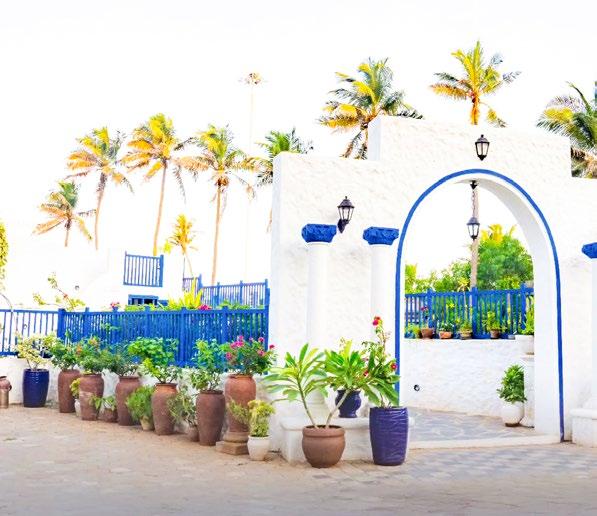


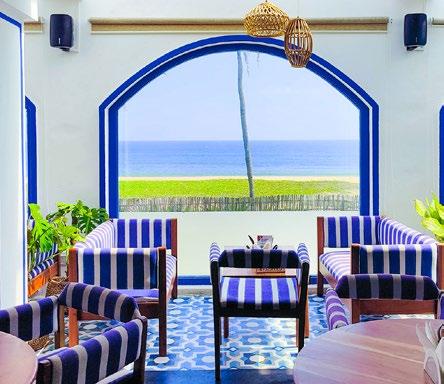
At its heart,The Beach Terrace is a culinary haven.The restaurant’s menu celebrates coastal flavours, fresh ingredients, and the creativity of its chefs. It combines Mediterranean and Indian influences, creating dishes that are both comforting and contemporary. Guests can indulge in freshly grilled seafood — think garlic-butter prawns, lemon-herb fish, and calamari tossed with olive oil and herbs — all perfectly paired with the sea view. For vegetarians, vibrant mezze platters, crisp salads, and wood-fired pizzas offer satisfying options. Signature cocktails and mocktails add a tropical twist to the experience, each crafted to match the laid-back coastal vibe.
Whether it’s a family lunch, a candle-lit date, or a sunset gathering with friends, dining at The Beach Terrace is an experience that engages all senses — the sound of waves, the taste of salt in the air, and the sight of endless blue.
Beyond being one of Chennai’s most beautiful seaside restaurants, The Beach Terrace doubles as an exclusive venue for private events. Its spacious layout and natural charm make it ideal for beach weddings, engagement ceremonies, birthday parties, or corporate gatherings. Imagine exchanging vows with the ocean as your witness, surrounded by white drapes fluttering in the breeze. Or hosting a cocktail night where guests mingle under fairy lights reflected on the sea. The Beach Terrace makes all this possible, offering not only the perfect setting but also expert event coordination through VGP Heritage Resort’s professional team. From décor and dining to music and photography, every detail can be tailored to reflect your vision.The open terrace can be transformed into a romantic paradise, a festive stage, or a classy dining space — whatever your celebration demands.
Every evening at The Beach Terrace feels like a small miracle. As the sun begins its descent over the Bay of Bengal, the sky transforms into a masterpiece of warm golds, soft pinks, and deep violets. Guests often pause their conversations just to take in the view — it’s that breathtaking. Many visitors say sunset at The Beach Terrace feels almost meditative — a perfect moment when time slows down, the world quiets, and you feel truly present. It’s no surprise that countless proposals, pre-wedding shoots, and anniversary dinners take place right here, where the horizon itself seems to bless the occasion.
The Beach Terrace carries the proud legacy of the VGP Group, a name deeply woven into Chennai’s cultural and hospitality fabric. Known for creating memorable experiences — from the iconic VGP Universal Kingdom amusement park to the Heritage Resort — the group’s philosophy of heartfelt service shines through at every level.The staff at The Beach Terrace embody Tamil Nadu’s signature warmth. Guests are greeted with genuine smiles and attentive care, ensuring comfort from arrival to departure. Whether it’s helping plan a surprise dinner or curating a custom menu, the team goes above and beyond to make every visit extraordinary.
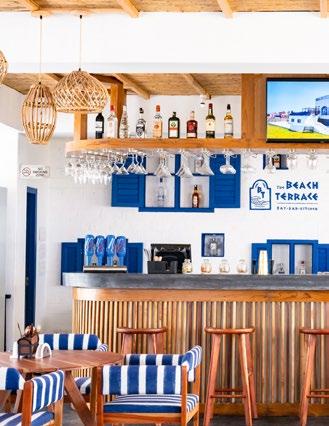
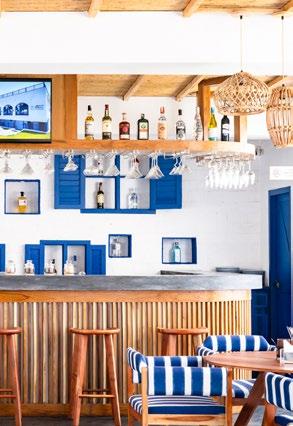



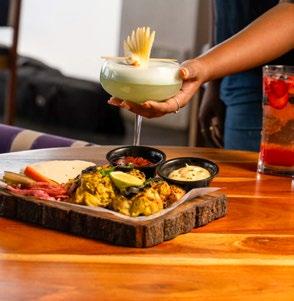
For photographers and social-media lovers,The Beach Terrace is a dream come true. Every corner seems designed for the perfect shot — from the white-and-blue architecture reminiscent of the Greek Isles to the sweeping ocean views. Brides in pastel lehengas, couples in flowing attire, and groups of friends often capture their best moments here against the glowing backdrop of the sea. The combination of natural light and minimal décor makes every frame radiant and timeless. Whether it’s a pre-wedding shoot, lifestyle feature, or fashion editorial, The Beach Terrace’s setting effortlessly elevates every photograph — earning it a reputation as one of Chennai’s most “Instagrammable” coastal spots.
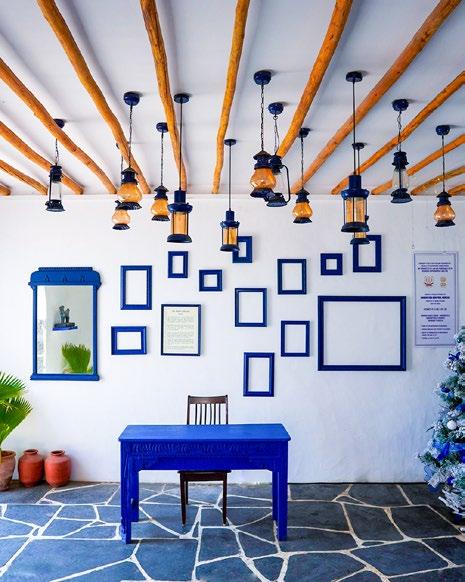

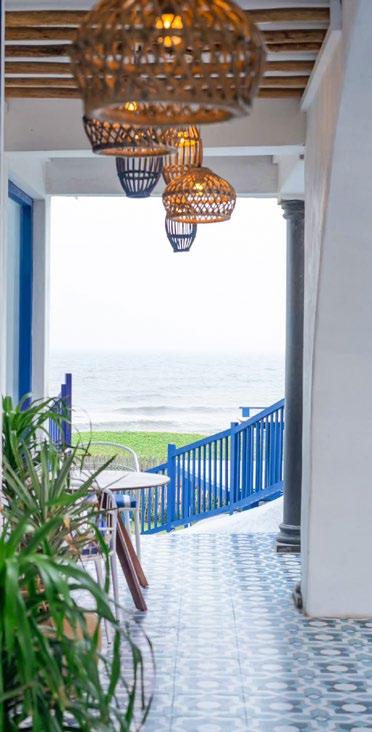

Part of the charm of The Beach Terrace lies in its location within the VGP Heritage Resort. Guests can extend their experience with a stay in the resort’s charming cottages, designed in traditional South Indian style with all modern comforts. The lush greenery, serene walkways, and private beach access make it a perfect weekend getaway. The resort also features a swimming pool, spa services, and cultural décor that pay tribute to Tamil Nadu’s artistic heritage. Together, these elements create an experience that blends local tradition with global elegance — making The Beach Terrace not just a dining venue but a complete coastal retreat.
What truly defines The Beach Terrace is the emotion it evokes. It’s a place where laughter mingles with the sound of the waves, where fine food meets fresh air, and where every guest feels connected — to nature, to joy, and to each other. For locals, it’s a serene escape within the city. For travellers, it’s a discovery that encapsulates the best of Chennai’s coastal charm.And for those who come to celebrate, it becomes a memory etched in sunlight and sea breeze.
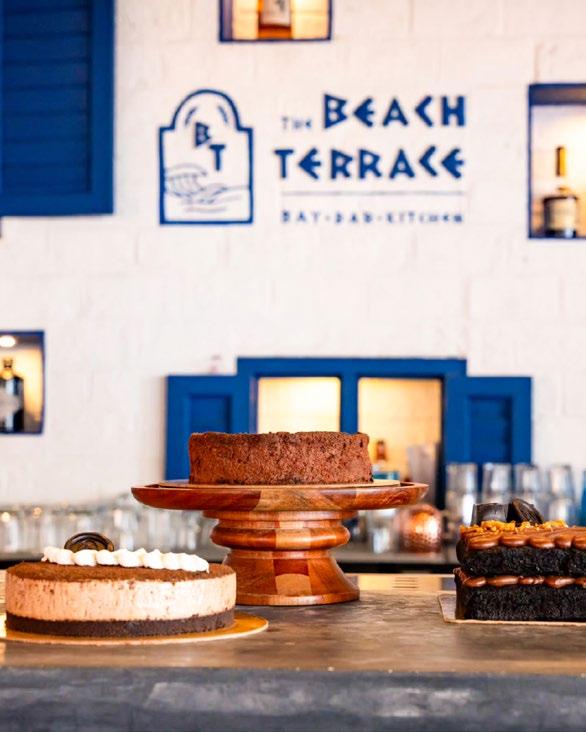

In a city that thrives on culture, community, and coastline, The Beach Terrace at VGP Heritage Resort stands out as a rare gem. It brings together the sophistication of a world-class seaside destination and the warmth of Chennai’s hospitality. Here, the ocean isn’t just a view — it’s a part of the experience. Each wave carries the promise of celebration, each breeze a whisper of joy. Whether you visit for a meal, a moment, or a milestone, The Beach Terrace ensures that you leave with the gentle rhythm of the sea still echoing in your heart.
The Beach Terrace at VGP Heritage Resort — where Chennai meets the Mediterranean, and every sunset tells a story.



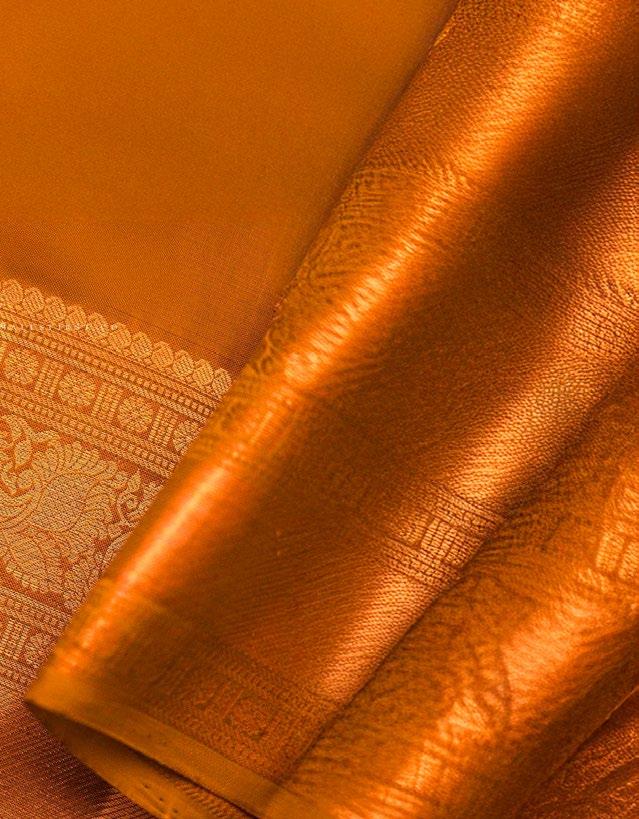
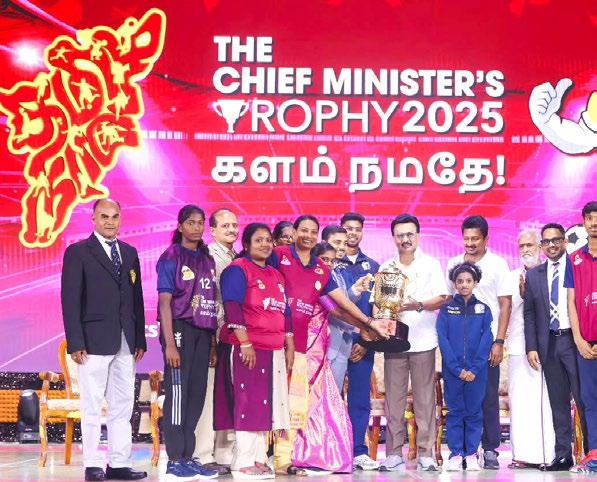
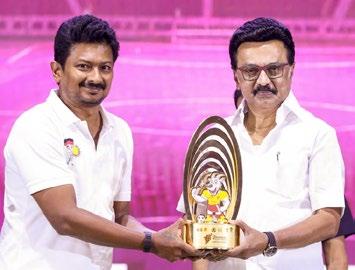
Tamil Nadu Chief Minister M K Stalin on Oct 14 said funds allocated to develop the sports infrastructure in the state increased to Rs 1,945.7 crore. During the previous AIADMK regime, Rs 170.33 crore was allotted in its five year rule, he said. Participating at the valedictory ceremony of the Tamil Nadu Chief Minister’s Trophy 2025, here, he congratulated Deputy Chief Minister Udhayanidhi Stalin for organising the event and in identifying the sporting talents in the state.
Praising Youth Welfare and Sports Development, Additional Chief Secretary Atulya Misra, and other officials for conducting the ceremony in a grand manner, Stalin said, “Tamil Nadu sports is in its golden age under the Dravidian Model rule (of the government).” “Whether it is international level games or national level competitions,Tamil Nadu has progressed to conduct such events..., “ he remarked. Citing Udhayanidhi’s comments in the event that the government has achieved top rank in every departments during the last four years, the CM said, “We also recorded the highest double digit economic growth of 11.19 per cent which no other state has achieved so far.” “For the development of the sports infrastructure in the state, during the previous AIADMK regime a sum of Rs 170.33 crore funds were allotted. But in the last four years of DMK rule, Rs 601.38 crore has been allotted. In total, we have allotted Rs 1,945.7 crore till date,” he said. Stalin on the occasion also launched the Chief
Minister’s Sportsperson’s Medical Insurance Scheme, aimed at providing medical insurance coverage to sportspersons. With a premium insurance coverage of Rs 5 lakh, it would cover 25,000 sports personalities who suffer injuries during games. Chennai emerged as the overall champions finishing at the top across various events at the Chief Minister’s Trophy 2025. Earlier in his address, Udhayanidhi, who also holds the Youth Welfare, Sports Development portfolio, said, to make Tamil Nadu become a ‘No 1’ state in the country, former Chief Minister and DMK patriarch M Karunanidhi had formed a separate ministry for the sports department. “It is because of Dr Kalaignar (M Karunanidhi’s) initiative, today Tamil Nadu has become No 1 state in sports as well. An apt example for that is the today’s Chief Minister’s Trophy 2025,” he said. On conducting the event, Udhayanidhi said the government allotted Rs 84 crore as funds of which Rs 37 crore has been earmarked as the prize money.
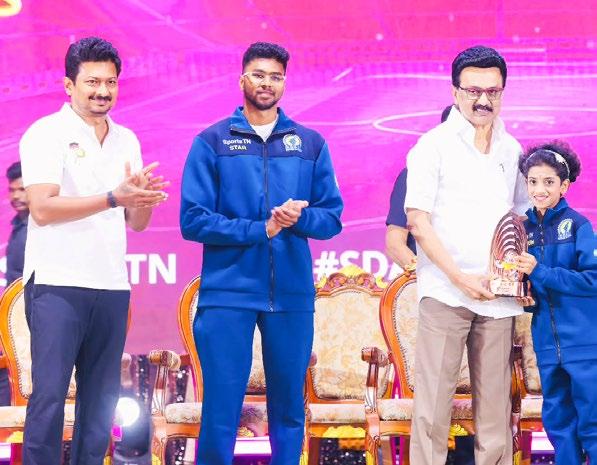
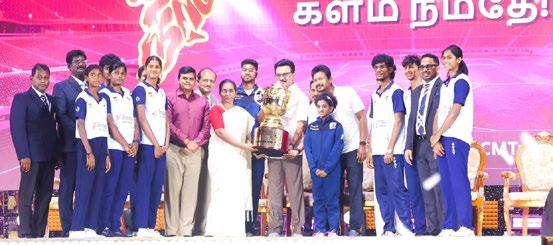
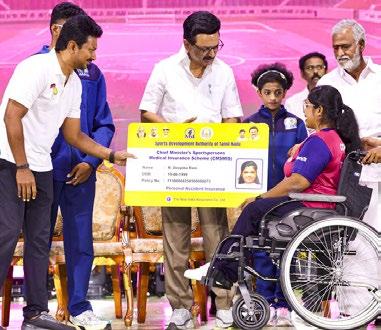
Referring to the previous edition of the CM Trophy conducted in 2023, he noted that only 4 lakh athletes took part, whereas it surged to 16 lakh in the 2025 edition. “From this you will be able to understand how well the event has been received among the public,” he said. “The vision of this event is to bring out the hidden sporting talents of people in sports. The Chief Minister’s Trophy 2025 is a launch pad to every sportsperson in the state which would enable them to compete at the national and international level competitions,” he added. PTI VIJ KH
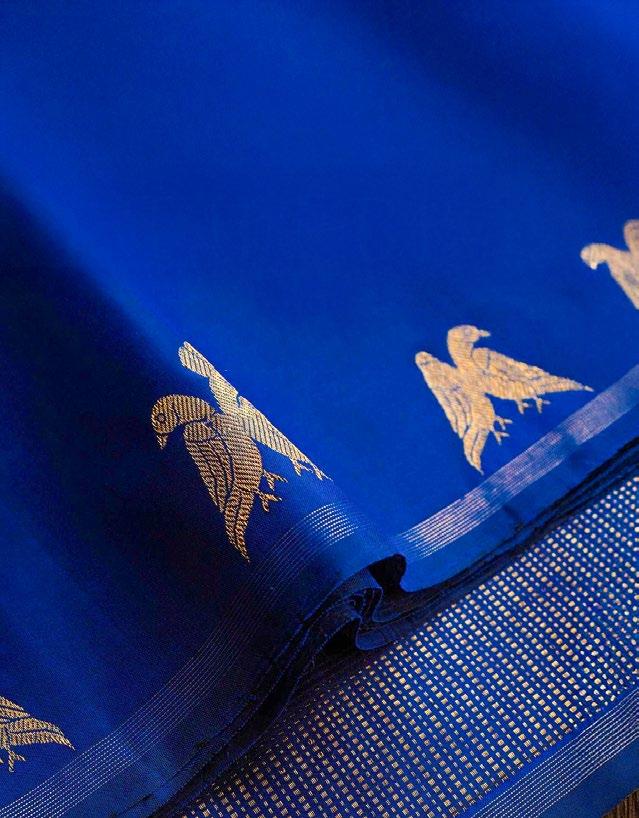
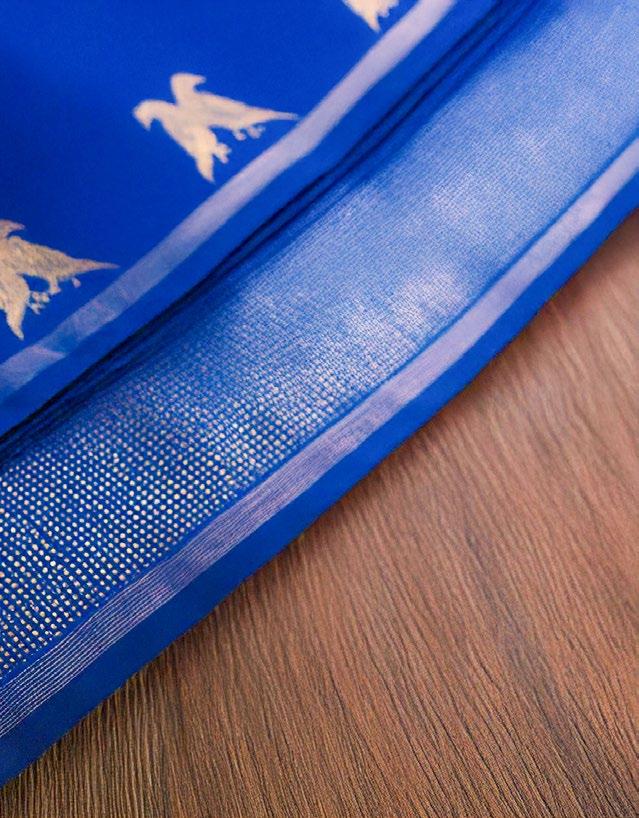

ADoctor’s life is a fascinating journey. One with several ups and downs, of feelings and emotions, and yet, one that makes a difference in the lives of many. There is such immense trust and undeniable faith in doctors, that we don’t hesitate to place our precious lives in their hands. Because their hands are the ones that give hope, heal and truly
spread happiness. Undoubtedly, the medical profession was, is and will remain the most noble profession. It’s invigorating, more so in the life as an obstetrician and gynecologist -because they deal with not just one, but two lives - the baby and the mother. It is said that the last 10cm journey through the birth canal is one of the most difficult journeys that a human being ever undertakes in their life.
Facilitating this journey, making it comfortable with all the experience and skill - the magnitude of efforts, their compassion, care and the patience an obstetrician has is truly commendable. One such individual committed to her medical profession and inspiring patients with her optimism – Dr G Buvaneswari, Infertility Specialist & Laparoscopic Surgeon, at GBR Clinic Fertility Center – works relentlessly to promote a healthy lifestyle and wellbeing.
There’s no single, one quality that makes a good and perfect doctor. Being a doctor means much more than just dispensing pills or to repair flesh. Unlike just any other profession where an individual is judged by the mere end results, to be a good doctor requires the enthusiasm and intense desire to truly touch lives. Dr. Buvaneswari strongly believes that the profession of medicine is not just a job, but a calling. “It’s vital that you have the passion and dedication. We as doctors, have the highest ideals and standards to uphold. We can do this only when we are driven by passion, and by doing so, we can sail through the medical careers gracefully.”
Hailing from a small village in RajapalayamTamil Nadu, Dr. Buvaneswari comes from a family of Teachers. While most people in the village took to agriculture and farming, her father who was a teacher imparting education in a government school, always wanted his children to be well educated and become doctors to serve the people. The youngest of 4 siblings, she grew up watching her father make a difference in lives. Aspiring to be like her father who could attract people with his knowledge, gain name and fame and make a mark for himself with his commitment, dedication and zeal, she was determined from a young age that she would follow his footsteps and whole-heartedly touch lives with her hard work and diligence.
Dreaming to see Dr. Buvaneswari as a successful doctor, her father always wanted her to receive the best of education, knowledge and wisdom, to be able to serve better. He envisioned her as

a student of Christian Medical College (CMC), Vellore, which was considered one of the best institutions of its time. While she couldn’t manage to get a seat for graduation, she started the journey of her college at Government Medical College. Suddenly losing her father during the last year of graduation, she knew she wanted to fulfill his dream of being at CMC. She began her internship there and eventually completed her Post-Graduation in fertility at CMC - Vellore, not defaulting in realizing her father’s dream.
It is said the opting for the right institute not just makes your investment worthwhile, but it can be truly life changing experience. Dr. Buvaneswari’s journey at CMC helped her form a new outlook towards everything in her life. She believes it was her sojourn at CMC, even when just an intern, that she decided to become a gynecologist.
Beyond just imbibing in her the right value and ethics, which she considers as the foundation of her career, the institute taught her the importance of never losing principle in any environment. “My learnings at CMC will stay with me throughout and serve the purpose of my Life.”
It is not an exaggeration to say that a great teacher can change a student’s life. Because the best teachers are committed to their students’ well-being, encourage them, motivate them and ensure they drive success beyond term papers and standardized tests.
Dr. Buvaneswari considers herself blessed to be able to meet the finest and most eminent faculty at CMC, who she believes were the ones who shaped her and helped her attain her goals. Recalling a few names, she says “A few teachers like Lakshmi Seshadri and Dr. George have brought about a major shift in my life. From dedication to enthusiasm and maintaining ethics - they have influenced me greatly. I’m so glad I met them at CMC, who dint just train me but made me realize my true calling.”
Dr. G Buvaneswari has undergone training and has acquired the requisite skill and expertise from some of the prestigious medical centres across the globe, which include Bourn Hall Clinic, Cambridge, UK; Kiel School of Endoscopy, Germany; Gleneagles Hospital, Singapore apart from CMC Hospital, Vellore, India.
She believes each of the institutions to have contributed significantly towards her goal. “While CMC instilled in me values, principles, discipline and knowledge, Kiel help me get adept with technology and maintain safety standards. At Cambridge, I gained the understanding of superior IVF treatments and quality maintenance. With this bundle of knowledge, exposure and insights, I gained the confidence to start my own unit.”
What is a well-established fertility center sprawling over a large expanse and with branches, initially began at a 1000 sq. ft space in Mogappair in 2005. Having learnt the ropes and garnering the needed exposure in her field, Dr. Buvaneswari knew it was about time she gave birth to GBR Clinic.
Although she worked at various fertility centres immediately after her postgraduation, she couldn’t agree on trading her principles or deal with a corporate management, and kick started her journey by herself. Soon word spread about her exceptional treatment and had patients coming from various parts of the country and world. She also had Russian Embassy patients coming to her for treatment even in her small set up. She also holds to her credit successful treatment of the first Russian couple to have their test tube baby and deliver twins through her IVF treatment.
At a time when a lot is spoken about Indian Medical system and doctors, Dr. Buvaneswari believes in always providing patients with the best available treatment, irrespective of any situation or factors. “Quite a few people doctors assume that the patients may not be able to afford treatment and opt for low quality treatment. I give my patients the confidence by delivering the best treatment and results. I will never compromise on the quality of my treatment, or on my principles. This is what every patient, whether in India or abroad, wants and needs.”
Modern day lifestyles bring advanced issues on the forefront. As more people wait longer to start growing their families, the prevalence of infertility is likely to rise. Women are not the only one who can suffer from infertility. Men are equally prone to infertility issues given our modern-day lifestyles and habits.
“I believe more than the lifestyle; it is the attitude of people that is causing high infertility. Half the infertility issues will be eased if people began to plan early, rather than waiting to settle financially and stress about their jobs and responsibilities.”
In women we see an increase in the cases of PCOD (Poly Cystic Ovarian Disease), obesity and subsequent hormonal changes. Lack of sleep, proper diet and exercise, long hours of work are triggers that have changed the hormonal milieu. Women as young as 23-24 years have diabetes today. In men, lifestyle changes have caused sexual dysfunction, lowered semen count, no sperm, lack of intimacy, premature ejaculation – all from having high levels of stress. “At GBR, many patients come to us after failed treatments. They know our personalized care and treatment will help them solve the problem. The key reason for failed IVF procedures is the lack of proper evaluation. We understand one’s health, hormonal functions and identify the problem, instead of randomly prescribing treatment. This helps us yield better results and success.”
The common misconceptions people have, are thinking that a fertility clinic should be visited only if you want to undergo IVF (In Vitro Fertilization) to conceive. On the contrary, patients have to meet reproductive consultant, lifestyle doctors and counsellors to clearly know their health. “At GBR, we have a totally different view of fertility.
We give health seekers a complete and thorough evaluation of their reproductive health. I counsel young girls once attain puberty, help them understand the importance of health and help them look into the future. We also conduct pre-marital counselling and impress upon them the effects of lifestyle disorders and encourage early planning. In honesty, this would go a long way in preventing infertility.”
Wide Range of Treatments Under One Roof
GBR offers a wide range of treatments including Laparoscopy, Hysteroscopy, IVF, IUI (Intra Uterine Insemination), LASER treatments, ICSI (Intracytoplasmic Sperm Injection), Assisted Reproductive Technology, Laser Assisted Hatching, Freezing & Vitrification, Donor Programs, Surrogacy, Embryo Adoption and Male Infertility treatments. With personalized care, shorter waiting, lesser cost and higher success rates, they diagnose every patient and have a team of specialists related to the patients visit the center. This includes diabetologists, endocrinologists and various other specialists.
“We don’t want our patients to be running around in search of experts. We have a team of well trained and knowledgeable doctors offer their services at our center. This makes the entire procedure hassle-free and convenient for the patients. To put it in simple words, we are a super specialty hospital offer multi-specialty services.”

Since the outbreak of the coronavirus and the announcement of the lockdown, various fertility centres were shut. While smaller clinics did feel the financial pinch, hospitals like GBR offered the best of services including isolation for their patients. All SOPs and government guidelines were strictly adhered to, ensuring patient safety at all times.
“The Covid era is definitely challenging for almost everybody. But surprisingly, it helped us in ways we never expected. While we were apprehensive if we could manage the fear, none of our patients had even an iota of fear during treatment. It was very encouraging to see their faith in us, and gave us the confidence. We were
consulting at least 4 new patients every day online. In fact, many couples looked at this phase to plan and complete their treatment as they had ample time.”
From a single owned hospital, GBR Fertility now has joined hands with one of Chennai’s leading hospitals Rela Institute & Medical Centre, with a vision to serve more patients. “At GBR Fertility, we will collaborate with people who share our vision and principles. Never compromising on our quality, we look at this collaboration to bring more success to a large section of the society.”
Over a course of time, GBR Fertility intends to set up more centres offering holistic care for its patients, similar to their existing model. While this expansion is on the cards, Dr. Buvaneswari is very particular on her parameters for expansion and collaboration.
“Many institutes from across the country have approached us to help them bring up their treatment standards. We insist on quality, standards and principles. We also plan to have a fertility village set up. Similar to a retreat, patients can come and return with healthy babies. We have major plans for the future, and hope to touch and enhance as many lives as possible.”
There is no greater joy than being connecting to your family and having them as a support system. Not only is it reinforcing, but contributes to happiness, mental health and performance. “I have been fortunate to have my mom support me through every stage in my life. And later post marriage, my husband has been my Rock of Gibraltar. He stood by me in every decision. In fact, with his extensive technical knowledge, we have built a world class IVF lab at our center. This lab distinguishes us from the rest, and none of this would have been possible without him.”
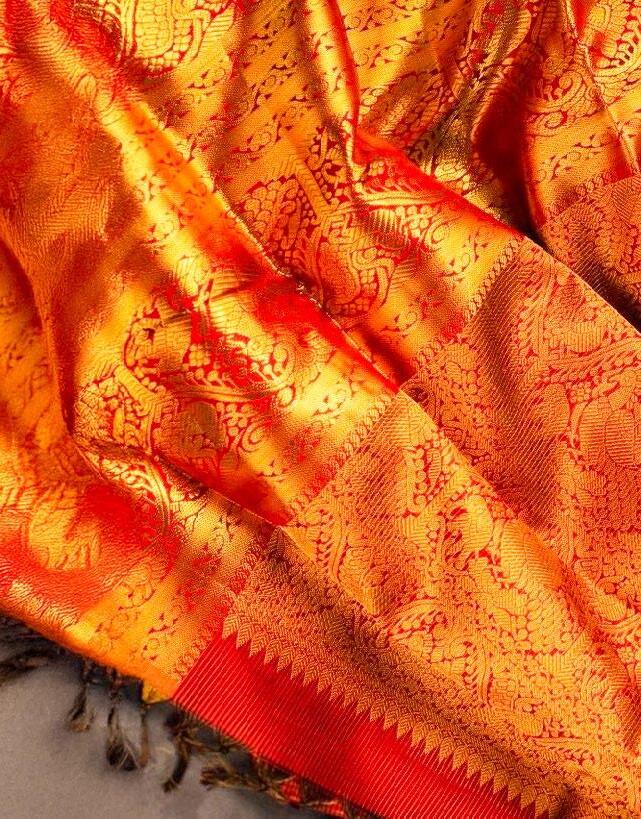

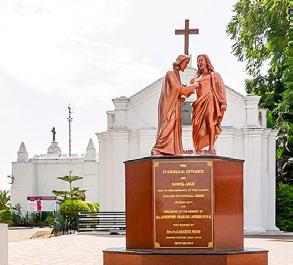
St. Thomas Mount Church, located in Chennai, Tamil Nadu, is one of the most revered Christian pilgrimage sites in India and among the oldest places of continuous Christian worship in the country. Officially known as the Church of Our Lady of Expectation, it stands on a small rocky hill known as St. Thomas Mount, rising quietly above the surrounding landscape near the modern suburb of Guindy. The site is believed to mark the very place where St. Thomas the Apostle, one of the twelve disciples of Jesus Christ, was martyred around AD 72, thus sealing his mission of spreading Christianity in the Indian subcontinent with his own blood. For nearly two millennia, this modest hill has been venerated by Christians from across India and beyond. What makes St. Thomas Mount Church remarkable is not merely its antiquity, but its continuous thread of faith — a site where legend, devotion, and history coexist harmoniously. Though rebuilt and restored over the centuries, the hilltop shrine retains a sacred stillness that connects the present to the apostolic age, making it a cornerstone of India’s Christian heritage.

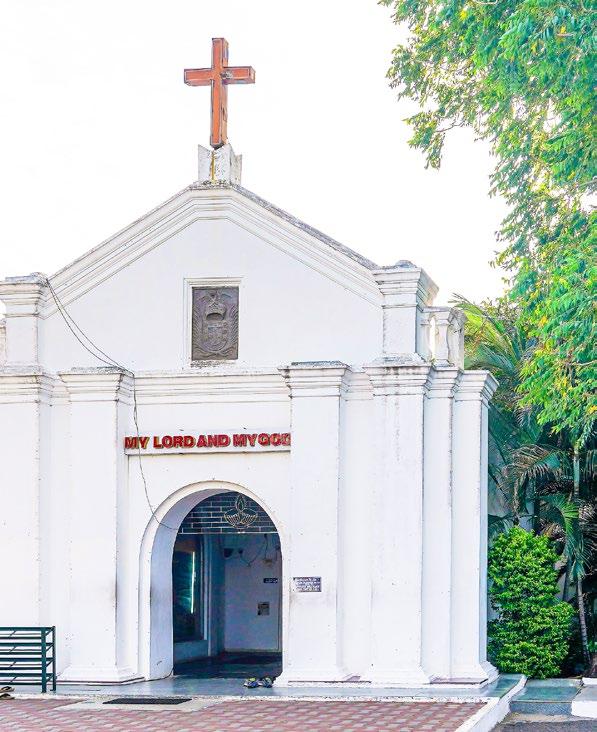

According to early Christian tradition and ancient writings, St. Thomas the Apostle journeyed to India after the resurrection of Christ. His travels brought him first to the Malabar Coast (present-day Kerala), where he preached, baptized converts, and established several Christian communities. These early believers, known as the St. Thomas Christians, have preserved his legacy for generations.
After many years on the western coast, Thomas is said to have traveled eastward across the peninsula, reaching the Coromandel Coast of Tamil Nadu. Here, he continued his ministry in and around Mylapore (modern-day Chennai). Local tradition holds that he lived in a cave at the foot of a small rocky hill — now called St.Thomas Mount — where he spent his final days in prayer and contemplation. In about AD 72, according to legend, he was attacked and killed by soldiers of a local chieftain while praying before a stone cross on the hill. The rock on which he knelt is believed to bear the faint impression of his knees, and a small cross carved into the stone is said to have been made by his own hands. This very spot would later become the site of the church that still stands today, enshrining one of the most sacred memories in Indian Christianity.
By the time the Portuguese reached the coast of Mylapore in the early sixteenth century, the story of St. Thomas’s martyrdom was still alive among the local Christian communities. Mylapore was already known to European travelers through ancient records such as the “Acts of Thomas” and early merchant accounts that mentioned the Apostle’s tomb. When the Portuguese explorers arrived around 1517, they sought out the places connected to Thomas’s life and death. Guided by local Christians, they climbed the hill that tradition held as the site of his martyrdom. Moved by its sanctity, they decided to build a church on the summit to honor both the Virgin Mary and St. Thomas the Apostle. In 1523, they completed the Church of Our Lady of Expectation, dedicating it to the Virgin Mary under the title that symbolized her anticipation of the birth of Christ. The choice of dedication was deeply symbolic — Mary’s patience and faith during her waiting period mirrored the perseverance of India’s early Christians who had kept their faith alive through centuries of obscurity.
This simple white chapel, built with local stone and lime, soon became a beacon for sailors, travelers, and missionaries along the Coromandel Coast. From its vantage point, the church offered not only a view of the sea but also a spiritual refuge, linking Europe’s new missionaries with India’s ancient Christian roots.
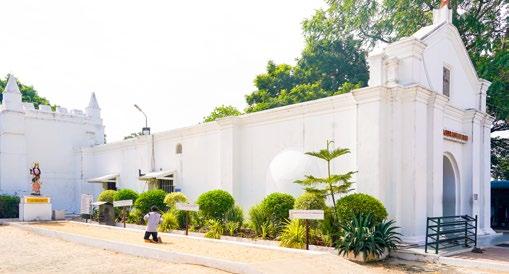
The architecture of the St. Thomas Mount Church reflects the modest elegance of early Portuguese ecclesiastical design, characterized by simplicity and solidity rather than grandeur. The church was constructed from locally quarried stone, lime mortar, and wood — materials readily available and suited to the tropical climate of Tamil Nadu. The structure follows a rectangular plan, with a single nave leading to a small sanctuary. Its walls are thick and whitewashed, providing natural insulation against heat. The sloping tiled roof, a feature common in coastal Portuguese architecture, efficiently channels monsoon rains. A small dome crowns the sanctuary, and arched windows open to the breeze, filling the interior with soft light.
Inside, the church maintains a sense of intimacy and peace. Wooden pews line the aisle, worn smooth by centuries of worshippers. The altar, simple yet dignified, stands directly over the stone believed to mark the site of St. Thomas’s martyrdom. The sanctuary houses the revered image of Our Lady of Expectation, depicted in traditional iconography holding the infant Jesus with gentle grace. Over the years, minor restorations and additions have been made, but the church’s original sixteenth-century character remains preserved. Its charm lies in its restraint — the architecture invites contemplation rather than awe, embodying a spirituality rooted in humility.
Among the most precious treasures preserved within the church is an ancient painting of the Virgin Mary and Child, regarded as miraculous by the faithful. Tradition claims that this image was brought to India by St. Thomas himself, making it one of the earliest Christian artifacts in the country.
The painting, executed in a Byzantine style, shows the Virgin seated with the Christ Child upon her lap, surrounded by a faint golden aura. The faces are rendered with elongated eyes and delicate expressions typical of early Eastern Christian art. Though scholars debate its exact origin, many art historians agree that it bears striking resemblance to icons from the Syrian or Persian Christian tradition, lending credence to the claim that it may have Eastern roots predating the Portuguese era.
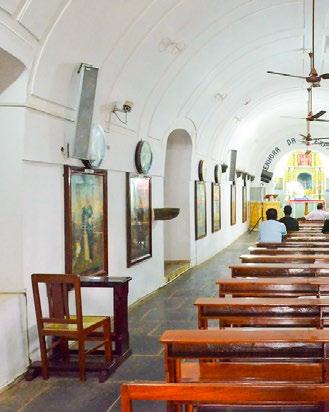

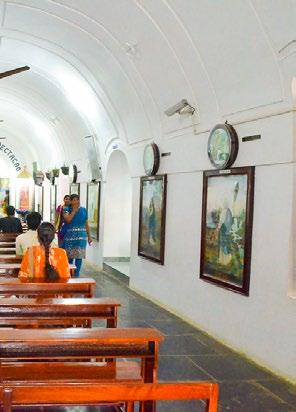
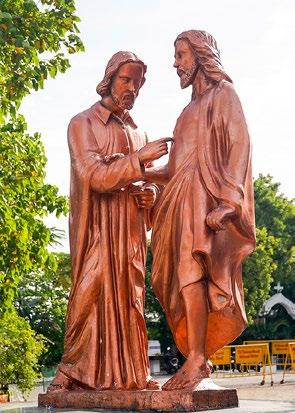
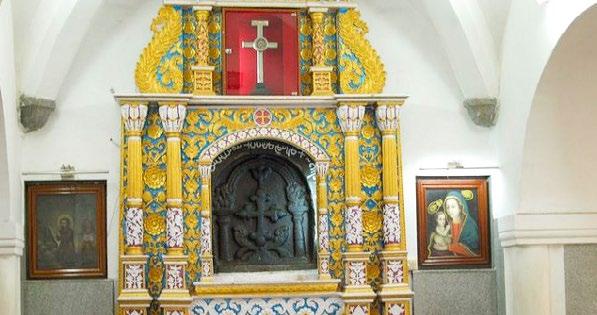
This sacred painting, displayed above the main altar, became the focal point of Marian devotion on the mount. Over the centuries, countless pilgrims have knelt before it, offering prayers for protection, health, and family blessings. Women in particular come to seek the intercession of Our Lady of Expectation, drawing spiritual comfort from the Virgin’s maternal image.
Directly beneath the altar of the church lies the ancient stone on which St. Thomas is believed to have knelt in his final prayer. Carved upon its surface is a small cross — rough and simple, said to have been engraved by the apostle himself. Early Portuguese accounts describe this cross as possessing miraculous properties, claiming that it once emitted light and that drops of blood appeared upon it.
Whether these phenomena were symbolic or real, the veneration of this cross has been central to the shrine’s identity. For the faithful, it represents the ultimate witness of sacrifice — a sign of divine endurance carved by the very hand of the martyr. The stone, protected beneath the altar, serves as a tangible link to the earliest days of Christianity in India.
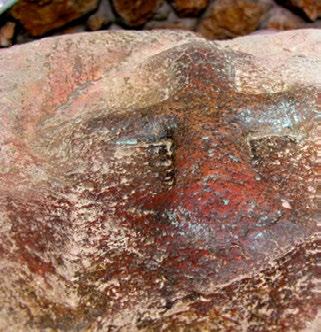

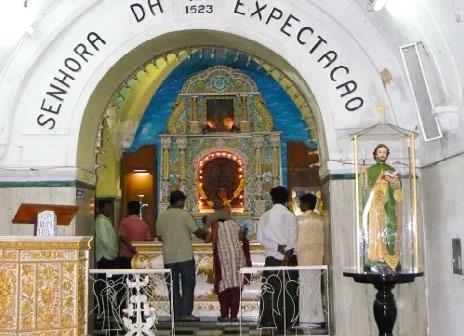
Access to the mount was not always easy. In earlier centuries, the path up the hill was steep and rugged. In the eighteenth century, a benevolent Armenian merchant named Coja Petrus Uscan undertook the noble task of building a proper flight of steps for pilgrims.
A philanthropist known for his contributions to public welfare in Madras, Uscan constructed 160 stone steps leading to the summit. Each step was cut from granite and carefully laid to ease the ascent for devotees. This work transformed St. Thomas Mount from a remote hilltop into a true pilgrimage destination.
Along the stairway, Fourteen Stations of the Cross were later installed, depicting the Passion of Christ. These small shrines now form an integral part of the pilgrim’s journey — especially during the Lenten season, when thousands of faithful climb the hill barefoot, pausing at each station in prayer. The tradition of ascending these steps, reciting prayers at each station, has continued unbroken for centuries, linking generations of worshippers in shared devotion.
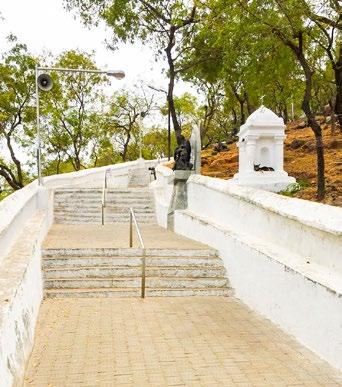
The most important celebration at St. Thomas Mount is the Feast of St. Thomas the Apostle, held annually on July 3rd. The festival draws thousands of pilgrims from across Tamil Nadu, Kerala, Goa, and Sri Lanka. The hill is illuminated with lights, and solemn processions carrying statues and banners wind up the steps, filling the air with hymns and the scent of incense. Special masses are celebrated throughout the day in multiple languages — Tamil, English, and Malayalam — reflecting the shrine’s diverse community. The feast commemorates the apostle’s martyrdom and celebrates his enduring influence on Indian Christianity.
Equally significant is the Feast of Our Lady of Expectation, observed in December, just before Christmas. Dedicated to the Virgin Mary, this festival celebrates hope and faith, drawing families and expectant mothers who seek the Virgin’s blessing. The church courtyard fills with colorful stalls, choirs sing carols in Tamil and English, and the hill resonates with joyful devotion.
During Holy Week, the hill becomes a center of prayer and penance, especially on Good Friday, when pilgrims perform the Way of the Cross along the 160 steps, ending with a solemn mass at the summit. These annual rituals have woven the mount into the spiritual calendar of the region, making it not only a sacred site but also a living center of community life.
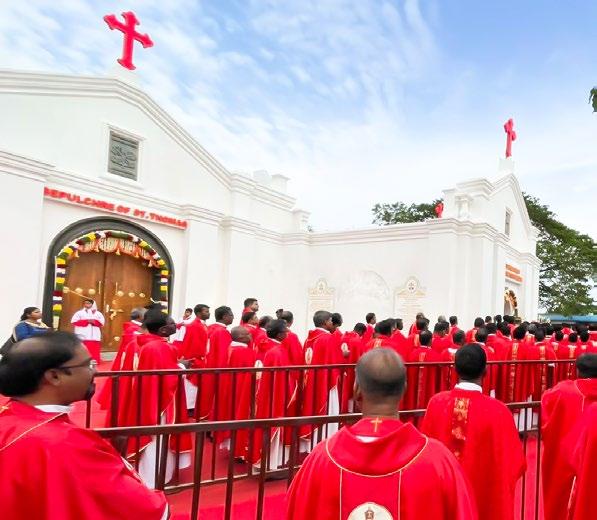

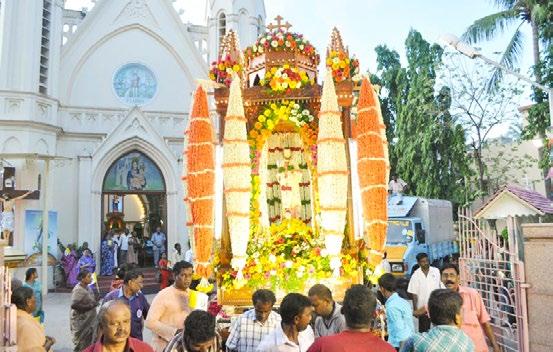
Though a Christian shrine, St. Thomas Mount embodies the cultural harmony characteristic of Tamil Nadu. The church’s art and customs reflect a seamless blend of Eastern and Western traditions. The Marian image, though European in origin, is adorned with Tamil garlands and traditional flowers. The altar, often decorated with kolam-style floral patterns, mirrors local artistic sensibilities.
Devotional songs in Tamil are sung alongside Latin hymns, and during festivals, processions resemble those of Tamil Hindu celebrations, complete with music, banners, and offerings. This cultural synthesis has given the mount a unique spiritual identity — one that transcends denominational boundaries and resonates deeply with the inclusive spirit of Tamil heritage.
Even the dedication to Our Lady of Expectation finds an echo in Tamil culture, where motherhood and divine femininity occupy central places in spiritual life. Thus, the church stands as both a religious and cultural bridge — connecting ancient Christian faith with the timeless rhythms of Tamil devotion.

From the courtyard of St. Thomas Mount Church, the panorama of Chennai stretches endlessly — the glimmering airport to the south, the sprawl of Guindy to the north, and the faint shimmer of the Bay of Bengal to the east. This vantage point offers more than a scenic view; it encapsulates centuries of transformation.
What was once a quiet fishing coast has grown into a modern metropolis. Yet, amidst the urban noise, the hill remains a symbol of serenity and continuity. Pilgrims who stand upon its summit sense not only the physical height but also the depth of time — the continuity of faith that has endured from the apostolic age through colonial eras to the present day.
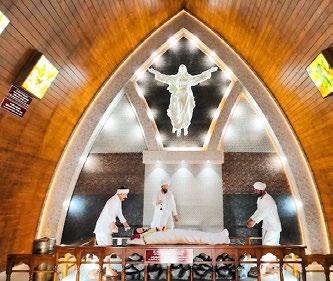
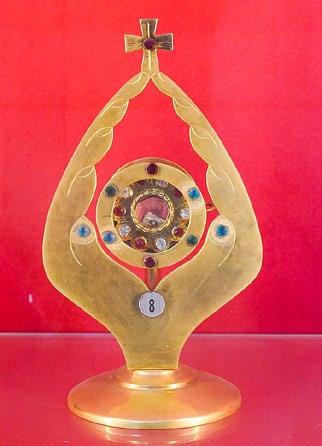

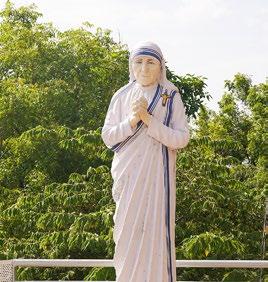
Today, the Archdiocese of Madras-Mylapore oversees the administration of St. Thomas Mount Church. The clergy and religious communities attached to the shrine are responsible for conducting daily liturgies, maintaining the property, and assisting pilgrims.
Conservation of the historic structure is an ongoing effort. The church, exposed to coastal humidity and urban development, requires periodic restoration. Care is taken to preserve the integrity of the original design while reinforcing the structure against modern environmental challenges. The Archaeological Survey of India (ASI) has also recognized the site’s historical importance and assists in safeguarding its heritage.
Efforts have been made to keep the environment around the mount clean and peaceful. Electric lighting, improved pathways, and controlled vehicle access help maintain the sanctity of the site while accommodating growing numbers of visitors.
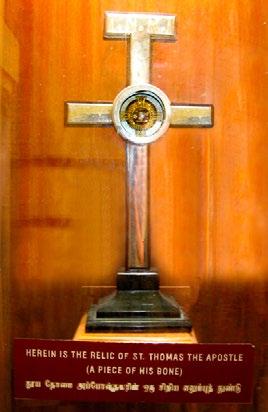
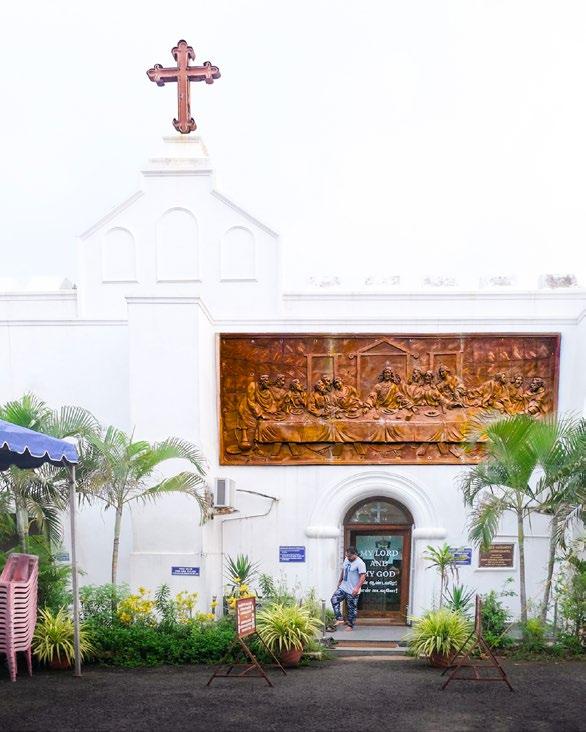
The enduring power of St. Thomas Mount lies not only in its architecture or history but in the living faith it continues to inspire. For centuries, the mount has witnessed countless prayers — whispered petitions of sailors before voyages, tears of mothers seeking protection for their children, vows of students before exams, and thanksgiving from those who have received blessings. It has seen empires rise and fall, witnessed the transition from Portuguese rule to British governance and the birth of modern India. Yet through every era, the small church on the hill has remained constant, a quiet guardian of faith above the changing world below.
For Chennai’s Christian community, it is a place of identity — a tangible reminder of their apostolic heritage. For visitors of other faiths, it offers peace and history, inviting reflection on humanity’s shared search for the divine.

In the bustling coastal city of Chennai, where modern life hums beside relics of ancient faith, three sacred landmarks stand as enduring witnesses to the apostolic age of Christianity in India — St. Thomas Mount Church, San Thome Basilica, and Little Mount Church. Though distinct in their settings and histories, these three sites form an unbroken spiritual chain known as the St. Thomas Christian Heritage Trail, a pilgrimage route that traces the final journey of St. Thomas the Apostle, one of the twelve disciples of Jesus Christ. Together, they tell a story that bridges continents and centuries — a tale of faith, martyrdom, and legacy.
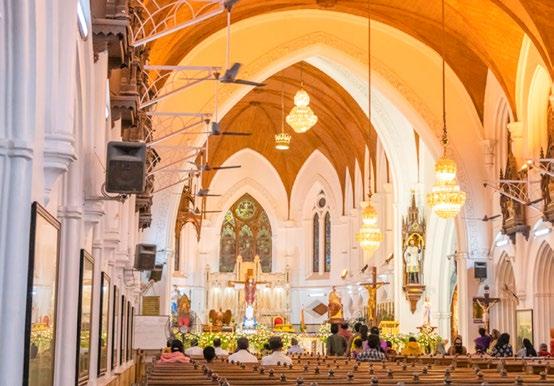
According to long-standing Christian tradition, St. Thomas arrived on the shores of India around AD 52, carrying with him the teachings of Christ to a distant land. His mission first took root on the Malabar Coast of Kerala, where he established Christian communities that continue to thrive to this day. Later, drawn eastward by the promise of new converts, Thomas journeyed to the Coromandel Coast, settling in and around what is now Chennai (ancient Mylapore). Here, the Apostle’s life, ministry, and martyrdom unfolded — leaving behind footprints carved into the very rock and soil of Tamil Nadu.
The journey begins at Little Mount (Chinnamalai), a small rocky outcrop in Saidapet, Chennai. At first glance, it may appear like any other urban church, but beneath its humble walls lies a cave sanctified by history and devotion. Tradition holds that this was St.Thomas’s dwelling place — a refuge where he prayed, preached, and lived in solitude. Within the cave are two sacred imprints: a handprint and a footprint on the rock, believed to have been miraculously left by the Apostle himself.
The site also holds a spring of clear water that, according to legend, burst forth when St. Thomas struck the rock in thirst. For centuries, pilgrims have believed the water to possess healing properties. The church that now crowns
this site, officially known as the Church of Our Lady of Health, was later built by the Portuguese in the 16th century, enclosing the ancient cave and transforming it into a place of pilgrimage. Little Mount thus represents the life and ministry of St. Thomas — the phase of preaching, prayer, and divine inspiration before his martyrdom.
From Little Mount, the trail ascends — both literally and spiritually — to St. Thomas Mount (Parangimalai), a rocky hill about 300 feet high located a few kilometers away. It is here, according to Christian belief, that St. Thomas met his martyrdom around AD 72, pierced by a lance while praying before a stone cross carved by his own hands. The cross, said to have bled when the Apostle was struck, is preserved to this day in the church that crowns the hill.
The Church of Our Lady of Expectation, built by Portuguese missionaries in 1523, stands atop this sacred site. Small and whitewashed, with a modest façade overlooking the vast city of Chennai, it holds within it centuries of devotion. The church enshrines a revered painting of the Virgin Mary and Infant Jesus, believed to have been brought from Portugal by the Apostle himself — or, as some legends claim, presented to him by St. Luke the Evangelist. Pilgrims climb the steep steps of St. Thomas Mount as an act of penance and prayer, retracing the Apostle’s final moments. The panoramic view from the summit — a blend of city, sea, and sky — is often described as the Apostle’s final vision before his earthly mission ended.
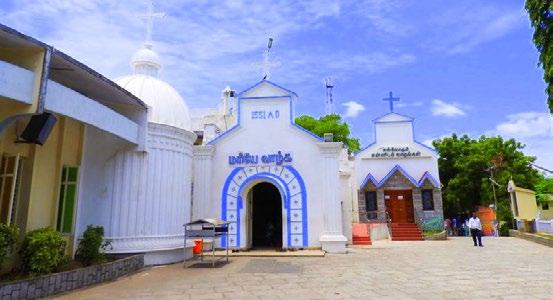
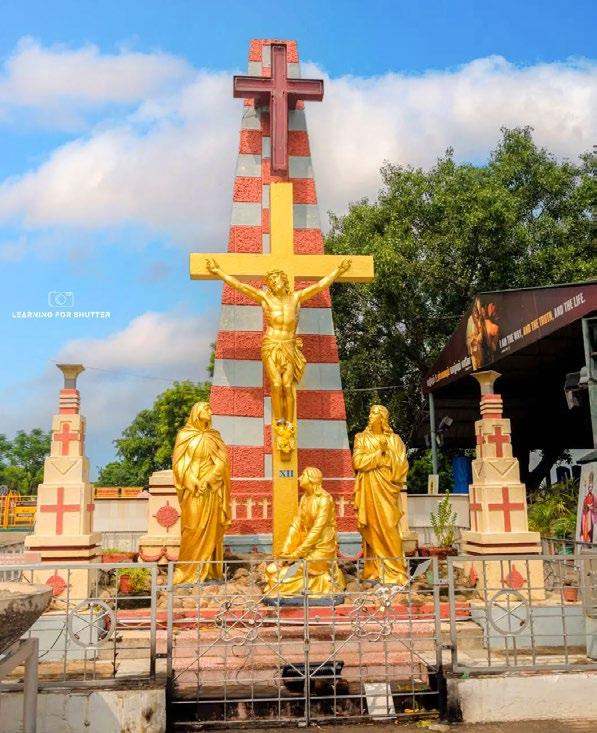
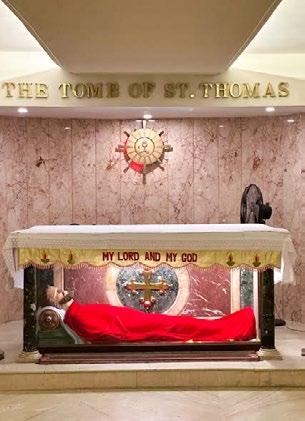
The sacred journey concludes near the seashore at Mylapore, where the San Thome Basilica now stands. After the martyrdom of St.Thomas, his disciples are said to have buried his remains at this site. Centuries later, during the 16th century, Portuguese missionaries rediscovered the tomb and built a magnificent church over it, dedicating it to St. Thomas the Apostle. The structure was later elevated to the status of a minor basilica by the Pope and reconstructed in striking neo-Gothic style by the British in 1896.
Today, the San Thome Basilica houses the tomb and relics of St. Thomas, making it one of only three churches in the world built over the tomb of an Apostle — the other two being St. Peter’s Basilica in Rome and Santiago de Compostela in Spain. The crypt below the altar preserves the Apostle’s relics, while the main church above resounds with the prayers of thousands of pilgrims from around the world.
These three sacred landmarks — Little Mount, St. Thomas Mount, and San Thome Basilica — together form a chronological and spiritual arc:
• Little Mount marks the Apostle’s life and preaching,
• St. Thomas Mount signifies his martyrdom
• San Thome Basilica enshrines his burial and eternal rest.
For many Christian devotees, walking this route is not merely a pilgrimage but a journey through time — one that connects South India’s ancient
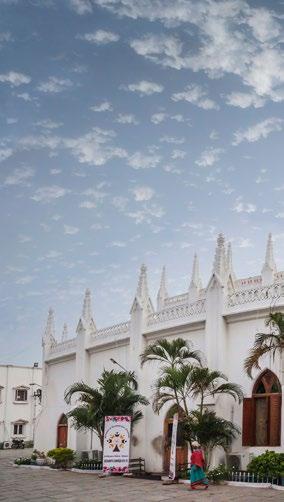
Christian legacy with the global story of faith. Every year, thousands of pilgrims and tourists alike undertake this heritage trail, especially on July 3, the Feast of St. Thomas, when Chennai celebrates its status as the “City of St. Thomas.”
Together, these sites embody the living memory of the Apostle’s mission — a bridge between India’s earliest Christian communities and its vibrant modern-day faith. The Portuguese, Armenian, and Indian influences seen in their architecture tell a story of cultural fusion. The ancient cross on St. Thomas Mount, the cave at Little Mount, and the
tomb at San Thome are not mere monuments — they are sacred symbols of a faith that traveled across oceans and found a home in Tamil Nadu.
In essence, the connection between these three churches is both historical and spiritual. They trace the Apostle’s footsteps — from his preaching to his sacrifice and his eternal rest — making Chennai one of the most significant centers of early Christianity outside the Middle East. The St. Thomas Christian Heritage Trail continues to inspire pilgrims, historians, and travelers, reminding all who walk its path that faith, like history, endures in the stones, the air, and the prayers whispered over centuries.
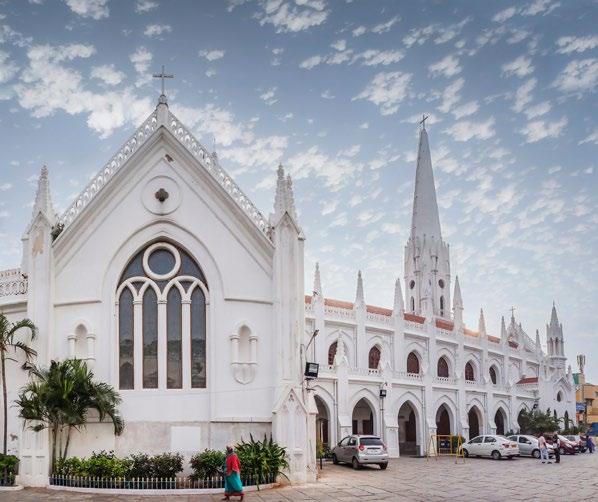
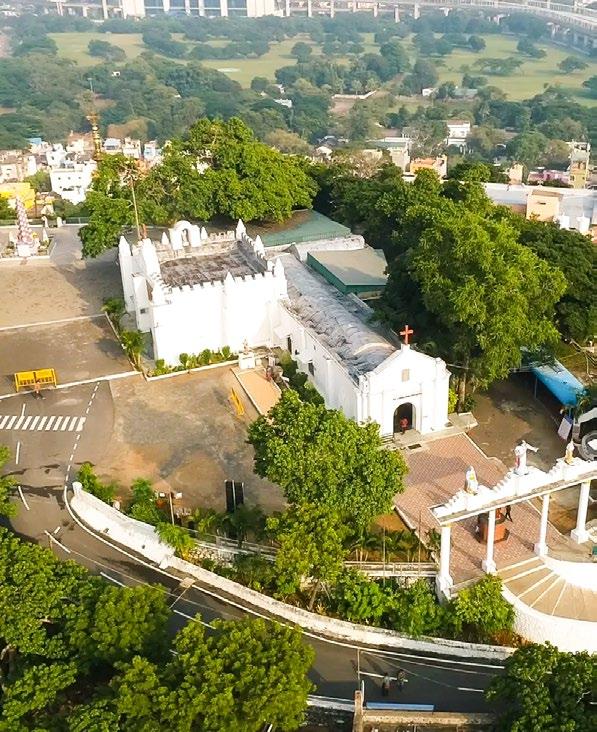

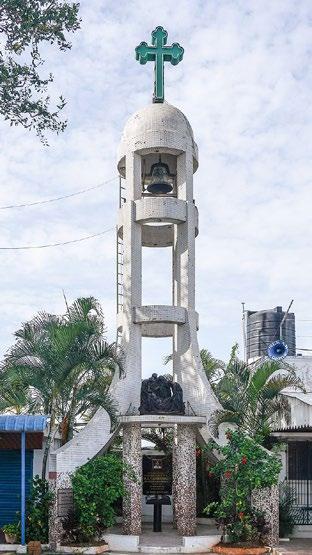
The St. Thomas Mount Church in Tamil Nadu is more than a historical monument; it is a spiritual landmark that connects the ancient and the modern, the East and the West, the local and the universal. Standing upon a hill sanctified by the memory of an apostle, it represents the convergence of faith and history that defines India’s diverse religious landscape. Its whitewashed walls, modest altar, and quiet surroundings continue to speak of endurance, humility, and hope. From the cross on its summit to the steps that pilgrims climb each year, every stone tells a story — of sacrifice, devotion, and the timeless continuity of belief.
In an age of constant change, St. Thomas Mount Church remains what it has always been: a place of prayer, pilgrimage, and peace — a living testimony to the Apostle Thomas and the faith that took root on Indian soil nearly two thousand years ago.


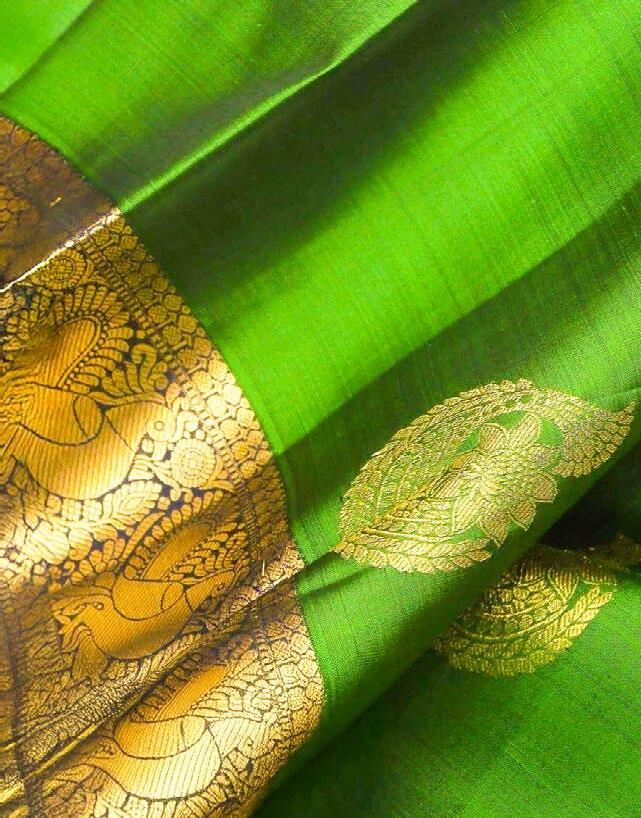
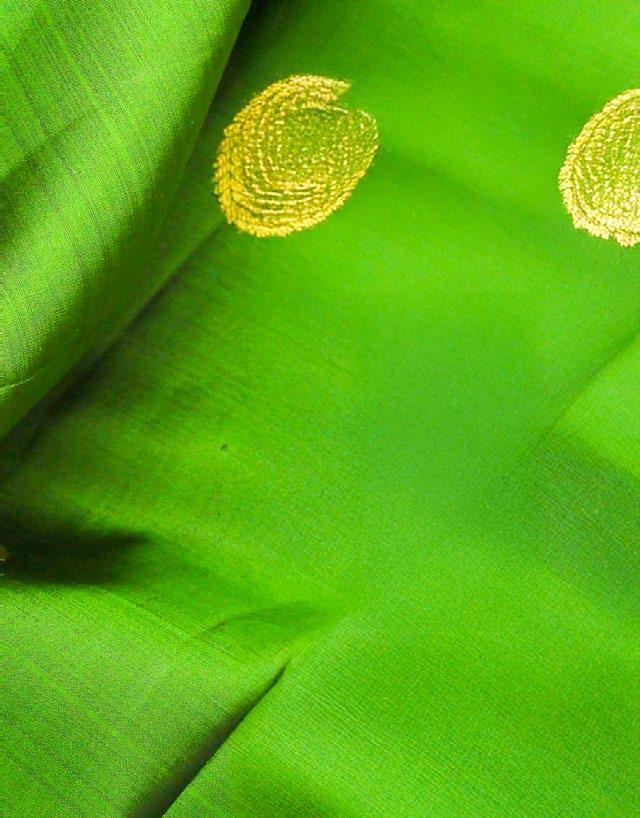
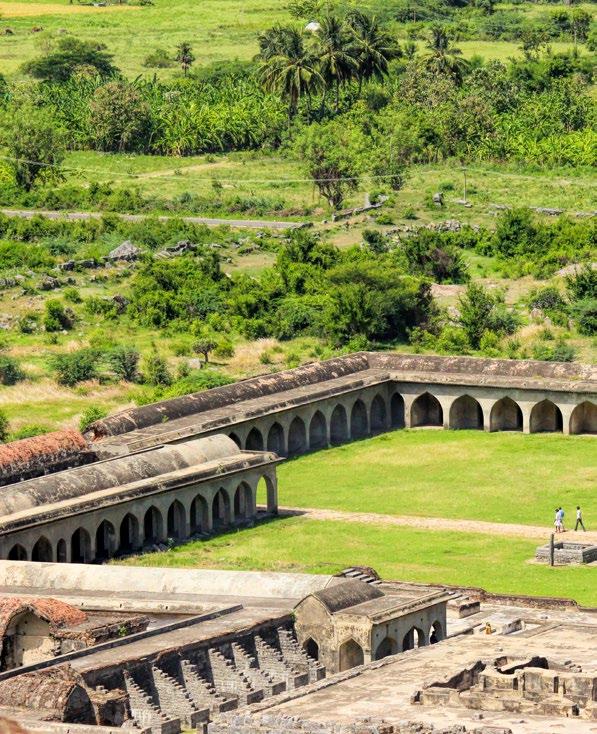
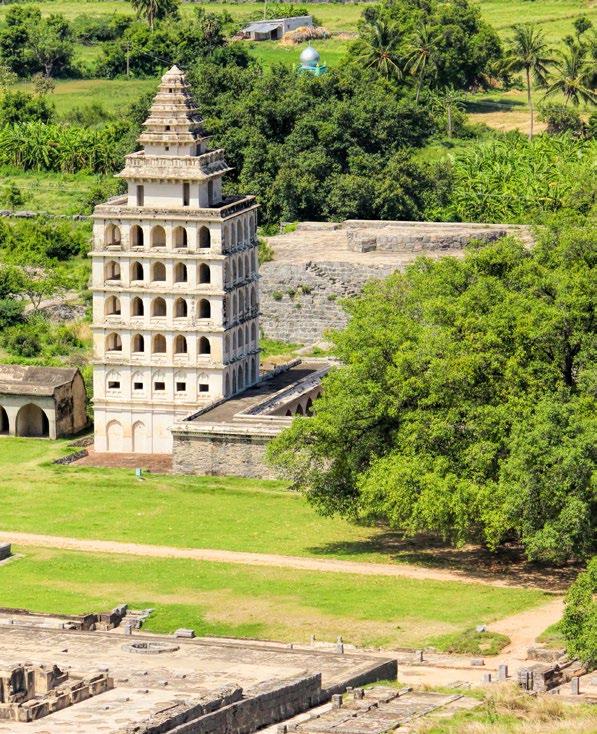
Nestled amidst the rugged hills of Villupuram district in Tamil Nadu, the Gingee Fort—locally known as Senji Fort— stands as one of South India’s most awe-inspiring architectural marvels. Revered by historians and travellers alike, this formidable fort is often hailed as the “Troy of the East,” a title that encapsulates both its grandeur and its impenetrable design. Rising majestically over the barren landscape, Gingee Fort is not just a symbol of military might but also an enduring chronicle of Tamil Nadu’s layered history. Its sprawling complex, ancient ramparts, granaries, temples, and citadels narrate stories of valor, political intrigue, and cultural sophistication that spanned centuries and dynasties.
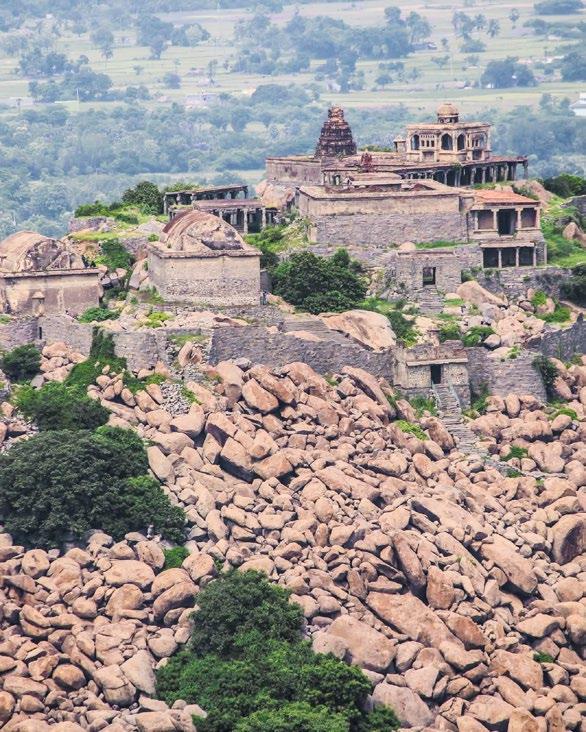
The Gingee Fort complex is unique not only for its vast expanse but also for the strategic genius behind its construction. Unlike many single-structure forts, Gingee comprises three hillocks—Rajagiri, Krishnagiri, and Chandrayandurg—each fortified and connected through an intricate network of walls and passages. The architectural ingenuity, combined with its natural defenses, made Gingee one of the most impregnable fortresses of medieval South India. Over time, it passed through the hands of powerful empires—the Cholas, the Vijayanagar rulers, the Marathas, the Mughals, the Carnatic Nawabs, and finally the British—each leaving behind their imprint on its architecture and history.
The location of Gingee Fort is one of the key reasons for its historical importance. Situated approximately 160 kilometers from Chennai and 40 kilometers from Villupuram, the fort is strategically positioned on a vast plain punctuated by rocky hills. The terrain itself provided natural protection, with massive boulders and elevated hills acting as barriers against invasion. Built at an elevation of about 800 feet, the fort commanded sweeping views of the surrounding countryside—an advantage that allowed defenders to spot approaching armies long before they could reach the gates.
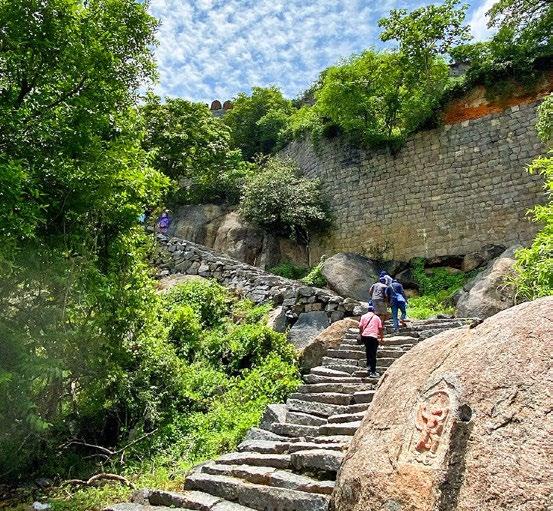
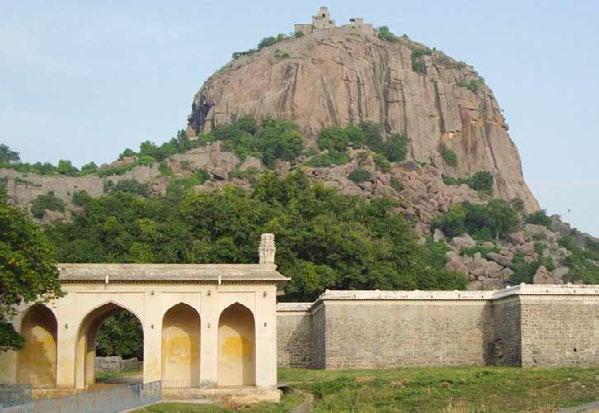
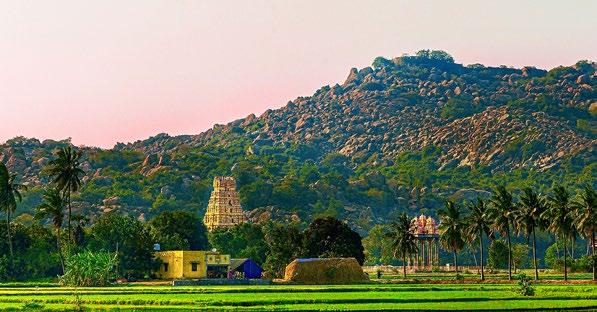

The three main hills—Rajagiri (the royal citadel), Krishnagiri, and Chandrayandurg—are interconnected by fortified walls that enclose an area of nearly 11 square kilometers. Each hill was designed to function independently, making it nearly impossible for enemies to conquer the entire complex in a single siege. The dry moat, deep trenches, bastions, and watchtowers added additional layers of defense, turning Gingee into a nearly unconquerable stronghold. The strategic brilliance of its layout demonstrates the deep understanding of geography and military engineering possessed by its builders.
The earliest origins of Gingee Fort are somewhat shrouded in mystery, but references in ancient Tamil literature and inscriptions suggest that the site was fortified as early as the 9th century CE under the rule of the Cholas. During this period, the Cholas were expanding their empire across South India, and fortresses like Gingee played a vital role in securing territorial boundaries. Initially, the fort might have served as a small outpost or watchtower guarding the northern approaches to the Chola kingdom.
The fort began to gain prominence during the 13th and 14th centuries under the rule of the Kurumbas, who are believed to have expanded the fortifications. However, it was during the Vijayanagar Empire’s rule in the 15th and 16th centuries that Gingee evolved into a major military stronghold. The Nayakas, who served as feudal governors under the Vijayanagar kings, transformed the site into an elaborate fortress complex capable of withstanding prolonged sieges. It was under their supervision that the fort’s major citadels, granaries, temples, and water storage systems were constructed, making it a self-sufficient military township.
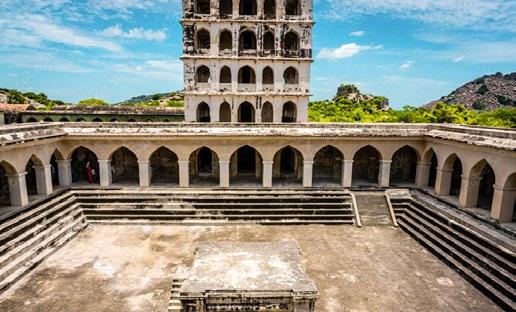
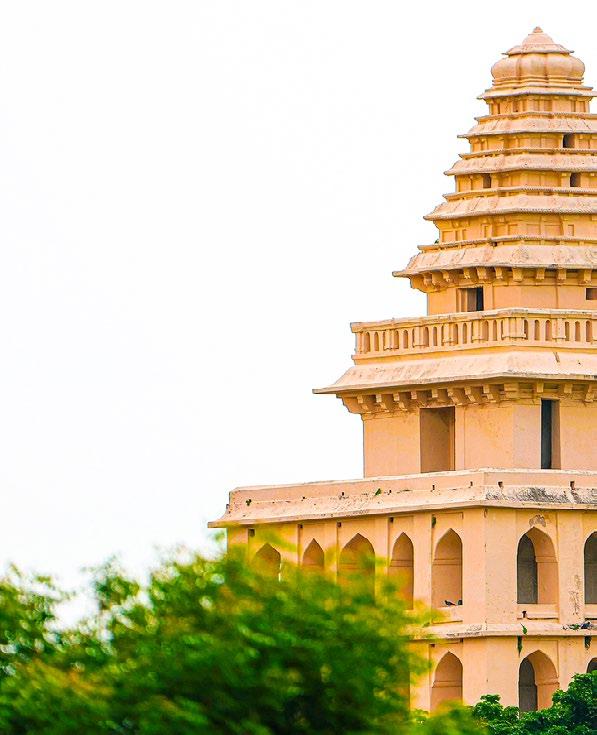
Under the Nayakas of the Vijayanagar Empire, Gingee Fort reached the height of its architectural and military glory. The rulers realized the strategic value of the site and poured immense resources into developing it. The fortifications around Rajagiri Hill became particularly sophisticated, with strong ramparts, a grand gateway, and complex bastions that reflected both strength and artistic finesse. Within the fort complex, the Nayakas built temples dedicated to Hindu deities, reflecting their devotion and patronage of religion. The Kalyana Mahal (Marriage Hall), an elegant multi-storied structure with Indo-Islamic influences, stands as one of the finest architectural features of this era. Its graceful arches, domed roofs, and symmetrical design highlight the blending of styles that characterized much of South Indian architecture during the Vijayanagar period.
Equally impressive were the water management systems. The builders constructed numerous ponds, tanks, and channels that ensured a steady supply of water even during prolonged sieges. Massive granaries were also erected to store food grains for the army and inhabitants, showcasing a meticulous understanding of siege warfare logistics. Every inch of the fort was designed for sustainability and resilience—a testament to the advanced engineering prowess of the time.
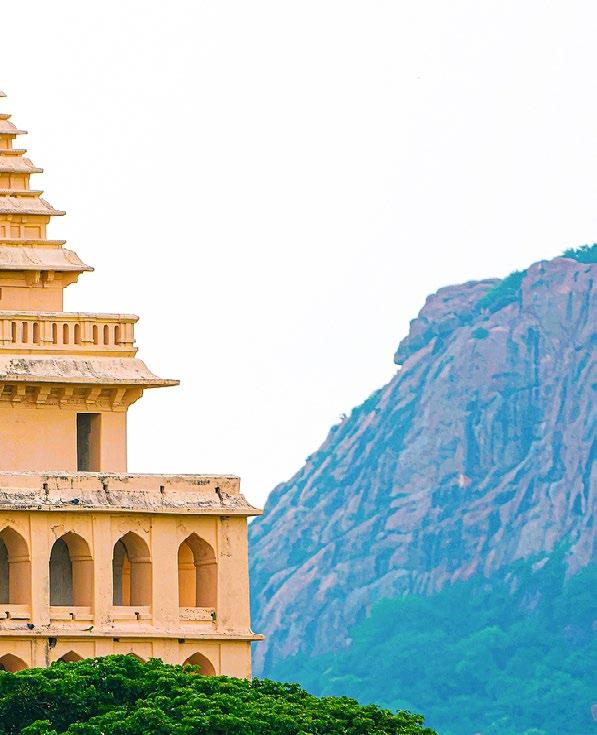
Following the decline of the Vijayanagar Empire after the Battle of Talikota in 1565, the Nayakas at Gingee asserted their independence for a brief period. However, the political landscape of South India was rapidly changing, and by the late 17th century, Gingee fell under the control of the Marathas, led by Shivaji’s son, Rajaram. Rajaram transformed the fort into his base of operations between 1690 and 1698 when he fled from the Mughals during Aurangzeb’s southern campaign.
The Mughals, recognizing the strategic value of Gingee, launched a relentless siege under Zulfiqar Khan, one of Aurangzeb’s trusted generals. The siege lasted for almost eight years—one of the longest in Indian history—before the fort finally surrendered in 1698. The Mughals renamed the fort “Jinji” and stationed their garrisons here, though their control was relatively short-lived. Despite the conquest, the fort’s reputation for invincibility remained largely intact, and it continued to be regarded as a symbol of resistance and valor.
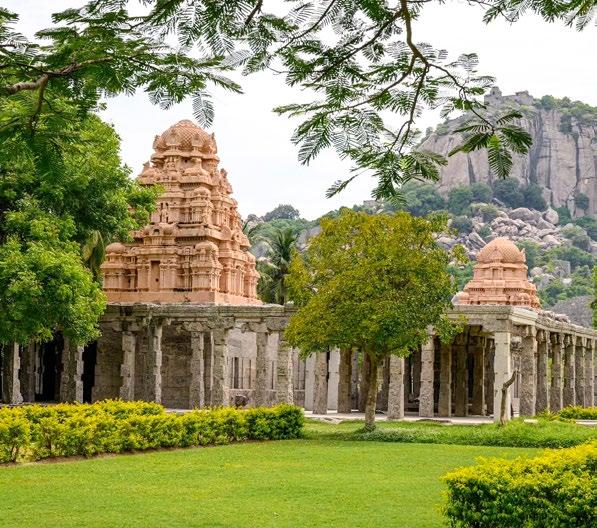

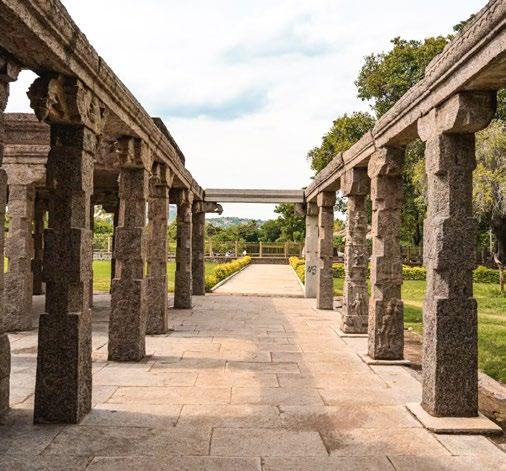
In the 18th century, Gingee Fort once again became a focal point of conflict during the Carnatic Wars between the French and the British. As European powers vied for dominance over South India, the fort’s location made it a coveted asset. The Nawabs of Arcot controlled the fort for some time, often using it as a refuge during political turmoil. The French, under the leadership of General Dupleix, briefly captured the fort in 1750, recognizing its strategic potential.
However, their control was short-lived as the British East India Company soon emerged victorious. In 1761, the British finally captured Gingee Fort, incorporating it into their expanding colonial territories. Under British rule, the fort lost much of its military
significance as newer warfare technologies rendered such strongholds obsolete. Over time, Gingee fell into a state of neglect, though it remained an enduring emblem of Tamil Nadu’s martial heritage.
One of the most fascinating aspects of Gingee Fort is its architectural design, which seamlessly integrates with the natural landscape. The fort’s builders skillfully used the rocky terrain to their advantage, constructing walls and bastions that blend harmoniously with the granite hills. The outer fortifications, built of massive stone blocks, encircle the hills and enclose temples, palaces, granaries, and living quarters. Each of the three hills served distinct purposes, yet together they formed an inseparable defense system.
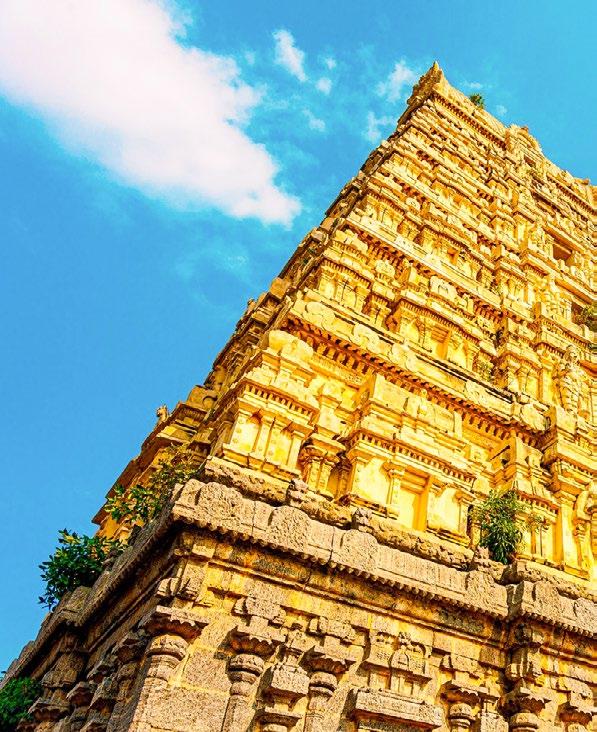
Rajagiri, the main citadel, is the most prominent of the three hills. It houses the Kalyana Mahal, the granaries, a watchtower, and the Ranganatha Temple. Climbing to the top of Rajagiri requires ascending steep stone steps that wind through gateways and bastions, each offering panoramic views of the countryside. Krishnagiri, the second hill, is slightly smaller but equally fortified, containing similar defensive structures and water tanks.The third hill, Chandrayandurg, was primarily used for storing supplies and housing troops.
The ingenuity of the fort’s defensive design becomes evident in the way it incorporates multiple layers of security. The gateways are strategically aligned to block direct entry, forcing attackers to move in a zigzag manner and exposing them to defensive fire. Moats, both natural and artificial, surround key entry points, while secret passageways allowed defenders to move supplies or escape undetected. The fort’s self-sufficiency— its ability to sustain large populations for months without external aid—was one of the reasons it was considered impregnable.
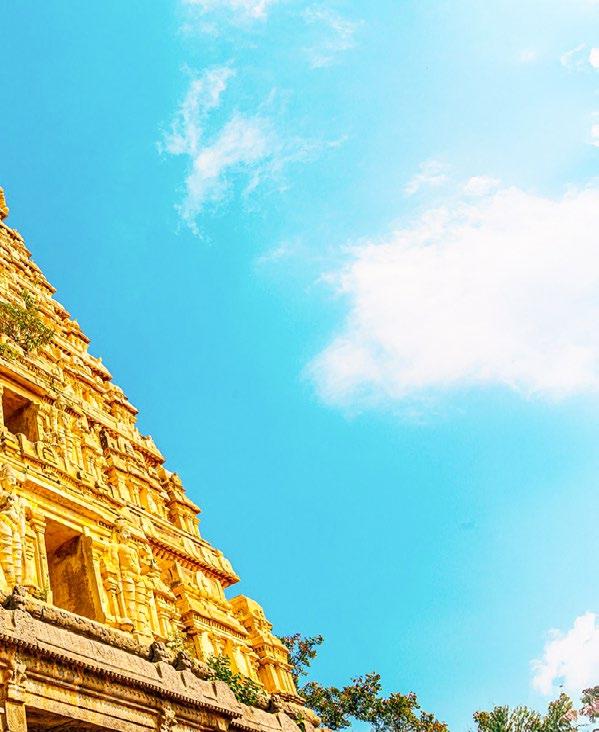
Beyond its military significance, Gingee Fort also reflects the region’s rich cultural and spiritual heritage. Several temples are scattered within the fort complex, the most notable being the Ranganatha Temple, the Chenraya Temple, and the Kamalakanni Amman Shrine. These structures not only served religious purposes but also provided a sense of community for the fort’s inhabitants during times of war and peace alike.
The Ranganatha Temple, located within the Rajagiri complex, is dedicated to Lord Vishnu and features beautiful carvings and Dravidian-style architecture. The Kamalakanni Amman Temple, perched on a hilltop, remains an active place of worship even today, attracting pilgrims and visitors who come to seek the goddess’s blessings. The presence of these temples reveals that Gingee was not merely a military fortress but also a thriving settlement with spiritual and cultural dimensions.
In addition to temples, one can find several remarkable structures such as the prison cells, horse stables, audience halls, and royal living quarters. The granaries, built with precision to prevent spoilage of stored grains, stand as silent witnesses to the fort’s days of glory. The Kalyana Mahal, with its tall tower-like structure and elegant arches, continues to captivate visitors as a masterpiece of medieval engineering.

The fort is steeped in legends that have been passed down through generations. Local folklore tells tales of secret tunnels connecting the fort to distant villages, of hidden treasures buried deep within the granaries, and of royal romances and betrayals. Some stories even claim that ghosts of ancient warriors still guard the fort at night, their spirits bound by an oath of loyalty to its rulers.
The fort’s many battles have also become part of Tamil Nadu’s oral history. The bravery of Rajaram during the Mughal siege, the strategic acumen of the Nayakas, and the fierce loyalty of the local soldiers are stories that echo in the region’s collective memory. Gingee’s walls have witnessed both triumph and tragedy, serving as silent spectators to centuries of conflict, resilience, and transformation.
Today, Gingee Fort stands as a protected monument under the care of the Archaeological Survey of India (ASI). Extensive restoration work has been undertaken to preserve its crumbling structures, ensuring that future generations can continue to marvel at its grandeur. Despite the ravages of time, the fort’s architecture remains remarkably intact, and it continues to draw history enthusiasts, photographers, and travelers from around the world. The climb to the top of Rajagiri Hill remains one of the most exhilarating experiences for visitors. The panoramic view from the summit offers a breathtaking glimpse of the surrounding countryside— dry plains stretching to the horizon, dotted with ancient ruins and temples. The sense of history that
permeates the air is palpable, making Gingee Fort a journey not just into the past but into the very soul of Tamil Nadu’s cultural landscape. Tourism infrastructure has gradually improved around the site, with the Tamil Nadu Tourism Department promoting Gingee as part of its heritage circuits. Informational plaques, guided tours, and conservation efforts have helped visitors appreciate both the architectural brilliance and the historical depth of the fort.
The architectural legacy of Gingee Fort extends far beyond its physical structures. It represents the culmination of centuries of South Indian fort-building traditions, blending indigenous styles with influences
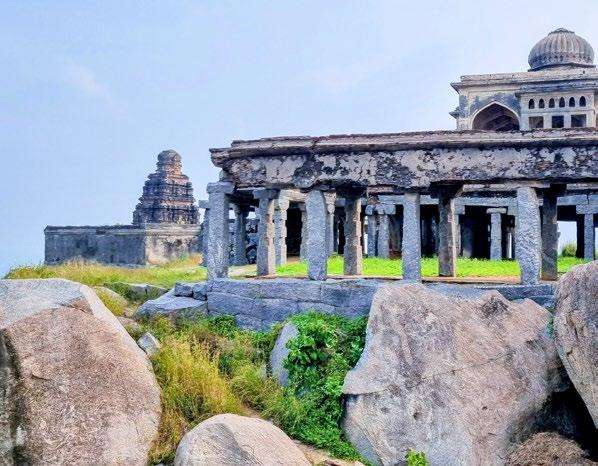
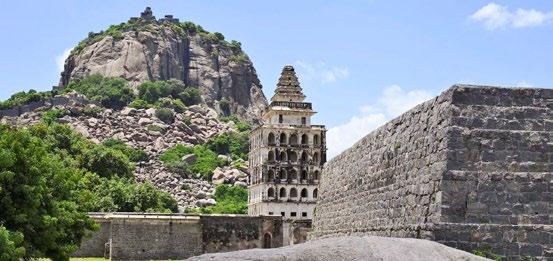

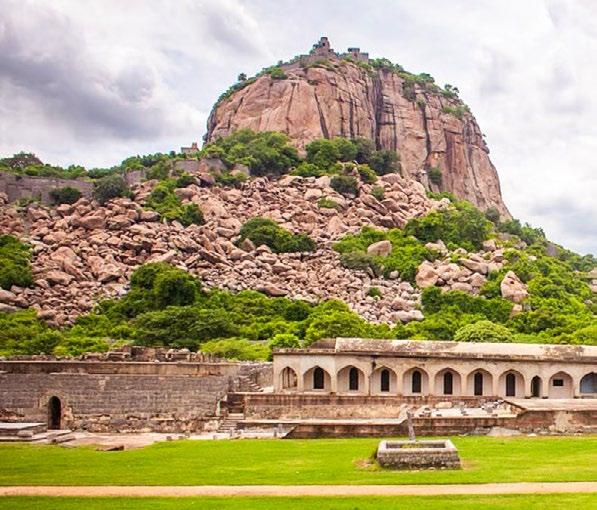
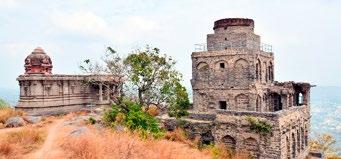
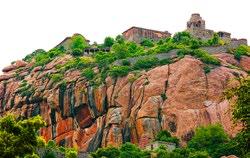
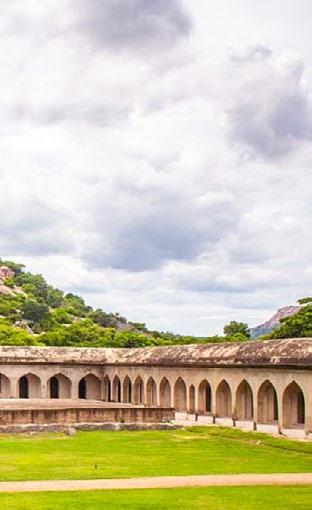
from various dynasties that ruled the region. The fort’s design demonstrates how architecture was used not only for defense but also as a statement of power, authority, and cultural identity. For Tamil Nadu, Gingee Fort serves as a symbol of resilience and continuity. It embodies the region’s ability to adapt, evolve, and thrive amidst changing political landscapes. The fort’s massive stones, carved gateways, and enduring temples are more than relics—they are storytellers, preserving the memories of generations who lived, fought, and prayed within its walls.
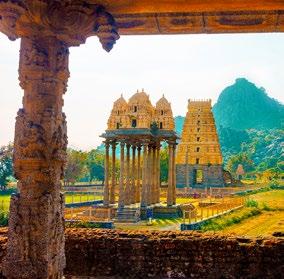
The Gingee Fort of Villupuram is not merely a structure of stone and mortar—it is a monumental chronicle of South India’s history. From its Chola beginnings to its Vijayanagar brilliance, from Maratha valor to Mughal conquest and British control, the fort has witnessed the rise and fall of empires. Each era has left its mark, enriching the fort’s identity as a living museum of architecture, culture, and resilience.
Even today, as the sun sets behind the rugged hills of Rajagiri, casting long shadows over the ancient walls, Gingee Fort exudes an aura of timeless majesty. It reminds us of a bygone era when valor and vision shaped the destiny of kingdoms. For visitors standing atop its bastions, gazing at the vast Tamil countryside, Gingee offers more than just a view—it offers a glimpse into the indomitable spirit of Tamil Nadu’s past.

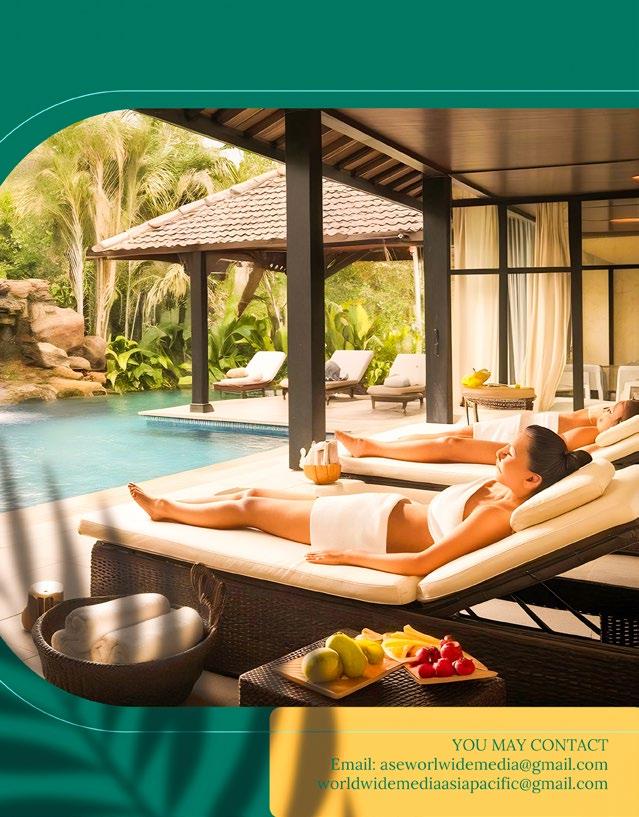






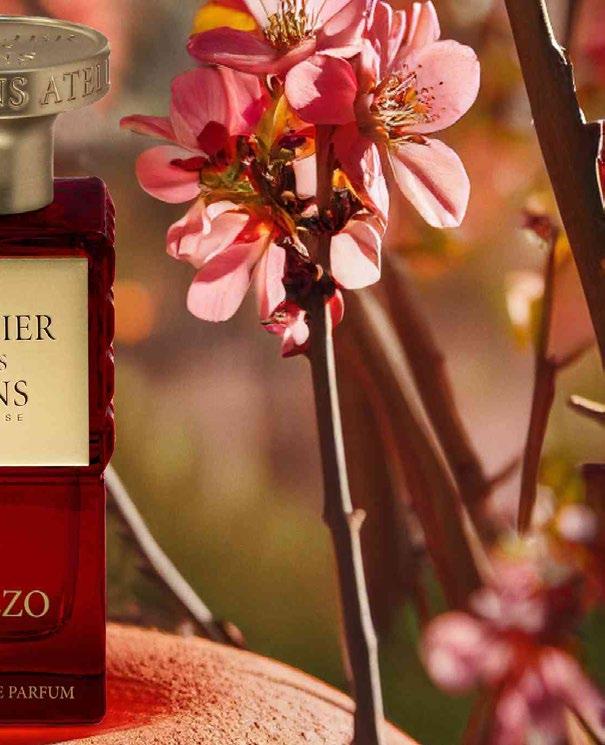

( A Member M/s. Worldwide Media Corporation Group USA )
Exciting opportunity for all those who want to share their most memorable, Interesting. Amazing, Pro-active & Growth oriented activities & Experiences covering areas such as
• Fashion, Trend & Lifestyle
• Culture, Tradition & Heritage
• Education, Healthcare & Wellnes
• Industries, Investments & Growth
• Travel, Tourisn & Hospitality
With Millions of Readers across the world
Stories/ Articles will be Published with your Photograph &Name.
Special Coverage & Press Release
Launguage Rights & Overseas Rights
Circulation, Subscription & Global Distributions
Advertisements & Advertorials
Featured Stories & Articles
Feedback & Customer Relationship
Dr. Kevin Francis
Dr. Andre Lubbe
Dr. George Fedrick
WWMCG Global Communications Inc.,
Rishi Wadhwa
Ms. Nancy
Email ID : aseworldwidemedia@gmail.com worldwidemediaasiapacific@gmail.com
Website : www.incredibletamilnadu.com
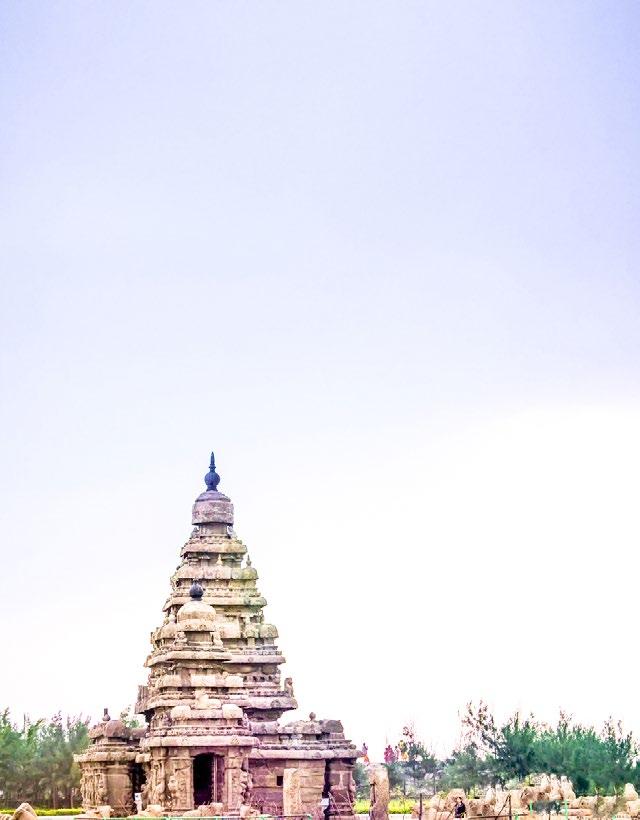




A classic reimagined. The new Datejust 31 in a white Rolesor version that combines Oystersteel with white gold and features an azzurro-blue, floral-motif dial