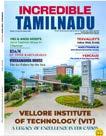
INCREDIBLE TAMILNADU’S DIGITAL RENAISSANCE: A SAGA OF POLICY, PROGRESS & PIONEERING IN THE IT AND TECH SECTOR
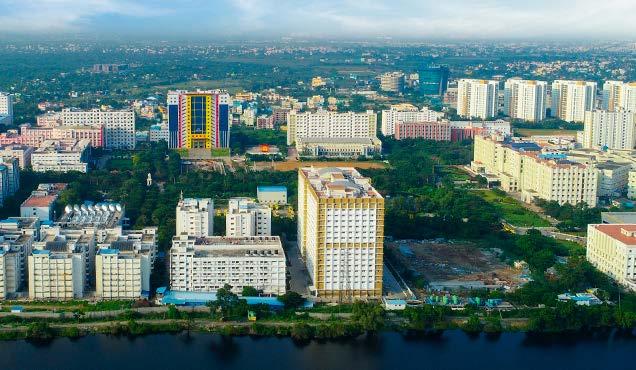
Tamil Nadu, once predominantly known for its robust manufacturing and textile industries, has undergone a remarkable transformation over the past three decades to emerge as a formidable force in India's Information Technology, IT-Enabled Services, and broader high-tech sectors. This success story is not accidental but the result of a long-term, strategic vision and consistent policy implementation by successive state governments, solidifying Tamil Nadu's position as a global tech powerhouse.
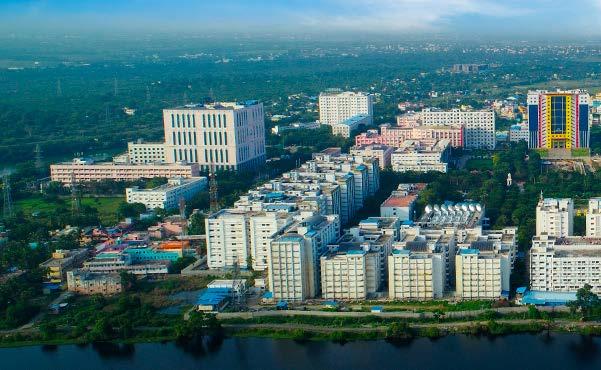
Genesis and Early Foundations: The 1990s: The initial spark: The late 1990s marked the dawn of the IT revolution in India. While other states were also exploring this new frontier, the Tamil Nadu government recognized the potential early on. This era was defined by strategic planning rather than large-scale execution, focusing on laying the groundwork. Birth of ELCOT (1977): The Electronics Corporation of Tamil Nadu was established much earlier, in 1977, but its role became central to the IT push in the 1990s. ELCOT served as the nodal agency for IT promotion, infrastructure development, and establishing the foundational framework for future growth. The TIDEL Park Catalyst (2000): While inaugurated in 2000, the planning for TIDEL Park began in 1996. The state government, in partnership with TIDCO and ELCOT, strategically converted state-owned land into a worldclass IT Special Economic Zone in Taramani, Chennai.
Scaling New Heights: The Golden Era of Expansion: The IT Corridor and the rise of Chennai: Following the success of TIDEL Park, the government's focus shifted to scaling up. The Old Mahabalipuram Road was developed into a massive IT corridor, a dedicated expressway lined with numerous IT parks and tech campuses. This rapid infrastructure expansion attracted a new wave of multinational and domestic IT and ITES companies. TierII and Tier-III city development: A core tenet of Tamil Nadu's IT strategy was decentralized growth. The government, through ELCOT, established IT SEZs in Tier-II cities like Coimbatore, Madurai, Trichy, and Tirunelveli. This strategy not only fostered balanced regional growth but also tapped into the talent pool outside the major metropolitan areas. Talent pool and educational infrastructure: Tamil Nadu's strong educational ecosystem, particularly its abundance of engineering colleges, provided a crucial advantage. The government ensured a steady supply of
skilled, industry-ready graduates, a magnet for IT companies looking for a cost-effective and capable workforce. Programs were initiated to bridge the gap between academia and industry requirements.
Strategic Policy and Enabling Ecosystem: Early and proactive IT policies: Tamil Nadu was among the first states in India to formulate specific policies for the IT and ITES sector. These policies addressed key aspects like infrastructure, investment incentives, and ease of doing business, creating a predictable and investor-friendly environment. The role of TNeGA and e-Governance: The Tamil Nadu e-Governance Agency has been instrumental in the state's digital transformation journey. By spearheading e-governance initiatives, TNeGA has not only made government services more efficient and accessible to citizens but has also driven the adoption of technology across various government departments. The Tamil Nadu Data Policy of 2022 is a testament to this commitment, focusing on data-driven decisionmaking, transparency, and citizen privacy.
StartupTN and the rise of a vibrant startup ecosystem: Recognizing the importance of fostering innovation, the government launched StartupTN. This initiative has been a catalyst for the state's burgeoning startup ecosystem, providing early-stage funding, mentorship, and market access through programs like TANSEED. The success stories of startups like Dextroware Devices and Bulkpe highlight the impact of this targeted government support. Specialized and sectoral policies: The government has introduced a range of specialized policies to target high-growth areas. These include the Tamil Nadu Artificial Intelligence Mission, which aims to position the state as a leading AI hub, and specific R&D policies to attract investments in cuttingedge research.
The Shift to High-Tech and Deep Tech: Modern Tamil Nadu: Electronics manufacturing powerhouse: Tamil Nadu has a long history in manufacturing, but it has now become India's undisputed smartphone manufacturing capital. The Chennai-Hosur belt, with facilities from companies like Foxconn, Pegatron, and Tata Electronics, is producing a significant percentage of iPhones made in India. The government's ambitious goal of achieving $100 billion in the electronics sector by leveraging existing ecosystem
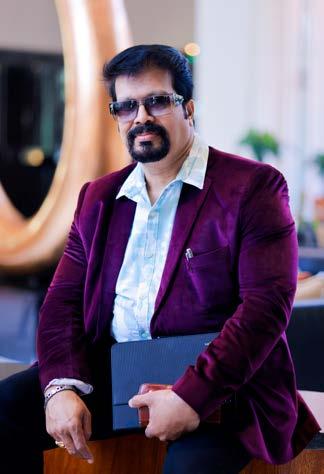
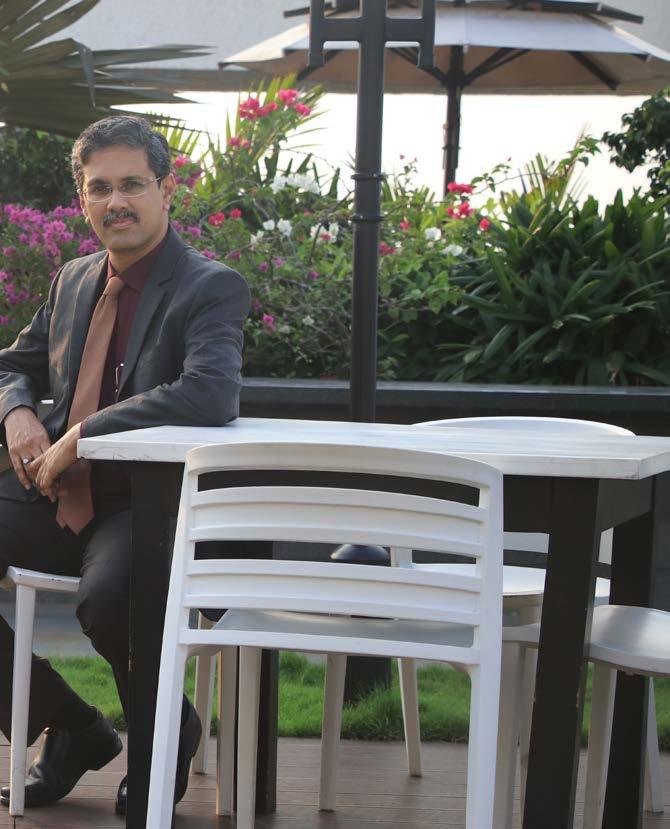
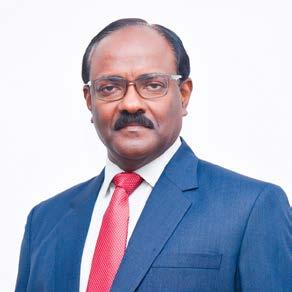
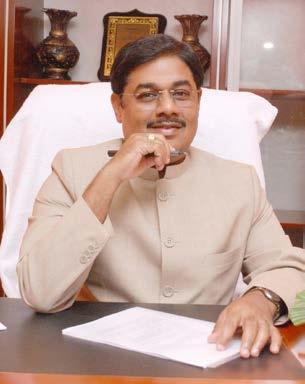
Editor -in - ChiEf from the desk of
and favorable policies is a testament to this prowess. SaaS and Fintech leadership: Chennai has transformed from an IT outsourcing hub to a product-centric innovation hub, particularly in the Software as a Service (SaaS) and Fintech domains. The presence of global players like Zoho and Freshworks has created a rich ecosystem, inspiring and nurturing new SaaS startups. The Reserve Bank of India's framework for Fintech Self-Regulatory Organizations also provides a stable regulatory environment for growth.
Economic and Social Impact- A Legacy of Inclusive Growth: Contribution to GDP and exports:
The IT sector is a significant engine of Tamil Nadu's economic growth. It contributes a substantial percentage to the state's GDP and is a major source of its exports, with values reaching billions of dollars. Employment generation: The growth of the IT and ITES sectors has created vast employment opportunities, both direct and indirect. This has not only boosted individual incomes but has also improved living standards across the state, fostering inclusive economic development. Empowering the workforce: The government's focus on skill development and training programs ensures that the workforce remains competitive and relevant in a rapidly changing technological landscape. Programs like Nan Mudalvan in collaboration with companies like ServiceNow, aim to upskill freshers and make them industry-ready. Inclusive growth and regional development: By establishing IT hubs in Tier-II and Tier-III cities, the government has ensured that the benefits of technological progress are not limited to Chennai. This has led to more balanced regional development and a broader distribution of wealth and opportunity.
A Blueprint for the Future:
Tamil Nadu's journey in the technology sector is a case study in effective government policy, long-term vision, and strategic execution. From the early foresight in building robust infrastructure to the current focus on fostering a dynamic startup ecosystem and embracing emerging technologies, the government of Tamil Nadu has played an admirable and pivotal role. The state's IT and tech sector, now a powerful engine of economic growth and innovation, stands as a testament to this sustained effort. As Tamil Nadu continues its march toward its $1 trillion economy goal by 2030, its position as a global tech powerhouse is firmly secured, driven by a legacy of admirable progress and a forward-looking technological vision.
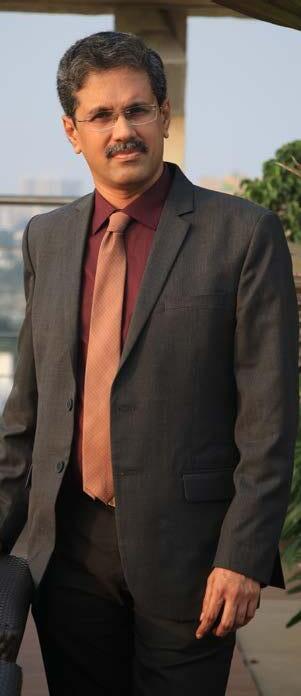
Dr. S. E. Alexander Global Media Chief & MD
Table of Content
FASHION & TRENDS
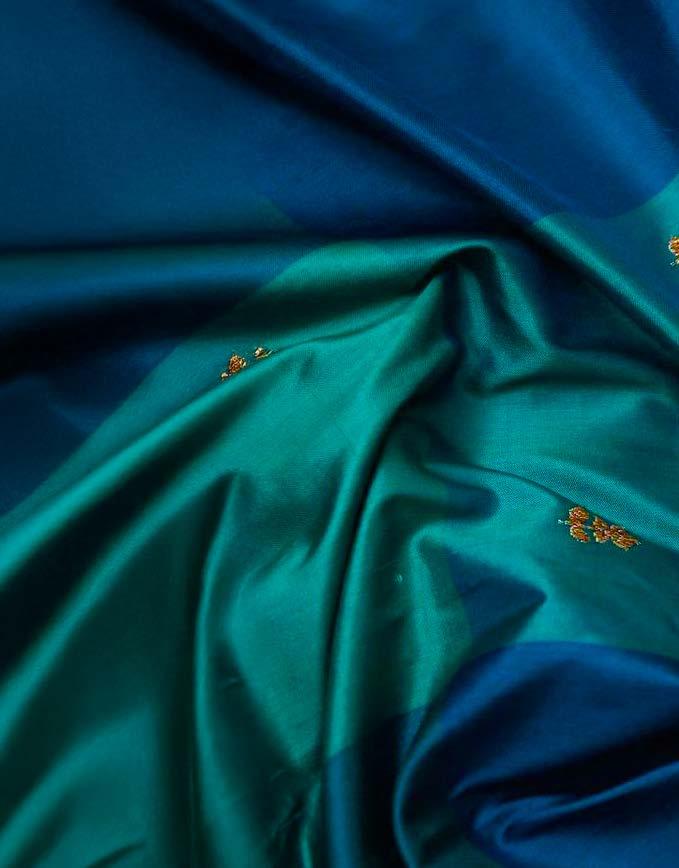
Master Weaver
Mr sakthivel PeriyasaMy’s taMil art @ london Fashion Week 2025
VIBRANT LIFESTYLE
inside nayanthara & viGnesh shivan’s Colonial-style studio in Chennai
RETAIL & SHOPPING OF TAMILNADU
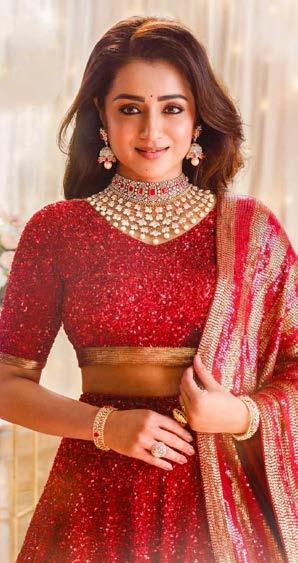
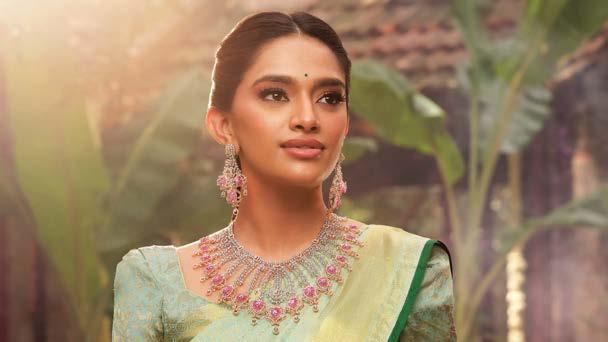
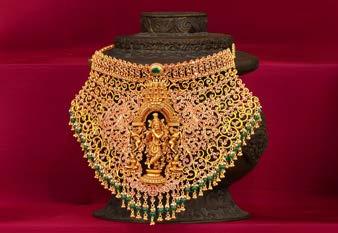
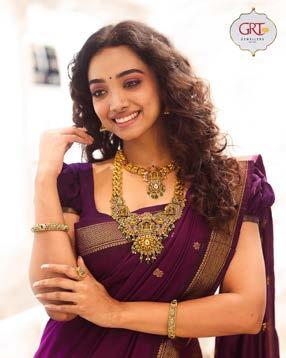
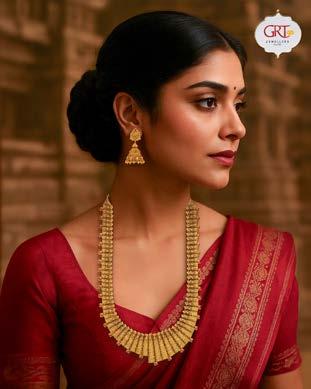
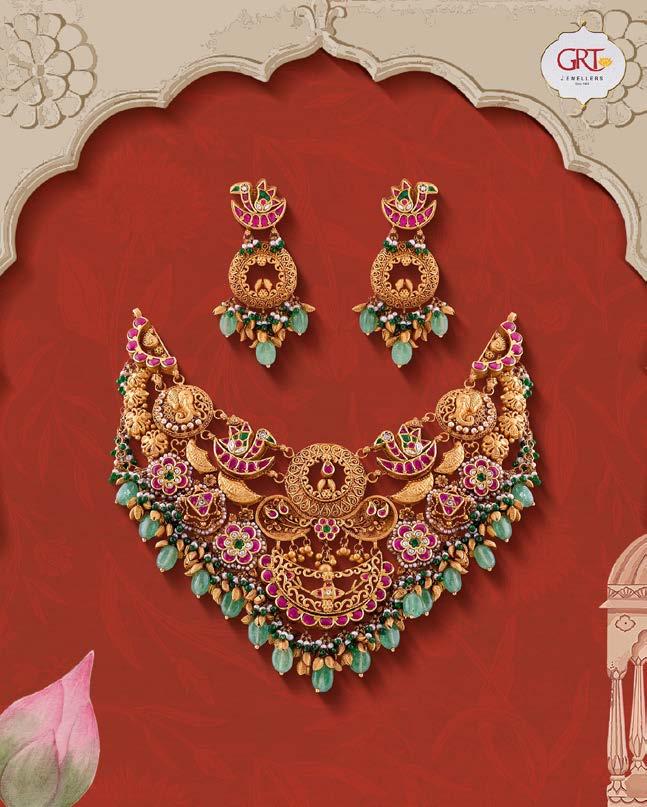
iMeless CraFtsManshiP and eleGanCe By Grt JeWellers
CULTURE & TRADITION
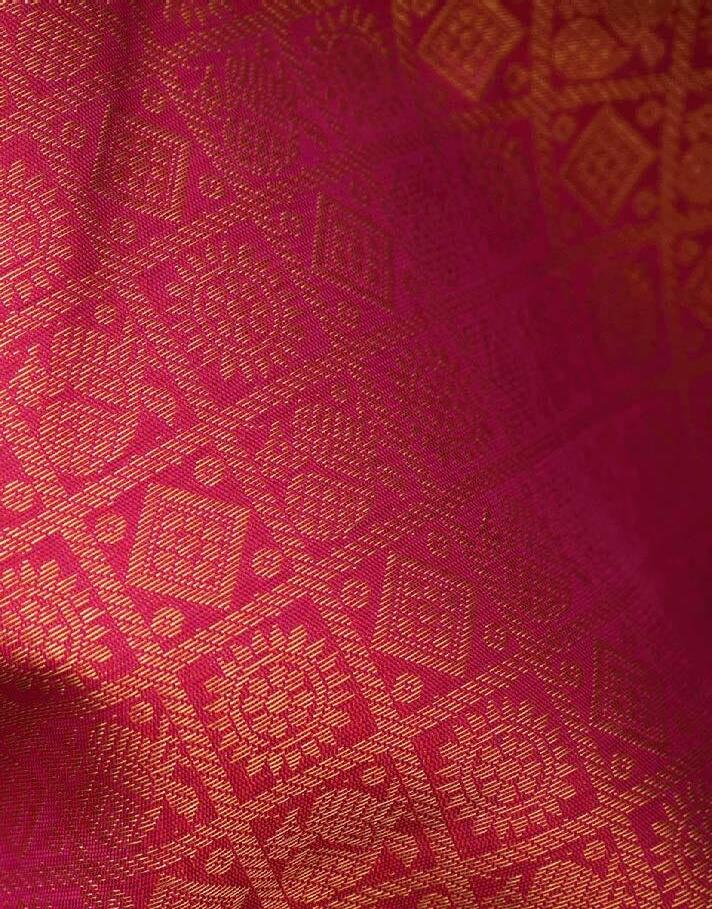
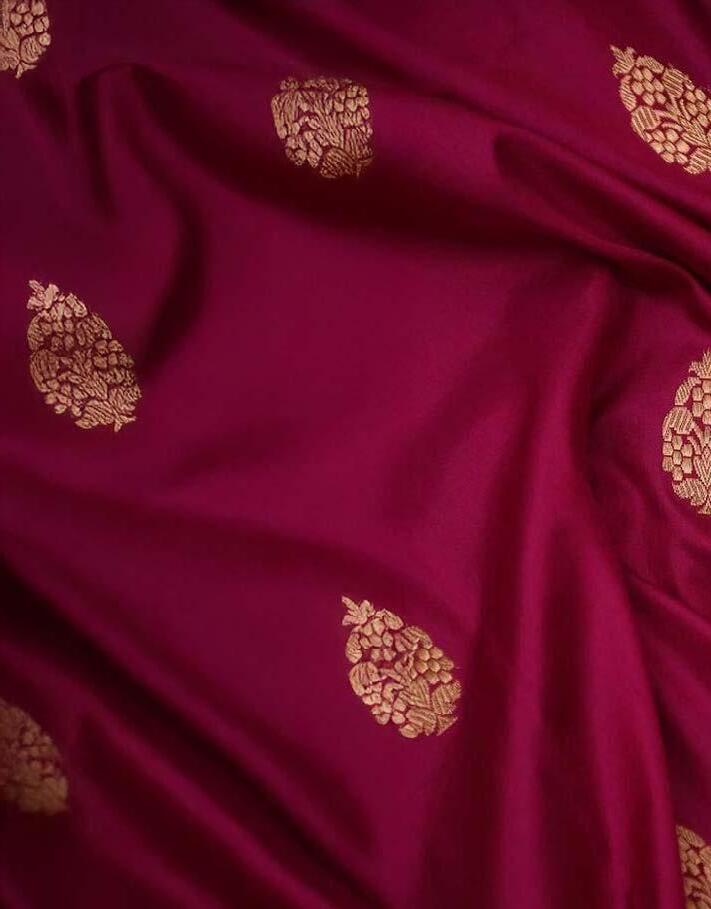
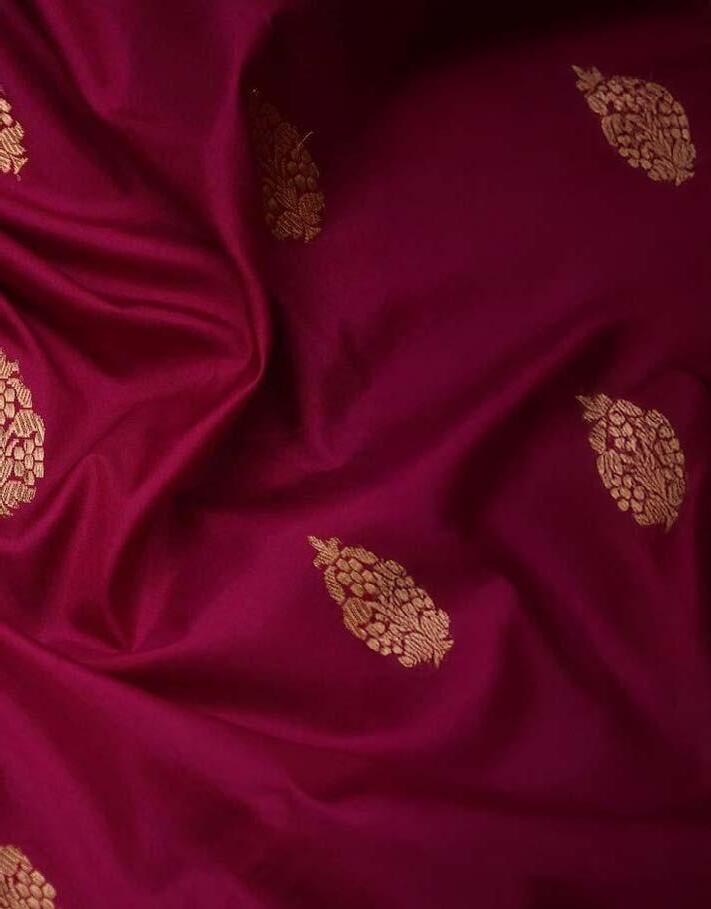
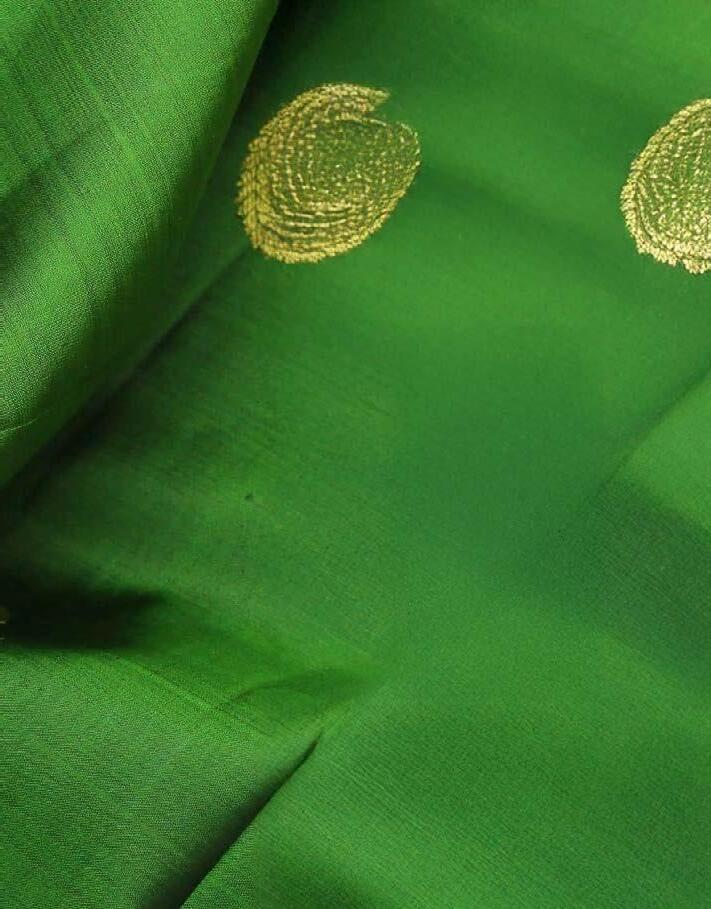
kanJivaraM silk sarees
knoWn For intriCate desiGns, riCh textures & viBrant Colors
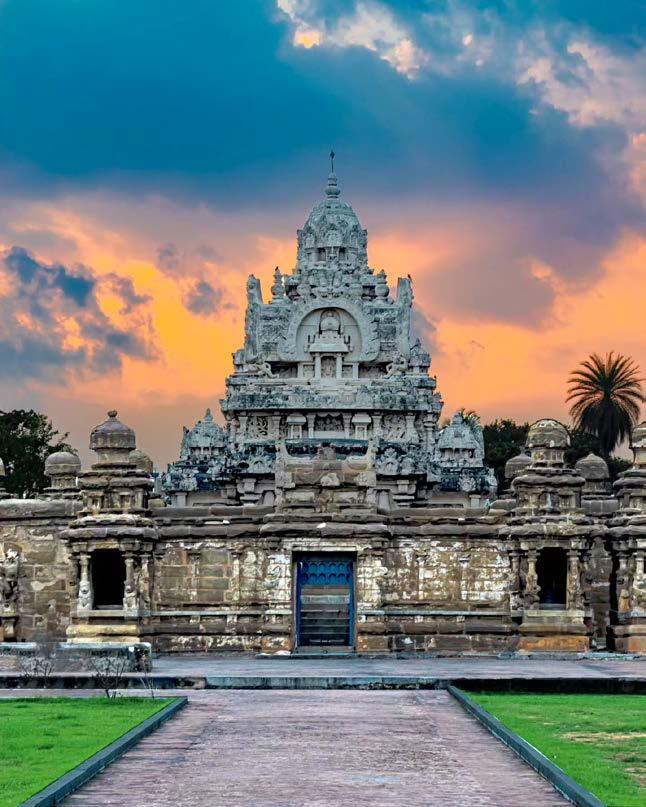
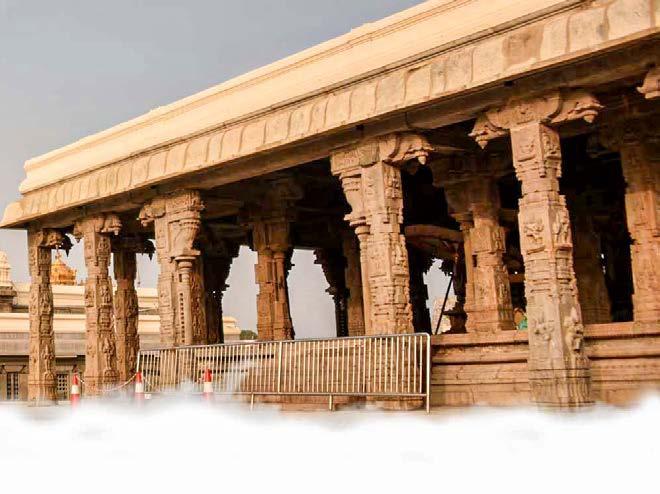
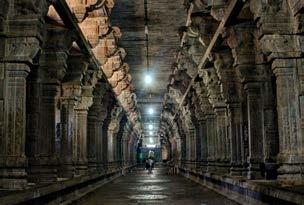
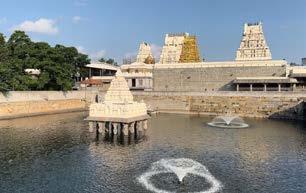
HERITAGE & ARCHITECTURE OF
INCREDIBLE TAMILNADU
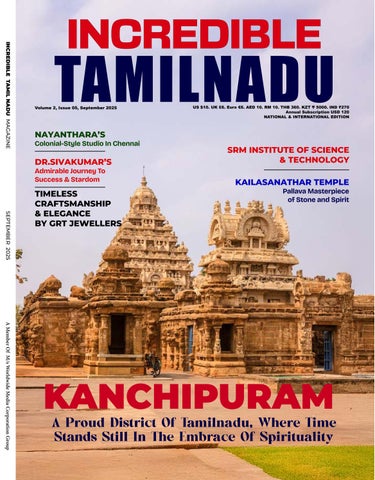
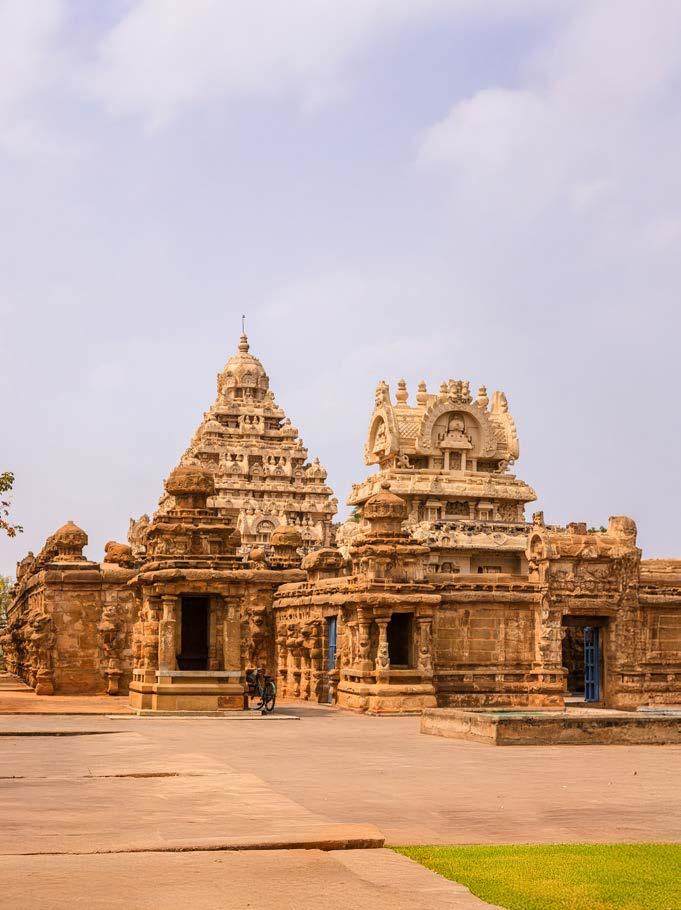
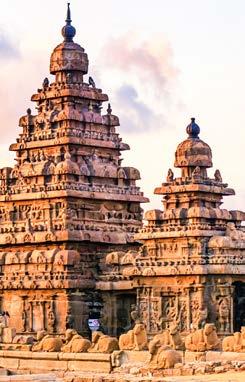
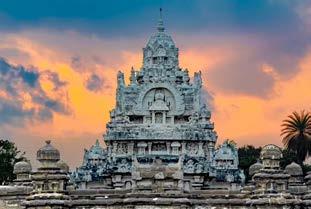
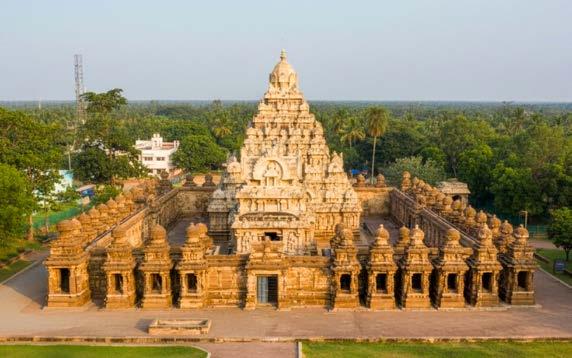
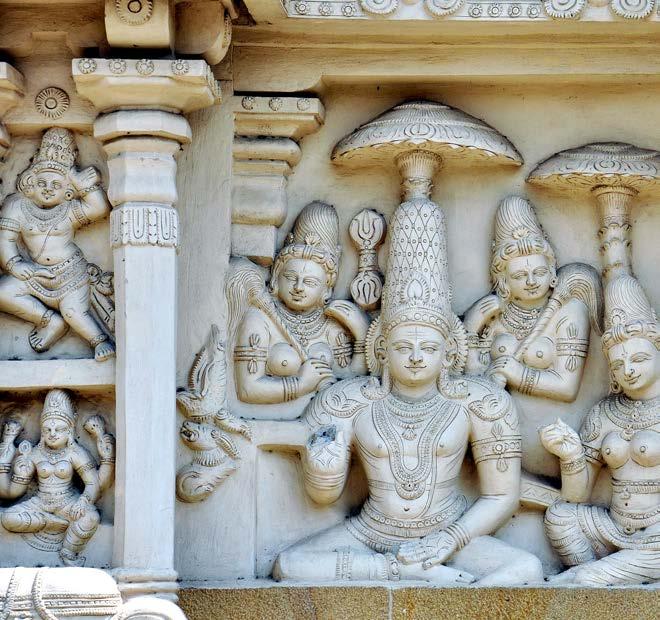
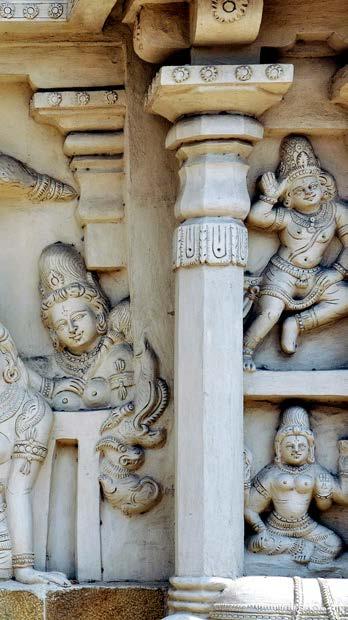
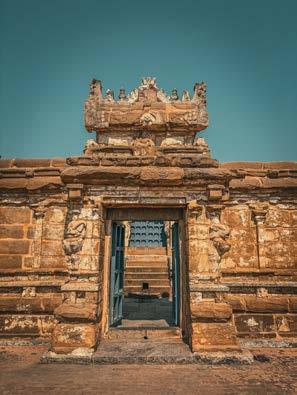
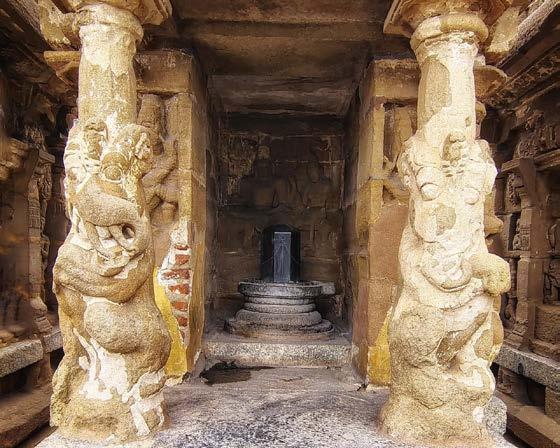
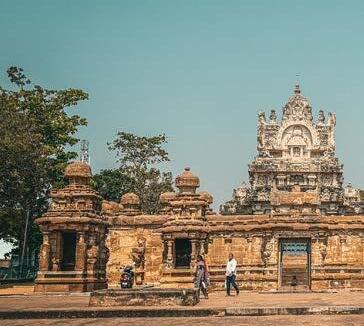
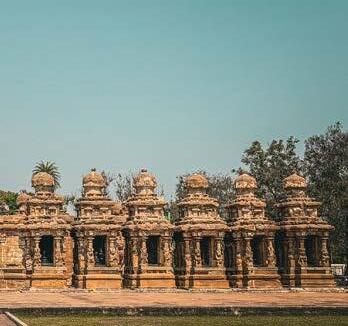
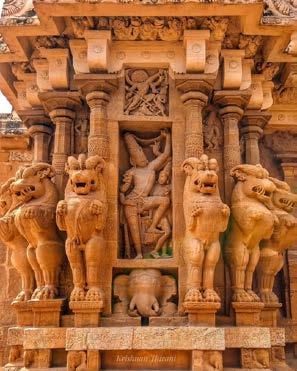
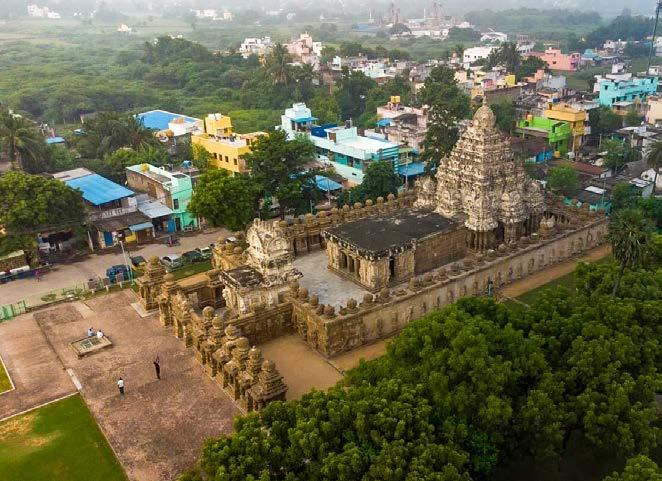
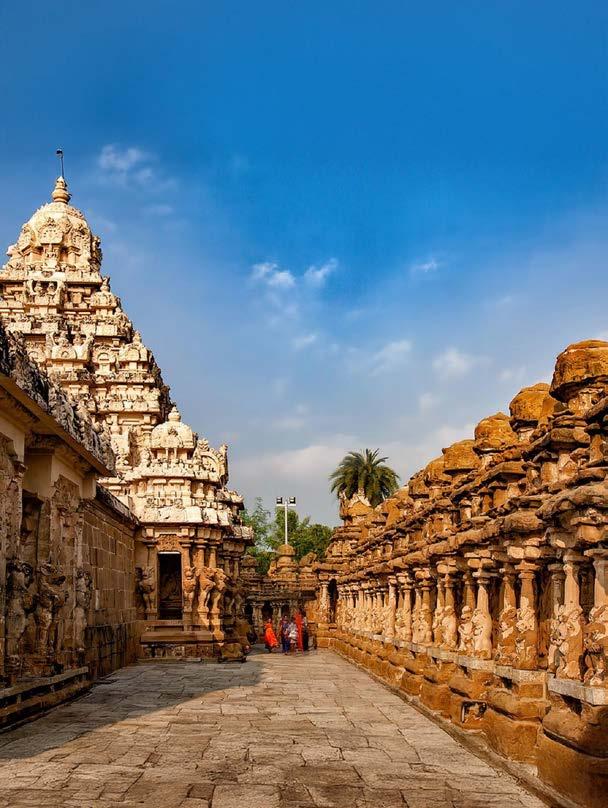
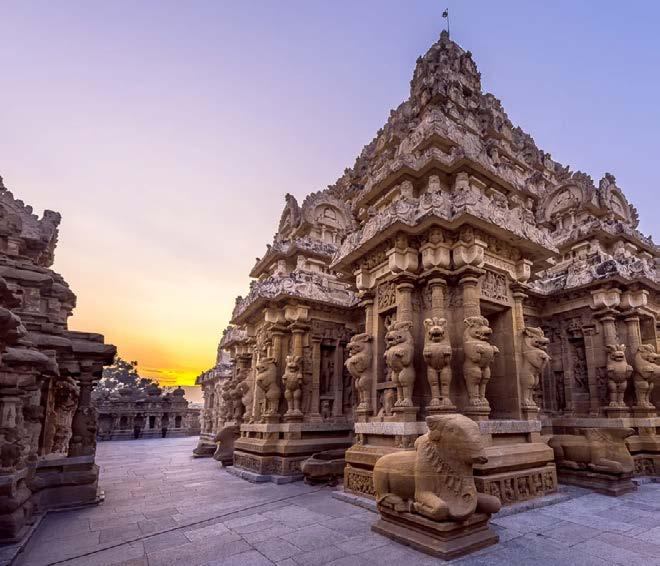
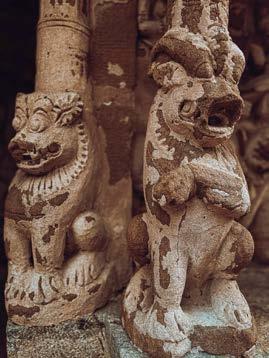
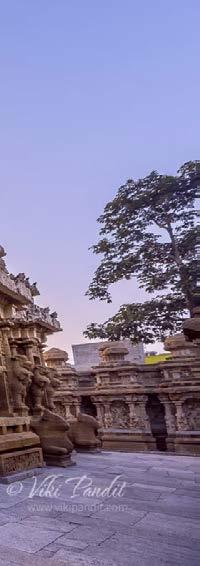
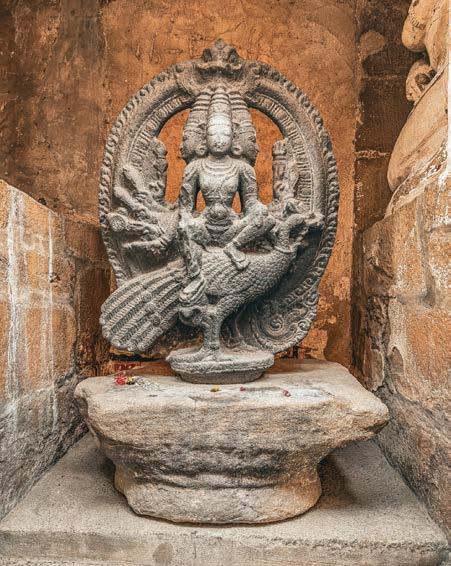
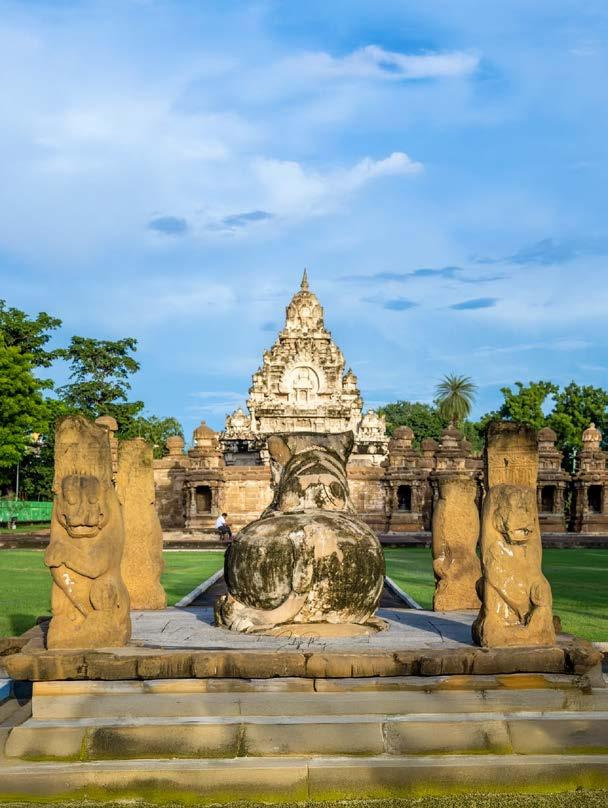
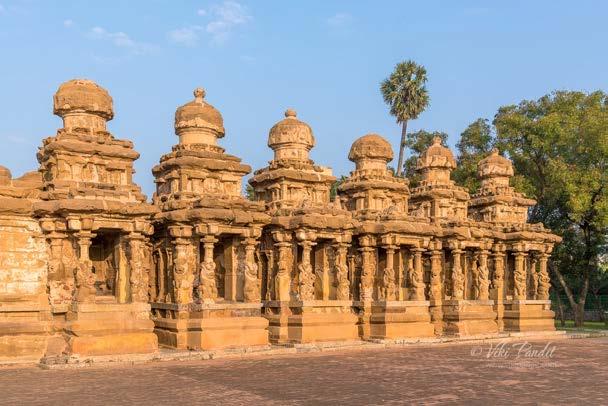
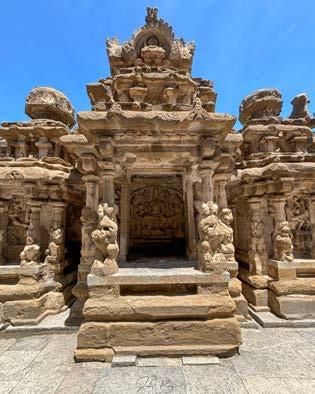
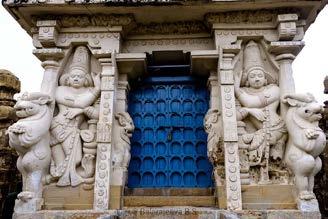
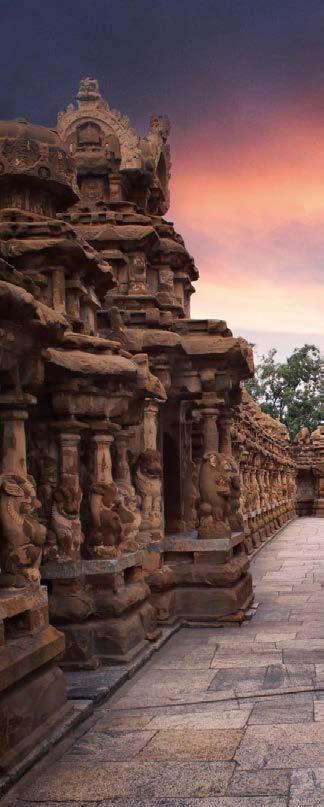
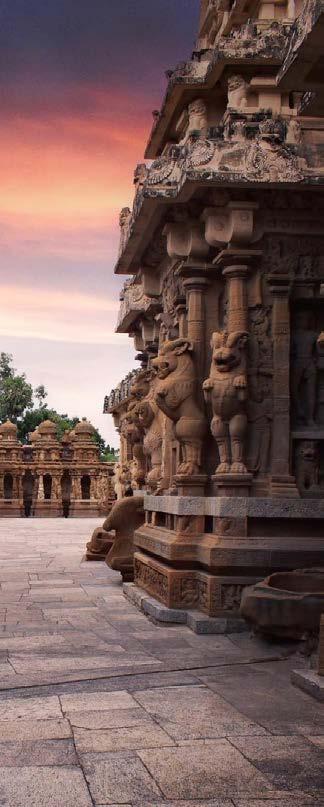
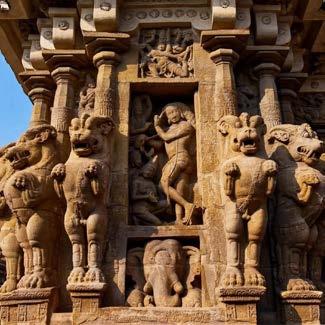
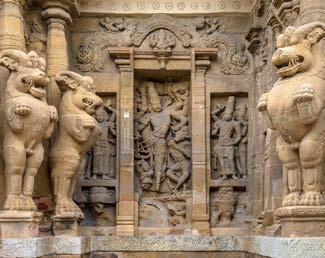
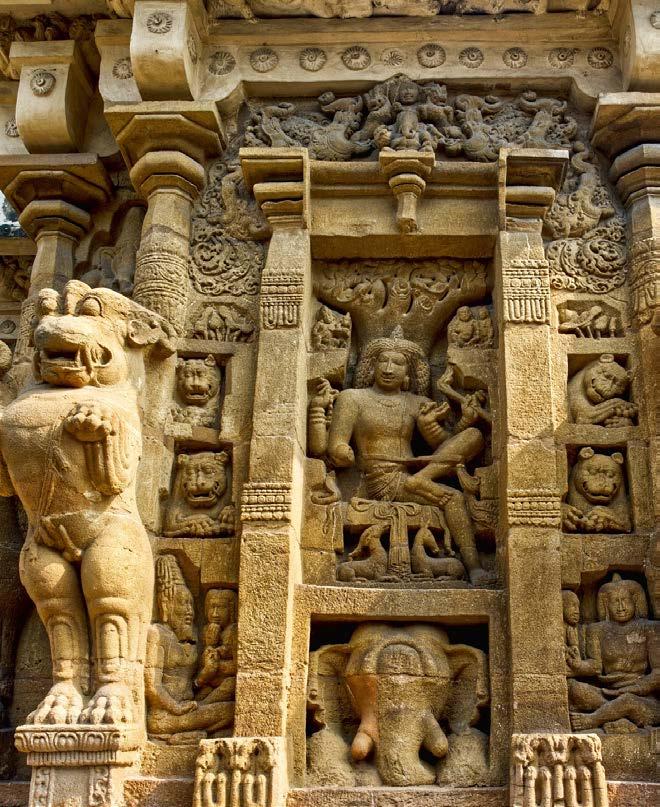
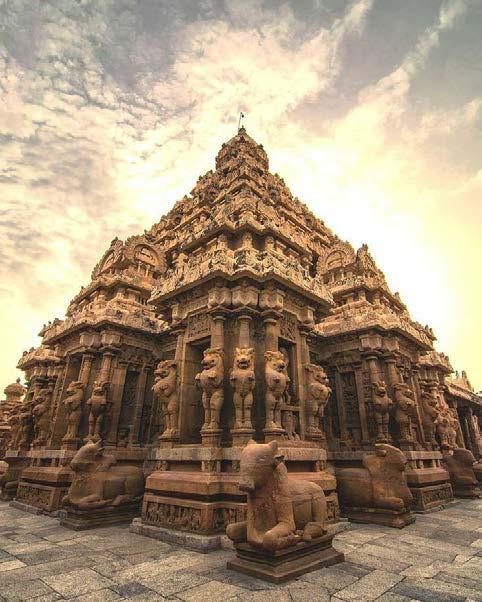
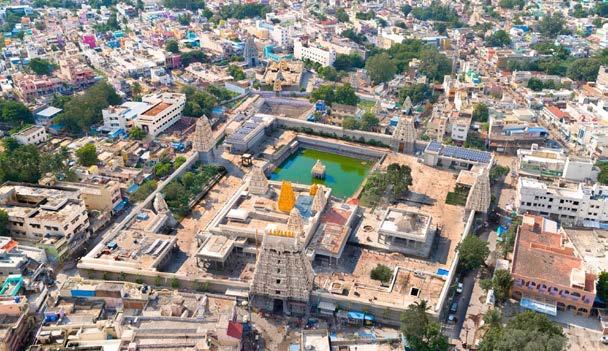
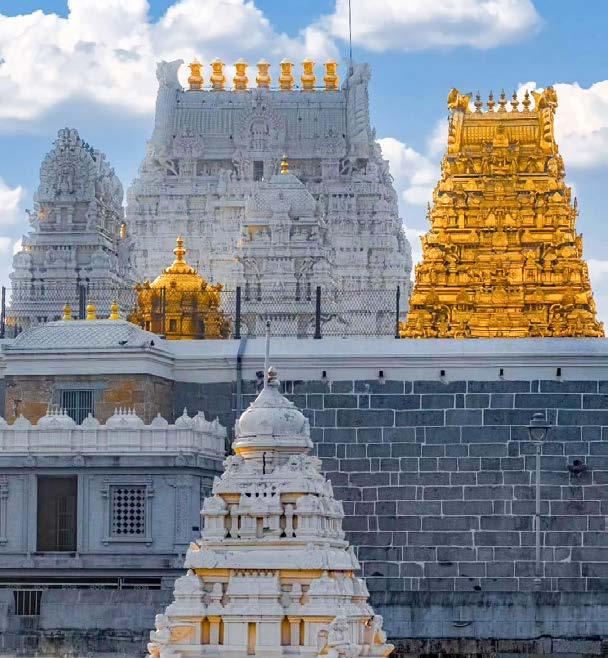
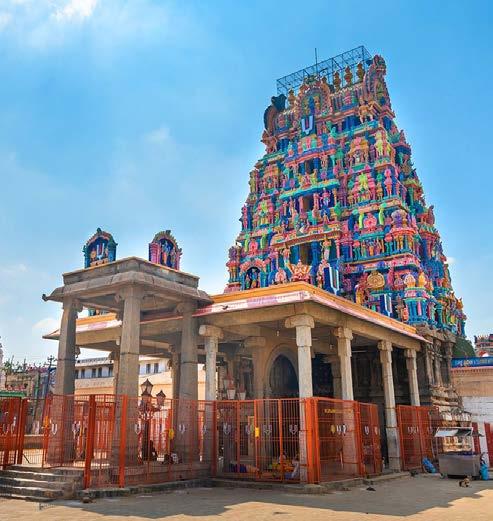
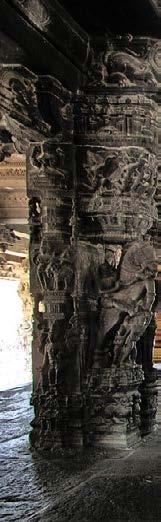
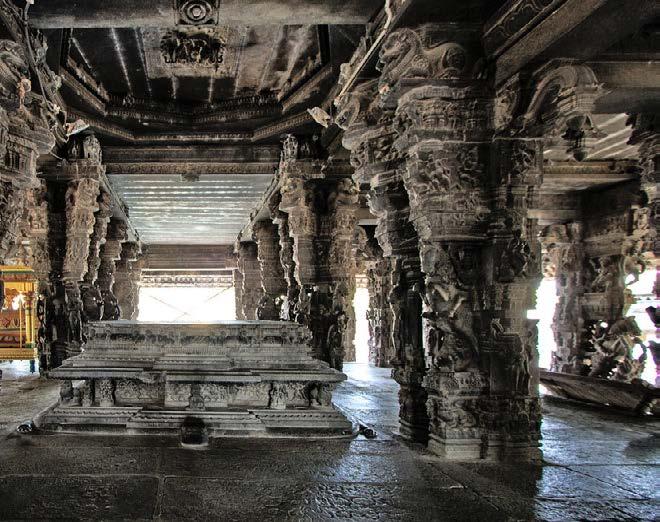
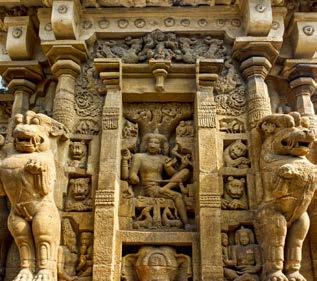
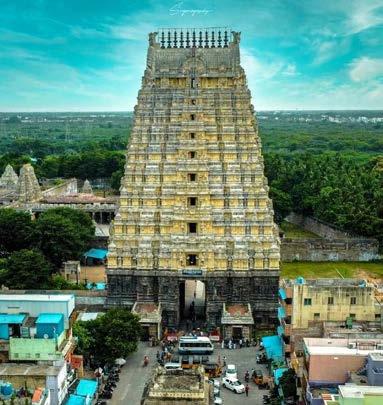
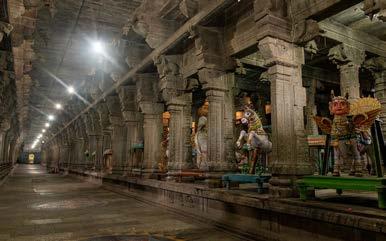
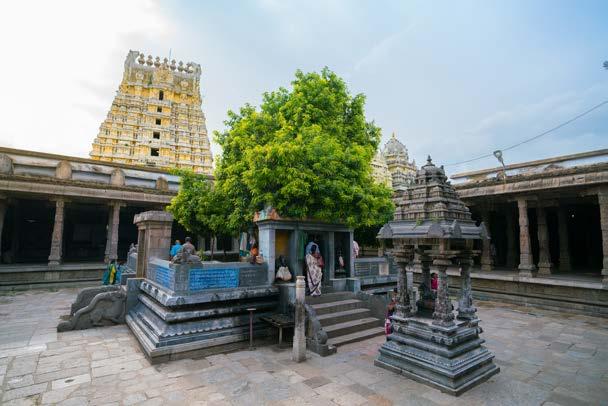
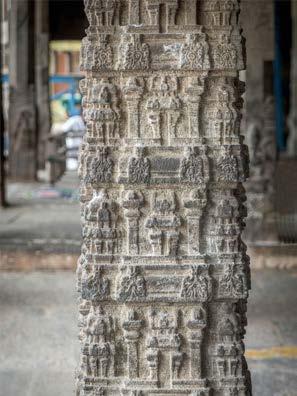
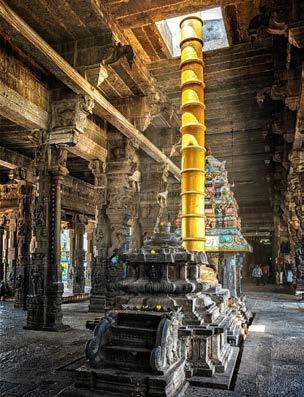
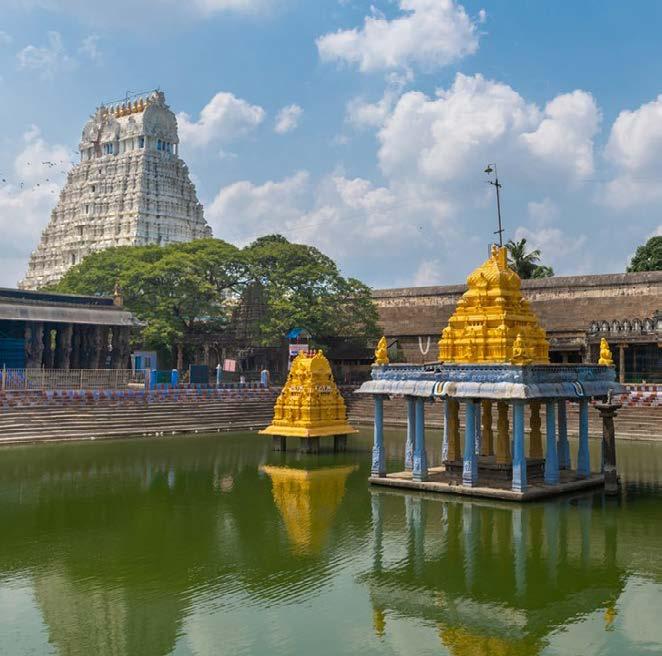
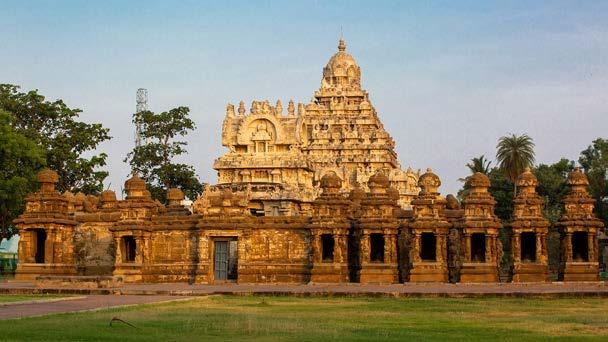
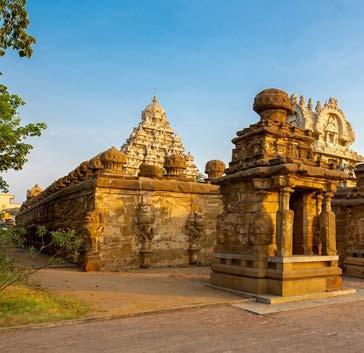
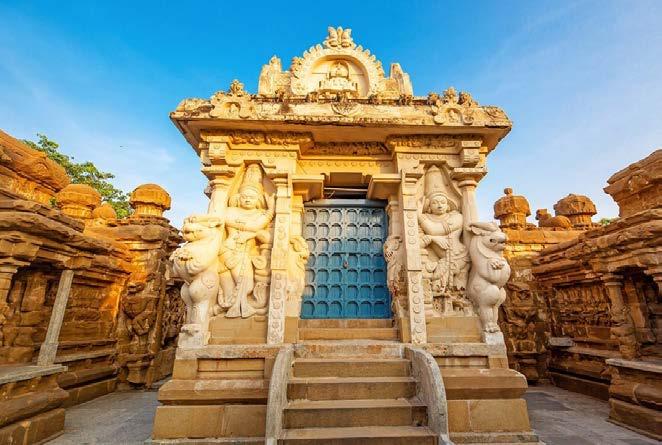
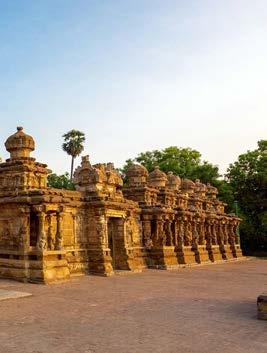
KAILASANATHAR TEMPLE
KANCHIPURAM, TAMIL NADU A TIMELESS
PALLAVA MASTERPIECE OF STONE AND SPIRIT
HEALTH & FAMILY WELFARE OF TAMILNADU
DR.SIVAKUMAR’S ADMIRABLE JOURNEY TO SUCCESS & STARDOM
INTL. STANDARD EDUCATIONOF TAMILNADU
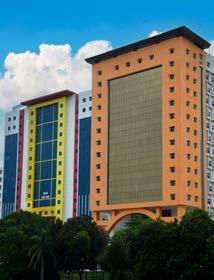
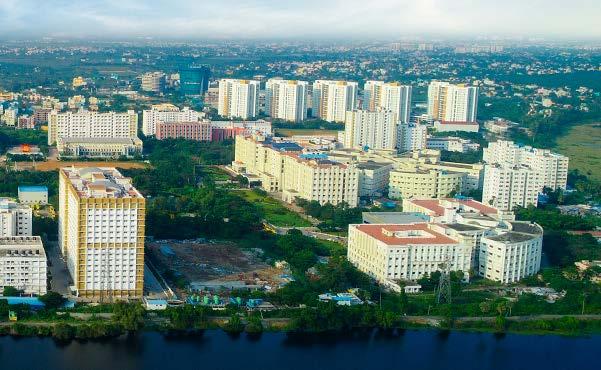
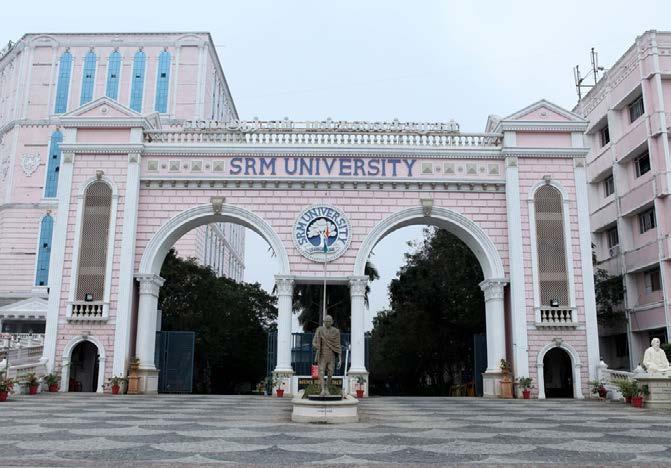
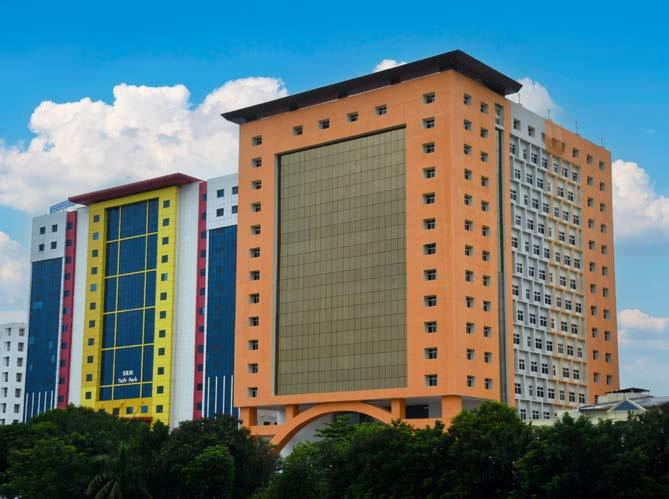
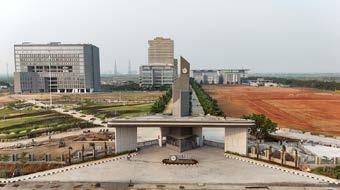
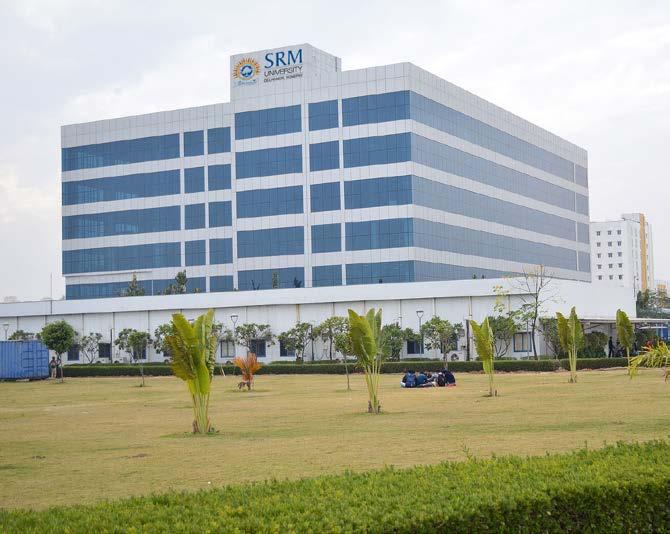
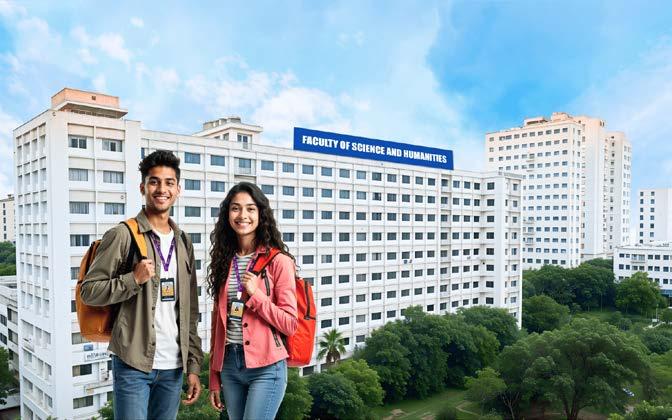
srM institute oF sCienCe & teChnolo Gy
One Of The Top Ranking Universities In India
INCREDIBLE TAMILNADU & Fashion Trends
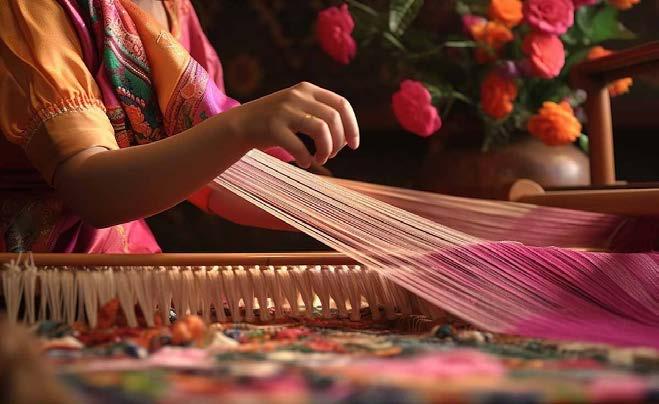
Master Weaver
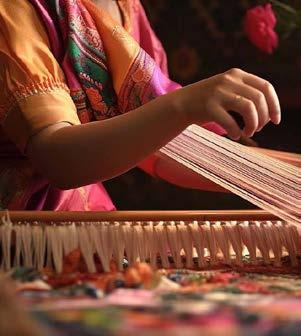
Mr. Sakthivel Periyasamy’s Tamil Art @ London Fashion Week 2025
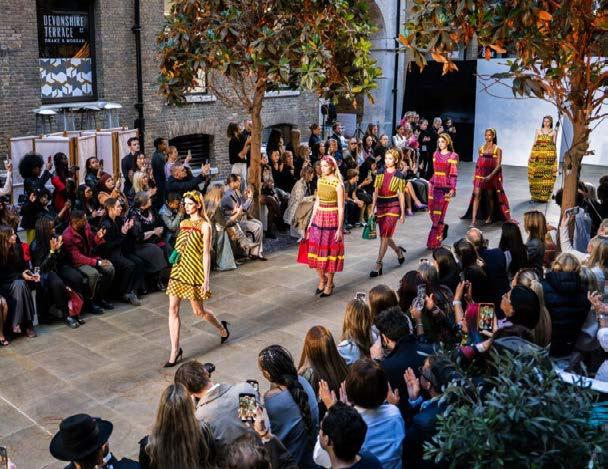
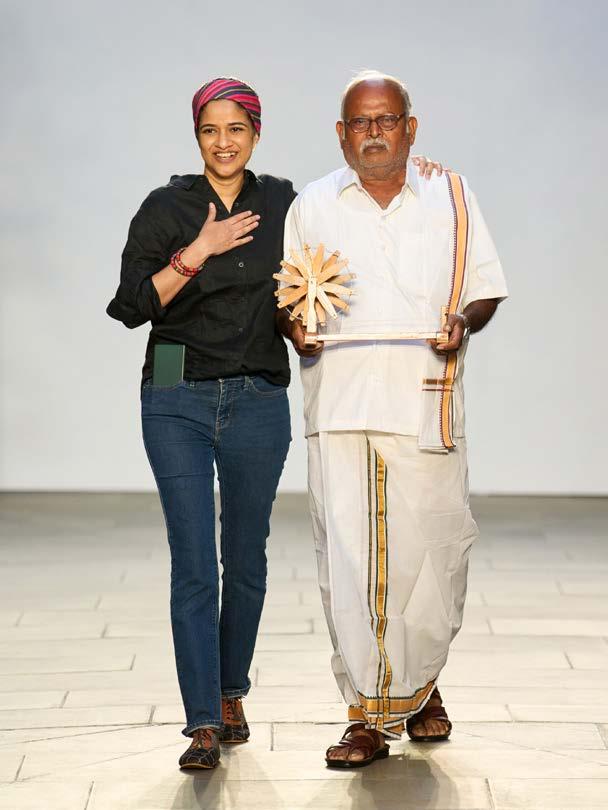
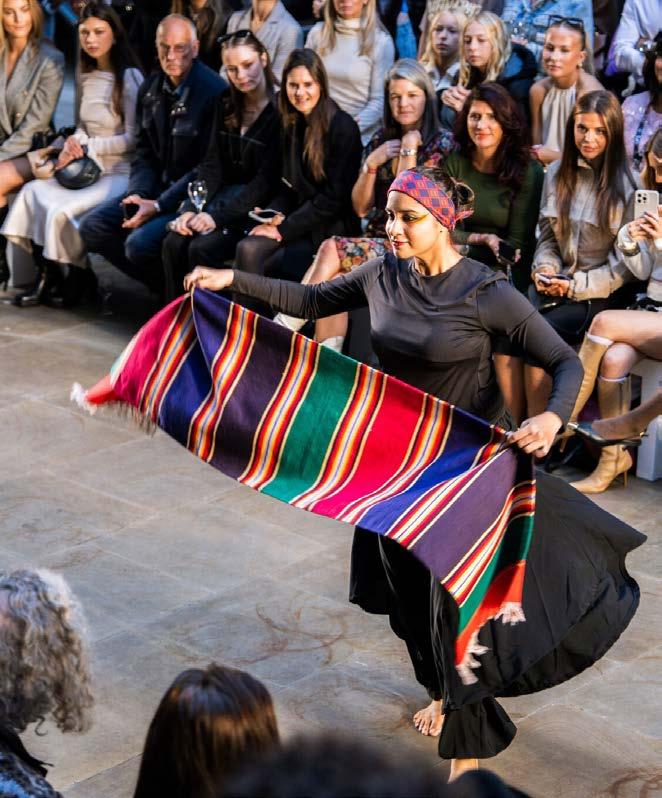
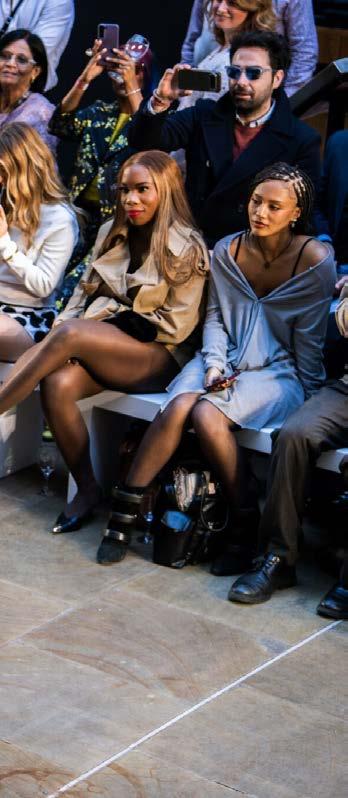
Known for collections that fuse bold design with cultural storytelling, the architect turned designer, collaborates closely with weaving communities of Tamil Nadu to reimagine heritage for the global stage. Inspired by the centuries-old Bhavani Jamakkalam, Vino’s latest collection honoured not only the craft but the people who sustain it. In a landmark moment, master weaver Mr. Sakthivel Periyasamy joined Supraja on the runway to take the final bow. For the first time, the true maker of a heritage craft stood beside the designer on a global stage.
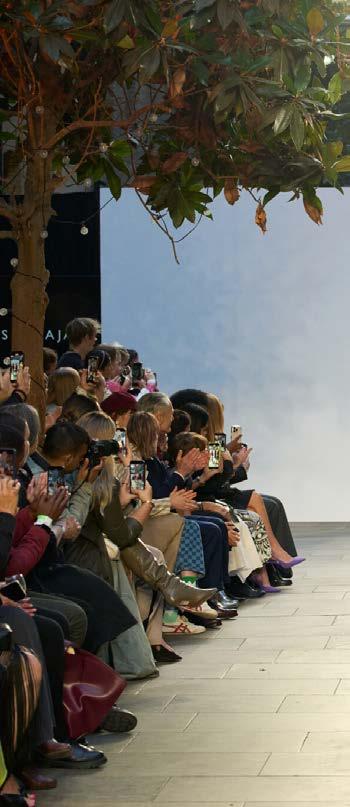
The audience was visibly moved, many describing it as a rare, emotional tribute where artisans were celebrated not as background figures but as protagonists of fashion. The runway, at Devonshire Terrace, opened with a theatrical piece choreographed by Palani Muruganof the Purisai Therukoothu lineage, performed by Vaanmadhi Jagan. Traditional footwork from Thevarattam and Thapattam was fused with theatre, bringing Jamakkalam to life as culture on stage. A specially composed track by music director Paul Jacob blended rare Tamil folk instruments (Kombu, Pambai, Parai, Jimla Melam, Thaarai, Periya Melam) with an English rap by acclaimed Indian rapper BlaaZe, inspired by poet Subramania Bharathiyar, and vocals by folk legends Chinna Ponnu and Antony Dasan. Founder Vino Supraja, has showcased at New York, Brooklyn, Shanghai, and London Fashion Weeks. A strong advocate for ethical luxury, she believes sustainable fashion must be both earth-friendly and people-friendly, ensuring the makers of fashion are honoured with dignity and respect. Her latest collection drew from the Jamakkalam’s bold stripes and vibrant colours, reimagined into modern silhouettes. Each garment was crafted by connecting multiple panels, culminating in a finale gown of over 400 pieces. Luxury handbags made from original Jamakkalam textiles accompanied the looks, extending the craft into contemporary fashion.
ABOUT THE CRAFT & THE WEAVER
The Bhavani Jamakkalam from Tamil Nadu, India, is a centuries-old weaving tradition once central to households, famed for its bold stripes and unique pit-loom technique. Today, it faces decline in the face of industrial alternatives. Representing this legacy, Mr. Sakthivel Periyasamy, who began weaving at 14 and has over five decades of experience, took the global runway to represent every weaver of Bhavani. His presence made the showcase not only a fashion moment, but a historic cultural tribute.
INCREDIBLE TAMILNADU Vibrant Lifestyle
VIBRANT LIFESTYLE
Inside NAYANTHARA & VIGNESH SHIVAN’S
Colonial-Style Studio In Chennai
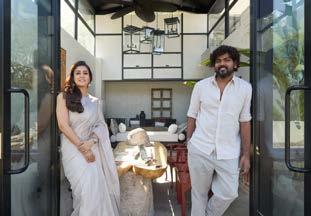
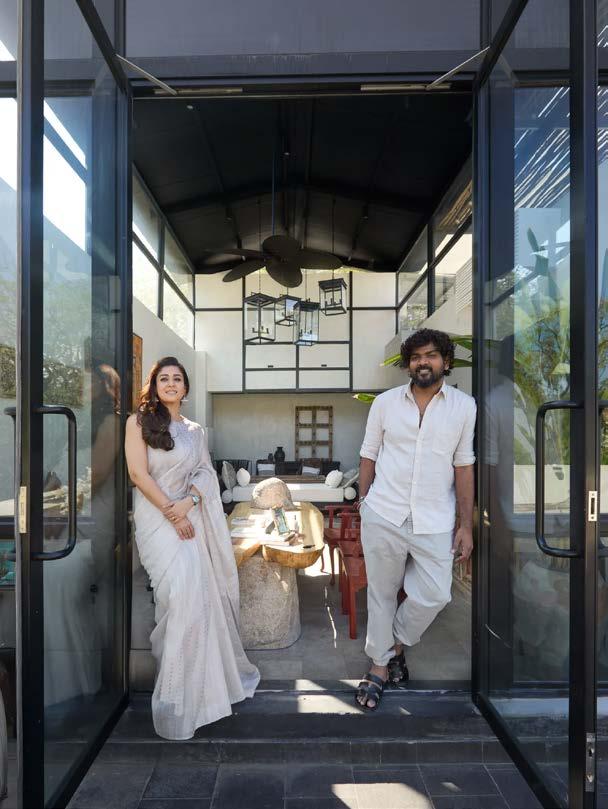
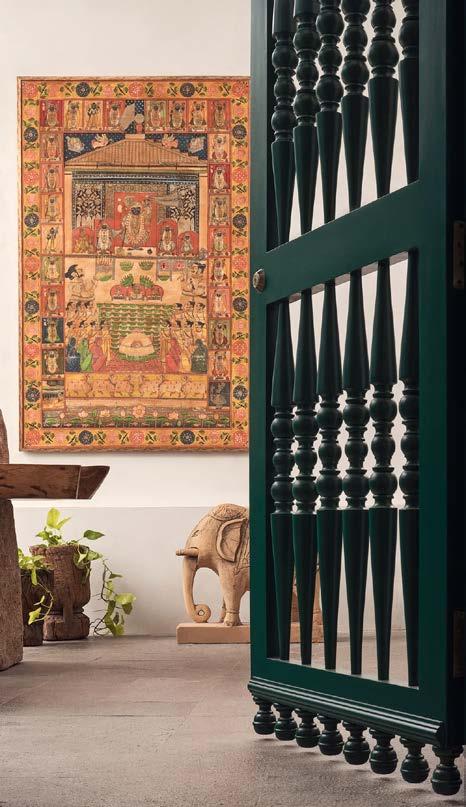
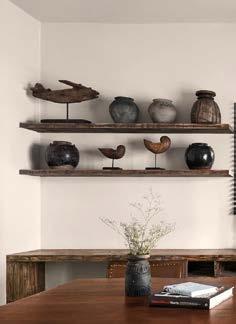
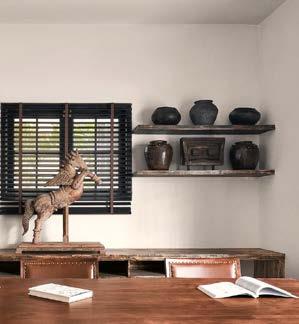
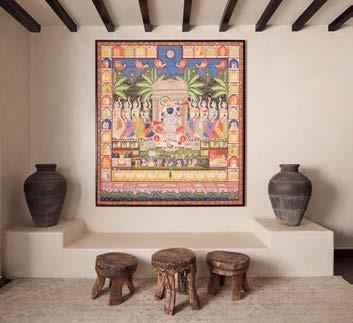
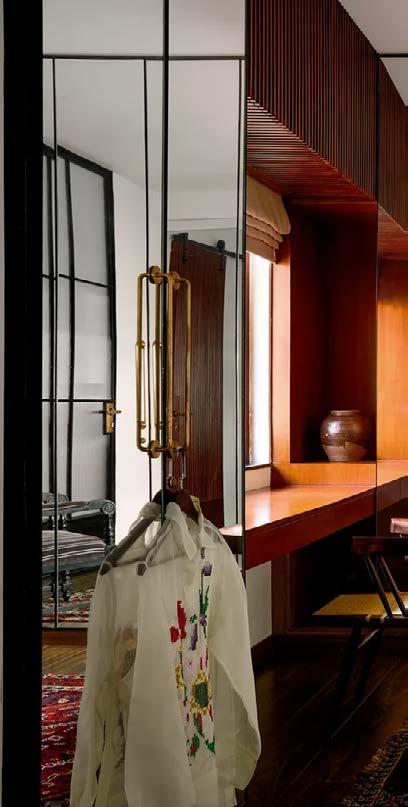
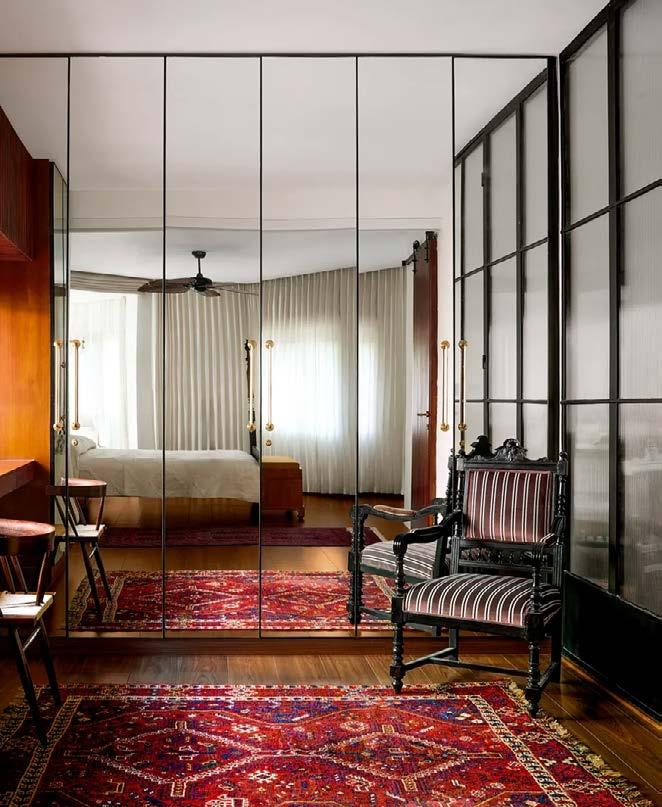
An old-world British charm with a distinctly modern rustic vibe defines celebrity couple Nayanthara and Vignesh Shivan’s sprawling new studio in Chennai, thoughtfully refurbished by designer Nikhita Reddy of The Storey Collective. Delicate pieces of pottery, traditional artefacts and wooden sculptures tastefully dot this lovely 7,000 square feet erstwhile colonial-style bungalow turned studio in Chennai, elegantly renovated to suit the taste of its famous owners—film actor Nayanthara and her husband Vignesh Shivan who’s also a director, producer, writer and lyricist.
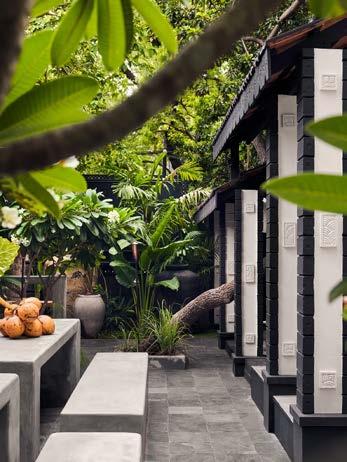
Huge pockets of sunshine and a gentle breeze highlight the space as you walk through in the late afternoon. And it transforms, somewhat gently, as the sun quietly wanes, evening sets in and the warm mood lights come on. Designed as a home-studio for the power couple, the aesthetic is modern luxe with nuances of a colonial past. It is also distinctly outdoorsy and tropical, with a rustic charm and a focus on local traditional craftsmanship. An earthy colour palette with touches of teak, woven fiber, linen fabric, and rattan keep the space subtle and grounded.
Located in Venus Colony, a prime residential neighbourhood in Chennai, the bungalow has been completely transformed for the famous actor-director duo by designer Nikhita Reddy of The Storey Collective. “I’d call it a remodeling project, with the addition of a few newly constructed spaces, like the terraces,” says Reddy, as she walks us through a large terrace with an upper level bamboo deck that manages to capture some smooth city views.
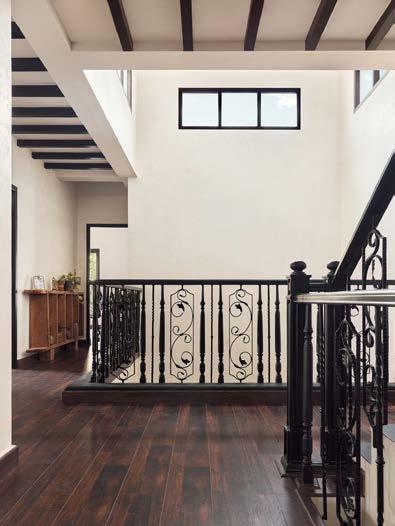
“I wanted to retain the essence of the bungalow while enhancing it to make it brighter by bringing in lots of natural light,” adds Nayanthara. And working in tandem was easy for Reddy, who shares a warm and comfortable rapport with Nayanthara and Vignesh. It was a remarkably efficient 40-day timeline for Reddy—from design, conceptualization and execution, to sourcing, custom-making and finishing. She retained the pristine external structure while knocking off walls internally to make the space lavish and better ventilated, and preserved a few key authentic elements like the wooden pillars.
This home-studio in Chennai is comprehensive and complete, with a conference room, a cosy lounge space to host guests and parties, a large outdoor landscaped section to hang out, and an outdoor backyard dining. There is also a living room to host visitors, bedrooms to house their work team, a separate meeting room for their assistant directors and separate spaces for Nayanthara and Vignesh to conduct their respective meetings when needed.
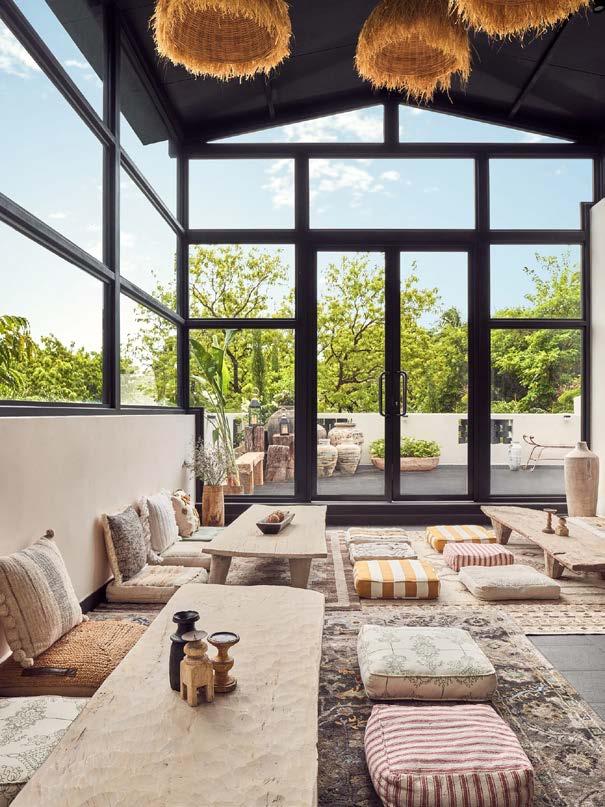
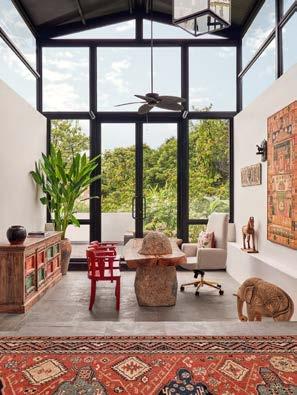
“My most favourite part is Vignesh’s studio along with the terrace café lounge where we host guests regularly,” says Nayanthara, who loves the two new double-height glass houses sandwiched between a central terrace space—a chic and immaculately modern touch nestled within otherwise semi-old-worldly architectural elements and a rustic, earthy aesthetic.
PENDANT LIGHTS BY THE PURPLE TURTLES
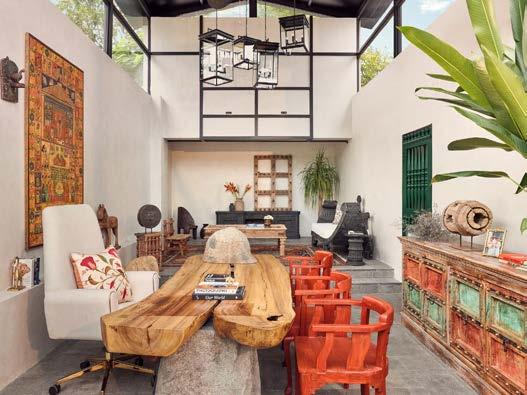
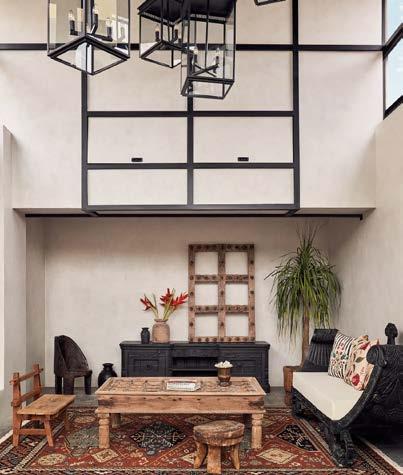
Vignesh’s study is a wonderful example of the tropical and rustic charm echoed throughout the studio. This room is dominated by sharp, clean black lines that add definition and frame the view provided by the double-height glass walls that wrap around the space. Rectangular pendant lights by The Purple Turtles hang from the ceiling, echoing the sharp black lines that adorn the rest of the room.
CUSHIONS BY GOOD EARTH
The lounge area on the terrace is adorned with many traditional elements and motifs, including naga chairs and a vibrantly detailed coarse rug by Jaipur Rugs. The cushions by Good Earth compliment the pattern and colours of the rug in a restrained manner, with the black cabinet and couch frame providing a point of contrast.
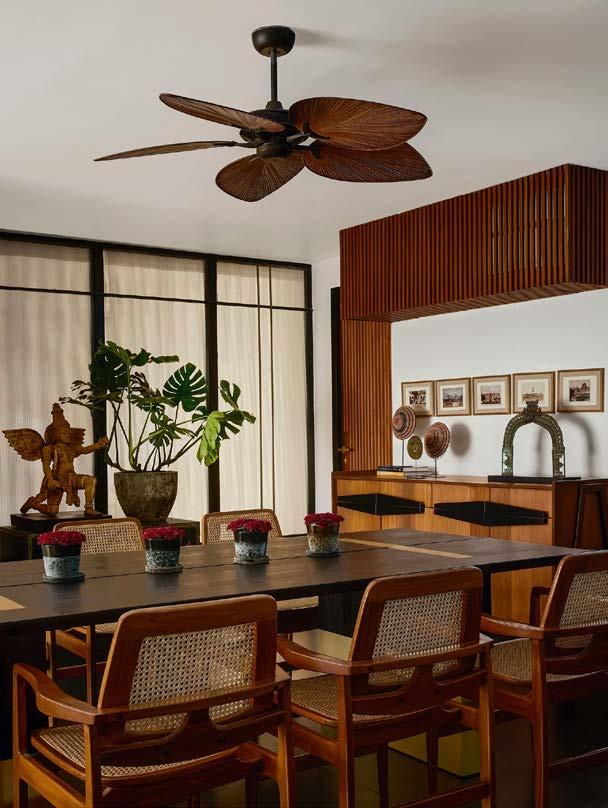
CEILING FAN BY FANZART
Adding to the interplay of dark and vibrant colours in the studio is a ceiling fan from Fanzart’s Trendy Tropical Collection. This collection features fans with a rattan finish on the blades, a material that compliments tropical architecture, and fits well with the aesthetic of the home.
FLAT FLOOR WEAVES BY JAIPUR RUGS
Any piece from a Jaipur Rugs collection can imbue a space with a sense of elegance thanks to it’s intricate detailing and craftsmanship. Which is why Nayanthara and Vignesh Shivan’s studio features weaves from Jaipur Rugs in not just one, but two rooms. One in the aforementioned study and lounge area, and the other in the informal breakout area of the studio that is used to entertain guests.
HANGING LIGHTS BY CLAYMANGO
Suspended from the ceiling of the informal lounge are three Morocco lights from the Banswari collection by ClayMango. The Morocco pendant lights add a spot of colour to the otherwise neutral colour scheme of the room, and are complimented nicely by the background of green visible from the studio terrace.
Nayanthara and Vignesh Shivan’s colonial-style studio in Chennai is more than a beautiful architectural space—it is a seamless confluence of history, artistry, and personality. Every corner of the 7,000-square-foot bungalow tells a story: of timeless colonial elegance, of contemporary design sensibilities, and of the couple’s deep appreciation for craftsmanship and culture. Designer Nikhita Reddy’s thoughtful approach ensures that the old-world charm of the bungalow remains intact even as it embraces modern tropical aesthetics.
With its open terraces, bamboo decks, handcrafted details, and an earthy palette that radiates calm, the studio feels both luxurious and lived-in—a reflection of its owners’ creative spirit. From The Purple Turtles’ pendant lights and Good Earth’s cushions to Jaipur Rugs’ intricate weaves and ClayMango’s colourful lamps, each design element has been carefully chosen to complement the overall harmony of the space.
This colonial bungalow, reborn as a vibrant homestudio, stands as an ode to Chennai’s architectural heritage and modern design evolution. It is not merely a workspace, but a sanctuary where art, emotion, and inspiration come together—capturing the essence of Nayanthara and Vignesh Shivan’s artistic journey and their shared vision of beauty, balance, and belonging.
Chennai Based Designer & Architech Gowri Adappa’s Splendid Home Creation in Chennai
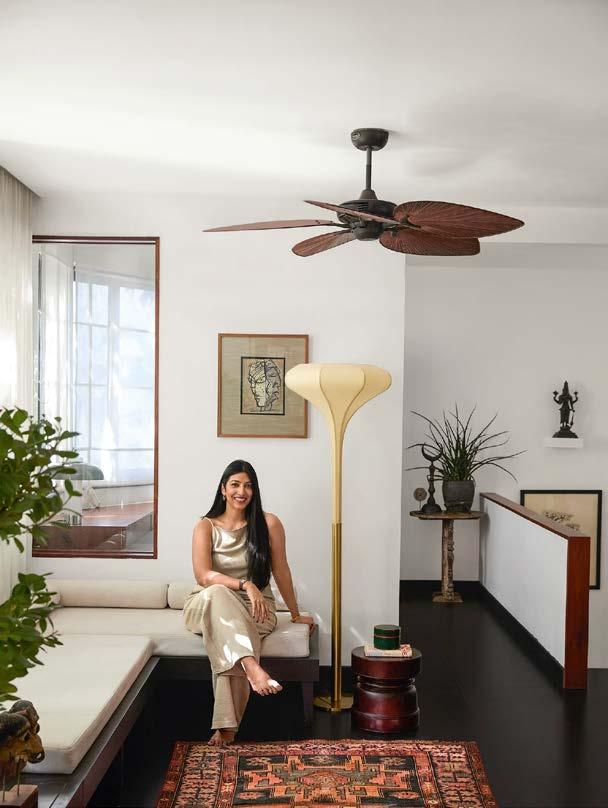
Architect Gowri Adappa and wedding designer Ambika Gupta travel and source art and artefacts from Puducherry to Jaipur, weaving in nostalgic childhood home features like sunken pits and black oxide floors. Here is the combined vision of two creatively inspired women.
“Every morning,” says Chennai-based Ambika Gupta, “when I walk out of my room with a cup of coffee in hand and step into the living room, I look around, breathe in and it’s a pinch-me moment. I can’t not be grateful for this home—my first.” Founder of The A-Cube Project, a bespoke wedding company with clients from across India and the world, Gupta lives here with her 11-year-old daughter, Shanyraa, and her Jack Russell Terrier, Milo. “While I was growing up, my mother would tell me that making a home of your own is a monumental project. I know what she meant now,” she adds. Similarly, for Chennai-
based architect, designer and co-founder of A Design Co Gowri Adappa, too, this three-year-long project has been a labour of love. It combines three unusual apartments, that find expression across four levels in an old apartment complex tucked quietly off Chennai’s bustling Sterling Road, into a single large home. It reflects the collaborative vision of two creatively inspired women—Gupta envisages dreamy weddings and Adappa crafts homes. That craftsmanship needed to be at the heart of this home was a shared belief and its manifestation was slow, thoughtful and serendipitous.
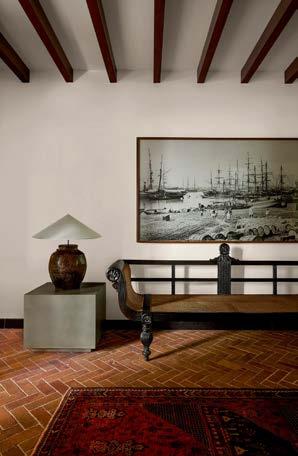
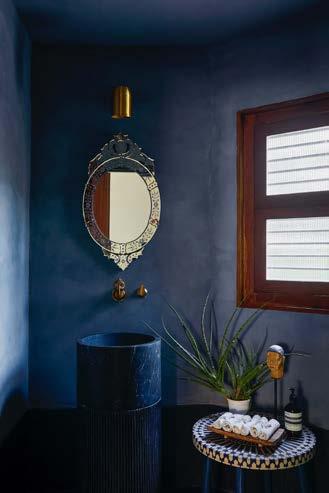
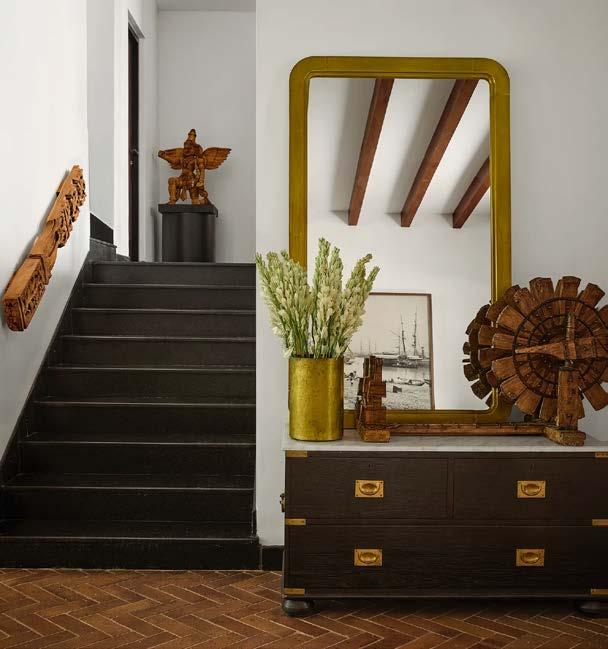
Like a magpie, Adappa sourced materials, art and artefacts to fold them into everyday life—all in a way that is unfussy and understated. Take the foyer, for instance. Located on the ground floor, this was the third apartment that Gupta acquired almost after the two floors above were nearing completion. “It allowed us to make space for a dramatic powder room, a guest bedroom and the gym that Ambika was keen on,” Adappa says. The wooden door at the entrance—sourced during a trip the women took to Puducherry to visit artisans and identify antiques—opens into a sanctuary of sorts. You can find a moment’s respite from the outside on the old Dutch bench from Colombo that Adappa sourced from Souk, a well-known antiques store in Chennai. From that spot, you peer into the sunken pit with cushioned seating, dotted with four glass table lamps from Taherally’s in Mumbai. For Gupta, sunken seating is a childhood memory. “I still have vivid memories of how all of us cousins would gather and jump onto a sunken space like this in my nani’s home in Madhya Pradesh. It was a
gathering spot; a spot of togetherness.” However, weaving nostalgia into this modern, functional home wasn’t without its experiments. When we walk through to the next level, Adappa recalls a chaotic afternoon when, after much back and forth on a certain structural decision, they finally punched a hole from the mezzanine level into the ground to integrate the space, to make it a seamless whole unit. “Honestly, at every stage of making this home, I found myself revisiting my craft,” Adappa says. Nevertheless, the designer’s ingenuity shines through. From creating a well-connected shell, styling the home to spotlight individual pieces but ensuring they speak to one another, tying the visual story together with continuing elements like black granite floors, brass details, South Indian heritage artefacts like the marapachi bommais (wooden dolls), a dash of soft white upholstery, and all of this enveloped by the green foliage peeping in from the various bay windows and verandahs—Adappa, an AD100 architect, is clearly honing her craft, one home at a time.
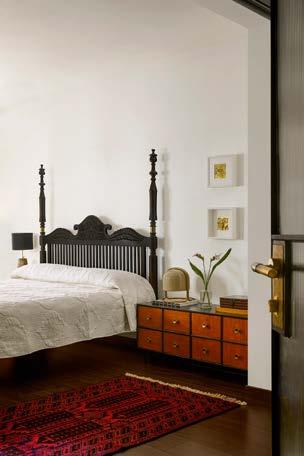
To add to that, Gupta brings her own strong and distinct narrative of objects and stories. For instance, the wooden bar in the living area was originally part of a set of Made in Heaven, an Amazon Prime Video series about wedding planners. Gupta helped with set designing and styling for one of the episodes of the show. “I did a cameo in that episode where this bar is used,” Gupta says, “and the only thing I asked the director was if I could take this piece home.” Adappa worked diligently to peel off certain details and make it a part of this home. Finally, it is in the top level of this home that Gupta located her bedroom. A custom-made four-poster rosewood bed sits on walnut wood flooring lined with earthy rugs hand-picked from Jaipur. An antique chandelier hanging from the ceiling gives the space a haveli-like effect. In this quiet triangular corner, one sees in Ambika Gupta a woman who loves to live life queen-size.
This Chennai home stands as a remarkable testament to collaboration, creativity, and nostalgia. What began as three distinct apartments has been transformed into a soulful sanctuary that marries heritage with modern sensibilities. Architect Gowri Adappa’s mastery in spatial design and material storytelling meets Ambika Gupta’s emotional and aesthetic intuition, resulting in a home that feels both deeply personal and universally inspiring.
Every corner narrates a story — from heirloominspired artefacts and handcrafted furniture to sunken seating that echoes childhood memories. Together, these elements create more than just a living space; they build a narrative of belonging, craftsmanship, and memory. In an age where homes are often seen as transient, this one stands grounded — rooted in the past, alive in the present, and timeless in its beauty.
INCREDIBLE TAMILNADU & Retail Shopping
Timeless Craftsmanship and Elegance By GRT Jewellers
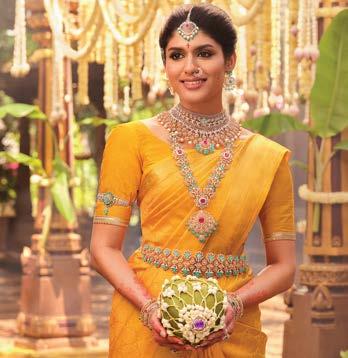
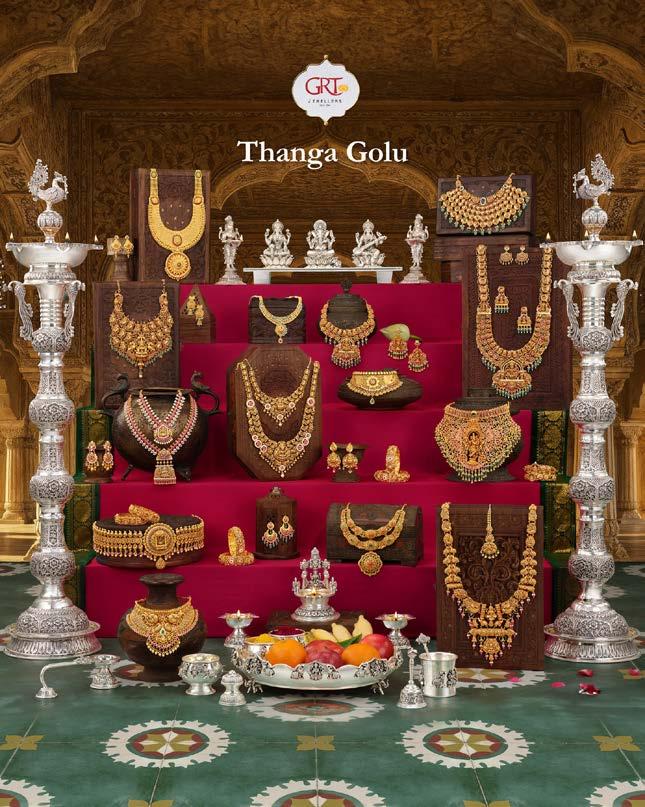
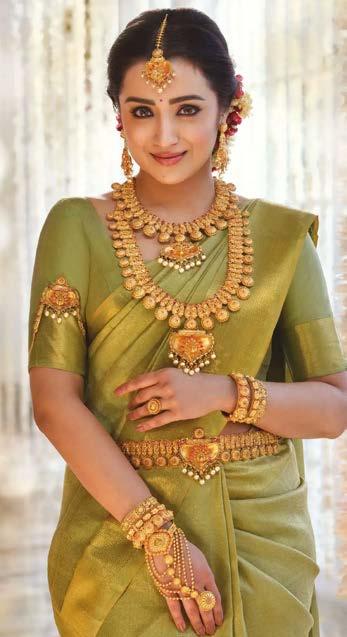
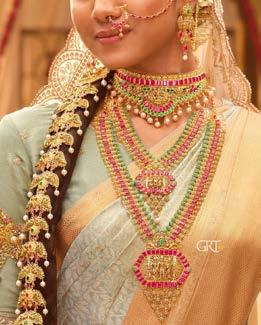
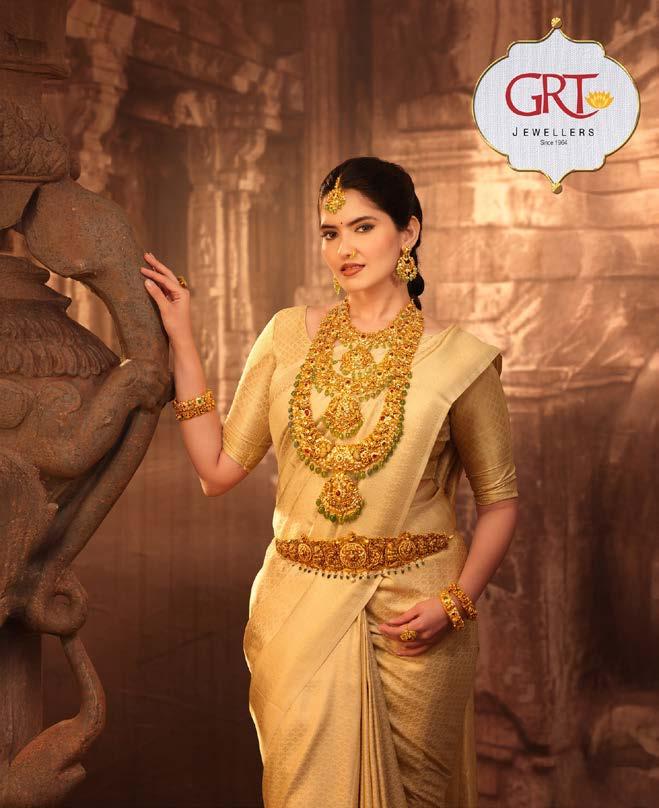
Jewellery has always been more than mere adornment; it is a mirror reflecting culture, heritage, and personal emotion. In Tamil Nadu, jewellery embodies the soul of tradition—passed down through generations, representing milestones, blessings, and prosperity. Among the many illustrious names in India’s jewellery landscape, GRT Jewellers, also known as G.R. Thanga Maligai, stands tall as a symbol of trust, craftsmanship, and timeless beauty. For over six decades, GRT has been at the heart of Tamil Nadu’s love affair with gold. From its modest beginnings in Chennai to becoming a brand of
international repute, GRT Jewellers continues to blend artistry, technology, and ethics into every shimmering piece. Today, its name resonates not only with purity and precision but also with the spirit of innovation. The brand’s recent collections, including the Anvaya Collection and Diamond Earrings Mela, showcase how GRT gracefully bridges tradition with contemporary elegance. In this article, we explore the journey of GRT Jewellers — from its humble roots to its leadership in the luxury jewellery industry — and take a closer look at its latest collections that have redefined elegance in Tamil Nadu.
History and Legacy
A GOLDEN JOURNEY THAT BEGAN IN CHENNAI
The story of GRT Jewellers began in 1964, when a young visionary named G. Rajendran founded a small jewellery store in the bustling heart of Chennai. His dream was simple yet profound — to create jewellery that reflected trust, purity, and craftsmanship. The store, named G.R. Thanga Maligai, soon became a landmark for customers seeking authentic gold and intricate designs.
In a time when jewellery-making in India was primarily driven by local artisans and limited resources, Rajendran’s commitment to precision and quality stood apart. His dedication to customer satisfaction transformed the small showroom into a trusted name across the state. Over the decades, GRT expanded its presence throughout Tamil Nadu — from T. Nagar and Velachery in Chennai to Salem, Madurai, Trichy, and Coimbatore.
This expansion was not merely geographical; it symbolized a journey of earning hearts, not just sales. Each new branch carried the same ethos that Rajendran instilled — integrity in trade, excellence in design, and warmth in service. GRT became more than a jewellery brand; it became part of Tamil culture, adorning weddings, festivals, and generations of customers with creations that tell stories of joy and prosperity.
Expansion and Presence Across Tamil Nadu
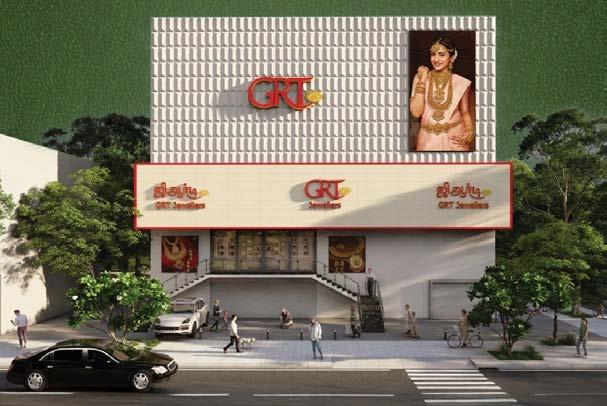
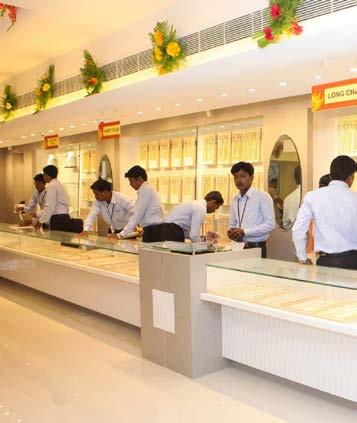
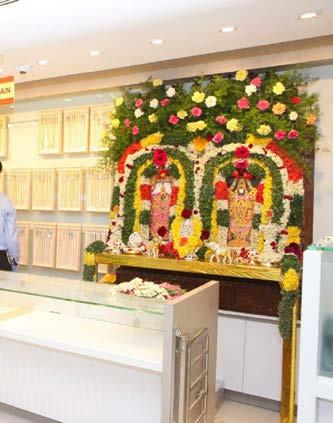
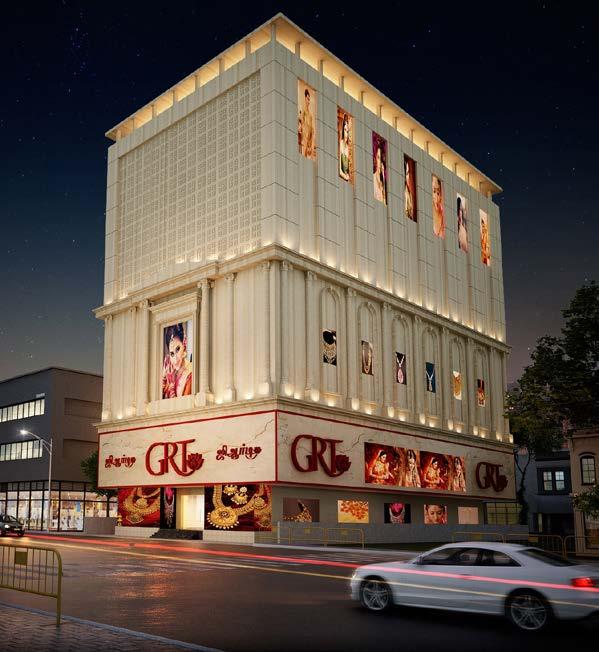
Today, GRT Jewellers is synonymous with trust across Tamil Nadu. The brand operates several showrooms in Chennai, including its iconic branches in Usman Road, Coats Road, Anna Nagar, Velachery, Purasaiwakkam, and Adyar. Each showroom exudes grandeur, combining modern architecture with traditional hospitality. Beyond Chennai, GRT has flourished in Madurai, Trichy, Salem, Tirunelveli, Vellore, Thanjavur, and most recently, Theni, where the brand inaugurated its 65th showroom in 2025. Every branch is designed to deliver not just jewellery, but a memorable experience. From warm greetings to personalized assistance, GRT’s showrooms reflect the perfect blend of Tamil hospitality and global standards. Customers often describe their visits as “temples of gold,” where craftsmanship meets culture.
The brand’s expansion also mirrors Tamil Nadu’s growing affinity for innovative designs and ethical buying. GRT has managed to preserve its core values of purity and transparency while adopting modern business practices such as online shopping portals, digital hallmark verification, and live gold rate displays, ensuring customers’ complete trust and convenience.
The Essence of Craftsmanship
WERE ART MEETS PERFECTION
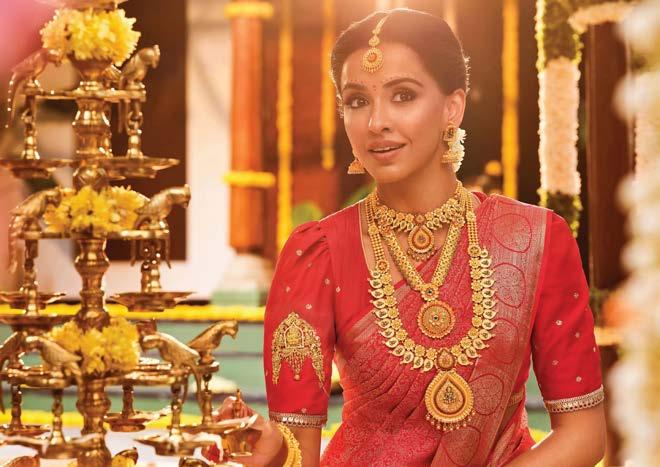
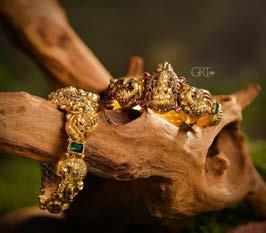
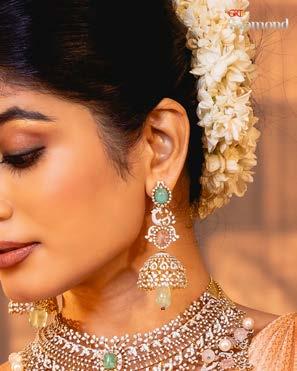
The hallmark of GRT Jewellers lies in its exceptional craftsmanship. Every piece is a symphony of design, precision, and emotion. The artisans — many of whom have been with the company for generations — transform gold and gemstones into wearable works of art. GRT’s designs often draw inspiration from South Indian temple architecture, nature motifs, and cultural heritage. The delicate carvings, intricate filigree, and traditional motifs are balanced
by sleek, modern aesthetics that appeal to younger customers. Each creation undergoes a meticulous process — from sketch to mould, from stone setting to polishing — ensuring that no detail is overlooked. At the same time, the brand has embraced cuttingedge technology to refine its designs and maintain international standards. Advanced tools like CAD (Computer-Aided Design) and laser engraving are used to achieve precision, while maintaining the handmade soul of each piece. Whether it is a bridal necklace adorned with rubies and emeralds, or a minimalist platinum ring, GRT’s creations celebrate both artistry and accuracy. Their ability to balance tradition and innovation is what makes GRT Jewellers truly timeless.
The Latest Collections of 2025
REDEFINING ELEGANCE
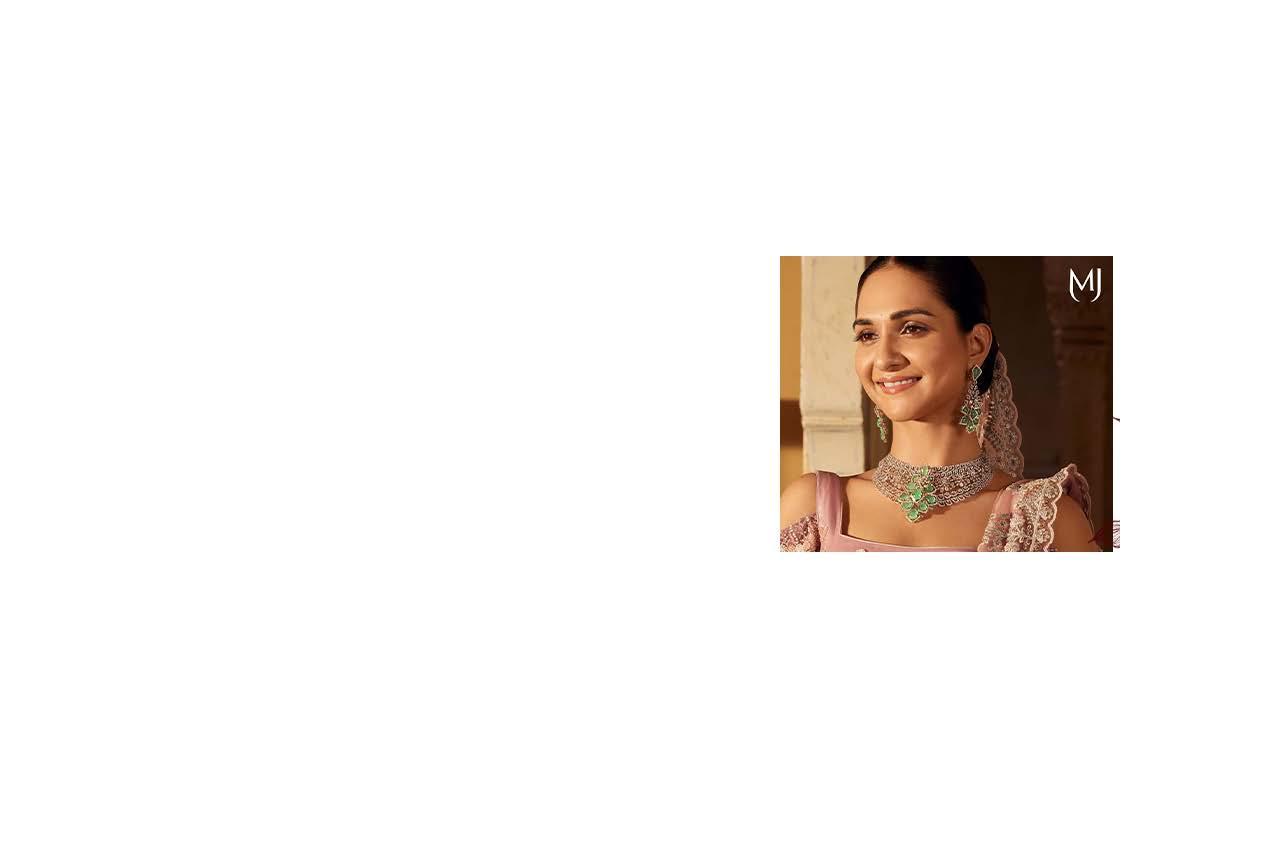
In 2025, GRT Jewellers unveiled several new collections that encapsulate its philosophy — heritage reimagined through modern craftsmanship. Among these, two have particularly captivated Tamil Nadu’s jewellery lovers: the Anvaya Collection and the Diamond Earrings Mela.These collections reflect GRT’s understanding of its evolving clientele. While the traditional Tamil bride continues to seek temple-inspired ornaments, the modern woman looks for versatile designs that can complement both ethnic and contemporary attire. GRT’s designers have risen to this challenge, offering pieces that seamlessly combine classic motifs with modern wearability.The new lines also highlight GRT’s commitment to sustainability, ethical sourcing, and purity. Each collection undergoes stringent quality checks and comes with full transparency in terms of hallmarking and certification, reinforcing the brand’s legacy of trust.
The Anvaya Collection
HERITAGE REIMAGINED
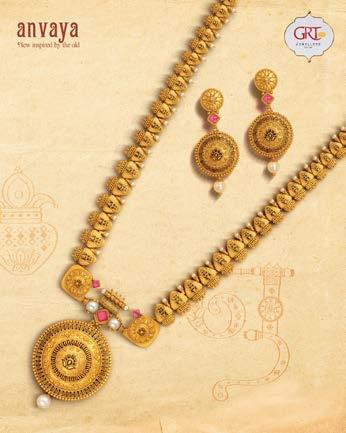
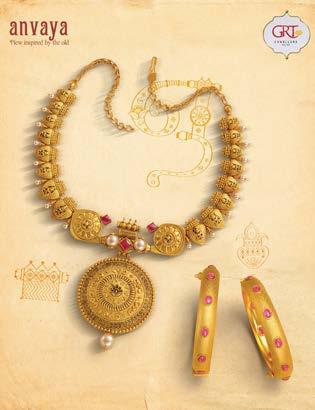
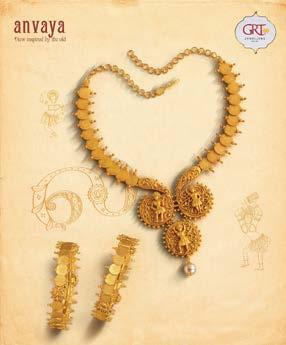
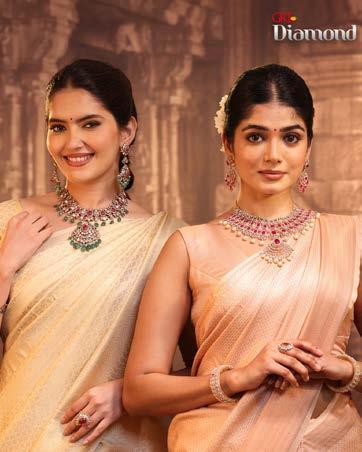
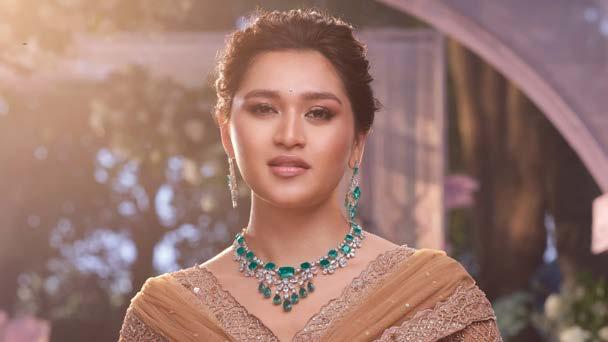
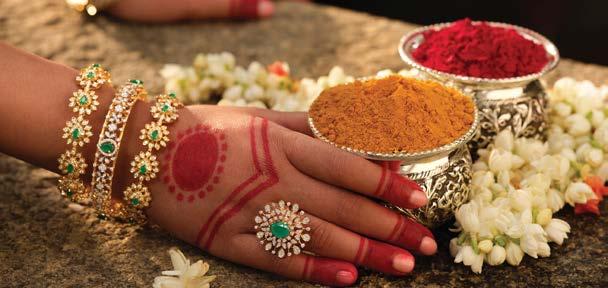
Launched in September 2025, the Anvaya Collection is a tribute to India’s rich cultural legacy. The word Anvaya means “connection” — symbolizing the timeless link between past and present, tradition and innovation. This collection showcases stunning pieces inspired by nature, mythology, and ancient craftsmanship. From intricate gold necklaces with fish motifs (a symbol of prosperity) to bangles adorned with delicate pearls and meenakari detailing, every piece reflects both heritage and artistry.
The Anvaya Collection uses high-purity gold paired with diamonds, rubies, emeralds, and sapphires, capturing the essence of royal opulence. The craftsmanship mirrors Tamil Nadu’s temple art — each piece resembling miniature sculptures that tell stories of divinity and devotion.What sets Anvaya apart is its modern versatility. Despite its traditional inspiration, these designs can be worn with both ethnic ensembles and modern attire. Lightweight versions of classic chokers, drop earrings, and bracelets cater to today’s fast-paced lifestyle while retaining cultural identity.
Anvaya is more than a jewellery line; it is a celebration of heritage, femininity, and modern expression — a perfect reflection of GRT’s philosophy that tradition never goes out of style.
Diamond Earrings Mela
THE SPARKLE OF MODERN GLAMOUR
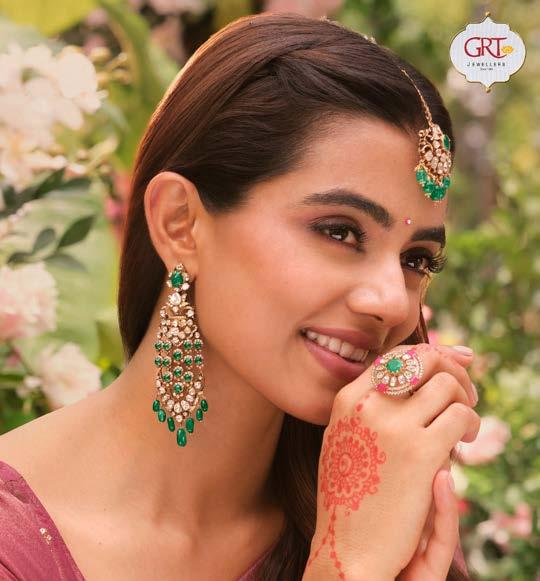
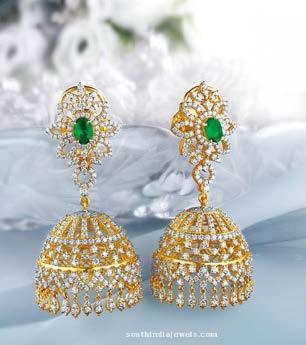
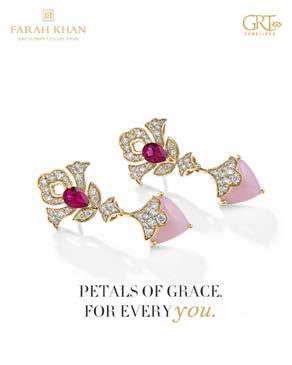
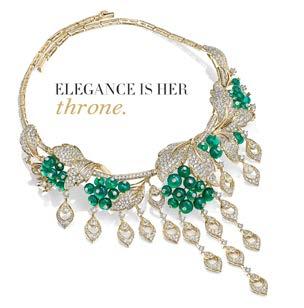
Following the success of the Anvaya Collection, GRT Jewellers introduced its Diamond Earrings Mela — a celebration of elegance and brilliance. This exclusive promotion focuses on one of jewellery’s most beloved accessories: earrings. The collection features an exquisite range of diamond earrings, from dainty studs to elaborate chandeliers, catering to every taste and occasion. Using a mix of uncut, polki, and certified diamonds, these designs showcase GRT’s
superior diamond craftsmanship. The brand also offered special discounts on diamond earrings during the Mela, encouraging more customers to experience the luxury of diamonds. Each pair reflects not just beauty but the precision of cut, clarity, and creativity. In a world where fashion trends change rapidly, GRT’s Diamond Earrings Mela proves that true elegance lies in timeless simplicity. Whether it’s for a wedding, a celebration, or daily wear, these diamond creations continue to capture hearts across Tamil Nadu.
Design Philosophy
BLENDING TRADITION AND MODERNITY
GRT’s design philosophy has always been about balance — balancing heritage with innovation, craftsmanship with comfort, and luxury with accessibility. Tamil Nadu’s jewellery market has evolved, with younger generations seeking minimal yet meaningful designs. GRT’s collections respond to this trend with pieces that are versatile, lightweight, and fashion-forward without losing their cultural essence.
The brand employs some of India’s finest designers who continuously study trends and reinterpret traditional patterns. From temple jewellery and antique gold to contemporary platinum and diamond sets, GRT’s portfolio reflects the diversity of Tamil Nadu itself — vibrant, rooted, and ever-evolving.
Ethical
Sourcing & Sustainability
Beyond beauty, GRT Jewellers upholds ethical responsibility as a cornerstone of its operations. The brand ensures that all its materials are sourced from trusted suppliers who follow responsible mining practices. Every diamond and gemstone is conflict-free and certified, reflecting GRT’s commitment to global ethical standards. The company also promotes sustainability through various initiatives: recycling programs, reduced plastic packaging, and digital receipts. These measures not only protect the environment but also align the brand with the values of the new generation of conscious consumers. By prioritizing transparency and sustainability, GRT continues to set benchmarks in an industry that thrives on trust.
Customer Experience
THE GRT PROMISE
Stepping into a GRT showroom in Tamil Nadu is more than a shopping experience — it’s an emotional journey. From the welcoming aroma of jasmine and sandalwood to the courteous staff dressed in traditional attire, every element evokes warmth and trust. Customers are guided through the collections by knowledgeable staff who help
them select pieces that match their taste and budget. GRT also offers customization services, allowing patrons to co-create their dream jewellery. Whether it’s a wedding necklace or a corporate gift, GRT ensures that every customer leaves with satisfaction and pride. The brand also offers value-added services like gold exchange, cleaning and maintenance, jewellery insurance, and easy purchase schemes such as monthly saving plans — making luxury accessible to all.
Community and Philanthropy
GRT’s contribution extends far beyond its showrooms. The brand has been actively involved in philanthropic initiatives across Tamil Nadu. From sponsoring educational programs for underprivileged children to supporting healthcare and women’s empowerment, GRT embodies the spirit of giving back. This humanitarian side adds a layer of respect to its glittering identity, making it not just a brand of luxury, but a brand of compassion and purpose.
GRT Online
THE DIGITAL GOLD REVOLUTION
Keeping pace with digital transformation, GRT has established a strong online presence through its official website and mobile app. Customers can now browse, customize, and purchase jewellery from the comfort of their homes, complete with virtual try-ons and secure payment options. This digital evolution has expanded GRT’s reach far beyond Tamil Nadu, making it accessible to global audiences who wish to own a piece of authentic South Indian craftsmanship.
A Legacy That Shines Forever
From a single showroom in Chennai to over sixty-five across India, GRT Jewellers continues to redefine luxury while staying true to its roots. Its story is not just about gold and gemstones but about trust, emotion, and cultural pride. Through collections like Anvaya and initiatives such as the
Diamond Earrings Mela, GRT has shown how heritage and innovation can coexist beautifully. It remains the jewellery brand that generations of Tamil families return to — not just for ornaments, but for moments that last a lifetime. In every gleaming necklace and every sparkling diamond lies the legacy of GRT Jewellers — a legacy that reflects Tamil Nadu’s golden heart and a future that continues to shine with timeless brilliance.
INCREDIBLE TAMILNADU & Culture Traditions
Kanjivaram Silk Sarees known for intricate designs, rich textures &
vibrant colors
AKanjivaram saree is a timeless piece passed down from one generation to the next and manages to take a special place in a woman’s heart and wardrobe.
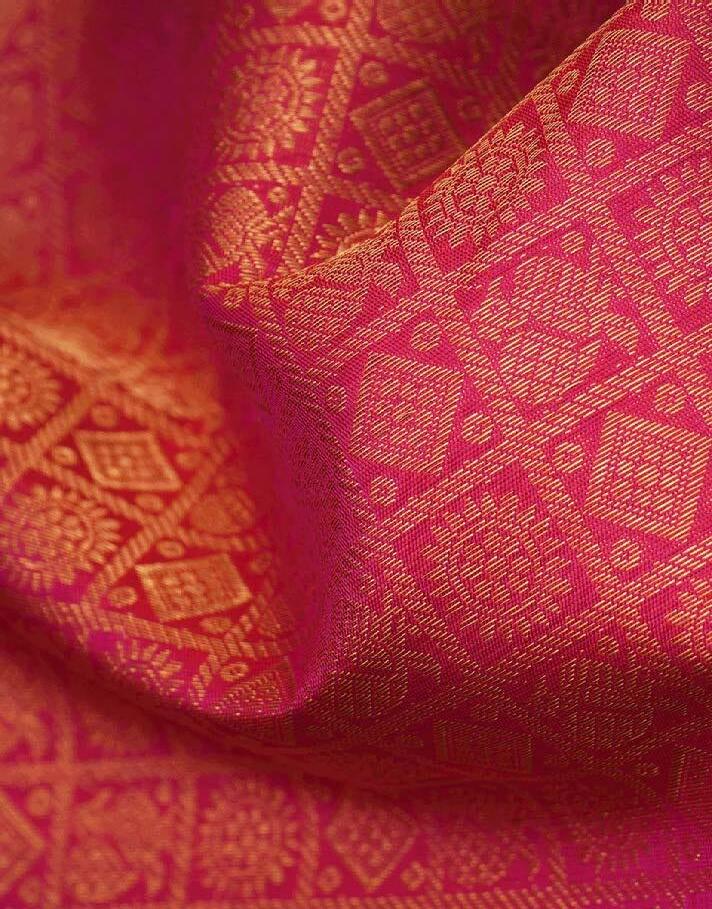
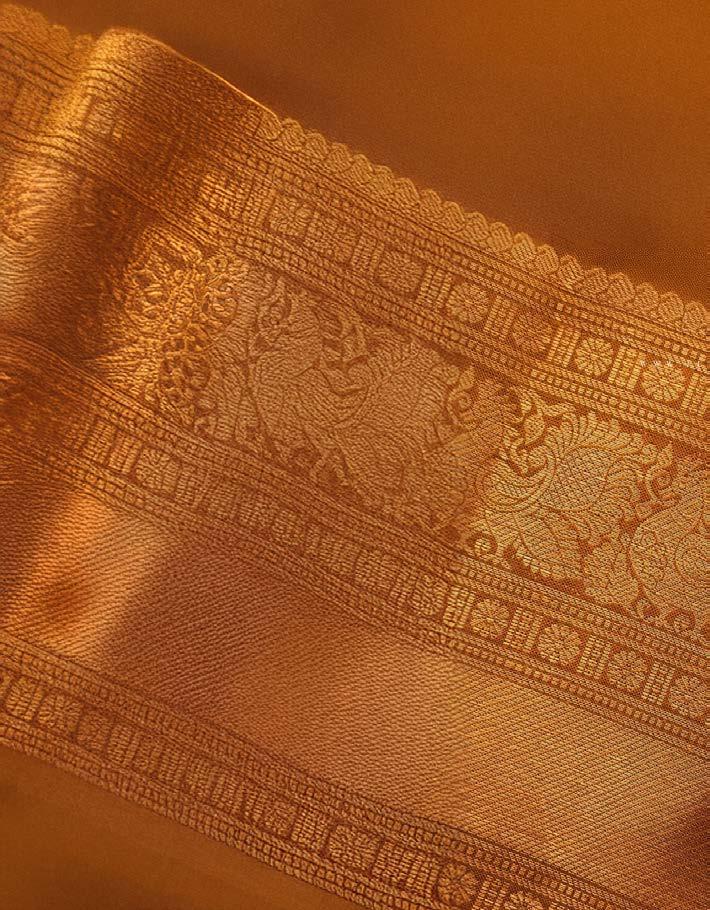
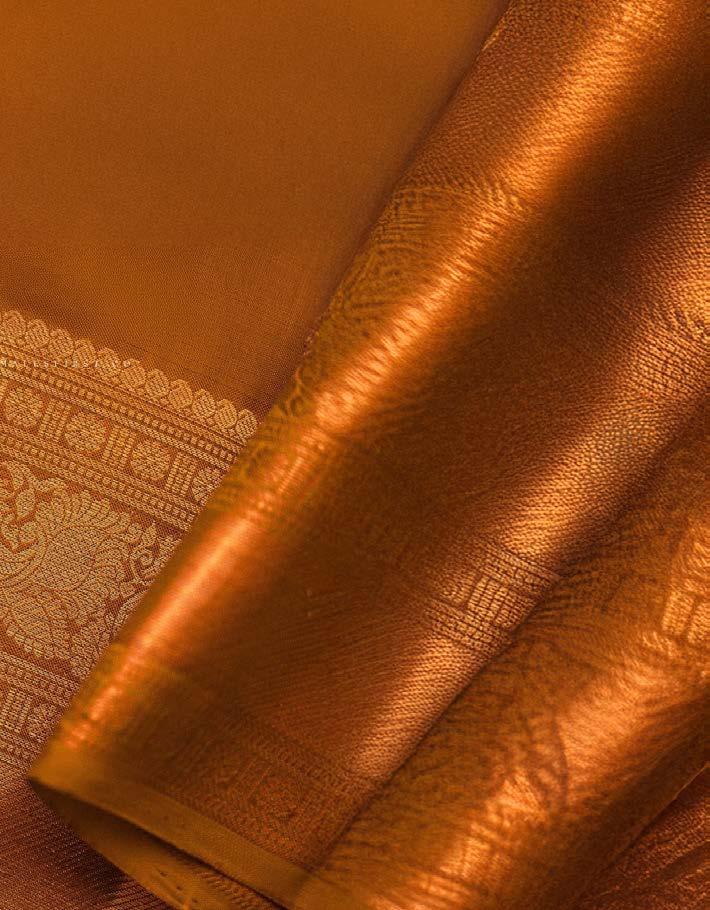
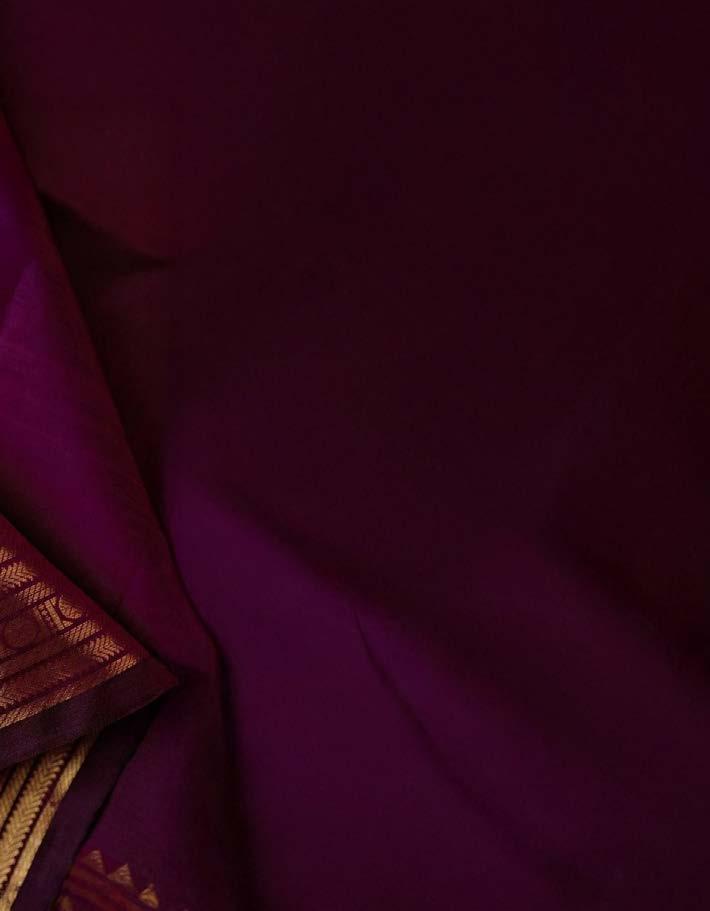
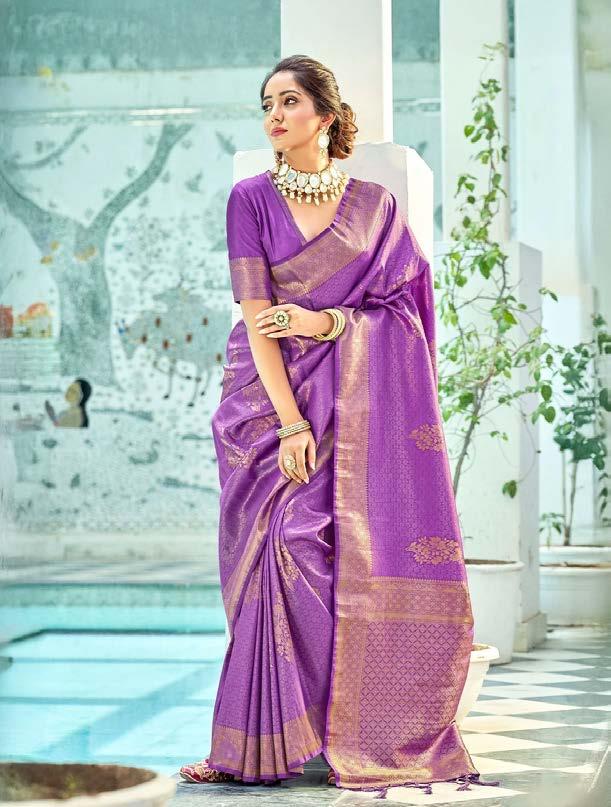
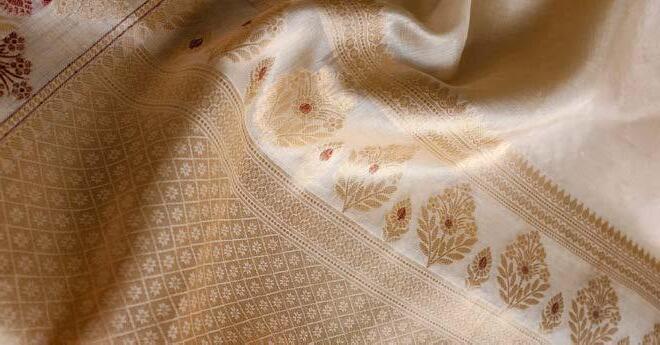
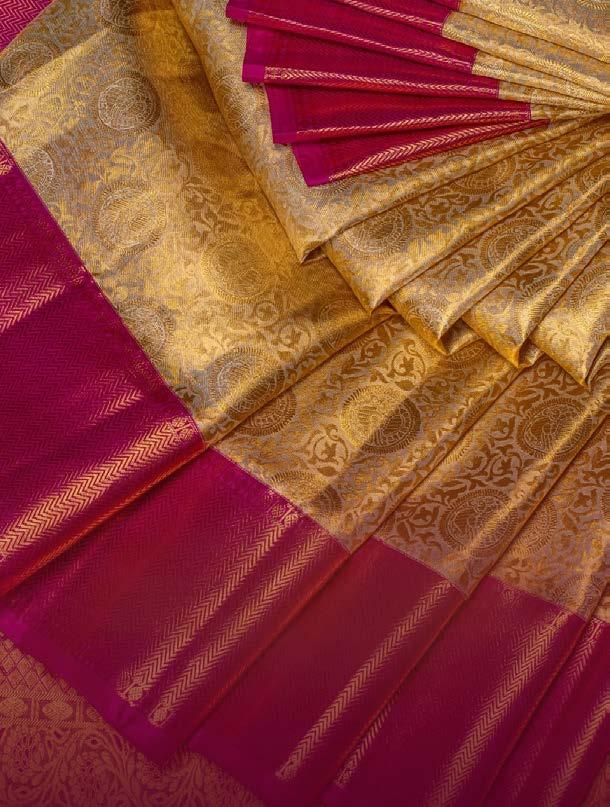
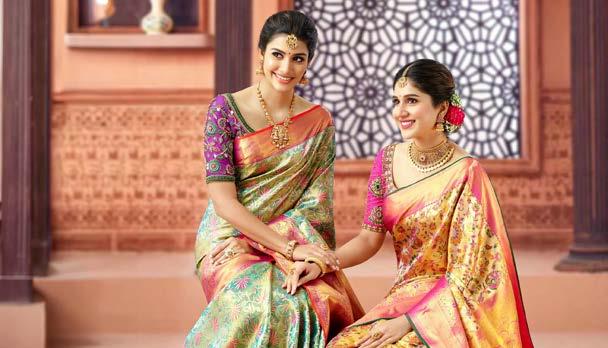
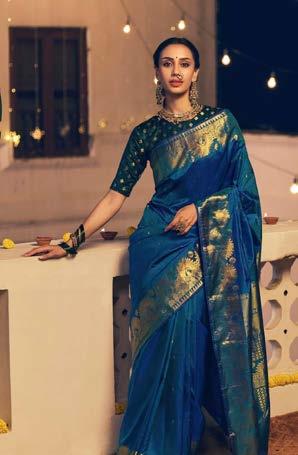
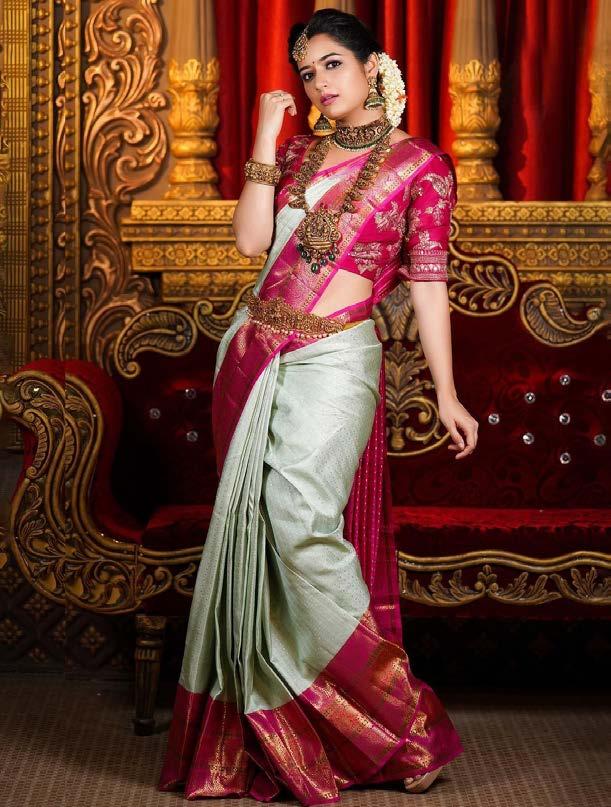
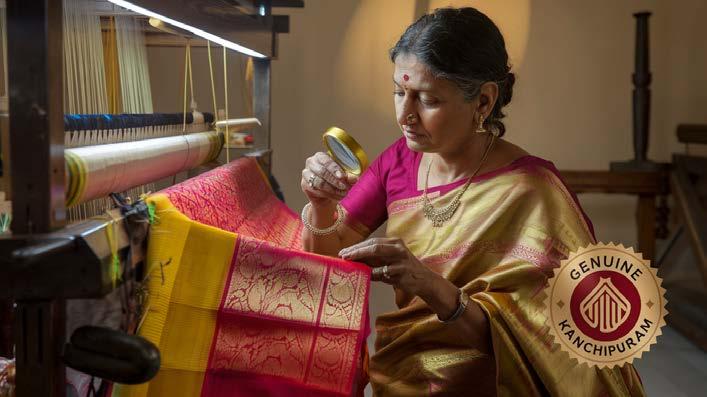
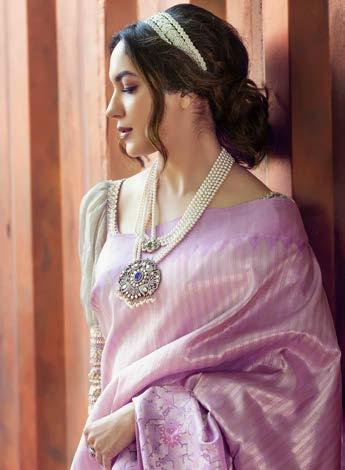
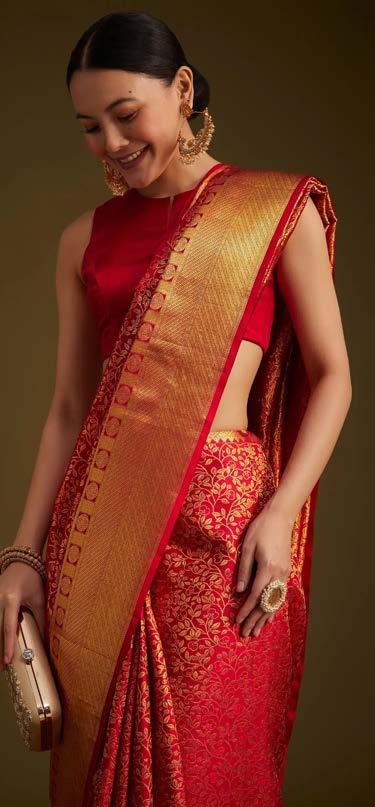
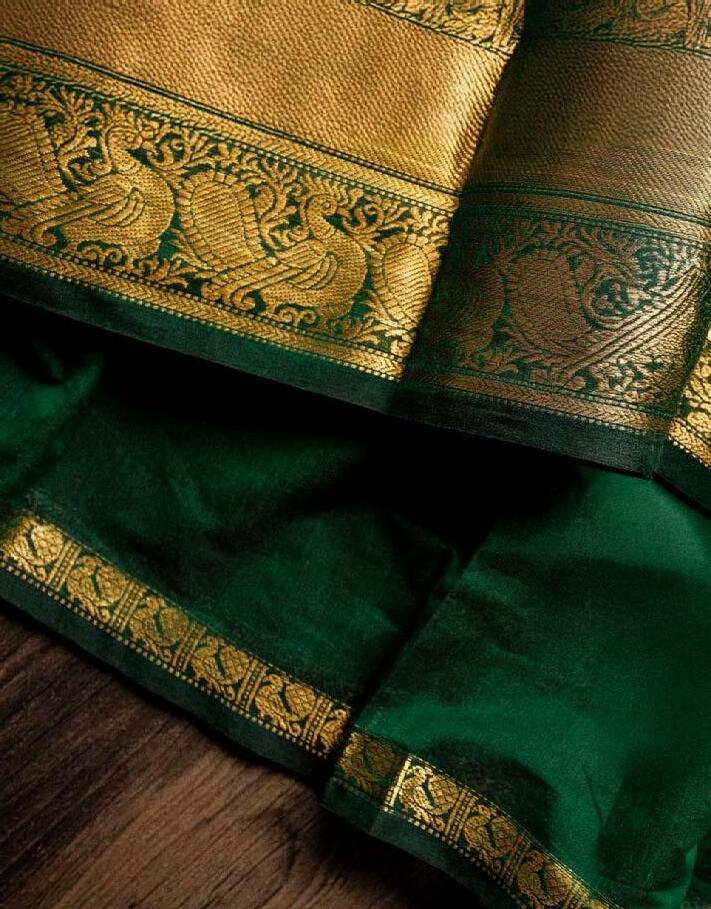
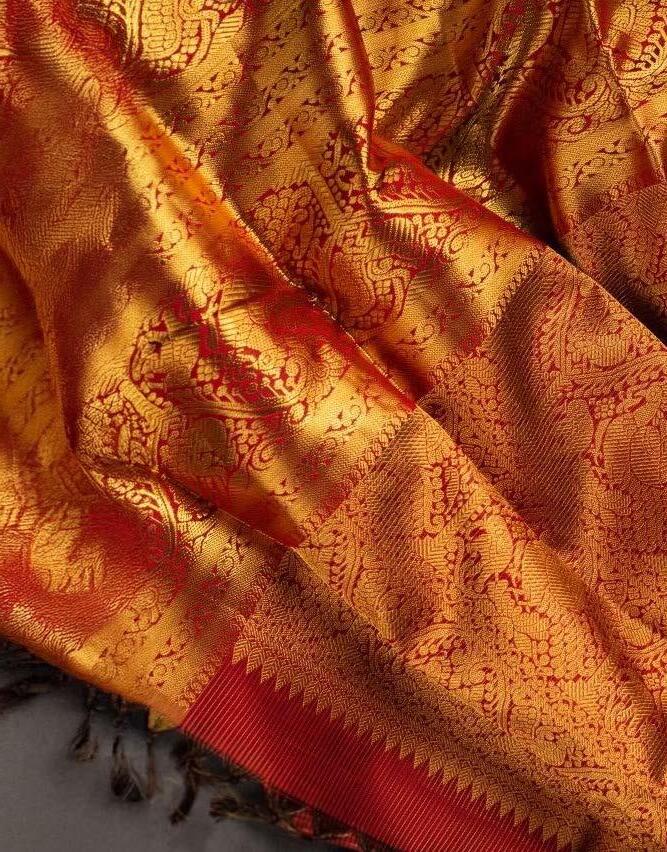
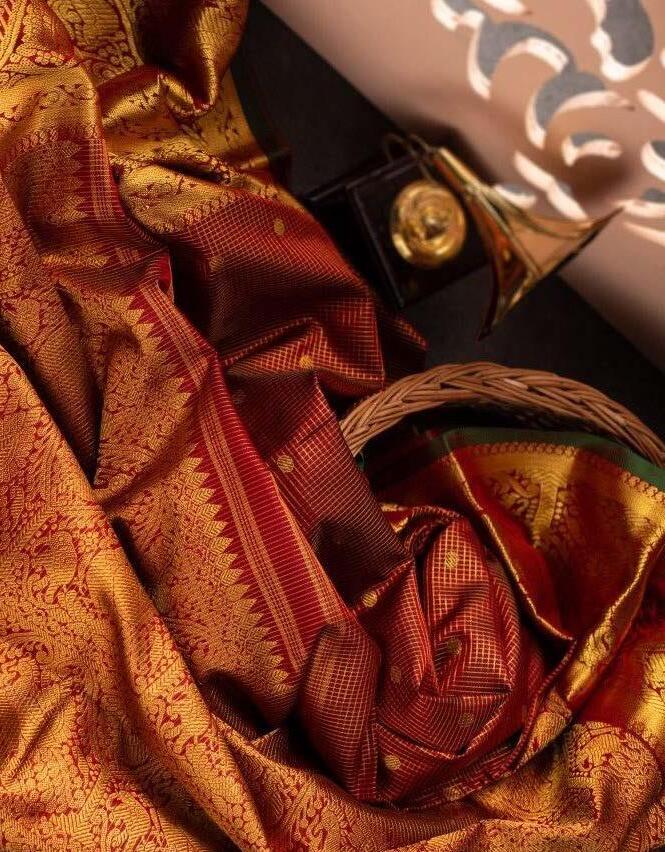
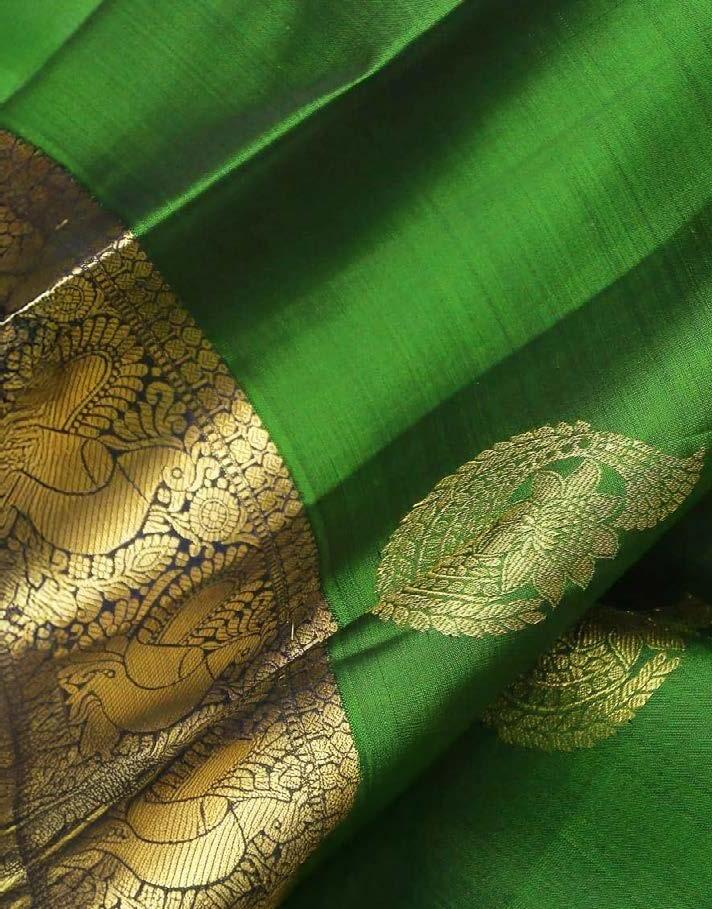
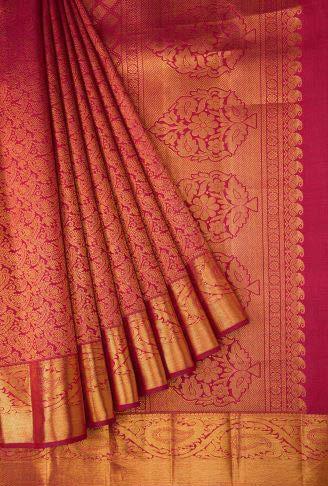
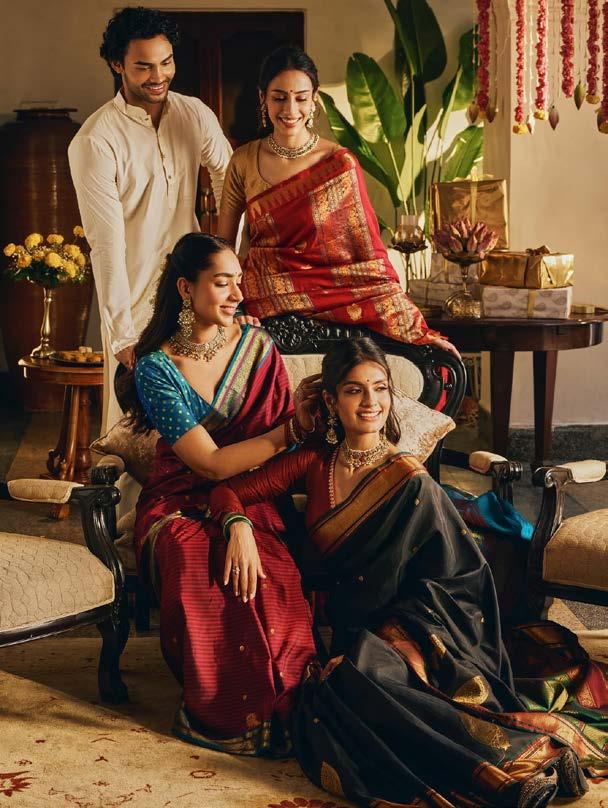
Kanjivaram sarees, also known as Kanchipuram sarees, are a traditional form of saree that originated in the town of Kanchipuram, located in the state of Tamil Nadu in South India. These sarees are known for their intricate designs, rich textures and vibrant colors, and are considered one of the finest and most luxurious forms of silk sarees in India.
THE ERA OF A FLOURISHING WEAVING INDUSTRY
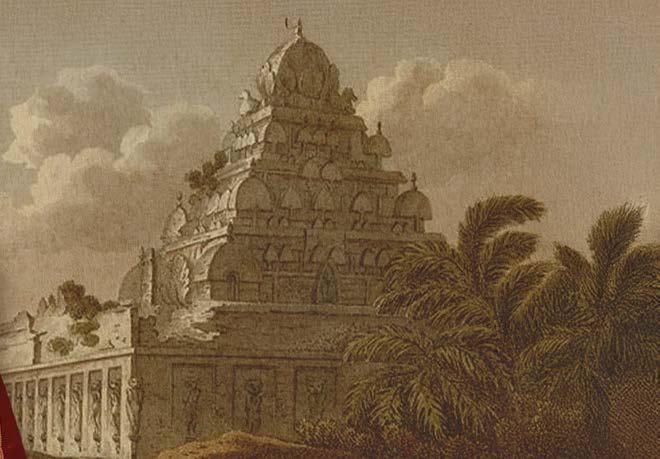
The origin of Kanjivaram sarees can be traced back to Hindu mythology. It is said that the Kanjivaram Weavers are the descendants of Sage Markandeya, who, aeons ago, worshipped lord Shiva and wove cloths from lotus fibre for the deities themselves. Throughout yore, this grandeur weaving practice blossomed in view of the fact that royal patronage, from the seventh century the town grew in prominence under the rule of the Pallava dynasty. Kanchipuram was their capital from the 6th century CE onwards. It had well laid out roads, high fortifications and prominent buildings, which attracted visitors from around the world and boosted the weaving industry.
The evolution of Kanjivaram silk from local craftwork to an enormous prosperous endeavour occurred in the reign of Krishna Deva Raya, the ruler of the Vijayanagara Empire. During his reign, the weaving clusters of Andhra Pradesh, the Devangas and Saligars, migrated to the south and settled in various regions of the empire. This wave of migration of weavers signified the old silk tradition of Kanjivaram was infused with new skills, new patterns, and techniques, taking the industry to new extremes.
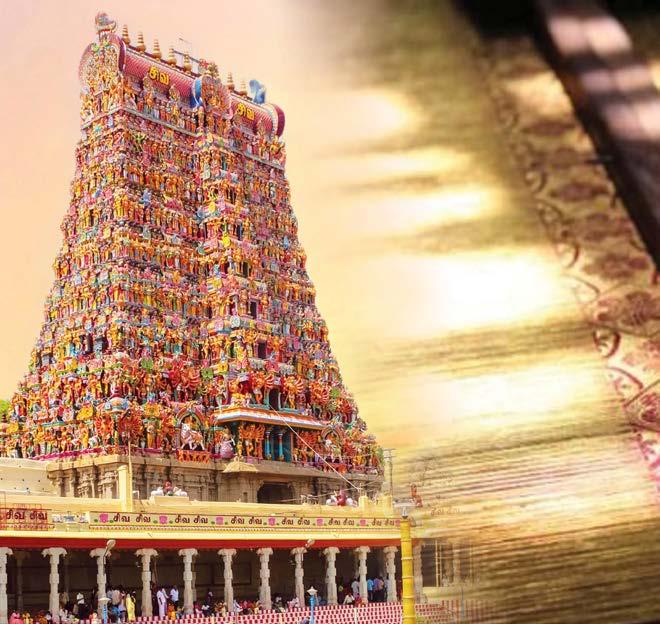
Kanchipuram in Tamil Nadu has been one of the oldest and most eminent weaving centres of India for more than 1.5 Centenaries. This famous silk sarees craft of Kanchipuram are treasured for their rich and varied motifs. Kanchipuram is mentioned in the books of the Sanskrit grammarian Patanjali who lived in the 3rd – 2nd century BC. Chinese monk Hiuen Tsang visited Kancheepuram during the reign of Pallava King Narasimha varman I in the 7th century CE. He mentions an enormous number of Hindu, Buddhist, and Jain temples as well as a flourishing weaving industry. In the sangam era, the cotton cloth woven in Kanchipuram was exported to the Roman Empire and was significantly valued. Therefore, Kanchipuram has been renowned for its dual silhouettes, first as the city for its divinity known as a city of thousand temples as well as an important weaving cluster of India for more than 1500 years.
EVOLUTION OF KANJIVARAM WEAVE
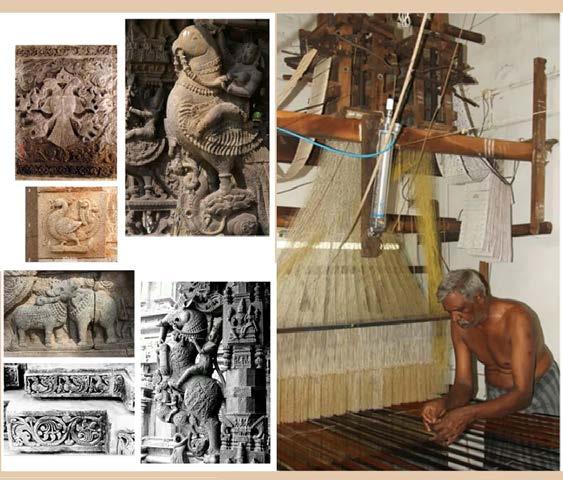
From the first cloth made from lotus fibre to today’s contemporary machine weave, Kanjivaram sarees have travelled a long way in time. Originally it was just a simple weave, an unstitched piece of cloth. A 9-yard-long legacy from descendants of sage Markanda. The motifs and patterns woven on these clothes were simply motivated by the nature and temples around the Kanchipuram. The sculptures and paintings around these temples inspired weavers to curate some of the most iconic motifs in the history of Kanjivaram.
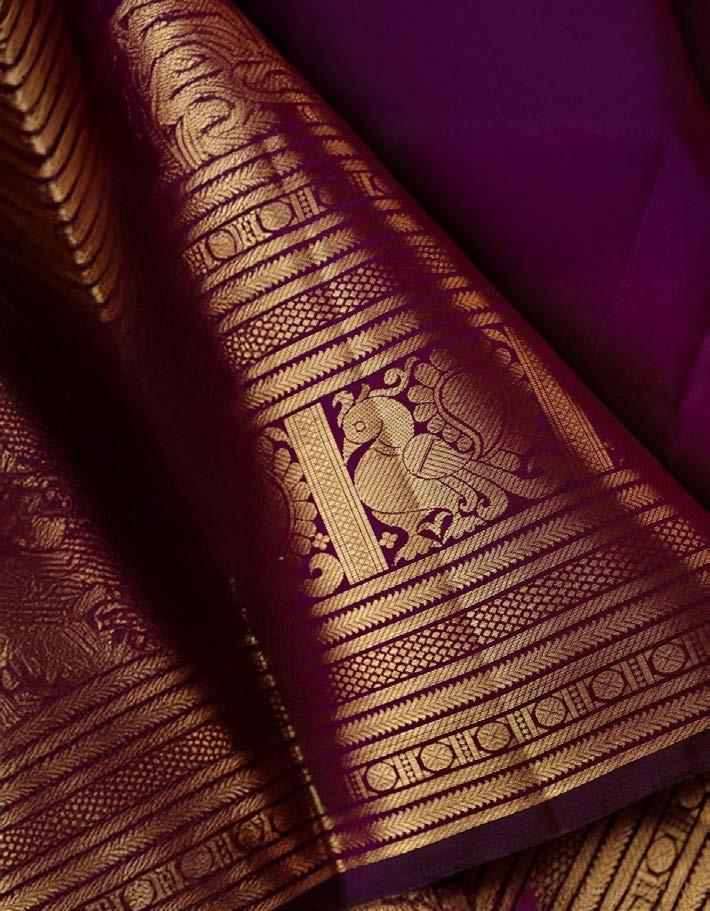
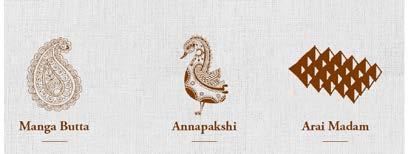
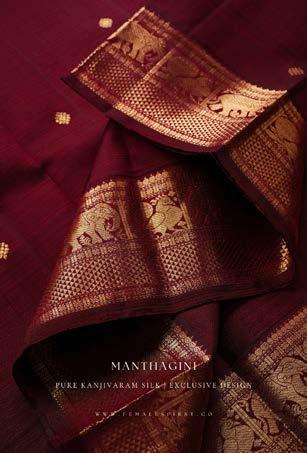
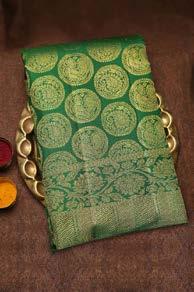
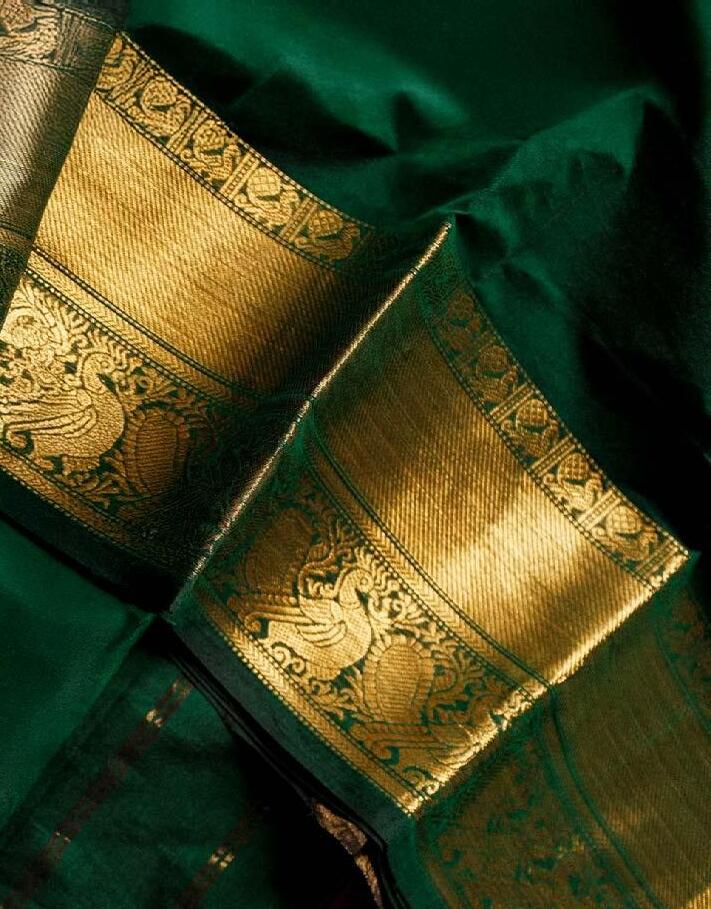
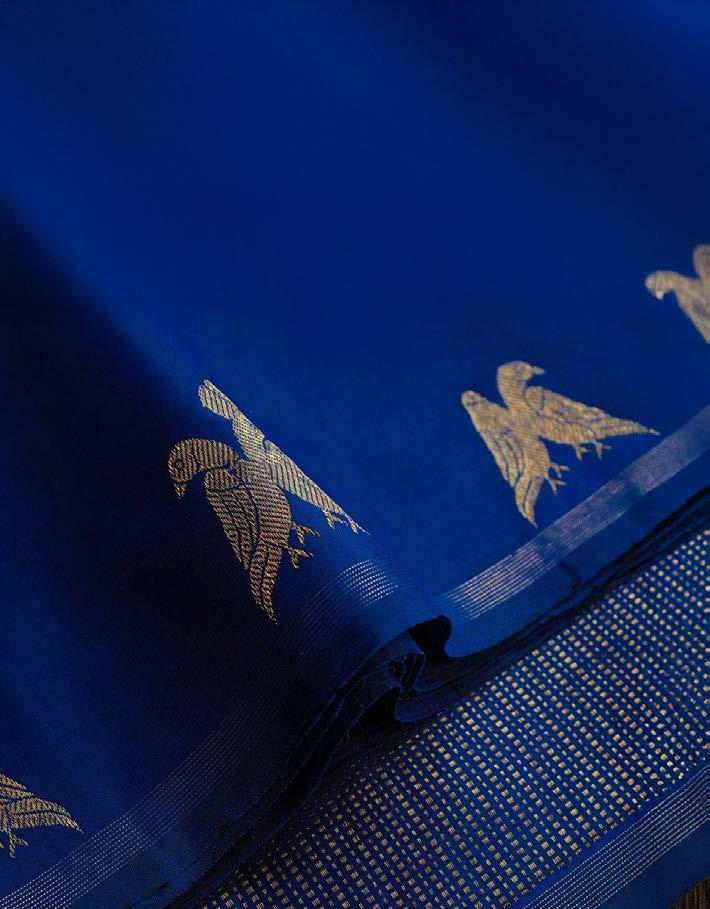
The motifs like Mayil (peacock), Poo chakram, Maanga motif, Kodi Visiri (Floral Creeper), and many more are inspired by nature, while Motifs like Yaali, Ganda Perunda, Yanai (elephant), Winged Horse (Kuthirai), and Rudraksham was derived from the mystical tales of the land. These traditional hand-woven sarees are now curated in versatile ways, with unique features and intricately woven designs in rich colours and textures, making them a timeless favourite. With different types and cultural significance, Kanjivaram sarees have their own identity as, ‘A Kanjivaram for everyone’. The classic Kanjivarams are commonly made from silk and feature a traditional design with heavy gold, silver, and even copper zari work but with easy access to all the kanchi comes in all sorts of weaving.
SIGNIFICANCE OF KANJIVARAM SAREES
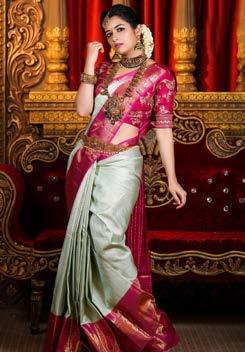
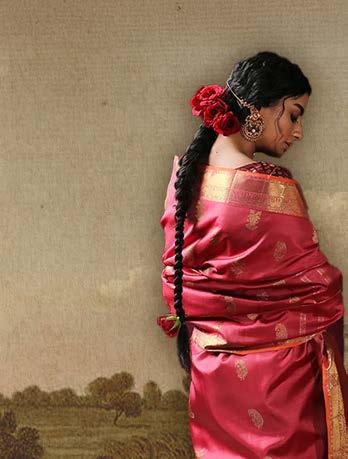
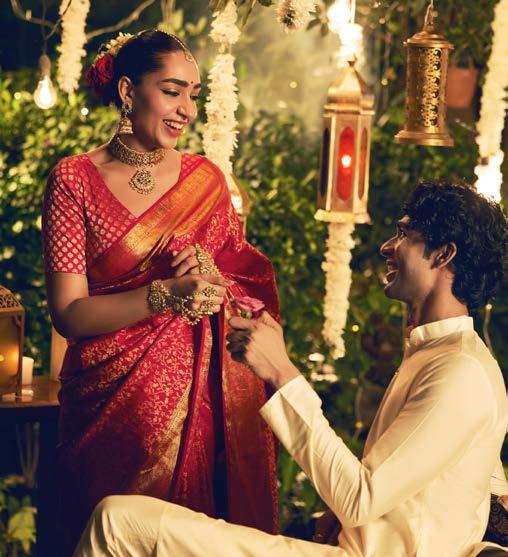
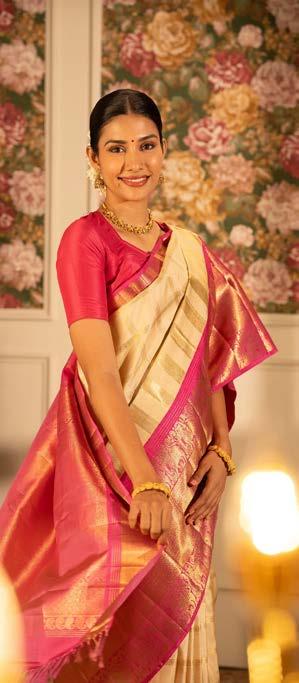
Kanjivaram sarees are considered a symbol of traditional South Indian culture and are an integral part of weddings, religious ceremonies and other auspicious occasions. These sarees are known for their durability and longevity, and many families pass down their Kanjivaram sarees as heirlooms from one generation to the next. Whether it’s a classic gold-threaded weave or a beautifully vibrant pink colour silk saree, Kanjivarams hold a timeless appeal, making them a treasured possession for many. The intricate designs and motifs on Kanjivaram sarees are often inspired by mythology, nature and the
local culture. The sarees are typically adorned with intricate borders, intricate patterns and motifs, and contrasting pallus that add to their overall beauty and elegance. Kanjivaram sarees are also known for their versatility and can be worn in a variety of styles, ranging from traditional to modern. Bridal Kanjivaram silk sarees are a very famous attire all over the world and brides, irrespective of custom, wish to adorn a Kanjivaram on their special day. South Indian parents dream of handing over their sarees and jewelry, as an act of tradition, to the next generation.
WEAVING PROCESS
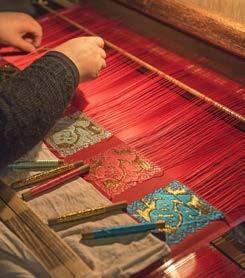
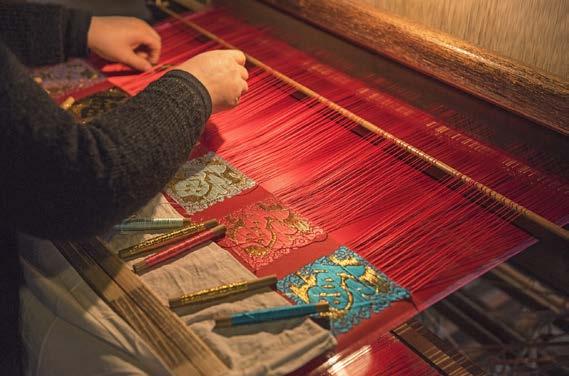
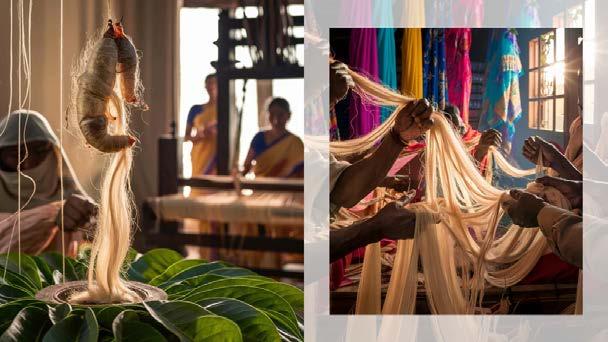
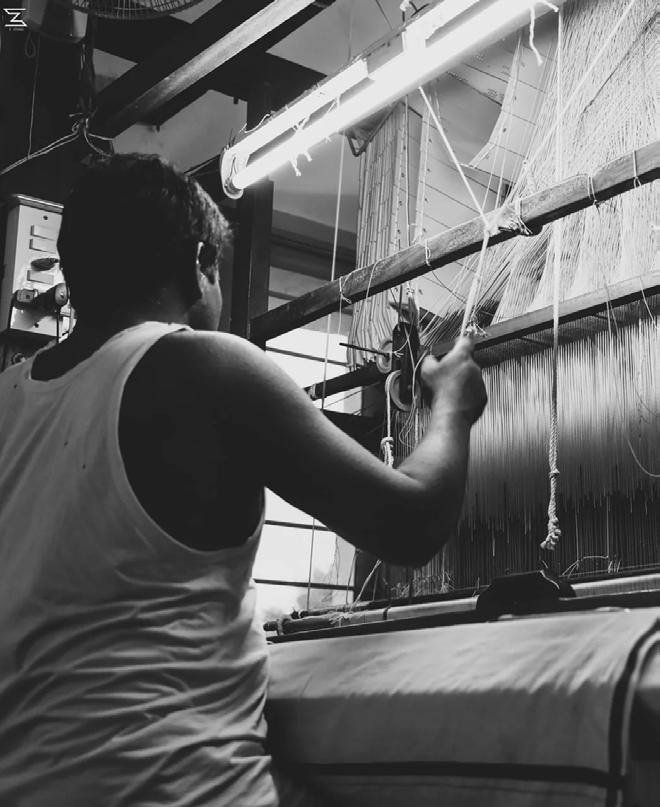
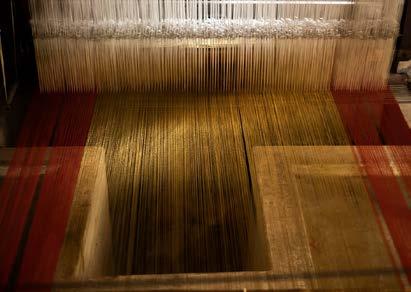
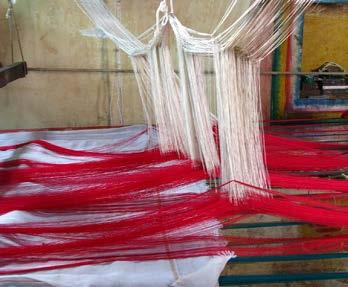
Kanjivaram silk saree weaving, a highly skilled craft, is valued as one of the finest examples of hand-crafted textiles all over the world. These sarees are hand-woven with mulberry silk. The silk yarn, after careful extraction, is dyed in the richest of colors and weaved with the zari threads. While the silk is from South India, the pure gold and the silver zari are from Gujarat. The zari threads that give life to this beautiful artwork are said to contain a government-mandated amount of pure silver and gold, ensuring you a timeless investment for your ethnic wardrobe collection. Weaving a kanjivaram saree from start to finish takes 3-4 weeks. It is a labor-intensive process and the final product is astounding.
Before weaving the saree, silk threads are dipped in rice water and sun-dried to increase both its thickness and stiffness. After these off-white threads are dried, they are colored separately as per requirement. The border and pallu of the silk saree are dyed by hand in one color whereas the body is dyed in a contrast color. Colored threads and zari are carefully separated manually before being sent to the weaving room.This is done to avoid any tangles that leave uneven surfaces in the finished product.
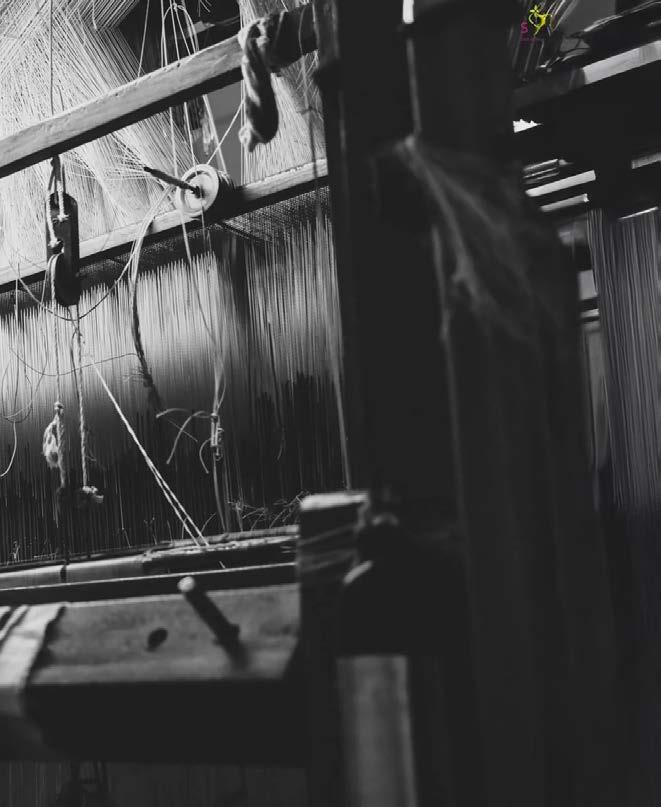
The separate threads are attached to the weaving loom from one end to the other. Here the painstaking process of drawing the warp ends and attaching them to the previous warp on the loom is done manually. There are continuous pages of cardboard stencils that move with the design above the weaving loom. These designs are first hand-drawn, as required, and then designed on a computer. Using a cutting machine, the design is cut into a cardboard sheet that acts as a stencil on the weaving loom. The threads are hand-woven as per the shape of the design. This manual weaving process of a Kanjivaram saree is an art that has passed from one generation to another in South India.
The ornate pallus and borders of the saree are woven separately and are attached to the main saree body using an age-old, unique knot and an interlocking technique called Korvai. If you notice it closely, the part where the body meets the border has a slightly zigzag line. But the precision of this technique is such that even if the saree tears, the border wouldn’t detach. This traditional weaving technique is deeply rooted in the Kanchipuram culture that any saree made in Kanchipuram will always have this birthmark.
MOTIFS AND VARIETIES
Several patterns have become characteristic of Kanjivaram saree designs over the years. These patterns and motifs are not merely decorative, but have strong symbolic connotations, both in mythology and folklore.The motifs play a twin role – an aesthetic appeal and a reflection of symbolic meaning. These motifs show a rich history of patterns, drawing from sources beyond textiles. Many of these symbols recur across art forms—from painting and temple architecture to sculpture, Tamil literature, and dance.
Chariots, peacocks, swans, lions, coins, mangoes, leaves, sun, moon, and other motifs are also integrated into Kanjivaram sarees. Additionally, some important events of epics like the Mahabharata and the Ramayana have also been incorporated in these sarees. The focus of design with changing times has shifted from traditional to more contemporary patterns. However, the appeal of the saree has remained the same. At times, Kanjivaram sarees are devoid of any patterns or motifs, deriving an elegant look from the use of fine quality silk.
TYPES OF KANJIVARAM SAREE
While many of us choose the Kanchipuram silk we like, there are different types of sarees that you can choose depending on the type of occasion you’re planning to attend.
Plain Kanjivaram with gold border:
This saree has a woven contrast border or a golden zari border with a single base color. This saree will surely give you a rich look and could be perfect for your friend’s upcoming engagement ceremony.
Modern Kanjivaram silk:
The design and patterns blended in newer colors and motifs form a modern kanjivaram saree that is perfect for new-age brides.
Traditional kanjivaram:
Beautiful checks, coins, chakras, temple borders symbolize the traditional saree of Kanjivaram, making it the richest weave among others. This evergreen drape is perfect for every age and occasion.
Temple border Kanjivaram:
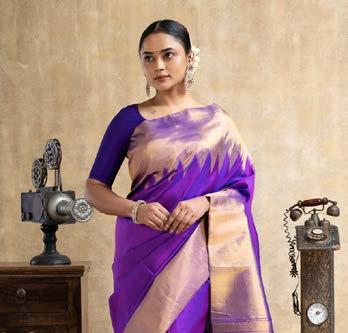
As the name suggests, these sarees have a zigzag temple border - a cheron styled peaks’ design known as a temple, which makes it stand out from the rest. Perfect for an anniversary party, or even your wedding!
Borderless Kanjivaram
If you aren’t a fan of the grand and glorious saree borders, you can opt for a borderless Kanjivaram silk saree. This borderless saree with majestic motifs and weaving patterns can be worn for festivities of any and every nature.
INNOVATION AND MODERN ADAPTATIONS
While Kanjivaram sarees remain a classic, the designs have evolved over time. Modern versions of the saree incorporate contemporary patterns and lighter fabrics to cater to the changing tastes of today’s consumers. Despite these changes, the saree’s essence remains intact—traditional craftsmanship combined with the finest materials.
Kanjivaram Sarees speaks a volume of South Indian art history. Beautiful designs and vibrant colors evoke reverence in every saree connoisseur, exuding a beautiful aura of elegance and heritage. The Kanjivaramcraft has established its immortality and is evolving with time adapting to the new changes while keeping its authenticity and exquisiteness alive. Its eternal beauty is a true character of purity, by being connected to its roots, and Kanjivaram sarees have broken the fences of time and have seized all over the world millions of hearts.
FROM KUTCH TO TAMILNADU
The Women Who Stitch Their Stories into Fabric
CULTURE & TRADITION
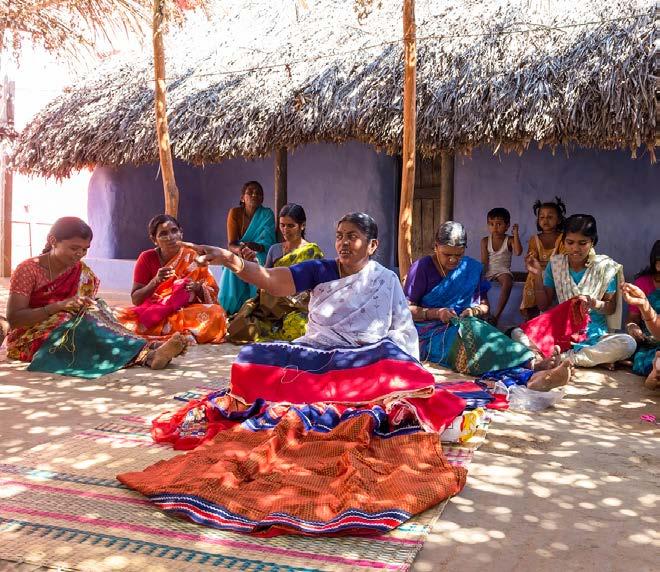
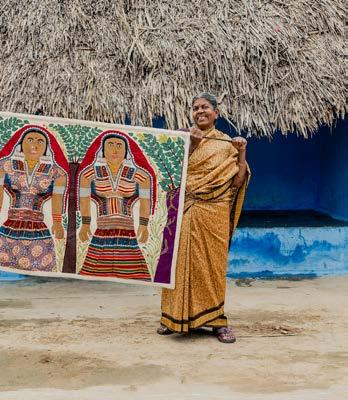
In the parched deserts of Kutch, where the wind hums through thatched roofs and sand shimmers like gold, a quiet proposal unfolds. There are no diamonds, no grand gestures — only a coconut and a plain piece of cloth. In the Maru Meghwal community, this is how love begins. The man sends the coconut, the woman replies not with words but with stitches. When she accepts, she wraps the coconut in a piece of fabric she has embroidered herself — a tapestry of colour, geometry, and emotion. Her stitches are studied carefully by the elders: the neatness of the lines, the tension of the thread, the harmony of the hues. Each detail reveals something of her character — patience, precision, artistry. The cloth speaks long before she does.
At Kala Raksha, a community-run museum in Bhuj, this quiet ritual comes to life through artefacts that embody the desert’s heartbeat. The Maru Meghwals, who migrated from Tharparkar in present-day Pakistan to Kutch in 1972, have kept their embroidery traditions alive despite changing times. Red and green threads bloom against white fabric, echoing the oasis that sustains them amid the arid expanse. Peacocks, stitched in homage to Sindh, flutter across their textiles like memories that refuse to fade. Though the engagement cloth is now a fading custom, it continues to hold symbolic power. Young girls still learn embroidery in their teenage years, perfecting their craft even as they pursue education and new opportunities. Some become artisans, others teachers or professionals — yet the thread remains a part of who they are. The gesture of the embroidered cloth, once a sign of betrothal, now stands as a quiet act of identity.
The Thread That Binds
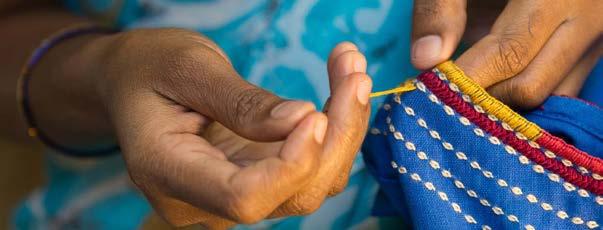
Embroidery has often been dismissed as decoration — a border, a flourish, a touch of beauty added at the end. Yet across India, it has always been much more: a private language of women. While zardozi embroidery is famed and largely practised by men, the everyday stitches that hold together households and histories have long been shaped by women’s hands. From the phulkari of Punjab to the kasuti of Karnataka, these threads speak of lineage, memory, and belonging. In communities where women’s voices are seldom recorded, the needle becomes their instrument of remembrance — preserving stories in silence.
Stitching Memory In The Hills Of Tamil Nadu
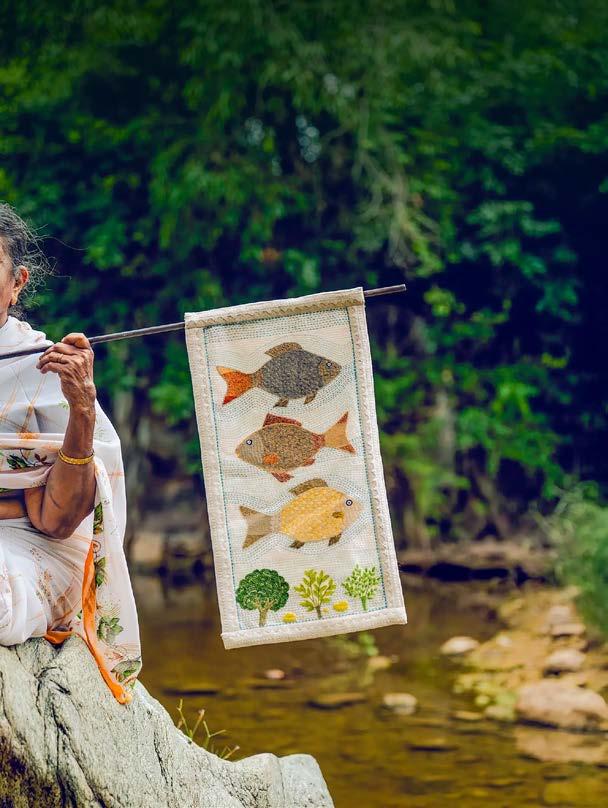
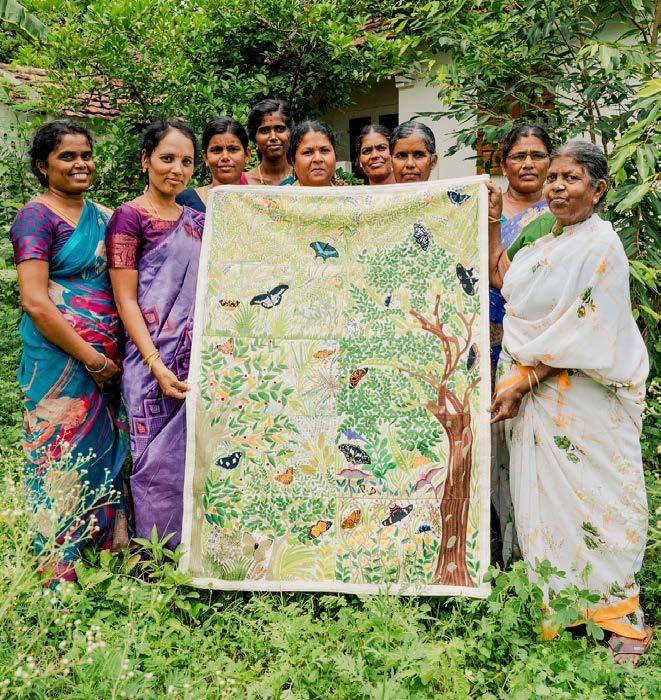
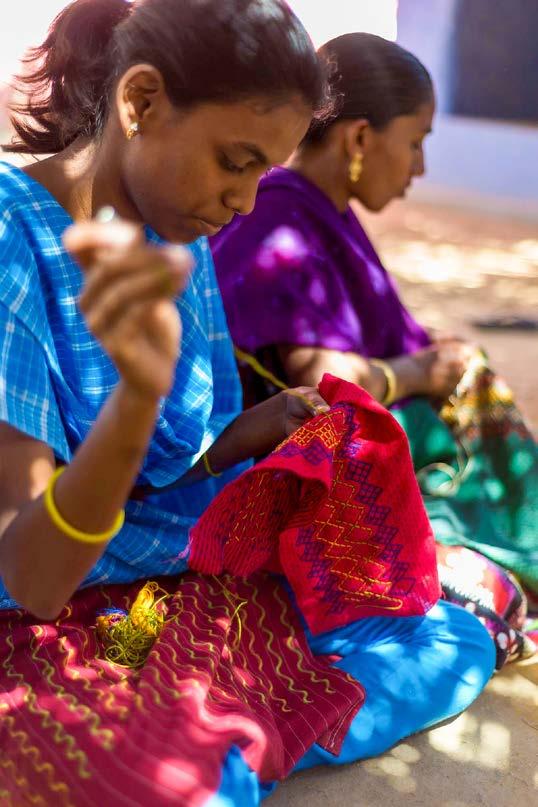
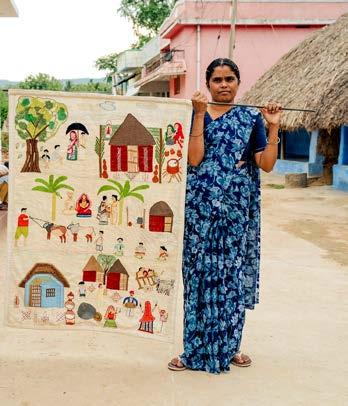
Far from the deserts of Kutch, in the green folds of Sittilingi valley in Tamil Nadu, another story of revival unfolds. Lambadi embroidery — once found across southern India — had nearly vanished, remembered
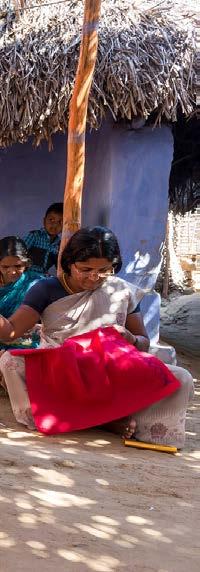
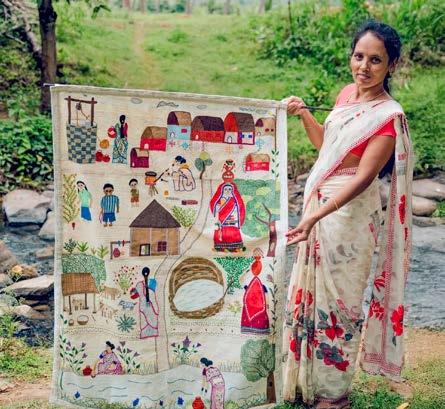
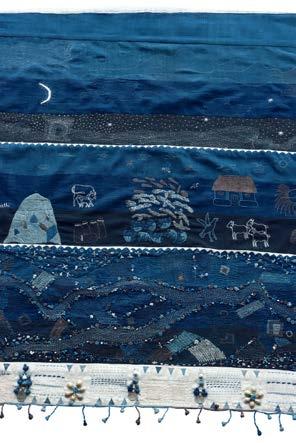
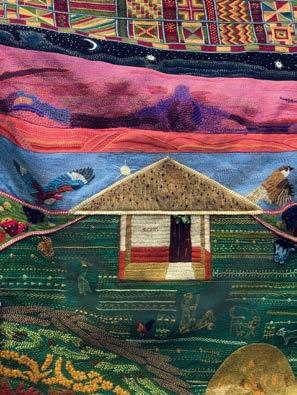
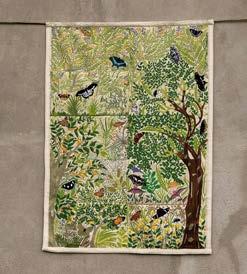
only in fragments by older women. But through the efforts of the Porgai Artisans Association, co-founded by Dr. Lalitha Regi, this ancient craft has been given new life. A few years ago, ten women artisans gathered at the Porgai centre for a rare four-month residency. The idea was simple but radical: to let women create purely for themselves, without the interruptions of domestic life. What emerged was a series of twenty-six embroidered artworks — each deeply personal, reflective, and rooted in lived experience.
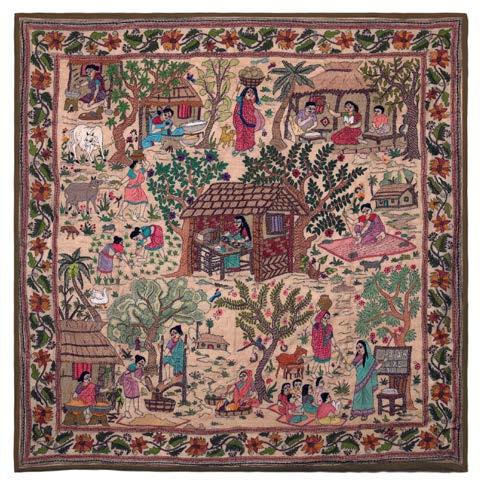
Neela, one of the participants, stitched her memories of water collection: women digging into the sandy riverbanks to draw fresh spring water, covering clay pots with traditional ganno cloths, and pausing to share the first drink with cattle. Another artisan recreated marriage customs passed down through generations — feasts on banana leaves, bullock carts under tamarind trees, whitewashed homes glowing faintly blue, and a daughter’s dowry measured in fine bullocks.
Lavanya, meanwhile, wove her aspirations into her work, using gold thread — a colour never used in traditional Lambadi embroidery — to symbolise new dreams. For Neela, who travelled daily by bus despite mobility issues, the act of stitching became a form of devotion. “Every thread I pull keeps my ancestors alive,” she says. The residency, in turn, stitched a dialogue between generations — the past guiding the hands of the present.
Kantha: The Running Stitch of Memory
In the quiet homes of Bengal, kantha has told women’s stories for over a millennium. A simple running stitch, it was originally used to piece together worn-out saris into quilts, creating warmth from remnants. But in those stitches lived tales of family, loss, and hope. At She Kantha, an organisation working with thousands of women across West Bengal, this heritage has become a multigenerational mission. Founded by Shamlu Dudeja and carried forward by her daughter Malika and granddaughter Mahima, She Kantha stands as proof that women’s leadership — like their art — is strongest when passed
from one hand to another. Among their artisans, Chandana’s work stands out. She spent five years embroidering a tribute to her grandfather, a freedom fighter. Around a central mandala, she stitched prayers of forgiveness to her ancestors — each line an echo of stories she heard as a child about colonial times and the quiet endurance of village women. In another corner of Bengal, a young woman named Rohida captured her everyday life: a cow in the courtyard, women bent over a clay stove, children gathered on a charpai, and at the heart of it all — a computer, a symbol of new beginnings. It had been gifted to her village through a digital literacy programme, and she placed it precisely where it belonged — at the centre of change.
The Fabric of Change
In the city, moments are captured instantly — a snapshot, a reel, a digital archive. But in the villages of West Bengal, life unfolds at a slower rhythm. A woman begins to embroider only after dusk, when the house is quiet and her duties are done. Each stitch measures not just fabric, but emotion — the joy of a grandchild’s birth, the relief of a son’s return, the sorrow of a dry monsoon. Malika observes how the fabric itself has started to absorb change. Mothers who once borrowed money for their daughters’ weddings now seek loans for their daughters’ education. The thread, as always, keeps record.
Listening to the Thread
Embroidery today risks being overshadowed by fast fashion and factory-made imitations. Yet, if we pause to look closely, every handcrafted piece reveals something profound. The motifs, the symmetry, the subtle tension of the thread — all carry meaning. None of it is accidental. From the shimmering deserts of Kutch to the verdant hills of Tamil Nadu, and from Bengal’s serene courtyards to the bustling cities beyond, women continue to stitch their worlds into being. Through needle and thread, they archive memory, mark time, and express freedom.
Their voices may be soft, but their art is enduring. Listen closely — and you’ll hear them speak through every stitch.
KOOX - For the Most Captivating Rooftop Dining Experience in Chennai
Rooftop Asian Grill
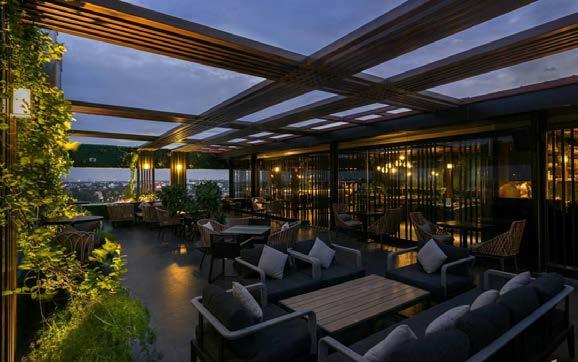
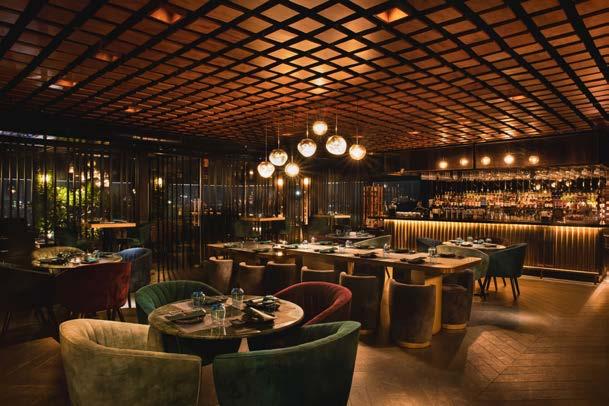
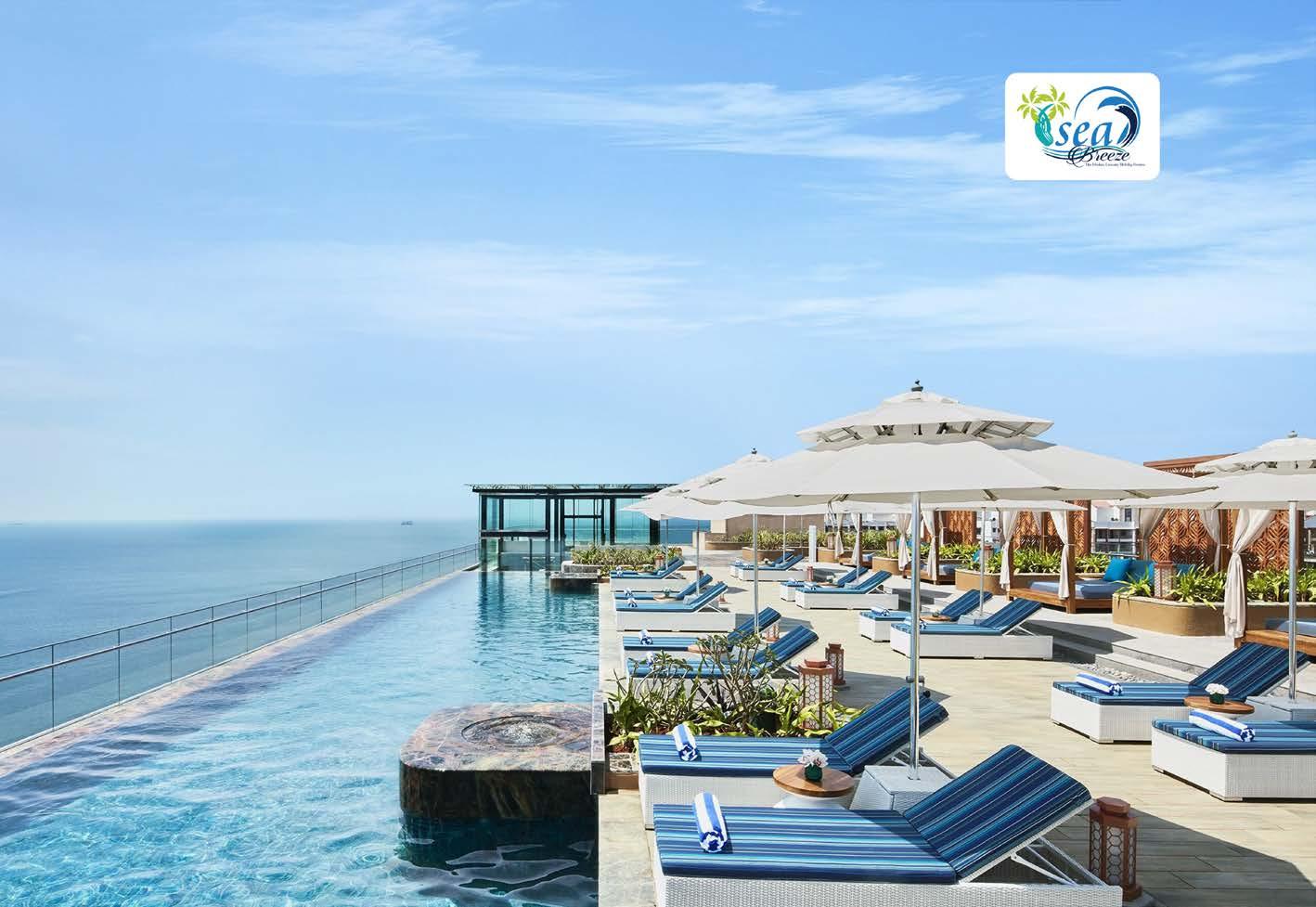
Perched atop the elegant Novotel Chennai Chamiers Road, KooX – Rooftop Asian Grill offers one of the most captivating dining experiences in Chennai. Located at No.11, Pasumpon Muthuramalinga Thevar Road, Rathna Nagar, Nandanam, this rooftop restaurant combines the charm of open-air dining with an exquisite blend of Asian flavors. Whether you’re a food enthusiast, a romantic diner, or someone looking for a refreshing escape from the bustle of the city, KooX promises an evening that delights all your senses.
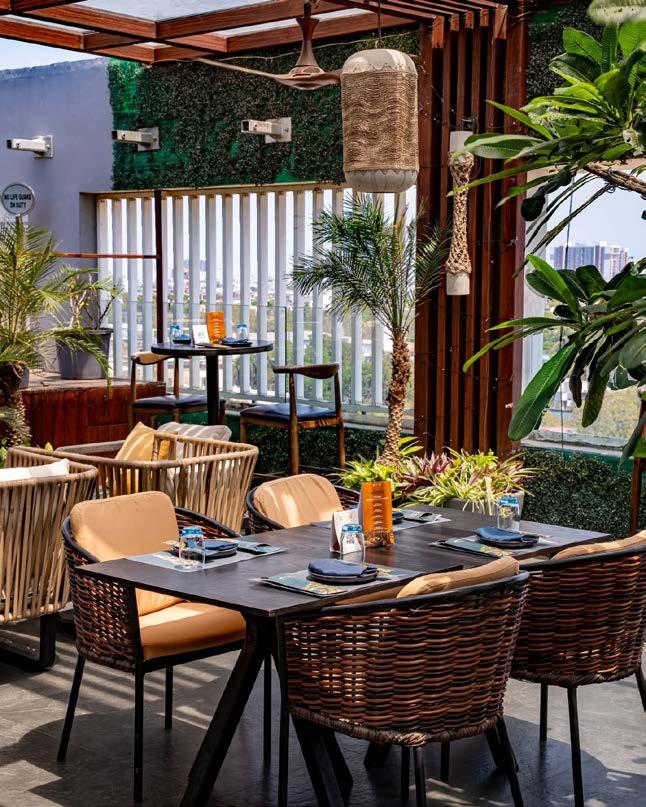
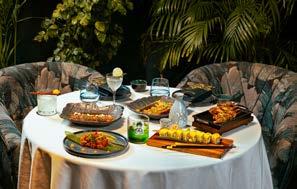
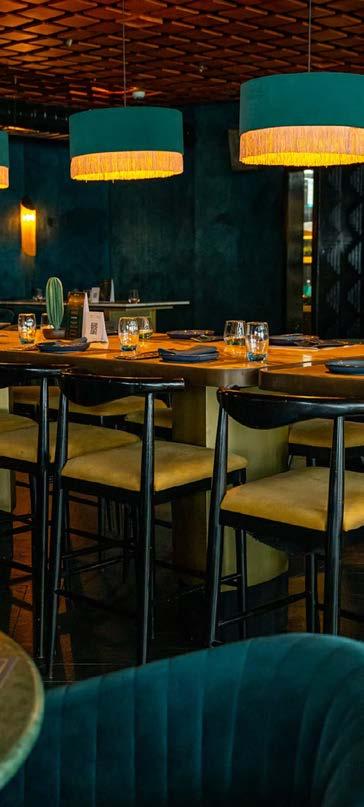
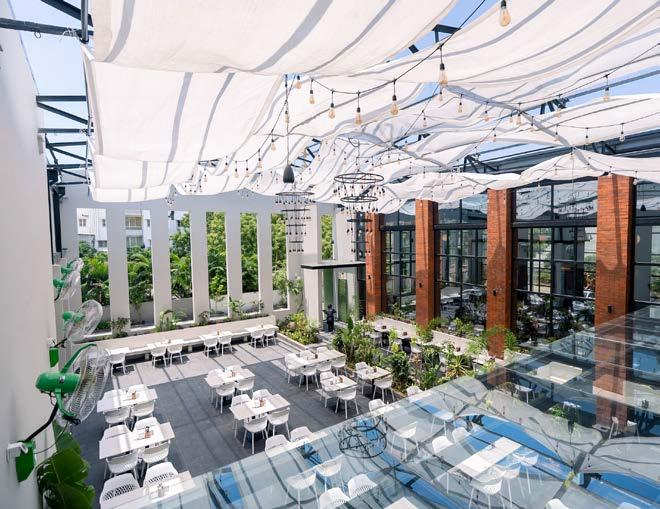
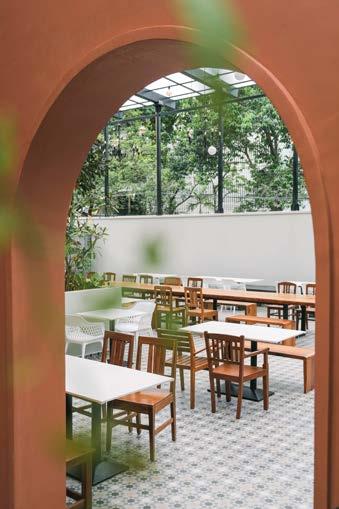
As you step out onto the rooftop of Novotel, the first thing that captures your attention is the panoramic view of Chennai’s skyline. The restaurant is designed with modern aesthetics— soft lighting, elegant seating, and lush greenery that gives the space a relaxed, upscale vibe. The combination of gentle breeze, city lights, and music sets the perfect tone for a memorable evening. KooX’s ambience strikes a fine balance between sophistication and comfort. The open-air setting allows guests to unwind under the stars, while the thoughtfully designed interiors provide cozy corners for intimate gatherings. The design blends natural textures with contemporary décor, creating a sense of luxury without being overwhelming.
HOTELS, RESORTS &
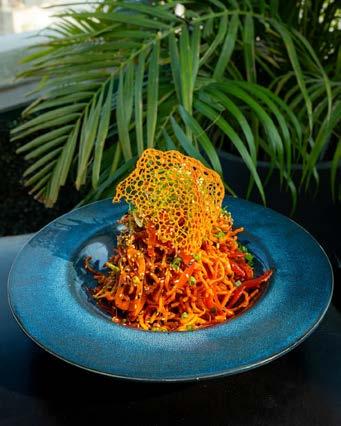
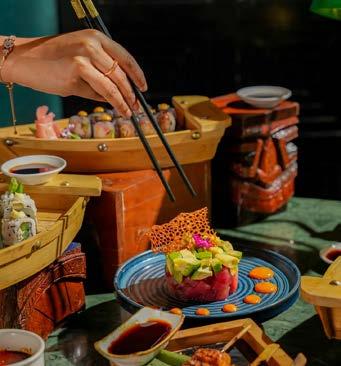
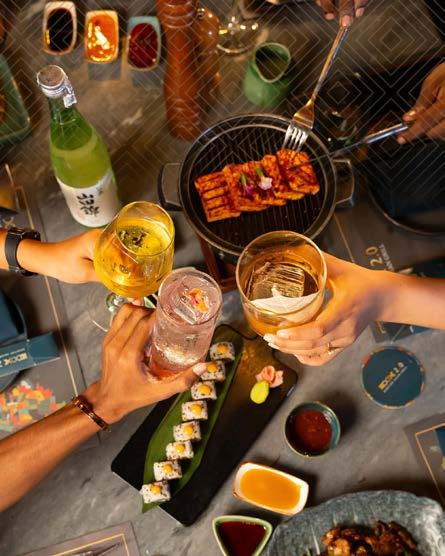
It’s a place where you can enjoy both quiet dinners and lively group celebrations. At the heart of KooX lies its Asian-inspired menu, carefully curated to take diners on a flavorful journey through the diverse cuisines of East and Southeast Asia. The restaurant specializes in Japanese, Korean, Chinese, and Thai dishes, prepared with authentic techniques and the freshest ingredients. From delicate sushi rolls to perfectly grilled skewers, every dish at KooX reflects culinary artistry. The restaurant’s concept revolves around live grilling, where chefs prepare dishes on open flames right before your eyes. This interactive dining style adds excitement and authenticity to the experience, allowing guests to witness the skill and precision that go into each creation.
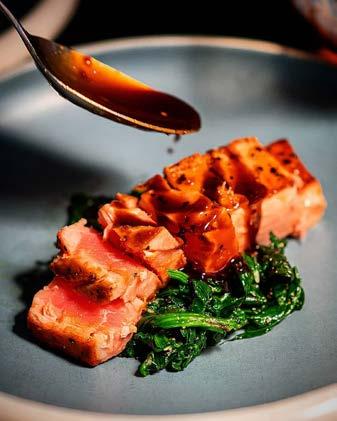
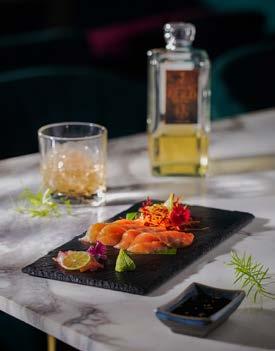
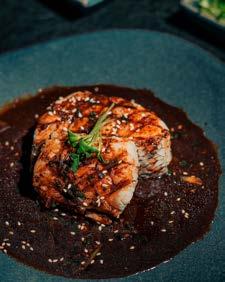
Some of the standout dishes include char-grilled prawns, teriyaki chicken skewers, and miso-glazed salmon. The balance of spices, marinades, and smoky flavors makes every bite unforgettable. Vegetarian options are equally impressive, with dishes like grilled tofu, vegetable yakitori, and Asian-style mushrooms that showcase how fresh ingredients and simple techniques can create magic.
Signature Cocktails and Drinks
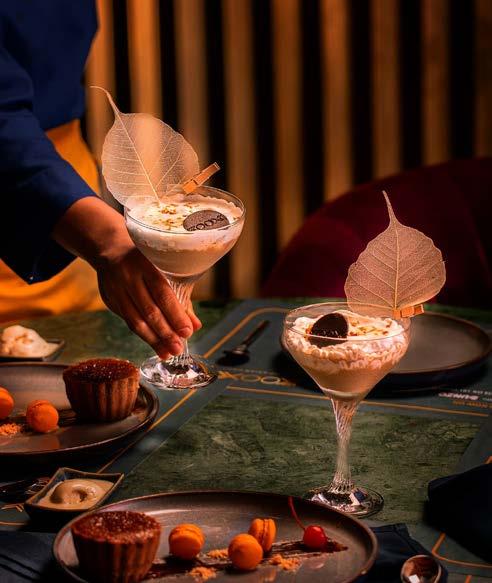
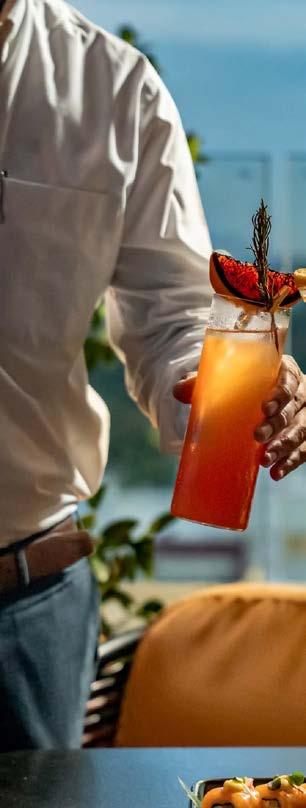
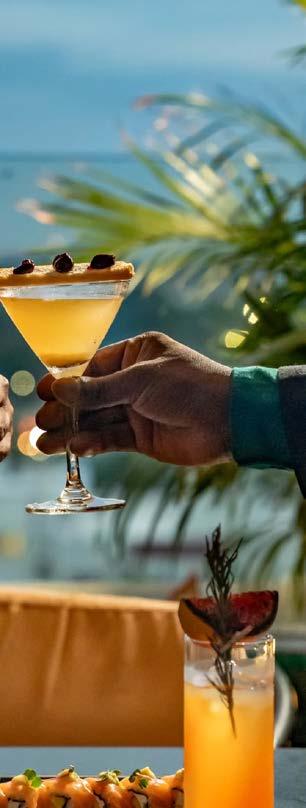
No rooftop experience is complete without a well-crafted drink in hand, and KooX excels in this area too.The restaurant’s bar menu features a range of signature cocktails, fine wines, and premium spirits, each designed to complement the Asian flavors of the food. Guests can indulge in unique concoctions like lemongrass-infused mojitos, wasabi martinis, and chili margaritas that bring a fun twist to traditional recipes. For those who prefer non-alcoholic options, the mocktails and fresh fruit coolers are equally refreshing. Every drink is prepared with attention to detail, served beautifully, and adds to the overall dining experience.The mixologists at KooX are known for their creativity, blending exotic Asian ingredients with local inspirations. Whether you’re sipping a cocktail while watching the sunset or enjoying a nightcap under the stars, the bar at KooX ensures your glass is always filled with something delightful.
The Art of Live Grilling
One of KooX’s defining features is its live grill concept. The restaurant’s open kitchen allows guests to watch the chefs work their magic on the grill. The aroma of sizzling seafood, the sound of crackling flames, and the sight of perfectly charred meats create an immersive dining experience. The chefs at KooX bring not just culinary expertise but also a touch of showmanship to the table. Their passion and precision reflect in every dish. Whether it’s the sear of a steak or the glaze on a piece of grilled fish, each element is cooked to perfection. This live-grill setup also allows guests to interact with the chefs, customizing their dishes according to spice levels or flavor preferences. It’s a personalized experience that adds warmth and engagement, making KooX stand out from other rooftop restaurants in the city.
An Ideal Spot for Every Occasion
KooX is not just a restaurant—it’s an experience suitable for various occasions. Whether it’s a romantic dinner date, a corporate gathering, a birthday celebration, or a casual evening with friends, KooX adapts effortlessly to every mood. For couples, the rooftop setting with soft lights and city views creates a perfect romantic backdrop. Families can enjoy spacious seating and a diverse menu that caters to all age groups. For business professionals, KooX serves as an elegant afterwork spot to unwind with colleagues over fine food and drinks. On weekends, the restaurant often hosts live music performances and themed nights, adding energy and excitement to the evenings. The combination of great food, music, and ambience makes KooX a popular choice among locals and tourists alike. The hallmark of any great restaurant is its service, and KooX takes pride in offering exceptional hospitality. From the moment guests arrive, they are greeted with warmth and professionalism. The staff is attentive without
being intrusive, always ready to recommend dishes, explain menu items, or assist with dietary preferences. The chefs often visit tables to ensure guests are satisfied with their food, reflecting the restaurant’s commitment to quality and customer care. Every aspect—from serving dishes at the right temperature to maintaining cleanliness and presentation—is handled with meticulous care. This emphasis on hospitality makes every visit to KooX feel special. Whether it’s your first time or a regular visit, the staff ensures that each experience exceeds expectations.
The Charm of Dining Under the Stars
Perhaps the most enchanting part of KooX is its open-air rooftop experience. As the sun sets, the sky transforms into a canvas of colors, and the city lights start to twinkle below. The combination of fine food, gentle breeze, and stunning views makes for an unforgettable dining experience. The restaurant’s seating layout is designed to maximize the view while maintaining privacy. Each table feels intimate yet connected to the vibrant energy of the space. Whether you’re enjoying a candlelight dinner or a group gathering, the setting amplifies every moment. Dining under the stars at KooX is more than just a meal— it’s a sensory journey that engages sight, sound, and taste in perfect harmony.
Location and Accessibility
Conveniently located in Rathna Nagar, Nandanam, KooX at Novotel Chennai Chamiers Road is easily accessible from all major parts of the city. The hotel’s central location makes it a popular choice for both Chennai residents and visitors staying nearby.Valet parking and easy transportation options ensure a hassle-free experience from start to finish. The restaurant is open for dinner, and reservations are highly recommended, especially on weekends when the rooftop tends to get busy. So the next time you’re looking for an exceptional evening—be it a celebration, a quiet escape, or a new culinary adventure— head to KooX at Novotel Chennai Chamiers Road. Here, every meal is an experience, every dish tells a story, and every moment feels special.
Bask by Coffee?
EXPANDS TO ECR WITH ARTISANAL BREWS & A BREEZY NEW SPACE
Between the routines of home and the rush of work, we all need a third place. Somewhere to pause, linger, and unwind. In Chennai, that third place quietly took root in 1999, when three brothers Nirav, Bhavesh and Pratik Shah opened a tiny cafe called Coffee?. It had a short vegetarian menu, a basic coffee machine, and the idea to build a community. Though it shut in 2008, it returned years later with its heart intact, first as Coffee? Since 1999 in Thousand Lights, and then as Bask by Coffee?.
Bask in Teynampet, housed in a converted bungalow, with outdoor seating, well-brewed artisanal coffee, and one very long table meant for strangers to sit elbow to elbow, became more than a cafe. It became that third place for many. Now, two years later, Nirav, Bhavesh, his wife Mona, and nephew Nanda have done it again. Bask by Coffee? has a new address out on the ECR, where the traffic thins and the sea draws near. The setting carries familiar echoes — generous outdoor seating, rustic lights, and a breezy openness that puts its faith in Chennai’s summer-centric weather, again.
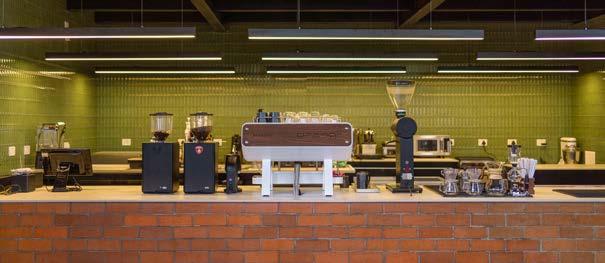
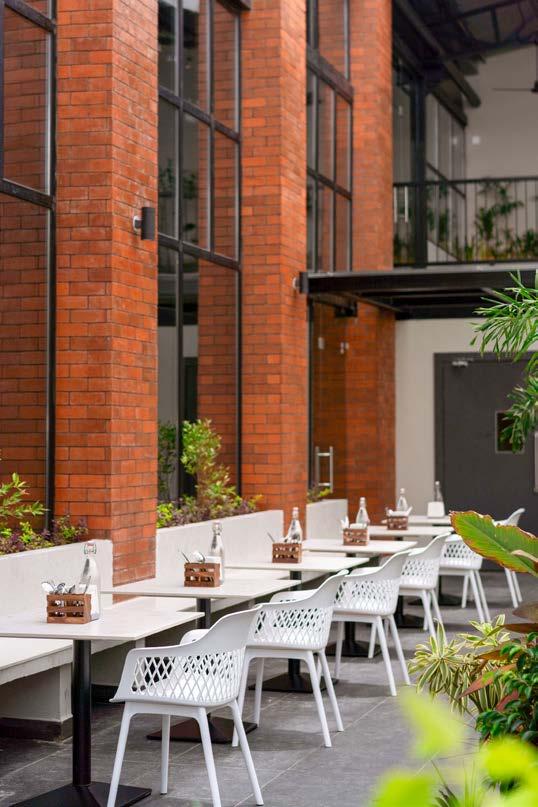
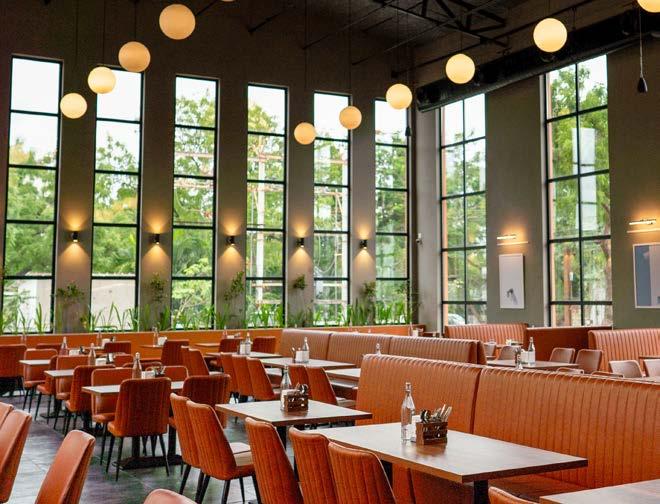
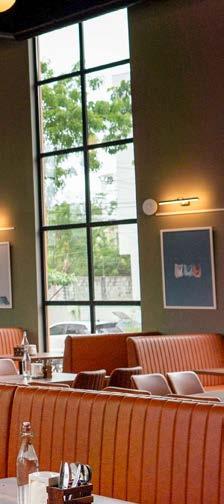
“I think it has largely worked out. People prefer to sit outside. Sometimes we run out of space outdoors first,” says Bhavesh, speaking of the Teynampet outlet. Nirav adds, “The advantage with this location is that since the ceilings are so high, indoors also feel like outdoors. It’s all so well lit.” The space next-door, will soon play host to a sports complex and turf. The new Bask is housed inside what was once a factory shed sprawling over 10,000 square feet. The original structure with its towering ceilings, exposed concrete columns, and industrial frame still stands. Sunlight pours in through floor-to-ceiling windows, warming the space and softening its edges. Even in a space this vast, the aroma of coffee is unmistakable the moment you step into the indoor seating area, where the barista is busy brewing coffee sourced from speciality roasters across the country. “We are sourcing some beans from roasters around the country that don’t have a presence here in the city. Coffee is also coming in from Brazil, Ethiopia, Tanzania, Colombia,” says Bhavesh, adding that every beverage can now be customised to be made with a dark roast blend.
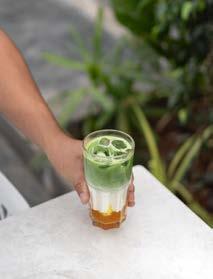
We try the seasonal and trending beverage mango matcha from the new matcha menu, which also has cold foam and lemonade variations. The menu at the new Bask has quite a few additions to the old familiar menu. “We always keep adding new things.The menu has always been very fluid at Bask. If someone wants dal chawal, we’ll do a dal chawal,” says Bhavesh, as he begins placing dish after dish on the table.
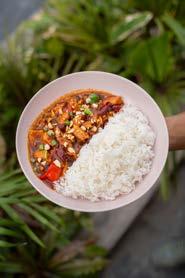
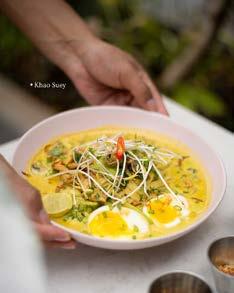
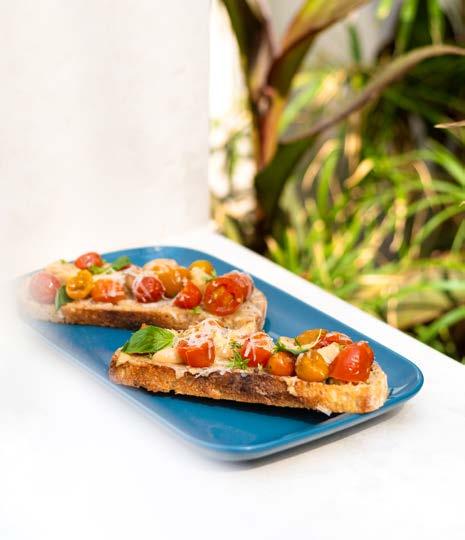
A cherry tomato and confit garlic toast, roasted tomato soup with an aged cheddar grilled cheese, beetroot galouti kebab, corn tikkis, hand-made raviolis, dimsums and even some really well-made sushi.The star of the new menu is the High Maintenance salad. Loaded with speciality ingredients like water chestnuts, edamame, broccoli, asparagus and microgreens, it is doused in a savoury, nutty dressing that coats your tongue. The menu also has a street style chowmein, some soy noodles, Asian and Indian meal combos, and a coconutty fragrant khao suey that comes with all its fixings. While the menu does feature a decadent carrot cake, a creamy crème brûlée, and a sticky toffee pudding that could put all sugar craving to rest, I picked something else to end my meal with: kaya toast, made with in-house kaya (a Southeast Asian coconut jam) served with a runny egg, and a strong cortado. The sweet, savoury, and bitter notes lingered long after the last bite, just like I did at Bask.
Bask by Coffee? is located at D4, MGR Salai, Palavakkam, Chennai, and will be open to public from Monday, June 2. A meal for two costs approximately ₹800-1,000. For reservations call +91 9894174488.
INCREDIBLE TAMILNADU & Health Family welfare
CREATING MILES OF SMILES - PEARLS DENTISTRY, CHENNAI
Eyes may be the window to the soul, but a smile can make or break a first impression. How our smile looks plays a big role in how we feel about our self and how we think others perceive us. You may not like showing off your smile if you think your teeth are discolored, misaligned, chipped or worn. Fortunately today, Dentistry is no longer just a case of filling and taking out teeth,
and is more popular than ever. From whitening and shaping to closing spaces and replacing teeth, there are endless tools and techniques to help improve your smile and boost your confidence, while also improving oral health. Pairing a passion for excellent service with the latest technological advances, Pearls Dentistry in Chennai has been providing excellent dental care to patients and gifting them the smile they desire.
Founder and Director
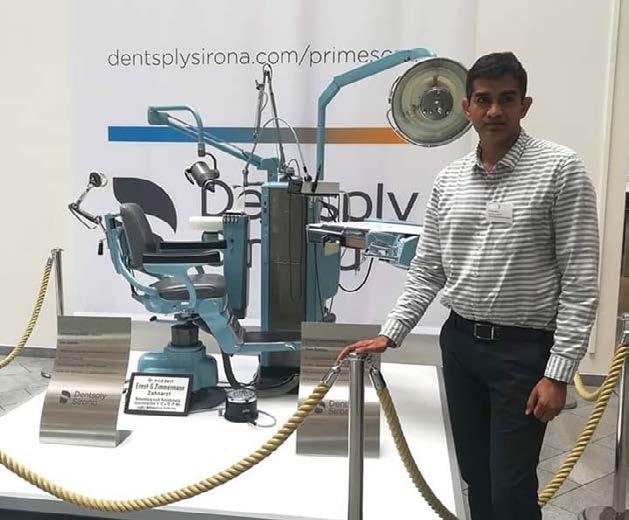
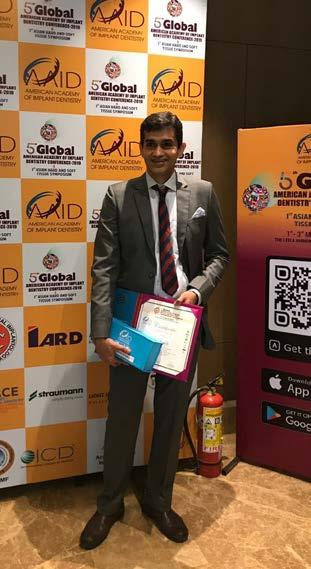
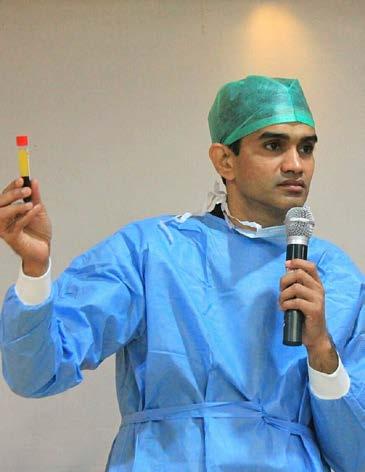
DR. ARUNKUMAR
Pearl Dentistry, Chennai
At Par with International Standards:
With treatment which is at par with superior quality, Pearls Dentistry has not only homebound patients who have their roots in Chennai and settled abroad, but also has more than 20 % of overseas patients coming in solely for treatment. Handling overseas patients from US and the UK, Gulf Countries and Australia; Dr. Arun Kumar, MD of Pearls dentistry says “Chennai is increasingly becoming popular with people all across the globe seeking medical treatment overseas, because of its affordability, state-ofthe-art equipment and its highly skilled doctors.”
Structured Treatment Plan:
A series of emails pertaining to medical history of the patient, duration of stay and all necessary information are exchanged between the clinic and patient, to ease out the treatment procedure. There is a separate wing to manage communication establishing a seamless treatment plan for every patient.
“An open communication about the requirements helps us structure the treatment and also advise overseas patients about duration of stay”, says Dr. Arun Kumar.
Dr B. Arunkumar, MDS Prosthodontist and Implantologist Director “Pearls Dentistry – smile from within“ He is also the Founder and Director of “Center for Excellence in Dentistry – Awaken to Possibilities“. “Centre for Excellence in Dentistry“ is a professional organization with a mission to provide education and to create awareness on a wide range of opportunities to explore and succeed through the Dental
Advanced and Digital Dentistry:
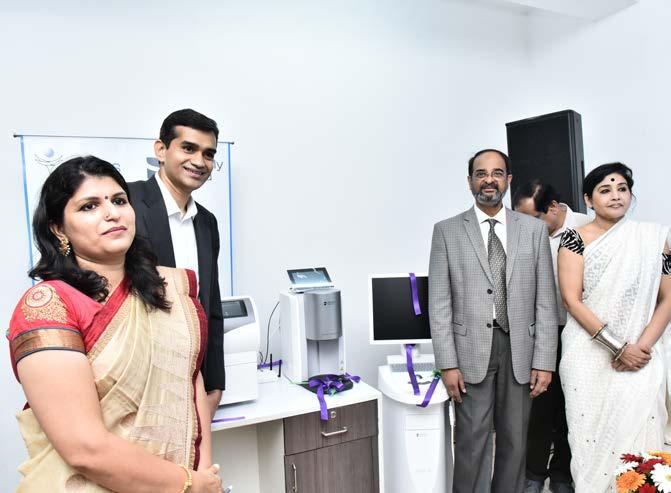
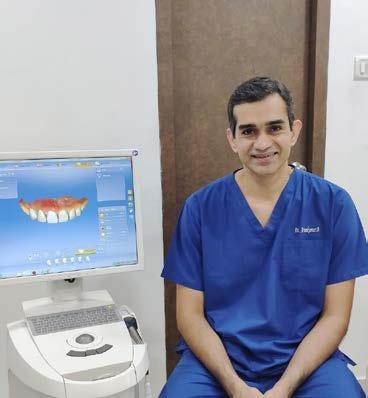
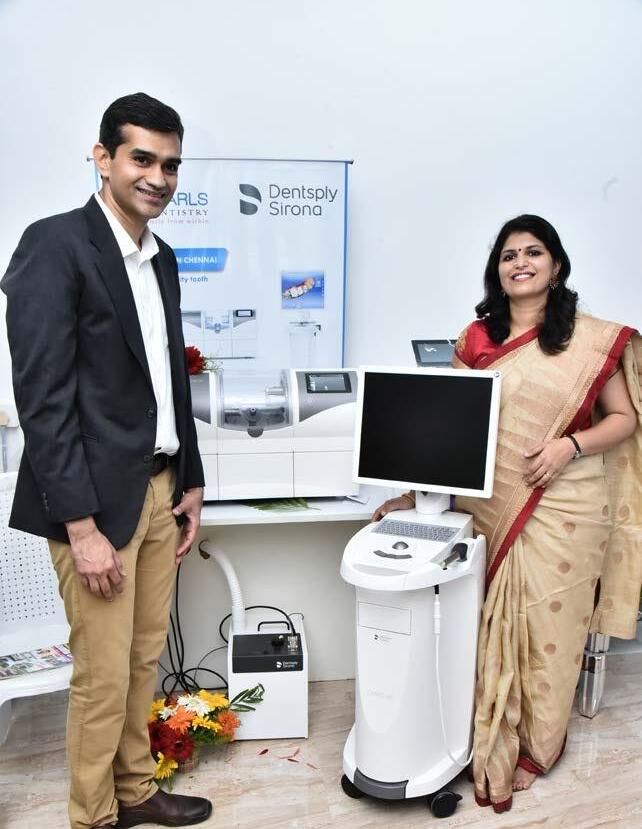
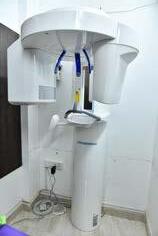
While Pearl’s Dentistry offers full range of Preventive, Diagnostic and Treatment service like Smile Designing, Implants, Laminates, Aesthetic Crowns, Laser Dentistry they also keep themselves equipped with the latest upgradations in Dentistry like virtual treatment, precisely educating patients about the treatment planning. Pearls Dentistry is the stand-alone clinic in Chennai offering CEREC – Ceramic Reconstruction. A computer-aided technology to measure and deliver crowns and dental implants accurately, without conventional impression material, and can be accomplished in one visit. Single unit of Crown - One Hour. Pearl Dentistry is also one of the few centres with advanced Digagnostic Equipment device like Cone Beam Computed Tomography (CBCT), a special type of CT scanner to generate three dimensional (3-D) images of dental structures, jaw line in a single scan and impact of decay.
Our vision is backed by our 18 years experience in helping 1000’s of patients to experience dentistry with peace of mind.
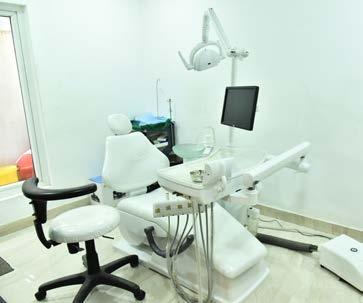
Pearls Dentistry will provide clean, hygienic, dental centers which are technologically advanced. open and honest pricing policy is followed to ensure cost effective quality dental care.
Through our unique pearls out reach we aim to touch millions of life within 2020.
We are here to help you experience dentistry with peace of mind, which will make you smile from within.
We are unique by
Happily providing professional care
Following standards and systems
Upholding values and ethics
In continuous respect of everyone and everything
Working together to nurture the best
Celebrating the smile from within
Implementing and living by these everyday
VISION
We at Pearls Dentistry help our patients SMILE from InsideOut by making them experience dentistry with peace of mind.
The kind of customers who love our work are the ones who understand the importance of dental health and prioritize it. Our service is backed up by 18 years of experience and the philosophy of P.E.A.C.E:
P - Painless
E - Easy access for patients
A - Affordable
C - Cleanliness
E - Everlasting Smile
We differentiate ourselves from other healthcare providers by offering a transparent honest pricing and follow up services because we believe in doing what is right for the patient.
MISSION
We at Pearls Dentistry are on a mission to create 25 lakhs happy smiles, by making people experience dentistry with P.E.A.C.E of mind, so that a sense of joy is felt by our patients, making them live healthy and thereby creating a Happy Smiling world. Pearls Dentistry was started in the year 2001, and has since been a leading health care provider in Chennai treating more than 10,000 patients,with headquarters in Raja Annamalaipuram, and branches in Thiruvanmiyur and Nanganallur. We offer full range of Preventive, Diagnostic and Treatment services with special emphasis on Smile Design, Implant dentistry and Sedation dentistry. We are the only standalone dental clinic in Chennai to practice Digital Dentistry- Single visit Dentistry by using CEREC where we deliver crowns to our patients in just 60 minutes. The Center is headed by Dr B Arunkumar, MDS and Dr Sandhya Arunkumar MDS, with a team of well experienced Dentist, Specialist Consultants, and Support staff. Our Doctors are well trained with international certifications. We are also a teaching organization with our Center for Excellence in Dentistry imparting dental advanced education to other dentist in India and abroad.
Success Stories of Professional Care:
Since its establishment in 2001, Pearls Dentistry has had numerous success stories in its kitty. Recently, a patient who visited India from U.S for a wedding, had 20 crowns done in a span of 3 days. Numerous success stories of sedation treatment taking away some of the anxiety and fear of patients to undergo treatment, and multiple crown and implant treatments in one sitting, are testament to the professional and updated treatment at Pearls Dentistry.
The Pearls Promise
With 24 years of excellence and 100 plus years of collective experience, Pearls Dentistry provides state of the art dental care in good clean hygienic clinics with affordable and transparent pricing.Dentist in Chennai Dental Clinic in Chennai
Quality Control
Special emphasis is given on Infection Control, Sterilization and Bio-Waste disposal to ensure maximum safety for our patrons and our environment.
Dental Awareness
Through multiple initiatives via dental screenings, free camps, dental health talks, kids’ dental programs, we try to engage our society and create awareness about dentistry.
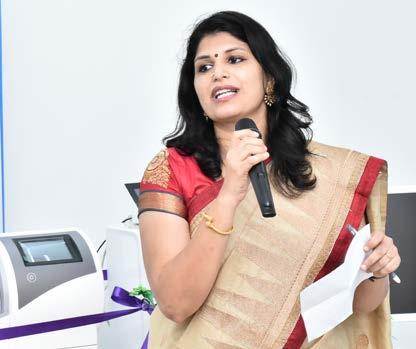
Dr Sandhya is a qualified dentist with masters in Oral Pathology. She is in dental practice from 2004 by name Pearls Dentistry, with 3 locations in Chennai namely Alwarpet, Thiruvanmiyur and Nanganallur. Pearls Dentistry is the first dental clinic in Chennai to introduce Single Visit dentistry through CEREC technology. She also served as a professor of Pathology in Chettinad hospitals for 12 years .
She is passionate about teaching and training, has done various Seminars and Health talks at companies and institutions on Dental Wellness. She is an active member of Rotary club of Madras East and BNI India.
About Pearls Dentistry:
Pearls Dentistry was started in the year 2001, and has treated more than 10,000 patients, and spreading smiles. The Center is headed by Dr. B. Arun kumar, MDS and Dr. Sandhya Arun kumar MDS, with a team of well experienced Dentist, Specialist Consultants, and Support staff. Passionate about teaching and training, they also run a teaching organization called “Center for Excellence” in Dentistry imparting advanced dental education to other dentists in India and abroad.
Address: No 1, 3rd Cross Street, St. Marys Road, Raja Annamalai Puram, Chennai, Tamil Nadu 600028
Timing: Monday to Saturday: 10 am to 8 pm Sunday: 10 am to 2 pm
Appointments: pearlsdentistry.in
Phone: +91 93826 66369
Dr.Sivakumar's Admirable Journey To Success & Stardom
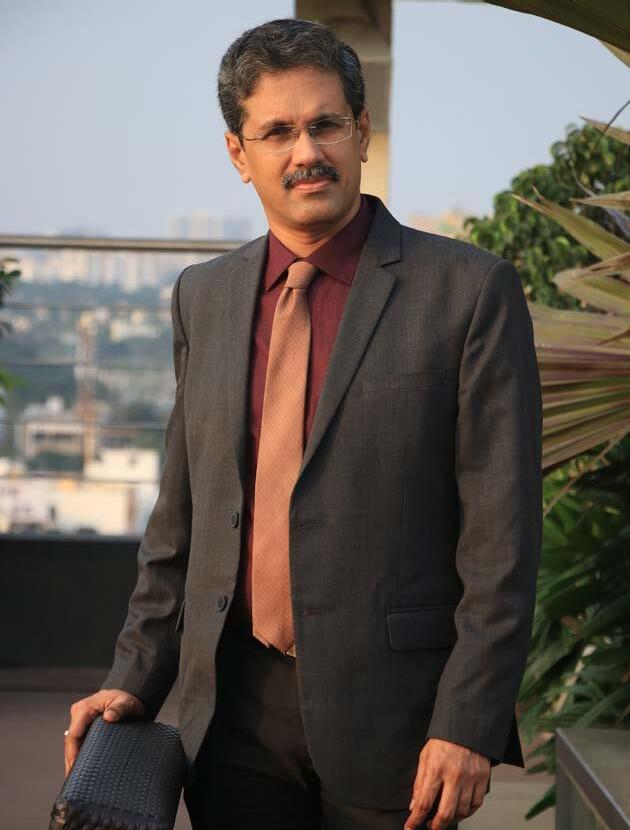
Tall, lean and smart with salt n pepper hair, he comes across as a warm person who can put anyone at ease. His soft nature coupled with his humble yet confident persona, gives you the impression that you are in the right hands. Such is the personality of dr. A sivakumar of desire aesthetics. While we look out for inspirations around us in books and movies, here is a man from real life who has grown to what he is solely based on his determination and focus on his one goal- of becoming a surgeon.
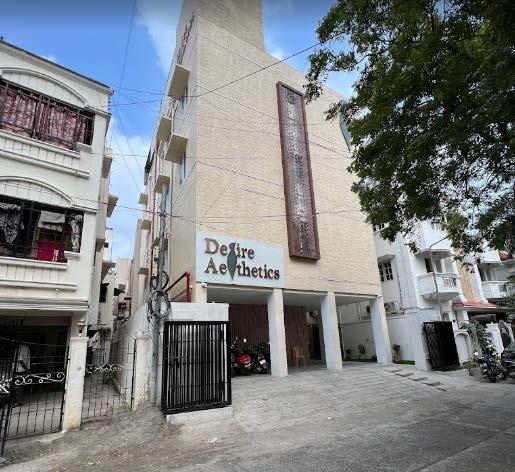
A plastic surgeon and the director of desire aesthetics, dr. Sivakumar is what he is today because of his perseverance and hard work. He has been self made from the start. Today, plastic surgery has come a long way and everyday new procedures and breakthrough are giving new lease of life and hope to trauma, accident, burn, and cancer victims and has become a life changing phenomena. Dr. Sivakumar practises his profession with just one thought in his mind- betterment of his patient in the long run. For a man who describes his profession itself as his passion, it speaks volumes on the effort that he must be putting into his practise. Today he is a senior consultant plastic & reconstructive surgeon who has over 15 years’ experience in plastic, cosmetic and reconstructive surgery. He is one of the most renowned cosmetic surgeons in the country, specialising in nose jobs (rhinoplasty), breast jobs (breast augmentation) and tummy tucks (abdominoplasty), liposuction, and reconstruction after trauma and cancer resections.
Journey to becoming a Doctor
Born in a middle class family of weavers, with an engineer father, Dr. Sivakumar was the only second generation to receive higher education. “I always wanted to be a doctor. I was always playing doctor roles in every school or college play. My friends were not surprised when I became one”, he says amusingly. Studying in a Tamil medium school, though he was a bright student, there was no medical background he could tread on so it was a lone uphill climb for him. After being selected in Coimbatore medical college, understanding new concepts in a new language was a challenge but with his grit and determination set
on being a surgeon, Dr. Sivakumar delved into the a sea of hard work to overcome all odds and challenges, making his goal as his focus and diligently working towards it. Not having any guidance from his family in his doctoral pursuits, he was left to identify and choose his own path based on his instincts and individual insights. Today Dr. Sivakumar is a top leading plastic surgeon in Chennai, and the Director of Desire Aesthetics. Dr. Sivakumar completed his Masters of Surgery degree from Dr. M. G. R. Medical University and his Plastic Surgery residency in Stanley Medical College, Chennai. He recalls his internship as one of the most memorable time filled with learnings.
Dr. C.N. Ramaswamy, his professor during his surgery days, was the person who had the most impact on his life. It was him who inculcated the value of putting a patient first saying that even a percentage of mistakes from a surgeon’s part can be a huge impact on the patient’s life. It was him to majorly inspired Dr. Sivakumar to become a plastic surgeon following which he came to pursue his interest at Chennai’s Stanley Hospital. During his three-year plastic surgery residency he conducted research in both cosmetic and reconstructive plastic surgery and presented his research at both state and national scientific meetings gradually growing in his skills and expertise.
Doctor’s philosophy focuses on the use of small incision and fast recovery techniques to give natural looking results. Dr. Sivakumar’s goal is to help his patients look better and feel better about themselves his articles have been featured in peer-reviewed surgery journals. Plastic Surgery is a very wide field right from a micro surgery to a facial reconstruction or cosmetic surgery; everything
requires precision to the minutest detail. With poor techniques you cannot achieve perfection and surgery is not a textbook knowledge but only a practise based expertise which comes only through hands on practise. Dr. Sivakumar is able to provide expertise that can only come with specialization: Facial rejuvenation and adaption with eyelid surgery (blepharoplasty), nose surgery
(Rhinoplasty), face and neck surgery (rhytidectomy), mouth and lip surgery (perioral and lip augmentation), cheek and deep line surgery (volume replacement with fillers or stem cell fat augmentation), ear surgery (otoplasty), chin surgery (chin implant) hair recession (hair transplantation) and skin treatments (non-surgical treatments, botox, fillers).Some of these procedures are only suitable for
select cases and Dr. Sivakumar provides guidance on what will result in the most attainable and natural looking results. With over 15-years of surgical experience his success has been driven by an obsession with detail and pride on perfection.A strong relationship between surgeon and patient is paramount for Dr. A. Sivakumar. He spends significant time with patients offering (rhytidectomy), mouth and lip surgery (perioral and lip augmentation), cheek and deep line surgery (volume replacement with fillers or stem cell fat augmentation), ear surgery (otoplasty), chin surgery (chin implant) hair recession (hair transplantation) and skin treatments (non-surgical treatments, botox, fillers).Some of these procedures are only suitable for select cases and Dr. Sivakumar provides guidance on what will result in the most attainable and natural looking results. With over 10-years of surgical experience his success has been driven by an obsession with detail and pride on perfection.A strong relationship between surgeon and patient is paramount for Dr. A. Sivakumar. He spends significant time with patients offering first class, professional advice on the surgery that is right for each individual patient. This allows Dr. Sivakumar to fully understand what the patient wants to achieve from surgery. Dr. Sivakumar is noted for achieving a particularly natural appearance for all his patients.
The Centre for Cosmetic Surgery was established to provide patients with both the art and science of plastic surgery. Dr. Sivakumar is recognized for his efforts in patient education and has an excellent reputation in achieving a natural appearance for his patients. Desire Aesthetics provides a complete range of cosmetic and reconstructive surgery services in Chennai. “Our team of surgeons perform over a 1000 surgeries every year. We are recognised as leaders in the field of cosmetic & plastic surgery hospitals in Chennai. We are also committed to offering affordable plastic surgery and Aesthetic Procedures without compromising on the safety and privacy of individuals.” “When it comes to choosing the best plastic surgeons, we’ve already done the groundwork for you. We only offer treatments that our surgeons specialise in. They are amongst the best and most experienced in their field, which helps you get the right advice and the best possible results from your surgery.”All work and no play All work and no
play(Rhinoplasty), face and neck surgery (rhytidectomy), mouth and lip surgery (perioral and lip augmentation), cheek and deep line surgery (volume replacement with fillers or stem cell fat augmentation), ear surgery (otoplasty), chin surgery (chin implant) hair recession (hair transplantation) and skin treatments (non-surgical treatments, botox, fillers).Some of these procedures are only suitable for select cases and Dr. Sivakumar provides guidance on what will result in the most attainable and natural looking results. With over 10-years of surgical experience his success has been driven by an obsession with detail and pride on perfection.A strong relationship between surgeon and patient is paramount for Dr. A. Sivakumar. He spends significant time with patients offering first class, professional advice on the surgery that is right for each individual patient. This allows Dr. Sivakumar to fully understand what the patient wants to achieve from surgery. Dr. Sivakumar is noted for achieving a particularly natural appearance for all his patients.
Supported by a dedicated team of healthcare and administration professionals, Dr. Sivakumar and his team provide the very highest level of patient care and support.”It is our duty to be able to offer surgery which is effective, safe and ultimately gives a natural result”. His dedication to excellence and commitment to personal care and attention is what sets him apart in an expensive and Commercialised industry where it’s easy to mislead the patients .At Desire Aesthetics there’s no hard-sell and no pressure to take the next step. “Our consultations are in-depth and never rushed. You will be able to ask all the questions you want, alongside seeing plenty of before and after photos of the surgeon’s results. Cosmetic surgery is not a decision to be taken lightly, so our team of nurses, surgeons and patient advisors will present you with the best options and discuss your expectations with understanding and empathy, “ he says assuringly.
A Legacy of Skilled Care
Leadership & Expertise: At the helm is Dr. A. Sivakumar Arumugam, a highly respected plastic and cosmetic surgeon with over two decades of specialized experience. His reputation for balancing surgical precision with aesthetic sensibility has made Desire Aesthetics a name people trust.
Volume & Specialization: The clinic performs over 1,000 surgeries annually, spanning both cosmetic and reconstructive spheres. Whether addressing body contouring, facial features, or post-trauma repair, the team is well-versed in a wide spectrum of procedures.
Why Desire Aesthetics May Be the Right Choice
If you’re considering aesthetic treatments in Chennai, here are some reasons why Desire Aesthetics is worth considering:
Balance of Expertise and Empathy: The clinic doesn’t only focus on physical results — there is clear emphasis on emotional comfort and ethical care.
Comprehensive Options: Both surgical and non-surgical treatments are available under one roof, which helps in comparison and convenience.
Reputation & Patient Feedback: Ratings are generally excellent — patients repeatedly mention professionalism, the care of staff, and satisfaction with outcomes.
Natural-Looking Results: Their philosophy tends toward ‘enhanced, not obvious’ – the objective is subtlety and harmony with one’s natural features.
Desire Aesthetics in Anna Nagar isn’t just “another cosmetic clinic.” It’s a place where technical skill, aesthetic sensibility, patient comfort, and ethical practice come together. If you’re seeking to make a change — whether big or small — this could very well be a clinic that delivers both results and peace of mind.
INCREDIBLE TAMILNADU & Intl. Standard Education
One Of The Top Ranking Universities In India
INTL. STANDARD EDUCATION
(SRMIST), KATTANKULATHUR (CHENNAI)
SRM Institute of Science and Technology is one of the top ranking universities in India with over 60000+ full time students and more than 4460+ faculty across all the campuses – Kattankulathur, Ramapuram, Vadapalani Campus – all in and around Chennai, Tiruchirappalli (in TN), Modinagar (in UP) & Sonepat (in Haryana) – both of which are located near Delhi NCR, Amaravati (in AP), Gangtok (in Sikkim) –offering a wide range of undergraduate, postgraduate and doctoral programs in six Faculties – Engineering & Technology, Management, Medicine & Health sciences, Science & Humanities, Law and Agricultural Sciences.
The image shows a lightning bolt sculpture, which is the logo for "Milan," the national-level cultural festival of the SRM Institute of Science and Technology (SRMIST).
History
1969 - 1999
Pioneering Founder takes first step ahead
Inaugural First Step
Inception of Florence Nightingale Primary School at West Mambalam, Chennai 1969
CHENNAI
Upgrading the Primary School to the status of Matriculation
SRM College of Engineering and Technology, Kattankulathur
1985
CHENNAI
SRM College of Nursing, and SRM College of Pharmacy, Kattankulathur
1992
CHENNAI
SRM Institute of Hotel Management in Chennai and Trichy 1993
CHENNAI
SRM Arts & Science College, Kattankulathur affiliated to the University of Madras 1993
CHENNAI
SRM College of Physiotherapy, Kattankulathur 1993
CHENNAI
SRM Dental College, Ramapuram, Chennai 1996
CHENNAI
SRM Polytechnic College, Kattankulathur 1996
CHENNAI
SRM Easwari Engineering College, Ramapuram, Chennai affiliated to the Anna University 1996
CHENNAI
Dean's Message
Welcome to the College of Engineering & Technology at SRMIST!
At SRMIST, we are committed to academic excellence, research innovation, and holistic student development. Our college stands at the forefront of engineering education, equipping students with the skills and knowledge necessary to thrive in an ever-evolving technological landscape.
With world-class faculty, cutting-edge research facilities, and strong industry collaborations, we ensure that our students are prepared not only for successful careers but also to become leaders and innovators in their respective fields. Our curriculum blends theoretical rigor with hands-on experience, emphasizing experiential learning, interdisciplinary projects, and entrepreneurial thinking.
Beyond academics, we nurture a vibrant campus culture that fosters creativity, critical thinking, and ethical leadership. We believe in empowering our students to take on global challenges and contribute meaningfully to society.
I invite you to explore the numerous opportunities that our college offers and join us in our mission to shape the future through education and research.
SRMIST’s engineering programs endeavor to be at the forefront of innovation. They also foster multidisciplinary collaborations aimed at solving the most pressing global problems. Our mission is to seek solutions to global challenges by using the power of engineering principles, techniques and systems. We believe that engineers should not only possess deep technical excellence, but also nurture creativity, cultural awareness and entrepreneurial skills that come from exposure to science, business, medicine and other disciplines – all integral part of the SRM experience. Our goal is to deliver world class, solutions driven programs that inspire curiosity and generate new knowledge and discoveries. Our collaboration with over 50 of the world’s best universities and 215 corporates, strengthens our academic and research programs.
The Engineering and Technology faculty comprises 7 Schools and 22 Departments. Each school is headed by a Dean and comprises various Departments of Engineering, clubbed on the basis of their domain expertise. With students in India seeking more interdisciplinary programs and flexibility in course curriculum, SRMIST addressed this demand by completely leaving the option of program path to the students. A student shall have the option of choosing any one of the following pathways: (i) Major, (ii) Major with Specialization, (iii) Major with Minor, or Major with Specialization and a Minor. The core philosophy that is practised in SRMIST as part of the teaching-learning process is Inter Disciplinary Experiencial Active Learning (IDEAL)
Vibrant Activities and Opportunities
There’s never a dull moment on campus, as the activities on offer are as diverse and varied too – from entertainment to extracurricular or even religious pursuits. There are several activities to keep students busy, in their various areas of interest. It’s a stimulating environment for living and learning, with cultural activities, sports, fine arts and entrepreneurship, encouraging students to venture beyond the realms of academics.
Student Life
SRMIST’s student life not only enables a great education –something which lasts a lifetime. Beyond that, the range of opportunities allows students to determine her/his student life at SRMIST. To put it in simple terms, Student Life can be what a student wants it to be.At the end of their student phase at SRMIST, we want our students to have the self-belief to be whoever they want to be, and to feel confident and excited about their future.
Getting around the Campus
Walking and cycling are the most popular ways to get around the SRM campus. And with state-of-the-art security and 24 hour emergency services, it’s the safest place to be. The SRM group runs a fleet of buses for transporting students to and from the city and to other areas. Public transport buses and trains also ply to points near the campuses.
Campus Lifestyle
It’s a diverse community of students at SRM Institute of Science and Technology (formerly known as SRM University), and the activities on offer are as diverse and varied too. From entertainment to extra-curricular or even religious pursuits, there’s never a dull moment on campus. There’s never a dull moment on campus, as the activities on offer are as diverse and varied too – from entertainment to extra-curricular or even religious pursuits.
SRM University-AP, Andhra Pradesh, is a multi-disciplinary researchintensive institute combining academic rigour, evolving research ecosystem, entrepreneurial heritage, and pioneering faculty. As a leading tertiary education institution, SRM AP has been challenging the conventional learning ecosystem since its inception to create a novel avenue where passion for wisdom meets purpose and excellence. SRM University-AP (Andhra Pradesh), also known as SRM University, Amaravati. SRM University-AP is a private university located in Andhra Pradesh, India. It is part of the SRM Group of Institutions, which also includes SRM Institute of Science and Technology (SRMIST) with campuses in Chennai, Delhi,Tiruchirappalli, and Vadapalani.The university has a world-class sports infrastructure and offers admissions under a sports quota with scholarships up to 100%. The university aims to achieve global excellence through international alliances and collaborative initiatives.
SRM University Sikkim provides world-class education with unmatched infrastructure and a well-qualified, outstanding faculty. Students have a broad range of subjects—from the sciences, social sciences, IT, management as other professional and vocational courses—to choose from. Apart from academics, cultural programs like Meraki, the annual university festival, and Athlon, the annual sports meet, provide opportunities for all-round development.These year-round activities are augmented by regular webinars, seminars, field visits and industrial exposure. Located in the mountain state of Sikkim in the north-eastern region of India, SRM University Sikkim is perfectly placed to ensure the all-round development of the student population of not only the region but also India’s next-door neighbours including Nepal, Bhutan and Bangladesh.
History
SRM College of Occupational Therapy, Kattankulathur 1996
CHENNAI
SRM Institute of Management & Technology, Delhi NCR Campus, Ghaziabad, Uttar Pradesh 1997
DELHI
SRM Valliammai Engineering College, Kattankulathur, Chennai affiliated to the Anna University 1999
CHENNAI
2000 to 2010
Leaping Forward & Higher in Education
UGC declared the SRM Institute of Science and Technology, Chennai comprising SRM Dental College, Ramapuram, Chennai as deemed to be a University under Sec. 3 of the UGC Act 1956
2002
CHENNAI
SRM College of Engineering and Technology brought under the ambit of SRMIST 2003
CHENNAI
SRM School of Education, Kattankulathur 2004
CHENNAI
SRM Medical College Hospital and Research Centre 2005
CHENNAI
SRM College of Pharmacy, Nursing, Physiotherapy, Occupational Therapy, in Chennai and SRM Institute of Management and Technology, Modinagar, Delhi were brought under the ambit of SRMIST 2005
CHENNAI
SRM Kattankuthur Dental College and School of Public Health (SPH)
2007
CHENNAI
SRM Muthucharam, Community Radio launched at the SRMIST campus
2007
CHENNAI
SRM University Delhi-NCR, Sonepat, Haryana aims to emerge as a leading world-class university that creates and disseminates knowledge upholding the highest standards of instructions in Medicine & Health Sciences, Engineering & Technology, Management, Law, Science and Humanities. Along with academic excellence and skills, our curriculum imparts integrity and social sensitivity to mould our graduates who may be best suited to serve the nation and the world.
At SRM Institute of Science and Technology, Global Partnerships are central to our mission of academic excellence and international collaboration. We actively engage with leading institutions and organizations worldwide to promote knowledge exchange, innovation, and cross-cultural learning. Our global partnerships foster a dynamic environment where students, researchers, and faculty benefit from international exposure and joint opportunities. Through strategic alliances with over 100 universities and research centers across continents, SRM enables academic mobility, collaborative research, dual degree programs, and international internships. These partnerships support a global mindset and prepare our students to thrive in a competitive and interconnected world. We regularly host visiting scholars, participate in global conferences, and contribute to international development projects, reinforcing our role as a globally engaged institution. SRM remains committed to expanding its global network to drive impact and innovation across borders.
DR. RAVI PACHAMUTHU CHANCELLOR
Dr. Ravi Pachamuthu, The Chairman of the SRM Group oversees the organization's strategic growth and evolution. He actively participated in the establishment of a number of educational institutions where more than 1,00,000 students are studying under the SRM Group's banner, starting from Chennai to the capitalDelhi. SRM University is celebrated as one of the best private universities in India, thanks to his capable and visionary leadership.
SRM University is renowned for offering over 100,000 students a top-notch education that meets international standards.
For deserving and financially challenged students, Dr. Ravi Pachamuthu bestowed with plethora of scholarships to support their empowerment and personal development. He also happens to be the leader of the IJK (Indian Democratic Party) whose advocacy has always been about quality education in nation building. Thus, our motto - LEARN. LEAP. LEAD.
History
Chennai Medical College Hospital and Research Centre (CMCHRC) at Irungalur village, Tiruchirapalli, Tamil Nadu 2009
TRICHY
2010- 2016
A mini-decade of Expansion, Recognition & Awards
TRP Engineering College, Trichy, Affiliated to the Anna University 2010
TRICHY
SRM Faculty of Science and Humanities at the Vadapalani Campus 2011
VADAPALANI
SRM University Delhi-NCR, Sonepat, Haryana 2013
HARYANA
SRM University, Sikkim (Private University) 2014
SIKKIM
SRM School of Law, Kattankulathur 2014
CHENNAI
SRM University, Amaravati, AP 2017
AMARAVATI
SRM Public School, Guduvanchery 2017
CHENNAI
SRM College of Agriculture Sciences, Kattankulathur 2018
CHENNAI
Our global partnerships foster a dynamic environment where students, researchers, and faculty benefit from international exposure and joint opportunities. Through strategic alliances with over 100 universities and research centers across continents, SRM enables academic mobility, collaborative research, dual degree programs, and international internships.
These partnerships support a global mindset and prepare our students to thrive in a competitive and interconnected world. We regularly host visiting scholars, participate in global conferences, and contribute to international development projects, reinforcing our role as a globally engaged institution. SRM remains committed to expanding its global network to drive impact and innovation across borders.
Office of International Relations is a dedicated directorate within SRMIST tasked with the mandate of ensuring best of the global practices, opportunities and exchange for the benefit of our students as well as faculty / staff. It is therefore a consequence of such focused initiatives that SRMIST enjoys a high degree of recall in the international fora and many of our students and faculty members have the benefit of collaborating with institutions abroad over many structured initiatives.
The Office of International Relations centralizes, coordinates and handles international cooperation activities at SRM Institute of Science and Technology. SRMIST’s global standing is driven by its vast number of alumni as well as its alliances, MoUs and Exchange of Students & Faculty Members. We are committed to realizing the Leadership Vision to internationalize SRMIST so as to support our Learners and Faculty Members access best of the world. You are most welcome to reach out IR to discuss your aspirations regarding international higher studies, projects, collaboration.
INCREDIBLE TAMILNADU & Heritage Architecture
Kailasanathar Temple KANCHIPURAM, TAMIL NADU
A Timeless Pallava Masterpiece of Stone and Spirit
In the sacred city of Kanchipuram, where temple spires pierce the golden skyline and chants float in the air like soft echoes of eternity, stands one of India’s most revered architectural treasures — the Kailasanathar Temple. Dedicated to Lord Shiva, this temple is not just a place of worship but a magnificent ode to South Indian stone architecture, symbolizing the creative genius
of the Pallava dynasty. Built in the early 8th century, the temple stands as the oldest structural temple in Kanchipuram, a precursor to the grand Dravidian temples that would later define Tamil Nadu’s sacred landscape. The Kailasanathar Temple represents a bridge between the rock-cut cave temples of earlier centuries and the fully developed structural temples of later Chola brilliance.
Its very existence reflects the Pallavas’ desire to immortalize divinity through architecture — a poetic endeavor where each stone seems to chant hymns of devotion and artistry. Every sculpture, pillar, and corridor in this temple narrates stories from Shaivism, mythological lore, and the aspirations of an empire that revered art as a medium of enlightenment. Kanchipuram, often called the “City
of Thousand Temples,” has always been a cradle of Tamil spirituality and craftsmanship. Among its countless shrines, the Kailasanathar Temple holds a unique status as a prototype of South Indian temple design, influencing generations of architects and sculptors. This temple is more than just a religious edifice — it is a monumental chronicle of early medieval India’s devotion, politics, and artistic innovation.
HISTORY & ORIGIN
The Kailasanathar Temple owes its creation to the Pallava dynasty, one of the most influential South Indian powers between the 6th and 9th centuries CE. Its construction began under the rule of Narasimhavarman II, also known as
Rajasimha Pallava, around 685–705 CE, and was later completed by his son Mahendravarman III. The Pallavas, whose capital was Kanchipuram, were pioneers in transforming Indian temple architecture from rock-cut caves to free-standing structural temples built entirely of stone. Before the Kailasanathar Temple, most temples were carved into rock faces or hillsides, as seen at Mahabalipuram. However, under Rajasimha’s vision, the Pallava artisans evolved a new architectural idiom — one that used finely cut sandstone blocks to create towering, intricate shrines. This transition marks one of the most significant turning points in South Indian art history. The temple thus became the first complete structural temple built in South India, setting a precedent that the Cholas and later dynasties would refine to perfection.
The temple’s dedication to Lord Shiva, under the name Kailasanathar (“Lord of Mount Kailash”), was no coincidence. It symbolized the cosmic abode of Shiva, representing both divine transcendence and royal power. The Pallavas, known for their Saivite devotion, considered Shiva as their protector and patron deity. Rajasimha Pallava, a devout Shaivite himself, inscribed his name in several temple sculptures, presenting himself as an earthly reflection of the cosmic creator.
Historically, the temple also reflected the political climate of the Pallava era — a time of cultural prosperity but military rivalry with the Chalukyas and Pandyas. By commissioning this temple, Rajasimha sought not only divine blessings but also a demonstration of the Pallava empire’s strength, stability, and artistic supremacy. Over the centuries, the temple has survived wars, weather, and time, standing today as a sublime relic of an empire that saw no boundary between art, faith, and power.
ARCHITECTURAL MARVELS
The architecture of Kailasanathar Temple is a symphony in stone — compact, harmonious, and deeply symbolic. Every inch of its structure reflects the Pallava genius for balancing aesthetic grace with theological depth. Unlike the sprawling temple complexes of later centuries, Kailasanathar’s plan is intimate, inviting personal engagement with its sculptures and sacred geometry. The temple stands on a rectangular platform enclosed by a high wall that houses 58 small shrines (devakulikas), each dedicated to different forms of Lord Shiva. This arrangement gives the impression of a sacred fortress — the cosmic residence of the deity surrounded by celestial guardians. The central shrine, housing the Shiva Linga, represents the spiritual nucleus, while the smaller shrines around it form a symbolic mandala of divine energy radiating outward. The main structure consists of the Garbhagriha (sanctum sanctorum), Antarala (vestibule), Ardha-mandapa (front hall), and Mukhamandapa (entrance porch). The walls are adorned with pilasters, lion motifs, and miniature shrines, creating a rhythmic interplay of light and shadow.
The temple’s façade, with its countless carvings of gods, goddesses, ganas, and mythical beasts, demonstrates both the spiritual symbolism and narrative richness that characterize early Dravidian design. The use of sandstone and granite adds another layer of architectural significance. Granite forms the foundation, ensuring durability, while sandstone, easier to carve, is used for decorative and sculptural elements. Originally, the temple was covered in lime plaster and painted in vivid colors, making it a visual spectacle. Traces of this polychromy still remain, offering glimpses of a once brilliantly hued sanctuary. Another remarkable feature is the circumambulatory path around the sanctum, allowing devotees to walk in reverence around the Shiva Linga. This spatial design not only reflects ritual practice but also embodies the cosmic order — the devotee’s journey around the sanctum symbolizing the soul’s orbit around the divine.
LOCATION
The Kailasanathar Temple is located in Kanchipuram, a historic temple town in the Chengalpattu district of Tamil Nadu, approximately 75 kilometers southwest of Chennai. Kanchipuram, often referred to as the “City of Thousand Temples,” is one of the most ancient cities in India, mentioned in Tamil Sangam literature and celebrated in sacred texts such as the Mahabharata and various Puranas.
Situated on the banks of the Vegavathi River, the temple occupies a serene setting amidst the urban sprawl of modern Kanchipuram. Its location was chosen with both spiritual and geomantic precision. According to traditional temple architecture principles (Vastu Shastra),
proximity to water symbolizes purity, continuity, and divine flow — essential for a Shaivite shrine. The river not only enhanced the temple’s spiritual significance but also provided practical benefits for ritual ablutions and temple festivals. Reaching the temple today is convenient. Kanchipuram is well connected by road and rail from Chennai, Tiruvannamalai, and Vellore. Despite its modest scale compared to later Chola temples, the Kailasanathar Temple commands an aura of serene majesty, enhanced by the absence of urban noise within its sacred precinct. It stands slightly away from Kanchipuram’s bustling market streets, enveloped in quietude — a fitting atmosphere for meditation and worship. The temple’s setting also reflects the urban planning ideals of Pallava cities, where temples formed the nucleus around which settlements and craft guilds flourished. Even now, walking through Kanchipuram’s narrow lanes, one can sense the echo of that ancient layout — where life and divinity seamlessly intertwined.
FESTIVALS CELEBRATED
Though centuries old, the Kailasanathar Temple remains a vibrant center of worship. Its rituals and festivals continue to draw devotees, carrying forward traditions that have endured since Pallava times. The most significant of these is the Mahashivaratri, the “Great Night of Shiva,” which transforms the temple into a beacon of devotion. During this festival, thousands of pilgrims stay awake through the night, chanting hymns, lighting lamps, and offering prayers to Lord Kailasanathar, seeking spiritual renewal and liberation. Another important celebration is the Pradosham, observed twice a month, when devotees perform special rituals at twilight to honor Shiva’s cosmic dance. The temple’s Somaskanda reliefs (depicting Shiva with Parvati and Skanda) play a central role in these rituals, emphasizing the unity of divine family and cosmic balance.
Karthigai Deepam, the festival of lights, also holds special significance. During this event, the temple glows with thousands of oil lamps, illuminating its sculpted walls in a spectacle that seems to awaken the sleeping stone into divine radiance. Other festivals like Panguni Uthiram, Vinayaka Chaturthi, and Aadi Pooram also bring life and rhythm to the temple throughout the year. Beyond its ritual calendar, the temple’s festivals represent an unbroken chain of continuity — linking present-day worshippers with their ancestors who once stood under the same vimana, reciting the same mantras. It is this continuity that gives Kailasanathar not only historical importance but living sacredness, bridging time and faith.
SCULPTURE
The sculptural program of Kailasanathar Temple is among the richest in South India’s early medieval art. Nearly every surface — walls, niches, pilasters, and plinths — is adorned with figures that express the multifaceted nature of divinity and life. The temple is, in essence, a stone encyclopedia of Shaivism. Among its most celebrated sculptures are the multiple depictions of Lord Shiva — as Nataraja (the cosmic dancer), Tripurantaka (the destroyer of the demon cities), Chandrashekhara (with the crescent moon), and Dakshinamurthy (the divine
teacher). The most distinctive motif repeated throughout the temple is the Somaskanda panel, showing Shiva with Parvati and their son Skanda (Murugan), symbolizing divine family harmony and fertility. One of the fascinating aspects of the temple’s art is the presence of lions carved at the base of pilasters — stylized, dynamic figures that serve both aesthetic and symbolic purposes. These lion-pillars (simha-stambhas) not only add structural rhythm but also symbolize the power of dharma guarding the sacred precinct. In addition to divine figures, the temple walls display an array of celestial beings, dancers, musicians, and ganas (Shiva’s attendants), embodying the cosmic joy of existence.
The sculptors also included depictions of ascetics and sages, bridging the spiritual worlds of devotion and renunciation. Scholars believe that the temple was originally painted with natural pigments, and traces of this coloration can still be seen in protected niches. The combination of carving and color would have made the temple an immersive visual experience — an early multimedia art form blending stone, sculpture, and paint. Each carving serves as a spiritual narrative, a silent sermon in stone. The artisans’ mastery of proportion, movement, and expression transforms theology into tangible beauty. Standing before these reliefs, one senses the deep unity between art and devotion that defined Pallava aesthetics.
ELEVATION & TOWER
The Vimana And Its Miniature Shrines
The Vimana — the towering superstructure that rises directly above the sanctum — is the architectural and symbolic heart of the Kailasanathar Temple. Its design represents a key innovation in Dravidian temple architecture. Rising in a series of diminishing tiers, the vimana forms a pyramidal silhouette, culminating in a circular crown known as the Shikhara, topped with the sacred Kalasha finial. What makes the vimana of Kailasanathar truly remarkable is its composition of miniature shrine forms (kutas, salas, and panjaras), each echoing the design of the main sanctum. This repetition creates the impression of a cosmic mountain composed of countless smaller temples — a visual metaphor for Mount Kailash, Shiva’s celestial abode. Each storey of the vimana is meticulously articulated with pilasters, cornices, and decorative motifs. The rhythm of these miniature shrines symbolizes the multiplicity of creation emerging from one divine source, an idea central to Saivite philosophy. The interplay of light on its sandstone tiers enhances the sense of movement, as if the tower itself breathes divine energy. This vimana became the prototype for later South Indian temple towers, influencing Chola, Pandya, and Vijayanagara architecture. While later vimanas grew taller and more elaborate, the Kailasanathar version remains unmatched in its balance of form and spirituality. It captures that rare architectural moment when artistic experimentation and religious imagination merged perfectly.
VISITOR EXPERIENCE
Approaching, Seeing, Understanding
Visiting the Kailasanathar Temple is an experience that transcends sightseeing — it is a journey into time, space, and spirit. As one approaches through the quiet lanes of Kanchipuram, the temple’s sandstone façade emerges from the earth like a golden relic kissed by centuries of sun and wind. Unlike the massive Chola temples that inspire awe from a distance, Kailasanathar invites intimacy. It doesn’t overwhelm; it draws you in gently, whispering the stories of a bygone age. Entering through the gopuram, visitors find themselves in a rectangular courtyard surrounded by rows of miniature shrines. The soft light that filters through the open corridors casts moving shadows on the carved walls, creating an atmosphere of stillness and reverence. The air is thick with the scent of sandalwood, camphor, and the distant murmur of prayers.
Walking around the temple, the circumambulatory path (pradakshina) reveals layers of sculpture and narrative — each niche offering a new facet of Shiva’s cosmic dance.The main sanctum, housing the Shiva Linga, radiates a profound sense of calm. Even for those unfamiliar with Hindu ritual, the spatial rhythm and the gentle proportions of the architecture evoke contemplation. What strikes most visitors is the human scale of the temple. Unlike larger complexes, here one can observe details up close — the delicate chiseling on a deity’s face, the curve of a dancer’s body, the smile of a gana — details that reveal the artisans’ intimacy with their craft.
For those seeking intellectual engagement, the temple is a living textbook of early Dravidian architecture. For devotees, it is a sacred site where the divine feels palpably close. For artists, it is pure inspiration. The ASI (Archaeological Survey of India) manages the monument, maintaining its structural integrity while allowing rituals to continue — a delicate balance between preservation and living faith. Today, as modernity envelops Kanchipuram, the Kailasanathar Temple stands in tranquil defiance of time — its sandstone walls glowing under the southern sun, its carvings whispering secrets of ancient kings and sculptors. It remains a place where art and devotion, past and present, silence and sound converge into a single, eternal experience.
The Kailasanathar Temple of Kanchipuram is not just a monument — it is a living scripture etched in stone. It represents the dawn of South India’s architectural self-expression, the moment when builders first captured the divine in enduring material form. Through its precise geometry, sculptural richness, and spiritual energy, it continues to remind us that architecture is not merely about structures, but about soul, symbolism, and continuity. For over 1,300 years, the temple has withstood invasions, weather, and time.Yet it still stands — serene, complete, and profoundly sacred. In every sense, Kailasanathar is a heritage of eternity — a testimony to the enduring genius of Tamil civilization and the timeless bond between faith and form.
INCREDIBLE TAMILNADU Sports &Youth Development
Kadal Kondattam
Tamil Nadu athletes dominate Day 1 of India’s premier ocean sports festival
Host Tamil Nadu athletes dominated the opening day of Kadal Kondattam, India’s premier ocean sports festival, with a clean sweep across all categories in Kayaking and Standup Paddling. Originally scheduled to begin on September 12, the opening day had to be postponed due to erratic weather and rough sea conditions, as per a release from Aqua Outback.
On Day 1, Tamil Nadu athletes clinched a total of 21 medals across Sub-junior, Senior, U-18 Boys, Girls Senior, and Open Men’s categories in Kayaking, as well as Amateur Standing Position Men and Girls Senior categories in Stand-up Paddling.The three-day festival is being organized by Aqua Outback, under the leadership of former National Kiteboarding Champion Arjun Motha, with support from Tamil Nadu Tourism and the Government of Tamil Nadu, at the pristine Muthu Nagar beach, Tuticorin. The festival commenced with an opening ceremony attended by officials from the Tamil Nadu Government and local administration, alongside the organisers. Cultural performances by local groups added colour to the celebrations.
SPORTS & YOUTH DEVELOPMENT
While competitions could not take place on the first scheduled day due to adverse weather, athletes engaged in practice sessions, demonstration races, and spectacular giant kite displays. Calisthenics and Strength Workshops also drew enthusiastic participation.
In Kayaking, the Sub-junior Boys’ category saw Anto Amirthan, Niranth, and Michael Rithik secure the gold, silver, and bronze medals respectively. In the Men’s Seniors category, Manikandan M, Karuppasamy M, and Muthu R claimed the top three spots. U-18 Boys’ event was dominated by Ragul, who won gold, followed by Thangasamy with silver, while Anto Amirthan bagged bronze, completing his double medal tally.
In the Girls’ Senior category, local favourite Anaina (Aqua Outback) clinched gold, while Vijaya Lakshmi and Priya Dharshini took silver and bronze respectively. In the Men’s Open, Ragul, Thangasamy, and Kanna finished first, second, and third, as per a release from Aqua Outback. In Stand-up Paddling, the Amateur Standing Men’s category was swept by Manikandan M, Karuppasamy M, and Muthu R, who repeated their podium finishes from Kayaking. In the Girls’ Open category,Vijaya Lakshmi, Priya Dharshini, and Anaina also secured gold, silver, and bronze, marking doubles for all three athletes.
The day also witnessed heats in Kiteboarding, where Arjun, Dylan, Karuppasamy, and Chitresh advanced to the finals, scheduled for tomorrow. Speaking at the opening ceremony, Sitaraman, Tamil Nadu Tourism Officer, said, “I would like to congratulate and thank Arjun Motha and the entire team at Aqua Outback for taking this bold initiative, which requires tremendous courage, hard work, and investment to organize on such a large scale.This event will not only help athletes showcase their skills and talent but also provide a platform for young, underprivileged locals from fishing and other communities to participate and display their abilities.
On behalf of Tamil Nadu Tourism, I assure all possible support to the organizers, and I wish all the participants the very best of luck,” as quoted from a release by Aqua Outback. “Kadal Kondattam 2025 is not just about competitive sport--it promises a vibrant cultural and lifestyle experience for visitors. The three-day extravaganza features a Coastal Food Festival celebrating Tamil Nadu’s culinary heritage, Sunset Yoga sessions, Calisthenics and Strength Workshops, Beach Clean-Up initiatives, and engaging Ocean Awareness programs. This blend of sport, culture, and sustainability is set to make the event a truly memorable spectacle,” he said.
“Beyond the sporting action, Kadal Kondattam 2025 is designed to have a transformative impact on the local economy and coastal communities. The festival is promoting tourism, creating new livelihood opportunities, and actively involving the fishermen community of Tamil Nadu in the ocean sports ecosystem. It also serves as a platform for raising awareness about ocean conservation and sustainable coastal living,” he added.
TAMIL NADU’S SPORTING REVOLUTION
From Grassroots Dreams to Olympic Ambitions
At PlayCom 2025, Tamil Nadu showcased its Olympic Quest scheme, grassroots push, and global hosting plans to cement its place as India’s sporting powerhouse. Tamil Nadu is quietly scripting one of India’s most compelling sporting stories. At the PlayCom 2025: Business of Sports Summit on Friday, senior officials outlined how the State has married grassroots programmes, elite athlete support, and marquee international events to build what is emerging as a national sporting powerhouse.
SPORTS & YOUTH DEVELOPMENT
Olympic Quest and new disciplines
This success is closely tied to the State’s Olympic Quest scheme, initiated by the government. The programme rests on three pillars: hiring top foreign coaches at competitive salaries, setting up Olympic academies, and providing high incentives and jobs to medal prospects. A fact-finding delegation to Paris revealed stark gaps. “We found that in at least 10–15 Olympic disciplines, India has no representation — like BMX, climbing, taekwondo, and there is feeble representation in rugby sevens, softball, handball,” said Dr. Atulya Misra IAS (Additional Chief Secretary to Government, Department of Youth Welfare and Sports Development), one of the key architects of the State’s sports strategy. The proposed Sports City will therefore include facilities like BMX tracks and climbing walls, ensuring Indian athletes at least have exposure.
Corporate role and grassroots gaps
Yet the officials admitted corporate participation remains uneven. “Some corporates in Tamil Nadu sponsor academies and high-performance centres, but support has not reached the level we expected,” said J. Meghanatha Reddy IAS (Member Secretary and CEO, Tamil Nadu Sports Development Authority). “High-performance centres are valuable for elite athletes, but corporates should also invest in grassroots. Many young athletes lack basic financial support for equipment or travel.” The Tamil Nadu Champions Foundation has stepped into this gap. Meghanatha cited the story of M. Khazima, daughter of an auto driver, who needed ₹1.5 lakh to compete at the Carrom World Cup in the U.S. last year. “We supported her, and she went on to win the World Singles Championship.”
Adapting best practices
Tamil Nadu has also borrowed ideas from elsewhere. “A delegation led by our deputy Chief Minister visited Odisha,” Atulya recalled. “There, the government builds infrastructure while corporates provide the soft power — coaching, management, international expertise. Tamil Nadu has adapted this approach but with larger budgetary support.” That budget has been significant: ₹1,945 crore allocated over the past four years. The Sports Development Authority of Tamil Nadu (SDAT) has opened high-performance centres across districts, with the Chennai Olympic Academy alone training 400 athletes daily.
From fencing to chess
Targeted investments are paying off. India’s only Olympian in fencing, Bhavani Devi, hails from Tamil Nadu, and another fencer, Kanagalakshmi, recently claimed silver at the FIE Foil Satellite World Cup in Bahrain. “We now have a dedicated highperformance centre for fencing in Chennai and are bringing in a foreign coach,” said Meghanatha. Tamil Nadu’s sporting footprint extends well beyond the Olympic arena.
The State has produced 34 of India’s 89 chess grandmasters, two world chess champions, four Paris Paralympic medallists, and 12 Olympians, including six in track and field. At the Hangzhou Asian and Para Asian Games, Tamil Nadu athletes contributed to 43 medals.
Grassroots to global stage
On the grassroots side, the State has launched Chief Minister’s Mini Stadia across districts, rural sports arenas in over 12,500 village panchayats, and 11 dedicated para-sports arenas. By January 2026, 100 mini stadia are expected to be operational. Mass-participation initiatives such as the STAR (Sports Talent and Recognition) programme and Chief Minister’s Trophy Games — which drew 30,000 athletes — underline the breadth of the push. Athlete incentives have also been generous: ₹152 crore in cash rewards to 4,617 sportspersons over three years, alongside jobs for 104 athletes under the sports quota. The roadmap is capped by marquee hosting. Tamil Nadu has already staged the Chess Olympiad, Squash World Cup, and Asian Surfing Championship, signalling its intent to be India’s sporting hub of both participation and spectacle.
INCREDIBLE TAMILNADU & Travel Tourism
Kancheepuram, a Proud District of Tamilnadu, Where time Stands still in the embrace of Spirituality
Kanchipuram, a world where time stands still in the embrace of spirituality. With ancient temples and architectural marvels exuding a divine aura, this enchanting town harmoniously blends Dravidian splendour and the fascinating power of divinity. Renowned as Kanchi in ancient times, this ‘city of a thousand temples’ has been revered as a sacred place over centuries. Described by ancient poets as the best among the best cities, it has stood witness to a proud heritage in fields like religious thought, culture, literature, arts and architecture. Still widely referred to as the cultural capital of Tamil Nadu, the city draws millions of pilgrims to its magnificent
shrines. Each temple stands as a testament to the city’s architectural prowess, showcasing the Indo-Dravidian style in all its brilliance. Additionally, Kancheepuram holds the distinction of being the birthplace of the revered saint Shri Ramanujar, hailed as the “father of Vaishnavism,” further enriching its cultural heritage. Interwoven with its spiritual essence, is a world of art waiting to be discovered. Alongside classical music and devotional dance, the world-renowned Kanjeevaram sarees woven meticulously in this city, exude timeless elegance with exquisite gold Zari work. A quintessential getaway, Kancheepuram’s history, architecture and devotion will leave an indelible mark on your heart.
TRAVEL & TOURISM
Begin your pilgrimage at the Kamakshi Amman Temple, a spiritual jewel in the heart of Kanchipuram. The Kamakshi Amman Temple is dedicated to the enigmatic Goddess Kamakshi, considered the reigning deity of the city of Kanchi. Legend has it that the temple’s origins trace back to the divine alliance of Goddess Kamakshi and Lord Shiva. Step into a realm of divine tranquillity at the Ekambareswarar Temple, one of
India’s largest temple complexes spanning 40 acres. Dedicated to Lord Shiva, this majestic sanctuary will enthral you with its towering gateways and intricate sculptures, narrating tales of celestial splendour. The temple complex also houses the Nilathingal Thundam Perumal Temple, which is one of the 108 Divya Desams dedicated to Lord Vishnu. Continue your sacred journey to the Sri Varadharaja Perumal Temple.
Dedicated to Lord Vishnu, this temple holds profound religious significance as one of the revered 108 Divya Desams. An extraordinary 40 ft long reclining idol of Lord Athi Varadaraja Perumal at the temple is brought out for darshan only once every 40 years. Prepare to be amazed at the Kailasanathar Temple, one of the oldest structures in Kanchipuram dedicated to Lord Shiva. It inspires awe with its striking 16-sided Shiva Linga made of black granite. As per legend, the Kailasanathar Temple served as a safe haven for the Pallava rulers during times of war and unrest. To ensure their safety, a secret tunnel was ingeniously constructed, providing a discreet escape route that remains visible to this day. Uncover the harmonious union of Lord Shiva, Goddess Uma, and Lord Muruga at the Sri Subramaniya Swami Temple. As you traverse its sacred grounds nestled between the Sri Ekambareswarar Temple and Sri Kamakshi
Amman Temple, feel the divine presence enveloping your soul. Legend has it that, while composing Kanda Puranam, Kachiappa Sivachariar’s writings left near the idol of Lord Muruga were found modified and perfected the next morning, leading to the belief that the lord himself corrected and approved the Kanda Puranam. The array of temples and places of spiritual significance in Kanchipuram are endless. These are not just confined with city limits, but also extend far into its surrounding landscape. The village of Mamandur, for instance, is renowned for its 7thcentury rock-cut cave temples that bear witness to the ingenuity of the Pallava dynasty. The temples near the river Palar feature Tamil Brahmi inscriptions said to be dated sometime between 300 BC and 300 CE. Since Brahmi is the earliest Indian alphabetical script, its presence within these sacred walls adds incredible historic significance.
Dazzling festivities and divine processions
Kanchipuram is alive with festivities throughout the year with each festival steeped in tradition and spirituality. February heralds the auspicious Maha Shivaratri festival, drawing devotees from far and wide at the revered Kailasanathar Temple to pay homage to Lord Shiva, amidst an atmosphere brimming with devotion and reverence. A month later, the town is abuzz with the Panguni Brahmotsavam, a 10-day extravaganza at Sri Ekambareswarar Temple. Witness the streets come alive with colourful processions, culminating in the majestic Kalyanotsavam, a sight to behold. In May, the Varadaraja Perumal Temple hosts the Brahmotsavam, where prayers, decorations, and processions create an enchanting ambience that captivates all who partake. The festivities continue with Garudotsavam, a highlight of the Sri Vaikunda Perumal Temple’s 10-day celebration in May. This ‘Garuda Sevai Festival’ dazzles spectators with divine processions from various temples across Kanchipuram. October brings the enchanting Navaratri Festival at the Kamakshi Amman Temple, where the goddess adorns herself in opulent attire, sparkling with gemstones and precious ornaments. Finally, the rare Devadhiraj Mahotsavam, occurring once every 40 years atop Athigiri Mountains. On this day, the idol of Lord Varadaraja Perumal reclining on his Adhisesha (five faced serpent) is brought out for darshan for 48 hours. It was last celebrated in 2019. In Kanchipuram, every festival is a testament to the rich cultural heritage and deep-rooted spirituality that defines this ancient town.
A haven for art lovers
Unveil the marvels of Kanchipuram’s artistic heritage. This city is a veritable haven for art lovers. From the ethereal strains of classical Carnatic music, to the resplendent allure of Kanjeevaram sarees, to the mesmerising dance forms that encapsulate devotion and grace, Kanchipuram weaves a tale of artistic brilliance. This is the home of the iconic Kanjeevaram sarees. Woven with the delicate threads of pure silk, the timeless Kanjeevaram sarees have been an integral part of South Indian women’s wardrobes for centuries. These sarees hold a special place in cultural celebrations and weddings. Adorned with intricate designs and embellished with real gold zari threads, they radiate opulence and allure. Crafted from superior-quality silk, these sarees often feature heavy-plied mulberry silk yarn, enhancing their weight, durability and lustrous sheen. Passed down through generations, Kanjeevaram sarees are treasured as family heirlooms.
Described as a melodious symphony of divine inspiration, Carnatic music is an art form that transcends boundaries and offers a uniquely enchanting experience. Immerse yourself in the ethereal realm of this divine musical tradition. Encompassing three essential elements –raga, tala, and bhava – they create a tapestry of tuneful renditions, rhythmic precision, and heartfelt expressivity together. Drawing inspiration from mythological tales and captivating dances, the Carnatic artist transports listeners to a realm of spiritual resonance and profound emotions.
A ceremonial dance performed in reverence of Lord Murugan, the Kavadi Attam dance is a kind of offering to the God. Abounding with devotion and awe-inspiring choreography, it originated centuries ago during arduous pilgrimages undertaken by the Tamil communities. Exclusively performed by men, Kavadi Attam showcases their remarkable balance and coordination as they carry pots filled with milk or coconut water attached to long poles. Prepare to be enthralled by the enchanting Mayilattam, a traditional dance form that pays homage to Lord Subrahmanya, the son of Lord Shiva and Goddess Parvati. Translated as the “dance of peacocks,” Mayilattam finds its essence in the rhythmic movements and artistic grace of these majestic birds. Exclusively performed by women, performers dress as peacocks and dance perched on long wooden sticks attached to their feet.
Home of the Kanjeevaram saree
Indulge in a delightful shopping experience in Kanchipuram.A haven for silk enthusiasts seeking pure luxury, Gandhi Road captivates with its dazzling array of silk sarees. The price of these splendid garments varies according to the intricacy of Zari interwoven with silk, where Zari is meticulously crafted from gold. The famous Nalli store itself stands as a testament to its reputation, beckoning shoppers with its extensive collection. Another delightful destination for silk saree shopping awaits at Mettupalayam Street. Immerse yourself in the vibrant atmosphere and browse through an assortment of splendid silk creations. A crucial tip for discerning silk saree shoppers: Always look for the Silk Mark certification or the prestigious Geographical Indication (GI) certification to guarantee the authenticity and superior quality of your silk saree purchase.
Culinary heritage comes alive
The rich heritage of South Indian cuisine comes alive in Kanchipuram, offering a multitude of delectable dishes that
are sure to leave you craving for more. From breakfast to dinner, Kanchipuram’s culinary fare offers an array of flavours, textures, and aromas that capture the essence of the region’s gastronomic prowess.
Experience the exquisite charm of Kanchipuram Idli, a culinary masterpiece crafted from rice or suji. These fluffy delights are enhanced with a burst of colours and flavours, courtesy a variety of vegetables and spices. A drizzle of ghee adds a final touch of richness, ensuring that each morsel is a sublime explosion of taste and goodness. Be it the legendary Vada, or the quintessential dosa, or simply the soul-warming allure of Sambar, the cornerstone of South Indian cuisine, the art of culinary mastery unfolds in Kanchipuram.
Backwater sports and sun-kissed beaches
Discover the captivating natural beauty of Kanchipuram, with lush landscapes encased between pristine beaches and serene waters. Far from the hustle and bustle of urban life, Kanchipuram offers a tranquil escape into the lap of nature. Whether you seek the sun-kissed shores of Mahabalipuram beach, the adventurous water sports amidst the backwaters at Muttukadu, or the scenic charm of Mudaliarkuppam where you can go boating at the raindrop boat house, this enchanting city has something nearby to suit every taste. Nearby, you can escape to Mahabalipuram Beach, where serenity meets scenic beauty or indulge in the allure of Covelong Beach, the first surfing village in the country. Unwind amidst spectacular sunsets, take part in thrilling activities, and indulge in the rural environment of villages close by. Let the wonders of nature enthral your senses and leave you with unforgettable memories.
An oasis for birdwatchers and animal lovers
Just a short drive from Kanchipuram, the magnificent Vedanthangal Bird Sanctuary is an enchanting oasis for birdwatchers. Step into a world where colourful plumage dances through the air, as over 30,000 migratory birds such as open-billed storks, graceful egrets and majestic pelicans find solace here each year. For the animal lovers, the Arignar Anna Zoological Park is a haven of wildlife set amidst a pristine reserve forest just 5 km from Kanchipuram. Take a journey through its fascinating nocturnal animal house, where elusive creatures come to life under the moonlit sky. Encounter majestic reptiles up close in their purpose-built enclosures, and marvel at the colourful aviaries that allow you to walk amidst the enchanting world of birds. Delight in the fluttering beauty of the butterfly house, where vibrant winged wonders dance in harmony. And for a truly unforgettable experience, embark on a thrilling lion safari.
Kamakshi Amman Temple
As soon as you start your journey of places to visit in Kanchipuram, The first attraction here is Devi Kamakshi Amman Temple, which is in the heart of Kanchipuram. Maa Kamakshi Temple is a part of the 51 Shakti Peethas where it is believed that the navel part of Devi Sati has fallen. Kamakshi devi is an incarnation of Devi Parvati, goddess of Love, Power and fruitfulness. Adi Shankaracharya is also associated with this temple. The temple has beautiful Dravidian-style architecture where you can see Maa in a Sitting position. The Pallavas built this temple and then the Chola and Vijaynagar kings expanded this temple. Brahmotsav and Navratri are the two most famous festivals celebrated here. At the heart of the Kamatchi Amman Temple lies the powerful presence of its presiding deity, Goddess Kamatchiamman. Revered as a form of Goddess Parvati, the consort of Lord Shiva, Kamatchiamman is worshipped as the embodiment of divine feminine energy, known as Shakti. The Kamatchiamman Temple comes alive during various festivals and celebrations throughout the year. The most significant of these is the Navratri festival, which takes place in September or October.
During this nine-day extravaganza, the temple is adorned with colourful decorations, and special pujas (worship rituals) are performed to invoke the blessings of Goddess Kamatchiamman. Devotees throng the temple to offer prayers, participate in cultural programs, and immerse themselves in the divine atmosphere. The air is filled with the chanting of hymns, the beating of drums, and the enthusiasm of devotees who gather to seek the blessings of the divine mother.
Sri Ekambareswarar Temple
Behold the awe-inspiring architectural marvel that is Sri Ekambareswarar Temple. The huge temple complex, spanning an area of 25 acres, takes visitors to a realm where sculptures, inscriptions, hallways and pillars harmoniously meet to narrate sacred stories. The Ekambareswarar Temple is one of the Pancha Bhoota Sthalams dedicated to Lord Shiva. It is associated with the element Earth or Prithvi, and more interestingly, it is also a Divya Desam, one of the 108 most sacred temples dedicated to Lord Vishnu. The temple building underwent several changes under the rule of different kings and dynasties.
The Pallavas, Cholas, and the Vijayanagara - all made significant and unique contributions to the architecture of this temple. The temple complex, known to be one of the largest in India, provides a deeply transformative spiritual experience. One cannot help but be astounded by its majestic gateway towers, which include a remarkable 11-storey southern tower. Marvel at the elaborate sculptures, and, the ancient inscriptions, and don’t miss the thousand-pillared hall that traces its origins to the Vijayanagara period. The temple is believed to have been built around 600 CE, and expanded during the reign of the Chola and Vijayanagara kings. The sanctum sanctorum, houses a venerated lingam and an image of Lord Shiva. The Sahasra Lingam, has been assembled out of 1,008 intricately crafted lingams.
Every year, in the months of March and April, the Panguni Brahmotsavam, a ten-day festival takes place here. The Panguni Brahmotsavam is the most important and popular temple festival celebrated in the city. It spans over 10 days, during which all the presiding deities and the 63 Nayanmars are taken on a procession.The festival concludes with Kalyanotsavam or the marriage festival, where the wedding of Ekambareshwar and Parvati is enacted.
Varadharaja Perumal Temple
It is a temple of Lord Vishnu. This temple is a sacred one as it is from the 108 Divyadarshan of Lord Vishnu also called Vishnu Kanchi and it is also believed that the poetic saints also visited this place. It has splendid architecture and the idol of the lord is made of wood.
In Vaishnavism, The temple is believed highly sacred and the lord is known as Perumal Koil. It is one of the famous tourist attractions and a top-listed place to visit in Kanchipuram. Throughout the year, the temple shines with the joyous echoes of various festivals, including the Purattasi Navarathri and Vaikunda Ekadasi. You must observe one of the temple’s highlights, the grand Vaikasi Brahmotsavam festival. It is a vibrant celebration that spans ten days and
will surely mesmerise your soul and mind. Similarly, the Purattasi Navaratri festival, spanning ten days, captivates the senses with its vibrant celebrations and spiritual hunger. All the blessings that you seek here will embark on a divine journey in your life. The temple’s history is steeped in tales of courage and protection, as King Krishnavarma fervently prayed to Lord Vishnu to safeguard his kingdom from invasion. In a remarkable display of divine intervention, Lord Vishnu answered the king’s prayers, appearing on the battlefield in his majestic form to drive back the invading forces. Overwhelmed with gratitude, King Krishnavarma constructed the temple dedicated to Lord Veeraraghavan as a token of his appreciation and devotion.
Kailasanathar Temple
Lord Shiva is the temple deity of Kailasanathar temple. This ancient temple is located on the bank of the Vegavathi river which was built by Pallavas. A marvelous Dravidian style architecture is made of sandstone. The Shiva lingam is of black granite having sixteen sides. There are around 58 smaller shrines except the main shrine in the temple. MahaShivratri is celebrated here and it is considered very auspicious to be here at that time. Maha Shivratri, celebrated annually on the 13th night/14th day of the Hindu month Magha (February/ March), is the most significant festival at Kailasanatha Temple. Thousands of devotees flock to the temple during this auspicious occasion, considering it highly meritorious to seek Lord Shiva’s blessings. The temple comes alive with chants, bells, and an atmosphere of profound reverence, making it an unforgettable spiritual experience for all who participate.
Even today, the temple remains an active place of worship, with daily rituals and festivals that draw devotees from far and wide. Immerse yourself in the temple’s timeless beauty and spiritual energy, and you become a part of its living legacy, a witness to the unbroken thread of devotion that has sustained this marvel through the ages.
Sri Ulagalantha Perumal Temple
The towering entrance is rich with amazing sculptural works, the corridors are charming with a symphony of holy hymns and the sanctum sanctorum has an inexplicable glow to it that will keep you standing still. Sri Ulagalantha Perumal Temple is a sight to behold. Some temples are purely places of worship. However there are a few others that will amaze you with its architectural, structural and splendid virtues.When all these combine, there arises a unique feel of divinity that will keep you wanting to visit the place over and over again. Sri Ulagalantha Perumal Temple is an example of such a masterpiece that stands as a fitting testimony to Tamil architecture. It’s a place that will charm you with an ethereal magnetic pull. Considered one among the 108 sacred ‘Divya Desams’ dedicated to Lord Vishnu, Sri Ulagalantha Perumal Temple is built in the Indo-Dravidian architectural style. Grand pavilions and intricate carvings are what will welcome you to this astounding place of
worship. It is believed that the temple was built by the Pallavas and later modified many times during the reigns of Medieval Cholas, Vijayanagara Kings and Madurai Nayaks. Based on the inscriptions and locations in the premises, the temple is believed to be the oldest in Kancheepuram. The temple covers an area of 60,000 sq.ft and comprises three main towers with seven kalasas. The temple also houses four Divya Desams including Thirukkarvaanam, Thirukaaragam, Thiruooragam and Thiruneeragam in its own unique way. Thrivikrama – the giant form of Vamana, one of the 10 primary avatars of Lord Vishnu, is worshiped in the temple. The image of Ulagalantha Perumal is over 35 ft in height. The elevated roof is designed peculiarly in order to accommodate the size of the deity. The two major festivals of the temple are ‘Brahmotsavam’ during January-February and ‘Vamana Jayanthi’ during August-September.
Kanchi Kudil
Kanchi Kudil is one of the most famous places to visit in Kanchipuram. It used to be a house later turned into a museum showing the ancient culture and heritage of Hinduism (Tamil). It is about a century old and attracted many around the world.There are many shopping centers and food stall which is famous around the Museum. It has paintings, various artifacts and sculptures from the various kingdoms. It used to be an ancestral property of a local later turned into a museum. There are meticulously maintained chambers, inviting inner courtyards and an alluring porch, all packed with historical significance. The museum also showcases traditional South Indian jewellery rocking chairs and utensils. Visit one of the prayer rooms at the museum and find sanctuary among its collection of religious artefacts. . And don’t miss the dynamic cultural interactions, crafts fairs and artisanal exhibitions held frequently at this cultural treasure. During these events, visitors get the chance to interact with indigenous artisans up close while witnessing their skilled artistry firsthand.
Muttukadu
This beautiful place is around 70 km from Kanchipuram. The Muttukadu boat house is a perfect place for the people of Chennai as it is the nearest one(36km). It has a wide combo of watersport activities. It is operated by TTDC and is an ideal spot for picnics as well. The wonderful glittered blue sky and sea make an awesome view. It has a good food court facility. In February there is an annual windsurfing regatta organized. As the sun dips below the horizon, the village comes alive with the vibrant colours and sounds of the local culture. Indulge in a sumptuous traditional Tamil Nadu cuisine at one of the local restaurants, sit back and then be mesmerised by a captivating performance of classical dance and music. For those seeking a more serene and contemplative
experience, Muttukadu offers a variety of yoga and meditation sessions, providing an opportunity to connect with your inner self and find a sense of inner balance and harmony. The village is also home to a number of Ayurvedic spas, where you can indulge in a range of rejuvenating treatments, such as massages and herbal steam baths, to refresh and revitalise your body and mind. Muttukadu is a destination that truly has something for everyone.Whether you are seeking adventure, relaxation, or cultural enrichment, this charming village has it all. It will fill your heart with warmth and soul with joy. Visit Muttukadu and discover the beauty and tranquillity of the place, and experience the unforgettable memories that will last a lifetime.
Alamparai Fort
Alamparai Fort, where the majesty of the past blends with the splendour of the present! This grand edifice, nestled amidst the rolling waves of the Bay of Bengal and surrounded by verdant fields, is a testament to the grandeur of bygone eras and a celebration of the richness of the cultural heritage of Tamil Nadu. Step inside the walls of the fort and let your senses be enraptured by the beauty of this magnificent structure. This historical site was once a thriving port, commissioned by the Nawab of Carnatic, Dost Ali Khan, in the mid-1700s. Alamparai was built as a fortress to keep away sea invaders and was renowned for its bustling dockyard, where zari fabrics, salt, and ghee were exported to far-off lands. The Carnatic Nawabs are believed to have established a large copper minting unit at Alamparai, where they minted coins that would forever bear the legacy of their kingdoms. As the French supported the Carnatic Nawabs, the Alamparai was eventually gifted to them in return for their aid.
In its prime, Alamparai Fort was a hub of commerce and a bastion of military might. It played a pivotal role in the Anglo-French wars in India, serving as a steadfast ally of the French. Its walls have echoed with battles fought, treaties signed, and commerce conducted, and as you walk within its confines, you will feel as though you have stepped back in time. Despite the passage of centuries, Alamparai Fort remains a stunningly beautiful and awe-inspiring structure.Whether you are a connoisseur of history, an aficionado of art and architecture, or simply someone seeking a respite from the hectic pace of modern life, Alamparai Fort is a destination that will captivate your heart and soul. As you stand within its walls, surrounded by the beauty of the sea and the sky, you will feel your worries and stress slipping away. You will be transported to a world of peace, tranquillity, and historic charm, and you will cherish the memories of your visit to Alamparai Fort for a lifetime.
Vedanthangal Bird Sanctuary
The lushness of wilderness that fills your heart with peace, the sheer joy of seeing amazing species of birds fly around everywhere, the pleasure of being one with Nature – the Vedanthangal Sanctuary is indeed a destination to relish the joys of life. Spread across 74 acres of picturesque land in the Chengalpattu district of Tamil Nadu, the Vedanthangal Bird Sanctuary is picture-perfect place for bird watchers and lovers to spend time, observing these flying delights. The sanctuary was established in 1798 by the British and has ever since been a spot of great fascination. The view of thousands of birds flying around the sanctuary,
some at high altitudes and others at lower ones, is indeed a sight to behold. More than 4000 species of birds including migratory ones have been identified from this area. Some of the species here include Grey Wagtail, Garganey, Blue-winged Teal, Common Sandpiper, Pintail, Snake Birds, Moorhens, Darters, Spot-billed Duck, Large Egrets, Little Egrets, Painted Storks, Shovellers, Grey Pelicans, Cormorants and so goes the extensive list. Apart from these amazing species of birds, these dry, evergreen scrub and thorn forests are also home to monkeys. It’s a destination that you just cannot afford to miss on your trip to Tamil Nadu.
Crocodile Bank
The Madras Crocodile Bank Trust and Centre for Herpetology, located near Mahabalipuram in Kanchipuram district, Tamil Nadu, is one of India’s most significant reptile conservation centres. Established in 1976 by renowned herpetologist Romulus Whitaker, the Crocodile Bank was created to conserve India’s three native crocodilian species—the mugger crocodile, the saltwater crocodile, and the gharial—which were once on the brink of extinction. Spread across 8.5 acres of lush coastal land, this facility is home to over 2,000 reptiles, including crocodiles, alligators, snakes, turtles, and lizards.What makes the Crocodile Bank fascinating is not just its conservation efforts but also its commitment to education and public awareness. Visitors can observe these magnificent creatures in large, natural enclosures that replicate their natural habitats. The guided tours, interactive sessions, and feeding demonstrations offer a rare insight into the lives of reptiles, helping visitors overcome common myths and fears. The bank also houses India’s first venom extraction centre, where snake venom is collected for producing lifesaving antivenom, contributing greatly to public health and research.
Over the years, the Crocodile Bank has evolved into a leading research and breeding centre for endangered reptiles, collaborating with global wildlife organizations. It also runs outreach programmes that teach local communities about wildlife conservation and habitat protection. With its tranquil environment, informative displays, and vital conservation mission, the Crocodile Bank serves as both an educational attraction and a sanctuary for some of the planet’s oldest and most misunderstood creatures. It stands as a testament to India’s commitment to wildlife preservation, making it a must-visit destination for nature lovers, families, and students exploring the biodiversity of Tamil Nadu.
INCREDIBLE TAMILNADU
( A Member M/s. Worldwide Media Corporation Group USA )
Exciting opportunity for all those who want to share their most memorable, Interesting. Amazing, Pro-active & Growth oriented activities & Experiences covering areas such as
• Fashion, Trend & Lifestyle
• Culture, Tradition & Heritage
• Education, Healthcare & Wellnes
• Industries, Investments & Growth
• Travel, Tourisn & Hospitality
With Millions of Readers across the world
Stories/ Articles will be Published with your Photograph &Name.
INCREDIBLE TAMILNADU
EVERY READER CAN NOW BECOME A PART OF THE TEAM WORLDWIDE MEDIA CORPORATION GROUP by contributing articles, real time experiences, best moments (with or without photographs), coverage, press releases, etc...
Special Coverage & Press Release
Launguage Rights & Overseas Rights
Circulation, Subscription & Global Distributions
Advertisements & Advertorials
Featured Stories & Articles
Feedback & Customer Relationship
Dr. Kevin Francis
Dr. Andre Lubbe
Dr. George Fedrick
WWMCG Global Communications Inc.,
Rishi Wadhwa
Ms. Nancy
Email ID : aseworldwidemedia@gmail.com worldwidemediaasiapacific@gmail.com
Website : www.incredibletamilnadu.com
A classic reimagined. The new Datejust 31 in a white Rolesor version that combines Oystersteel with white gold and features an azzurro-blue, floral-motif dial