


Global Media Chief & MD
Dr. S. E. Alexander
Chief Executive Editor & ED
Dr. Andre Lubbe
Senior Executive Editors & Directors
Dr. Kevin Francis, George Fedrick
Executive Editor & SVP
Thamen, Reetu Bansal
Associate Editor & Regional Directors
Nicolas Flemings, Nitirooge Phoneprasert, Ken Obeng
Regional Director Malaysia
Shariman Abd Rahim

Worldwide Media Corporation Group
aseworldwidemedia@gmail.com
worldwidemediaasiapacific@gmail.com
us at www.facebook.com/Incredible Tamilnadu
Creative Director
Randy Redstone
Art Directors
Richard Flemings
EVP - Asia Pacific Region Operations
Graham Starmer, Sudhakar Gupta
AGM – Corporate Communication
Swetha Naren
Vice President Operations
Amit, Rahul Shinde, Ruchi Srivatsa
Corporate Advisors & Consultants
Venkat, Mike Dobbertine, Chandrasekar
Senior Sub Editors
Prasad ST, Ram Mohan Rao, Vinu Agarwal
Editorial Consultants, Senior Journalists & Sub Editors
Bruce N Lesly, Edna Ferber, Sreedevi, Nancy, Aarti Mukherjee,
Maddy, Rachel D’souza, Vidya, Kruthiga, Ajay Franklin
Regional & Business Managers
Sanjay, Steve Mathews, Nirupama Rao, Sunil Kumar, T.P. Bhaskar, Kiran, Kishore
Circulation Managers
Shewtha Shetty, Alan, Rakesh Khanna, Subbodh Chakraborthy
Photographers
James O Corner, Nikhil, Bosh Winter
Resident Managers & Journalists
Aarthi Agarwal, Sarika, Vikram Kapoor, Swetha
Assistant Managers & Executives
Rocky, Manju, Prakash, Neetu
Senior Creative Designer
Raj, Ryan D’souza
Creative Designers
Ajeesh, Rajesh, Abhijit, Sonam, Reetu, Sonal, Ashish, Chithra
Email:


The Current Government of Tamil Nadu, under the Able Leadership of one the Most Eminent Chief Minister Shri. M.K Stalin, of Dravida Munnetra Kazhagam (DMK), has evolved and launched a multi-pronged strategy to transform the state into a national and international sports powerhouse. The strategy, spearheaded by the Ministry of Youth Welfare and Sports Development, focuses on building a robust ecosystem encompassing world-class infrastructure, extensive grassroots programs, and strong athlete support.
A comprehensive vision: Key pillars of the strategy
The government's approach can be broken down into several key pillars:
• Infrastructure development: Expanding and modernizing sports facilities across the state, from urban centres to rural villages.
• Grassroots promotion: Encouraging widespread participation through local-level competitions and sports arenas.
• Elite athlete support: Providing specialized coaching, academies, and financial aid to high-potential athletes.
• Hosting major events: Attracting national and international tournaments to boost the state's sporting profile.
• Youth skilling and empowerment: Launching schemes that go beyond sports to foster holistic development and career readiness.
The administration has placed a strong emphasis on upgrading the state's sporting infrastructure. A budget of ₹1,945 crore was allocated over four years to achieve this goal.
Chief Minister's Mini Stadia: A flagship initiative is the construction of mini-stadia across districts, with plans for 100 to be operational by January 2026. These facilities are designed to serve as local hubs for training and competitions.
Rural sports arenas: The government has also extended its reach to rural areas by establishing sports arenas in over 12,500 village panchayats, ensuring access to sports facilities for youth in even the most remote parts of the state.
Olympic academies and high-performance centers: The Chennai Olympic Academy, a major highperformance center, is already training 400 athletes daily, attracting top-tier coaching talent.
Dedicated facilities for diverse sports: To address gaps in representation at international events, new infrastructure is being developed for specific Olympic disciplines. A dedicated highperformance centre for fencing has been established in Chennai, and plans are underway for a new sports city featuring specialized facilities for emerging sports like BMX and climbing.
The Current DMK government has launched several programs to nurture talent from a young age and increase participation across the state.
Chief Minister's Trophy Games: This mass-participation event, which attracted 30,000 athletes, provides a platform for showcasing athletic talent at the state level. It offers cash prizes and certificates, which carry weight in academic and employment opportunities.
STAR (Sports Talent and Recognition) program: The STAR program is another initiative designed to identify and recognize budding sports talent, ensuring potential athletes are noticed and supported early in their careers.
Supporting elite athletes on the path to victory
Beyond mass participation, the government has created targeted programs to help Tamil Nadu's top athletes succeed on the global stage.
Olympic Quest scheme: This program is specifically designed to support athletes with the potential to win medals at the Olympics. It provides:
• Top-tier coaching: Hiring foreign coaches with competitive salaries.
• Olympic academies: Setting up academies to provide specialized training.
• High incentives and jobs: Offering cash rewards and government jobs under the sports quota to motivate and secure athletes' futures.
Tamil Nadu Champions Foundation: This foundation bridges gaps in funding for promising athletes from underprivileged backgrounds. The story of M. Khazima, an auto driver's daughter who received support to compete in the Carrom World Cup, is a powerful example of the foundation's impact.
Financial incentives: The government has been generous with its cash rewards, distributing ₹152 crore to 4,617 sportspersons over three years. Additionally, jobs for 104 athletes have been secured under the sports quota.
To further establish Tamil Nadu as a national sporting hub, the government has successfully hosted prestigious tournaments, including:
• The Chess Olympiad: A major international chess event.
• The Squash World Cup: A showcase for worldclass squash talent.
• The Asian Surfing Championship: Highlighting the state's growing appeal for water sports.
Youth development initiatives beyond the field
The government recognizes that youth development extends beyond sports and has implemented schemes to foster overall skill development and career growth.
Naan Mudhalvan scheme: This comprehensive skill development program for youth aged 18 to 35 helps them explore their potential, interests, and career paths. The program integrates skilling from various departments and provides opportunities for internships, jobs, and mentorship through an online portal.
Unemployed Youth Employment Generation Programme (UYEGP): This scheme provides financial assistance and capital subsidies to educated and unemployed youth, helping them start their own businesses and become entrepreneurs.
Achievements and Future-Outlook
These initiatives have begun to yield significant results, with Tamil Nadu athletes making notable contributions at national and international levels.
• Medals at Hangzhou Games: Athletes from Tamil Nadu contributed to 43 medals at the Asian and Para Asian Games.
• Chess Grandmasters: The state has produced 34 of India's 89 chess grandmasters.
• International representation: Tamil Nadu has produced Olympic and Paralympic medallists and a rising number of athletes in previously underrepresented sports like fencing.
By combining ambitious infrastructure projects, inclusive grassroots programs, and dedicated support for elite athletes, Tamil Nadu is not just building a sporting culture but is also empowering its youth for future success. The government's strategic vision is setting a new benchmark for sports and youth development in India, positioning the state for continued growth and achievement in the years to come.
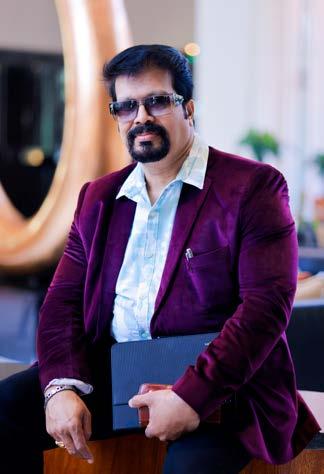

Dr. S. E. Alexander Global Media Chief & MD




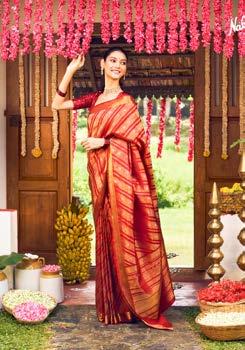

Vbj & Anju Modi -Present trAditionAl sPlendour At joint FAshion show in ChennAi
IDAM by Vivek Karunakaran

FootweAr brAnd ludiC PArtners with ChennAi suPer Kings For iPl 2025-26 seAsons
ViVeKAnAndA house - the iCe PAlACe by the seA
76
RETAIL & SHOPPING OF TAMILNADU
texVAlley’s VAlue MAll, erode
tiMeVAllee oPens lArgest indiAn boutique in ChennAi
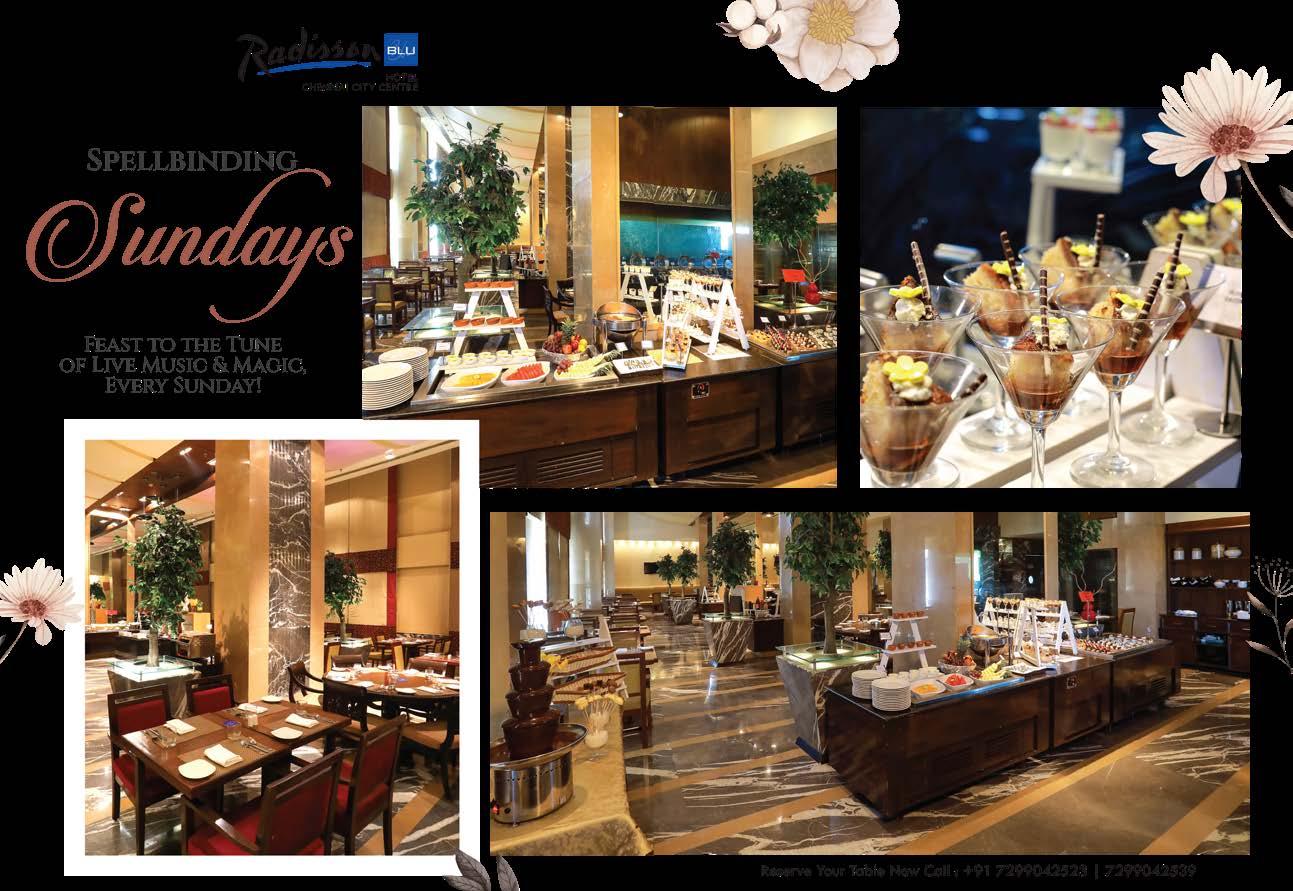
the royAl FlAVours
PAndiA nAdu Cuisines oF tAMil nAdu, FroM the reign oF the PAndyA Kings
ARCHITECTURE
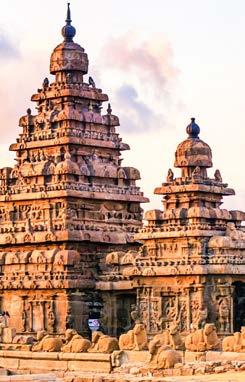
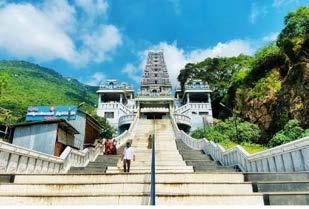
MAruthAMAlAi MArudhAChAlAMurthy teMPle
ArulMigu subrAMAniyA swAMy thiruKoVil, MArudhAMAlAi
HEALTH & FAMILY WELFARE OF TAMILNADU
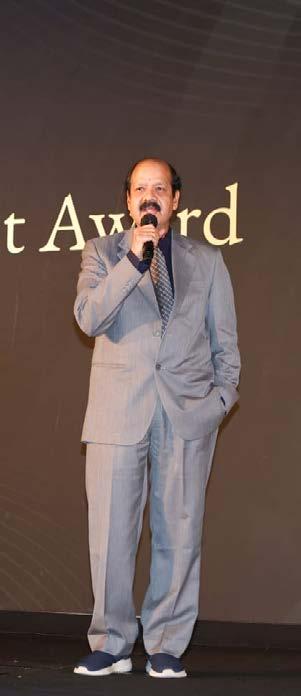
KMCH COO
DR. SIVAKUMARAN JANAKIRRAMAN
HONORED WITH PRESTIGIOUS FLUXX LIFETIME ACHIEVEMENT (GLOBAL) AWARD
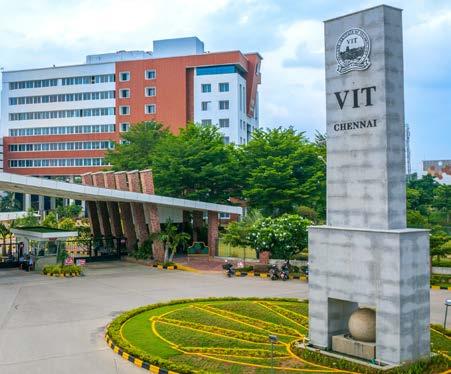
Vellore institute oF teChnology (Vit) A legACy oF exCellenCe in eduCAtion





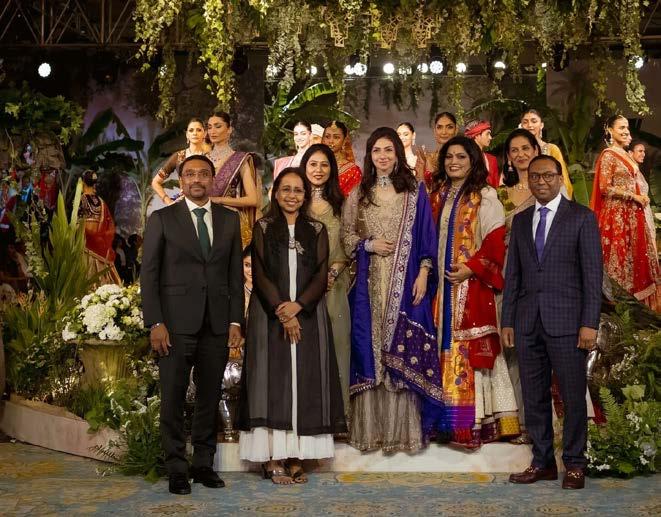
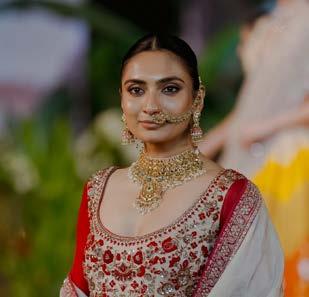
Fine jewellery label Vummidi Bangaru Jewellers (VBJ) and fashion designer Anju Modi held a collaborative fashion show at The Leela Palace in Chennai, showcasing traditional grandeur. The event marked VBJ’s 125th anniversary and was titled ‘An Affair of Glamour and Grandeur.’
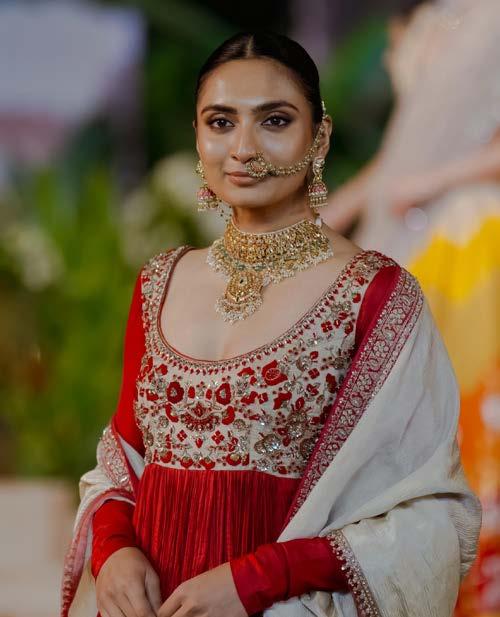

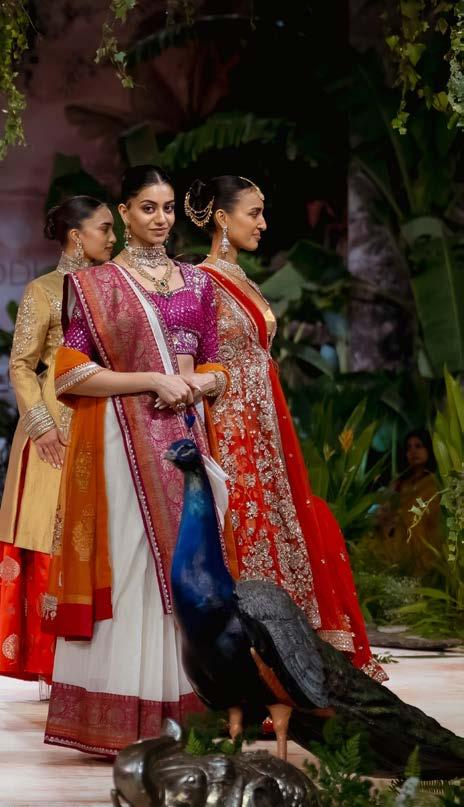
The fashion show presented a fusion of heritage jewellery and couture design, announced VBJ in a press release. The evening opened with a social gathering followed by a dance performance by Padma Bhushan awardee Shobana.Then followed a runway presentation curated with fashion retail platform Evoluzione, featuring layered silhouettes, bridal ensembles, and fine jewellery from VBJ. “At VBJ, every piece we create is an heirloom of emotion, craftsmanship, and history,” said VBJ’s managing partners Amarendran Vummidi and Jithendra Vummidi in a press release. “As we celebrate 125 years, it is only fitting that we honor this journey with a collaboration that reflects India’s eternal spirit. Anju Modi’s revival of our weaving traditions mirrors our passion for preserving and evolving Indian craftsmanship. Tonight is not just about fashion; it’s about storytelling, legacy, and the soul of India.”
The finale saw curators Vimmi, Ranjitha, and Sarika join the VBJ family and eponymous designer Anju Modi on the runway in a tribute to the artisans behind the showcase. VBJ was founded in 1900 and operates two showrooms in Chennai. The brand launched its first international store in Dallas, US in 2023.

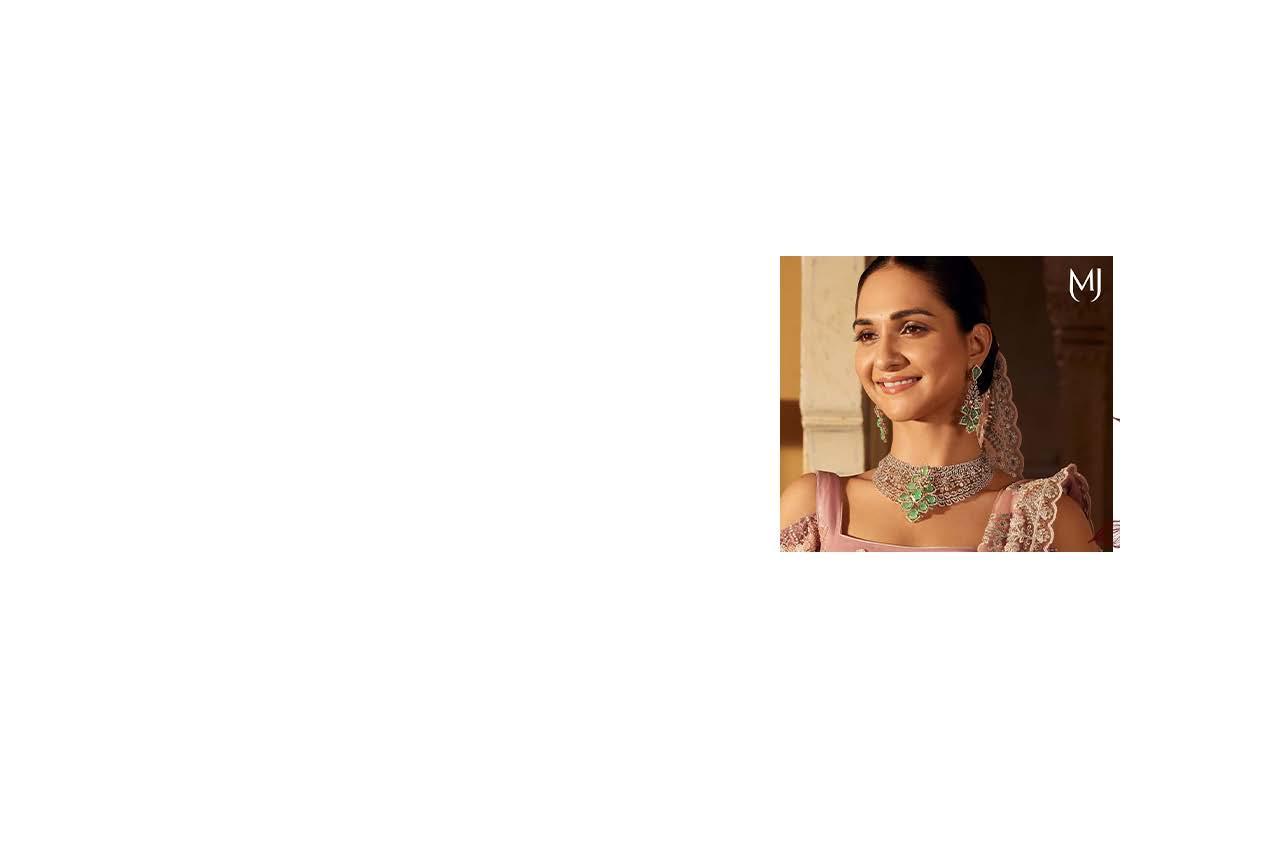
Chennai is at the heart of Vivek Karunakaran’s creative journey, shaping his design language with its deep-rooted history, evolving modernity and cultural duality. With IDAM, his new collection, he continues to draw from the city that embraces the old while thriving in the new. From the smell of jasmine at street corners to the rhythm of Carnatic music spilling out of old houses, his work captures a quiet elegance — a blend of discipline, artistry and unspoken pride.
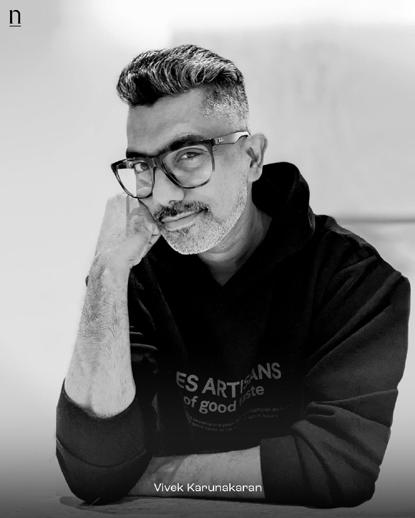

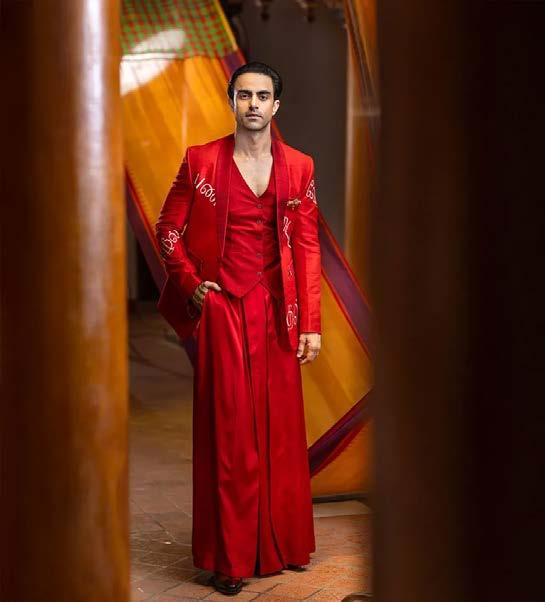
Language defines a place, and for me, Tamil is the heartbeat of Chennai. Its rhythm, its depth, its poetry. Each syllable carries the weight of centuries. Among the greatest literary treasures, the Thirukural stands timeless — a guide to life, morality, and human connection. I was completely enamoured by the concept of Thirukural while creating IDAM. These couplets hold a profound universality — they speak of
ethics, love, duty and wisdom most poetically. For me, bringing them into fashion was about giving visual form to something deeply rooted in our culture, but also timeless in its relevance. It wasn’t about being literal, but about channelling that spirit of clarity, strength and moral grounding into the garments where clothes become the canvas for the storytelling.
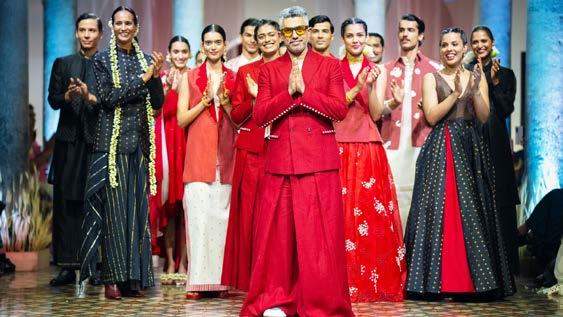


It started from a place of instinct. I was drawn to silhouettes, textures and the transformative power of clothing. Studying at NIFT gave me a framework, but it was the years after — working, observing, learning, creating — that shaped my voice. Over time, I realised I didn’t just want to make clothes. I wanted to tell stories, to reflect who we are and where we come from. The brand has evolved to be more intentional — less about trends and more about cultural storytelling with global relevance.

The jasmine flower or malli poo as it’s fondly called, is more than just a floral motif. It is a flower that transcends generations, woven into the daily lives of people — adorned in hair, offered in temples and sold in fragrant garlands across the streets of Chennai. For me, jasmine is symbolic of quiet strength and fluidity, two qualities that resonate deeply with my design philosophy. In our collection, I’ve translated this into soft, organic drapes that mimic the way jasmine garlands fall,
delicate embroideries that capture its intricate petal formations and textures that reflect its ethereal yet resilient nature.The flower’s duality — fragile yet enduring, simple yet luxurious- is something I explore in my silhouettes as well, balancing structure with movement, tradition with modernity. On a personal level, jasmine is a scent that evokes nostalgia — it reminds me of early morning temple visits with my family and the timeless beauty of Tamil culture.

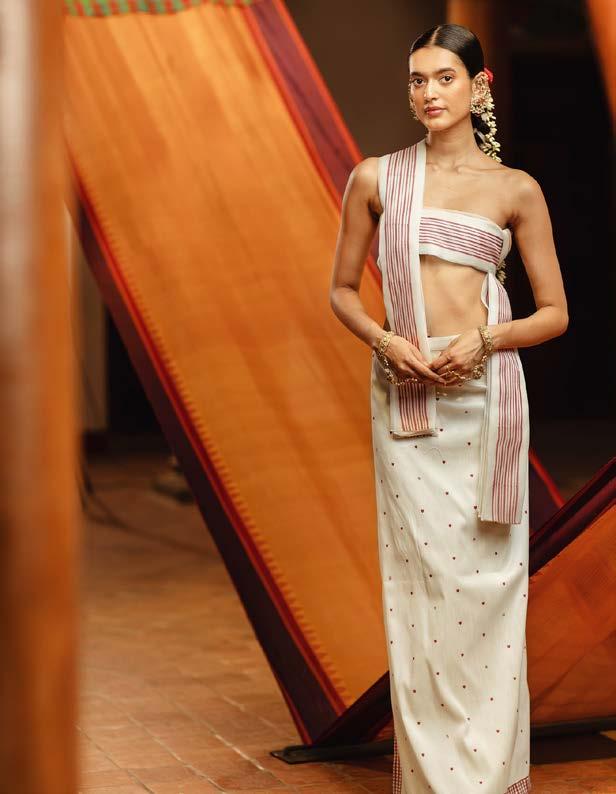
South Indian clothing has often been reduced to a very limited visual vocabulary; either it’s hypertraditional or overly simplified. I truly believe there’s so much more depth here. The veshti, for instance, is not just a garment — it’s a symbol of grace, ease & quiet power. Our textiles, our tailoring traditions, our approach to ornamentation — they all carry a very distinct refinement that hasn’t been fully acknowledged in mainstream fashion. Through my work, I’m not trying to reinvent South Indian fashion, I’m trying to reveal its inherent modernity. By “reimagining” silhouettes, elevating the veshti into contemporary menswear and integrating elements like temple-inspired textures, Tamil script and native flora, I want to show that our aesthetic is not static or regional — it’s global, intentional and deeply relevant.
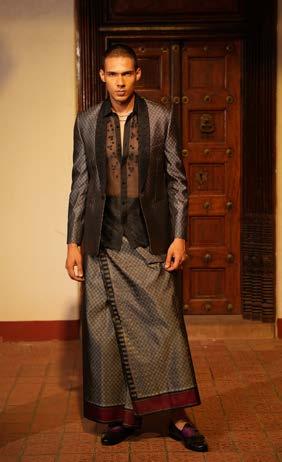
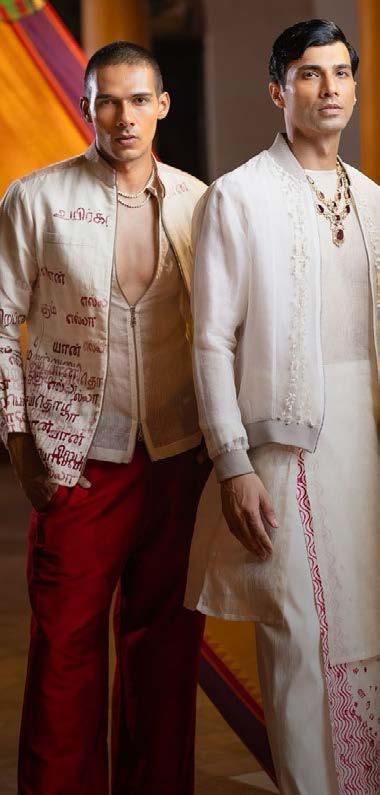
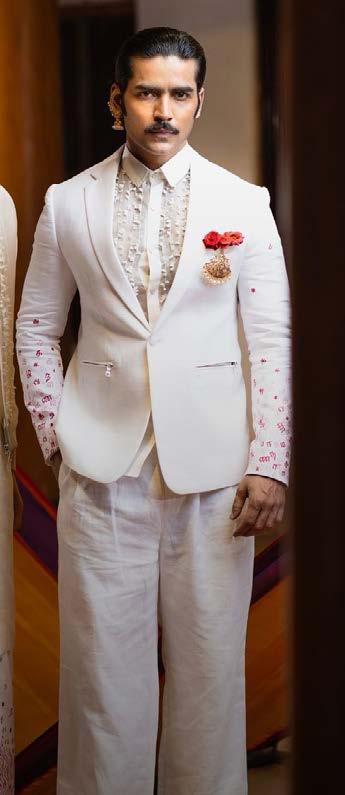
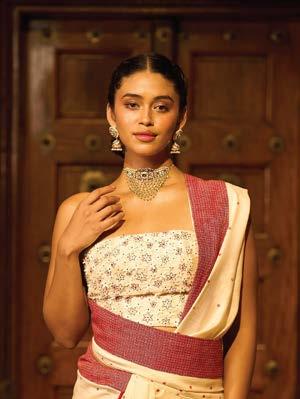
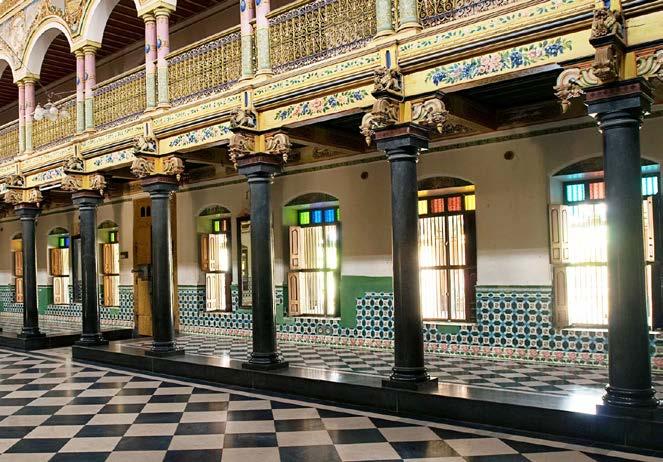
Currently we’re working on a new chapter for the brand - one that continues to explore identity, memory and culture, but through a more immersive lens. I’m particularly excited about an upcoming showcase that will take place in a very special setting — it’s a heritage environment that aligns beautifully with the spirit of the collection.We have been invited to show our IDAM line at the prestigious Chettinad Heritage Festival.The future, for me, is about creating with purpose being rooted yet experimental, intimate yet expansive. It’s about deepening connections with craft, with community and with self.


Ludic, a footwear-first lifestyle brand has collaborated with Indian Premier League team Chennai Super Kings (CSK) as their official footwear partner for the 2025 and 2026 seasons. As part of the collaboration, Ludic has launched an exclusive CSK-inspired footwear and fragrance collection.
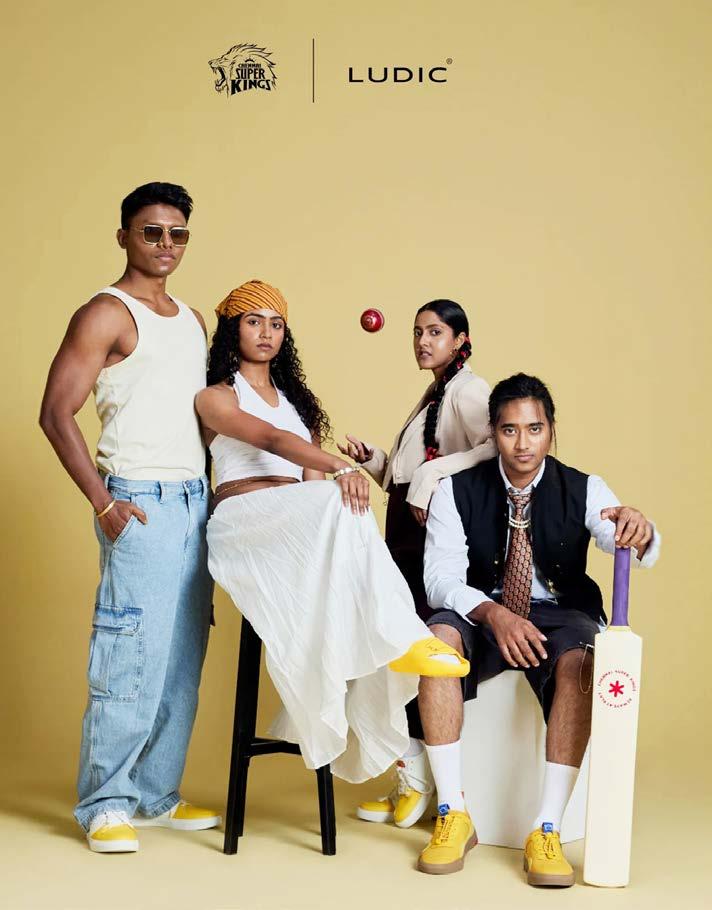



The footwear collection will feature sneakers, sliders while the fragrance collection includes two perfumes for men and women. With this partnership, the brand is looking to expand its presence across the country by tapping into CSK’s extensive fanbase. It plans to set up exclusive kiosks at all CSK home games at Chepauk Stadium for boost fan engagement. Commenting on the partnership, Ishit Jethwa, founder of Ludic in a statement said, “It’s the first time that CSK has entered into an official footwear partnership, and we’re happy that it’s with Ludic. CSK is an iconic franchise, making this collaboration a major step forward in expanding the brand. Our larger vision is to become a household name for aspirational Indians, and this partnership gives us the necessary national visibility.” “Moreover, with multiple drops planned and series of engaging activities across online and offline mediums throughout the year, we’ve ensured there is plenty for the fandom to be excited about this season,” he added. The CSK collection is available on Ludic’s website, e-commerce platforms, and CSK’s digital store.



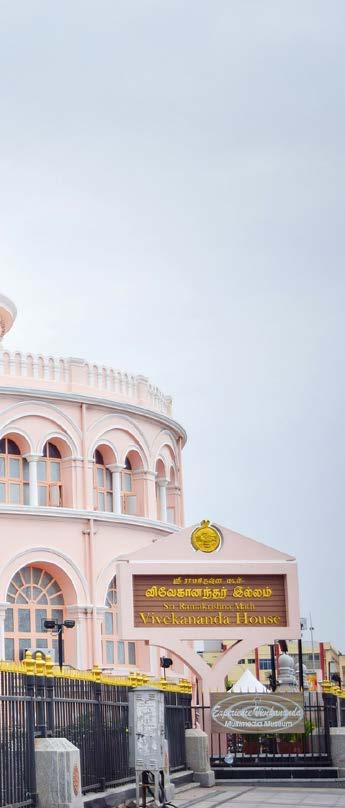
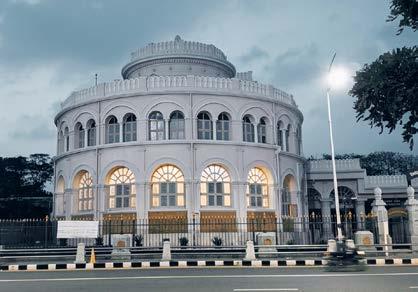
On the scenic Marina Beach in Chennai stands a historic building that has seen many chapters of change. This building was once called the Ice House and is now known as Vivekananda House. Its journey from being a cold storage unit for ice to becoming a spiritual and cultural center is remarkable. Today, Vivekananda House is an important landmark not just for Chennai but for all of Tamil Nadu. It carries stories of trade, colonial history, architecture, and above all, the inspiring presence of Swami Vivekananda. The building continues to attract visitors who come to see its unique design, learn about its past, and understand the message of Vivekananda. To truly appreciate its significance, one must explore the many stages of its life—from its origins during British rule to its current role as a museum and cultural center.
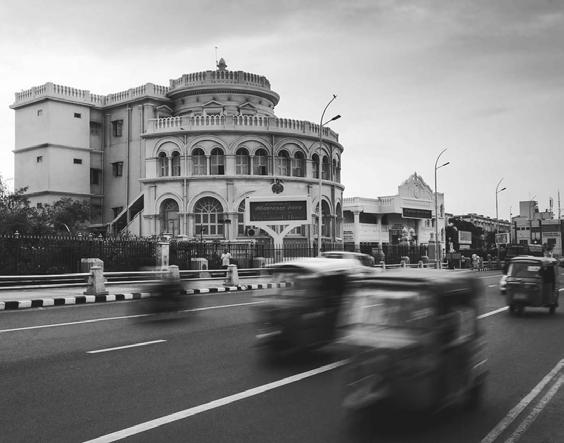
The Ice House’s story begins not in Madras (as Chennai was called) but in Boston. In the early nineteenth century an American entrepreneur, Frederic Tudor, built a business model out of frozen water.Tudor harvested ice from New England ponds and lakes, packed it in sawdust, shipped it in bulk to tropical ports, and sold it to a market that lacked refrigeration. The logistics were imperfect — lots of melting took place en route — but the demand among colonial officials, merchant households and military establishments made it profitable enough to spawn a small international trade and a handful of purpose-built storage buildings called “ice houses.” One of these was constructed for Tudor in the Madras area in the 1840s: the building that would later be called the Ice House.
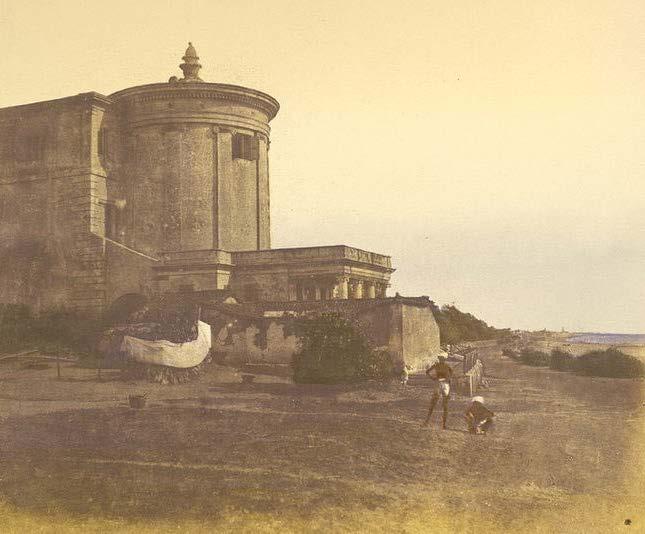
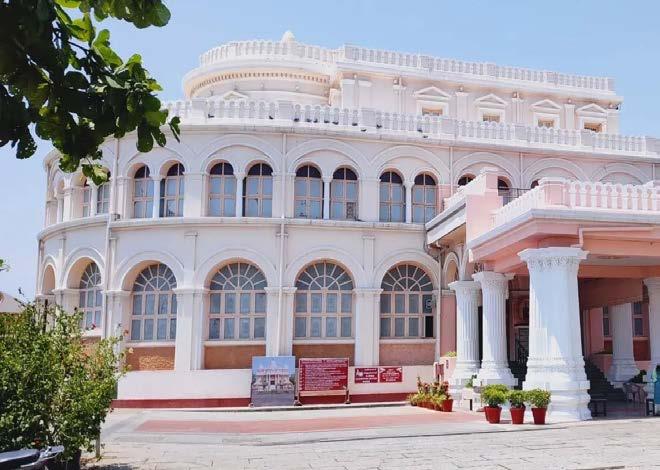
What makes that fact delightful is the visual dissonance: a grand, semi-circular Victorian structure with arched colonnades and a low central dome, set flush against a tropical seafront where the rhythms of the shore and the rituals of daily life are timelessly local. The idea that the structure was conceived to keep ices blocks cold in a humid coastline — built using techniques that avoided timber (which would rot) and that borrowed Syrian dome techniques to span spaces without wood — speaks both to Victorian technological imagination and to colonial circulation of building knowledge. The building’s shell, with a rhythm of arched fenestration, a string-course detail and a soft pink façade, is still instantly recognisable to generations of Chennai residents.
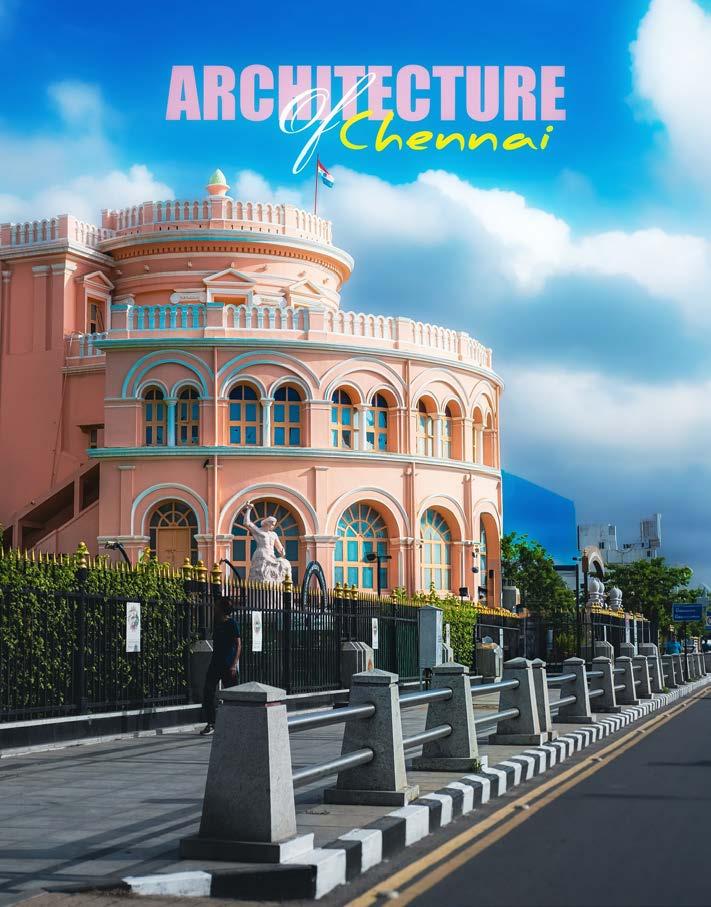
One of the most striking features of the Ice House is its design. The building has a round, castle-like structure with thick walls that helped in insulation when it stored ice.The architecture shows European influence, as it was built during British rule. Its circular plan and high ceilings were not common in traditional Indian architecture at the time. The structure has large windows and verandas that open towards the sea, allowing fresh air and natural light. These features later made it suitable for residential use. The building is made of brick and lime mortar, strong enough to survive the coastal weather of Chennai. Even today, the architecture stands out. While modern buildings surround it, the Vivekananda House maintains its unique look, making it an eye-catching landmark on Marina Beach.

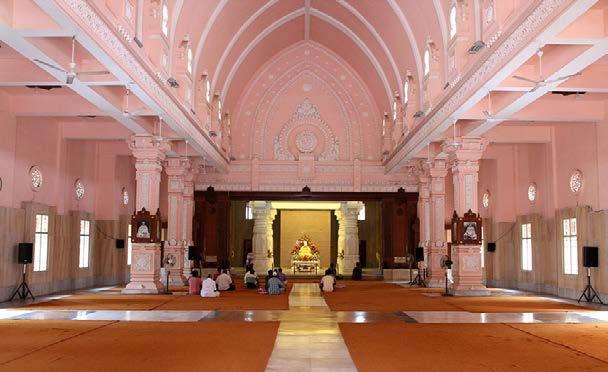
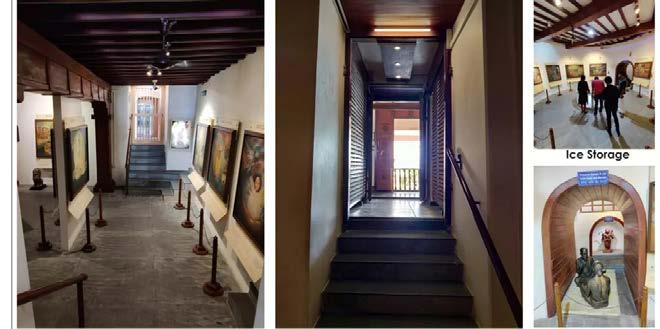
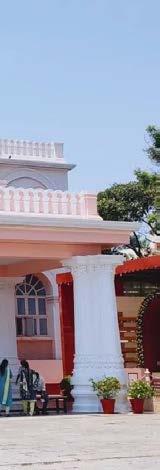
After the ice business declined, the building was bought by an advocate named Biligiri Iyengar. He renovated it and turned it into a residence. Later, it was rented out to an Irishman named Frederick Tudor, and after that, to other individuals. Eventually, it came under the ownership of lawyer and philanthropist Biligiri Iyengar again. The house was renamed Castle Kernan after Justice Kernan of the Madras High Court, a friend of Iyengar. During this period, the building was no longer just a storage unit but a lively home and social gathering place. It hosted parties, cultural events, and meetings of important people in the city. The transition from Ice House to Castle Kernan marked an important shift. It showed how a building created for a practical purpose could adapt to new uses and remain relevant.
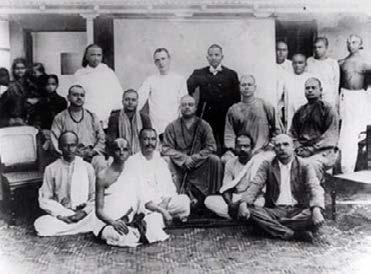
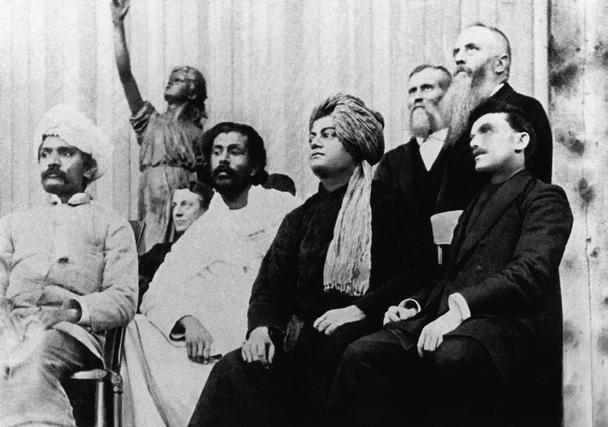
The most memorable chapter in the building’s history began in 1897. After his historic speech at the World’s Parliament of Religions in Chicago in 1893, Swami Vivekananda returned to India. On his tour, he visited Madras, where he was welcomed with great respect. During his stay in Madras, he lived in Castle Kernan for about nine days, from February 6 to 14, 1897. The building became his temporary residence, and it was here that he delivered many inspiring talks to his disciples and followers. People gathered in large numbers to listen to him, and his words left a deep impact on the city’s youth. It was within these walls that Vivekananda spoke about nationalism, selfconfidence, and the need to build a strong India. His stay gave the building a new identity that would remain forever linked to his name.
After Swami Vivekananda’s visit, the house gained spiritual importance. Later, in 1906, the building was rented by the Ramakrishna Math to establish a hostel and school for young boys. The Math worked towards spreading education and spiritual values, continuing the vision of Vivekananda. In the following decades, the building saw ups and downs. At one stage, it was used by the government, and later, it faced neglect. But because of its historical link with Vivekananda, efforts were made to preserve it. In 1963, on the centenary of Vivekananda’s birth, the building was renamed Vivekananda House. From then on, it became a memorial and a place of learning. Its purpose was no longer just historical but also educational and cultural.
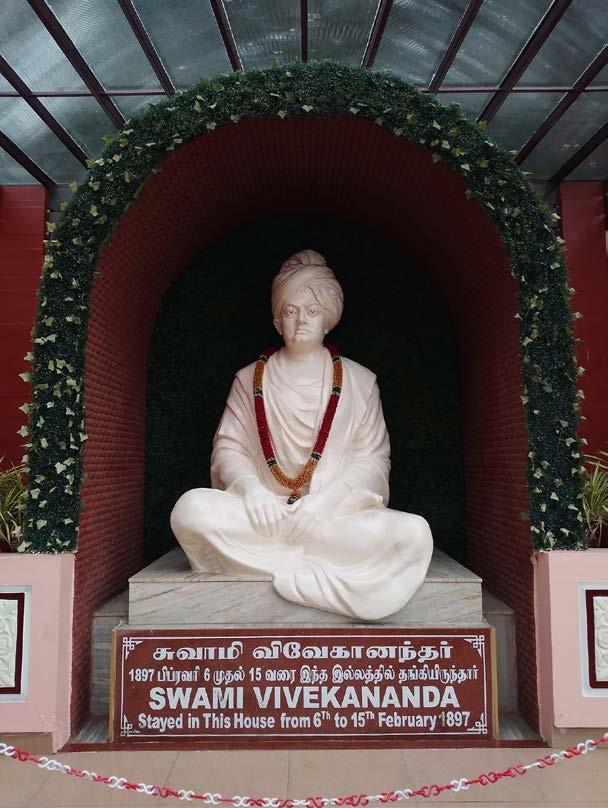
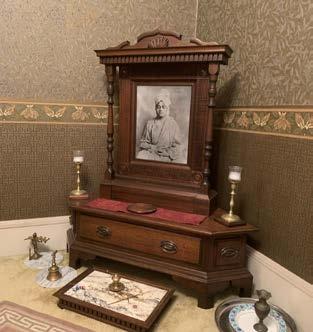
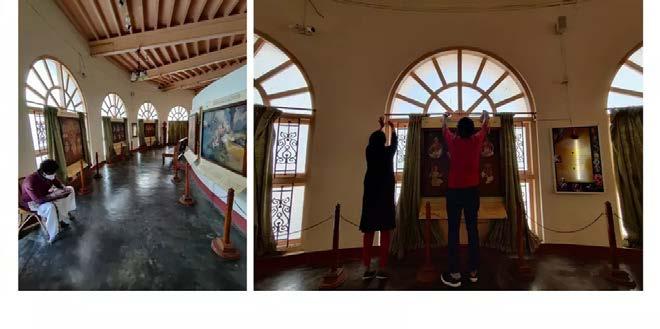
Today, Vivekananda House functions as a museum dedicated to the life and teachings of Swami Vivekananda. Inside, visitors can see exhibits that tell the story of his childhood, his travels, and his inspiring speech in Chicago. There are photographs, writings, and even a meditation room where one can experience peace and reflection. The museum also uses modern technology. Audio-visual presentations, 3D films, and interactive displays bring the story of Vivekananda closer to the younger generation. His message of strength, service, and spirituality is presented in a way that appeals to all visitors. Apart from exhibits, the Vivekananda House hosts cultural programs, lectures, and workshops. These events keep the building active as a center of knowledge and values. It has become a bridge between history and the present.
For many people, Vivekananda House is more than just a museum. It is a place of inspiration. Students visit to learn about discipline and hard work. Devotees come to connect with Vivekananda’s spiritual vision. Tourists arrive to see the architecture and history. The building also plays a role in promoting Indian culture. Through events and workshops, it teaches yoga, meditation, and values of service to society. This makes it a living institution, not just a preserved monument. Standing on the Marina, it continues to remind the city of its link with one of India’s greatest spiritual leaders.
Like many old buildings, Vivekananda House faced challenges of weather, neglect, and urban growth. Its location near the sea made it vulnerable to salt and humidity, which caused damage to its walls and structure. The government and Ramakrishna Math have taken steps to preserve it. Renovations have been carried out to maintain its strength while keeping its original design. Conservationists have worked to ensure that the historical value is not lost. The preservation of Vivekananda House shows the importance of protecting heritage sites. It is not just about saving bricks and mortar, but about keeping alive the stories and values they represent.
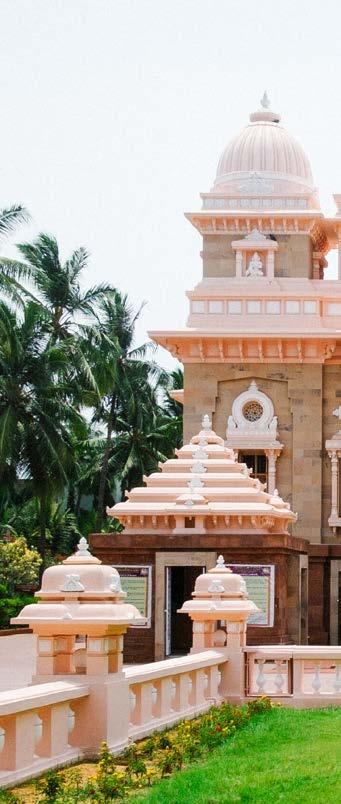
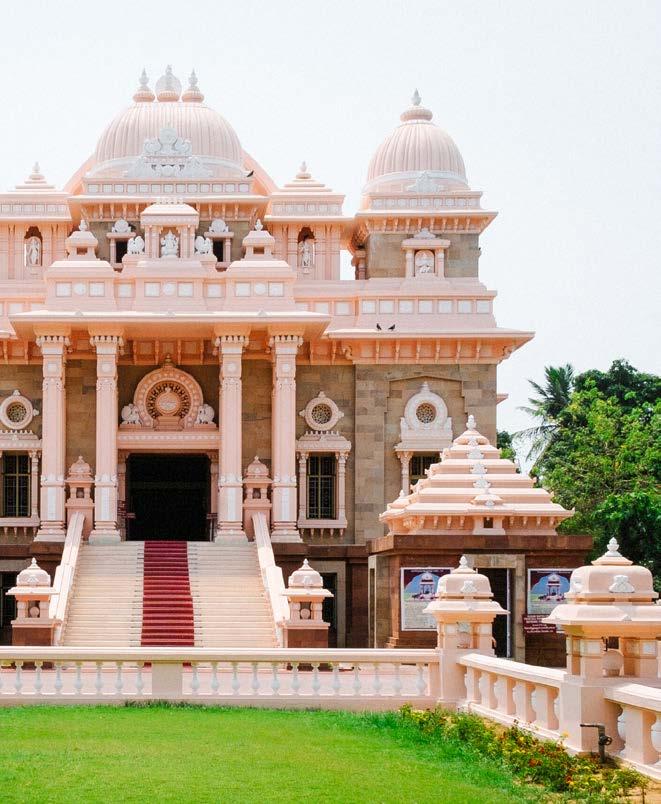
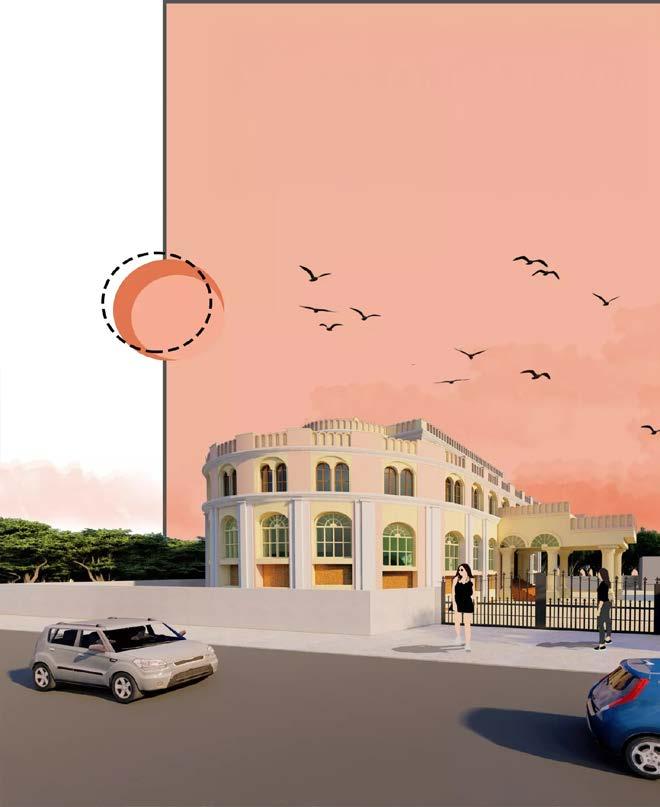

In today’s fast-changing world, Vivekananda House continues to be meaningful. Young people visit to find motivation in Vivekananda’s teachings. His message of self-reliance, service, and harmony between cultures is still relevant. The building also connects past and present. From storing ice in colonial times to storing values and inspiration today, it has transformed completely. Its journey shows how spaces can evolve and gain new purposes over time.
As Chennai grows into a modern city, Vivekananda House remains a reminder of history, spirituality, and resilience.
• Location: Marina Beach Road, Triplicane, Chennai, Tamil Nadu – right on the seafront.
• Timings: Open daily from 10:00 AM to 12:30 PM and 3:00 PM to 7:15 PM.
• Weekly Holiday: Closed on Monday.
By Bus: Well-connected by city buses to Marina Beach / Triplicane.
By Train: Nearest suburban station is Chepauk (around 1 km).
By Metro: Nearest metro station is Government Estate (about 3 km).
By Air: Chennai International Airport is around 18 km away.
By Auto/Taxi: Easily accessible from any part of Chennai.
Nearby Attractions: Marina Beach, Santhome Cathedral Basilica, Kapaleeshwarar Temple, Fort St. George, Government Museum.
The story of the Ice House, now Vivekananda House, is a fascinating one. It began as a colonial cold storage, became a lively residence, and finally turned into a spiritual and cultural landmark. Each phase added to its character. Today, as visitors walk through its halls, they are not just seeing old walls. They are walking through history—touching upon trade, colonialism, architecture, and above all, the inspiring presence of Swami Vivekananda.
The building stands as proof that places can outlive their original purposes and continue to serve society in new ways. The Ice House of the past is now the Vivekananda House of the present—a place where history and inspiration meet on the shores of Chennai.


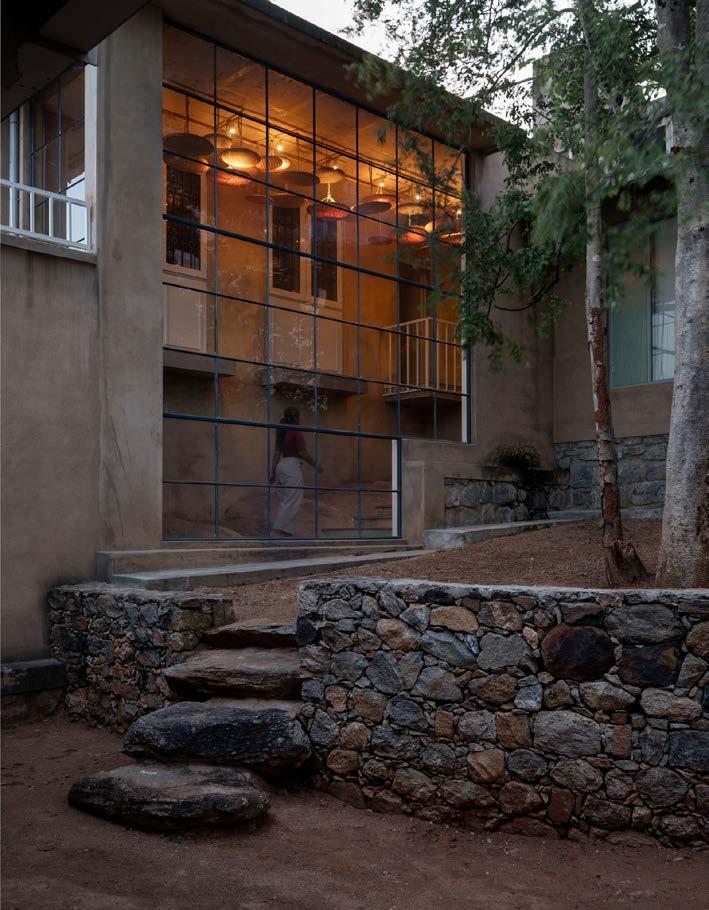
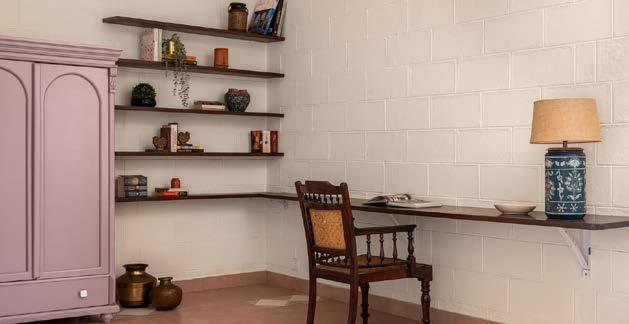
Set in a small hilly town, Denkanikottai, Tamil Nadu, this 3,000-square-foot vacation home with its gently sloped roofs, cement plastered walls, and expansive glazing harmonizes with its surrounding landscape. The restrained material palette of earthy-brown bricks allows it to blend effortlessly with the mature trees on the site. “We designed the space for a middle-aged couple with young adult children who desired a home that bridged generations and celebrated vibrancy, authenticity and connection to nature,” House of Ruya principal Aishwarya Govind says.
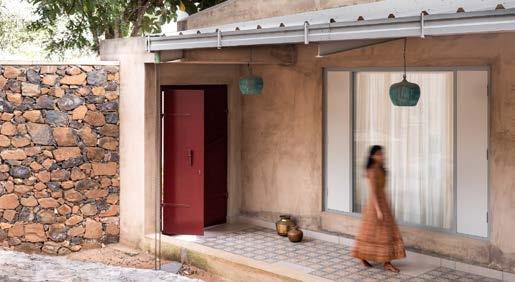

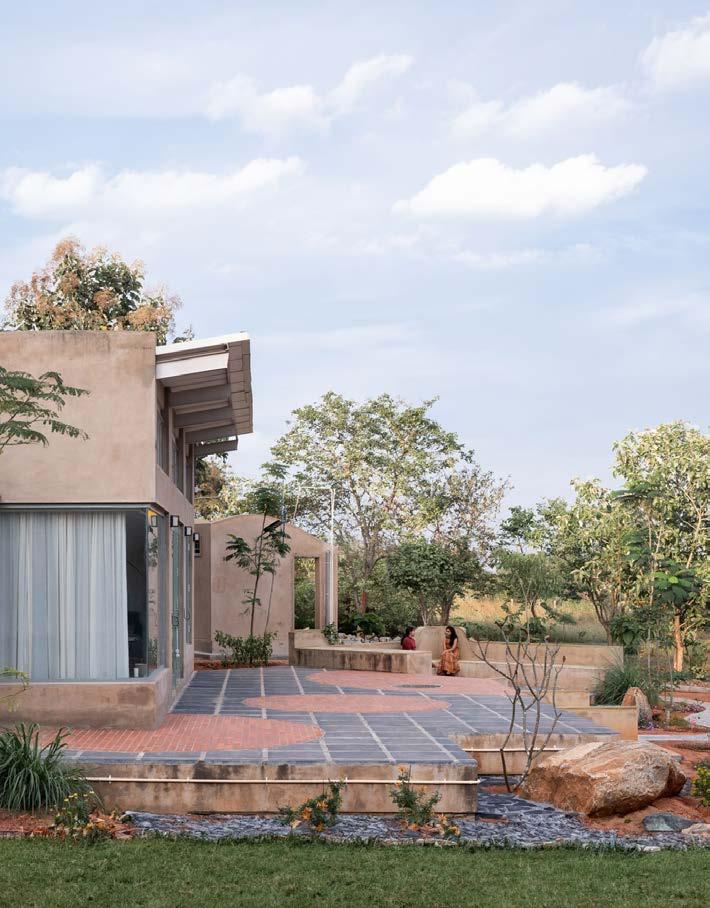
It’s an airy, open site that’s located on a steep slope, whose Eastern windows look out at the hilly terrain of Denkanikiottai, which gives it a bit of drama,” she adds. From the moment one steps through the wine-red vintage panelled door sourced from Dhakshini Antiques, the vacation home unfolds as a tapestry of earthy textures and bold contrasts. Inside, a long passageway adorned with patterned tiles leads to the heart of the home—a spacious living and dining area bathed in natural light. Large glass windows and doors blur the boundaries between interior and exterior, inviting the lush landscape into the living space. Sloped ceilings and clerestory windows amplify the sense of volume and openness.
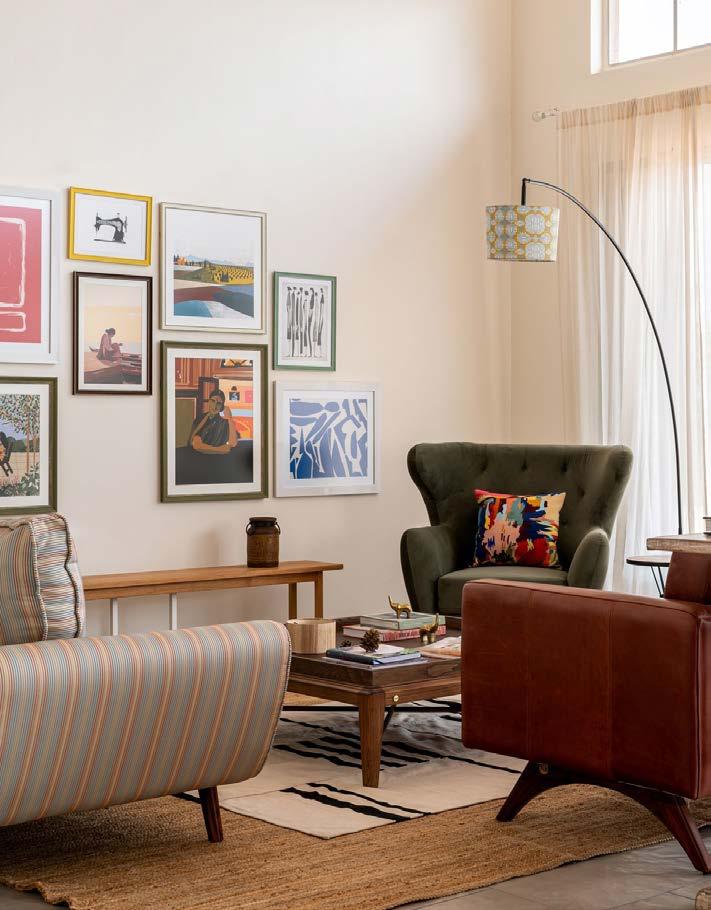

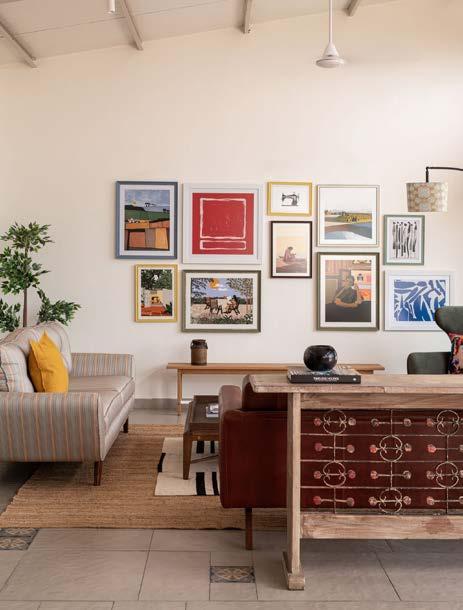
The interiors were approached in a way that positions the natural environment as the focal point. Each space shares a common language of earthy colours, sisal accents, and antique furniture collected by the family over the years. Designed to hang out, lounge or congregate, the cosy living space has comfortable sofas and a large coffee table ideal for board game evenings. Eliminating a television was a no-brainer because we wanted the hillside views and peacock sightings to remain front and centre,” she points out.
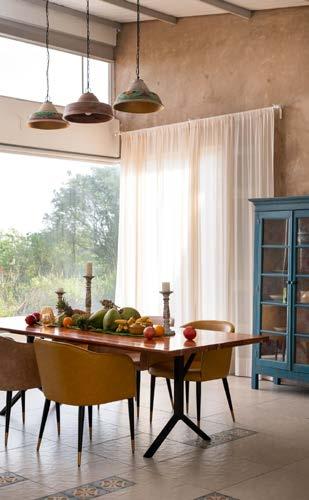
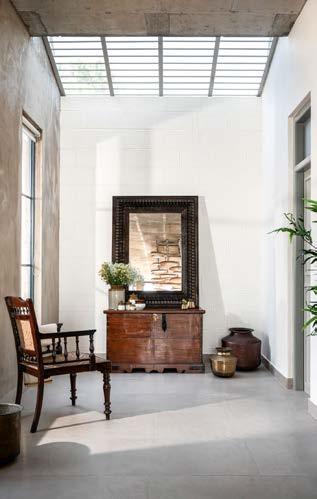

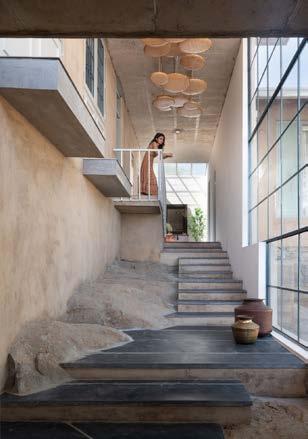
On rare occasions, when the family wants to watch a movie, the wall doubles up as a projector. The dining and living are visually connected, separated only by a vintage console contributing to the lived-in, layered aesthetic. The dining space exudes simplicity and functionality, anchored by a live-edge table, leather chairs, and handpainted pendants. A Kadappa-clad stairwell gracefully ascended to the upper level, leading to three bedrooms on the upper floor. Boulders from the site’s excavation punctuate the space, emphasising the landscape as a key part of the overall experience.
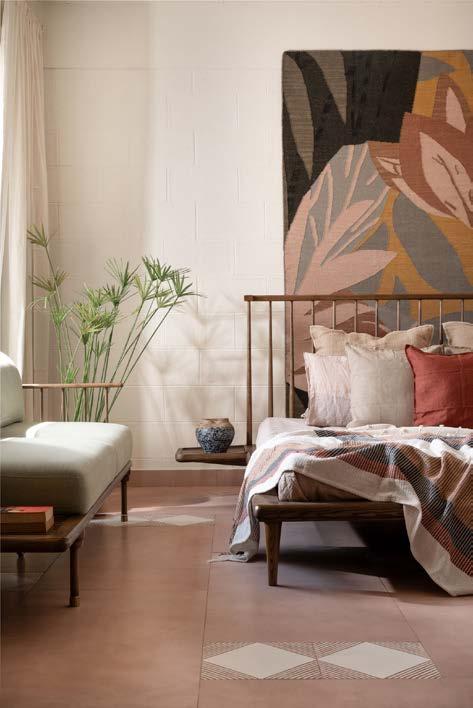
The refined rustic character of the bedrooms is brought forth into the materiality. Unplastered cement block walls and patterned dusty rose flooring cocoon the occupants of the master bedroom in its soft, feminine embrace. A bold botanical rug and an antique cabinet add texture and character to the process. The children’s bedrooms take on their individual personalities. Black textured flooring, neutral tones, and lone pops of bright colour define the son’s room. The daughter’s room, in contrast, has colourful patterned flooring that extends onto the furniture. Artisanal decor, bamboo furniture, and vintage lighting contribute to the eclectic aesthetic.



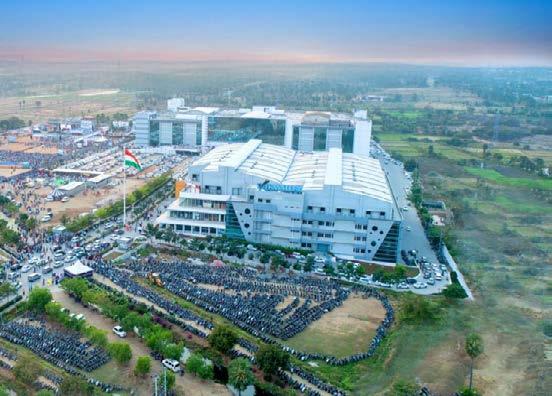
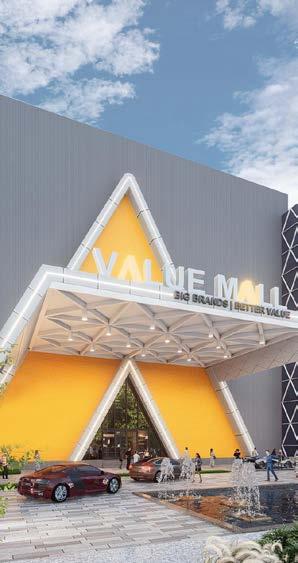
Erode, India: Texvalley, India’s largest B2B and B2C marketplace, is set to redefine the shopping landscape in South India. Located on the Bengaluru – Cochin National Highway (NH-544) in Chithode, Erode, Texvalley spans an impressive 20,00,000 sq. ft., making it the ultimate retail and business hub for manufacturers, traders, and shoppers alike. The launch of the South India’s Largest Destination Mall happened in June 2025. The grand opening event will feature an exciting array of events, entertainment, and shopping experiences, catering to visitors from across Tamil Nadu and neighbouring states.
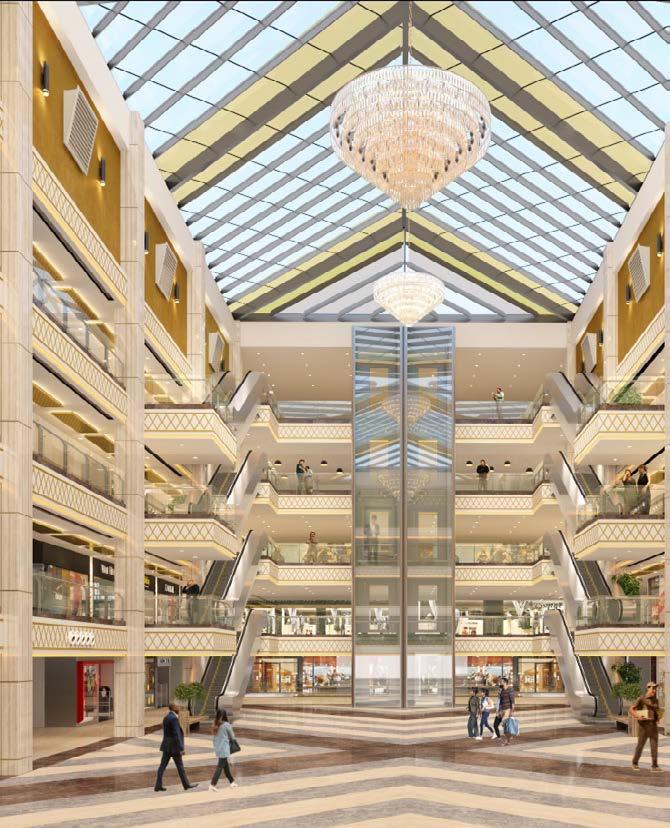


Texvalley is a unique shopping destination that integrates retail brands, wholesale trade, and highend retail under one roof. Texvalley comprises of multiple sections, including:
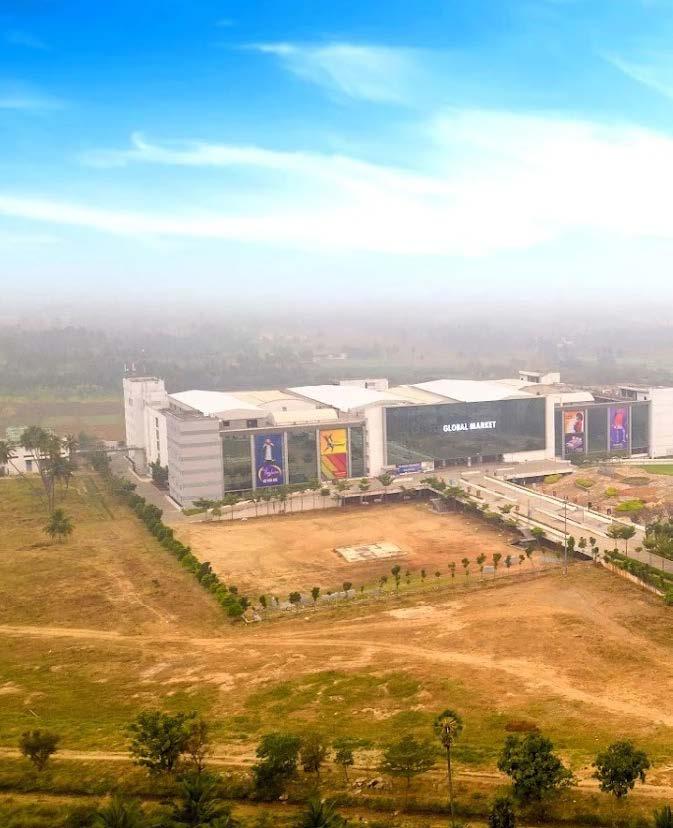
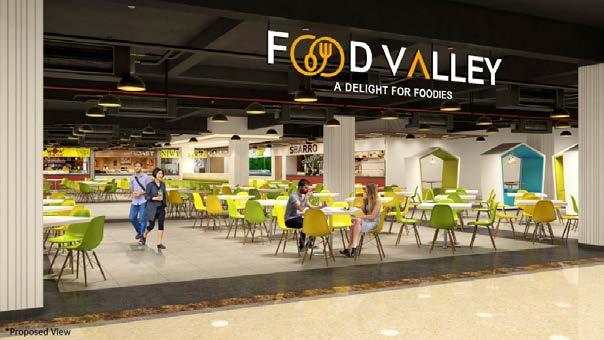
Value Mall: South India’s first and largest outlet mall spanning over 5,00,000 sq. ft, It has 100+ brands and an expansive food court with 600+ seats. Global Market: A fully operational B2B hub that connects manufacturers and retailers from across the country. Big Box Bazaar: A concept to house large format specialty retail stores
Food Hub: A stop for all the travellers on the highway with McDonald’s operational and KFC under construction along with over 10+ F&B Brands.
Texvalley will cater to over 60 lakh consumers within a radius of 60 kms, as this would the first of its kind concept, in this part of the country. For an unparalleled entertainment experience, Texvalley will feature a world-class multiplex with 6 screens of EPIQ technology and a seating capacity of 1,400+, a Hypermarket spread across 25,000 sq.ft, An indoor Family Entertainment
Center of 18,000 sq.ft. and an outdoor gaming arena with Turfs and pickleball of over 25,000 sq.ft. Shoppers can also indulge in a diverse culinary experience with leading F&B brands such as McDonald’s, KFC, Wow Momos, Wow China, Chicking, and more. Texvalley will house some of the best known international and national fashion brands in the country. Texvalley is set to create over 2500 direct and indirect jobs, boosting the region’s economic growth and will position Erode as a major retail and trade destination. Additionally, the mall is committed to hosting cultural events and initiatives that promote local talent and heritage. With over 25,000 cars plying on this highway, Texvalley will serve as a perfect “stop-over” for them and also to the primary catchment population. Raajashekar, Managing Director of Texvalley, states, “Our vision is to transform Texvalley into a world-class marketplace that serves both B2B and B2C customers. With our strategic location and diverse retail offerings, Texvalley will cater to not just Erode but also to the entire Kongu region including Tirupur, Salem, Karur and Coimbatore.”
WBeyond Squarefeet, India’s leading shopping mall specialist, has played a pivotal role in Re-orienting, Marketing & Leasing and Managing Texvalley. Susil S Dungarwal, Chief Mall Mechanic, Beyond Squarefeet adds, “Texvalley is more than just a shopping destination—it’s a commercial powerhouse that will drive retail growth in South India. Our innovative approach to zoning and tenant mix ensures a dynamic and engaging experience for all visitors.” With its grand opening, Texvalley is poised to become the ultimate shopping and trade hub in South India, attracting businesses, shoppers, and tourists alike. The people of Erode and beyond can look forward to an unparalleled shopping, dining, and entertainment experience at Texvalley. Texvalley is owned by Erode Textile Mall ltd., a special purpose vehicle promoted by two prominent business groups: Lotus group & URC group, a leading infrastructure company in South India.
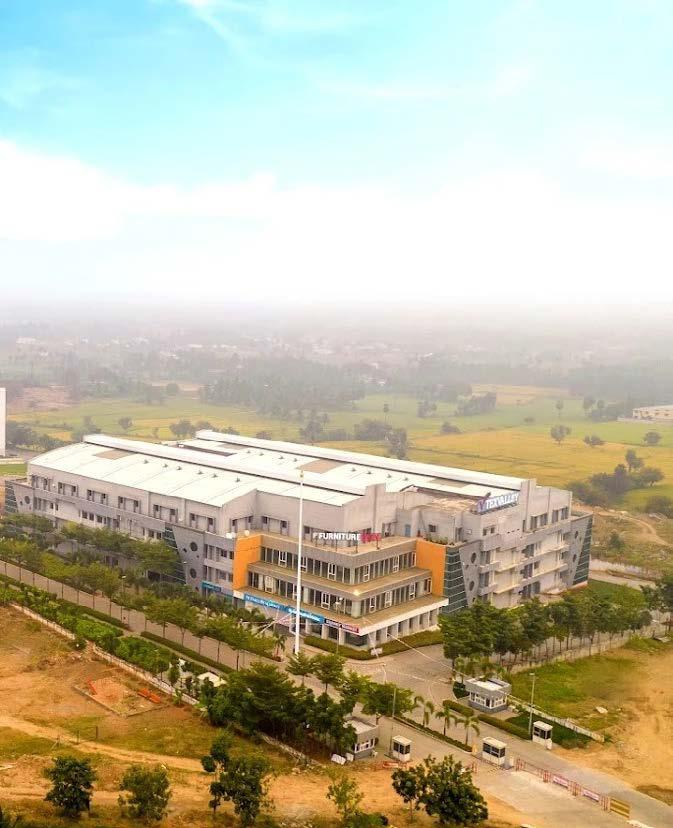
While the B2B segment has been operational since 2015, the launch of the new “Value Mall” to cater to the B2C segment, will drive consumers from far and near. About Beyond Squarefeet: For over 15 years, Beyond Squarefeet has been recognised as “Shopping Mall Specialists”, as they handhold shopping mall developers and provide services including, but not limited to designing, marketing, leasing, and managing shopping malls across India, Iran, Nepal, Nigeria, Oman and Qatar. Beyond Squarefeet has worked with over 88 malls spread across more than 40 million Sq.ft. Beyond Squarefeet is a single largest shopping mall advisory and shopping mall management company in India. It has hand-held many large shopping mall developers such as LULU Group, DLF Group, Tata Group, Saravana group, Gokulam group, Omaxe Group, Supertech Group, Malabar Group, IndianOil, etc.


Swiss luxury watch retailer
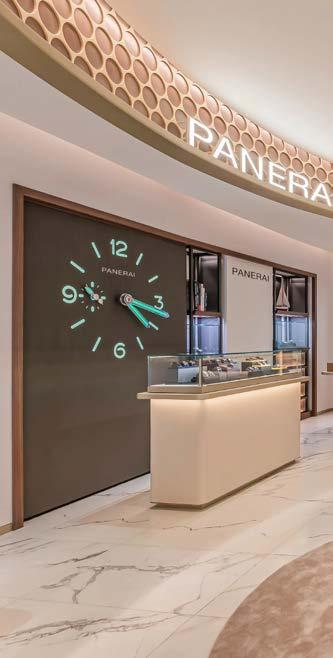
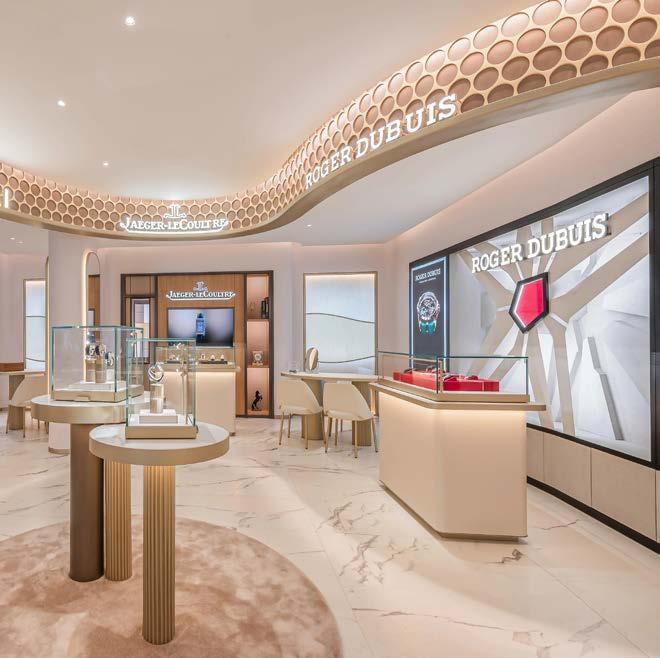
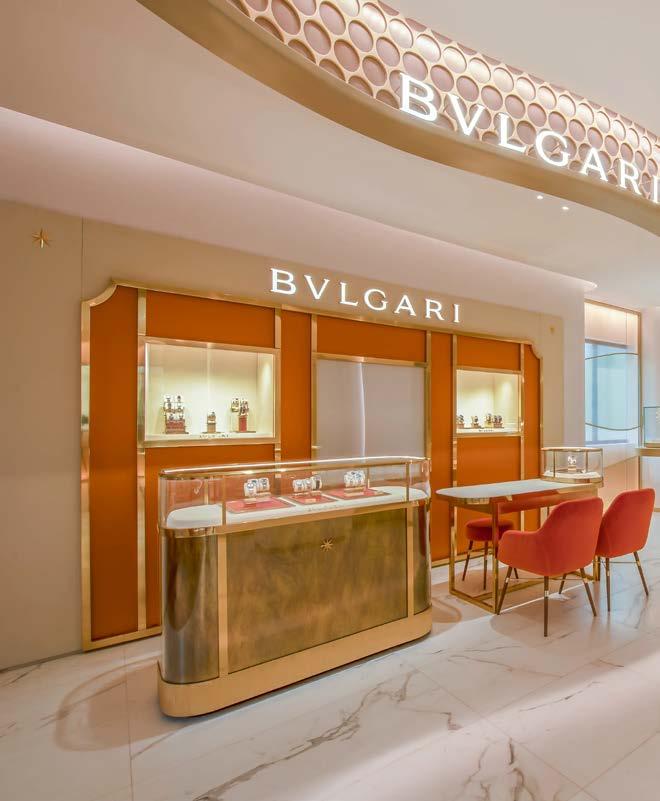
TimeVallée has expanded its India operations with a third boutique opening in Chennai, marking continued growth since entering the market in March 2024. The retailer operates through a partnership with local distributor Art of Time across multiple Indian cities. How do you make the experience of buying a luxury watch, an immersive and memorable one? Through its third boutique in India and first in Chennai in collaboration with Art of Time, Swiss luxury watch multi-brand retail outlet TimeVallée aims to do just that. At Chamiers Road, spread over three levels, the boutique houses eight brands – Baume & Mercier, Bulgari, Cartier, IWC Schaffhausen, Jaeger-LeCoultre, Panerai, Piaget, and Roger Dubuis.



“Purchasing a watch is a big commitment, and people often want to celebrate rewarding themselves as well as getting something that they can pass on to the next generation. We want to deliver emotion through this journey, and this is how our stores are conceptualised as well,” says Hélène Maslin, deputy CEO, TimeVallée.
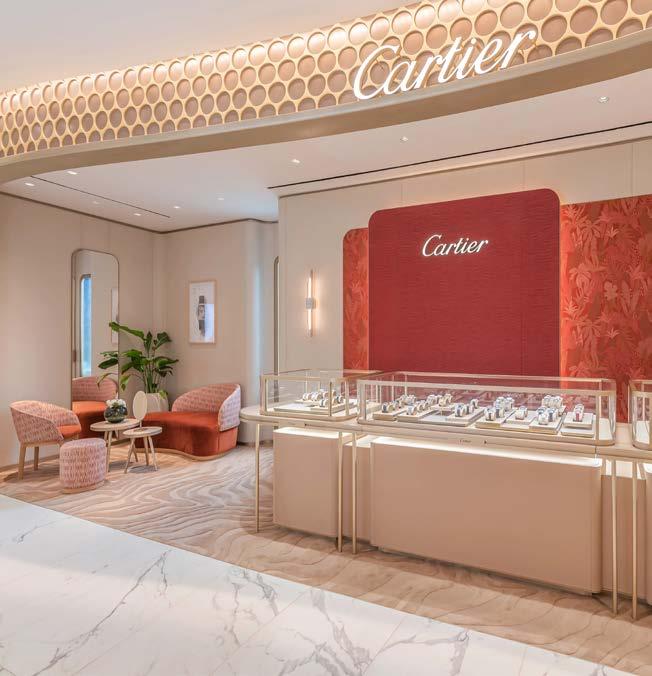
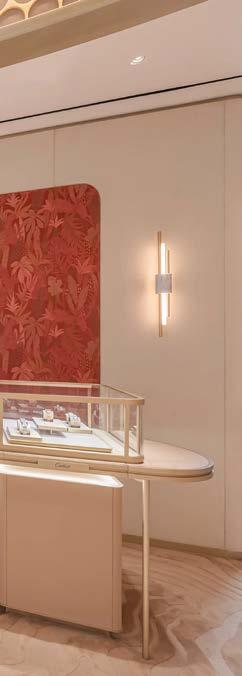

At the Chennai outlet, customers are welcomed on the first level and then go on to the second level to see all the eight watch maisons on display. “We do not want this experience to feel intimidating. Every brand is properly showcased so that the customer can know more about the history and DNA of the brand,” she says.The third level has a Time Cafe which Hélène says is instrumental in rounding off the purchasing experience for the customers as a memorable one. While TimeVallée’s first luxury watch boutique in India opened last year in Mumbai, they have since launched a boutique in Bengaluru as well.“Indian customers are increasingly willing to buy watches and we can see a good demand. Since they largely buy abroad, the idea was to be a part of this journey closer home,” she adds.



A fourth boutique in India will open in Hyderabad next year, and commenting on their expansion plans, Helene says she wants it to be sustainable, exclusive, and select. For Bharat Kapoor and Gaurav Bhatia, directors of Art of Time, which retails luxury watches across the country, Chennai has always been on the radar. “As far as limited editions go, Chennai is a new market
for us but we are excited to see where this takes us. In Mumbai for instance, we have done three different limited editions which includes a Lord Ganesha edition with Roger Dubuis and a Panerai edition with a Hindi calendar. We would like to bring limited editions like these to Chennai as well, depending on how the market responds,” says Gaurav.


India has also seen a steady increase in awareness with regard to luxury watches, its history and heritage, and how coveted pieces are spotted on celebrities, discussed and dissected on social media. “In the last 10 years, there has been a massive shift. We have seen an increase in the number of young professionals that visit our stores and have become clients over time. For women as well. There has been a significant shift from jewellery to watches as a big purchase and this is another big evolution in our client base,” Bharat explains.
In the coming months, the space, Bharat and Gaurav say, will play host to interesting events for customers and Chennai’s thriving community of watch enthusiasts. “We have hosted watch-making workshops for small groups where participants get to work on movements guided by a watchmaker who comes in from another country, and are given a certificate at the end of the experience. Looking beyond experiences with watches, we are also looking at fun engagements with supercars, or even restaurant popups with the community here,” Gaurav adds.
The Chennai opening demonstrates TimeVallée’s accelerated expansion strategy within India’s luxury retail market, establishing multiple locations within 18 months of initial market entry.

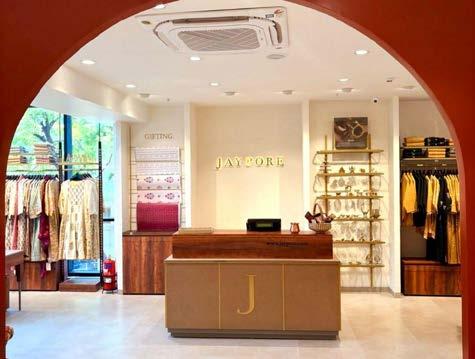
Jaypore, the artisanal lifestyle brand under Aditya Birla Fashion and Retail Ltd. (ABFRL), has launched its first exclusive brand outlet in Tamil Nadu with a new store in Chennai. This move marks a significant expansion of the brand’s offline retail network and reinforces its focus on strengthening omnichannel operations across India. The Chennai outlet spans over 2,200 sq. ft. and serves as a dedicated retail space for Jaypore’s handcrafted collections. The store offers a curated range of traditional Indian crafts, including tribal silver, Kundan, Dabu, block printing, Chikankari, and Jamdani. This launch aligns with the brand’s ongoing strategy to make Indian artisanal products more accessible to modern retail consumers.
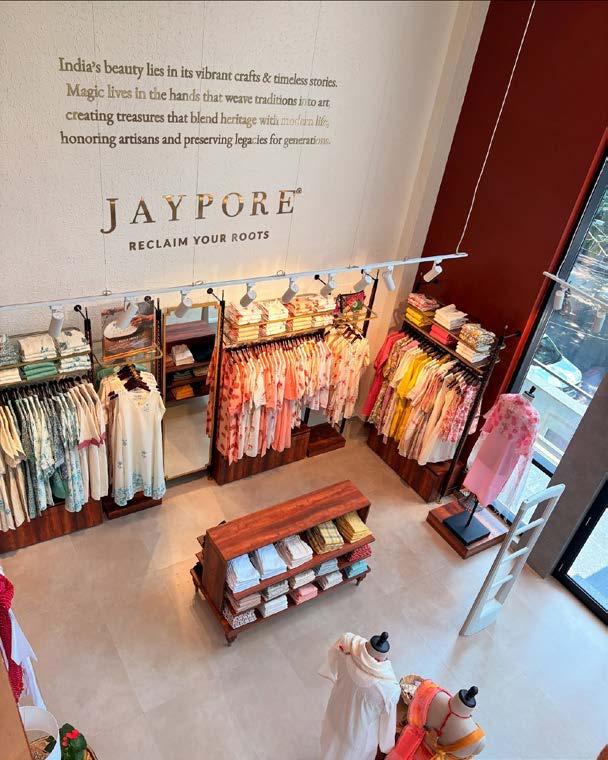
Manu Gupta, VP and Brand Head, Jaypore said, “Chennai, with its profound appreciation for art and craftsmanship, is a natural choice for our expansion. The launch of our first store in Tamil Nadu is a defining moment in Jaypore’s journey, reaffirming our commitment to making India’s handcrafted traditions more accessible to contemporary consumers. We look forward to welcoming Chennai’s shoppers into our world of artisanal excellence.”

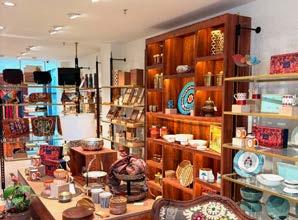
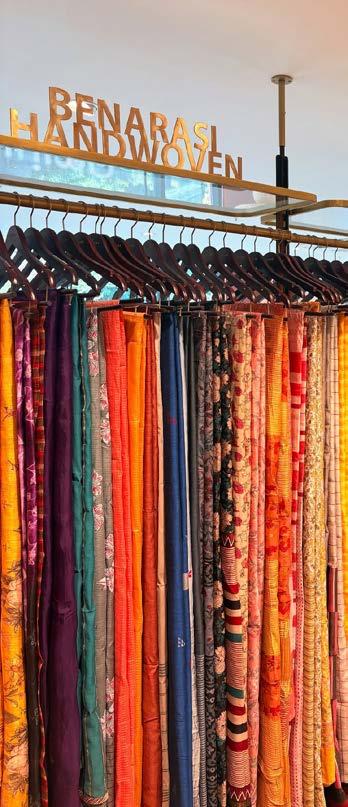
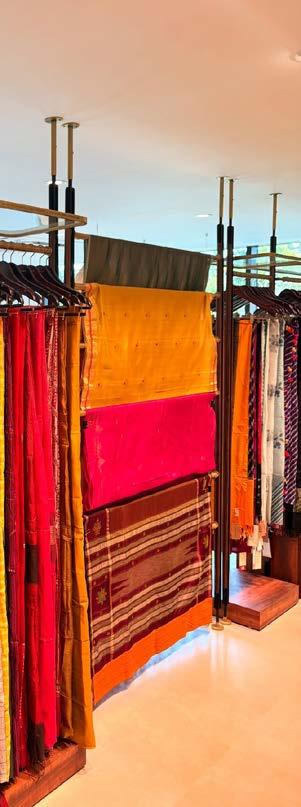

The Chennai store includes key brand elements, such as hand-painted walls featuring traditional motifs, product zones that spotlight craft clusters, and sections dedicated to signature Indian textiles and embroidery forms. A designated jewellery section presents handcrafted tribal silver, Jadau, and Kundan pieces. In addition to the in-store experience, the brand continues to build on its omnichannel capabilities. Jaypore aims to integrate offline retail with its digital ecosystem to cater to a broader consumer base. The brand also maintains its commitment to artisan communities by promoting sustainable livelihoods through continued retail expansion. The Chennai location is situated within the city’s core retail district, enabling Jaypore to target an urban customer segment that values heritage-driven product offerings in a premium format. This expansion reflects ABFRL’s ongoing investments in lifestyle and ethnic wear categories, leveraging Jaypore as a key brand to capture the growing demand for premium, craft-focused retail in India.


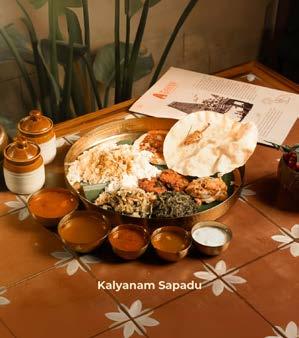
Tamil Nadu, From the Reign of the Pandya Kings
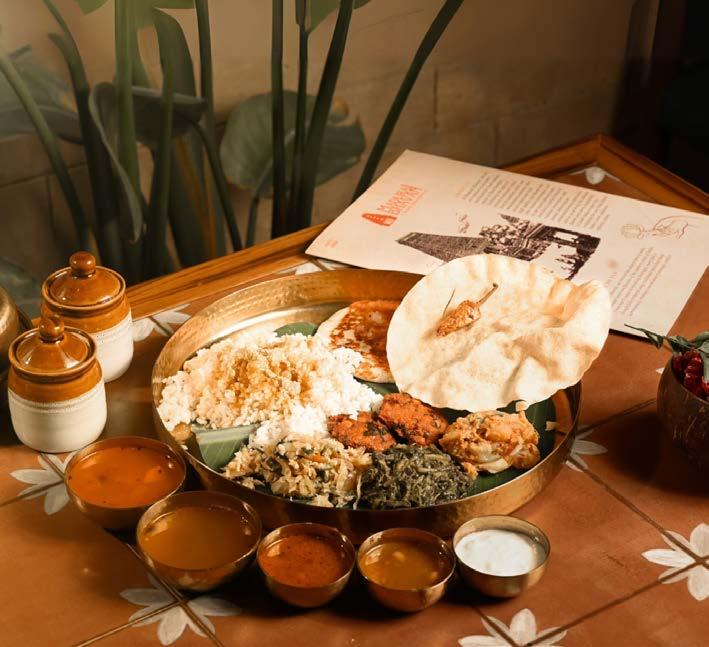
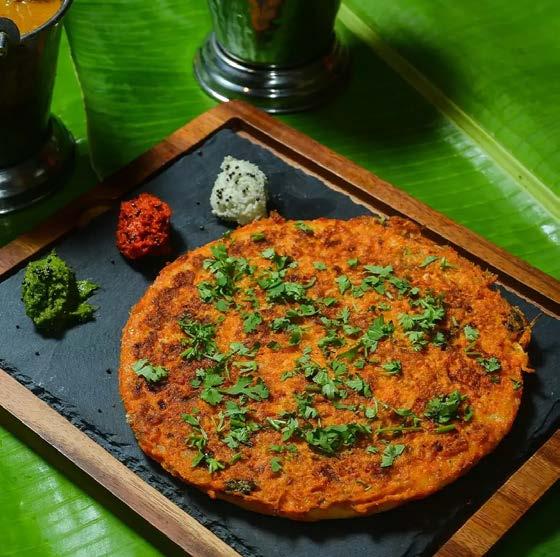
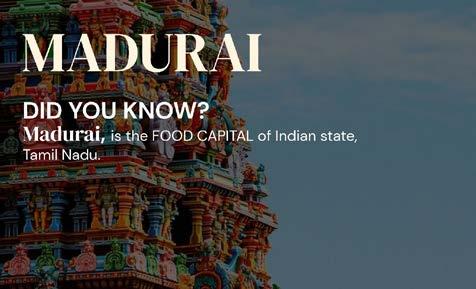
Relish the royal flavours of Tamil Nadu, that date back to the reign of the Pandya kings. Explore the unparalleled assortment of traditional dishes marked by its spicy and tangy flavours. You might know Madurai for its legendary Meenakshi Temple but did you know it is also called the food capital of Tamil Nadu? With a culinary tradition that goes back to the 12th century, the region has developed a mouth-watering line-up of dishes that rivals some of the best cuisines of Tamil Nadu. Their idiyappams, uthappams, and panniyarams are dishes to die for. Madurai cuisine with its refinement of culinary practices over the years attracts foodies from all over Tamil Nadu who will swear by the unparalleled taste the region offers. Madurai idlis
are famous for their fluffiness, and when combined with Mutton gravy, take the definition of taste to new heights. On the sweet side of things, one of the must-taste dishes that comes from Madurai is the popular milk dessert called Jigarthanda. Non-vegetarians have a reason to rejoice at Virudhunagar because the region’s Coin Parotta, a deepfried flatbread, served with Mutton gravy is guaranteed to send them over the moon. The lanes of Madurai also host a variety of street foods (check out some of the food tours that happen here) like Kothu Parotta, Mutton Chukka, Kari Dosa (dosa topped with choice of meat), Kola Urundai (meatballs), Elumbu Roast (made using goat bone), and Paruthi Paal (milk extract from cotton seeds).


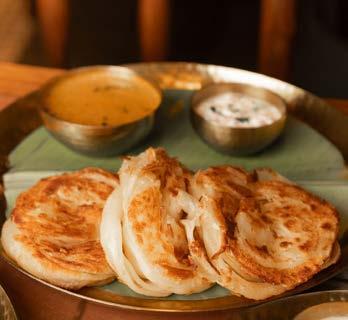
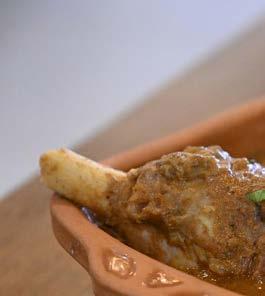

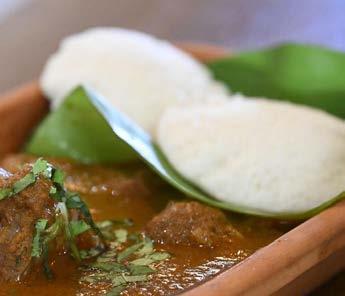
Madurai’s Bun Parotta along with Vazhiyal (batter of beaten egg, onion, and mutton gravy) is a must-have dinner combo if you are staying over. Tamil Nadu’s Madurai boasts of a diverse and delectable range of dishes that rival some of the best cuisines in the rest of the state. Madurai owes its stature as the culinary capital of Tamil Nadu to the reign of the Pandya kings that spanned roughly from third century BC to 1314th century AD. One of the most prominent dynasties that ruled parts of south India, the Pandya dynasty was known for their rich cultural heritage and tradition. The traditional food culture in the Pandyan region, which is primarily Madurai, is also hence called Pandya Nadu cuisine.
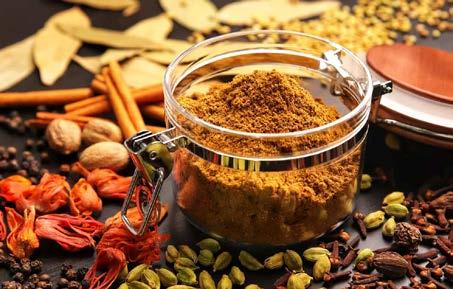
The genesis of Madurai’s culinary heritage can be traced back to the influences drawn from its yesteryear trade partners like Rome, Saurashtra, and Sri Lanka. The Saurashtrians who migrated from Gujarat made a major impact on the food scene in the region. Some of their prominent dishes are sooji appams, kalkandu sadam, and roti halwa. Mullumurungai vadai, served with roasted gram dal powder, tops the list. “Madurai cuisine is renowned for its bold flavours and unique spice blends, which are a result of the region’s culinary heritage. The use of freshly ground spices, diverse array of ingredients, and elaborate preparation techniques gives the cuisine its distinctive taste,” says Siddharth Ranganathan, the cofounder of the Bengaluru restaurant Suvaii.
The range of places to eat in Madurai is gratifyingly wide. You can savour the food in the numerous ‘meals’ places around the temple, or in upscale hotels. The first thing that comes to one’s mind at the mention of Madurai are the ubiquitous Murugan Idli and other eateries selling soft, mallipoo (jasmine) idlis and the outlets selling the irresistible drink jigarthanda, which has its origins here. No trip to this bustling city is complete without downing a glass of jigarthanda. Made with china grass, jelly, sarsaparilla syrup, chilled milk, and sugar, topped with a scoop of ice cream, the drink gives the perfect respite from the sweltering heat of Madurai. The sweet and salted paniyarams (deep fried rice batter seasoned with curry leaves, chillies, and ginger, or with jaggery and cardamom) are treats not to be missed. Equally tasty are the melt-in-the-mouth idiyappam (soft strings of steamed rice flour) served with coconut milk and sambar, or kurma (meat or vegetables in coconut gravy). The street food scene in Madurai has some unique dishes that are uncommon in other parts of Tamil Nadu. One such dish is the paruthi paal (cottonseed milk), a nutrient-rich drink.
If you stroll down the streets you are bound to notice cycle carts mounted with a brass pot containing hot paruthi paal. Made from cotton seeds, this drink is available in push carts in every street early in the morning or late night. This steamy drink is made from cotton seeds, which are soaked overnight and ground to extract milk, and cooked along with palm jaggery, then flavoured with a hint of dry ginger, grated coconut, and cardamom. It is packed with many health benefits that include antioxidant properties. It is locally believed to improve digestion and blood circulation, clear coughs and colds, cure stomach ulcers, and ensure good functioning of the nervous system.
“There are other lip-smacking dishes that are authentic to Madurai. Among the repertoire of non-vegetarian dishes is the succulent kola urundai (mutton kheema balls), kari dosa, and Ayirai meen curry. The elumbu roast, a rich flavourful dish where the bones of the mutton are simmered in a spicy gravy and served with piping hot rice or dosa is another non-vegetarian delight. Made of tender goat, the mutton chukka is a big hit,” says Siddharth. The soft, fluffy kari dosa with succulent pieces of chukka is another dish that is unique to Madurai. Three tempting layers make up the kari dosa. At the bottom is a plain dosa made from standard batter, the middle layer a pepper-crusted omelette, and the final layer on top a spicy kheema. Even though the kari dosa is available in pretty much every outlet in Madurai, you must head to the iconic Konar Mess.
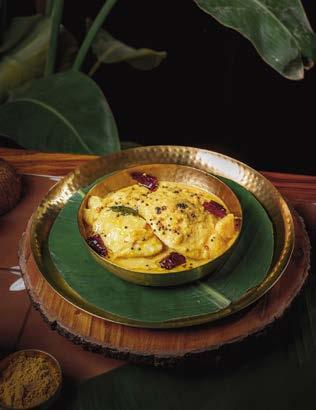


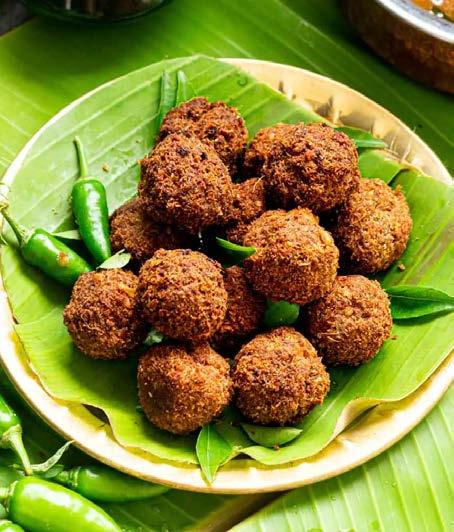
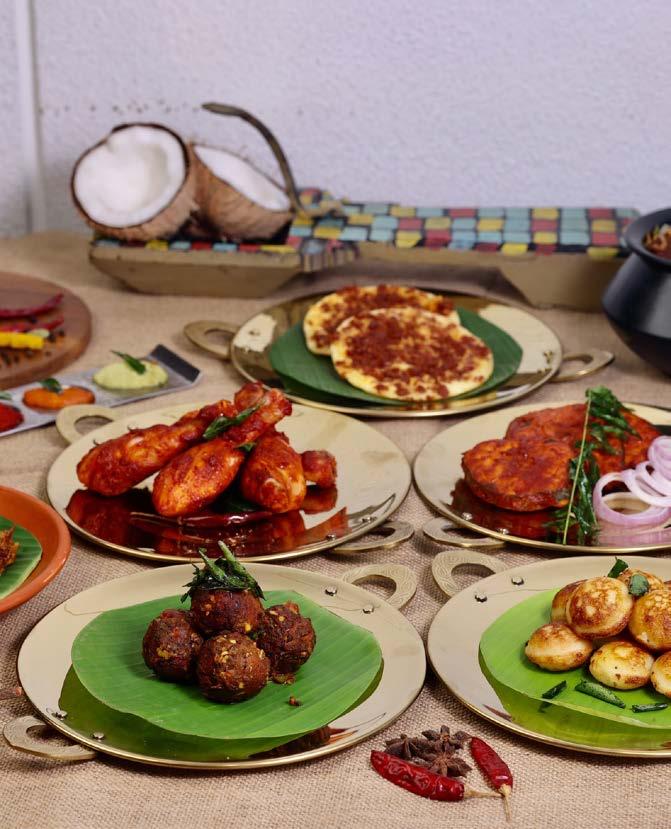

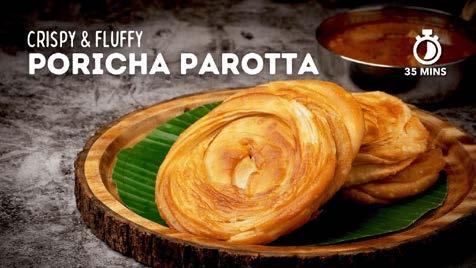
Ayira meen kozhambu is another delicacy not to be missed. “Whenever I visit Madurai, I make it a point to gorge on this city’s specialty. It is a fish curry made with the tiny spiny loach that is indigenous to this region and found in the marshy beds of its dams, lakes, and rivers. It is said that the taste of the curry depends on the cleaning process, which is elaborate. The fish is cleaned in milk in an earthen pot so that they spit out all the waste. It is again cleaned with water and cooked in a spicy curry made with special hand-ground masala and chilli powder,” explains Savita, a Bengaluru resident who is a fan of Madurai cuisine. With a wide range of parottas like bun parotta, poricha parotta, chicken chilli parotta, and much more, Madurai is said to be the parotta capital. But the region’s signature parotta is kothu parotta, which means chopped roti in Tamil. Recalling her student days in Madurai, Dr Meena Menon of Bengaluru’s Sankara Eye Hospital says, “We used to stroll down the food streets to have kothu parotta to satiate our hunger pangs at midnight.
The pancake is fried with meat and vegetables on a large hot plate while simultaneously being chopped up with a cleaver at the open-air kitchen. It is a treat watching it being made because of the clanking of metal. Another iconic dish we used to have is the special mutton biryani, which is ladled out by the platefuls for the locals and tourists alike.” In this thoonga nagaram (the city that never sleeps), food is available at any time and the list of eateries and dishes is endless.
• Preparation Time 8 hrs
• Cooking Time 10 mins
• Category Veg
• Type Drink / Dessert
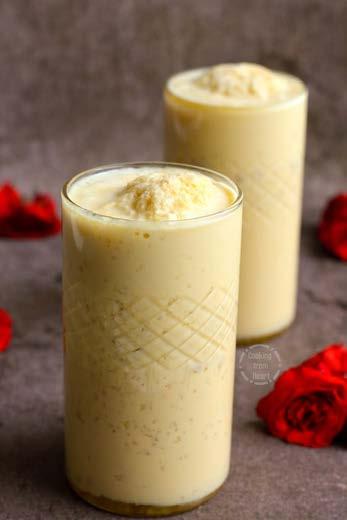
Jigarthanda is a much-sought-after roadside drink in Madurai, a beverage that literally translates to “that which cools the heart”. This cooling drink from the city that never sleeps has its similarities with Falooda, though the key differences lie in the ingredients used.
• 2 tsp badam pisin (almond gum)
• 2 cups of water
• 2 cups of milk
• 4 tbsp condensed milk (add as required)
• 4 tsp nannari syrup
• 2 scoops of vanilla ice cream (any flavour as preferred)
• Step 1 – Rinse and soak the badam pisin in water overnight. The next day the badam pisin swells and turns into a jelly-like consistency. Strain the water and refrigerate the soaked badam pisin.
• Step 2 – Add 4 tablespoons of condensed milk and 2 cups of chilled milk to a bowl and whisk well and refrigerate it.
• Step 3 – Add 2 or 3 tablespoons of soaked badam pisin in a glass. Add the nannari syrup and 1 cup of the condensed milk mixture.
• Step 4 – Add the scoop of vanilla ice cream and dry fruits or glazed cherries as per preference. Drizzle the nannari syrup over the top and serve chilled!
TO COOK MUTTON
• 500-gram mutton
• ¼ tsp turmeric powder
• 2 tsp ginger garlic paste
• 1 tsp oil
• Salt
• ¾ cup water
TO GRIND
• 3-4 cloves
• 1-inch cinnamon
• 1 sprig of curry leaves
METHOD OF PREPARATION:
• 3-4 dry red chillies
• 1 tsp coriander seeds
• 1 tsp cumin seeds
• 2 tsp black peppercorn
TO TEMPER
• ½ tsp fennel seeds
• 1 red chilli
• 150-gram shallots
• 1 sprig of curry leaves
• 2 tbsp oil
• Salt to taste
• Chopped coriander for garnishing
• Step 1 – Dry roast the ingredients under ‘To grind’ on low flame and transfer into a blender when it cools down and grind it coarsely.
• Step 2 – Wash the mutton pieces well, cut them into small pieces and put them into a pressure cooker with turmeric powder, salt, ginger garlic paste and the ground masala powder and stir well. Add a tsp of oil and ¾ cup of water and mix well. Close the lid and let it cook. Once the first whistle blows, turn down the heat to a low flame and cook for another 8 minutes. Then turn off the heat and let it cool.
• Step 3 – Heat a pan and add oil on medium flame. Add the ingredients under ‘To temper’ except coriander leaves. Saute until the shallots turn golden brown in colour. Add the cooked mutton and mix well. Cover the lid and let it cook on a medium flame for 10 – 12 minutes until the mutton becomes dry.
• Step 4 – When the mutton is visibly dry, transfer it from the heat, garnish with chopped coriander leaves and serve hot!
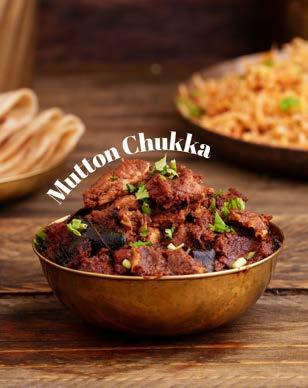
Mutton Chukka is one of the popular dishes from Madurai made of tender goat meat. The word ‘chukka’ means ‘dry’ and the dish is made by cooking the mutton till the water content dries up. It is an authentic recipe made using freshly ground spices with lip-smacking flavours that any meat-lover would kill for. The dish pairs well with any kind of rice, porotta, naan or dosa.
• Preparation Time 10 mins
• Cooking Time 25 mins
• Category Non Veg
• Type Lunch
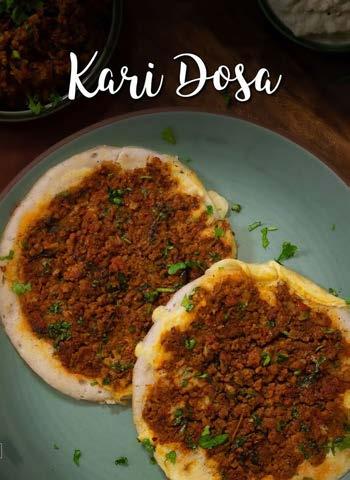
The mouth-watering Madurai Kari dosa is the best bet for any meat lover to fall in love with the legendary Madurai cuisine. The three-layered Kari dosa made of a bottom layer of plain dosa, omelette and a top layer of spicy mutton keema (minced mutton) brings out the true local flavours that reward one of the most fulfilling experiences.
• Dosa batter
• 2 eggs
• ½ tsp pepper
• Oil
• Salt
• Coriander leaves
• 200 gram mutton keema (minced mutton)
• 2 tbsp oil/ghee
• 1 onion (finely chopped)
• 1 tomato (finely chopped)
• 1-2 green chillies
• 1 sprig of curry leaves
• 1 tsp garam masala powder
• ½ tsp pepper powder
• 1 tsp chilli powder
• 1 tsp coriander powder
METHOD OF PREPARATION:
• Step 1 – Heat oil in a cooker and add the chopped onions, green chillies, curry leaves, salt for taste and saute for a few minutes. Add the tomatoes, ginger-garlic paste, garam masala powder, pepper powder, chilli powder and coriander powder. Mix everything and let it cook for 3-4 minutes. Then add the minced meat and saute for 5 minutes. Close the lid and cook for 2-3 whistles. Once done, open the lid and let the keema simmer again for 3-4 minutes.
• Step 2 – Break two eggs in a bowl and add salt and pepper to it for seasoning. Whisk it properly.
• Step 3 – Heat a dosa pan, pour a ladleful of batter on it and spread it into a circle. Pour the egg mix over it, drizzle some oil or ghee and on top of it add the keema and sprinkle some coriander leaves. Cook until the bottom is crisp. Flip over and cook for a minute. Serve hot!
• Preparation Time 15 mins
• Cooking Time 30 mins
• Category Non Veg
• Type Breakfast / Dinner
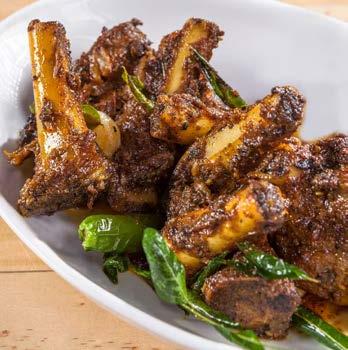
Madurai Mutton elumbu (bones) roast is another scrumptious dish from the Pandiya Nadu cuisine that has an unparalleled variety of meat dishes made with the most delectable flavours. Elumbu roast is a rich and flavourful dish where the bones of the mutton are simmered in a spicy gravy and served with piping hot rice or dosas.
• Preparation Time 5 mins
• Cooking Time 30 mins
• Category Non Veg
• Type Curry
• ½ kg mutton elumbu (bones)
• 200 gm onion (sliced)
• 100 gm tomato (chopped)
• 2 tsp ginger-garlic paste
• ½ tsp turmeric powder
• 2 tsp chilli powder
• ½ tsp fennel powder
• ¼ tsp garam masala powder
• ½ tsp black pepper powder
• ¼ cup thick coconut milk
• Salt as required
• Mustard seeds
• 1 tsp black pepper
• 2 sprigs of curry leaves
• 2 dry chillies
• Oil
• Step 1 – Add the mutton bones, salt, turmeric powder and enough water to submerge the bones in a pressure cooker. Let it cook for 4 whistles. Make sure that the bones are cooked well.
• Step 2 – Heat a pan, add oil and sliced onions and saute until they turn golden. Then add ginger-garlic paste, and chopped tomatoes and stir well. Once the tomatoes turn mushy, add chilli powder, fennel powder, garam masala powder, and black pepper powder and mix well.
• Step 3 – When the oil starts to separate, add the cooked bones along with the broth. Cook on high flame until most of the water evaporates. Do not close the lid. Stir continuously so as to avoid burning.
• Step 4 – Next, add the coconut milk. Let it simmer and cook until the oil separates and most of the liquid dries up. Take it off the flame and keep it aside.
• Step 5 – Heat oil in a pan and add the ingredients under ‘For tempering’. Once the mustard seeds stop crackling add this to the roast bones. Mix well and serve with rice, roti or dosa!
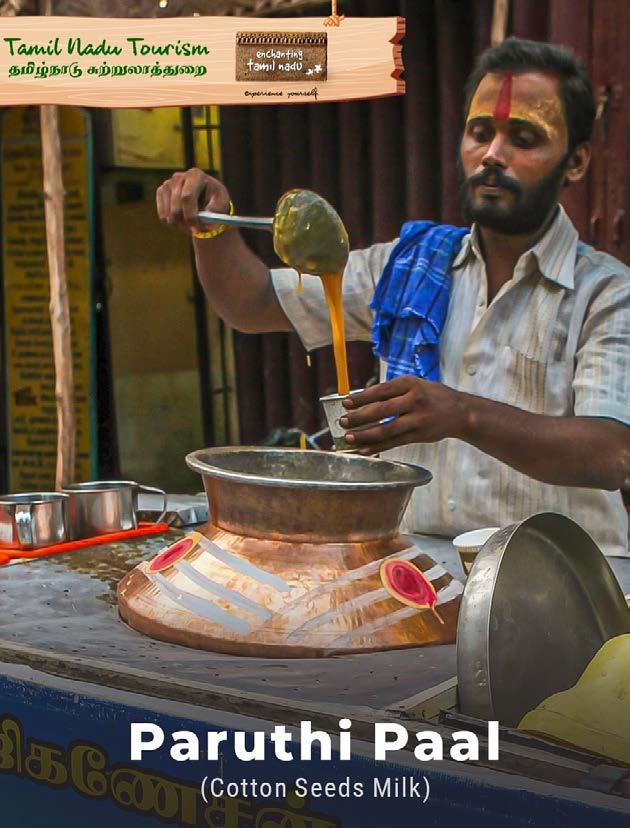
• Preparation Time 15 mins
• Cooking Time 20 mins
• Category Veg
• Type Drink
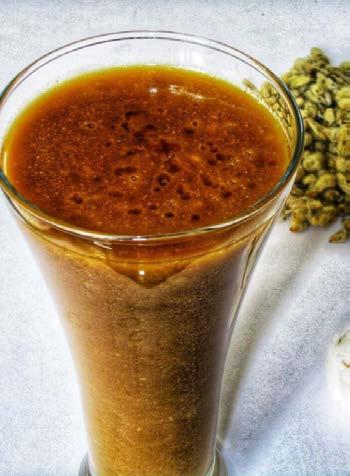
The street food scene in Madurai has some unique dishes that are uncommon in other parts of Tamil Nadu. One such dish is the Paruthi Paal, a nutritious beverage commonly served to guests as a welcome drink. Paruthi Paal, made from cotton seeds is packed with many health benefits that include antioxidant properties, and it is also believed to improve digestion and blood circulation
• 2 cups of cotton seeds (paruthi)
• 1 cup raw rice
• 1 cup jaggery
• 1 tsp dry ginger powder (chukku)
• 1 tsp cardamom powder
• 1 cup thick coconut milk
• Step 1 – Wash the cotton seeds and rice well and soak them separately in water overnight.
• Step 2 – Once soaked, drain the water and grind both the ingredients into a smooth paste.
• Step 3 – Strain the milk from this ground paste. Boil the strained milk in a pan for 8 to 10 mins on low flame. Keep stirring until it thickens.
• Step 4 – Add jaggery, cardamom and dry ginger powder and mix well.
• Step 5 – Mix the coconut milk with the mixture and switch off the flame. Serve hot.






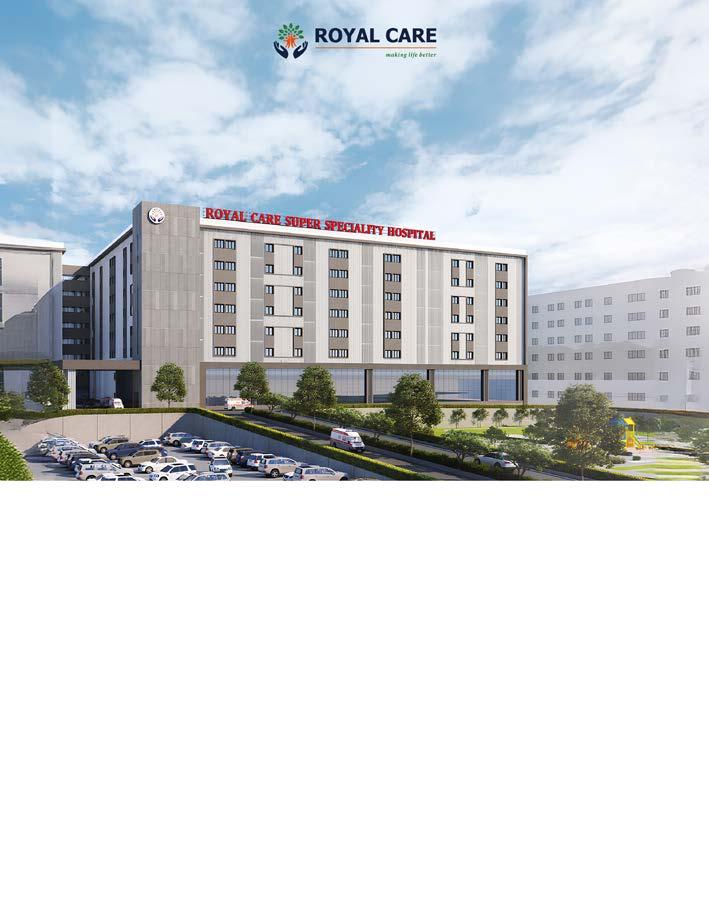
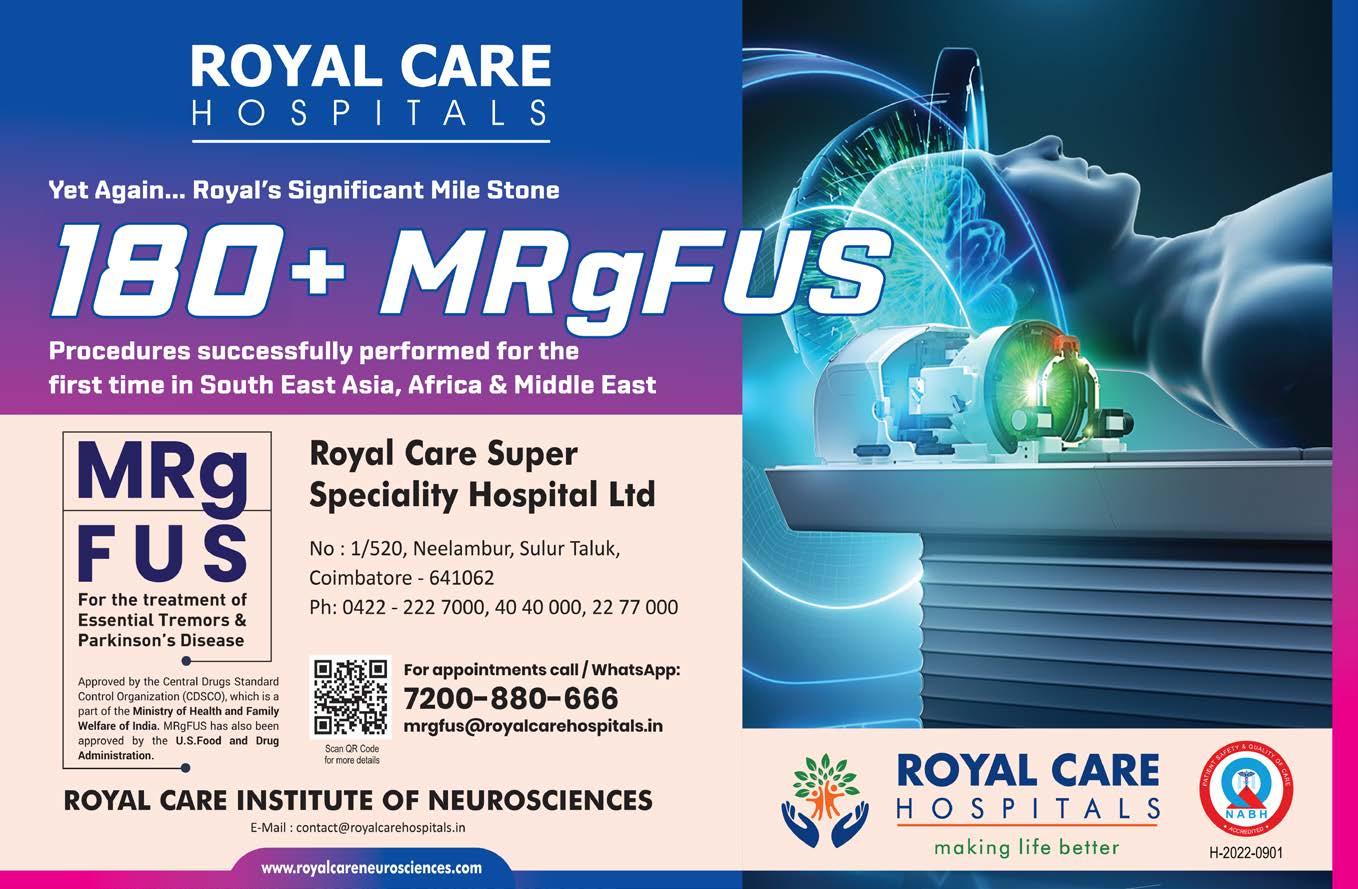
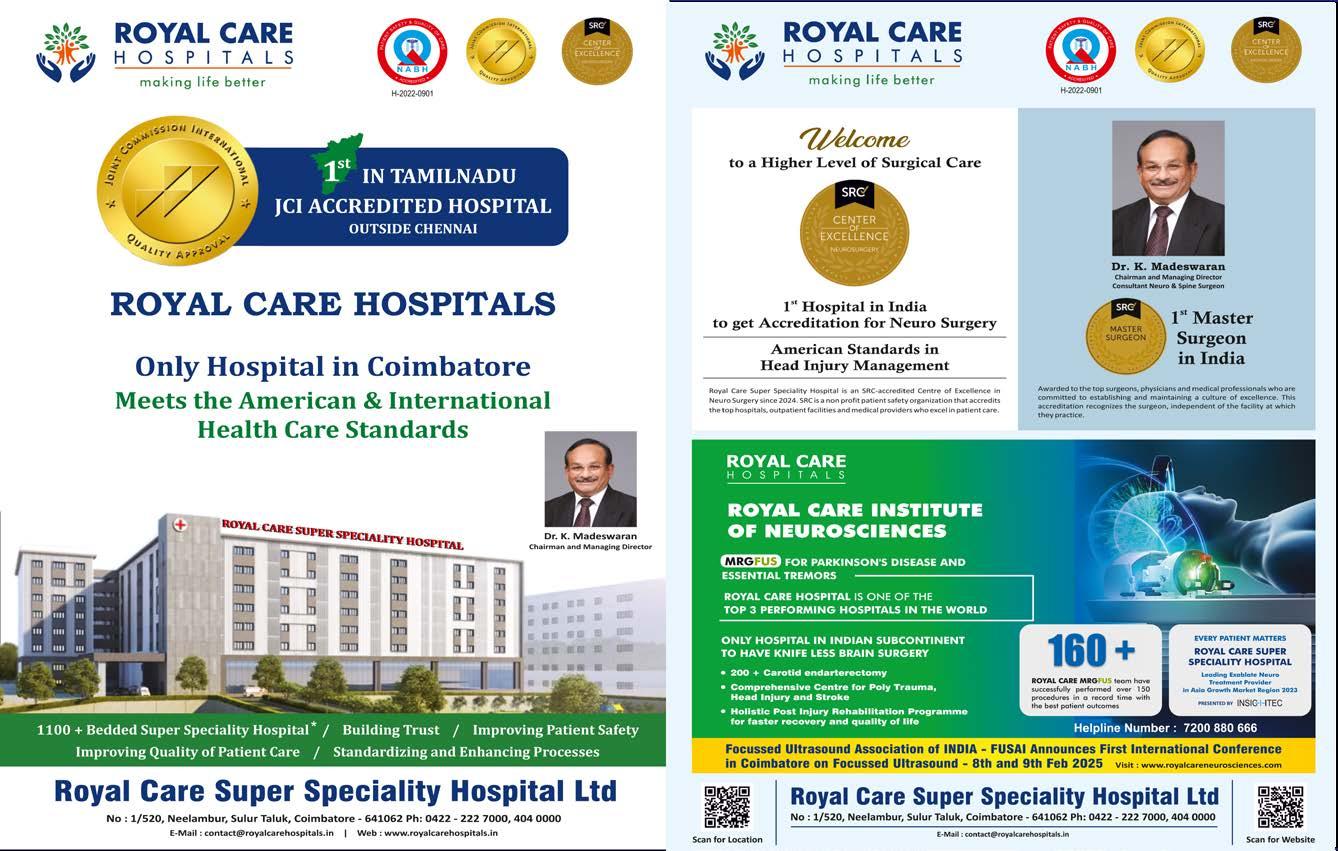
Dr. KMD’s Royalcare International Hospitals Group is one of the TopClass Hospitals in Asia that offer a comprehensive array of leading-edge medical treatment services for international patients of all ages. And they under the able leadership of Dr. K. Madeswaran, Founder & CMD is highly focused and determined to Improve Health and Health Care Globally.


Royalcare Hospitals Group, tailor each patient’s treatment and use advanced approaches, such as multidisciplinary care Involving experts from multiple specialties and work together in order to apply collective skills and experience along with the latest research knowledge. RoyalCare Hospitals Group is committed to caring for the whole patient during complex treatment, including prevention and wellness, acute care, mental health treatment, rehabilitation and care for chronic conditions. And in this regard, they have evolved Comprehensive System that specially Cares for Patients with Complex Needs. Royalcare had very Renowned Team of Specialists, Expert Surgeons, Doctors to handle a Wide Range of Complex Diseases. Their physicians and researchers are leaders in their Lives.

Multilingual appointment, registration and finance personnel at International Centres located in RCIHG’s campus, is dedicated to meeting the needs of you and your family, have before you arrive, during your medical appointments and even after your return home; After Completing Your Treatments. International Patient Care Centre staff shall arrange appointments, find interpreters and answer questions about billing, insurance and international health coverage. The staff can guide you in making travel and lodging arrangements and tell you about community services, including shopping, entertainment, banking options and worship. In other words, all that you need to come and avail one of the most effective, efficient and the best health solutions for all your healthcare needs. Royalcare International Hospitals Group’s ‘International Patient Care Centres can also arrange for fee-based travel services, including airline, hotel reservations and ground transportation, including shuttles, limousine service and car rentals. Each International Centre offers patients and visitors a comfortable and relaxing environment where they can feel at home before or after appointments.
RCIHG’s Patient Centric Care Team includes the best Surgeons, Doctors, Physicians, Specialists and Nurses for all healthcare Needs. The Experts Team is for every medical field of support that you need. No matter what serious or complex health challenge you're facing, you can be confident that you're receiving the Best of the World’s most advanced care at Royalcare International Hospitals. Dr. KMD’s RCIH Group have established a TopClass International Healthcare Facility to provide Comprehensive Health, Healthcare & Wellness Services at an affordable cost to patients who come from countries across the world. ‘RCH Medical Tourism & International Patient Services Division’ is though based at their Flagship Hospital, which is situated at ‘Greater Coimbatore (Neelambur), Tamil Nadu, India’. They Have Their Global Network and Liaison Offices spread across the Continents.


This Exclusive Division with State-Of-the Art Facilities of ‘Royalcare International Hospitals Group’ have tied up with one of the ‘Leading Multinational Mass-Media Organizations of the World’ in order to utilize their Corporate Network & Establishments located in 117 countries across the World; with the view to provide most reliable and Patient-friendly Healthcare Services; both at the Country of Origin of Patients as well as at the Country of their Destination, where Advanced & Surgical health services are provided.
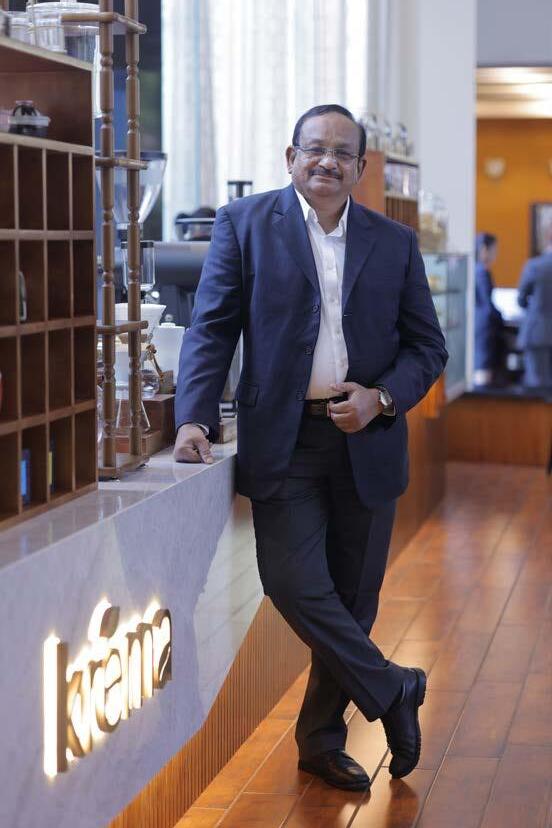
DR. K. MADESWARAN CHAIRMAN & MD
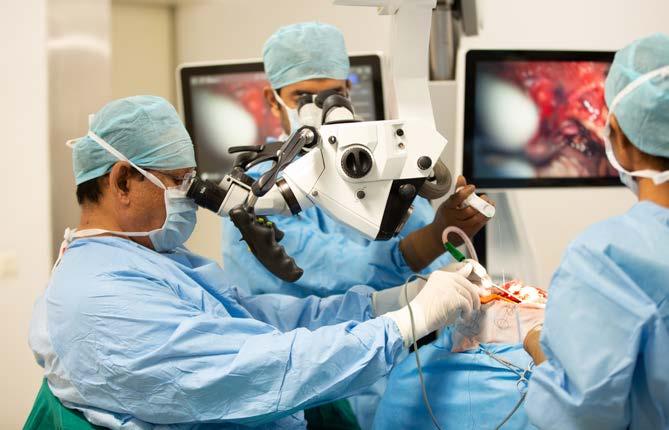
With the fully operational Centres of Medical & Clinical Excellence; covering over Eleven SuperSpecialties, which are fully packed with Most Ultra-Modern Technologies, Equipment, Highly Trained Doctors and Medical Professionals; Royalcare International Hospitals Group is considered as one of most preferred and Popular Destinations for Medical Tourists & Patients from all around the world; especially for all those, who seek ‘World-class Healthcare & Surgical-care and Wellness Solutions/ Packages at an Affordable Cost. The most able, renowned and dynamic Medical Team with the Operational Staff of RCH Medical Tourism & International Patient Services Division (RCHMT& IPSD) in association with their Global Business Network & Logistic Partners; offer a wide Portfolio of Travel & Medical Services to their Medical Tourists & International Patients from all over the World.
With the Specific Request, Demand and Pre-defined Requirements of International Patients; ROYALCARE Could provide Services for:
• Remote & Online Medical Consultations.
• Offering Projected Cost Estimates.
• Allocating Exclusive Consultant Doctor for Regular Medical Guidance.
• Customized Medical Treatment Packages.
• Travel & Visa Arrangements.
• Accommodation arrangements for Patients & their Families.
• Airport Pick-up & Drop Facilities (With supported Medial Staff on Demand).
• Translator / Interpreter Services and so on.

• Bronchial Thermoplasty for treatment of complicated asthma cases.
• Kinevo 900 high-resolution operating microscope to reach inaccessible areas in the brain for complex neurosurgery.
• Broncus (Bronchoscopic Navigation) - first time in Corporate India
• CAPI (Centre for Advanced Pulmonary Intervention)
• O-arm - The latest intraoperative CT along with integrated computer - aided navigation technology to facilitate advanced Neuro & Spine surgery.
• NIR - enabled laparoscopy system to view critical anatomy to perform complex surgeries
• All beds of the critical care units are self-contained with advanced monitoring systems. which are networked to a central monitor and also linked by an automated vitals charting system (ICCA). This facility aims at administering personalised and targeted intensive care for speedy recovery.
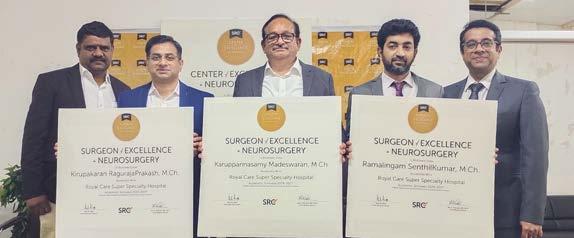
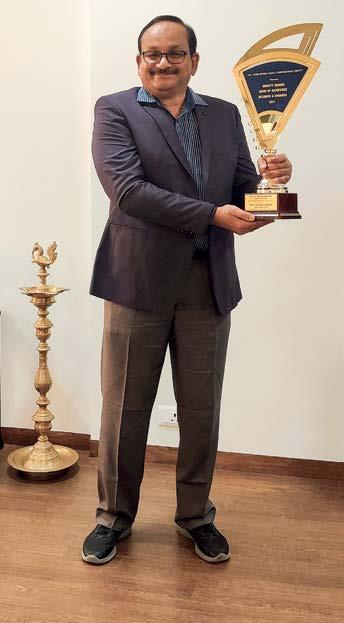
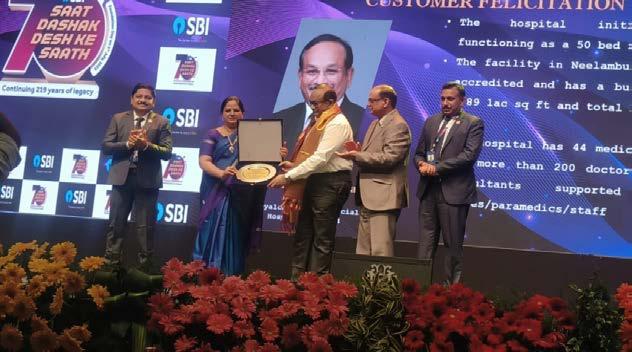
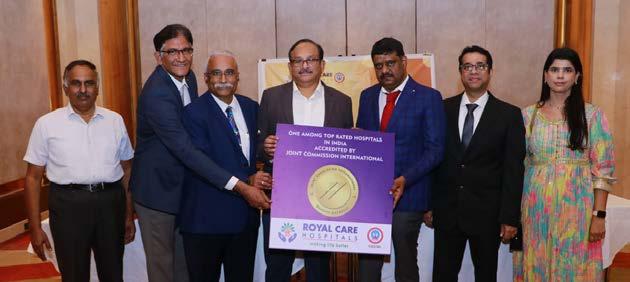
• The critical care units have been specially designed to prevent cross contamination and dreadful infection.
• Fully equipped trauma ambulance with online patient monitoring by base ICU.
• Fully - integrated modular voice enabled operation theatre, radial probe for EBUS, IVUS, 5D ultrasound, latest generation MRI, ECMO etc.,
• True beam STX for high precision radiotherapy
• Drug and poison information centre
• First hospital to be recognized with NABH Safe - I for best infection control Practices
• Authorized hospital of Materiovigilance Programme of India ( MvPI ) for south Tamilnadu.
• Senographe Pristina - Digital Mammography
• HBOT-Hyperbaric Oxygen Therapy

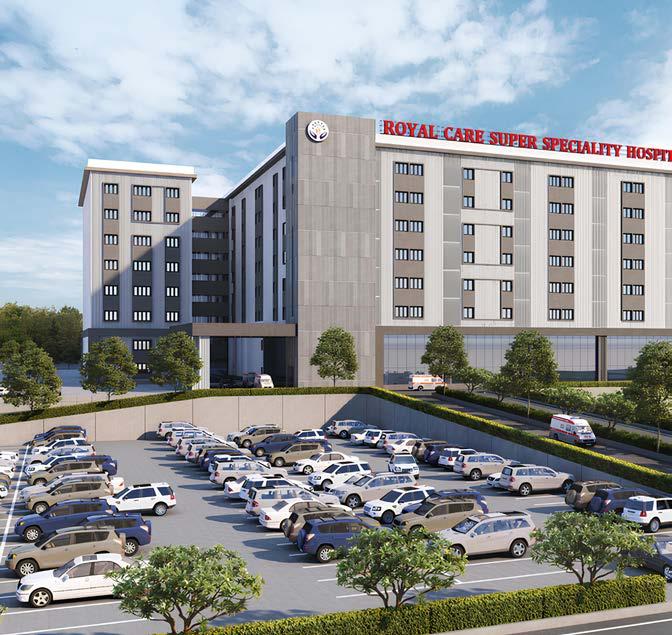
Founded and Commenced by Dr. K. Madeswaran along with His Most Trusted Team of Leading Surgeons, Doctors, Physicians, Medical Professionals, Subject Matter Experts and Management Professionals in the year 2015 as a 50 bedded multi-specialty hospital in One of the Vibrant
Cities of India, Namely Coimbatore in the State of Tamil Nadu. Indeed, Dr. KMD’S Royalcare Super Specialty Hospital, within the first Two years of operations, became One of the Most preferred Multi-Super-Specialty Hospital in western Tamil Nadu for emergency, primary and specialty care in virtually all branches of modern medicine. The
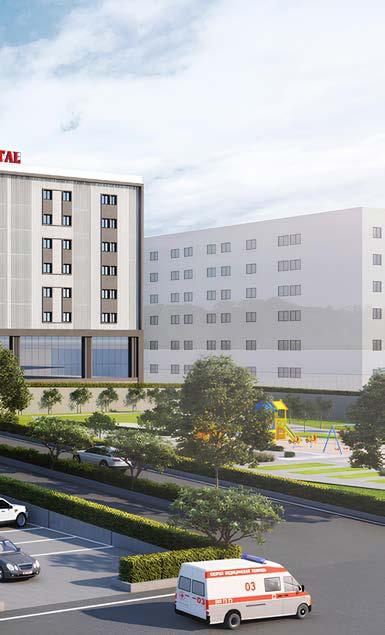
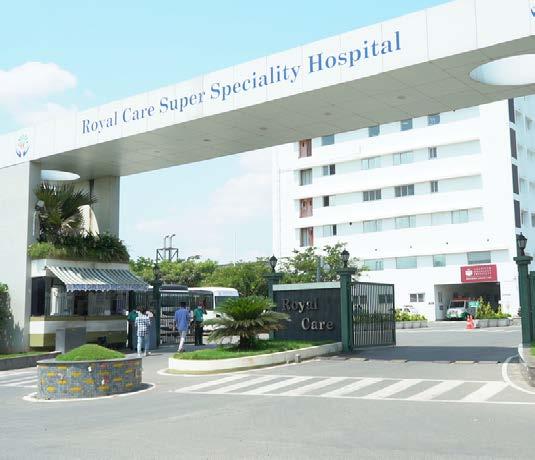
hospital did continue being, the perfect destination for people seeking superior and Patient friendly healthcare. Functioning with those objectives of making cutting edge healthcare to common man, they provide the best medical service with highly qualified doctors and highly equipped technologies. This necessitated an imminent expansion and created the
need for a larger and more comprehensive tertiary care unit encompassing all the field of medicine. A 1100-bedded ultramodern Hospital facility Plan was thus conceived at Neelambur, Coimbatore By Dr. K. Madeswaran and His Team. RCIHG was Built within a record time of 400 days, the first phase comprising 500 beds were dedicated to the society in November 2016.
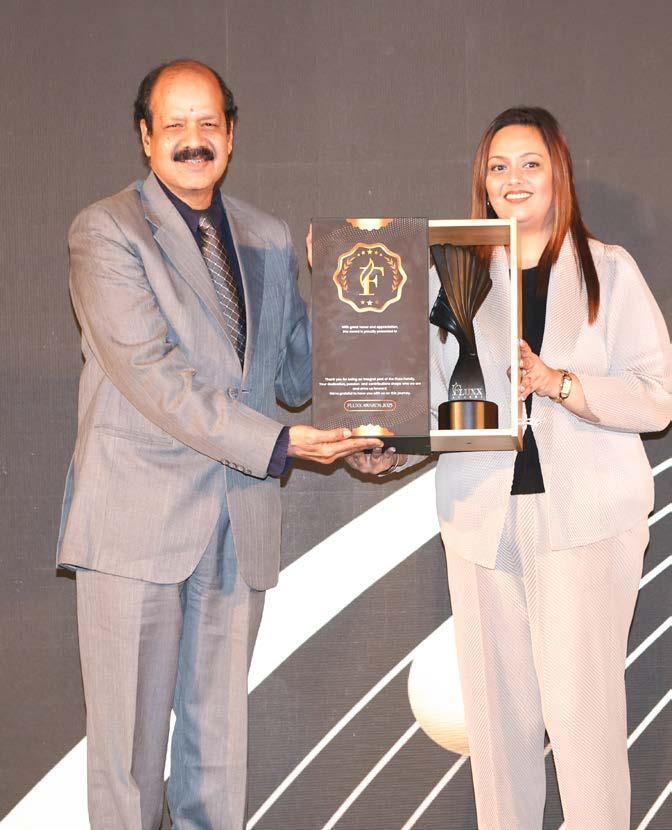

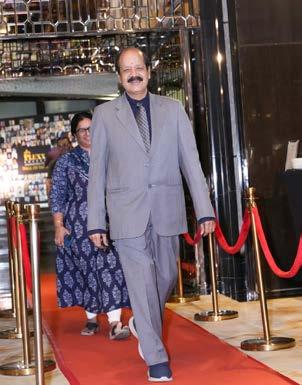
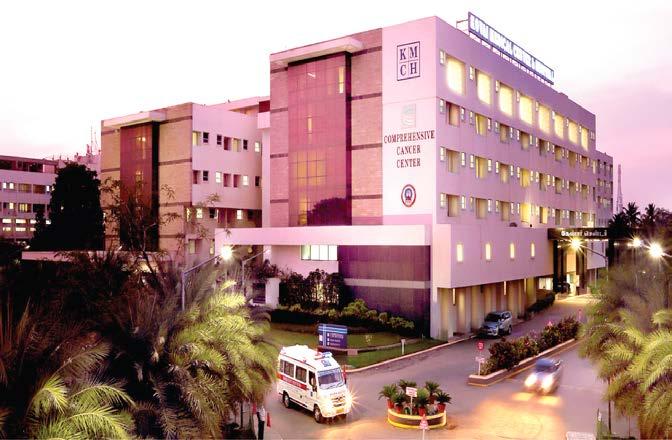
KMCH, a leading multispecialty hospital dedicated to providing high-quality, patient-centric care, is proud to announce that its Chief Operating Officer, Dr. Sivakumaran Janakiraman, has been awarded with Fluxx Lifetime Achievement Award. This prestigious global recognition celebrates Dr. Sivakumaran's outstanding contributions and transformative impact on the healthcare industry.
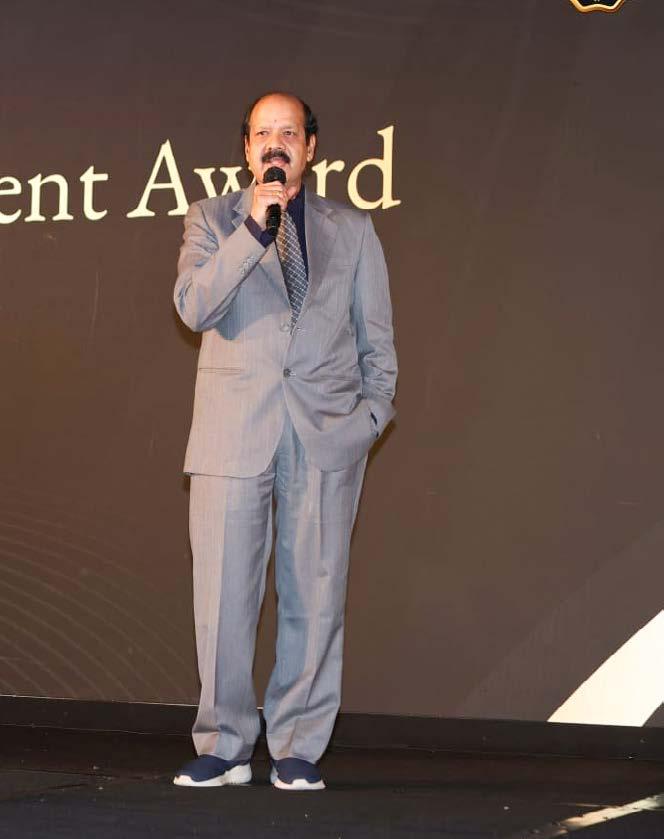
The award was presented at an event held on June 6, 2025, in Hong Kong, hosted by Fluxx Events, a global platform dedicated to recognize and celebrate individuals who demonstrate exceptional commitment, innovation, and leadership across various industries. It aims to shine a spotlight on their contributions and position them as role models, inspiring others to strive for excellence.

Dr. J. Sivakumaran received the Lifetime Achievement Award under the Healthcare Elite Category for his lifetime dedication, excellence, and significant influence. Out of over 5000 profiles screened from 70+ countries, Dr. J. Sivakumaran stands out as only the second Indian in the healthcare sector to receive this esteemed award. His accolades also include the Forttuna Global Excellence Award, making him the first and only Indian COO to be bestowed with this honor. With over three decades of rich experience in the healthcare industry, Dr. Sivakumaran has authored and published numerous scholarly articles in leading healthcare journals and magazines. Last year, he was recognized with the Healthcare Visionary Award from the Financial Express and the Most Iconic Healthcare Leaders (Global) Award from the World Health and Wellness Congress.
"We are extremely happy that Dr. J. Sivakumaran has received this prestigious global recognition," said Dr. Nalla G. Palaniswami, Chairman, KMCH. "His leadership and passion for improving healthcare have been instrumental in the growth and success of KMCH. This award is a testament to Dr. J. Sivakumaran’s dedication and hard work, and we are proud to have him in our team. We wish him many more laurels.” Dr. Arun Palaniswami also extended his congratulations, remarking, "Dr. J. Sivakumaran's vision, strategic thinking, and tireless commitment to excellence have not only elevated KMCH to new heights but also inspired everyone."
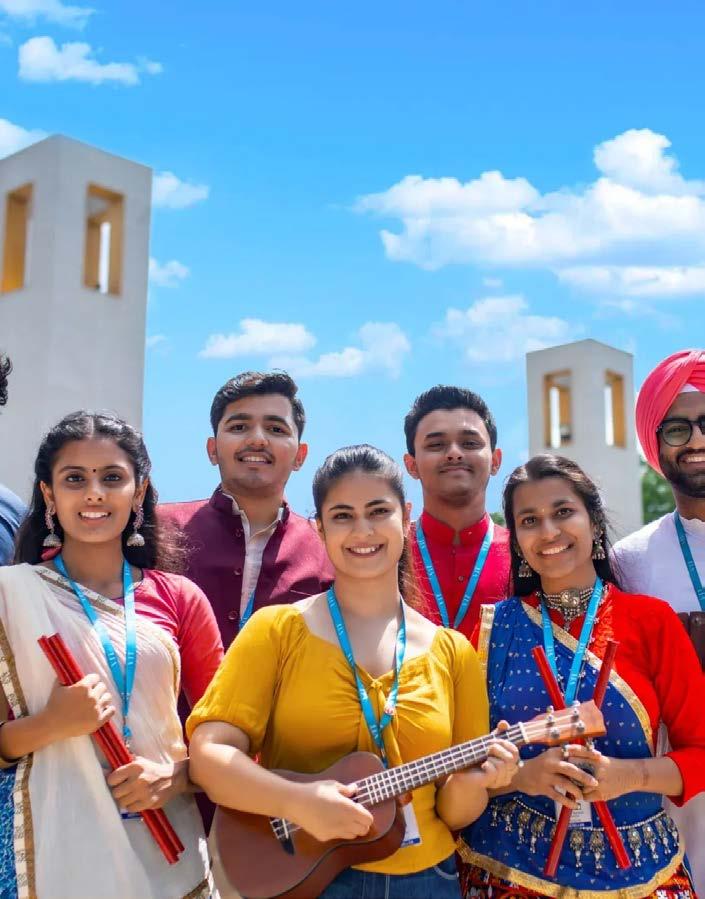
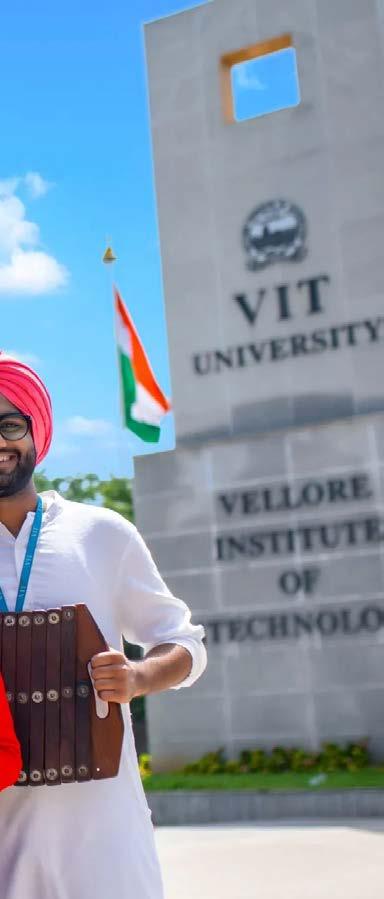

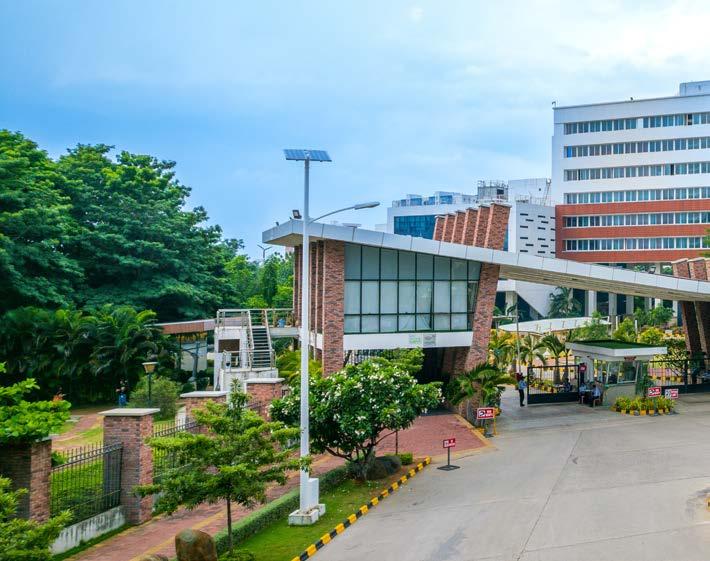

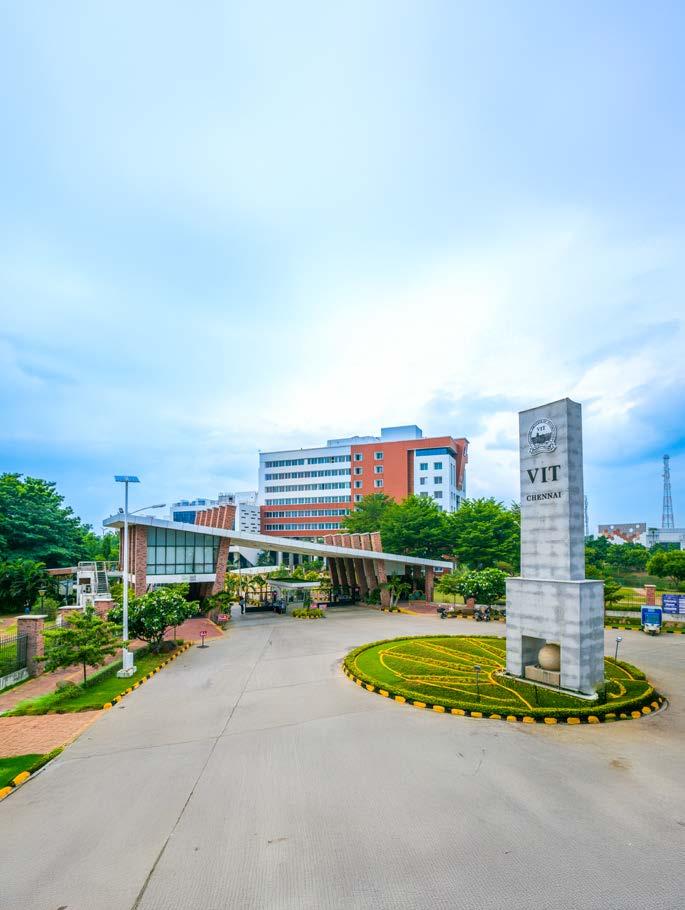
VIT was established with the aim of providing quality higher education on par with international standards. It persistently seeks and adopts innovative methods to improve the quality of higher education on a consistent basis.The campus has a cosmopolitan atmosphere with students from all corners of the globe. Experienced and learned teachers are strongly encouraged to nurture the students. The global standards set at VIT in the field of teaching and research spur us on in our relentless pursuit of excellence. In fact, it has become a way of life for us. The highly motivated youngsters on the campus are a constant source of pride. Our Memoranda of Understanding with various international universities are our major strength. They provide for an exchange of students and faculty and encourage joint research projects for the mutual benefit of these universities. Many of our students, who pursue their research projects in foreign universities, bring high quality to their work and esteem to India and have done us proud. With steady steps, we continue our march forward. We look forward to meeting you here at VIT.
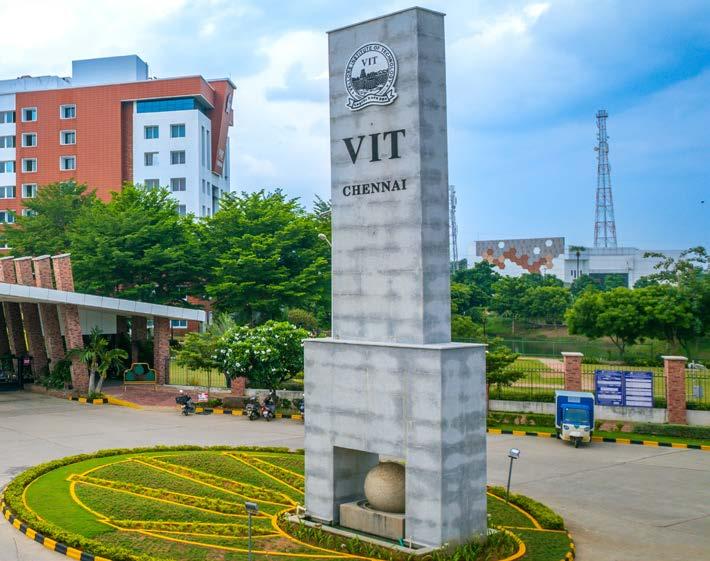
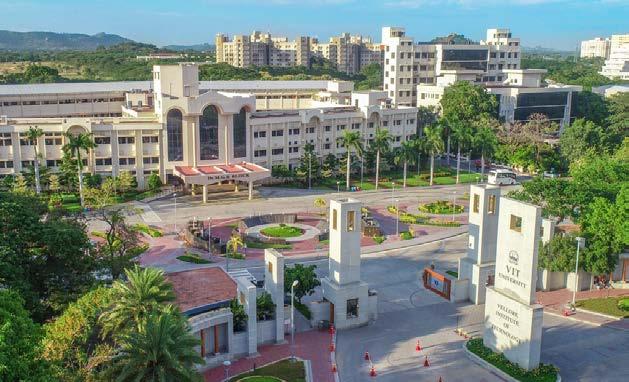
VIT Chennai was established in 2010 and has since become a beacon of excellence in higher education. Spearheaded by Vice President Dr. G. V. Selvam, a pioneering visionary who laid the foundation of VIT Chennai, he is an insightful architect of its evergreen campus and an ingenious leader whose comprehensive vision and mission have shaped its growth. Under his guidance, VIT Chennai has rapidly evolved into a hub of innovation and academic distinction. The leadership team, including Vice Chancellor Dr. V. S. Kanchana Bhaaskaran, Pro Vice Chancellor Dr.T.Thyagarajan and Additional Registrar Dr. P. K. Manoharan, drives its mission of delivering transformative education and impactful research. Strategically located in the capital city of Tamil Nadu, VIT Chennai is a globally engaged, competitive, and research-enriched institution.
It proactively addresses industrial, social, economic, and environmental challenges, fostering application-based learning that produces industry-ready professionals. Known for its cosmopolitan atmosphere, VIT Chennai attracts students from across the globe, fostering a vibrant and multicultural community. Committed to maximizing industrial connectivity and establishing Centers of Excellence in cutting-edge research areas,VIT Chennai enriches technological and managerial human capital through a collaborative and inclusive academic environment. It serves as a platform for intellectual exchange, encouraging the convergence of diverse ideas to drive innovation and learning. Dedicated to societal and industrial advancement, VIT Chennai leverages its resources to benefit the community, supports national knowledge-building initiatives, and fosters international collaborations for mutual progress in research and education. With a clear vision and an unwavering mission, VIT Chennai continues to redefine the landscape of higher education in India and beyond.
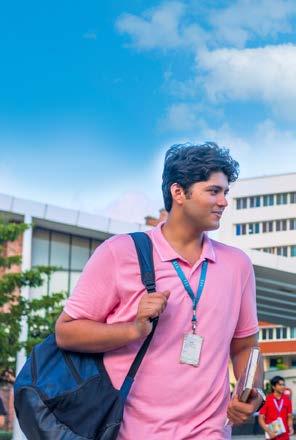
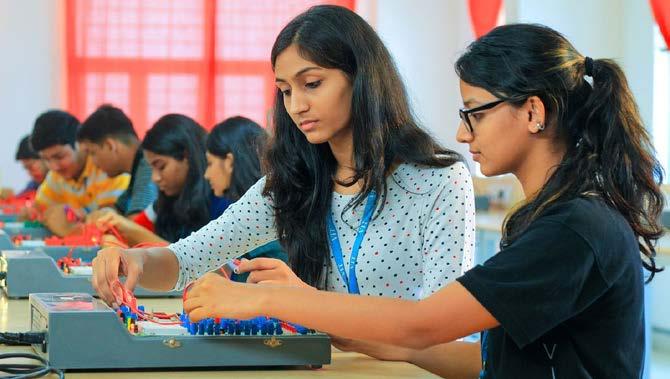
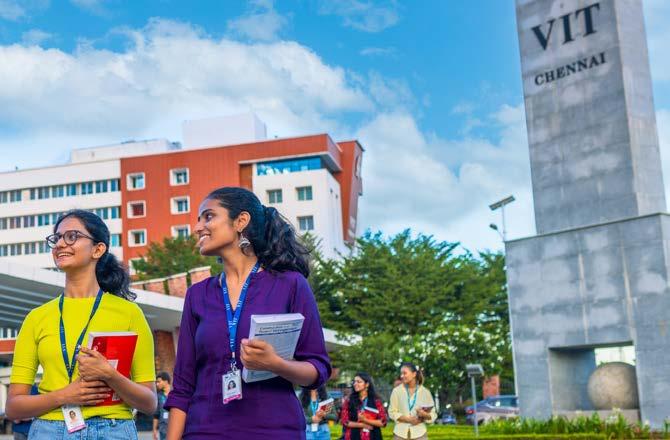
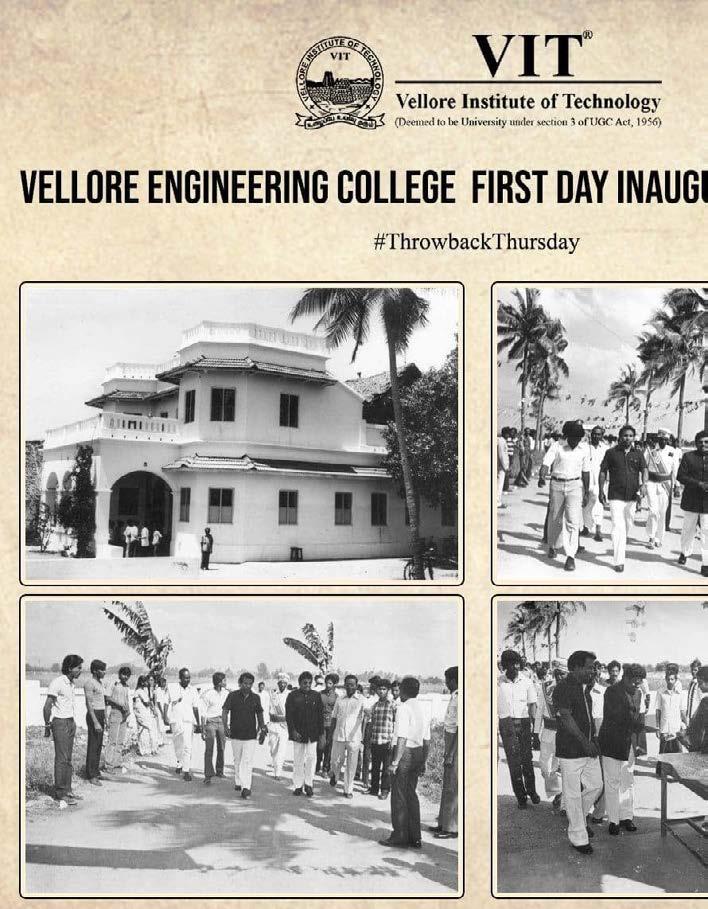
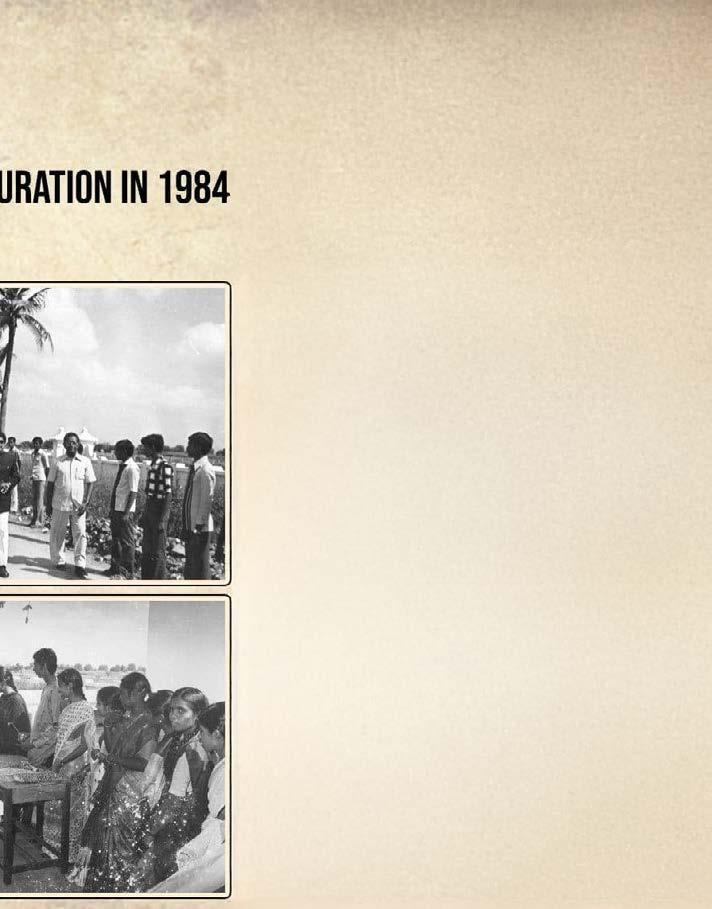
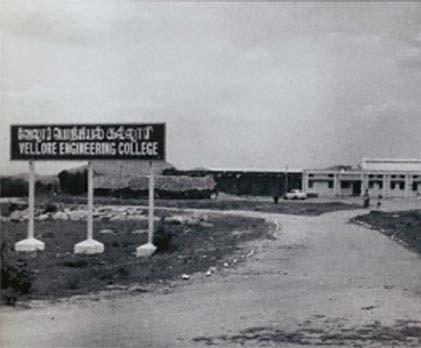
It was established under Section 3 of the University Grants Commission (UGC) Act, 1956, and was founded in 1984 as a self-financing institution called the Vellore Engineering College. The Union Ministry of Human Resources Development conferred University status on Vellore Engineering College in 2001. The University is headed by its founder and Chancellor, Dr. G. Viswanathan, a former Parliamentarian and Minister in the Tamil Nadu Government. In recognition of his service to India in offering world class education, he was conferred an honorary doctorate by the West Virginia University, USA.VIT Chennai was established in 2010. Mr. Sankar Viswanathan, Dr. Sekar Viswanathan and Dr. G.V. Selvam are the Vice-Presidents; Dr. V. S. Kanchana Bhaaskaran is the Vice-Chancellor and Dr. Thyagarajan T is the Pro-Vice Chancellor.

DR. G. VISWANATHAN FOUNDER &
Dr. G.V, the founder-chancellor of VIT University, was born on December 8, 1938 in a remote village near Vellore in Tamil Nadu. Dr. GV’s life is a source of inspiration to the aspiring youth. Academic Achievements: Dr. GV completed Advanced Management Program at Harvard Business School in 2003, nearly four decades after his University education, reaffirming his fervour in being an eternal student. He excelled in academics right from his childhood. His early education was confined to his small village where he studied in Tamil – his mother tongue. His pre-university education at Voorhees College,Vellore initiated him to the world outside. From there he moved on to obtain his Bachelors and Masters Degrees in Economics from the prestigious Loyola College, Chennai. Following this, he graduated in Law from Madras Law College.
The Leader of the People: A student leader in his twenties entering Indian parliament was something incredible, especially in 1960s. But it was Dr. GV who championed people’s issues in the parliament and they, in turn, reposed faith in the leader who fulfilled their expectations. They re-elected him by a bigger margin in the next election for another five-year term. He travelled to different
parts of the world as a member of parliamentary delegations and appreciated issues in a global perspective. Dr. GV wanted to play a bigger role in the provincial politics in order to make a direct contribution in bettering the lives of the people in the region. He was elected to Tamil Nadu Legislative Assembly for ten years. During this period, he served as a Minister for two years.
The Educator: Dr. G. Viswanathan founded Vellore Engineering College in 1984 at Vellore. He envisioned that this Institution would offer World-Class Education to students who would in turn create an indelible impact on the society. The engineering college that started with an intake of 180 students in 1984 has evolved as a university with four campuses. Over 25,000 students are enrolled in 51 undergraduate and 33 Postgraduate, 11 Integrated, 2 Research programmes and 2 M.Tech Industrial Programmes with nearly 16,000 residing on the campus. It attracts students and professors from different parts of the world. It houses more than 1000 international students on campus. For the past two years, VIT University has been ranked #1 private engineering institution in India. ISO Certification from Holland, International
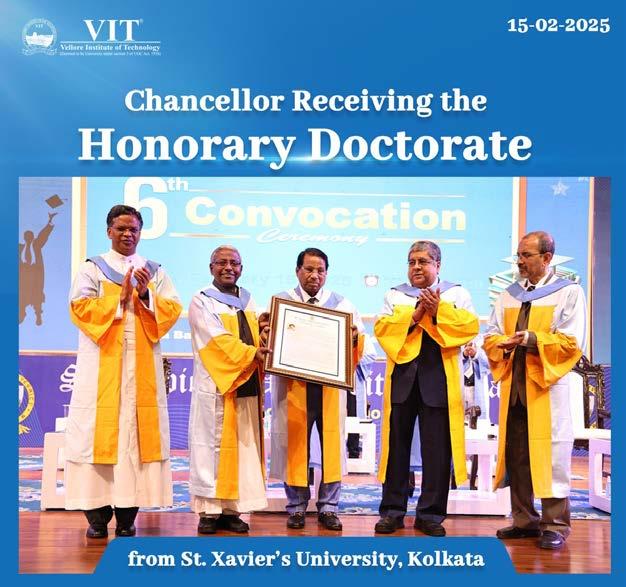
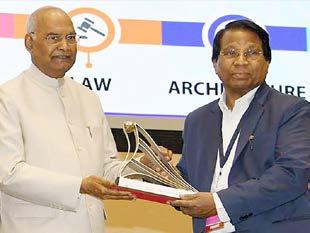
accreditation from the United Kingdom and USA, and the highest accreditation grade from the Government of India reflect the University’s penchant for excellence on all fronts. The Institution: Due to his passion for societal development and compassion for the underprivileged, Dr. GV has launched several schemes for uplifting the women and unemployed youth in the region to help them become self-reliant. He offers scholarships to students from disadvantaged sections of the society to enable them to pursue higher education. He has established the Universal Higher Education Trust to create opportunities for higher education to every deserving student in the region. He has adopted several villages with the motto of improving the quality of lives of the rural people. His vision of transforming Vellore into a greener and cooler town by planting one million saplings has begun to yield fruit. Dr.GV’s farsightedness extends beyond horizons.
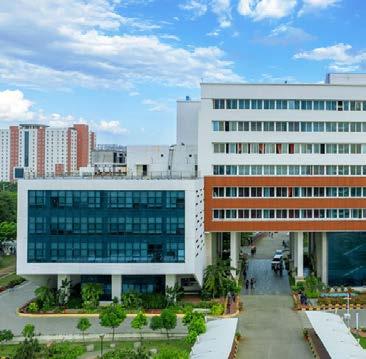
VIT campus is spread across a vast area of 372 acres. The remarkable aspect of VIT is the state-of-the-art infrastructure provided for both students and faculty. Fully furnished and well-equipped labs decorate every building in the University. Moreover, the campus is fortified with ample features that support diverse events – Auditoriums, plush open spaces, outdoor stages and much more.
A striking feature of VIT is the well-planned and comprehensive premises provided for both students and faculty. There are seven academic blocks in VIT which are extremely specialised in their own particular field, namelyMB, GDN, CDMM, SMV, CBMR, TT, SJT and GANDHI BLOCK. The layout has been excellently planned to make the maximum utilisation of the 372 acre campus. The idea behind these separate blocks is to make every block equipped with the necessary amenities whilst providing the perfect atmosphere for both studies and research.
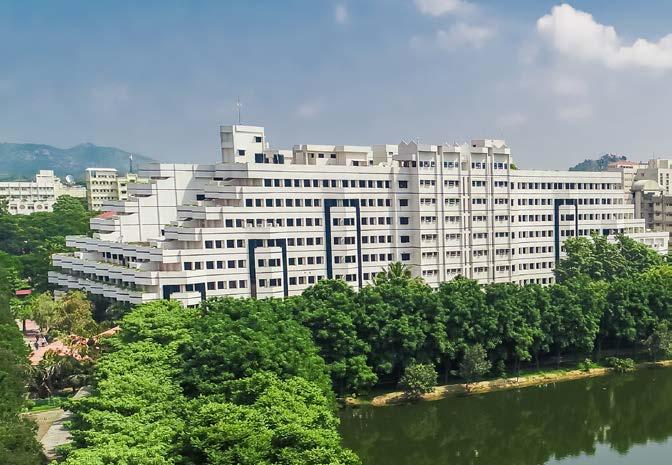
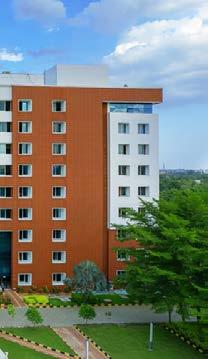
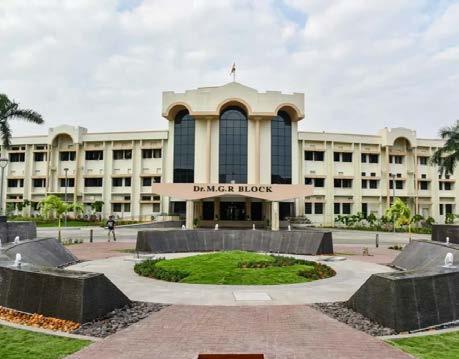
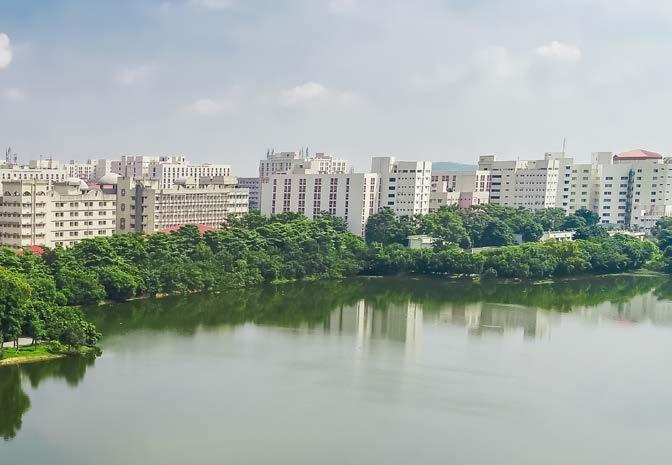
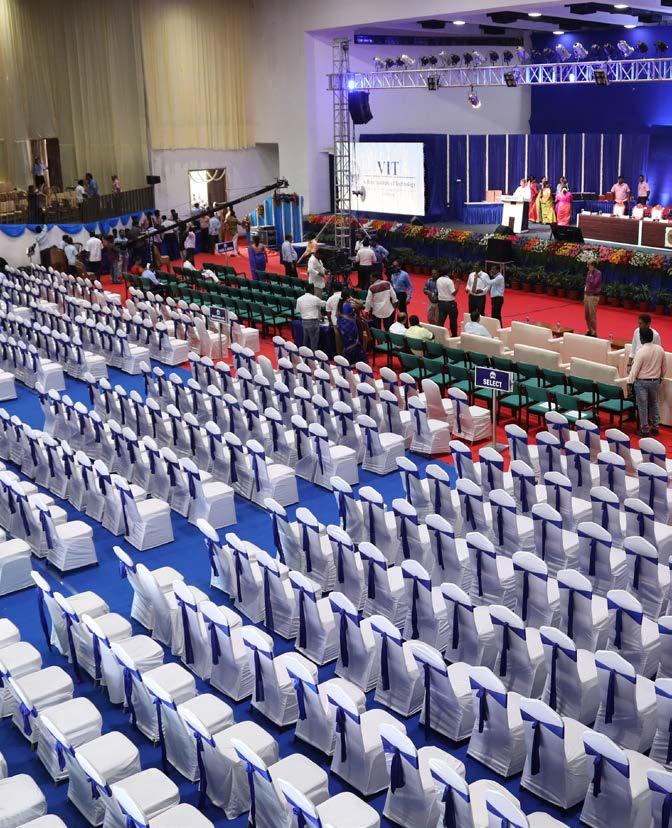
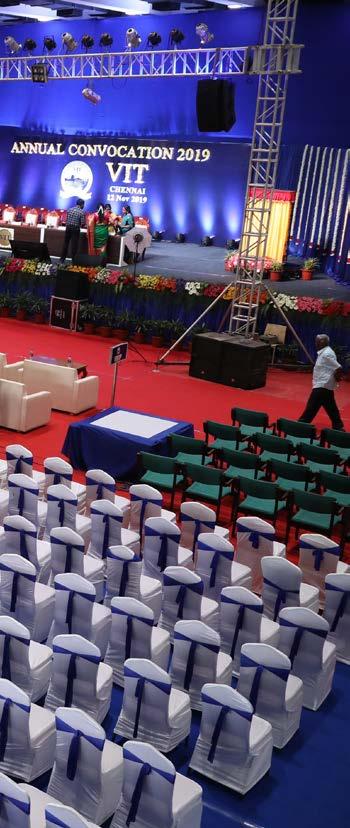
Our University firmly believes in providing its students exposure to national and international knowledge experts, through regular national and international conferences / symposia and workshops hosted on campus. It is with this view that a wide choice of modern conference facilities have been meticulously planned and incorporated into the VIT campus. ‘Anna Audi ‘ commonly used by students is nothing short of being a marvel. Able to accommodate 1800 students and spread over an area of 15436 sq. feet , it has been built with centralised air conditioners , Wi-fi service and a spectacular stage along with green rooms and perfect amount of lighting.This auditorium is used for various events and conferences. It is located beside the volleyball and basketball courts and serves as a landmark in VIT.
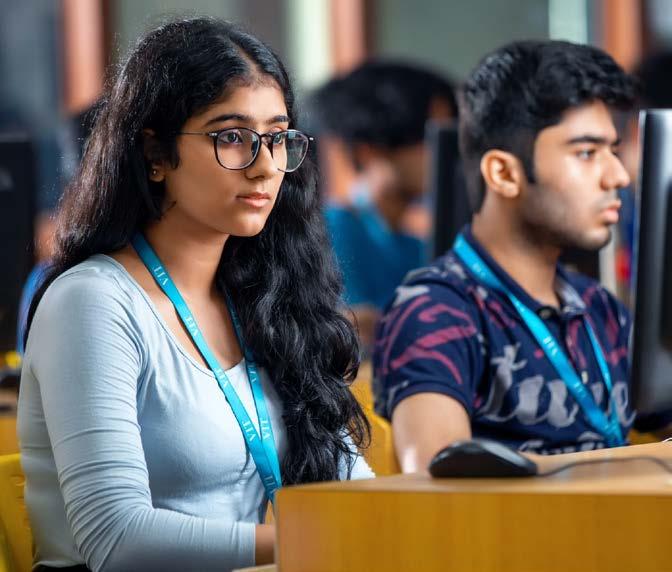
Centre for Technical Support (CTS) maintains the policies governing the use of VIT computing and IT communication resources. The IT Policy applies to the resources administered by the administrative departments such as Library, Computer Laboratories, Offices of the Institution, Hostels and Guest houses wherever the network facility was provided by the Institution. Further, all the faculty, students, staff, departments, authorized visitors/visiting faculty and others who may be granted permission to use the IT Infrastructure, and must comply with the guidelines. Certain violations of IT policy laid down by VIT by any institution member may even result in disciplinary action against the offender
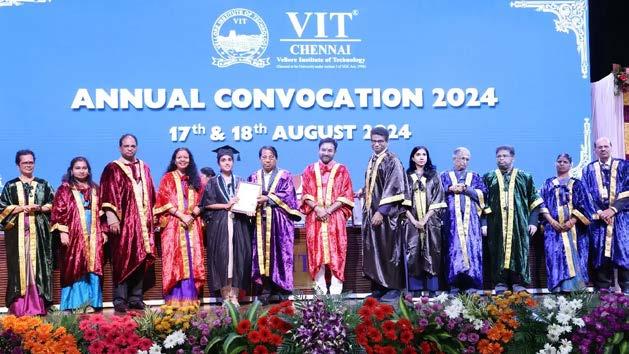
by the institution authorities.
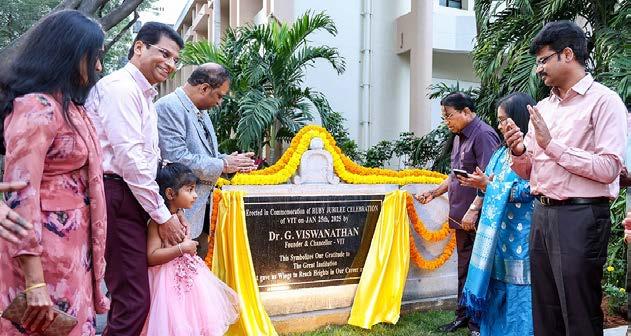
The first 4 batches of Vellore Engineering college (VEC) planned to erect a stone Pillar in commemoration of 40 years of VIT’s involvement in transforming lives through education and impacting society. This pillar was inaugurated by our Hon’ble Founder and Chancellor Dr.G.Viswanathan on 25th January 2025 near by GDN Block.
To achieve a healthier lifestyle while coping with the pressures of studying, one needs to be healthy both emotionally and physically. With this motto, VIT emphasizes the importance of sports and considers them as an integral part of the curriculum. VIT has a number of centres for physical education and sports activities that help the students maintain fitness and develop a competitive spirit. Its numerous outdoor playgrounds and indoor courts are spread over a 20-acre area.
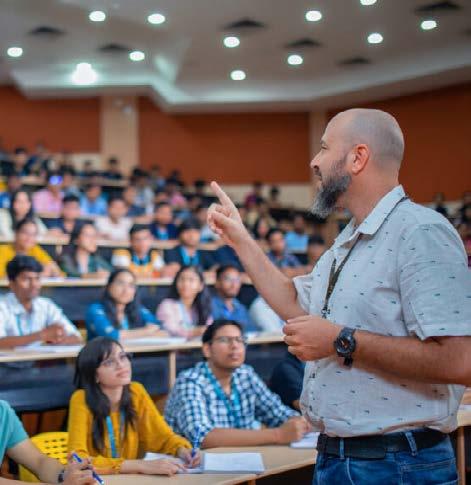
The smart classrooms are well designed to incorporate everything needed for a pleasant learning atmosphere. The wide spacious classrooms contain a white board and a projector that is used for teaching. As a result professors can switch to different modes of teaching as and when required so that the teaching isn’t monotonous and the lectures are put across in the best way possible. This hi-tech equipment enables the faculty to conduct classes in a way that enable students to make use of every available resource at the click of a button. These classrooms are also often used for seminars and events from time to time.
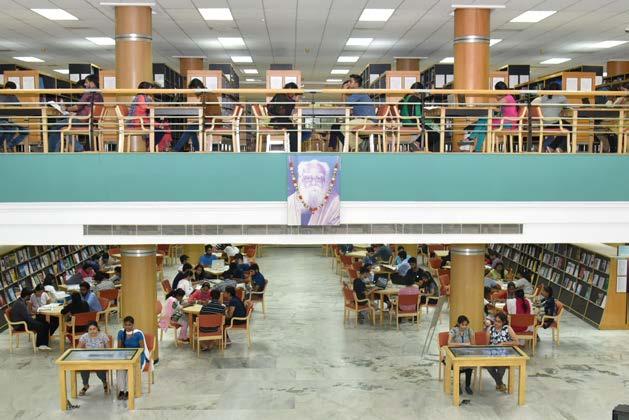
The Central library is spread over an area of 7770 sq m with six floors (Excluding ground floor). It has specialized collections of books, journals & other resources in mathematics and sciences, engineering and technology, biotechnology, humanities, social sciences and management ranging from printed books, e-books,
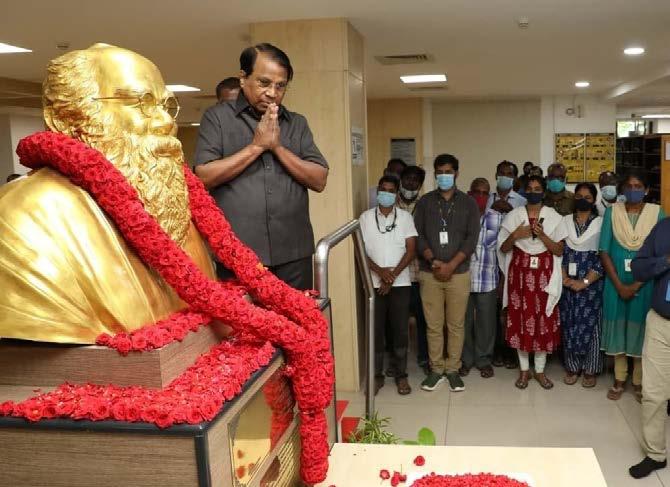
and back volumes.
The library subscribes to national and international journals in electronic version and print. The library has a video conferencing facility other E-Learning resources initiated by the Government of India. The library is fully automated with the web centric integrated library management system (KOHA 19.05) with Biometric and RFID technology with self-issue and return kiosk, WEB-OPAC (Online Public Access Catalogue), and online renewal facility.
VIT Online Education was started with the objective of offering online education to aspiring learners around the globe. VIT Online Education will cater to the needs of students and working professionals interested in pursuing higher education at their own
pace, and it provides flexibility in learning. The development in information and communication technologies paves way for taking education to the doorstep of learners.VIT Online Education aims at creating and offering programmes and courses in emerging areas with a focus on quality, adhering to the regulations of UGC and AICTE. It has state-of-the-art facilities for the development and delivery of online programmes. Experienced faculty members of VIT are presenting the lectures of online Degree Programmes.
The Career Development Centre is to empower students to achieve their career aspirations by providing them with the necessary support, guidance, and resources. The Centre is committed to promoting a culture of lifelong learning and to helping students acquire the skills and knowledge needed to

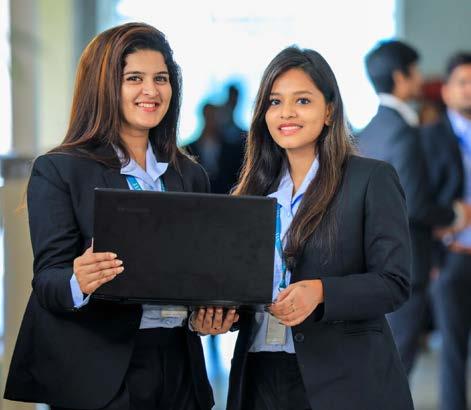
succeed in a rapidly changing job market. The primary objective of CDC is to provide students with a variety of career-related services that will help them to prepare for, enter, and succeed in the workforce. The key objectives of CDC are as follows:
• To provide students with the resources, tools, and guidance they need to explore career options and make informed decisions.
• To assist students in developing the skills and competencies necessary to succeed in the workforce.
• To connect students with potential employers and job opportunities.
• To support students in their job search efforts and provide ongoing career support throughout their professional journey.
VIT provides education to students not only from India but also from abroad. The growing number of foreign students on campus to pursue their education and research stands as a testimony to VIT’s transformation into an International Institute.
The students get a chance to visit international partner universities in their pre- final or final year under the Semester Abroad Programme (SAP). VIT’s Semester Abroad programme aims to encourage students from all streams to pursue their courses and capstone project in one of the international partner universities. The Office of International Relations organizes a road show to students in their pre-final year and all are invited to participate. The Semester Abroad Programme is open to both undergraduate and postgraduate students. A Semester Abroad Programme is a transformative experience that equips students for a globalized world.
VIT’s International Transfer Programme (ITP) offers students an exceptional opportunity to pursue a global education by completing part of their degree at VIT and the remaining credits at a prestigious partner university abroad. Depending on the program structure, students can earn a degree from VIT, the partner university, or both, giving them a competitive edge in the global job market.The students can opt for the International Transfer Programme in partner universities in the USA, UK, Belgium, Sweden, New Zealand and Australia. This international program is offered to Engineering streams. The International Relations of VIT also brings in over 200+ faculty from foreign universities to take up teaching and research assignments at VIT. International programs don’t end here. There are internships, summer and winter schools available all over the globe for the students to earn a
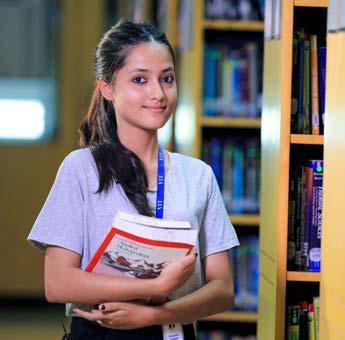

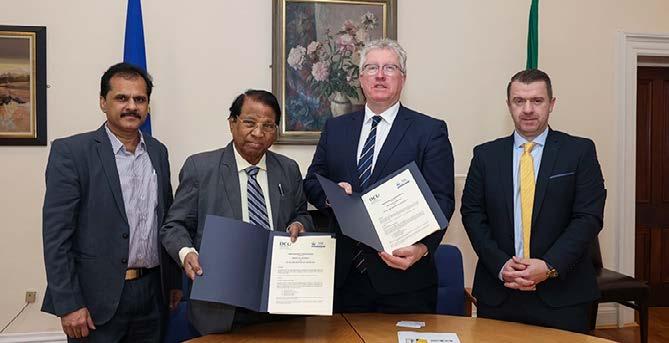
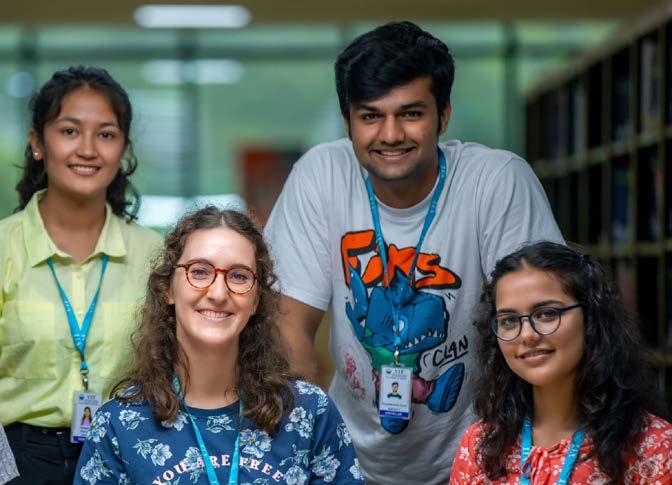
fellowship, valuable work and study experience. A reputation for excellence in research supported by a high calibre staff is reflected in the demand for entry to Vellore Institute of Technology’s programmes from high achieving students. Committed to excellence in fundamental research as well as the development of innovative technologies for the future, VIT offers a quality research training experience for its students. The Institute maintains its relevance to world-class research by linking with industry and business through local and international research networks.
• To offer Research Programmes in par with international standards in various disciplines.
• To instill Research culture in the minds of the students in their undergraduate programme itself.
• To foster and promote Research Integrity amongst the researchers.
• To formulate the Research Policies and Regulations, from time to time, based on the needs, but in total compliance with associated regulatory bodies.
Within a short time of becoming a University in 2001, VIT has risen to the expectations of Government organisations, research institutes, mission-critical organisations like Defence establishments, the Indian Space Research Organisation (ISRO) and Atomic Research Centres. It has secured sponsorship for
50 research projects to the tune of Rs 100 million. VIT also offers consultancy services worth more than Rs 2.2 million to the Defence Research and Development Laboratory.
Every attempt has been done by the management and other administrative boards to assure that every student finds VIT a very lively, fun and resourceful community to employ their erudite years. Conscious of the influence these active years can have on the minds of the expectation of our nation and the globe, VIT endeavours to promote, introduce and expand any and all ventures to shape their minds. By bringing clubs, chapters and college festivals, students are not simply revealed to a competitive environment inside the university but also with reputed universities and colleges in and around the country.
RIVIERA: Riviera, the annual International Sports and Cultural Fest, is one of the major events that gives our students a platform to showcase and shape their talent in various technical and managerial areas.
GRAVITAS: GraVITasis an endeavour to provide a platform to all individuals to showcase their skills and improve their
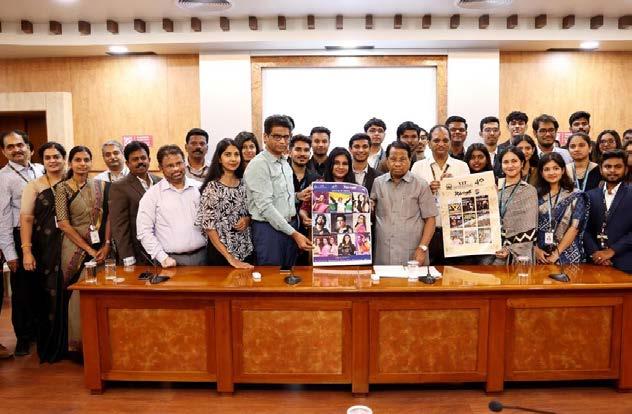
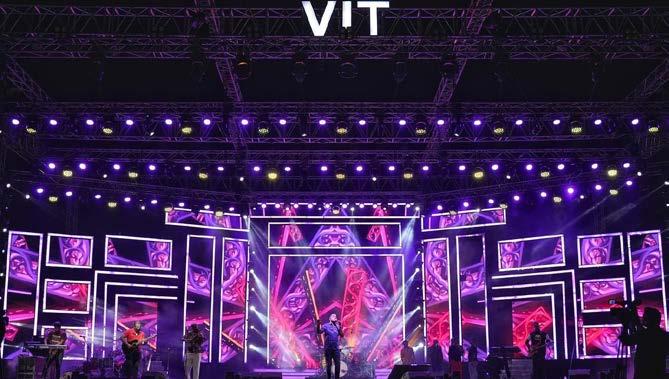
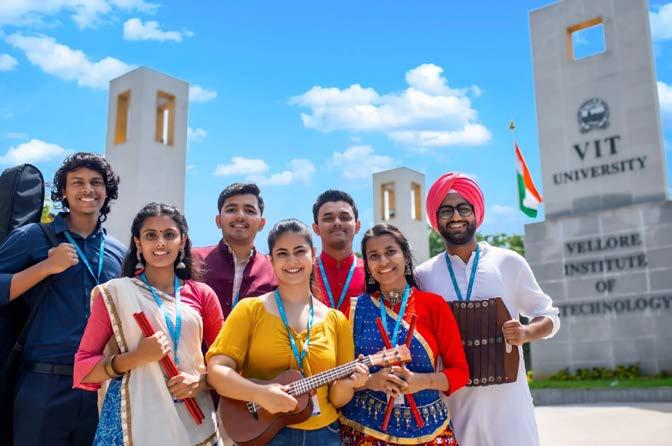
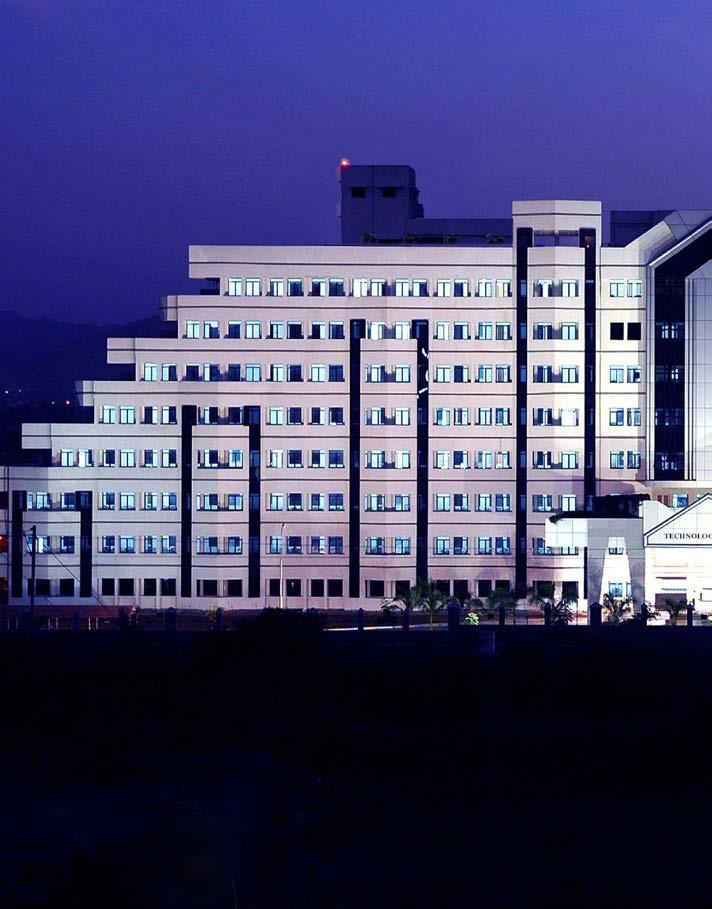
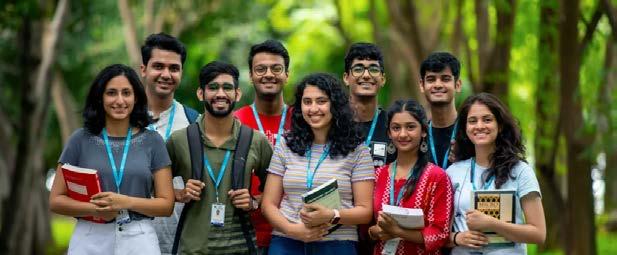
innovation skills in the fields of technology.
The Department of Physical Education was set up in the year 1984. The Department of Physical education is located in VIT Shopping Complex.This complex has a magnificent air conditioned gymnasium and Snooker Hall. A separate fitness centre for men and women has also been established in the respective Hostels. A swimming pool of international dimension is also available in the campus.
YOGA: Yoga is a Sanskrit term meaning to join, unite or together. It is a way of life, an integrated system of education for the body mind and inner spirit.Yoga may be practiced by any one regardless of age, sex. However if you suffer from any specific medical condition it is best to check with your physician before taking up
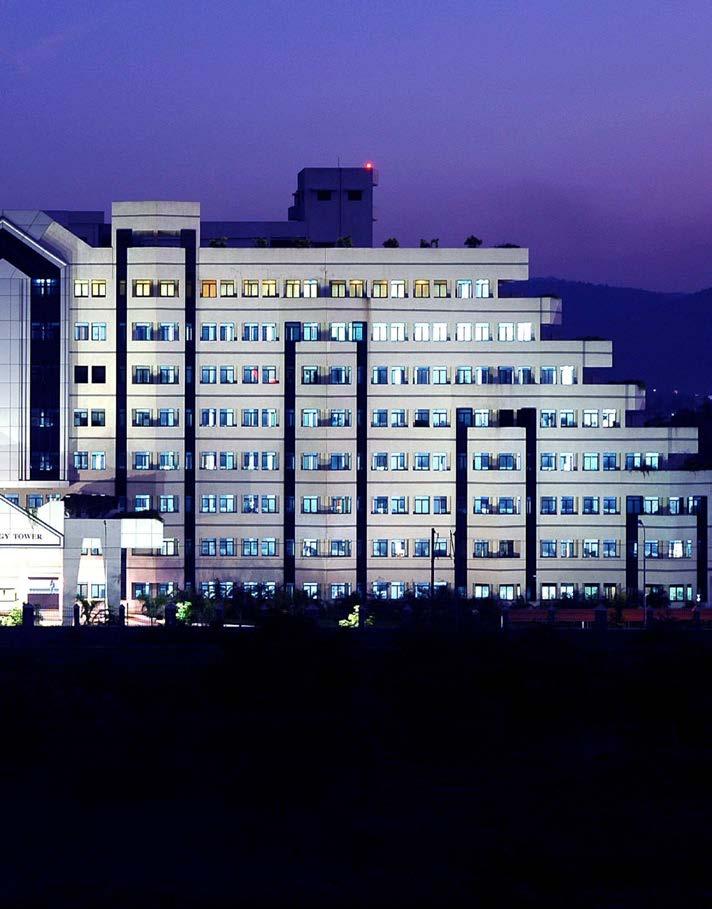
asana practice. For Beginners There are so many different kinds of yoga practices, it is possible for anyone to start. The idea is to explore your limits. It is a great way to get in tune with your body and your inner self.
VIT stands as a premier institution committed to excellence in education, research, and holistic student development. With a world-class infrastructure, a diverse and inclusive student community, and extensive international collaborations, VIT continues to shape future leaders. Its emphasis on innovation, career development, and research has led to national and international recognition. The vibrant campus life, enriched by cultural and technical fests, sports, and wellness programs, fosters personal and professional growth. VIT’s relentless pursuit of academic and societal advancement makes it a beacon of learning, inspiring students to achieve excellence and contribute meaningfully to the global community.

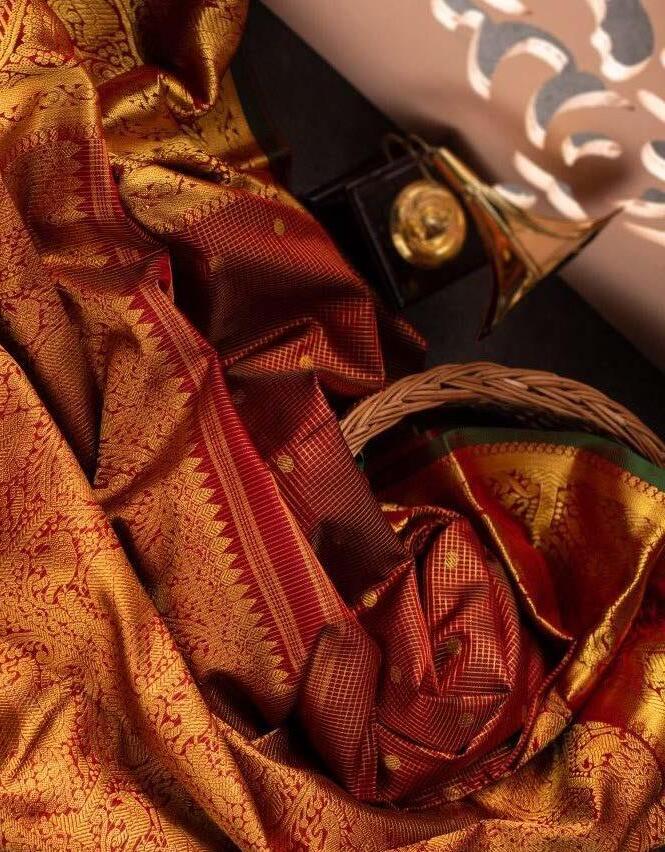
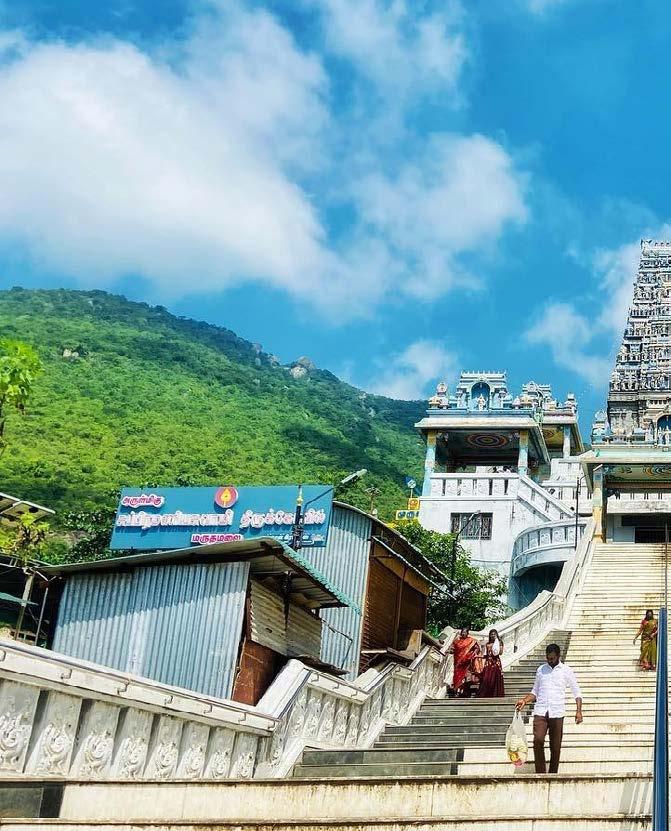
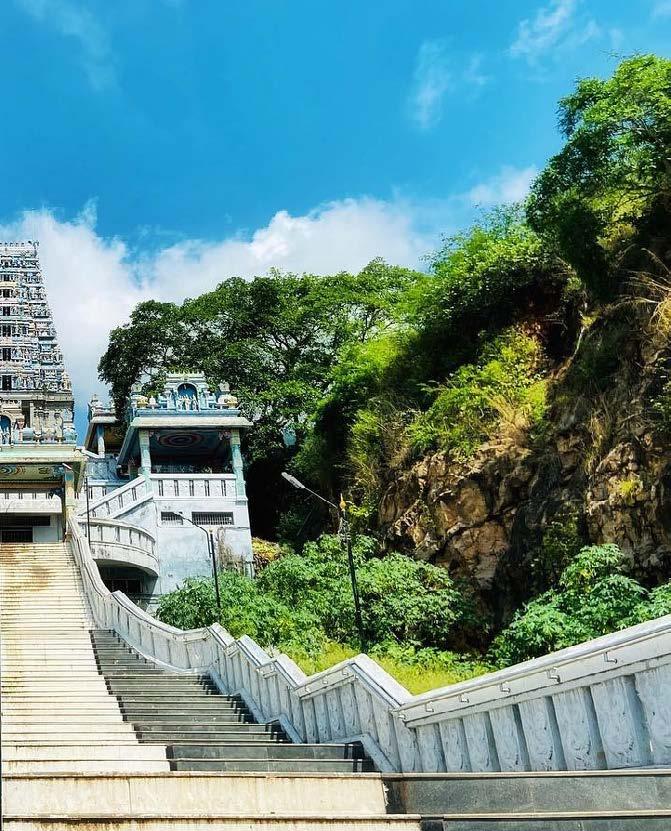
Marudhamalai Murugan
Temple or the Maruthamalai Marudhachalamurthy Temple, is a popular 12th-century hill temple situated in Coimbatore, Tamil Nadu, India. Built by Tamil kings during the Sangam period as indicated in the Purananuru, the temple is dedicated to Lord Murugan and is considered the Seventh House of Lord Murugan.
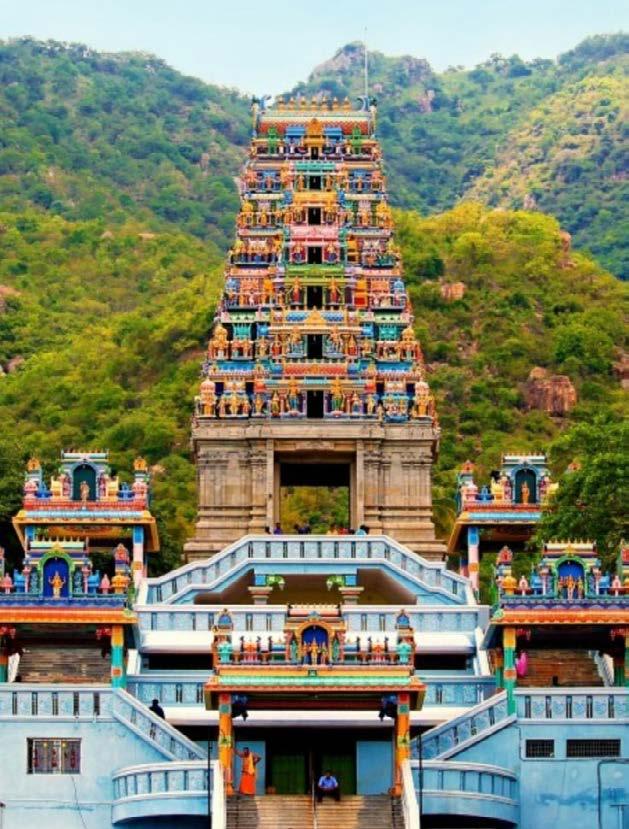
Like most Murugan temples, the temple is situated upon a hill, part of the Western Ghats about 12 km west from the centre of the city of Coimbatore. Thai Poosam and other Murugan festivals are celebrated here. On many evenings, the devotees take out a procession of Lord Murugan sitting in a chariot (Rath Yatra) and encircle the temple. The temple is maintained and administered by the Hindu Religious and Charitable Endowments Department of the Government of Tamil Nadu.
The name Marudhamalai refers to the 600 ft (180 m) tall granite hill on which the temple stands and is derived from the native tree called marudham or marudha maram (Terminalia arjuna, also known as the Arjuna tree) which grows there, and malai, meaning hill or mountain in Tamil. This Murugan temple is special since it is on the east face on the hill, unlike other Murugan temples on the hills.
Marudhamalai Adivaram
Marudhamalai, or Marudhamalai Adivaram (meaning “at the foot of Maradhumalai”), is also the name of the locality to the east of the hill and the temple. It forms part of the 17th ward of Coimbatore Corporation.
Site:
The presiding deity is addressed by multiple names, such as Marudhamalai Andavar, Marudachalapathi and Dhandayuthanpani. There are springs or pools of sacred water (theertham) around the temple, namely Maruda Theertham and Skanda Theertham, which are believed to possess medicinal properties.
Pambatti Siddhar:
In the southern end of the temple the pragaram staircase to the Pambatti Siddhar cave is located. Pambatti Siddhar (or Paambatti Siddhar) was one of the 18 Siddhars and lived during the 12th century. Pambatti Siddhar performed penance on the Marudhamalai hill. Lord Murugan is said to have appeared as a snake to him, and to have appeared again later along with his consorts Valli and Deivanai, who is said to have given Siddhar the Marudha Theertham and blessed him. A connecting tunnel route from Lord Murugan’s sanctum sanctorum and Siddhar’s cave was formed and Siddhar is believed to have used it to worship the Lord.
Visit the magnificent Murugan Temple in Maruthamalai, which is nestled in the breathtaking Western Ghats just 15 kilometres west of Coimbatore. This temple dedicated to Lord Murugan is an absolute must-see for any tourist, with its marvellous architecture set against a stunning scenic backdrop. Discover the Arulmigu Subramaniyaswamy Temple, which is located on a scenic hill in Maruthamalai and where you can soak in the area’s ancient history and natural beauty. This temple, built in the 12th century, is one of many Murugan temples perched on hills throughout the region. You can enjoy stunning views of the surrounding hill range and immerse yourself in the peaceful atmosphere that has drawn visitors for centuries from the temple. Come discover Maruthamalai, a hidden gem in Tamil Nadu! There are many fables and myths associated with this temple.
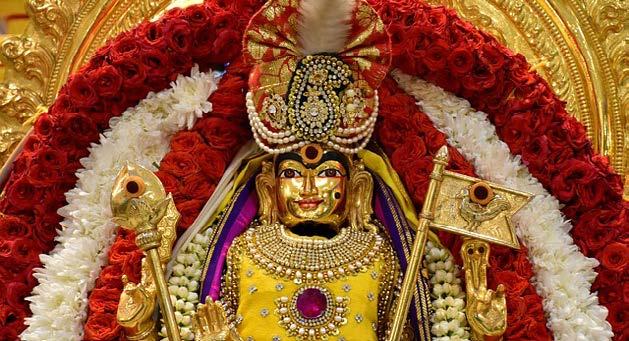
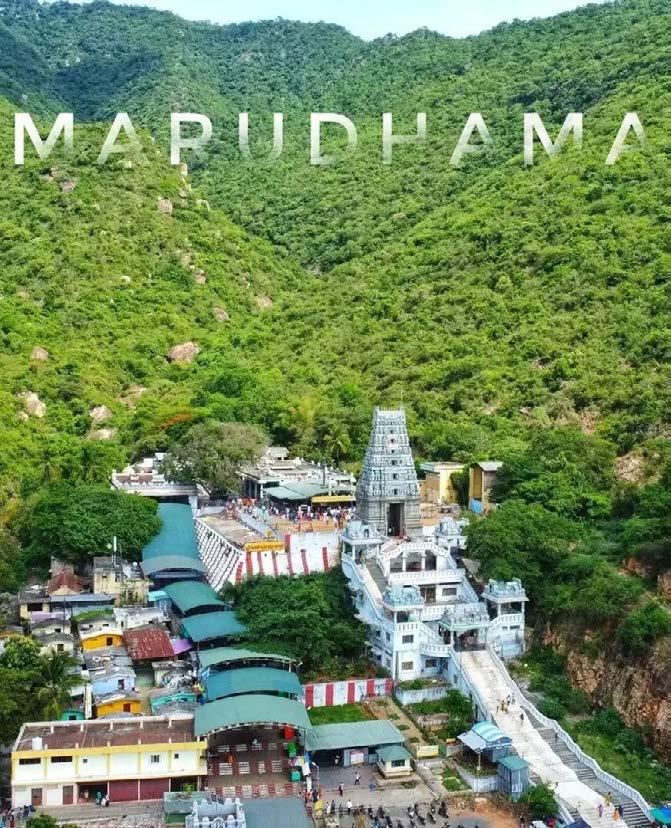

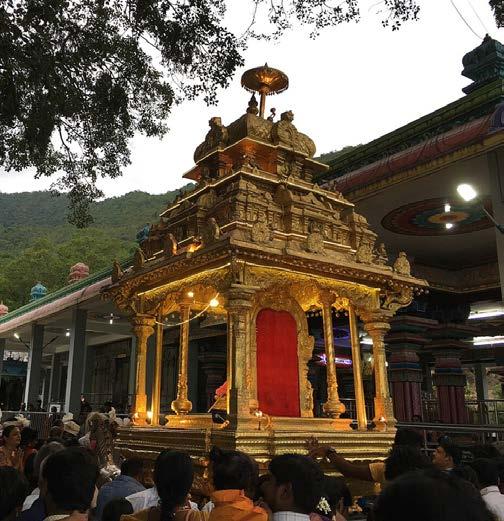
Discover the fascinating story of Pambatti Siddhar, a renowned snake doctor and saint who once roamed the lands where our beautiful temple now stands. Legend has it that he used to extract venom from dangerous snakes during his childhood to make medicine for snake bites. However, one day he was enlightened by a sage who revealed the true purpose of life - to identify and control our inner snakes through the power of yoga. After contemplating the teachings and meditating on Lord Murugan, the saint finally received a divine vision from the lord himself. Today, our temple proudly displays the ornate gold and silver-covered idol of Lord Murugan, and during Artha Jama Puja, the deity appears in the form of Dandapani wearing a dhoti. You can also visit the shrine of Pambatti Siddhar and witness the deity in the form of a serpent.
Best Time to Visit
The temple is open daily from 06.00 a.m. to 01.00 p.m. and from 04.00 p.m. to 07.00 p.m. Don’t miss this chance to immerse yourself in the rich culture and history of this shrine.
Coimbatore has a well-connected network of buses that connect the city to other major cities in Tamil Nadu and neighboring states. You can take a bus from the Coimbatore bus station to reach the temple.
Coimbatore International Airport, about 32 km away
Coimbatore Junction, about 12 km away
Imagine unwinding in a picturesque village blessed with the beauty of all elements of nature like the gushing streams, jaw-dropping waterfalls, verdant hills and rich forest life. The village of Annaikatti, situated 30 meters away from Coimbatore offers you nothing less than a splendid and tranquil experience! Anaikatti, meaning a group of elephants, offers you to experience the natural beauty of the Western Ghats. The village is also home to the Siruvani river, which UNESCO has certified to have the second sweetest water in the world. You can embark on a night safari through Anaikatti forest where animals like elephants, mongooses and the Indian bison can be spotted. It is advisable to maintain silence during the trip as the sound may disturb the animals. Also, during the day, you can enjoy the beauty of rainforests. The silent valley national park in the village is one of the last explored rainforests in the country. It also has a mythological connection as it is believed that Pandavas during their exile had visited the forest and it is also known by the name Sairandhri Vanam, another name of Draupadi and the river nearby is called Kunthipuzha, named after Kunthi. Jeeps are available for hire to enjoy the rare flora
and fauna of the place. If you want to enjoy the rustic charm of the countryside, do not miss visiting Mangarai, a hamlet at the foothills of Anaikatti. The small village is surrounded by coconut groves and brick kilns. The ‘kaapi’ or coffee in this place is special for its blend of sweet and spice by adding dry ginger and jaggery. People often have steamed legumes mixed with coconut and legumes with this coffee. The Anuvavi Subramanya Temple and The Lalithambikai Temple are two temples that are famous in Mangarai. To know more about the ecosystem, and nature conservation, visit the Salim Ali Centre for Ornithology and Natural History (SACON) and Nilgiri Biosphere Nature Park. There are also elaichi (cardamom), coffee and pepper plantations which you can visit through off-road rides. The Arsha Vidya Gurukulam provides you insights into Vedas, Upanishads and other ancient texts.
Mettupalayam Bus Stand, about 40 km away.
Coimbatore International Airport, about 43 km away. Coimbatore Railway Station, about 32 km away.
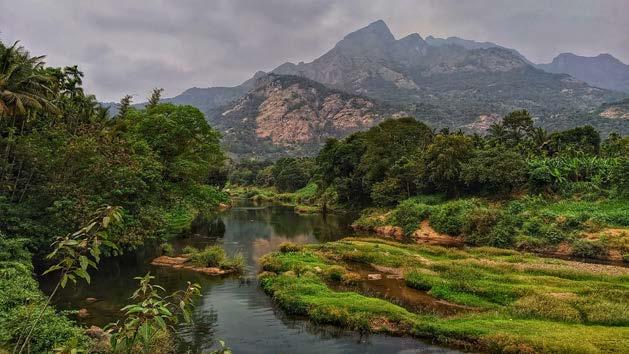
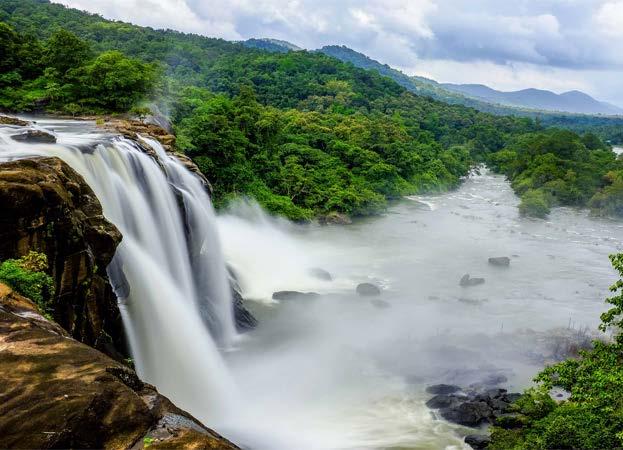
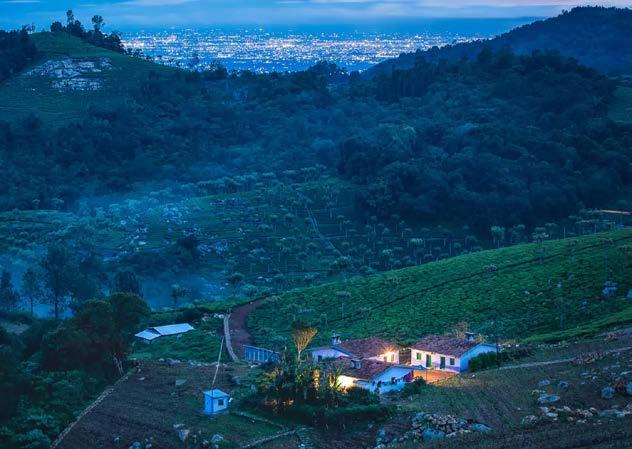
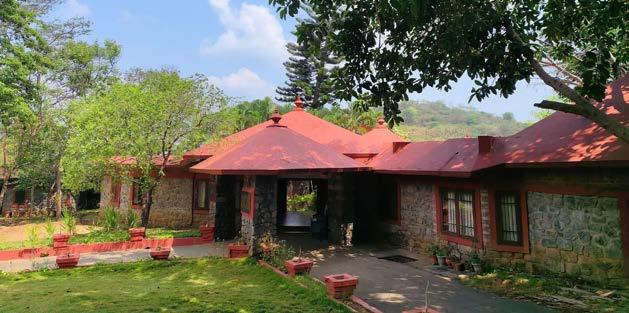
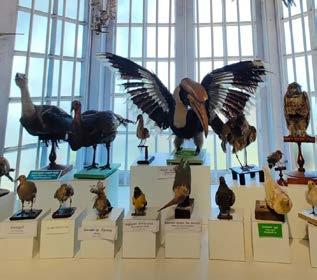

Spread across 55 acres, the Salim Ali Centre for Ornithology and Natural History (SACON) is located in Anaikatti, in Coimbatore. It is an ideal place for researchers to study more about the multiple ecosystems in this area. If you are a wildlife enthusiast and someone who loves exploring nature in detail, then you should not miss this place. Salim Ali was an ornithologist and naturalist who was referred to as the Birdman of India. The Ministry of Environment and Forest and Bombay Natural History Society set up a research centre for ornithology and natural history in 1990. It was later named as Salim Ali Centre for Ornithology and Natural History in memory of the bird Man. Its campus was moved to the current campus among the woods of Anaikatti in the Western Ghats. Situated next to Coimbatore South Reserved Forest SACON has eco-friendly buildings with natural lights and open atriums. The building was built by Laurie Baker, known for his
eco-friendly architecture. The campus has 402 species of flowering plants and 177 species of birds. With 107 species of butterflies, there is a mass movement of butterflies happening in the months of October and November. With more than around 17 scientists, the institute has been instrumental in discovering four flora and fauna species. The Institute has a large library that is accessible to both students and guests. Guests can visit SACON between 9.00 am to 5.30 pm and the entry is free. The institute is closed on weekends and there are special guidelines for taking photography.
Gandipuram Central Bus Stand, about 25 km away. Coimbatore Airport, about 34 km away. Coimbatore Railway Station, about 26 km away.
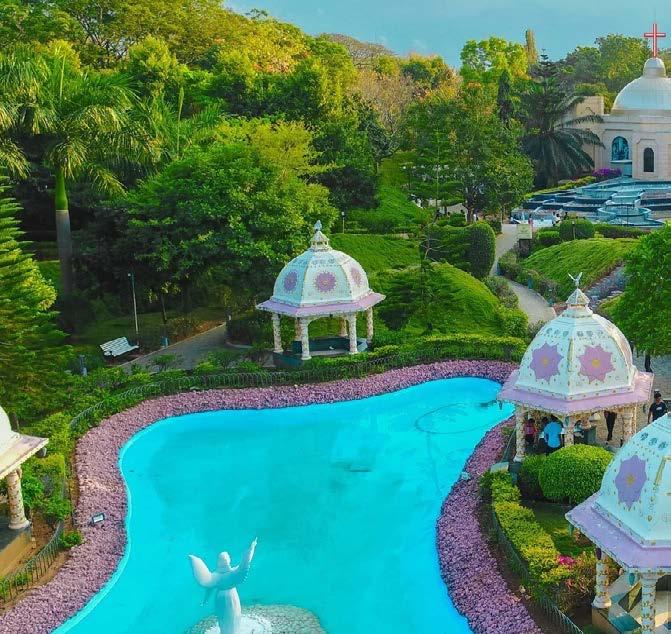
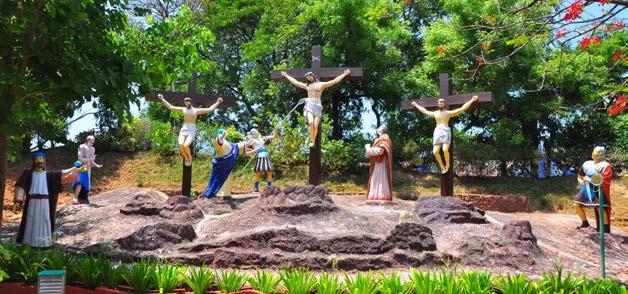
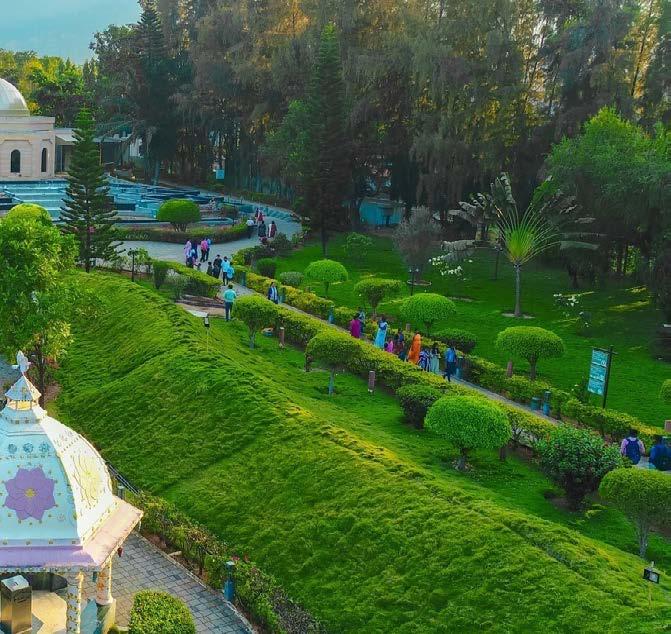
Bethesda International Prayer Centre has been raised on 10th October 1993 by DRD.G.S. Dhinakaean and Dr Paul Dhinakara. It spans 1.5 acres of land at the foothills of the Western Ghats. It is close to Siruvani waterfalls and surrounded by lush green lawns, plants and trees with bright blooming flowers and chirping birds and peacocks.
Bethesda International Prayer Centre is open all 7 days a week, 365 days a year. It is open from 6 AM to 8:3 PM at the night. People visit this place frequently for meditation and counselling regardless of religious discrimination.
Address
Bethesda International Prayer Centre
Karunya Nagar
Siruvani Road
Coimbatore – 6411114
How to Reach
Coimbatore Bus Stand, about 2 km away.
Coimbatore International Airport, about 10 km away.
Coimbatore Railway Station, about 4 km away.
Are you looking for a spiritual journey that will leave you feeling refreshed and cleansed? Look no further than Coimbatore’s Eanchanari Vinayagar Temple! This enchanting temple has a distinct allure that draws devotees from all over the world. The temple, which is devoted to Lord Ganesha is constructed in the Dravidian architectural style, exudes a tranquil, meditative atmosphere. When the temple was built in 1500 AD, its 6-foot-tall and 3-foot-diameter Ganesh deity was positioned within. Legend has it that while transporting the idol from Madurai for installation, the cart axle broke and the idol got seated in eachanari, where the temple was later constructed. Ganesh Chaturthi is celebrated with much pomp and pageantry here. Take part in the sacred and awe-inspiring Homam Yajna, a traditional fire ritual dedicated to Lord Ganesha, in the early hours of the morning. As one of the most significant forms of offerings in Hindu temples, attending this ceremony showcases your
devotion and offers a unique opportunity to witness a timehonored tradition. There are descriptions of the numerous mythical tales of Lord Ganesha that are displayed around the sanctum sanctorum. You can receive tokens to offer Archana and book for prasadam through the temple trust. You can also sit in the area surrounding the sanctum sanctorum to meditate or unwind for a while.
The temple is located about 12 km from Coimbatore city on NH 209 and is open from 05:00 a.m. to 09:00 p.m. with no entry fee.
Gandhipuram Central Bus Terminus, about 13 km away. Coimbatore International Airport, about 19 km away. Coimbatore Junction Railway Station, about 11 km away.
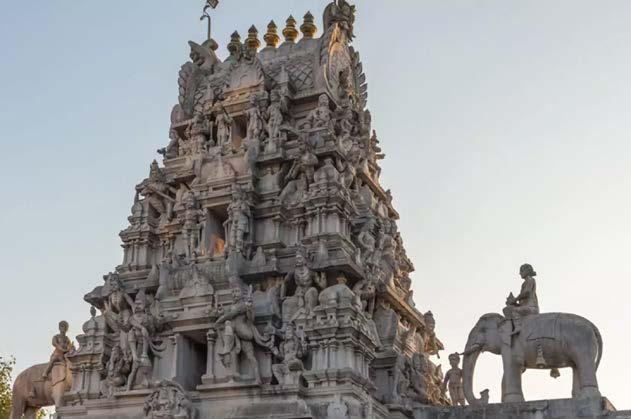
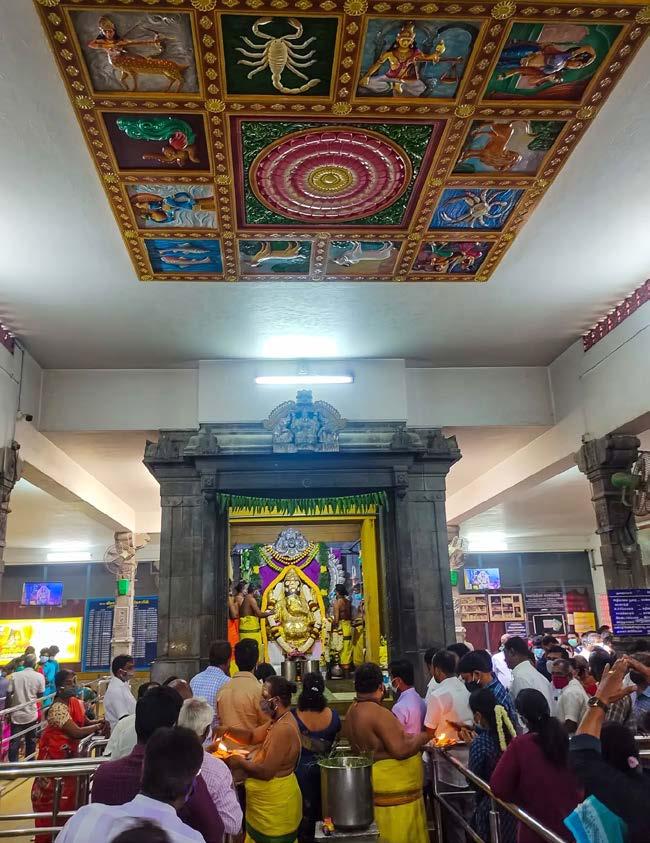
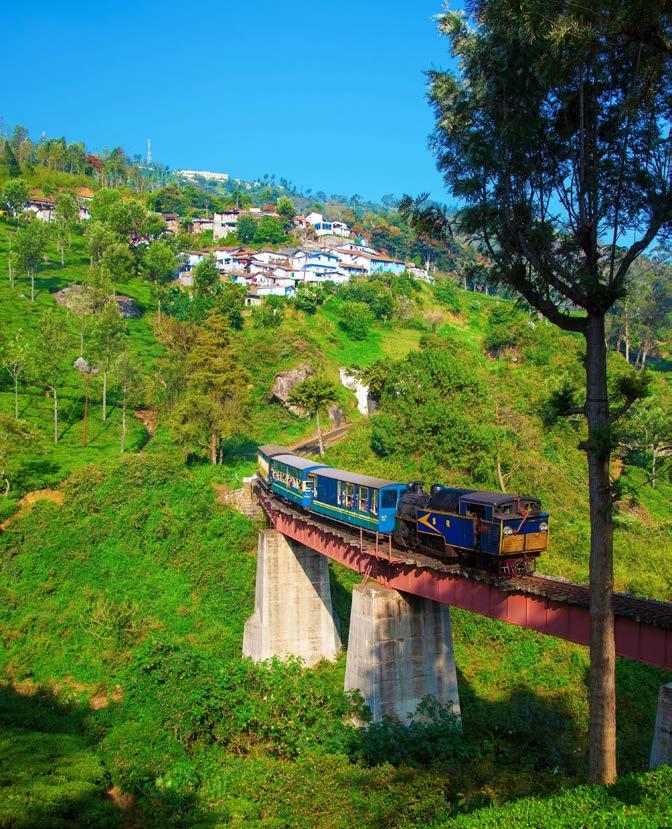
A vintage-themed train meandering up a track, gifting stunning views of hills and valleys; with you sitting back, relaxing and pondering about the majesty of Nature. The Nilgiri Mountain Railway offers the travellers truly a once-in-a-lifetime experience. The Nilgiri Mountain Range is one of the most picturesque spots in the world. Covered in lush greenery, with majestic mountains forming a stunning backdrop, the locale offers sights that will blow your mind away. Imagine having a train ride through this region enjoying the glimpses of Nature at its best. That is what the Nilgiri Mountain Railway promises you. Nicknamed the ‘Toy Train’ as it excites kids more than anybody else, the railway line is a metre gauge that is 1000 mm long.
The train slowly ascends the hills, letting you soak in the beauty of the surroundings; passing through tunnels, sharp edges and forested tunnels. The total distance that the train covers is 46 km, taking nearly 5 hours to reach the top point at Ooty. You can also take the train back down the hill, a journey which will take nearly 4 hours to complete. Built by the British in 1908, the train is the only operational rack railway in India at this point. The train uses steam locomotives and is operated by the Southern Railway of India. The train starts from Mettupalayam and ends in Ooty. It passes through several piquant hill stations including Coonoor, Wellington, Love Dale and Fern Hill. In 2005, UNESCO declared the railway as a World Heritage Site as an extension to the Darjeeling Himalayan Railway. It has since then been a part of the greater heritage site of the Mountain Railways in India.
Ooty Bus Stand, about 10 km away.
Coimbatore International Airport, about 59 km away Coimbatore Railway Station, about 60 km away.
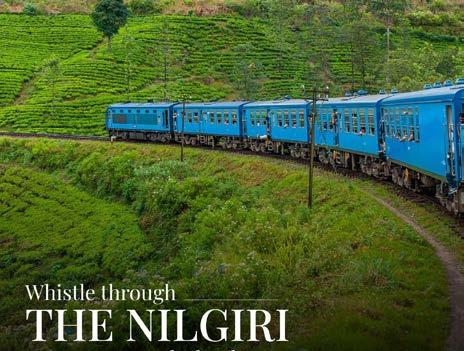
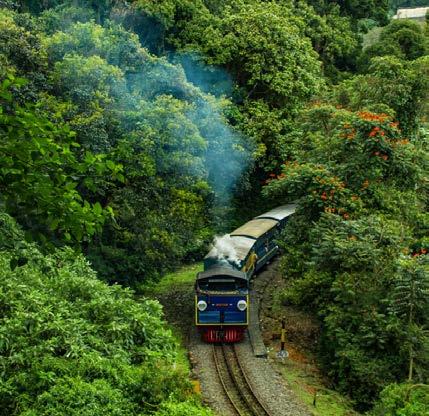
Imagine a picturesque landscape marked by green, rolling hills, mountains with flowing mists, and a metre-gauge railway line running through this tranquil countryside with a quaint blue train slowly chugging away. How often does one get a chance to hitch a trip on such a train traversing one of the most idyllic scenery? There is no better way to explore the rolling hills and pine forests of Ooty hill station than by taking the Nilgiri Mountain Railway – the blue toy train as it is fondly called.
The railway line constructed in 1908 winds through the enchanting Ooty landscape covering a distance of 46 km with stations such as Mettupalayam, Wellington, Arvankadu, Ketti, Lovedale, Coonoor and Udagamandalam/Ooty(UAM). Recognizing the historical importance and heritage, Nilgiri Mountain Railway was declared a UNESCO World Heritage Site in 2005. The 4.5-hour leisurely train journey passes through 16 tunnels, 250 bridges and 208 curves while providing some impeccable views of places that are otherwise inaccessible.
The train climbs an altitude of 2200 m above sea level to reach Ooty from Mettupalayam which is 330 m above the sea level. One pair of trains operate services on this picturesque route offering first class, second class and unreserved seats. Tickets are always in high demand as Ooty is a popular tourist destination. The schedule can be selected and the bookings made through the website of Indian Railways. Due to high demand tickets often need to be reserved two to three months in advance. As an icon of the Queen of Hills herself and immortalised through countless movies, the little blue toy train is not an item to be missed on the itinerary of any traveller to Tamil Nadu.
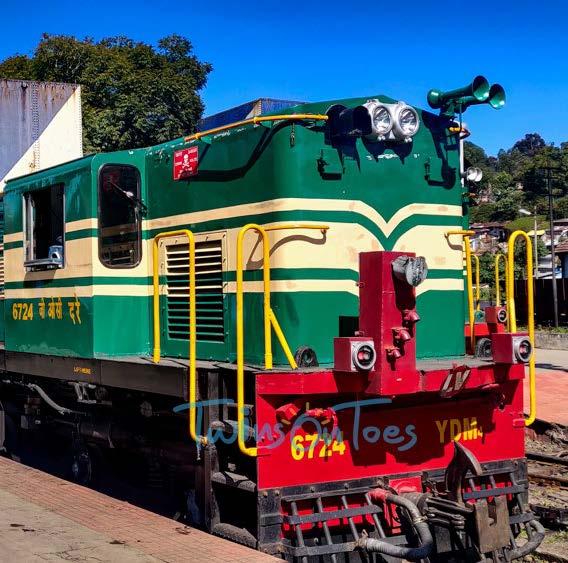
Seek out the beauty of nature at its very best at Coonoor, the second largest hill station in the Nilgiri hills. For trekkers and tourists, the place serves up a lot to explore. Blanketed by the green cover of Nilgiri hills, it packs an array of attractions. With its spellbinding set of viewpoints, sprawling hills , waterfalls and luxuriant greenery, Coonoor is your perfect getaway spot. Take a stroll along the tea plantations clouded in mist. Spend time in the valleys and near the waterfalls. Click some amazing pictures. Gear up for a memorable trekking experience. Cut your way through the hills and make it to the top to some of the most spectacular views. Drop by the town and discover artefacts and souvenirs. If you love birds, head to Sim’s park, considered as one of the top attractions of Coonoor hills. Surprise yourself with the sight of bulbuls, babblers and robins. Listen carefully to the sounds of birds and if lucky, spot them just like that. Named after J D Sim, a former secretary to the Government,
Sim’s park houses unique species of plants and shrubs as well. Plan your trip to witness the annual fruits and vegetable show held here. Notable landmarks include the Lamb’s rock, Dolphin’s nose, Catherine falls, law’s falls and droog fort. Trek your way to the top of Lamb’s rock, it would tire you a bit, but the spectacular view is worth the effort. If you are fit, go for it. Enjoy the beauty of sunrise and sunset at the Dolphin’s nose viewpoint. Get the best view of Catherine Falls from here. Experience local shopping at Coonoor and walk home with some exquisite products. The train ride from Coonoor to Ooty is something you don’t want to miss. Make sure you leave ample time to explore the best of Coonoor. A hilly paradise perched in the lusciousness of the Nilgiris, Coonoor is one of the most soothing hill-stations in the country. With tea plantations and greenery gracing the town’s entirety and weather that not only calms the skin but also the soul, Coonoor is and should deserve a spot in every to-visit list.
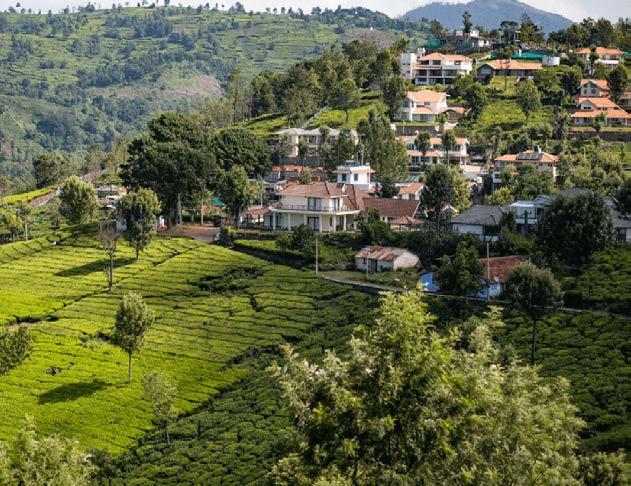
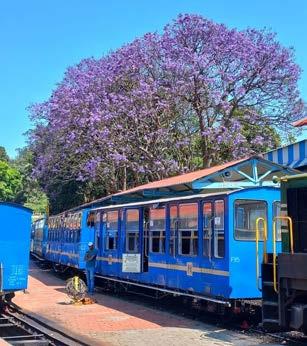
Marked by red-topped houses on green slopes enveloped by fog and picturesque natural attractions, it is a destination that is best enjoyed during the summertime. Although a small town, it is much more peaceful and beautiful than Ooty. And while the lower part of the town bustles with commercial activities and crowd, upper Coonoor is where nirvana truly exists. Nevertheless, here is what a summer spent in Coonoor looks like.
An escape from the scorching heat in the rest of the country, Coonoor’s climate is not just an ameliorating retreat but also a luxury of sorts. I mean, isn’t there anything more luxurious than revelling the raw elements of nature? Here, in the misty hill-town, one has the opportunity of experiencing longlasting peace that comes with the kind of weather there. It conveys calm, it boosts positivity, and it heals. Given the hillstation’s stellar location surrounded by lush plantations and mesmerizing lakes, all wrapped in foggy sky, there are multiple tourist attractions here. Some hidden, undiscovered crooks, and some popular natural spots, Coonoor is filled with these sights. Catherine falls, Lady Canning’s seat, Lamb’s rock, and the Hidden valley are a few to name.
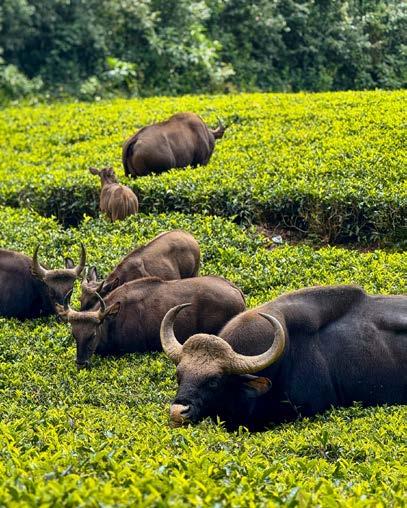
Strolling through the tea fields in Coonoor in pleasant mornings is something every visitor should do. The hill-station, which has every green slope covered with tea plantations, is a heavenly abode for those who fancy the beverage. Highfield tea factory is one such factory that offers you an opportunity to explore and understand the process of tea-making besides taking a look at the fields. There is nothing as rejuvenating as playing a game of golf amidst misty weather and lush green slopes. The Nilgiri hills, in particular, are extremely famous for iconic golf courses built in the British era. Golfing in the pleasant morning hour of Coonoor is a definite must at he hill-station.
Coonoor in summer is absolutely ideal, for the weather is neither too hot nor too cold. Moreover, in these few months, the town also opens up for treks and other adventures. With Isprava homes being accessible to this enchanting hill-station, we say, start crafting your summer travel to the Nilgiris already.
Coonoor Bus Stand
Coimbatore Airport, about 71 km away Comibatore Railway Station, about 71 km away

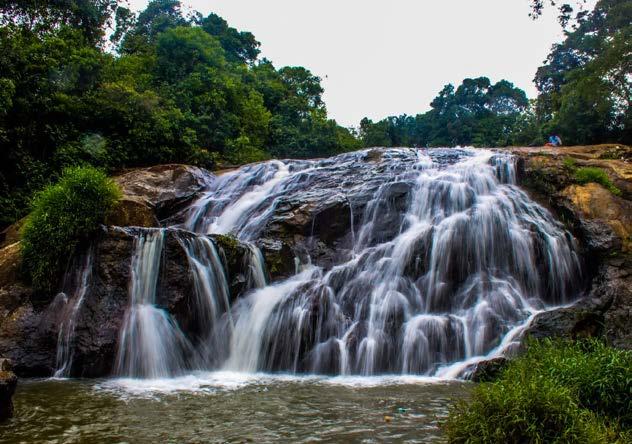
A thick green cover of forest and plains with a carpet of tea plantation, add to it a double cascading waterfall, you get a picture of Catherine waterfall. Located in Kotagiri in Nilgiri district, this waterfall has a curious name. It is named after the wife of M D Cockburn, a Scottish planter who introduced coffee, pears and apple plantation in the hill stations. The water cascades from a height of 76.2 m and leaves you in awe. This waterfall drops down in two steps. Considered as one of the largest falls in the region, the upper falls is fed by the river Kallar. There is the second fall which is also noted for the serene beauty. If you have a thing for adventure, hike up the forest path to the top of the falls and witness a sight of a lifetime. Stock yourself with enough food, water and snacks as you may
end up famished while going in pursuit of this beauty. The dolphin nose is one of the best points to watch this waterfall. You take the Mettupalayam road branching off at Aravenu and head straight to Catherine falls. Make sure the weather is calm and clear while you plan your visit. The best time is morning and noon and schedule your trip accordingly. The enchanting surrounding view of this waterfall makes it a mesmerizing spot to spend a day.
Kotagiri Bus Stand, about 9 km away Coimbatore Airport, about 69 km away Coonoor Railway Station, about 23 km away
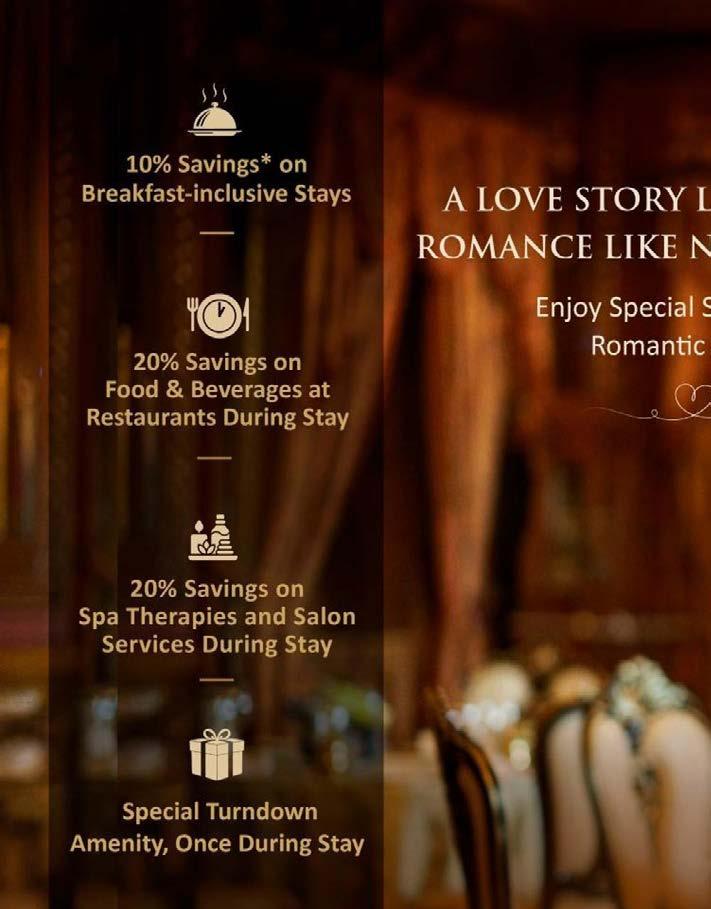

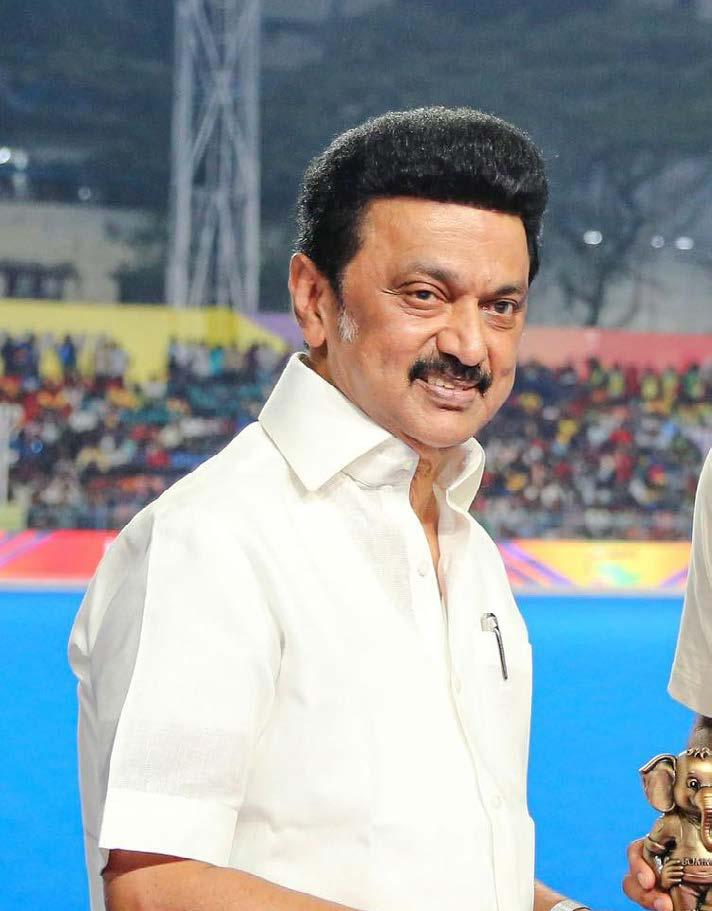
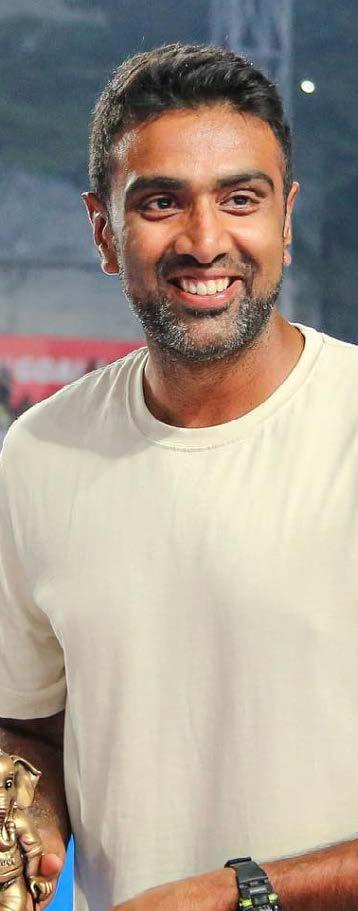



In a move to democratize sports and ensure that every child, regardless of where they live, has access to sports facilities, the Tamil Nadu government launched the Kalaignar Sports Kit Scheme in February 2024. Named in honour of the late Chief Minister M. Karunanidhi, affectionately known as 'Kalaignar,' this initiative reflects a significant step towards fostering sports at the grassroots level, particularly in rural areas. Here are the scheme's details, its execution, and the potential impact on sports development in Tamil Nadu.
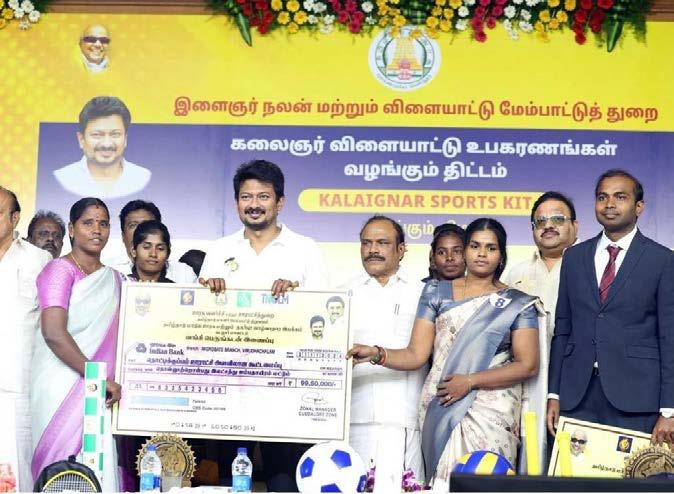
The Kalaignar Sports Kit Scheme was unveiled by Udhayanidhi Stalin, the Minister for Youth Welfare and Sports Development, during the valedictory function of the Khelo India Youth Games in Chennai in 2024. The announcement came at a time when Tamil Nadu had just achieved its highest-ever position in the Khelo India Games' medal tally, underscoring the state's commitment to sports. "While there are
many schemes named after 'Kalaignar' (Karunanidhi) it is a matter of pride that such a scheme is being implemented in his name in the Sports department for the first time," Udhayanidhi said. "The purpose behind implementing the Kalaignar Sports Kit (KSK) scheme is to ensure that aspiring sportspersons in villages are provided equal opportunities to excel as their counterparts in cities."
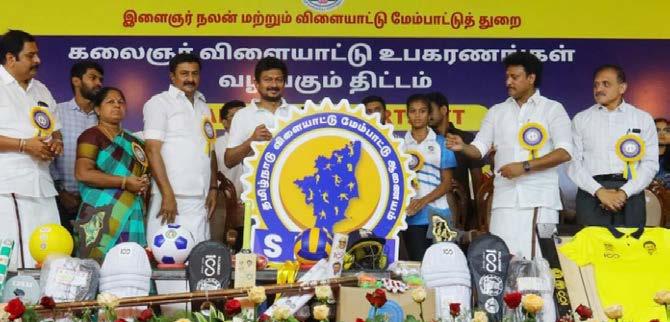
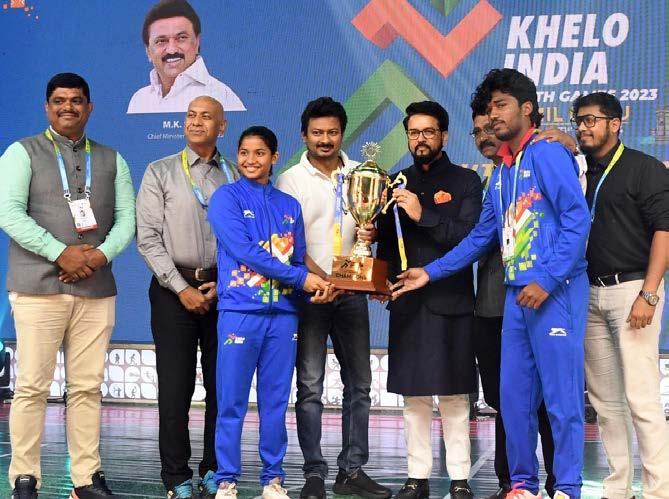
"We are keen on bringing students not only from urban areas but also from rural areas. Every village panchayat in the State would benefit from the scheme”, Udhayanidhi told “The Hindu”. Udhayanidhi also inaugurated an Integrated Sports Science Centre, built at a cost of about Rs 5 crore. Set up by the Sports Development Authority of Tamil Nadu (SDAT), it will aid in the rehabilitation of sportspersons who suffer sports-related injuries, the release said.
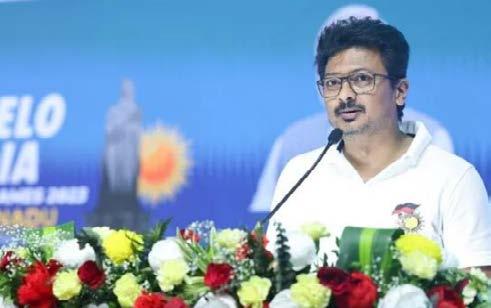
The scheme aims at distributing sports kits to 12,620 village panchayats across Tamil Nadu, with each kit comprising 33 different sports items. This includes equipment for cricket, football, volleyball, badminton, and traditional games like silambam, ensuring a wide range of sports are accessible. With a budget of Rs. 86 crore, the initiative represents one of the largest investments in grassroots sports in the state, highlighting the government's dedication to sports infrastructure. The kits are available to students and young athletes in rural areas, with applications processed through local panchayat offices. There's no online application system, keeping the process straightforward for rural applicants. The rollout began in Trichy, with subsequent distributions in districts like Madurai, Tiruppur, Coimbatore, and more, demonstrating a strategic spread across the state.
By providing free sports kits, the scheme removes a significant barrier to entry for many rural youths who might not have access to or afford sports equipment. This democratizes sports participation, allowing talent to emerge from all corners of the state. The availability of sports facilities in rural areas can lead to the early identification of talent. With regular sports activities encouraged, there's a higher chance of discovering athletes who might otherwise remain unnoticed due to lack of resources.
Initiatives like this foster a culture of sports in rural areas, where sports might not have been as prevalent. It encourages community involvement and potentially increases the number of participants in sports at various levels. Increased sports participation directly correlates with better physical health among the youth, tackling issues like obesity and promoting an active lifestyle from a young age.
The scheme does not discriminate by gender, potentially leading to more girls participating in sports, thus promoting gender equality in sports and physical education. Over time, the development of sports can lead to economic benefits through sports tourism, local sports events, and even the emergence of professional athletes who can bring laurels and funding to their regions. A more robust sports ecosystem in Tamil Nadu means the state can produce athletes who compete at national and international levels, enhancing the state's reputation and performance in sports.
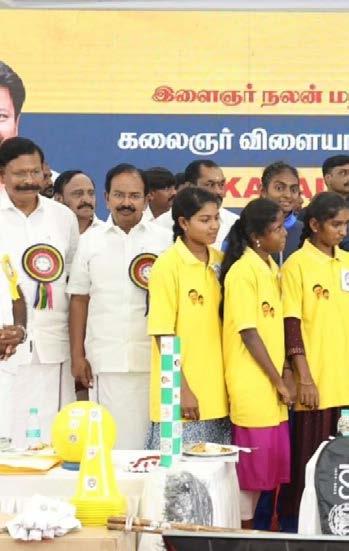

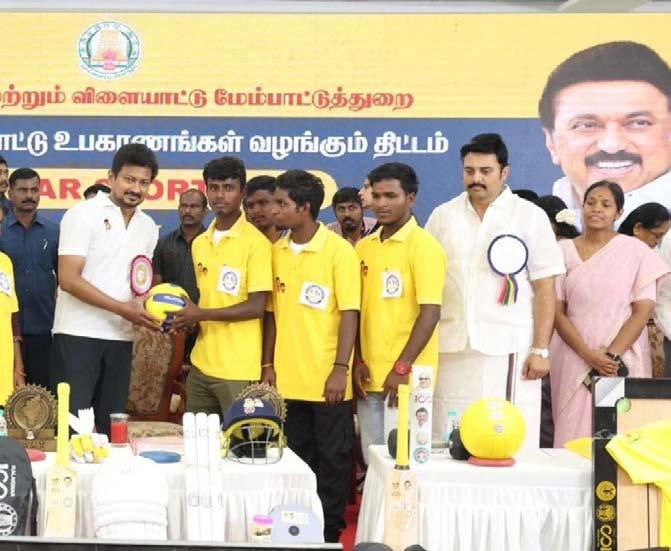

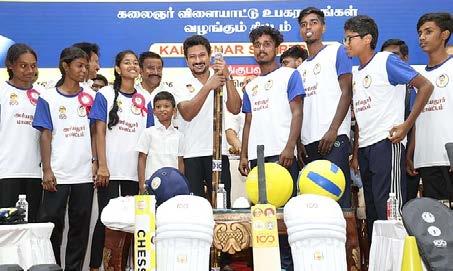
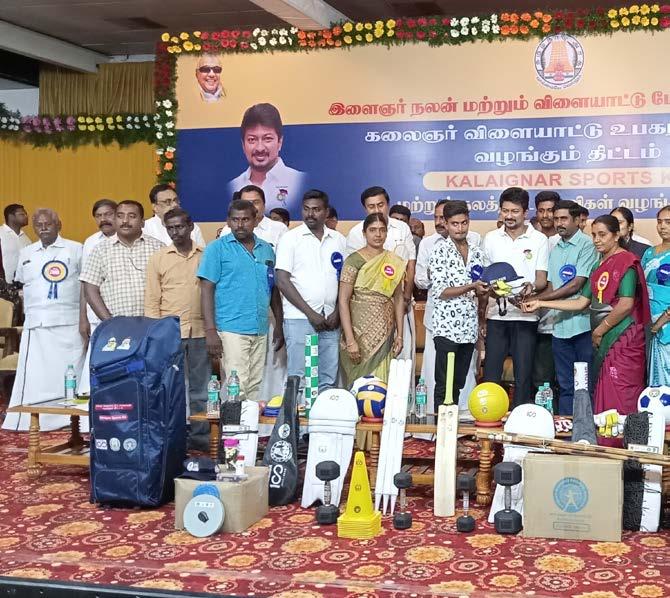
Ensuring the longevity and maintenance of the kits will be crucial to sustain the interest and utility of the program. While equipment is vital, without proper coaching, the potential of these kits might not be fully realized. Parallel initiatives to train local coaches could amplify the scheme's impact. Tracking the scheme's effectiveness in terms of increased participation, talent development, and overall sports culture will be essential for future policy adjustments.
The Kalaignar Sports Kit Scheme is more than just an initiative to distribute sports equipment; it's a vision for inclusive sports development in Tamil Nadu. By levelling the playing field, the government hopes to unearth and nurture talent from the most remote corners of the state, potentially turning Tamil Nadu into a powerhouse of sports in India. The success of this scheme could serve as a model for other states, showing how strategic investments in sports can lead to broader societal benefits, from health to economic opportunities. As this scheme unfolds, its real impact will be measured by the new sports stories that emerge from Tamil Nadu's villages, echoing the legacy of Kalaignar.
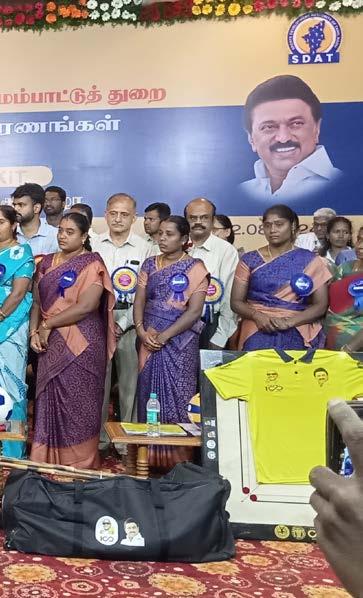

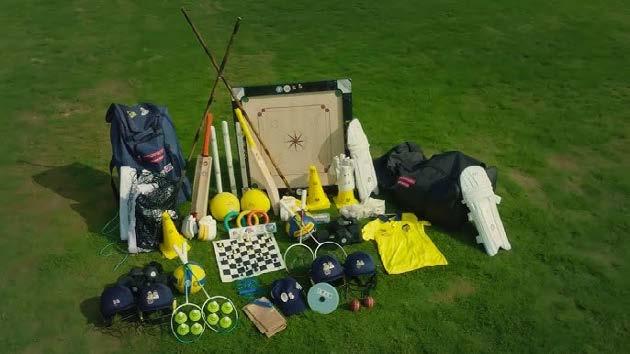



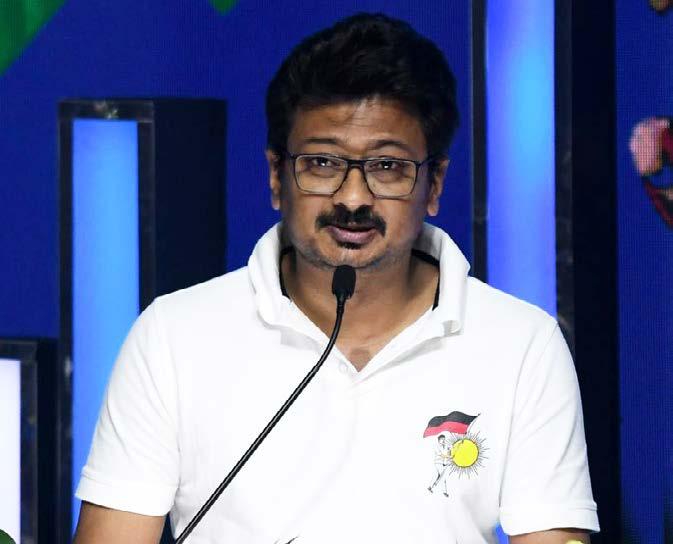
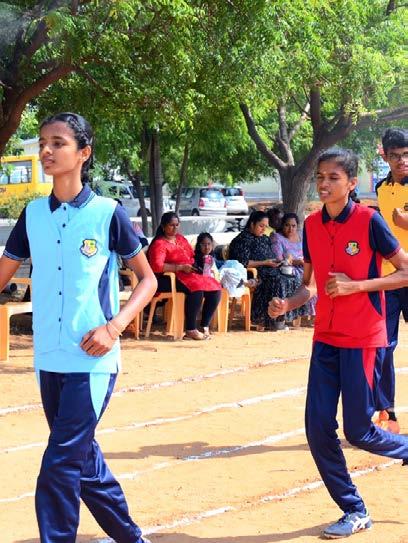
The State School Education Department of Tamil Nadu has announced an allocation of ₹12.5 crore to promote sports competitions all over the state for the 2024-2025 academic year. The initiative will cover regional and statelevel trials, facilitate participation in national competitions, and host events organized by the School Games Federation of India (SGFI). The initiative aims to promote sports alongside academic excellence for students across the state.
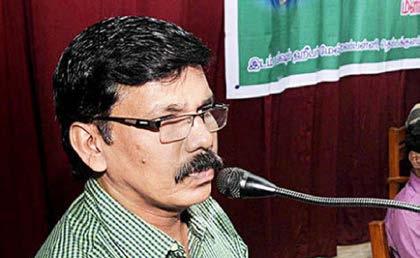
S Kannappan, the Director of School Education, aims to empower students through sports. He emphasized the department's commitment to nurturing talent and providing the necessary resources for students to excel in sports. "We want trainers to nurture talent effectively and provide students with the necessary resources to excel," he stated. This funding represents a significant step towards empowering students to engage in sports while prioritizing their educational responsibilities.
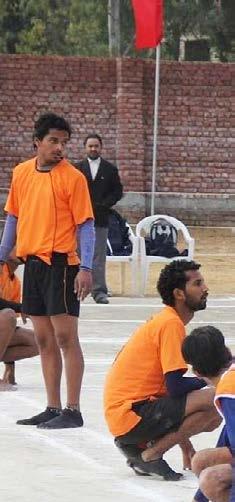
Physical education trainers have continuously faced challenges, particularly due to a lack of funding for equipment and resources and this funding aims to address the gaps for physical education trainers. Raghu Kumar, a physical education trainer at a government primary school in Adambakkam, highlighted the struggles of promising students who often miss out on opportunities. "I was a trainer for 14 years in Chennai. I used my funds to buy cricket bats for children a few years back. Government funding will help us focus on talent and training rather than worrying about basic equipment," he said.
There is hope that this funding will alleviate such burdens, enabling trainers to concentrate on developing students' skills.However, parents have expressed concerns about the judicious use of these funds and they hope that the allocated funds will be utilized wisely and reach the intended schools. M. Anitha from Thoraipakkam
voiced her concerns, saying, "We don't want to see equipment left unused or physical education classes neglected. My daughter always complains of not being able to play volleyball in her school because of a lack of space." Making sure that the funds lead to tangible improvements in physical education resources is a priority for many families who want to see their children develop.
The challenge that school management committees will face is to ensure there is a balance between academics and physical education.
S. Kumar, a member of a school management committee from Ashok Nagar, noted, “We plan to make sure sports hours are not compromised. Weekly inspections will help maintain consistent physical education hours, increase participation, and keep the equipment well-maintained.” This proactive approach and positive mindset aims to ensure that sports remain an integral part of students’ education alongside their academics.
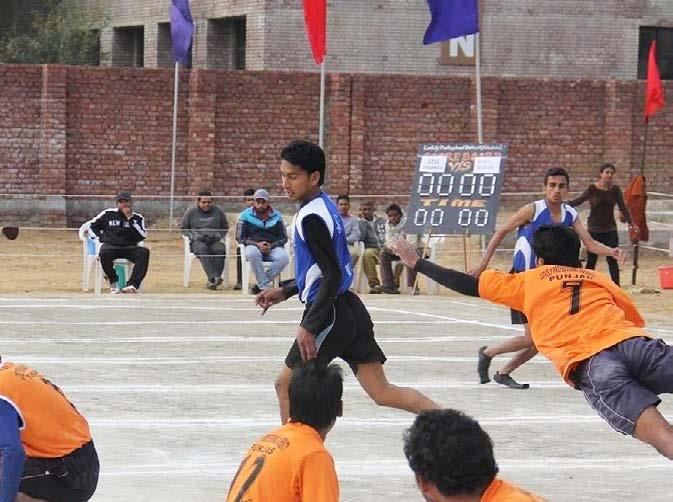
The school students in the city are excited for the new opportunities this funding will open for them. Arjun Mahesh, a Class VIII student who plays volleyball, shared his enthusiasm: "We don't usually get a chance to participate in big tournaments because we lack equipment. Most times we are asked to play in classrooms because we don't have equipment in school. If we get the right facilities, we can compete in competitions." The excitement among students reflects a growing eagerness for improved sports programs that could enhance their competitive opportunities and positively impact the lives of these students. The state school education department's
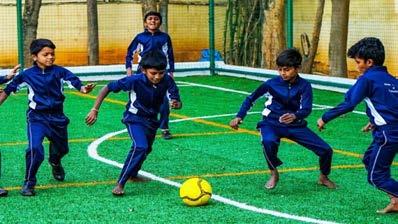
commitment to funding sports initiatives, shows that there is hope for a brighter future for physical education in the schools of Tamil Nadu. The department aims to create an academic and athletic environment where students can thrive by prioritizing equipment and resources. This initiative highlights the positive attitude towards fostering a sports culture within the education system, ensuring that all students can pursue their athletic passions without it impacting their academic aspirations. These initiatives also go hand-in-hand with other such initiatives such as the ‘Tamil Nadu Champions Foundation’ whose aim is to partner with citizens and corporate to revamp sports in Tamil Nadu.
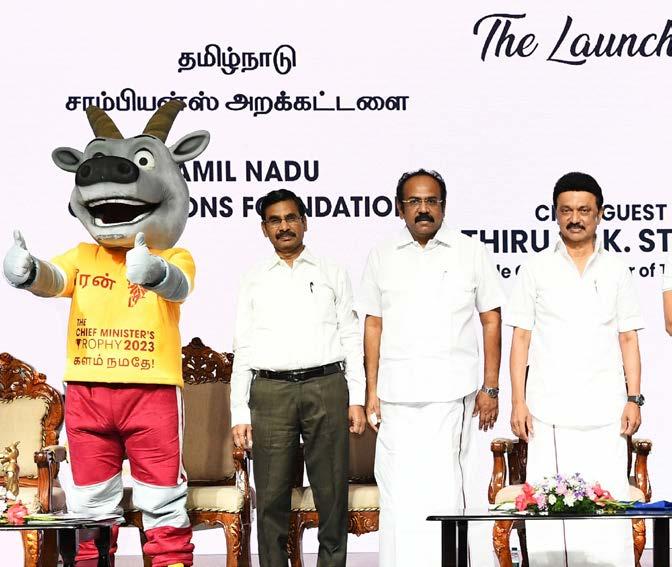
The foundation is chaired by Thiru Udhayanidhi Stalin who is the Minister for Youth Welfare and Sports Development and the foundation’s mission includes:
1. To put in place state-of-the-art sports infrastructure and sporting amenities.
2. To identify, nurture and support. sports persons across the spectrum
3. To provide world-class training/ coaching to the sports persons.
4. To promote diverse disciplines of sports including traditional sports.
5. To promote research and development in the field of sports science.
6. To promote sports in its various forms - lifestyle, recreational, etc.
7. To make sports an accessible, equitable and universal phenomenon.
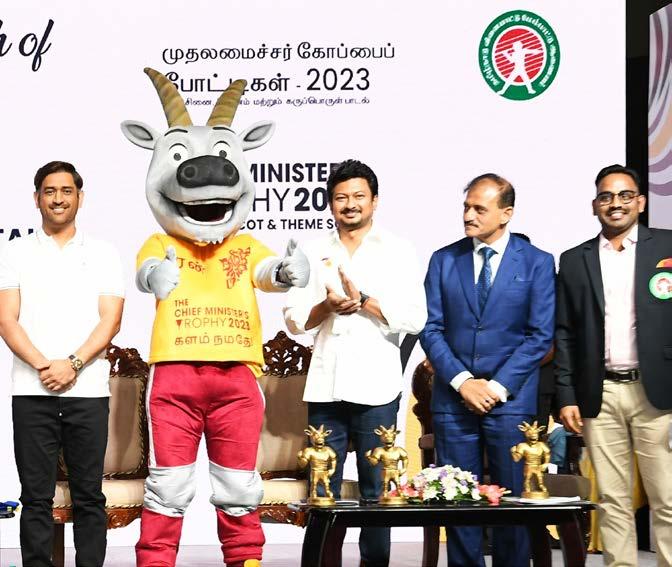

Sports Development Authority of Tamil Nadu (SDAT) officials said during the launch that the TNCF will be a registered company enabling corporates to provide funds under their corporate social responsibility (CSR) schemes. The TNCF, said Stalin, is a joint initiative of corporates and people in developing sports in the state and through the CSR funds of the corporates, the sports infrastructure will develop and the requirements of players will be met.
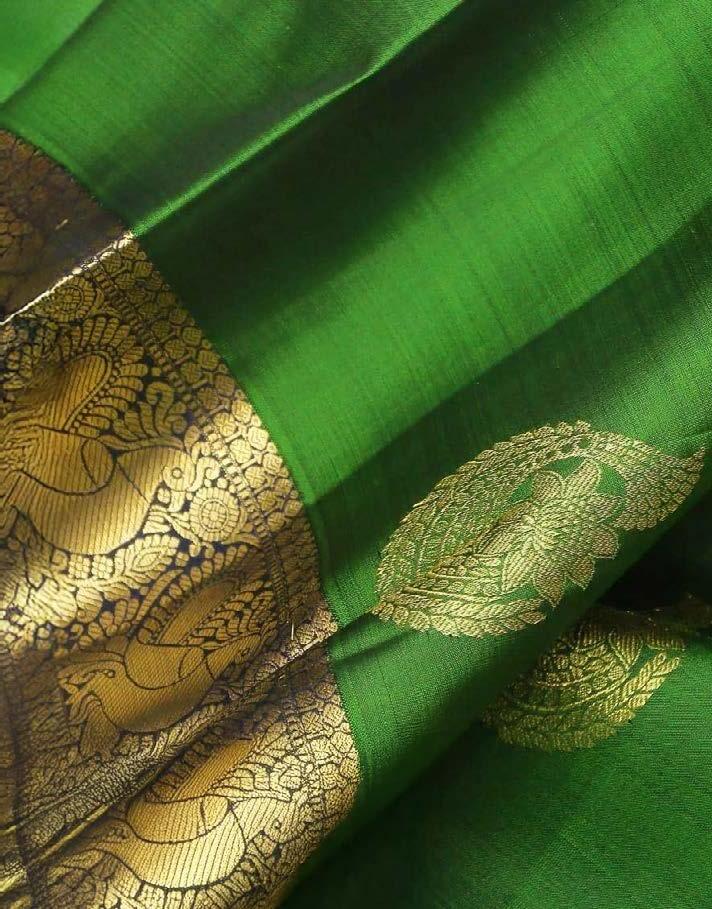
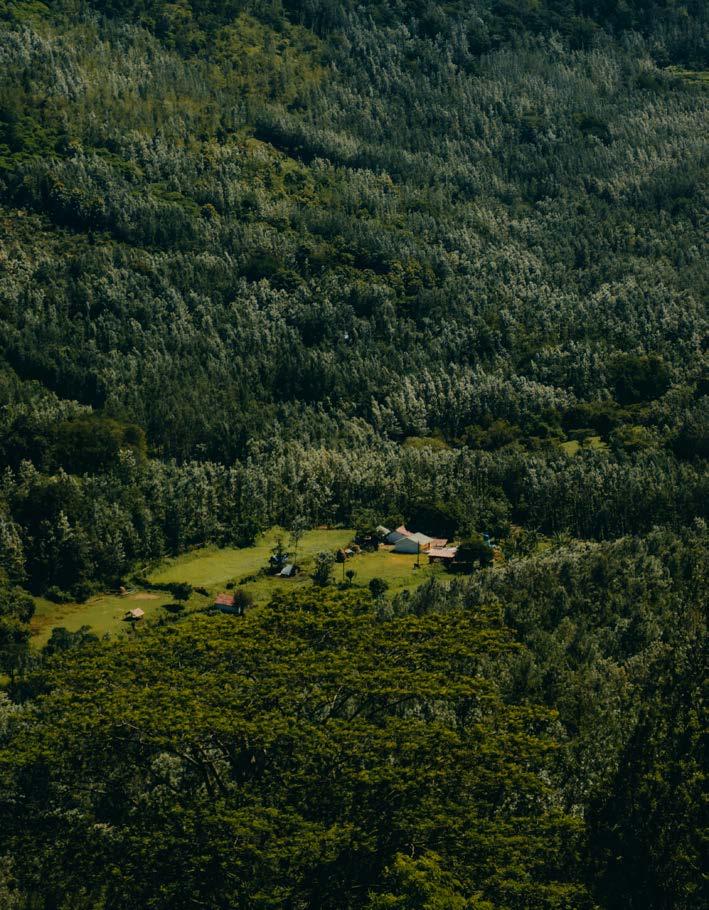
High in the Shevaroy Hills of Tamil Nadu lies Yercaud, a hill station that has long been a quiet refuge for those who wish to escape the frenzy of the plains. Often called the “Jewel of the South,” Yercaud is perched at nearly 5,000 feet above sea level, surrounded by emerald plantations, misty forests, and breathtaking views of the Eastern Ghats. Unlike its more famous cousins Ooty and Kodaikanal, it retains a rustic, unspoiled character, making it the perfect choice for travelers who prefer tranquility to tourist crowds.
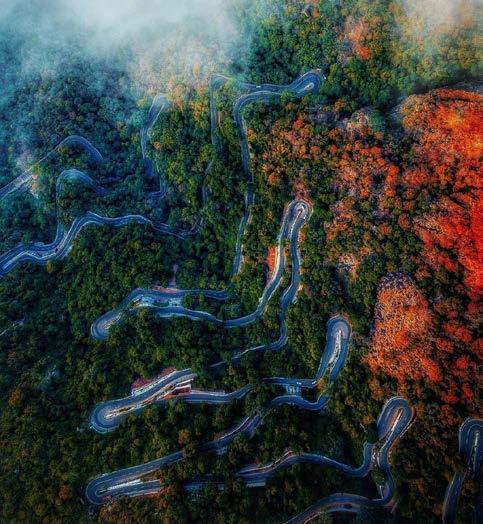
The very name “Yercaud” comes from two Tamil words — Yeri, meaning lake, and Kaadu, meaning forest.Together, they encapsulate the essence of the place: a green, forested land centered around a shimmering lake. Yercaud’s landscape is a patchwork of coffee estates, orange groves, spice plantations, and colonialera bungalows. Its roads curve gently through thick canopies, where the scent of coffee blossoms and the distant calls of birds become constant companions. But Yercaud is more than its scenery. Its story stretches from ancient tribal communities to colonial planters, and today it thrives as a hill station where culture, history, and natural beauty merge. For the traveler, it is a destination that promises not just sightseeing but also experiences — a boat ride across the lake at dawn, a trek to a hidden waterfall, or a sunset watched from a cliff where the plains stretch endlessly below.

The story of Yercaud begins with its first inhabitants — the Malayalis, a tribal community who lived in harmony with the forests. They practiced shifting agriculture, worshipped deities in hilltop caves, and passed down oral traditions that wove myth with memory. Even today, their customs form an integral part of Yercaud’s cultural fabric. Colonial history, however, reshaped the landscape. In the early 19th century, Sir Thomas Munro, Governor of Madras Presidency, recognized the cool climate and fertile soil of the Shevaroys. Soon after, David Cockburn, the Scottish Collector of Salem, began cultivating coffee in the 1820s. His success transformed Yercaud into a plantation hub, earning him the title “Father of Yercaud.” Cockburn also encouraged the cultivation of oranges, bananas, guava, and spices, crops that still dominate the region.
As coffee estates expanded, British families built bungalows, schools, and churches in Yercaud. These heritage structures, with their wide verandahs and manicured lawns, still dot the hills, standing as reminders of a bygone era. Missionaries, too, left their imprint, establishing institutions that blended Western education with local traditions. Yet, through it all, the indigenous spirit persisted. The Shevaroy Temple atop the highest peak remained the spiritual heart of the hills, attracting tribes for annual festivals.Yercaud thus evolved into a unique cultural blend: tribal heritage on one side, colonial elegance on the other, both framed by the timelessness of nature.
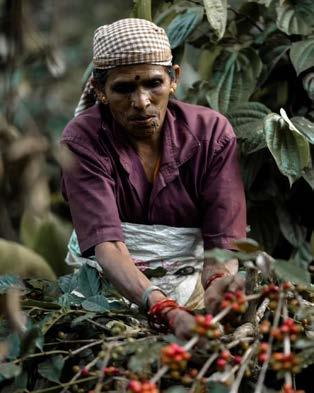
Plantations define Yercaud. Drive along the 32-kilometer Loop Road and you’ll see endless stretches of coffee bushes under the shade of silver oaks. Coffee, first planted in the 19th century, is still the pride of Yercaud. Arabica beans grown here are known for their smooth, aromatic profile, with subtle hints of fruit and spice. The air in March and April carries the heady fragrance of coffee blossoms, while harvest season transforms estates into bustling centers of activity. Many estates welcome visitors, offering plantation walks where guides explain every stage of cultivation. Watching workers handpick ripe cherries, seeing beans roasted over fire, and sipping a freshly brewed cup amidst the greenery is an experience unlike any other.
But Yercaud’s plantations are more than coffee. Orange orchards thrive in the hills, their fruits bursting with tangy sweetness. Spices — black pepper, cardamom, and cloves — climb and spread across trees, filling the air with earthy aromas. Bananas, jackfruits, and guavas grow abundantly, turning Yercaud into a natural pantry. Plantations have also shaped tourism here. Many bungalows have been converted into homestays and resorts, where guests can stay in colonial-era charm while learning about agriculture. A plantation stay allows travelers to experience Yercaud not just as tourists, but as participants in its rhythm of sowing, harvesting, and brewing.

Beyond cultivated fields, Yercaud thrives as a natural sanctuary. Its forests are rich with towering trees like teak, sandalwood, and silver oak, under whose shade bloom wildflowers that add splashes of color. The Botanical Garden is a highlight, particularly its Orchidarium, which houses more than 300 species of orchids. Rare varieties, some indigenous to the Shevaroys, bloom here in delicate, intricate forms. For nature enthusiasts, this is a paradise of petals and leaves. The fauna is equally diverse. Deer
graze at the edge of forests, foxes dart across trails, and bison occasionally emerge from the thickets. The forests are alive with birdsong: hornbills, drongos, parakeets, and the striking Paradise Flycatcher with its long white tail. Butterfly enthusiasts will find meadows alive with colors, as species flit gracefully from one flower to another.
Yercaud is also home to smaller ecosystems — ponds that attract amphibians, caves where bats reside, and hill streams that sustain aquatic life. Its ecological balance is delicate, yet remarkably intact, thanks to conservation efforts and the relatively low tourist pressure compared to other hill stations. For those who seek quiet communion with nature, Yercaud offers a living classroom where biodiversity flourishes.

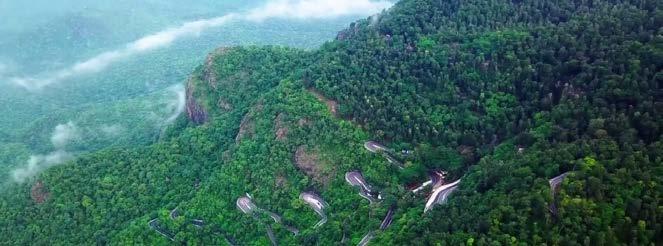
Culture in Yercaud is deeply tied to its tribal roots. The Malayali tribes are skilled in crafts that combine function with beauty. Bamboo baskets, wooden utensils, bead necklaces, and handwoven mats are still made using traditional techniques. Markets in Yercaud often display these crafts, providing visitors with authentic souvenirs while sustaining local artisans. Dance and music are equally central to the
community. During festivals, tribal groups gather to perform folk dances around drums and flutes. Their movements are rhythmic and symbolic, often telling stories of harvest, rain, or mythical figures. Unlike staged performances, these are organic celebrations, filled with the energy of community spirit. Colonial influence also brought new cultural strands. Church choirs introduced Western harmonies, while schools encouraged literature and drama. Today, Yercaud stands at the intersection of these traditions: a place where ancient tribal art continues alongside colonial legacies, forming a cultural tapestry as rich as its forests.
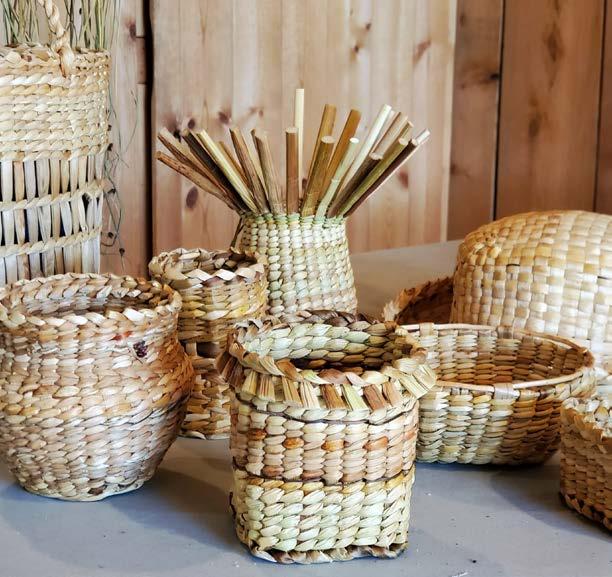
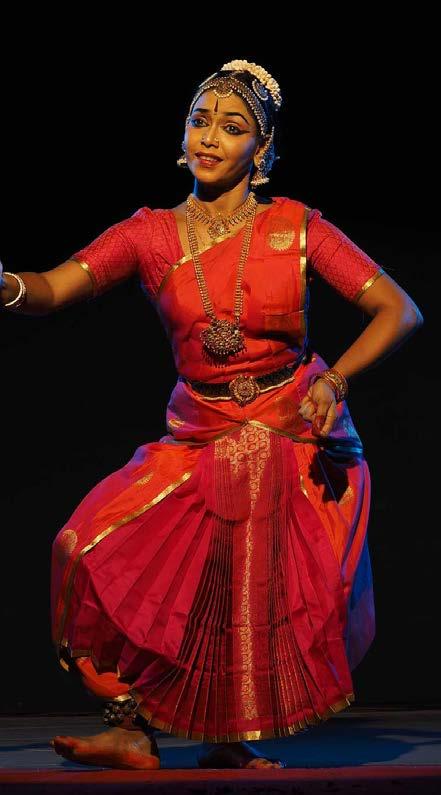


The flavors of Yercaud are rooted in Tamil cuisine but enhanced by the hills’ bounty. Traditional dishes like soft idlis, crispy dosas, and tangy sambar dominate breakfast tables. Pepper rasam, infused with locally grown spices, is a comfort dish for chilly evenings. Street vendors near Yercaud Lake serve roasted corn, bajji, and masala vada — simple, soulful snacks that taste even better when eaten in misty weather. The influence of plantations adds unique touches.
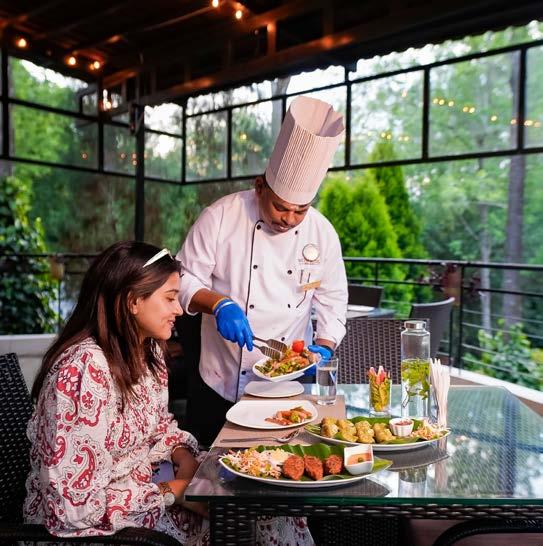
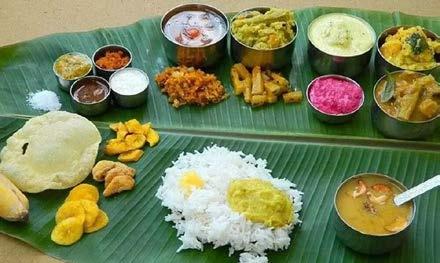
Freshly brewed coffee is the signature drink, while pepper chicken and citrus-flavored desserts showcase local produce. Homemade chocolates and jams are popular souvenirs, often flavored with orange or guava. Upscale resorts offer diverse spreads, from Anglo-Indian roasts to continental cuisine. The legacy of colonial cooking lingers in dishes like baked bread, fruit preserves, and meat curries seasoned with spices. Homestays, on the other hand, offer the most authentic experiences, where families cook age-old recipes with farm-fresh ingredients. Whether in a small tea stall or a heritage bungalow’s dining hall, Yercaud’s cuisine is always accompanied by warmth and generosity, turning every meal into a cultural exchange.
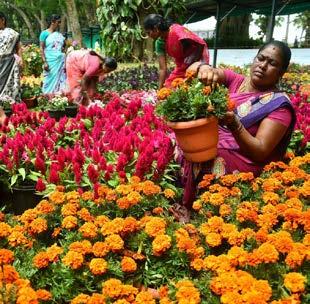
Festivals bring Yercaud alive with color, music, and tradition. The Shevaroy Temple Festival, held in May, is the most significant. Tribal communities gather atop the highest peak to honor Lord Shevaroyan and Goddess Kaveri. Rituals, folk dances, and offerings make it a deeply spiritual event. The Summer Festival, organized by the Tamil Nadu Tourism Department, is another highlight. It features flower shows, dog shows, cultural performances, and boat races on Yercaud Lake.Visitors flock from across the region to witness gardens filled with dazzling blooms and streets alive with festivities.
Pongal, Tamil Nadu’s harvest festival, is celebrated here with equal fervor. Homes are decorated with kolams, families cook sweet Pongal with newly harvested rice, and community gatherings showcase music and dance. For travelers, festivals offer opportunities to witness Yercaud’s culture in its most authentic form.
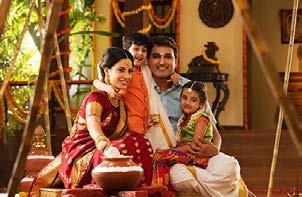
Yercaud enjoys a mild climate throughout the year, making it a destination without extremes. Summer, from March to June, is cool compared to the plains and perfect for sightseeing. Monsoon, from July to September, transforms the hills into a lush paradise, with gushing waterfalls and mist-filled valleys, though heavy rains may limit trekking. Winter, from October to February, is crisp and refreshing, ideal for outdoor activities and cozy evenings. The best time to visit is between October and May, when the weather balances comfort and scenic beauty. However, monsoon appeals to those who love romance and solitude in misty landscapes.
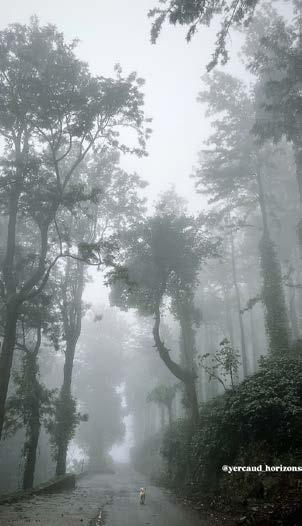
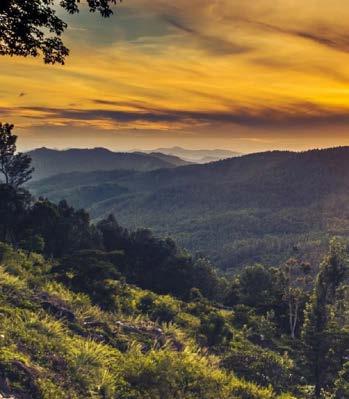
Kiliyur Falls is located on the Periyaaru River in the Shervaroyan hills. Visitors must ascend over 200 steps to get there, but the view is worth the effort. Falling from a height of more than 91 metres and surrounded by lush greenery, the waterfall is one of the most popular tourist places to visit in Yercaud. This seasonal waterfall’s splendid beauty will amaze you during the monsoons.
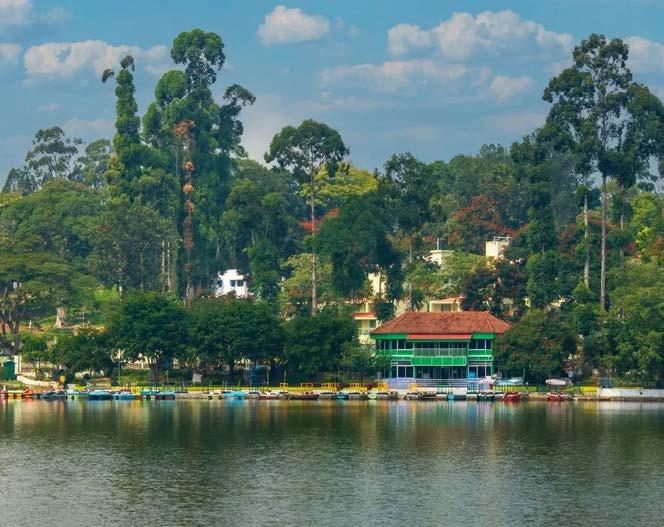
Also known as Emerald Lake or Big Lake,Yercaud Lake is a natural waterbody flanked by lush greenery, including flower gardens, rolling hills, and natural shoals. Offering a picturesque escape from the cityscapes, visitors can enjoy boating opportunities and a floating fountain here. A Deer Park and a Leisure Park on the banks of the lake make it a great tourist place in Yercaud to visit for outdoor fun, especially with kids.
Pagoda Point is one of the most popular places for tourists to visit in Yercaud, especially for its spectacular
sunsets and viewing areas.This watch tower also offers breathtaking views of the nearby hills and valleys, the town of Salem, the multiple hairpin bends that bring you to Yercaud, and its picturesque neighbouring villages. Four piles of stones shaped like pyramids and pagodas, thought to be placed here by local tribes, inspired the name of this tourist magnet.
Also known as the Servarayan Hills, this mountain range in Tamil Nadu’s Eastern Ghats, is a popular tourist place and the highest point in Yercaud, approximately 1620 m above sea level. The range is home to lush green forests, coffee plantations, reserve forests, and rolling meadows.
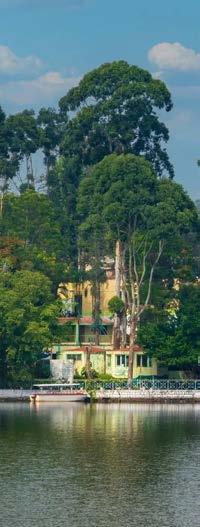
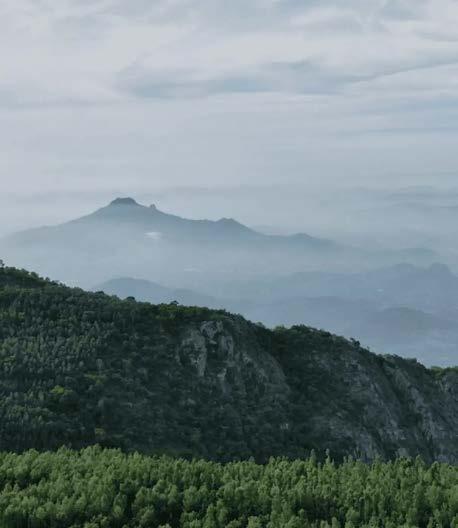
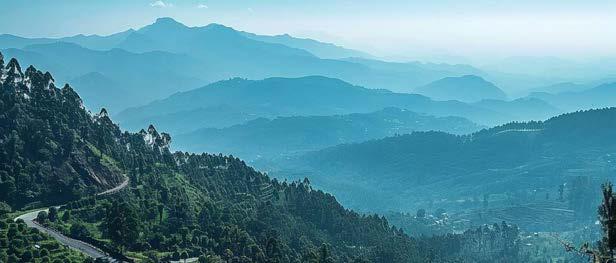
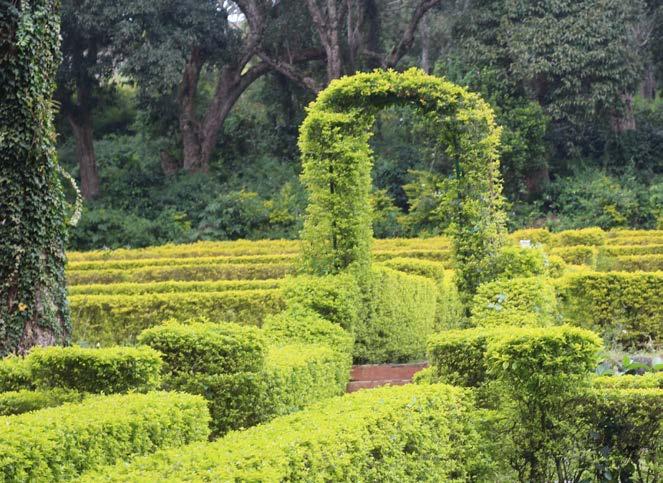
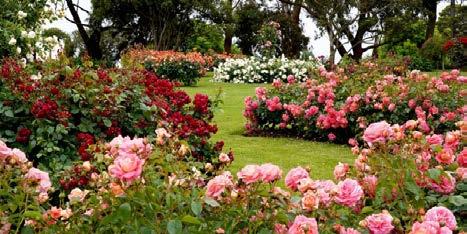
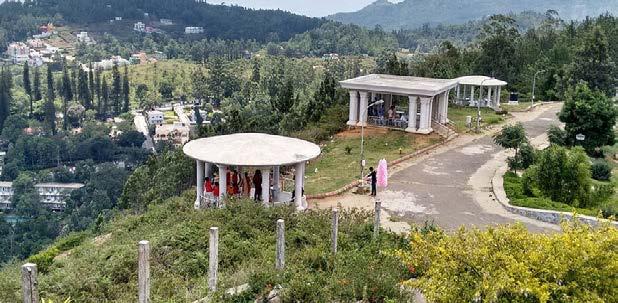
The ultimate attraction for flower lovers, the Yercaud Rose Garden is one of the most popular places to visit here. Beautifully landscaped and full of every colour and species of rose imaginable, the garden is an ideal place to visit with family. With a small artificial fountain, plenty of walkways, and separate seating areas to sit and watch the world go by, Yercaud Rose Garden is also home to a small nursery for saplings to take home.
These popular viewpoints located next to each other offer gorgeous views of the surrounding hills and neighbouring villages. The Gent’s Seat offers the best views from a vantage point overlooking the hills and valleys, while the Lady’s Seat is a little way below it. The Children’s Seat is located next to the Gent’s Seat. A paved pathway leads to a pagoda and seating area, as nearby nature trails beckon people to take a short hike.
While panoramic views abound in Yercaud, the Karadiyoor View Point offers thrilling vistas of the valley below and the Mettur Dam. It is also a great spot to enjoy a little picnic, especially if you bring your beverages and snacks, as there are no shops nearby. It is a popular point to watch the sun go down or to enjoy short hikes that loop around the viewpoint.
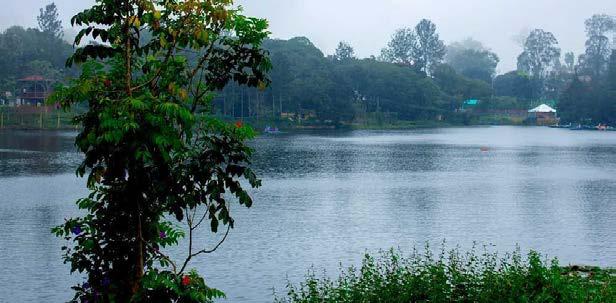
This botanical garden in Yercaud, one of the most popular Yercaud tourist attractions, was established in 2011 to conserve and display local flora and fauna. From sculptures to fountains and rare plants, the Genetic Heritage Garden in Yercaud is perfect for a day spent in the lap of nature.
An exotic bird park in Yercaud, Peeku Park is a delight for kids and adults alike. From sporty cockatoos and loud parrots to regal-looking hornbills and ostriches, this park is home to a wide range of avian species and other domesticated animals like rabbits, horses, sheep, and more. Even featuring a fish pond full of vibrant koi fish, the park is a great opportunity to immerse yourself in the wonders of nature, especially for kids who appreciate petting and feeding animals and birds.
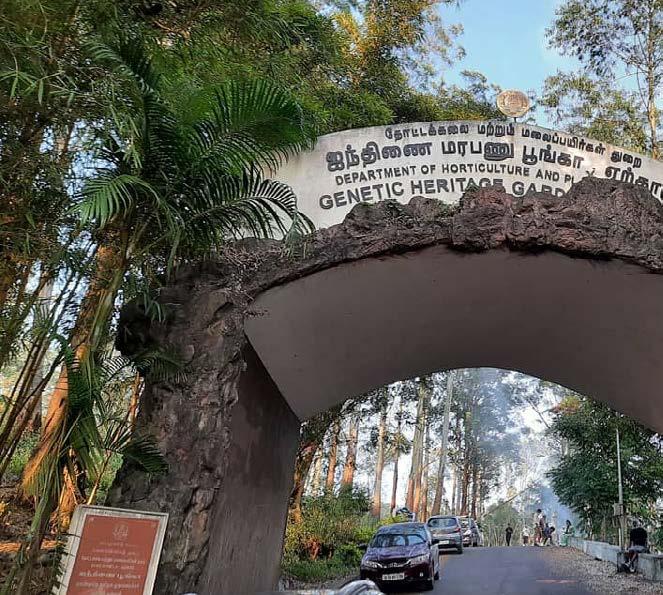
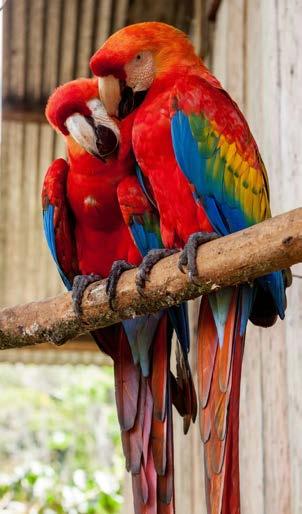
Yercaud offers a range of accommodations, from luxury resorts to heritage homestays. Great Trails Yercaud by GRT Hotels is among the finest, with stunning valley views, an infinity pool, and curated experiences like plantation tours. Sterling Yercaud provides comfort and family-friendly facilities. Boutique stays such as The Brook Resorts & Spa blend rustic charm with modern amenities. Heritage bungalows, many dating back to the colonial era, have been converted into boutique hotels, offering fireplaces, antique furniture, and old-world charm. Plantation stays allow guests to live amidst estates, experiencing the rhythm of agricultural life. For budget travelers, homestays provide warmth, authenticity, and home-cooked meals.
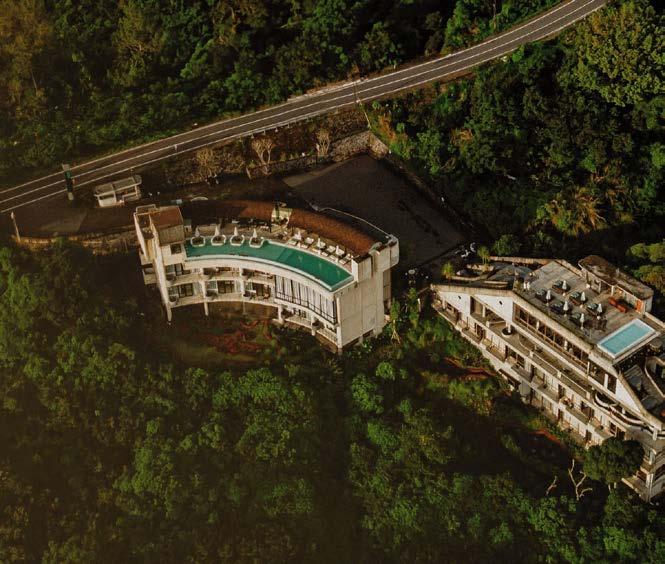
Perched high in the Shevaroy Hills, GReaT Trails Yercaud by GRT Hotels is often regarded as the finest luxury stay in this serene hill station. Set amidst lush greenery with sweeping valley views, the property blends contemporary comforts with nature’s calm, making it a perfect getaway for leisure and rejuvenation. The resort is designed to showcase the beauty of Yercaud’s landscapes. Its rooms and suites feature large glass windows and private
balconies that open to mist-clad valleys and dense forests. Guests can enjoy modern amenities without losing touch with the natural charm that defines Yercaud. The highlight is the infinity pool that seems to merge with the horizon, offering a surreal experience during sunrise or sunset. Dining at the in-house restaurant is another delight, with menus that celebrate both regional flavors and international cuisine. From freshly brewed coffee sourced from local plantations to gourmet meals, every dish is thoughtfully curated. For those seeking activity, plantation walks, treks, and sightseeing tours are available, while the spa provides a haven of relaxation. With warm hospitality, world-class facilities, and an unbeatable location, GReaT Trails Yercaud stands out as the ultimate luxury retreat in the hills.
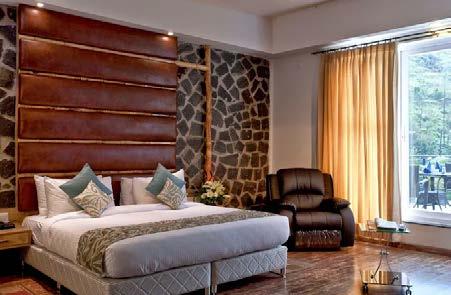
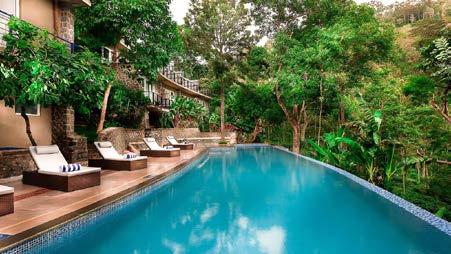
Nestled amidst the tranquil beauty of the Shevaroy Hills, Shambala Yercaud is one of the few resorts in the region to offer true fivestar luxury. Designed as a retreat where comfort meets nature, it features elegantly furnished rooms with modern amenities, private sit-outs, and breathtaking views of the rolling hills. Each space is thoughtfully curated to create a warm, welcoming atmosphere, making it ideal for both couples seeking romance and families looking for comfort. The resort’s restaurant serves a variety of cuisines, highlighting fresh local produce while offering a fine dining experience. The bar and lounge provide a relaxing space to unwind with signature cocktails against the backdrop of misty hills. A wellness spa is available for guests to rejuvenate with therapies inspired by both traditional and contemporary practices. Outdoor activities such as nature walks, cycling trails, and sightseeing tours can be arranged, allowing guests to explore Yercaud’s coffee plantations and scenic viewpoints. With its impeccable service, luxurious setting, and calm environment, Shambala Yercaud is a haven for travelers who wish to indulge in luxury while soaking in the quiet charm of the hill station.
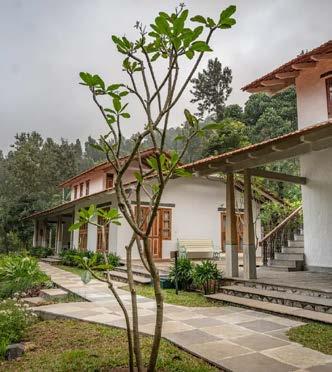
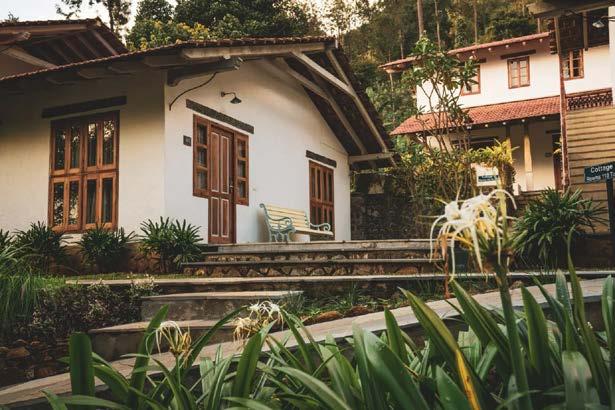

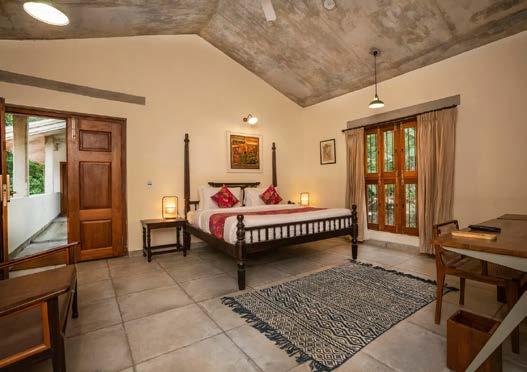
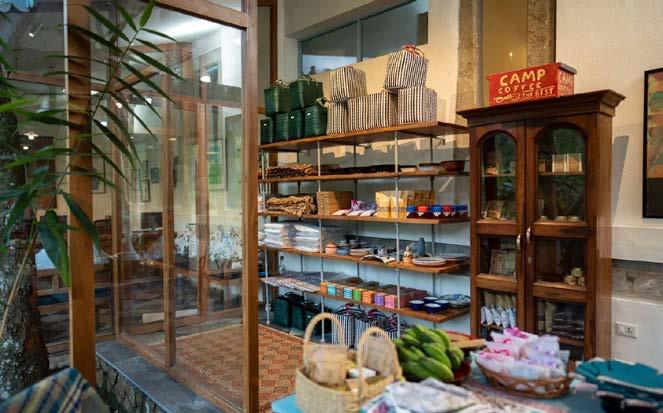
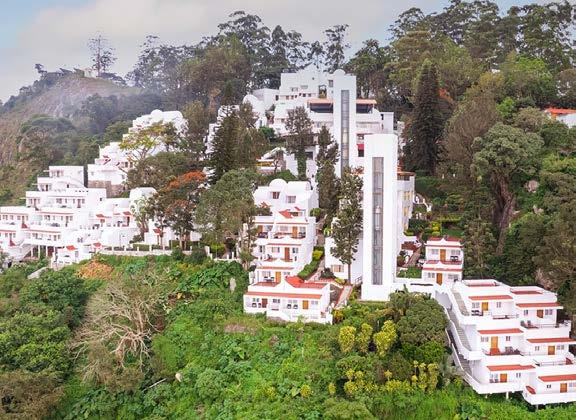
Set against the backdrop of misty hills, Sterling Yercaud is a luxury resort that has long been a favorite among travelers seeking comfort and style in the Shevaroy Hills. The property is part of the renowned Sterling chain, ensuring a blend of reliability and thoughtful hospitality. Designed to suit both leisure and family travelers, the resort offers spacious rooms, suites, and cottages with scenic views of the valley. The highlight of Sterling Yercaud is its range of facilities that make holidays seamless. Guests can indulge in delicious multicuisine dining at the in-house restaurant, with a special emphasis on Tamil Nadu flavors. The resort also features wellness facilities, including a spa and yoga sessions, for those who wish to relax. For families, Sterling offers activity zones, indoor games, and curated nature trails, ensuring that every age group is entertained.
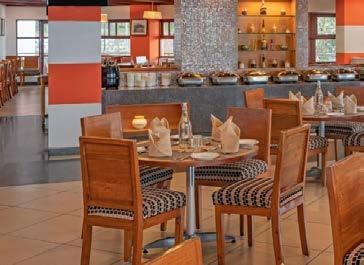
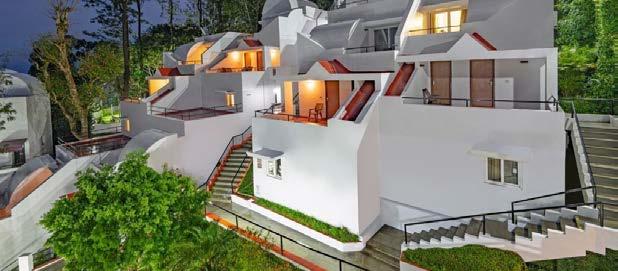
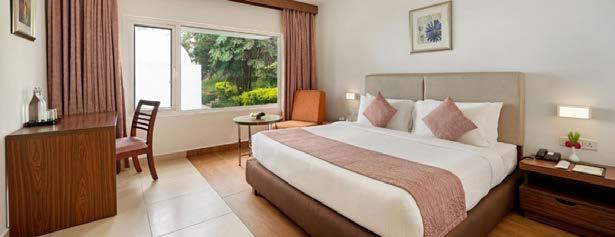
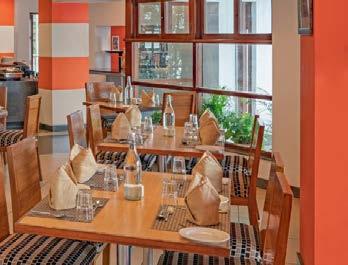
Adventure seekers can sign up for treks, plantation visits, and sightseeing tours organized by the resort. Its location near key attractions like Lady’s Seat and Pagoda Point makes it an ideal base for exploration. Sterling Yercaud combines the coziness of a home with the luxuries of a resort, making it a versatile choice for travelers.
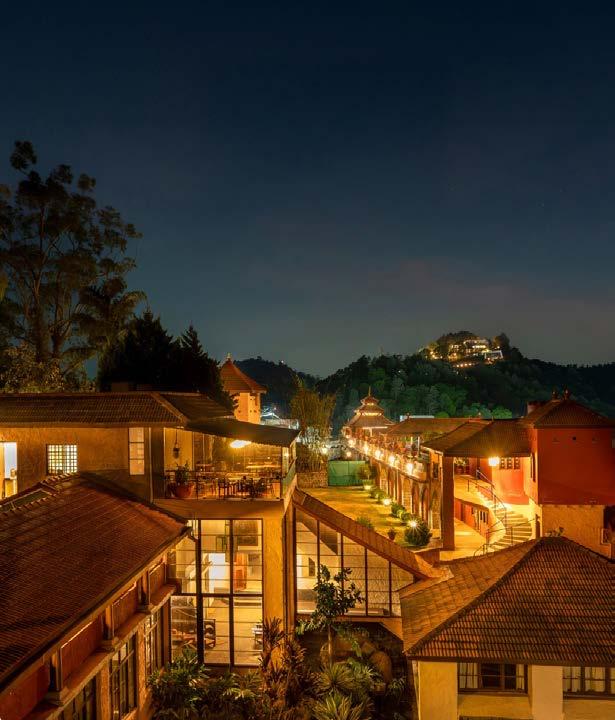
Mango Hill Yercaud is a serene 3-star resort nestled in the scenic Shevaroy Hills of Tamil Nadu, offering travelers a perfect blend of comfort, nature, and French-inspired charm. Surrounded by lush greenery and panoramic valley views, the resort provides a tranquil escape from city life. It features 31 wellappointed rooms, including Classic and Premium Valley View options, each equipped with modern amenities such as free Wi-Fi, flat-screen TVs, and private balconies that open to breathtaking landscapes. Guests can relax in the outdoor swimming pool, indulge in rejuvenating treatments at the full-service spa, or enjoy recreational activities and indoor games designed for families and groups. The
on-site restaurant serves a mix of local and continental cuisines, complementing the peaceful ambiance of the property. Mango Hill’s location is convenient for exploring popular Yercaud attractions, including Yercaud Lake, Shevaroyan Temple, Kiliyur Falls, Pagoda Point, and viewpoints like Lady’s Seat and Gent’s Seat. Guests frequently praise the resort for its cleanliness, friendly staff, and serene environment, making it ideal for couples, families, and solo travelers seeking relaxation amidst nature. With its combination of thoughtful amenities, picturesque setting, and easy access to sightseeing, Mango Hill Yercaud offers a memorable hill-station experience that balances comfort, luxury, and natural beauty.
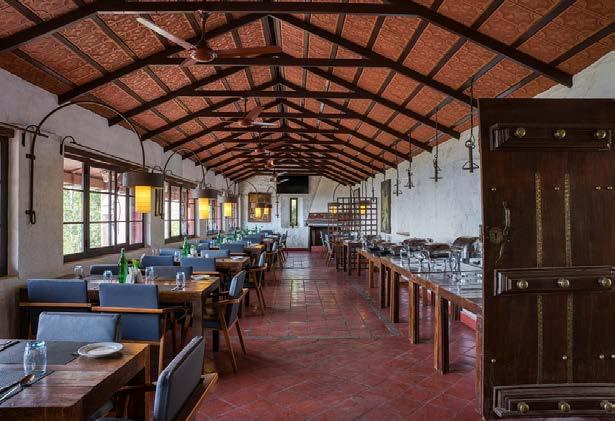


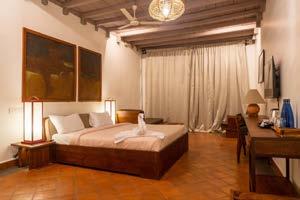

Perched on a cliff with sweeping valley views, Grand Palace Hotel & Spa is one of Yercaud’s most sought-after luxury destinations. Combining comfort, elegance, and a touch of local charm, the hotel is perfect for travelers looking to experience both relaxation and adventure. Its rooms and suites are tastefully designed, offering modern interiors, cozy furnishings, and balconies that frame spectacular views of the hills. The property is especially famous for its infinity pool, which creates an illusion of floating over the valleys — a favorite spot for guests during sunrise and sunset. The on-site spa offers a range of treatments and massages,
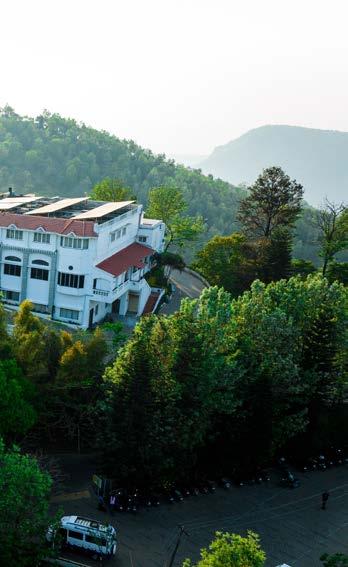
ensuring a rejuvenating stay. Fitness facilities, indoor games, and a children’s play area make it equally appealing for families. Dining is another highlight, with the hotel’s restaurant serving South Indian delicacies, pan-Indian favorites, and international cuisines. Guests can also enjoy bonfire evenings and outdoor dining experiences under the stars. The hotel organizes plantation tours, trekking, and sightseeing trips for those eager to explore Yercaud. With its ideal mix of luxury and nature, Grand Palace Hotel & Spa ensures a memorable stay that blends comfort with stunning landscapes.
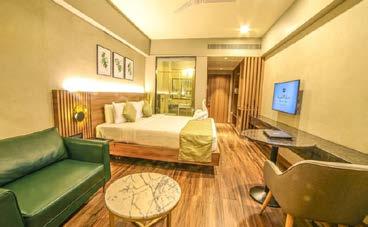
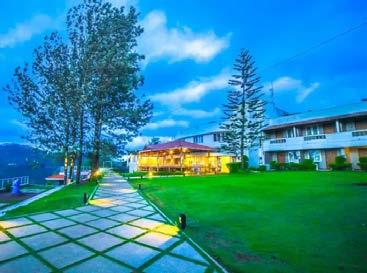
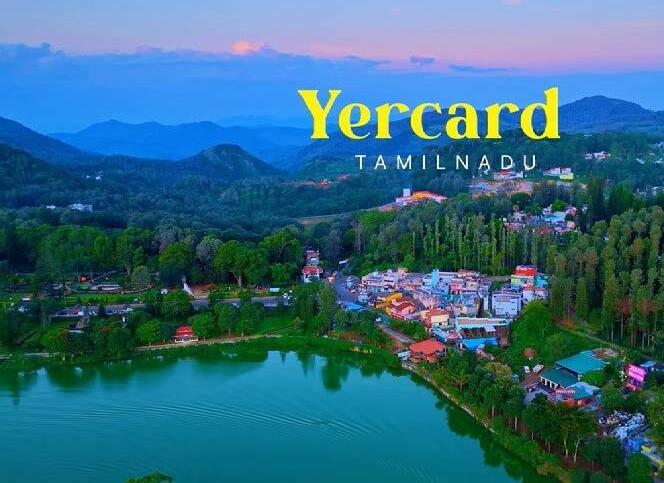


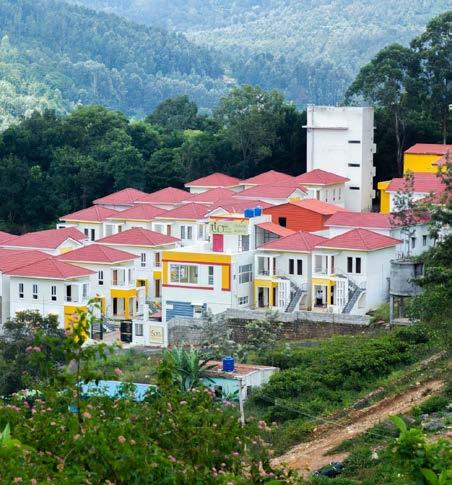

Yercaud is a hill station that whispers rather than shouts. Its beauty lies not in grandeur but in subtleties — the fragrance of coffee blossoms, the play of mist on the lake, the laughter of children at viewpoints, and the quiet dignity of tribal traditions. From its colonial history to its living culture, from waterfalls that roar to orchids that bloom silently, Yercaud offers a complete journey. For travelers, it is both a retreat and a revelation. In Yercaud, one discovers not just the charm of the Shevaroys but also a slower rhythm of life, one that invites reflection, relaxation, and renewal.
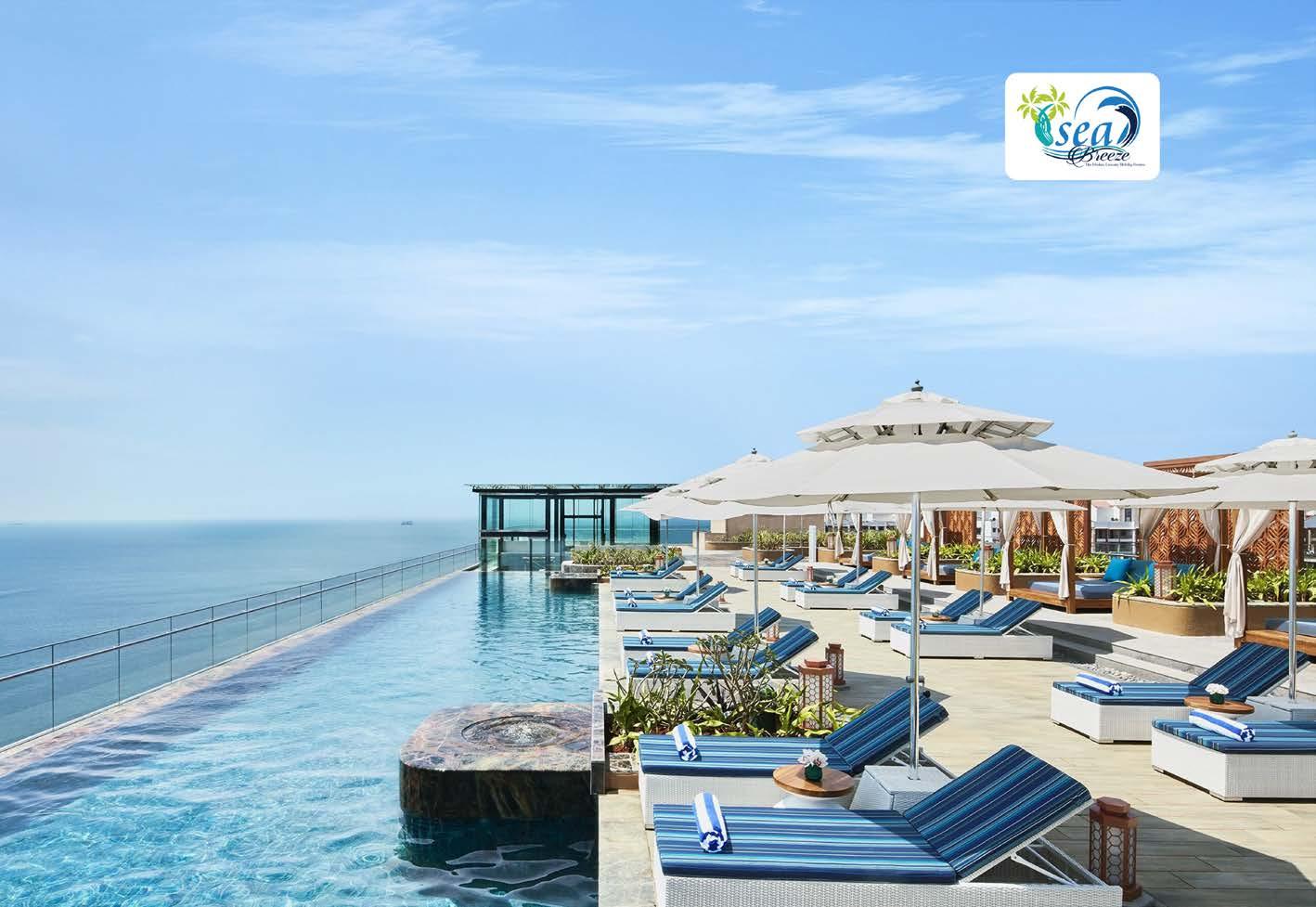







( A Member M/s. Worldwide Media Corporation Group USA )
Exciting opportunity for all those who want to share their most memorable, Interesting. Amazing, Pro-active & Growth oriented activities & Experiences covering areas such as
• Fashion, Trend & Lifestyle
• Culture, Tradition & Heritage
• Education, Healthcare & Wellnes
• Industries, Investments & Growth
• Travel, Tourisn & Hospitality
With Millions of Readers across the world
Stories/ Articles will be Published with your Photograph &Name.
EVERY READER CAN NOW BECOME A PART OF THE TEAM WORLDWIDE MEDIA CORPORATION GROUP by contributing articles, real time experiences, best moments (with or without photographs), coverage, press releases, etc...
Special Coverage & Press Release
Launguage Rights & Overseas Rights
Circulation, Subscription & Global Distributions
Advertisements & Advertorials
Featured Stories & Articles
Feedback & Customer Relationship
Dr. Kevin Francis
Dr. Andre Lubbe
Dr. George Fedrick
WWMCG Global Communications Inc.,
Rishi Wadhwa
Ms. Nancy
Email ID : aseworldwidemedia@gmail.com worldwidemediaasiapacific@gmail.com
Website : www.incredibletamilnadu.com

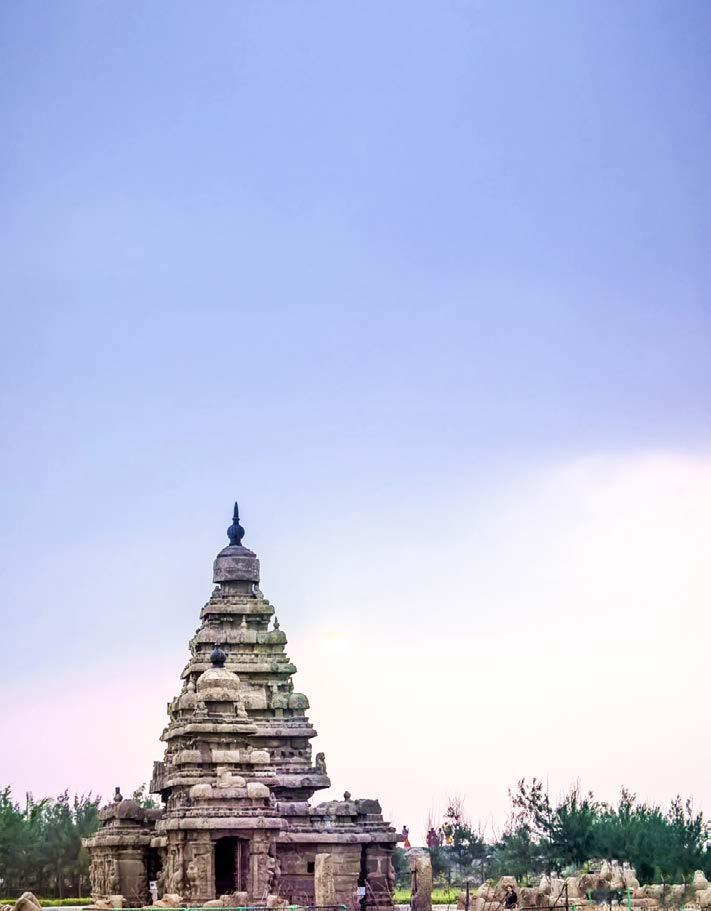



A classic reimagined. The new Datejust 31 in a white Rolesor version that combines Oystersteel with white gold and features an azzurro-blue, floral-motif dial