






Global Media Chief & MD
Dr. S. E. Alexander
Chief Executive Editor & ED
Dr. Andre Lubbe
Senior Executive Editors & Directors
Dr. Kevin Francis, George Fedrick
Executive Editor & SVP
Thamen, Reetu Bansal
Associate Editor & Regional Directors
Nicolas Flemings, Nitirooge Phoneprasert, Ken Obeng
Regional Director Malaysia
Shariman Abd Rahim

Worldwide Media Corporation Group
aseworldwidemedia@gmail.com
worldwidemediaasiapacific@gmail.com
us at www.facebook.com/Incredible Tamilnadu
Creative Director
Randy Redstone
Art Directors
Richard Flemings
EVP - Asia Pacific Region Operations
Graham Starmer, Sudhakar Gupta
AGM – Corporate Communication
Swetha Naren
Vice President Operations
Amit, Rahul Shinde, Ruchi Srivatsa
Corporate Advisors & Consultants
Venkat, Mike Dobbertine, Chandrasekar
Senior Sub Editors
Prasad ST, Ram Mohan Rao, Vinu Agarwal
Editorial Consultants, Senior Journalists & Sub Editors
Bruce N Lesly, Edna Ferber, Sreedevi, Nancy, Aarti Mukherjee,
Maddy, Rachel D’souza, Vidya, Kruthiga, Ajay Franklin
Regional & Business Managers
Sanjay, Steve Mathews, Nirupama Rao, Sunil Kumar, T.P. Bhaskar, Kiran, Kishore
Circulation Managers
Shewtha Shetty, Alan, Rakesh Khanna, Subbodh Chakraborthy
Photographers
James O Corner, Nikhil, Bosh Winter
Resident Managers & Journalists
Aarthi Agarwal, Sarika, Vikram Kapoor, Swetha
Assistant Managers & Executives
Rocky, Manju, Prakash, Neetu
Senior Creative Designer
Raj, Ryan D’souza
Creative Designers
Ajeesh, Rajesh, Abhijit, Sonam, Reetu, Sonal, Ashish, Chithra


As Tamil Nadu moves through the pivotal year of 2026, the state stands at a crossroads of historical legacy and futuristic ambition. Under the leadership of Chief Minister M.K. Stalin, the ruling government has articulated a governance philosophy known as the "Dravidian Model." This model is not merely a political slogan but a comprehensive socio-economic framework that seeks to marry high-octane industrial growth with radical social inclusivity. Approaching 2026, the government’s vision is defined by five transformative pillars: economic self-reliance, social justice through "Pudhumai" (innovation), climate resilience, decentralized urban development, and global cultural soft power.
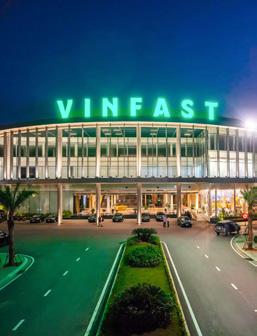
The Economic North Star: The $1 Trillion Ambition: The most audacious objective of the current administration is the transformation of Tamil Nadu into a $1 Trillion Economy by 2030. The year 2026 serves as the critical "mid-point" evaluation for this goal. Diversification of Industrial Clusters: The government has moved away from traditional manufacturing to high-tech sectors. By 2026, the objective is to establish Tamil Nadu as the "Electric Vehicle (EV) Capital of Asia." With the operationalization of the VinFast plant in Thoothukudi and the expansion of the Ola Electric and Tata Motors-JLR hubs, the state is targeting a 40% share of India’s total EV production. The Global Capability Centre (GCC) Strategy: Recognizing that services contribute over 50% to the GSVA (Gross State Value Added), the 2026 vision focuses on attracting Fortune 500 companies to set up their R&D and GCCs in tier-II cities like Coimbatore, Madurai, and Hosur. This decentralization aims to prevent the "Chennai-centric" growth model and provide high-paying tech jobs to rural youth.
Justice and the "Welfare Architecture": The Dravidian Model’s core strength lies in its "cradle-to-grave" welfare system. The objectives for 2026 are focused on making these schemes fiscally sustainable while increasing their reach. Women’s Economic Autonomy: The Kalaignar Magalir Urimai Thittam, which provides ₹1,000 monthly to over 1.15 crore women, is viewed not just as a handout but as a "dignity grant." By 2026, the government aims to link these beneficiaries with micro-entrepreneurship programs and credit facilities through the Tamil Nadu State Rural Livelihood Mission, turning consumers into producers. Education: The
"Pudhumai Penn" and "Tamil Puthalvan": Education remains the primary tool for social mobility. Pudhumai Penn Scheme: Providing ₹1,000 monthly to girl students from government schools pursuing higher education. Tamil Puthalvan: Launched to provide similar support to boys, ensuring that financial constraints do not lead to dropouts after the 12th grade. The 2026 objective is to increase the Gross Enrolment Ratio (GER) in higher education to over 60%, nearly double the national average. Evidence-Based Policy ("Unga Kanava Sollunga"): A massive, state-wide data-gathering exercise ("Tell Your Dreams") to directly involve 1.91 crore households in shaping the 2026-2027 budget and long-term policies. Poverty Eradication: Implementation of the Thaayumanavar scheme targeting the upliftment of five lakh poor families.
Infrastructure for the Next Decade: For a state to thrive, its physical connectivity must match its intellectual capital. The 2026 infrastructure roadmap is aggressive. The Parandur Greenfield Airport: A major objective is the fast-tracking of the Parandur Airport project. While controversial, the government views this as a non-negotiable requirement for Chennai to remain a global logistics hub capable of handling 100 million passengers annually. Urban Decongestion and Metro Expansion: The Chennai Metro Rail Phase II is a massive undertaking. By 2026, significant stretches are expected to be operational, significantly reducing the city's carbon footprint. Simultaneously, the launch of Mass Rapid Transit Systems (MRTS) in Coimbatore and Madurai is a key objective to prepare these cities for the population surge expected by 2030. Climate Resilience: The "Green TN Mission": Tamil Nadu is one of the states most vulnerable to climate change. The government’s approach to 2026 involves a shift from disaster management to proactive climate adaptation.
The Tamil Nadu Coastal Restoration Mission: With a coastline of over 1,000 km, the "Sea Wall" project and mangrove restoration are top priorities. The objective is to protect the livelihoods of the fishing community while creating a natural buffer against rising sea levels. Urban Greening and Net Zero: The Urban Greening Policy 2026 is a landmark initiative. It mandates a "330-300" rule: every citizen should see 3 trees from their window, have 30% canopy cover in their neighborhood, and live within 300 meters of a park. This is part of the broader vision to make Tamil Nadu a Net Zero state well ahead of the national 2070 target.
Digital Governance and Transparency: The administration is betting heavily on "GovTech" to eliminate corruption and improve service delivery. The "Ulagam Ungal Kaiyil" Initiative: The government has integrated AI and data analytics into the TN-GoI (Governmentto-Citizen) interface. By 2026, the objective is for 90% of all government services—from birth certificates to land records—to be available via a single-window mobile application, reducing the need for physical visits to government offices. Data-Driven Welfare: Using the "Makkal Portal," the government is now able to identify "invisible" beneficiaries—those who qualify for schemes but haven't applied. The 2026 vision is to move toward "Proactive Governance," where the state delivers benefits to the citizen's doorstep before they even ask for them.
Cultural Identity and Global Outreach: A unique aspect of the current government is its emphasis on Tamil Identity as an economic and soft-power asset. Archaeological Pride: The ongoing excavations in Keezhadi and Adichanallur are being leveraged to establish the antiquity of Tamil civilization. The Global Tamil Diaspora: Through the "Non-Resident Tamils" department, the government is actively seeking investments and knowledge transfers from the global diaspora, treating them as stakeholders in the state’s development.
The Road Ahead: While the vision is expansive, the approach to 2026 is not without hurdles. Fiscal Deficit: Balancing massive welfare spending with capital expenditure on infrastructure remains a tightrope walk. Federal Relations: The ongoing debate over GST share and central devolution of funds continues to be a point of friction that the state must navigate to fund its ambitious 2026 goals.
In Short: The vision for Tamil Nadu in 2026 is one of "Inclusive Prosperity." It is an attempt to prove that a state can be a favourite for global investors (the "Trillion Dollar" goal) while simultaneously being a haven for the underprivileged (the "Dravidian Model"). By 2026, the ruling government aims to have built a state that is technologically advanced, socially equitable, and environmentally conscious. If these objectives are met, Tamil Nadu will not only lead the Indian union but serve as a blueprint for developing economies worldwide.
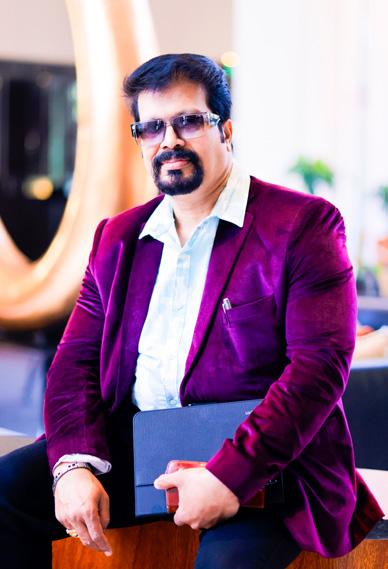

Dr. S. E. Alexander Global Media Chief & MD



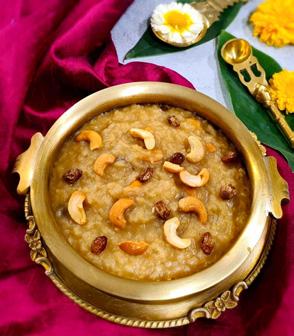
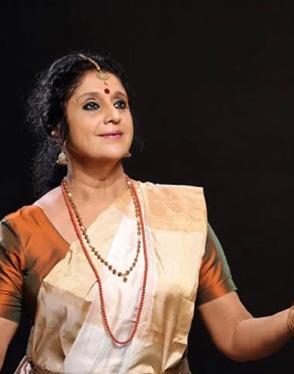

Woraiyur Cotton Sari
GetS Gi taG — a DefininG MoMent for taMil
HanDlooM HeritaGe


MiCHael KorS MerCer CroSSboDy baG
CoMpaCt luxury MeetS MoDern Style
CafeS & GaMinG lounGeS in taMil naDu
Value faSHion taKeS oVer taMil naDu
ZuDio leaDS a neW retail WaVe

tHe breW rooM CHennai - a SloW-breWeD loVe letter to Coffee anD ConVerSation
Dr. KMD’S rCiHG aSia’S international. StanDarD tranSplant Centre of MeDiCal exCellenCe
KALLAZHAGAR TEMPLE A DEEP DIVE MAGAZINE STYLE FEATURE
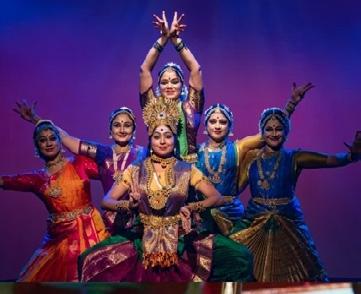
MarGaZHi MuSiC & DanCe feStiVal CHennai’S Cultural SeaSon
106
CORPORATE, INDUSTRIES & INVESTMENTS
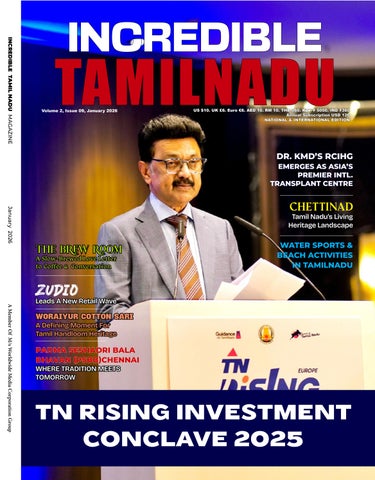
TN RISING INVESTMENT CONCLAVE 2025
TAMIL NADU’S BOLD iNDUSTRIAL LEAP
INTERNATIONAL EDUCATION OF TAMIL NADU
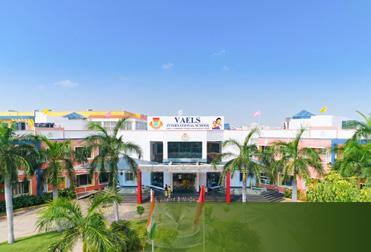
VaelS international SCHool, CHennainurturinG Global CitiZenS alonG tHe eaSt CoaSt roaD
162
232
TRAVEL & TOURISM
CHettinaD taMil naDu’S liVinG HeritaGe lanDSCape
258

SPORTS & YOUTH WELFARE
WATER SPORTS & BEACH ACTIVITIES IN TAMILNADU DECEMBER 2025





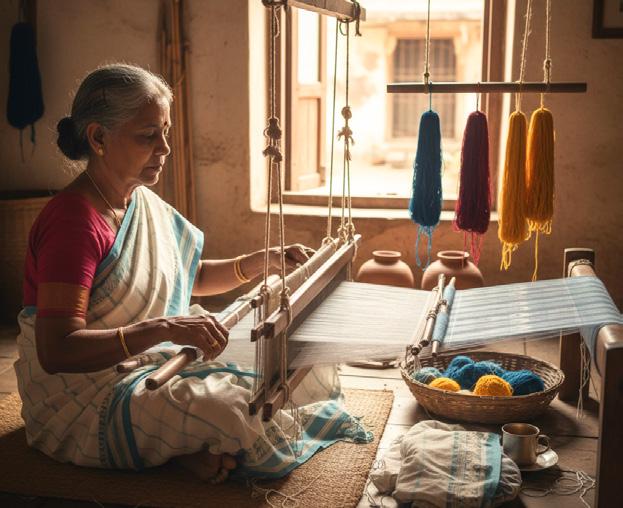
In December 2025, Tamil Nadu witnessed a historic and emotionally charged milestone in its textile legacy with the Woraiyur Cotton Sari being awarded the prestigious Geographical Indication tag. This recognition formally places one of the state’s oldest cotton weaving traditions on a protected global platform, safeguarding its identity while celebrating the generations of artisans who have kept it alive. For the weaving communities of Woraiyur and Manamedu near Tiruchirappalli, the GI tag represents far more than official documentation. It is an affirmation of dignity, cultural pride, and long-overdue justice for a craft that has survived centuries of change, neglect, and imitation.

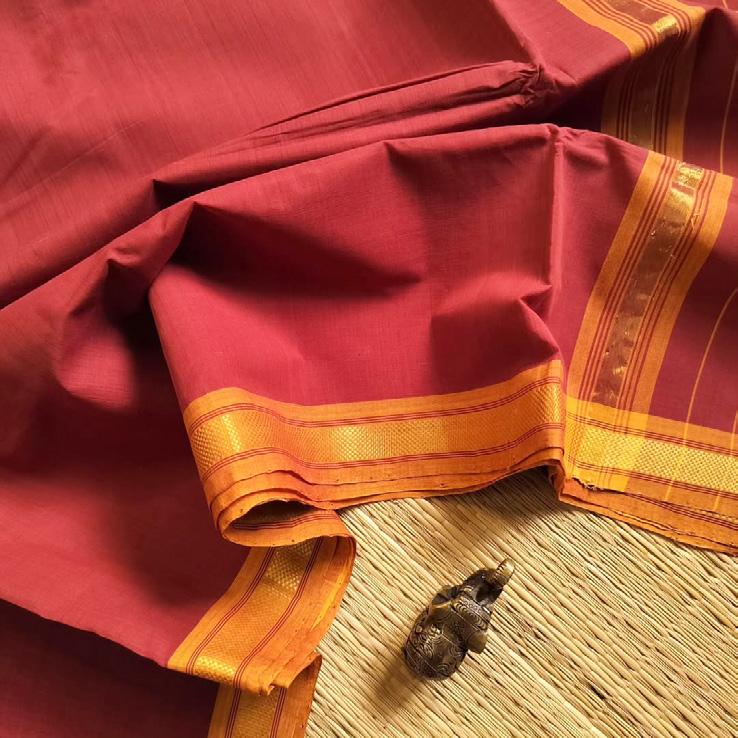
Woraiyur, historically known as Uraiyur, holds immense significance in Tamil history as the ancient capital of the early Chola dynasty. For over a thousand years, this region has been synonymous with fine cotton weaving, nurtured and preserved primarily by the Devanga weaving community. Long before power looms and synthetic blends entered the textile market, Woraiyur’s handlooms produced saris that were celebrated for their simplicity, durability, and elegance. These cotton saris became an essential part of everyday life in Tamil Nadu, worn by teachers, office professionals, homemakers, artists, and women who valued comfort and understated grace over ornamentation.
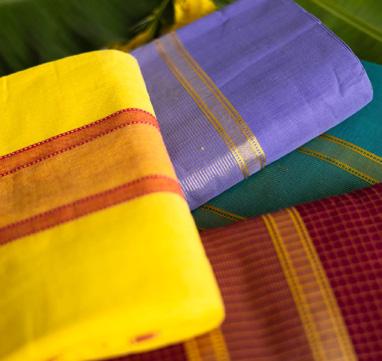
The distinct identity of the Woraiyur cotton sari lies in its refined craftsmanship and restrained aesthetic. Woven using fine cotton yarn, typically ranging from 60s to 80s count, the fabric is remarkably light, breathable, and well suited to Tamil Nadu’s tropical climate. The cotton undergoes meticulous preparation and dyeing before it reaches the loom, ensuring longevity and consistent texture. The resulting sari is known not only for comfort but also for its ability to withstand years of regular use without losing its structure or charm.
At the heart of the Woraiyur sari’s uniqueness is the Korvai weaving technique, a highly skilled method that sets it apart from most other cotton weaves. In this process, the body of the sari and its border are woven separately and then manually interlocked on the loom. The join between the two sections is so seamless that it appears almost invisible, yet it remains strong and sharply defined. Mastering this technique requires years of experience, patience, and precision, making it a hallmark of seasoned handloom artisans. The crisp borders created through Korvai weaving lend the sari its distinctive character and structural elegance.
Visually, the Woraiyur cotton sari embraces minimalism in its purest form. Its beauty is rooted in clean lines, subtle temple-inspired borders, delicate geometric motifs, and traditional elements such as chutti and mango patterns. The pallu remains uncluttered, allowing the weave itself to take centre stage. Earthy tones, muted hues, and soft contrasts dominate the colour palette, making these saris timeless rather than trend-driven. This simplicity has allowed the Woraiyur sari to remain relevant across generations, adapting effortlessly to changing lifestyles without losing its essence.
Equally significant is the sari’s eco-conscious nature. Woraiyur cotton saris are entirely handwoven, requiring no electricity and involving minimal chemical processing. The production process leaves a low carbon footprint, making it a powerful example of sustainable and ethical fashion long before these concepts became global buzzwords.


Each sari represents slow fashion in its truest sense, where time, skill, and human effort are valued over mass production and speed. The GI tag plays a crucial role in protecting this heritage craft from years of exploitation and imitation. For decades, machinemade power loom fabrics were sold under the name “Woraiyur cotton,” severely undercutting genuine handloom weavers and confusing buyers. With GI certification in place, only saris authentically produced within the designated region and following traditional methods can legally use the Woraiyur name. This not only ensures authenticity for consumers but also empowers authorities and cooperatives to take action against counterfeit products.
For the weaving communities, the impact of the GI tag is expected to be transformative. Artisans who once struggled with low wages, rising raw material costs, and limited access to markets now stand at the threshold of renewed opportunity. Improved pricing, stronger cooperative societies, increased government support, and better access to artisan welfare schemes are likely outcomes. More importantly, the recognition restores pride in the profession, encouraging younger generations to view weaving not as a dying trade but as a viable and respected livelihood. On a broader scale, the GI tag strengthens Tamil Nadu’s already formidable reputation in the global handloom landscape. The state is home to several GI-tagged textiles, and the inclusion of Woraiyur cotton further enriches this portfolio. It enhances cultural branding, boosts export potential, and opens new avenues for textile tourism along the Cauvery belt. The narrative of Tamil weaving heritage gains greater international visibility, attracting collectors, designers, and conscious consumers worldwide.

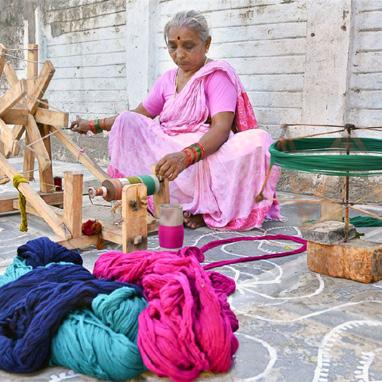


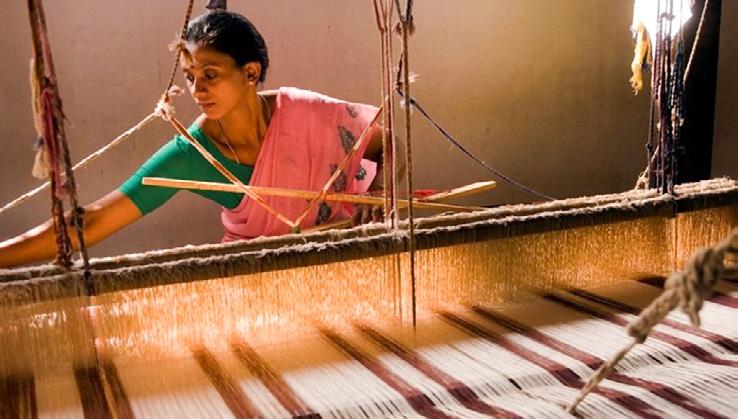

The timing of this recognition aligns perfectly with shifting fashion sensibilities. Across India and among global audiences, there is a growing preference for minimalist cotton saris that prioritise comfort, sustainability, and authenticity. Younger consumers, working professionals, sustainable fashion advocates, and NRI communities are increasingly drawn to heritage textiles with a story. The GI tag adds a layer of prestige, positioning the Woraiyur cotton sari as a piece of wearable history rather than just everyday attire. Designers and boutiques are also expected to play a significant role in the sari’s revival. While preserving the integrity of the weave, contemporary interpretations through new colour palettes, subtle fusion motifs, modern blouse pairings, and limited-edition collections are likely to emerge. From Chennai and Coimbatore to Bengaluru and overseas markets like Singapore, certified Woraiyur saris are poised to find space in curated boutiques and handloom-focused online platforms, where traceability and authenticity are increasingly valued.
Ultimately, the GI tag awarded to the Woraiyur Cotton Sari marks the beginning of a new chapter for a timeless drape. It protects a centuries-old art form, uplifts an entire community, and reinforces Tamil Nadu’s position as a global textile powerhouse. In an era where fashion is being redefined by sustainability, cultural depth, and ethical production, the Woraiyur cotton sari stands ready to claim its rightful place—not merely as clothing, but as a living symbol of heritage, resilience, and enduring craftsmanship.







The Michael Kors Mercer Crossbody Bag has emerged as one of the most sought-after accessories of 2025, blending luxury, functionality, and contemporary fashion sensibilities. Designed for the modern urban consumer, the Mercer bag combines Michael Kors’ signature elegance with practical usability, making it a versatile choice for both professional and casual occasions. As the demand grows for compact, hands-free bags that are both stylish and functional, the Mercer Crossbody stands out as a true wardrobe essential for fashion-conscious individuals.




The Mercer Crossbody Bag is part of Michael Kors’ iconic collection, known for its structured silhouette, premium craftsmanship, and timeless appeal. Crafted primarily from pebbled leather, the bag is designed to maintain its shape while offering durability for daily use. Some variants combine canvas and leather trims with signature logo patterns, adding a playful yet sophisticated touch. The extra-small version measures approximately 6 inches in width, 6.75 inches in height, and 2.5 inches in depth, making it compact enough to carry essentials such as a smartphone, wallet, keys, and small personal items. The bag features gold-tone hardware, an adjustable and removable shoulder strap, and top handles, allowing wearers to choose between a crossbody style for casual outings or a handheld style for more formal settings.

In terms of design and features, the Mercer Crossbody Bag strikes a perfect balance between practicality and style. Its structured form ensures a polished appearance that complements both casual and semi-formal attire. Although compact, the interior is thoughtfully designed with card slots and small compartments, enabling users to organize their essentials neatly. The adjustable strap offers hands-free convenience, making the bag ideal for urban commutes, shopping trips, and everyday errands, while the top handle adds a touch of sophistication suitable for office wear or evening engagements. Available in neutral shades such as vanilla, black, and brown, along with seasonal limited editions, the bag appeals to both classic and trend-driven fashion preferences.









Several factors have contributed to the growing popularity of the Mercer Crossbody Bag in 2025. Michael Kors is a globally recognized brand synonymous with luxury, quality, and style, and owning a Mercer bag reflects a refined taste in accessories. Its compact size and lightweight design make it especially appealing to city dwellers who value convenience without sacrificing elegance. The bag’s versatility allows it to transition effortlessly between casual and semi-formal outfits, offering a single accessory solution for multiple occasions. Moreover, its durable leather construction and meticulous craftsmanship ensure long-lasting elegance, making it attractive to consumers who prefer fashion investments that stand the test of time.
In the current fashion landscape, crossbody bags have become an essential accessory for urban lifestyles. With increasing mobility, practical fashion choices, and the rise of minimalistic trends, compact bags like the Mercer are increasingly preferred over bulky totes or traditional handbags. The bag’s design aligns seamlessly with the trend of “sophisticated minimalism,” where fashion statements are made through subtle elegance and functionality rather than flamboyance. Young professionals, Gen Z trendsetters, and style-conscious urbanites gravitate toward accessories that reflect personal style, offer convenience, and maintain a polished appearance. By blending global luxury aesthetics with the practical needs of Indian consumers, the Mercer Crossbody Bag perfectly embodies modern accessory culture.


The Mercer Crossbody Bag is particularly wellsuited for individuals seeking a balance between style and utility. Urban commuters and city dwellers will appreciate its lightweight, hands-free convenience, while young professionals will find it appropriate for office, casual, and evening occasions alike. It is also an excellent choice for those who prefer minimalist yet statement-making accessories that do not compromise on elegance.Whether used for daily errands, social gatherings, or quick city trips, the Mercer appeals to fashion-forward consumers who value practical luxury and timeless design.
In terms of price, availability, and reviews, the extra-small Mercer Crossbody Bag is priced at approximately ₹18,600 and is available through Michael Kors official stores, luxury e-commerce platforms, and select department stores across India. With 464 verified reviews and an average rating of 4.1 out of 5, the bag has received positive feedback for its durability, design, and everyday usability. Customers particularly appreciate its compact form, versatility, and classic color palette, which makes it suitable for a wide range of outfits and occasions.

Styling the Mercer Crossbody Bag is equally effortless and versatile. For a casual chic look, wearing it crossbody with denim, sneakers, and a casual top creates an easy, stylish outfit for city outings. For an office-ready appearance, using the top handles with structured attire such as blazers or dresses adds a polished, professional touch. For evening elegance, neutral shades like vanilla or black pair beautifully with subtle jewelry and refined ensembles, creating a sophisticated flair. As a travel companion, its compact size makes it ideal for light day trips or city exploration, comfortably holding essentials like a passport, wallet, and phone.



This versatility ensures that one accessory can fulfill multiple roles, reducing the need for multiple bags while maintaining a cohesive style. Ultimately, the Michael Kors Mercer Crossbody Bag represents the perfect intersection of fashion, functionality, and luxury, making it a contemporary accessory that resonates with the needs of modern consumers. Its compact size, thoughtful design, and versatile usability make it suitable for urban commutes, professional settings, casual outings, and evening engagements alike. With its timeless design, durable materials, and the prestige of the Michael Kors brand, the Mercer Crossbody Bag continues to stand out as a must-have accessory for anyone seeking a stylish, practical, and statement-making addition to their wardrobe in 2025.






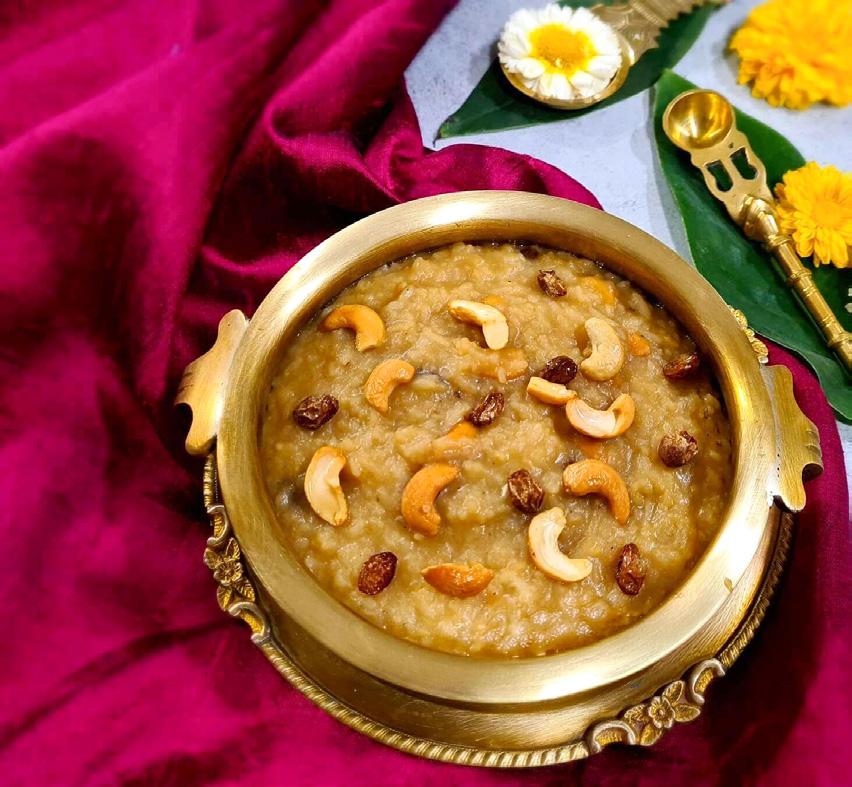



As The Sun Rises Over Golden Fields And The Air Fills With Gratitude, Pongal Arrives As A Celebration Of Abundance, Togetherness, And Tradition. This Harvest Festival, Waterside Invites Guests To Pause, Gather, And Savor The Season With “Pongalo Pongal! – The Harvest Feast”, A Specially Curated Pongal Lunch Buffet On 14th January 2026. The Festive Journey Begins With The Cooling Comfort Of Neer Mor, A Traditional Welcome Drink That Sets The Tone For A Leisurely Afternoon. As Flavours Unfold, The Table Comes Alive With Festive Favourites — The Gentle Sweetness Of Mango Pachadi, The Rustic
Charm Of Keerai Adai, And The Robust Spices Of Chettinad Pallatti Kurma, Each Dish Echoing The Warmth Of Home Kitchens And Ancestral Recipes. At The Heart Of The Feast Lies A Beloved Pairing — Soft, Lacy Appams, Served Alongside Fragrant Vegetarian And Non-Vegetarian Stews, Slow-Cooked To Perfection And Rich With Festive Aromas. The Celebration Culminates In Timeless Classics That Define Pongal Itself — Comforting Bowls Of Ven Pongal, Indulgent Sakkarai Pongal, Traditional Paal Pongal, And The Refreshing Sweetness Of Elaneer Payasam, A Dessert That Captures The Essence Of The Season. Set Against A Serene Ambience Infused With Festive Cheer, The Pongal Lunch At Waterside Is More Than A Meal — It Is A Heartfelt Homage To Harvest, Heritage, And Togetherness. A Celebration Where Flavors Tell Stories And Every Bite Honors Tradition.
Date: Wednesday, 14th January 2026
Time: 12pm- 3.30pm
Price: Rs.2250 Per Person + Taxes
Venue: Waterside, Feathers Hotel
LET THE POTS OVERFLOW, THE FLAVOURS LINGER, AND THE SPIRIT OF PONGAL FILL THE AIR — BECAUSE EVERY HARVEST DESERVES TO BE CELEBRATED.
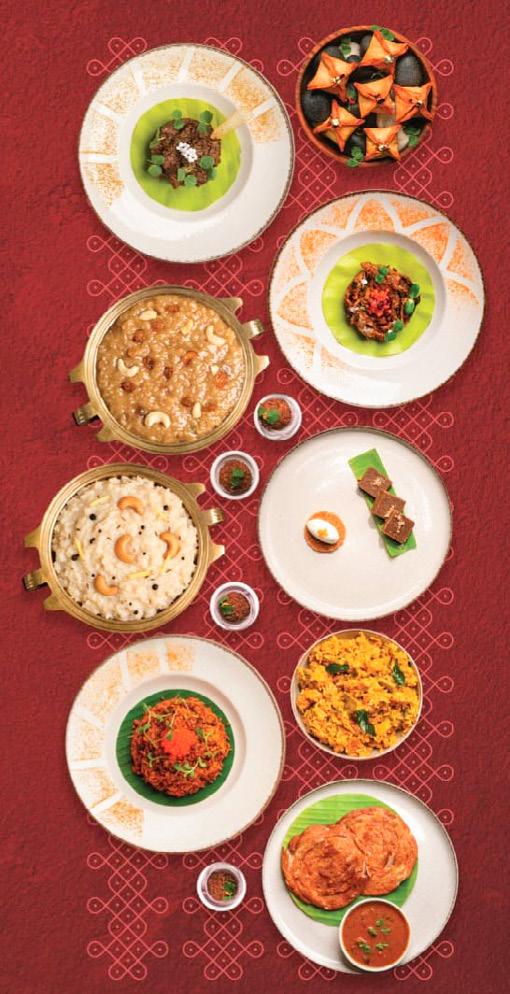


Rooted in tradition and served with royal warmth, Sangamithirai – Native Thamizh Cuisine at Feathers – Hotel invites patrons to celebrate the spirit of Pongal with an indulgent culinary homage.
Marking the harvest festivities, Karikalan Virundhu unfolds as a soulful feast inspired by age-old Tamil culinary legacies—where heritage recipes, native flavours and festive abundance come together on a single leaf. The feast journeys through timeless flavours with delicacies such as Ilai Kozhukattai, Kizhangu Meen Porichathu and the rustic comfort of Vayal Nandu Soup, followed by hearty preparations like Selavu Kozhambu, Mocha Kootu and the medicinal warmth of Thuthuvalai Rasam. The celebration culminates with the robust Sanda Seval Satti Soru and the earthy sweetness of Panangizhangu Kuzhavai, Karumbu Charu Pongal paying homage to the land and its harvest.

As a special festive gesture, guests can enjoy 25% off on Karikalan Virundhu, available for both lunch and dinner on 17th January 2026. This Pongal, Sangamithirai becomes a cultural hearth—where the aroma of tradition lingers, flavours narrate stories of the land, and every meal is a celebration of Thamizh identity.

Date: Saturday, 17th January 2026
Time: Lunch and Dinner
Price: Veg - INR 2000++
Non Veg -INR 2500++ (25% off)
Venue: Sangamithirai, Feathers Hotel
Let the harvest be honoured, the flavours be remembered, and the feast be truly Thamizh.
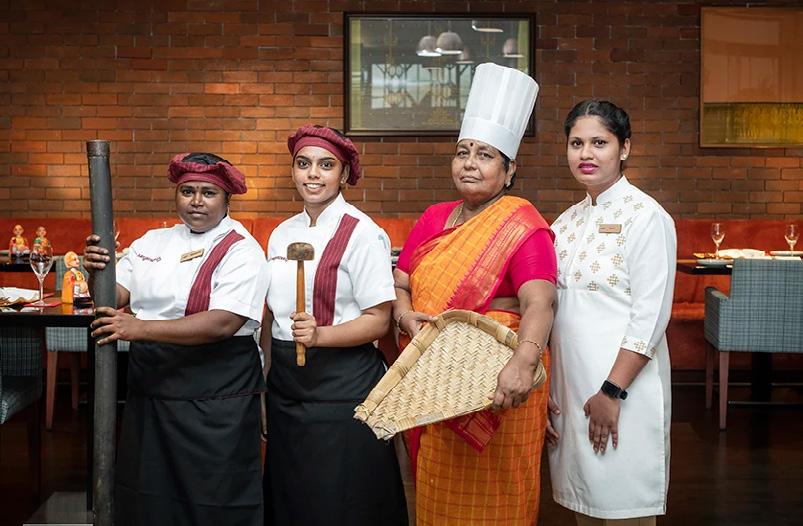


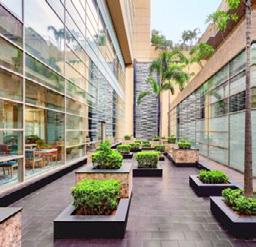
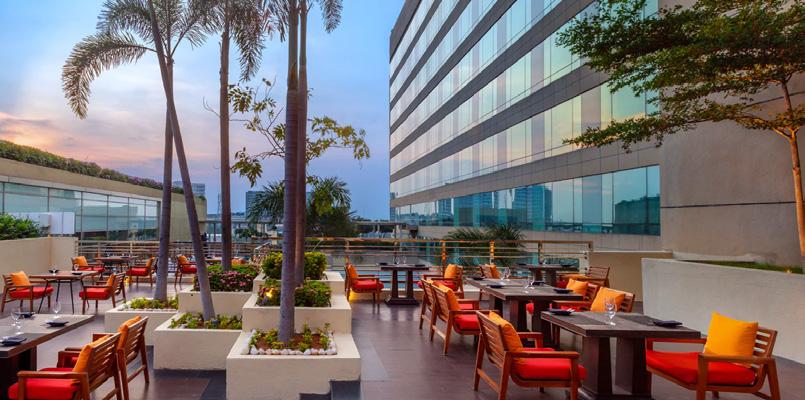
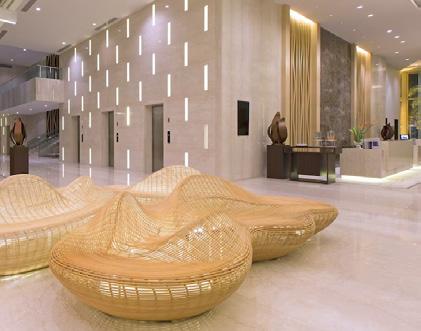
The Westin Chennai Velachery is pleased to announce the appointment of Mr. Anand Raghuraman as its new Chief Engineer. A passionate hotelier and resultsdriven professional, Anand brings with him over 20 years of rich experience in the hospitality industry. In his new role, he will oversee all engineering operations, ensuring the highest standards of safety, sustainability, and operational excellence across the property. Prior to joining The Westin Chennai Velachery, Anand has worked with some of India’s most esteemed hospitality brands, including IHCL, Marriott International, The Ascott Limited, and Mahindra Holidays, gaining extensive expertise across diverse hotel formats and operations. Anand is a Bachelor of Engineering graduate from Annamalai University.

Known for his energetic and affable leadership style, he is deeply committed to people development and strongly believes in fostering positive colleague interactions and collaborative working relationships. Outside of work, Anand enjoys spending quality time with his family in Chennai. He is an avid biking enthusiast and has a deep appreciation for soulful music. The team at The Westin Chennai Velachery warmly welcomes Anand Raghuraman and wishes him every success in his new role.
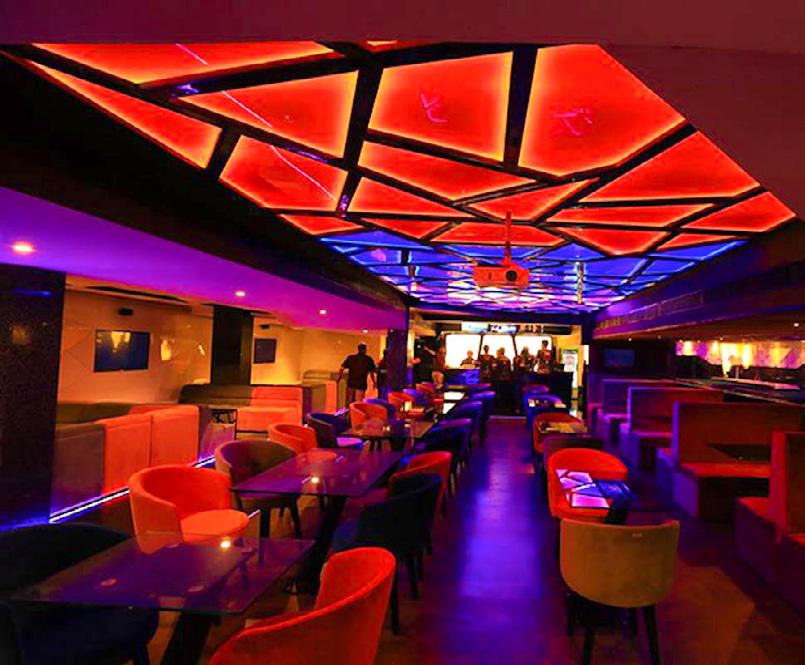


Tamil Nadu’s urban lifestyle is witnessing a notable shift toward cafes and gaming lounges as central destinations for socializing, relaxation, and entertainment. These spaces are no longer just about coffee or snacks—they now integrate culinary experiences, interactive gaming, cultural performances, and wellness offerings, catering to students, young professionals, families, and tourists. The rise of these lifestyle hubs reflects a broader urban cultural evolution, where people increasingly seek venues that combine leisure, social connection, and digital engagement in one environment.
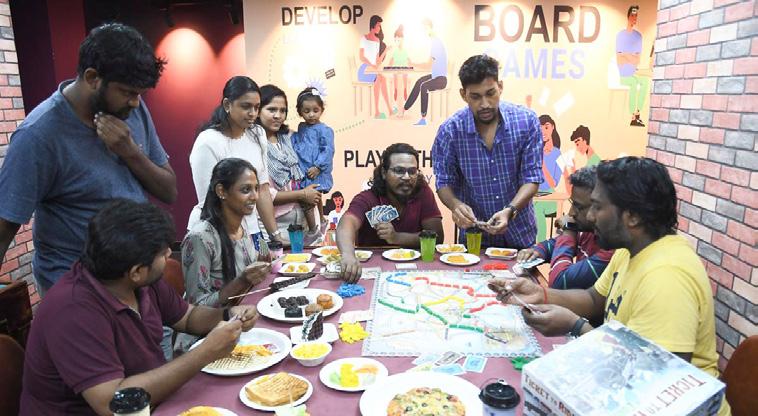


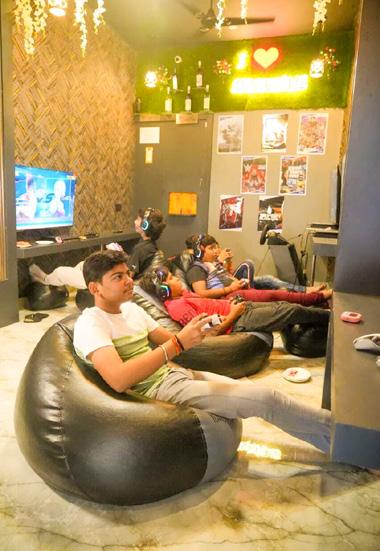
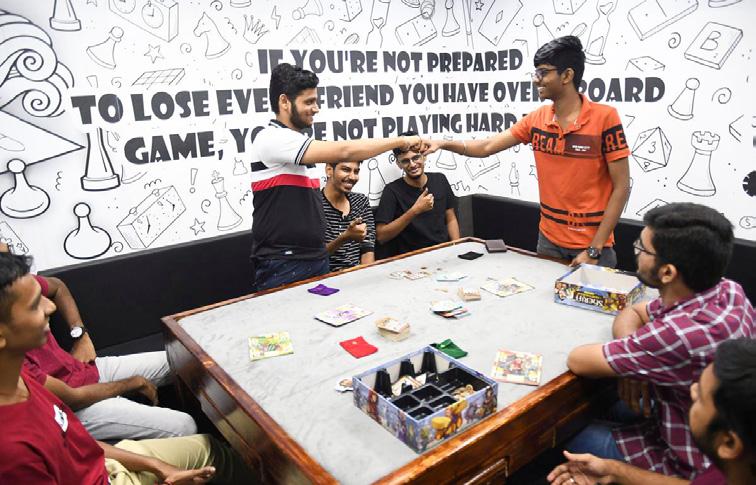
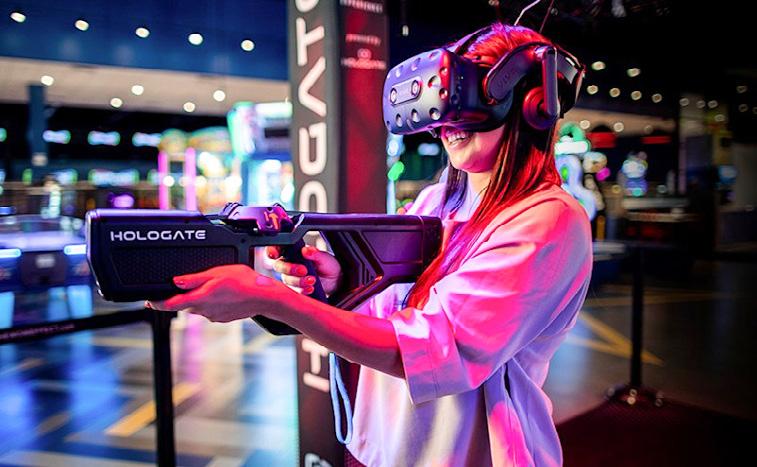
Complementing cafes, gaming lounges in Tamil Nadu provide immersive digital and physical entertainment. Popular setups include multi-player video games, virtual reality (VR) experiences, arcade games, and board games, attracting a wide demographic—from urban youth and college students to families and corporate groups. Hybrid models combine gaming with café services, allowing visitors to enjoy food and drinks while gaming. December 2025 also features local e-sports tournaments, interactive competitions, and VR challenges, making these lounges hubs for both casual and competitive entertainment, while promoting skill development, teamwork, and social engagement.
Modern urban leisure spaces are increasingly integrated lifestyle destinations, blending cafes, gaming zones, co-working areas, and event spaces. This model encourages extended visits, social interaction, and community engagement, transforming ordinary outings into holistic experiences. Many venues leverage social media, influencer partnerships, and live-streamed events to maintain relevance and attract a tech-savvy audience. This combination of culinary enjoyment and interactive entertainment reflects the contemporary urban appetite for immersive, multisensory leisure activities.
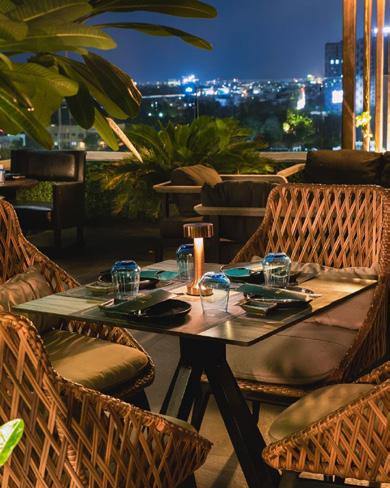
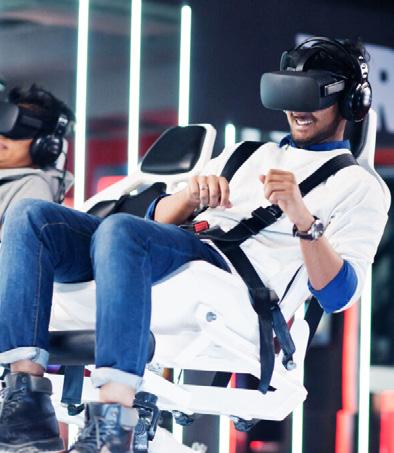
The growth of cafes and gaming lounges contributes significantly to Tamil Nadu’s urban lifestyle economy. These venues generate employment opportunities, entrepreneurial ventures, and tourism appeal, particularly during the festive period. By hosting cultural performances, interactive workshops, and gaming tournaments, they also serve as platforms for creative expression and cultural exchange, connecting local traditions with modern entertainment trends. This evolution signifies how leisure is becoming both socially and economically valuable, enhancing city life and community engagement. Operating cafes and gaming lounges comes with challenges, including high rental costs, equipment maintenance, and competition from home-based digital entertainment. However, opportunities abound: expansion into smaller cities, hosting themed events, combining wellness with gaming (like mindfulness or yoga corners), and integrating digital interactivity can create sustainable and engaging experiences. Showcases how businesses are innovating to balance profitability, engagement, and modern lifestyle trends.
MODREN LIFESTYLE reflects the rise of cafes and gaming lounges as pivotal elements of Tamil Nadu’s urban lifestyle. By merging food, social interaction, and interactive entertainment, these spaces redefine leisure, making it experiential, culturally rich, and digitally integrated. They are no longer mere hangouts—they represent a modern lifestyle ecosystem, where culinary excellence, gaming, community engagement, and cultural experiences converge, creating vibrant urban hubs for residents and tourists alike
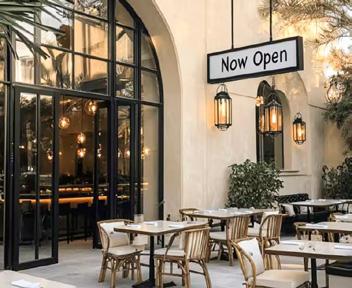

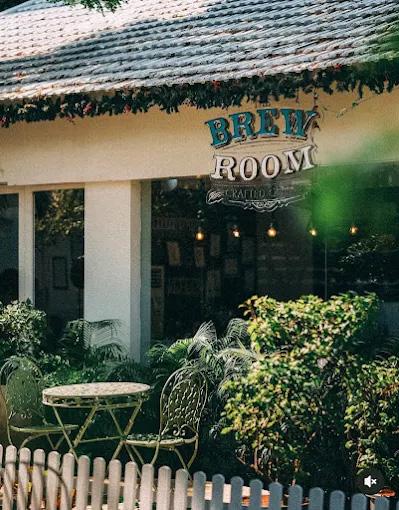

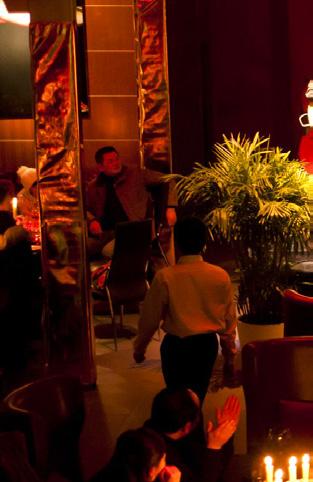
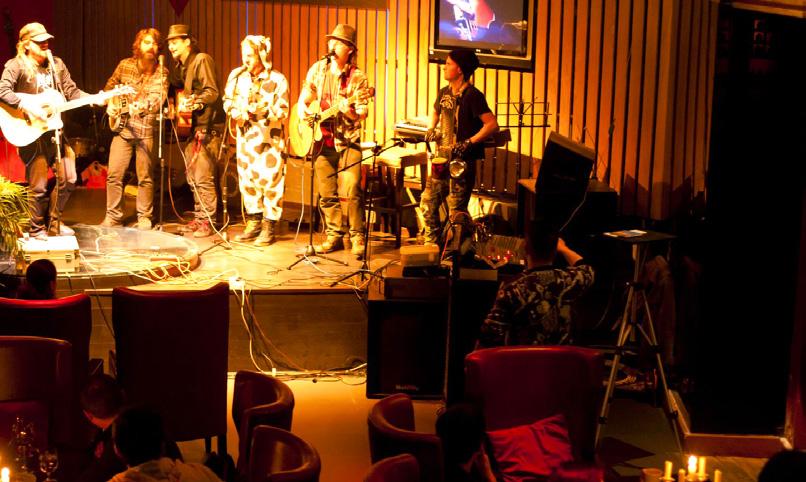
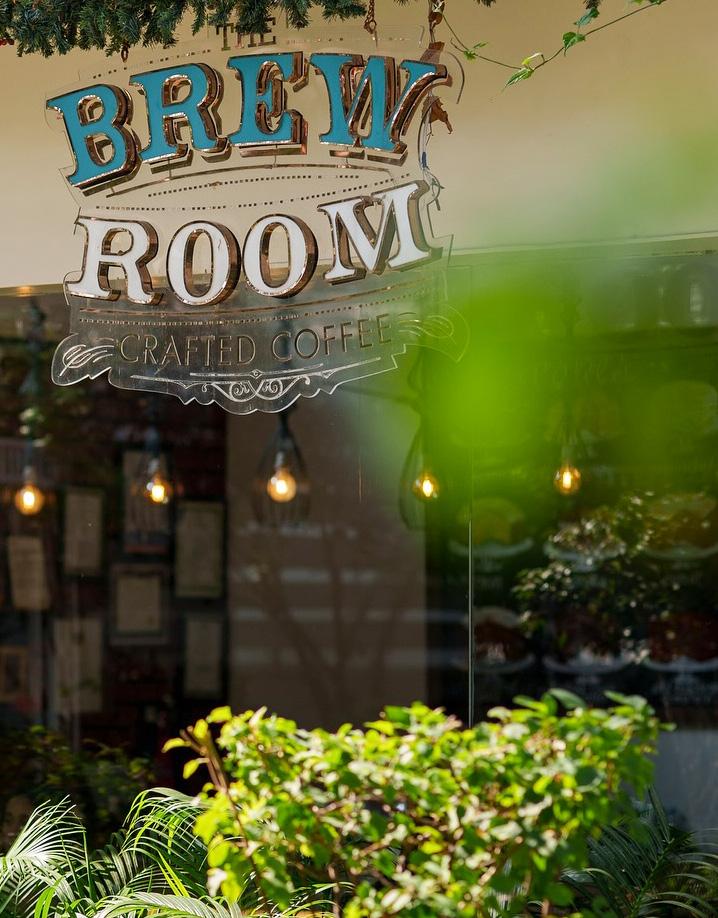
Cafes across Chennai, Coimbatore, and Madurai are redefining urban hangouts. Leading chains like Cafe Coffee Day and Starbucks India laid the foundation for modern coffee culture, emphasizing quality beverages, ambient interiors, and consistent service. Boutique and independent cafés, such as The Brew Room, Brew42, and Chennai-based themed cafés, expanded this concept by integrating live music, cultural performances, co-working zones, and interactive workshops. These entrepreneurs created multi-sensory environments that appeal to diverse demographics—from students and professionals to families and tourists. Their focus on aesthetic interiors, social media-friendly spaces, and curated menus with organic, vegan, and international options reflects the contemporary urban lifestyle ethos.
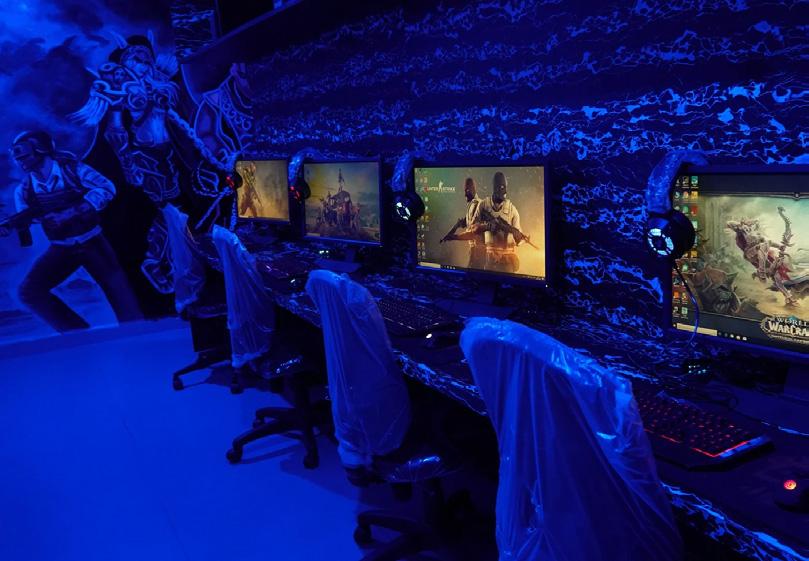
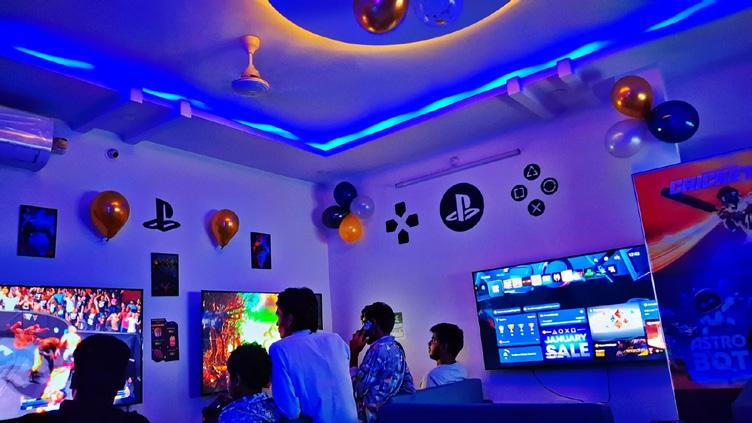


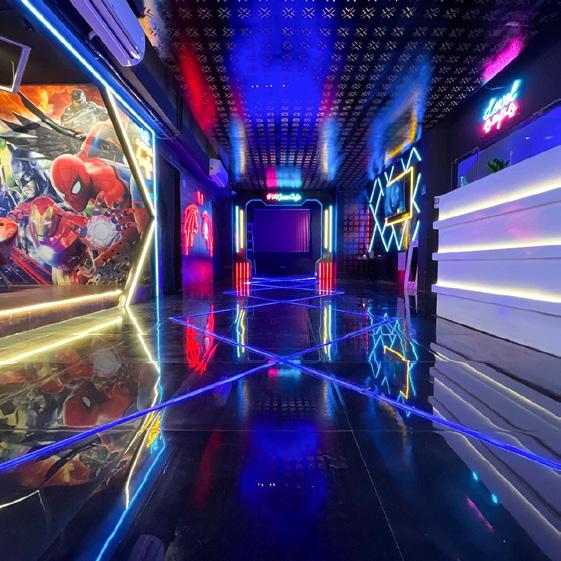
The rise of gaming lounges in Tamil Nadu is largely credited to local startups and hybrid entertainment ventures. Pioneers like NextGen Gaming, PlayZone India, and boutique VR/arcade lounges in Chennai introduced multi-player video games, virtual reality experiences, board games, and interactive competitions, creating spaces where young adults and families could socialize, compete, and relax. Some entrepreneurs innovatively combined café services with gaming zones, allowing visitors to enjoy meals and beverages while engaging in immersive gaming. These venues also host local e-sports tournaments, skill-building competitions, and VR challenges, positioning Tamil Nadu as an emerging hub for interactive entertainment and digital lifestyle experiences.





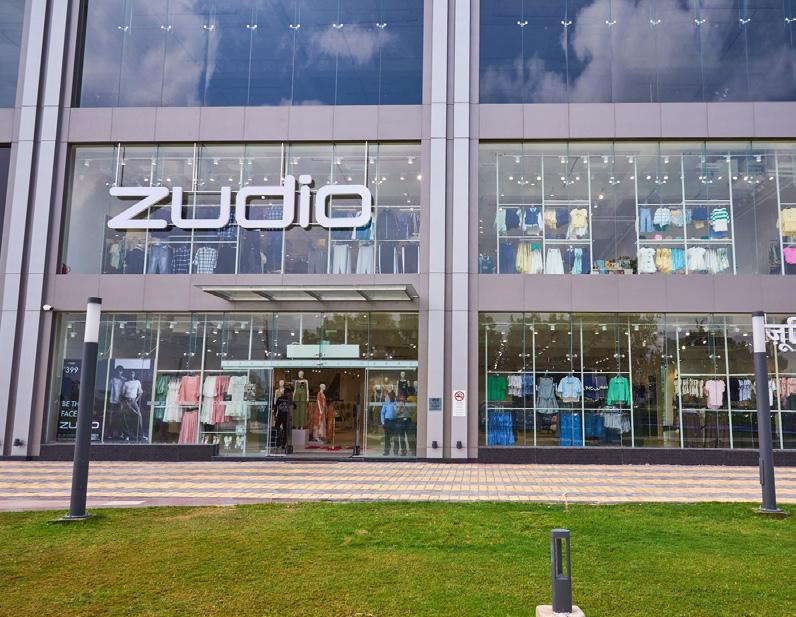


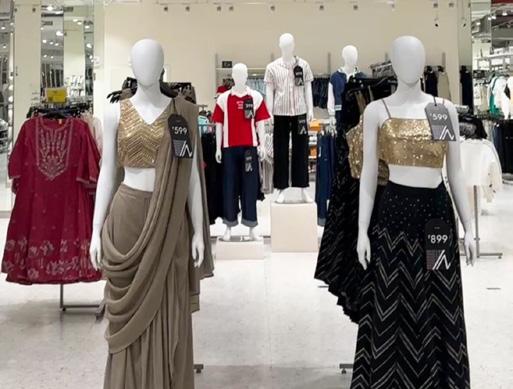
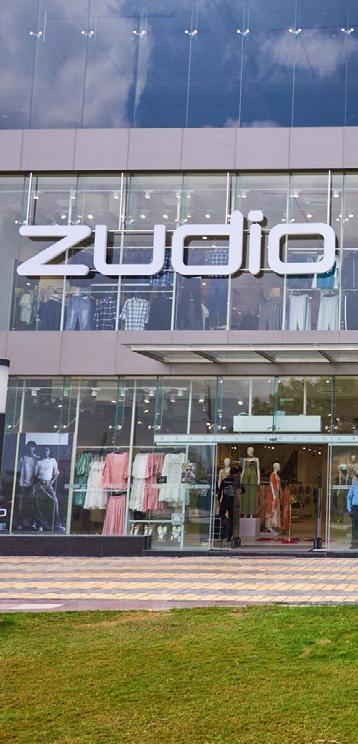
Tamil Nadu’s retail landscape is experiencing a defining shift, one that signals a deeper transformation in how fashion is consumed across the state. By November 2025, value fashion has emerged as the fastest-growing retail segment, reshaping shopping habits from metropolitan centres to the smallest towns. At the heart of this movement stands Zudio, the affordable fashion format from Trent Limited, part of the larger Tata Group. What was once considered budget shopping has evolved into a confident, aspirational lifestyle choice, embraced enthusiastically by young consumers, families, and working professionals alike. Across cities such as Chennai, Coimbatore, Madurai, Tiruchirappalli, Salem, Erode, Vellore, and numerous tier-3 towns, affordable fashion stores are rapidly becoming neighbourhood anchors. High-street outlets and mall locations that once struggled for consistent footfall are now drawing crowds, driven by consumers who want style, variety, and frequency without financial strain. Tamil Nadu, with its unique blend of cultural pride, textile awareness, and youthful ambition, has quietly positioned itself as one of India’s strongest markets for value-driven apparel retail.
Among all value-fashion players, Zudio has emerged as the most aggressive and influential force in the state. Its rapid expansion across South India finds particular momentum in Tamil Nadu, where store launches have multiplied at a striking pace. New outlets appear almost monthly, not just in prime urban zones but also in semi-urban and suburban pockets where organised fashion retail was once limited. This expansion is not accidental; it is rooted in a deep understanding of the Tamil Nadu consumer, who values both practicality and visual appeal. Zudio’s pricing strategy has become legendary, with entry-level products starting as low as ₹99, instantly lowering the psychological barrier to purchase. This affordability, combined with weekly design refreshes, has effectively introduced fast fashion to a mass audience. Shoppers no longer wait for seasonal sales; instead, they visit stores frequently, confident that new styles will be available every week. For students, first-time earners, and young professionals, Zudio represents freedom—the ability to experiment with trends without guilt or financial pressure. Over time, the brand has cultivated a “fashion-for-everyone” culture, making style accessible rather than exclusive.

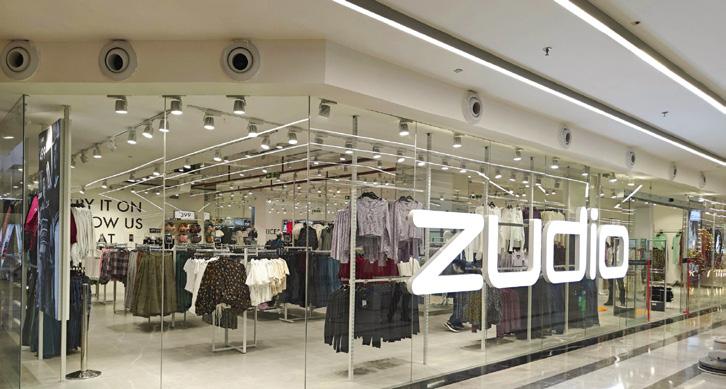
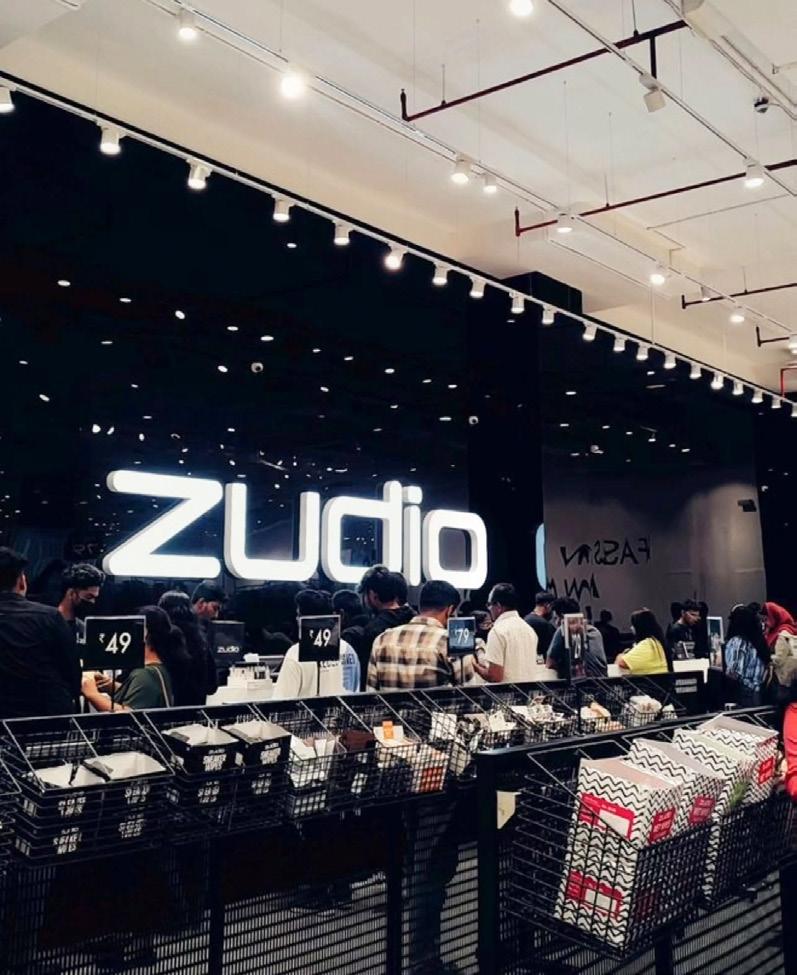
The explosive growth of value fashion in Tamil Nadu is closely tied to the state’s demographic and economic realities. With a large, young, and increasingly urban population, the demand for affordable yet fashionable clothing has grown steadily over the past decade. Social media platforms, particularly short-form video content and street-style reels, have accelerated trend cycles, creating a desire for constant wardrobe updates. Young consumers want to mirror celebrity-inspired and influencer-led looks, but without the burden of high prices. Value fashion fulfils this aspiration perfectly. Equally important is the purchasing power of Tamil Nadu’s middle class, especially in tier-2 and tier-3 cities. Families in these regions are shopping more frequently than before, driven by rising incomes, better retail infrastructure, and a growing comfort with organised retail. Malls in Chennai, Coimbatore, and Tiruchirappalli have expanded their fashion floors, and Zudio has emerged as a preferred anchor tenant due to its ability to generate consistent footfall. In a price-sensitive market, affordable fashion offers consumers the liberty to shop often, experiment freely, and include the entire family in the purchase experience.




To understand Zudio’s dominance in Tamil Nadu, it is essential to trace its origins. Launched around 2016–2017 by Trent Limited, Zudio was conceptualised to address a clear gap in the Indian fashion market. On one side stood unbranded, low-quality apparel; on the other, expensive branded fashion that remained out of reach for many. Zudio positioned itself squarely in between, offering trend-led designs at prices that felt almost disruptive. The brand’s early success came from its aggressive expansion into tier-2 and tier-3 cities between 2018 and 2020. These regions, often ignored by premium fashion brands, responded enthusiastically to Zudio’s ₹99–₹499 pricing model. As social media usage surged between




2021 and 2023, Zudio became a viral sensation, frequently featured in haul videos and influencer content that highlighted its affordability and variety. Long queues outside new store openings became a common sight, signalling a shift in how Indians perceived value fashion. By 2024 and 2025, Tamil Nadu emerged as one of Zudio’s most significant growth engines. Cities across the state witnessed multiple store launches, each quickly integrating into local shopping routines. The brand’s ability to cater simultaneously to college students, working adults, children, and families made it a one-stop fashion destination, reinforcing its mass appeal.
Tamil Nadu’s long-standing relationship with textiles has also played a crucial role in the acceptance of value fashion. As a state deeply connected to weaving, fabric quality, and everyday wear, consumers possess a keen understanding of clothing value. Affordable does not mean disposable; it means practical, wearable, and suitable for daily life. Zudio’s focus on comfortable silhouettes, versatile fabrics, and trend-conscious designs aligns seamlessly with this sensibility. Post-2020, fashion habits in the state shifted significantly. Comfort became as important as appearance, and everyday fashion took precedence over occasion wear. Value brands, with their frequent stock updates and wide size inclusivity, matched these evolving needs. For students managing tight budgets, professionals balancing expenses, and families shopping collectively, affordable fashion became not just a choice but a necessity that still allowed self-expression.
Zudio’s success is underpinned by a business model that prioritises speed, simplicity, and scale. New stock arrives weekly, ensuring that stores feel fresh and dynamic. Designs draw inspiration from global fastfashion trends but are adapted for Indian preferences and climates. Sections for men, women, kids, beauty, and accessories create a comprehensive shopping experience under one roof. Fixed pricing strategies simplify decision-making, while efficient billing and modern store layouts enhance convenience. This approach has positioned Zudio as a “mass-premium” brand—accessible yet aspirational, affordable yet stylish. In Tamil Nadu, where consumers appreciate value without compromising dignity or aesthetics, this positioning has resonated deeply. Over time, Zudio has not just followed trends but actively shaped them, influencing how people dress for college, work, travel, and everyday life.
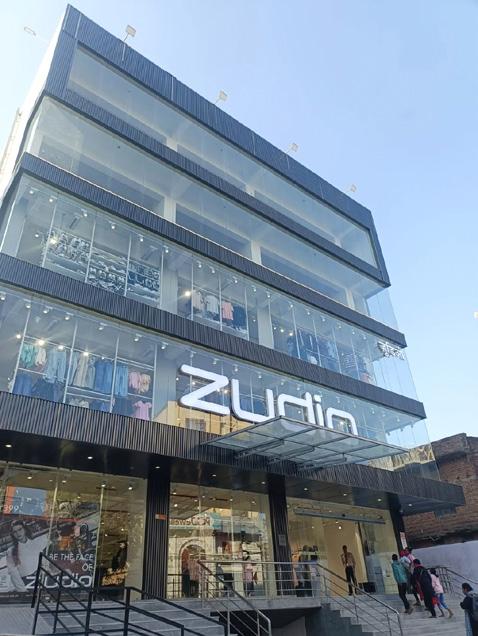




The rise of value fashion has triggered a ripple effect across Tamil Nadu’s retail ecosystem. Shopping malls and high streets have recorded higher occupancy rates, driven by the reliable footfall generated by affordable fashion anchors. Employment opportunities in retail operations, logistics, warehousing, and supply chains have expanded, contributing to local economic growth. Smaller towns, once underserved by organised retail, now enjoy modern shopping experiences comparable to larger cities. While other brands such as Max, Reliance Trends, EasyBuy, and Style Bazaar are also strengthening their presence in the state, Zudio currently commands the strongest momentum. Its ability to scale rapidly while maintaining consistent consumer interest has set new benchmarks for valuefashion retail in South India.

For consumers, the value-fashion wave has fundamentally changed the shopping experience. More stores mean easier access, more options encourage experimentation, and competitive pricing removes the anxiety traditionally associated with fashion spending. Weekly collections ensure variety, while inclusive sizing and family-focused assortments make fashion truly democratic. In Tamil Nadu, style is no longer reserved for special occasions or limited budgets; it has become an everyday expression available to all.
By November 2025, it is clear that affordable fashion is no longer a temporary trend but a defining feature of Tamil Nadu’s retail identity. With Zudio leading the charge, the state has demonstrated how value fashion can be modern, aspirational, and deeply inclusive. As expansion continues into 2026 and beyond, Tamil Nadu is poised to remain at the forefront of India’s value-fashion revolution, proving that smart style does not require high prices—only thoughtful design and accessible vision. Fashion for all is no longer a slogan here; it is a lived reality across the state.


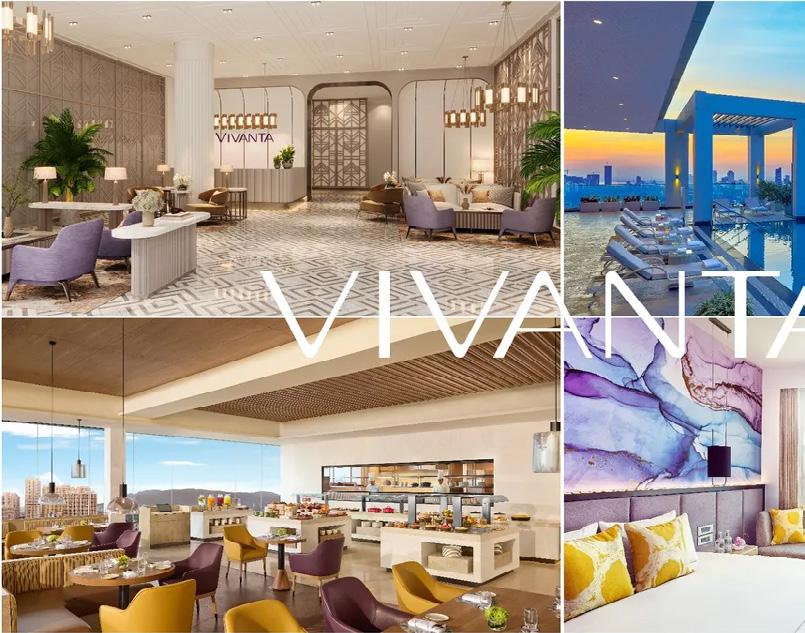
The Indian Hotels Company Limited (IHCL), India’s largest hospitality company, is set to make its debut in Vellore with the signing of a new Vivanta hotel—ushering in a significant chapter in the city’s evolving growth story. The greenfield project reflects rising investor confidence in Vellore’s expanding economic and tourism potential and signals the arrival of upscale hospitality in this thriving Tamil Nadu hub.

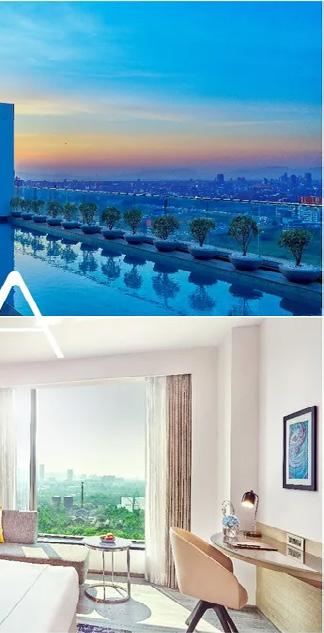
Located in the heart of Vellore, the upcoming hotel positions IHCL at the centre of one of Tamil Nadu’s most dynamic urban centres. Known for its prestigious educational institutions, world-class healthcare facilities, and expanding industrial base, Vellore has steadily strengthened its reputation as a destination that blends opportunity with heritage. Its inclusion in the Government of India’s Smart Cities Mission further underscores the city’s infrastructure upgrades and long-term development roadmap.
According to Ms. Suma Venkatesh, Executive Vice President – Real Estate & Development, IHCL, Vellore’s improving connectivity, strong industrial ecosystem, and educational prominence make it an ideal market for hospitality expansion. The partnership with BBK Group brings together IHCL’s legacy of hospitality excellence and a respected local enterprise with deep roots in Tamil Nadu’s manufacturing sector.
Designed in line with the brand’s vibrant and contemporary ethos, Vivanta Vellore will feature 100 thoughtfully designed rooms that combine modern aesthetics with intuitive comfort. The hotel is envisioned as a dynamic social and business hub—catering to corporate travellers, visiting families, and social gatherings alike. Guests can look forward to an all-day dining restaurant offering diverse culinary experiences, complemented by a stylish bar and a relaxed pool lounge bar. These spaces are intended to create a lively yet refined atmosphere, encouraging both connection and relaxation.
For corporate and social events, the hotel will offer multiple meeting rooms and a banquet hall spanning over 2,500 square feet—ideal for conferences, weddings, and milestone celebrations. Recreational amenities such as a fully equipped fitness centre and a swimming pool will further enhance the guest experience, ensuring a balanced blend of productivity and leisure.
The project is being developed in collaboration with BBK Group, founded in 1994 by Mr. Baskaran. What began as the BBK Shoes factory has grown into a leading vertically integrated leather footwear and goods manufacturer, with eight state-ofthe-art facilities across Tamil Nadu. The group’s operations span from raw leather processing to the production of premium shoes and bags.
In recent years, BBK Group has diversified into renewable energy, establishing wind and solar farms as part of its commitment to sustainable and responsible growth. This expansion aligns seamlessly with IHCL’s focus on sustainability and long-term value creation.
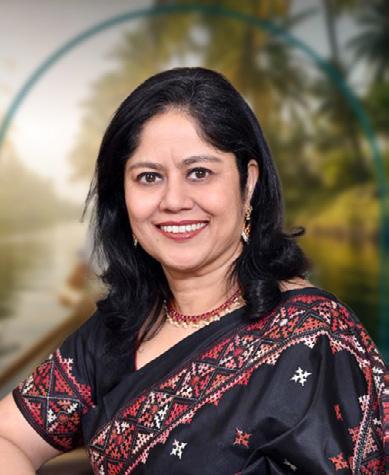
Ms. Suma Venkatesh, Executive Vice President, Real Estate & Development, IHCL
Mr. Baskaran expressed confidence that the introduction of the Vivanta brand will elevate Vellore’s hospitality ecosystem and create a landmark destination for travellers visiting the city for business, education, healthcare, or leisure.
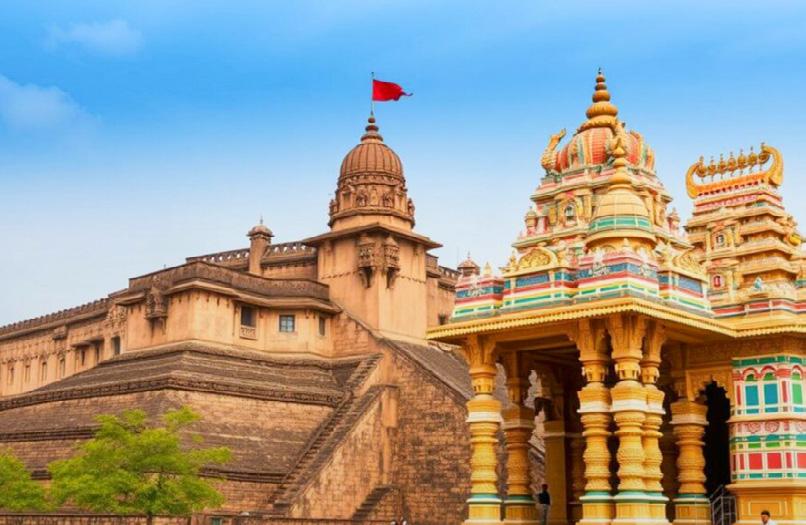
Vellore’s appeal extends far beyond its economic significance. The city is home to the historic Vellore Fort, a 16th-century architectural marvel that stands as a testament to the region’s storied past. Equally iconic is the Golden Temple (Sripuram), a spiritual landmark that attracts devotees and tourists from across India.
Beyond its cultural treasures, Vellore and its neighbouring districts form a robust industrial corridor, particularly strong in leather manufacturing, automotive components, and engineering clusters. The steady influx of business travellers, medical tourists, academicians, and visiting families has significantly increased demand for highquality accommodation—creating the ideal environment for upscale hospitality offerings.
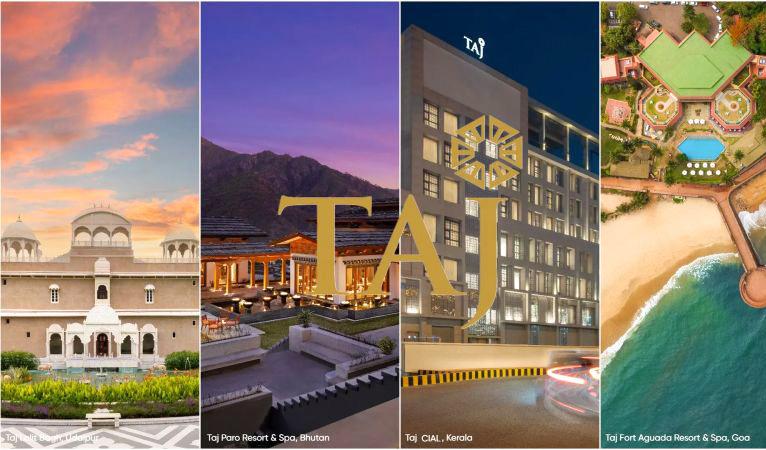
Founded by Jamsetji Tata, IHCL opened its first hotel, The Taj Mahal Palace, in 1903—setting new benchmarks in Indian hospitality. Over more than a century, the company has evolved into a global hospitality leader with a portfolio spanning luxury, upscale, and lean luxe segments.
From the iconic Taj brand to SeleQtions, Tree of Life, Gateway, and Ginger, IHCL’s brand architecture reflects its commitment to delivering distinctive experiences across traveller categories. Vivanta, positioned in the upscale segment, is known for its contemporary design, energetic personality, and seamless integration of business and leisure—qualities well-suited to Vellore’s forward-looking identity.
Today, IHCL’s portfolio includes over 600 hotels globally, with a strong pipeline of properties across continents. As India’s largest hospitality company by market capitalisation, it continues to expand strategically into high-potential cities that are shaping the country’s next growth wave.
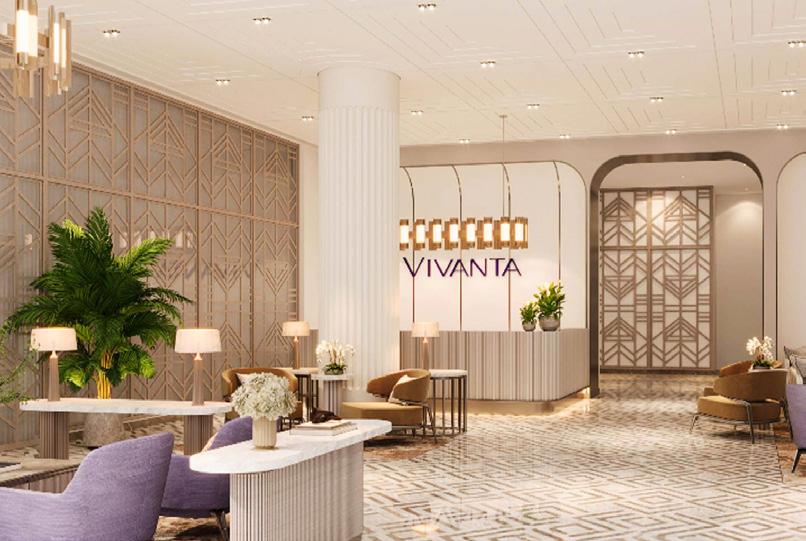
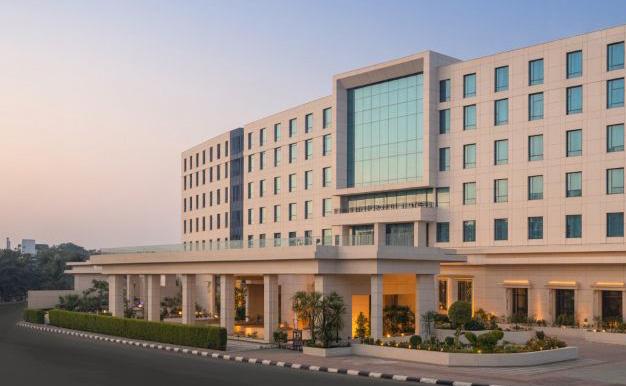

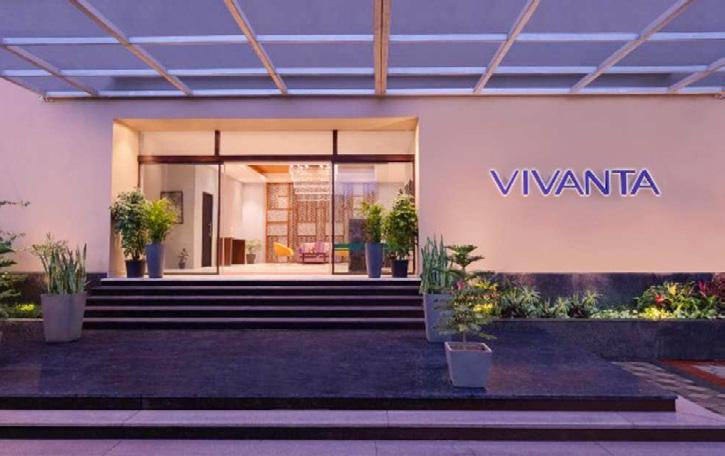
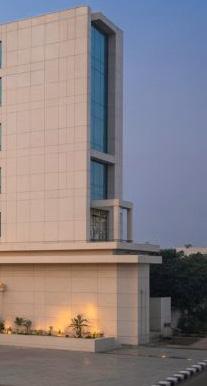

The signing of Vivanta Vellore is more than an expansion announcement—it represents the convergence of heritage, industry, and modern aspiration. As Vellore advances as a centre of education, manufacturing, and healthcare, the addition of an internationally recognised hospitality brand strengthens its position as a well-rounded urban destination.
For travellers, the upcoming hotel promises contemporary elegance and world-class service. For the city, it marks a transformative step toward a more vibrant and sophisticated hospitality landscape.
With construction set to shape a striking new address in Vellore’s skyline, IHCL’s debut through Vivanta is poised to become a defining milestone in the city’s journey toward growth, connectivity, and global recognition.


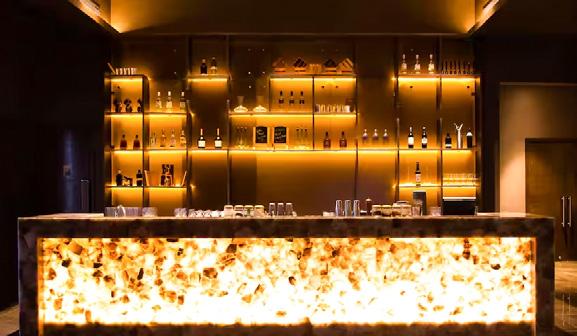
This January, Vapor at Feathers Hotel invites guests to unwind at their own pace with a spirited all-day celebration. From January 1st -31st 2026, enjoy special pricing on select premium bottles, complemented by complimentary munchies on the house—because every good pour deserves the perfect pairing. From relaxed mid-day catch-ups to after-work winddowns and leisurely evening conversations, Vapor’s chic ambience sets the tone for effortless indulgence throughout the day. Whether it’s a casual afternoon sip or an early evening toast to new beginnings, every moment at Vapor is crafted to feel celebratory. Drop in, drink well, snack happy, and let January flow smoothly—one stylish sip at a time—only at Vapor Bar.

Date: 1st -31st January 2026
Time: 11am10.30pm
Price: A la carte
Venue: Vapor, Feathers Hotel

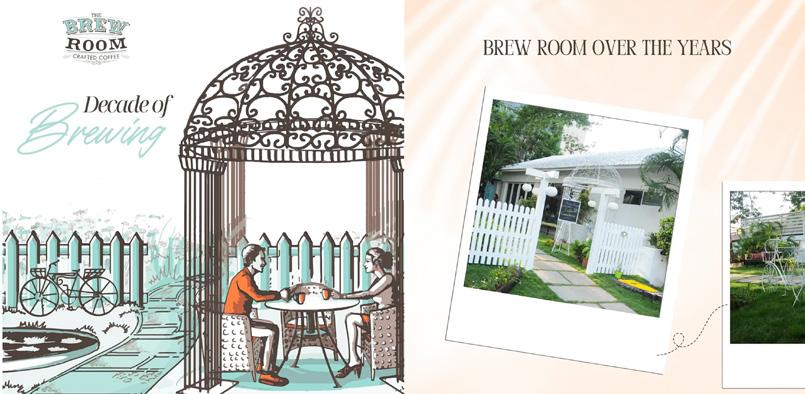
In a city celebrated for its layered food culture and ever-evolving café scene, The Brew Room has quietly carved a niche that blends thoughtful design, carefully sourced beverages, and a menu shaped by both global influences and local sensibilities. Chennai’s café culture has matured rapidly over the past decade, moving beyond quick cups of coffee to spaces that encourage lingering conversations, creative exchanges, and slow appreciation of food and drink. The Brew Room sits comfortably within this evolution, not as a loud trendsetter but as a refined destination that values detail, balance, and consistency. It appeals equally to professionals seeking a calm mid-day retreat, creatives looking for inspiration, and social diners who appreciate understated sophistication over flamboyance.

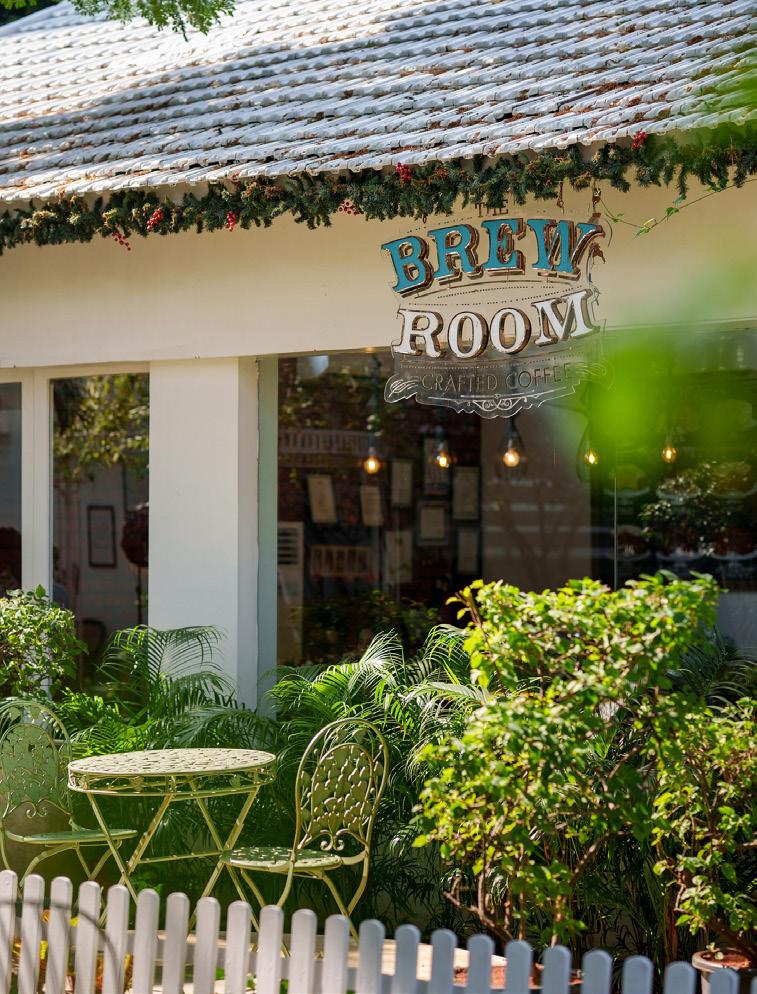
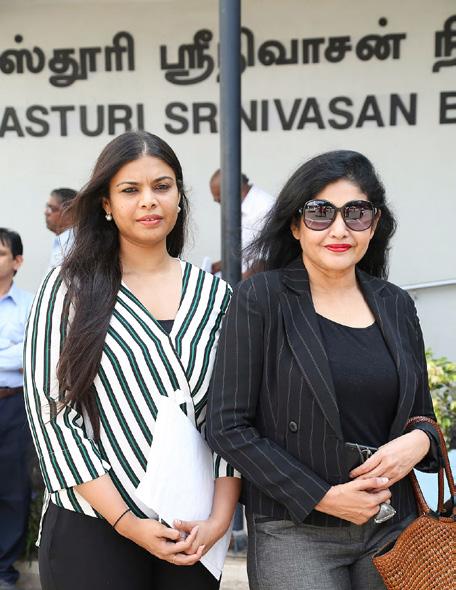
Nina Reddy & Nivruti Reddy FOUNDER OF THE BREW ROOM
What distinguishes The Brew Room is its ability to feel contemporary without losing warmth. It is not merely a place to drink coffee or sample artisanal beverages, but a space designed to be experienced over time. Every element, from its layout to its menu philosophy, reflects an intention to slow the pace, encouraging guests to savour rather than rush. In a city known for its energetic rhythms, The Brew Room offers a counterpoint—an oasis of calm that still feels deeply connected to Chennai’s urban pulse.
Situated in one of Chennai’s well-established neighbourhoods, The Brew Room benefits from a location that balances accessibility with a sense of privacy. The area itself is known for its residential calm interspersed with commercial vitality, making it an ideal setting for a café that thrives on regular patrons as much as first-time visitors. Unlike cafés tucked away in high-traffic malls or crowded commercial streets, The Brew Room enjoys a setting that allows guests to step away from the city’s intensity without feeling disconnected from it. The surrounding streets contribute subtly to the café’s character. Morning visitors often arrive to soft sunlight filtering through trees, while evenings bring a quieter, reflective mood that complements the café’s interiors. This relationship between location and atmosphere is not accidental. The Brew Room appears to have been envisioned as a neighbourhood café with a wider appeal, drawing in patrons who value familiarity as much as novelty. Over time, it has become a recognisable landmark within its locality, known as much for its ambience as for its beverages.
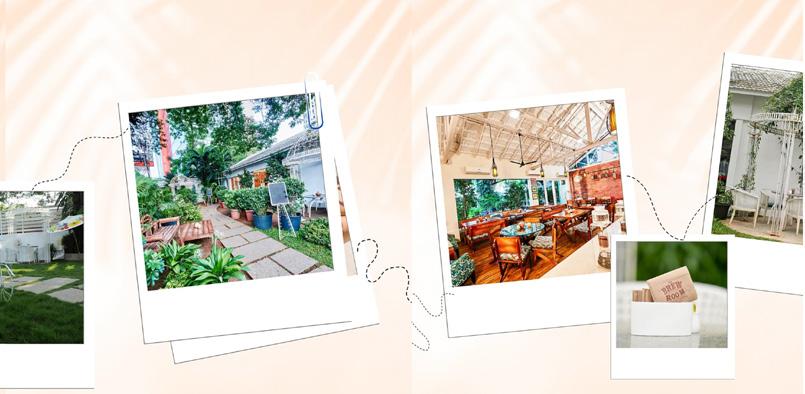
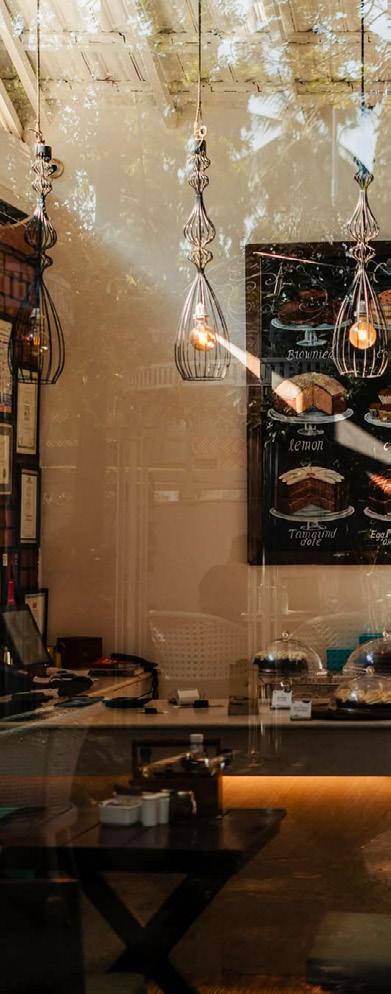
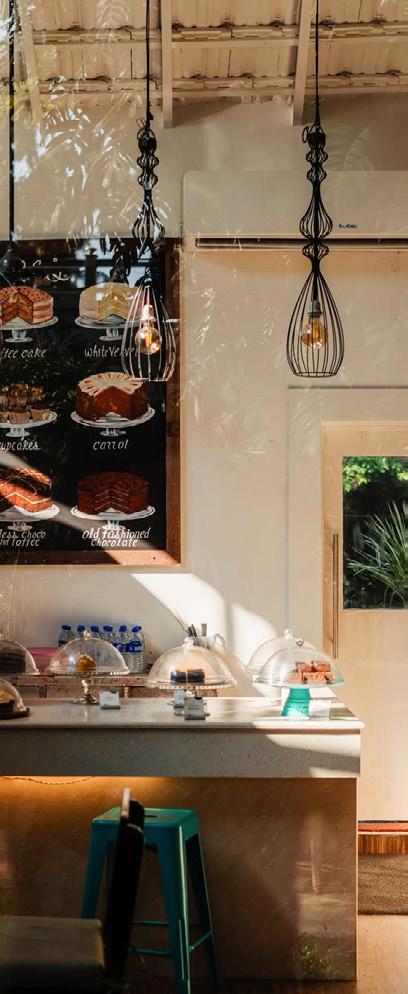
The first impression upon entering The Brew Room is one of deliberate restraint. The architecture and interior design avoid excessive ornamentation, choosing instead a palette of natural materials, muted tones, and clean lines. This approach creates a timeless aesthetic that resists the fleeting nature of café trends. Wood, metal, and soft lighting work together to establish a space that feels both modern and inviting, with no single element overpowering
the others. Seating arrangements are thoughtfully planned to cater to different moods and purposes. There are areas conducive to solitary work or quiet reading, as well as communal tables that encourage social interaction. The spatial flow allows movement without congestion, ensuring that even during busy hours, the café retains its sense of openness. Natural light plays a significant role during the day, enhancing the textures of the interiors and creating a dynamic visual experience as the hours pass. The design also subtly reinforces the café’s philosophy.
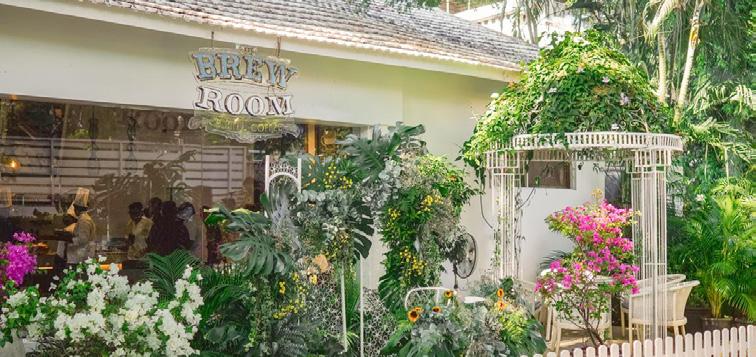
Nothing feels rushed or overly commercial. Instead, the space invites guests to settle in, to order another cup, and to spend time. It is this harmony between design and intent that makes The Brew Room more than just visually appealing; it makes it emotionally comfortable.
At the heart of The Brew Room lies a philosophy centred on craft, patience, and authenticity. Rather than chasing trends or offering an overwhelming menu, the café focuses on doing a few things exceptionally well. This mindset is evident in everything from the sourcing of ingredients to the presentation of each dish and drink. There is a clear respect for process, whether it involves brewing coffee, preparing food, or curating the overall guest experience.
The Brew Room’s philosophy also extends to its relationship with patrons. It is not a place designed for quick turnover but one that values repeat visits and longterm loyalty. Staff interactions are unhurried yet attentive, reflecting an understanding that hospitality is as much about atmosphere as it is about service efficiency. This emphasis on genuine engagement contributes significantly to the café’s reputation as a welcoming and dependable space.





Coffee forms the backbone of The Brew Room’s identity, and it is treated with the seriousness of a craft rather than a commodity. The café’s approach to coffee involves careful selection of beans, attention to roast profiles, and precision in brewing methods. Each cup is intended to highlight the inherent characteristics of the coffee, whether it be nuanced acidity, balanced sweetness, or a robust body. The brewing process is transparent, allowing patrons to appreciate the skill involved. Baristas are trained not just to prepare coffee but to understand it, making recommendations based on individual preferences. This emphasis on education and dialogue enhances the overall experience, transforming a simple coffee order into an opportunity for discovery.Whether one prefers a classic espresso-based drink or a more experimental brew, The Brew Room ensures consistency and quality across the board.
While coffee is central, The Brew Room’s beverage menu extends well beyond it, offering a thoughtfully curated selection that caters to diverse tastes. Teas, artisanal drinks, and seasonal specials provide alternatives for those seeking variety or a caffeine-free option. Each beverage is crafted with the same attention to detail as the coffee, ensuring that nothing feels like an afterthought.
The café’s willingness to experiment within a structured framework keeps the menu fresh without alienating regular patrons. Seasonal variations introduce new flavours and textures, reflecting both global influences and local preferences. This balance between familiarity and innovation is a hallmark of The Brew Room’s beverage program, reinforcing its commitment to quality and creativity.
The food menu at The Brew Room complements its beverage offerings without overshadowing them. Designed to be versatile and approachable, the dishes range from light bites to more substantial fare, catering to different times of the day. The emphasis is on fresh ingredients, balanced flavours, and presentation that is elegant without being pretentious. Rather than overwhelming guests with endless options, the menu focuses on coherence. Each item feels like it belongs, contributing to a unified culinary narrative. Global inspirations are subtly woven into the dishes, yet there is always an underlying respect for local palates.This approach ensures that the food enhances the overall experience, encouraging guests to pair their meals thoughtfully with beverages.


Ambience plays a defining role at The Brew Room, shaping how guests perceive and enjoy their time there. Soft music, carefully calibrated lighting, and the gentle hum of conversation create an environment that feels alive yet soothing. The café’s ability to maintain this balance, even during peak hours, speaks to the effectiveness of its design and operational planning. The ambience also adapts organically throughout the day. Mornings are characterised by quiet focus and gentle energy, afternoons by relaxed social interactions, and evenings by a more intimate, reflective mood. This temporal flexibility allows The Brew Room to serve multiple roles without compromising its core identity.
Service at The Brew Room is marked by professionalism infused with warmth. Staff members are knowledgeable without being intrusive, attentive without appearing rushed. This service culture reinforces the café’s philosophy of slow, meaningful experiences.


Guests are encouraged to ask questions, explore the menu, and take their time, creating a sense of ease that is often missing in high-volume establishments. The consistency of service contributes significantly to the café’s loyal customer base. Regular patrons are recognised, preferences are remembered, and interactions feel personal rather than transactional. This human connection elevates The Brew Room from a stylish café to a community-oriented space.

Over time, The Brew Room has evolved into more than just a place to eat and drink. It has become a social and creative hub where ideas are exchanged, collaborations are sparked, and moments are shared. The café’s atmosphere naturally lends itself to conversations, whether they are casual catch-ups or professional discussions. Artists, writers, entrepreneurs, and students often find themselves drawn to the space, using it as a backdrop for both work and leisure. This diverse clientele enriches the café’s character, making it a microcosm of Chennai’s evolving urban culture. The Brew Room’s ability to accommodate such varied uses without losing its essence is a testament to its thoughtful conception.

Chennai’s café scene is diverse, ranging from traditional coffee houses to contemporary chains and experimental spaces. Within this landscape, The Brew Room occupies a distinctive position. It does not rely on novelty or aggressive branding, instead building its reputation through consistency, quality, and atmosphere. This quiet confidence sets it apart, appealing to those who value substance over spectacle. The café’s influence can be seen in the way it has shaped expectations around what a neighbourhood café can be. It demonstrates that excellence does not require excess, and that a well-considered concept can resonate deeply with its audience.
Ultimately, The Brew Room stands as a testament to the power of thoughtful design, careful curation, and genuine hospitality. In a city that moves at a relentless pace, it offers a space to pause, reflect, and reconnect with simple pleasures. Every visit feels intentional, whether it is for a quick coffee, a long conversation, or a quiet moment of solitude. By prioritising experience over trend and quality over quantity, The Brew Room has established itself as a meaningful presence in Chennai’s urban fabric. It is a place that invites guests not just to consume, but to engage, to linger, and to return. In doing so, it redefines what a modern café can be—an enduring space shaped by care, craft, and community.



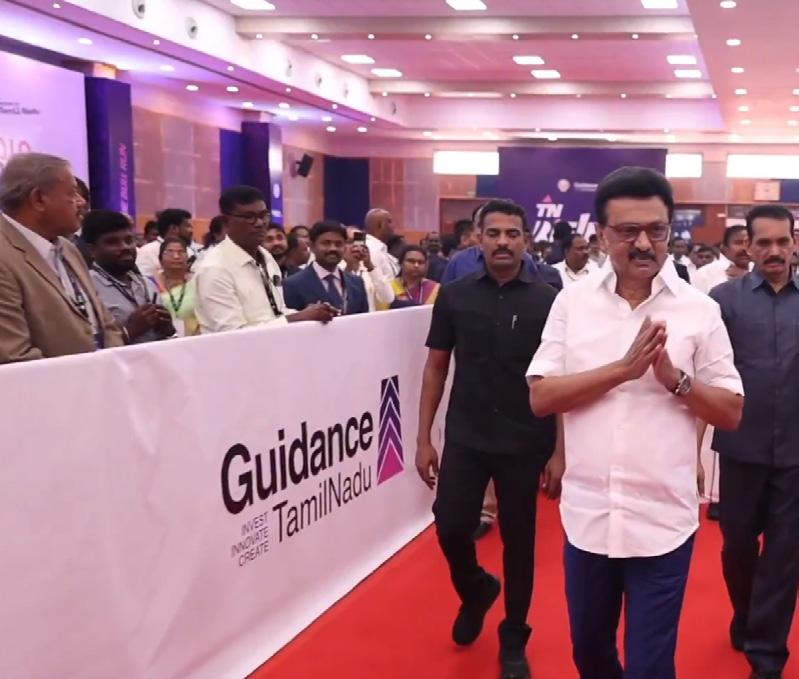

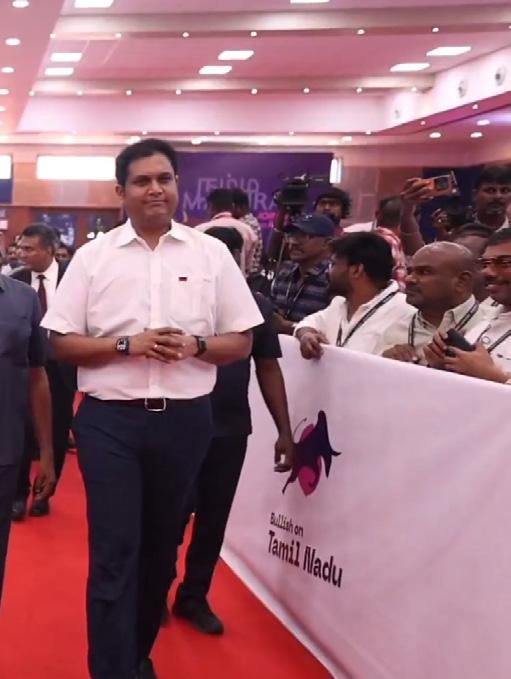
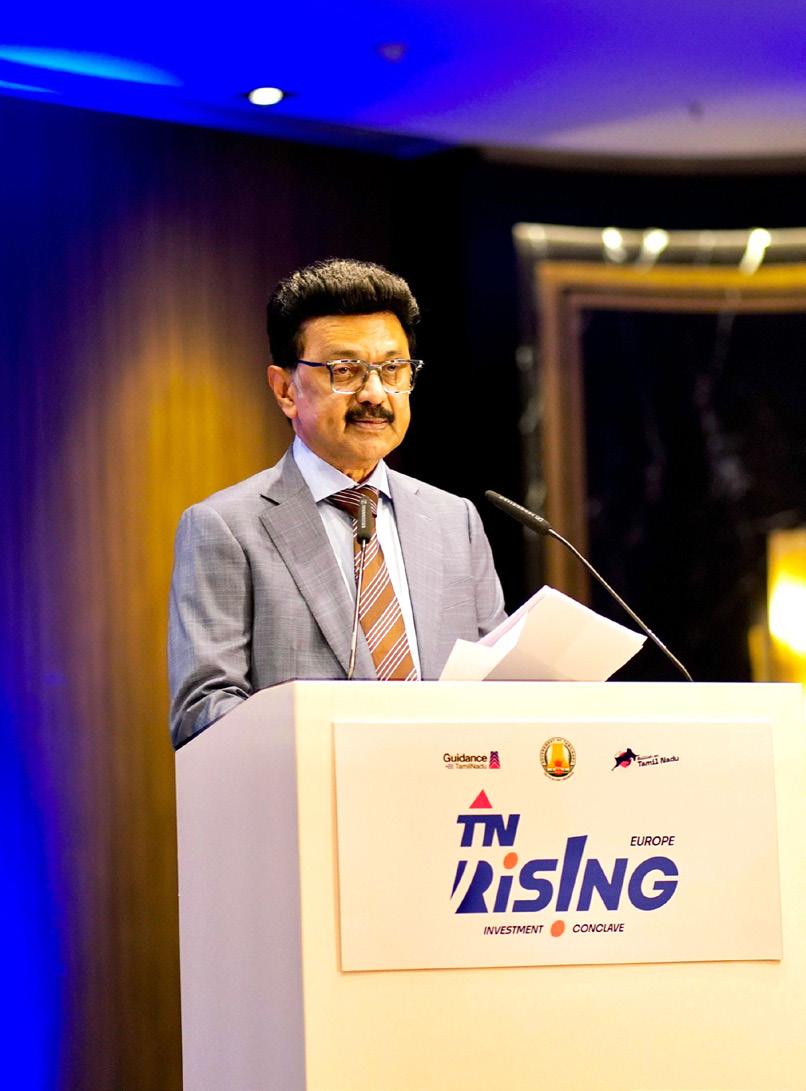
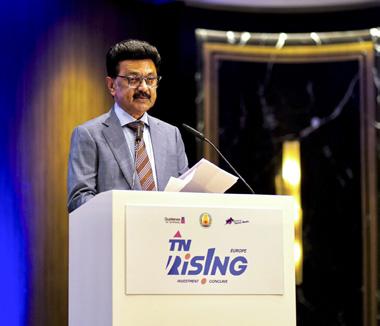
On 7 December 2025, Madurai became the epicenter of Tamil Nadu’s industrial ambitions as the state hosted the TN Rising Investment Conclave 2025. The event brought together political leaders, global investors, industrialists, and policymakers in a coordinated effort to showcase Tamil Nadu as a hub for diversified industrial growth.The conclave saw the signing of 91 Memoranda of Understanding (MoUs), amounting to ₹36,665 crore in projected investments and promising over 56,000 jobs across multiple sectors. Unlike conventional summits, the Madurai conclave was designed to combine ceremonial grandeur with actionable outcomes, emphasizing not only the signing of agreements but also the implementation and conversion of MoUs into operational projects, a challenge that has historically plagued investment summits in India. Chief Minister M.K. Stalin addressed the gathering, emphasizing that Tamil Nadu’s industrial policy is built on infrastructure readiness, skilled workforce, policy stability, and investor-friendly governance, all intended to establish the state as a trusted destination for global and domestic investment.
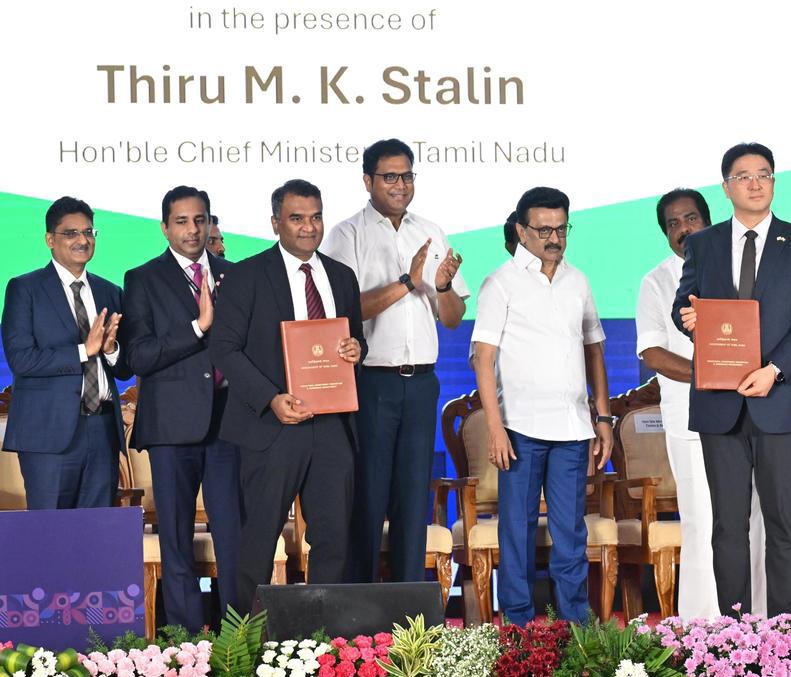
The government positioned the conclave as a strategic platform to promote inclusive industrial growth, particularly in regions beyond Chennai. Madurai, traditionally recognized for its cultural and heritage significance, is now being reimagined as a modern industrial hub. During the event, the CM outlined long-term plans including the Madurai Master Plan 2044, which integrates urban planning with industrial expansion to ensure sustainable and balanced development. Sector-specific initiatives like the Tamil Nadu Toy Manufacturing Policy 2025 were also highlighted, signaling the government’s intent to link traditional craftsmanship and local industries with global markets. The foundation of
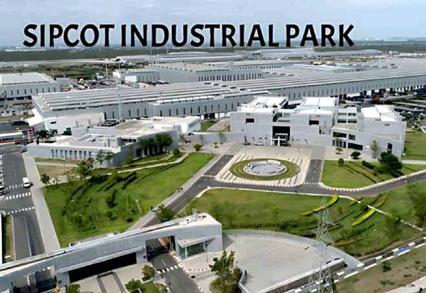
the SIPCOT industrial park at Melur was also laid, providing a large-scale infrastructure platform for future manufacturing units, MSMEs, and exportoriented industries. Through these measures, the government aims to reposition Madurai as a city where industrial growth complements cultural heritage, ensuring equitable development across districts.
The 91 MoUs reflect a diverse investment portfolio, ensuring thatTamil Nadu is not dependent on a single sector for economic growth. Highlighted projects include a non-leather footwear manufacturing
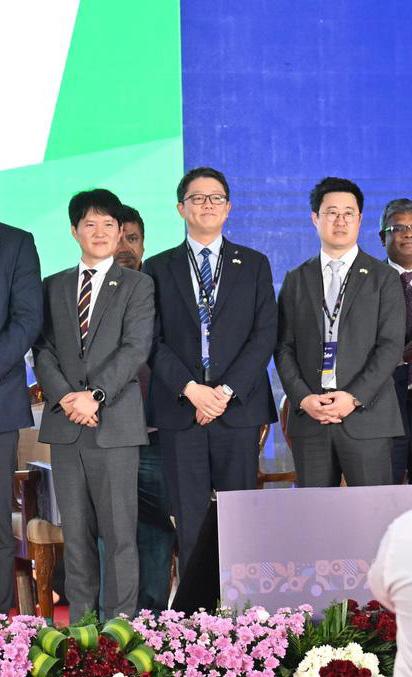
facility in Madurai, established in collaboration with a Taiwan-based company, aimed at generating substantial employment opportunities, especially for women. Electronics and electronic component manufacturing units, particularly in Theni, are set to expand the state’s ESDM (Electronic System Design & Manufacturing) sector, creating high-skill jobs. Maritime-linked industries and shipbuilding projects, initiated through partnerships with global companies, are designed to leverage the state’s coastal infrastructure and integrate Tamil Nadu into international shipping and trade networks.
The SIPCOT industrial park, with state-of-the-art facilities, serves as a critical enabler for MSMEs and emerging industries, ensuring that investments are not just signed but practically implemented, reinforcing the state’s long-term industrial strategy.

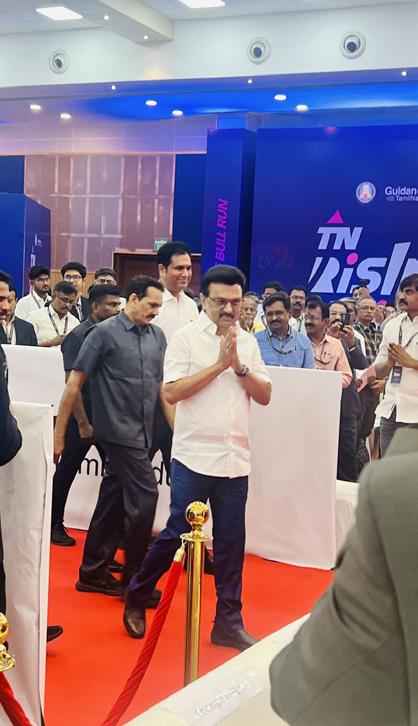

The event is expected to produce far-reaching economic and social benefits. The projected 56,000+ jobs will provide employment to a wide demographic, including youth and women, helping reduce regional disparities. By focusing on cities like Madurai and Theni, the government intends to decentralize industrial growth, promoting inclusive development outside traditional metro-centric hubs. The sectoral diversification — spanning footwear, electronics, maritime, and MSMEs — strengthens the economy’s resilience against market fluctuations and global sectoral downturns. Exportoriented initiatives and maritime manufacturing also enhance Tamil Nadu’s integration into global value chains, positioning the state as a competitive and reliable destination for international trade and investment.
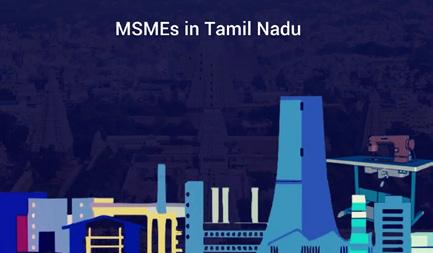
While MoUs are only the first step, Tamil Nadu has emphasized timely execution and monitoring. The government reported that over 80% of previous MoUs had been successfully implemented, a benchmark that sets the stage for investor confidence. Key factors like policy consistency, infrastructure readiness, land acquisition, and availability of skilled workforce are being actively managed to ensure successful implementation. By focusing on long-term planning, policy stability, and industry-friendly regulations, the state seeks to reinforce its brand identity as a top investment destination, combining growth with transparency and accountability.
The TN Rising Investment Conclave 2025 in Madurai is more than an event; it marks a strategic turning point for the city and the state. Through a combination of diverse industrial projects, employment creation, infrastructure readiness, and investor engagement, Madurai is emerging as a regional industrial hub, complementing Tamil Nadu’s broader ambitions of becoming a $1 trillion economy. The conclave demonstrates the government’s commitment to inclusive, sustainable, and globally competitive industrial growth, signaling that Tamil Nadu is ready to transform visionary MoUs into tangible economic outcomes that benefit businesses, communities, and the state at large.

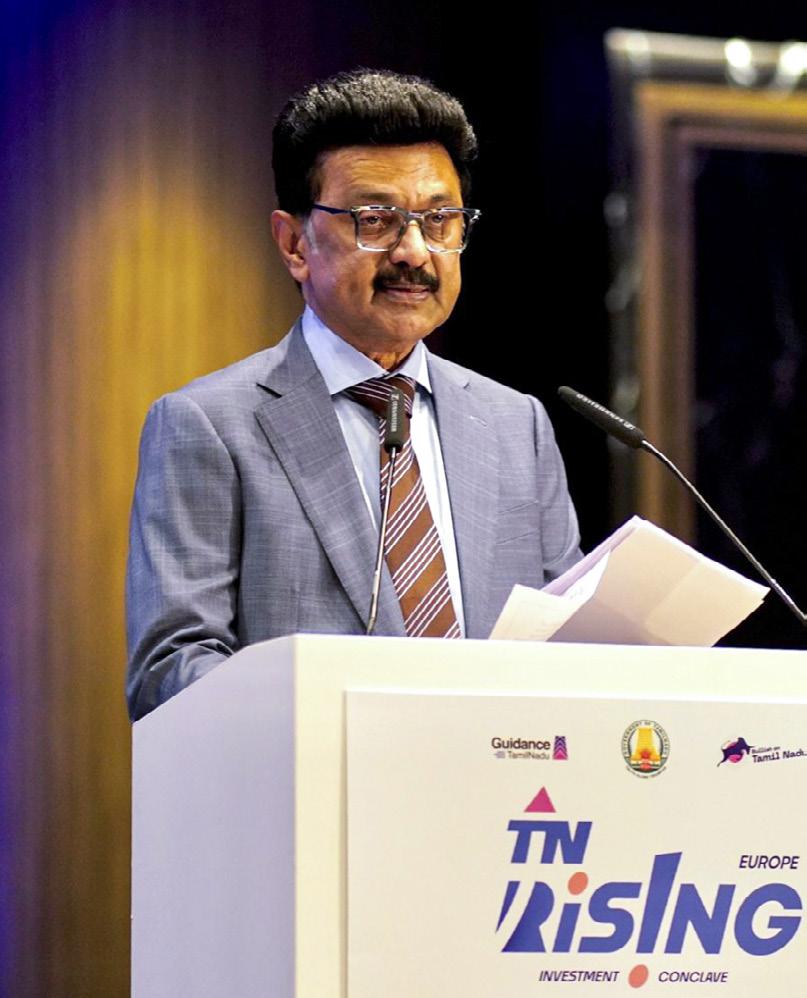
At the TN Rising Investment Conclave 2025, Chief Minister M.K. Stalin emphasized that Tamil Nadu’s industrial growth strategy is not confined to metropolitan areas like Chennai or Coimbatore, but is intentionally designed to foster inclusive development across all districts. Cities such as Madurai, Theni, and coastal regions are being positioned as emerging industrial hubs, combining the state’s cultural heritage with modern economic infrastructure. The government believes that industrial growth should benefit multiple demographics, including youth, women, and marginalized communities, ensuring that employment opportunities are distributed regionally and socially.This vision underscores the commitment to avoid traditional urban-centric industrial concentration and to promote equitable economic empowerment across Tamil Nadu.
A key element of the government’s vision is the creation of world-class infrastructure to support industrial activity beyond the usual hubs. Initiatives such as the SIPCOT industrial park at Melur, spanning 278 acres, aim to provide ready-touse facilities for manufacturing, MSMEs, and service-based industries. The Madurai Master Plan 2044 integrates industrial growth with urban planning, ensuring that industrial expansion complements city development, transportation networks, and civic amenities. By providing land, utilities, and modern facilities, the government seeks to lower barriers to entry for both domestic and international investors, creating a conducive ecosystem for business growth while promoting regional equity.
The government has also introduced sector-specific policies to ensure that industrial growth is diverse, sustainable, and inclusive. The Tamil Nadu Toy Manufacturing Policy 2025 aims to modernize traditional artisan clusters, linking them to global markets and providing artisans with income stability and growth opportunities. Similarly, agreements signed during the conclave include projects like non-leather footwear manufacturing, electronics production, and maritime-linked industries, deliberately designed to generate employment for women and skilled youth, while also fostering export-oriented growth. This strategy ensures that industrialization does not bypass social inclusion, balancing economic expansion with community development.
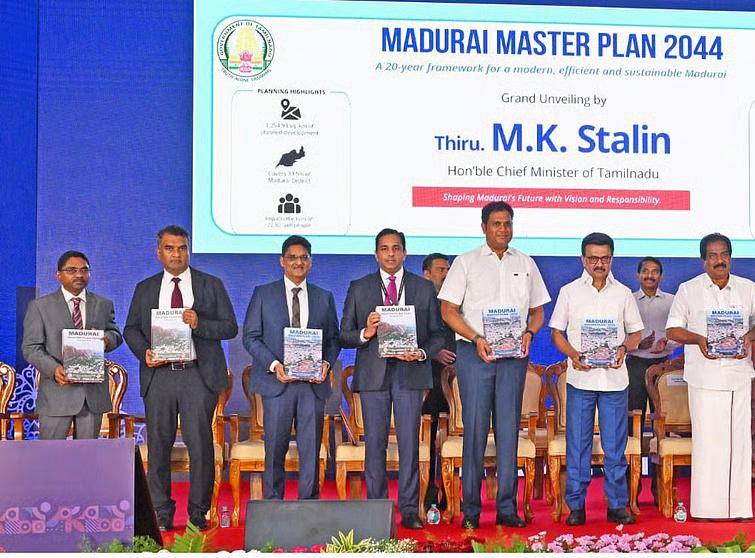
By deliberately targeting districts outside Chennai, the government’s vision aims to decentralize industrialization, ensuring that secondary cities like Madurai become regional economic engines. Investments in these areas are expected to create thousands of jobs, boost local entrepreneurship, and stimulate ancillary industries. This regional balance not only reduces migration pressure on metros but also strengthens the overall economy by broadening the industrial base, making it resilient against sector-specific downturns. With a focus on balanced growth, Tamil Nadu is working to transform historically underrepresented regions into thriving industrial corridors, fostering longterm economic and social stability.
The government has emphasized that policy stability, transparency, and investor-friendly governance are critical to achieving inclusive growth. Past experience demonstrates that Tamil Nadu has successfully implemented over 80% of MoUs, which bolsters investor confidence. By ensuring consistent regulations, simplifying administrative processes, and actively engaging with investors, the state aims to create an ecosystem where industrial growth is sustainable, scalable, and inclusive. This approach not only attracts global capital but also strengthens domestic entrepreneurship, aligning with the government’s vision of creating a balanced, inclusive, and globally competitive industrial economy.
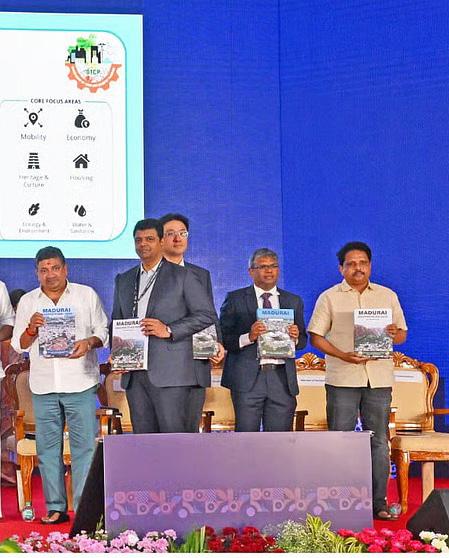
The Government’s Vision articulated at the TN Rising Investment Conclave 2025 is clear: industrialization must be inclusive, balanced, and regionally equitable. By focusing on infrastructure, sectoral policies, social inclusion, and regional development, Tamil Nadu is positioning itself as a state where economic growth benefits all layers of society. This strategy ensures that industrial expansion goes hand-in-hand with employment generation, social upliftment, and long-term sustainability, making Tamil Nadu a model for inclusive and balanced industrial development in India.


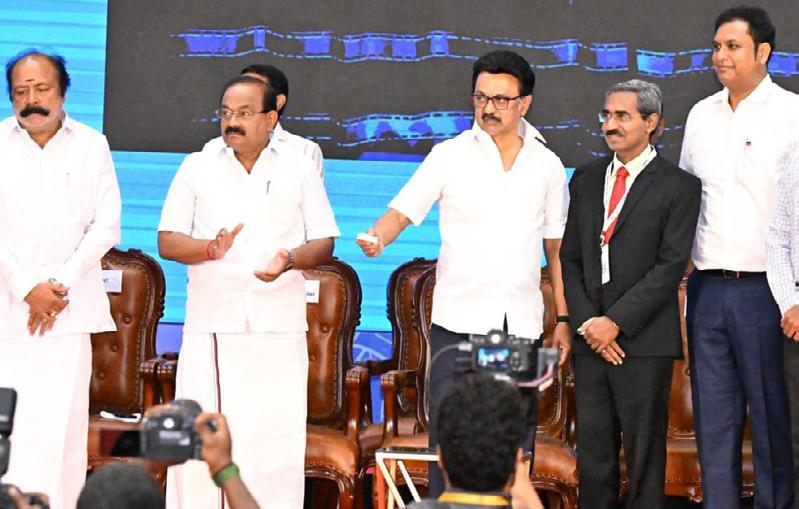
The TN Rising Investment Conclave 2025 highlighted Tamil Nadu’s strategy of sectoral diversification, signing 91 MoUs worth ₹36,665 crore, with projected creation of over 56,000 jobs. The government deliberately targeted multiple sectors to avoid overdependence on any single industry and build economic resilience. Among the most notable projects is a nonleather footwear manufacturing unit in Madurai, established through collaboration with a Taiwanbased company. This initiative is designed to provide large-scale employment opportunities, particularly for women, while promoting exportoriented production, positioning Tamil Nadu as a hub for innovative, sustainable manufacturing.
Another major focus is the electronics and electronic components sector, particularly in districts like Theni, which are set to host significant manufacturing and assembly units. By expanding the Electronic System Design and Manufacturing (ESDM) ecosystem, Tamil Nadu is targeting highskill job creation and integration into global supply chains, catering to both domestic demand and export markets. These investments reflect

the state’s ambition to transition from traditional industries to high-tech manufacturing, providing long-term economic sustainability and attracting foreign direct investment.
Maritime-linked industries, including shipbuilding and related logistics, also feature prominently among the signed MoUs. Through collaborations with major international players, these projects aim to leverage Tamil Nadu’s strategic coastal location and enhance the state’s role in global shipping, port infrastructure, and export-oriented production. By integrating shipbuilding with industrial parks and maritime services, Tamil Nadu seeks to create a comprehensive maritime economy, simultaneously generating skilled and semi-skilled employment in coastal districts.
The establishment of SIPCOT industrial parks, such as the one at Melur spanning 278 acres, provides ready-to-use infrastructure for small, medium, and large enterprises. These parks are intended to facilitate rapid implementation of MoUs, providing access to utilities, land, and modern facilities. By combining large-scale investments with MSME support, the government ensures that industrial growth benefits both major corporations and local entrepreneurs, fostering an inclusive industrial ecosystem.

The deliberate spread of investments across footwear, electronics, maritime, and MSMEs serves multiple strategic purposes. It reduces economic vulnerability by not relying on a single sector, fosters regional equity by targeting nonmetro districts, and ensures that growth generates employment across skill levels, from unskilled labor to specialized technicians. Furthermore, export-oriented industries enhance Tamil Nadu’s integration into global trade networks, positioning the state as a preferred investment destination for international players. This multi-pronged approach demonstrates a mature, forward-looking industrial strategy, combining economic resilience with social and regional inclusivity.
The key investments and sectoral diversity announced at the TN Rising Investment Conclave 2025 underscore Tamil Nadu’s commitment to a balanced and inclusive industrial future. By spreading investments across high-tech manufacturing, traditional industries, exportoriented units, and MSMEs, the state is creating a resilient economic base that generates jobs, fosters regional development, and strengthens its position in global supply chains. This strategic vision reflects Tamil Nadu’s ambition to achieve sustainable
industrial growth while maintaining social equity and regional balance, setting a benchmark for other states in India.
The TN Rising Investment Conclave 2025 is expected to produce far-reaching economic and social benefits, with over 56,000 jobs projected from the 91 MoUs signed, spanning manufacturing, electronics, maritime industries, and MSMEs. A notable feature of these investments is their inclusive approach to employment, with initiatives like the non-leather footwear manufacturing unit in Madurai specifically targeting women’s employment, while electronics and shipbuilding projects cater to both skilled and semi-skilled labor. By creating large-scale employment opportunities across multiple sectors, the state aims to uplift communities, reduce unemployment, and provide income stability, ensuring that industrial growth translates directly into social benefits.
Beyond job creation, the conclave emphasizes regional equity by promoting industrial growth in cities and districts beyond Chennai and Coimbatore, such as Madurai, Theni, and coastal

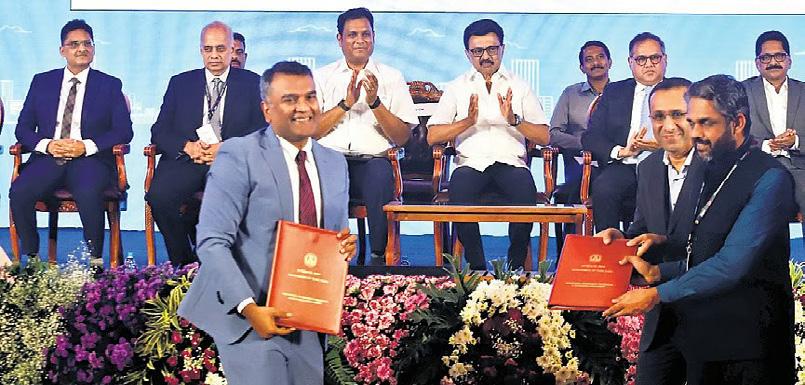
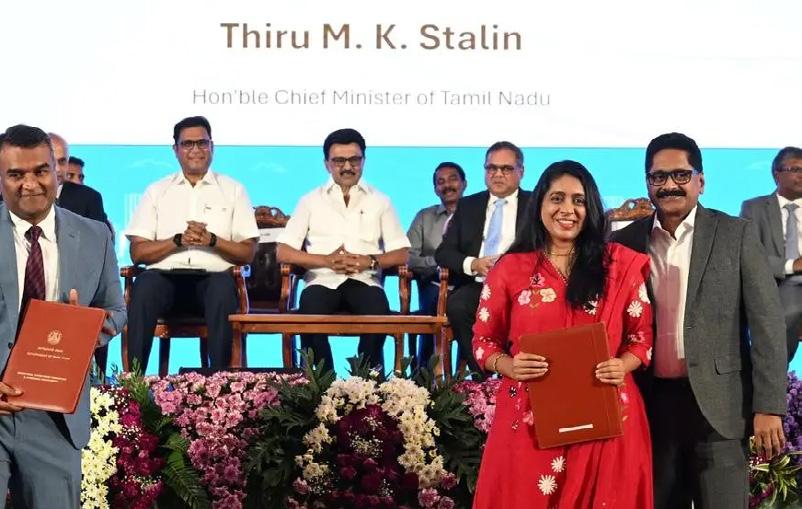
zones. By decentralizing investment, the government seeks to stimulate local economies, reduce migration pressure on metropolitan areas, and foster balanced regional development. This strategy ensures that smaller towns and historically underdeveloped districts receive industrial attention, infrastructure support, and socio-economic upliftment, enabling communities to participate actively in Tamil Nadu’s growth story.
Sectoral diversity is central to the state’s economic resilience, with investments spread across footwear, electronics, shipbuilding, export-oriented goods, and MSMEs. This reduces the risk of overdependence on any single industry and creates a multi-layered industrial ecosystem, capable of withstanding sector-specific downturns. Export-oriented units and maritime-linked industries further integrate Tamil Nadu into global trade networks, enhancing the state’s economic stability and international competitiveness. By combining domestic and international investment, the state is building a robust, diversified economy that benefits both urban and semi-urban populations.
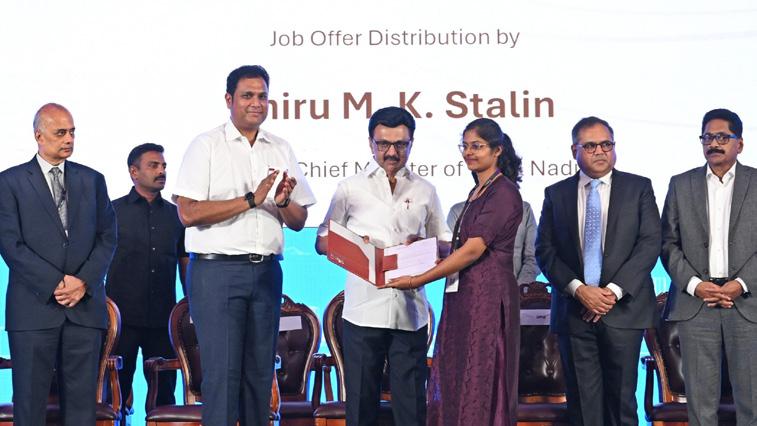
The conclave’s focus on inclusive employment and social upliftment ensures that the benefits of industrialization are broadly shared. Projects explicitly targeting women, youth, and skilled laborers help bridge socio-economic gaps, while regional industrial development brings education, infrastructure, and ancillary business opportunities to local communities. By linking industrial growth with social welfare,Tamil Nadu aims to create a virtuous cycle of economic prosperity and social equity, ensuring that industrial expansion does not leave communities behind.
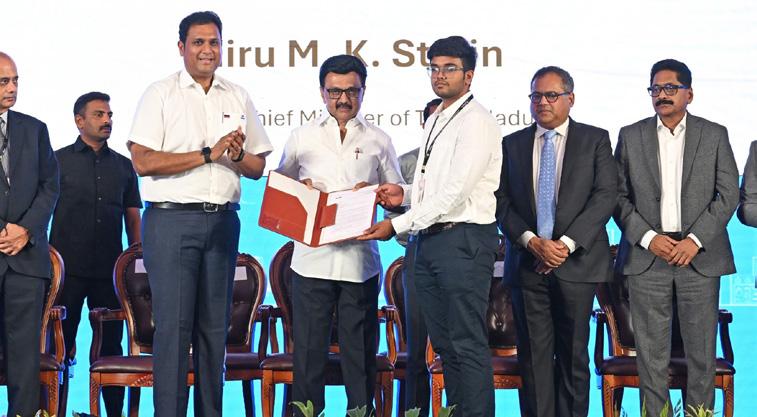
In essence, the TN Rising Investment Conclave 2025 represents a strategic intervention with tangible economic and social outcomes. By generating employment, fostering regional equity, promoting sectoral diversity, and prioritizing social inclusion, the conclave is set to transform Tamil Nadu’s industrial and socio-economic landscape. The event demonstrates that thoughtful industrial policy, combined with targeted investments, can simultaneously drive economic growth, reduce inequality, and empower communities, making Tamil Nadu a model for inclusive and sustainable industrial development in India.
While the TN Rising Investment Conclave 2025 generated significant excitement with 91 MoUs totaling ₹36,665 crore, the true measure of success lies in the implementation of these agreements. The Tamil Nadu government has prioritized converting signed MoUs into operational projects, with the Chief Minister highlighting that over 80% of previous MoUs had already been implemented successfully, a benchmark that distinguishes the state from other regions where agreements often
remain on paper. Key to this success is systematic monitoring, streamlined approvals, and coordinated support from government departments, ensuring that industries can begin operations promptly while minimizing bureaucratic delays.
Tamil Nadu’s governance approach emphasizes policy stability, transparency, and proactive engagement with investors. By maintaining consistent regulations and simplifying administrative processes, the state seeks to create an ecosystem where both domestic and international investors feel confident about longterm commitments. Special focus has been placed on ease of doing business, availability of industrial land, infrastructure readiness, and labor support, providing investors with a reliable and predictable environment. These measures not only boost investor confidence but also encourage continued inflow of capital, reinforcing the state’s image as a top-tier investment destination in India.
The government’s vision extends beyond immediate project execution to long-term industrial sustainability. Initiatives such as the Madurai Master Plan 2044, SIPCOT industrial parks, and sectorspecific policies (like the Toy Manufacturing Policy 2025) illustrate a comprehensive approach that combines infrastructure, workforce development, and policy support. By integrating industrial planning with urban and regional development, Tamil Nadu aims to ensure that growth is balanced, inclusive, and sustainable, supporting not just the economy but also social welfare and regional equity.



The TN Rising Investment Conclave sets the stage for Tamil Nadu to become a global industrial hub. Investments in high-tech sectors such as electronics, maritime industries, and exportoriented manufacturing, coupled with MSME support and infrastructure expansion, are expected to strengthen the state’s integration into global supply chains. By continuing to focus on implementation, governance, and investor-friendly policies, Tamil Nadu is positioning itself to achieve resilient economic growth, job creation, and global competitiveness, while serving as a model for other states seeking inclusive and diversified industrialization.
The Implementation, Governance, and Future Prospects component of TN Rising 2025 underscores that the success of the conclave depends not just on MoUs signed but on their execution and long-term sustainability. By combining efficient governance, strategic planning, and investor engagement, Tamil Nadu demonstrates a methodical, future-oriented approach to industrial growth. This strategy ensures that investments translate into tangible economic outcomes, job creation, and social development, cementing the state’s reputation as a proactive, globally competitive, and inclusive industrial leader.





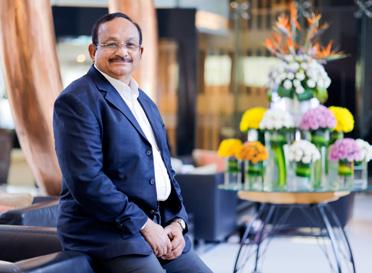
Dr. KMD’s The Centre of Medical Excellence in Cardiovascular Surgeries & Treatments located at the Main Campus of Royalcare Hospitals Group at Coimbatore, India; Is widely regarded as a world leader in cardiac care due to its pioneering research, innovative treatments, and dedication to patient care. They have a long history of breakthroughs. Their expertise spans cardiology, cardiac surgery, vascular surgery, and related fields, providing comprehensive care from prevention to treatment.
Dr. KMD’s RCI Hospitals Group has been Pioneering in Research in Cardiac Care. They have a long history of groundbreaking research in cardiac care, including many First of its kind surgeries and treatments in the world. Royalcare Hospitals Group offer a wide range of advanced treatments, including minimally invasive heart surgery, advanced heart failure management, and interventional cardiology procedures.
At Dr. KMD’s Royalcare Centre of Medical Excellence in Cardiovascular Surgeries; Under the leadership of Dr. K. Maheswaran, CMD, Practices an International Standard Cardiac Care and Services, which is very advanced to provide a patient with maximum edge over his/her cardiac condition. Royalcare Hospitals Group provides Best in Class ‘Minimally Invasive Cardiac Surgeries & Treatments’ With the advent of sternotomy, today maximum heart surgeries are performed by making small incisions rather than cutting the whole chest.
The process involves making an incision in the breastbone, and performing the surgery, through a smaller and less traumatic incision than in a standard sternotomy. The incision or the cuts measure about 2-3-inches, and specialized handheld and robotic instruments are used to perform the operations. MICAS or MICS CABG Surgery is considered to be safe and highly successful, revolutionizing the coronary bypass surgery completely.

MICS lands more advantages and benefits to a patient than the traditional cardiac surgery. There is reduced trauma to the chest and wall tissues and thus much faster recovery and better results. However, a doctor requires years of practise and the precision need to use the advanced equipment and perform surgery.

Here are some Tangible benefits you will get with Minimally Invasive Surgery @ RCIH Group:
• Smaller Incisions
• Smaller Scars
• Reduced Infection Risks
• Loss of Blood is Minimum
• Lesser Pain, Lesser Trauma to Tissues.
• Less Period of Hospitalization (3-4 Days)
• Fewer Physical Restrictions
• Shorter Recovery Time (1-2 Weeks)

Types of Minimally Invasive Surgeries @ RCIHG are:
• Minimally Invasive Bypass Surgery
• Minimally Invasive Valve Surgery in
• Minimally Invasive Total Arterial Bypass Surgery
• Minimally Invasive Surgery for Hole in the Heart
• Minimally Invasive LIMA-RIMA-‘Y’ Bypass’
• Minimally Invasive CABG
• Minimally Invasive MVR
• Minimally Invasive DVR
• Minimally Invasive AVR
• Minimally Invasive ASD Closure
• Minimally Invasive VSD Closure
• Transcatheter Aortic Valve Implantation (TAVI)
And, RCIHG’s Cardiovascular Department ensures Comprehensive Care through their multidisciplinary approach, combining cardiology, cardiac surgery, and other specialties, ensures comprehensive care for patients with a wide range of cardiovascular conditions.
Dr. KMD’s RCI Hospitals Group gives special emphasis on Training and Education by offering Research Opportunities to interested Scholars and Medical Professionals combined with the Cardiovascular Disease Fellowship Program, for developing leaders and innovators in the field, fostering a culture of excellence in both clinical practice and research. The department's expertise and impact are recognized worldwide, drawing patients from around the globe.
In addition to providing best treatments for all types of Cardiovascular Diseases, Dr. KMD’s Cardiovascular Centre of Medical Excellence Centre at ‘Royalcare International Hospitals Group’ focuses on preventing heart disease through research, education, and specialized Patient programs.
Apparently, the Cardiovascular Surgery team at Dr. KMD’s Royalcare International Hospitals Group (RCIHG) provide high-quality care for complex or serious conditions that affect people of all ages. Our heart (cardiac) and chest (thoracic) surgeons diagnose and surgically treat conditions of the heart, lungs and chest. They perform thousands of surgeries each year at Royalcare Hospitals Group in India.
RCIHG’s surgeons are on the leading edge of treating cardiovascular and cardiothoracic conditions, using the latest innovations, such as minimally invasive heart surgery with robot-assisted techniques. Minimally invasive robotic surgery is used to repair or replace heart valves, remove growths in the heart and for other procedures. This approach has helped many people recover more quickly than is possible with traditional surgery. Our team is widely recognized for its performance of complex procedures with safe and excellent outcomes.
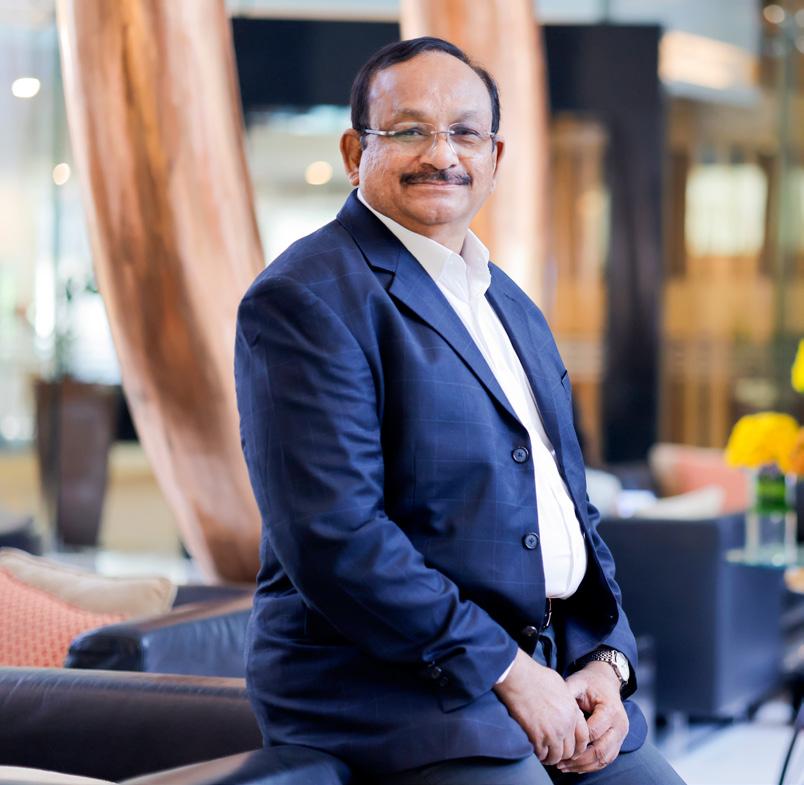
DR. K. MADESWARAN Chairman & Managing Director M/s. Royalcare International Hospitals Group
Cardiovascular and Cardiothoracic surgeons at Dr. KMD’s Royalcare International Hospitals Group are part of a multidisciplinary team that provides expert care tailored to your needs. Thus, the team might include specialists in cardiovascular medicine, critical care medicine, anaesthesiology, gastroenterology and hepatology, general surgery, haematology, oncology, otolaryngology, pulmonary medicine, vascular medicine, endovascular surgery, pathology, radiology, paediatrics, or physical

therapy. RCIHG’s Team also might include registered nurses, nurse practitioners, physician assistants, dietitians and geneticists. RCIHG’s Team approach means test results are available as quickly as possible, appointments are scheduled in coordination, and experts discuss the best approach for each person. What might take months elsewhere often can be done in just few days at Royalcare.
Dr. KMD’s Royalcare International Hospitals Group (RCIHG) surgeons perform more than 1000s heart surgeries each year. They are experts in treating serious conditions such as hypertrophic cardiomyopathy and disease of the pericardium and in performing complex procedures. These include heart failure surgery, heart transplantation, heart valve surgery, aortic valve repair and aortic valve replacement, coronary artery bypass surgery, surgery to treat congenital heart defects in children and congenital heart disease in adults, surgery to treat pulmonary hypertension, transcatheter aortic valve replacement, and placement of ventricular assist devices.

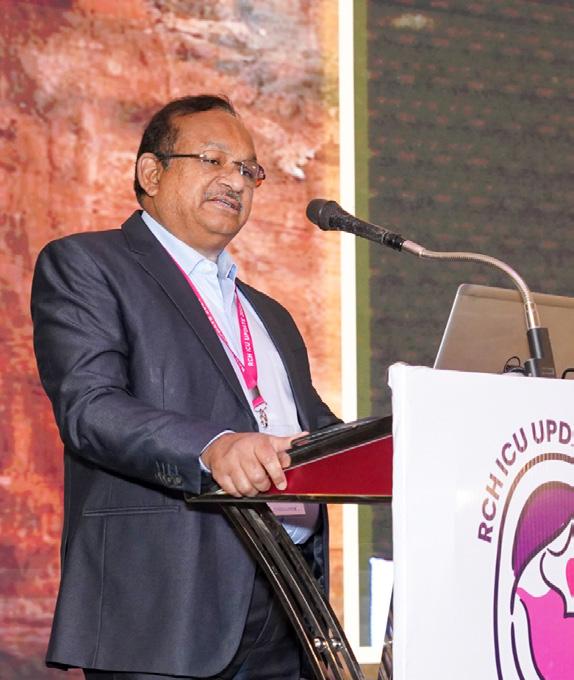
RCIHG’s surgeons also are experts in helping people who need a second heart operation. This is called a cardiac reoperation. It's sometimes needed when a replacement valve begins to wear out or you develop new heart disease. Cardiac reoperations are even more complex than first surgeries, due to scar tissue and underlying conditions. People who come back for a second or even a third heart surgery need surgeons with highly advanced surgical skills and techniques.

Paediatric cardiac surgery is also provided to Children at Royalcare Hospitals Group’s Main Campus at Neelambur, Greater Coimbatore, Tamil Nadu, India. Cardiovascular surgeons trained in treating children work closely with doctors trained in treating child and adolescent cardiovascular conditions (paediatric cardiologists) as well as other paediatric specialists to provide comprehensive care.
Dr. KMD’s Royalcare International Hospitals Group ‘s Cardiovascular and Cardiothoracic Surgeons are leaders in researching and adopting new approaches and techniques. Projects have included: Researching new techniques to determine the timing and outcomes of various Complex valve surgeries. Using artificial intelligence to predict outcome after surgery and to detect adverse outcomes early. And, using virtual reality to ease anxiety of the patient during surgery.
RCIHG’s Surgeons also participate in innovative studies to improve donor hearts and lungs before they are transplanted. This allows more people to benefit from heart and lung transplantation. In addition, the Expert surgeons also combine heart and lung transplantations with surgeries for other organs, such as the liver and kidneys. Besides, RCIHG’s Physician-Scientists collaborate with researchers worldwide, contributing to advances in cardiovascular surgery that improve heart care for people everywhere.

Dr. KMD’s Royalcare International Hospitals Group have been at the forefront of paediatric heart (cardiac) surgery since the specialty began, ever since the 1st Year of Incorporation of Royalcare Main Campus at Coimbatore. And RCIHG’s, surgeons performed some of the world's most complex open-heart surgeries in children. These continual successes brought thousands of children from all around the world to Royalcare Hospitals. This helped usher in the field of paediatric cardiac surgery. RCIHG values of quality care, teamwork, compassion and hope are integral to daily practice.

From the very first day to this day, paediatric cardiac surgeons at Royalcare Intl. Hospitals Group strive to provide the best care for children and develop the care of the future through research and innovation. When your Child needs cardiac surgery, you'll find the multidisciplinary team of experts you need at Dr. KMD’s Royalcare International Hospitals Group in Coimbatore, India. The Paediatric Cardiac Surgery team and Paediatric Cardiology have extensive experience treating infants and children with serious, complex or rare heart conditions. And, Royalcare Hospitals Group is also active in the emerging frontier of fetal intervention for heart defects. Royalcare surgeons have always been leaders in the specialty of cardiovascular surgeries.
Dr. KMD’s Royalcare International Hospitals Group, has always been considered as a FirstChoice perfect destination for parents seeking the best-in-class treatment for their children with complex or serious heart disease. Its multidisciplinary medical and surgical teams review cases of people from all over the world who are seeking advice and recommendations. The RCIHG’s paediatric cardiac surgeons treat many diseases and conditions.


A few of the areas for which they have international renown and special programs include:
Structural Heart Disease and Valve Repair. RCIHG’s Surgeons are expert in evaluating and treating people with valve conditions. Examples include aortic valve defects, mitral valve regurgitation, tricuspid valve regurgitation and valve problems in a single-ventricle heart. They also do many surgeries on the aorta, especially in children and adults with aortic valve disease, Marfan syndrome and other connective tissue diseases. RCIHG’s Surgeons have performed 1000s of Cardiac Surgeries for heart valve conditions for patients from all corners of the world.
Hypertrophic Cardiomyopathy and Septal Myectomy. Royalcare Hospital’s surgeons adbot the Latest and advanced surgical techniques for both obstructive and nonobstructive cardiomyopathy. These Proactive approaches in applying innovations have helped countless patients and people. Indeed, it has also been setting a perfect example and changed the approach used by surgeons in similar line of expertise worldwide.
Minimally Invasive and Robot-Assisted Heart Surgeries. Technology for treating structural heart defects is advancing rapidly. Heart conditions can now often be treated through very small openings in the body or with robot-assisted techniques. RCIHG’s Surgeons are experts in the most advanced and latest technological methods, which may result in less pain and shorter recovery time. The multidisciplinary team approach ensures that all options are considered so that each person gets the right care at the right time.
Fetal cardiac intervention: There is growing interest worldwide in fetal cardiac intervention for heart defects. And, RCIHG is always on the forefront when it comes to fetal surgery. Its maternal fetal medicine specialists and surgeons work together on complex surgery for heart defects found before birth. This results in optimal care for both mother and fetus and helps ensure a seamless transition from fetal life to birth. And they are always supported by Dr. KMD’s International Institute of Medicines & Research Centers, which provide them International Standard Technologies, Most Sophisticated Medical Equipment, Access to the Most Iconic Medical Professionals Knowledge and Collaborations and StateOf-The-Art Infrastructures to ensure that all Patients and their Families receive The Most Reliable and Best Possible Medical Support cum Healthcare around the Clock.





H - 2022 - 0901



Certificate of Accrediation for Royalcare Super Speciality Hospital Ltd.
Royal Care Super Speciality Hospital proudly announces its accreditation by the Joint Commission International
Royal Care Super Speciality Hospital
Recently Achieved SRC’s Center of Excellence in Neurosurgery
Royal Care Super Speciality Hospital
Recently Achieved NABL - The National Accreditation Board for Testing & Calibration
Dr. K. Madeswaran’s strong commitment to the field of Neurology & Neurosurgery is very evident and affirmative with his amazing Records, Statistics and Awards for having performed over 14,400 successful Neurosurgeries as on date. And, that has positioned Not only Positioned Dr. K. Madeswaran as One of the Top Ten Neurosurgeons of the World; But, also brought Him Many Prestigious International & National Awards, Honours, Accreditations, Records and Acknowledgements from Many National / International Institutions.

Dr. S. E. Alexander, Global Media Chief & MD - M/s. Worldwide Media Corporation Group, USA Congratulates Dr. K. Madeswaran, Chairman & MD - M/s. Royalcare Internationals Hospitals Group for the Exemplary Leadership & Proud Achievements in Multi various Fields by Both Dr. KMD & His International Hospitals & Healthcare Ventures
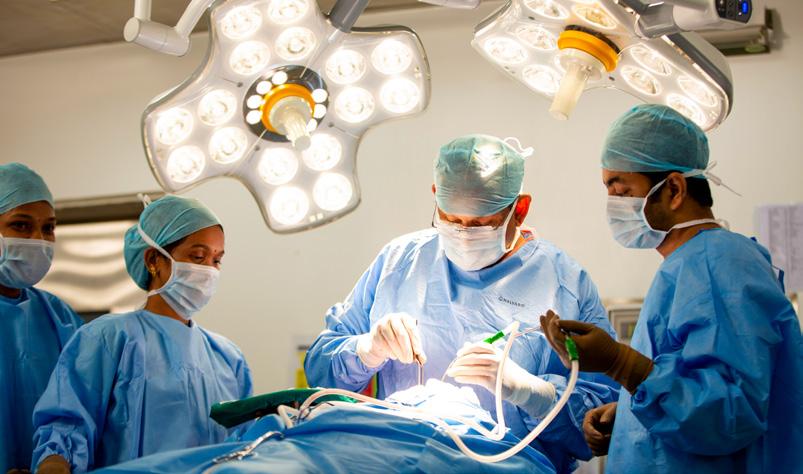
Throughout his benevolent Professional Career and Entrepreneurship over the last 36 years in Indian Medical, Surgical, Social and healthcare Industry, Dr. K. Madeswaran has been attached with a strong sense of purpose, which is Flawless Health and Joyful Living for All. In addition, Dr. KMD has always been passionate about adhering to a holistic approach to community development and Preserving Global Environment for a Better Tomorrow; as exemplified by His Brain-Child Namely ‘UYIRIN SWASAM’ – through which He and His Team of Global Volunteers have been Planting Trees as far and as wide they could. As on Date’ Uyirin Swasam Foundation’ have planted over (Ten Million) One Crore Trees and they are vigorously Moving Forward with the clear objective and aim of Planting 100 Million Trees with Dr. K. Madeswaran’s Highly determined Vision and Moto of ‘Growing Trees for Global Peace and Prosperity’.
All the above serves as a testimony to his most adorable and incredible journey of healing, curing, unconditionally caring, as well as inspiring the Next generations of Surgeons, Doctors and Healthcare Professionals. The fundamental of his legacy is pioneering, developing, innovating, refining and implementing scientific & hi-tech approaches and techniques in the fields of Neuroscience & Neurosurgery. Dr. K. Madeswaran has always been known for his Exemplary and truly remarkable Medical, Surgical, Teaching, Professional and Entrepreneurial career over three to four decades. And majority of the surgeries, those were successfully performed and completed by Dr. K. Madeswaran; were highly Critical
and Challenging Cases. And He had taken utmost care, in all those cases; by bringing out best of His skill, knowledge and expertise to ensure that the Patients are cured and sent back to their normal life. Hence, Dr. K, Madeswaran has been fondly called as ‘The Most Legendry Neurosurgeon, who is blessed with the Brain, Heart & Hands Of God’. Dr. K. Madeswaran, with his inborn Skills, Talents and Remarkable Subject Matter Expertise, Not only cured Tens of Thousands of Patients, who have come to him, with the chronic and serious conditions. And, He gave all those Patients and their families the Enduring Joy and legitimate life; to live and rejoice; with their families; But, also taught 1000s of Junior Doctors and Surgeons, who all have been associated with Him and who have been learning directly by being along with Dr. K. Madeswaran in and through all those exemplary and Critical Surgeries and Procedures.
And they along with all those beneficiaries of His Medical & Surgical Services, carry the highest level of respect and regard; for his highly committed, timely, sincerely and most valuable Medical & Surgical Contributions, that he made to them; especially at the most crucial time of their life. Dr. K. Madeswaran’s Successful Medical & Surgical Practice led him to accumulate Millions of Followers from all around the world. And with the Flawless Service and Goodwill, his incomparable knowledge, extraordinary skill and expertise in successfully performing Most Complex Surgeries and procedures that he built over a period of three to four decades; Dr. KMD had gained a very high reputation and trust among all sections of the society.
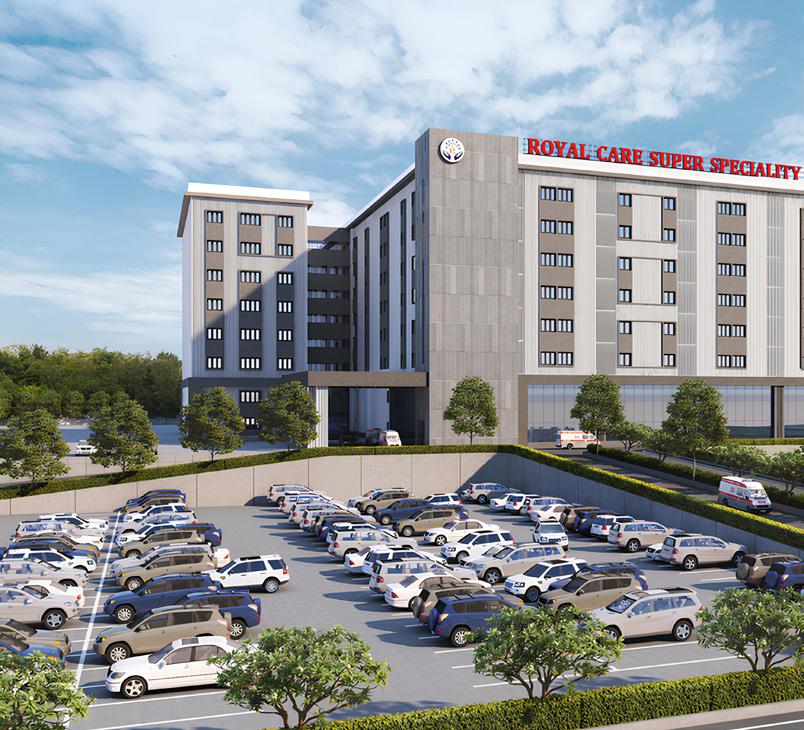
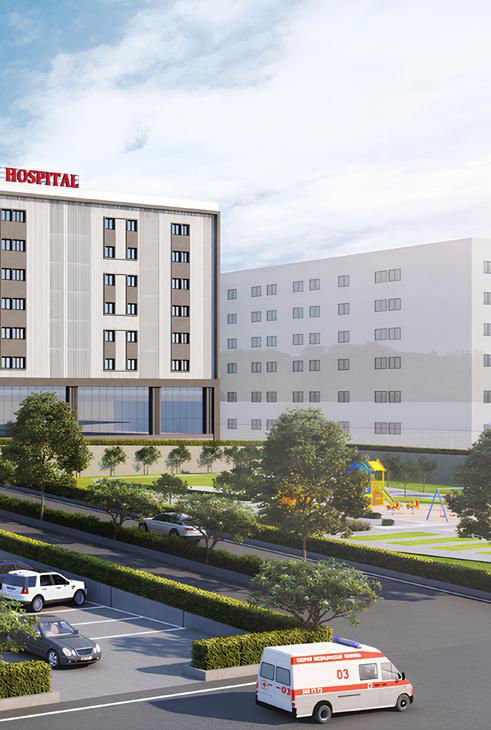
preferred Multi-Super-Specialty Hospital in western Tamil Nadu for emergency, primary and specialty care in virtually all branches of modern medicine.
The hospital did continue being, the perfect destination for people seeking superior and Patient friendly healthcare. Functioning with those objectives of making cutting edge healthcare to common man, they provide the best medical service with highly qualified doctors and highly equipped technologies. This necessitated an imminent expansion and created the need for a larger and more comprehensive tertiary care unit encompassing all the field of medicine.
A 1100-bedded ultramodern Hospital facility Plan was thus conceived at Neelambur, Coimbatore By Dr. K. Madeswaran and His Team. RCIHG was Built within a record time of 400 days, the first phase comprising 500 beds were dedicated to the society in November 2016. With over 4,00,000 square feet of modern infrastructure, the Centre contained all necessary facilities to deliver comprehensive care under one roof.
With a commitment to make available all facilities on par with the latest advances in the Western World, RoyalCare Super Specialty Hospital became the first Hospital in the country to introduce Bronchial Thermoplasty for the treatment of severe asthma. RoyalCare is also the first hospital in the country to introduce the micro plasmaadvanced oxidation for dialysis feed water disinfection to eliminate endotoxins and to prevent pyrogenic reactions in patients undergoing haemodialysis. Royal Care will strive to ensure that the benefits of modern healthcare reach all strata of society. Apparently, A patient centric culture exists at RoyalCare as they are the focus of everything they do. Every patient will receive warm and committed attention with a smile.
Royal Care Super Specialty Hospital aspires to be Ultimate Choice of Hospital for People and Patients from all around the world; in all aspects of Health & Wellness or for people seeking comprehensive healthcare. And that they have been recognized as One of the Top-Class Hospitals for very High Quality and International Standards Health Services in Asia.
And Dr. KMD’s Royalcare International Hospitals Group is going to achieve its Vision of having over 1000 Bedded Most Advanced International Standard Hospitals in the Same Location very shortly.
Founded and Commenced by Dr. K. Madeswaran along with His Most Trusted Team of Leading Surgeons, Doctors, Physicians, Medical Professionals, Subject Matter Experts and Management Professionals in the year 2015 as a 50 bedded multi-specialty hospital in One of the Vibrant Cities of India, Namely Coimbatore in the State of Tamil Nadu. Indeed, Dr. KMD’S Royalcare Super Specialty Hospital, within the first Two years of operations, became One of the Most
This has been mainly possible by the meticulous involvement and incomparable Contributions of Dr. K. Madeswaran, The Founder & CMD of Royalcare International Hospitals Group, whose vision was to bring together highly talented medical professionals from all around the world on board with phenomenal expertise in their respective fields, establishing cutting edge innovative diagnostic, Latest Hi-Tech Equipment, State-OfThe-Art Infrastructure and therapeutic medical technologies combined with the Most friendly medical and paramedical staff to provide courteous and compassionate and Utmost Care to Patients at all times.
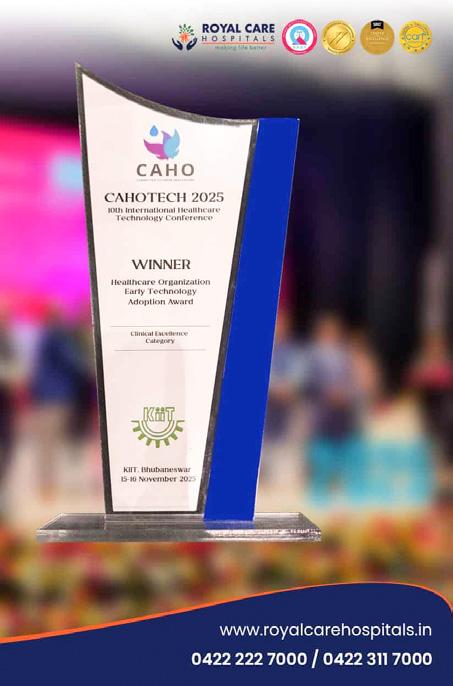
Royal Care Super Speciality Hospital has once again set a benchmark Ahealthcare by receiving the “HCO Innovation & Early Technology Adoption Winner Award” for the early adoption of Magnetic Resonance Guided Focused Ultrasound (MRgFUS)—a revolutionary, knife-less treatment for neurological disorders. The honour was conferred at the 10th edition of CAHOTECH 2025, held recently at KIIT, Bhubaneswar, Odisha.
This prestigious recognition celebrates Royal Care’s pioneering role in introducing MRgFUS, an advanced, non-invasive brain surgery technique used primarily to treat essential tremors and tremor-dominant Parkinson’s disease. By eliminating the need for surgical incisions, MRgFUS represents a significant leap forward in patient safety, precision, and recovery, redefining standards in neuro-care.
To date, more than 210 patients have been successfully treated using MRgFUS at Royal Care, making it one of the most experienced centres for this technology in the region. Notably, Royal Care Super Speciality Hospital is the first hospital in South East Asia to launch and clinically implement this advanced treatment— underscoring its leadership in early technology adoption and innovation-driven healthcare.
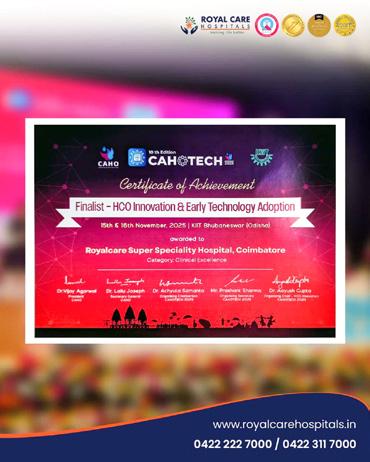
The award was presented by Consortium of Accredited Healthcare Organizations (CAHO), a leading non-profit organisation committed to improving quality, safety, and excellence in healthcare delivery across India. The competition was intense, with 128 participating organisations, narrowed down to 21 finalists through multiple rounds of rigorous evaluation and expert presentations. Royal Care’s success amidst such formidable competition reflects its unwavering commitment to cuttingedge medical advancement and patient-centric care.
Speaking on the occasion, Dr. K. Madeswaran, Chairman & Managing Director of Royal Care Super Speciality Hospital and Consultant Neuro & Spine Surgeon, described the recognition as a proud milestone in the hospital’s journey. He stated that the award is a testament to Royal Care’s vision of driving innovation in healthcare by strategically leveraging advanced technologies to improve patient outcomes, enhance safety, and elevate the overall care experience.
Dr. Madeswaran further highlighted that the award specifically acknowledges the hospital’s pioneering efforts in introducing MRgFUS in South East Asia— an achievement that places Royal Care at the forefront of global neurological care innovation. “Our focus has always been on bringing world-
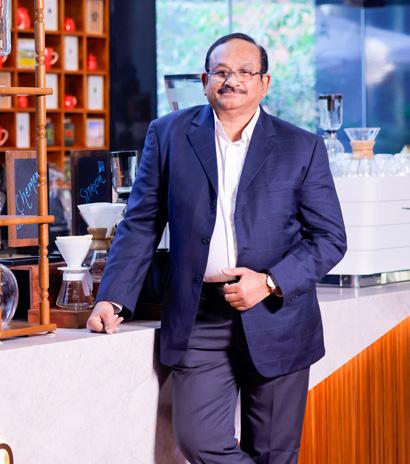
Chairman & managing director m/s. royal care super speciality hospital
class, evidence-based technology to our patients at the earliest, ensuring they benefit from safer, more effective treatment options,” he added.
The technology was formally presented at the forum by Dr. Senthilkumar, Consultant Radiologist at Royal Care, who received the award on behalf of the hospital. His presentation detailed the clinical advantages, patient outcomes, and transformative impact of MRgFUS in treating movement disorders, drawing significant attention from healthcare leaders and experts across the country.
This achievement reinforces Royal Care Super Speciality Hospital’s reputation as a centre of excellence that consistently invests in innovation, research, and advanced clinical practices. By adopting breakthrough technologies like MRgFUS at an early stage, the hospital continues to push the boundaries of modern medicine—delivering hope, precision, and improved quality of life to patients who once had limited treatment options.
With this latest accolade, Royal Care reaffirms its mission to remain at the cutting edge of healthcare, combining compassionate care with technological leadership to shape the future of patient-focused medicine in India and beyond.
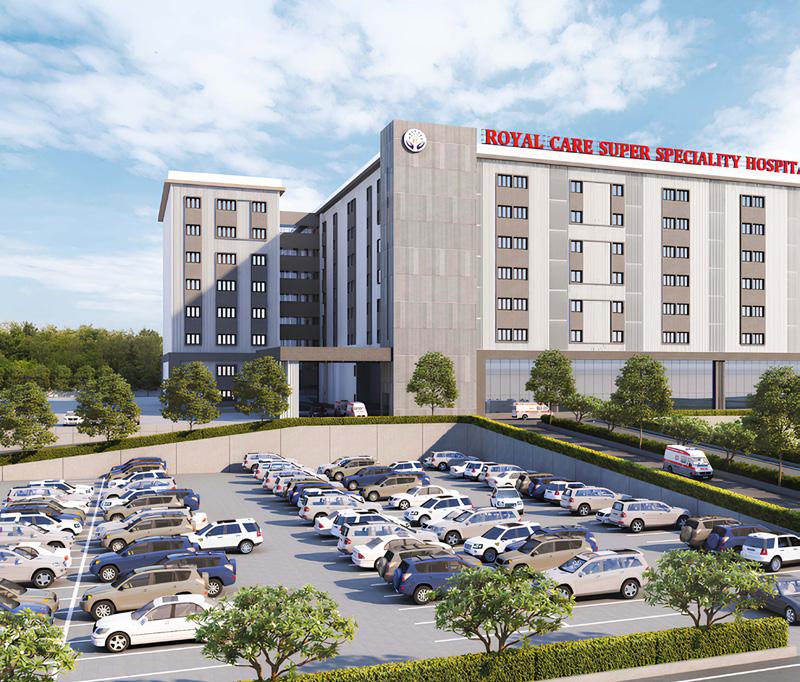

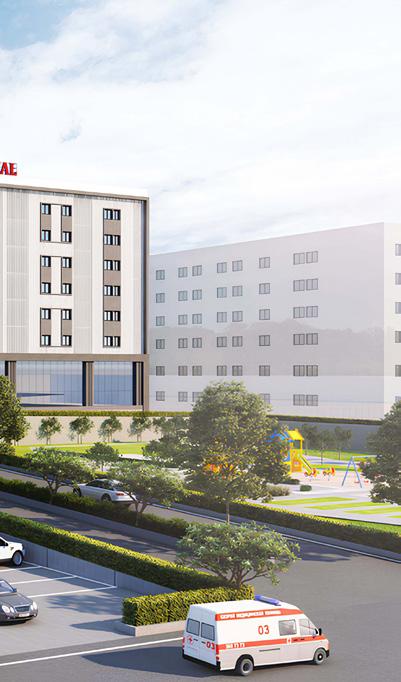
Royal Care Super Speciality Hospital, Coimbatore, marked a memorable milestone with ROYAL FEST 2025, its much-anticipated annual celebration, held on 20 December 2025. The event brought together doctors, nurses, administrative staff, technicians, and support teams under one roof, celebrating not just a year gone by, but the collective spirit that defines Royal Care’s identity as a people-first healthcare institution. Set against a vibrant and festive backdrop at the hospital campus, ROYAL FEST 2025 was an evening filled with joy, recognition, and reflection. More than a celebration, it served as a powerful reminder that behind every successful surgery, every recovered patient, and every medical breakthrough stands a committed team working in harmony.
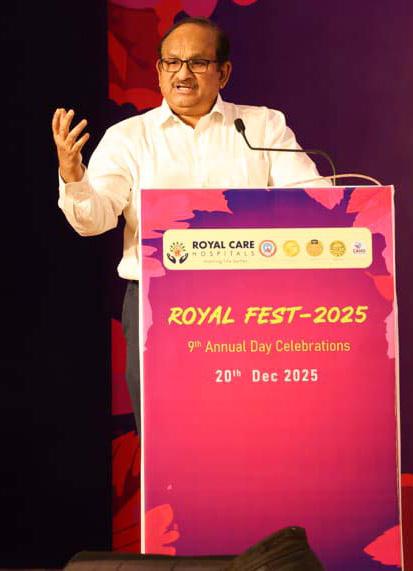
DR. MADESWARAN Chairman & managing director
m/s. royal care super speciality hospital
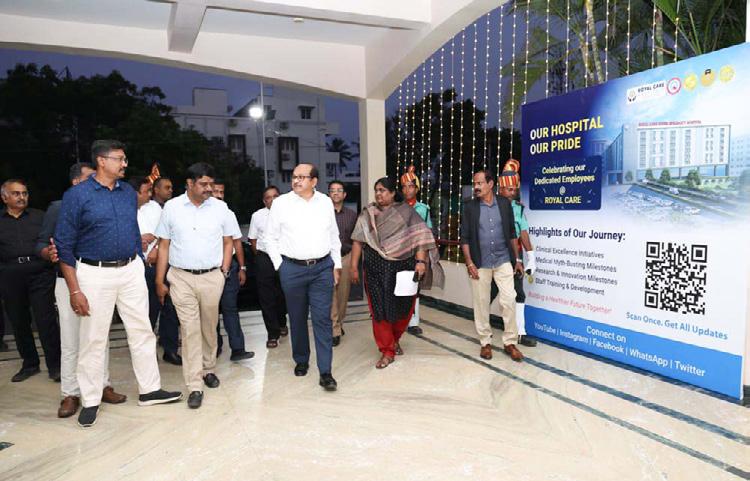
The annual fest has become a cornerstone of Royal Care’s organisational culture, offering a pause from the intensity of hospital life to acknowledge dedication, resilience, and teamwork. In 2025, the celebration carried special significance, as the hospital reflected on a year marked by clinical milestones, national recognitions, and life-saving interventions that strengthened its standing as one of Tamil Nadu’s leading super speciality hospitals.
The event commenced with a warm welcome address, followed by the ceremonial lighting of the lamp, symbolising hope, unity, and the shared mission of healing. Hospital leadership highlighted the importance of ROYAL FEST as a platform to honour the unseen efforts of every staff member — from frontline caregivers to backend support teams — whose contributions are integral to patient care.
Speaking on the occasion, the hospital’s leadership emphasised that healthcare excellence is not built by infrastructure alone, but by people who bring skill, compassion, and integrity to their roles every single day. ROYAL
FEST 2025 was therefore designed as a celebration of people, recognising that the hospital’s greatest strength lies in its workforce. A key highlight of the evening was the employee recognition segment, where individuals and teams were honoured for their outstanding performance, dedication, and service excellence. Awards were presented across departments, acknowledging clinical excellence, operational efficiency, innovation, and compassionate care. These moments of recognition were met with enthusiastic applause, reinforcing a culture of appreciation and motivation.
The celebration also featured a series of cultural performances by staff members, showcasing talents beyond the hospital corridors. From energetic dance routines and soulful music to skits that humorously reflected everyday hospital life, the performances added colour and warmth to the evening. The stage became a space where colleagues connected not as professionals alone, but as a close-knit community.
Beyond entertainment, ROYAL FEST 2025 fostered a sense of belonging and emotional connection — essential elements in a high-pressure environment like healthcare. The event encouraged staff to unwind, bond, and recharge, strengthening interpersonal relationships that translate into better teamwork and patient outcomes.
As the evening progressed, reflections on the year’s achievements underscored the hospital’s growth in advanced medical services, complex procedures, and patient trust. Leadership reiterated Royal Care’s commitment to continuous learning, innovation, and adherence to global quality standards, while also prioritising staff well-being and professional development.
The celebration concluded on an optimistic note, with a shared vision for the year ahead. With evolving healthcare challenges and rising patient expectations, Royal Care reaffirmed its resolve to remain at the forefront of medical excellence — driven by teamwork, compassion, and a relentless pursuit of quality.
ROYAL FEST 2025 was more than an annual event; it was a heartfelt tribute to the people who make Royal Care what it is. As the hospital steps into the future, the spirit of togetherness celebrated that evening will continue to inspire every member of the Royal Care family to heal, serve, and excel — together.

Lotus Eye Hospital & Institute marked a significant milestone in its journey of delivering quality vision care with the inauguration of its 10th hospital at Erode Main Road, Kullampalayam, Gobichettipalayam, on 3rd October 2025. The new centre strengthens the institution’s growing presence across Tamil Nadu and Kerala, bringing advanced ophthalmic services closer to the people of this rapidly developing region.
The hospital was formally inaugurated by the Chief Guest, K. A. Sengottaiyan, MLA of Gobichettipalayam, in the presence of distinguished guests, medical professionals, and members of the local community. The event witnessed enthusiastic participation from several dignitaries, reflecting the town’s warm welcome to a reputed eye care institution. Strategically located to serve Gobichettipalayam
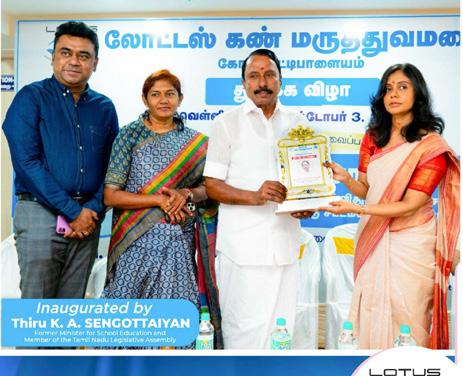
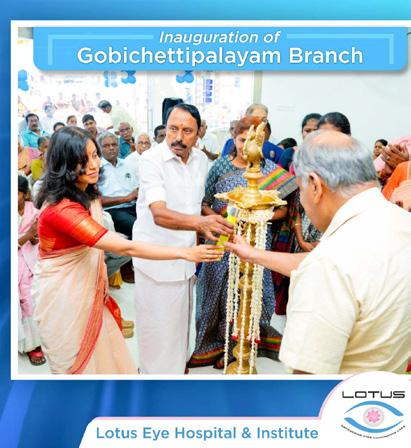
and its surrounding areas, the new facility is equipped with state-of-the-art medical equipment and staffed by experienced ophthalmologists and trained paramedical professionals. Designed to provide comprehensive eye care under one roof, the hospital offers advanced diagnostic and surgical services aimed at meeting the growing healthcare demands of the region.
In her inaugural address, Sangeetha Sundaramoorthy, Managing Director, highlighted the emotional and historical connection between Lotus Eye Hospital and Gobichettipalayam. She noted that the hospital’s Founder, the late Dr. Sundaramoorthy, hailed from this very town.
“Today, Lotus operates multiple centres across Tamil Nadu and Kerala. Gobichettipalayam holds a special place in our hearts, and expanding here is both a professional milestone and a personal tribute to our founder’s roots,” she said. She further observed that Gobichettipalayam has witnessed remarkable growth in recent years, with the establishment of export houses, industries, and educational institutions. This rapid development has naturally led to an increased demand for high-quality healthcare services, including specialized eye care. The new hospital aims to bridge this gap by offering advanced treatments and modern facilities locally.

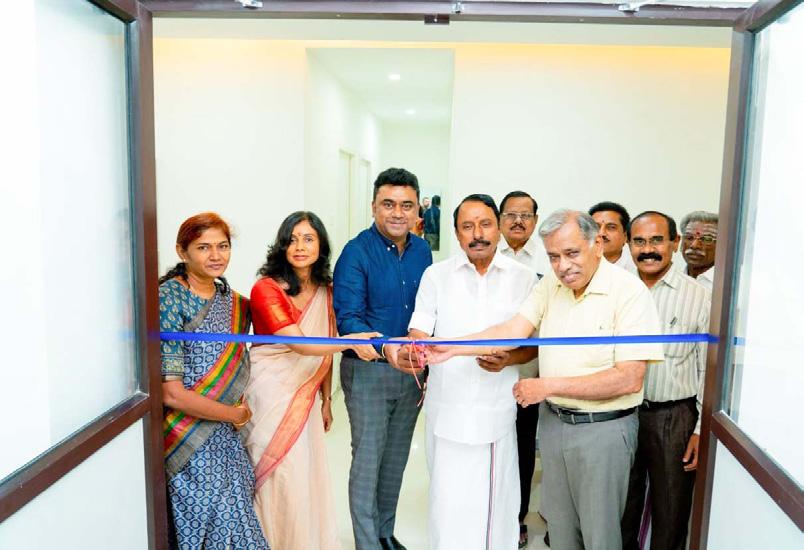
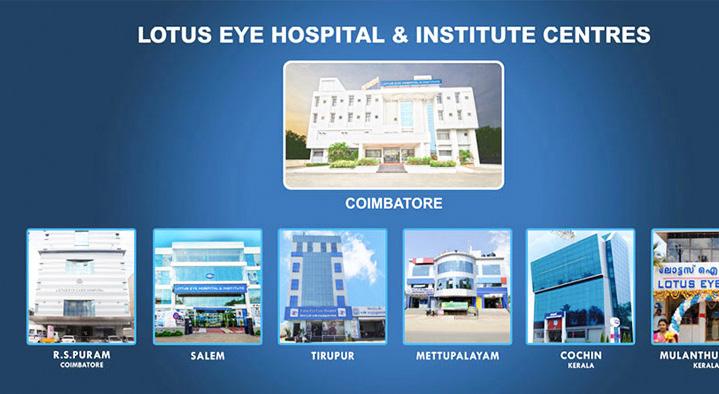

The centre provides a wide spectrum of services, including cataract and retina surgeries, treatment for corneal disorders, diabetic retinopathy management, glaucoma care, a dedicated squint clinic, and paediatric ophthalmology services. By introducing these specialized treatments within the town, residents can now access world-class eye care without the need to travel to larger cities such as Erode or Coimbatore.
Speaking at the inauguration, Sengottaiyan expressed his appreciation for Lotus Eye Hospital’s decision to establish a centre in Gobichettipalayam.He remarked that the presence of a reputed institution like Lotus would greatly benefit the people of the region. “Residents will no longer need to travel long distances for advanced eye treatment. I have seen many individuals struggle due to poor vision. It is important that we prioritise eye health and seek timely care,” he said. He also fondly recalled the pioneering contributions of Dr. Sundaramoorthy, acknowledging his efforts in introducing advanced eye care procedures to the region and improving access to quality treatment.
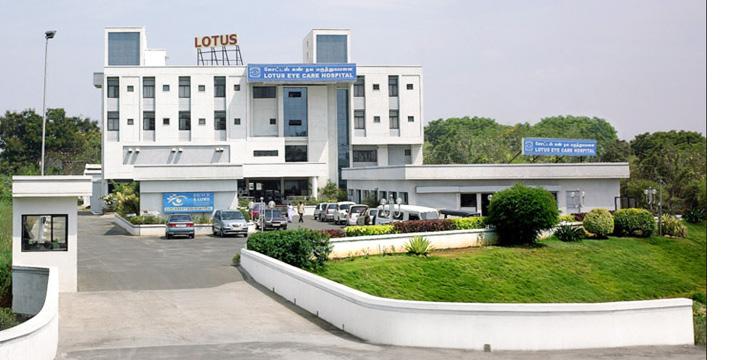

Adding to the occasion, Dr. Ramalingam, Director of the Hospital & Institute,emphasized that Lotus Eye Hospital has always upheld a culture of combining cutting-edge technology with compassionate patient care. He stated that the doctors, nurses, and support staff at the new centre have undergone specialized training to ensure consistent, patient-focused service at all times. To commemorate the launch, the hospital has announced free eye check-ups at the Gobichettipalayam branch until 30th December 2025,
encouraging residents to prioritise their vision health and benefit from early detection and preventive care. Founded by the late Dr. Sundaramoorthy, Lotus Eye Hospital has treated over 80 lakh patients and performed more than 10 lakh eye surgeries. With more than 100 awards recognising excellence in eye care, the institution continues to expand its legacy—bringing clarity of vision and compassionate care to communities across South India.



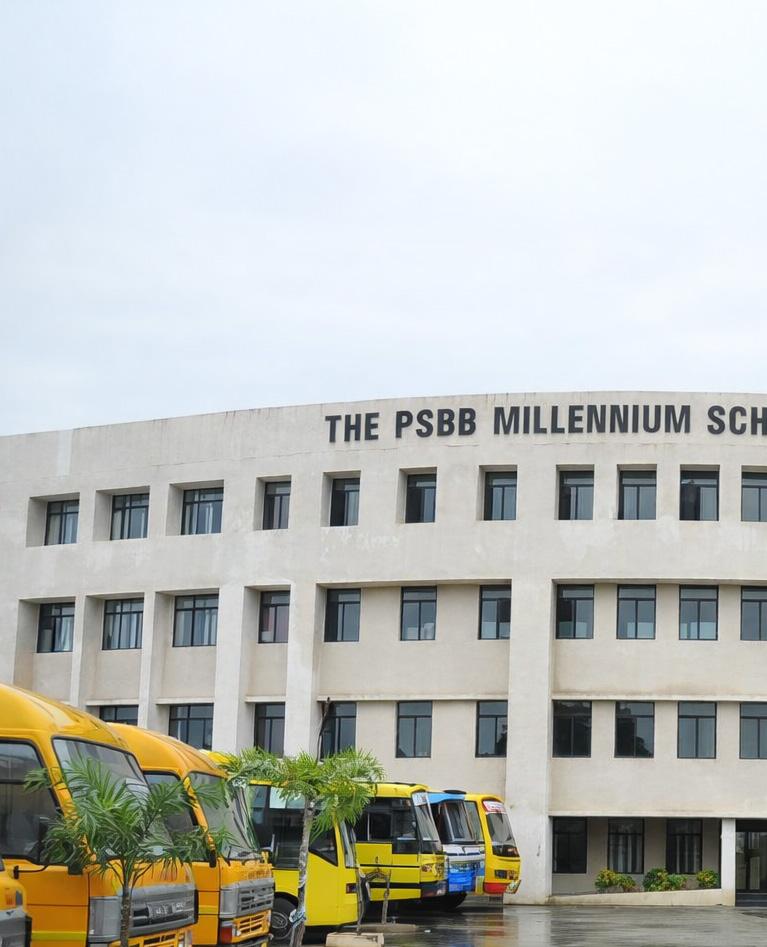
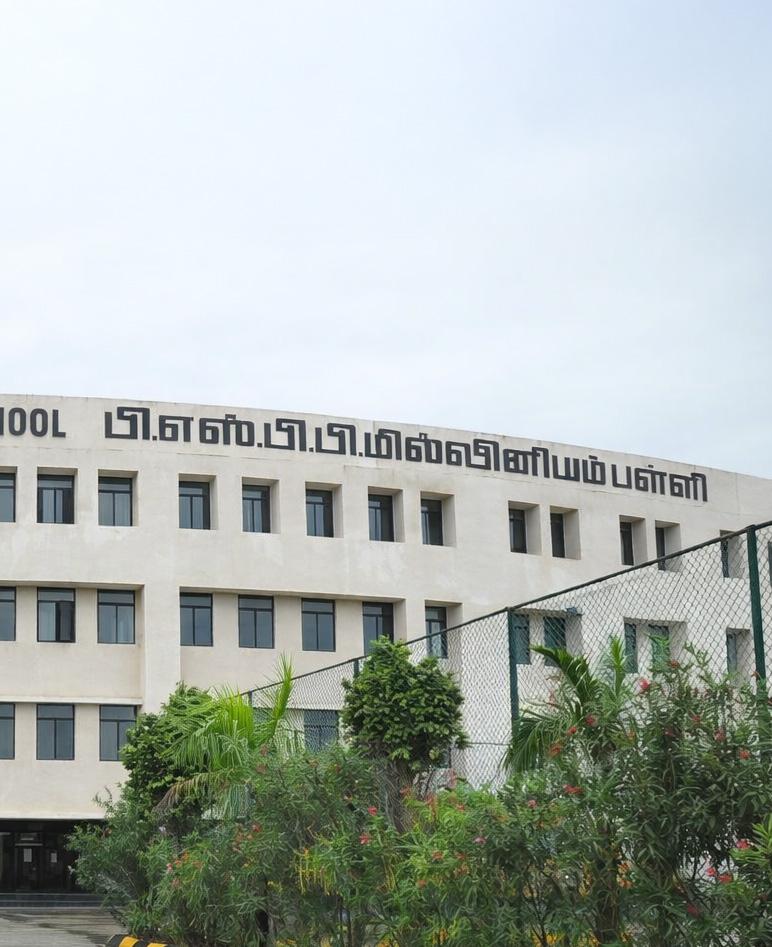
Founded in 1958, Padma Seshadri Bala Bhavan (PSBB) has grown from a humble terrace-shelter with just 13 children into one of Chennai’s most prestigious educational institutions. Over more than six decades, the school has built a formidable reputation for combining rigorous academics with holistic development, nurturing generations of students who excel in arts, culture, sports, and social responsibility. PSBB’s philosophy is deeply rooted in Indian cultural values while simultaneously embracing modern education and global standards, making it a true beacon of balanced learning in South India.
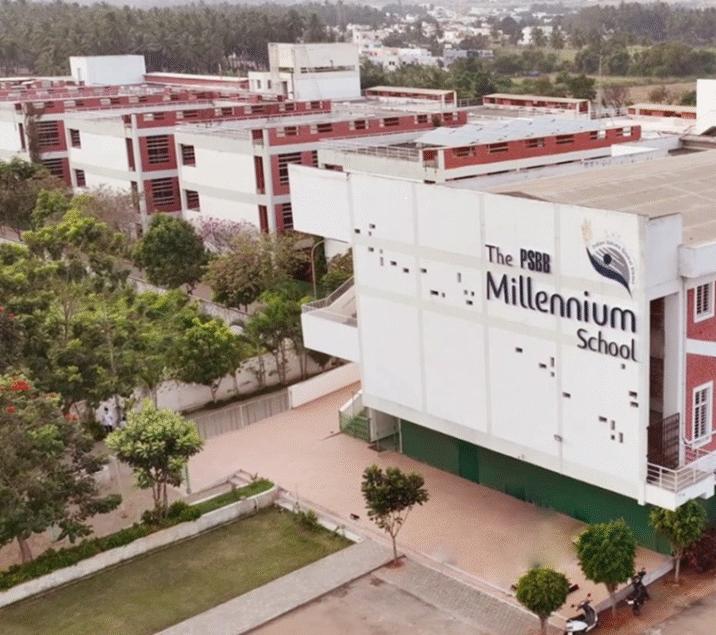
The founding vision of PSBB was shaped by a group of visionary housewives associated with the Nungambakkam Ladies Recreation Club (NLRC). Their aim was to create a school that offered quality education without compromising on values, culture, and creativity.What began in a small terrace space soon expanded, and by 1959 the school had moved to its own campus in Nungambakkam. This early commitment to learning with values became the cornerstone of PSBB’s educational approach and continues to define its identity today.
Over the years, PSBB’s campuses have evolved to blend modern infrastructure with a welcoming,
student-friendly learning environment. Today, the PSBB network includes multiple branches across Chennai, including Nungambakkam, K.K. Nagar, and PSBB Millennium School. The campuses are equipped with well-designed science and computer laboratories, libraries stocked with both academic and recreational reading material, sports grounds and indoor arenas for physical development, and dedicated spaces for music, dance, and theatre. Smart classrooms and digital learning tools further enhance interactive education. The emphasis on open spaces, greenery, and thoughtful design reflects the school’s commitment to holistic student growth.
Academically, PSBB is affiliated with the Central Board of Secondary Education (CBSE), New Delhi, and offers education from Kindergarten through Class 12. The school focuses on building strong academic foundations in sciences, mathematics, social sciences, and languages, while also promoting holistic development through arts, sports, and cultural programs. Value-based education is central to its philosophy, emphasizing ethics, discipline, and social awareness. PSBB also encourages critical thinking and creativity, moving beyond rote learning to foster problem-solving skills and innovation. Alongside this, Indian classical arts, yoga, and cultural studies are integrated into the curriculum, ensuring students remain grounded in tradition while being prepared for global opportunities. PSBB’s consistent excellence has earned it widespread recognition. The school regularly ranks among India’s top day schools in surveys conducted by EducationWorld and other educational bodies.
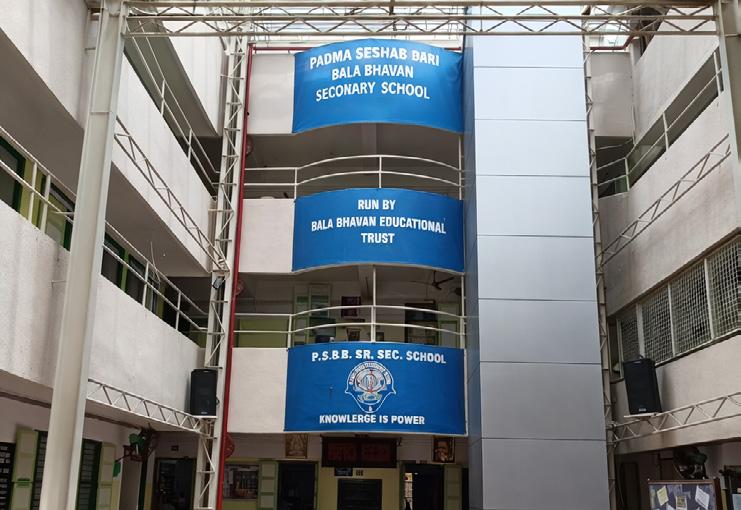
It is known for its excellent board examination results year after year and for its strong performance in co-curricular arenas such as debates, quizzes, sports tournaments, and cultural competitions. Its alumni have gone on to excel in academia, the arts, corporate leadership, and public service, reflecting the school’s success in nurturing well-rounded individuals equipped with both intellectual strength and social competence.The alumni network of PSBB spans the globe and contributes to a wide range of fields, including engineering, medicine, science, arts, literature, performing arts, entrepreneurship, business leadership, social initiatives, and public administration. This enduring legacy reinforces PSBB’s role not merely as a school, but as a transformative institution shaping future citizens of India and the world.

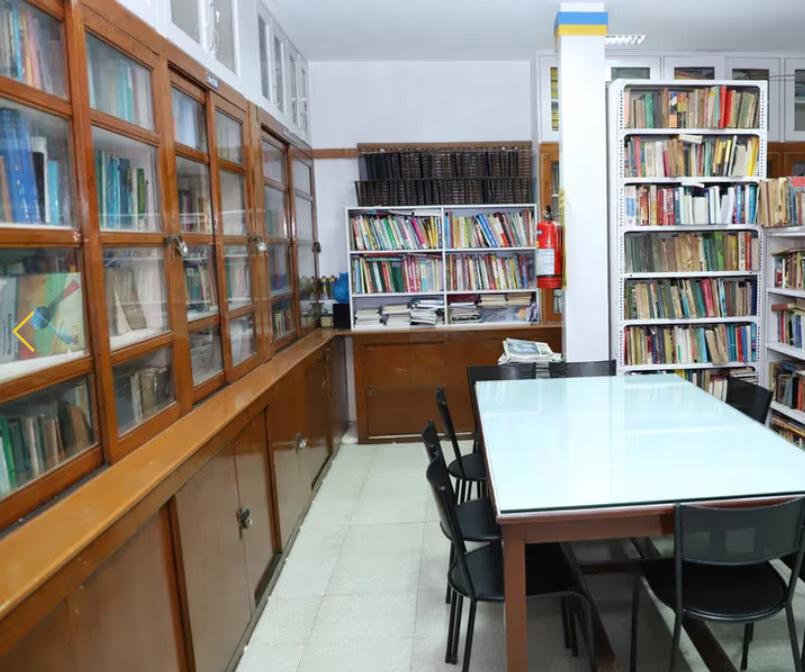
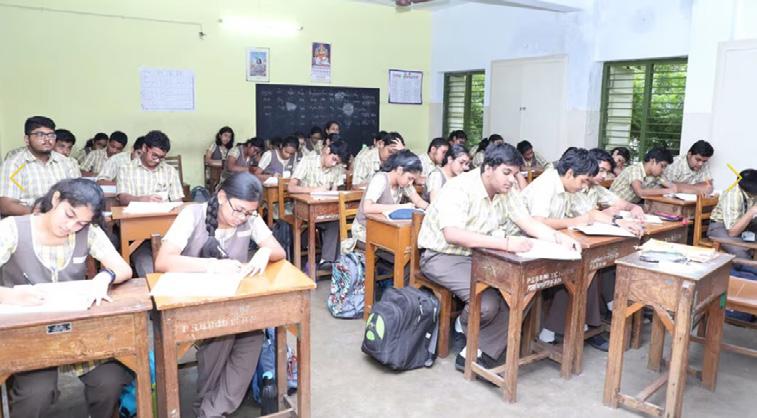
Beyond academics, PSBB places strong emphasis on extracurricular excellence. The school actively promotes sports and fitness to encourage physical well-being, as well as music, dance, and drama for artistic expression. Leadership training and community service initiatives are integral to student life, fostering responsibility and civic awareness. Students are encouraged to participate in competitions, clubs, and cultural festivals, ensuring broad exposure to diverse interests and talents. Looking ahead, PSBB continues to innovate while staying true to its founding principles. The school is steadily integrating digital tools and smart classrooms, emphasizing interdisciplinary learning, and continuously improving faculty training and teaching methodologies. It is also expanding its focus on environmental and sustainability education in line with global trends. The vision remains clear: to nurture students who are knowledgeable, ethical, creative, and socially conscious, ready to excel in a rapidly evolving world. More than just an educational institution, Padma Seshadri Bala Bhavan stands as a legacy of values, learning, and culture. By seamlessly blending tradition with innovation, academics with creativity, and discipline with freedom, PSBB continues to produce wellrounded individuals who make a difference in society. With its steadfast commitment to excellence and holistic education, it remains one of Chennai’s most trusted and respected schools as of December 2025.
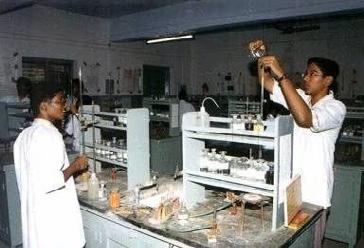
The story of Padma Seshadri Bala Bhavan is inseparable from the pioneering vision of the women of the Nungambakkam Ladies Recreation Club (NLRC). In 1958, these socially conscious and culturally aware women dreamed of establishing a school that would blend rigorous academics with moral values, arts, and culture, shaping well-rounded students capable of thriving in a complex world. Their foresight and dedication laid the foundation for what would become one of Chennai’s most prestigious educational institutions. The NLRC itself was a vibrant forum for women’s social and cultural engagement, fostering discussions on arts, literature, and societal improvement. Recognizing
the growing need for modern, value-driven education, the women collaborated to create a school that would nurture intellect, character, and creativity. Their collective vision was to build an institution that combined Indian cultural roots with modern pedagogical practices, a pioneering idea in post-independence India.


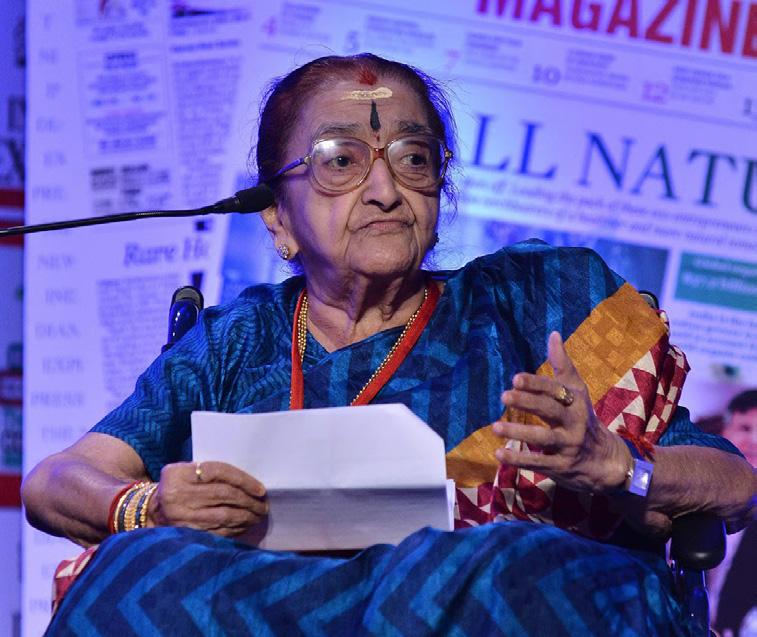
PSBB began modestly with just 13 students, taught in a terrace space of one of the founder’s homes. From the very beginning, the approach was holistic, combining basic academics with music, dance, and moral education. Within a year, the school moved to its own campus in Nungambakkam, marking the start of its journey toward becoming a network of top-tier schools while remaining firmly anchored in its values-based educational ethos.
The founding principles laid down by the NLRC women continue to guide PSBB even today. They envisioned holistic development, where academics are integrated with arts, sports, and cultural activities. They emphasized strong cultural roots through Indian heritage, Sanskrit, classical music, and performing arts. They also encouraged critical
Rajalakshmi Parthasarathy, popularly known as Mrs. YGP, a renowned Indian educationist, journalist, and social worker who founded the Padma Seshadri Bala Bhavan (PSBB) group of schools in Chennai
thinking by promoting creativity, problem-solving, and independent thought, while fostering inclusivity and community through collaborative, value-driven management and co-educational learning.
The impact of this vision has been profound. The women of the NLRC transformed the educational landscape of Chennai by creating a model of holistic education that produced students who excel academically while remaining socially responsible and culturally grounded. The school’s trustmanaged structure has ensured that this founding vision continues to thrive across multiple campuses. Today, PSBB stands as a living testament to the power of community, collaboration, and foresight, demonstrating how a group of determined women created an enduring legacy in education.

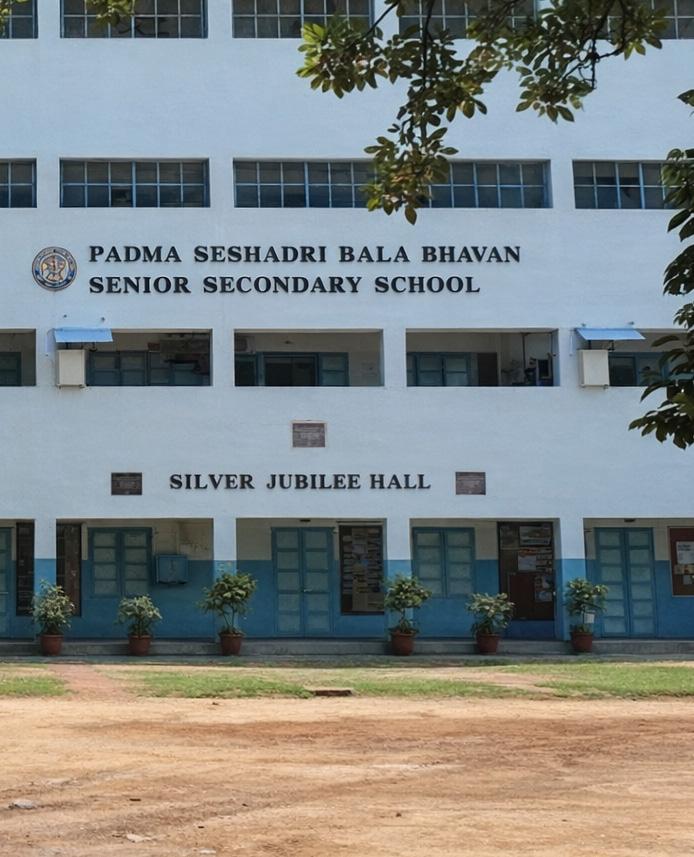
The founders of PSBB were not just institution builders; they were pioneers who reshaped the way education is perceived in Chennai. By blending tradition with modernity, academics with creativity, and discipline with freedom, they built an institution that continues to inspire generations.Their story is a reminder that vision, dedication, and collaboration can leave an indelible mark on society, transforming even the humblest beginnings into a legacy that lasts for decades.

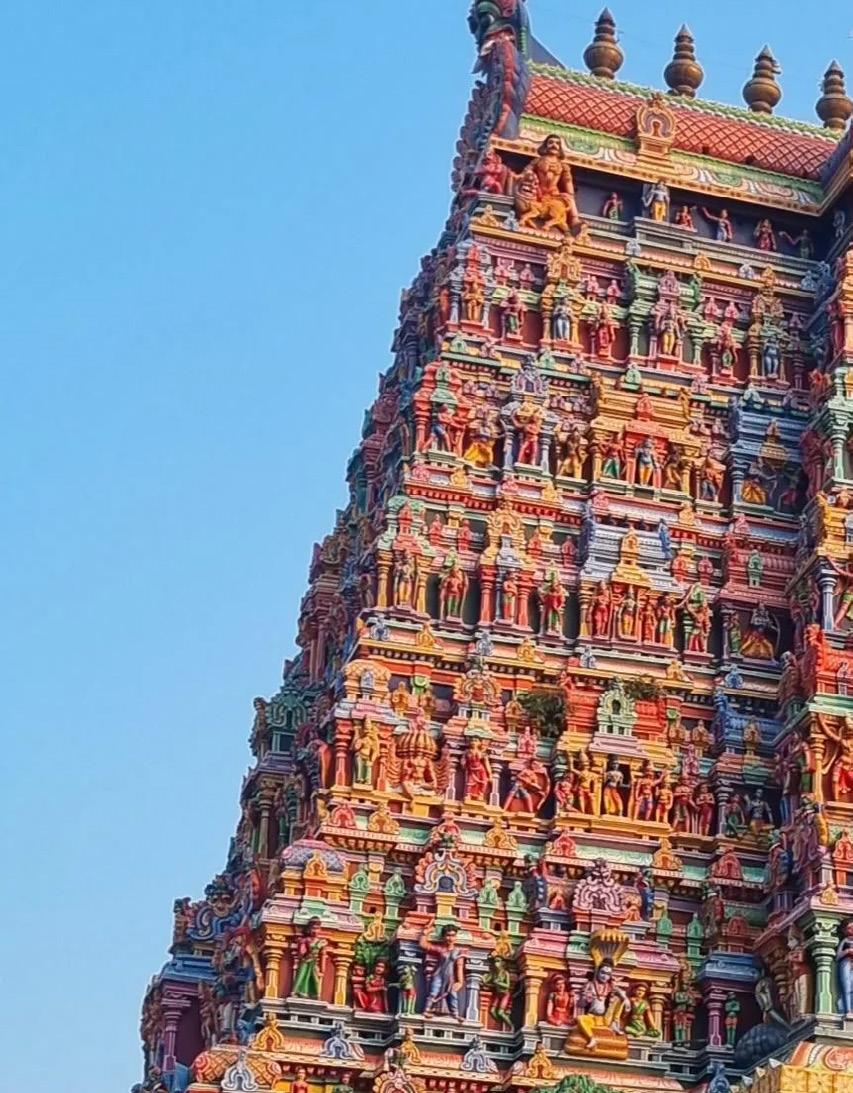

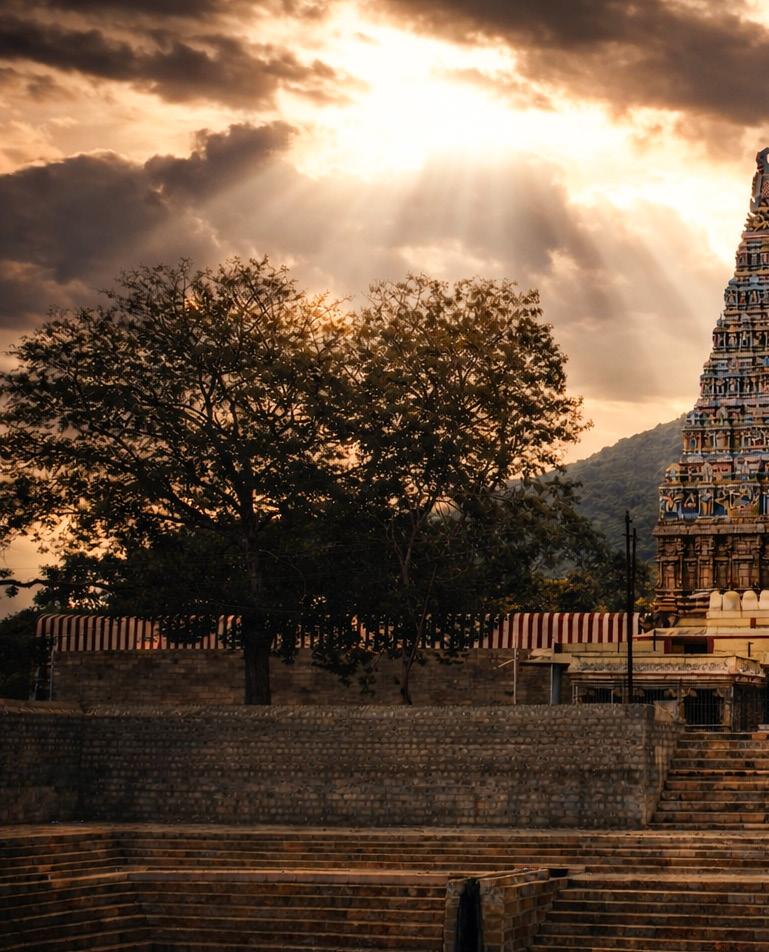
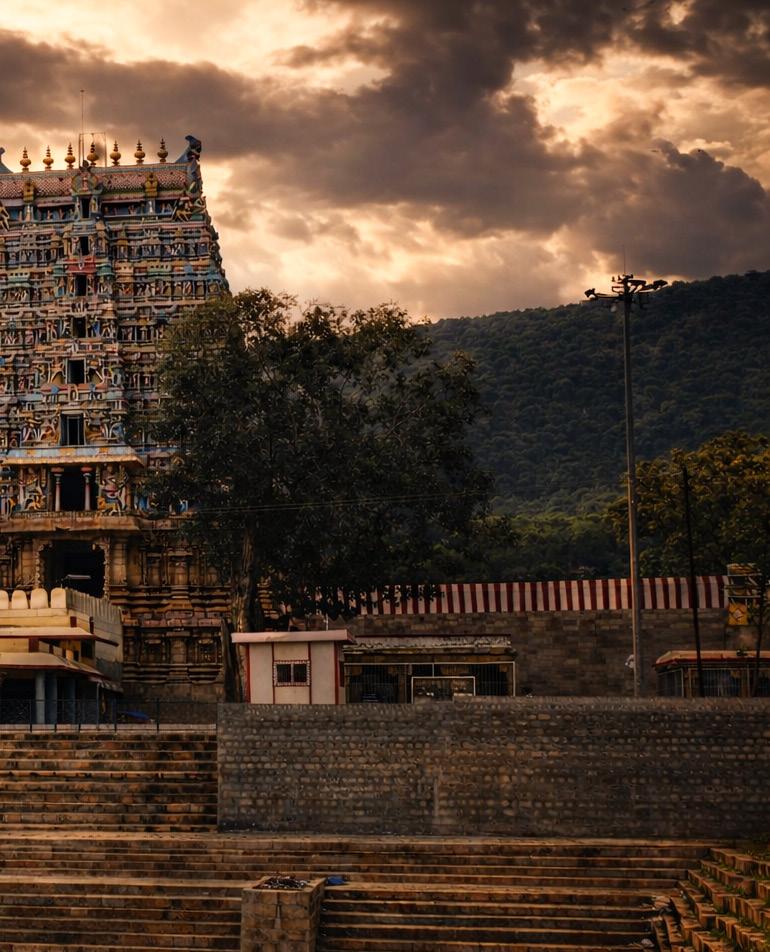
Tucked away amid the lush hills and forests of Alagar Kovil (also spelled Azhagar Kovil), in the Madurai district of Tamil Nadu, the Kallazhagar Temple stands as a living testament to centuries of devotion, artistry, and cultural memory. Revered as one of the 108 sacred Divya Desams — the holy abodes of Vishnu — it is not just a temple, but a microcosm of Tamil Vaishnavism tradition, Dravidian architecture, folklore, and evolving modern day dynamics.

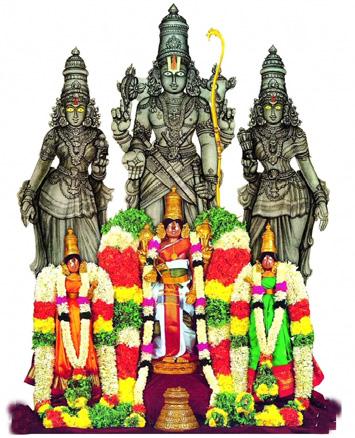
Walking through its granite gateways and layered gopurams, one senses that this is not a relic frozen in time — it is living heritage, pulsating with festivals, prayers, and the weight of legal and civic controversies that shape its present. This article captures that layered reality: ancient myth and stone, pageantry and peaceful worship, preservation and protest.
The temple is dedicated to Vishnu — worshipped here as Sundararaja Perumal (popularly known as “Kallazhagar”). His consort is Thirumagal Sundaravalli (Lakshmi). According to tradition, Kallazhagar is believed to have appeared to redeem a sage (Suthapava) from a curse, symbolizing divine grace and protection. The temple finds mention in the early medieval Tamil Vaishnavite canon — the Nalayira Divya Prabandham — meaning its roots as a sacred site date back over a millennium. Because of this deep spiritual significance, generations have revered the temple — not only for its stone and architecture, but as a sacred geography where myth, faith, and daily life intertwine.
The Kallazhagar Temple is a fine exemplar of Dravidian architecture, layered with historical accretions from dynasties and patrons over centuries. Some of its noteworthy architectural and structural features:
• A granite wall encloses the temple complex, within which stand multiple shrines, mandapams (pavilions), and a tall rajagopuram (tower gateway).
• The temple reportedly includes two concentric “fort” zones: the inner fort known as Iraniyan Kottai and the outer fort as Alagapuri Kottai.
• The sanctum houses the main idol of Sundararaja Perumal (standing posture).The temple also honors other deities and features shrines for divine allies, sculptural work, and halls used for rituals and temple functions.
• The setting is notably scenic: Alagar Kovil is a village surrounded by hills and vegetation, giving the temple a serene, almost mystical ambience — a blend of natural and architectural beauty. Thus, visiting the temple is not just a spiritual journey, but also a sensory experience — where stone carvings, sacred corridors and forested hills create a doorway into history, devotion, and Tamil culture.

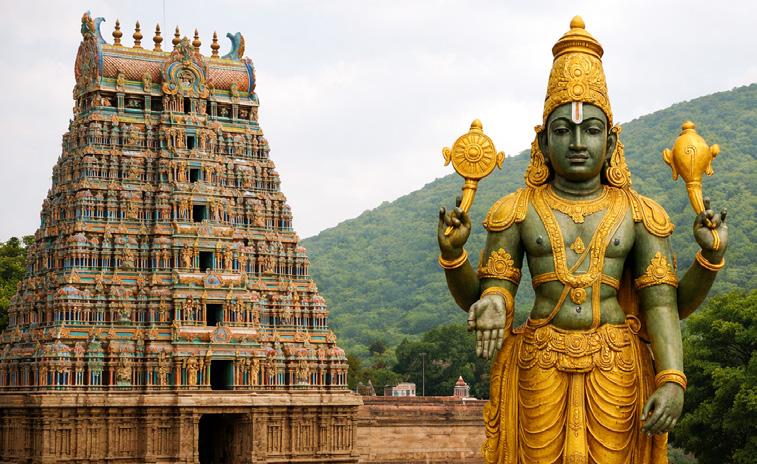
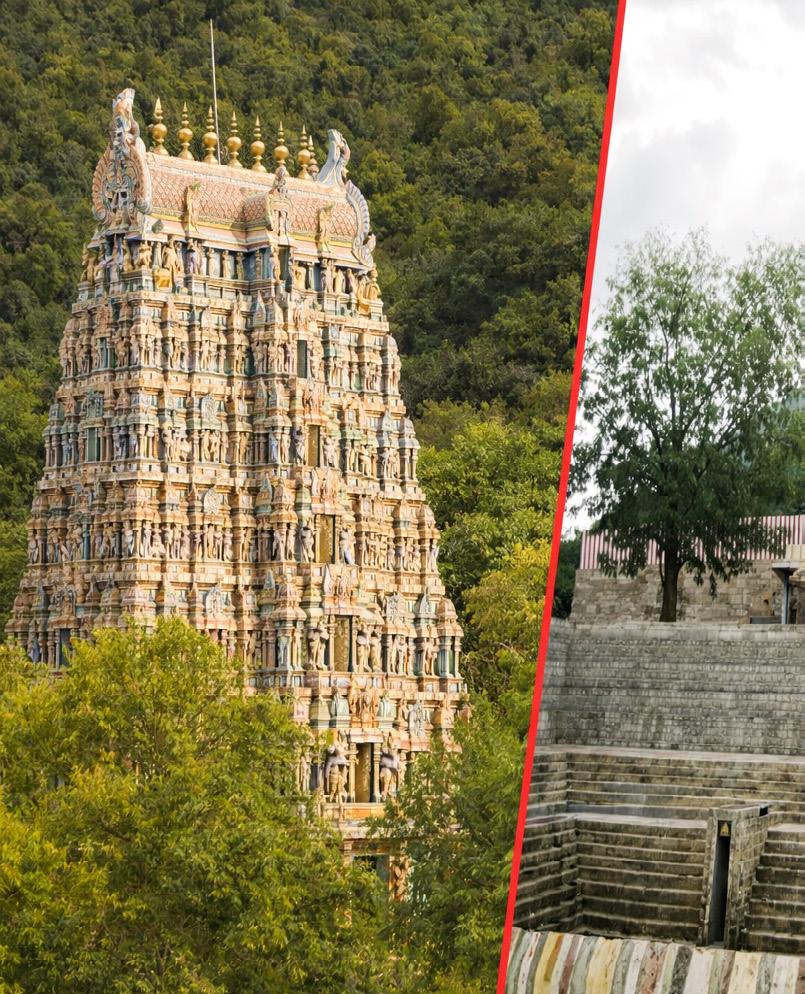
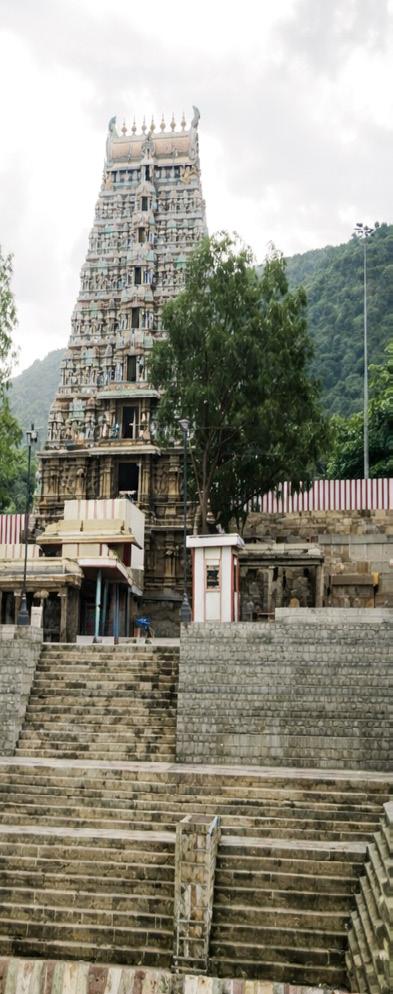
The heartbeat of Kallazhagar Temple’s living heritage lies in its festivals — especially the grand Chithirai Thiruvizha, celebrated every year with fervour, thousands of devotees, and rituals that weave mythology into present day community life. Ethir Sevai & The Vaigai River Entry .The highlight of the festival is the dramatic procession of Lord Kallazhagar from Alagar Kovil into the city of Madurai — a journey that concludes with a symbolic entry into the Vaigai River. On that day, devotees throng the riverbanks, offer prayers, and witness the divine entry — a mix of faith, tradition and mass community celebration. Rituals around the festival are deeply codified: recent rulings by the Madras High Court have regulated certain festival practices — for example, mandating traditional (non motorised) water spraying methods on the deity, and restricting random participation.
Apart from Chithirai, the temple observes six daily rituals and celebrates other festivals such as the Float Festival (during Tamil month Masi), Navaratri, and Vaikunta Ekadashi, among others. The spiritual lineage, temple rituals, and continuing devotion make Kallazhagar a dynamic, living site — not a static monument — deeply woven into the daily rhythm of the surrounding village and city beyond.

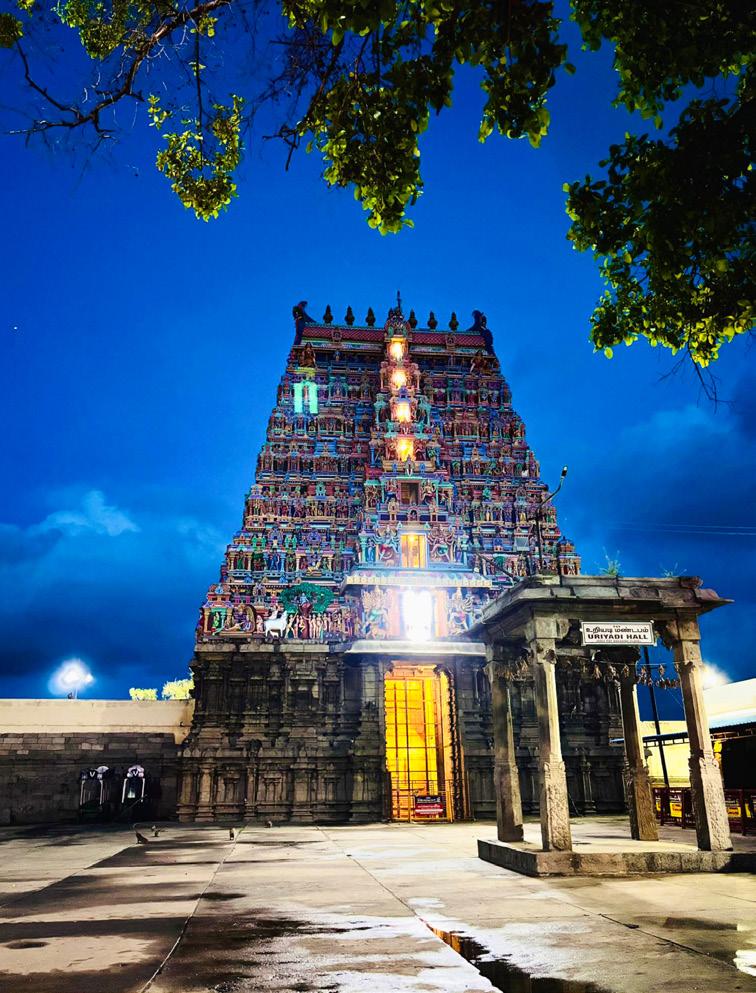
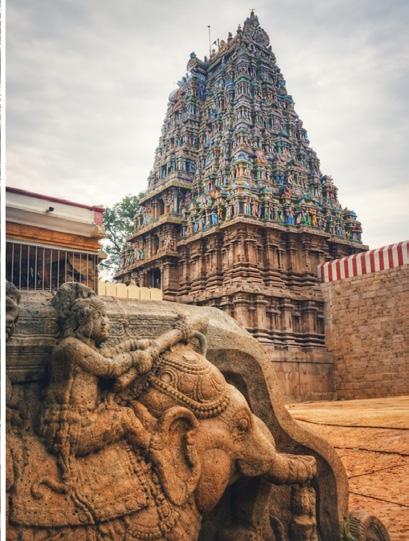
While history and tradition form the soul of Kallazhagar Temple, recent events highlight the tension between heritage preservation, modern infrastructure demands, and ethical use of temple resources. In 2024, the temple authority (under the HR & CE Department, Tamil Nadu) approved a major “Iconic Project” — reportedly worth ₹ 38.72 crore — to build commercial type facilities: VIP cottages, a restaurant, guest house/shops, and other amenities inside temple premises. Litigants argued that these are non-religious, commercial structures, improperly funded from temple surplus funds. Following public interest litigation, the Madurai Bench of the Madras High Court on 30 Aug 2025 passed an interim injunction suspending these constructions.The court held that temple funds (which belong to the deity, de jure) must be used strictly for religious or charitable purposes under the law. On 22 November 2025, the court further ordered that the protected
heritage zone — Iraniyan Kottai (inner fort area) — be declared a vehicle free zone. The court mandated removal of all newly built structures (near or within protected limits), temporary sheds, buildings near Nandanar Mandapam, and ordered the temple authorities to submit detailed documents (feasibility studies, budgets, expenditure records from 2020 onwards) for review. The court also suggested providing buggies or wheelchairs for differently abled devotees as an alternative to allowing motor vehicles — balancing heritage protection with accessibility.
These developments reflect a larger, ongoing struggle faced by many historic religious sites in India: modern aspirations for tourism, convenience, infrastructure, and revenue vs. sacred heritage, spiritual sanctity, and preservation of ancient architecture. The judgments by courts represent efforts to uphold legal, cultural, and ethical norms surrounding temple property — and by extension, communal trust. Through this, Kallazhagar Temple is emerging not just as a religious icon — but as a case study in modern heritage governance, citizen activism, and the politics of preservation.
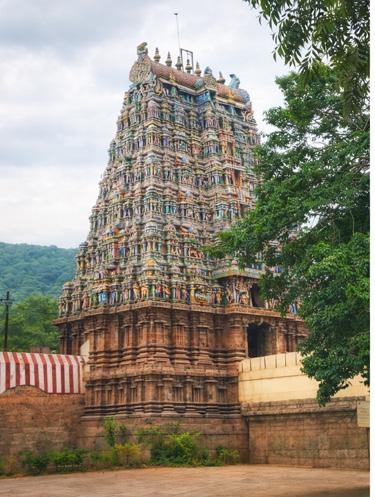


At the break of dawn, the first light kisses the Alagar Hills, casting a golden glow over the temple gopuram as pilgrims make their way along the rocky path, their footsteps accompanied by the scent of incense and the toll of bells — a perfect lead that immediately sets the mood and draws readers into the sacred ambiance of Kallazhagar Temple. The temple’s origins and mythological associations add layers of depth: the legend of Kallazhagar, the temple’s revered status as one of the 108 Divya Desams, and its mentions in the Nalayira Divya Prabandham all underscore its enduring spiritual significance. Architecturally, the temple is a stunning example of Dravidian design, featuring imposing granite walls, intricately carved gopurams, and historic forts — Iraniyan and Alagapuri Kottai — alongside a sanctum, pillared mandapams, and the serene hill-village setting that frames the sacred site. Living traditions continue to bring the temple to life:
festivals like the Chithirai Thiruvizha, the dramatic Ethir Sevai procession, and the Vaigai River entry
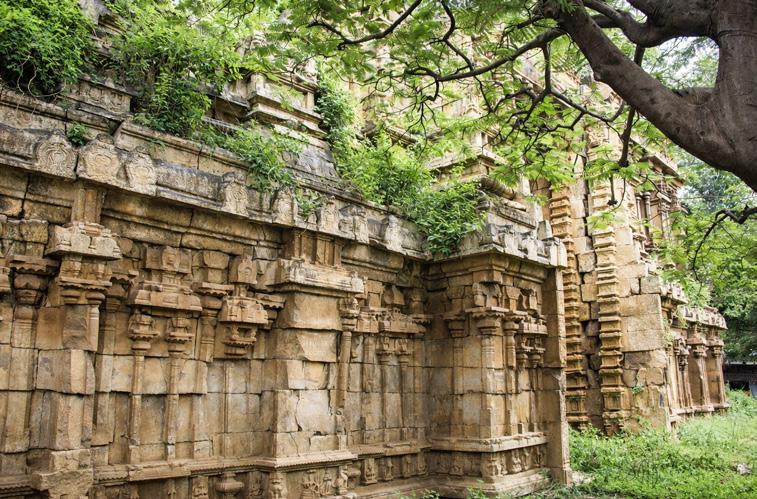

highlight the devotion, human emotion, and communal participation that make the temple a dynamic center of faith year-round. Yet, heritage preservation faces contemporary challenges. In 2025, initiatives such as the “Iconic Project,” public interest litigations, and court injunctions have sparked debates around commercialization, modernization, and the imposition of vehicle-free zones, reflecting the tension between tradition and development. Personal perspectives from devotees, local residents, heritage activists, and temple officials enrich the narrative, revealing hopes, concerns, and the delicate balance between preserving vintage heritage and accommodating modern needs. Visual storytelling is equally important: early-morning temple shots, festival crowds along the river, close-ups of intricate carvings, before-and-after maps of contested zones, and portraits of pilgrims create a vivid, immersive experience for readers.

Ultimately, the temple’s story offers a broader reflection on heritage, identity, and cultural legacy — emphasizing its role in modern society, the importance of balanced preservation, and the responsibility to safeguard this living heritage for generations to come. Kallazhagar Temple is more than a reconstructed past or a resort for spiritual nostalgia. It is a living continuum — where devotion, architecture, myth, community, law and change collide and co exist. As 2025 shows us: heritage isn’t static. It evolves, it faces challenges, it demands vigilance, respect, and often, legal clarity. In a world racing toward modernization, temples like Kallazhagar remind us: there is power in stones, in stories, in shared memory. Protecting them isn’t just about guarding walls
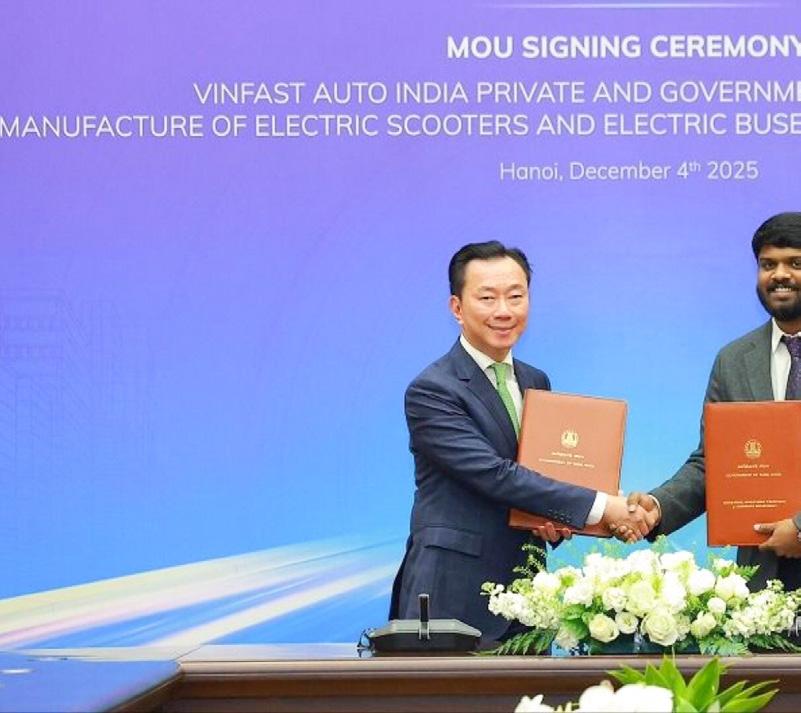

Vietnam-based electric vehicle manufacturer VinFast has embarked on a major expansion in India, focusing on Tamil Nadu as a strategic hub. On December 4, 2025, VinFast signed a Memorandum of Understanding (MoU) with the Government of Tamil Nadu to expand its electric vehicle (EV) manufacturing facility in Thoothukudi. This second-phase investment represents a significant milestone in India’s EV landscape.
VinFast’s existing plant in Thoothukudi spans approximately 160 hectares and currently produces around 50,000 EVs per year, primarily premium electric SUVs. The new expansion adds 200 hectares, effectively tripling the plant’s capacity to 150,000 vehicles annually. Beyond SUVs, the expansion will introduce dedicated production lines for electric buses and two-wheelers, signaling VinFast’s ambition to create a comprehensive EV ecosystem. The investment for this phase is estimated at USD 500 million, highlighting the company’s long-term commitment to India. Advanced automated production lines, including body shops, paint shops, assembly lines, and quality control units, ensure that the facility maintains high standards of efficiency and product quality.
Tamil Nadu’s industrial ecosystem makes it an ideal choice for VinFast’s operations. The SIPCOT industrial zones provide robust infrastructure, including port access, reliable power, and water supply. Additionally, the state government has committed to facilitating permits, infrastructure

support, and incentives to help VinFast scale its operations. The location offers not just manufacturing advantages but also a strong potential for export-oriented production, enabling VinFast to serve not only the Indian market but also South Asia, the Middle East, and Africa. This strategic positioning underscores Tamil Nadu’s growing importance in the global EV supply chain.
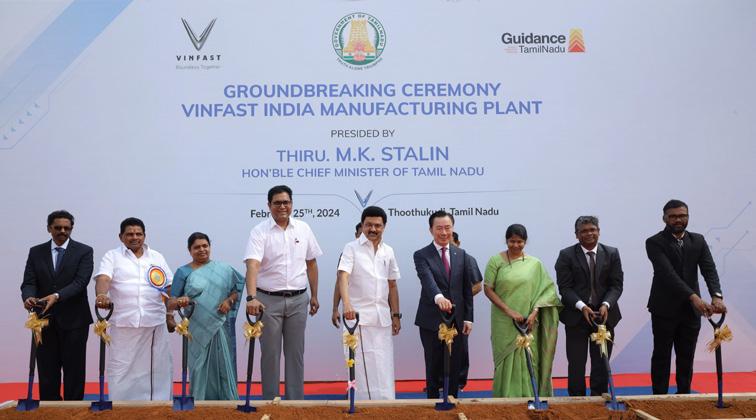

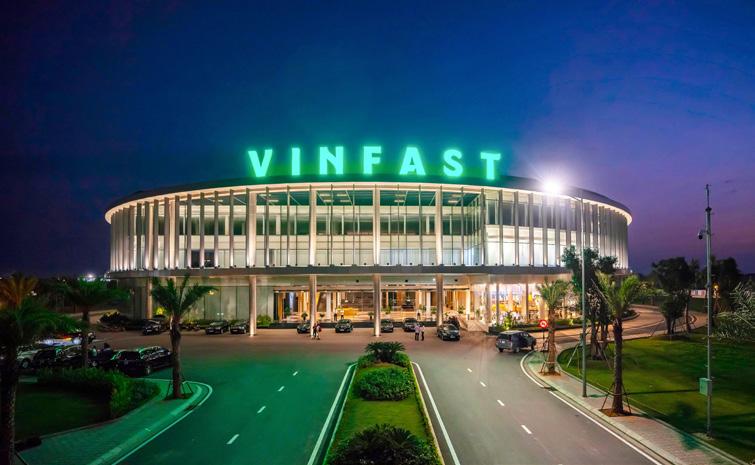
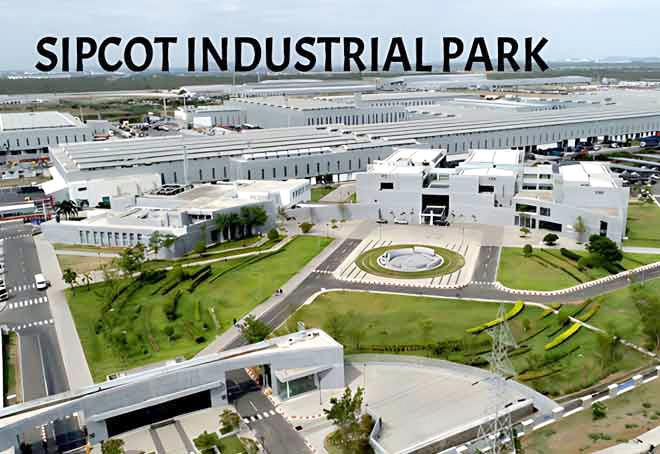

VinFast’s expansion is expected to generate thousands of direct and indirect jobs, benefiting the local economy and workforce. The initiative will also stimulate the growth of local suppliers and ancillary industries, strengthening the supply-chain ecosystem in Tamil Nadu. This investment aligns with the state’s vision of becoming a leading hub for EV manufacturing and innovation.
The expansion diversifies VinFast’s offerings beyond premium electric SUVs. By producing e-buses and e-scooters, the company addresses mass-market demand, catering to both urban commuters and commercial transportation needs. The initiative also contributes to the development of charging infrastructure and aftersales services, which are essential for broader EV adoption. Consumers stand to benefit from greater product variety, competitive pricing, and improved service availability, while VinFast strengthens its brand presence in a rapidly evolving market.

While the expansion presents significant opportunities, it also comes with challenges. Market acceptance in India, particularly for e-buses and scooters, remains competitive. Localizing the supply chain to meet quality and volume requirements requires careful planning. Additionally, the company must ensure timely execution of infrastructure support, including roads, utilities, and waste management, to avoid operational bottlenecks.
VinFast’s expansion is not just a corporate initiative; it represents a strategic shift in India’s EV industry. By building a comprehensive mobility ecosystem — covering cars, buses, scooters, and infrastructure — VinFast sets a precedent for global EV companies investing in India. Tamil Nadu’s position as a manufacturing and export hub is further strengthened, potentially attracting more foreign investment in the EV sector. This move underscores a broader trend: India is emerging as a significant player in the global EV market, with Tamil Nadu at the forefront of this transformation. The state is poised to benefit economically, environmentally, and technologically from VinFast’s ambitious vision.
Vietnam’s VinFast is making global headlines as it expands its electric vehicle operations into India. Founded in 2017 by Pham Nhat Vuong, Vietnam’s first billionaire and the founder of Vingroup, VinFast started as the country’s first domestic car manufacturer. In just a few years, it has grown into a leading electric mobility company with a vision to produce sustainable, world-class vehicles for both domestic and international markets.
VinFast began as a bold venture under Vingroup, which is known for its diversified portfolio in real estate, retail, healthcare, and technology. Vuong envisioned creating a homegrown automotive brand capable of competing globally. Initially focused on gasoline-powered cars, VinFast quickly shifted toward electric vehicles (EVs), recognizing
the global transition toward clean energy and sustainable mobility. The company’s philosophy combines modern design, quality engineering, and environmental responsibility, aiming to provide accessible electric transportation without compromising on performance or safety.
rapid growth and gloBal
Since its founding, VinFast has expanded aggressively. It launched its first manufacturing plant in Vietnam with state-of-the-art production lines and established partnerships with leading global technology and automotive firms. Within a few years, VinFast became the first Vietnamese car brand to enter international markets, exporting vehicles to North America and Europe. The company has also embraced innovation in battery technology, smart connectivity, and autonomous systems, positioning itself as more than just a traditional automaker — it is a full-scale mobility solutions provider.

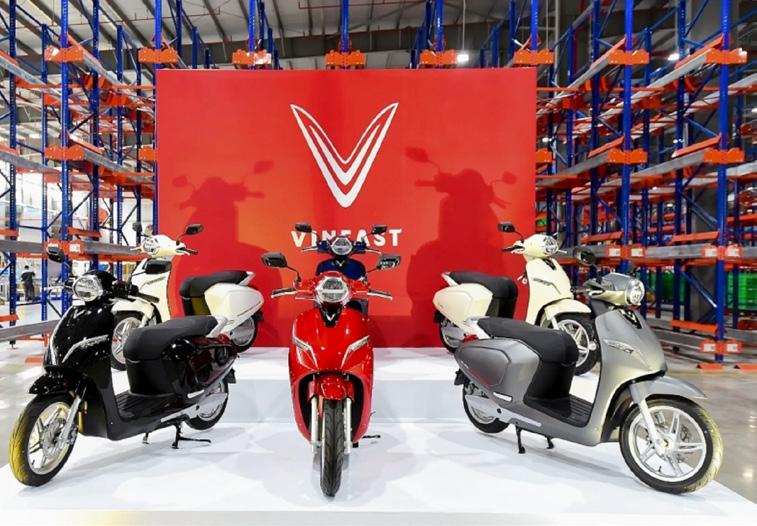


In December 2025, VinFast signed a Memorandum of Understanding (MoU) with the Government of Tamil Nadu to expand its manufacturing facility in Thoothukudi. This move adds 200 hectares to the existing plant and increases the facility’s annual capacity from 50,000 vehicles to 150,000 vehicles. The expansion is not limited to electric cars; it includes dedicated lines for electric buses and e-scooters, highlighting VinFast’s ambition to create a comprehensive EV ecosystem in India. With a USD 500 million investment, the company aims to make Tamil Nadu a key hub for manufacturing, innovation, and exports.
Tamil Nadu offers VinFast numerous advantages:
• Industrial infrastructure: Access to SIPCOT industrial zones, ports, and reliable utilities.
• Government support: Assistance with permits, infrastructure, and investment incentives.
• Export potential:The plant can serve India and other international markets in South Asia, the Middle East, and Africa.
The expansion is expected to generate thousands of jobs and stimulate local supply chains, strengthening Tamil Nadu’s position as a leading EV and automotive hub.

impact on thE EV markEt
VinFast’s Tamil Nadu expansion is likely to accelerate EV adoption in India. By producing electric buses and scooters in addition to cars, VinFast caters to both urban commuters and commercial transportation needs. The initiative also contributes to charging infrastructure and after-sales services, which are crucial for the growth of the EV sector.
Consumers stand to benefit from more choices, competitive pricing, and improved service availability, while VinFast strengthens its presence in a highly competitive market.
Despite the opportunities, VinFast faces several challenges:
• Market competition: India’s EV sector is competitive, with multiple domestic and international players.
• Supply chain localization: Scaling local production while maintaining quality requires careful planning.
• Infrastructure execution: Timely delivery of roads, utilities, and waste management is critical to meet expansion timelines.
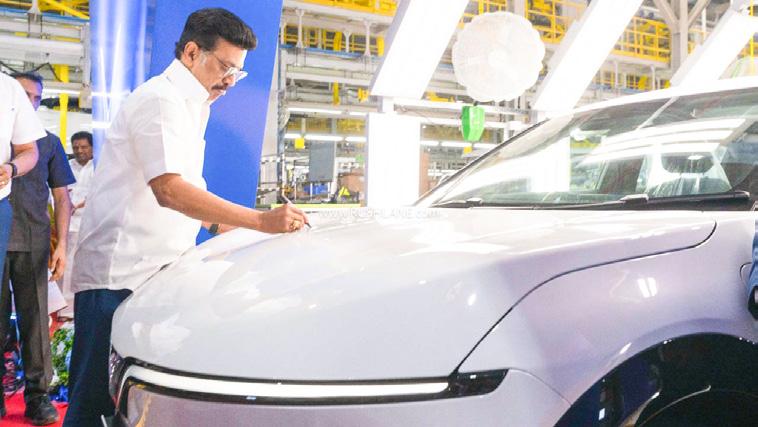
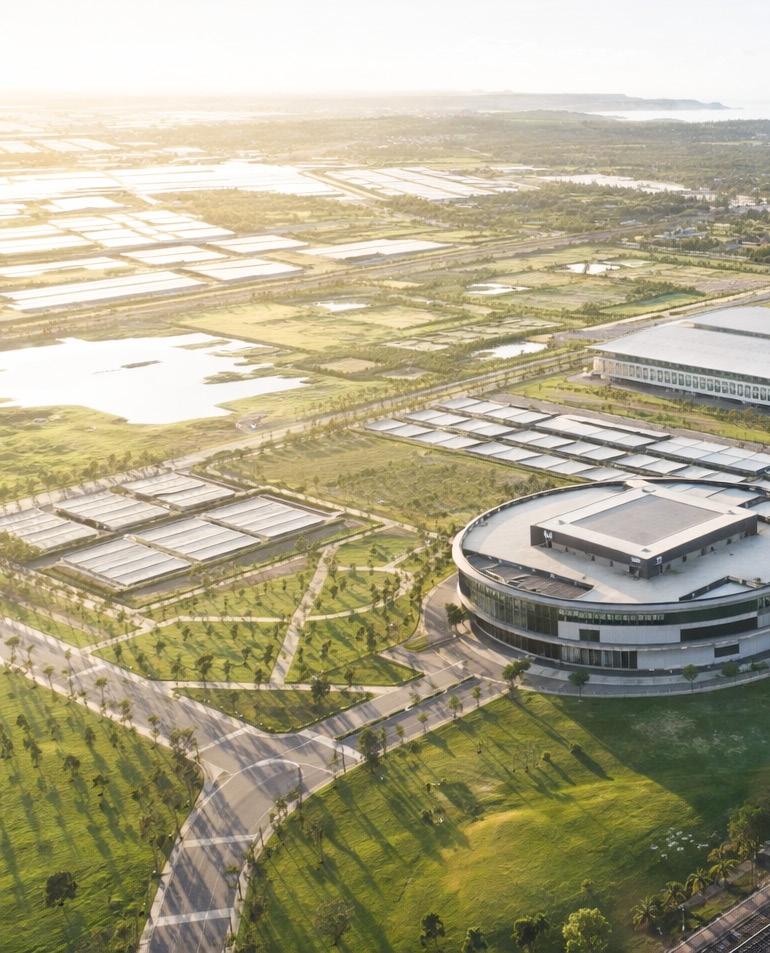
VinFast’s expansion into Tamil Nadu is more than just a business move — it represents a strategic commitment to India’s EV future. By creating a full-scale EV ecosystem, the company positions itself as a global leader in sustainable mobility. For Tamil Nadu, the investment brings economic growth, employment, and technological advancement, while for India, it reinforces the country’s role in the global EV market. VinFast is not only building vehicles; it is shaping the future of transportation in one of the world’s most dynamic emerging markets.
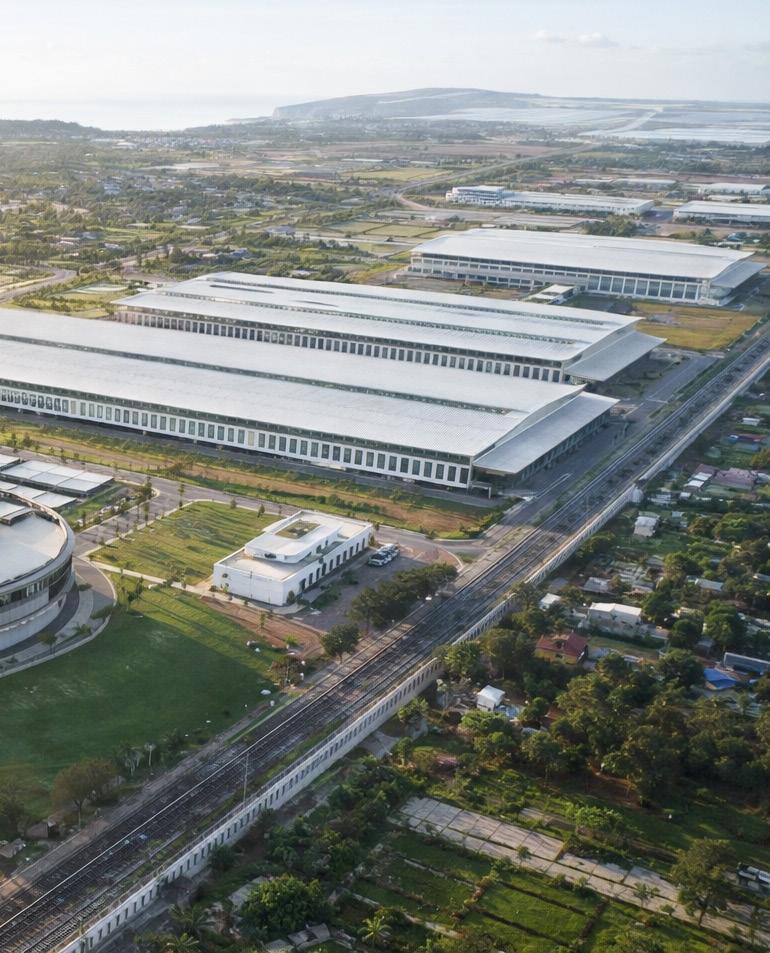
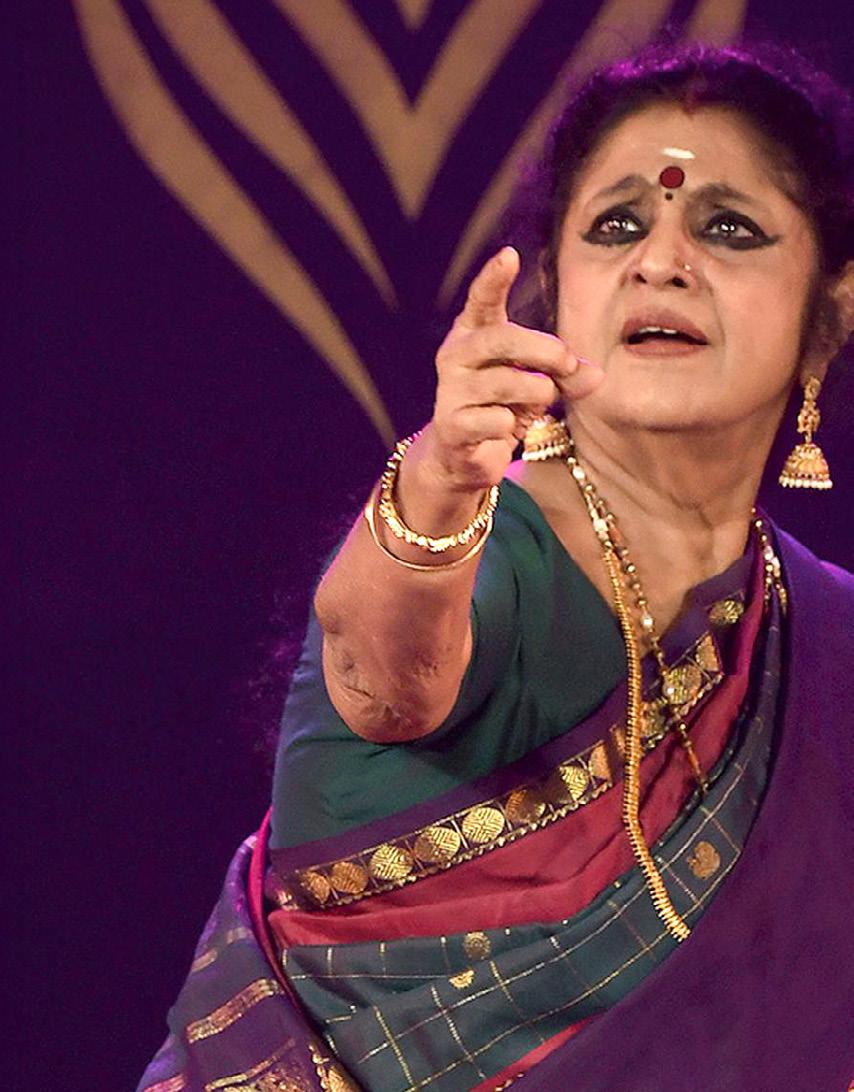
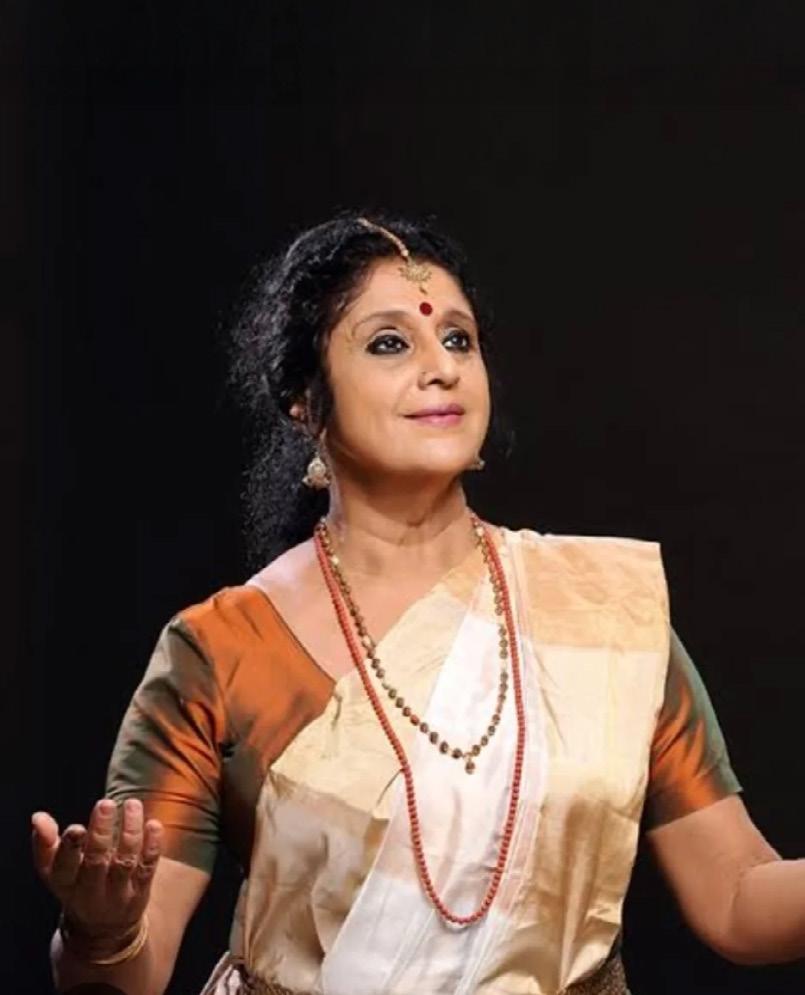
Chitra Visweswaran, born on 12 October 1950 in Tiruchirapalli, was introduced to the world of dance at a very young age by her mother, Rukmini Padmanabhan. Her early exposure to Bharatanatyam, Western Ballet, Manipuri, and Kathak gave her a uniquely rich and diverse foundation in movement and expression. By the age of ten, she performed her arangetram, or debut performance, displaying remarkable talent, discipline, and dedication that marked the beginning of an extraordinary artistic journey.
In 1970, Chitra received a National Scholarship for advanced study in Bharatanatyam, a recognition that further strengthened her artistic path. She trained under the legendary guru Vazhuvoor Ramaiyya Pillai, under whose guidance she refined her technique, expressive depth, and narrative storytelling. Her early selection for lead roles in his dance dramas signaled her growing prominence in classical dance circles and established her as a promising and committed performer.
In 1975, Chitra founded the Chidambaram Academy of Performing Arts (CAPA) in Chennai, marking a significant contribution to institutionbuilding in the field of Indian classical dance. CAPA emphasizes a research-based pedagogy that combines dance theory, stagecraft, and music, creating a holistic approach to training. Through her teaching and mentorship, Chitra has nurtured generations of dancers, helping to create a global footprint of Bharatanatyam excellence.
As a choreographer, Chitra Visweswaran is known for her ability to blend tradition with innovation. Her productions, including Devi Ashta Rasa Malika, Panchali, and Nritya Srinkhala, introduced new dimensions to Bharatanatyam
through group formations, the use of mime, and thematic storytelling. She expanded the classical form beyond the solo format, experimenting with stagecraft while still honoring the core grammar and discipline of the tradition.
Chitra has performed extensively across India and internationally, with tours spanning Europe, North America, the Middle East, and Asia. Her work has been broadcast on the BBC and other global networks, helping bring Bharatanatyam to worldwide audiences and fostering cross-cultural appreciation of Indian classical dance.
Her contributions to dance have been widely recognized through numerous awards and honours. She received the Padma Shri from the Government of India in 1992, the Sangeet Natak Akademi Award in 1987, and the Kalaimamani Award from the Government of Tamil Nadu in 1982. She was also honoured with the Natya Kala Acharya Award in 2014 by The Music Academy, Chennai, along with several other accolades including Nritya Choodamani, Nritya Vilas, Manav Sewa Puraskar, and Natanamani. These awards reflect decades of dedication to both performance and teaching.
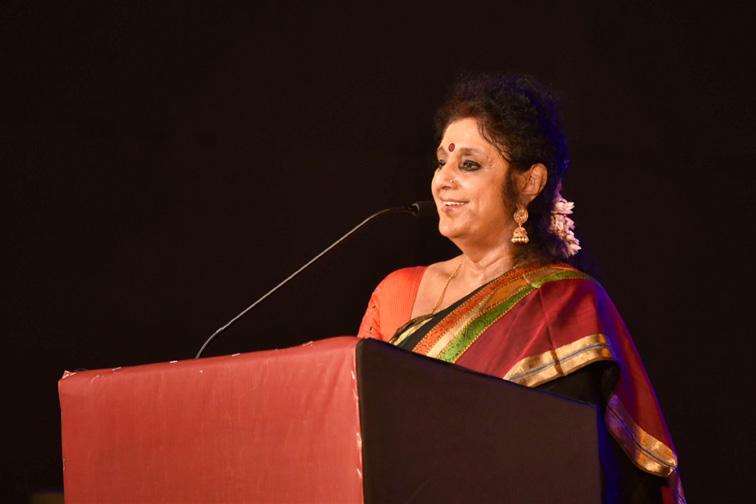

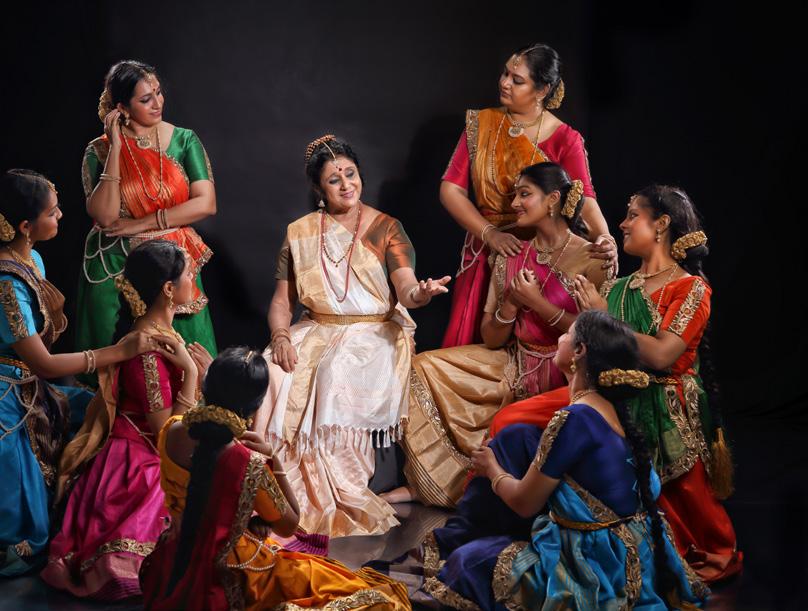
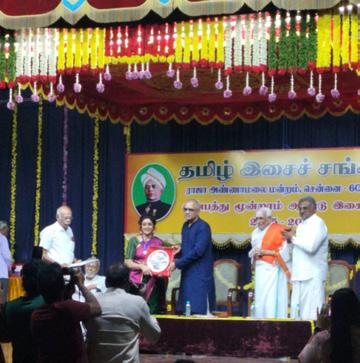
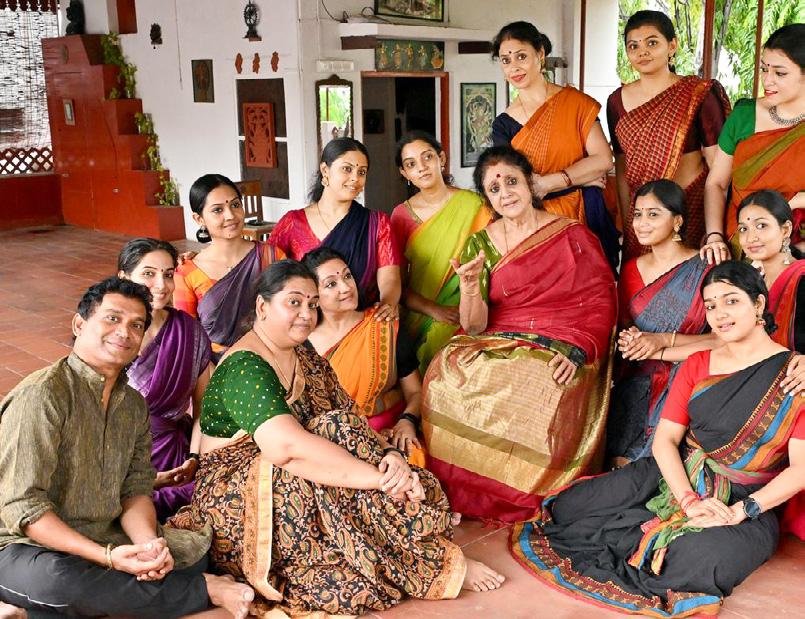
For Chitra Visweswaran, dance is not merely performance but a powerful form of communication and spiritual expression. She believes that Bharatanatyam must continue to evolve while remaining rooted in its essential grammar and tradition. Her works consistently highlight storytelling, emotional depth, and social themes, inspiring both audiences and students to explore the profound layers of classical dance.
Through CAPA and her many disciples, Chitra has shaped generations of dancers and practitioners. Her innovative choreography, research-driven teaching methods, and international performances have established her as a cultural ambassador of Bharatanatyam, ensuring that the art form remains living, dynamic, and continually evolving.
The Devi Awards 2025, hosted by The New Indian Express, celebrated the achievements of exceptional women across Tamil Nadu and South India. Designed to highlight women who break barriers in their respective fields, the awards recognise excellence in arts, education, sports, entrepreneurship, social service, and culture. The 2025 edition stood out as a spectacular showcase of courage, talent, and determination, reaffirming the vital importance of women’s contributions in modern society.

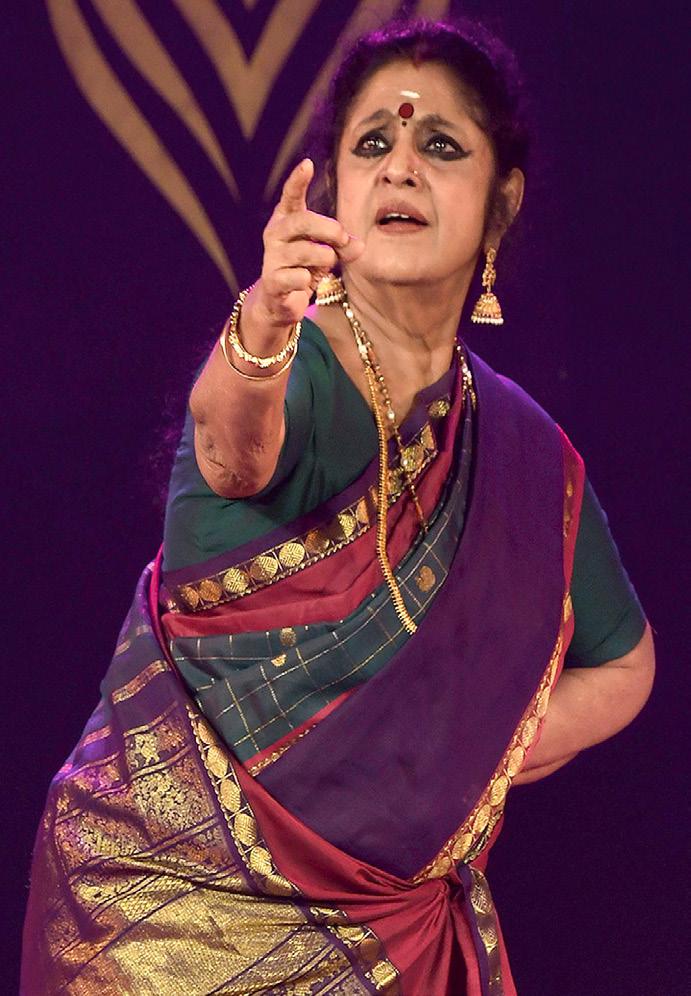
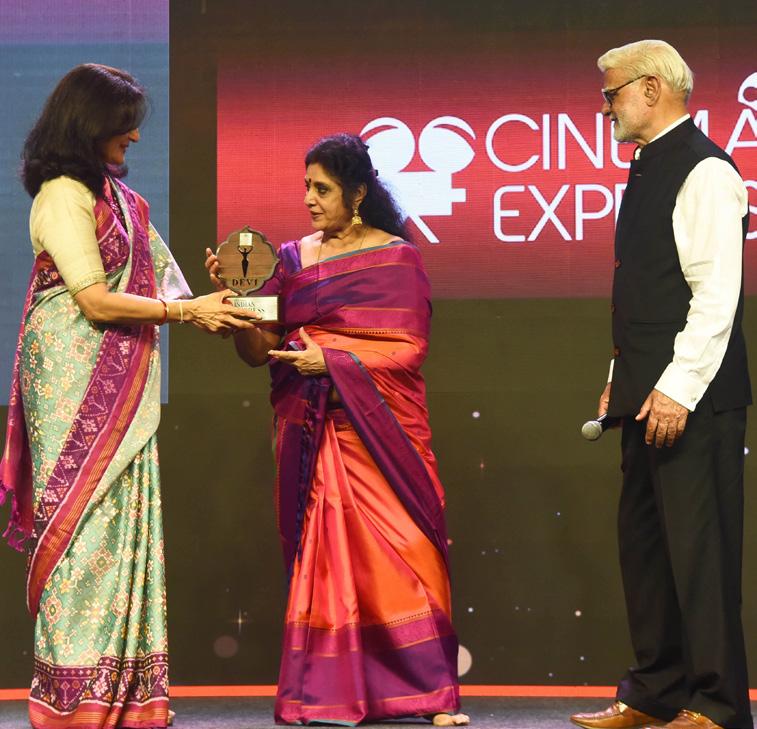
Established to honour women trailblazers, the Devi Awards focus on empowerment, leadership, and societal impact. The 2025 edition highlighted the stories of women who have overcome challenges, innovated in their fields, and inspired communities around them. By recognising these achievers, the awards promote visibility, motivation, and strong role models for younger generations. The ceremony not only celebrated success but also reinforced values of resilience, creativity, and social responsibility, demonstrating that women’s achievements are central to cultural and societal progress.

Held at the ITC Grand Chola in Chennai, the ceremony was attended by dignitaries, media representatives, and the awardees themselves. The evening began with a traditional lamp-lighting ceremony led by Preetha Reddy,Vice-Chairperson of Apollo Hospitals, along with TNIE editorial leaders, symbolising enlightenment and achievement. The venue was adorned with elegant décor reflecting feminine strength and cultural pride, and the programme featured performances, speeches, and
inspiring anecdotes from the honourees. The event successfully combined glamour, tradition, and substance, making it a memorable celebration of women’s achievements.
The 2025 Devi Awards felicitated thirteen remarkable women from diverse fields, each representing a story of courage, determination, and excellence. Among the standout awardees was Sudha Ragunathan, the renowned Carnatic vocalist celebrated for her timeless contributions to classical music and her efforts in nurturing future talents. Chitra Visweswaran, the legendary Bharatanatyam dancer and choreographer, was honoured for her lifelong role in preserving and promoting classical dance. Preethi Srinivasan, a social-service activist and founder of a trust supporting spinal cord injury patients, was recognised for her inspiring resilience and dedication. Jerlin Anika, a para-athlete and Arjuna Awardee, was celebrated for her extraordinary achievements in badminton and her advocacy for sports.
The list of honourees also included Rajavalli Rajiv, an entrepreneur in eco-fashion, honoured for her sustainable business practices and creative leadership, and Arundhathi Subramaniam, poet and author, recognised for her literary contributions exploring spirituality, culture, and womanhood. Each awardee reflected the idea that success is multidimensional and deeply impactful, extending beyond conventional definitions.
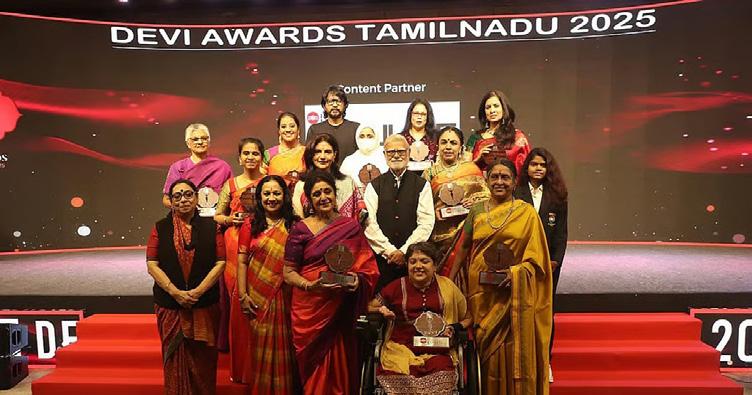


The Devi Awards go beyond glamour and ceremony, serving as a powerful platform for inspiration, empowerment, and social change. They redefine success by recognising women from diverse fields beyond traditional measures of fame or wealth, enhance visibility by providing strong role models for young girls and aspiring women leaders, and celebrate diversity by encouraging excellence across arts, business, sports, education, and activism. Through public recognition, the awards validate hard work and motivate both recipients and their peers to aim higher, contributing to cultural, social, and professional equity in contemporary India.
The legacy of the Devi Awards 2025 lies in its reinforcement of the importance of women’s leadership and visibility in society. By celebrating stories of resilience, creativity, and empowerment, the event left a lasting impression on audiences and continues to inspire future generations to dream big and break barriers. As a platform, the Devi Awards strengthen the narrative that women’s contributions are vital, celebrated, and central to progress, setting a high standard for social recognition and cultural pride.
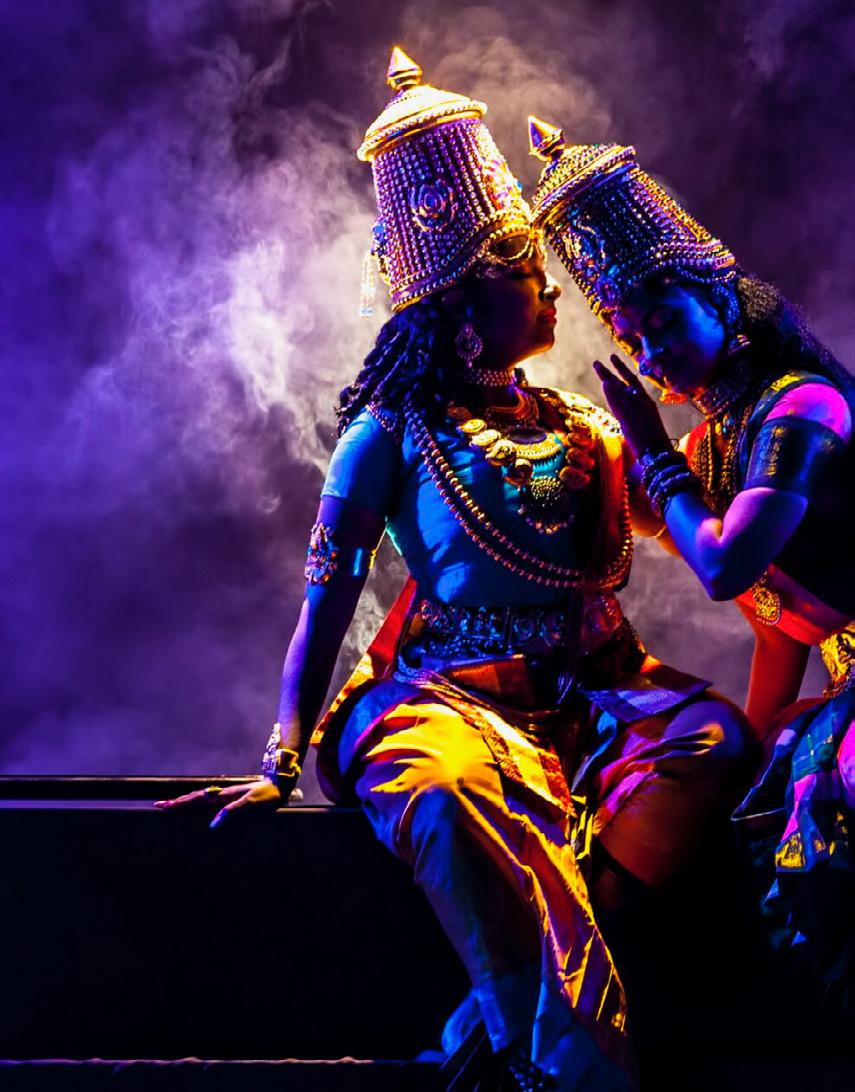

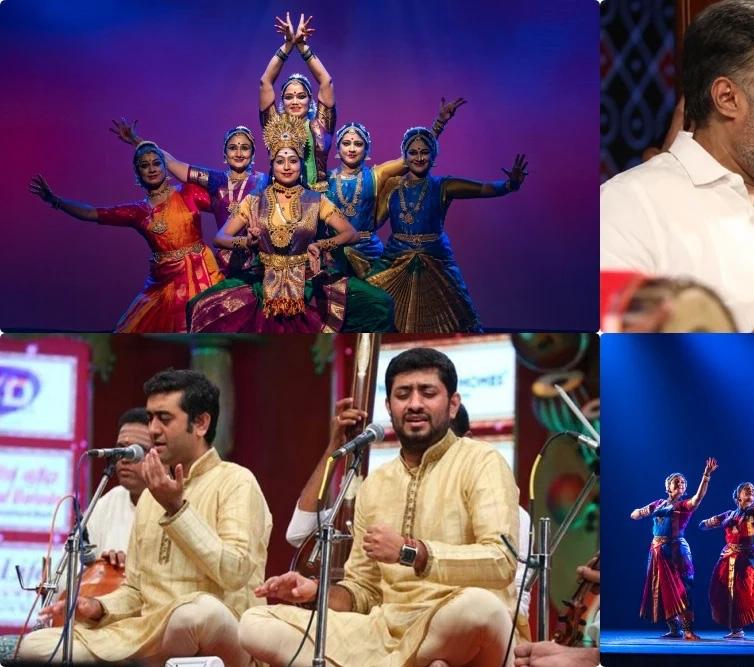
Every year, when the Tamil month of Margazhi arrives (mid-December to mid-January), Chennai transforms into a cultural capital glowing with the energy of thousands of artists and rasikas. The city becomes a living stage where classical music, Bharatanatyam, devotional traditions and artistic heritage come together. Known worldwide as the Madras Music Season, this festival is one of the largest celebrations of classical arts, filled with concerts, dance recitals, workshops and temple festivities.
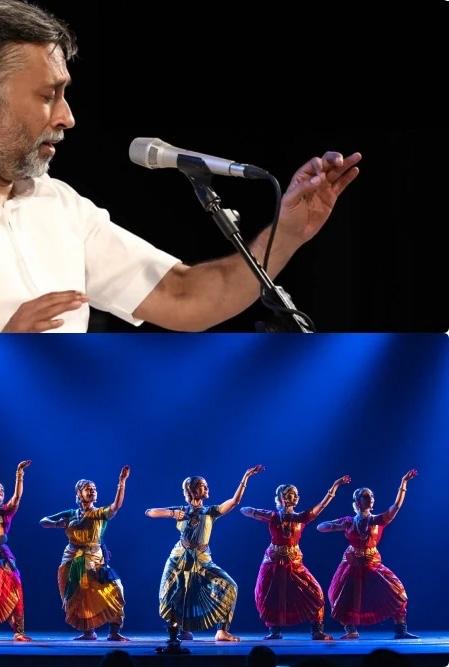
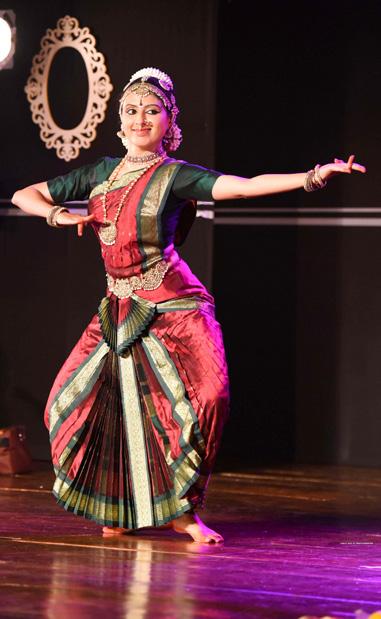

The Margazhi festival traces its beginnings to the late 1920s, when leading musicians, scholars and patrons wanted to create a structured platform to promote Carnatic music. Their efforts led to the early concert conferences that slowly expanded


The festival thrives because of Chennai’s strong sabha culture. Sabhas such as The Music Academy, Narada Gana Sabha, Krishna Gana Sabha, Mylapore Fine Arts, Bharatiya Vidya Bhavan and Kalakshetra organize hundreds of concerts and performances. Each sabha curates its own unique calendar, offering afternoon and evening events. The variety is immense—traditional performances by maestros, thematic shows, young artiste slots and special award ceremonies—creating a month-long artistic marathon across the city.
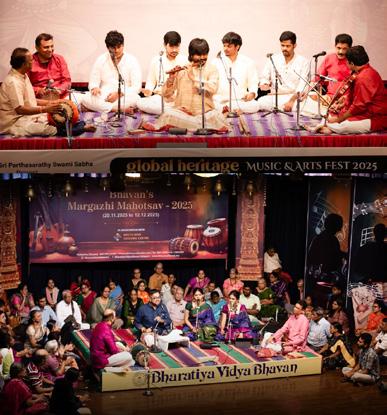
Carnatic music lies at the heart of the Margazhi season. Vocalists and instrumentalists present richly layered kutcheris filled with alapana, neraval, kalpana swarams and intricate rhythmic patterns. The repertoire includes Carnatic classics, rare compositions, improvisational pieces and tributes to legendary composers. For senior musicians, these concerts reaffirm their mastery; for emerging artists, performing during Margazhi is a milestone that can shape their entire career.

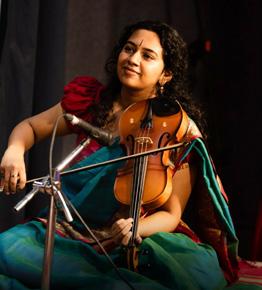
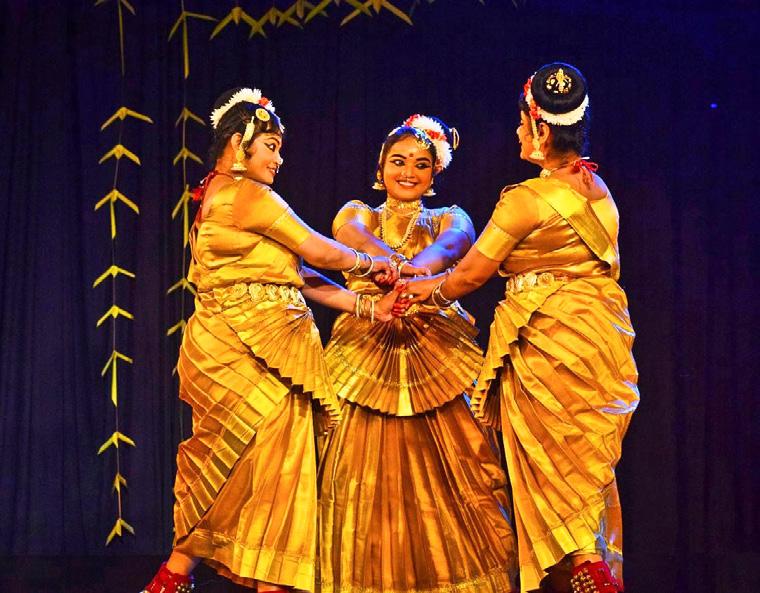
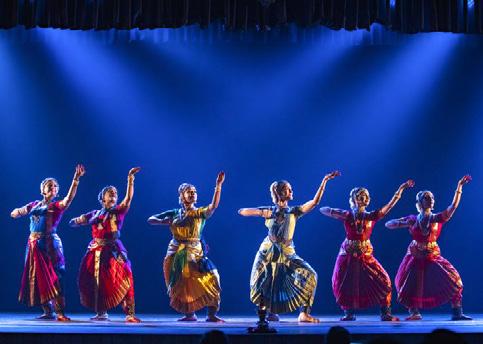
While music dominates the season, Bharatanatyam is equally celebrated. Dance stages showcase margam performances, thematic productions, mythological narratives and experimental choreography. Institutions like Kalakshetra remain central to the dance calendar, while several sabhas provide platforms for both established and young dancers. For many performers, Margazhi represents the most important time to present new work, refine artistry and gain visibility.
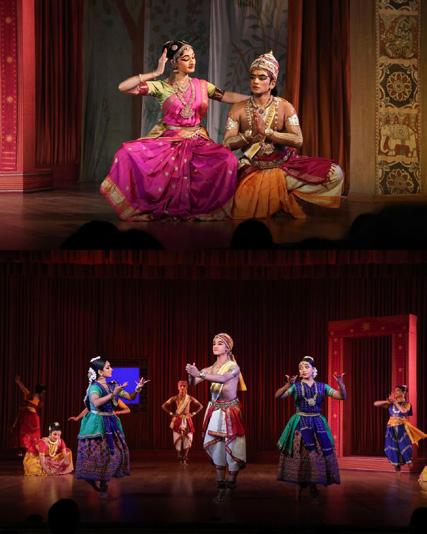
A unique aspect of Margazhi is its audience. Rasikas—sometimes spanning three generations—attend concerts with great discipline, attention and devotion. Many arrive early, analyse every musical nuance and often follow specific artists from one sabha to another. Students of music and dance, cultural tourists, researchers and NRIs add to the diversity of the audience. Their enthusiasm and involvement help maintain the festival’s high artistic standards.
Though the Margazhi festival feels effortless to audiences, enormous planning takes place behind the scenes. Sabhas prepare months in advance—finalising schedules, managing bookings, arranging sound systems, setting up lighting, rehearsals and balancing sponsorships. Iconic sabha canteens, which serve traditional South Indian dishes, are also meticulously organized. Modern elements like online ticketing, digital marketing and livestreams help widen the festival’s reach without losing its traditional essence.
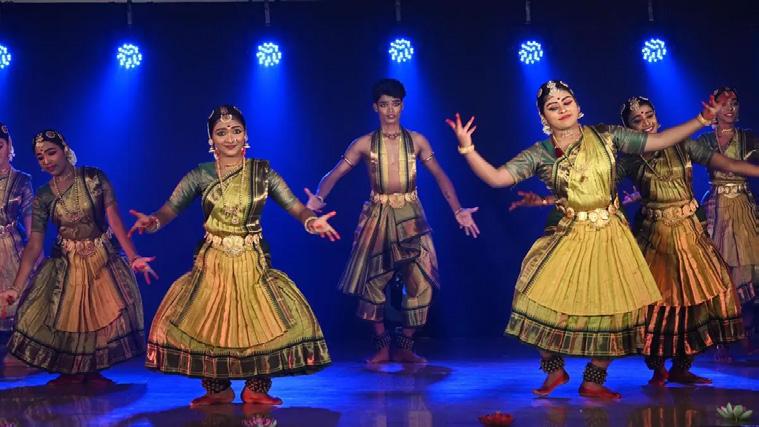
Margazhi is also deeply tied to devotion. Early mornings are filled with temple music, bhajans, Tiruppavai recitations and spiritual gatherings. Areas like Mylapore and Triplicane become hubs of devotional activity. Many people start their day with temple visits and conclude it with evening concerts in sabhas, blending spirituality and art in a harmonious daily rhythm.
The festival also fuels Chennai’s economy. Hotels are fully booked; local transport, autos and taxis run continuously; artisans, instrument makers and music shops see increased sales; and restaurants thrive with Margazhi visitors. Sabha canteens themselves attract crowds for their delicious seasonal menus. For many small businesses, Margazhi is the most profitable period of the year.
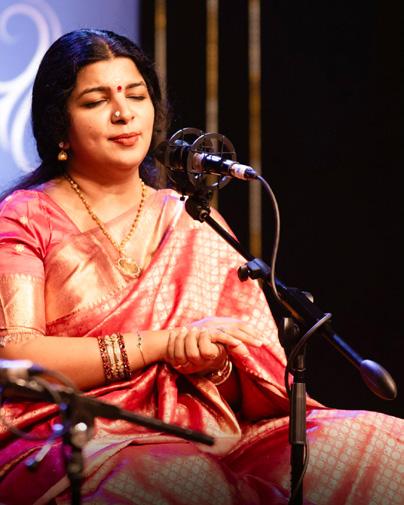
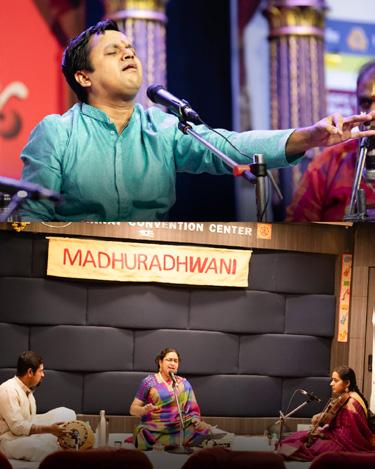
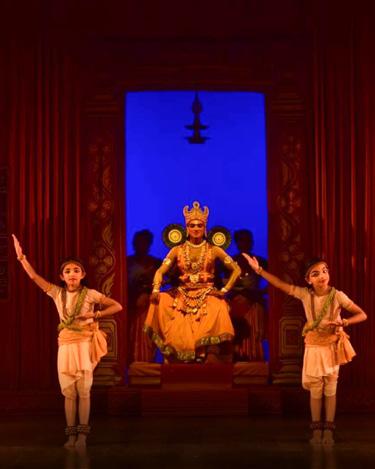
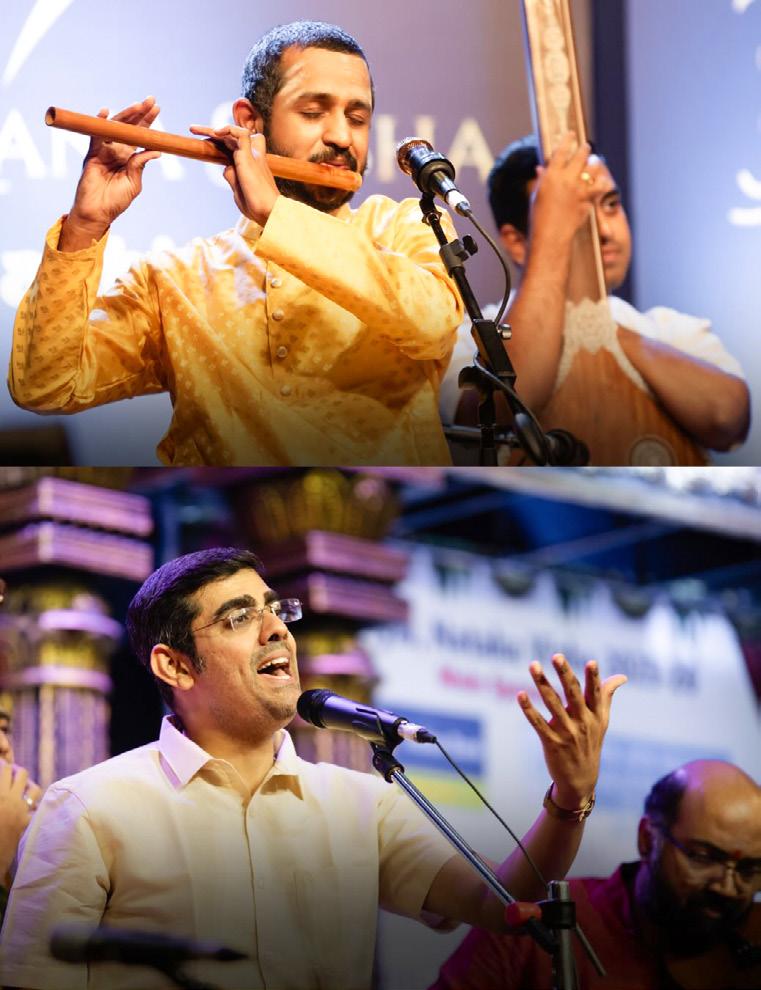
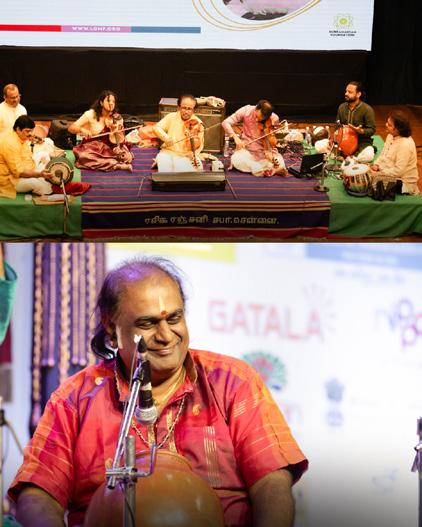
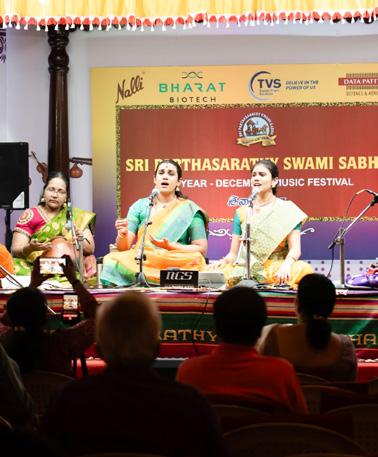
In recent years, the festival has been part of larger conversations on inclusivity, fair compensation, representation of women, promotion of young talent and space for new artistic expressions. While preserving tradition remains important, many sabhas and artists are experimenting with fresh ideas, thematic concerts and cross-genre collaborations. This balance between heritage and innovation keeps the festival relevant to a new generation.
Visitors are encouraged to explore different sabhas, attend both popular and smaller concerts, taste the famous sabha canteen food and follow temple traditions during early mornings. Observing concert etiquette—punctuality, silence and respect for performers—enhances the listening experience. Exploring Mylapore streets, heritage sites and local cafés adds to the cultural charm of Margazhi.
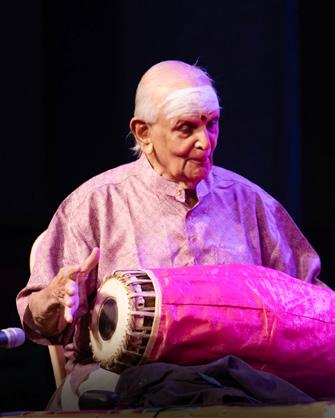
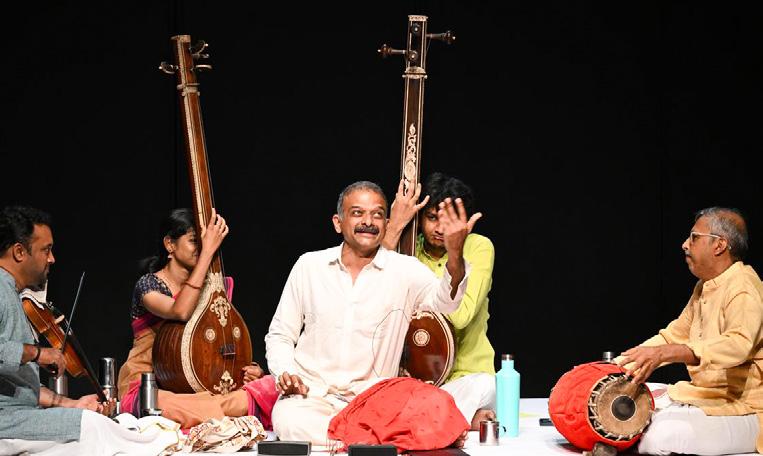
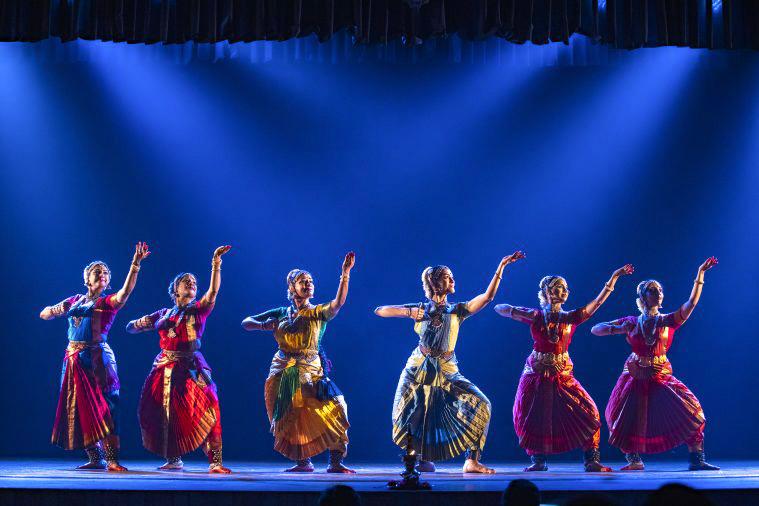

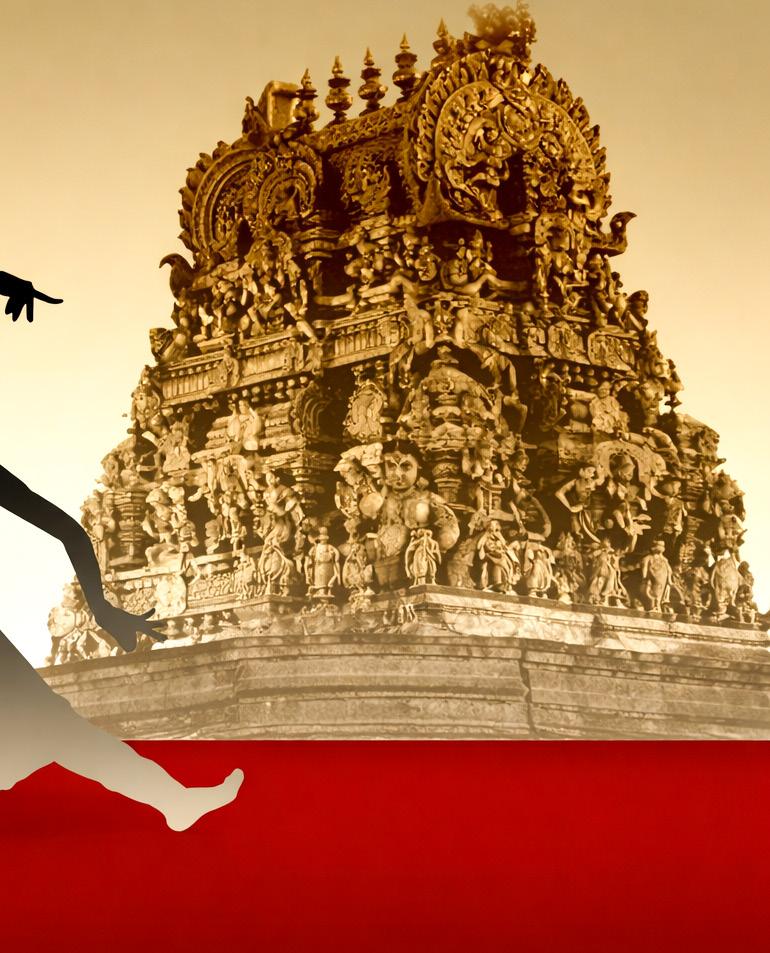
The Margazhi Music & Dance Festival is more than an event—it is a cultural emotion woven into Chennai’s identity. It brings together devotion, music, dance, community and tradition in a way that no other festival does. With its rich heritage and ever-evolving creativity, Margazhi continues to inspire countless artists and audiences, proving year after year that Chennai is truly the home of classical arts.

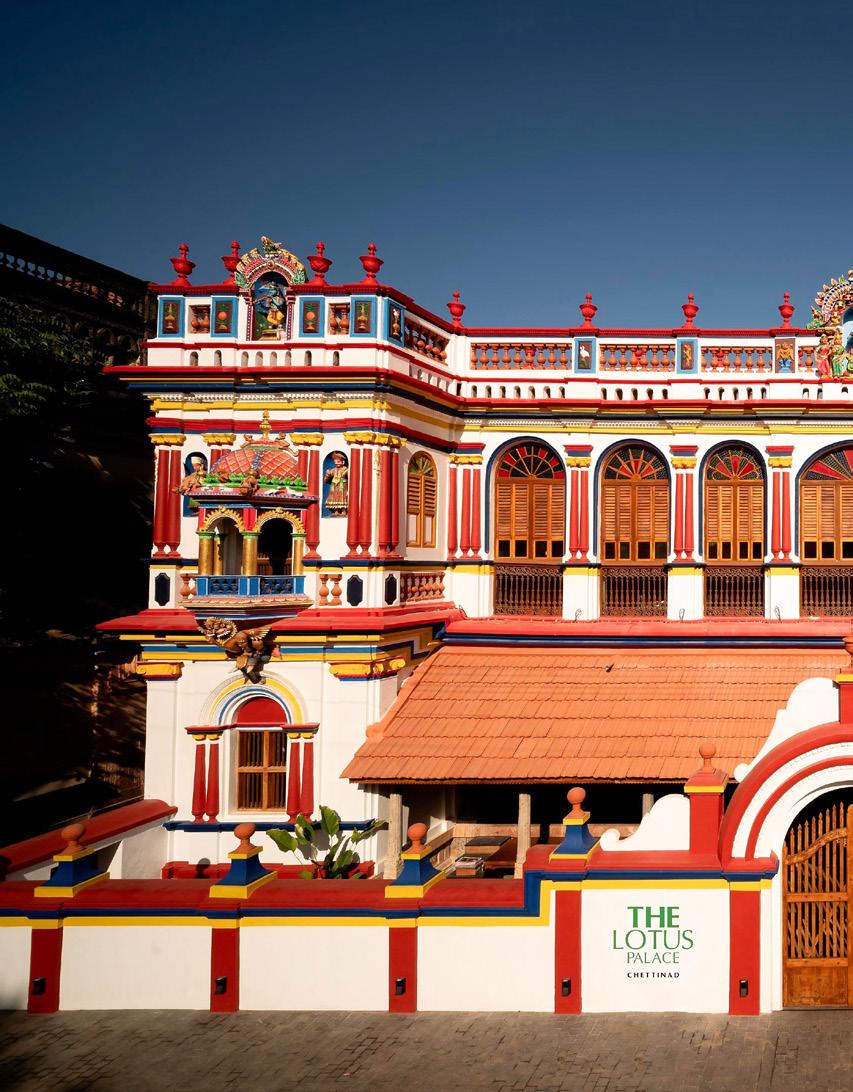
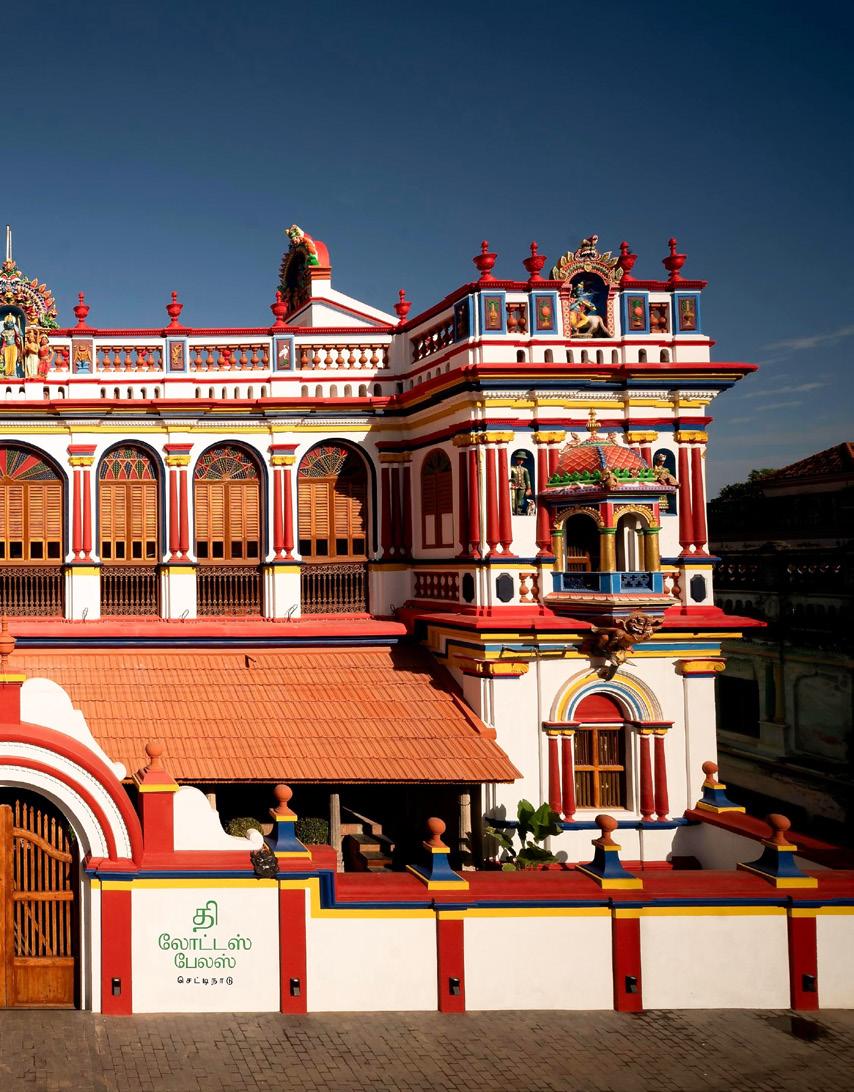
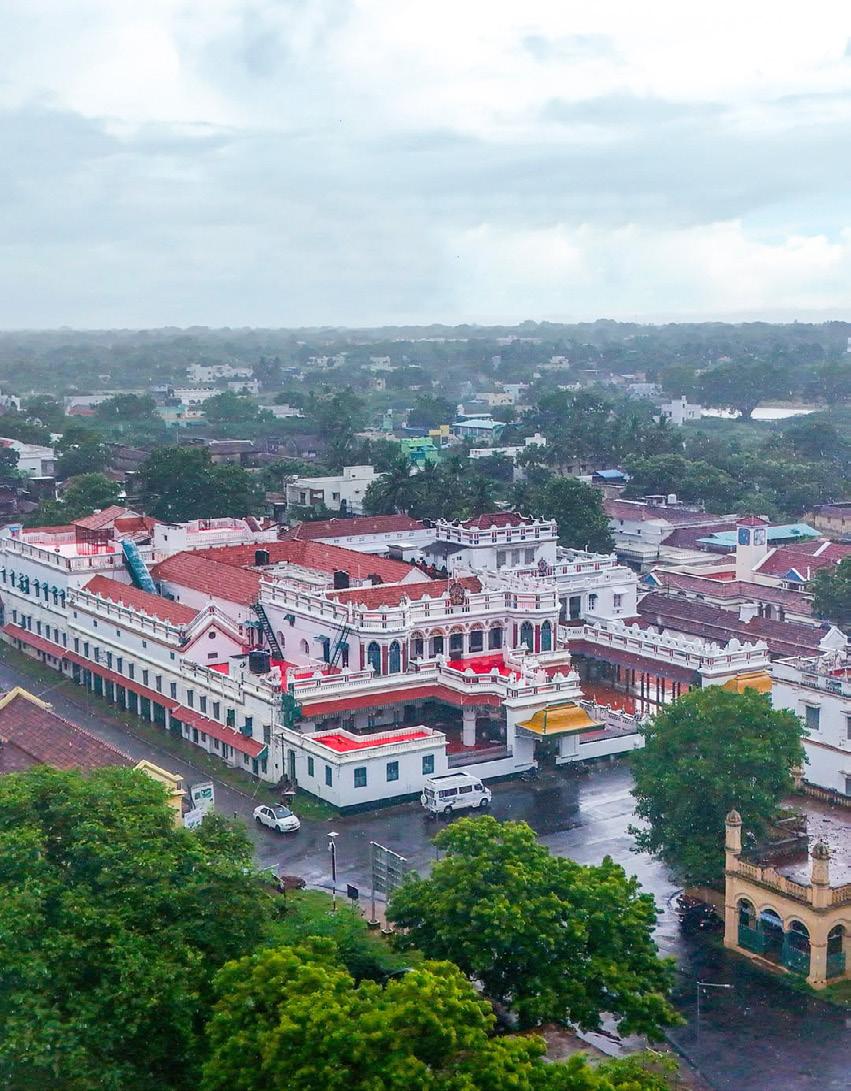
Chettinad is not a destination that announces itself with dramatic skylines or postcard clichés. Instead, it unfolds slowly, revealing its character through silence-filled courtyards, sunlit corridors, hand-painted tiles, spice-laden kitchens and a way of life shaped by memory, trade and tradition. Located in southern Tamil Nadu, Chettinad is a cultural region rather than a single town, encompassing a cluster of villages and market centres that together narrate one of South India’s most fascinating social histories. To travel through Chettinad is to enter a world where global ambition once met rooted customs, where merchants returned from distant shores to build homes that mirrored both their success and their deep attachment to land, ritual and community. This guide explores Chettinad as a complete travel experience, tracing its past, understanding its geography, tasting its cuisine, staying within its historic walls and carrying a piece of it back home.
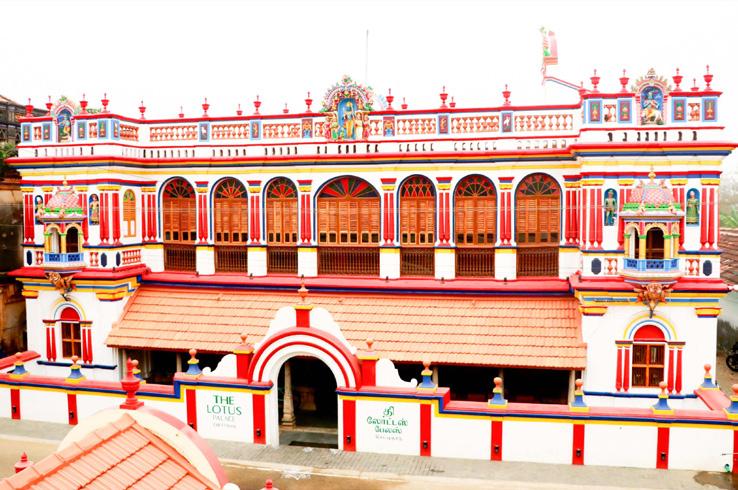
The historical soul of Chettinad is inseparable from the Nattukottai Chettiars, a mercantile community whose rise from regional traders to international financiers reshaped the cultural fabric of this land. From the eighteenth century onward, Chettiars established trade networks across Southeast Asia, Burma, Ceylon and beyond, dealing in money lending, commodities and banking long before modern institutions emerged. Wealth accumulated abroad returned home not as abstract capital, but as architecture, art, philanthropy and ritual. The villages of Chettinad became repositories of this prosperity, expressed most vividly through the construction of grand mansions that combined Tamil spatial planning with imported materials and global aesthetics. These houses were not merely residences; they were social institutions designed to host extended families, religious ceremonies, weddings and community gatherings. Every architectural decision reflected both function and symbolism. Courtyards regulated climate and structured family life, while long corridors allowed for ceremonial processions. Over time, as global trade patterns changed and families migrated
to cities, many houses fell silent. Yet Chettinad never lost its identity. What remains today is a remarkable cultural archive in brick, lime, teak and tile, preserved by families, conservationists and travellers who recognize its value.
Chettinad lies across a gently undulating plain marked by red soil, sparse vegetation and seasonal water bodies. Unlike hill stations or coastal belts, its geography is understated, yet deeply influential in shaping settlement patterns. The region’s semiarid climate encouraged compact village planning and inward-looking architecture that prioritised shade, airflow and water conservation. Rain-fed tanks, temple ponds and wells once sustained entire communities, and even today they remain integral to village life. Agricultural fields surround the built clusters, changing colour with the seasons from parched ochre to lush green. Roads connect villages at short intervals, making travel slow but immersive. The land does not distract from human creation; instead, it frames it. Chettinad’s geography acts as a neutral canvas upon which history, architecture and daily life are painted with clarity.
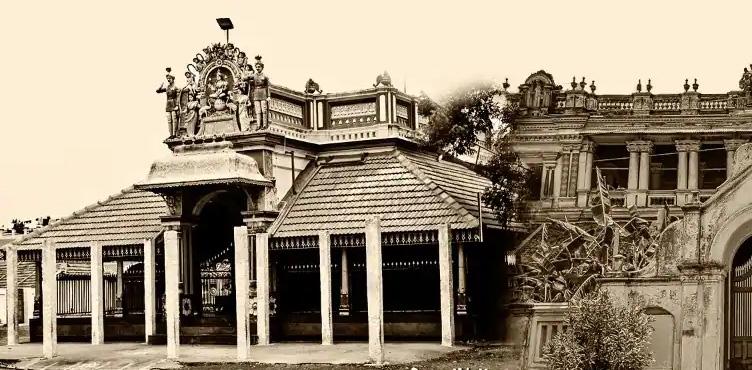
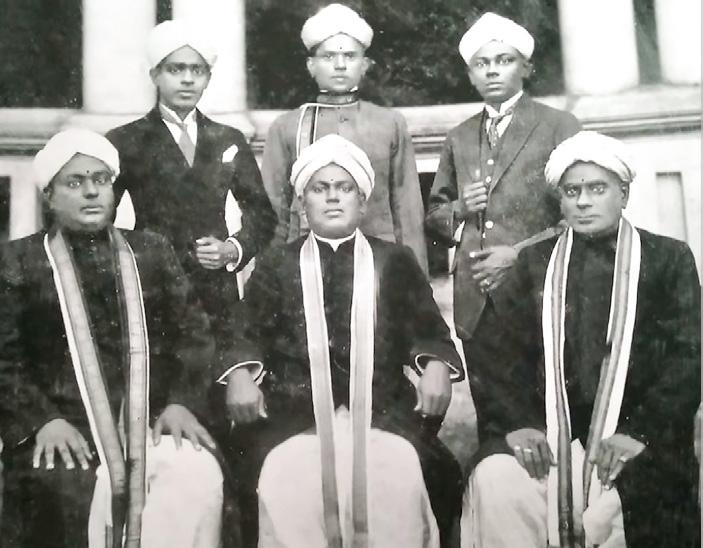

The most rewarding time to explore Chettinad is between October and March, when temperatures soften and the air carries a gentle dryness ideal for walking and exploration. These months allow visitors to move comfortably through villages, spend long hours inside heritage mansions and attend temple festivals that animate the region with music, colour and ritual. Morning light during this season reveals architectural details with remarkable softness, making it ideal for photography and quiet observation. The monsoon months bring a different charm, when tanks fill and fields turn green, but travel can be unpredictable. Summer months are intense, with high temperatures limiting outdoor activity. Choosing the right season ensures that Chettinad reveals itself not as a place to endure, but as one to savour.
Chettinad cuisine stands apart as one of India’s most distinctive and self-assured culinary traditions. Known for its complexity, depth and unapologetic use of spices, it evolved in households that had access to both rich local produce and imported ingredients brought home through historic trade routes. These influences were refined over generations, shaped by family kitchens where recipes were memorised rather than recorded, and where flavour was built patiently through technique rather than excess. At the heart of a Chettinad meal lies rice, but its true character emerges from the gravies and accompaniments that surround it. Freshly ground masalas, roasted spices and carefully layered heat define the cuisine. Black pepper, coriander seeds, dried red chilies, cumin and aromatic spices are used not merely for intensity, but for balance. The cuisine is bold, yet never careless. Each element is measured by instinct, honed through repetition and tradition.
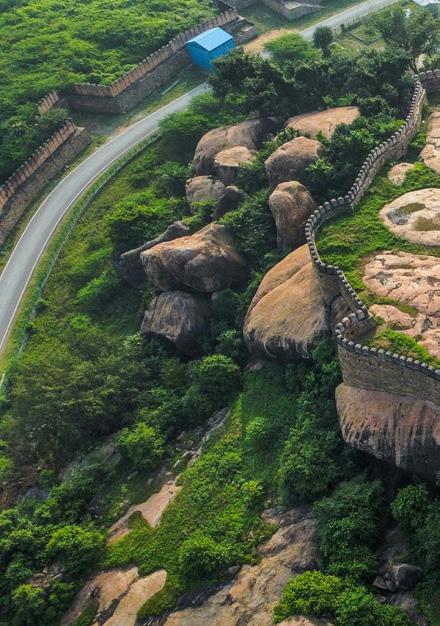
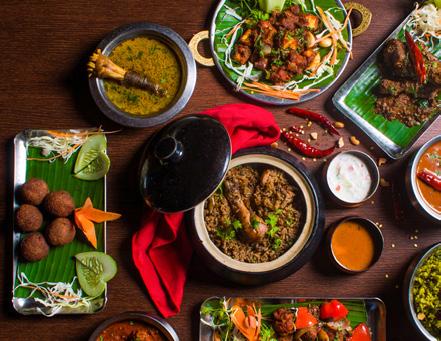
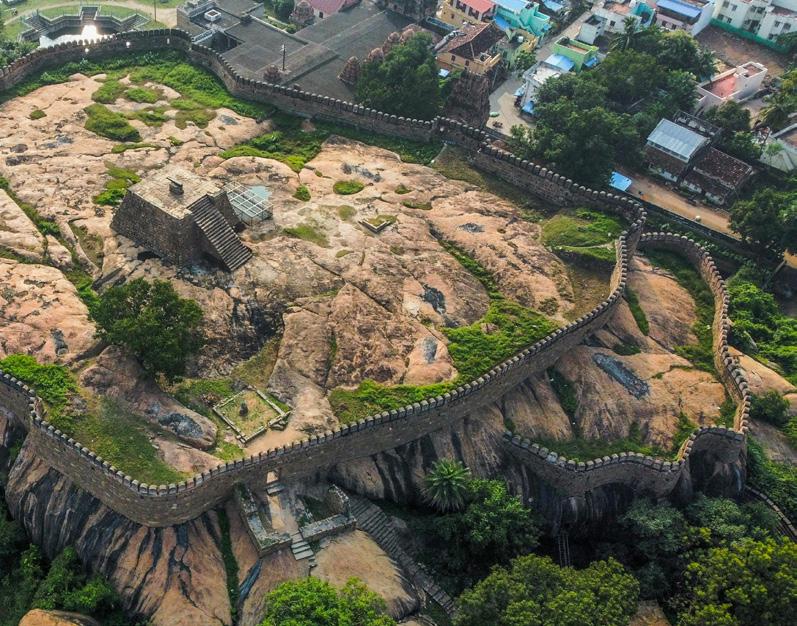

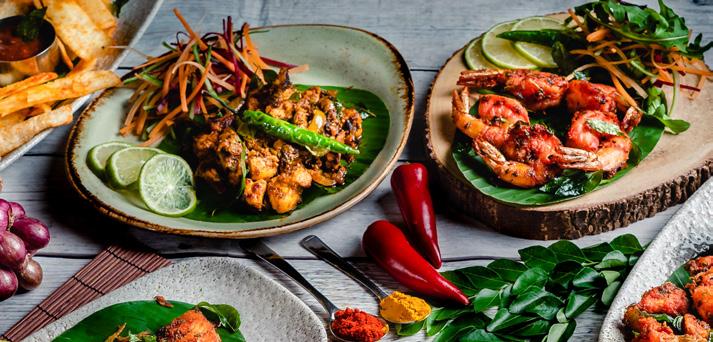
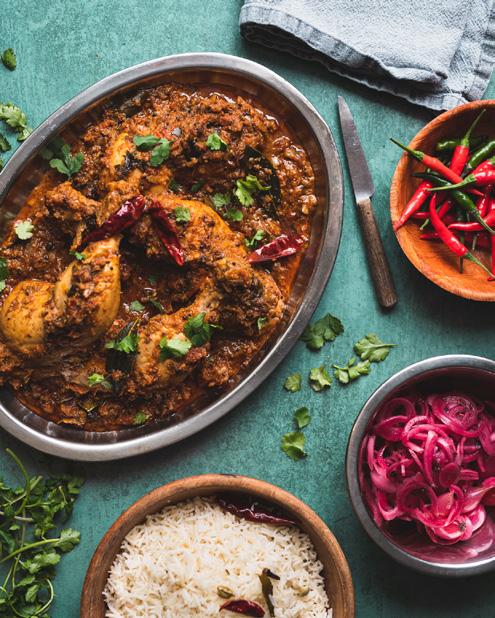
Non-vegetarian dishes are among the most iconic expressions of Chettinad cooking. Chicken and mutton preparations dominate, slow-cooked with pepper-forward masalas that are deeply aromatic and lingering. These dishes reflect both abundance and restraint, allowing the natural flavour of the meat to stand alongside the spices rather than disappear beneath them. Equally important are vegetarian dishes, which display the same level of nuance. Lentils, seasonal vegetables, coconut and tamarind are combined with precision, creating dishes that are robust yet harmonious. Food in Chettinad is never rushed. Traditional meals served on banana leaves unfold in deliberate stages, encouraging conversation, reflection and shared experience. Eating is treated as a social ritual rather than a functional act, reinforcing the idea that food is central to cultural continuity. For travellers, each meal becomes a lesson in how heritage survives not through preservation alone, but through daily practice.
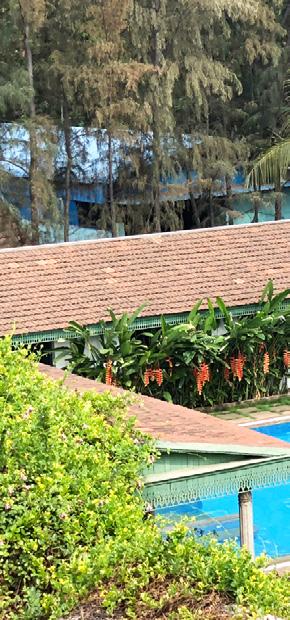
Accommodation in Chettinad is not merely about comfort or convenience; it is an extension of the region’s cultural experience. Staying here often means stepping into history, where architecture, hospitality and daily life are deeply intertwined. From grand heritage mansions to intimate homestays, nature-led retreats and modern town hotels, each option offers a distinct way of understanding Chettinad’s layered identity. The most evocative places to stay are the restored Chettiar mansions that once belonged to prosperous trading families.

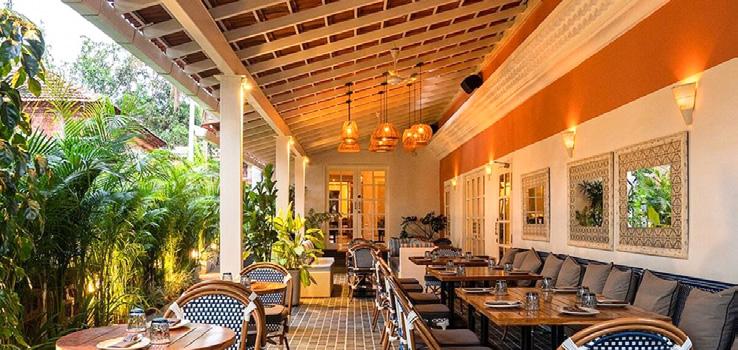
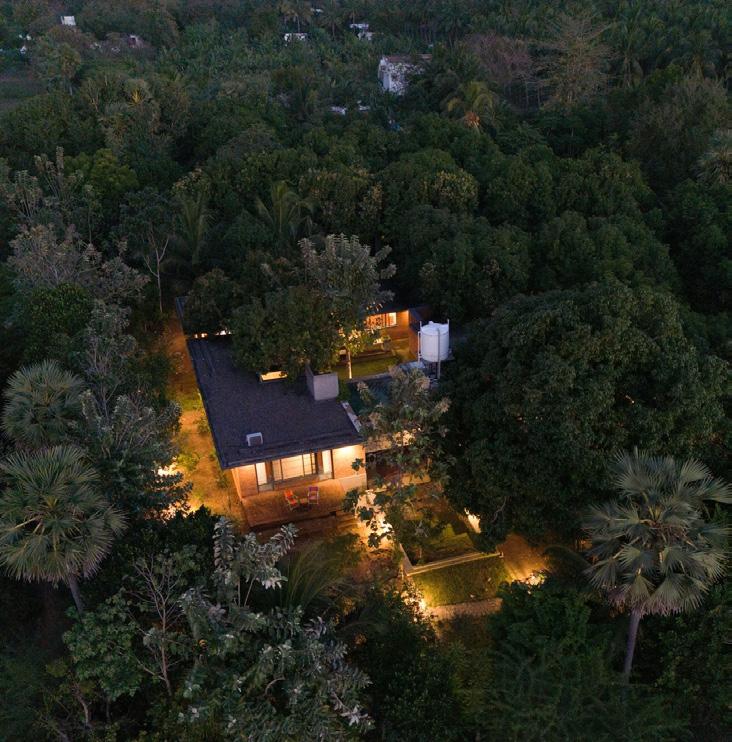
These heritage properties allow travellers to inhabit spaces shaped by wealth, craftsmanship and global influence. High ceilings, Athangudi tiled floors, carved teak pillars and sunlit courtyards define the experience. Mornings begin with filtered light falling into open courtyards, and evenings unfold quietly, echoing a time when life moved at a slower, more deliberate pace. These stays balance historical authenticity with modern comforts, often offering guided village walks, traditional dining experiences and insights into Chettiar customs.Among the most renowned luxury heritage accommodations is Chidambara Vilas, a meticulously
restored palace that represents the pinnacle of Chettinad hospitality.The property blends architectural grandeur with refined service, offering spacious suites, curated cultural experiences and traditional Chettinad meals prepared with ceremonial care. Staying here feels immersive, allowing guests to experience how Chettiar families once lived and entertained. Equally iconic is The Bangala, often regarded as the soul of Chettinad heritage stays. Known as much for its architecture as for its cuisine,The Bangala offers an understated luxury rooted in authenticity. The rooms retain their oldworld charm, while the hospitality reflects the warmth
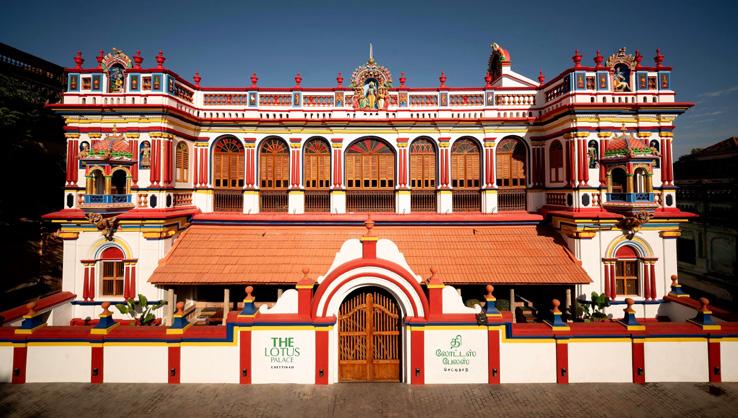
and discipline of a traditional Chettiar household. For many travellers, staying here becomes an emotional connection rather than just an overnight experience. In Kanadukathan, Visalam offers a quieter, more contemplative atmosphere. Once a private family home, Visalam has been restored with sensitivity, retaining its original layout and aesthetic. The stay emphasises calm, privacy and cultural immersion, making it ideal for travellers who wish to absorb the region slowly and thoughtfully. Another notable heritage option is Chettinadu Mansion, which offers a more intimate, home-like experience. The property reflects domestic Chettiar life rather than ceremonial grandeur, with meals served communally and hosts often sharing stories about the house and village traditions. Beyond heritage mansions and rural retreats, modern hotels in larger towns such as Karaikudi provide practical comfort and accessibility. These hotels cater to travellers who prefer contemporary amenities while using the town as a base to explore nearby villages and architectural landmarks. Though less immersive, they serve an important role for short stays, transit visits or business travel. Homestays offer yet another dimension of Chettinad hospitality. Living with a local family, sharing home-cooked meals and observing daily routines provides a deeply personal understanding of the region. Conversations over breakfast, participation in small rituals and unstructured moments often leave the strongest impressions. For travellers interested in cultural exchange rather than luxury, homestays can be the most meaningful choice. Ultimately, choosing where to stay in Chettinad depends on one’s travel
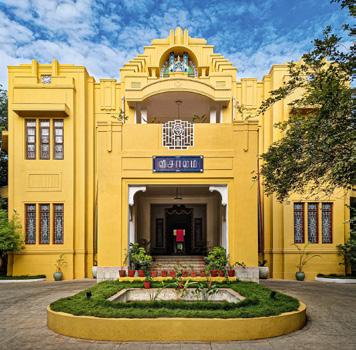
style and intent.Whether in a grand mansion, a natureled villa, a modest homestay or a modern hotel, each accommodation opens a different door into Chettinad life. Together, they reveal a region where hospitality is not staged, but lived—quietly, generously and with enduring pride.
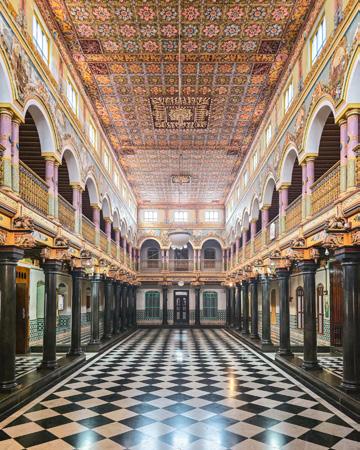
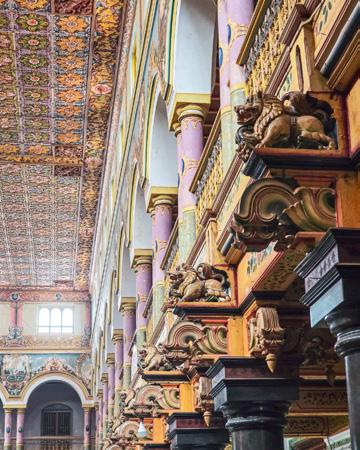
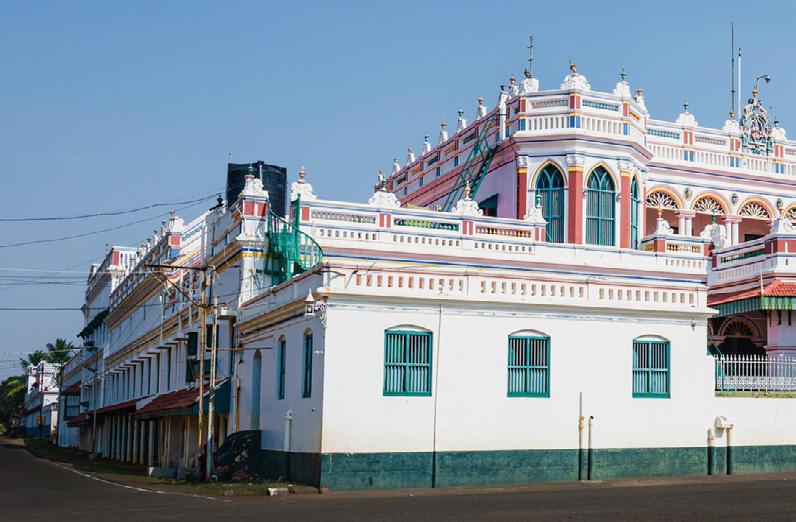
Chettinad Palace in Kanadukathan is one of the most celebrated landmarks of the Chettinad region, symbolising the prosperity, taste, and global exposure of the Chettiar community. Built in the early twentieth century, the palace reflects a time when Chettiar traders amassed wealth across Southeast Asia and returned home to construct grand ancestral residences. Rather than serving as royal dwellings, these palatial homes were designed to represent family prestige and cultural identity. The architecture of Chettinad Palace is a striking blend of traditional Tamil design and European influences. Teakwood from Burma, Italian marble, Belgian glass, and English tiles are
combined with local lime plaster, carved wooden doors, and handmade Athangudi tiles. Spacious courtyards arranged in sequence regulate airflow and natural light, creating a climate-responsive structure that remains cool despite the region’s heat. Inside, the palace reveals richly decorated halls, ornate ceilings, and long corridors that once hosted large gatherings, weddings, and religious ceremonies. Every space reflects a balance between functionality and ornamentation. Today, Chettinad Palace stands as a living archive of Chettiar heritage, offering visitors an immersive glimpse into a lifestyle shaped by trade, tradition, and architectural excellence.
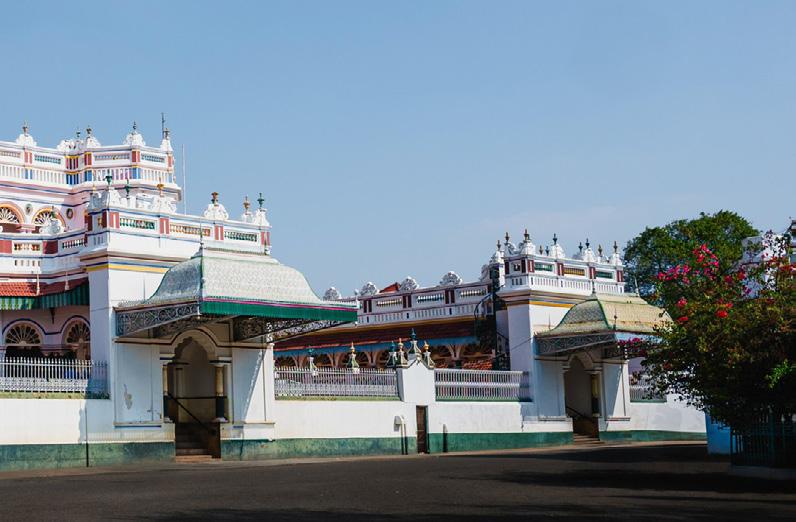
Aayiram Jannal Veedu, meaning the “House of a Thousand Windows,” is a distinctive heritage residence in Karaikudi and a fine example of Chettinad’s climate-conscious architecture. The house is renowned for its extensive network of windows, vents, and openings, all carefully designed to enhance ventilation and natural lighting in the hot, dry climate of southern Tamil Nadu.The interiors are organised around multiple courtyards, with halls and rooms interconnected through a rhythmic arrangement of windows. These openings create an ever-changing play of light and shadow, making the house feel airy and
dynamic throughout the day. Beyond aesthetics, the design reflects the Chettiars’ deep understanding of sustainable living long before modern architectural principles were defined. Culturally, the house mirrors Chettiar social life, with large reception halls meant for guests and ceremonies, while inner spaces offered privacy to family members. Imported materials blend seamlessly with local craftsmanship, showcasing global influence without losing regional character. Today, Aayiram Jannal Veedu remains an important architectural landmark, admired for its ingenuity, elegance, and timeless design philosophy.
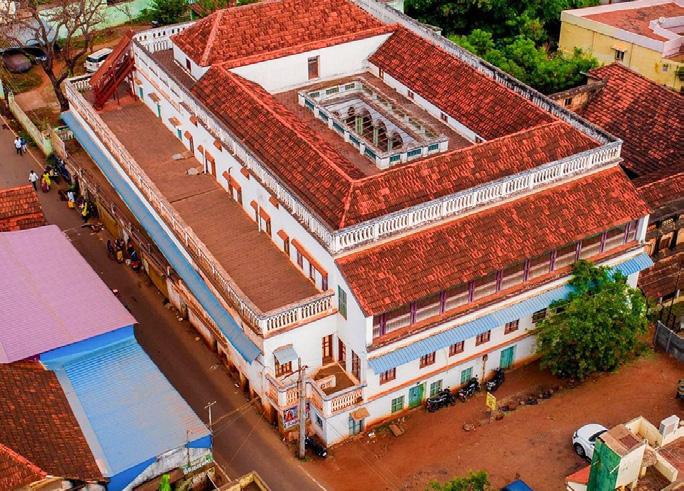
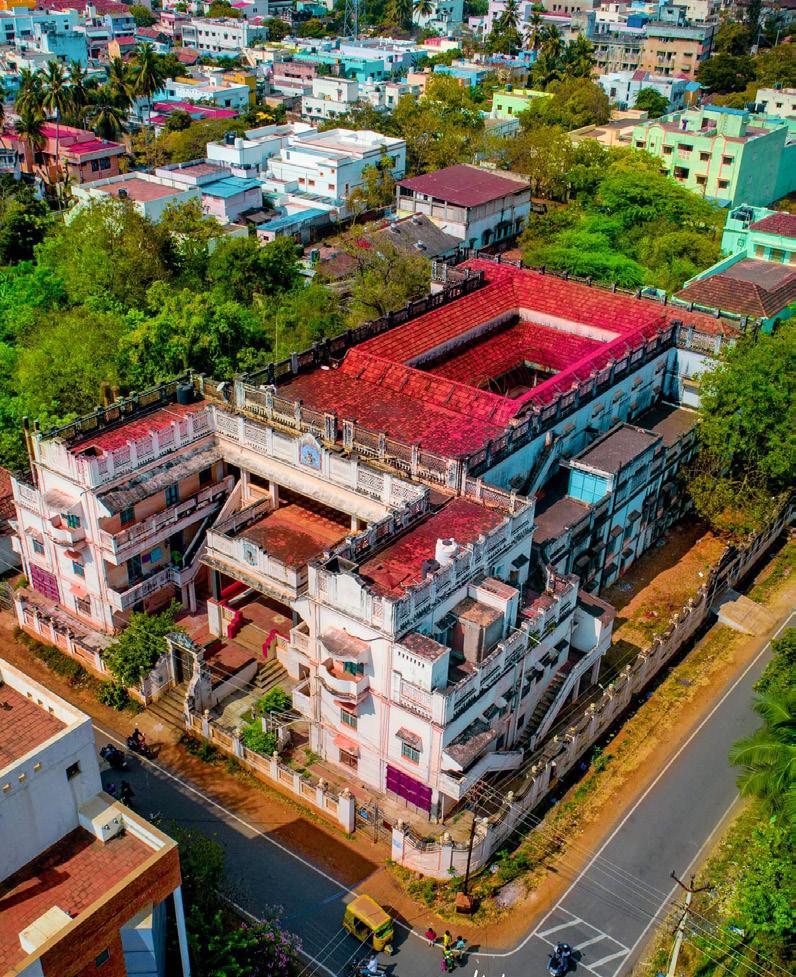
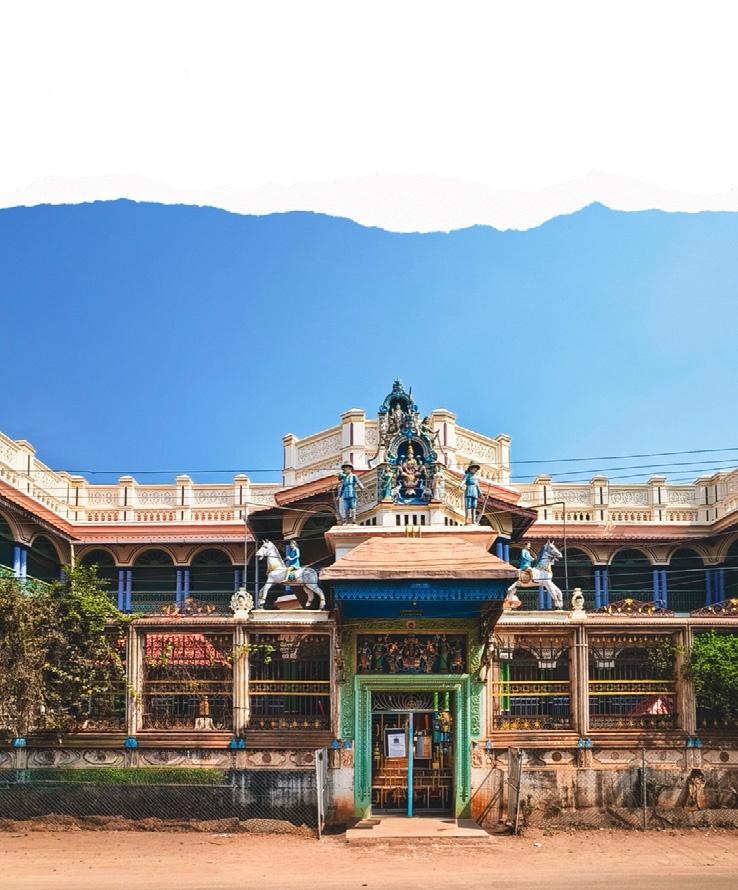
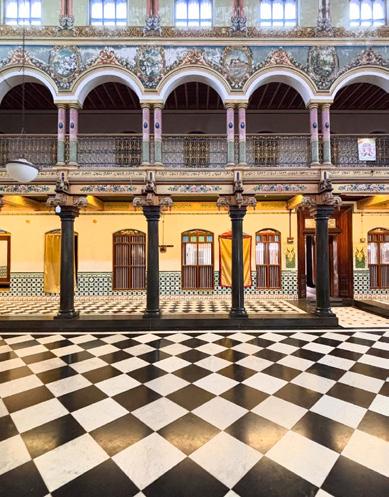
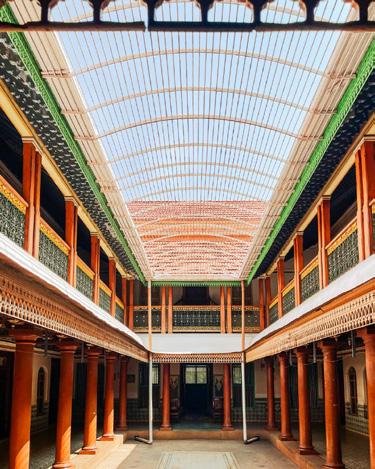


Athangudi Palace, locally known as Periya Veedu, is a prominent heritage mansion located in the village of Athangudi, famed for its handcrafted Athangudi tiles. The palace exemplifies Chettiar domestic architecture, combining grandeur with careful planning and refined aesthetics. Built during the region’s economic peak, it was intended to reflect both family status and cultural continuity.The palace is particularly noted for its colourful tiled floors, created using traditional methods that involve natural pigments and local materials. These tiles not only enhance visual appeal but also help keep interiors cool. Architecturally, the mansion follows the Chettinad style of sequential courtyards, high ceilings, thick walls, and symmetrical layouts that ensure ventilation and comfort. Large halls were designed to host social and religious gatherings, highlighting the Chettiar tradition of hospitality. Imported materials such as marble and chandeliers complement local woodwork and tile craftsmanship. Today, Athangudi Palace stands as a symbol of Chettinad’s artistic heritage, linking architecture, craft, and community life into a single, enduring legacy.
Pillaiyarpatti Karpaga Vinayagar Temple is one of the most ancient and spiritually significant temples in the Chettinad region, believed to date back over 1,600 years. Dedicated to Lord Ganesha, the temple is renowned for its rare rock-cut idol, where the deity is depicted with two arms instead of the usual four, making it architecturally and iconographically unique. Carved directly from a granite rock face, the idol reflects the early Pandya style of temple construction. The temple complex is hewn from stone rather than built using later structural methods, lending it a sense of permanence and solemnity. Tamil-Brahmi inscriptions found within the premises offer valuable insights into early Tamil civilisation and religious practices. The sanctum, with its natural stone contours, creates an atmosphere of quiet reverence that distinguishes it from more ornate temples. Pillaiyarpatti holds immense importance for the Chettiar community, serving as one of their prominent clan temples. Festivals, particularly Vinayaka Chaturthi, draw large numbers of devotees from across Tamil Nadu. Beyond its religious role, the temple stands as a vital cultural landmark, linking Chettinad’s mercantile heritage with its ancient spiritual roots.
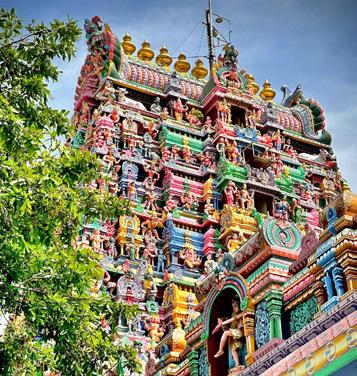
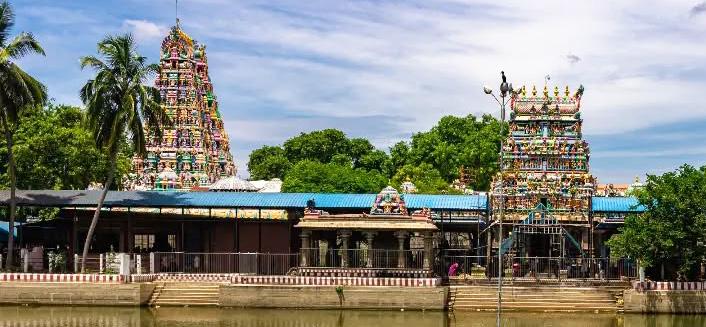
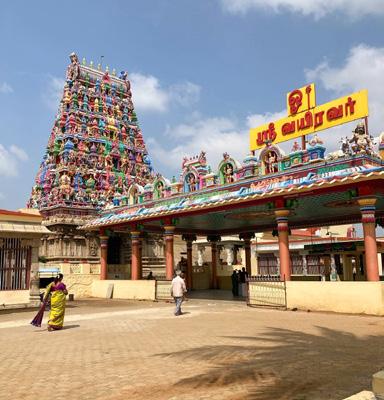
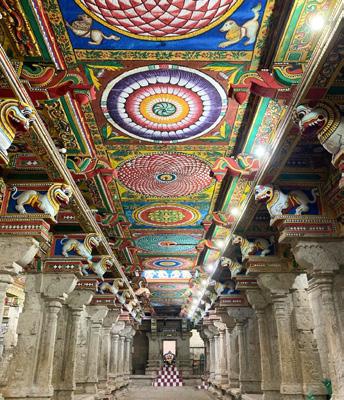
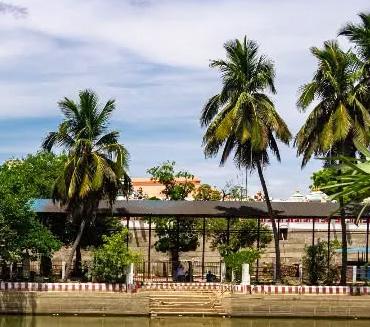
Vairavan Kovil, located in Vairavanpatti, is one of the nine sacred clan temples of the Nagarathar Chettiar community. Dedicated to Lord Vairavan, a form of Bhairava associated with protection and justice, the temple occupies a central place in Chettiar religious life. For generations, it has functioned not only as a spiritual centre but also as a space for community decisionmaking and ritual continuity. The temple architecture reflects classic Chettinad temple aesthetics, marked by clean lines, stone structures, and functional courtyards. Unlike heavily ornamented temple complexes, Vairavan Kovil maintains a restrained dignity, emphasising spiritual presence over visual grandeur. The surrounding village, with its heritage houses and quiet streets, enhances the temple’s contemplative atmosphere. Annual festivals and clan-specific ceremonies draw devotees from across India and abroad, reinforcing the global connections of the Chettiar diaspora. Vairavan Kovil thus represents more than devotion—it embodies collective identity, ancestral memory, and the enduring cultural framework of Chettinad society.
The Chettinad Vintage Car and Camera Museum near Pillaiyarpatti is a unique attraction that reflects the Chettiars’ early embrace of global technology and luxury. The collection includes classic automobiles, vintage cameras, and photographic equipment that once belonged to prominent Chettiar families. The vintage cars, sourced from Europe and America during the early twentieth century, highlight the community’s international exposure and affluence. Alongside them, antique cameras and photographs document family histories, travel, and
ceremonial life, offering rare visual records of a bygone era. More than a display of objects, the museum illustrates how modernity entered Chettinad through trade and travel. It complements the region’s architectural heritage by showcasing personal possessions that reveal lifestyle choices and global connections. For history enthusiasts and casual visitors alike, the museum provides an engaging, lesser-known perspective on Chettinad’s cosmopolitan past.
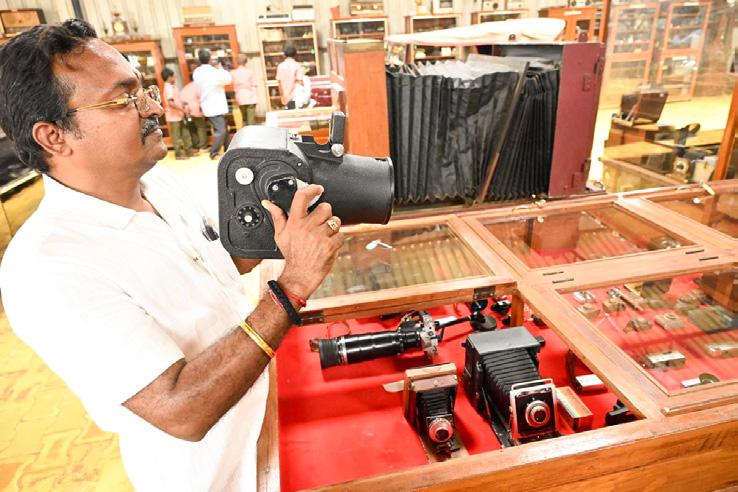

The Karaikudi Antique Market is one of the most fascinating places to experience the material heritage of Chettinad. Located in and around the old quarters of Karaikudi, the market is known for its collection of antiques sourced from ancestral Chettiar homes. As many families migrated or restored their houses, heirloom objects found their way into this informal yet vibrant trade space. The market offers a wide range of items, including carved wooden doors, teak furniture, brass lamps, metalware, mirrors, clocks, and decorative architectural fragments. Each piece reflects the craftsmanship and aesthetic sensibilities that once defined Chettiar domestic life.Walking through the market feels like browsing a living archive, where objects carry stories of weddings, rituals, and everyday routines from a bygone era. Beyond commerce, the market serves as a cultural bridge between past and present. Collectors, designers, architects, and heritage enthusiasts frequent the area, seeking authentic Chettinad elements. The Karaikudi Antique Market thus plays a quiet but significant role in preserving and circulating the region’s tangible heritage.
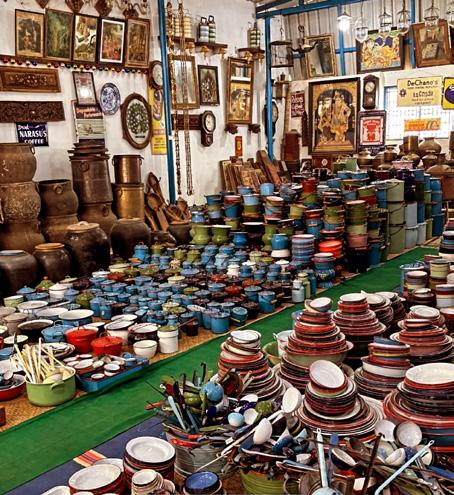

Shopping in Chettinad is deeply connected to the region’s heritage, craftsmanship, and culinary traditions. Rather than commercial souvenirs, the region offers authentic, handmade products that reflect the legacy of the Chettiar community and their refined way of life. Athangudi Tiles – The Pride of Chettinad: Athangudi tiles are among the most iconic products of Chettinad. Handmade using local sand, cement, and natural pigments, these tiles are known for their vibrant colours and intricate floral and geometric motifs. Each tile is individually crafted and sundried, making every piece unique. They are widely used in heritage homes and are sought after for flooring and decorative purposes.
Handloom Textiles and Sarees: Chettinad handloom products include cotton sarees, veshtis, towels, and home furnishings. Woven in subtle checks, stripes, and earthy tones, these textiles are valued for their durability and comfort. Buying directly from weavers or local cooperatives helps preserve this traditional craft. Antique Furniture and Wooden Crafts: The grandeur of Chettinad mansions is reflected in its wooden crafts. Carved teak doors, pillars, boxes, and furniture inspired by heritage homes are popular purchases. While authentic antiques are rare, skilled artisans create replicas using traditional designs and craftsmanship.

Chettinad Spices and Culinary Essentials: Chettinad is famous for its bold cuisine, and local markets offer spices like dried red chillies, black pepper, star anise, kalpasi (stone flower), and homemade spice blends. These ingredients allow visitors to recreate authentic Chettinad flavours at home. Brass, Bronze, and Traditional Utensils: Traditional brass and bronze vessels, lamps, and kitchenware are widely available and reflect ceremonial and everyday Chettiar life. These items are both functional and decorative. Shopping in Chettinad is best experienced slowly, through village markets and artisan workshops, where every purchase carries history, culture, and craftsmanship.


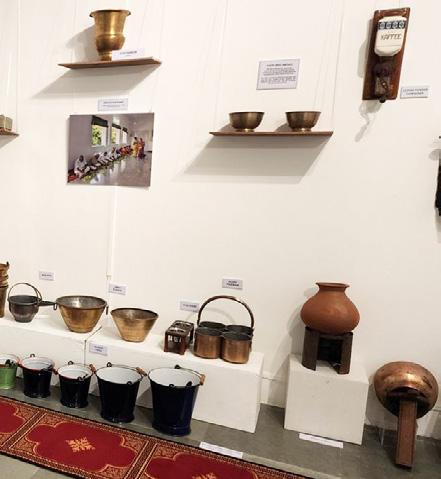
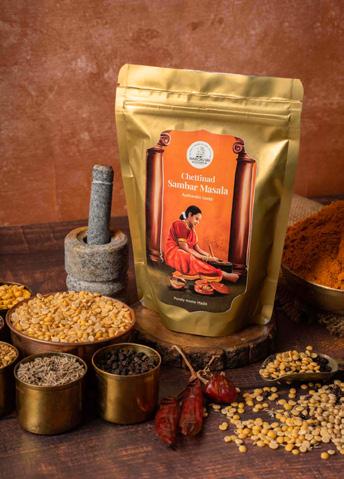
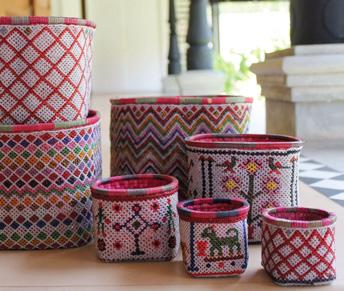
Chettinad is not a destination to be rushed. It rewards those who linger, who listen, who allow the rhythm of courtyards and kitchens to set the tempo of their journey. Its grandeur is not loud, its beauty not obvious at first glance. Yet for travellers drawn to architecture, food, history and lived culture, Chettinad offers one of the richest experiences in South India. Long after the journey ends, memories of patterned tiles, spiced gravies and sunlit corridors remain, quietly calling the traveller back.
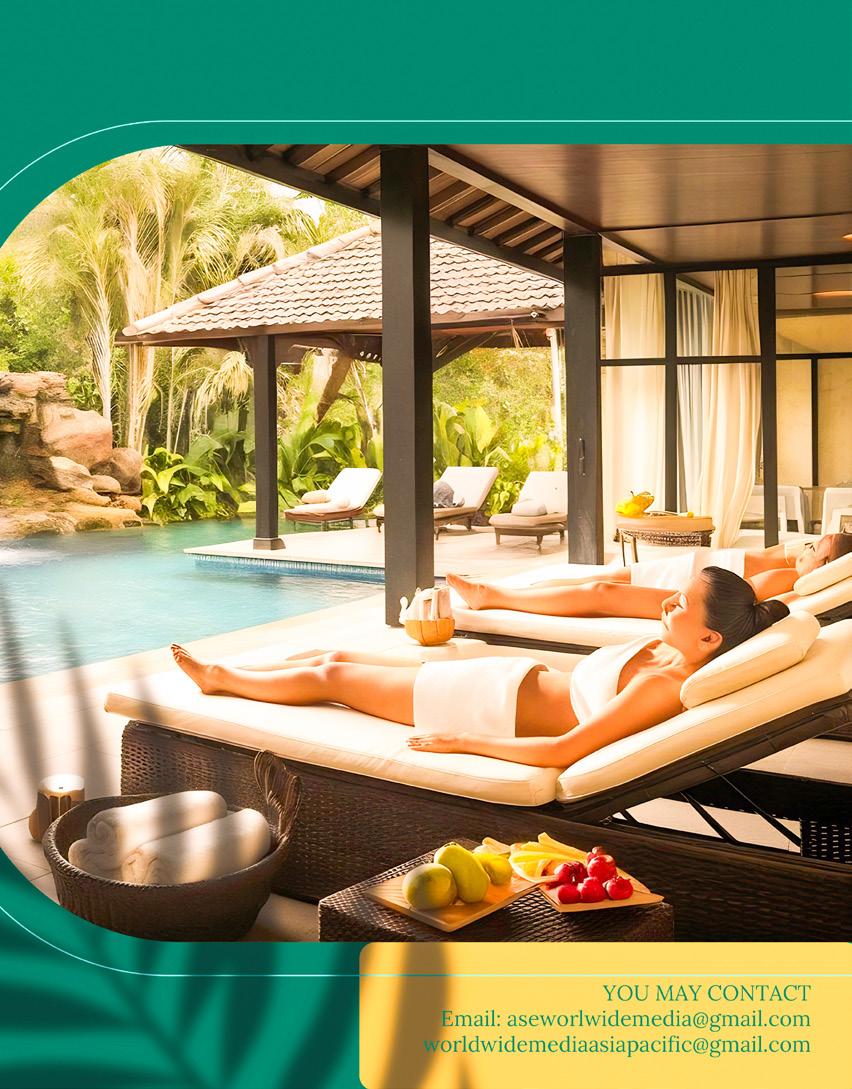
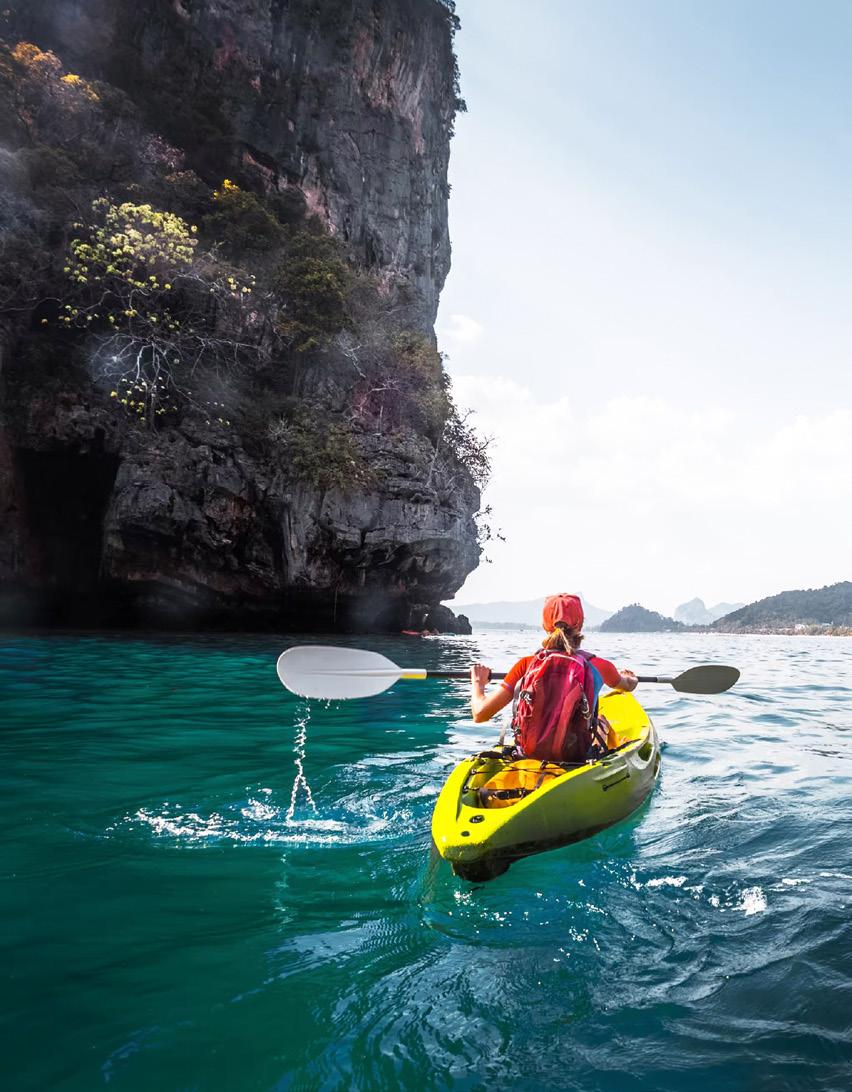
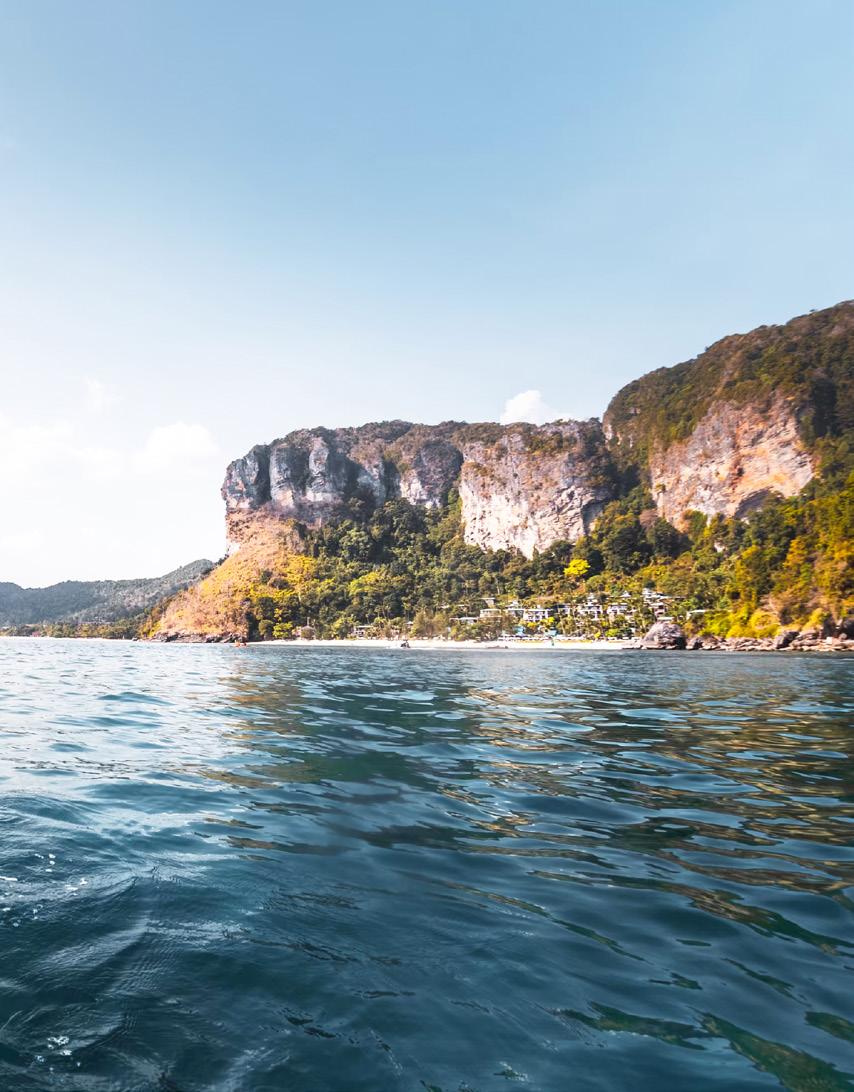


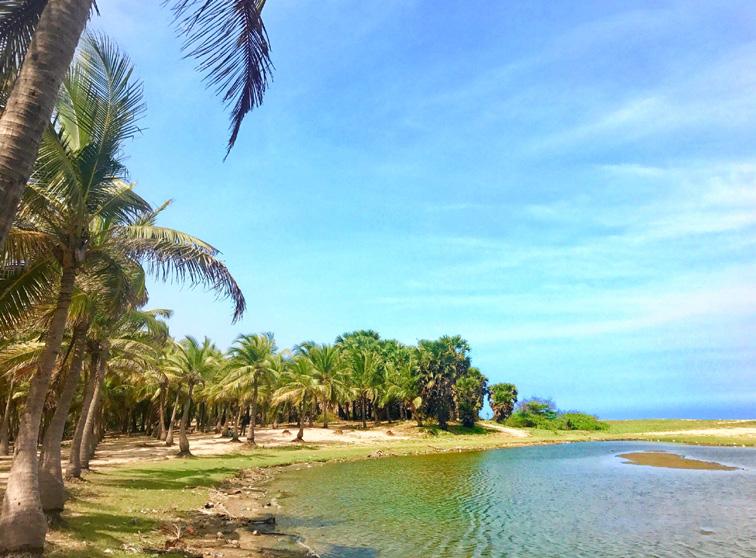
The coastal season in Tamil Nadu marks one of the most vibrant periods for water sports and beach activities. With cool sea breezes, calm waters, and pleasant temperatures, coastal regions from Chennai to Kanyakumari witness a surge in tourism and sporting participation. Seasonal enthusiasts, professional athletes, and adventure seekers gather along the state’s beaches to experience safe, well-organised, and thrilling waterbased activities. This unique blend of natural beauty, cultural tourism, and adventure sports makes the season a highly engaging time for water recreation across Tamil Nadu.
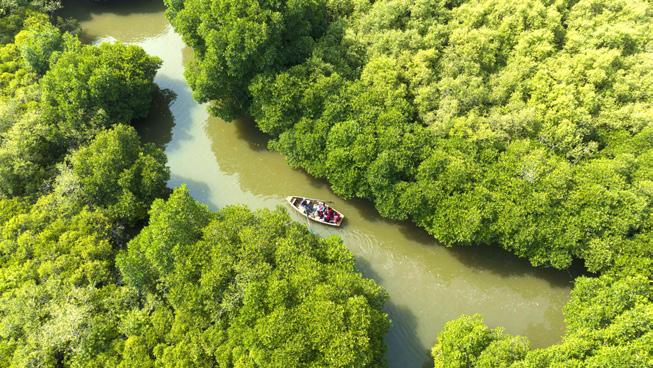
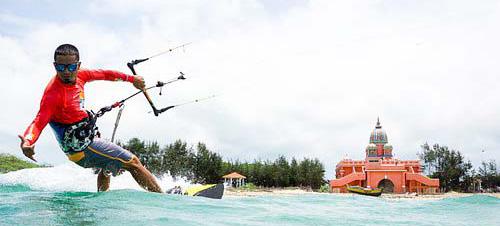
The beaches of Chennai, Mahabalipuram, and the Pondicherry-adjacent coastal areas have witnessed increased participation in surfing and stand-up paddleboarding. Local surf schools have been organising workshops, skill camps, and demonstration events for both beginners and advanced participants. Professional instructors guide attendees on safety measures, wave techniques, and board handling. These activities have drawn significant attention on social media and local tourism platforms, highlighting Tamil Nadu’s growing reputation as a prominent water sports hub in South India.

Kayaking and canoeing activities have also gained momentum in regions such as the Pichavaram Mangrove Forest, the Cooum River in Chennai, and the backwaters of Kanyakumari. Guided sessions emphasise eco-friendly water exploration, teamwork, and environmental awareness. Youth groups, tourists, and adventure enthusiasts participate actively, enjoying calm waters suitable for beginners, while more challenging routes are offered for experienced paddlers. These activities not only encourage adventure tourism but also help foster environmental consciousness among participants.

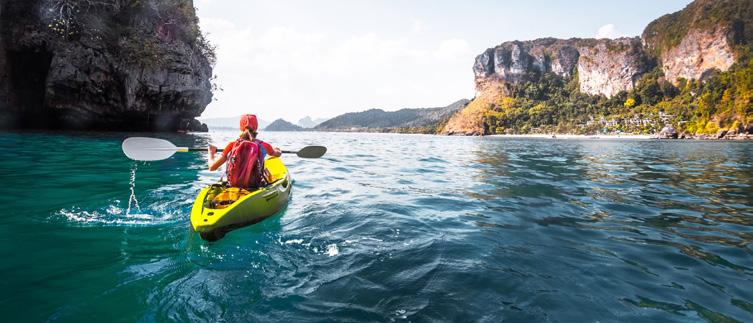

Coastal swimming competitions and beach fitness events have been held across major beaches such as Marina Beach, Mahabalipuram, and Rameswaram. These include short-distance open-water races, endurance challenges, and swimming workshops for youth and local communities. Emphasis on safety, lifeguard supervision, and professional coaching makes these events accessible to amateurs while maintaining competitive standards for skilled swimmers.
In addition to water-based activities, beach sports festivals have gained popularity, combining volleyball, football, and obstacle-based adventure events. Organized by local sports clubs, tourism boards, and educational institutions, these festivals attract families, youth groups, and adventure seekers. They serve as vibrant community engagement platforms, promoting fitness, teamwork, and social interaction while boosting local tourism and the beach economy.

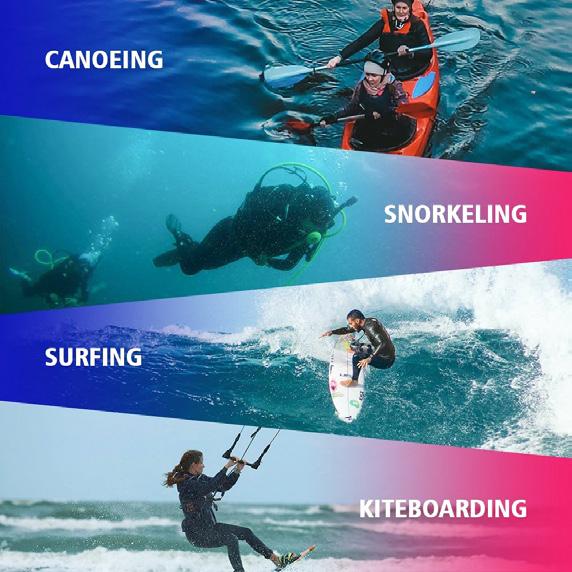

All water sports activities are overseen by trained lifeguards, certified instructors, and local water-sports associations. Safety protocols, emergency drills, and equipment checks are strictly enforced. Workshops also include training in basic rescue techniques, first aid, and water navigation, ensuring participants enjoy a thrilling yet secure experience. This structured approach increases public confidence and contributes to the growing popularity of coastal sports in Tamil Nadu.

Water sports activities have had a notable economic and tourism impact. Hotels, resorts, local vendors, and transport services report increased bookings during this vibrant period. Adventure tourism packages often combine cultural sightseeing with water sports, attracting both domestic and international visitors. The growing attention highlights Tamil Nadu’s beaches as dynamic centers for active recreation, seamlessly integrating tourism, sports, and community engagement.

A key feature of these water sports programs is the strong emphasis on environmental preservation. Beach clean-up drives, sustainable boating practices, and eco-friendly workshops are often integrated into sporting events. Participants are educated about the delicate marine ecosystem, mangroves, and coastal conservation, ensuring that adventure activities also support responsible tourism and environmental stewardship.
This season has established itself as a highlight period for water sports and beach activities in Tamil Nadu. From surfing, kayaking, and swimming competitions to beach volleyball and eco-friendly adventure
programs, the activities combine excitement, skill development, community participation, and tourism promotion. With professional oversight, safety measures, and sustainability initiatives in place, Tamil Nadu’s coastal events not only entertain and challenge participants but also reinforce the state’s reputation as a premier hub for adventure and sports tourism in South India.
The coastal season along Tamil Nadu’s eastern shoreline is a prime period for surfing and standup paddleboarding (SUP). From Chennai’s Marina Beach to the scenic shores of Mahabalipuram, these activities attract both local enthusiasts and adventure tourists. Pleasant weather conditions, with cooler temperatures and relatively calm seas, create ideal opportunities for beginners as well as advanced practitioners, making this season a peak time for coastal sports engagement.
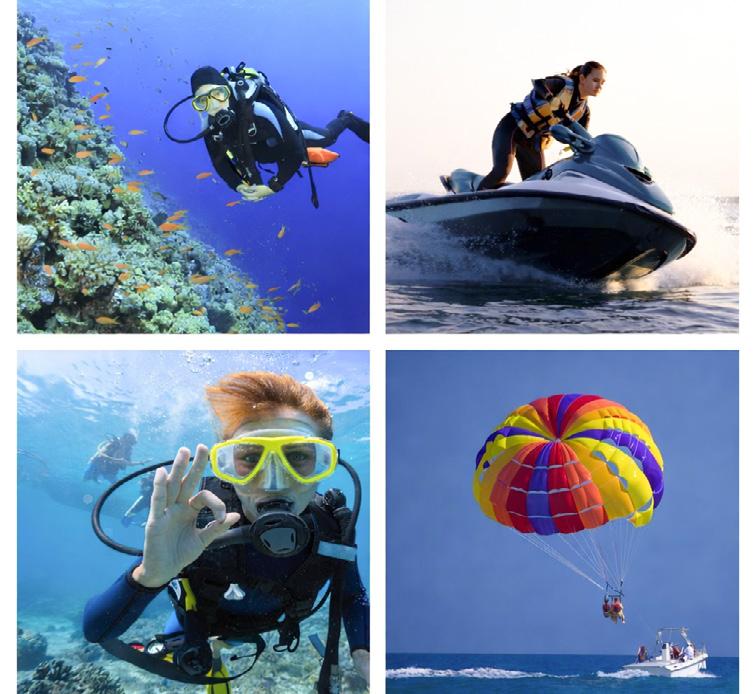

Surfing schools and local adventure clubs organize intensive workshops and training camps along the coast. These sessions cater to all skill levels, from first-time surfers to competitive athletes preparing for state-level challenges. Trainers focus on wave handling, board balance, paddling techniques, and water safety, ensuring that participants can enjoy the sport while minimizing risk. Many workshops also incorporate fitness drills, reflex training, and posture correction to enhance overall performance on the waves.


Stand-up paddleboarding (SUP) has become increasingly popular as both a recreational and fitness activity along Tamil Nadu’s coastline. Coastal clubs conduct guided SUP tours, yogaon-board sessions, and small group competitions. These programs emphasize core strength, balance, endurance, and mindfulness, blending adventure with wellness. Paddleboarding excursions along Mahabalipuram’s rocky shores and Marina Beach’s wide coastline allow participants to explore the sea while staying connected with nature, making it a favorite among youth and fitness enthusiasts.
All surfing and stand-up paddleboarding (SUP) activities are conducted under strict safety measures, including the use of life jackets, trained lifeguards, and professional instructors. Before entering the water, participants receive briefings on sea conditions, wave patterns, and emergency procedures. This structured environment not only ensures participant safety but also builds confidence, allowing more people to experience the thrill of the sport without hesitation.



These surfing and stand-up paddleboarding (SUP) events have brought significant tourism and community engagement benefits. Local adventure clubs partner with hotels and resorts to offer coastal adventure packages, boosting the regional economy. Families, school groups, and international tourists participate actively, turning the beaches into vibrant hubs of energy, skill, and recreation. These activities highlight how surfing and paddleboarding can combine adventure, health, and tourism, further strengthening Tamil Nadu’s identity as a coastal sports destination.
Surfing and stand-up paddleboarding along Tamil Nadu’s eastern coast exemplify the perfect blend of adventure, skill-building, and tourism. With professional guidance, robust safety measures, and supportive local infrastructure, these activities have become a major attraction for enthusiasts of all ages. The favourable sea conditions help create memorable experiences while nurturing talent and promoting sustainable coastal recreation across the state.
This season has emerged as an exciting period for kayaking, canoeing, and river-based adventures across Tamil Nadu. With calm waters, mild weather, and increased tourist activity, the conditions are ideal for adventure enthusiasts, families, and youth groups to explore the state’s unique waterways. From Pichavaram Mangrove Forest in Cuddalore to the Cooum River in Chennai and the serene backwaters of Kanyakumari, river-based sports offer both recreation and opportunities for environmental exploration.
Kayaking programs focus on skill development, teamwork, and environmental appreciation. Participants navigate calm rivers, mangrove channels, and coastal lagoons under the guidance of professional instructors. Training emphasizes paddling techniques, balance, maneuvering through currents, and water safety, ensuring that beginners can participate confidently while experienced paddlers refine their technical skills. These kayaking excursions also allow participants to observe rich flora and fauna, integrating adventure with nature awareness.
Canoeing events are conducted for schools, colleges, and adventure clubs, fostering collaboration and endurance. Multi-person canoes require participants to synchronize paddling, coordinate navigation, and communicate effectively, enhancing teamwork and leadership skills. Some districts organize friendly competitive canoe races, promoting a spirit of sportsmanship while encouraging physical fitness. Favorable and stable water conditions make it easier to conduct these events safely, attracting wide participation across different age groups.

A highlight of these river-based programs is the strong eco-tourism component, particularly in areas like Pichavaram Mangrove Forest. Kayakers and canoeists are guided through winding mangrove channels, where they can observe diverse bird species, aquatic life, and the unique mangrove ecosystem. Local guides educate participants about mangrove conservation, water quality, and the ecological significance of wetlands, blending adventure with environmental responsibility.
All kayaking and canoeing activities are conducted under strict safety protocols. Certified instructors, trained lifeguards, and professional guides ensure that participants wear life jackets, helmets, and follow established safety procedures. Briefings on river currents, tides, and local hazards are provided before every session. This professional oversight makes these adventures both thrilling and secure, encouraging more families and youth to participate.



Kayaking and canoeing programs have contributed significantly to tourism and community engagement. Resorts, adventure clubs, and local authorities collaborate to offer holiday packages that combine river sports with cultural tours, local cuisine, and accommodation. Community groups and student organizations actively participate in these activities, making them not just sporting events but inclusive social experiences.This seasonal emphasis highlights the state’s natural beauty while fostering sustainable adventure tourism.
Kayaking, canoeing, and river-based adventures have emerged as flagship activities for youth, tourists, and adventure enthusiasts in Tamil Nadu. With favorable weather conditions, professional supervision, and eco-conscious programming, these activities offer fitness, recreation, and educational experiences. By blending adventure sports with environmental awareness, these riverbased programs reinforce Tamil Nadu’s reputation as a safe, scenic, and sustainable destination for water-based activities.

The coastal season has become a vibrant time for beach sports festivals across Tamil Nadu, with activities ranging from beach volleyball and football to adventure obstacle courses. With pleasant weather and calm coastal conditions, beaches from Marina Beach in Chennai to Mahabalipuram and Rameswaram transform into hubs of athletic energy, community participation, and seasonal tourism. These festivals combine competitive sports, recreation, and cultural engagement, making the season an ideal period for active beach events.
Beach volleyball tournaments showcase youth teams, college groups, and local enthusiasts. Matches are organized under professional supervision, following standard rules to ensure fair competition. Athletes focus on team coordination, agility, jump techniques, and strategic play, while beginners benefit from coaching sessions provided by local clubs. The soft sands of Tamil Nadu’s beaches provide a challenging yet safe environment, emphasizing both fitness and enjoyment.
Beach football festivals attract large crowds, encouraging community teams, youth clubs, and tourists to participate. Organized events include short matches, skill drills, and friendly tournaments that test stamina, ball control, teamwork, and tactical awareness. Coaches and referees ensure the matches are safe and well-managed, promoting inclusivity and fitness. Beach football also serves as a social platform where players of different age groups and skill levels can interact, learn, and enjoy the spirit of friendly competition.

In addition to structured games, beach sports festivals also include adventure-based obstacle courses, relay races, and beach fitness challenges. Participants take on climbing walls, rope courses, sand tunnels, and endurance circuits, all designed to enhance physical fitness, balance, coordination, and perseverance. These fun, high-energy events attract families, students, and tourists, creating a festive atmosphere on Tamil Nadu’s beaches while promoting active lifestyles.
All beach festivals are organized with strict safety protocols in place. Trained lifeguards, referees, and medical staff remain present throughout the events. Equipment is regularly inspected, and rules are strictly enforced to prevent injuries. This professional oversight allows both amateurs and experienced athletes to fully enjoy the competitions without compromising safety, enhancing the overall credibility and appeal of the festivals.

Beach sports festivals have a significant tourism and economic impact. Hotels, local eateries, and transport services benefit from increased visitor traffic. Community organizations, schools, and youth clubs actively participate, turning the events into cultural and social highlights. By combining sports, adventure, and entertainment, these festivals strengthen Tamil Nadu’s identity as a vibrant coastal sports destination.

Beach volleyball, football, and adventure sports festivals exemplify how sports, recreation, and community engagement can coexist beautifully on Tamil Nadu’s beaches. With professional guidance, safety measures, and a festive spirit, these events provide physical challenges, social interaction, and entertainment for participants and spectators alike. The season highlights the state’s coastal culture, active tourism, and commitment to promoting healthy lifestyles through organized beach sports festivals.









( A Member M/s. Worldwide Media Corporation Group USA )
Exciting opportunity for all those who want to share their most memorable, Interesting. Amazing, Pro-active & Growth oriented activities & Experiences covering areas such as
• Fashion, Trend & Lifestyle
• Culture, Tradition & Heritage
• Education, Healthcare & Wellnes
• Industries, Investments & Growth
• Travel, Tourisn & Hospitality
With Millions of Readers across the world
Stories/ Articles will be Published with your Photograph &Name.
Special Coverage & Press Release
Launguage Rights & Overseas Rights
Circulation, Subscription & Global Distributions
Advertisements & Advertorials
Featured Stories & Articles
Feedback & Customer Relationship
Dr. Kevin Francis
Dr. Andre Lubbe
Dr. George Fedrick
WWMCG Global Communications Inc.,
Rishi Wadhwa
Ms. Nancy
Email ID : aseworldwidemedia@gmail.com worldwidemediaasiapacific@gmail.com
Website : www.incredibletamilnadu.com