Transitioned from Soviet-Era “Virgin Lands“ Roots into a Sophisticated, Digitally-Driven “Agricultural Powerhouse“
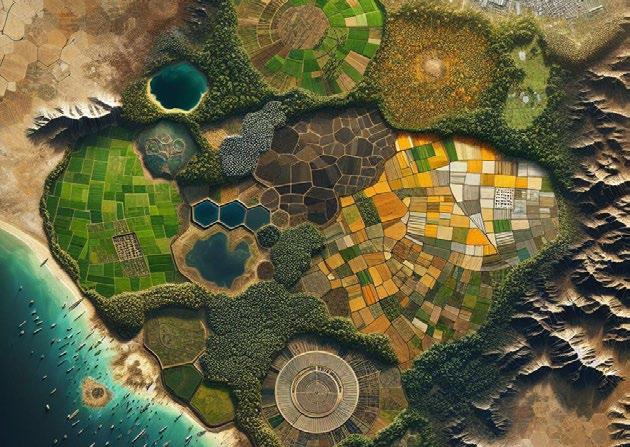
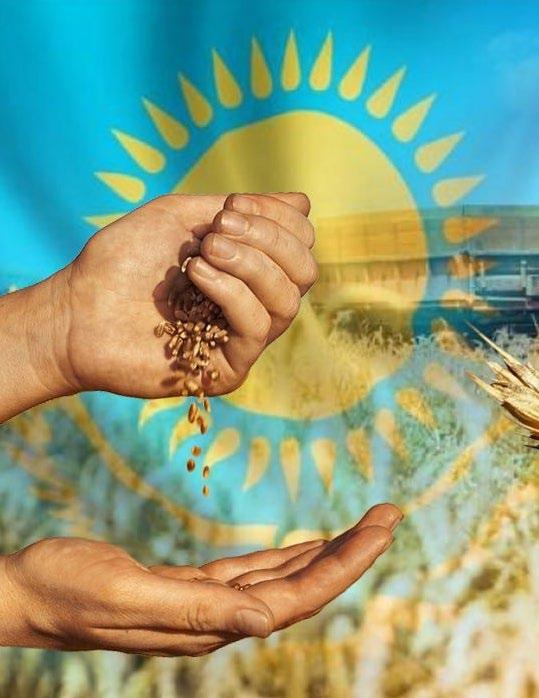
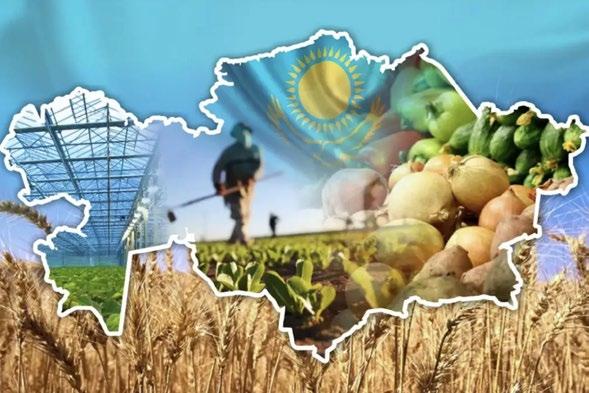
To establish itself as a global leader in food security and agricultural innovation, the Government of Kazakhstan has transitioned from its Soviet-era "Virgin Lands" roots into a sophisticated, digitally-driven agricultural powerhouse. As of early 2026, the sector is experiencing a renaissance characterized by record yields, AI integration, and a shift toward high-value, deep-processed exports.
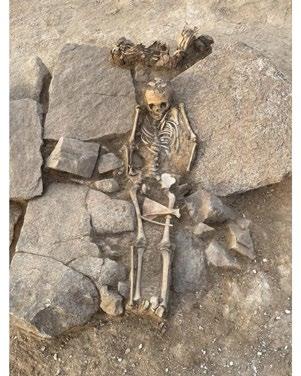
THE HISTORY AND EVOLUTION: FROM NOMADIC STEPPES TO VIRGIN LANDS: The agricultural identity of Kazakhstan began with ancient nomadic traditions, notably the Botai culture (3600–3100 BC), which is credited with the first domestication of horses. However, the modern industrial landscape was forged during the mid-20th century. The Virgin Lands Campaign: Launched in the 1950s, this Soviet initiative converted approximately 250,000 km² of northern steppe into wheat fields. While it established Kazakhstan as a global grain producer, it also caused significant land erosion and nutrient depletion that modern policies now work to remediate. PostIndependence Recovery: Following the 1991 collapse of the USSR, the sector faced a severe crisis. In the early 2000s, a stabilization period began, fuelled by a resource boom that allowed the government to start reinvesting in farm subsidies and land reforms.
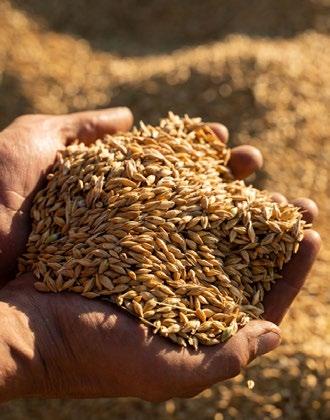
From 2021 to 2026, The Republic of Kazakhstan underwent a major transformation in its agro-industrial complex, evolving from a raw-material exporter into a regional leader in highvalue food processing and digital agriculture. As of early 2026, the sector contributes significantly to national GDP, which has surpassed $300 billion for the first time. Record Harvests: In 2024, the country harvested over 25 million tons of grain. By late 2025, this increased to a record 27.1 million tons, despite a deliberate reduction in wheat planting areas (by 900,000 hectares) to Favor crop diversification. Economic Performance: Gross agricultural output grew by 6.1% in late 2025, reaching approximately $17 billion (9.2 trillion tenge).
STRATEGIC SHIFT: Deep Processing and Global Exports: Kazakhstan is moving away from being a mere exporter of raw materials toward becoming a producer of high-value food products. Value-Added Processing: A $2.6 billion investment drive is underway to launch five large-scale deep grain processing plants by 2028. These facilities will transform raw wheat and corn into amino acids, syrups, and vitamins. Global Reach: Agricultural exports have increased by over 50% since 2020, reaching 80 countries. New phytosanitary agreements with China, Turkey, and Iran have recently opened markets for Kazakh safflower meal, lentils, and rapeseed.
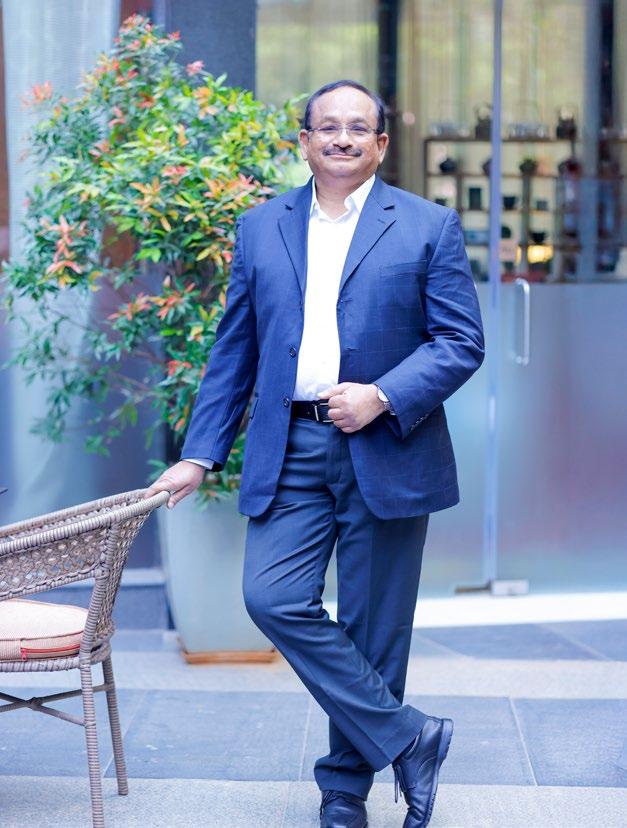
EDITOR - IN - CHIEF From The Desk Of
Water Conservation: To combat climate risks, Kazakhstan has expanded water-saving technologies to nearly 500,000 hectares as of 2025, with plans to continue this expansion through 2026.
FOOD SECURITY AND SOCIAL RESPONSIBILITY:
The government remains focused on domestic stability alongside international growth. Social Protection: In January 2026, the list of socially significant food products was expanded from 19 to 33 items, including staples like carrots, onions, and apples, with a 15% maximum retail markup to protect consumer purchasing power. Infrastructure: Major group water pipelines, such as the Shardara project, are slated for completion by July 2026, ensuring clean water access for over 540,000 rural residents.
RECORD PRODUCTION AND MARKET
DIVERSIFICATION: Despite climate-related challenges earlier in the decade, the period between 2024 and 2026 saw historic production levels across multiple sub-sectors. Historic Harvests: In 2024, Kazakhstan harvested over 25 million tons of grain. By late 2025, this reached a record 27.1 million tons, even as the country reduced wheat acreage by 900,000 hectares to diversify crops. Emerging Commodities: Legume production surpassed 1.1 million tons for the first time in 2025, while oilseed harvests hit a record 4.7 million tons. Industrial Crops: Cotton production reached its highest level in 18 years in 2025, yielding 428,000 tons.
THE SHIFT TO DEEP PROCESSING: A critical achievement of this era is the strategic transition from exporting raw grain to high-value processed products. Investment Drive: The government launched a $2.6 billion initiative to develop deep grain processing, aiming to launch five large-scale plants by 2028 with a capacity of 4.8 million tons. Value-Added Products: Exports now include refined goods like amino acids, syrups, and vitamins. Food production alone rose by 9% in 2025, with further growth of 109% projected for 2026. Livestock Success: Meat exports saw massive growth; beef exports increased 1.7 times and mutton exports nearly doubled in the first ten months of 2025.
DIGITALIZATION AND "SMART FARMING":
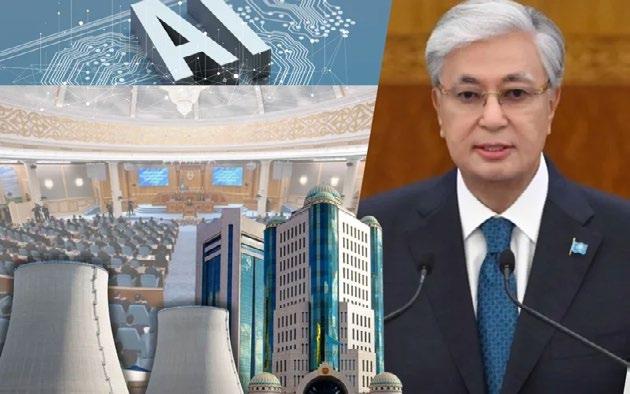
Declaring 2026 the Year of Digitalization and AI, Kazakhstan has integrated cutting-edge technology into its fields. National Traceability: In 2026, a nationwide crop traceability system was launched, providing a "digital trace" from seed planting to final sale to ensure quality and reduce corruption in subsidies. AI Integration: AI-powered tools now automate subsidy applications (reducing errors from 30% to 5%) and use drones for pest control, reducing crop losses by up to 30%. Satellite Monitoring: The Ger Inspector system utilizes satellite data to monitor 116 million hectares of agricultural land. Social and Infrastructure Support: To ensure domestic stability, the government expanded the list of socially significant food products from 19 to 33 items in January 2026, capping retail markups at 15%. Additionally, preferential lending for farmers reached a record 700 billion tenge ($1.3 billion) in 2025 to support modernization and machinery renewal.
GLOBAL EXPORT FOOTPRINT:
Appreciably, The Republic of Kazakhstan has successfully expanded its trade reach to over 80 countries. Export Growth: Agri-food exports increased by over 50% between 2020 and 2024, reaching $5.1 billion by early 2026. New Partnerships: New phytosanitary agreements have opened markets in China, Turkey, and Iran for products like lentils and rapeseed. Organic Leadership: Certified organic land grew from 114,000 hectares in 2022 to nearly 200,000 hectares by late 2025, with major export channels established in the EU and USA.
FASHION & TRENDS
From Steppe to runway: KazaKhStan’S FaShion renaiSSance
44 26 KAZAKHSTAN INCREDIBLE
VIBRANT LIFESTYLE KAZAKHSTAN
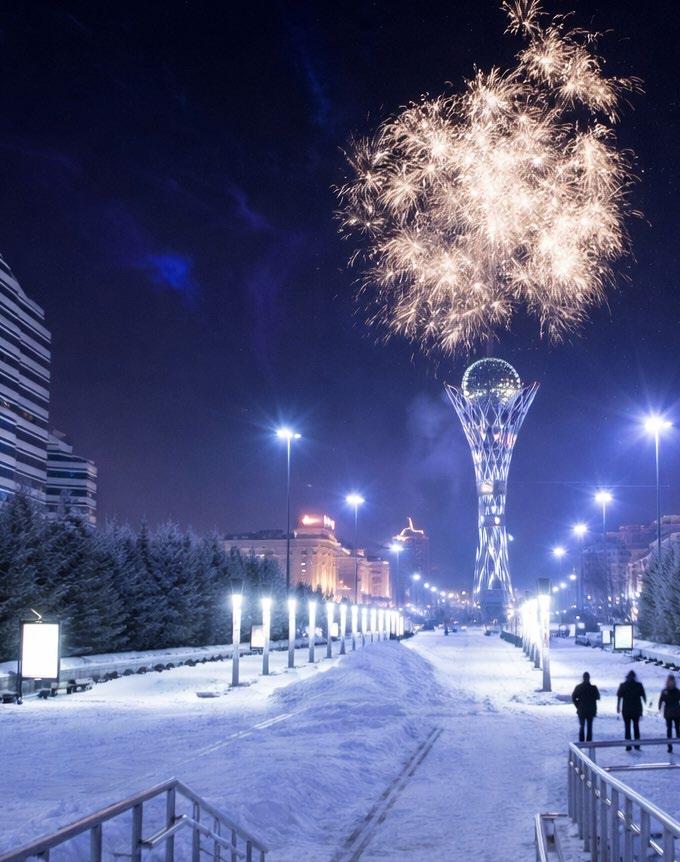
embracing winter in KazaKhStan: a SeaSon oF FeStivitieS, adventure & heritage
INTERNATIONAL RELATIONSHIP
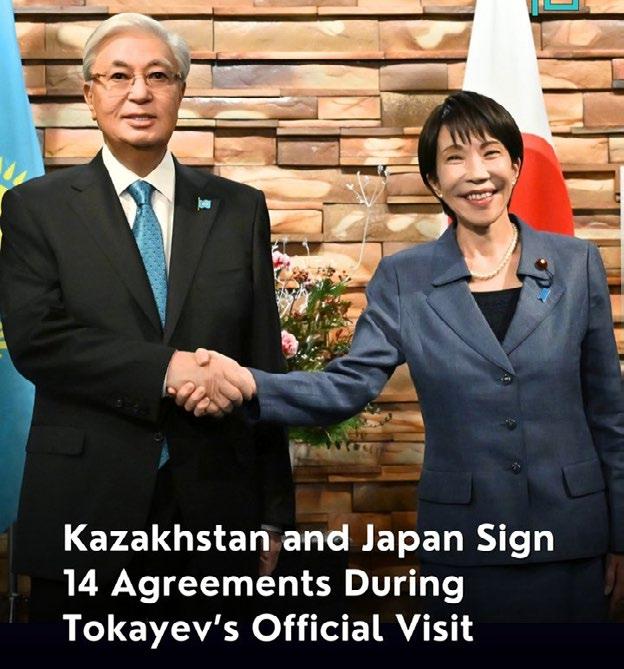
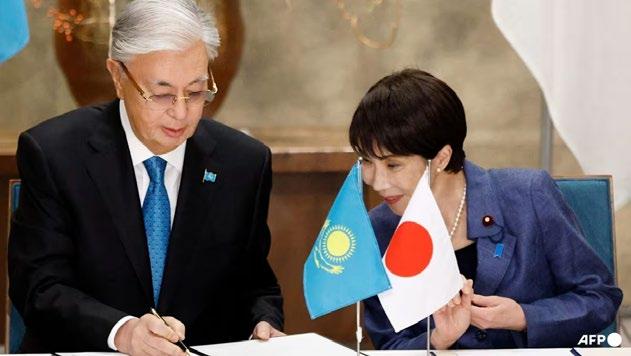
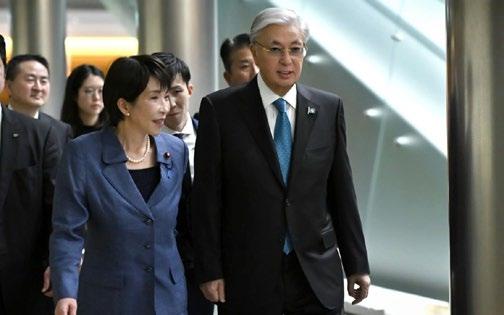
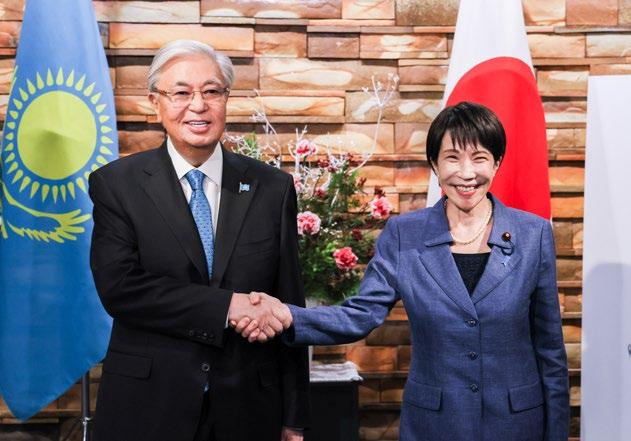
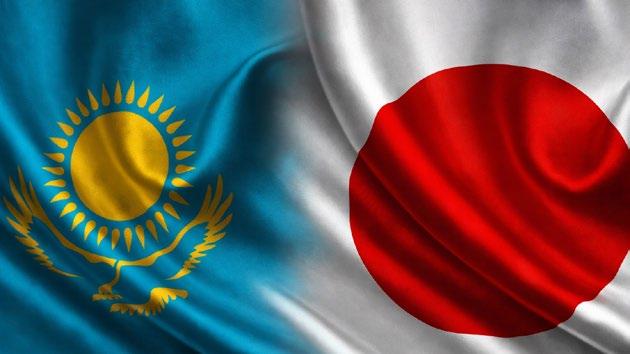
bridging eaSt aSia & central aSia preSident toKayev’S Japan viSit
an evening oF diplomacy: Japan & KazaKhStan deepen tieS @leaderS’ Summit
CULTURE & TRADITIONS OF KAZAKHSTAN
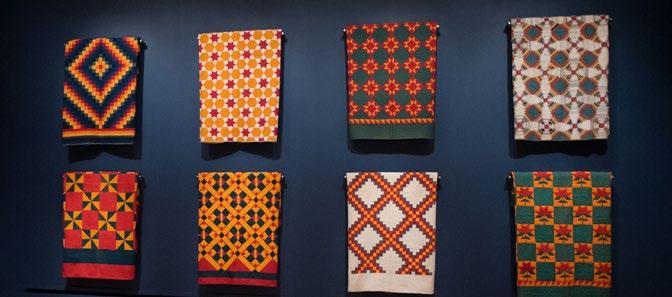
craFting identity: the living tradition oF KazaKh patchworK QuiltS
ROYAL HERITAGE & ARCHITECTURE
reviving hiStory: KazaKhStan’S 2026 plan to reStore 39 iconic heritage SiteS
SPECIAL INITATIVES KAZAKHSTAN
diplomacy redeFined: how KazaKhStan and ruSSia are Shaping a Shared Future
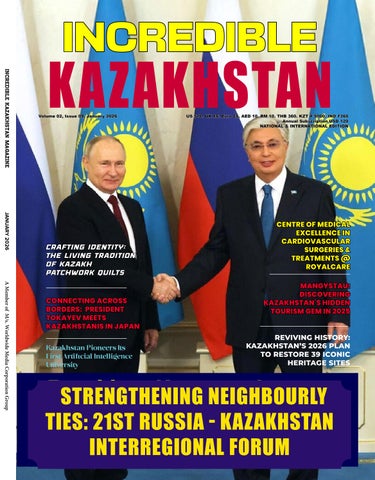
Strengthening neighbourly tieS: the 21St ruSSia– azaKhStan interregional Forum
INTL. STANDARD EDUCATION KAZAKHSTAN
innovating education: KazaKhStan pioneerS itS FirSt artiFicial intelligence univerSity
HEALTHCARE & MEDICAL TOURISM KAZAKHSTAN
dr. Kmd’S centre oF medical excellence in cardiovaScular SurgerieS & treatmentS @ royalcare intl. hoSpitalS group
232
SPORTS & YOUTH AFFAIRS OF KAZAKHSTAN
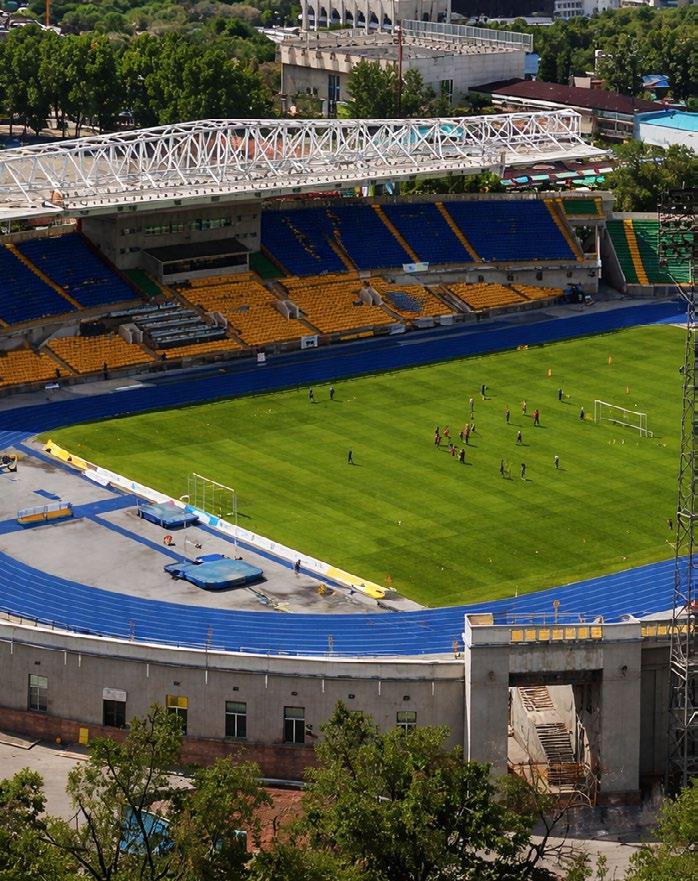
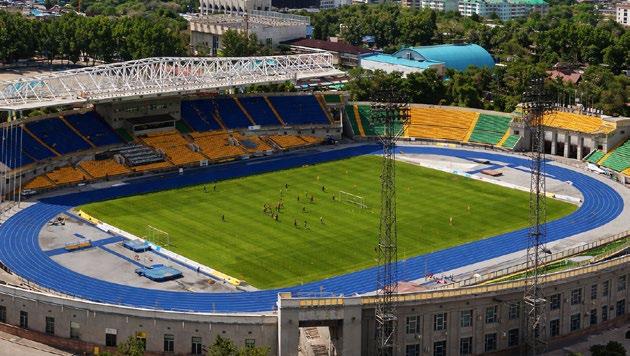
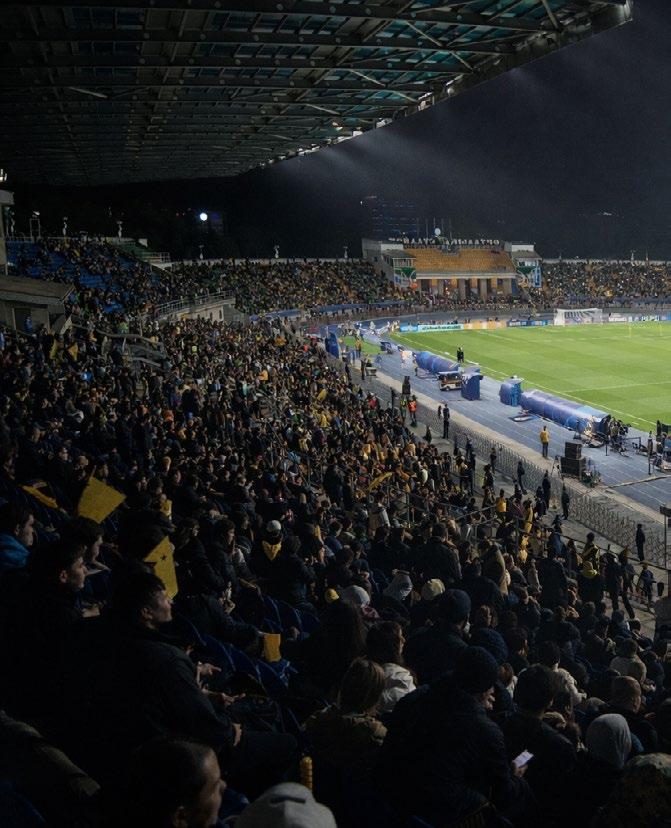
almaty’S pride: Fc Kairat ranKS among the world ’ S elite Football clubS
218
260
TRAVEL & TOURISM OF KAZAKHSTAN
mangyStau: diScovering KazaKhStan’S hidden touriSm gem in 2025
FASHION & TRENDS KAZAKHSTAN
From Steppe to Runway: Kazakhstan’s Fashion Renaissance
While Paris, Milan, and New York continue to dominate the global fashion conversation, a powerful and distinctive voice is emerging from Central Asia. Visa Fashion Week Almaty has grown into a leading regional platform— one that not only showcases fashion, but also articulates cultural identity, craftsmanship, and contemporary vision through design.
Held at the Ritz-Carlton Hotel in Almaty, the twelfth edition of Visa Fashion Week Almaty welcomed 18 fashion brands from Kazakhstan, Uzbekistan, Armenia, the United Arab Emirates, and Mongolia. Presenting Spring/Summer 2026 collections, the event reaffirmed its status as the central fashion event of Central Asia, bringing together established designers and emerging talents under one influential roof.
Beyond the runway, the platform continues to expand its mission—hosting masterclasses, public talks, and educational initiatives that nurture dialogue between tradition and innovation. According to Bauyrzhan Shadibekov, CEO and Producer of Visa Fashion Week Almaty, the contrast between experienced designers and new voices creates the depth that defines the project’s success. This intersection of perspectives allows fashion to evolve not only as an aesthetic pursuit, but as a cultural narrative.
Captured through the lens of Berlin-based photographer Tonya Matyu, the backstage moments and runway highlights offered a closer look at the craftsmanship, emotion, and vision shaping today’s Central Asian fashion landscape.
Michel & Amazonka: Prêt-à-Couture Rooted in Mongolian Heritage
The Mongolian fashion house Michel & Amazonka delivered one of the most anticipated presentations of the week. Renowned internationally for designing Mongolia’s uniforms for the Paris 2024 Olympic Games, the design duo brought extraordinary handcraft and precision tailoring to Almaty for their first-ever presentation in Kazakhstan.
The collection featured 24 meticulously crafted looks, distinguished by sculptural silhouettes, golden embroidery, and painstaking handwork. Feather-trimmed gowns, embroidered coats, and tailored garments demonstrated a mastery of technique rarely seen at this scale. While deeply inspired by Mongolian symbolism, the designers consciously avoid categorizing their work as ethnic fashion. Instead, they describe their aesthetic as prêt-à-couture—a refined balance between contemporary design and cultural heritage.
Using locally sourced wool and cashmere, Michel & Amazonka transform traditional craftsmanship into garments that feel timeless, universal, and profoundly modern. Their work stands as a testament to patience, devotion, and the enduring power of artisanal fashion.
Zhalt Zhult: Reclaiming Feminine Heritage Through Design
Among the most emotionally resonant presentations was Zhalt Zhult, led by designer Tomiris Kupzhassarova, winner of the Next Designer Award. Her debut collection, Bailiau. A New Kazakh Rite of Female Initiation, unfolded as both a fashion show and a cultural performance.
Rooted in Kazakh tradition, bailiau refers to ancient women’s rituals of binding and protection, often expressed through hair braiding and amulet-making. The collection explores themes of lineage, memory, and inner strength, addressing the absence of female names in traditional Kazakh genealogies (shezhire).
Through layered silhouettes, symbolic detailing, and tactile materials, Zhalt Zhult presents fashion as a form of storytelling—one that reconnects contemporary women with generational wisdom. The collection balances vulnerability and resilience, transforming garments into both ritual objects and modern armor.
Azamat Somatov: Contemporary Menswear with Timeless Precision
Menswear took a refined turn with the Spring/ Summer 2026 collection by Azamat Somatov, one of Uzbekistan’s leading contemporary luxury labels. Titled Legacy of Elegance, the collection celebrated impeccable tailoring, premium fabrics, and understated sophistication.
Clean lines, precise construction, and thoughtfully engineered silhouettes defined the presentation. While rooted in classic menswear traditions, the collection introduced modern elements through unconventional patterning, inventive layering, and subtle design accents. The result was a wardrobe that balances comfort with refinement—designed for the modern man without sacrificing craftsmanship.
ZhSaken: Tradition as a Living Design Language
Closing the twelfth edition of Visa Fashion Week Almaty was ZhSaken, led by designer Saken Zhaksybayev. A favorite among local audiences, ZhSaken’s Spring/Summer 2026 collection delivered a contemporary interpretation of Kazakh tradition.
Drawing inspiration from national symbols and traditional cuts, the designer reimagines heritage through clean silhouettes and modern construction. Handcrafted details and thoughtful embellishments anchor the collection in cultural authenticity, while contemporary styling ensures relevance for today’s wearer.
For ZhSaken, tradition is not static—it is a foundation for innovation. The collection invites wearers to incorporate cultural motifs into everyday life, transforming fashion into an expression of identity, pride, and continuity.
Sustainability as Creative Freedom
One of the most conceptually driven presentations came from 29, a rising Kazakh label founded on sustainability and personal expression. Built around upcycling, the brand transforms discarded materials into sculptural garments defined by texture, layering, and experimental volume.
Inspired by themes of survival and undiscovered worlds, 29’s designs feature crumpled fabrics, intricate constructions, and modular silhouettes. Each piece functions as a “uniform” for an unpredictable future—where fashion becomes a tool for resilience, adaptability, and empowerment.
More than a label, 29 represents a philosophy that challenges conventional production and consumption, positioning sustainability as a source of creativity rather than limitation.
A Platform Redefining Central Asian Fashion
Visa Fashion Week Almaty continues to evolve as more than a runway event. It is a cultural platform where heritage meets innovation, where emerging voices stand alongside established masters, and where Central Asia asserts its place within the global fashion narrative. As the platform grows, so does its influence— shaping trends, fostering dialogue, and proving that fashion’s most compelling stories are often found beyond the traditional capitals.
VIBRANT LIFESTYLE KAZAKHSTAN
Embracing Winter in Kazakhstan: A Season of Festivities, Adventure &
Heritage
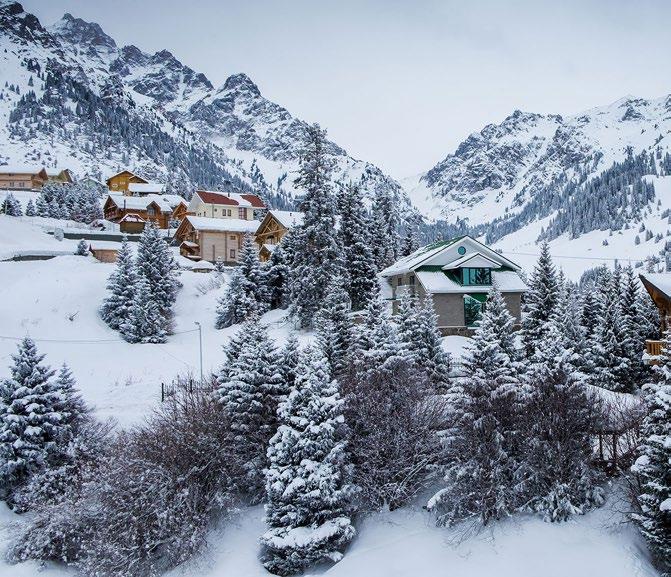
When asked about the best time to visit Kazakhstan, the first answer is often April to June and September to October, when temperatures are most pleasant and most places are accessible. But if you like the cold, knee-deep snow, and unique, unforgettable experiences, then winter in Kazakhstan will not disappoint!
Winter sports in Kazakhstan: an
ideal playground
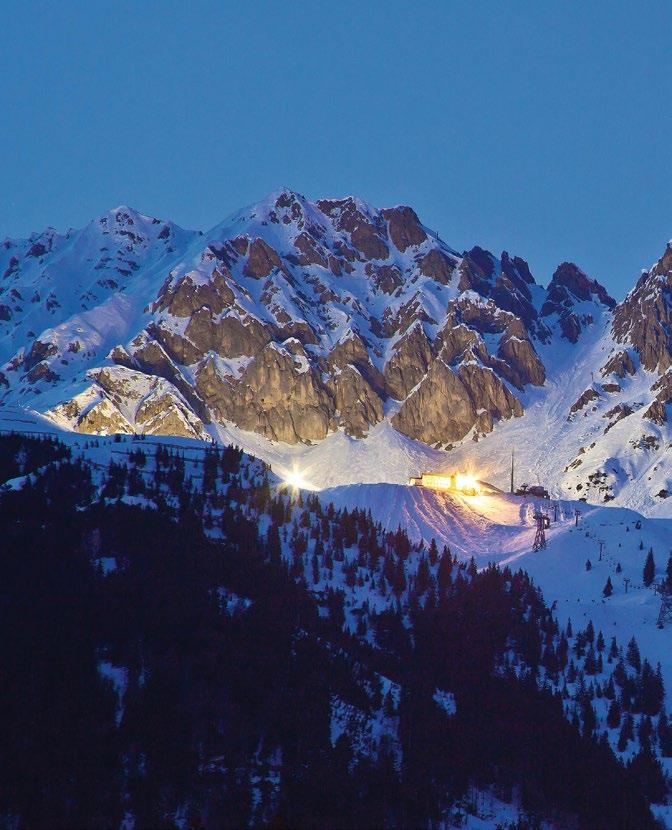
Kazakhstan is dotted with mountains in the north and south where you can enjoy every winter sport imaginable. Winter sports enthusiasts are sure to find the thrills they are looking for here. Whether you are a beginner or an expert looking for new ski or snowboard slopes, Kazakhstan has something for all levels. Enjoy the most popular resorts such as shymbulak, medeu, or zailiyskiy alatau, or contact a local guide who will find you the best place for off-piste skiing!
Winter celebrations in Kazakhstan
Winter in Kazakhstan is also a time of traditional festivals and celebrations linked to the country’s history and customs.
New year (January 1)
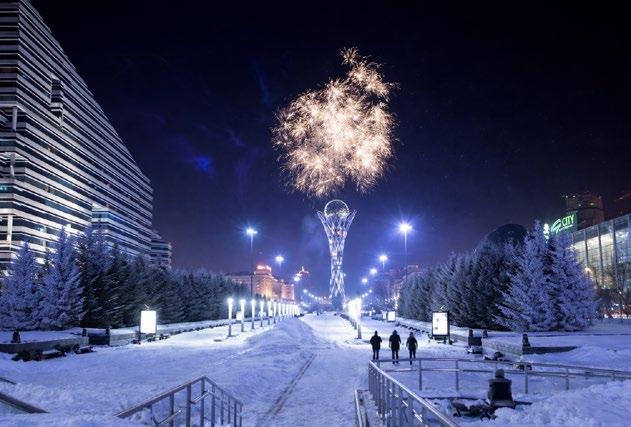
New year is a major holiday in Kazakhstan, when family and friends gather for hearty meals, dancing, and singing. Festive markets and concerts enliven public squares, and the streets are the scene of celebrations. Tradition dictates that gifts are given on that day rather than on Christmas eve and traditional dishes are shared, including plov, beshbarmak, and shashliks.
Orthodox Christmas (January 7)
Celebrated on January 7, orthodox Christmas illustrates the cultural diversity of Kazakhstan, a secular country where Muslim and Christian traditions coexist harmoniously. This date is also a public holiday, underscoring its national importance. Unlike in the west, Santa Claus and large family celebrations are mainly associated with new year’s eve, but the festive atmosphere continues until January Decorations, lights, and markets remain in place throughout the winter, giving Kazakh cities a warm and multicultural atmosphere that accompanies this period of celebration.
Krechenia (January 19)
In Kazakhstan, krechenia is a Christian orthodox holiday marking the baptism of Christ. In the middle of winter, sometimes in temperatures as low as -40°c in the north of the country, believers—and now also curious onlookers—plunge into holes cut in the ice, called jordans.
The atmosphere is both solemn and impressive, combining contemplation, courage, and solidarity. This ritual symbolizes the purification of body and spirit. Today, it is seen as much as a spiritual tradition as a powerful cultural experience, which people attend to understand the faith, endurance, and identity of local communities.
4. Nauryz (march 21)
Although nauryz (Persian new year) is mainly celebrated in spring, as soon as the cold season ends, preparations begin for one of Kazakhstan’s most important holidays. But you’ll have to wait until spring to see the decorations on the houses, taste the multitude of traditional dishes prepared for the occasion, such as naryn, and take part in cultural events. Horse races, folk dances, and purification ceremonies punctuate this celebration.
What to do in Kazakhstan in winter?
• Explore the mountains: take advantage of the exceptional landscapes to go winter hiking, or why not try horseback trekking?
•Try winter sports: try winter sports: in addition to skiing and snowboarding, go sledding! You may even find guides who organize dog sled rides for an extraordinary experience.
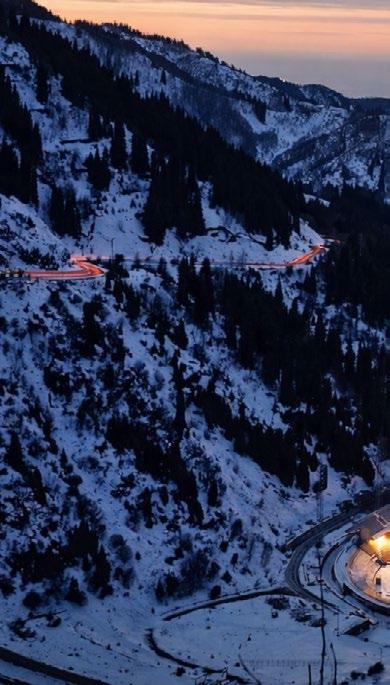
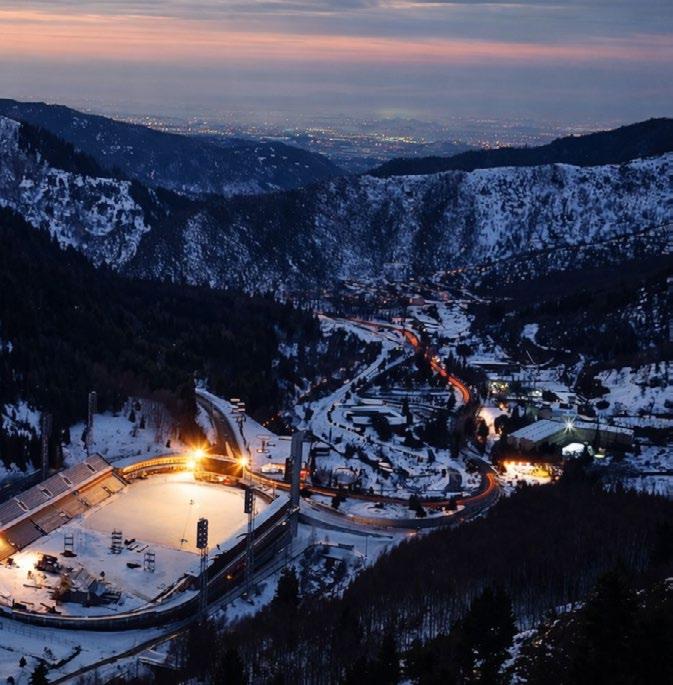
•Ice skating: take advantage of the frozen lakes at high altitude to go ice skating, or visit the natural ice rink in medeu, in the Almaty region, which offers spectacular views of the snow-capped mountains (please note that this rink is undergoing modernization work until 2027, with the aim of hosting international competitions in the near future). You can also enjoy the many ice rinks set up in cities for the season!
•Discover Kazakh culture: winter in Kazakhstan has a special atmosphere: despite the intense cold, life goes on and the streets remain lively. Snow covers the cities and landscapes, giving them a striking beauty. It is also a season conducive to socializing and conviviality. After going out, people gather in chaikhanas—traditional central Asian tea rooms— or restaurants to warm up and discover the rich and comforting local cuisine in a warm atmosphere.
•Relaxing in spas: Kazakhstan is home to several spas and health resorts offering numerous benefits. After a hike in the snow-capped mountains, relax in hot springs surrounded by a unique environment, in a sauna or banya, then, when you come out, dive into the snow to cool off!
RETAIL & SHOPPING
KAZAKHSTAN
A Retail Revolution in Central Asia: Kazakhstan Powers a
US$100 Billion Market
In 2025, Central Asia’s retail market is expected to surpass the symbolic threshold of US$100 billion for the first time — and at the heart of this growth is Kazakhstan, whose vibrant economy, expanding consumer base and rapid retail infrastructure development have helped drive the region’s surge. This milestone isn’t just a number — it signals a shift in Central Asia’s economic character, from resourcedriven economies toward dynamic, consumer-oriented markets.
A Growing Market, A Strong Driver: Why 2025 Matters
According to a 2025 forecast by INFO Line, the combined retail turnover of Central Asia — including Kazakhstan, Uzbekistan, Kyrgyzstan, Tajikistan and Turkmenistan — will top US$100 billion this year For Kazakhstan alone, the numbers are striking: retail turnover in 2025 is estimated at roughly US$38–40 billion, reflecting a healthy growth rate of about 7–7.5 % year-on-year Analysts attribute this robust growth to a convergence of favourable factors: rising domestic demand, expanding urban populations, increasing incomes, and the rapid development of modern retail infrastructure in cities. This is a major transformation. Rather than primarily relying on natural-resource exports or commodity cycles, Central Asia is increasingly being shaped by consumption, lifestyle spending, and retail trade — a trend that could redefine the region’s economic landscape for decades.
What’s Fuelling the Surge: Trends & Structural
Drivers
1. Retail Infrastructure Expansion & Urbanization
In many Central Asian cities — especially in Kazakhstan — retail infrastructure has expanded rapidly. New malls, shopping centres, modern supermarkets and retail outlets are sprouting across urban centres. As domestic demand rises, retailers are expanding their footprints to meet growing consumer needs. Urbanization plays a big role here: as more people relocate to cities, demand for convenient shopping, brand variety, modern retail formats, groceries, apparel, electronics — all increase. For retailers, this means scaling up footprints, supply chains and services to match demand.
2. E-commerce Surge & Digital Retail Transformation
Parallel to traditional retail growth is a fast-rising wave of e-commerce across Central Asia. According to a recent report, the region’s e-commerce market was valued at
roughly US$14.7 billion in 2024, with forecasts pointing to substantial growth in the coming years. Kazakhstan remains dominant in the online retail segment, accounting for a large share of the region’s digital retail transactions. As internet penetration deepens and digital payments become more accessible, online shopping is emerging as a complementary — and in many cases, alternative — channel to brick-and-mortar stores. This transition isn’t simply about convenience. It reflects broader shifts in consumer habits: younger, tech-savvy generations, a growing middle class, and rising expectations for speed, variety, and accessibility, even in landlocked or remote regions.
3. Rising Consumer Demand & Demographic Dividend
Central Asia — and Kazakhstan in particular — has a relatively young population with increasing spending power. As incomes rise, disposable income grows, fuelling demand for a wider range of goods: fashion, electronics, home goods, entertainment, and lifestyleoriented products.
With better jobs, higher urban wages, and increasing consumer confidence, households are spending more. This strengthens retail demand not just for essentials but for discretionary and lifestyle purchases — signalling a shift toward a more diversified consumption culture.
Retail growth in Central Asia isn’t isolated by country. As regional connectivity improves and trade routes stabilize, cross-border commerce and supply chain integrations support larger retail volumes. Investors and retailers eye the region as a unified market rather than isolated national markets. For Kazakhstan — often the gateway to Central Asia due to its size, infrastructure and strategic location — this means it stands to benefit disproportionately. As regional demand grows, Kazakhstan’s retail and logistics networks are increasingly serving a wider Central Asian consumer base.
What It Means for Shoppers, Businesses, and the Region
• More Choice, Better Access: With growth in both physical retail and e-commerce, consumers across cities — and increasingly smaller towns — can access a wider variety of goods: groceries, electronics, fashion, home goods, lifestyle products.
• Convenience & Speed: The rise of online marketplaces reduces friction for consumers. No need to travel long distances; orders can be delivered to homes, often quickly.
• Competitive Pricing & Quality: As competition among retailers grows and supply chains mature, consumers may benefit from better prices, promotions, and improved product quality. Businesses and Retailers
• Opportunity for Expansion: For both domestic and foreign players, Central Asia — especially Kazakhstan — now represents a large and
growing market with demand across categories.
• Hybrid Retail Strategies: Success increasingly favours retailers that combine physical stores with strong e-commerce capabilities — Omni channel models.
• Emerging Demand for Logistics & Infrastructure Services: As retail expands and cross-border trade rises, there’s growing need for warehouses, logistic services, supply-chain management — opening business opportunities beyond retailing directly.
Regional Economic & Social Impact
•Diversifying Economies: Reliance on natural resources is slowly giving way to a broader, consumption-driven economy. Retail becomes a pillar of growth, employment, and value creation.
•Urban Development & Employment: As retail
spreads across cities and towns, it drives jobs — in stores, logistics, services — supporting urban growth and economic development.
•Cultural & Lifestyle Shift: Retail growth often brings lifestyle changes: exposure to global brands, changing consumer tastes, modern shopping habits — gradually shifting everyday life and aspirations in Central Asia.
Challenges & Questions Ahead
While the forecast is optimistic and the growth impressive, several challenges and caveats remain.
•Uneven Distribution: Retail expansion tends to concentrate in major cities. Rural areas or smaller towns may still be underserved, limiting access for a portion of the population.
•Infrastructure & Logistics Gaps: Especially for e-commerce and cross-border retail, logistics warehousing, reliable shipping, payment systems remain critical. In landlocked countries, infrastructure upgrades are essential.
•Economic Vulnerability: Rapid growth could be sensitive to broader macroeconomic factors — inflation, currency
fluctuations, employment trends. Consumption-driven economies can be fragile if external shocks hit.
• Digital Divide: Despite rising internet penetration, digital literacy and access remain uneven. For e-commerce to reach its full potential, the divide between urban and rural connectivity must shrink.
• Sustainability and Local Markets: Fast-paced growth risks overshadowing local crafts, small businesses, and traditional retail models (e.g. bazaars, small shops). Balancing modern retail with local heritage will be a challenge.
A Vision for 2030 and Beyond
If current trends continue, Central Asia’s retail market — underpinned by Kazakhstan’s leadership — could redefine itself by 2030. What might that look like?
• A $150–200 billion regional retail market, supported by growing middle classes, urbanization, and continued infrastructure investment.
• Omni channel retail norms: Brick-and-mortar stores integrated with online platforms, seamless logistics, digital payments — a mature retail ecosystem.
• Regional retail hubs: Kazakhstan — especially major cities like Almaty, Astana (KnurSultan), and others — may become retail and distribution centres for the wider region.
• Growth of consumer culture: More lifestyle-oriented consumption — fashion, design, home décor, hobbies, leisure goods — becoming part of daily life for many.
• Rise of SMEs and local brands: As retail grows, smaller domestic producers and boutiques may find space — blending local aesthetics with modern distribution.
The 2025 milestone — Central Asia retail market surpassing US$100 billion — is more than a statistical landmark. It marks a turning point for a region historically shaped by natural resources, geopolitics, and transition economies. With Kazakhstan leading the charge, retail and consumer consumption are rewriting the economic narrative. For consumers, this means more choice, more convenience, and more modern lifestyles; for businesses, it means opportunity, expansion, and a new frontier; for the region, it means a shift — toward diversification, urban growth, and a future where retail and trade play a central role. As SKUs multiply and storefronts rise — both online and offline — Central Asia is quietly becoming one of the world’s most promising emerging consumer markets. And 2025 may be remembered as the year it crossed the Rubicon.
SCANNING INTO THE FUTURE: KAZAKHSTAN STANDARDISES
RETAIL QR
PAYMENTS
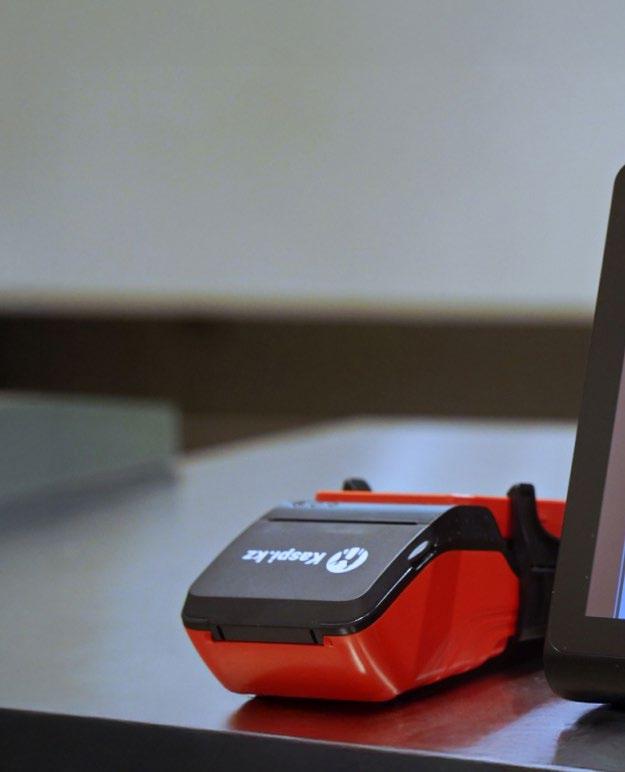
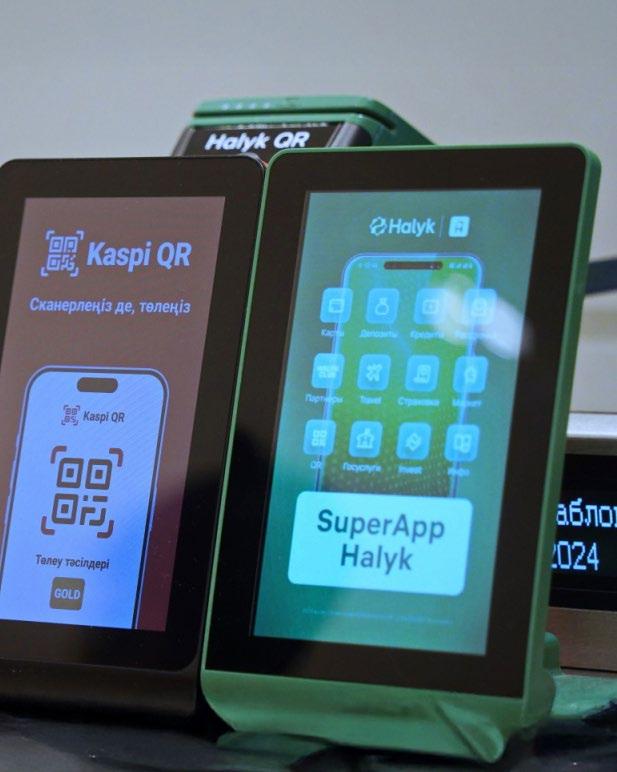
National Payment Corporation rolls out a single QR acceptance scheme across banks, with more lenders joining by yearend and nationwide scale targeted for 2026.
Kazakhstan has switched on a unified interbank QR payment system which lets consumers pay any participating merchant with one QR code from any bank app, in a move authorities say will simplify acceptance and bolster the country’s finch ambitions. Announced on November 13 at the Central Asia Fintech Summit in Almaty, the scheme has been developed by the National Payment Corporation of Kazakhstan (NPC) with banks’ technical teams.
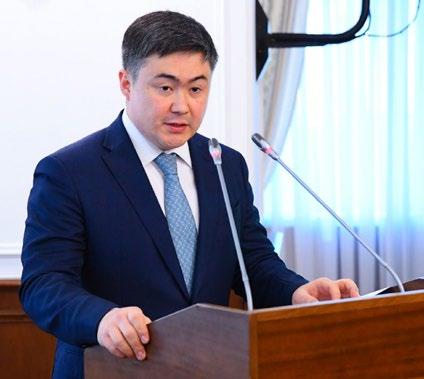
National Bank Chairman Timor Suleimenov said the project would make life easier for consumers and support the financial system, positioning Kazakhstan as a regional leader. NPC chair Shamar Samayeva said the service will be scaled across regions and outlets, with more banks slated to join by the end of the year and a full-scale roll-out targeted for 2026.
The launch builds on a year-long programme of pilots and staged connectivity. The NPC confirmed on September that the first live transactions were available via three institutions – Bank CenterCredit, Freedom Bank and Home Credit Bank – as part of an interbank QR service embedded in those banks’ mobile apps. The corporation operates the payments hub and interbank clearing for these QR transactions. For users, the flow mirrors familiar QR journeys. Shoppers open their bank app, scan a single merchant QR and confirm payment, regardless of which bank the merchant uses. Interoperability is the key change. Instead of each bank or wallet running its own QR, the national scheme standardises acceptance so any participating banking app can scan any participating QR at the point of sale. Regulators in Astana have trailed the concept since 2024, when the National Bank and NPC ran a public pilot and began connecting banks to an interbank QR rail. Officials also signposted the initiative through 2025 as part of a wider push to modernise retail payments alongside instant transfers by phone number. Statements in January and June confirmed gradual on boarding of banks and the intention to introduce a single QR format across the market.
Harnessing electronic payments
The move is framed as part of Kazakhstan’s digital finance agenda, which includes upgrading national payment infrastructure and accelerating cashless adoption. According to the nation’s central bank, payments organisations processed 4.6 trillion tinge ($8.8bn) in the first half of 2025, a 22% year-onyear increase, highlighting the momentum behind electronic payments that the QR scheme is designed to harness. For merchants, a single interoperable QR promises simpler acceptance and fewer terminals on the counter, potentially lowering costs and reducing fragmentation between bank-specific setups. For banks and processors, a central hub removes bilateral complexity and could encourage competition based on app experience, loyalty features and value-added services rather than closed acceptance networks. Officials and local media have presented the initiative as a step that aligns with global moves toward QR standardisation and open retail payment rails.The NPC’s statement indicates more lenders are due to connect by year-end, with nationwide scale planned in 2026.
HISTORY, CULTURE & TRADITIONS
KAZAKHSTAN
CRAFTING IDENTITY: The Living Tradition of Kazakh Patchwork Quilts
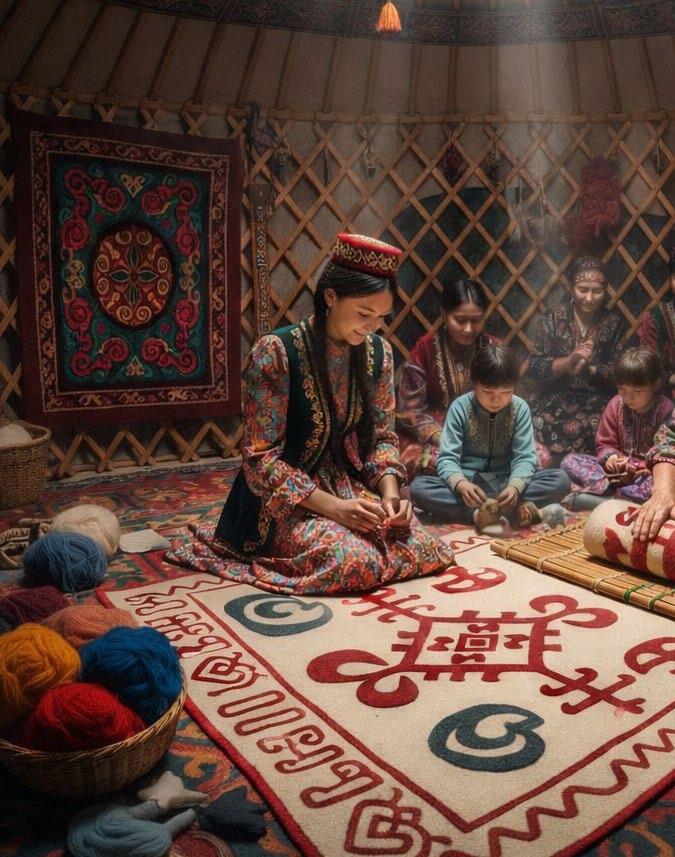
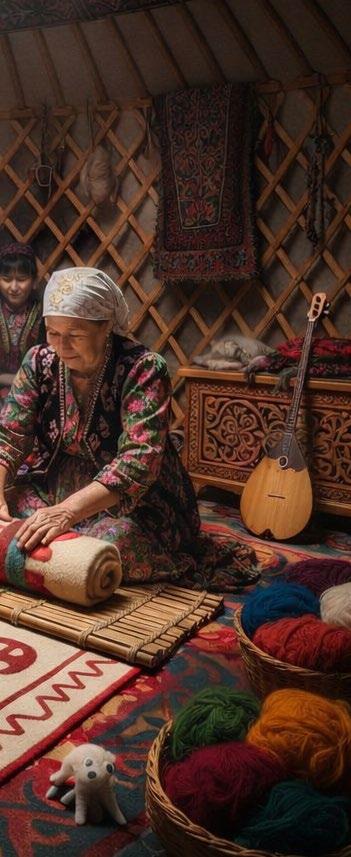
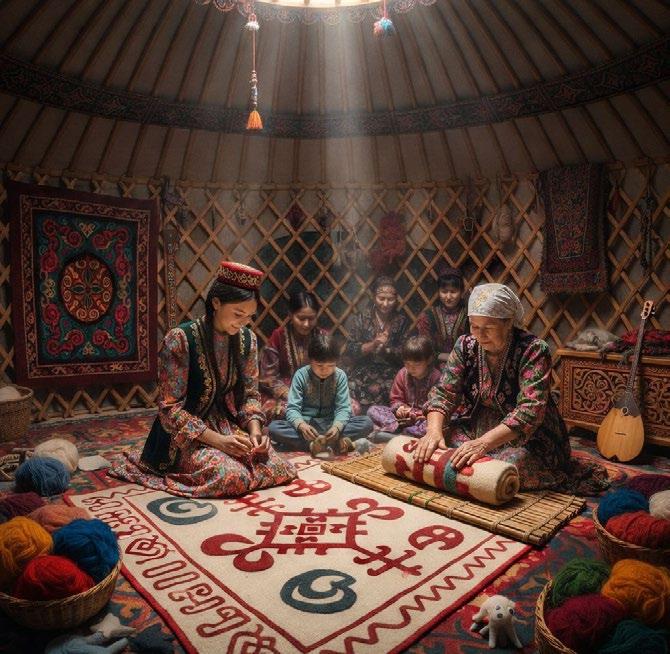
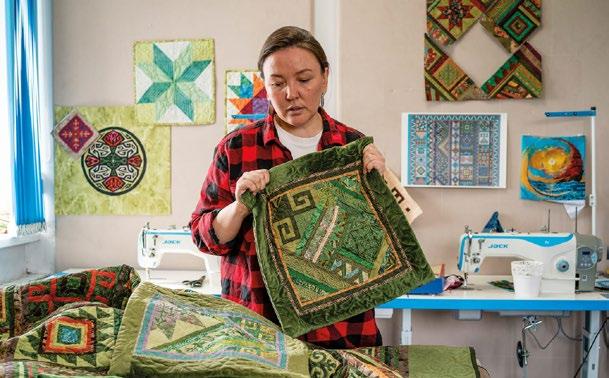
From a studio overlooking the foothills of the Zailiysky Ala-Tau Range near Almaty, Kazakhstan, three women are quietly working on their next piece of a blanket made in kulak, a traditional Kazakh patchwork technique. They are apprentices of a kulak master and founder of a school dedicated to helping this style of art to rebound.
Gilmore Ualikhan pulls out kulak after kulak—pieces of quilt, once present in almost every household in the country—prompting compliments for the women who crafted them from rare fabrics passed along the old caravan trails of the Silk Road. It had both practical use as home décor and as part of a woman’s dowry, and symbolic power as protection.
Seeing the toll time and globalization took on the craft, Ualikhan is now slowly reviving the kulak technique, which involves patching together fragments of small textiles in an orderly pattern to form a block. The work fits in with a rising global demand for hand-crafted textiles, inspiring her to reinvent the craft beyond Kazakh patterns.
KURAK ELEMENTS IN KAZAKH CULTURE
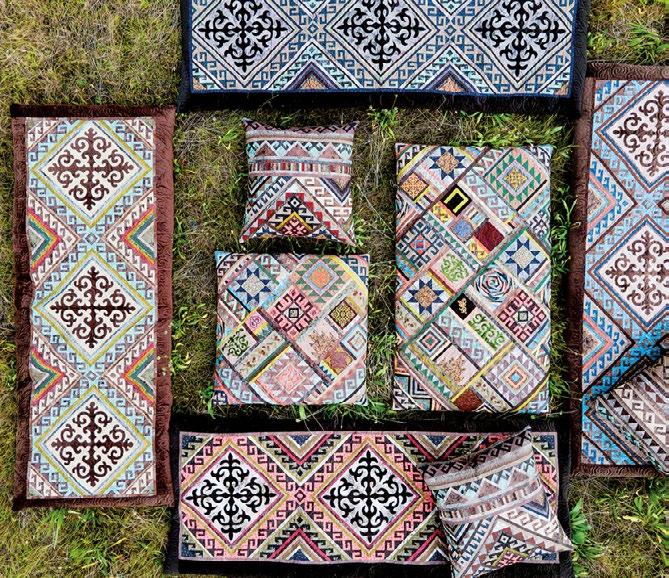
Although patchwork is found globally, Kazakhs know it as a common decorative art form. Kura is used in blankets and pillows, carpets and clothing.
Ualikhan has spent years researching traditional patterns found in museum collections, old photographs and historical illustrations. Now she applies those patterns in her craft. “This is shikurak, the Kazakh block,” says Ualikhan, pointing at a square block that resembles a well. “All over the world, everyone considers it their own, and it’s because it is a fundamental block. Probably because it’s simple and easy for everyone to understand. In Kazakh it comes from the word shy, meaning ‘thin.’ The Russians call it a well.” With symbolic messages woven into the design, every kulak piece holds some of the artisan’s story, thoughts and wishes.
Ualikhan explains the cultural symbolism and beliefs behind each quintessentially Kazakh kulak motif. Over the years, the geometric patterns earned evocative names: ram’s horn, tree of life, axe, pair of earrings, a wave. One of them is a timer—an amulet. “In the past people used to make timers in the shape of triangles and place inside them verses like Hayat Al Kuris [known as the Throne Verse] or other surah’s from the Qur’an. Of course, nowadays, when we sew, we don’t actually stitch those verses into the fabric. But symbolically, we still call it a timer, an amulet,” says Ualikhan.
Kura blankets are a common dowry item, with symbolic messages woven into their design. One such blanket carries blessings for a family: a tree-of-life pattern to denote prosperity, the rhombus for fertility, triangles for spiritual and physical strength, and zoomorphic and nature-inspired patterns like koshkar-muiiz (ram’s horns) to represent masculinity. Every kulak piece holds some of the artisan’s story, thoughts and wishes. “Each of my creations is not just a blanket. It carries the history of my family stitched by the warmth of my hands, the inspiration from great masters and the support of my loved ones,” says Maria Ramazanova, one of Ualikhan’s students.
Ualikhan echoes the sentiment: When I sew, I say: ‘I’m stitching my prayer into this piece; may the person or family who receives this quilt be blessed. “ ”
Along with creating her own patterns, Ualikhan incorporates motifs inspired by cultures around the world. The patchwork technique spread as far as Japan, Europe and the US. “The Japanese are considered one of the strongest kulak masters. Their technique is defined by delicate handcrafted details that reflect a distinctly Japanese touch, and soft, vintage tones. In contrast, Russian fabrics are bright and rustic, filled with polka dots and florals. Kyrgyz designs use bold black, white and red tones, sharp angles and tiny kulak patterns. Classic American style, on the other hand, is marked by large blocks and repetitive patterns, offering a sense of structure and simplicity,” explains Ualikhan. In the US, the International Quilt Museum in Lincoln, Nebraska, boasts a large public quilt collection from over 60 countries to satisfy anyone’s appetite for colour and exuberant detail in patchwork. One can find the black-and-red kulaks from Kyrgyzstan and the softtoned Japanese pieces Ualikhan mentions, along with quilts from South Asia, China and France, to name a few.
Maria Ramazanova
TEXTILE HISTORY IN KAZAKHSTAN
According to Aznar Altynsaqa, textile artist and researcher, archaeological finds of fabric remnants and needles made of bone suggest that textile traditions have existed across Kazakhstan as far back as the Obtain culture from the fourth millennium BCE. However, surviving kulak pieces mostly date from the 18th, 19th and 20th centuries. Since then, Kazakhs have lost 60% to 70% of their traditional crafts, says Altynsaqa, citing Russian and later Soviet colonization as key causes, alongside the shift from nomadic to stationary life and changing tastes under foreign influence. “Even before the [Russian] revolution, sewing machines, factory-made fabrics, aniline dyes and many other goods began to enter the Kazakh market, with the bulk coming from Russia,” says Altynsaqa. “All of these items were fashionable
and colourful. People began to buy more and produce less themselves.” In the past 10 years, Altynsaqa has observed a revival of traditional art, including kulak, as more artisans emerge “producing modern items using traditional methods, or vice versa, traditional items using modern techniques.” Kazakh textiles date to the fourth millennium BCE, but surviving kulak pieces are mostly from the 18th-20th centuries.
PATCHWORK AS THERAPY
In her studio, behind a desk laden with brightly coloured blankets, Ualikhan describes how she tries to restore the value of the patchwork tradition. “My mission, first and foremost, is to research the blocks, then to re-create those blocks in kulak technique and then to pass this knowledge to as many people as possible,” Ualikhan says.
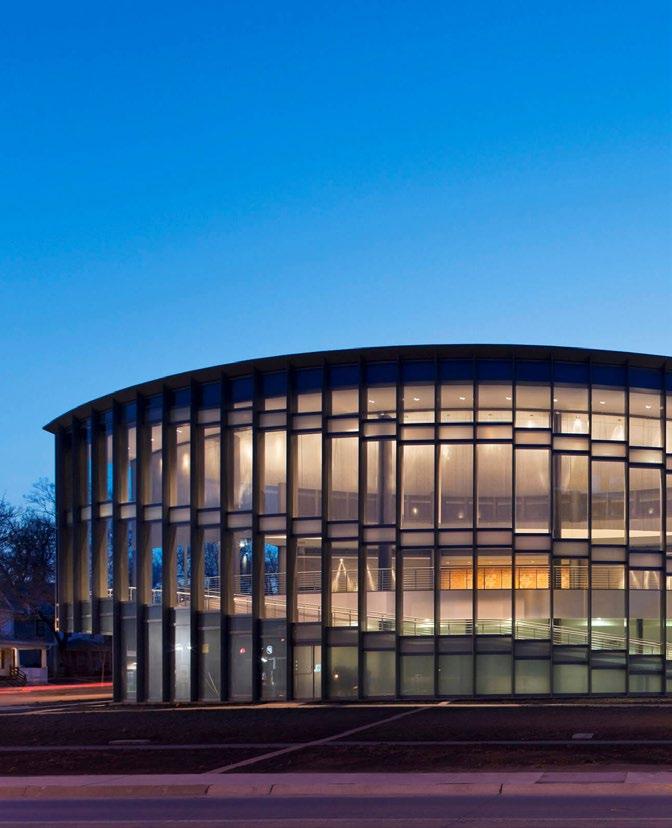
International Quilt Museum (IQM) located at the University of Nebraska-Lincoln
She had a successful career in finance, but after a personal loss, Ualikhan realized stress had taken a toll on her health. Once she gave up her job, the patchwork became a form of meditation. “It turns out that kulak is a therapy. I realized it later. What I was like back then and who I am now are two different people,” she says.
A solitary sewer finds herself between art and craft. “When someone sews kulak, they’re alone with themselves. No one is tugging them. They are structuring here, trying to sew even blocks,” says Ualikhan. “And in that process, they learn to navigate and structure situations in life.” Ualikhan went on to open a school that teaches women, including those from underprivileged societies in Kazakhstan, in kulak technique. She teaches the patterns—passed down from mother to daughter— to modern women who are eager to take up the work of their foremothers. Her student Ramazanova recalls the deep inspiration she felt watching every piece of fabric in her hands become a living symbol of tradition. “At that moment, I decided to continue preserving and passing on to future generations a value that is close to the heart of every Kazakh.” For another of her students, Oral Idelkankyzy, learning kulak has brought a sense of pride. “How happy I was when I managed to complete the simplest blocks! These small victories restored my confidence, my anxieties faded away, and my chaotic thoughts disappeared.” I decided to continue preserving and passing on to future generations a value that is close to the heart of every Kazakh.
KURAK’S INFLUENCE ON MODERN JEWELRY DESIGN
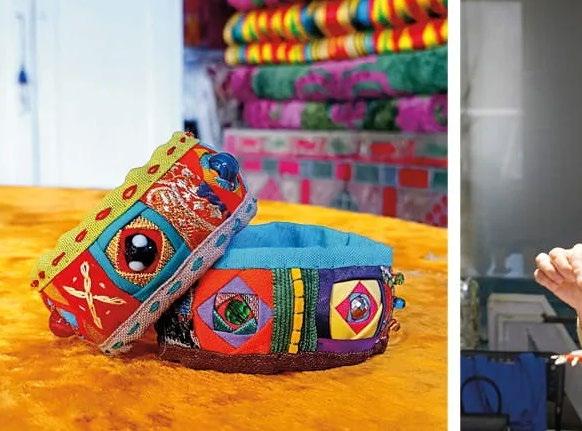
Rising desire for handcrafted items has brought a parallel increase in the number of artisans exploring conventional materials and techniques. Mansukh Yesdaulet, a Kazakh artisan specializing in employing kulak technique by hand, is doing her bit via jewellery design. She taught economics at universities, but once she went on maternity leave, Yesdaulet wanted to contribute to the family without a full-time commitment. So, a decade ago she turned her interests into a career that is reshaping what kulak can be.
“As Kazakhs, we all love gold, silver or at least something semiprecious,” Yesdaulet says. “But then I realized my audience is girls who are bold, progressive and a little extravagant—those who are not afraid to look the way they want.” Her amulets, brooches and bracelets embrace vivid colours.
Though she mostly sews them in the traditional form of a well, they rather resemble a budding flower or an eye. Each nation has similar ornaments. ... It feels like our essence is the same.
MANSHUK YESDAULET
Kura perfectly expresses the idea of making beautiful products from limited resources, Yesdaulet says. “Back in the days of the Silk Road … fabric was considered a wealth, a treasure—a true luxury,” she says. Even traditional garments like Russian shirts or a Kyrgyz kink (traditional shirt) show that women made use of every part of the fabric. “It was considered a sin to waste fabric,” she adds. Now mass production poses a threat, Yesdaulet says. “Kura is meant to be made by skilled artisans who understand that traditionally it was created from leftover fabric,” says Yesdaulet, “not from brand-new, store-bought red, yellow or blue cloth that’s cut up just for the sake of it.” In 2024 Yesdaulet moved to Palo Alto, California, in the US with her family. Initially she felt lost in a new environment. The soothing nature of hand-sewing kulak lifted her spirits.
I was doing the one thing I knew how to do, and it helped me get through that time. Now, I want to continue running workshops here or maybe try selling on local marketplaces. I’m not giving up. I want to grow here too, as an artist and a craftswoman,” says Yesdaulet.
KURAK ACROSS CONTINENTS
Living in the US’ multicultural society, Yesdaulet finds kulak even more relevant, as she puts together pieces from different cultures. Each piece of cloth carries its own story, and when put together, something uniquely beautiful comes forth.
“Actually, I see these techniques in every nation, which is interesting. Each nation has similar ornaments, with maybe a bit of variation or a different reading,” Yesdaulet says. “It feels like our essence is the same.”
Our children will bring their own worldview and find new ways to weave kulak into their world.
GULMIRA UALIKHAN
Across the globe in Kazakhstan, Ualikhan shares Yesdaulet’s vision of unity rooted in one fundamental block. To her, each kulak reflects the continuity of a collective heritage.
“We must teach the basic blocks of kulak to the next generation. Our children will bring their own worldview and find new ways to weave kulak into their world, taking the tradition to new heights,” she says. “But it all begins with the shared foundation we all start from.”
SPECIAL INITATIVES KAZAKHSTAN
Redefined: How Kazakhstan and Russia Are Shaping a Shared Future
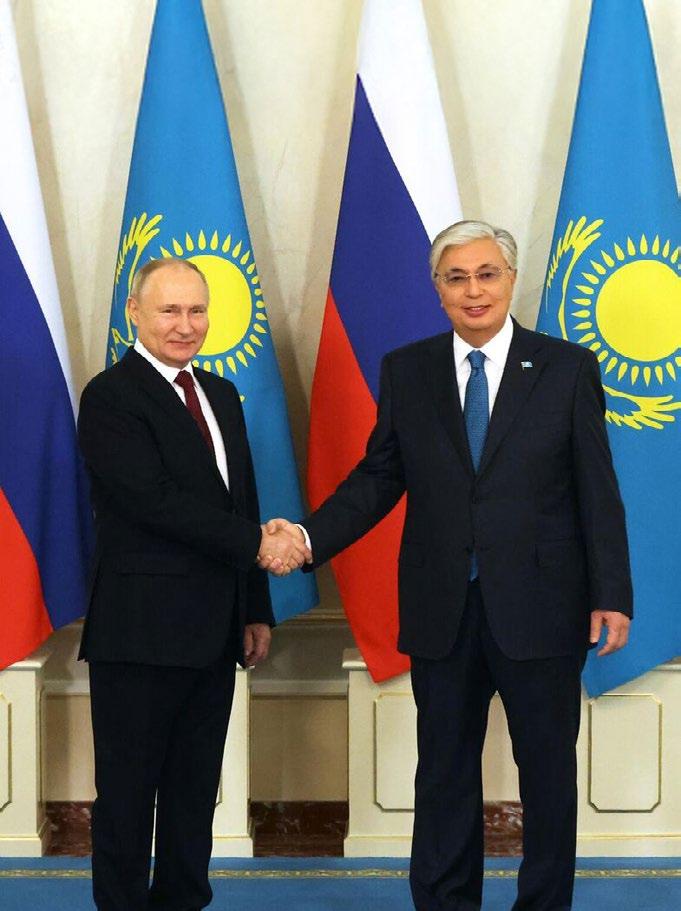
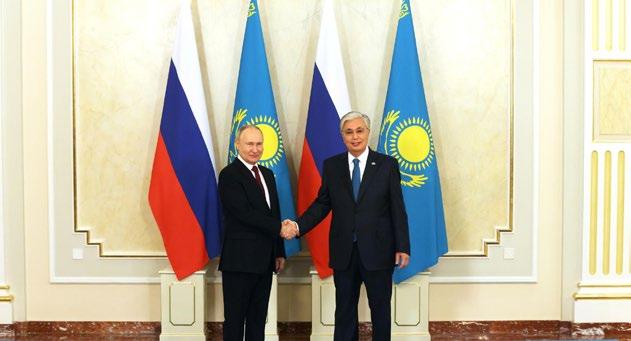
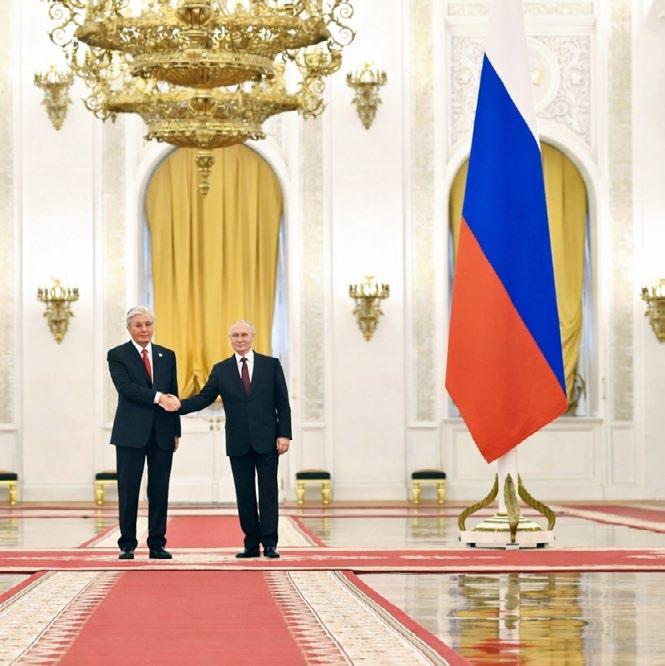
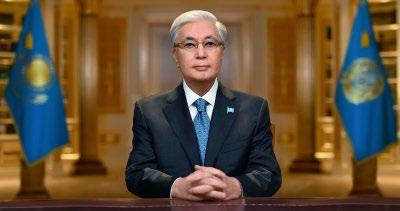
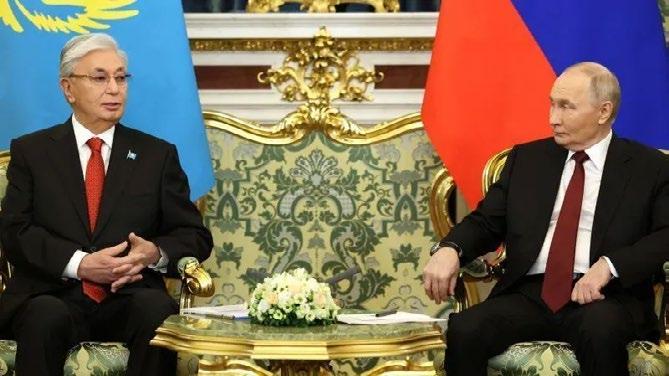
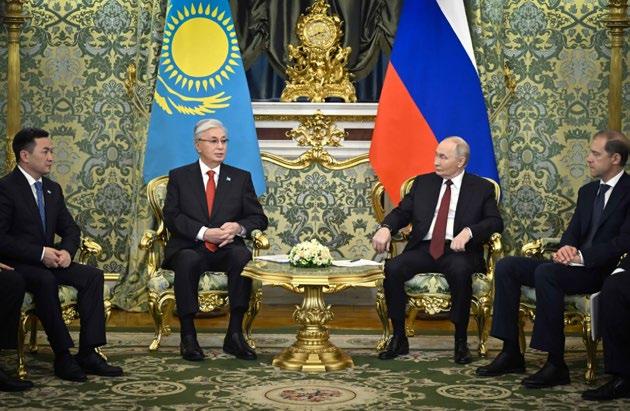
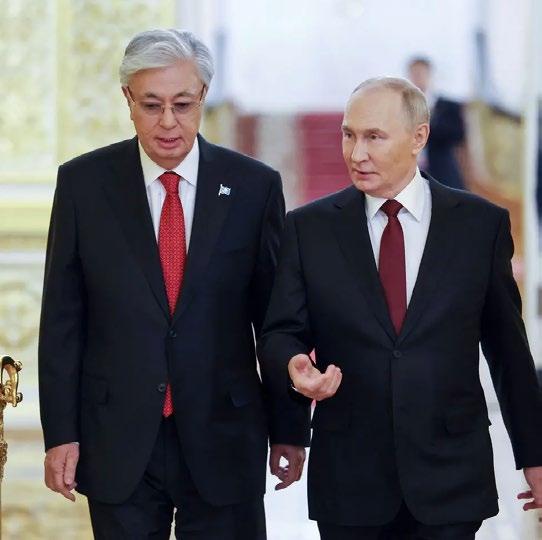
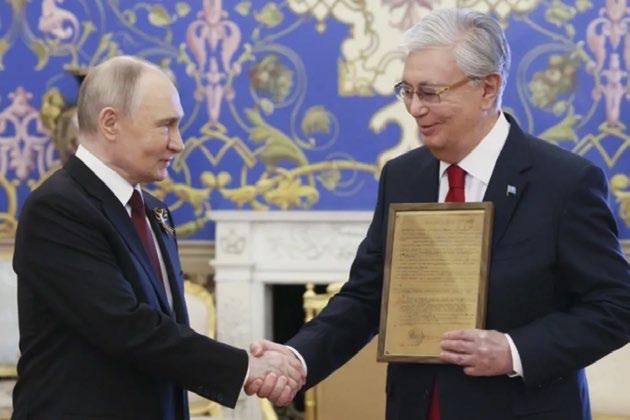
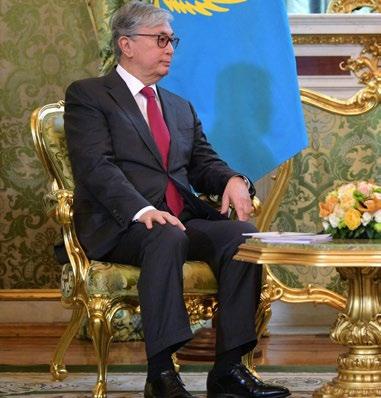
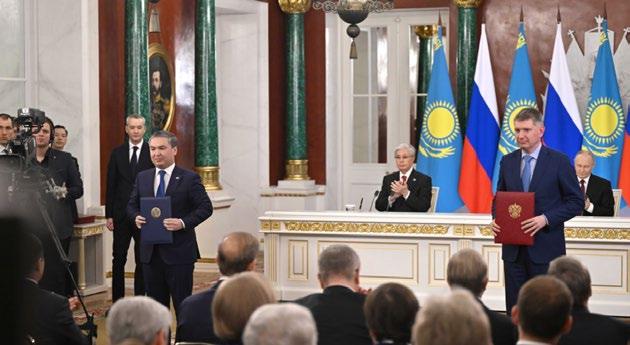
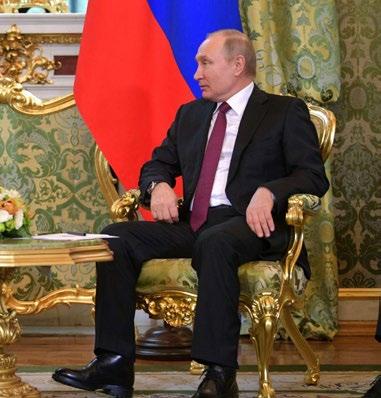
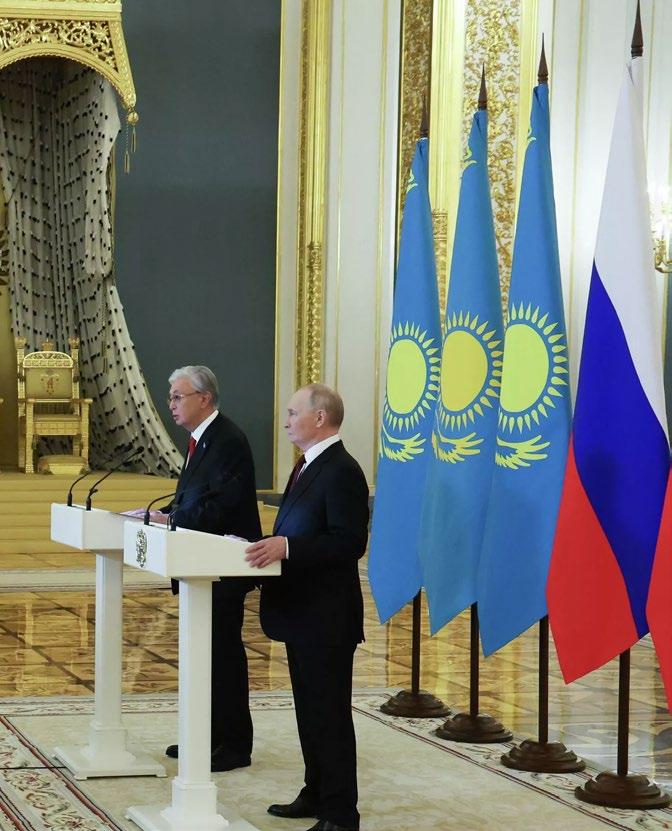
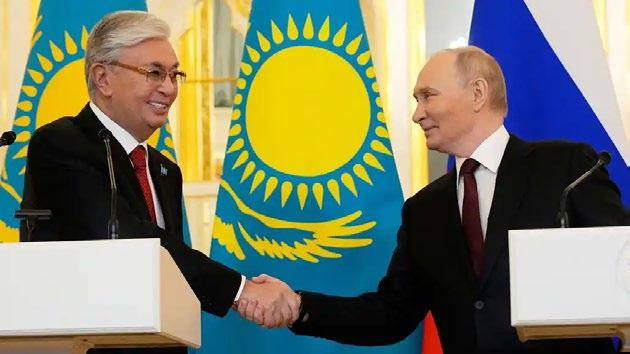
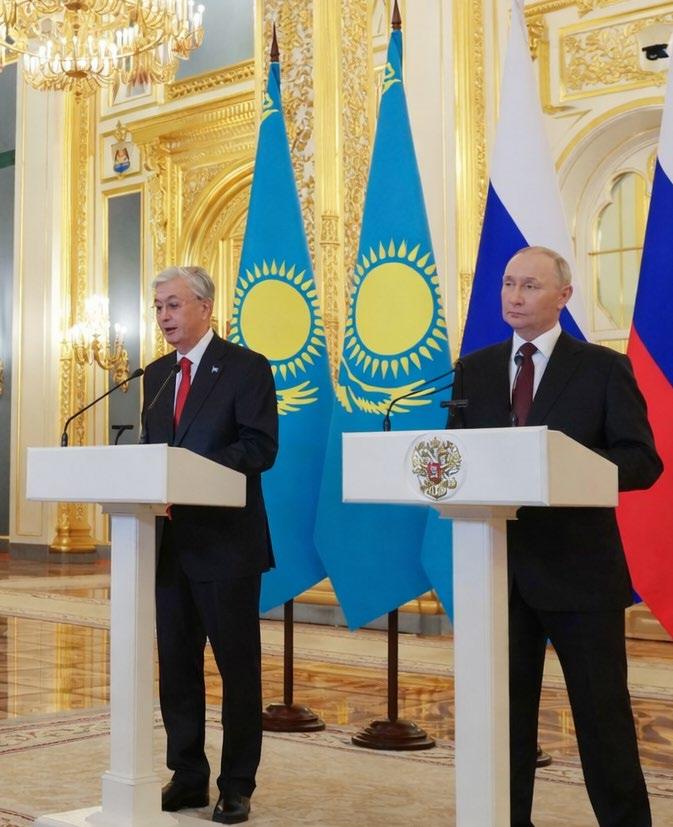
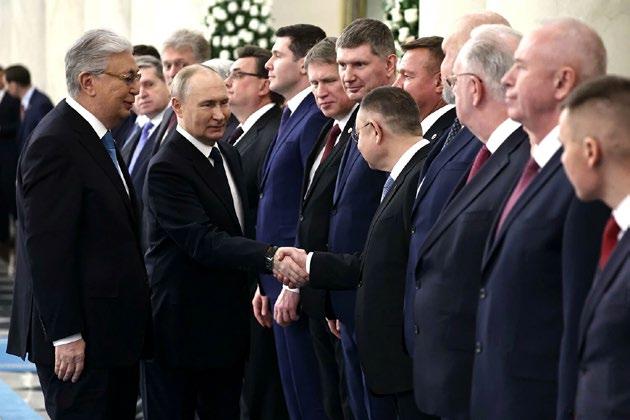
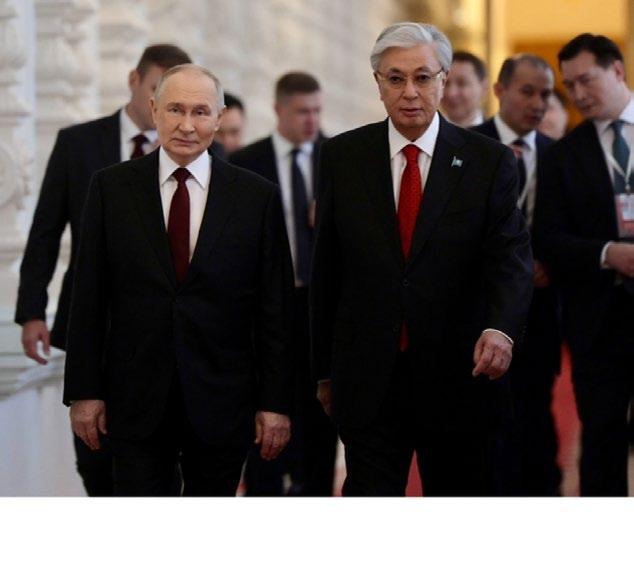
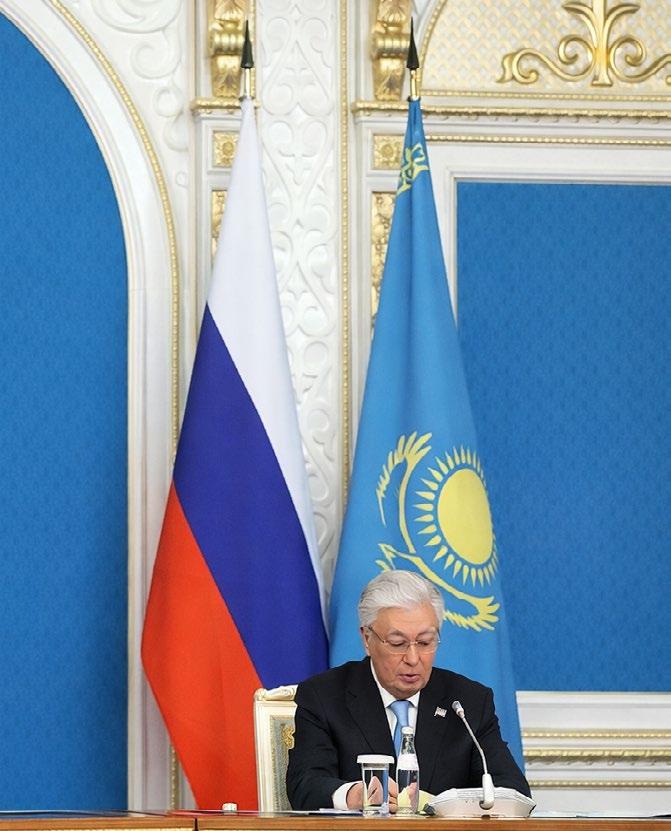
Kazakh President Kassym-Jomart Tokayev and Russian President Vladimir Putin signed a declaration in Moscow on November 12, 2025, elevating their countries’ relationship to what they have dubbed a “Comprehensive Strategic Partnership and Alliance.” The document was signed at the Kremlin during Tokayev’s working visit to Russia at Putin’s invitation.
Ahead of the trip, Tokayev wrote in Rossiyskaya Gazeta that the new declaration “will open a new era in bilateral relations, confirming an unprecedented level of mutual trust and joint readiness for closer work in all areas.” Putin described Kazakhstan as one of Russia’s closest allies and said the agreement “outlines measures to enhance regional partnerships and border cooperation.”
Expanding Economic Cooperation
During the Moscow visit, both leaders highlighted growing economic links and gas supplies. Tokayev told Russian media that bilateral trade had reached almost $30 billion in 2024 and continued to rise through 2025. Putin noted that Russia remained Kazakhstan’s largest trading and investment partner, while Tokayev said he wanted to increase joint projects in energy, manufacturing, and transport. Energy cooperation featured prominently. The two presidents discussed boosting Russian gas supplies to Kazakhstan’s northern and eastern regions and reaffirmed plans to build Kazakhstan’s first nuclear power plant in cooperation with Russia’s state company Rosatom.
They also pledged to coordinate policies in the oil and electricity sectors and maintain stable operations of the Caspian Pipeline Consortium, which carries Kazakh crude to the Black Sea via Russia. Education and technology links were also addressed; Tokayev pointed to new Russian university branches opening in Kazakhstan as evidence that bilateral cooperation extends beyond energy and trade into culture and science.
A Long Tradition of Partnership
Kazakhstan and Russia share a 7,600-kilometer border and economic and security ties through the Eurasian Economic Union and the Collective Security Treaty Organization. Their cooperation spans space exploration at the Baikonur Cosmodrome, industrial projects, and joint infrastructure development across Central Asia. Tokayev’s government has framed the alliance as a natural evolution of their longstanding partnership. “Despite the complex international situation, interaction and cooperation are actively developing for the benefit of our people,” Tokayev stated.
Balancing Major Powers
While reinforcing ties with Moscow, Tokayev has also been extremely active in his diplomatic outreach with other world powers. Just days before his Russia trip, Tokayev and his Central Asian counterparts met U.S. President Donald Trump at the White House in a C5+1 summit marking ten years of U.S.-Central Asia cooperation. At that meeting, he welcomed what he called a new stage of engagement between Central Asia and the United States and oversaw new investment deals. Earlier in 2025, Tokayev met Chinese President Xi Jinping in Astana during a China-Central Asia summit, where both sides praised record trade volumes and agreed to deepen collaboration in energy, logistics, and technology.Kazakhstan’s leadership views these parallel partnerships as part of its long-standing multi-vector foreign policy – a strategy designed to maintain balanced relations with Russia, China, the U.S., and Europe – diversifying alliances and avoiding dependence on any single power.
Cautious Neutrality on Global Conflicts
Tokayev has taken a measured stance on Russia’s war in Ukraine. As previously reported by The
Times of Central Asia, Tokayev recently stated that Kazakhstan “is not a mediator and does not see itself as such,” though it would be ready to host peace talks if both sides agreed and conditions allowed for genuine dialogue. This position typifies Kazakhstan’s pragmatic neutrality: maintaining long-standing ties with Russia while emphasizing respect for international law and peaceful solutions.
Strategic
Meaning for Both Capitals
For Moscow, the new alliance helps demonstrate that Russia is not isolated, securing affirmation of partnership from one of its key neighbors. For Astana, it reassures Russia of continued cooperation while safeguarding the flexibility to engage the U.S., China, and Europe. The declaration can therefore be seen as reinforcing one part of Kazakhstan’s multi-vector policy rather than replacing it. In practical terms, the declaration is expected to translate into expanded joint energy projects, infrastructure development, and continued political coordination within Eurasian institutions. In symbolic terms, it confirms that despite competing pressures, Kazakhstan will remain an ally of Russia while still pursuing its own independent course. As the two presidents concluded their Moscow meetings, Putin accepted Tokayev’s invitation to a state visit to Kazakhstan in 2026. The exchange closed a week that encapsulated Tokayev’s diplomatic philosophy: keeping all doors open while reinforcing each pillar of Kazakhstan’s multi-vector policy.
STRENGTHENING NEIGHBOURLY TIES: THE 21ST RUSSIA–KAZAKHSTAN INTERREGIONAL FORUM
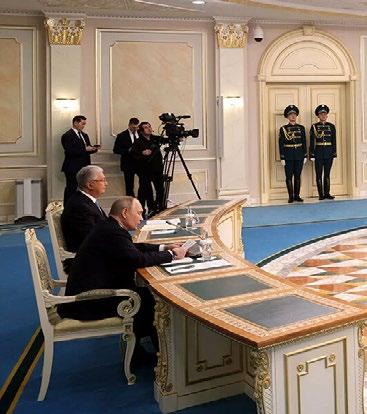
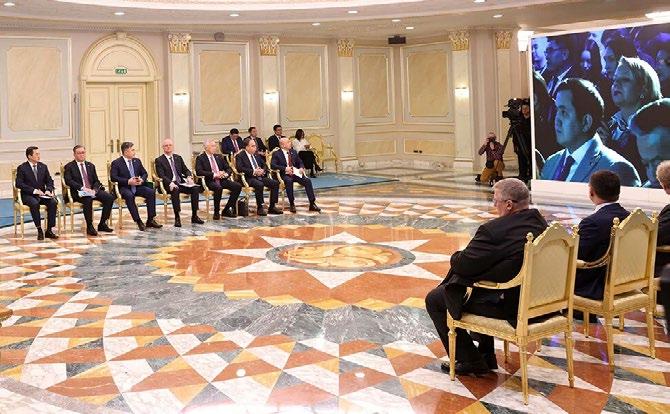
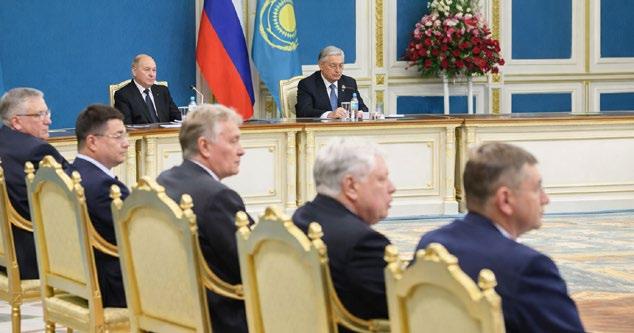
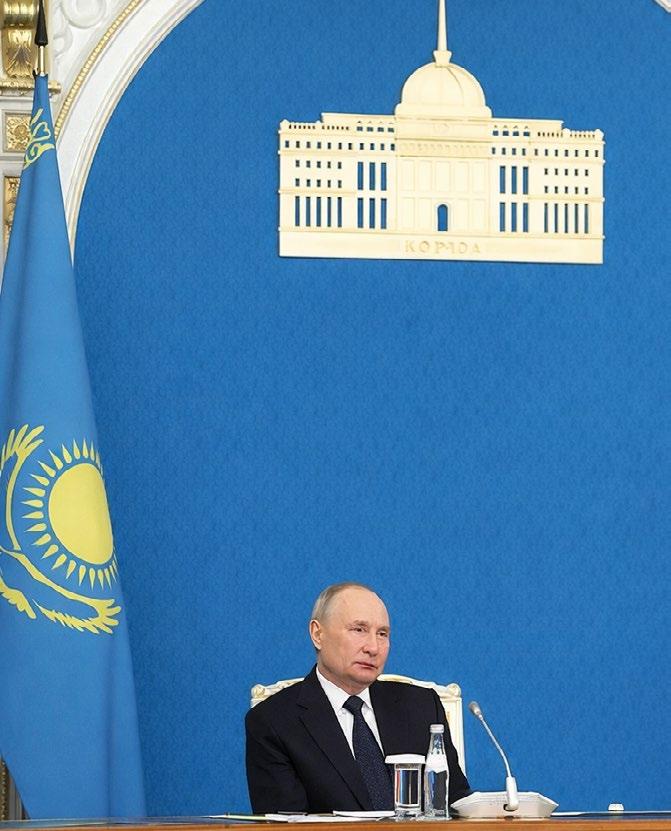
President of Russia Vladimir Putin and President of Kazakhstan Kassym-Jomart Tokayev took part, via videoconference, in the plenary session of the 21st RussiaKazakhstan Interregional Cooperation Forum. The Kazakhstan–Russia Interregional Cooperation Forum symbolises the fruitful strategic partnership between our countries based on mutual trust and mutual benefit. This unique platform serves as a catalyst for new economic, infrastructure, and humanitarian projects that are subsequently implemented at the regional level. This is of particular importance, as it is the regions that create conditions for economic growth and cooperation in industry, agriculture, science, education, and culture.
It is gratifying to note that cooperation between our countries in trade, economic, and investment spheres continues to show steady growth year after year. Russia remains Kazakhstan’s largest trade and investment partner. The trade between our countries has exceeded US$28 billion, and targeted efforts are underway to increase this figure to US$30 billion. In 2024, Russian investment reached a record level of US$4 billion, while the total cumulative volume of Russian investment in Kazakhstan, according to our data, exceeded US$27 billion. At the same time, Kazakhstan’s investment in Russia amounts to approximately US$9 billion. More than 20,000 companies with Russian capital are successfully operating in Kazakhstan, creating thousands of jobs and making a significant contribution to the dynamic growth of our economy. These impressive figures clearly demonstrate the high dynamics and potential of our cooperation. I believe we must not be complacent, we should continue to advance steadfastly and increase trade and investment volumes. It is symbolic that this forum is being held in Uralsk, a city with a rich historical and cultural heritage and great economic potential. For centuries, Uralsk has served as an important link between our peoples. The theme of this forum is of exceptional significance, as working people make a truly invaluable contribution to the economic development of our countries.
The year 2025 has been declared the Year of BlueCollar Professions in Kazakhstan, and we are now summing up its results. We have set a course for comprehensive support of blue-collar workers, for enhancing their prestige in society, and for reforming the vocational education system. Global experience shows that countries that consistently invest in these areas achieve leading positions in innovation and sustainable development. We observe that the widespread adoption of artificial intelligence technologies, comprehensive digitisation, and the automation of numerous production processes are already fundamentally transforming the global labour market. Under such rapidly changing conditions, the worker of the future must be adept at managing various intellectual systems and digital platforms. We are all fully aware that it is the high qualifications and modern skills of specialists that form the foundation for industrial growth and technological modernisation of our nations. It is for this reason that we are taking consistent measures to train professional personnel. In Kazakhstan, a conceptual framework for the introduction of artificial intelligence into the technical and vocational education system has recently been approved. The use of the state-of-theart technologies has become a mandatory element of training personnel for mechanical engineering, energy, the agro-industrial complex, and other sectors of the economy.
With the participation of an international consortium led by Rosatom, Kazakhstan has begun the construction of its first nuclear power plant. The successful implementation of this high-tech, science-driven project depends entirely on the work of highly qualified specialists. During the construction phase of the nuclear power plant, more than six thousand workers and over three thousand mid-level specialists will be employed. Concurrently, there will be increased demand for professionals with highly specialised skill sets. Strengthening the human resource potential of the nuclear industry is, therefore, of paramount importance for Kazakhstan. We are devoting considerable attention to cooperation with Russian universities in addressing this matter. The opening of a branch of the National Research Nuclear University MEPhI at Al-Farabi Kazakh National University is a clear testament to this. I recently met with the Rector of MEPhI and, at his request, issued an instruction to improve working conditions for its teaching staff and scientists. The great Abai said: “Russian science and culture are the key to the world’s treasures. To those who possess this key, everything else will come without much effort.” Of course, the realities of today are different, but the testament of the great Abai remains as relevant as ever, and these words have indeed lost none of their pertinence.
By many measures, Russian universities and Russian science are at the forefront of global scientific and educational progress.
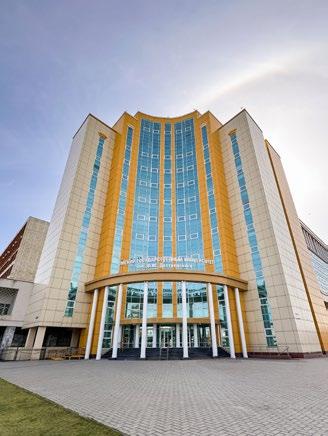
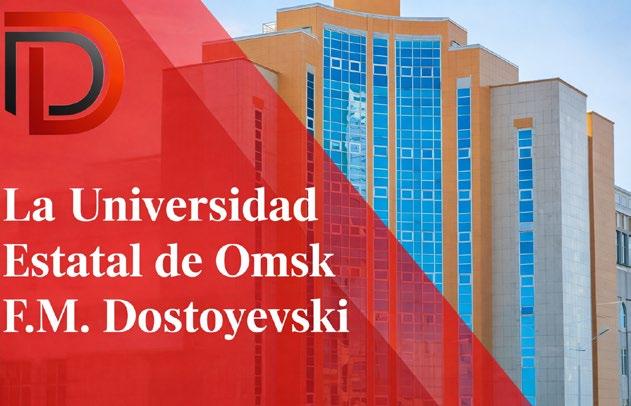
Russian universities are the principal partners for the majority of Kazakhstani universities, and we will continue to support this positive trend. A total of 1,453 agreements have been concluded between the higher education institutions of our two countries, providing for the implementation of double degree programmes and joint research and educational projects. In Kazakhstan, nine branches of Russian higher education institutions are successfully operating, with approximately four thousand students enrolled. A special mention should be made of the branch of Lomonosov Moscow State University, which was opened in 2001 with your direct involvement, Mr President. MGIMO University has also commenced its operations in Astana. A significant development for us was the opening of the first branch of a Kazakhstani higher education institution in Russia – the branch of Al-Farabi Kazakh National University is now functioning successfully on the basis of Dostoevsky Omsk State University.
For the systematic training of a new generation of personnel, Kazakhstan has also embarked on a large-scale transformation of its technical and vocational education system: a plan for 2025–2027 has been adopted, which relies on the principles of innovative management, digitisation, and internationalisation. The objective is to transform our colleges into centres of advanced competencies, where theory is organically combined with practice and education with production. Therefore, we are actively developing the dual education model. Currently, more than 100,000 students are undergoing practical training at 18,000 enterprises; over 4,000 companies have assumed sponsorship of 600 colleges, providing on-the-job training, mentorship, and equipment upgrades. A project for free technical and vocational education is being implemented, and a targeted training mechanism with guaranteed employment has been introduced. Simultaneously, career guidance work is underway to ensure that studying at colleges is perceived by young people as their first conscious step towards mastering a genuinely in-demand profession.
Special attention is being paid to enhancing the social status and qualifications of the teaching staff. As part of the internationalisation of technical and vocational education, international standards are being introduced, foreign managers are being engaged, and academic mobility is being developed. More than 60 colleges in Kazakhstan have already established cooperation with partners from 30 countries, while nine of our colleges are successfully working with Russian colleges and enterprises. The state is taking measures to enhance the prestige of blue-collar professions and to foster a new culture of labour, alongside a greater recognition of the working people’s contribution to society. Ultimately, our primary goal is to turn blue-collar professions into real success stories for hundreds of thousands of our citizens.Kazakhstan and Russia are consistently deepening their partnership in personnel training – an exceedingly important area of our joint work. I am confident that the intensification of our educational and industrial ties will serve to improve the quality of specialist training and accelerate the adoption of modern technologies. In this context, the role of the regions can hardly be overestimated, as this sphere of joint efforts is directly related to the well-being of our citizens.
Colleagues, friends, Kazakhstan and Russia are reliable, time-tested strategic partners and allies. Our countries share a common history, common memory, and common values. The friendship between our peoples is predestined by fate itself. Thanks to a constructive and trusting dialogue at all levels, Kazakhstan-Russia cooperation is being enriched with new substance. Our world’s longest land border is a vivid manifestation of the eternal friendship and unbreakable neighbourly relations of our peoples. Taking this opportunity, I wish to express my sincere gratitude to the President of Russia for his unwavering attention to and support of the forum’s activities, as well as for strengthening our mutual cooperation across all spheres. I am convinced that through our joint efforts, we will achieve all the goals we have set.
I wish the forum participants productive work. Thank you for your attention.
President of Russia Vladimir Putin: Friends, President Tokayev and I are delighted to greet the participants and organisers of the 21st RussiaKazakhstan Interregional Cooperation Forum, which is being held in Uralsk, as you know. The forum has brought together the heads of Russian and Kazakhstani regions, entrepreneurs, legislators, politicians, businesspeople and experts, that is, all those who are closely involved in the practical efforts to develop multifaceted Russian-Kazakhstani ties. Regional ties are a solid foundation for the entire complex of our bilateral relations. They span a wide range of areas, including the economy, trade, energy, transport, agriculture and digital technology. Overall, 76 of the 89 regions of the Russian Federation maintain direct contacts with all 17 regions of Kazakhstan. Your forum has convened at a time when Moscow is hosting the President of Kazakhstan on a state visit. We have held extremely substantive and fruitful talks, including in a relaxed and informal setting yesterday, and this work continued today. Based on the results of these talks, we will sign a large set of documents, in particular, a declaration on comprehensive strategic partnership and alliance between Russia and Kazakhstan. It is logical that this key document will include our plans for enhancing and strengthening our interregional and cross-border cooperation.
Our countries are successfully implementing an interregional cooperation programme until 2028, which is aimed at creating favourable conditions for the all-round development of our regions and, most importantly, for improving the quality of life for our citizens. It is important that the dozens of new interregional agreements, memorandums and commercial contracts signed during your forum are aimed at facilitating the implementation of this programme, which is vivid proof of the Russian and Kazakhstani regions’ commitment to consistently building up close cooperation, selecting and implementing promising joint projects. This forum is dedicated to a highly relevant theme: Skilled Trades as a Driving Force of Economic Growth. This focus is central to boosting labour productivity, training a capable workforce, and tackling socioeconomic development challenges in both Kazakhstan and Russia. There is, without a doubt, a particularly high demand for skilled personnel in applied fields. This is driven by our nations’ import substitution programmes, the creation of domestic technological production, and the localisation of high-value-added goods. In Russia, we have come to understand that the goal is not merely to substitute imports, but to build our own technological platforms. This is the objective we must strive for, aspire to, and train our personnel to achieve.
In your numerous thematic sessions and seminars, you have discussed in detail how to help young people choose their future profession, discover their passion, and make a personal contribution to strengthening the industrial potential of our nations. I am pleased to note that joint projects to train engineers and technicians are already underway in both Russia and Kazakhstan, including at the regional level. At the state level, we are implementing largely similar programmes to promote skilled trades. We are taking steps to align our vocational education systems with the demands of the economy, and cooperation between regions, educational institutions, and businesses is becoming more and more effective. A prime example is Russia’s federal project, Professionalitet – for three years now, this initiative has been successfully creating educational clusters directly within enterprises, ensuring the targeted training and subsequent employment of specialists. It seems that we could consider developing a joint technical training programme for the regions of both our countries. This is especially relevant as a significant number of Kazakhstani students coming to Russia choose engineering disciplines. In total, approximately 55,000 young, highly promising Kazakhstani citizens are studying at universities, colleges, and technical schools across the Volga region, Siberia, the Urals, Moscow, and St Petersburg.
Furthermore, eight major Russian universities have established branches in Kazakhstan (President Tokayev has listed several of them), including Moscow State University, the Moscow Engineering Physics Institute (MEPhI), and Mendeleev University of Chemical Technology. The Skolkovo Institute of Science and Technology is developing cooperation with the Kazakhstani partners too: work is underway on a joint project with Almaty National Technical University to train specialists for Kazakhstan in digital transformation, telecommunications, renewable energy, and artificial intelligence. The Russian Presidential Academy of National Economy and Public Administration is involved in training and professional development of Kazakhstani managers. We have also seen successful partnership agreements between universities in the Orenburg and Saratov regions and a number of Kazakhstani technical universities. Overall, Kazakhstan is among the top countries in terms of the number of young people taking part in student exchanges with Russia. This is quite natural, considering the geographical proximity between the two countries. By the way, Krasnoyarsk will be hosting the next festival of youth and students in the autumn of 2026 – it goes without saying that we will be delighted to see our friends from Kazakhstan there.
I would like to draw your attention to the youth and student labour brigades. This movement has been gaining traction in Russia. Their participants get a unique opportunity to discover workers’ professions and gain valuable hands-on experience. Incidentally, it is in Kazakhstan that the history of Soviet student brigades has its roots. In fact, the first volunteer students headed to what is today the North Kazakhstan Region to develop new lands for agricultural purposes. Sirius, a Russian educational centre, operates a network of affiliated institutions in almost all our regions to identify talented young people. Together, they have been making a major contribution to inspiring school students to choose vocational training. In 2024, Sirius opened a branch of this kind at Baikonur to offer school students the opportunity to study space and technology. Sirius has also been involved in opening a school for talented children in Almaty. Let me note that Russia regularly holds professional excellence competitions for university and school students. Young people from Kazakhstan have been active in taking part in these events, which, to be honest, is something that truly makes us happy. In August, competitors from Kazakhstan were among the winners in the final round of the Professionals, a Russian championship that took place in Kaluga.
They succeeded in several disciplines, including electrical installation, robotics and network administration. Kazakhstan’s team also performed well at the innovative competencies competition which took place in September in Veliky Novgorod. All these and many other matters dealing with vocational and professional training at every stage, from schools to universities, fall within the purview of the Shaping the Future forums. Held in Russia, they bring together education ministers. The next forum will take place in Kazan in June 2026. Of course, Kazakhstan’s delegation has our invitation to attend these events.
This is to say that our regions have a lot of potential for working together not only in education and training, of course, but also on all other economic and social matters in all their aspects. I am fully convinced that the regions of Russia and Kazakhstan will continue to work together, just as they always have, by relying on the extensive network of direct ties and the plethora of networking opportunities available to them. This way, they can make their own meaningful contribution to further enhancing the partnership and allied relationship between Russia and Kazakhstan.
CONNECTING ACROSS BORDERS: PRESIDENT TOKAYEV MEETS KAZAKHSTANIS IN
JAPAN
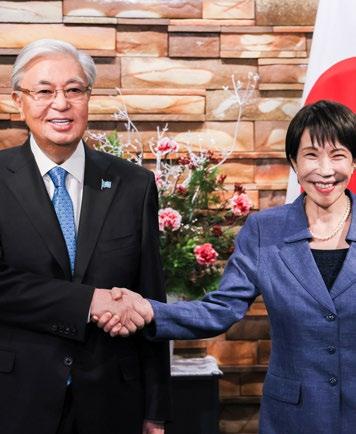
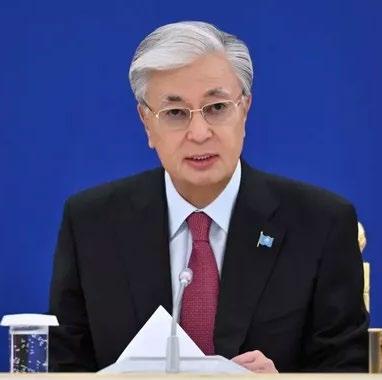
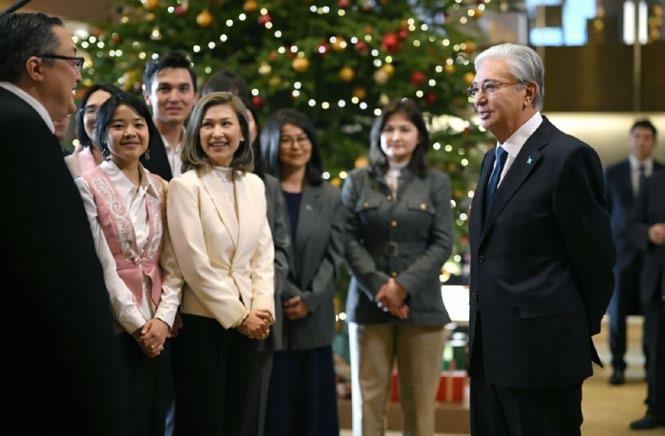
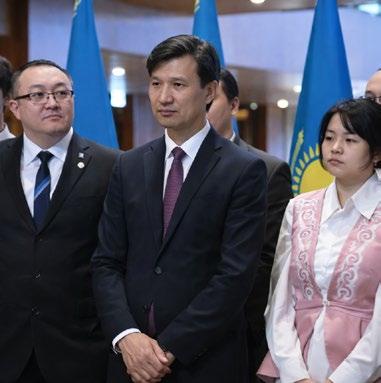
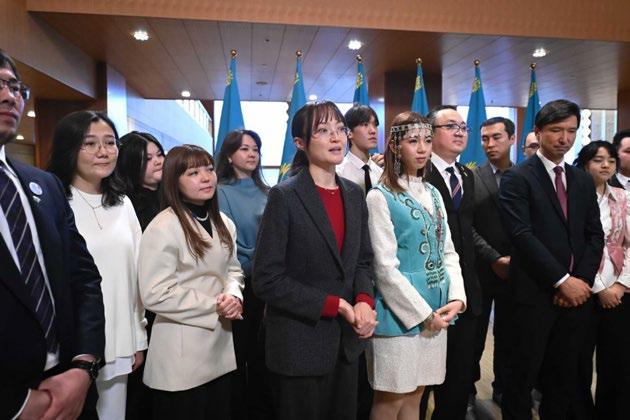
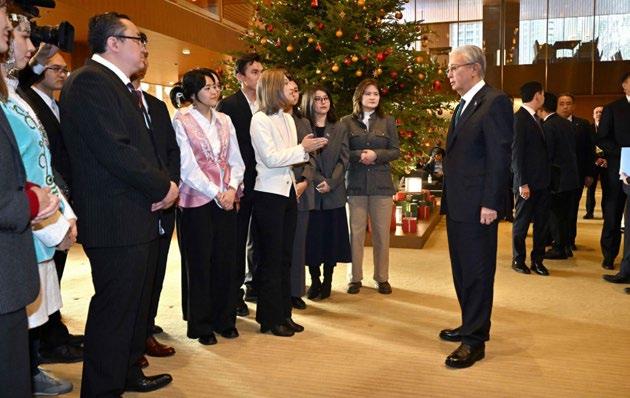
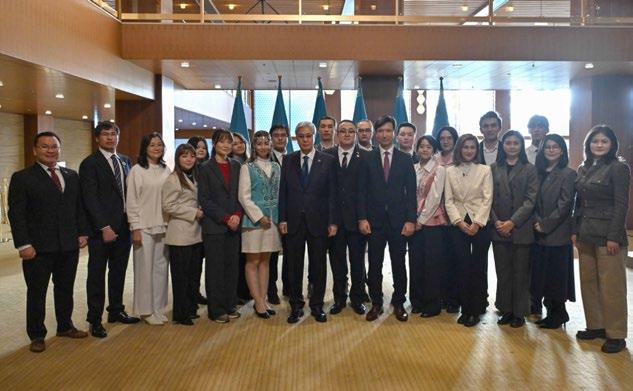
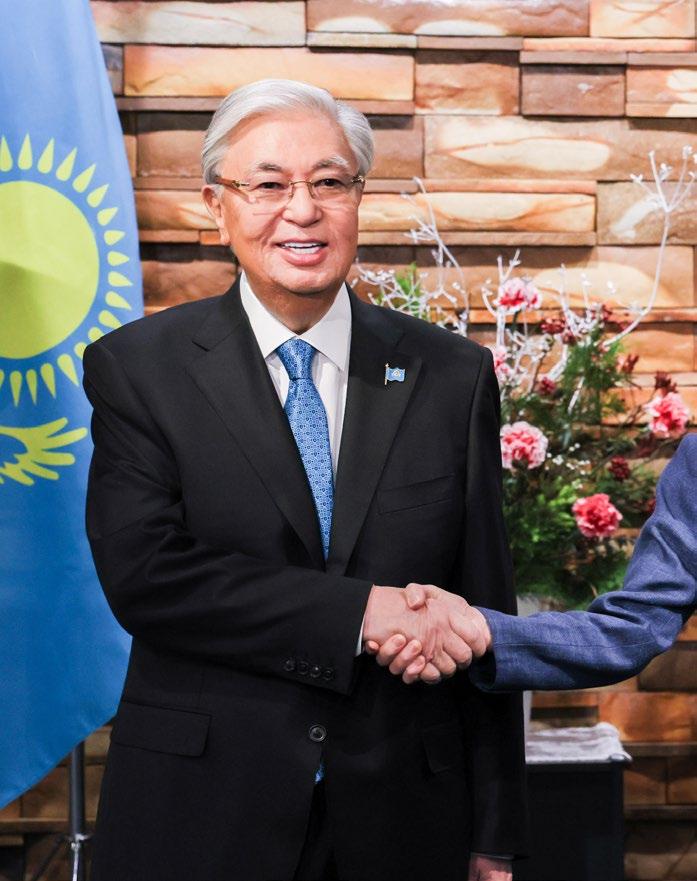
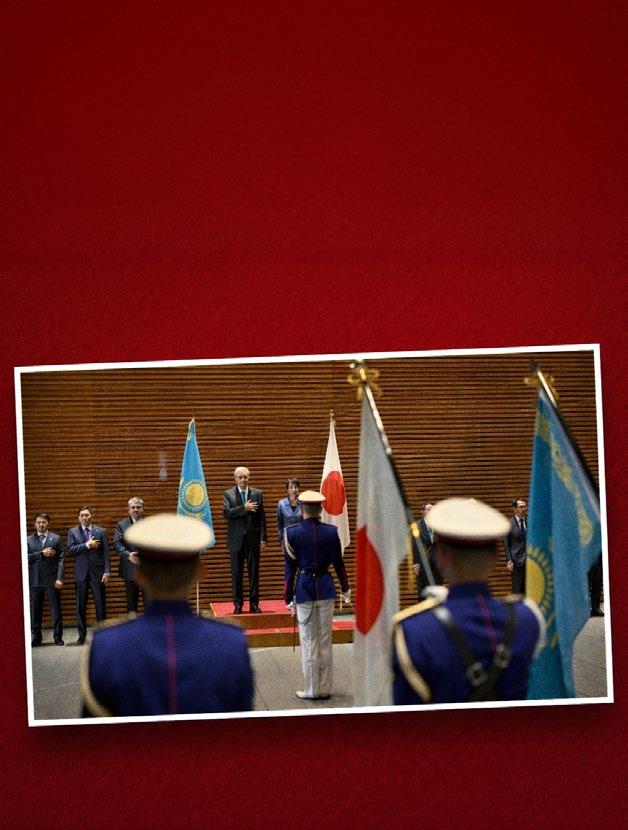
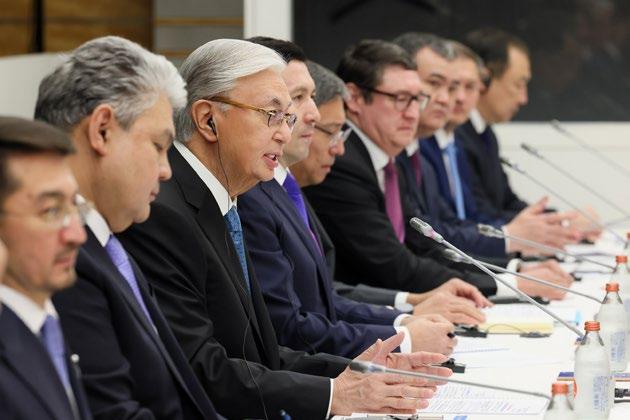
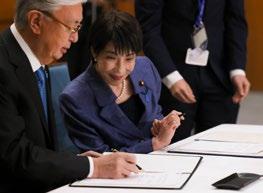
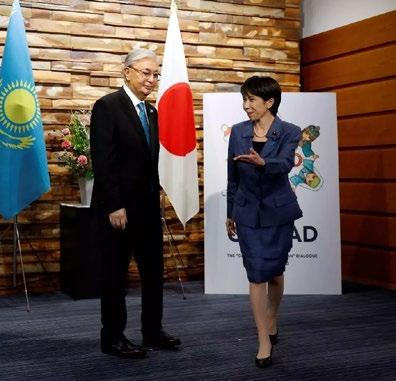
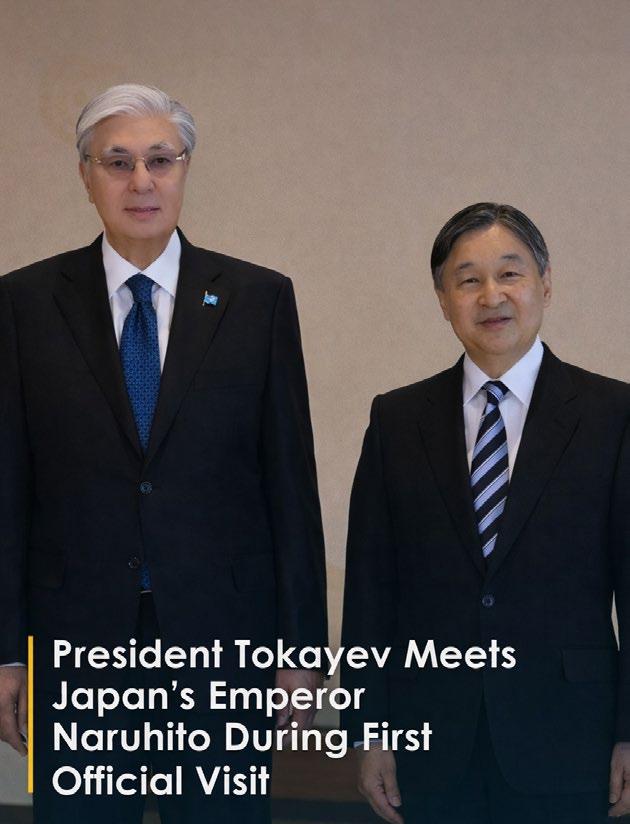
President Kassym-Jomart Tokayev has met the citizens of Kazakhstan currently studying or working in Japan, Qazinform News Agency reports citing the Akorda press service. During a conversation with compatriots, the Head of State emphasized the importance of studying the experience of developed countries such as Japan.
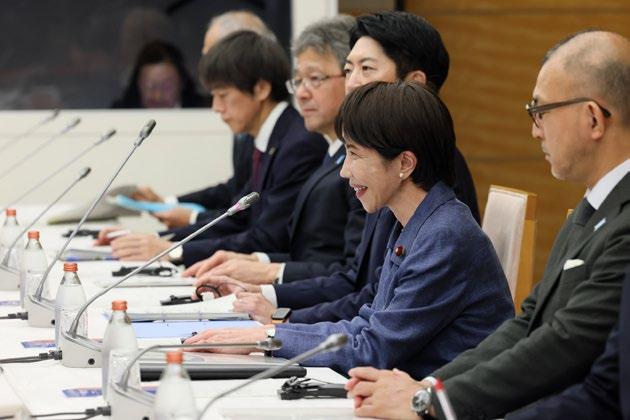
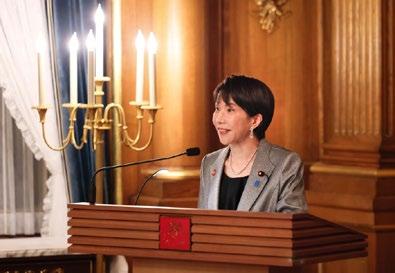
“I am confident that this visit will give a new impetus to the relations between our countries. Japanese side also attaches special attention to this visit. Today, I will hold a meeting with the Prime Minister .
Undoubtedly, our cooperation will have great prospects. You know, that Kazakhstan is entering a new stage of its development. This year, our economy grew by more than 6 percent, which is a very good indicator. However, we must not stop at what has been achieved. Ahead of us lie tasks to reduce inflation and modernize infrastructure. In the future, Kazakhstan must become a digital state. We have great goals before us,” said KassymJomart Tokayev. Professor Serik Meirmanov, Vice President of Ritsumeikan Asia Pacific University, Arailym Khassan, founder of ARIA Consulting, Abdibek Kalibek, Dean at Showa and Juntendo medical universities, as well as Eldar Toleubay, AI Engineer at Ailia, told the President about their professional achievements in the Land of the Rising Sun and shared their plans for the future. Earlier, President Tokayev and Emperor Naruhito held talks, during which he emphasized that the Land of the Rising Sun had long inspired the people of Kazakhstan with its discipline and resilience. According to him, the two countries are bound by
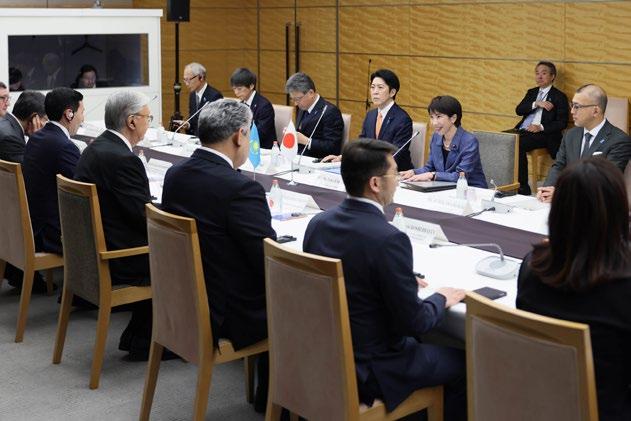
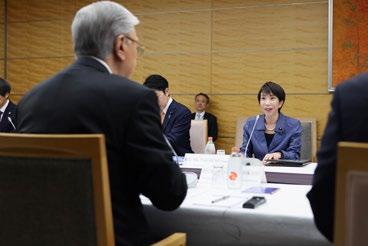
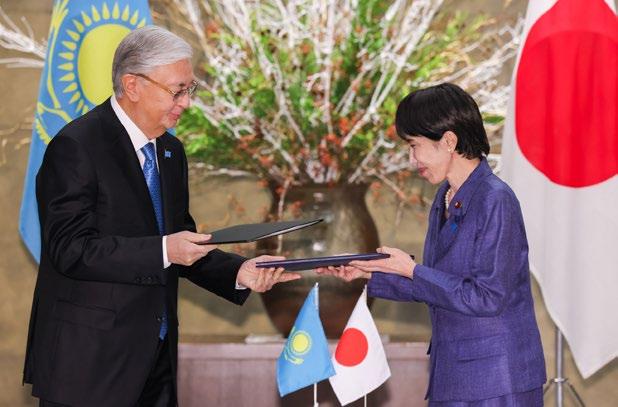
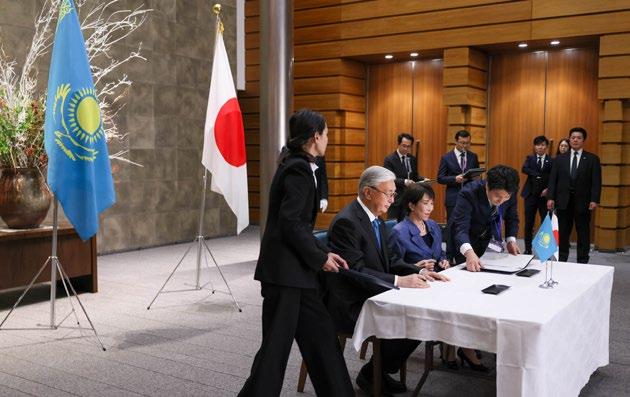
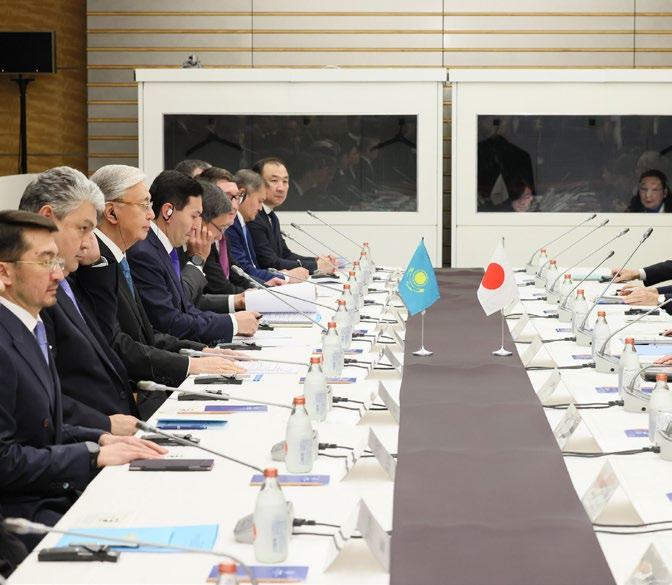
longstanding friendly relations based on mutual respect and fruitful cooperation across various fields. Emperor Naruhito of Japan held an official reception in honor of President of Kazakhstan Kassym-Jomart Tokayev. The Head of State visited Meiji Jingu Shrine, the largest Shinto shrine in Tokyo. As it was reported, Kassym-Jomart Tokayev arrived in Japan for an official visit. The President of Kazakhstan is expected to meet in Tokyo with representatives of major Japanese businesses. The sides are expected to sign commercial agreements worth over 3.7 billion US dollars. Qazinform News Agency correspondent explored what connects Kazakhstan with the Land of the Rising Sun and which new areas could take the partnership between Astana and Tokyo to a new level. In an exclusive interview with Qazinform News Agency, Japan’s Ambassador to Kazakhstan, Yasumasa Iijima, speaks about the future of bilateral cooperation, the development of the Middle Corridor, business initiatives, environmental challenges in the Caspian region, and joint efforts on nuclear disarmament.
Strengthening Political and Strategic Dialogue
At the core of the visit was the reaffirmation of long-standing diplomatic relations between Kazakhstan and Japan, which have steadily grown since the establishment of formal ties in the early 1990s. President Tokayev emphasized Kazakhstan’s commitment to a balanced, multi-vector foreign policy, positioning the country as a reliable partner
in Eurasia and a bridge between Asia and Europe. Discussions also addressed regional and global issues, including economic resilience, supply chain stability, nuclear non-proliferation, and sustainable development. Kazakhstan’s role as a leader in regional diplomacy and its experience in peacebuilding initiatives resonated strongly with Japan’s emphasis on international cooperation and rule-based global order.
Expanding Economic Cooperation
Economic collaboration featured prominently during the visit. Japan remains one of Kazakhstan’s most important Asian investors, particularly in sectors such as energy, mining, manufacturing, and infrastructure. President Tokayev invited Japanese companies to further participate in Kazakhstan’s economic modernization, industrial diversification, and large-scale infrastructure projects.
Special attention was given to cooperation in critical minerals, rare earth elements, and advanced materials—areas where Kazakhstan’s resource potential aligns with Japan’s technological expertise. Both sides expressed interest in joint ventures that move beyond raw material extraction toward valueadded production, innovation, and localization of high-tech industries.
Focus on Green Energy and Sustainability
The visit also highlighted shared priorities in environmental protection and climate action. Kazakhstan’s ambitious goals for carbon neutrality and renewable energy development align closely with Japan’s global leadership in green technologies. Discussions explored cooperation in renewable energy, hydrogen production, energy efficiency, and smart infrastructure. President Tokayev emphasized Kazakhstan’s efforts to transition toward a greener economy, noting that Japanese expertise could play a key role in supporting sustainable industrial practices and environmental innovation across Central Asia.
AUTOMATION TRANSPORTATION & AVIATION
KAZAKHSTAN
A Market on the Move: GREAT WALL MOTOR’S KAZAKHSTAN OPPORTUNITY
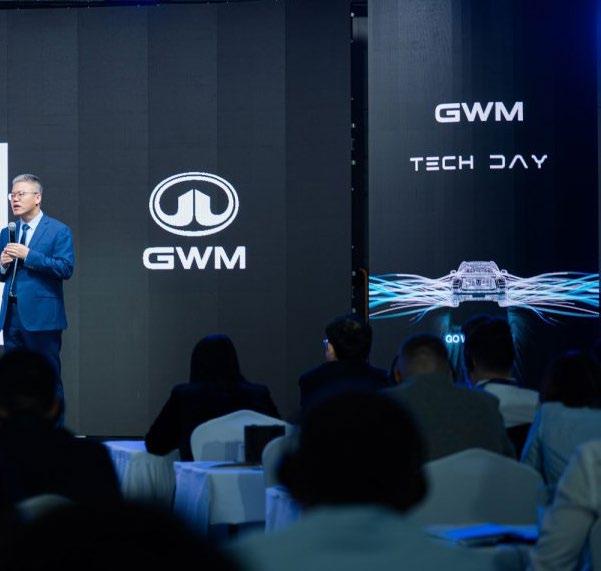
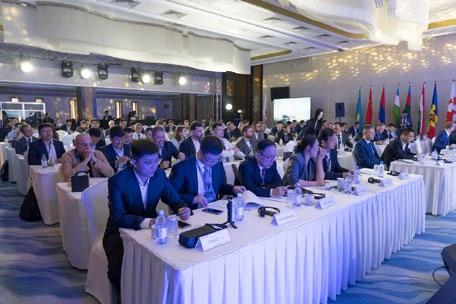
The summit brought together over 100 participants, including representatives from Asian and CIS countries, such as China, Kazakhstan, Moldova, Mongolia, Georgia, Armenia, Azerbaijan, Pakistan, and Uzbekistan. At the event, GWM presented its strategic development directions for the region, new models, and innovative technologies that will form the basis for the brand’s further international expansion.
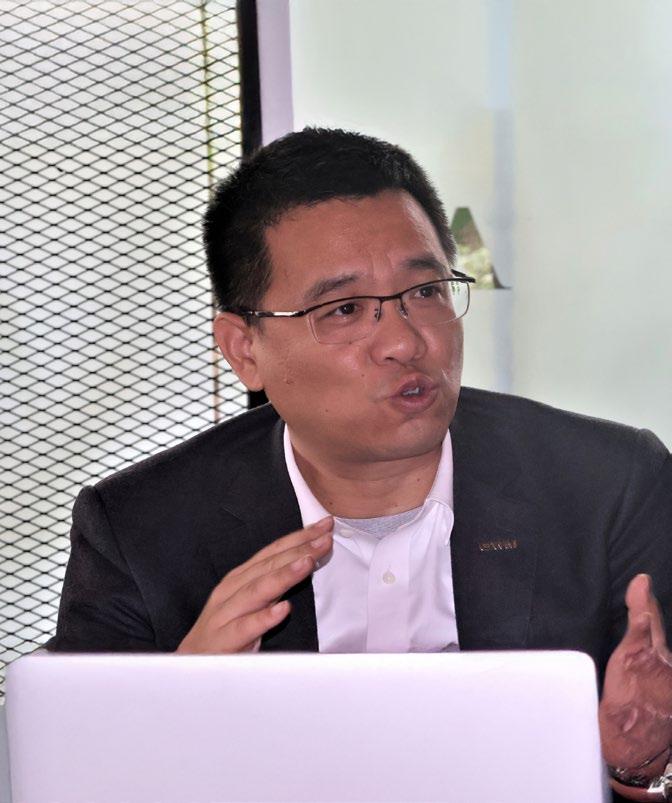
Kazakhstan, as the summit speakers emphasized, plays a special role in this strategy—not only as a key market but also as a promising regional center for the production and testing of GWM’s engineering technologies.Parker Shi, President of GWM International, noted that the choice of Almaty for the first Asia-Pacific summit was not accidental. Today, Kazakhstan accounts for over 50% of the company’s total sales in the region, while it is only five years since the brand has entered the Kazakhstani market. During this time, GWM, in partnership with the Kazakhstani company Astana Motors, has strengthened its position in the country: The Kazakhstani distributor has established a network of 50 Havel and TANK dealerships in 20 cities across Kazakhstan, including the capital Astana, the megacities of Almaty and Chimkent, and regional centers, selling over 30,000 vehicles.
“Kazakhstan is our important strategic partner,” noted Mr. Shi. “We don’t just sell cars here; we invest in developing the ecosystem: we establish production, train technical personnel, create jobs, and share technologies.”
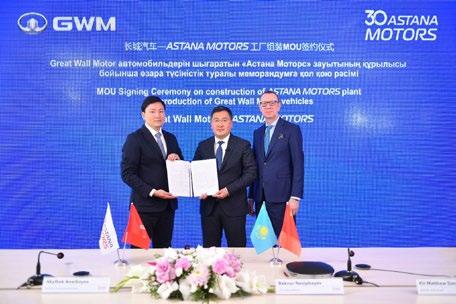
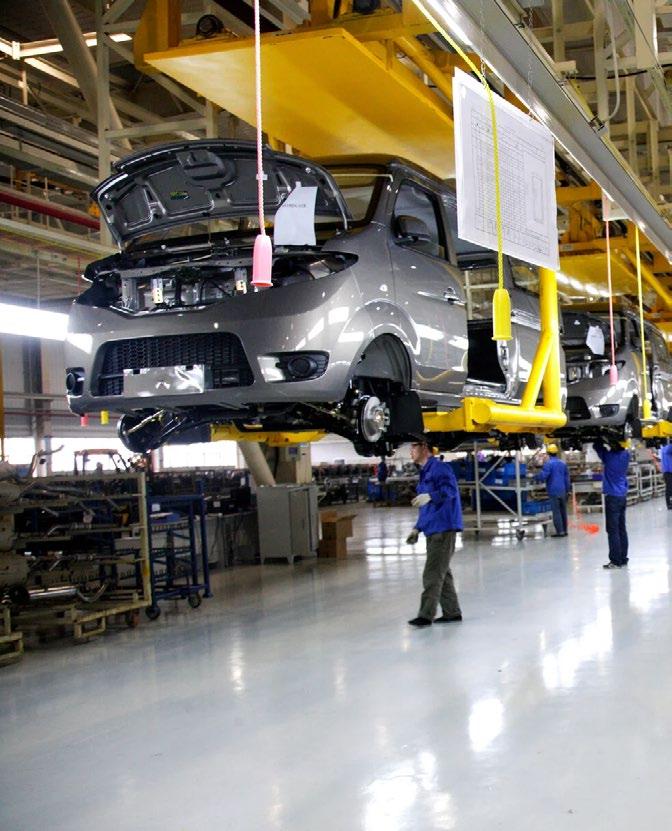
“GWM became the first representative of the Chinese auto industry in Astana Motors’ portfolio. In 2021, we signed a distribution agreement, and today, GWM is already among the top five most popular car brands in Kazakhstan. All this has allowed us to start production of Havel vehicles at the Astana Motors Manufacturing Kazakhstan plant in September 2025, and from mid-November, we plan to begin producing a test batch of TANK vehicles,” stated Be knur Nessipbayev, CEO of Astana Motors. Astana Motors invested over 202 billion tinge to construct the Astana Motors Manufacturing Kazakhstan plant and equip it with high-tech machinery. In addition, in the summer, GWM and Astana Motors agreed to localize the production of GWM pickups at the Almaty plant for commercial, specialized, and passenger vehicles.
“Together with our partner Astana Motors, we launched vehicle production in Kazakhstan this year. This marks a shift from a model of ‘selling cars in Kazakhstan’ to a model of ‘producing cars in Kazakhstan and exporting them to other countries’,” stated Mr. Shi. Thus, in the foreseeable future, Kazakhstan will become not only a GWM vehicle production centre for the domestic market but also an export base for deliveries to countries in Central Asia.
According to Parker Shi, GWM’s goal is to make Kazakhstan not just a sales centre, but a regional production and technology hub. In the next five to ten years, the company intends to build a chain here that integrates production, engineering solutions, and research programs.
Investment in Innovation
The foundation of GWM’s strategy is technological leadership. For three consecutive years, GWM’s R&D investments have exceeded 10 billion yuan annually. More than 25,000 of the company’s engineers are working on creating proprietary innovative developments and platforms, and the brand operates Asia’s largest safety lab, as well as aerodynamic and climatic test sites.
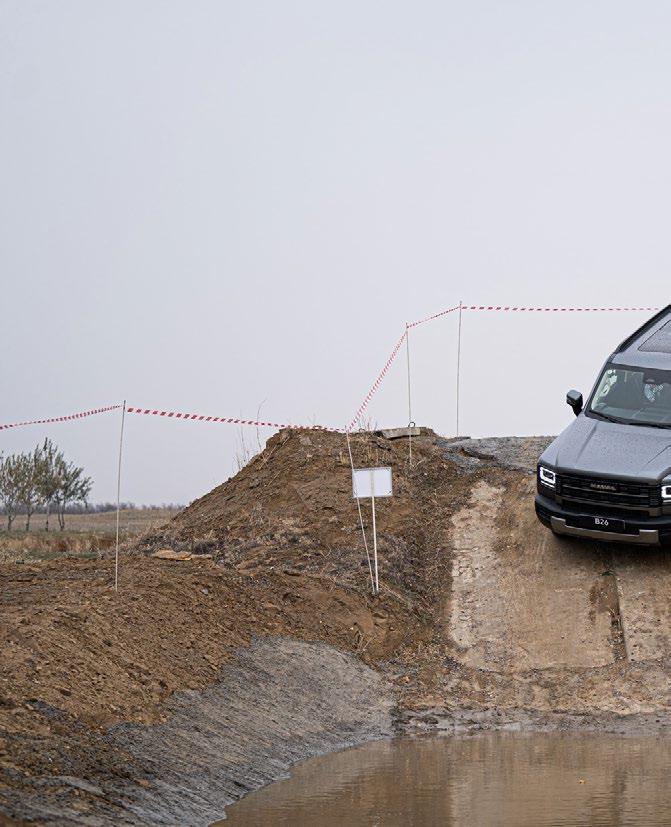
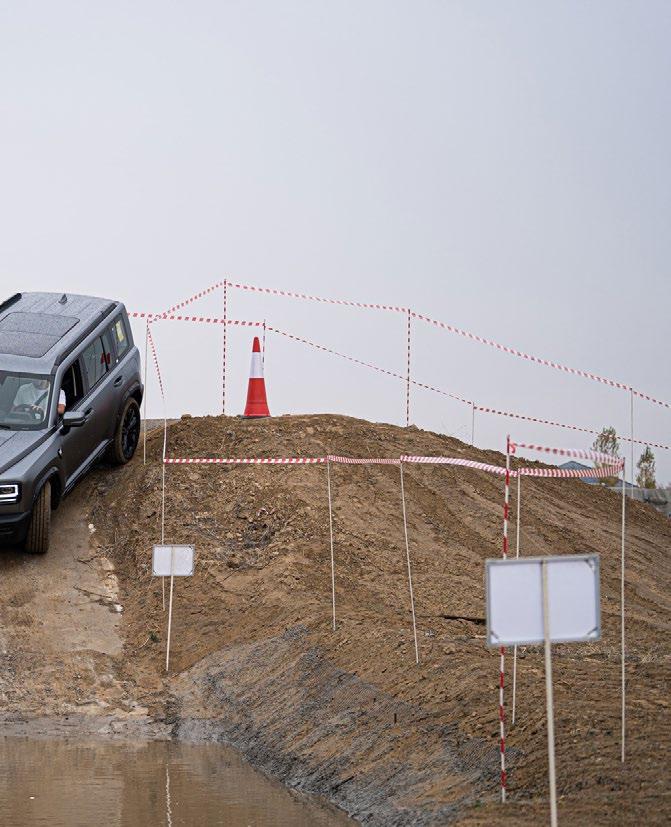
“Technology is the main driving force. Only continuous investment in our own innovative developments allows us to ensure sustainable growth and competitiveness,” emphasized Parker Shi. One such key innovative development was the Hi4 hybrid all-wheel-drive system, presented during the summit. Richard Zhu, Chief Hybrid Systems Engineer, spoke in detail about the development of Hi4 and its advantages. This technology was created specifically for the conditions of Central Asia, with its diverse climate, terrain, and operating conditions. Hi4 is an all-wheel-drive system with two electric motors (front and rear) and intelligent energy distribution. It analyses road conditions in real-time and automatically selects one of nine driving modes.
“Our goal is for the car to adapt to the road on its own and never let the driver down,” noted Zhu. “We tested the system in extreme winter and summer conditions, on sand, and on mountain passes. The results were excellent everywhere.” The system delivers a total power of 268 kW (350 hip) and 760 NM of torque, accelerating the car to 100 km/h in just 4.8 seconds. At the same time, fuel consumption is 5.3 litters per 100 km according to the NEDC cycle. In heavy city traffic, the car drives in electric mode only, and on the highway, it automatically switches to hybrid mode. For Kazakhstani drivers, this means economical operation while maintaining power and reliability—something especially valuable on local roads.
Richard Zhu pointed out that Hi4 is not just a technological novelty, but a real solution for local conditions: “Whether it’s a trip around Almaty, a weekend in the mountains, or winter roads in the north—this system can handle any task.”
New Models for Kazakhstan
The new model line-up was presented by Liu Boa, General Manager of the GWM Technology Centre. In the first quarter of next year, the Havel V7 will appear on the Kazakhstan market—a multifunctional SUV designed for both city driving and off-road conditions. The vehicle will be available with gasoline, hybrid, and plug-in hybrid powertrains.
Since its launch in the Chinese market in 2023, the Havel V7 has consistently maintained its leadership in the hybrid boxy SUV segment. Addition, the company is preparing a facelift for the popular H6 and Tank 500 models, which will further strengthen GWM’s position in key market segments.
Becoming an Organic Part of Kazakhstan
“We don’t just bring a finished product; we integrate it into the local context,” emphasized Liu boa. “Our goal is to create the feeling that our cars were originally designed for Kazakhstanis.”
Therefore, all new vehicles undergo adaptation not only to the region’s conditions—from high temperatures to severe frosts and high humidity—but are also adapted to the local mentality, which means that GWM cars will soon “learn” the Kazakh language. “Introducing the Kazakh language is a complex but necessary task, and we are actively working on its implementation,” noted Parker Shi. In addition, GWM in Kazakhstan intends to develop its brand community. Flagship GWM Brand Experience Spaces will appear in Almaty and Astana. They will become not just showrooms, but points of interaction with users. Planned initiatives to help bring the brand closer to Kazakhstanis also include the Tank Off-Road Academy, Havel Family Day, and the Service Elite Training Centre.
“We are building a brand based on trust and mutual respect,” said Parker Shi. “It is important for us that Kazakhstani customers feel part of the great GWM story.” The GWM Asia-Pacific Summit – 2025, held in Almaty, was not only a presentation of new models but also a statement of intent. Kazakhstan has solidified its status as a key partner for Great Wall Motor in Central Asia. “We are here for the long haul,” summarized Parker Shi. “Kazakhstan is the place where the future of GWM is being born.”
FOUR BILLION STRONG: KAZAKHSTAN’S
AUTOMOTIVE INDUSTRY GAINS MOMENTUM
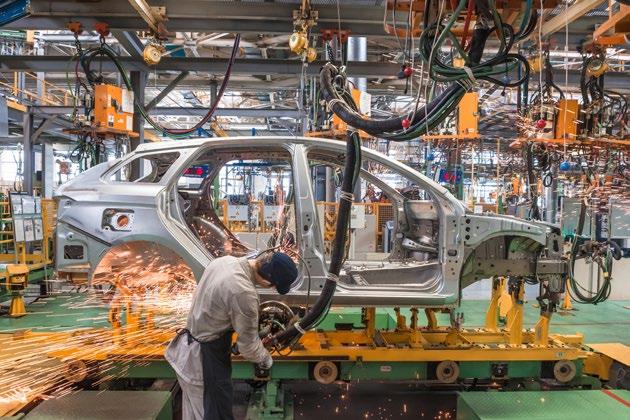
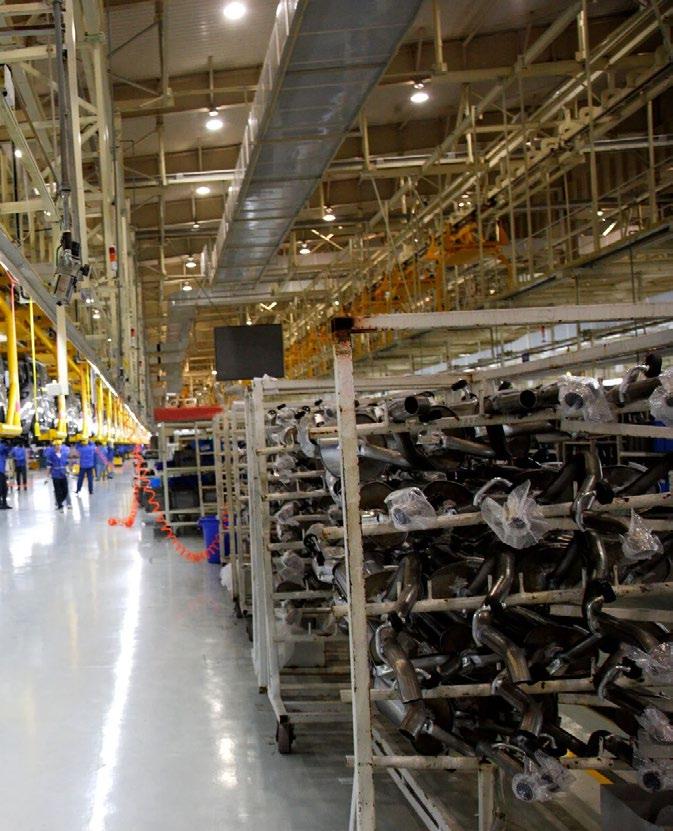
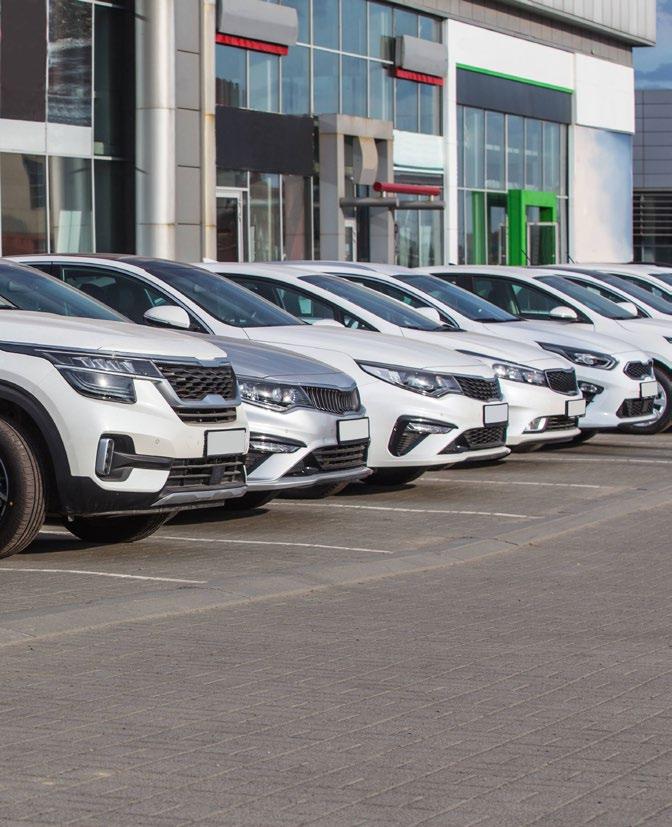
Kazakhstan’s automotive industry is closing 2025 on a historic high, emerging as one of the most dynamic segments of the country’s manufacturing sector. With total production value nearing $4 billion in the first 11 months of the year, the industry has already surpassed its full-year 2024 performance, underlining the growing scale, sophistication, and economic importance of domestic vehicle manufacturing.
According to official data from the Bureau of National Statistics, Kazakhstan’s automotive output from January through November 2025 reached approximately $3.9 billion—around $251 million more than the total production value recorded in all of 2024. This milestone signals not only quantitative growth but also a qualitative shift toward higher value-added manufacturing and deeper industrial localization.
Record November Performance Sets the Tone
November 2025 proved to be a standout month for the sector. Kazakhstan produced 22,580 units of automotive equipment during the month, valued at roughly $601 million. This represents a 25.5% yearon-year increase in production volume and marks the highest monthly output ever recorded by the industry.
The November figures included a record number of passenger cars, trucks, buses, trailers, and specialized vehicles, reflecting the sector’s increasing diversification. The strong monthly performance reinforced confidence that the industry will comfortably cross the $4 billion threshold by the end of the year, a target once considered ambitious for a relatively young automotive ecosystem.
In total, Kazakhstan produced 146,163 vehicles during the first 11 months of 2025, up 15.7% compared to the same period in 2024. While physical output volumes remained broadly comparable to previous years, the sharp rise in total production value points to a structural transformation taking place within the industry.
Rising Added Value and Manufacturing Complexity
One of the most significant trends underpinning the industry’s growth is the steady increase in added value. Automotive production in Kazakhstan was valued at around $3.4 billion in 2023 and $3.6 billion in 2024, making the near-$4 billion figure for 2025 a notable leap.
This growth reflects the expanding complexity of domestic manufacturing processes. Local plants are increasingly engaged in higher stages of assembly, integration of advanced components, and improved production standards. The shift is helping Kazakhstan move away from simple assembly operations toward a more resilient and technologically capable automotive sector. As a result, automotive manufacturing now accounts for 41.7% of Kazakhstan’s overall machinebuilding industry for the first 11 months of 2025, strengthening its position as a cornerstone of the country’s industrial diversification strategy.
Regional Leaders and Production Hubs
Industry performance across Kazakhstan remains uneven, highlighting both progress and
challenges in regional development. According to the Kazakhstan Automobile Union (KAS), Allur, based in the Kostanay region, retained its status as the country’s leading automotive producer Allur, based in the Kostanay region, retained its status as the country’s leading automotive producer. The company manufactured more than 79,000 vehicles during the reporting period, accounting for a significant share of national output.
Southern Kazakhstan emerged as another major growth engine. More than 48,000 vehicles were assembled at the Hyundai Trans Kazakhstan and Hyundai Trans Almaty plants, representing a robust 26.7% year-on-year increase. These facilities have become key pillars of Kazakhstan’s passenger car production, benefiting from strong domestic demand and stable supply chains. In the Karaganda region, QazTehna delivered one of the most impressive growth performances of the year, expanding commercial vehicle production by over 50%. The surge reflects rising demand for trucks, buses, and specialized vehicles linked to infrastructure development, logistics, and public transport modernization.By contrast, production declined in eastern Kazakhstan, particularly in Semey. The downturn underscores persistent regional disparities in industrial capacity, investment levels, and workforce specialization—
issues policymakers continue to address through targeted industrial support programs.
Popular Models and Market Alignment
Kazakhstan’s production growth has been closely aligned with consumer preferences. The Chevrolet Cobalt, Hyundai Tucson, Kia Sportage, Hyundai Mufasa, and Hyundai Elantra topped the list of vehicles produced during the period. These models also ranked among the most popular choices on the domestic market, indicating effective coordination between manufacturers and demand trends. The focus on affordable, reliable, and fuel-efficient vehicles has helped sustain high factory utilization rates, even amid global market uncertainties. Local production has also played a role in stabilizing prices and improving availability for Kazakh consumers.
Sales Revival Fuels Industrial Momentum
The surge in production coincided with a strong rebound in consumer demand. As previously reported by The Times of Central Asia, Kazakhstan set a new national car sales record in November 2025. Rising household incomes, improved access to financing, and expanding model ranges have contributed to the revival of the domestic automotive market. Higher sales volumes have provided manufacturers with greater predictability, encouraging capacity expansion and longer-term investment planning. In turn, this virtuous cycle has strengthened the broader automotive ecosystem,
including suppliers, logistics providers, and service networks. As Kazakhstan’s automotive industry approaches the symbolic $4 billion milestone, it stands as a clear example of the country’s industrial transformation. Continued investment in localization, workforce skills, and technological upgrading will be critical to sustaining momentum beyond 2025. While regional imbalances and external market risks remain, the sector’s recordbreaking performance this year demonstrates its growing resilience and strategic importance. For Kazakhstan, the automotive industry is no longer just an emerging sector—it is rapidly becoming a flagship of national manufacturing ambition.
INTERNATIONAL RELATIONSHIP KAZAKHSTAN
Bridging East Asia & Central Asia PRESIDENT TOKAYEV’S JAPAN VISIT
The official visit of Kazakhstan’s President KassymJomart Tokayev to Japan marked a significant milestone in the deepening partnership between the two nations, underscoring their shared commitment to economic cooperation, technological exchange, and regional stability. Held at a time of growing global uncertainty, the visit highlighted the importance of strong bilateral ties and forward-looking diplomacy between Central Asia and East Asia.President Tokayev was accorded a warm and respectful welcome in Tokyo, reflecting Japan’s high regard for Kazakhstan as a key strategic partner in Central Asia. High-level meetings with Japan’s leadership focused on strengthening political dialogue, expanding trade and investment, and enhancing cooperation in areas such as energy, digital transformation, green technologies, and human capital development.
Innovation, Education, and Cultural Exchange
Beyond economics and politics, the visit reinforced the importance of people-to-people ties. Agreements and discussions covered cooperation in education, science, and innovation, including academic exchanges, research partnerships, and technology transfer. Japanese universities and research institutions have long been attractive partners for Kazakh students and scholars, contributing to human capital development in Kazakhstan. Cultural exchange was another important theme, reflecting the mutual respect and curiosity between the two societies. Kazakhstan’s rich history and cultural heritage, combined with Japan’s global cultural influence, offer strong foundations for deeper mutual understanding through tourism, arts, and cultural programs.
A Forward-Looking Partnership
President Tokayev’s visit to Japan sent a clear message about Kazakhstan’s openness to global partnership and its desire to engage with technologically advanced economies. For Japan, Kazakhstan represents a stable, reform-oriented partner with strategic importance in Central Asia and along key Eurasian trade routes.
As global economic and geopolitical dynamics continue to evolve, the outcomes of the visit are expected to translate into concrete projects, stronger institutional cooperation, and expanded dialogue across multiple sectors. The visit reaffirmed that Kazakhstan–Japan relations are not only rooted in mutual respect and shared values but are also oriented toward innovation, sustainability, and long-term prosperity. In essence, the official visit of President Kassym-Jomart Tokayev to Japan reinforced a partnership built on trust, complementary strengths, and a shared vision for the future—one that extends well beyond bilateral interests and contributes to regional and global development.
An Evening of Diplomacy: Japan & Kazakhstan Deepen Ties @ Leaders’ Summit
The Japan–Kazakhstan Summit Meeting and official dinner hosted by Japanese Prime Minister Sanae Takaichi marked a significant moment in bilateral relations, underscoring the growing strategic partnership between the two nations.
Held in a warm yet formal atmosphere, the summit reflected shared ambitions for economic cooperation, technological collaboration, and regional stability at a time of profound global transformation.
Prime Minister Takaichi welcomed Kazakhstan’s leadership delegation with full honors, emphasizing Japan’s respect for Kazakhstan as a key partner in Central Asia. In her opening remarks, she highlighted Kazakhstan’s political stability, reform agenda, and growing role as a bridge between Europe and Asia. The meeting reflected Japan’s broader engagement with Central Asia, based on mutual trust, shared values, and long-term cooperation.
Strengthening a Longstanding Partnership
Japan and Kazakhstan have enjoyed friendly and constructive relations since Kazakhstan’s independence, with cooperation steadily expanding across diplomacy, trade, investment, and cultural exchange. The summit reaffirmed this foundation while signaling a clear intent to elevate ties to a more strategic and future-oriented level.
High-Level Dialogue on Global and Regional Issues
The summit meeting provided an opportunity for both sides to exchange views on regional and global developments. Discussions covered the evolving geopolitical landscape, economic uncertainty, energy security, and the importance of maintaining open and rules-based international cooperation. Japan expressed its strong support for Central Asia’s stability and sustainable development, recognizing
Kazakhstan’s leadership role in promoting regional dialogue and cooperation. Kazakhstan, in turn, reaffirmed its commitment to multilateralism and constructive engagement with international partners, including Japan. Both sides stressed the importance of diplomacy, dialogue, and economic resilience in addressing global challenges, reflecting a shared vision for peaceful and inclusive development.
Economic Cooperation at the Core
Economic partnership featured prominently in the summit agenda. Prime Minister Takaichi underlined Japan’s interest in expanding investment in Kazakhstan, particularly in sectors aligned with innovation and sustainability. These include energy transition, infrastructure modernization, manufacturing, digital technologies, and critical minerals. Kazakhstan highlighted its ongoing economic reforms, investment-friendly policies, and strategic location as factors that make it an attractive destination for Japanese businesses. The leaders discussed ways to encourage greater participation of Japanese companies in Kazakhstan’s industrial and infrastructure projects, with a focus on technology transfer and local value creation. Special attention was given to clean energy, including renewable power, energy efficiency, and next-generation technologies such as hydrogen. Japan’s expertise in advanced energy solutions was recognized as a valuable asset for Kazakhstan’s green transition goals.
Technology, Innovation, and Human Capital
Another key pillar of the summit was cooperation in technology and human capital development. The leaders discussed joint initiatives in digital transformation, artificial intelligence, smart manufacturing, and research collaboration. Japan reaffirmed its readiness to support Kazakhstan through training programs, academic exchanges, and partnerships between universities and research institutions. These initiatives aim to develop a new generation of highly skilled professionals capable of driving innovation-driven growth. Kazakhstan emphasized that human capital lies at the heart of its long-term development strategy, and cooperation with Japan—known for its emphasis on quality education and technological excellence—fits naturally into this vision.
Cultural and People-to-People Ties
Beyond economics and technology, the summit highlighted the importance of cultural and peopleto-people exchanges. Both sides acknowledged that mutual understanding and trust are strengthened through educational programs, cultural events, and tourism.
Prime Minister Takaichi noted the growing interest in Japanese culture and education among Kazakh youth, while Kazakhstan expressed its commitment to promoting cultural dialogue and tourism exchanges. These soft-power dimensions were seen as essential to building a resilient and enduring partnership.
The Symbolism of the Official Dinner
The official dinner hosted by Prime Minister Takaichi added a personal and symbolic dimension to the summit. Held in an elegant setting, the dinner showcased Japanese hospitality and provided an informal environment for deeper conversation. The menu featured a blend of traditional Japanese cuisine and internationally inspired dishes, symbolizing harmony between tradition and openness—values shared by both nations. Toasts exchanged during the dinner emphasized friendship, trust, and shared aspirations for future cooperation. Such moments of informal diplomacy often play a crucial role in strengthening personal rapport between leaders, laying the groundwork for smoother cooperation at the institutional level.
Looking Ahead: A Forward-Looking Partnership
The Japan–Kazakhstan Summit Meeting concluded with a shared commitment to intensify dialogue and cooperation across multiple sectors. Both leaders agreed that the relationship should not be limited to traditional areas but should actively embrace emerging opportunities in technology, sustainability, and innovation. Prime Minister Takaichi reiterated Japan’s long-term commitment to Kazakhstan and Central Asia, while Kazakhstan expressed its readiness to work closely with Japan as a trusted strategic partner in Asia.
A Partnership Built on Trust and Vision
The summit meeting and dinner were more than ceremonial events; they reflected a shared vision for the future. At a time when global partnerships are being reshaped, the Japan–Kazakhstan relationship stands out for its balance of economic pragmatism, technological ambition, and mutual respect. As both countries look ahead, the outcomes of this summit are expected to translate into concrete projects, deeper exchanges, and sustained cooperation— ensuring that Japan–Kazakhstan ties continue to grow in relevance and impact in the years to come.
ROYAL HERITAGE & ARCHITECTURE KAZAKHSTAN
Reviving History: Kazakhstan’s 2026 Plan to Restore 39 Iconic Heritage Sites
Kazakhstan will undertake one of its most comprehensive cultural restoration initiatives to date, launching scientific conservation and design-led restoration works on 39 historical and cultural monuments across the country. Approved by the Ministry of Culture and Information’s Committee for Culture, the program goes beyond preservation alone. It represents a deliberate act of designing continuity — where architecture, archaeology, landscape, and identity converge.
Spanning centuries and styles, the selected sites include medieval mausoleums, Silk Road cities, ancient settlements, early Iron Age burial mounds, and urban architectural landmarks from the late 19th and early 20th centuries. Together, they form a spatial narrative of Kazakhstan’s past, carefully reinterpreted through contemporary conservation methodologies and heritage design principles.
Restoration as Design Practice
In the modern context, restoration is no longer understood as simple repair. It is a multidisciplinary design process that integrates architectural history, structural engineering, material science, landscape planning, and cultural storytelling. Kazakhstan’s 2026 program reflects this shift, emphasizing scientific restoration — a design approach rooted in research, authenticity, and respect for original form. Each site requires a tailored strategy: stabilizing ancient mud-brick structures, conserving stone mausoleums, reinforcing timber and masonry urban buildings, or decontextualizing archaeological landscapes within modern environments. The goal is not to freeze monuments in time, but to allow them to function as living cultural spaces.
Sacred Geometry and Spiritual Architecture
Among the most significant projects are the restorations in the Turkistan Region, long considered the spiritual heart of Kazakhstan. The Mausoleum of Khoja Ahmed Yasawi, a UNESCO World Heritage Site, remains one of Central Asia’s most profound architectural achievements. Designed around principles of symmetry, scale,
and spiritual geometry, the structure embodies the synthesis of faith and form. Nearby, the Arystan Bab Mausoleum, as well as the Uzyn Ata and Alkozha Ata mausoleums, will undergo restoration that respects their symbolic spatial hierarchy — from entrance portals to domed chambers. These sites are not only religious landmarks but also masterclasses in proportion, ornamentation, and vernacular construction techniques that continue to inspire contemporary Central Asian design.
Cities of the Silk Road: Designing Urban Memory
The inclusion of the Otyrar settlement and the ancient city of Turkistan highlights Kazakhstan’s commitment to preserving urban archaeology as a design landscape. Once major Silk Road hubs, these cities were shaped by trade, climate adaptation, and social organization. Restoration here involves mapping street grids, residential zones, defensive walls, and public spaces — reconstructing not buildings alone, but urban experience. Design decisions must balance visibility for visitors with protection of fragile remains, often using minimalist pathways, interpretive structures, and subtle landscape interventions that frame history without overpowering it.
Earth, Steppe, and Nomadic Design
In regions such as Kyzylorda, Ulytau, and Zhambyl, restoration efforts focus on sites that embody Kazakhstan’s deep relationship with the steppe.
The Syganak settlement (10th–18th centuries) and the Taraz settlement reflect architecture shaped by climate, trade routes, and nomadic–urban interaction. Meanwhile, the Berel burial mounds in East Kazakhstan present a different design challenge. Dating back to the early Iron Age, these sites exist within a vast natural landscape. Restoration here prioritizes environmental integration — preserving both the archaeological structures and the visual integrity of the surrounding terrain.
The Botai settlement in North Kazakhstan, globally recognized as the birthplace of horse domestication, exemplifies how design and archaeology intersect. Protective structures, visitor pathways, and interpretive design elements must communicate global significance while maintaining the site’s raw, original character.
Urban Heritage and Early Modern Design
A striking aspect of the 2026 program is its attention to urban architectural heritage, particularly in Pavlodar and Almaty. These cities house buildings that represent Kazakhstan’s transition into modernity at the turn of the 20th century. In Pavlodar, restoration will cover early post and telegraph offices, trading rows, financial institutions like the former Russian-Asian Foreign Trade Bank, and civic buildings such as the House of Railway Workers. These structures feature eclectic design languages — combining Russian imperial styles with local materials and craftsmanship. Equally important are the homes of cultural figures such as poet Pavel Vasilyev and photographer Dmitry Bagaev, where interior restoration becomes an act of curating creative memory — preserving spatial atmospheres that once shaped artistic lives.
Almaty: Preserving Architectural Identity
In Almaty, restoration efforts focus on buildings that define the city’s historical silhouette. The Shakhvorostov merchant house, designed in 1890 and now housing the United States Consulate, stands as an example of late imperial residential architecture — characterized by ornate façades, balanced proportions, and craftsmanship-driven detail.
The former Ministry of Finance building, now used by the city’s Finance Department, represents institutional architecture from the early modern era. Restoring such buildings involves careful façade conservation, structural reinforcement, and adaptive reuse — ensuring historical integrity while meeting contemporary functional needs.
Designing for the Future
Beyond preservation, Kazakhstan’s restoration initiative is also a forward-looking design strategy. Restored sites support cultural tourism, education, and community engagement, transforming heritage into an active economic and social asset.
Design plays a central role in how these sites are experienced — through signage systems, visitor centres, lighting concepts, and landscape integration. When executed thoughtfully, these elements enhance understanding without distracting from authenticity. Moreover, the program strengthens Kazakhstan’s position within global heritage discourse, aligning with international conservation standards while asserting a distinct Central Asian design identity rooted in history, material honesty, and spatial meaning.
Architecture as Cultural Continuity
Kazakhstan’s 2026 restoration program demonstrates that heritage is not static. It is designed, interpreted, and continuously reshaped. By investing in scientific restoration across 39 diverse sites, the country is not only protecting monuments but also designing a cultural continuum — where ancient settlements, sacred architecture, and urban landmarks coexist within a shared national narrative. In doing so, Kazakhstan affirms that good design is not only about the future. It is equally about how we choose to remember, restore, and reimagine the spaces that define who we are.
INDUSTRIES & INVEST in KAZAKHSTAN
KAZAKHSTAN’S MOBILITY INNOVATION, ACADEMIC DIPLOMACY, INTERETHNIC UNITY AND MORE
Kazakhstan’s push into next-generation air mobility with plans for the country’s first vertiport network, growing academic cooperation with China, the nation’s expanding role in global AI development, and renewed attention to Kazakhstan’s model of interethnic harmony.
Kazakhstan and Japan: A partnership built on trust in the nuclear energy future
International Business Times published an article on Dec 16. by Meirzhan Yussupov, the CEO of Kazatomprom, arguing for closer cooperation in the energy sector between Kazakhstan and Japan. The article points out that as the world’s largest producer of natural uranium, Kazatomprom has worked closely with Japanese energy companies for nearly two decades.
“Kazakhstan provides something increasingly important: a stable and predictable environment for long-term planning. Kazatomprom operates under transparent commercial principles and maintains a long-term approach to production planning. This gives utilities the certainty they need to plan decades ahead – a critical requirement for reactor operators and regulators,” according to the author. The article mentions the upcoming C5+1 Summit in Tokyo, stating that this presents an opportunity to further deepen the relationship and identify new areas for collaboration.
“Whether through potential future supply agreements, collaborative research on advanced technologies, or deeper dialogue between our energy sectors, our two countries can help ensure that nuclear power remains a reliable pillar of energy security. There remains enormous potential, with several avenues for cooperation that could serve the best interests of both nations,” Meirzhan Yussupov concludes.
UrbanV, Alatau advance air group to design Kazakhstan’s first vertiport network
International Airport Review news agency published an article on Dec. 18 on the launch of a partnership between UrbanV and Alatau Advance Air Group to design Kazakhstan’s first vertiport network, signalling a major step in the country’s ambition to introduce Advanced Air Mobility solutions. According to the coverage, the collaboration will focus on creating the infrastructure required for future electric vertical take-off and landing
aircraft, beginning with the Smart City of Alatau and the wider Almaty metropolitan region. The partners plan to analyze regional demand, evaluate potential routes, consider airspace requirements, and develop operational concepts suitable for Kazakhstan’s rapidly evolving mobility ecosystem. Their first project will be the development of a dedicated Test Centre in Alatau City, which will host early demonstration flights and support testing of eVTOL technologies.
Academic exchanges take center stage in strengthening Kazakhstan-China relations
China’s Global Times published an interview on Dec. 4 with Kazakhstan’s Ambassador to China, Shakhrat Nuryshev, who highlighted the critical role academic and scientific cooperation now plays in the permanent comprehensive strategic partnership between the two countries. Nuryshev noted that Kazakhstan has significantly increased investment in education and science and has welcomed new branches of leading Chinese universities, deepening links between students and researchers.
He emphasized that this academic openness reflects Kazakhstan’s long-standing function as a bridge between civilizations and is now manifested through joint programs, shared research, and institutional partnerships. The ambassador also pointed out that Kazakhstan hosts more Luban Workshops than any other country, giving young people access to advanced Chinese technologies and practical engineering training.
Kazakhstan shifts from pipelines to processors in digital transformation strategy
The Times of Central Asia reported on Dec. 16 that Kazakhstan is redefining its international profile by shifting from its traditional role as a transit route for hydrocarbons to becoming a regional leader in high-performance computing and artificial intelligence. The article details a $2 billion initiative supported by Nvidia that includes the construction of a national supercomputer with approximately two exaflops of capacity, along with the establishment of a large-scale data center campus designed to support commercial and public-sector computing needs. As part of this strategy, Kazakhstan is also creating a sovereign AI hub that will enable national language model development and ensure sensitive government data remains on domestic infrastructure.
According to the report, Kazakhstan views advanced computing not as a technology upgrade but as a new pillar of national development. Government policy increasingly emphasizes digital infrastructure, specialized training programs, and stronger regulatory cooperation with Western partners.
Japanese Emperor Naruhito meets President Tokayev in Tokyo
Japan’s Jiji Press reported on Dec. 18 that Emperor Naruhito held a formal meeting with Kazakh President Kassym-Jomart Tokayev at the Imperial Palace in Tokyo. Their discussion focused largely on shared environmental and water-related concerns. Emperor Naruhito expressed sympathy regarding the significant flooding Kazakhstan experienced last year and voiced concern about the declining water levels of the Caspian Sea.
President Tokayev informed Naruhito that Kazakhstan is appealing to the United Nations for a comprehensive international approach to addressing water challenges, emphasizing that coordinated global action will be necessary. The cordial exchanges underscored the longstanding friendship between Japan and Kazakhstan and highlighted environmental cooperation as a growing area of mutual interest.
Kazakhstan’s interethnic harmony in interview with Uzbek ethnocultural center leader
News Azerbaijan analytical news portal published an extensive interview on Dec. 18 with Sherzod Pulatov, Chairman of the Uzbek Ethnocultural Center in Astana and a prominent member of several national advisory councils. In the interview, Pulatov emphasized that Kazakhstan has become a true home for all ethnic communities, crediting the Assembly of the People of Kazakhstan for creating a stable and inclusive environment that promotes
dialogue, preserves cultural heritage, and prevents conflicts. Pulatov underscored that Kazakhstan’s approach to interethnic relations is not symbolic but rooted in daily institutional engagement, legal guarantees, and a shared sense of belonging strengthened through community initiatives. “Kazakhstan offers not only the opportunity to maintain one’s identity but also the responsibility to contribute to the country’s collective future. It is this combination of openness, fairness, and mutual respect that makes Kazakhstan a true home for all its citizens,” the article reads.
UNLOCKING POTENTIAL:
KAZAKHSTAN’S EXPANDING INVESTMENT LANDSCAPE
The Embassy of the Republic of Kazakhstan in Kuwait held a media briefing entitled “Kazakhstan: A Country of Opportunities”.
During the briefing, Ambassador of Kazakhstan Yerzhan Yelekeyev highlighted that approximately 47,000 tourists from the Gulf countries visited Kazakhstan in 2024, including around 4,000 tourists from Kuwait. He pointed out that between 2022 and 2024, the number of tourists from Kuwait increased 5 times, reflecting a growing interest in Kazakhstan as a travel destination.
The Ambassador emphasized that Kazakhstan views Kuwait as an important partner and expressed readiness to further strengthen cooperation in the fields of economy, investment, tourism, culture and information exchange. He stated that his country is seeking to deepen its bilateral relations with Kuwait through a strong focus on food security, investment, and tourism. “Diplomatic relations between Kazakhstan and Kuwait were established in 1993. Despite their geographical distance, the two countries have maintained close political understanding and cooperation on key regional and international issues, including shared positions on developments in Palestine and Gaza,” the ambassador said.
The ambassador noted that the economic cooperation, particularly in food security, represents the most promising area for future partnership, adding “Kazakhstan, a major agricultural producer, could supply Kuwait and the wider GCC market with meat and other food products. Kuwait, in turn, could serve as a regional trade and logistics hub. Kuwait can ensure stable food supplies while also generating solid financial returns.” The ambassador highlighted a recent meeting with His Highness the Amir of Kuwait, describing it as “very warm and constructive.”
During the meeting, the Amir emphasized the importance of food security and encouraged closer cooperation with the Kuwait Investment Authority (KIA) to identify attractive investment opportunities in Kazakhstan. He added that the Amir’s words and personal gesture made a strong impression. The ambassador also extended an invitation to the Amir and members of the ruling family to visit Kazakhstan, including for traditional falconry trips. The ambassador revealed that the bilateral trade between the two countries remains modest, totalling reached $4 million, largely driven by Kazakhstan’s meat exports to Kuwait, valued at approximately $3.5 million.
The ambassador said his goal is to increase trade volumes two- to threefold within a year. To achieve this, the ambassador noted that Kazakhstan plans to host visits by agricultural producers and organize food exhibitions in Kuwait to showcase eco-friendly products. Meanwhile, the ambassador highlighted the key provisions of the Address of the President of the Republic of Kazakhstan, Kassym-Jomart Tokayev, to the people of Kazakhstan, delivered on September 8, 2025. The Address outlined the country’s strategic development agenda in the context of digital transformation and the introduction of artificial intelligence. The Ambassador noted that the Address sets a clear course toward sustainable economic growth, modernization of public administration, development of digital technologies and artificial intelligence, improvement of the investment climate, strengthening of transport connectivity, and enhanced support for the agroindustrial sector. As part of the briefing, the event presented information on Kazakhstan’s economic development and investment attractiveness. As the largest economy in Central Asia, Kazakhstan has attracted more than $474 billion in foreign direct investment since gaining independence, accounting for nearly half of all FDI inflows into the region over the past decade.
The country’s GDP has reached approximately $291 billion, driven by growth in industry, transport, agriculture, and services. It was emphasized that Kazakhstan offers investors a stable and predictable business environment, reflected in its openness to foreign investment and strong positions in international rankings. Special attention was given to Kazakhstan’s transport and logistics potential. Located at the crossroads of key routes between Europe and Asia, Kazakhstan provides access to markets with more than three billion consumers. Significant investments in transport infrastructure have enabled the country to become an important logistics hub in Eurasia, while the Trans-Caspian
International Transport Route is now one of the fastest-growing trade corridors between Asia and Europe. The briefing also highlighted Kazakhstan’s role in the energy and natural resources sector. Kazakhstan is the world’s largest producer and exporter of natural uranium, while simultaneously developing renewable energy sources, including wind, solar and hydropower. In addition, agriculture was identified as one of the key sectors of the economy, with Kazakhstan holding leading positions in terms of agricultural land area and contributing to global food security.
AGRICULTURE, BIO TECHNOLOGY & ENVIRONMENTAL SCIENCE
KAZAKHSTAN HARVESTS RECORD GRAIN AND OILSEED CROP A SEASON OF ABUNDANCE: Kazakhstan’s Record Grain & Oilseed Harvest
Kazakhstan has reported a record harvest for 2025, collecting over 27 million tons of grain and 4.5 million tons of oilseeds for the first time, according to Deputy Minister of Agriculture Azat Sultanov.The Ministry of Agriculture said the grain harvest reached 27.1 million tons in initial weight, including 20.3 million tons of wheat, an increase of 0.5 million tons compared to last year, despite a reduction in wheat acreage by nearly 900,000 hectares. Of the soft wheat delivered to elevators, 53% was graded 1-3, slightly lower than the 56% recorded in 2024. Class 4 wheat accounted for 35%, up from 28% a year earlier.
“More than half of this volume has a gluten content above 20%, which allows this wheat to be used for food purposes,” Sultanov noted. Around 12% of the harvest consisted of unclassified wheat, which will be used for animal feed and fodder production, sectors where demand is growing, particularly in neighboring countries. For the first time, the volume of legumes reached one million tons, while a new record was set for oilseeds at 4.5 million tons, with harvesting still underway in several regions. The country also produced 2.9 million tons of potatoes, 3.8 million tons of vegetables, and 2.6 million tons of melons and gourds. Harvesting of oilseeds, grain corn, and sugar beets is nearing completion. “The agricultural season that has just ended showed steady growth in production. For the second year in a row, Kazakhstan has demonstrated positive dynamics thanks to the use of modern technologies and crop diversification. The harvest took place at the optimal time, and no serious problems arose,” Sultanov emphasized.
Between September and October, Kazakhstan exported 2.2 million tons of grain from the new harvest, 21% more than in the same period last year. During the previous marketing season (September 2024 to August 2025), exports totalled 13.4 million tons, a 47% year-on-year increase. Sultanov confirmed the government’s intention to maintain the current export potential.
“In 2024, some experts doubted that it would be possible to reach 12 million tons, but in fact, the plan was exceeded. This year, Kazakhstan is developing new export destinations, deliveries have begun to Belgium, Portugal, Poland, Norway, Vietnam, the UAE, Morocco, Algeria, and Egypt, while exports to Iran, Azerbaijan, Armenia, and Georgia have resumed. Demand for Kazakh grain remains stable, with export potential estimated at 13 million tons,” Sultanov said.
Kazakhstan is set to strengthen its position as a regional and global hub for scientific cooperation with the announcement that it will host an International Genetic Resources Bank. The initiative marks a significant step forward in the country’s long-term strategy to promote sustainable development, protect biodiversity, and advance cutting-edge research in agriculture, biotechnology, and environmental science.
The International Genetic Resources Bank will serve as a centralized facility for the preservation, study, and exchange of genetic materials, including plant seeds, livestock genetic material, and microbial resources. By safeguarding genetic diversity, the bank will play a vital role in ensuring global food security, supporting climate-resilient agriculture, and conserving endangered species. Kazakhstan’s vast territory, diverse ecosystems, and long agricultural traditions make it an ideal location for such an institution. For decades, Kazakhstan has been home to unique genetic resources shaped by its steppe landscapes, mountain regions, and continental climate. Indigenous crop varieties, hardy livestock breeds, and native plant species developed over centuries of adaptation are now increasingly valuable in a world facing climate change, land degradation, and water scarcity. Hosting an international genetic bank will allow these resources to be systematically preserved while also contributing to global research efforts. The project is expected to be developed in close cooperation with international scientific organizations, research institutes, and universities. Through partnerships with leading global experts, the bank will follow international standards for conservation, data management, and biosecurity. Advanced storage technologies, including cryopreservation and digital genetic cataloguing, will ensure the long-term safety and accessibility of genetic materials. Beyond conservation, the genetic resources bank will act as a platform for innovation.
Researchers will be able to study genetic traits that enhance crop yields, improve resistance to drought and disease, and reduce dependence on chemical inputs. This research has the potential to benefit not only Kazakhstan’s agricultural sector but also farming communities across Central Asia and other regions with similar climatic challenges. The initiative also aligns with Kazakhstan’s broader goals of economic diversification and knowledge-based development. By investing in science infrastructure, the country is moving beyond traditional resource-based industries and positioning itself as a contributor to global scientific solutions. The genetic bank is expected to create new opportunities for local scientists, attract international researchers, and encourage young professionals to pursue careers in biotechnology, genetics, and environmental sciences. From an environmental perspective, the bank will support biodiversity conservation efforts at a critical time. Many plant and animal species worldwide face the risk of extinction due to habitat loss and climate pressures. Preserving genetic material provides a safeguard against irreversible loss and enables future restoration programs. Kazakhstan’s participation in this global effort underscores its commitment to environmental responsibility and international cooperation.
The establishment of the International Genetic Resources Bank also carries diplomatic significance. As a neutral and cooperative partner on the global stage, Kazakhstan has increasingly positioned itself as a bridge between regions and scientific communities. Hosting such an institution enhances the country’s soft power and reinforces its reputation as a responsible stakeholder in addressing global challenges. Education and public engagement will form another important pillar of the project. The bank is expected to collaborate with universities and educational institutions, offering training programs, research grants, and public outreach initiatives. By raising awareness about genetic diversity and sustainability, the project will help foster a culture of scientific curiosity and environmental stewardship. In the long term, the International Genetic Resources Bank represents an investment in humanity’s shared future. As food systems, ecosystems, and economies face unprecedented pressures, the preservation and intelligent use of genetic diversity will be essential. Kazakhstan’s decision to host this institution reflects foresight, ambition, and a commitment to contributing meaningful solutions on a global scale. With this initiative, Kazakhstan is not only protecting its own natural heritage but also taking an active role in safeguarding the biological foundations of life for generations to come.
INTL. STANDARD EDUCATION KAZAKHSTAN
INNOVATING EDUCATION: Kazakhstan Pioneers Its First Artificial Intelligence University
As artificial intelligence reshapes economies, governance, and daily life across the globe, Kazakhstan is taking a decisive step to position itself at the forefront of technological education in central Asia. The country is currently developing the concept for its first university dedicated exclusively to artificial intelligence, according to the ministry of science and higher education. The initiative marks a strategic investment in human capital, signaling Kazakhstan’s ambition to become a regional hub for ai research, talent, and innovation.
The project is being developed jointly by the ministry of science and higher education, the ministry of artificial intelligence and digital development, and other government bodies. Officials emphasize that the creation of such an institution requires a careful, phased, and research-driven approach, reflecting the complexity and long-term impact of ai education.
A strategic response to a global shift
Artificial intelligence is no longer a niche discipline. It underpins advancements in healthcare, finance, energy, transport, governance, and national security. Countries that succeed in ai development increasingly do so not only through technology adoption, but through specialized education ecosystems that integrate research, industry collaboration, and ethical governance.
Kazakhstan’s decision to explore the creation of an ai-focused university aligns with its broader digital transformation agenda, including the expansion of e-government services, smart infrastructure, and data-driven public administration. The proposed institution would serve as a cornerstone for this strategy, producing highly skilled professionals capable of designing, deploying, and regulating ai systems both domestically and internationally.
Learning from global leaders
At the current stage, the government is focused on developing the core concept of the future university. As part of this process, Kazakhstan is closely studying the models of leading international institutions that have successfully integrated ai into their academic dna. Among the universities under review is the mohamed bin zayed university of artificial intelligence (mbzuai) in the united arab emirates — the world’s first graduate-level, researchbased ai university. Mbzuai is widely regarded as a benchmark for how focused specialization, strong funding, and global faculty recruitment can rapidly build academic excellence. Kazakhstan is also examining established global institutions such as the massachusetts institute of technology
(mit) and northeastern university, both known for their interdisciplinary ai research and close ties with industry. From these models, kazakhstan is drawing lessons on how ai education can intersect with engineering, social sciences, design, and policy. Other reference institutions include the skolkovo institute of science and technology, which emphasizes innovation and startup integration; the illinois institute of technology, known for applied research; and the hong kong university of science and technology (hkust), a leader in ai commercialization and international collaboration. Together, these examples provide a spectrum of possible institutional architectures — from pure research universities to hybrid innovation-driven campuses.
Collaboration with global tech leaders
Beyond academic benchmarking, kazakhstan is also consulting with global technology companies, including openai, as well as other major players in the ai ecosystem. These consultations aim to align educational programs with real-world technological needs, ensuring that graduates possess skills relevant to rapidly evolving industries.
Experts from the council on ai development under the president of Kazakhstan are also actively involved in shaping the concept. Their participation highlights the project’s national importance and ensures alignment with long-term strategic priorities, including ethical ai, national competitiveness, and digital sovereignty.
Such collaboration reflects a growing recognition that ai education cannot exist in isolation. Successful ai universities function as ecosystems, connecting government, academia, startups, and multinational technology firms.
Defining the university’s identity
While key parameters — including timeline, location, investment volume, and institutional structure — have yet to be finalized, officials stress that decisions will be made only after comprehensive consultations and analysis of international best practices. One of the central questions under consideration is the institutional model of the university. Options include a fully independent ai university, a graduate-level research institute, or a hybrid institution combining undergraduate education, advanced research, and innovation labs.
Each model carries implications for funding, faculty recruitment, and academic focus. Equally important is the university’s curriculum philosophy. Beyond core technical disciplines such as machine learning, data science, robotics, and computer vision, the institution is expected to integrate studies in ethics, law, design, public policy, and human-centered ai. This reflects a global shift toward responsible ai education — preparing students not just to build systems, but to understand their social and economic consequences.
A catalyst for talent and innovation
The establishment of an ai university could significantly reshape Kazakhstan’s innovation landscape. By concentrating expertise, research funding, and international partnerships in one institution, the country could accelerate the development of homegrown ai solutions tailored to national priorities — from smart cities and energy management to healthcare diagnostics and agricultural optimization. Moreover, such a university could help reverse talent outflows by providing local students with world-class education opportunities at home, while also attracting international faculty and researchers. Over time, this would strengthen Kazakhstan’s position in the global knowledge economy.
The presence of an ai-focused university would also support the growth of startups and applied research, serving as an anchor for technology parks, incubators, and venture ecosystems. International experience shows that universities often act as the nucleus around which innovation clusters form.
Aligning education with governance
Kazakhstan’s initiative comes at a time when governments worldwide are grappling with how to regulate ai responsibly. By embedding governance, ethics, and public policy into ai education, the proposed university could play a unique role in shaping future policymakers and regulators alongside engineers and researchers. This aligns with Kazakhstan’s rising profile in global digital governance, including its improved standing in the government ai readiness index. Education, regulation, and implementation are increasingly seen as interconnected pillars of ai leadership. While the project remains at the conceptual stage, its significance is already clear. The creation of Kazakhstan’s first ai university would represent a long-term investment in knowledge infrastructure — one that extends beyond immediate economic returns.
As consultations continue and models are refined, the final design of the institution will reveal how Kazakhstan envisions its place in the ai-driven future. Whether as a regional leader, a global research partner, or a bridge between east and west, the proposed university has the potential to become a defining institution of the country’s next development phase. In an era where artificial intelligence is reshaping societies at unprecedented speed, Kazakhstan’s decision to build an institution dedicated to understanding, shaping, and governing this technology reflects both ambition and foresight.
HEALTHCARE &
TOURISM KAZAKHSTAN
MEDICAL
Highly Respected Experts For Most Complex Cardiovascular & Heart Surgeries In Asia
Dr. KMD’s The Centre of Medical Excellence in Cardiovascular Surgeries & Treatments located at the Main Campus of Royalcare Hospitals Group at Coimbatore, India; Is widely regarded as a world leader in cardiac care due to its pioneering research, innovative treatments, and dedication to patient care. They have a long history of breakthroughs. Their expertise spans cardiology, cardiac surgery, vascular surgery, and related fields, providing comprehensive care from prevention to treatment.
DR. K. MADESWARAN Chairman & Managing Director M/s. Royalcare International Hospitals Group
Dr. KMD’s RCI Hospitals Group has been Pioneering in Research in Cardiac Care. They have a long history of groundbreaking research in cardiac care, including many First of its kind surgeries and treatments in the world. Royalcare Hospitals Group offer a wide range of advanced treatments, including minimally invasive heart surgery, advanced heart failure management, and interventional cardiology procedures.
At Dr. KMD’s Royalcare Centre of Medical Excellence in Cardiovascular Surgeries; Under the leadership of Dr. K. Maheswaran, CMD, Practices an International Standard Cardiac Care and Services, which is very advanced to provide a patient with maximum edge over his/her cardiac condition. Royalcare Hospitals Group provides Best in Class ‘Minimally Invasive Cardiac Surgeries & Treatments’ With the advent of sternotomy, today maximum heart surgeries are performed by making small incisions rather than cutting the whole chest.
The process involves making an incision in the breastbone, and performing the surgery, through a smaller and less traumatic incision than in a standard sternotomy. The incision or the cuts measure about 2-3-inches, and specialized handheld and robotic instruments are used to perform the operations. MICAS or MICS CABG Surgery is considered to be safe and highly successful, revolutionizing the coronary bypass surgery completely.
Benefits of Minimally Invasive Surgery over Traditional Open-Heart Surgery
@ Dr. KMD’s Royalcare Intl. Hospitals Group:
MICS lands more advantages and benefits to a patient than the traditional cardiac surgery. There is reduced trauma to the chest and wall tissues and thus much faster recovery and better results. However, a doctor requires years of practise and the precision need to use the advanced equipment and perform surgery. Here are some Tangible benefits you will get with Minimally Invasive Surgery @ RCIH Group:
• Smaller Incisions
• Smaller Scars
• Reduced Infection Risks
• Loss of Blood is Minimum
• Lesser Pain, Lesser Trauma to Tissues.
• Less Period of Hospitalization (3-4 Days)
• Fewer Physical Restrictions
• Shorter Recovery Time (1-2 Weeks)
Types of Minimally Invasive Surgeries @ RCIHG are:
• Minimally Invasive Bypass Surgery
• Minimally Invasive Valve Surgery in
• Minimally Invasive Total Arterial Bypass Surgery
• Minimally Invasive Surgery for Hole in the Heart
• Minimally Invasive LIMA-RIMA-‘Y’ Bypass’
• Minimally Invasive CABG
• Minimally Invasive MVR
• Minimally Invasive DVR
• Minimally Invasive AVR
• Minimally Invasive ASD Closure
• Minimally Invasive VSD Closure
• Transcatheter Aortic Valve Implantation (TAVI)
And, RCIHG’s Cardiovascular Department ensures Comprehensive Care through their multidisciplinary approach, combining cardiology, cardiac surgery, and other specialties, ensures comprehensive care for patients with a wide range of cardiovascular conditions. Dr. KMD’s RCI Hospitals Group gives special emphasis on Training and Education by offering Research Opportunities to interested Scholars and Medical Professionals combined with the Cardiovascular
disease through research, education, and specialized Patient programs. Apparently, the Cardiovascular Surgery team at Dr. KMD’s Royalcare International Hospitals Group (RCIHG) provide high-quality care for complex or serious conditions that affect people of all ages. Our heart (cardiac) and chest (thoracic) surgeons diagnose and surgically treat conditions of the heart, lungs and chest. They perform thousands of surgeries each year at Royalcare Hospitals Group in India. RCIHG’s surgeons are on the leading edge of
Disease Fellowship Program, for developing leaders and innovators in the field, fostering a culture of excellence in both clinical practice and research. The department's expertise and impact are recognized worldwide, drawing patients from around the globe. In addition to providing best treatments for all types of Cardiovascular Diseases, Dr. KMD’s Cardiovascular Centre of Medical Excellence Centre at ‘Royalcare International Hospitals Group’ focuses on preventing heart
treating cardiovascular and cardiothoracic conditions, using the latest innovations, such as minimally invasive heart surgery with robot-assisted techniques. Minimally invasive robotic surgery is used to repair or replace heart valves, remove growths in the heart and for other procedures. This approach has helped many people recover more quickly than is possible with traditional surgery. Our team is widely recognized for its performance of complex procedures with safe and excellent outcomes.
A Team Focused on You:
Cardiovascular and Cardiothoracic surgeons at Dr. KMD’s Royalcare International Hospitals Group are part of a multidisciplinary team that provides expert care tailored to your needs. Thus, the team might include specialists in cardiovascular medicine, critical care medicine, anaesthesiology, gastroenterology and hepatology, general surgery, haematology, oncology, otolaryngology, pulmonary medicine, vascular medicine, endovascular surgery, pathology, radiology, paediatrics, or physical therapy. RCIHG’s Team also might include registered nurses, nurse practitioners, physician assistants, dietitians and geneticists.
RCIHG’s Team approach means test results are available as quickly as possible, appointments are scheduled in coordination, and experts discuss the best approach for each person. What might take months elsewhere often can be done in just few days at Royalcare.
Dr. KMD’s Experience in advanced treatments and innovations
Dr. KMD’s Royalcare International Hospitals Group (RCIHG) surgeons perform more than 1000s heart surgeries each year. They are experts in treating serious conditions such as hypertrophic cardiomyopathy and disease of the pericardium and in performing complex procedures. These include heart failure surgery, heart transplantation, heart valve surgery, aortic valve repair and aortic valve replacement, coronary artery bypass surgery, surgery to treat congenital heart defects in children and congenital heart disease in adults, surgery to treat pulmonary hypertension, transcatheter aortic valve replacement, and placement of ventricular assist devices.
RCIHG’s surgeons also are experts in helping people who need a second heart operation. This is called a cardiac reoperation. It’s sometimes needed when a replacement valve begins to wear out or you develop new heart
disease. Cardiac reoperations are even more complex than first surgeries, due to scar tissue and underlying conditions. People who come back for a second or even a third heart surgery need surgeons with highly advanced surgical skills and techniques. Paediatric cardiac surgery is also provided to Children at Royalcare Hospitals Group’s Main Campus at Neelambur, Greater Coimbatore, Tamil Nadu, India. Cardiovascular surgeons trained in treating children work closely with doctors trained in treating child and adolescent cardiovascular conditions (paediatric cardiologists) as well as other paediatric specialists to provide comprehensive care.
Research to Improve Surgical Care:
Dr. KMD’s Royalcare International Hospitals Group ‘s Cardiovascular and Cardiothoracic Surgeons are leaders in researching and adopting new approaches and techniques. Projects have included: Researching new techniques to determine the timing and outcomes of various Complex valve surgeries. Using artificial intelligence to predict outcome after surgery and to detect adverse outcomes early. And, using virtual reality to ease anxiety of the patient during surgery.
RCIHG’s Surgeons also participate in innovative studies to improve donor hearts and lungs before they are transplanted. This allows more people to benefit from heart and lung transplantation. In addition, the Expert surgeons also combine heart and lung transplantations with surgeries for other organs, such as the liver and kidneys. Besides, RCIHG’s Physician-Scientists collaborate with researchers worldwide, contributing to advances in cardiovascular surgery that improve heart care for people everywhere.
Paediatric Cardiac Surgery
Best in Class ‘Expert Heart Care’ for your Baby:
Dr. KMD’s Royalcare International Hospitals Group have been at the forefront of paediatric heart (cardiac) surgery since the specialty began, ever since the 1st Year of Incorporation of Royalcare Main Campus at Coimbatore. And RCIHG’s, surgeons performed some of the world's most complex open-heart surgeries in children. These continual successes brought thousands of children from all around the world to Royalcare Hospitals. This helped usher in the field of paediatric cardiac surgery. RCIHG values of quality care, teamwork, compassion and hope are integral to daily practice. From the very first day to this day, paediatric
cardiac surgeons at Royalcare Intl. Hospitals Group strive to provide the best care for children and develop the care of the future through research and innovation. When your Child needs cardiac surgery, you'll find the multidisciplinary team of experts you need at Dr. KMD’s Royalcare International Hospitals Group in Coimbatore, India. The Paediatric Cardiac Surgery team and Paediatric Cardiology have extensive experience treating infants and children with serious, complex or rare heart conditions. And, Royalcare Hospitals Group is also active in the emerging frontier of fetal intervention for heart defects. Royalcare surgeons have always been leaders in the specialty of cardiovascular surgeries.
Dr. KMD’s Royalcare International Hospitals Group, has always been considered as a First-Choice perfect destination for parents seeking the best-inclass treatment for their children with complex or serious heart disease. Its multidisciplinary medical and surgical teams review cases of people from all over the world who are seeking advice and recommendations. The RCIHG’s paediatric cardiac surgeons treat many diseases and conditions. A few of the areas for which they have international renown and special programs include:
Structural Heart Disease and Valve Repair. RCIHG’s Surgeons are expert in evaluating and treating people with valve conditions. Examples include aortic valve defects, mitral valve regurgitation, tricuspid valve regurgitation and valve problems in a single-ventricle heart. They also do many surgeries on the aorta, especially in children and adults with aortic valve disease, Marfan syndrome and other connective tissue diseases. RCIHG’s Surgeons have performed 1000s of Cardiac Surgeries for heart valve conditions for patients from all corners of the world.
Hypertrophic Cardiomyopathy and Septal Myectomy. Royalcare Hospital’s surgeons adbot the Latest and advanced surgical techniques for both obstructive and nonobstructive cardiomyopathy. These Proactive approaches in applying innovations have helped countless patients and people. Indeed, it has also been setting a perfect example and changed the approach used by surgeons in similar line of expertise worldwide.
Minimally Invasive and Robot-Assisted Heart Surgeries. Technology for treating structural heart defects is advancing rapidly. Heart conditions can now often be treated through very small openings in the body or with robot-assisted techniques. RCIHG’s Surgeons are experts in the most advanced and latest technological methods, which may result in less pain and shorter recovery time. The multidisciplinary team approach ensures that all options are considered so that each person gets the right care at the right time.
Fetal cardiac intervention: There is growing interest worldwide in fetal cardiac intervention for heart defects. And, RCIHG is always on the forefront when it comes to fetal surgery. Its maternal fetal medicine specialists and surgeons work together on complex surgery for heart defects found before birth. This results in optimal care for both mother and fetus and helps ensure a seamless transition from fetal life to birth.
And they are always supported by Dr. KMD’s International Institute of Medicines & Research Centers, which provide them International Standard Technologies, Most Sophisticated Medical Equipment, Access to the Most Iconic Medical Professionals Knowledge and Collaborations and State-Of-The-Art Infrastructures to ensure that all Patients and their Families receive The Most Reliable and Best Possible Medical Support cum Healthcare around the Clock.
SPORTS & YOUTH AFFAIRS OF KAZAKHSTAN
ALMATY’S PRIDE: FC KAIRAT RANKS
Among the WORLD’S ELITE FOOTBALL CLUBS
FC Kairat Almaty has closed 2025 on a historic high, earning a place among the world’s top 500 football clubs and emerging as the highest-ranked team from Central Asia. The achievement marks a defining moment not only for the club but also for Kazakh football, reinforcing Almaty’s growing reputation as a sporting powerhouse in the region. The global club ranking, based on competitive performance, consistency, and results across domestic leagues and international competitions, reflects FC Kairat’s steady rise over recent seasons. In outperforming clubs from neighboring Central Asian nations, Kairat has set a new benchmark for excellence, professionalism, and ambition in the region’s football landscape.
A Season Defined by Consistency
Kairat’s inclusion among the world’s top 500 clubs is the result of sustained performance throughout the 2025 season. The Almaty-based side demonstrated tactical discipline, attacking efficiency, and defensive solidity in both domestic league matches and continental competitions. Crucially, the club avoided prolonged dips in form—often the difference between regional success and global recognition. Strong results at home, combined with competitive displays against foreign opponents, elevated Kairat’s international profile. Analysts highlighted the team’s ability to compete at a higher tempo, reflecting improvements in training methods, sports science, and squad depth.
Leadership, Youth, and Smart Recruitment
Behind the success lies a balanced approach to team building. FC Kairat has continued to invest in youth development, integrating academy graduates alongside experienced domestic and international players. This blend has given the squad tactical flexibility and longterm sustainability. Club leadership has also played a decisive role. Strategic recruitment, stability in coaching philosophy, and clear performance targets have helped create an environment where players can develop and perform consistently. Rather than relying solely on short-term results, Kairat’s management has focused on building a competitive football ecosystem.
Raising the Profile of Kazakh Football
Kairat’s global ranking has broader implications for Kazakhstan’s football ambitions. As the country continues to invest in sports infrastructure, youth academies, and international exposure, Kairat’s success demonstrates what is achievable with the right planning and execution. For Central Asia, the milestone is equally significant. Historically underrepresented in global football rankings, the region has often struggled to gain international visibility. FC Kairat’s performance sends a strong message that Central Asian clubs can compete beyond their immediate borders and earn recognition on the world stage.
Impact on Fans and the City of Almaty
In Almaty, the news has been met with pride and renewed enthusiasm. FC Kairat enjoys one of the most passionate fan bases in Kazakhstan, and the global ranking has strengthened the bond between the club and its supporters. Matches at the Central Stadium have increasingly become showcases of modern Kazakh football culture—energetic, confident, and forward-looking.
The achievement also enhances Almaty’s image as a vibrant sporting city, complementing its growing profile in tourism, culture, and international events. As FC Kairat enters the new season, expectations will naturally rise. Maintaining a place among the world’s top 500 clubs will require continued investment, competitive ambition, and adaptability. Yet the foundation is firmly in place. By outperforming all other Central Asian teams in December 2025 rankings, FC Kairat has not only earned global recognition but has also rewritten perceptions of what football from the region can achieve. The club’s journey stands as a powerful example of progress, professionalism, and the growing global footprint of Kazakh sport.
IT, DIGITAL SCIENCE & TECHNOLOGY
KAZAKHSTAN
Building the Future: How Kazakhstan Is Transforming Industry Through Technology & Energy
Kazakhstan is accelerating efforts to expand its manufacturing base, advance digital transformation, and strengthen economic diversification, Prime Minister Olzhas Bektenov said during a government meeting on Dec. 2. The discussion also covered progress in oil refining, agricultural processing, and workforce development, reflecting a comprehensive national effort to increase economic resilience and diversify growth sources, the Prime Minister’s press service reported.
Manufacturing sector gains strategic momentum
Bektenov highlighted that Kazakhstan’s manufacturing sector has expanded significantly, with output increasing nearly one-third over the past five years. This progress has been supported by the launch of new enterprises, including joint projects with major global companies such as Kia, Sinopec, John Deere and Claas. As a result of these ongoing efforts, the country’s manufactured exports exceeded $23 billion last year, with increasing contributions from machinery, chemical goods and food production, illustrating a more complex export structure beyond the traditional dominance of metals. According to Bektenov, manufacturing output had surpassed 24 trillion tenge (approximately US$44.4 billion) in the January-October 2025 period, marking a 5.8% annual increase. He stressed that manufacturing is the core generator of high-value-added products and skilled employment, as well as the foundation for Kazakhstan’s technological sovereignty.
“The sector currently accounts for about 13% of GDP, and our aim is to raise this share to 15% by 2030 and to 18–20% by 2035. These targets are realistic, given the country’s resource base, energy availability, advantageous geography and educated young workforce,” Bektenov said.
State support measures
State support measures are also playing an increasingly important role. Long-term supply and offtake contracts have provided enterprises with greater predictability in planning production and modernization. In 2024, a total of 879 such agreements were secured, and ministries have been instructed to raise the number to at least 1,000 by the end of next year. Investment activity has strengthened as well, with capital investments in manufacturing reaching 1.7 trillion tenge (US$3.15 billion) during the first ten months of 2025, up 30% compared with the same period in 2023. A total of 190 industrial projects are being implemented this year under the Unified Industrialization Map, of which 147 are already operational.
Industry 4.0: Kazakhstan accelerates digital transformation of factories
Deputy Prime Minister and Minister of Artificial Intelligence and Digital Development Zhaslan Madiyev introduced a broad national push to digitalize the manufacturing sector. A newly approved Digital Transformation Roadmap sets a goal to transition industrial enterprises to Industry 4.0 standards by 2028. The transition will involve introducing advanced technological platforms, such as industrial Internet of Things
systems, digital twins for equipment and processes, predictive maintenance tools, and fully integrated production management solutions. “Transitioning to such technologies is a direct path toward greater efficiency, reduced losses, optimized processes, and higher labor productivity,” Madiyev said.
Modern digital solutions in manufacturing enterprises
According to officials, advanced economies have demonstrated that predictive monitoring alone can reduce equipment maintenance costs by up to 15%, signaling significant potential benefits for the domestic industry.
In Kazakhstan, several companies have already taken notable steps toward digitalization, including Altynalmas, which is implementing digital systems to optimize logistics and equipment operations in open-pit mining. KAZ Minerals uses artificial intelligence to process large volumes of operational data and minimize risks, and ERG has deployed multiple digital assistants to automate industrial tasks, showing how digital technologies can transform industrial processes when integrated systematically.
Digital tools reduce shadow fuel turnover by 20%
Digital solutions are also reshaping Kazakhstan’s energy sector. The Minister of Energy Yerlan Akkenzhenov reported that the launch of the Oil Transportation Management information system has automated the allocation of oil volumes for transportation, reducing approval timelines from 1 week to just 2 days.
Meanwhile, the Oil Track monitoring platform, now covering 123 oil depots nationwide, provides continuous oversight of fuel flows in real time. This combination of digital tools has significantly improved efficiency as application processing times have been cut from three hours to about ten minutes, and the share of unaccounted or shadow fuel circulation has fallen by 20%. “The ministry is now examining how artificial intelligence can be incorporated to forecast demand more accurately and further optimize logistics across the fuel supply chain,” Akkenzhenov said.
Oil refining capacity
Kazakhstan plans a substantial expansion of its oil refining capacity, which is expected to double over the next 15 years nearly. According to Akenzhenov, the country aims to increase refining output from 14.52 million tons today to more than 29.2 million tons by 2040. “By 2032, the capacity of existing plants will be increased to 30 million tons through expansion projects. The strategic goal for 2040 is to launch a new large-scale refinery with a capacity of 10 million tons and a processing depth of 95%,” he said.
In addition to expanding volumes, the modernization program foresees a transition from the current K4 environmental fuel standard to K5+, thereby improving the sector’s environmental profile.
Coordinated effort for sustainable industrialization
The government defined several priority areas to sustain industrial growth and deepen digital modernization. These include expanding longterm supply mechanisms for domestic producers, accelerating the adoption of artificial intelligence across the manufacturing sector, strengthening scientific research to support industrial innovation, and improving infrastructure in industrial zones. Bektenov reaffirmed that manufacturing, digitalization and high-tech development remain central pillars of Kazakhstan’s economic strategy. “We have all the necessary resources, capacity and human potential. The task now is to convert these advantages into a diversified, technologically advanced and globally competitive economy,” he said.
GLOBAL RECOGNITION: Kazakhstan Improves Its AI Readiness Score in 2025
Kazakhstan has made a significant leap in global digital governance, securing 60th place in the Government AI Readiness Index 2025, up from 76th position the previous year, according to the latest assessment by Oxford Insights. The improvement signals a growing institutional capacity to integrate artificial intelligence into public administration, economic planning, and service delivery, positioning the country as one of the emerging AI adopters in Central Asia.
The Government AI Readiness Index, which evaluates 195 countries worldwide, is the only international ranking dedicated exclusively to assessing how governments prepare for, implement, and regulate artificial intelligence. Kazakhstan’s steady rise reflects both policy momentum and practical implementation, particularly in the public sector.
A Regional Leader in AI Governance
Within the Southern and Central Asia region, Kazakhstan now ranks third, with an overall
score of 55.87, underscoring its leadership role in regional digital transformation. The improvement comes amid intensified efforts by the government to modernize state institutions, develop digital infrastructure, and embed data-driven decisionmaking into governance frameworks. According to Kazakhstan’s Ministry of Artificial Intelligence and Digital Development, the country’s progress reflects a strengthened institutional foundation and expanding AI-enabled infrastructure, alongside a clear strategic vision for the responsible adoption of emerging technologies.
Breaking Down the Scores
Kazakhstan’s performance across the index’s core indicators highlights both its strengths and areas requiring further development. The country achieved its highest score in Policy Capacity (88.00), demonstrating a strong regulatory and strategic framework for AI development. This suggests that Kazakhstan has invested heavily in legislation, national strategies, and institutional coordination mechanisms designed to guide AI deployment responsibly. Another standout area is Public Sector Adoption, where Kazakhstan scored 73.59. This reflects the widespread integration of
digital tools in public services, including advanced e-government platforms, digital identity systems, and proactive service delivery models for citizens and businesses. Over the past decade, Kazakhstan has emerged as a regional pioneer in digital public services, with many administrative procedures now fully automated or available online. The Governance score of 64.63 further indicates progress in ethical oversight, accountability mechanisms, and regulatory readiness — all essential for managing risks associated with AI, such as data privacy, algorithmic bias, and cybersecurity threats.
Infrastructure and Innovation Gaps
Despite notable progress, the index also highlights areas where Kazakhstan faces ongoing challenges. The AI Infrastructure score of 50.15 points to uneven access to advanced computing capacity, cloud infrastructure, and large-scale data ecosystems. While major urban centres benefit from modern digital systems, scaling AI infrastructure nationwide remains a complex task. Similarly, the scores for Development & Diffusion (39.30) and
Resilience (39.76) indicate the need for deeper integration between research institutions, start-ups, and the private sector, as well as stronger safeguards against technological and societal risks. These indicators measure how well AI innovation spreads across the economy and how resilient systems are to disruption, misuse, or external shocks. Experts note that improving these dimensions will require sustained investment in talent development, crosssector collaboration, and international partnerships — areas Kazakhstan has already begun to prioritize.
AI in Public Services: A Key Driver
Kazakhstan’s strong performance in public sector adoption reflects years of systematic digital reform. AI-powered systems are increasingly used to optimize government workflows, enhance service personalization, and improve transparency. Predictive analytics support decision-making in areas such as social welfare distribution, healthcare planning, and urban management. The shift toward proactive service formats, where the state anticipates citizen needs rather than reacting to requests, represents a major governance transformation. This approach reduces administrative burden, improves efficiency, and strengthens public trust — key goals outlined in Kazakhstan’s broader digital governance agenda.
Strategic Vision and Institutional Support
The establishment of a dedicated Ministry of Artificial Intelligence and Digital Development signals Kazakhstan’s long-term commitment to AI-led modernization. National programs focus on ethical AI, workforce reskilling, and digital literacy, ensuring that technological progress aligns with social inclusion and economic sustainability.
Kazakhstan’s policy framework increasingly emphasizes safe, responsible, and sustainable AI development, echoing global best practices. By aligning with international standards while tailoring solutions to national needs, the country aims to balance innovation with risk management.
Global Context and Competition
Globally, governments are racing to harness AI’s potential while mitigating its risks. Leading countries invest heavily in AI research, data
infrastructure, and regulatory innovation. Kazakhstan’s climb in the rankings places it among a growing group of mid-sized economies actively shaping their AI futures rather than passively adopting external technologies. While still behind global AI powerhouses, Kazakhstan’s progress demonstrates how strategic planning, institutional coordination, and public-sector leadership can accelerate readiness — even in resource-constrained environments.
Kazakhstan’s rise in the Government AI Readiness Index 2025 is not merely a statistical improvement but a reflection of structural transformation. Continued progress will depend on expanding infrastructure, strengthening innovation ecosystems, and ensuring that AI adoption benefits all segments of society. As artificial intelligence reshapes economies and governance worldwide, Kazakhstan’s experience offers a case study in incremental yet purposeful digital transformation. By consolidating policy strengths and addressing remaining gaps, the country is positioning itself as a credible regional leader in AI-enabled governance. The 2025 ranking confirms that Kazakhstan is no longer on the periphery of global AI discussions — it is steadily moving toward the centre.
TRAVEL & TOURISM KAZAKHSTAN
Mangystau: Discovering Kazakhstan’s Hidden Tourism Gem in 2025
The Mangystau region in western Kazakhstan is revealing itself as one of the most prominent rising tourism destinations in Central Asia, combining breath-taking wild nature with deep cultural heritage that includes more than 362 sacred sites, alongside rapid development in infrastructure.
In 2025, the region achieved a remarkable milestone by ranking third nationwide in attracting foreign tourists, reflecting growing international interest in this hidden gem on the shores of the Caspian Sea. With its landscapes resembling other planets, historical sacred sites, and ambitious future projects, Mangystau has become an indispensable destination for those seeking an authentic and diverse tourism experience—especially for tourists from Arab and Gulf countries, who find in its deserts and natural scenery a stunning similarity to some areas in the Arabian Peninsula.
This region, which for a long time remained away from the spotlight, has begun gaining global fame thanks to its unique beauty that combines vast deserts, strange mountains, and tranquil coasts, making it ideal for adventurers, nature lovers, and those interested in history and culture alike.
In notable tourism achievements in 2025, during a media briefing held on December 23, 2025, at the Central Communications Service, the Governor of Mangystau region, Nurdaulet Kilybay, announced impressive figures reflecting the rapid growth in the tourism sector. The region welcomed more than 350,000 foreign tourists during the first nine months of the year alone, earning it the third place across Kazakhstan in attracting international visitors.
This number is not just a statistic; it is living proof of Mangystau’s transformation from a remote area into a major tourism destination. The volume of tourism services provided reached approximately 17.2 billion Kazakh tenge, equivalent to about 36.5 million US dollars, recording a notable increase of 13% compared to the previous year. This growth reflects not only the rise in visitor numbers but also improvements in service quality and diversity of tourism offerings, contributing to strengthening the local economy and creating new job opportunities.
The growing international interest is supported by extensive media coverage, with global outlets like the BBC describing the region’s landscapes as “from another world,” encouraging more European, Asian, and American tourists to visit. In 2025, Mangystau received a strong media boost that contributed to increasing its global fame, most notably the BBC coverage featuring a video showcasing the “otherworldly” natural landscapes and the region’s geological history, leading to a noticeable rise in international interest.
This coverage, along with statistical achievements and new projects, makes 2025 the ideal year to visit Mangystau before it becomes more crowded in the coming years with the completion of the new airport and resorts.
Mangystau is one of the most exciting regions on Earth in terms of geological diversity, having been part of the ancient Tethys Ocean seabed millions of years ago, resulting in unique natural formations found in only a few places around the world.
Among the most prominent landmarks is Bozhira Valley, considered one of the most beautiful valleys in Central Asia, with its towering white cliffs resembling giant fangs overlooking vast plains, and strange rock formations that appear hand-carved. Visitors spend long hours exploring this valley, especially at sunset when the colors transform into a captivating artistic painting.
No less stunning is the Ustyurt Plateau, a massive desert plateau offering endless panoramic views of the desert and sharp cliffs dropping directly into the Caspian Sea. Mount Sherkala resembles a crouching lion guarding the area, with ancient legendary stories told about it. In Torysh Valley, thousands of mysterious spherical rock balls are scattered, some reaching two meters in diameter, with scientists still debating their natural formation causes. Similarly, Tamshaly Canyon features flowing springs amid dry rocks, creating rare green oases in the heart of the desert.
The western coast of the Caspian Sea in Aktau and its surroundings offers clean sandy beaches and clear waters, with opportunities for swimming and water sports in calm atmospheres away from the crowds of traditional destinations.
This natural diversity makes Mangystau ideal for eco-tourism and geological tourism, attracting scientists, photographers, and adventurers from around the world. In addition to its natural beauty, Mangystau is rich in cultural heritage dating back thousands of years, having been a passage for the ancient Silk Road and home to nomadic tribes. The most prominent sites are underground mosques carved into rocks, such as Beket-Ata Mosque, built by the famous Sufi in the 18th century and considered a spiritual shrine visited by thousands annually. The mosque is carved inside a natural cave, accessible via rugged roads that add to its sanctity.
Similarly, Shakpak-Ata, Karaman-Ata, and Sultan Epe mosques are all intricately carved into rock walls, containing ancient inscriptions and writings.
These sites are not merely religious landmarks but testimonies to unique architecture that integrates with nature. Ancient cemeteries dating to the Middle Ages and rock carvings depicting nomadic life and animals also exist, offering visitors a journey through history. Local culture remains alive through nomadic traditions, traditional music, and authentic Kazakh hospitality experienced in traditional yurt camps.
In 2025, Mangystau witnessed a qualitative leap in tourism infrastructure with the opening of several major projects. Among the most prominent are the second phase of the Omir residential tourism complex, the Wyndham Garden Aktau and Sherstan luxury hotel complexes, in addition to the renovation of the historic Dostar Hotel. The multi-functional Akqu Resort & Camp centre also opened on the Caspian Sea
coast, dedicated especially to children’s and family activities, enhancing the region’s appeal for family tourism. At the same time, rapid work is underway on constructing a health resort complex based on natural thermal waters known for their therapeutic properties.
Future plans are even more ambitious. The region plans to implement 17 major investment projects in the tourism sector from 2025 to 2029, with total investments reaching 198 billion tenge (approximately 415 million US dollars). These projects will contribute to providing more than 800 direct jobs, in addition to thousands of indirect ones. Among the most important is the construction of a modern visitor center in the Bozhira area, scheduled to open in the upcoming tourist season as an organized starting point for tours. The plan also includes modernizing railway stations in Mangystau, Shetpe, and Beineu, and building a new international airport in the Kendirli area, where construction has actually begun and will open new horizons for direct flights from major European, Asian, and Gulf cities, greatly facilitating access for international tourists.
Tourism Activities and Tips for Visitors Mangystau offers a wide range of tourism activities suitable for different tastes and ages. The most popular are jeep safaris through valleys and deserts in fourwheel-drive vehicles, allowing visitors to explore remote areas with local guides who narrate the region’s stories. Overnight camping under a clear sky full of stars, away from light pollution, is also recommended for a unique experience of tranquility and contemplation. Sports enthusiasts can ride horses or camels with local tribes, dive or swim in the Caspian Sea, or even fish in permitted areas. For those interested in culture, special tours to sacred sites are available, often on foot or horseback. Families can enjoy the facilities at Akqu Resort or the quiet beaches.
The best times to visit are spring (April-May) and autumn (September-October), when temperatures are moderate (15-25 degrees Celsius), while summer reaches 40 degrees and winter drops below zero. It is advisable to book organized tours in advance through reliable tourism companies in Aktau, and to carry layered clothing, hats, sunglasses, and sufficient water, especially since most areas are remote and lack facilities. Respect local traditions, particularly at sacred sites, by wearing modest clothing and not photographing without permission.
Thus, Mangystau represents a successful and inspiring model of how a remote region with enormous natural potential can transform into a global tourism destination through thoughtful investment and preservation of identity. The major achievements in 2025—from record tourist numbers to the opening of modern projects, alongside ambitious plans for the coming years— make it the future destination in Kazakhstan and Central Asia.
Whether you are an adventurer seeking excitement or a traveller desiring peace, Mangystau awaits you to discover one of the universe’s secrets on Earth. With its ongoing development, this hidden jewel will continue revealing more of its secrets, inviting millions of visitors to explore its unique charm in the years ahead.
( A Member M/s. Worldwide Media Corporation Group USA )
Exciting opportunity for all those who want to share their most memorable, Interesting. Amazing, Pro-active & Growth oriented activities & Experiences covering areas such as
• Fashion, Trend & Lifestyle
• Culture, Tradition & Heritage
• Education, Healthcare & Wellnes
• Industries, Investments & Growth
• Travel, Tourisn & Hospitality
With Millions of Readers across the world
Special Coverage & Press Release
Launguage Rights & Overseas Rights
Circulation, Subscription & Global Distributions
Advertisements & Advertorials
Featured Stories & Articles
Feedback & Customer Relationship
Dr. Kevin Francis
Dr. Andre Lubbe
Dr. George Fedrick
WWMCG Global Communications Inc.,
Rishi Wadhwa
Ms. Nancy
Email ID : aseworldwidemedia@gmail.com worldwidemediaasiapacific@gmail.com