Habilitas Foundation’s mission is to empower and improve the lives of people living with sensory impairments and physical disabilities through philanthropy, partnership and leadership. The inspirational stories featured within this Impact Report are made possible through precious support like yours.
Thank you!
Massawippi
5% Research 7% Action Centre
Quebec Federation of the Blind <1% Mackay Centre & Philip E. Layton schools <1%
Constance-Lethbridge
* In addition, Habilitas’ Greatest Needs Fund allows us the flexibility to act quickly and thoughtfully as priorities emerge.
How
Habilitas Foundation
7010 Sherbrooke Street West Montreal, QC H4B 1R3 (514) 488-0043 info@habilitas.ca
Learn more about our work at www.habilitas.ca
@habilitas.fondation
fondation-habilitas-foundation
@habilitas4037
The Power to Move
“Occupational therapy and physiotherapy for children living with physical disabilities are often considered an art,” explains Evgenia, an occupational therapist at the MAB-Mackay. “When a child has motor, visual, auditory, or communication challenges, our creativity becomes essential.”
At the MAB-Mackay, Evgenia works within a specialized rehabilitation team, where professionals from multiple disciplines collaborate to support babies and young children with complex physical and medical conditions. Many depend entirely on an adult for everyday activities such as eating, dressing, playing, and moving through their world.
“For many of the children we see, control over their own bodies is limited,” she says. “Our goal is to help them experience movement, choice, and independence in whatever way is possible, including with the use of assistive technology.”
One powerful way they achieve this is by introducing a power wheelchair at an early age, which gives a child the ability to move independently.
Learning to operate a motorized wheelchair is not simply about getting from one place to another. It is about discovery. It allows a child to move toward a toy instead of waiting for it to be placed in their hands. It helps them understand cause and effect, as well as spatial awareness. Most importantly, it nurtures confidence.
This winter, the Centre expanded its toolkit with a customizable power wheelchair trainer designed specifically for very young users. “What makes this trainer special is its flexibility,” explains Evgenia. “It is built on an adjustable frame that can be adapted to different sizes and access methods. A three-year-old might learn to guide it with a joystick, while an older child might use buttons positioned on their headrest.”
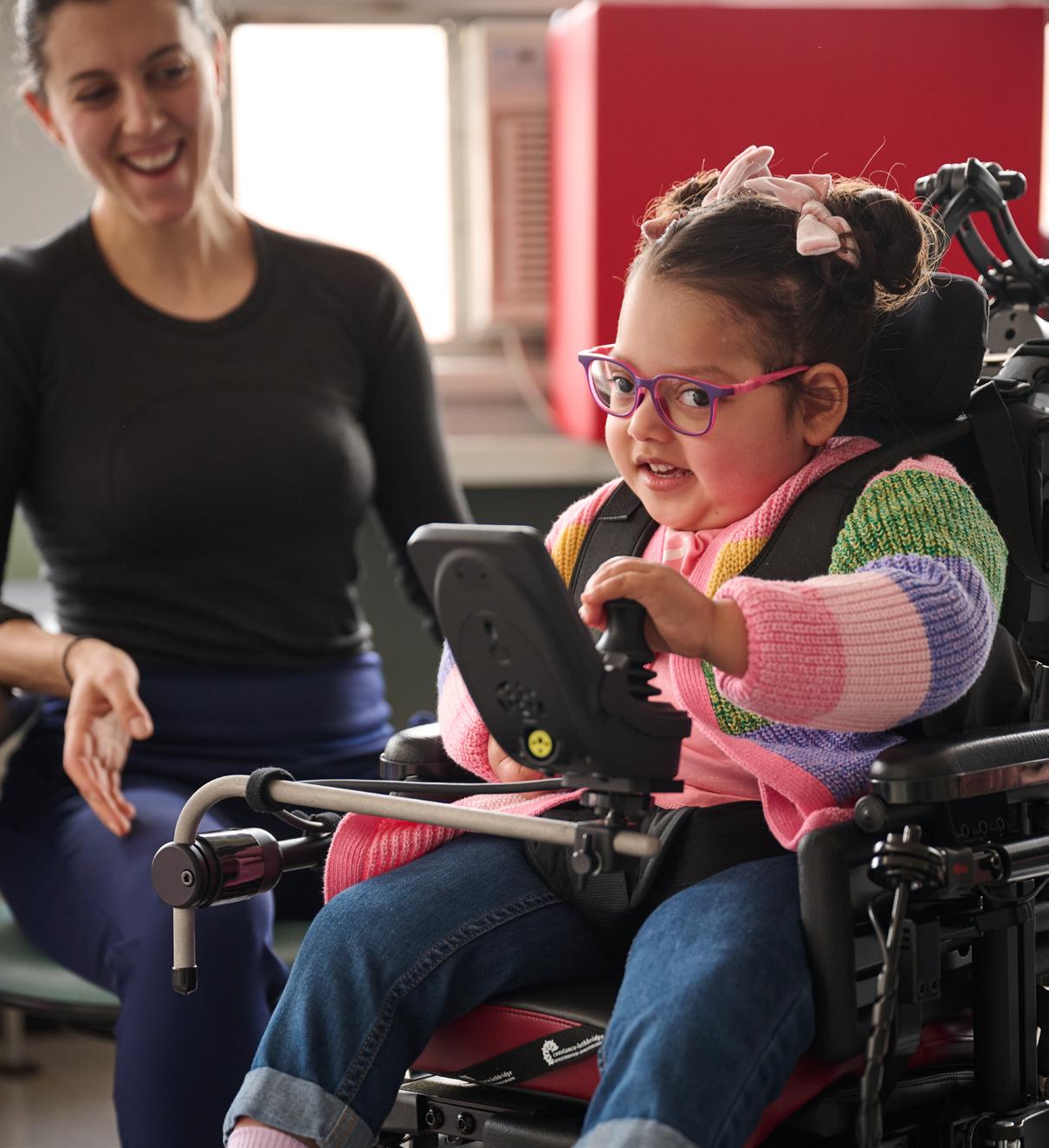
Recently, six-year-old Maddison had the opportunity to try the new device. Maddison lives with a right side weakness, global developmental delay, coordination challenges, and a visual impairment.
“It was exciting to see her interact with the joystick. Each time she used it, she would feel her body move in space,” Evgenia recalls. “At one point she had herself turning in circles, smiling at the amusement of it. That moment was powerful.”
Experiences like this lay the foundation for future mobility. They help families see greater independence ahead and prepare young riders for their own customized wheelchair when the time comes.
Moments of engagement like Maddison’s are what motivate Evgenia every day.
“One of the most rewarding parts of my work is seeing a child’s interest, confidence and skills develop over time,” says Evgenia. “To witness that pride, and to share in a family’s joy, is incredibly meaningful.”
Generosity from donors to the Habilitas Foundation makes innovations like this possible, ensuring that specialized teams, advanced technologies, and cuttingedge equipment remain accessible to families who rely on the MAB-Mackay. Thanks to this commitment, young children with complex needs are given the opportunity to explore, learn, and move toward a brighter future.
Maddison in the new power wheelchair trainer at the MAB-Mackay as occupational therapist Evgenia looks on.
Learning to See Life Differently
“I remember opening my book for French class in my last semester of CEGEP, and the words were so blurry I couldn’t read them,” recalls Kaitlyn. “I went straight to the emergency room after class. The doctors told me that my vision would slowly come back. But instead, it just kept getting worse. It was very scary, not knowing what my vision would be like from one day to the next.”
Kaitlyn later learned that her vision loss was caused by Functional Neurological Disorder. Her brain struggles to properly interpret the messages from her eyes. She is now legally blind, with extremely limited distance vision. “I have to stand about 20 feet from an object to see what most people can see from 350 feet,” she explains. Reading standard print and recognizing faces at typical distances is no longer possible.
That summer was especially hard for Kaitlyn. “Suddenly I was tripping on stairs, walking into things, and feeling embarrassed asking for help to read a menu or find a bathroom. Everything felt uncertain.”
Starting university that fall brought new challenges. While the accessibility department was supportive, it was their referral to the MAB-Mackay that changed everything.
“When I first started, every appointment felt like Christmas — but it also came with lots of grief,” Kaitlyn says. “I was excited to learn new skills and get new technology, but I was also sad that I needed them.”
A home visit was one of the first steps. A low vision therapist adjusted the lighting in her apartment and added braille stickers to her microwave, washing machine, and other appliances to make them accessible. She also received tools and adapted software to access her schoolwork. Then came white cane training.
“At first, I didn’t want to use my cane at school or out in public. I was embarrassed, but I realized it gave me independence. It helped people understand what I needed. My Orientation and Mobility instructor gave me the confidence to cross the street, walk to school, visit friends, and navigate places like grocery stores, malls and airports. I even went hiking with friends — and now I’m training to run a race in tandem.”
Braille became another turning point.
“Learning braille has been one of the most exciting things I’ve done. I missed holding a real book and flipping the pages. Now I can read paper books again. I can play games with my family, read to kids at church, and find my way around public spaces. It gave me back pieces of my life.”
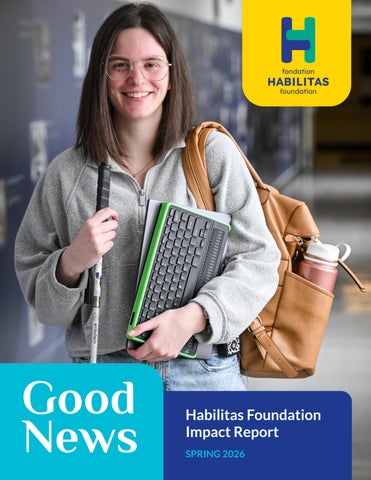
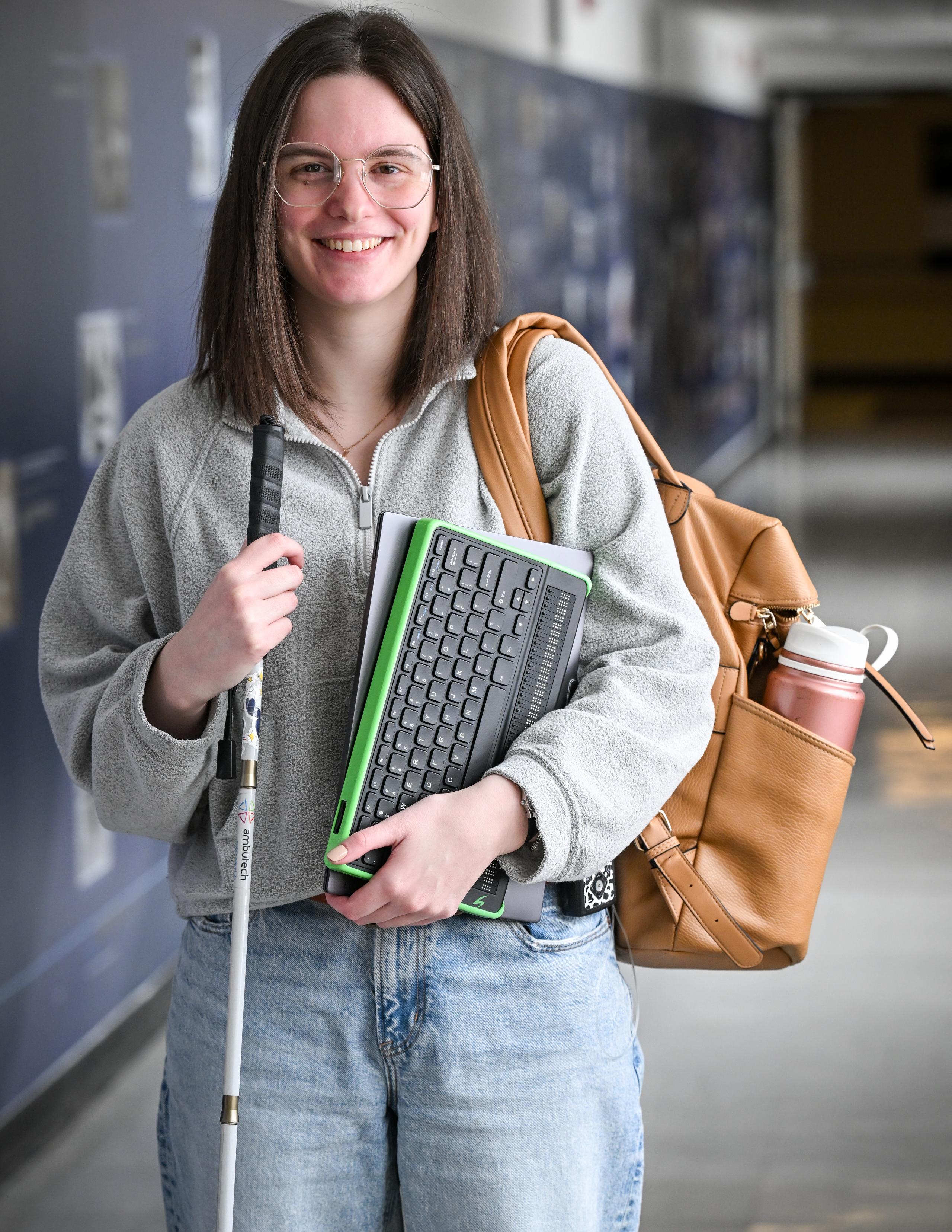
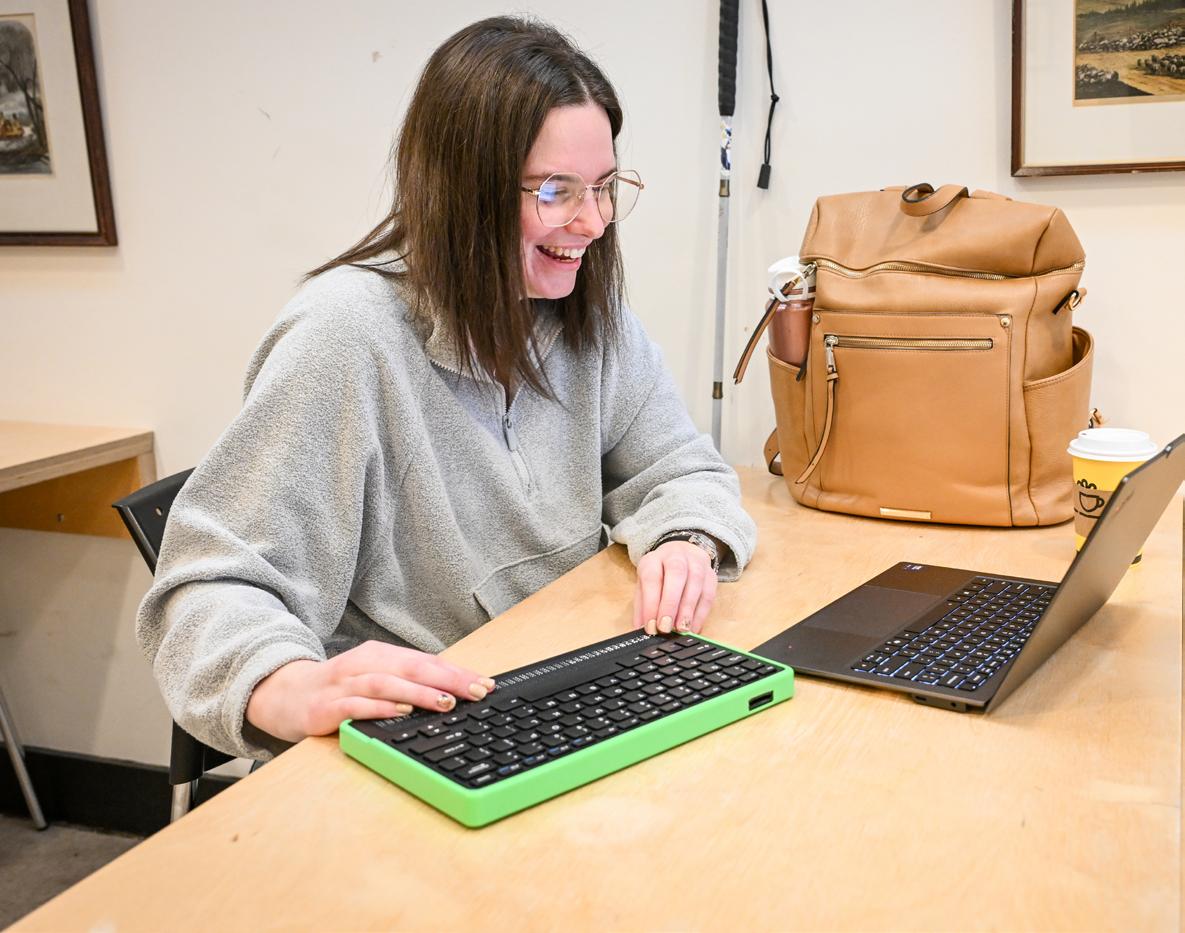
Today, Kaitlyn is continuing her university studies in theology, with the goal of becoming a spiritual care worker for hospitalized children. She’s mastering screen-reading software and learning to use a braille display keyboard (pictured at left).
“When I first lost my vision, I couldn’t imagine how I’d ever work or live independently,” says Kaitlyn. “Now I know I can. I have the tools and support I need.”
“You don’t learn how to live with vision loss all at once. It takes time,” Kaitlyn pauses. “There are always new environments, new technology, new challenges. It’s comforting to know I’m not navigating this alone. I know the MAB-Mackay will still be there for me, helping me to adapt, to learn, and to keep moving forward.”
Last year, more than 1,300 people of all ages with visual impairments found care and hope at the MAB-Mackay. It’s thanks to the generosity of donors to the Habilitas Foundation that essential services such as the low vision clinic, optician care, orientation and mobility training, as well as technology and facility upgrades are possible.
Kaitlyn uses her braille display keyboard for her homework.
Where Creativity Connects
“Finding the Action Centre truly changed my life,” reflects Frank, who has spent the past three years engaged in this unique centre’s inspired programs and vibrant community for people with physical disabilities.
“I remember my first visit to the Action Centre, and how the people were immediately welcoming,” recalls Frank. “I tried a few of their classes and activities, and before long started coming more often. I’ve since met people from different walks of life and challenges due to their disabilities. We all share openness, acceptance, with no judgement. Some have become friends, and I enjoy spending time together while learning about new subjects, singing in the choir, or working on artistic creations.”
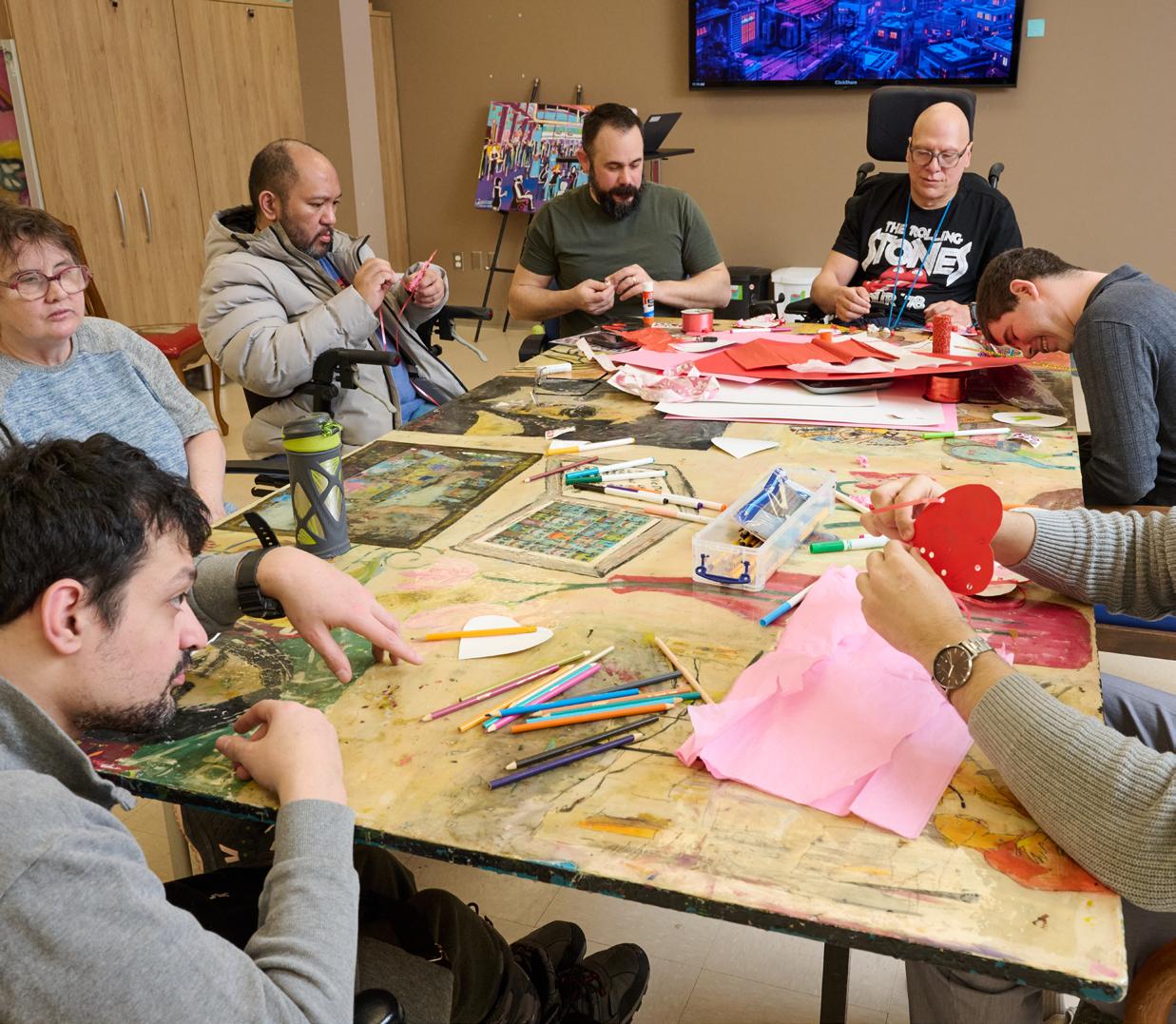
Wednesdays are among the busiest days at the Action Centre, thanks to the ever-popular Fine Arts workshop. More than a creative outlet, this program strengthens fine motor skills, sharpens concentration, and fosters meaningful connections through artistic expression. Through painting, drawing, and mixed media, participants develop skills, explore creativity, and experience the pride of sharing their work with others.
Last year, their artworks were exhibited publicly at the Centre Action Art Gallery, allowing artists to share their talent with a broader audience and champion inclusion beyond the Centre’s walls. Members also showcased their artistic talents at the “Musée d’histoire et de la communauté du Fier Monde.”
It’s opportunities like these that bring purpose and joy to Frank, and to so many others who consider the Action Centre their home away from home.
Before being diagnosed with progressive multiple sclerosis, Frank was a cameraman and stagehand, traveling the world for work and his hobbies. “Living with this disease can easily turn into despair and negativity. But the Action Centre gives me hope and uplifts me.”
“Being around positive people, who are all so open-hearted and accepting, just lights up my day. The activities, which are all designed for our abilities, are a distraction from what’s going on. I can enjoy these moments and smile.”
Every workshop, every friendship, and every moment of belonging at the Action Centre begins with donor support. As the Centre’s official foundation, the Habilitas Foundation ensures that this generosity is translated into dynamic programming, inclusive spaces, and life-enhancing opportunities for members.
To learn more about Action Centre and its work, visit www.centreaction.org.
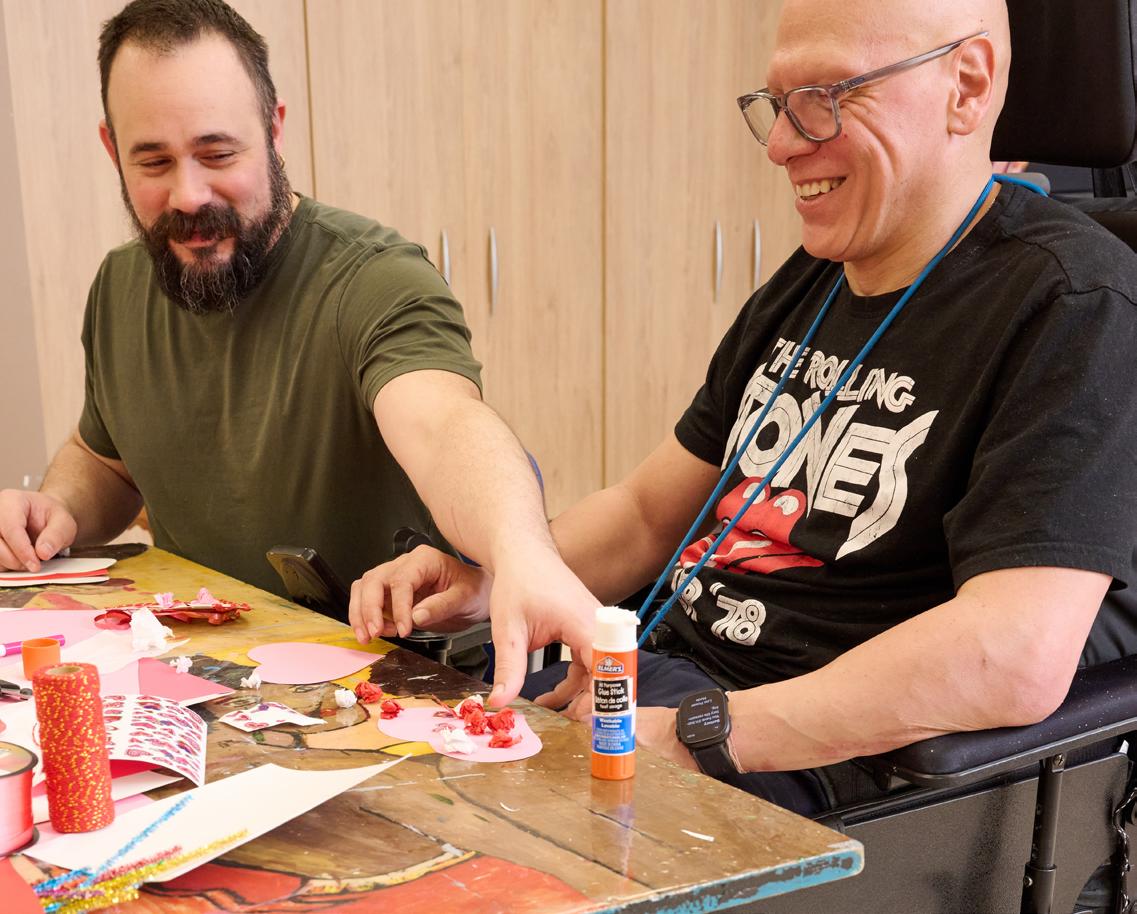
Frank (right) with a friend around the arts and crafts table at the Action Centre.
Years 75
of Magic & Memories
THEN NOW
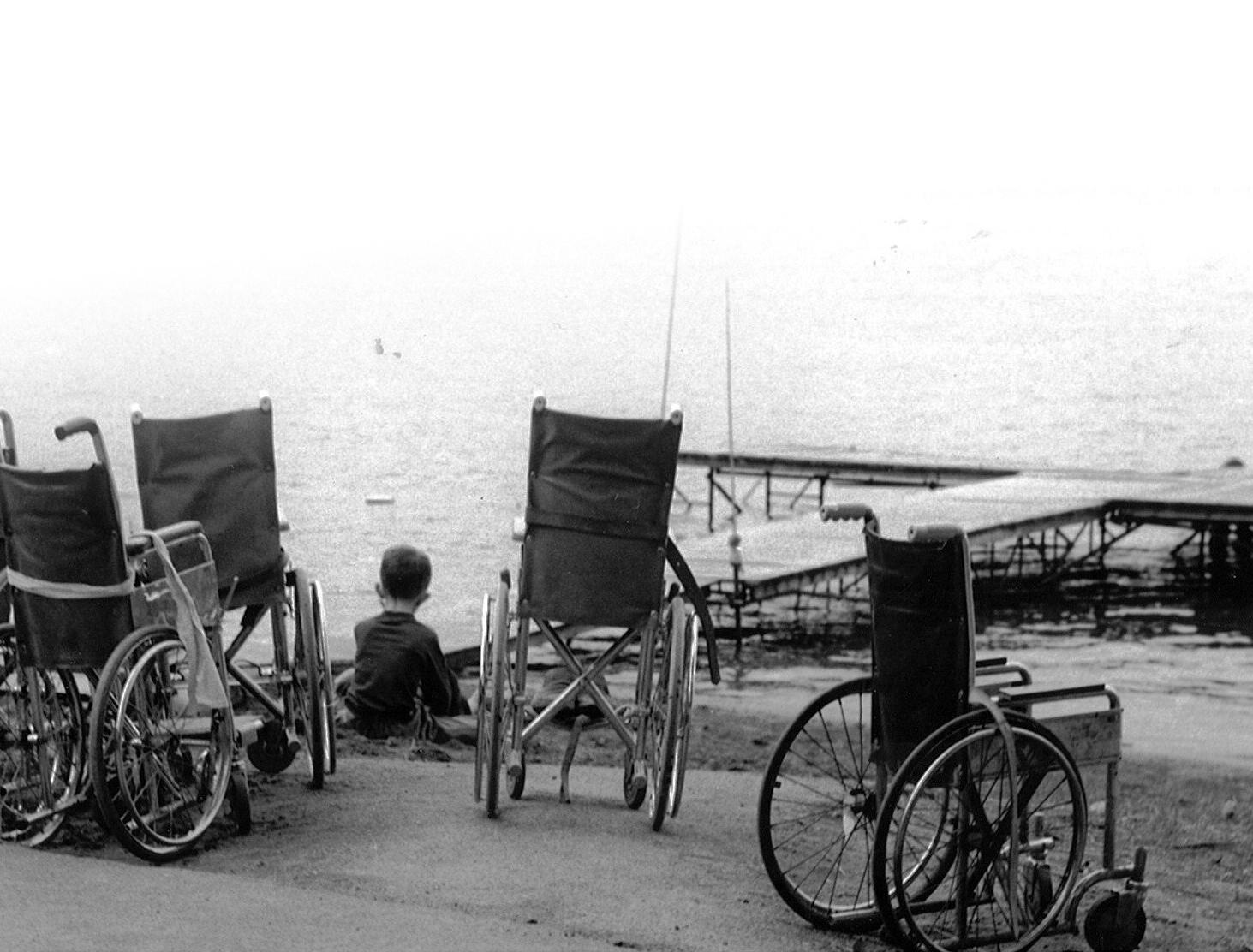
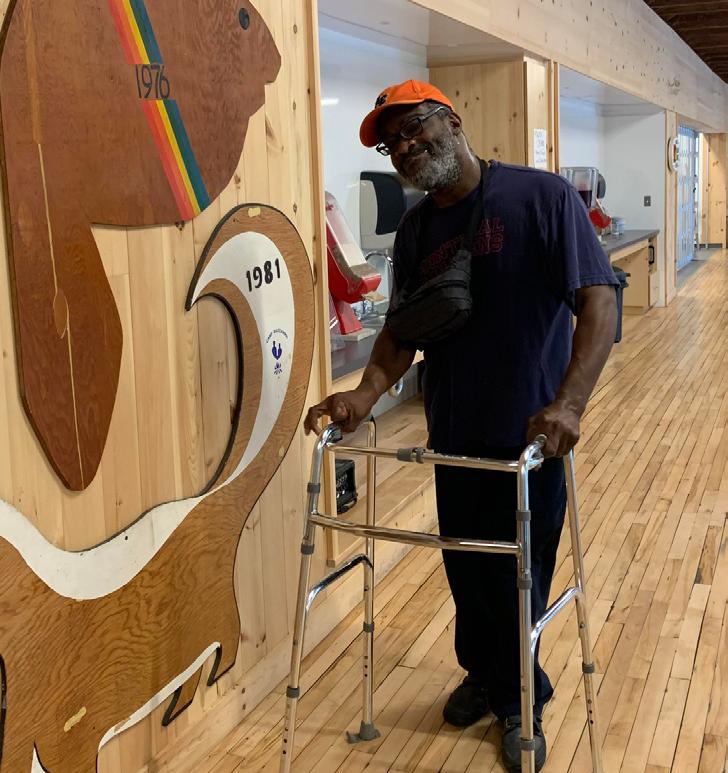
In the summer of 1951, Camp Massawippi welcomed its first campers, creating a rare space where children living with physical disabilities could experience the freedom and joy of summer camp.
Originally known as Mackay Centre Camp, the camp welcomed youth with a variety of physical and sensory disabilities – including campers with mobility and movement challenges, who are deaf, blind or visually impaired, or who are non-verbal.
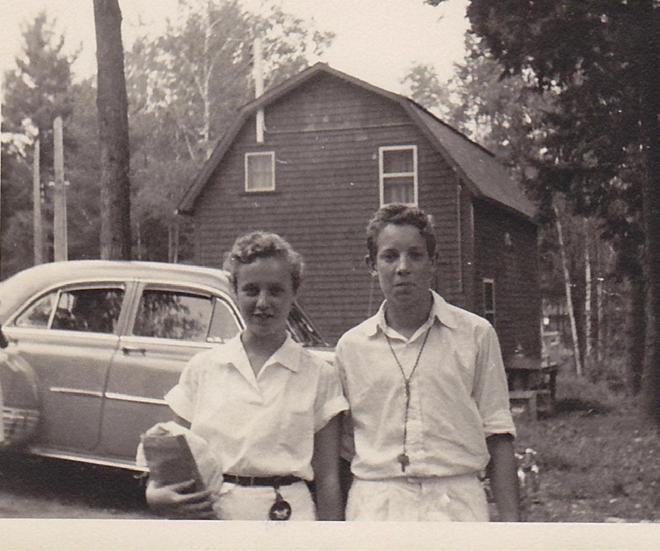
“I met my wife Judy when we were 15-year old CITs at Camp Massawippi in summer 1953. Our first dance was to a Frank Sinatra song playing on a phonograph in the “Big House,” where staff hung out in the evenings. Being a counsellor in the 1950s was quite different from what it is today. As none of the roads and pathways on site were wheelchair-friendly yet, the campers had to be mobile to some degree.
When Judy passed away in 2022, our family made a special gift to Camp by creating “Judy’s Corner,” a permanent bilingual library for campers and staff to enjoy.
Bravo to Camp Massawippi for being heaven as well as a haven to so many kids for three-quarters of a century!”
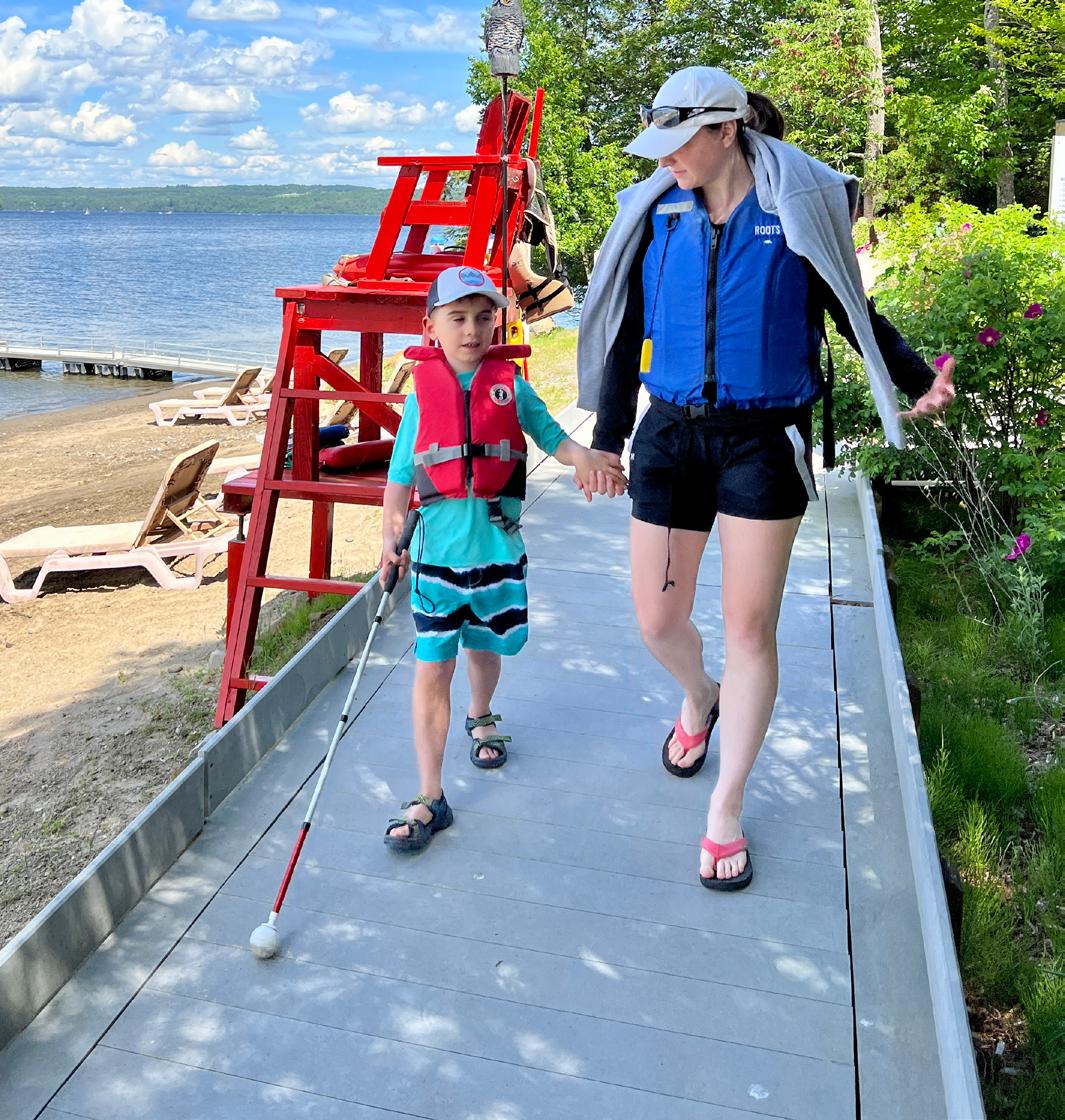
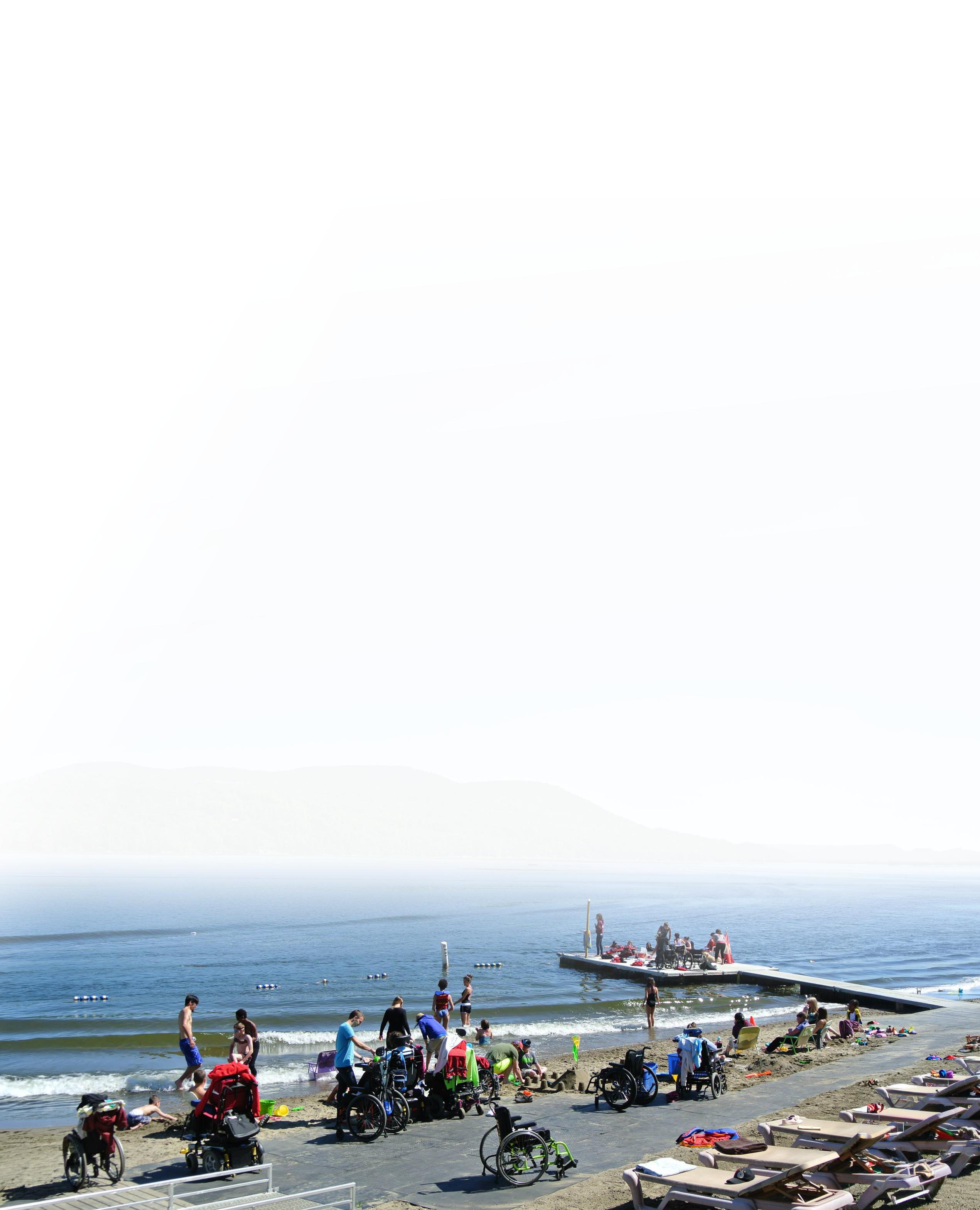
Seventy-five years later, the camp’s idyllic lakefront setting in the Eastern Townships continues to bring together children, teens, and young adults to a fully adapted environment where they can explore, learn, and simply be themselves.
As the only bilingual summer camp of its kind in Quebec, Camp Massawippi combines specialized care, a staff-to-camper ratio of up to one-to-one, and programming designed so every camper can participate with confidence and dignity.
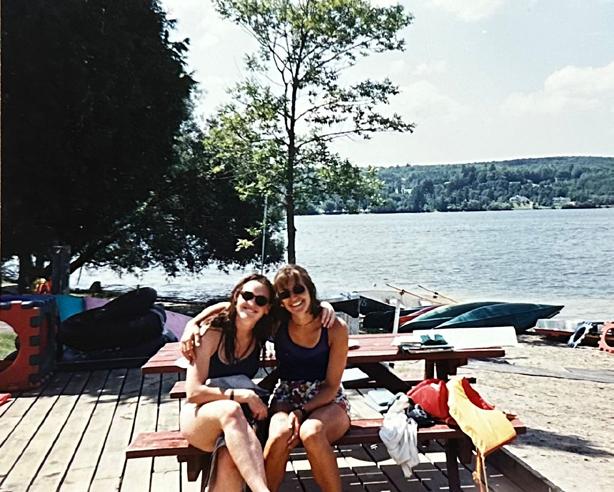
“I was a CIT at Camp Massawippi when I was 16 years old, then returned as a counsellor and lifeguard. Camp had a profound impact on my life. I met so many wonderful people, from fellow counsellors who’ve become lifelong friends, to bonds with campers. Some of my memories that stick out are bringing campers fishing on the big boat (but never catching one fish!); the “Star Trek” days; the annual camp song that staff prepared in voice and in sign language; making sundaes in front of Cabin B; and of course, the early morning dips in the lake!”
— Nadia
From accessible dormitories to adapted waterskiing and canoeing to music, arts & crafts, and sports, campers experience extraordinary adventures and opportunities that would otherwise be out of reach.
Above all, camp is a place of joy, belonging, and acceptance, where friendships form, laughter fills the air, and many campers return summer after summer, generation after generation.
Camp Massawippi also offers parents and families something just as meaningful: peace of mind and respite, knowing their child is supported, included, and thriving.
“Camp Massawippi empowers people with disabilities to grow, thrive, and reach their full potential — and I’m proud to be one of them.
Growing up with cerebral palsy, I found at Camp a place that encouraged independence, confidence, and real personal growth. I was eight when I started at Camp, and my 12 years as a camper helped shape who I am. My time as a counsellor and then as Sports Specialist strengthened the skills that carried me through university and into my career as a strategic intelligence researcher for the past 25 years.”
“This year will be my 18th summer at Camp Massawippi!
What makes this camp so special is that everything, from the beach to the dormitories, to activities like dance and arts and crafts, is adapted for campers in wheelchairs like me.
I love spending time with my friends and the staff in the Fox cabin. But my favorite activity of all is adapted waterskiing. It gives me the chance to do something I never thought I’d be able to do!”
— Magali
As the official foundation of Camp Massawippi, Habilitas Foundation extends heartfelt thanks to the generous donors whose support keeps the magic of Camp alive, allowing campers to discover independence, build friendships, and experience summer without limits.
10 GREAT THINGS YOU MAKE POSSIBLE
Help people who are blind learn to cross the street, take the bus and metro, and find their way in the community safely with white cane skills
Provide custom-designed wheelchairs, walkers and adapted strollers to babies and children with physical disabilities
Offer a unique summer camp experience to youth with physical disabilities in a fun and safe environment
Empower adults with physical disabilities to overcome social isolation, learn, build connections, embrace life, and truly thrive
Make the dream of driving a car or motorcycle a reality for people living with physical disabilities
Loan specially-adapted therapeutic toys to babies with multiple impairments to promote motor development at home
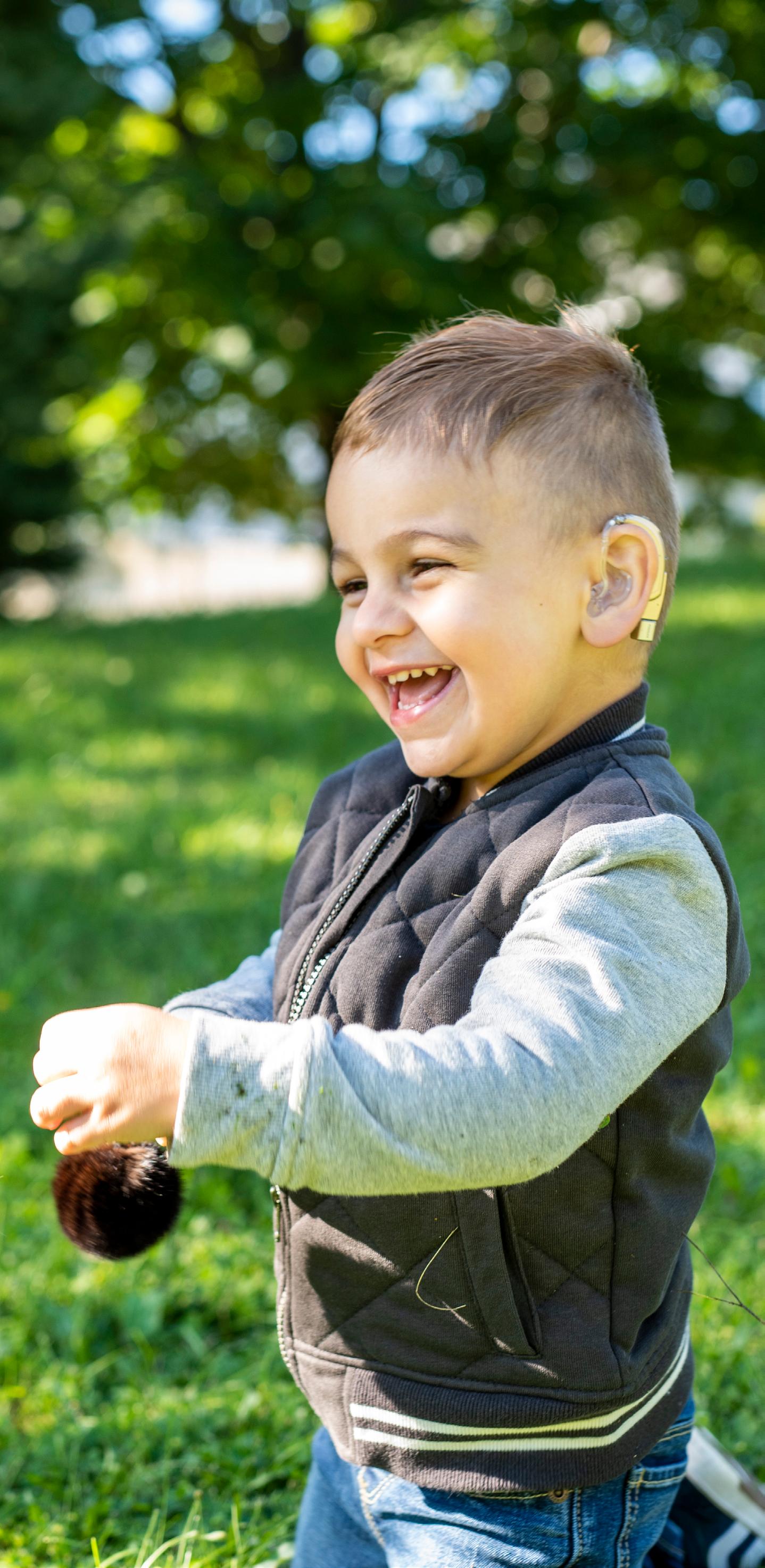
Help people with cochlear implants train their brains to understand and interpret sound
Offer training in adapted computer software and technology to people who are blind
Help preschool-aged children with communication disorders gain essential language skills
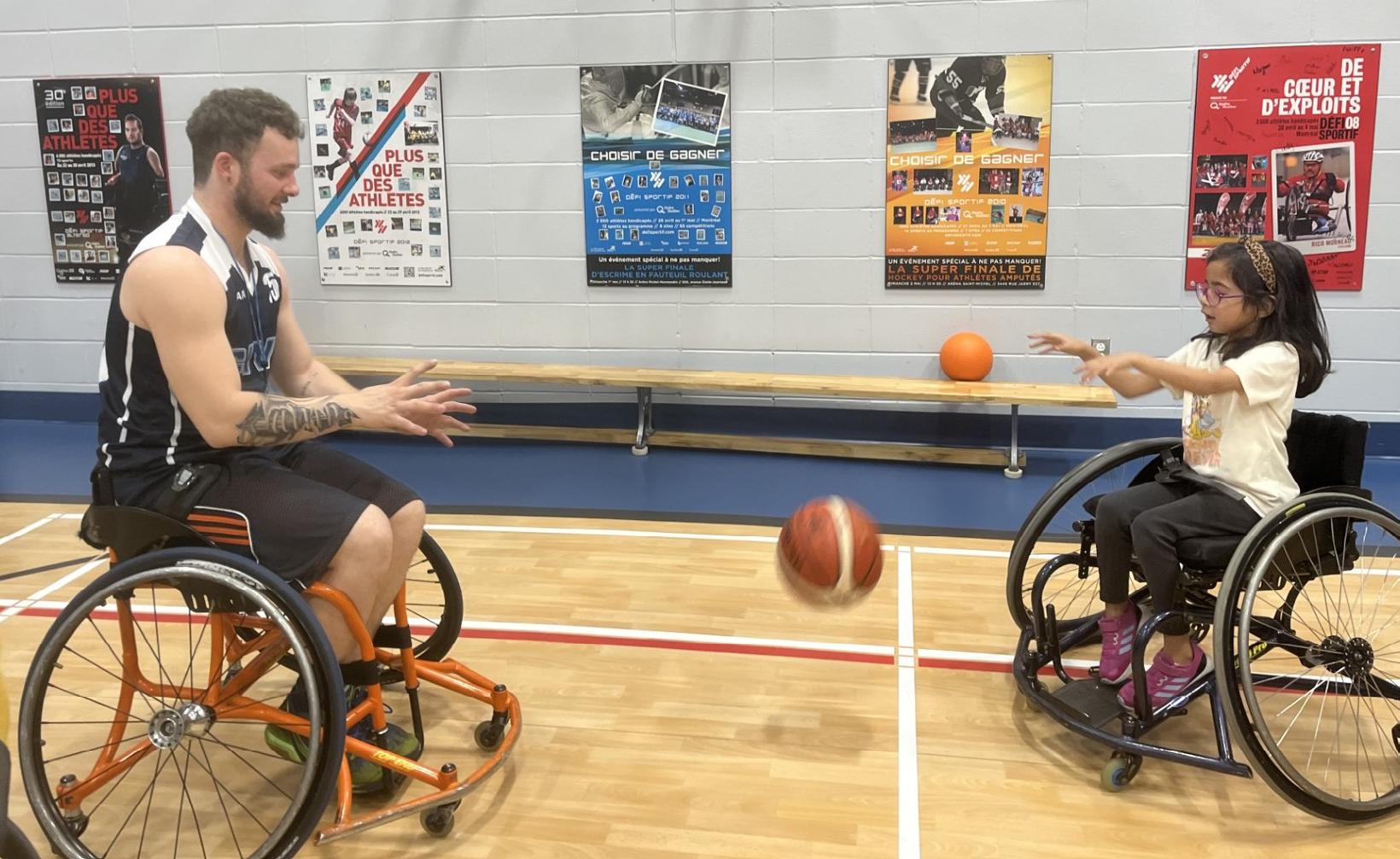
Empower children with physical disabilities through access to adapted sports such as wheelchair basketball, sailing, and downhill skiing
Habilitas Foundation is a leader in championing the needs of individuals with physical disabilities through the following organizations: