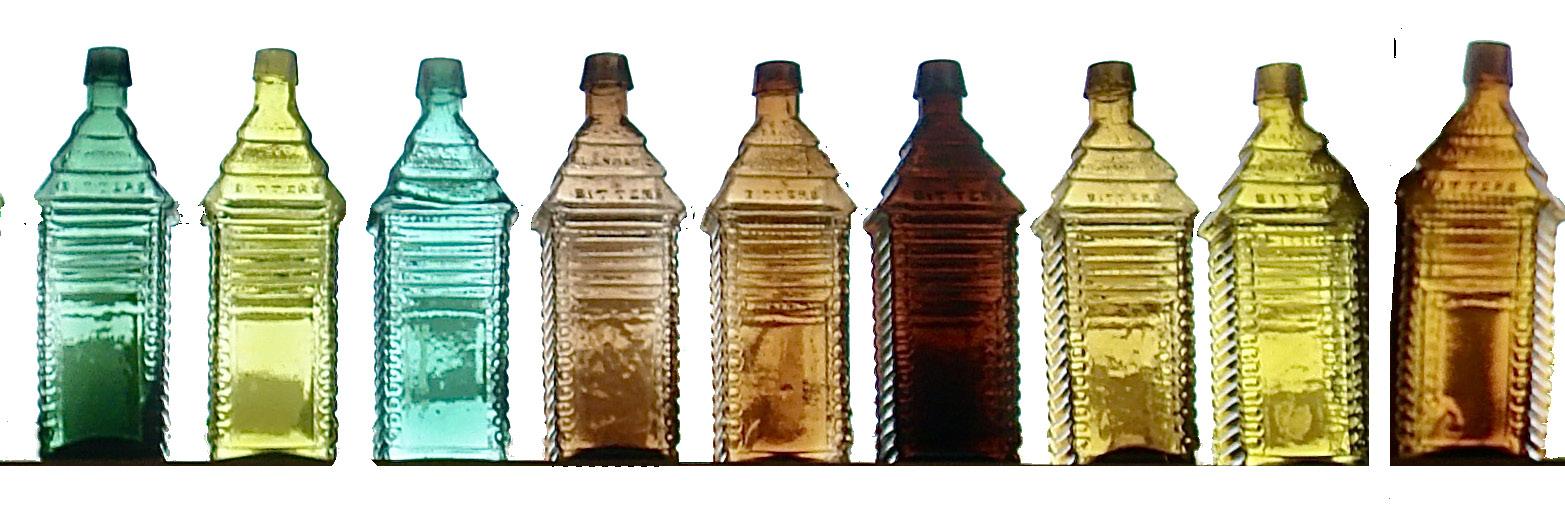
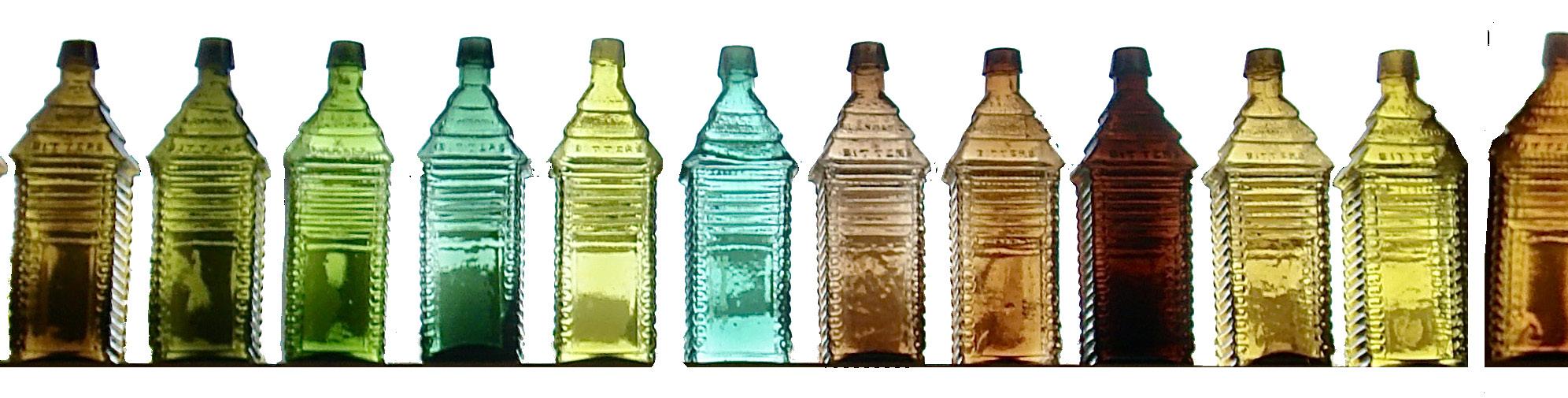
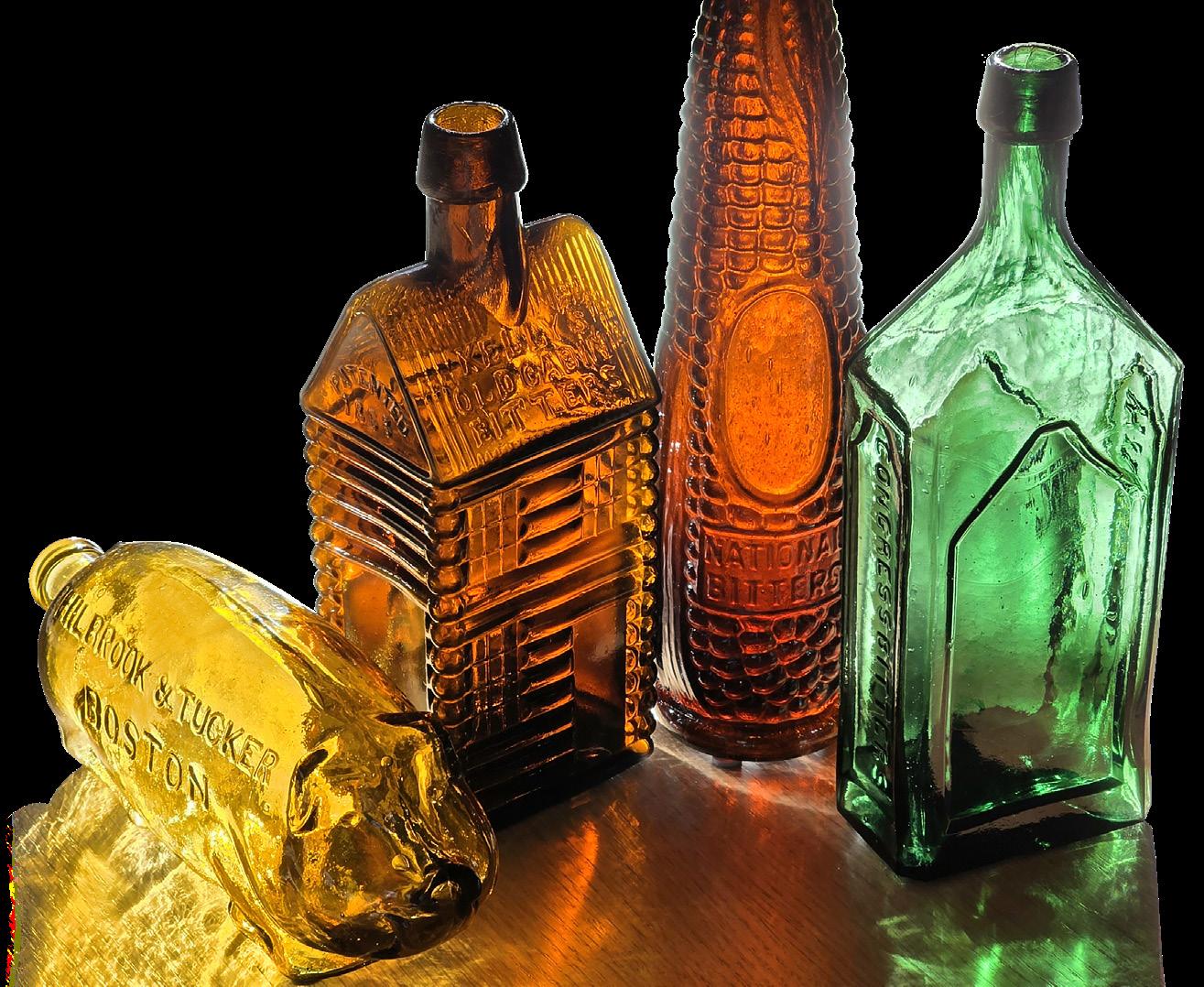
Antique Bottle & Glass Collector March - April 2026
Also in this issue...
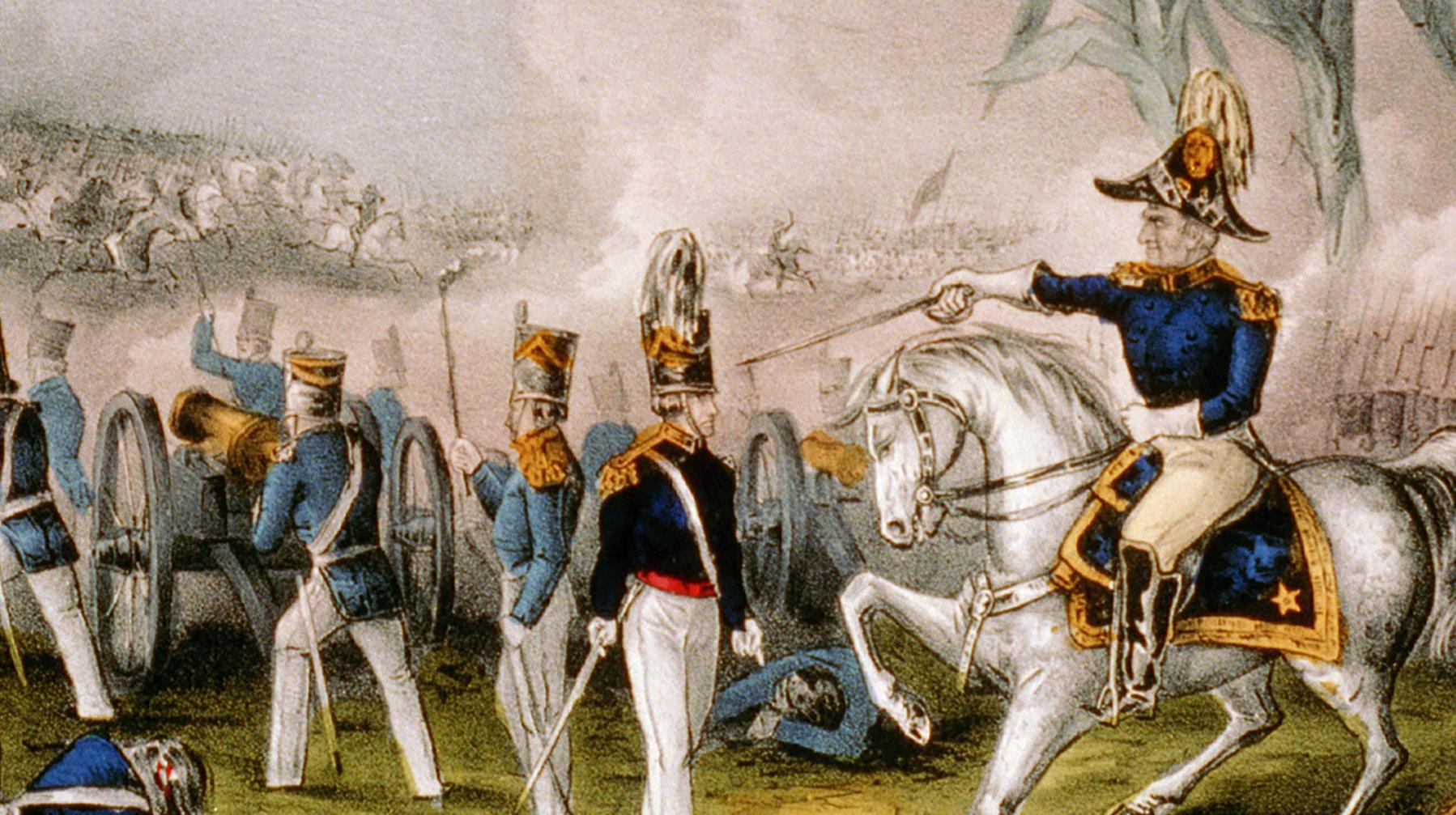
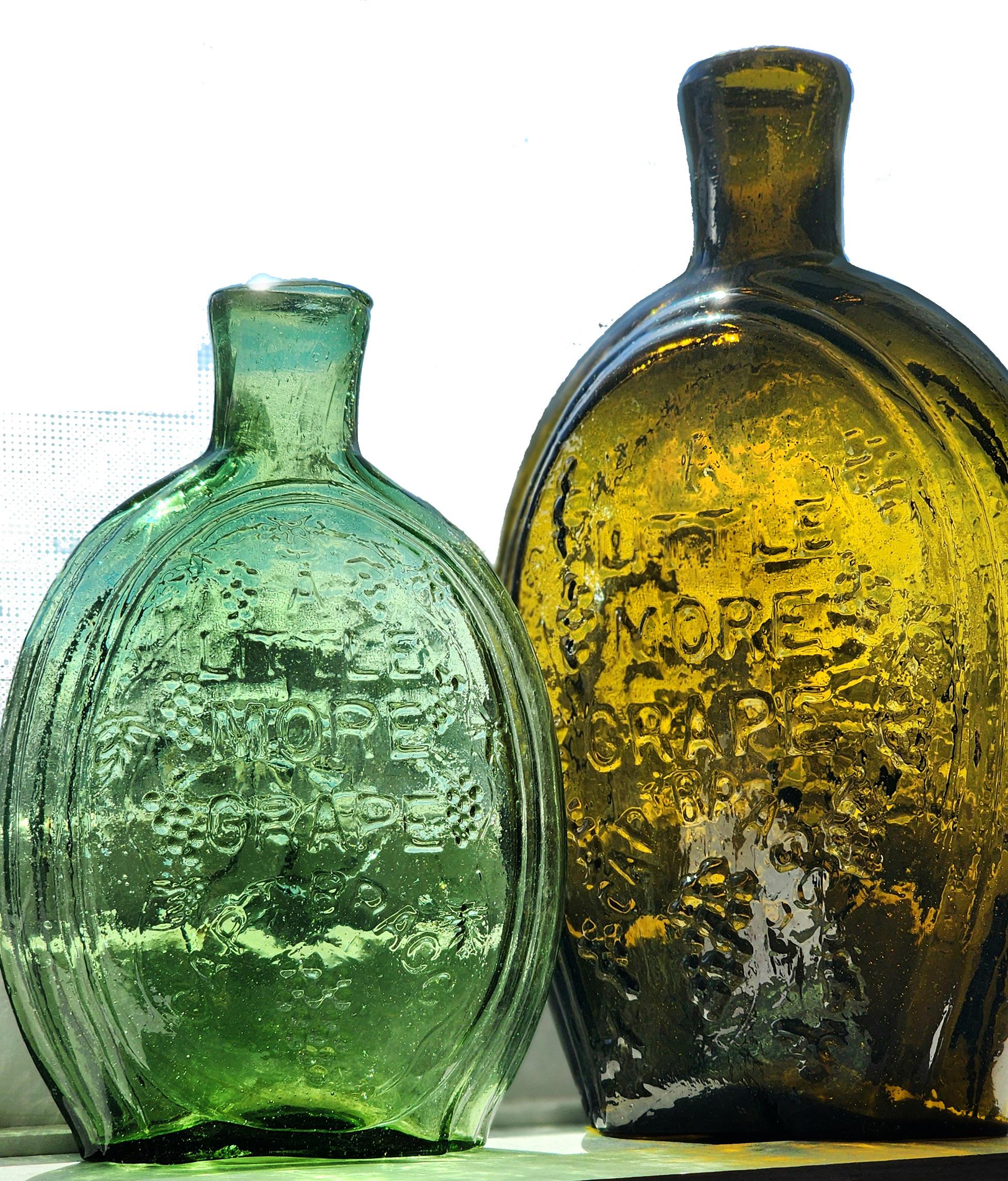
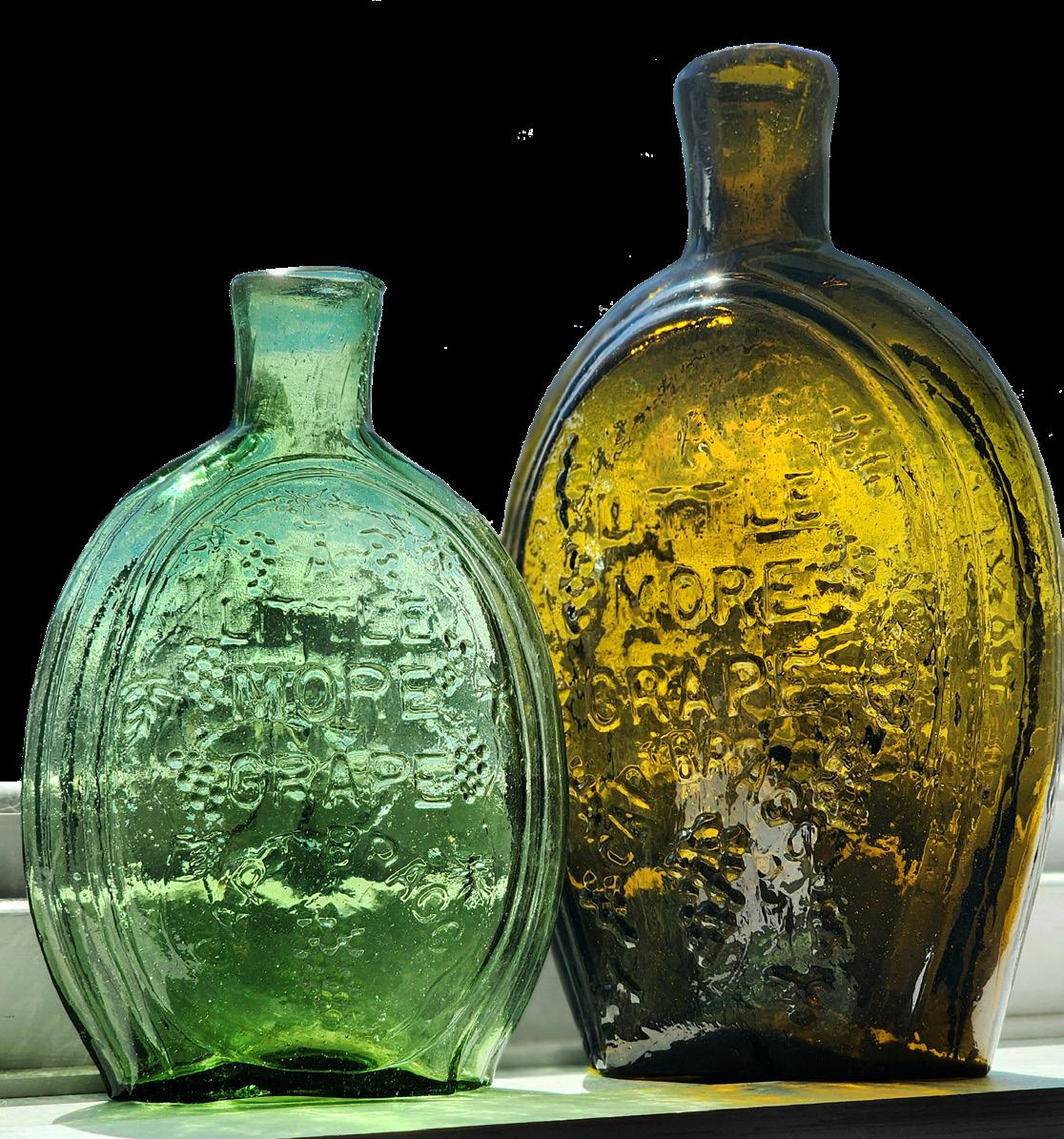
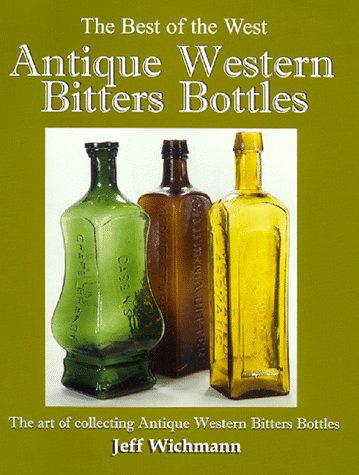
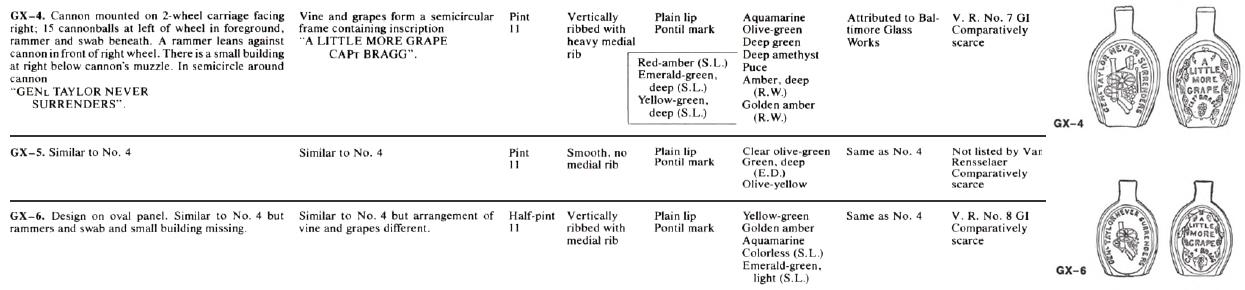
“A Little More Grape Capt Bragg”
ACL Corner–Oddities in ACL Sodas!
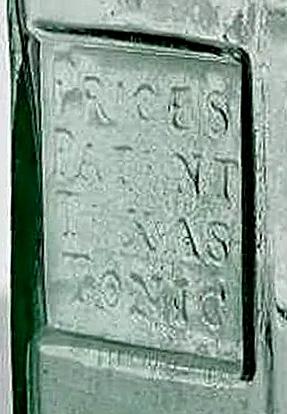
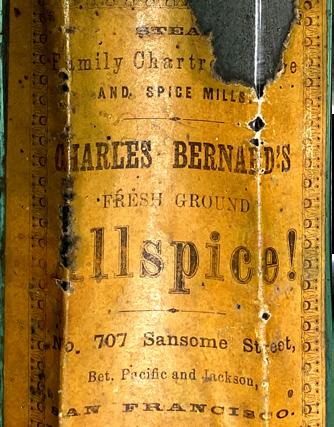
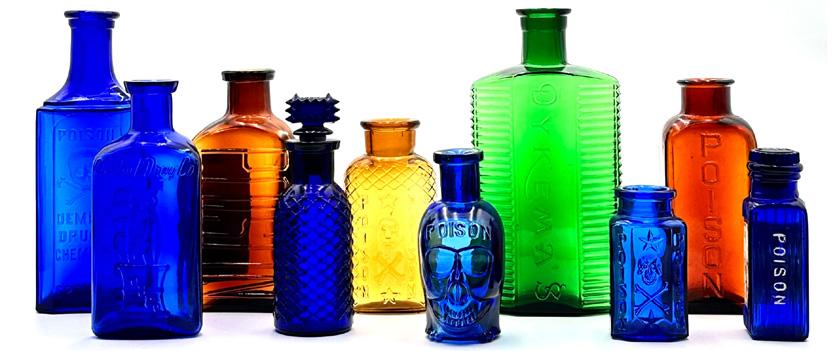
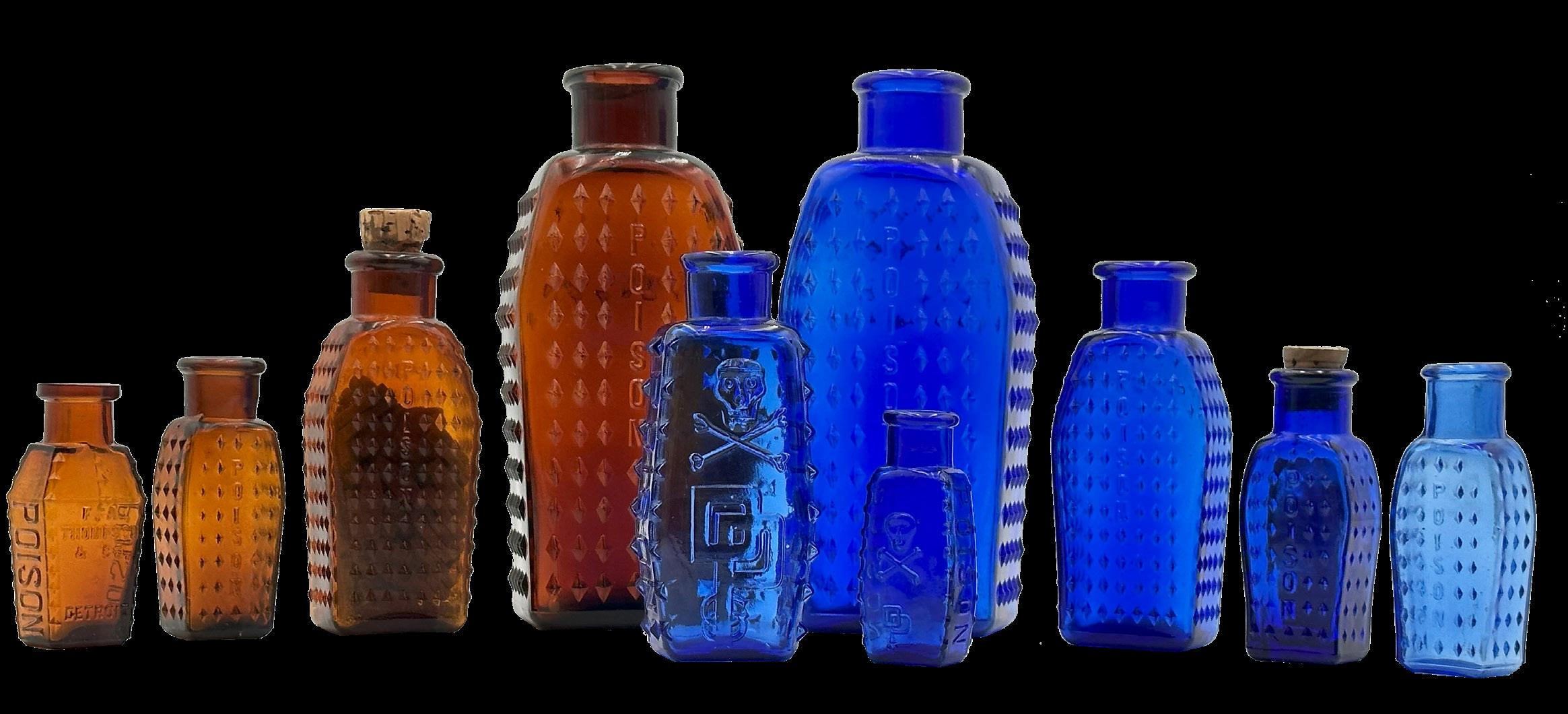
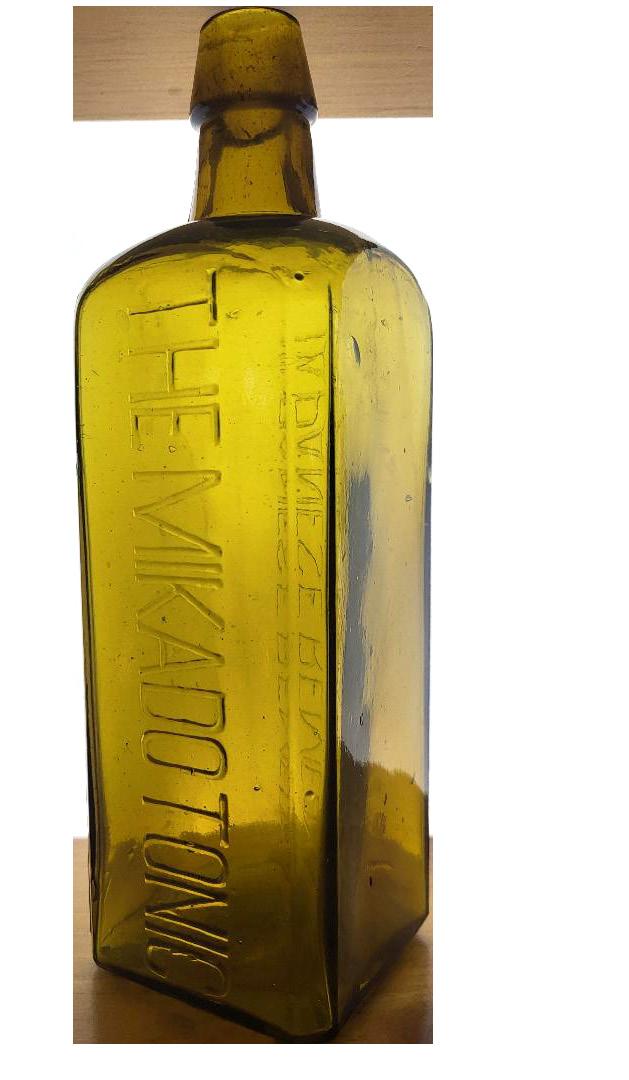
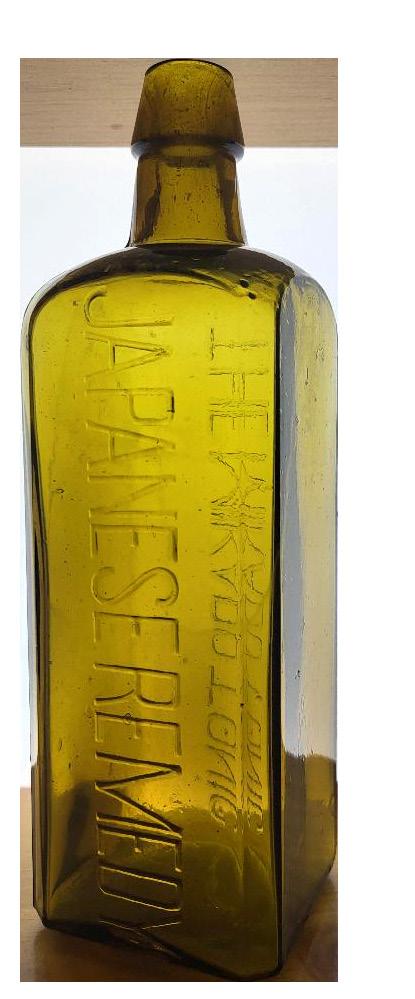
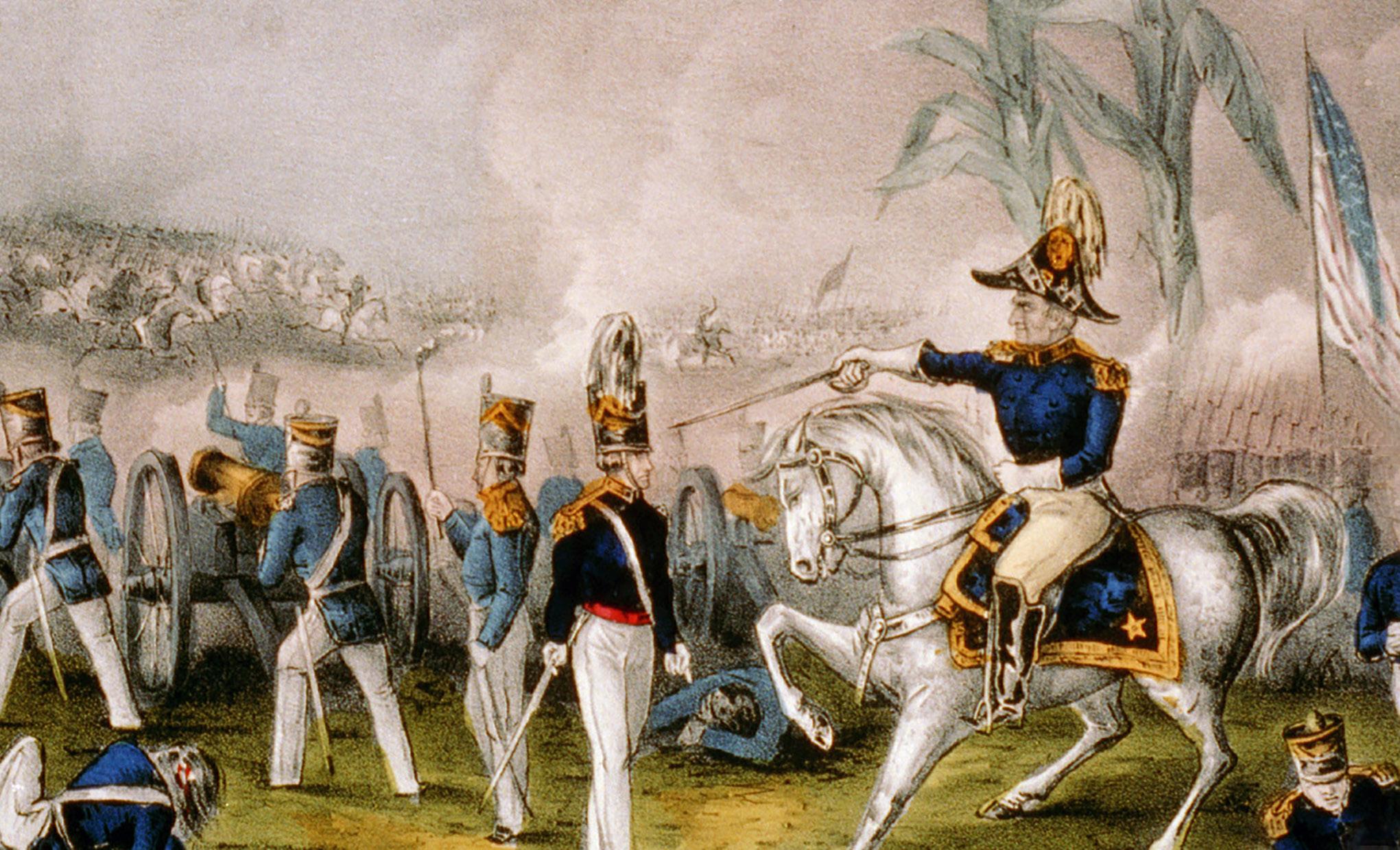
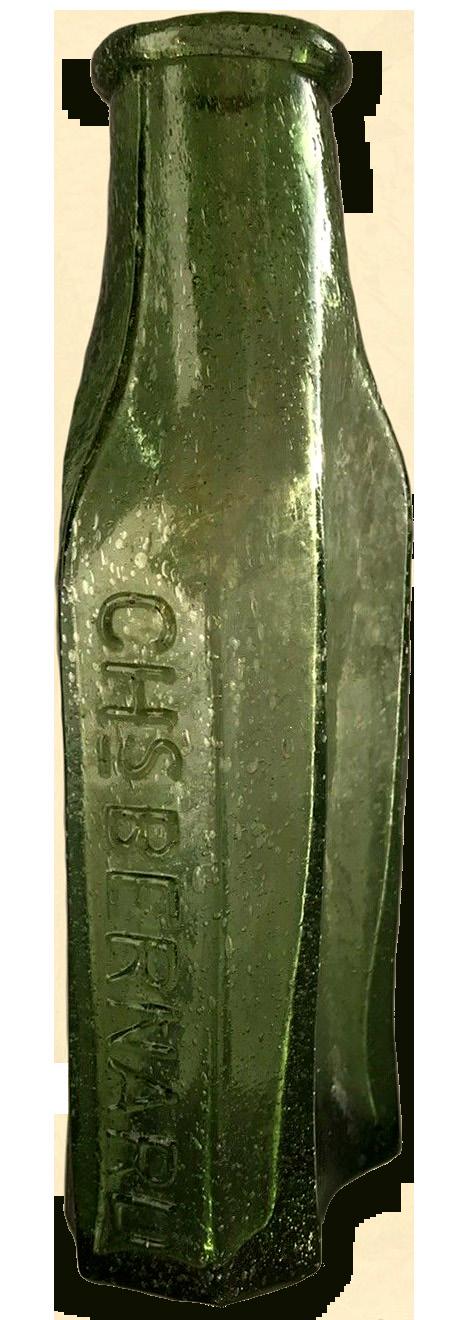
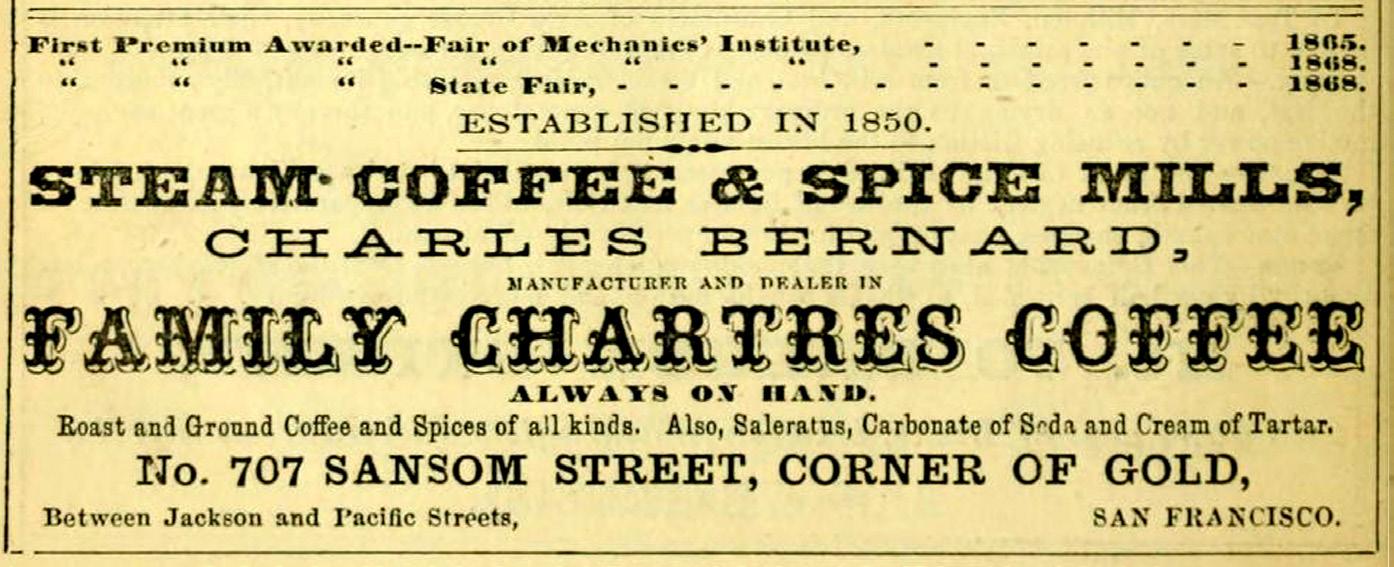
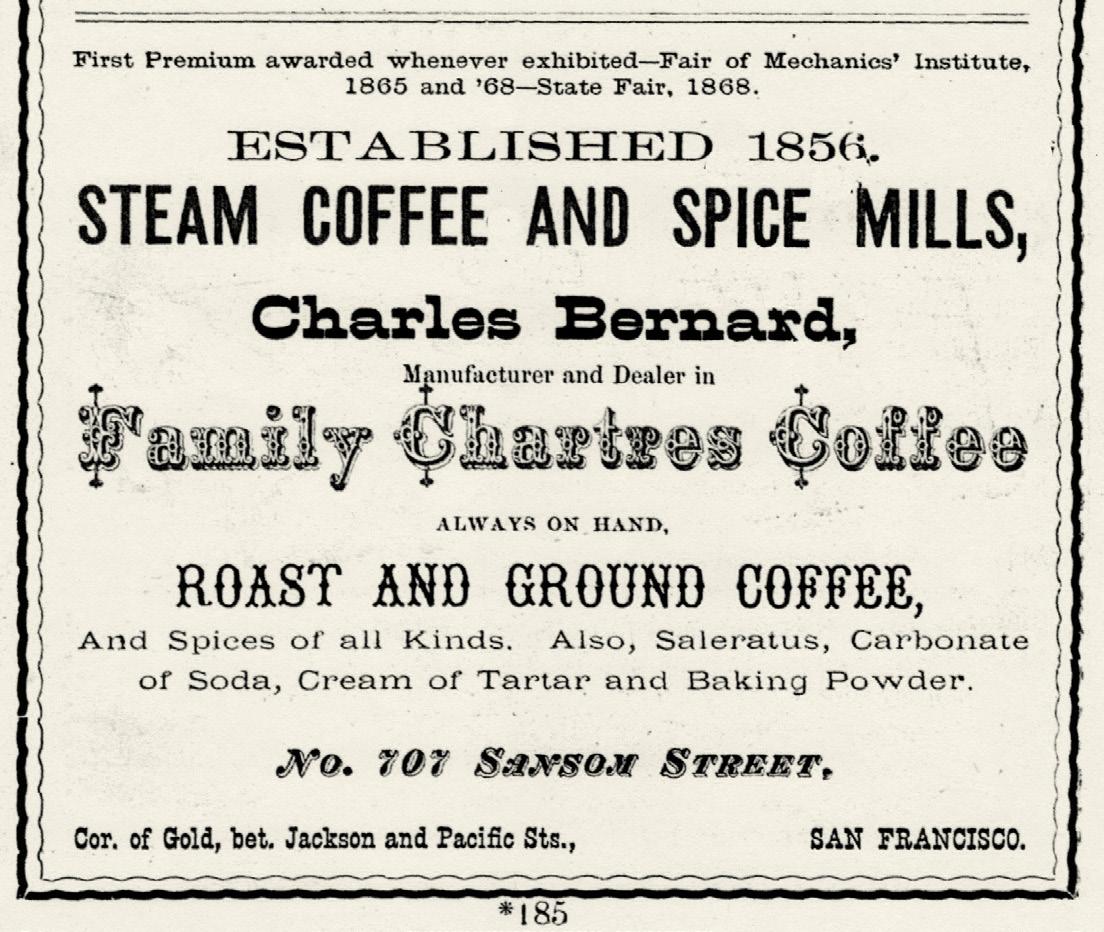
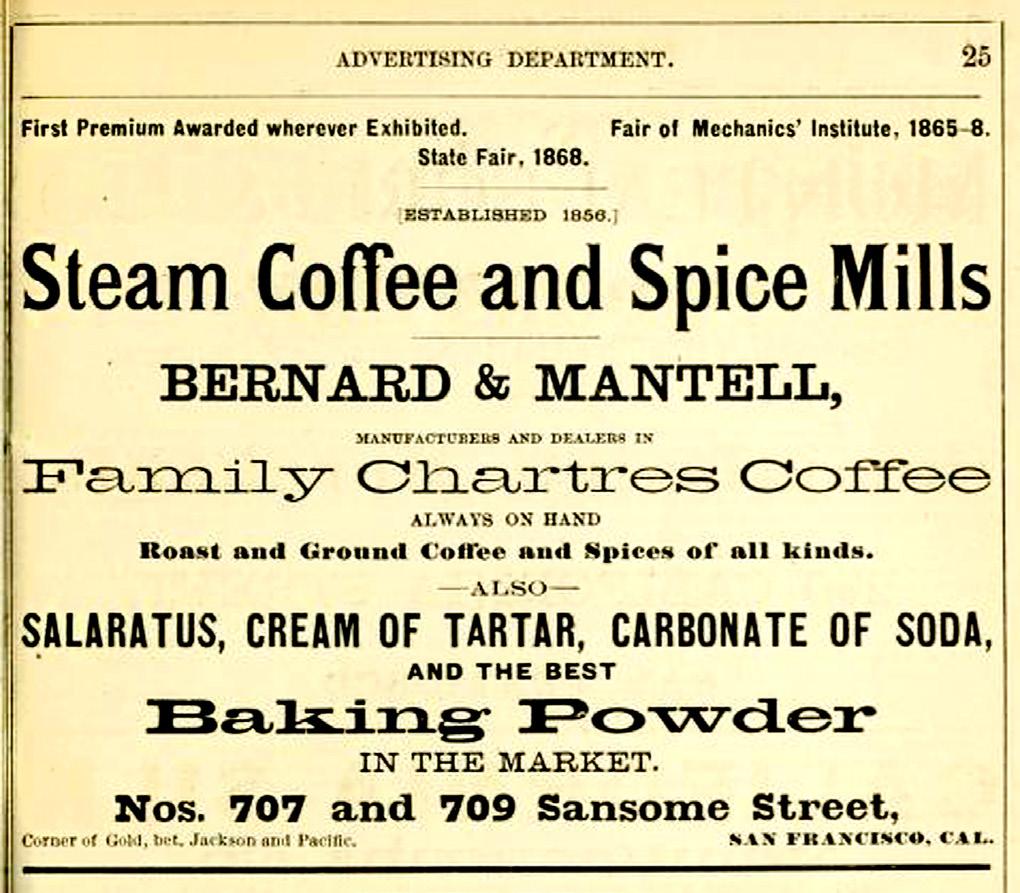
- The MIKADO Connection - Price Gouging In The Republic of Texas - Young Collectors Corner - American Poisons - Charles Bernard–
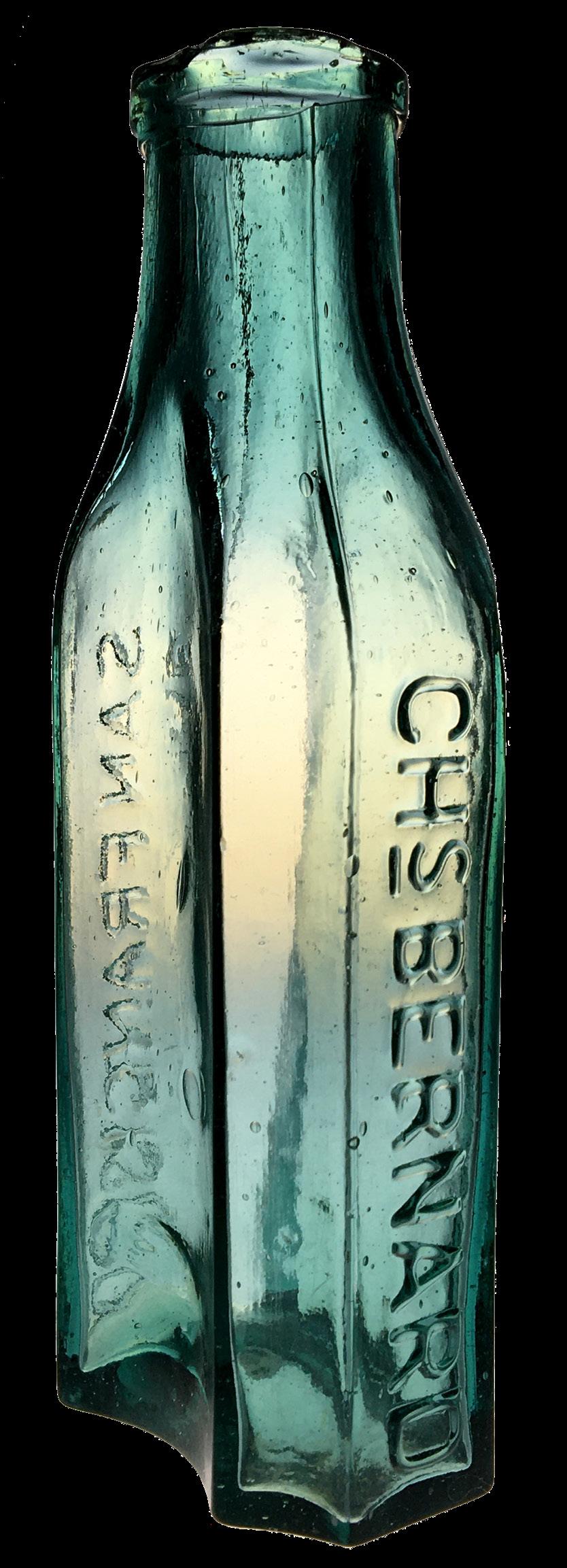
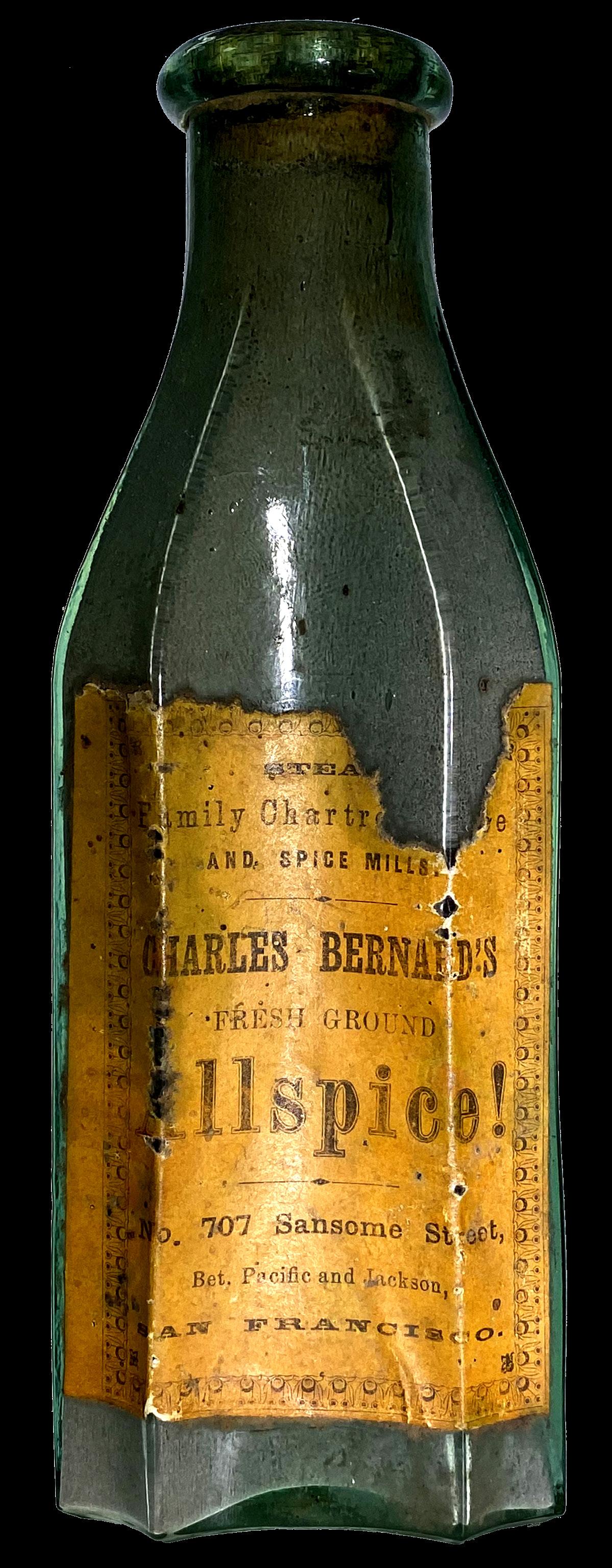
Coffee and Spice Manufacturer - First Bottler of Coca Cola and so much more!
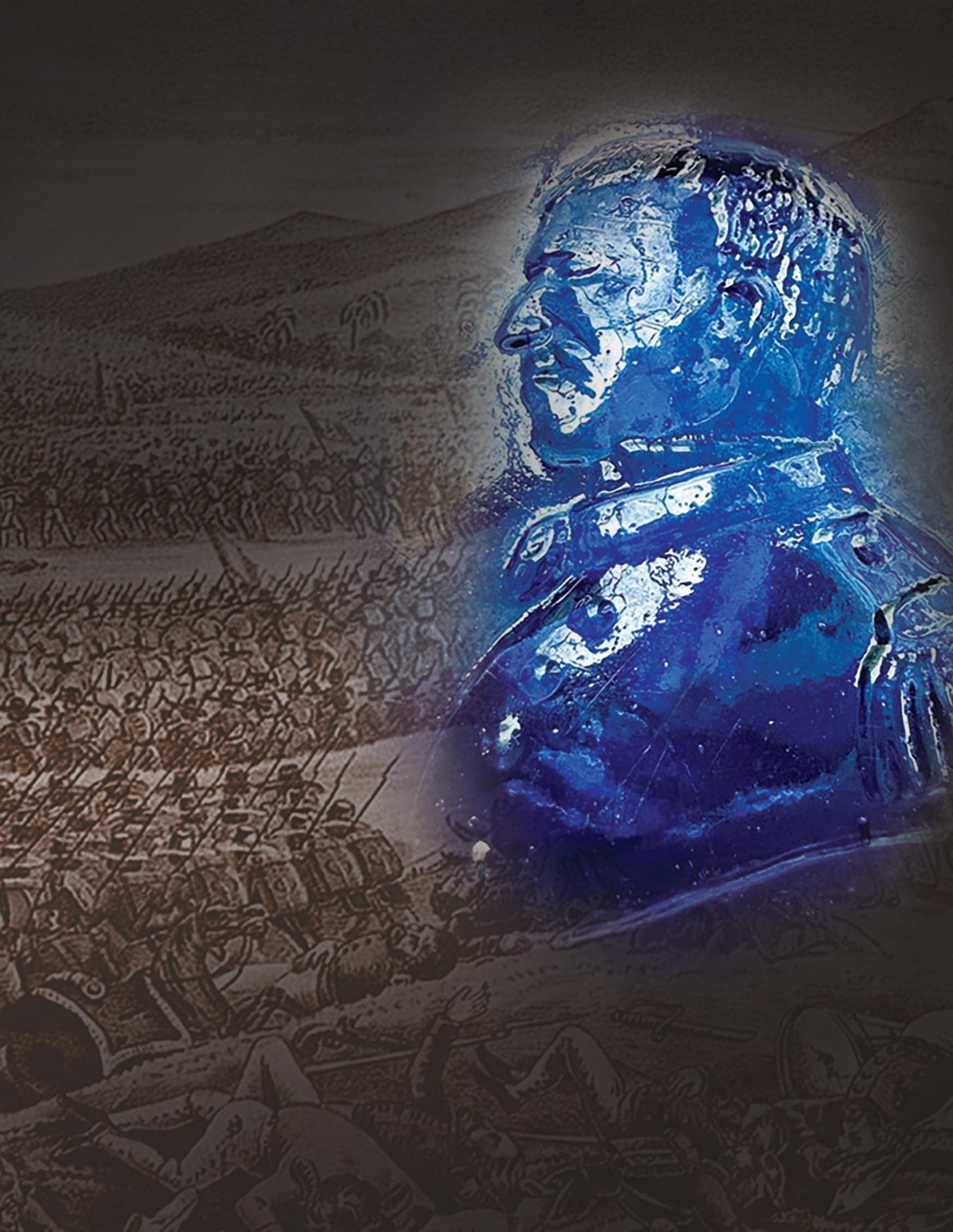
The first segment in our series celebrating the 250th Anniversary of our Country’s Independence.
So you don’t miss an issue of Antique Bottle & Glass Collector, please check your labels for expiration information.
To Advertise, Subscribe or Renew a subscription, see pages 71 and 72 for details.
To submit an article, send a letter, or share comments, contact: Alice Seeliger, Editor N8211 Smith Road Brooklyn, WI 53521 phone: 608.575.1128 email: FOHBCmembers@gmail.com
Fair use notice: Some material in Antique Bottle & Glass Collector has been submitted for publication in this magazine and/or was originally published by the authors and is copyrighted. The Federation of Historical Bottle Collectors, Inc., a non-profit 501 (c)(3) educational organization, offers it here as an educational tool to increase further understanding and discussion of bottle collecting and related history. We believe this constitutes “fair use” of the copyrighted material as provided for in Section 107 of the U.S. Copyright Law. If you wish to use this material for purposes of your own that go beyond “fair use,” you must obtain permission from the copyright owner(s).
Postmaster: Send address changes to Federation of Historical Bottle Collectors, c/o Michael Seeliger, N8211 Smith Road, Brooklyn, WI 53521. Phone 608-5752922; email: fohbcmembers@gmail.com
Annual subscription rate is: $40 for Standard Mail or $65 for First Class (U.S. only). $25 for Digital Membership (in U.S. funds). Canada and Foreign Countries $25 Digital Membership only. Life Membership: Level 1: $1,000, Level 2: $500. The Federation of Historical Bottle Collectors, Inc. (FOHBC) assumes no responsibility for products and services advertised in this publication. See page 72 for details.
Printed by American Printing, Madison, Wisconsin. Visit us at: FOHBC.org & Facebook
FOHBC Board of Directors
The Federation of Historical Bottle Collectors is a non-profit organization, founded in 1969, for collectors of historical bottles, glass and related collectible items. Our primary goal is educational as it relates to the history and manufacture of historical bottles and related artifacts.
FOHBC Officers 2024–2026
President: Michael Seeliger, N8211 Smith Road, Brooklyn, Wisconsin 53521, phone: 608.575.2922, email: mwseeliger@gmail.com
Vice-President: Position Open
Secretary: Alice Seeliger, N8211 Smith Road, Brooklyn, Wisconsin 53521, phone: 608.575.1128, email: AliceSecretaryFOHBC@gmail.com
Director-at-Large: Matt Lacy, 3836 State Route 307 Austinburg, Ohio 44010, phone: 440-228-1873, email: mlacy28@yahoo.com
Director-at-Large: John O’Neill, 1805 Ralston Avenue, Belmont, California 94002, phone: 650.619.8209, email: Joneill@risk-strategies.com
Director-at-Large: Richard Siri, PO Box 3818, Santa Rosa, California 95402, phone: 707.542.6438, email: rtsiri@sbcglobal.net
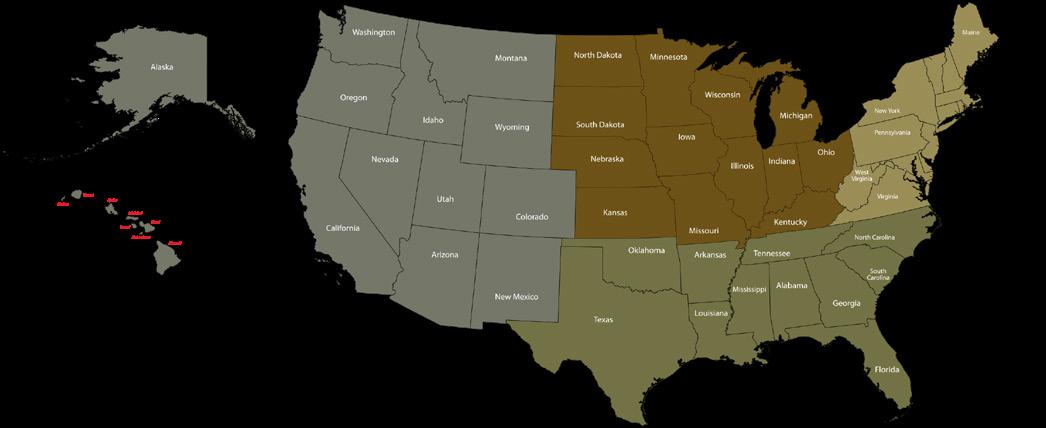
Northeast Region Director: Charles Martin Jr., 5 John Hall Cartway, Yarmouth Port, Massachusetts 02675, phone: 781.248.8620, email: cemartinjr@comcast.net
Midwest Region Director: Henry Hecker, W298 S10655 Phantom Woods Road, Mukwonago, Wisconsin 53149, phone: 262.844.5751, email: phantomhah@gmail.com
Southern Region Director: Tom Lines, 1647 Olivia Way, Auburn, Alabama 36830, phone: 205.410.2191, email: Bluecrab1949@hotmail.com
Western Region Director: Eric McGuire, 1732 Inverness Drive, Petaluma, California 94954, phone: 707.481.9145, email: etmcguire@comcast.net
FOHBC Virtual Museum: FOHBCVirtualMuseum.org
Auction Price Report: Requires FOHBC membership, access through FOHBC.org
Facebook:
Federation of Historical Bottle Collectors
Antique Bottle & Glass Collector, the Official Publication of the Federation of Historical Bottle Collectors.
Publisher: The Federation of Historical Bottle Collectors, Inc.
Editor: Alice J. Seeliger, alicesecretaryFOHBC@gmail.com
Design / Layout: Michael George, earlyglass@gmail.com
Sales Manager: Alice J. Seeliger, alicesecretaryFOHBC@gmail.com
Digital Director/Webmaster: Doug Simms, dsimms@FOHBC.org
Social Media: Craig Cassetta, ccassettaFOHBC@gmail.com
Featured Writers: Mike Dickman, Andy Rapoza, Vern Huffstetler, Joan Cabaniss, Tim Adams, Eric McGuire, Michael George, Bob Strickhart, and Ralph Finch.
FOHBC (Federation of Historical Bottle Collectors) N8211 Smith Road Brooklyn, Wisconsin 53521-9789
General Contact: FOHBCmembers@gmail.com
Federation of Historical Bottle Collectors
President’s Message
Michael Seeliger
AsI write this, the Midwest is in the midst of a deep freeze, but by the time you read this, spring will be on the horizon. It is good to see midwestern bottle folks emerge like groundhogs to pursue digging and shows. Of course, those of you in warmer climates don’t have to play this waiting game…and of that I am envious, but I love your digging stories!
FOHBC News
From & For Our Members
Honoring Bottle Collectors Who Have Passed Away
We want to acknowledge when a collector who has played a significant role in the bottle-collecting world through club and Federation activity has passed.
We especially ask Affiliated Clubs to keep us informed by providing this information to FOHBCmembers@gmail.com with a brief description of the person’s accomplishments and contributions to your club and the Federation. Or notify your Regional Director (See page 2).
An example for a submittal would be: Jeff Wichmann who supported the Federation through donations to the Virtual Museum, Auction Price Report and Federation Events and served on the Board of Directors for many years.
We offer our sympathy to Jeff’s family and many bottle friends.
Federation of Historical Bottle Collectors Slate of Officers Nominated for the July 2026 to July 2028 term
Nominations are open for the next 2-year term of office. The Nominating Committee presents the following slate. Any member in good standing in FOHBC may nominate themselves or someone else (with their permission) for any of the positions and especially any open positions. All positions serve in an unpaid, voluntary capacity.
President: Michael Seeliger
Vice President: Open
Secretary: Alice Seeliger
Treasurer: Kathie Craig
Business Manager: Open*
Membership Director: Open**
Marketing Director: Craig Cassetta
Special Projects Director: Doug Simms
Director at Large: Matt Lacy
Director at Large: John O’Neill
Director at Large: Richard Siri
Northeast Region Director: Charles Martin Jr.
Midwest Region Director: Henry Hecker
Southern Region Director: Open
Western Region Director: Eric McGuire
*Alice Seeliger currently serves as Interim Business Manager (no compensation). The previous Business Manager was a paid position.
**Michael Seeliger currently serves as Interim Membership Director.
Please notify a member of the nominating committee that you would like to be added to the ballot before April 1, 2026. Electronic voting will take place in May/June.
Serving on the board is a rewarding and interesting way to contribute to the growth and enhancement of the premier organization for bottle clubs and collectors.
Nominating Committee: Craig Cassetta, Henry Hecker, Charlie Martin, Doug Simms. Contact information is on page 2 of this issue.
FOHBC Club and Member Recognition Program (formerly “Contest”)
The Federation is changing this program from being a contest where entrants submitted their work to a committee for review and selection. The new program will eliminate the need for self-nomination and burdensome application paperwork. This will also allow regular, annual recognition for outstanding work, even during years when no National event is held.
Beginning in 2026, the Board of Directors will review and vote on the selections made by a Recognition Committee who will review articles published in that year’s Antique Bottle & Glass Collector (“Most Educational” and “Most Entertaining”), club newsletters, show flyers, websites, and social media platforms.
Clubs should make sure their newsletters are sent to the Federation at FOHBC, N8211 Smith Road, Brooklyn, WI 53521, or electronically to: FOHBCMembers@gmail.com throughout the year. Show flyers will be reviewed on the FOHBC.org Show Calendar. Categories are:
- Most Educational Article
- Most Entertaining Article
- Best Club Newsletter
- Best Show Flyer
- Best Photograph
- Best Club or Member Website
- Best Club or Member Social Media
(Blog, Facebook, Instagram, etc.)
Federation members will have an opportunity to make their suggestions to the Recognition Committee through an on-line process at FOHBC.org. (Watch for more info on FOHBC.org.)
Since there is no National Event in 2026, the time period covered will be for the entire year. Awards will be announced in early 2027. Those selected for recognition will be presented with certificates either in person or by mail. Questions may be directed to FOHBCMembers@gmail.com or call 608-575-1128.
250th Anniversary of the Signing of the Declaration of Independence “A Semiquincentennial Celebration”
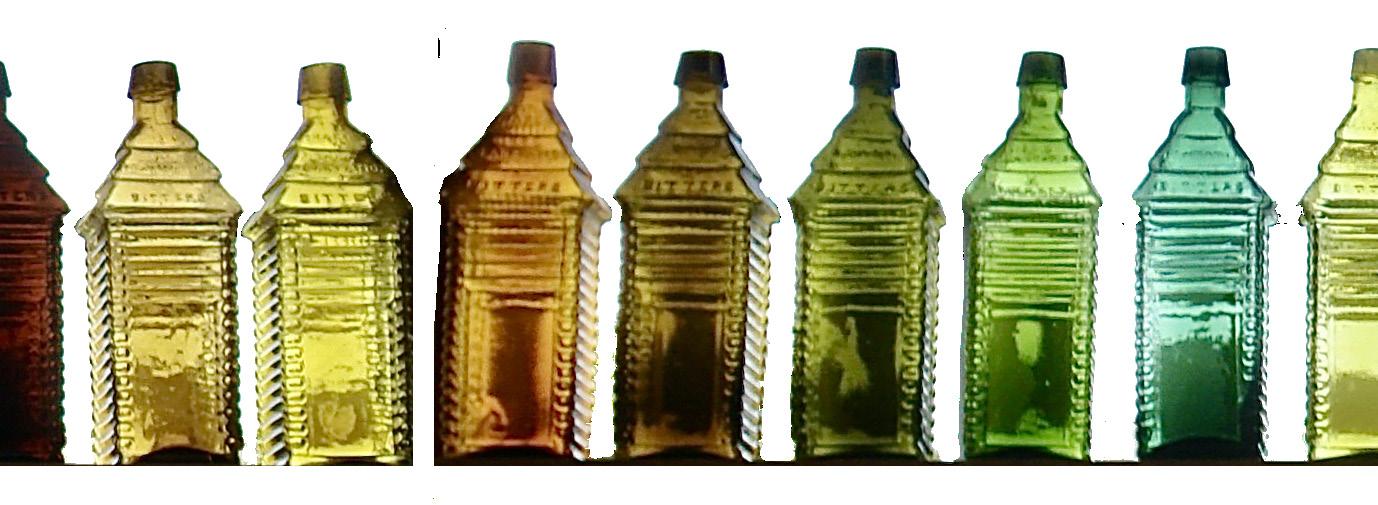
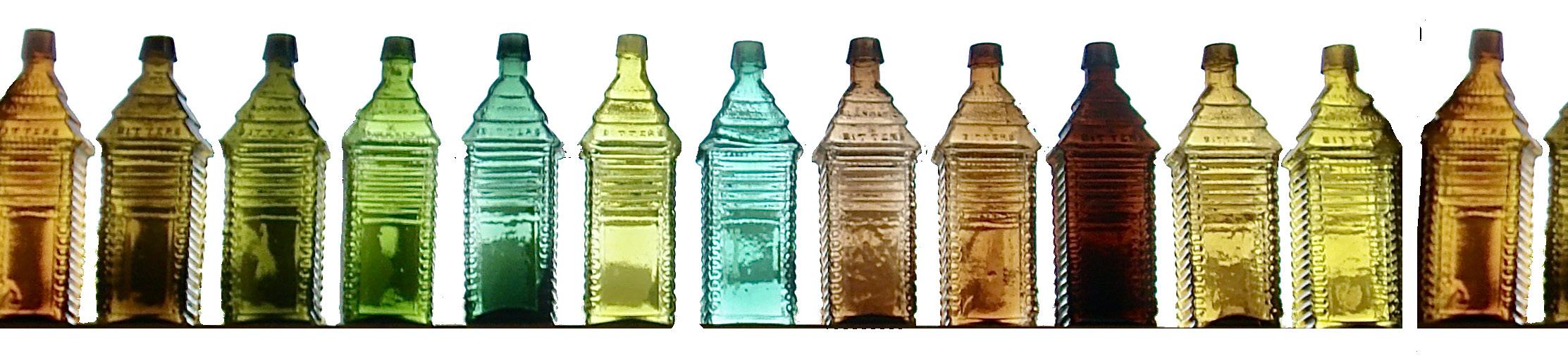
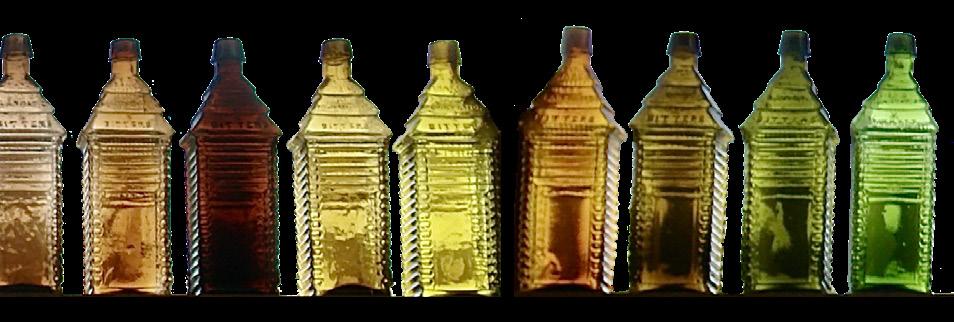
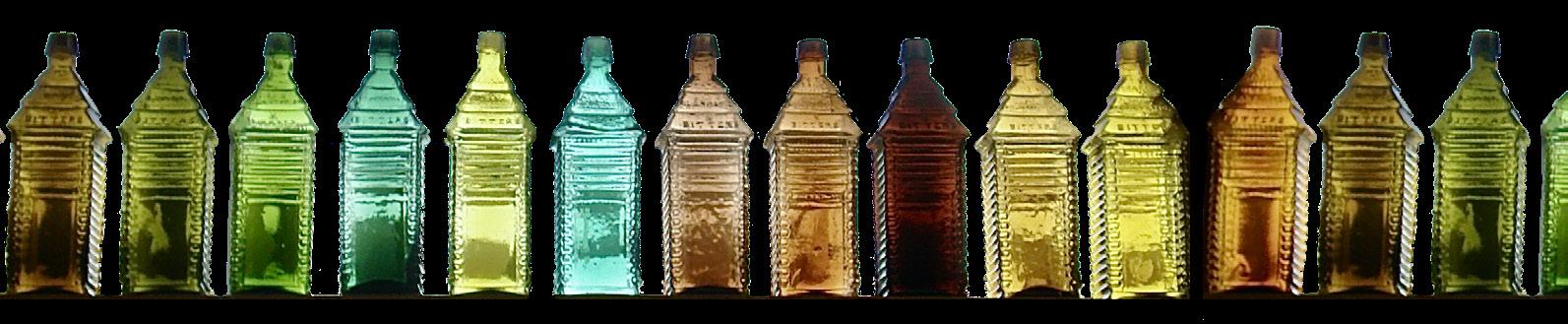
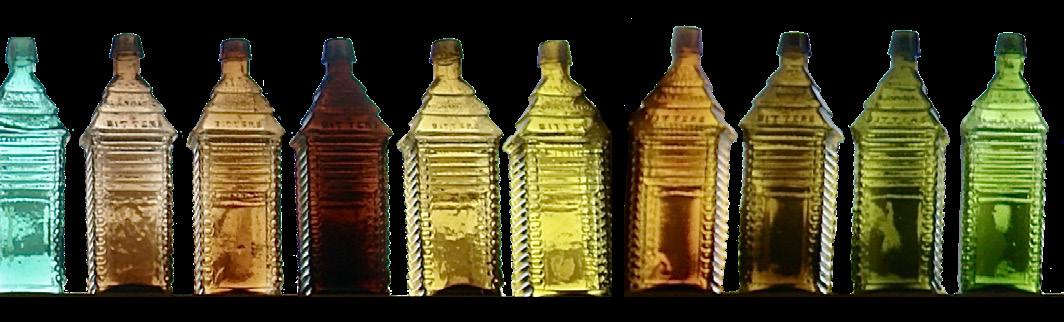
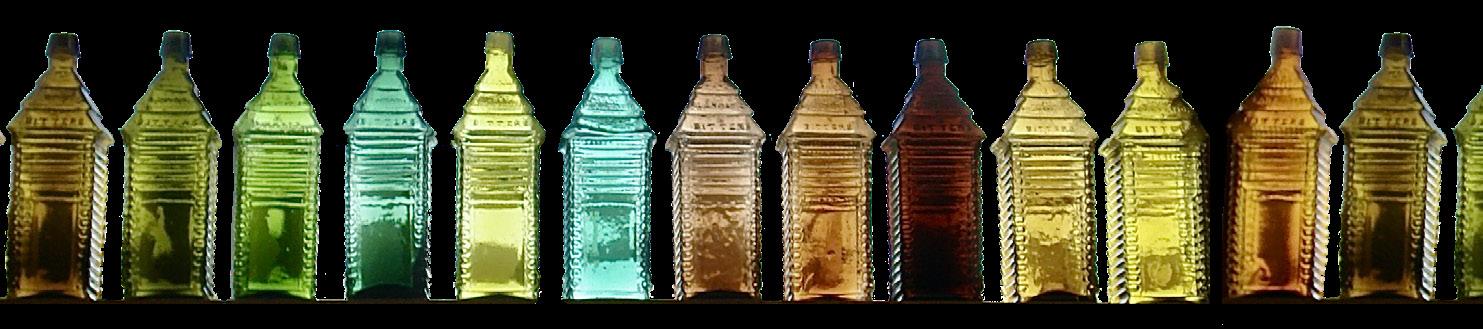
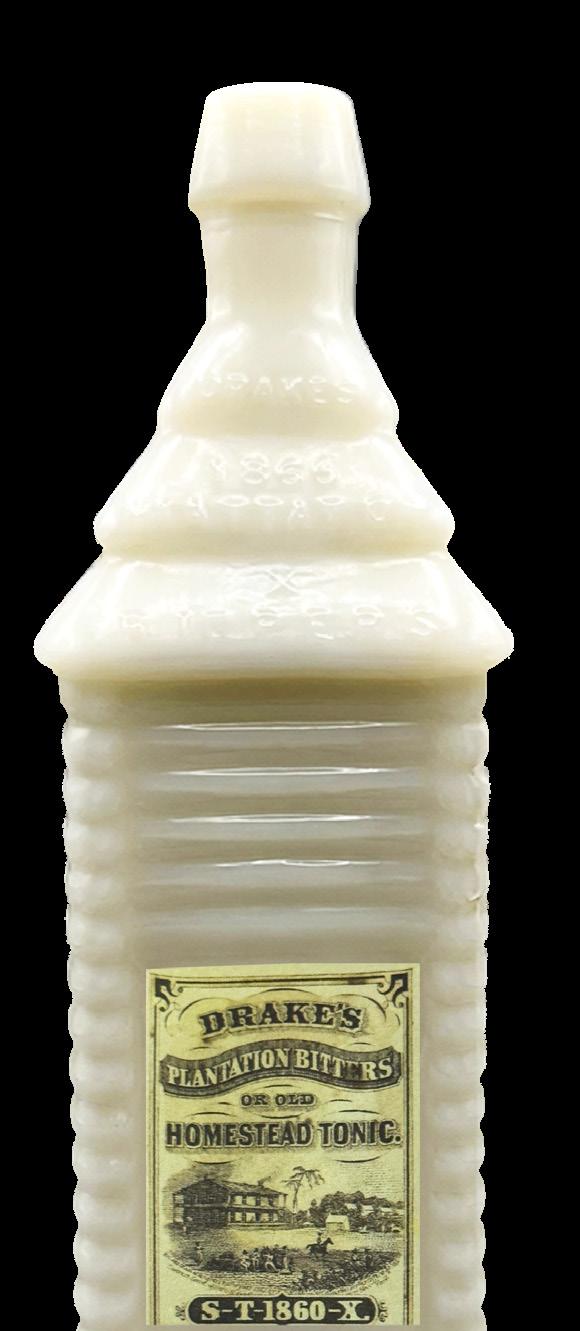
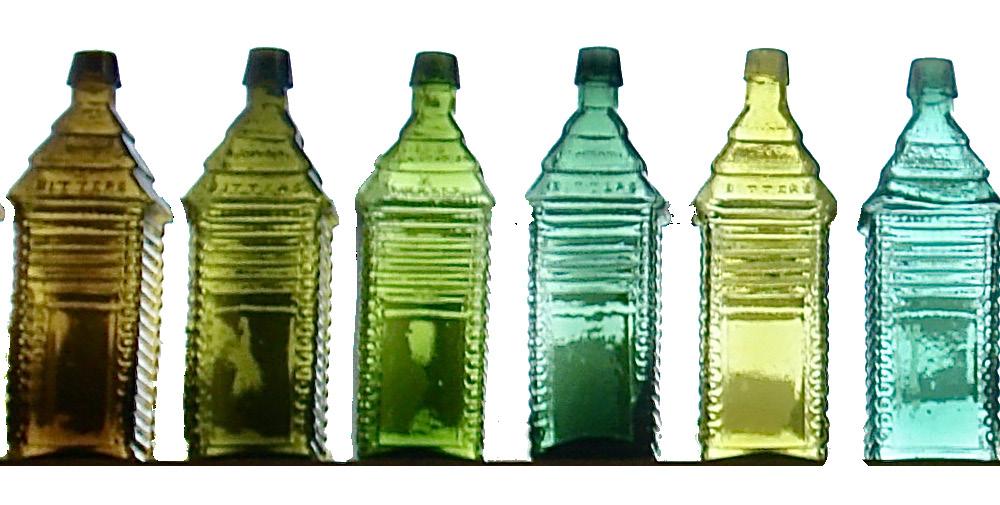
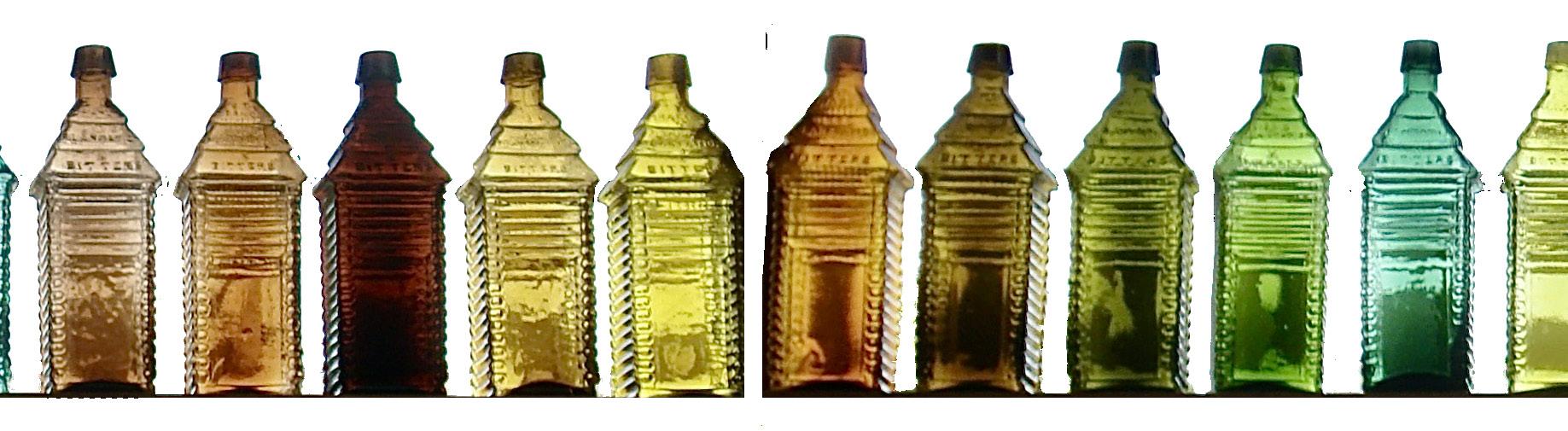
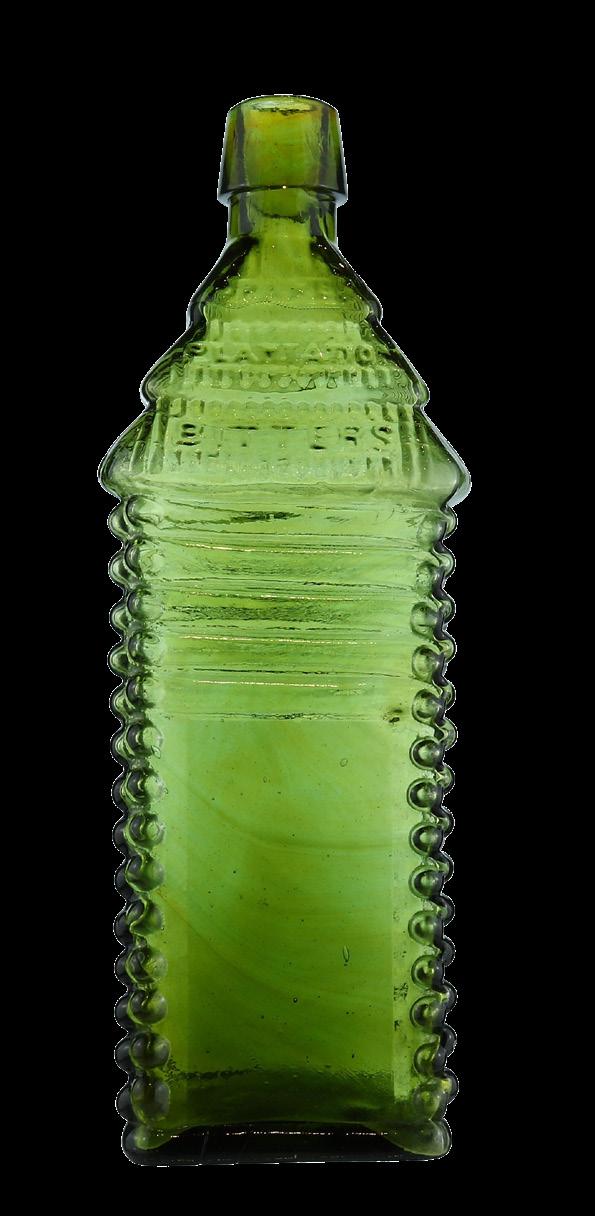
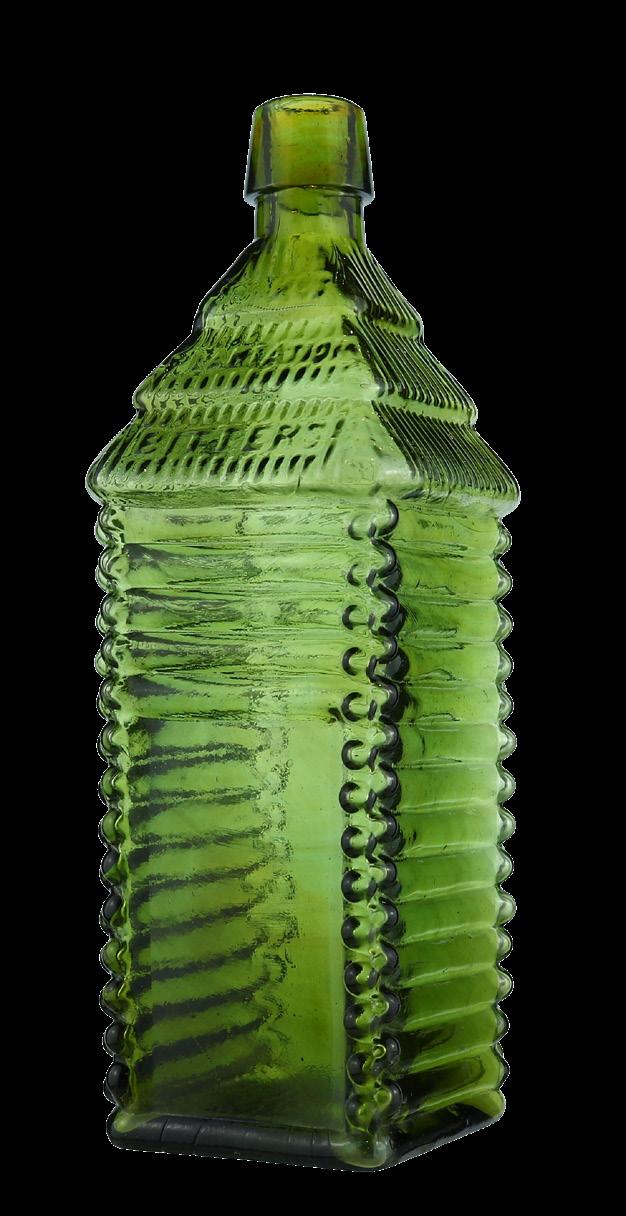
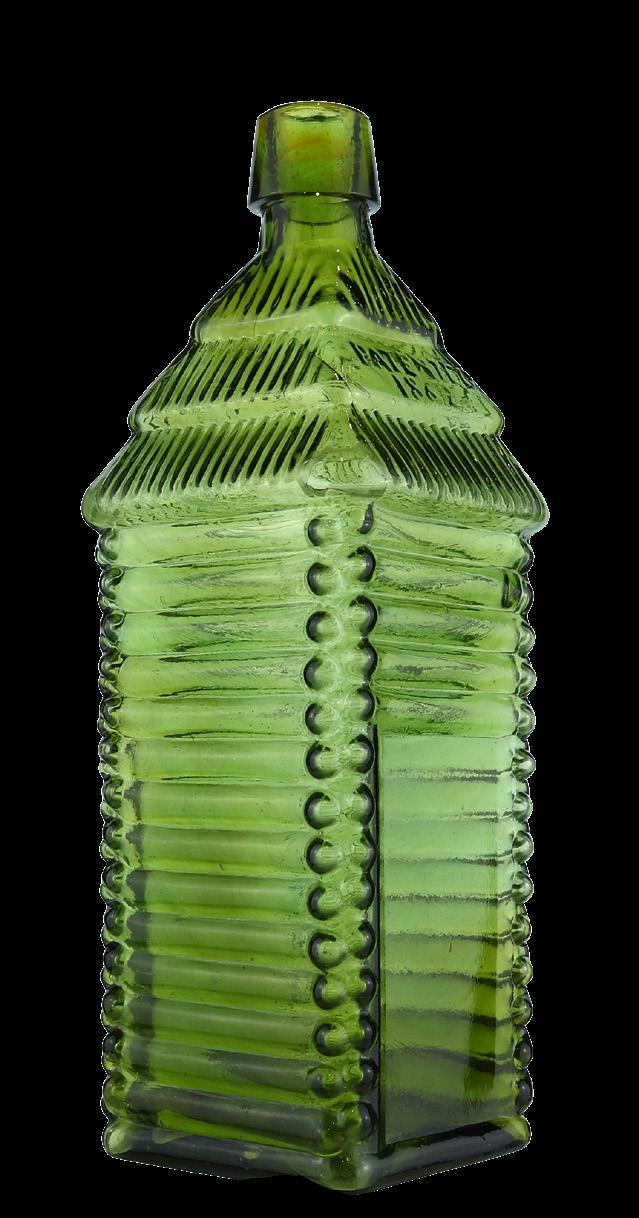
The Federation of Historical Bottle Collectors has commissioned glassblowers Treg Silkwood and Michael Craig to produce a limited quantity of white Drake’s Plantation Bitters bottles to complete the blue, red, and white run of this commemorative bottle.
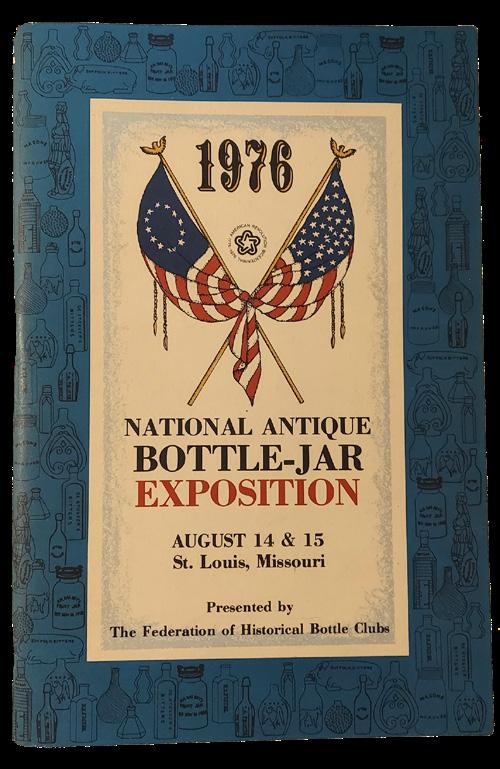
Without a National Show in 2026, they will be produced to fill prepaid orders to be distributed beginning at the St. Louis 56th Annual Antique Bottle & Jar Show which is also the 50th Anniversary of the Federation’s first national event, the 1976 Bicentennial Expo. Labels commemorating the USA’s 250th Anniversary (Semiquincentennial) and the Federation’s 50th Anniversary of its first Expo are being designed and will be included with each bottle.
Those who purchased a blue or red Drake’s will receive an invitation to add this commemorative bottle to their collection. The price remains the same at $250 for onsite pick up or $275 with shipping. We anticipate a run of approximately 70 bottles with prepaid orders accepted through 2026.
To place your order, contact Michael Seeliger at President@FOHBC.org or call 608.575.2922.
FOHBC Regional News
Southern Region Report –
Tom Lines
Iamcarrying on my series of Collector Profiles of notables within the Southern Region. This time, our focus is on Mississippi’s Cheryl Comans. Cheryl has been in the collecting world since she was nine years old. She said her mom and aunt collected Depression Glass. So, as a youngster, she also wanted to collect Depression Glass and show her mom that she knew enough to start buying pieces herself. Her first purchase was a sugar bowl for ten cents…and she still has it! She actively collected for years and could recognize all the patterns. In 1996, she and her mom went to their first bottle show in Jackson, Mississippi…one that her cousin John Sharp chaired. (For you long-time Jackson Show veterans, the show was held in an old Quonset hut building that had little to no heat!) They actually got a table there. Cheryl was intrigued and decided she wanted to go to England’s Winter Nationals several months later with her mom and cousin, John. And for the next 15 years she went to the English shows, sometimes several a year…and sometimes by herself. Also in 1996, she started a part-time estate sales business…which she is doing full time now that she’s retired. In 2000, she moved from Little Rock back to Vicksburg, Mississippi where she started digging with the Schafer brothers. After finding a few pretty pontiled cone inks, she decided to collect those.
Professionally, Cheryl worked for a public utility company handling customer service needs. During this time, one of the field crews had excavated a pontiled cathedral peppersauce and gave it to her. So that started another collecting direction in addition to the cone inks.
Cheryl has a broad range of interests in antiques. In addition to the Depression Glass, she also collected pre-1930 Humpty Dumpty memorabilia and has quite a collection. She also collects Hull art pottery. I got tickled when she described herself as a hodge-podge collector…if she likes it, she buys it. To a certain extent, I think most of us take that same view!
Around 2016 or 2017, Cheryl started helping John with the annual Jackson Show and, in 2021, she took over the lead role. This year’s show marked her sixth time as show chair. And if you have chaired a show before, you can appreciate how much work it is. Considering that the Jackson Show has grown to over 300 tables, it’s a monumental undertaking. And Cheryl does a wonderful job!
As much as I have enjoyed serving as the Southern Region Director for the last two terms, I will be leaving this post when this two-year term ends in July 2026.
We are looking for someone to take my place and be added to the ballot for the election of officers for the 2026-2028 term which begins in August 2026. Nominations are due by April 1, so don’t delay. Feel free to contact me to ask any questions you may have so you can find out what the position entails. You will be joining a well-established, active Board of Directors who are leading the Federation in all the right directions.
Midwest Region Report –
Henry Hecker
TheMilwaukee Bottle Club Show for February 1st sold out all 142 tables. To accommodate dealer demand, the club dispensed with the usual club display this year. But FOHBC still had a table for president Seeliger to promote our organization. (As I write this in mid-January, I am hopeful the club enjoyed good weather. In Wisconsin, anything is possible.)
The First Chicago Bottle Club has a feature in its newsletter showing recent eBay sales of Chicago-area bottles. As we know, we are seeing some astronomical prices at auctions these days. One wonders who and where some of these bidders are because they don’t seem to be visiting the shows. To make my point, this listing made the newsletter:
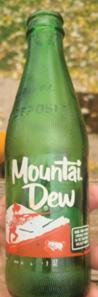
“December eBay - Described by the seller as: Here is what I believe is a very rare, ACL, throwaway style, MOUNTAIN DEW bottle. I have sold and owned dozens of normal 10 oz. returnables but have never seen one of these. It’s not perfect at all, but still rare. It is a lighter weight glass, embossed on the shoulder, 10 FL. OZ NO RETURN. Below has the Familiar Hillbilly with the Pig. The glass is fine, just a hint of dirt. The label has some light fade. One side is mostly good, but the N is missing and the lower small letters below label are partly gone. The opposite side has most of the M and part of the U missing. It also has white lettering in between labels, NO DEPOSIT NO RETURN. A couple letters are partially gone. No chips, cracks, glass is good, rare in any condition and sold as is. Sold for: $5,199.99.” ACL sodas are a hot commodity, but this one is “smokin.” Yahoo!!! Mountain Dew!!!
Western, Midwest, Southern, and Northeast
Artificial intelligence pervades the news these days. AI investment is driving the stock market. Data centers are straining the electrical grid. The “bots” are taking all front-line jobs. Some experts predict that we are racing toward a state of technological singularity where AI surpasses human intelligence and thus threatens us. We shall see, but as a history researcher I can attest that we have some time left. I have personally asked some sample questions of various AI sources, and if you want to make a bot hallucinate (that is, make up stuff), just ask questions where there is a dearth of source material on the web. AI can’t access source material, at least not yet, from unscanned newspapers, document archives, private collections, etc. I recently asked ChatGPT a question in one of my areas of expertise. The resulting answer sounded definitive and authoritative. Dates, places and people were cited, but I knew it was absolute BS.
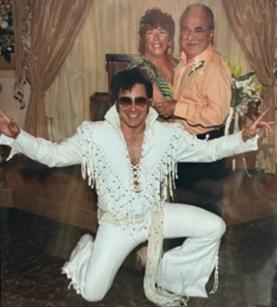
A recent edition of the Metropolitan Detroit Club newsletter included this vintage photo from the wedding reception of Janet and Ralph Finch. Apparently, Elvis would not leave the building.
Western Region Report –Eric McGuire
Earthquake!
Our old earth has recently shown us that she is not rock solid after all. Us Western Region collectors have been reminded lately that a big shake may be on the horizon. And, some of the activity does not seem to be strictly confined to the historical “ring of fire.” The last six months or so has given us plenty of warning that it may be time to secure our precious glass in the best way possible. Of course, there are no guarantees, but some prevention wouldn’t hurt. As an old geology/geography major, I still catch myself looking at certain landforms and ask how that could possibly be created without sudden and violent earth movement. It brings to mind the age-old earth science academic discourse between Catastrophism vs Uniformitarianism as to why the surface of the earth looks the way it does. I believe any reasonable person would conclude, “it depends upon the day!” Just a suggestion, at minimum, secure your display shelving to an adjacent wall, if possible, and stick your items down with “museum putty.” Then cross your fingers.
On a happier thought, I hope some of you were able to attend the Anderson, California show on January 24, the Phoenix, Arizona show on February 13 & 14, and can plan a trip to the Kent, Washington show on February 27 & 28, and the Aurora, Oregon show on March 20 & 21. Show season, here we go...
Northeast Region Report –
Charlie Martin, Jr.
Thedoldrums of winter are finally being shed as we begin the early stages of spring 2026. With warmer weather and longer days of sunlight, diggers are honing their shovels, picks, and sundry tools developed for picking through ash and fill of various sorts to get at hidden treasures still waiting to be discovered.
Meanwhile, Mother Nature is warming the earth to allow their prospecting to begin anew. I hope and trust that those of you who are still able to dig and are active diggers will document your experiences and send photos and identifying text of your various digging experiences to our Federation magazine, Antique Bottle & Glass Collector. We love to see and read about your experiences and discoveries, especially those of us who are no longer able to enjoy the excitement that a new dig site presents.
Two shows are currently scheduled for the Northeast Region during March and April of 2026. One is the 45th Annual Show & Sale hosted by the Baltimore Antique Bottle Club. The show date is March 29 at the Howard County Fairgrounds, Main Exhibit Hall, 2210 Fairgrounds Road, West Friendship, Maryland. Admission for all is at 9 am and the show concludes at 3 pm. If you are able to attend this spectacular event, you will not be disappointed. In fact, once you’ve attended the Baltimore show, you will be hooked, you will find it irresistible, and you will be making plans to attend future shows. I know from personal experience, wear durable and comfortable footwear as you will be covering an enormous amount of area with only six hours of time.
The second bottle show scheduled for our area is on April 18, 2026 in Dover, Pennsylvania hosted by the Pennsylvania Bottle Collectors Association. This is their second annual show and sale. The show hours are from 8 am to 2 pm at the Dover Township Community Center, 3700 Davidsburg
FOHBC Regional News
Road, Dover, Pennsylvania. If you live near this venue, try to attend this new Federation Affiliated Club show which is in the early stages of its growth. Our best wishes go out to show chair, Greg Druck and his team for a successful event.
I want to encourage all bottle collectors to support their local clubs by attending meetings and volunteering time to ensure that your clubs remain viable and nourished by your expertise and camaraderie with fellow antique bottle enthusiasts.
The Federation (FOHBC) is actively seeking clubs, consortiums, individuals, or combined clubs to host the 2028 FOHBC National Antique Bottle & Glass Exposition between July 20 and August 10 in the Northeast Region. It’s been too many years since the National has been hosted in our Region. I hope we can change that! There have been great shows in York, PA; Manchester, NH; Cherry Hill, NJ; Syracuse, NY; and Springfield, MA. Let me know if you would like more information. Craig Cassetta, ccassettafohbc@gmail.com is leading the effort so feel free to contact him directly.
Until next time, happy bottle collecting!
FOHBC Affiliated Clubs
~ Remember to request your Certificate of Insurance at least a month before your show by emailing John O’Neill at JONeill@risk-strategies.com.
~ Request display award ribbons at least one month before your show at FOHBCmembers@gmail.com
~ Send your club news to your regional director who provides their reports for each issue. They are here to help clubs in their region, so take advantage of their expertise. Add them to your newsletter mailing or email list.
~ Send your show flyer to FOHBCmembers@gmail.com as soon as it is produced so it can be included in show listings in AB&GC, on the FOHBC.org Show Calendar, and posted on Facebook.
~ Add FOHBC to your newsletter mailing or electronic distribution at N8211 Smith Road, Brooklyn, WI 53521 or FOHBCmembers@gmail.com
~ Participate in a fundraiser for your club with Exposition books for door prizes, raffles, or awards. Find out about the program by emailing FOHBCmembers@gmail.com
How can the Federation help YOUR club?
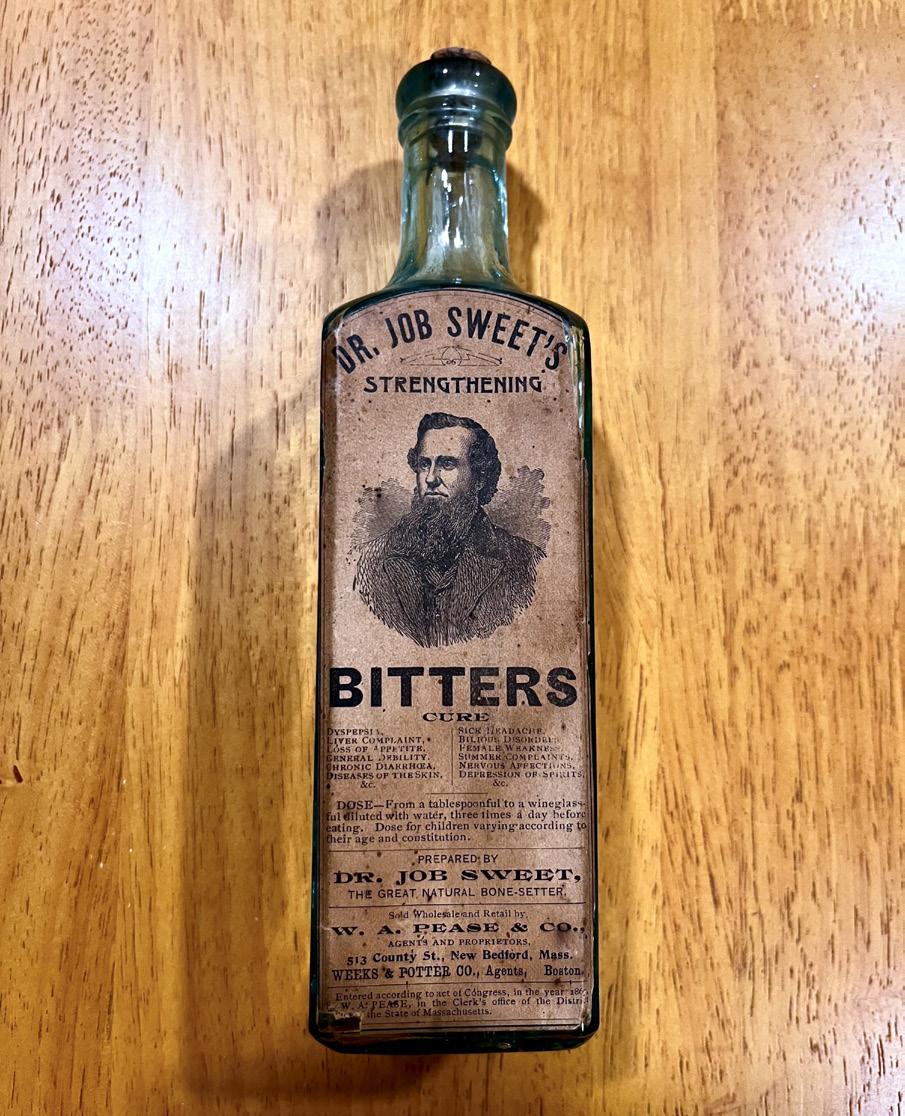
My recent acquisition is this unlisted Massachusetts bitters from New Bedford, MA. Get out there and find your dream bottle.
$1,000 June 2021 Glass Works Auctions #167
Lot 141: June 2021 · Glass Works Auctions “ST / DRAKE’S / 1860 / PLANTATION / X / BITTERS - PATENTED / 1862”, (Ring/Ham, D-108), New York, ca. 1862 - 1875, black olive amber color 6-log cabin, 10”h, smooth base, applied tapered collar mouth. Perfect condition, extremely bold impression, no wear or scratches. A very rare color and as dark as any we’ve sold! Also four heavy ‘beads’ are embossed on the base, something we have not seen in any other Drake’s! Dan Catherino Collection.
$2,400 November 2020 American Glass Gallery #121
$180 May 2012 American Glass Gallery #8 “ST / DRAKE’S / 1860 / PLANTATION / X / BITTERS - PATENTED / 1862”, (Ring/ Ham, D-105), New York, ca. 1862 - 1875, medium salmon pinkish puce 6-log cabin, 10”h, smooth base, applied tapered collar mouth. A 1/2” in diameter in-making chip extends from beneath the applied collar down into the neck. Pure puce color that looks great in any lightning.
Lot 185: ““S T / DRAKE’S / 1860 / PLANTATION / X / BITTERS - PATENTED / 1862”, 1862 - 1880. Medium-to-deep pinkish raspberry, cabin form with 6 logs above the label panel, applied sloping collar - smooth base, ht. 9 7/8”, near mint; (just the slightest trace of minor wear, and the embossing is a little weak in the upper shoulders as is not uncommon with this mold, otherwise perfect). R/H #D106. A gorgeous, rare, eye-appealing color that passes plenty of light, and having plenty of pink!
$14,000 September 2020 Glass Works Auctions
Lot 172: “ST / DRAKE’S / 1860 / PLANTATION / X / BITTERS - PATENTED / 1862”, (Ring/Ham, D-105), New York, ca. 1862 - 1875, medium moss green cabin, 9 7/8”h, smooth base, applied tapered collar mouth. Recently ‘picked’ at the ‘Elephant Trunk’ flea market in Connecticut (a favored venue of the ‘Flea Market Flip’ reality television show), and possibly only the second known example in this very unusual moss green color. In 1993 we auctioned the collection of Elmer Smith of Shelton, Washington. Lot 20 in that collection was at that time the only moss green Drake’s Plantation Bitters known to exist, it sold for $10,000!
Drake’s Plantation Bitters
Available to FOHBC Members Only!
Online Auction Price Report. Search on your smartphone, tablet or desktop computer. Includes 10 years of results from American Bottle Auctions, American Glass Gallery, Glass Works Auctions and Heckler in Phase 1. The Auction Price Report is only available to FOHBC members. Being a FOHBC member will give you 24/7/365 access. What a great tool this is for the collectors, diggers, pickers, researchers and the generally curious! Phase 2 updates will include images!
Visit the FOHBC.org Members Portal for instructions.
$15,690 September 2020 Glass Works Auctions #121 251: “General Washington” And Bust – “E Pluribus Unum / T.W.D.” And Eagle Portrait Flask, Kensington Glass Works, Philadelphia Pennsylvania, 1820-1830. “Firecracker” Medium amber with a strong olive tone, sheared mouth – pontil scar, pint; (light exterior high point wear). GI-14. Tremont Labeth collection.
American Poison Bottles
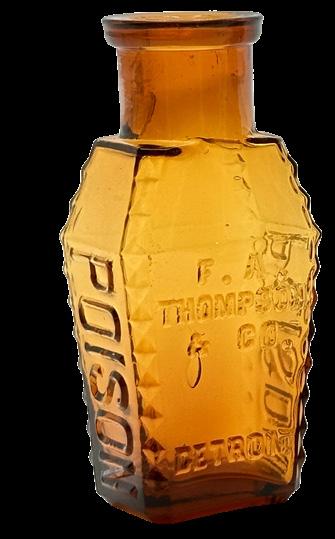
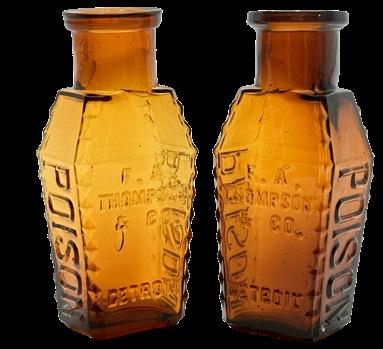
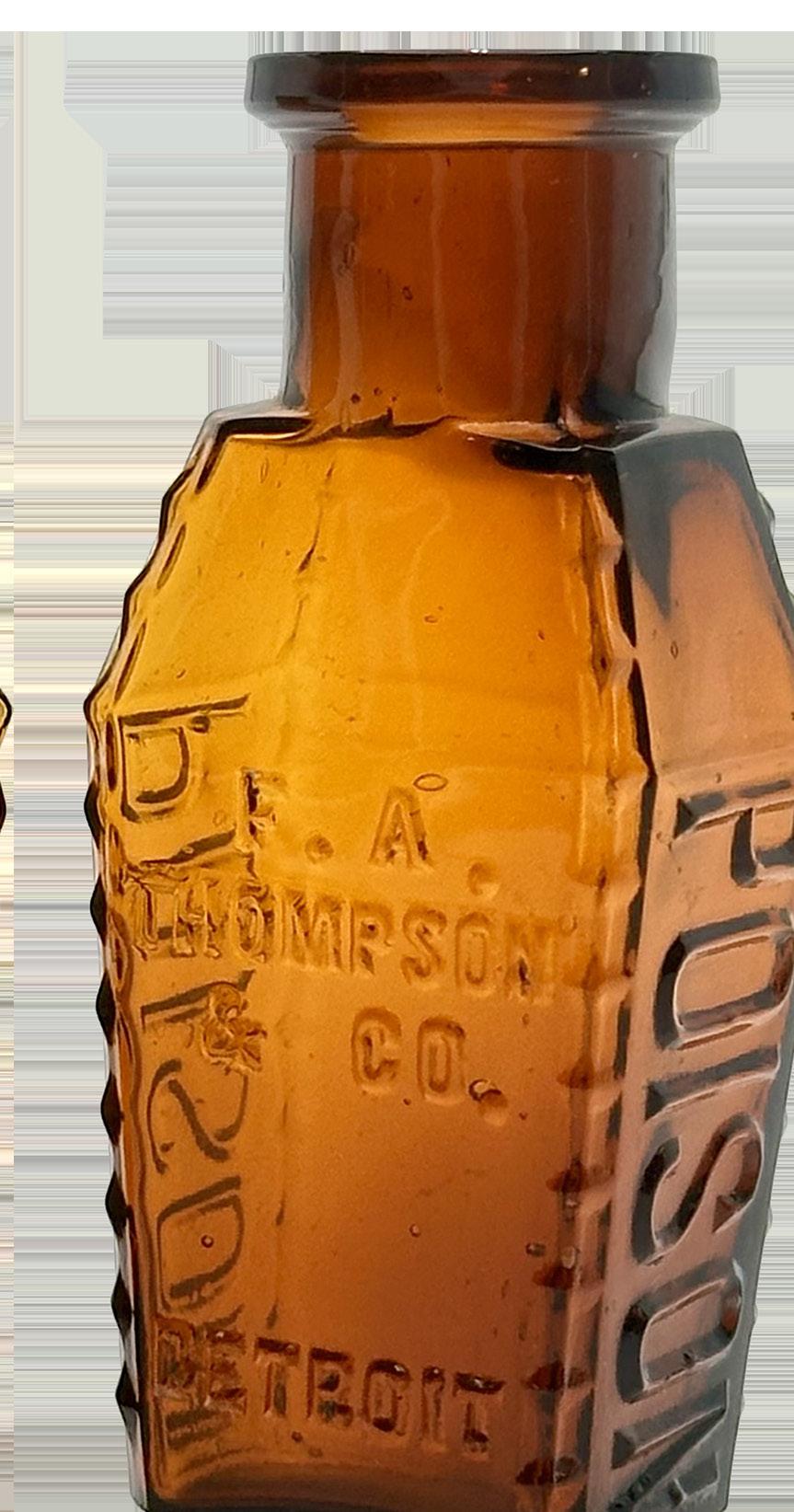
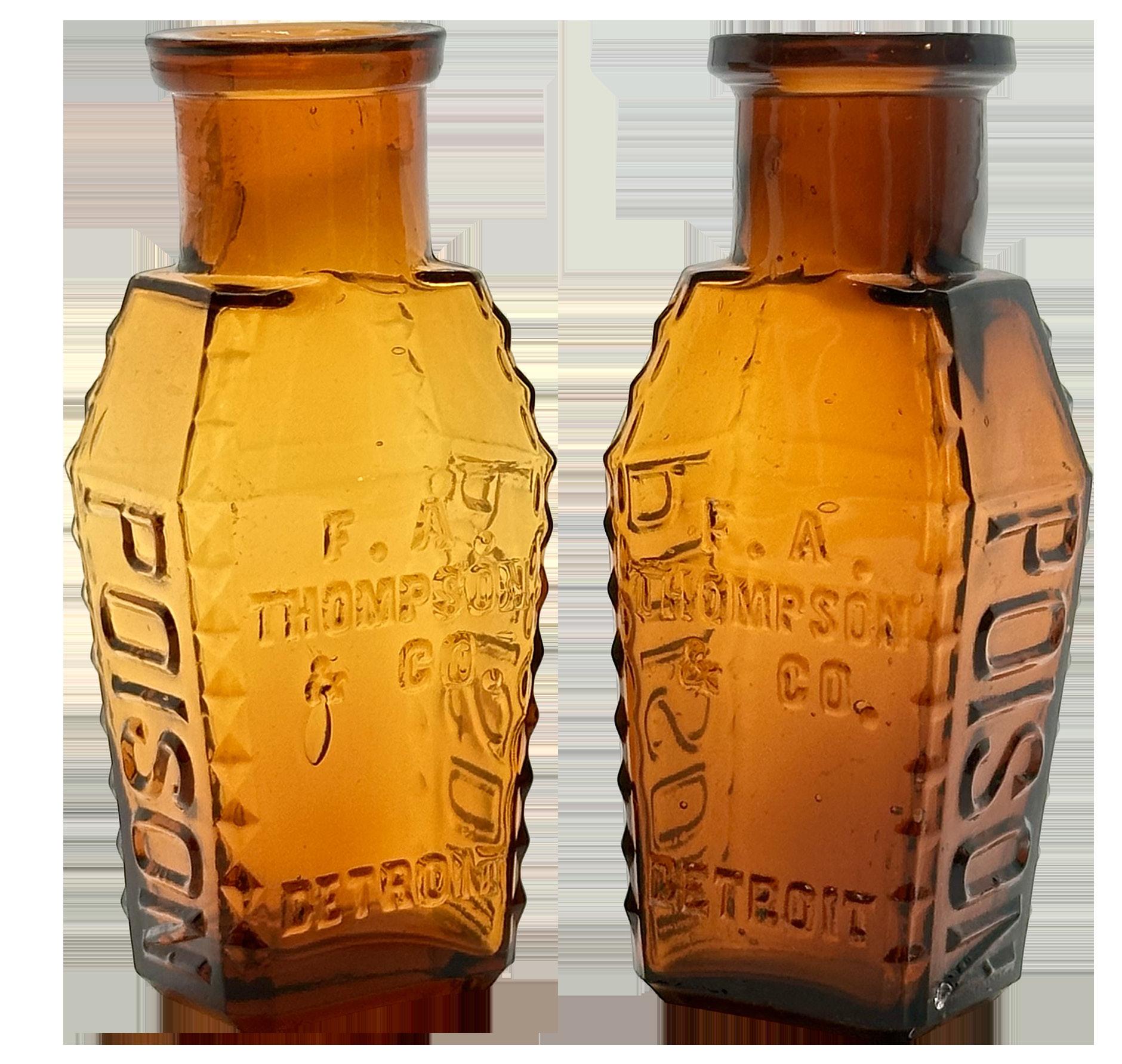
The F.A. Thompson & Co. Coffin-Shaped Bottles
Poison bottle collectors love “coffin-shaped” bottles and one of my favorites is the F. A. Thompson & Co. Detroit coffin. When we wrote the American Poison Bottles book, we did not find significant information on the company or the founder. However, with honed research skills and more time to focus, we teased out the story of the man who was the founder and engine of F. A. Thompson & Co.
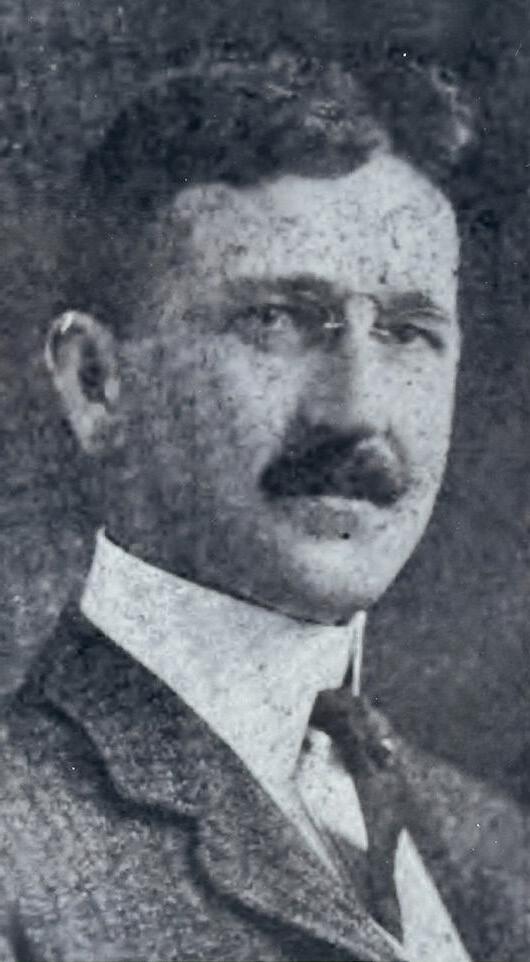
Frank A. Thompson
Frank Augustus Thompson was born in 1863 and grew up working on his parents’ farm near Ann Arbor, Michigan. He received his early education in the public school system. Frank attended the University of Michigan and graduated in 1881 with the degree of Pharmaceutical Chemist. He then went to work at Goodyear’s Drug Store in Ann Arbor and continued graduate-level work at the university. His university credentials, combined with two years of practical experience, enabled him to move to Detroit, Michigan on January 1, 1883, as an assistant chemist at the prestigious Parke, Davis and Company laboratories.
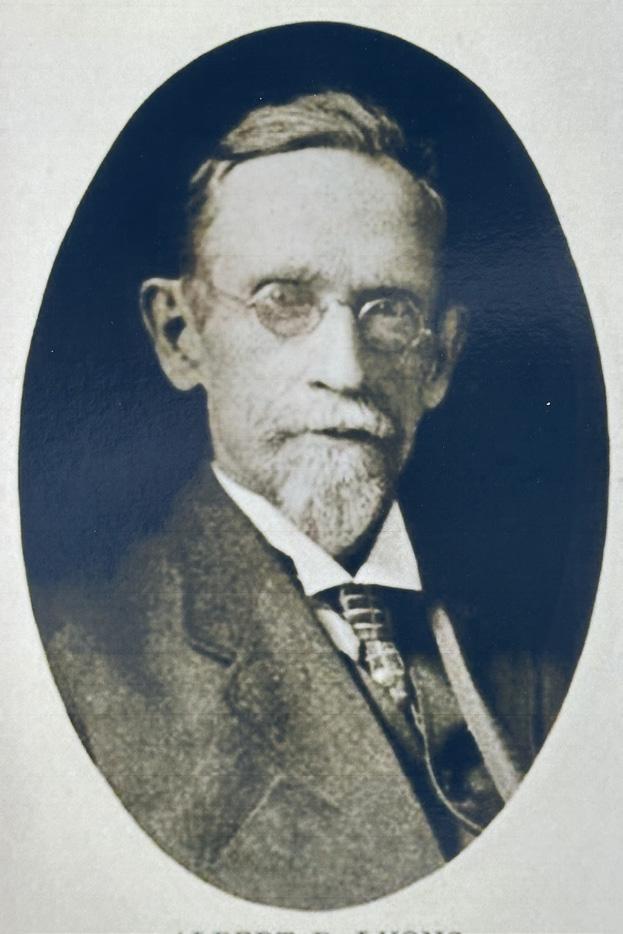
Fortuitously, he worked under the leadership of the esteemed chief chemist, Dr. A. B. Lyons, for his first four years. Dr. Lyons resigned on January 1, 1887, to publish the first textbook on alkaloid assaying, “Manual of Pharmaceutical Assaying” and become editor of the magazine “Pharmaceutical Era.” In 1888 he was named Government Chemist for the Hawaiian Islands and became a professor at Oahu College. He returned to Detroit in 1907 as chief chemist for Nelson, Baker & Co. Dr. Lyons also served in the American Pharmaceutical Association and published more works in pharmaceuticals, geology, and genealogy. The Philadelphia College of Pharmacy awarded Albert B. Lyons an honorary Master of Pharmacy for his life’s work.
1864-1925
Albert B. Lyons, 1841-1926
Frank A. Thompson learned chemical assaying from the best of the time. When Dr. Lyons resigned, F.A. Thompson was promoted to his role as chief chemist of the Parke, Davis Laboratories, a position he kept for ten years.
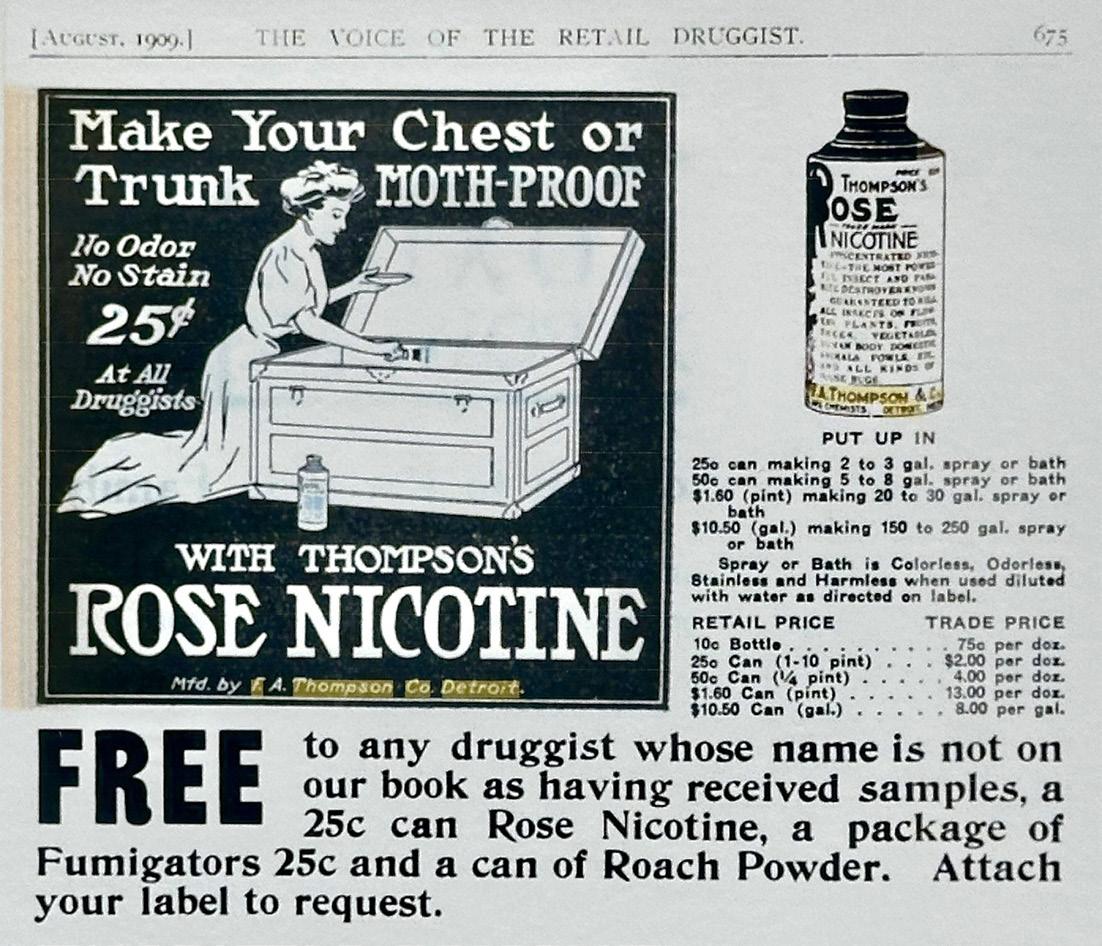
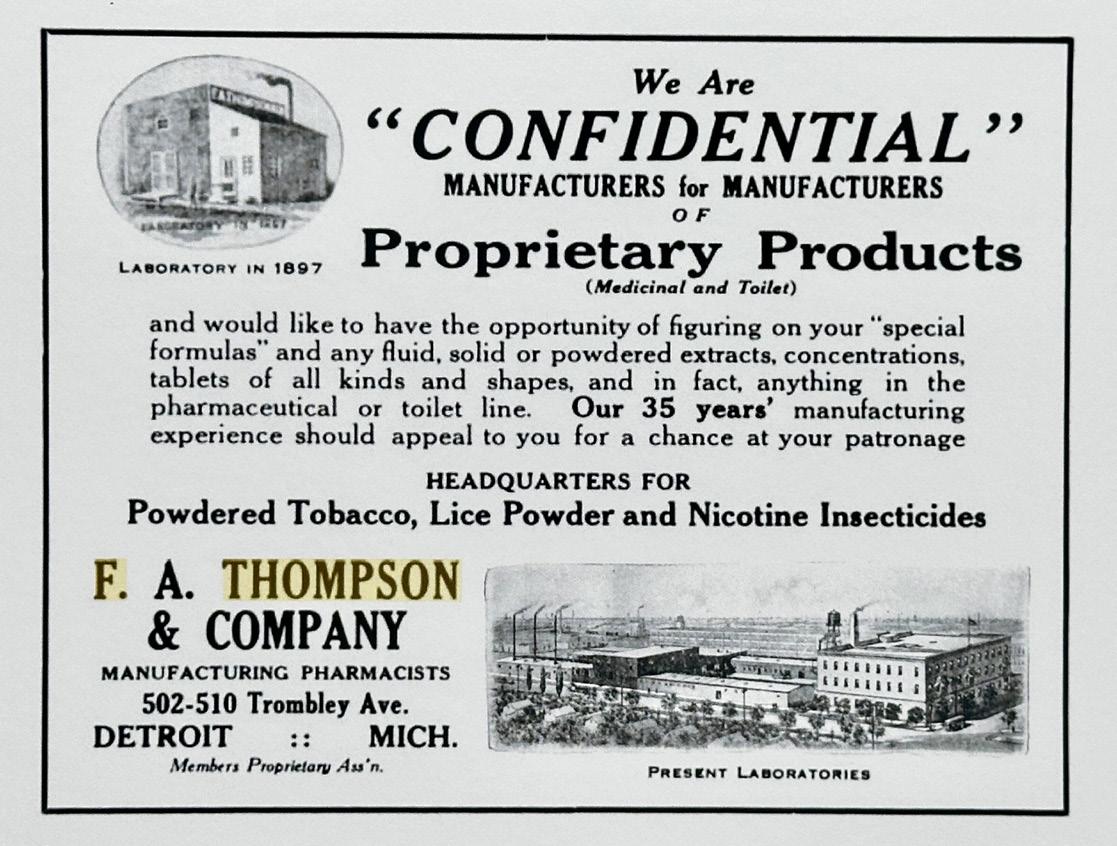
On June 1, 1897, F.A. Thompson & Co. was founded with Edwin E Conley (Lawyer) as president, John E. Clark (physician) as vice president, and F. A. Thompson as treasurer and manager. An associate from Parke, Davis & Co., John McFarlane, was the superintendent of operations, a position he held for nearly the life of the company. The company was incorporated in March 1898 under the laws of Michigan with $21,200 of capital. The company started with formulas, equipment and processes all designed by Frank A. Thompson. The first product specialties were Cascara Aromatic (laxative), Syrup White Pine Compound (cough syrup), and Trifolium Compound (for coughs and respiratory issues). By 1906, F.A. Thompson developed a nicotine insecticide named Rose Nicotine. He used scrap tobacco from cigar companies and equipment of his design, to refine high doses of nicotine to a poison level. This produced an odorless and colorless, effective insecticide. It would kill roaches, bedbugs, moths, and any other insect without any danger to man or beast. It was approved for use by the Department of Agriculture as sheep and cattle dip. Rose Nicotine became a tremendous success and one of their top products throughout the life of the company. It helped the business grow to become a significant Detroit drug and chemical producer.
Like most drug and chemical companies of the era, F.A. Thompson & Co. had difficulties with strict testing associated with the Food and Drug Act of 1906. The company was fined at least four times between 1910 and 1913 for not adhering to label specifications on Rose Nicotine. On January 3, 1922, the company was charged with Adulteration and Misbranding of Antiseptic Tablets. The case was based on testing by the Bureau of Chemistry of a shipment on January 24, 1920. The bottles were labeled in part: “Tablet Triturates Antiseptic Bernays (Blue) Mercuric Chloride corrosive 1 41-50 grs. *** F. A. Thompson & Co. Detroit, Mich., U. S. A.” However, testing revealed the tablets were 19% lower in Mercuric Chloride than labeled. Like all the Food and Drug Act cases we have reviewed, they pled guilty and paid a $50 fine.
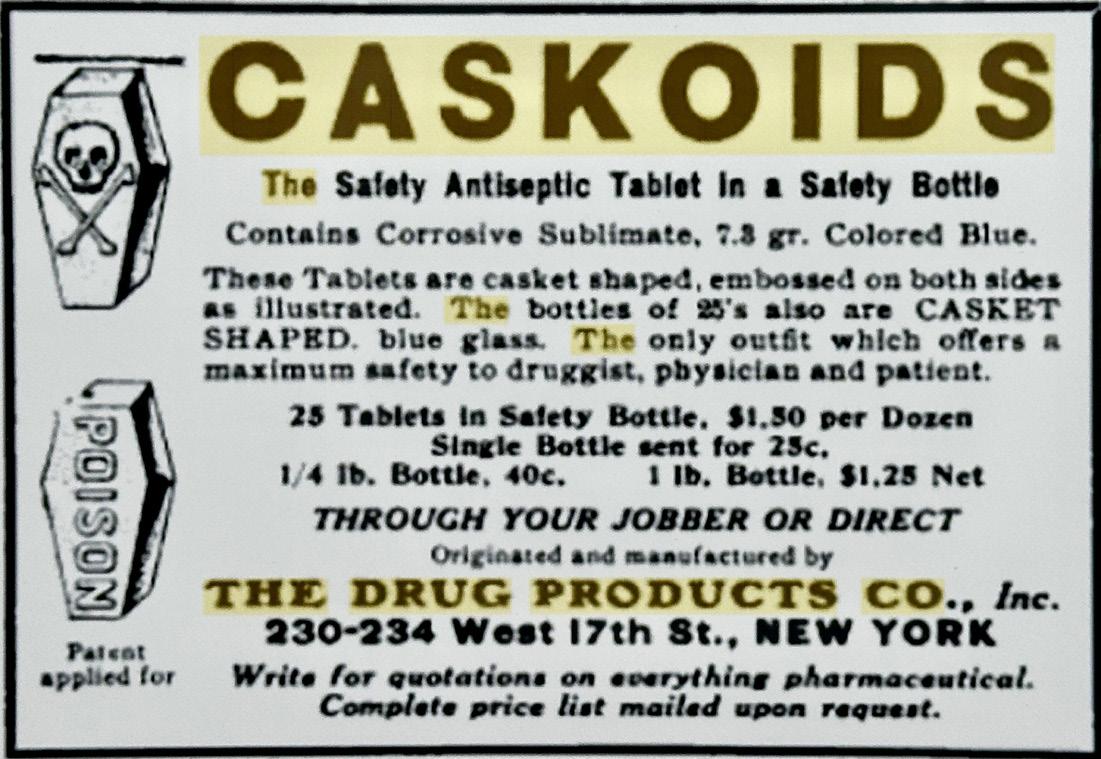
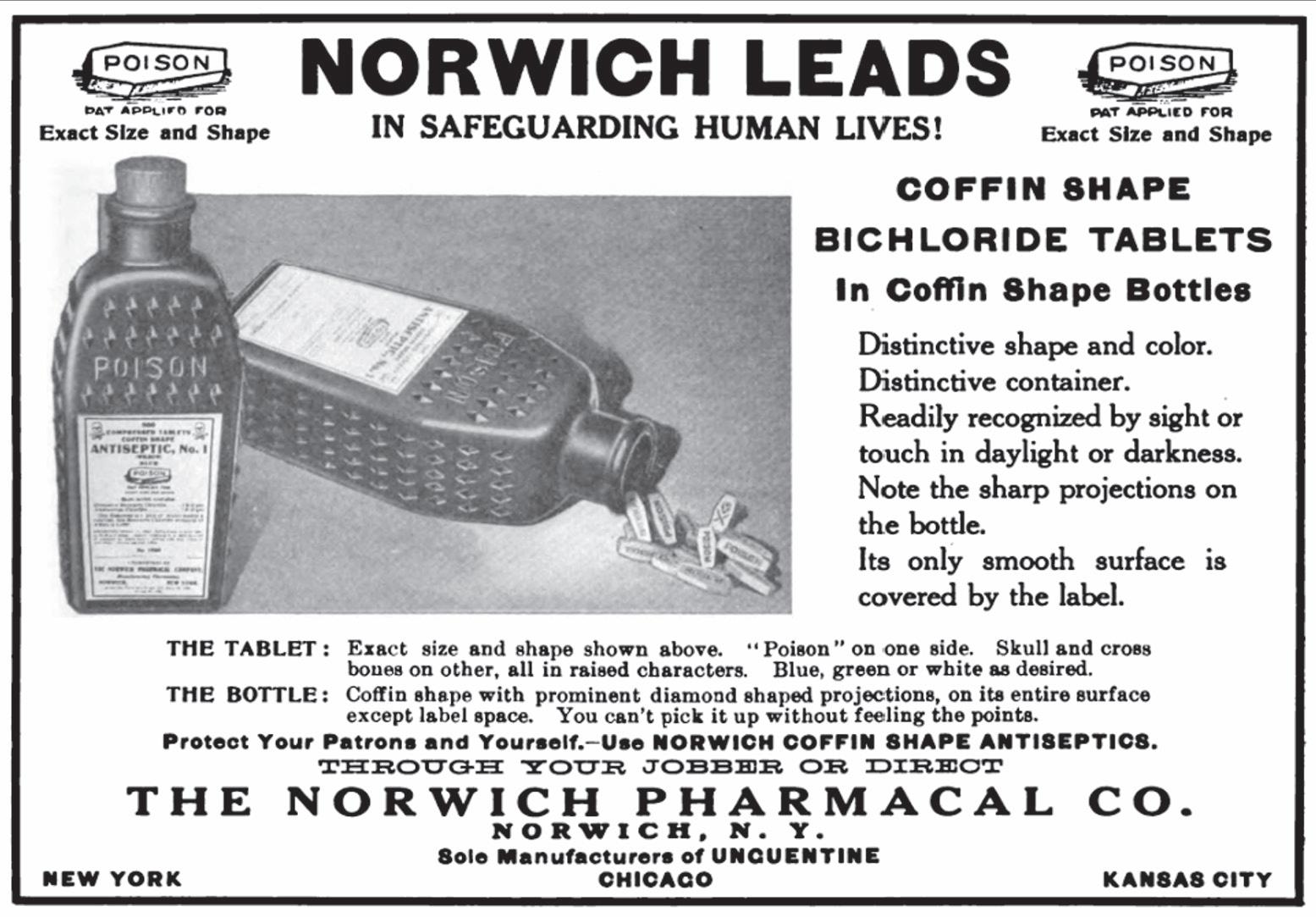
In 1913, the American Pharmaceutical Association obtained the rights to “coffin-shaped” tablets for Mercury Bichloride. It is highly likely that F. A. Thompson’s “coffin-shaped” bottle was introduced near that time. We found that Mr. Thompson served on a committee of the American Pharmaceutical Association with Harry Noonan, president of the Drug Products Co., and former head of the New York City branch of Norwich Pharmacal. Both companies introduced “coffin-shaped” bottles and tablets in November of 1913.
Both advertisements were in the November 1913 edition of The Practical Druggist. An article in the same edition praised both New York companies for being the first American Pharmaceutical Association members to bring the recommended “coffin-shaped” tablets and bottles to market. In April of 1913, the APA members were given the rights to use “coffin-shaped” tablets for mercury bichloride to prevent accidental poisoning.
Rose Nicotine advertisement
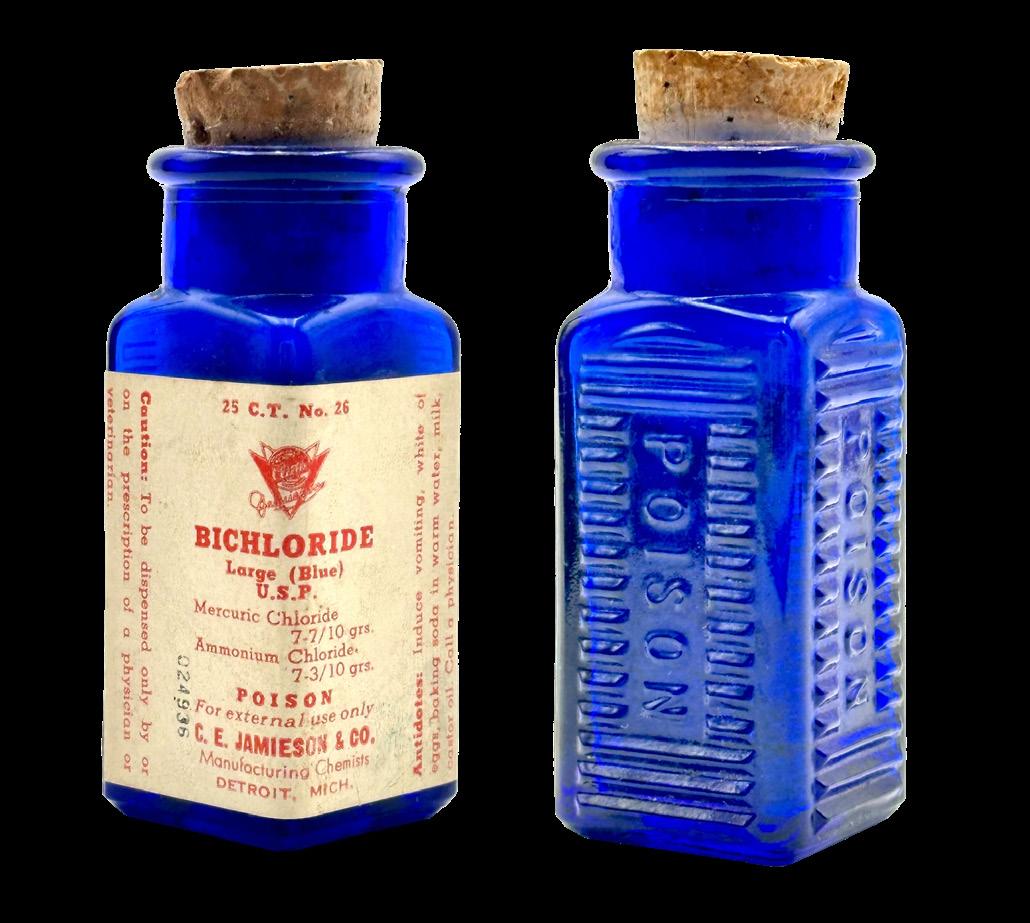
F.A. Thompson & Co. supplied drugs for the war effort during WW I (1914-1918). They advertised heavily during the post WWI period to produce other companies’ proprietary medicines. This was likely to fill the production capacity available after the war ended. The company remained successful until Thompson’s death in 1925. The business was sold to C.E. Jamieson who continued to run it with a similar product line, including mercury bichloride. However, that is a story for another day.
SOURCES:
Find A Grave
Compendium of History and Biography of the City of Detroit, Clarence Monroe Burton, 1908.
The Book of Detroiters, Albert Nelson Manquis, 1908.
The City of Detroit, Michigan, 1701-1922 – Vol. 5, Clarence Monroe Burton, 1922. Merk’s Report, June 15, 1897; May 1, 1898 Paint, Oil and Chemical Review – Vol. 25.
The American Tyler-keystone: Devoted to Freemasonry and its… 1898. Proceedings of the National Wholesale Druggists’ Association, 1900. Drug Clerks Journal – Vol.1, 1900.
The Voice of the Retail Druggist, August 1909 Edition.
Michigan Manufacturer & Financial Record, 1910. United States Department of Agriculture, February 8, 1910.
The Pharmaceutical Era, March 15, 1906, March 1910 and Vol. 56. Who’s Who in Finance, 1911.
Modern Miller June 24, 1911.
The Florists’ Review January 23, 1913.
Standard Remedies – Vol. 2, 1916, 1917, 1921.
National Miller – Vol. 32.
Notices of Judgement Under the Food and Drug Act, United States Dept. of Agriculture 1922
Your Poison Bottle Team
Foreground: Vern Huffstetler is a mechanical engineer, collector, author, photographer, and artist. He contributed significantly to writing the American Poison Bottles book, magazine articles, and three webinars on poison bottles.
Back Left: Joan Cabaniss is the “Queen of Poisons.” She served as the long-time president of the Antique Poison Bottle Collectors Association. The May 2005 issue of National Geographic featured Joan and her collection in “Pick Your Poison.” In 2014, Joan and her collection were featured in Virginia Living magazine. The FOHBC Virtual Museum includes her impressive poison bottle collection. Joan coauthored the Poison Bottle Workbook, American Poison Bottles, and our magazine articles.
Back Right: Tim Adams’ knowledge of the bottle hobby is extensive. His memory of who has what rare poison is phenomenal. He volunteers his time often ministering and supporting his community with catered chicken charity events. Tim is coauthor of the Poison Bottle Workbook, American Poison Bottles, and multiple magazine articles.
See display ad to purchase “American Poison Bottles.”
The beautiful KU-4 coffin poison bottle: F. A. Thompson & Co. Detroit.
ACL CORNER #21
[Mike Dickman]
For half a century, applied color labels (ACLs) were used by thousands of mom-and-pop bottlers across the country. Many of the brands didn’t last long, and some of their labels, bottles and themes were unusual or downright odd.
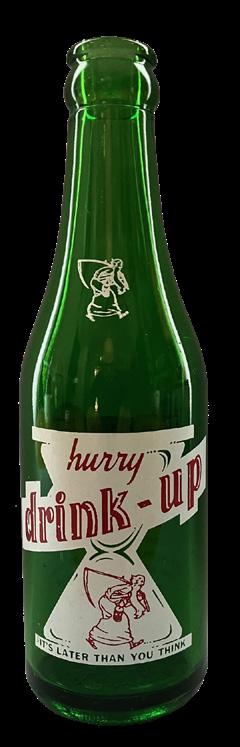
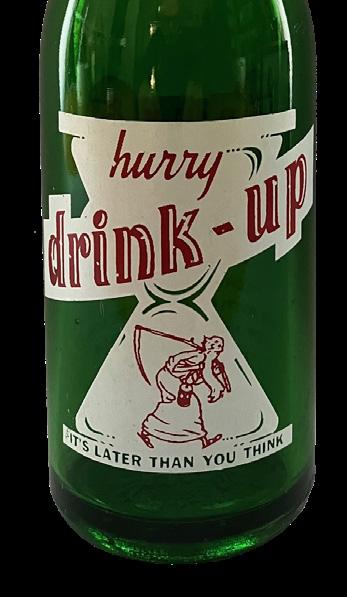
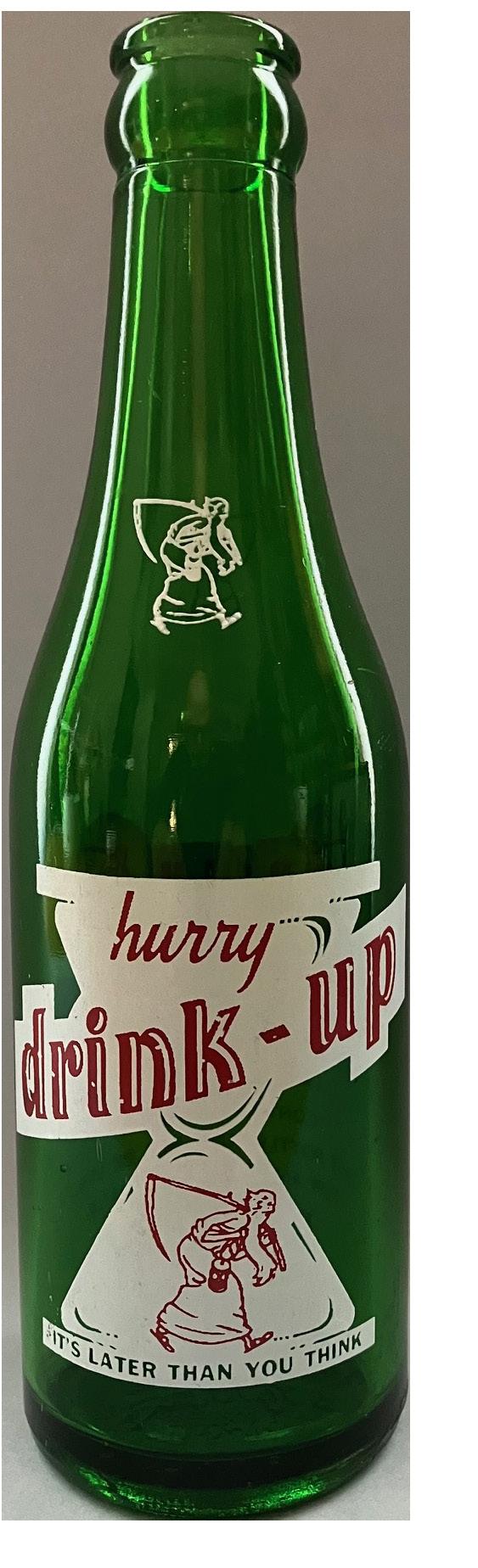
One of the oddest of the oddballs has to be Hurry, Drink-Up, a 7-ounce soft drink bottled in Buckhannon, West Virginia by Drink-Up Beverage Company. The ACL depicts Old Father Time sporting a long beard in robe and sandals, hurrying forward with a scythe over his back while carrying an hourglass. Beneath him is a dire warning, in capital letters: “IT’S LATER THAN YOU THINK.” [FIG. 1] Put differently (in my words), “You better drink this bottle of soda pop quickly, before you die.” Surely, Madison Avenue never would have come up with such a strange, morbid marketing slogan!
Hurry, Drink-Up was sold in both green glass and clear glass bottles. Oddly, the identical ACL was used on Hurry, Drink-It and Hurry, U-Ol-Drink, two brands made by the same bottler. The dates embossed on the bases range from 1943 to 1958. Buckhannon had a population of just 4,450 people in 1940 and is the only incorporated city in the rural county of Upshur, West Virginia. Although it makes no economic sense to have three different brands (with the same ACL) selling in such a small market, that’s what the bottler did. Today, all of their bottles are scarce and coveted by collectors, but not especially pricey. A nice example of the Hurry, Drink-Up sold in 2024 on eBay for $175.
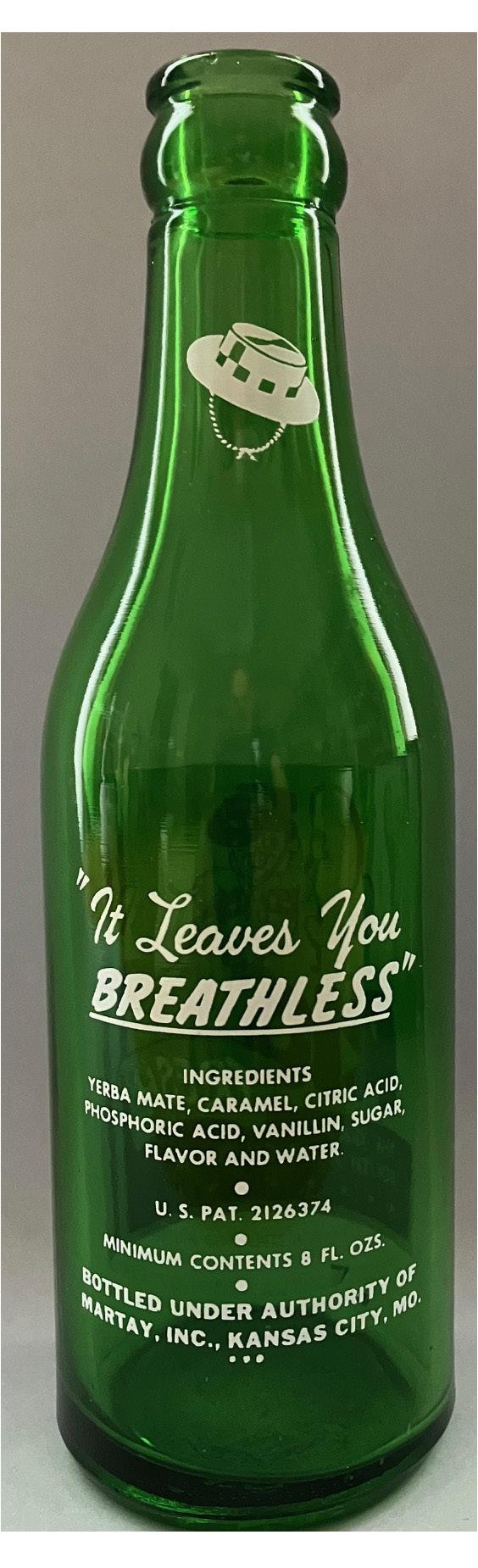
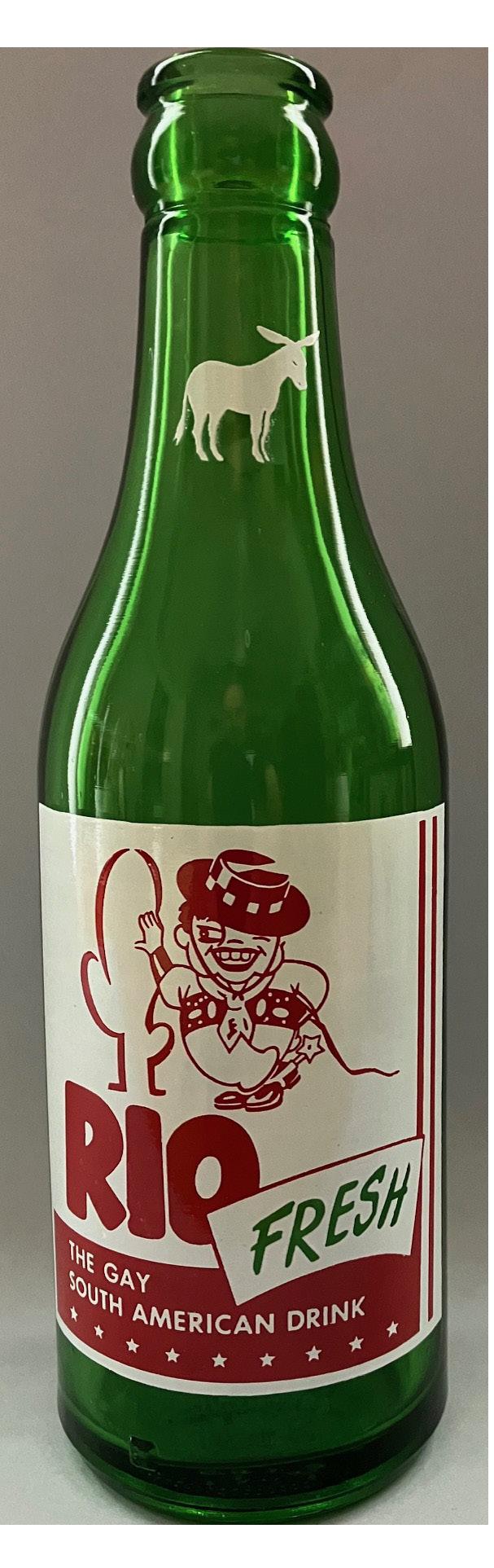
Another oddity was Rio Fresh, put up in 1939 by Martay, Inc. of Kansas City, Missouri. The product was touted as “The Gay South American Drink” and promised that “It Leaves You Breathless.” [FIGS. 2 and 3]
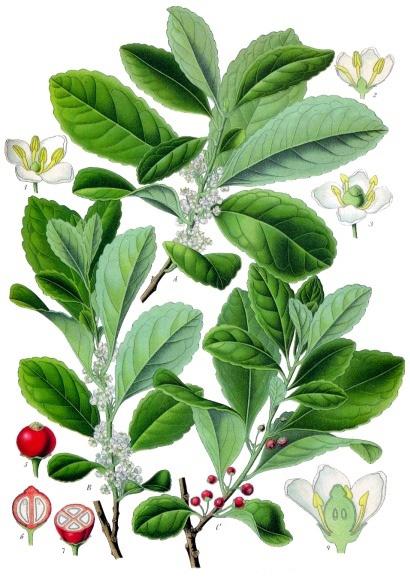
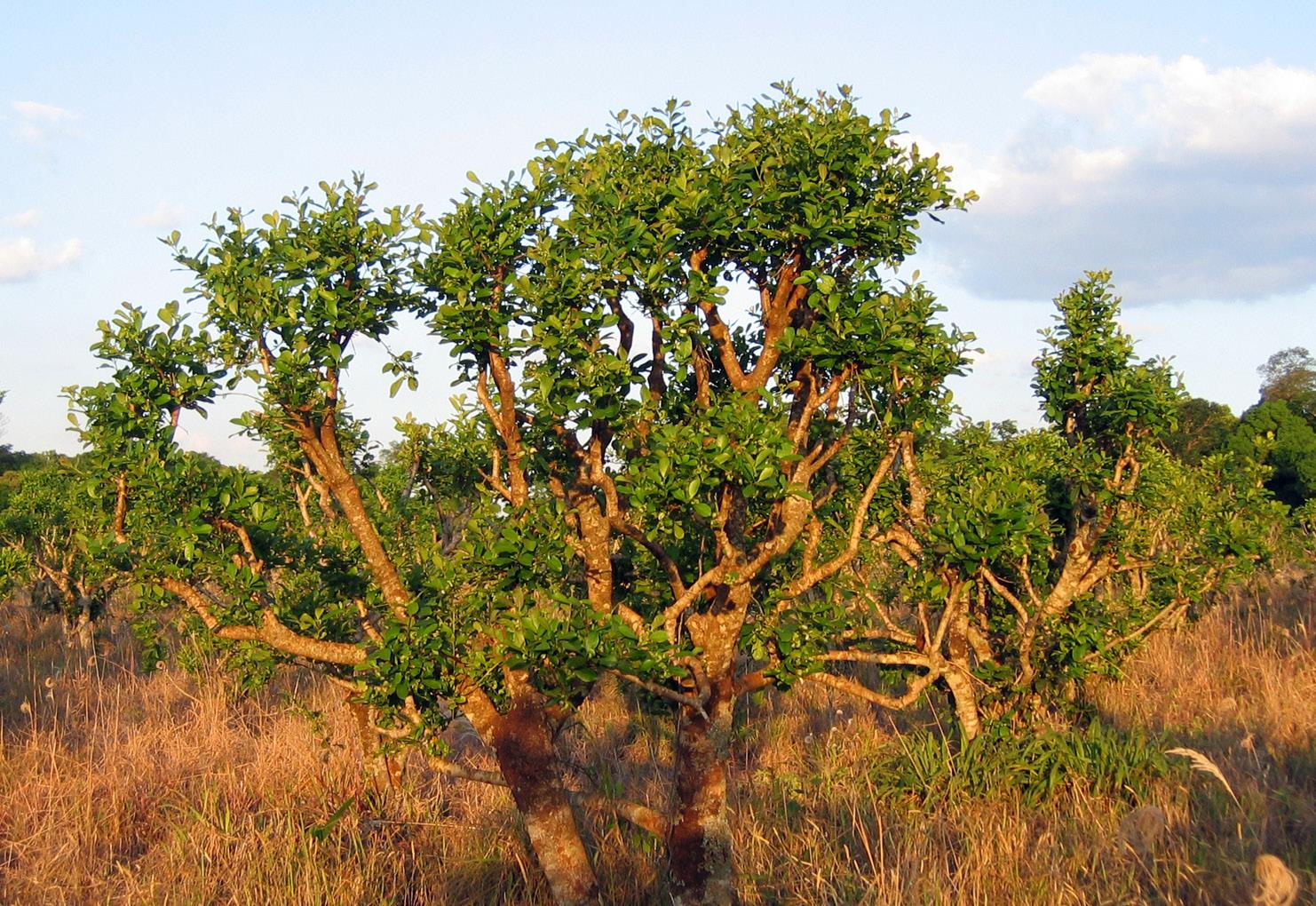
The caricatures on the ACL of a chubby little gaucho leaning against a cactus and a mule are a bit peculiar, but what’s notably odd is the drink inside the bottle: Yerba Mate. Mate is a traditional herbal beverage consumed throughout the southern half of South America. The drink is made by boiling twigs and dried leaves from the Yerba Mate tree. It contains copious amounts of caffeine (which may be why the soft drink supposedly left you “breathless”) and is very bitter, with a flavor described by Wikipedia as “resembling an infusion of vegetables, herbs, and grass.” Even with sugar and vanilla added, the bitter, grassy taste of Rio Fresh apparently wasn’t popular since only about a dozen of the bottles are known. The company obtained a U.S. Patent to protect its secret formula but the company needn’t have bothered, because no one was interested in copying their unsuccessful drink. But today, their empty bottles can bring up to $500!
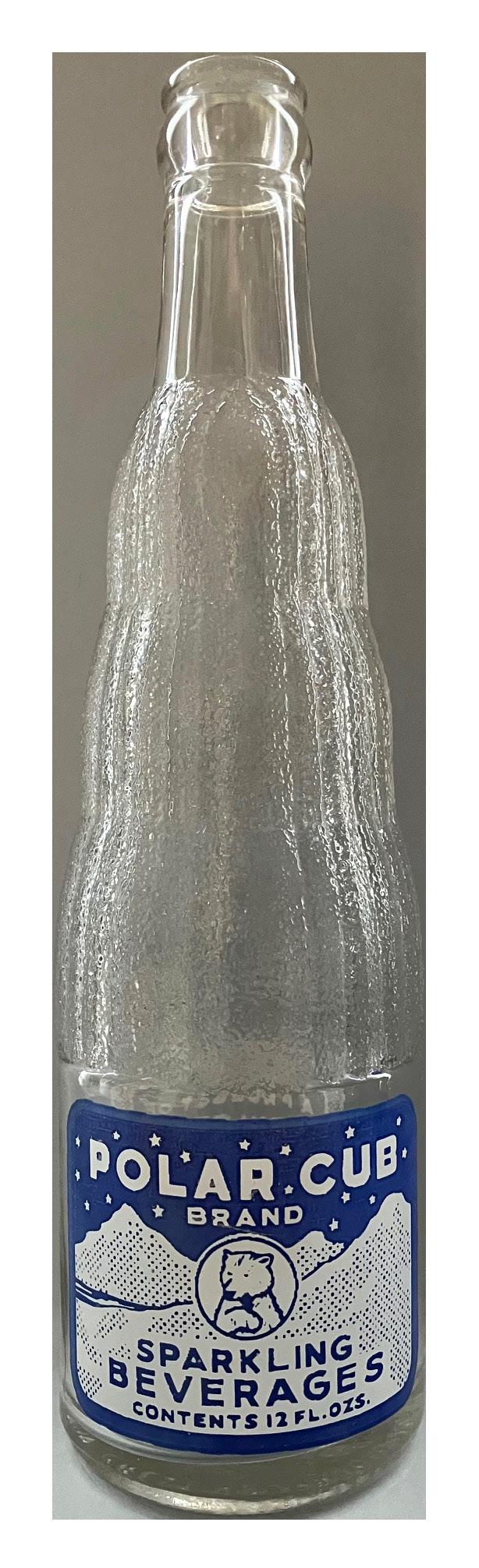
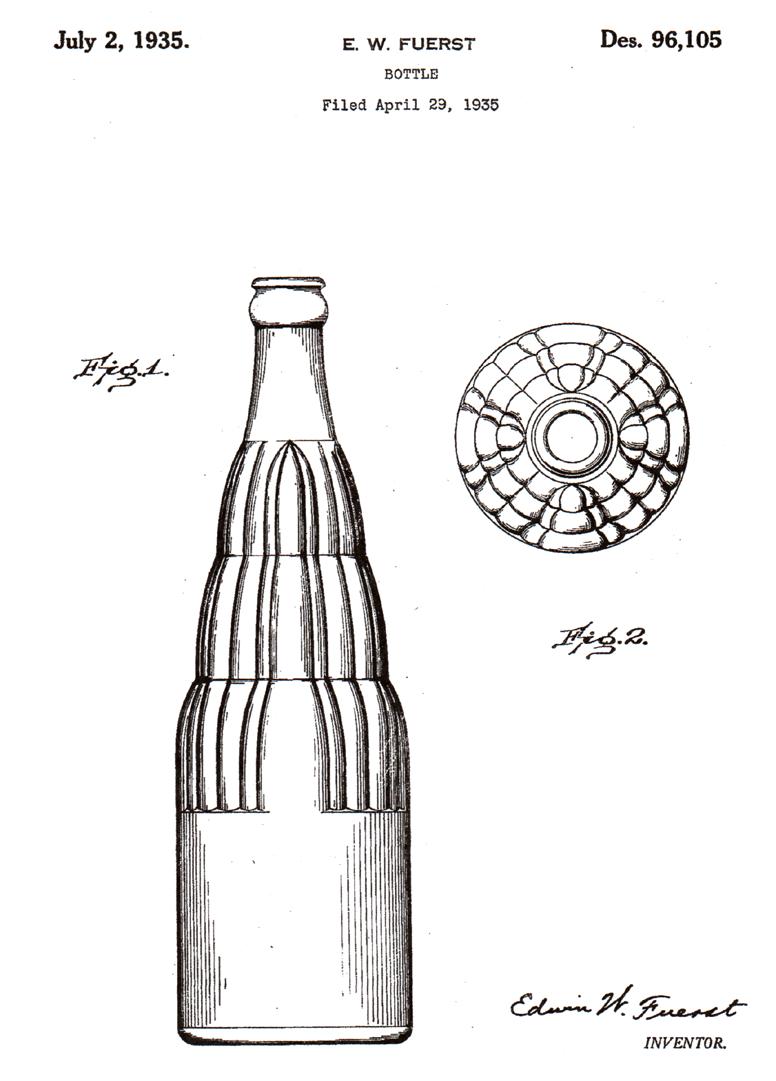
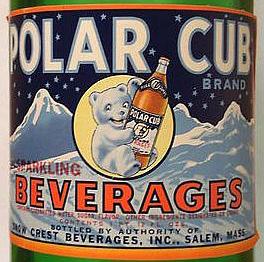
Most ACL soda bottles used one of several standard shapes, but not so with Polar Cub Brand. The soft drink bottle was made for Snow Crest Beverages, Inc. of Salem, Massachusetts in 1938, at the dawn of the ACL era. [FIG. 4] The bottle was one of a very few ACLs whose shape was protected by a federal design patent. Edward Fuerst of Toledo, Ohio
FIG. 1: Hurry, Drink-Up, Buckhannon, West Virginia, 1955
Yerba Mate, botanical drawing by Franz E. Kohler, 1897.
Yerba Mate growing wild in Uruguay. A beverage brewed from its twigs and leaves has been consumed in South America for centuries and is still popular there today.
FIG. 5: Edward Fuerst’s Patent Drawing for the bottle design used by Polar Cub, one of dozens of design patents obtained by Mr. Fuerst.
Paper label from Polar Cub Brand Beverages, used prior to the advent of ACLs. Although ACLs were permanent and allowed the bottle to be washed and re-used indefinitely, the earlier paper labels were far more vibrant and colorful.
obtained the patent on July 2, 1935, for a term of 14 years. He assigned his patent to the Owens-Illinois Glass Company of Toledo, for whom he worked. In his application to the U.S. Patent Office, Mr. Fuerst described “a new, original, and ornamental Design for a Bottle.” To my eyes, the form of the bottle is indeed “original” as well as elegant. [FIG. 5]
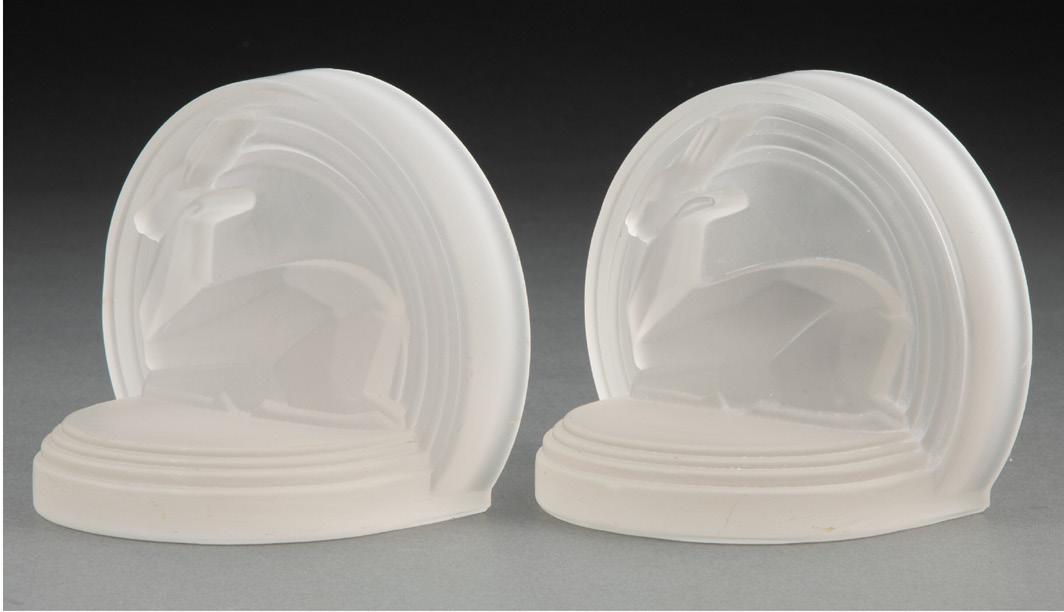
Edwin W. Fuerst (1903-1988), designer of the Polar Cub Brand bottle, was chief of design for the Libbey Glass Company, a glasshouse founded in New England in 1818 that moved to Toledo in 1888. The company was purchased by Owens-Illinois in 1935
FIG. 2: Rio Fresh, Kansas City, Missouri, 1939
FIG. 3: Back of Rio Fresh. Was it the jolt of caffeine or the bitterness that left the consumer breathless?
FIG.
(the year of Fuerst’s patent) and became a subsidiary which exists to this day. Mr. Fuerst held dozens of design patents for glass tableware, bowls, vases and bottles, and examples of his work are in the collections of major museums including the British Museum and the Metropolitan Museum of Art. Some of his glassware now brings thousands of dollars at auction, although a nice Polar Cub ACL soda bottle can be had for $100 or less.
Pair of Gazelle Bookends, frosted glass, designed by Edward W. Fuerst, 1936. The pair sold at auction for $1,750 in 2023. Photograph courtesy of Heritage Auctions
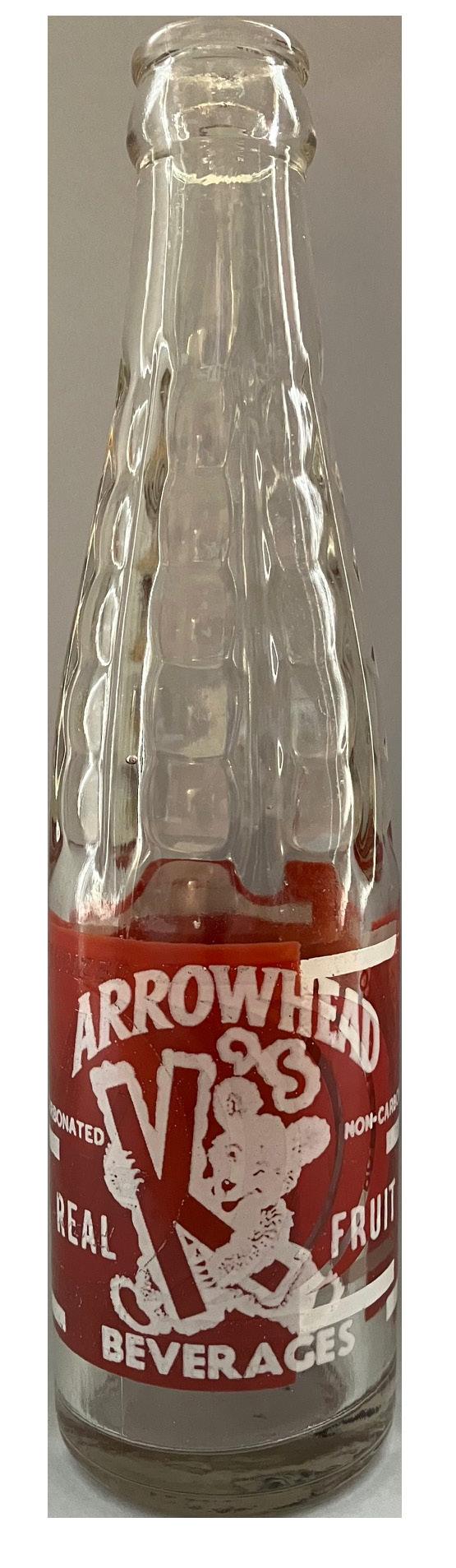
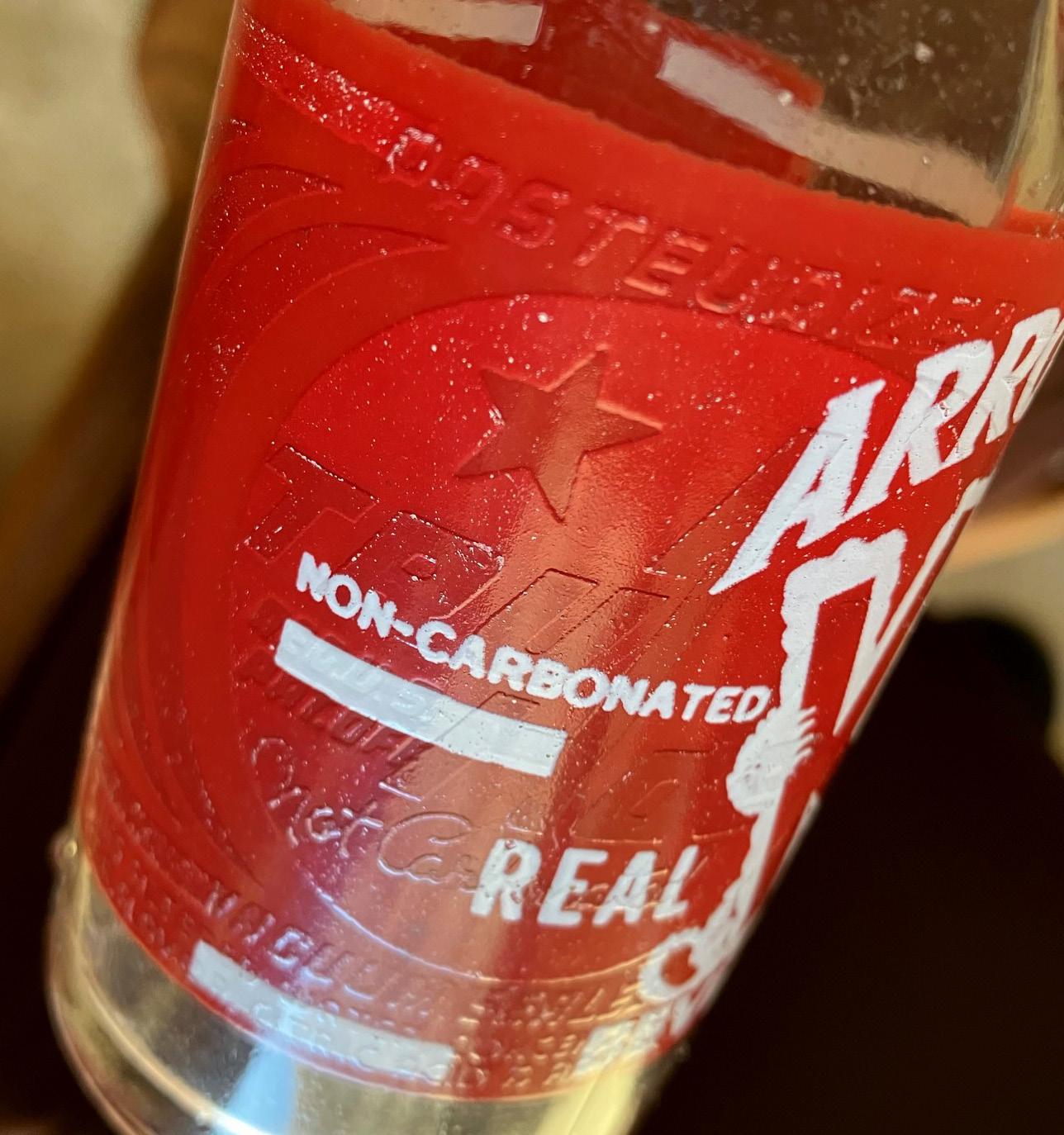
In our age of throwaways, Arrowhead K’s Beverages seems odd. It was a non-carbonated drink made from chunks of oranges and other real fruit, and needed to be pasteurized at the plant. The beverage also had to be shaken up by the purchaser before drinking. The product was made in 1949 by the Arrowhead Beverage Company of Los Angeles, California and was put up in distinctly odd-sized bottles of 6 3/4 ounces. But the truly odd part is that the company applied its proprietary label in thick red enamel over the existing ACL of another brand, Tru-Ade Soda. [FIGS. 6 and 7] Apparently, the southern California franchisee of Tru-Ade, a national brand, went bankrupt sometime in the mid-1940s, and the Arrowhead Beverage Company purchased the stock of labeled but unused bottles. It’s hard to imagine such corporate frugality happening today, but several other companies did the same thing in the post WW II era when glass was still in short supply. The so-called “overpainted” Arrowhead K’s bottles with their cute little bear are uncommon and quite popular with collectors. A nice example can cost up to $300.
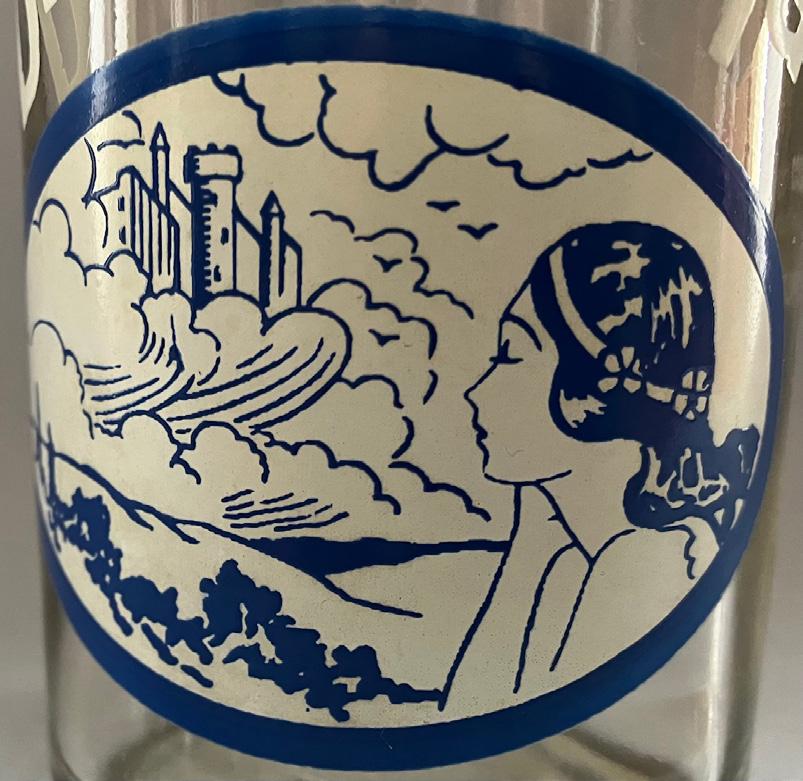
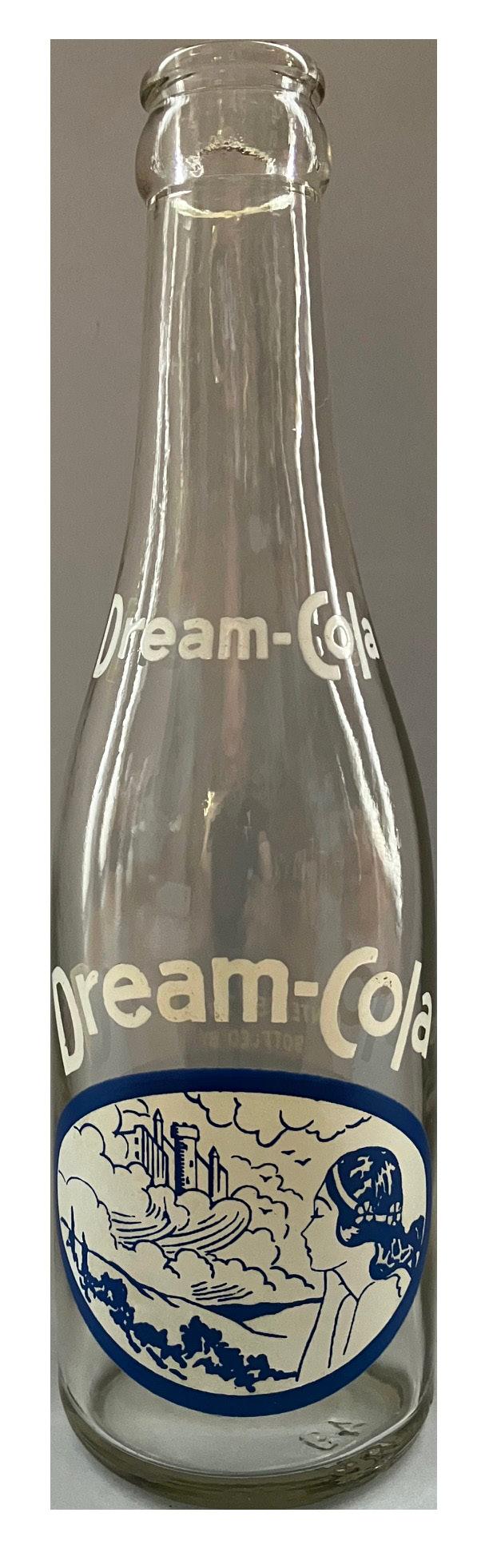
Finally, a unique and oddly beautiful ACL soda bottle is Dream-Cola, manufactured in 1949 by the Peoples Bottling Company, Inc. of Akron, Ohio. The company was founded in 1940 and held franchises to bottle and distribute various small national brands such as Mission Orange, Rummy, and Lotta Cola. Their “house brand” was DreamCola, but the cola-flavored drink was unpopular and the brand was short lived. [FIGS. 8 and 9] The stylish, blue-and-white oval label of DreamCola depicts a lovely young lady with her eyes closed, dreaming about a magical city towering high above her in the clouds. Today, there are less than a dozen of the bottles known, split between 7 and 12 ounce sizes, and they are among the most desirable of all ACL sodas. A mint example of the
FIG. 6: Arrowhead K’s Beverages, Los Angeles, California, 1949
FIG. 7: Close up showing the Tru-Ade ACL underneath the Arrowhead K’s ACL.
smaller bottle sold at auction in 2025 for $3,500 after spirited bidding. That may be a record price for an ACL soda bottle, and possibly a dream come true for the collector who consigned it after owning it for many decades.
FIG. 8: Dream-Cola, Akron, Ohio, 1949
FIG. 9: Close up of the lady dreaming about a city in the sky, which doesn’t look much like Akron, Ohio.
BIBLIOGRAPHY:
The Painted Soda Bottle Collectors Association website contains a wealth of information about ACL soda bottles including hundreds of photos, recent prices and an archive of all ACL Corner articles. www.PSBCA.org
Sweeney, Rick, “Collecting Applied Color Label Soda Bottles” (3d ed. 2002, PSBCA)
VintageSodaCollector.com by FOHBC member Tom Pettit, a great resource containing hundreds of color photographs as well as interesting, useful articles about all things ACL
“Weide’s Soda Page” (ca-yd.com), by FOHBC members Chris and Catherine Weide, is another outstanding, useful resource for ACL soda bottles. The Weide’s collection contains 22,000+ ACLs, and Chris provides much information for these articles.
Wikipedia.com
Mike Dickman lives in Santa Fe, NM where he has collected bottles for thirty years. He’s been a member of the FOHBC since 1997. His collection includes figural bitters, poisons, blob-top sodas and colognes. About five years ago, Mike’s passion unexpectedly turned to ACL sodas and he wrote “The Joy of Collecting ACL Soda Bottles” for the September-October 2022 issue of AB&GC. His “ACL Corner” column started running in the following issue. He welcomes comments, questions and suggestions at mikedickman@yahoo.com
The Dream, oil on canvas, by Henri Rousseau, 1910. The lady is Yadwigh, Rousseau’s Polish mistress. Image courtesy of Museum of Modern Art, New York City
Price Gouging In The Republic of Texas
By Andrew Rapoza
How much was too much for a new life?
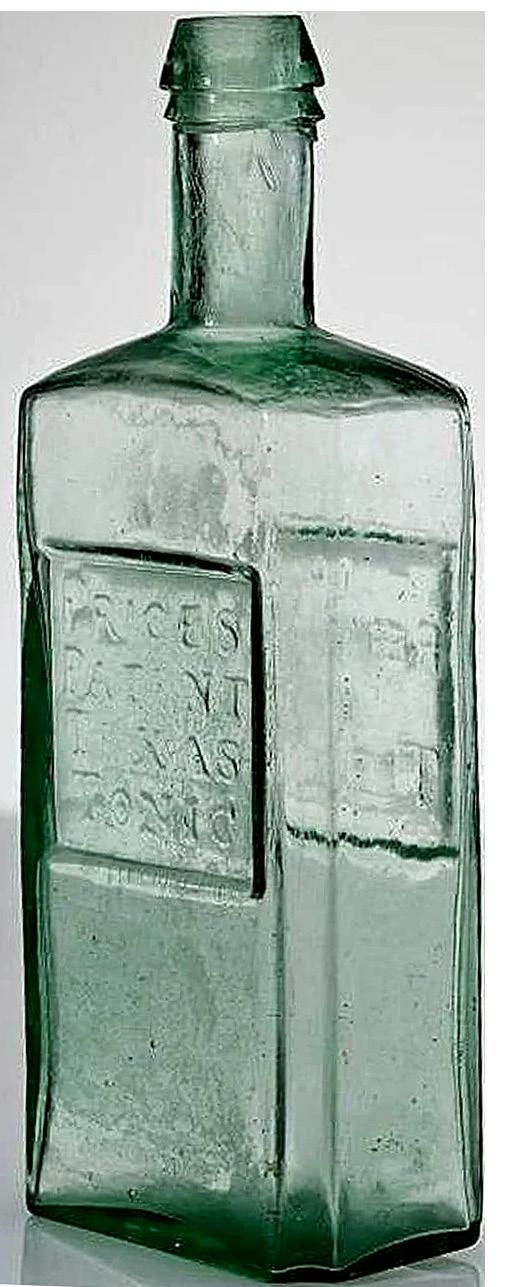
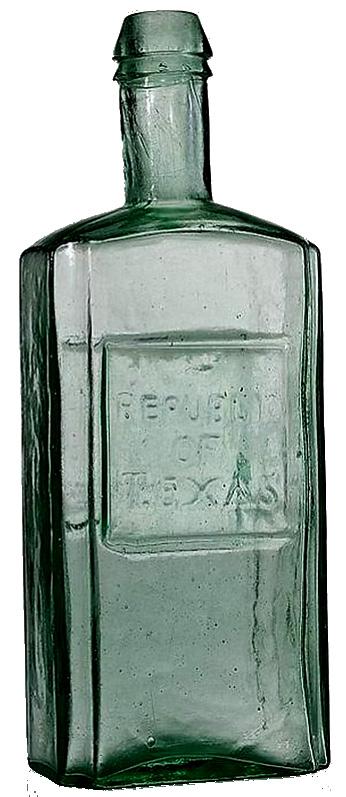
To the best of my knowledge, there is only one bottle from the era of the Republic of Texas (1836-1845) that actually has the name of that short-lived country embossed on it. PeachridgeGlass.com states that only three examples still exist, and I have recently had the privilege of holding one of those three treasures in my hands. I thought I could make a worthwhile contribution to history and the bottle-collecting hobby by researching and writing about Price’s Patent Texas Tonic. The results? A web of patent medicine connections between a war hero, governors and ministers, slaves and plantations, Mormons at Nauvoo, Transylvania University, and the infertility of a U.S. president. I came to realize that probably only three examples of this old glass bottle still exist because the others burst at the seams with the explosive story they tried to hold inside.
Opportunity Knocks
The year 1840 was a hopeful, fearful, profitable, risky time to be in the Republic of Texas. The continent’s newest country had come into existence just four years earlier when the far superior, better equipped, professional army of General Antonio López de Santa Anna had been soundly defeated by a ragtag assemblage of untrained volunteers under Sam Houston. Suddenly, the northeast borderlands of Mexico had become the Republic of Texas, where land was cheap and plentiful, and opportunity was as big as the Texas sky.
Even with the challenges of continued Mexican raids, Comanche, Kiowa, and Apache attacks, a lack of roads and mail service, and a seasonal rotation of epidemics, the opportunities proved irresistible to the many arriving from the U.S. and Europe. The defiant taunt that had been stitched into the Texian flag at the start of the revolution could have been willfully misread by the new wave of opportunistic invaders as a friendly invitation: “Come and Take It.”
The Merchant Prince
No one heard the siren call of opportunity in Texas more than a certain middle-aged merchant of Nashville, Tennessee. His name was John Price and he was all about the money. It was how he measured his house, his business, and even his family. Born in 1790, some of his values were formed in his childhood: his mother was a devout Methodist and his father was a slaveowner. He was remembered as an eccentric man but shrewd, fond of Methodist camp meetings and a zealous participant in revivals. Deeply involved in Nashville’s Methodist church, he was a manager of its missionary society and bible society, as well as the county temperance society.
In 1814 at age 24, he married the daughter of a Methodist preacher whose family were said to also be quite wealthy. From the time of his first marriage and into the 1820s, John Price was already one of Nashville’s elite, a slave-owning merchant, selling virtually anything for a profit and renting out houses and warehouses for still more gain. His adver-
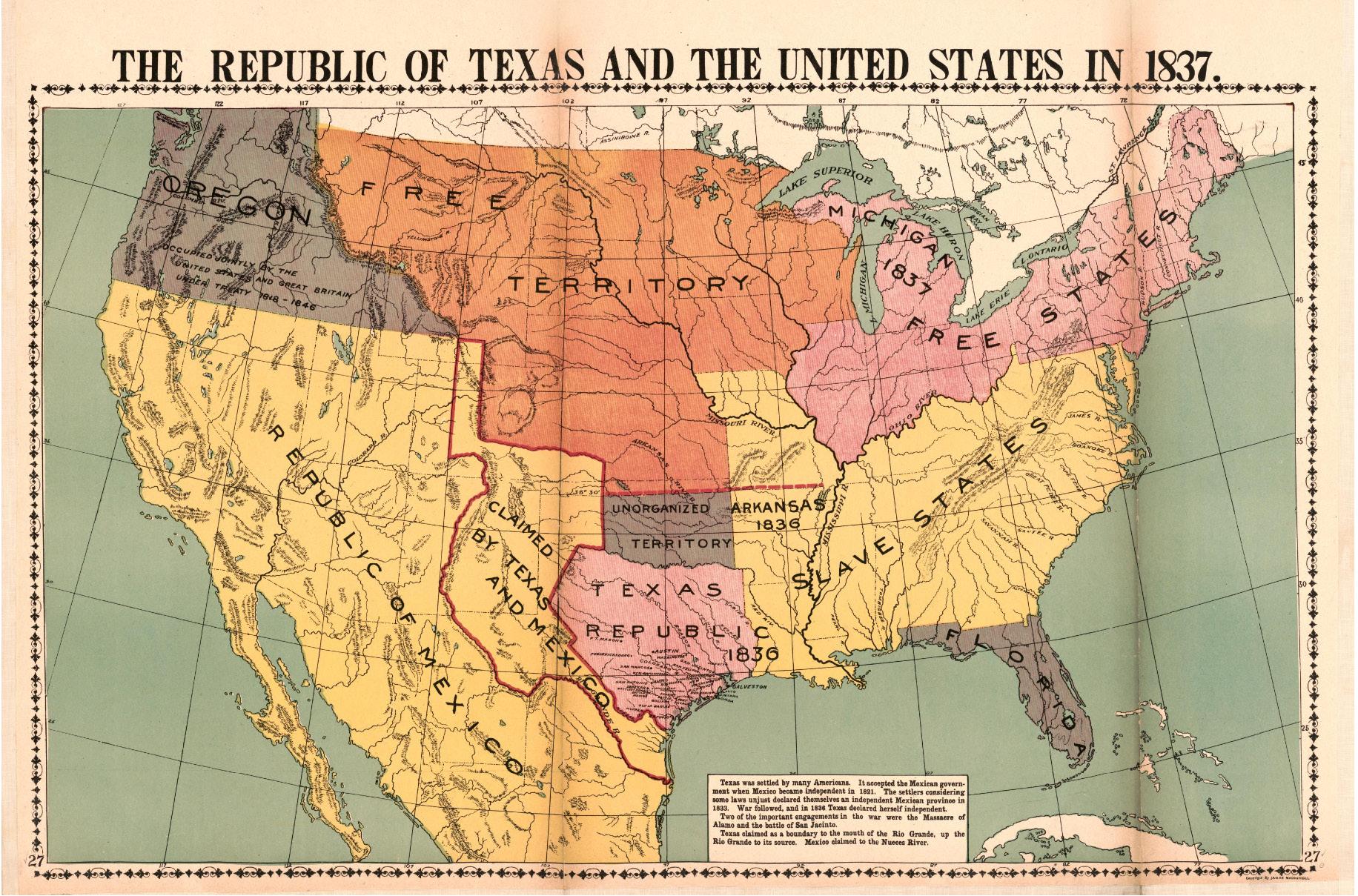
Map of the Republic of Texas, ca.1837. The area under control is in pink; the area disputed by Mexico and Texas is outlined in a solid red line; the disputed area included what today comprise sections of Kansas, Oklahoma, New Mexico, Colorado, and Wyoming. McConnell’s historical maps of the United States (Courtesy of the Library of Congress, Geography and Map Division).
tisements listed for sale or barter everything from 19,000 pounds of pig lead, 400 pounds of cotton, 40 hogsheads of tobacco, 100 barrels of pecans, and 500 bags of salt to Kentucky Whiskey, Virginia tobacco, Jamaican rum, and peach brandy. His ads were also found selling sugar, coffee, and bacon, a large work horse, anvils and vises, and cooking and parlor stoves. His strong support of Methodism was clearly a strong motivation behind him also selling a popular Methodist book, Adam Clarke’s Commentary on the Bible, and he got his first taste of promoting and selling medicines with Lorenzo Dow’s Family Medicine, the product offered by the eccentric, unorthodox, and zealous traveling Methodist preacher who was widely known as “Crazy Dow.” His first ad for Dow’s medicine in 1828 listed that he had an inventory of three dozen bottles along with the hogsheads of tobacco and the barrels of pecans; a year later he still had a few bottles of the stuff left and tried to get rid of them by bluntly pushing, “LOOK–DOW! Save yourselves from sickness and death.”
Not only had John Price made the effort to help out the Methodist preacher, but his wealth and reputation seemed to have helped him establish connections with some of Nashville’s favorite sons, like Sam Houston, who became governor of Tennessee and later the Republic of Texas, and James K. Polk, who became President of the United States. There’s no evidence that John Price sought elective office, but he may have risen from a merchant to a merchant prince had he stayed in Nashville long enough.
Aqua medicine bottle, beveled corners; open pontil base and double-tapered lip, 1840-1845.
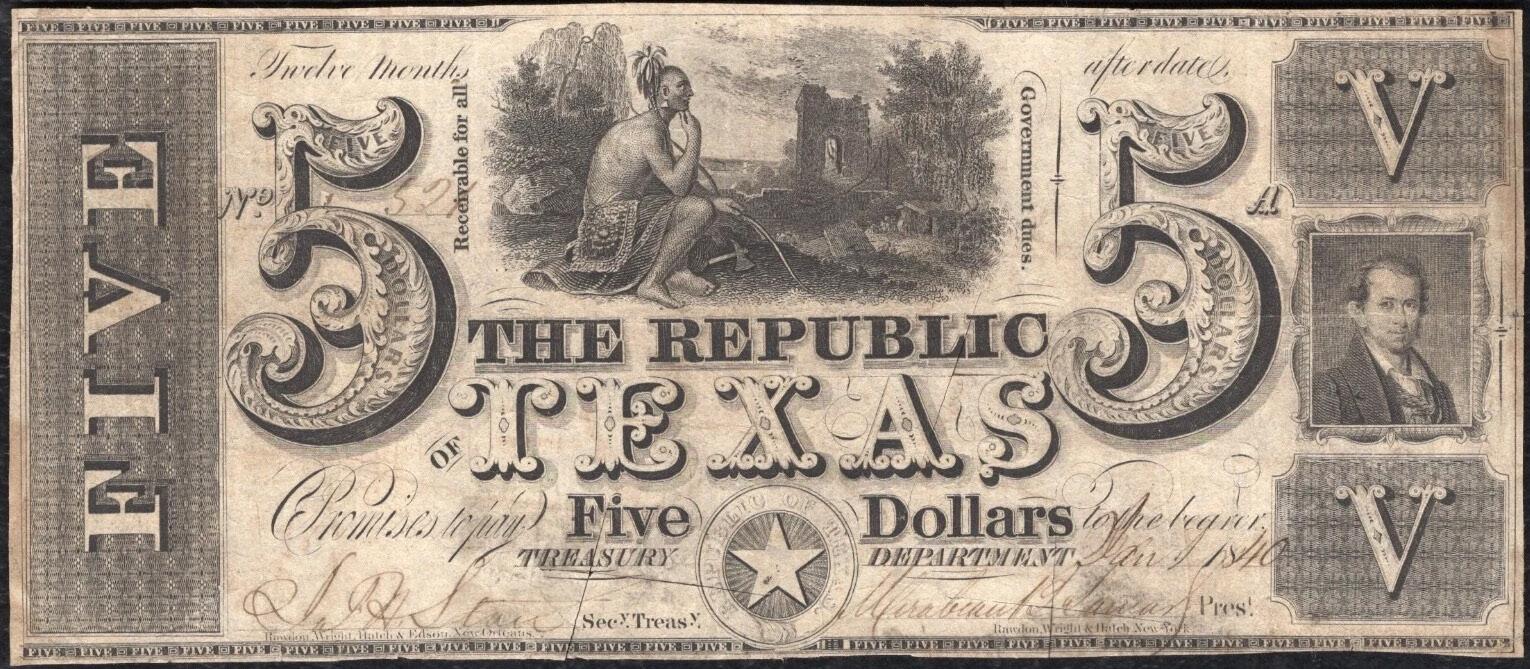
Five-Dollar Bill, Republic of Texas Currency, ca.1840. Five dollars was all the money John Solomon Fullmer had when he arrived in Nashville, not nearly enough to get permission to marry the daughter of John Price; it was, however, enough to buy a bottle of his Texas Tonic. (Courtesy of CABANISS CURRENCY).
Father Knows Best
The wealth and luxury he was busy accumulating provided more than just a birthright for his children to enjoy; it was a social status they were expected to maintain. They grew up with servants and houseslaves, a handsome home and fine clothes, and received the best education money could buy, but they were forbidden to marry beneath their station. John’s oldest daughter, Mary Ann Price, was a perfect example of her father’s formula for success. She was his oldest child and never had to experience need or hardship. She had her own maid and a private tutor and she graduated from the Female Academy of Nashville. But then she went and fell in love with the wrong guy.
Mary Ann had turned 21 in September 1836; in the eyes of the law that made her an adult who could choose the man she wanted to marry – but not in her father’s eyes. The man she loved was John Solomon Fullmer; he had some education, worked hard at a newspaper, and showed entrepreneurial promise but he had arrived in Nashville a few years earlier with “a five-dollar bill in his pocket … without friends … and no training in a trade” – not at all good enough to marry a daughter of John Price. His marriage proposal having been rejected by the obedient daughter, the embittered beau put all the blame on the “wicked and avaricious heart … of Old John Price”:
… Mary’s reject[ed] me, solely for her father’s sake … I have abundant evidence that she loves me still, and that she would still marry me if she were not prevented by her father; but without his consent she would not marry any man living.
The young lovers went off and eloped in May 1837 and her father never forgave her. About two decades later, another daughter of John Price married the man who had been the fourth governor of Texas; it was exactly the kind of union John wanted for his children while the unprosperous newspaperman certainly was not – and Price’s relationship with his daughter and her unacceptable husband only went from bad to worse.
In February 1841, the son-in-law non grata wrote to John Price about how he had taken Mary Ann far away, “It was no doubt with great surprise that you first heard of our removing to Illinois.” In 1839, Fullmer had gone to the Mormon colony at Nauvoo, Illinois, where he was baptized by their founder and prophet, Joseph Smith. He then returned to Nashville to gather Mary Ann, their child, and possessions to move and join the Nauvoo colony. John Price was incensed at the planned move and offered Mary Ann a restoration of her wealth and social position if she would desert her husband and stay behind with their family in Nashville. Mary Ann refused and was consequently shunned by her father – she never saw her parents, siblings, or Nashville again.
John Price just moved on; while his forsaken daughter and her family moved over 400 miles northwest to Nauvoo, John took the rest of his family twice as far to Galveston, Texas. To him, his daughter’s departure was based on delusions while his was based on opportunity; he was certain she would pay for her choices, while he would earn for his.
Making Money In Galveston
In March 1837, even before Mary Ann eloped, John Price was already preparing to move his family to the new Republic of Texas. He had entered into a business arrangement that apparently necessitated a substantial investment on his part.
In consequence of a recent compact entered into with a company of respectable gentlemen as their agent in the Republic of Texas … it is probable that myself and family will or may be required to move to the Republic
His preparation involved mortgaging his properties in Nashville and Columbia, Tennessee, and Huntsville, Alabama, to fund the relocation and business investment. It was a big move, a big investment, and a big opportunity. Three years later, early in 1840, the Price family, with the palpable absence of daughter Mary Ann, relocated to Galveston Island
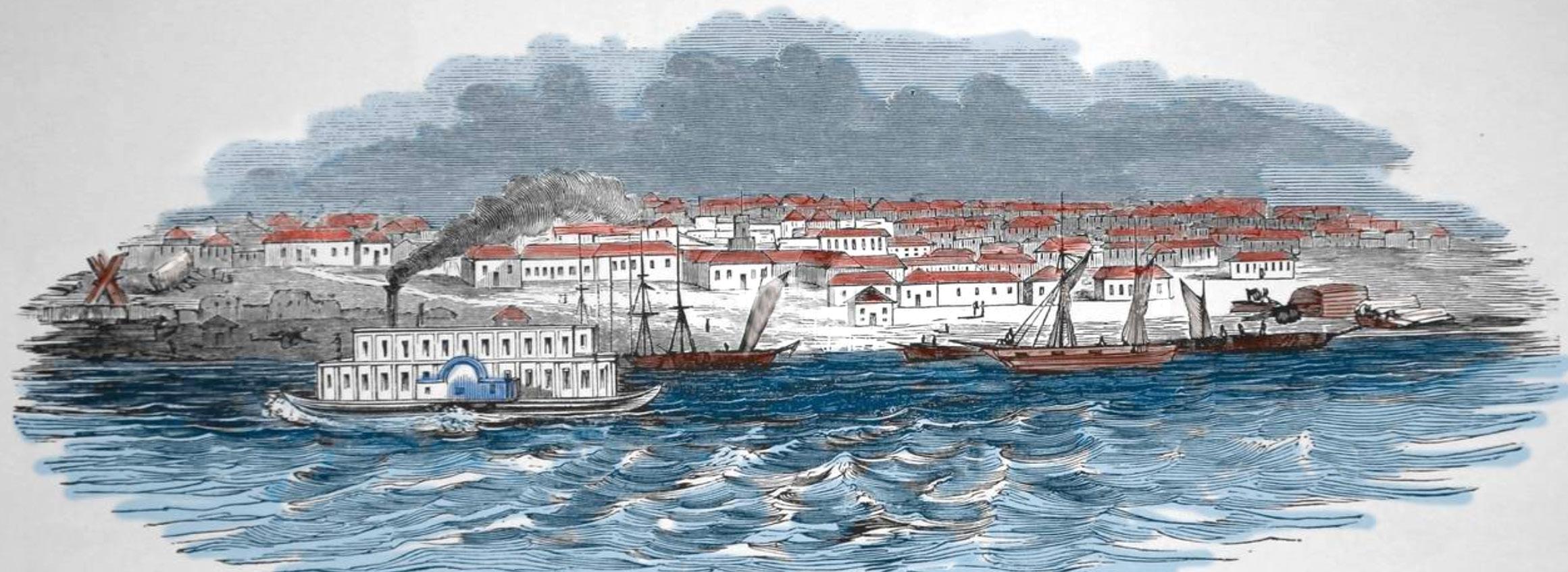
in the Republic of Texas. With a population of about 3,000 in 1840, the city of Galveston wasn’t even half the size of Nashville and it was dwarfed by New Orleans, which exceeded 100,000 but the tin island city was the front door of Texas; everything the new republic needed would have to pass through it. It was a merchant’s paradise.
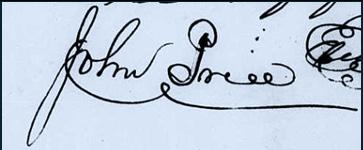
The signature of John Price on a Galveston property document dated 6 November 1840. The letter “i” in the surname appears to be creatively dotted three times in sequence but it also could have been the result of a dripping pen trip.
John invested heavily in his new country; he purchased properties in Galveston, Jefferson, Crockett, Fort Bend, Sabine, and Bastrop counties, and city lots in Houston, Galveston, and Fort Houston – 11,262 acres in all by 1844. The Price family lived in a mansion on the north end of Galveston Island on Twelfth Street, between Church and Winnie Street. It fronted to the east towards the gulf; it was “one of the largest and most conspicuous residences in Galveston.” The family and mansion continued to be served by domestic slaves, starting with three under 15 and four adults upon their arrival in 1840, but settling for the next several years on one adult male, one adult female, and two children under 10. Some other items on which John Price was taxed included a gold watch, a silver watch, a saddle horse, and a “pleasure carriage.” He also became one of the founding members of the Methodist Church formed in Galveston and he purchased $100 in stock certificates ($3,600 in 2024 USD) that were designed to help reduce the Republic’s massive post-war debt. Just like in Nashville, John Price firmly entrenched himself in Galveston’s community, the church, his business enterprises, and his social station.
Price also continued his work as a commission merchant, regularly receiving cargo from the sidewheel steam packets that came across the gulf to Galveston from New Orleans, like shipments of ice for which he advertised he would “keep a constant supply on hand for the accommodation and comfort of the citizens of Houston.”
Supplying ice to Houston was as sure-fire as peddling ice cream in Hell – it was a guaranteed money-maker for the shrewd merchant.
He further invested his time and energies in inventing and patenting; John Price was one of the earliest residents of the new republic to get his ideas patented. In 1839, while still of Nashville, he had been granted U.S. patents on a cotton press (for compacting cotton into bales) and eleven days later for a burner of pine knots, providing a source of illumination long before the time of electricity. Over the following two years, as a resident of the Republic of Texas, he was granted some of the first patents the new republic issued. Two were for the inventions that he had been previously given U.S. patents; the other three were for a chimney, a mill-dam, and something he called a “Texas Tonic” – indisputably the first medicine patented in Texas.
A cotton bailer, a chimney, a torch, a dam, and a medicine –his five inventions couldn’t have been more different from each other if he tried. He was remembered by one of his contemporaries for having original ideas – the variety of his inventions seems to have amply proved the point.
“A New Thing Under The Sun”
Of his five inventions, Price’s Patent Texas Tonic was the only one that would require retail consumer interest to succeed; the other four were mainly of consequence for business and industrial applications, so his most visible investment of time and money was in the Texas Tonic.
Port of Galveston, ca.1845. Public domain book illustration, Library of Congress
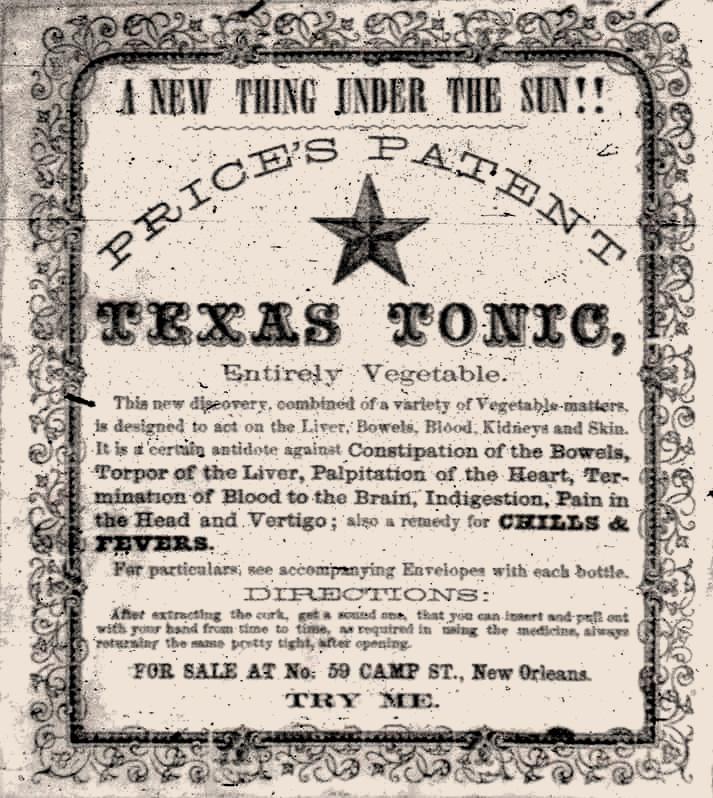
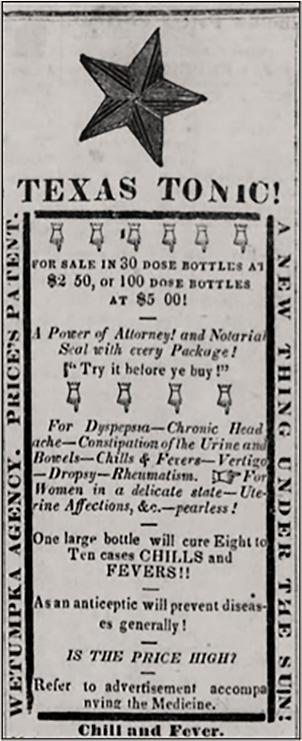
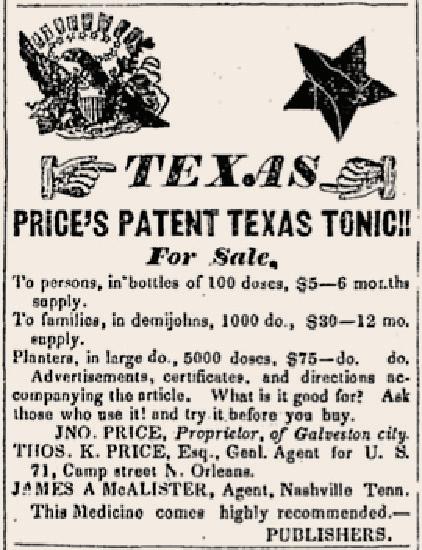
The first advertisement found thus far, in the Civilian and Galveston Gazette of December 1846, featured the sunburst shown here and the slogan, “A New Thing Under the Sun.” He sold it at his business on the Strand in Galveston, the major commercial thoroughfare of the city and the entire region. Price told his newspaper audience to look for “the agency flag” there; that instruction, along with the street address and the sunburst image over the same ad, strongly suggests that the flag marking his business on the Strand was the sun graphic appearing in the ad. The bold image on a flag would indeed make his place easy to locate.
According to his advertising, the tonic bitters, as the back label called them, was first and foremost a cathartic – a powerful laxative that would clear out all the evil, disease-ridden gunk that clogs up a sick person’s internal plumbing, causing maladies from indigestion, constipation, and migraines to hemorrhoids, dizziness, and rheumatism. It also helped prevent the onset of the chills and fever, an enormous seasonal problem in the South. Testimonials appearing in his ads spoke most often of the tonic’s remedial effect on indigestion, chronic headache, constipation, and ague and fever. His ads also stated it was safe for children and “Peerless for females, in a delicate state,” meaning pregnant. Another important medicinal promise, presented in rhyming verse, was that it would cure infertility, Barrenness.
Oh cheer up your spirits! don’t look so shy, If husband’s ashamed, a servant can buy; In three weeks or so! perhaps not so soon, Gaze with delight on the beautiful moon; Your eyes become bright – a heart filled with joy, Good prospects in view – a Girl or Boy.
As boldly impressive as were the curative promises and the flag on the Strand, the caliber of the product’s endorsers was top-shelf, the elite of the social register with whom John Price liked to hobnob: an army major and a mayor, medical doctors and Methodist ministers, an ex-governor of Mississippi, the president of Kentucky’s Transylvania University, and even fellow Tennessean and hero of the Texas Revolution, President Sam Houston himself, who wrote with gratitude:
By occasional use of your Bitters within the last year (in all not amounting to one bottle) I am satisfied that my general health [within the last seven years] has not been as good as it is at present. … My opinion is so favorable of the medicine, that I will keep a supply on hand for family use. [The testimonial is dated 1814, but that is likely a transposition of 1841, a common mistake during the era when newspaper type was set backwards and upside-down by hand.]
John Price was apparently of the opinion that the price of the medicine was proportionate to its importance – the more it cost, the more distinctively important it was. In a time when a bottle of medicine was usually priced at 25 cents ($9 in 2024 USD), John Price charged a whopping $5.00 ($180.18 in 2024 USD) per bottle, which he said held 100 doses.
Always interested in volume sales, he also offered a bulk discount to plantation owners of 12 bottles at half price to cover the needs of their family and enslaved workforce. Consequently, plantation owners were quick to offer their enthusiastic endorsements of Price’s Texas Tonic, “Prepare me a demijohn for my plantation,” wrote a New Orleans planter; “A negro woman of mine took a violent chill,” wrote another, “I gave her one spoonful; she was well the next day, and so remains”. Another Texas Tonic ad claimed Senator John C. Calhoun “intends to keep it on his plantation!” and the Mississippi congressman (William M. Gwinn, M.D.) who shared that insight ended with his own endorsement, “I think it will become a valuable plantation medicine and could be introduced into the army and navy of the United States with advantage!” Music to John Price’s ears.
Even with the choicest of southern aristocracy lifting Price’s Patent Texas Tonic on a pedestal, the entrepreneurial spirit deep inside John Price whispered that there was still one more plum to be pulled – the President of the United States – the recently elected James K. Polk of … Nashville, Tennessee.
What A Deal I’ve Got For You!
It’s not clear whether John Price and James Polk had a friendship or previous business dealings over the years; the two men shared Nashville as their home and John was comfortable to write to the president-elect in a respectful but casual manner, with some familiarity and humor. He wrote two letters to Polk on 31 January 1845 while he was back in Nashville, probably on business: one letter was about Texas debt and the second pitched the Texas Tonic without mentioning it by name (a note within the letter suggests that First Lady Polk was already familiar with the product).
Price believed the President-Elect and his First Lady had a deep sadness in their lives that he could help correct. The
Polks had been married for 21 years at the point that John Price was writing to them and they were childless; it was an emptiness that John Price, the father of nine children, couldn’t imagine. As a child, James Polk was operated on for the removal of urinary stones, but it may have left him sterile or impotent. John Price didn’t know about that, of course, and so told the president-elect,
…if everything in regard to your Phisical [sic] history is orthodox or to use an expression more Classical “everything in Denmark is right” you need not die without children!
He was proposing that President-Elect Polk use Price’s Patent Texas Tonic to cure the “Elect Excellency’s” barrenness – it was an offer uniquely designed for the President of the United States: Price would give Polk the tonic bitters for two years, free of charge; if the medicine proved useful, “My prediction!” Price proposed,
… that is if you should have a living child by your best half within 2 years & 9 months from the first of January 1845 you pay me $1,600 … for perhaps a boy worth $16,000. I say again if “everything in Denmark” is right. I’ve known a case at Natchez of very late occurrence that succeeded in less than 12 months & a worse one or as bad as yours!
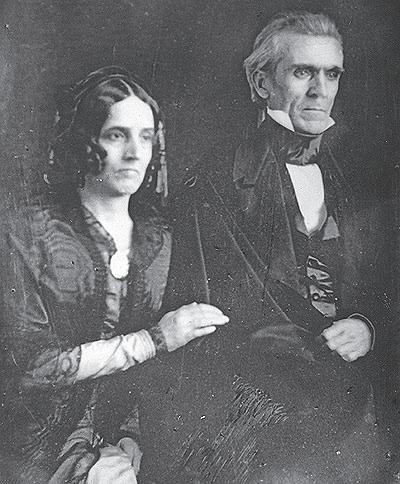
President James K. Polk and First Lady Sarah Childress Polk were married for 21 years when he became the president in 1845. Image ca.1848. (Courtesy of the James K. Polk Presidential Museum. Wikimedia Commons.) Advertisement, The State Guard (Wetumpka, AL), 22 AUG 1848, p.4.
The medicine he sold to the public for the 2024 equivalent of $206 per bottle he had just offered to the president-elect for the equivalent of $66,000 in 2024 USD! Early in my career with a trading card company, our CEO developed a line of embossed, 24-karat gold-coated football cards that were extremely expensive, exponentially more than the standard pack of cards. His justification was that it was far more efficient and economical to sell a single Whopper for a million dollars than it was to sell a million Whoppers for one dollar each. The gold football cards were nonetheless a tough sell and our company went out of business shortly thereafter. James K. Polk was 50 years old when he received Price’s sales pitch and the First Lady was 42 years old. Whether or not the President tried the Texas Tonic, they remained childless for the rest of their lives.
John Price was quite aware that he was making a daring pitch and a hard sell and immediately followed it up with the justification that many innocent people had to pay even higher fees to lawyers to keep from being convicted. He was reaching and he knew it. He ended his letter trying to be sincere and trustworthy:
I assure you solemnly & personally that I am in earnest & also that this is entirely & (unless you make it yourself otherwise, which I think you’re too smart to do) eternally with me private! … even Mrs. Polk I hope won’t read on this delicate subject the whole or any part of this Epistle! … One request – Don’t let Mrs. Polk see this!
In the midst of pitching his medicine to the public for $5 per bottle and to the President for $1,600, daughter Mary Ann pleaded for him to provide “a few hundred dollars” so she and her husband and family could join the Mormon exodus from Nauvoo “to avoid unheard of persecution and mob violence.” His son-in-law suggested, “We intend to leave for the West if possible, before or by the 1st of June; a bottle or two of your tonic … might be of service to us in an uncultivated prairie region” [emphasis added]. Several months later J. S. Fullmer acknowledged receipt of two letters from his father-in-law, observing with concern, “you seem almost frantic with intense anxiety to rally us to a sense of our danger and Wonderful delusion.”
John and Mary Ann Fullmer escaped Nauvoo with their lives, their small children, and a few possessions in their handcart and eventually arrived at the Great Salt Lake Valley, where they did their part to establish a network of com-
munities for members of their faith. As they went through their travels in the Far West, John Price was traveling through the Deep South, establishing a network of agencies for his medicine and promoting it in the newspapers. He set up agencies in Nashville, Tennessee; Selma and Wetumpka, Alabama; Frankfort, Kentucky; and Vicksburg, Mississippi; and his main agency for U.S. trade was at the business of his brother, Thomas Keene Price, in New Orleans, Louisiana; it was the hub of Texas Tonic sales and all the other agencies were spokes on the wheel. John’s own son, John Price Jr., was living and working the business with his uncle Thomas in New Orleans.
Preparing for the End of Days
In the closing days of 1846, John Price was in Galveston, preparing yet again for another extended trip to the east to promote his medicine and establish more agencies. At 56 years old, it almost seemed like he sensed his end of days might be near at hand, so two days before Christmas, he created his last will and testament, which he began, “Being on the eve of leaving Home for New Orleans & perhaps various other places in the U.S. & taking into view the various casualties of life…” and he left very specific, sternly-worded instructions for the continuation of the medicine business after his demise.
Mrs. Price has my Medical Recipe for Price’s Patent Texas Tonic, which she will wisely conceal, during a period of 2 years, after that my son William W. in conjunction with her will jointly hold the secret …
Never, - Never alter the Price of the Medicine 5$ per Bottle by retail and to families or planters at half price [for 12 bottles] …
… [be cautious in] writing or talk or needless exposure of the articles or mode of manufacturing this medicine … [the] loss of the secret … will be a sad folly.
The persons who manufacture it should do it very privately.
The man who had been a thriving landlord in Nashville and a merchant in two cities, and who owned thousands of acres of land across the Deep South, was very, very serious about parlaying his one patent medicine into big business – it was not a pet project in between bigger endeavors – he wanted it to work.
It should be noted that all of John Price’s known business travel and newspaper advertising focused on points between Galveston on the west, Alabama to the east, and Kentucky in the north. Although it was called the Texas Tonic, its success was only minimally calculated for a
Texas audience. During the years of the Republic of Texas there wasn’t a population or transportation infrastructure sufficient to justify the hope of mass marketing and sales inland. The tonic’s product name was more of a promotional device to attract the attention of other more established and populated areas of the Deep South; Texas was a brand-new country filling news stories, sort of like the curiosity that would be generated by an erupting volcano a few hundred miles away. The day was soon coming when the state of Texas was thickly populated, modernized and civilized to an extent that encouraged many patent medicine companies and thousands of other entrepreneurs, but in the 1840s the success of Price’s Patent Texas Tonic was always understood to be to the east of Galveston. It’s highly unlikely that the bottle was manufactured in Texas but it was the home and base of operations of its owner.
On one of his many business trips for the Texas Tonic, John Price fell a victim to cholera in Vicksburg, Mississippi, one of eleven listed as dying of cholera in that issue of the Vicksburg newspaper. It was noted that he “died among strangers” but was respected by business associates, admired by church brethren, and loved by his family. Even his daughter Mary Ann begged for a daguerreotype or a locket miniature of her father to remember him by. And for all of his rough and gruff treatment of her, her husband, and their life choices, he was adamant in his will that “… all my children … [are] to be equal in every respect and in all my Estate.” Despite shunning his daughter, he loved her and you don’t need to take a tonic for that.
After his passing, the family focused on ending the medicine business moreso than developing it. In 1853 John’s widow and brother advertised that they wanted to settle the business’s accounts and have all consigned product returned. In 1866 Thomas tried offering the tonic in new small-sized vials of 4 and 8 ounces and put government stamps on every bottle before they left his New Orleans office. In 1873 the recipe was being advertised for sale (most likely making John roll over in his grave), along with a “considerable” amount of remaining inventory. Finally, another 14 years later, in 1887, a fire in the building holding what was still being described as “quite a quantity of Price’s Texas Tonic, owned by the Price estate,” was totally destroyed in a fire of unknown origin. The inventory was insured, which makes one wonder if it was an arson to get the insurance compensation for a medicine that had no apparent value after almost 40 years of not getting sold.
So today there are only three bottles of Price’s Patent Texas Tonic known to exist, which makes them worth exponentially more than John Price was trying to sell them for to President Polk. Maybe he understood its real value after all.
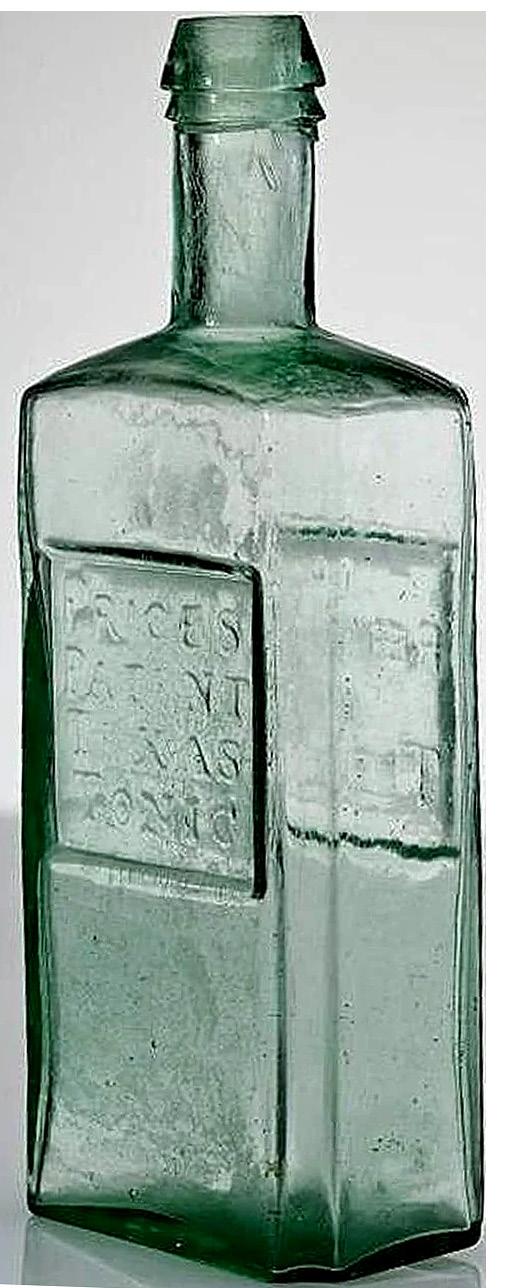
Price’s Patent Texas Tonic reverse panel reading REPUBLIC OF TEXAS
The bottle is rectangular, aqua, open pontil, 8” more or less in height.
Less than a handful of examples known!
(Courtesy of PeachridgeGlass.com)
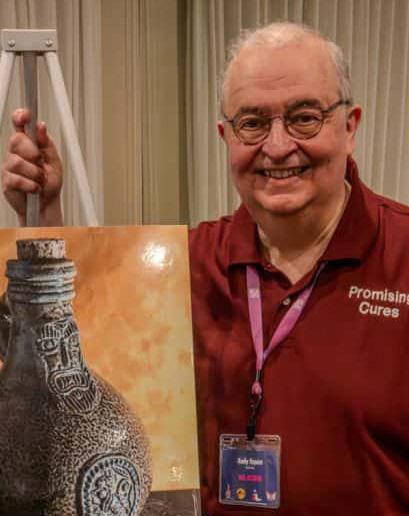
Andy Rapoza a past secretary of FOHBC, is a lifelong medical bottle and ephemera collector, lecturer, and writer, focused on the social history of health. He is the author of Promising Cures, a four-volume history of Lynn, Massachusetts from 16291929. In 2024 it earned the national book award of the American Association for State and Local history (AASLH). Andy’s blog is PromisingCures.com, A History of Endurance through Sickness, Accidents, Science & Quackery. Contact Andy at rapoza.2025@gmail.
Young CORNER
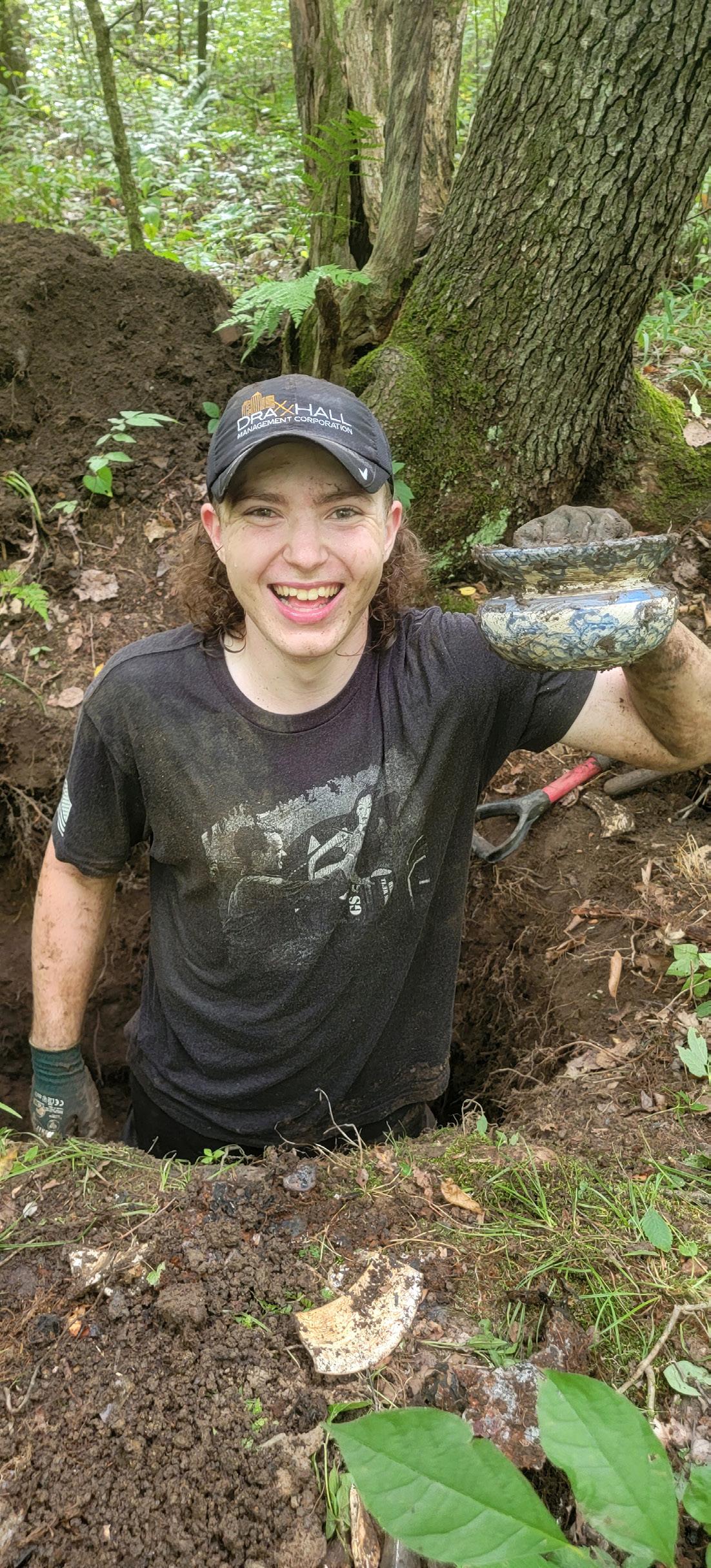
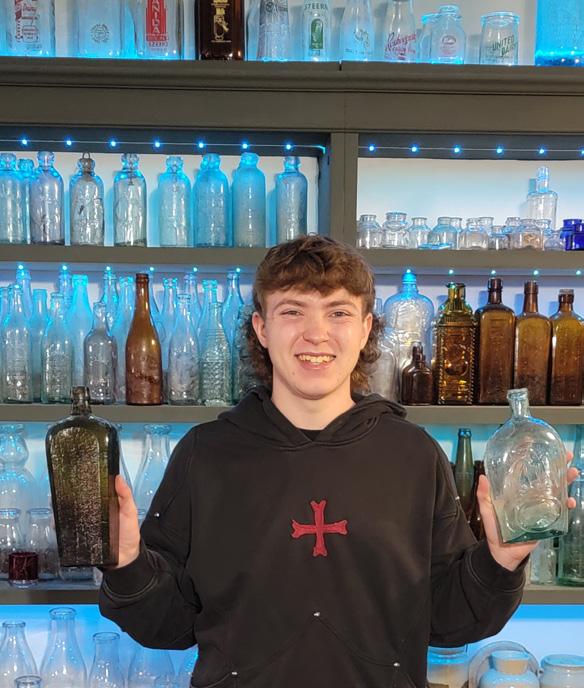
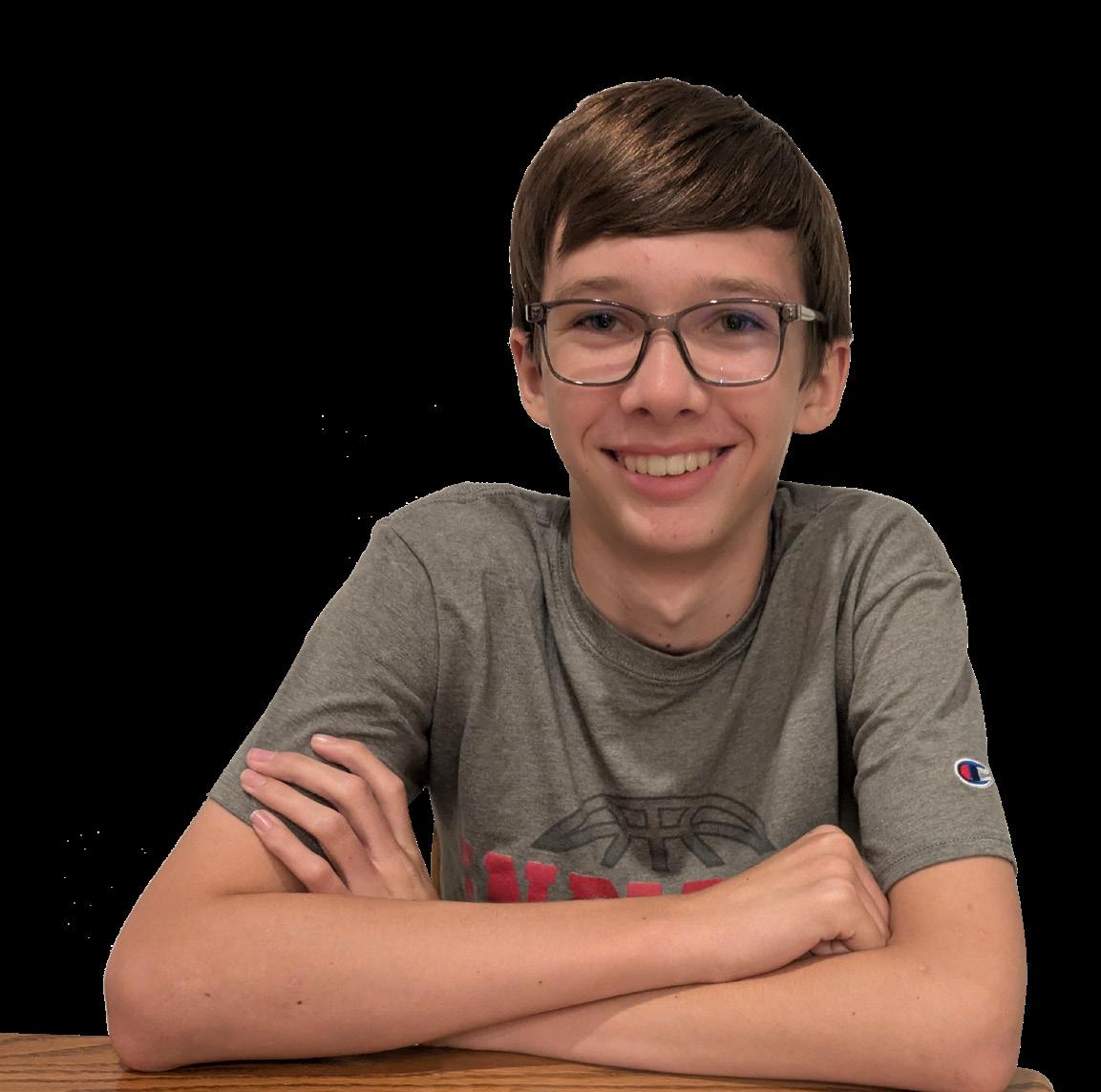
akota not only spends countless hours searching for bottles, carefully cataloging his finds, and sharing his knowledge with fellow collectors, he has a genuine years of age, he has already become highly respected in his local collecting community in Western Pennsylvania.
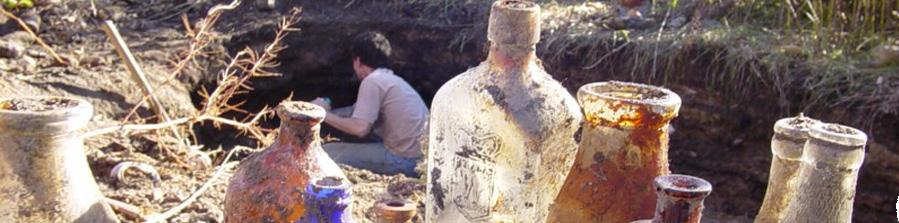
bottles. He enjoys passing on the history and techniques that have been part of his family tradition for generations. His interest in bottles started when he was very young, exploring old homesites and creek banks with his family. He quickly became an avid digger! He especially likes pontil soda bottles and crock jugs. His favorite finds include a gin bottle and spittoon he dug, and a Double Eagle flask he purchased.
Interviews with Alice Seeliger
Dakota and his family continue to go on digs together and share in research of their finds. He and his father built a very special display case for his bottles, including lighting and arranging everything so the colors and shapes stand out. It’s not just a display, it’s a family project, and that makes it really meaningful.
Maybe all that digging and exploring is what led Dakota to choose a career in construction. He recently attended a bottle show which really inspired him. He loved meeting people and seeing so many different types of bottles. He has visited the Federation website, FOHBC. org, but has not yet seen this magazine. He’s in for a great surprise! He’ll surely use it to encourage other young collectors to pick up the hobby as he tells them to be curious, explore safely, and try digging with family or friends. He believes it’s a great way to connect with history and make memories.
What Dakota really wants is more resources geared toward young collectors, such as simple guides, online groups, and ways for younger people to connect and learn.
We think you’ve come to the right place, Dakota (and family). We hope you will check out everything the Federation has to offer.
Dakota Blatt down in the dumps!
It’s a Family Affair for Easton!
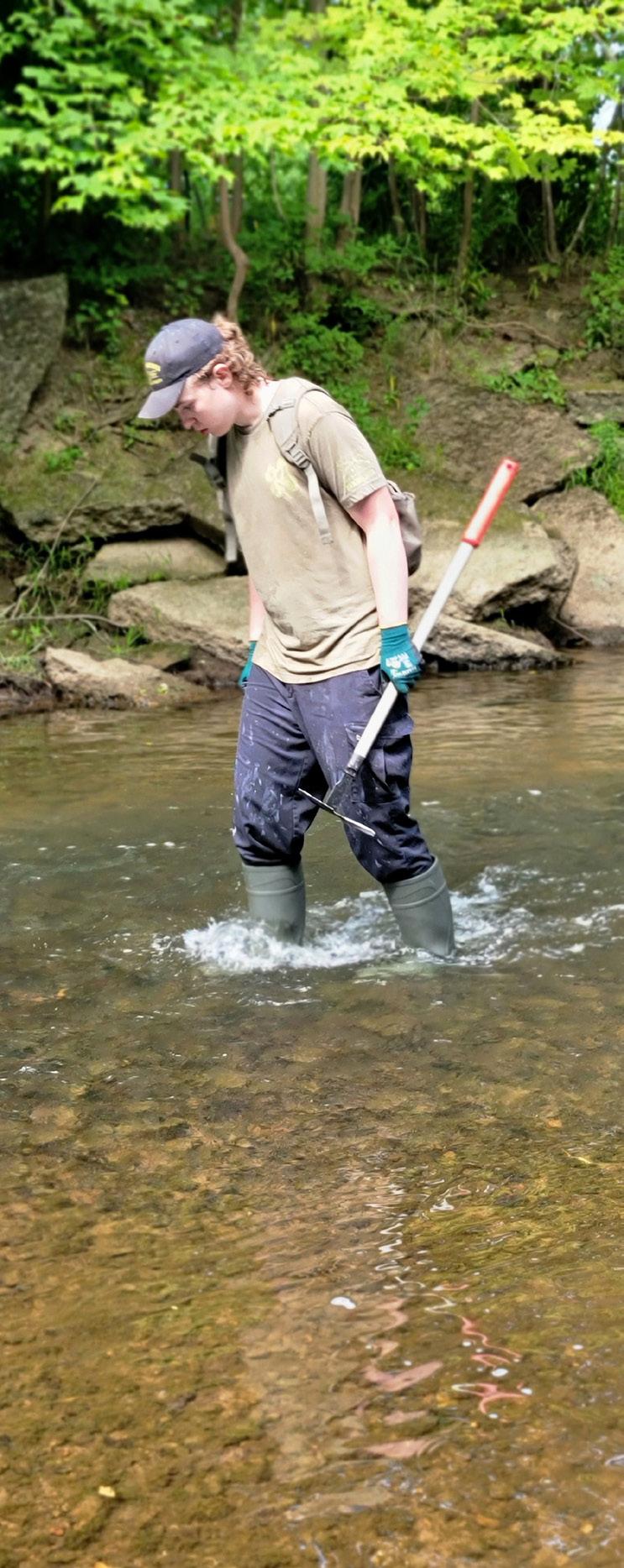
AnRC cola bottle from Las Vegas, Nevada, found last year while creek walking near downtown Indianapolis, started Easton Sutton’s bottle-hunting hobby. Easton, now 14, is one of our younger collectors. His family helps him read maps, search reddit posts and pay attention to word of mouth in search of possible bottle dumps. They joined the Circle City Bottle Club in Indianapolis in June, and he sold his first bottle at their summer yard sale.
With three shows under his belt – Lebanon, Terre Haute, and Muncie, Easton is beginning to narrow down his collection to ACL sodas, Hutches, and medicines from Indiana. Easton’s grandfather, Randy Root, did bottle shows more than 10 years ago, but then focused on auctions and estates until his recent retirement. Easton’s newfound appreciation for bottles has rekindled his grandfather’s spark and now he also participates in shows with Easton and his mom, Lindsey and dad, Adam.
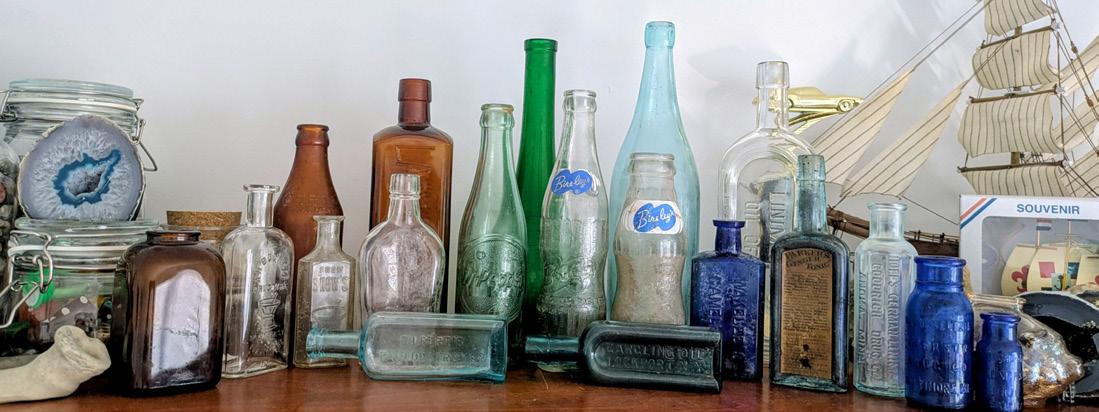
Easton’s bottle collection is displayed on shelves, window sills, cabinets, and crates. He keeps glass shards and unique pieces he has dug in a large jar he found in an old dump. He certainly caught the collecting bug as he also collects stamps, military items, and Marvels, but he’s focusing on bottles for now.
Easton is quick to pull out his business card as he meets new collectors and scours garage sales, antique malls and flea markets for bottles. He appreciates learning from his grandfather and other collectors about aging bottles, manufacturing methods, how to read seams, and the wide variety of tops.
It was hard to pick one, but Easton’s favorite bottle in his collection is a pristine paper-label Pepsi-Cola from Quebec, Canada, discovered at an antique mall.
Easton encourages young people to find a hobby like bottle collecting so “they have something better to do in their spare time than just doing nothing all day.” He said bottle collecting has given him the confidence to talk with adults, including some very interesting bottle hunters who have helped him build his collection while sharing their knowledge and experiences.
He’s also learning how to invest and make sales! And he would really like to have a better way to clean bottles until he sells enough to buy a tumbler.
Easton Sutton shares his passion for collecting with his family.
Some of Easton’s collection.
Jesse Postol, he’s where it’s at!
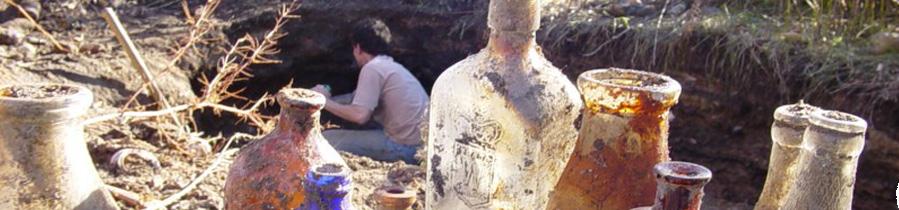
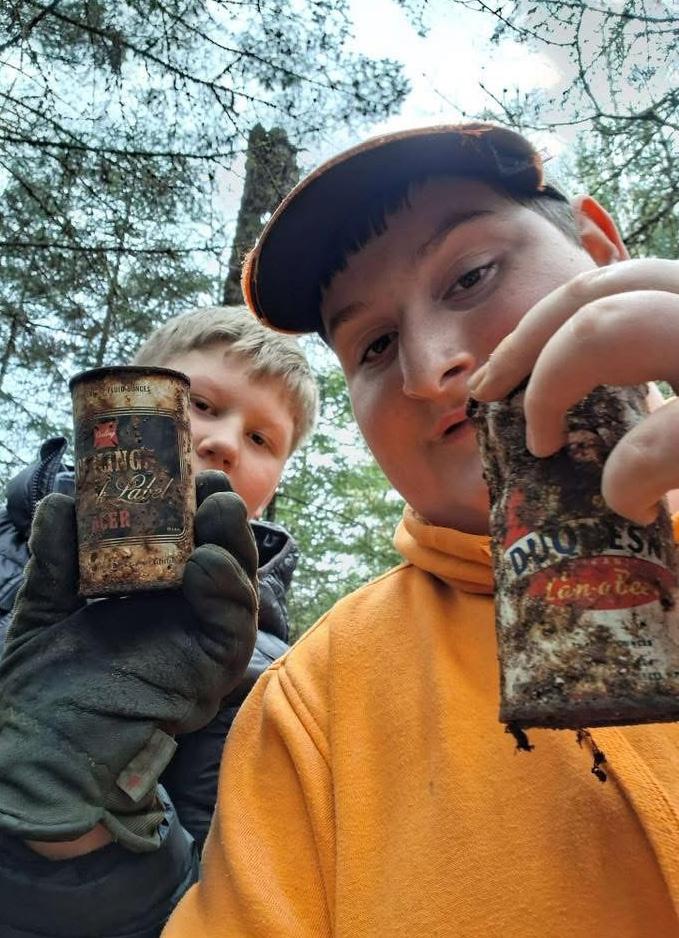
Jesse’s got some special helpers in his quest for treasures … his grandpa and grandma! When he was just 8, Jesse and his grandpa would go hunting near a huge dump in a gullet. When grandpa wasn’t looking, Jesse would grab bottles! His grandma helped him find old foundations of houses and where dumps are on old roads. Now 16, he knows where to find vintage beer and soda cans … and oil cans, too.
Jesse collects mainly ACL soda bottles, but adds anything that is interesting like medicines, oil cans, household containers, milk bottles … and alcohol bottles, mostly from his state of New York. He lives in the historical small town of Ohio, NY.
He has attended the Mohawk Valley Antique Bottle Club Shows and has seen “all of” the AB&GC issues on line. He hasn’t held one in his hands yet, so he’s in for a real treat with this issue.
Jesse’s favorite is also his rarest … a 1950 Chill Soda Bottle from the Orange Crush Bottling Co of Utica, New York. And he has beautiful 1958 and 1959 Royal Crown Cola cans in his collection which he displays in two cabinets. He has lots more in boxes because he has run out of room to display them.
He’d like to encourage others to join this fun hobby because “you’ll never know what you’re going to find.” And he’d really like to see more “Census/Forums” on bottles of each state or county.
Listening to Jesse, you may not be surprised that, while he attends school, he is also proud to hold a job … as a content creator! His YouTube channel is ANTIQUES4life. Now there’s something he could help the Federation work on as we discover that’s where the young bottle collectors hang out.
Jesse and his friend hunting for old beer cans.
Jesse proudly displaying his collection.
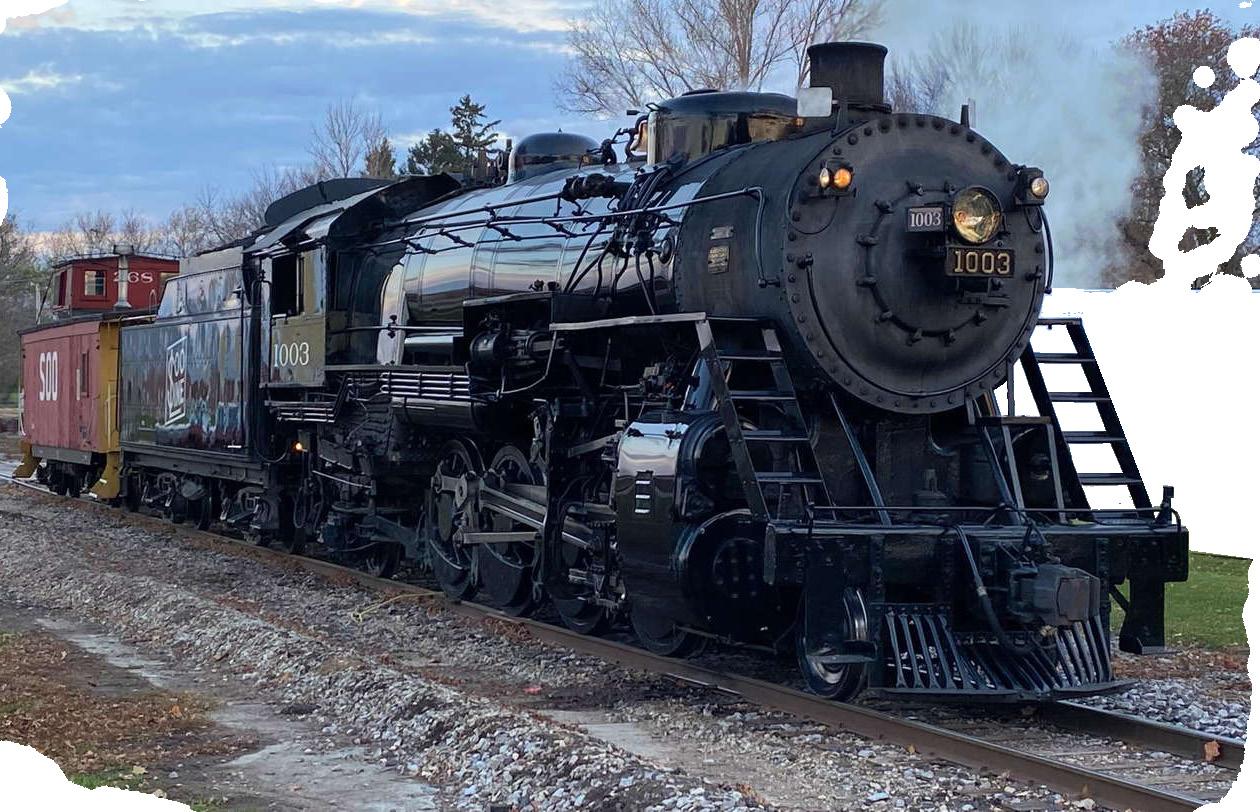
What Do This Bottle and Steam Engine Have in Common??? Connections That I Can’t Help But Make!
By Bob Strickhart
Ihave an acquaintance who is looking forward to retiring in four or five years. He’s only in his early 40’s and isn’t really what I would call wealthy. I asked him what’s in store for him when he retires and he said, “Nothing.” When I pressed him, asking if another career or some special hobby or interest would fill his time, he said he doesn’t want to work at anything!
To me, that’s nuts. I always liked working...all kinds of working. I’ve enjoyed working since I was a young stock boy in the corner grocery store. I like to work. I’m the guy who would keep doing things even if I hit the lottery for a billion bucks. The fact is, I also really enjoy all the work that goes into writing articles like this, and I’m truly glad to be back at it. When I write an article, I do some digging ... a lot of digging. That digging invariably brings me to learning new, interesting and often wonderful things. To me, learning is absolutely cool, it’s just wonderful. Because of the way my mind works and the things I know or have learned or experienced before, the articles I write just
come together in my head and then I write it all down; it just sort of all spills out onto the paper. I make connections. I hope you enjoy these connections my mind has made, especially this one.
My appreciation for that love of learning something new and simply being interested in just about everything comes from my youth. I had great parents who supported and encouraged me when I joined Cub and Boy Scouts. I enjoyed it all and had a great experience. One of the major lessons of scouting was to be well rounded, that is, to have interest in all things.
Along with collecting stamps, woodworking, building live steam engines with my Dad and so many other things, my Dad and I were rail fans. I love steam locomotives and railroading. I’m a near 40-year veteran of the National Rail Historical Society! When I was young, Dad and I frequently went on “Fan Trips” where a bunch of rail fans went on excursions powered by classic steam engines. “Reading Rambles”
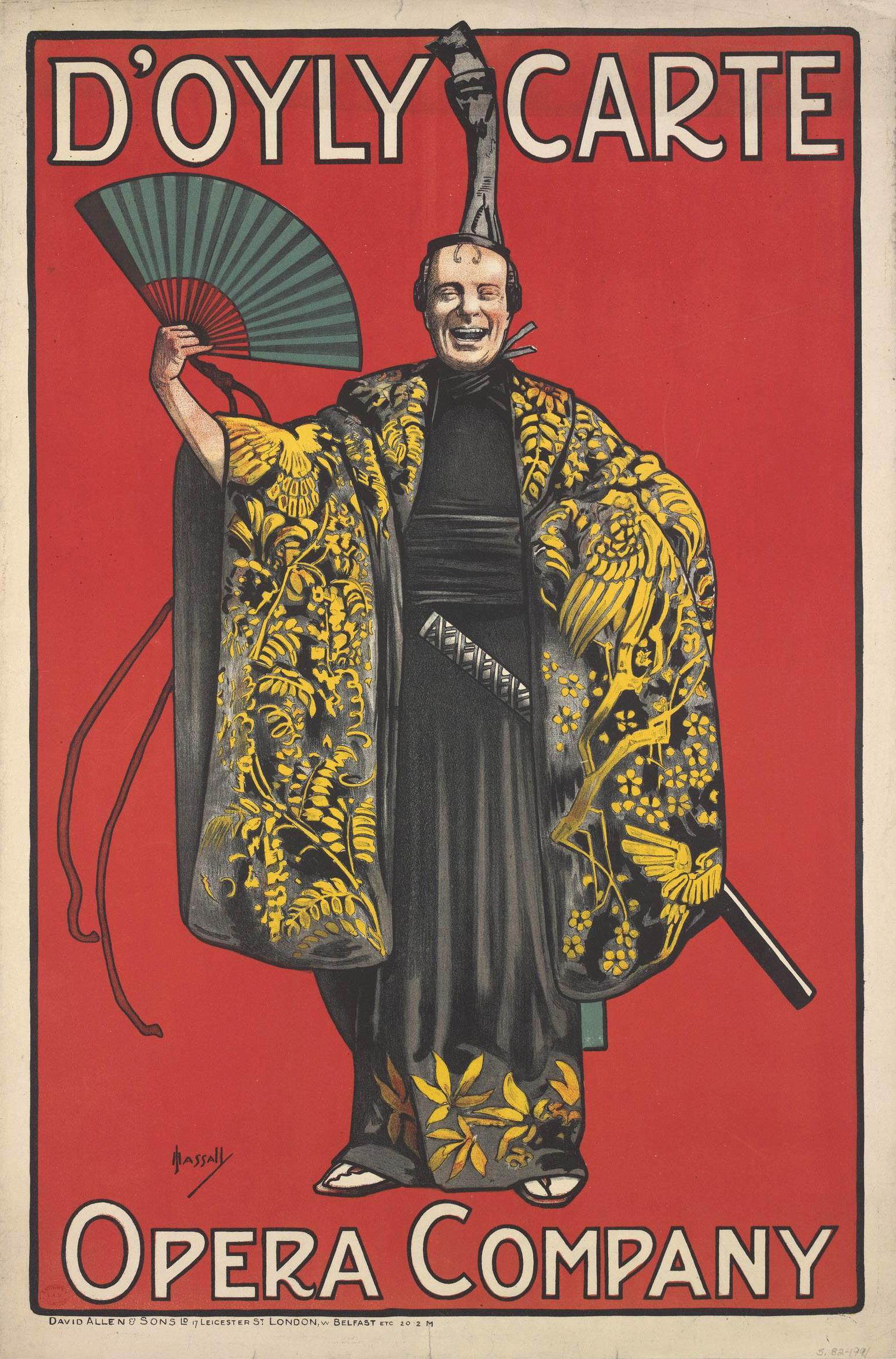
D’Oyly Carte Opera Company
“The Mikado” Show Poster By John Hassall - Victoria and Albert Museum, London
were weekend outings with my dad and me riding behind classic Reading railroad T-1 steam engines. You want to talk about lucky, I’ve been fortunate enough, a couple of times, to be in the cab of several steam locomotives and even at the throttle, with a little help from a friendly engineer.
So now, the connection....
I teased you with a question in the title of this article and now we’ll see if you can make the connection that my mind automatically came to when this bottle and I crossed paths.
First, the bottle. It’s not a bitters. I know I’m supposed to focus on bitters for these articles, but this bottle was mixed in with a bunch of square bitters bottles I’m selling for a good friend of mine, and it is a very cool bottle. So, just this one time, I hope you’ll let it slide.
The bottle is embossed THE MIKADO TONIC / JAPANESE REMEDY. Of course, there is no Ring # as the proprietor decided against the use of the word “bitters,” but everything about this bottle makes you think bitters. The line between “bitters” and “tonic” is blurry, and, in fact, as you know, you’ll find many bottles embossed “tonic bitters.” The example I have is a very pleasing yellow, surely not amber and maybe has the slightest hint of green. It is a “square” and stands about nine inches tall. It has a smooth base and the embossing is on opposing sides, leading me to believe there were a couple of labels on the blank sides. These are really handsome bottles with large embossed block letters, and you can probably find a very clean, great condition example for $100 to $200.
A quick search of the internet turned up a dig that took place in North Dakota in 2016. The pit had several Mikado Tonic Japanese Remedies in shades of green and amber. The same hole produced many Dr. Gregory’s Scotch Bitters from Minnesota and it was determined that the pit was the trash from an 1880’s saloon. Keep that 1880’s date in mind as you read on.
The name Mikado was synonymous with the title for the Emperor of Japan. In the late 1860’s, Japan had a major political change, the feudal system was done away with and Japan came under the rule of the Emperor. It was also a time when Japan underwent an entire social shift, a modernization in all ways, and the country opened up to the world for trade.
In 1885, the famous English lyricist, Gilbert, and his talented musical composer partner, Sullivan, wrote and produced “The Mikado,” an operetta that gave the world a glimpse into the world of exotic and mysterious Japan. Japan had been closed off to the rest of the world and this operetta drew a lot of attention. Gilbert and Sullivan had a special way of blending satire, comedy and humor in their productions. The “Mikado” was a comedy that focused on a love triangle between the Emperor’s son, the High Executioner and his betrothed. The play showed the unusual and unfamiliar customs of the Japanese and was a smash hit for Gilbert & Sullivan.
There was an amazing wave of interest in Japanese culture and their products which were viewed as exotic and even mystical in nature. What a wonderful advertising ploy this would be to be able to market an exotic Japanese tonic to cure all your ailments. Hey, if it’s good enough for the Emperor, I’ll bet it will work for me! I have thoughts of alcohol laced with opium or morphine being downed by the glassful and making one feel just wonderful!
And the steam engine connection?????
Railroad fans will know that steam locomotives are
classified by their wheel arrangement. That arrangement and the size of drive wheels along with other factors determined how the engine would be used. For example, a locomotive with four leading wheels followed by six powered drive wheels with two trailing wheels under the cab would be called a 4-6-2. Instead of calling an engine a 4-6-2, railroaders call it a “pacific.” The 4-6-2 wheel arrangement is simply taken for granted and understood. These engines were used as passenger trains as they had large-diameter drive wheels and could attain high speeds. All combinations of wheel arrangements were given names for ease of understanding and identification.
In 1897, the Baldwin Locomotive Works made a number of engines for the Japanese Government Railways with the wheel arrangement of two leading wheels, followed by eight powered-drive wheels and two trailing wheels, therefore a 2-8-2. The drive wheels were smaller in diameter than that of a pacific-type locomotive but these engines were versatile and used for passenger as well as freight service. Oh, and here’s the connection, the 2-8-2s built here in the U.S. for export to Japan were given the name “Mikes” or “Mikados.” American railroads found these engines quite serviceable and many rail companies added numerous “Mikados” to their engine rosters. A final note, when WWII broke out, anti-Japanese sentiment ran so high that here in the U.S. we renamed the 2-8-2s “MacArthurs,” though the name never really stuck and, still today, we call them “Mikes.”
Gilbert and Sullivan’s Opera “The Mikado” Show Poster
THE MIKADO TONIC - JAPANESE REMEDY
Roughly 8.75” tall, the bottle is almost identical in shape, and size as the Dr. J. Hostetter’s Stomach Bitters.
Connections run deep in this particular article. Researching is always more than just doing an internet search. Many of you may not know this, but my great friend Ralph Finch from Michigan, who you know from the wonderful articles you’ve read in this magazine, spent his army years in Japan. Ralph fell in love with Japan, its people and culture, and has never abandoned his love affair with The Land of the Rising Sun. It was the most logical thing in the world for me to ask Ralph what the word “Mikado” meant to him. Ralph shot back some initial information and it included a note about a place in Michigan called Mikado. At first, Ralph knew little, if anything at all, about the town of Mikado in his home state, but then he came back with more information….. and here is that wonderful connection again of the word Mikado and trains.
It seems that in the 1880’s the Detroit, Bay City and Alpena Railroad expanded its line near a community called Greenbush, Michigan for the lumber business. A gent by the name of Daniel Bruce built a hotel and livery barn and convinced the railroad to build a train station in his new community. As things progressed, Bruce petitioned the state to open a post office in his new community. Bruceville was the name proposed but rejected for this new post office as was Bruce’s Crossing. However, the Postmaster general granted this new community a new name, and yes, you guessed it, this new village was named, “Mikado.” Why? Seems that the postmaster had just attended a performance of “The Mikado” and thought it was superb. In 1906, the community officially incorporated as a village and, while lumbering had died out, farming took over. The railroad was later discontinued but construction of state highways ensured Mikado’s existence to this day.
A beautiful bottle, a type of railroad locomotive, an operetta, a Japanese emperor, and a town in Michigan, now that’s some stretch of a connection. Hope you enjoyed this journey.
Comments or questions are always welcome at strickhartbob@aol.com.
Bob Strickhart is a retired Earth & Environmental Sciences teacher and paint and wallpaper contractor from New Jersey. Along with uncountable interests and hobbies, his passion for bottles and glass are only surpassed by his love for his family. His wife, Marianne, three wonderful children, three spectacular grandchildren, Missy the wonder dog, his friends and his bottle family are his most treasured gifts. Bob is a long-time member of the Baltimore Antique Bottle Club.
HISTORICAL FLASKS
The first in our series celebrating the 250th Anniversary of our Country’s Independence.
Capt Bragg”
By Michael George
Zachary Taylor’s remark, “A little more grape, Captain Bragg,” is one of the most famous — and colorful — quotations associated with the Mexican–American War and with Taylor’s reputation as a plainspoken battlefield commander. The phrase was reportedly uttered during the Battle of Buena Vista in February 1847, when American forces under Taylor faced a much larger Mexican army led by General Antonio López de Santa Anna. According to tradition, at a critical moment in the fighting, Taylor rode to an artillery battery commanded by Captain Braxton Bragg and urged him to fire his cannons more aggressively at the advancing enemy.
The word “grape” referred to grapeshot, a type of artillery ammunition consisting of multiple small iron balls packed together, devastating at close range against massed troops. Taylor’s alleged command — variously remembered as “A little more grape, Captain Bragg,” or in more emphatic versions, “Give them a little more grape, Captain Bragg!” — captured the urgency of the moment and the general’s calm confidence under pressure. Whether the exact wording is perfectly accurate is debated by historians, but the story itself became a powerful piece of American military lore.
Beyond the battlefield, the phrase took on political significance. When Taylor later ran for president in 1848, supporters seized on the quote as a campaign slogan, presenting him as a decisive war hero who spoke plainly and acted boldly. “A little more grape, Captain Bragg” thus became more than a battlfield order; it symbolized Taylor’s public image as a nononsense leader and helped translate his military fame into political success. Even today, the line endures as an example of how brief, vivid moments from history can shape a lasting legacy.
Known nationwide as “Old Rough and Ready,” Taylor embodied plainspoken leadership and battlefield decisiveness, qualities that appealed to voters weary of partisan conflict. To promote this image, Taylor’s supporters made extensive use of material culture, including the production of embossed glass “historical flasks.” These flasks, commonly used to carry spirits, functioned as highly visible political advertisements in an era before mass media. Often decorated with patri-
otic symbols, military imagery, or slogans tied to Taylor’s wartime fame, they spread his campaign message in everyday social settings. The flasks linked personal identity, celebration, and politics, transforming an ordinary object into a portable statement of support. Today, these campaign flasks are valued not only as collectibles but as early examples of American political marketing and the commercialization of military heroism.
Half pint and pint examples of the “GENL TAYLOR NEVER SURRENDERS” / Mounted Cannon - “A / LITTLE / MORE / GRAPE / CAPT BRAGG” flasks. These were probably blown at the Baltimore Glass Works, ca. 1847 - 1850, and are listed as a GX-6 and GX-4 in American Bottles & Flasks And Their Ancestry by Helen McKearin and Kenneth Wilson. (Michael George collection)
From the historical flask chart in American Bottles & Flasks And Their Ancestry by
with some slight adaptation for easier use.
Zachary Taylor’s popularity grew during a time when the glass manufactories were producing flask-shaped bottles with motifs often associated with political figures and Patriotic slogans. His 1848 presidential campaign coincided with the peak period of historical flask production (roughly 1840 – 1860). So Zachary Taylor appears on more historical flasks than any other political figure in American History.
Many Taylor flasks share portraits with General Washington, comparing Taylor to the infamous leader of the Revolutionary War, and the first President of
Zachary Taylor flasks that share portraits with
and Kenneth
our country. However, the GX-4, 5 and 6 refer to Zachary Taylor on both sides, obverse and reverse.
The obverse is embossed with a cannon, on a twowheel carriage, is pointed toward the lip of the flask while the ground is to the right. Fifteen cannonballs are stacked just to the left of the nearby wheel. A rammer and swab lean against the cannon to the right of the rear wheel. A small building is in the foreground to the right. The typography “GENL TAYLOR NEVER SURRENDERS” is embossed in a horseshoe configuration around the cannon.
Helen McKearin
Wilson,
The obverse of the pint and half-pint flasks detailing the cannon, and a stack of cannonballs, surrounded by the embossing “GENL TAYLOR NEVER SURRENDERS” in a horseshoe configuration.
These flasks can often be weakly embossed. The mold impression is an important factor, as well as condition, in determining the value. These flasks were likely used, and have been known to have excessive wear. This is another consideration of valuation.
What Exactly Is Grapeshot?
Grapeshot is a historical anti-personnel cannon ammunition, essentially a large shotgun shell, made of small iron or lead balls clustered in a bag or held by rings, designed to scatter and shred enemy troops at close range, named for its resemblance to a bunch of grapes. It was devastating against massed infantry and also used at sea to cut rigging, but was largely replaced by canister shot in later conflicts like the American Civil War.
Made of about two-inch solid cast iron balls stacked on top of each other, the spheres would have been packed in a cloth sleeve with metal plates to separate the layers, and then bound with rope or twine. When it was bound, the bundle looked something like a bunch of grapes, hence the name “grapeshot.”
The reverse of the flask has embossed vines and grapes around the embossed quote reading, “A LITTLE MORE GRAPE CAPT BRAGG.” The “Capt Bragg” copy is in an arch toward the bottom of the flask.
These flasks are most commonly found in aquamarine color, which is comparatively scarce. Any other color than aquamarine is considered very rare. The detailed mold impression of these flasks is very important to the valuation.
Michael George is a wellknown collector, contributor, and a premiere antique bottle and glass dealer. With decades of experience writing articles, attending and coordinating shows, and performing lectures, Michael is always willing to share his knowledge, while coaching new collectors in the hobby. Michael also has a Bachelor’s Degree in Marketing from Notre Dame College. He lives in the Lakes Region of New Hampshire with his wife, where they operate a seasonal inn. Michael can be contacted at earlyglass@gmail.com.
CHARLES BERNARD A SAN FRANCISCO COFFEE AND SPICE MANUFACTURER
By Eric McGuire
Charles Bernard was born in Dinan, Brittany, France, about 1830. He arrived in San Francisco in 1856 and immediately opened his Chartes Coffee Mill business. He and his wife, Clarisse Marie Josephe Mauny, who was born in Bretagne, France in 1829, had four children in San Francisco; however, only their youngest, Helena, lived a full life.
His 1869 San Francisco Directory advertisement notes his company was established in 1850, even though there is no proof of him in San Francisco until 1856.
Charles Bernard’s first noted advertisement, with the erroneous establishment date of 1850.
After considerable assessment I believe that the founding date of 1850 noted in the directory advertisement was nothing more than an error.
In 1861 a squabble broke out between George Venard and Charles Bernard, two San Francisco-based French coffee roasters who advertised they roasted in a style typically found in Chartres, France. Venard was the first to advertise his Chartres coffee in San Francisco as early as 1850. Charles Bernard began roasting and advertising his Chartres coffee in San Francisco when he arrived in 1856. Venard seems to have tolerated this brand intrusion for several years, but in 1861, when trade mark laws were first passed in California, Venard claimed exclusive right
1869 Valentine & Sons San Francisco city directory
to the name and brought suit against Bernard for trade mark infringement, requesting an injunction against Bernard. The judge denied his request noting that “the term ‘Chartres Coffee’ is not invented by Mr. Venard, and is not selected as a matter of fancy, but has a fixed signification, meaning coffee prepared after the manner customary in Chartres, and that therefore it is no more a name to which anybody has an exclusive right than the words ‘chewing tobacco’.” (The Marysville Appeal, Marysville, California, May 25, 1861). Both companies continued using the term, even though Venard often threw barbs in the direction of Bernard. In 1867 Bernard added spices to his business regimen, and became successful by all accounts. This would be the inception date for his use of spice bottles.
One setback occurred in 1870 when Ghirardelli & Co., the well-known Oakland and San Francisco merchants, were forced into receivership with liabilities of $400,000, and a net value of only about half that amount. About $40,000 of its net worth were notes in favor of Charles Bernard, who risked a significant loss. The local newspaper recognized this peril against Bernard and noted, “And this will, in all probability, seriously ‘cripple’ Mr. Bernard. We sympathize him, from the bottom of our heart. For more than a decade of years Charles Bernard has labored, honestly and honorably, for competence, and had about reached the goal of his ambition, when, at one fell swoop, by the treachery of men in whom he had unbounded confidence, the accumulation of all his toil, his perseverance, his untiring ambition, is swept away from him, and his honestly obtained money goes to enrich, in all probability, a set of harpies who will only laugh at his verdancy, while they scatter his gold at their leisure.”
(Alameda Daily Evening Encinal, Alameda, California, May 14, 1870)
Apparently, Bernard weathered this setback fairly well, and continued his business for another twelve years.
On April 25, 1882, Bernard took on a partner which changed the name of the company, to Bernard & Mantell. The new partner, Ferdinand Mantell, was previously employed as a bookkeeper for the business. The partnership functioned until March 27, 1883, when
Charles Bernard decided to retire, however, the name of the business was maintained as Bernard & Mantell, even though he had no more financial interest in the company. It was likely for health reasons that Bernard quit his business activities as he died just a few years later. This left the business entirely in the hands of his ex-partner. A major subsequent event brings into question the ability of Mantell to operate the business, which kept the name of Bernard & Mantell.
It appears clear that Bernard was not in the greatest of health, and, he died on January 4, 1885. Some six months later, on June 15, 1885, Mantell was found dead of a self-inflicted gunshot to his head. Initial estimates
by court-appointed estate examiners determined that the then-defunct business of Bernard & Mantell carried debt in the amount of about $70,000. The business assets of Mantell’s estate were inventoried at about $12,000. It was assumed that Mantell took his own life to avoid the consequences of his huge business debt.
All examples of the Bernard spice bottle appear to have been produced in the style and form of the two glass works in California. Both companies would have been operating by 1867, the initial date of Bernard’s spice business. It should also be noted that a myriad of the fluted shoulder spice bottles, without company names embossed, were blown at the San Francis co glass companies, and used by a variety of spice purveyors throughout the West, including the same companies who had their names lettered upon other examples. In fact, I know of no other region in the United States where these fluted corner bottles were used so prolifically by spice manufacturers. They became readily identifiable as containing western-made spices except for one embossed example used in our eastern states that possibly held something other than spice.
Embossed on the side panels, CHS BERNARD / SAN FRANCISCO. 6.5 inches in height with an applied ring lip. The front, back and four side panels are “scalloped” with only the two embossed side panels being flat. The base is smooth with a slight dome in the center.
An advertisement for the relatively short-lived company of Bernard & Mantell. (1882 San Francisco city directory)
This example of a labeled Bernard spice bottle has no lettering in the glass. It is typical with most of the San Francisco spice companies in using both embossed and unembossed bottles. Nearly all these bottles can be attributed to the San Francisco glass factories.
This green and bubbly glass example of the CHS BERNARD / SAN FRANCISCO spice bottle sold for over $5000 on eBay several years ago. (eBay photo)
Eric McGuire, pictured with granddaughter, Stevie Joy Larkins, is a senior member of the bottle collecting world, a former digger, long-time member of the FOHBC Board, and seasoned researcher and writer. He is holding the largest intact bottle he unearthed from a Poughkeepsie, NY privy. Eric enjoys sharing his passion for preserving and sharing the past through “ancient” glass containers.
~ Field, Cover and —
Ralph Finch returns with eBay stupidity in his sights!
EBay is for people who go off half-cocked … and often miss, blindly. eBay is the modern world’s Pandora’s Box—and then some.
On eBay, IQ isn’t part of the requirement for being involved. I have ranted about eBay users so many times I have gray hair, (although being 85 and a half may have played a part … and notice the bad pun).
eBay, on a few occasions, is truly amazing and has allowed many bottle collectors to add to their collections … sometimes at a bargain, and sometimes … it’s just crazy.
But eBay has a “flaw.” Amid the occasional good — even great — stuff and the occasional golden needle in a haystack, are tons of flotsam and jetsam and, using a barely-polite word: manure … often listed by truly uneducated people (OK, read stupid) and a few crooks.
In 50 years, I have been scammed three times, once by someone who, if I printed his name, you would be shocked. (Then again, three California collectors had warned me to stay away from him, so … my fault.)
And one of the deals that cost me a lot of money was a scammer in Utrecht, in the Netherlands, of all places. (My fault again. I got excited and … it truly was too rare and too good to be true.)
But this story isn’t about scammers, rather it’s about … stupid eBayers, whom most glass collectors have met at one time or another.
Here’s an example: On November 18, I found these prices for one relatively *common book: $109.05, $52, $225, $90, $15, $149.99, $118, $114.99, $42, $155 and $89.95. (*Common? I must have had three copies. And the $15 price is closest to being fair … and why do some people add pennies to dollar prices?)
Did the stupid eBayer who listed the book for $225 not notice that there were other, cheaper books on the site? Did he hope that somehow he would trap a moron? Those are hard questions to answer when you’re dealing with eBay.
The book example pictured in this article is Field, Cover, and Trap Shooting by A.H. Bogardus, published in 1891, covering “Hints for Skilled Marksmen; Instruction for Young Sportsmen; Haunts and Habits of Game Birds; Flight and Resorts of Water Fowl; Breeding and Braking of Dogs, Etc. etc...”
The hardback book was published in four editions: 1874, ‘78, ‘84 and ’91 — with 1891 as the only edition to cover Bogardus’ skill as a glass target ball champion. (The book was also reprinted in 1987 and 2008, and as a paperback.)
Trap Shooting?
In the 1970s, when I first started collecting target balls, and was learning about the 1891 Bogardus issue, I stopped at uncountable used bookstores and found … nothing. Nada. Zip.
Then came September 1995 when eBay made its first appearance and changed the lives of a few million collectors — including mine. eBay has 132 million yearly active buyers worldwide and handled $73 billion in transactions in 2023. (One of the first items sold was a broken laser printer for $14.83. If only eBay could require eBay users to have a minimum IQ of about … 73?)
than 160 countries … but not: Barbados, French Guiana, French Polynesia, Guadeloupe, Libya, Martinique, New Caledonia, Reunion, Russian Federation, Ukraine, or Venezuela.
And the Bogardus book is only an example of many thousands of other items listed by people who should never be allowed to:
A. Be on eBay
B. Operate heavy equipment
C. Reproduce
D. Vote
But, if you want to sell something, and you don’t know its value, put it on eBay and let a million viewers tell you its worth. Recently, we had a bottle we wanted to sell at the next bottle show, but we had no idea of its worth. We thought we’d put … $125 on it — which seemed fair, we guessed. But what if it is worth only $40, and we will look greedy. Or stupid.
Instead, we put it on eBay and it sold for a hair-raising $2,850, plus $7.27 shipping! (Thank you, eBay.) These days, Janet spends an hour or two a day listing items from my Hair bottles collection. eBay recently reminded her that she can ship and sell to more
Darn! I was planning to sell something to Reunion, a part of the Mascarene Islands, 367 nautical miles east of Madagascar. Whatever did they do to get banned by eBay?
Ralph Finch
Well known to our readers, Ralph returns to AB&GC with his special brand of collecting insight. As he begins to disburse yet another collection, Ralph is about to lose his title of “The Ketchup King.” Years ago, when he called his young nephews, they would answer and yell: “Mom, it’s Uncle Ketchup.” Comments, questions, and offers can be sent to Ralph at rfinch@twmi.rr.com at least until he relocates to Reunion.
For all the latest Australian
Quarterly publication of 36 pages. Many of the consumable goods in 19th century Australia were supplied by both England and the United States, resulting in some nice bottles of U. S. origin having been found in Australia. $65 per year.
PayPal: abcr@bigpond.com
Email: travisdunn@bigpond.com
ABCR Auctions often offers items of U. S. interest, such as these upcoming items to the left. Also operated by Travis Dunn, this auction can be found at: www.abcrauctions.com
Auctions run every three months. Email: info@abcrauctions.com Free to register. Low commissions. Reliable condition assessments.
First Bottler of
By Dennis Smith
There’s a museum in Vicksburg, Mississippi dedicated to Joseph Biedenharn and the premise that he was the first to bottle Coca-Cola. However, no one in the Biedenharn family was present when carbonated Coca-Cola was first placed in bottles. Samuel Candler Dobbs was witness to the first bottling of carbonated Coca-Cola by Woolfolk Walker in Atlanta in 1887. Dobbs was the nephew of Coca-Cola magnate Asa Candler (by way of Candler’s sister Lizzie) and worked for his uncle Asa Candler’s drug store from the age of nineteen.
My recollection is the number of the house was 107. The building is down there yet, although the number has been changed since – an old red brick building. The equipment and machinery which Dr. Pemberton had for making this stuff consisted of a copper kettle which held forty gallons and which was afterwards turned over to Mr. Asa G. Candler, and a wooden paddle.
Following is Sam Dobbs’ testimony under oath in US Federal Court in 1913:
(Deposition of Samuel C. Dobbs)
“I was with Candler & Company in 1887. At that time said company were jobbers of “Coca-Cola.” We bought it from the Pemberton Chemical Company. I do not know whether or not at that time the Pemberton Chemical Company was a corporation, but they were doing business as the Pemberton Chemical Company. I could not tell you definitely whether they were doing business that way up until Mr. Candler bought, but I think that they were--no, not until he bought, because there passed an interim in there that Walker, Venable, and Lowndes had “CocaCola.”
“I was in Atlanta all the time during 1887 and 1888. Quite frequently I went down to the place on Marietta Street where “Coca-Cola” was manufactured to get something. The business house there was an old residence, a sort of old rookery, where people rented rooms and things of that kind, and this manufacturing place was in a back room towards Walton Street. They had their office and storage and things – bottles and things – in a room fronting on Marietta Street.
“I know I was in the office a good deal of the time and knew of the transactions going on – knew it as it happened. And then I made a little trip, when Walker, Candler & Company owned “Coca-Cola” down the Georgia railroad for them, and Mr. Walker also traveled out through Alabama. I knew Mr. Walker quite well, and they had an old-fashioned Matthews bottling apparatus in a shed where this 107 Marietta Street is, and some of the goods were sold in bottles then–put up in an old Hutchinson stoppered bottle. I know I sold some down at Lithonia (Georgia). When I say “goods,” I mean by that “Coca-Cola.”
Walker, Venable, and Lowndes had become partners with Coca-Cola inventor John Pemberton in July, 1887. Willis Venable ran the largest soda fountain in the city in Joe Jacobs Drug Store at Atlantas Five Points. Woolfolk Walker and George Lowndes were related by marriage. Like Pemberton, Walker was a native of Columbus, Georgia and had served as a private in then-Captain John Pemberton’s Confederate Cavalry. Walker was present at the 1865 Battle of Columbus where Captain Pemberton received the saber wound which later led him into the study of cocaine use for pain. Woolfolk Walker’s cousin, Dr. Austin Walker, treated Pemberton’s wound and later partnered with him at a Columbus drug store. Walker and Pemberton were well acquainted when they joined together in the Coca-Cola business in Atlanta twenty years later.
Sanborn Map of 107 Marietta Street
W. WALKER, SODA WATER MFR., ATLANTA GA.
The Marietta Street building described by Sam Dobbs appeared in an 1886 Sanborn Insurance Map as a brick building with a wood shed at the rear. Woolfolk Walker ordered Hutchinson stoppered bottles embossed W. WALKER, SODA WATER MFR., ATLANTA GA. from the Pittsburgh glass factory of D. O. Cunningham.
Walker’s Coca-Cola bottling operation lasted only a couple of months before he sold his interest in CocaCola to Asa Candler. Walker went west and spent
Sulz Matthews Bottling Table
a dozen years as a salesman in Arkansas and Texas before his death in Los Angeles in 1907 at the age of seventy. His Atlanta bottling operation was sold to Lee Hagan who operated as Capital City Bottling Company and continued to bottle Coca-Cola in 1888. Hagan later started the Afri-Kola and Red Rock soft drink brands.
Sam Dobbs spent the next thirty years as head of sales and marketing for Coca-Cola. It was Dobbs who made Coca-Cola an international brand. He was twice elected president of the Associated Advertising Club of America. When the Candler family sold Coca-Cola in 1919, Dobbs served three years as president of the new Delaware Corporation.
Where does Joseph Biedenharn come in? When the Coca-Cola Company (Delaware) began to plan for the drink’s fiftieth anniversary in 1936, no one from
the earlier Georgia Company was still connected with Coca-Cola. The company had no archives (they hired their first archivist in 1951). In 1936, their oldest living bottler was Joseph Biedenharn who started bottling Coca-Cola in 1894, seven years after Woolfolk Walker. Joe Biedenharn became the face of Coca-Cola bottling history and the company never corrected the error.
The location where Woolfolk Walker first bottled Coca-Cola is now a parking lot with no marker to indicate where the world’s favorite soft drink was first put in bottles.
SOURCES:
The American Bottler magazine, June 1917
Atlanta and Environs: A Chronicle of its People and Events, 1880s-1930s, Franklin Garrett
The Archives of the Coca-Cola Company: Preserving The Real Thing, Linda M. Matthews
The Atlanta Constitution, May 18, 1913
Sanborn Insurance Map, 1886
Transcript–The Coca-Cola Company v. The Koke Company of America
Treatise on Beverages, Carl Sulz 1888
Walker Family Genealogy
Dennis Smith began collecting as a kid growing up in Birmingham, Alabama in the 1960s. He has written twenty books on soft drink history and has presented at FOHBC national shows and Coca-Cola collector conventions. Over the years he has served as club president, newsletter editor, show chairman, FOHBC Region Director and on the 1984 Expo committee. He welcomes correspondence from fellow collectors at books@kolawars.com
Big BoB’s Best Bitters
Dedicated to Bitters Collectors and the Pioneer Giants of our Great Hobby
By Bob Strichart
Dick & Elma Watson
Line Drawing by Elma Watson
So, here we go. The first bottle for your consideration is the OXYGENATED // FOR DYSPEPSIA / ASTHMA & / GENERAL DEBILITY // BITTERS // L … Dr. Wistar’s Oxygenated Bitters.
Carlyn Ring assigned this bottle identification O-99, but Dick simply listed it as #249. Here is the Watsons’ entry:
The bottle is described as rectangular, aqua, LTC (Long Tapered Collar), 6 x 2 1/2 x 1 3/4, pontilled, with beveled corners.
Dick went on to describe a variant marked on end: “OXYGENATED” Opposite “BITTERS” On face: “FOR DYSPEPSIA/ASTHMA &/GENERAL DEBILITY” with a label in German. The paper materials, i.e. brochure and carton for this bottle, call the bitters a sure remedy for Dyspepsia, Fever and Ague, Asthma, General Debility, etc. Contains no alcohol. Dr. Geo. B. Green, inventor, John F. Henry, Soul Proprietor, New York —1871. Pamphlet states all future bottles will have the wording, as described, blown in the glass. Dick was observant enough to note the difference but
something here was amiss as the bottle in Dick’s book listed bottle #249 at 6 inches tall. Ring/Ham’s “Bitters Bottles” describes the 6 inch pontilled bottle as O-100. The O-99 is really the variant “A” Dick was referring to, measuring in at over 7 1/2 inches tall. But then, Carlyn Ring and Bill Hamm referred to bottle O-100 as Watson 248 … well, that can’t be because Watson 248 is Oloroso Bitters, another story all together. To make things worse, Elma’s line drawing represents the variant in Watson’s book, actually Ring # O-99.
Confused enough now?
No worries here, you have to remember that Watson was working without all the benefits of modern technology and the internet. It’s the embossing of the word “and” as compared to the “&” sign as well as the bottle height that differentiates between the two specimens.
But here’s something important that Dick observed and no one else has ever mentioned. As more information presented itself, Dick listed in his “Supplement to Bitters Bottles” a variant “B” in the addendum section at the back of the book which indicated that all four sides were indented. His original variant “A” had three sides
indented and the back or label side was flat. Dick was the only one to accurately list two variants of O-99, one with an indented label side, the other with a flat-label side. I’m beginning to think Dick Watson was the guy working with Sherlock Holmes! Be reminded, Dick had no computer or internet, just his keen observation skills.
The O-99 (taller specimen) is listed as being found with and without rough pontil marks, but, for the record, the example I have has indications of being made using a snap case. O-100 is also found with a pontil. The bottle can be dated before 1860 and associated broadsides pamphlets agree with this; one booklet for this product is dated 1846. Always found in aqua, they must have made a lot of this popular bitters as it is listed as common. It shows up at auction, sometimes in lots with
Examples can be smooth based, or with an open pontil scarred base, as seen on this example from the Greer collection.
other aqua bottles and I estimate you can probably add one to your shelf for around $100.
One of the more interesting peculiarities of this bitters is that it claimed to be made without alcohol. What? No alcohol?!?!? Well, we can’t be sure, but that sort of makes me wonder if perhaps Dr. George Green, its inventor, really was trying to produce something that might not just mask your ills. Then again, this was a popular bitters that people might have really bought into because it was “Oxygenated.” How was it oxygenated? Your guess is as good as mine. Perhaps they simply pumped some air through the solution or simply added some H2O ... Of course you weren’t privy to the methods of producing such wonderful cure-alls, but it sounded sort of scientific, and that might have led to Oxygenated Bitters’ popularity.
I think we should also note that while this bitters is quite old, specimens can be had relatively easily and with a relatively low price tag. This is a great bottle and should be included in any collection. Once again, you don’t have to be a millionaire to collect bitters. I still maintain that the backbone of this hobby is the diggers and the regular guys who make our hobby great.
I would like to thank Steve Watson, Dick and Elma’s son and my good friend, who made it possible for me to have access to his mom’s original line drawings. It’s great to have Dick and Elma’s legacy live on, thank you Steve.
Comments or questions are always welcome at strickhartbob@aol.com. Till next time, support your local shows and good hunting! See Bob’s bio on page 33.
A Broadside For The Oxygenated Bitters
American Poison Bottles
The American Poison Bottles book is an in-depth study of American poison bottles in use from 1872 to 1944, the glass houses that manufactured these bottles and the companies that used them to distribute their products as well as the drug stores that ordered custom poison bottles. The book is an accumulation of 50 years of knowledge shared by collectors in the APBCA (Antique Poison Bottle Collectors Association) newsletters, bottle magazine articles, company histories and other sources in the public domain. It features 90 photo-quality pages of beautiful poison bottle images from top collections, 171 pages of history and fantastic images documenting the people and companies involved, as well as 25 pages of auction prices realized for these bottles. We used high-quality, acid-free paper and a photo-quality printer so the book will last a lifetime.
American Poison Bottles is a bargain at $75 Shipping: Media Mailer $10 or Priority Box $20
The Virtual Museum is ready to kick off the project of adding over 700 images to the various galleries, and some new ones. Alan and Elaine DeMaison, assisted by Terry Crislip, imaged all of the “Masterpieces” and “Barber Bottles” collection on exhibit at the Houston Museum of Natural Science at the FOHBC National Expo in 2024. Several other personal collections are also included in this group.
After preparing 36 photographs of each item, they are ready to be placed into the software program that produces the “spinners.” Descriptions are added and then they go live for everyone to see and enjoy.
Training several new volunteers for this phase of the project will take place soon and you will begin seeing new entries in early 2026. To participate in this project and share your expertise, contact: Doug Simms, Webmaster, at dsimms@FOHBC.org
Virtual Museum .org
The FOHBC Virtual Museum was established to display, inform, educate, and enhance the enjoyment of historical bottle and glass collecting by providing an online virtual museum experience for significant historical bottles and other items related to early glass.
PHASE 4 “Wishart’s Pine Tree Tar Cordial” bottle has been filled. Thank You!
Thanks to Richard Siri’s $5,000 donation, the VM was awarded the $5,000 matching grant pledged by an anonymous donor!
Stunning remnant from Thomas Jefferson’s favorite wine Archaeologists digging in the East End of London recently discovered compelling signs of luxury in a neighborhood long labeled poor — including a seal from a bottle of French wine.
The wine seal was of particular interest, as it came from Chateau Margaux, a prestigious French vineyard once favored by President Thomas Jefferson as well as British Prime Minister Sir Robert Walpole. A release on January 12 from the Museum of London Archaeology (MOLA) shared the details.
“Remarkably, the MOLA team uncovered a seal from one of these prized wine bottles during their excavations,” the organization said.
(Andrea Margolis, Fox News, January 22, 2026)
In 1771, wine from the estate became the first claret to be sold at Christie’s, and upon visiting Bordeaux in 1787, Thomas Jefferson made note of Château Margaux as one of the “four vineyards of first quality.”
Stoneware Ownership Restored to Descendants of Dave The Potter
In a historic resolution, the MFA has restored ownership of two monumental stoneware vessels by the enslaved potter and poet David Drake (also known as Dave the Potter) to his known descendants.
Both works were made in 1857 at the Stony Bluff Manufactory in Edgefield, South Carolina and would have been sold to benefit Drake’s enslaver, Lewis J. Miles. The “Poem Jar,” which the artist inscribed with a rhymed couplet, was repurchased by the MFA from the artist’s descendants and will remain on view in our Art of the Americas Wing. The “Signed Jar” will remain at the Museum on long-term loan from the family.
In achieving this resolution, we recognize that Drake was deprived of his creations without his consent or compensation. This marks the first time that the Museum has resolved an ownership claim for works of art that were wrongfully taken under the conditions of slavery in the 19th-century U.S.
David Drake’s descendants Pauline Baker, Daisy Whitner, John Williams, and Priscilla Williams Carolina with the artist’s “Signed Jar” (1857).
(Courtesy The Museum of Fine Arts, Boston)
French Navy stumbles upon a 16th century merchant vessel shipwreck!
On March 4, 2025, the French Navy’s CEPHISMER team accidentally detected an unknown shipwreck during a seabed-control/deep-sea operation off Ramatuelle (near Cap Camarat, Gulf of Saint-Tropez) at about 2,500–2,567 meters deep, the deepest wreck recorded in French waters.
The wreck, named Camarat 4, is about 30 m long and 7 m wide and is thought to be a 16th-century merchant vessel, identified largely by its cargo: over 200 decorated Ligurian ceramic jugs (some marked “IHS”) and stacks of plates, along with ship equipment like anchors, cannons, and cooking pots.
After the discovery, DRASSM (France’s underwater archaeology service) was brought in to document and study the site, with plans focused on detailed imaging/ photogrammetry and limited sampling rather than recovery.
(Courtesy Smithsonian Magazine, June 18, 2025)
Experts intrigued after thrift shopper spots mysterious ancient artifacts on sale for $30
A bargain hunter recently spotted ancient artifacts, including rings and medallions, that were up for sale for a mere $30.
The customer noticed the treasures at a thrift store in Chilliwack, Canada, around 60 miles east of Vancouver. Simon Fraser University, a public university in British Columbia that ultimately received the finds, announced the donation in a September 24 press release.
Employees at Thrifty Boutique, a store run by the Chilliwack Hospice Society, alerted the school after a customer with an archaeology background noticed the jewelry and its “potential archaeological significance.” The set included 11 rings and two medallions. Pictures of the artifacts show they were intricately carved, and still with signs of patina.
Sabrina Higgins, associate professor of global humanities and archaeology, said she believes the objects are most likely medieval. “I think they most likely originate from somewhere within the boundaries of what was once the Western Roman Empire,” Higgins said in a statement.“ The shapes, designs and construction make me think that these are medieval, as the Romans typically used slightly different materials and techniques.”
SFU is currently designing a course around identifying the artifacts. Higgins called the donation “an amazing opportunity for students here at SFU.” She predicted, “It will take at least a semester – if not longer – to piece together the origins of these artifacts.”
An “AWARD-Winning” Photo From a 1964 Show! First Award, Sr Div, Antique Bottle Collectors Association, Sacramento, CA, 1964 Bottle Show (Precursor to FOHBC)
The Blues – Michael George
Dick Boosted’s daughter standing next to his first demijohn. Photo taken 55 years ago.
Todd Calvert pulls a fresh Dr. John Bull’s Compound out of the ground!
A collection of spectacular and inspiring photographs from around the world and around the web. Please feel free to submit your images for consideration.
A small (but choice) group of Mason jars in rare colors – Glenn & Shannon Conner
Same company, different bottle types. – Parlor City Pickers & Diggers
Another one for the GI-48 run! – Matt Lacy
Bottle, Insulator & Post Card
Kansas State Fairgrounds, Pride of Kansas Building, 2000 N. Poplar St, Hutchinson, Kansas
For Further Information Contact: Stan Hendershot - 620-388-0501
Email: Stanh1907@outlook.com
Mike McJunkin - 620-728-8304
Email: mcjunkinmike@gmail.com
Mark Law - 785-224-4836
Email: kansasbottles@gmail.com
Classified Ads
FREE AD FOR NEW / RENEWAL MEMBERSHIP
One free “WANTED” or “FOR SALE” ad. See Page 72 for details. PAID AD rates also on page 72. Send ads to FOHBCmembers@gmail.com
FOR SALE
FOR SALE: Quality bottles largely from the US, meticulously described and well-priced. Listings with images available on my High Desert Historic Bottle website at http://www.historicbottles.com. My email is on the website. Bill Lindsey, Chiloquin, Oregon. (11/26)
FOR SALE: Clearing out a 70 year collection of 1,000’s of bottles from the Civil War through 1950’s. I’m pushing 83 years old and this has to go. Whiskeys, medicines, masons, sodas, food and more. Some purple, some desert varnish. Many clean. 50 cents, $2, $5 and some expensive. Not cataloged or particularly sorted. 250 sq feet and stacked 3 feet high in my barn. It’s a treasure hunt. Serious buyers can go through and pick what you like. Bargain pricing on volume purchases. Bring your truck and trailer. 30 miles SE of Lubbock, TX. Larry Killian, killian@poka.com, 806.632.6906. (7/26)
WANTED
WANTED: All Dandelion Bitters. (Except Lyman’s L-138). All sizes, shapes and unusual colors. Beggs Dandelion Bitters (B-51, B-52 and B-53). Need B-51, flash shape w/bevels. D-14: XXX/Dandelion Bitters, square from Chicago. M-52: Dr. J.R.B. M Clintocks Dandelion Bitters w/Monogram. Perfect only, email hawkeye751@outlook.com. Or, call 415.518.4124 and leave a message. “Call now, so you’re not sorry later.” (09/26)
WANTED: All Dr. Von Kopf’s Curaco Bitters (V-27) square, (V-28)flask, V-29 square, O & C variant from Marion/Iowa. Plus, (V-27.4) O & C variant, rectangular, strap sided flask. Perfect only, email hawkeye751@outlook.com. Or, call 415.518.4124, leave message. “Call now, so you’re not sorry later.” (09/26)
WANTED: MONTANA bottles. We are paying top dollar for any Montana bottles that we do not have. We are especially interested in purchasing these bottles: MARSDEN’S / MOUNTAIN CITY COUGH CURE / KALISPELL MONT. and DAVID DRUG Co / BARB WIRE REMEDY / MOORE MONT. Marc Lutsko / Unit 6922 / 2300 N. Harris Street / Helena, MT 59604-7347. 406.291.0861, letsgo@montanasky.net (1/27)
WANTED: Old railroad items and porcelain signs. Have nice rare bottles for trade or will purchase your items. Richard, 916.207.2463 (1/28)
WANTED: Laurens Bottling Works, Laurens SC Hutchinson Soda Bottle. No damage. Contact Joe 850.532.2505. (11/26)
WANTED: Hobble skirt embossed Coca-Cola bottles: 1915s, 1923s, D-Patent’s 6 oz and 6 1/2 oz. Collector will buy or trade. Jim Georges, georges77@twcny.rr.com or 315.662.7729. (11/27)
WANTED: Harley bottles of West Chester, Pa. and Philadelphia, Pa. The West Chester bottles (four) display either J. Harley, James Harley, Jas. Harley or E.M. Harley. The Phila. bottles (four) display Edwd. Harley, Schul (Schuylkill) 4th & Market St., Philada. or E. Harley, 802 Market St. or E. Harley, West Market St. or Edw. Harley, 1838 Market St., Phila. Bob Harley, Phone: 610.790.5520, rwh220@Yahoo.com (11/26)
WANTED: Disney, Milk and WW2 collections, Also, A Mitchells Sarsaparilla from Perry, NY. Jim Burns, 69E 6th St., Oneida, NY 13421; 315.527.3269; thorlaw@hotmail.com. (3/26)
WANTED: Milwaukee Pre-Prohibition back bar bottles and shot glasses. Greg Markovic, 262.408.3616, gcmarko@sbcglobal.net (11/26)
WANTED: Bitters bottles, especially rare squares and those from Michigan or Mississippi. Have some for sale or trade. Bruce Schad, 384 CR 89, Carrollton, MS 38917. email: brschad@aol.com; phone 662.299.7975 (1/26)
WANTED: USA Hosp Dept bottles. All shapes, colors, sizes. Brian Schilz, 308.289.6230, bottlenut@charter.net (3/26)
WANTED: HOTCHKISS bottles with both L.B. & H.G. Hotchkiss noted on paper label or embossing. Also L.B. Hotchkiss bottles from Phelps or Lyons, NY. Richard Kelley, 315.946.6316, kelleye719@ verizon.net
STOLEN: 25 top eastern cobalt sodas. Stolen from an 85 yr. old man’s father’s collection within the last year: 5 with EAGLE; 10 New York -some with multi-sided tops & sides; 1 EX Rare L & V cobalt from Stockton. All are pontilled. Any fancy, high-end, colored sodas coming out of the Sacramento-Stockton, CA area are most likely STOLEN. Contact Dennis Fox, mummysisters@aol.com. Thank you! (11/26)
Dedicated to Robert “Wayne” Lowry, THE Jar Doctor, May 19, 1951 - July 25, 2024 and to all the years he spent perfecting the process so the hobby would have a better way to clean items then when he started
CLEANING CANISTERS
Designed to safely and professionally clean the entire bottle
Available in white and clear PVC (3” through 7” ID)
Prices ranging from $120 to $330
CLEANING MACHINES
Units available, starting at $125 for small one-canister economy
MOTOR PACKAGES
One-speed (round items only) $250
Two-speed (all shapes) $365
OXIDES
Polishing - Aluminum at $12 per pound
Cutting - Various grits of brown fused aluminum ranging from $12 to $16.50 per pound
TUMBLING COPPER
New chisel point in 3 sizes - $18.00 per pound
We accept: Paypal &
For further information and/or other pricing, contact: June Lowry 401 Johnston Ct Raymore, MO 64083 (816) 318-0161
JarDoctor@aol.com www.JarDoctor.com
Sho-Biz Calendar of Shows
FOHBC Sho-Biz is published in the interest of the hobby. Federation-affiliated clubs are indicated in red. Information on upcoming collecting events is welcome, but space is limited. Please send at least three months in advance, including telephone number to: FOHBC Sho-Biz, c/o Alice Seeliger, Advertising Coordinator, N8211 Smith Road, Brooklyn, Wisconsin 53521-9789; email: fohbcmembers@gmail.com; phone: 608.575.1128. Request event insurance and show ribbons two months in advance. Show schedules are subject to change. Please call before traveling long distances. All listings published here will also be published on the FOHBC.org website.
March 1, 2026 – Hilliard, Ohio
55th Annual Columbus Bottle Show sponsored by the Central Ohio Bottle Club, NEW LOCATION! Franklin County Fairgrounds, Edwards Building, 5035 Northwest Parkway, Hilliard, OH; Early Admission 7 to 9 am: $20; General Admission 9 am to 2 pm: $5. Contact Rojer Moody (General Info) 740.703.4913, rojermoody50@gmail.com; Brad Funk (Contracts & Info) 614.264.7846, bradfunk@yahoo.com; Sue O’Keeffe (Show Treasurer) 614.263.0573, suebo1058@gmail.com FOHBC Member Club
March 14, 2026 – Duarte, California
The San Gabriel Valley Vintage Market & Bottle Show, Duarte Elk’s Lodge, 2436 Huntington Drive, Duarte, CA, 8 am to 3 pm. No Admission; Free Parking. Contact Don Wippert, donwippert1@ gmail.com, 818-610-9332 or Dave Hall, dcorridor@sbcglobal.net, 310-834-6368
March 19-21, 2026 – Lexington, Kentucky
Pepsi-Cola Collectors Club 40th Annual Pepsi Fest 3-Day Event, Griffin Gate Resort & Spa, 1800 Newton Pike, Lexington, KY. Room hopping, March 19 – Silent Auction, Buffet Dinner, Show & Tell; March 20 – Oral Auction, Seminar with local bottler, Pizza Party; March 21 – Swap Meet. Admission, full schedule, and registration details at www.pepsi-colacollectorsclub.com FOHBC Member Club
March 20-21, 2026 – Aurora, Oregon
Oregon Bottle Collectors Association’s Bottle, Antique & Collectibles Show & Sale
American Legion Hall, 21510 Main St NE, Aurora, OR. Friday, March 20, 12 - 5 set up; $5 Early Bird Admission. Dealers drop off at 11 am. Saturday, March 21, 9 - 3 by Donation. Contact Wayne Herring 503.864.2009 or Bill Bogynska 503.657.1726 or email: billbogy7@gmail.com FOHBC Member Club
March 21, 2026 – Mobile, Alabama
Mobile Bottle Collectors Club’s 53rd Annual Antique Bottle & Collectibles Show & Sale
Daphne Civic Center, 2603 US Hwy 98, Daphne, AL 36526. Dealer setup: March 20, 2 pm to 6 pm; March 21, 7 to 9 am. Free Admission. Contact Rod Vining, 251.957.6725, email vinewood@mchsi.com Visit Facebook: Mobile Bottle Collector’s Club Show & Sale. FOHBC Member Club
March 22, 2026 – Somers, Connecticut
55th Annual Antique and Bottle Show and Sale, presented by the Somers Antique Bottle Club, 9 am – 1 pm. Joanna’s Restaurant, 145 Main Street, Route 190, Somers, CT. Early admission 8 am $15; Lunch available at 11 am. Chair: Rick Ciralli, cirallir@gmail.com, 203.722.2901, or Co-Chair: Alex Ray, Rhondatheyj@gmail.com FOHBC Member Club
March 22, 2026 – Flint, Michigan
Flint Bottle & Collectibles Club’s 56th Annual Show & Sale Dom Polski Hall, 3415 N. Linden Road, Flint, MI. 9 am-2:30 pm. Admission $3. Contact Jeff Scharnowske 989.494.3182. FOHBC Member Club
March 29, 2026 – Baltimore, Maryland
Baltimore Antique Bottle Club’s 45th Annual Show & Sale
Howard County Fairgrounds Main Exhibition Hall, 2210 Fairgrounds Road, West Friendship, MD, 9 am to 3 pm. Donation $5. Shawn Peters, 240.508.1032, baltimorebottleshow.babc@gmail.com Contracts: Micah Dolina, mdolina@hotmail.com For Info: www.baltimorebottleclub.org. FOHBC Member Club
March 29, 2026 – Hutchinson, Kansas
19th Annual Kansas Territory Bottle, Insulator & Post Card Show & Sale, sponsored by the Kansas Territory Bottle & Post Card Club. Kansas State Fairgrounds, Pride of Kansas Building, 2000 N. Poplar St., Hutchinson, KS. 9 am - 2 pm. Contact: Stan Hendershot, 620.388.0501, stanh1907@outlook.com; Mike McJunkin, 620.728.8304, mcjunkinmike@gmail.com; Mark Law, 785.224.4836, kansasbottles@gmail.com FOHBC Member Club
April 4, 2026 – Kalamazoo, Michigan
The Kalamazoo Antique Bottle Club’s 45th Annual Antique Bottle & Glass Show at Kalamazoo County Fairgrounds, 2900 Lake Street, Kalamazoo, Michigan 49048. General Admission: 9:30 am to 2:30 pm, $3, Early Bird Admission: 8 am to 9:30 am, $30. For more information, email kzooantiquebottleclub@gmail.com Visit Facebook Page. FOHBC Member Club
April 10 - 11, 2026 – Reddick, Florida
Deland Antique Bottle Show at Turkey Creek Turkey Creek Auction Building, 15323 NW Gainesville Rd, Reddick, FL. Friday, Early Bird 1-6 $20; Saturday 9 am-2pm. Contact Ronnie McCormick 352.262.8672, oldflabottles@gmail.com; Louise O’Quinn, 386.943.2766,edlouise210@gmail.com FOHBC Member Club
April 10 - 11, 2026 – Antioch, California
Golden Gate Historical Bottle Society’s 58th Annual Bottles, Insulators, Antiques & Collectibles Show & Sale Contra Costa Event Park (Fairgrounds) Sunset Hall, 1201 West 10th St, Antioch, CA. Friday, April 10, 12 – 5 pm $10, Saturday, April 11, 9 am – 3 pm Free. Dealer set up Friday 11-noon. Contact Gary or Darla Antone 925.373.6758, packrat49er@netscape.net or www.gghbs.org FOHBC Member Club
April 12, 2026 – Cicero, New York Empire State Bottle Collectors Assn 54th Annual Antiques & Bottle Show, Cicero American Legion, 5575 Legionnaire Drive, Cicero, NY, 9 am to 2 pm. Admission $5 donation. Parking & children free. Handicap accessible. Contact Mark Yates 315.560-2560, mlyates@twcny.rr.com, or Gary Schaap 315.374.8105, garysequipment@ gmail.com. Dealers Contact: Dave Tuxill 315.469.0629, DtuxiLL1@ twcny.rr.com FOHBC Member Club
April 12, 2026 – Tylersport, Pennsylvania
29th Annual Bucks-Mont Bottle Show, Tylersport Fire Co., 125 Ridge Road, Tylersport, PA 18971 (Route 563 near Allentown Road) (Use Telford 18969 for GPS). Early Buyers 8 am: $10; Regular Admission 9 am to 2 pm: $3. Contact: David Long 215.892.2813 caklong@ verizon.net or Greg Gifford 215.699.5216.
April 12, 2026 – Taunton, Massachusetts
Little Rhody Bottle Club Antique Bottle Show, Taunton Conference Center, 700 Myles Standish Blvd, Taunton, MA. Early admission 8 am; General Admission 9 am to 2 pm. Contact Bill or Linda Rose, sierramadre@comcast.net, 508.880.4929. FOHBC Member Club
April 18, 2026 – Dover, Pennsylvania
Pennsylvania Bottle Collectors Association’s 2nd Annual Bottle Show & Sale Dover Township Community Center, 3700 Davidsburg Road, Dover, PA. 8 am – 2 pm. Free Appraisals. $2 admission. For info Gregory Druck 717.792-9050; 717.495.2734 (cell). email gdruck3141@comcast.net FOHBC Member Club
April 18, 2026 -- Hillsville, Virginia
1st Annual Blue Ridge Bottle Show, Grover King VFW Post 1115, 701 West Stuart Drive, Hillsville, VA. Dealer set up 7 to 9 am. First table $25, additional $15. General Admission 9 am to 2 pm FREE. Contact BlueRidgeBottleShow@gmail.com, or call/text 276.233.7857 or 276.237.7689.
April 19, 2026 – Bloomington, Minnesota
North Star Historical Bottle Association presents its 54th Annual Antique Bottle, Advertising, and Stoneware Show and Sale. Knights of Columbus Event Center, 1114 American Blvd. W, Bloomington, MN 55420. 9:30 am to 2:30 pm. Admission $5. Info: AKonitzer1@gmail.com, 651.271.3423 or steve@antiquebottledepot. com, 952.221.0915. FOHBC Member Club
April 19, 2026 – St Louis, Missouri
St. Louis 56th Annual Antique Bottle & Jar Show, hosted by the St. Louis Antique Bottle Collectors Association, Orlando Gardens, 4300 Hoffmeister Ave, St. Louis, MO. 9 am to 2 pm. Adult Admission $3; Children Free. Contact: Pat Jett, 71 Outlook Dr., Hillsboro, MO, 314.570.6917; patsy_jett@yahoo.com. FOHBC Member Club
April 25, 2026 – Columbia, South Carolina
South Carolina Bottle Club presents their 53rd Annual Bottle Club Show & Sale, Jamil Shrine Temple, 206 Jamil Road, Columbia, SC 29210, Saturday 9:00 am to 3:00 pm; Dealer set-up Saturday 7 to 9:00 am. Contact Marty Vollmer 803.629.8553 or martyvollmer@aol.com or Eric Warren 803.960.7814 or scbottles@ aol.com. FOHBC Member Club
April 25, 2026 – New Hartford, New York
30th Annual Utica Bottle Show & Sale hosted by The Mohawk Valley Antique Bottle Club, Hope Alliance Curch, 4291 Settlement Raod, New Hartford, NY 13413. 9 am to 2 pm. Admission $5. Dealer tables $25. Contact Peter Bleibert 314.735.5430 or pmbleiberg@aol. com. Visit Club Facebook page. FOHBC Member Club
May 2, 2026 – Gray, Tennessee
State of Franklin Antique Bottles & Collectibles Association’s 28th Annual Show & Sale Appalachian Fairground, 100 Lakeview St., Gray, Tennessee. Early buyers 7-9 am $10; General Admission 9 am – 2 pm. Sfabc.com. Contact Brandon Horne 413.534.3733. FOHBC Member Club
Please visit the FOHBC.org Show Calendar
May 3, 2026 – Rochester, New York
55th Annual Genessee Valley Bottle Collector’s Association Bottle and Antique Sale, Roberts Wesleyan University, Voller Athletic Center, 2301 Westside Dr., Rochester, NY 14624. 9 am to 3 pm Admission $5 (17 & Under Free!) www.gvbca.org. Show & Dealer Inquiries: Aaron & Pamela Weber, gvbca@frontiernet..net; 585.749.8874. FOHBC Member Club
May 3, 2026 -- Morgantown, West Virginia
9th Annual Dunkard Valley Antiques & Collectibles Show & Sale, hosted by Dunkard Valley Enterprise. Mylan Park, Mon Center, 270 Mylan Park Lane, Morgantown, WV, 9 am to 2 pm. $3; 16 and under Free. Early buy in 7:30 am $20. Don Kelley, bonzeyekelley@ gmail.com, 724.998.2734.
May 9, 2026 – Gardendale, Alabama
6th Annual Alabama Bottle & Advertising Show, Gardendale Civic Center, 857 Main Street, Gardendale, Alabama 35071 (10 minutes north of Birmingham). Dealer set up: 7:00 am; Early Buyer: 8:00 am $20. For dealer information contact Show Chairmen: Keith Quinn, 205.365.1983, klq1812@gmail.com or Steve Holland, 205.492.6864, FOHBC Member Club
May 9, 2026 – Mansfield, Ohio
47th Mansfield Antique Bottle Show, presented by the Ohio Bottle Club. Richland County Fairgrounds, 9 am – 2 pm. General Admission $5; Early Admission, May 8 from 2 pm to 6 pm. Contracts available at ohiobottleclub.org. Show & Contracts: Matt & Elizabeth Lacy, 440.228.1873, info@antiquebottlesales.com. Raffle and Meal: Louis & Lindsey Fifer, 330.635.1964, fiferlouis@yahoo.com FOHBC Member Club
May 16, 2026 – Seekonk, Massachusetts
Little Rhody Bottle Club Swap Meet, Leonard’s Antiques, 600 Taunton Avenue, Seekonk, MA, 8 am to 2 pm (Setup at 6 am). No Admission. Contact Bill or Linda Rose, sierramadre@comcast.net, 508.880.4929. FOHBC Member Club
May 17, 2026 – Hammonton, New Jersey
Historic Batsto Village Spring Antiques & Bottle Show, presented by Batsto Citizens Committee, Inc. Sunday, May 17, 2026, 9 am to 3 pm, rain or shine. Set up 7 am to 9 am. No admission cost! Batsto Village, Wharton State Forest, Rt 542 Pleasant Mills Road, Hammonton, New Jersey. Glass Blowing Demonstration. For info: Jim Hammell, hammelljm@gmail.com, 856.217.4945.
May 17, 2026 – Washington, Pennsylvania
Washington County of Washington, PA Antique Bottle Club
52nd Annual Show & Sale, Alpine Star Lodge, 735 Jefferson Ave., Washington, PA 15301 (Exit 17 Off I-70) 9 am to 2 pm. Early Admission 7:30 am: $25; Regular Admission $3. Contact: Ed Kuskie, 412.405.9061, 352 Pineview Dr., Elizabeth, PA 15037; bottlewizard@comcast.net
May 31, 2026 – Ballston Spa, New York
46th Annual Saratoga Antique Bottle Show and Sale, Saratoga County Fairgrounds, 162 Prospect St., Ballston Spa, NY. General Admission Sunday 9 - 2 $5; Early Admission Sunday 8 – 9 $20. Show set up Saturday 30 May 7 pm - 9 pm and Sunday 6:30 am - 8 am. Host Club: National Bottle Museum, nationalbottlemuseum.org, 518.885.7589, info@nationalbottlemuseum.org. Show chairs: Roy Topka 518.779.1243 rmt556@yahoo.com; Phil Bernnard 518.429.7641 explomar@hotmail.com; Adam Stoddard 518.256.7663 acstoddard63@gmail.com FOHBC Member Club
June 5 - 6, 2026 – Dalton, Georgia
5th Annual Chattanooga & North Georgia Antique Bottles & Advertising Show
Dalton Convention Center, 2211 Tony Ingle Pkwy, Dalton, GA. Friday Deal set up 7 – 10 am. Early Buyers 10 am – 4 pm. Saturday, 7 am – 3 pm Free Admission. Contact: Jason Herron 205.913.9748, Buddy Lasater 423.718.3521. FOHBC Member Club
June 13, 2026 – Seekonk, Massachusetts
Little Rhody Bottle Club Swap Meet, Leonard’s Antiques, 600 Taunton Avenue, Seekonk, MA, 8 am to 2 pm (Setup at 6 am). No Admission. Contact Bill or Linda Rose, sierramadre@comcast.net, 508.880.4929. FOHBC Member Club
June 13, 2026 – Weyers Cave, Virginia
The Historical Bottle Diggers of Virginia Presents its 54th Antique Bottle and Collectibles Show & Sale, Weyers Cave Community Center, 682 Weyers Cave Road (Rt. 256), Weyers Cave, VA. 9 am - 3 pm. Info: Sonny Smiley, Chair, 540.478.2005, Lithiaman1@yahoo.com FOHBC Member Club
June 27, 2026 – Johnston, Iowa
The Iowa Antique Bottleers 56th Annual Bottle & Table Top Antiques Show and Sale, Johnston Lions Club, 64th Place and Merle Hay Road, Johnston, IA. 8 am – 2 pm. Admission $1; Children Free, Door Prizes Every Hour. For Info: Mark Wiseman 515.344.8333 or Joyce Jessen 515.979.5216. FOHBC Member Club
August 15, 2026 – Santa Ana, California
Los Angeles Historical Bottle Club 60th Anniversary Antique Bottle Show, Santa Ana Elks Lodge, 1751 Elks Ln., Santa Ana, CA. Free Admission 10 am to 3 pm. Early Bird 8 am $20. Club Members Free at 8 am. Contact Don Wippert, 818.610.9332 donwippert@yahoo.com, or Dave Hall 310.710.8118. Facebook.com/ LAHBC. FOHBC Member Club
September 5, 2026 – Seekonk, Massachusetts
Little Rhody Bottle Club Swap Meet, Leonard’s Antiques, 600 Taunton Avenue, Seekonk, MA, 8 am to 2 pm (Setup at 6 am). No Admission. Contact Bill or Linda Rose, sierramadre@comcast.net; 508.880.4929. FOHBC Member Club
September 19, 2026 – Bloomingburg, New York
1st Annual Windy Knoll Farm Bottle & Insulator Show, 59 Lewis Lane, Bloomingburg, NY. 9 am - 4 pm. Free tables (or bring your own), free admission, free appraisals. First-come, first-served. Food available on site. Display of American insulators and historic items dug at Ellenville Glassworks, Orange County bottles display, operating telegraph system in the railroad station, restored caboose and locomotive, pump car with signal maintenance system. Contact David Lewis, 845-857-8635, dlew4355@gmail.com; or Cory Sabatini, 845.494.9115.
October 23-24, 2026 – Lebanon, Tennessee
Tennessee Bottle Collectors presents Old No. 7 Antique Bottle & Advertising Show, Wilson County Fairgrounds, 945 E. Baddour Parkway, Lebanon, TN. Early Buyers: Friday 1 to 6 pm $20; General Admission: Saturday 8 am to 2 pm FREE. Dealer Set up: Friday 11 am. Show Chairs: Greg Eaton 865.548.3176, Stanley Word 615.708.6634. FOHBC Member Club
November 8, 2026 – Pompton Lakes, New Jersey 56th Annual North Jersey Antique Bottle Show and Sale presented by the North Jersey Antique Bottle Collectors Assn., Pompton Lakes Elks Lodge No. 1895, 1 Perrin Ave., Pompton Lakes, NJ. 9 am to 2 pm Free Admission. Early Admission at 8 am: $15. Call Ed 201.493.7172, Metropetro222@gmail.com
FOHBC Member Club
July 29-31, 2027 – Lebanon, Tennessee
FOHBC Nashville 2027 National Antique Bottle & Glass Exposition, “Down in the Holler” Wilson County Fairgrounds Expo Building, 945 E. Baddour Parkway, Lebanon, TN. (28 miles east of Downtown Nashville). 400 tables available. Many hotels in area. RV parking on site. Greg & Elise Eaton, fohbc.nashville27@gmail.com See FOHBC.org for more details. Dealer Contracts Now Available! FOHBC NATIONAL EVENT
Membership Benefits & Display Advertising Rates
The Federation of Historical Bottle Collectors (FOHBC) is a non-profit organization supporting antique bottle and glass collecting. The goal of the FOHBC is to promote the collection, study, preservation and display of historical bottles and related artifacts and to share this information with other collectors and individuals. Membership is open to any individual, club or institution interested in the enjoyment and study of antique bottles and glass. Membership benefits include:
–Antique Bottle & Glass Collector (AB&GC), the official publication of FOHBC and the leading publication for those interested in antique bottle and glass collecting and all associated ephemera. Annual subscription includes 6 issues (bi-monthly) of this all-color, 72-page plus covers publication. (Digital memberships also available.)
–Free classified advertising in AB&GC. Ads may be up to 100 words for items of $25 or greater value; and one free ad of 60 words each year For Sale, Wanted, or For Trade. (Restrictions apply and free ads are limited to the first received for available space.) Ads appear on the FOHBC website also. See page 67
–FOHBC.org, a comprehensive website dedicated to the organization and hobby, providing access through the Members Portal to the latest news in the collecting world, Membership Directory, archived magazine issues, indexed articles, Federation meeting minutes and announcements, and a vast assortment of research material.
–Virtual Museum of Historical Bottles and Glass, the most comprehensive antique bottle and glass experience on the Internet. Spinning images of museum-quality examples of antique bottles and glass, including well-researched history of the manufacture, distribution, and use of each item.
–Auction Price Report, an online resource which includes the sale price and description of items auctioned by the top antique bottle and glass auction houses. Easy to use. Periodic updates. (Password protected)
–National Shows and Conventions, featuring displays, educational seminars, membership meetings, social events, and banquet with interesting speakers, all centered around a firstclass sale event. Members are eligible for discounts on “Early Admission” or table rental.
–Newsletter, digital presentation of periodic postings to keep FOHBC members up to date on current issues affecting the hobby.
–Webinars, monthly on topics of interest to our members. Register on-line at FOHBC.org for an invitation or copy the link. Webinars recorded and posted within a week.
Affiliated Bottle Club Membership brings these additional benefits to your antique bottle and glass collecting group:
–Federation-sponsored Insurance Program for your show and any other club-sponsored activities. (Application required for each event.) Value of this is many times more than the cost of club membership.
–Club Display Ad in AB&GC at discount of 50%.
–Free Club Show Ad on the Federation website to increase your show’s exposure.
–Free Links to Club Website; Social Media (Facebook) exposure.
–Free Federation Ribbons for Best in Show and Most Educational display at your show. Please order two months in advance of event.
For more information, questions, or to join the FOHBC, please contact: Michael Seeliger, President and Interim Membership Director, N8211 Smith Road, Brooklyn, WI 53521-9789; phone 608.575.2922 or email: fohbcmembers@gmail.com
Visit us at FOHBC.org
Where there’s a will there’s a way to leave Donations to the FOHBC
Did you know the FOHBC is a 501(c)(3) charitable organization? How does that affect you? It allows tax deductions for any and all donations to the FOHBC. You might also consider a bequest in your will to the FOHBC. This could be a certain amount of money or part or all of your bottle collection. The appraised value of your collection would be able to be deducted from your taxes. (This is not legal advice, please consult an attorney.) The same-type wording could be used for bequeathing your collection or part of it; however, before donating your collection (or part of it), you would need the collection appraised by a professional appraiser with knowledge of bottles and their market values. This is the amount that would be tax deductible. Thank you for considering the FOHBC in your donation plans.
FOHBC Individual Membership Application or Renewal (Circle One)
Please complete the following application or sign up at FOHBC.org
(Please Print)
Name
Address
City ______________ State_______________
Telephone
Email Address
Collecting Interests ________________________
Additional Comments
Do you wish to be listed in the online membership directory?(name, address, phone number, email address and what you collect) { } Yes { } No
Would you be interested in serving as an officer? { } Yes { } No
Would you be interested in contributing your bottle knowledge by writing articles for our magazine? { } Yes { } No
Would you be interested in volunteering to help on any FOHBC projects? { } Yes { } No
Membership/Subscription rates for one year (6 issues) (Circle One) (All First Class sent in a protected mailer)
United States
-
-
- Standard Mail 3 years
- Standard Mail 3 years w/Associate* $125 1st
Digital Membership (electronic files only)
$25
Canada and other countries: Digital Only $25
Life Memberships:
- Level 1: $1,000, includes all benefits of a First Class Mail Individual Membership. No promise of a printed magazine for life.
- Level 2: $500, includes all benefits of a Individual Membership with a digital subscription. No printed magazine.
*Add an Associate Membership to any of the above at $5 for each Associate for each year. Associate Membership is available to members of the immediate family of any adult holding an Individual Membership. Family members age 21 or older must have their own Individual Membership. Associate Members enjoy all of the rights and privileges of an Individual Membership.
Associate Member Name(s)
Signature
AB&GC Free Advertising
Classified Ads: Preferably ad copy should be sent via email to alicesecretaryFOHBC@gmail.com. If mailing, send clearly and legibly written or typewritten copy to Alice Seeliger at address shown below. The FOHBC is not responsible for errors in ads due to poor quality, illegible copy. FOHBC reserves the right to refuse any advertising submittals. Send Free or Classified Ads to:
Mail: FOHBC Advertising, c/o Alice Seeliger, N8211 Smith Road, Brooklyn, Wisconsin 53521
Email: FOHBCmembers@gmail.com
Provide address for invoicing. For questions, call Alice at 608.575.1128. NOTE AD DEADLINES ON PREVIOUS PAGE.
Date
Please make checks or money orders payable to FOHBC and mail to: FOHBC Membership, Michael Seeliger, President and interim Membership Director, N8211 Smith Road, Brooklyn, Wisconsin 53521, 608.575.2922, mwseeliger@gmail. com. To pay by PAYPAL, FOHBCmembers@gmail.com (or register at FOHBC.org). To pay by charge card, call Michael Seeliger at 608.575.2922.
Affiliated Club Membership applications are available at FOHBC.org. One year memberships are June 1 to May 31 and payment is due by May 1. $130 includes liability insurance coverage for all club-sponsored events. [Please request Certificate of Insurance two (2) months before show at FOHBCmembers@gmail.com.] $80 is membership only with no insurance coverage. (Payments after May 1 incur a $25 late fee.) Both Affiliated Club Memberships include a 50% discount on advertising in Antique Bottle & Glass Collector. Payment process is same as above.
AB&GC Submission Requirements:
SUBMISSION POLICY – Articles:
We welcome the submission of articles and related images pertaining to antique bottle and glass collecting, digging, diving, finding, displaying and other interesting topics related to the hobby.
All Antique Bottle & Glass Collector articles or material should be submitted via File Transfer Protocol (FTP) or email depending on size. Text files should be submitted electronically in Microsoft Word or similar software. Electronic image files should be in a JPEG, PNG, TIFF or EPS format. Minimal resolution of 300 dpi at actual publication size is preferred but as low as 150 dpi (at double publication size) is acceptable.
Please send proposed articles and images to Alice Seeliger at: alicesecretaryFOHBC@gmail.com or mail (if necessary) to Alice Seeliger, FOHBC, N8211 Smith Road, Brooklyn, WI 535219789. For questions, call 608.575.1128.
SUBMISSION POLICY – Classified Ads:
All copy should be typewritten, or clearly and legibly printed, or sent via email. The FOHBC will not be responsible for errors in an ad due to poor quality or illegible copy. The FOHBC reserves the right to refuse any advertising.
Please send Classified Ads to Alice Seeliger, FOHBC Advertising Coordinator, N8211 Smith Road, Brooklyn, Wisconsin 53521, 608.575.1128, alicesecretaryFOHBC@gmail.com