So you don’t miss an issue of Antique Bottle & Glass Collector, please check your labels for expiration information.
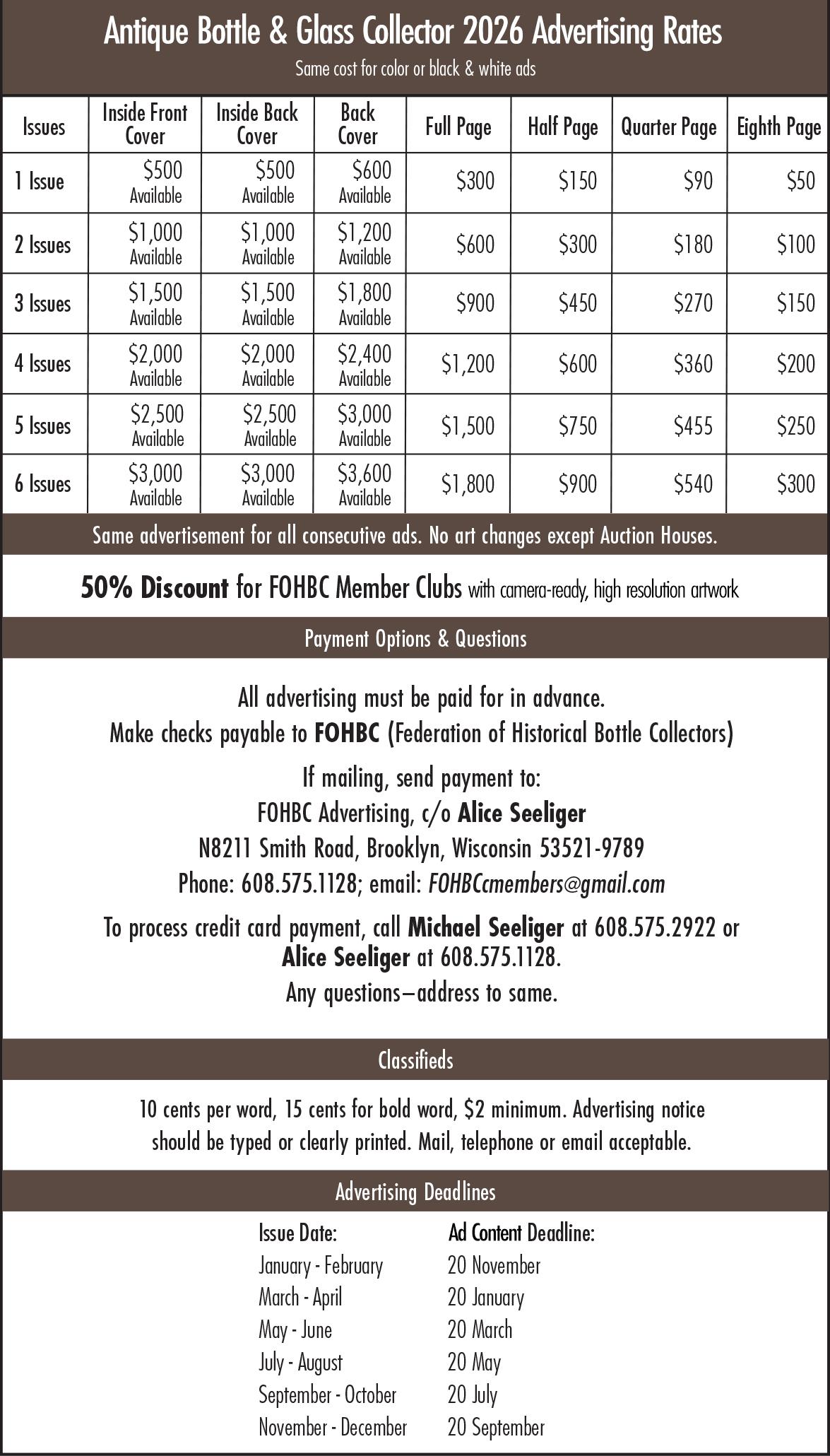
To Advertise, Subscribe or Renew a subscription, see pages 71 and 72 for details.
To submit an article, send a letter, or share comments, contact: Alice Seeliger, Editor N8211 Smith Road Brooklyn, WI 53521 phone: 608.575.1128 email: FOHBCmembers@gmail.com
Fair use notice: Some material in Antique Bottle & Glass Collector has been submitted for publication in this magazine and/or was originally published by the authors and is copyrighted. The Federation of Historical Bottle Collectors, Inc., a non-profit 501 (c)(3) educational organization, offers it here as an educational tool to increase further understanding and discussion of bottle collecting and related history. We believe this constitutes “fair use” of the copyrighted material as provided for in Section 107 of the U.S. Copyright Law. If you wish to use this material for purposes of your own that go beyond “fair use,” you must obtain permission from the copyright owner(s).
Postmaster: Send address changes to Federation of Historical Bottle Collectors, c/o Michael Seeliger, N8211 Smith Road, Brooklyn, WI 53521. Phone 608-5752922; email: fohbcmembers@gmail.com
Annual subscription rate is: $40 for Standard Mail or $65 for First Class (U.S. only). $25 for Digital Membership (in U.S. funds). Canada and Foreign Countries $25 Digital Membership only. Life Membership: Level 1: $1,000, Level 2: $500. The Federation of Historical Bottle Collectors, Inc. (FOHBC) assumes no responsibility for products and services advertised in this publication. See page 72 for details.
Printed by American Printing, Madison, Wisconsin. Visit us at: FOHBC.org & Facebook
FOHBC Board of Directors
The Federation of Historical Bottle Collectors is a non-profit organization, founded in 1969, for collectors of historical bottles, glass and related collectible items. Our primary goal is educational as it relates to the history and manufacture of historical bottles and related artifacts.
FOHBC Officers 2024–2026
President: Michael Seeliger, N8211 Smith Road, Brooklyn, Wisconsin 53521, phone: 608.575.2922, email: mwseeliger@gmail.com
Vice-President: Position Open
Secretary: Alice Seeliger, N8211 Smith Road, Brooklyn, Wisconsin 53521, phone: 608.575.1128, email: AliceSecretaryFOHBC@gmail.com
Director-at-Large: Matt Lacy, 3836 State Route 307 Austinburg, Ohio 44010, phone: 440-228-1873, email: mlacy28@yahoo.com
Director-at-Large: John O’Neill, 1805 Ralston Avenue, Belmont, California 94002, phone: 650.619.8209, email: Joneill@risk-strategies.com
Director-at-Large: Richard Siri, PO Box 3818, Santa Rosa, California 95402, phone: 707.542.6438, email: rtsiri@sbcglobal.net
Northeast Region Director: Charles Martin Jr., 5 John Hall Cartway, Yarmouth Port, Massachusetts 02675, phone: 781.248.8620, email: cemartinjr@comcast.net
Midwest Region Director: Henry Hecker, W298 S10655 Phantom Woods Road, Mukwonago, Wisconsin 53149, phone: 262.844.5751, email: phantomhah@gmail.com
Southern Region Director: Tom Lines, 1647 Olivia Way, Auburn, Alabama 36830, phone: 205.410.2191, email: Bluecrab1949@hotmail.com
Western Region Director: Eric McGuire, 1732 Inverness Drive, Petaluma, California 94954, phone: 707.481.9145, email: etmcguire@comcast.net
FOHBC Virtual Museum: FOHBCVirtualMuseum.org
Auction Price Report: Requires FOHBC membership, access through FOHBC.org
Facebook:
Federation of Historical Bottle Collectors
Antique Bottle & Glass Collector, the Official Publication of the Federation of Historical Bottle Collectors.
Publisher: The Federation of Historical Bottle Collectors, Inc.
Editor: Alice J. Seeliger, alicesecretaryFOHBC@gmail.com
Design / Layout: Michael George, earlyglass@gmail.com
Sales Manager: Alice J. Seeliger, alicesecretaryFOHBC@gmail.com
Digital Director/Webmaster: Doug Simms, dsimms@FOHBC.org
Social Media: Craig Cassetta, ccassettaFOHBC@gmail.com
Featured Writers: Mike Dickman, Andy Rapoza, Vern Huffstetler, Joan Cabaniss, Tim Adams, Eric McGuire, Michael George, Bob Strickhart, Jim Poole, Shaun Jeffery and Ralph Finch.
FOHBC (Federation of Historical Bottle Collectors) N8211 Smith Road Brooklyn, Wisconsin 53521-9789
General Contact: FOHBCmembers@gmail.com
Federation of Historical Bottle Collectors
President’s Message
Michael Seeliger
President
Spring brings so many bottle shows to the calendar that it’s a really exciting time! My schedule includes Grand Rapids, Kalamazoo, Baltimore, St. Louis, Rochester, and Mansfield. Make sure you stop by the FOHBC table and say hello.
So many things are going on with the Federation, it keeps us moving at a fast pace. We
FOHBC News
From & For Our Members
Seeking a Host for the 2028 FOHBC National Antique Bottle & Glass Exposition
The Federation of Historical Bottle Collectors (FOHBC) welcomes Regional Antique Bottle and Glass Clubs, Shows, Institutions, and Consortium Teams to submit proposals to host a future FOHBC National Antique Bottle Exposition in their region. The Expo is a collaborative effort between the Host and FOHBC, with FOHBC providing overall coordination, marketing, advertising, and financial support.
The Host helps shape the Expo by selecting the event theme and organizing the centerpiece Antique Bottle and Glass Show & Sale. Hosts may also suggest a convention logo, banquet speaker, seminar presenters, displays, optional activities, and a photographer. Host volunteers play a vital role in the Expo’s success and will be offered incentives in recognition of their efforts. In accordance with FOHBC Bylaws, the Expo is a multi-day event and must be held during the last ten days of July or the first ten days of August.
The Host Team is responsible for securing appropriate convention space, including a primary host hotel and a backup hotel. The Antique Bottle and Glass Show & Sale typically opens with early admission on Friday afternoon and General Admission on Saturday. The number of show days and the overall schedule are flexible, and the Host Team’s proposal should reflect regional preferences.
Letters of interest and questions may be submitted by November 1, 2026. Formal proposals are due by February 1, 2027 and should be addressed to FOHBC Board Member Craig Cassetta (ccassettafohbc@gmail.com). FOHBC reserves the right to accept or decline any proposal. We look forward to hearing from you and exploring the possibilities together.
Federation of Historical Bottle Collectors Slate of Officers Nominated for the July 2026 to July 2028 term
Nominations closed on April 1, 2026. The Nominating Committee presents the following slate. All positions serve in an unpaid, voluntary capacity.
President: Michael Seeliger
Vice President: Open
Secretary: Alice Seeliger
Treasurer: Kathie Craig
Business Manager: Open*
Membership Director: Open**
Marketing Director: Craig Cassetta
Special Projects Director: Doug Simms
Director at Large: Matt Lacy
Director at Large: John O’Neill
Director at Large: Richard Siri
Northeast Region Director: Charles Martin Jr.
Midwest Region Director: Henry Hecker
Southern Region Director: Richard Paananen
Western Region Director: Eric McGuire
*Alice Seeliger currently serves as Interim Business Manager (no compensation). The previous Business Manager was a paid position.
**Michael Seeliger currently serves as Interim Membership Director.
Electronic voting will take place in May/June.
Serving on the board is a rewarding and interesting way to contribute to the growth and enhancement of the premier organization for bottle clubs and collectors.
Nominating Committee: Craig Cassetta, Henry Hecker, Charlie Martin, Doug Simms. Contact information is on page 2 of this issue.
FOHBC Club and Member Recognition Program (formerly “Contest”)
The Federation is changing this program from being a contest where entrants submitted their work to a committee for review and selection. The new program will eliminate the need for self-nomination and burdensome application paperwork. This will also allow regular, annual recognition for outstanding work, even during years when no National event is held.
Beginning in 2026, the Board of Directors will review and vote on the selections made by a Recognition Committee who will review articles published in that year’s Antique Bottle & Glass Collector (“Most Educational” and “Most Entertaining”), club newsletters, show flyers, websites, and social media platforms.
Clubs should make sure their newsletters are sent to the Federation at FOHBC, N8211 Smith Road, Brooklyn, WI 53521, or electronically to: FOHBCMembers@gmail.com throughout the year. Show flyers will be reviewed on the FOHBC.org Show Calendar. Categories are:
- Most Educational Article
- Most Entertaining Article
- Best Club Newsletter
- Best Show Flyer
- Best Photograph
- Best Club or Member Website
- Best Club or Member Social Media
(Blog, Facebook, Instagram, etc.)
Federation members will have an opportunity to make their suggestions to the Recognition Committee through an on-line process at FOHBC.org. (Watch for more info on FOHBC.org.)
Since there is no National Event in 2026, the time period covered will be for the entire year. Awards will be announced in early 2027. Those selected for recognition will be presented with certificates either in person or by mail. Questions may be directed to FOHBCMembers@gmail.com or call 608-575-1128.
250th Anniversary of the Signing of the Declaration of Independence “A Semiquincentennial Celebration”
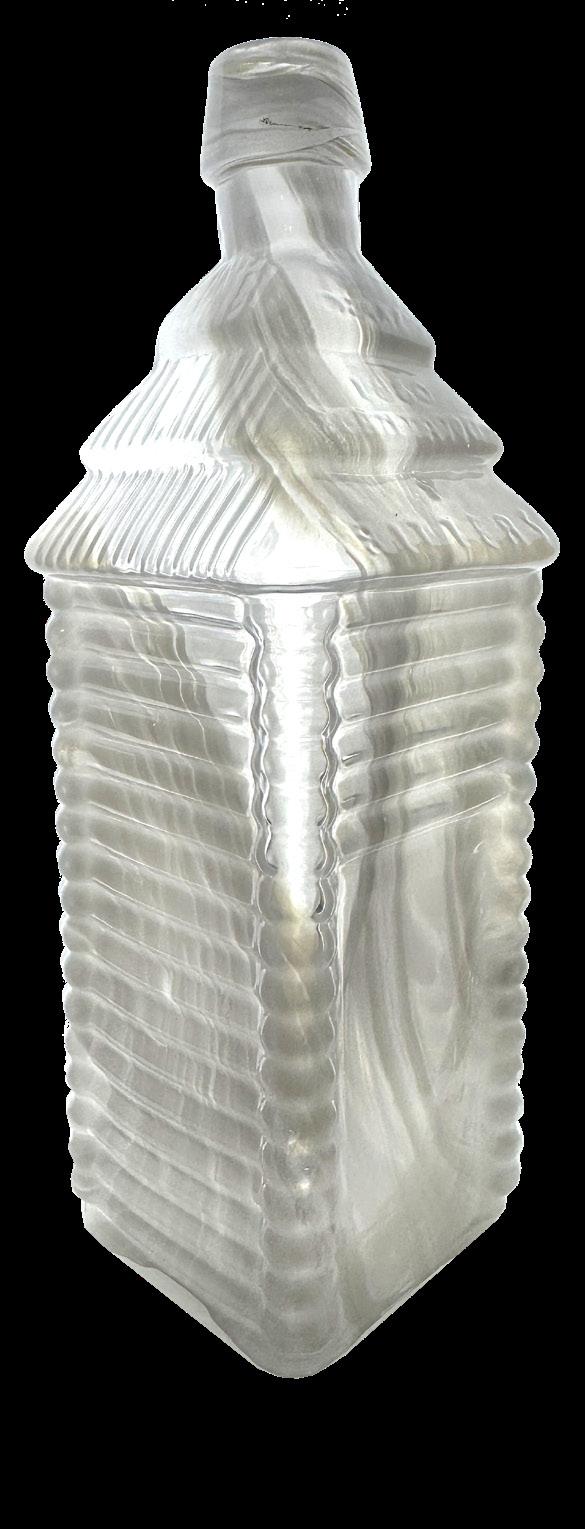
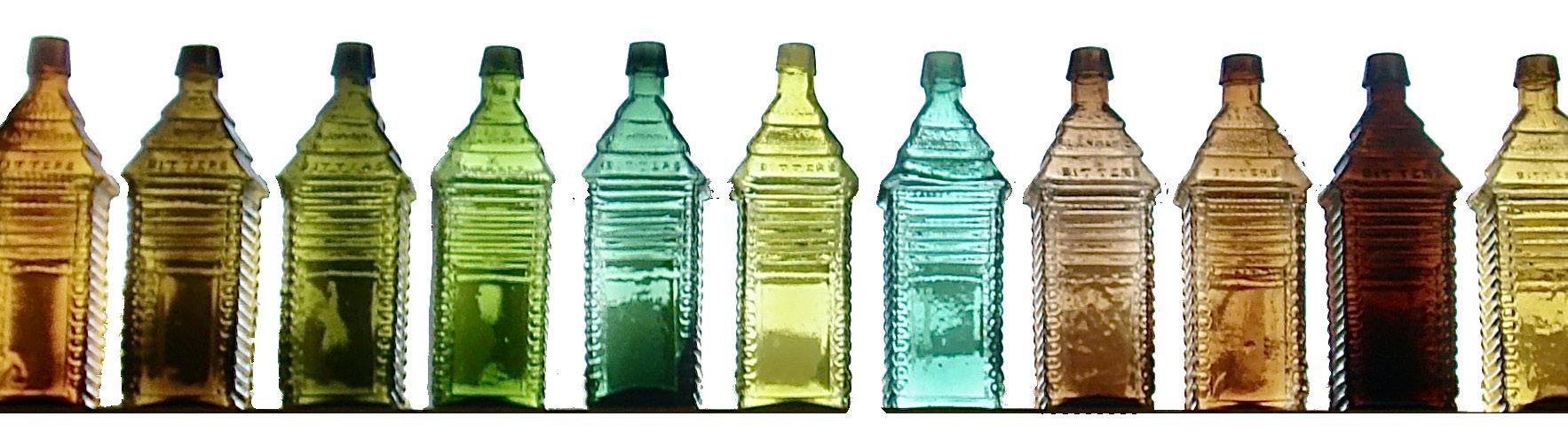
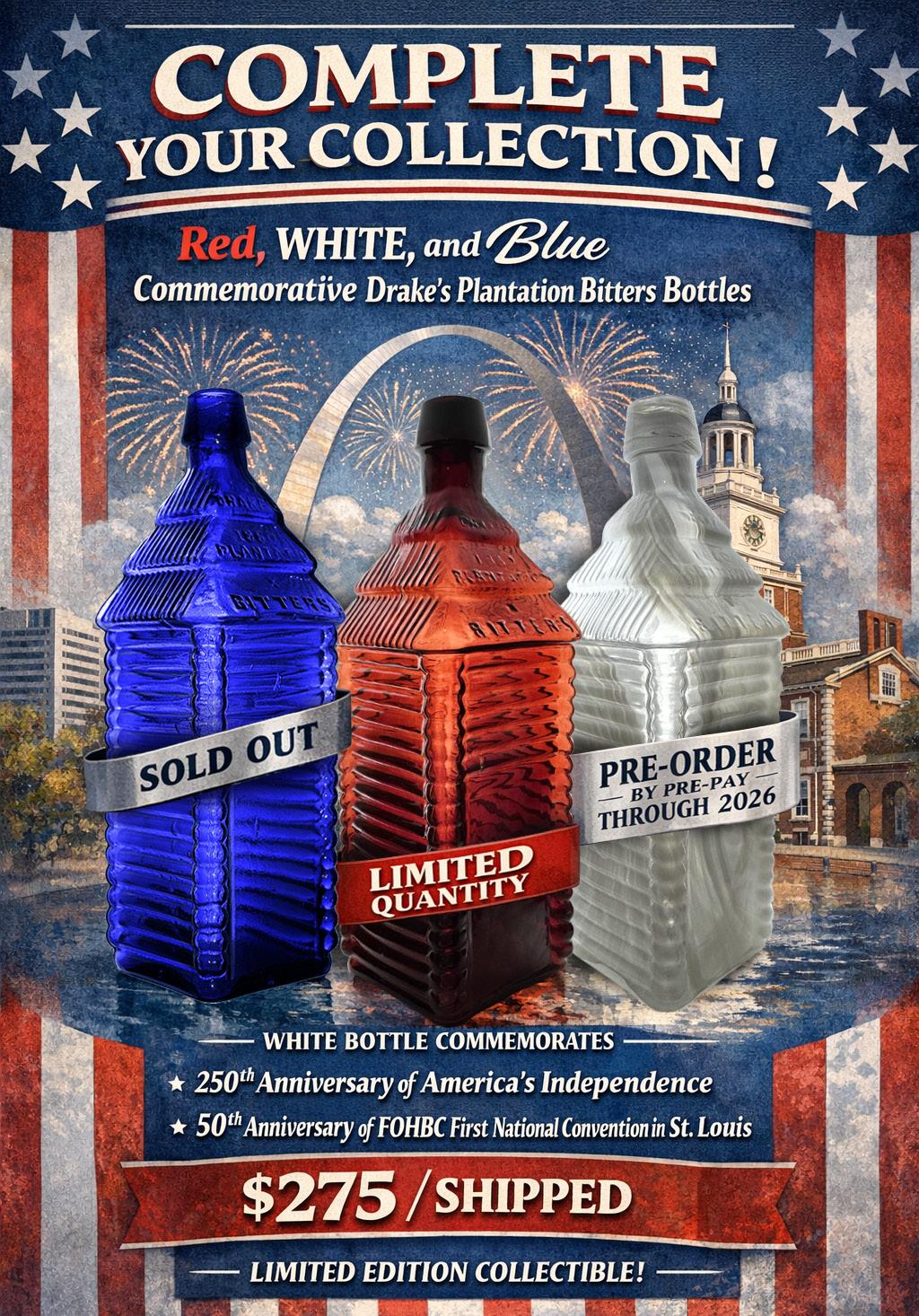
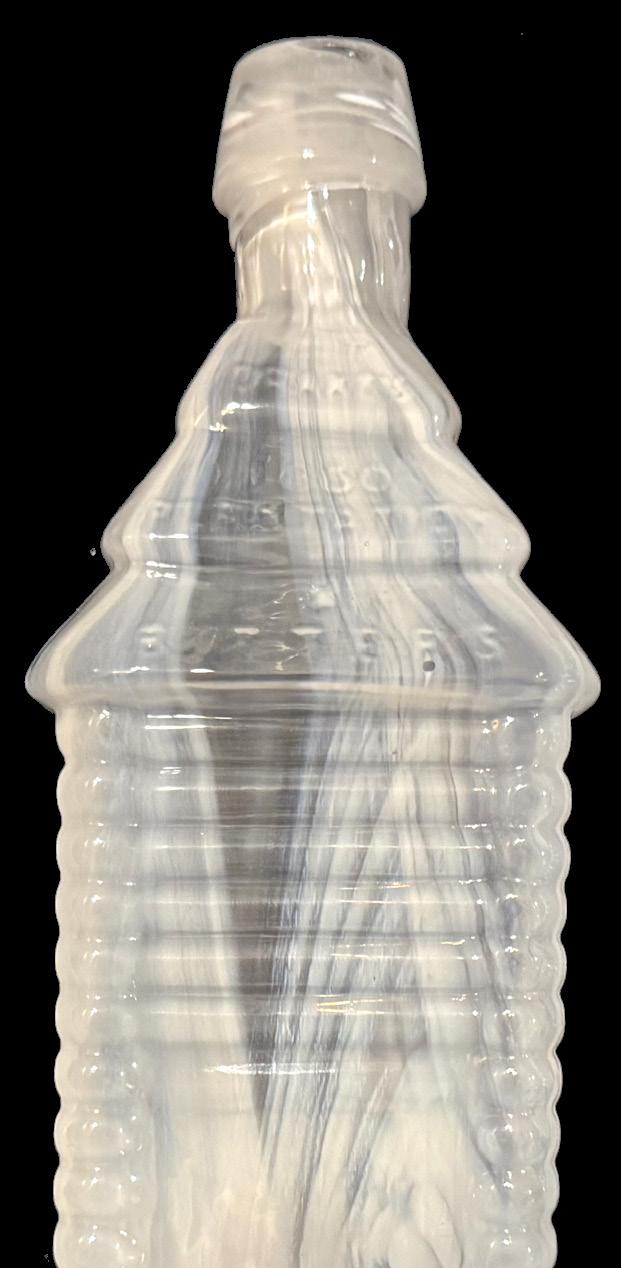
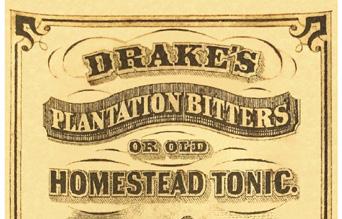
The Federation of Historical Bottle Collectors has commissioned glassblowers Treg Silkwood and Michael Craig to produce a limited quantity of white Drake’s Plantation Bitters bottles to complete the blue, red, and white run of this commemorative bottle.
Without a National Show in 2026, they will be produced to fill prepaid orders to be distributed beginning at the St. Louis 56th Annual Antique Bottle & Jar Show which is also the 50th Anniversary of the Federation’s first national event, the 1976 Bicentennial Expo. Labels commemorating the USA’s 250th Anniversary (Semiquincentennial) and the Federation’s 50th Anniversary of its first Expo are being designed and will be included with each bottle.
Those who purchased a blue or red Drake’s should have already received an invitation to add this commemorative bottle to their collection. The price remains the same at $250 for on-site pick up or $275 with shipping. We anticipate a run of approximately 70 bottles with prepaid orders accepted through 2026.
To place your order, contact Michael Seeliger at President@FOHBC.org or call 608.575.2922.
FOHBC Regional News
Southern Region Report –
Tom Lines
Daphne AL Bottle Show, March 20-21
Show Chairman Rod Vining had another sell-out show at the Daphne Civic Center this year with over 100 dealer tables. Dealers from Florida, Georgia, Mississippi, Louisiana and Texas joined Alabama dealers to provide a wide assortment of bottles, flasks, stoneware old and new, black glass and even an original Civil War musket was offered up by one dealer! Set up begins Friday afternoon at 2 and lasts through 6ish with typically plenty of action. Though an Early Buyer pass is not an offered option, whoever wants to come in and peruse the tables can do so. The Saturday portion cranks up at 7 AM and continues through 3 PM. The public attendance is generally quite strong from 9 AM through Noon but this year’s turnout was not quite as robust.
The show has become a reunion of friends as we all age. I find I talk more the older I get as many of the folks I see at the show only come to this show. Notable dealers in attendance included Charlie Livingston, Brian Hoblick, David Ward, Tony Wimmer, Ralph Green, Brian Commerton, Dennis Smith and a host of others.
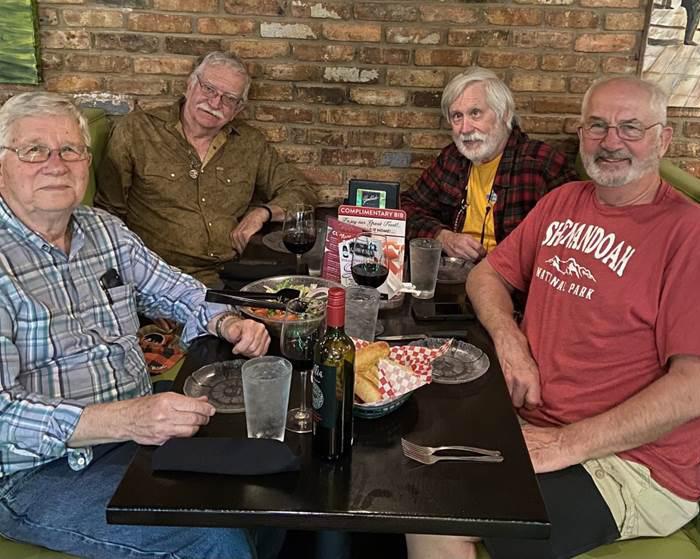
Another ritual that has been going on at this show is dinner at the Italian seafood restaurant Gambino’s for the four of us pictured, aka “The Aged Four.” (From L-R: Rick Messer, James Smith, Steve Holland and yours truly Tom Lines.)
The youngest is 74 and Rick is the oldest but he didn’t want to reveal his age. There is over 200 years of collective hobbyrelated knowledge represented in this group, including nearly 100 years of digging experiences. The restaurant is a few miles south of the show site but that hasn’t stopped us from eating together there for over 20 years now!
Thank you Rod for another fine show! Mark your calendars for March 19 and 20 for the 2027 show. I got a few days rest, then Friday I was off to the Baltimore Show. Take care all!
Midwest Region Report –
Henry Hecker
Muchof the Midwest was hit by blizzard conditions including sustained high winds of over 50 mph in March. Today as I write this, temperatures could exceed 70 degrees. Go figure, but spring must be close as the ground has thawed. Hallelujah! Soon bottles will be unearthed or retrieved from underwater.
This year we celebrate our Nation’s 250th anniversary of independence. But glass making in America goes back over 400 years. The Jamestown colonists attempted two glass-making ventures, one in 1608 and another about 1620. In England, glassmaking was being discouraged for lack of wood to heat the furnaces (coal-burning furnaces were not yet perfected) but in the new world there was an inexhaustible supply of fuel. Alas, those early ventures were short-lived but there are records that sample wares were shipped back to England for evaluation.
In the ensuing centuries, glass making has thrived in our country and many amazing vessels have been produced, from utilitarian to objet d’art…no more apparent than the displays at Houston ’24. This makes me wonder, “How much glass has been produced since 1608? And more importantly, where is all the old glass today?” The short answer is that most of it is still waiting to be discovered. For the last year I could find data (2018), 12.3 million tons of glass were produced in the U.S. About 33% of glass today is recycled, but in the 19th century some bottles were re-purposed by bottle jobbers or returned to the glass works for cullet. But not until the early 1900’s when return deposits became prevalent for beverage bottles, did recycling really take off. So, bottle collectors, have hope! There are still millions of tons of bottles to be found, many intact for sure!
The Detroit Metropolitan’s club newsletter reported an amazing find from Marko Tomko. From a river bottom came a Fatima cigarette sign, still very legible. That anaerobic mud sometimes preserves things amazingly well.
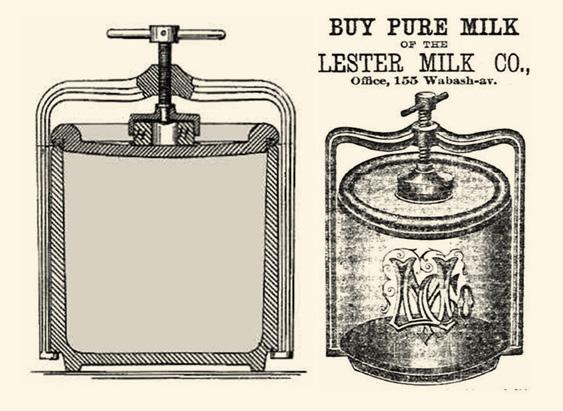
The Ohio Swirl for February contained an interesting article on the first patented milk container, the “Lester Milk Jar” by George Henry Lester in 1878.
The Milwaukee Club Show on February 1st drew 413 buyers with 83 of those for early buying. The club continues to thrive as a result of successful shows. President Michael Seeliger did table duty to represent FOHBC. On February 7th, the trio of Peter Maas, Michael Seeliger, and yours truly journeyed to Portage, Wisconsin to check out the winter version of this budding bottle show.
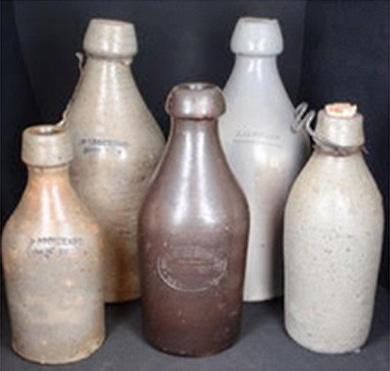
The Minneapolis Northstar club newsletter reported “Show & Tell” in the March edition highlighted by my favorite—this photo of a group of Minnesota pottery beer bottles, most of which were made in New Ulm, Minnesota in the third quarter of the 19th century.
Western Region Report –Eric McGuire
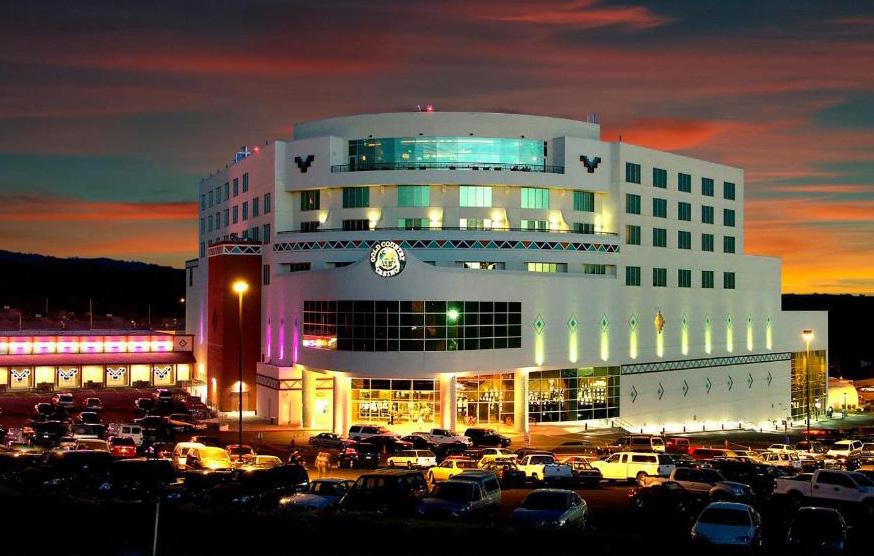
Afamiliarshow entered the scene this year at a new location. The former Chico (CA) show was moved to the Gold Country Casino-Hotel in Oroville, California on March 13 and 14. It was billed as the Chico-Oroville Show to maintain some recognition. Oroville is about 25 miles from Chico.
Steve Gresham has taken over production of this show from Randy Taylor who hosted the Chico show for nearly as long as I can remember. Randy should be applauded for his dedication through many years of service to Western bottle collectors. Steve did a wonderful job with his first bottle show, with only some minor hiccups related to signage. That is an easy fix for next time. There was no “early bird entry fee,” which essentially meant that it was more difficult to regulate the early crowd. They could more easily enter at the same time as the dealer set-up time of 8 am, instead of at the opening time of 9 am. There also was no entry fee.
Overall, I heard of no big issues with the show. In fact, there were numerous Facebook posts from those who attended praising the show and showing off purchases made. Seems a lot of people left the show very happy with what they found.
We will be looking forward to this new venue for future shows.
(Photo: Gold Country Casino-Hotel, Oroville, CA)
FOHBC Regional News
Northeast Region Report –
Charlie Martin, Jr.
Inmy previous article I asked you, our readers, to let me know what was the “it” bottle that got you hooked on collecting antique bottles. To date, one individual has stepped forward and sent me his “it” bottle story. A second individual has allowed us to share his recollection of a “blue fruit jar” story. I trust you will enjoy them as much as I did. For the rest of you that have a story to tell, please be kind enough to share it with your fellow collec tors. Who doesn’t love a great story? My contact information is provided in every issue of Antique Bottle & Glass Collector, on the FOHBC Board of Directors page at the beginning of each issue.
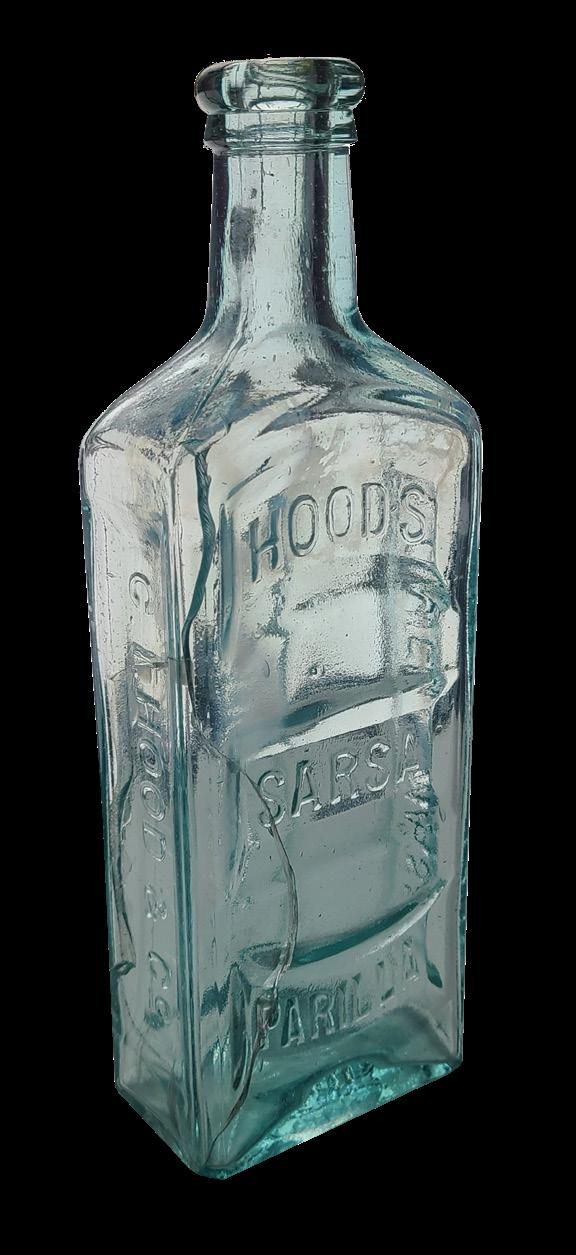
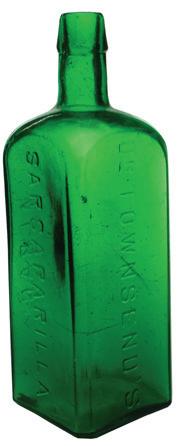
Dennis Sasseville writes, “Attached is my first collectable bottle. As you can see, it is cracked and far from mint condition. Plus, it, of course, is one of the most common patent medicine bottles you can find in any antique store or flea market, But it’s been with me on moves from New Hampshire to Massachusetts to Maine to Newfoundland, back to Massachusetts and (since 1976), back to the Granite State.
I don’t think we actually spent much time at that site, but I pulled out the Hood’s Sarsaparilla bottle. My first treasure!”
I wish to thank Dennis for sharing his “it” bottle story. I look forward to hearing from others in the Northeast Region about their first bottle experience.
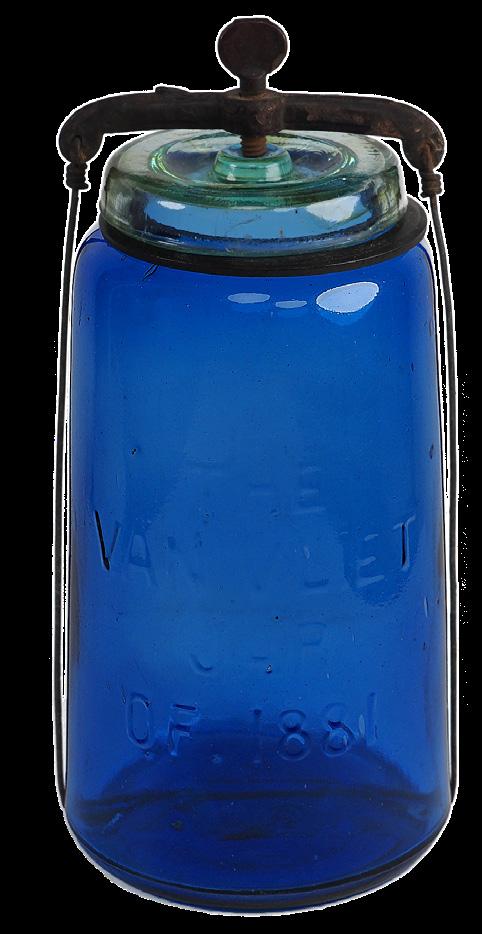
Another story I thought you might enjoy as well comes from John DeVolder, (President of the Genesee Valley Bottle Collectors Association, from Rochester, NY.) He wanted to share with our readership a story he remembers of “blue fruit jars.” John wrote, “The big news in the hobby centered on the cobalt Van Vliet jar that was found in Pennsylvania a short time ago. This jar was one of a kind; most likely made by a glass blower for a family member. How it escaped being known for so long is anybody’s guess. But here it is, being promoted by all factions of the bottle and jar worlds. The big day arrived and the jar was sold for $43,000. (I thought it would bring more!)”
What makes this bottle a keeper? I was an undergrad geology student at the University of New Hampshire in the late 1960’s and one day happened to strike up a conversation with a fellow student in that department, the first time I think I ever spoke with him. Somehow the conversation turned to bottle hunting and he captured my attention by his story-telling of his local adventures in finding glass treasures. I was captivated and he offered to take me out bottle hunting. We soon found ourselves parked along a back road just a few miles from campus. My new-found friend explained that in New England you could often find family bottle dumps on the other side of stone walls near former homesteads. We hiked up over a small embankment to a series of stone walls and in no time at all discovered a bottle dump under leaves and light soil.
Another from John: “This story reminded me of another jar story from 50 years ago. A local auctioneer was selling the collection of a Lyon’s man who had collected local memorabilia for years, including a one-of-a-kind cobalt fruit jar. Same story that it was made by a glass blower’s family member. The selling of the jar was promoted as best it could have been 50 years ago. Within our club, which was much, much larger back then, were two men who wanted to add the jar to their collection. Floyd Johnson collected and was a historian of Clyde glass. Dick Vanderlaan had collected firearms, but his interests now centered on fruit jars. (Dick even prepared for the auction by selling many of his guns.) I was in the gallery that day when two men went head-to-head. Dick won the jar for $3200.”
“Wow !” How time flies and prices change. Thank you, John, for sharing that great story.
Until next time, happy bottle collecting!
American Poison Bottles
THE ARROW POISON
The Arrow Poison
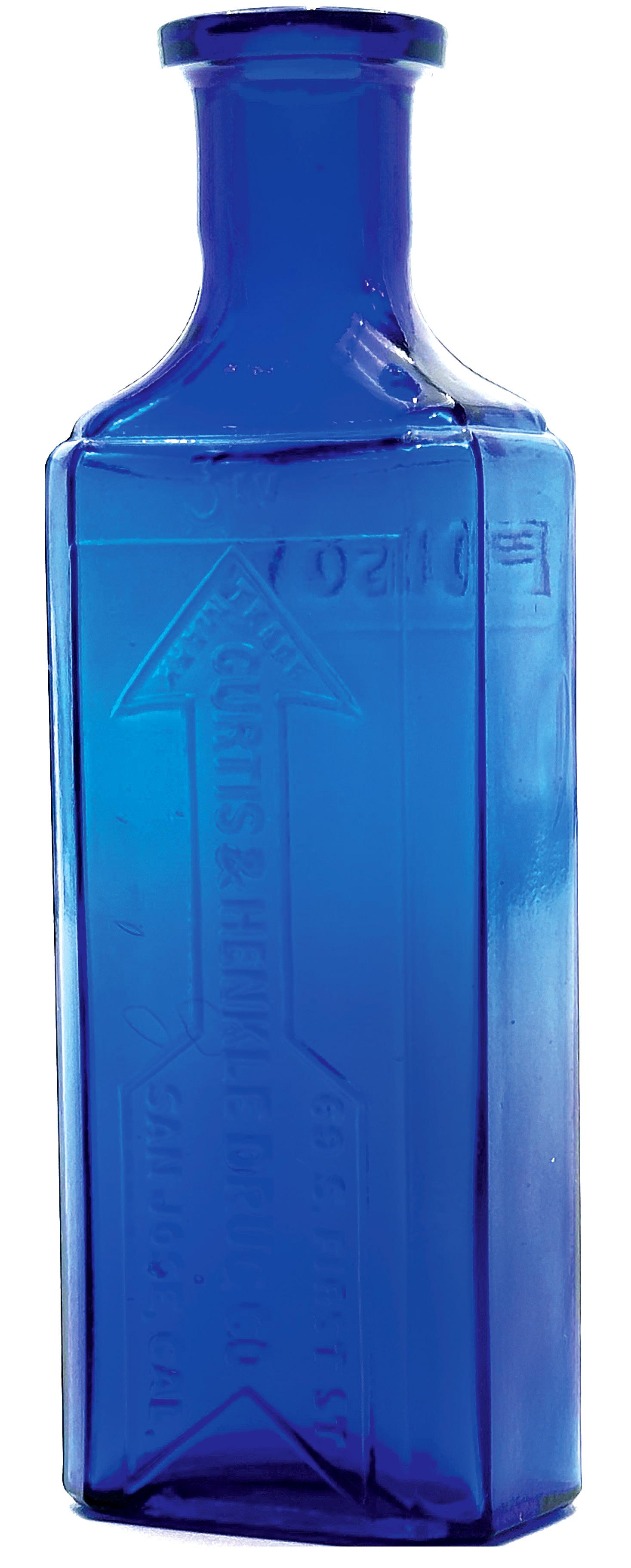
Frank D. Curtis (1875-1952) and Raymond E. Henkle (1879-1956) graduated from the University of California School of Pharmacy in 1902. Both men had attended other colleges prior to this program and after graduation worked for a couple of years in San Francisco pharmacies. In 1904, they teamed up to open the Curtis and Henkle Drug Company in San Jose, California. Frank Curtis served as president and Raymond Henkle served as secretary and treasurer. Mr. Curtis and Mr. Henkle were both active in the community and Retail Pharmacy Association. Located at 69 South First Street, their store became a well-known establishment in the state of California.
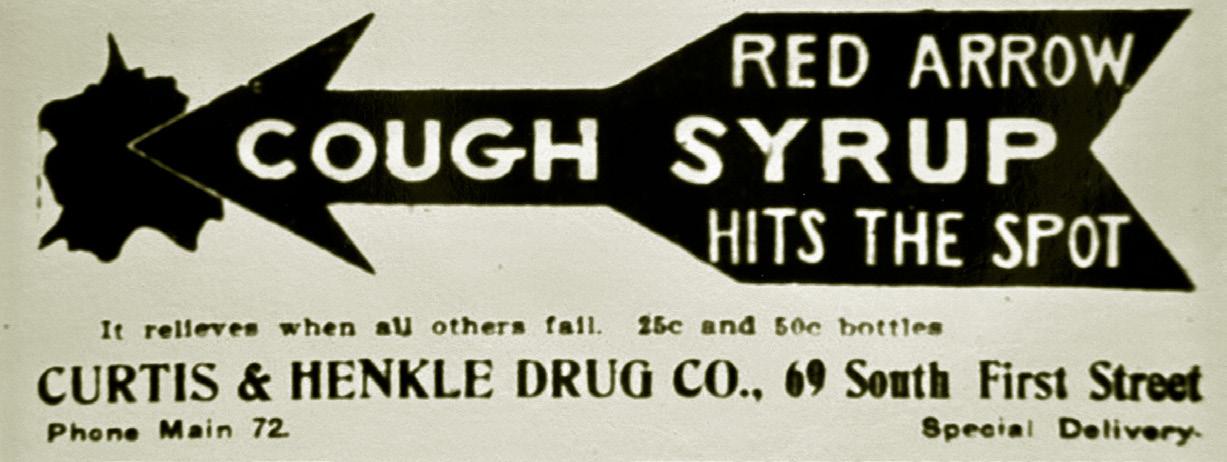
1908 Advertising in the San Jose Mercury
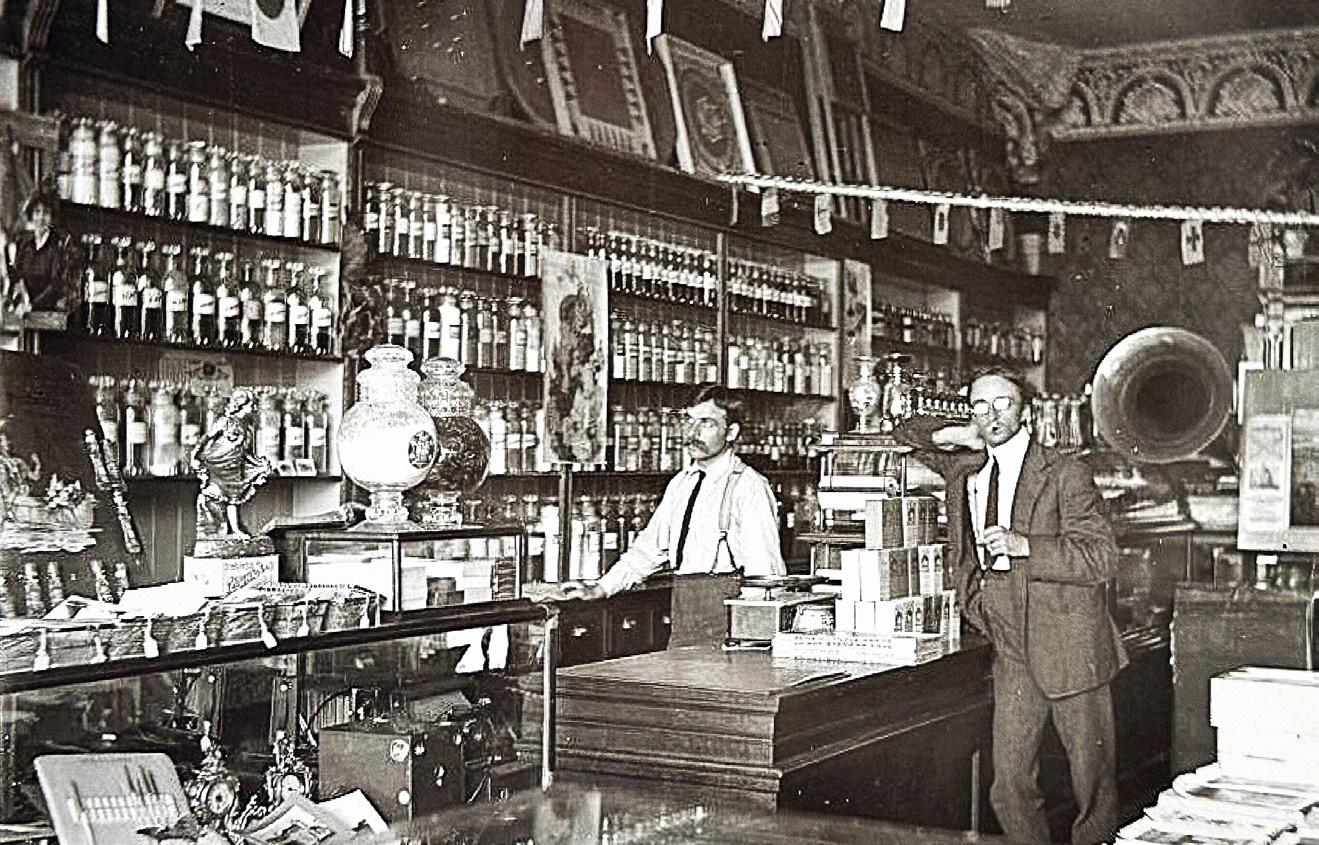
History of San Jose interior photo of a San Jose pharmacy in 1905. Curtis and Henkle had exclusive rights to sell Edison talking machines like the one in the photo and their age is appropriate. Since Frank Curtis was president and Raymond Henkle was secretary and treasurer, my bet is Mr. Curtis is in the suit.
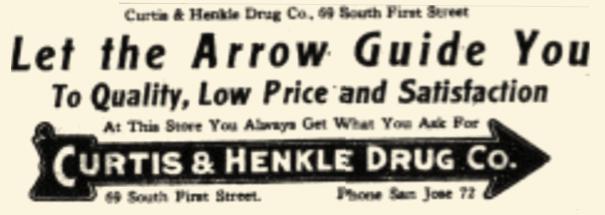
The Arrow:
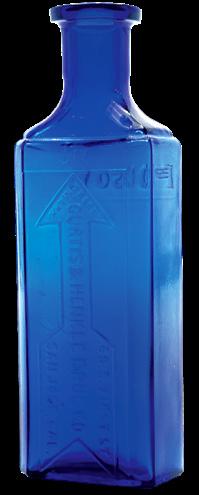
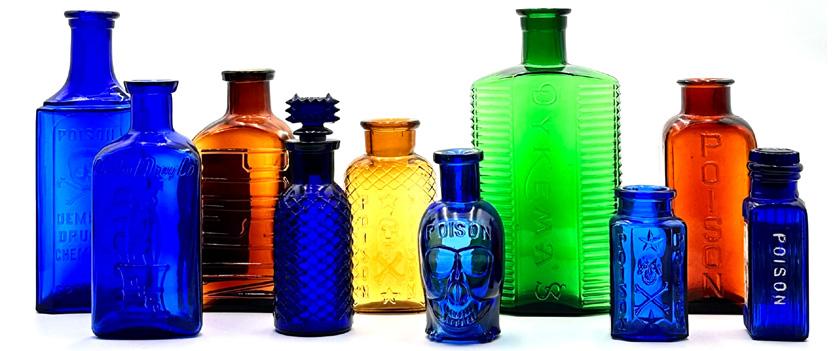
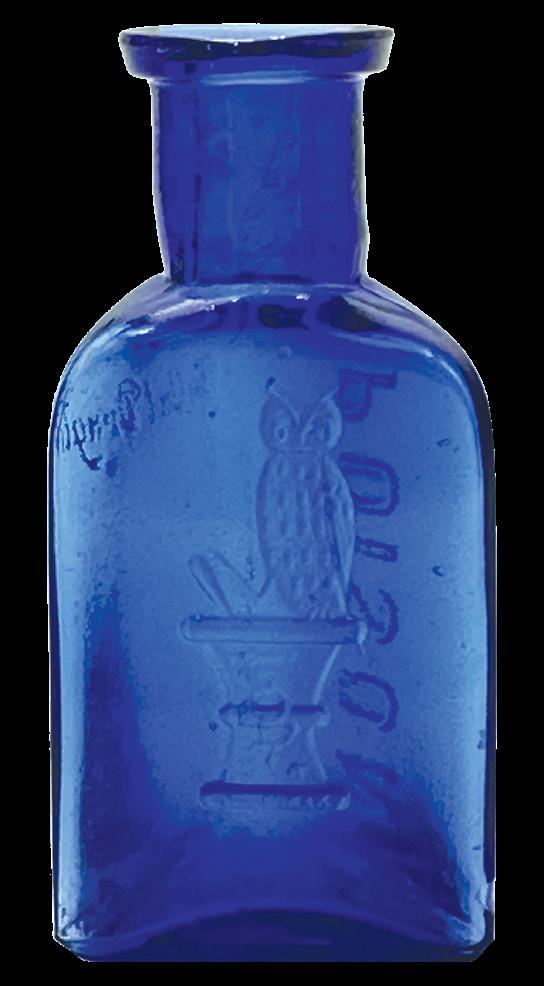
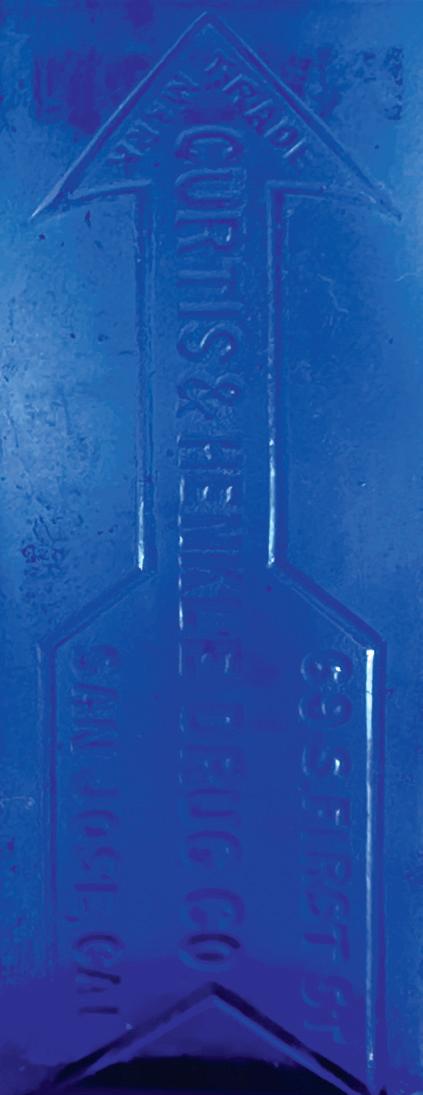
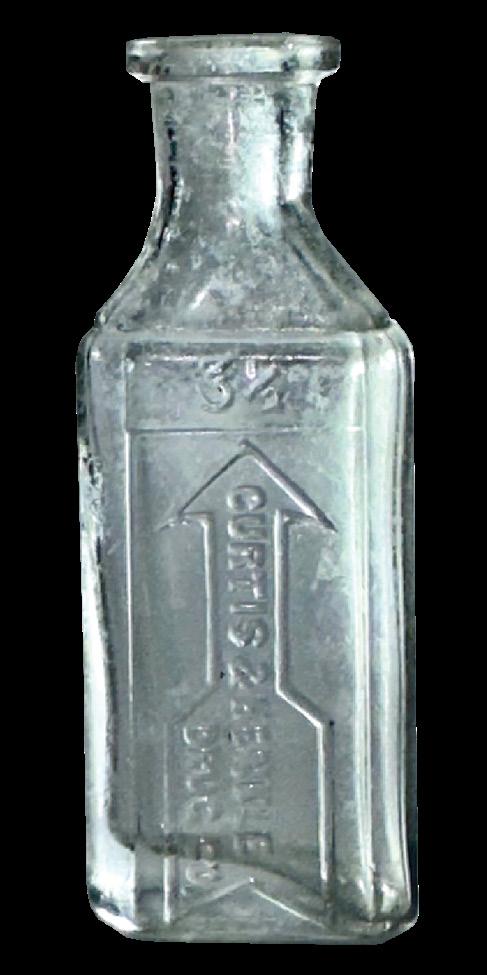
Curtis and Henkle Drug Co. utilized their trademarked arrow logo in frequent advertising, product names, and custom pharmacy bottles. They contracted the Carr Lowrey Glass Company of Baltimore, MD to produce clear bottles for prescriptions to be taken internally and cobalt blue bottles with POISON embossed on the back to hold prescriptions for external use. These bottles were likely created to stay current with the Owl Drug Company. Their external products were dispensed with red labels on triangular bottles embossed with the owl logo and POISON. As a smaller operation, the Curtis and Henkle Drug Company bottles are rare and highly desirable.
SOURCES:
- Find A Grave
- History of San Jose
- California College of Pharmacy
Alumni Directory 1903
- San Jose Mercury News - Apr. 18, 1908, p. 12, Feb. 5, 1910, p. 3, Oct. 24, 1913
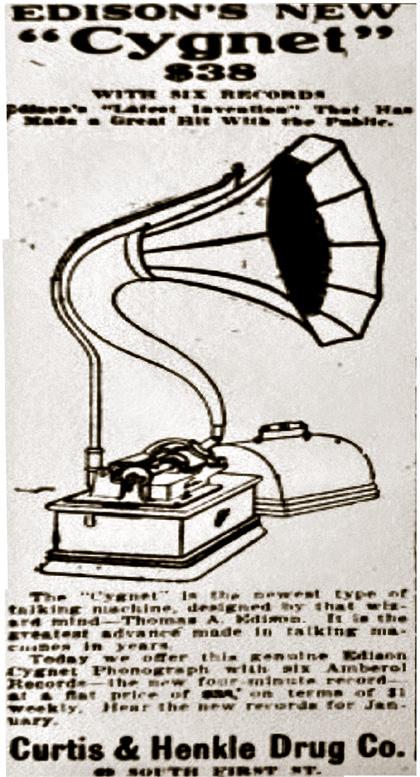
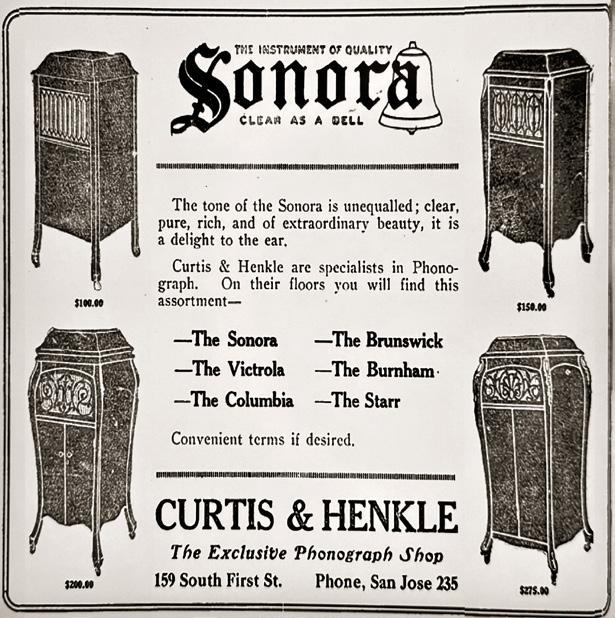
Curtis and Henkle had exclusive rights to market the Edison Talking Machine in San Jose. They must have done well with this enterprise because in 1916 they sold the pharmacy to The Owl Drug Company and started the Curtis and Henkle Talking Machine Company at 159 South First Street. The business was dissolved at the end of 1919, and both returned to the pharmaceutical trade. In 1919, Raymond Henkle joined G. A. Kirk to purchase the Saratoga Pharmacy in Saratoga, California. In 1929, Frank Curtis purchased The Big Tree Pharmacy in Santa Cruz, California. Could they have utilized custom poison bottles for their new locations? We will remain hopeful and stay on the hunt for new discoveries.
Your Poison Bottle Team
Foreground: Vern Huffstetler is a mechanical engineer, collector, author, photographer, and artist. He contributed significantly to writing the American Poison Bottles book, magazine articles, and three webinars on poison bottles.
Back Left: Joan Cabaniss is the “Queen of Poisons.” She served as the long-time president of the Antique Poison Bottle Collectors Association. The May 2005 issue of National Geographic featured Joan and her collection in “Pick Your Poison.” In 2014, Joan and her collection were featured in Virginia Living magazine. The FOHBC Virtual Museum includes her impressive poison bottle collection. Joan coauthored the Poison Bottle Workbook, American Poison Bottles, and our magazine articles.
- N.A.R.D. Journal – 1916, p. 768, 1919, p. 648
- Sunsweet Standard – August 1919 p. 6
- History of Santa Clara County: Biographical Eugene Taylor Sawyer, 1922, p. 1209
- Western Confectioner – Sept. 1929, p. 90
- The Pharmaceutical Era – Sept. 1929, p. 277
- 19th Century San Jose in A Bottle – Torbin Gilman
Back Right: Tim Adams’ knowledge of the bottle hobby is extensive. His memory of who has what rare poison is phenomenal. He volunteers his time often ministering and supporting his community with catered chicken charity events. Tim is coauthor of the Poison Bottle Workbook, American Poison Bottles, and multiple magazine articles.
See display ad to purchase “American Poison Bottles.”
1913 Advertising in the San Jose Mercury
1910 Advertising in the San Jose Mercury
1913 Advertising in the San Jose Mercury
FOHBC Affiliated Clubs
American Poison Bottles
The American Poison Bottles book is an in-depth study of American poison bottles in use from 1872 to 1944, the glass houses that manufactured these bottles and the companies that used them to distribute their products as well as the drug stores that ordered custom poison bottles. The book is an accumulation of 50 years of knowledge shared by collectors in the APBCA (Antique Poison Bottle Collectors Association) newsletters, bottle magazine articles, company histories and other sources in the public domain. It features 90 photo-quality pages of beautiful poison bottle images from top collections, 171 pages of history and fantastic images documenting the people and companies involved, as well as 25 pages of auction prices realized for these bottles. We used high-quality, acid-free paper and a photo-quality printer so the book will last a lifetime. American Poison Bottles is a bargain at $75 Shipping: Media Mailer $10 or Priority Box $20
108 Ridgecrest Road Midland Valley Subdivision Graniteville, SC 29829
We accept Cash, Check, and PayPal
~ Remember to request your Certificate of Insurance at least a month before your show by emailing John O’Neill at JONeill@risk-strategies.com
~ Request display award ribbons at least one month before your show at FOHBCmembers@gmail.com
~ Send your club news to your regional director who provides their reports for each issue. They are here to help clubs in their region, so take advantage of their expertise. Add them to your newsletter mailing or email list.
~ Send your show flyer to FOHBCmembers@gmail.com as soon as it is produced so it can be included in show listings in AB&GC, on the FOHBC.org Show Calendar, and posted on Facebook.
~ Add FOHBC to your newsletter mailing or electronic distribution at N8211 Smith Road, Brooklyn, WI 53521 or FOHBCmembers@gmail.com
~ Participate in a fundraiser for your club with Exposition books for door prizes, raffles, or awards. Find out about the program by emailing FOHBCmembers@gmail.com
Affiliated Club renewals are due by May 1. See page 72.
ACL
CORNER #22
[Mike Dickman]
Aswe’ve seen in these articles, applied color labels (ACLs) were an American invention and began replacing paper labels in 1934. As the technology improved and the cost per bottle dropped, their use spread throughout the United States. Ultimately, an astonishing variety of ACLs was created for the thousands of American soda brands that existed back then, until ACLs themselves were supplanted by plastic bottles in the early 1980s. Many ACLs featured quintessentially local themes.
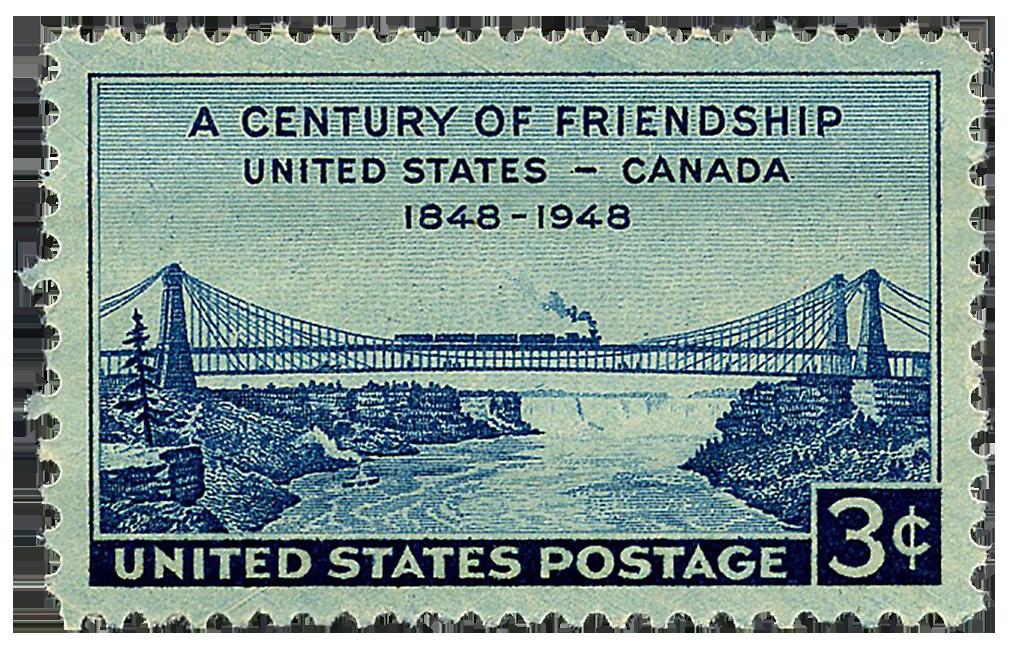
Soon after ACLs appeared here, Canadian bottlers began using them, too. That’s not surprising, since Canada and the USA share the longest land border in the world and are culturally and economically intertwined. One particular region of Canada, Northern Ontario, produced a number of especially interesting, local-themed ACL soda bottles.
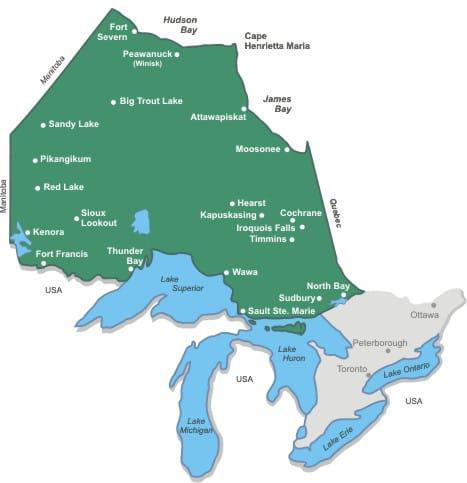
Ontario is the most populous of Canada’s ten provinces. It is divided into two distinct regions: Southern Ontario, which is home to Canada’s largest city (Toronto) and its capital (Ottawa), and Northern Ontario, which is the subject of this article. Northern Ontario contains 90% of the province’s land mass but just 5% of its population, in a huge area almost the size of Germany and France combined. Northern Ontario is mountainous, heavily forested and has hundreds of miles of lakes, rivers and streams. Its primary economic activities are mining, lumbering and tourism focused on hunting, fishing and the great outdoors. Possibly because the geography resembles Finland, Finns started emigrating to Northern Ontario in the 1870s, and the region today has the largest Finnish population outside of Finland.
Northern Ontarians in general and the Finns in particular developed a fondness for bottled pop. Local companies began bottling flavored soda water as early as 1875, and the Coca Cola Company awarded its first Northern Ontario franchise in 1908. By the time of ACLs, there were bottlers scattered throughout the vast region, bottling national brands like Coke, Pepsi and Seven Up and also producing their own local “house brands.”
Nipigon was one such town. Located on Nipigon Bay near the north shore of Lake Superior, Nipigon’s population was less than 2,000 in the 1950s and had a thriving logging industry amid the forests that surrounded the town. The Nipigon Bottling Works was founded in 1912 by a Finn named Tommy Laurila, who obtained a contract to make, bottle and
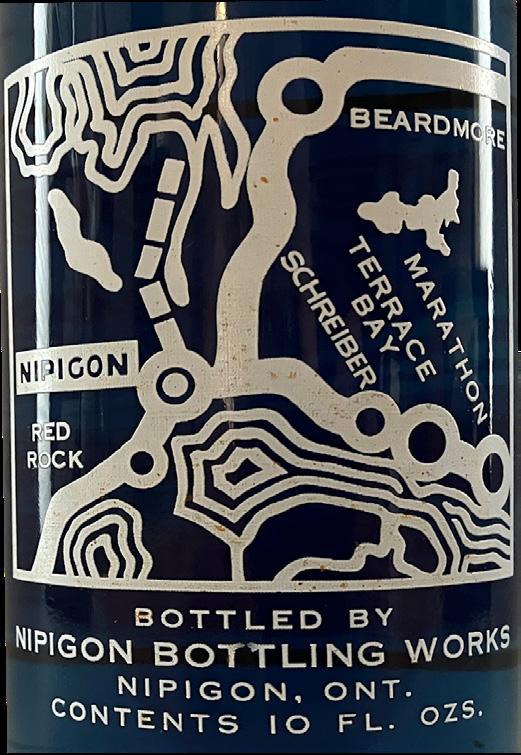
FIG. 2: Back of a Nipigon Beverages bottle showing a map of the area in which it was sold
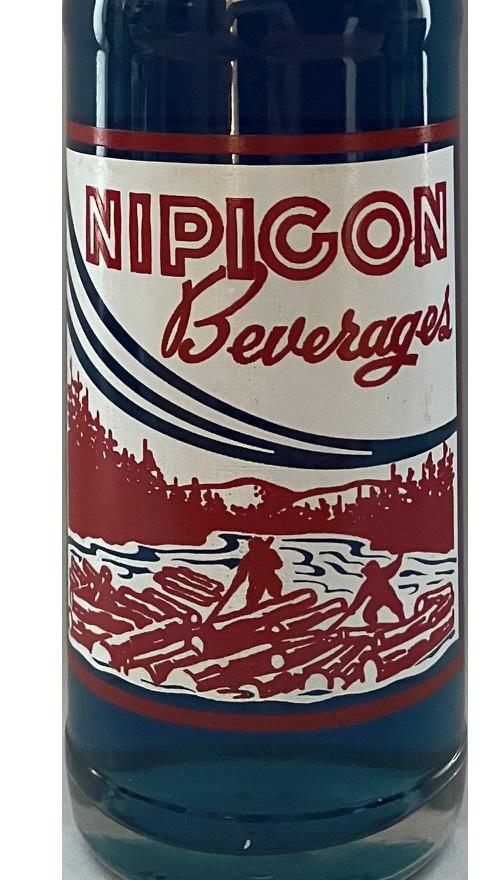
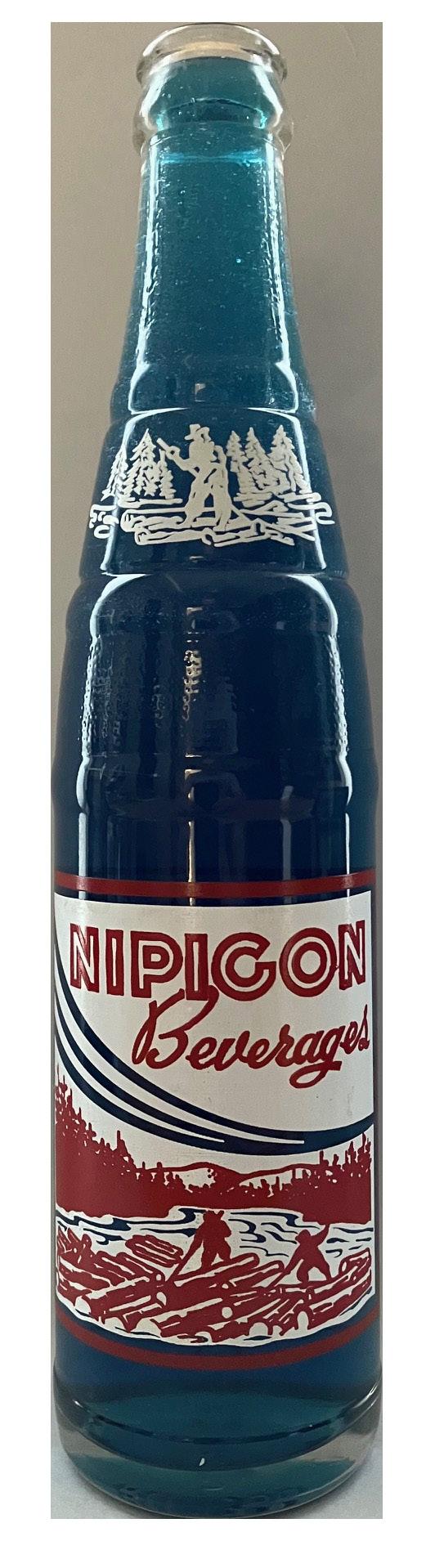
distribute Coca Cola. He and his son, Toivo, delivered the bottles using a hand-drawn sleigh during the winter months. In 1953, the company started a house brand called Nipigon Beverages, utilizing a red-onwhite ACL depicting two loggers during a river drive. A white neck label portrays a lone logger standing on a log, while the back of the bottle has a stylized map of the area. [FIGS. 1 and 2] When Coke came out with the competing flavors of Fanta and Sprite in the early 1960s, the company was forced to discontinue its house brand. Today, collectible Nipigon Beverages bottles, like most Northern Ontario brands, are hard to find. A mint example purchased from a Northern Ontario collector in 2025 cost $150 (helped by the strength of the United States versus Canadian dollars), although a whopping $65 tariff was added to the postage!
Another small town in Northern Ontario with a soda bottler was Geraldton, located about a hundred miles northeast of Nipigon. Geraldton was incorporated in 1937 after rich veins of gold
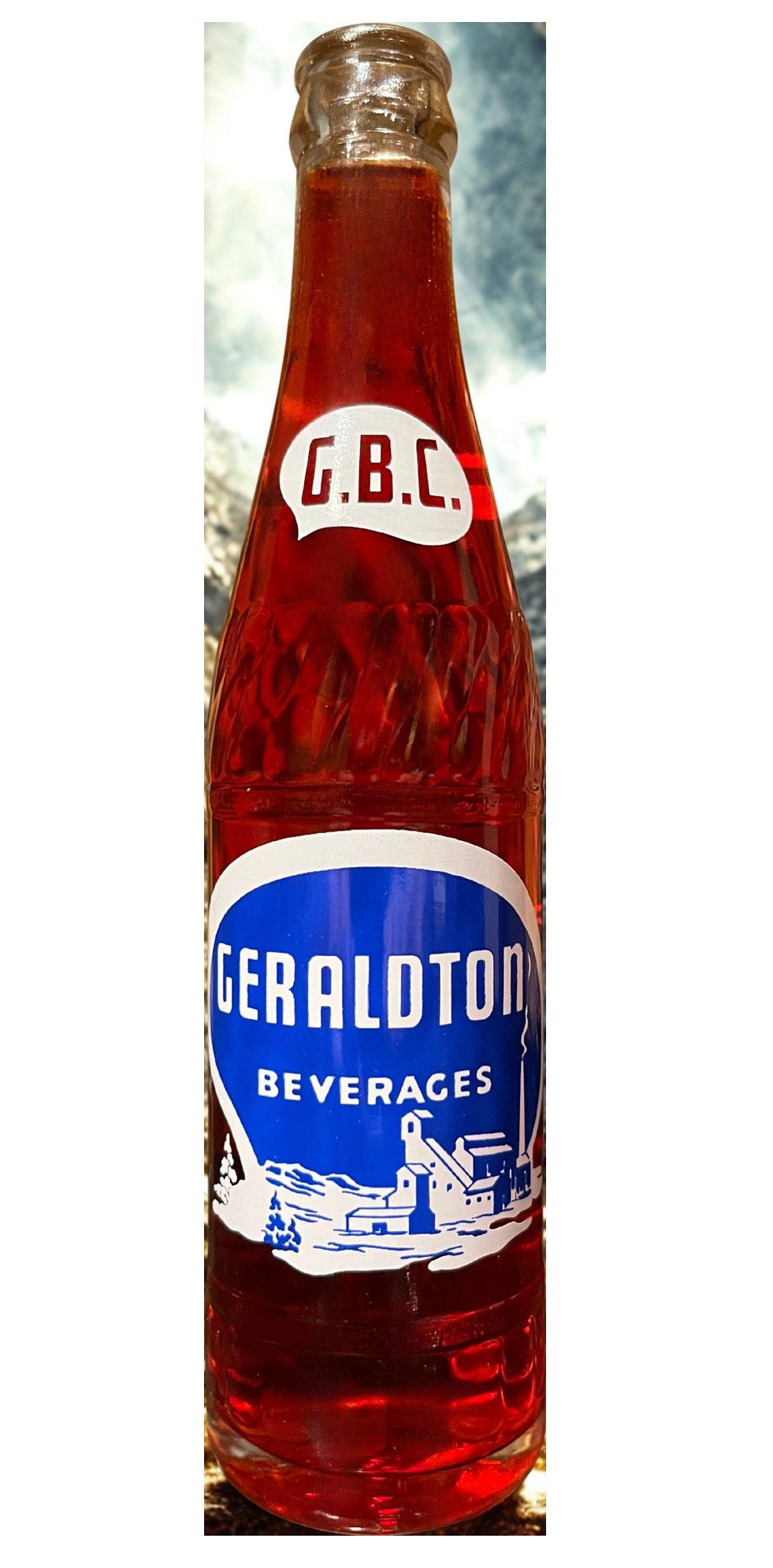
were discovered in the area. The Geraldton Bottling Company started around that time and bottled 7-Up, Pepsi-Cola and Crush under contract. Brothers Joe and Mike Odusko bought the company in 1953 and introduced a 10-ounce house brand called Geraldton Beverages. The soda came in only two flavors, strawberry and white cream, and was sold in the surrounding towns and resorts as well as at the many local gold mines. The blue-andwhite front ACL for the bottle was designed by Mike, and depicted a mine hoist building. [FIG. 3] The brothers closed the business in 1970. Today, the attractive bottles are hard to find and I was unable to document a single recent
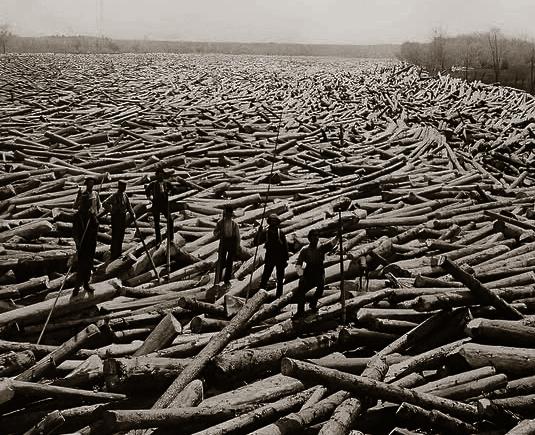
Log drive, circa 1907. Log driving was a grueling, highly skilled and often dangerous method of transporting lumber from the forests to the sawmills, using river currents. The practice died out after railroads and highways became more commonplace in Northern Ontario.
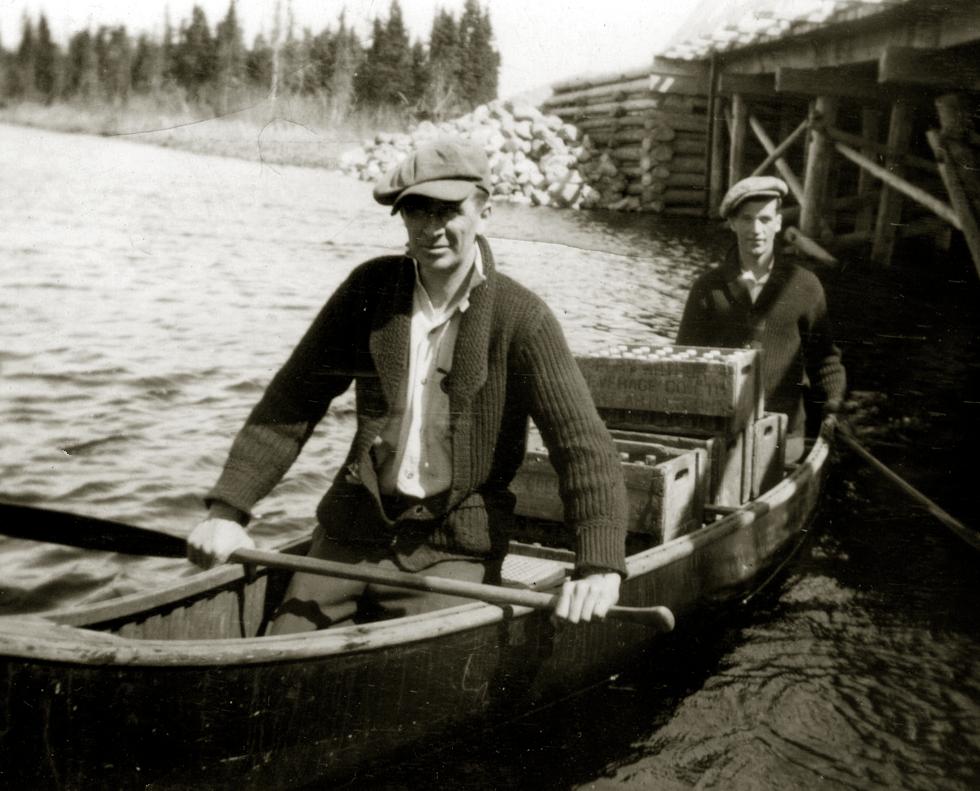
Delivering cartons of soda pop by canoe on the Savanne River, 1935, before there were many roads in Northern Ontario. Photo courtesy of Thunder Bay Museum.
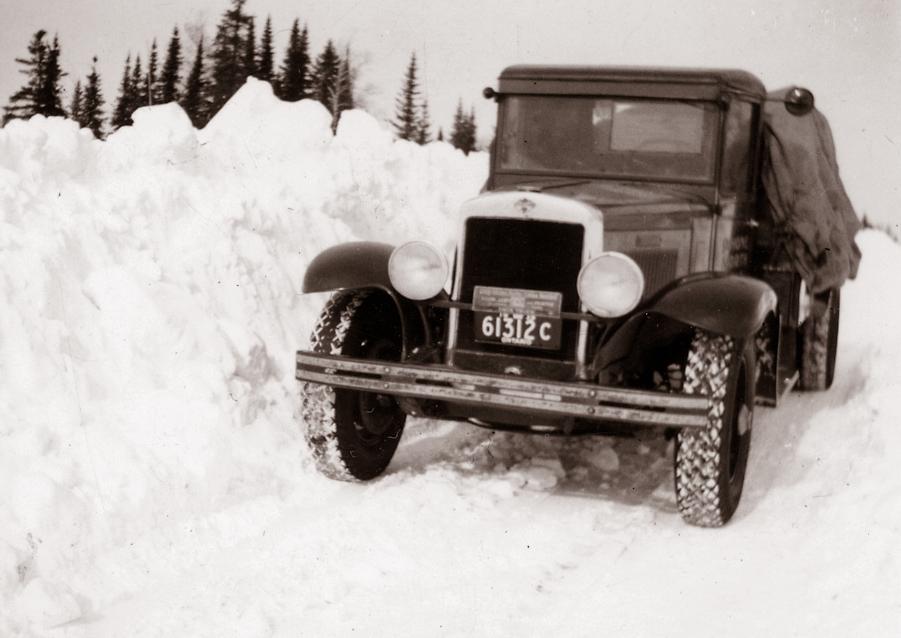
Delivery truck filled with crates of soda bottles, Kakabeka Falls, Northern Ontario, 1940. Until the 1930s, deliveries during the winter months were often made using horse-drawn sleds. Photo courtesy of Thunder Bay Museum.
FIG. 3: Geraldton Beverages, Geraldton, Northern Ontario, Canada, 1953. Photo courtesy of Anna Vaporis
Lake ACL soda bottles are very rare today, with only about two dozen known to exist. Again, I found no record of any recent sale of the bottle.
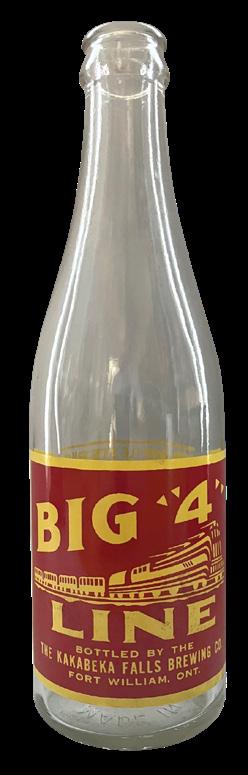
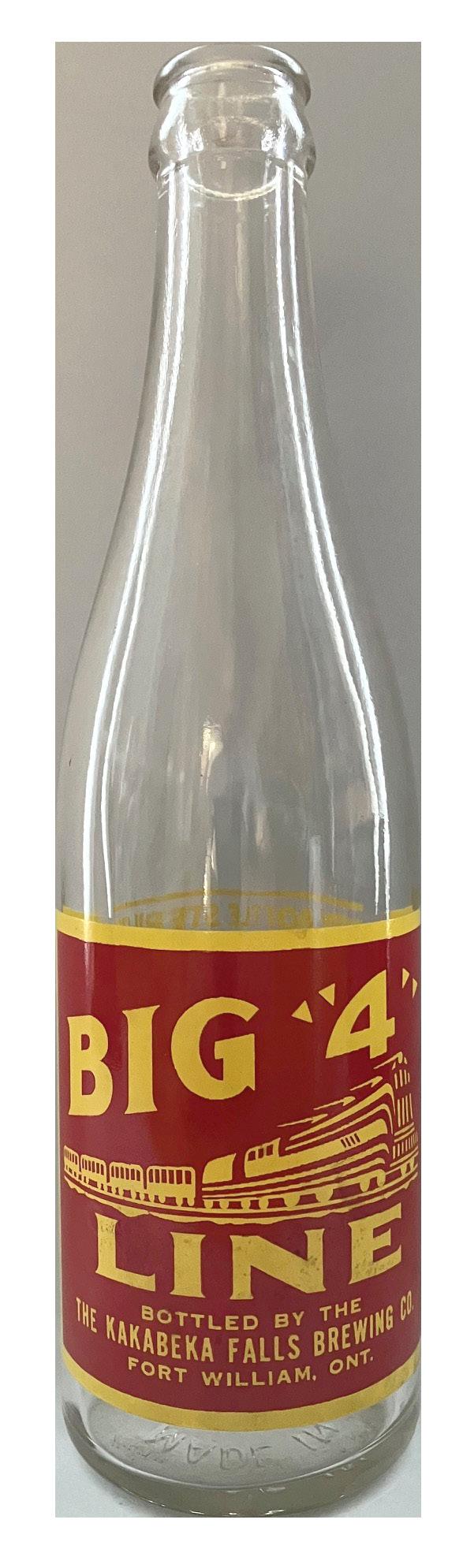
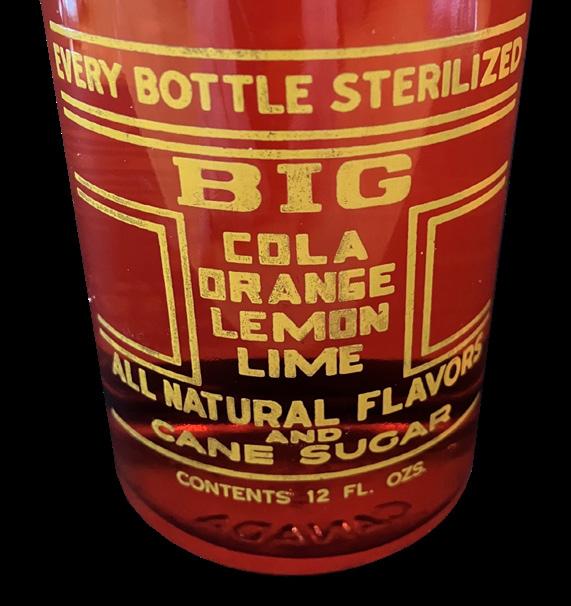
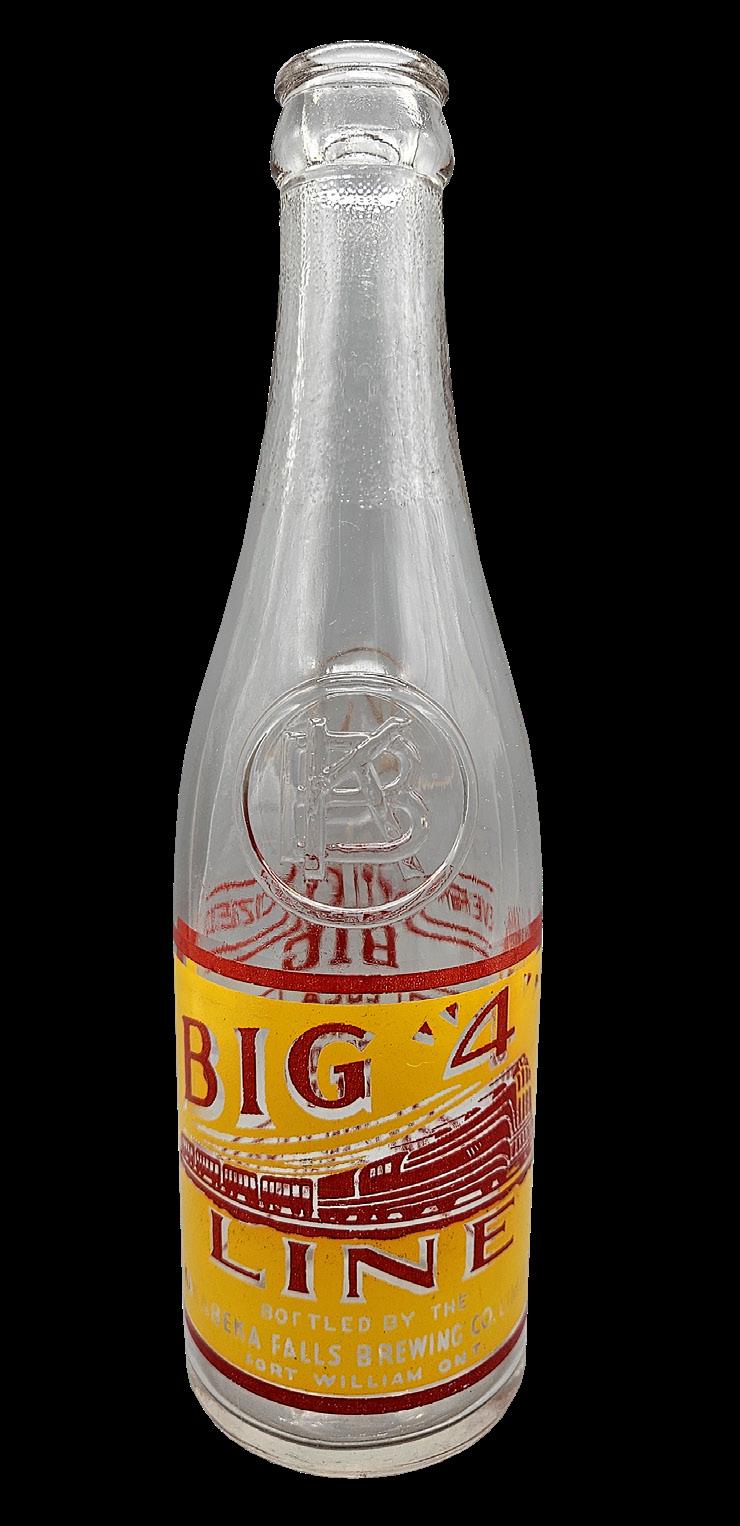
The Kakabeka Falls Brewing Company of Fort William in Northern Ontario brewed beer but started producing soft drinks during provincial prohibition, and continued to do so after prohibition ended in 1927. The brewer introduced a soda called Big “4” Line in 1939, using a yellow-and-red ACL depicting a speeding steam locomotive pulling four passenger cars. [FIGS. 5, 6 and 7] A bottle of pop cost a nickel, and the “Big Four” in the name referred to the four different flavors in which the soft drink was available:
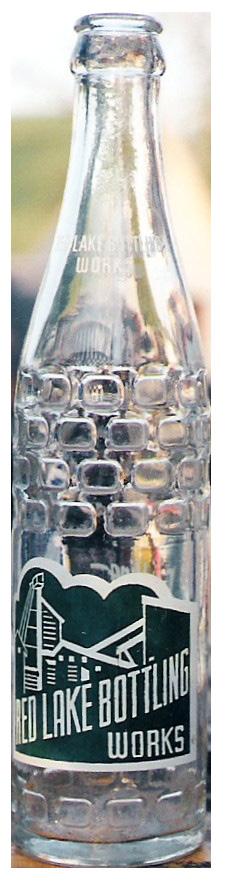
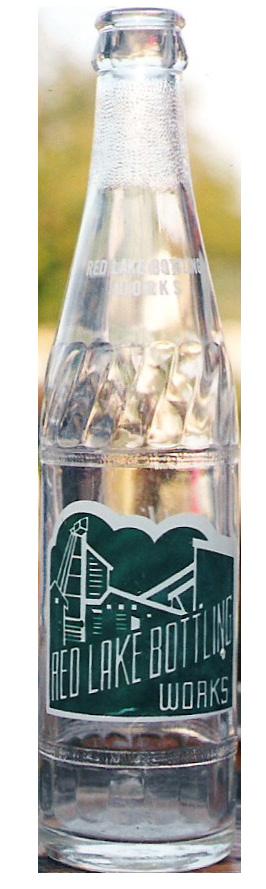
Another Northern Ontario bottler was located in the remote, isolated little town of Red Lake, about 300 miles north of the Canada-United States border. The town owes its fame to the hills filled with gold-bearing quartz, discovered during the 1920s. The Red Lake Mine, in fact, still produces the world’s richest grade of ore, containing two troy ounces of gold per ton. To quench the thirst of the miners and residents, a Finn named Bert Lovli started the Red Lake Bottling Works in 1938. The company produced an exceptional soda pop using water pumped from deep artesian wells and then filtered through sand, gravel and charcoal. Lovli introduced ACLs in 1955, using a green-and-white label depicting a mine headframe. [FIG. 4] The Red
FIG. 4: Two variants of the Red Lake Bottling Works soda bottles, Red Lake, Northern Ontario, 1955. Photo courtesy of Thunder Bay Museum
FIG. 5: Big “4” Line, Fort William, Northern Ontario, Canada, 1939
FIG. 6: Back of a Big “4” Line bottle. The brand died when its key ingredient (cane sugar) was rationed during WW II.
FIG 7: A rare variant of the Big “4” Line bottle, with the ACL colors reversed. Photo courtesy of Tom Petitt
cola, orange, lemon, or lime. The rationing of sugar during World War II, however, killed the brand just two years after it started. Like the others discussed in this article, Big “4” Line bottles today are tough to find in any condition.
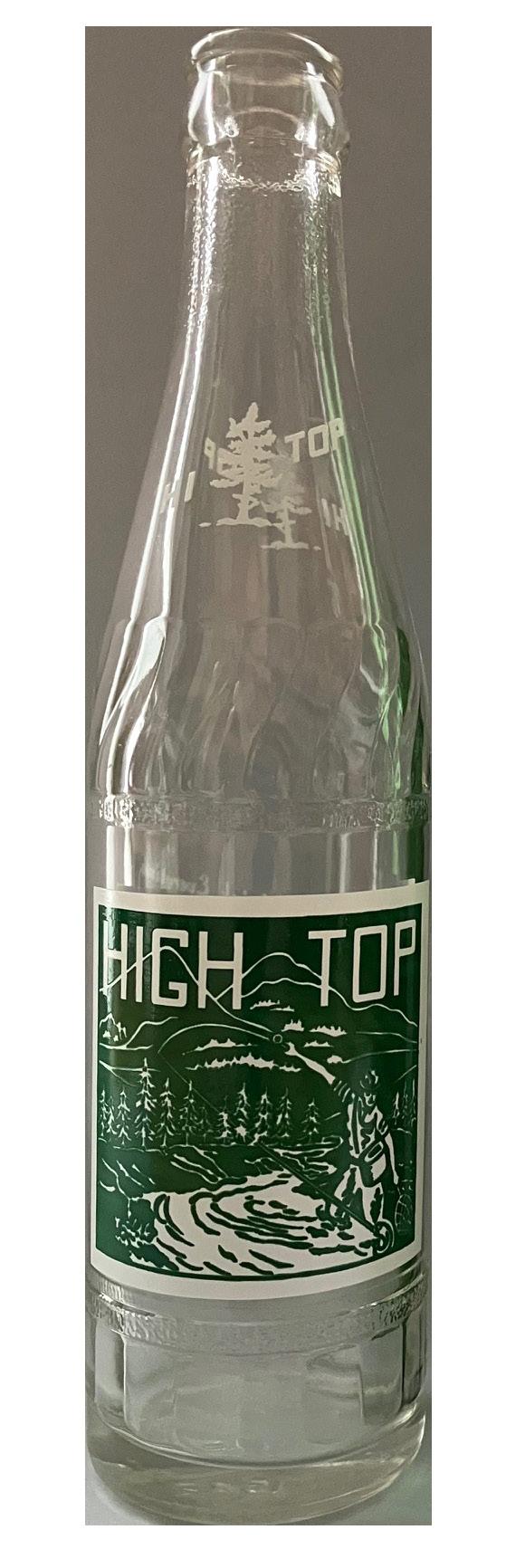
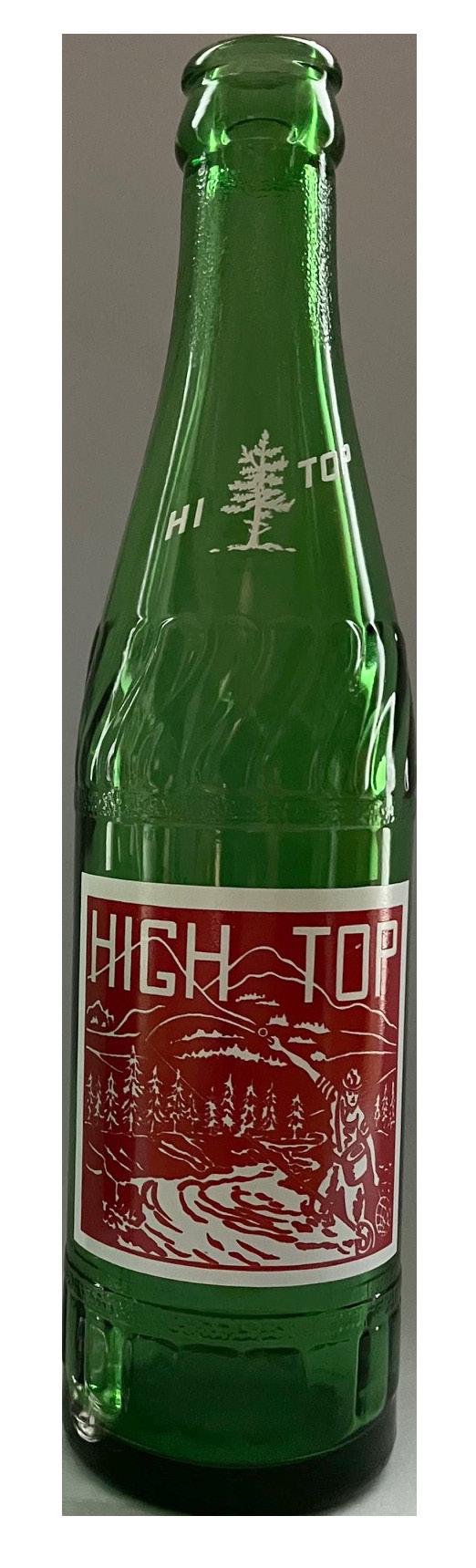
Finally, High Top was bottled in Fort Frances, a small city directly across the Rainy River that serves as the Canada-United States border. Its sister city of International Falls, Minnesota, is located on the American side of the river, and is known as “The Icebox of the United States” for its long, frigid winters. The Royal Beverages Company produced the ACL soda bottle in 1953, depicting an angler in hightopped wading boots casting into the Rainy River. [FIG. 8] Fort Frances hosts a well-known smallmouth bass fishing contest every year. Of the bottles discussed in this article, High Top bottles in clear glass are probably the easiest to obtain, although not common. Green glass examples, on the other hand (which contained ginger ale), are exceedingly rare.
BIBLIOGRAPHY:
Pettit, Wayne, “The History of Soda Pop Manufacturers in Northwest Ontario and the Bottles They Used” (Thunder Bay Museum, 2011)
The Painted Soda Bottle Collectors Association website contains a wealth of information about ACL soda bottles including hundreds of photos, recent prices and an archive of all ACL Corner articles. www.PSBCA.org
Sweeney, Rick, “Collecting Applied Color Label Soda Bottles” (3d ed. 2002, PSBCA)
VintageSodaCollector.com by FOHBC member Tom Pettit, a great resource containing hundreds of color photographs as well as interesting, useful articles about all things ACL
“Weide’s Soda Page” (ca-yd.com), by FOHBC members Chris and Catherine Weide, is another outstanding, useful resource for ACL soda bottles. The Weide’s collection contains 22,000+ ACLs, and Chris frequently provides information for these articles.
Wikipedia.com
Province of Ontario, Canada, with Northern Ontario in green and Southern Ontario in gray. Many of the towns mentioned in this article are too small to be depicted on the map.
FIG. 8: The two High Top bottle variants, Fort Frances, Northern Ontario, Canada, 1953
God bless America, and long live our friendship with our neighbor and ally to the north!
Mike Dickman lives in Santa Fe, NM where he has collected bottles for thirty years. He’s been a member of the FOHBC since 1997. His collection includes figural bitters, poisons, blob-top sodas and colognes. About five years ago, Mike’s passion unexpectedly turned to ACL sodas and he wrote “The Joy of Collecting ACL Soda Bottles” for the September-October 2022 issue of AB&GC. His “ACL Corner” column started running in the following issue. He welcomes comments, questions and suggestions at mikedickman@yahoo.com
Fascinating Historical Healing Methods Unveiled
By Andrew Rapoza
Imagine stepping into a time machine and landing in a 19th-century New England apothecary. The air is thick with the scent of herbs, tinctures, and something faintly medicinal–perhaps a hint of camphor or eucalyptus. Healing was an art, a blend of science, superstition, and a dash of hope. Today, I invite you to wander with me through the corridors of time, exploring some of the most fascinating historical healing methods that shaped the way people cared for their bodies and souls.
The Art and Science of Historical Healing Methods
Back in the day, healing was as much about ritual as it was about remedy. Before the advent of modern pharmaceuticals, people relied on nature’s bounty and a fair share of imagination. From herbal concoctions to bloodletting, the methods were diverse, sometimes
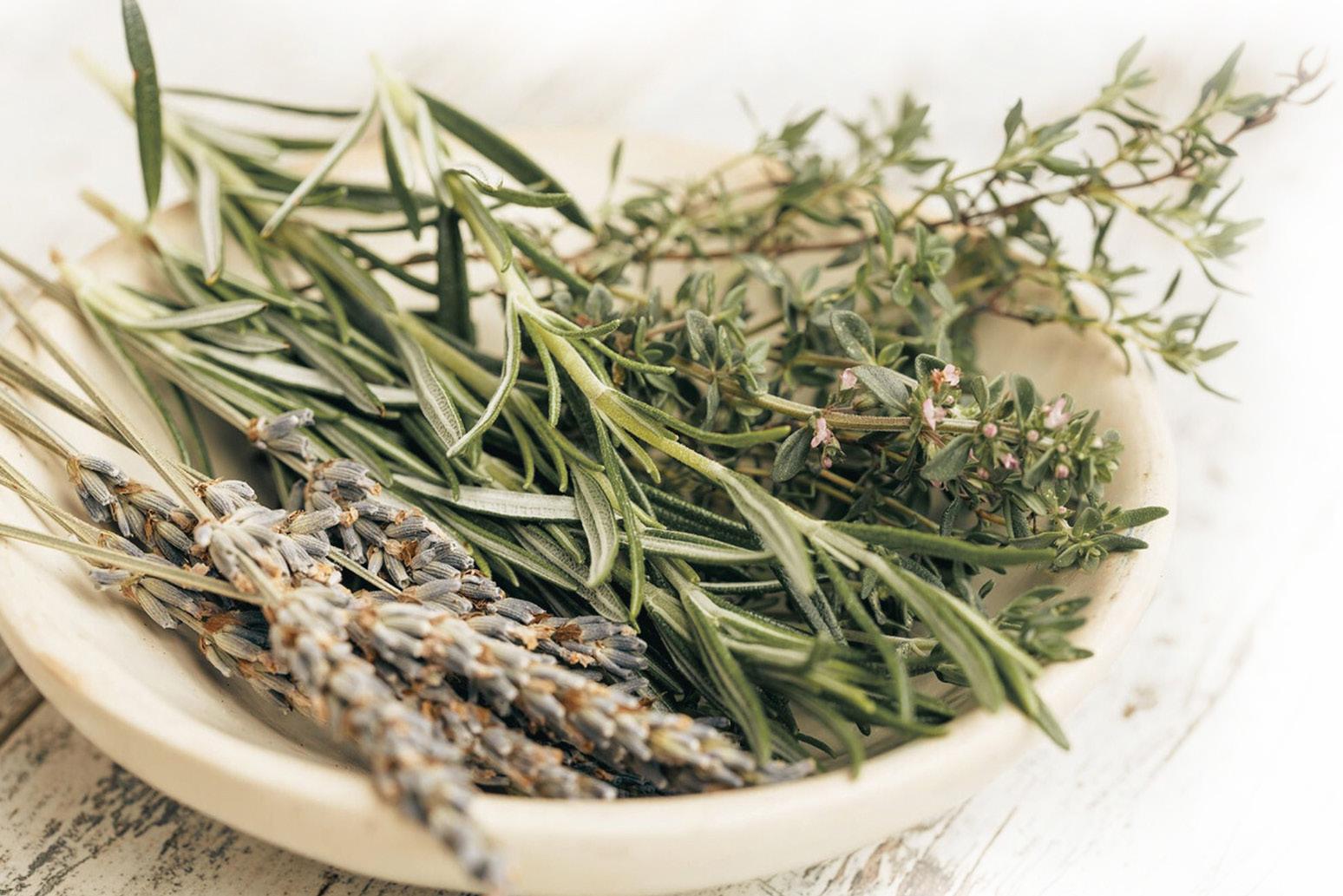
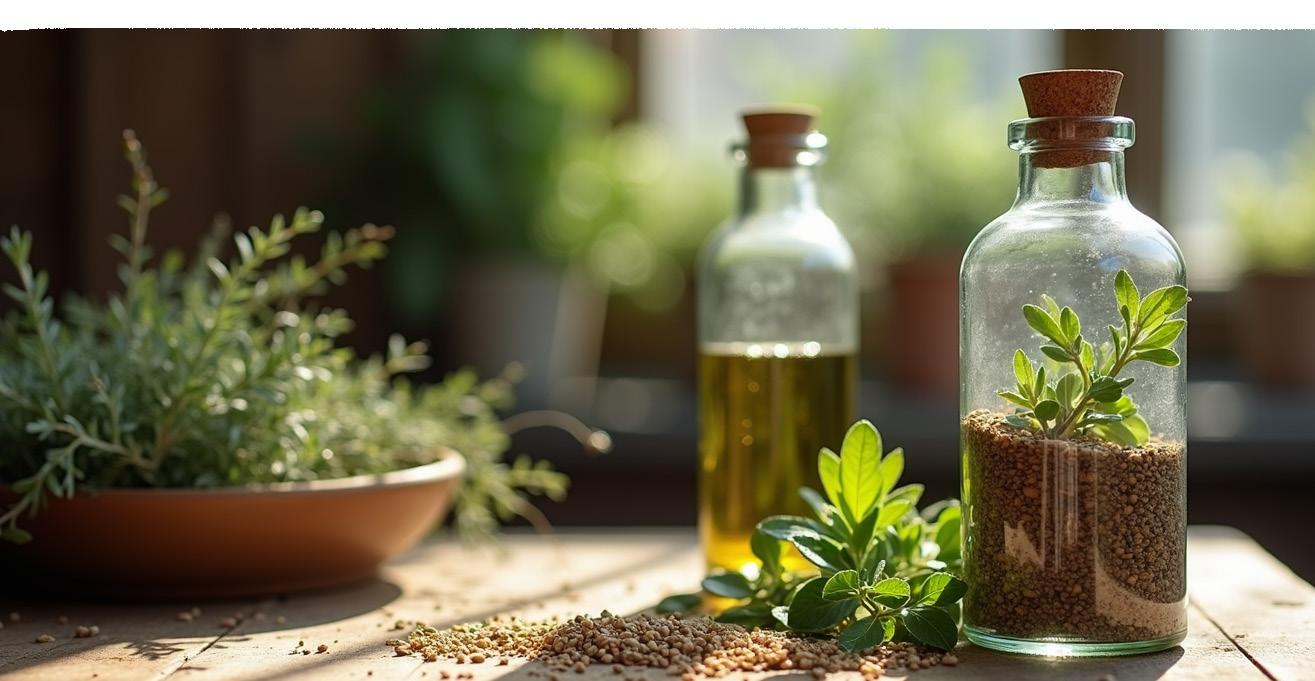
Take, for example, the use of herbal poultices. These were mashed-up plants applied directly to wounds or inflamed areas. Willow bark, rich in salicylic acid (the precursor to aspirin), was a favorite for pain relief. Imagine a close-up of a rustic wooden table cluttered with dried herbs, mortar and pestle, and glass bottles filled with mysterious liquids.
Or consider the practice of bloodletting. Yes, it sounds medieval and a bit gruesome, but it was believed that draining “bad blood” could cure everything from fevers to headaches. Physicians used leeches or lancets, and patients often left the room feeling lighter–if not exactly healthier.
What’s fascinating is how these methods reflect the medical knowledge and cultural beliefs of their time. They were not just treatments but stories told through the body, a dialogue between healer and
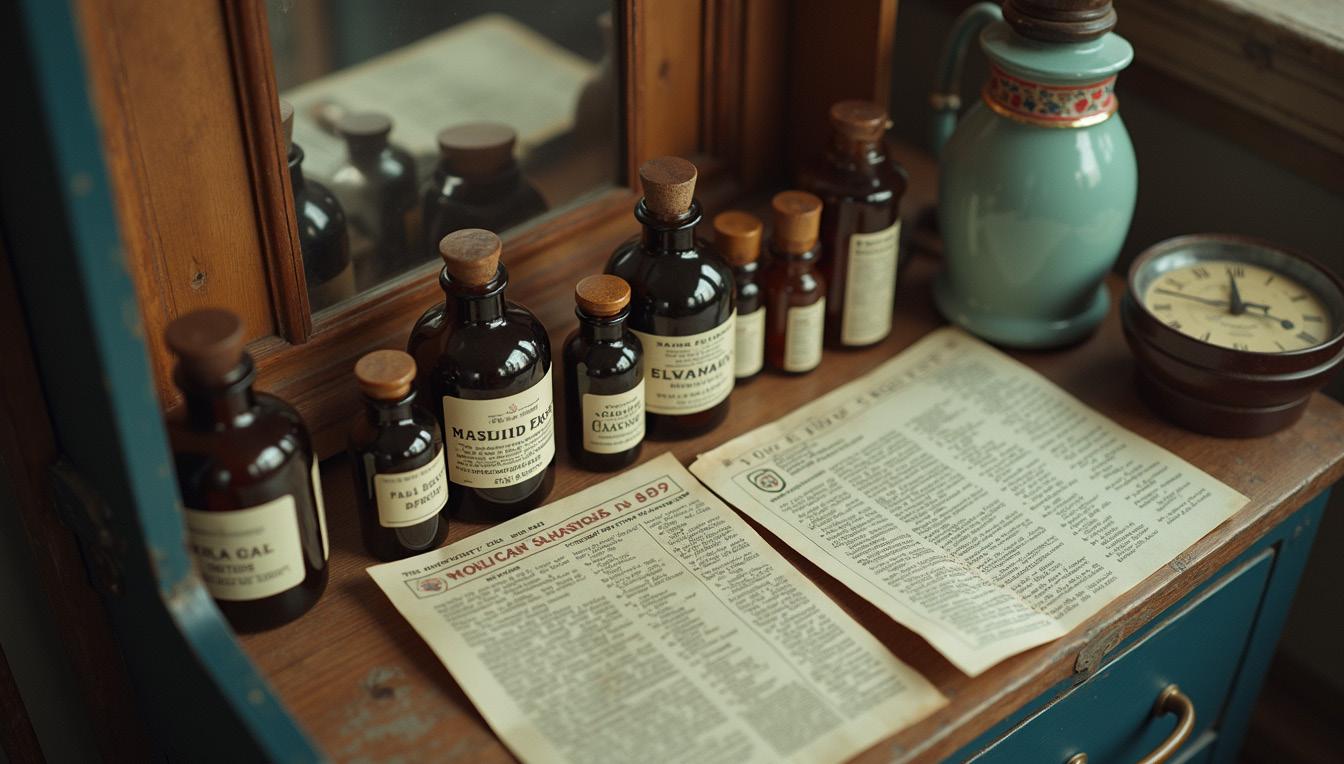
Herbal remedies on a wooden table
Exploring Historical Healing Methods in
19th-Century New England
New England in the 1800s was a hotbed of medical experimentation and folk remedies. The region’s harsh winters and rural isolation meant that people had to be resourceful. Many turned to home remedies passed down through generations.
One popular treatment was the use of copper bracelets to ward off arthritis pain. While modern science might raise an eyebrow, the belief in copper’s healing powers was strong. Another favorite was turpentine–yes, the same stuff used as paint thinner–applied topically for chest colds and muscle aches. It’s a reminder that necessity often breeds creativity, even if the results were hit or miss.
The rise of patent medicines also marked this era. These were over-the-counter concoctions, often with secret ingredients and extravagant claims. Some contained alcohol or opium, making them effective in dulling pain but problematic in other ways. The labels promised cures for everything from “female complaints” to consumption (tuberculosis).
If you’re curious about the broader context, you might enjoy exploring historical medical practices that reveal how these treatments fit into the larger tapestry of health care evolution.
The Curious Case of Quackery and Folk Medicine
Not all historical healing methods were grounded in science, and some veered into the realm of quackery. But even these dubious practices tell us a lot about the hopes and fears of the past.
Consider the snake oil salesmen–traveling peddlers who promised miraculous cures with their secret elixirs. While many were charlatans, some remedies did contain genuine medicinal ingredients. The spectacle of these salesmen, with their loud pitches and colorful bottles, was part medicine show, part entertainment.
Then there were the magnet healers, who believed that magnetic fields could realign the body’s energies. Patients would sit with magnets placed on various parts of their bodies, hoping for relief. It sounds like a precursor to today’s fascination with alternative therapies.
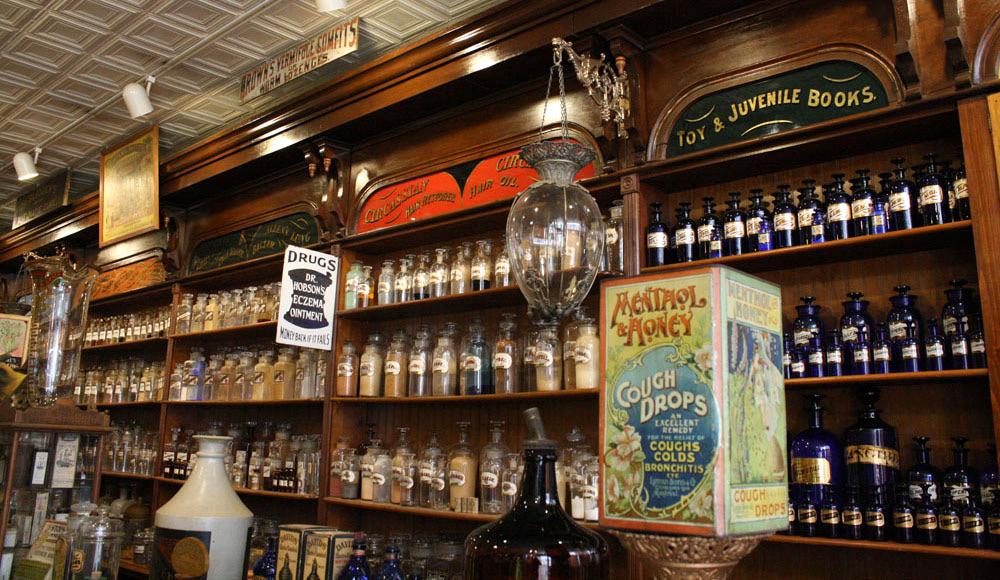
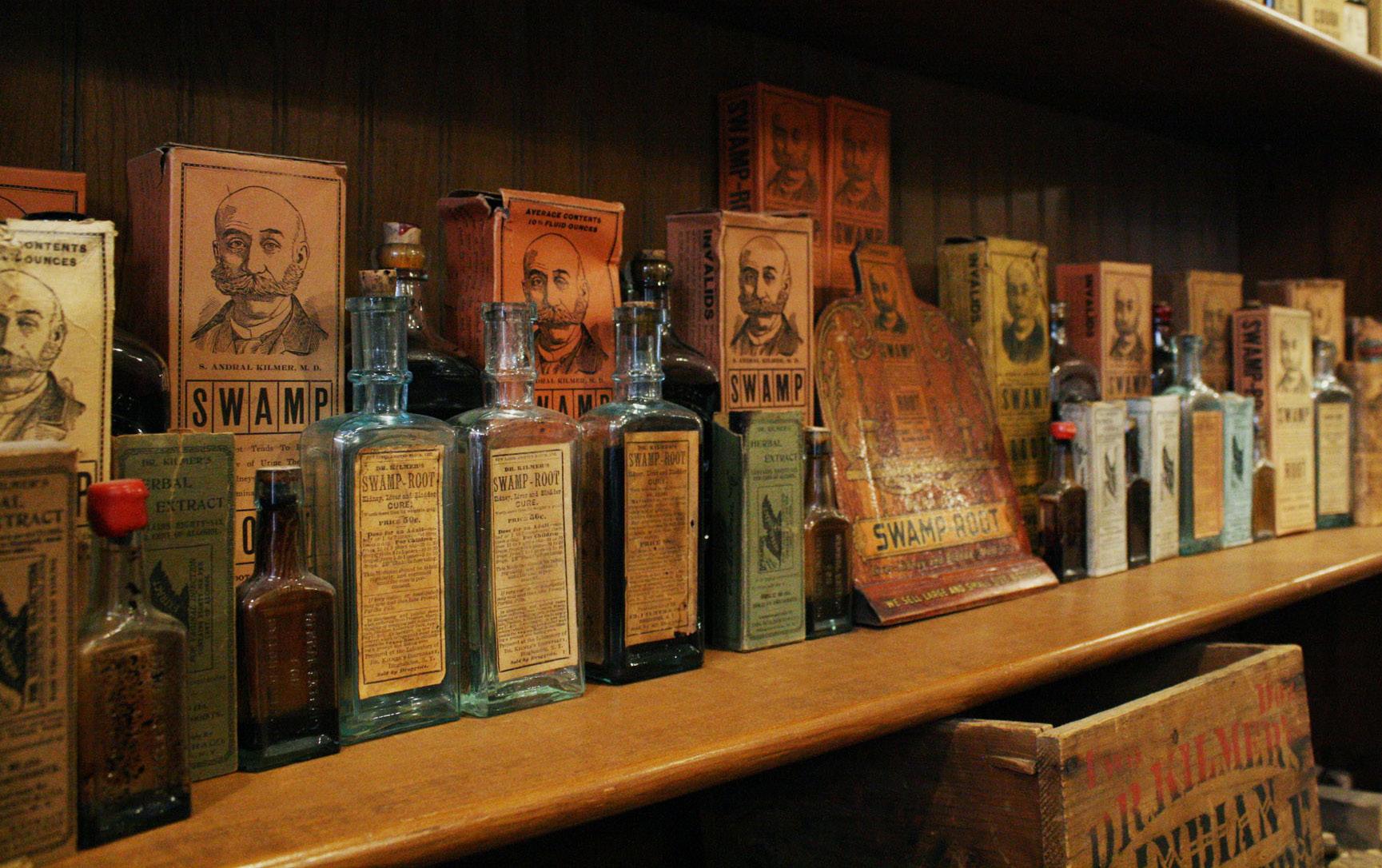
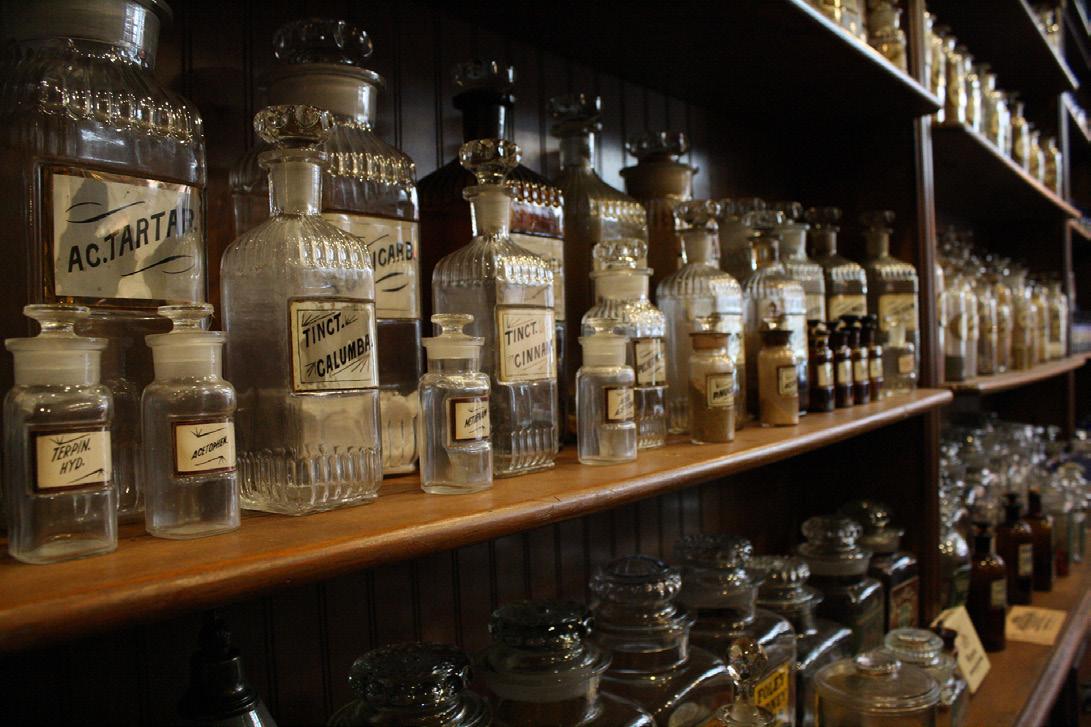
Eye-level view of a vintage apothecary shelf filled with glass bottles and jars
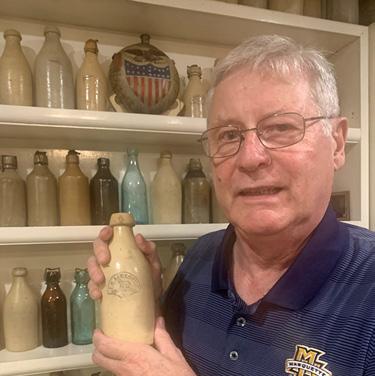
The filled shelves from a wonderful 19th century drug store recreation. Courtesy of McMurray Antiques.
Folk medicine also included spiritual healing and prayer, especially in tight-knit communities. The idea that faith could influence health was deeply ingrained, and in many cases, the psychological comfort provided by these practices was as
Practical Lessons from Historical Healing Methods
So, what can we learn from these fascinating historical healing methods? Plenty, actually. Here are some takeaways that might surprise you:
1. Nature is a powerful healer–Many modern medicines have roots in herbal remedies. Exploring plants like willow bark or echinacea can be a gentle way to support health.
2. Skepticism is healthy–Not every cure is a cure. Questioning and researching treatments is crucial, just as it was when patent medicines flooded the market.
3. Mind and body are connected–The role of belief, ritual, and comfort in healing is timeless. Sometimes, feeling cared for is half the battle.
4. Historical context matters–Understanding the social and cultural backdrop of medical practices helps us appreciate how far we’ve come and what challenges remain.
If you’re a collector or researcher, diving into old medical texts, advertisements, and personal diaries can be a treasure trove of insights. These artifacts tell stories not just of illness, but of resilience and ingenuity.
Embracing the Past to Inspire the Future of Healing
As we wrap up this journey through historical healing methods, I hope you feel a bit more connected to the past. These stories are more than curiosities; they are windows into human creativity and the eternal quest for wellness.
Whether it’s the humble herb, the dramatic bloodletting, or the hopeful snake oil, each method reflects a chapter in the evolving story of medicine. And who knows? Some forgotten remedy might just inspire tomorrow’s breakthrough.
For those eager to explore further, resources like Promising Cures offer a wealth of information on 19th-century health remedies and daily life in New England. Their mission to make historical research accessible is a gift to anyone fascinated by the intersection of history and health.
So next time you reach for a modern pill, take a moment to appreciate the long, winding road that brought us here. History, after all, is the best medicine for curiosity.
Happy exploring, and may your journey through time be as healing as the remedies you discover!
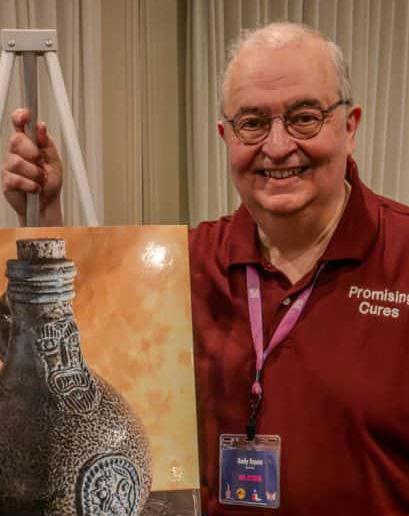
Andy Rapoza a past secretary of FOHBC, is a lifelong medical bottle and ephemera collector, lecturer, and writer, focused on the social history of health. He is the author of Promising Cures, a four-volume history of Lynn, Massachusetts from 16291929. In 2024 it earned the national book award of the American Association for State and Local history (AASLH). Andy’s blog is PromisingCures.com, A History of Endurance through Sickness, Accidents, Science & Quackery. Contact Andy at rapoza.2025@gmail.
More shelves from a wonderful 19th century drug store recreation. Courtesy of McMurray Antiques.
THE DIG
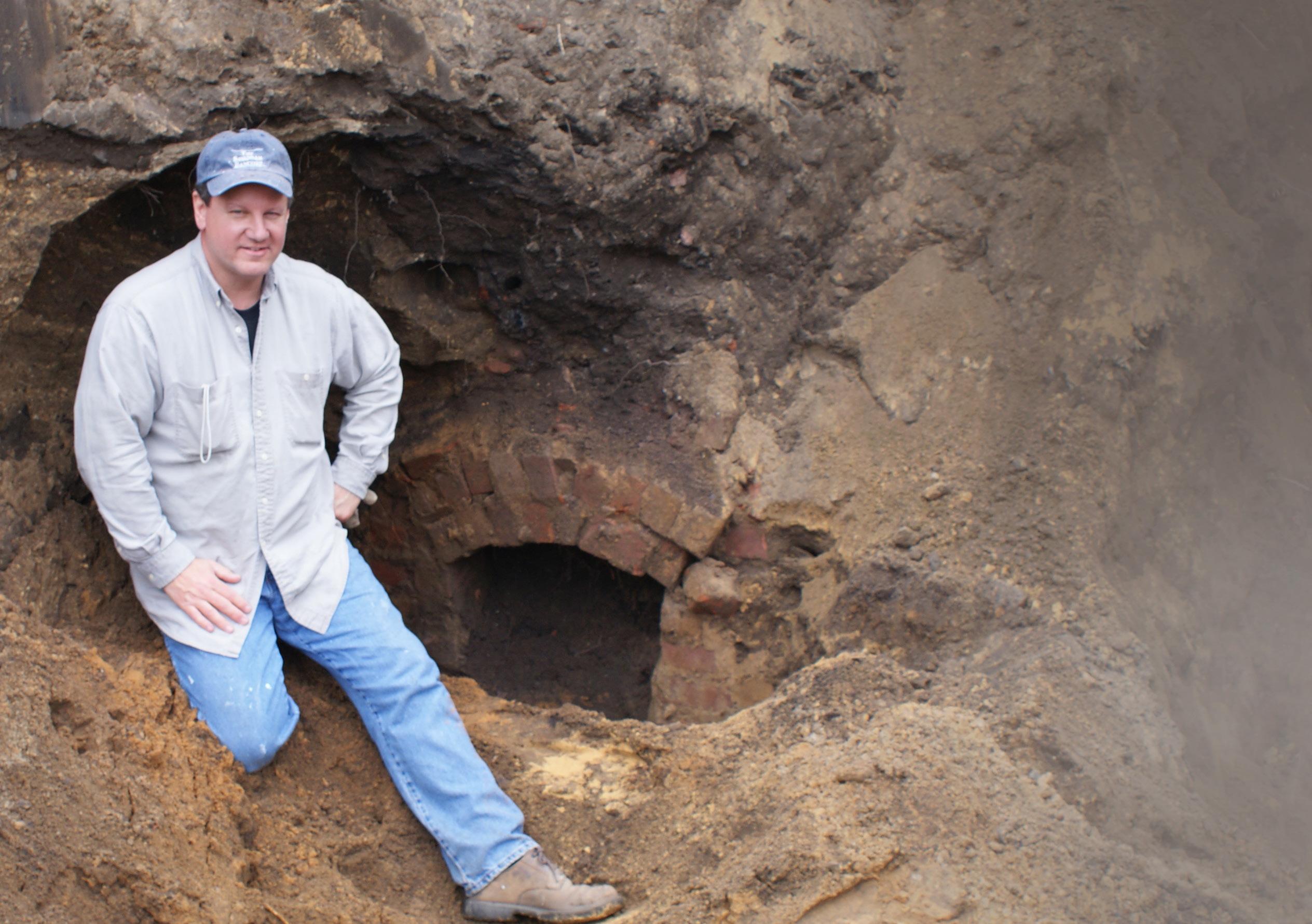
Asite such as this and the artifacts recovered there is a stark reminder of why we all need to be good stewards of history for future generations. It seems like a fairy tale for the stars to have aligned so perfectly. What led to the most epic and memorable digging experience of a lifetime was a blend of Irish luck and perfect timing. And a virtually unlimited window of time to excavate the most historic parcel of land in Savannah, Georgia, a colonial seaport.
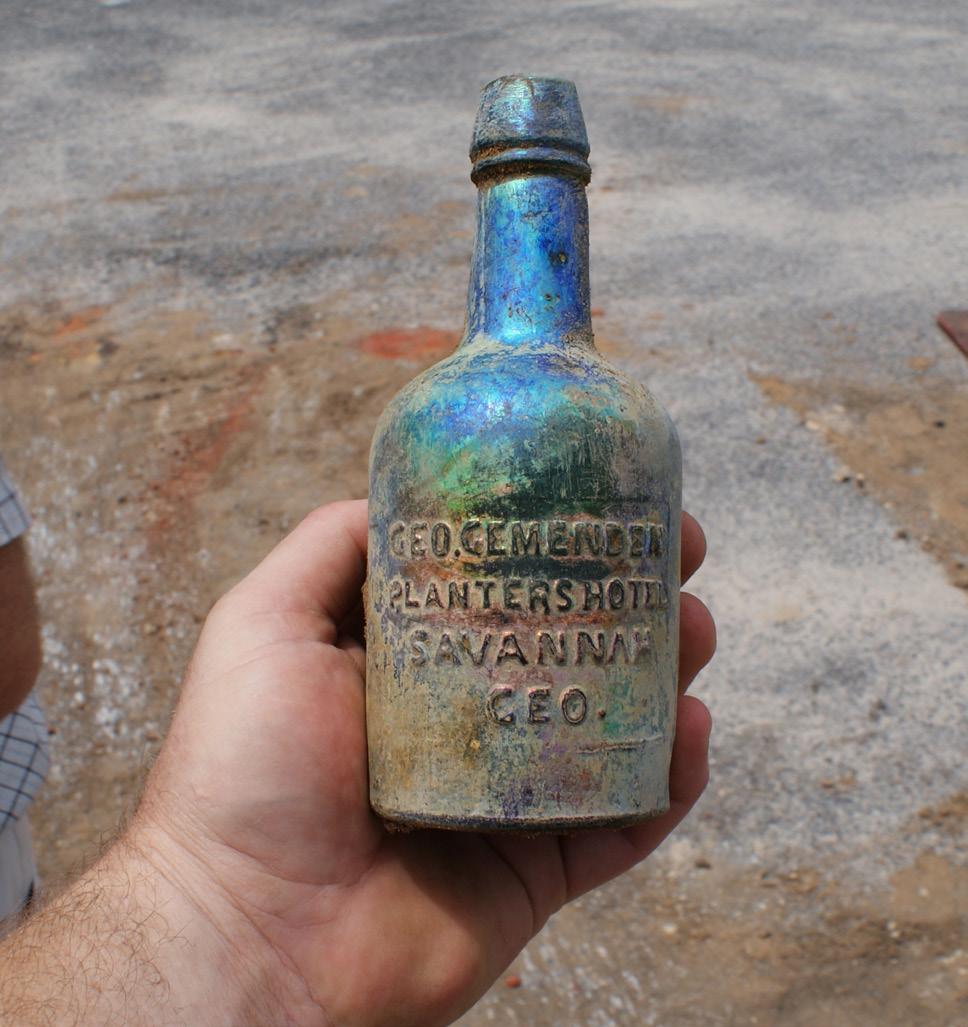
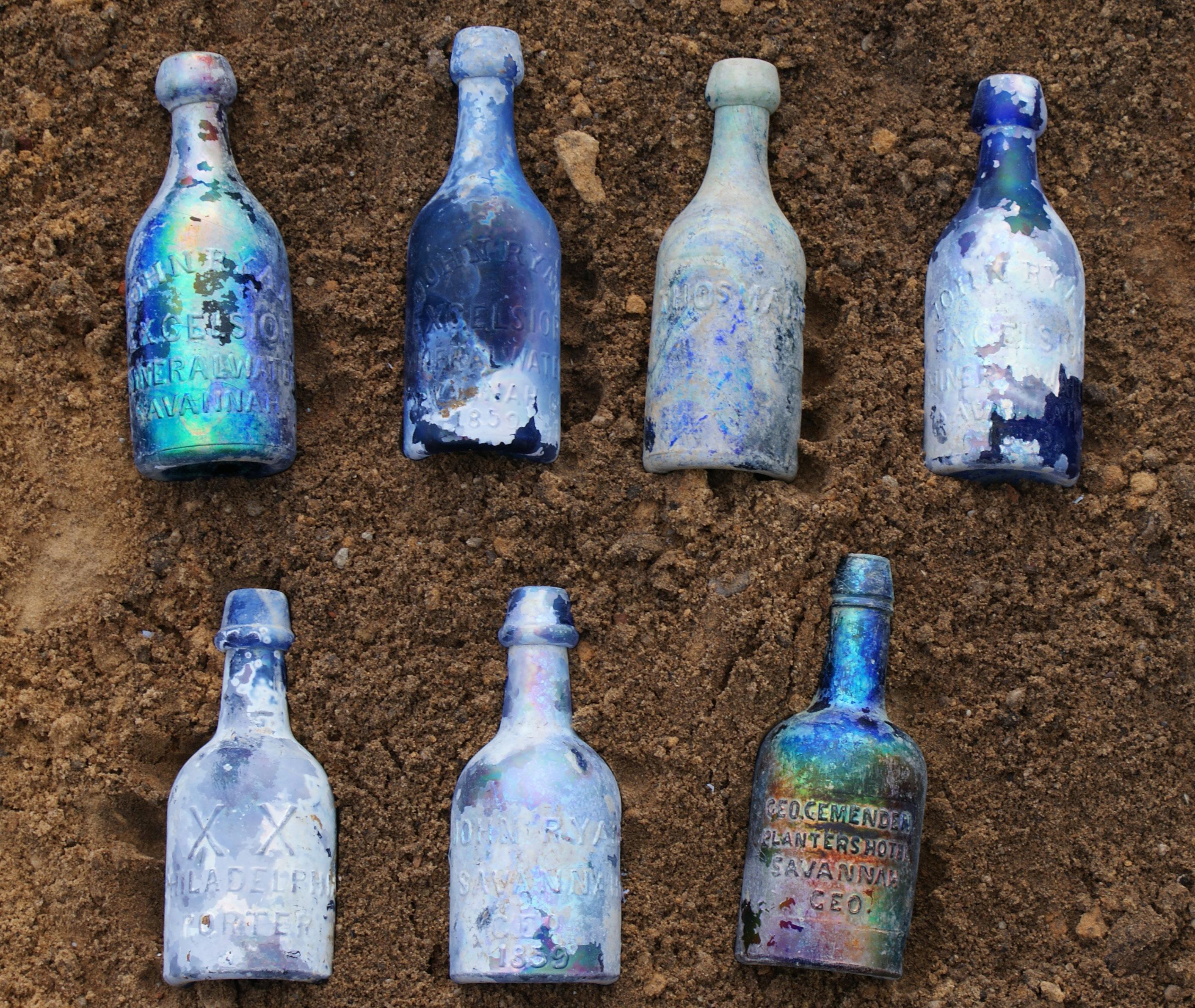
The National Historic Landmark District is well known for the number of proprietors of ale, porter, ginger ale and mineral water. It is home to some of the most diverse colored soda water bottles of the 19th century. We could write a book just on the history of the site and the items recovered. The historical notoriety of Trustee’s Garden is simple. It is the earliest colonial settlement in Georgia.
History
Savannah envokes images of Native American set-
tlements, pirates, colonial trade and the last stop for General Tecumseh Sherman during the confederate war. In 1733, General James Oglethorpe founded Savannah as the 13th English colony of Georgia. In 1734, he and the Georgia Colony trustees established the first experimental garden and named it The Trustee’s Garden.
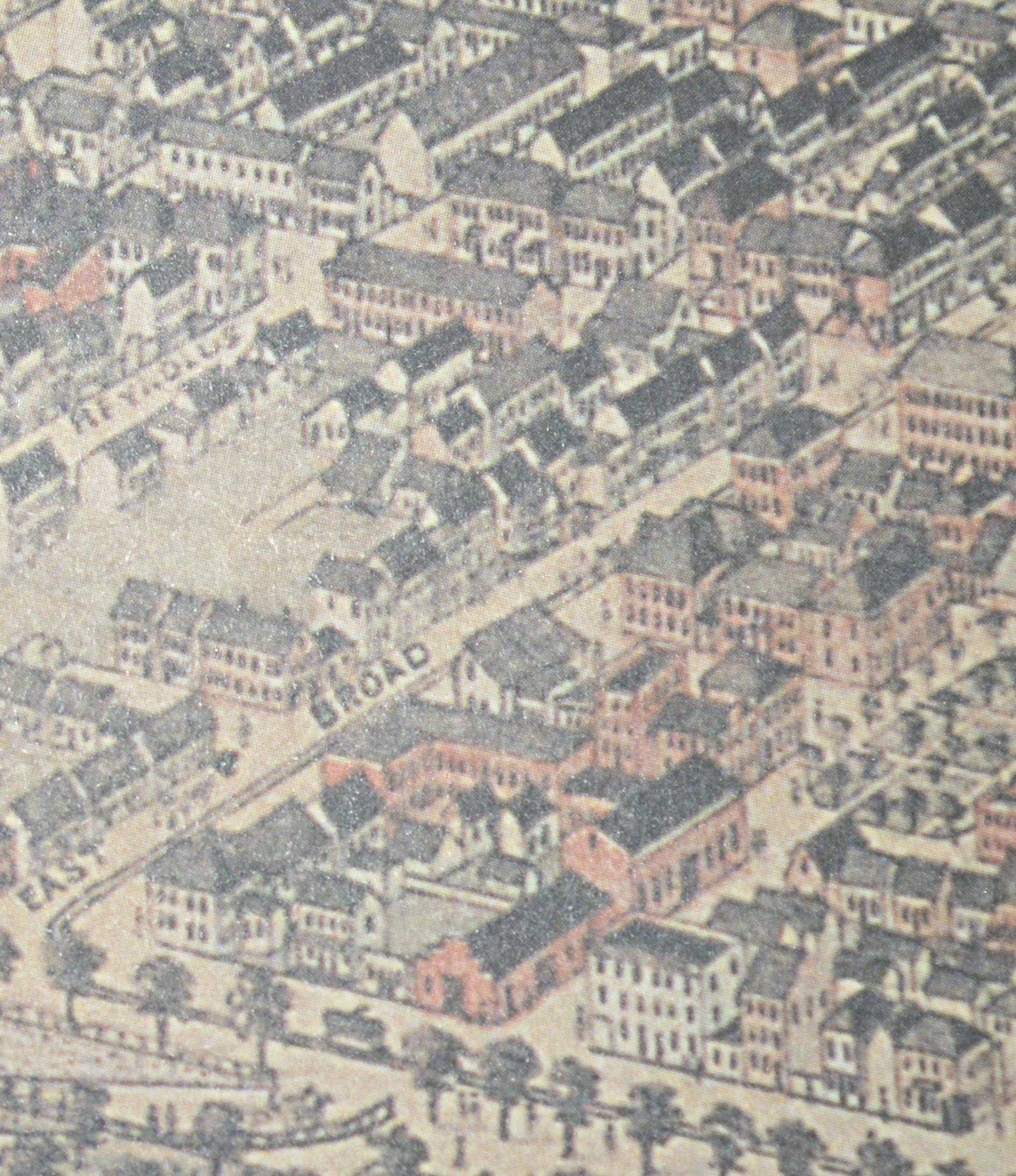
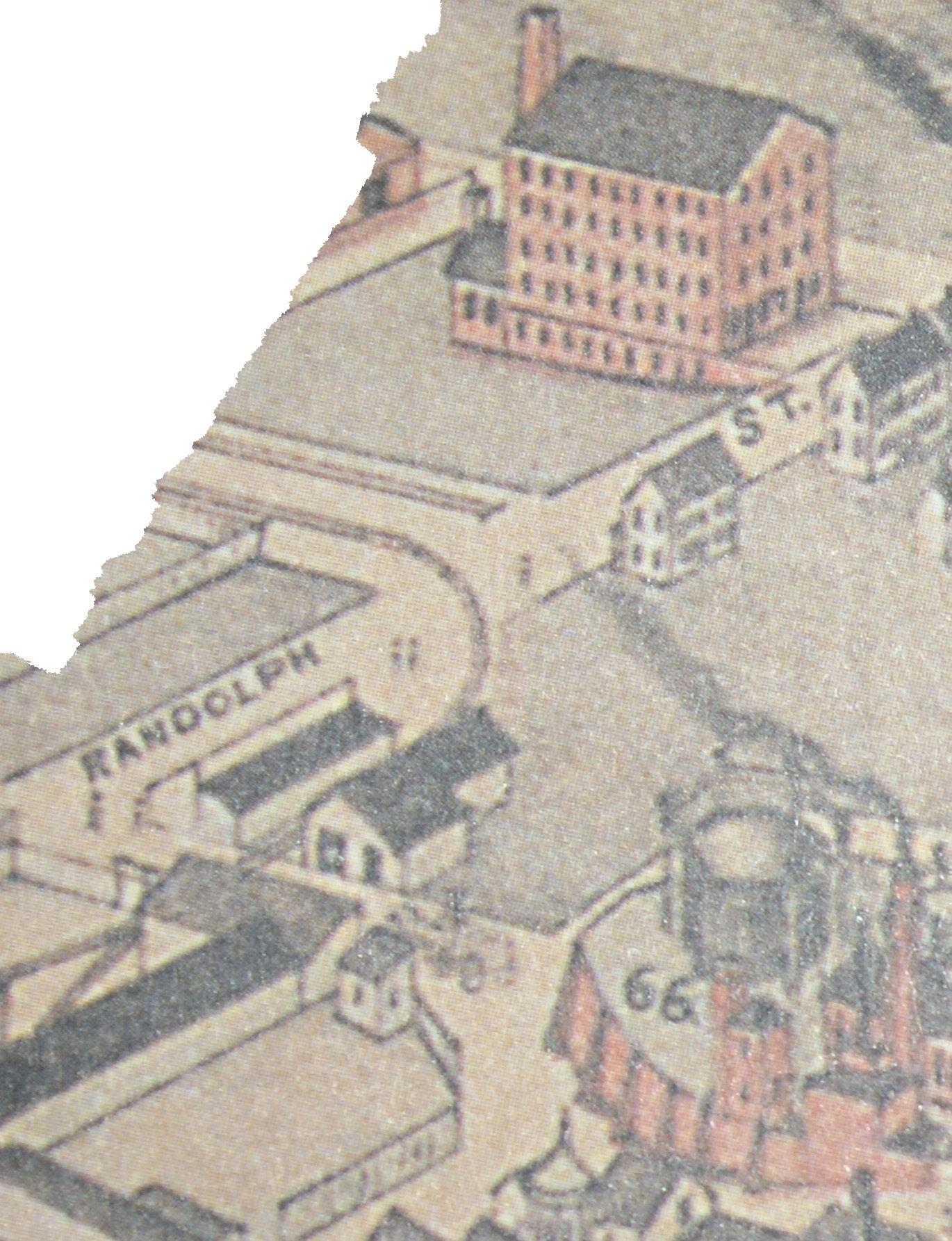
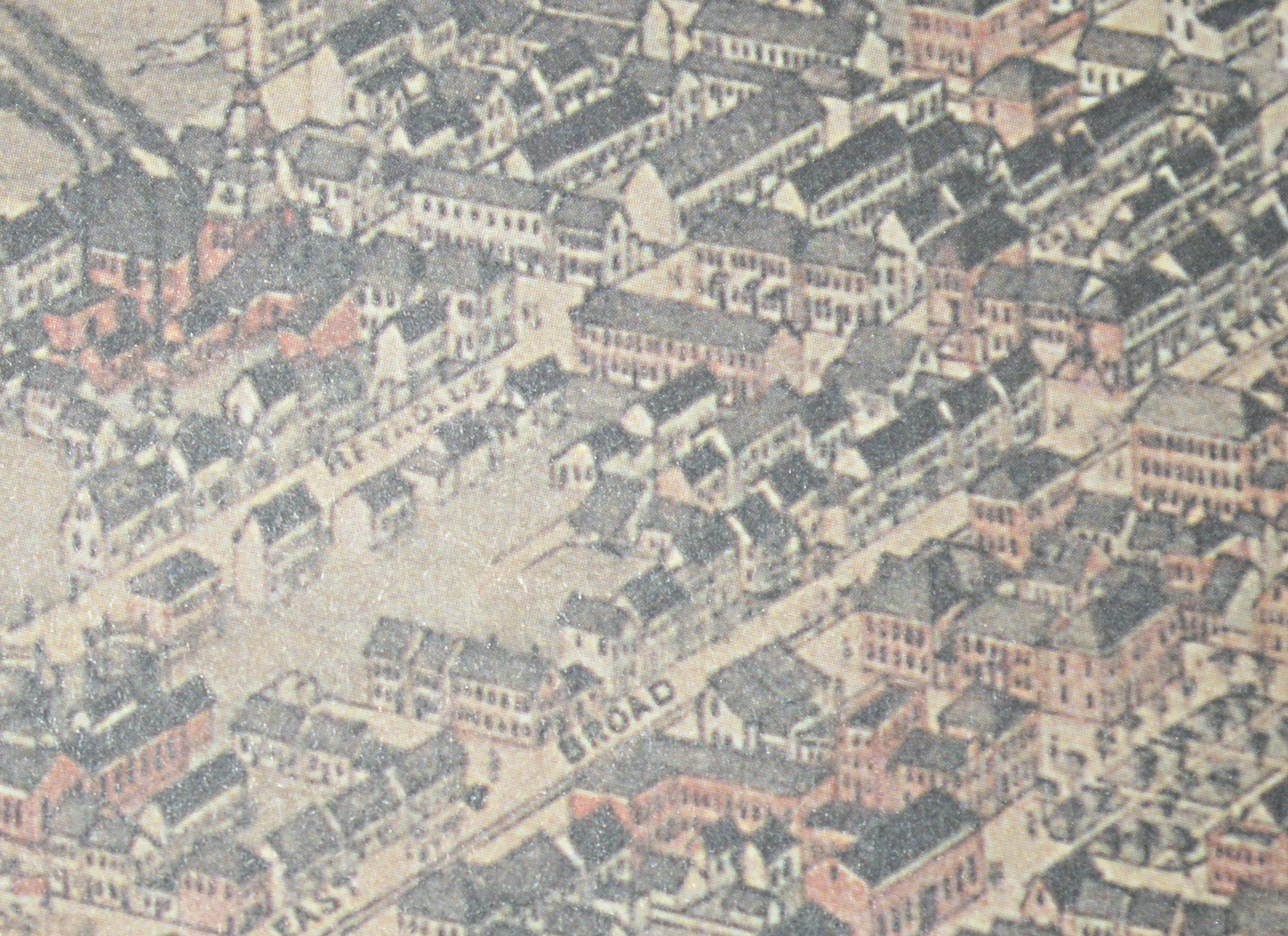
It was modeled after Chelsea Botanical Gardens in London England and situated on a fifty-foot-high bluff overlooking the Savannah River. This parcel encompassed approximately ten acres which spanned from East Broad Street to Broughton Street to the Savannah River and ended at the lowlands of the eastern marshes.
From Savannah’s earliest colonial history, the northeast corner with its panoramic view of the Savannah River has always been Savannah’s most strategic defensive site. The first fortification was Fort Oglethorpe followed by Fort Halifax, Fort Charlotte, Fort Savannah, Fort Provost and Fort Wayne. Military occupation of this site was perhaps greatest during the
Story by Jim Poole Photography by Frank Chance
OF A LIFETIME
A Three-Part Series Of An Historic Savannah Dig!
War of 1812 but was also used to defend the city in 1779 during the Siege of Savannah. It was again used during the Civil War until General William Sherman captured Savannah in 1865.
The colonists discovered the soil and climate of Georgia’s colonial coast to be suitable for crops such as cotton, fruit trees like peaches, olives and figs. As a result, Georgia became known as the Peach State. The Trustees imported seeds from England for grape vines, mulberry trees and a variety of medicinal plants from the West Indies in hopes of establishing a wine, silk and apothecary industry. Savannah became a colonial trade hub.
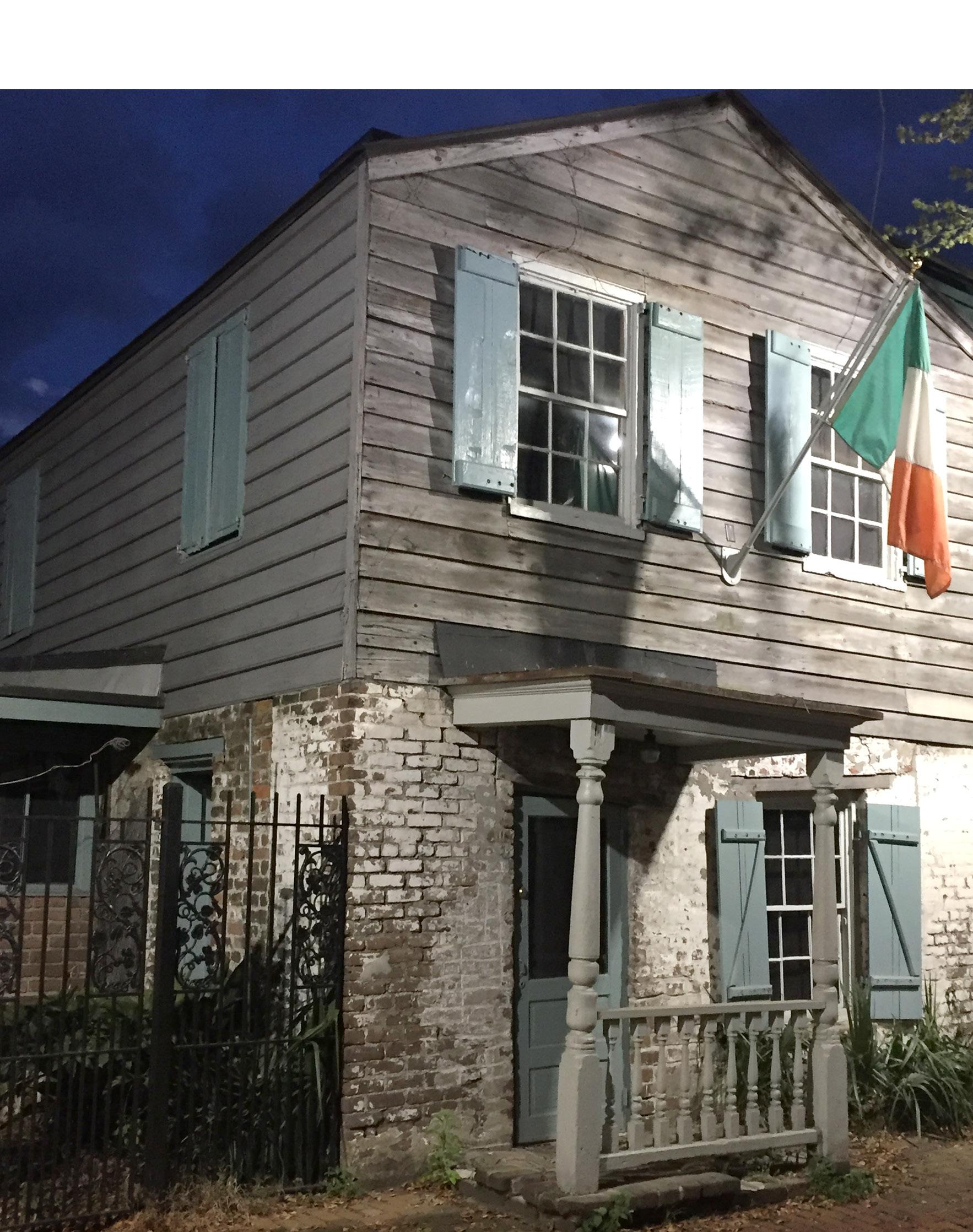
The oldest standing structure in Georgia is the Herb House. It was constructed on this site in 1734 and used as the gardener’s house. The site was also home to an infamous inn and tavern called The Pirates House. It was constructed in 1735 and was popular with seamen visiting the old seaport. Inside the structure is a stairway down to what was once a rum cellar and a tunnel that
ended at the wharf along the riverbank.
The tales of unsavory buccaneers who loved to drink rum, smoke and gamble were the inspiration of the books “Treasure Island” and “Captain Flint.” A metal gate now blocks access to the dark, musty tunnel. Around 1945, the structure fell into disrepair and was slated to be demolished. By the grace of God, it was saved by Mary Hillyer who was the wife of the Savannah Gas Company president. In 1953, it became the beloved restaurant it is today.
The 10-acre parcel was also home to the Kehoe Iron Works Company, the Savannah Gas Light Company lot, the Hillyer Building and the Three Gables Building. Additionally, there were two homes that faced East Broad Street and a manicured garden area on the southern boundary. All were privately owned, and permission was negotiated separately.
By 1748, the agricultural and experimental garden
became mostly abandoned, and the Herb House was then converted into a seafarers Inn. During the middle to late 1850’s, the Trustee’s Garden site was developed into residential lots. The little shanty town was near the Kehoe Ironworks Foundry. The foundry produced ornate wrought iron which can still be found on some of Savannah’s earliest homes. Once occupied by indigenous people, this area became home to free African Americans as well as the influx of Irish immigrants.
Trustee’s Garden had always been considered The Holy Grail of historic land in Savannah but unattainable. In fact, no individual or group of diggers had ever attempted to secure this hallowed ground. It was considered untouchable because of multiple owners and much of it was covered by asphalt, cement or structures.
In the summer of 2007, we learned that the main site had been acquired by a local businessman and developer. He had a grand vision of converting three historical buildings into an events venue. We immediately contacted and met with the new owner. We explained that our purpose was twofold: to preserve history and to diversify the collections of our colored soda bottles. We stressed the importance of recovering historical
He was impressed with our knowledge of the site and took an interest in our mission to preserve whatever artifacts could be salvaged before development commenced. He took a special interest in the historic bricks (circa 1850-1870) which we explained could be harvested versus covered up. The owner needed bricks for the proposed restoration work. We gladly agreed to provide him with what we estimated would be thousands of bricks.
After a series of meetings with other owners, we were successful in securing each of the sites. In totality, the parcels encompassed the original Trustee Garden plan. Each weekend we assembled as the sun ascended over the river. As we dug through the layers of time, we occasionally paused to marvel at some of the world’s largest container ships navigating the same river as General James Oglethorpe and 114 settlers did nearly 300 years earlier in a wooden frigate.
We were history-minded, bottle enthusiasts, a beloved hobby we had collectively shared since 1975. Most of us began digging bottle dumps, trash pits and privies before we graduated high school. Being native Savannahians, we all had a keen interest in the history of our hometown and in salvaging and preserving artifacts that would otherwise be destroyed or lost forever.
After being observed by other collectors / diggers, the word quickly spread that we had secured the site. On occasion, we would recognize overly curious people walking by or driving by pretending to be tourists. The exclusive digging rights and our presence each weekend became the envy of many local diggers and collectors.
Using Sanborn insurance maps circa 1850-1880, we were able to pinpoint areas of interest. For over two and a half years, we excavated this site with great success. The following will outline each of the six different excavation sites.
Mary Foley House
Located at 36 East Broad Street, this home had been constructed in 1909 on what was part of the original Trustee Garden site. Although it was a historic structure, it was not the first structure to occupy this site. This property had recently been purchased and the house and grounds needed extensive work. The new owner graciously granted us permission to dig the back yard in exchange for trimming and hauling off overgrown shrubbery.
The first morning, we spent most of our time clearing brush and cleaning up. One area we probed and sank test holes produced a lot of blue and green featheredge china shards as well as broken soda colored bottle glass. Not two hours into the morning, the rain moved in and a deluge forced us to depart with plans to return the next day.
One of the group members and his wife returned later that evening to dine at The Pirates House. Wanting to show his wife the site, he unexpectedly came upon two individuals digging the backyard we had left just hours earlier. He asked them to cover their hole and leave, citing our written permission or else he would notify the authorities and a trespass report would be filed.
Weeks later, we received news through the grapevine that prompted anger and great disappointment. The two scoundrels had probed and identified a small but early privy which had produced several choice-colored soda
bottles. Among them, two cobalt G. Glinde soda bottles with heavy iron pontils. One was damaged but the other was perfect. They had successfully exploited the site we had legally secured and in doing so walked away with a stash of prized Savannah bottles. We later found a cobblestone privy and recovered several early black glass bottles but nothing that compared to what they had found.
Archibald Smith home
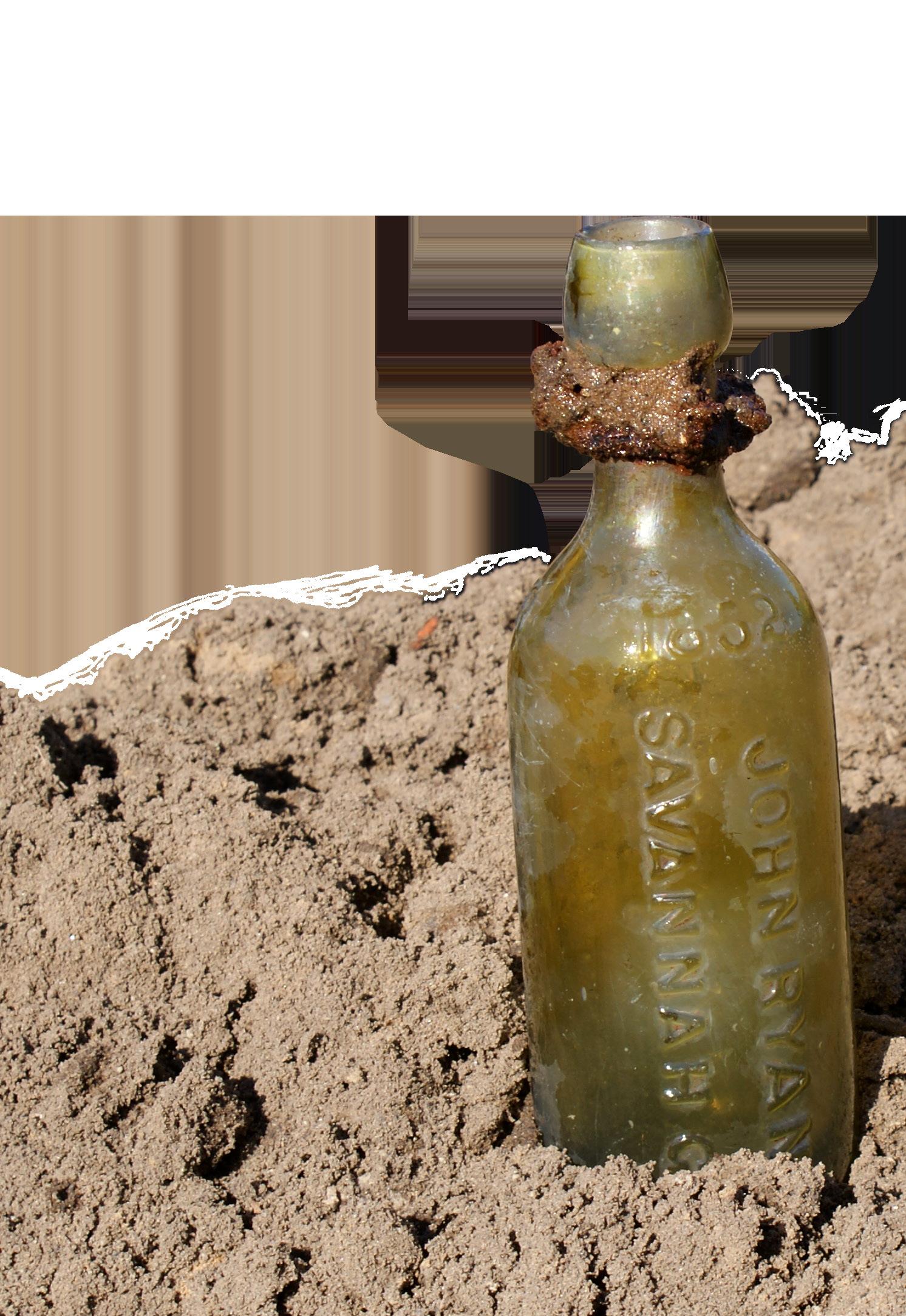
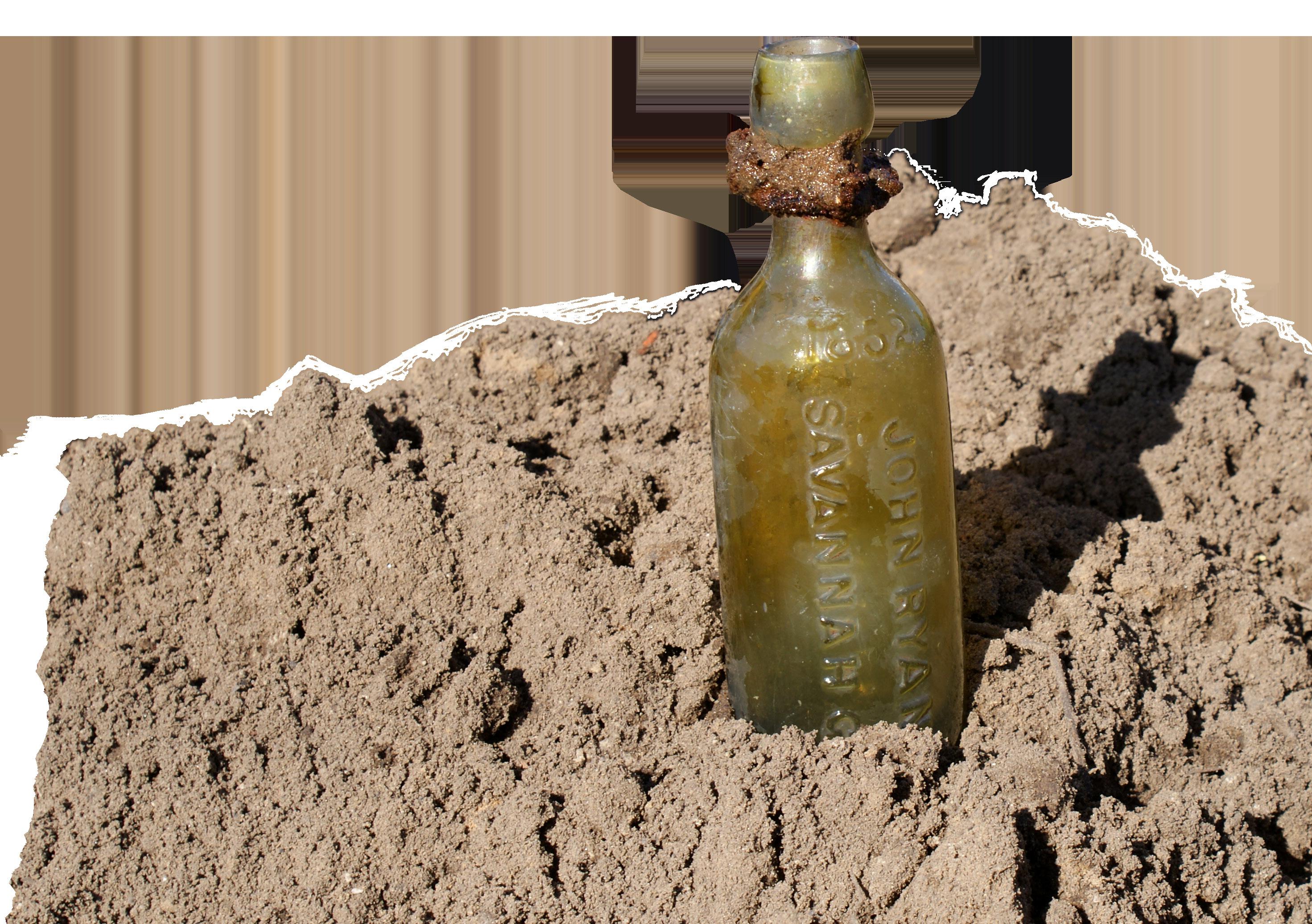
This historic house had been constructed in 1810 and had been occupied by the family for many years. In the back yard under a large oak tree, we identified and began excavating a brick privy. Tree roots made this a very difficult dig. From it we recovered a beautiful squat James Ray XX Ale in aqua, a double collared John Ryan XX Porter & Ale in cobalt and another cobalt John Ryan with a hat top. Also recovered was a beautiful Heller & Co. squat with heavy iron pontil and four 1866 John Ryan bottles.
At the very bottom of the privy, we found two cannon balls sitting side by side. These were most likely fired by French ships situated in the Savannah River during the battle in 1769. Presumedly, they had rolled into the backyard of the home, and the owner placed them into the privy so his children wouldn’t find or play with them.
The Garden
Much of Savannah’s notoriety is in part due to the book “Midnight in the Garden of Good & Evil.” The southern quadrant of the Trustee Garden site was a beautifully landscaped garden behind several historic homes. The grounds were meticulously manicured.
One prominent family had owned this land since the 1960’s and it represented a native, untouched landscape. Here under the shaded canopy of 200-year-old oak trees, we probed historic ground that we knew would be loaded with treasures.
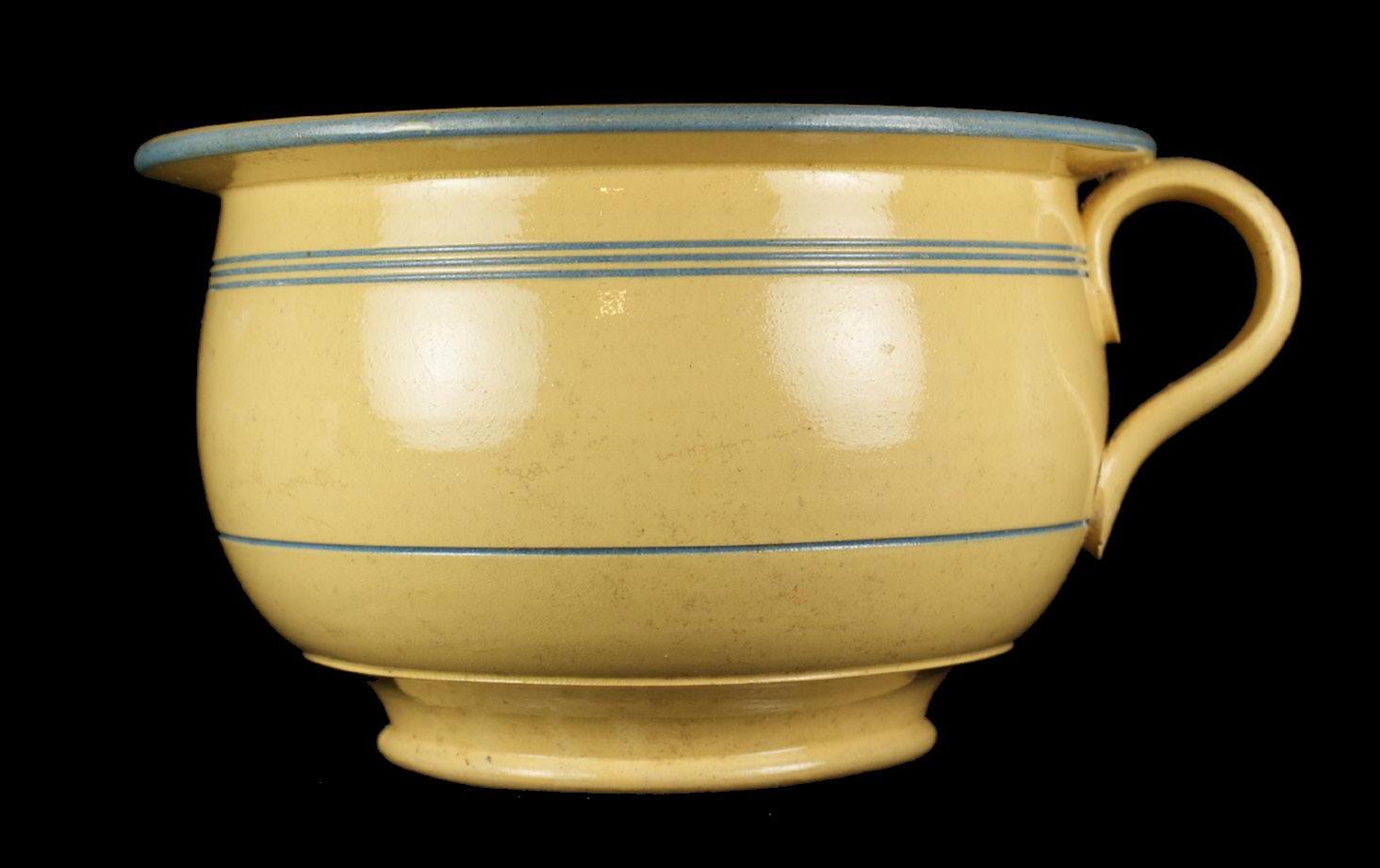
Our agreement with the owner involved carefully removing squares of sod, placing it and the dirt on tarps and perfectly restoring the disturbed areas to original condition. Over the course of several weeks, numerous privies and trash pits were discovered and excavated. Whole and broken colored soda bottles, chamber pots and kitchen refuse were among the items found in the
privies. Occasionally, something un intentional like jewelry, coins, pocket watches, etc. would fall through the opening of the seat. Sifting the dirt of these time capsules produced a variety of finds including flat buttons, clay marbles and pipe bowls.
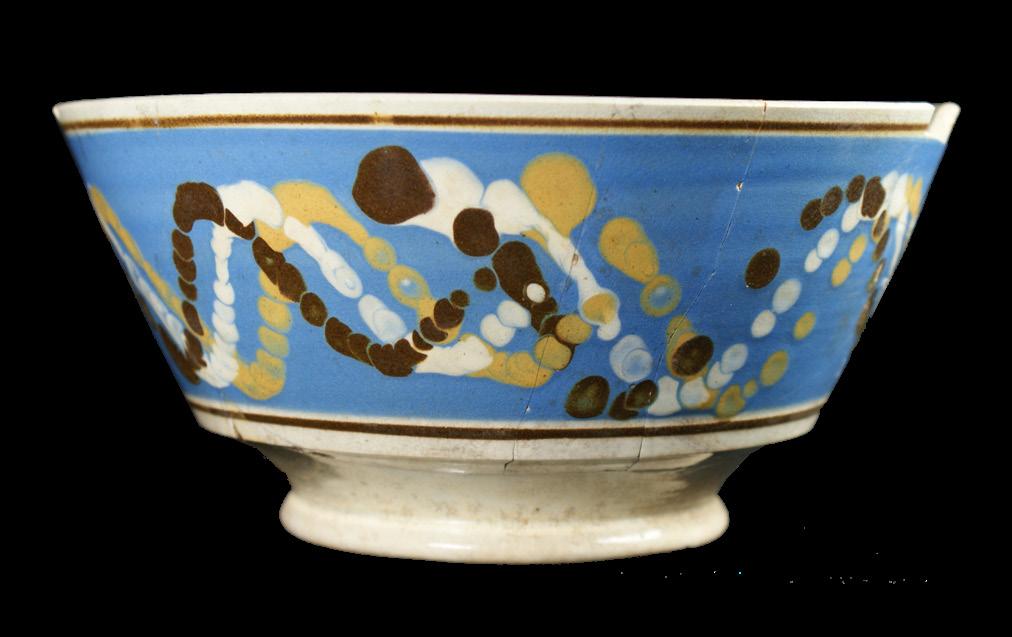
Late one afternoon, we were chasing a trash layer. Some of the finds included shards of Moca, banded ware and blue and white china, a horde of clay pipe stems and bowls and a toothpaste lid were but some of the finds. An old pistol was also recovered. As the cloak of darkness fell, we decided to continue digging using electric utility lights.
As midnight approached, we heard the rumble of thunder. Eventually, a vicious thun derstorm moved across the Savannah River from South
Carolina which produced wind, deafening thunder, lightning strikes and torrential rainfall. We found ourselves pelted with cold rain but the misery of being damp and cold didn’t faze us. It paled in comparison to the perfectly preserved cobalt Solomon’s Bitters recovered near midnight. Despite the dismal weather, it seemed the countenance of the bottle gods were shining on us all.
Don't miss the continuation of this historic Savannah dig in the upcoming issues!
Jim Poole has been passionate about Savannah history since elementary school and a seasoned collector of antique Savannah soda water bottles and southern pottery since 1975. Over the years, Jim has negotiated and secured some of the most prominent excavation sites in Savannah and amassed an impressive collection of John Ryan and Savannah soda bottles. After fifty years of excavating Savannah, this three-part series entitled, “The Dig of a Lifetime” is Jim’s debut contribution to FOHBC and AB&GC.
Young Collectors
Keaton Prebble Favors Paris
“The value of a bottle is not in the maker, label, or age; but the glow of friendship that the glass represents and gives off.”
Keaton Prebble, PharmD
CORNER
Interviews with Alice Seeliger
locals will help him change that this summer. He plans to attend more bottle shows after he completes his residency.
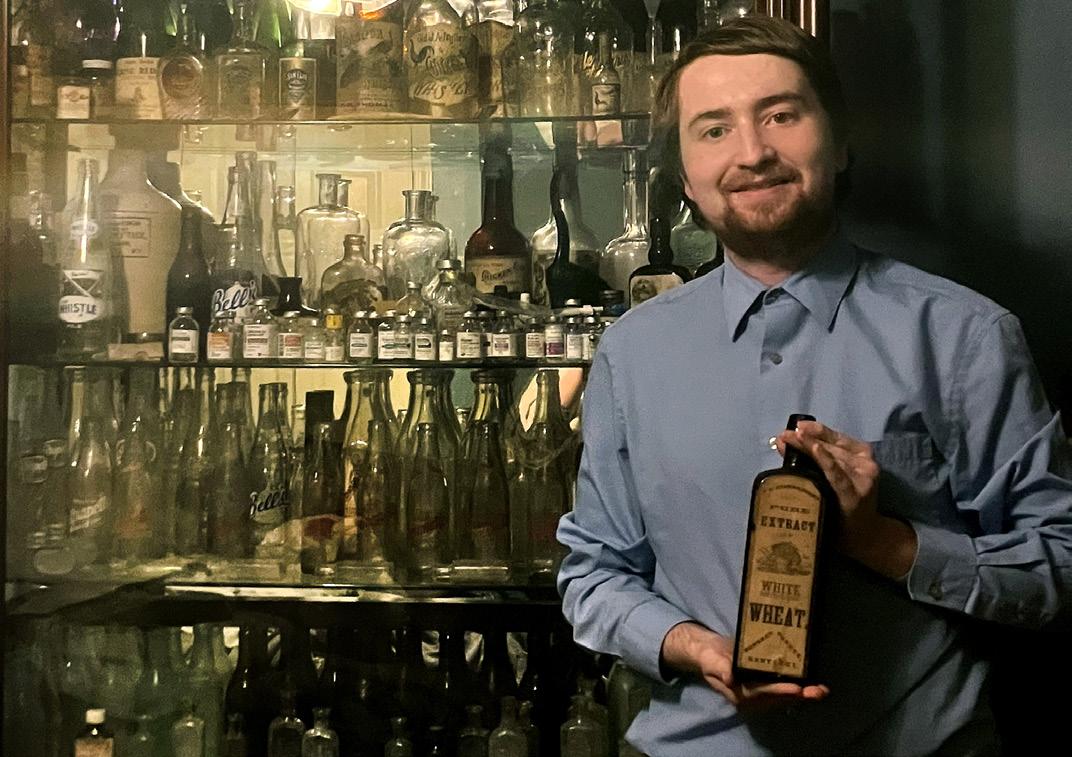
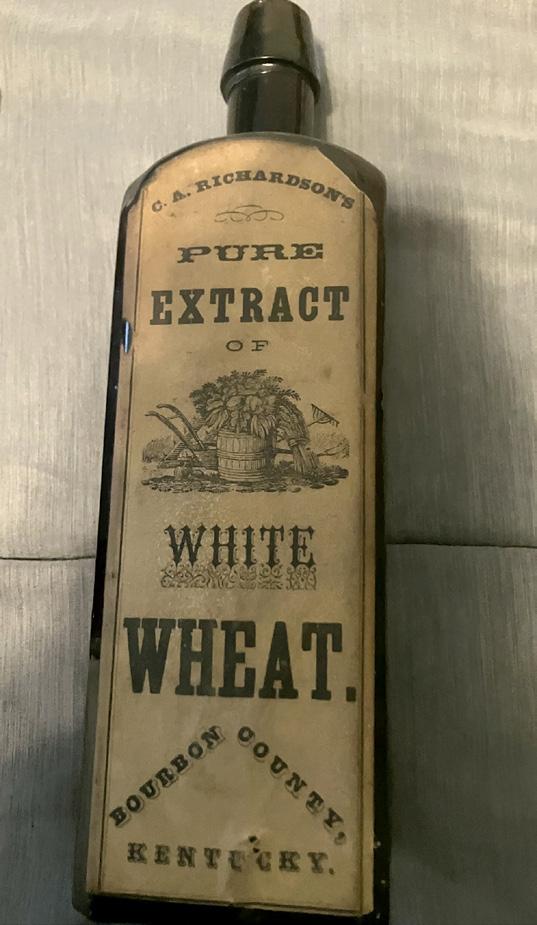
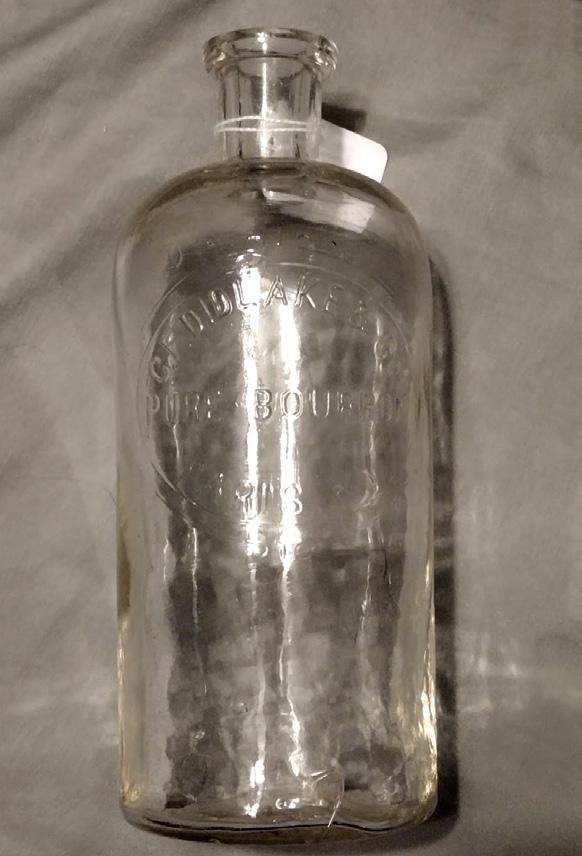
A CF Didlake Bourbon bottle that looks like a medicine bottle from Paris is Keaton’s favorite bottle. So far, the only reference he has been able to find is in an 1883 newspaper that included a CF Didlake advertisement for biscuits…not whiskey. Another research challenge is his CM Richardson white wheat bottle. He thanks his bottle buddy Dalton, from Tennessee, for hooking him up with that gem but he hasn’t been able to find any records on that bottle either.
Keaton also collects cast iron toys, primarily Kenton and Hubley, pre 1950s Bourbon County advertising, antique medical equipment, and modern spirit bottles produced in Bourbon County.
Seems like that first drugstore bottle foretold a future for Keaton in the pharmaceutical industry.
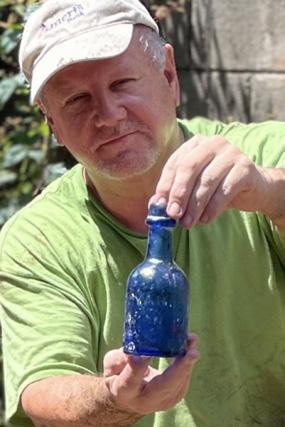
Keaton began his collecting hobby at 13 when he found a Paris, Kentucky Varden’s drugstore bottle in the bottom of his Papaw’s arrowhead display cabinet. Papaw told him that he had just sold a Millersburg, Kentucky drug store bottle to a childhood friend’s grandmother. Keaton later found out that bottle was extremely rare and he hopes to bring it back into his collection eventually.
Keaton collects mainly bottles and crockery from Paris, Kentucky and other small towns in Bourbon County. He is convinced that Jacob Spears, whose farm stood just five minutes away from the Prebble family farm back in the 1780s, invented Bourbon. Just try to debate him on that one. Bourbon County also had one of the earliest pharmacies in Kentucky in the 1790s and was home to over 25 independent pharmacies.
Now 27 years old, Keaton is completing his residency as an Infectious Diseases pharmacy specialist at the University of Louisville. His collecting time is limited but he uses modern technology to set notifications on his phone/ email to keep track of online auctions. He checks what’s available daily, so he doesn’t miss out on a sleeper.
Keaton has attempted digging for bottles but has nothing to show for it. Not totally discouraged, he’s hoping some
Keaton wants to thank Mike Powers who nominated him for the Young Collectors Corner, and other Kentucky collectors including Aaron Gilpin, Jerry Richie, Terry Flora, Jerry Lyle, Kyler Bennett, Jerry Lail, Tim Smith, John Durham, Cliff Campbell, Chris Capley, Bill Ewing, Jeremy Dickerson, Justin Teegarden and Jason Smoot. Sounds like the start of an FOHBC Affiliated Club!
Keaton standing in front of his display case.
A couple of Keaton's favorite bottles
Aubree Craig Follows In Her Grandparents’ Path!
Some of you might remember the photo of young Aubree as she appeared in various marketing materials beginning with the Sacramento National in 2016. Just look at her now!
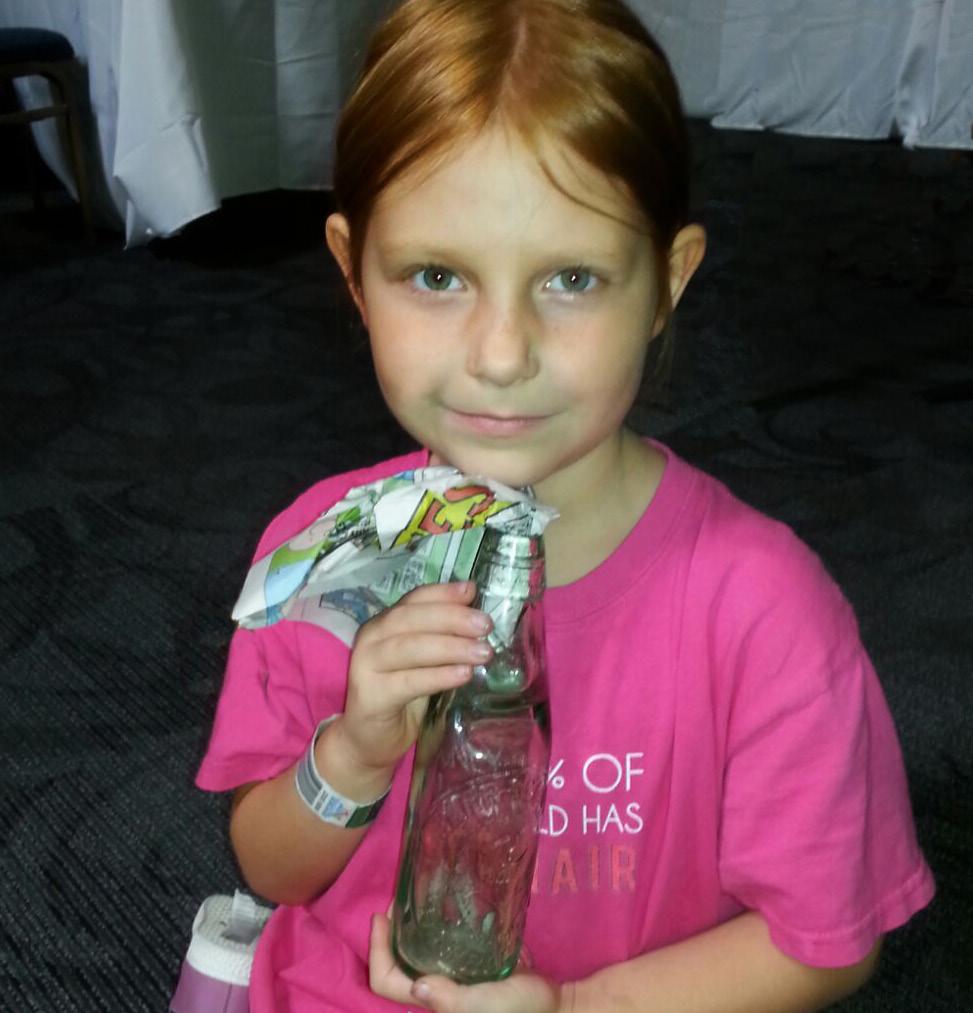
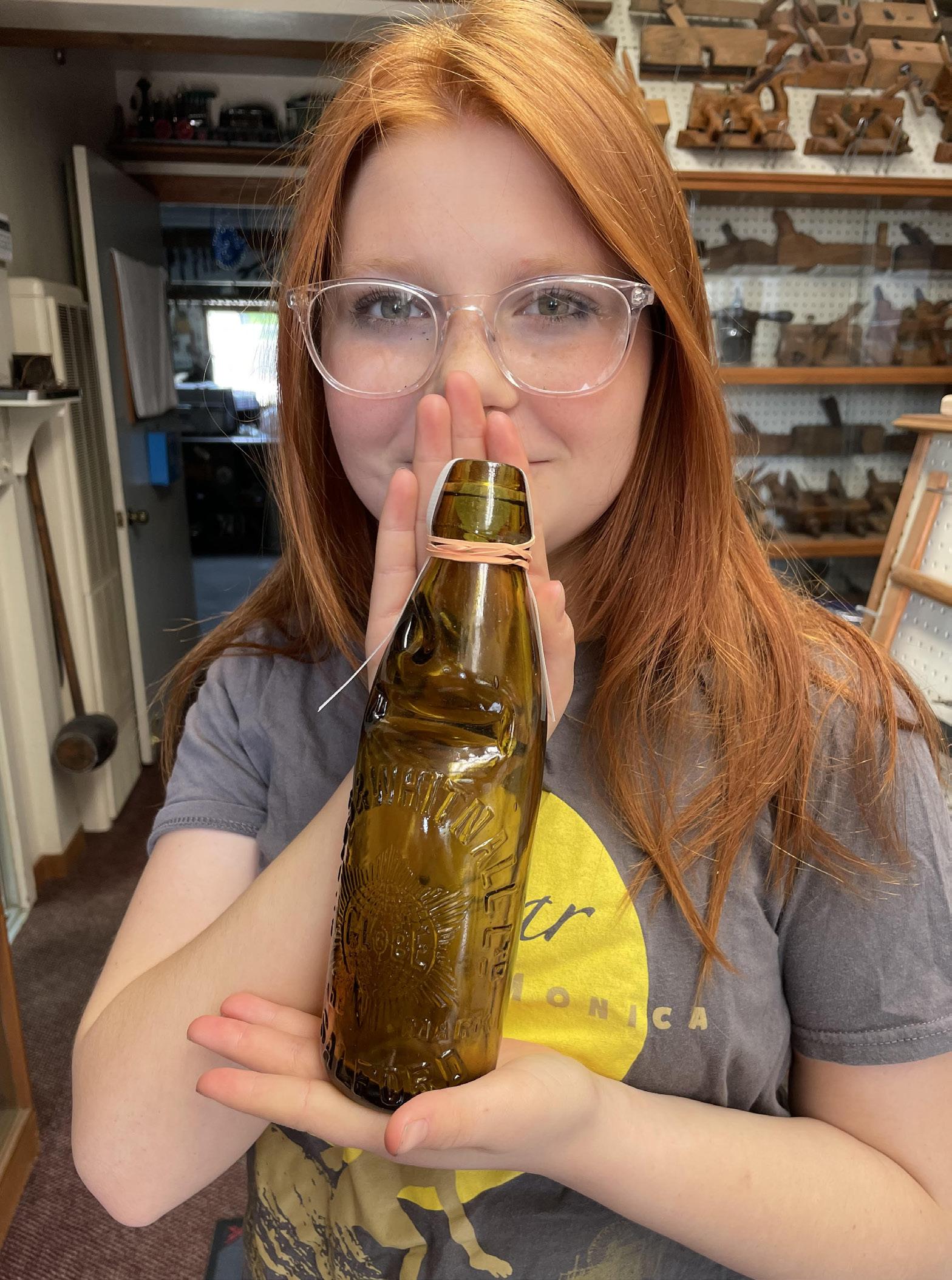
Aubree started collecting bottles under the guidance of grandparents Mike and Kathie Craig. She fell for the unusual Codd soda bottles with the marble in the neck which was designed and patented by Hiram Codd, specifically for carbonated drinks. The thick glass withstands internal pressure and the marble and rubber washer seal in the carbonated drink.
Aubree has been to quite a few shows in the central and southern parts of California, but her favorite show was that FOHBC National Convention in Sacramento in 2016. When she is unable to attend shows, her grandparents keep an eye out for Codds they know she would love. She’s always eager to see them come home from a show to see what they found for her!
Her favorite is a blue, eight-sided embossed Codd from England and she loves the colored and embossed ones. Her collection numbers about 30 and they are safe in a display case at Mike and Kathie’s house. She has done some re search on Hiram and the history of Codd bottles and would love to go to their place of origin in England!
Now 17 and a Junior in High School in Campbell, California, Aubree works part time at a gymnastics facility. She visits her grandparents often and heads right over to her Codd bottle display. She was happy to show her collection to visitors at the Craigs’ Christmas party last December.
Aubree enjoys reading and studying the AB&GC magazine (even when she’s not in it). She encourages young collectors to tag along to bottle shows with an adult, listen to the stories from seasoned collectors, and learn to negotiate the
Young Collectors CORNER
Interviews with Alice Seeliger
Elliot and Jordan Simmons—Best Bottle Buddies
Since Elliot is 7 and Jordan is 9, father Will relayed the information for these two bottle collectors who started in the hobby at 4 and 5, respectively. But the boys offered the information, so here goes.
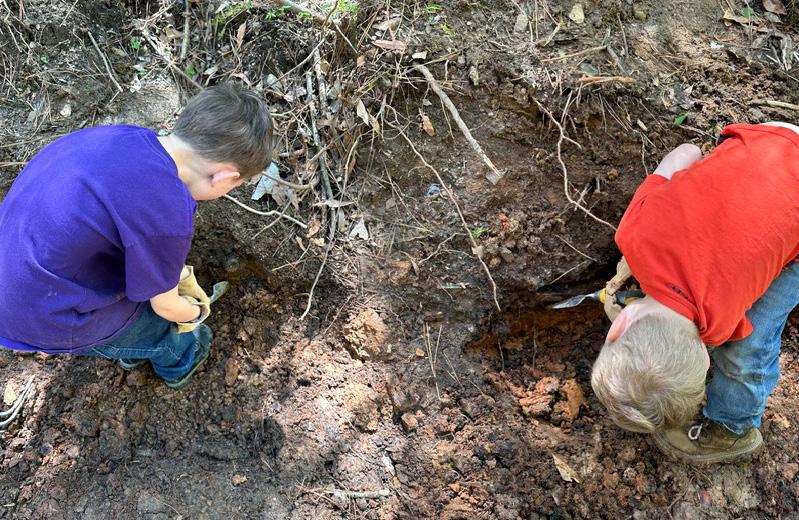
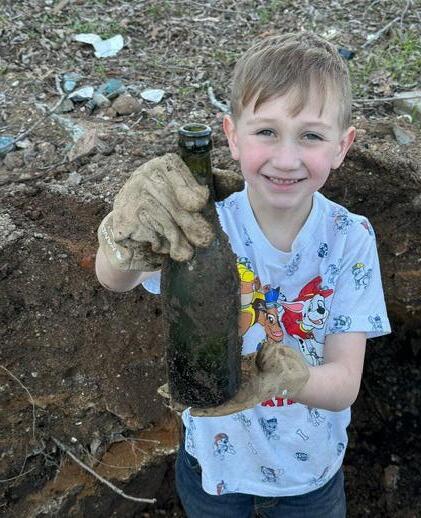
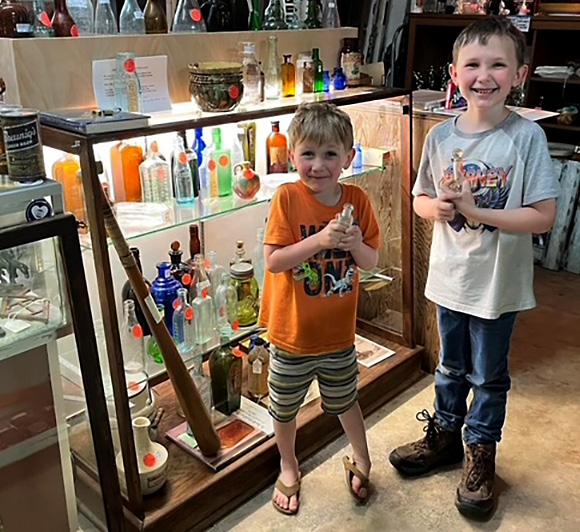
Elliot and Jordan both attend elementary school in North Augusta, South Carolina so it's natural that they gravitate toward collecting "South Carolina bottles." Dad, Will, gets them out to possible dump sites and lets them get down and dirty. The boys love it and their smiles tell the whole story. They've developed skills in handling trowels, shovels, and scrapers but something is suspicious about how clean their faces are! I’m guessing that clean-faced photo was taken at the very beginning of the dig. It also looks like they could use some kid-sized canvas gloves...anyone know a good source for these?
They love to go digging at places their dad finds for them. Both of the boys collect South Carolina dispensary bottles. Elliot branched out into Edgefield pottery, mini jugs, sharks teeth, and pocket knives. His favorites
are Mr. Chip’s (Brewer) eagles (Charleston, SC Bottle) and the river swamp fever cure with an alligator on it (Augusta, GA). Jordan included Edgefield pottery but then noted that his favorite bottles were quart cylinder amber South Carolina dispensary bottles, Mr. Newmans sodas, and a ship bottle.
Elliot and Jordan share space in a glass cabinet their dad bought for them. But by the looks of it, and they agree, they are due for a second one if their treasure hunting continues to be so successful.
The boys would like to encourage other young kids to take up the hobby, “You should try it, it’s a lot of fun. You can dig or buy them,” advises Elliot. Jordan, on the other hand, would use a more solid enticement, “I would give one of my bottles to them that wasn’t too expensive to get them excited about it.”
Hey Elliot and Jordan, we hope to see you at an upcoming bottle show. Welcome to FOHBC!
Jordan and Elliot getting down and dirty in the dumps
Elliot with a great find!
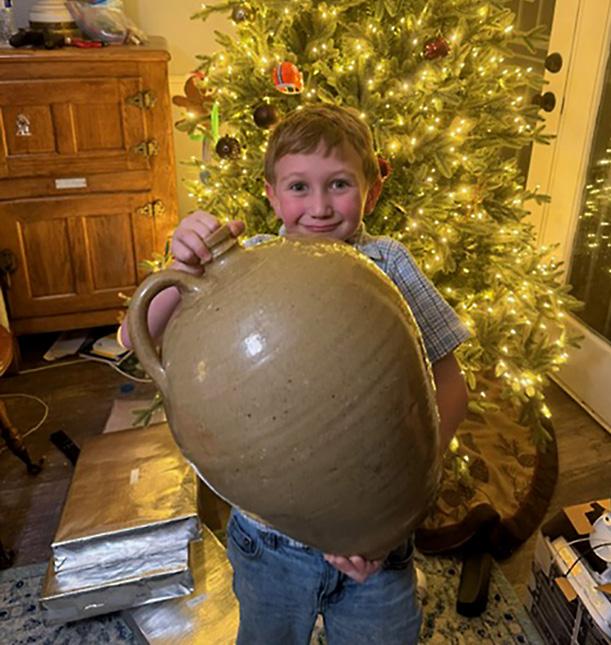
Jordan with a massive Edgefield Pottery jug!
By Ralph Finch, edited by Alice Seeliger
Some people scratch out a living, some … scratch out a collection. Janet’s and mine have been going on for some time. True, we have been collecting glass — and a boatload of other bits of flotsam and jetsam — but our Alloa glass collecting only began about 20 years ago.
Scottish Alloa bottles date back to around 1750 when the Alloa Glassworks was established by Lady Frances Erskine on the edge of the river Forth on the southern boundary of Alloa. These odd bottles, almost
Gary Everhart
always dark brown or black glass, are most noted for their “stippled” or “etched” designs rather than the shape of the bottle. Alloa is famous for glass with “chip” engravings made through sharp hammering on the glass. Though 99 percent of the etched items are bottles, a few rolling pins and even one very rare mug/goblet exist.
Most of the bottles carry words or images, sometimes of people who could actually afford these. Some etchings celebrated special events such as marriages or
deaths. There are also images of animals, birds, Masonic symbols, and once, in an eBay offering, a badly damaged bottle featured an amazingly well-executed Scottish highland dancer.
Fellow collector and one of England’s top glass historians, that it’s possible this method was chosen by those who could not afford a glass engraver. These images could be made by a folk artist or really anyone with a bit of skill.
Jeff Strong of Baltimore had a rolling pin etched “Look out for Squalls Jack” dated 1886. Years ago, Norman Heckler
Various museums have (or had) examples of Alloa glass. And, in August of 2013, Bonhams of London offered an etched Alloa coffee pot engraved for an Edinburg Exhibition dated 1886.
The Alloa Glassworks has kept one of its glass cones, dating back to around 1825. It is the only such structure to survive in Scotland and it is one of just four in the United Kingdom.
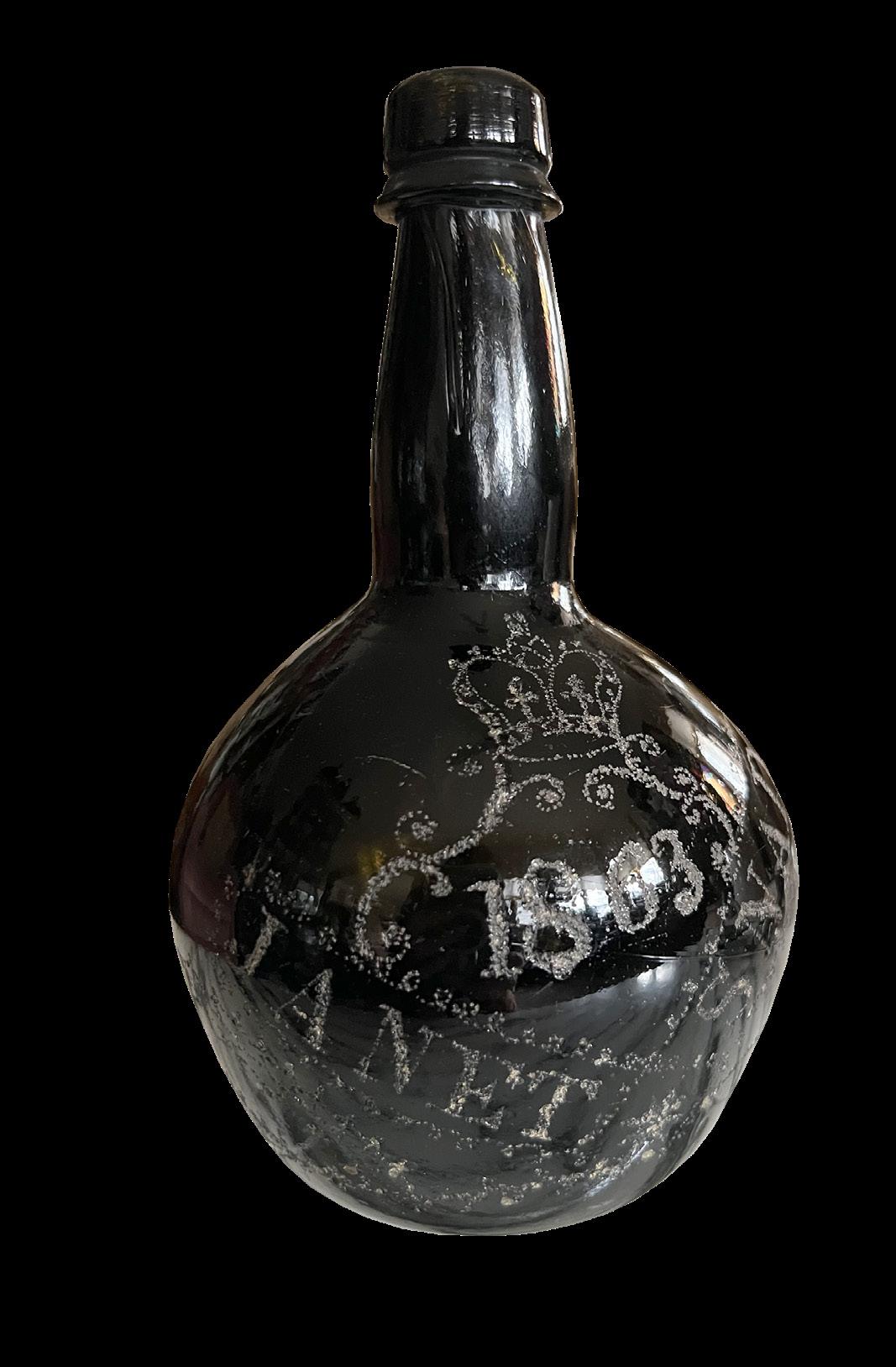
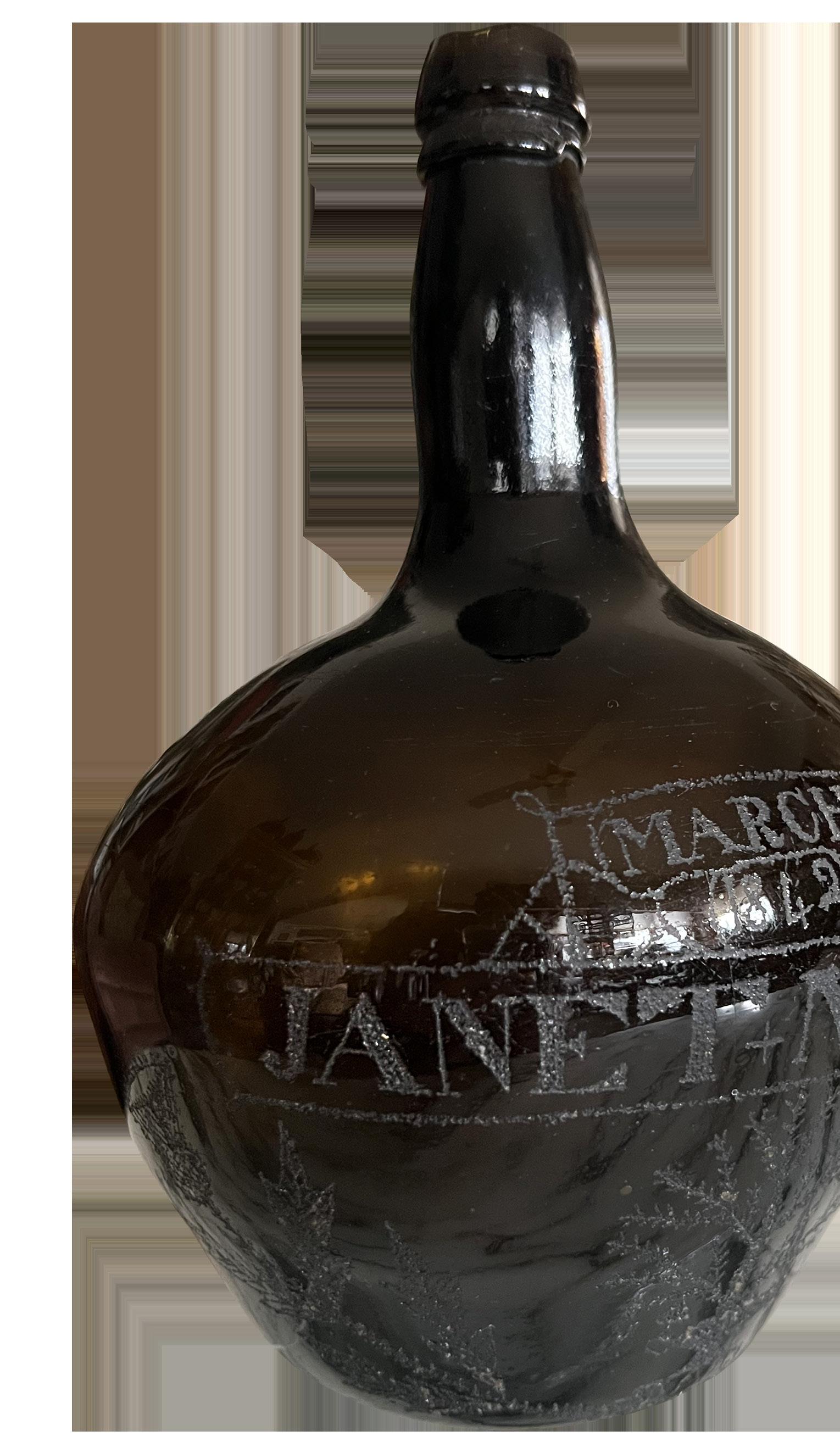
Jeff also let me know that he found two Alloa bottles with “Janet” etchings in his collection, so he surmised Janet was a popular name back then. My two “Janets” were purchased recently from one of London’s top glass dealers, Laurence Cooper.
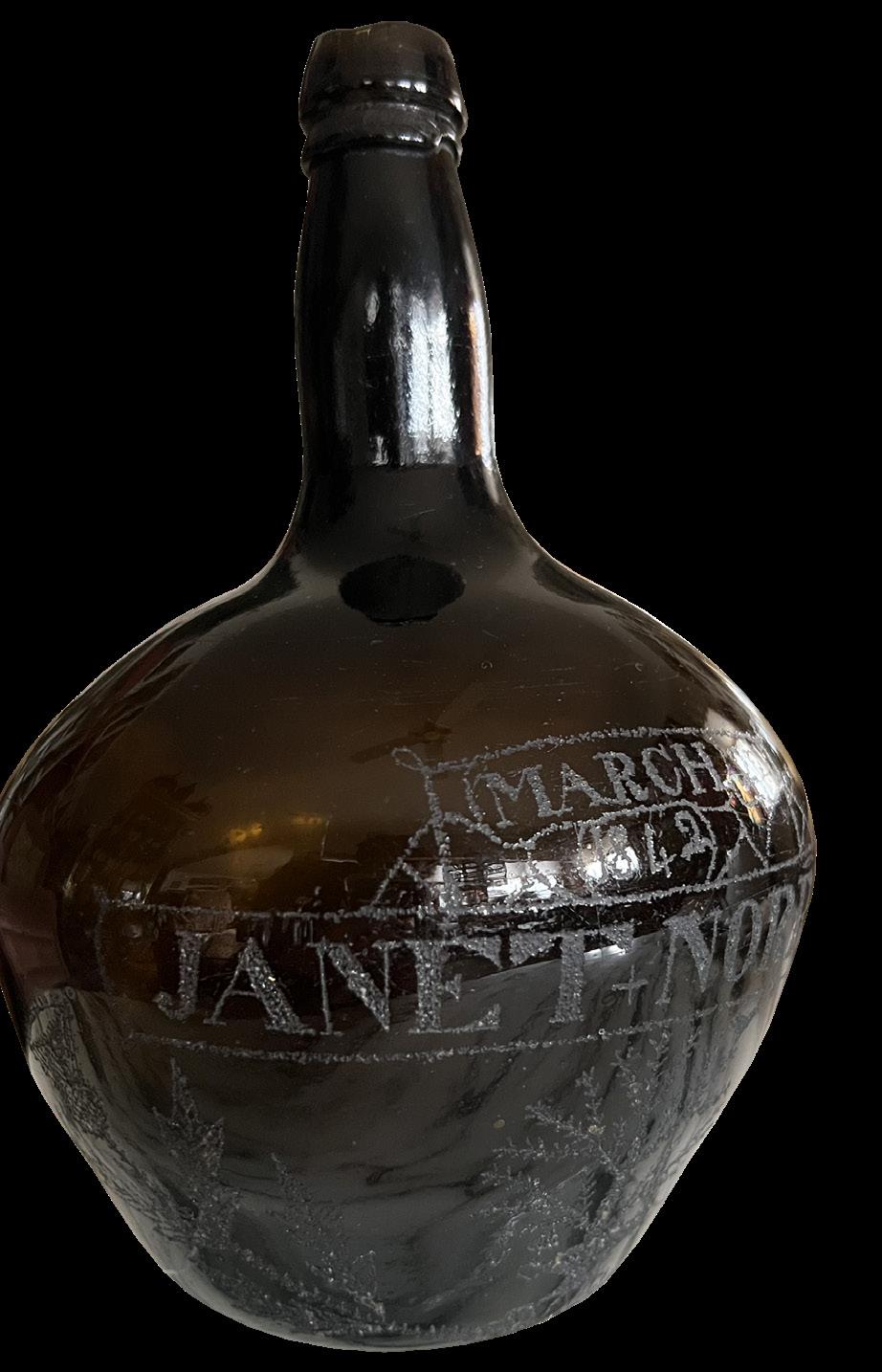
(To the left of Janet) Eight inches high with a pontil, etched with a variety of thistles, a tree, and “JANET NORRIS, March 22 (29?) and 1842.” A large ship anchor graces the reverse.
(To the right of Janet) A pontiled, slightly darker bottle dated 1863 with “JANET” and “SNADON” and the usual thistles and vines.
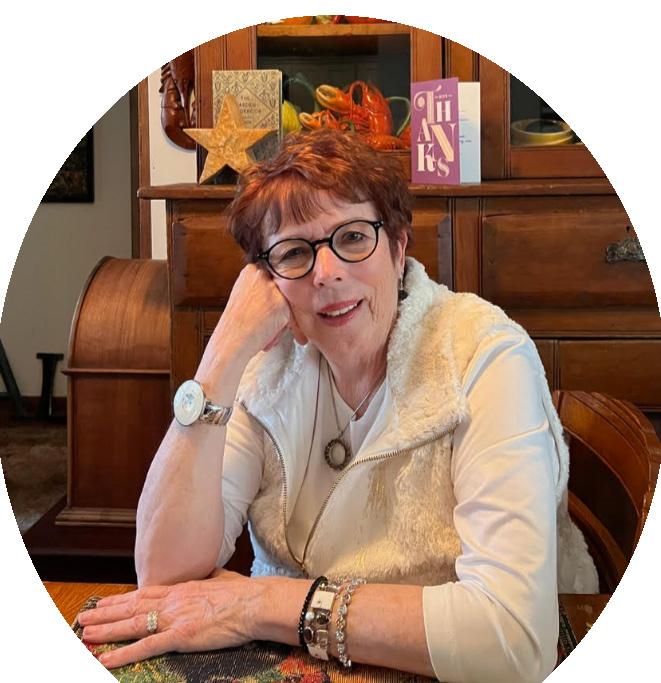
My Gem of a Janet keeps track of all our collec tions (and me). She is also the most incredible (and patient) wife in the world.
As I was researching for this article, I remembered the Mark Nightingale black-glass goblet c1800 that sold for 2,300 pounds. Some alarm bells start ed going off. I eventually went over to the cabinet of etched bottles. There was the goblet! “Janet,” I exclaimed, “When did we buy that?”
In my next article, I’ll make the connection between that goblet, the first iron Sunderland bridge, a famous actress—Mrs. Ann Borden, and William IV.
Ralph Finch
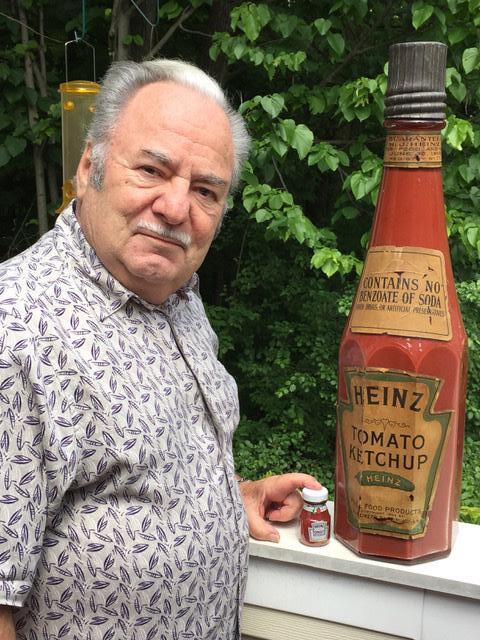
Well-known to our readers, Ralph offers his special brand of collecting insight. As he begins to disburse yet another collection, Ralph is about to lose his title of “The Ketchup King.” Years ago, when he called his young nephews, they would answer and yell: “Mom, it’s Uncle Ketchup.” Comments, questions, and offers can be sent to Ralph at rfinch@twmi.rr.com
HISTORICAL FLASK SERIES
Celebrating the 250th Anniversary of our Country’s Independence.
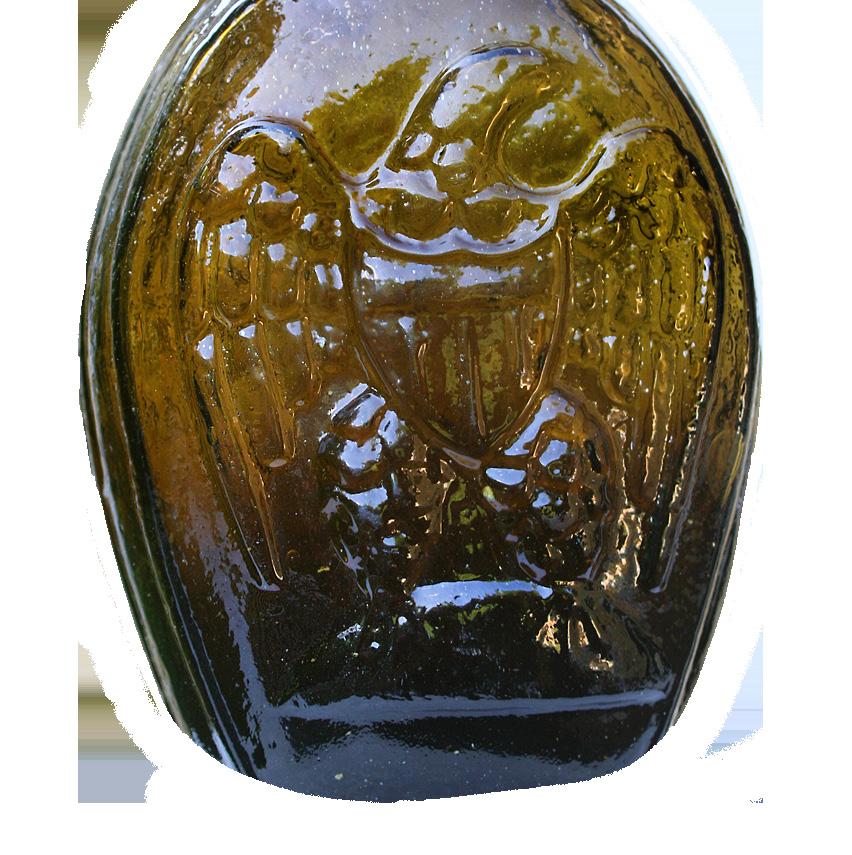
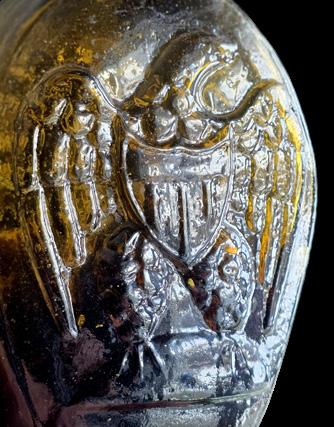
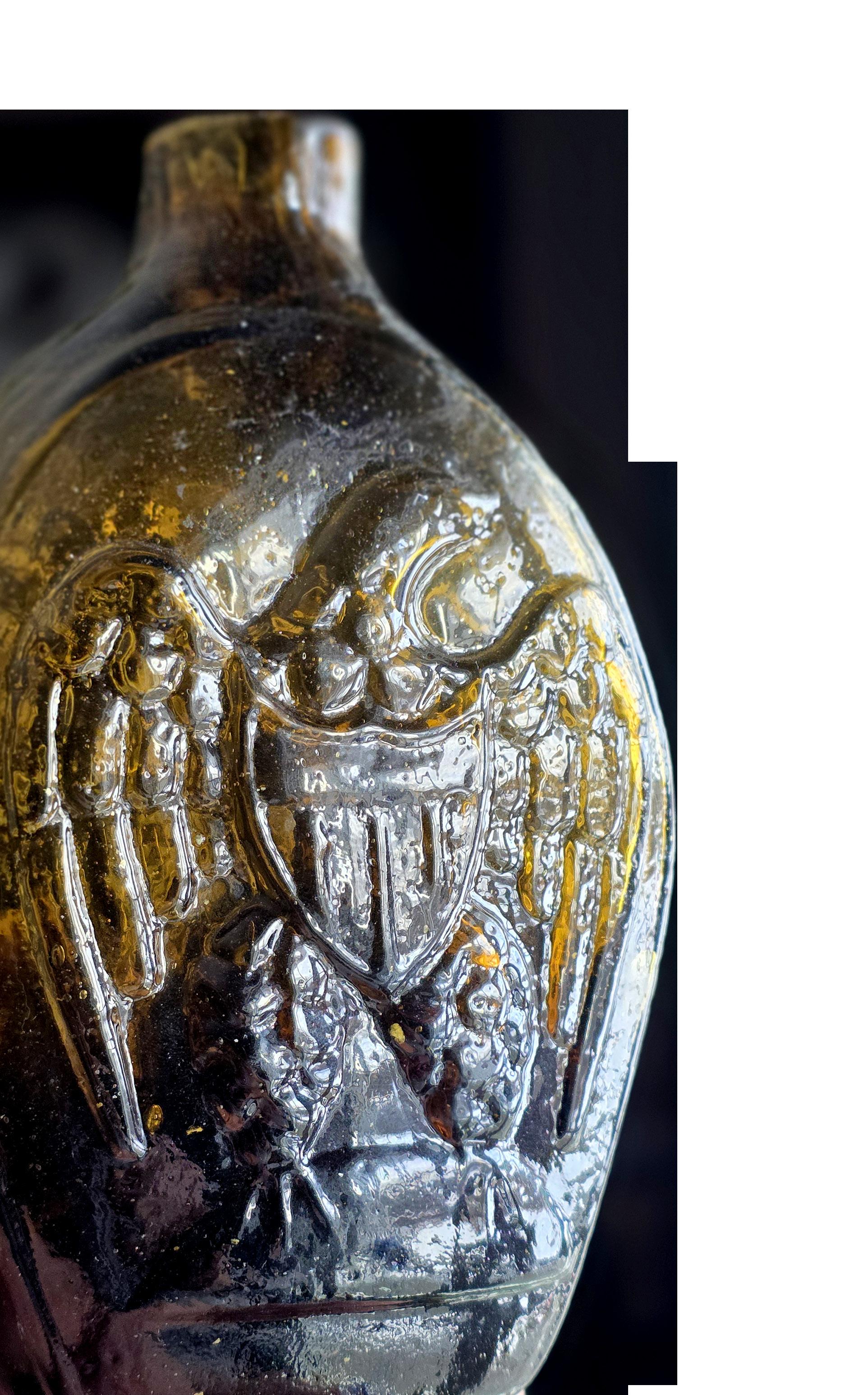
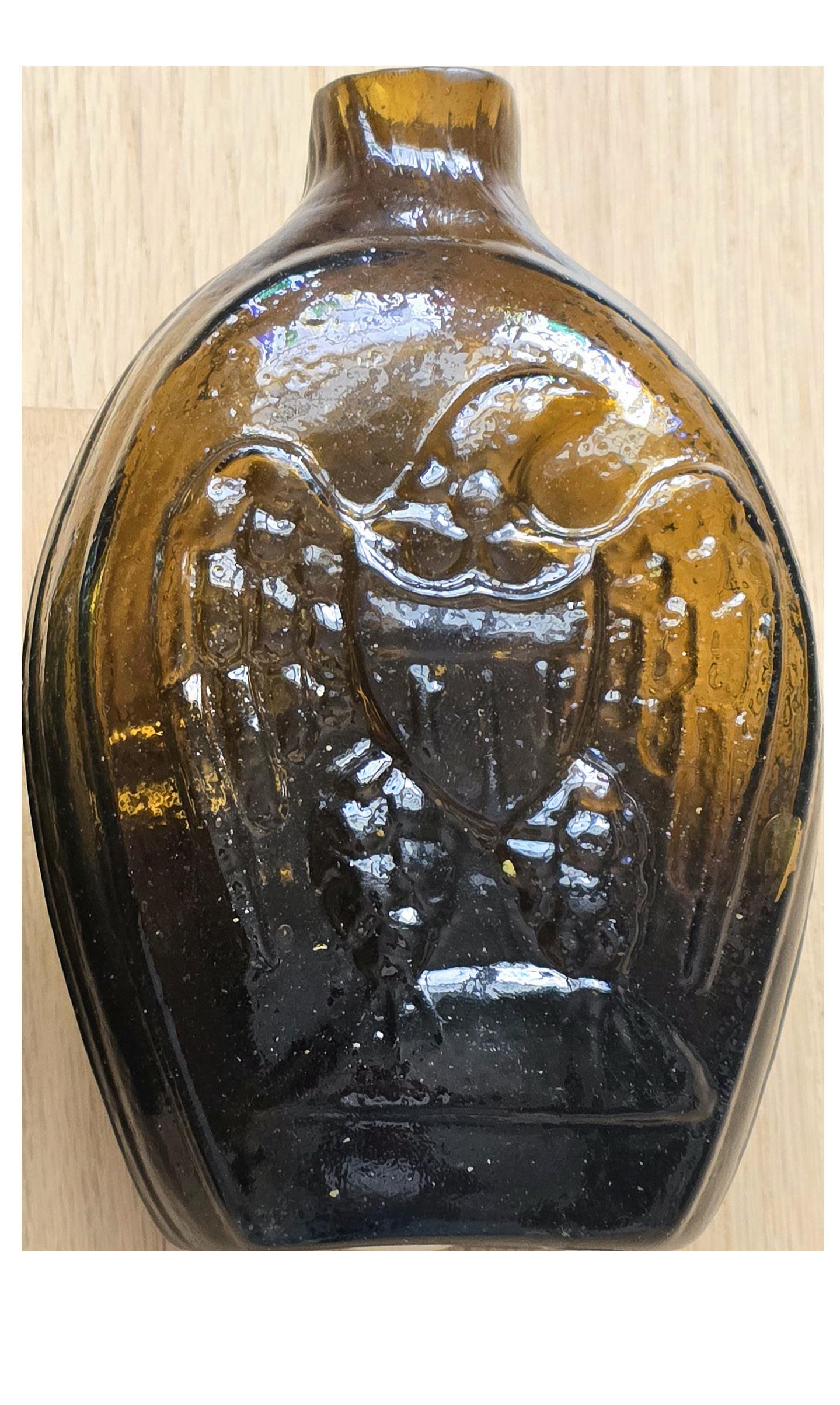
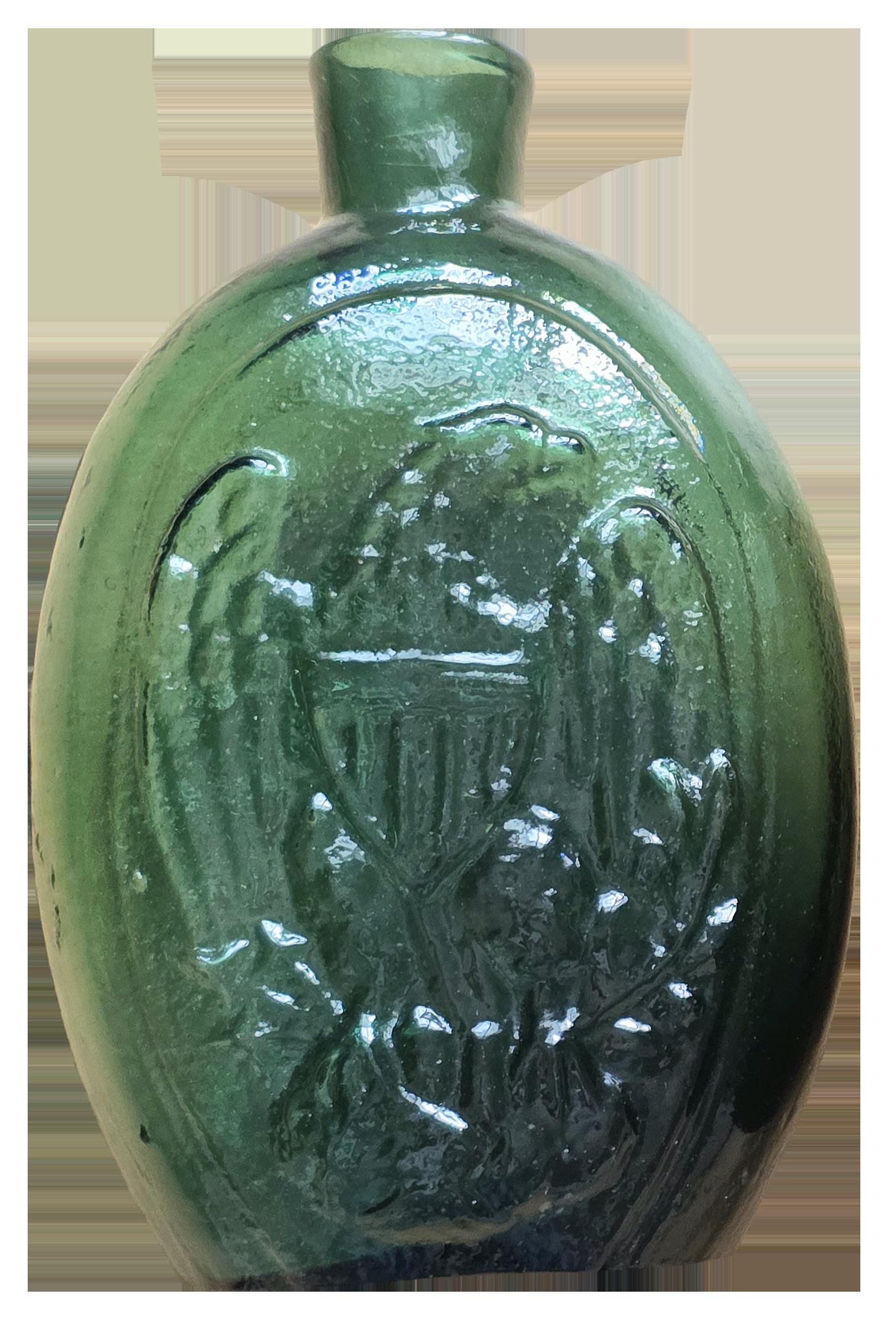
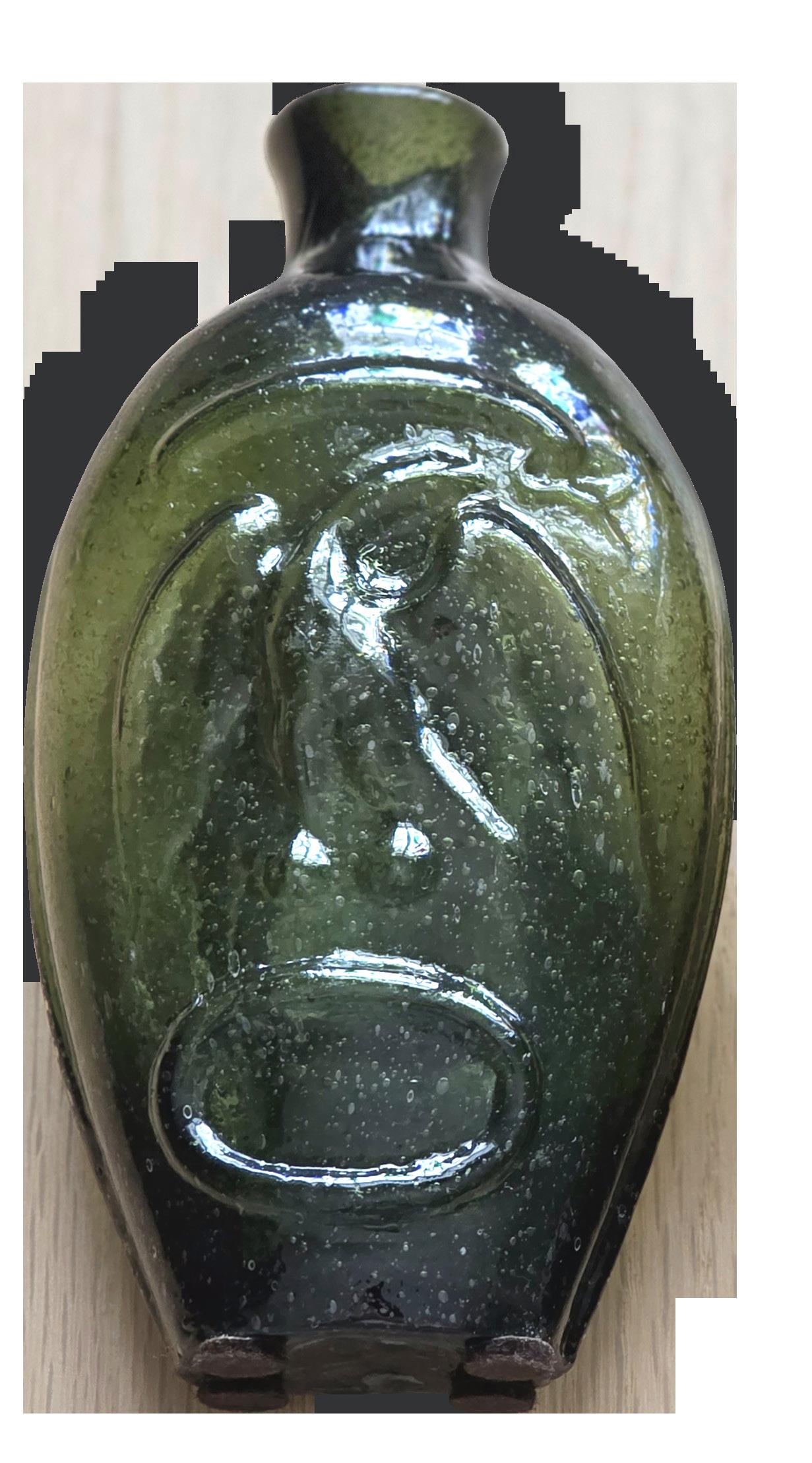
Eagles on historical flasks are one of the most important and recognizable themes in early American glass, serving as symbols of national identity, patriotism, and authority from the early 19th century onward. After the American Revolution, the bald eagle became the dominant national emblem. Very few eagle depictions have shown the strength and power as is seen in the Pantaloon Eagle flask! Two molds offer a look at this very distinctive design. Yet, we still know very little about these iconic flask molds.
Antique Bottle & Glass Collector
The “Pantaloon” Eagle pint-sized flask (left) and the half-pint baby brother (right)
APantaloon Eagle flask is a type of mid-19th-century American historical glass flask decorated with the distinctive “pantaloon” style eagle—an eagle whose thick, rounded thighs resemble baggy trousers. They are actually quite exaggerated by the ruffling of the feathers! The pantaloon eagle was a popular folk-art interpretation of the national symbol during a period when realism mattered less than bold symbolism. These flasks were produced at the height of political and patriotic merchandising, overlapping with campaigns like Zachary Taylor’s 1848 run for president. While not all pantaloon eagle flasks are political, the imagery strongly reflects national pride, military strength, and American identity.
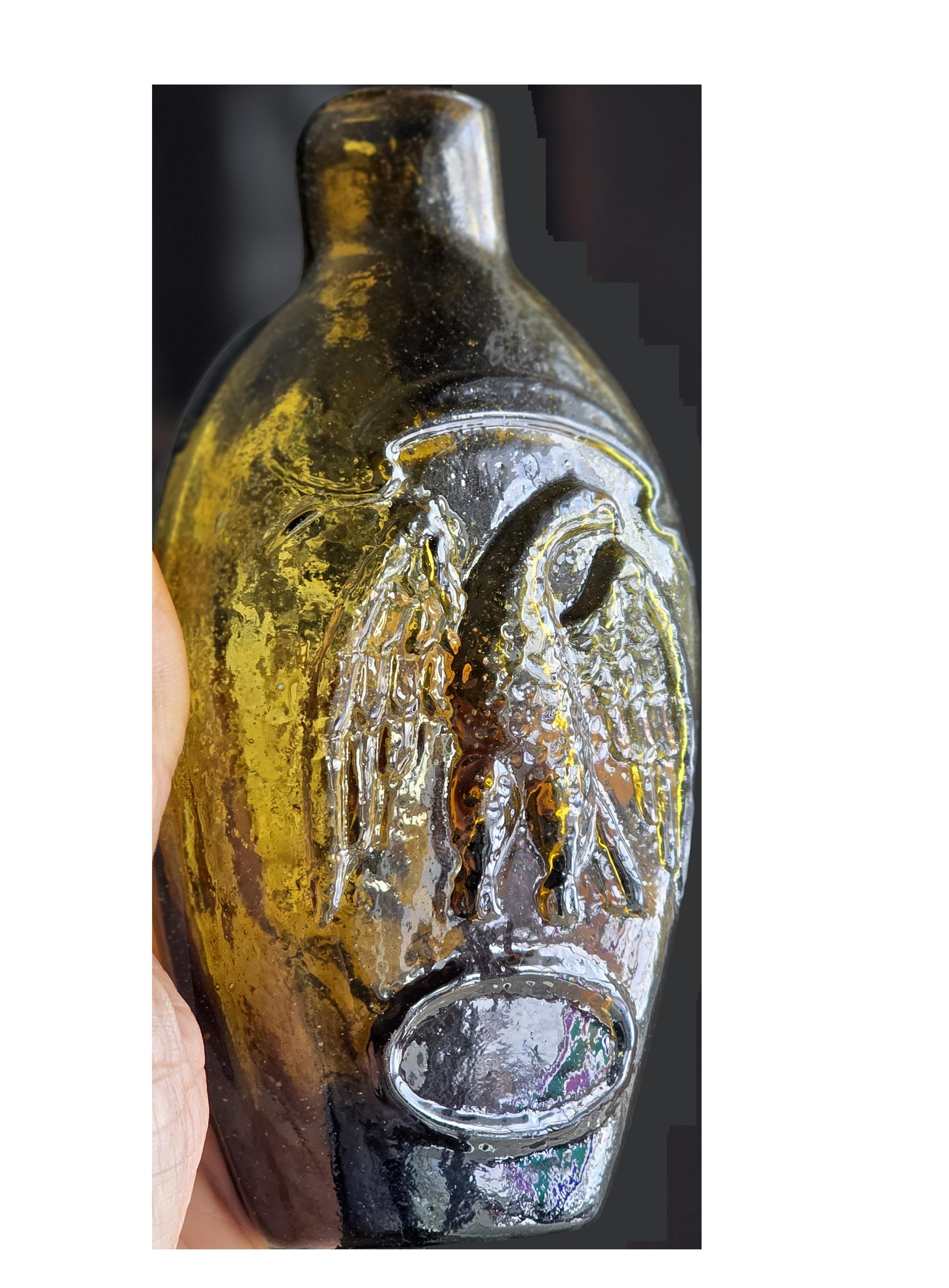
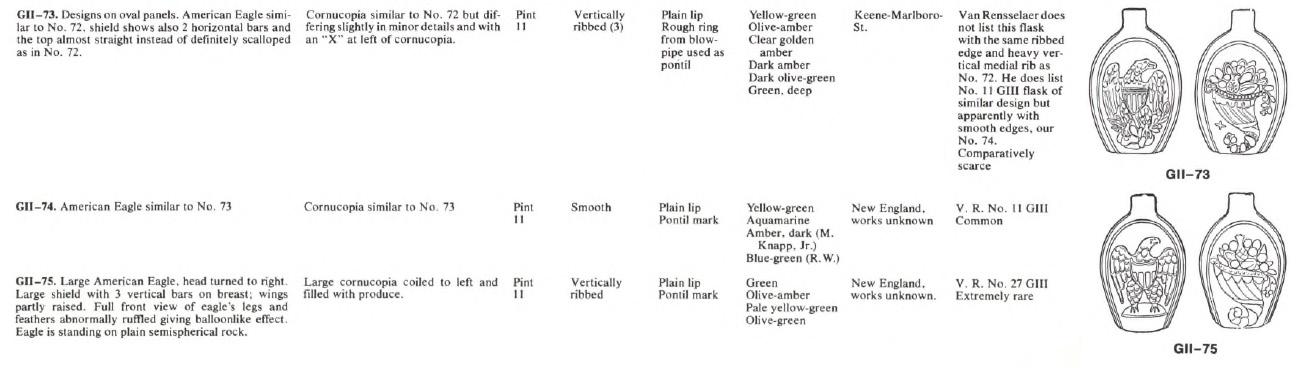
There are two flasks that we are highlighting in this article that clearly exhibit the look of a Pantaloon eagle, and I am delighted to say that they are very likely New Hampshire-made products. The first one is the pintsized GII-75. The mold used for the GII-75 Eagle-Cornucopia flask is nearly twice as thick as the more common GII-72, 73, and 74 figured flasks, making it more distinguishable and heavier than these counterparts. The flask was produced at an unknown New England glassworks though flask collectors openly attribute the flask to the Keene Marlboro Street Glass Works in Keene, NH or Joseph Foster’s first glass factory in Stoddard, NH.
Besides the thickness of this flask, the motifs on the flask are much more powerful than the more common Eagle / Cornucopia flasks. This eagle is larger, with the obvious and somewhat exaggerated feathered legs and thighs. The eagle is also positioned on a larger rock. The heraldic pose is a bold, patriotic image!
The reverse of the flask has a large embossed cornucopia filled with fruit opening up and the bottom of the cornucopia is coiled to the left. The cornucopia brimming with flowers or produce or both is an ancient motif used throughout
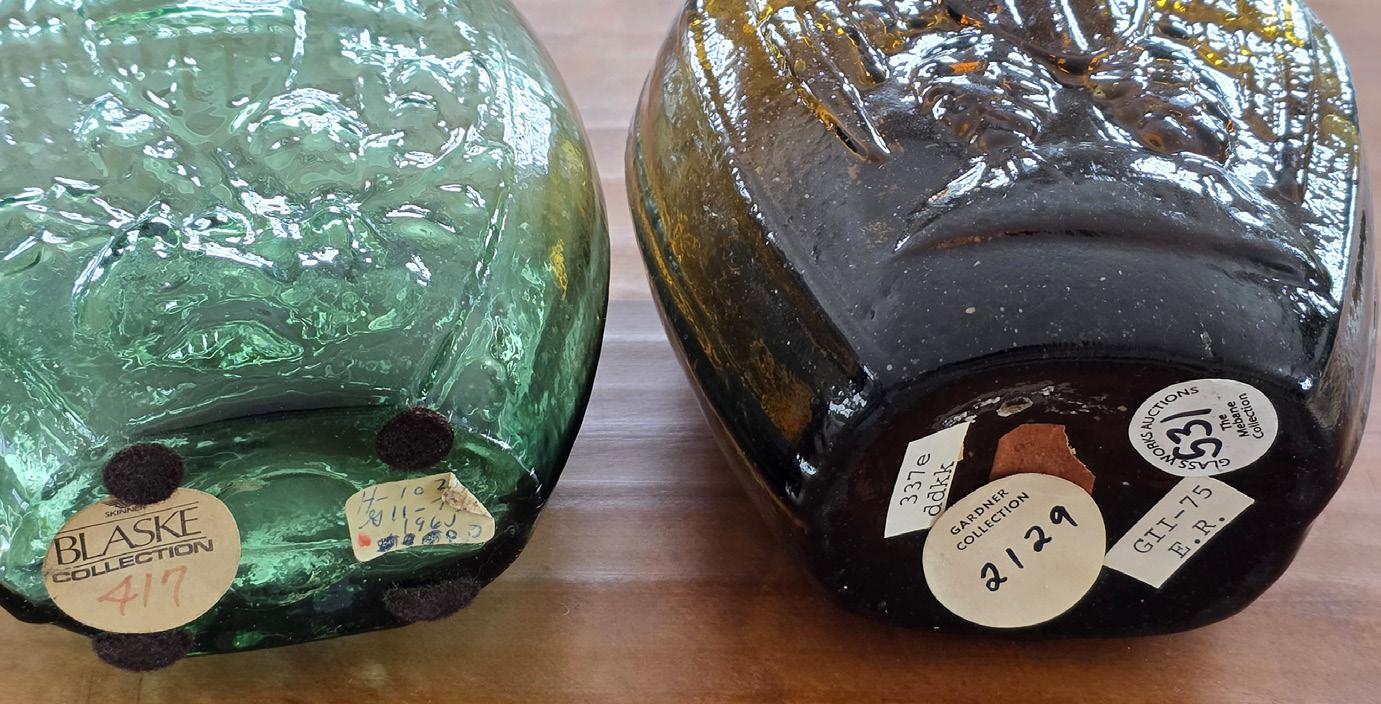
This base image illustrates the thickness of the GII-75 against the other molds.
(Below) From the historical flask chart in American Bottles & Flasks And Their Ancestry by Helen McKearin and Kenneth Wilson. GII73, GII-74, and the GII-75 Pantaloon Eagle.
A quick comparison of the GII-75 “Pantaloon” Eagle flask (left) to the typical GII-74 Eagle flask (right)
time to symbolize prosperity and plenty. On these flasks, the overflowing cornucopia certainly was a purely decorative element but also reminded one of our young country’s good prospects, especially in the first half of the 19th century.
This mold must not have been used for a very long time, as we can count the examples known on two hands. By collector standards, the GII-75 is an EXTREMELY RARE flask.
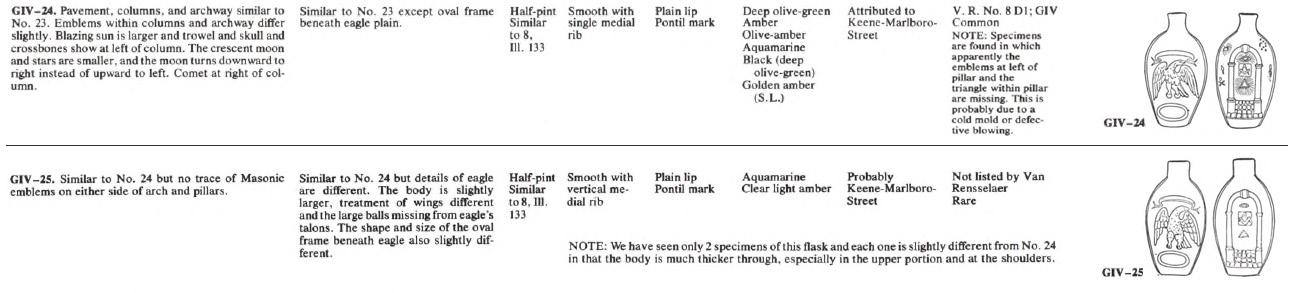
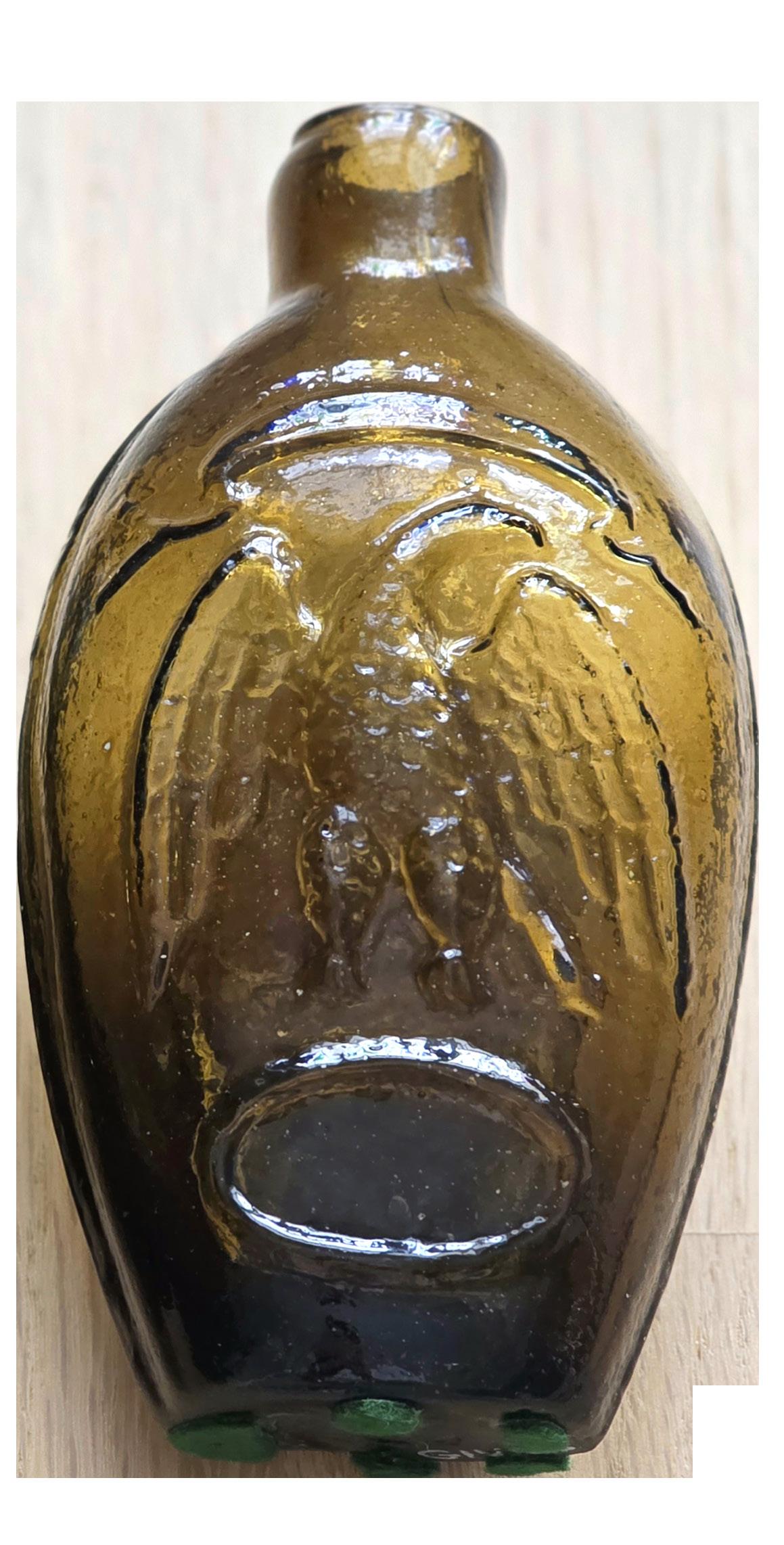
The 1/2 pint Pantaloon Eagle (GIV-25) is charted with the Masonic flasks, as determined by Helen McKearin. This flask is attributed to Marlboro Street Glass Works as well, and likely dating to the 1820s. Masonic flasks became popular in the United States during this timeframe, a period when Freemasonry was considered both a patriotic and fraternal organization. These flasks were often used at lodge meetings held in local taverns, where members would partake in toasting and fellowship after their formal proceedings.
(Below) From the historical flask chart in American Bottles & Flasks And Their Ancestry by Helen McKearin and Kenneth Wilson. GIV-24, and the GIV-25 with the Pantaloon Eagle.
Antique Bottle & Glass Collector
As you can see, this eagle motif follows a similar exaggerated style as the GII-75. The other side of this flask depicts a Masonic arch and pillars, although it lacks the mason tools that are commonly displayed on the other flasks of this type. Although the GIV-25 is charted as Rare, it should be considered Very Rare or Extremely Rare. In my 40+ years of collecting experience, I have encountered less than a handful, and can certainly count the known examples on two hands as well.
A quick comparison of the GIV-25 Eagle flask (left) to the typical GIV-24 Eagle flask (right)
These two flasks are not only elusive to collectors, but also quite mysterious. Were they an earlier version that, for some reason or another, didn’t receive the popularity? Is this why there are so few examples known today? Were they made by the same moldmaker? I think the characteristics of the design would certainly suggest so. Could these have been commission by a glass factory to compete with the more commonly spread Eagle flask molds? Although we may never know the answers to these questions, we can certainly appreciate the primitive beauty of these wonderful flasks.
We will be discussing the iconic “Firecracker” flask. You won’t want to miss it!
Michael George is a wellknown collector, contributor, and a premier antique bottle and glass dealer. With decades of experience writing articles, attending and coordinating shows, and performing lectures, Michael is always willing to share his knowledge, while coaching new collectors in the hobby. Michael also has a Bachelor’s Degree in Marketing from Notre Dame College. He lives in the Lakes Region of New Hampshire with his wife, where they operate a seasonal inn. Michael can be contacted at earlyglass@gmail.com.
Two Arms and a Garb
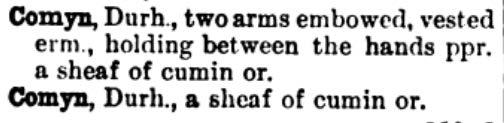
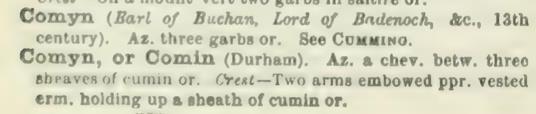
How the seal of one of England’s landed legal families was dismissed and lost in the heraldic record.
By Shaun Jeffery
Introduction
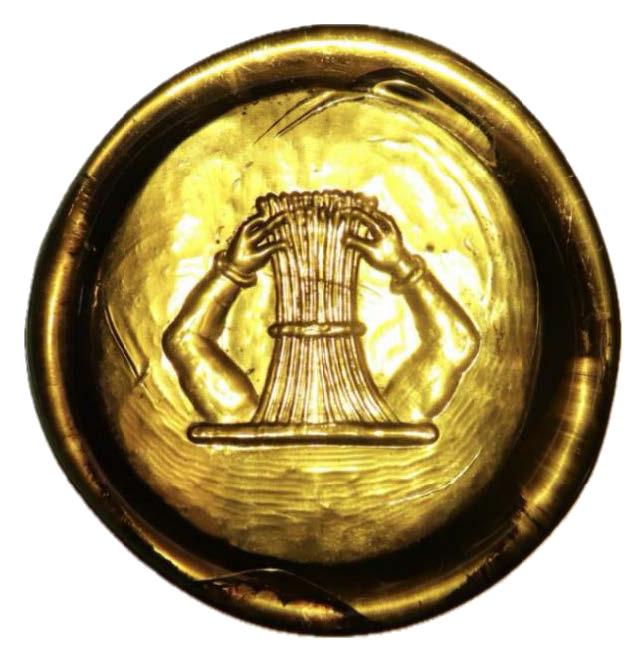
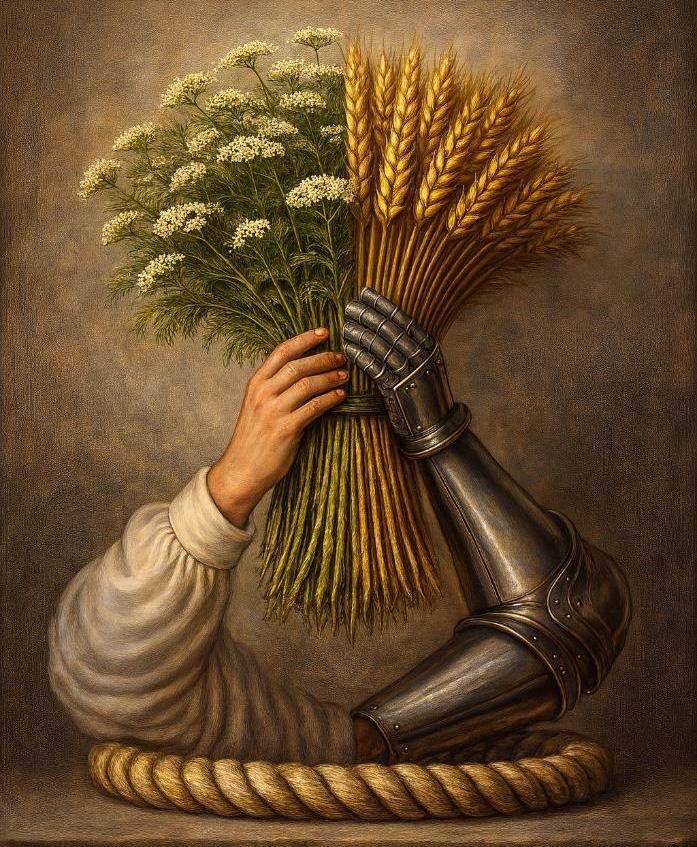
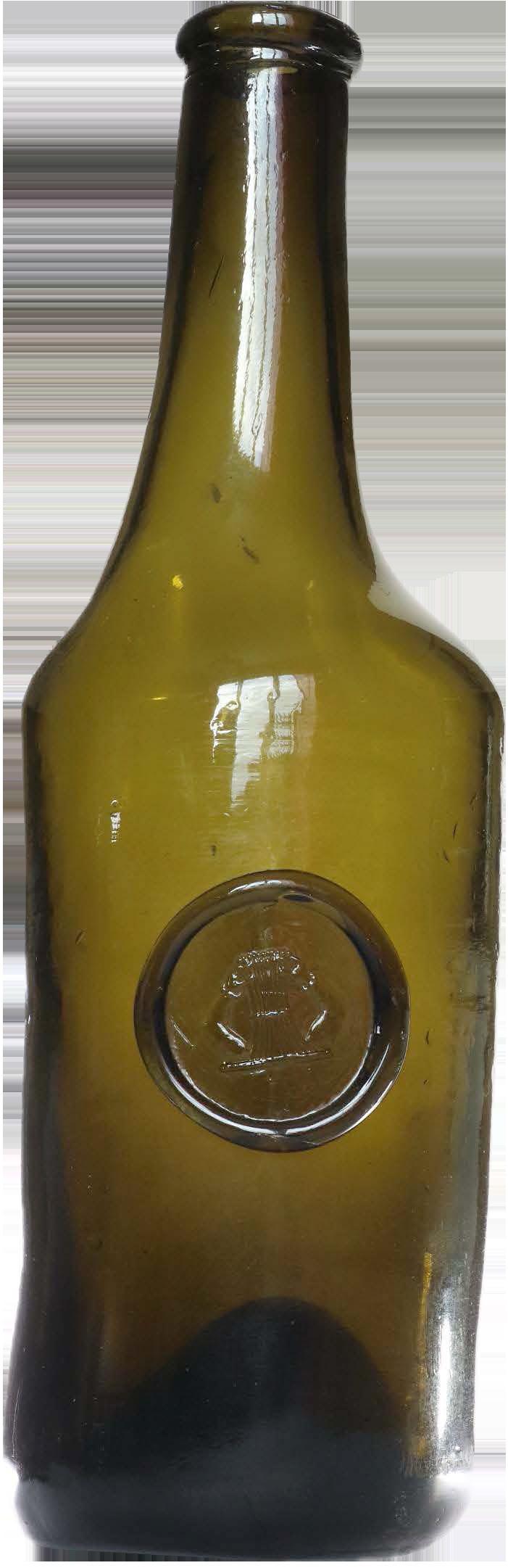
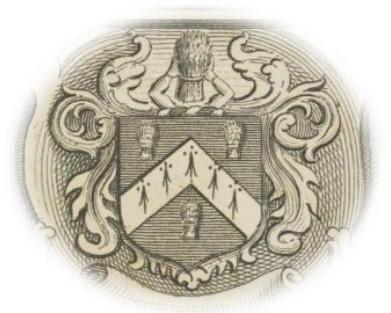
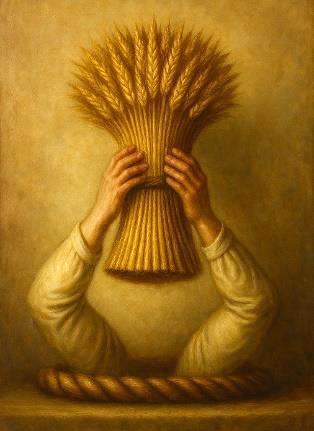
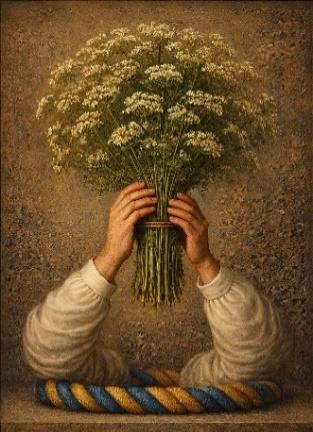
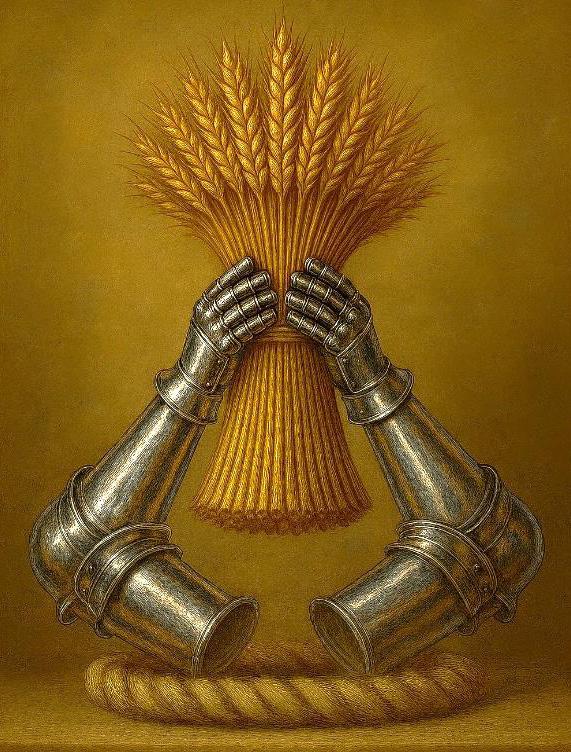
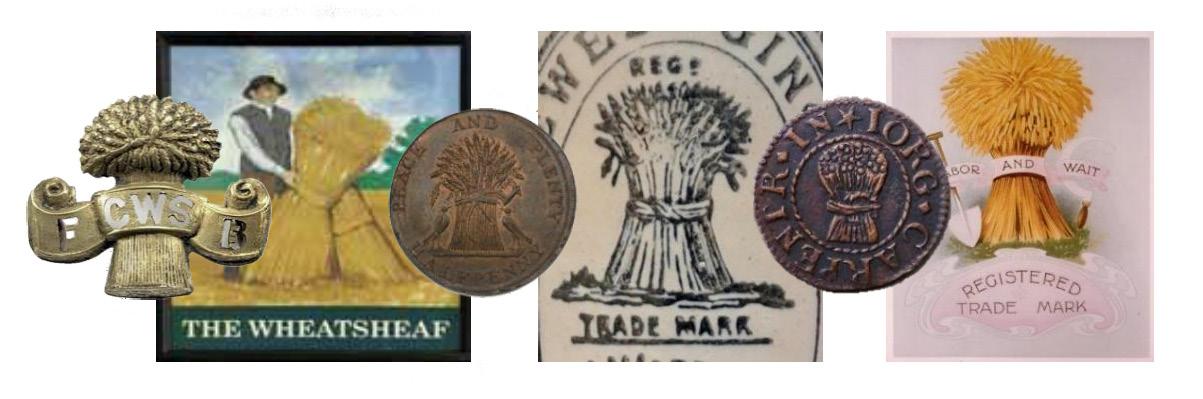
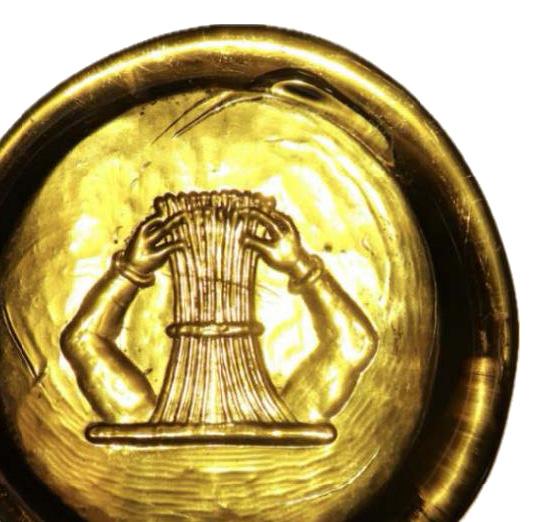
Among the more curious sealed bottles recorded in the literature is a small group bearing a simple device: two arms holding a garb, or wheat sheaf. The design appears straightforward, yet for more than seventy years these bottles carried an uncertain reputation, dismissed in print and left without a secure family attribution.
The earliest judgement appeared in Sheila Ruggles-Brise’s 1949 volume Sealed Bottles, the last major academic work devoted solely to the subject. Under the brief entry “Two Arms holding a Garb,” the assessors recorded that bottles bearing this device were believed to be modern fakes. No illustration accompanied the statement, and no measurements or comparative discussion were printed—an unusual omission in a book otherwise known for its structured and careful descriptions. With that single line, the crest was effectively dismissed.
More than sixty years later, the bottles were revisited in David Burton’s three-volume Antique Sealed Bottles 1640–1900 (2015). Here the earlier dismissal was no longer treated as fact, and the bottles were approached again as genuine eighteenth-century objects. Yet the central question remained unresolved: whose crest was it?
The bottle appears to have been produced in the years following the succession of the Hylands estate, when it passed not to a direct son but to Sir John Comyns’s nephew.
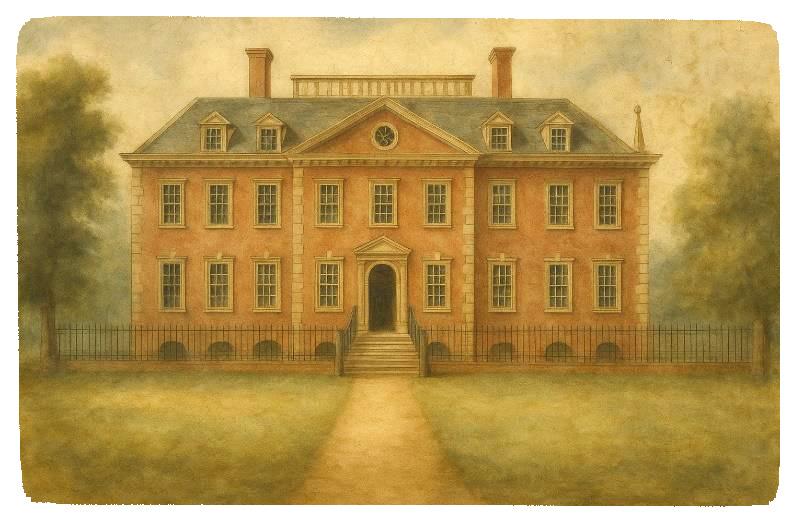
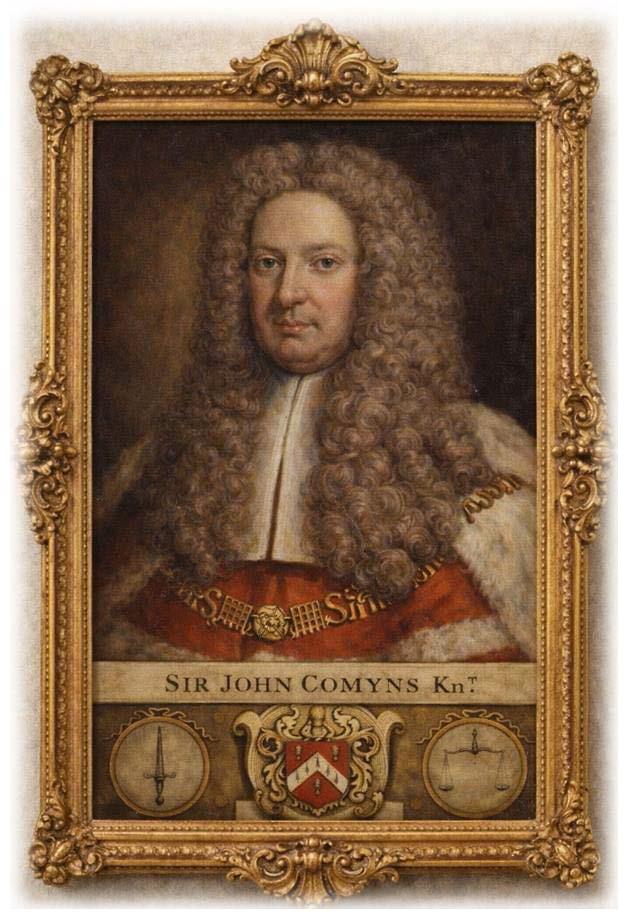
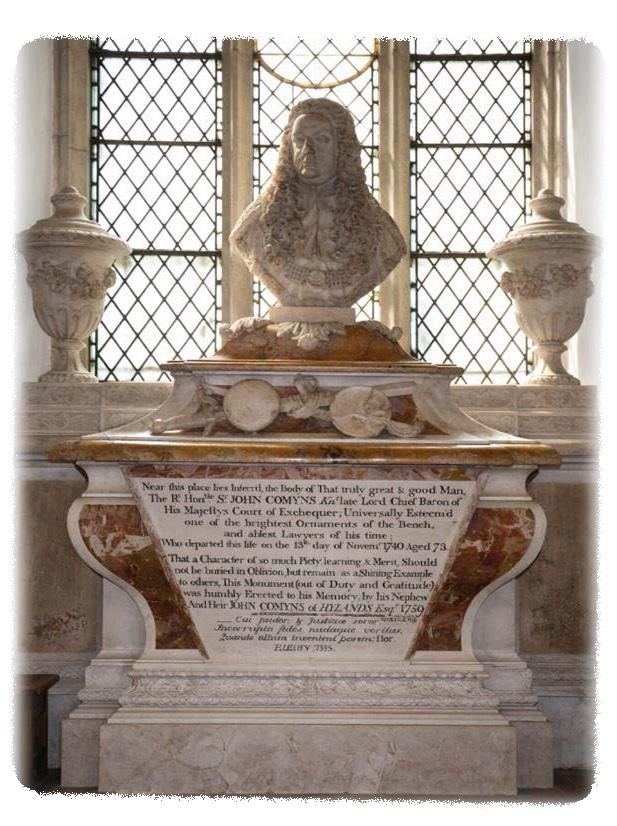
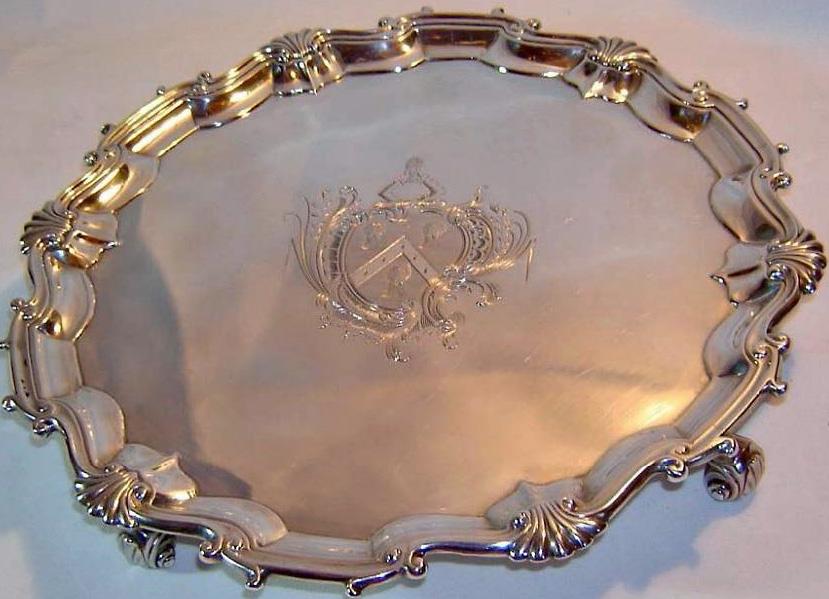
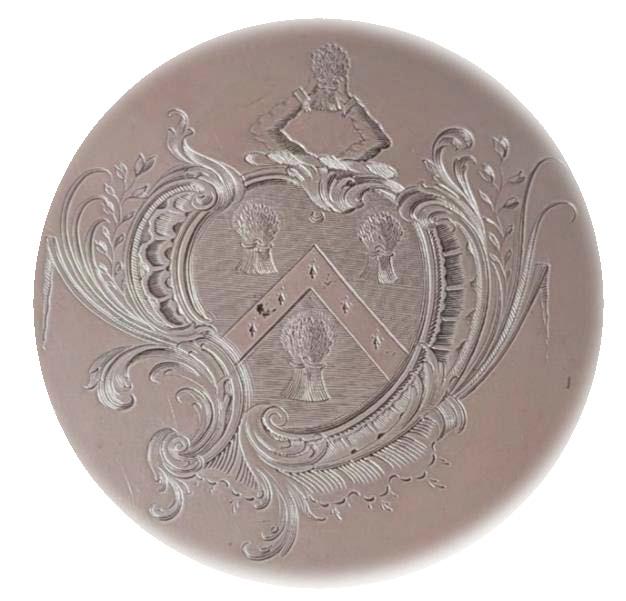
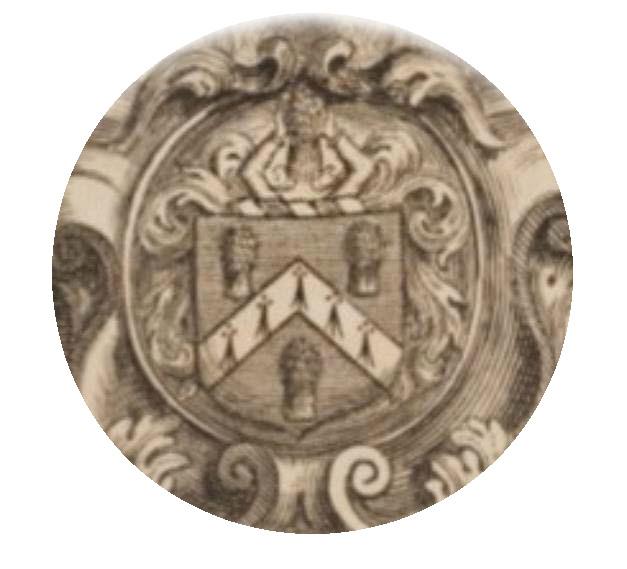
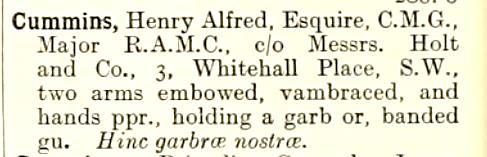
During this period a small group of armorial objects associated with the family seat was produced, including a portrait, 1749 silver salver, monument, and the sealed bottles, all carrying the same distinctive crest. When the seal is compared with surviving armorial objects connected with the Comyns family of Hylands, the device proves to be their crest, linking the bottle directly with the estate and the small group of armorial objects associated with the family in the years following the late-1740s succession.
This article traces that chain: how the crest was lost in the heraldic books, how the bottle came to be dismissed in 1949, and how the surviving armorial objects now restore it to its rightful owners.
The Bottle
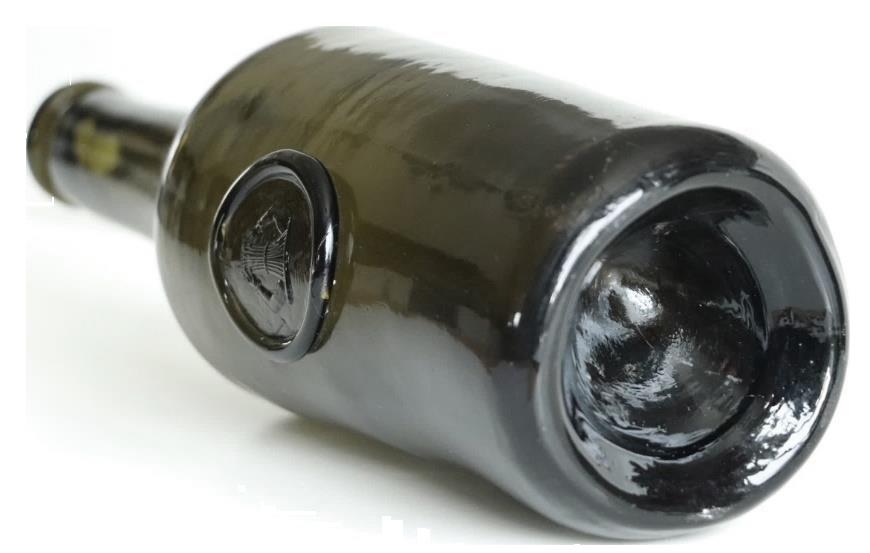
The bottle is a tall, narrow-bodied armorial decanter in dark olive-green glass, standing be tween 272 and 287 mm in height, with a body diameter of 87–93 mm. It has full, rounded shoulders rising into a long, tapering neck finished with a flattened lip and string rim, and a heavy base with a deep sand-pontilled kick-up.
What immediately marks the piece as an early, hand-blown bottle is the character of its shape. The shoulders do not fall at exactly the same angle, and the body shows a slight asymmetry from front to back, giving the bottle a gentle lean when viewed from dif ferent sides. The glass thickens noticeably toward the base, where the colour deepens into a darker olive tone, while the neck appears lighter when held to the light. These small distortions and variations are typical of mid-eighteenth-century furnace work and confirm its hand-blown character.
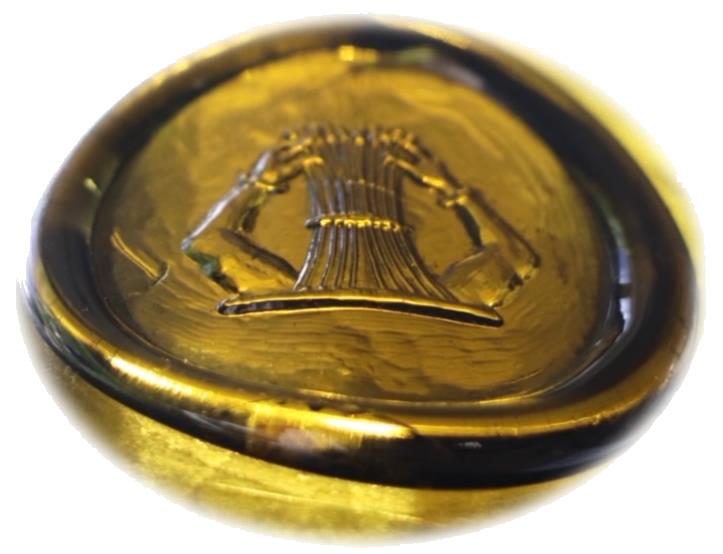
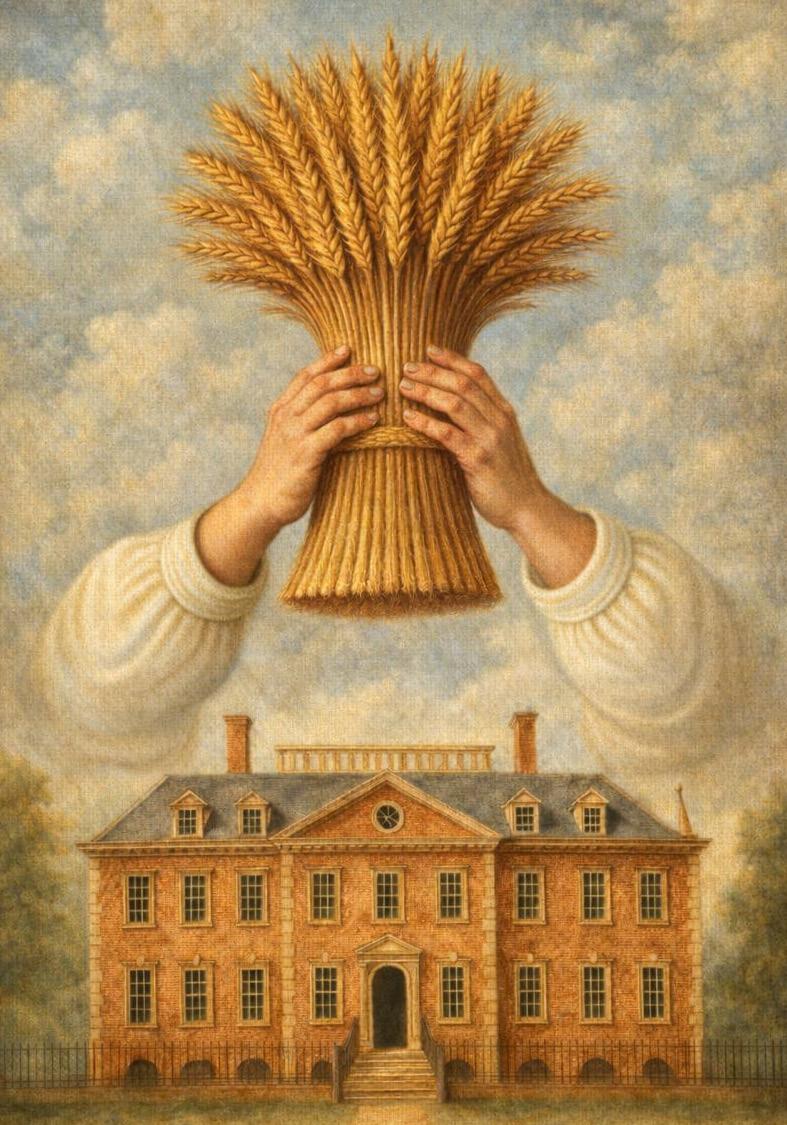
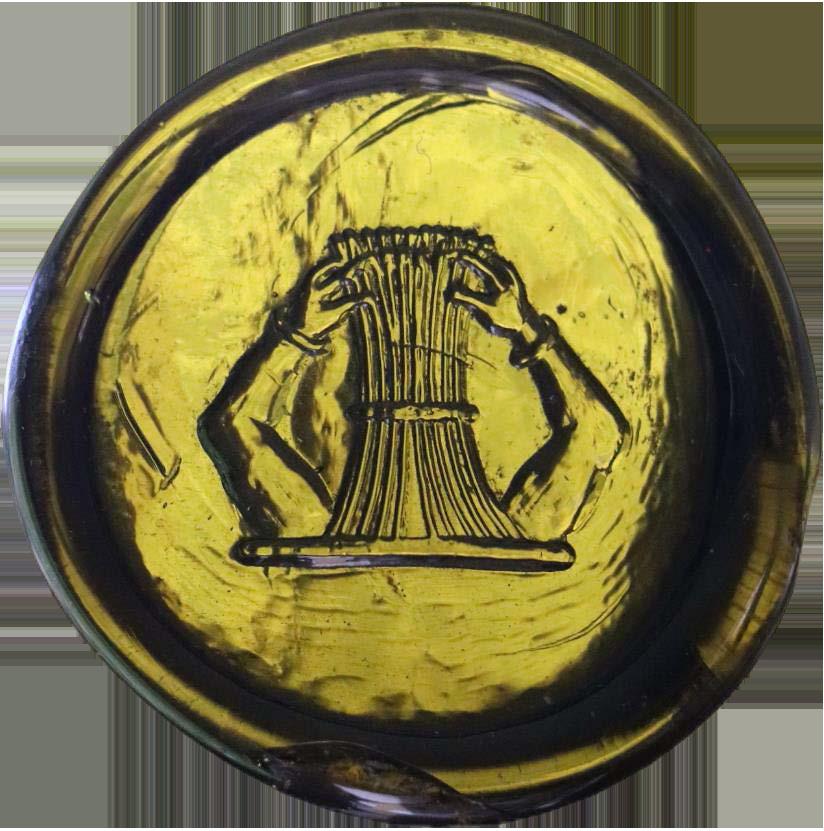
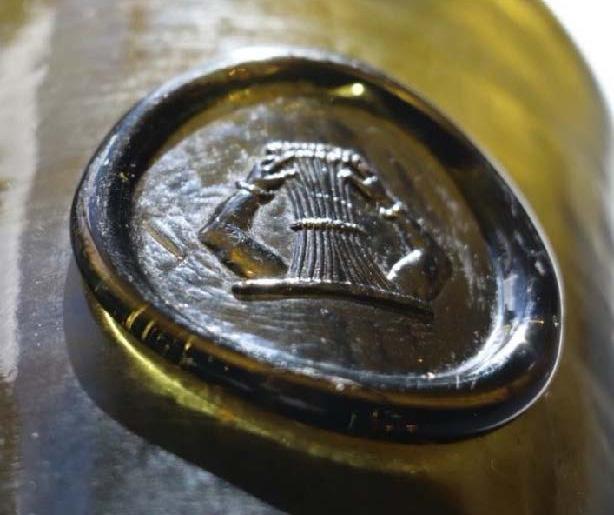
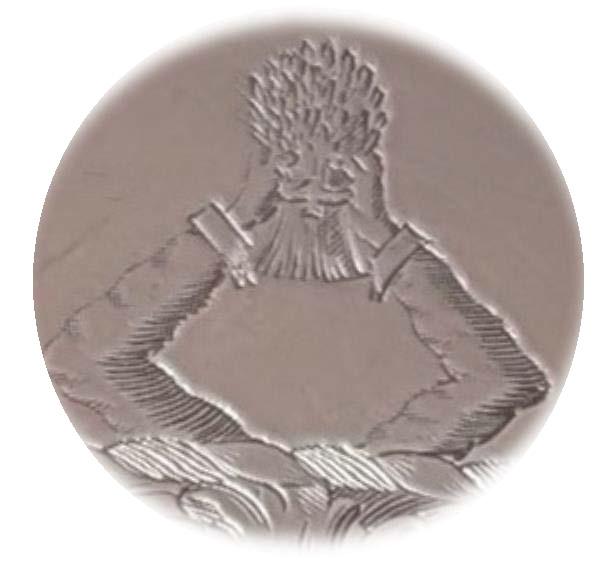
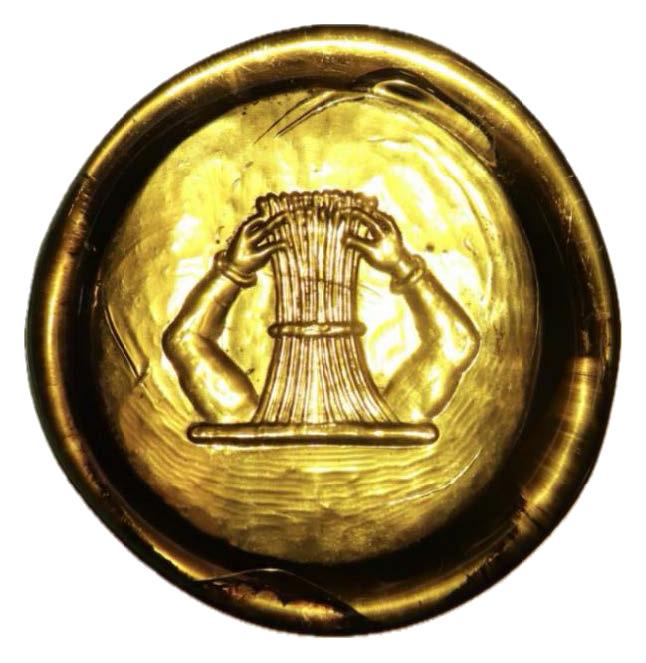
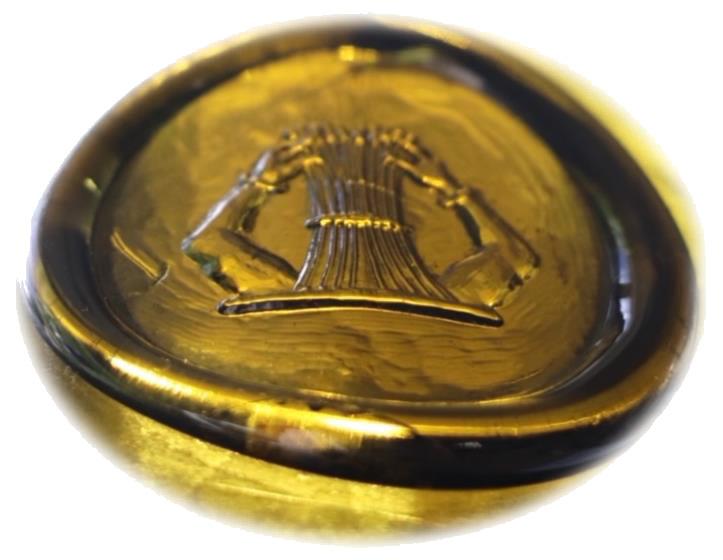
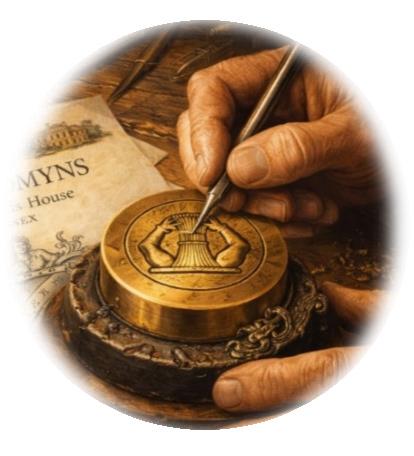
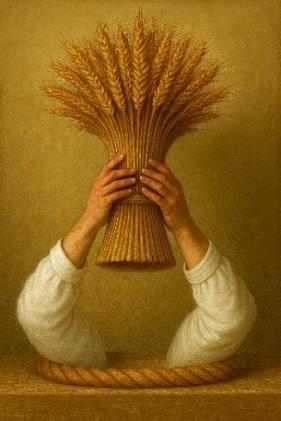
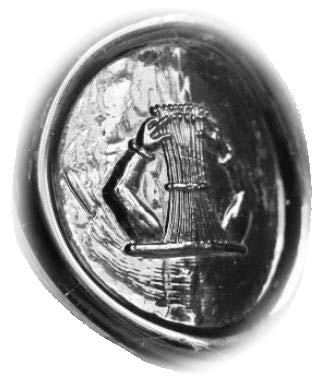
Affixed to the upper body is a circular glass seal impressed with a simple heraldic device: two sleeved arms rising from below, each hand supporting a bound garb, or wheat sheaf. The design is arranged symmetrically within the circular field so that the crest reads clearly through the glass when the bottle is held to the light. The surrounding glass flows naturally around the seal, confirming that it was applied at the furnace as part of the original manufacture.
The seal is positioned just above the shoulder, where it would have caught the light as the bottle was lifted or tilted to pour. It is not oversized or decorative for its own sake, but carefully proportioned to the form, intended to identify the household without disturbing the balance of the vessel.
The close-up illustration of the seal published in Burton’s Antique Sealed Bottles is taken from the present bottle, while the larger bottle photograph in that work represents a different example of the type. This confirms that more than one example of the design survives.
Surviving examples suggest a very small production, consistent with a bespoke domestic commission rather than a commercial run. Armorial bottles of this type were typically ordered in limited quantities for household use, often in groups of four to six.
Although the precise glasshouse responsible cannot be identified with certainty, the form and quality point toward manufacture within the London glassmaking district, where houses such as those at Southwark and the Falcon were known to supply bespoke table bottles for gentry patrons during the mid-eighteenth century.
In 1949, bottles bearing the crest were dismissed in print as probable modern fabrications in Sheila Ruggles-Brise’s Sealed Bottles. The judgement was not widely revisited, and the device remained unattributed in the literature. Only when the seal is compared with surviving armorial objects connected with the Comyns family of Hylands does its true identity emerge, linking the bottle directly to the Hylands estate and the Comyns family in the late 1740s.
Sir John Comyns of Hylands
Sir John Comyns (c.1667–1740) was one of England’s most distinguished lawyers of his generation. The son of William Comyns, a barrister of Lincoln’s Inn, he was educated at Felsted School and Queens’ College, Cambridge before entering the legal profession. Called to the bar in 1690, he rose steadily through the ranks, becoming serjeant-at-law in 1705, a Baron of the Exchequer in 1726, and ultimately Lord Chief Baron of the Exchequer in 1738. He also served as Member of Parliament for Maldon and was the author of influential legal works, including his Digest of the Laws of England.
Around 1726 he purchased the estate at Writtle and built Hylands House, establishing a new family seat in Essex. Contemporary accounts regarded him as a leading figure of the English bench, and his name remained well known in legal circles long after his death.
Sir John married three times but left no surviving children. When he died in 1740, the Hylands estate passed to his nephew, John Comyns of Romford, the son of his brother.
As heir to both the property and the family name, the nephew appears to have commissioned a small group of armorial objects connected with the family seat, including the portrait, the 1749 silver salver, the sealed bottles, and later the monument, all carrying the same distinctive crest.
A portrait dated 1745, the engraved salver 1749, and the sealed bottles form a tightly dated group within a single decade, reinforcing the likelihood of a deliberate and coordinated armorial programme at Hylands.
These were not merely commemorative pieces in the modern sense, but part of the visual language of the house— objects intended to be seen and used during visits, quietly reinforcing the family’s identity and lineage.
The sequence culminated in the monument erected to Sir John in the parish church at Writtle, completing a coherent armorial sequence that linked portrait, silver, glass, and stone in a single statement of family continuity.
The Comyns Crest and its Recorded Origin
The crest engraved on the Hylands bottle — two sleeved arms holding a garb — belongs to the English Comyns family whose origins lie in Durham.
The earliest surviving heraldic record appears in the Durham Visitation of 1575, where the Comyns arms were already in use, confirming the family’s established armigerous status in the late sixteenth century.
By the visitation of 1615, the distinctive crest of two sleeved arms holding a garb is formally recorded in connection with Symon Comyn of the city of Durham, a gentleman serving as Receiver General of the bishopric estates.
The entry states that the crest was “a pattern granted by Richard St George during his visitation of 1615, when he served as Norroy King of Arms for northern England.”
In the visitation material, the entry gives both arms and crest:
• Arms: Azure, a chevron erminois between three garbs or.
• Crest: Two arms couped at the shoulders, habited ermine, holding in the hands proper a garb or.
This record fixes the origin of the device firmly within an English legal and landed family, not in any Scottish clan tradition. Later associations of similar designs with Scottish surnames arose only through nineteenth and twentieth century editorial confusion in the heraldic directories, long after the Comyns crest had been established in England.
The 1749 Silver Salver
One of the most important surviving objects connected with the armorial commemoration of Sir John Comyns is a silver salver engraved with the family arms and crest. Dated 1749, it bears the same distinctive device seen on the portrait and the sealed bottles: two sleeved arms holding a garb.
Bequeathed to Queens’ College, Cambridge, by William Comyns Clifton (1913), a Romford solicitor. His will records: “I give and bequeath to the President and Fellows of Queens’ College Cambridge the silver salver bearing the Arms of the Comyns family, as my great-uncle Chief Baron Comyns was a member of the College, together with his portrait dated 1745.”
The salver was later presented to Queens’ College, Cambridge, where Sir John Comyns had been educated. Its provenance is therefore secure, and it stands as a documented armorial object directly associated with the family and the years immediately following his death. As a formal piece of engraved silver, the salver represents a high-status commemorative object. Its presence confirms a small group of related armorial objects, in which portrait, silver, glass, and ultimately the monument all carried the same crest in honor of Sir John’s memory.
Close examination of the crest on both the bottle seal and the surviving silver salver confirms an important point: the arms are not armoured, nor were they ever intended to be. They are shown in soft sleeves with visible cuffs because this is the true heraldic form of the Comyns crest.
When the crest is compared across surviving objects, it becomes clear that the form is adapted slightly depending on the medium, while the essential design remains unchanged. On the large silver salver, the arms are more elaborate and expressive. The scale of the piece allows the arms to be shown with a natural lift and movement as they support the garb. A similar, more open composition appears in the engraved crest associated with the family portrait, where the design is freer and suited to the artistic setting.
The bottle seal, however, was cut into a small circular matrix and impressed into molten glass. Within this confined space, the engraver arranged the design with careful symmetry.
The arms rise evenly on either side of the garb, creating a balanced composition that fits perfectly within the round seal. This is not a simplification or an error, but a practical adjustment to suit the medium. The engraver worked within the limits of the circular seal, ensuring the crest remained clear, legible, and visually harmonious when struck into the glass.
Across silver, engraving, and glass, the essential elements never change: two sleeved arms holding a garb. The differences lie only in how the design is arranged to suit each material and scale, confirming that all are expressions of the same authentic Comyns crest.
The Loss of the Comyns Crest in the Heraldic Books
The Comyns line at Hylands came to an end with the death of the last direct heir in the late eighteenth century. With the surname no longer active at the estate, the family’s heraldic identity gradually slipped from regular use. Although the crest survived on portrait, silver, glass, and monument, its correct form became increasingly uncertain in the printed heraldic directories of the nineteenth century.
In early sources, including Burke’s General Armory of 1842, the crest of the Comyns of Durham and Essex was correctly recorded as two sleeved arms holding a garb. In later directories, however, the description began to change. By the mid-nineteenth century, entries for the Durham and Essex families were altered to describe arms holding
“cumin,” the spice, rather than a wheat sheaf. As the directories were revised, similar surnames—Comyn, Cumming, and Cummin—were grouped together, and the original Comyns crest became increasingly obscured.
This sequence — original sleeved arms with garb, followed by the mistaken “cumin” entries, and finally the armoured Cummins version — shows how the true crest was gradually displaced in the heraldic record across the nineteenth and early twentieth centuries.
The 1905 edition of Fairbairn’s Book of Crests records an armoured crest under Cummins (Henry Alfred).
The variant spelling Cummins does not appear in the principal nineteenth-century directories from Berry (1824) onward, making the 1905 entry its first appearance in the standard printed heraldic record.
The device retains the two-armed structure and garb of the earlier Comyns crest, but renders the arms in armour and adds a motto, marking it as a later and distinct grant rather than a continuation of the earlier English device.
By the early twentieth century, the original Comyns crest had effectively vanished from the standard reference works, leaving later researchers without a reliable point of comparison.
The 1949 Assessment
The first published judgement on these bottles appeared in Sheila Ruggles-Brise’s Sealed Bottles (1949). Under the entry “Two Arms holding a Garb” on page 69, the assessors recorded a brief but decisive verdict:
No illustration of the seal was provided, and no measurements or comparative discussion were included—an unusual omission in a work otherwise known for its structured and methodical descriptions.
Elsewhere in the same book, in the chapter Notes for New Collectors (p.172), a general warning was given: “For example, experts distrust the bottle with a wheat-sheaf on the seal.”
This caution reflects the collecting climate of the mid-twentieth century. By that time, the wheat sheaf had become an extremely common symbol. Once a clear mark of heraldic identity and agricultural status, it had spread into civic devices, pub signs, trade tokens, and commercial branding. Because of this widespread use, the motif no longer pointed clearly to a specific family, and a bottle engraved with two arms holding a garb could easily appear generic or decorative.
The assessors would also have relied on the heraldic reference books then in circulation, particularly 1905 editions of Fairbairn’s Book of Crests. In these, the Comyns crest no longer appeared in its correct form. Because of earlier editorial alterations in those references works, the device no longer corresponded with any clearly recognised family entry.
Taken together—the trade-oriented experience of the assessors, the widespread decorative use of the wheat sheaf, the absence of a clear heraldic match, and the growing concern over reproductions entering the market— these factors help explain why the bottles were dismissed in 1949 as probable modern fabrications.
Conclusion
What began as a small and uncertain group of sealed bottles, long dismissed as doubtful or modern, now resolves into a coherent historical context. The device of two sleeved arms holding a garb is no longer an anonymous or generic symbol, but a documented family crest with roots in the English gentry of Durham, recorded in the visitation of 1615 and carried forward through the Comyns line to Hylands in Essex.
When the bottle seal is considered alongside the 1745 portrait, the 1749 silver salver, and the monument raised in Sir John’s memory, the identification becomes clear. These were not isolated or decorative objects, but part of a closely related armorial sequence produced at the moment the Hylands estate passed on to the next heir. What was once dismissed as a doubtful seal can now be recognised as a documented estate bottle, firmly linked to the Comyns family of Hylands in the years following the 1740 succession.
Shaun Jeffery, now 61, is originally from Tonbridge, Kent. He has collected antique bottles and Tonbridge memorabilia since the age of 13 and today holds the largest private collection of Tonbridge memorabilia. His collection was once housed in Tonbridge Castle, and when he later moved to Sweden he chose not to disperse it, relocating his entire collection with him. It now forms what he describes as his own small Tonbridge museum in Sweden.
THE AUSTRALIAN BOTTLE & COLLECTABLES REVIEW
For all the latest
Australian news!
Quarterly publication of 36 pages. Many of the consumable goods in 19th century Australia were supplied by both England and the United States, resulting in some nice bottles of U. S. origin having been found in Australia. $65 per year.
PayPal: abcr@bigpond.com
Email: travisdunn@bigpond.com
ABCR Auctions often offers items of U. S. interest, such as these upcoming items to the left. Also operated by Travis Dunn, this auction can be found at: www.abcrauctions.com
Auctions run every three months. Email: info@abcrauctions.com Free to register. Low commissions. Reliable condition assessments.
Elsecar Fairs & Auctions
•
•
•
BOTTLED
VOLCANO DUST
By Eric McGuire
History has provided us with a great variety of products that have been sold in bottles in the past, but I never imagined this one. Holding a little more than a half pint, this bottle is boldly embossed with the word PUZZOLANA. On its shoulder is what appears to be a volcano erupting its contents into the air. How could this possibly be related to a bottled product? The Internet tells us that pozzolana is an ash ejected from volcanoes first described from an area near the town of Pozzuoli, Italy. (The first vowel can be interchangeable with either a “U” or “O”).
The town of Pozzuoli is located about nine miles west of downtown Naples, Italy. It is in an area of past volcanic eruptions with the last large volcano erupting in 1538. Increased signs of vulcanism have become a concern in the last few years, and Pozzuoli is such a seismically active area that parts of the old town are periodically closed to the public.
Pozzuoli is generally described as a siliceous dust (silicon dioxide), also known as quartz, often in association with alumina (aluminum oxide). Perhaps as far back as 5,000 years ago pozzolans mixed with slaked lime, mixed with water, could produce a cement that is superior in strength to that used today. The Romans are known for producing amazing structures with pozzolan cement, two of the most famous being the coliseum of Rome and the Pantheon of Rome. Interestingly, only recently has the process of producing their structurally sound concrete become documented from archaeological excavations at Pompeii, Italy, the city that was frozen in time encased in volcanic ash from the eruption of nearby Mount Vesuvius in 79 A.D. The Romans prepared their binding material by taking calcined limestone (quicklime), grinding it to a certain size, mixing it dry with volcanic ash (pozzolan), and then eventually adding water to create a cementing matrix. The dry mixing, and adding water later, has been the key process that was only recently confirmed and so important to the process.
View of Pozzuoli, c. 1575
The Pantheon of Rome is perhaps the most well known of the ancient structures composed of pozzuoli concrete. Constructed about 2,000 years ago, the dome of the Pantheon is 142 feet in diameter and 142 feet in height, with no reinforcing material such as steel. The top is open to allow light, with a hole, 27 feet in diameter.
Left - The Pantheon in Rome, built around 125 AD, features the world’s largest unreinforced concrete dome (142 feet) with a 9-meter (27-foot) open central hole called the oculus.
How does all this relate to the contents of the pictured bottle? It is only 6 ½ inches high and holds just a little more that a cup. It could certainly not produce enough content to make more than about a cubic yard of pozzuolan concrete.
While the product name is synonymous with highquality concrete, in this case it had a completely different use. The story began with an ex-whaling captain by the name of Joseph H. Toone, born at Nantucket Island on October 8, 1810, just five months after his sea captain father, John Toone, was lost at sea. Perhaps to spite the perils of the ocean that killed his father, young Joseph Toone began his career on a whaler as well. But by 1855, the then-Captain Toone made his final voyage circumventing the globe on the merchantman Nebraska. Perhaps because he had married in 1845 and had a family including two sons and a daughter, and didn’t want to suffer the same fate as his father, he quit the seafaring life. His oldest son was William Chamberlain Toone, born in New Jersey on February 14, 1848, and his second child was Joseph
Above - Illustration of Mount Vesuvius eruption over Pompeii.
Azuley Toone, born about 1853, in Saratoga, NY. Little is known about their early life except William C. Toone enlisted in the U.S. Navy in October 22, 1863, at 15 years of age, with a two-year commitment. One cannot help but deduce that there is more to this story than documentation portrays. He probably served as a unit musician as both he and his younger brother had a strong interest in music.
Young William C. Toone was apparently afflicted with personality issues that likely caused some problems within the family unit. While not totally debilitating, there was periodically enough cause for alarm that his father had William undergo a psychological assessment when he was about nineteen years of age.
“John R. Brady, one of the Judges of the Court of Common Pleas for the City and County of New-York, do hereby certify that I have called two respectable regular and competent physicians, and other credible witnesses, and have fully investigated the facts of the case, and satisfactory proof has been adduced before me, showing that William C. Toone is a resident of the City and County of New-York: that he is insane and possessed of no estate whatever: that he was first declared insane in May 1866, or within twelve months of the date of this certificate; and that the estate or income of the said Joseph H. Toone, his father, is insufficient to support the said Wlliam C.Toone, under the visitation of insanity” (New-York Tribune New York, New York, January 3, 1867) This notation indicates that he may have had a somewhat troubled life. It is not known if William C. Toone was actually sent to the “insane asylum,” but he was not living with his parents until 1870 when the U.S. Census for New York City notes him as “at home” with no occupation, and 22 years of age.
It is documented that the youngest son, Joseph Toone, attended the College of the City of New York in 1869 and 1870. It was the first free public institution of higher education in the United States.
This writer will take a leap of faith and assume that the boy’s father became involved in at least helping to set up his sons in a business venture. The idea was so unusual that only the likes of a former sea captain would have had possible access to the product to be sold.
The first newspaper advertisement for Puzzolana was noted in the Newark Star-Ledger (Newark, New Jersey), on June 6, 1871, (last ad was Aug 7, 1871) which resolved the question of what the bottle of Puzzolana contained. The two Toone brothers were selling the product as a polishing compound, which makes some sense of its use. The company was structured as “Toone & Co, proprietors.” The New York business directory notes only the two Toone brothers as the primary operatives, with no mention of their father. The Puzzolana advertisement was designed to run for a period of three months, and indeed, it did. However, the product appeared to be a failure, either by poor sales or by managerial issues. In fact, it may have fallen short of the full three-month advertisement commitment in the newspaper, and no further information was located for the product.
The two Toone brothers soon forged a life for themselves, both being married and having children. William C. Toone was the most difficult to follow, with a variety of business references associated with his name, including liquor dealer, musician, potato dealer and finally, sales. The younger brother, Joseph Azuley Toone, followed the path of a musician, both as an instructor and as a band member. He died in New York City in 1936.
After his life on the high seas, Joseph H. Toone, the father of the Toone brothers, endeared himself with certain politicians in New York City. He became secretary for the city and county of New York and eventually landed a job as the Clerk for the County of New York. Joseph died in Jersey, New Jersey, on August 1, 1885.
Manufactured in a two-piece mold, plus a basal section, it has a double rolled applied top with a slightly domed smooth base. The glass quality of the bottle is reminiscent of the exceptional Southern New Jersey sand pockets producing the faintest of green-aqua in color. Circa 1871 only, it is truly an oddity in this fascinating world of old bottles.
Eric McGuire, pictured with granddaughter, Stevie Joy Larkins, is a senior member of the bottle collecting world, a former digger, long-time member of the FOHBC Board, and seasoned researcher and writer. He is holding the largest intact bottle he unearthed from a Poughkeepsie, NY privy. Eric enjoys sharing his passion for preserving and sharing the past through “ancient” glass containers.
Unlock a world of discovery, expertise, and community with the Journal of Antiques & Collectibles (JOAC).
As a subscriber, you’ll enjoy:
• Monthly Print Magazine packed with expert insights, market trends, and collector stories
• Full Access Membership for exclusive guides, in-depth articles, and quarterly Investment Intelligence reports
• Shop Finder Directory to connect with trusted dealers and discover new treasures
• Community Events & Resources—from Brimfield Show Guides to our ever-expanding Antiques Glossary
• Collector Confidence: Learn from industry leaders, avoid common pitfalls, and make informed purchases
Join a vibrant, knowledgeable community that bridges generations and preserves the stories behind every collectible. Subscribe today and empower your collecting journey with JOAC—where passion meets expertise! Ready to elevate your collecting?
•
•
Dedicated to Bitters Collectors and the Pioneer Giants of our Great Hobby
By Bob Strickhart
In this installment we will focus on an unassuming square bitters that I was lucky enough to acquire many years ago. Several peculiarities make this bottle one of my favorite squares. The history of this brand of bitters is difficult to research and includes a bit of mystery.
When Dick and Elma Watson originally catalogued this bottle, it was simply number 309 with two variants described and diagrammed. The first bottle is now identified as S-127. Two sides were flat, two sides had indented panels, one reading “A. H. SMITHS/ OLD STYLE BITTERS” and the reverse indented side simply read “O. S. / ” horizontally. Dick mentioned that his example had a label that read in part “Union Medicine Co Sole Proprietor St, Louis, Mo.”
Dick’s variant A is now S-122. The additional embossing is “DR. A.H. SMITH’S/ CELEBRATED/OLD STYLE BITTERS” with O S /2781” and below that: “THE STANDARD TONIC/AND/BLOOD PURIFIER.”
Both square bottles are about nine inches tall and have tapered collared mouths. Various shades of amber have been found, but no other color has been located or reported to my knowledge. Dick rated the rarity of these bottles as “scarce” with 100 to 500 specimens known, but today we rate them as very scarce to rare. I do agree with that as not too many of these bottles ever show up.
The key to discerning the difference between the two variants is the extra embossing with the word celebrated being included. “Bitters Bottles” by Ring & Ham lists another variant: S-127.5, which, according to the entry,
Line Drawing by Elma Watson
is embossed: DR A. H. SMITHS/OLD STYLE BITTERS // f // O.S 2781/THE STANDARD TONIC/AND BLOOD PURIFIER//. Even though this variant does not include the word “celebrated,” many collectors mistake this bottle for the S-122 variant. I’ve seen the S-127 variant (listed today as scarce) and I have in my collection an S-122 (listed today as very scarce), yet I’ve never seen an S-127.5 with the word “celebrated” omitted, and would have to think it’s pretty rare indeed.
Imagine trying to do follow-up research on this bottle. You can’t find a name more common than Smith, right? It reminds me of Mr. and Mrs. Smith registering for a room in a hotel somewhere and the desk clerk stifling a grin.
Very little is known about this brand of bitters; furthermore, the sole proprietor is a company named the Union Medicine Company, a very common name indeed. From the label and the numerous ads that appeared in many places including Wisconsin and Indiana in the early 1870’s, we can tell this bitters’ home was St. Louis, Missouri and it was marketed widely throughout the mid-west, with distributors in Chicago, St. Louis, and New York. My friend, Joe Gourd, was unable to come up with any related paper, broadsides or trade cards, and when Joe doesn’t have something, it probably doesn’t exist! Thanks for the effort though, Joe, your help is always sincerely appreciated.
I was fortunate to find this bottle back in 1998 in a lot of ten, with several more common bottles, at a Norm Heckler barn auction. I spoke with Norm a few days ago and we both remembered those barn auction days quite fondly. What great fun to take a day off from work, go to Connecticut, and participate in a live auction. You didn’t know what was going to be of fered on a particular day and it was sort of like Christmas morning when Norm pulled open the barn door. Sometimes you came home empty-handed; other times three or four boxes filled the back seat on the ride home. Friendships were forged there that lasted a lifetime…great fun for sure!
What attracted me to this bottle was the O.S. 2781 embossing which to this day remains a mystery. The O.S. more than likely referred to “Old Style” but the 2781 leaves us scratching our heads. Was it the date February 7, 1881? Was it 1872 backwards? I am reminded of another bitters—the Morning Star Bitters—with the embossing “Inceptum 5869” possibly referring to May 8, 1869.
Dick most certainly got lucky when he found his example for the book in 1965 with a label. I think, however, that he underestimated the rarity of this bottle and its value. Here is a short listing of hammer prices:
Feb. 1999 S-122
$143
Oct. 2012 S-122 $300
May 2014 S-122
$400
May 2017 S-122 (ex Ring) $550
Nov. 2020 S-122 (ex Gardner) $750
Mar. 2022 S-127 $475
(left) S-127 Mold. Courtesy of Tim Henson (below) Smith's ad in Rock County Star Herald
S-122 Mold. Strickhart Collection
As you can see, there aren’t many records of sales for this bottle which supports the theory that the bottle is, in fact, quite rare. I can’t remember any examples showing up at any of the shows I’ve attended over the last 30 years. I think this data also shows this bottle to be a solid investment but, in so many ways, it’s not just about the money.
The ad from the Rock County Star in Minnesota is just one of many found in numerous states. Mostly in the early 1870’s, Dr. A. H. Smith advertised extensively from Minnesota all the way down to the southern states for a relatively short period of time. The numerous ads and the fact that there are at least two versions of this bottle, led me to believe that the brand was in business for at least some extended period of time. You’d think the bottle would be more commonly available, but there just doesn’t seem to be many of these bitters around.
I don’t know about you, but when I found the ad and saw the picture of old Dr. Smith, I thought he might have had a brother who also had a cough drop company. Maybe it’s just the hair, but……
This is a very attractive bitters bottle and I believe it is truly rare. On top of that, with the “2871” it has that touch of mystery which adds to its desirability. So, keep a keen eye out.
Questions/comments are always welcome at strickhartbob@aol.com. Til next time, be well, support your local shows, and good hunting!
Bob Strickhart is a retired Earth & Environmental Sciences teacher and paint and wallpaper contractor from New Jersey. Along with uncountable interests and hobbies, his passion for bottles and glass are only surpassed by his love for his family. His wife, Marianne, three wonderful children, three spectacular grandchildren, Missy the wonder dog, his friends and his bottle family are his most treasured gifts. Bob is a long-time member of the FOHBC.
FOHBC
Online Seminars
Get With The Program! Some previous webinars...
The FOHBC presents monthly 1-hour online Zoom seminars with presentations and imagery on a broad range of topics related to antique bottle and glass collecting. Join us for an exciting series brought to you by Federation members discussing collecting, history, digging and finding, bottle photography and displaying.
Seminars occur on Tuesday evenings during the second or third week of each month at 7:00 pm CT. Time will be left for questions and discussion. Seminars are recorded and will be available through the FOHBC Members Portal within a week after each seminar.
We are currently offering these Zoom Seminars Free of Charge. First-time attendees should sign up prior to the seminar at President@FOHBC.org and you will receive a Zoom invite.You can attend via desktop, laptop, tablet, or smartphone.Simply join at the noted time, sit back, relax and enjoy some great antique bottle and glass presentations and discussions.
After you have registered for one seminar, you will automatically receive an invite for subsequent Zoom seminars.
Virtual Museum News
By Richard T. Siri, Santa Rosa, California
The Virtual Museum is ready to kick off the project of adding over 700 images to the various galleries, and some new ones. Alan and Elaine DeMaison, assisted by Terry Crislip, imaged all of the “Masterpieces” and “Barber Bottles” collection on exhibit at the Houston Museum of Natural Science at the FOHBC National Expo in 2024. Several other personal collections are also included in this group.
After preparing 36 photographs of each item, they are ready to be placed into the software program that produces the “spinners.” Descriptions are added and then they go live for everyone to see and enjoy.
Training several new volunteers for this phase of the project will take place soon and you will begin seeing new entries in early 2026. To participate in this project and share your expertise, contact: Doug Simms, Webmaster, at dsimms@FOHBC.org
FOHBC VIRTUAL MUSEUM OF HISTORICAL BOTTLES AND GLASS
FOHBC Virtual Museum .org
For gift information: Alan DeMaison, FOHBC Virtual Museum Treasurer, 1605 Clipper Cove, Painesville, Ohio 44077, a.demaison@sbcglobal.net
The FOHBC Virtual Museum was established to display, inform, educate, and enhance the enjoyment of historical bottle and glass collecting by providing an online virtual museum experience for significant historical bottles and other items related to early glass.
PHASE 4 “Wishart’s Pine Tree Tar Cordial” bottle has been filled. Thank You!
Thanks to Richard Siri’s $5,000 donation, the VM was awarded the $5,000 matching grant pledged by an anonymous donor!
Over 200 lots in this auction! Including examples from the collections of Brian Radford, Gary Enters, George Waddy, Victor Oliveira. Also a choice grouping of Colored Scroll Flasks! A full color catalog will be availabel for $15.00 For more information contact: Glass Works Auctions, P.O. Box 180, East Greenville, PA 18041 PH: (215) 679-5849 - Email: glswrk@enter.net - Website: www.glassworksauctions.com
A sinkhole has uncovered a 19th-century cellar beneath a golf course. The deputy keeper of the greens discovered the brick cellar at Davyhulme Park Golf Club, in Greater Manchester, underneath the 13th hole, known coincidentally as “the Cellars.”
Steve Hopkins said that “a void opened up” as he worked to repair the hole, revealing a tunnel entrance into the cellar containing dozens of bottles of wine, champagne and port. Mr. Hopkins used a digger to excavate the ground but came across a structure that turned out to be a brick doorway. He explained: “I got my flashlight and checked it out, and it was a wine cellar.” The cellar previously belonged to Davyhulme Hall Manor House, which was demolished in 1888, and went undiscovered for years.
Footage revealed blackened, empty bottles lying among the bricks in the abandoned tunnel. A pile of debris covered what appeared to be another entrance way, which was boarded up. Jane Wilson, Davyhulme Park Golf Club’s assistant secretary, said approximately 40 bottles of various colours had been found intact but none contained wine.
Golf at Davyhulme dates back to 1844, when Robert Henry Norreys inherited the hall and estates. Both the men’s and women’s clubhouses are believed to have been established during the 1860s, making the club the fourth oldest in England.
Ornamental
Glass Made During The Roman Empire
A Roman conchylia cup decorated with a combination of fish and shellfish. The glass cup is dated to the 4th century CE, and is now housed at the Roman-Germanic Museum in Cologne, Germany.
This ornament is from a so-called Konchylienbecher, hence the slightly curved form. Konchylien from the Latin konchylion meaning shellfish. The decoration on these bowls shows a combination of fish and shellfish. The bowls are of a large diameter. A number of these bowls have shellfish and clams as footing.
Many ornamental glass objects have been recovered at Roman sites, demonstrating a high-level of sophistication in the art of glassblowing.
Earliest shipwreck in Singapore reveals 14th century trading port and massive ceramic cargo
A four-year maritime excavation off the coast of Singapore has produced the earliest known shipwreck in the country’s waters and strong evidence of a busy trading port in the 14th century. The vessel, known as the Temasek Wreck, sank sometime between 1340 and 1352. At that time, Singapore was called Temasek and functioned as an entrepot linking regional and long-distance trade networks.
The cargo offers a tightly dated snapshot of trade goods circulating in Southeast Asia during the Yuan dynasty. Because the assemblage represents a single shipment from a narrow time frame, researchers view the material as a reference collection for identifying less well-documented finds elsewhere.
For decades, popular accounts described precolonial Singapore as a small fishing settlement. Archaeological work over the past few decades has presented a different picture. The Temasek Wreck adds maritime evidence to that record. A ship carrying several tonnes of ceramics and a concentration of high-grade blue-and-white porcelain did not sail to an isolated village. The finds point to an active port integrated into regional exchange networks centuries before 1819.
(Courtesy Archaeology News, February 18, 2026)
This important piece of antique American glass has remained in Old Salem, NC since 1797 when it was presented to Frederick William Marshall, first Moravian administrator of the village founded in 1766.
A full accounting of the provenance, authored by Curt Ewing, will be presented in this publication in the near future.
The Marshall Pokal 10-3/4", New Bremen Glass Works, Frederick Amelung, Maryland
Photo courtesy of Old Salem Museums & Gardens
w
w
w
w
Dalton Skirvin showing off some of his half pint seam-sided flasks.
I found this at a bottle show in Anderson California this weekend. The color and quality made me pick it up and never set it down. – David Maryo
A group of various ink bottles and inkwells – Michael George
A collection of spectacular and inspiring photographs from around the world and around the web. Please feel free to submit your images for consideration.
A beautiful Willington eagle flask from Woody Douglas.
A stunning Redford or Redwood pitcher from Barry Hogan’s collection – Jeff Noordsy Collection
Jonathan Purser recovering an 18th century onion bottle from the muck.
Jeffery Nunez is growing an amazing flask collection! Looks great Jeff!
Dedicated to Robert “Wayne” Lowry, THE Jar Doctor, May 19, 1951 - July 25, 2024 and to all the years he spent perfecting the process so the hobby would have a better way to clean items then when he started
CLEANING CANISTERS
Designed to safely and professionally clean the entire bottle
Available in white and clear PVC (3” through 7” ID)
Prices ranging from $120 to $330
CLEANING MACHINES
Units available, starting at $125 for small one-canister economy
MOTOR PACKAGES
One-speed (round items only) $250
Two-speed (all shapes) $365
OXIDES
Polishing - Aluminum at $12 per pound
Cutting - Various grits of brown fused aluminum ranging from $12 to $16.50 per pound
TUMBLING COPPER
New chisel point in 3 sizes - $18.00 per pound
We accept: Paypal &
For further information and/or other pricing, contact: June Lowry 401 Johnston Ct Raymore, MO 64083 (816) 318-0161 JarDoctor@aol.com www.JarDoctor.com
Classified Ads
FREE AD FOR NEW / RENEWAL MEMBERSHIP
One free “WANTED” or “FOR SALE” ad. See Page 72 for details. PAID AD rates also on page 72. Send ads to FOHBCmembers@gmail.com
FOR SALE
FOR SALE: Quality bottles largely from the US, meticulously described and well-priced. Listings with images available on my High Desert Historic Bottle website at http://www.historicbottles.com. My email is on the website. Bill Lindsey, Chiloquin, Oregon. (11/26)
FOR SALE: Clearing out a 70 year collection of 1,000’s of bottles from the Civil War through 1950’s. I’m pushing 83 years old and this has to go. Whiskeys, medicines, masons, sodas, food and more. Some purple, some desert varnish. Many clean. 50 cents, $2, $5 and some expensive. Not cataloged or particularly sorted. 250 sq feet and stacked 3 feet high in my barn. It’s a treasure hunt. Serious buyers can go through and pick what you like. Bargain pricing on volume purchases. Bring your truck and trailer. 30 miles SE of Lubbock, TX. Larry Killian, killian@poka.com, 806.632.6906. (7/26)
FOR SALE: Cures, medicines, poisons, milk bottles, ACL sodas, pharmacy bottles, trade cards and ephemera. Send your email address to me at bobnshari@gmail.com and I’ll promptly send you four lists via return email. Bob Jochums (5/26)
FOR SALE: 1) Bakers Vegetable Blood & Liver Cure, similar shape of a Warner's. Large Indented Slug Plate embossing. Greenville, TN $450. 2) Warner's Log Cabin Cough & Consumption Remedy, Small Size. Needs Tumbling $325. 3) Cottle Post Blob Soda Large Spread wing eagle. Great Turquoise Color. Case wear $380. 4) John C Baker Phila Large Cathedral Panel Medicine $110. Postage $15.00. Don 978-994-2629 (5/26)
WANTED
WANTED: All Dandelion Bitters. (Except Lyman’s L-138). All sizes, shapes and unusual colors. Beggs Dandelion Bitters (B-51, B-52 and B-53). Need B-51, flash shape w/bevels. D-14: XXX/Dandelion Bitters, square from Chicago. M-52: Dr. J.R.B. M Clintocks Dandelion Bitters w/Monogram. Perfect only, email hawkeye751@outlook.com. Or, call 415.518.4124 and leave a message. “Call now, so you’re not sorry later.” (09/26)
WANTED: All Dr. Von Hopf’s Curaco Bitters (V-27) square, (V-28)flask, V-29 square, O & C variant from Marion/Iowa. Plus, (V-27.4) O & C variant, rectangular, strap sided flask. Perfect only, email hawkeye751@outlook.com. Or, call 415.518.4124, leave message. “Call now, so you’re not sorry later.” (09/26)
WANTED: MONTANA bottles. We are paying top dollar for any Montana bottles that we do not have. We are especially interested in purchasing these bottles: MARSDEN’S / MOUNTAIN CITY COUGH CURE / KALISPELL MONT. and DAVID DRUG Co / BARB WIRE REMEDY / MOORE MONT. Marc Lutsko / Unit 6922 / 2300 N. Harris Street / Helena, MT 59604-7347. 406.291.0861, letsgo@montanasky.net (1/27)
WANTED: Old railroad items and porcelain signs. Have nice rare bottles for trade or will purchase your items. Richard, 916.207.2463 (1/28)
WANTED: Laurens Bottling Works, Laurens SC Hutchinson Soda Bottle. No damage. Contact Joe 850.532.2505. (11/26)
WANTED: Hobble skirt embossed Coca-Cola bottles: 1915s, 1923s, D-Patent’s 6 oz and 6 1/2 oz. Collector will buy or trade. Jim Georges, georges77@twcny.rr.com or 315.662.7729. (11/27)
WANTED: BUYING COLLECTIONS. Historical Flasks, Bitters, Inks, Colored Pontiled Medicines, Blown Three Mold, Good Early Blown Glass. I will purchase, or I can help you sell. Options available! Michael George, earlyglass@gmail.com or 603.765.8079. (11/28)
WANTED: Harley bottles of West Chester, Pa. and Philadelphia, Pa. The West Chester bottles (four) display either J. Harley, James Harley, Jas. Harley or E.M. Harley. The Phila. bottles (four) display Edwd. Harley, Schul (Schuylkill) 4th & Market St., Philada. or E. Harley, 802 Market St. or E. Harley, West Market St. or Edw. Harley, 1838 Market St., Phila. Bob Harley, Phone: 610.790.5520, rwh220@Yahoo.com (11/28)
WANTED: Disney, Milk and WW2 collections, Also, A Mitchells Sarsaparilla from Perry, NY. Jim Burns, 69E 6th St., Oneida, NY 13421; 315.527.3269; thorlaw@hotmail.com (11/28)
WANTED: Milwaukee Pre-Prohibition back bar bottles and shot glasses. Greg Markovic, 262.408.3616, gcmarko@sbcglobal.net (11/26)
WANTED: Bitters bottles, especially rare squares and those from Michigan or Mississippi. Have some for sale or trade. Bruce Schad, 384 CR 89, Carrollton, MS 38917. email: brschad@aol.com; phone 662.299.7975 (1/26)
WANTED: USA Hosp Dept bottles. All shapes, colors, sizes. Brian Schilz, 308.289.6230, bottlenut@charter.net (3/26)
WANTED: HOTCHKISS bottles with both L.B. & H.G. Hotchkiss noted on paper label or embossing. Also L.B. Hotchkiss bottles from Phelps or Lyons, NY. Richard Kelley, 315.946.6316, kelleye719@ verizon.net
WANTED: PERMANENT WANT: OWL DRUG bottles, tins, boxes, paper, anything from The Owl Drug Company. Marc Lutsko, Unit 6922, 2300 N. Harris Street, Helena, Montana 59604-7347, letsgo@montanasky. net, 406.291.0861. TOP DOLLAR paid. (1/28)
WANTED: RT 66 ILLINOIS. Looking for bottles from the following Illinois towns: MCCOOK, COUNTRYSIDE, WILLOWBROOK, PLAINFIELD, ROMEOVILLE, ELWOOD, GODLEY, ODELL, CAYUGA, OCOYA, LEXINGTON, TOWANDA, SHIRLEY, LAWNDALE, BROADWELL, WILLIAMSVILLE, SHERMAN, GLENARM, DIVERNON, FARMERSVILLE, WAGGONER, LIVINGSTON, HAMEL, MITCHELL, FAIRMONT CITY, CHATHAM, THAYER, NILWOOD. Please send info to smkpromo@yahoo.com, Susanna Karbowski. (5/26)
WANTED: Warner’s Tonic Bitters with label. Charlie Martin, Jr. , cemartinjr@comcast.net
STOLEN: 25 top eastern cobalt sodas. Stolen from an 85 yr. old man’s father’s collection within the last year: 5 with EAGLE; 10 New York -some with multi-sided tops & sides; 1 EX Rare L & V cobalt from Stockton. All are pontilled. Any fancy, high-end, colored sodas coming out of the Sacramento-Stockton, CA area are most likely STOLEN. Contact Dennis Fox, mummysisters@aol.com. Thank you! (11/26)
Sho-Biz Calendar of Shows
FOHBC Sho-Biz is published in the interest of the hobby. Federation-affiliated clubs are indicated in red. Information on upcoming collecting events is welcome, but space is limited. Please send at least three months in advance, including telephone number to: FOHBC Sho-Biz, c/o Alice Seeliger, Advertising Coordinator, N8211 Smith Road, Brooklyn, Wisconsin 53521-9789; email: fohbcmembers@gmail.com; phone: 608.575.1128. Request event insurance and show ribbons two months in advance. Show schedules are subject to change. Please call before traveling long distances. All listings published here will also be published on the FOHBC.org website.
April 25, 2026 – Columbia, South Carolina South Carolina Bottle Club presents their 53rd Annual Bottle Club Show & Sale, Jamil Shrine Temple, 206 Jamil Road, Columbia, SC 29210, Saturday 9:00 am to 3:00 pm; Dealer set-up Saturday 7 to 9:00 am. Contact Marty Vollmer 803.629.8553 or martyvollmer@aol.com or Eric Warren 803.960.7814 or scbottles@ aol.com. FOHBC Member Club
May 2, 2026 – Gray, Tennessee
State of Franklin Antique Bottles & Collectibles Association’s 28th Annual Show & Sale Appalachian Fairground, 100 Lakeview St., Gray, Tennessee. Early buyers 7-9 am $10; General Admission 9 am – 2 pm. Sfabc.com. Contact Brandon Horne 413.534.3733. FOHBC Member Club
May 3, 2026 – Rochester, New York
55th Annual Genessee Valley Bottle Collector’s Association Bottle and Antique Sale, Roberts Wesleyan University, Voller Athletic Center, 2301 Westside Dr., Rochester, NY 14624. 9 am to 3 pm Admission $5 (17 & Under Free!) www.gvbca.org. Show & Dealer Inquiries: Aaron & Pamela Weber, gvbca@frontiernet..net; 585.749.8874. FOHBC Member Club
May 3, 2026 -- Morgantown, West Virginia
9th Annual Dunkard Valley Antiques & Collectibles Show & Sale, hosted by Dunkard Valley Enterprise. Mylan Park, Mon Center, 270 Mylan Park Lane, Morgantown, WV, 9 am to 2 pm. $3; 16 and under Free. Early buy in 7:30 am $20. Don Kelley, bonzeyekelley@ gmail.com, 724.998.2734.
May 9, 2026 – Gardendale, Alabama
6th Annual Alabama Bottle & Advertising Show, Gardendale Civic Center, 857 Main Street, Gardendale, Alabama 35071 (10 minutes north of Birmingham). Dealer set up: 7:00 am; Early Buyer: 8:00 am $20. For dealer information contact Show Chairmen: Keith Quinn, 205.365.1983, klq1812@gmail.com or Steve Holland, 205.492.6864, FOHBC Member Club
May 9, 2026 – Mansfield, Ohio
47th Mansfield Antique Bottle Show, presented by the Ohio Bottle Club. Richland County Fairgrounds, 9 am – 2 pm. General Admission $5; Early Admission, May 8 from 2 pm to 6 pm. Contracts available at ohiobottleclub.org. Show & Contracts: Matt & Elizabeth Lacy, 440.228.1873, info@antiquebottlesales.com. Raffle and Meal: Louis & Lindsey Fifer, 330.635.1964, fiferlouis@yahoo.com FOHBC Member Club
May 15-17, 2026 – Adamstown, Pennsylvania
Shupp’s Grove Bottle Festival, Shupp’s Grove, 607 Willow Street, Reinholds, PA 17569. Dealer entry and set up 9 am (must be set up by 11 am). Early buyers 11 am-3 pm $20. Saturday/ Sunday – 6 am to dusk. General public FREE. Contact Steve Guion, 717.371.1259; william03301956@gmail.com
May 16, 2026 – Mandeville, Louisiana
Noevelle Orleans Fourth Annual Antique Bottle & Collectibles Show & Sale, Mandeville Lions Club, 720 LaFitte Street, Mandeville, LA 70448. Dealer Setup: Friday, May 15, 12-5 pm and Saturday, May 16, 8-10 am. Admission during dealer setup $20/ person. Contact Colin Sullivan, 13 Wickfield Dr., Covington, LA 70433; phone 985.264.6666; email: colinsullivan623@yahoo.com
May 16, 2026 – Seekonk, Massachusetts
Little Rhody Bottle Club Swap Meet, Leonard’s Antiques, 600 Taunton Avenue, Seekonk, MA, 8 am to 2 pm (Setup at 6 am). No Admission. Contact Bill or Linda Rose, sierramadre@comcast.net, 508.880.4929. FOHBC Member Club
May 17, 2026 – Hammonton, New Jersey
Historic Batsto Village Spring Antiques & Bottle Show, presented by Batsto Citizens Committee, Inc. Sunday, May 17, 2026, 9 am to 3 pm, rain or shine. Set up 7 am to 9 am. No admission cost! Batsto Village, Wharton State Forest, Rt 542 Pleasant Mills Road, Hammonton, New Jersey. Glass Blowing Demonstration. For info: Jim Hammell, hammelljm@gmail.com, 856.217.4945.
May 17, 2026 – Washington, Pennsylvania
Washington County of Washington, PA Antique Bottle Club
52nd Annual Show & Sale, Alpine Star Lodge, 735 Jefferson Ave., Washington, PA 15301 (Exit 17 Off I-70) 9 am to 2 pm. Early Admission 7:30 am: $25; Regular Admission $3. Contact: Ed Kuskie, 412.405.9061, 352 Pineview Dr., Elizabeth, PA 15037; bottlewizard@comcast.net
May 31, 2026 – Ballston Spa, New York
46th Annual Saratoga Antique Bottle Show and Sale, Saratoga County Fairgrounds, 162 Prospect St., Ballston Spa, NY. General Admission Sunday 9 - 2 $5; Early Admission Sunday 8 – 9 $20. Show set up Saturday 30 May 7 pm - 9 pm and Sunday 6:30 am - 8 am. Host Club: National Bottle Museum, nationalbottlemuseum.org, 518.885.7589, info@nationalbottlemuseum.org. Show chairs: Roy Topka 518.779.1243 rmt556@yahoo.com; Phil Bernnard 518.429.7641 explomar@hotmail.com; Adam Stoddard 518.256.7663 acstoddard63@gmail.com FOHBC Member Club
June 5-6, 2026 – Dalton, Georgia
5th Annual Chattanooga & North Georgia Antique Bottles & Advertising Show
Dalton Convention Center, 2211 Tony Ingle Pkwy, Dalton, GA. Friday Deal set up 7 – 10 am. Early Buyers 10 am – 4 pm. Saturday, 7 am – 3 pm Free Admission. Contact: Jason Herron 205.913.9748, Buddy Lasater 423.718.3521. FOHBC Member Club
June 6, 2026 – Gaffney, South Carolina
Upstate Collectible and Antique Show, West End Baptist Church, 400 Overbrook Dr., Gaffney, S.C. 29341. 8 am to 1 pm. Vendor set up Friday, June 5: 12-6 pm and Saturday 6:30 to 8 am. Contact Mike Sanders, 864.426.1107
June 13, 2026 – Seekonk, Massachusetts
Little Rhody Bottle Club Swap Meet, Leonard’s Antiques, 600 Taunton Avenue, Seekonk, MA, 8 am to 2 pm (Setup at 6 am). No Admission. Contact Bill or Linda Rose, sierramadre@comcast.net, 508.880.4929. FOHBC Member Club
June 13, 2026 – Weyers Cave, Virginia
The Historical Bottle Diggers of Virginia Presents its 54th Antique Bottle and Collectibles Show & Sale, Weyers Cave Community Center, 682 Weyers Cave Road (Rt. 256), Weyers Cave, VA. 9 am - 3 pm. Info: Sonny Smiley, Chair, 540.478.2005, Lithiaman1@yahoo.com FOHBC Member Club
June 14, 2026 – Poland, Maine
Poland Spring Bottle & Memorabilia Show, presented by the Poland Spring Museums. General admission $5 (9 am to 1 pm); Early Admission $15 (8 am), Children Under 12 FREE. Contact Poland Spring Museums: 207.998-4142, laura@polandspringmuseums.org
June 26-27, 2026 – Ely, Nevada
7th Annual Ely Rock & Bottle Swap presented by the White Pine Public Museum, 2000 Aultman Street, Ely, NV. 10 am to 4 pm. Contact www.wpmuseum.org, 775.289.4710.
June 27, 2026 – Johnston, Iowa
The Iowa Antique Bottleers 56th Annual Bottle & Table Top Antiques Show and Sale, Johnston Lions Club, 64th Place and Merle Hay Road, Johnston, IA. 8 am – 2 pm. Admission $1; Children Free, Door Prizes Every Hour. For Info: Mark Wiseman 515.344.8333 or Joyce Jessen 515.979.5216. FOHBC Member Club
June 27, 2026 - Huntingburg, Indiana
Uhlfest Annual Convention presented by the UHLCollectorsSociety. com at the Huntingburg Event Center, Huntingburg, IN. Show and Sale open to the public 11 am to 2 pm. Contact: markcoleman742@gmail.com.
July 17-19, 2026 – Reinholds, Pennsylvania
Shupp’s Grove Bottle Festival, Shupp’s Grove, 607 Willow Street, Reinholds, PA 17569. Friday: Dealer entry & immediate set up 7 am. Early buyers 9 am $20. General Admission 11 am. Saturday/Sunday – 6 am to dusk. General public FREE. Contact Steve Guion, 717.371.1259; william03301956@gmail.com
July 19, 2026 – Rotterdam Junction, New York
Capital Region Antique Bottle Club Annual Show & Sale, 9 am to 3 pm at the Mabee Farm Historic Site, 1100 Main Street, Rotterdam Junction NY. (Outdoor Vendor Show) Set Up: 7:30 am. Contact: Adam Stoddard, 518.256.7663; acstoddard63@gmail.com; Jeff Ullman, 518.925.9787; jullman@nycap.rr.com
FOHBC Member Club
July 30-August 1, 2026
No FOHBC National Show this year. Order your White Swirl Commemorative Drake's at FOHBCmembers@gmail.com. See ad on outside back cover. Pre-Order, Pre-Pay production only through December 31, 2026. Distribution begins at the St. Louis Antique Bottle Club Show & Sale on April 19, 2026.
August 15, 2026 – Santa Ana, California
Los Angeles Historical Bottle Club 60th Anniversary
Antique Bottle Show, Santa Ana Elks Lodge, 1751 Elks Ln., Santa Ana, CA. Free Admission 10 am to 3 pm. Early Bird 8 am $20. Club Members Free at 8 am. Contact Don Wippert, 818.610.9332 donwippert@yahoo.com, or Dave Hall 310.710.8118. Facebook.com/ LAHBC. FOHBC Member Club
August 16, 2026 – Poughkeepsie, New York
39th Annual Mid-Hudson Bottle Show, sponsored by the Hudson Valley Bottle Club, Poughkeepsie Elks Lodge 275, 29 Overocker Rd., Poughkeepsie, NY 12603. 9 am to 2:30 pm $2 Admission. Early Admission at 8 am $15. Contact Mike Stephano, 27 Rogers Road, Hyde Park, NY 12538; 845.233.4340; MJSAntique@aol.com FOHBC Member Club
September 5, 2026 – Seekonk, Massachusetts
Little Rhody Bottle Club Swap Meet, Leonard’s Antiques, 600 Taunton Avenue, Seekonk, MA, 8 am to 2 pm (Setup at 6 am). No Admission. Contact Bill or Linda Rose, sierramadre@comcast.net; 508.880.4929. FOHBC Member Club
September 12, 2026 - Castle Rock, Colorado
Antique Bottle Collectors of Colorado 60th Anniversary Show, Douglas County Fairgrounds at Multiple Purpose Building North, 500 Fairgrounds Dr., Castle Rock, CO 80104. Early Dealer Set up: September 11, 12 to 5 pm. Dealer Set up: September 12, 7 to 9 am. Early Bird Admission: September 12, 8 am. $10. General Admission: 9 am to 4 pm. FREE. Contact Fred Bjork,719.310.8388,manfredbjork@yahoo.com, www.antiquebottlecollectorsofcolorado.com.
FOHBC Member Club
September 18-20, 2026 – Reinholds, Pennsylvania Shupp’s Grove Bottle Festival, Shupp’s Grove, 607 Willow Street, Reinholds, PA 17569. Dealer entry and set up 9 am (must be set up by 11 am). Early buyers 11 am-3pm $20. Saturday/Sunday –6 am to dusk. General public FREE. Contact Steve Guion, 717.371.1259; william03301956@gmail.com
September 19, 2026 – Bloomingburg, New York
1st Annual Windy Knoll Farm Bottle & Insulator Show, 59 Lewis Lane, Bloomingburg, NY. 9 am-4pm. Free tables/admission/ appraisals. FCFS. Contact David Lewis, 845-857-8635, dlew4355@ gmail.com; or Cory Sabatini, 845.494.9115.
Please visit the FOHBC.org Show Calendar for more details.
September 19, 2026 - Santa Rosa, California Northwestern Bottle Collectors Association's Antique, Bottle & Collectible Show, Santa Rosa Vet's Building, 1351 Maple Ave., Santa Rosa, CA. Dealer Set up: 8:30 am. Early Bird Entry: 9 - 11 am - $10. General Admission 11 am to 4 pm - FREE. Free Appraisals. Contact Richard Siri 707.481.5423, rtsiri@sbcglobal.net; John C. Burton 707.523.1611, Johncburton@msn.com. FOHBC Member Club
September 20, 2026 – Depew, New York
Greater Buffalo Bottle Collectors Association 27th Annual Show & Sale. Polish Falcons Hall, 445 Columbia Avenue, Depew, NY. 9 am to 2 pm. Admission $4 (Children under 12 Free) Free Appraisals. Set up Sunday 7 to 9 am. Contact: Tom Karapantso 716.969.2912, tomar@stny.rr.com; Peter Jablonski, 716.440.7985, pjablonski66@ gmail.com; Joe Guerra, 716.207.9948, jguerra3@roadrunner.com FOHBC Member Club
October 3, 2026 – Chesterfield, Virginia 54th Richmond Antique Bottle & Collectibles Show at the Chesterfield County Fairgrounds, 10300 Courthouse Rd., Chesterfield, VA 23832. 9 am to 3 pm General Admission $3. Early Admission $10 at 7:30 am. Contact Tony Townsend, 14302 Tunsberg Terrace, Midlothian, VA 23113, 804.379.0902, RichBottleClub@comcast.net
FOHBC Member Club
July 29-31, 2027 Lebanon, Tennessee
FOHBC Nashville 2027
National Antique Bottle & Glass Exposition
“Down in the Holler” Wilson County Fairgrounds Expo Building, 945 E. Baddour Parkway, Lebanon, TN. (28 miles east of Downtown Nashville). 400 tables available. Many hotels in area. RV parking on site. Greg & Elise Eaton, fohbc.nashville27@gmail.com
See FOHBC.org for more details. Dealer Contracts Now Available! FOHBC NATIONAL EVENT
October 23-24, 2026 – Lebanon, Tennessee Tennessee Bottle Collectors presents Old No. 7 Antique Bottle & Advertising Show. Wilson County Fairgrounds, 945 E. Baddour Parkway, Lebanon, TN 37087. Early Buyers: Friday 1-6 pm. $20; Saturday 8 am to 2 pm Free Admission. Dealer Set Up: Friday 11 am. Contact Greg Eaton, 865-548-3176; Stanley Word, 615.708.6634.
FOHBC Member Club
November 8, 2026 – Belle Vernon, Pennsylvania
Pittsburgh Antique Bottle Club, 56th Annual Show and Sale, WTVFC Social Hall, 1314 Axton St., Belle Vernon, PA 15012. 9 am to 2 pm. $5 general admission. Early Admission 7 am to 9 am $30. Contact Bob DeCroo, 724.326.8741, Jay Hawkins 724.875.6846, PittsburghAntiqueBottleClub.org
FOHBC Member Club
November 8, 2026 – Pompton Lakes, New Jersey 56th Annual North Jersey Antique Bottle Show and Sale presented by the North Jersey Antique Bottle Collectors Assn., Pompton Lakes Elks Lodge No. 1895, 1 Perrin Ave., Pompton Lakes, NJ. 9 am to 2 pm Free Admission. Early Admission at 8 am: $15. Call Ed 201.493.7172, Metropetro222@gmail.com
FOHBC Member Club
Membership Benefits & Display Advertising Rates
The Federation of Historical Bottle Collectors (FOHBC) is a non-profit organization supporting antique bottle and glass collecting. The goal of the FOHBC is to promote the collection, study, preservation and display of historical bottles and related artifacts and to share this information with other collectors and individuals. Membership is open to any individual, club or institution interested in the enjoyment and study of antique bottles and glass. Membership benefits include:
–Antique Bottle & Glass Collector (AB&GC), the official publication of FOHBC and the leading publication for those interested in antique bottle and glass collecting and all associated ephemera. Annual subscription includes 6 issues (bi-monthly) of this all-color, 72-page plus covers publication. (Digital memberships also available.)
–Free classified advertising in AB&GC. Ads may be up to 100 words for items of $25 or greater value; and one free ad of 60 words each year For Sale, Wanted, or For Trade. (Restrictions apply and free ads are limited to the first received for available space.) Ads appear on the FOHBC website also. See page 67
–FOHBC.org, a comprehensive website dedicated to the organization and hobby, providing access through the Members Portal to the latest news in the collecting world, Membership Directory, archived magazine issues, indexed articles, Federation meeting minutes and announcements, and a vast assortment of research material.
–Virtual Museum of Historical Bottles and Glass, the most comprehensive antique bottle and glass experience on the Internet. Spinning images of museum-quality examples of antique bottles and glass, including well-researched history of the manufacture, distribution, and use of each item.
–Auction Price Report, an online resource which includes the sale price and description of items auctioned by the top antique bottle and glass auction houses. Easy to use. Periodic updates. (Password protected)
–National Shows and Conventions, featuring displays, educational seminars, membership meetings, social events, and banquet with interesting speakers, all centered around a firstclass sale event. Members are eligible for discounts on “Early Admission” or table rental.
–Newsletter, digital presentation of periodic postings to keep FOHBC members up to date on current issues affecting the hobby.
–Webinars, monthly on topics of interest to our members. Register on-line at FOHBC.org for an invitation or copy the link. Webinars recorded and posted within a week.
Affiliated Bottle Club Membership brings these additional benefits to your antique bottle and glass collecting group:
–Federation-sponsored Insurance Program for your show and any other club-sponsored activities. (Application required for each event.) Value of this is many times more than the cost of club membership.
–Club Display Ad in AB&GC at discount of 50%.
–Free Club Show Ad on the Federation website to increase your show’s exposure.
–Free Links to Club Website; Social Media (Facebook) exposure.
–Free Federation Ribbons for Best in Show and Most Educational display at your show. Please order two months in advance of event.
For more information, questions, or to join the FOHBC, please contact: Michael Seeliger, President and Interim Membership Director, N8211 Smith Road, Brooklyn, WI 53521-9789; phone 608.575.2922 or email: fohbcmembers@gmail.com
Visit us at FOHBC.org
Where there’s a will there’s a way to leave Donations to the FOHBC
Did you know the FOHBC is a 501(c)(3) charitable organization? How does that affect you? It allows tax deductions for any and all donations to the FOHBC. You might also consider a bequest in your will to the FOHBC. This could be a certain amount of money or part or all of your bottle collection. The appraised value of your collection would be able to be deducted from your taxes. (This is not legal advice, please consult an attorney.) The same-type wording could be used for bequeathing your collection or part of it; however, before donating your collection (or part of it), you would need the collection appraised by a professional appraiser with knowledge of bottles and their market values. This is the amount that would be tax deductible. Thank you for considering the FOHBC in your donation plans.
FOHBC Individual Membership Application or Renewal (Circle One)
Please complete the following application or sign up at FOHBC.org
(Please Print)
Name
Address
City ______________ State_______________
Telephone
Email Address
Collecting Interests ________________________
Additional Comments
Do you wish to be listed in the online membership directory?(name, address, phone number, email address and what you collect) { } Yes { } No
Would you be interested in serving as an officer? { } Yes { } No
Would you be interested in contributing your bottle knowledge by writing articles for our magazine? { } Yes { } No
Would you be interested in volunteering to help on any FOHBC projects? { } Yes { } No
Membership/Subscription rates for one year (6 issues) (Circle One) (All First Class sent in a protected mailer)
United States
-
-
- Standard Mail 3 years
- Standard Mail 3 years w/Associate* $125 1st
Digital Membership (electronic files only)
$25
Canada and other countries: Digital Only $25
Life Memberships:
- Level 1: $1,000, includes all benefits of a First Class Mail Individual Membership. No promise of a printed magazine for life.
- Level 2: $500, includes all benefits of a Individual Membership with a digital subscription. No printed magazine.
*Add an Associate Membership to any of the above at $5 for each Associate for each year. Associate Membership is available to members of the immediate family of any adult holding an Individual Membership. Family members age 21 or older must have their own Individual Membership. Associate Members enjoy all of the rights and privileges of an Individual Membership.
Associate Member Name(s)
Signature
AB&GC Free Advertising
Classified Ads: Preferably ad copy should be sent via email to alicesecretaryFOHBC@gmail.com. If mailing, send clearly and legibly written or typewritten copy to Alice Seeliger at address shown below. The FOHBC is not responsible for errors in ads due to poor quality, illegible copy. FOHBC reserves the right to refuse any advertising submittals. Send Free or Classified Ads to:
Mail: FOHBC Advertising, c/o Alice Seeliger, N8211 Smith Road, Brooklyn, Wisconsin 53521
Email: FOHBCmembers@gmail.com
Provide address for invoicing. For questions, call Alice at 608.575.1128. NOTE AD DEADLINES ON PREVIOUS PAGE.
Date
Please make checks or money orders payable to FOHBC and mail to: FOHBC Membership, Michael Seeliger, President and interim Membership Director, N8211 Smith Road, Brooklyn, Wisconsin 53521, 608.575.2922, mwseeliger@gmail. com. To pay by PAYPAL, FOHBCmembers@gmail.com (or register at FOHBC.org). To pay by charge card, call Michael Seeliger at 608.575.2922.
Affiliated Club Membership applications are available at FOHBC.org. One year memberships are June 1 to May 31 and payment is due by May 1. $130 includes liability insurance coverage for all club-sponsored events. [Please request Certificate of Insurance two (2) months before show at FOHBCmembers@gmail.com.] $80 is membership only with no insurance coverage. (Payments after May 1 incur a $25 late fee.) Both Affiliated Club Memberships include a 50% discount on advertising in Antique Bottle & Glass Collector. Payment process is same as above.
AB&GC Submission Requirements:
SUBMISSION POLICY – Articles:
We welcome the submission of articles and related images pertaining to antique bottle and glass collecting, digging, diving, finding, displaying and other interesting topics related to the hobby.
All Antique Bottle & Glass Collector articles or material should be submitted via File Transfer Protocol (FTP) or email depending on size. Text files should be submitted electronically in Microsoft Word or similar software. Electronic image files should be in a JPEG, PNG, TIFF or EPS format. Minimal resolution of 300 dpi at actual publication size is preferred but as low as 150 dpi (at double publication size) is acceptable.
Please send proposed articles and images to Alice Seeliger at: alicesecretaryFOHBC@gmail.com or mail (if necessary) to Alice Seeliger, FOHBC, N8211 Smith Road, Brooklyn, WI 535219789. For questions, call 608.575.1128.
SUBMISSION POLICY – Classified Ads:
All copy should be typewritten, or clearly and legibly printed, or sent via email. The FOHBC will not be responsible for errors in an ad due to poor quality or illegible copy. The FOHBC reserves the right to refuse any advertising.
Please send Classified Ads to Alice Seeliger, FOHBC Advertising Coordinator, N8211 Smith Road, Brooklyn, Wisconsin 53521, 608.575.1128, alicesecretaryFOHBC@gmail.com