



Dear CPD Leaders,
A warm welcome to this edition of the CPD Digest. As we move through the term, it’s been inspiring to see the momentum across our community, from conferences to collaborations to the everyday professional learning happening in your schools. In this edition, you’ll find reflections from the JAWS we’ve hosted so far this academic year, along with articles from the current awardees of the Fellowships Programme.
The JAWS Calendar 2026–27 is currently underway and will be released towards the end of April. Thank you to everyone who has supported the process so far. Your contributions truly shape the calendar, and we’re excited for another rich year of practitioner-led sharing across the region.
Applications for the FOBISIA Fellowship Programme, now entering its 3rd cohort, are open, and I’m looking forward to submissions from your schools. Each year, the projects and insights shared by Fellows add tremendous value to our collective learning, and we can’t wait to see what the new cohort brings.
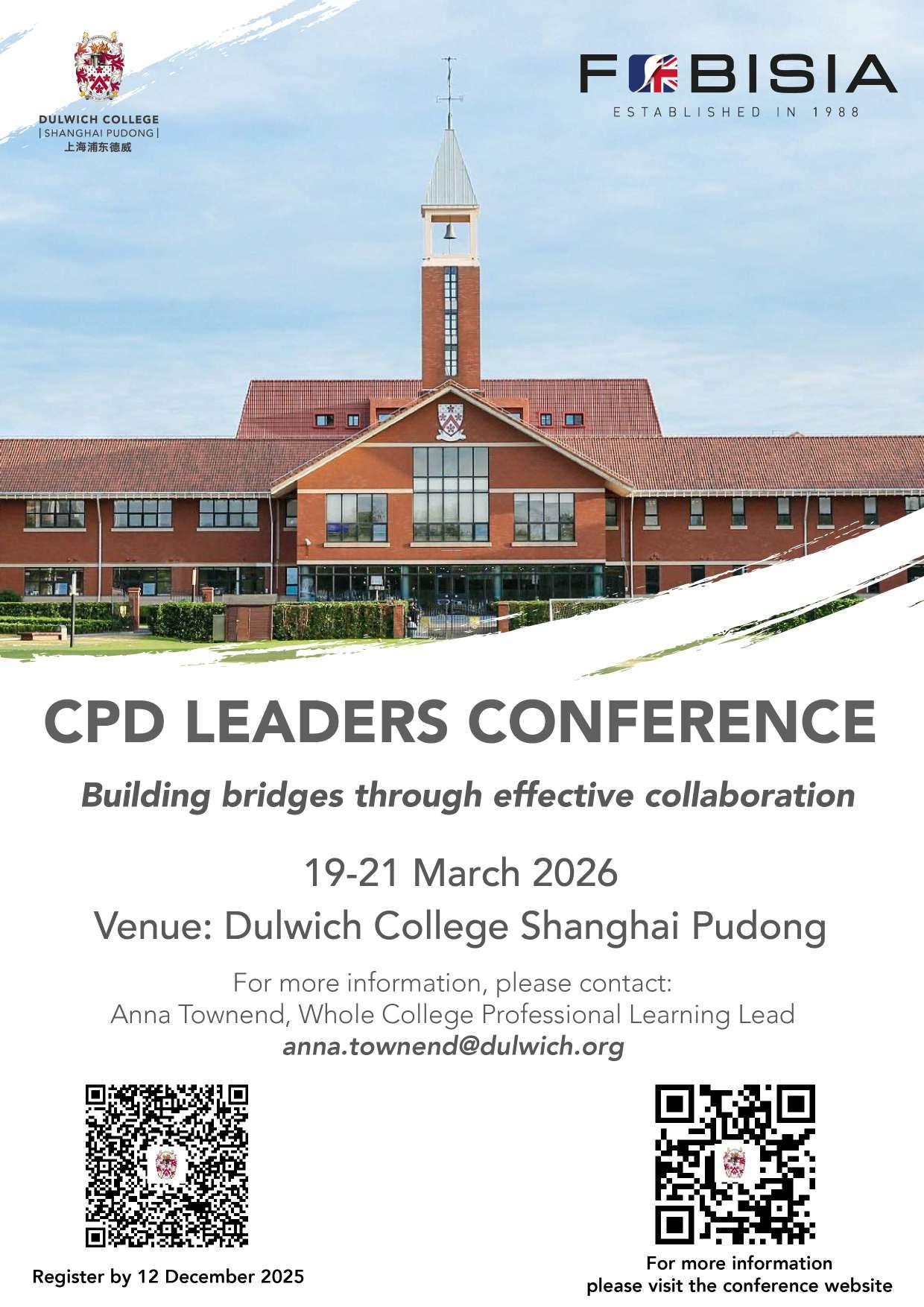
The CPD Leaders Conference (19–21 March 2026) is shaping up to be an engaging and purposeful gathering, centred on the theme Building Bridges Through Effective Collaboration With sub-themes such as Leadership for Collaboration, Community Engagement and Partnerships, and Teaching & Learning Frameworks/Models, the programme is coming together with real depth. I do hope to see many of you at Dulwich College Shanghai Pudong.
Wishing you a productive, energising term ahead.
Warm wishes,
Swati Sinha Bedi FOBISIA HQ - CPD & Safeguarding Executive
PUBLISHER FOBISIA
EDITOR
Swati Sinha Bedi
DESIGN EDITOR
Bunjopporn (Yoke) Kittrell
CONTRIBUTORS TO THIS ISSUE
Colette Shearer
Shrewsbury International School, Bangkok Riverside
Dr Eunice Lee and Cecilia Ngan Kellett School Hong Kong
Jonathan Breaden
Bangkok International Preparatory & Secondary School
Karen Jense, Kay McCabe
Nexus International School, Malaysia
Omar Murtaza
The British School in Tokyo
Raj Ladva
King's College International School Bangkok
Tara Kay
British International School Ho Chi Minh City
Tracie West
The British International School Shanghai, Puxi

AQ
Refer to Member Support page on www.fobisia.org for calendar updates. Dates for in-person events do not include travel days (with the exception of the FOBISIA Games). FOBISIA events may be subject to change.
02/03 eJAWSConference Senior Leaders e-JAWS Conference Dulwich College (Singapore)
06/03 eJAWS University Counselling eJAWS: University and Careers Preparation in International Contexts The British School Kathmandu
19/03 - 21/03 Conference CPD Leaders' Conference Dulwich College Shanghai Pudong
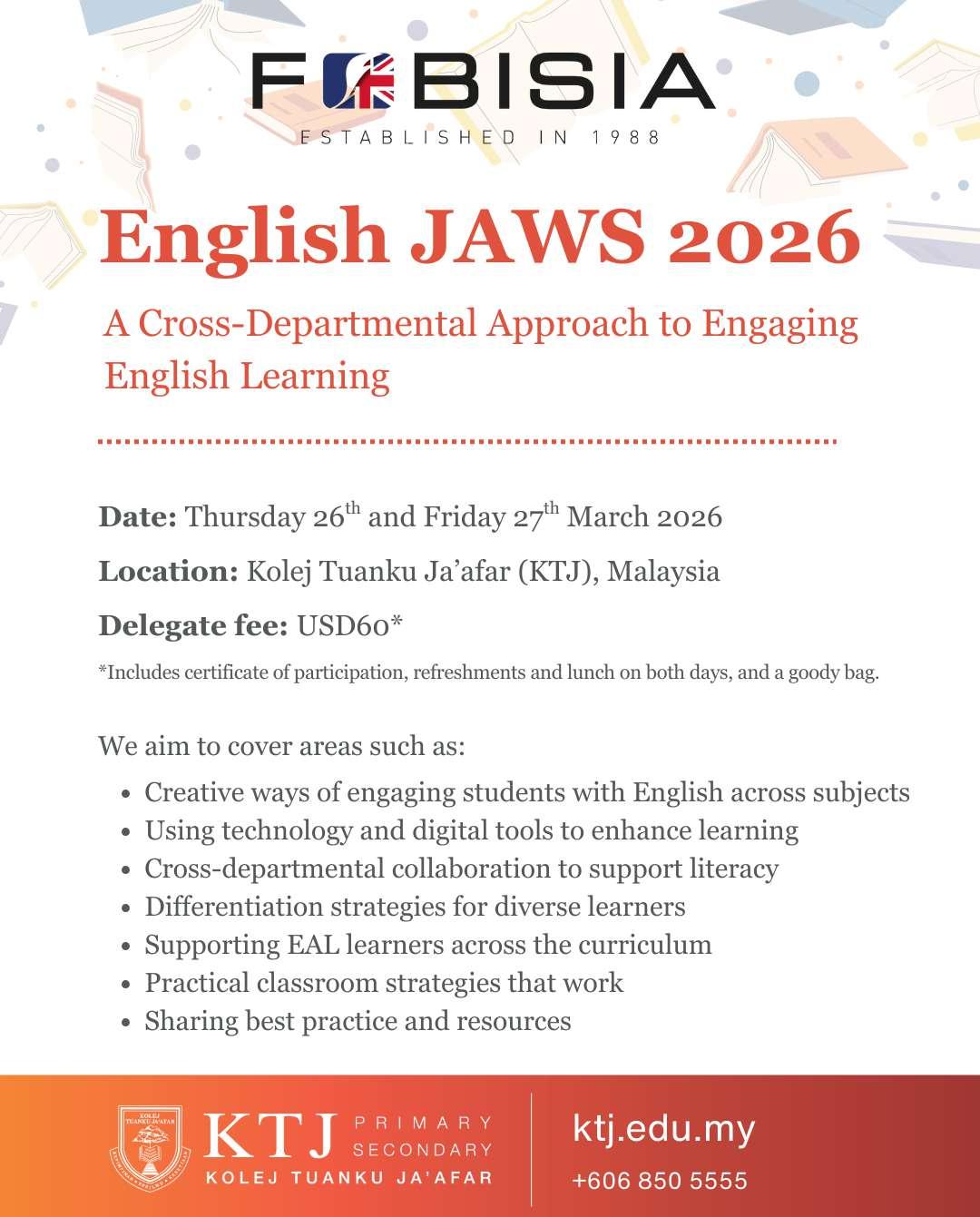
26/03 - 27/03 JAWS A Cross-Departmental Approach to Engaging English Learning JAWS Kolej Tuanku Ja’afar
AQ 22/04 eJAWS Metacognition eJAWS: Metacognitive Strategies to Meet the Needs of All Learners Jerudong International School Brunei
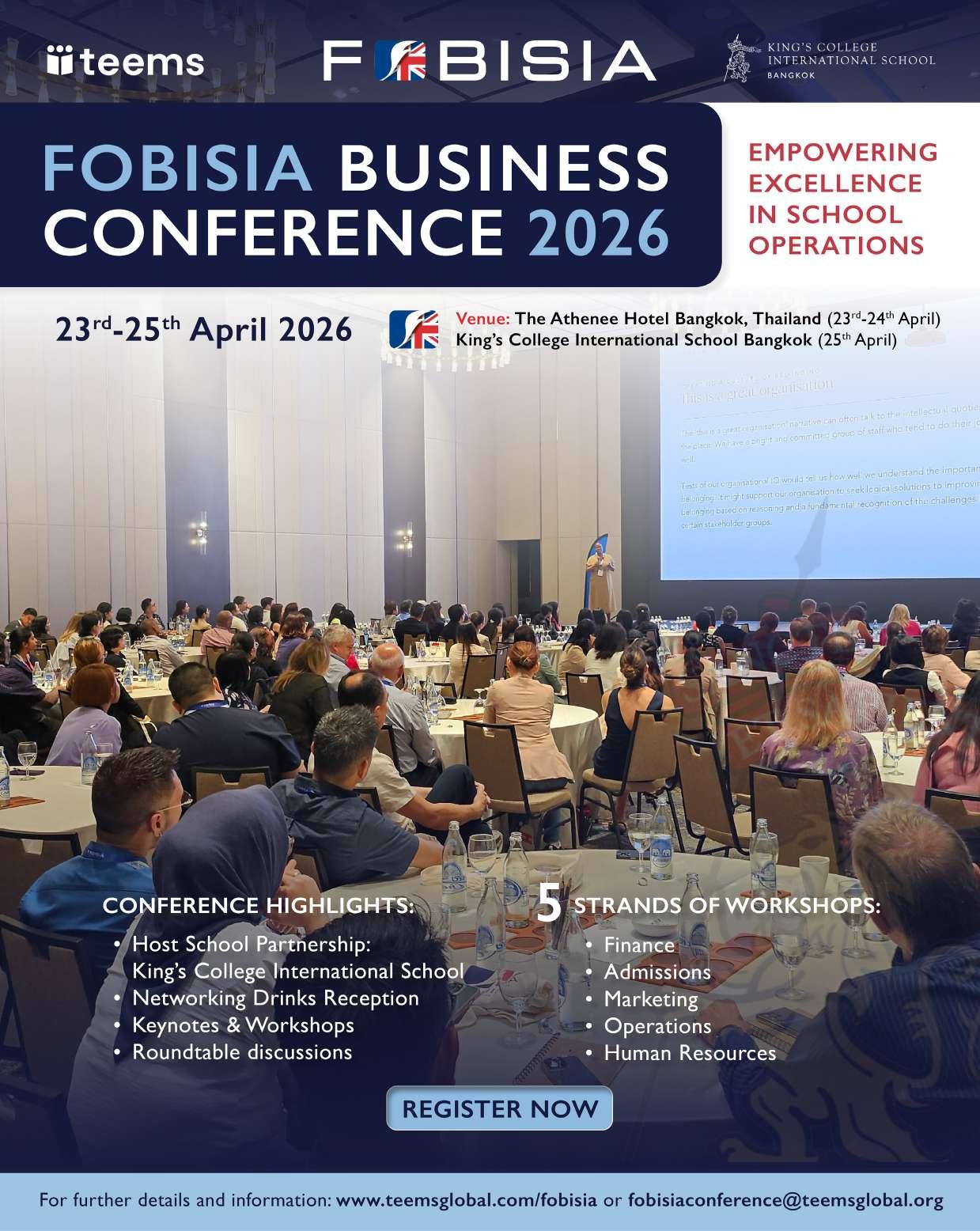
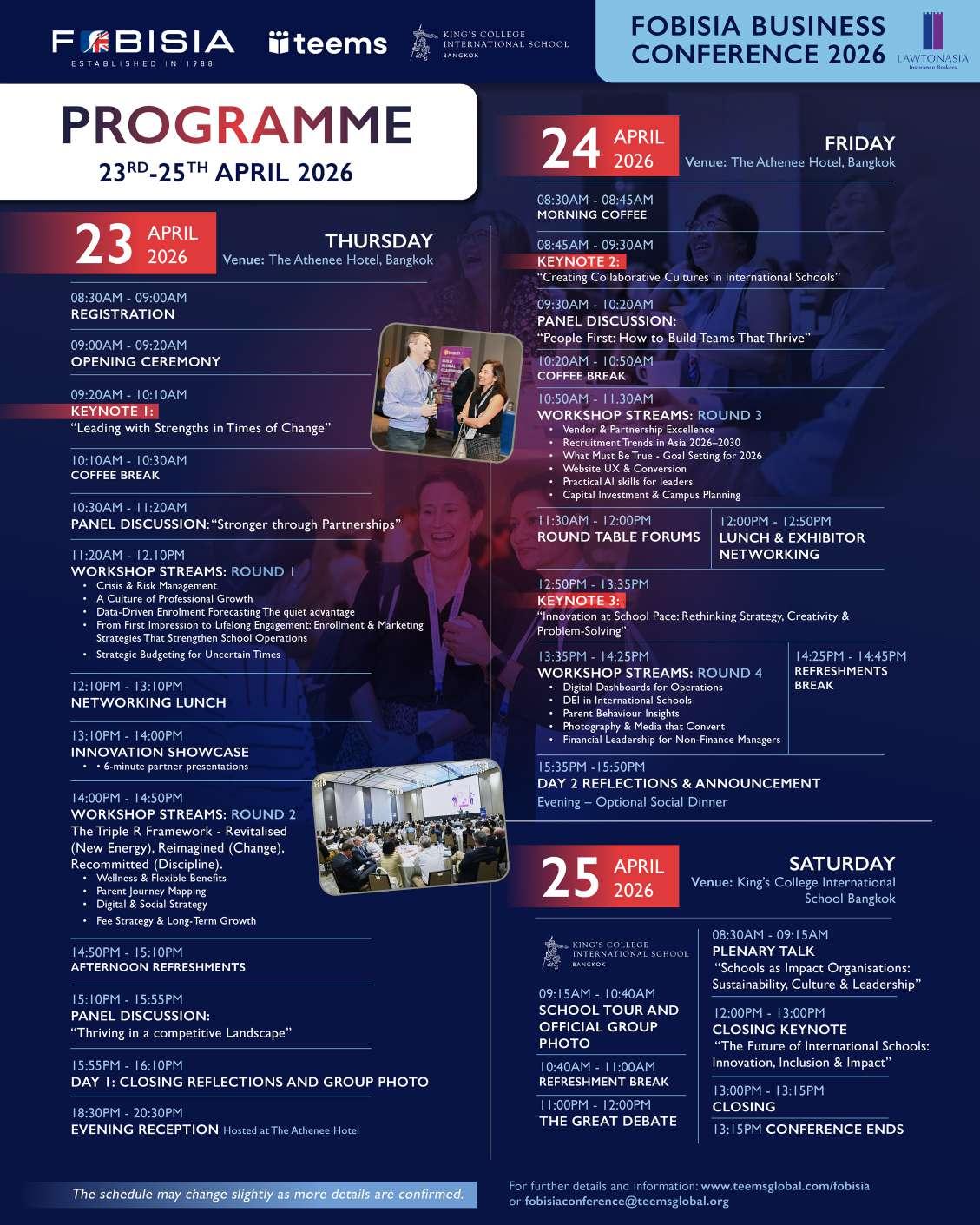
23/04 - 25/04 Conference FOBISIA Business Conference
& Kings College Bangkok
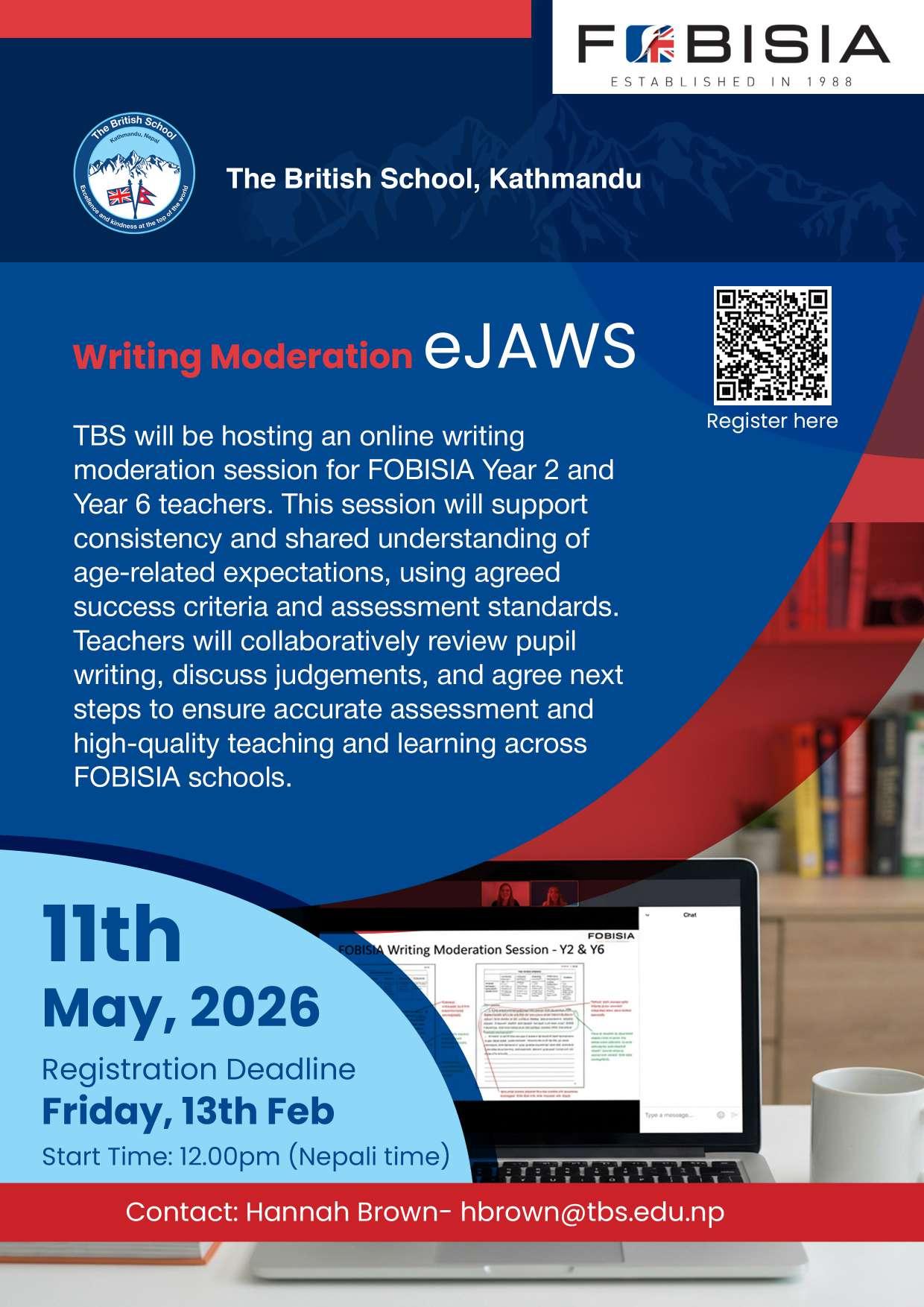
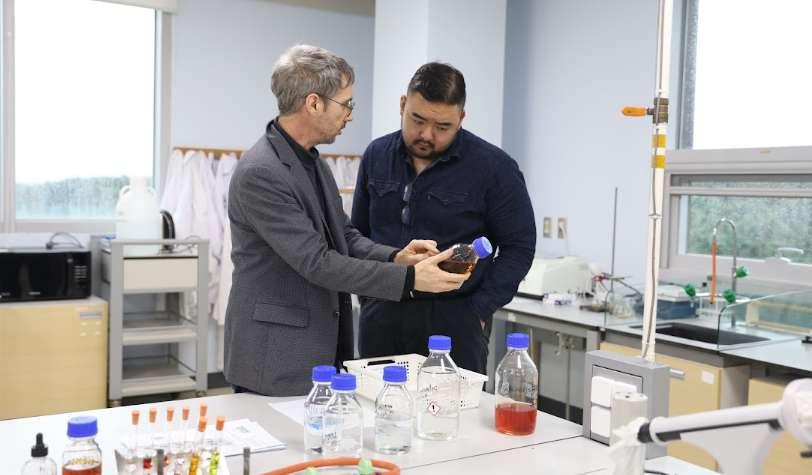
AQ 08/05 eJAWS Enhancing Student Engagement in Science eJAWS The International School @ ParkCity 11/05 eJAWS Primary Writing eJAWS: Enhancing Writing StandardsA Day of Primary Writing Moderation for International Schools End of KS1 and KS2 - Year 2 and 6
12/05 eJAWS Coaching/Mentoring eJAWS
The British School Kathmandu
North London Collegiate School Jeju
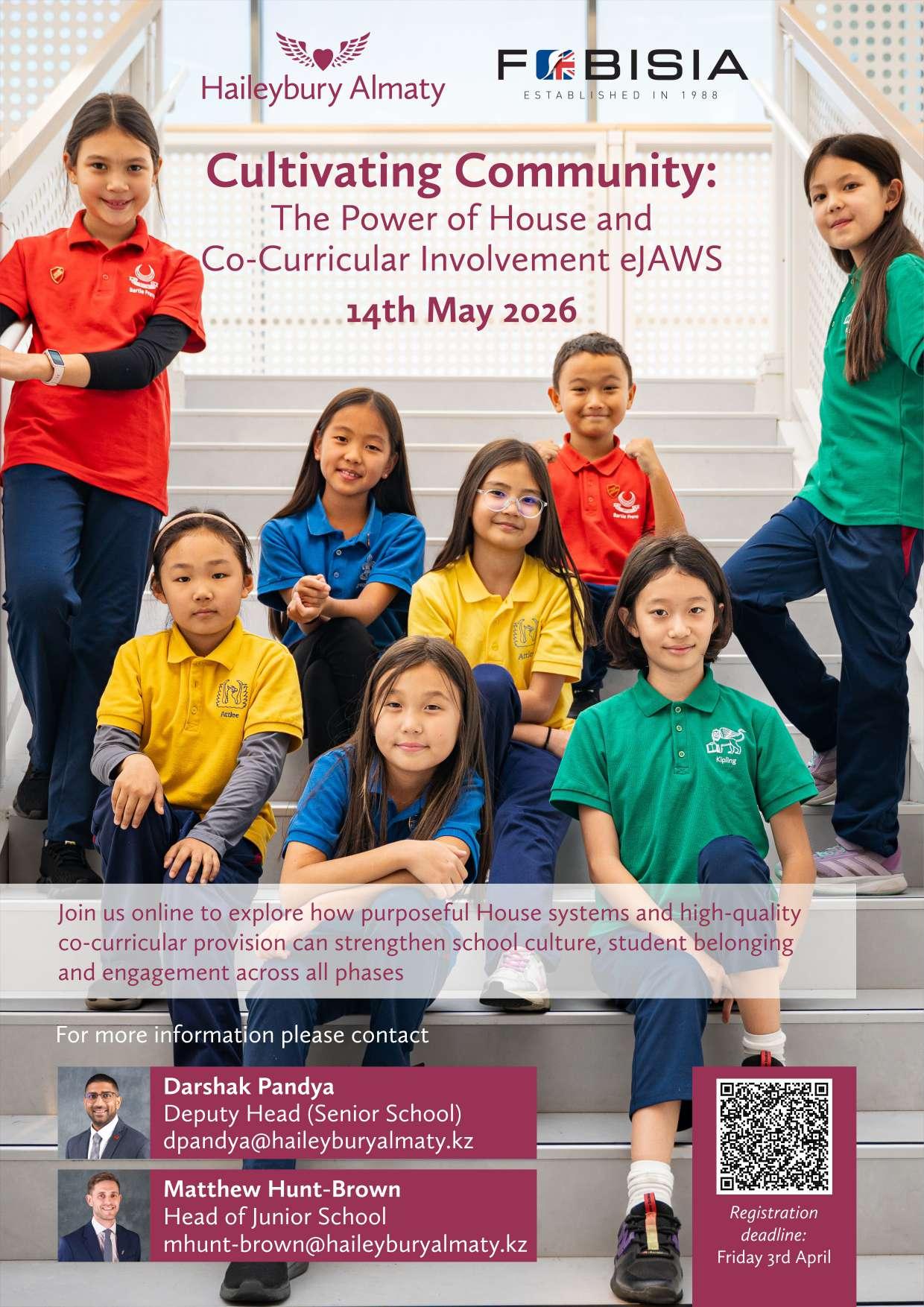
14/05 eJAWS Co-Curricular and House Leaders eJAWS: Cultivating Community - The Power of House and Co-Curricular Involvement Haileybury Almaty
15/05 eJAWS Teaching Assistants eJAWS: Classroom Assistants, Developing Best Practice The International School @ ParkCity
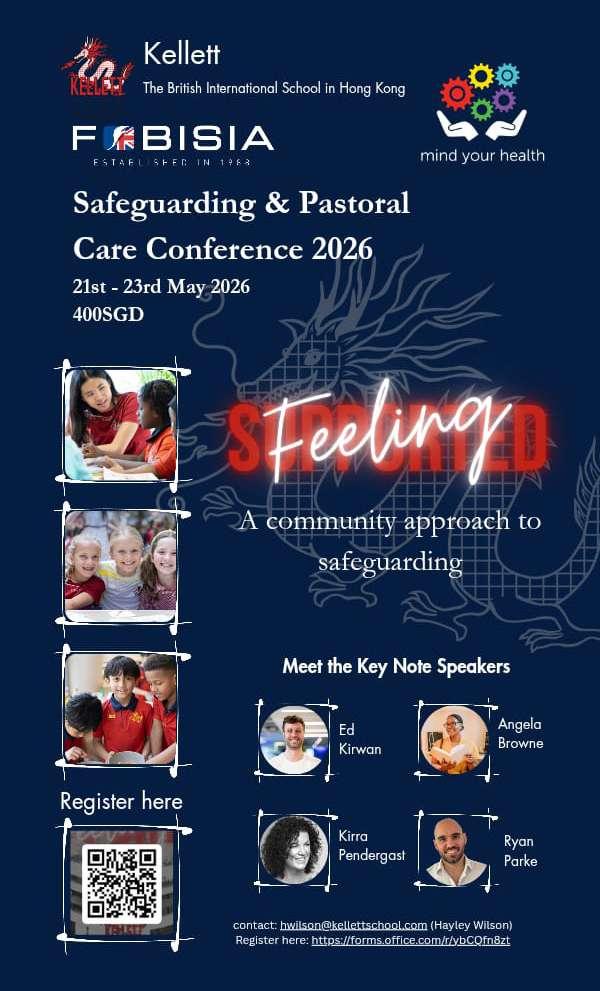
21/05 - 23/05 Conference FOBISIA Safeguarding and Pastoral Care Conference Kellett School, Hong Kong
22/05 eJAWS Psychology and Sociology eJAWS: Sociology and Psychology Beyond the Curriculum
25/05 JAWS Secondary Maths JAWS
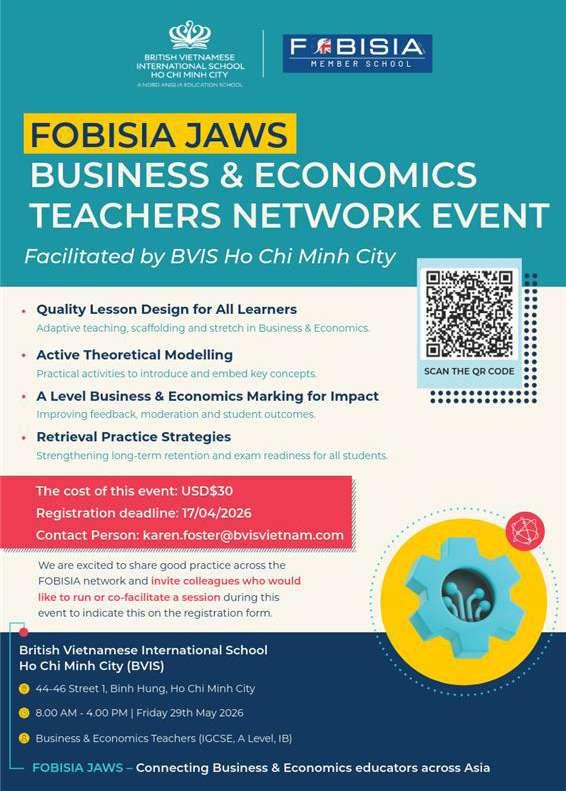
29/05 JAWS Business and Economics JAWS
AQ
Shenzhen College of International Education
Bangkok International Preparatory & Secondary School (Bangkok Prep)
British Vietnamese International School Ho Chi Minh City
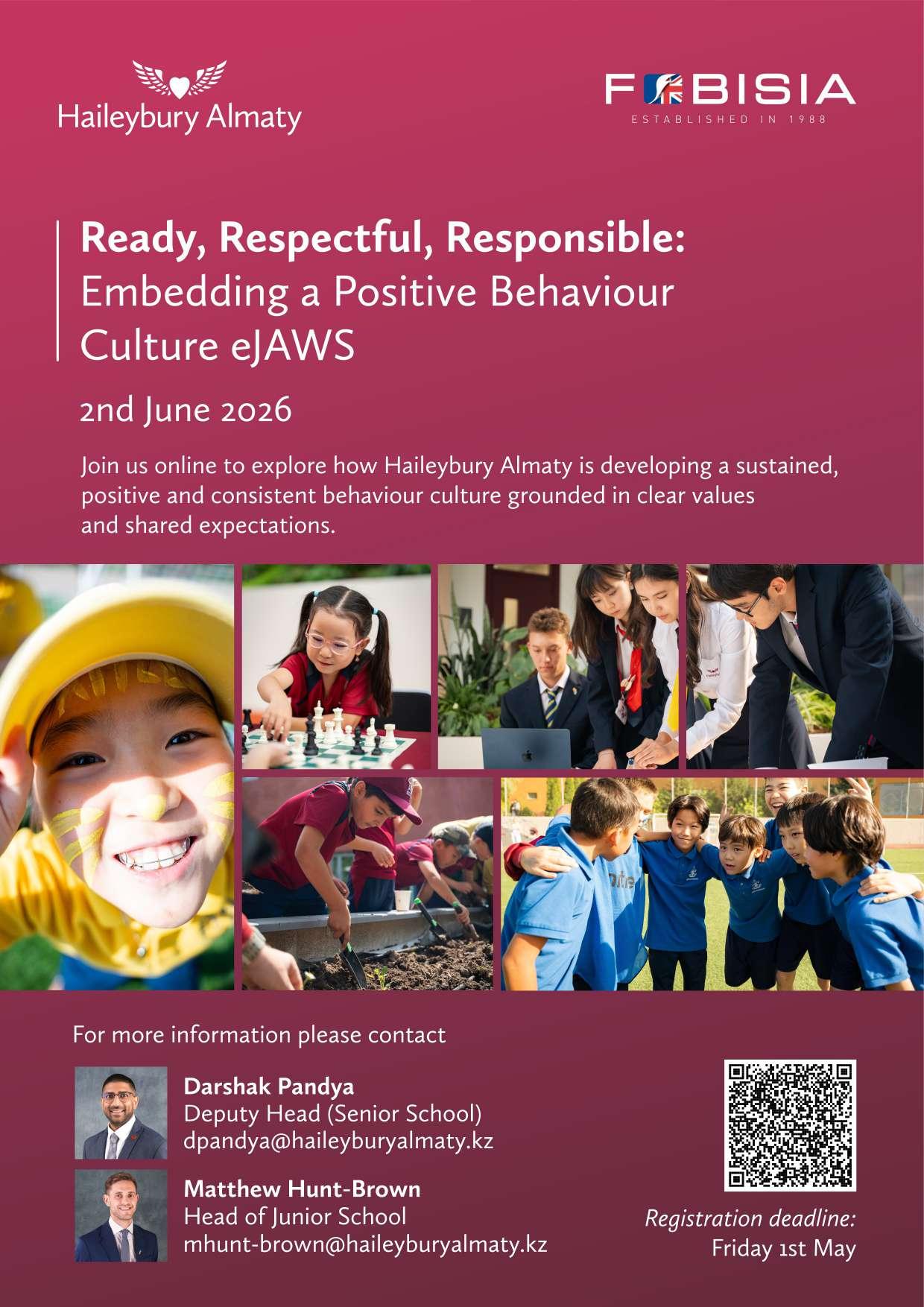
02/06 eJAWS Positive Behaviour eJAWS: Ready, Respectful, Responsible - Embedding a Positive Behaviour Culture Haileybury Almaty



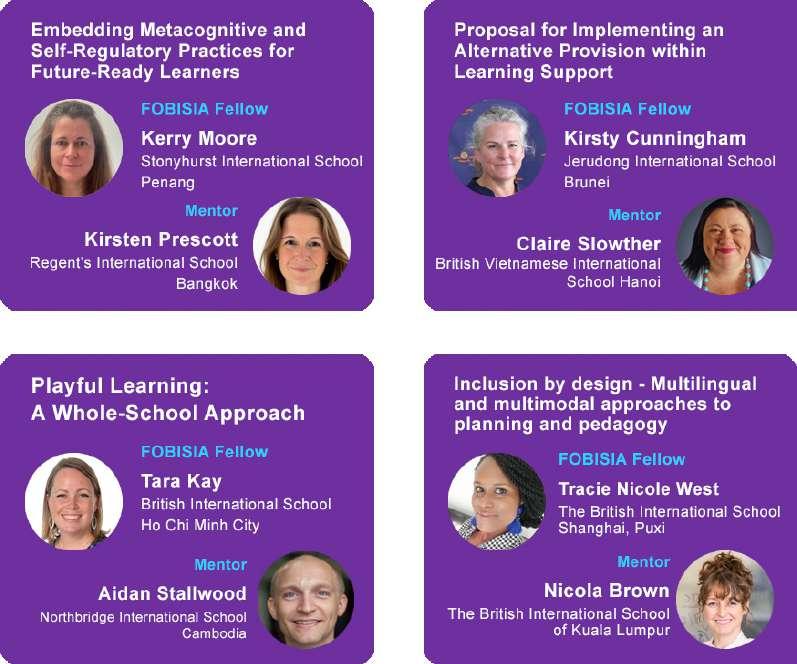
IN A PEDAGOGY OF PLAY (2024), RESEARCHERS FROM PROJECT ZERO AT HARVARD BEGIN WITH A SIMPLE YET POWERFUL OBSERVATION
Tara Kay Curriculum and Assessment Leader (KS1) British International School Ho Chi Minh City
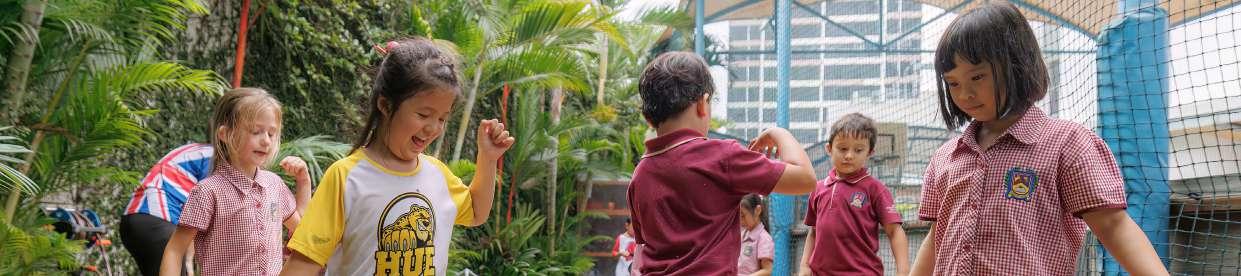
“In schools around the world, children are learning through play. They are 4-year olds, 4th graders, and 14-year olds. They are learning about math, science, geography, literature, and dance. Around the world children are leading their own learning, exploring the unknown, encountering challenges, and finding joy in learning.”
This framing captures a global shift toward understanding play not as a break from learning, but as a vital route to it.
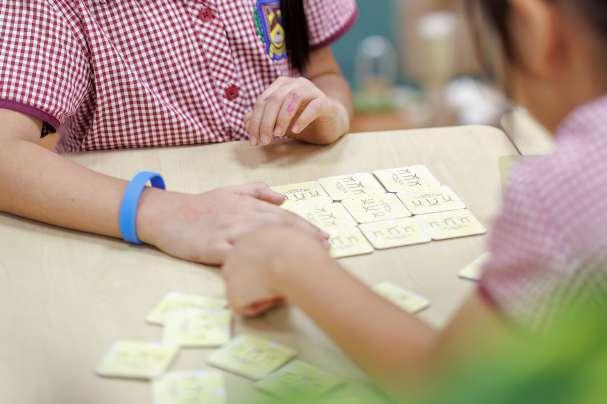
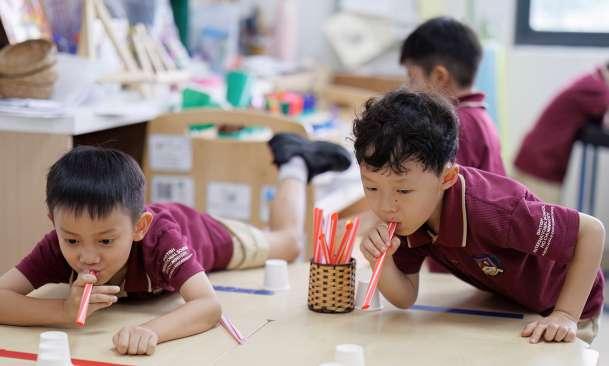
At the British International School in Ho Chi Minh City, this shift has been shaping our own journey into playful learning. The process began just before the pandemic, when Busy Learning, a bespoke model of continuous provision, was introduced first in Year 1 and then in Year 2. Through trial, research, and reflection, this early work has recently grown into a schoolwide perspective: playful learning as both a mindset and a pedagogical approach embedded across our primary classrooms.
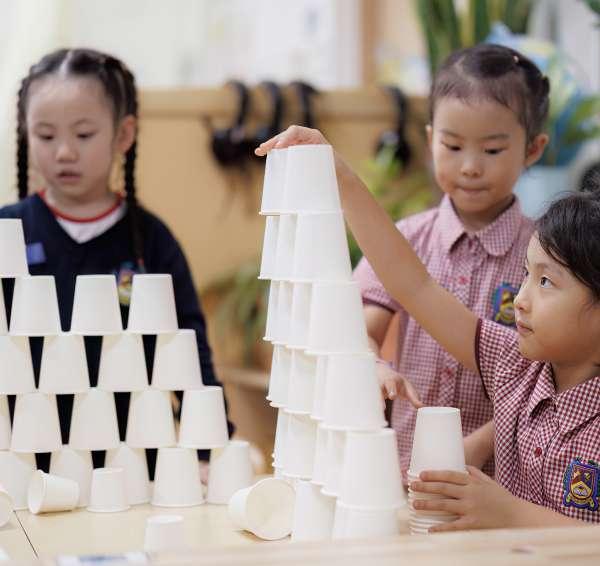
The need for such an approach feels more pressing than ever. In an increasingly virtual and scheduled world, many children have fewer opportunities for unsupervised social play and face-to-face interaction (Dodd et al., 2023). Yet research connects play with improved mental health (Gray, 2011; Dodd et al., 2023), stronger engagement (Parker et al., 2022), and rich social emotional development. Play nurtures resilience, reduces stress, and supports creativity and problem solving.
Self Determination Theory (Ryan and Deci, 2000) provides a helpful lens. Children, like adults, need relatedness, autonomy, and competence in order to thrive. Play naturally supports relatedness through collaboration, communication, and shared experiences. It enables autonomy by offering choice, encouraging exploration, and fostering initiative. However, competence must be intentionally designed. Research highlights that playful learning is most effective when paired with strong, explicit instructional practices that scaffold skills and build confidence.
This balance is central to our work at BIS HCMC. Guided by A Pedagogy of Play and Tom Sherrington’s Learning Rainforest, we have framed playful learning not as a replacement for explicit teaching but as its partner. Sherrington argues that high quality instruction, including modelling, explanation, practice, feedback, and assessment, forms the roots of robust learning. Yet without opportunities to
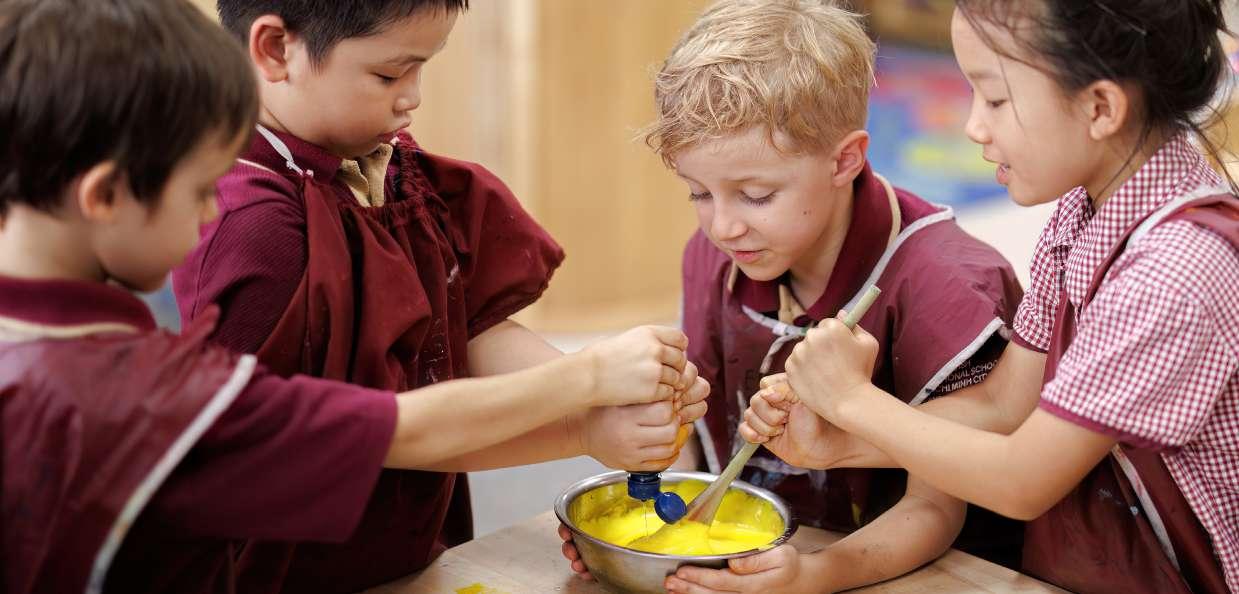
explore, create, and exercise autonomy, learning risks becoming shallow rather than meaningful.
For us, playful learning means holding both of Sherrington’s modes in balance. Mode A builds competence, structure, and clarity, while Mode B supports autonomy, connection, and deeper thinking. Without Mode A, students may lack the skills and confidence needed to tackle challenges successfully. Without Mode B, they may lose ownership of their learning and struggle to make deeper, personal connections.
Our journey at BIS HCMC reflects an international movement that recognises play as a powerful contributor to wellbeing and learning. By combining explicit teaching with opportunities for exploration and autonomy, we aim to create classrooms where children feel connected, capable, and deeply engaged. Playful learning, rooted in strong pedagogy, helps our students not only learn more, but flourish.
References:
Dodd, H. F., Nesbit, R. J., & FitzGibbon, L. (2023). Child’s Play: Examining the association between time spent playing and child mental health. Child Psychiatry and Human Development, 54(6), 1678–1686. https://doi. org/10.1007/s10578-022-01363-2 (link.springer.com)
Gray, P. (2011). The decline of play and the rise of psychopathology in children and adolescents. American Journal of Play, 3(4), 443–463.
Mardell, B., Ryan, J., Krechevsky, M., Baker, M., Schulz, T. S., & Liu-Constant, Y. (2023). A pedagogy of play: Supporting playful learning in classrooms and schools. Cambridge, MA: Project Zero, Harvard Graduate School of Education. (pz.harvard.edu)
Parker, R., Thomsen, B. S., & Berry, A. (2022). Learning through play at school – A framework for policy and practice. Frontiers in Education, 7. https://doi.org/10.3389/feduc.2022.751801 (frontiersin.org)
Ryan, R. M., & Deci, E. L. (2000). Self-determination theory and the facilitation of intrinsic motivation, social development, and well-being. American Psychologist, 55(1), 68–78. https://doi.org/10.1037/0003066X.55.1.68 (SCIRP)
Sherrington, T. (2017). The Learning Rainforest: Great teaching in real classrooms. John Catt Educational. (Open Library)
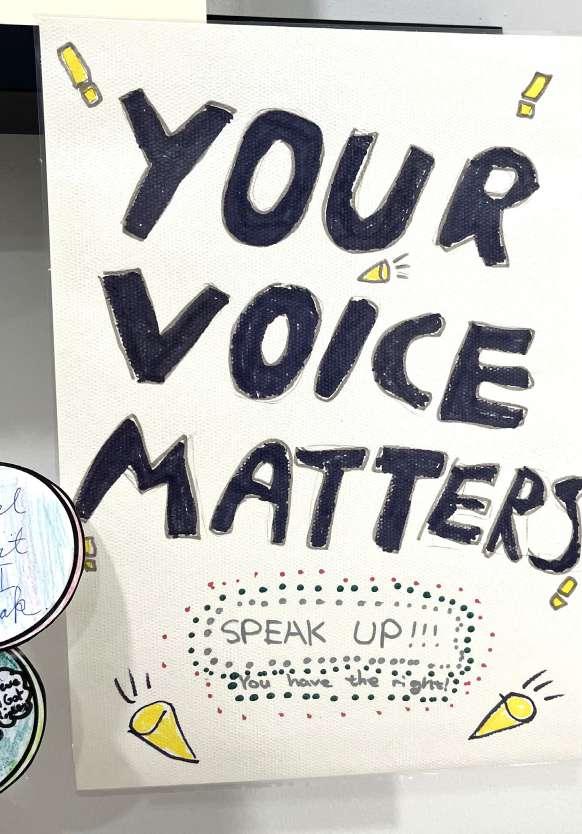
"I don’t agree with Greta Thunberg." While teaching a Year 6 class, I halted my impulse to fire off questions and turned to the class: "Does anyone want to respond?" I stepped back, creating space for respectful discourse and critical thought. This student proclamation sparked a teacher’s revelation: thinking routines not only elevate student voice but also transform how teachers facilitate meaningful exchange.
This moment was a key observation of knowledge transfer during the Term 2 research project I co-led, investigating the impact of Harvard Project Zero’s Thinking Routines on student perspective-taking. Our study focused on the factors that shape student thinking when considering others' viewpoints and to what degree these routines influence their own perspectives. Crucially, the work centered not on what they thought but on how and why.
Through humanities lessons, and supported by surveys, student work, and teacher observations, we concluded that thinking routines provide an essential framework for critical thought, learning transfer, and cognitive shifts. Translating these findings into practice, our call to action focused on three points: 1) Supporting teacher-researchers to expand and share findings; 2) Leveraging thinking routines to advance goals of inclusion and belonging; and 3) Employing the routines as a structured approach to exploring empathy, identity, and relationships through PSHE lessons.
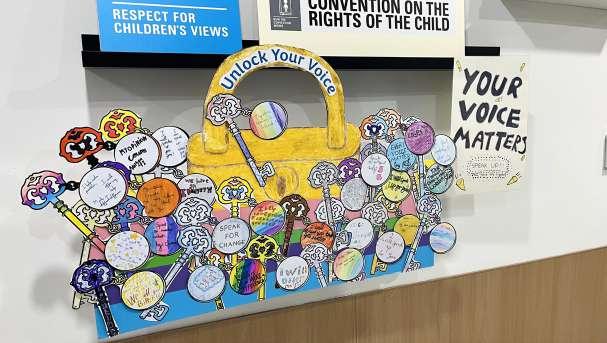
As a FOBISIA fellowship awardee, I am responding to this call to action. My project extends the initial Year 6 humanities focus to a primary-wide initiative that uses thinking routines to foster student understanding of UNCRC children’s rights. With 14 teachers (Years 1-6), Phase 1 concluded in December. For three months, participants used the PSHE resources I designed and submitted monthly student work and feedback. This mixed-methods approach mirrored my previous study.
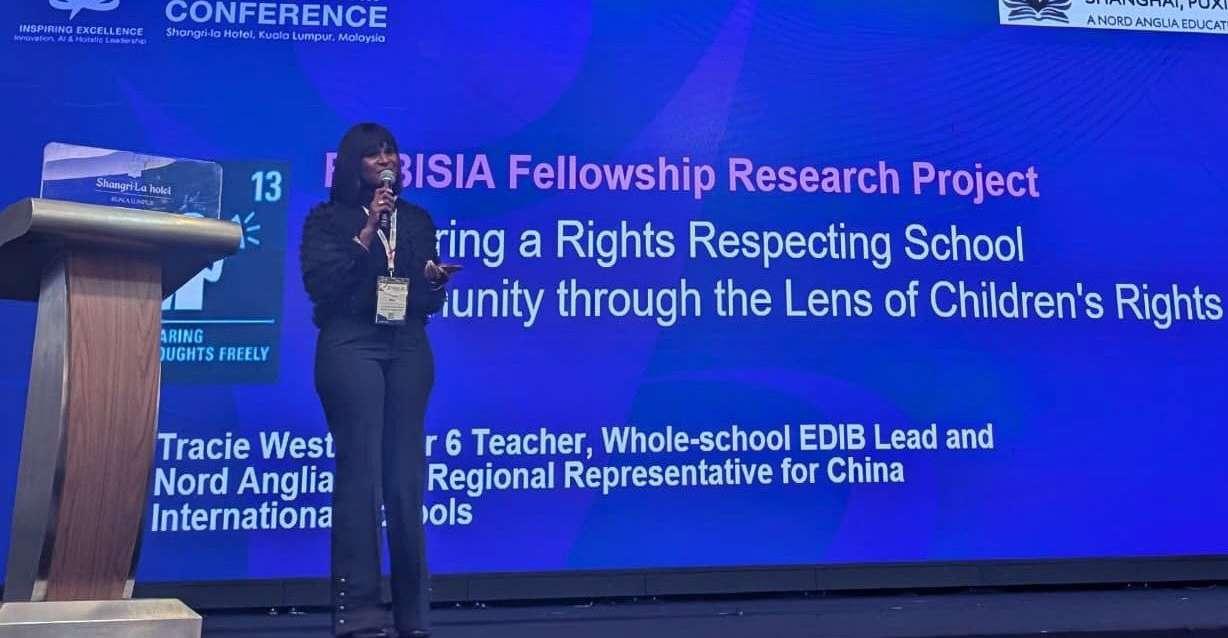
Currently, guided by collaborative feedback, I am developing Phase 2 lessons. The project's conclusion will assess the degree of growth in students' understanding of children’s rights, the impact on transfer of learning, and the efficacy of thinking routines as a conduit for knowledge retention. In this new project, I am placing a lens on the ‘what’ of student perspectives.
Throughout this collaboration with teachers, I found myself applying a method of lesson design I use with students—the Purpose Continuum. This model, which I developed, visualises how teaching purpose evolves through continuous student engagement, requiring the teacher to consider what’s missing in a learning plan and intentionally leaving space for student input to fill the gaps. In my role as a researcher, I am now experiencing this continuum through the lens of peer-influenced curriculum design.
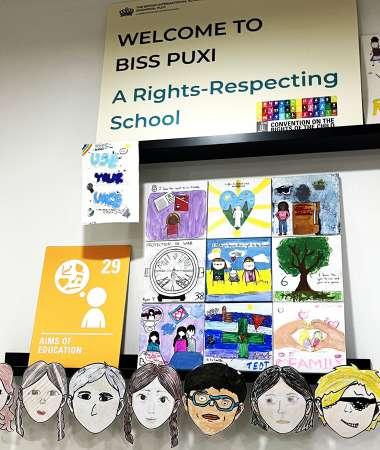
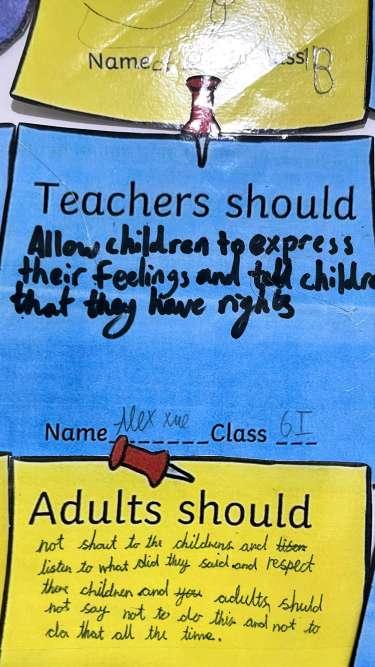
This process is a cyclical model I call CARD: Communication, Application, Reflection, and Design. To play my CARD effectively, I must always consider the other players at the table of teaching and learning.
Teachers hold the power to plan, implement, and facilitate school experiences, directly shaping how students respond to the learning culture. Thinking routines can guide students toward the critical thought that empowers agency. In the next phase of research, I am hopeful that an increased understanding of children’s rights, anchored by thinking routines, will catalyse student agency—shifting classroom power structures to build a true community of learners.

Jonathan Breaden Assistant Head of Primary (Learning) Bangkok International Preparatory & Secondary School
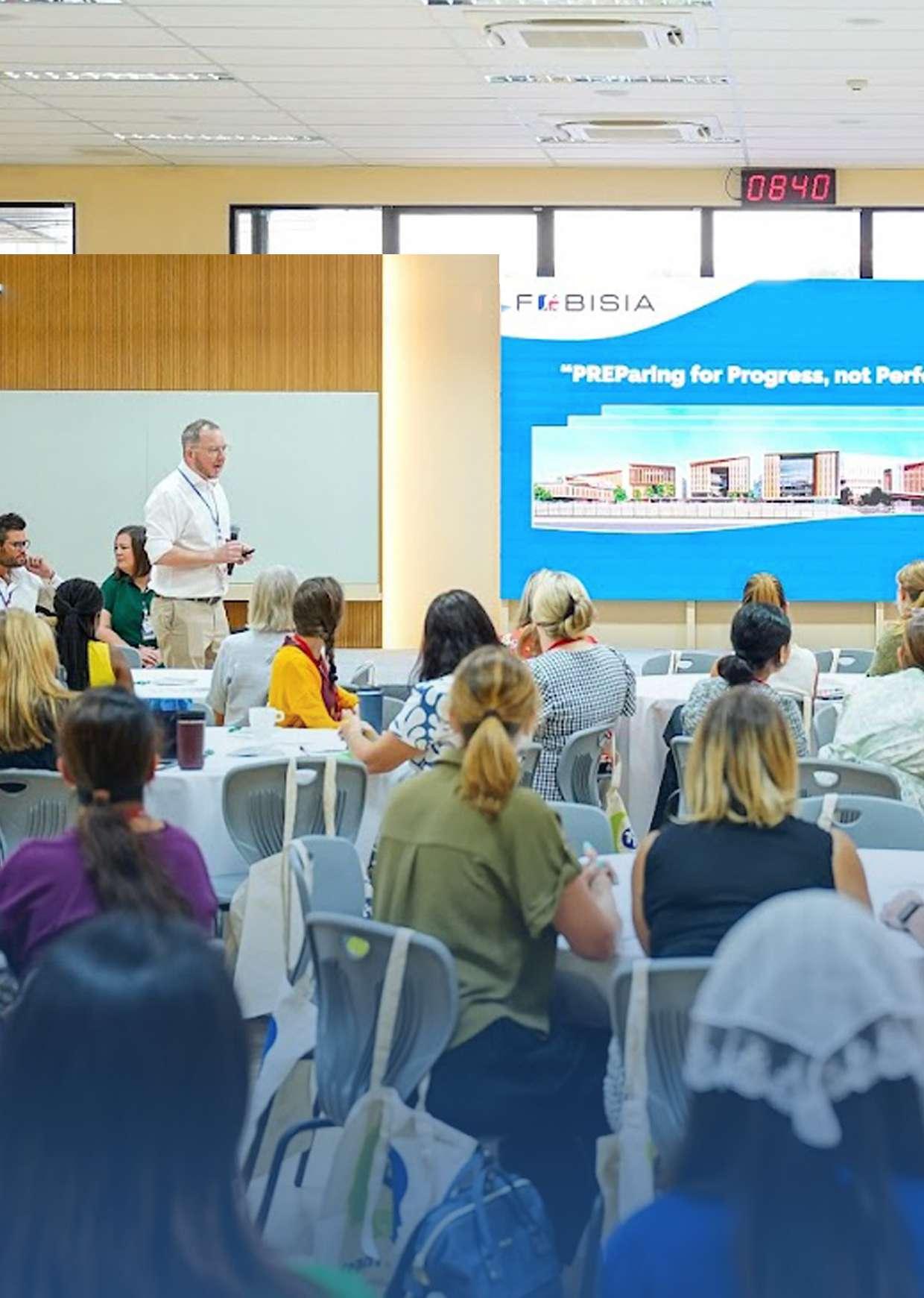
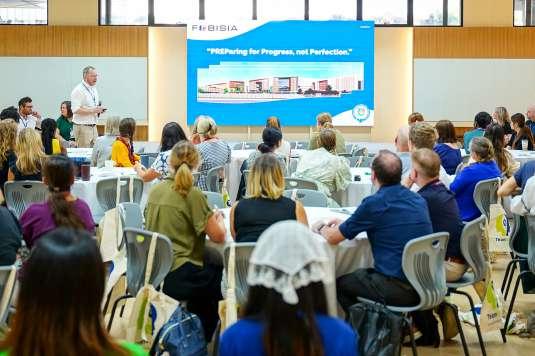
Hosting the recent FOBISIA SEND JAWS Conference at Bangkok International Preparatory & Secondary School provided a valuable opportunity to pause and reflect on what meaningful inclusion truly looks like in our schools.
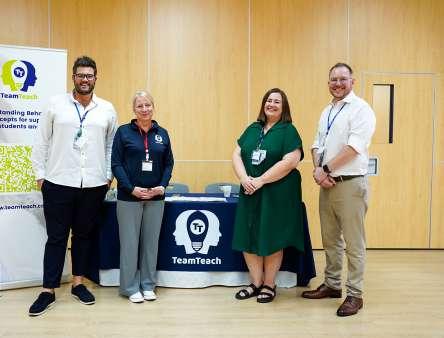
Across the day, a clear and consistent message emerged. Wellbeing is not an add-on to learning. It is the foundation. Nancy Hooper from Team Teach reminded us that relationships and emotional safety are prerequisites for academic progress. This resonated strongly and was echoed in discussions around regulation, language demands, and behaviour. The phrase “behaviour is communication” surfaced repeatedly, reinforcing the need to interpret before we intervene.
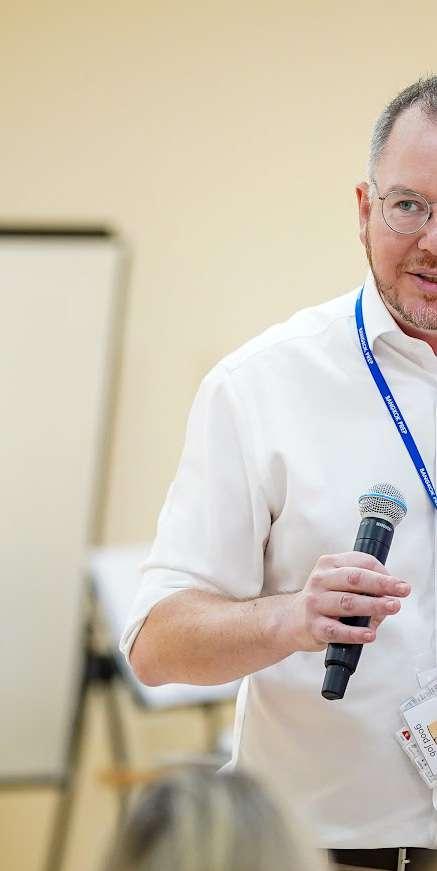
In the opening keynote, we reflected on the idea of PREParing for Progress, Not Perfection. Inclusion is rarely built through dramatic reform. It is shaped through steady refinement of language, systems and shared responsibility. Titles and terminology evolve, yet families are often asking something far simpler: Who is helping my child? Will they be okay? When our language becomes a barrier, clarity and trust suffer. When our practice is aligned, confidence grows.
Early intervention formed another strong thread throughout the conference. From early years provision to transitions into Key Stage 1 and beyond, conversations centred on how timely, coordinated support can change trajectories. Early support is not about “fixing” a child. It is about stabilising the ecosystem around them so learning can flourish.
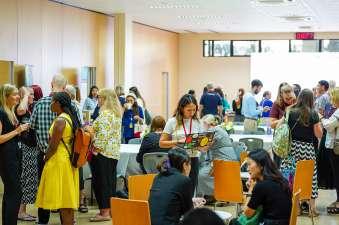
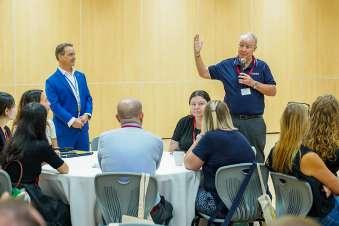
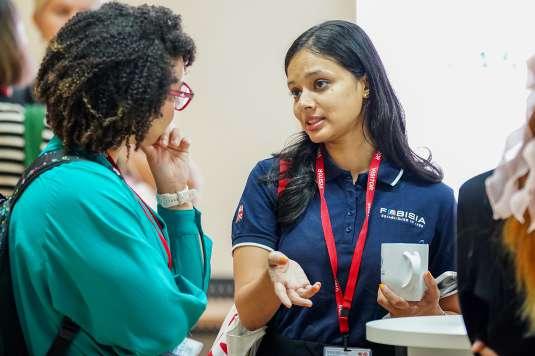
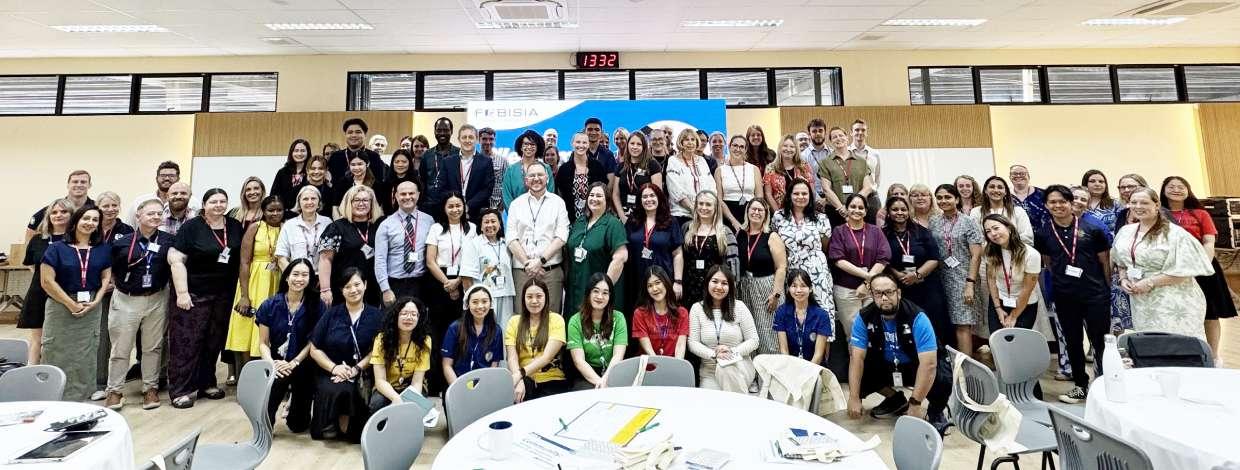
Workshops explored integrated approaches to support, including strengthening universal provision, increasing classroom based support, and investing in staff capacity. Inclusion cannot operate in parallel to the rest of the school. It must be woven through learning, understanding of behaviour, wellbeing and safeguarding. This shift from isolated intervention to shared ownership represents a cultural change as much as a structural one.
The parent panel provided one of the most powerful moments of the day. Hearing directly from families reframed inclusion as lived experience rather than policy. It prompted reflection on how schools build transparency, partnership and trust over time.
Attention also turned to pathways and post education readiness. Discussions around accessible qualifications and alternative routes highlighted the importance of ensuring that inclusion extends beyond primary provision into meaningful secondary and post sixteen opportunities.
Perhaps the strongest takeaway is that inclusion is not a department. It is a culture. It shapes curriculum design, behaviour systems, transitions, and strategic planning. It requires clarity, infrastructure, and collective commitment.
Every school is on its own journey, shaped by context and community. The aim is not comparison. It is momentum. If we continue preparing for progress rather than striving for perfection, we move closer to schools where inclusion is not exceptional. It is expected.
My sincere thanks to all of our workshop presenters, to Nancy Hooper from Team Teach, to STEPS Cafe for their contribution to the day, to our Events Team for ensuring everything ran so smoothly, and to the Whole School Learning Support Team at Bangkok Prep whose commitment and expertise made the conference possible.
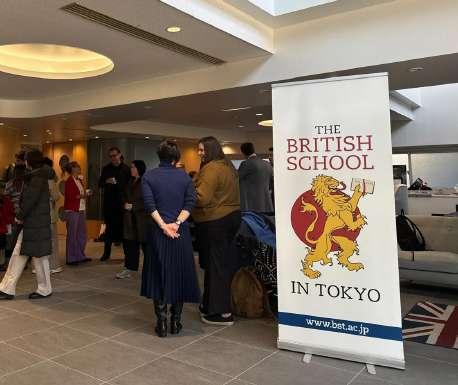

Omar Murtaza Deputy Head The British School in Tokyo
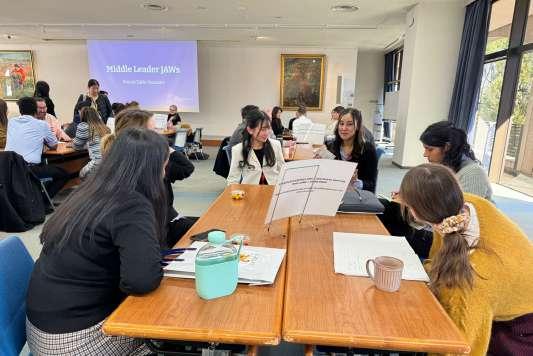
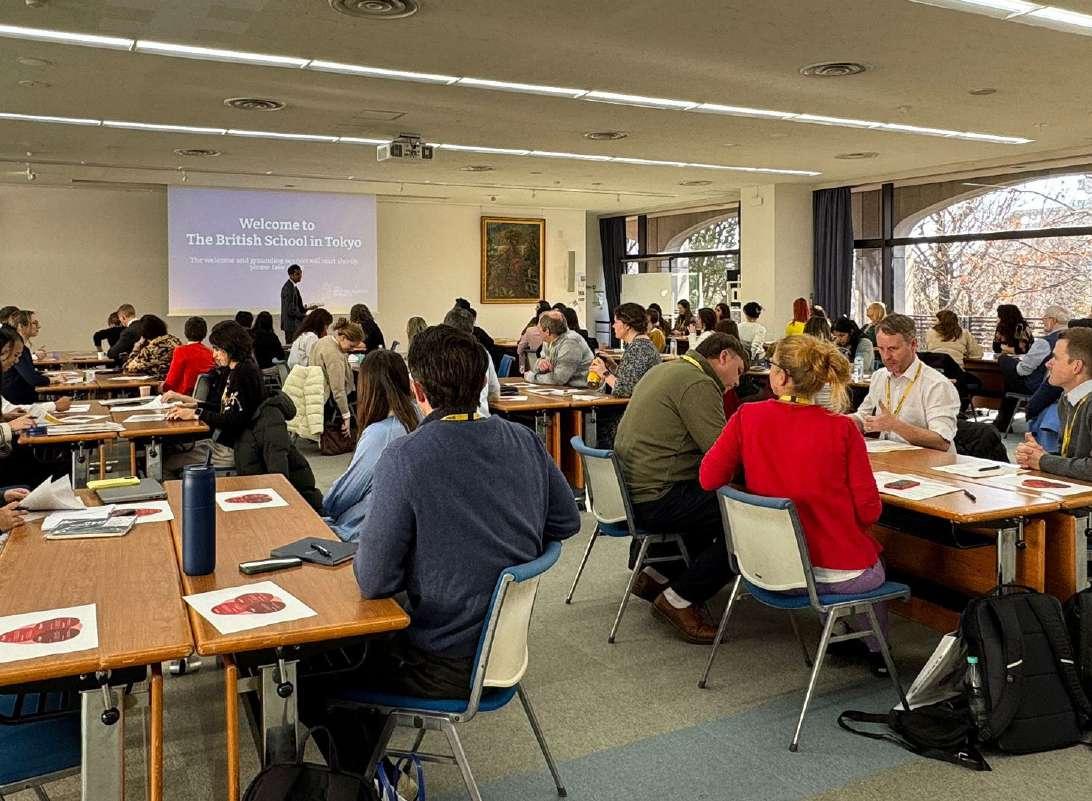
In January, middle leaders from across FOBISIA schools came together in Tokyo for the Middle Leader JAWs 2026, a twoday professional learning experience hosted by The British School in Tokyo. Grounded in the themes of Purpose, People, and Progress, the event was designed to reflect the realities of middle leadership in international schools and to create space for thoughtful, values-driven leadership development.
Middle leadership is often described as one of the most complex and demanding roles in a school. Leaders operate at the intersection of strategy and practice, vision and reality, accountability and care. This JAWs was intentionally structured to acknowledge this complexity and to support leaders in reconnecting with why their role matters, how they lead others, and how they sustain improvement over time.
Across the two days, participants engaged in a carefully curated programme combining workshops, roundtable discussions, reflection, and collaborative thinking. A choice-based workshop model allowed leaders to personalise their learning pathways, while maintaining a shared focus on leadership behaviours that directly influence teaching, learning, and school culture. Sessions explored themes such as translating strategic vision into classroom practice, leading with integrity during times of pressure or change, giving feedback that genuinely supports teacher growth, and building psychologically safe, high-performing teams.
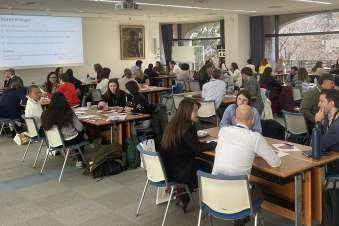
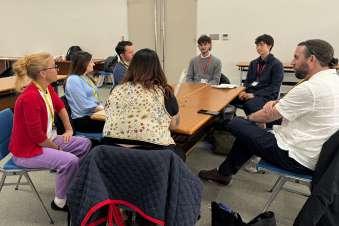
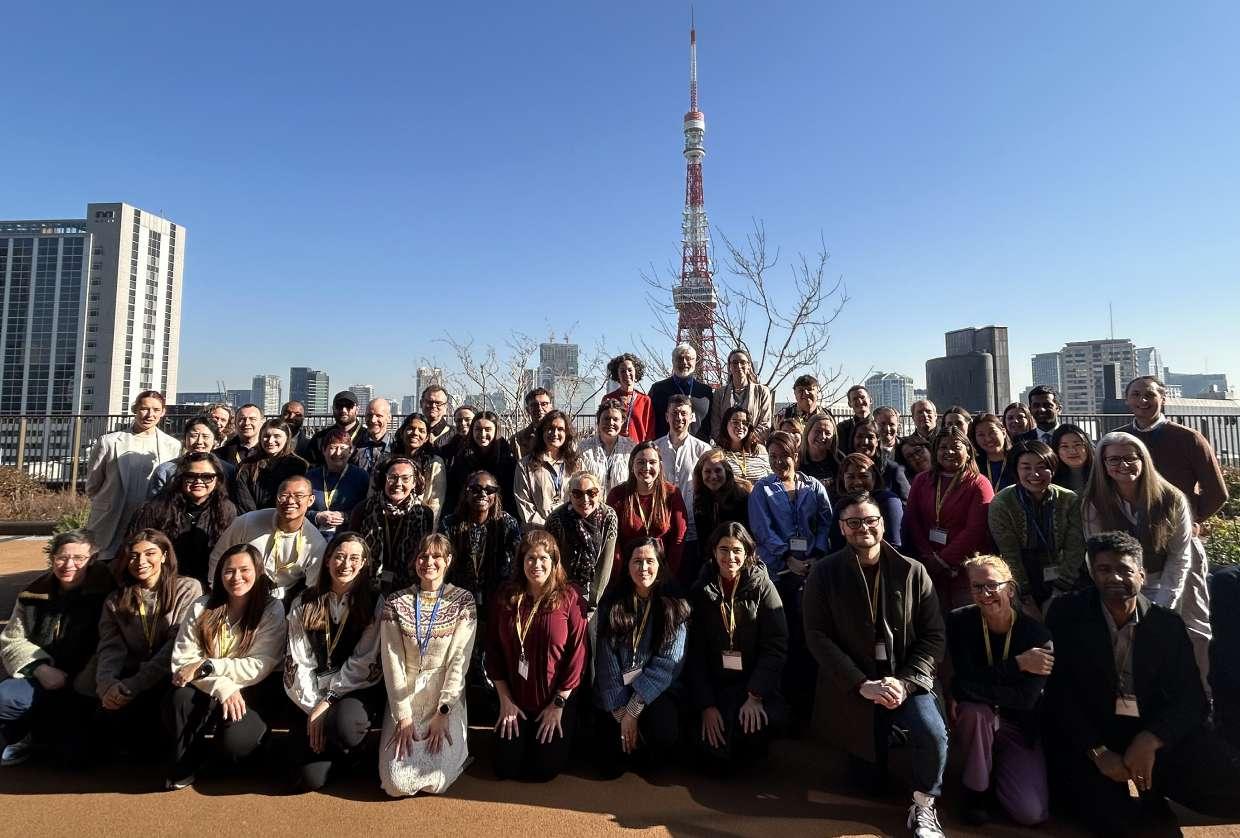
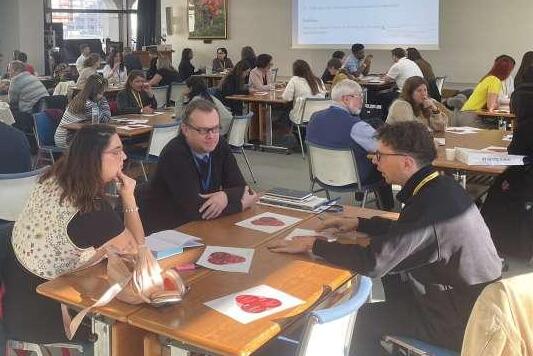
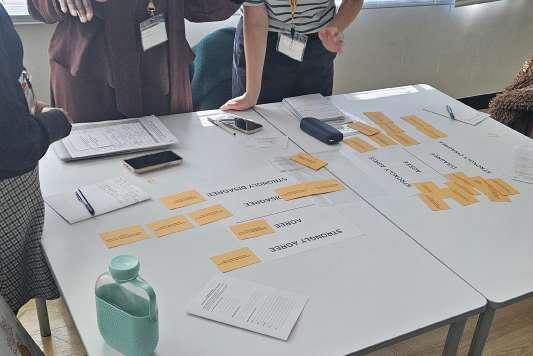
A defining feature of the JAWs was its strong emphasis on people-centred leadership. Workshops on coaching, difficult conversations, trust, and feedback resonated deeply with participants, reflecting a shared recognition that leadership impact is shaped as much by relationships as by systems. These sessions provided practical tools, but also invited honest reflection on how middle leaders show up for their teams, particularly in fast-paced and high-expectation international school environments.
The event also placed significant value on dialogue and perspective. Facilitated roundtable discussions created space for rich professional conversations around leading across cultures, sustaining continuity in transient communities, navigating parent expectations, fostering belonging, and balancing innovation with wellbeing. Student-led roundtables were a particularly powerful element of the programme, offering leaders direct insight into how leadership decisions influence the lived experience of students, often in subtle but meaningful ways.
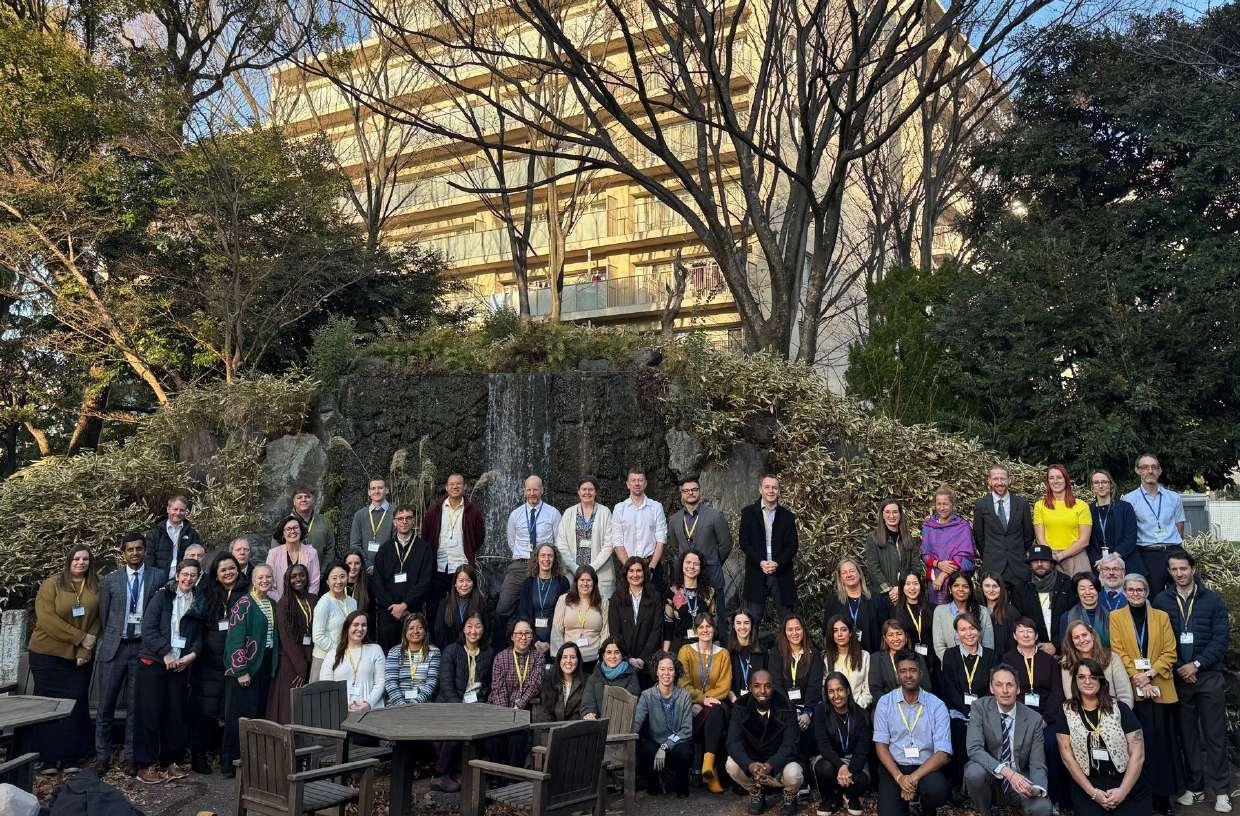
Throughout the event, time was intentionally protected for reflection. Professional reflection sessions and Bluesky Thinking activities encouraged participants to synthesise their learning, connect ideas across sessions, and identify clear next steps for their own leadership practice. This ensured that learning extended beyond the event itself, supporting leaders to translate insight into purposeful action within their schools.
Participant feedback highlighted the quality of facilitation, the relevance of the content, and the value of connecting with peers from across the FOBISIA network. Many leaders noted that the opportunity to engage in thoughtful, structured conversations with colleagues who understand the unique challenges
of international education was one of the most impactful aspects of the experience.
The event ultimately reaffirmed the vital role of middle leaders as cultural carriers, people developers, and drivers of improvement. By centring leadership on purpose, investing deeply in people, and focusing on sustainable progress, the event strengthened leadership capacity across the network and reinforced a shared commitment to high-quality teaching and learning. For many participants, the JAWs was not simply a professional development event, but a moment to pause, reconnect, and return to their roles with renewed clarity, confidence, and direction.

Dr Eunice Lee Heads of Chinese Mandarin
Kellett
School, Hong Kong
Cecilia Ngan
Heads of Chinese Mandarin
Kellett School, Hong Kong
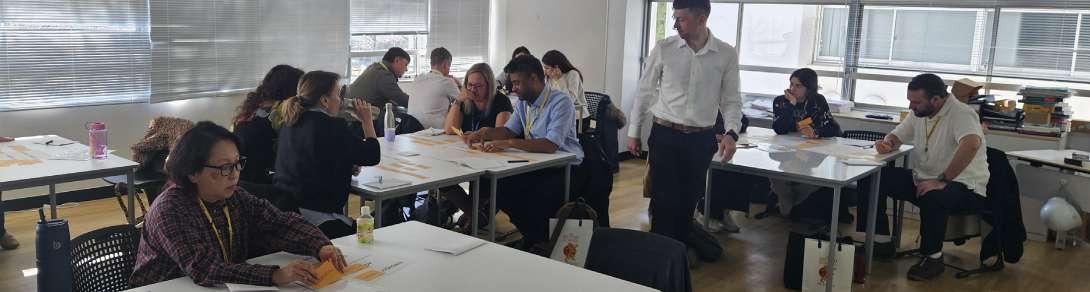
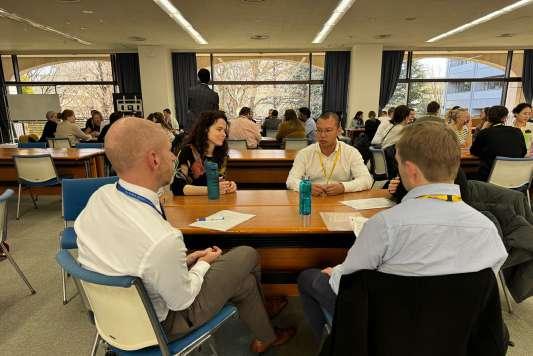
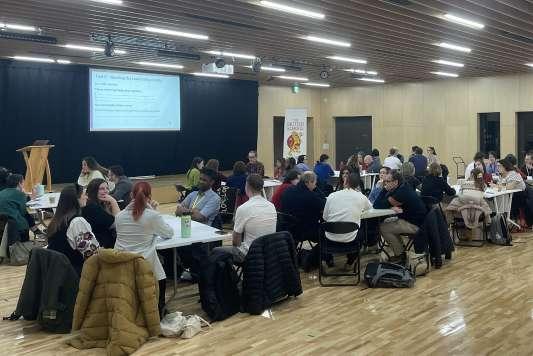
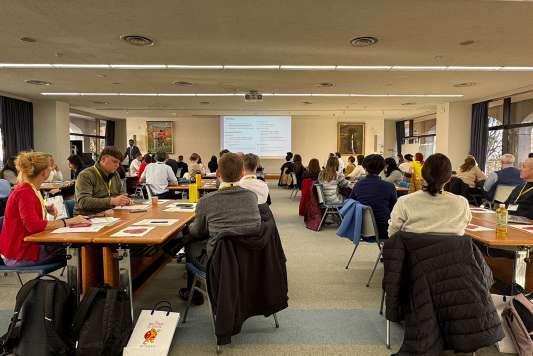
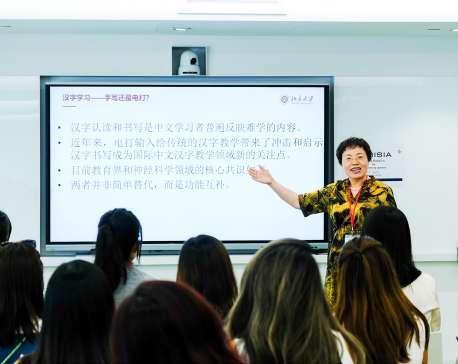
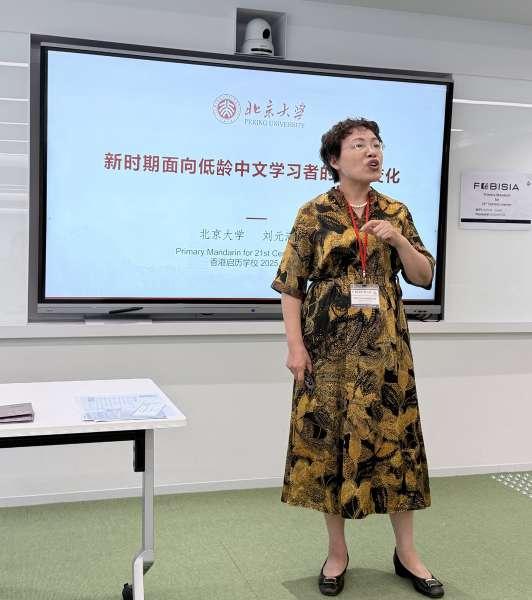
The FOBISIA Primary Mandarin Mini Conference, held at Kellett School, Hong Kong, in October 2025, brought together over forty Mandarin specialists from across Asia, including attendees from China, South Korea, Malaysia, Brunei, Thailand, and Singapore. The event aimed to create a professional network among Mandarin educators in international schools and to provide a platform for sharing ideas, resources, and pedagogical approaches.
The conference opened with a keynote address by Professor Yuanman Liu of Peking University’s School of Teaching Chinese as a Foreign Language. Professor Liu, Chair of the Academic Committee and Deputy Director of the National Language Promotion Base, delivered a presentation entitled Teaching Chinese to Young Learners in the New Era: Shifts in Pedagogical Practice. She examined key developments in Chinese language education, including cultural frameworks, curriculum design, and programme delivery in primary and secondary contexts. Her insights resonated deeply with attendees, sparking discussions and setting a reflective tone for the rest of the conference.
Across two days, participants took part in eleven workshops exploring topics such as artificial intelligence tools in language instruction, the use of picture books, reading fluency, and device-free learning strategies. These sessions prompted professional dialogue and offered practical insights to inform classroom practice.
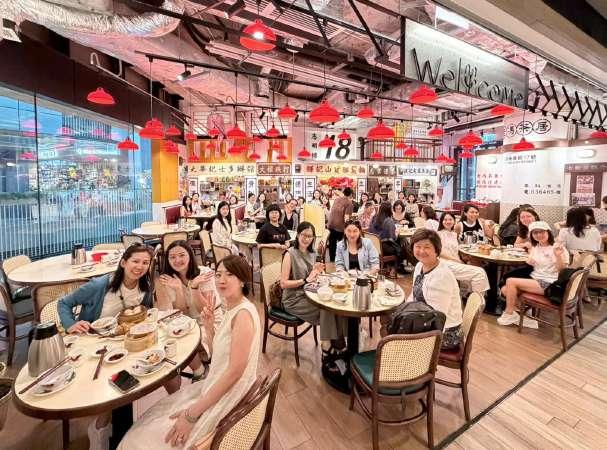
Complementing the academic programme, a social event featuring traditional Cantonese dim sum cuisine and a scenic ride on Hong Kong's iconic Star Ferry across Victoria Harbour provided participants with an informal opportunity to connect and share perspectives in a relaxed cultural setting.
Feedback from participants has been highly positive. They highlighted the relevance and applicability of the keynote and workshops and valued the chance to connect and collaborate with colleagues from schools across the region.

The event was a great success and one that many participants would be keen to attend again to further strengthen professional relationships and deepen understanding of pedagogy in international school classrooms.


Colette Shearer Head of Student Leadership, Physical Education Teacher Shrewsbury International School, Bangkok Riverside
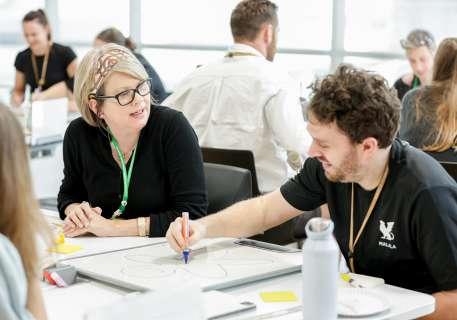
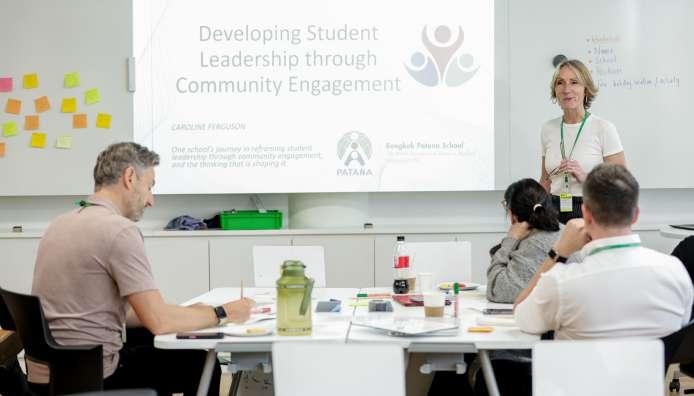
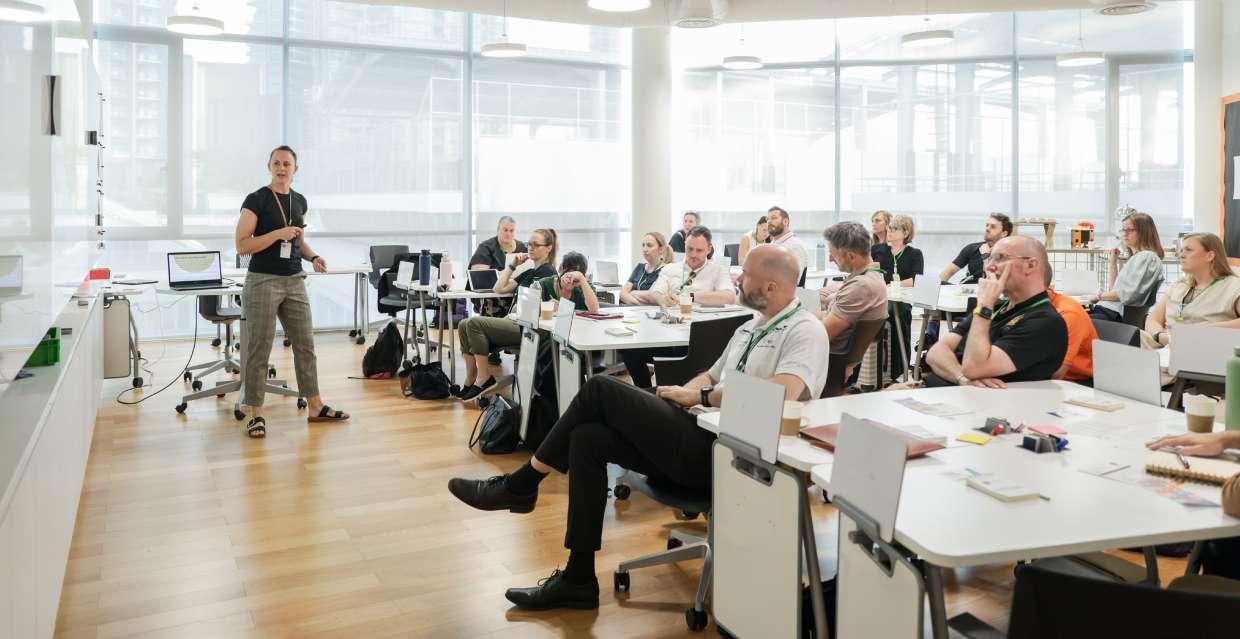
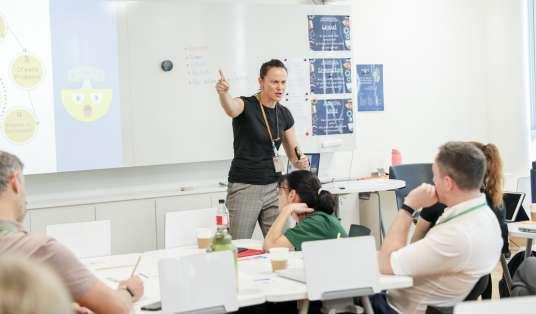
On 6th February 2026, Student Leadership JAWS brought educators together from across Bangkok, Singapore, and Hong Kong, united by a shared commitment to rethinking student leadership.
Across the sessions, a clear theme emerged: student leadership must be inclusive, intentional, and designed to provide opportunities for many learners, not just the few who traditionally fit the “leader” mould. Discussions repeatedly challenged the assumption that leadership belongs only to the most confident or popular students. Instead, speakers and participants highlighted how empathy, collaboration, resilience, and courage are equally powerful leadership traits.
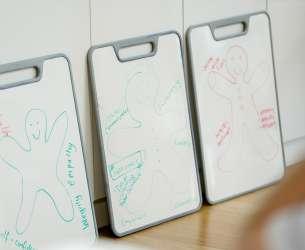
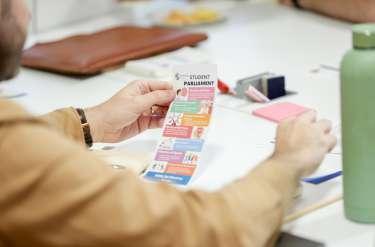
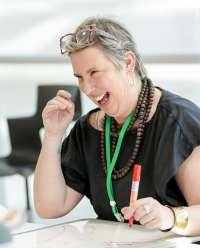
Throughout the day, participants shared practical strategies for building student voice and agency, from whole-school leadership systems to classroom-level councils and service initiatives. A particularly lively moment came during the trial of “smart school councils” where delegates were tasked with debating what food should be served forever if only one option were allowed in the canteen. While light-hearted, the activity sparked rich discussion around representation, decision-making, compromise, and the realities of student consultation.
Another key takeaway was the growing importance of recognising and tracking soft skills. Conversations around data and reporting demonstrated how schools can meaningfully identify, value, and celebrate skills such as leadership, service, and teamwork, reinforcing that these are just as important as academic outcomes.
Importantly, the day allowed space to pause, reflect and share ideas honestly. By connecting educators across regions and contexts, Student Leadership JAWS reaffirmed that while our challenges may differ, our goals are remarkably aligned: to ensure every student leaves school equipped not just with knowledge, but with the character and confidence to lead in their own way.
Raj Ladva Head of Early Years King's College International School Bangkok
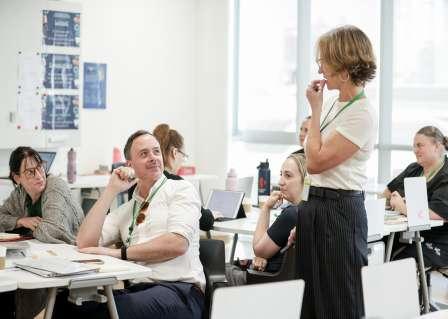
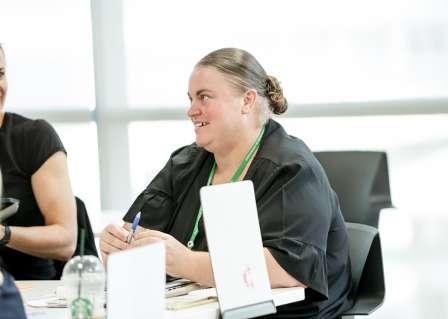
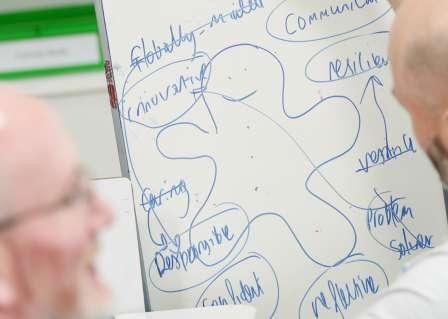
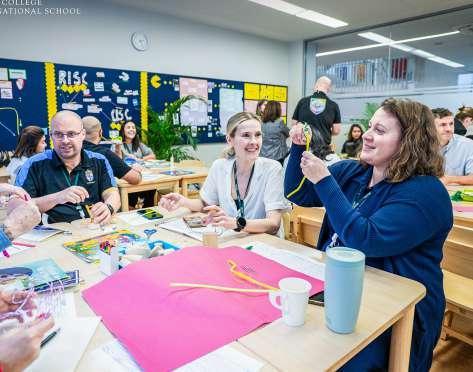
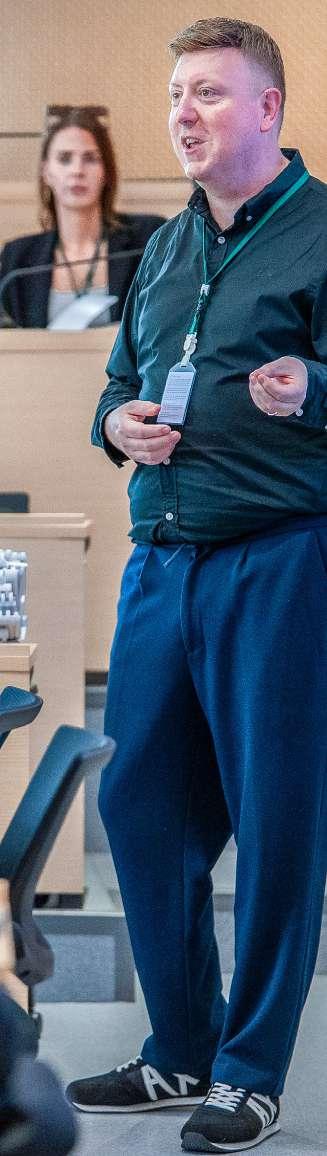
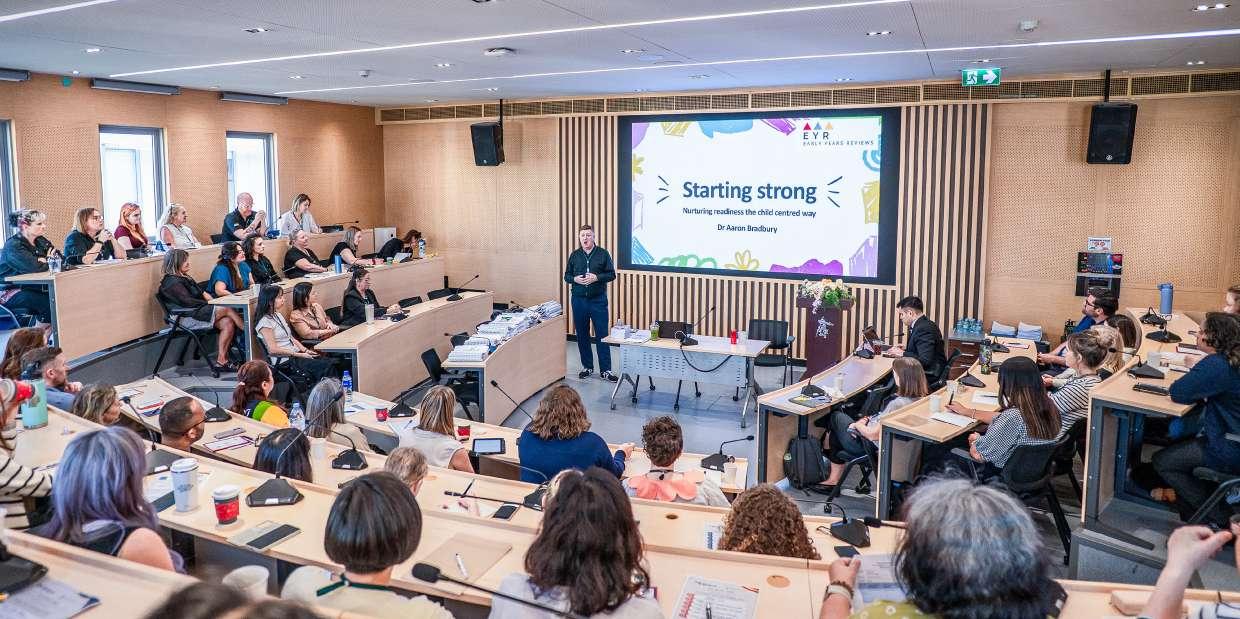
Attended by nearly 100 delegates from all across South East Asia, this 2-day conference was a celebration of best practice and an incredible opportunity for passionate and dedicated Early Years practitioners to network, share and collaborate, as well as participate in incredible workshops, all focused on how to support our youngest learners.
Delivering the keynote 'Starting Strong' - Dr Bradbury challenged us to advocate for what we know is right for our children, right now. Whatever the context, we must navigate the way. His two sessions on the 'Child in the Now' model and 'The Love and Nurture Rating Scale' inspired us all to think deeply about how our youngest learners experience love, care and attention from those around them and how best to support one another to create the most nurturing environment possible, using a peer to peer model.
“The FOBISIA Early Years JAWS at King’s College Bangkok reminded me that when educators come together with openness, curiosity and courage, the conversation shifts from what we have to do to what truly matters for children. It was a powerful space of connection, challenge and collective hope.”
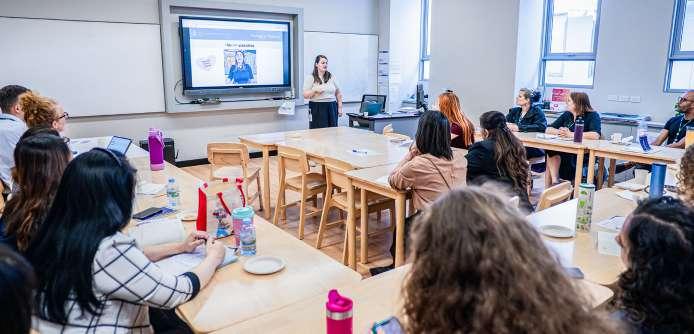
Focusing on behaviour, a significant consideration in every setting across the region, Nancy Hooper from TeamTeach delivered a thought provoking deep dive into the functions and forms of behaviour with her session Big Feelings, Little Learners, with Joanne McCann building on the theme sharing 'The Magic of Mess: Supporting Little People with Big Emotions"
Our delegate workshops were focused on key areas of essential pedagogy, from the impact of EMOTION COACHING UK in her setting by Sarah Cullen to 'Finding Focus in Unstructured Play' by Sarah Gaughan
Winsy Bamford-Flores delivered an incredible workshop on Designing for Wonder – Inclusion, Wellbeing, and Creative Health, with Andie Larsen and Shayna Henderson talking all things action and weapon play with their session 'Crashing into Chaos'.
Louise Heard and Bri Collishaw continued on the theme of how a nurture-focused approach to pedagogy improves student outcomes with 'Building Connection and Wellbeing Through Child-Led Learning', a wonderfully reflective journey about the pathways of play.
Emma Jones and Nancy Hooper explored the big ideas around SEND provision with their joint session 'All children, All needs: Belonging through Inclusive Practice' which delegates were very keen to learn and hear more about.
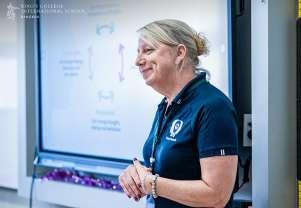
Alys Leighton-Rahman gave insight into how our approach at King's helps develop our young learners in her session 'Together at King’s Early Years: Small Steps for Big Impact'.
We are very grateful to Jasmine Hagen and Laura Bell for joining our Behaviour panel and also to Wellbeing panellists Karen Dolan and Lizzie Montgomery for contributing their thoughts and perspectives - their depth of experience and insight into these important topics was so welcome.
You can see a short video highlighting some of our presenters here!
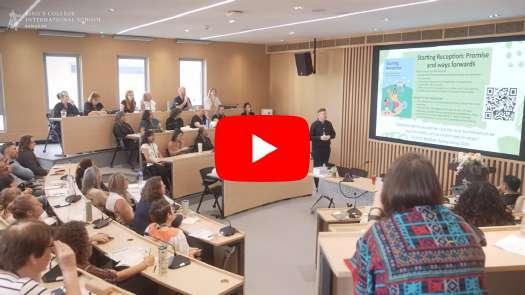
Bringing together a community of educators who share their desire to improve the outcomes for our youngest learners is both energising and inspiring, and we would like to thank our sponsors TeamTeach, Arc Pathway, CES Holdings and VEX Robotics for their generous support in bringing us all together.

Kay McCabe Director of Teaching and Learning Nexus International School, Malaysia
Karen Jense
EAL Lead Teacher
Nexus International School, Malaysia
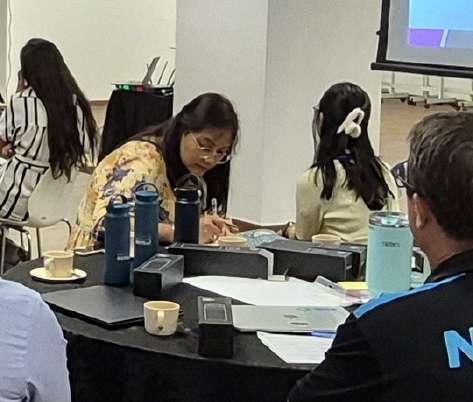
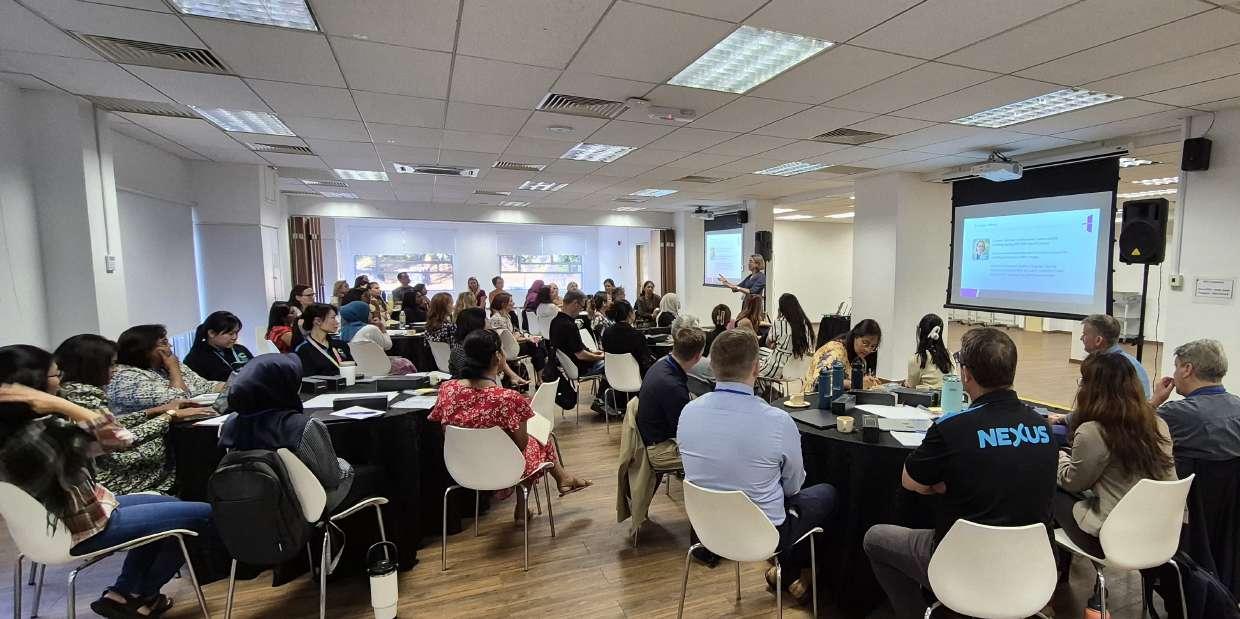
On Friday, 23 January 2026, we were delighted to host the FOBISIA EAL Job Alike Workshop, Building Solid Foundations: Developing a Well-Structured Pathway for Foundation English Programs. The event brought together over 50 EAL practitioners from 18 FOBISIA schools, united by a shared commitment to improving outcomes for multilingual learners across the region.
Job Alike Workshops offer a valuable opportunity for educators to step beyond their own school contexts and engage in purposeful professional dialogue. Throughout the day, it was evident that while our settings may differ, our aims are closely aligned: to ensure that every learner, regardless of their starting point in English, experiences a clear, supportive and intentional pathway towards academic success.deve lopment.
The day began with an engaging session from Dr Helen Wood, Head of School Partnerships, Password ELT who explored how language-aware systems can significantly enhance the experiences of international learners from their very first day in school. Helen shared her journey as an EAL expert, explaining the importance of building strong systems of belonging, wellbeing and inclusion, providing the basis for successful EAL learning and how she successfully built pathways for EAL learners to develop language skills and access the wider curriculum.
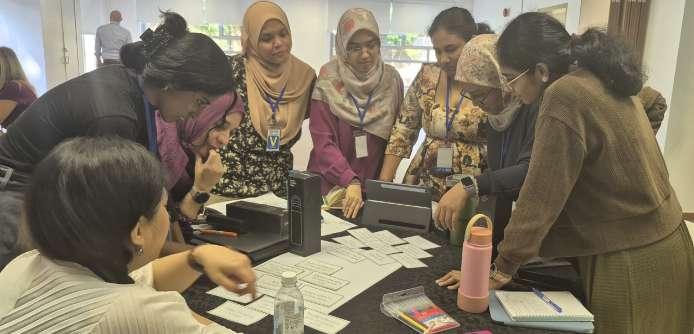
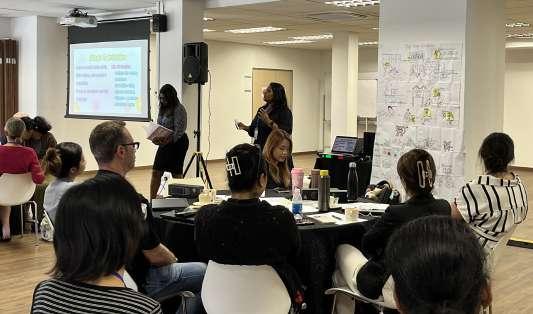
Sessions ranged from St Christopher’s International School sharing their work with the Talk for Writing framework to Adrienn Szlapak from St. Joseph's Institution International School, Malaysia exploring effective ways to support learners during the Silent Period. James Buchanan, Head of Partnerships and APAC Password English Language Testing, offered an exceptionally valuable insight into the importance of an effective admissions process for EAL learners and how to get this right for all stakeholders.
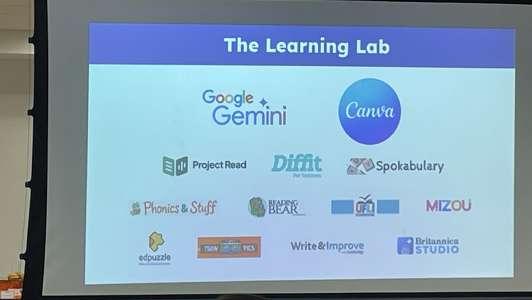
Innovation and the thoughtful use of technology also featured strongly. Participants explored how AI tools, including Gemini Canvas, can be used to create interactive websites for Foundation English Programme learners. These discussions highlighted how digital tools, when used with clear pedagogical intent, can personalise learning, scaffold language development and support student independence. Sue-Ann Tan from The Alice Smith School, Kuala Lumpur shared numerous tools featured on her
Instagram page mll_notesandnuggets and Nexus’ own Robert Stratton demonstrated the FEP website he has created.
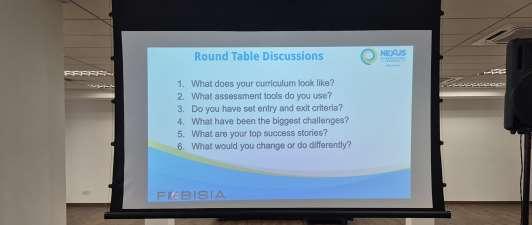
One very valuable part of the day was the opportunity to connect with other colleagues through roundtable discussions, providing space for in-depth conversations around curriculum design, assessment practices, and entry and exit criteria for EAL programmes.
We would like to extend my sincere thanks to all presenters, and especially the Nexus EAL and Inclusion team for their careful planning and organisation, and for providing the opportunity for sharing of expertise and collaborating to support our EAL learners.

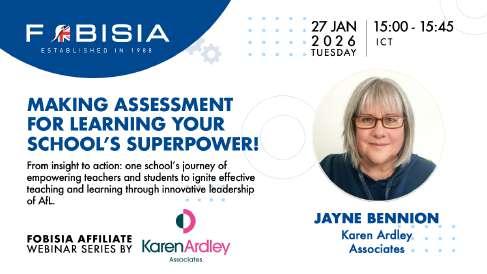
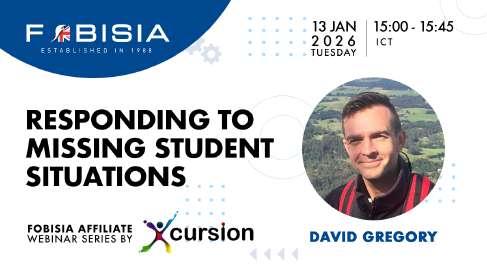
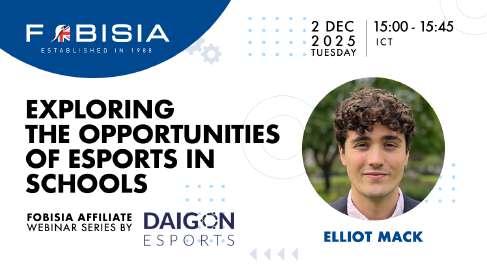
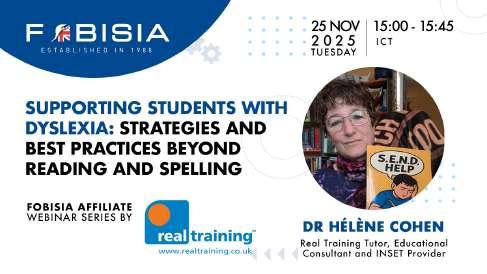
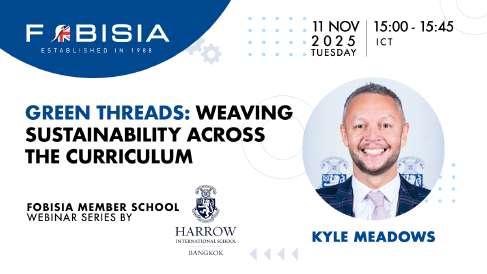
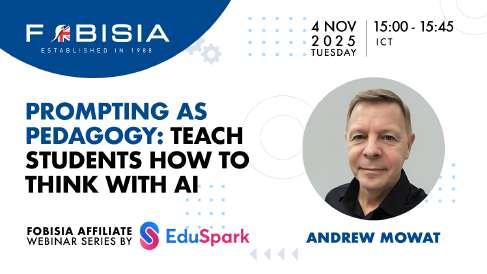
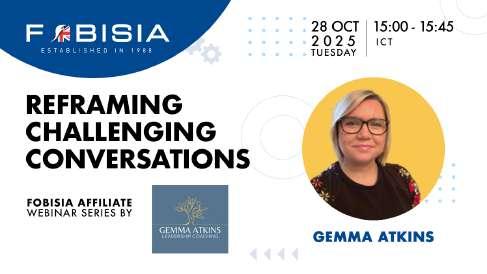
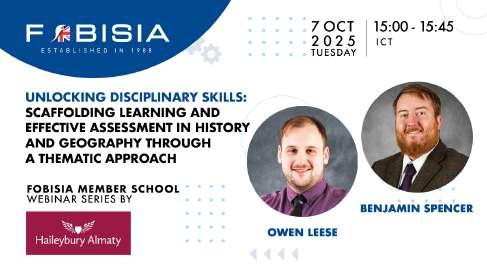
FOBISIA offers a range of engaging webinars to its members including Sports Club Socials, Member School Webinars, and Affiliate Webinar Series.
28APR2026 24MAR 2026
FOBISIA Affiliate Webinar Series
Host: Raeco
Title: Libraries - The Third Place
REGISTER HERE

FOBISIA Affiliate Webinar Series
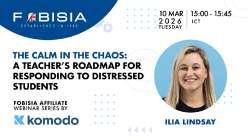
Host: Komodo Wellbeing
Title: The Calm in the Chaos: A Teacher’s Roadmap for Responding to Distressed Students
REGISTER HERE
FOBISIA Affiliate Webinar Series
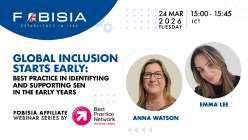
Host: Best Practice Network
Title: Global Inclusion Starts Early: Best Practice in Identifying and Supporting SEN in the Early Years
REGISTER HERE
5MAY 2026 19 MAY 2026
FOBISIA Member School Webinar
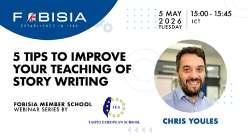
Host: Taipei European School
Title: 5 tips to improve your teaching of story writing
REGISTER HERE
15th MAY 2026 | Online | 9AM - 2PM
Join colleagues from across our FOBISIA network for an engaging online CPD day proudly hosted by The International School @ ParkCity
This eJAWS brings Teaching and Classroom Assistants together to explore high-impact strategies, exchange ideas, and build professional connections. Expect practical insights, collaborative learning, and a chance to celebrate the essential work you do in our classrooms!
Register your interest via this form: Please indicate if you would be interested in presenting or facilitating a workshop.

Presentations, workshops, panel discussions, resource sharing & more!
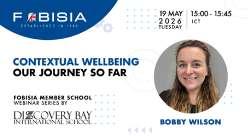
FOBISIA Member School Webinar
Host: Discovery Bay
International School
Title: Contextual Wellbeing - Our Journey So Far
REGISTER HERE
Suggested topics:
• Highest Impact Support Strategies
• Positive Behaviour Support
• Safeguarding for TAs
• Scaffolding Talk:
Supporting Language & Communication
• Best English & Maths Boosters Strategies
• Building a great partnership - Teachers & Assistants
• Supporting Independence
• EAL support



What does ‘university ready’ really mean for our diverse international cohor ts? Hosted by The British School,
6TH MARCH 10AM-2PM (SE ASIA STANDARD TIME)
This job-alike workshop will bring FOBISIA counsellors, heads of KS5 & university professionals together to explore how we can fully prepare students to access higher education across global systems. Register by Februar y 27th.
Contact:
Emma Sheldon, Head of KS5, TBS Kathmandu, esheldon@tbs.edu.np



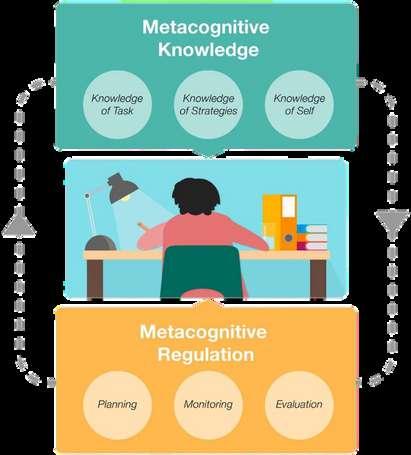
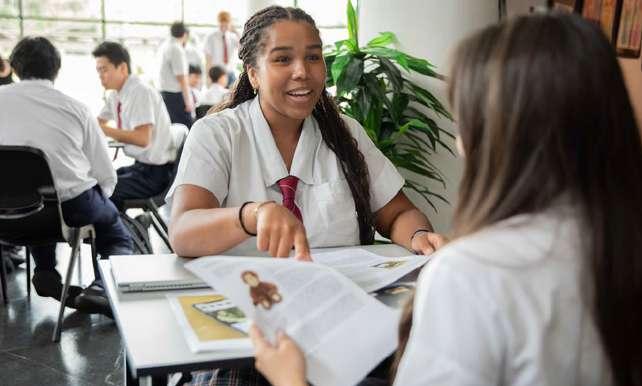
H e l p i n g st u d e n t s k n ow w h a t to d o w h e n l e a r n i n g ge t s h a rd
We d n e s d ay 2 2 A p r i l 2 0 2 6
0 9 : 0 0 – 1 2 : 1 5 ( S G T )
V i r t u a l ( l i ve o n l i n e )
F R E E
W h o I s I t Fo r ?
Te
t i ny u r l . c o m /e j a w s WO R K S H O P T H E M E S
M e t a c og n i t i o n i n s u b j e c t te a c h i n g
M o d e l l i n g t h i n k i n g
S h a r e d a p p r o a c h e s to i n d e p e n d e n c e
A I a n d m e t a c og n i t i o n

D E A D L I N E :
1 8 M a rc h 202 6
E a r l y s i g n - u p e n c o u r a ge d
C O N TAC T : e j a w s @ j i s . e d u . b n

Using Mentoring and Coaching to Enhance Teacher Progress in an International Setting
12th May 2026, 1.00pm - 2.30pm (KST)
This 90-minute eJaws session will explore effective mentoring structures, key research on successful coaching, and practical systems to support both earlycareer and experienced teachers in your context.
Please join to discuss how different mentoring and coaching strategies can deliver the best PD to staff.
Location: North London Collegiate School Jeju
Registration Deadline: Monday 4th May
Cost of the Event: Free
Sign Up Link: https://forms.gle/46fVU1oYFtApXDUS9
For any questions, please contact James Lillywhite, jlillywhite@nlcsjeju.kr


Hosted by Dulwich College (Singapore)
Monday 2 March 2026
4.00pm - 7.00 pm SGT Time
Online, Free event
Scan the QR code to register

Registration Form Linkhttps://forms office com/r/JzdLWtZd6f
EmailPLD Singapore@dulwich org
Deadline to register25 February 2026 th
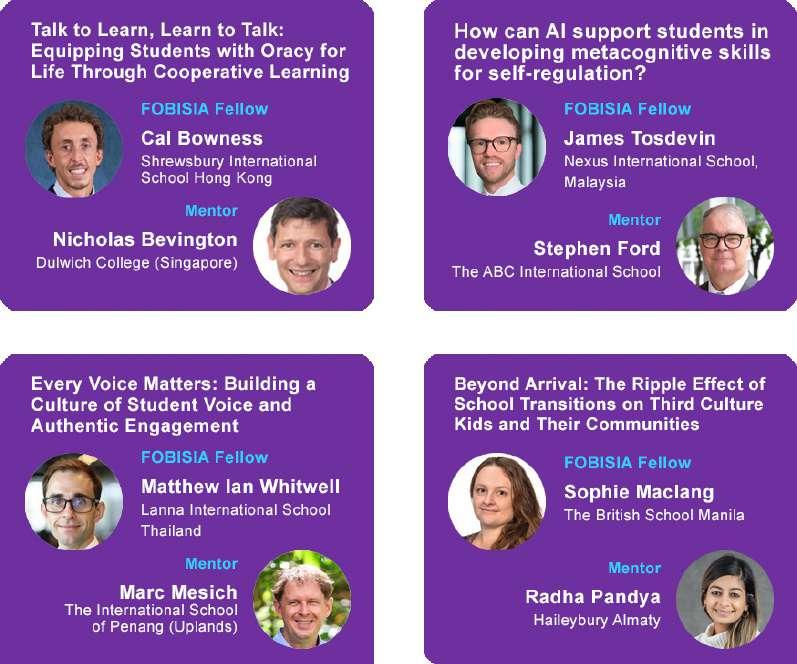
Our Speakers Include