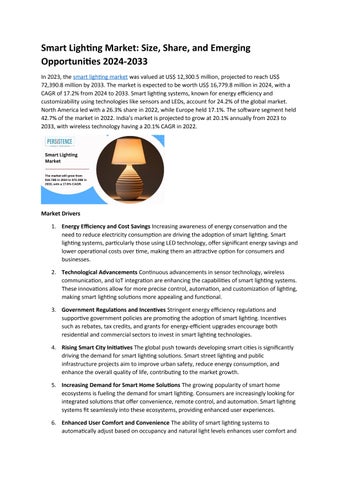
Smart Lighting Market: Size, Share, and Emerging Opportunities 2024-2033 In 2023, the smart lighting market was valued at US$ 12,300.5 million, projected to reach US$ 72,390.8 million by 2033. The market is expected to be worth US$ 16,779.8 million in 2024, with a CAGR of 17.2% from 2024 to 2033. Smart lighting systems, known for energy efficiency and customizability using technologies like sensors and LEDs, account for 24.2% of the global market. North America led with a 26.3% share in 2022, while Europe held 17.1%. The software segment held 42.7% of the market in 2022. India’s market is projected to grow at 20.1% annually from 2023 to 2033, with wireless technology having a 20.1% CAGR in 2022.
Market Drivers 1. Energy Efficiency and Cost Savings Increasing awareness of energy conservation and the need to reduce electricity consumption are driving the adoption of smart lighting. Smart lighting systems, particularly those using LED technology, offer significant energy savings and lower operational costs over time, making them an attractive option for consumers and businesses. 2. Technological Advancements Continuous advancements in sensor technology, wireless communication, and IoT integration are enhancing the capabilities of smart lighting systems. These innovations allow for more precise control, automation, and customization of lighting, making smart lighting solutions more appealing and functional. 3. Government Regulations and Incentives Stringent energy efficiency regulations and supportive government policies are promoting the adoption of smart lighting. Incentives such as rebates, tax credits, and grants for energy-efficient upgrades encourage both residential and commercial sectors to invest in smart lighting technologies. 4. Rising Smart City Initiatives The global push towards developing smart cities is significantly driving the demand for smart lighting solutions. Smart street lighting and public infrastructure projects aim to improve urban safety, reduce energy consumption, and enhance the overall quality of life, contributing to the market growth. 5. Increasing Demand for Smart Home Solutions The growing popularity of smart home ecosystems is fueling the demand for smart lighting. Consumers are increasingly looking for integrated solutions that offer convenience, remote control, and automation. Smart lighting systems fit seamlessly into these ecosystems, providing enhanced user experiences. 6. Enhanced User Comfort and Convenience The ability of smart lighting systems to automatically adjust based on occupancy and natural light levels enhances user comfort and