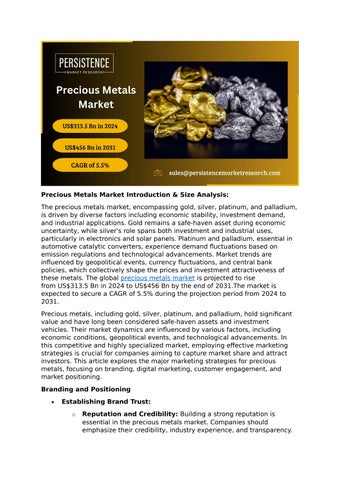
Precious Metals Market Introduction & Size Analysis: The precious metals market, encompassing gold, silver, platinum, and palladium, is driven by diverse factors including economic stability, investment demand, and industrial applications. Gold remains a safe-haven asset during economic uncertainty, while silver's role spans both investment and industrial uses, particularly in electronics and solar panels. Platinum and palladium, essential in automotive catalytic converters, experience demand fluctuations based on emission regulations and technological advancements. Market trends are influenced by geopolitical events, currency fluctuations, and central bank policies, which collectively shape the prices and investment attractiveness of these metals. The global precious metals market is projected to rise from US$313.5 Bn in 2024 to US$456 Bn by the end of 2031.The market is expected to secure a CAGR of 5.5% during the projection period from 2024 to 2031. Precious metals, including gold, silver, platinum, and palladium, hold significant value and have long been considered safe-haven assets and investment vehicles. Their market dynamics are influenced by various factors, including economic conditions, geopolitical events, and technological advancements. In this competitive and highly specialized market, employing effective marketing strategies is crucial for companies aiming to capture market share and attract investors. This article explores the major marketing strategies for precious metals, focusing on branding, digital marketing, customer engagement, and market positioning. Branding and Positioning
Establishing Brand Trust: o
Reputation and Credibility: Building a strong reputation is essential in the precious metals market. Companies should emphasize their credibility, industry experience, and transparency.