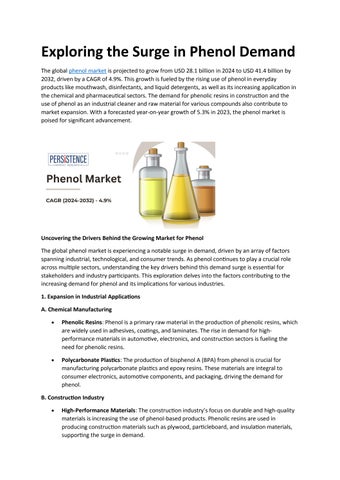
Exploring the Surge in Phenol Demand The global phenol market is projected to grow from USD 28.1 billion in 2024 to USD 41.4 billion by 2032, driven by a CAGR of 4.9%. This growth is fueled by the rising use of phenol in everyday products like mouthwash, disinfectants, and liquid detergents, as well as its increasing application in the chemical and pharmaceutical sectors. The demand for phenolic resins in construction and the use of phenol as an industrial cleaner and raw material for various compounds also contribute to market expansion. With a forecasted year-on-year growth of 5.3% in 2023, the phenol market is poised for significant advancement.
Uncovering the Drivers Behind the Growing Market for Phenol The global phenol market is experiencing a notable surge in demand, driven by an array of factors spanning industrial, technological, and consumer trends. As phenol continues to play a crucial role across multiple sectors, understanding the key drivers behind this demand surge is essential for stakeholders and industry participants. This exploration delves into the factors contributing to the increasing demand for phenol and its implications for various industries. 1. Expansion in Industrial Applications A. Chemical Manufacturing
Phenolic Resins: Phenol is a primary raw material in the production of phenolic resins, which are widely used in adhesives, coatings, and laminates. The rise in demand for highperformance materials in automotive, electronics, and construction sectors is fueling the need for phenolic resins.
Polycarbonate Plastics: The production of bisphenol A (BPA) from phenol is crucial for manufacturing polycarbonate plastics and epoxy resins. These materials are integral to consumer electronics, automotive components, and packaging, driving the demand for phenol.
B. Construction Industry
High-Performance Materials: The construction industry’s focus on durable and high-quality materials is increasing the use of phenol-based products. Phenolic resins are used in producing construction materials such as plywood, particleboard, and insulation materials, supporting the surge in demand.