Mycobacterium Tuberculosis Treatment Market: The Emergence of New Treatment Regimens The battle against tuberculosis (TB) has been ongoing for decades, with significant progress made in diagnosis and treatment. However, the rise of drug-resistant strains presents a formidable challenge to healthcare systems worldwide. In recent years, the market for mycobacterium tuberculosis treatment has witnessed notable developments, particularly in response to the emergence of highly drug-resistant forms of TB. Let's delve into the dynamics shaping this market and the key factors driving its growth.
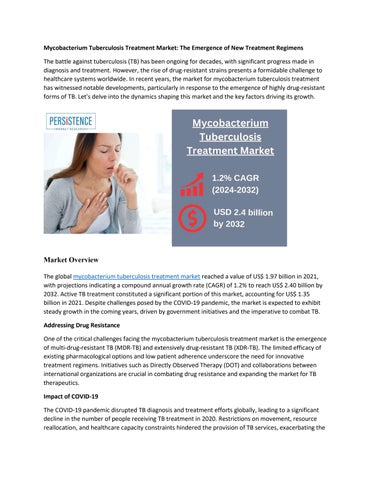
Market Overview The global mycobacterium tuberculosis treatment market reached a value of US$ 1.97 billion in 2021, with projections indicating a compound annual growth rate (CAGR) of 1.2% to reach US$ 2.40 billion by 2032. Active TB treatment constituted a significant portion of this market, accounting for US$ 1.35 billion in 2021. Despite challenges posed by the COVID-19 pandemic, the market is expected to exhibit steady growth in the coming years, driven by government initiatives and the imperative to combat TB. Addressing Drug Resistance One of the critical challenges facing the mycobacterium tuberculosis treatment market is the emergence of multi-drug-resistant TB (MDR-TB) and extensively drug-resistant TB (XDR-TB). The limited efficacy of existing pharmacological options and low patient adherence underscore the need for innovative treatment regimens. Initiatives such as Directly Observed Therapy (DOT) and collaborations between international organizations are crucial in combating drug resistance and expanding the market for TB therapeutics. Impact of COVID-19 The COVID-19 pandemic disrupted TB diagnosis and treatment efforts globally, leading to a significant decline in the number of people receiving TB treatment in 2020. Restrictions on movement, resource reallocation, and healthcare capacity constraints hindered the provision of TB services, exacerbating the