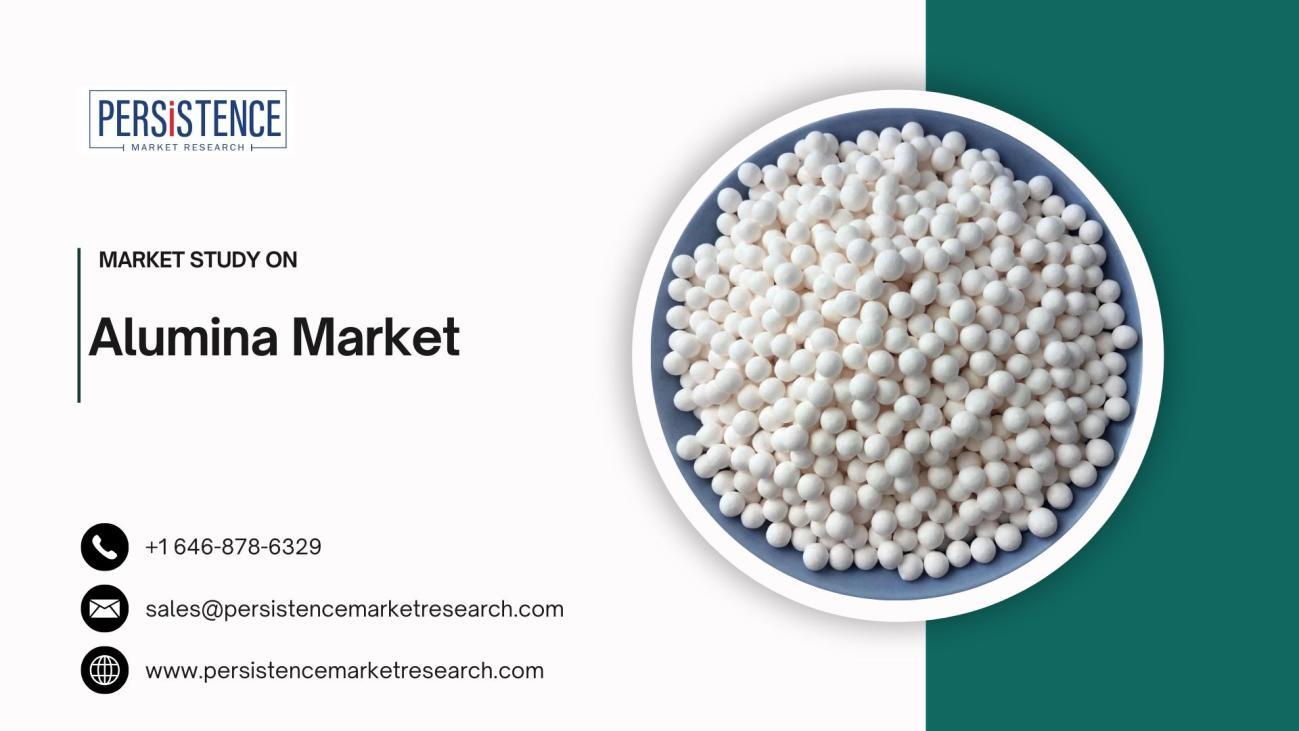
How Alumina Is Driving the Expansion of 3D Printing Technologies
The world of 3D printing has revolutionized many industries, enabling rapid prototyping, complex part manufacturing, and even customization on a large scale. As this technology continues to evolve, the materials used in the 3D printing process are also undergoing significant improvements. One such material that has gained increasing attention in the world of additive manufacturing is alumina (aluminum oxide, Al₂O₃). Alumina, known for its excellent properties such as high hardness, chemical stability, and thermal resistance, is emerging as a game-changer in the 3D printing landscape.
In this blog, we will explore how alumina is helping propel the growth and expansion of 3D printing technologies, its key applications, and the broader market dynamics surrounding this material.
The Role of Alumina in 3D Printing
Alumina is a ceramic material with a variety of properties that make it highly suitable for use in 3D printing. The material is well-known for its durability, high melting point, and resistance to wear, corrosion, and thermal shock. These attributes make alumina an ideal choice for producing components that need to withstand extreme conditions, such as parts for aerospace, automotive, and medical industries.
In the realm of 3D printing, alumina is primarily used in processes like Direct Ink Writing (DIW) and Binder Jetting. In DIW, a paste or slurry made from alumina particles is extruded through a nozzle to build up a part layer by layer. Binder Jetting involves selectively bonding alumina powder with a liquid binder to create a solid object, which is then post-processed to achieve the final part's required mechanical properties.
Alumina offers several advantages over other materials used in 3D printing, such as:
High Strength and Hardness: Alumina parts exhibit exceptional hardness and strength, which makes them ideal for applications that require durability and resistance to abrasion.
Thermal Stability: Alumina’s high melting point and resistance to heat make it suitable for parts used in high-temperature environments.
Corrosion Resistance: Alumina's chemical stability allows it to withstand exposure to harsh chemicals and extreme environmental conditions.
Electrical Insulation: Alumina is an excellent electrical insulator, making it valuable for the production of electronic components, sensors, and electrical insulators.
Given these qualities, alumina is increasingly being used to manufacture a wide range of components, from high-performance engine parts to components in the medical field such as prosthetics and dental implants.
Key Applications Driving Alumina's Growth in 3D Printing
Several industries are witnessing the transformative potential of 3D printing using alumina. The following applications are driving the growing demand for this material:
Aerospace and Defense: The aerospace sector has embraced 3D printing for the production of lightweight, complex, and high-performance parts. Alumina’s thermal and mechanical properties are crucial for components used in engines, combustion chambers, and turbine blades. These parts must not only withstand high heat but also maintain strength and precision under pressure, a task that alumina is uniquely suited to.
Automotive: The automotive industry benefits from 3D printing by using alumina to produce highperformance parts such as brake discs, turbochargers, and engine components. These parts need to endure the high stresses and temperatures encountered in everyday driving, which is where alumina’s durability and heat resistance come into play.
Medical and Dental: Alumina is a key material in the medical and dental sectors, where it is used to produce prosthetic devices, implants, and custom dental crowns. The material's biocompatibility, along with its wear and corrosion resistance, makes it ideal for long-lasting and safe medical devices.
Electronics: Alumina’s electrical insulating properties are being harnessed to develop components such as heat sinks, insulators, and substrates in electronics. The demand for miniaturized electronic devices,
combined with the need for materials that can handle heat and electrical conductivity, is boosting the adoption of alumina in the 3D printing of electronics.
Energy: In the energy sector, alumina is being used to create high-performance components that can withstand extreme temperatures, such as in energy turbines, heat exchangers, and other critical infrastructure components. Its ability to withstand corrosion and high-pressure environments makes alumina an essential material in energy generation.
Market Growth: Alumina’s Expanding Role in 3D Printing
Alumina is not only a material with unique properties but is also poised to become a cornerstone of the rapidly growing 3D printing market. According to projections from Persistence Market Research, the global alumina market is expected to reach US$ 80 billion by 2025, with further growth anticipated to reach US$ 106 billion by the end of 2032. This represents a stellar 1.3x expansion over the next seven years, with a consistent Compound Annual Growth Rate (CAGR) of 3.0% between 2025 and 2032. The increasing demand for alumina in various sectors, coupled with its growing adoption in additive manufacturing, will play a significant role in driving this growth.
The expansion of the alumina market is also influenced by technological advancements in 3D printing, which are enabling more precise, efficient, and scalable production methods. As new printing techniques are developed and optimized, the ability to work with advanced materials like alumina will expand, further enhancing its role in various industries.
The growth in the adoption of 3D printing in manufacturing processes will continue to fuel the demand for high-performance materials, including alumina, across industries such as aerospace, automotive, energy, medical devices, and more. As the material's capabilities are explored and refined, new applications will emerge, solidifying alumina’s status as a key enabler of next-generation manufacturing technologies.
Challenges and Opportunities
While alumina’s potential in 3D printing is enormous, there are challenges that need to be addressed for its widespread adoption. One of the primary challenges is the cost of raw alumina powder, which can be expensive compared to other 3D printing materials. Additionally, the printing process using alumina often requires post-processing, such as sintering, which adds complexity and cost to the production process.
However, as 3D printing technologies continue to evolve, manufacturers are likely to overcome these challenges. Innovations in printing techniques, such as more efficient binder jetting and better handling of alumina powders, could reduce the cost and improve the accessibility of alumina for a broader range of applications.
Conclusion
Alumina’s role in the advancement of 3D printing is undeniable. With its unique combination of strength, thermal stability, chemical resistance, and electrical insulation properties, alumina is increasingly being used across various industries to create high-performance parts and components. As the global alumina market continues to expand, driven by its adoption in additive manufacturing, the material is set to become a cornerstone of next-generation manufacturing technologies.
As projected by Persistence Market Research, the alumina market is on a trajectory of remarkable growth, which will be fueled by innovations in 3D printing technologies and the increasing demand for high-performance materials across industries. As this trend continues, alumina is likely to play an even greater role in shaping the future of manufacturing and 3D printing.