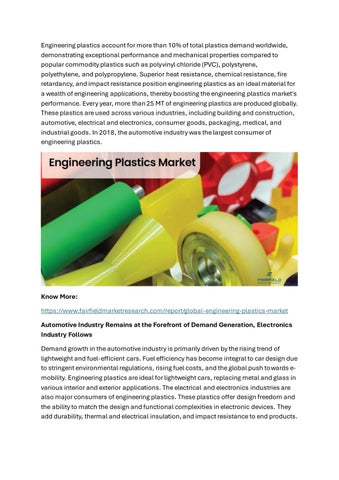
Engineering plastics account for more than 10% of total plastics demand worldwide, demonstrating exceptional performance and mechanical properties compared to popular commodity plastics such as polyvinyl chloride (PVC), polystyrene, polyethylene, and polypropylene. Superior heat resistance, chemical resistance, fire retardancy, and impact resistance position engineering plastics as an ideal material for a wealth of engineering applications, thereby boosting the engineering plastics market's performance. Every year, more than 25 MT of engineering plastics are produced globally. These plastics are used across various industries, including building and construction, automotive, electrical and electronics, consumer goods, packaging, medical, and industrial goods. In 2018, the automotive industry was the largest consumer of engineering plastics.
Know More: https://www.fairfieldmarketresearch.com/report/global-engineering-plastics-market Automotive Industry Remains at the Forefront of Demand Generation, Electronics Industry Follows Demand growth in the automotive industry is primarily driven by the rising trend of lightweight and fuel-efficient cars. Fuel efficiency has become integral to car design due to stringent environmental regulations, rising fuel costs, and the global push towards emobility. Engineering plastics are ideal for lightweight cars, replacing metal and glass in various interior and exterior applications. The electrical and electronics industries are also major consumers of engineering plastics. These plastics offer design freedom and the ability to match the design and functional complexities in electronic devices. They add durability, thermal and electrical insulation, and impact resistance to end products.