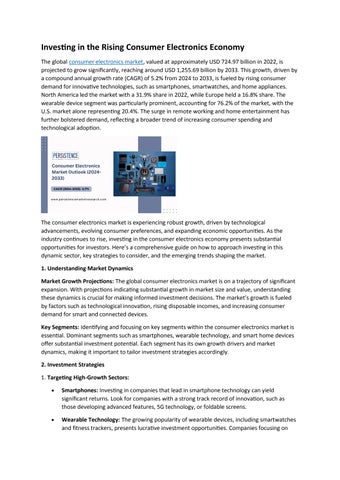
Investing in the Rising Consumer Electronics Economy The global consumer electronics market, valued at approximately USD 724.97 billion in 2022, is projected to grow significantly, reaching around USD 1,255.69 billion by 2033. This growth, driven by a compound annual growth rate (CAGR) of 5.2% from 2024 to 2033, is fueled by rising consumer demand for innovative technologies, such as smartphones, smartwatches, and home appliances. North America led the market with a 31.9% share in 2022, while Europe held a 16.8% share. The wearable device segment was particularly prominent, accounting for 76.2% of the market, with the U.S. market alone representing 20.4%. The surge in remote working and home entertainment has further bolstered demand, reflecting a broader trend of increasing consumer spending and technological adoption.
The consumer electronics market is experiencing robust growth, driven by technological advancements, evolving consumer preferences, and expanding economic opportunities. As the industry continues to rise, investing in the consumer electronics economy presents substantial opportunities for investors. Here’s a comprehensive guide on how to approach investing in this dynamic sector, key strategies to consider, and the emerging trends shaping the market. 1. Understanding Market Dynamics Market Growth Projections: The global consumer electronics market is on a trajectory of significant expansion. With projections indicating substantial growth in market size and value, understanding these dynamics is crucial for making informed investment decisions. The market’s growth is fueled by factors such as technological innovation, rising disposable incomes, and increasing consumer demand for smart and connected devices. Key Segments: Identifying and focusing on key segments within the consumer electronics market is essential. Dominant segments such as smartphones, wearable technology, and smart home devices offer substantial investment potential. Each segment has its own growth drivers and market dynamics, making it important to tailor investment strategies accordingly. 2. Investment Strategies 1. Targeting High-Growth Sectors:
Smartphones: Investing in companies that lead in smartphone technology can yield significant returns. Look for companies with a strong track record of innovation, such as those developing advanced features, 5G technology, or foldable screens.
Wearable Technology: The growing popularity of wearable devices, including smartwatches and fitness trackers, presents lucrative investment opportunities. Companies focusing on