
2026 Annual FMHCA Conference Brochure

Page 1


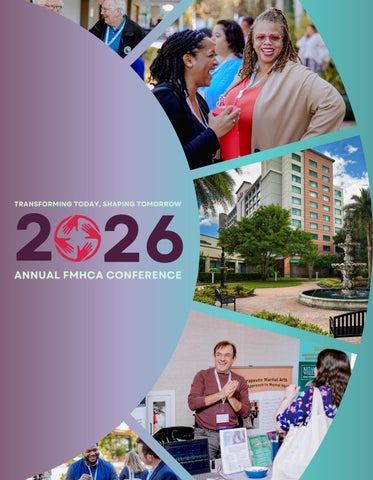
TRANSFORMING TODAY, SHAPING TOMORROW

2

26 ANNUAL FMHCA CONFERENCE

Welcome to the 2026 Annual FMHCA Conference!

It is with great excitement and deep gratitude that I welcome you to our Annual Conference as I step into the role of President of our professional association representing Licensed Mental Health Counselors across the State of Florida. As a 501(c)(3) nonprofit, our mission has always been rooted in service, advocating for our profession, supporting one another, and ensuring that the communities we serve receive the highest quality of care.

This year, I look forward to building on the incredible foundation laid by those who came before me. Together, we will continue to strengthen our voice in the state, expand opportunities for professional growth, and celebrate the resilience and dedication that define our field.

Our work as counselors is both challenging and inspiring, and I believe our association should reflect that same spirit by being uplifting, collaborative, and forward-looking. Whether through advocacy, continuing education, or community outreach, we will keep advancing the values that unite us: compassion, integrity, and excellence in care.

I invite each of you to engage fully with the association and this conference experience. Attend sessions, connect with colleagues, and share your expertise. Your participation is what makes our community vibrant and strong.

I am honored to serve you once again, and I am energized by the possibilities ahead. Together, we are Transforming Today, Shaping Tomorrow.

LauraPeddie-Bravo

THE FMHCA TEAM

Liza Piekarsky
Elizabeth Steuerwald Kerry Conca
Dr. Kathie Erwin
Laura Peddie-Bravo Dr. Bridget Glass
Grace W Cantor Joe P Skelly
Diana Huambachano
Laura Giraldo
Naomi Rodriguez
Taurean Wilson

ATTENDEE SERVICES & CONFERENCE POLICIES

BADGES AND ADMITTANCE

Official FMHCA Conference badges are your admission to all functions associated with our registration and must be worn to attend conference events

REGISTRATION/ BADGE PICK-UP

Visit Conference Kiosks in the hotel lobby during the time slots listed below for badge corrections, on-site registration, & badge pick-up.

Pre-Conference:

Tuesday (2/3) from 3:00 pm- 5:00 pm

Wednesday (2/4) from 7:00 am- 8:30 am

Main Conference:

Wednesday (2/4) 11:30 am- 4:00 pm

Thursday (2/5) 7:00 am- 10:00 am

Friday (2/6) 7:00 am- 10:00 am

Saturday (2/7) 7:00 am- 10:00 am

EXHIBIT HALL

Please visit our exhibitors and sponsors Thursday, Friday, and Saturday from 7:00 am-6:30 pm located throughout the ballroom meeting spaces.

SPEAKER CLAUSE

The planners and sponsors of this conference assume no responsibility for the comments expressed by the speakers/ presenters, nor do they accept responsibility for the content or reprinting of any materials used or handed out during the conference.

CELL PHONE POLICY

In consideration of all our attendees, we request that cell phones, pagers, etc. either be turned off or set to silent mode during all conference sessions and breakouts.

SMOKING POLICY

Marriott is a smoke-free environment. Designated smoking areas are located outside the side door and front door exits.

IN CASE OF EMERGENCY

There is a house phone located in every meeting room. Dial "0" to be connected to the hotel operator

ATM LOCATION

The ATM machine is located by the first floor elevator landing

ORLANDO MARRIOTT LAKE MARY AMENITIES:

In-Room Dining - Breakfast from 6am-10:30am and All-Day Menu from 11am-11pm

Food and Beverage Outlets Service Hours:

Starbucks Espresso Lounge:

Monday - Friday: 6am-11am

Saturday - Sunday: 7am - 11am

1501 Kitchen & Bar:

Breakfast:

Monday - Friday: 6:30am - 10:30am

Saturday - Sunday: 7am - 11am

Lunch and Dinner: 11:30am-12am (food available until 11pm) and Happy Hour is MondayFriday from 3pm-6pm

MClub Lounge:

Monday - Friday: 6:30am - 10:30am

Saturday - Sunday: 7am - 11am

Outdoor pool is open daily from 6am – 11pm 24-Hour Fitness Center is open

Guestrooms are serviced daily as long as the "Do Not Disturb" sign is not left on the door

Should guests need additional towels, toilet paper, etc please dial “0” for assistance Shuttle available from 7am-9pm within a 5mi radius of hotel Shuttle reservations must be made 2 days in advance so we can secure a driver for the trip Reservations can be made at the Front Desk or by dialing "0"

LUGGAGE STORAGE

Upon checking out of the hotel, you may check your bag(s) with the bellman.

COMPLEMENTARY WIFI IS PROVIDED BY STAR BEHAVIORAL HEALTH PROVIDERS

Password: StarProviders4FL

FMHCA GRIEVANCE STATEMENT

All grievances and inquiries will be handled on an individual basis and evaluated on their merit. Those wishing to submit a Grievance Form can do so by navigating to FMHCA.org

ADVERTISEMENTS IN CONFERENCE BROCHURE

Advertisements placed in conference brochure do not represent official FMHCA policy or position and the acceptance of advertising does not constitute endorsement or approval by FMHCA of any advertised service or product.

CEU EARNING & LUNCH INFORMATION

HOW TO EARN YOUR CEUS

Step One:

Check into the conference iPad kiosk; legibly sign your name and confirm your license number.

Step Two:

Complete the Conference Evaluation. This is an electronic form that FMHCA will use to report your CEUs to CE Broker (so be sure you have answered the feedback questions for each breakout session you attended).

Evaluations can be found by visiting FMHCA.org or on a conference iPad kiosk located in the hotel lobby.

Evaluations should be completed collectively at the end of each day There will be one evaluation survey for each conference day. You will complete your evaluation at the end of the day on Thursday, Friday, and Saturday (based on your registration).

If you attend a session for Domestic Violence, Telehealth, or Ethics, there will be a physical signin sheet (located in the session room).

Step Three:

Submit completed evaluations electronically once completed.

Certificates will be issued & CEUs will be reported to CE Broker by Friday, February 27th based on your completion of evaluation(s).

FMHCA is a chapter of the American Mental Health Counselors Association (AMHCA) and is the only organization working exclusively for LMHCs in Florida.

QUESTIONS?

Visit us at the registration table in the hotel lobby to talk with a conference staff member, or email The FMHCA Office at office@flmhca.org

LUNCH INFORMATION

On Thursday, the Keynote Lunch will be a light grab-and-sit meal, allowing attendees to enjoy lunch while remaining engaged with the program. On Friday, no formal lunch will be served; however, a hearty snack will be provided in the Grand Foyer and outside on the patio. During this time, attendees are welcome to venture out on their own or mingle with fellow attendees, exhibitors, presenters, and FMHCA’s Regional Directors Please note that no CE sessions or workshops will take place during this break On Saturday, we will host a seated luncheon featuring the presentation of the 2025 awards, an overview of FMHCA’s lobbying efforts, and a discussion on the future of FMHCA This luncheon will include bread service, a main entrée, dessert, and coffee or tea. Menus will be shared with registered attendees via email

TRACKING

This conference is approved by the Florida Board of Clinical Social Work, Marriage and Family Therapy, and Mental Health Counseling. (LCSW, LMFT, LMHC) FMHCA CE Broker #: 50-748; Conference Tracking #: 20-1336617.

FMHCA has been approved by NBCC as an approved by NBCC as an Approved Continuing Education Provider, ACEP No. 2058. Programs that do not qualify for NBCC credit are clearly identified. FMHCA is solely responsible for all aspects of the programs.

VIRTUAL BUT HUMAN: ENHANCING CONNECTION, EMPATHY, AND PRESENCE IN TELEHEALTH COUNSELING

Thursday Morning Keynote Presented By: Amanda Landry, LMHC, CAP, NCC

8:00 AM- 11:00 AM | 3 Telehealth CEUs | Salons D&E

Description: This presentation offers a comprehensive exploration of how mental health professionals can cultivate deep, authentic connections in a virtual therapy setting Grounded in the latest research and evidencebased approaches, participants will gain practical strategies and insights to address the challenges of building rapport, conveying empathy, and maintaining therapeutic presence through a screen. Attendees will learn how to adapt core clinical skills for telehealth, including techniques for nonverbal communication, emotional resonance, and co-regulation in digital environments. Special attention will be given to working with diverse populations, managing cultural nuances online, and preventing screen-related burnout. Through engaging discussion, live demonstrations, and experiential exercises, therapists will leave equipped with tools to not only sustain but enhance their effectiveness and humanity in virtual practice. Whether you are new to telehealth or looking to deepen your presence online, this keynote will empower you to show up virtually without losing the warmth, connection, and compassion that define effective therapy

Learning Objectives:

Identify three evidence-based strategies for enhancing emotional connection and strengthening therapeutic presence in virtual mental health sessions.

Apply culturally responsive approaches to foster therapeutic engagement and safety for clients from diverse backgrounds during remote therapy

Develop personalized rituals and self-care routines that help establish professional boundaries and mitigate screen fatigue and emotional burnout in a teletherapy context.

Practice adapting core clinical interventions such as emotional validation, trauma-informed care, and crisis de-escalation for effective use in online therapeutic settings.

Amanda Landry is a Licensed Mental Health Counselor, Certified Addictions Professional, and National Certified Counselor. She is the owner and CEO of Caring Therapists, a Florida-based group practice with ten locations offering therapy, testing, and medication management for children and adults Under her leadership, Caring Therapists has earned recognition as one of INC. 5000’s fastest-growing companies (2024), multiple Best of Florida awards, and a GrowFL Companies to Watch finalist spot Amanda specializes in treating anxiety and depression in teens and adults using a holistic, evidence-based approach, with advanced training in CBT, EFT, Trauma-Focused CBT, and EMDR. She is the author of Guided Journal for Women with Anxiety and founder of My Private Practice Collective, an online network of over 25,000 therapists Named FMHCA’s 2018 Counselor of the Year, Amanda is also a Qualified Supervisor who mentors future counselors She actively volunteers with Delta Phi Epsilon and was honored with the Cystic Fibrosis Foundation’s 40 Under 40 Award in 2022. Amanda lives with her husband, forensic psychologist Dr David Landry, and their two children, Ashton and Brooklyn In her free time, she enjoys reading, yoga, and all things Harry Potter

MINDSET SHIFTS AND PRACTICAL TIPS TO ELIMINATE BURNOUT AND VICARIOUS TRAUMA

Thursday Lunch Keynote Presented By: Michael Cortina, LCSW, LCAC 11:45 AM- 1:45 PM | 2 General CEUs | Salons D&E

Description: This presentation offers actionable techniques and mindset shifts to equip mental health professionals with knowledge and strategies necessary to elevate their practice and better serve their clients by eliminating burnout Even as demand for mental health services remains high, the very workers relied on to provide counseling and care find themselves plagued by burnout Grounded in research and evidence-based practice, participants will gain practical approaches to address the challenge of burnout and vicarious trauma. Attend this session to reignite your passion, find renewed strength and purpose in your work, and reinvigorate your career!

Learning Objectives:

Define and demonstrate sensory system listening to eliminate vicarious trauma.

Locate free values assessment measures online.

Describe and demonstrate physical movement to create new synapses and alleviate burnout

Michael Cortina, a Trauma Resolution Expert, is the Founder & Creator of The Cortina Method©a brain-based healing methodology to resolve trauma and other disturbing emotions, thoughts, and behaviors WITHOUT people having to relive pain. As a Licensed Clinical Social Worker and Licensed Clinical Addiction Counselor, Michael brings passion to the topics he discusses, which energizes his presentations His enthusiasm is contagious He has a unique way of breaking down complex ideas into clear, digestible points. People who struggle with overcoming PTSD and other difficulties around the world, hire Michael for his services. He provides Master Classes & Trainings throughout the country, and has been featured in ABC, FOX, NBC, CBS, and THE CW along with 400+ publications & media outlets

THURSDAY BREAKOUT SESSIONS

2:00 PM - 4:00 PM | 2 Clock Hours

SALONS A, B, & C

Topic: Behind Closed Doors: Understanding, Assessing, and Responding to Domestic Violence with Compassion and Competence

Presented By: Jessica Straughn, LMHC, LPC, NCC CCTP-II

Description: This presentation offers a comprehensive exploration of domestic violence and its far-reaching impact on mental health, equipping clinicians with the tools necessary to assess and support both survivors and perpetrators through a trauma-informed, culturally competent lens Grounded in evidencebased practices and real-world application, participants will gain practical strategies to identify signs and symptoms of abuse, implement appropriate screening tools, and respond with compassion while upholding ethical and legal responsibilities Through the lens of lived experience and professional expertise, this session will also highlight state and national prevalence data, Florida laws related to DV, and community-based resources to support safety, healing, and accountability. Designed for mental health professionals working across diverse settings, this workshop empowers attendees to confidently navigate the complexities of DV in clinical practice because what happens behind closed doors deserves informed, empathetic intervention.

Course Goals & Objectives:

Define domestic violence and identify common signs/symptoms that survivors may present with.

Describe the impact of DV on mental health and its implications for healthcare systems. State the general prevalence of DV at the state and national levels and relevant DV-related laws.

Describe how to assess for DV in both survivors and perpetrators using common tools

SALONS F, G, & H

Topic: Bringing Sexual and Erotic Clinical Challenges Out of the Shadows and Into Therapy Sessions

Presented By: Sari Cooper LCSW-R, AASECT

Certified Sex Therapist, AASECT Certified Sex Therapy Supervisor, Co-Founder Erotic Intimacy Academy & Kelly Ghweinem, Certified Sex Therapist, LCSW, Co-Founder Erotic Intimacy Academy

Description: As Certified Sex Therapists who have seen many clients and couples who self-refer to us for sex therapy, we have heard many stories of people who felt uncomfortable bringing up their sexual concerns or pleasurable experiences in therapy. We know that when helping professionals ignore addressing a client's sexuality, the potential for unintended negative outcomes increases. In the fields of mental health counseling when a therapist does not ask or inquire about a client's sex life, most clients will not initiate conversations about their sexual and erotic experiences, whether they are events they're excited about or concerns they have. Most graduate mental health counseling programs do not offer sex therapy courses and many postgraduate certifications do not address sexuality or sex therapy disorders. Recently researchers surveyed 175 clinical members of the American Association for Marriage and Family Therapy to assess how their clinical training and education, their perceived sexual knowledge, and their comfort with sexual material influenced their willingness to engage in sexuality-related discussions with their clients The findings did not fully support one of their hypotheses, which was that MFTs who perceive themselves as having higher levels of sex knowledge will be more likely to initiate sexuality-related discussions with their clients than therapists with lower perceived levels of sex knowledge. The study results stated that thinking one has a good amount of sexual knowledge as a therapist does not have a significant direct effect on initiating sexual discussions with clients in therapy sessions. The study did conclude that sexuality education in conjunction with supervision experiences are the cornerstone for a therapist’s to gain a foundation level of comfort in leading discussion around the client's sexual life. Once comfort with sexual discussions increases, THEN therapists are more

likely to engage in sexuality discussions with their clients. The researchers stated that therapists’ clinical experience with sexual issues did not on its OWN directly affect their comfort with sexuality matters. As AASECT Certified Sex Therapists and as a Supervisor we have seen the critical need for therapists to become more confident, informed and fluent on how to engage, assess and decide what conditions and situations they can treat and when they need to refer a client or a couple out to a Certified Sex Therapist. In this presentation, Sari Cooper CST, CSTS & Kelly Ghweinem CST will review the biopsychosocialsexual-spiritual assessment they do with each client in order to better address the client's presenting problem using a multi-dimensional approach.

Course Goals & Objectives:

Attendees will identify key questions to ask clients in their initial sessions

Attendees will be able to describe a wider vocabulary when assessing for sexual trauma with clients.

Attendees will differentiate which presenting problems are within or beyond their scope of practice

Attendees will evaluate the expertise between general and specialists who can best serve their clients' sex therapy and medical needs.

ORCHID ROOM

Topic: Virtual Reality Therapy for Anxiety & Phobias: A CBT Guide for Clinicians

Presented By: Melanie Smith, Ph.D., LMHC, CEDSC & Gwilym Roddick, DSW, LCSW

Description: This workshop is designed to equip mental health professionals with the knowledge and skills to integrate virtual reality (VR) into evidence-based treatments for anxiety disorders, specifically treatments under the cognitive behavioral therapy (CBT) umbrella. This session will explore the clinical applications of VR, including how it can enhance exposure therapy, increase client engagement, and overcome logistical barriers to in-vivo exposure. Participants will learn evidence-based mechanisms of change, practical strategies for tailoring virtual environments to clients’ needs, and navigating ethical and logistical considerations Whether you're new to VR or looking to deepen your clinical toolkit, this workshop offers a hands-on,

accessible introduction to using immersive technology in therapy.

Course Goals & Objectives:

Describe at least two ways VR can be integrated into evidence-based, cognitive behavioral treatment for anxiety disorders. Demonstrate how to select and utilize VR environments to support individualized exposure hierarchies for clients with anxiety. Apply ethical and logistical considerations when incorporating VR into clinical practice, including informed consent, safety protocols, and accessibility concerns.

4:15 PM - 6:15 PM | 2 Clock Hours

SALONS A, B, & C

Topic: Accelerated Experiential Dynamic Psychotherapy (AEDP): Evidence-Based & Emerging Practice Shaping the Future of Mental Health Care

Presented By: Allison Brownlee, Psy.D., LMFT

Description: This presentation will provide an overview of the Accelerated Experiential Dynamic Psychotherapy (AEDP) model and the philosophical underpinnings, rooted in attachment and experiential therapy practices Dr. Brownlee will discuss affective neuroscience and the transformational processes in AEDP, through lecture and by showing sessions with her patients As the founder, Diana Fosha says “We do not just work with pathology; we work with the parts of the person that are yearning to heal” Dr Brownlee will bring life to this by demonstrating how a therapist shifts maladaptive affects into moments of adaptive transformation and long term healing. This is an interactive presentation that offers space for therapists to ask questions, discuss clinical material, and share ideas about how to apply the model to their current cases. We will cover the evidence base for AEDP and focus on how the model addresses complex PTSD, anxiety, depression, emotion dysregulation, and shame. Clinicians will leave the presentation feeling ready to apply AEDP interventions with their patients, and have a strong understanding of the AEDP model and its effectiveness in clinical settings.

Course Goals & Objectives:

Understand the theoretical foundation of AEDP and its roots in attachment theory, affective

neuroscience, and developmental psychology

Explore AEDP as an evidence-based and experiential treatment for trauma, anxiety, and relational distress.

Examine how AEDP aligns with the future of mental health through relational healing, neuroplasticity, and transformational outcomes.

Identify practical applications and innovations within AEDP that are reshaping how clinicians approach therapy.

SALON D

Topic: AI Friend or Foe? Learning How to Use AI

Effectively as Clinicians

Presented By: Graciela Pulliam, MA, LMHC, QS, Mashal Dhanani, Registered Mental Health Counselor Intern, MS & Jessica Chavis, Registered Marriage and Family Therapist Intern, MS

Description: This session explores evidencebased research on utilizing Artificial-Intelligence (AI) in an ethical and HIPAA-compliant manner to enhance mental health care Current trends of AI usage in mental health by clients and clinicians will be discussed, as well as how clinicians can utilize AI to develop unique interventions and educate clients on safe AI usage as a supplemental resource between sessions. Recent research indicates both the benefits and areas of improvement for the utilization of AI in the field of mental health AI shows potential benefits in diagnosing, treatment planning, and assessing (Thakkar et al , 2024), while other studies found limitations such as AI underestimating patients' suicide risk (Elyoseph & Levkovich, 2023) and producing inaccurate therapeutic interventions (Woodnutt et al., 2024). In addition, Rousmaniere et al. 2025 found that nearly half of individuals with mental health concerns are already turning to AI for therapeutic support. This research provides evidence that there is an urgent need for clinicians to understand how to safely integrate AI tools in an ethical and safe manner in order to protect clients and uphold best practices. The session will include a comprehensive research review, case examples, a live demonstration of AI prompting, and an interactive discussion to enhance both understanding and practical application. Participants will be able to identify unhealthy, negative, and dangerous ways clients

and clinicians currently use AI for mental health; explain ethical and safe ways for clients to utilize AI for therapeutic benefit between sessions; differentiate between HIPAA and non-HIPAA compliant uses of AI; and write HIPAA and ethically-compliant prompts to generate ideas for therapeutic interventions. The relevance to mental health counseling lies in equipping practitioners to utilize this developing technology, ethically and legally, to improve client outcomes. Course Goals & Objectives:

List unhealthy/negative/dangerous ways clients and clinicians currently use AI for mental health purposes.

Explain ethical and safe strategies for clients to utilize AI as a supplemental resource between therapy sessions.

Differentiate between HIPAA-compliant and non-HIPAA-compliant uses of AI in clinical practice

Demonstrate how to write HIPAA-compliant and ethically sound prompts to generate ideas for therapeutic interventions.

SALON

E

Topic: Transforming Care, Honoring Identity: Building Inclusive Mental Health Systems for Tomorrow

Presented By: Nicole Kratimenos, Ed D , LMHC, NCC, CRC, QS, C-DBT, BC-TMH

Description: This presentation offers a comprehensive exploration of culturally responsive mental health care for BIPOC communities, equipping mental health professionals with the knowledge and tools necessary to enhance their practice and better serve their clients. Grounded in the latest research and evidence-based approaches, participants will gain practical strategies and insights to address the systemic barriers, historical inequities, and cultural disconnects that impact BIPOC mental health outcomes. Through a focus on cultural competency, identity-affirming practices, and inclusive service delivery, this session will empower providers to transform care environments and contribute to more equitable, responsive, and healing-centered mental health systems for the future.

Course Goals & Objectives:

Define Cultural Competency in Mental Health

Care

Identify Barriers to Culturally Responsive Mental Health Services

Identify Barriers to Culturally Responsive Mental Health Services

Highlight Effective Strategies and Best Practices for Inclusive Care

SALONS F, G, & H

Topic: YOUR INTERN DID WHAT?!? Gatekeeping the Next Generation of Clinicians with Competency-based Supervision Model

Presented By: Andrea Scott, LMHC, MCAP, QCS & Desiree Bermudez, LMHC, CAP, QCS

Description: This presentation will offer a comprehensive review of the SAMHSA defined qualifications, responsibilities, and ethical guidelines of a gatekeeper in the substance abuse/mental health counseling field to assist professional supervisors on the expectations of this role. Utilizing the well-researched Competency-based Supervision Model and its application to clinical supervision participation, participants will gain practical knowledge and insight for supervising students and interns In this presentation, we will define supervisee impairment to help supervisors avoid it, elicit audience participation via interactive vignettes, and address problems of professional competence with “gate-slippage”. It will offer interventions and strategies to improve gatekeeping and supervision experience to ensure the quality of counselors entering the substance abuse field. Research-based materials will be provided to facilitate immediate application of knowledge and skills in a clinical supervisor’s practice.

Course Goals & Objectives:

Define gatekeeping using the Competencybased Supervision Model (30 minutes copresenter)

Explain supervisee impairment and supervisor "gate-slippage". (30 min Presenter)

Demonstrate practical interventions and strategies to improve the supervision process and quality of new counselors. (30 min Presenter & Co-Presenter)

ORCHID

ROOM

Topic: From Micro to Macro: Changing The Lens of How we View Disruptive Impulse-Control, and

Conduct Disorders

Presented By: Taurean Wilson, LMHC, CFMHE

Description: This presentation offers a comprehensive exploration of Disruptive, Impulse-Control, and Conduct Disorders. This presentation will help mental health professionals to "shift their lens": from a micro to a macro perspective on disruptive, impulse-control, and conduct disorders. This dynamic shift will enhance their practices and understanding of disruptive impulse control and conduct disorders. Providing effective treatment requires an allinclusive approach, moving beyond individualfocused perspectives ("micro") to include a broader understanding of the various systems influencing a young person's development ("macro"). The micro perspective focuses on “the individual aspect”: Biological and neurological factors, psychological factors, and early childhood experiences The macro perspective focuses on systematic and environmental factors: Family environment, school and peer environment, and community and societal factors Shifting the lens helps to provide a holistic understanding and help clinicians to broaden their view on a more complete picture of the complex interplay of factors contributing to disruptive behaviors In addition, it will broaden their capacity to provide effective targeted intervention that will not only address the individual behaviors, but also focus on family dynamics, school environments, and community resources. A macro-based view provides opportunities for individual clinicians to recognize and utilize strength-based approaches that strengthens the individual, their families, and their communities. This, in essence, will build resilience and promote positive development. Finally, Understanding the individual within the context of their environment and recognizing the complex interplay of micro and macro factors can lead to a more effective understanding and approach to supporting individuals dealing with disruptive impulse control and conduct disorders.

Course Goals & Objectives:

Participants will explore the landscape of the various disruptive, impulse-control, and conduct disorders.

Participants will be able to discuss the diagnostic criteria and differential diagnoses

for each according to the DSM 5-TR and evaluate the overlap and progression in the diagnostic criteria for these particular disorders.

Participants will explore etiology and risk factors and the complex interplay of biological, genetic, and environmental factors contributing to disruptive, impulse control, and conduct disorders.

Participants will evaluate assessment best practices. This includes participants demonstrating and evaluating standardized assessment tools and techniques for accurately diagnosing disruptive, impulsecontrol, and conduct disorders: structured interviews and behavior rating scales and discuss the importance of a thorough development and family history.

ETHICS THROUGH THE LENS OF ETHNOTRAUMATOLOGY: REPAIRING GAPS IN CULTURALLY RESPONSIVE MENTAL HEALTH CARE

Friday Morning Keynote Presented By:

8:00 AM- 11:00 AM | 3 Ethics CEUs | Salons D&E

Description: This compelling session introduces Ethnotraumatology as an ethically grounded and culturally expansive framework for understanding trauma within Black, Indigenous, and Diverse Ethnic Communities (BIDEC). Mental health professionals are increasingly called to move beyond traditional trauma-informed models that often center Eurocentric assumptions and clinical detachment This presentation invites participants to critically engage with the ethical limitations of Western paradigms and explore alternative pathways that reflect the lived experiences, ancestral knowledge, and healing practices of historically marginalized communities. Rooted in indigenous psychology, cultural trauma theory, and the biopsychosocial-spiritual model, ethnotraumatology repositions trauma as a collective, historical, and spiritual wound requiring approaches that are not only clinically sound but also culturally and ethically responsible. The presentation will explore how mental health providers can ethically respond to trauma by integrating land-based healing, oral traditions, spiritual ecology, and communal narratives into their practice. As the field of mental health continues to expand its commitment to cultural humility and justice, this topic addresses a critical gap in trauma theory and application. Participants will gain deeper insight into the ethical obligations of clinicians to recognize and dismantle systemic bias in mental health care, while embracing culturally anchored healing modalities that affirm identity, dignity, and ancestral continuity. Through case examples, global perspectives, and ethical inquiry, this session offers a transformative lens for mental health professionals seeking to provide more inclusive, restorative, and culturally attuned care.

Learning Objectives:

Explain the ethical limitations of Eurocentric trauma frameworks and their clinical impact on Black, Indigenous, and Diverse Ethnic Communities (BIDEC).

Describe the principles of ethnotraumatology, including indigenous psychology, cultural trauma theory, and the biopsychosocial-spiritual model, as frameworks for ethical and culturally responsive care

Differentiate between Western trauma models and culturally grounded healing practices such as land-based rituals, oral traditions, and spiritual ecology.

Recommend strategies for implementing ethnotraumatological approaches in clinical and community-based mental health settings to promote ethical and culturally attuned care.

Dr. Lisseth London is a bilingual international trauma specialist, human rights advocate, and CEO/ Founder of Lisseth London Global Consulting, LLC. With over 15 years of experience in human services and mental health, she helps organizations address trauma and build culturally responsive, sustainable systems. Creator of the Trauma-Informed Resiliency Training© (TIRT) program and pioneer of Ethnotraumatology™ , she integrates cultural, psychological, and systemic insights to promote healing and resilience Dr London partners globally with organizations serving immigrants, survivors of violence, and health equity efforts. She also founded the University of Ethnotrauma Science & Research to train practitioners in trauma-informed care for Black, Indigenous, and Diverse Ethnic Com (BIDEC) Her work centers on equity, transformation, and healing-centered leadership

Dr. Karen B. Brown is an international psychologist, trauma researcher, and U.S. Army veteran with over 30 years of leadership in education, mental health, and advocacy She holds a Ph D in International Psychology (trauma and organizational systems) and an M.A. in Forensic Psychology from The Chicago School of Professional Psychology. As adjunct faculty at The Chicago School and Northwest Florida State College, she mentors doctoral students and develops trauma and cross-cultural curricula. Her research addresses transgenerational trauma and healing in marginalized populations, with national presentations and publications. Founder of Crestview Creations Unlimited, LLC and Linc International, LLC, she leads community initiatives advancing equity and culturally grounded practices A decorated veteran, Dr. Brown has earned the Meritorious Service Medal and other honors for her leadership. She is active in the APA, IAAP, and Toastmasters, promoting global dialogue and mental health equity.

FRIDAY BREAKOUT SESSIONS

12:30 PM - 2:30 PM | 2 Clock Hours

SALONS A, B, & C

Topic: No Forgiveness, No Recovery: Know Forgiveness, Know Recovery

Presented By: W. Bryce Hagedorn, Ph.D., LMHC, NCC, MAC, QCS

Description: Emotional wounds are inevitable in our encounters with others. When these wounds go unaddressed, the resulting maladaptive coping mechanisms can often result in selfdestructive, other-destructive, and/or selfmedicating behaviors that can lead to further isolation. The active process of forgiveness of self and others is not simply a “forgive and forget” event, and in fact, many believe that sustained recovery is unattainable without engaging in the forgiveness process.

Course Goals & Objectives:

Attendees will learn the most common sources of emotional wounds and how clients create grievances

Attendees will examine the most common maladaptive coping mechanisms (to include addictive disorders, self-injurious behaviors, and intimate partner violence)

Attendees will learn concrete strategies to assess and assist their clients with self-andother forgiveness

SALON D

Topic: Perinatal Grief and Loss: What Every Counselor Should Know About Perinatal Grief

Presented By: Nicole J Wallace, LMHC, NCC, PMHC

Description: This is an engaging and informative workshop designed to raise awareness and understanding of Perinatal Grief and Loss. This session provides an overview of the emotional and psychological changes that can occur during pregnancy and the postpartum period, including postpartum depression, anxiety, OCD, PTSD, and grief Participants will gain insight into risk factors, warning signs, and the impact these conditions can have on both the birthing person and their family. Through real-life case examples and current research, attendees will explore how PMADs manifest differently across individuals and communities, especially among marginalized populations. The workshop also emphasizes the

importance of early intervention, culturally responsive care, and the role that healthcare professionals, family members, and community supports play in promoting perinatal mental wellness for individuals and families who have experienced a perinatal loss. Participants will leave with practical tools for identifying symptoms, providing support, and connecting individuals to appropriate mental health resources.

Course Goals & Objectives:

Identify common emotional and psychological responses to perinatal loss and differentiate between typical grief reactions and those that may indicate the need for additional clinical support.

Demonstrate skills for creating a nonjudgmental therapeutic environment that fosters open dialogue, emotional safety, and client-centered support around perinatal grief

Name evidence-informed assessment scales/tools and interventions to support clients in processing grief, exploring personal meaning, and developing healthy coping mechanisms following a perinatal loss or traumatic birth experience.

SALON E

Topic: Advancing Treatment for Bipolar Disorder: Integrating New Evidence and Innovative Approaches

Presented By: Kelley Ryals, LMHC-S, NCC, ACAS & Hope Victoria Charles, MA, MBA, RMHCI Description: Bipolar disorder (BD) remains one of the most challenging mood disorders to diagnose and treat effectively due to its complex symptomatology, frequent comorbidities, and significant functional impairment. This presentation will provide an overview of emerging evidence-based treatments for BD, including novel pharmacological options, advances in neuromodulation, and the expanding role of psychotherapeutic interventions such as mindfulness-based cognitive therapy and digital therapeutics Recent research on the neurobiological underpinnings of BD will be highlighted to show how precision psychiatry may

inform personalized treatment plans The session will also discuss practical strategies for integrating these new methods into clinical practice, addressing barriers to implementation, and optimizing outcomes for diverse patient populations. Attendees will leave with up-to-date knowledge and actionable tools to enhance their care for individuals living with BD.

Course Goals & Objectives:

Describe at least three emerging treatment options for bipolar disorder, including pharmacological and non-pharmacological approaches.

Summarize current research findings on the neurobiological mechanisms of bipolar disorder and how they inform new interventions.

Identify practical strategies for integrating innovative therapies into existing treatment plans for clients with BD

Discuss barriers to implementing new treatments in diverse clinical settings and propose solutions to improve access and adherence

SALONS F, G, &H

Topic: Food, Mood, and Mental Health: The Missing Links in Treating Kids and Teens

Presented By: Terri Samuels, LMHC, NCC

Description: Poor nutrition doesn’t just impact physical health it disrupts mood, behavior, and brain function, creating a ripple effect that shapes a child’s relationships, school performance, and emotional well-being. Join Terri Samuels, Nationally Certified Mental Health Counselor, to discover how assessing nutrition deficits and stimulating the Vagas nerve can transform mental health outcomes for children and adolescents. This presentation offers a comprehensive exploration of food and mood, equipping mental health professionals with the knowledge and tools necessary to enhance their practice and better serve their clients.

Course Goals & Objectives:

Distinguish how children and adolescents gut affect their brain and vise versa, as well as the consequence of a damaged digestive system

Evaluate how certain foods play a role in a child’s microbiome and analyze how it affects their mood

Understand how hormones in adolescents

plays a key role in mental health and gut health

ORCHID ROOM

Topic: Resilience Through Joy: Reclaiming Energy and Confidence to Lead Authentically

Presented By: Nicole Van Valen, MS, LMFT, SHRMSCP

Description: This session equips mental health professionals with practical strategies to build resilience through the intentional cultivation of joy. Participants will examine personal and professional barriers to joy, learn evidence-based techniques to reframe stress, and explore a proprietary three-phase framework designed to elevate well-being and leadership capacity. The content draws on empirical research, cognitivebehavioral principles, and the Ready–Set–Go™ approach to support growth, enhance selfawareness, and foster sustainable professional engagement. Grounded in clinical and organizational psychology, this session offers tools mental health professionals can immediately implement to improve outcomes for themselves and their clients

Course Goals & Objectives:

Define the connection between stress, joy, and resilience.

Describe the three phases of the Ready Set Go™ framework to resilience.

Explain strategies to identify and remove barriers to joy in professional settings. Demonstrate techniques to integrate joyful practices into daily routines to enhance leadership effectiveness.

3:00 PM - 5:00 PM | 2 Clock Hours

SALONS A,B, & C

Topic: The Existential Self: Belonging and the Search for Meaning in a Fragmented World

Presented By: Jeremy D. Bonta, Ph.D., LMHC

Description: This session explores how existential philosophy can inform counseling practice when addressing issues of identity, belonging, and selfconcept in clients navigating societal pressures. Drawing on thinkers like Dostoevsky, Kierkegaard, Sartre, Tillich, and Frankl, the presentation will examine how existential concerns freedom, death, isolation, authenticity, anxiety, meaning intersect with modern mental health challenges. Core themes of the presentation will include the human capacity for freedom and responsibility,

the inevitability of existential anxiety and death, mankind’s pursuit of authenticity and search for meaning, the dichotomy of aloneness and connection, and an understanding of how life is a process of becoming.

Course Goals & Objectives:

Recognize existential themes underlying clients’ distress (e.g., alienation, despair, role confusion, meaning, freedom)

Apply existential-integrative techniques to foster authenticity and resilience

Navigate the tension between social expectations and self-actualization in diverse cultural contexts

Develop enhanced understanding of Existential Psychotherapy

SALON D

Topic: Holding the Line: Boundaries, Biases, and Best Practices in Treating Problematic Sexual Behaviors

Presented By: Becky Lenning MA LPC-S (Michigan), LMHC (Florida) & Staci Zonca MA LPC NCC (Michigan & Missouri)

Description: This presentation creates a space for clinicians to deepen their understanding of working with individuals who present with problematic sexual behaviors in an outpatient setting. Through a blend of evidence-based research, clinical expertise, and real-world case studies, participants will be invited to examine their own biases, boundaries, and the common barriers that arise in this complex area of practice. Presenters Staci and Becky bring years of experience working with individuals mandated to participate in sexual offense counseling, both within structured systems and now independently in private practice. Their goal is to demystify and destigmatize this work by providing concrete tools and accessible language that equip clinicians to more effectively support this population or confidently refer to appropriate providers when needed. The session will distinguish between individuals who have committed sexual offenses and those struggling with problematic sexual behaviors who may not have offended. Participants will explore definitions, risk and protective factors, treatment barriers, and mandated reporting obligations Practical considerations such as the use of telehealth, setting personal and professional

boundaries, and navigating countertransference will be woven throughout. This work isn’t for everyone but it is necessary Whether you're already working with this population or feel unsure how to proceed when a client discloses these struggles, this session offers a judgmentfree space to build competence and clarity. You’ll leave with skills, frameworks, and resources to support ethical, effective care for clients navigating problematic sexual behaviors.

Course Goals & Objectives:

Identify the clinical distinctions between individuals who have committed sexual offenses and those experiencing problematic sexual behaviors without legal involvement. Describe common therapist biases and countertransference responses that may arise when treating clients with problematic sexual behaviors.

List at least three treatment barriers commonly encountered when working with clients with problematic sexual behaviors Utilize structured case examples to practice clinical decision-making and determine appropriate referral or treatment pathways.

SALON E

Topic: Cultivating Curiosity & Compassion: IFS Tools for Working with the Inner Critic Presented By: Coralis Solomon, Ph D , LMHC, NCC, QS

Description: In this interactive session designed for counselors an overview of the Internal Family Systems model will be presented to provide foundational understanding of its key concepts and language. Participants are then invited to learn how to help clients develop a new relationship with their inner critic as a protective part with caring intent rather than an adversary. Counselors will be introduced to the concept of Self energy as grounded in qualities such as calm curiosity compassion clarity courage and confidence. Through experiential learning participants will lead clients using a step by step IFS protocol that begins with finding the critic part then focusing on it fleshing it out feeling toward it and befriending it. This process helps build trust and supports the transformation of the critic into an ally Role play scenarios and reflective practices allow counselors to practice guiding clients to access their own Self energy in

a safe therapeutic space The overarching goal is to reduce self judgment shame or fear while fostering inner leadership resilience and deep self understanding.

Course Goals & Objectives:

Describe the inner critic as a protective manager part with positive intent using Internal Family Systems terminology

Facilitate a client through the IFS steps of find focus flesh out feel toward and befriend to create respectful dialogue with the critic Model and help clients access Self energy rooted in calm curiosity compassion clarity courage and confidence to hold their inner critic

Guide clients in transforming the critic into an ally by teaching them kind boundaries self leadership and helping them integrate these insights into ongoing therapy Sources Ask ChatGPT

SALONS F,G, &H

Topic: CliniVRSE and the Future of Clinical

Education: Innovation in Mental Health Training

Presented By: April R. Crable, Ph.D., MBA, LPC, SOTP

Description: CliniVRSE is an innovative virtual reality platform designed by clinicians to transform mental health training. Through immersive simulation, it builds core competencies, enhances decision-making, and offers real-time feedback in a safe, engaging environment. This session explores how CliniVRSE creatively bridges academic learning and clinical practice in counselor education. Attendees will learn how VR technology supports learner engagement, cultural responsiveness, and workforce readiness—offering a scalable, forward-thinking solution to meet the growing demands of behavioral health care.

Course Goals & Objectives:

Explain how virtual reality can be used to enhance clinical training and decision-making in mental health.

Explain how virtual reality can be used to

enhance clinical training and decision-making in mental health.

Evaluate the role of immersive technology in addressing workforce gaps and improving training outcomes.

ORCHID ROOM

Topic: From Wounds to Wisdom: A TraumaInformed Approach to Generational Healing

Presented By: Shainna Ali Ph.D., LMHC, NCC

Description: This presentation offers a comprehensive exploration of generational healing through a culturally responsive, traumainformed lens. Participants will be introduced to a five-phase framework: Reflection, Realization, Reckoning, Revitalization, and Resonance which empowers clinicians to recognize how trauma and strengths are inherited biologically, socially, and culturally. Rooted in current research and enriched by practical strategies, this session also emphasizes the importance of emotional regulation, identity development, and reconnecting with cultural wisdom. Participants will leave with a deepened understanding of how to assess generational wounds, apply healing practices, and promote sustainable transformation in diverse client populations. Course Goals & Objectives:

Define generational healing and identify how intergenerational trauma and strength are passed through both nature (e.g., epigenetics) and nurture (e g , cultural conditioning, family modeling).

Describe the five phases of the Generational Healing Framework (Reflection, Realization, Reckoning, Revitalization, Resonance) and apply them to client care.

Assess the impact of intersectionality, identity, and cultural context in the transmission and healing of generational patterns.

Demonstrate how to integrate culturally rooted practices and emotional regulation techniques to support clients in breaking harmful cycles and reconnecting to ancestral resilience.

THE NEUROBIOLOGY OF RHYTHMS IN PLAY THERAPY: SAFETY,

SEQUENCE, AND REGULATION

Friday Evening Keynote Presented By: Jackie Flynn, EdS, LMHC-S, RPT-S™ & Haruna Nail, MA, LMHC 5:30 PM- 7:30 PM | 2 General CEUs | Salons D&E

Description: This 2-hour experiential workshop explores how rhythm and play support nervous system regulation and relational safety in clinical practice Participants will engage in structured, playful rhythm activities that demonstrate how sound, movement, and patterned repetition can calm, activate, or integrate arousal states. Emphasis is placed on how these bottom-up interventions create the conditions for safety and connection, preparing children and adolescents for deeper therapeutic work Through a combination of guided experiences, clinical vignettes, and group reflection, attendees will describe how rhythm-based play therapy supports regulation, demonstrate playful interventions for co-regulation, and evaluate when these approaches are most effective Limitations and cautions, including developmental readiness, cultural sensitivity, and dissociation, will also be addressed. No musical background is required.

Learning Objectives:

Describe how rhythm-based play therapy interventions support regulation and relational safety through bottom-up processing

Differentiate between calming, activating, and integrating rhythm activities in play therapy and explain when each may be clinically appropriate.

Demonstrate at least three structured rhythm-based play therapy activities that foster co-regulation and emotional expression in children and adolescents. Evaluate observable shifts in posture, tone, affect, and engagement to assess the effectiveness of rhythm-based play therapy interventions

Jackie Flynn is a licensed psychotherapist and EMDRIA-Approved EMDR Trainer specializing in integrating EMDR and play therapy for children, adolescents, and families She is the founder of EMDR Playground™, EMDR with Kids™, and Play Therapy Community®, and presents internationally on trauma-informed, developmentally sensitive care.

Haruna Nail is a licensed mental health counselor in Melbourne, Florida, providing traumainformed therapy across the lifespan. Her work focuses on grief, anxiety, neurodiversity, life transitions, and LGBTQ+ affirming care using play-based, relational, and holistic approaches

HELPING TO HEAL THE WOUNDS WE CANNOT SEE: PROVIDING TRAUMA-INFORMED COUNSELING TO SURVIVORS OF DOMESTIC VIOLENCE

AND INTIMATE PARTNER ABUSE

Saturday Morning Keynote Presented By: Bridget Glass, PhD, LMHC, ACS 8:00 AM- 10:00 AM | 2 Domestic Violence CEUs | Salons D&E

Description: This presentation will explore the complex relationship between domestic violence and mental health, shedding light on how experiences of abuse can impact psychological well-being We will discuss the various forms of domestic violence, including physical, emotional, and psychological abuse, and their long-term effects on mental health conditions such as depression, anxiety, PTSD, and substance abuse. The presentation aims to raise awareness, foster dialogue, and encourage collaborative efforts among mental health professionals, advocates, and community members to support those affected by domestic violence and promote healing and recovery.

Learning Objectives:

Differentiate various terminology representative of DV & IPV survivors lived experience

Identify the systemic impact of DV and IPV across the lifespan

Expand counseling skills unique to the support of survivors of DV and IPV

Examine barriers and protective factors to mitigate the further perpetuation of DV and IPVRe

Dr. Bridget Glass is a Licensed Mental Health Counselor, Approved Clinical Supervisor, and Program Director and Assistant Professor in South University’s Clinical Mental Health Counseling Program in West Palm Beach, Florida. She holds a Ph.D. in Counselor Education and Supervision with dual training in Mental Health Counseling and Marriage, Family, and Couple Therapy. Dr. Glass specializes in childhood trauma, relationship abuse, and workplace distress among helping professionals. She is a published author and national presenter on trauma-informed care and currently serves as President-Elect on FMHCA’s executive board.

AWARDS LUNCHEON, ANNUAL MEMBERSHIP MEETING, &

LEGISLATIVE UPDATE

Saturday Lunch Keynote | 12:45 PM - 2:45 PM | 2 General CEUs | Salons D&E

Presented By: Laura Peddie-Bravo, LMHC, NCC, FMHCA President, Corinne Mixon, DPL, FMHCA Lobbyist, Bridget Glass, PhD, LMHC, LPC, ACS & Diana Huambachano, LMHC, FMHCA Executive Director

Description: Topics covered will include: a review of FMHCA's accomplishments from 2025, the continuing importance of belonging to (and serving in) our professional associations, goals & objectives for FMHCA for 2026 and beyond The Florida Legislature is made up of individuals that come from varied professional backgrounds If these legislators are not educated on the LMHC profession, its professional practice climate may become threatened. Through legislative and grassroots lobbying, we seek to provide much-needed education to Florida's elected officials Corinne will explain what lobbying is, why it is important and how LMHCs can become their own lobbyists. Additionally, Corinne will discuss the interactions between statewide and federal policy and how Florida’s LMHCs can affect change in Washington. Finally, Corinne will discuss the current state of LMHC practice in Florida, bills that may affect LMHCs and how mental health counselors can work with their State Representatives and Senators to enhance their legislative platform.

Learning Objectives:

Identify three benefits for Members who participate in our professional association

Identify three goals for FMHCA for 2026

Learn about FMHCA's Legislative Goals for 2026

Learn about Grassroots Advocacy

Learn about Florida’s State legislative process

Learn about the intersection of elections and policy making

Learn about interactions between state and federal policy

Learn about legislative topics that may be important to LMHCs

Learn what to expect of Florida’s behavioral health ecosystem in the coming years

SATURDAY BREAKOUT SESSIONS

10:15 AM - 12:15 PM | 2 Clock Hours

SALONS A, B, & C

Topic: Psychedelics and Psych Meds: Counseling Strategies to Help Clients Avoid Dangerous Drug Interactions

Presented By: Max Kitaj MD

Description: As interest in psychedelics continues to grow, more clients especially those with anxiety, depression, PTSD, and ADHD are experimenting with substances like psilocybin, LSD, MDMA, and ayahuasca. Many do so while taking prescribed psychiatric medicines, often without understanding the potential risks. Many medicines prescribed by psychiatrists can interact in a dangerous way with psychedelics. This session equips mental health counselors with practical, evidence-based strategies to talk with clients about these risks We will review the commonly used psychedelics, explore the interactions between psychedelics and common medicines (e.g., SSRIs for depression and stimulants for ADHD), and offer tools to assess risk, promote safety, and support harm reduction. We will emphasize when to encourage a client to speak further with a psychiatrist about the potential interaction. Grounded in current research and clinical experience, this talk prepares counselors to engage in these conversations and empower clients to make safer, more informed choices.

Course Goals & Objectives:

Identify commonly used psychedelics (e.g., psilocybin, LSD, MDMA, ayahuasca).

Describe at least three classes of psychiatric medications that may interact with them in potentially harmful ways.

Evaluate when a client’s psychedelic-medicine combination warrants a referral or consultation with a psychiatrist for further assessment.

SALON D

Topic: Navigating Youth Development in the AI Era: Clinical Insights for Counselors

Presented By: Bethany R Russell, Ph D , LMHC, RPT, NCC

Description: This presentation offers a comprehensive exploration of the evolving

landscape of child development in the age of Generative AI (GAI), equipping mental health professionals with the knowledge and tools necessary to enhance their practice and better serve their youth clients. Grounded in the latest empirical research and foundational developmental theories, participants will gain practical strategies and insights to assess and mitigate the unique risks posed by youth-GAI interactions. We will critically examine the accuracy and utility of current GAI applications for youth, drawing from a robust taxonomy of risks derived from real-world data The session will also address the inherent limitations of GAI content and its potential impact on cognitive, social, emotional, and moral development, ensuring attendees are prepared to ethically integrate discussions of AI into their clinical work.

Course Goals & Objectives:

Describe the six high-level risk categories associated with youth interactions with Generative AI, as identified by empirical research.

Differentiate how Generative AI impacts child development across Piaget's cognitive stages, Erikson's psychosocial stages, Bowlby's attachment theory, and Kohlberg's moral development stages.

Plan effective assessment questions to evaluate a youth client's engagement with Generative AI and its influence on their mental health.

Recommend evidence-based strategies for parents and caregivers to promote healthy digital habits and mitigate GAI-related risks for children and adolescents.

SALON E

Topic: Let’s do GoodWerk: Cultivating a Culturally Responsive Counseling Practice in a Marginalizing Sociopolitical Climate

Presented By: Alfonso Ferguson, Ph D , LMHC, LPC, ACS, NCC, Ebony E. White, Ph.D., LPC, NCC, ACS, and Daton Haywood, MS, ALM, ICF-PCC

Description: In the face of rising sociopolitical tensions and legislative efforts that target historically marginalized communities, counseling professionals are called to provide care that is not

only ethical and affirming, but also actively rooted in justice. This presentation highlights a holistic and culturally responsive approach to clinical practice that centers the lived experiences of historically underrepresented populations, including BIPOC, LGBTQIA+, immigrant, and disabled communities. Presenters will outline how clients are conceptualized through an intersectional, strengths-based lens that accounts for systemic oppression, generational trauma, and cultural resilience. Specific therapeutic interventions grounded in liberation psychology, narrative therapy, and somatic healing will be discussed. The session will also explore how supervision and training are structured to foster clinician self-awareness, cultural humility, and advocacy skills. Finally, presenters will share insights into the intentional business operations that support this work, including hiring practices, community partnerships, and sustainability strategies demonstrating how counseling practices can thrive while resisting oppressive norms. Attendees will leave with tangible tools for transforming their own clinical and organizational practices to meet the needs of marginalized clients with authenticity, integrity, and care.

Course Goals & Objectives:

Identify strategies for conceptualizing clients through an intersectional and culturally responsive framework that acknowledges the impact of systemic oppression and sociopolitical marginalization. Describe at least three evidence-informed interventions that support healing and empowerment among historically underrepresented communities, including BIPOC and LGBTQIA+ clients.

Analyze key components of culturally responsive supervision and training models that promote counselor self-awareness, cultural humility, and advocacy within clinical practice.

Evaluate business operations and organizational practices that foster equitable, sustainable, and socially just counseling services for marginalized populations

Topic: The Intersection of Trauma, Central Sensitization, and Chronic Pain

Description: Chronic pain is one of the most expensive health care problems in the United States today. An estimated 50 million people are suffering with chronic pain. The opioid epidemic has radically changed how chronic pain is being treated. Shifting treatment from a medical model relying heavily on pharmaceuticals to a more holistic model that integrates neurocounseling. Trauma and chronic pain frequently co-occur and reinforce one another through shared neurobiological pathways. Central sensitization intersects with both trauma and chronic pain, often intensifying pain. This session will explore the neuroscience of central sensitization, trauma, and the connection to chronic pain. The role of brain functioning will be explored, identifying overlap of the affected regions. We will discuss the cycle of fear/anxiety and pain, often fueled by trauma and amplified by central sensitization. Individuals with trauma histories often develop pain conditions such as fibromyalgia, chronic low back pain, CRPS, and migraines These pain conditions reflect sensitized neural circuitry rather than structural pathology and are maintained through trauma-related hyperarousal, somatic vigilance, and avoidance Attendees will learn to identify symptoms of trauma-related pain amplification and differentiate structural from neuroplastic pain. Participants will recognize and implement interventions grounded in pain neuroscience education, trauma-informed CBT, somatic awareness, and exposure-based processing strategies. Through case vignettes and in session experiences, participants will develop a deeper understanding of the synergy between chronic pain, trauma, and central sensitization. Diversity and equity considerations will be emphasized throughout. Chronic pain is disproportionately underdiagnosed and undertreated in women, people of color, lowincome communities, and survivors of systemic or intergenerational trauma. Presenters will address how to engage clients across cultural contexts with sensitivity to historical and embodied oppression that impacts the experience and expression of pain.

Course Goals & Objectives:

Define central sensitization and explain its role

in chronic pain

Describe the shared neurobiology of trauma and chronic pain

Differentiate structural pain from centrally mediated/neuroplastic pain

Apply interventions to reduce pain-related threat

Utilize trauma-informed, neuroscience-based language to educate/treat clients with chronic pain

3:00 PM - 6:00 PM | 3 Clock Hours

SALONS A,B, & C

Topic: Enhancing Virtual Behavioral Health & Addiction Treatment

Presented By: B. Taylor Santioni, MS, LMHC & Nick Padlo, MBA

Description: With the demand for accessible, high-quality addiction treatment on the rise, virtual care models have emerged as essential tools in expanding support for individuals with substance use and co-occurring mental health disorders This presentation explores the clinical, ethical, and operational strategies necessary to deliver effective virtual addiction treatment, including within Intensive Outpatient Program (IOP) settings Rooted in direct experience managing a fully virtual IOP, this session offers an in-depth look at best practices for facilitating recovery in digital spaces while maintaining therapeutic integrity, engagement, and accountability. Participants will examine how to modify interventions such as Cognitive Behavioral Therapy, Accelerated Resolution Therapy (ART), and relapse prevention strategies for telehealth delivery. Emphasis will also be placed on building therapeutic alliance, fostering participation in virtual group therapy, managing screen fatigue, and addressing the unique challenges of treating substance use disorders remotely. Clinicians will walk away with actionable tools to enhance outcomes, support long-term recovery, and ensure equitable access to care particularly for individuals facing geographic, financial, or logistical barriers to in-person services.

Course Goals & Objectives:

Identify key differences between virtual and in-person behavioral health treatment and adjust clinical approaches accordingly. Utilize evidence-based engagement

techniques to foster connection and accountability in virtual therapy. Navigate the ethical, technological, and logistical considerations of delivering secure and effective virtual addiction treatment. Apply practical solutions for managing common challenges, such as client disengagement, digital distractions, and compliance issues

SALONS F, G, &H

Topic: The U-Model in Action: Combining IFS and ACT for Clinical Practice

Presented By: Dr. Rivka A. Graham-Edery,

M.S.W., L.C.S.W., M-RAS, IFS Level I

Description: This comprehensive workshop will equip you with the knowledge and skills to effectively integrate Internal Family Systems (IFS) and Acceptance and Commitment Therapy (ACT) in your clinical practice. The U-Model, an innovative framework, will guide you through combining these two powerful modalities to enhance therapeutic outcomes. You'll gain a deep understanding of IFS concepts like "Self" and "parts" and explore the core principles of ACT, including acceptance, defusion, and committed action. Through interactive exercises and case examples, you'll develop practical skills in using the U-Model to create a synergistic and transformative therapeutic approach

Course Goals & Objectives:

Describe the core principles and theoretical foundations of Internal Family Systems (IFS) and Acceptance and Commitment Therapy (ACT).

Apply IFS techniques to establish a compassionate relationship with internal "parts" and address polarizations.

Explain and apply core ACT techniques, including defusion, acceptance, present moment awareness, and identifying and committing to values-based actions. Apply the U-Model framework to integrate IFS and ACT principles and techniques in clinical practice.

ORCHID ROOM

Topic: The Power of Play: Adlerian Approaches to Autism Spectrum Therapy

Presented By: Andrea Mann, MS, NCC, LMHC-S, RPT-S, CAdPT-A

Description: This course offers an in-depth exploration of Adlerian play therapy as a powerful and affirming approach to working with clients across the autism spectrum. Participants will learn to conceptualize, connect with, and support children, adolescents, and adults with autism spectrum disorders through a combination of Adlerian theory and practical, play-based strategies. Emphasizing belonging, encouragement, and client strengths, this course helps practitioners tailor interventions to meet sensory, relational, and communication needs. It is ideal for mental health professionals, educators, counselors, and therapists seeking to enhance their work with autistic clients and those committed to inclusive, strengths-based care.

Course Goals & Objectives:

Describe how Adlerian play therapy principles such as personality priorities and the crucial

Cs can be used in play therapy to conceptualize clients with autism spectrum disorder

Explain the relationship between sensory processing, communication styles, and social connection in autism spectrum disorder within the context of Adlerian play therapy. Demonstrate at least two Adlerian play therapy interventions that support insight, social-emotional development, and empowerment in clients with autism spectrum disorder.

Analyze how the therapeutic powers of play (fostering self-expression, enhancing social competence, and promoting emotional regulation) align with Adlerian play therapy interventions when working with clients on the autism spectrum.

Turn static files into dynamic content formats.
Create a flipbook
2026 Annual FMHCA Conference Brochure by FMHCA - Issuu