The Quarterly is published four times a year: winter, spring, summer, and fall.
Advertising Inquiries: editor@fly-nd.com
Advertising deadline is the first of the preceding month.
Tanner Overland – Chairman
Devin Cole – Vice Chairman
Mitch Lutze-Morris – Board Member
Ryan O’Rear – Board Member
Shae Helling – Board Member
Zoe Graham – Board Member
2025-2026 BOARD MEMBERS
Justin Weninger – Past Chairman
Renée Murrish - Manager
Kyle Wanner - NDAC Director
Mike McHugh - NDAC Aviation Education Coordinator
From the Editor
For me, springtime comes with open windows, spending countless hours outside, and my children frequently pointing at the sky and shouting “Look Mom, an airplane!” As we approach the summer months, you will hopefully find our family at a variety of North Dakota fly-ins and airshows, as well as simply eating ice cream by the end of the runway, listening to ATC live, and teaching our children how to identify aircraft.
I hope you are also able to enjoy all the wonderful aviation events our state has to offer during the warmer months! You can find a full list of events on the back cover of this issue or at aero.nd.gov/events
Be sure to mark your calendars for the annual Fly-ND Summit, held August 18-19 in Devils Lake, ND. It’s a great event with a variety of updates, education, networking, as well as a fishing competition and golf tournament. You won’t want to miss it!
Wishing you clear skies and unlimited visibility, Nicolette
Statements of fact and opinion are the responsibility of authors alone and do not imply an opinion on the part of officers and members of the NDAA or Fly-ND Quarterly staff. If you’ve received more than one copy of this newsletter, please share it with a friend. Email admin@fly-nd.com to update your address.
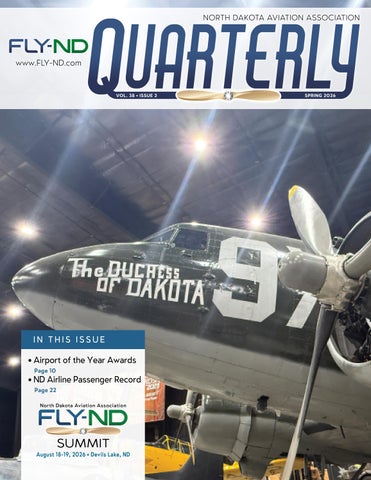
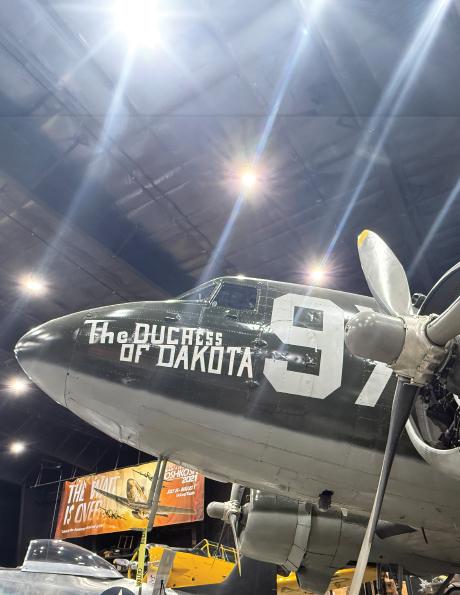
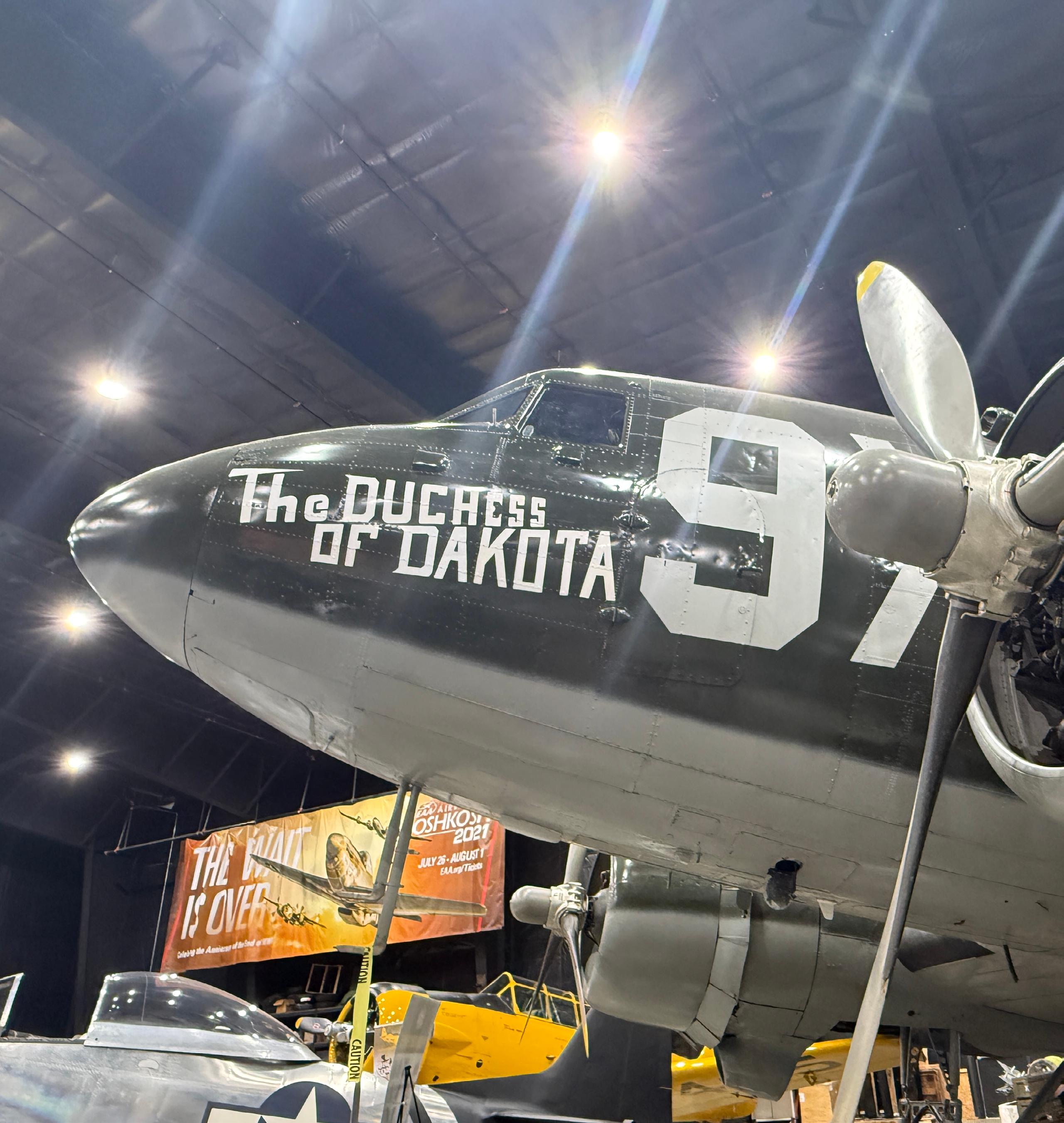
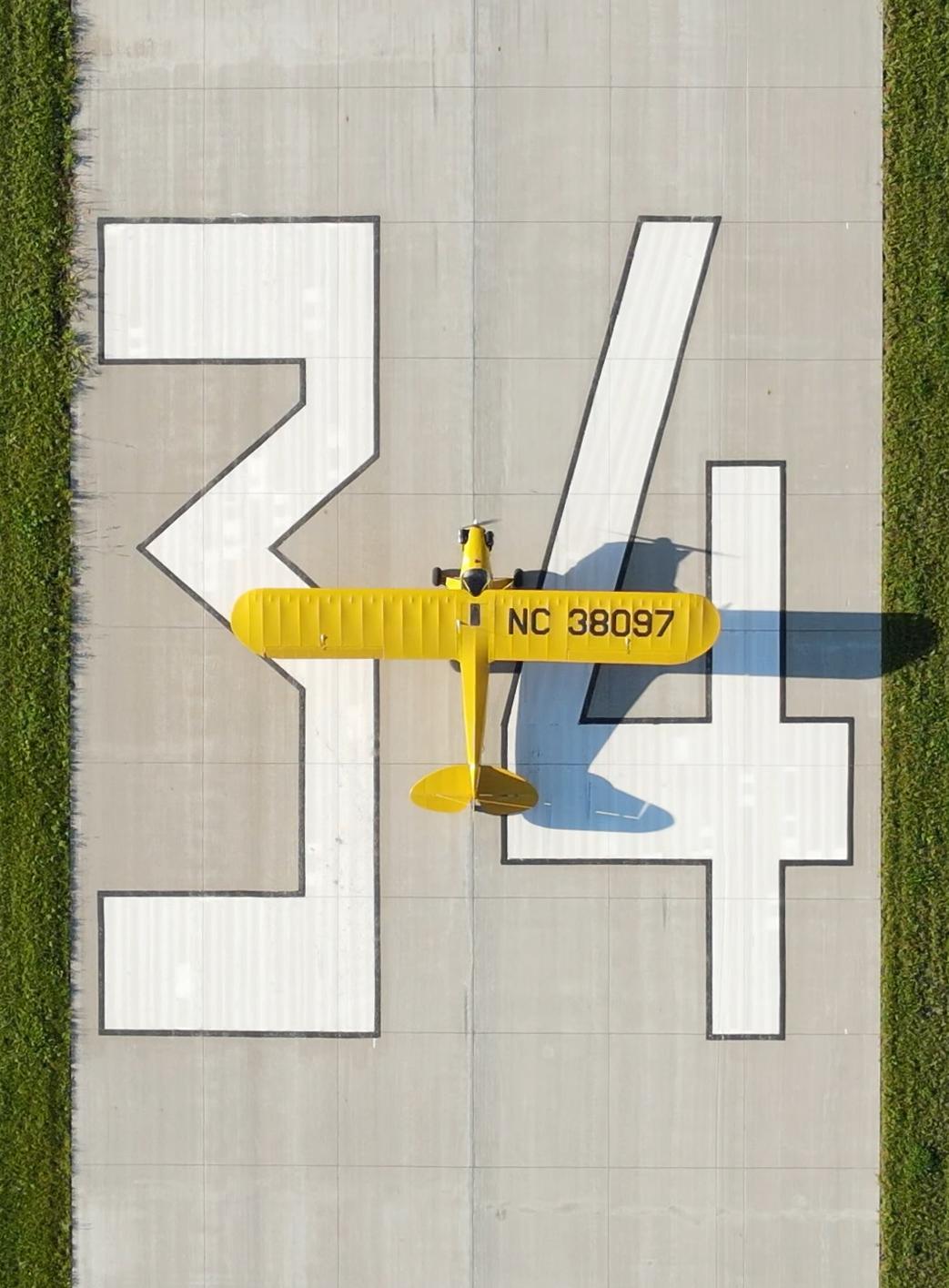
Cover Photo credit: “The Duchess of Dakota” is a historic Douglas C-53 Skytrooper, seen here at the Dakota Territory Air Museum in Minot, ND.
Tanner Overland, Chairman North Dakota Aviation Association chairman@fly-nd.com
Hello and happy spring! With summer right around the corner, it’s a good time to look back on a great couple of days in Minot, ND, at the 2026 Fly-ND Conference.
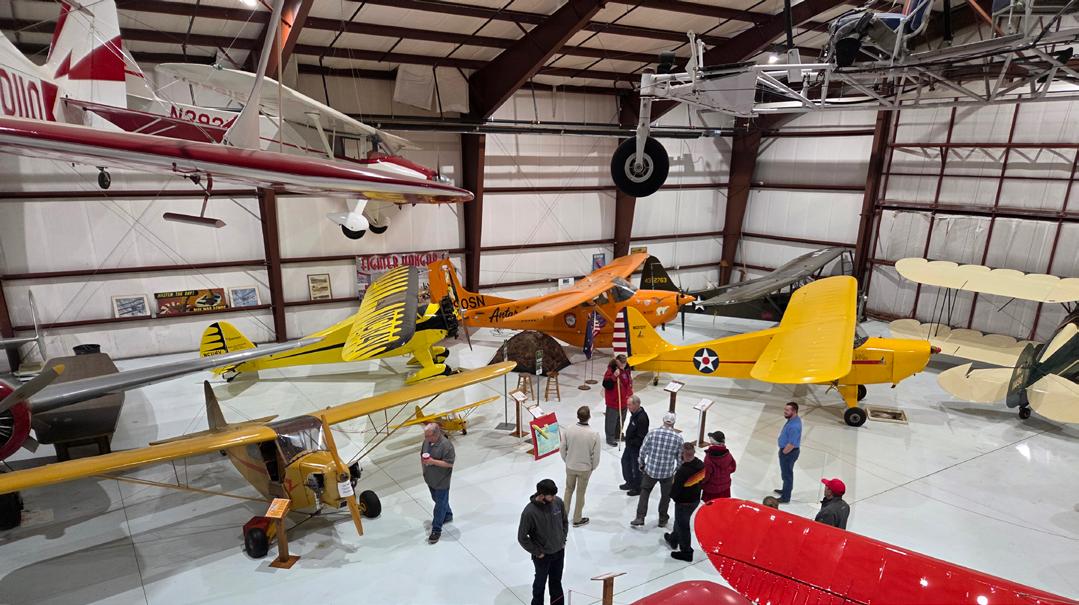
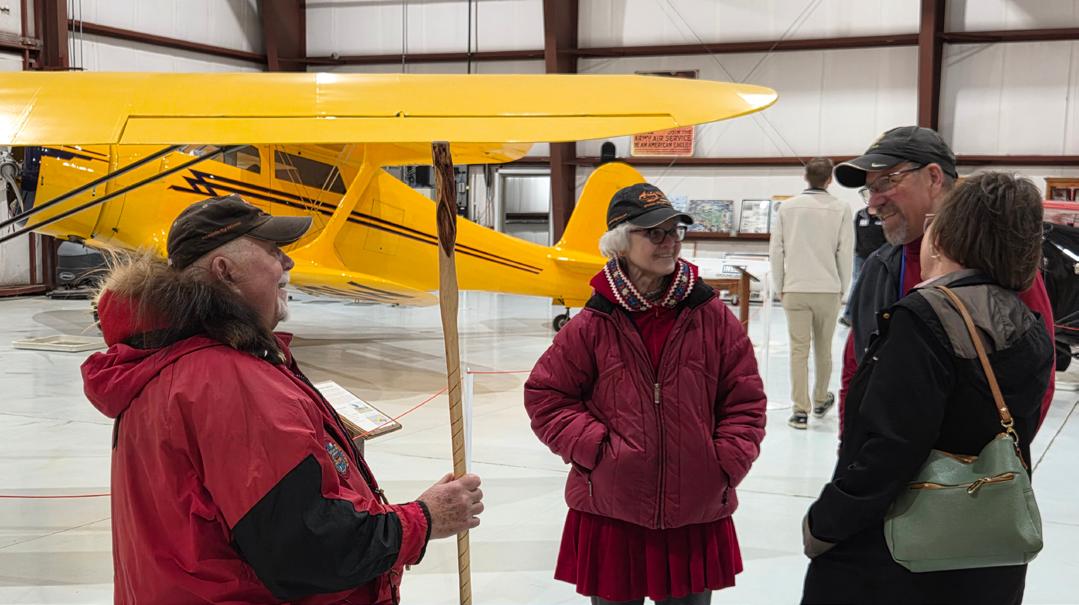
It was great to have the conference back in Minot for the first time in six years. We kicked things off with the Ice Breaker Social at the Dakota Territory Air Museum, then followed up with some outstanding tours over the next couple of days. A big thank you to the Minot International Airport, the Minot High School Aviation Program, and Minot Air Force Base for opening their doors and giving attendees a behind-the-scenes look at their operations.
This year’s conference brought together a great mix of aviation folks for a couple solid days of learning, networking, and good conversation. None of it happens without the people behind the scenes. A sincere thank you to the 2026 Fly-ND Conference Site Committee: Devin Cole, Suzanne Blessum, Samantha Blessum, Maria Romanick, Jenna Grindberg, Larry Linrud, Mike McHugh, and Renée Murrish. We wrapped up the 2026 Fly-ND Conference with a sold-out North Dakota Aviation Hall of Fame Banquet, where Warren Pietsch was inducted as the 51st member. Congratulations as well to the Minot International Airport for being named Commercial Service Airport of the Year, and to the New Town Municipal Airport for being named General Aviation Airport of the Year. And a special thank you to the Minot Civil Air Patrol Squadron for their help serving dinner that evening.
Another highlight to share is the continued momentum behind our Fly-ND Scholarships. With the North Dakota Aviation Association (NDAA) scholarships that were awarded
CHAIRMAN ’S COMMENTS
at the Hall of Fame Banquet, the NDAA has now awarded nearly $100,000 in scholarships over the past six years. That’s a direct result of the support from our members and sponsors. Thank you for your continued support in making this possible!
All in all, it was a great conference. Good people, strong attendance with 40 exhibitors and over 200 attendees, and a lot of momentum as we continue building and supporting aviation across North Dakota. Thank you to our sponsors, exhibitors, and everyone who made the trip. And to those who completed the post-conference survey—thank you! That feedback goes a long way in helping us keep improving.
As discussed during the NDAA Annual Association Meeting, July 1, 2026, will bring a new board of directors transitions: Devin Cole will move into the Chairman role, Ryan O’Rear into the Chair-Elect role, and I’ll step into the Member-at-Large (A) position. That leaves the Secretary/ Treasurer role open. This position is a board-appointed, twoyear term. If you’re interested, we’d encourage you to apply at www.fly-nd.com by May 31, 2026.
Looking ahead to later this summer, be sure to mark your calendars. The Fly-ND Summit will be held at Woodland Resort in Devils Lake, ND, on August 18–19, 2026. More details will be coming soon, but expect a mix of state and organizational updates, insights from the postconference survey, updates from our sub-committees, and a presentation of our financials for organizational review and approval, along with some time to relax with a golf tournament and fishing competition.
CHAIRMAN ’S COMMENTS
Then on October 1, 2026, the Fly-ND Career Expo is headed to Bismarck, ND, for the first time ever, with Bismarck Aero Center hosting the event, followed that evening by the 10th Annual Props & Hops fundraiser at the Mandan Aero Center. We’re excited to bring the Fly-ND Career Expo to Bismarck this year. And having Props & Hops the same day makes for a full day of great aviation events, all supporting a great cause!
Also worth noting, North Dakota will be hosting a major national aviation conference this September. The National Association of State Aviation Officials (NASAO) has selected Grand Forks, ND, for its annual conference, hosted by the North Dakota Aeronautics Commission (NDAC). The conference will take place September 13–16, 2026, marking the first time in 32 years it returns to North Dakota, and only the second time the state has hosted it. The conference is expected to bring more than 350 state, federal, and
industry aviation leaders from across the country, providing an incredible opportunity to showcase North Dakota’s leadership in aviation and the work being done across the state. For more information, visit NASAO’s website at https:// nasao.org/ and stay tuned for more information from the NDAC.
On that note, be sure to check out upcoming aviation events happening across the state this spring and summer on the NDAC event page, https://aero.nd.gov/events/. There are some great opportunities to get out, connect, and enjoy aviation around North Dakota.
Thanks again to everyone who helped make this year’s conference such a success. It’s a great reminder of the strength of our aviation community here in North Dakota. Here’s to a safe, busy spring with plenty of good flying. We’re looking forward to seeing everyone at the Fly-ND Summit in Devils Lake this August!
WE WANT YOU ON OUR BOARD OF DIRECTORS
Serving on the North Dakota Aviation Association (NDAA) volunteer board is a unique way to strengthen the North Dakota aviation community and expand your professional experience. The board composition is designed to be diverse group of aviation professionals, all with a common interest shared by the vision of NDAA in serving and growing aviation across North Dakota and beyond.
Reneé Murrish, Manager
FROM THE
Manager
As summer arrives across North Dakota, the skies open up in a way only aviators truly appreciate. Longer days, calmer mornings, and endless horizons create the perfect backdrop for everything from early takeoffs to late-evening landings. It’s a season that reminds you why you fell in love with aviation in the first place… freedom, connection, and the unmatched perspective from above.
At the North Dakota Aviation Association (NDAA), summer is not just a time to fly, it’s also a time to build. Behind the scenes, we are already hard at work planning the next opportunities to bring our aviation community together, strengthen connections, and inspire the next generation of pilots, mechanics, and aviation professionals.
We are excited to share that the Fly-ND Summit will take place August 18-19, 2026, at Woodland Resort in Devils Lake, ND. This event continues to grow each year, offering a space for collaboration, education, and forward-thinking discussions that shape the future of aviation in our state. More details will be released soon on our website. Looking ahead to the fall, mark your calendars for the Fly-
ND Career Expo on October 1, 2026. This year the Expo will be hosted at the Bismarck Aero Center in Bismarck, ND. This event is geared toward high school and college students, creating a direct pathway into aviation careers by connecting them with industry professionals and real opportunities. We are especially excited to once again offer scholarships this year, continuing our commitment to investing in the future of aviation.
As you move through the summer months, take advantage of every opportunity to get out and fly, visit a neighboring airport, mentor a young enthusiast, or simply spend time around the aircraft and people that fuel your passion. Aviation thrives because of community and each of you plays a vital role in keeping it strong.
So here is your encouragement for the season: fly often, stay curious, and keep looking ahead. The work you do, the relationships you build, and the passion you carry all contribute to something bigger.
We look forward to seeing you in the skies this summer and in person at our upcoming events.
AIRPORTS FORWARD
THE ANNUAL FLY-ND CONFERENCE
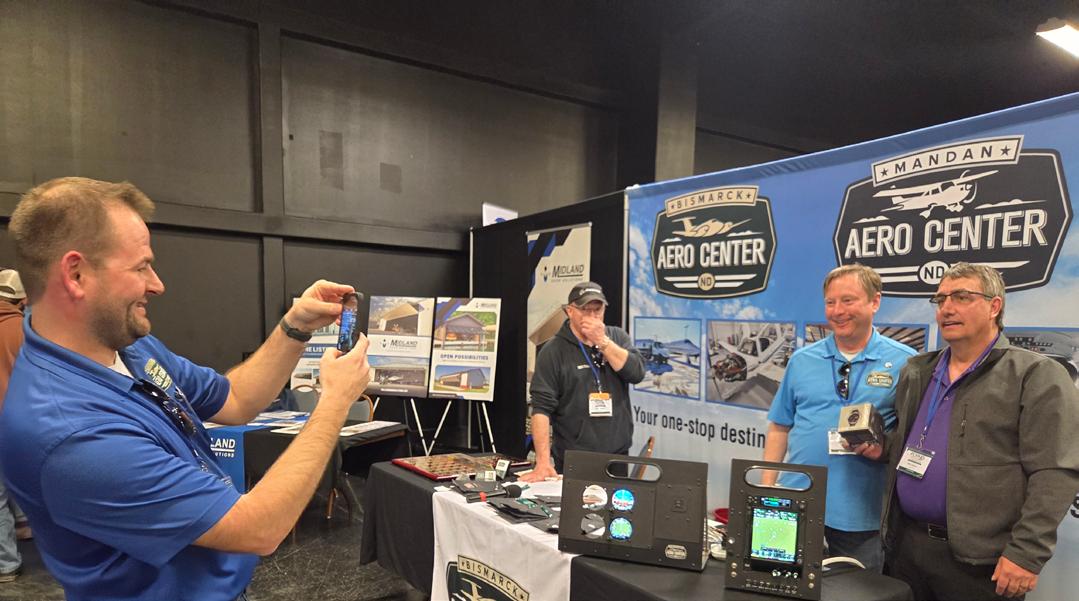
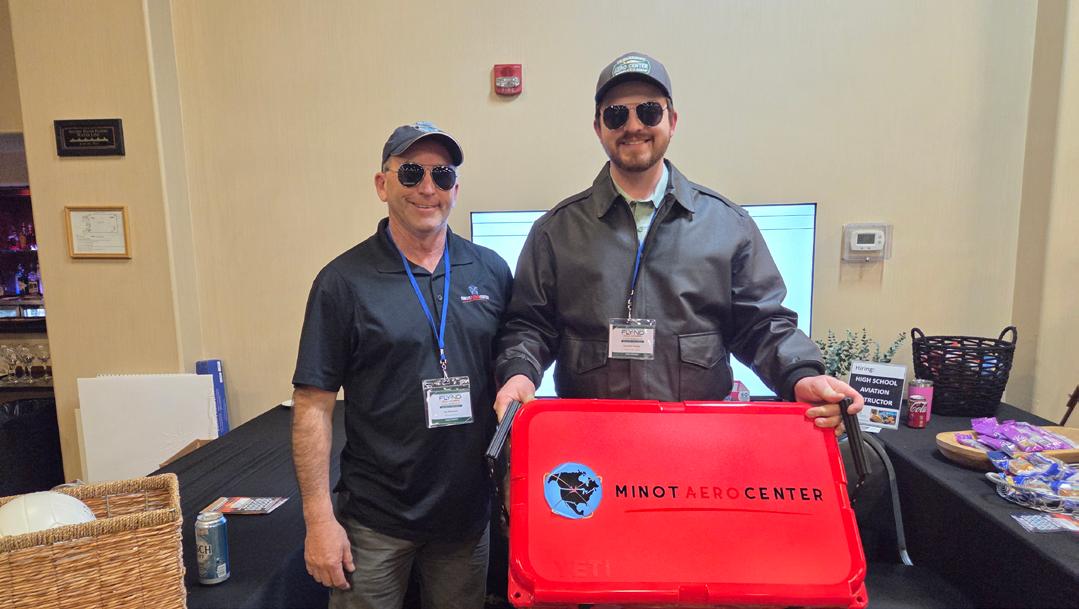
More exhibitor night prize winners.
Many
And even more exhibitor night prizes!
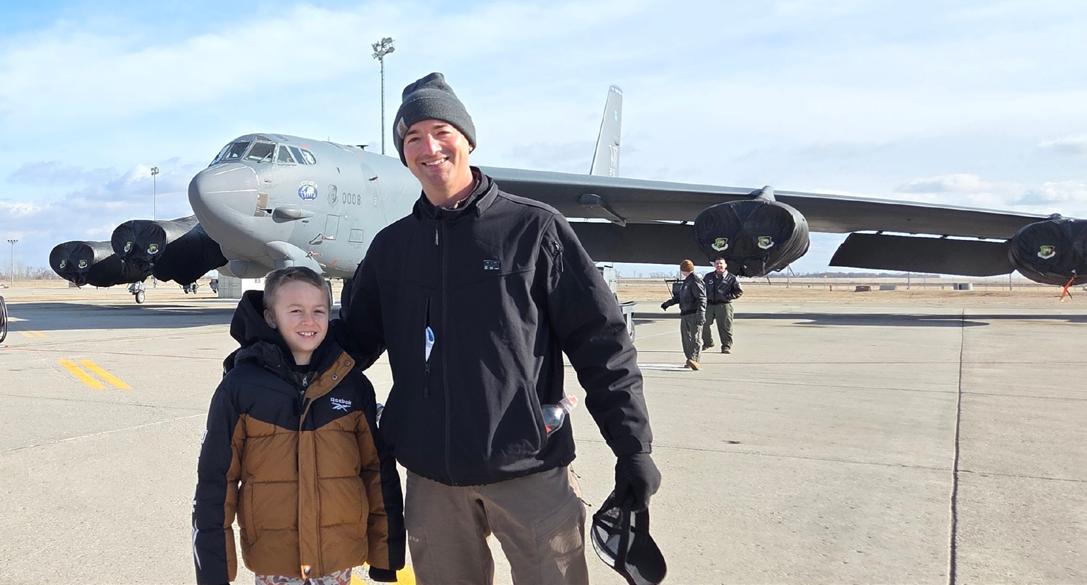
A conference highlight was tours of the Minot Air Force Base. Tours included the B-52s, flight simulator, and a weapons presentation.
Ice breaker night
Art and Damaris Mortvedt with their airplane at the ice breaker.
Top Gun themed exhibitor night
prizes were won at exhibitor night.
MARCH 8-10, 2026 |
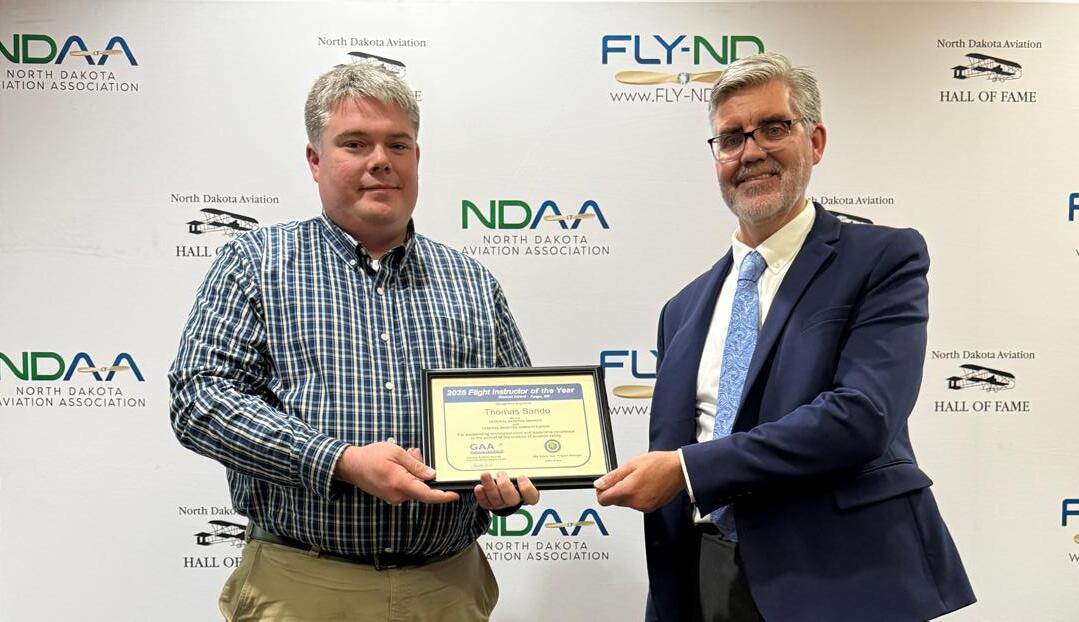
FAA District Certified Flight Instructor of the Year Award | Thomas Sando
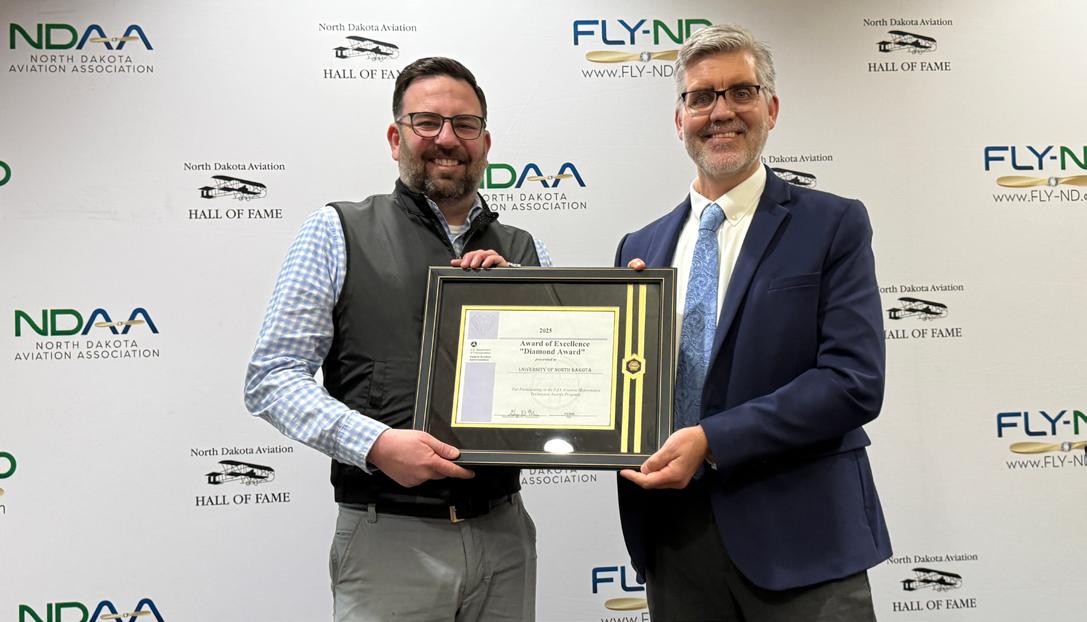
FAA Maintenance Diamond Awards | UND Aerospace
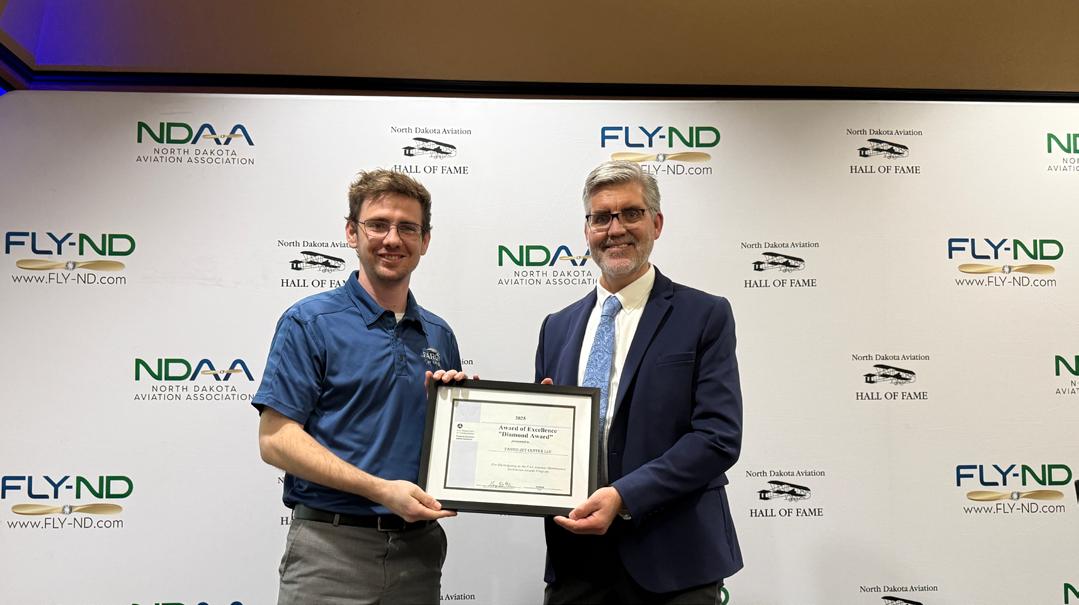
FAA Maintenance Diamond Awards | Fargo Jet Center
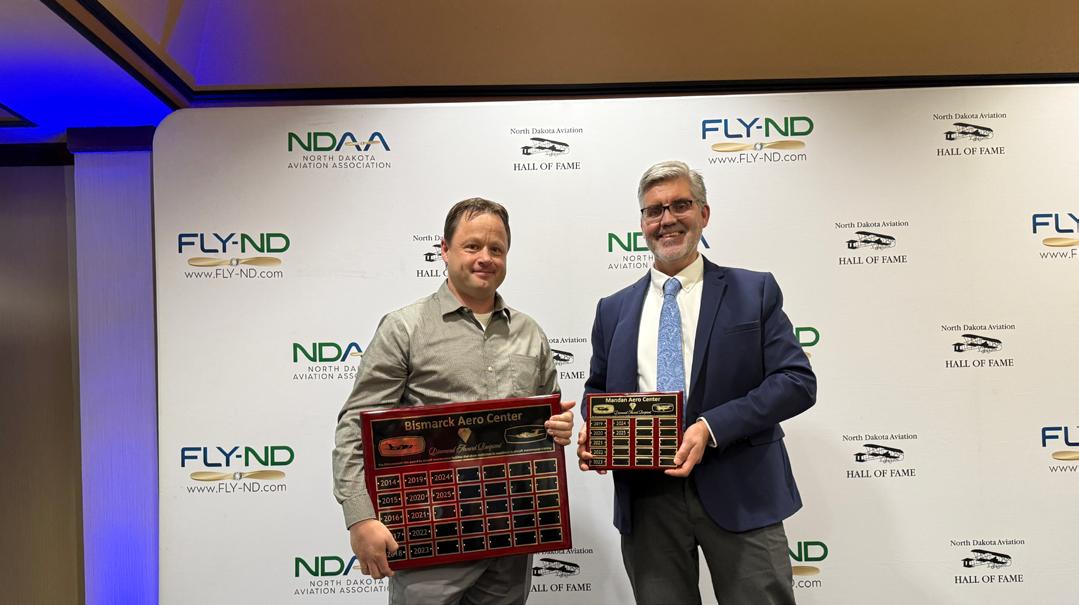
FAA Maintenance Diamond Awards | Bismarck Aero Center
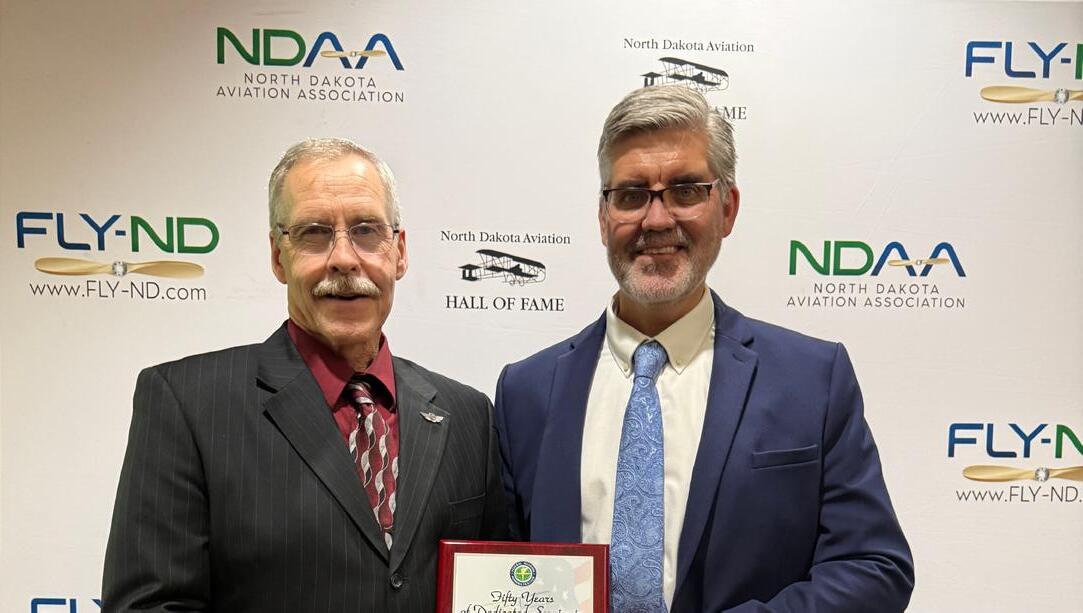
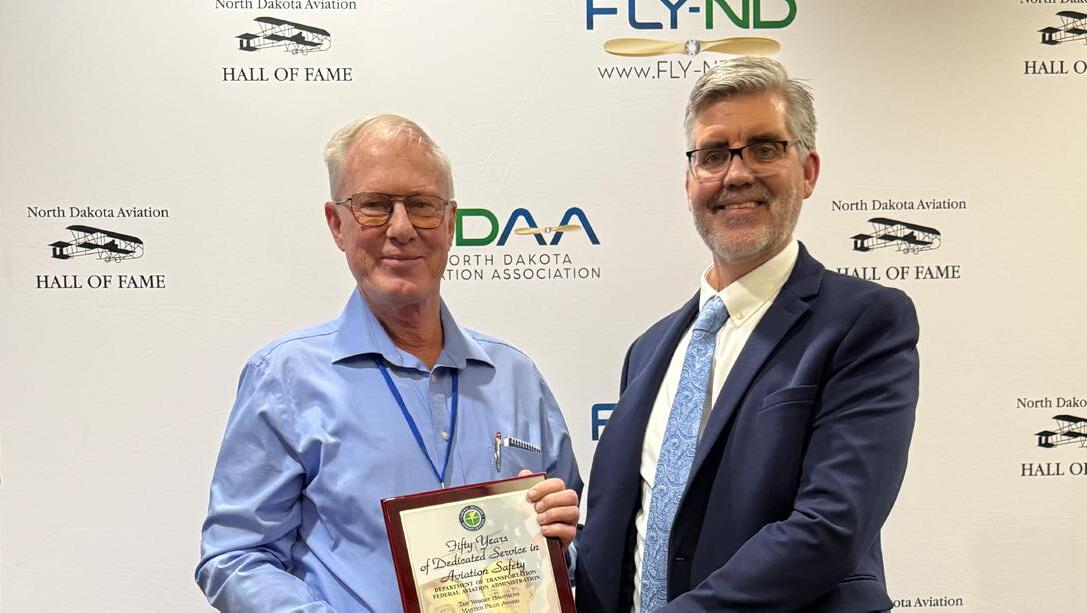
FAA Wright Brothers Master Pilot Awards | Gale Hansen
FAA Wright Brothers Master Pilot Awards | Howard Reeve
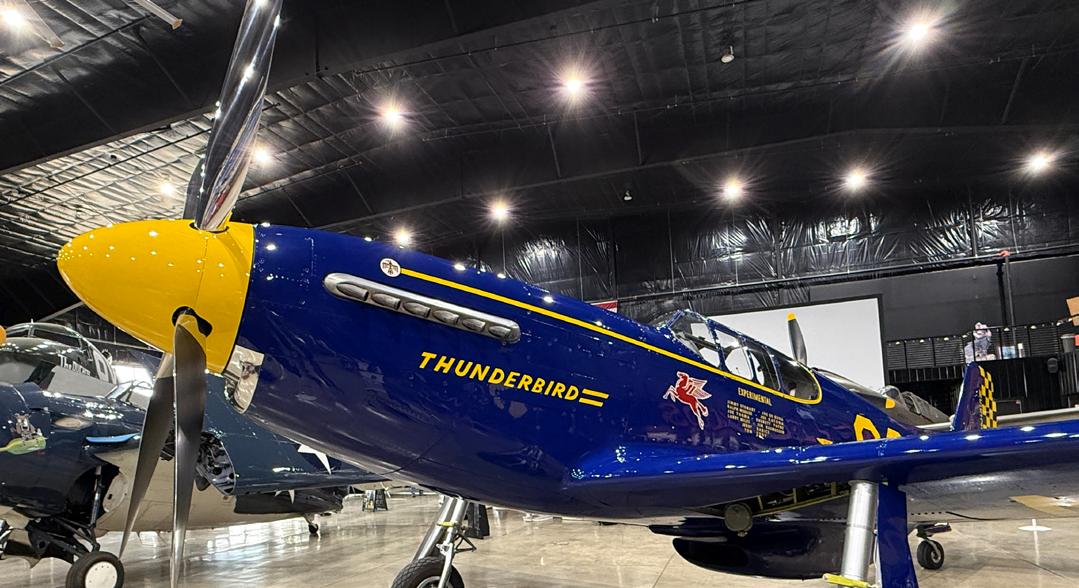
Warren Pietsch’s P-51C “Thunderbird”
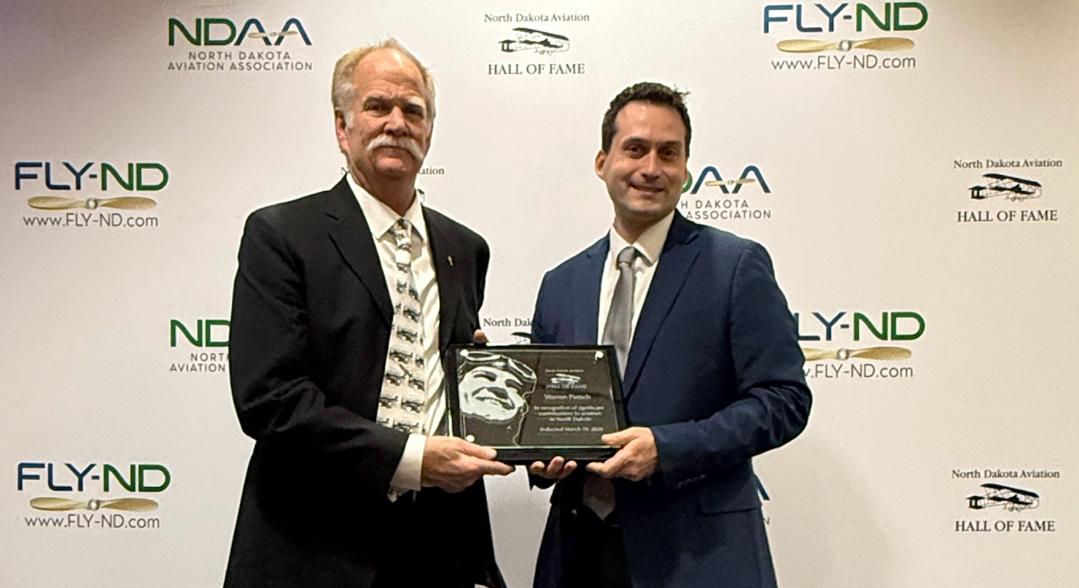
2026 North Dakota Aviation Hall of Fame Recipient | Warren Pietsch
Kyle Wanner, Director
North Dakota Aeronautics Commission
701-328-9650 | kcwanner@nd.gov
DIRECTOR ’S Chair
From Authorization to Execution
I recently joined state aviation leaders, federal officials, and congressional staff in Washington, D.C. to discuss the current status and future direction of national aviation policy. This year’s conversation marked a clear shift—from what needs to be authorized to how effectively recent legislation, particularly the FAA Reauthorization Act of 2024, is being executed. The current implementation window will be brief, with early discussions on the next reauthorization expected as soon as next summer - making the success of today’s efforts critical in shaping what comes next.
States are closely watching whether federal programs are being delivered on time, whether funding is reaching projects when needed, and whether these efforts are producing real results. The measure of success is not the law itself, but how well it works in practice.
Through these discussions, a more focused set of priorities has emerged—centered less on expanding programs and more on maintaining a stable, efficient, and future-ready aviation system. Some of the key focus areas in 2026 include:
Reinforcing the Airport Improvement Program (AIP)
Federal investment remains strong, but reliance on shortterm continuing resolutions—combined with the need to assemble projects across multiple funding programs—has made planning more difficult. Airports are increasingly managing long-term projects with limited funding certainty, creating inefficiencies and added risk. There is broad agreement that the Airport Improvement Program (AIP) should be restored as the primary federal funding mechanism. While supplemental programs such as the Infrastructure Investment & Jobs Act (IIJA) have delivered significant investment, they have also increased complexity and administrative burden. As these programs wind down in FY 2026, and with federal participation rates expected to decline starting in FY 2027, greater pressure will shift to state and local partners. A more stable, long-term funding framework will be essential.
Emerging Technology Solutions
Innovation in aviation is accelerating, particularly in uncrewed aircraft systems (UAS) and advanced air mobility (AAM). States are focused on enabling beyond visual line
of sight (BVLOS) operations, advancing the forthcoming Part 108 rule, and supporting network-based infrastructure systems like North Dakota’s VANTIS system that enable scalable, routine operations. At the same time, progress in aircraft certification remains critical to bringing new platforms into service. Clear federal direction will be key to ensuring these technologies integrate safely and efficiently into the national airspace.
Protecting and Modernizing Rural Air Service
Programs such as Essential Air Service (EAS) remain important to many communities and states are advocating for modernization and fleet mix solutions that better reflect today’s economic conditions, workforce patterns, and regional connectivity needs.
Addressing Aviation Workforce Constraints
Workforce shortages in key areas—including air traffic control, maintenance, and technical fields—are now a limiting factor in system growth. The focus has shifted to implementing workforce development initiatives authorized in recent legislation to help stabilize and support the industry.
Keeping the Aviation System Operational During Federal Disruptions
Recent federal funding disruptions have highlighted the need to maintain continuity in critical aviation functions. Ensuring that Transportation Security Administration, Customs and Border Protection, and air traffic control personnel remain supported during shutdown scenarios is essential to preserving system reliability and public confidence.
Modernizing the Air Traffic Control (ATC) System
There is growing urgency to modernize the nation’s air traffic control infrastructure to improve efficiency, increase capacity, and enhance reliability. Updating legacy systems will be key to accommodating future demand, integrating emerging technologies, and reducing systemic constraints across the national airspace.
Across these conversations, one point emerged consistently: the system is becoming increasingly difficult to navigate. Improving funding predictability and simplifying program requirements would help projects move forward more efficiently and improve overall results—while still maintaining strong accountability and oversight to ensure funds are used appropriately.
For North Dakota, these issues have very real implications. With a short construction season and a geographically dispersed airport system that supports business, healthcare, agriculture, and energy development - timing and reliability matters. Delays or added complexity can compress project schedules, increase costs, and make it more difficult for the aviation system to deliver timely improvements. At the same time, North Dakota is well positioned to play a role in emerging areas like UAS and advanced air mobility— but doing so will depend on a federal framework that is responsive and keeps pace with innovation.
As these priorities continue to evolve—and as early conversations begin shaping the next reauthorization—the key will be ensuring that today’s implementation efforts inform tomorrow’s policy decisions. Getting this phase right will determine whether the aviation system remains strong, reliable, and capable of meeting future demand—both in North Dakota and across the country.
SOLUTIONS
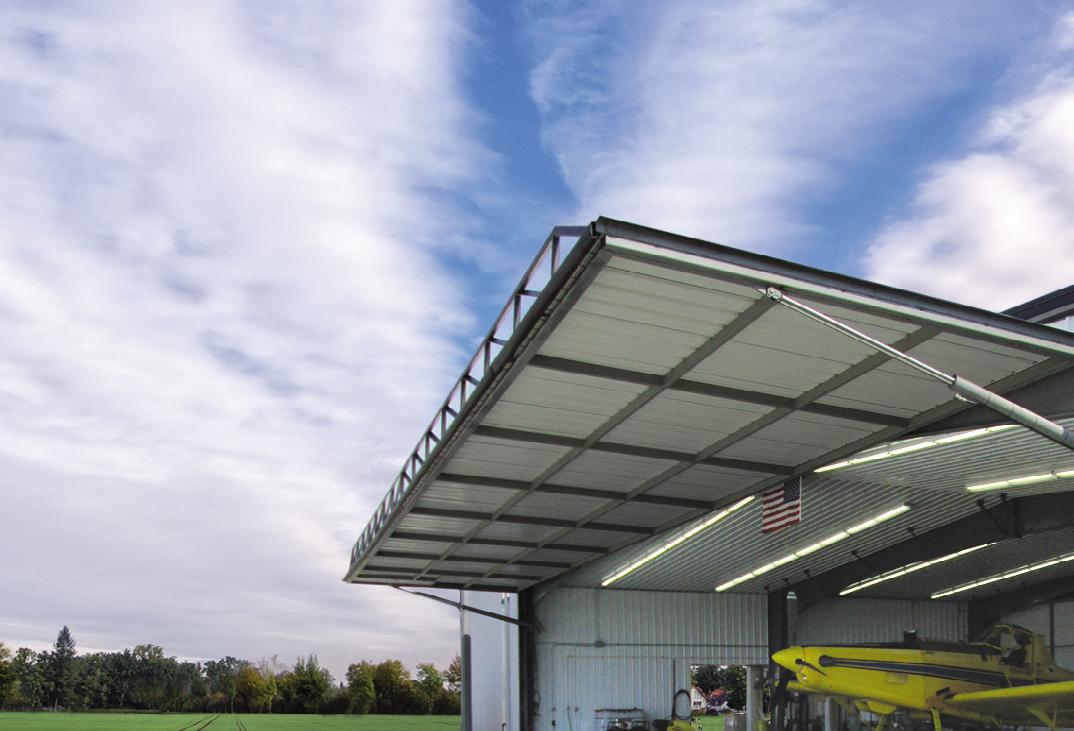
From concept and quality design to full-service installation and follow-up support, we’ll partner with you for the best bi-fold and hydraulic doors to meet your needs. We offer customized solutions for new and existing buildings and unmatched customer service, so you’ll find the door is always open.
2025 Airport of the Year Awards
The Minot International Airport has been named North Dakota’s 2025 Commercial Service Airport of the Year, while the New Town Municipal Airport has been recognized as the 2025 General Aviation Airport of the Year. These awards were presented during the North Dakota Aviation Association’s Fly-ND Conference awards banquet, held in Minot on March 10th, 2026.
Sponsored annually by the North Dakota Aeronautics Commission in partnership with the Airport Association of North Dakota, these awards recognize airports that demonstrate excellence in community outreach, facility management, infrastructure improvements, and the hosting of special events.
Both the Minot International Airport and the New Town Municipal Airport have exemplified outstanding commitment to aviation, economic development, and service to their communities, making them deserving recipients of this year’s honors.
2025 Commercial Service Airport Award
Minot International Airport has been recognized for its exceptional commitment to community engagement, operational safety, and infrastructure improvements that strengthen aviation service across western North Dakota. Throughout 2025, the airport remained engaged with its community, hosting educational tours for local students and welcoming service organizations and civic groups into the aviation environment. The airport also supported several meaningful community initiatives, including a potluck and food drive to assist federal employees during the government shutdown. Memorable events throughout the year included multiple Make-A-Wish adventure send-offs and the airport’s first North Dakota Honor Flight.
Safety continues to be a defining priority for Minot International Airport. In 2025, the airport conducted its triennial full-scale disaster response exercise in coordination with local law enforcement, fire departments, EMS providers, and regional hospitals. More than 100 volunteers participated as simulated victims, allowing emergency responders and medical personnel to test coordination and response procedures during a large-scale aviation emergency. Additional safety initiatives included fuel-spill response training, winter operations exercises, and continued investment in employee training and development.
Minot International also advanced key infrastructure improvements that enhance both safety and passenger experience. The airport completed a multi-year project to mitigate wetlands and improve drainage across the airfield, reducing wildlife hazards and strengthening operational
safety. Inside the terminal, a new public address system replaced aging equipment, restoring clear building-wide communication and ensuring reliable messaging for operational updates and emergency notifications.
This recognition highlights Minot International Airport’s continued dedication to serving the region through strong community partnerships, a culture of safety, and strategic investments that support the future of aviation in North Dakota.
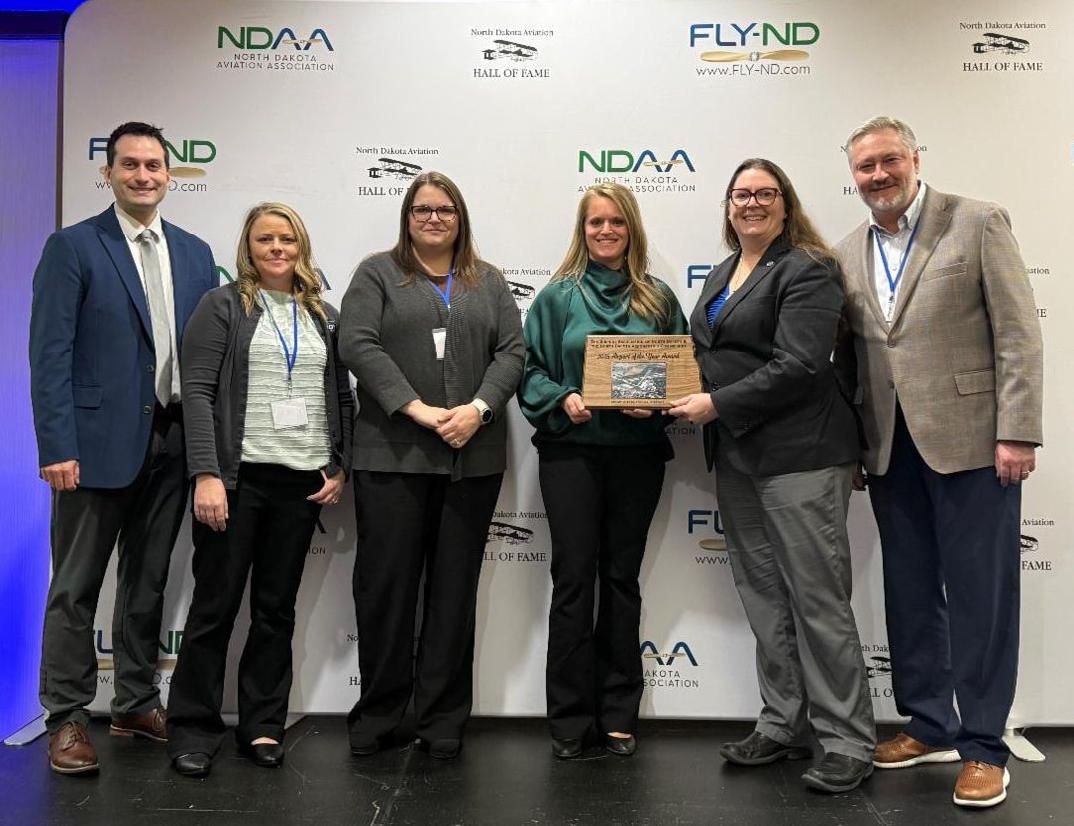
The Minot International Airport receives the 2025 Commercial Service Airport of the Year award during the North Dakota Aviation Association’s FLY-ND Conference awards banquet on March 10th, 2025. Pictured from left to right is Kyle Wanner (Director of the North Dakota Aeronautics Commission, Judy Norby (Minot Airport Safety & Security Specialist), Jessica Long (Minot Airport Business and Development Manager, Maria Romanick (Airport Operations and Maintenance Manager), Jennifer Eckman (Minot Airport Director), and Ryan Riesinger (President of the North Dakota Airport Association)
2025 General Aviation Airport Award
The New Town Municipal Airport has been recognized for its leadership in strengthening aviation infrastructure, expanding emergency access, and fostering a strong connection between the airport and the surrounding community.
In 2025, the airport completed a 300-foot runway extension, bringing the total runway length to 3,740 feet. This improvement expands the range of aircraft able to safely operate at the airport, including critical air medical aircraft such as the Beechcraft King Air 200 and the Pilatus PC-12. With these capabilities, New Town Municipal Airport now provides an enhanced level of emergency access for the region, enabling faster patient transport and improved connectivity to medical facilities when time is most critical.
The project also reflects strong local leadership and investment. More than 90 percent of the project funding was secured through local sources, including $300,000 contributed by the airport and the City of New Town, along with a $1.25 million grant from the Mountrail County Job Development Authority. This collaborative effort demonstrates the community’s commitment to maintaining a safe and capable aviation facility that serves both residents and regional transportation needs.
New Town Municipal Airport also maintains a vibrant relationship with the community it serves. Each year the airport hosts a fly-in and pancake breakfast that attracts hundreds of visitors and aviation enthusiasts. The event features aircraft fly-bys from historic warbirds associated with the Dakota Territory Air Museum and offers members of the public an opportunity to experience aviation firsthand. Local pilots also volunteer their time to provide complimentary discovery flights for individuals interested in learning to fly.
These outreach efforts have helped cultivate a growing aviation culture within the community. In recent years, the airport has welcomed new pilots, increased aircraft activity, and expanded local interest in aviation—demonstrating how a community-focused airport can serve as both a transportation asset and a gateway to the next generation of aviators.
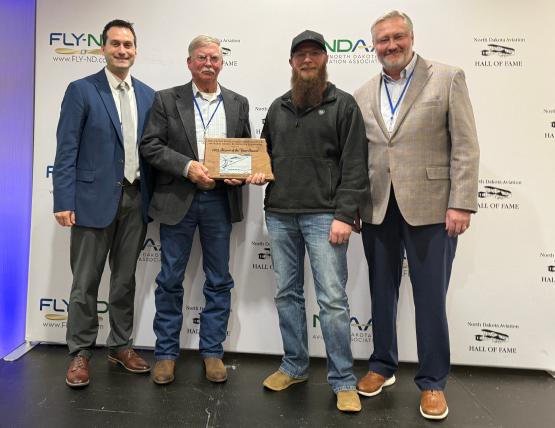
The New Town Municipal Airport receives the 2025 General Aviation Airport of the Year award during the North Dakota Aviation Association’s FLY-ND Conference awards banquet on March 10th, 2025. Pictured from left to right is Kyle Wanner (Director of the North Dakota Aeronautics Commission), Mylo Wolding (Past Airport Manager and Board Chair), Garret Stubstad (New Town Airport Manager and Board Chair), and Ryan Riesinger (President of the North Dakota Airport Association)
How to Find Flight Training Funding
As the temperatures warm up, we tend to see more General Aviation (GA) activity, and along with that comes more flight training. Many students are looking for ways to help fund their flight training. I am proud to say that the North Dakota Aviation Association (NDAA) has now awarded more than $100,000 since their scholarship program and Fly-ND Career Expo began just a few years ago. While this program has helped many students on their journey, there are many more places to look to help fund flight training. If you were at the Fly-ND Conference in March, you likely heard from Jamail Larkins, who has created www. aviationstart.org to help students get connected with scholarship opportunities. His database is filled with aviation scholarships for just about anyone. This database is searchable and can help a student find scholarship opportunities from all over the US. In addition to this
•
•
•
•
•
site, www.futureofaviation.aero has another searchable database. Though many opportunities may be listed on both, it is a good idea to look through both databases to maximize your chances of finding a good fit.
Another great opportunity is the Aircraft Owners and Pilots Association (AOPA) scholarships. In addition to numerous smaller awards, the AOPA is awarding 90 scholarships of $12,000 each on an annual basis. While these scholarships are competitive, they are a great opportunity for students.
There are many other sources of scholarships. I highly encourage students to look at funding opportunities that may not be specific to aviation. Putting together a good application will take some time. Don’t forget to keep track of deadlines and feel free to contact me if you would like any additional information. Happy flying!
2026 SCHOLARSHIP AWARD PHOTOS
FLIGHT DEPARTMENT
• 7 Aircraft Rentals
• Flight Instruction
• Multi-Engine Instruction/Rental
• Tailwheel Instruction/Rental
• Pilot Services
TESTING
CENTER
• FAA Regulated Testing
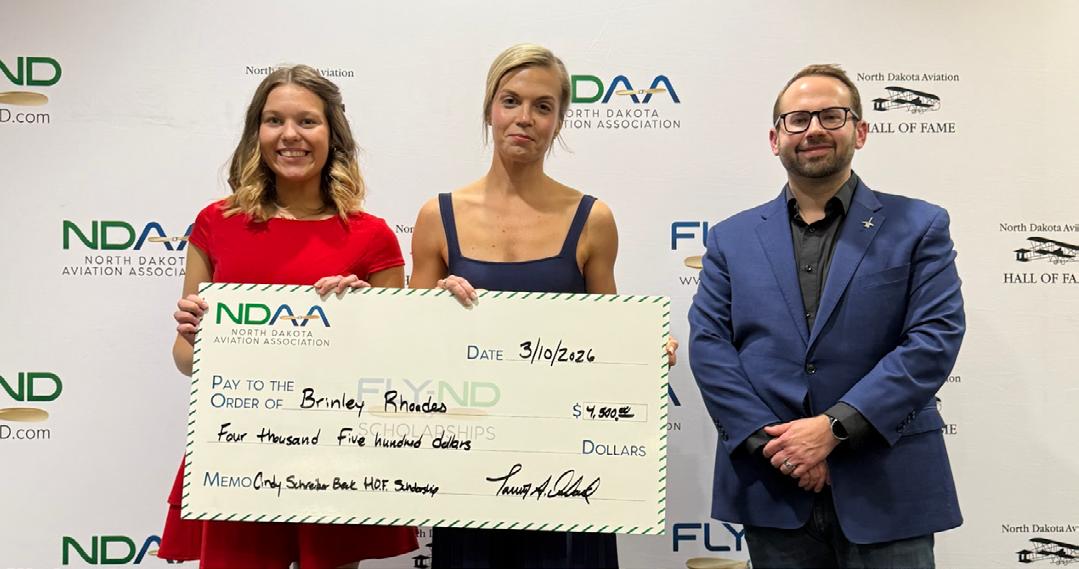
Cindy Schreiber-Beck ND Aviation Hall of Fame Scholarship Brinley Rhoades | Williston, ND | Presented by Whitney Barner
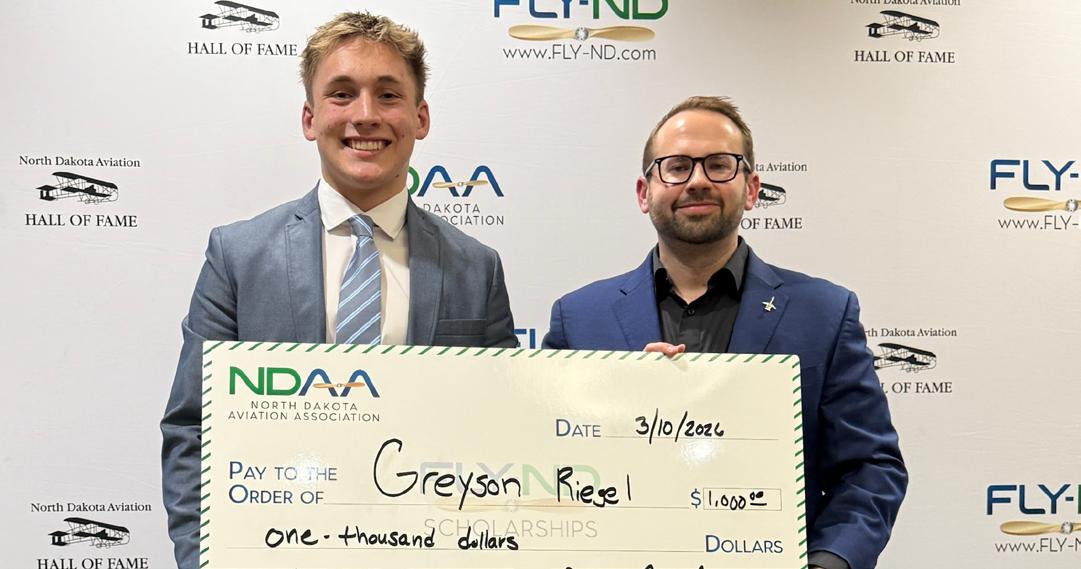
Jim Lawler Memorial Scholarship | Greyson Riegel | Bismarck, ND Presented by Tanner Overland
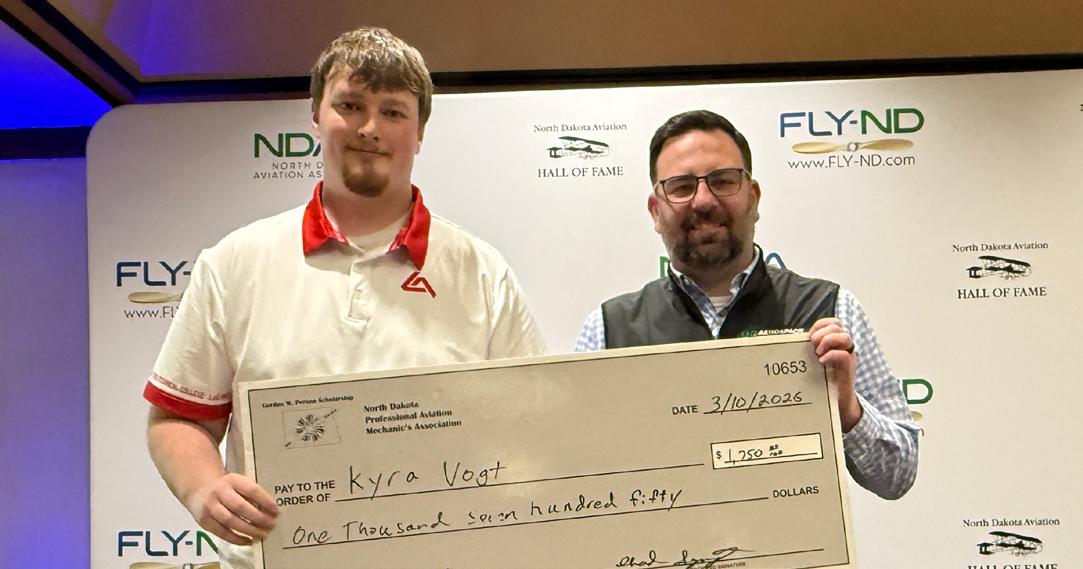
ND Professional Aircraft Mechanics Association Scholarship Kyra Vogt | Chokio, MN | Presented by Chad Symington
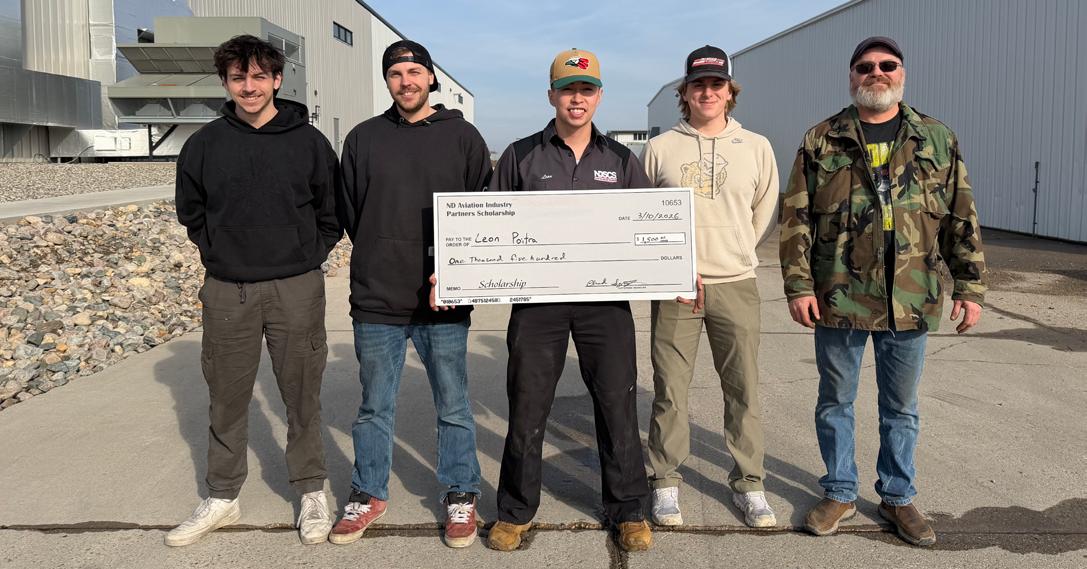
ND Professional Aircraft Mechanics Association Scholarship Leon Poitra III | Fargo, ND | Presented by Mitch Lutze-Morris
Paperwork Matters
By Mitch Lutze-Morris | Chief Inspector | Fargo Jet Center
In aviation, finishing the paperwork is as critical as the actual work. An aircraft may appear flight-ready, but its airworthiness is ultimately proven by a proper log entry.
To the untrained eye, logbooks might seem like routine administrative clutter. However, they represent the legal status of an aircraft, documenting its condition, compliance, and safety history. Whether you’re an owner, pilot, maintenance manager, or aspiring mechanic, understanding what makes a proper log entry isn’t just helpful... It is essential.
Per 14 CFR 43.9, every maintenance must include a description of work, the date of completion, identification of the aircraft, and signature/credential of who is responsible for the work performed.
Per 14 CFR 43.11, the above items are required as well as aircraft total time in service, and a return-to-service statement.
More Than Just Paperwork
Aircraft maintenance records serve three critical roles: they ensure legal compliance, denote airworthiness, and preserve a detailed history of the aircraft’s condition. When entries are incomplete or incorrect, the consequences can be serious, such as grounded aircraft, failed inspections, or even legal liability.
Precision Starts with the Details
A quality log entry begins with a clear, specific description of the work performed. Entries should detail exactly what was removed, installed, inspected, or tested, along with references to the appropriate maintenance manuals or procedures. This level of clarity not only ensures compliance but also helps future technicians understand exactly what was done.
Equally important is the date of completion, which establishes when the aircraft was returned to service. This single detail drives inspection schedules, warranty timelines, and audit readiness.
Then there’s aircraft total time. Without it, tracking component life limits or scheduling future maintenance becomes a matter of guesswork. In aviation, guesswork is never acceptable.
Following the Parts Trail
Whenever components are replaced, traceability is key. A proper entry should include part numbers, serial numbers (if applicable), quantity, and condition (whether new, overhauled, or serviceable). For major components, supporting documents, such as 8130-3s, should be readily available. The 8130-3 will show the status of the part and the facility that either manufactured or serviced the component.
The Moment That Matters Most
One of the most overlooked (but vital) elements of any log entry is the return-to-service statement. Without it, the aircraft is not legally clear to fly.
This statement confirms that inspections were completed according to current regulations and that the aircraft is safe for operation. For annual inspections, the wording becomes even more specific, confirming that the aircraft is in airworthy condition.
No statement? No flight.
When Work Is Major
Major repairs or alterations introduce another layer of scrutiny. These require additional documentation, such as FAA Form 337, and the use of approved data rather than acceptable data, ensuring the modification meets regulatory standards. A copy of the completed FAA Form 337 will be sent out to the FAA Aircraft Registration Branch in Oklahoma City, Oklahoma, so it can be kept on file for the aircraft’s history. This will be accomplished by the mechanic who completed the form.
Spotting Trouble Before It Takes Off
Not all log entries are created equally and some carry warning signs. Watch for vague language, missing aircraft time, absent certification statements, or incomplete signatures. Inconsistent handwriting or unexplained gaps between entries can also indicate potential issues.
These red flags don’t just signal sloppy documentation, they can point to deeper problems in maintenance quality or regulatory compliance.
What Owners Need to Know
Aircraft owners or operators bear ultimate responsibility for airworthiness, regardless of who performs the maintenance. That means taking a few minutes to review log entries before flight isn’t optional, it’s smart risk management. If something doesn’t make sense, ask. A quick conversation on the ground is far better than a problem in the air.
The Bottom Line
Maintenance log entries are far more than paperwork, they are an integral part of the aviation safety system. A complete entry should clearly answer five fundamental questions: What was done? When was it done? At what aircraft time? By whom? And was the aircraft returned to service?
If any of those answers are missing, the job isn’t finished. In aviation, precision isn’t optional. It’s everything. And that precision doesn’t stop with the wrench, it carries through to every line written in the logbook.
Adam Dillin, Airport Planner
North Dakota Aeronautics Commission
701-328-9655 | gerwin@nd.gov
The Importance of Wildlife Strike Reporting
Warm weather has finally returned to North Dakota, but as always, it is accompanied by millions of birds migrating back from their southerly winter habitats. The birds’ ancient natural migration corridors cross through routine aircraft flight routes across the state, and many bird species find airfields to be convenient stopover spots to forage for food and rest. Joining the party are gophers, skunks, and other burrowing species roused from their winter slumber, as well as the ever-present herds of deer and antelope that wander the northern plains.
With the seasonal surge in wildlife activity comes an inevitable increased risk of wildlife-aircraft strikes. More than 250,000 strikes have been documented nationwide at over 2,000 airports since tracking began in 1990. Of the animals struck, 97% are bird species.
Aircraft are most likely to strike aircraft in their final phases of flight with 61% of strikes taking place during approach to the airport or landing roll, and a further 36% of strikes occur during takeoff and climb-out.
So, what exactly is a strike? The highest-profile example is the dramatic 2009 water landing made by US Airways Flight 1549 after colliding with a flock of geese over New York City. However, there are other circumstances that are officially considered strikes: 1) if someone has witnessed the impact of an animal with an aircraft even if no damage occurred, 2) a pilot or mechanic finds damage or evidence (ex: feathers, blood, etc.) on an aircraft, 3) wildlife remains are found within 250 feet of a runway centerline of 1,000 feet off the runway ends or otherwise in locations where it’s reasonable to assume a strike occurred, or 4) wildlife caused a significant effect on aircraft (ex: a go-around or aborted takeoff).
There has long been a feeling of stigma in the aviation industry surrounding strike reporting, and even today some pilots and airports are hesitant to speak up due to concerns of public backlash, investigations, or other negative consequences. The Federal Aviation Administration (FAA) has noted significant disparities in reporting rates among airports, with smaller commercial airports reporting strikes at rates about one-quarter that of larger commercial airports, and General Aviation (GA) airports are even less likely to report. It’s important to understand that wildlife strikes are very common and most airports and pilots will experience
them at some point. Strike reporting itself is highly beneficial to the entire industry as it helps manufacturers to build more resilient aircraft components, airports to identify hazardous wildlife attractants and develop effective mitigation strategies, and biologists to understand the movements of animal populations across the county.
Wildlife strike reports can be submitted online at https:// wildlife.faa.gov. Important information to provide in each report is what aircraft was involved, the date and time of the strike, the species struck, where it occurred, and if there was any damage to the aircraft. There will be times when you won’t have some of this information, such as unexpectedly finding blood on the aircraft during a post-flight walkaround when no wildlife was observed. That’s okay, since even partial information is better than nothing and the database’s staff can connect reports from multiple individuals, such as the airport operator and an aircraft mechanic, to fill in missing details. Please try to identify the animal species as accurately as possible. If you need help, there are numerous guidebooks and free bird identification phone apps on the market, and airports often mail feather and blood samples to the Bird Identification Lab at the Smithsonian Institution. It’s also a good idea to take photos of the animal, aircraft damage, etc. in case there is any confusion or questions.
For further information, please visit the FAA’s Wildlife Hazard Mitigation webpage at https://faa.gov/airports/ airport_safety/wildlife and read FAA Advisory Circular 150/5200-32C Reporting Wildlife Aircraft Strikes. Stay safe out there!
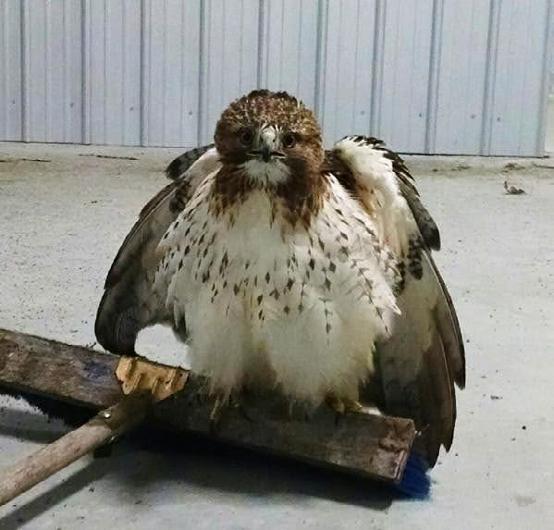
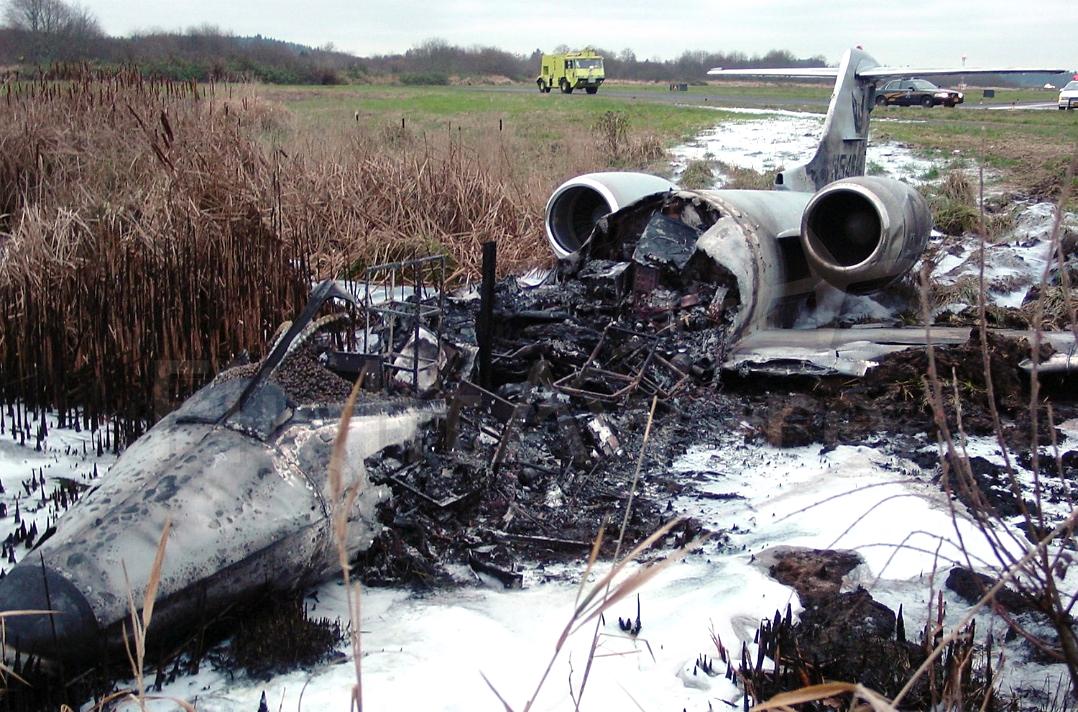
Left: Red-Tailed Hawk Injured by Strike (Author Photo) Above: Learjet 36A Destroyed During Collision with Elk at Astoria Regional Airport, 2002 (NTSB Photo)
Pilots Complete “Fly North Dakota Airports” Passport Program
Multiple pilots were recently presented with awards for participating in the “Fly North Dakota Airports” Passport Program. This program began in North Dakota in 2011 and it rewards pilots who fly to North Dakota’s publicly owned airports, attend FAA safety seminars, and visit North Dakota’s aviation museums. This program promotes safety, continuing education, and encourages pilots to practice approaches and landings in many different environments. This program also offers an opportunity to promote and support North Dakota’s airports and their community businesses and tourism opportunities.
There currently are three award levels within the North Dakota passport program and the highest and most prestigious award level of gold is achieved by flying to all 89 North Dakota public airports, visiting the Fargo and Minot Air Museums, and attending three FAA safety Seminars.
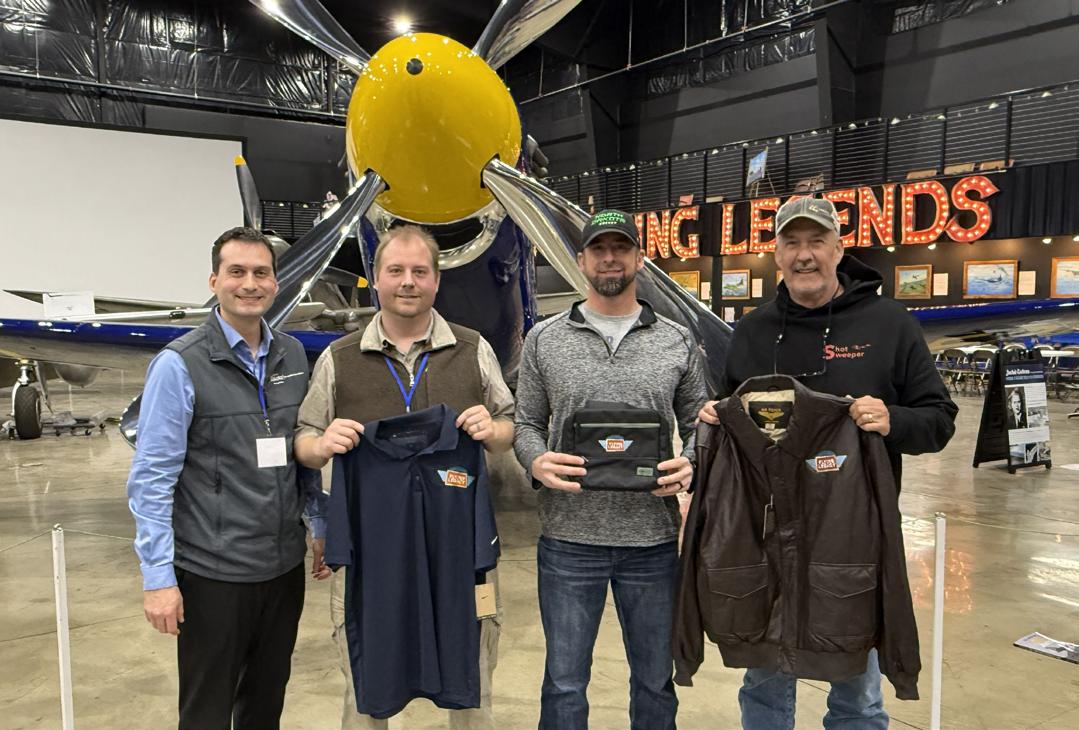
The gold award was achieved by six pilots during the past year and these individuals received a leather flight jacket embroidered with the North Dakota Flying Legacy logo. These pilots join the 114 others who have completed the passport program in previous years, making a grand total of 120 pilots who have achieved the gold award since the program’s inception.
The following is a list of the individuals achieving the gold level in 2026:
• Terry Liddick - Spearfish, SD
• Shane McKenzie – Minot, ND
• Trevor Reiter - Minot, ND
• Max Kahlhamer– Grand Forks, ND
• Neil Kadrmas – Washburn ND
• James Lindquist – Hettinger, ND
The awards presentation occurred on March 8, 2026, at the Dakota Territory Air Museum in Minot, ND, in conjunction with the North Dakota Aviation Association’s Fly-ND Conference.
Presenting the awards were Kyle Wanner, Executive
Director and Mike McHugh, Aviation Education Coordinator of the North Dakota Aeronautics Commission.
The program is sponsored by the North Dakota Department of Commerce’s Tourism Division in partnership with the North Dakota Aeronautics Commission, the Airport Association of North Dakota, and the North Dakota Aviation Association.
(Left to Right) Kyle Wanner – Director of the ND Aeronautics Commission, James Lindquist - Hettinger, Neil Kadrmas - Washburn, Terry Liddick - Spearfish
Reprinted with permission from the North Dakota Air National
119th Wing lands in Bismarck
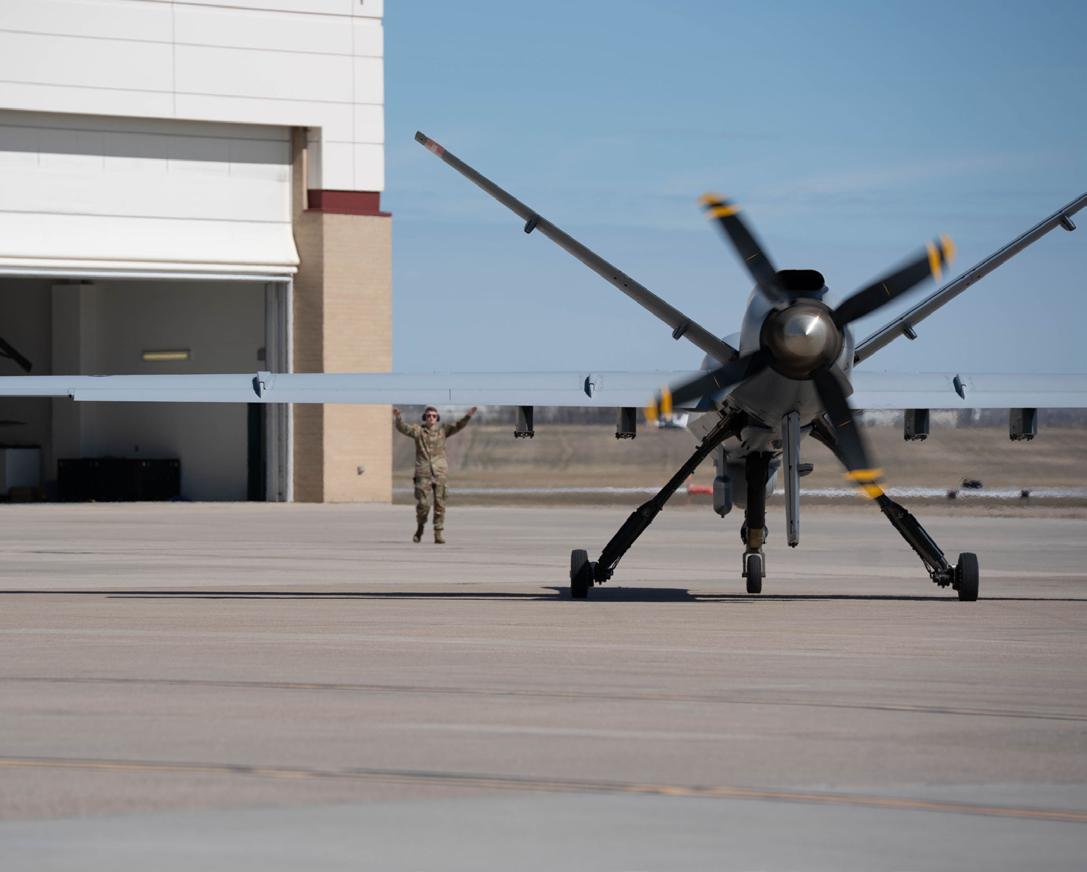
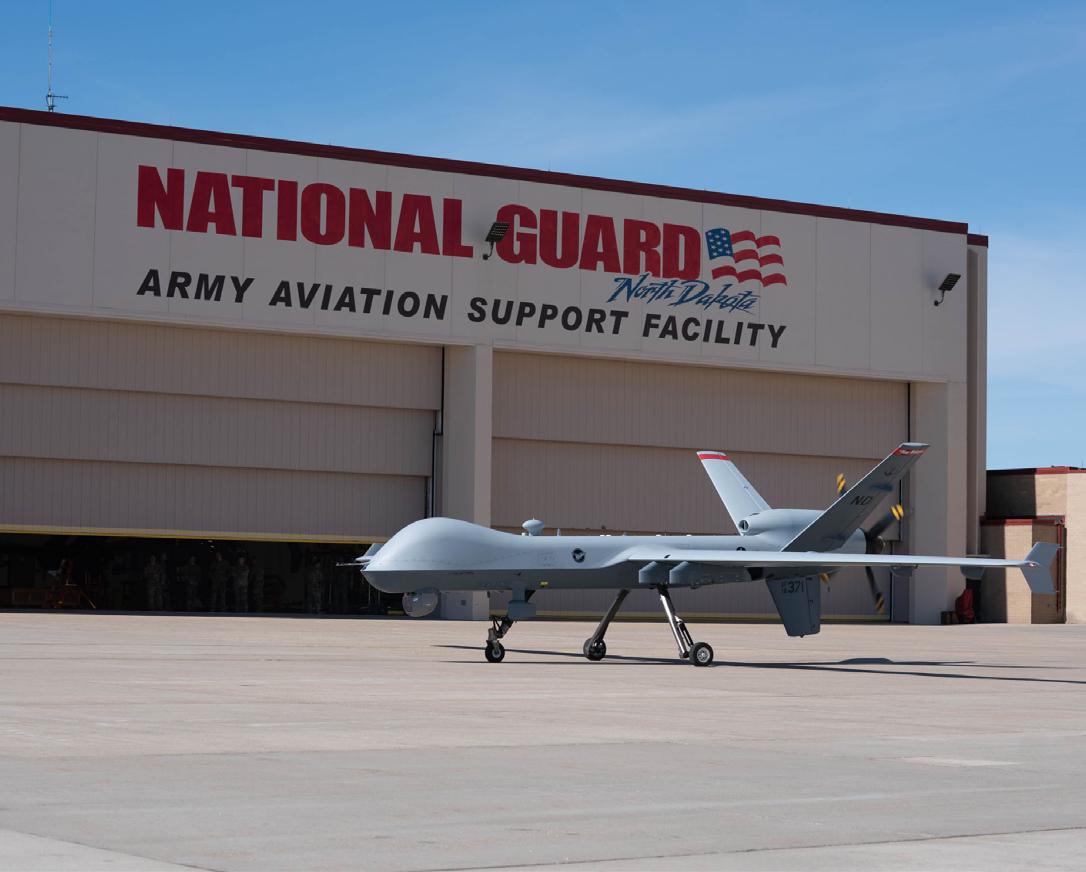
The 119th Wing North Dakota Air National Guard touched down in Bismarck on April 15 with a MQ-9 Reaper at the Army Aviation Support Facility as part of their training! This is the first time they have landed an MQ-9 at the facility.
Photo by Maj. Vanessa Lennick, Visual Information Manager
Guard
Only in North Dakota: Flying unmanned aircraft statewide
First-in-the-nation FAA partnership enables statewide drone flights, strengthening UND and North Dakota’s aviation leadership
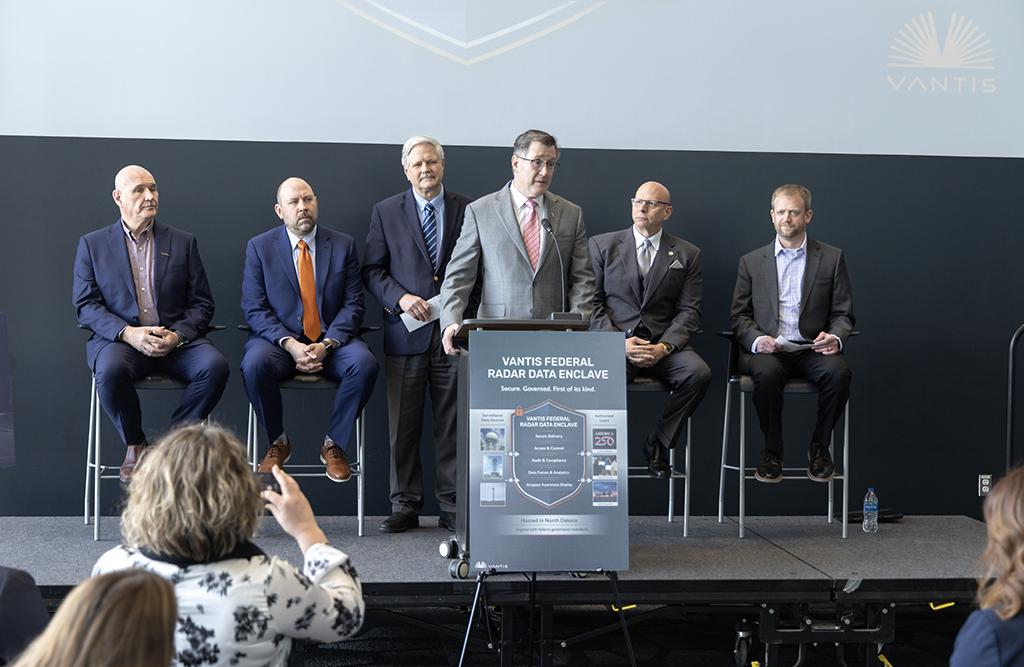
leaders look on at a press conference announcing that FAA radar data is being made available to the Northern Plains UAS Test Site.
by Adam Kurtz/UND Today.
state in the country can do that. It’s a massive competitive advantage.”
From concept to implementation
The milestone builds on authority secured in the FAA Reauthorization Act of 2024, legislation Hoeven championed directing the FAA to provide a radar data feed to a qualified non-federal entity. North Dakota’s Northern Plains UAS Test Site, working through its Vantis statewide network, was selected to receive and operationalize that feed.
While the legislative authorization was announced two years ago at the UAS Summit in Grand Forks, leaders emphasized that transforming authority into an operational system required extensive technical development.
“Three … two … one.”
With the press of a button inside UND’s Robin Hall, an important Federal Aviation Administration radar data feed went live — marking a historic milestone that leaders say cements North Dakota as home to the most advanced uncrewed aircraft systems (UAS) ecosystem in the nation.
Applause filled the room as U.S. Sen. John Hoeven, UND President Andrew Armacost, FAA Air Traffic Organization Chief Operating Officer Frank McIntosh and industry partners formally activated the secure system, enabling beyond visual line of sight (BVLOS) drone operations across the entire state.
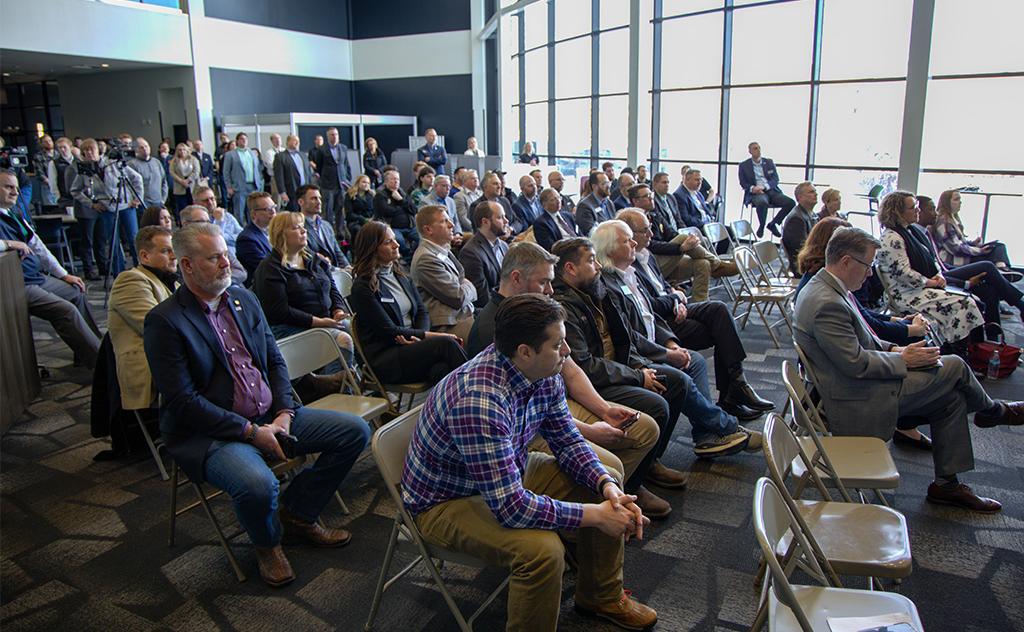
And they did so with the push of a button from a tablet computer in front of more than 150 people gathered for the event in Robin Hall on Feb 27.
The activation gives North Dakota access to the same real-time radar data used by federal air traffic controllers — a capability, now called the Vantis Federal Radar Enclave, that no other state currently has.
“What it means is we can now fly unmanned aircraft statewide across North Dakota,” Hoeven said. “No other
The result is the Federal Radar Data Enclave — a secure physical and virtual environment that ingests federal and state radar data, fuses it with additional sensor inputs and distributes it to authorized users through the operations center at Grand Sky.
Trevor Woods, executive director of the Northern Plains UAS Test Site, described the enclave as a first-of-its-kind architecture that enhances both innovation and safety.
“This is a governed environment for surveillance radars that enhances the safety and operations of the National Airspace System,” Woods said. “North Dakota is demonstrating how to do this right, and others are looking here as the blueprint.
“We’re demonstrating how to do this, correctly, and everyone’s looking to North Dakota on how to expand this in the future.”
The system allows drone operators to conduct BVLOS flights without requiring chase aircraft — dramatically expanding operational flexibility. Previously, BVLOS operations were limited to specific corridors. Now, nearly the entire state is open to qualifying unmanned operations, aside from small topographical gaps below 3,000 feet.
With access to integrated radar data, authorized users can better identify and manage unauthorized drone activity —
UND President Andy Armacost (center) speaks, as U.S. Sen. John Hoeven (third from left) and other UAS
Photo
capabilities increasingly critical for military bases, and border security.
State, Federal and Industry working together
Technology partner Thales, a global technology leader, played a key role in developing the secure infrastructure underpinning the radar enclave. Director of Technology at Thales Frank Matus said building the system required meeting the highest levels of cybersecurity and physical security standards.
“This program here in North Dakota is really transformational, not only for talent, but also the industry,” he said.
State lawmakers and Gov. Kelly Armstrong’s administration were also recognized for sustained investment in building the UAS ecosystem — an effort that combines federal authorization, state infrastructure funding and private-sector participation.
“This has been decades in the making,” Armacost said. “Today represents the culmination or the start of an activity
By Adam Kurtz
that was announced about a year and a half ago at the UAS symposium here in Grand Forks.”
With the radar feed live, North Dakota’s statewide BVLOS capability positions UND, Grand Sky and the Northern Plains UAS Test Site not only at the forefront of next-generation aviation — but as the model for how it can be done safely, securely and at scale.
The audience listens to speeches about live FAA radar data at UND, on Feb 27. Photo by Adam Kurtz/UND Today.
North Dakota Sets New All-Time Airline Passenger Record in 2025
The North Dakota Aeronautics Commission (NDAC) has released its 2025 annual report, confirming that calendar year 2025 was the strongest year for commercial air travel in state history.
North Dakota’s eight commercial service airports recorded 1,322,791 airline passenger boardings, surpassing the previous record set in 2024 and marking the first time the state has exceeded 1.3 million departing passengers in a single year. This represents an increase of 76,271 passenger boardings and a 6 percent yearover-year growth rate, continuing a multi-year trend of sustained momentum.
When combined with arriving passengers, more than 2.6 million total airline passengers traveled through North Dakota’s commercial airports in 2025.
“Reaching more than 1.3 million annual passenger boardings for the first time confirms that North Dakota’s
air service system is performing at an exceptionally high level,” said Kyle Wanner, Executive Director of the North Dakota Aeronautics Commission. “Our airports are delivering strong demand, outstanding reliability, and disciplined capacity growth that positions North Dakota well for continued growth.”
Throughout 2025, North Dakota’s airports also maintained an average aircraft load factor of approximately 80 percent in 2025, demonstrating strong passenger demand and efficient use of airline capacity. These performance trends signal strong potential for additional routes, frequencies, and aircraft upgrades across North Dakota’s commercial service airports.
Despite challenging winter weather conditions, North Dakota’s airports also outperformed national reliability averages, reinforcing the state’s reputation as a dependable and operationally resilient air service market.
Whether you're looking to charter a flight, pursue your pilot's license, or rent an aircraft for your next adventure, Western Edge Aviation is your trusted FBO in the air and on the ramp.
Aircraft Maintenance, Detailing & Inspections
2025 Key Statistics
• Record Passenger Traffic: North Dakota airports recorded 1,322,791 departing passengers in 2025 — the highest total ever. When including both departing and arriving travelers, more than 2.6 million total passengers used North Dakota’s commercial airports.
• Airline Commitment: Total available airline departure seats increased by 118,848 seats in 2025 to 1,644,649, an 8 percent increase from 2024 — a key indicator of airline confidence and future growth potential.
• Flight Frequency Growth: A total of 20,698 airline departures were successfully operated, representing a 12 percent increase over the prior year.
• System Reliability: Only 186 flights were canceled statewide, producing a cancellation rate of less than one percent — well below national averages that typically range from one to two percent.
• Airport Growth: Seven of North Dakota’s eight commercial airports recorded year-over-year passenger growth.
• FAA Classification Milestone: For the first time in state history, all eight commercial service airports surpassed 10,000 annual boardings, qualifying every airport for Primary Airport status under Federal Aviation Administration classification guidelines — a designation that strengthens eligibility for federal infrastructure funding. Devils Lake Municipal Airport became the final airport to achieve this milestone in 2025.
North Dakota’s aviation industry has demonstrated exceptional resilience since the COVID-19 pandemic, when passenger volumes fell by more than 50 percent in 2020. The continued recovery and growth since that time highlight the essential role of air service in connecting North Dakota to national and worldwide markets.
The most recent statewide aviation economic impact study estimates that North Dakota’s public-use airports generate more than $1.6 billion in annual economic benefits, supporting thousands of jobs and strengthening communities across the state. A new, updated economic impact study is underway and will be released in the summer of 2026. Visit our project website to learn more.
Aviation Industry Opportunities
As demand continues to grow, NDAC emphasizes the importance of continued investment in airport infrastructure to support additional flight frequencies,
expanded destinations, increased seat capacity, and improved affordability for travelers.
The growth also highlights expanding career opportunities across the aviation industry, including positions for pilots, aircraft mechanics, airport professionals, and unmanned aircraft systems technicians — fields projected to experience long-term workforce demand.
Looking Ahead
North Dakota’s aviation system is well-positioned for continued growth. The North Dakota Aeronautics Commission remains committed to working with local communities, airport sponsors, airlines, and federal partners to strengthen air service, modernize infrastructure, and support the next generation of aviation professionals.
Individual Airport Calendar Year 2025 Boarding Records:
• The Fargo Hector International Airport achieved a new annual passenger record with 590,542 passenger boardings, surpassing its previous 2024 record of 546,787. The growth has supported Fargo’s ongoing terminal expansion which began construction in the spring of 2024 with a planned completion in 2027.
• The Bismarck Municipal Airport recorded a new annual passenger record with 309,533 passenger boardings, exceeding its previous record of 309,337 set in 2019. The sustained growth at the state’s capital city airport has also prompted planning efforts for a future terminal expansion.
• The Devils Lake Municipal Airport also achieved a new annual passenger record with 10,540 passenger boardings, surpassing its prior 2024 record of 9,538. This milestone marks the first time the airport has exceeded 10,000 annual boardings and allows Devils Lake to be reclassified as a Primary Airport within the Federal Aviation Administration system, improving eligibility for enhanced federal infrastructure funding.
Calendar Year 2025 Statewide Airline Passenger Statistics
• Total Airline Passenger Boardings: 1,322,791
• Available Airline Departure Seats: 1,644,649
• Average Aircraft Load Factor: 80%
• Total Passengers (Arrivals & Departures): 2,639,674
• Number of Successful Airline Departure Flights: 20,698
• Number of Airline Departure Flight Cancellations: 186
• Airline Departure Flight Cancellation Rate: 1%
North Dakota Aviation Association
P.O. Box 5020
Bismarck, ND 58502-5020
CALENDAR of EVENTS
JUNE 2026
Harvey Fly-In & Car Show
JUN 06 | 17:00-20:00 pm | Harvey (5H4)
Mandan Fly-In - Planes & Pancakes
JUN 14 | 08:00-12:00 | Mandan (Y19)
Hillsboro Municipal Fly-In
JUN 18 | 17:00-21:00 | Hillsboro (3H4)
6th Annual Bottom Line Aviation Poker-Run & Fly-In
JUN 20 | 08:00-12:00 | Bowman (KBWW)
Barnes County Municipal Airport Pancake Breakfast
JUN 20 | 07:00-09:00 | Valley City (KBAC)
Killdeer Dunn County Fly-In
JUN 20 | 10:00-14:00 | Killdeer (9Y1)
Wings & Wheels Fly & Drive In
JUN 25 | 17:00-20:00 | Thief River Falls, MN (KTVF)
JULY 2026
Tandem Skydive in Mandan
JUL 03-05 | Mandan (Y19)
Check out the online calendar for details on these events: aero.nd.gov/events
AUGUST 2026
Pilots for Christ Fly-In Breakfast
AUG 01 | 08:00-10:00 | Maddock (6D3)
Williston Basin Airshow
AUG 15 | 08:00-15:00 | Overland Aviation (KXWA)
Annual Fly-ND Summit
AUG 18-19 | Woodland Resort | Devils Lake, ND SEPTEMBER 2026