
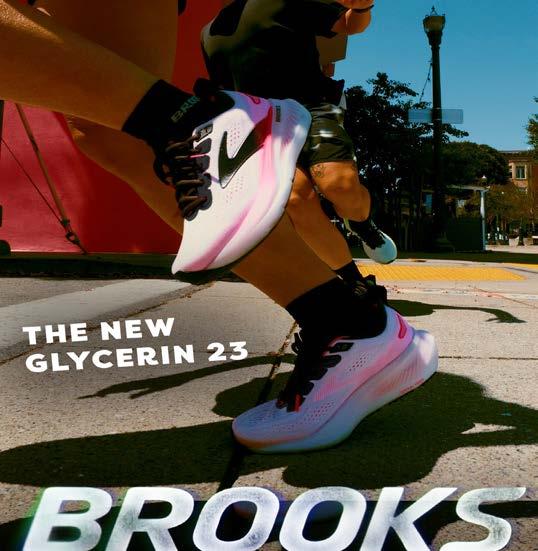
FREE Gift with any BROOK purchase from Feet First during the promo dates MARCH 15th- 31st



FREE Gift with any BROOK purchase from Feet First during the promo dates MARCH 15th- 31st
Features
Bi-Triathlons Fl.
Feet First Review
FRPM Index
Leo Swimming
Running North
Running Orlando
Running South
Running Southwest Running Tampa Bay
Advance
Boston
Leo Swimming
Leo Coaching
Marty Gaal -Triathlon Coach







Events
Gran Fondo Bicycle Tour
TopGun Triathlon
Finish Line Triathlon / Duathlon
Thunderbolt Racing
Escape From Ft Desoto Triathlon
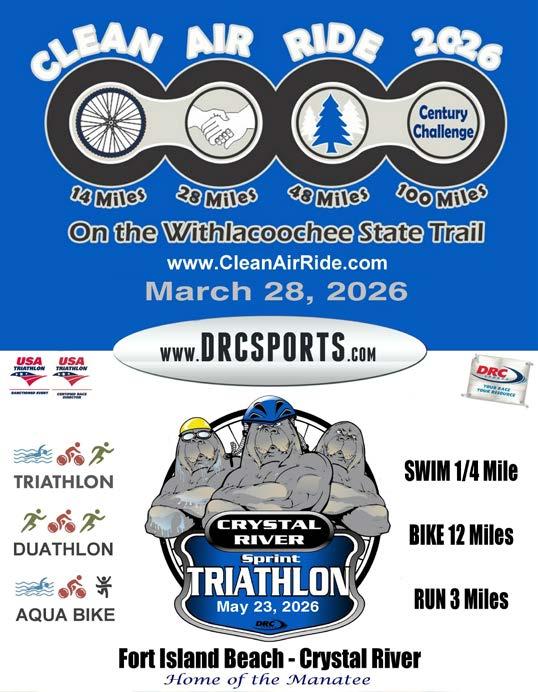
Clean Air Bike / Crystal River Tri.
Tampa Firefighters 5K
Top Triathlons In April
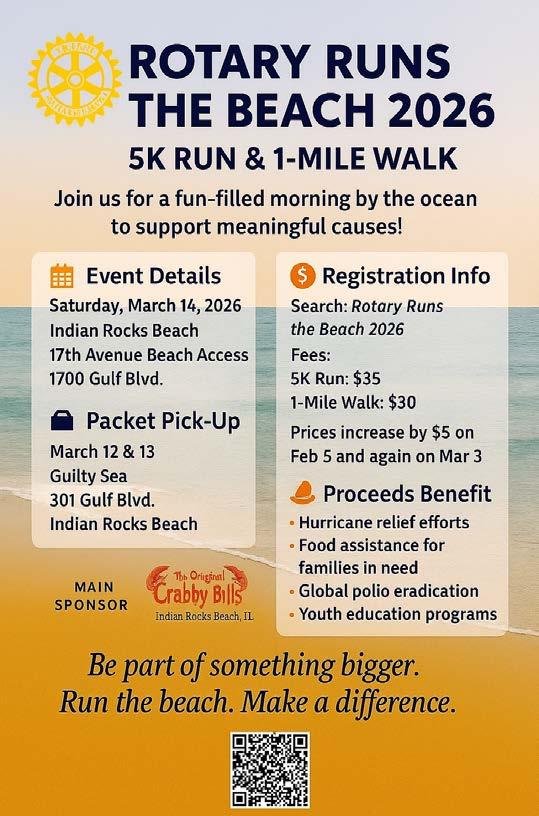
IRB Rotary Run 5K
Shamrock Distance Classic
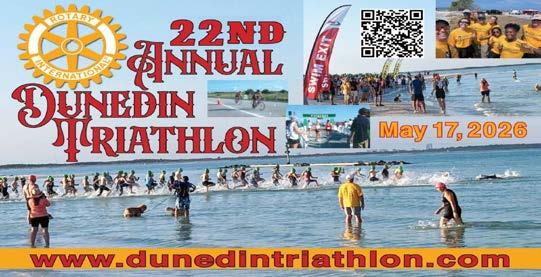
Dunedin Triathlon
Elite Racing Calendar 2026
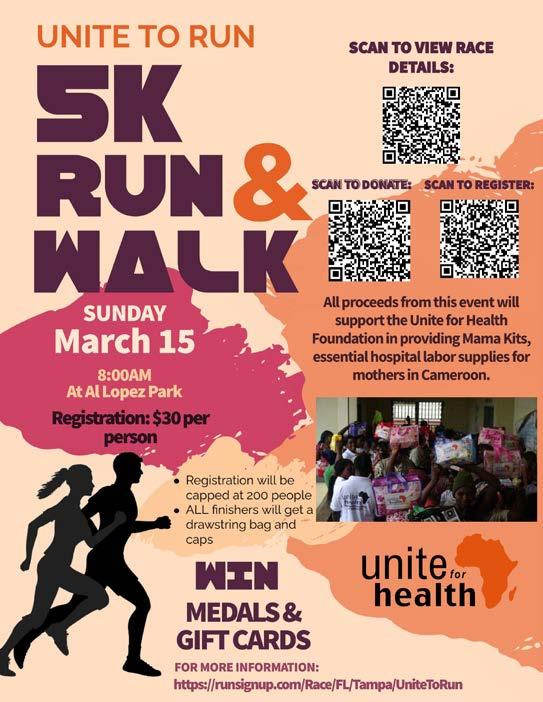
Unite To Run 5K
Elite Naples Paradise Half Mar.
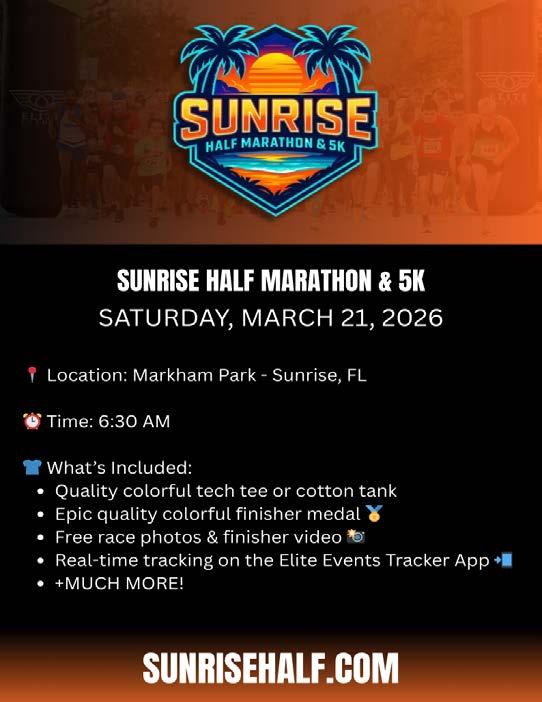
Elite Sunrise Half Marathon & 5K
Stomp Out Human Trafficking 5K
Dare to Go Bare 5K
Oldsmar Armadillo Run
Croom Trail Ultra Runs
Hog Hustle 5K
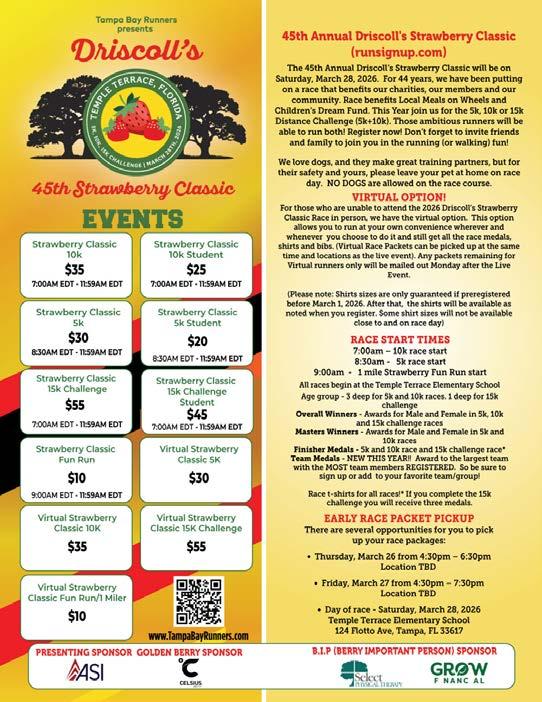
Strawberry Classic 10K / 5K
Bare Dare 5K Nude Run Freedom 4 Miler
Willy Duathlon






SATURDAY


SATURDAY TBA APRIL 11
SATURDAY TBA APRIL 11
SATURDAY
TBA APRIL 11
SATURDAY
TBA APRIL 11
SUNDAY
TBA APRIL 12
SUNDAY TBA APRIL 12
SUNDAY TBA APRIL 12
SUNDAY TBA APRIL 12
SUNDAY 8:00 AM APRIL 12
JOYFUL MOTION RUN FOR CHILDREN 5K
SUGAR SAND FESTIVAL 5K
TPA'S 5K ON THE RUNWAY 5K
TURTLE TROT 5K
CASSIDY OTTO FOUNDATION STOP OUT CANCER FL.
LEGENDS NEVER DIE 5K
MACDILL'S PAWS HEROES 5K
MILES FOR MIMOSAS 5K
DARE TO GO BARE 5K AND 2 MILE FUN RUN
SATURDAY TBA APRIL 18 CRYSTAL BEACH SUP/RUN 5K
SATURDAY TBA APRIL 18 FINFIT 5K FITNESS CHALLENGE 5K
SATURDAY TBA APRIL 18
N' RUN 5K
SATURDAY TBA APRIL 25 5K WONDER RUN
SATURDAY TBA APRIL 25 GIRLS ON THE RUN 5K
SATURDAY TBA APRIL 25 HERITAGE ALL DAY 5K
SATURDAY
TBA APRIL 25 JUDD JOG 5K
SATURDAY
TBA APRIL 25 SPF 5K RACE AGAINST MELANOMA 5K RUN
WWW.RUNSIGNUP.COMPALM HARBOR FL.
WWW.RUNSIGNUP.COMCLEARWATER BEACH FL.
WWW.RUNSIGNUP.COMTAMPA FL.
WWW.RUNSIGNUP.COMHUDSON FL.
WWW.RUNSIGNUP.COMWESLEY CHAPEL FL.
WWW.RUNSIGNUP.COMMADERIA BEACH FL.
WWW.RUNSIGNUP.COM
GADSDEN PARK TAMPA FL.
WWW.RUNSIGNUP.COMCLEARWATER FL.
813-949-1810
LAKE COMO COMMUNITY LUTZ FL.
WWW.RUNSIGNUP.COMCRYSTAL BEACH FL.
WWW.RUNSIGNUP.COM
COURTNEY CAUSEWAY TAMPA FL.
WWW.RUNSIGNUP.COMLAKELAND FL.
813-253-3853 HYDE PARK TAMPA FL.
WWW.RUNSIGNUP.COM
WWW.RUNSIGNUP.COMCLEARWATER FL.
https://juddjog.org
WWW.RUNSIGNUP.COM
WINTER HAVEN FL.
WALSINGHAM
RUN
RACE AGAINST PROVERTY 5K WWW.RUNSIGNUP.COMWESLEY CHAPEL FL.
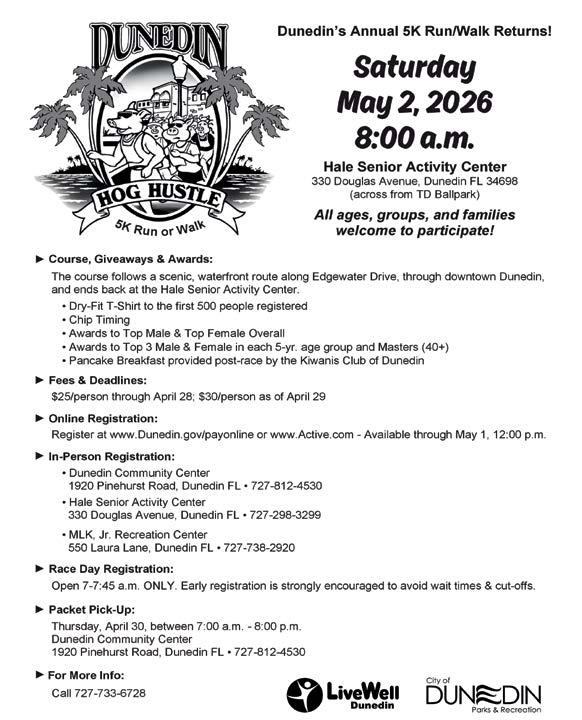
SATURDAY 8:00 AM MAY 2 HOG JOG 5K
SATURDAY TBA MAY 9 HIPPIE DASH 5K 10K/5K SAFETY HARBOR FL.
SATURDAY TBA MAY 16 FALLEN HEROES MEMORIAL RUN WWW.RUNSIGNUP.COMLAKELAND FL.
SATURDAY
TBA MAY 23 HONOR OUR HEROES MEMORIAL RUN 5K
SATURDAY TBA MAY 23 MEMORIAL DAY 5K/19K/15K
SATURDAY TBA MAY 23 SPRING LAKE MEMORIAL RUN 10K/5K
WWW.RUNSIGNUP.COMLBROOKSVILLE FL.
SATURDAY 8:00 AM JUNE 27 FREEDOM 4 MILER WWW.RUNSIGNUP.COM AL LOPEZ PARK TAMPA FL.






Over 45 Years Serving Central Florida Runners and Triathletes
Call 813‐417‐0324 or email joe@flraceplace.com
OVER 1000 Ad Placement for Running & Biking Events in Florida
What we at Florida RacePlace Magazine can do for your rac e or business
Full Page Advertising in Florida RacePlace Magazine 21,000 Online editions
Listing in all Florida RacePlace Magazine Schedule page.
Included Listing, Image and hyperlink in Florida RacePlace Online Monthly (20,000 once a month)
Include Listing with image and hyperlink in Florida RacePlace Super Bi‐Monthly Eblast Service (21,000 )
Custom Eblast of your own to 21,000.
Linking to our Facebook, Twitter and Social Network Services.
Ask About our All Magazine & Online Eblast Services
Over 21,000 Athletes, 813‐417‐0324, joe@flraceplace.com, www.Frpm.net
“THE CUTTING EDGE OF ENDURANCE SPORTS IN FLORIDA”


























SUNDAY TBA MARCH 15
SATURDAY TBA MARCH 21
PADDT'S RUN 5K / 10K
SATURDAY TBA MARCH 28 TRAIL OF PAYNE 5K / 10K WWW.RUNSIGNUP.COMGAINESVILLE FL.
SATURDAY TBA APRIL 4 BOWLEGS 5K RUN
CLOT 5K
SATURDAY




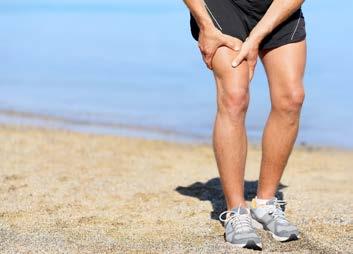
Runners are often told to stretch before a run, but static stretching holding a stretch for an extended period can actually increase the risk of muscle and tendon strains. The key reason lies in the muscle spindle, a sensory receptor in muscles that detects changes in length and prevents overstretching.
Muscle spindles act like built-in stretch sensors, triggering a reflex contraction when a muscle is stretched too quickly or too far. This protective mechanism, known as the stretch reflex, prevents excessive elongation and potential injury. However, when a runner performs static stretching before running, they may temporarily desensitize the muscle spindle’s protective response. This reduces the muscle’s ability to contract efficiently, increasing the risk of overstretching.
When you stretch and hold a position for too long, the muscle spindle adapts, allowing the muscle to elongate beyond its natural pre-activation range. If you then transition into running a high-impact, dynamic movement the overstretched muscles and tendons lack the necessary stiffness and responsiveness, making them more prone to strains and microtears.
Instead of static stretching, runners should focus on dynamic warm-ups like leg swings, high knees, and lunges. These movements gradually increase muscle length while keeping the spindle active, preparing the body for the demands of running. By respecting the muscle spindle’s role, runners can avoid unnecessary strains and enhance performance, efficiency, and injury prevention. Save static stretching for post -run recovery, when muscles are warm and more pliable.

4/11 - Escape From Ft Desoto - St Pete

4/12 - Bill Bone Triathlon - West Palm Beach
4/12 - Cocoa Beach Triathlon - Cocoa Beach
4/18 - Mullet Man - Pardido Key
4/26 - Just Tri It (kids) - St.Augustine
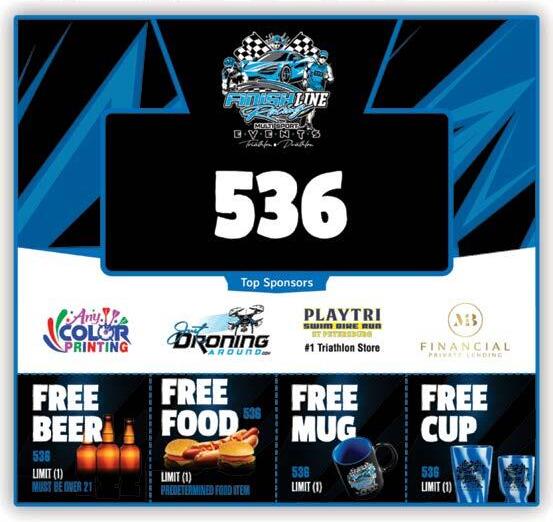
5/03 - Finish Line Triathlon - St Pete





Be Par t of something bigger. Run the beach. Make a dif ference.






By Dr Tommy Rhee
At just seven years old, Nia Armstrong was already circling the track under the guidance of her father. What began as a father-daughter bonding experience quickly evolved into something more—a journey defined by discipline, faith, and a fierce competitive edge.
“I started at 7 years old with my dad coaching me to run,” Nia says. “At first, I was running all the events.” But by age nine, her path narrowed. Knee pain from high jumping forced her to adjust. Surprisingly, hurdles didn’t aggravate her knee. She leaned into the event—and never looked back.
“I stayed with hurdles because it didn’t give me knee pain. I stuck with it and got good.”
That decision would prove pivotal.
To the casual fan, hurdling looks rhythmic and effortless. But behind every smooth clearance is a grueling training regimen.
“The hardest part of training that most people don’t see is running several 300 meters for time with little rest in between,” Nia explains.
Those repeated lactic-acid sessions build not only physical strength, but mental toughness. And she doesn’t face them alone.
“My dad helps me with discipline. He’s always there to remind me of my workouts and training.”
Her father isn’t just a parent in the stands—he’s her coach with the VAST Track Club, blending structure and support in a way few athletes experience.
Hurdles demand more than raw speed. They require split-second timing, stride control, and razor-sharp focus.
“Before a race, I prepare with my warm-up and think about my race and how I run it perfect,” she says.
One technical detail she’s refining this year? Her approach to the first hurdle.
“I’m working on my starts to the first hurdle. I’m trying to figure out if it’s a 7-step or 8step technique.”
That single stride decision can determine rhythm for the entire race. For elite hurdlers, the race is often won or lost before hurdle one.
In an era where most athletes warm up with music blasting through headphones, Nia stands apart.
“Funny thing is that I do not listen to music when warming up like other racers. I feel that music will distract my focus.”
Instead, she visualizes.
“When I’m warming up, I’m going over the race in my head—and I pray to God.”
For Nia, preparation is both mental and spiritual. Visualization sharpens her execution. Faith strengthens her resolve.
Even champions face setbacks. Currently, Nia is managing a hamstring strain.
“Therapy is helping a lot,” she says confidently.
Injury can derail young athletes, but for Nia, it’s simply part of the process—another hurdle to clear.
Despite her youth, Nia already owns an elite résumé: AAU All-American; 3x Junior Olympic National Champion (High Jump, Javelin, Hurdles); 3x New Balance Outdoor National Champion (7th, 8th, and Freshman Year); and 5x New Balance All-American (100m Hurdles ×3, 400m Hurdles, Shot Put). She also dominated the FLYRA Middle School State Championships, winning multiple hurdle titles while placing in javelin and shot put.
Her range across hurdles, jumps, and throws highlights rare versatility—but hurdles remain her signature event.

When asked who has played the biggest role in her development, Nia doesn’t hesitate.
“My dad and God.”
Her father, who coaches VAST, has guided her since day one—balancing encouragement, accountability, and mentorship.
“I’m lucky that he is my coach. He supports and encourages me with motivation—as a father and as a coach.”
Her faith provides another anchor.
“I depend on God’s word to help me overcome any problems and gives me strength in hard times.”
At 15 years old, Nia’s goals are clear and unapologetically ambitious.
“Win states in 2026.” And beyond high school? “Make it to the 2028 Olympics.”
For a young athlete with her résumé, work ethic, and mindset, that goal feels less like a dream—and more like a plan.
On tough days, when workouts burn and progress feels slow, she leans on the same source that started it all.
“My dad motivates me. He gives me energy to push through.”
In hurdling, success depends on rhythm—finding the perfect stride between obstacles without breaking speed.
Nia Armstrong is doing just that. Step by step. Hurdle by hurdle.
And if her trajectory continues, don’t be surprised if the world meets her on a much bigger stage in 2028.

Specializing in:
• Teaching all levels of swimming
• Coaching swimmers for efficiency
• Swim therapy for pain management and rehabilitation
• Inclusive programs for special education
At our Champions of Ability Program, everyone has the opportunity to learn at their own pace, regardless of ability! Why Choose Me?
• Experienced in fostering confidence and skill in swimmers of all ages.
• Dedicated to creating a safe and supportive environment.
• Tailored lessons to meet individual needs and goals.
Ready to Dive In?
Contact me today at: owsleo11@gmail.com








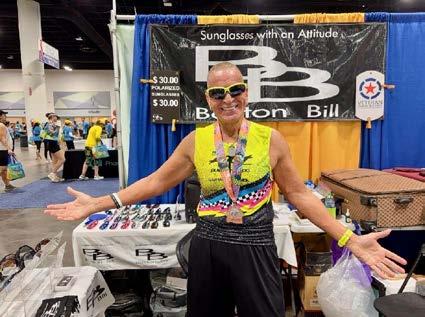
“ Is that Nelson C. Wearing Boston Bill Sunglasses? No Wonder he placed 2nd in the Gasparilla Gold Challenge 2026!
“Is that Celia Dubey and her husband Joel wearing Boston Bill Sunglasses ? No wonder Celia is 2015 USAT Duathlon Masters Na�onal Champion and female overall winner and age group champion!”



Racing is fun! It’s a way for all that hard training to pay off, a chance to grab some awesome race day swag, and a reason to post some cool pictures on social media. However, just as in life, too much of a good thing can bring its own problems. Sometimes it is so tempting to sign up for all the races happening in our area. Marathons, half-marathons, and all the shorter 5k’s and 10k’s . While it is certainly reasonable to run multiple races during one training cycle, it is important to keep some things in mind to reduce the possibility of injury and burnout.
Prioritizing your race schedule is key. We all want to run a personal best in every race we run, but that is simply not a realistic expectation. For example, it’s difficult to train for a full marathon and expect to run a PR in a 5k during the same training cycle. Different distances require different types of training, so don’t be disappointed if you’re not hitting all your time goals in the
same season. Pick a goal race that is your primary objective. Once that’s been set, any other race should be a means towards that end. Use earlier races as part of your training schedule and any races after your goal, as part of your recovery.
Recovery after any race is important. Marathons and halfmarathons are challenging whether they are run slowly or quickly, so respect the distance and give yourself some time to bounce back. Allowing time for your body to recover, preferably for 4 weeks, between hard efforts will lessen the likelihood of injury. If you only have a week or two between races, then make sure you are doing easy runs, avoiding speedwork or hill repeats between races. Stretching, hydrating, foam rolling, and recovery devices like NormaTec recovery boots are also good ways to shorten recovery time and prepare for the next hard effort.
However, you choose to manage the busy race season, make sure that you listen to your body. Those small aches and pains can grow into season-ending injuries if you ignore them. Feel free to contact us at Advanced Rehabilitation with any questions about injuries that emerge after your training or racing to avoid major problems down the road.
Advanced Rehabilitation cares for people of all activity levels – to help prevent, recover from, or rehabilitate athletic injuries. Contact Advanced Rehabilitation at (813) 250-1208 or www.advancedrehab.us




March 21

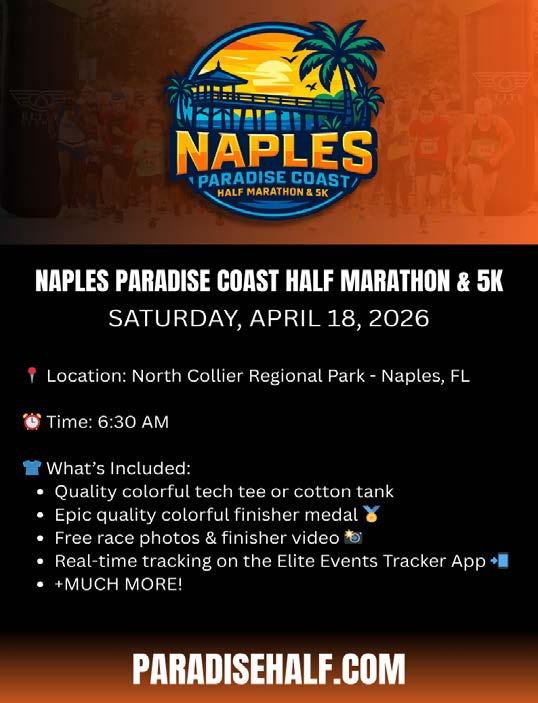
Apr il 18
Marathon & 5K Oct TBD
& 5K
Oct TBD
Half Marathon & 5K

Nov TBD
Half Marathon & 5K
Nov 26
Marathon & 5K

Dec TBD
Marathon & 5K
Feb TBD
Marathon & 5K
Nov 26
Half Marathon & 5K
Dec 26
Marathon & 5K
Jan TBD
Marathon & 5K

Feb TBD
Half Marathon & 5K Half Marathon & 5K

Preparation, Strategy, and Execution for Achieving Your Personal Record by
Coach Bill Strack
Once you have developed a strong founda�on of running fitness and feel ready to achieve your best 5K performance, a few key prepara�ons and strategies on race day can help you reach a new personal record (PR).
Race Warm-Up
Arrive at the race at least one hour before the start �me. This early arrival allows you to relax, locate bathrooms, and gives you enough �me for a thorough warm-up. Beginning your warm-up 35 to 45 minutes prior to race start is ideal. Your rou�ne might include 15 minutes of easy jogging, followed by 10 minutes of gentle stretching, and finishing with three sets of 30-second strides. These steps ensure your body is prepared for peak performance.
Overall Race Strategy
Patience is essen�al in the early stages of your race. World records from 1500 meters to the marathon are achieved by running nega�ve splits, meaning the first half of the race is run at a slightly slower pace than the second half. By remaining pa�ent and focused, you can control your adrenaline and compe��ve impulses. Managing your pace at the start is cri�cal for a strong finish; avoid running the first half mile or mile too fast, as this may leave you exhausted before the end.
1st Mile
Begin the race by targe�ng a pace that is 5 to 10 seconds per mile slower than your overall goal pace. While it may feel challenging mentally especially if you are being passed by compe�tors you want to beat—your patience will pay off. You will have the energy to pass them in the final mile and reach your �me goal at the finish line.
This is where your race truly begins. Start to increase your pace and effort to reach your target pace. As the race progresses, maintaining or increasing your pace becomes harder, so it’s important to focus and shi� from patience to determination. Engage with compe�tors around you find a group or individual running at your pace or slightly faster and stay with them. Relax, focus, and worry less about your splits, concentra�ng instead on keeping up with the group.
At this point, the effort may begin to feel intense, but if you remind yourself that you are more than halfway through, you can o�en summon a surge of energy. Prepare mentally for this challenge and recognize that nega�ve thoughts are common among all compe�tors.
In the final 1.1 miles, maintain your focus and determina�on. Choose one person ahead of you as a target and work on catching up to them. When you pass them, embrace the burst of energy and then pick another compe�tor to focus on, repea�ng this process all the way to the finish. With half a mile le�, dig deep, kick hard, and finish fast.



On the swim, the most important thing you can do is focus on steady rhythmic breathing. This focused breathing will help keep your mind calm and your heart rate under control. Steady breathing reduces chances of anxiety or panic. It's okay to even slightly delay your stroke rate in order to get a good deep breath, and make sure you are consciously exhaling when your face is in the water.
If your race is a wetsuit swim, ideally you will have trained in the wetsuit several times prior. On race day one of the most important things is to use Body Glide or something like canola oil spray on the skin of your forearms and lower legs, as well as the outside of the wetsuit on the forearms and lower legs. This way when you exit the swim, you will not get stuck hopping around in your wetsuit for several minutes! Be sure to rinse your wetsuit off after the race so the oil or Body Glide does not sit on the surface for too long.
You should have a plan for your transitions going into the race. Transition doesn't need to be the fastest in the world, but your plan should not include sitting down to take a nap. Have a process that you have run through in your head and hopefully even practice a handful of times prior. Do not try to do everything at once.
On the bike there are a couple of safety issues you must do your best to adhere to. In the United States you want to stay on the right side of the road throughout the race unless you are passing another competitor. By staying on the right side it allows faster riders to pass you safely on the left. Staying on the right also ensures you are not impeding riders behind you. Part two for safety on the bike - if you are going to stop for any reason, ideally signal with your right hand, then slow down slowly, and quickly take yourself and your bike off the road. If you stay on the road you are a major danger to other competitors as well as yourself, Some of them will be going very fast and often triathletes in the aero position are not looking super far down the street. So please get off the road.
When you get to the run, it is very helpful to focus on two things: Quick feet, and a relaxed upper body. These are the two key pieces of run form that will set you up to have a good run. If you try to take giant steps you are likely to fatigue yourself, and if you remain tense throughout your upper body it's going to have negative effects on your stride rate & stride length and probably result in stomach cramps or side stitches. Use the first handful of minutes to find your rhythm while maintaining quick feet and a relaxed upper body and it will set you up for a strong run.
Also don't forget to drink and eat, but that's another article!
USA Triathlon Coach Marty Gaal, CSCS, has been working with endurance athletes for more than twenty years. He used to race all around Florida before moving to the Raleigh area of North Carolina. You can read more about his coaching programs at www.osbmultisport.com.
Check Out Our Video Vlog Page For More Information
By Dr Tommy Rhee
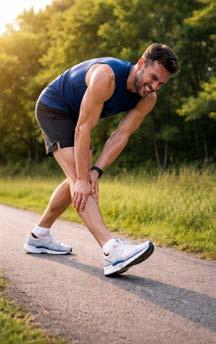
Stretching has long been considered a staple of every runner’s routine. But more isn’t always better. In fact, overstretching can actually work against performance, resilience, and injury prevention.
Muscles and tendons are designed to store and release elastic energy—think of them as springs. When tissues are overstretched, especially aggressively or for prolonged periods, that spring-like tension is reduced. The result? Less power return with each stride, decreased running efficiency, and slower times.
Overstretching can also destabilize joints. Runners depend on controlled stiffness in the hips, knees, and ankles to absorb impact and transfer force. Excessive flexibility without adequate strength can create joint laxity, increasing the risk of tendinopathy, muscle strains, and overuse injuries.
Another overlooked issue is neuromuscular inhibition. Long static stretches before running can temporarily reduce muscle activation and reaction speed—exactly what runners don’t want when pushing off the ground thousands of times per run.
This doesn’t mean stretching is bad. The key is appropriate mobility. Runners should aim for functional range of motion, not extreme flexibility. Dynamic movement, light activation drills, and strength-based mobility help tissues stay elastic, responsive, and strong.
In running, efficiency beats excess. When it comes to stretching, doing just enough— rather than too much—keeps your stride powerful, your joints stable, and your body ready to perform.

Swimming is more than just a recreational activity; it’s a multifaceted experience that enhances physical, mental, and emotional well-being. From the moment you glide into the water, a transformation begins, swimming influences daily life by fostering positivity and vitality.
1. Full-Body Workout: Swimming engages almost every muscle group, providing an excellent cardiovascular workout. Regular swimming can improve strength, flexibility, and endurance, leading to better overall health.
2. Low-Impact Exercise: The buoyancy of water supports the body, reducing stress on joints and making swimming accessible for people of all ages and fitness levels.
3. Weight Management: As a calorie-burning exercise, swimming can aid in weight management and contribute to a healthier lifestyle.
1. Stress Relief: The repetitive nature of swimming can have a meditative effect. Many swimmers report feeling less stressed after a session in the pool or open water, as the soothing water helps to clear the mind.
2. Mental Clarity: The focus required in swimming whether it’s mastering a stroke or maintaining breath control encourages mindfulness, promoting greater mental clarity and focus in daily tasks.
3. Confidence Boost: Mastering swimming skills can improve self-esteem. This newfound confidence can spill over into other areas of life, encouraging individuals to tackle challenges head-on.
1. Community and Connection: Swimming can be a social activity. Whether participating in a swim team or enjoying casual swims with friends, the sense of community fosters relationships and boosts overall mood.
2. Joy of Movement: The sensation of being in water is inherently joyful for many. This happiness can enhance mood, leading to a more positive outlook on life.
3. Mind-Body Connection: Swimming encourages body awareness, helping individuals connect more deeply with their physical selves. This connection can lead to better emotional regulation and resilience against life’s challenges.
The benefits of swimming often extend beyond individual experiences. When people engage in swimming and promote positivity, they influence their surroundings. Their energy can uplift friends, family, and communities. This cascade of positive vibes can inspire others to adopt healthier lifestyles and contribute to a more supportive environment.
Coach Leo








FREE Gift with any HOKA purchase from Feet First during during the promo dates APRIL 15th- 30th

May 3, 2026
Fort Desoto Park
Saint Petersburg Fl.