







R e t u r n s t o U S O p e n
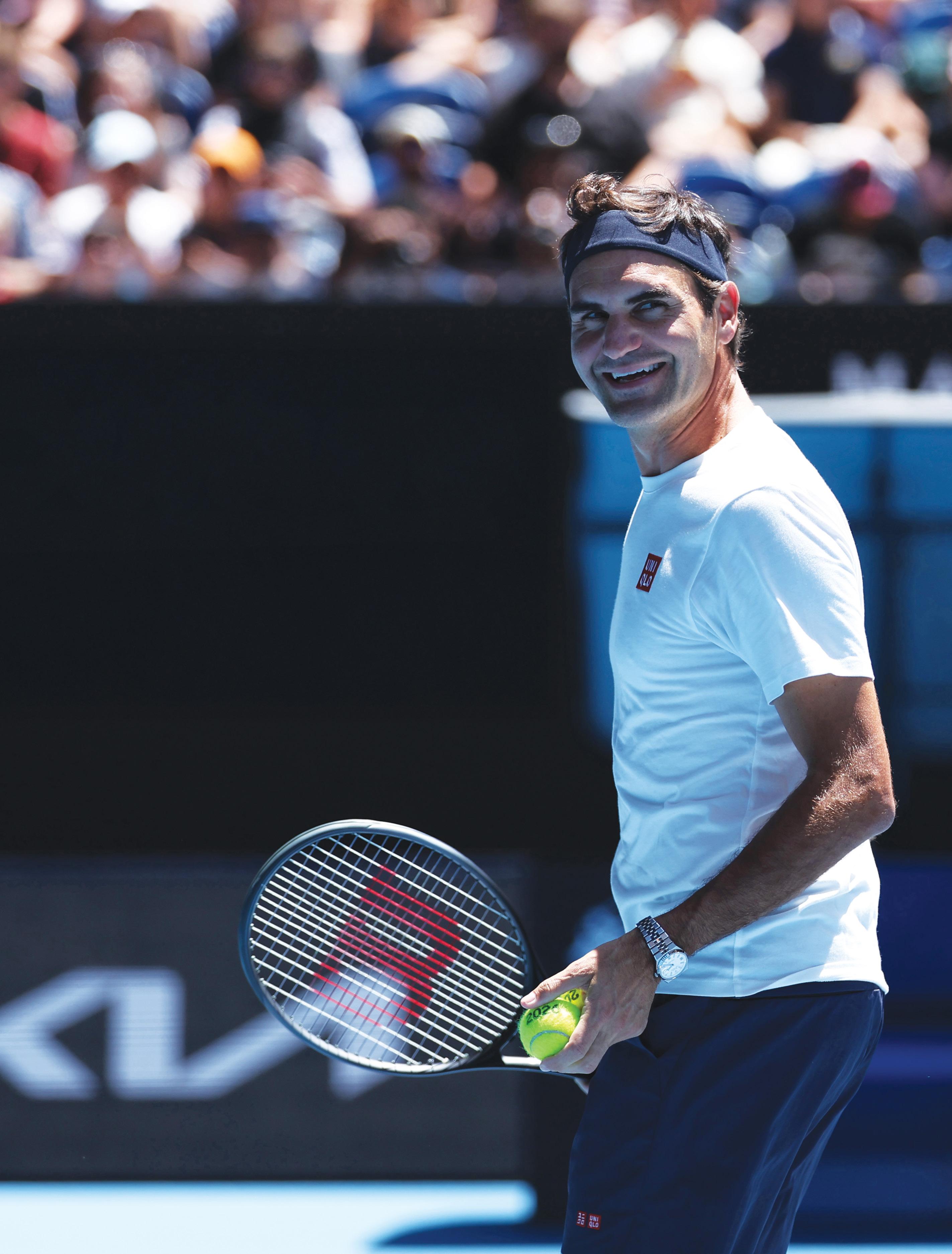
The USTA has announced that 20-time Grand Slam champion, five-time US Open champion, 2026 International Tennis Hall of Fame Inductee and global tennis icon Roger Federer will return to the court at the US Open this year for a once-in-a-lifetime exhibition event.
Roger Federer: An Icon Returns to New York will take place the night of Tuesday, August 25, inside Arthur Ashe Stadium.
Federer last competed at the US Open in 2019 after famously captivating New York by becoming the only man or woman to win five consecutive US Open singles championships from 2004-08. He will make his return to Arthur Ashe Stadium this year by playing in an exhibition event alongside 2003 US Open champion and longtime rival Andy Roddick, as well as fellow tennis icons and US Open champions Andre Agassi and John McEnroe.
Further celebrity appearances and unique surprises will treat fans throughout the evening, kicking off at 7 p.m. on Tuesday, August 25.
“The US Open has always been one of the most special tournaments for me,” Federer said. “So many unforgettable moments of my career happened in New York, and Arthur Ashe Stadium is a place that means a great deal to me. I’ve missed being part of that atmosphere and feeling the incredible energy that the fans bring every year. To return to Arthur Ashe and share the evening with Andy, Andre and John makes it even more meaningful. I’m looking forward to celebrating those memories, seeing the fans again, and enjoying a very special night together.”
“It goes without saying that Roger Federer is one of the greatest champions to ever step onto a tennis court, and his legacy at the US Open will carry on for generations,” said Brian Vahaly, Chairman of the Board, President and Interim Co-CEO, USTA. “We're thrilled to welcome him back for this unique and special event, giving fans an opportunity to celebrate Roger's legacy and thank him for all he has meant to our sport."
Tickets for Roger Federer – An Icon Returns to New York go on sale via presale on Wednesday, June 10, to US Open subscribers at 9 a.m. ET and Insiders at noon, via Ticketmaster and USOpen.org. Tickets go on sale to the public on Thursday, June 11, at 9 a.m.


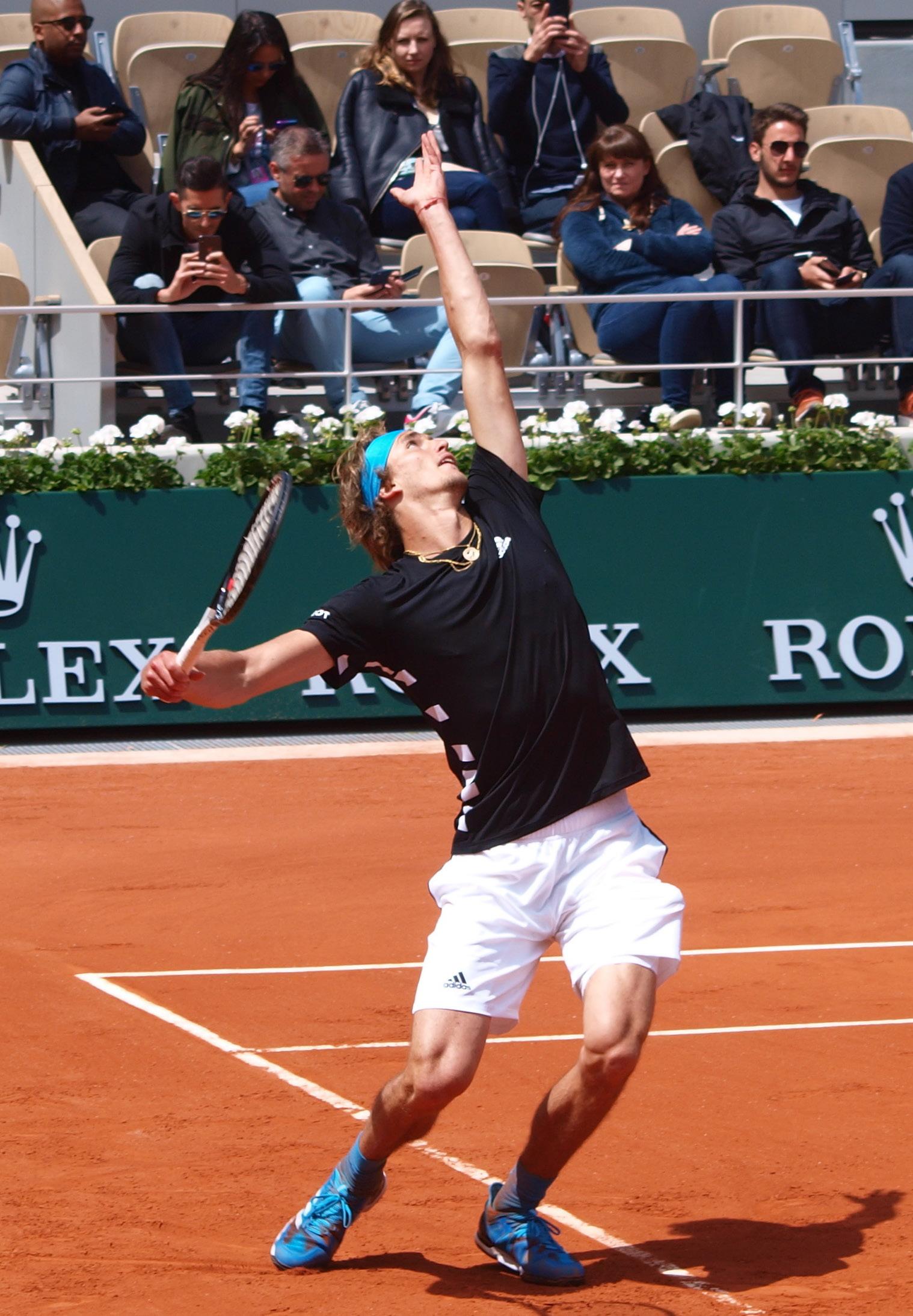
Alexander Zverev is finally a Grand Slam champion.
The German star captured his first major title at Roland Garros, defeating Italy's Flavio Cobolli 6-1, 4-6, 6-4, 6-7(5), 6-1 in a hard-fought five-set final to claim the French Open crown. The victory ended years of near-misses for Zverev, who had previously lost three Grand Slam finals.
For Florida tennis fans, the achievement showcases the power of training in Florida.
Long before lifting the Coupe des Mousquetaires in Paris, Zverev spent his youth training at Saddlebrook Tennis Academy in Wesley Chapel, Florida, one of the state's most recognized player-development programs.
"We first came to Saddlebrook when [my brother] Misha was 16 years old and I was six years old because the working environment is really great," Zverev said in an interview with Tennis Channel.
Saddlebrook remains one of the most recognizable tennis academies in the United States and counts Zverev among its notable alumni, along with Andy Roddick, Mardy Fish, James Blake and John Isner, among others. The academy's current leadership also includes former ATP professional Thomas Blake, who returned to Saddlebrook as Director of Performance Tennis.
Zverev's connection to the academy has been documented throughout his career. In a Tennis.com article, Baseline Staff noted that Zverev spent his
youth in Florida as a student at Saddlebrook Tennis Academy.
The road to a major title is built through years of training, competition, coaching, family support and perseverance. For Zverev, that journey ultimately led to the biggest moment of his career on the red clay of Roland Garros. As a professional, Zverev has continued to train at Saddlebrook during the offseason.
Today, Zverev joins the list of Grand Slam champions. For Saddlebrook, it represents another proud chapter in the academy's long history of developing world-class players.
From the courts of Saddlebrook to the red clay of Roland Garros, Alexander Zverev's championship journey is a reminder that some of tennis' greatest success stories have roots right here in the Sunshine State.

By Carlos Onate
In the current era of junior tennis, the college recruiting process has largely moved behind a screen. Walk into any college coach’s office, and you will see an inbox drowning in a sea of identical, flawless emails, most of them meticulously drafted by ChatGPT, Claude, or Gemini. Log onto their social media feeds, and you’ll find hundreds of carefully edited, over-hyped highlight reels where every backhand finds the line and mistakes are conveniently deleted.
To the modern college coach, everything is starting to look the same. The digital noise is deafening, and coaches are starving for one rare commodity: reality.
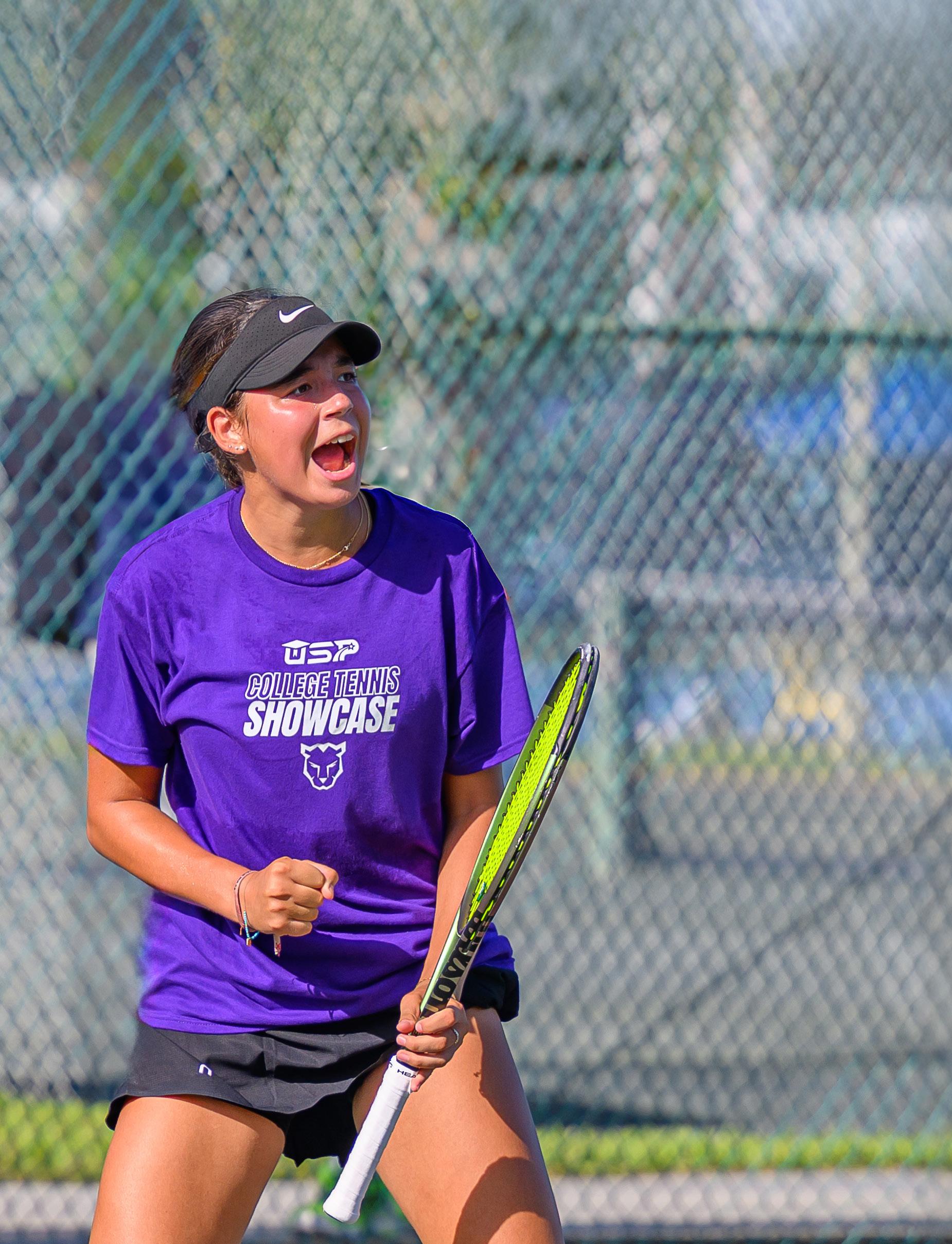
They don’t sign pixels, and they don’t recruit algorithms. They sign human beings. That is exactly why the USP College Tennis Showcase remains a cornerstone of the recruiting calendar.
The Raw Reality of the Court: No "Edit" Button
A 60-second video clip cannot show who you really are. It can't show how you handle a missed line call, how you react when your string breaks at deuce, or how you treat your parents when you walk off the court after a tough loss.
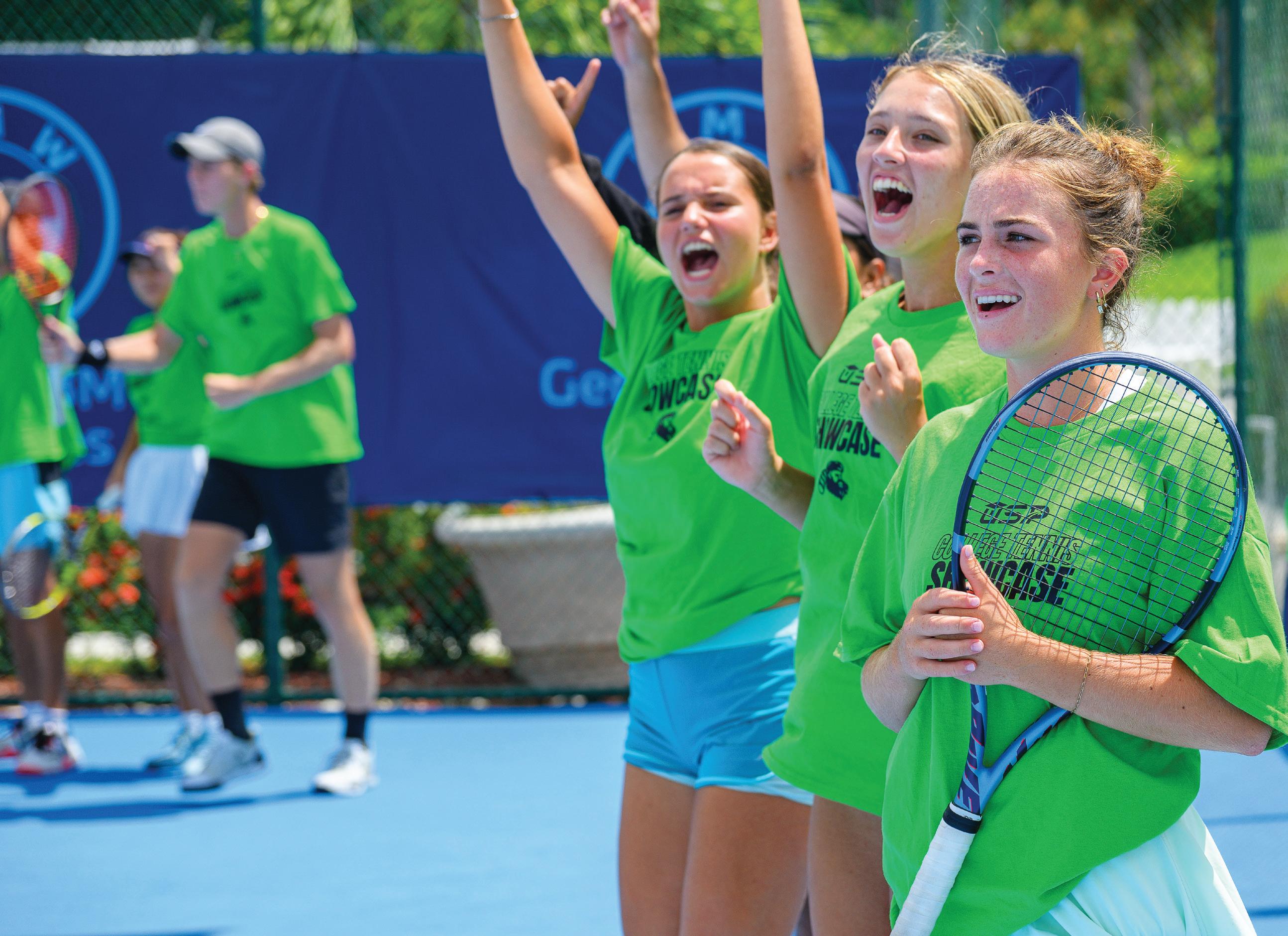
At the USP Showcase, players are thrown into real-life, high-pressure situations. Competing in a unique college-style team format, the players aren't just playing for themselves, they are playing as part of a team.
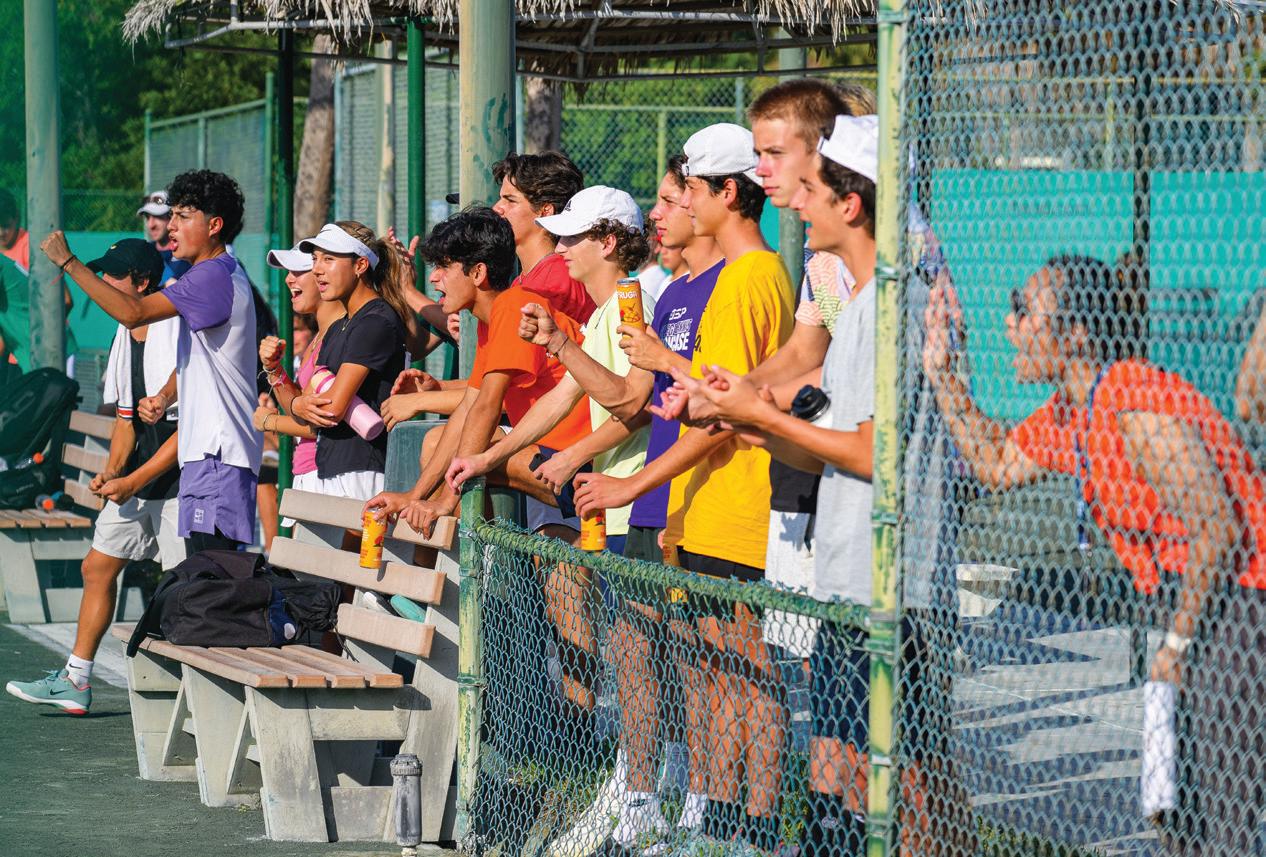
Coaches from NCAA, NAIA, and NJCAA programs line the fences at the Emilio Sanchez Academy to watch the un-edited version of your game. They are looking at your footwork, yes, but they are also analyzing your body language, your grit, your court etiquette, and how you uplift your teammates. You cannot put a filter on character. At the showcase courts, what the coaches see is exactly what they get.
"Your metrics or your rating might get a coach to look at your court, but your character and how you handle real-time pressure is what actually gets you the scholarship."
Thomas Anderson - Founder of USP
The College Expo: Face-to-Face vs. Interface
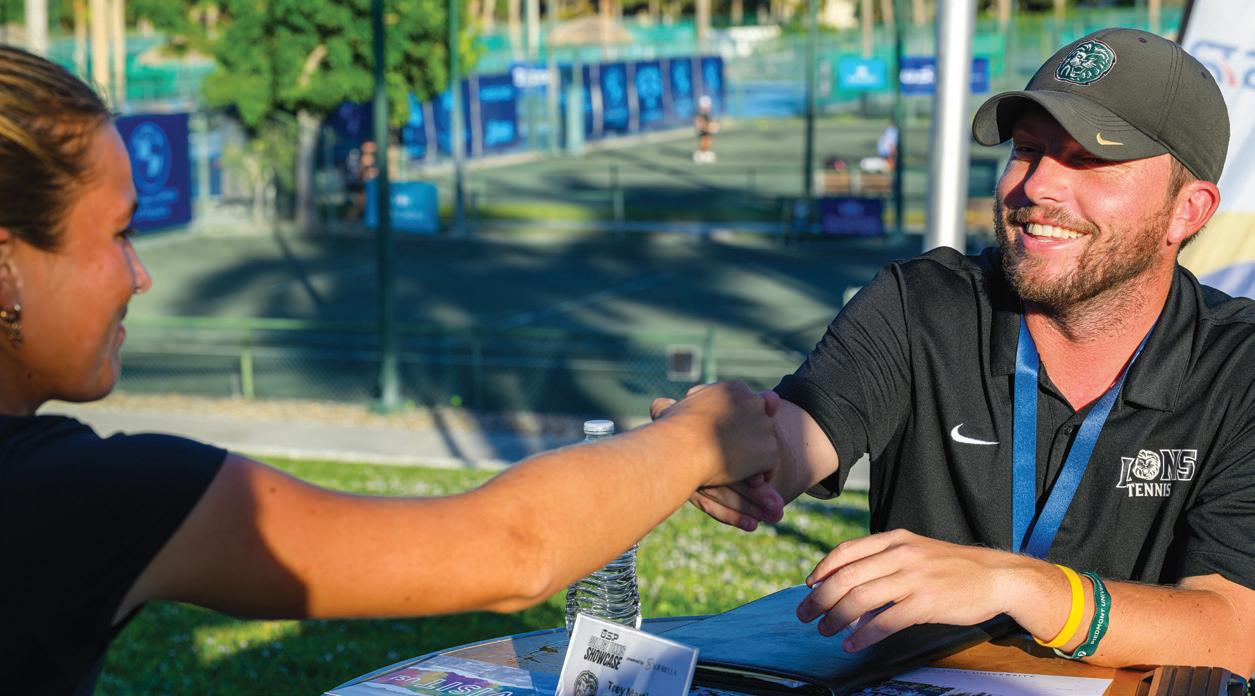
The true magic of the event happens off the court. Nothing replaces the power of a firm handshake and eye contact.
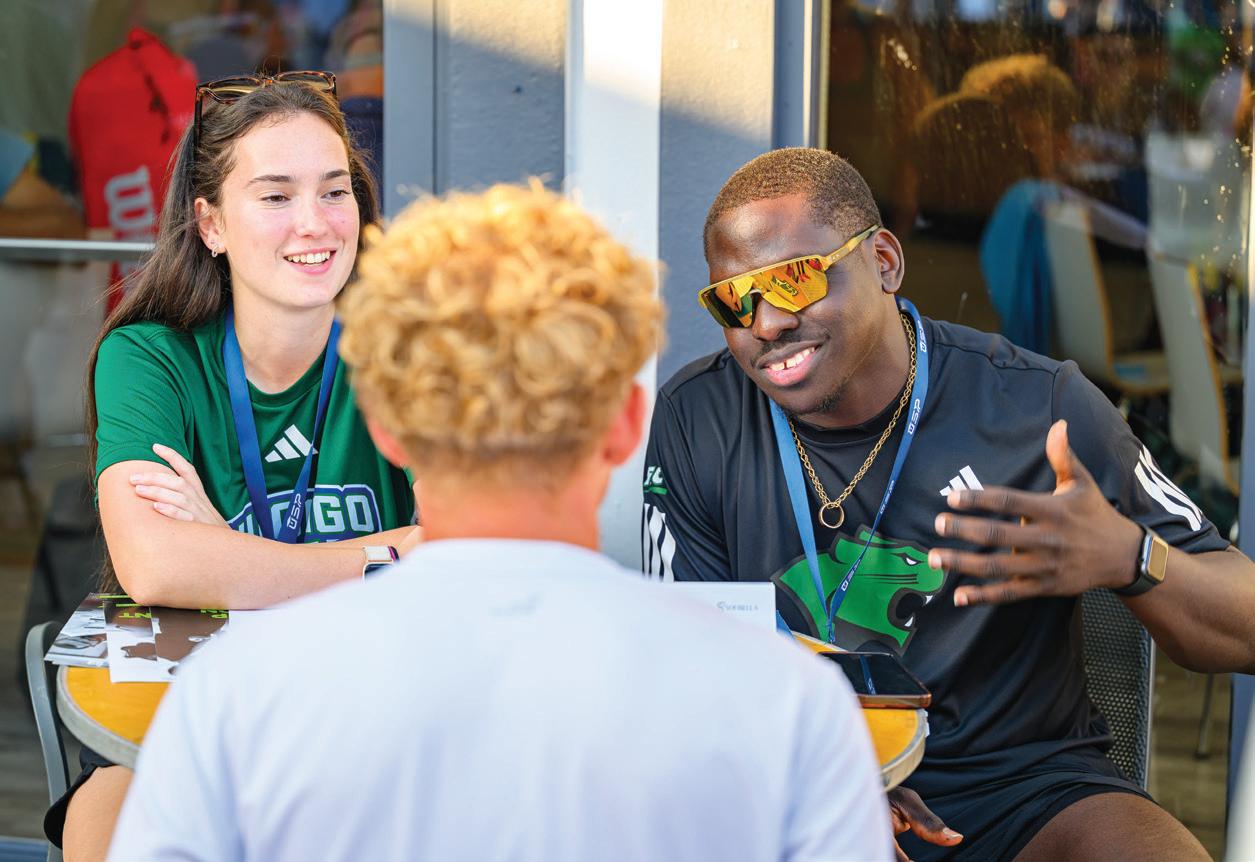
During the College Coaches Expo, the screens are put away. There are no text prompts, no automated templates, and no time to draft a polished response. It is just the player sitting across a table from a college coach, having a genuine, meaningful conversation.
This is the moment where recruits can ask real questions about team cul-
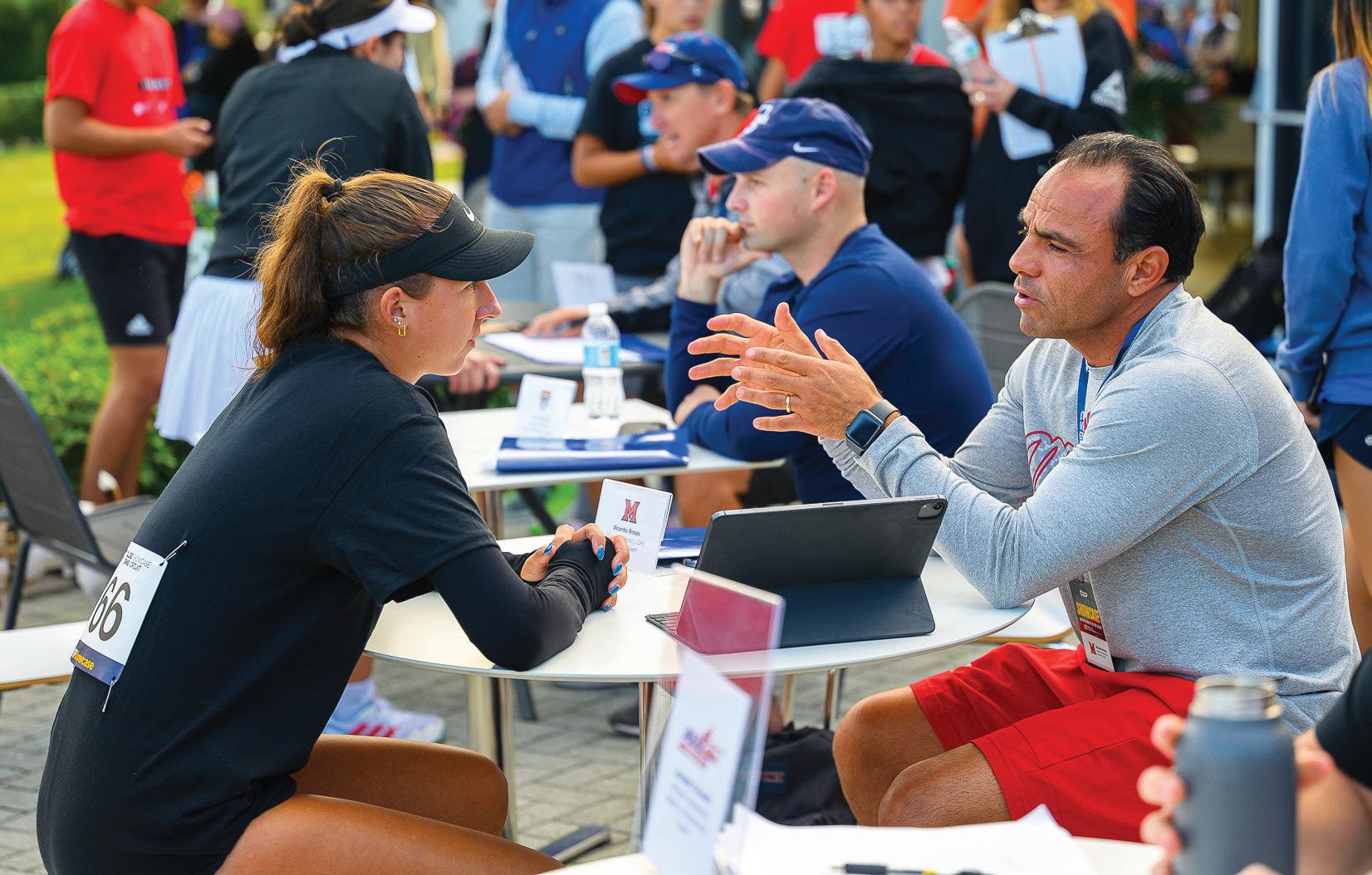
ture, academic expectations, and program styles. More importantly, it is the moment where players get to showcase their personality, drive, and spark. It allows families to figure out who these coaches really are, just as much as it allows the coaches to evaluate the player. It is a mutual, human connection built on trust, the way recruiting was always supposed to happen.
If you are tired of sending emails into a digital void and hoping for a reply, it’s time to step out from behind the screen. The USP Showcase is a condensed, high-intensity environment designed to bypass the gatekeepers and put your future directly in your own hands. Find your university, claim your tennis program, and earn your scholarship the authentic way.
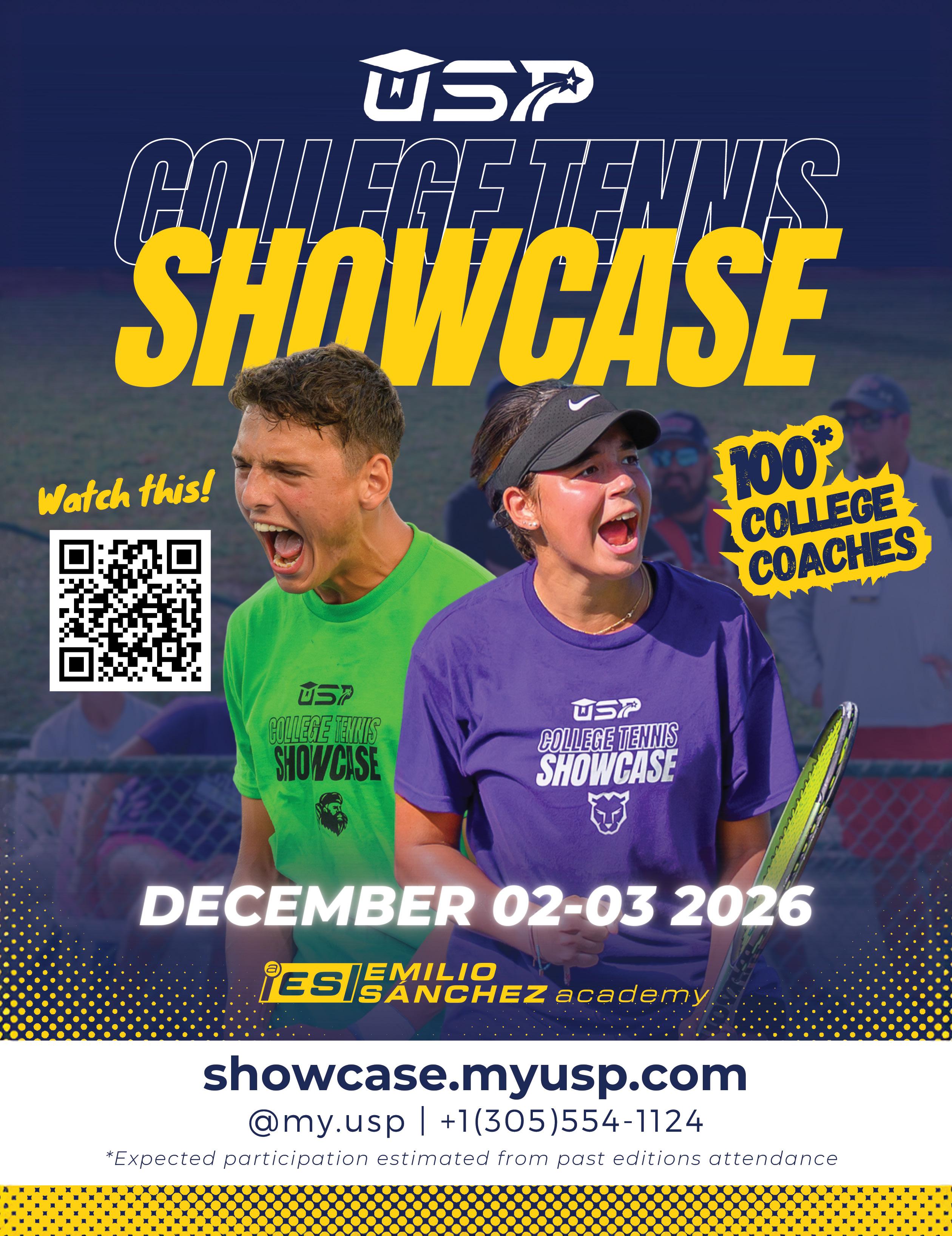
The USP Showcase is a proven, time-tested event. With more than 20 yearly editions in the books, the USP Showcase has become a global crossroad for collegiate tennis. Every year, an average of 100 college coaches gather on the sidelines, drawing ambitious players from all across the United States and more than 35 countries worldwide.
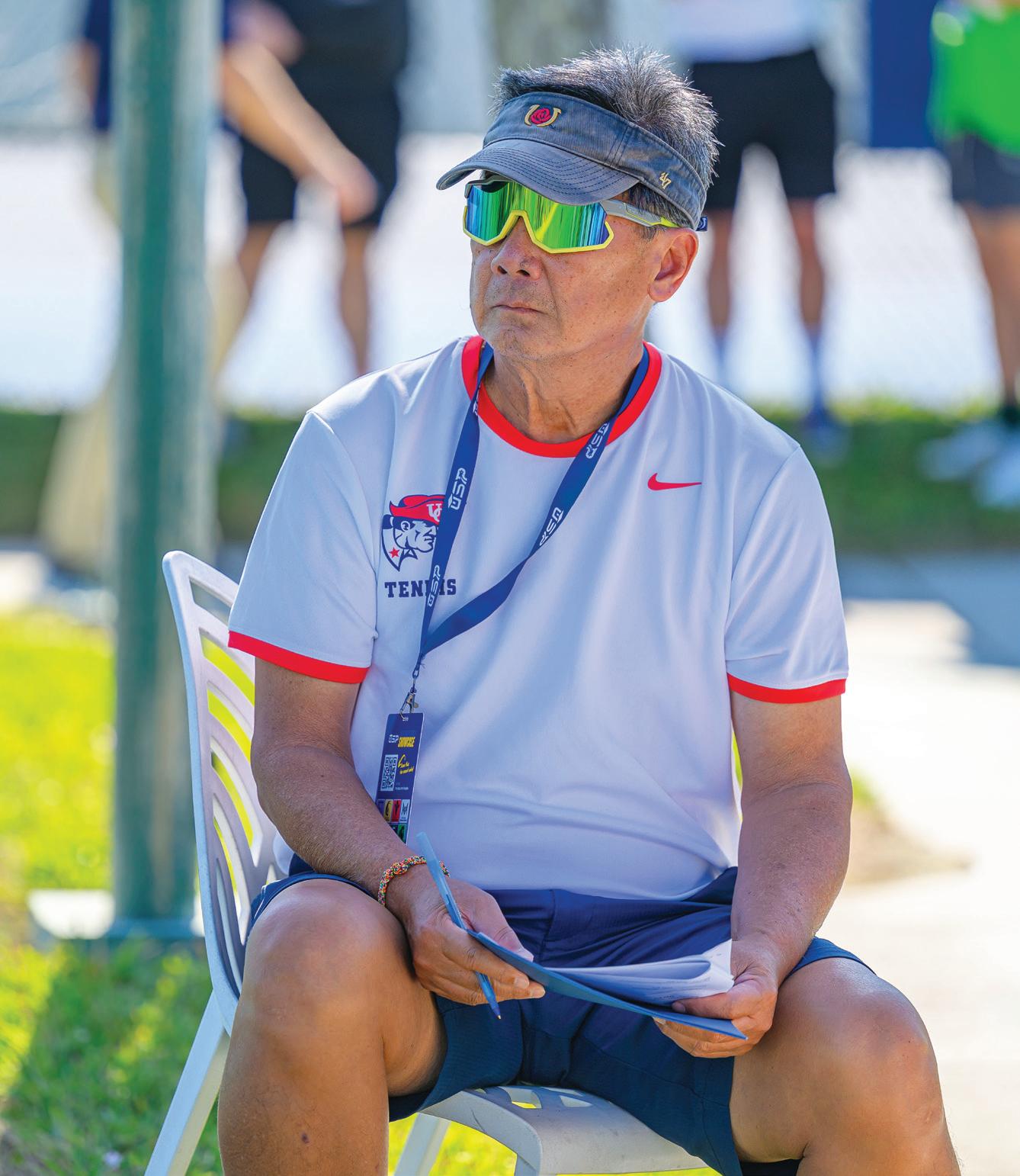
The best proof of this event’s impact, however, is found in its full-circle stories. Look closely at the coaches attending this year, clipboard in hand, looking for talent. Several of them sat at the exact same Expo tables years ago as nervous high school players. They earned their life-changing college scholarships right here, went on to have stellar collegiate careers, and have now returned as coaches to recruit the next generation. They come back because they know firsthand that this environment works. Lives are transformed, and the human connections made over these two days can last a lifetime.
Bring your game, bring your passion, and leave the digital filters at home. Spaces are strictly limited to ensure optimal player-to-coach ratios.
• Date: December 02-03, 2026
• Location: Emilio Sanchez Academy — Naples, Florida
• The Format: 2 Days of Team Matchplay (4 UTR verified matches)
• In-Person College Coaches Expo
• Who Can Attend: High school student-athletes (Grades 9–12), recent graduates, and college transfers.
• Secure Your Spot: Register online today at showcase.myusp.com
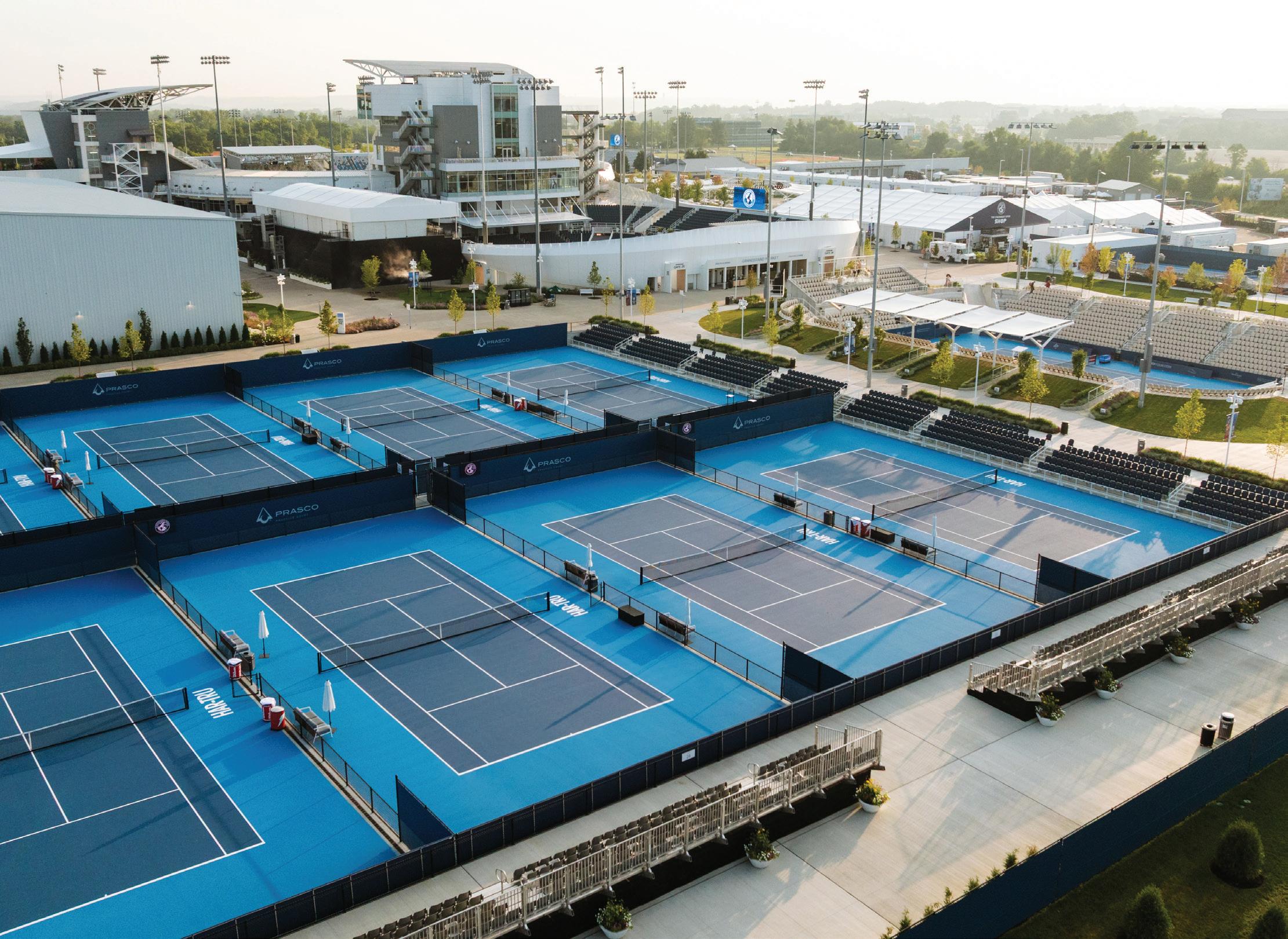
When tennis fans think of the summer swing, they picture blistering forehands, high humidity, and the intense competition of the hardcourt season. As the world’s best players battle for points and momentum ahead of the final Grand Slam of the year, every variable matters. But while players, coaches, and cutting-edge racquets usually take the spotlight, the literal foundation of the sport often goes unnoticed.
Mention the name "Har-Tru," and most tennis aficionados immediately picture the iconic green clay that has defined American tennis for decades. However, a quiet revolution has taken place on the professional tour. Har-Tru is playing a critical support role in the summer season for both the ATP and WTA tours.
The company’s premier hardcourt product, Proflex high performance surfaces, is the trusted court system for an impressive three out of the eight prestigious tournaments in the US Open Series.
The Mubadala DC Open, the historic Cincinnati Open, and Canada’s premier National Bank Open have all chosen Har-Tru’s Proflex acrylic system as their surface of choice. Hosting an ATP and WTA 1000-level event requires flawless execution, and tournament directors can’t compromise on the quality and reliability of their courts.
"We are pleased to be working with Har-Tru as our official court surface provider," said Bob Moran, Tournament Director of the Cincinnati Open. "It's an
extremely important step for us to be aligning with Tennis Canada and Washington, D.C., to provide the players a consistent speed and surface for the summer swing of the ATP and WTA Tours."
The Proflex system is designed to deliver maximum consistency, medium-fast pace, and a consistently true bounce—crucial factors for top-tier athletes dialing in their timing. The multi-layered acrylic formulation is calibrated to ensure that the surface plays the exact same way on center court as it does on the outer practice courts.
Furthermore, Proflex offers durability against the intense summer sun and heavy, aggressive foot traffic. Its vibrant, UV-resistant pigments ensure that the courts look as stunningly bright on championship Sunday as they do on opening day, providing bright contrast for both the players and the global television broadcast.
The US Open Series is the ultimate proving ground, not just for the athletes, but for the equipment they rely on. By anchoring nearly half of the series, Har-Tru has decisively proven that its expertise extends far beyond clay. Whether you are outfitting a world-class stadium, a college facility, or a private club, Proflex delivers tour-tested excellence. The next time you tune in to watch the summer’s biggest hardcourt matches, take a closer look at the surface below. You might just be looking at a Har-Tru hardcourt.
By Osvaldo Godoy
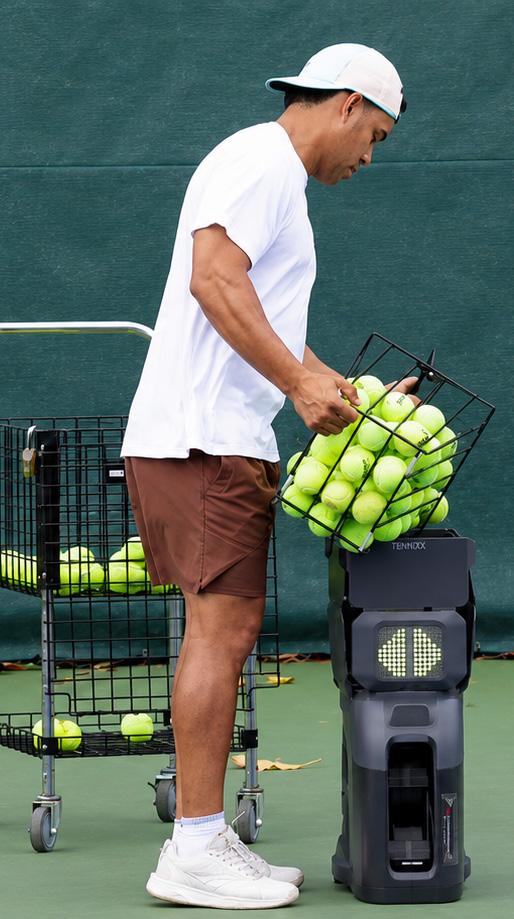
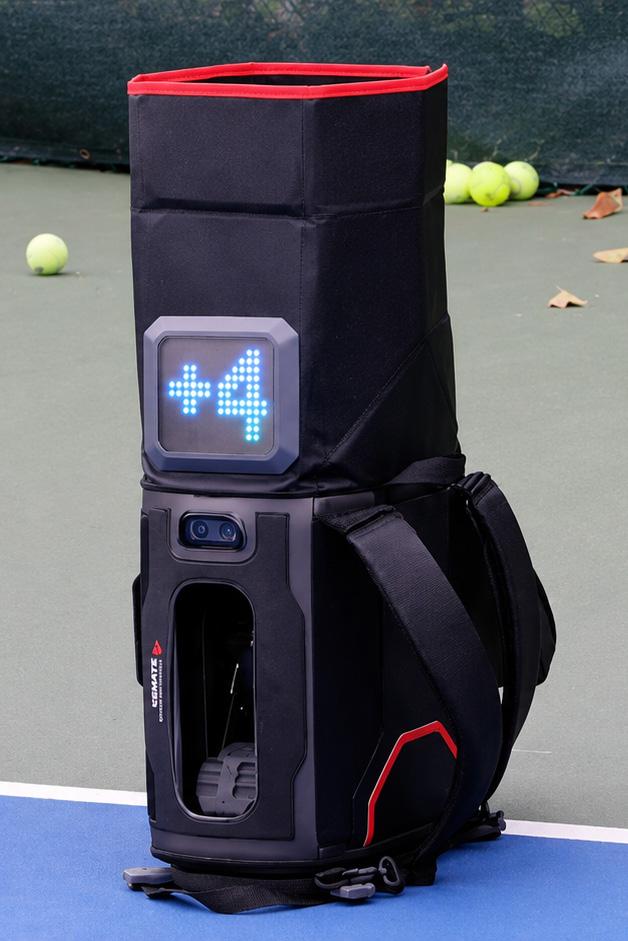
Florida Tennis Magazine recently visited a court in Miami for a video shoot and product review featuring a Tenniix ball machine. The two-hour session included several recreational players testing the machine in a variety of drills, along with Jacob Huang, Business Development Manager for Tenniix, who provided an overview of the company's technology and training platform.
The session focused on evaluating how the machine performs during a typical practice environment and exploring some of the features that differentiate it from traditional ball machines.
According to Huang, one of the main goals behind the product was portability.
“Traditional ball machines were heavy and not easy to carry,” Huang said. “We wanted to make the machine more compact and easier to use. You can easily put it in the back of your car.”
The unit used during the session weighs approximately 18.7 pounds (8.5 kilograms), making it lighter than many traditional ball machines commonly found at clubs and academies.
Players spent much of the session experimenting with different drill settings, including changes in speed, spin, and ball placement. As the difficulty level increased, the machine began mixing in more spin and wider shot patterns.
“Level two is more difficult,” Huang explained. “We add more spin and then left and right.”
The adjustments were noticeable on court.
“Man, that was tough,” one player said after completing a sequence. “Really fast. Ball coming to the right. Really fast to the left.”
One of the features that generated the most discussion among par-
ticipants was the machine's app integration and voice-control capabilities. Through the app, users can select training modes and customize drills, while voice commands allow adjustments during a session.
“I like the portability aspect,” one player said. “And with the AI, you can control it from your voice and tell it, in the middle of a session, that you want to work on volleys or change it to baseline shots.”
For recreational players, another potential benefit is the ability to practice without coordinating schedules with a hitting partner.
“Instead of trying to find a partner to play with at a certain time, you can just go out to the court, bring it with you, and practice,” another participant noted.
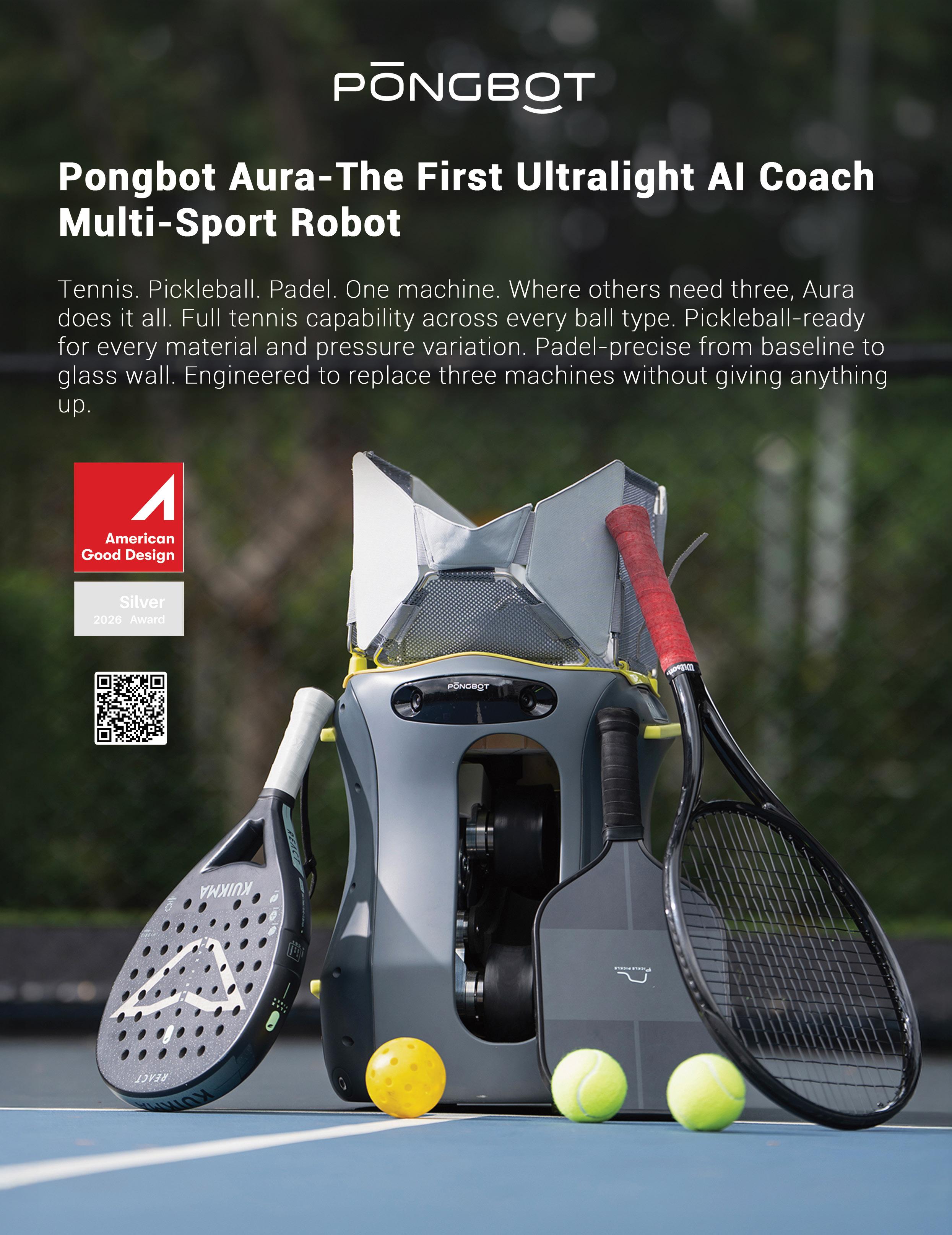
Tenniix currently offers multiple configurations and upgrade options, including voice-control functionality and advanced camera-based tracking modules. The company has also introduced products for pickleball players, reflecting the continued growth of both sports and the increasing demand for technology-assisted training.
As training technology continues to evolve, ball machines are becoming more customizable and connected than in previous generations. The Miami session provided an opportunity for local players to experience some of those developments firsthand and see how they might fit into their own practice routines.
For more information about Tenniix products and training technology, or to purchase a machine, visit www.tenniix.ai The website includes details on available models, features, and upgrade options for both tennis and pickleball players.
By Osvaldo Godoy
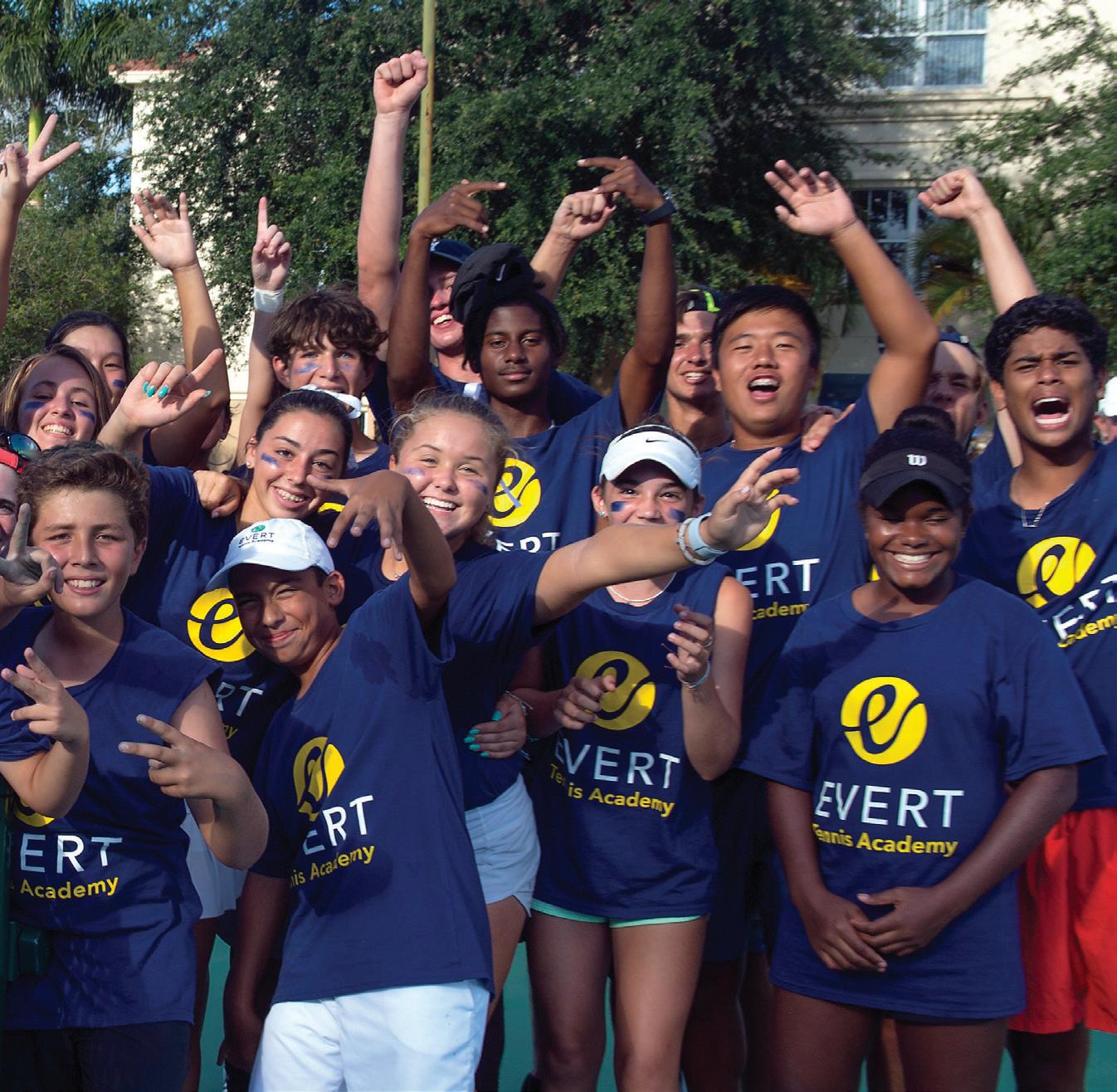
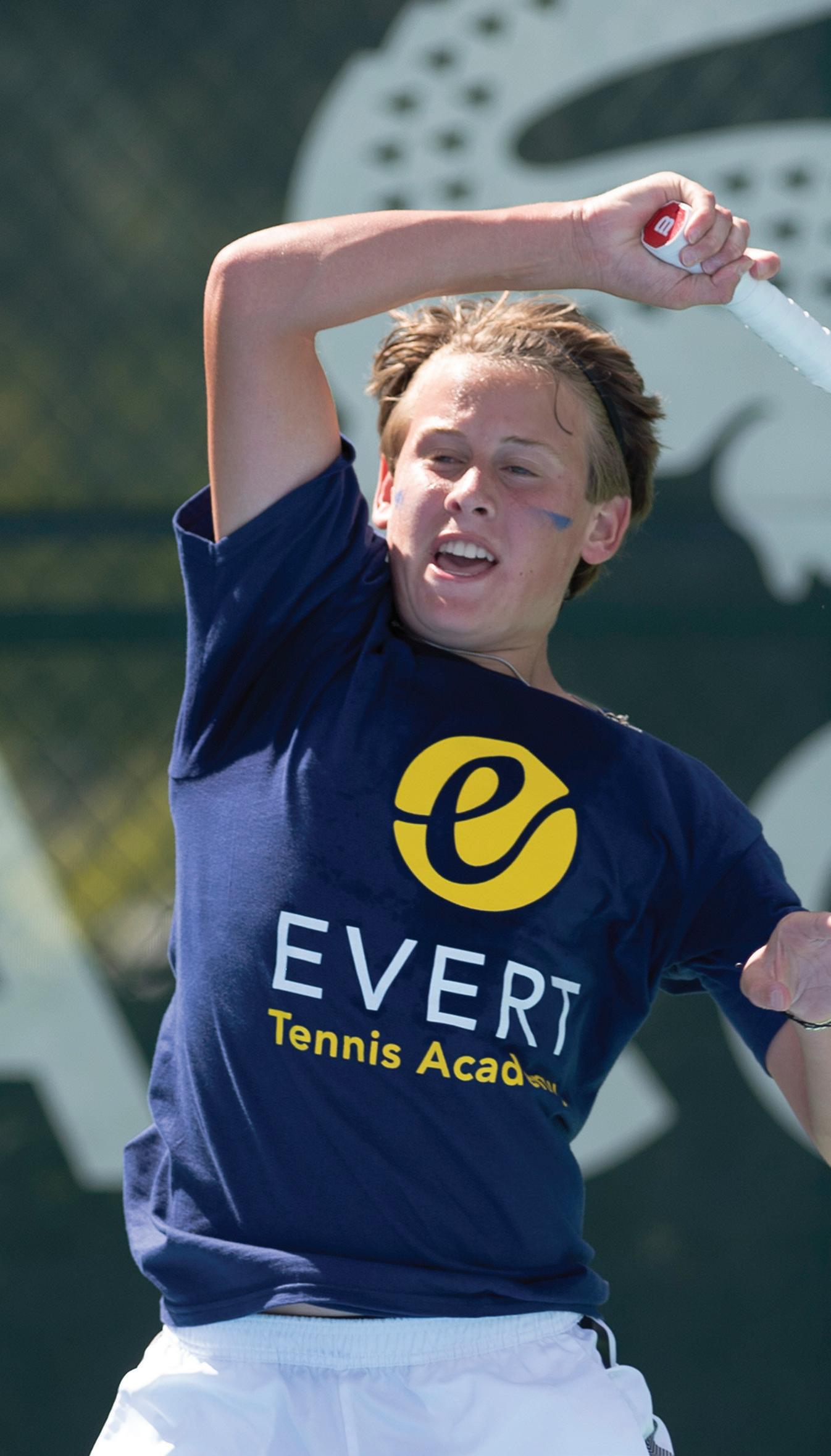
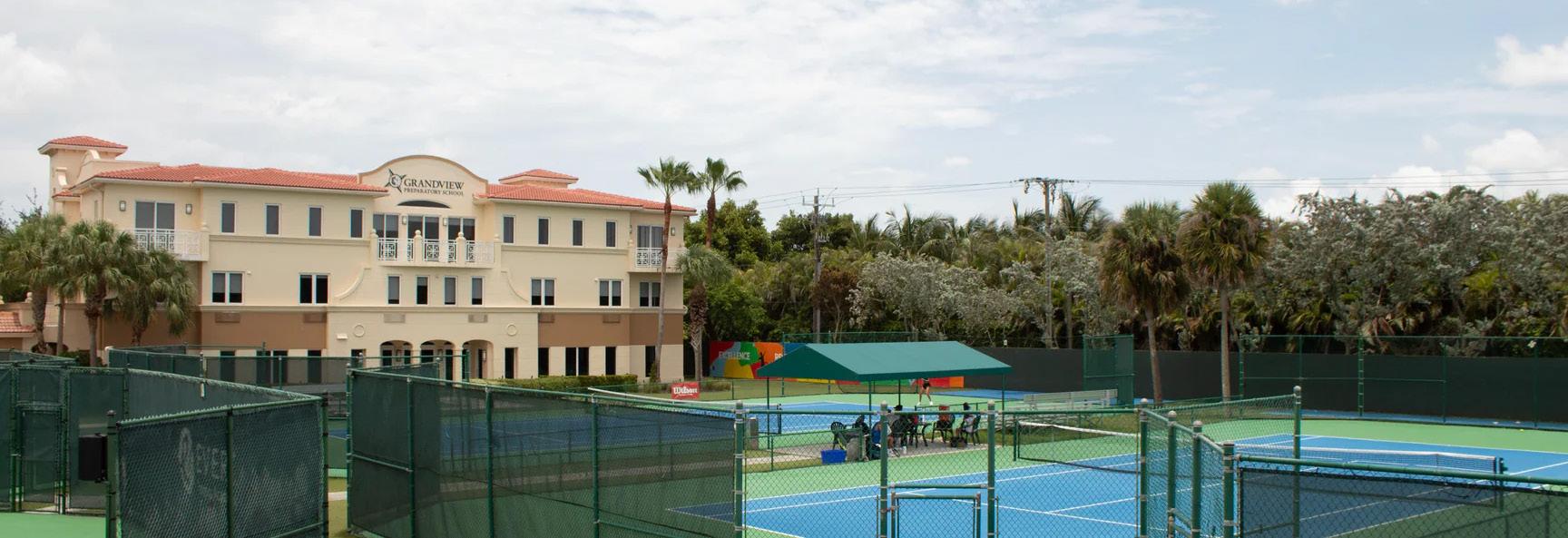
At Evert Tennis Academy, elite tennis training and high-level academics come together through a unique partnership with Grandview Preparatory School. During a recent visit to the academy, Florida Tennis Magazine Editor Matt Pressman sat down with Alan Stob, Head of School at Grandview Preparatory School, to discuss how the program is helping student-athletes pursue their dreams both on the court and in the classroom.
For nearly three decades, Grandview Preparatory School has focused on creating an educational environment tailored to the individual needs of each student.
“Grandview was founded in 1997,” said Stob. “We opened as a EC through 12th grade independent private school focusing on personalized education for each of the students and seeing them as deeply human individuals and trying to focus on the personalized aspect of the education.”
That individualized approach has made Grandview an ideal fit for aspiring tennis players, many of whom face the challenge of balancing rigorous training schedules with their academic responsibilities.
“These students live very, very busy lives,” Stob said. “The schedule for each student is customizable.”
Students begin their days at 7 a.m., with one block dedicated to academics and another to tennis. The two are interchangeable, allowing players to adjust their schedules around tournament travel, weather conditions, and recovery needs.
“If a student needs to sleep in from a late tournament or there's inclement weather that's coming, it's very customizable and flexible,” said Stob. “The students can sometimes pick and choose which of the sessions to go to.”
The flexibility extends into the classroom as well. Students can choose between in-person and online learning depending on their schedules and preferences, while those who frequently travel for tournaments receive additional support to ensure they remain on track academically.
“We provide in-person academics for the students in the core subjects,” Stob said. “Math, science, English, and history are all done in person if the student chooses.”
One of the aspects that separates Grandview from many traditional academy experiences is that student-athletes can still enjoy many of the milestones associated with a typical high school experience.
“We allow the students to participate in those signature life events, whether it's pep rallies or homecoming, prom, large graduation celebrations, academic award ceremonies,” Stob said. “It's a really great opportunity for the students to be able to be part of a larger community and not have to sacrifice any of those signature events.”
The school's small class sizes also allow teachers to provide individualized attention and accommodate the unique schedules of student-athletes.
“Class sizes will range anywhere from five to 15 students depending on
the academic course as well as the class that's being offered,” Stob noted.
Helping students reach their college goals remains one of the school's core priorities, particularly for those balancing academics with the demands of high-level tennis.
“Grandview is a college preparatory school,” Stob said. “Our focus is for all students to go to the college of their choice.”
To help students achieve those goals, the school offers an extensive SAT preparation program beginning in the 10th grade.
“We have a robust SAT prep program that all students starting in 10th grade are required to be in,” he explained. “It's a two to two and a half year program depending on when the students get the score that they want to achieve.”
The results speak for themselves.
“We have athletes and non-athletes who are at Vanderbilt and Duke and UCLA,” said Stob. “The academics is really the priority for us at Grandview.”
Rather than asking students to choose between pursuing their athletic ambitions and receiving a quality education, Grandview has designed its model around the realities of a student-athlete's life.
“Our main objective is to make sure that academics fits into the life of the student instead of them having to fit their training and life around school and academics,” Stob said.
The school also embraces the opportunities that tennis provides and celebrates students' successes on the court rather than viewing tournament travel as a disruption.
“If a student is absent on a Monday because they're in the finals of a tournament, instead of looking at that as a negative that they're missing the class period, we actually celebrate it as a success,” he said. “The students are doing what they love. They're passionate about it and we're providing them that time and space to continue doing what they love to do.”
For families seeking both elite academics and world-class tennis training, Stob believes the partnership between Grandview Preparatory School and Evert Tennis Academy offers the ideal environment.
“The partnership with Evert is excellent for all the students because the coaches and the Evert professionals are the experts in their field on the tennis court and then Grandview are the educators who really focus on the academics for the students,” he said. “It's the best of both worlds. Families don't have to choose between elite academics or elite tennis training. They get both opportunities at one location.”
Families interested in learning more about Grandview Preparatory School and its partnership with Evert Tennis Academy are encouraged to visit the campus and experience firsthand how the program is helping studentathletes succeed both academically and athletically.
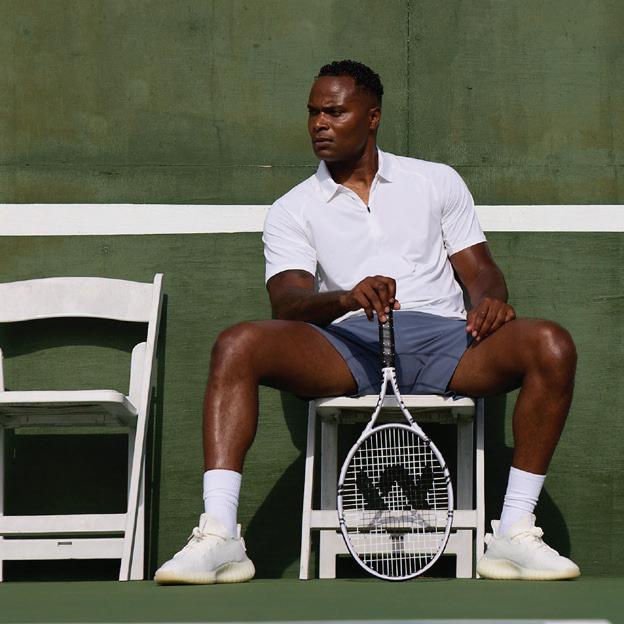

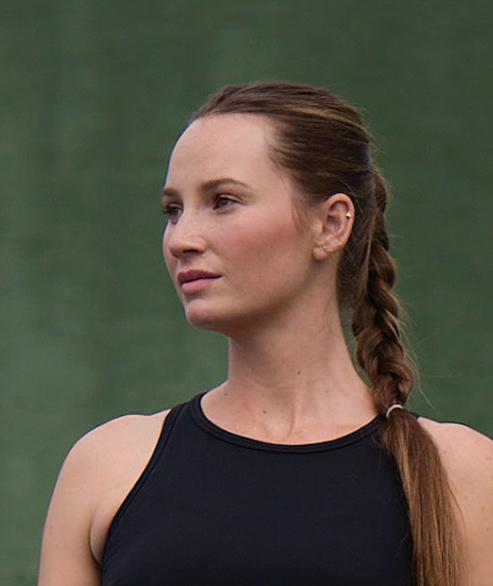


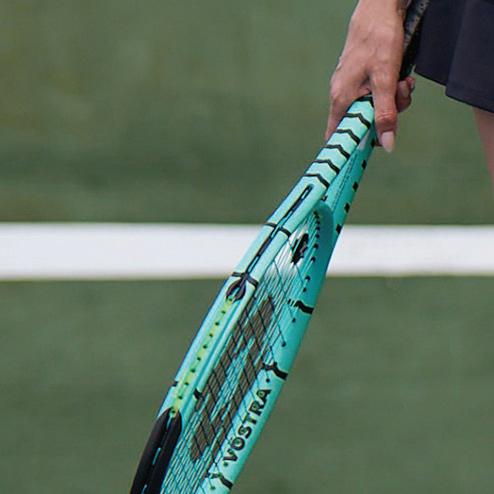
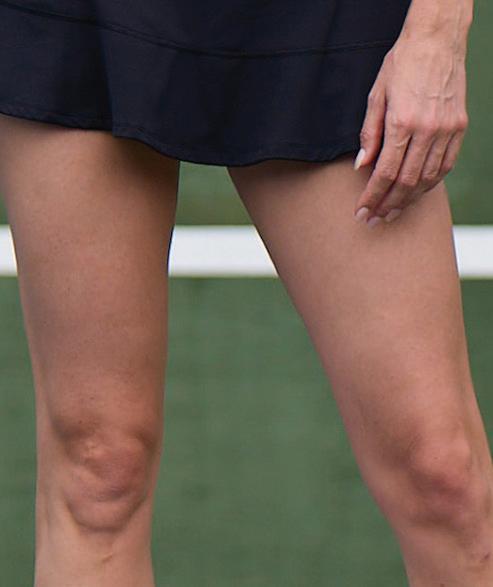

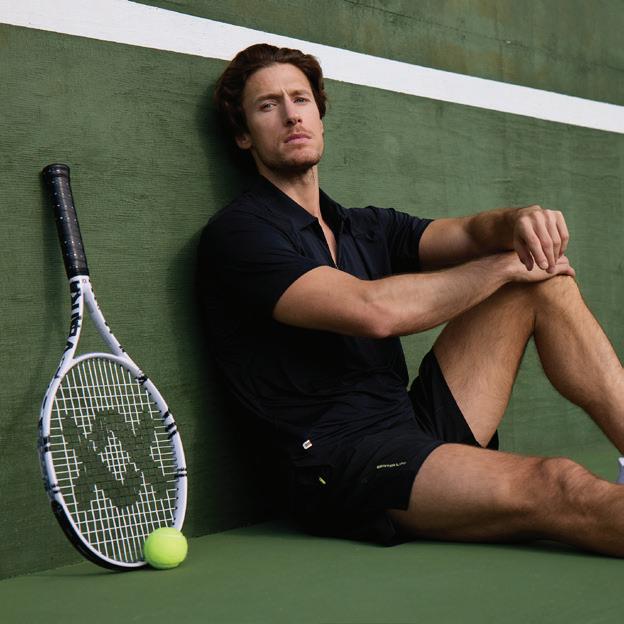
Engineered to outlast the Florida sun. Discover high-performance tennis apparel that fuses elite moisture-wicking breathability with effortless, court-side style. When the humidity peaks and the rallies stretch, Centerline keeps you cool, fluid, and completely in command.
The Junior Orange Bowl International Tennis Championships has recently announced a major transformation of its international qualification pathway beginning with the 2026 edition of the tournament through the launch of its new Global Qualification Playoff Series.
The upcoming Junior Orange Bowl Tennis Championships will take place December 12 to December 19, 2026, in Miami, Florida, and will introduce some of the most significant structural changes in the tournament’s history.
For the first time ever, the tournament will feature a reduced 64-player Main Draw and a reduced 64-player Qualifying Draw. These changes are part of a broader long-term vision to make the Junior Orange Bowl the most elite, competitive, and international U12 and U14 tennis tournament in the world.
In another major evolution, players from around the globe will now primarily qualify through newly created regional playoff events rather than through a combination of rankings, ratings, and federation recommendations.
“This is a major step forward for the Junior Orange Bowl,” said Robert Gomez, Tournament Director of the Junior Orange Bowl Tennis Championships. “We want participation in this tournament to be truly unique and exceptional. Players will now have to earn their place on court through highly competitive regional playoffs. Our goal is to bring together the very best young players from every continent in the world.”
Historically, player selection was based on a combination of WTN ratings, UTR ratings, USTA rankings, and recommendations from national federations. Starting in 2026, the tournament will progressively transition toward a meritbased international qualification pathway built around regional playoff competitions through the new Global Qualification Playoff Series.
The philosophy is simple: “Playoff to qualify for the Junior Orange Bowl.”
Players who qualify through these regional playoff events will earn direct acceptance into the Junior Orange Bowl Main Draw or Qualifying Draw. The playoff season will generally run each year between mid-June and midNovember.
The 2026 edition will serve as a hybrid transition year while the Global Qualification Playoff Series continues expanding internationally. If playoff events are not yet available in a given region, or if quota spots remain open, remaining selections will temporarily revert to WTN-based criteria.
All players wishing to participate in the Junior Orange Bowl will still be required to officially register for the tournament once registrations open in early August 2026, regardless of playoff participation.
Confirmed playoff events so far include French Touch Academy in France from August 12 to August 21, 2026; Sofia, Bulgaria from October 10 to October 18, 2026, pending final confirmation; Monastir, Tunisia from June 29 to July 5, 2026; and David Ensignia Tennis Academy in South Florida in October or November 2026, with dates to be confirmed.
Additional playoff events are currently under discussion in Europe, Latin America, Asia-Pacific, and other strategic regions. Players, coaches, and federations are encouraged to stay updated through the official Junior Orange Bowl website and social media channels as additional playoff announcements are finalized.
Regional quotas for 2026 include 14 protected spots plus one playoff spot for the United States; 12 spots for Europe; nine spots for Asia / Pacific; two spots for Africa / Middle East; four spots for Canada; and six spots for Latin America.
The United States will remain the only region with protected direct-entry positions for the top accepted American players. All other players, including Americans outside the protected positions, will need to qualify through playoff events.
All playoff events will feature round-robin group stages followed by single-elimination draws. This format guarantees players a minimum of three matches while maintaining a highly competitive qualification environment.
In addition, the tournament will maintain eight Main Draw Wild Cards and eight Qualifying Draw Wild Cards. These wild cards will allow organizers to accommodate exceptional circumstances including injuries, scheduling conflicts, travel limitations, or players unable to participate in playoff events.
“We believe this new Global Qualification Playoff Series will elevate the global value and prestige of the Junior Orange Bowl,” said Michael Wiesenfeld, Junior Orange Bowl Tennis Committee Member in charge of Sponsorships and Player Experience.
“The idea is simple: no player is automatically entitled to participate anymore, not even the top-ranked player from a major tennis nation. Everybody will need to compete and earn their spot. We believe this creates a much fairer and more exciting international ecosystem.”
Robert Gomez added: “Our ambition is clear: to make the Junior Orange Bowl the most competitive and international U12 and U14 tournament in the world, while giving talented young players from every continent a real opportunity to qualify on court.”
The Junior Orange Bowl Tennis Championships is one of the most prestigious international junior tennis tournaments in the world for players aged 12-and-under and 14-and-under. Hosted annually in South Florida, the event has welcomed many of the greatest players in tennis history during their junior careers and attracts elite young players from more than 70 countries every year.
Edge International is an international sports management and marketing agency specializing in youth sports, sponsorships, international events, and athlete development. Since becoming a major partner of the Junior Orange Bowl in 2023, Edge International has played an active role in expanding the tournament’s international visibility, partnerships, and player experience initiatives.
Based in South Florida, the David Ensignia Tennis Academy is recognized as one of the leading high-performance junior tennis academies in the United States. A long-time partner of the Junior Orange Bowl, the academy has developed numerous nationally and internationally ranked players and will organize the U.S. Playoff Series event for the 2026 Junior Orange Bowl season.
For more information, visit jrorangebowl.org and follow @JOBtennis.



By Will Turvey
Meet Anastasia Folorunso, one of the most innovative people in tennis media. Though she is only in her fourth year of working in the sport, she's a recognizable face at big events: her bubbly demeanor and groundbreaking journalistic content means that forming connections are easy. That is a big part of how she started a project which is the focus of this article: a television series titled Off Season, which follows top professional tennis players around Florida as they navigate their limited post-season break from the tours.
Folorunso is no stranger to the inner workings of professional tennis. In 2023, she launched a podcast and media company, Ground Pass, with co-host Nick Carter. This valuable addition to a large roster of tennis-themed shows targets a slightly different but wider audience, as it uses not-so-niche jargon to make the sport more accessible to any fan—new or lifelong—and centers around the culture, fashion, and social aspects of the sport as well as the tennis highlights of the tour. But in 2025, she decided to expand her portfolio with a new project that taps into her previous work—a documentary. Prior to the launch of Ground Pass, Folorunso was an assistant director working on top Hollywood projects, so this new idea was right up her ally. She told me: "My motivation for making Off Season was to show people the other side of being a professional athlete. We see the matches and results but there is a lot that goes into being an athlete and I want the show that world." But she needed to assemble her cast.
After attending tons of tournaments last year, consistently interviewing and interacting with the five core players who would become the focus of her show, she broached the idea which was warmly received. And throughout November and December of 2025, she and a small team followed these athletes around Florida as they prepared for the season ahead. Folorunso tells me the filming process was straightforward. "It was simple. I actually wanted a bit more crew, but as this is a self-funded and independent project, I couldn’t get any more. By necessity, it became a small 3 person crew of me and a second camera." And what they were able to capture was a goldmine: a true, intimate look into the off-tour lives of these top professionals, which is something rarely seen from an outsider's perspective.
Every episode hovers around 10 minutes long, and is packed with content as time is split between the five stars. You'll get to see rising American Colton Smith and coach Rhyne Williams go spear fishing in their spare time. You'll catch the former Texas Longhorn Eliot Spizziri spending endless hours
grinding on the courts under the hot sun. Three-time WTA tour titlelist Camila Osorio will guide you through her track workout, while up-and-comer Ethan Quinn will show you how to make homemade chicken tenders. And, you'll get to see Hailey Baptiste's preparation for a short season that had her achieving huge milestones, including a semi-final in Madrid. Maybe you've heard of some of these players. Maybe you haven't. But after watching the show, each of their unique and complex personalities will make a viewer feel like they have a personal connection with these athletes. Folorunso tells me, "I hope it will make viewers pay attention more to lower ranked and local players. There is a joy and excitement of following an athlete's journey from the beginning, through the good and bad times. A lot of the players I have followed have seen it all, and it's nice experiencing that journey with them. I also just want viewers to understand the nuances of the sport more."
The series also features commentary from Chris Eubanks, adding a familiar tennis voice as the show moves between training, off-court routines and the personalities behind the rankings.
While the first part of the series is complete, Off Season is by no means over. "The series is definitely going to continue as long as I can keep it going," Folorunso said, and she is excited to announce the start of part two which follows an extended cast of these five original players as well as many new additions. Off Season: In Season will feature several doubles teams, including Australian Open champions Neal Skupski and Christian Harrison and top WTA duo Ellen Perez and Demi Schuurs. With the new part, viewers will get the complete picture of life both on tour and off.
So, if you haven't seen the show already, it's time to head over to YouTube. And, if you want to catch clips of content as well as keep up with the whereabouts of these players and their results, you can follow the series on Instagram. As Folorunso said, Off Season is a self-funded project. To keep the magic alive, you can always chip in to help it continue to grow.

By Osvaldo Godoy
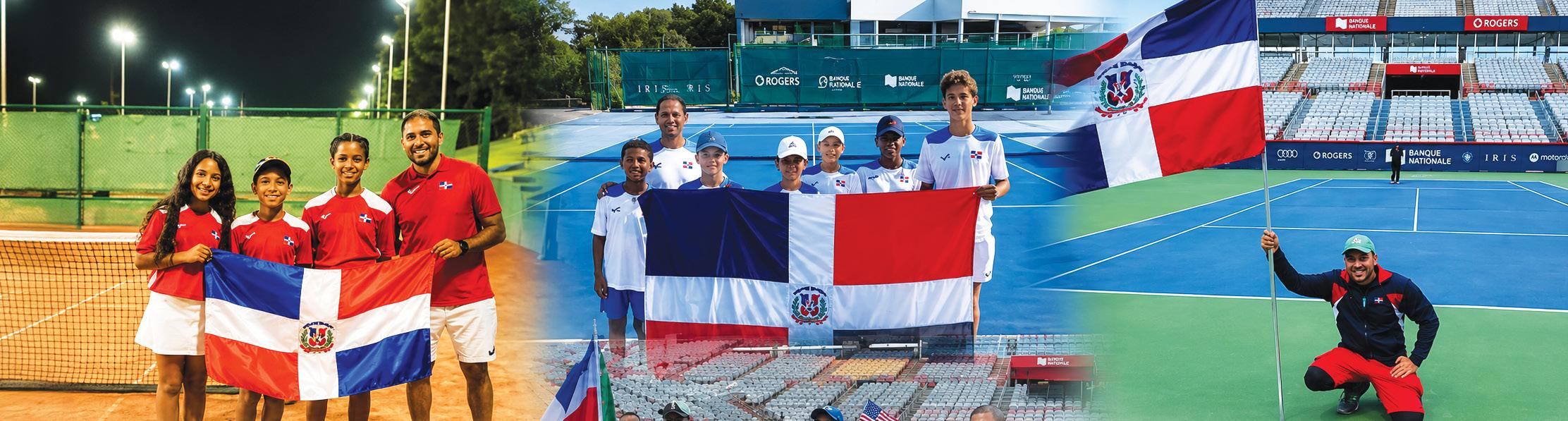
In a country where baseball has traditionally been the most popular sport, tennis has continued to grow thanks to coaches who have dedicated their lives to developing young players. One of them is José Manuel “Lenny” Estrella García, who has spent more than two decades helping shape the next generation of Dominican tennis.
Today, Estrella coaches at Club Centro Español in Santiago, the same club where his own tennis journey began. Unlike many players, he didn’t pick up a racket until he was almost 11. Inspired by his family—including his cousin, former world No. 43 and three-time ATP champion Víctor Estrella Burgos—and following a recommendation from a school psychologist, he eventually found his way into the sport.
“I liked baseball like everyone else in the Dominican Republic, and I didn’t feel comfortable with tennis at first. Once I started playing better, there was no way to get me off the court.”
His development was rapid. By age 14, he had earned a place on the Dominican Republic’s Junior Davis Cup team before later representing his country in the 16-and-under and 18-and-under divisions.
After briefly studying engineering, Estrella realized his future belonged on the court.
“I didn’t feel comfortable, and that’s when I decided to leave university and dedicate myself to being a tennis coach.”
He went on to earn coaching certifications in the Dominican Republic,
Guatemala, Mexico, and Spain before working with the Dominican Tennis Federation, traveling internationally with the country’s junior and national teams.
For Estrella, the greatest reward isn’t winning tournaments but watching players improve.
“It feels super special when you’re explaining something to a player and you see that what you’re teaching is giving results and helping them improve.”
He also believes coaching extends far beyond developing tennis skills.
“You have to be a father, psychologist and coach.”
Having worked with young athletes for many years, Estrella understands how demanding the professional game can be and encourages players to remain disciplined while also considering college tennis.
“It is a very hard and difficult sport. You have to be very disciplined and very different from the rest if you want to play professional tennis.”
At the same time, he reminds his students that “tennis opens a lot of doors.”
Estrella also credits his cousin Víctor for inspiring a new generation of Dominican players.
“Víctor was the person who opened the way. He became a reference for all the players who dream of playing professionally.”
From the courts of Club Centro Español, Lenny Estrella continues to help young athletes grow both on and off the court, passing on the experience and values that have defined his own career.


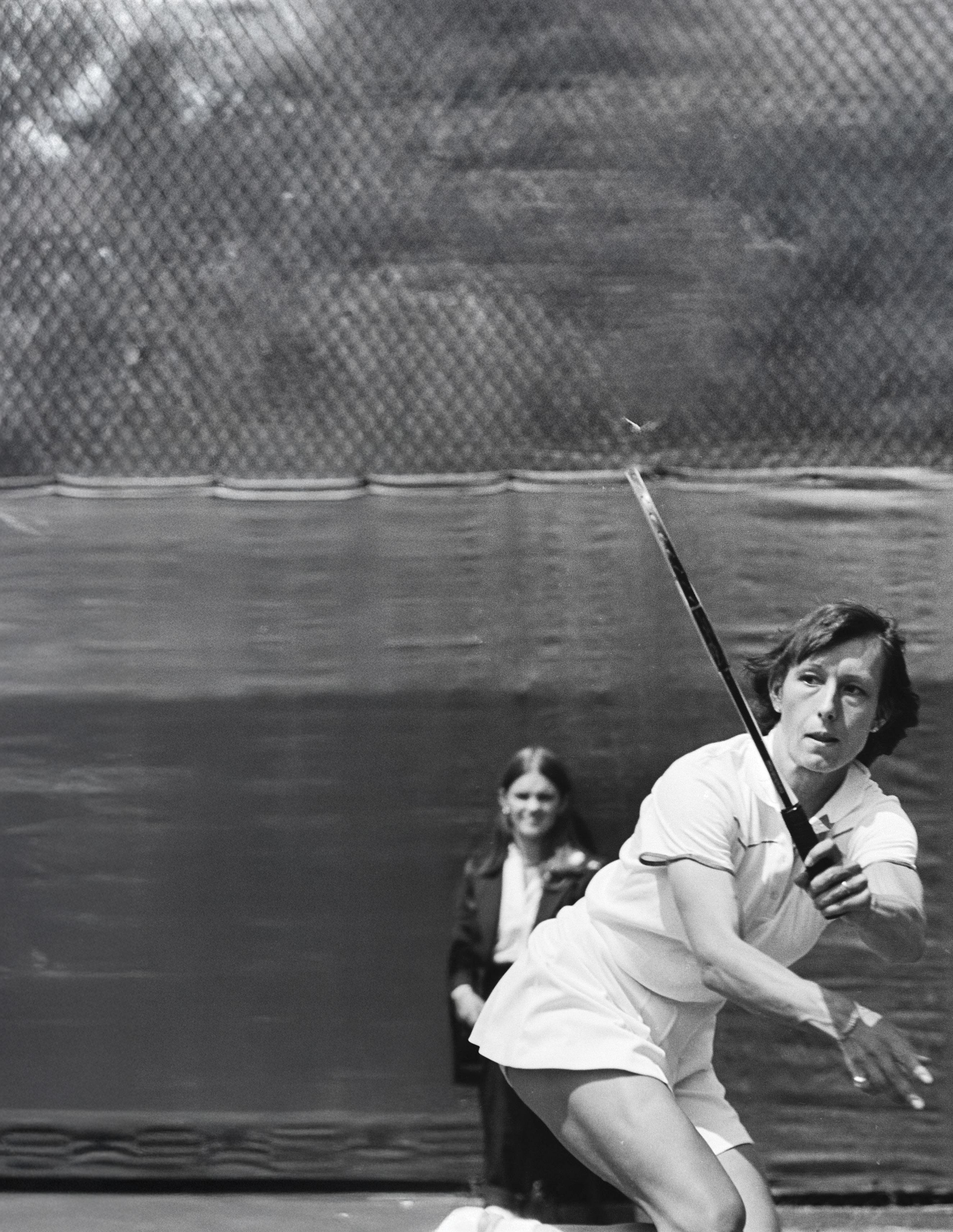
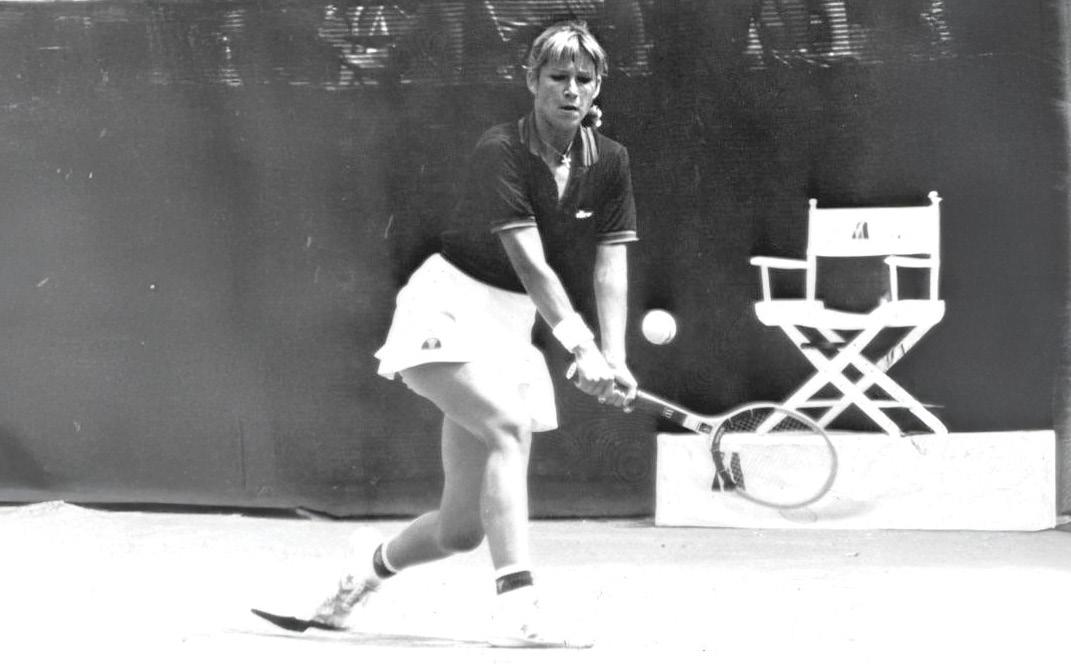
Chris Evert, co-founder of Evert Tennis Academy in Boca Raton and one of the most consistent champions in tennis history, is featured alongside Martina Navratilova in Chris & Martina: The Final Set, the new documentary released last week on Netflix.
The film revisits one of the greatest rivalries in sports history. Evert and Navratilova met 80 times between 1973 and 1988, including 14 Grand Slam finals. Both held the world No. 1 ranking. Both retired with 18 Grand Slam singles titles. And after 15 years of trying to beat each other, they became friends.
That rivalry offers more than nostalgia. For young tennis players, parents and coaches, it remains one of the clearest examples of how great competition can shape a player’s development.
A great rival forces improvement in ways practice alone cannot. Evert’s relentless consistency from the baseline pushed Navratilova to sharpen her attacking game and become even more dangerous at the net. Navratilova’s serve-and-volley pressure forced Evert to find passing shots and patterns sturdy enough to hold up against one of the sport’s most aggressive champions. Each player became the problem the other had to solve.
That lesson applies at the junior level every day. Players often improve fastest when they train and compete against someone close enough in level to make them uncomfortable. A practice partner who is too easy to beat may build confidence, but a rival who exposes weaknesses creates growth. Drilling builds the foundation, but match play against players who can hurt you is where that foundation gets tested.
The Evert-Navratilova rivalry also shows that there is no single correct way to play winning tennis. Evert won with rhythm, depth, discipline and baseline control. Navratilova won with athleticism, aggression, net play and constant forward pressure. Their games looked completely different, yet both reached the top of the same sport at the same time.
For developing players, that matters. The goal should not be to force every junior into the same modern template. Some players are built to grind from the baseline. Others are natural attackers. Some win with patience. Others win by taking time away. The best development plan is the one that strengthens what a player naturally does well while improving the areas opponents will eventually test.
Perhaps the most important lesson is that respect does not mean going easy. Evert and Navratilova competed fiercely for 15 years. They did not protect each other’s feelings by holding back. They showed respect by bringing their best tennis, again and again, across Grand Slam finals and major moments.
Young players sometimes confuse kindness with reduced effort. But on a tennis court, the highest respect you can show an opponent is to compete fully. Sportsmanship belongs in the handshake, in the body language, in fair line calls and in how a player handles wins and losses. Effort belongs in the tennis. Both can exist at the highest level.
Their rivalry also reminds players that a career is longer than any one
match. Evert and Navratilova’s head-to-head finished 43-37 in Navratilova’s favor, close enough that a handful of matches could have changed the historical balance. At the time, every result mattered enormously. Looking back, each match became part of a much larger story.
Junior players can struggle with that perspective. A single loss can feel crushing. A single win can feel defining. But in the long run, every match is information. A loss shows what needs work. A win shows what is holding up. Neither one defines the player.
That may be the lasting message of Chris & Martina: The Final Set. The best rivalries are not built on hatred. They are built on respect for someone whose excellence demands your own. The best wins are earned against someone playing their best. The best losses become part of a longer story.
Decades after their final match, Evert and Navratilova remain connected not because they went easy on each other, but because they spent 15 years pushing each other toward greatness. For young players learning how to compete, that may be the most valuable lesson of all.
Walk onto any court in South Florida on a Saturday morning and watch the warm-up. Not the forehands — the faces. The shoulders. The walk between the baseline and the towel. Inside ten seconds I can usually tell you who is going to fold when the match gets tight, and it has almost nothing to do with how clean the strokes look.
That sounds arrogant. It isn't. It's pattern recognition built over decades of coaching players from juniors to the professional tour. The player who is about to lose a close match is broadcasting it before the first ball is struck. The tells are physical, but the cause is mental — and that's the good news, because mental patterns are learnable and fixable. Choking is not a character flaw. It's an untrained skill.
Most players believe confidence is something you either have or you don't on the day. You "feel it" or you don't. So, when the nerves arrive at 4-4 in the third, they treat the feelings as uncontrollable — and this is actually true, but what is not true is that they are unmanageable. There are tools you can use that help you play better nervous tennis. NOT BETTER TENNIS — BETTER NERVOUS TENNIS! This is the essence of becoming a great competitor. For most, when the body tightens, the feet stop, the second serve shortens, and the scoreline simply confirms a decision the player already made in their head: “I don't have it today.”
Here is a truth elite performers understand and club players miss: nerves are not the problem. Everyone feels them. The difference between the player who wins the tight one and the player who donates it is not the absence of pressure — it's what they do in the 20-25 seconds between points when no one is watching the scoreboard but everyone is watching them.
Locker Room Power: Composure Is a Choice You Rehearse
In Locker Room Power, I call this owning your "Locker Room" — the internal space where you decide who you are under pressure before the pressure arrives. Champions don't wait to feel calm. They behave calmly on purpose, and the feeling follows the behavior. It's the opposite order to what most people assume.
You can train it starting with your next practice:
Build a between-point routine and guard it like your serve. Watch the best players and you'll see the same ritual after every single point, won or lost: a turn to the back fence, a look at the strings, a breath, a reset, then a deliberate walk to the line. That routine isn't superstition. It's a circuit-breaker that stops one bad point becoming three. If you only have a routine when you're ahead, you don't have a routine.
Control your walk and shoulders. Your body talks to your brain as much as your brain talks to your body. Lift the shoulders and the chest, slow the walk — and you send your nervous system the signal that you are fine, even when the inner voice is screaming. Your opponent reads it too. A composed walk to the baseline at 4-5, 15-30 is one of the most underrated weapons in the game.
Play the next point, not the last one. Pressure lives in the past — the point you blew — and the future — the match you might lose. It cannot survive in the present point. The skill is dragging your attention back to the only thing you can actually play: this ball, this serve, this contact.
If you're watching your child, the most powerful thing you can do is take the verdict out of their head. Praise the reset, not the result. "Great recovery after that double fault" trains a champion. "How did you lose to him?" trains a quitter. The mind your child builds at twelve is the one they'll compete with at twenty.
So yes, I can often read the result in the first sixty seconds. But the only reason that's true is that most players never train the inner game at all. They hit thousands of forehands and zero reps of composure. Flip that ratio, even slightly, and you become the player nobody wants to draw in a tournament: the one whose body language rarely changes, win or lose the point.
That's not talent. That's a trained mind. And it's available to every player reading this, on every court in Florida, starting with your very next match.
ing an
available on Amazon and
elite athletes (seen above with Liam Broady) and high-performing leaders, applying the same mental-performance principles on the court and in the boardroom. Learn more at davidsammel.com or contact him directly at david@davidsammel.com.
By Alex Binstok
What if introducing tennis to a child didn't start with a racket and a fullsized court?
That's the question Neal Feinberg explores in his new book, Toddler Tennis. As President of Florida Indoor Tennis Club and a RSPA certified teaching professional, Feinberg believes children can begin developing the skills needed for tennis as early as two years old—not through traditional lessons, but through fun, movement, and imaginative play.
Rather than asking toddlers to rally over a net, Toddler Tennis focuses on activities that naturally build hand-eye coordination, balance, reflexes, movement, and confidence. Bubble wands, balloons, beach balls, obstacle games, and creative exercises become the tools that introduce young children to the fundamentals of the sport without the pressure of "playing tennis."
Feinberg's philosophy is simple: if an activity is too difficult, simplify it until success becomes possible. That early success helps children stay engaged, build confidence, and most importantly, enjoy being active. Throughout the book, he emphasizes that the goal isn't to create the next Grand Slam champion—it's to help children develop a lifelong love of movement, learning, and tennis.
The approach also recognizes today's reality. With countless distractions
competing for a young child's attention, creating positive, interactive experiences has never been more important. By making tennis feel like play, parents and coaches can introduce the sport in a way that's exciting, encouraging, and age-appropriate.Beyond tennis itself, many of the activities featured in Toddler Tennis promote motor development, coordination, communication, problemsolving, and social interaction. The lessons encourage parents and children to learn together, creating meaningful moments that extend well beyond the court.
South Florida families will soon have the opportunity to experience the program firsthand. Feinberg's Toddler Tennis curriculum will be offered at the new Florida Indoor Tennis Club in Pompano Beach, giving parents an exciting new option to introduce their little ones to the game in a fun, supportive environment.
Whether a child eventually becomes a competitive player or simply grows up enjoying tennis as a lifelong activity, Feinberg believes the first experience should always be the same: positive, playful, and filled with smiles. If Toddler Tennis is any indication, that journey can begin much earlier than most people think.



Nick Saviano is a former professional tennis player, longtime coach, and one of the most respected voices in long-term player development. He has helped train over 75 tennis players who have gone on to professional tennis careers on the WTA and ATP tours. He has coached at every level of the game, from junior players to high ranking professionals, including Genie Bouchard and Amanda Anisimova and Major Champion Sloane Stephens. He has spent decades thinking deeply about what actually helps players grow not just as competitors, but as people.
In a sport that often chases rankings and quick results, Coach Saviano has consistently argued for patience, accountability, and development done the right way. He is the author of the fascinating 2003 book, Maximum Tennis: Ten Keys to Unlocking Your On-Court Potential, which contains a foreword from
ITHOF’er Chris Evert in which she noted that Coach Saviano’s strategies allow all players, regardless of level, to maximize their potential. Coach Saviano is the cover story subject of the November-December 2025 issue of Florida Tennis magazine. He joined the Florida Tennis Podcast with Host Adam Ross on 1/25/26 and was interviewed by Florida Tennis Editor and Publisher Matt Pressman on 6/8/26. These far ranging and fascinating interviews are available on FloridaTennisYouTube.com.
Common threads running through these interviews include Coach Saviano’s love of coaching young tennis players and how he considers his relationship with each junior player to be a “sacred trust” which is designed to allow them to
achieve their goals both on and off the tennis court.
Coach Nick Saviano is the founder of the Saviano High Performance Tennis Academy in Davie, Florida. The academy’s developmental programs are comprehensive, highly personalized and systematic training regimens designed for players committed to pursuing collegiate or professional tennis careers. The programs are built with the whole player in mind based upon proven methodologies and fundamental principles developed in Coach Saviano’s 40 plus year career.
Adam Ross is a contributing writer and podcast host for Florida Tennis. He won the Miami Open’s Jim Martz Media Award in 2024. He volunteers for the USTA Florida and the Tennis Collectors of America/TCA.



By: Jaret Kappelman
Florida has quietly built one of the deepest college tennis markets in the country: roughly 60 active programs across 34 institutions, spanning NCAA Division I, Division II, NAIA, and junior college. In 2026, that depth produced its loudest statement yet.
At the NCAA Division II Tennis Championships in Surprise, Arizona, Florida schools swept both national titles. The men’s final was an all-Florida affair, with Flagler College of St. Augustine upsetting top-seeded, undefeated Barry University of Miami in a 4-3 thriller to claim the program’s first NCAA crown. On the women’s side, Nova Southeastern University defeated Catawba College to capture its second national championship in three seasons. Two titles, three Florida finalists, one weekend. And the all-Florida final was not the only sign of the state’s depth: Pensacola’s West Florida reached the men’s semifinals as well.
The trophies are the visible tip of something bigger. They are the product of a statewide system that helps decide whether a kid in any zip code can find a court, a coach, and a place to belong in the game.
Florida fields roughly 60 active college tennis programs across 34 institutions, spanning NCAA Division I, Division II, NAIA, and junior college. That range matters. It means a player coming out of a Florida junior program can find a competitive home at nearly every level of the game without leaving the state, from Power conference programs at Florida, Florida State, Miami, and UCF to championship-caliber Division II and NAIA rosters and community college pipelines that feed four-year schools.
That depth is increasingly rare. Nationally, college tennis has been contracting for nearly a decade, with programs cut as athletic departments absorb new financial pressures from revenue-sharing and shifting budget models. Florida has weathered that downturn better than most. While the state has not been entirely immune, it has held the core of its programs intact and even seen new ones launch, most notably New College of Florida, which added both men’s and women’s teams in the 2021-22 season. For a sport often labeled “non-revenue,” that resilience is its own kind of business story.
College tennis has become one of the most reliable develop -
ment pathways to the professional game. A record 35 players in the 2025 Wimbledon draw came through college tennis nationally, including Florida Gator Ben Shelton, now one of the most recognizable young Americans and Florida star on tour.
The value reaches well beyond the pros. College programs employ coaches, develop the teaching professionals and administrators who keep the sport staffed, and increasingly serve as community front doors through the USTA Collegiate Community Hub program, which has opened more than 400 public courts at over 50 campuses nationwide since 2021. Several Florida schools are active or emerging hubs, turning campus facilities into places where the surrounding community can play.
USTA Florida has backed that system with direct investment. Through its HBCU Tennis Program Grants, the section has supported all three of Florida’s active HBCU tennis programs, at Edward Waters University, Florida A&M, and Bethune-Cookman, funding new courts, resurfacing, and program infrastructure. Tennis Venue Services grants have helped fuel facility projects at programs including Rollins, FGCU, Florida International, and Edward Waters, several of them building toward the community hub model.
The Hillsborough Community College Tennis Center shows how a college-connected public facility can punch above its weight. The center earned a 2021 USTA Outstanding Facility Award, one of only 25 recognized nationwide that year, and serves as a community hub for players of every background. With a fraction of the courts in its county, HCC hosts a remarkable share of the area’s organized league play, holds USTA, UTR, and Special Olympics events, and is home to the HCC Hawks, who reached a national championship final in 2024. It is the kind of facility that shows the public return on tennis: heavily used, broadly accessible, and competitively elite all at once.
Florida’s college tennis is more than a collection of teams. It is a connected system of player development, community access, coaching careers, and facility investment that delivers value far beyond the final score. The two national titles were the headline. The system that produced them, and that keeps courts full long after the trophies are handed out, is the real story. Florida is showing what college tennis can be when a state invests in it, and it is just getting started.
By: Jaret Kappelman
From the advocacy workshop floor in Tampa to freshly resurfaced courts in Naples and Miami, USTA Florida is turning the case for public tennis into concrete results
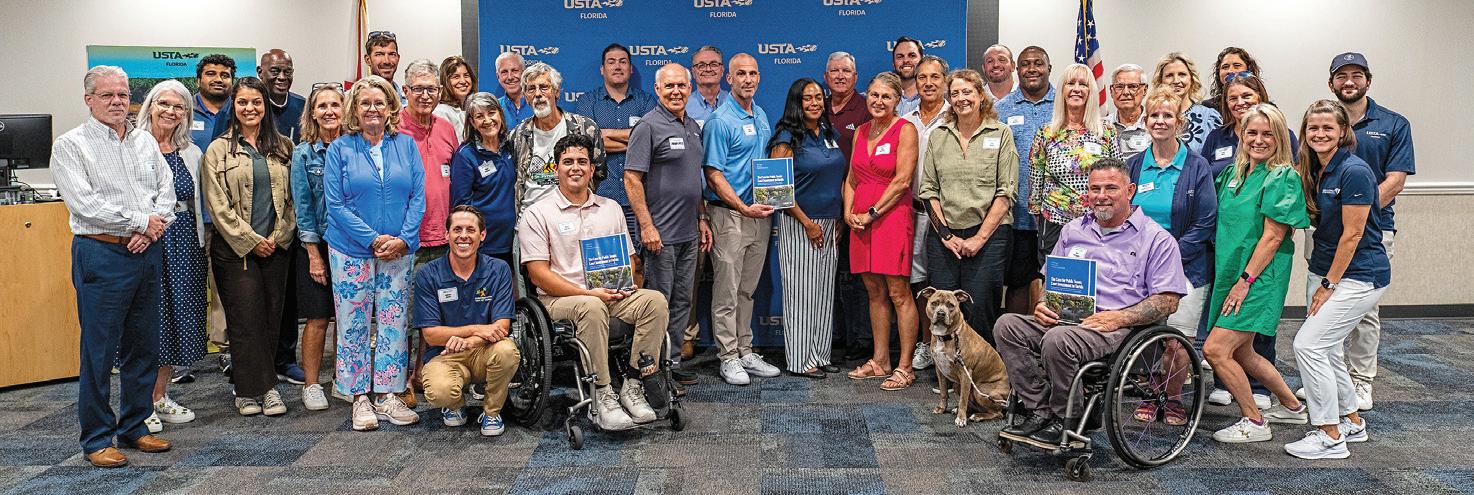
Growing tennis in Florida takes more than rackets and players. It takes courts, and it takes people willing to fight for them. That was the driving message on June 20, when USTA Florida hosted its second Advocacy Workshop at Hillsborough College in Tampa, bringing together tennis leaders, facility operators, city officials, and community advocates from across the greater Tampa area to strengthen public tennis infrastructure in Hillsborough and Polk Counties.
Themed “Be a Champion for Tennis,” the full-day event built on the momentum of the section’s inaugural workshop in Palm Beach Gardens in August 2025. The day was designed to be data-driven and action-oriented, giving attendees the tools and confidence to advocate for tennis in their own communities.
The numbers told a compelling story. In a presentation of Greater Tampa Tennis Data Insights, USTA Florida Business Intelligence Manager Brad West laid out the demand: Hillsborough County alone has more than 129,000 adults who played tennis in the past year, an 8.5% participation rate that outpaces both the state and national averages. Yet only 23% of the county’s 797 tennis courts are publicly accessible. The gap between demand and access is exactly the kind of challenge the workshop set out to address.
From there, the program moved into the work itself. Dana Andrews, USTA Florida Board Past President and Advocacy Advisory and Public Parks Committee Chairperson, and Christine Ducey, Director of Advocacy, opened the day by sharing their own experiences advocating for the sport. Board Secretary Jane Wahl led a synergy exercise to help attendees find connections across their local tennis communities, and two panel discussions tackled the realities on the ground.
The first panel, moderated by USTA Florida Executive Director Laura Bowen, focused on working with local government and key stakeholders, featuring voices including Hillsborough College Director of Tennis Chris Nyholm, Atlantic Recreation President Chris Hagman, City of Lakeland Recreation Supervisor John Williams Jr., and City of Tampa Parks and Recreation Site Supervisor Andrew Sheets. A second panel on community tennis funding opportunities, moderated by Sponsor and Donor Development Manager Kelly Scalise, brought together USTA Florida Foundation President Elizabeth DeConti, City of Tampa engineer
and adaptive athlete David Corredor, and Todd Vande Berg and Nick Walton of The Sara Vande Berg Tennis Foundation. In between, a session on local media outreach led by Director of Marketing and Communications Nish Prathab and Manager of Public Relations and Communications Jaret Kappelman gave advocates a practical framework for turning their tennis stories into local news.
Workshops make the case. Grants make it real. Across the state, USTA Florida’s Tennis Venue Services (TVS) program is helping communities transform aging courts into modern destinations, and two recent projects show what that investment looks like on the ground.
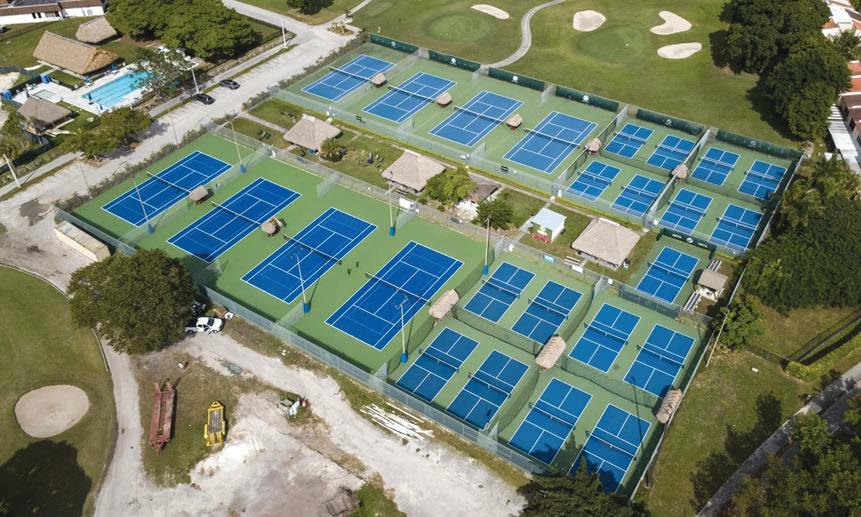
In Miami, a $25,000 USTA Tennis Venue Services Category II Grant funded a full resurfacing of all four courts at Miccosukee Golf and Country Club, a project led by the David Ensignia Tennis Academy.
On Florida’s southwest coast, Pelican Bay Community Park in Naples completed an even larger transformation. With support from a TVS grant, the park renovated its six existing public HydroCourts, added two new standalone HydroCourts, and installed lighting across all eight.
Miccosukee and Pelican Bay are part of a growing list of Florida facilities benefiting from TVS support. Recent recipients stretch from coast to coast, including John H. Quigley Park in Parkland, Coral Reef Park in Palmetto Bay, Trailside Tennis Club in Ormond Beach, the Racquet Club of Cocoa Beach, Olympia Park in Wellington, Florida Gulf Coast University in Fort Myers, and Pensacola State College, reflecting a program that reaches every corner of the tennis landscape.
This all ties directly to one of USTA Florida’s Big Bold Moves: Best in Class Facilities and Providers, especially public parks. Quality courts and facilities shape the player experience, drive program participation, and keep players coming back season after season. They give parks and clubs the ability to safely host tournaments, leagues, and everyday play, and they create the welcoming first impression that turns a beginner into a lifelong player. In community parks especially, where so many players begin their tennis journey, the case for investment is clear.
Florida needs more best-in-class facilities, and it starts with local champions. Learn how to advocate for tennis infrastructure in your area at ustaflorida.com/ advocacy.
By: Jaret Kappelman
A season built on teamwork, sportsmanship, and a fastgrowing love of the game
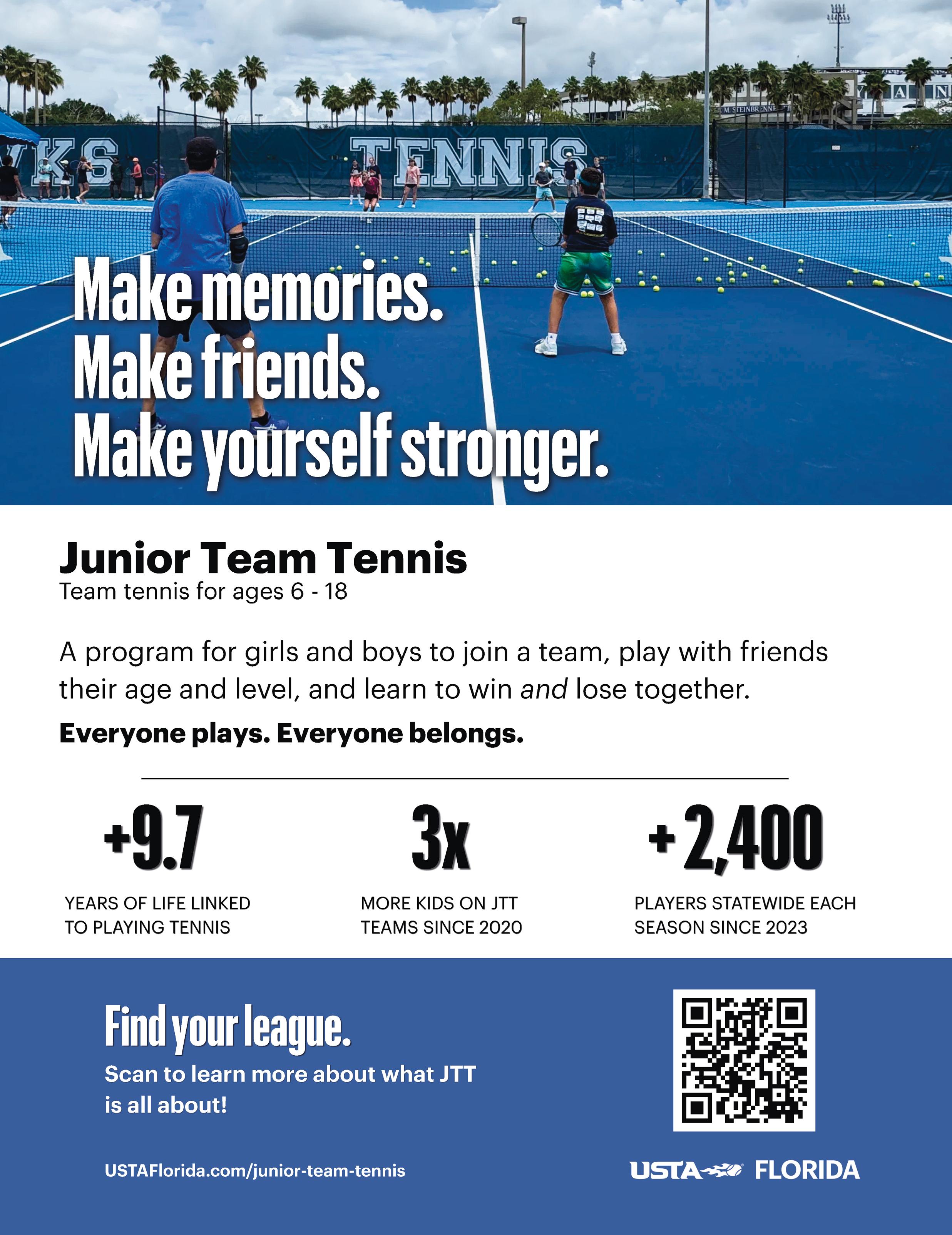
Tennis is often called an individual sport, but for thousands of young players across Florida, it is anything but. Through USTA Junior Team Tennis (JTT), boys and girls ages 6 to 18 trade the solitary baseline for a bench full of teammates, competing in singles, doubles, and mixed doubles as part of coed teams that play and grow together.
That team-first spirit is the heart of the program, and it is exactly what made this past season one to celebrate.
JTT is designed to meet players wherever they are. Leagues run throughout the year all across the state, with novice, intermediate, and advanced divisions so that newcomers and seasoned competitors alike can find the right level. Players 10 and under follow the Youth Progressions Pathway, learning the game on appropriately sized courts and with age-appropriate equipment, while older players sharpen their skills against teams from their area.
The format does more than build strokes. JTT is a levelbased environment that promotes individual growth, social development, and life skills, teaching young athletes how to work together, support one another, and handle both winning and losing with grace. USTA Florida reinforces that culture through its Sportsmanship pins, recognizing players who embody the values the program is built on. As the player pledge puts it, behavior on the court is a direct reflection of character.
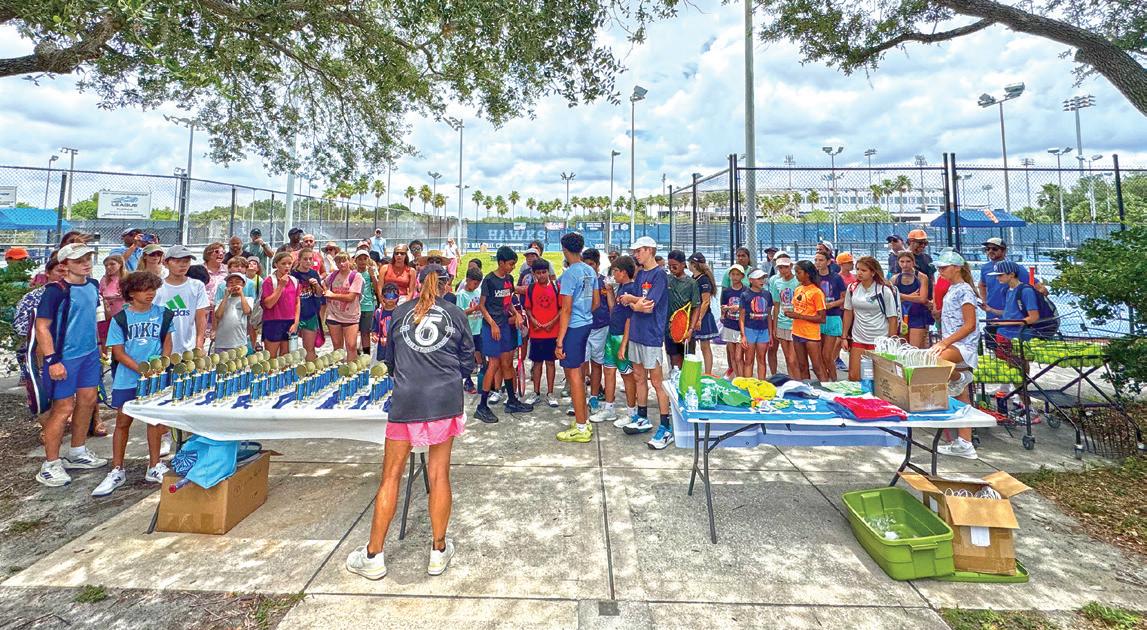
The season recently reached its high point at the USTA Florida Junior Team Tennis State Championships at the Beerman Family Tennis Center, where teams from across the state earned their place by competing in local league play. The event brought together players of varying ages and skill levels for a spirited, capping months of matches with the camaraderie and competition that define the program. It was a fitting close to a strong season and a showcase of just how deep Florida’s junior tennis community has become.
Nationally, JTT is the largest youth tennis league in the country, played in all 50 states and reaching roughly 100,000 kids each year. In Florida, the program continues to grow as one of the most accessible entry points into competitive tennis, giving families an affordable, welcoming, and fun way to get their kids on the court and keep them there.
That growth matters. Every player who joins a team is a player more likely to stay in the sport for life, to advance into tournaments and high school tennis, and to carry the lessons of teamwork and sportsmanship well beyond the court. Junior Team Tennis is where many of those journeys begin.
To learn more about Junior Team Tennis in Florida, including how to find a team or start one in your area, visit ustaflorida. com/juniorteamtennis .
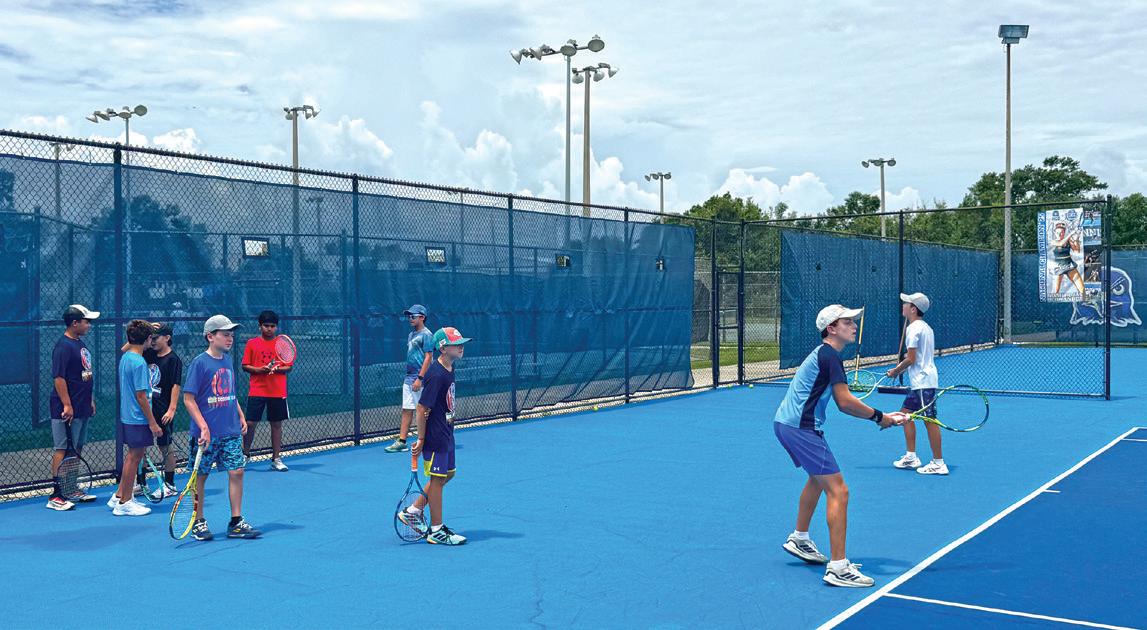
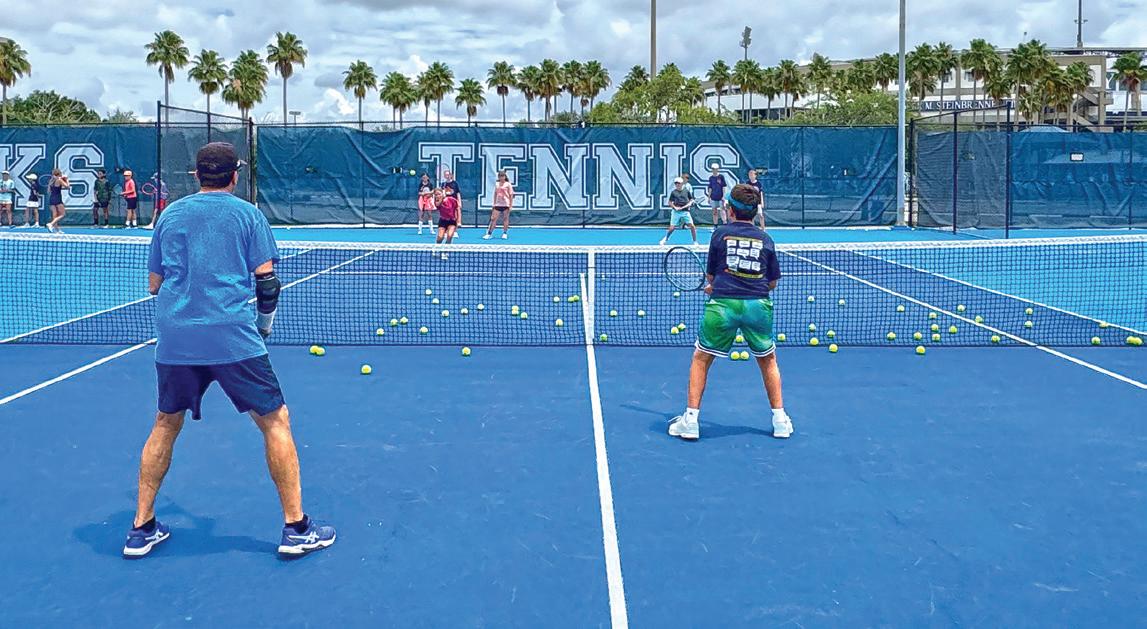
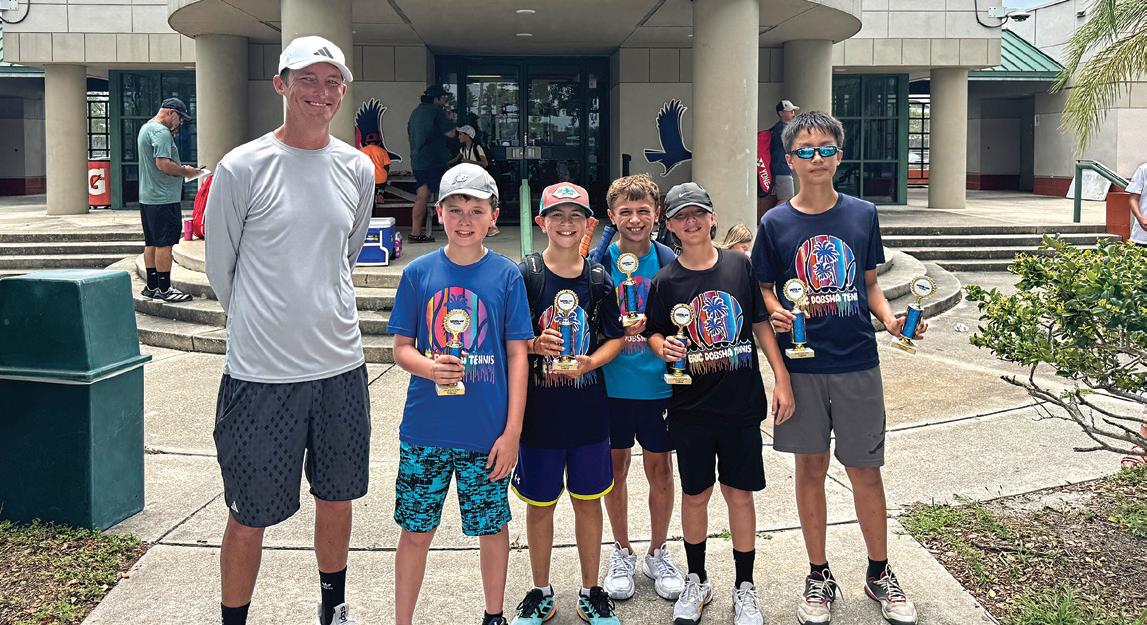
By: Jaret Kappelman
Florida’s most prestigious junior event delivered tiebreaker thrillers, breakout runs, and a piece of history at the USTA National Campus.
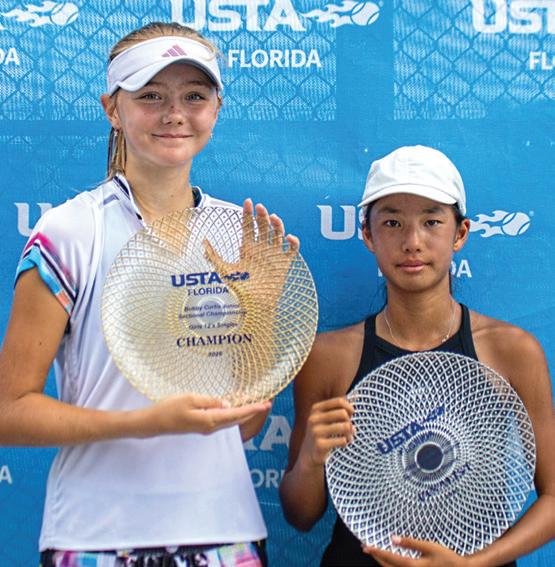
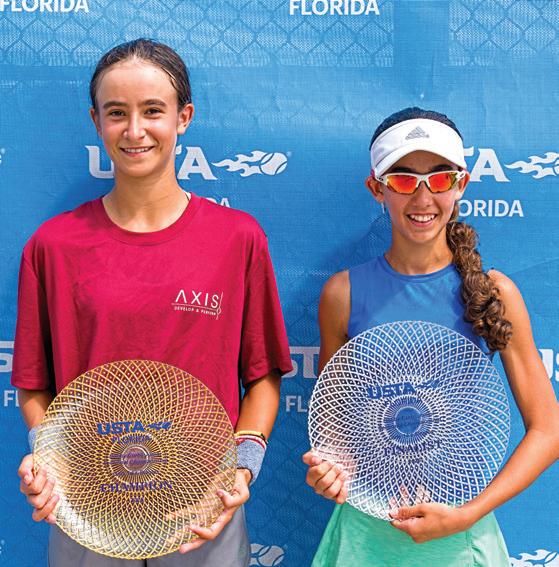
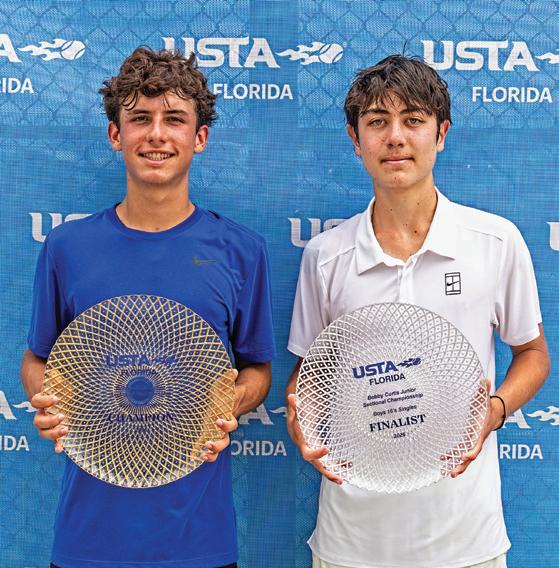
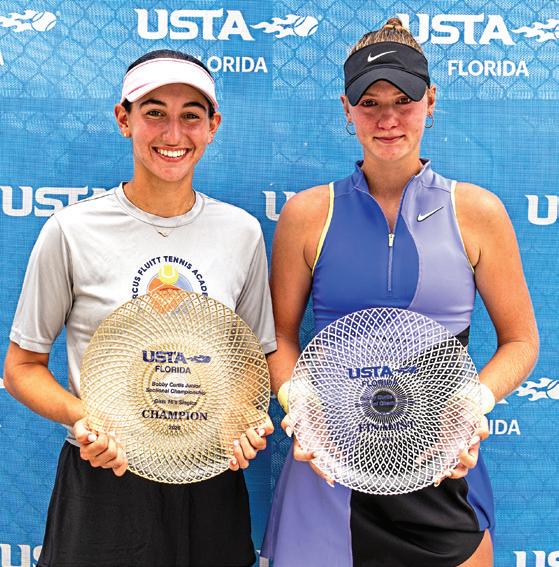
For generations, the Bobby Curtis Junior State Championships have served as the stage where Florida’s best young players announce themselves. This year was no different. From June 5 to 16, the clay courts of the USTA National Campus in Lake Nona hosted the state’s top juniors across eight divisions, with the 16s and 18s wrapping up June 9 and the 12s and 14s closing out the week on June 16. When the dust settled, eight new champions had their names etched into one of the sport’s most storied junior events.
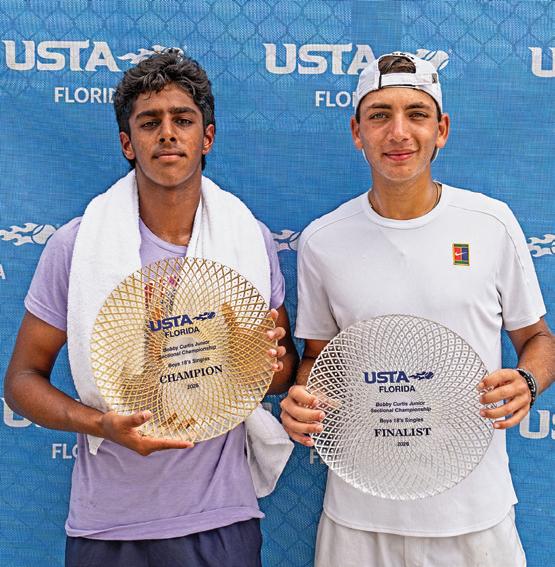
The headline belonged to Dhakshish Aryan of Parkland. One year after capturing the Boys’ 16s crown, Dhakshish moved up a division and did it again, claiming the Boys’ 18s title to complete back-to-back championships in consecutive age groups. After dropping the opening set of the final, he flipped the match and pulled away in a deciding tiebreaker to seal the rare feat.
Drama was the theme of the older divisions. Three of the four 16s and 18s finals were decided by a third-set tiebreaker, none tighter than the Boys’ 16s, where second-seeded Jose Vasquez of Boca Raton outlasted top seed Paul Bower 13-11 in the deciding breaker to claim the title in a No. 2 versus No. 1 showdown. View the full breakdown below:
• Boys’ 12s: Caique Cavalcanti (Doral) def. Noah Lee (Orlando), 6-2, 6-1
• Girls’ 12s: Ava Coy (Dunedin) def. Sarah Lee (Boca Raton), 6-4, 6-7(3), [10-6]
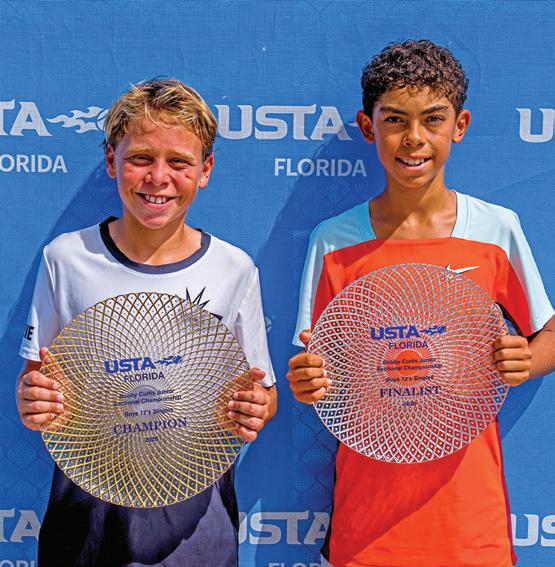
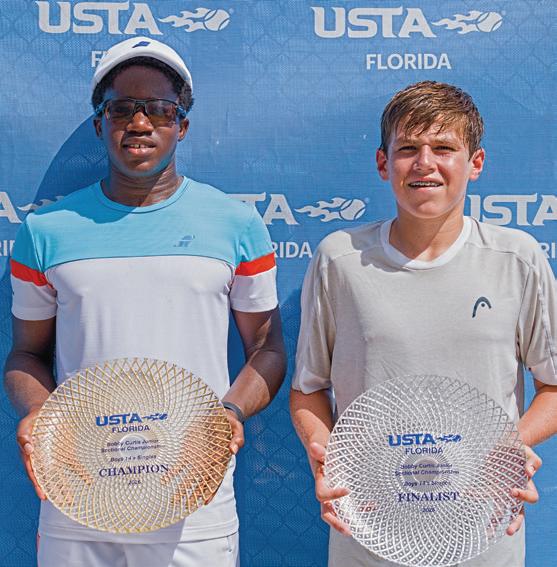
• Boys’ 14s: Selwyn Olufemi-Owoeye (Boca Raton) def. John Pollock (Pinecrest), 6-1, 6-2
• Girls’ 14s: Emma Goth (Boca Raton) def. Vasiana Christopoulos (Tampa), 6-2, 6-1
• Boys’ 16s: Jose Vasquez (Boca Raton) def. Paul Bower (Coral Springs), 6-4, 1-6, [13-11]
• Girls’ 16s: Payton Seidle-Lubowitz (Weston) def. Melanie Constandache (Coconut Creek), 6-7(3), 6-3, [10-5]
• Boys’ 18s: Dhakshish Aryan (Parkland) def. Max Freedman (Boca Raton), 2-6, 6-1, [10-4]
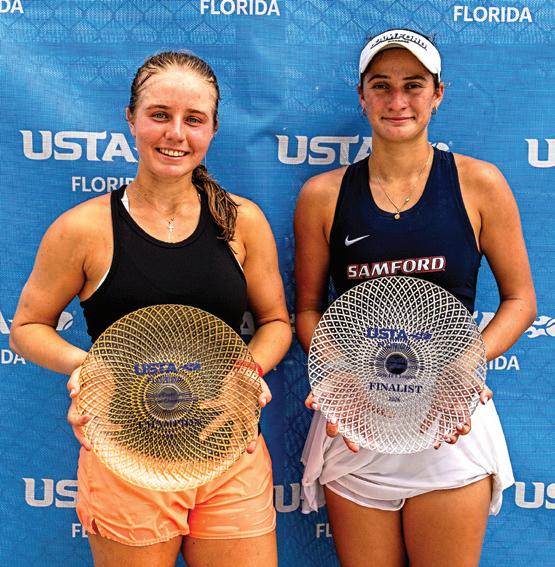
• Girls’ 18s: Katerina Shabashkevich (Boca Raton) def. Catherin Cardona-Carballosa (Miami), 7-5, 6-1
A PROVING GROUND FOR GREATNESS
What makes a Bobby Curtis title special is the company it puts a player in. The event has long been a launching pad for some of the biggest names the sport has ever known. Former champions include Chris Evert, Jennifer Capriati, Jim Courier, and Andy Roddick, alongside more recent stars such as Danielle Collins, Amanda Anisimova, and Sofia Kenin. Twotime Olympic gold medalist Mary Joe Fernandez and former US Billie Jean King Cup captain Kathy Rinaldi also hold Bobby Curtis crowns.
That history is exactly what gives the tournament its weight. Every champion crowned this June joins a lineage of Florida juniors who went on to compete, and win, at the highest levels of the game. For the next generation of players who chased titles on the clay this year, the 2026 Bobby Curtis was more than a tournament. It was a first step onto a path that some of the greats have walked before them.
By: Jaret Kappelman
From a Juneteenth celebration in Gainesville to a stipend opening doors for the next generation of coaches, USTA Florida is investing in a more welcoming sport
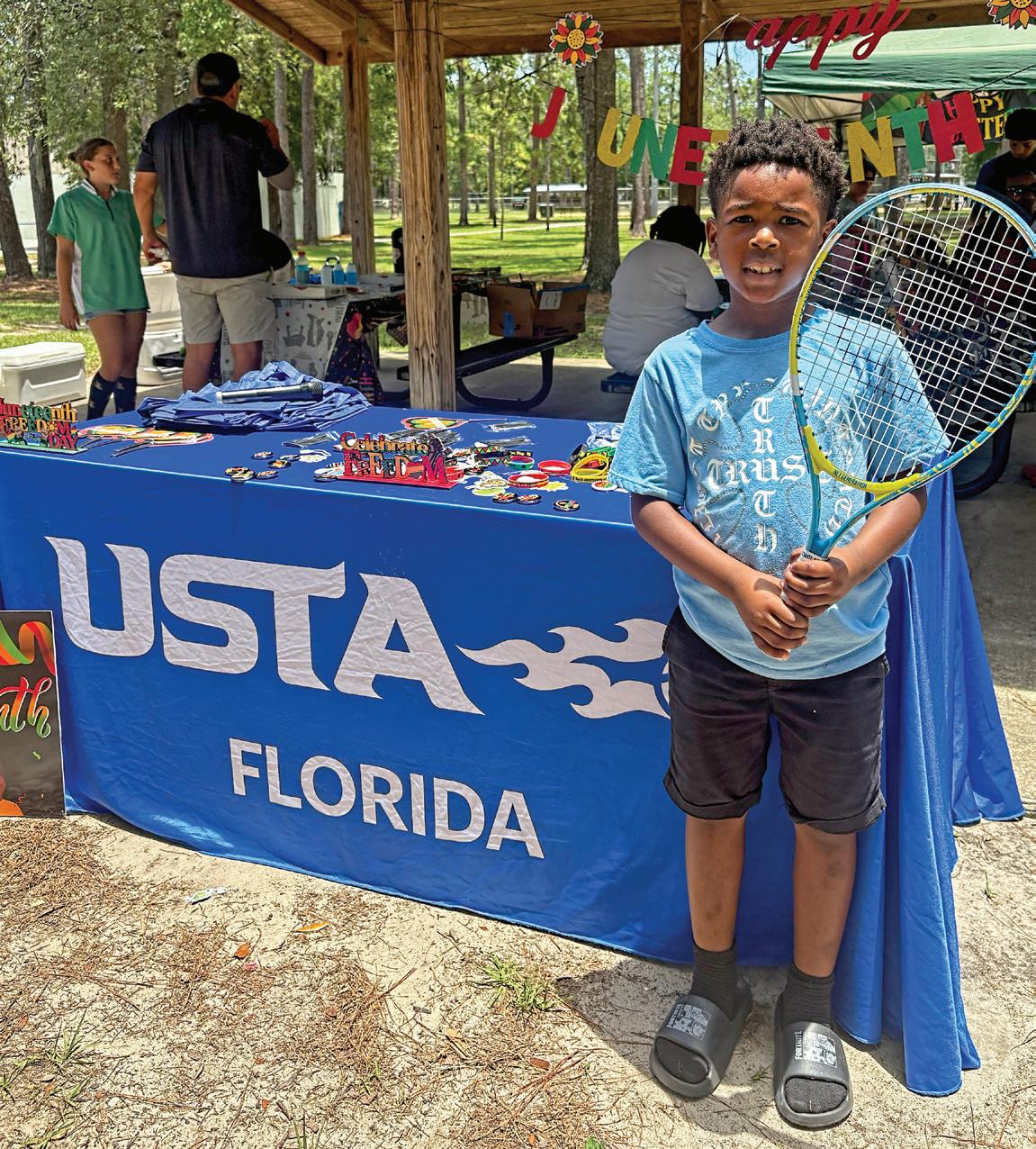
Tennis is at its best when everyone has a place on the court. This year, USTA Florida backed that belief with action, awarding a handful of Juneteenth Grants to organizations across the state to host their own celebrations honoring the holiday while bringing their communities together through the game. The events paired competition with connection, turning local tennis centers into gathering places that celebrated both the sport and the meaning of the day.
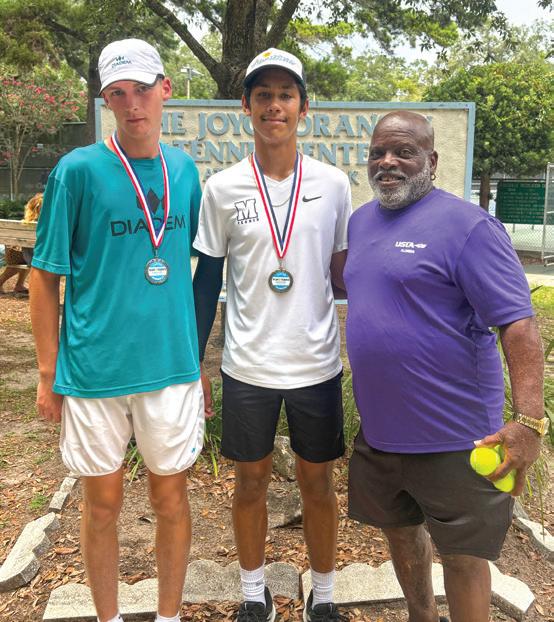
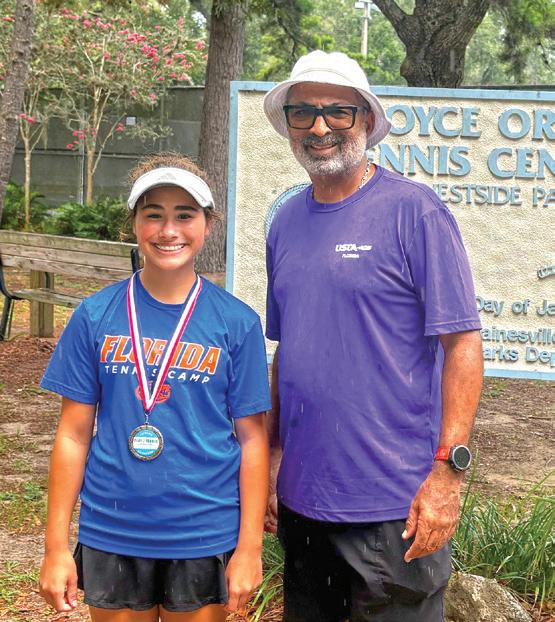
USTA Florida’s Juneteenth event took place at Play Tennis Gainesville, where the Joyce Oransky Tennis Center hosted a junior tournament alongside a Juneteenth Picnic that welcomed players, families, and community members for a weekend of tennis and togetherness. Held alongside the tournament, the picnic featured food, games, and activities for all ages, giving competitors a chance to relax between matches while neighbors came out to join the festivities. The response was overwhelming, with players and parents alike asking for more events like it.
On the courts, junior players competed across five divisions over the weekend. Matthew D’silva captured the Boys’ 18s title, while Amanda Garcia won the Girls’ 16s crown. Sam Dirain of Gainesville went a perfect 4-0 to top the round-robin Boys’ 16s, Brady Ellard claimed the Boys’ 14s title, and Leila Ghiaseddin of Gainesville dominated the Girls’ 14s. Beyond the results, the
weekend was a reminder of what public tennis centers can be at their best, not just places to play, but places to belong.
USTA Florida’s commitment to a more inclusive sport extends well beyond a single weekend. Through its AMPLIFY program, the section is offering a Coaching Education Stipend of up to $500 to support coaches from historically underrepresented communities as they pursue professional development and advance along the coaching pathway.
The idea is simple. Tennis has always benefited from coaches who bring unique perspectives, lived experiences, and deep community connections to the court, yet those same coaches often face financial barriers when it comes to accessing the certifications, workshops, and training that fuel career growth. The stipend helps offset those costs, whether a coach is pursuing a new certification, attending a national coaching conference, or completing coursework that opens the door to more advanced roles.
The payoff reaches far beyond any one coach. When players see themselves reflected in the people teaching them, it builds trust and creates an environment where more people feel welcome in the game. A more diverse coaching community, USTA Florida believes, leads to a stronger sport for everyone.
Coaches who are passionate about growing the game and deepening their impact are encouraged to apply. To learn more about the AMPLIFY program and the Coaching Education Stipend, visit ustaflorida.com/amplify.

By: Osvaldo Godoy
For 14-year-old Matthew Henry, tennis is much more than a sport. It is a passion, a source of confidence, and a way to connect with the world around him.
“I’ve been playing tennis since I was 8 years old,” Matthew said. “I’ve kept playing and playing to show everyone that I can make a difference.” One of his dreams, he added, is to become the first Jamaican boy to make his mark in tennis.
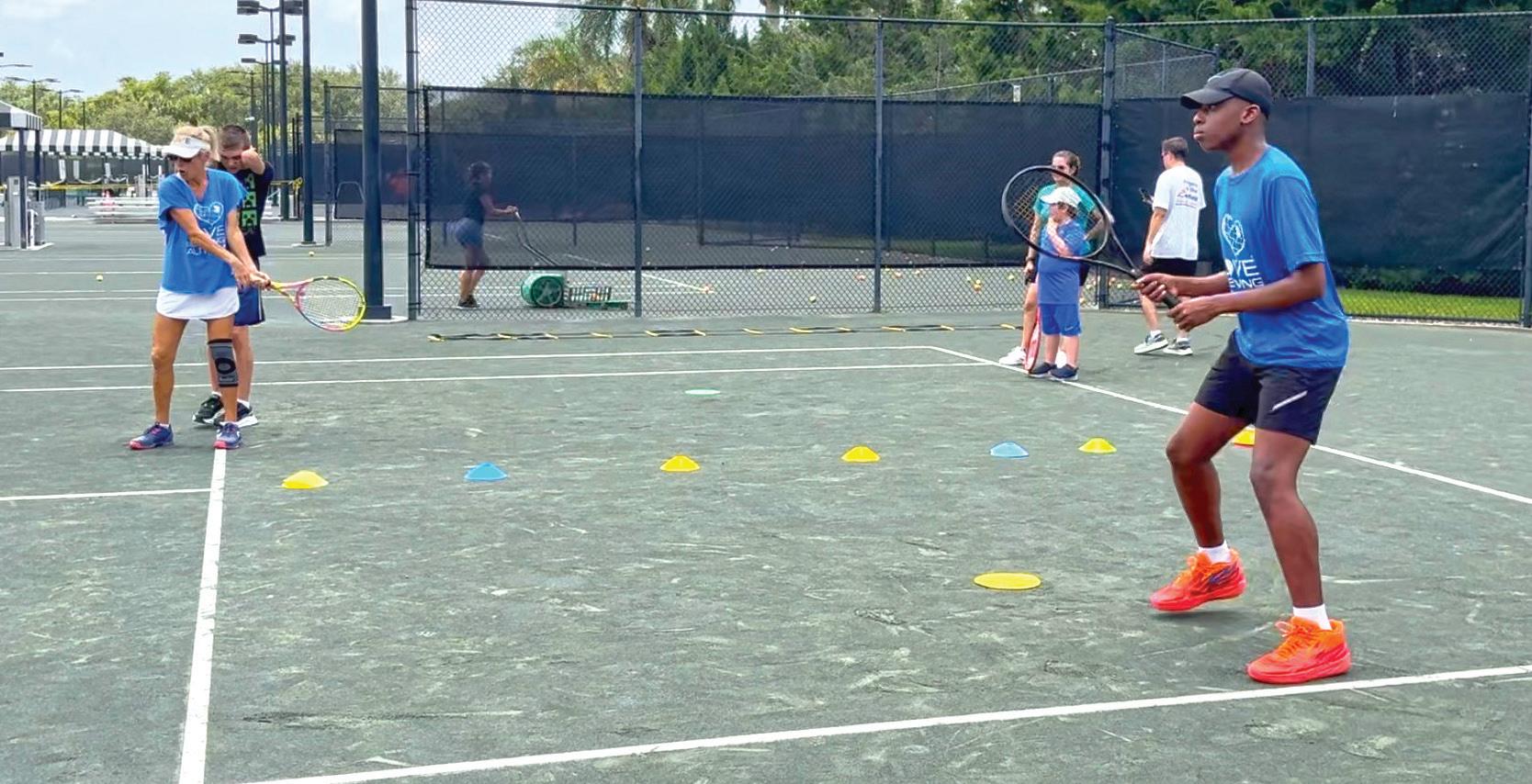
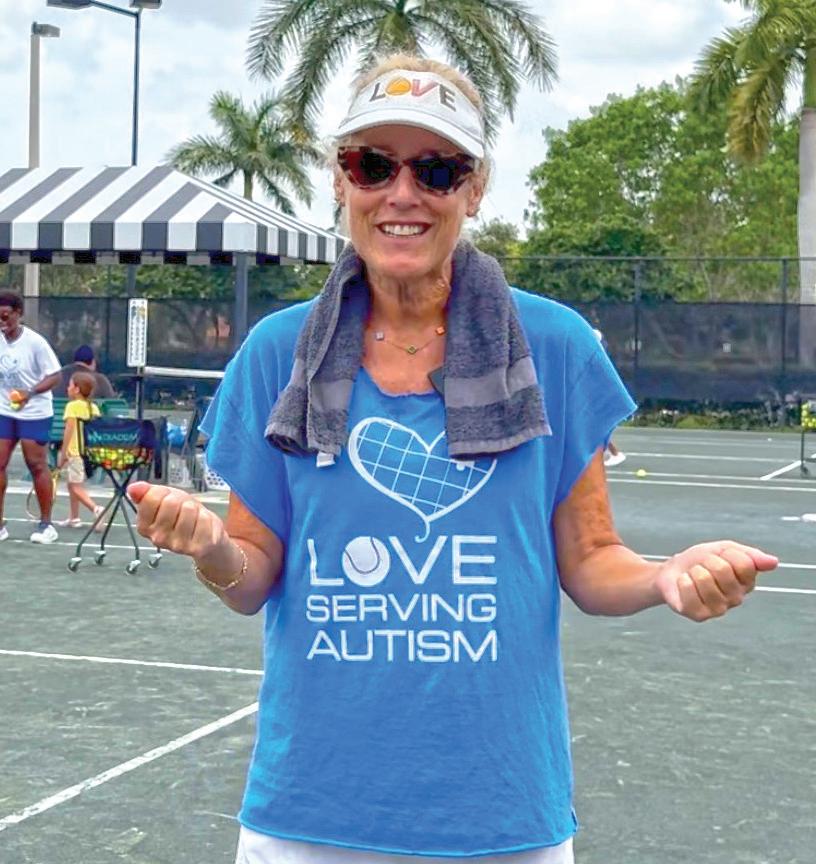
A veteran participant in Love Serving Autism (LSA), Matthew attends the organization’s Saturday class at Wellington Tennis Center and also participates in its monthly “Rules of Tennis” program. Along the way, he has become one of the program’s most inspiring success stories.
When Mara Friedman, Love Serving Autism’s Therapist Outreach Coordinator, first met Matthew nearly three years ago, she saw a shy young boy who struggled socially and often became frustrated on the court.
“Matthew was very quiet,” Friedman recalled. “He was always compliant, but he was very reluctant to speak. He rarely smiled.”
At the time, simple challenges during class could become overwhelming. If he missed a ball, lost his turn, or had to leave the court unexpectedly, he would become upset and dysregulated.
Over the years, however, the transformation has been remarkable.
“He has developed as a great communicator and his social skills have improved,” Friedman said. “He always comes on court, says hello to me, shakes my hand, talks to the coaches, and he’s really developed his skills as a tennis player.”
According to Friedman, one thing has never changed: Matthew’s love for the game.
“He truly loves tennis,” she said. “He loves everything about it, whether it’s playing or doing a more challenging drill.”
His hard work and dedication were recognized in 2024 when he received Love Serving Autism’s Athlete of the Year Award at the Match Point Gala.
“It was well deserved because he has worked so hard to become a better player,” Friedman said. “His communication skills, social skills, and motor skills have also improved.”
For Matthew’s mother, Sonya Solomon, the impact of the program has extended far beyond the tennis court.
“It has helped him drastically,” Solomon said.
She explained that when Matthew joined Love Serving Autism at age nine, the primary goal was to improve his social skills.
“He would not want to be around anybody,” she said. “When he first started, he would not stay on the court. It took a lot of redirection and a lot of breaks in between.”
Today, the difference is clear.
“As you can see, it has been a big transition,” Solomon said. “He stays the whole time. He does private lessons in the morning and then he’s able to engage in other activities that Love Serving Autism has.”
The opportunities created through the program have also taken Matthew to some of tennis’ biggest stages. In 2025, he was one of only three Florida athletes selected to participate in Love Serving Autism’s on-court experience at the US Open, and he is set to return for the experience again in 2026. He has also attended the Delray Beach Open and the Miami Open.
“It’s been a big transition socially,” Solomon said.
She also credits the coaches and staff for creating a support system that goes far beyond tennis.
“The coaches are awesome, not only on the court, but off the court,” she said. “If there’s something that I need regarding speech or if we’re traveling, I’m able to reach out. If there’s something going on at school, I’m able to reach out. They’re just so supportive.”
For Friedman, that sense of community is exactly what makes Love Serving Autism special.
A former collegiate player and speech-language pathologist, she has found a unique way to combine her professional background with her lifelong love of tennis.
“To combine my skills as an SLP with my passion for tennis is really a dream,” Friedman said. “I actually love going to work every single day.”
Matthew’s journey is a powerful reminder of what can happen when sports, community, and support come together. Through Love Serving Autism, tennis has become more than a game—it has become a vehicle for growth, confidence, and new opportunities, helping one young player continue to make a difference both on and off the court.
By Dave “Koz” Kozlowski
To the diehard sports fan and the long-time tennis enthusiast, Lamar Hunt Sr. has been recognized as one of the strongest noted innovators and supportive contributors of professional sports. Lamar, who was born in Arkansas, is the son of the late H.L. Hunt Jr., an American oil industrialist. Lamar was a visionary pioneer for pro sporting opportunities. Hunt is recognized as one of the greatest sports visionaries in American history and a pioneer of professional soccer in the United States.
Hunt helped make pro football history in 1960 by founding and organizing the American Football League. In 1970, Hunt's extraordinary business mentality and firm, controlled management style were incredibly significant with the merger into today’s National Football League (NFL). He also had a strong impact with soccer in the United States working with FIFA (Fédération Internationale de Football Association). His endeavors speak for themselves. In 2026, six FIFA World Cup matches will be played at Arrowhead Stadium, built on the Lamar Hunt grounds. "My dad loved spectator sports. He saw the vision of what and how things matched up,” said Clark Hunt, Kansas City Chiefs Chairman & CEO.
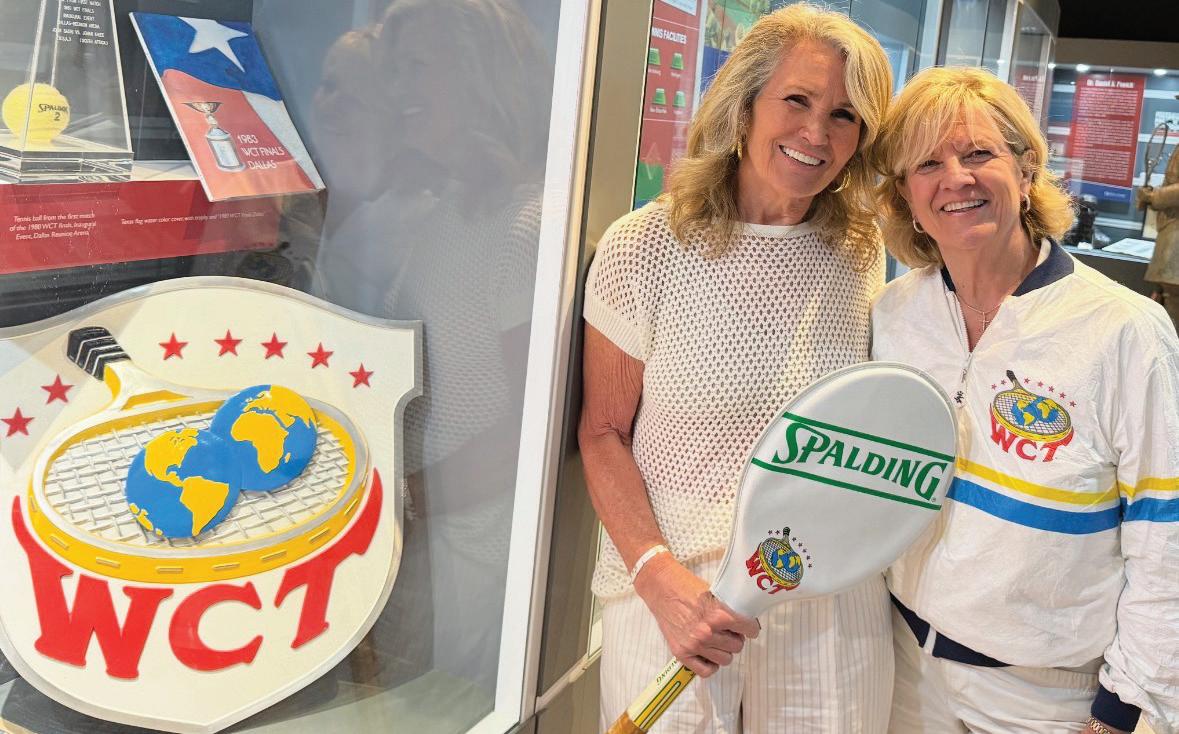
One of Lamar’s global achievements was attained with a partner. He and David Frank Dixon (co-creator of the New Orleans Saints) partnered to design the groundbreaking and successful World Championship Tennis (WCT). Dixon thought that tennis was a bit somber at the time. He then quickly saw the impetus that this pioneering venture was having on the game of a lifetime — tennis. WCT started with eight players. They were labeled as the “Handsome Eight” which included Nikki Pilic of Yugoslavia, Cliff Drysdale of South Africa, French-
man Pierre Barthes, Roger Taylor of Great Britain, Australians John Newcombe and Tony Roche, and two American pros: Dennis Ralston and Butch Buchholz.
The travel and schedule was tight with the six-month season. A tie-breaker scoring system was being used to attract TV involvement. Hunt said that “a number of mistakes were made.” He then restored the operation, hiring former British tennis pro Mike Davies as executive director. Davies went out and signed up 32 of the world’s top pros, committing them to a certain number of tournaments each year with a big showdown playoff in Dallas at the end of the year WCT Finals. Hunt also welcomed the testimony from Cliff Richey, a player whose career spanned both the amateur and pro eras: “Lamar has done more for tennis than any other man in the history of the game.”
Carol Weyman and Diana Crawford are two former Lamar Hunt administrative staff members who are taking on the management of the “Serving Up Memories of the WCT Reunion”. Weyman assisted in managing the worldwide WCT tournaments and captured a lifetime of experience. In addition, she and Maureen Connolly Brinker’s daughters, Cindy Brinker Simmons and Brenda Brinker Bottum, have founded and conducted the Maureen Connolly Brinker “Little Mo” Tournaments, a highly respected global competitive junior tennis circuit. As Finance Administrative Assistant and later Assistant to Executive Director Mike Davies, Crawford worked closely with WCT's contracted players, coordinating travel, prize money distribution, and tournament commitments. Diana said, “it was a wonderful and unique opportunity to work alongside many of the individuals who helped define the WCT era!” With great anticipation, this tennis and media guy is looking forward to emceeing the reunion.



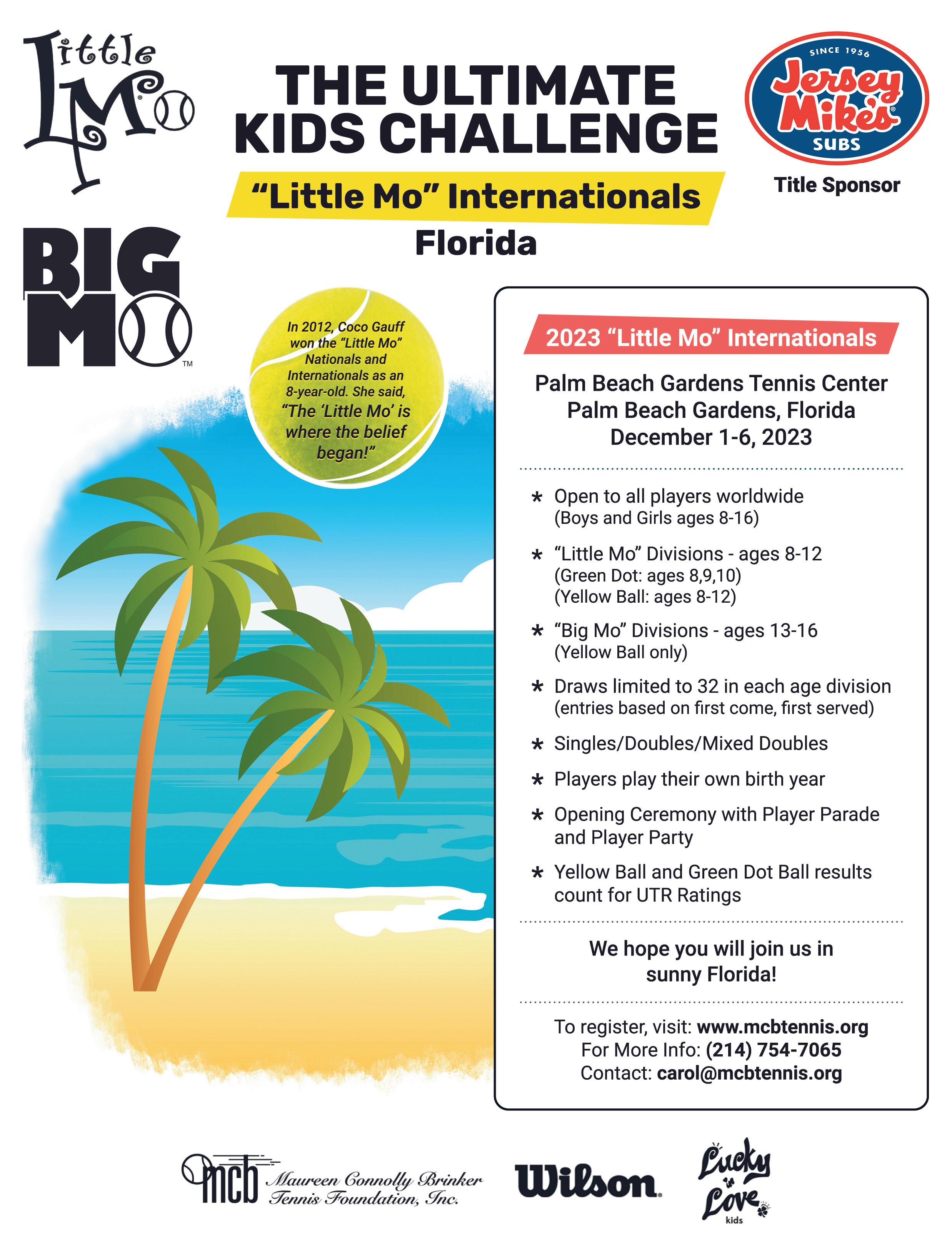

2026 “Little Mo” Internationals
Palm Beach Gardens Tennis Center
Palm Beach Gardens, Florida
December 4-9, 2026
Registration opens end of July!
www.mcbtennis.org (214) 754-7065 carol@mcbtennis.org
Open to players worldwide (Girls and Boys ages 8-14)
“Little Mo” Divisions: ages 8-12 (Green Dot: ages 8, 9, 10) (Yellow Ball: ages 8-12)
Acceptance list based on verified UTR ratings
Singles / Doubles / Mixed Doubles
Players play their own birth year
Opening Ceremony with Player Parade of Nations
Player Clinic and Player Party
Yellow Ball and Green Dot Ball results count for UTR Ratings
Join us for a fun family vacation and competitive matches!


"THE MOST UNDERUSED WEAPON IN TENNIS? THE
GINO FAVA
WATCH MY YOUTUBE VIDEO FOR AN EXCLUSIVE LESSON ON HOW TO IMPROVE YOUR GAME

Boca Cryo is a wellness company which offers healing and recovery through state of the art technologies, all non-invasive and drug-free. We offer 7 different therapies in our center.
Our flagship service is WHOLE BODY CRYOTHERAPY, which treats inflammation, pain, stiffness, sleep disorders and helps performance improvement. Three minutes of sub-zero temperatures (-160 F) using safe, cold air in a “true” whole body chamber, leaves you with a rush of endorphins and other pain modulators. This short stay in the cold also boosts your metabolism while strengthening your immune system! Our specialized chamber is equipped with speakers which play your favorite tunes while moving freely about. Unlike our competitors, we DO NOT use liquid nitrogen.
We also offer LOCALIZED CRYOTHERAPY for those specific areas of pain and inflammation. This can be administered a La Carte or in conjunction with WBC.
BOCA CRYO FACIAL is another popular therapy. If you are looking for less wrinkles and puffiness, and want tight skin and a younger look, this is for you! This 10 minute therapy, in conjunction with WBC, is shown to increase collagen production. As one of the most abundant proteins in the body, collagen helps make the skin look younger and fuller without injections and expensive creams.
MAGNETHERAPY is yet another treatment offered, using a state-of-the-art device called the Magnesphere. This is a low level magnetic resonance device which helps relax the body by balancing your Heart Rate Variability or HRV. Our Autonomic Nervous System is divided into Sympathetic (fight or flight) and Parasympathetic (rest and digest) systems. By bringing these two systems into balance, the body begins to heal itself! All of our clients, who have used this device, relax so much that they fall asleep during the session.
Our COMPRESSION THERAPY focuses on the lower body. This pneumatic system, developed by a physician for circulation-challenged patients, inflates sleeves covering your legs. Systematically, the compression helps eliminate the by-products of exercise and aids in venous return to the heart. Athletes and weekend warriors, as well as people with circulatory insufficiencies, can benefit from this therapy.
Our SALT THERAPY is a form of therapy which entails relaxing in a room infused with medical-grade salt crystals that are inhaled and help with respiratory issues ranging from asthma, COPD and sinusitis, to mention a few. Salt therapy is a tremendous therapy and healer for skin disorders such as acne and psoriasis.
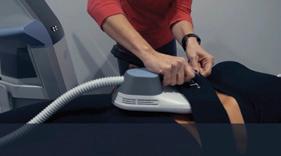
Our newest technology from Prague, Czech Republic, is called EMSCULPT. It is the first FDA approved device to increase muscle by 16% and decrease fat by 19% on average. In the world of aesthetics, this is rapidly becoming very popular in our center.


190 Glades Rd, Suite C, Boca Raton, FL 33432 www.bocacryo.com ~ 561-717-4402 ~ Email: ian@bocacryo.com

Ian Pyka received his Bachelor’s degree in Kinesiological Sciences at the University of Maryland and completed his Master’s degree in Exercise Physiology at the University of Tennessee. His first job was at the University of Massachusetts, as their first Head Strength and Conditioning Coach. Four years later, he accepted the same position at Tulane University. He later accepted the position of Head Strength and Conditioning Coach for the New England Patriots. In 1994, he managed a preventive medicine center in Scottsdale, Arizona, working with a retired population, establishing diet and exercise regimes to improve quality of life and longevity. Then in 1998, he was hired by the Florida Panthers to be their Head Strength and Conditioning Coach. In 2002, he started Power Play Fitness, a company which focuses on the sports specific and comprehensive training of athletes as well as any motivated individuals interested in improving their overall fitness and health. He presently teaches Kinesiology, Biomechanics and Advanced Strength and Conditioning Methods, in the Exercise Science Department at Florida Atlantic University in Boca Raton. He is certified as a strength and conditioning specialist with the National Strength and Conditioning Association.
Ian was also a three time All-American (Track &Field) while at Maryland and earned an alternate spot on the 1980 US Olympic Track and Field Team.
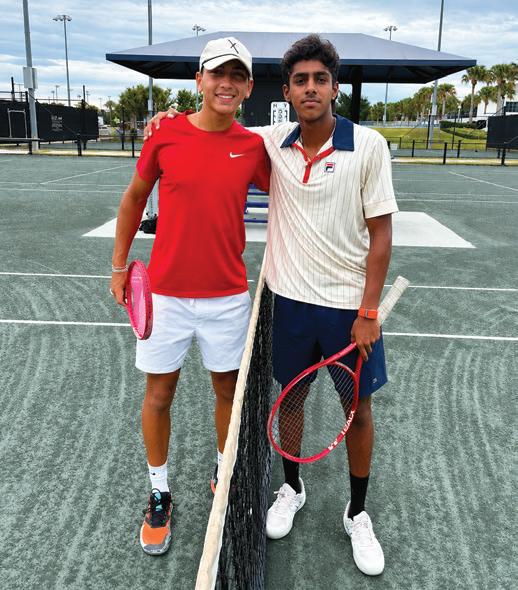
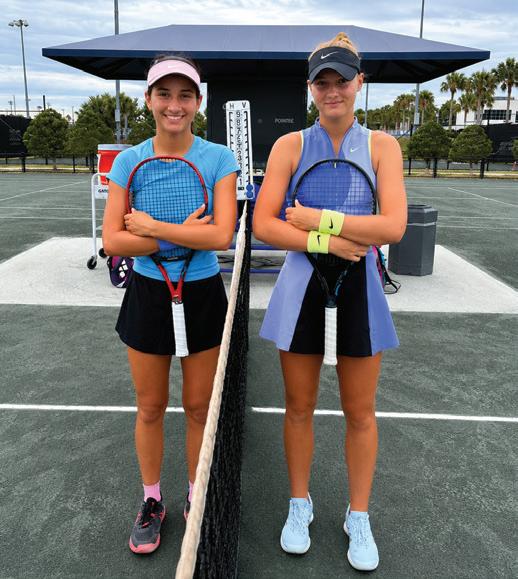
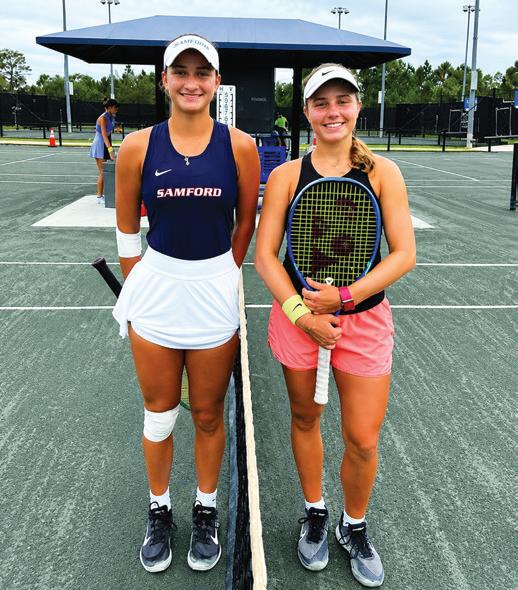
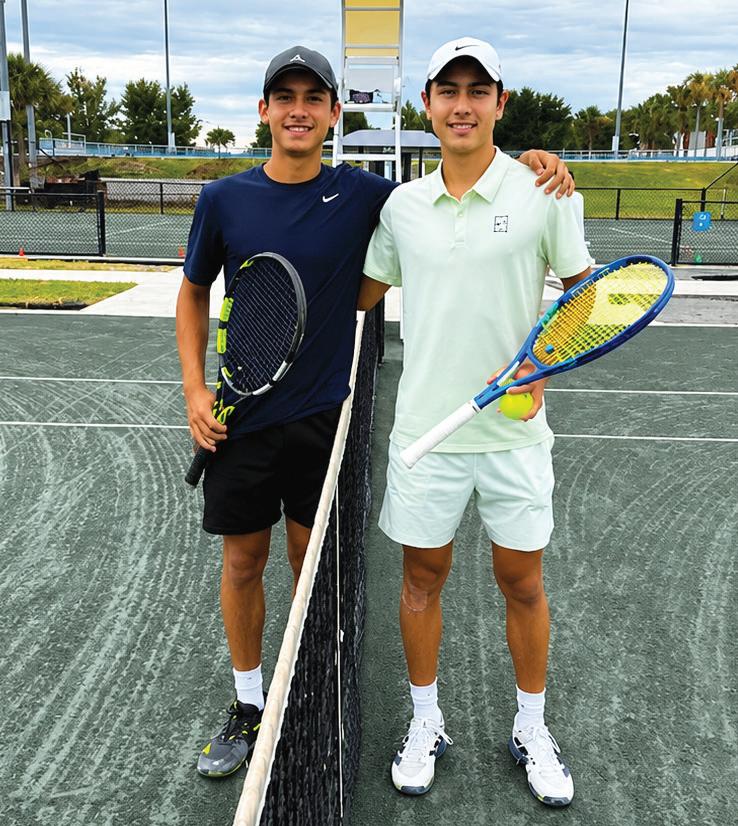
Thanks to a Contribution from Blaine Willenborg and Morgan Stanley, which was matched by the Youth Tennis Foundation, the boys and girls who won the Bobby Curtis Florida State Junior State Tournament last month in the 18s, 16s, 14s, and 12 and under categories received a cash award, which is intended to assist them in competing in national events later this summer. Blaine, who is a former state champion and a member of the USTA-Florida Hall of Fame, made his donation in memory of Sean Posner, a close friend and former tennis player, who died much too young. Blaine is a Senior Vice President with Morgan Stanley. The Youth Tennis Foundation of Florida, Inc. is a 501(c)(3) organization that has been providing assistance to Florida’s junior players since 1962. Bobby Curtis was a member of the YTF Board of Directors for the last 30 years of his life. May he rest in peace.

By Ian Pyka
For tennis players, summer heat is not just uncomfortable — it can directly affect performance, recovery, decision-making, and safety.
Most players check the temperature before heading to the court. They see 88°F or 92°F and assume they know what to expect. But temperature alone does not tell the whole story. The more important number, especially in humid climates like South Florida, is often the heat index. The heat index is the “feels like” temperature. It combines air temperature and humidity to estimate how hard it will be for the body to cool itself. When humidity is high, sweat does not evaporate as efficiently, causing the body to retain more heat. For example, 90°F on a dry day may feel challenging but manageable. That same 90°F with high humidity can feel closer to 100°F or more. On the tennis court, that difference is significant.
Tennis places unique demands on the body. It is repeated acceleration, stopping, lateral movement, explosive points, short rest periods, and constant concentration. Players also spend long periods on hard courts, which can radiate heat upward and make court conditions feel even hotter than the forecast suggests. As heat stress rises, the body has to work harder to cool itself while still supplying muscles with oxygen and fuel. The result is reduced footwork quality, slower recovery between points, earlier fatigue, poorer decision-making, increased risk of cramping, and a greater risk of heat exhaustion. In tennis, fatigue does not just show up physically. It shows up technically and mentally through late contact, lazy footwork, missed first serves, poor shot selection, and emotional frustration.
When a player trains in hot and humid conditions, the body increases sweat production and heart rate. As sweating continues, fluid and electrolytes are lost. If those losses are not replaced, the body has to work harder to maintain the same pace. Movement becomes heavier. Recovery between points becomes slower. Focus fades. Players may feel dizzy, nauseated, unusually weak, or chilled. Those are warning signs. Pushing through them is not toughness. It is poor heat management.
Tennis Players
When the heat index is elevated, training should be adjusted—not ignored. Train earlier in the morning or later in the evening when possible, in-
crease rest periods, use shaded breaks, stay hydrated before, during, and after practice, include electrolytes during longer sessions, reduce training volume when conditions are extreme, and build heat tolerance gradually over 10–14 days. Heat tolerance is individual. Fitness helps, but it does not make anyone immune. Sleep, hydration, illness, nutrition, and previous heat illness can all affect how a player handles heat.
During matches, players should use the full time between points, towel off, slow their breathing, and hydrate during changeovers. Long rallies and poor shot selection become more costly in extreme heat. Smart players manage the match like they manage their body. Conserving energy is not weakness. It is strategy.
Recovery becomes even more important after training or competing in high heat. Cooling down gradually, replacing fluids and electrolytes, eating a balanced recovery meal, using cold towels or a cool shower, and prioritizing sleep all help the body recover more effectively. At Boca Cryo™, recovery services such as Whole Body Cryotherapy, Red Light Therapy, Infrared Sauna, Compression Therapy, PEMF, and other wellness modalities can be part of a broader recovery strategy for active adults and athletes. In high-heat environments, we recommend whole body cryotherapy and electrolyte-based Infusion therapy to cool and re-hydrate the body, respectively.
Temperature tells you how hot the air is. Heat index tells you how hard the environment may be on the body. In tennis, where performance depends on movement, power, focus, and recovery between points, heat index matters. Respecting it allows players to train smarter, compete better, and recover more effectively. The best players do not just prepare for their opponent. They prepare for the conditions.
Educational note: This article is for general training and wellness education, not medical advice. Athletes with a history of heat illness or medical conditions should consult a qualified healthcare professional.