







By Joel Drucker
Ever noticed how the color scheme of a particular professional tournament can affect your experience? From the textures of the surroundings to triggered memories that may or not have anything to do with tennis, color coaxes and can even envelop. Wimbledon offers the cozy, garden-like comfort of its green lawn, accompanied by a regal and luscious purple. Then there’s Roland-Garros. Call it red clay, but it sure seems orange, summoning up the edible qualities of cheddar cheese and orange sherbet. I once heard a tale of a coach who made his charges spoon up the clay and take bites of it.
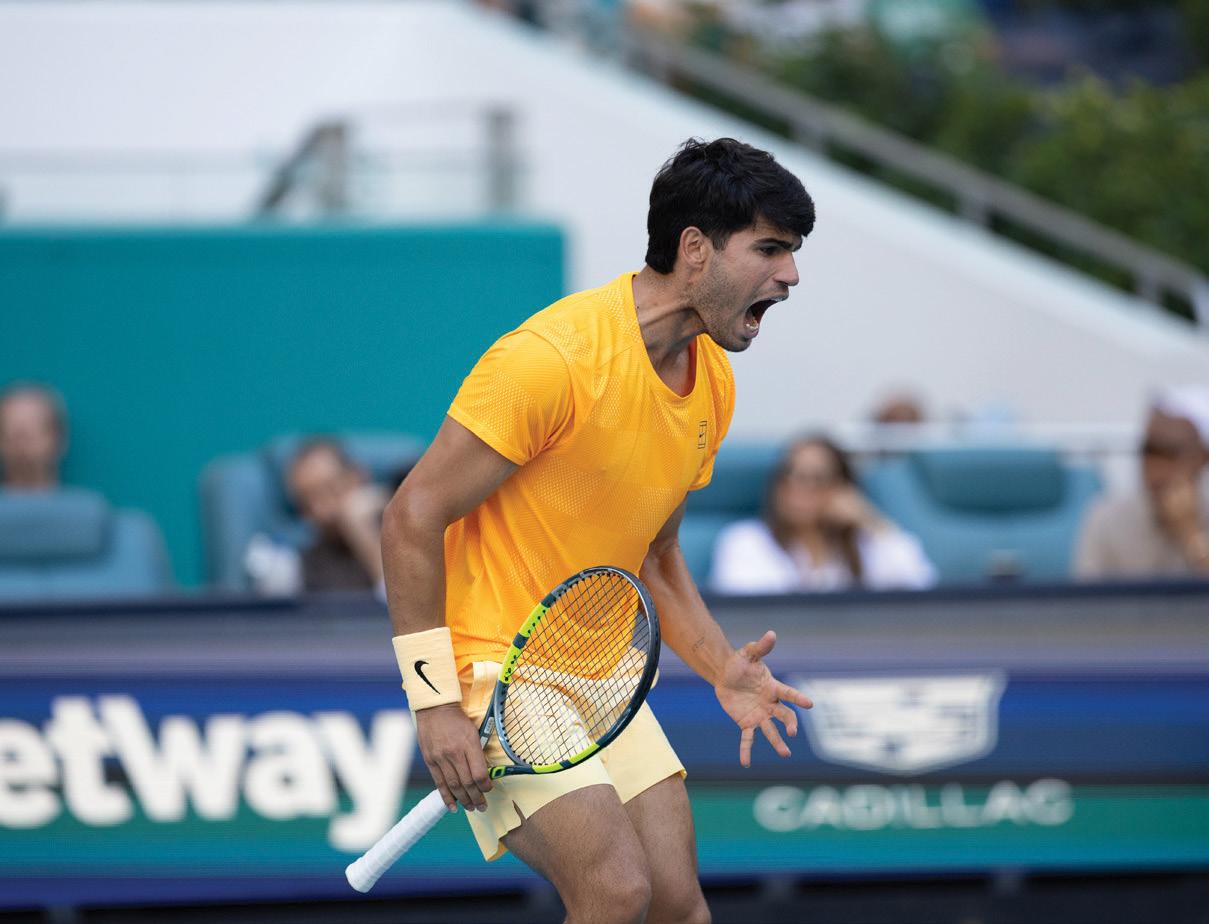
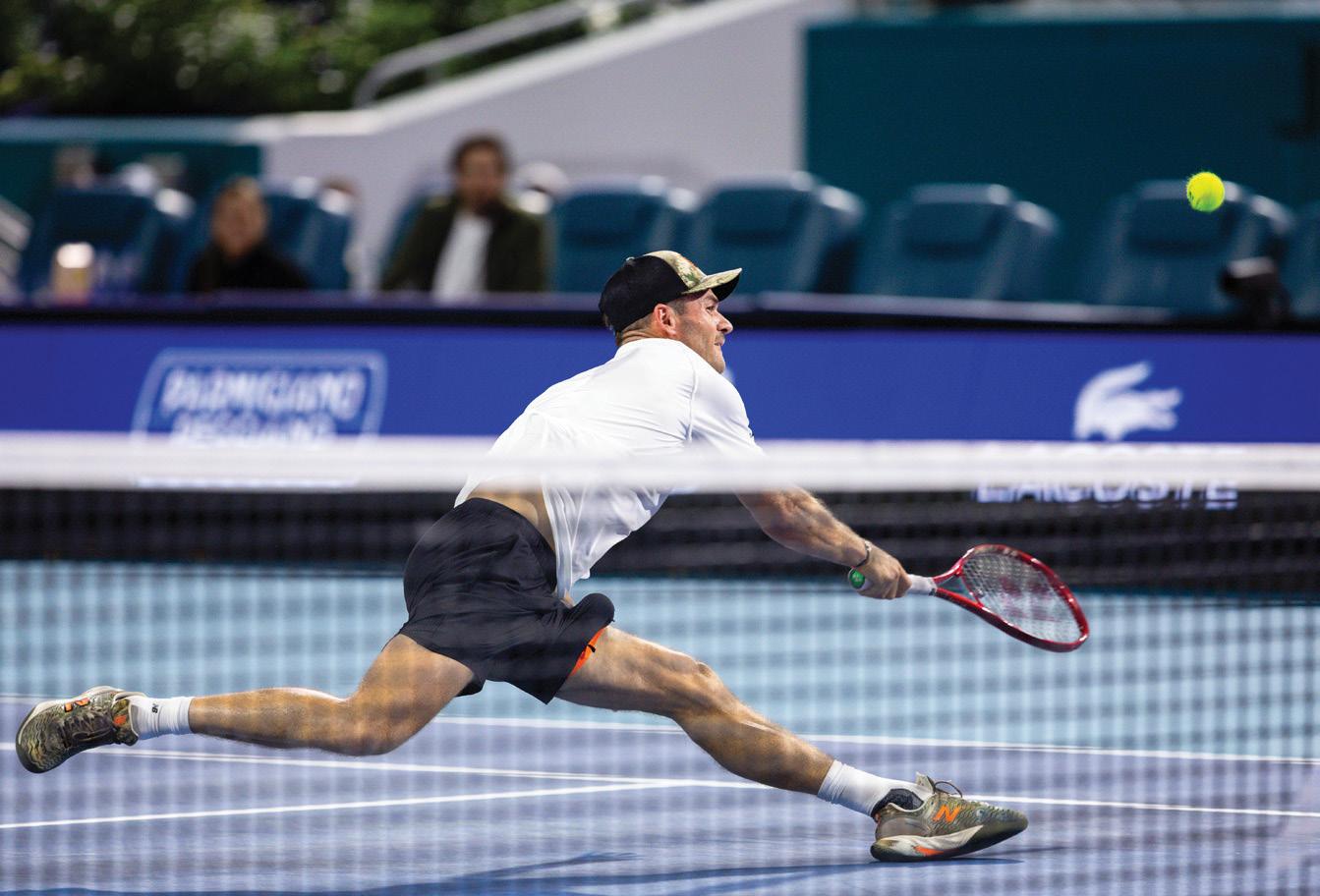
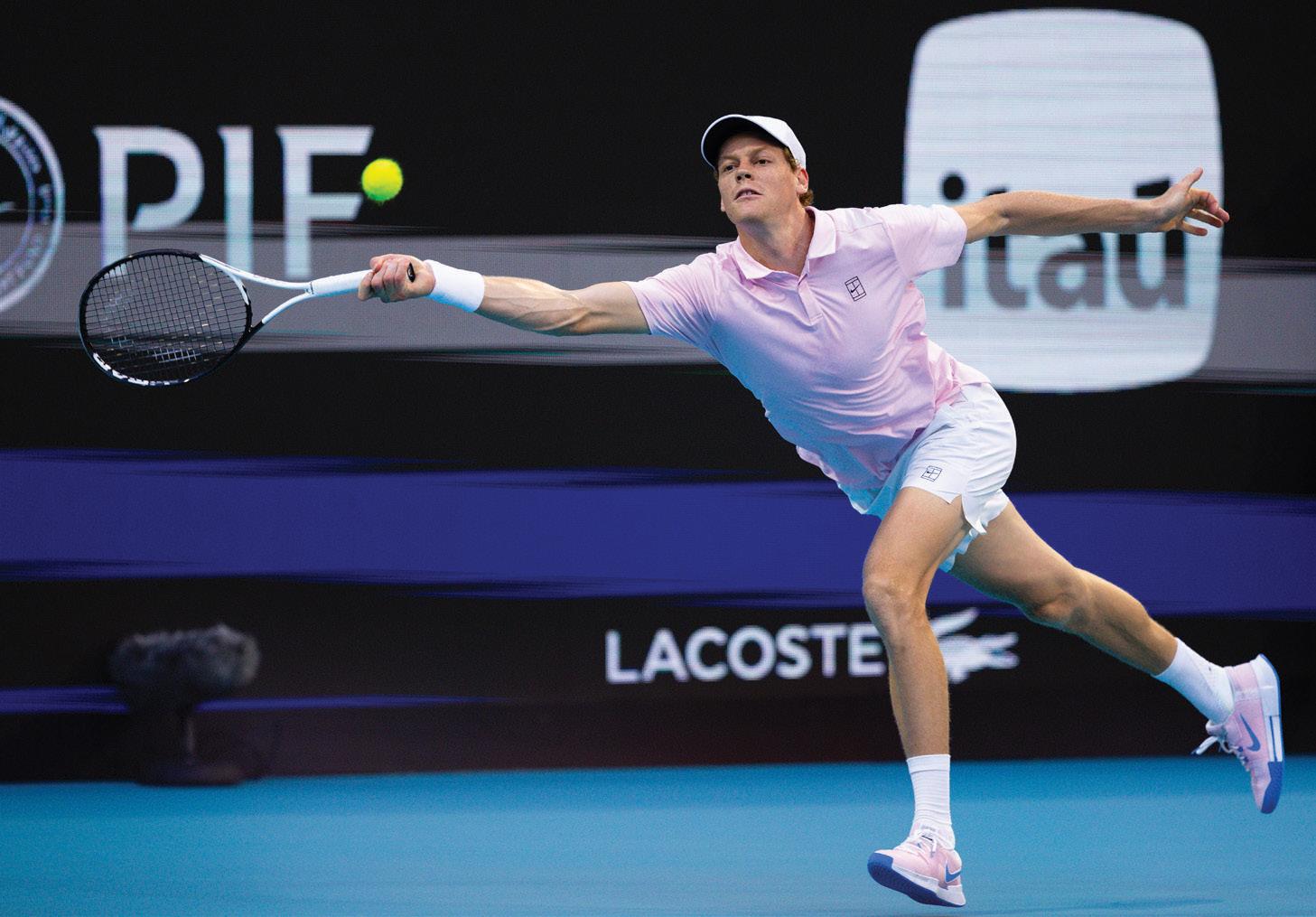
What then engages the senses at the Miami Open? This was my question as I strolled through the grounds of this year’s tournament – my first trip there since its relocation to Hard Rock Stadium in 2019. Hard Rock Stadium is also the home of the Miami Dolphins; hence, the omnipresence of aqua and orange. According to the website Color Psychology, “The combination of Aqua and Orange symbolizes a blend of aquatic grace and the warmth of the Miami sun, while the Blue accents evoke the strength and vastness of the ocean.” Remarkable how two colors so soothing could adorn football, this most violent of games (at least physically).
As fate has it, for me, those Dolphins colors convey talisman-like significance. Starting in 1970, when I was ten years old, though it would be 15 years before I set foot in Florida, the Dolphins became my favorite football team. Everything from the colors to the ‘70 squad’s ascent into greatness captivated me. This affection was crystallized in 1974 when I won $25 betting on the Dolphins to win Super Bowl VII and used that money to buy a coffee table booked titled The Pro Football Experience. More than 50 years later, I recall carrying the 6.25 pound book home under my left arm, in the other hand holding my silver Arthur Ashe Head Competition racket.
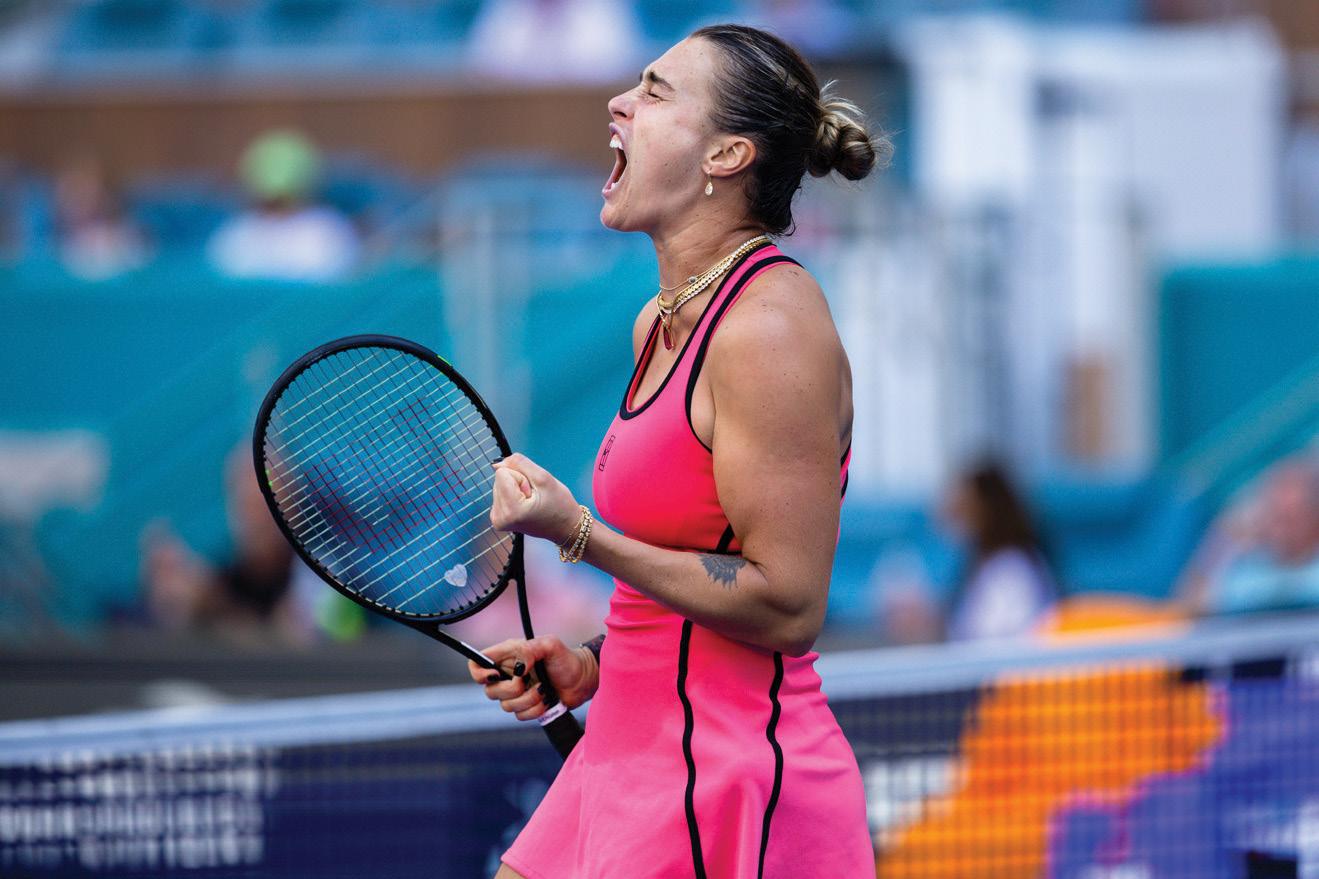
So throughout Hard Rock Stadium, then mixed with now, an orange and aqua lattice of past football and present tennis. Walls inside the stadium were adorned with large black-and-white photos of such Dolphins greats as Bob Griese and Larry Csonka. On the Stadium Court, defending Miami Open champion Aryna Sabalenka practiced serves, aiming at five targets with a devotion similar to what Dolphins coach Don Shula had imposed on his players for 26 seasons.
But while the Dolphins competed every seven days, just 72 hours earlier, 3,000 miles across the country, Sabalenka had won a thrilling final at the BNP Paribas Open in Indian Wells, California. Now she was in the city where she owned a home, hoping to become the first woman to win the challenging “Sunshine Double” since Iga Swiatek did that four years ago. Asked to say how many people comprised her traveling team – the size of which in pro tennis is each year growing closer to NFL-like proportions – Sabalenka made a characteristic joke at her own expense: “My whole team is my mental coach.”
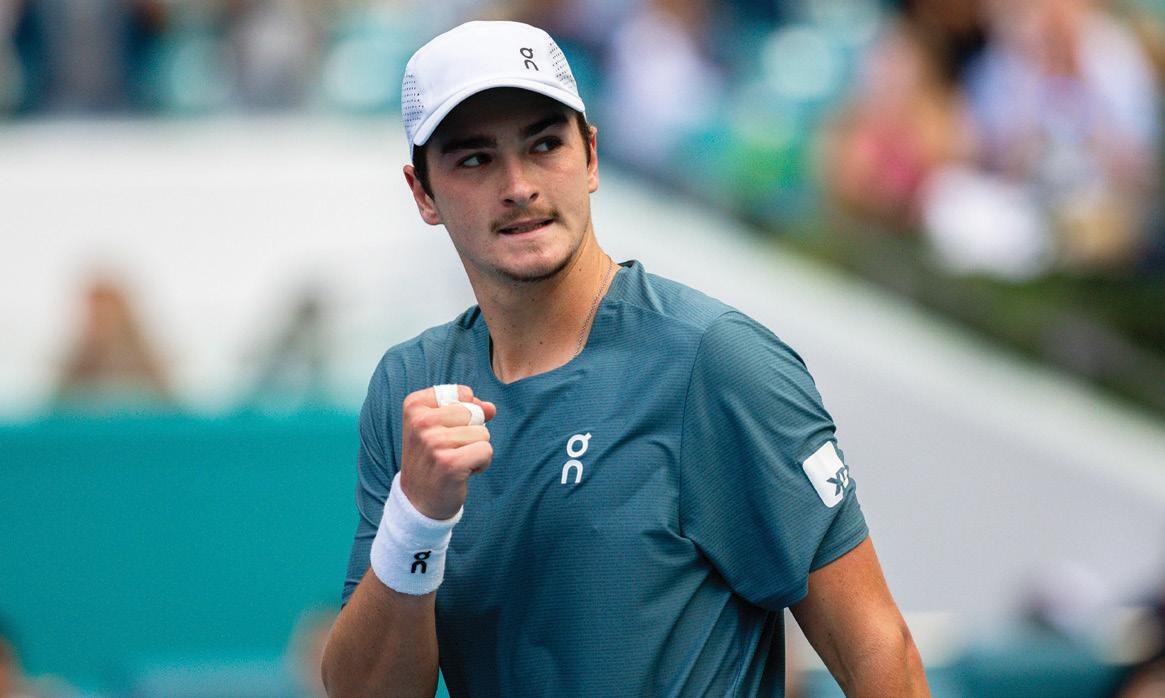
From deep inside the gigantic football stadium, a trek to the field courts. At 4:30 on a blustery Monday afternoon, rising young American Learner Tien was practicing with Stefanos Tsitsipas on Court 8. Once a top ten mainstay, the stylish Greek arrived in Miami ranked 51.
Ten minutes after watching the Tien-Tsitsipas session, it was off to Court 5 to see Lulu Sun. Back in 2024, Sun was the sensation at Wimbledon. In ten dazzling days, she sprinted out of the qualifying to the quarterfinals, lit up the All England Club, and soared into the top 60. But now, in front of 80 people, the 111th-ranked New Zealander was back in the qualifying. Despite getting into the main draw off the heels of a win over Donna Vekic – the woman who’d ended her Wimbledon run -- Sun’s sun set when she was beaten in the round by Taylor Townsend.
Three days following his session with Tien, Tsitsipas would earn a theoretically redemptive victory over fifth-seeded Alex de Minaur. But then, in the next round, he’d win but a single game versus Arthur Fils. “Have you ever seen me miss every shot after the serve like I’m doing today?” said Tsitsipas as he struggled under the lights. “It doesn’t happen. I cannot see the ball. I don’t know how he sees the ball.”
The three years since Tsitsipas had reached the Australian Open singles final seemed more like 30. The road back to the elite also seemed long for 2019 US Open champion Bianca Andreescu. Despite generating enough results at ITF events to rise from 227 at the start of the year to 146 in Miami, Andreescu was beaten in the last round of qualifying by 95th-ranked Katie Voleynets.
As Tsitsipas, Sun, and Andreescu showed, while it’s one thing to witness a player in full swing, only when you see a pro compete in several events does the cumulative and transitional intensity of the circuit hit you. Call it The Pro Tennis Experience, a journey far longer and more labor-intensive than the one I’d taken when I’d lugged the football book home 52 years ago. Melbourne, Paris, London, and New York are the ones we know most. But there were dozens more too. Just prior to Miami, there’d been Indian Wells, followed by a 3,000-mile flight to Florida across a nation in the middle of a government shutdown. Come April, the traveling tennis circus would head 3,000 miles across the Atlantic for the European clay season.
But for now, the Miami Open commanded the tennis stage. On a fence at the end of the Butch Buchholz Family Court there rested a poster with these words from the tournament’s founder, Hall of Famer Butch Buchholz: “We [my brother Cliff and I] had the idea to invite 300,000 to our wedding. And we wanted everyone to have a great time – feed them, offer them merchandise, play music – and enjoy an entertainment experience at a tennis event for men and women.” There were 188 orange covered chairs fans sat in to watch the tennis on big video screens. There were shops, selling clothes, tennis equipment, and other items. And then there was the food court, brimming with offerings ranging from pizza and sushi to pretzels, hamburgers, hotdogs (including the $100 Golden Goat Caviar Glizzy Hot Dog), tacos, and enough ice cream choices to keep three dairies profitable for years.
Passing on dispensing a Benjamin for the wiener due to both economic and health concerns, I was offered the unofficial food item of Florida Tennis magazine -- an acai bowl, complete with strawberries, whey protein, and granola. This dish was initially savored by the magazine’s founder, the late and beloved Jim Martz. And in the same way the Corleone family in The Godfather passed on its mansion to Pete Clemenza and Frank Pentangeli, the acai bowl is now favored by Florida Tennis publisher Matt Pressman and Florida Tennis podcast host Adam Ross. Even though no one with the physical leverage of Csonka was present to enforce the request, this was unquestionably an offer I couldn’t refuse.






By Osvaldo Godoy
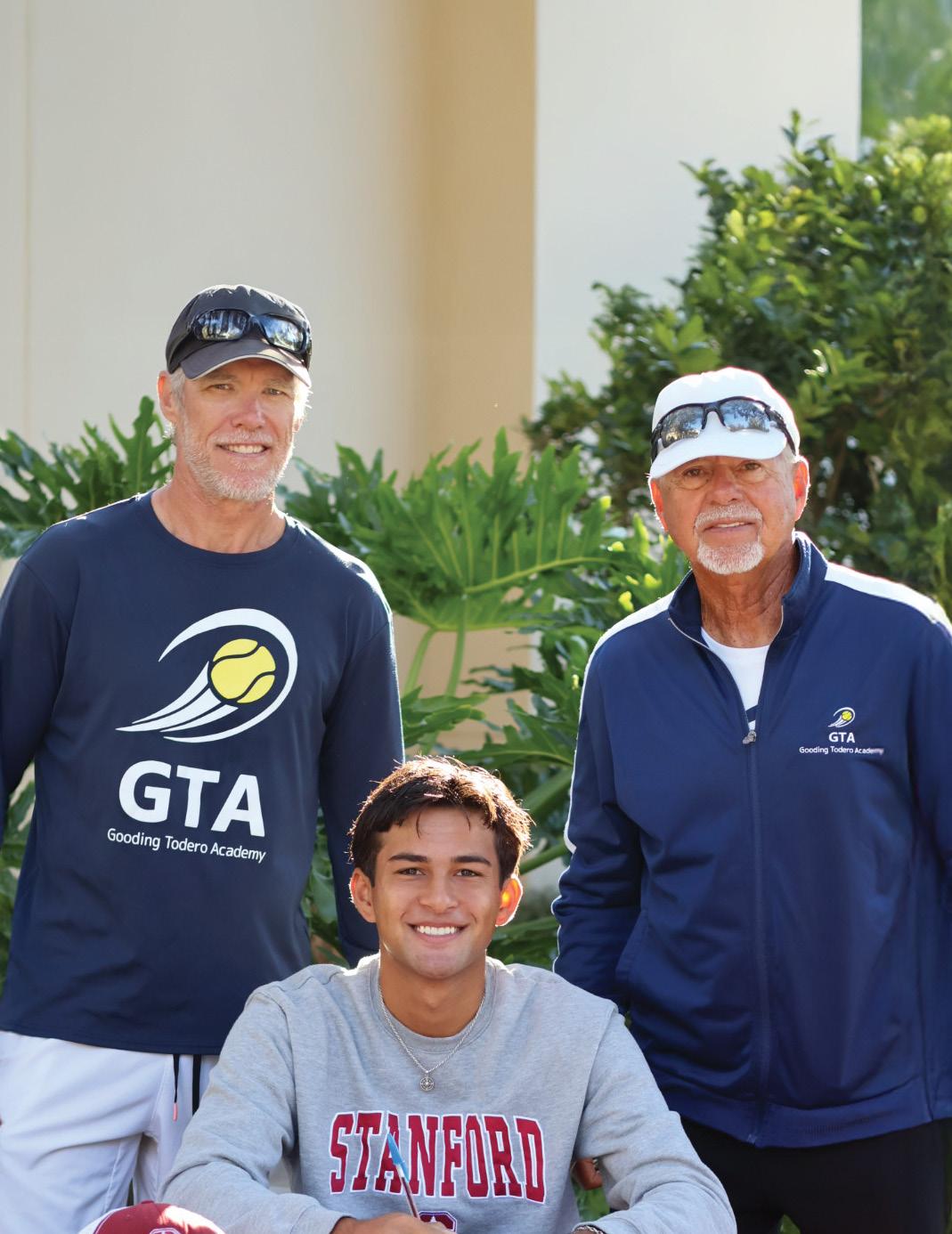
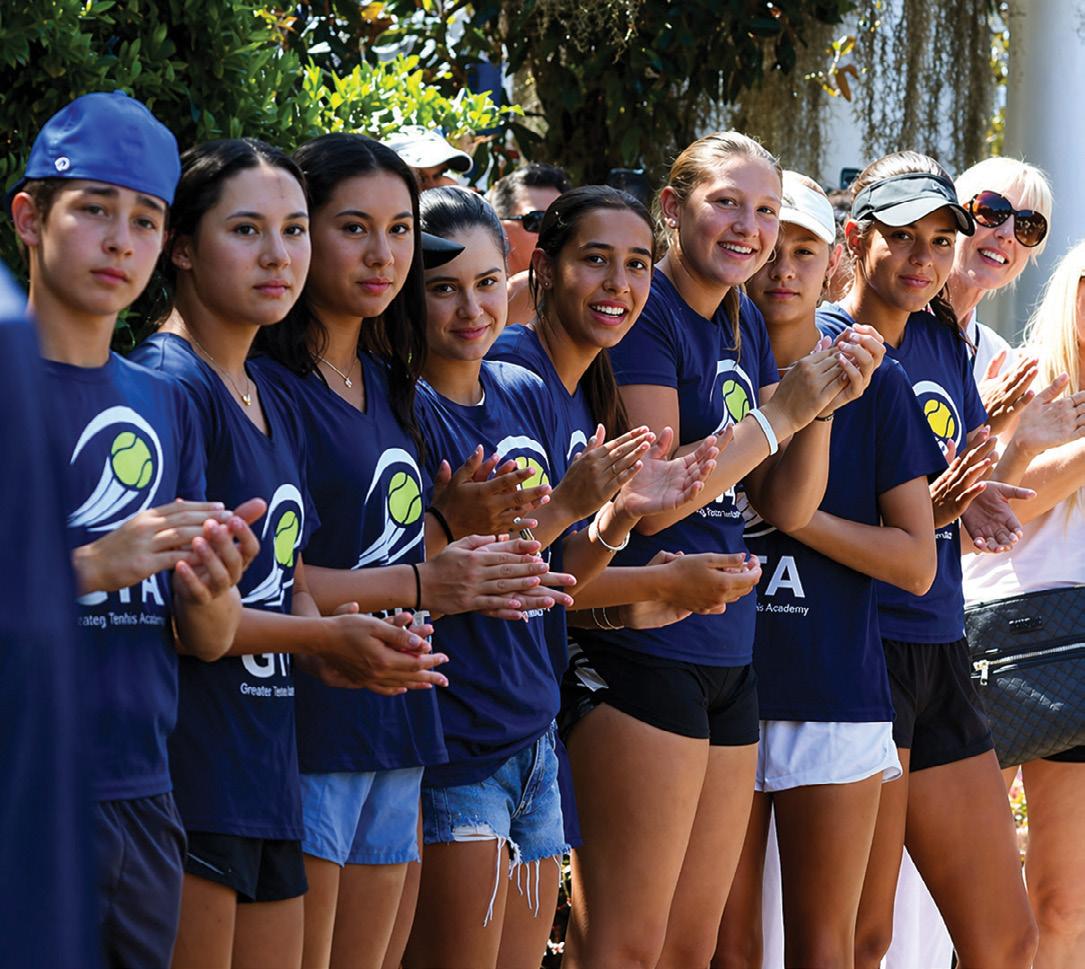
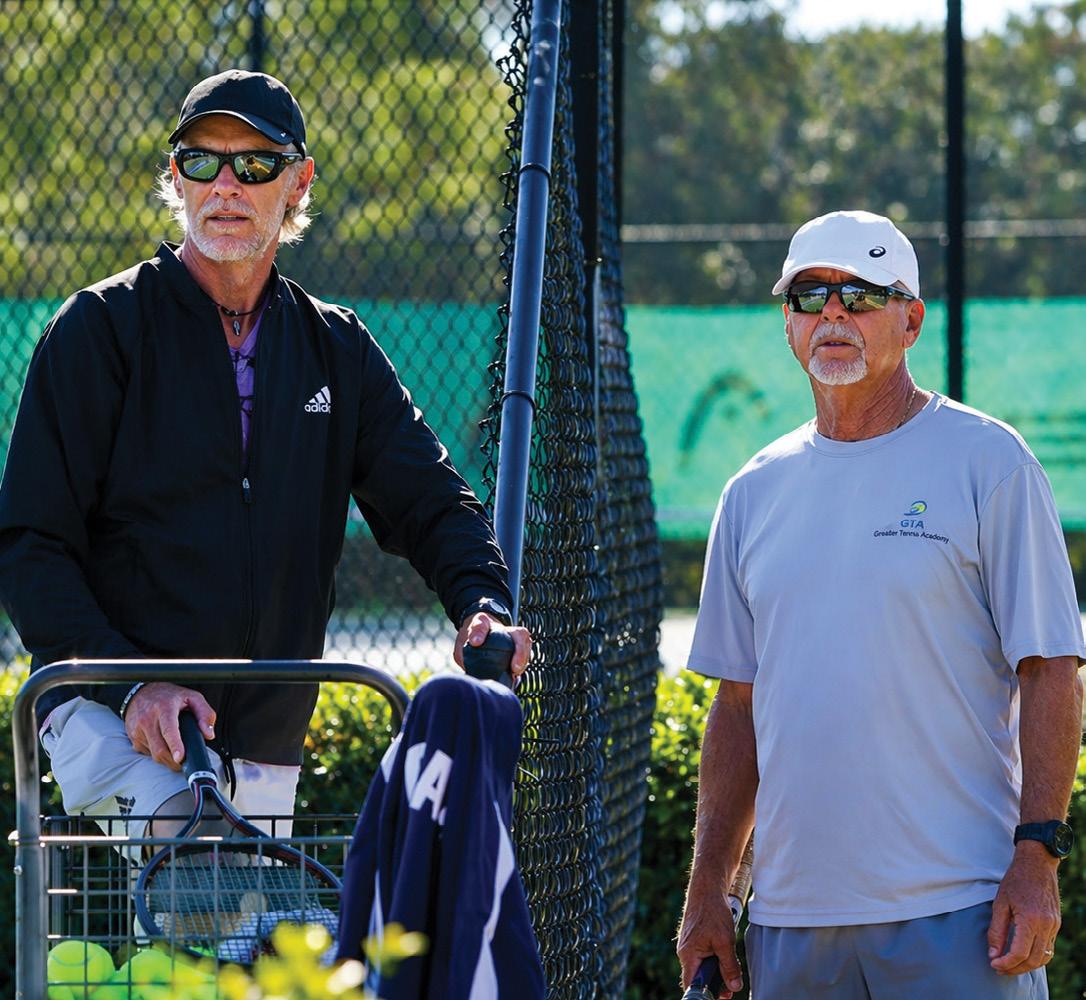
Located in Lake Nona, Orlando, Gooding Todero Academy has developed a reputation as a boutique training environment for junior tennis players looking to reach the college or professional levels. Led by directors Jay Gooding and Jorge Todero, the academy focuses on small training groups, strong fundamentals, and long-term player development.
The academy was founded in 2020 after the two coaches, who previously worked together within the USTA system, decided to create their own program. “When I finished working at the USTA, Jay proposed starting an academy together,” Todero said. “So we started in 2020.”
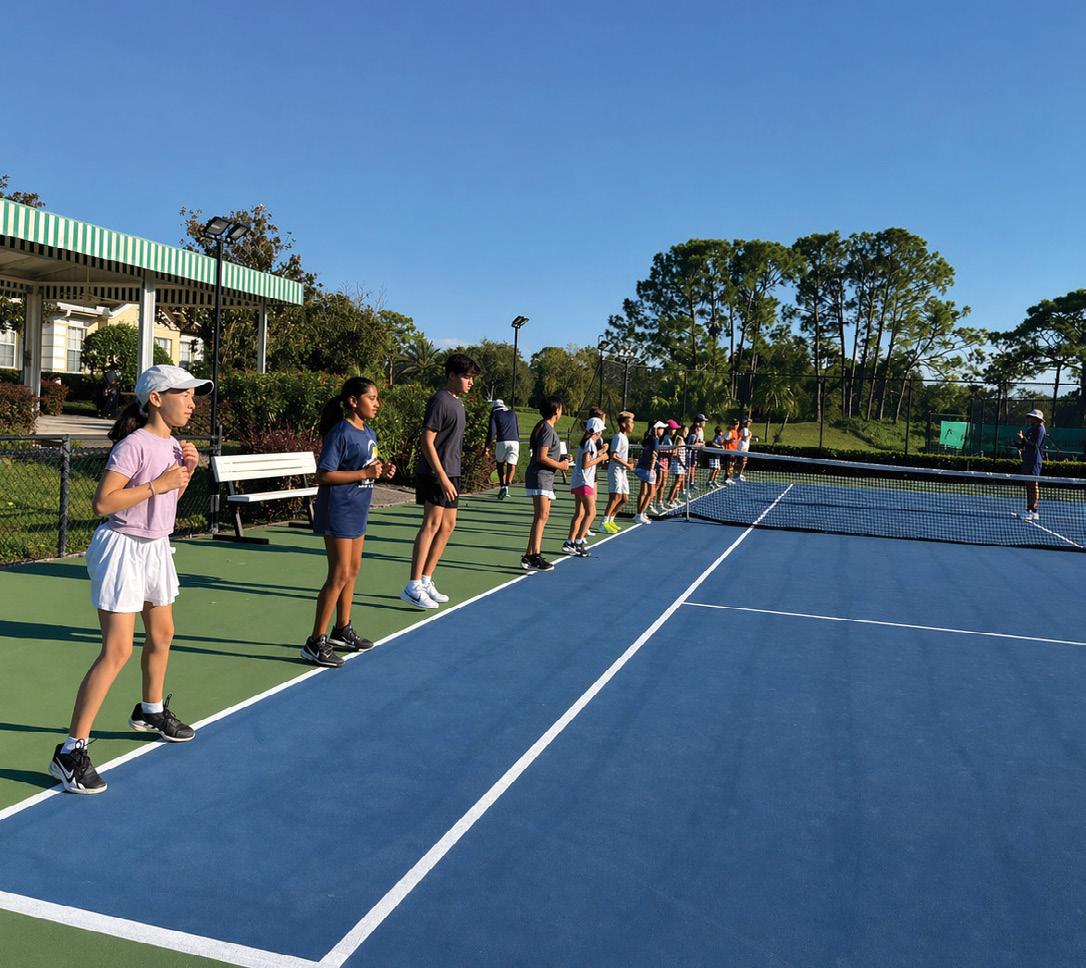
Unlike larger academies, the program intentionally keeps its numbers limited. “We keep it small on purpose,” Gooding explained. “We keep the numbers pretty low just so the coach-to-player ratio is a little more quality over quantity.” The academy typically works with about 20 to 30 full-time players, who train twice a day from Monday to Friday. “We have two sessions a day, morning and afternoon,” Gooding said. “Fitness is included in that. We leave the weekends open because a lot of the kids are competing or they need to take that time to take a break.”
Both directors bring decades of experience from the professional tennis world. Gooding grew up in Australia and competed on the professional circuit before moving into coaching. “I grew up in Australia and tried my luck on the tour for quite a few years,” he said. “I got to play the Australian Open. That was sort of the pinnacle of the events that I played in.” After stepping away from professional competition, he worked as a coach in New York and later joined USTA Player Development, where he worked with several top American players.
Todero’s career also spans decades in international tennis. Originally from Argentina, he played during the same generation as Guillermo Vilas before transitioning into coaching. “Like everyone, I started playing tennis,” Todero said. “I’m from the same generation as Guillermo Vilas and we traveled around the world trying to progress and do the best possible.” He later worked with the USTA for many years before launching the academy with Gooding.
At Gooding Todero Academy, the coaching philosophy is built around mastering the fundamentals rather than searching for shortcuts. “There is no magic formula,” Gooding said. “There’s no special drill that champions do. A tennis court is a tennis court.” For him, the most important element in development is consistency. “I think the number one thing is consistency,” he said. “There’s no quick fix to improvement in tennis.”
Training sessions focus heavily on basic skills and repetition. “A lot of the work we do here is very basic,” Gooding explained. “The first rule of tennis is hit the ball over the net and in.” He believes many players spend too much time chasing complex techniques instead of mastering fundamentals. “One trait that all the top players have is that they do the basics well,” he said. Movement is another key pillar of the academy’s approach. Todero emphasizes that players must learn proper footwork from the start. “From the first day,” he said. “We put a lot of emphasis on how players move.” Gooding also believes movement and strategy are often overlooked in American junior tennis. “Where I grew up, everything was about how to play the game,” he said. “Here everyone has a good looking forehand and backhand, but not that many people know how to play the game of tennis.”
For both coaches, developing strong competitors is just as important as teaching technique. “There are a lot of good ball strikers,” Gooding said. “But there are not too many good competitors.” Learning to handle adversity is part of the process. “You have to know how to lose,” he added. “When things are bad, do you fight harder or do you fight less?”
Technology has also changed how players train. “The technology helps us a lot,” Todero said. “Through video it’s very easy to show players what we want to teach.” At the same time, he believes modern distractions can be a challenge for young athletes. “One of the biggest enemies in tennis is distractions,” he said. To keep players focused, the academy maintains strict training rules. “We are very strict,” Todero explained. “We don’t allow cell phones during training or on the court.”
Since opening in 2020, the academy has helped many players move on to college tennis programs. “We already have sent 23 players to university,” Todero said. Gooding sees college tennis as a key pathway for many young athletes. “The achievement itself is getting to college,” he said. “That’s why you play junior tennis.”
Several players from the academy have committed to top programs such as Stanford, Texas A&M, Illinois, and Berkeley, while others continue to compete at the highest levels of junior tennis. One recent example is Ronit Karki, who reached the final of the Wimbledon junior tournament before committing to Stanford. “Top 20 in the world junior, made the final of Wimbledon juniors,” Gooding said. “He’s doing great.”
For Gooding and Todero, however, success is measured not only in rankings or results but also in personal growth. “Consistency, patience, discipline, hard work and resilience,” Gooding said. “Those character traits transcend everything.” Todero believes passion for the sport remains the most important factor. “The first thing is that the player has to love the sport,” he said. “They have to feel passion for tennis.”
To learn more about Gooding Todero Academy, its training programs, and player development philosophy, visit goodingtoderoacademy.com or follow the academy on Instagram at @gtatennis. The academy is located in Lake Nona, Orlando, just minutes from the USTA National Campus, and welcomes junior players looking to pursue high-level competition, college tennis, or professional careers.
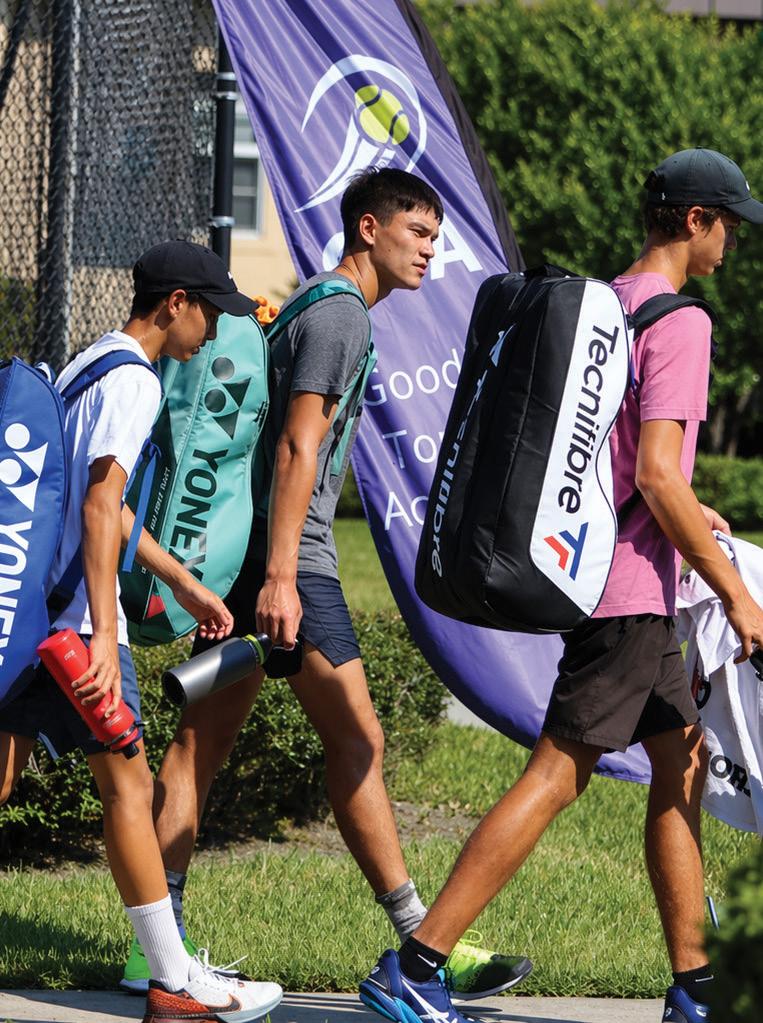
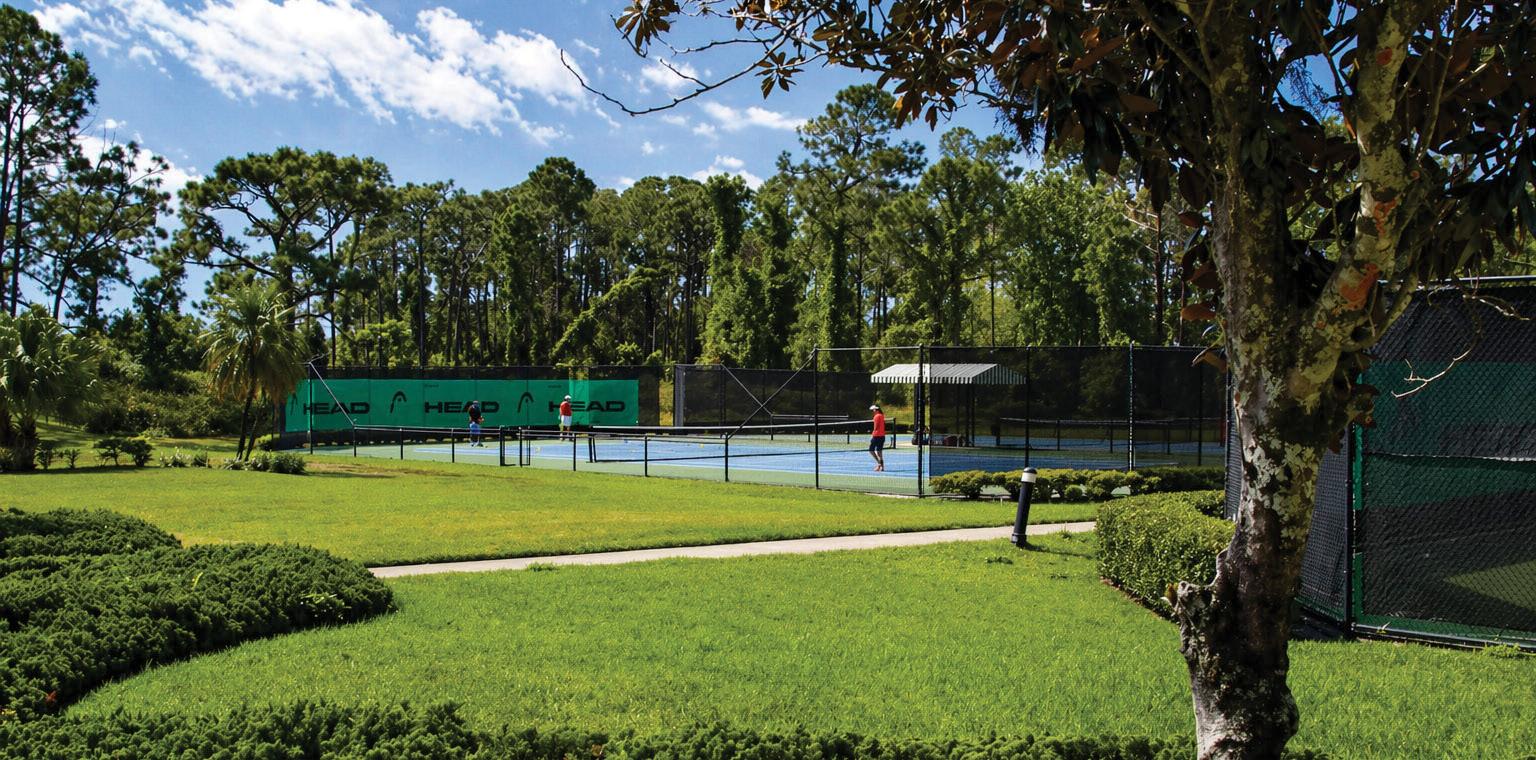
By Alex Binstok
Centerline Athletics is built on a simple idea: performance first. That mindset was front and center when Florida Tennis sat down with Centerline Athletics Apparel Designer, Ffion Appleton Jones, whose resume includes more than 25 years working with some of the biggest names in sportswear, including Nike, Adidas, and Puma. Now helping to shape the future of Centerline Athletics, Ffion spoke about what separates great sportswear from good sportswear, how athlete feedback drives design, and why innovation matters so much in racquet sports. From fabric technology to fit sessions, every detail comes back to one goal: helping athletes perform to the best of their ability.
“What really attracted me to Centerline was the athlete first approach,” Ffion emphasized. “It was all about performance and respecting the athlete and what they need from the product.” She explained that too many brands can get lost chasing trends, while Centerline stays focused on utility. “The aesthetic is very clean and minimal, but everything is there for a reason. It’s about improving the athlete’s game or at the very least not distracting from it.” That balance between style and function is what drew her in and what continues to shape every collection.
That mindset was shaped long before Centerline. “I’ve been doing this for over 25 years,” Ffion said, reflecting on her time designing for some of the sport’s biggest brands. “You always have to think about the end use. What is the athlete doing? What do they need? What could make them better?” Instead of designing from a purely visual standpoint, she starts with the athlete’s movement, needs, and routine. “That’s the most critical part of sportswear design.”
One of the products she is most proud of is Centerline’s AirLite™ T-shirt. “It’s probably the product I’m most proud of,” she said. “The quality is beautiful, it has a really soft hand feel, there’s stretch, and it works both on and off the court.” The shirt is built around Centerline’s AirLite™ concept, a lightweight perforated jersey fabric designed for moisture management and comfort. “It’s only 130 grams, it’s moisture wicking, and it’s perfect for high-intensity sports like pickleball and tennis.”
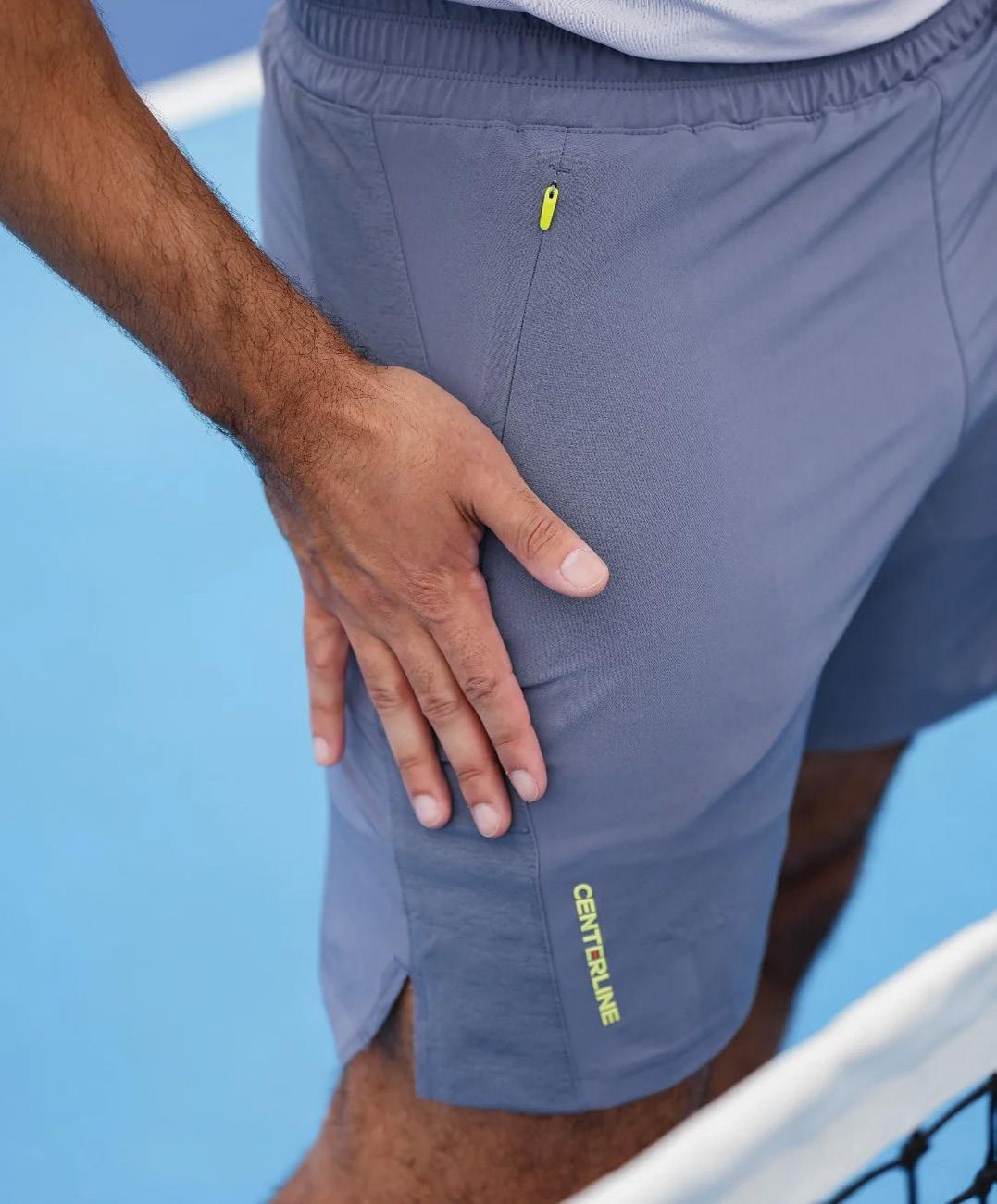

Listening plays a major role in that process. “We interview athletes all the time,” she said. “What do they like? What do they dislike? What’s missing?” That feedback shapes everything from fabric choices to cut lines. “Performance should inform the trend,” she said. “If you’re designing for tennis, pickleball, running, football, they all require something different. You can’t just design one thing and hope it works for everyone.”
Another standout innovation is GripTek® “Some athletes have really sweaty palms,” Ffion explained. “They’re constantly wiping their hands on their shorts. We created Grip Tech paneling and pocket linings so they can wipe their hands without distraction.”
“We are never satisfied,” she said. “We’re always researching, always trying to improve the fabrics and make the next product even better.” Right now, that includes exploring fabrics that create a “cotton hand feel” while still delivering elite performance. “People want that natural feel, but they still want moisture wicking, stretch, and all-day comfort. Everything moving forward has to have that premium look and hand feel.”
The latest innovation for Centerline Athletics, ThermaTekº, continues the brand’s performance-first approach, designed to maximize performance with technology that helps your body stay in its natural comfort zone. Built around temperature-regulating fabrics that keep you cool when it’s hot and warm when it’s cold, the collection reflects Centerline’s ongoing focus on delivering comfort and function without distraction.
Looking ahead, Ffion plans to keep pushing for innovation. Trade shows, fabric testing, and product development remain a constant part of her schedule as she searches for what could be next in court sports. “I’m always looking for new innovation that could disrupt the market,” she said. That curiosity keeps Centerline moving forward and keeps athletes at the center of every decision.
For Ffion, the mission at Centerline stays simple: create products that help players feel better, move better, and compete better. In a sport where details matter, that kind of thinking can make all the difference.


By Alex Binstok
At the Midtown Athletic Club in Weston, Florida, the Midtown Junior Cup once again brought together some of the country’s most dedicated junior players. Over four days, 48 athletes from Midtown clubs nationwide came together for high-performance training, competition, and a shared experience built around development and connection. The environment pushed players to improve while also giving them a sense of what it means to be part of something larger.
For Michael Mahoney, Nation Racquet Sports Director at Midtown Athletic Clubs, he explains his passion behind the Junior Cup. “One of the things that I emphasize with all the players is to meet each other... this is the beginning of lifelong friendships.” That philosophy is just one of the factors contributing to the growth of the Cup. “I believe tennis is transformational. Part of the transformation is the community of friends that you'll make over the years that you're playing tennis.”
The players who make it here have already shown a high level of commitment to their development. Mahoney points to the consistency required just to be part of the program. “This group of kids, they're committed, they are participating at their local Midtown four and five times a week at the club training. That's a big commitment.” Still, the message throughout the event is not about short-term results, but contributing to the experience of Midtown players. “It’s a journey, it's not an endgame… being part of that journey is where kids learn responsibility and commitment and dedication and sportsmanship.” The emphasis stays on growth, both on and off the court.
Marcelo Ferreira, High Performance Manager at Midtown Athletic Club in Atlanta, sees the Cup as a rare opportunity to bring that development model together in one place. “The Midtown Junior Cup is, in my opinion, one of the nicest events… an opportunity for us to bring all of our high performance programs together to train for four days.” At the center of it is a shared value across every location. “The main objective of the cup is to live out one of our main values which is to win together.” When those different programs finally connect, the effect is immediate. “It is our only opportunity to come together and feed off each other... it just really strengthens that bond and makes us feel like we truly are one.”
That connection continues to drive participation. Ferreira notes how the Atlanta group alone has grown within the event. “For this edition we got 16 players just from the Atlanta club.” Players begin to understand what they gain from the experience beyond the training sessions. “They realize not only how much fun the players have every year but how much they improved and the relationships that they have developed.” For coaches, that long-term impact stands out. “I just believe it is extremely rewarding for a coach to see the relationships that blossom out of this… I really enjoy also seeing the parents coming together.”
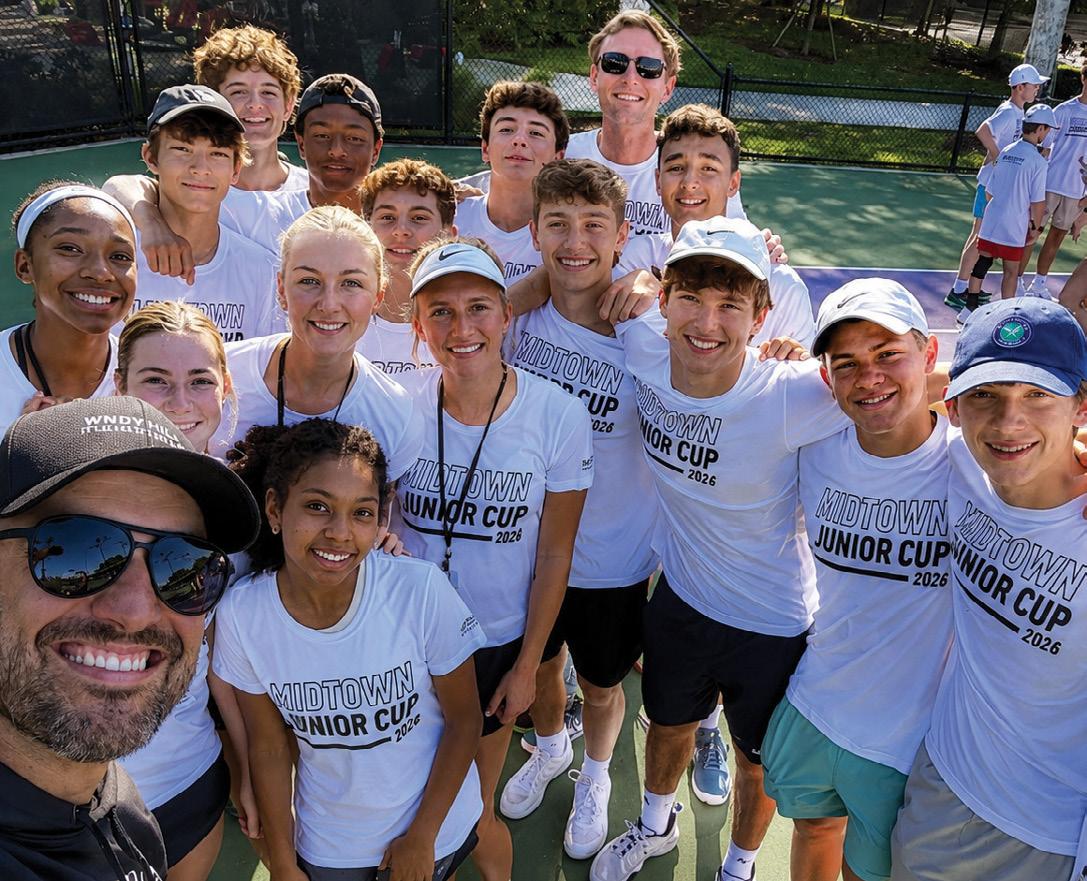
On the court, the structure exposes players to a variety of coaching styles and training approaches. Zachary Dean, Exercise Science Coach at Midtown Athletic Club in Weston, explains that firsthand experience. “Getting out here and seeing it first hand feels different than hearing about it… actually being out here and seeing these kids play, it gets your heart pumping.” His focus adds another layer to development, especially when it comes to physical preparation. “Getting the right kind of strength training from a young age not only teaches technique and skill… it teaches muscles to grow the right ways.” The goal is to give players a foundation they can build on. “Midtown gives you a solid place to stand from… you’ve got a good starting point and you have a lot of chance for growth.”
Danielle Wolf, High Performance Supervisor at Midtown Athletic Club in Chicago, points to how the setting and format contribute to the overall experience. “I love anytime we get in Florida, it's beautiful weather, this facility is spectacular, it's something I look forward to all the clubs getting together.” The event also creates connections that carry into competition. “It's really cool to kind of develop that relationship with everybody. It's kind of cross country.” At the same time, players are pushed to grow in unfamiliar situations. “It's a really cool trip trying to be a little uncomfortable and being okay with that.” That perspective shapes how they approach matches. “Winning and losing is important, but it's not everything. Losing, you learn a lot from.”
From the player side, the impact shows up in both experience and development. “Beautiful courts, it’s amazing. I felt very at home to meet new people… but most importantly, play the tennis, my favorite thing to do.” The environment encourages them to engage with the process. “If you ask the questions… they’ll give you the answers… they taught me a lot of things like instead of talking back… listen to what the coaches say.” Over time, that approach leads to progress. “When I first came to Midtown, I was probably a 7 UTR… building relationships with the coaches and the players… that just helped propel me forward.”
What stays with them most is the sense of having a team around them through every stage of development, something players repeatedly emphasized throughout the week. “Having a team around you just helps… when you have a team around you even at your lowest moments, it's what's gonna help you build back up.” That support becomes part of how they view their future in the sport. “It prepares us for college tennis… I think it's Midtown saying like win together..." And as the week comes to a close, many pointed to the relationships that keep bringing them back year after year. “Every year… you come back… you reunite with some people.”
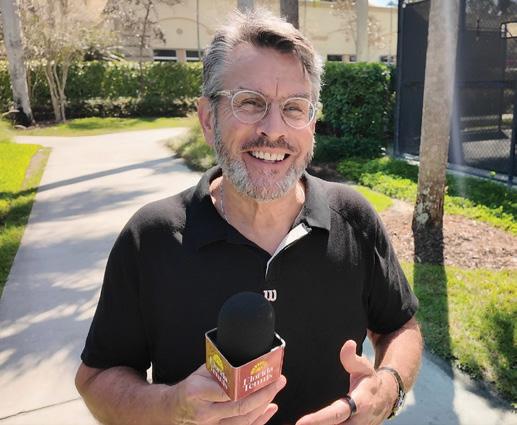
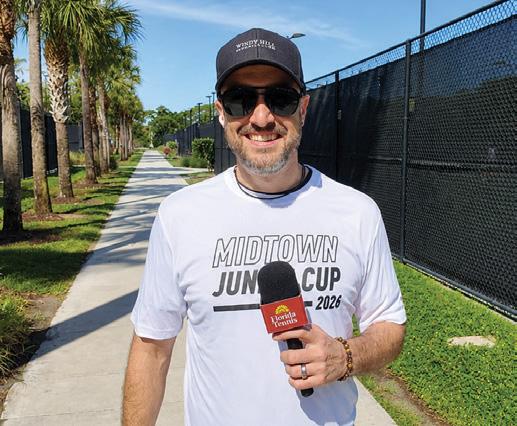
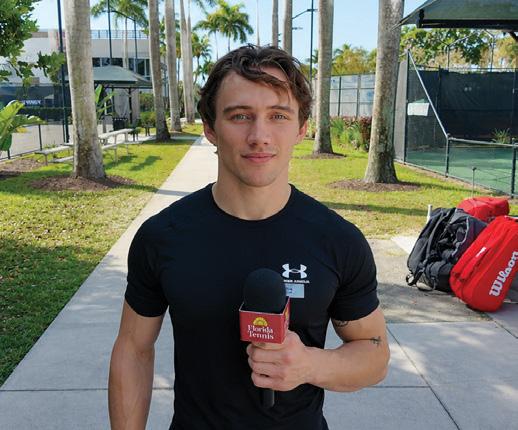
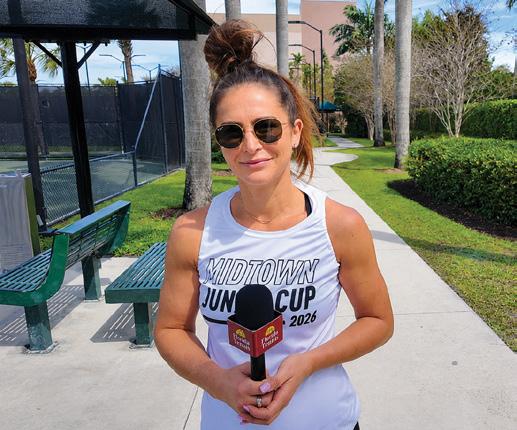
By Osvaldo Godoy
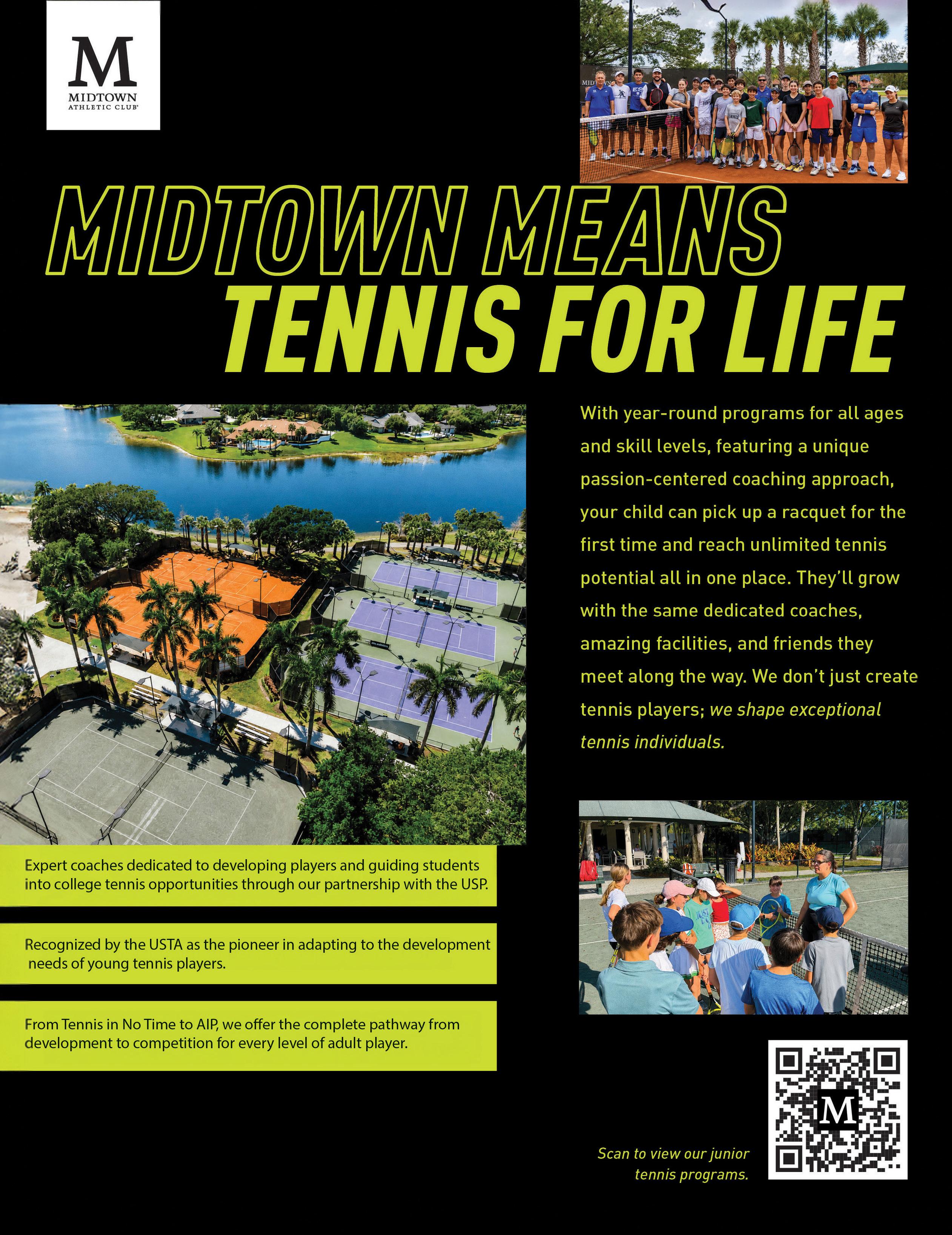
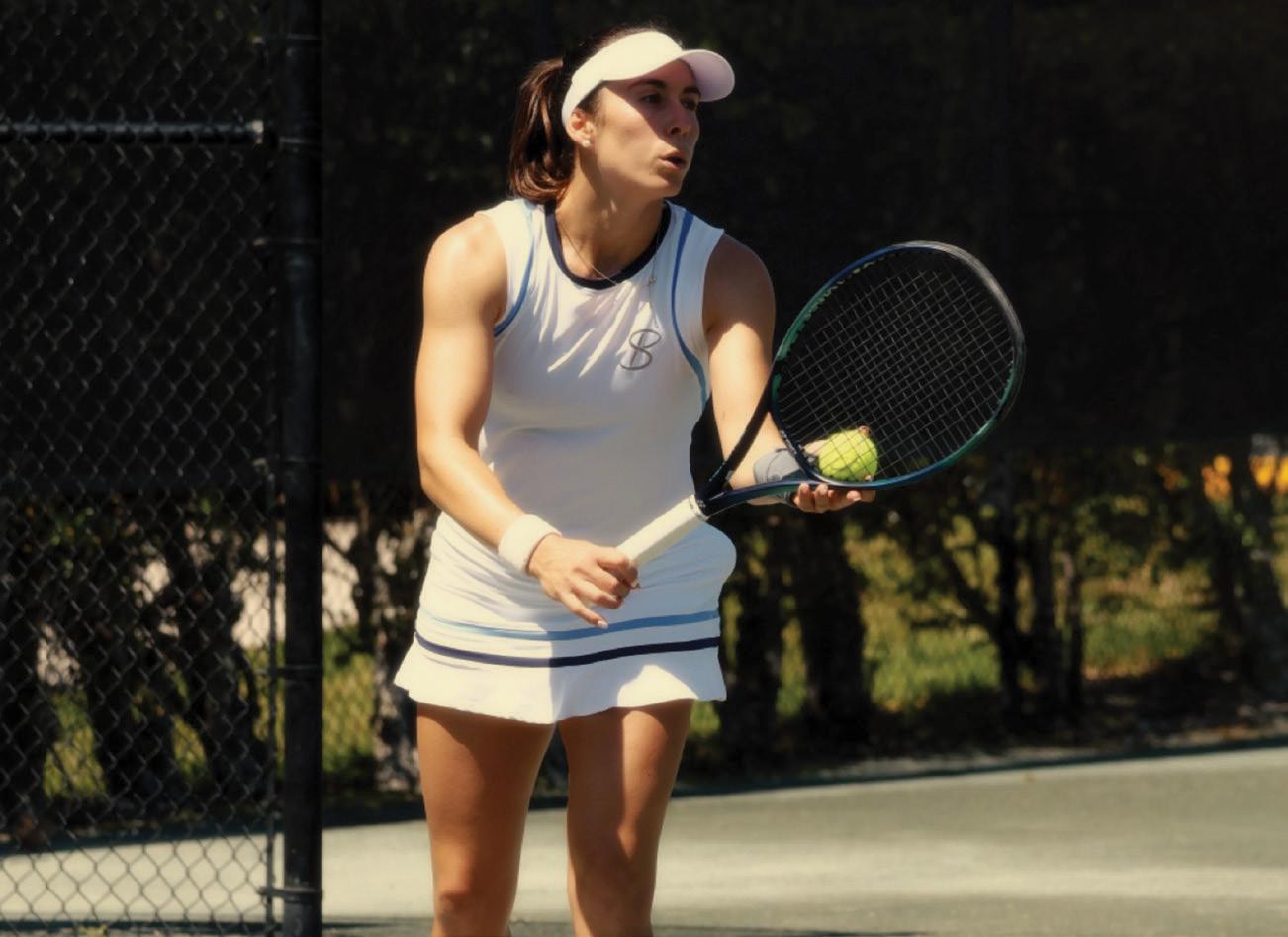
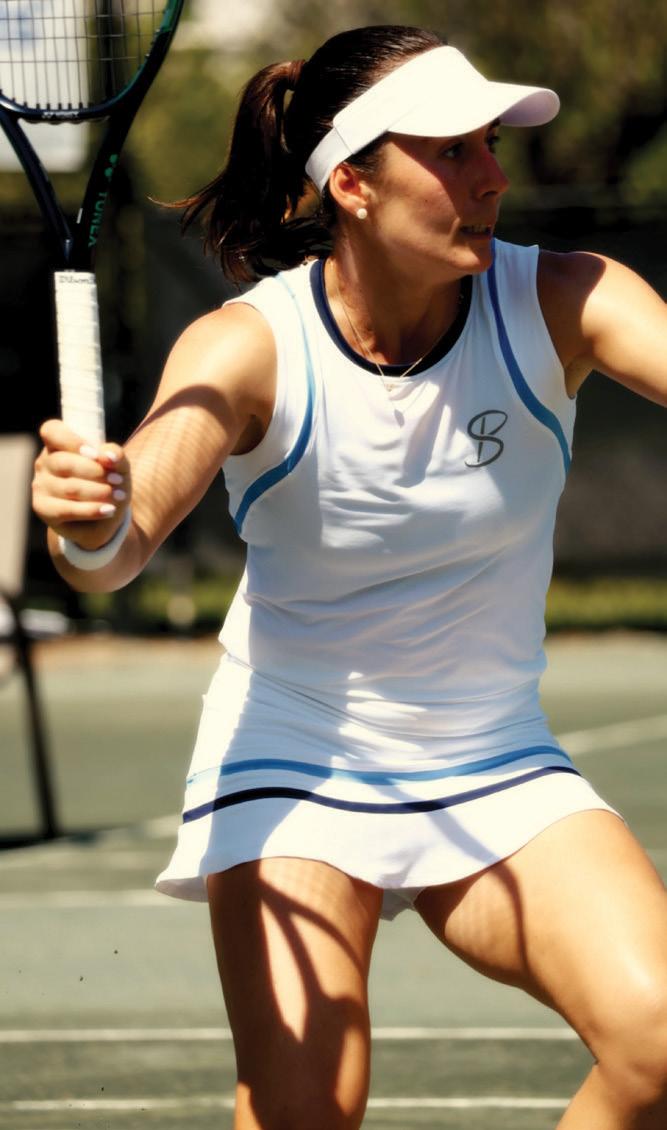
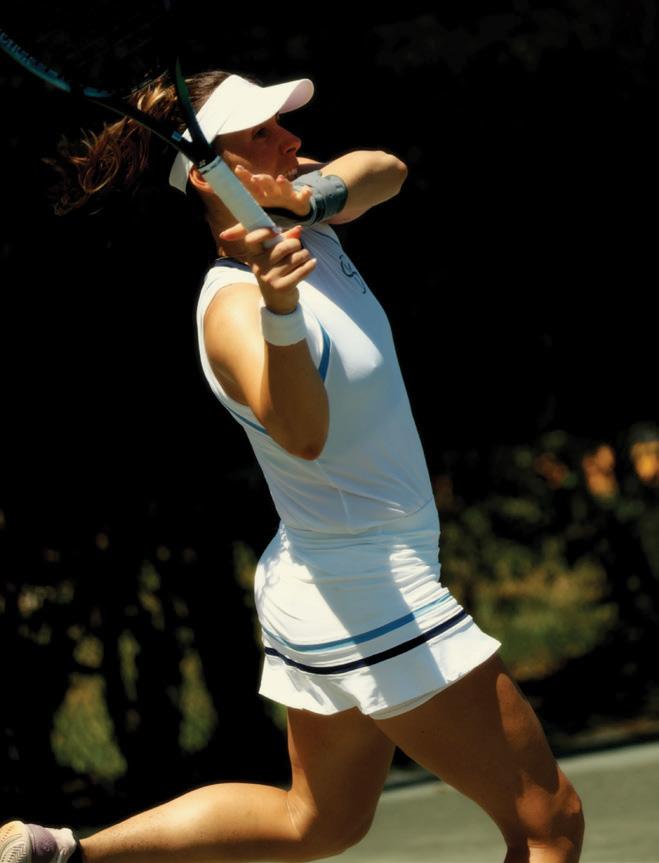
Spanish professional tennis player Alicia Herrero knows firsthand the realities of chasing a career on the WTA Tour. From injuries and financial struggles to long weeks traveling alone across the world, Herrero has experienced both the rewarding and difficult sides of professional tennis.
In an interview with Florida Tennis Magazine, Herrero opened up about her journey from Spain to college tennis in the United States and eventually back to the professional tour.
“When I was around eight or nine years old, I started playing tennis because my friends and my cousins were playing,” Herrero said. “So, I started playing because people around me were just playing.”
After developing in Spain, she faced one of the biggest decisions of her career: whether to immediately pursue professional tennis or take the college route in the United States.
“After high school, I took the time to improve my English for a year and I started playing professionally, but I think I was so young,” she explained. “Maybe I wasn’t ready to become a pro so early.”
Eventually, Herrero and her family decided college tennis would be the best path forward.
“I think those four years helped me mature,” she said. “They helped me be more organized and more professional. It gave me the time to think about life and have things more clear.”
After college, injuries forced her to step away from competing professionally just as she was trying to establish herself on tour.
“My dream was always to be a professional player, but I knew being realistic, I couldn’t start playing at that point because I wasn’t ready,” Herrero said. “So I had to stop. I started coaching a little bit, I did a lot of rehab, and tried to give myself the best chance to maybe come back in the future.”
That comeback opportunity eventually arrived thanks to encouragement from her former college doubles partner.
“She was the one telling me, ‘Why don’t you just come back? We play doubles and see how it goes,’” Herrero recalled. “At the time I was feeling healthier, so I just gave myself the chance to go back on tour and give it all.”
Herrero says one of the biggest misconceptions about professional tennis is how few players are actually able to make a sustainable living.
“Only the players who are around Top 100 in singles and Top 50 in doubles are really able to make a living and consistently earn money from tennis,” Herrero explained. “Out of everyone competing on the WTA and ATP tours, that’s actually a very small number of players making a sustainable income.”
“The weeks where I don’t win a couple of matches, I’m losing money,” she said. “For me to cover my weekly expenses, I usually need to make at least the quarterfinals.”
Because of that reality, Herrero often has to compete without a traveling coach.
“I can’t really afford to pay for a coach to travel with me,” she said. “Most weeks I travel alone and barely make enough to cover expenses.”
Travel itself presents another
major challenge, especially because conditions constantly change from week to week.
“Traveling week after week— most of the time alone—and competing in different conditions every single week is very challenging,” Herrero said.
She explained that even tournaments on the same surface can feel completely different depending on the location.
“The surfaces change, the balls change every week, and even clay courts can feel completely different depending on where you are,” she said. “Clay in Florida is not the same as clay in Europe. You constantly have to adapt.”
The pressure of professional tennis, she says, is unique because poor results or injuries immediately affect a player financially.
“If your results aren’t good or if you get injured, you’re not earning money,” Herrero said. “You immediately start losing money, which creates a type of pressure that probably doesn’t exist in many other professions.”
Despite the difficulties, Herrero believes tennis has taught her valuable life lessons.
“I think discipline is something tennis teaches you,” she said. “You’ve got to wake up every day and get better because people are working super hard every day.”
Away from the court, she tries to stay grounded through simple routines with family and friends.
“I like doing basic stuff,” Herrero said. “Walking my dog, spending time with my sisters, talking with my parents, reading, coloring, doing puzzles. It keeps you grounded.”
Herrero also shared what she believes separates good players from truly elite players on the professional tour.
“I think the players who become truly great are the ones who, besides having a lot of talent, are able to stay extremely consistent physically and mentally week after week,” she said. “At the top level, consistency is everything.”
For younger players hoping to turn professional one day, Herrero emphasized the importance of patience and long-term development.
“When you’re young it’s very easy to compare yourself to others and focus too much on short-term results,” she explained.
Instead, she believes improvement should remain the main focus.
“Concentrating on becoming a little better every day technically, mentally, and physically is what ultimately helps a player reach their highest level,” Herrero said. “The focus shouldn’t be on short-term results, but on long-term development and improvement.”
Looking back on her own journey, Herrero says the most important thing is competing without regrets.
“Follow your dreams and don’t give up because if you give your best, you never know what’s going to happen,” she said. “When I get on the court, I like to leave and feel like, okay, I have no regrets. I gave it all.”

Green clay tennis courts (like those from Har-Tru) are able to absorb massive amounts of carbon dioxide via enhanced rock weathering, according to a new study in Applied Geochemistry.
Enhanced rock weathering—the process of using silicate rocks like basalt to remove carbon dioxide from the atmosphere through the rocks’ chemical reaction with rainfall—has emerged in recent years as a promising method of reducing carbon emissions. Green clay tennis courts in the US are made of metabasalt, a type of basalt with similar properties allowing for carbon sequestration.
“To mitigate climate change, we need to scale new technologies in addition to leveraging already-existing processes and infrastructure. Enhanced rock weathering started in agriculture, and we are now seeing creative and broad-ranging applications such as on coastlines, golf courses, and now our work on tennis courts,” says Jonathan Lambert, an earth scientist and visiting assistant professor at the NYU Gallatin School of Individualized Study.
Lambert and co-author Frank J. Pavia, an assistant professor at the University of Washington, used a database of US tennis courts containing the location of the courts and the type of playing surface (hardcourt, clay, or grass) to calculate gross and net carbon sequestration rates. They analyzed data for 17,178 green clay courts.
They determined sequestration rates after factoring carbon emissions during mining and processing, transportation of materials to court locations, court construction, and maintenance. Carbon removal was calculated by factoring the type of basalt used, grain size of the rocks, court temperature, and
chemical composition. They used similar models to estimate the emissions of hard courts.
The researchers found that the courts collectively remove approximately 25,000 metric tons of carbon dioxide per year. Among these courts, 80 percent of them reach net zero emissions fewer than 10 years after construction, and 92 percent of the courts reach net zero in fewer than 20 years. The median time for a green clay court to become net negative for carbon dioxide emissions is approximately 3.5 years.
Compared to ubiquitous hard courts, which are made of concrete and do not remove carbon through weathering, clay court construction emissions are 1.6 to 3 times lower, even before factoring in weathering.
Temperature and location for clay courts were strongly related to carbon sequestration as courts with the warmest temperatures and those closest to the primary basalt processing site in Virginia had the highest sequestration rates. A small number of courts (19) in the coldest regions and furthest away from the processing site likely never achieve net zero emissions.
“We see this work as a jumping off point for engaging and accessible climate solutions outreach, and also believe this strategy has legitimate potential to scale,” Lambert says. “For new court construction, building a green clay court appears to have less climate impact than a hard court. Changes to the composition of the crushed rock on green clay courts and more advanced tracking of court maintenance could greatly increase the amount of carbon that can be verifiably sequestered. This provides a great opportunity to organizations and facilities that want to reduce their emissions.”

Six nights shared and supervised accommodations in studentathlete suites, Sunday to Saturday ee ly programs extra nights available
Three nutritious buffet meals
daily dinner Sunday to breakfast Saturday
Five days of instruction, play, and performance training up to five hours per day
Various fitness activities daily
Airport transportation is at an additional cost
Flight information is required in advance of confirmation.

SCAN ME TO APPLY
Spend your summer training where champions trained at Saddlebrook Resort, home to one of the world’s most recognized tennis academies. ormer players include ATP and WTA professionals Alexander Zverev, ohn sner, artina ingis, Sam Stosur, and Andy Roddick
Our immersive junior programs are designed to help athletes sharpen their skills, build confidence, and experience the energy of high-performance tennis in a supportive training environment.
FOR MORE INFO, CONTACT
hopman@saddlebrook.com | (813) -4213
By Osvaldo Godoy
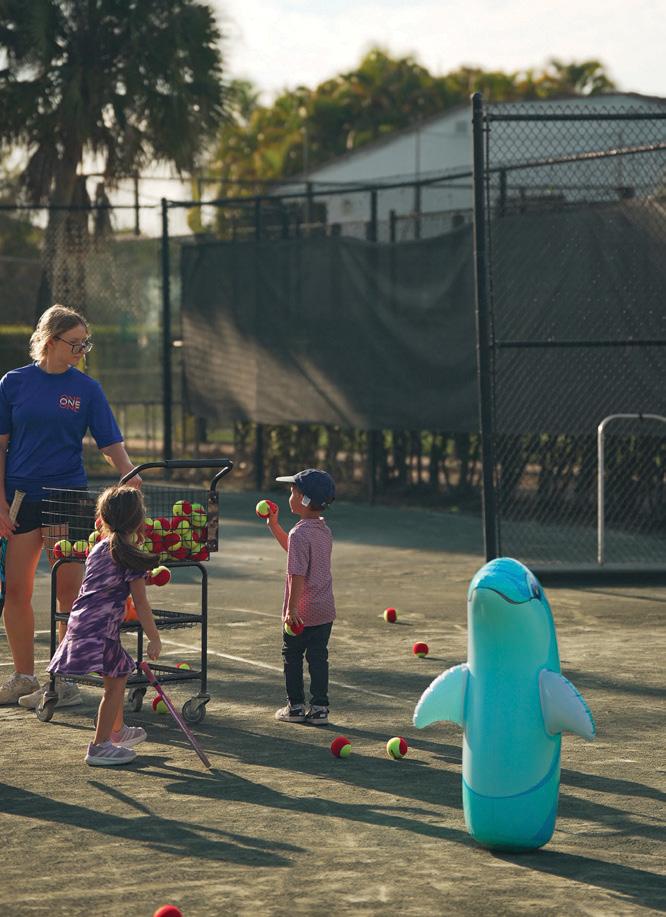
At just six years old, ONE Tennis Academy continues to grow as a developing hub for players of all ages and levels in Florida. Under Director Yulia Beygelzimer, the academy offers a structured pathway from beginner to professional level.
“We are an academy working with all ages,” Beygelzimer said. “We have kids starting at four years old and going through all the different age groups and levels, including pro players.”
The academy recently hosted a professional women’s W35 tournament, with two consecutive weeks of competition.
“It’s a professional women’s event, and we have two back-to-back weeks in a row,” she said.
Despite being a relatively young program, ONE Tennis Academy has placed strong emphasis on early development.
“We really pay a lot of importance to the younger kids because we believe the fundamentals learned at a young age are going to make a very big difference in how they develop after,” Beygelzimer explained. “As a proof, we’ve had bigger groups every year.”
Another key element is the diversity within the coaching staff.
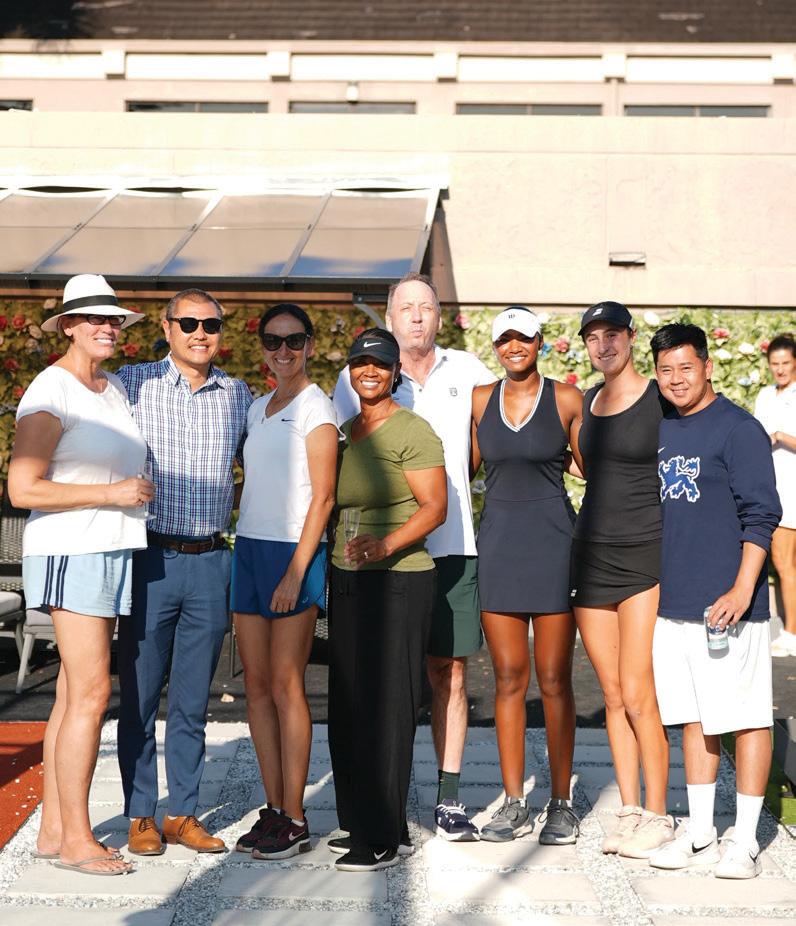
“I believe that the diversity in the coaching team brings a big difference into our approach,” she said. “We’re able to work with different personalities and connect with players from different backgrounds.”
During the tournament weeks, the academy also introduced a networking event aimed at creating a more social atmosphere around the competition, while supporting a local cause.
“The goal was to make these two weeks more of a social event,” Beygelzimer said. “We partnered with Sofia’s Hope to help families with children battling cancer.”
Sponsors have played an important role in the academy’s growth and events.
“3D Payments is one of our main sponsors,” she said. “They’ve been a great partner, not only for the tournaments but also as our credit card processing provider.”
Beygelzimer also highlighted additional partners including Dwight Global, 1K Miami, and StretchOn Studio.
“I would like to thank everybody who helps us make these tournaments possible,” she added.
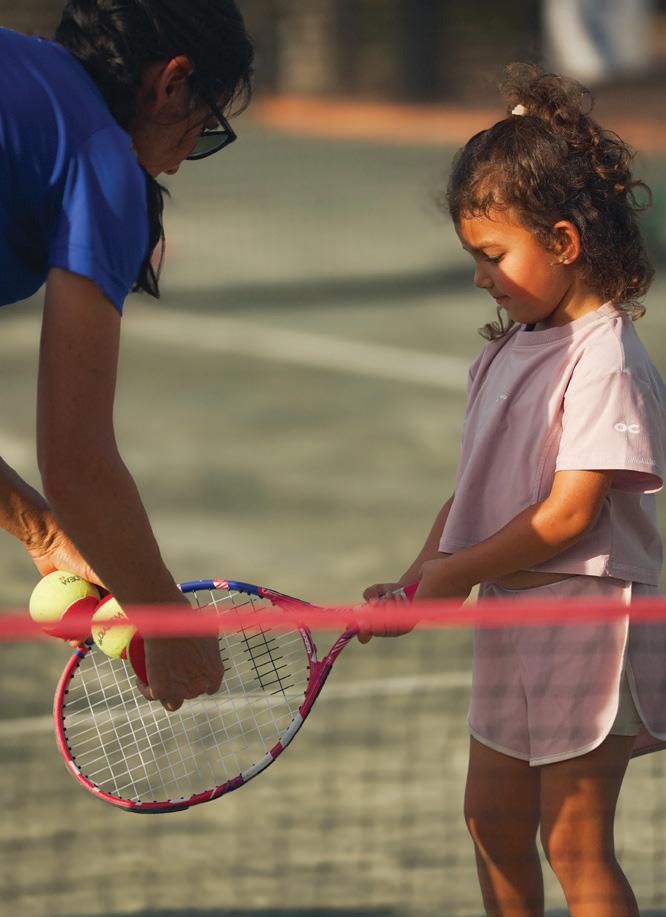
Ready to unlock your potential?
At Lobster we understand the power of repetition and high-intensity, independent training. Try it for yourself!
Forehand & Backhand Consistency DAY
1
Heavy Spin & Defense DAY
2
Volley & Attack DAY
3
Cardio & Court Coverage DAY
4
Build Muscle Memory and “groove” your primary strokes with consistency and technique.
Learn to handle and return high-bouncing balls and practice generating your own heavy topspin with customizable training.
Medium speed, medium topspin. Use Horizontal Oscillation to hit alternately to the forehand and backhand baseline corner.
High speed, Maximum Topspin. Set feed rate to be slightly quicker than comfortable. Focus on aggressive footwork and racket speed.
Low speed, Low Feed Rate (for slow volleys). Then switch to a faster feed rate. Change Elevation for low net-skimming shots. Improve quick reactions, hand-eye coordination, and net-play finishing skills.
Improve your Footwork and Endurance by simulating intense match rallies.
High speed, Random Oscillation. Increase the feed rate to keep you constantly moving side-to-side and depth-to-depth.
Bring all elements together in a high-pressure, game-like scenario for independence and advanced training. Match Simulation & Review DAY
5
Utilize a Pre-Programmed Drill (if available) or set a completely Randomized sequence (speed, spin, location) to mimic an unpredictable opponent.
Learn about training with Lobster Ball Machines. Visit LOBSTERSPORTS.COM

By Osvaldo Godoy
At the Wellington Tennis Center, a strong mix of structure, growth, and community is helping shape one of the most active public tennis environments in South Florida. The facility has continued to expand its junior programs over the past year, creating opportunities for players of all levels to develop in a consistent and welcoming setting.
Junior Elite Tennis Director Jeff Bearup has played a key role in that evolution. “I’ve been in tennis pretty much my whole life,” he says. “I come from New England. I came down here to kind of semi-retire, but still have my foot in the game, and I’ve been participating here in the junior development and kind of remodeling that program.” That work has already made an impact. “We’ve achieved quite a bit of growth in the past year, so we’re continuing to expand and try new things.”
A central piece of that continued growth is the upcoming summer program, which will run Monday through Friday from 9 a.m. to 12 p.m. and is designed to accommodate every level of player. “We have every level—red, orange, green, yellow ball,” Bearup explains. “We probably have around 15 courts going every day of the junior development program.” The goal is not only to develop competitive players but also to introduce new ones to the sport in a comfortable way. “If you want to come and try the game and you’ve never played, we’ve got lots of space for you to do that. Fun is the key word.”
That balance between development and accessibility is reinforced by a clear structure across all levels. “The thing that we try to do now more than anything is make sure that there’s a common language through the program,” Bearup says. “So as the kids progress from ball to ball, the concepts and the language are consistent so that the learning curve increases and improves.”
Players and parents can find details about each level, including required competencies, through the Village of Wellington’s website, but flexibility remains part of the system. “Anybody’s welcome. We make subgroups to fit, and we have tons of coaches in the summer, so it works out great.”
The program is also designed to adapt to Florida’s weather without losing momentum. “We’re here rain or shine,” Bearup adds. “If we get a little bit of rain, we go upstairs, we do video, we have ping pong tables, we have pool tables, so the kids still get competitive games and learn things like keeping score. There’s lots of tennis activity still going on even when we’re off court.”
For players, that consistency and support translate directly into development. Lukas Hartmann experienced that firsthand after arriving at the facility while searching for a place to train. “I found this tennis club on the internet, I called, and when I got here it immediately felt like a good place to play,” he
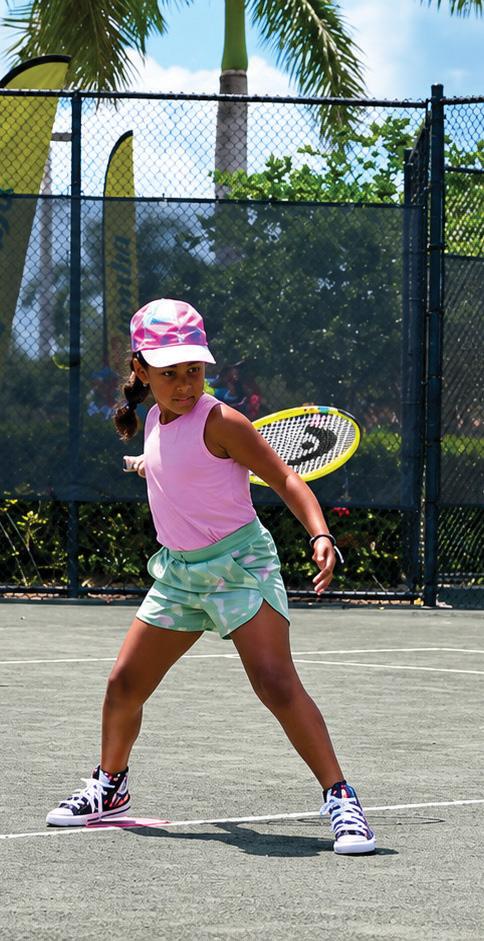
says. “I met the coaches—Coach Austin, Coach Aaron—and from the beginning they started to support me.”
Hartmann quickly became a regular, training multiple times per week as he prepared for his high school tennis season in the United States. “I was able to come here four times a week, and they really supported me, pushing through and preparing me for the high school season.” Even after the season ended, he chose to continue training at the facility before returning to Germany. “For me, it’s been a great experience to practice here and have the opportunity to keep playing in America.”
He points to the structure of the sessions as a major reason for his improvement. “We always start with warming up and having a routine, then we do different drills to build stability, and at the end we’re always doing match play and some games to practice that.” That progression—from fundamentals to competition—mirrors the philosophy implemented across the entire program.
“The tennis in Florida is really big,” Hartmann adds. “This is a place where I can practice and improve, and also play tournaments.”
With a growing junior base, a structured development pathway, and a coaching staff focused on consistency and accessibility, the Wellington Tennis Center continues to strengthen its role as a key training ground in the area. The combination of organized programming and a welcoming environment allows players of all backgrounds to find their place in the sport while continuing to improve over time.
For more information, go to Tennis Center | Wellington, FL.
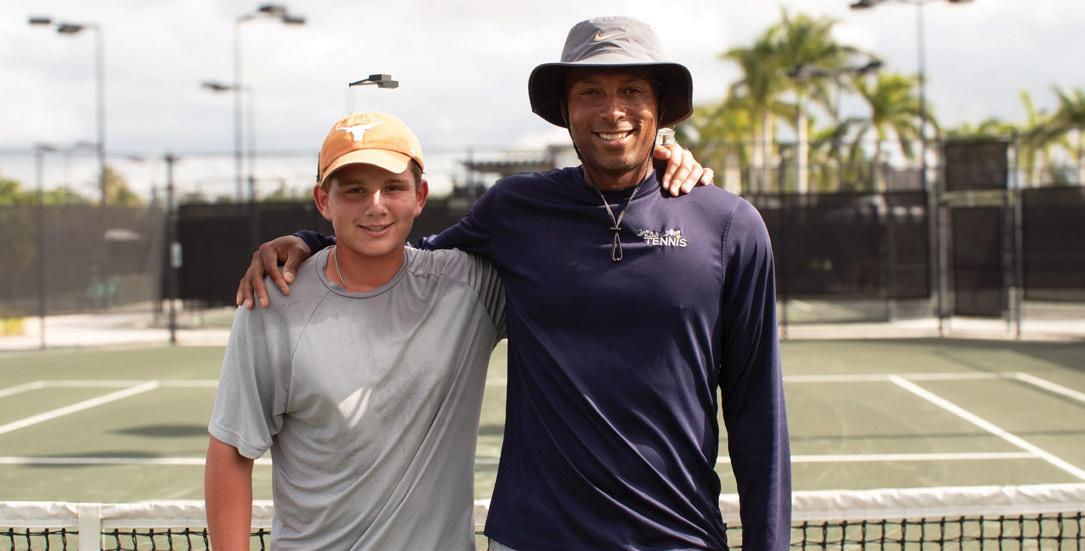
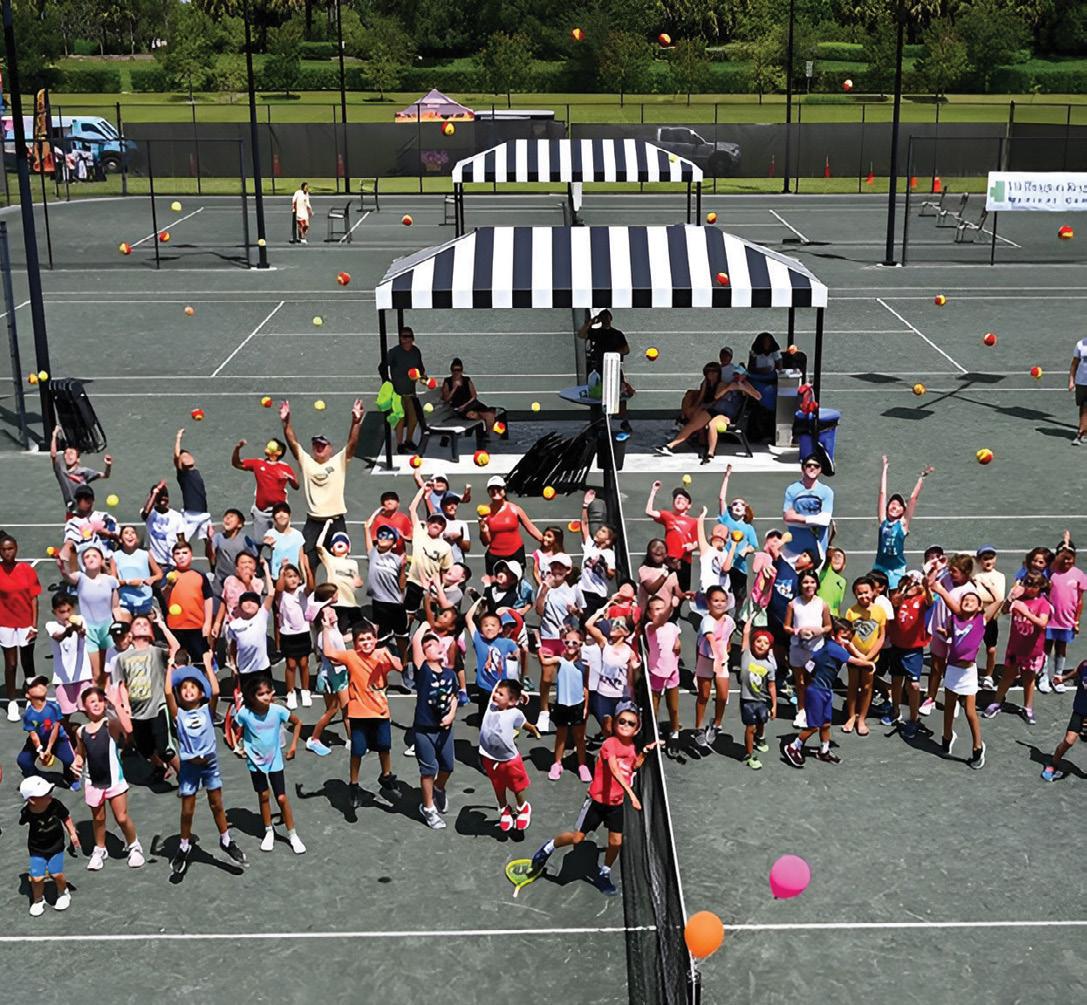
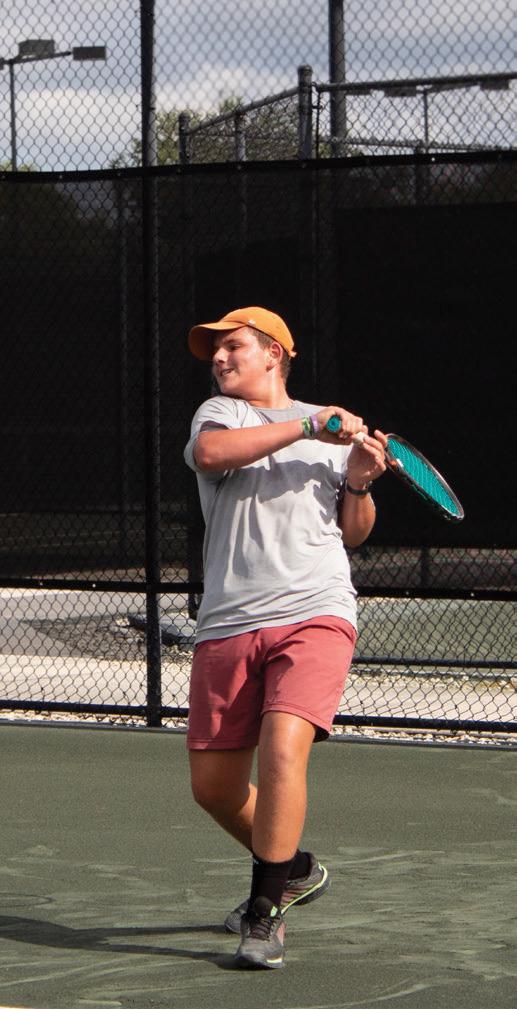
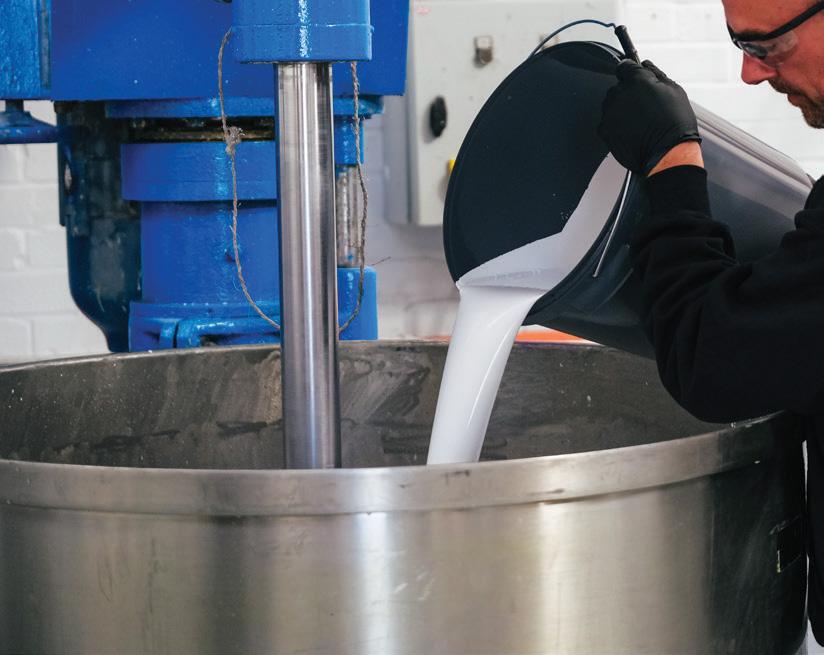

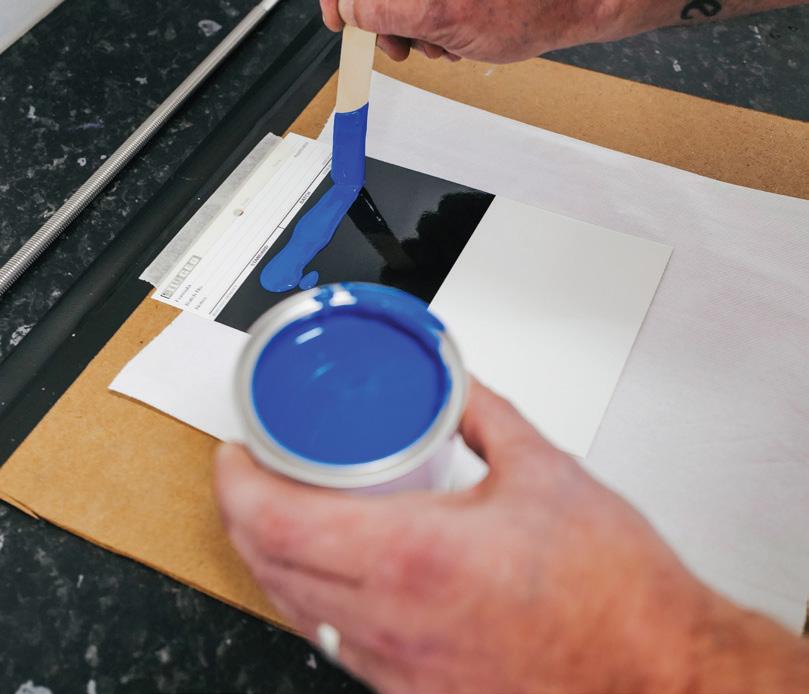
Proflex® high performance surfaces deliver uncompromising quality, engineered for every player. We offer the perfect balance of pace, precision, and durability in a premium acrylic system trusted by top-level tournaments worldwide.
By Osvaldo Godoy
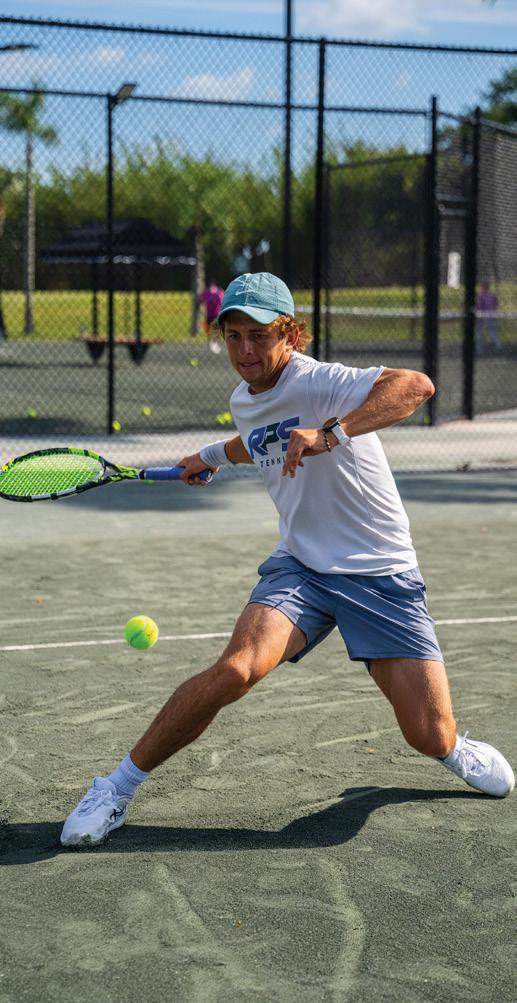
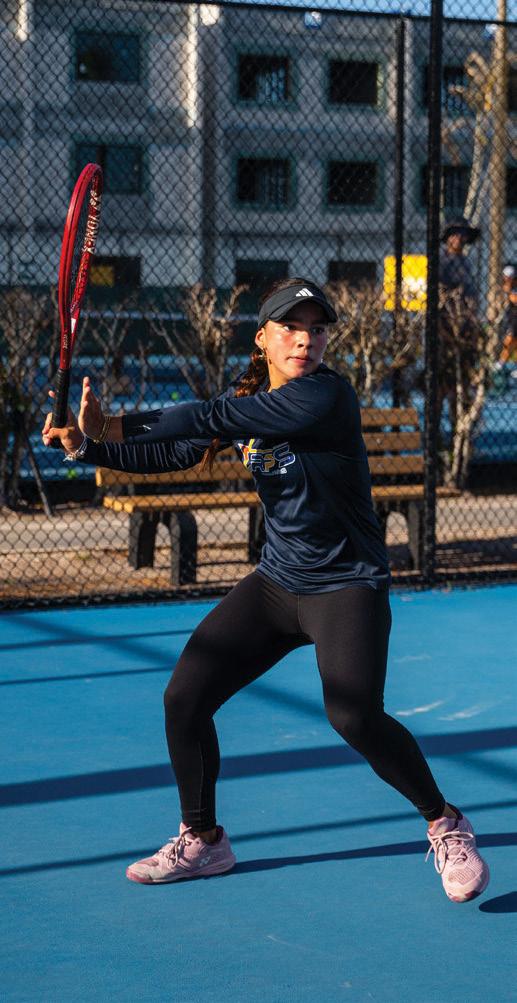
At RPS Academies, development goes beyond technique. Under the leadership of CEO Gabe Jaramillo, one of the most respected figures in tennis coaching, the academy continues to build players through a long-term approach centered on structure, discipline, and mindset.
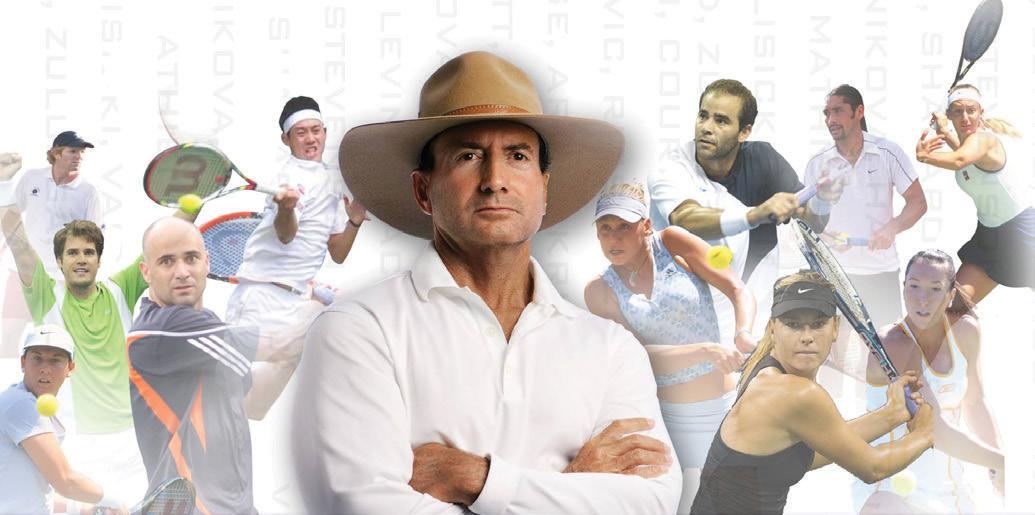
Speaking with Florida Tennis Magazine Editor and Publisher Matt Pressman during a visit to the academy, Jaramillo reflected on his career and the principles that have defined his work for decades. His experience includes developing top players at a young age alongside Nick Bollettieri, where he helped guide some of the biggest names in the sport.
“I worked with players like Agassi, Courier, Sampras, Mary Pierce, Monica Seles,” Jaramillo said. “They got there when they were 12 or 13 years old, and they stayed with us for years. We made sure they developed on the right path.”
That development-first mindset still drives his philosophy today. Jaramillo draws a clear distinction between teaching and true player development. “We’re developmental coaches. We make players,” he said.
While many programs emphasize stroke mechanics, Jaramillo sees that as only a small part of the process. “The mechanics are the least important part in the creation of a player,” he explained. “We divide development into three areas: mechanics, the mental part, and competition. And we train all three at the same time.”
That philosophy is reflected in daily training, where players are consistently exposed to live-ball situations and competition. “The only way to develop the right contact point is with live ball,” Jaramillo said. “You can look great in drills, but if you can’t do it in a real point, it doesn’t work.”
A key part of his methodology is periodization, a structured approach to training that aligns preparation with competition schedules. “I was one of the first to develop a periodization plan in tennis,” he said. “It’s about taking the player to competition without fatigue, hungry to compete, and ready to perform.”
Rather than training at the same intensity year-round, players follow a plan built around their tournament calendar. “You start with the tournament and work backwards,” Jaramillo explained. “Not all tournaments have the same value, so you don’t train the same way for each one.”
Beyond physical preparation, the mental side of the game plays a central
role. “Everything starts with a dream,” he said. “If they dream big, they will work hard. If the dream is small, they will work small.”
Players are taught how to manage pressure and emotions during matches through specific routines and habits. “When players start losing, they rush,” Jaramillo noted. “That’s when they dig a deeper hole. We teach them how to slow down, control emotions, and stay in the moment.”
Competition is introduced early and treated as an essential part of development. “Competition is part of life,” he said. “You have to learn from the losses and move on.”
Jaramillo also emphasized the difference between a training program and a full academy environment. “An academy is not just tennis courts,” he said. “We have school, boarding, food, fitness, everything. Very few places can offer that.”
RPS Academies integrates multiple sports—tennis, golf, soccer, and volleyball—along with a private school, all built around three pillars: academics, intellectual development, and athletics. “We want to make champions on and off the court,” Jaramillo said. “To me, a champion is someone who falls seven times and gets up seven times.”
The academy is currently undergoing a major expansion. “We’re building more courts, a stadium, indoor facilities, and improving all areas,” Jaramillo said.
When asked for advice for younger players, Jaramillo focused on longterm development. “Don’t worry about results today,” he said. “Invest in your game.”
He also pointed out a common mistake in modern junior tennis. “A lot of players play not to lose,” he said. “They push the ball. That’s not going to take them anywhere. You have to be aggressive.”
For Jaramillo, improvement comes from taking risks and learning through competition. “If you lose, you lose—but you’re building your game,” he added. “By the time you’re 18 or 19, it will pay off.”
To learn more about RPS Academies, its programs, training philosophy, and the opportunities available for players looking to develop both on and off the court, visit rpsacademies.com.




Journalist. Broadcaster. Historian. Icon. Legend. Storyteller. These words describe the incomparable Mary Carillo. Add to that list: International Tennis Hall of Famer. She will be inducted in the Contributor category on August 29, 2026. Carillo will share the ceremony with arguably the greatest tennis player in history, Roger Federer, who will be enshrined in the Player category.
Carillo has painted pictures with words enjoyed by countless fans. She has called some of the greatest tennis matches and sporting events while collaborating with broadcasters including fellow Hall of Famers Bud Collins, Jim Courier, Cliff Drysdale, Steve Flink, John McEnroe, and Fred Stolle.
Carillo’s journey began in Douglaston. She trained at Port Washington Tennis Academy under renowned coaches Tony Palafox and Harry Hopman alongside legendary players including Vitas Gerulaitis and fellow Douglastonian John McEnroe. She won the 1977 French Open mixed doubles title with McEnroe. “His first and my last,” Carillo joked to Florida Tennis. Her playing career was cut short by knee injuries, leading her to shift her focus to journalism and broadcasting.
Patrick McEnroe, a lifelong friend, former ATP player, and President of the International Tennis Hall of Fame, joined his brother John and Katrina Adams on a Zoom call with Carillo to share the news of her induction. “It’s not often that I am at a loss for words, and that was one of those times,” Carillo said.
Carillo has covered a wide variety of events, including the Olympic Games, the Westminster Dog Show, and The Kitten Bowl. She was also a featured correspondent on Real Sports with Bryant Gumbel. Over the course of her career, she has earned numerous honors, including three Sports Emmy Awards, three Peabody Awards, and Sports Illustrated’s Top Sports Analyst of the Decade Award. She was also the first woman to receive the Dick Schaap Award for Outstanding Journalism and was inducted into the Sports Broadcasting Hall of Fame in 2018.
Carillo’s voice is so distinctive and recognizable that fans often approach her before even catching a glimpse of her. Her approachable nature has led to memorable interactions, including one she recalled from an airport about two years ago, when a woman asked if she should be concerned about a freckle on her dog’s tongue. Without missing a beat, Carillo asked whether the freckle “was raised and getting larger,” before eventually telling the woman to “check with her veterinarian if she was truly concerned.”
Florida Tennis congratulates Mary Carillo on her induction into the International Tennis Hall of Fame. To learn more about her life and career, tune in to the upcoming Florida Tennis Podcast featuring Carillo at FloridaTennisYouTube.com.

By Dave “Koz” Kozlowski
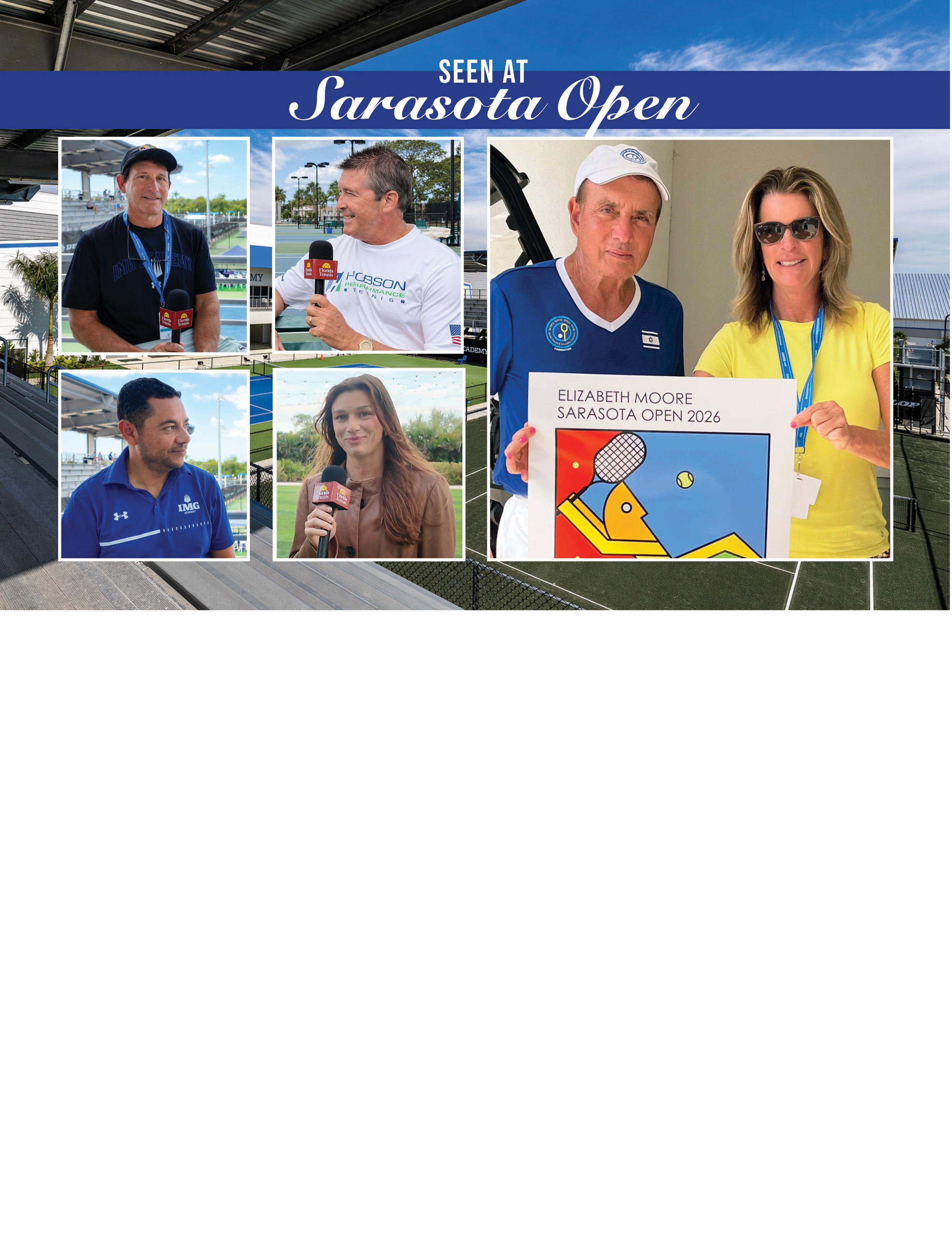
It was an absolute delight nine years ago to be on duty filming and hosting the Israel Tennis Center Exhibition Fundraiser video segment at The Longboat Key Club and to get to meet Larry Greenspon. It has been even beyond gratifying to spend the week with Larry at the Elizabeth Moore Sarasota Open. Larry was an active contributor on and off the court with the Larry Greenspon Youth Tennis Day. Larry got to know the kids as they spent time hitting with him and playing out some points. Larry also was honored with one of the three tournament courts: The Nick Bollettieri Stadium Court, the Kei Nishikori Court, and the Larry Greenspon Court.
Greenspon has served as the International Chairperson of the Israel Tennis and Education Center. Larry is working with Paul Ledderman, Director of SUNCOURT Sports, to bring in and offer the format to make tennis available and affordable to kids of all backgrounds and cultures.
Koz: Larry, the first time that we met at the Longboat Key Club, the Israel junior tennis players, along with the coaches and administrators, shared with tears in their eyes how much the program gave them a “life.”
Greenspon: It was fabulous to hear their comments. It means so much to us. We want to take care of our players in Israel and also here in the Sarasota-Manatee area. We want to extend the opportunity to all the local Jewish families. It breaks my heart. I want to take care of my kids. I call them my kids. Well, they are our kids. I can’t do enough. I want to do more.
Koz: You have already made a profound impact. We can sense that you want to expand and accomplish even more. The community wholeheartedly appreciates your commitment to making the game and its benefits more affordable
Greenspon: I am so appreciative of being in a position where I can help. I want to continue doing it. I do not know what else I would rather be doing. Good
things have happened in my life, and I am giving it all back.
Koz: Larry, you were heavily involved with the Elizabeth Moore Sarasota Open. What was that like?
Greenspon: It was so great seeing the kids. Many of them had never played before. It brought extraordinary joy to see their faces light up when their balls started to clear the net. I am fortunate and appreciative. Good things have happened to me. I want to give it all back, period. And that’s what I am doing. We do not spend enough to give our kids an opportunity to learn tennis and improve their lives and how they feel about themselves.
Koz: How did you get into the game?
Greenspon: When I was growing up, tennis was still considered a sissy sport. I had a few friends expose me to tennis when I was young, but I did not start playing until after I finished college. I started playing indoor tennis in Chicago at the Midtown Indoor Tennis Club. It was a great club. It was the biggest indoor club in the country. It was started by Alan Schwartz. I was fortunate that I was fairly good at the game. I also spent some time at the Lake Shore Club. There was a tennis professional from India who said to me, “Larry, you are a very good club player.” It changed my life. I ended up winning club tournaments, and I went on to start playing in Israel tournaments. It was amazing for me to be able to compete at that level. I got hooked on the game.
Koz: Larry, allow me to brag on you a little. You elevated your game to become a respected competitor at the Maccabiah Games (The Jewish Olympics). It was terrific to spend the week together. The world of tennis is fortunate to have you. See you at the Larry Greenspon Youth Day.



By: Jaret Kappelman
Two recent reports tell a clear story about the state of tennis in Florida: the game is growing faster here than almost anywhere else in the country, and the population fueling that growth isn’t slowing down anytime soon. For tennis facilities, providers, and partners across the state, the numbers point to a bright decade ahead.
The 2025 USTA participation data shows Florida outperforming the national average across nearly every meaningful metric. The state’s tennis participation rate sits at 9.1 percent, edging the U.S. average of 8.8 percent and translating to roughly 1.9 million Florida players, about 7 percent of the 27.3 million players nationwide.
Public investment matters more than ever. Public tennis centers remain at the front door to the sport... “ “
Over the past five years (2020–2025), Florida tennis grew by an average of 5.1 percent annually, ahead of the 4.8 percent national average, according to the PAC Study. More telling is the year-overyear momentum: Florida posted 12 percent growth compared to 6 percent across the U.S., signaling that the state’s lead is widening, not narrowing.
Three Florida metros also rank among the country’s top markets for online tennis search interest: West Palm Beach–Fort Pierce (No. 2), Miami–Fort Lauderdale (No. 7), and Fort Myers–Naples (No. 8). Search popularity can often serve as a leading indicator of player demand and regional interest.
Beyond the players already on court, the PAC Study points to meaningful upside in latent demand. In 2025, Florida saw a 10 percent year-over-year increase in residents who say they are “very interested” in playing tennis but are not currently playing, an additional 165,000 prospective players added to the opportunity pool in a single year. That conversion pool represents one of the largest near-term growth opportunities the sport has in the state. Reaching those players will depend on access: enough courts, enough programming, and enough on-ramp experiences to turn interest into participation.
The University of Florida’s Bureau of Economic and Business
VOLUME 3, 2026
Research (BEBR) released its February 2026 county-level projections, and the long-term outlook reinforces what tennis providers are already seeing. Florida’s population, estimated at 23.4 million in 2025, is projected to reach 24.9 million by 2030 and 28.3 million by 2050 under the medium series, an increase of roughly 3.3 million additional residents on top of near-term growth.
Growth is projected across nearly every county, with the strongest gains concentrated in markets that already show high tennis demand. Osceola County is projected to grow from roughly 485,000 to nearly 755,000 by 2050. St. Johns is forecast to climb from 348,000 to 546,000. Polk, Lake, Manatee, and Sumter counties are each on track for substantial increases, and large metros like Miami-Dade, Orange, and Hillsborough will continue adding hundreds of thousands of residents apiece.
Strong current participation, faster-than-national growth, a deep pool of interested non-players, and decades of projected population gains together create a compelling case for sustained investment in the sport.
Court capacity will be tested. High-growth counties will need more public and private courts to keep pace with demand, particularly in Central Florida and the Treasure Coast.
Programming has room for expansion. The 1.77 million very interested non-players represent an audience that needs welcoming entry points, beginner clinics, adult learn-to-play, junior development, and community-based play opportunities.
Public investment matters more than ever. Public tennis centers remain at the front door to the sport for most new players, and the data shows why protecting and expanding that infrastructure is a long-term priority.
Florida is already one of the country’s top tennis states. The opportunity now is to make sure the courts, programs, and people are ready for this growth.
If you have any questions about the content from USTA Florida in this magazine, please contact the Marketing & Communications Coordinator, Jaret Kappelman (kappelman@ustaflorida.com). To view the rest of the USTA Florida staff and find out who to reach out to regarding any programming questions, visit, ustaflorida.com/staff.
TO VIEW STAFF PAGE
By: Jaret Kappelman
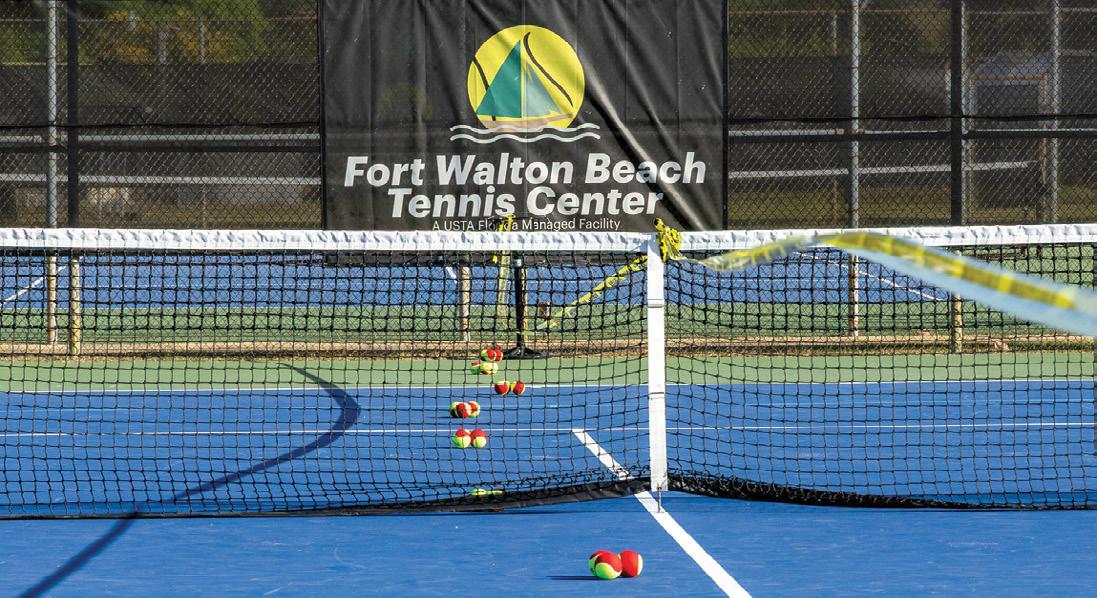
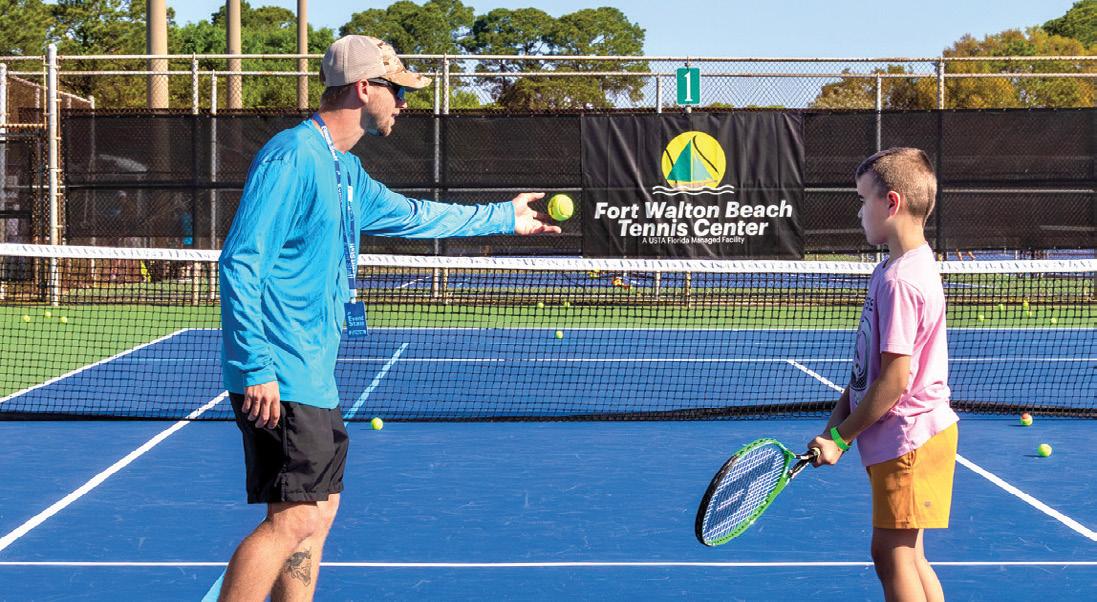
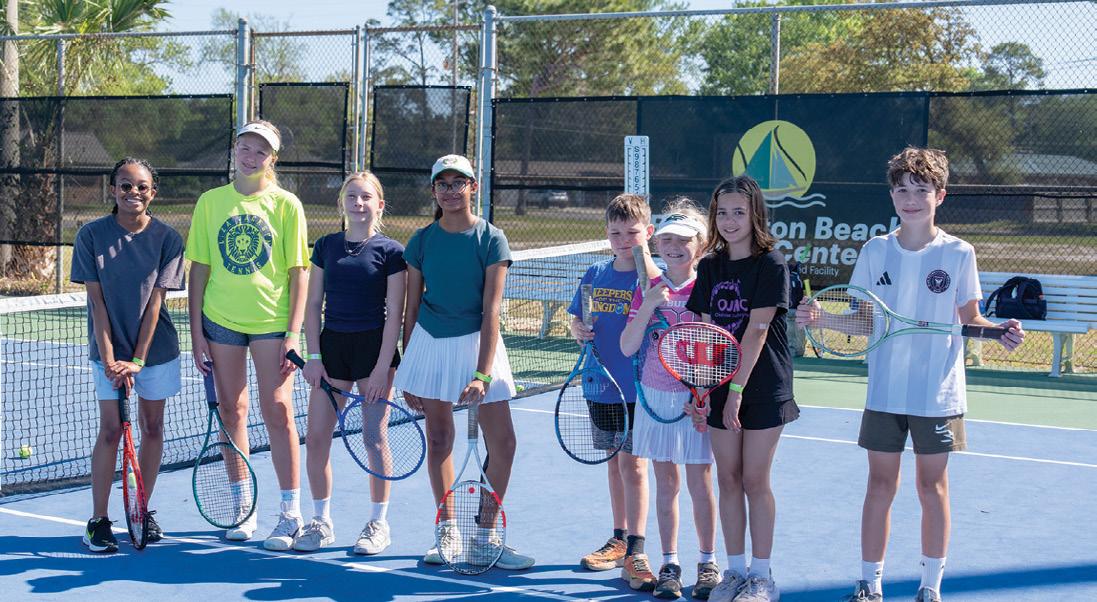
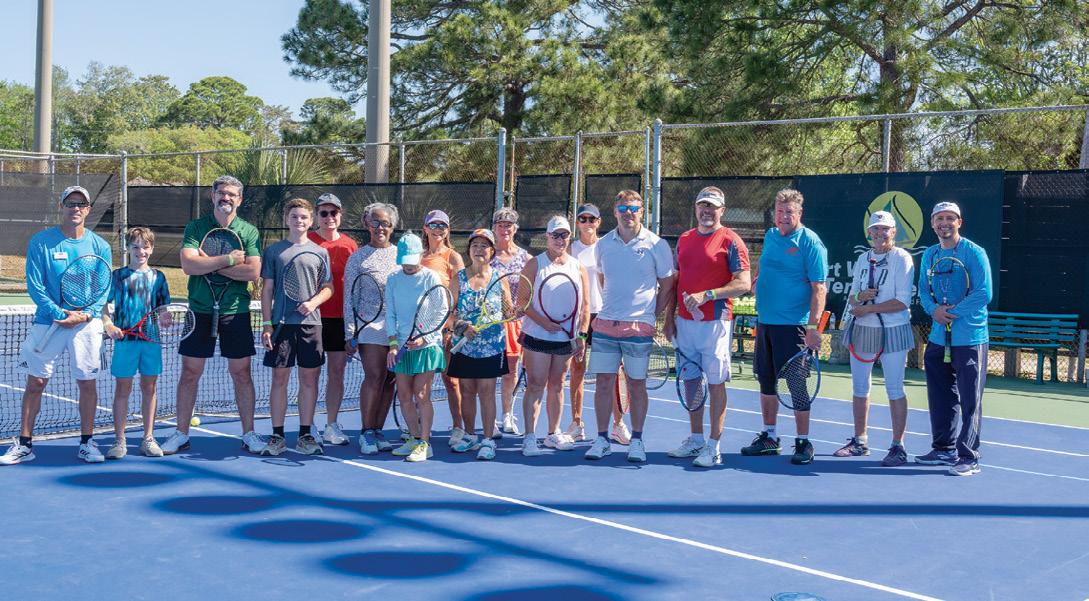
More than 100 community members gathered at the City of Fort Walton Beach Tennis Center on April 11 to celebrate the completion of a $120,600 court renovation, funded by USTA Florida as part of its ongoing commitment to investing in public tennis infrastructure across the state.
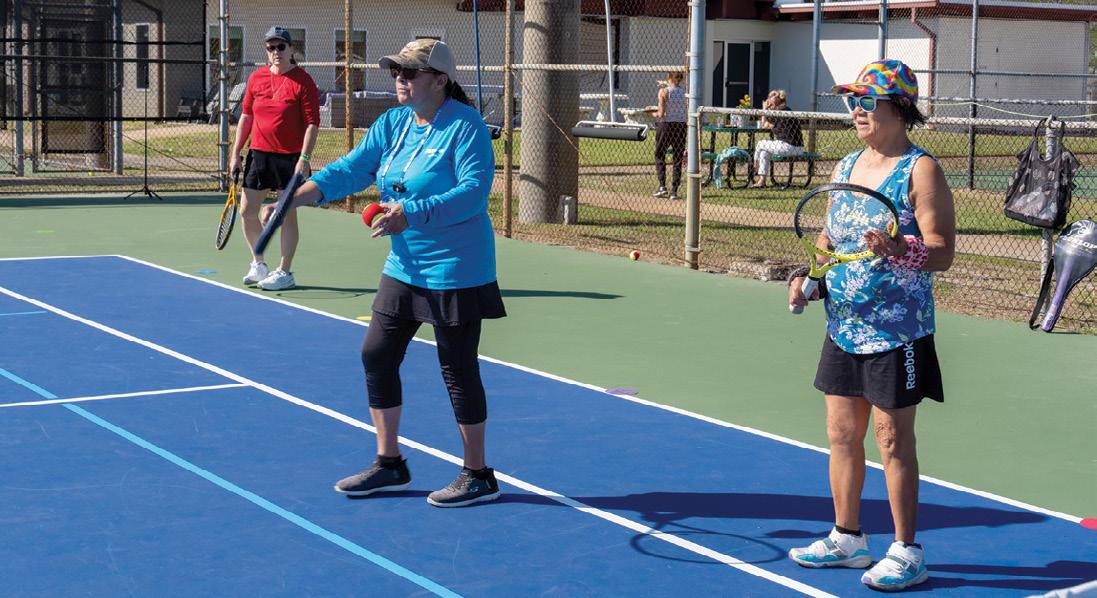
Attendees had the opportunity to play on the newly renovated courts, participate in tennis activities and enjoy matches during the event and was open to those who registered prior to the date.
The renovations, completed at the USTA Florida-managed facility, included resurfacing of seven tennis courts, new material and surfacing of three hitting walls, installation of new net posts, and four pickleball courts.
The investment reflects one of USTA Florida’s Big Bold Moves, to invest in best-in-class facilities to ensure communities have access to quality courts and programming.
“Investing in Public Tennis Centers is critical to keep Florida communities healthy and thriving. The residents of Fort Walton Beach, including the broader military and veteran communities, deserve to play on best-in-class courts at an affordable cost,” USTA Florida Executive Director, Laura Bowen said. “This renovation is just one example of how we partner with municipalities across the state to make tennis available and accessible for ALL.”
The City of Fort Walton Beach Tennis Center also holds a unique position in the community, serving not only local residents but also military families stationed at nearby Eglin Air Force Base and Hurlburt Field. The facility has previously offered free classes to military personnel and their families, furthering its mission of making tennis accessible to those who serve.
“We are thrilled to have welcomed so many community members and families to the City of Fort Walton Beach Tennis Center. This event was a tremendous success in getting people out on the resurfaced courts to enjoy Tennis and Pickleball together,” said Kara Borromeo, Director of Tennis at the City of Fort Walton Beach Tennis Center. “With these newly renovated courts and facility upgrades, we’re ready to welcome even more players and continue growing racquet sports in the Florida Panhandle.”
These upgrades reinforce the center’s role as a premier public destination for racquet sports in Northwest Florida. For more information about the City of Fort Walton Beach Tennis Center, visit fwbtenniscenter.com.
By: Jaret Kappelman
USTA Florida today released “The Case for Public Tennis Court Investment in Florida,” a white paper outlining the urgent need for expanded public tennis infrastructure across the state. The data-driven report provides a framework for policymakers, parks and recreation directors, and community stakeholders to address what the organization calls a critical imbalance between surging participation and limited public court access.
Of the 17,770 tennis courts tracked across 65 Florida counties, just 3,497 are publicly accessible, roughly one public court for every 6,686 residents. The remaining 80 percent sit behind private gates at country clubs, homeowner associations, apartment complexes, and commercial facilities. That ratio trails national benchmarks and is especially inadequate given Florida’s rapid population growth and year-round playing climate.
USTA Florida is eager to invest alongside our municipal partners to improve tennis infrastructure, serve communities and drive local economies. “ “
“This report emphasizes what we already know from our managed facilities — demand for tennis is at an all-time high, yet our tennis infrastructure investment has not kept pace with our market demands,” Laura Bowen, USTA Florida Executive Director said. “We need a new wave of investment in best-in-class, tech-forward facilities to serve our customers now and in the future.”
“Cities and counties across the state are facing unprecedented pressure to add recreational services that meet the demands of Florida’s significant population growth,” Chuck Gill, USTA Florida President said. “USTA Florida is eager to invest alongside our municipal partners to improve tennis infrastructure, serve communities and drive local economies.”
In Florida alone, an estimated 1.9 million residents played tennis in 2025 – a 5.1 percent compound annual growth rate since 2020, making it one of the fastest-growing sections in the country. An additional 1.47 million Floridians say they want to play but have not yet started. The current public court supply cannot accommodate that demand.
Florida’s population growth adds urgency. Under the University of Florida Bureau of Economic and Business Research medium projection, the state is expected to add approximately 4.9 million residents by 2050, with the fastest growth concentrated in Central Florida and Gulf Coast counties that already lack proportional recreational infrastructure.
The report makes the case that public tennis court investment extends well beyond recreation. It presents tennis infrastructure as a public health intervention, an equity strategy, a driver of local economic activity, and a community asset that appreciates in value over time. Among the key findings:
• Tennis tournaments and events generated $145.9 million in total economic impact across Florida in 2023, supporting more than 1,000 jobs and contributing $11.4 million in state and local taxes, according to USTA Florida’s inaugural Economic Impact Report conducted by Tourism Economics.
• The Copenhagen City Heart Study — a 25-year observational cohort of more than 8,500 adults — found that tennis was associated with the greatest gain in life expectancy of any sport studied, up to 9.7 additional years. While observational in design, the study’s size and duration make it among the most compelling sport-specific health evidence in the peer-reviewed literature.
• The 80/20 private-to-public court split creates structural barriers for lower-income residents. With 14.9 percent of Florida households earning below $20,000 annually, public courts represent the only zero- or low-cost access point for hundreds of thousands of families.
• Geographic disparities compound the access gap. The top five counties by court count hold 43 percent of all courts statewide, while 17 rural and small counties each have fewer than 10 total courts.
The white paper calls on Florida to target a minimum of 800 new or fully rehabilitated public courts over the next decade, supported by a combination of state capital grants, federal pass-through funding, and local public-private partnerships. Recommendations are organized by level of government, from establishing a dedicated state-level Tennis and Racquet Sport Infrastructure Grant Program to adopting county-level minimum court standards and prioritizing municipal court construction in underserved census tracts.
USTA Florida has already invested more than $2.9 million across 14 public facility projects since 2022, funding court resurfacing, full rebuilds, new construction, lighting upgrades, and hurricane damage repairs at facilities from across the state.
“The Case for Public Tennis Court Investment in Florida” is available to download. USTA Florida invites policymakers, parks and recreation directors, and community partners to engage with the findings and reach out to discuss opportunities for investment in their communities.

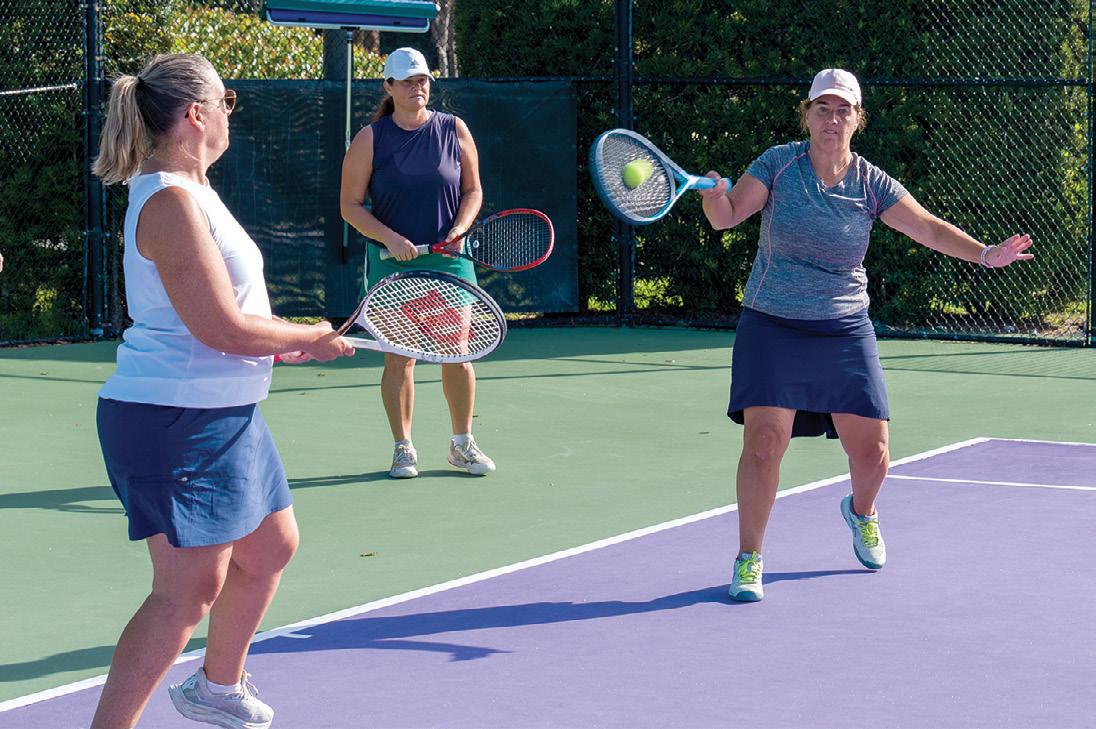
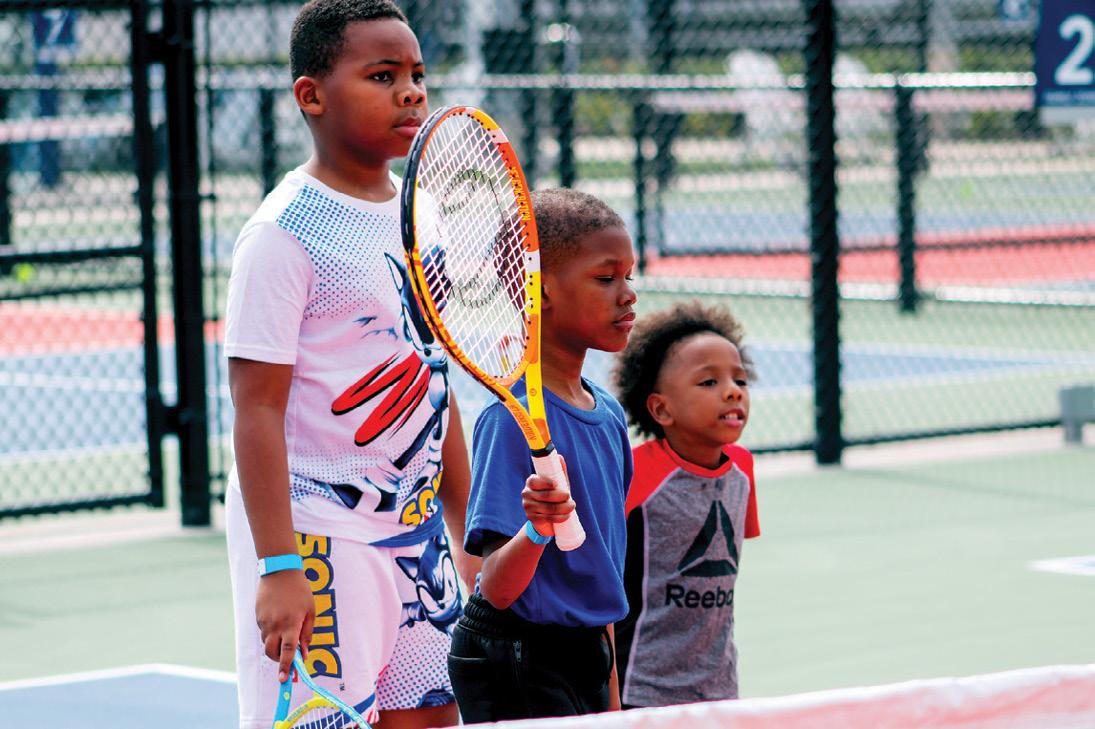
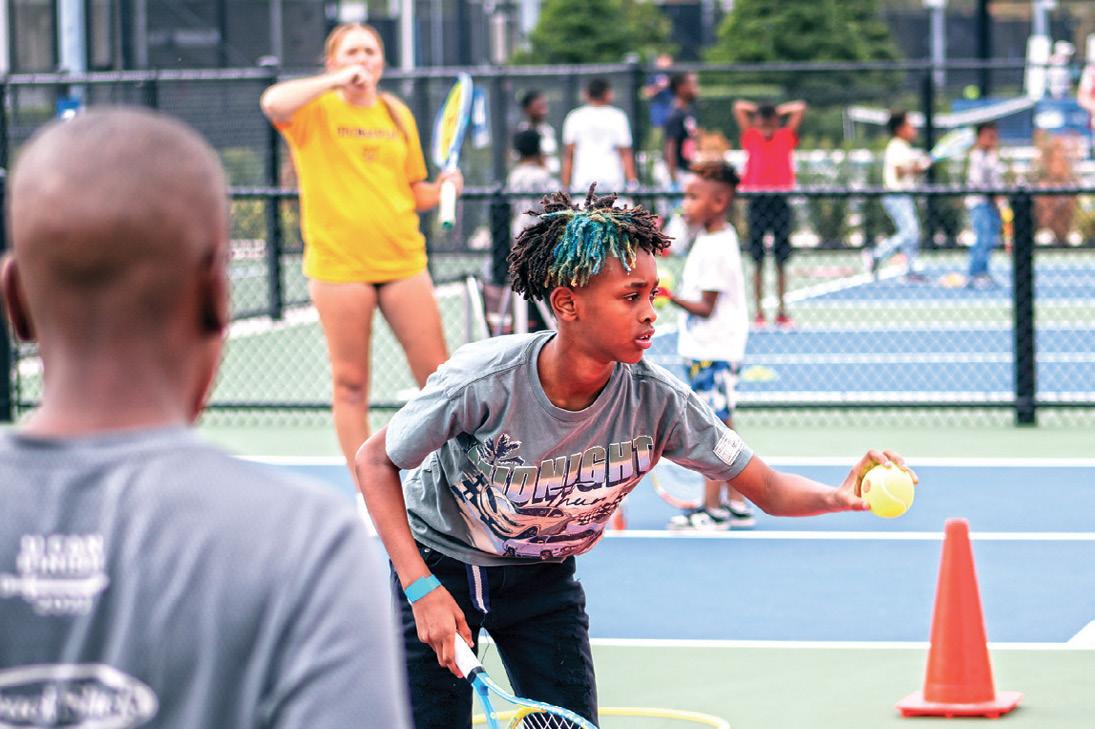
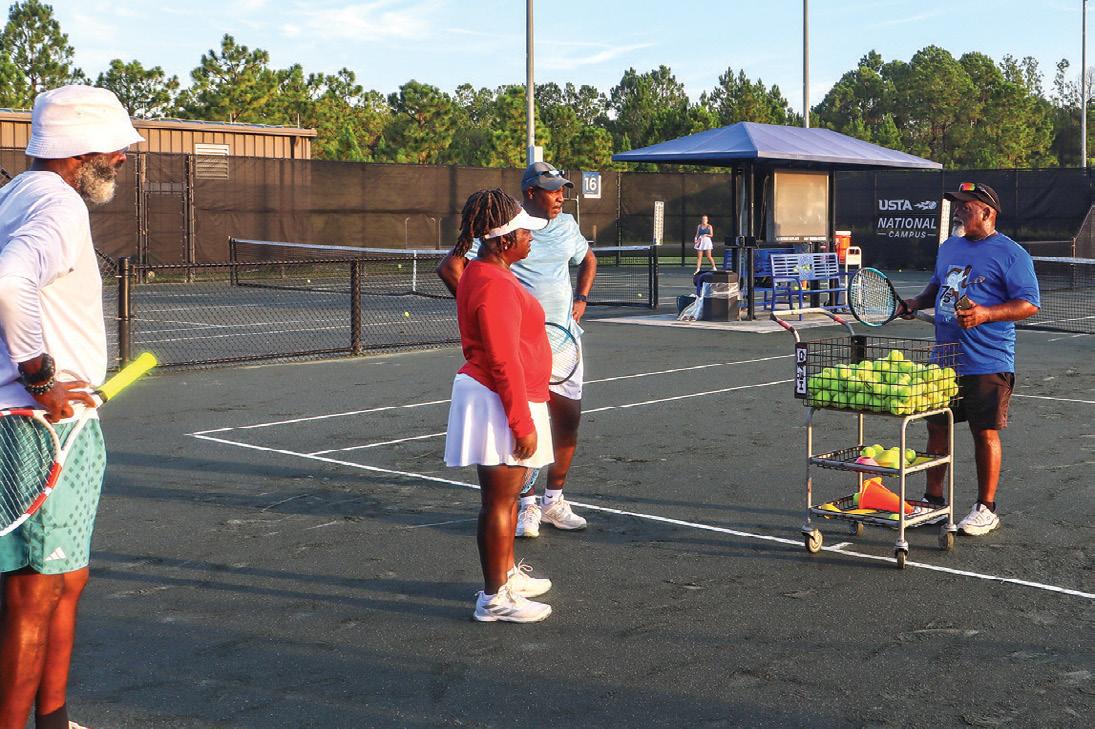
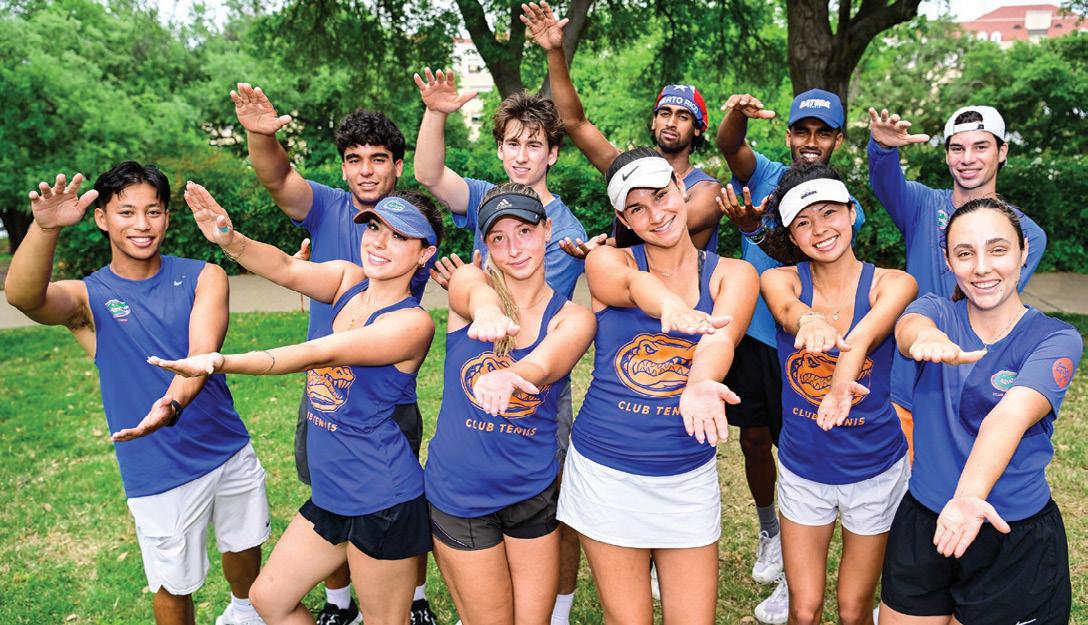
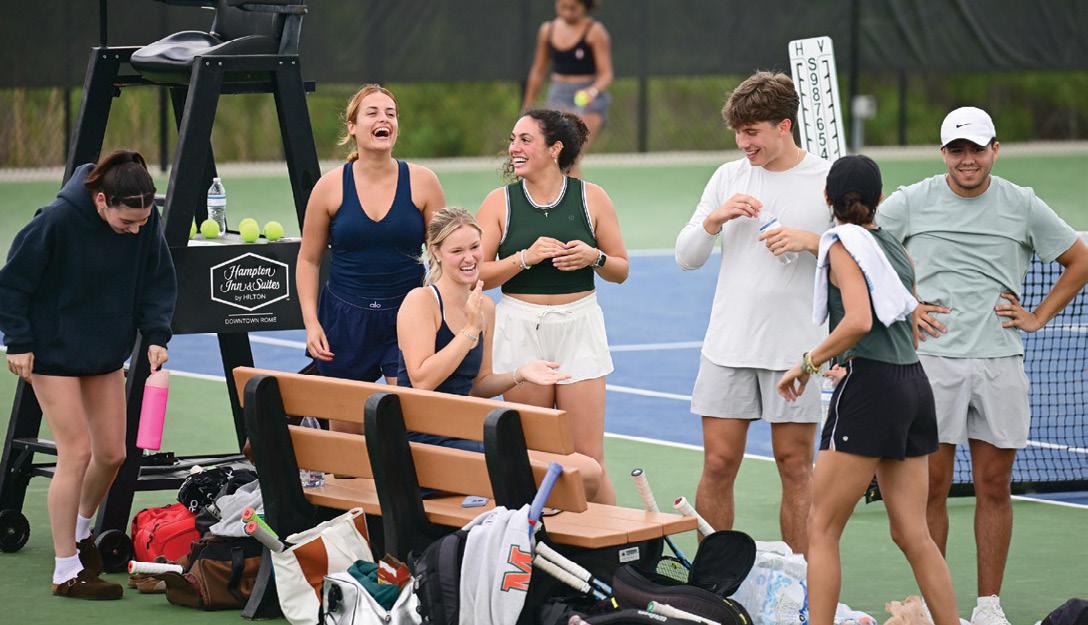
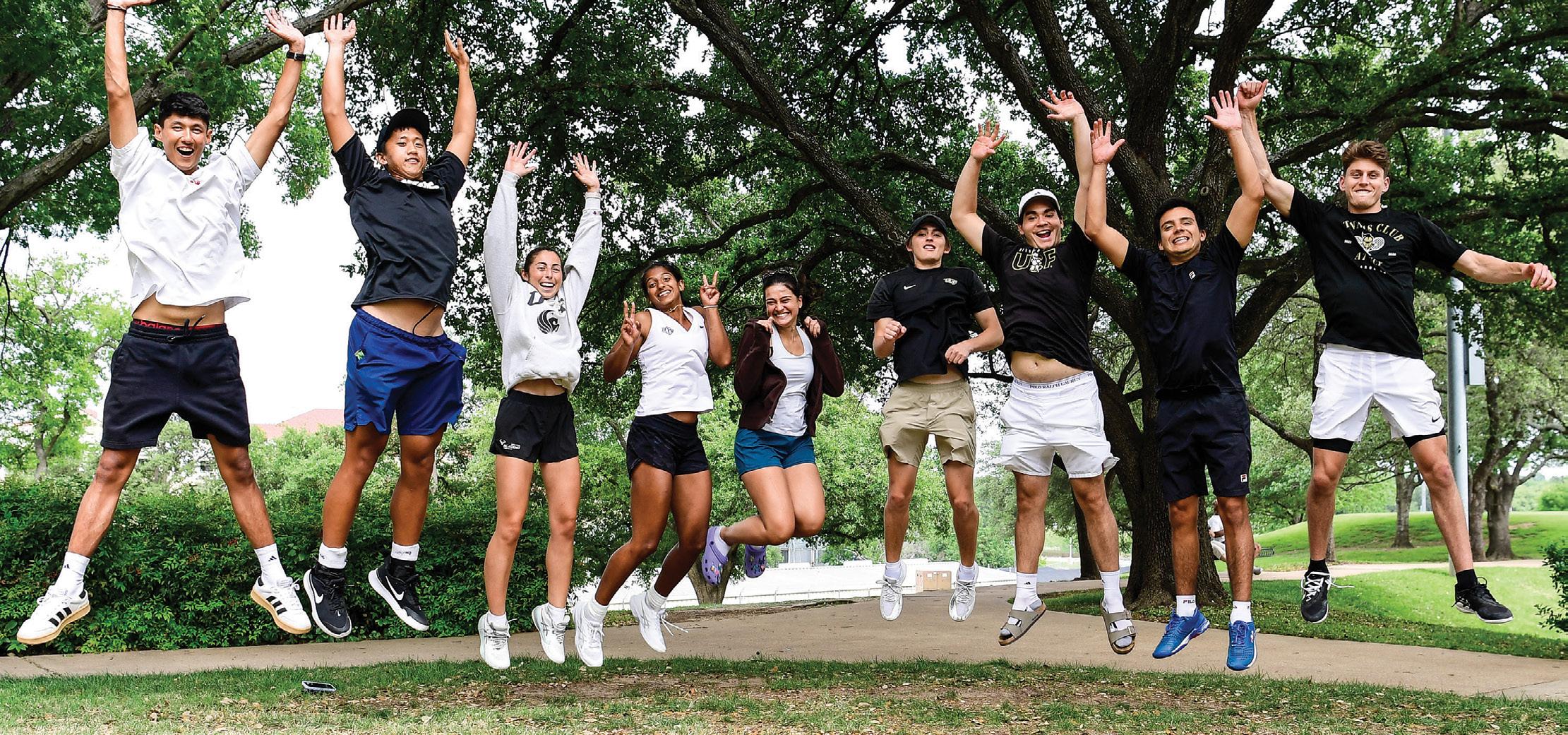
Three USTA Florida teams made the trip to Fort Worth, Texas, to compete at the 2026 Tennis on Campus National Championships, hosted at Texas Christian University. The University of Florida, University of Central Florida, and University of Miami all represented the Sunshine State on the national stage after qualifying through the Sectional Championship and season standings this season.
The Florida squads made its presence felt right away in pool play. Both UF and UCF came out strong, each going undefeated with 3-0 records to earn spots in the Gold Bracket. UF topped Pool I while UCF ran the table in Pool H. Miami finished 2-1 in Pool M, earning a place in the Silver Bracket.
Once bracket play began, the competition intensified. In the Gold Bracket, UF dropped a closer 25-24 opener to Purdue but showed resilience with back-to-back wins over Northwestern, 2521, and North Carolina, 24-18, before the remainder of the consolation draw was canceled due to weather. UCF ran into a tough Stanford squad in its first Gold Bracket match, falling 30-12, and
was eliminated after a 24-17 loss to Notre Dame.
In the Silver Bracket, Miami put together a strong run. The Hurricanes fell 26-25 to Virginia, but responded with a strong 27-21 victory over UC Irvine. In their next match, they fell in a hardfought 26-24 loss to Minnesota, which ended their run at TOC Nationals as the rest of the consolation draw was also canceled due to weather.
Despite the weather-shortened finish, all three Florida teams gained valuable experience competing against top programs from across the country. With two teams reaching the Gold Bracket and competitive showings across the board, USTA Florida’s Tennis on Campus programs continue to prove themselves among the best in the nation.
With Nationals complete, the 2025-26 Tennis on Campus season has officially come to a close. To learn more about the upcoming season and how to get involved, visit ustaflorida.com/ tennisoncampus.
By: Osvaldo Godoy
At the Little Mo Regionals held at the Palm Beach Gardens Tennis & Pickleball Center, the focus went beyond results. The event once again showed why Florida continues to host key tournaments on the Little Mo circuit, combining strong competition with an environment that supports junior development.
Florida stands out because of its year-round playing conditions and the depth of its tennis ecosystem. Players are able to compete outdoors consistently, something that is not possible in many other parts of the United States. For those traveling in, it also provides a chance to measure themselves against a higher level of competition, given the number of academies and top junior players based in the state. The Palm Beach Gardens venue itself offers the infrastructure needed to host large draws while maintaining an organized and player-friendly experience.
The significance of Little Mo events is also tied to their history. Players such as Coco Gauff, Andy Roddick, Madison Keys, and Sofia Kenin all competed in the tournament early in their careers. That track record adds context to what happens at the Regionals. For many players, it is an early step in a longer pathway, and competing in Florida carries additional weight because of the level of opposition and the visibility of the event.
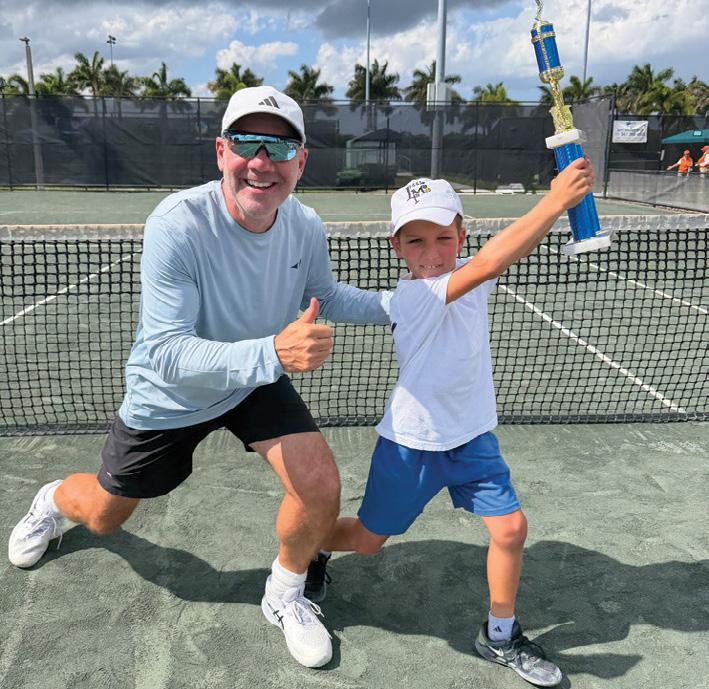
This year’s tournament also offered a look at the next generation. Florida-based eight-year-old Maxim Martinasevic made a strong impression by winning the Boys’ 8U division in his first-ever tournament appearance, with matches played across both Palm Beach Gardens and The Tennis Club of Palm Beach.
“Actually, I’ve never played a tournament before. This is my first one,” he said. Despite the occasion, he showed composure early. “I wasn’t nervous at all. I was actually kind of excited,” he added. “I was thinking about all my habits and tactics, and I’m proud of myself that I won.”
Martinasevic, who has been playing since the age of four and trains in South Florida, highlighted the details he has been focusing on in practice. “Mostly my serve,” he explained. “Thinking about the habits that I have to do to make the serve deeper and higher. Also on my backhand, to have the take-back right away so you can have your racket ready.”
That attention to detail translated directly into his performance. “It was amazing,” he said about his first matches. “It was such a cool experience and I can’t wait for the next match.”
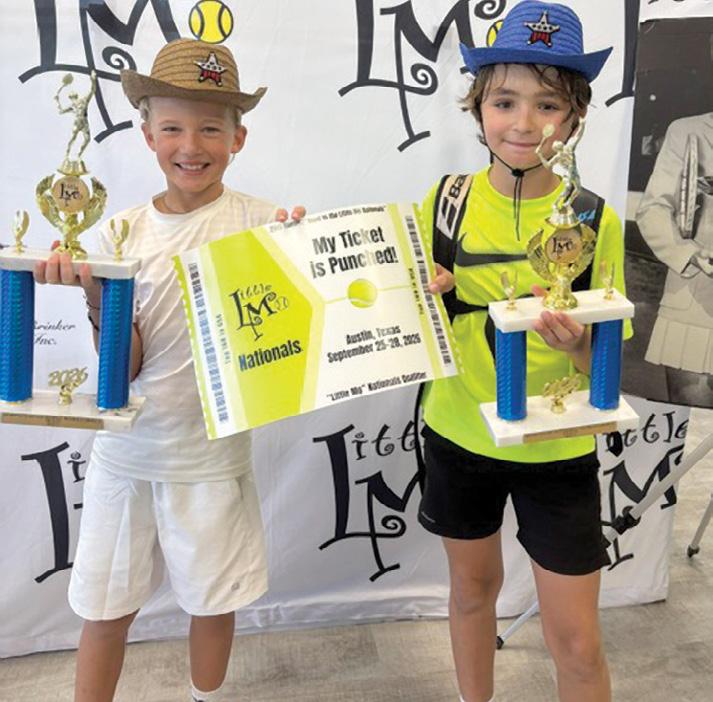
He also pointed to his forehand as a key strength, noting it allows him to target opponents’ weaknesses, and made his long-term goal clear: “To become the best in the world.”
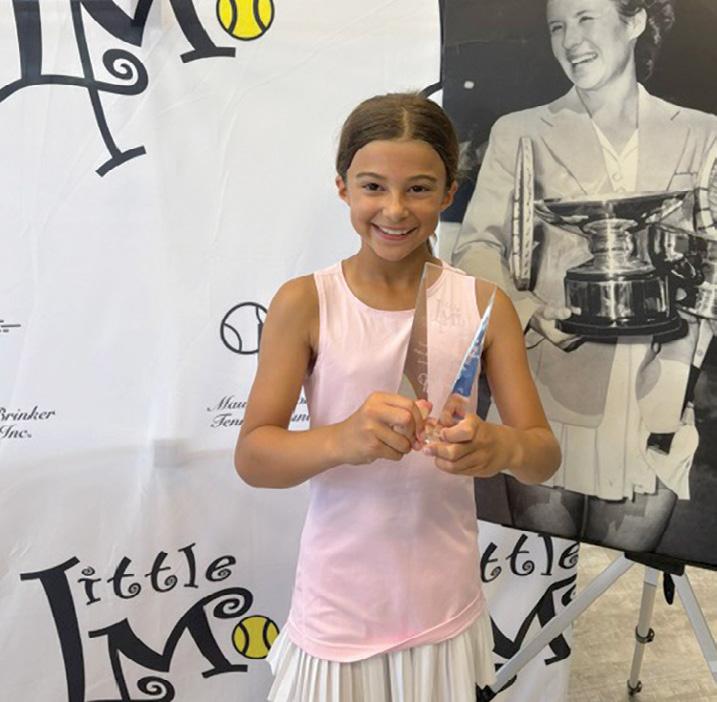
At the same time, the identity of Little Mo remains rooted in more than just competition. The event continues to emphasize sportsmanship and player behavior, something that is increasingly important in junior tennis. Brenda Brinker Bottum, Vice President of the Maureen Connolly Brinker Tennis Foundation, highlighted that balance during the tournament.
“We always promote sportsmanship and we give out sportsmanship trophies,” she said. “We also reward kindness because it’s very important to us that they play hard on the court, but then off the court, they really get to know each other.”
That philosophy continues to shape the atmosphere of the event. “It’s important that they compete hard, but also respect each other and enjoy the experience,” Brenda added. “We really encourage the kids to have the love of the game.”
This balance is part of what makes Florida such a natural fit for the Regionals and the Internationals later in the year. The state’s accessibility, both for domestic and international travel, allows for a diverse field of participants. Combined with its facilities and competitive base, it creates a setting where players can develop not only their level but also their understanding of the sport.
As Little Mo continues to expand with additional events in other parts of the country, Florida remains a central piece of the circuit. The Regionals in Palm Beach Gardens once again reinforced that role, bringing together players from different backgrounds in an environment that prioritizes both performance and development.
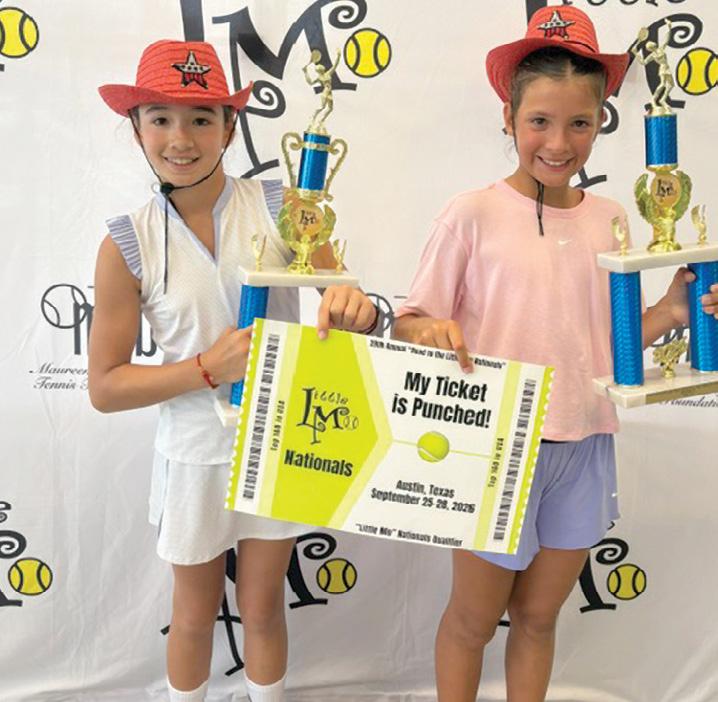
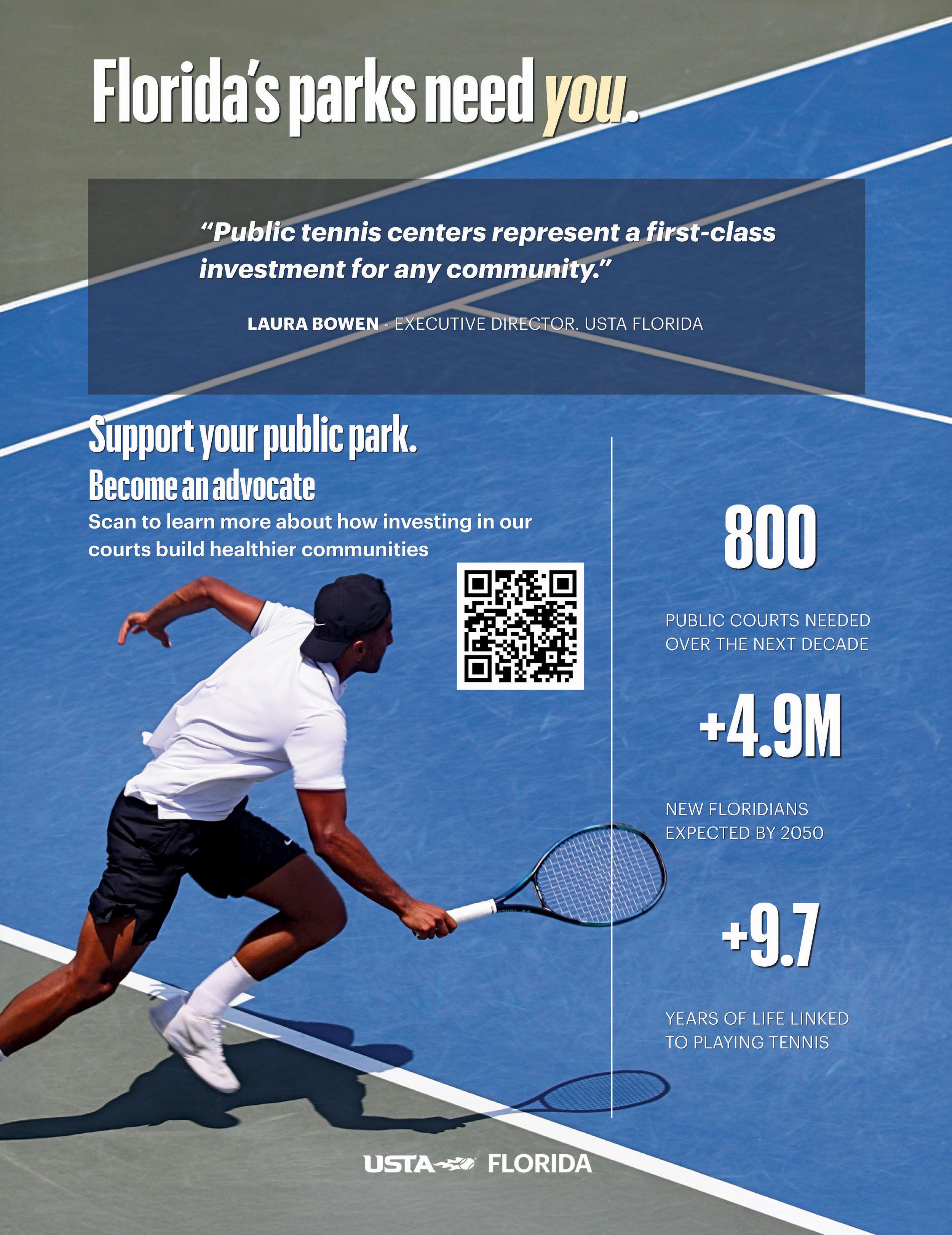



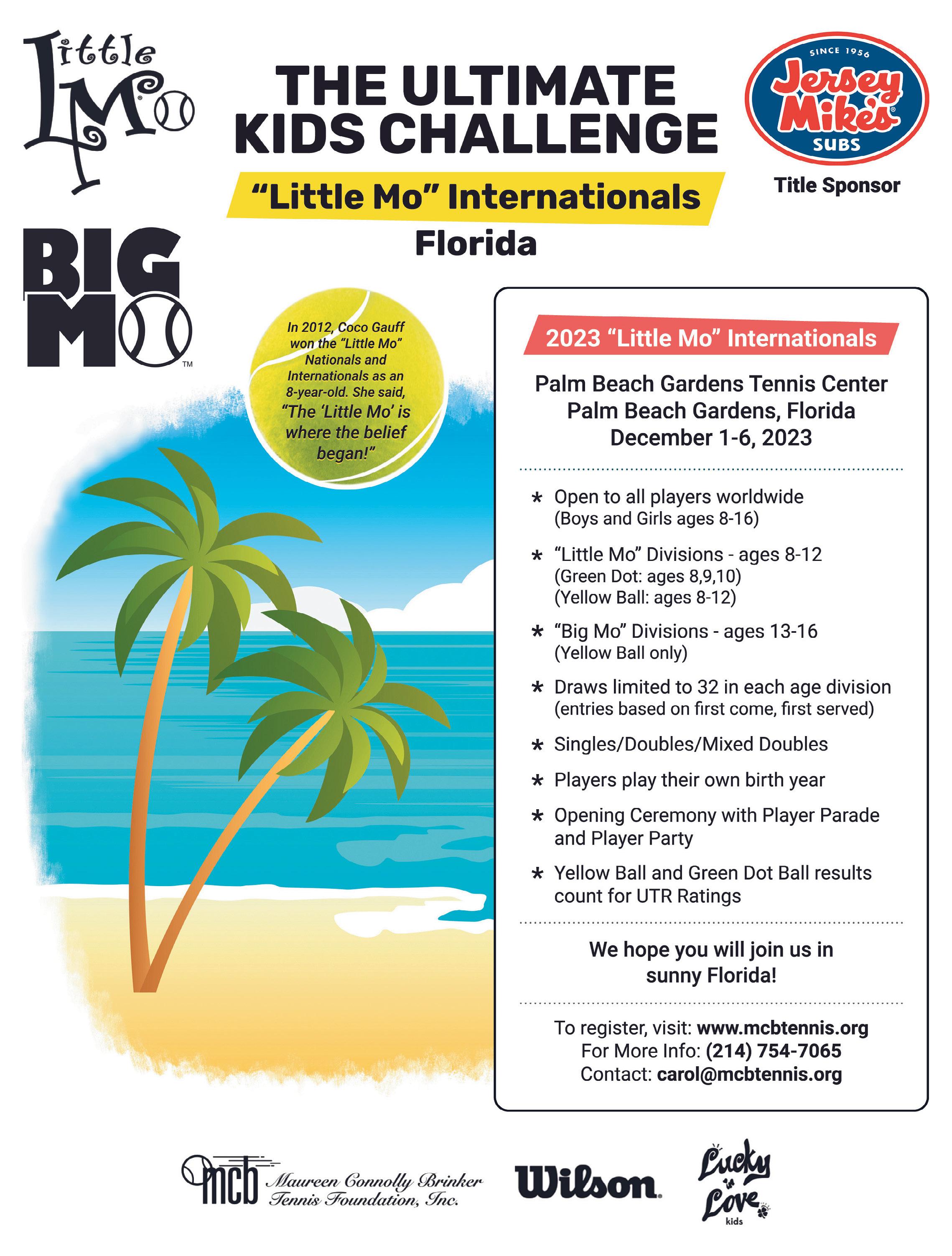

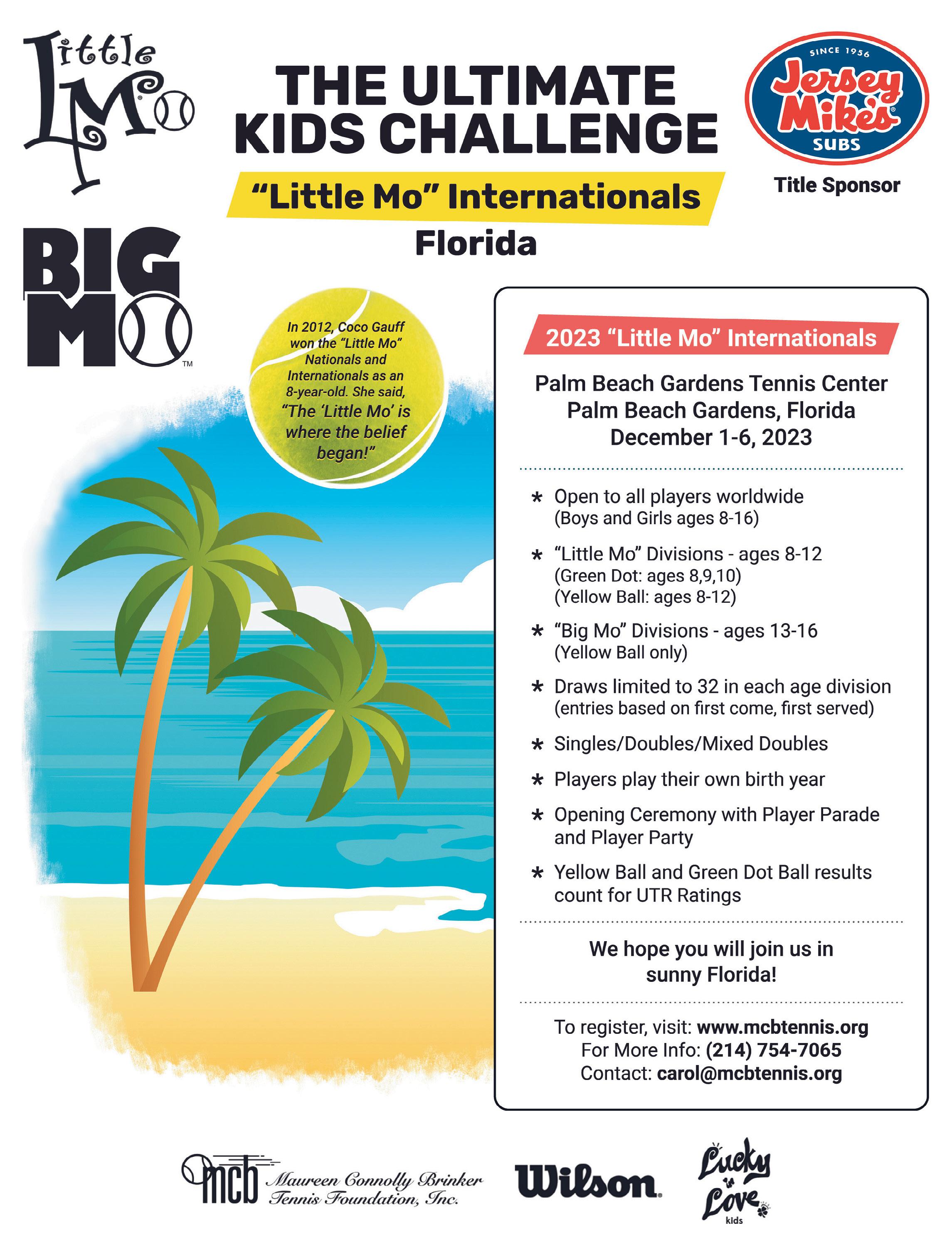
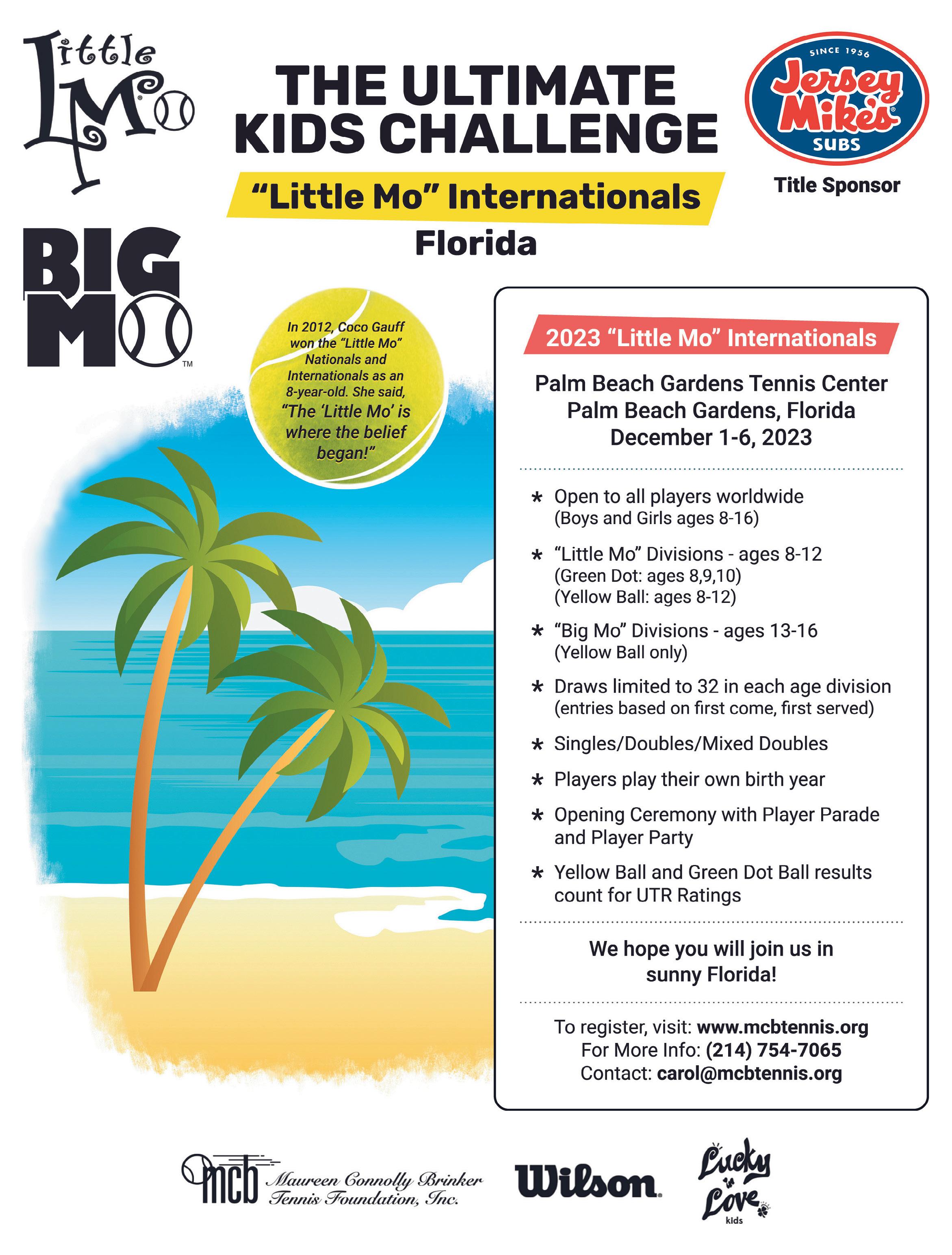
2026 “Little Mo” Internationals
Palm Beach Gardens Tennis Center
Palm Beach Gardens, Florida
December 4-9, 2026
Registration opens end of July!
www.mcbtennis.org (214) 754-7065 carol@mcbtennis.org
Open to players worldwide (Girls and Boys ages 8-14)
“Little Mo” Divisions: ages 8-12 (Green Dot: ages 8, 9, 10) (Yellow Ball: ages 8-12)
Acceptance list based on verified UTR ratings
Singles / Doubles / Mixed Doubles
Players play their own birth year
Opening Ceremony with Player Parade of Nations
Player Clinic and Player Party
Yellow Ball and Green Dot Ball results count for UTR Ratings
Join us for a fun family vacation and competitive matches!


By Osvaldo Godoy
At the Lauderdale Tennis Club, the focus goes beyond just hitting balls. It is about building players across all levels, from beginners to high-performance competitors, within an environment that blends development, competition, and community.
Coach Carlos Drada, who has been teaching for the past two and a half years, is part of that structure. “I’ve been a tennis instructor and coach for the last two and a half years, and I enjoy it,” he said. “We have a variety of tennis players—from young players to adults, and everything in between.”
Drada’s current role leans heavily toward high-performance training, an area where his background as both a player and coach comes into play. “Right now I’m working with high performance,” he explained. “We’re doing a great job building an environment of high performance. We have some kids who are trying to become college players at the least, or professional players.”
His own journey in the sport reflects that same pathway. Drada grew up in a tennis family in Colombia, where his father was a coach, before continuing his development internationally. “I had the privilege of being at Nick Bollettieri for four years as a scholarship player,” he said, referring to the renowned Nick Bollettieri Tennis Academy. “I was projected to be a top professional player.”
Instead, his career took a different turn, one that still kept him close to the game. After competing at the collegiate level—“I played for the University of Kentucky for three and a half years”—Drada briefly stepped away from tennis. “I tried the banking industry for a while, but then I decided to go back to my passion, which is tennis,” he said. That decision led him into college athletics, where he spent more than two decades before returning to on-court coaching.
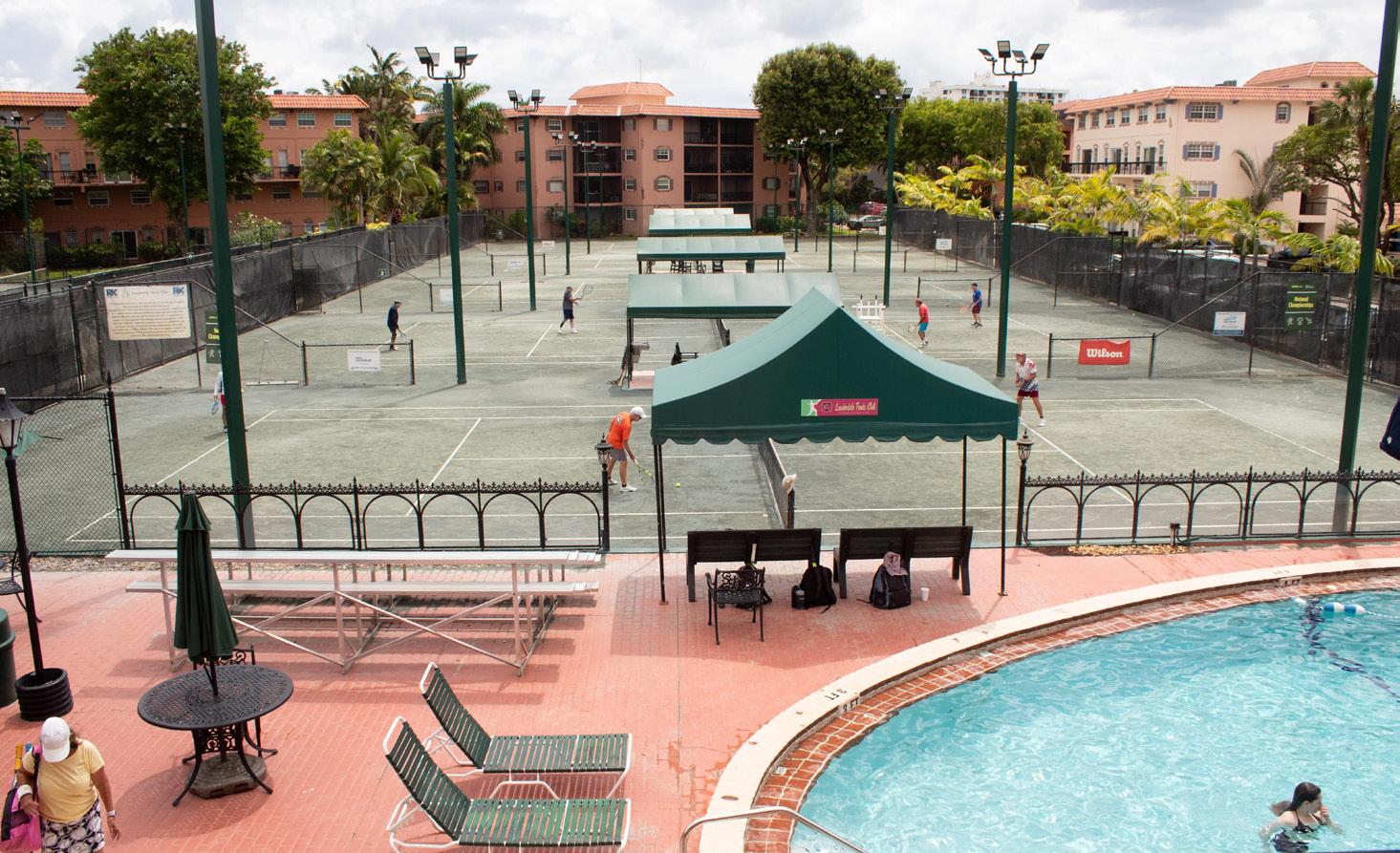
At Lauderdale Tennis Club, the facilities play a central role in that development process. “We have state-of-the-art facilities,” Drada said. “We have 21 total courts, a variety of great clay courts, Har-Tru clay, and hard courts.” The ability to train on multiple surfaces is a key advantage, especially for players with competitive aspirations.
That versatility also attracts high-level players. Drada noted that one of his former college players—currently ranked inside the top 30 in WTA doubles—returns to train at the club. “She comes here to train and play on both surfaces,” he said. “She does some of her preseason here before the Miami Open or before going to Europe.”
Beyond the courts, the location adds another layer to the club’s appeal. Fort Lauderdale’s accessibility and international reach make it a natural hub for players traveling in and out of the U.S. “We’re very privileged by the location,” Drada said. “We have access to an amazing airport, a lot of international players, and great weather year-round. Tennis is always best at sea level, and we have that here.”
The club also carries a sense of history within the sport. Drada pointed to former top-four player Harold Solomon as part of that legacy. “He used to

have his center here,” Drada said. “I learned from him when I was a little kid in Colombia, and later I realized he was from this city. He was an amazing player and a great person.”
One of the club’s unique features is its Patio Bar and boardwalk area, which overlooks many of the courts and serves as a central gathering point for members and players. Located above the courts, the patio gives visitors a clear view of practices, matches, and tournaments while also creating a social atmosphere that extends beyond the tennis itself.
The Patio Bar has become one of the defining aspects of the Lauderdale Tennis Club experience. Whether players are relaxing after a match, watching high-level tennis, or meeting with friends and family, the setting combines tennis, food, drinks, and community in a way that stands out among clubs in the South Florida area.
In addition to its courts and training programs, the club regularly hosts social events, leagues, and tournaments that bring together players of different ages and levels. Combined with the clubhouse, outdoor patio spaces, and long-standing history in South Florida tennis, the facility continues to position itself as both a competitive and social hub for the local tennis community.
While performance is a key focus, Drada emphasized that the environment extends beyond competition. “We have different communities and a very positive, accommodating environment,” he said. “We try to create a sense of camaraderie and just play great tennis.”
That culture is reflected in the people around the club—players, parents, and members of the broader Fort Lauderdale community. “We have parents, family members, and strong representation from different communities,” he said. “It’s a great environment.”
The coaching team also contributes to that balance between development and performance. Drada highlighted fellow coach Caroline Verhelle as an important part of the program. “She’s an amazing coach, especially in developmental stages,” he said.
At its core, Lauderdale Tennis Club continues to position itself as a place where players can grow—whether they are picking up a racquet for the first time or pursuing college and professional goals. With experienced coaching, multi-surface training, and a strong sense of community, the club reflects the broader strength of tennis in South Florida.
For Drada, the mission remains clear. After years in different roles within the sport, his focus has come full circle. “We like to focus on high performance,” he said, “but also build an environment where everyone can improve and enjoy the game.”
For more information about their programs, visit www.lauderdaletennisclub.com.

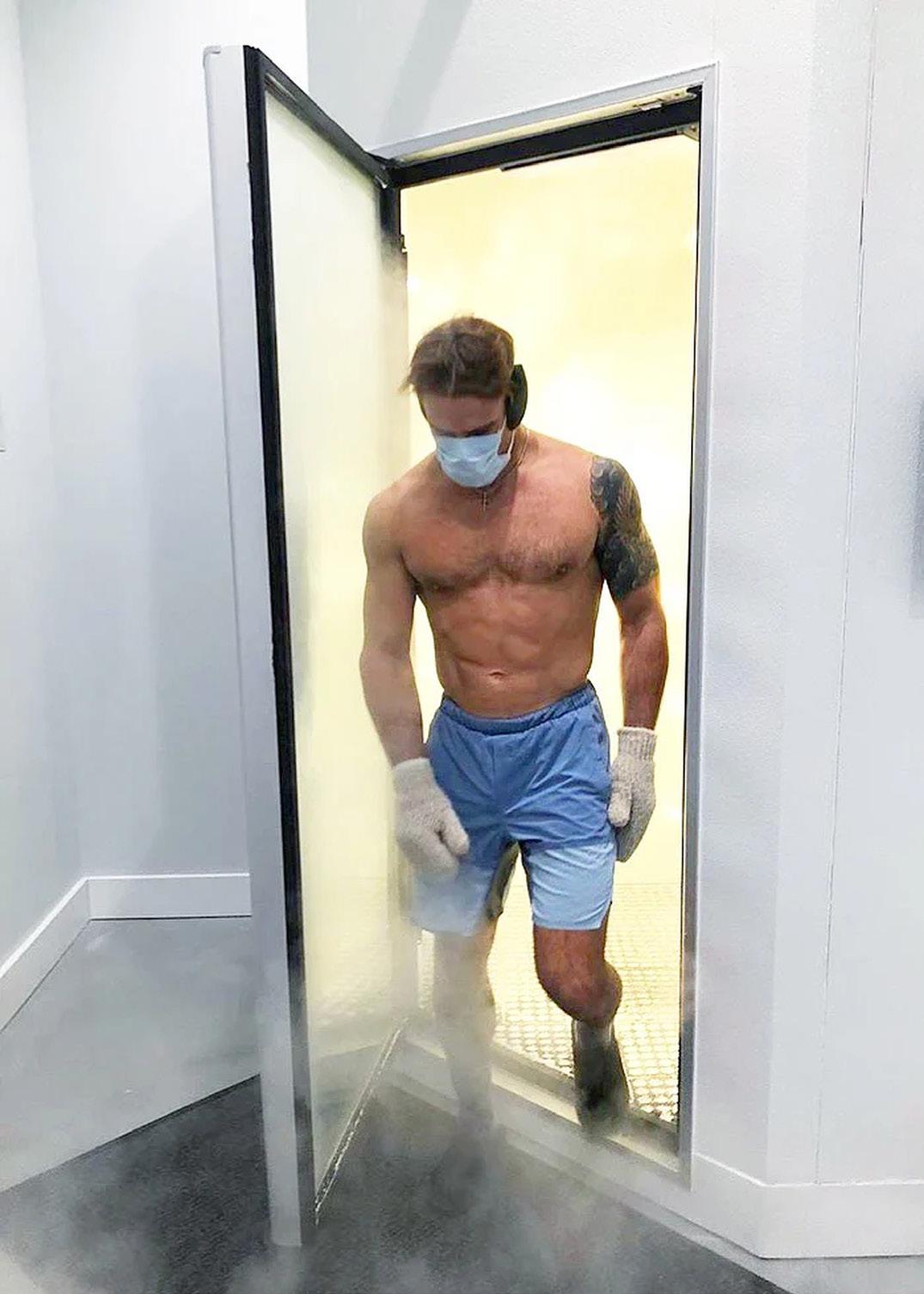
Boca Cryo is a wellness company which offers healing and recovery through state of the art technologies, all non-invasive and drug-free. We offer 7 different therapies in our center.
Our flagship service is WHOLE BODY CRYOTHERAPY, which treats inflammation, pain, stiffness, sleep disorders and helps performance improvement. Three minutes of sub-zero temperatures (-160 F) using safe, cold air in a “true” whole body chamber, leaves you with a rush of endorphins and other pain modulators. This short stay in the cold also boosts your metabolism while strengthening your immune system! Our specialized chamber is equipped with speakers which play your favorite tunes while moving freely about. Unlike our competitors, we DO NOT use liquid nitrogen.
We also offer LOCALIZED CRYOTHERAPY for those specific areas of pain and inflammation. This can be administered a La Carte or in conjunction with WBC.
BOCA CRYO FACIAL is another popular therapy. If you are looking for less wrinkles and puffiness, and want tight skin and a younger look, this is for you! This 10 minute therapy, in conjunction with WBC, is shown to increase collagen production. As one of the most abundant proteins in the body, collagen helps make the skin look younger and fuller without injections and expensive creams.
MAGNETHERAPY is yet another treatment offered, using a state-of-the-art device called the Magnesphere. This is a low level magnetic resonance device which helps relax the body by balancing your Heart Rate Variability or HRV. Our Autonomic Nervous System is divided into Sympathetic (fight or flight) and Parasympathetic (rest and digest) systems. By bringing these two systems into balance, the body begins to heal itself! All of our clients, who have used this device, relax so much that they fall asleep during the session.
Our COMPRESSION THERAPY focuses on the lower body. This pneumatic system, developed by a physician for circulation-challenged patients, inflates sleeves covering your legs. Systematically, the compression helps eliminate the by-products of exercise and aids in venous return to the heart. Athletes and weekend warriors, as well as people with circulatory insufficiencies, can benefit from this therapy.
Our SALT THERAPY is a form of therapy which entails relaxing in a room infused with medical-grade salt crystals that are inhaled and help with respiratory issues ranging from asthma, COPD and sinusitis, to mention a few. Salt therapy is a tremendous therapy and healer for skin disorders such as acne and psoriasis.
Our newest technology from Prague, Czech Republic, is called EMSCULPT. It is the first FDA approved device to increase muscle by 16% and decrease fat by 19% on average. In the world of aesthetics, this is rapidly becoming very popular in our center.



190 Glades Rd, Suite C, Boca Raton, FL 33432 www.bocacryo.com ~ 561-717-4402 ~ Email: ian@bocacryo.com

Ian Pyka received his Bachelor’s degree in Kinesiological Sciences at the University of Maryland and completed his Master’s degree in Exercise Physiology at the University of Tennessee. His first job was at the University of Massachusetts, as their first Head Strength and Conditioning Coach. Four years later, he accepted the same position at Tulane University. He later accepted the position of Head Strength and Conditioning Coach for the New England Patriots. In 1994, he managed a preventive medicine center in Scottsdale, Arizona, working with a retired population, establishing diet and exercise regimes to improve quality of life and longevity. Then in 1998, he was hired by the Florida Panthers to be their Head Strength and Conditioning Coach. In 2002, he started Power Play Fitness, a company which focuses on the sports specific and comprehensive training of athletes as well as any motivated individuals interested in improving their overall fitness and health. He presently teaches Kinesiology, Biomechanics and Advanced Strength and Conditioning Methods, in the Exercise Science Department at Florida Atlantic University in Boca Raton. He is certified as a strength and conditioning specialist with the National Strength and Conditioning Association.
Ian was also a three time All-American (Track &Field) while at Maryland and earned an alternate spot on the 1980 US Olympic Track and Field Team.

By Ian Pyka
Tennis is a demanding sport built on repeated sprints, explosive changes of direction, powerful serves, rotational hitting, and long points that challenge the entire body. Over time, this combination can leave players feeling sore, stiff, heavy-legged, and slow to recover between practices, matches, or tournaments.
One recovery method gaining popularity among tennis players is contrast therapy — the alternating use of hot and cold exposure to support circulation, reduce muscle soreness, and help the body feel refreshed after intense play.
Contrast therapy typically involves moving between heat exposure, such as an infrared sauna or warm environment, and cold exposure, such as cryotherapy, cold plunge, or localized cold therapy. The change in temperature creates a pumping effect in the body, encouraging blood vessels to expand with heat and constrict with cold.
For tennis athletes, this can be especially helpful because the sport places repeated stress on the legs, hips, shoulders, elbows, and lower back.
Contrast therapy can play an important role in helping tennis players recover from the physical demands of training and competition. The vasodilation created by the heat and the vasoconstriction supplied by the cold increase the blood’s ability to clear the negative byproducts of exercise while supply-
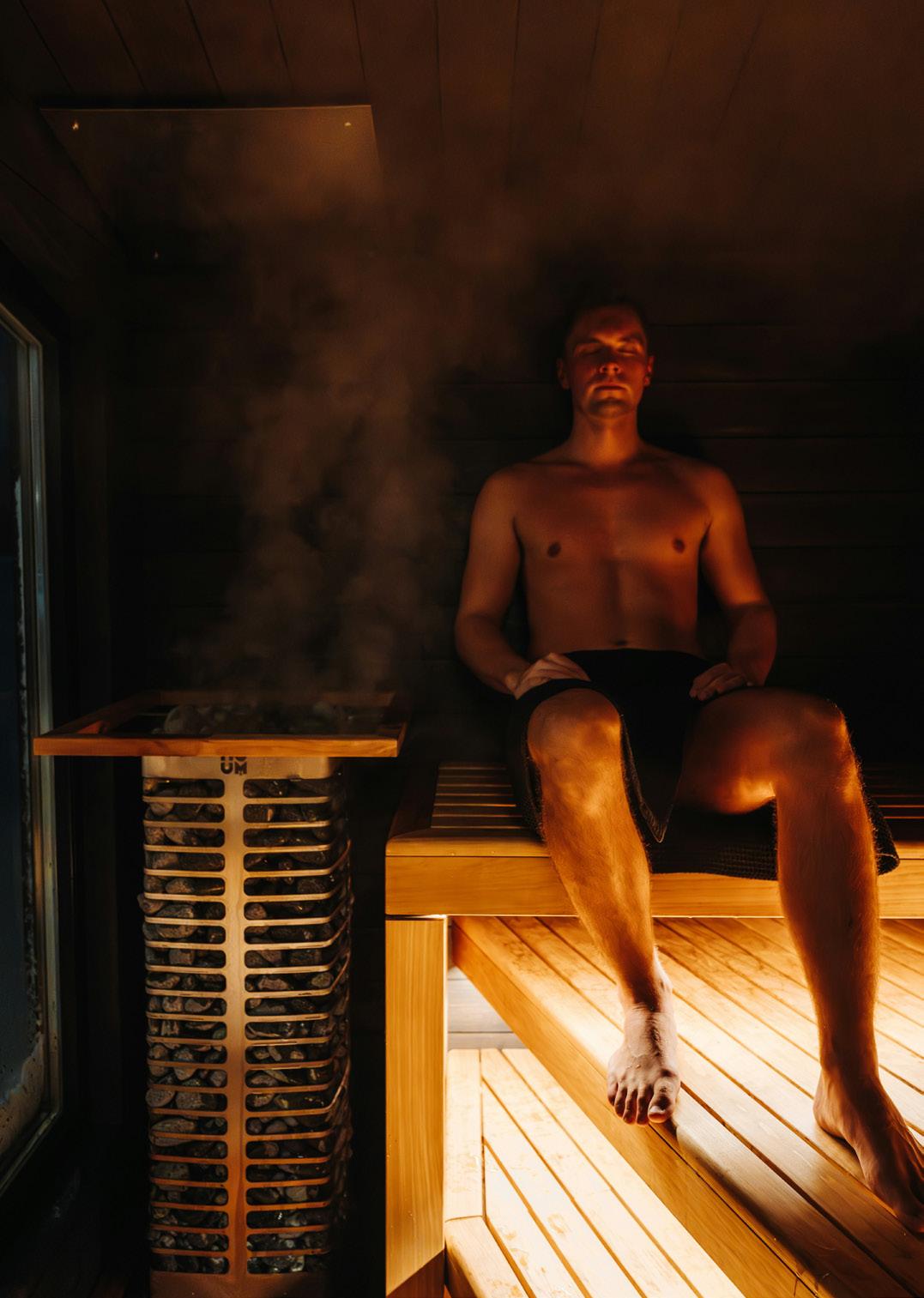
ing oxygen-rich blood to the muscles for healing and recovery. This process helps decrease the inflammation caused by the muscle exertion outcomes of competitive tennis play. This can be especially beneficial during tournaments, when players often compete in multiple matches over a short period of time and need to recover quickly between rounds.
In addition to easing soreness and stiffness, contrast therapy may also help promote a nervous system reset, allowing the body to shift from the highstress intensity of competition into a calmer recovery state. Tennis places repeated strain on areas such as the shoulders, elbows, hips, knees, calves, and lower back, making both whole-body and localized recovery strategies valuable for long-term performance. Ultimately, effective recovery is a major factor in consistency and durability, helping players maintain better movement, higher-quality practice sessions, and sustained performance throughout the season.
At Boca Cryo™, contrast-style recovery is offered using services such as Whole Body Cryotherapy, Infrared Sauna, Local Cryotherapy, Compression Therapy, Red Light Therapy, PEMF, and other recovery-focused treatments. For tennis players, this allows recovery to be customized based on training load, soreness, tournament schedule, and individual needs.
Whether you are a competitive junior, adult league player, tournament athlete, or lifelong tennis enthusiast, contrast therapy can be a valuable tool to help you feel fresher, move better, and recover smarter.