Summer marks a critical season for Florida's ocean and coastal communities. Increased rainfall, watershed management, and the arrival of hurricane season underscore the importance of resilient infrastructure, healthy coastal ecosystems, and informed decision-making. Addressing these challenges requires collaboration across sectors, and the Florida Ocean Alliance remains committed to convening leaders from industry, academia, government, and nonprofit organizations to advance innovative solutions that strengthen both Florida's coastal resilience and its ocean economy.
This year is especially meaningful as we celebrate the 25th anniversary of the Florida Ocean Alliance. For a quarter century, the Alliance has served as a trusted, nonpartisan forum bringing together leaders from industry, academia, nonprofit organizations, and government to advance Florida's ocean and coastal priorities. We are fortunate that some of the founding members of the FOA are still on the Board and continue to guide our efforts. While much has changed over the past 25 years, our mission remains the same: fostering collaboration that strengthens both Florida's environment and its economy.
We have an exciting few months ahead. In August, our Annual Strategy Meeting in Fort Lauderdale will bring together Board members and partners to establish priorities and initiatives for the coming year as we continue building momentum around coastal resilience, the Ocean Economy, and innovation. The priorities we identify at this meeting will provide the basis of our 2027 engagement with the new Governor, Cabinet, and Legislature.
Then, on November 18, we will host what promises to be our most ambitious event yet – the Ocean and Space Convergence Summit at the Brevard Zoo on Florida's Space Coast. This first-of-its-kind leadership gathering will unite leaders from the aerospace, ocean, technology, infrastructure, and policy sectors to explore how crosssector collaboration is driving the next generation of cean intelligence, innovation, workforce development in the ocean economy and resilient communities.
reserve your place early and join us for this landmark event.
As always, thank you for your continued support of the Florida Ocean Alliance. Your membership and engagement make it possible for us to convene meaningful conversations, advance informed policy, and champion the partnerships that will shape Florida's coastal future for decades to come.
We look forward to seeing many of you in the months ahead.
Sincerely,
Glenn Wiltshire President, Florida Ocean Alliance

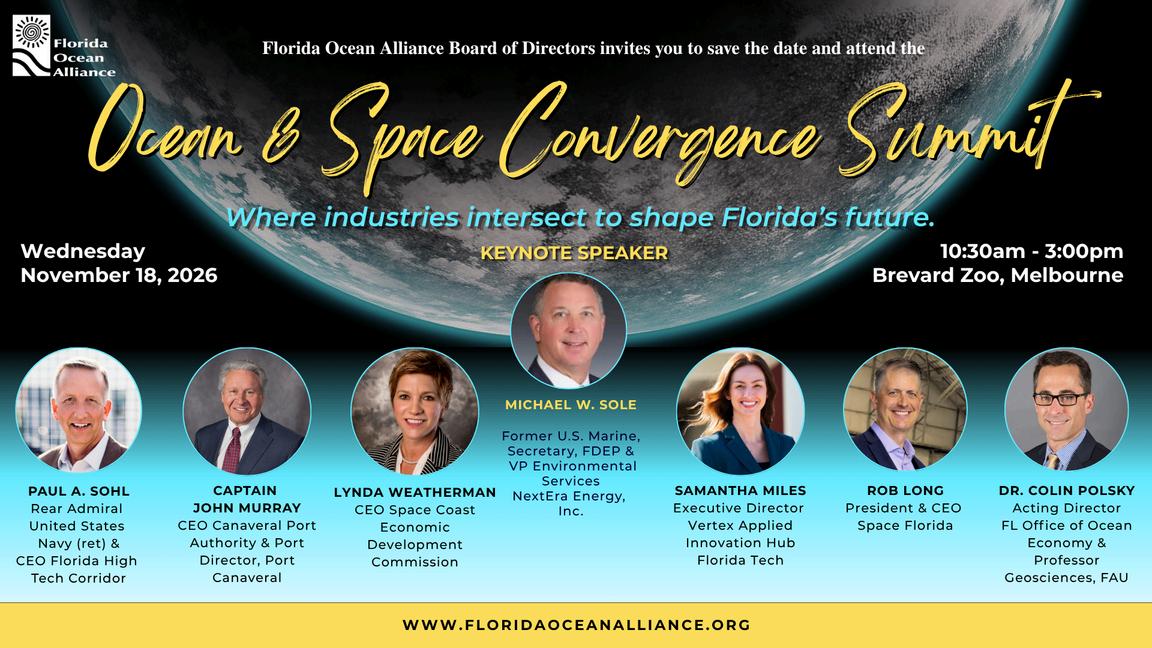
This November 18th, the Florida Ocean Alliance is proud to host the Ocean & Space Convergence Summit
Florida's space and ocean industries are driving innovation, economic growth, and resilience. But their greatest opportunities lie at the intersection.
Join leaders from industry, government, academia, and technology as we explore solutions to Florida's biggest challenges through cross-sector collaboration.
Attendees will:
Connect with leaders from the space and ocean sectors. Explore innovations shaping Florida's future.
Discuss solutions for coastal resilience, workforce development, and national security.
Help develop recommendations for Florida's next Governor and Legislature.
For sponsorship opportunities, please contact Laura Stayshich at laura.stayshich.foa@gmail.com
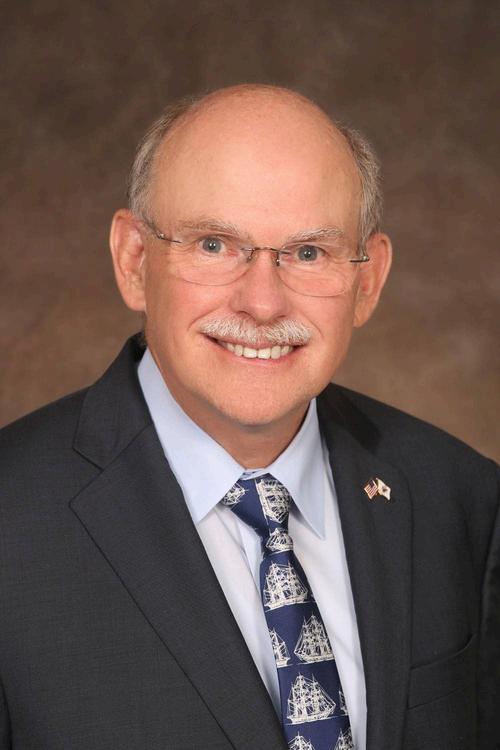
It has been my great privilege and honor to serve on the Board of the Florida Ocean Alliance since its inception in 2001. The Alliance was born out of the Florida Ocean Policy Task Force, which was created through an Executive Order from Governor Lawton Chiles in the late nineties. At that time, I was Secretary of Florida’s Department of Community Affairs, and our Office of Coastal Management team was tasked with staffing the Task Force. We met over a two-year period, inviting local experts to inform our final report which we delivered to the next administration in Tallahassee under Governor Jeb Bush. Unfortunately, oceans and coasts weren’t a priority with leadership at that time.
The members of the Task Force didn’t want to see our work go to waste. We knew these issues were too important to be ignored, and that Florida’s future was deeply tied to our unique ocean and coastal resources.
Reflects on 25 Years with Reflects on 25 Years with Reflects on 25 Years with Florida Ocean Alliance Florida Ocean Alliance Florida Ocean Alliance
So, our intrepid group reconvened and created the Florida Ocean Alliance in November of 2001. I still remember the proud moment when I signed the 501(c)(3) incorporation papers for our nonprofit status.
Since those early days, the Alliance has been operating with the mission of bringing together diverse stakeholders to protect and enhance Florida’s coastal and ocean resources for continued social and economic benefits.
Today, we have an even more diverse membership which is important because while there are plenty of advocacy groups that represent the interests of specific industries and organizations, we seek to find commonalities among groups that might otherwise have divergent views.
Our Alliance members include legacy and developing ocean/coastal industries, academic research institutes, and non-governmental organizations. Together we are stronger, and when we meet with the policymakers in Tallahassee and Washington D.C., our message holds more weight because of our broad base.
In one of the Alliance’s first celebrations of Florida Oceans Day in Tallahassee with the Florida Legislature in 2001, a Florida Senate Resolution described Alliance goals in proclaiming Florida Oceans Day: “Whereas, the Florida Ocean Alliance has been formed as a nonprofit, nonpartisan, public-private partnership of ocean-related interests to promote awareness and understanding of the ocean’s importance to the ecology and economy of Florida and its neighbors. . .” declaring “Oceans Day in recognition of the importance of Florida’s ocean resources, and to promote public awareness of this importance.”
The Alliance is not only successful because of its diverse membership but also because of the way we communicate and bring education and information to the relevant parties throughout the state. Our economic studies, strategic plans, and reports have helped shape the work of our state agencies and offices. While not every recommendation is taken up, we have continued evidence that many of our ideas make their way into the operations of the state’s agencies and Florida government.
Governments and administrations change, priorities shift, budgets come and go, and continuity is often lost during these redirections. The Alliance has been here to fill the gap and create a continuous call to action through our work. Our collective knowledge and written record over the last quarter century is something to celebrate and value. The future will bring challenges around resilience, the ocean economy and leveraging the exploration of space. The Alliance must remain nimble and continue to adapt with those challenges.
As I reflect on the last 25 years, and my transitioning role to Emeritus Board Member, I feel we have even more reason for the Alliance to continue because if we weren’t doing this critical work, it would be even more difficult for these issues to get attention in our rapidly changing and evolving political landscape.
My hope for the future is that the Alliance continues to bring groups together and to help our state prioritize our oceans and coasts and their policy issues. I also encourage the current and future members to continue to work hard and make your voices heard.
James F. Murley Board Member Emeritus & Founding Member FOA
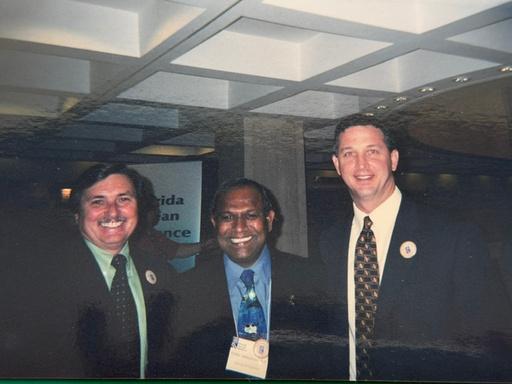
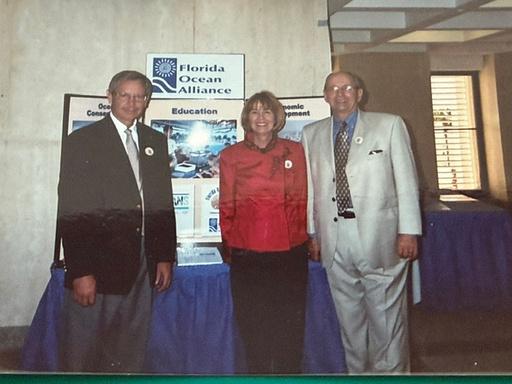
Early Oceans Day events with from left, David McDonald, Kumar Mahadevan, and Mike Sole James Murley and Lenore Alpert.
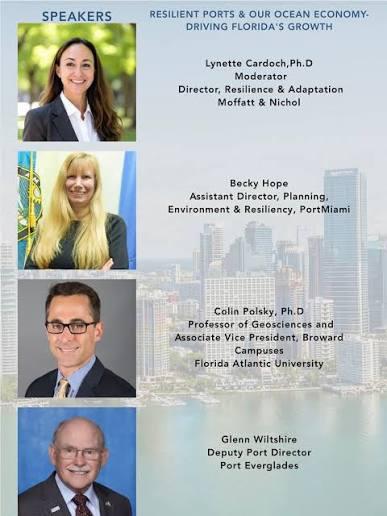
Becky Hope is the Assistant Director of Planning, Environment & Resiliency at PortMiami, where she oversees long-range planning, environmental sustainability, and resilience initiatives for one of the world's busiest cruise and cargo ports. She leads transformative projects that modernize port operations while reducing environmental impacts, including PortMiami's landmark shore power program, which allows cruise ships to connect to the electrical grid and significantly reduce emissions while at berth. An expert in port planning, environmental compliance, and climate resilience, Becky collaborates with industry, government, and academic partners to advance sustainable maritime infrastructure and strengthen the ocean economy
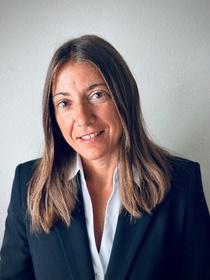
Dr. Annalaura Mancia is Executive Director of the Marine Science Research Institute (MSRI) and Associate Professor of Biology and Marine Science at Jacksonville University An internationally recognized marine molecular biologist, her research integrates genomics, molecular biology, and environmental science to better understand the health and resilience of marine wildlife, including bottlenose dolphins, West Indian manatees, and fin whales. Her work uses advanced genomic and transcriptomic tools to examine how marine species respond to environmental change, supporting conservation and ecosystem management.
Newly passed in the 2026 Florida Legislative Session, Senate Bill 302 expands the allowances for nature-based coastal protection and allows for living shorelines in aquatic preserves. The Legislation took effect July 1, 2026. The bill specifically allows nature-based solutions to improve coastal resiliency, including living seawalls, shoreline planting, seagrass planting, and wave attenuation devices. The bill further directs the FDEP to develop statewide design guidelines and a clear, consistent permitting process for nature-based coastal resiliency methods by January 1, 2027. That process must cover everything from permit criteria and emergency procedures to incentives for local governments and new technologies like 3-D printed reef structures.
Living shorelines are intimately associated with the ocean and nearshore estuarine environments. The public should participate in FDEP rulemaking activities beginning in January 2027 and consider submitting recommendations to FDEP. Watch this website for updates
(The Keys, Miami, Everglades, Ft. Lauderdale, Palm Beach, Stuart, Ft. Pierce)
Healthy fisheries depend on healthy food webs. From microscopic algae and seagrass to shrimp, crabs, and sportfish, every species is connected through a complex network of feeding relationships. When changes occur at the base of the food web, the effects can ripple throughout the ecosystem.
Bonefish & Tarpon Trust (BTT) and its partners are investigating whether shifts
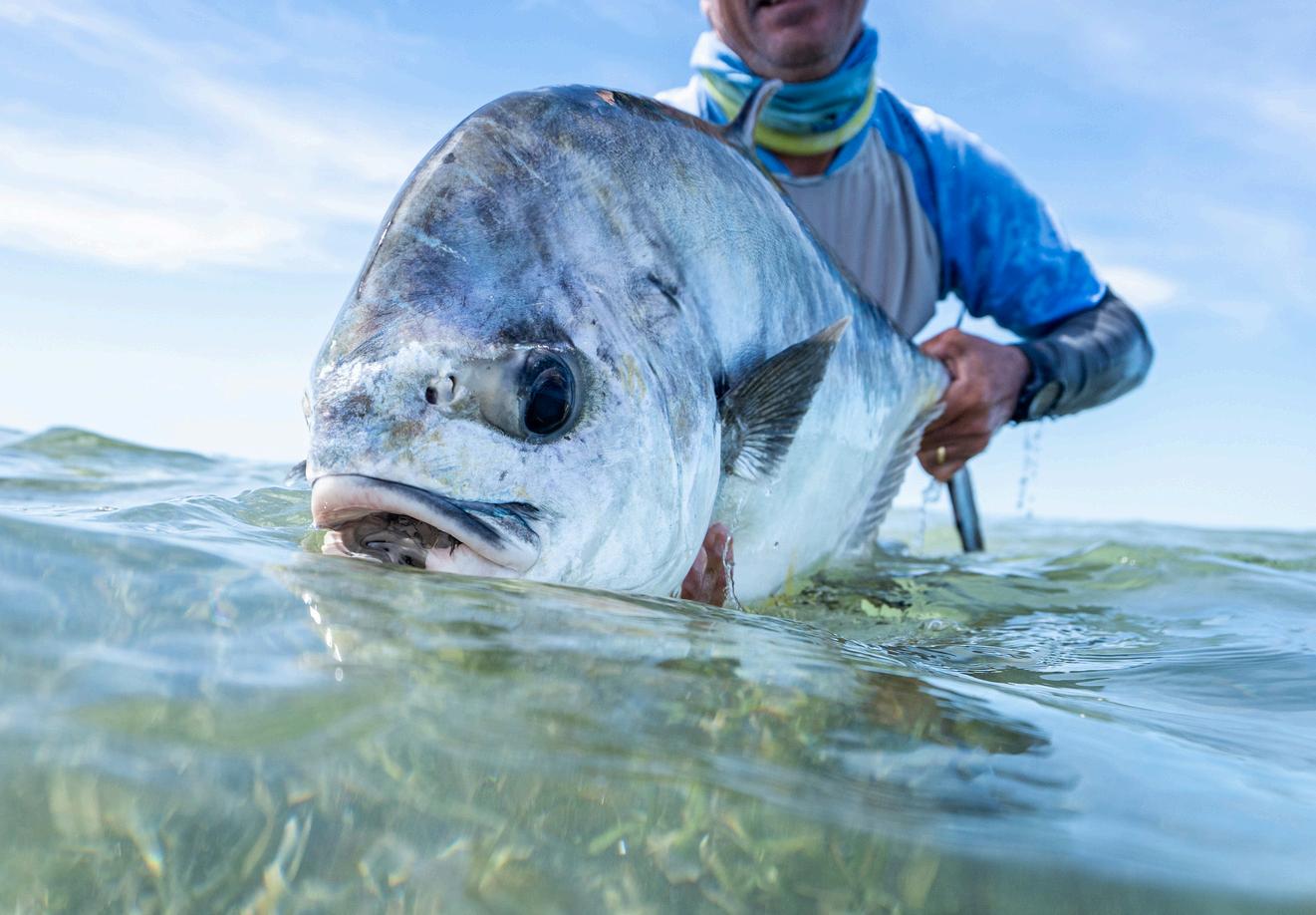
in the Florida Keys food web may be contributing to declines in some permit populations. By examining the abundance and diversity of prey species across the Keys and comparing current conditions to historical data, researchers are gaining new insights into how the ecosystem has changed over time.
A key component of the project involves collaboration with local fishing guides, who are helping BTT scientists collect samples that reveal what permit are eating and where they are feeding. Early findings show that seagrass habitats are a critical source of prey for both permit and bonefish, with larger bonefish becoming increasingly dependent on seagrass-associated food sources. Areas dominated by algae and reduced seagrass-cover support fewer prey organisms overall.
Researchers have also found important differences in the diets of these iconic flats species. Fish like Permits rely more heavily on crabs and snails, while bonefish consume more shrimp. These dietary distinctions may help explain why bonefish populations appear more resilient than permits in some parts of the Keys.
The results of this research will help guide future conservation actions, including seagrass restoration, improved habitat management, and continued efforts to enhance water quality throughout the Florida Keys.
Learn more by reading the article by T. Edward Nickens on pg. 18 in the Spring 2026 issue of Bonefish & Tarpon Journal
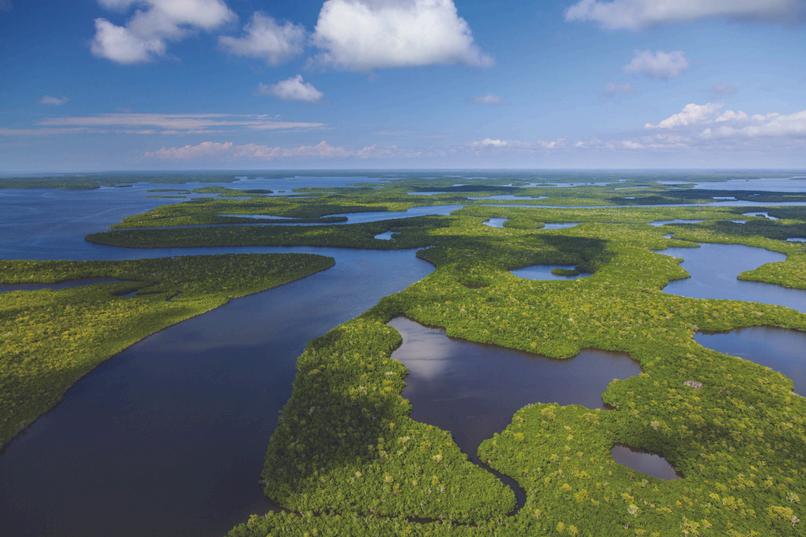
On June 29, Governor Ron DeSantis signed a budget with $665 Million for Everglades Restoration, a measure that continues to move Everglades restoration forward, advancing the world’s largest ecosystem restoration effort and one of the most important projects for the state’s environment and economy.
This funding also includes what is needed to complete the state portion of the EAA Reservoir, the central and critical piece of the Everglades restoration puzzle that is set to be realized five years ahead of schedule.
Read more here.
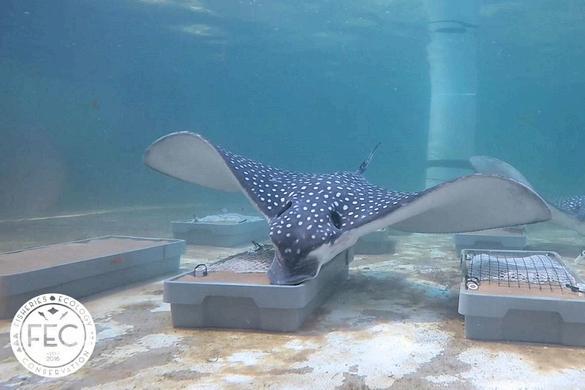
Predator-prey interactions between shellcrushing marine predators and hardshelled mollusks such as clams, oysters and snails play an important role in shaping coastal ecosystems, yet they have remained difficult to study in the wild. Many of these feeding events occur in subtidal environments where direct observation is limited. This makes it challenging for scientists to measure predation pressure on shellfish populations that are critical for water quality, shoreline stability, biodiversity, aquaculture and restoration efforts.
Florida Atlantic University researchers have developed a machine learning-based acoustic monitoring system capable of detecting and classifying shell-crushing events from underwater feeding recordings of whitespotted eagle rays –large and highly mobile predators known for crushing hard-shelled prey The study found that computationally efficient GTCC-
based models performed nearly as well as more complex deep learning systems while requiring far less processing power, making them especially promising for deployment on autonomous underwater platforms. The technology also demonstrated strong performance in real-world conditions, bringing researchers closer to scalable, real-time monitoring of predator behavior and shellfish predation in marine ecosystems.
Read more here.
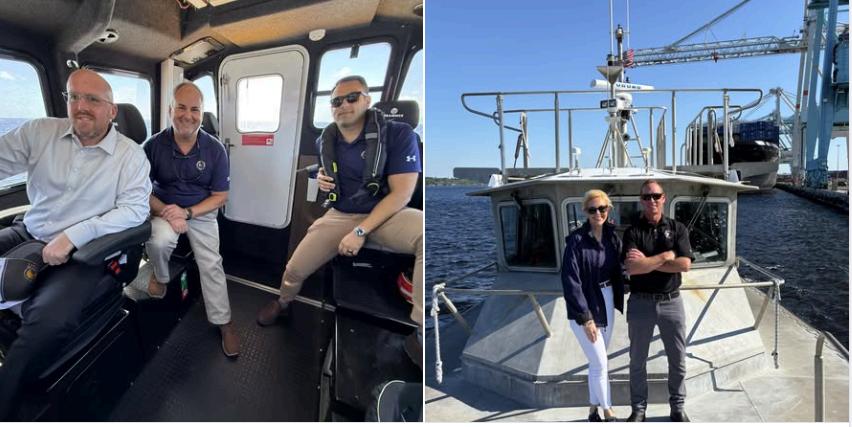
The Florida Harbor Pilots Association recently recognized Florida Department of Transportation (FDOT) Secretary Jared Perdue and Department of Business and Professional Regulation (DBPR) Secretary Melanie Griffin for their ongoing support. In April, FDOT Secretary Perdue visited PortMiami and joined the harbor pilots for a ride-along, while DBPR Secretary Griffin did the same at Port Jacksonville.
These state secretaries were praised for witnessing the critical, highly-skilled work of the state’s harbor pilots. By participating in ridealongs and touring port facilities, leaders like Secretary Griffin (who oversees pilot licensing) gain direct insight into how pilots guide the safe movement of vessels into Florida's 14 deepwater ports.
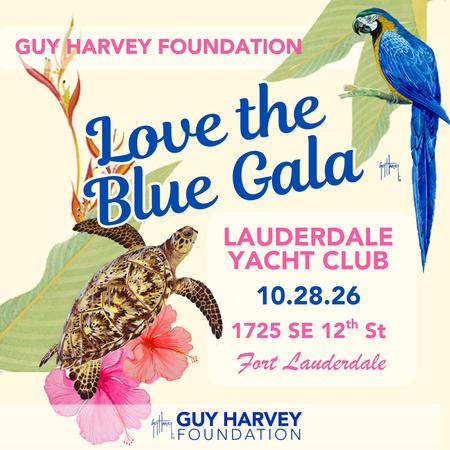
The Guy Harvey Foundation warmly invites guests to an unforgettable evening in support of ocean conservation at the Love the Blue Gala, taking place Wednesday, October 28, 2026, at the Lauderdale Yacht Club in Fort Lauderdale. This year's theme, Panama Paradise, transports guests
to some of the ocean's most extraordinary waters and marine life. The evening begins at 6:00 PM with a Cocktail Reception and Silent Auction. From 7:30 PM to 10:30 PM guests will enjoy Seated Dinner, followed by a special program honoring conservation champions with awards, and an exciting Live Auction featuring one of a kind experiences and items not to be missed.
Every ticket, bid, and donation directly supports the Guy Harvey Foundation's mission to protect marine ecosystems through research, education, and conservation initiatives worldwide.
Learn more and reserve your tickets here.
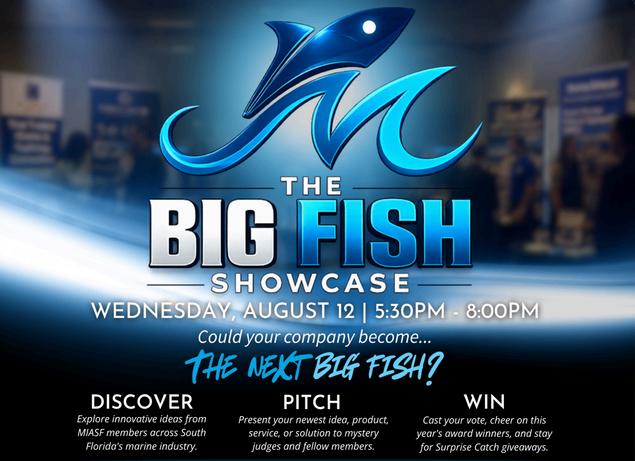
Something BIG is coming! The Marine Industries Association of South Florida (MIASF) is proud to introduce the first ever Big Fish Showcase, an evening where MIASF members can share ideas, discover innovative products and services, vote for the Biggest Star (People's Choice Award), and compete for Big Fish bragging rights.
Whether you're ready to take the stage with a featured pitch in front of a panel of mystery judges or prefer a showcase table to connect with fellow members, this is your opportunity to put your company in the spotlight.
Every attendee will have a chance to reel in a prize through surprise catch giveaways throughout the evening.
Reserve your exhibitor space by calling (954) 524-2733
Register to attend here.
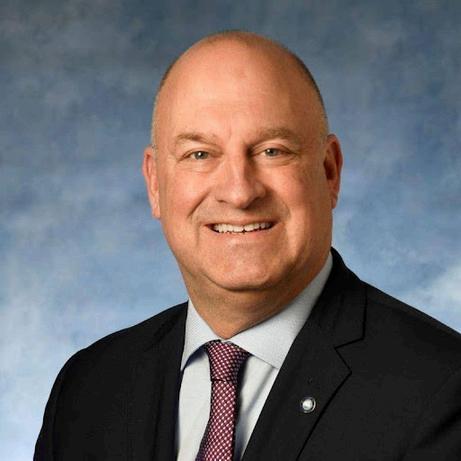
Miami-Dade County Mayor Daniella Levine Cava has appointed Jonathan Daniels as the new Director and Chief Executive Officer of PortMiami, effective August 10. A nationally recognized port executive with more than 30 years of experience, Daniels previously led the Port of Baltimore, where he guided the port's recovery following the Francis Scott Key Bridge collapse and achieved record container activity in 2025.
Before that, he served as CEO and Port Director of Port Everglades, overseeing a $3 billion strategy to expand cruise, cargo, and energy operations.
Mayor Levine Cava praised Daniels' experience and vision for strengthening PortMiami's infrastructure and continued leadership in global trade and tourism. Daniels said he looks forward to building on the port's success with its employees and industry partners.
PortMiami supports approximately 340,000 jobs and generates $61.4 billion in annual economic impact, making it one of Florida's most important economic engines.
Ocean Exchange has announced two new $50,000 Marine Research Hub–Wayne & Lucretia Weiner Florida Environmental Impact Awards, expanding its commitment to advancing innovative solutions for Florida's ocean and coastal environments. Funded through a partnership with the Marine Research Hub and Wayne & Lucretia Weiner, the awards complement Ocean Exchange's three $100,000 Neptune Awards.
Open to innovators worldwide, the awards seek scalable technologies, services, data systems, and programs that address Florida's coastal challenges, including water quality, habitat restoration, fisheries, and resilience, with potential for global application. Eligible applicants may also qualify for a Neptune Award.
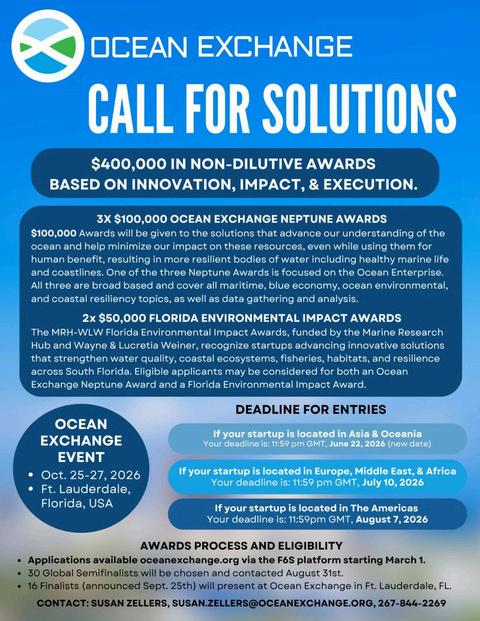
Now celebrating its 15 year, Ocean Exchange th has awarded $2.9 million in non-dilutive funding to ocean innovators. Its 170 finalists have gone on to secure more than $3.3 billion in follow-on funding, investments, and acquisitions. The new awards strengthen South Florida's role as a hub for ocean innovation while accelerating practical solutions that benefit both Florida's environment and its Ocean Economy.
Learn more about this and other opportunities here.
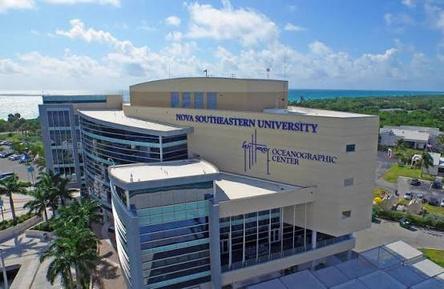
Panza Maurer is proud to announce that Nova Southeastern University (NSU) - through their steadfast commitment to advancing marine research and protecting critical reef ecosystemshas been designated by NOAA as the home of the Atlantic Reef Research Coordination Institute.
For more than 15 years, NSU and Panza Maurer have collaborated with key Congressional offices and stakeholders to position NSU for a major national role in marine science. Panza Maurer has worked tirelessly throughout this effort to align policy priorities, cultivate lasting relationships, and move initiatives forward in a complex federal environment. We are proud to have helped bring together the partnerships that made this possible and to support an initiative that advances critical reef research on a national scale for today and years to come.
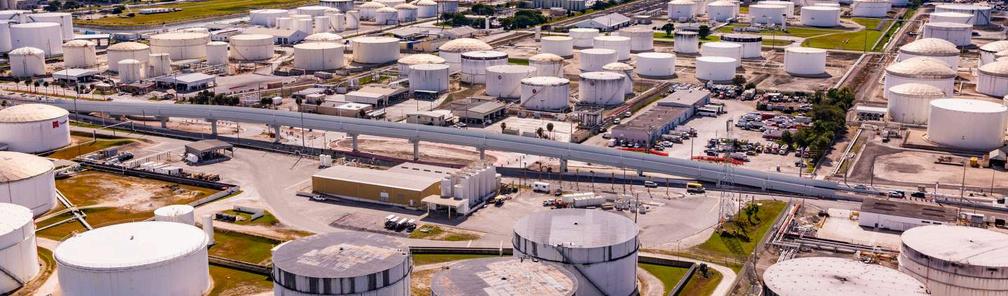
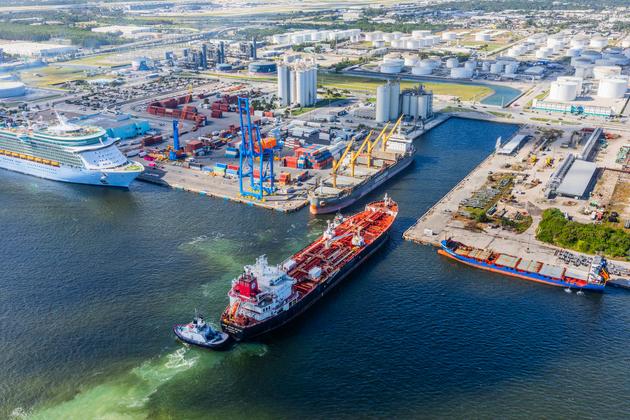
Port Everglades generates approximately $48.3 billion in economic activity and supports nearly 300,000 jobs throughout Florida, according to a new study by maritime industry analyst Martin Associates.
Port Everglades is one of the state’s top seaport for receiving and distributing fuel such as gasoline, diesel and jet fuel, but the economic impacts had not been fully accounted for in past reports. The economic report for Fiscal Year 2025 (Oct. 1, 2024, to Sept. 30, 2025) captures the full impact of the distribution of energy (petroleum) products handled at the port, in addition to previously accounted for impacts from its cruise and cargo business lines.
In total, economic impact increased by 72% and supported 44% more jobs statewide over the previous report for Fiscal Year 2024 That includes approximately 13,139 jobs that are directly dependent on the port’s business activity, a more than 7% increase over the previous fiscal year.
At a glance:
Cruise-related business activity, driven in part by a record 4.7 million cruise guests, increased 21.7% in Fiscal Year 2025 compared to Fiscal Year 2024, and direct local jobs climbed by 9.4%.
Cargo-related economic activity increased 17.9%, supported by a record 1.167 million TEUs (twenty-foot equivalent units) handled during FY2025 and supported a 5.3% increase in direct jobs.
Port Everglades' cargo and cruise operations generated nearly $1.9 billion in state and local tax revenue, a 69% yearover-year increase, which are paid by parties dependent on the port’s activity
While there are no refinery operations in Florida, Port Everglades is a critical link in the petroleum products supply chain, providing finished gasoline and diesel products in 12 counties. Furthermore, Port Everglades provides jet fuel to five international airports and is the sole source of jetfuel delivered by pipeline for Fort Lauderdale-Hollywood International Airport (FLL) and Miami International Airport (MIA).
Read the full report:
The Local and Regional Economic Impacts of Port Everglades: Fiscal Year 2025.
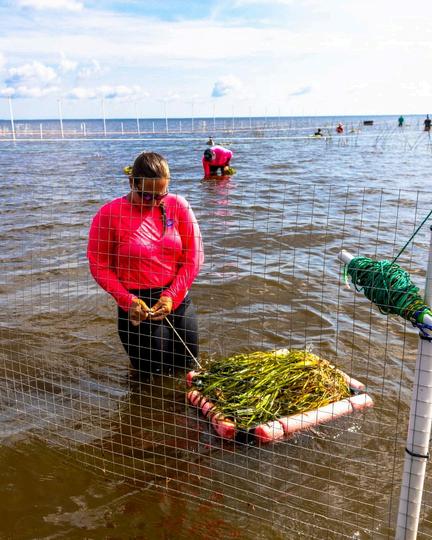
Beneath the surface of Lake George, Florida’s second largest lake, an important restoration effort is helping rebuild the underwater grasses that support Florida's fish, wildlife, and outdoor heritage.
With support from Jacksonville Port Authority, Florida Fish and Wildlife Foundation is partnering with the MyFWC Florida Fish and Wildlife to expand eelgrass restoration in the St. Johns River These important underwater plants provide food and shelter for countless species, improve water quality, and help sustain one of Florida's premier freshwater fisheries.
Lake George has experienced significant losses of aquatic vegetation following hurricanes Matthew and Irma, making restoration a priority for FWC and its partners. Every new acre of eelgrass planted is another step toward a healthier ecosystem for anglers, boaters, manatees, and the wildlife that call Lake George home. Read more here.
As summer temperatures rise and an historic El Niño looms, Florida's coral rescue network is preparing for what comes next. After serving as a refuge for more than 5,000 corals during Florida's historic bleaching crisis, University of South Florida's Florida Keys Marine Laboratory is better prepared for the next bleaching event.
Researchers at FIO’s University of South Florida's Keys Marine Laboratory and their restoration partners have spent the past three years expanding coral refuge capacity, strengthening emergency response plans and identifying the corals most critical to long-term reef recovery – changes driven directly by the unprecedented marine heatwave that struck in 2023
Learn more about how you can help here.
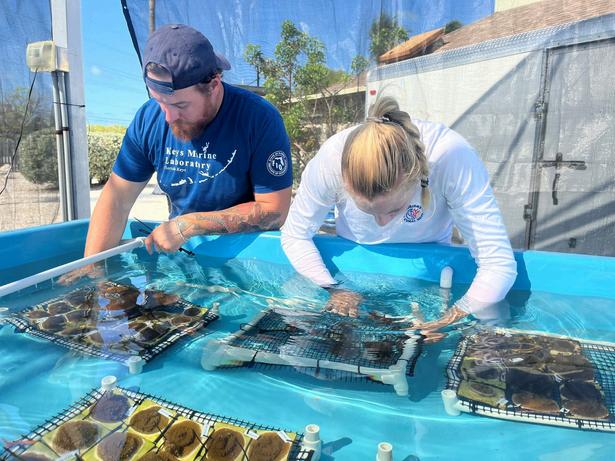
Mote Marine Laboratory & Aquarium is continuing its fisheries enhancement efforts in 2026 through a series of juvenile snook releases across strategic estuarine habitats in Southwest Florida. This summer Mote scientists released approximately 22,000 juvenile snook as part of Mote’s long-standing, research-driven marine stock enhancement program.
For nearly three decades, Mote has developed and evaluated science-based stock enhancement strategies to support Florida’s recreational fisheries.
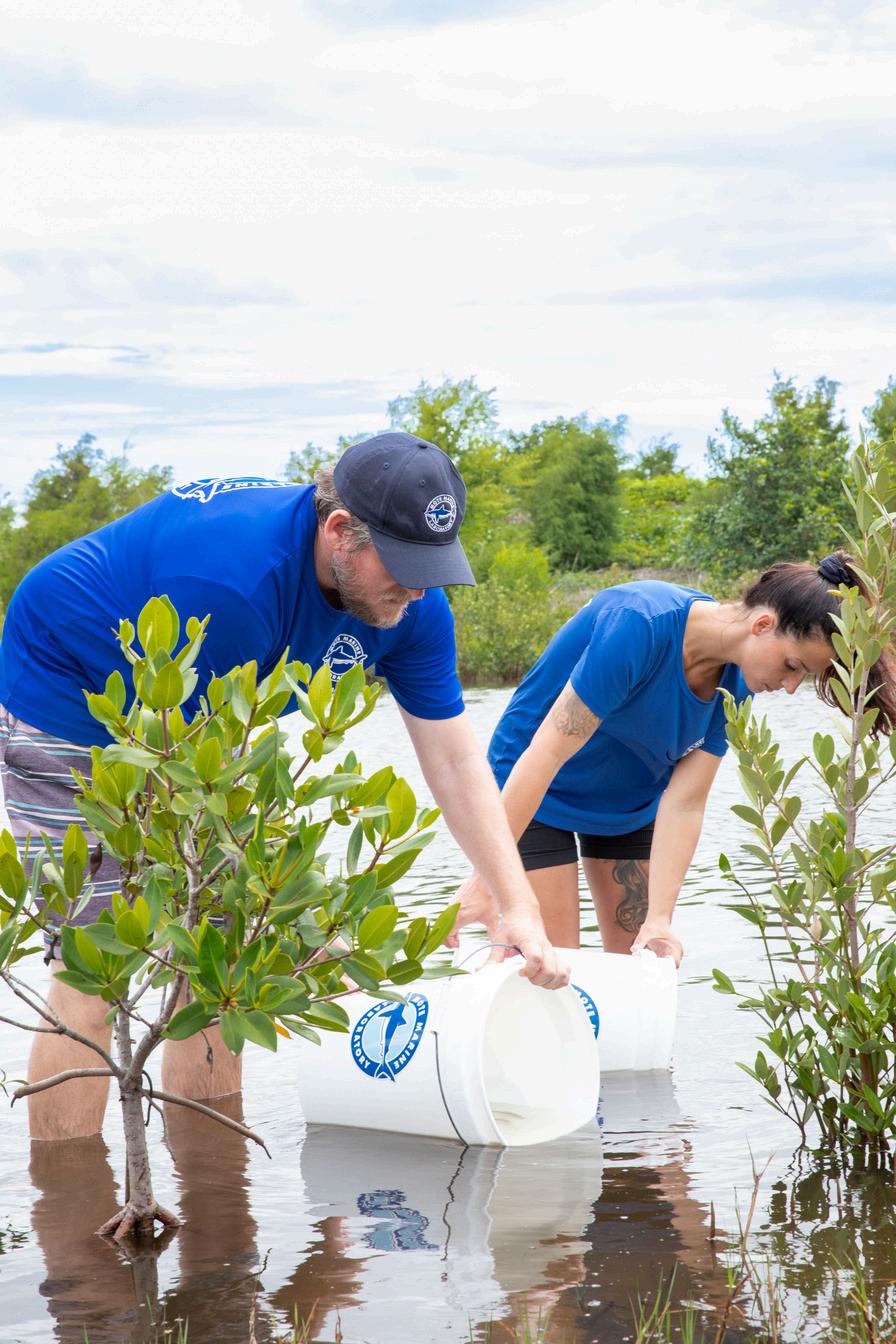
The juvenile snook are spawned and raised at Mote Aquaculture Research Park (MAP) where researchers advance aquaculture techniques that support fisheries enhancement, conservation, and education. Some fish produced at MAP are also distributed to classrooms across Florida to inspire future marine scientists.
Mote’s research focuses on evaluating post-release survival, movement, habitat use, and the contribution of stocked fish to wild populations. Scientists are also expanding the use of genetic tagging, allowing individual fish to be identified through small tissue samples and improving longterm monitoring.
As Mote expands monitoring and partnerships throughout neighboring coastal regions, researchers are strengthening their ability to respond to environmental stressors such as cold events and harmful algal blooms that affect snook populations. By integrating aquaculture innovation, ecological research, and long-term monitoring, Mote continues to advance marine stock enhancement while supporting sustainable fisheries management and the long-term health of Florida’s coastal ecosystems. Learn more about this work here.
Two new post-Panamax ship-to-shore (STS) gantry cranes have arrived at Port Tampa Bay, marking a major milestone in the port’s ongoing container terminal expansion. Installation will begin soon, with both cranes expected to be operational by the end of 2026.
Manufactured by Liebherr in Killarney, Ireland, each crane features a 197-foot outreach, 164foot lift height, 66-foot back reach and a 145,600-pound twin-lift capacity. The cranes incorporate advanced safety, operational and energy-efficient technologies that will increase lift capacity, improve berth productivity and enable the port to service up to three large container vessels simultaneously. continued on next page...
Once assembled and commissioned onsite, the cranes will be deployed at the new Berth 214 wharf as part of the port’s expansion to a 100-acre container terminal. The project also includes additional container storage, a third deepwater berth and an on-dock, rail-served transload facility, advancing the port’s long-term goal of handling 1 million twenty-foot equivalent units (TEUs) annually.
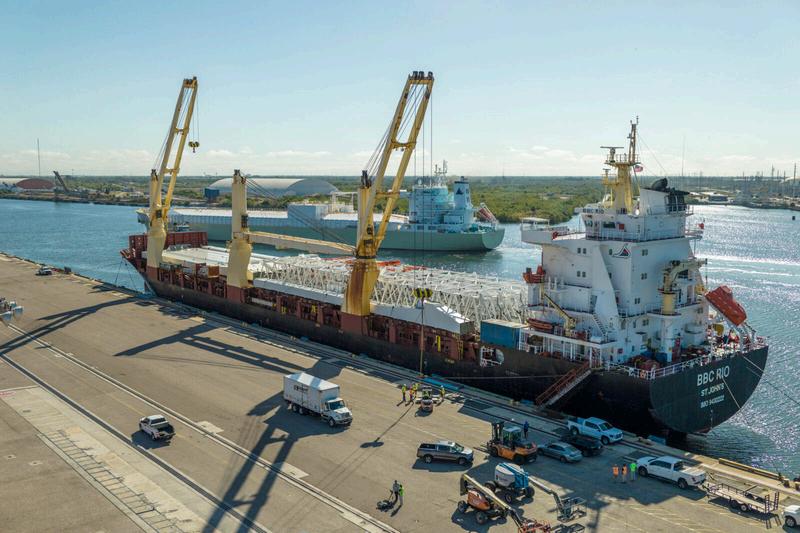
The addition of the cranes brings Port Tampa Bay’s fleet to six post-Panamax gantry cranes, strengthening the port’s ability to meet growing cargo demand while supporting a more efficient, resilient supply chain for West Central Florida and the Southeast.
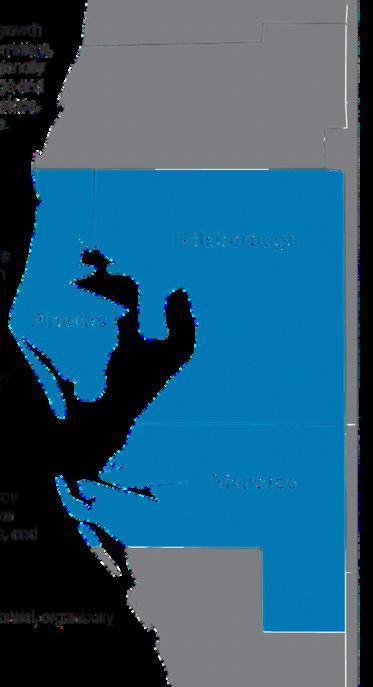
The Tampa Bay region has unveiled the Tampa Bay Ocean Strategy, a collaborative roadmap designed to accelerate the region’s ocean economy while strengthening coastal resilience and advancing scientific innovation. Developed by the Tampa Bay Ocean Team, a consortium of industry, government, research institutions, and nonprofit organizations established in 2009, the strategy positions Tampa Bay as a leader in Florida’s growing ocean economy
The strategy comes at a pivotal time as Florida expands its focus on the maritime sector through initiatives such as the Office of Ocean Economy and as federal priorities emphasize maritime prosperity and emerging ocean technologies. Covering Pinellas, Hillsborough, and Manatee counties, the region’s marine economy already includes more than 4,260 businesses, supports 92,500 jobs, generates $3.2 billion in wages, and contributes $6.1 billion to regional GDP.
The strategy outlines eight focus areas that together create a comprehensive framework for sustainable growth. By aligning the region’s world-class assets around these priorities, the Tampa Bay Ocean Strategy seeks to strengthen economic competitiveness, protect coastal communities, and ensure the region remains a national leader in ocean innovation for decades to come. Read more here.
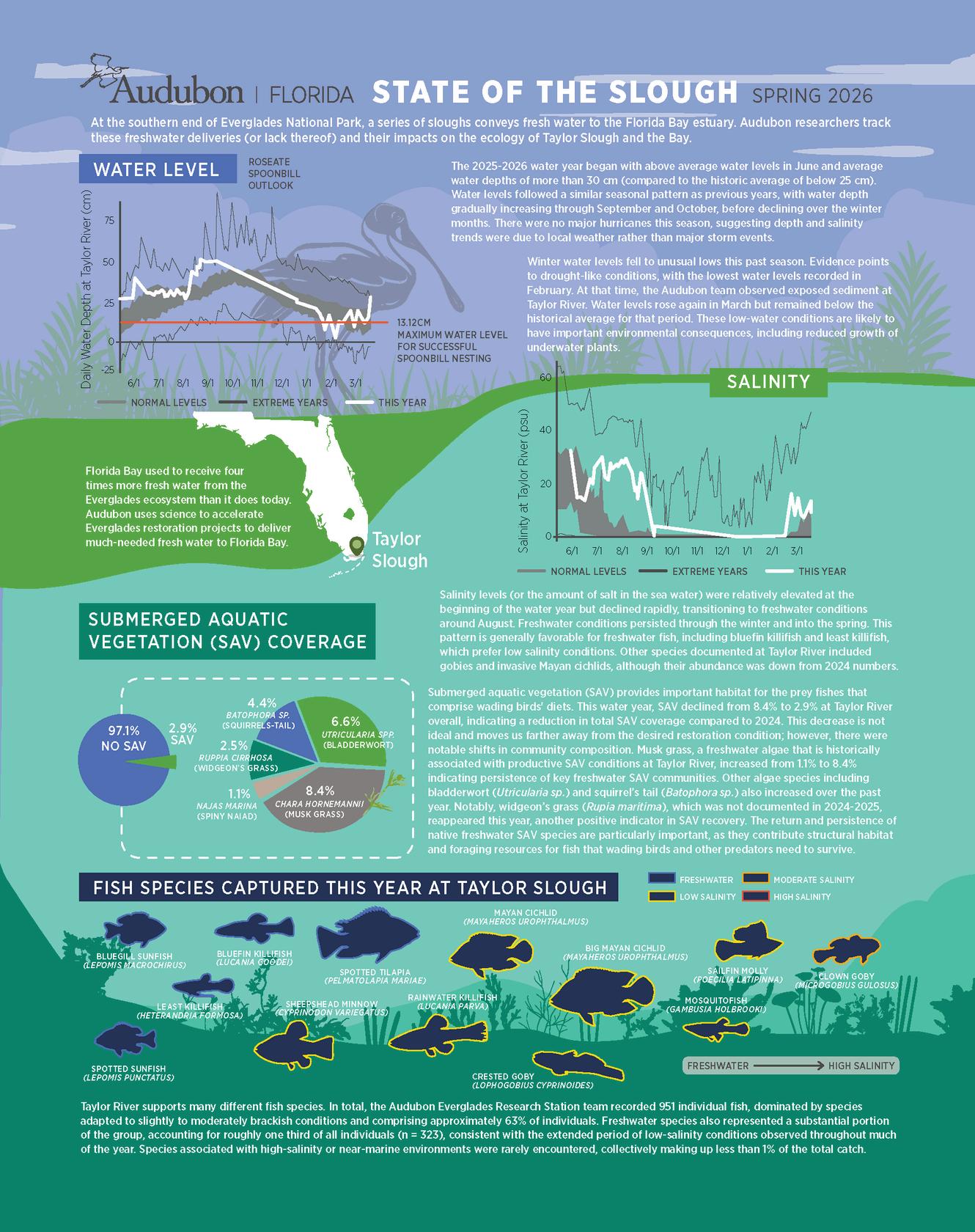
Audubon Florida's Spring 2026 State of the Slough highlights the critical role of Taylor Slough in delivering freshwater from the Everglades to Florida Bay and underscores the importance of continued restoration efforts.
The report found that while overall Submerged Aquatic Vegetation coverage declined from 8.4% to 2.9%, the return and persistence of several native freshwater plant species signal encouraging signs of ecosystem recovery. Lower salinity conditions throughout much of the year also supported freshwater and low-salinity fish communities. Audubon researchers recorded 951 individual fish, with approximately 63% consisting of species adapted to slightly to moderate brackish conditions, while high-salinity species remained rare.
Taylor Slough is a vital freshwater pathway to Florida Bay, and long-term monitoring of water levels, salinity, vegetation, and fish populations provides valuable insight into the effectiveness of Everglades restoration. These findings reinforce the importance of restoring freshwater flows to sustain healthy coastal ecosystems, improve habitat for wildlife, and enhance the resilience of one of Florida's most iconic natural landscapes. See the report infographic here.
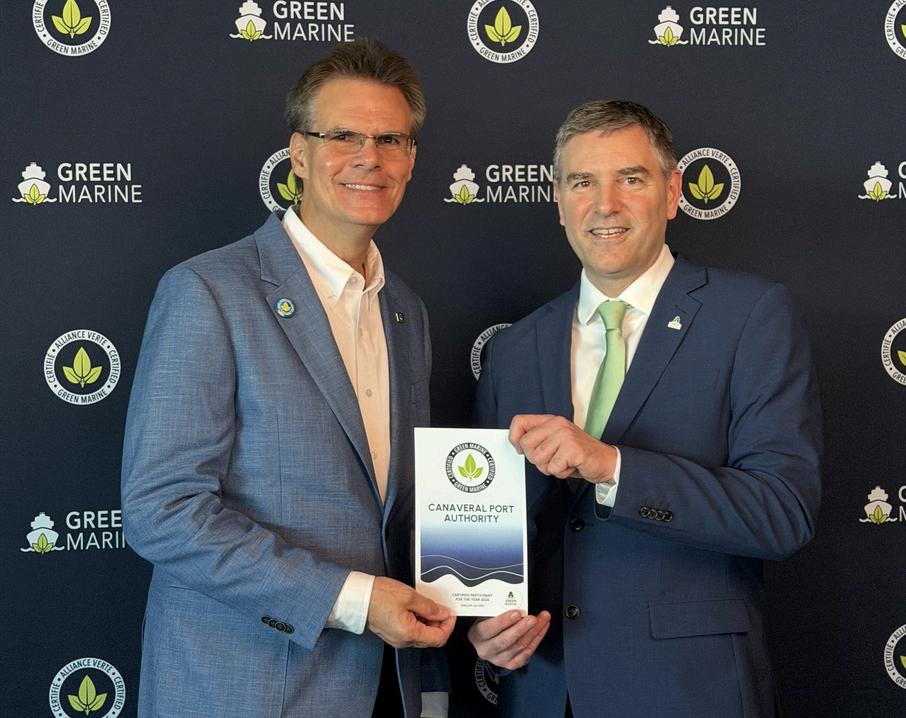
Port Canaveral has earned Green Marine certification for the 10th consecutive year, marking a decade of recognized leadership in environmental stewardship and sustainable port operations. The internationally recognized voluntary program evaluates ports on key environmental performance indicators, including greenhouse gas emissions, aquatic ecosystems, waste management, and community impacts. The milestone reflects Port Canaveral's continued commitment to integrating environmental stewardship with the growth of its cruise, cargo, and commercial operations, reinforcing its leadership in sustainable maritime development
Port Canaveral’s Sr. Dir. Environmental Bob Musser is shown accepting the Port’s Green Marine certification from David Bolduc, Green Marine International's Pres and CEO
Hubbs-SeaWorld Research Institute is expanding the Indian River Lagoon Restorative Aquaculture Station (IRLRAS) in Brevard County with three custom-built mobile conservation aquaculture labs designed to protect coastal restoration infrastructure as severe storms grow more frequent. Each mobile lab will be climate-controlled, stormresilient, and towable, so aquaculture stock and equipment can be moved to a secure inland site ahead of a storm and then quickly return them to service once the threat passes, a significant advantage over fixed facilities that are increasingly at risk from storms.
The custom-fitted labs will support propagation of seagrass, shellfish, and coral, including coral spawning and gene-banking to help protect and rebuild the genetic diversity and ecological resilience of key habitat building species. Alongside this research, the mobile labs will offer hands-on training and outreach to strengthen aquaculture workforce development and public support for restoration efforts.
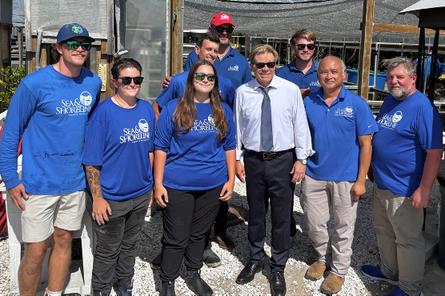
This new capacity builds on existing partnerships to help accelerate coastal habitat restoration. The mobile labs will enhance onsite production, currently led by the aquatic restoration firm Sea & Shoreline, in coordination with state and federal agencies to provide programmatic alignment, oversight, and collaboration.
This expansion is made possible by a new federal award, secured with the support of Congressman Haridopolos seen with the team at Sea and Shoreline below We are incredibly grateful to our federal legislators and regional partners for their continued commitment to restoring Florida’s coastal ecosystems and ocean economy.
In 2027, the National Estuary Program (NEP) will mark its 40th anniversary Established by Congress under the Clean Water Act in 1987 and administer as a voluntary program by the Environmental Protection Agency, the NEP has united local governments, scientists, nonprofit organizations and communities in safeguarding some of the most ecologically sensitive and commercially important coastal systems in the United States and Puerto Rico.
Today, the National Estuary Program includes 28 local estuary programs Each NEP works with local stakeholders to develop a long-term Comprehensive Conservation and Management Plan (CCMP) that is tailored to the particular needs of its watershed. Using a science-based, collaborative approach, NEPs address ecological challenges such as declining water quality, habitat loss, stormwater pollution, and harmful algal blooms.
The NEP exemplifies what can be accomplished through partnership, collaboration, and community engagement. Through four decades of progress, the NEP shows that restoration and protection of our estuaries and coasts also enhances the environmental, economic, and cultural well-being of local communities and helps ensure clean waterways and thriving natural resources for the future.
St. Lucie County's Port, Inlet, and Beaches (PIB) Department is advancing several initiatives to strengthen waterway management, support economic development, and protect coastal resources. To improve navigation and reduce environmental impacts, the County has implemented a 45-day anchoring limit in designated Anchoring Limitation Areas, including portions of the Indian River Lagoon, Fort Pierce
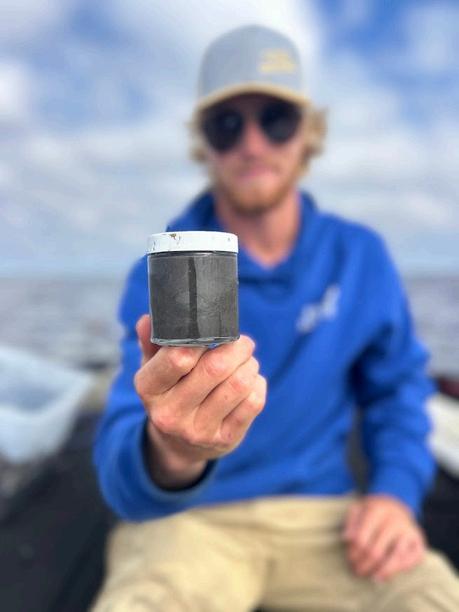
Sea & Shoreline is leading a new DEP-funded restoration project to improve water quality in Lake Okeechobee, Florida's largest freshwater lake. The science-backed initiative targets nutrient-laden muck, a soft organic layer that fuels harmful algal blooms as it decomposes.
Muck is removed from priority areas and diverted into constructed biofiltration ponds that replicate natural filtration systems, allowing nutrients to be absorbed before cleaner water is returned to the lake. Water quality is monitored continuously, and dehydrated sediment is reused in approved applications to ensure harmful nutrients do not reenter the lake.
The initial phase covers 300 acres across Palm Beach and Martin counties and is expected to take approximately 18 months.
Harbor, and areas near Fort Pierce Inlet Park. The ordinance is designed to reduce abandoned and derelict vessels, minimize fuel and oil pollution, and maintain safe, navigable waterways. Educational signage and QRcoded resources have been installed throughout local marinas to support compliance.
The County is also updating the 2026 Port of Fort Pierce Master Plan, building on its 2020 vision to strengthen the port as a working waterfront while preserving public access and environmental stewardship. The plan explores opportunities to expand maritime industries, support Derecktor Shipyards, and position the port to serve Florida's growing aerospace and marine sectors Public workshops invited community input while reinforcing the County's commitment to sustainable port development.
The project builds on Sea & Shoreline's track record of large-scale restoration, including the recovery of more than 100 acres at Kings Bay, where the team removed over 500 million pounds of muck. Cleaner water in Lake Okeechobee will support healthier fish and wildlife, improve overall water quality and create long-term economic and recreational benefits.
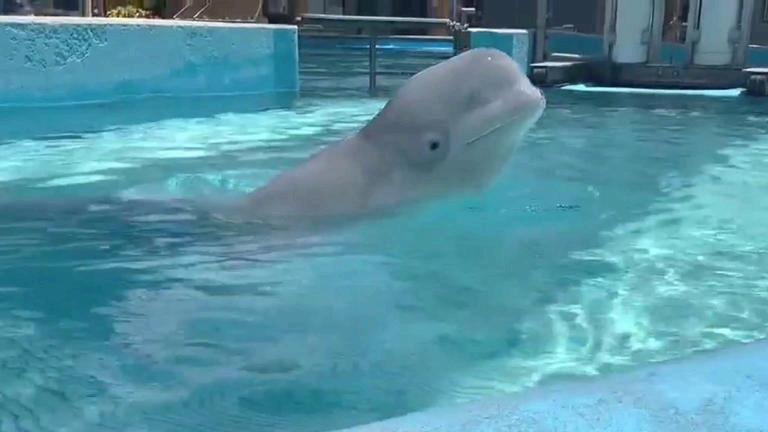
Two beluga whales settled into their new home in Texas following an international relocation mission from a shuttered Canadian theme park. The whales, named Bertie Bott and Frankie, traveled more than 1,500 miles from Niagara Falls, Ontario, to SeaWorld San Antonio. Ten caretakers joined the whales on the journey from Marineland that included rides on flat-bed trucks and a cargo plane.
"We're good at taking care of belugas, we love belugas, and so we're more than happy and honored to be able to help," said Katie McCullough, curator of Animal Husbandry at SeaWorld San Antonio.
The move was a culmination of nearly two years of international coordination, bringing six of an expected 28 whales to aquariums across the United States.
SeaWorld San Antonio is one of several aquariums who were invited to explore a rescue solution for the whales earlier this year. The aquariums were selected due to their knowledge of the species, expert animal care, and past rescue experience.
A new report by the Nature Conservancy shows how protecting, restoring, and enhancing nature supports thriving communities in Florida. The report highlights how natural infrastructure crucial to outdoor recreation boosts Florida’s economy by attracting tourists and supporting businesses. It also highlights how investments in nature protect Florida’s drinking water and create resilience to storm damage.
Some of the staggering numbers shared in the report include the outdoor recreation economy adds $57.8 billion to the economy and supports 469,357 jobs with $28.7 billion in wages. State and national parks in Florida attracted over 40 million visitors last year while creating thousands of jobs and over $4 billion in direct economic impact.
Learn more by reading the report here.
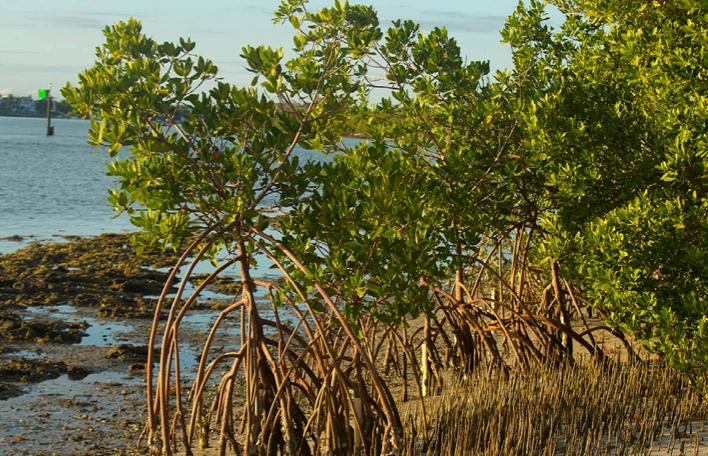
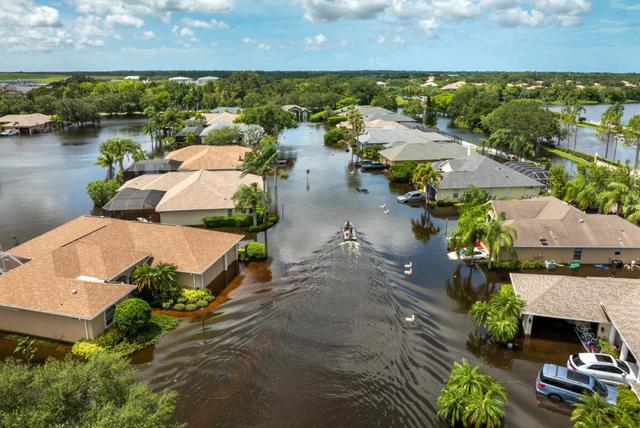
The Environmental Defense Fund (EDF) joins the many other business and environmental groups in supporting resilience-building solutions. This June, Governor Ron DeSantis signed Florida's new $117.6 billion state budget, officializing a $160 million allocation to the Resilient Florida program.
Since its launch in 2021, the program has invested more than $1.8 billion in resilience planning and infrastructure projects across the state. Research has shown that every $1 invested in resilience can save up to $13 in avoided disaster losses, recovery costs, and economic disruption.
EDF supports expanding nature-based solutions and public-private partnerships to strengthen resilient infrastructure, protect coastal communities, restore ecosystems, and prepare Florida for continued growth and climate challenges.
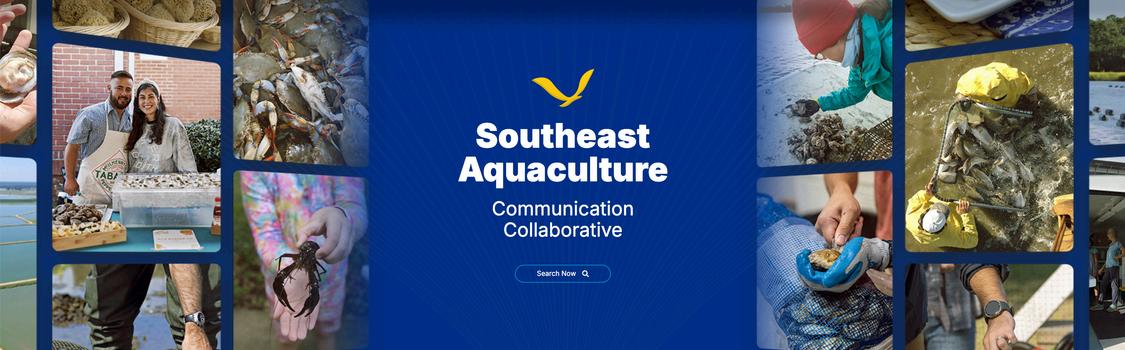
The Southeast Aquaculture Communication Collaborative (SACC) has launched a new online resource hub to improve public understanding of aquaculture and connect consumers, educators, and policymakers with reliable, science-based information.
Led by Florida Sea Grant and the National Sea Grant Law Center, the NOAA-funded initiative brings together partners from seven Southeastern states to increase seafood literacy and support informed consumer choices.
The website features more than 250 educational resources, including classroom lesson plans, videos, seafood safety information, career exploration tools, and materials covering aquaculture sustainability and production. It also connects users with local experts and encourages organizations to contribute additional science-based resources.
By centralizing trusted information and amplifying existing educational materials, the collaborative aims to reduce misconceptions surrounding farm-raised seafood, strengthen regional partnerships, and make high-quality aquaculture resources more accessible across the Southeast. Learn more and explore the resource library here.
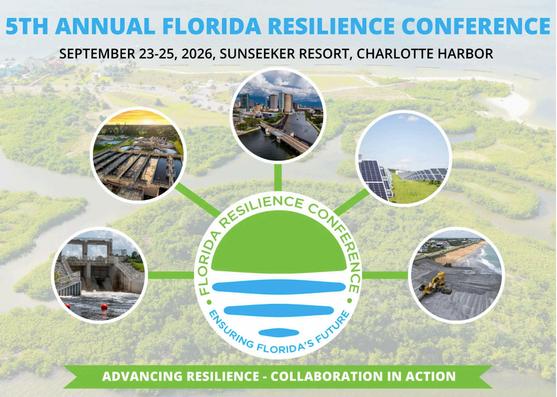
The Florida Shore & Beach Preservation Association (FSBPA) in partnership with Resiliency Florida invites you to the 5th Annual Florida Resilience Conference. This year's conference will convene leaders from government, academia, industry, and nonprofit organizations to explore collaborative solutions for advancing Florida's resilience.
The program will feature discussions on coastal resilience, resilient infrastructure, planning, energy, and beach preservation, including the 69th Annual FSBPA Meeting on Beach Preservation. Whether you're looking to discover innovative projects, exchange ideas with peers, or build new partnerships, the conference offers valuable opportunities to engage with professionals shaping Florida's resilient future. Registration, hotel reservations, and sponsorship and exhibitor opportunities are available at: www.floridaresilienceconference.org
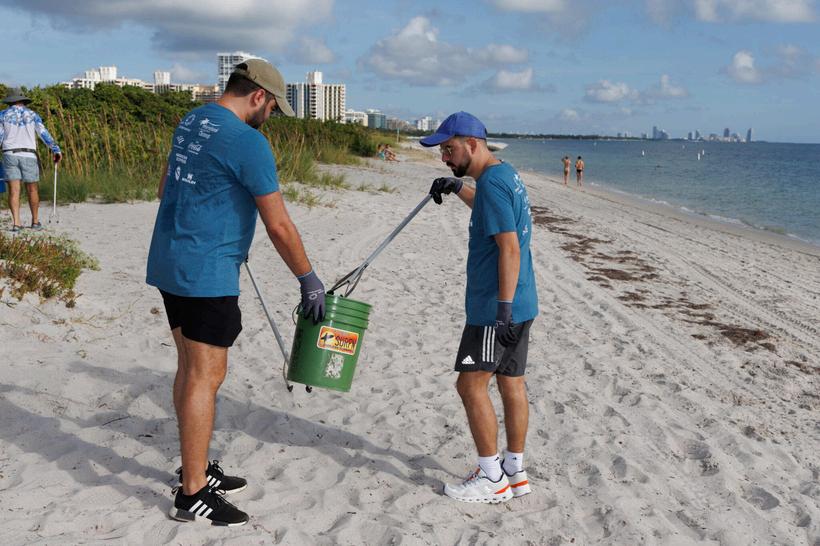
As soccer fans around the globe turned their attention to the opening matches of this summer’s FIFA international football tournament, Olympian and ocean conservation advocate Merle Liivand joined Ocean Conservancy for a coastal cleanup on June 17 at Historic Virginia Key Beach Park in Miami. Held in collaboration with GOAL and the FIFA World Cup 2026™ Miami Host Committee, the cleanup helped highlight the connection between a healthy ocean, thriving communities and the places where people live, play and compete.
The event was part of Ocean Conservancy’s Protect Where We Play initiative, which leverages the reach of athletes, artists and major events to mobilize millions of fans in support of ocean conservation.
In addition to removing debris before it reaches the ocean, volunteers collected data through Ocean Conservancy’s CleanSwell app, helping build the world’s largest marine debris database and advance solutions to the plastics crisis.
SEACURE Geocorail is expanding its international research efforts with a series of new projects designed to support the development of hybrid coastal protection systems that combine wave attenuation with oyster habitat restoration
In France, SEACURE is contributing to the REEFOREST research program, coordinated by Dr. Stéphane Pouvreau at the French Research Institute for Exploitation of the Sea (IFREMER). The project aims to identify the most suitable substrates for the settlement of European flat oyster larvae. From June 15 to July 15, Geocorail® samples were being evaluated alongside a range of alternative materials in a randomized experimental design. By comparing natural larval recruitment across different substrates, researchers will assess each material’s ability to promote oyster settlement under real environmental conditions.
This work is now being extended to the United States At the University of South Florida in St. Petersburg, comparative trials will begin in August using Geocorail® samples together with ceramic substrates. The objective is to evaluate the settlement and early development of native oysters from Tampa Bay and determine how Geocorail® performs under local conditions.
Further north, preparations are underway for the first Geocorail® mineralization trials in New Jersey.
Thank you for reading! Follow FOA on social media for more industry news and information.
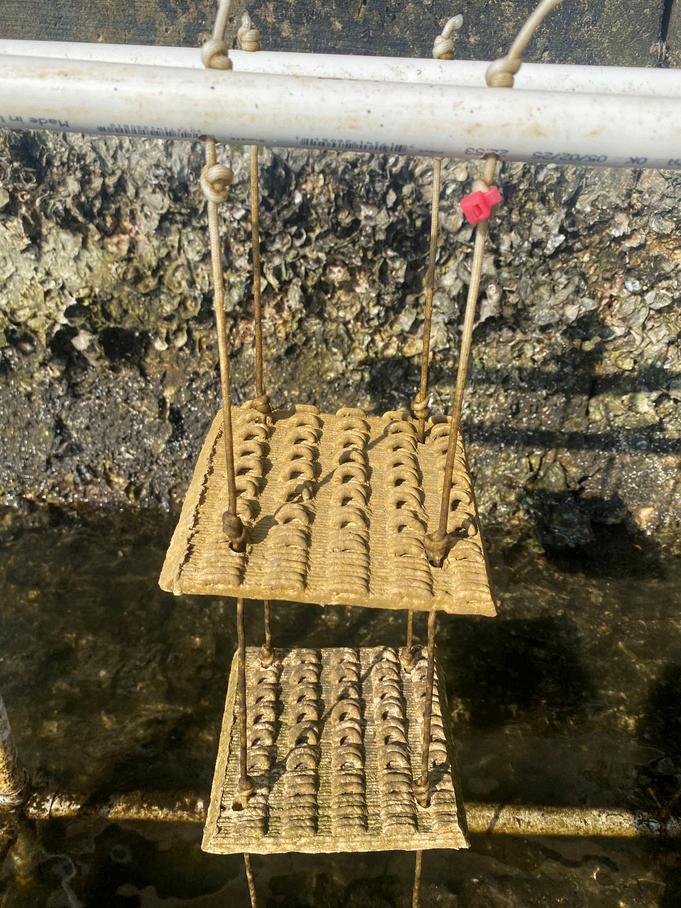
These tests will validate the formation of Geocorail® under the region’s environmental conditions and represent the first step toward a future hybrid demonstration project combining nature-based wave attenuation with oyster reef restoration.
Together, these initiatives strengthen the scientific foundation for innovative coastal resilience solutions By connecting research programs in Europe and the United States, SEACURE is helping develop practical technologies that not only protect shorelines but also restore marine biodiversity and create new opportunities for oyster habitat recovery.
Florida Ocean Alliance
401 E. Las Olas Blvd, Ste 130-224
Fort Lauderdale, FL 33301
Every $1 you give supports initiatives that help protect and conserve Florida’s ocean and coastal resources or support research, education and outreach.
Set up a recurring gift online to ensure we can keep the pressure on public policymakers, agencies and counties to bring ocean and coastal issues to the forefront.
Receive exclusive invitations, access to leading experts, policymakers, and agency staff, and shape strategies that protect Florida’s coastal resources while advancing a resilient ocean economy.