GCU FGCU FGCU FGCU FGCU F FGCU FGCU FGCU FGCU FGCU GCU FGCU FGCU FGCU FGCU F FGCU FGCU FGCU FGCU FGCU GCU FGCU FGCU FGCU FGCU F FGCU FGCU FGCU FGCU FGCU GCU FGCU FGCU FGCU FGCU F FGCU FGCU FGCU FGCU FGCU GCU FGCU FGCU FGCU FGCU F FGCU FGCU FGCU FGCU FGCU GCU FGCU FGCU FGCU FGCU F FGCU FGCU FGCU FGCU FGCU GCU FGCU FGCU FGCU FGCU F FGCU FGCU FGCU
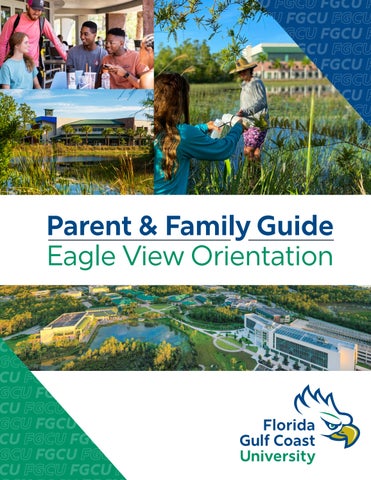
Parent & Family Guide Eagle View Orientation
CU FGCU FGCU FGCU FGCU FGCU GCU FGCU FGCU FGCU FGCU CU FGCU FGCU FGCU FGCU FGCU GCU FGCU FGCU FGCU FGCU CU FGCU FGCU FGCU FGCU FGCU GCU FGCU FGCU FGCU FGCU CU FGCU FGCU FGCU FGCU FGCU GCU FGCU FGCU FGCU FGCU CU FGCU FGCU FGCU FGCU FGCU GCU FGCU FGCU FGCU FGCU CU FGCU FGCU FGCU FGCU FGCU GCU FGCU FGCU FGCU FGCU CU FGCU FGCU FGCU FGCU FGCU
As FGCU welcomes your student, we extend that same warm welcome to you as their family.
Contents Welcome to FGCU. We are thrilled to have you and your student as part of the Eagle Family. 06
Rules to Fly By & Mandatory Student Training
08
Family Member Checklist After Orientation & During Their First Year
09
FGCU Lingo
11
FERPA
12
Month by Month Calendar
14
Academic Adjustment from High School
16
Move-in Day
18
Staying Safe on Campus Emergency Communication
20
Staying Healthy & Well in College
22
University Recreation & Wellness
23
Get Involved
24
Balancing Working While in College
25
Local Services & Resources
26
Helpful Resources
27
Conversation Starters
28
FAQs
30
Helping Make Healthy Decisions
32
Campus Map
4
F G C U I PA R E N T & FA M I LY G U I D E
North Lake Village
Retention & Graduation Services is an office dedicated to providing you with programming and information to better assist your students in their college years. This handbook is designed to give you a glimpse into life here at FGCU.
F G C U | PA R E N T & FA M I LY G U I D E
5
Rules to Fly By Academic Policies Withdrawal Limit Rule: In order to encourage successful completion of coursework and a student’s ability to stay on track for timely graduation, FGCU has instituted a Withdrawal Limit Rule. This Rule limits the number of courses in which ha student may earn a grade of W (withdrawal without academic penalty), when withdrawing within the dates specified in the academic calendar. Throughout a student’s undergraduate experience at FGCU, a student may withdraw without academic penalty from as many as five undergraduate courses (numbered 10004999). Students should consult with their course instructors and academic advisor before making the decision to withdraw from a course. Students receiving financial aid are strongly encouraged to discuss all potential course or term withdrawals with Financial Aid & Scholarships in order to understand more clearly the financial implications of these actions. Summer Hour Requirement: The Florida Board of Governors requires all students who enter a Florida public university with fewer than 60 credit hours to complete at least nine credit hours prior to graduation by completing courses in one or more summer sessions. Grade Forgiveness: Students may repeat a course and exclude a previous course grade from their FGCU grade point average calculations. Throughout a student’s undergraduate experience at FGCU, a grand total of three course grades may be forgiven for courses that are repeated. The same course grade may not be forgiven twice. Conditions: The original grade of C- or lower has been recorded on the academic record. The repeat grade
must be higher than the original grade. Only the repeated course grade will be used in the computation of the institutional GPA. The original and repeat course were taken at FGCU. The repeat course was taken under the same grading system (A-F or S/U) as the original. Grade forgiveness will be processed automatically by Records & Registration each semester. Students should discuss their eligibility for grade forgiveness with an academic advisor.
Conduct Polices Statement of Free Expression: Florida Gulf Coast University vigorously protects freedom of inquiry and expression and categorically expects civility and mutual respect to be practiced by faculty, students and staff in all deliberations on its campus. As such, the FGCU Community as well as the Florida Gulf Coast University Board of Trustees shares the commitment of the State University System of Florida and the Florida Board of Governors to civil discourse and endorses their commitment with this Statement of Free Expression. Student Code of Conduct: The student code of conduct allows FGCU to be a community where safety, civility, fairness, integrity, dignity, and respect are foundational. Please consider reviewing the Student Code of Conduct with your student to help them better understand the rules for individual conduct on campus and potential sanctioning should the code be violated.
Mandatory Student Training Students are required to complete and pass the Mandatory Student Training modules prior to registering for the next semester of classes. We strongly recommend students complete this task in a timely manner in order to avoid delays in registration. The Mandatory Student Training will consist of five modules: :
} Active Assailant } Career Readiness
} Get Secure } Hazing Prevention
} Wellness & Safety
We suggest setting aside about 2 hours to complete the required modules. Progress is saved during the module so it can be completed in multiple sittings. Log in to Canvas at fgcu.edu/canvas or through the mobile app to access the “Mandatory Student Training” Course and complete. 6
F G C U I PA R E N T & FA M I LY G U I D E
F G C U I PA R E N T & FA M I LY G U I D E
7
DURING THEIR FIRST YEAR: } Send text messages, emails, and mail with words of encouragement. } Make plans to join us for Eagle Family Weekend. It’s a great time to visit your student – now on their turf. } Make note of key events and deadlines, but allow your student to take responsibility for these. } Encourage your student to stay on campus to create a sense of belonging. Plan a time to visit campus to experience your student’s life as an Eagle. } Give yourself permission to grieve, celebrate, or both (sometimes, at the same time). This is a transition for you, too. } Identify the support network you’ll have as you adjust to your new role in your student’s life.
Family Member Checklist AFTER ORIENTATION: Make plans for the transition, such as planning a sibling night for your student, a family dinner, and your departure from campus on move-in day. Support your student by identifying healthy snacks and a wellness routine. Talk to your student about your expectations, including what and how often you expect them to share important information (grades, account holds, bill information, etc.). If you determine that the thirdparty waiver needs to be signed, instruct your student to visit the Office of Records and Registration. If you would like access to your student’s Bill & Payment Center, you must become an authorized user. Your student can grant you this access through their Gulfline portal under the Bill and Payment Center. Ensure that your student has downloaded the Rave Guardian app. They can add you as a guardian and set you up to receive emergency alerts from the university. Create a monthly budget with your student and locate banking options. Review tuition and fees. Make note of payment and disbursement dates (check your parent calendar). Review with your student their class schedule. If they have any questions or need to make adjustments, they should reach out to their academic advisor. Is your student living on campus? Review the Eagle Move-In Guide and Azul’s Rules from Housing & Residence Life to be fully prepared. Set your student up for success to manage their new living environment, by reviewing such things as how to do laundry, ways to clean, etc.
8
F G C U I PA R E N T & FA M I LY G U I D E
Identify plans for school breaks, family vacations, and your student’s desired travel plans.
FGCU LINGO Coming to a college campus, there can be a lot of what we like to call “alphabet soup” that’s casually thrown around in everyday conversation. We want to take some time to provide you with some of the more common abbreviations you and your student may see or hear around campus.
Academic Colleges & Schools: } CAS College of Arts & Sciences } COE College of Education } DKSOE Daveler & Kauanui School of Entrepreneurship } LCOB Lutgert College of Business } MCHHS Marieb College of Health
& Human Services
} TWS The Water School } WCE U.A. Whitaker College of Engineering
Academics: } CRN Course Reference Number } GPA Grade Point Average } M, T, W, R, F Days of the week classes are offered } UIN University ID Number
Offices/Departments: } URecWell
University Recreation & Wellness
} TLE
The Leadership Experience
} OSI
Organizations & Student Involvement
} OIEC
Office of Institutional Equity & Compliance
} UPD
University Police Department
} CAPS
Counseling & Psychological Services
} ESC
Enrollment Services Center
} RGS
Retention & Graduation Services
} UAS
University Advising Services
} CAA
Center for Academic Achievement
} LIB
Library
Buildings/Areas on Campus: } AA } AB9 } AC } ACC } BHG } COHEN } EH } HH } HOLMES } LH } LUCAS } MARIEB } MCT } MERWIN } MUSIC } NLV } REED } SCCC
Alico Arena Margaret Antonier Hall Arts Complex Ackert Community Center Ben Hill Griffin III Hall Cohen Student Union Edwards Hall Howard Hall Holmes Hall Lutgert Hall Lucas Hall Marieb Hall McTarnaghan Hall Merwin Hall Music Building North Lake Village Reed Hall Student & Community Counseling Center } SH Seidler Hall } SOVI South Village } SRHM Sugden Resort & Hospitality Management } SVBIS Biscayne Hall } SVEAG Eagle Hall } SVEVE Everglades Hall } SVOSP Osprey Hall } SVPAL Palmetto Hall } SWC Sugden Welcome Center } URWC University Recreation & Wellness Center } WH Whitaker Hall } WLV West Lake Village
Student Life: } FSL } PB } RA } RSO } SG
Fraternity & Sorority Life Programming Board Resident Assistant Registered Student Organization Student Government
Visit fgcu.edu/campusreservations/facilities/ buildingabbreviations for an updated listing. F G C U I PA R E N T & FA M I LY G U I D E
9
10
F G C U I PA R E N T & FA M I LY G U I D E
FERPA FGCU is concerned about the privacy of your student’s records. When your student was in elementary school and high school, FERPA gave parents and students the right to access their educational records. That same law now transfers ownership of their records solely to the student. FERPA, the Family Educational Rights and Privacy Act of 1974, considers college students, regardless of their age, responsible adults who now have the right to determine who can access their educational records. While parents and family members understandably have an interest in their students’ education, a student must now grant you access to their official records.
How can I gain access to my student’s information? The quickest, easiest way to get information about your student’s grades, university bill, or other information is from your student. Most of this information is available to them through their Gulfline account.
What is covered by FERPA? An “educational record” includes information such as your student’s grades, discipline record, and financial statements.
What is a waiver form? Your student can sign a Third Party Release form and submit it in-person or online to the Office of Records and Registration, with a photo ID, granting you or others official consent to their educational records. FERPA Form: fgcu.formstack.com/forms/authorization_to_release_education_ records_to_a_third_party
If I don’t have access to my student’s records, how can I pay the bill? Your student can grant you an Authorized User Account. Authorized Users have the ability to log in directly to the Bill and Payment Center to view the student account, make payments, and receive statement notifications. Please note this access is only for the Bill and Payment Center, not the entirety of Gulfline. The student can assign Authorized Users by following the steps below: 1. Log into Gulfline 2. Click on Bill & Payment Center 3. On the far right-hand side of the screen under My Profile Setup click on Authorized Users 4. Click on Add Authorized User and follow the steps
What’s the bottom line? Students have a right to privacy when it comes to their educational records. If you would like to know about their grades, bill, or other information, the best thing to do is keep open lines of communication and share your expectations about what information you need your student to share and when they should share that information. If you both agree that it makes the most sense to grant you access, your student can submit a Third Party Release form through the Office of Records and Registration.
More information about FERPA can be obtained from the Office of Records and Registration at orr@fgcu.edu or 239-590-7980. You can visit their website at fgcu.edu/recordsandregistration/ services/ferpa
What is FERPA? The Family Educational Rights and Privacy Act of 1974 is a United States federal law that governs the access to educational information and records by public entities such as potential employers, publicly funded educational institutions, and foreign governments.
ACADEMIC YEAR AT A GLANCE This year is going to be full of excitement and change for your family. It is important to stay up-to-date on all that is going on at FGCU as well as some changes that your student may be facing.
AUGUST
OCTOBER 10/23 Last Day to Withdraw without Academic Penalty 10/23-10/25 Eagle Family Weekend 10/27 Study Day (No Classes) Homesickness & first midterms
8/16 8/17 8/21
Welcome to the Nest Event Classes Begin Payment /Deadline and Last Day to Add/Drop Classes; Ends @ 5pm
Excitement around newfound freedom and surroundings
Students are learning to make choices, and figuring out how to make healthy choices can be a challenge. For many students, this is the first time they are solely in charge of choosing what they eat for every meal. Will it be a balanced meal or ramen noodles and ice cream again? Many students also struggle with creating a regular sleep schedule (that doesn’t include multiple naps each day) and there might be situations where your student finds themselves making decisions they wouldn’t normally make, or feeling pressured to do so to “fit in.” This can lead to negative consequences that impact your student and others in the Eagle community. The first six weeks are critical for forming healthy habits. Parents can use this time to talk with their students about healthy decision making.
SEPTEMBER 9/7 9/11
Labor Day Observed (No Classes) Last Day to Receive a 25% Tuition Refund (Must Withdraw from All Classes)
Roommate Challenges
This is about the time where the fun, new roommate magic wears off and your student might have some disagreements with their new living mate. If challenges arise, encourage your student to chat with their Resident Assistant (RA). These are students who are trained in conflict management, communication skills, and more. Conflict is expected, and it’s important for your student to work through it in a productive, healthy way. Encourage your student to take the required roommate agreement seriously and for them not to be afraid to communicate what they need.
For a full list of important dates, refer to the FGCU Academic Calendar. fgcu.edu/academiccalendar
12
F G C U I PA R E N T & FA M I LY G U I D E
Your student might feel overwhelmed balancing all of their responsibilities with homesickness also seeping in. Encourage them to find ways to engage and connect with family back home, whether that’s a set FaceTime date or a weekly text to check-in. Your student’s first grades may not come back as high as they would have expected and that’s not unusual when transitioning from high school to college. It’s good to remind your student that there’s plenty of time in the semester for them to improve their grades and to reach out to their professors and go to the Center for Academic Achievement (CAA) for support.
NOVEMBER 11/11 Veteran’s Day Observed (No Classes) 11/24 Last Day of Classes 11/25-11/27 Thanksgiving Observed (No Classes) 11/30 Finals Begin Cold and flu season
Winter months can bring cold and flu season, especially if your student is living in the residence halls on campus. This, along with the stress of the end of the semester, can quickly lead to your student getting sick. This might be a good time to chat with your student about making sure they are sleeping enough, eating healthy foods, and doing something physical each day. If they do end up not feeling well, they are always able to book an appointment online on their Health Portal to see Student Health Services right on campus.
DECEMBER 12/4
Finals End/Last Day of the Semester
Anxiety over finals & first semester grades
Students’ anxiety is typically heightened when they return from Thanksgiving break to start studying for their finals. It’s imperative that your student continue with healthy decision making to ensure they do not burn out. A helpful resource if your student is feeling overwhelmed is to schedule an appointment with Counseling & Psychological Services (CAPS). When students receive their first semester grades, this might be a sign of success or this can be frustrating for them. Remind your student that this first semester is a time of growth and learning and for them to set an action plan for their next semester.
JANUARY 1/11 1/15 1/18 1/19
Classes Begin Last Day to Add/Drop Classes/Payment Deadline by 5pm Martin Luther King Holiday Observed (No Classes) Cancellation for non-payment
Back to school relief & housing for next year
Try not to be offended when your student is excited to leave home and return to their new friends at FGCU. Your student still loves you, but appreciates the opportunity to practice being an adult. Students will receive an email this month letting them know to apply for on-campus housing for the next academic year. This is also the time that students who are moving off-campus should solidify their moving plans.
FEBRUARY 2/5
Last Day to Receive a 25% Tuition Refund (Must Withdraw from All Classes)
SUMMER A/B/C MAY 5/10 Classes Begin Summer A/C 5/12 Last Day to Add/Drop for Summer A by 5pm 5/14 Last Day to Add/Drop for Summer C by 5pm Payment Deadline at 5pm for Summer A/C 5/31 Memorial Day Observed (No Classes)
Considering a change of major
FGCU believes that the general education requirements expose our students to many academic areas. For some students, this may result in a change of major. It’s very normal that students change their major (even multiple times) during their academic career. Encourage them to meet with their academic advisor and Career Services to ensure they are on the right track.
JUNE
3/1-3/5 Spring Break (No Classes) 3/19 Last Day to Withdraw without Academic Penalty
Last Day to Withdraw w/out Penalty by 5pm for Summer A 6/19 Last Day of Classes for Summer A 6/21 Classes Begin for Summer B / Last Day to Withdraw w/out Penalty by 5pm for Summer C 6/23 Last Day to Add/Drop for Summer B by 5pm 6/25 Payment Deadline at 5pm for Summer B
Spring fever
JULY
MARCH
The media can send students messages of wild spring breaks in exotic destinations. Some students might see this as their perfect vacation, while others may be interested in going home and spending time with family or even completing an extended service opportunity. Regardless of what your student decides to do, encourage them to make smart and safe decisions. Spring break is also a great time to catch up or get ahead for classes.
6/4
7/5 7/16 7/17 7/31
Independence Day Observed (No Classes) Last Day to Withdraw without Academic Penalty by 5pm for Summer B Last Day of Classes for Summer C Last Day of Classes for Summer B
APRIL 4/24 Last Day of Classes 4/26 Finals Begin 4/30 Finals End Anxiety over finals and second semester grades
Just like the final month of their first semester, it is vital to encourage healthy decision making during a time of high stress and anxiety. Remind your student that their first year is a time of learning and growth and make sure that they have a plan in place to be successful in their second year. This is also a time to solidify summer plans with your student. Will they take classes? Should they be looking for a summer job or opportunity? Remember, don’t be shy about sharing your expectations if this is the first time your student has lived with you in several months.
Sadness leaving friends for summer
Students are often sad to leave the new friends they made, even if it’s only for a few months. These emotions are completely normal – it’s imperative that you encourage them to stay connected to their peers virtually over the summer. Consider even inviting some of their friends to stay with you and your family (then, you get to meet them).
F G C U I PA R E N T & FA M I LY G U I D E
13
Academic Adjustment from High School to College A student’s transition from high school to college is a major milestone for both you and your student. While first-year students will share many experiences and challenges in their first year of college, it is important to remember that each student’s transition is unique. One of the most significant adjustments in a student’s first year is the academic transition from high school to college-level courses. Students may feel new pressure to perform academically or realize there are differences in the assignments, instruction, and rigor of the course. Often a student receives a poor grade on an assignment or test and immediately begins to question if they are cut out for the course, the major, or even college. This is a great time to offer your support and remind them they have already proven they are smart enough to be in college by being admitted and that they are not in this alone. The academic transition takes time to adjust to new expectations and learn effective methods of studying and managing time. It is also important that they take advantage of the many academic support resources offered at FGCU.
CENTER FOR ACADEMIC ACHIEVEMENT The Center for Academic Achievement (CAA) is FGCU’s oncampus learning center dedicated to your student’s academic success. The CAA provides free academic and instructional support resources to students ranging from writing support to peer coaching and tutoring for subject-specific course support. We can accommodate students’ busy schedules with both in-person and virtual appointment options in addition to drop-in services.
Academic Coaching
Free, personalized consultation with one of our Peer Academic Coaches designed to help students learn about and implement the transferable skills they need to be successful in college. Together, with a Peer Academic Coach, students learn and develop time management techniques, effective study strategies, note-taking tips/advice, goal-setting practices, and much more! Our academic coaches are available to meet with students throughout their academic career and to help students create positive, effective habits.
Tutoring at FGCU
The CAA offers free, drop-in peer tutoring services in the 2nd Floor Library Commons area. We recommend that students seek tutoring support early in the semester to empower students in learning to be proactive in their academic journey. Our peer tutors are students who have taken the classes for which they tutor here at FGCU. Students are often more open to learning to ask for help from a peer, and they can also enhance their study environment by doing homework in the tutoring space where the tutors are present and available to offer support and assist with example problems/ scenarios!
Supplemental Instruction (SI)
Supplemental Instruction is an academic support service offered through the CAA and serves as an opportunity for students to enhance their learning in specific courses. Each SI leader attends one professor’s course and conducts weekly SI sessions where students participate in an active learning environment by engaging in peer-based, collaborative group discussions where they brainstorm and solve problems to increase understanding of course material beyond the classroom!
Library Study Area
Writing Lab
Students can visit the CAA’s Writing Lab for one-on-one writing consultations with our trained writing consultants. Students can use this resource for any course with any writing-based assignment attached to it throughout their time at FGCU! Come into the Writing Lab to meet with a peer consultant in-person, schedule a virtual session, or use our online submission tool on our website to submit your paper for written feedback. Students who are working on group writing projects can also utilize the Writing Lab.
UNIVERSITY ADVISING SERVICES Academic Advising at FGCU begins prior to Eagle View Orientation for new incoming students. As students progress in their academic journeys, professional advisors match individual needs with available resources in the field of study with the goal of keeping students on track to graduate. Academic advisors partner with students for:
} Major choice and selection } Course planning and developing plans to graduation
} Understanding university resources and tools that support academic success
} Monitoring progress toward graduation } Interpreting rules, policies and regulations that impact student success
ADVISING OFFICES Center for Career & Exploratory Advising
fgcu.edu/academics/advising/explore 239-745-4422 explore@fgcu.edu Most first-year students are advised by Exploratory Advising. In a student’s first year, they are required to meet with their academic advisor each semester to discuss course recommendations for their selected major, learn how to navigate academic advising tools and understand campus resources, policies and procedures available to support student success! It is recommended that students seek advising early in the semester during September (Fall) and February (Spring). At the end of the first year, students must meet established criteria for their intended major to connect to advising in the college/school.
Lutgert College of Business and School of Entrepreneurship Advising fgcu.edu/cob/advising/undergraduate 239-590-7302 lcobadv@fgcu.edu Lutgert Hall, Suite 1300
Marieb College of Health & Human Services Advising fgcu.edu/mariebcollege/advising 239-590-7391 mchhsadvising@fgcu.edu Marieb Hall 213
U.A. Whitaker College of Engineering Advising fgcu.edu/eng/advising 239-590-1704 wceadvising@fgcu.edu Holmes Hall 207
College of Arts & Sciences and The Water School Advising fgcu.edu/cas/advising 239-590-7196 casadv@fgcu.edu Seidler Hall 109
College of Education Advising fgcu.edu/coe/admissionsandadvising 239-590-7778 coeadvising@fgcu.edu Merwin Hall, 2nd Floor
F G C U I PA R E N T & FA M I LY G U I D E
15
Move-In Day If your student will be living on-campus, move-in day is just around the corner. We understand that this day comes with a great deal of anticipation and maybe even some anxiety. Below are some recommendations that will assist you and your student in a seamless and successful move-in experience.
LOTS OF WATER This may be a long day, depending on how much stuff your student has to move, and the Florida weather can be very warm. Make sure you are hydrating throughout the move-in process.
AN UMBRELLA OR RAIN JACKET There are two things you can almost guarantee when it comes to Florida weather: 1. It is going to be hot, and 2. There may be some rain in the afternoons.
A HAND TRUCK OR A DOLLY During move-in day, our volunteers have limited hand trucks and we encourage families to bring their own.
FUN AND POSITIVE ATTITUDE Move-in day means something different for everyone! Whether you are dropping off your first child or your last child at college, it can be an emotional day. Please pack your patience and positivity while packing everything else for the day.
Did you check your Eagle Email today? Encourage your student to check their student Eagle Email account daily. This is where they will receive details regarding roommate selection, move-in dates and times, and further details from the Office of Housing & Residence Life. We also highly recommend consulting Housing & Residence Life’s Move-In Guide to help you plan.
66
UNDERGRADUATE MAJORS
IT’S TIME TO LIVE THE FGCU LIFE
CAMPUS SIZE
800 ACRES
15
ATHLETIC TEAMS (NCAA DIVISION I)
MORE THAN
200
CLUBS & ORGANIZATIONS
26
FRATERNITIES & SORORITIES
One-third of FGCU students live on campus, including about 75% of first-year students. Whether it’s the convenience of living where you learn, the opportunity to live with friends, or easy access to resources, opportunities, and fun, many students find that living on campus aids in their transition to college.
F G C U I PA R E N T & FA M I LY G U I D E
17
Staying Safe on Campus ANNUAL SECURITY REPORT & FIRE SAFETY REPORT
The purpose of the Campus Security and Fire Safety Report is to provide information to the entire campus community concerning crime statistics, prevention programs, and various policies. These reports include several required topics such as Campus Residence Fire Safety, Emergency Notifications and Evacuations, and Notification of Missing Resident Student. The goal of the report is to have an informed and safe community. Visit fgcu.edu/upd/securityandfiresafetyreports to access the report.
UNIVERSITY POLICE DEPARTMENT (UPD)
The University Police Department (UPD) is responsible for law enforcement, security, disaster planning and emergency response at FGCU. UPD works with the entire university community to provide a safe and secure environment that enables everyone to achieve their academic goals and enjoy the FGCU experience. In addition to promoting crime prevention, UPD ensures safety for both vehicle and pedestrian traffic and assists in coordinating special events.
CODE BLUE POLES
These emergency telephones are mounted on blue towers and call boxes. They are wheelchair accessible, include instructions in Braille and have a highly visible push button on an illuminated faceplate. A single touch of the push button pinpoints your location, activates the camera, immediately connects you with a UPD dispatcher, summons campus police officers, and triggers the blue strobe light. Code Blue Poles are located throughout the University, including parking lots, student housing and in the academic core areas. If you experience an emergency, this is one way to call for immediate assistance.
SIRENS
As part of the FGCU Eagle Alert System, the university has an outdoor warning siren for the main academic core of campus. The siren is designed to be heard outdoors only. It is not intended to be heard within buildings. Although the primary alarm area is the academic core, it is possible the siren will be heard in North Lake Village and South Village. In the event of an emergency that threatens the safety of those outdoors, the university may sound the siren. The alert tones are very loud and distinct and should be easily heard by anyone who is outdoors within the academic core. The siren will be activated when the best course of action is for community members to seek shelter.
West Lake Village 18
F G C U I PA R E N T & FA M I LY G U I D E
Emergency Communication
FGCU Emergency Management
To see the latest emergency alert, current operation status of the university, and weather alerts, we suggest bookmarking the Emergency Management page.
fgcu.edu/emergencymanagement
Eagle Alert components include text messaging, e- mails, Axis TV, the FGCU.EDU homepage, and the RAVE Guardian Eagle App. Eagle Alerts are primarily communicated to the campus community through text and email notification. One of the most proactive things you can do to encourage your student’s safety is to ensure they download the RAVE Guardian Eagle app to which parents can be added as emergency contacts and receive emergency alerts from the university. All major campus alerts are also made public on the homepage of the FGCU website.
HOTLINES & HELPFUL RESOURCES UNIVERSITY POLICE DEPARTMENT In case of emergency always call 911. Non-Emergency line (239) 590-1900 Student Care Services
Parents and family members are often the first people a student calls when they are having difficulties in college. There are situations that arise throughout the academic year when parents or families need to get involved or seek help for their student. Student Care Services may work closely with parents and families to determine how best to support students and discuss available campus and community resources. Email care@fgcu.edu or call (239) 590-7900 Submit a Student of Concern report.
Food Insecurity
FGCU students experiencing food insecurity are eligible for food assistance once per week. Parents and family members can also support the food pantry and FGCU students in need by donating non-perishable food items. FGCU Food Pantry Location: Modular 4, Parking Lot 7, Room 32 Email slloyd@fgcu.edu or call 239-745-FOOD (3663)
QUICK CONTACT } Campus Support Complex (North Side) 10501 FGCU Blvd. S. Fort Myers, FL 33965 } Police Emergency: (239) 590-1900 } Fire/Medical Emergency: 911 } Non-Emergency: (239) 590-1900 } Fax: (239) 590-1910
HURRICANES
Hurricanes are common in Florida, especially in the peak season from August to October. It is important to be prepared and talk with your student about an evacuation plan before a storm comes. Before the semester starts: Decide on hurricane communication and evacuation options with your family. Remember that evacuating to inland areas that are closer to campus will be less costly and allow a faster return to campus. Have a financial plan in place for your evacuation option. Flights, gas, food, and hotels can be costly. Look over each course syllabus for emergency instructions. Unless stated otherwise by your professor, you may be responsible for turning in coursework outlined in your syllabus on time, even if the campus is closed. First week of the semester: Review the FGCU Emergency Management’s Emergency Response Guide and Severe Weather Information to help prepare you for a storm. Have a to-go bag ready in case you need to evacuate quickly. Make sure to include personal items and important documents. Contact Emergency Management at emergencymanagement@fgcu.edu with any questions. F G C U I PA R E N T & FA M I LY G U I D E
19
Staying Healthy & Well in College STUDENT HEALTH SERVICES Student Health Services strives to help students when they are sick, educate them on healthy lifestyle choices, and protect them through vaccination, education, and accessibility.
ROUTINE CARE
Free of charge: } Routine medical care and preventive medicine } Women’s healthcare } Health screenings } Contraceptive counseling } Referrals for specialist care } Uncomplicated wound care } Health education Available for nominal fee: } Laboratory testing through Quest Lab } Rapid lab tests done in-house for strep, mono and flu and rapid COVID-19 testing
Students can use their Student Health Portal to schedule appointments, review and update medical information, and submit immunization records.
fgcu.studenthealthportal.com
20
F G C U I PA R E N T & FA M I LY G U I D E
} Pregnancy testing } Emergency contraceptive } Minor surgical procedures (i.e. laceration repair and cryotherapy) } EKGs } Immunizations: Measles, mumps, rubella, hepatitis A&B, and tetanus } TB screening } Pap smears } Confidential HIV testing } STI testing and treatment } Dispensing of commonly prescribed medications } Physcial exams (athletics, employment, work, school, and campus) } IV fluids for illness } Wart care/treatment } Nebulizer treatments for asthma Not provided: } X-Rays and other diagnostic testing } Specialty physicians care (i.e. obstetrics, orthopedics, etc.) } Overnight infirmary services } Allergy injections } Chronic disease management } Drug testing } Storage of prescription medications } Physical therapy } Mental health care (prescribing of ADD/ADHD medications) } Travel clinic for overseas immunization requirements
COUNSELING & PSYCHOLOGICAL SERVICES (CAPS)
South Village
CAPS, as it is known at FGCU, is a fully accredited counseling center on campus and most of their services are covered for students who are enrolled in the current semester and/or who have already paid health fees for the current academic term. College life is exciting, full of opportunities and challenges that lead to success. It is also a time that students might experience stressful events and situations along with possible emotional and behavioral health struggles. Most students can work through those challenges with the support of family, friends, and mentors. However, there are times when speaking with a professional is necessary and helpful. CAPS is here to help you through some of the challenges and stresses of college life.
Students can schedule an appointment by stopping by or calling (239) 590-7950.
A 24/7 helpline is also available at (239) 745-EARS (3277). Keep an eye out on campus for Luna & Dasher, CAPS Therapy Dogs!
ADAPTIVE SERVICES Adaptive Services supports FGCU students by coordinating accommodations for students in order to provide equal access and opportunity for an education at FGCU. The most common accommodations, though not an exhaustive list, include:
} Note-takers } Tutoring } Extended time on tests } Minimal distraction testing environment } Readers/scribes for tests } Books in alternate format } Adaptive technologies } Sign language interpreters Students in need of an accommodation(s) should reach out to Adaptive Services at 239-590-7956 or adaptive@fgcu.edu.
VICTIM ADVOCACY The confidential Victim Advocate provides free and confidential support to any student who has been victimized. Our Advocate offers emotional support, victims’ rights information, help in finding needed resources, and assistance in navigating and completing any processes related to the incident. Visit fgcu.edu/upd/crimeprevention to schedule a meeting with FGCU’s confidential Victim Advocate.
F G C U I PA R E N T & FA M I LY G U I D E
21
University Recreation & Wellness is a great cross-section of involvement and wellness on FGCU’s campus. There are many facilities, events, and organizations through which students can stay active, meet people, and have fun. AQUATICS University Recreation & Wellness offers aquatic programming at three facilities:
}
Aquatics Center - With more than 1 million gallons of water, this facility is meant for lap swimming, diving, and competition.
}
SoVi Pool - This resort style swimming pool is right in South Village residents’ backyard.
}
The Waterfront - Paddleboards, canoes, kayaks, and sailboats are available for free checkout with a student’s Eagle ID card. Students can even go out on the Heyday wake boat for tubing, wakeboarding, and water skiing.
FITNESS
}
FGCU’s fitness area offers programs and services to benefit students’ health, fitness, and wellbeing. With a state-ofthe-art fitness center in South Village, students have an opportunity to participate in group fitness classes and use the facility at no additional cost. Personal trainers are also available for a nominal fee. Check out the Rec Deck for even more exercise opportunities.
PREVENTION & WELLNESS
}
Prevention & Wellness is the go-to-resource on campus for wellness programming based on the 8 dimensions of wellness. We provide preventative health education and tools, enabling students to proactively support their holistic wellness. Our motto is “Educate. Engage. Empower.”
}
Peer Health Education is at the heart of our interactive tables and programs. Our trained undergraduate students provide information related to alcohol, drugs, stress, and nutrition. Oneon-one Wellness Coaching is also available free to students!
SPORT PROGRAMS
}
Intramural sports provide an opportunity for students, regardless of athletic ability, to participate in organized, competitive recreational sports. Leagues and tournaments are available each semester.
}
Sport clubs can be highly competitive while others are more instructional. With 30+ clubs and 900+ athletes, many students find sports clubs to be a great way to participate in a sport without playing at a varsity level.
RECVENTURES
22
F G C U I PA R E N T & FA M I LY G U I D E
}
Trips and Clinics - Students can learn how to paddleboard, kayak, camp, ski, snowboard and snorkel while exploring unique outdoor settings with a variety of trips and clinics offered each semester.
}
Camping equipment, such as tents, backpacks, sleeping bags, canoes, and more, can be rented on a daily, weekend, or weekly basis.
}
Pedal Power offers students an opportunity to rent bikes right from the Waterfront.
Get Involved! Timely Graduation Can Pay Off HELP YOUR STUDENT GRADUATE IN FOUR YEARS As a parent or family member, one of the goals for your student is likely to see them graduate college in four years. This can drive down the overall cost of college and accelerate your student’s ability to launch a career or attend graduate school. FGCU offers many resources to keep students on track toward a timely graduation. Although you may be offering financial support to your student by paying the bill, graduating in four years will need to be their goal as well to help ensure success. We encourage you to have a conversation with your student about why graduating in four years is important to you. Cheering your student on when challenges arise and offering an encouraging reminder of university resources at the right time can make a major impact. Encourage your student to take these three steps to help ensure a timely graduation:
} DECLARE A MAJOR DURING THE FIRST YEAR.
Students should utilize resources offered by Career Development Services to ensure their interests, skills, and personality are a good match for the major and career they are considering.
} USE ACADEMIC AND CAREER ADVISING EARLY AND OFTEN.
All first-year students are required to meet with an Academic Advisor during the first year. Though not required in the years following, meeting with an advisor each semester, prior to course registration, is a good habit to build. Missing key prerequisites or deadlines or dropping classes can throw a student off course and ultimately increase costs. Academic advisors can help students map a degree plan and ensure students register for the right classes at the right time. Regular visits to Career Services can help students prepare for the career or further education that awaits them after graduation. Assistance with major selection, resume help, mock interviewing, and connecting students with employers through career and internship fairs are services provided by Career Development Services to help ensure students graduate in a timely manner and have a plan for what comes next.
} TAKE 15 TO FINISH. DO THE MATH.
Most degree programs require 120 credit hours to graduate. A full 15 credit hour load each semester, or an average of 30 credit hours per year, adds up to a 4-year degree. If students are unable to take 15 credit hours each fall and spring semester, the summer semester is a great way to catch up.
While academics are and should be a top priority for FGCU students, what they choose to do outside of the classroom is of equal importance. Getting involved on campus leads to better grades, more college pride, skills that will benefit students after graduation, and a college experience they won’t forget with people that will remain lifelong friends.
} WEEKS OF WELCOME (WOW)
Throughout your student’s first few weeks on campus, we are all very focused on helping them connect with offices and organizations and each other. There will be a full schedule of events from the Back to School Bash, to the First Day Fair (complete with rides) to the Involvement Fair and so much more! Your student can find all these great events on Eagle Link (getinvolved.fgcu.edu). This is a great way to kick start their semester!
} REGISTERED STUDENT ORGANIZATIONS With more than 250 registered student organization (RSOs), there is something for everyone. Organizations can be major-specific, religious/faith based, political, focused on service, or just for fun. Encourage your student to visit Eaglelink, their home for all student involvement information, to browse or search for student organizations and events happening on campus.
} FRATERNITY & SORORITY LIFE
Fraternities and sororities at FGCU are founded upon the four basic principles of scholarship, leadership, fellowship, and service. There are currently 20+ organizations on campus for students to choose from. We encourage you to look at the Fraternity & Sorority Life Parent Resources to find answers to common questions. fgcu.edu/studentlife/fraternitysororitylife/ parentresources
} STUDENT GOVERNMENT
Just like the federal government, FGCU’s Student Government is organized in three branches – executive, legislative, and judicial. Each branch has opportunities for students who are elected and appointed. If your student is interested in aspects of government, this can be an excellent way to get involved, and there are even some paid positions.
Balancing Working While in College A common question from parents is, “Should my child work while in college?” Based on financial need, this may be less of a question and more of a necessity. Regardless, here are some things to keep in mind when it comes to balancing work and being a college student.
BENEFITS
} Money Of course, a major benefit of working while in
college is the ability for students to earn money. For some students, this money is used for “extras” like going to the movies with friends or buying a new video game. For others, this is an opportunity to learn some financial independence and some students are asked to pay for certain bills such as car insurance or tuition. An added benefit of earning an income during college is the opportunity for students to gain budgeting experience.
} Professional Experience There are many skills to
be gained from working during college. Managing the time it takes to add work to a busy schedule, professional skills such as customer service and work ethic, and effective communication are often learned on the job. Similarly, students often meet people they work with who become future professional references or mentors.
CHALLENGES
} Balance Sometimes students who work during college
stretch themselves too thin. They often realize too late that they do not have enough time to balance everything they have on their plates – academics, work, campus involvement, and downtime with friends makes for a busy week. It’s really all about prioritizing what is most important, and sometimes students need a little help putting this into perspective.
FREQUENTLY ASKED QUESTIONS
How many hours per week should my student work? Certainly, this is unique to each student and depends on how many classes they are taking and the other things they have on their plate. Generally speaking, students should not plan to work more than 10 – 15 hours per week. Can my student work on campus? Yes. FGCU does offer some student employment opportunities. These range from working at a campus restaurant, for a particular office or department, or even serving as a lifeguard for University Recreation & Wellness. Working on campus can have several added benefits, such as flexible scheduling, working with other FGCU students, and even getting paid for leadership positions such as being a Resident Assistant, Tutor, or Orientation Leader. Encourage your student to check out campus employment opportunities at
fgcu-csm.symplicity.com
What are some signs my student may be working too much? } If your student holds an irregular work schedule or works late at night and isn’t getting enough sleep or often complains about being tired. } If he/she shares that they didn’t do as well on a test or assignment as they hoped, it’s a good idea to ask questions like, “Were you able to spend enough time working on it?” If not, this may be because they are prioritizing work over academics. } If you notice your student choosing work over other opportunities consistently. For example, are they missing out on involvement opportunities or even having a hard time making new friends because they are always choosing work over those things?
South Village 24
F G C U I PA R E N T & FA M I LY G U I D E
Local Services & Resources Going to college often means moving away from home and finding local services to help navigate daily life or resources when things come up. Many first-year students find themselves making their own doctor’s appointment, buying laundry detergent, renting a storage unit, and more for the very first time. Help set them up for success by taking some time to identify local resources they can reach out to if or when it is necessary. Students and families have different needs, so be sure to add anything unique to yours. MEDICAL:
PERSONAL CARE:
Physician/Nurse Practitioner
Grocery store
Counseling/psychiatric services
Hair salon/barbershop
Dentist/Orthodontist
Nail salon
Dermatologist
Place of worship
Hospital
Other:
Pharmacy
Other:
Take time to fill this form out with your student.
Urgent care
Eye doctor
ADDITIONAL:
CAR: Bank
Auto mechanic
Dry cleaner
Dealership
Storage facility
Car wash
Computer maintenance
Tire repair
Credit card (number to call in case of loss)
Oil change
Postal/shipping service F G C U I PA R E N T & FA M I LY G U I D E
25
Helpful Resources Often when a student needs advice, direction or help, you will be their first text or phone call. Here is the contact information for some of the most common resources on campus to share with your student. ADAPTIVE SERVICES (239) 590-7956 adaptive@fgcu.edu ATHLETICS BOX OFFICE 866-342-8849 tickets@fgcu.edu @FGCUAthletics @fgcuathletics UNIVERSITY RECREATION & WELLNESS (239) 590-7733 urecwell@fgcu.edu @FGCURecWell @fgcurecwell CAREER DEVELOPMENT SERVICES (239) 590-7946 careercenter@fgcu.edu @fgcucareerservices STUDENT ACCOUNT SERVICES (239) 590-1213 cashiers@fgcu.edu CENTER FOR ACADEMIC ACHIEVEMENT (CAA) (239) 590-7906 caa@fgcu.edu @fgcu_caa (CAPS) COUNSELING & PSYCHOLOGICAL SERVICES (239) 590-7950 caps@fgcu.edu EAGLE ID CARD OFFICE (239) 590-7645 smile@fgcu.edu @eagle.id PARENT & FAMILY PROGRAMS (239) 590-7875 parents@fgcu.edu @fgcufamilies 26
F G C U I PA R E N T & FA M I LY G U I D E
FINANCIAL AID & SCHOLARSHIPS (239) 590-7920 finaid@fgcu.edu @FGCUFinancialAid @fgcufinancialaid
SERVICE LEARNING & CIVIC ENGAGEMENT (239) 590-7023 servicelearning@fgcu.edu @fgcuservicelearning
HOUSING & RESIDENCE LIFE (239) 590-1700 housing@fgcu.edu @FGCUhousing @fgcuhousing
STUDENT CARE SERVICES (239) 590-7900 care@fgcu.edu @fgcucare
GLOBAL ENGAGEMENT OFFICE (239) 590-7925 internationalservices@fgcu.edu @FGCUinternational @fgcu_geo INSTITUTIONAL EQUITY & COMPLIANCE (239) 745-4366 oiec@fgcu.edu MILITARY & VETERAN SUCCESS (239) 590-1776 VSC@fgcu.edu @FGCUVets @fgcuvets RECORDS & REGISTRATION (239) 590-7980 orr@fgcu.edu @FGCURegistrar @fgcuregistrar PARKING SERVICES (239) 590-1912 parking@fgcu.edu PREVENTION & WELLNESS (239) 590-7733 pws@fgcu.edu @fgcupw @fgcupws
STUDENT HEALTH SERVICES (239) 590-7966 shs@fgcu.edu STUDENT INVOLVEMENT (239) 590-7739 osi@fgcu.edu @fgcuosi TESTING & ASSESSMENT SERVICES (239) 590-7955 testing@fgcu.edu THE LEADERSHIP EXPERIENCE (239) 590-7990 tle@fgcu.edu @theleadershipexperience @theleadershipexperience UNDERGRADUATE ADMISSIONS (239) 590-7878 undergrad@fgcu.edu @FGCUUndergraduateAdmissions @fgcuadmissions UNIVERSITY POLICE DEPARTMENT (UPD) (239) 590-1900 police@fgcu.edu @FGCUPD @fgcuupd
LET’S GET SOCIAL
@fgcu_fye
@fgcufamilies
Conversation Starters ALCOHOL, DRUGS, AND SEXUAL RELATIONSHIPS When students go to college, research shows us that the conversations families have and the messages parents and supporters share have an influence on the decisions students make, even if they don’t always acknowledge that influence. All incoming students complete the Mandatory Student Training Modules, which cover topics such as Wellness & Safety and Hazing Prevention, focusing on good decision making in college. We hope you will partner with us to continue these conversations, encouraging healthy and safe behavior to enhance your student’s college experience. Here are a few ways you can get that conversation started:
}
}
Even if you have already shared your expectations through the years, sharing one more time before they leave for college what you expect when it comes to use of alcohol, drugs, tobacco, and other substances keeps the conversation fresh. You can even try asking questions of your student: What are some pros and cons of drinking? Do you know ways to turn down the offer to drink or to do it safely? This will give you direction for the conversation and an opportunity to learn about your student’s views. This would also be a good opportunity to share what they can expect as a response from you if an issue arises that relates to their use of drugs or alcohol. We recommend sharing specific consequences for your student’s behavior. Of course, you love and support your student, but that does not mean you can shield them from consequences they may face if they engage in things like underage drinking, driving under the influence, etc.
AVAILABLE IN THE APPLE APP STORE & GOOGLE PLAY
ENCOURAGE YOUR STUDENTS TO DOWNLOAD THE
RAVE GUARDIAN APP Once it is downloaded, students can:
1
Chat and send photos to University Police Dispatch (can even do it anonymously).
2
Call the University Police Department (UPD) or 911 with the touch of a button.
An alarm will sound at UPD, and their location will be sent from their phone.
3
Set a safety timer.
It will notify UPD if the timer isn’t deactivated in the time the student has estimated it will take to make it to their intended location. Students can also set you, their parent or family member, as the guardian. This will allow you to be notified of emergency notifications and will alert you if their safety timer hasn’t been deactivated.
On the topic of consent: }
Any person engaging or planning to engage in acts of sexual intimacy must be clear about the need for consent. As a general rule, if students are not comfortable or cannot have a conversation with someone about consent, they probably should not engage in intimate behaviors. We encourage you to ensure your student knows how to send and receive clear messages about consent and how to find assistance on campus.
F G C U I PA R E N T & FA M I LY G U I D E
27
FAQ’s 1. What’s the best meal plan? The best meal plan really depends on your student’s eating habits. FGCU Dining can walk you through all of the available options. If you and your student are still having a hard time deciding, remember that you can go with a smaller plan and upgrade at any point, but there won’t be an option to downgrade.
2. How will my student make friends? There are so many ways your student can make friends while on campus. They can meet people in classes, at events, in their residence halls (if they’re living on campus), or by joining student groups. EagleLink is a GREAT resource when it comes to involvement and your students can use it to find student organization and events happening on campus. If your student lives on campus, encourage them to get to know their Resident Assistant (RA) and attend the programs they put on to help them get to know other people living in their halls.
3. Should I let my student come home on the weekends? Obviously, this is a personal decision and one that will depend on a variety of factors. Overall, it is good to remember that we, and likely you, want your son/daughter to have every opportunity to find their niche on campus and take advantage of all the resources and opportunities that come with being an FGCU student. Spending weekends on campus gives them the opportunity to do just that – study in the Library, attend an event with friends, work at a job in the area, etc. If you notice they are coming home often, encourage them to make plans to spend a weekend on campus.
4. What’s your best tip for dealing with the “empty nest” feeling? The transition of a child going to college is transition for the whole family – not just the student. Families often realize that much of the time they spent dedicating to their student is now available to invest in a new project, endeavor, or hobby. Remembering that your student still needs you, although in a different way, and choosing to frame this new time as an opportunity are key.
5. How often should I contact my son or daughter?
28
F G C U I PA R E N T & FA M I LY G U I D E
Students will want to communicate in different ways and at different times. No one knows your student better than you, and they want and need you to continue to let them know you are still there to guide and support them, while providing time and space for them to explore and experience college life. Don’t be surprised if the contact is more frequent at first then tapers off as they become busier and more involved.
6. Should I encourage my student to join a fraternity or sorority?
9. Is drinking part of college culture? How will it affect my student?
Fraternity and sorority life offers a wealth of benefits that can significantly enhance your student’s college experience. By joining, students gain invaluable support in academics, leadership development, community involvement, philanthropic endeavors, and overall well-being. These social organizations provide a strong sense of belonging and open doors to numerous opportunities on campus. While it may not be for everyone, encouraging your student to explore fraternity and sorority life could be a transformative decision if it aligns with their interests.
Drinking is not a part of the culture at FGCU and underage drinking is strictly prohibited, but some students do choose to partake in it. We always encourage parents to have conversations with their students about things like this and to use the “Conversation Starters” section of this handbook if you’re not quite sure how to approach the conversation with your student.
While most students probably attest that budgeting and prioritizing their spending is a skill that they develop throughout their college experience, workshops and events from various campus departments and organizations are offered to help students learn to budget. Be patient – this is a skill that takes some time and practice. Having a conversation about any financial support you are willing to provide, and any stipulations that might come with it, is very important to have early on.
10. What’s the best way to encourage my student while they are away at college?
14. What is Eagle Family Weekend?
7. What advice should I give if my son/daughter isn’t doing well in a class? Here at FGCU we have an awesome resource known as the Center for Academic Achievement (CAA) where students can access resources like Academic Coaching and Tutoring. Sharing information about resources like the CAA is helpful, as your student is likely to heed the advice of parents and family members. If their professors and other staff are sharing information about these resources, and they hear it from you as well, we stand a better chance of encouraging them to take advantage of it.
8. How do I know the grades my student is earning in classes? The best way to know about your students’ grades is to ask them. Having an honest conversation as your student heads off to college about when and how often you expect to know about grades ensures you are both on the same page. If your family decides it is best, your student can sign a release waiver in the Office of the Records and Registration that will allow the university to release that and other information to you.
Many students appreciate, even if they don’t always show it, knowing that their parents and families are there to support them. Being available as a listening ear and someone to provide guidance (not always intervention) is one of the very best things you can do.
11. What’s the difference between Eagle Dollars and Flex Dollars? We have a super fun way of remembering this one: E-everything; F-Food. Eagle Dollars allow you to purchase or pay for anything, anywhere around campus. Flex Dollars are offered by Campus Dining and are a form of campus currency that allows your student to purchase food items without being taxed.
13. How do I help my student budget while at college?
Eagle Family Weekend provides the opportunity for you and the rest of the family to come to campus and engage in a weekend full of activities and programming designed just for you and your student to enjoy the weekend together now on their turf. It’s a great way of showing your support, having fun as a family, and checking in to see how things are going with your student.
15. Where do I find important dates and deadlines? Parent & Family Programs provides a calendar to new FGCU families that includes important dates set by the university. In addition, the FGCU Academic Calendar has the most updated information with important academic dates and deadlines.
12. When/why should I contact Parent & Family Programs?
16. How do I get notifications about emergencies on campus?
Anytime, for anything. Parent & Family Programs is here to support you as you guide and support your students. Feel free to contact us with any questions, concerns you may have about FGCU, or if you just want to say “Hello!”.
To be included on any university emergency notification, we encourage parents to have their students download the RAVE Guardian App. With this, your student can add you as a guardian to them. By doing this, you will be included on any emergency notification from the university to your cellular phones.
F G C U I PA R E N T & FA M I LY G U I D E
29
Helping Your Student Make Healthy Decisions In addition to conversations about substance use and relationships, it is a good idea to discuss other elements of wellness that can impact your student’s overall wellbeing. These include: Sleep Without someone reminding them to turn off the lights to get some sleep and the fact that classes may start before noon, many students struggle with establishing a healthy sleep schedule. This often leads to skipping class, exhaustion and higher stress levels, poor grades, and “selfmedicating” with extra coffee or energy drinks. As your student begins college, a check-in to ensure they are getting enough sleep is a good idea. Ask questions like: What time are you going to sleep and waking up? Do you feel rested? Are you losing sleep because you aren’t managing your other time well, so you have to stay up to finish assignments or homework? These questions can be followed with messages about the importance of getting 7 – 8 hours of sleep every night and establishing habits of going to bed and waking up at a similar time every day. If they need some help with managing time to be able to get more sleep, you can refer them to the Center for Academic Achievement. They can also speak with someone in Prevention and Wellness about creating a better sleep schedule.
Eating Many students go to college worried about gaining the “Freshman 15”. Although it is something of a myth, the truth is that students begin creating eating habits in the same way they do other habits in their first year. For some students, they realize that freedom in college also means the freedom to eat whatever they want whenever they want, and that may lead to weight gain or an overconsumption of sugary, fried, and processed foods and a lack of whole grains, fruits, and vegetables. Check in with your student about when and what they are eating. Encourage them to use resources on campus like the Registered Dietitian and Prevention and Wellness to learn some easy ways to make healthy eating decisions.
30
F G C U I PA R E N T & FA M I LY G U I D E
Staying or Getting Active Students who get some activity in their daily routine report feeling and doing better. Everyone is at a different level and has different abilities. Encourage your student to walk or bike to class rather than taking the shuttle, take advantage of their free membership to University Recreation & Wellness Center, and/or use activities like intramurals as a way to meet people and be active. Remember, doing something is always better than doing nothing.
Choices, Choices, Choices Students are usually so excited about the freedom and independence that college brings, that they sometimes forget about the responsibility that goes along with it. Your student’s first semester will be full of choices. Do I go out and hang with friends, or do I study? Do I make another bowl of ramen noodles, or do I eat an apple? Sometimes it is not as easy as what food to eat but rather big decisions that are impacted by outside forces (friends, stress, etc.) affecting their decisions. And, just because they know the healthiest decision, that does not always make it easy to make that choice. If your student chooses to share these with you, do your best to be patient, listen, and understand that your own wisdom was developed over time by your own unique experiences. They, too, will need experiences to grow and learn. We encourage you to be a listening ear, provide advice when it’s asked for or needed, and don’t assume it is a request to step in on their behalf unless it is a serious matter. Your role and relationship with your student will likely change when they go to college, but it certainly does not mean they don’t need or want your influence.
Nearby Hotels & Restaurants RESTAURANTS The Shoppes of Grande Oaks Marsala Pizza and Italian Eatery Mario’s Sports Bar & Grill China Gourmet II Bahia Bowls Cafe 3 Pepper Burrito Co.
Miromar Outlets
Auntie Anne’s Bambu Dessert Drinks Banh Mi Tea Caffe da Michele Dairy Queen Ford’s Garage Fresh Mini Donuts & Refreshers Hershey’s Ice Cream Le Macaron Luigi’s Pizza & Pasta Naples Flatbread Norman Love Confections Rocket Fizz Rush Inn Grille Starbucks Subway Suji Japanese Steakhouse Your Way Tacos, Burritos, & Bowls
Gulf Coast Town Center Amore Brick Oven Pizza Bayroot Cafe Burntwood Tavern Carrabba’s Italian Grill Coldstone Creamery Chica Rosa Café Clase’ Azul Connors Steak & Seafood De Adriatico Restaurant Hooked Island Grill Kilwin’s Koto Grill McDonalds Miller’s Ale House Outback Steakhouse Paradise Bubble Tea Planet Smoothie PDQ P.F. Chang’s Pinchers Crab Shack Red Robin Taco Bell The Library Pizza & Pub Zaxby’s
HOTELS Please contact the hotels directly for reservations and additional information.
fgcu.edu/firstyearexperience/ orientation/localhotels
University Village
Back Roads Brewhouse & Sports Fat Katz Slider Bar Insomnia Cookies Mellow Mushroom Mi Pueblito Paisa Poke Fusion Skillets Smoothie King Sour & Dough Artisan Bakery Tacos & Tequila Cantina Thai Cafe Unico Ristorante Italiano Urban Buzz Coffee Company Via Roma Gelateria
F G C U I PA R E N T & FA M I LY G U I D E
31
FLORIDA GULF COA ST Alico Arena. . . . . . . . . . . . . . . . . . . . . . . . . . . . . . . . . . . 16 Arts Complex. . . . . . . . . . . . . . . . . . . . . . . . . . . . . . . . 15 Boardwalk Waterfront Dining. . . . . . . . . . . . . . . . 36 Campus Recreation Waterfront Complex. . . . . . . 29 Campus Support Complex. . . . . . . . . . . . . . . . . . . 10 Center for Career & Exploratory Advising . . . . . . . 6 Central Energy Plant. . . . . . . . . . . . . . . . . . . . . . . . . . . 7 Cohen Student Union. . . . . . . . . . . . . . . . . . . . . . . . . 17 Edwards Hall. . . . . . . . . . . . . . . . . . . . . . . . . . . . . . . . . 21 Egan Observatory. . . . . . . . . . . . . . . . . . . . . . . . . . . . 14 Food Pantry. . . . . . . . . . . . . . . . . . . . . . . . . . . . . . . . . . 41 Griffin Hall . . . . . . . . . . . . . . . . . . . . . . . . . . . . . . . . . . . . 1 Grounds Maintenance. . . . . . . . . . . . . . . . . . . . . . . 30 Holmes Hall. . . . . . . . . . . . . . . . . . . . . . . . . . . . . . . . . . 25 Howard Hall (Admissions). . . . . . . . . . . . . . . . . . . . . . 4 Information Building. . . . . . . . . . . . . . . . . . . . . . . . . 13 Kleist Center . . . . . . . . . . . . . . . . . . . . . . . . . . . . . . . . 20 Lee County/FGCU Aquatics Center. . . . . . . . . . . . 22 Little Eagles Learning Center. . . . . . . . . . . . . . . . . . . 9 Lucas Hall. . . . . . . . . . . . . . . . . . . . . . . . . . . . . . . . . . . . 37 Lutgert Hall. . . . . . . . . . . . . . . . . . . . . . . . . . . . . . . . . 24 Margaret Antonier Hall. . . . . . . . . . . . . . . . . . . . . . . 39 Margaret S. Sugden Welcome Center. . . . . . . . . . 18 Marieb Hall . . . . . . . . . . . . . . . . . . . . . . . . . . . . . . . . . . 32 McTarnaghan Hall. . . . . . . . . . . . . . . . . . . . . . . . . . . . . 5 Merwin Hall. . . . . . . . . . . . . . . . . . . . . . . . . . . . . . . . . . 11 Modular Village . . . . . . . . . . . . . . . . . . . . . . . . . . . . . 40 Music Building. . . . . . . . . . . . . . . . . . . . . . . . . . . . . . . 31 Music Modular. . . . . . . . . . . . . . . . . . . . . . . . . . . . . . 46 Myra Janco Daniels Public Media Center/WGCU. . . . . . . . . . . . . . . . . . . . . . . 8 Outdoor Sports Complex . . . . . . . . . . . . . . . . . . . . . 19 Reed Hall . . . . . . . . . . . . . . . . . . . . . . . . . . . . . . . . . . . . . 2 Richard C. Ackert Community Center . . . . . . . . . 34 Seidler Hall. . . . . . . . . . . . . . . . . . . . . . . . . . . . . . . . . . 28 South Energy Plant. . . . . . . . . . . . . . . . . . . . . . . . . . . 27 South Village Modular One . . . . . . . . . . . . . . . . . . 44 South Village Modular Two. . . . . . . . . . . . . . . . . . . 45 SoVi Dining. . . . . . . . . . . . . . . . . . . . . . . . . . . . . . . . . 26 Student & Community Counseling Center. . . . . . 35 Student Health Services . . . . . . . . . . . . . . . . . . . . . 42 Sugden Hall. . . . . . . . . . . . . . . . . . . . . . . . . . . . . . . . . . 23 University Marketing & Communications. . . . . . 43 University Recreation & Wellness Center. . . . . . . 33 Whitaker Hall . . . . . . . . . . . . . . . . . . . . . . . . . . . . . . . . 12 Wilson G. Bradshaw Library. . . . . . . . . . . . . . . . . . . . 3
36
WEST LAKE VILLAGE
P
34
P
NORTH LAK VILLAGE FGCU LAKE PARKWAY WEST
WINGS UP W FGCU BOULEVARD NORTH
PG3
P5 P5
P3
8
5
4
PG4
24
1 12
28
25
4
SOLAR FIELD
11
21
32
14 35
FGCU BOULEVARD P1
37
P
9
13 18
FGCU SOUTH COURT NATURE TRAIL
POLICE STATION
10
46
P
P
Visitor/Faculty/Staff/Student Parking
P
Student Commuter Parking Only
P
Faculty/Staff Parking
P
Visitor Parking
P
Resident Parking
4
(Pass required)
Eagle Express Shuttle Stop
40
FOOD FOREST
20 BEN HILL GRIFFIN PARKWAY
Places to eat
2
30
FGCU BOULEV
Lee Transit Bus Stop
CU #FGCU #FGCU #F Visit fgcu.edu/campusmap for an interactive map.
32
F G C U I PA R E N T & FA M I LY G U I D E
UNIVERSITY 29
16 SWANSON STADIUM
RECREATION OUTDOOR COMPLEX (R.O.C.)
P
KE E
P
19
P
22
WAY
23
P6
17
PG1
SOFTBALL FIELD
SOCCER COMPLEX
39 P8
44
6 NATURE TRAIL
VETERANS PAVILION
RECREATION FIELD 1
3
45 RECREATION FIELD 2
PGB
26 15
7
27
31
SOUTH VILLAGE 41
42
P
FGCU SOUTH BRIDGE LOOP P
PG2
33
43
VARD SOUTH SOUTH VILLAGE BOULEVARD
FGCU #FGCU
F G C U I PA R E N T & FA M I LY G U I D E
33
GCU FGCU FGCU FGCU FGCU F FGCU FGCU FGCU FGCU FGCU GCU FGCU FGCU FGCU FGCU F FGCU FGCU FGCU FGCU FGCU GCU FGCU FGCU FGCU FGCU F FGCU FGCU FGCU FGCU FGCU GCU FGCU FGCU FGCU FGCU F FGCU FGCU FGCU FGCU FGCU GCU FGCU FGCU FGCU FGCU F FGCU FGCU FGCU FGCU FGCU GCU FGCU FGCU FGCU FGCU F FGCU FGCU FGCU FGCU FGCU GCU FGCU FGCU FGCU FGCU F fgcu.edu/orientation FGCU FGCU FGCU
CU FGCU FGCU FGCU FGCU FGCU GCU FGCU FGCU FGCU FGCU CU FGCU FGCU FGCU FGCU FGCU GCU FGCU FGCU FGCU FGCU CU FGCU FGCU FGCU FGCU FGCU GCU FGCU FGCU FGCU FGCU CU FGCU FGCU FGCU FGCU FGCU GCU FGCU FGCU FGCU FGCU CU FGCU FGCU FGCU FGCU FGCU GCU FGCU FGCU FGCU FGCU CU FGCU FGCU FGCU FGCU FGCU GCU FGCU FGCU FGCU FGCU CU FGCU FGCU FGCU FGCU FGCU
SPRING 2026
10501 FGCU Boulevard South Fort Myers, Florida 33965-6565