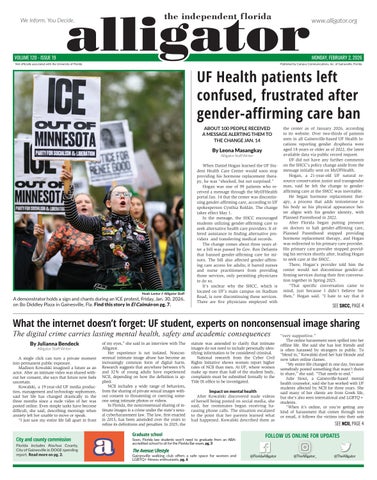
Noah Lantor // Alligator Staff A demonstrator holds a sign and chants during an ICE protest, Friday, Jan. 30, 2026, on Bo Diddley Plaza in Gainesville, Fla. Find this story in ElCaimánon pg. 7.
UF Health patients left confused, frustrated after gender-affirming care ban
ABOUT 100 PEOPLE RECEIVED A MESSAGE ALERTING THEM TO THE CHANGE JAN. 14
By Leona Masangkay Alligator Staff Writer
When Daniel Hogan learned the UF Student Health Care Center would soon stop providing his hormone replacement therapy, he was “shocked, but not surprised.”
Hogan was one of 99 patients who received a message through the MyUFHealth portal Jan. 14 that the center was discontinuing gender-affirming care, according to UF spokesperson Cynthia Roldán. The change takes effect May 1.
In the message, the SHCC encouraged students utilizing gender-affirming care to seek alternative health care providers. It offered assistance in finding alternative providers and transferring medical records.
The change comes about three years after a bill was passed by Gov. Ron DeSantis that banned gender-affirming care for minors. The bill also affected gender-affirming care access for adults; it barred nurses and nurse practitioners from providing those services, only permitting physicians to do so.
It’s unclear why the SHCC, which is located on UF’s main campus on Stadium Road, is now discontinuing these services. There are five physicians employed with
the center as of January 2026, according to its website. Over two-thirds of patients seen in all Gainesville-based UF Health locations reporting gender dysphoria were aged 18 years or older as of 2022, the latest available data via public record request.
UF did not have any further comments on the SHCC’s policy change aside from the message initially sent on MyUFHealth.
Hogan, a 21-year-old UF natural resource conservation junior and transgender man, said he felt the change to genderaffirming care at the SHCC was inevitable.
He began hormone replacement therapy, a process that adds testosterone to his body so his physical appearance better aligns with his gender identity, with Planned Parenthood in 2022.
After Florida began putting pressure on doctors to halt gender-affirming care, Planned Parenthood stopped providing hormone replacement therapy, and Hogan was redirected to his primary care provider. His primary care provider stopped providing his services shortly after, leading Hogan to seek care at the SHCC.
There, Hogan’s provider told him the center would not discontinue gender-affirming services during their first conversation together in Spring 2025.
“That specific conversation came to mind, just because I didn’t believe her then,” Hogan said. “I hate to say that it
SHCC, PAGE 4
What the internet doesn’t forget: UF student, experts on nonconsensual image sharing
By Julianna Bendeck Alligator Staff Writer
A single click can turn a private moment into permanent public exposure.
Madison Kowalski imagined a future as an actor. After an intimate video was shared without her consent, she says that future now feels uncertain.
Kowalski, a 19-year-old UF media production, management and technology sophomore, said her life has changed drastically in the three months since a nude video of her was posted online. Even simple tasks have become difficult, she said, describing mornings when anxiety left her unable to move or speak.
“I just saw my entire life fall apart in front
of my eyes,” she said in an interview with The Alligator.
Her experience is not isolated. Nonconsensual intimate image abuse has become an increasingly common form of digital harm.
Research suggests that anywhere between 6% and 32% of young adults have experienced NCII, depending on how the definition is applied.
NCII includes a wide range of behaviors, from the sharing of private sexual images without consent to threatening or coercing someone using intimate photos or videos.
In Florida, the nonconsensual sharing of intimate images is a crime under the state’s sexual cyberharassment law. The law, first enacted in 2015, has been amended over the years to refine its definitions and penalties. In 2025, the
academic
statute was amended to clarify that intimate images do not need to include personally identifying information to be considered criminal.
National research from the Cyber Civil Rights Initiative shows women report higher rates of NCII than men. At UF, where women make up more than half of the student body, complaints must be submitted formally to the Title IX office to be investigated.
Impact on mental health
After Kowalski discovered nude videos of herself being posted on social media, she said, her roommates began receiving harassing phone calls. The situation escalated to the point that her parents learned what had happened. Kowalski described them as
“very supportive.”
The online harassment soon spilled into her offline life. She said she has lost friends and is often harassed by strangers in public. To “blend in,” Kowalski dyed her hair blonde and now takes online classes.
“My entire life changed in one day, because somebody posted something that wasn’t theirs to share,” she said. “That needs to end.”
Julie Stout, a Gainesville-based mental health counselor, said she has worked with UF students affected by NCII for three years. She said many of her clients are from Greek life, but she’s also seen international and LGBTQ+ students.
“When it’s online, or you’re getting any kind of harassment that comes through text or email, it follows the victims into their safe
NCII, PAGE 4
Today’s Weather
What did the state say about Gainesville and Alachua County in its DOGE audit?
THE CITY AND COUNTY WERE AMONG THE 13 BLUE-LEANING AREAS ANALYZED IN THE REPORT
By Maria Arruda & Kaitlyn McCormack Alligator Staff Writer
The Florida Department of Government Efficiency used the city of Gainesville and Alachua County as examples of inefficient spending in a report on local government spending released Wednesday.
The report, which criticized diversity initiatives and excess spending, came around five months after Gov. Ron DeSantis announced DOGE would conduct on-site audits of cities and counties accused of wasteful expenditures.
DeSantis and Blaise Ingoglia, the state chief financial officer, visited Gainesville in July 2025, and Ingoglia requested access to city property, data systems and personnel to conduct the audit.
In September 2025, Ingoglia visited Alachua County to announce an audit found the county had tallied $85 million in wasteful spending, though details of the report were not released at that time.
Other Democratic-leaning counties, including Broward, Miami-Dade and Orange, as well as the cities of Jacksonville, St. Petersburg and Orlando, were among those included in the newly publicized report.
In the nine pages of the 98-page report devoted to Alachua County and Gainesville, the state overestimated Gainesville’s population by about 200,000 people, criticized the city for sourcing workshops from UNESCO, which it called a “progenocide agency,” and referred to a multiday Alachua County training program as “aggressive DEI indoctrination.”
The city
In the report’s overview of city spending, Florida DOGE reported Gainesville millage, or property tax rates, has soared in the past 10 years, more than doubling the city’s tax revenue since 2017. In the past decade, the audit said, the city has increased property tax collections by 150% while the population grew by less than 20%.
The report added Gainesville officials have justified higher property taxes in part because of revenue losses from Gainesville Regional Utilities. The city lost control over regional utilities to a state-appointed board in 2023 after a bill passed in the Florida House of Representatives, though an ongoing lawsuit may give GRU jurisdiction back to the city.
But, in fiscal year 2023-24, the city saw an increase of 46% in other sources of revenue, the audit said, “essentially offsetting the previous contribution from GRU.”
“The city’s response to losing the ability to tap into GRU’s surplus should have been better fiscal stewardship, not a $24 million increase in extractions from the Gainesville property tax base,” the report said. City Commissioner Bryan East-
man said he believes the report focused heavily on the city’s property taxes because it couldn’t show instances of overspending in Gainesville, as it did with other cities and counties.
“I would hold our city up as one that has done more cuts and more budget restraint than any other city,” he said. “I find it odd that that’s not included in that DOGE report.”
The purpose of the tax increase was to make up for a 50% cut to the general fund transfer from GRU, or money that helps fund daily government operations, Eastman said. That cut was required by the state-issued debt reduction plan, he added.
The city voted in 2023 to reduce GRU’s debt by $315 million in 10 years. It also adopted a new plan to supplement the General Fund Transfer.
A majority of the increase in tax revenue collection went toward first response services and increasing salaries at the sheriff’s office, he said, and the city also made up for the losses through means other than tax revenue. Nearly 162 city positions were eliminated, and millions of dollars were cut from its annual budget, he said.
Under a “noncompliance with personnel policies” section, the DOGE report said the city is in violation of its own policy that staff members on “special assignments” must continue performing regular job duties.
The audit said an administrative manager in the Parks, Recreation and Cultural Affairs Department, whose responsibilities were reassigned over two years ago, may be receiving a “special assignment” bonus for their duties in their previously held position, despite not continuing their previous responsibilities.
Eastman said Florida DOGE correctly identified the clerical error. The reclassification of the previous administrative manager in the city’s log “lagged” but is now complete, he said, and the chart will be corrected moving forward.
Regarding diversity, equity and inclusion laws, the report outlined how the city funds a $1.4 million Office of Equity and Inclusion. The office selected the fleet management office, which works under the transportation department, for “indoctrination” through a series of presentations originating from UNESCO, the audit said, leaving staff feeling “unfairly targeted.”
It was also reported the city screened its staff for resistance to DEI policies, concluding there would be no pushback because employees were “scared of termination.”
“When I read that, I was shocked,” Eastman said.
Eastman said he doesn’t know where DOGE acquired the DEI-related information, and the city does not have any documentation of the cited allegations.
The city is required under the 1964 Civil Rights Act to conduct anti-discrimination training, he said, meaning the presentations shown to staff are not indoctrination.
In a follow-up email, Eastman said there are “clear factual errors” in the Gainesville section that raise
concerns about the audit’s broad accuracy. The listed city population, he said, is wrong by roughly 200,000 people.
While the report listed Gainesville’s population at 364,471, data from the U.S. Census Bureau shows it is around 146,000 people.
“It’s a report that wants to make a point,” he said, “and not one that I’m seeing is trying to give us an honest look at where we’re succeeding and where we’re not succeeding.”
The county
The report said a substantial amount of money went toward pay increases and multiple large terminal payouts for Alachua County employees.
Florida DOGE reported a 6% increase in pay for the 2024-25 fiscal year, as well as a 4% or $1 an hour increase in 2023-24. This came in addition to a merit-based increase in both years that cost a total of $1.05 million, the report said.
According to a press release from Alachua County for the current fiscal year budget, the county raised its minimum wage from $18 to $18.50 an hour and provided a 4% cost-ofliving adjustment for all its employees in order to “attract and retain a skilled workforce.”
The U.S. Bureau of Labor Statistics reported in September 2025 that wages and salaries for state and local government workers increased 3.5% nationwide and benefit costs increased 3.8% over the last year.
In a statement to The Alligator, Alachua County Communications Director Mark Sexton said the county’s budget reflects the values of its community.
“The state did not provide us the report, nor the supporting data. We were able to locate the report through the efforts of the media,” Sexton said. “We will now take the time to review it. Fiscal responsibility is a foundational value of the county, and has led to nine consecutive years of millage rate decreases. Our budget decisions reflect the values of this community and the voters decide how we're doing every two years in November.”
The report said the county awarded numerous small grants with minimal oversight, such as $3,000 for “Spirit Led Art Therapy” and $2,500 for the Florida Coalition for Peace and Justice’s “Art Tag Grant Program.”
“The funds in question were properly applied for, awarded and used for their intended community purpose: supporting the Flying Pig Parade,” said Eduardo Arenas, the president of the Florida Coalition for Peace and Justice’s Board of Directors. “This was a legitimate, transparent and fully appropriate use of the grant funding for a well-established, family-friendly cultural event that brings together artists, performers, musicians and residents.”
Independent Florida Alligator is a student newspaper serving the University of Florida, published by a nonprofit 501 (c)(3) educational organization, Campus Communications Inc., P.O. Box 14257, Gainesville, Florida, 32604-2257. The Alligator is published Monday mornings, except during holidays and exam periods. The Alligator is a member of the Newspaper Association of America, National Newspaper Association, Florida Press Association and Southern University Newspapers.
The Alligator strives to be accurate and clear in its news reports and editorials. If you find an error, please call our newsroom at 352-376-4458 or email editor@alligator.org 352-376-4458 NEWSROOM:
Despite community outcry, County Commission chooses UF land for new animal shelter
UF WILL DEMOLISH EXISTING IFAS SWINE UNIT TO BUILD THE SHELTER
By Kaitlyn McCormack Alligator Staff Writer
Despite wavering community opinions, the Alachua County Commission voted Tuesday to partner with UF on the location for a new animal shelter in Gainesville.
“It seemed to me that most of this meeting was about UF and not about our shelter,” said Phil Singer, a concerned community member.
The decision was between two sites. One, an area of UF-owned land on Archer Road, currently houses the Institute of Food and Agricultural Sciences Swine Unit. Another, located on Northwest Waldo Road, is owned by the county and is known as the Weseman Tract. UF and the county have come to a $1 million sublease agreement under which UF will demolish the existing Swine Unit to build the animal shelter. Construction of the shelter is estimated to take two years.
The debate over the two sites became controversial. Community members preferred the countyowned Weseman site, but the majority of the board agreed the UF site was the better option. The final vote
was 3-1, with Commissioner Marihelen Wheeler in dissent and Commissioner Chuck Chestnut out of the room.
The UF property
The board cited proximity — under 2 miles from Butler Plaza — as its leading reason for choosing the UF site. The central location will make the shelter accessible for people to adopt and find care for their pets, said Commissioner Anna Prizzia.
“If what you want is for people to shop for animals and get their pets at our shelter instead of at PetSmart and at puppy mills, then this is the better location, because it will be down where everybody is shopping,” she said.
Over 80% of the dogs in Florida pet stores are shipped from puppy mills in midwestern states, according to a 2021 report from the American Society for the Prevention of Cruelty to Animals.
Associating the incoming animal shelter with UF could bring its own benefits, Prizzia added, including getting students more involved in volunteering and adoption.
I know very much what proximity does for student engagement,” said Prizzia.
According to a January 2025 report, about 56% of undergraduates
The new animal shelter, located next to UF’s campus, will be a partnership between Alachua County and the university.
participated in volunteering or community service activities during their time at UF.
Commissioner Chair Ken Cornell agreed partnering with UF could be a great advantage. The county has allocated $30 million to build the facility and deliberated its construction for the last 12 years, he said, a period of time he called “too damn long.”
“With UF and with our community and with this board, we can create something that this community has deserved for more than two decades,” he said.
The county-owned property
Community members largely supported the Weseman Tract; however, commissioners at the meeting argued its cons outweighed its pros.
The Weseman Tract is near an area of Alachua County called the EcoLoop, a 30-acre area of countyowned land that was originally developed to house a recycling or sustainable waste center. However, the lot has been vacant since its development in 2022.
Commissioner Mary Alford was concerned the tract is inaccessible for people without private transpor-
tation. The nearest bus route goes to the Gainesville Regional Airport, which is still about an hour-long walk from the Weseman Tract.
“I also know that one of our goals is to provide more care to animals that belong to some of our lowerincome residents, and those are people that don’t have the privilege sometimes of being able to get into a car and drive to a remote location,” Alford said.
Building an animal shelter on the property might hinder other prospective businesses that want to expand into the area, commissioners said.
Commission disagreement
When the commission voted to move forward with the negotiations with UF, Wheeler was the only dissenting vote. She said the board was focusing too much on the student population and not the community that spends the most time working with the animals.
“I don’t think that catering to the university community is as strong as catering to our county community,” she said.
Read the rest online at alligator.org.
@kaitmccormack20
kmccormack@alligator.org
Florida law schools soon won’t need the American Bar Association for accreditation
Some UF law students, faculty say the change reflects a move toward conservatism
By Cameron Countryman Alligator Staff Writer
The Florida Supreme Court ruled Jan. 15 Florida law schools no longer need to be accredited by the American Bar Association beginning Oct. 1 of this year.
The ruling means law students won’t need to graduate from an ABA-accredited school to sit for the Florida Bar exam. Instead, schools can be accredited by other U.S. Department of Education-certified entities.
There are 12 ABA-accredited law schools with Florida locations, including UF Levin College of Law. The association has been the only accreditor in Florida since 1992. Out of the nearly 3,000 students who took the Florida Bar for the first time in 2024, all but 10 test-takers attended ABA-accredited schools.
Many view the move away from the ABA as a step toward conservatism, because the association is known for what some perceive
as left-wing policies, such as promoting diversity, equity and inclusion. Others see it less as a political decision and more as a step away from the ABA’s monopoly on law school accreditation.
“Good move,” Gov. Ron DeSantis posted on X in response to the Florida Supreme Court decision Jan. 15. “The (highly partisan) ABA should not be a gatekeeper for legal education or the legal profession.”
This decision came nine days after Texas ended its law schools’ reliances on the ABA.
Graduates from Florida law schools that are not accredited by the ABA will only be able to take the Florida General Bar Examination and practice law in Florida. Graduates from ABA-accredited schools, meanwhile, can take the bar exam and practice law in any state in the U.S.
The Florida Supreme Court’s opinion said a court-appointed workgroup study persuaded the Court “that it is not in Floridians’ best
interest” for the ABA to be the only association that decides which law school graduates can take the bar exam and practice law in Florida.
Julian Calderon, a 25-year-old UF law student, said the ABA has been perceived as partisan and left wing.
“It’s not surprising that more conservative states are getting rid of them as the sole accreditation,” Calderon said. “Because we would want, at least in theory, the accrediting agency to be neutral and not take sides on controversial issues.”
Calderon also said the move away from the ABA is nothing new. The tradition of using the ABA to vet judicial nominees was ended by former President George W. Bush in 2001, and the Biden and Trump administrations also did not rely on the ABA for judicial nominee vetting.
Lyrissa Lidsky, a professor of institutional law at UF and a former dean of the University
of Missouri School of Law, said she thinks many Florida schools will be dually accredited with the ABA and another accreditor.
“A law school like the University of Florida is sending students all over the nation, so we can’t afford to ignore the ABA accreditation,” Lidsky said.
Lidsky is critical of some of the ABA’s many requirements, she said. The association requires a mandatory number of hours for students to take “experiential learning” classes, which can add extra expenses to students’ tuition. These classes give law students experience in performing legal tasks, but they also require schools to spend more on resources, such as staff.
Read the rest online at alligator.org
@cpcountryman
ccountryman@alligator.org
Daniela Peñafiel // Alligator Staff
Nonconsensual intimate image sharing on the rise
spaces,” Stout said. “It’s in their home — in their sanctuary — where they’re supposed to feel safe.”
Victims of NCII may experience anxiety, depression, panic attacks, sleep disturbances and a loss of selfworth, Stout said.
She added many students don’t know how to report NCII and sexual assaults, and short-term counseling services offered at UF sometimes aren't enough to help students address deep trauma. UF’s Counseling and Wellness Center defines shortterm counseling as a maximum of 12 sessions.
Stout noted that victim advocates at UF have helped students in the past.
“It’s not just a social media issue,” she said. “It’s a public health and safety issue, and it’s definitely something that deserves to be taken very seriously.”
University reporting and institutional response
UF’s gender equity policy, which was last updated three years ago, defines NCII as a type of sexual exploitation. While sexual exploitation does not meet the qualifications for a Title IX violation, it falls under the university’s list of prohibited conduct, according to documents obtained by The Alligator.
Therefore, NCII incidents reported to UF’s Title IX office may be referred to the Office of Student Conduct and Conflict Resolution, which handles conduct violations.
Conduct violations can hold students accountable for off-campus activities. Title IX, on the other hand, can only investigate incidents taking place within university programs or on university-controlled property
that involve UF-affiliated individuals.
The Office of Gender Equity and Accessibility was historically tasked with investigating cases of sexual exploitation, until a 2024 restructuring split the office into two departments handling Title IX and the Americans with Disabilities Act. The Title IX Office and Office of Student Conduct and Conflict Resolution now handle many of these cases.
Last July, UF adopted a new Title IX policy requiring all employees to report suspected sexual harassment or assault, dating or domestic violence and stalking. Students who file a Title IX request are not required to move forward with an investigation, though they may still be given confidential resources, like crisis support or a referral to another agency.
UF spokesperson Cynthia Roldán, in an email statement to The Alligator, said any student or employee who has witnessed or been the victim of harassment should file a Title IX report online.
“UF has zero tolerance for any form of harassment and promptly addresses allegations of prohibited conduct,” Roldán wrote.
Sara Smith-Paez, a GatorWell health promotions specialist and prevention educator, previously worked with students affected by NCII at Stetson University. She now leads workshops at UF on sexual violence and relationships.
Smith-Paez said intimate images are not always shared for revenge. Stalkers, for example, may use NCII to force contact with their victims.
While images can be removed through websites like StopNCII. org, Smith-Paez said, students who share intimate images should avoid including their face or any identifiable information. She suggested
wearing different jewelry when sharing images with multiple people, so it’s easier to tell who shared them if they’re leaked. “Prevention is on the end of the sender in some ways,” she said, “but it’s more so on the end of the people who would cause harm.”
How technology amplifies the damage
As technology becomes more advanced, experts warn the potential harm of NCII is expanding. Earlier websites like Is Anyone Up? allowed for the widespread distribution of NCII. The website shut down in 2012, and its founder, Hunter Moore, later served a federal prison sentence.
Now, experts warn that artificial
intelligence could take the harm further by creating realistic deepfake images from just a single photo. A deepfake is a type of AI used to create realistic pictures, videos or audio that show a real person doing or saying things they never actually did.
Patrick Traynor, interim chair of UF’s computer, information science and engineering department, recently advised a paper analyzing the most popular websites that use AI to create nude images from photos of real people.
Traynor said that people have created fake images for “as long as tape has existed.” What concerns him is the accessibility of AI platforms.
“Five to 10 years ago, maybe if you were really technically savvy, you could do this kind of thing,” he said. “But for now, for as little as six
UF center discontinues gender-affirming care
turned out the way that it did.”
Hogan said he plans to continue receiving hormone replacement therapy from the SHCC until May 1.
In 2022, UF Health facilities in Gainesville saw 465 patients with gender dysphoria, according to records obtained by The Alligator. Additionally, 275 patients underwent a form of hormone replacement therapy in those same facilities in 2022. Those numbers include patients seen across all UF HealthGainesville entities, not only the SHCC.
In addition to hormone blockers, genderaffirming care can include puberty blockers, which stop the body from producing estrogen and testosterone, as well as procedures like breast augmentations or mastectomies, which add or remove breast tissue. These treatments address gender dysphoria, which the DSM-5 defines as distress resulting from an inconsistency between one’s expressed gender and their sex assigned at birth.
Another UF student, who’s also receiving hormone replacement therapy through the SHCC, said he felt blindsided by the policy change. The Alligator granted this student anonymity because he’s not publicly out as a transgender man.
“I just didn’t think that it could happen
to me, as selfish as that sounds,” the student said.
After receiving the message, the student called the phone number provided by the SHCC, where he thought he would receive specialized aid. Instead, he said, the number directed him to the administrative office, and the responses to his questions seemed “automated.”
The student said he felt like there were no resources or plans for patients using genderaffirming services, which he found frustrating.
The student asked if there was a specific law behind the policy change. In response, he said, a SHCC employee told him UF made the decision to discontinue gender-affirming care.
“I love being a Gator, like, I love all that stuff,” the student said. “This makes me not happy. It makes me feel less proud of my school.”
Alexis Williams, the 26-year-old deputy director of the Queer Trans Project, said she thinks the university’s decision will have serious consequences.
The Queer Trans Project, based in north Florida, is a nonprofit organization dedicated to increasing access to gender-affirming resources for transgender and genderqueer people.
The organization sends gender-affirming resources — such as binders, which are meant to reduce breast visibility for transmasculine individuals — to those in need, and it helps people find clinics that provide gender-affirming care, which are sometimes located out-of-state.
“A flagship university like UF should not be outsourcing student health care to Google searching and GoFundMe pages,” Williams said. “Health care shouldn’t require a plane ticket.”
When medical institutions limit genderaffirming care, organizations like the Queer Trans Project may see a larger workload and have to fill in any gaps, she said.
Cielo Sunsarae, the 27-year-old founder and director of the Queer Trans Project, said the SHCC’s policy changes fit with compliance patterns across the country.
“A lot of these institutions are complying in advance, and a lot of that is fear mongering,” Sunsarae said.
Sunsarae added that they felt as though transgender people were being singled out through restricted health care access, as people who aren’t transgender are not facing the same issues.
“It’s not like we’re taking away the same options for cisgender people,” Sunsarae said. “When they hear the buzzword ‘gender-af-
cents an image, anybody can.”
Traynor’s team, which included researchers from the University of Washington and Georgetown University, spoke with victims of NCII and representatives at both the state and congressional levels. He said lawmakers were open to learning about the issues AI can cause.
“Technologies go hand-in-hand with economics, with laws, with societal norms,” he said. “All of those things together make real-world solutions.”
Omny Miranda Martone, founder of the Sexual Violence Prevention Association, said AI-generated NCII is beginning to be addressed at a national level. Martone is the author of the Defiance Act.
The national bill is intended to complement the Take It Down Act, which was signed into law last year and criminalizes the creation of nonconsensual AI pornography. It also requires image-hosting platforms to remove NCII within 48 hours of a report — a provision set to take effect in May.
Martone said the Defiance Act would address weaknesses in the Take It Down Act by allowing victims to sue in civil courts.
“Civil liability and a civil right of action for victims to see justice tends to be a lot more effective in both getting victims the resources and the help and support that they need,” Martone said.
Martone also said addressing NCII requires coordination between federal and state laws. A December executive order discouraging states from enforcing their own AI regulations has complicated that effort.
“It’s already making it difficult for states to pass and enforce existing laws,” Martone said. “Some states have decided to move forward. Other states seem confused and don’t know what to do.”
jbendeck@alligator.org.
firming care,’ they attribute it to trans people.”
Abbie Aldridge, a 39-year-old mental health counselor based in California, said the SHCC’s policy change could cause transgender patients to feel a sense of abandonment.
Aldridge is the owner of Healing Village, a therapy service with a specialization for transgender clients.
With the introduction of the law banning gender-affirming care for minors in Florida, mental health practitioners saw increased mental strain in their transgender clients, Aldridge added.
Restrictions on gender-affirming health care impacted therapy sessions, Aldridge said, as patients’ primary concerns shifted to how to get access to care.
“We weren’t able to be working on their genuine therapy goal,” Aldridge said. “We were focusing more on accessing basic care and needs.”
While Aldridge used to live in Florida, changing legislation about transgender people led to them to move to California, where they currently live.
“It’s really been gut-wrenching to see this process happening, not only in Florida, but across the U.S., and also to see the impact that it's had on mental health providers,” Aldridge said.
@leo_amasangkay lmasangkay@alligator.org
Eva Lu // Alligator Staff
Non-consensual intimate image abuse is widespread across the United States, with college students and young adults disproportionately affected.
Newberry Community School to open in August despite legal disputes
THE DECISION WAS CHALLENGED BY ACPS IN 2025
By Grace Larson Alligator Staff Writer
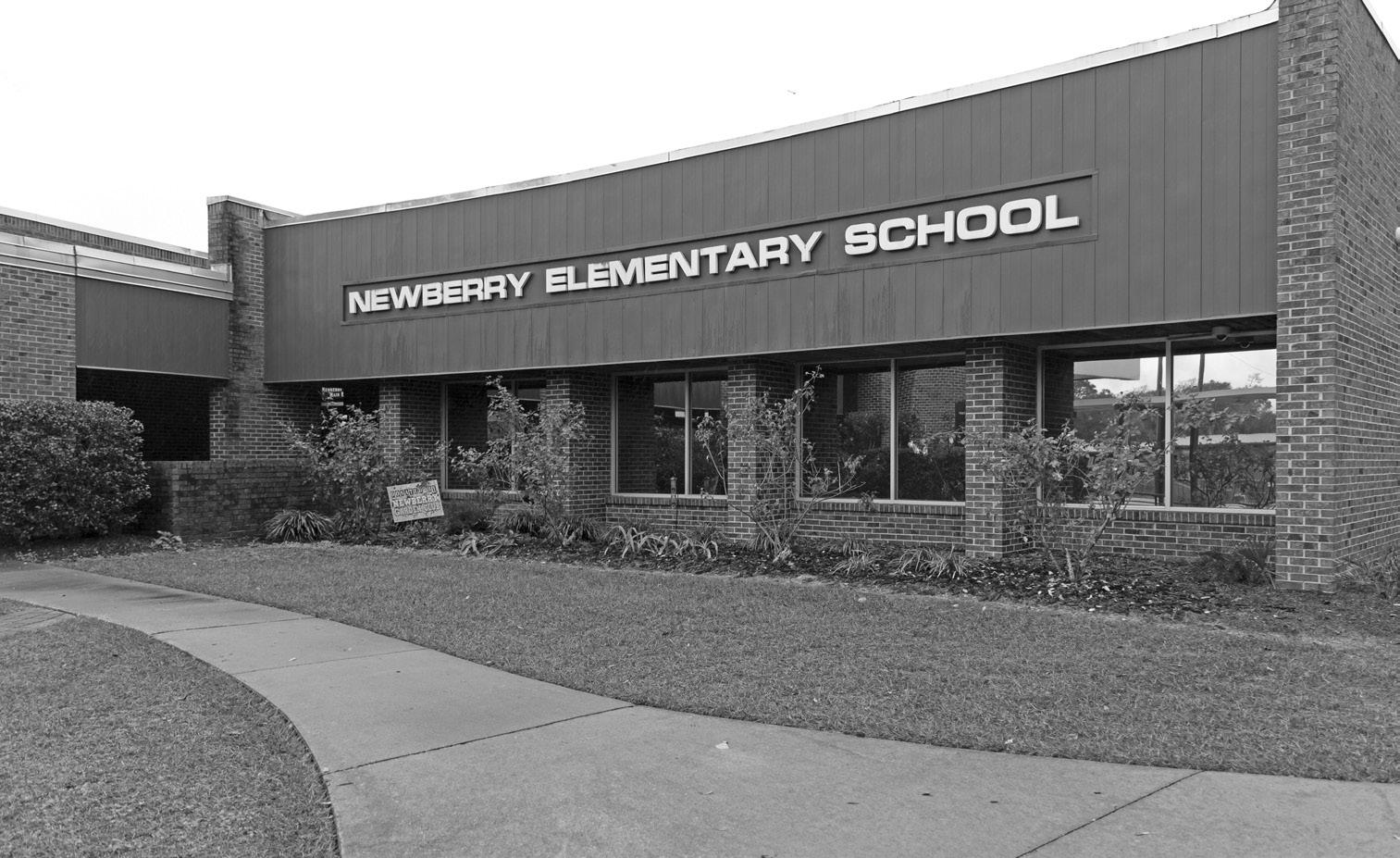
Despite pushback from Alachua County Public Schools, Newberry Elementary School is transitioning into a charter school.
As Newberry Community School prepares to open this August, much remains uncertain. The charter board is in the process of planning transportation, meal and child care services.
During this transition period, the charter board is refining its learning initiatives and teaching methods, which differ from those of traditional public schools.
Newberry Community School changes
As part of the transition, the school will promote science, technology, engineering, art and math-focused learning initiatives and hands-on opportunities for students, said Lacy Roberts, the principal of the upcoming school.
While the charter is still a public school and will continue to follow state standards and assessments, the school doesn’t have to operate under the curriculum regulations traditional public schools face. Therefore, the school’s methods for teaching may seem different, she said.
“Charter schools offer the freedom of doing things different for kids, focusing more on kids’ successes instead of the way it’s always been done,” Roberts said. “We have the freedom to think outside the box, and I think we can do some great things for kids.”
A 2023 study by the Center for Research on Education Outcomes found charter school students showed greater improvement in reading and math than traditional public school students over one school year. Following a 180day school year, charter students were six days ahead in math learning and 16 days ahead in reading when compared with traditional public school students.
However, other researchers said the differences measured in the study are too small to be meaningful. Additionally, they said the study fails to account for other factors — like those that drive parents to enroll their children in charter schools — that may affect students’ education.
According to Christopher Thomas, a UF assistant professor of educational leadership and policy, research on the effectiveness of charter schools typically yields mixed results and doesn’t show significant differences in learning outcomes between charters and traditional public schools.
Other criticisms of charter schools center around the diversion of resources, students and teachers from public schools and the application process for charter schools, Thomas said.
“Charter schools kind of embrace this idea of education as a consumer good,” he said,
“where you kind of shop around for the school that best fits your version of what a good education ought to be.”
For some parents, the implication of this process on the existing democratic nature of education can be concerning, he said.
Differences in the charter’s policy do not only center around students but also teachers.
Salaries for Newberry Community School teachers will be 5% higher than that of ACPS teachers. The starting salary for a teacher in Alachua County is $49,370, but salaries can vary depending on factors like the teacher’s highest degree.
The Newberry Community School Board discussed such raises during a meeting Jan. 26. Board member Chuck Clemons was among those who advocated for increased teacher salaries.
“This is our chance,” he said. “It’s our chance to design this the way it should be for
our community and to make it meaningful for these teachers.”
Clemons, a former state representative, suggested the board make the 5% salary increase a minimum, meaning teachers could potentially earn more.
The efforts to increase teacher appreciation and introduce new learning opportunities for students remain at the forefront of the school’s new policy.
Legal challenges
A Florida statute allows outside organizations to propose existing traditional public schools be converted into charter schools.
This law permitted the Newberry Community School Board to propose the transition of Newberry Elementary into a charter school.
In April 2024, parents and teachers at the elementary school gathered to vote on the charter. To approve the school, a majority of parents and teachers needed to vote in its favor. While most parents were in support of the charter, only 22 of the 44 teachers voted in favor of the conversion.
Following the vote, both the Alachua County School Board and the Supervisor of Elections verified the result: Newberry Elementary would not be converted into a charter school.
However, nearly one year later, the Florida Department of Education changed its requirements, allowing a 50% approval rate to pass.
Under state statute, this change in administrative law could not be applied retroactively; however, the Florida Charter School Review Commission approved the charter application following the change in policy. The Alachua County School Board sought to appeal the commission’s decision, but it didn’t succeed.
The Florida Department of Education wasn’t available for interviews when emailed twice within a four-week period.
Read the rest online at alligator.org.
@graceellarson glarson@alligator.org
Florida universities are one step closer to a yearlong pause on H-1B visas
Resolution came before Board of Governors this week, where plans for new UF dorms also passed
By Leona Masangkay Alligator Staff Writer
The Florida Board of Governors is one step closer to restricting H-1B visas until 2027.
On Jan. 29, the board moved forward with an amendment that would stop Florida universities from using the H-1B visa program to hire new employees for the remainder of this year. Public comment is available for two weeks, after which the board will officially vote on the policy.
Also at the meeting, the board approved giving a bond of up to $245 million to UF to build new dorms targeted toward freshman students.
H-1B visas allow U.S. employers to hire foreign citizens with a college education for up to six years. Employees can apply for permanent residency during this time frame.
The proposed amendment would not stop Florida universities from renewing employees already on H-1B visas, but it would ban them from making new hires under the program through Jan. 5, 2027. The amendment also states each board of trustees’ personnel program “must not discriminate on the basis of race, color, religion, national origin, or sex.”
On Oct. 29, Florida Gov. Ron DeSantis announced plans to “pull the plug” on H-1B visas, and UF Interim President Dr. Donald Landry said he’d support a review of the program at UF. University positions currently occupied by visa holders should go to Florida
residents, DeSantis said.
UF ranked highly among Florida universities when it came to H-1B visa issuance, approving 253 recipients for the 2025 fiscal year through quarter four. Florida State University approved 110 beneficiaries, the second-highest amount among state universities.
As the amendment was discussed in committee Jan. 29, the only dissenting comments came from the board’s faculty and student members. Kimberly Dunn, the Florida Atlantic University faculty senate chair and only voting faculty member of the Board of Governors, said she did not want to make decisions that would harm educational institutions.
“Institutions throughout our system rely on our H-1B process to recruit world-class talent,” Dunn said, adding limiting H-1B visa hires could cause long-lasting reputational damage.
Earlier this week, Texas Gov. Greg Abbott ordered a freeze on all H-1B visa hires for Texas universities and state agencies, which will remain effective until May 2027. On Sept. 21, 2025, the Trump administration implemented a policy imposing a $100,000 fee for each H-1B visa distributed.
Carson Dale, the FSU student body president and only student voting member of the Board of Governors, also criticized the amendment Jan. 29. During its committee discussion, he moved to remove it from the board’s consent agenda — meaning when the issue came before the full board later that day,
members had to vote separately to approve it.
The reform is not neutral, Dale said, but is a restriction on who can be considered for employment, regardless of qualification.
Dale said he understands concerns about misusing H-1B visas in hiring processes, but he still believes candidates should be evaluated based on qualifications.
“We evaluate candidates based on the quality of their scholarship, their capacity for discovery and their contributions to knowledge, not on their country of birth,” Dale said.
Chair Alan Levine encouraged board members to reach out to universities before the regulation comes to an official vote in order to hear and weigh its impact. He’s heard from faculty that the board must emphasize collecting data before making a decision, he said.
During public comment, two people came forward to speak against the H-1B pause.
Daniel Fay, an associate professor at FSU, said he’s published research on higher education governance. Restricting foreign recruitment, he said, would have a drastic effect on the system’s performance.
“We could see a dramatic decrease in graduation rates across the system,” Fay said. “Total graduation rates would fall by about 10% for each percentage change in H-1B faculty.”
Fay added that an H-1B ban would impact subcommunities, and it could also lead to financial impacts, such as decreased expenditures and opportunities for federal revenue.
Kathryn Jones, a biology professor at FSU, also encouraged the board to vote against the amendment. She said a vote in favor of the H-1B ban was “a vote against merit.”
Jones said she served on multiple faculty search committees, where she saw qualified job candidates who were hired under H-1B visas but trained in the U.S.
“By not hiring with an H-1B visa program, we would be giving away the expertise we’ve invested in international scholars,” she said. “We would lose that for the U.S., for the state of Florida.”
Should the policy be formally amended in the next meeting, current H-1B visa holders will still be able to renew their visas as needed this year.
UF student residency plans
The board also unanimously adopted a resolution Jan. 28 to build two new UF dorms. The decision authorized a bond no larger than $245 million to finance construction.
The project will be the first of multiple phases, with the plan to revitalize UF housing spanning over 10 years. Two residence halls, each having eight to nine floors, are planned to be built on the university’s main campus.
Read the rest online at alligator.org.
@leo_amasangkay lmasangkay@alligator.org
Caroline Walsh // Alligator Staff
The outside of Newberry Elementary School, Sunday, Jan. 11, 2026.
www.alligator.org/section/the-avenue
Grab your sneakers and meet City Girls Who Walk GNV
THE CLUB AIMS TO GIVE WOMEN AND LGBTQ+ PEOPLE A SAFE SPACE TO ACHIEVE WELLNESS GOALS
By Teia Williams Avenue Staff Writer
During golden hour with water bottles in hand, City Girls Who Walk take on Gainesville’s trails and end with new friendships formed.
The club builds community for women and LGBTQ+ people in Gainesville who want to achieve wellness goals in a safe environment. Many people, especially women, can feel unsafe walking by themselves. The walking club gives them a chance to do so together.
“The mission of the group is to provide a space for these two communities,” said 27-year-old club founder Michelle Marino.
The idea started in 2022, when Marino was in Arizona for an internship. She came across Phoenix Babes Who Walk, a female walking club, and she loved the sense of community it created.
When she came to Gainesville, she decided to make her own. City Girls Who Walk can be started in any city that doesn’t already have one, she said.
The first walk didn’t take place until May 2025. Starting a new club can be nerve-wrack-
SMALL BUSINESS
ing, Marino said, and can take a few years to come to fruition. Her first walk saw 45 people, which has been a consistent number since.
Walking groups have even made their way to the Saturday Night Live writers’ table. The Teyana Taylor-hosted episode on Jan. 24 highlighted a walk club. Unlike the skit, City Girls Who Walk GNV isn’t a competition — it’s collaborative.
Marino said the club is a way for people to socialize, gain more discipline, dedicate time for themselves and get up and move. She said it’s rewarding to see people get something out of it, and the club motivates her, too.
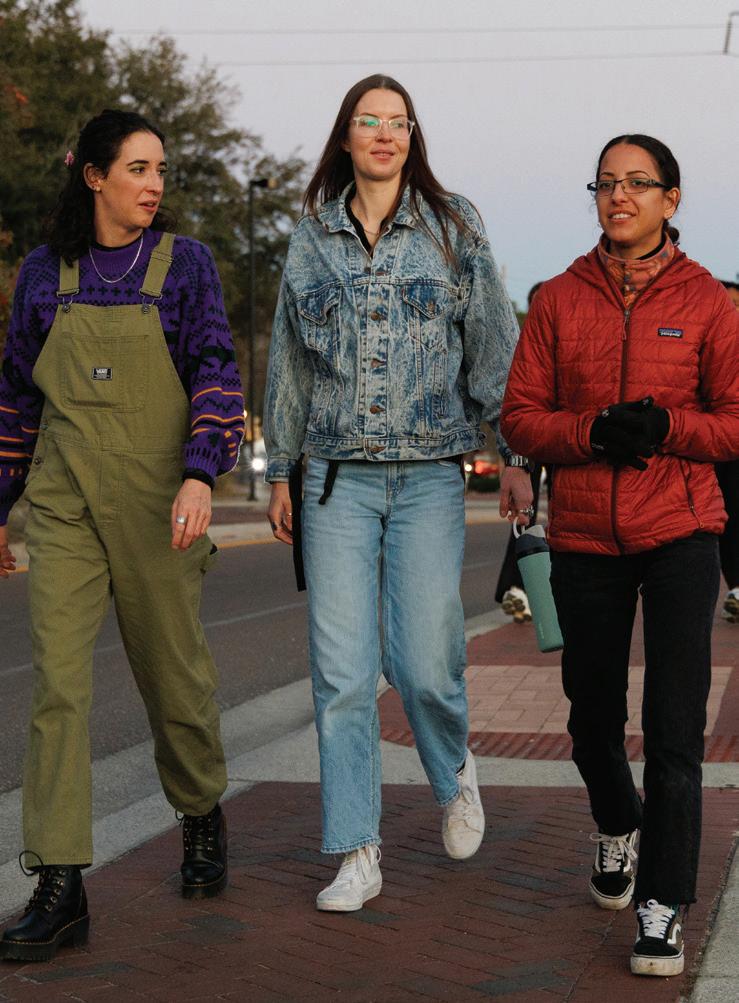
Dozens of people in comfy sweats, puffer jackets and leggings trickled into the meeting spot Jan. 28, this time at First Magnitude Brewing Company.
Marino told them to find a walking buddy and start with icebreakers. The group immediately started connecting with each other. They discussed where they came from, what they do for work, their family and if they have pets.
“If you came alone, you now have a new friend,” Marino said. “So find someone you haven’t connected with, whether it’s the person to your right or to your left.”
Once everyone had someone to walk side by side with, Marino grabbed her speaker and began blasting music from female pop icons like Tate McRae and Addison Rae. The group set off into the chilly, shaded Gainesville-Hawthorne State Trail, their low ponytails swaying as they walked. As everyone found their pace,
clusters of people who kept the same speed stuck together on the trail.
“I just like the idea of getting outside and having a planned activity to hang out with friends. It seems like a good excuse to socialize,” said Hollyn Belhart, the 31-year-old owner of Over the Rainbow Veterinary Hospice & Home Euthanasia.
“Also to meet like-minded women as well,” added 29-year-old Chandler Findley.
It was many people’s first time at the club, including Bri Wade. While it can be intimidating to walk up to someone random, these women made fast friends. Wade found the club on TikTok and invited her friend Reilley Poulin.
One of the things they bonded over was the difficulty in moving to a new place and finding friends outside of the work environment.
“We’re here for work, and we work a lot, but we don’t really have community outside of the office,” Wade said. “It was nice to see something new and get out and meet new people and do something fun.”
The club is opening to more than just walking events. Adding to the wellness goal of the club, there will be a mat Pilates class partnered with 616 Pilates on Feb. 11.
City Girls Who Walk post information about their next walks on Instagram @citygirlswhowalkgnv.
@teia_williams twilliams@alligator.org
Gainesville beanbag store transforms into pop-up comedy venue
LANTERN LIGHTS, BEANBAG CHAIRS AND STAND-UP SETS FILL A HIDDEN ROOM IN CORDAROY’S
By Aaliyah Evertz Avenue Staff Writer
Behind rows of oversized loungers and foam-filled furniture, a curtain opens into a small performance space lit by lanterns and multicolored string lights. A cello, potted plants and a spotlighted wooden stool sit on stage. In front, a “VIP” section is marked not by velvet ropes but by a cluster of oversized beanbag chairs.
The hidden venue sits inside CordaRoy’s right off of Southwest 34th Street and West University Avenue, a beanbag store that doubles as a monthly pop-up comedy club.
The tucked-away room filled with nearly 100 people Jan. 30 for a Tailwhip Comedy showcase produced by 32-year-old local comedian Allie Bubanas, who performs under the name Allie O. The pop-up show — held in the store since last summer — featured touring headliner Ben Roy alongside Daisy Tackett, Bubanas and her husband, Scott Bubanas, blending nationally traveled talent with Florida-grown voices in an unconventional venue.
Allie didn’t start her career under stage lights. Before launching Tailwhip Comedy in 2022, she spent more than seven years
Sports
as a nurse in the pediatric cardiac ICU at UF Health Shands Children’s Hospital.
After the COVID-19 pandemic, she felt burnt out and ready to move on to a new venture, she said.
Comedy had long been a quiet constant of her life; Allie grew up writing jokes and stories with her dad. After he died in 2024, performing took on new urgency.
“That kind of was the catalyst,” she said. “He passed away young, and I really wanted to grab life by the horns.”
Allie began performing more regularly and eventually moved into producing, creating shows that mix local comics with touring performers in intimate spaces. She discovered CordaRoy’s while cold-calling businesses in search of pop-up venues and said she was surprised to find a ready-made stage tucked behind the showroom floor.
Now, the monthly event draws a wide range of attendees. While Gainesville is often associated with college crowds, Allie said audiences at the show tend to be a mix of young professionals, longtime residents and visitors from surrounding cities.
“I have to kind of adjust on the fly,” she said about performing for varied rooms.
Comedian Ben Roy, 46, first came to Gainesville through the city’s music scene. Based in Denver, he has been visiting for about eight years, regularly performing during The Fest music festival before connecting with local comics.
He said smaller, unconventional venues like the CordaRoy’s show offer a different energy than traditional comedy clubs.
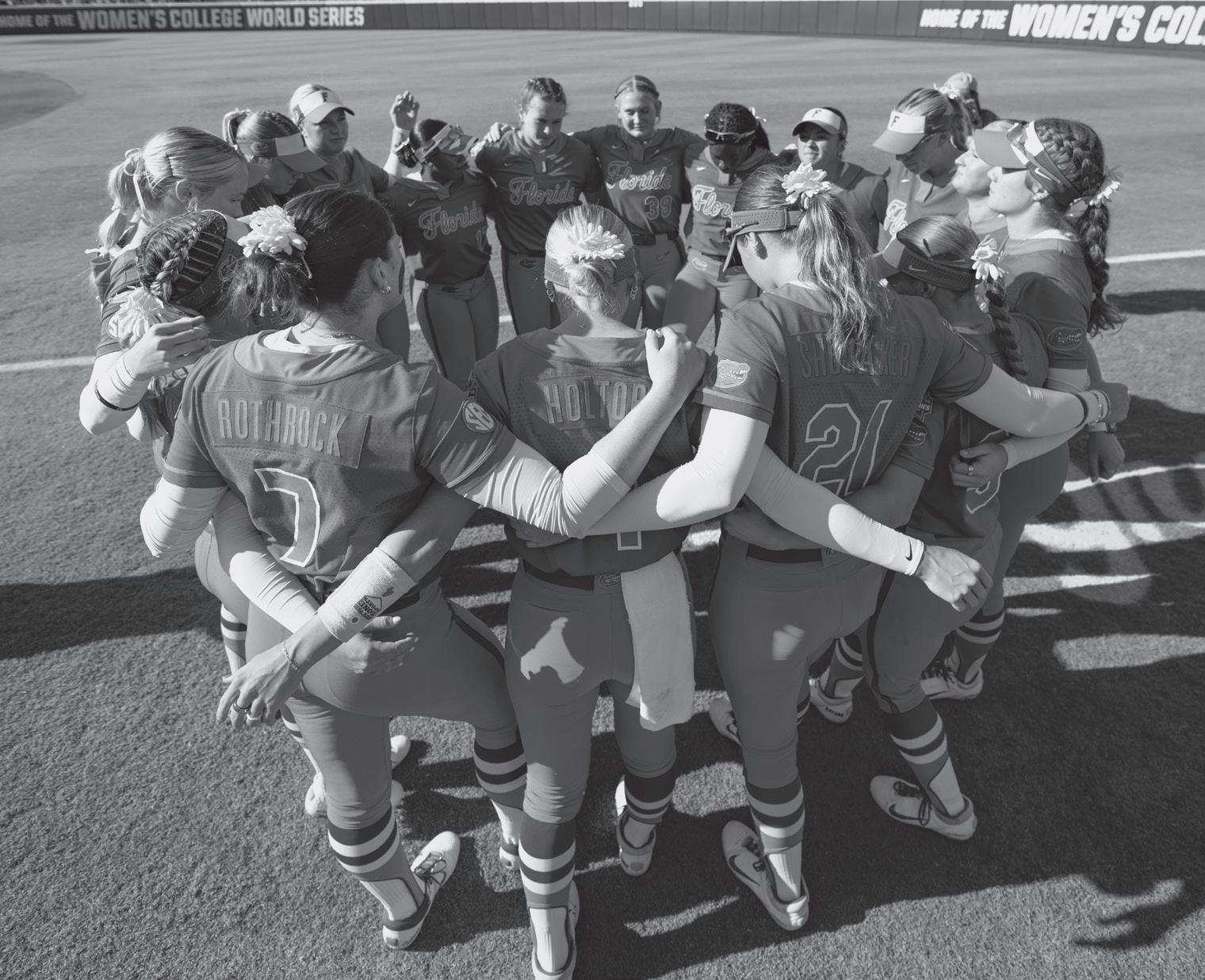
How is Gator softball’s roster shaping up before the season’s first game? Read more on page 11.
Much of Roy’s set focused on stories about fatherhood and everyday life, material he said helps bridge differences in mixed audiences.
“I think we’re at such a divisive time,” he said. “Anything that makes everybody feel like they can relate — those are really important right now.”
Tackett, a 30-year-old Jacksonville-based comic, began performing eight years ago while she was in college. She first turned to stand-up as an outlet while participating in group therapy for sexual assault survivors, where she was encouraged to channel her humor into performance.
After graduating and returning to Jacksonville, she helped build her local scene by producing shows and open mics, working to create more opportunities for comics in a market with fewer established venues.
Her material often draws from personal experience, pushing audiences into brief discomfort before landing on widely relatable observations.
“I really like making people really uncomfortable about it,” Tackett said. “The release at the end of the joke when everyone’s laughing.”
Audience members filed out through the showroom at the end of the night, leaving the space to return to its regular role as a retail store until the next show.
@aaliyahevertz1 aevertz@alligator.org
Caroline Walsh // Alligator Staff Hollyn Belhart, Christy Lynch and Natalia Medina walk outside Deport Park during a City Girls Who Walk Gainesville meet, Wednesday, Jan. 28, 2026, in Gainesville, Fla.
El Caimán
LUNES, 2 DE FEBRERO DE 2026
www.alligator.org/section/spanish
Los residentes de Gainesville se manifiestan en la protesta ‘Stand with Minnesota’ contra ICE
CERCA DE 300 PERSONAS BLOQUEARON EL TRÁFICO EN UNA CONCURRIDA INTERSECCIÓN CERCA DEL CAMPUS EL VIERNES
Por Angelique Rodriguez Escritora de El Caiman
Alrededor de 300 personas se congregaron en la calle 13ª y University Avenue a las 3 p.m. del viernes por la tarde, abandonando sus trabajos y estudios como parte de una jornada de acción nacional para protestar contra el Servicio de Inmigración y Control de Aduanas de Estados Unidos.
Los manifestantes portaban pancartas con lemas como "Alto al terror del ICE”, "Abolir el ICE" y "Me gusta el hielo picado”. Gritaban "Poder para el pueblo, nadie es ilegal" y
"Que se joda el ICE" mientras tocaban tambores.
Finalmente, los manifestantes cruzaron la calle, bloqueando la intersección, mientras los agentes de policía intentaban dirigirlos de vuelta a la acera. Varias personas salieron de los negocios y tiendas para filmarlos.
La manifestante Tiffany Kaar, trabajadora social y maestra de 46 años, dijo que marchaba contra la violencia, el abuso de poder del gobierno y la ilegalidad. Al hacerlo, esperaba crear un mundo mejor para sus hijos, dijo.
"Hay fuerza en la unión”, dijo Kaar. "La gente se está levantando y saliendo a las calles, demostrando con su presencia física que están dispuestas a arriesgarse por la democracia”.
En su trabajo como maestra, Kaar dijo que enseña a muchos estudiantes de países como Venezuela y Colombia. Esos estudiantes merecen que alguien los defienda, dijo. Tras ocupar la intersección, la multitud caminó 13 cuadras hasta la Plaza Bo Diddley en el centro de Gainesville, donde
más manifestantes esperaban su llegada. Los organizadores ayudaron a los agentes de policía a coordinar el tráfico, mientras más de ocho patrullas policiales los rodeaban.
Según el jefe de policía de Gainesville, Nelson Moya, alrededor de 20 agentes fueron desviados para ayudar a gestionar el tráfico.
Moya dijo que el Departamento de Policía de Gainesville intentaría coordinar el tráfico lo mejor posible para proteger el derecho de reunión de los residentes de Gainesville.
Leif Jenson, coordinador de membresía de los Socialistas Democráticos de América del Condado de Alachua, dijo que su organización decidió participar en la protesta debido a las acciones del ICE que han presenciado sus miembros.
Lea el resto en línea enalligator.org/section/spanish.
@angeliquesrod arodriguez@alligator.org
Gainesville residents walk out of school and work for a ‘Stand with Minnesota’ ICE protest
ABOUT 300 PEOPLE BLOCKED TRAFFIC AT A CROWDED INTERSECTION NEAR
CAMPUS JAN. 30
By Angelique Rodriguez Alligator Staff Writer
About 300 people gathered on 13th Street and University Avenue at 3 p.m. Jan. 30, walking out of work and school as part of a nationally organized day of action to protest U.S. Immigration and Customs Enforcement.
The crowd held signs reading “Stop ICE terror,” “Abolish ICE” and “I like my ICE crushed.” They yelled “Power to the people, no one is illegal” and “F—- ICE” while banging drums.
Opinions
Eventually, the protesters crossed the street, blocking the intersection as police officers tried to direct them back to the sidewalk. People stepped out of businesses and shops to film them.
Protester Tiffany Kaar, a 46-year-old social worker and teacher, said she was marching against violence, government overreach and unlawfulness. In doing so, she hoped to create a better world for her children, she said.
“There’s power in numbers,” Kaar said. “People rising up and coming out into the streets and showing with their physical self that they’re willing to put themselves in harm’s way for democracy.”
In her work as a teacher, Kaar said, she teaches many students from countries like Venezuela and Colombia. Those students deserve someone who is able to stand up for
Exchange students in Spain and the U.S. give alternate perspectives on their first weeks abroad. Read more on pg. 8.
them, she said.
After taking over the intersection, the crowd walked 13 blocks to Bo Diddley Plaza in downtown Gainesville, where more protesters awaited their arrival. Organizers helped police officers coordinate traffic as more than eight police cars surrounded them.
Around 20 officers were diverted to help manage the roads, according to Gainesville Chief of Police Nelson Moya.
Moya said GPD would try to coordinate traffic as much as they could in order to protect Gainesville residents’ freedom of assembly.
Leif Jenson, the membership coordinator for Alachua County Democratic Socialists of America, said his organization decided to participate in the protest because of what its members have seen ICE doing.
Jenson said American leaders are being
Síganos para actualizaciones
loyal to the people that give them money rather than their constituents. He said he hopes after this protest, people will see they are not alone, be exposed to new ways of thinking about the world and be emboldened to take action.
Many university students also joined the crowd. Benjamin Valdes, a 22-year-old UF senior, said as a history major, he sees patterns of fascism being repeated that need to be protested against. He said he was protesting ICE, the killing of Alex Pretti and the general distrust the government is putting on the public.
Read the rest online at alligator.org @angeliquesrod arodriguez@alligator.org
Para obtener actualizaciones de El Caimán, síganos en línea en www.alligator.org/section/spanish.
MONDAY, FEBRUARY 2, 2026
www.alligator.org/section/opinions
‘Evelyn Goes Gator’: Culture shock comes quickly in Gainesville
It’s only my second week in Gainesville, and already, everyday experiences are highlighting just how different life here is from home.
A few friends and I decided to drive to Miami Jan. 16 for a free Calvin Harris concert in South Beach, because nothing says good decision-making like a free concert and a sixhour drive. Our plans began to crack when the queue for the concert stretched so far it was hard to tell where it even began.
In Ireland, long queues usually signal poor organization or limited access and are avoided. In the U.S., they seem almost embraced. Americans will queue for hours without complaint, whether it’s for a viral food spot or a free concert. We arrived much earlier to South Beach than others and still stood in line for nearly four hours, packed tightly together with thousands of people.
As the crowd grew, the lack of structure became increasingly uncomfortable. There was a visible police presence, but little actual crowd management. No clear stewarding, no flow — just people pressed into one another on an open beach. When the security gates finally opened, the crowd surged from every direction.
Progress slowed to a crawl as everyone was funnelled through metal detectors, which felt slightly unsettling. Going through a metal detector at a concert is completely normal in the U.S., but to me, it was a reminder of something I had never had to think about before.
In Ireland, firearms are illegal, and public events rarely require visible security beyond basic crowd control. Here, the metal detectors
felt like a quiet acknowledgment that violence is not unthinkable, even at a free music event.
This fear became very real when someone in the crowd shouted they had a gun and would use it if people did not move. I didn’t believe him, but belief felt irrelevant. The fact that it was even plausible to cause panic was enough. My friends and I left the queue and watched the concert from the beach instead.
What shocked me most came later. When we returned after getting refreshments, the barriers surrounding the concert had been knocked over and security had disappeared entirely. The metal detectors were switched off, and we walked straight back in. This happened in a state that recorded 16 mass shootings in 2025 and 32 in 2024.
Despite all of this, the concert itself was great. That contradiction stayed with me as moments of genuine enjoyment layered over a constant sense of unease. It made me realize how accustomed Americans have become to navigating public life alongside visible security and underlying risk.
Even the drive back to Gainesville reinforced the difference between here and back home. Florida’s size is hard to comprehend coming from Ireland, which is roughly half the size of the state.
On the way back, we stopped at Cape Canaveral and watched a SpaceX Starlink launch, an experience unlike anything I had seen before. Ending the weekend by watching a rocket launch into space felt surreal — and oddly fitting — after a trip that constantly highlighted how different life in the U.S. can feel from home.
Nights out in Gainesville compared to Ireland
My experience in Miami felt very different from nightlife in both Gainesville and Ireland. The most obvious difference between the U.S. and back home is the drinking age.
In Ireland, you can legally drink at 18, and alcohol is integrated into everyday social life in a more relaxed way. Because of this, many students arrive at college already accustomed to the responsibilities accompanied with drinking.
In the U.S., the legal drinking age of 21 can feel restrictive, particularly for international students who are legally considered adults in every other sense. While I was lucky enough to turn 21 over the summer and avoided this particular frustration, many international students experience a sense of shock and limitation when navigating American social culture, where so many events are age restricted.
So far, most of my nights out in Gainesville have been at MacDinton’s, where drinks usually cost between $2 and $5. This alone still feels unreal coming from Dublin, where a basic drink can easily cost anywhere from $10 to $17.
One thing I’m still adjusting to is the lack of dancing. There is something slightly uncanny about watching a room full of people stand almost completely still while party anthems play at full volume.
Cover charges are another difference. Many popular bars in Gainesville charge to get in, which is something that only really happens at a small number of nightclubs in
Dublin. With that said, paying a cover feels slightly easier to justify when the drinks themselves are so cheap.
Evelyn O’Carroll opinions@alligator.org
I’ve also realized casual “pints” are not really a thing here. Back at Trinity, we have a student bar called the Pav, where it is completely normal to stop in between lectures or after class for a drink or two before heading home. In Gainesville, alcohol seems more closely tied to going out and partying, rather than just sitting and talking. This surprised me, especially given the reputation Irish people tend to have when it comes to drinking. Frat parties have been another completely new concept for me. I only caught the end of one, but I was still amazed by the level of organization. Groups of boys hosting a house party with free alcohol and a full DJ setup felt extremely American. Beyond that, the experience was not all that different from the house parties back home, which was oddly reassuring. Overall, Gainesville is different from home in ways I didn’t expect, but those differences have made my experience more interesting and helped me better understand American college culture.
@evelynocarroll eocarroll@alligator.org
‘Shaine in Spain’: One week in and still finding my footing
My first week in Madrid has honestly been one of the longest, most overwhelming weeks of my life.
When I landed in Madrid around 7:30 a.m., I was met with darkness. Turns out, the sun rises at around 8:30 a.m.
Jetlagged and nervous, I navigated my way through the airport and to my living accommodation in Gran Via, Madrid.
Even though I had come into this knowing English wasn’t commonly spoken in Madrid, I was surprised by the extent of it. Walking around, I felt culturally disconnected and vulnerable.
The Spanish I learned in high school and college was more textbook, not conversational. This week, I struggled just to order a coffee.
It also took me a few days to learn the
public transit system, where I inevitably got lost on the metro. In Gainesville, while I occasionally take the bus, I mostly walk everywhere. And at home in Pennsylvania, I mostly drive.
So, navigating the different metro lines and where I need to transfer took a couple of days to master. On my first day of class, I even woke up two hours early to make sure I made it on time.
My classes are off to a solid start — I’m taking digital design, American history and politics and world politics. But I’m still finalizing my schedule during the add/drop period until Feb 1.
There are a mix of exchange students from all over the world and Spanish students in each class. My class discussions are a mix of Spanish, Australian, American, Swedish
and English accents.
The meal timing also completely threw me off. In Gainesville, I typically eat lunch around 11:30 a.m. and dinner around 5:30 p.m. Here, lunch and dinner are typically eaten — at the earliest — around 2 p.m and 8 p.m. After a week, my stomach and brain have finally reprogrammed.
Among all of this change, the biggest stressor has been meeting people. It feels extremely similar to when I started at UF — feeling lonely, having the same introductory conversations and trying to make friends.
I’ve been hanging out with a group of Australians from the University of Sydney, making new connections and trying to find my footing. Earlier this week, I took my first day trips with a few of them south to Toledo. We got Spanish omelettes for lunch and ex-
The views expressed here are not necessarily those of The Alligator.
plored the old city’s incredible views, which included historic churches and synagogues. As my first week comes to a close, the anxiety is starting to subside, and I’m beginning to find my groove. I don’t plan to travel outside the country for another few weeks until I’m more adjusted. Until then, I’m eager to explore within Spain and work on my Spanish.
@shaine_in_spain sdavison@alligator.org
The Alligator encourages comments from readers. Letters to the editor should not exceed 600 words (about one letter-sized page). They must be typed, double-spaced and must include the author’s name, classification and phone number. Names will be withheld if the writer shows just cause. We reserve the right to edit for length, grammar, style and libel. Send letters to opinions@alligator.org, bring them to 2700 SW 13th St., or send them to P.O. Box 14257, Gainesville, FL 32604-2257.Columns of about 450 words about original topics and editorial cartoons are also welcome. Questions? Call 352-376-4458.
Shaine Davison opinions@alligator.org
You need the money to do what you will Rich at Best Jewelry and Loan has the cash for those bills 523 NW 3rd Ave 352-371-4367 12-1-15-2
The surf's up at "Pawn Beach". We're all making the scene. If you're in need go see Rich, Best Jewelry and Loan's got the
● UF Surplus On-Line Auctions ● are underway...bikes, computers, furniture, vehicles & more. All individuals interested in bidding go to: SURPLUS.UFL.EDU 392-0370 12-1-25-15-10
Donate your vehicle to help find missing kids and keep kids safe. Fast free pickup, running or not, 24 hr. response. No emission test required, maximum tax deduction. Support Find the Children Call – Call 1-833-546-7050 2-2-38-12
Los Angeles Times Daily Crossword Puzzle
Edited by Patti Varol
Planning to
and
NEEDED HOUSE-SITTER FOR FAMILY DOGS McIntosh, FL. Needed March 30th - April 15th. Spend the nights at the house and be comfortable with multiple dogs. $1200. Call 352-207-2717 or heronwesleyd@yahoo.com 2-23-26-7-14
SOUTHEAST CAR AGENCY is looking for full/part-time car washers. Must have good driving record. Please come fill out an application in person 310 NE 39th Ave Gainesville, FL 32609 2-23-26-7-14
352-281-3551 4-20-26-14-5
We Buy Houses for Cash AS-IS! No repairs. No fuss. Any condition. Easy process: Call, get cash offer and get paid. Call today for your fair cash offer: 1-321-603-3026 2-2-12-5 Submit your ad today! www.alligator.org/classifieds
CASH PAID FOR HIGH-END MEN'S SPORT WATCHES. Rolex, Breitling, Omega, Patek Philippe, Heuer, Daytona, GMT, Submariner and Speedmaster. These brands only! Call for a quote: 1-833-641-0211 2-2-34-13
When the heat is on and it's bucks that you need, Best Jewelry and Loan your requests we will heed. 523 NW 3rd Ave 352-371-4367 4-20-14-5
¿hablas español? lee
el periódico universitario independiente mas grande de estados unidos.
We Buy Vintage Guitar's! Looking for 19201980 Gibson, Martin, Fender, Gretsch, Epiphone, Guild, Mosrite, Rickenbacker, Prairie State, D'Angelico, Stromberg. And Gibson Mandolins / Banjos. These brands only! Call for a quote: 1-833-641-6789 2-2-48-13
Help wanted Fashion forward individual to assist adult woman assemble and photograph outfits currently in her closet. Also need assistance in purchasing items needed to complete a capsule wardrobe. I live about 5 minutes south of campus and willing to pay $25/hr. with a minimum of 4 hours employment. Please send email detailing your qualifications - send to: tcremo@gmail.com 2-9-26-2-14
The University of Florida Health Corporation in Gainesville, Florida is seeking an ERP App Analyst II for the Department of Financial Systems. The position is primarily responsible for providing production support for PeopleSoft customers. The support will involve maintenance, troubleshooting, and development of application modules and interfaces. This will require the applicant to assimilate customer requirements, utilize standard IS methodologies, and gather information from various sources when designing solutions for business needs for projects with defined scope.
Position requires a Bachelor’s degree in Information Technology, Computer Science or a closely related field and 3 years of IT experience. In the alternative, employer will accept an applicant with 5 years of relevant work experience. The required experience must have involved PeopleSoft HR or Financial and Supply Chain Applications, performance tuning and integration tools, utilization of application engine, SQR, component interface, application design and Peoplecode tools, IT project management, programming/coding, and system implementation coordination. The position also requires strong written and oral communication skills and the ability to work with business functional users to comprehend business requirements for system development and modifications.
For more information about the position, including instructions on how to apply, please visit us on-line at https://jobs.ufhealth.org and reference job opening ID: 58348. 2-2-1-14
Attention: VIAGRA and CIALIS USERS! A cheaper alternative to high drugstore prices! 50 Pill Special - Only $99! 100% guaranteed. CALL NOW: 1-877-349-1243 2-2-16-16
STOP OVERPAYING FOR HEALTH INSURANCE! Reduce premiums and out-ofpocket costs while getting the coverage you need! Call now for a competitive free quote. 1-877-351-3442. Plus... Income based government subsidies are available for those that qualify! 2-2-16-16
times and think of Best Jewelry and Loan. 523 NW 3rd Ave 352-371-4367 4-20-14-15
BATH & SHOWER UPDATES in as little as ONE DAY! Affordable prices - No payments for 18 months! Lifetime warranty & professional installs. Senior & Military Discounts available. Call: 1-833-754-2465 2-2-87-15
OPERATION CATNIP
2.
3.
4.
5.
7.
1. GAMES: What color is Sonic the Hedgehog in the video game?
2. GEOGRAPHY: What is the former name of the U.S. Virgin Islands?
3. MOVIES: What are the colors of the striped sweater Freddy Krueger wears in "A Nightmare on Elm Street"?
4. MEDICAL TERMS: What is a more common name for pneumothorax?
5. HISTORY: By which name is Martha Jane Canary more commonly known?
6. TELEVISION: What is Hawkeye Pierce's real first name in the "M*A*S*H" series?
7. ANIMAL KINGDOM: What is a group of larks called?
8. AD SLOGANS: Which car company uses the ad slogan "Driven by passion"?
9. MYTHOLOGY: What is the head of the Egyptian god of death, Anubis?
10. GENERAL KNOWLEDGE: What is the currency of Japan?
Trivia Test Sports Quiz
Michael Schumacher.
1. What Chicago White Sox player's 1990 Topps rookie card became coveted by collectors after an error led to a small number of cards being issued without his name
MONDAY, FEBRUARY 2, 2026
www.alligator.org/section/sports
SOFTBALL
Florida softball sets sights on World Series return ahead of 2026 season
THE GATORS LEAN ON A DEEP PITCHING STAFF, EMERGING LEADERS AND KEY TRANSFERS
By Zach Moore Sports Writer
Coming off its second-straight Women’s College World Series appearance, Florida softball will look to avenge last year’s early exit in Oklahoma City. The Gators debuted at No. 10 on Softball America's preseason top-25 rankings. Head coach Tim Walton enters his 20th season with a significantly smaller roster at 18 players, the smallest in the SEC.
Though he acknowledged the team doesn’t “have a lot of players,” Walton asserted his players “can do a lot of things.”
Setting the standard
This season’s leaders are Ava Brown and Jocelyn Erickson. The pitcher-catcher duo was named team captains by their teammates, Head Coach Tim Walton announced Jan. 27. Brown is the definition of a three-way player — she pitches, hits and plays the field. The East Texas native was a major key to last year’s run to the WCWS and thrived in the reliever role, recording an SEC-leading five saves. Brown reflected on how that leadership is built on trust and communication within the team.
“I feel like it creates a really deep level of trust as well,” she said. “The communication that we're able to all have, and building the trust, building the relationships, I feel like it really touched home in a sense of just how they see us as people.”
The backbone of this Florida team, meanwhile, is Erickson. The catcher heads into her third season behind the plate for the Gators and will look to win her third straight Rawlings Gold Glove Award. Coach Walton has advocated for Erickson to be a consideration for the USA Softball Olympic team in 2028.
“I hope she gets a chance to compete for a spot on the Olympic team,” Walton said. “She can do a lot; she can hit, she can catch and throw, and she can play first base at a higher level.”
For Erickson, 2026 will be all about reflection and celebration as her decorated career at Florida comes to an end.
“I'm really trying to enjoy my last season, not let the pressure get too much and really trying to pour it into my teammates,” Erickson said. “That's what it's all about, and that's how you have the most fun is playing with people who you really want to play with.”
Portal splash
After the departure of All-Americans Kendra Falby, Korbe Otis, Reagan Walsh and Mia Williams, Florida softball leaned on the transfer portal to maintain success in 2026. The Gators added five players from the portal: Madison Walker, Kendall Grover, Ella Wesolowski, Giulia Desiderio and Allison Sparkman.
Walker brings a veteran bat to the Florida
Tennessee, Friday, May 30, 2025, in Oklahoma City.
lineup. Last year at Missouri, she had the fifthmost home runs in the SEC with 18 and led the Tigers in RBIs with 48. The junior will share time with Brown between first base and designated player throughout the season.
The two-time Ohio Valley player of the year, Grover, is projected to start at third for the Gators. The Eastern Illinois transfer hit an impressive .416 last year and was the first player in the history of the Ohio Valley Conference to win player of the year twice.
“It's funny, just the Fall, how she's developed and what she's got, she got better at third base. She's got better as a hitter,” Walton said.
Help will come for Erickson this season as Florida added two catchers in the portal cycle, Wesolowski and Giulia Desiderio. When Erickson isn’t behind the dish, Mississippi State transfer Wesolowski is expected to fill the position. Desiderio did not play in the 2025 season, but she stood out for her impressive defense in her three years at South Carolina.
Sparkman is the lone pitcher in the portal class. At Florida Gulf Coast, she led in innings pitched with 169.2 and recorded 98 strikeouts. Florida has four weekend tournaments to start the season, and Sparkman will play a key role in strengthening the pitching depth before SEC play starts.
Familiar faces and internal development
Fortunately for the Gators, several key pieces remain in place as they chase the program’s 14th Women’s College World Series appearance. Florida returned 11 players, including four starters on offense.
All eyes will be on sophomore outfielder Taylor Shumaker to be the face of the Florida offense. In 2025, Shumaker batted .389 and set the single-season school record in total bases with 164. The reigning Softball America Freshman of the Year returns with a full season of experience under her belt.
Joining Shumaker in the outfield will be two Gators who waited their turn in the program, junior Cassidy McLellan and redshirt freshman Townsen Thomas. McLellan will be the left fielder, and Thomas will be the leadoff hitter and centerfielder for the Gators.
McLellan spent two years waiting for a starting spot in the Florida lineup. Growing up, the Lakewood Ranch, Florida, native attended camps in Gainesville, and Walton has watched her grow as a player throughout the years. In a recent interview with Softball America, he expressed his confidence in her progression.
“She has a lot of talent,” he said. “We’ve been trying to coach her up differently. We’ve never given her the confidence to know that her hard work has been seen. It’s her opportunity to take it.”
A former multi-sport athlete and 2018-19 Junior Olympian in track and field, Thomas redshirted last season because of injury, allowing her to spend the longest stretch of her career training solely for softball.
A familiar face in the lineup, Kenleigh Cahalan, will move from third base to shortstop for the Gators this year. The senior enters her second year with Florida after transferring from Alabama. Cahalan was the No.1 recruit in the 2023 class and played shortstop in her freshman season.
Gabi Comia enters her sophomore year and will step into a much larger role in 2026. Comia saw limited action in 2025, appearing in 37 games. In her first career at-bat, she hit a two-run home run against Delaware.
Kalie Matsuno is the lone freshman hitter for Florida. Matsuno has a very skilled glove and may serve the role of defensive player only for the Gators in spurts during the year. The Southern California native will return to her hometown when Florida travels to Fullerton, California, for the Judi Garman Classic Feb. 26-28.
In the circle
The biggest strength that the Gators have coming into 2026 will be at the pitcher position. In 2025, the pitching staff was never at 100% as they dealt with injuries all throughout the season. Florida returns four pitchers from last year and added Sparkman in the portal. Walton emphasized just how important the staff will be for the Gators if they want to return to Oklahoma City.
“Our pitching is the key to our success,” Walton said in an interview with Softball America. “We can hit the ball, defend well, run the bases well, but if we don’t pitch, it’s going to be a tough season.”
Keegan Rothrock is at the top of the rotation for Florida. While being injured for most of March last season, Rothrock still led the team with 131.2 innings pitched and complemented that with nine complete games, two being in the Super Regional series against rival Georgia.
The most consistent pitcher for the Gators last year was Katelynn Oxley. In her freshman campaign, Oxley ranked eighth in the SEC in earned run average with a 2.58 ERA. Even with missing the first three weeks of the season last year, Oxley ranked second in innings pitched with 76.
Florida’s main reliever will be left-handed specialist Olivia Miller. In the fall season, Miller impressed Walton, and he believes she had one of the best falls out of anybody on the staff.
“If you want to pitch in the game, we're up by one run in the seventh inning, these are the things necessary for you to do,” he said. “And she understood, she embraced them.”
Freshman Leah Stevens has mostly been developing in her time so far at Florida, and Walton believes she will be ready by spring. In her junior year of high school, Stevens made the Florida High School Athletic Association All-State team.
Caroline Stanton also has the opportunity to learn and develop in 2026. Stanton was the number one overall recruit in the 2026 class, and she won a state championship in November at Buford High School. She then decided to graduate high school early and enrolled at Florida in January. Stanton is expected to be a crucial piece of Florida’s roster in the coming seasons.
The Gators kick off their season against Illinois State in the USF-Rawlings Invitational in Tampa at 7 p.m. Feb. 6.
@zach_moore27 zmoore@alligator.org
us for updates For updates on UF athletics, follow us on Twitter at @alligatorSports or online at www.alligator.org/section/sports.
Noah Lantor // Alligator Staff Florida huddles before the fifth game of the NCAA Women’s College World Series against
FOOTBALL
Grading the 2025 rookie Gators’ NFL performances
FLORIDA SAW THE LEAGUE’S SIXTH-BEST SLATE OF SEVEN ROOKIES BE SELECTED IN THE DRAFT
By Riley Orovitz Sports Writer
The National Football League season is coming to a close, and UF was well represented in 2025. Seven former Gators hit the gridiron for six respective teams.
Florida football’s disappointing 4-8 season wrapped up in late November, but the careers of these handful of former Gators lived on. UF continued its streak of hosting a pick in every NFL draft since 1967 — the only SEC program to notch the accolade.
Florida’s draft picks spanned all three phases of the game. Now that the draft is nine months removed, here’s how every former Gators rookie stacked up, with a grade assigned by The Alligator based on season results and draft selection.
Chimere Dike, Tennessee Titans: A+
Round 4, Pick 103
Florida’s first represented selection in the 2025 NFL draft was arguably the most instrumental.
Chimere Dike, a 6-foot-1 wide receiver and return specialist, earned various accolades in his first professional season. He was selected to the 2025 Associated Press NFL All-Pro Team and the NFL All-Rookie team. The wideout was also named to the Pro Bowl roster as the American Football Conference’s return specialist. Dike became the Titans’ sixth rookie to notch the honor since 1970.
UF’s sole fourth-round selection quickly made his mark. The former Gator held the league’s third-best 40-yard dash time among wide receivers at the NFL Combine. His 4.34-second time was No. 7 across the board.
Tennessee’s latest front office hire, general manager Mike Borgonzi, focused heavily on the offensive side of the ball in the draft. He selected five position players out of the team’s nine picks.
Dike finished the season with 48 receptions for 423 yards and four touchdowns. However, he made the largest impact in the return game. He cemented his name in the record books with 2,427 all-purpose yards. The total surpassed NFL Hall-ofFamer Tim Brown’s title that stood for 37 seasons.
Dike racked up 1,588 kickoff return yards, ranking second in the NFL. He also added two punt return touchdowns, which tied for first.
The Gators’ first defensive cornerstone off the board came with the second pick of the fifth round. Jackson had last played in the Reese’s Senior Bowl to conclude his second season with UF.
The defensive tackle was featured in 23 contests when sporting a Gators uniform. Jackson notched 37 total tackles, two sacks and two passes
Matthew Lewis // Alligator Staff
Former Florida wide receiver Chimere Dike (17) makes a catch during the first quarter of an NCAA college football game against LSU, Saturday, Nov. 16, 2024, in Gainesville, Fla. Dike now plays for the Tennessee Titans.
defended in his senior campaign. He was also named Third-Team All-AAC by Pro Football Focus in 2023 while with the Memphis Tigers.
However, Jackson had a slow first season in the NFL, logging a mere nine total tackles.
He was part of a Carolina front that ranked in the bottom half of the league in rush defense. The Panthers allowed an average of 123.3 ground yards per game.
Jackson’s best outing came on Dec. 28 against the Seattle Seahawks. He tallied five total tackles in the 2710 loss.
Jason Marshall Jr., Miami Dolphins: BRound 5, Pick 150
In a season marked by letdowns, the Dolphins could view drafting Marshall as a win. The cornerback had a quiet season, but he showed immense promise late in the year.
Miami’s secondary was depleted by injuries right from the jump. The team saw six corners land on injured reserve and two safeties did the same, opening up a lane for Marshall.
Starting safeties Minkah Fitzpatrick and Ashtyn Davis were forced to miss action, and the former Gator was also kept out of five contests due to a hamstring injury that landed him on injured reserve following the team’s Week 3 loss in Buffalo.
When available, Marshall played a role for Miami. He finished his rookie season with 23 total tackles, four passes defended and one interception. While not displaying the flashiest of numbers, he made an impact in the Dolphins’ secondary when asked.
Marshall played all four years with the Gators, racking up 98 total tackles, two sacks and one interception. The 6-foot corner was familiar with the Dolphins franchise prior to hearing his name called in the fifth round.
He attended Miami Palmetto Senior High School, just 30 minutes from where the Dolphins call home — Hard Rock Stadium.
Marshall’s most notable contribution came in Week 17 against the Tampa Bay Buccaneers. He nabbed his first career interception off a deep pass down the right sideline, stepping in front of wideout Jalen McMillan for the pick.
The Dolphins would find the end zone on the succeeding possession, setting them up for their final victory of the season.
James, a three-year starter with the Gators, had one of the best rookie seasons on the list. The linebacker impressed teams early at the NFL Combine. He finished with the No. 3 time among linebackers in the three-cone drill and No. 4 in the shuttle run.
Both events, plus his belowaverage 40-yard dash time, landed him in the front half of the fifth round. James closed out his first season with the Cowboys with 91 total tackles, leading the team in the category. He also picked up 1.5 sacks and an interception. The pick and his first sack came on Oct. 19 against the Washington Commanders.
James came into the NFL off a 64-tackle junior campaign. He etched three seasons with more than 47 tackles, including his sophomore year that was cut short due to injury. Despite being kept out of four contests in 2023, James finished second on the team in stops.
While Dallas’ defense remained stagnant throughout 2025, James was a bright spot on the young roster. The 21-year-old played just 14 games and remained a top rookie
throughout four consecutive seasons. Crawshaw was named to the All-Freshman SEC Team in 2021 and to the AP All-SEC Second Team in 2023. He tallied 59 punts across his collegiate career and averaged 45.75 yards per attempt.
The Aussie’s success on the field translated into the pros. Crawshaw was the lone punter drafted in 2025 and shined in the league. His first piece of NFL action featured all three of his punts landing within the 20-yard line in Denver’s victory against the Titans.
Crawshaw ranked No. 3 across the league in net yardage with 3,085 yards. His career-long boot of 76 yards came in Week 9 against the Texans. The kick came just shy of reaching the NFL’s top spot of 2025. Minnesota Vikings’ Ryan Right surpassed Crawshaw by 1 yard for the league’s longest punt. His 30 kicks that landed inside the 20 stacked up to be No. 3 in the NFL.
linebacker this season.
Graham Mertz, Houston Texans: D Round 6, Pick 197
One of the most interesting players from Florida’s 2025 draft class falls onto Mertz’s shoulders.
The five-year starter — three seasons with Wisconsin and two with Florida — was coming off an ACL injury that occurred in October 2024. Mertz’s career was riddled with injuries upon landing in Gainesville. He fractured his collarbone in the 2023 season finale in Missouri and tore his ACL in Week 8 of 2024. Mertz was also sidelined for a concussion six weeks prior to the knee injury.
Mertz was selected on the final day of the 2025 NFL draft as a developmental piece. The heartbreaking ACL injury forced him to miss the final stints of his collegiate career, but he will get to prove himself in the pros.
The 25-year-old was listed as the third-string quarterback on the Texans’ depth chart throughout the year, behind starter C.J. Stroud and backup Davis Mills. Mertz acted as the team’s emergency quarterback on the roster.
Mertz, a former four-star recruit out of Blue Valley North High School, will likely sit behind Stroud and Mills next season. Pending an offseason quarterback competition, Mertz will continue to learn and develop behind the starter and proven backup.
Jeremy Crawshaw, Denver Broncos: B Round 6, Pick 216
Crawshaw was the sole rookie product from UF to log minutes in the postseason this year. The punter was featured in all of the Broncos’ contests this year, including their two playoff appearances.
The former Gator maintained all punter responsibilities for Florida
The Broncos used their No. 216 selection to snag Crawshaw off the board, a pick that was previously in the hands of the Texans. Denver traded to No. 197 — later used on Mertz — for No. 216 and No. 241. Crawshaw, a 6-foot-3 punter, was worth the sixth-round selection. He followed former Bronco Riley Dixon and made use of the opportunity. Dixon was the last punter Denver had selected in a draft, hearing his name called in 2016.
Trikweze Bridges, Dallas Cowboys: D Round 7, Pick 256 (drafted by Los Angeles Chargers) Bridges is the lone former Gator rookie to fail to make the initial 53-man roster. The cornerback was one draft pick shy of adding the “Mr. Irrelevant” title to his resume. Bridges was selected by the Chargers with the second-to-last pick prior to being claimed off the waiver wire by the Cowboys on Aug. 27.
Bridges made 13 appearances as a Gator in 2024 after transferring from Oregon. He led the team with 70 total tackles in his senior season. Bridges also logged two interceptions, six passes defended and two forced fumbles on the year.
His second pick came at an opportune time — on Tulane’s first play of the 2024 Gasparilla Bowl. Bridges’ first days in the NFL may not have been standard for an NFL draftee, but he made an impact nevertheless. The 25-yearold notched 23 total tackles and an interception in the big leagues. Bridges’ first career pick was reeled in after Broncos quarterback Bo Nix misfired in the Week 8 contest. The Cowboys would go on to lose 44-24.
Dallas needed immense help on the defensive side of the ball this season. They finished last in the league in pass defense and No. 30 in total defense. The front office fired ex-defensive coordinator Matt Eberflus following his disappointing first season in Dallas.