Leonard Cohen

e-book was purchased from vydavatelstvi.upol.cz. Further dissemination is prohibited.
The publication of this work has been made possible thanks to the financial support of the Ministry of Education, Youth, and Sports of the Czech Republic granted as a part of the Institutional Development Plan at the Faculty of Arts, Palacký University in Olomouc in 2020.
Peer reviewers:
Prof. Claude Chastagner, Ph.D., Paul Valéry University of Montpellier
Doc. Jakub Guziur, Ph.D., University of Ostrava
Academic supervisor:
Prof. PhDr. Josef Jařab, CSc., Palacký University Olomouc
1st edition
© Jiří Měsíc, 2020
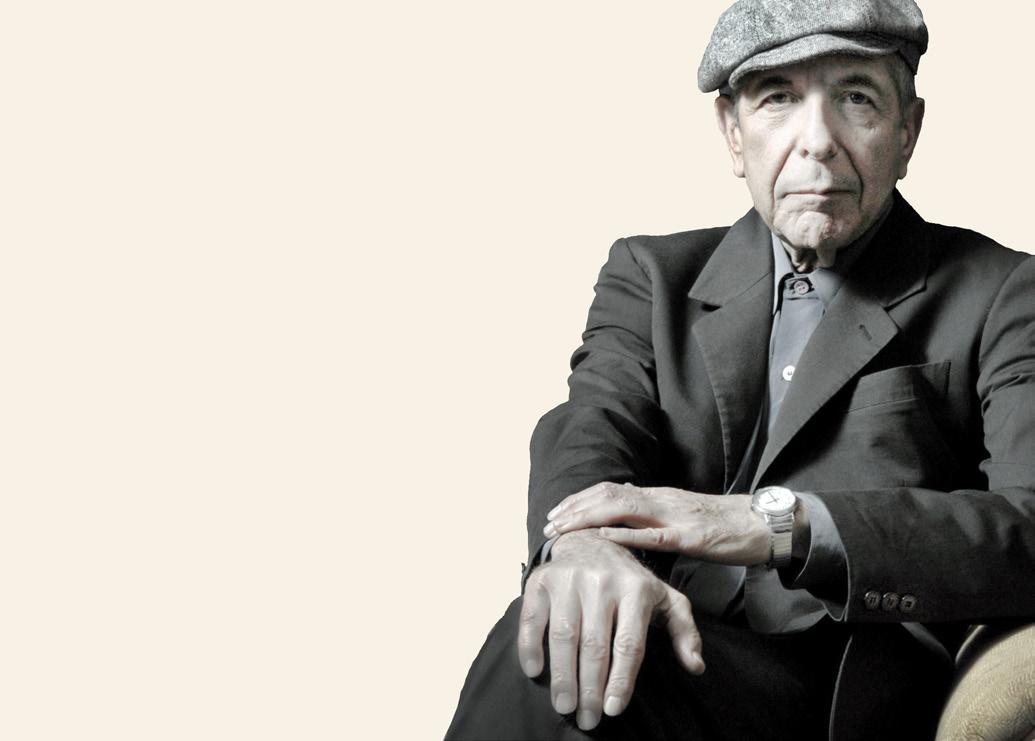
Cover image © ČTK/AP/Aaron Harris, 2016
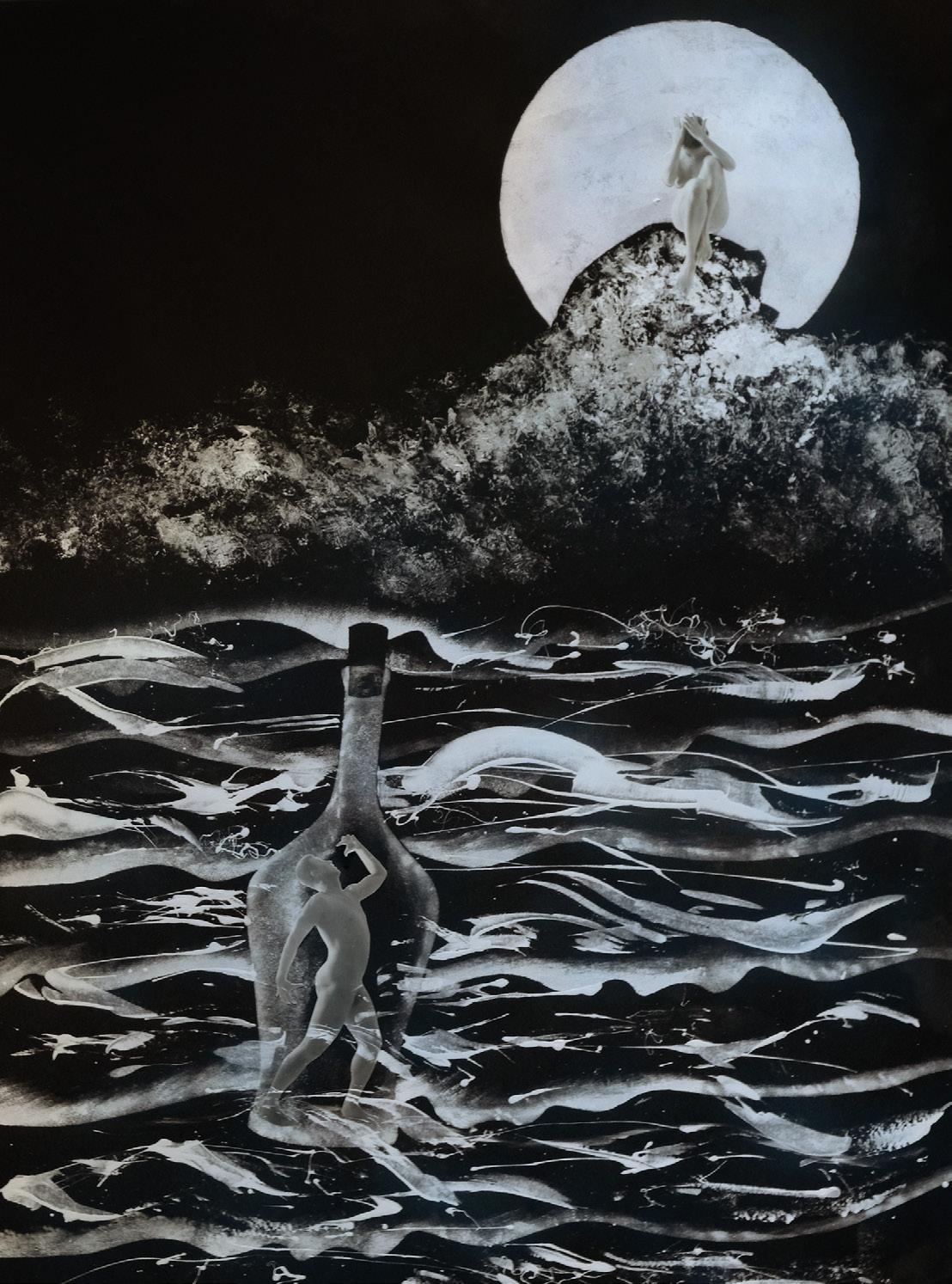
Frontispiece illustration © Evla Vlašičová, 2020
Foreword © Alberto Manzano, 2020
© Palacký University Press, 2020
ISBN 978-80-244-5784-0 (printed version)
ISBN 978-80-244-5787-1 (iPDF)
This work arose from thinking about the literary tradition as described by the Anglo-American modernist writers Ezra Pound and T. S. Eliot. In their view, the tradition of European love-lyrics crystallized in the work of the medieval Occitan troubadours, who represented the cultural and political milieu of the Occitanie of that period and whose work reflected the religious influences of Judaism, Christianity, and Islam. The main subject of their poetry was the worship of a divinized feminine character resembling the Virgin Mary, the Gnostic Sophia, or the ancient Mother Goddess. Their literary preoccupations further flourished in Tuscany, as well as among the German Minnesängers , and at the court of the Sicilian King Frederick II (1194–1250), from where they infiltrated into English literature during the Renaissance. In this period, Classical literature, in combination with troubadour poetry, became the cornerstone of English artistic production. However, it is not so well known that troubadour poetry took as its model the medieval poetry written in Andalusian Arabic.
This enigmatic essence is what makes this literature so relevant as it is the first instance of the synthesizing of religions, mythologies, philosophies, literatures, symbols, and motifs coming from cultures other than our own. Nowadays, it is not surprising that contemporary artists draw on the troubadour poets and that they are even contrasted with them by critics. Such is the case of Leonard Cohen, who, during his career, revealed erudition in medieval poetry and religion and whose work shows many parallels with the work of his Occitan and Andalusian predecessors. For this reason, the book presents a comparison of the texts and motifs present in
their works and refers to another important facet of their œuvre: religion and mysticism. The purpose is to highlight the importance of troubadour poetry in the rise of popular culture in the second half of the 20th century.
This e-book was purchased from vydavatelstvi.upol.cz. Further dissemination is prohibited.
I would like to express my gratitude to my home institution, Palacký University in Olomouc, for its never-ending support, and particularly to Professor Josef Jařab from the Department of English and American Studies for his unfailing encouragement and guidance. Other thanks go to Professor Claude Chastagner from Paul-Valéry University in Montpellier for his burning enthusiasm, support, and friendship; to Professor María Luisa Venegas Lagüéns from the University of Seville, who helped me to settle down in the south; to Alberto Manzano, probably the most prolific connoisseur of Leonard Cohen; and of course, to Estrella and my family, who have always stood guard.
Poetry is the essence of history and of true human culture. Humanistic studies may not be useful for the expansion of the airplane market or in chemical laboratories, but if mankind is to be brought together on the wings of the spirit craving beauty and wisdom, they are the only ones which can achieve that goal and let us hope that a modest niche will be reserved for them in post-war educational programs.
Alois Richard Nykl (1885–1958)I met Jiří Měsíc in Barcelona in May 2015. From the first moment, I was struck by his broad and deep knowledge of Leonard Cohen’s work, especially its religious and spiritual dimension. During our conversation, we both agreed that the album Recent Songs (CBS, 1979) was our favorite, even though it is probably Cohen’s least-known album. This is because we consider that Recent Songs integrates all the elements that characterize his complete work created over a period of sixty years.
The album is a record of a personal recovery released after Cohen’s break-up with Suzanne Elrod, the mother of his children, Adam and Lorca. It also reveals the beginning of a spiritually oriented work, undoubtedly thanks to the company of the Zen master Roshi from the monastery at Mount Baldy in California, where Cohen stayed from 1971 to 1979 in solitude and silence studying the “matters of the heart.” All his efforts of that period culminated in the creation of one of the most beautiful albums in the history of modern popular music, interweaving the secular and the sacred and reflecting the epic life of the singer.
I strongly believe that Recent Songs is constructed on the same pillars as those that Jiří digs out in his study, and which spotlights the tradition of the European love song containing the religious influences of Judaism, Christianity, and Islam, especially their mystical branches. His efforts are more than justified, since the Abrahamic religions exerted a great influence on the work of Leonard Cohen, and it is precisely on Recent Songs that the singer celebrates the memory of two Persian poets, Attar (1145–1221) and Rūmī (1207–1273), who were the greatest poetic exponents of Sufism (Islamic mysticism), and the
authors of two fundamental works: The Conference of the Birds and The Masnavi, respectively. Their metaphors impregnated two of the tracks on Recent Songs, “The Guests” and “The Window,” as they had already influenced several of the poems in Cohen’s first two books: Let Us Compare Mythologies (1956) and The Spice-Box of Earth (1961).
The first of these songs, “The Guests,” reveals its inspiration in an ode written by Jalāl ad-Dīn Muhammad Rūmī, translated from Persian by one of the great authorities on the Islamic world, A. J. Arberry, professor of Arabic at Cambridge University, which reads: “Little by little the drunkards congregate, / little by little the wine-worshippers arrive. / The heart-cherishers coquettishly come along the way, / the rosy-cheeked ones are arriving from the garden. / Little by little from the world of being and not-being / the not-beings have departed and the beings are arriving. / All with skirts full of gold as a mine are arriving / for the sake of the destitute. / The lean and sick from the pasturage of love / are arriving fat and hale. / The souls of the pure ones, like the rays of the sun / are arriving from such a height to the lowly ones. / Blessed is that garden, where, for the sake of the Mary’s, / new fruits are arriving even in winter. / Their origin is grace, and their return is grace; / even from the garden to the garden they are coming.”
The reference to the Virgin Mary is extremely revealing, given that Sufism shows a great proximity to Christian monasticism, whose members have always regarded Sufi spirituality with great interest. Jiří Měsíc rightly develops this concept in his work, as we see it reflected in numerous poems and songs by the Canadian bard.
With regard to Rūmī’s poem, Cohen’s lyrics maintain a very high degree of fidelity to the original, although, as is common with other poetic adaptations that he produced, his song acquires other meanings. From my point of view, the singer incorporated the theme of the Christian Passover and the Last Supper into it when he wrote:
“And here they take their sweet repast / While house and grounds dissolve / And one by one the Guests are cast / Beyond the garden walls.” The figure of Jesus Christ is evoked further when Cohen doubts God’s design: “And all go stumbling through that house / In lonely secrecy / Saying, ‘Do reveal yourself’ / Or, ‘Why hast thou forsaken me.’” His text insinuates that the arrival of the souls in the world takes place in the same Biblical Eden, “the garden,” as in Rūmī’s poem, which the singer corroborated when he introduced the song during the presentation tour of the album in Munich in 1979 for the German TV: “‘The Guests’ is a song about how a new soul comes into the world looking for the feast, feeling completely separated from everything, feeling isolated and in exile, and how the great author of this dismal catastrophe, this ‘Valley of tears,’ pulls each of these souls into the feast and into the banquet and no one knows where the night is going and no one knows why the wine is flowing, oh Love I need you, I need you, I need you, I need you now.”
Nevertheless, despite the fact that Cohen’s text contains subtle differences from Rūmī’s original poem, the similarities are evident: “One by one the Guests arrive / The Guests are coming through / The open-hearted many / The broken-hearted few,” wrote Cohen, as opposed to: “Little by little the drunkards congregate, / little by little the wine-worshippers arrive. / The heart-cherishers coquettishly come along the way, / the rosy-cheeked ones are arriving from the garden.” It can be seen that Cohen reproduces the image of Rūmī’s “wine-worshippers,” not only in the musical rhythm of the Sufi poem, which is apparent, but also in its lyrics and, especially, in the chorus of the song: “And no one knows where the night is going / And no one knows why the wine is flowing / O love, I need you, I need you, I need you / I need you now.” Finally, when the song is coming to an end, Cohen subscribes to the inevitable catastrophe of the passage of the souls through the world, and what was initially foreseen as a joyful
paradisiacal celebration becomes a tortuous Calvary where human weakness makes the guests repeat the whole cycle: “One by one the Guests arrive / The Guests are coming through / The broken-hearted many / The open-hearted few.”
There is a curious anecdote that sheds further light on the influence that Rūmī exerted upon Cohen and, in reverse, that Cohen exerts on the Sufis of the Mevlevi Order founded by Rūmī’s son, Sultan Veled and Husameddin Chelebi, in the Turkish city of Konya. It was only after the release of the album that the members of this order started to dance to the song and included it into their repertoire. For Cohen, this meant one of the most important moments in his life in terms of work, as he would admit in an interview with Elizabeth Boleman-Herring from 1988: “‘The Guests’ was the nicest song that ever happened to me. The music I’d had for a long time, unusually, but I didn’t know what it was for. And then there was this girl who went to Persia to study with the Sufi order of the Whirling Dervishes. She became entitled to teach the dance and went back to America and began to teach. To be ‘entitled’ to teach the dance, you must not only have mastered it, you must have mastered its implications. So, I’d written my song, and this girl had begun to form Sufi groups and, when she was in the Middle East, she’d formed an association with a Sheikh who was interested in her personally. After she’d been teaching for a couple of years, this man came to America to review the progress of the various Sufi groups and he told her his own were dancing to a song written by a Westerner. And she asked what song. And he said, ‘The Guests’—it has the spirit of Rūmī in it.”
“The Window,” the second song on Recent Songs to contain Sufi references, is probably inspired by Rūmī’s mystical verses: “Die now, die now, and come forth from this cloud; / when you come forth from this cloud, / you will be radiant full moons. // Be silent, be silent; / silence is the sign of death; / it is because of life that you
are fleeing / from the silent one.” However, in Jiří’s broad analysis we discover another source of inspiration, and that is Christian mysticism. Both possible sources are echoed in the first verse in the second stanza: “And come forth from the cloud of unknowing / And kiss the cheek of the moon / The new Jerusalem glowing / Why tarry all night in the ruin.” Jiří claims that this could have its origin in the book The Cloud of Unknowing , an anonymous mystical devotional work written in medieval English. However, it is clear that there were many texts that Cohen had studied before writing the song, and all of them were mystical by nature. For example, the verse that reads “The new Jerusalem glowing / Why tarry all night in the ruin” is, without any doubt, a reference to the messianic vision of Jerusalem that is exposed in The Book of Revelations 21:23: “the city has no need of sun or moon, for the glory of God illuminates the city.” Here, it is important to note that Leonard’s Hebrew middle name, Norman, means “the rebuilder of Jerusalem,” the one who would restore the brightness that is beyond this earth. The singer finally rediscovered this Jerusalem through Zen Buddhism and began singing about his liberation and the sacrifice of the ego in a more integrated sense of being. This fact was even reinforced in an introduction that Cohen offered when presenting the song during the promotional tour of the album in Munich for the German TV: “‘The Window’ is a kind of a prayer to bring the two parts of the soul together, just as you join your two hands together to pray.”
Thus, we observe that “the window,” whose image always had a transcendental meaning in Cohen’s work, as a place of light and observation, as a mirror and as a border between two different realities, between the internal and the external, is now, in this song, treated for the sake of the union of the two fragmentary parts of the human being, disconnected and isolated from each other since their mortal birth. This struggle with dualism, which the poet’s texts had not ceased to
reveal for decades, is absolutely clear in the verse “tangle of matter and ghost.”
In the same way, “The Window” shows some influence of the Kabbalistic text par excellence, The Zohar, also known as the Book of Splendor. From the garden of its mystical symbolism, Cohen rescued the image of the rose and its thorns, as well as the intention to eliminate dualism. For such a purpose, Zohar speaks of an ascending journey to reach the Beloved, “The High Holy One.” The adept, called the lover, climbs the steps, probably those of Jacob’s Ladder, as mentioned by Jiří, though they are covered with thorns. Nevertheless, he continues his journey to reach the Highest, using the thorns from the Zohar, which Cohen employed on his poetic palette altogether with other Jewish religious motifs and residues of the Rosicrucians and the Theology of Reconciliation, in order to paint a highly syncretic post-modern work.
“Then lay your rose on the fire / The fire give up to the sun / The sun give over to splendor / In the arms of the High Holy One / For the Holy One dreams of a letter / Dreams of a letter’s death / O bless the continuous stutter / Of the Word being made into flesh,” the song continues. Although in these verses Jiří reads a moment of the constant recreation of a human being, I would argue that “the death of a letter” may refer to the elimination of the vowel “o” from the word “God,” whose pronunciation is prohibited in Kabbalah out of respect for the Unnamable. Therefore, the Kabbalists agree that the name of the Highest will be written as “G-d” in English, and Cohen, with a certain frequency, especially in his last books of poems and booklets accompanying his records, wrote the Word in the same way.
As for the references to the tradition of European love poetry, the album contains the song “The Traitor,” which begins with the verses: “Now the Swan it floated on the English river / Ah, the Rose of High Romance it opened wide.” In it, Cohen put together medieval
symbols: the Swan, the Rose, the Romance, the Dreamers, and the Men of Action, among others, and wrote a lyric that adopts a structure typical of books of chivalry, a literary genre in prose reminiscent of the medieval Latin liber, which was very popular in Spain, Portugal, France, and Italy in the 16th century, in a perfect symbiosis with a modern language and, as usual, containing “Cohenian” poetics impregnated with irony and transubstantial visions of love.
Like the medieval troubadours of the present study, the hero of this song is called to war to defend his ideals, but he becomes a victim of loving temptation, perhaps of carnal temptation, which drains his vital energy. The author explained that the song “deals with the feeling of having betrayed a mission that you were to fulfill,” which was certainly to become a Jewish priest and prophet, as Jiří argues. However, Cohen’s work presents a series of defeats and the song even points to the city of Barcelona, the last enclave of resistance against Francisco Franco during the Spanish Civil War (1936–1939).
Cohen’s fascination with the duty of the warrior was further revealed in the documentary Leonard Cohen: I’m Your Man (2005) where he commented on the sacred text of Hinduism: “There is a beautiful moment in the Bhagavad Gita, Arjuna. The general. The great general. He’s standing in his chariot. And all the chariots are readied for war. And across the valley, he sees his opponents. And there he sees not just uncles and aunts and cousins, he sees gurus, he sees teachers that have taught him; and you know how the Indians revere that relationship. He sees them. And Krishna, one of the expressions of the deity, says to him, ‘you’ll never untangle the circumstances that brought you to this moment. You’re a warrior. Arise now, mighty warrior.’ With the full understanding that they’ve already been killed, and so have you. ‘This is just a play. This is my will. You’re caught up in the circumstances that I determine for you. That you did not determine for yourself. So, arise, you’re a noble warrior. Embrace your destiny, your
fate, and stand up and do your duty.” Obviously, Cohen assumes the unquestionable reality that whatever our intentions or even whims are, we are under the power of a Higher Force that finally governs our acts. Cohen’s venture into various religions on the album is further enriched by Zen Buddhism. The song “The Ballad of the Absent Mare” was written at the Mount Baldy monastery after Cohen had read a 13th-century commentary on “Ten Ox-Herding Pictures,” a series of engravings representing the spiritual path of Zen Buddhism. The engravings are sometimes called “Ten Bulls,” and served as inspiration for another singer-songwriter, Cat Stevens, and his album Catch Bull at Four (A&M/Island, 1972). It was Cohen’s spiritual master, Roshi, who introduced the singer to the engravings. Traditionally, the “ten bulls” represent ten steps in the spiritual revelation of the self, and the accompanying text emphasizes the search through “the pastures of the world” for the reunification of the “true self,” expressed by the capture and taming of the bull. Cohen, however, in another example of poetic license, transforms the bull into a mare, and the song becomes a kind of country ballad describing the love between a cowboy and a mare: “So he binds himself to the galloping mare / And she binds herself to the rider there / And there is no space but there’s left and right / And there is no time but there’s day and night / And he leans on her neck and he whispers low / Wither thou goest, I will go / And they turn as one and they head for the plain / No need for the whip, no need for the rein.”
Once again, and despite it being a text that originated in Zen Buddhism, the poet incorporated a biblical verse from the Book of Ruth 1:16 into it: “Wither thou goest, I will go / And where thou lodgest, I will lodge / Thy people shall be my people / And thy God my God,” which Cohen often performed at the end of his concerts, particularly at his concert at the O2 Arena in London in 2009, later released on DVD as Live in London. The song is based on a musical composition
written by Guy Singer under the title “Whither Thou Goest” (1954) and was covered, among others, by Les Paul and Mary Ford, Perry Como, Bing Crosby, George Morgan, and Mahalia Jackson.
Finally, there is the song “The Gypsy’s Wife,” which draws on Federico García Lorca’s play Bodas de sangre (1931). Is it a mere coincidence that the main protagonist of this tragedy is called Leonardo? And that he is similar to that skinny “gypsy thief” wearing a rose between his teeth who appeared in the song “Famous Blue Raincoat”, included on the album Songs of Love and Hate (CBS, 1971)? In this context, it is worth remembering that it was after the reading of a selection of poems by Lorca that Cohen discovered the world of poetry. Perhaps, in a kind of irrational identification, because he believed that in Lorca’s words he recognized his own gypsy blood, since Cohen’s ancestors, who belonged to the Eastern Ashkenazi Jews, had shared territory with the “Roma” people of Poland, Lithuania, Ukraine, Russia, and even Armenia since the early fifteenth century. Therefore, it is not unreasonable to think that both ethnic groups could have mixed: “I sing this for the Jews and for the Gypsies / And for the smoke that they made,” sang Cohen in the song “Please, Don’t Pass Me By (A Disgrace),” included on the album Live Songs (CBS, 1973), with clear references to the Nazi genocide suffered by both ethnic groups. In 1978, before she died, Cohen’s mother Masha, who was of Lithuanian origin, asked her son: “Why don’t you play some of those songs we used to sing together? Why don’t you find a violin and make songs like the ones we used to sing?” After recording the album, the Canadian bard would evoke her words in other interviews: “It was my mother who reminded me of the kind of music she liked, the Russian songs we sang together when I was a child and a teenager, and that stuck in my head.” Perhaps encouraged by his mother, Cohen employed the Armenian violinist Raffi Hakopian and a Slavic lute player, John Bilezikijan, to play the song “The Gypsy’s Wife” and thus give it