WORKS
I. HEAVY LIFT
II. INTERVENTIONS OF SERVICE
III. ADAPTIVE SYSTEMS
IV. REMNANTS ALIVE
V. NEST
VI. MASKED FRAME
- 030
- 038 039 - 046 047 - 054
I. HEAVY LIFT
II. INTERVENTIONS OF SERVICE
III. ADAPTIVE SYSTEMS
IV. REMNANTS ALIVE
V. NEST
VI. MASKED FRAME
- 030
- 038 039 - 046 047 - 054
Northeastern University’s College of Arts, Media, and Design (CAMD), is quickly outgrowing its current campus footprint. Northeastern’s current institutional master plan includes extensive plans to increase its campus size through a densification model, marking several outdated buildings for demolition and replacement with brand-new academic facilities. However, CAMD has been historically omitted from institutional expansions, leaving much of the college scattered across campus in overflow spaces and outdated buildings.
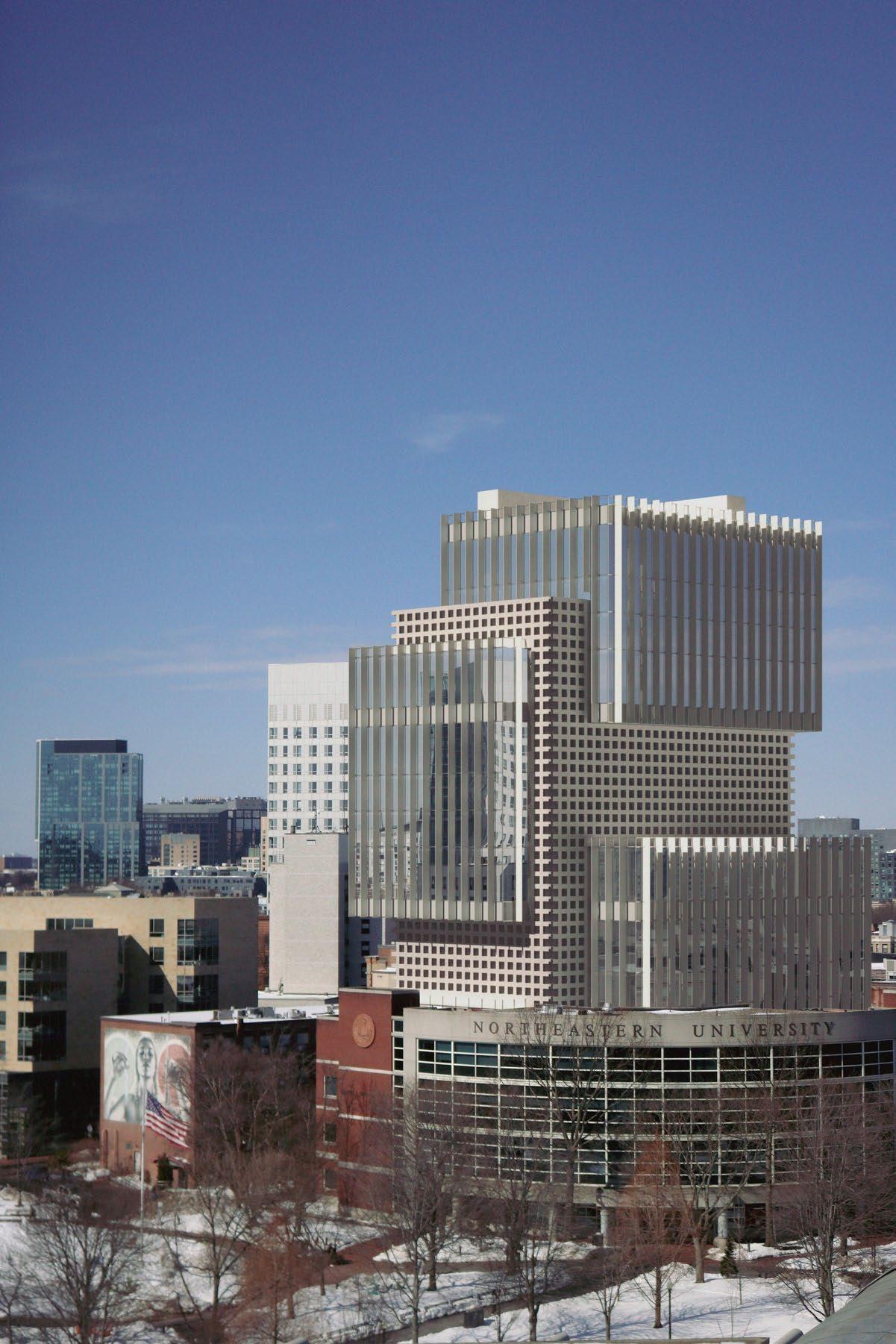
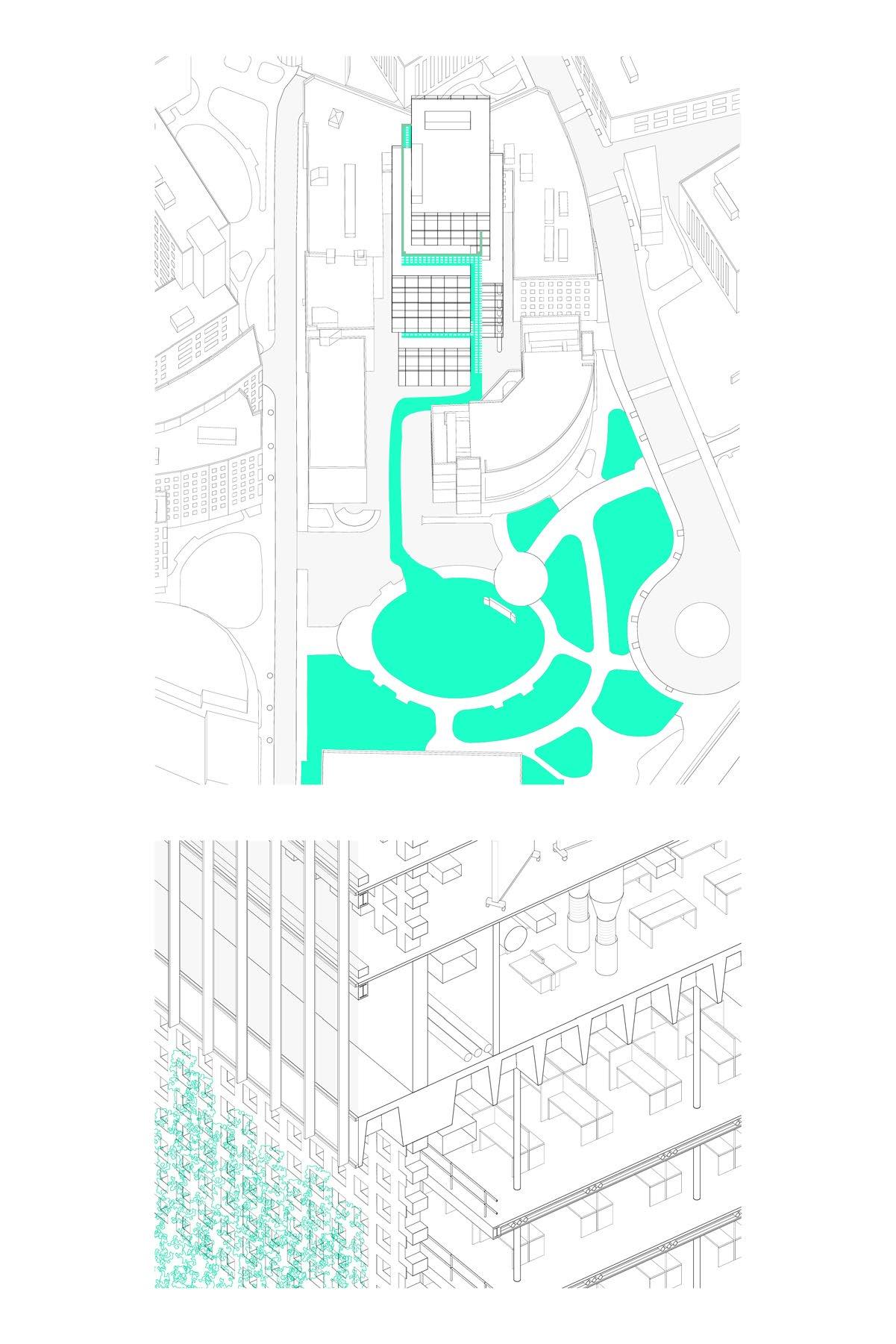
This project follows Northeastern’s trend of vertical campus expansion by proposing a new 12-story tower for CAMD on an existing site in the center of campus. Located opposite Northeastern’s main center for the arts, the site is surrounded by additional educational buildings of various users. The main entrance is accessed directly from Centennial Quad, linking the project to the heart of campus. The ground level remains unprogrammed, and its generous open area allows for large public exhibitions and gatherings.
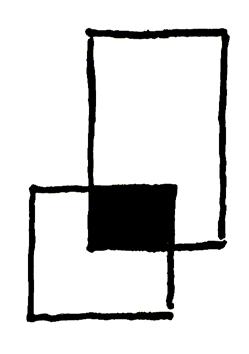
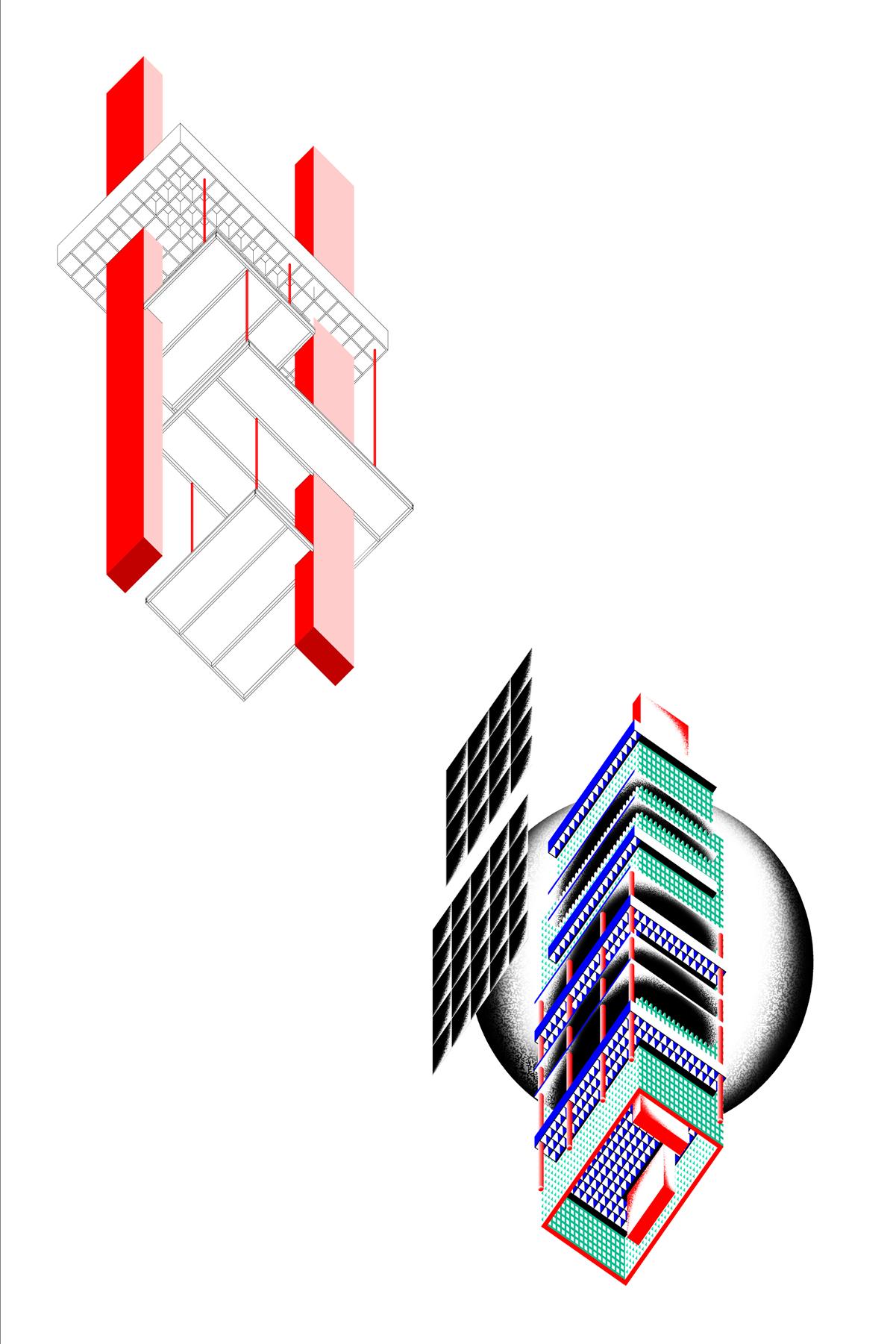
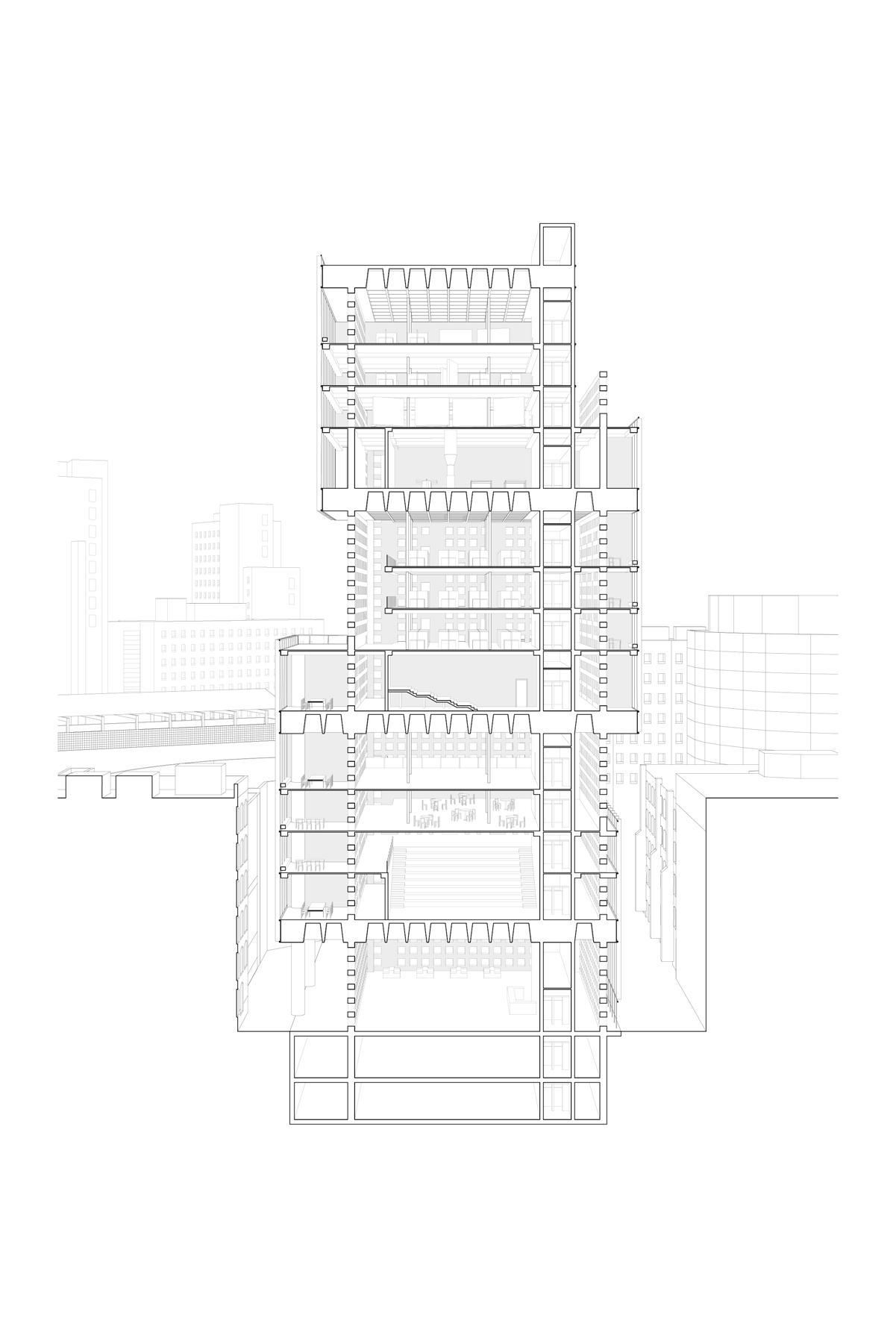
Rising upwards, a simple massing strategy dictates programmatic organization. Four distinct volumes contain key groups within CAMD: performance and digital arts, studio-based art, architecture, and a fourth public volume on the ground level. These volumes intersect at each end, creating dual-programmed areas within the overlapping space. The function of these areas corresponds to a shared need between their two parent volumes, such as a performance hall for the general public and performance arts, and a makerspace for studio art and architecture.
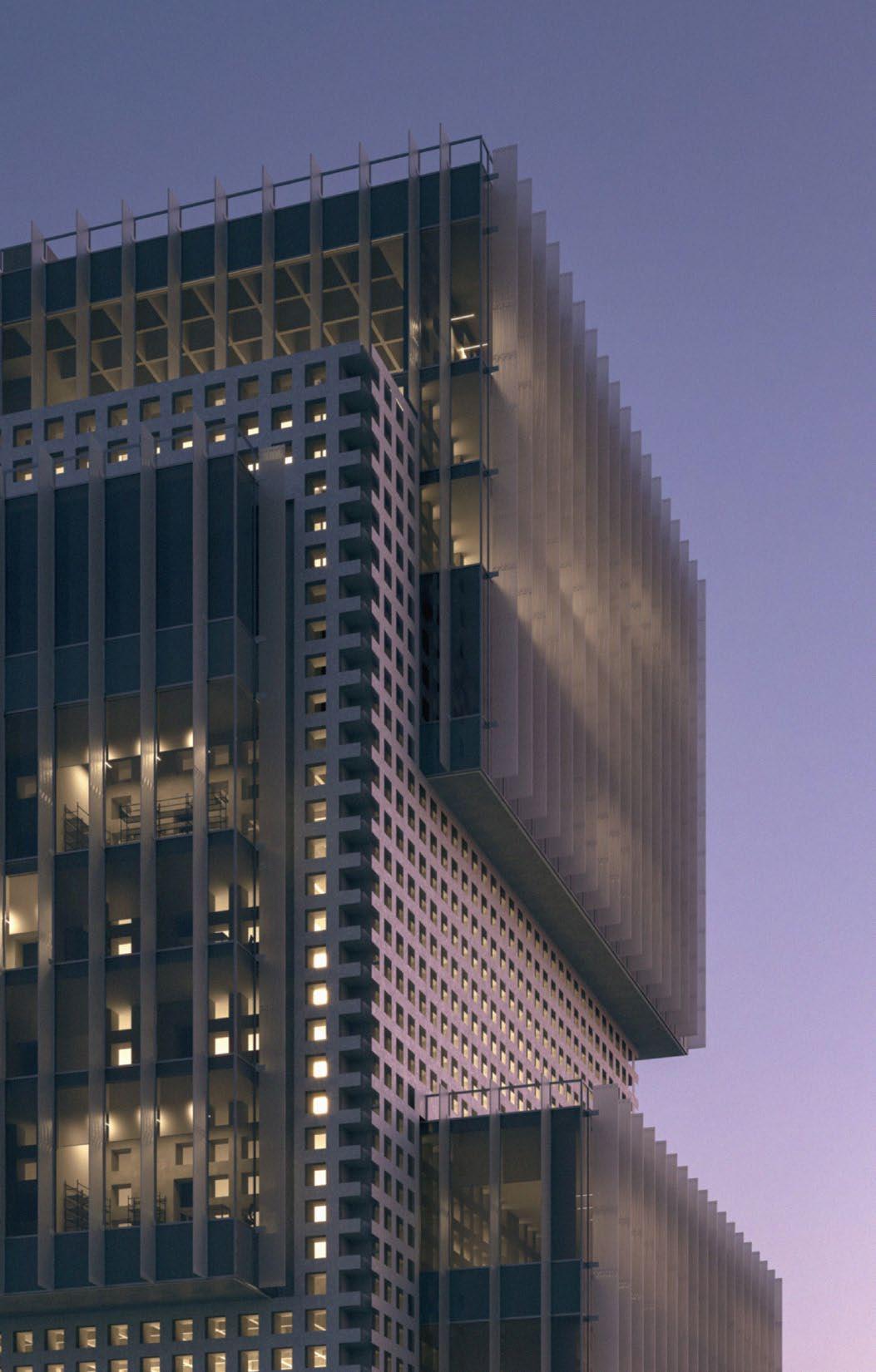
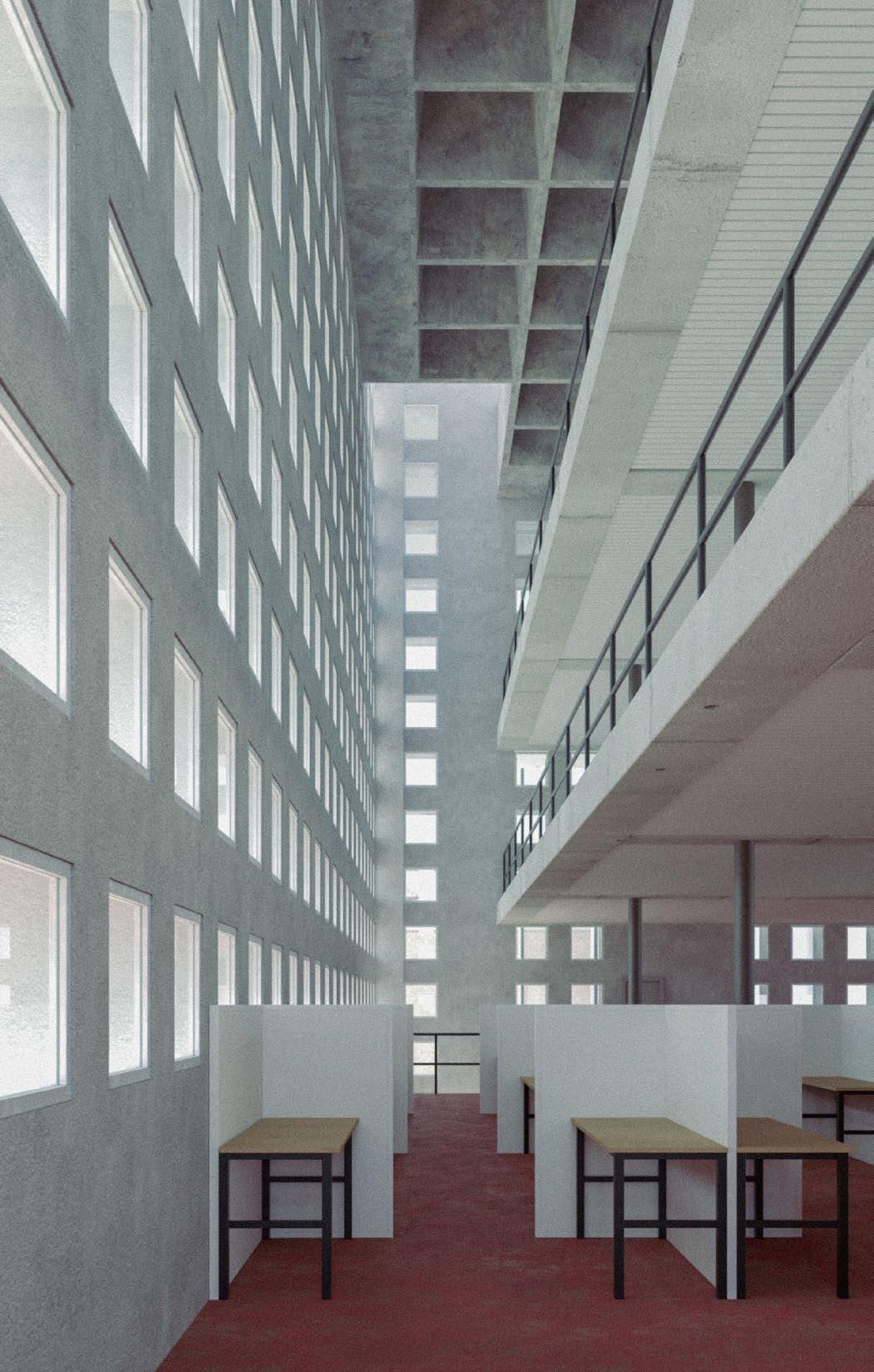
To allow for long spans within each of the shared volumes, the project utilizes a system of semi-suspended floors, each hung from heavy concrete grid slabs. Additional support is provided through a precast gridded shear wall. Shifting each of the four primary volumes reveals the shear wall to the outside in select moments. Here, the wall acts as a brise soleil; the large depth of the window openings prevents the high summer sun from overheating the building, while allowing the low winter sun to reach the inner spaces. The exterior-facing sections of the shear wall are fitted with a separate metal cladding that supports climbing plants, providing additional shade during the summer months. When fully saturated, the wall of greenery towers over its neighbors on Centennial Quad, acting as a placemaker for the central campus lawn from afar.
Through careful architectural and structural integration, the project provides a new long-term home for CAMD and amplifies the college’s presence on campus.
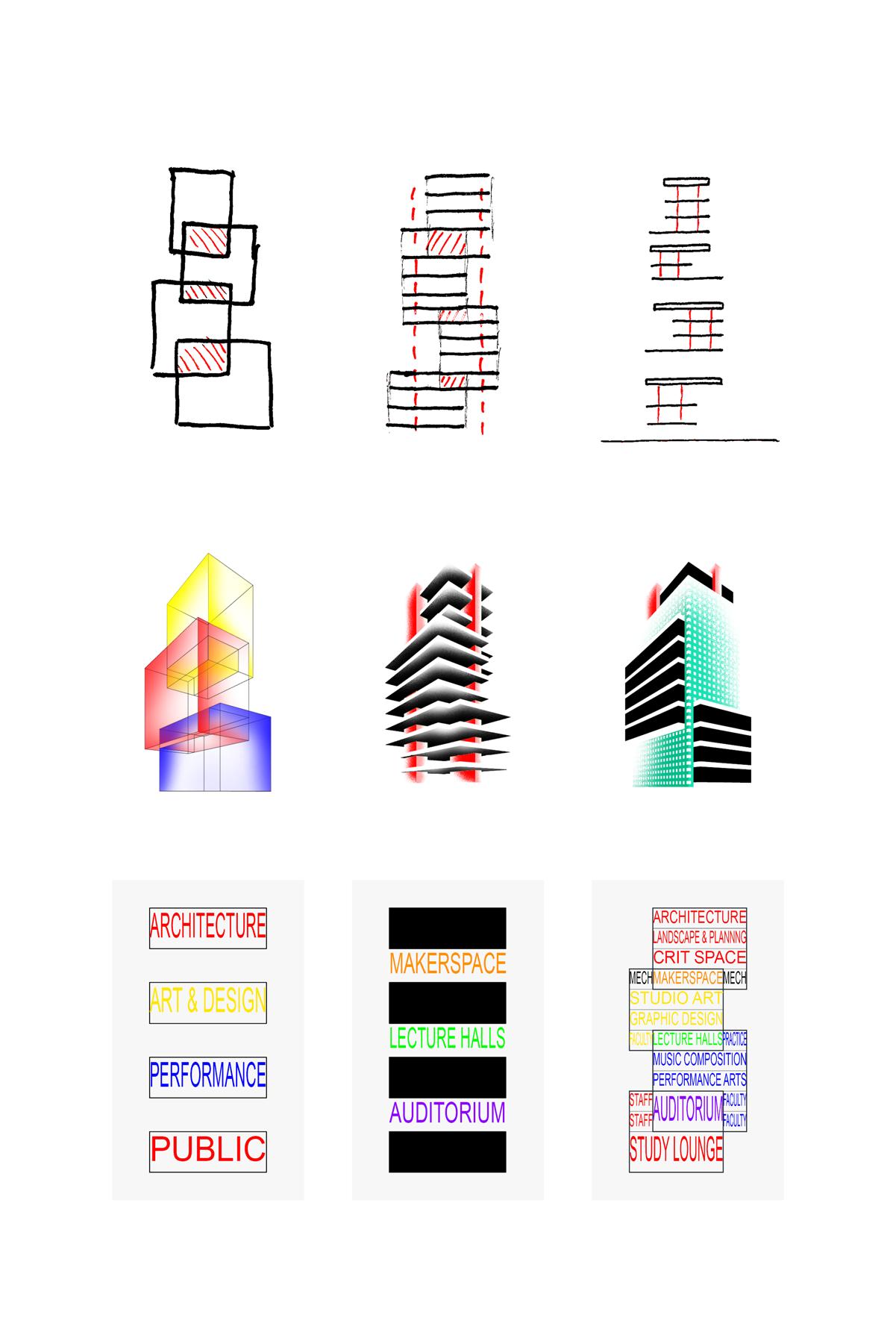
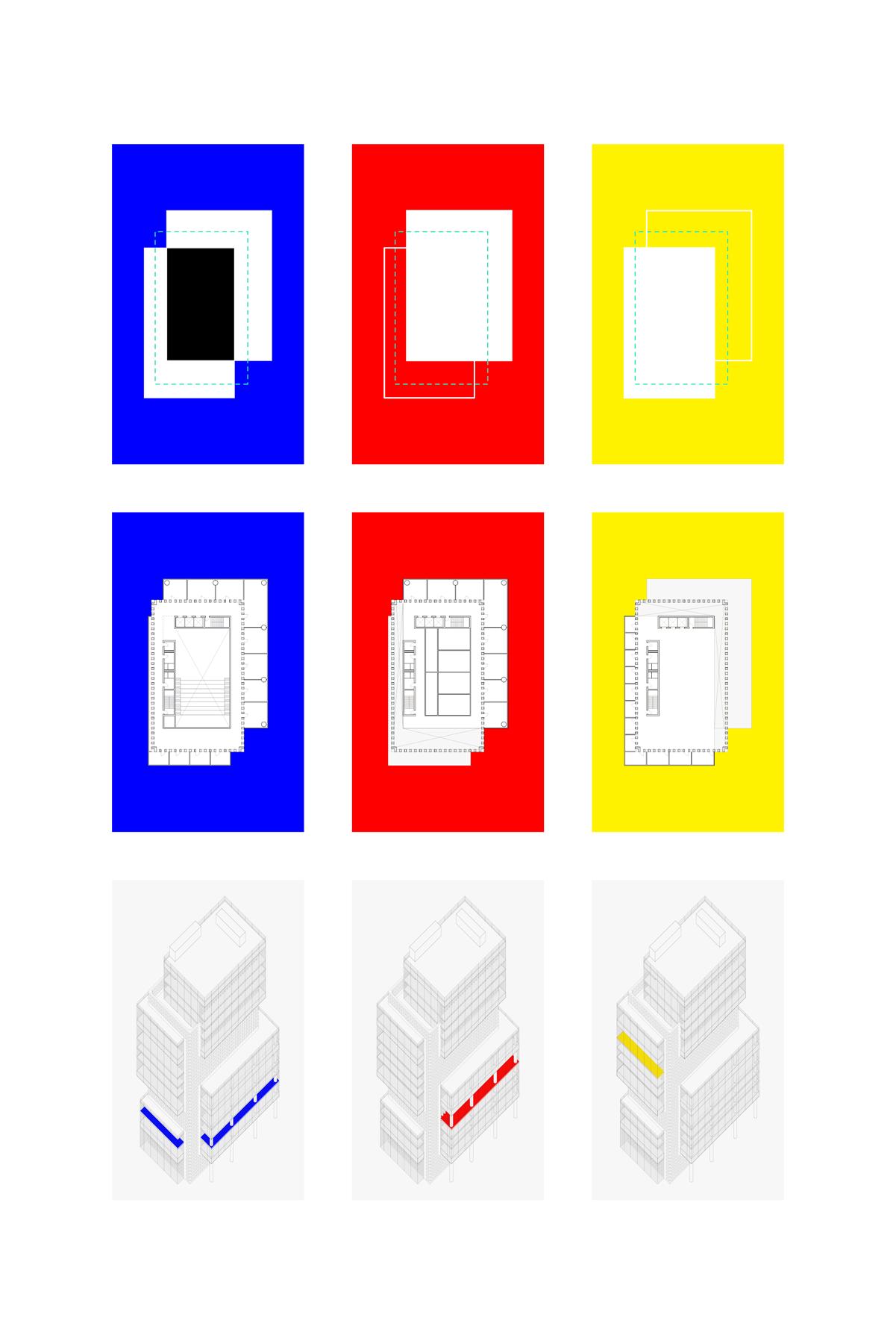
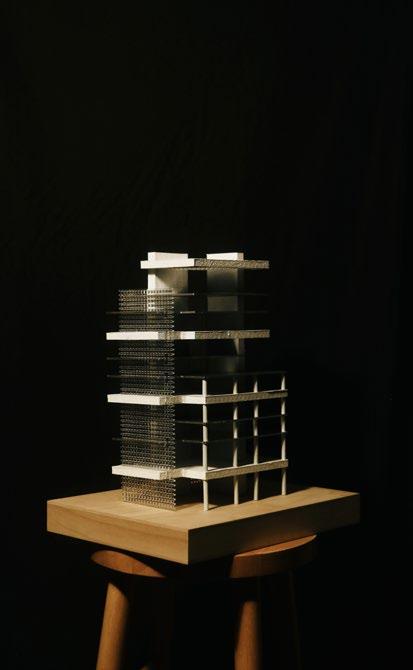
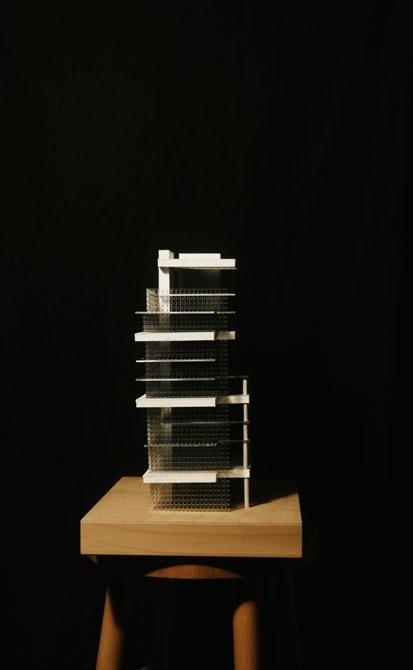
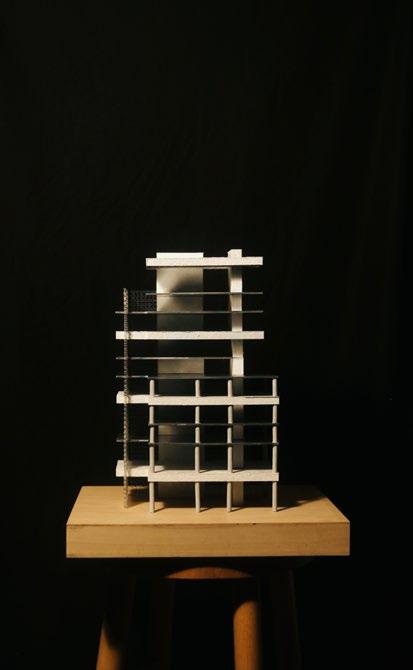

Long spans within each of the shared volumes are achieved through a system of suspended floors.
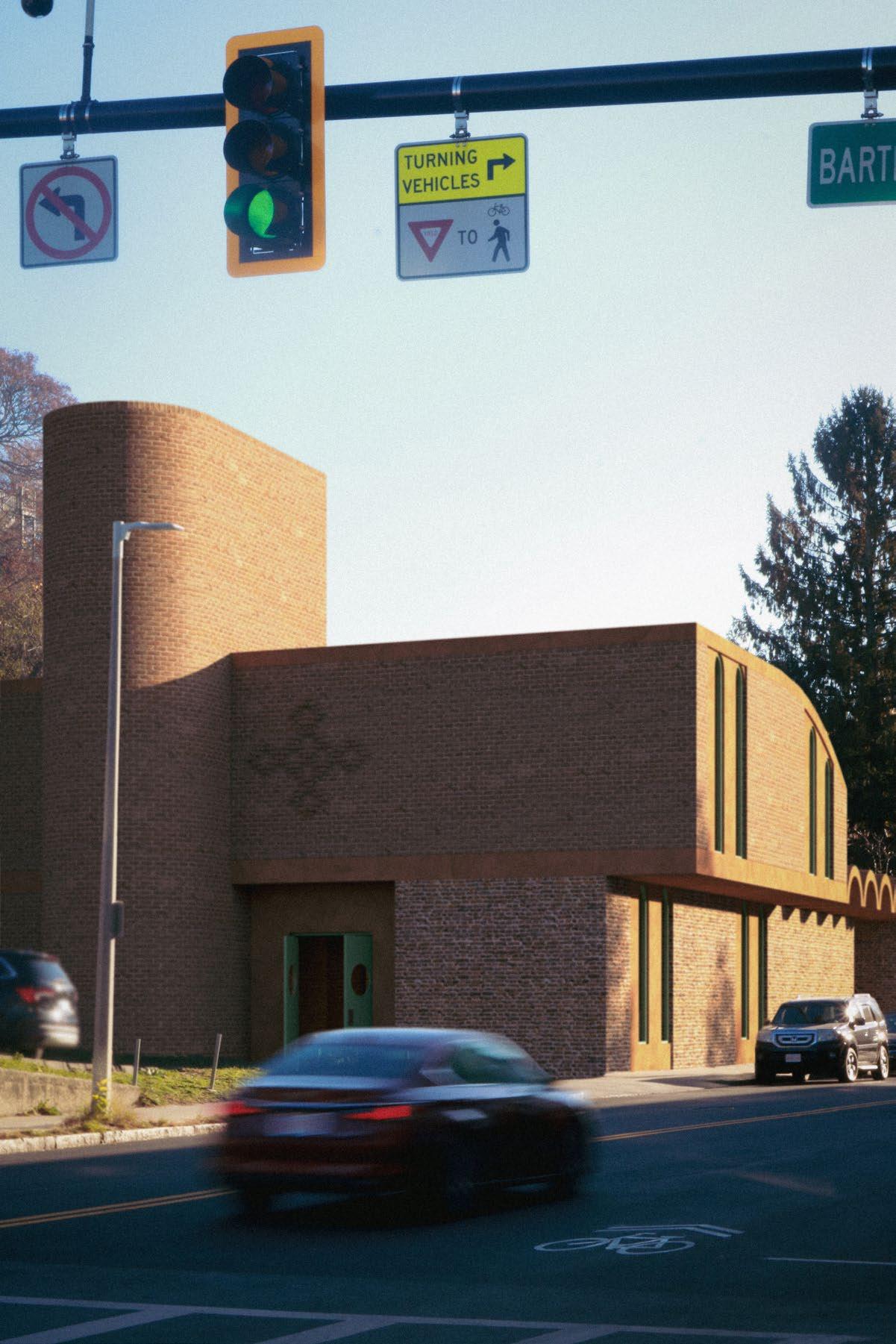

Separating the field of architecture as an academic discipline from professional practice is the relationship between the designer and the client. The role of an architect is akin to that of a translator; one must consider a myriad of different ideas, perspectives, and desires, and synthesize them through the language of design.
This studio course was part of a larger community engagement effort with the Ethiopian Evangelical Church of Boston, involving multiple trips to the site and conversations with community members, guest lecturers, and other consultants throughout the semester. The current church occupies a converted single-story parking garage in the heart of Roxbury, with a 30-foot cliff to the east. The task was to consider a comprehensive proposal for a reimagined church, from issues of building performance to symbolic identity.
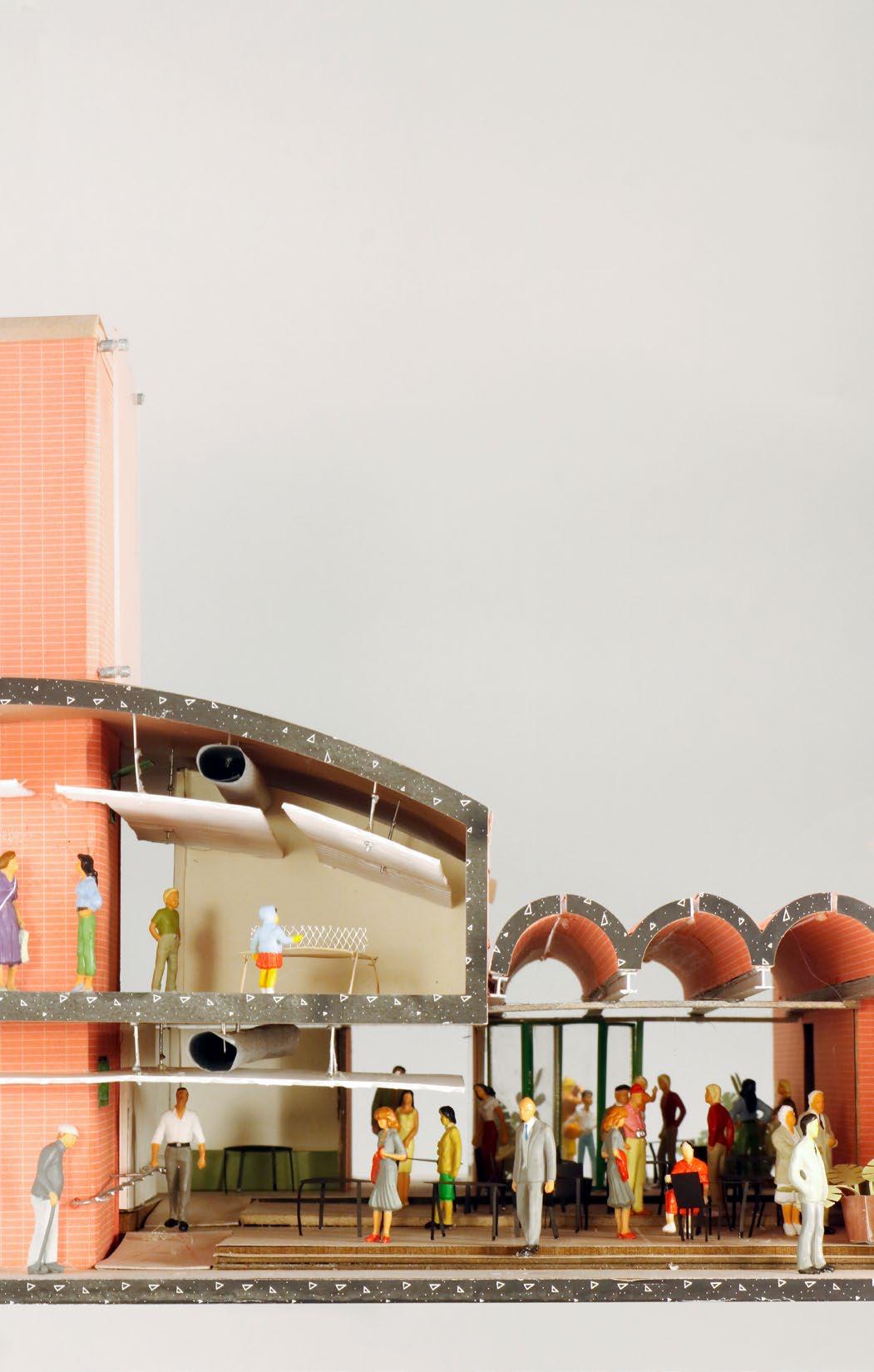
This project proposes a partial demolition and redesign of the church, grounded entirely in input from community members collected during monthly meetings with the congregation. While the existing exterior masonry walls are preserved, the layout of the interior space is entirely reorganized. Preliminary site analysis and conversations with the congregation revealed poor sound insulation as a primary concern for the community, aside from a general lack of available daylight and programmable floor area. The project first attempts to improve spatial efficiency by grouping together blocks of program to enable shared interstitial storage and mechanical space. These interstitial spaces act as additional sound insulation between areas of high user volume within the blocks. The resulting three programmatic zones; worship, classroom, and communal, are then separated from each other by thickened wall assemblies to provide sound insulation where necessary.
The chapel and sanctuary are moved to the south side, using the larger parcel edge to increase their footprint.
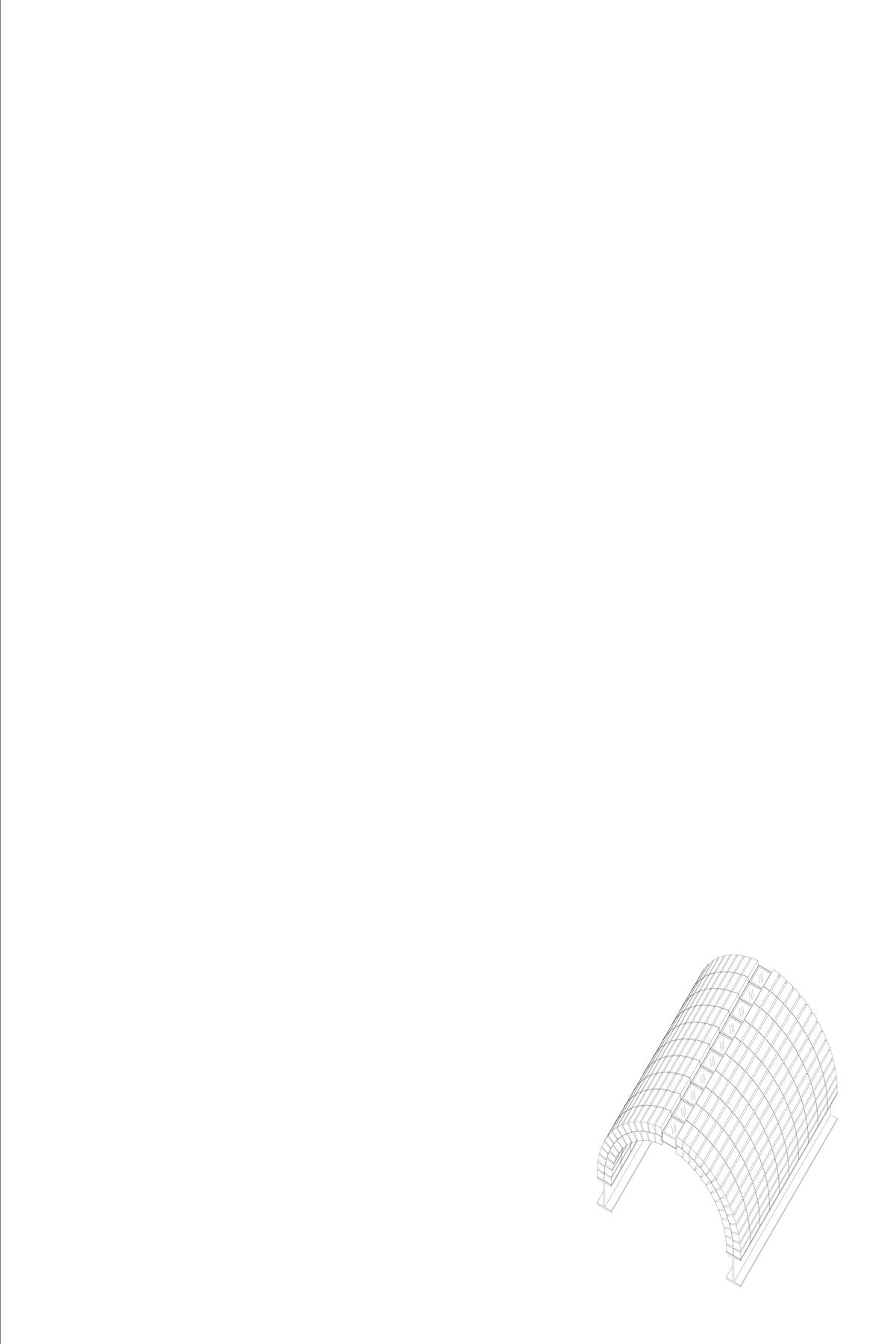
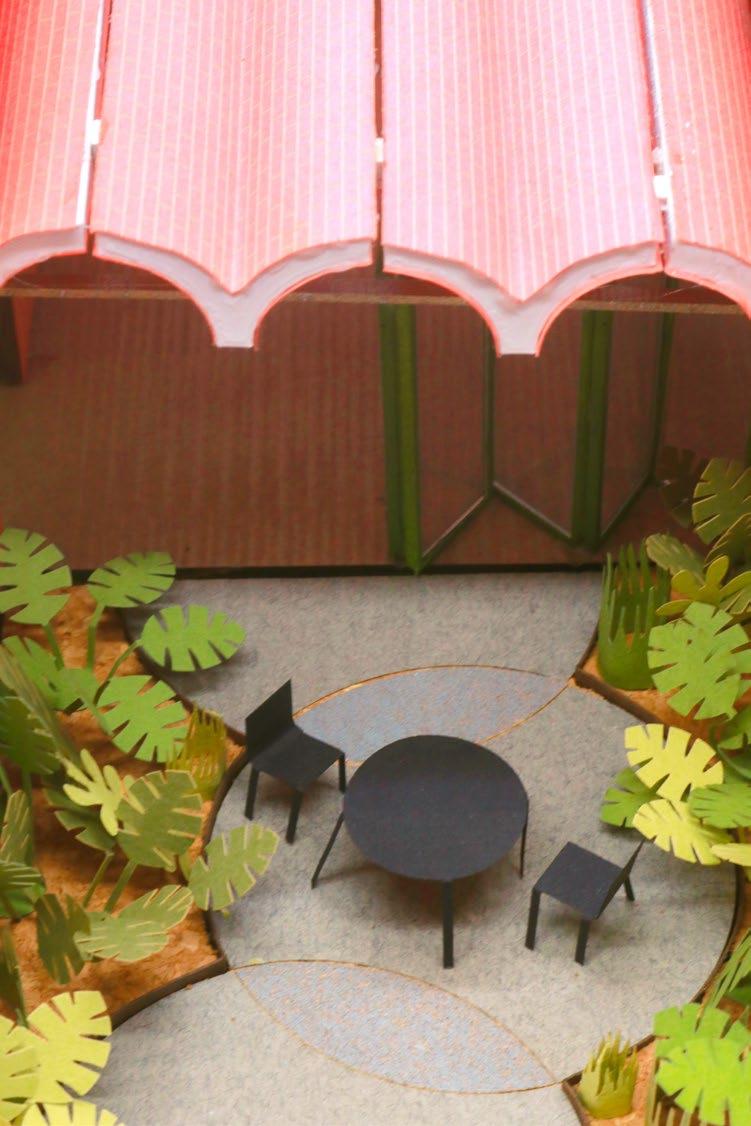
The new Sunday school classroom wing occupies the upper left edge and second floor, away from unwanted noise from church services. The new gathering space fills the center, naturally lit by glass block skylights atop brick barrel vaults, as well as by a small garden in the rear. The garden acts secondarily as a bioswale, collecting extra stormwater runoff from the cliff. The extruded service core houses a solar chimney, while the proposed active systems include a traditional DOAS system and radiant floor slabs.
By considering every aspect of the church’s identity; as a symbolic object, as an institution of worship, service, and learning, and as a space with building performance requirements, this project aims to address key concerns from the congregation and to strengthen a sense of place for a vibrant minority community in Boston.
Design & fabrication in collaboration with Joshua Webb
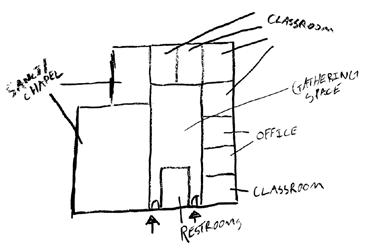
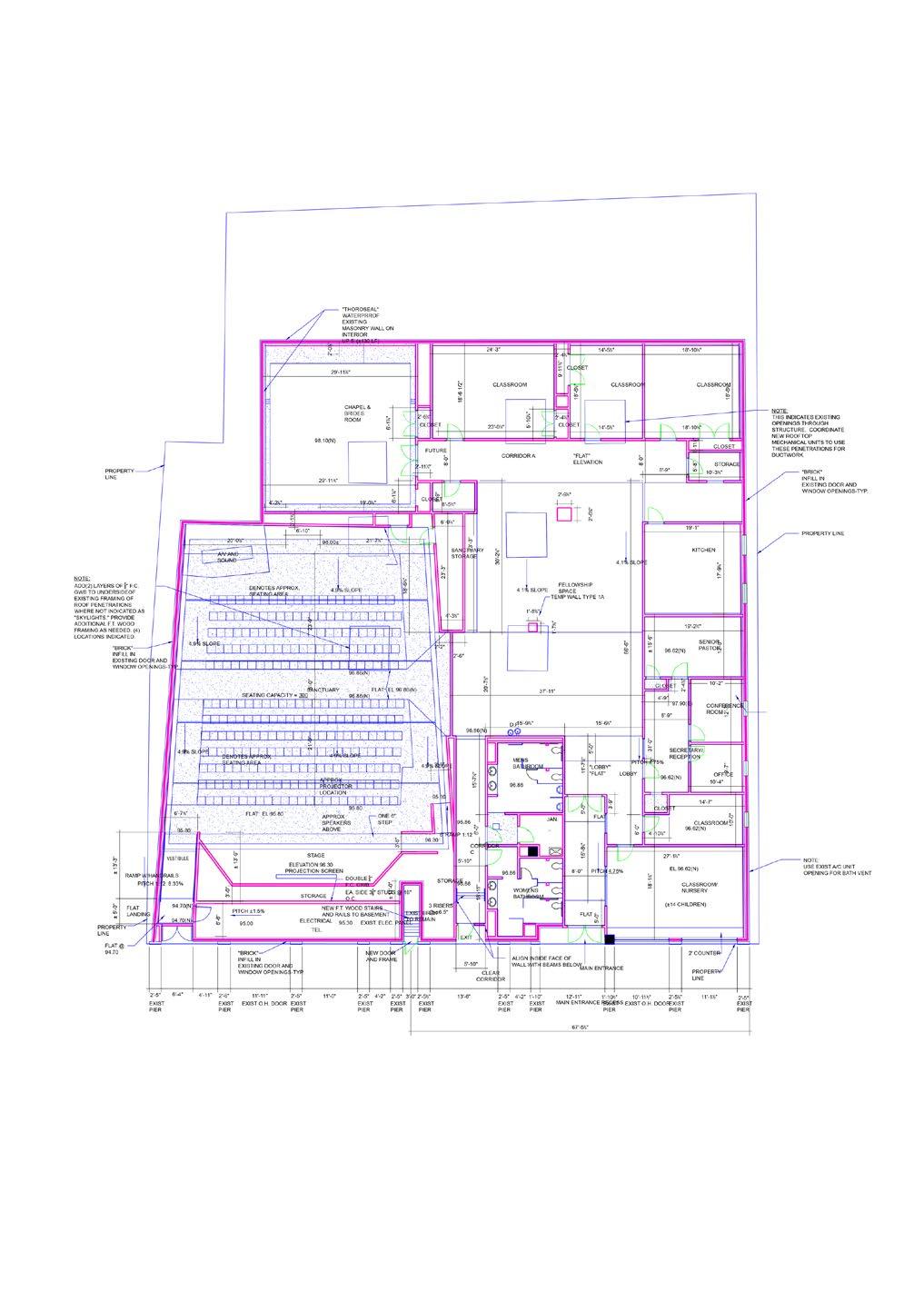
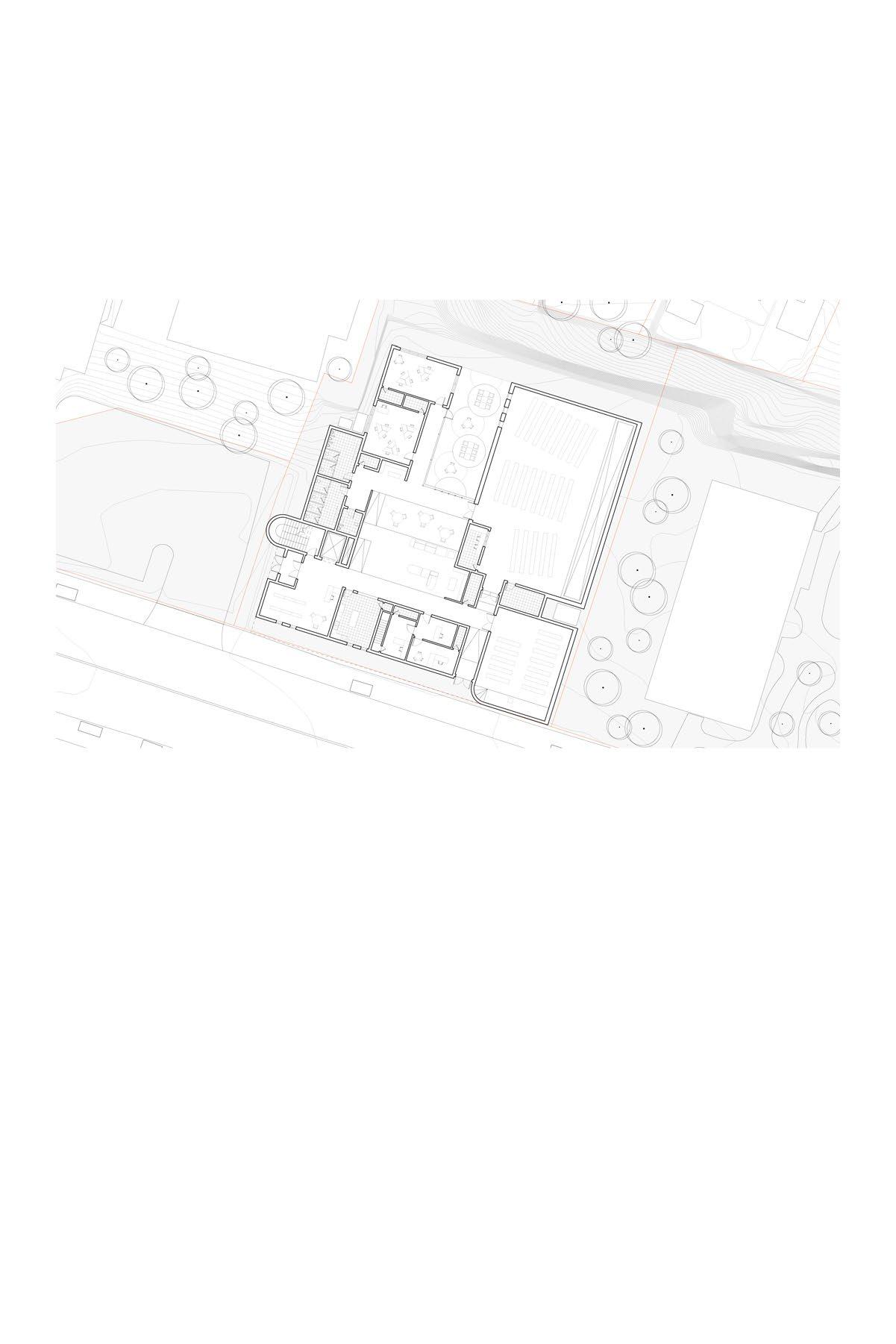
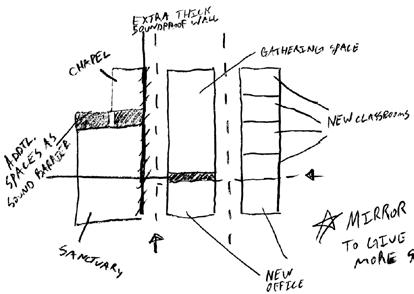
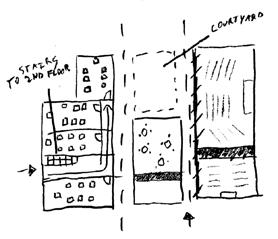
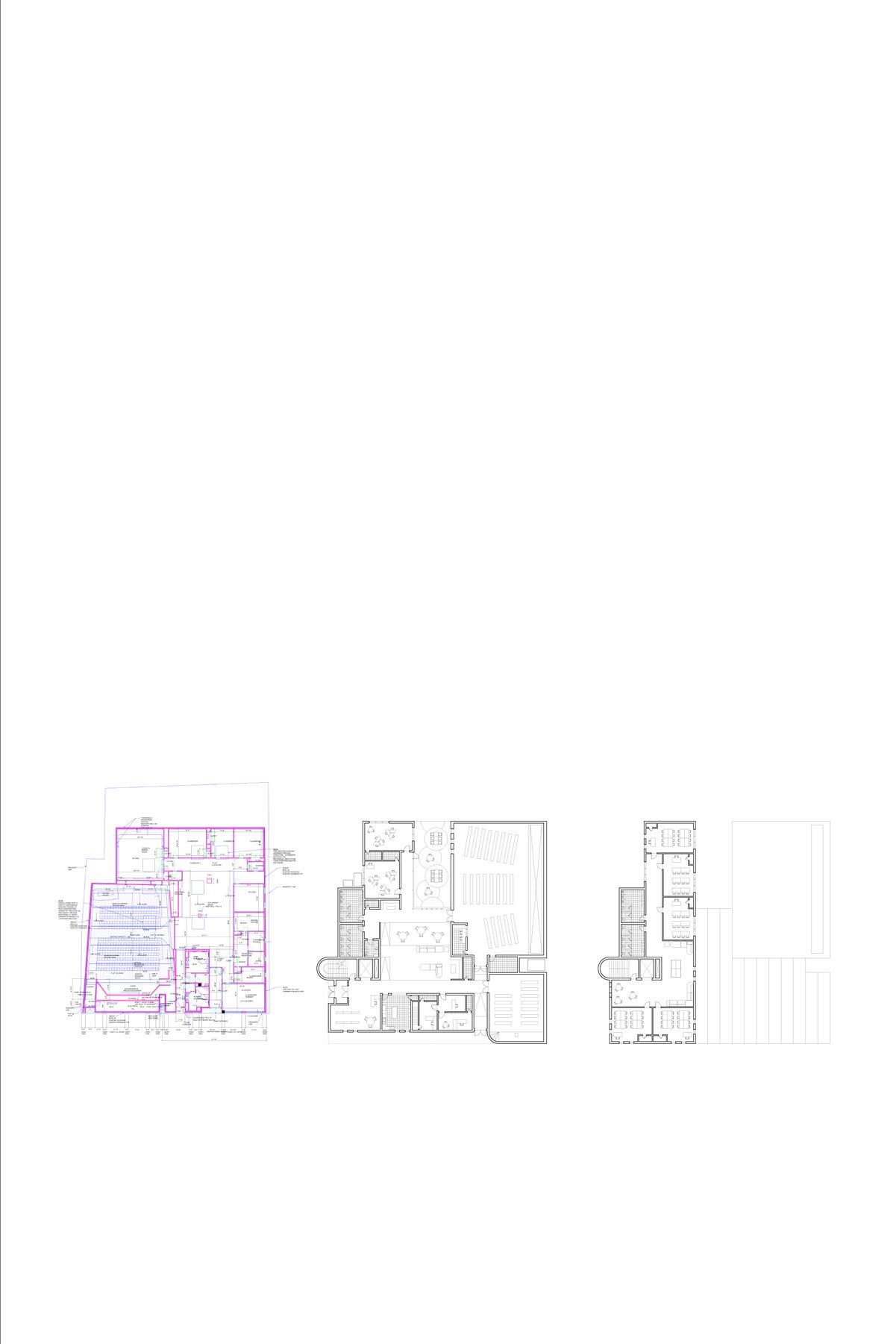
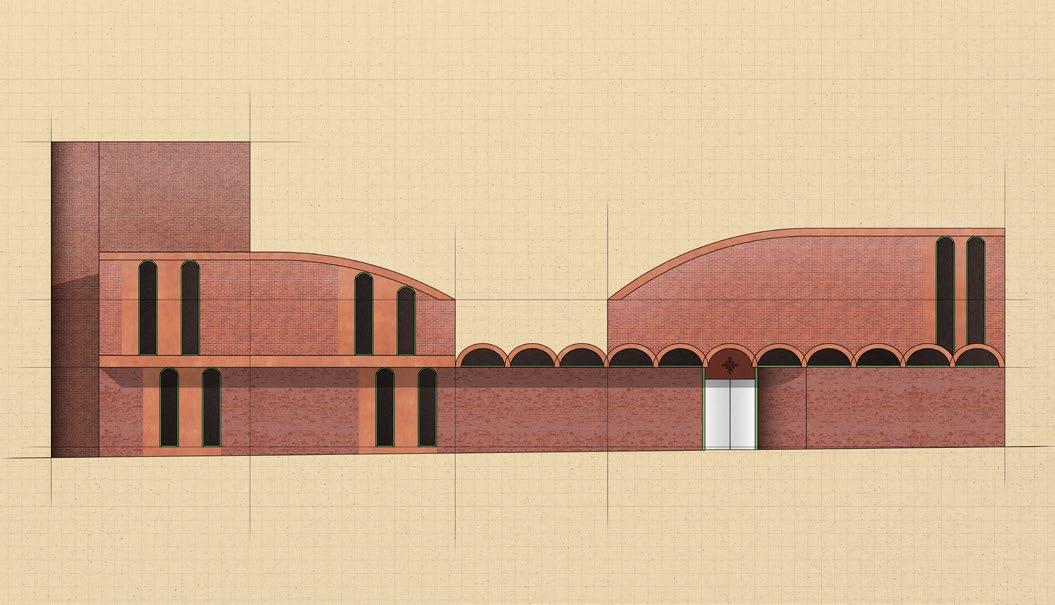
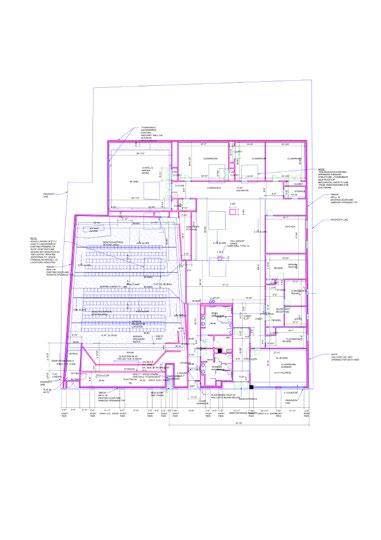
Preliminary site documentation revealed poor sound insulation and inefficient space planning as a primary concerns. The three resulting programmatic zones; worship, classroom, and communal, are separated from each other by thickened wall assemblies to provide sound insulation where necessary.
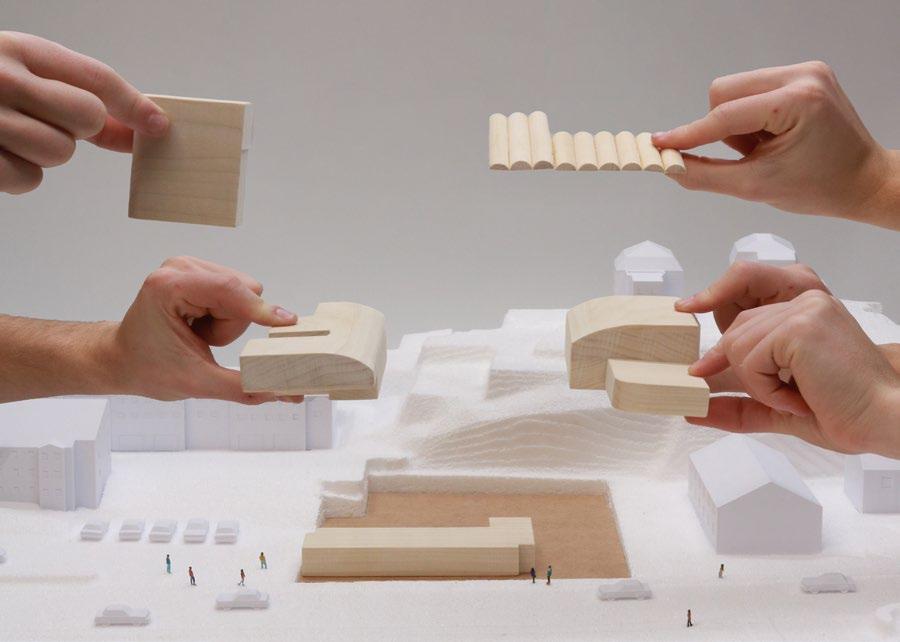
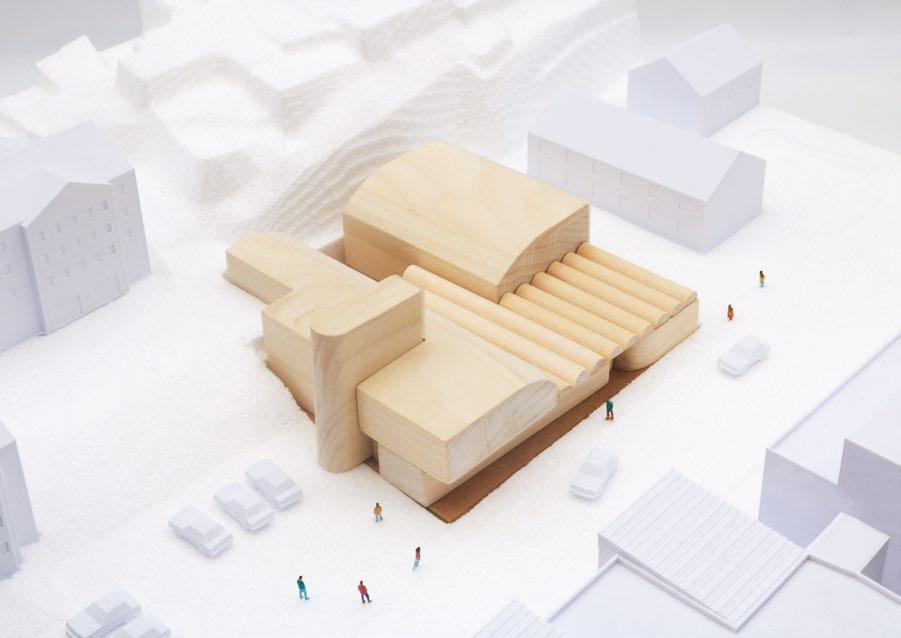

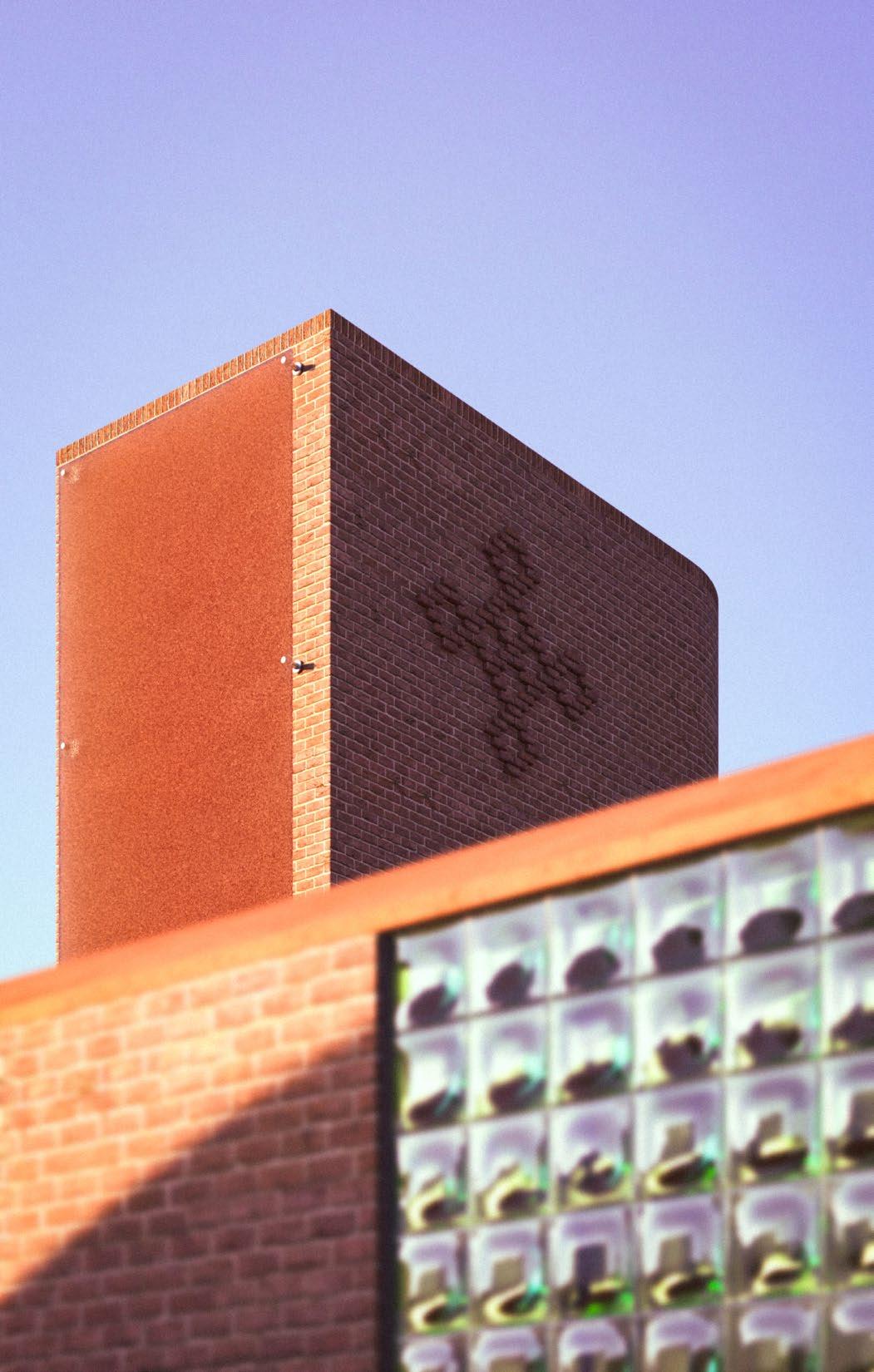
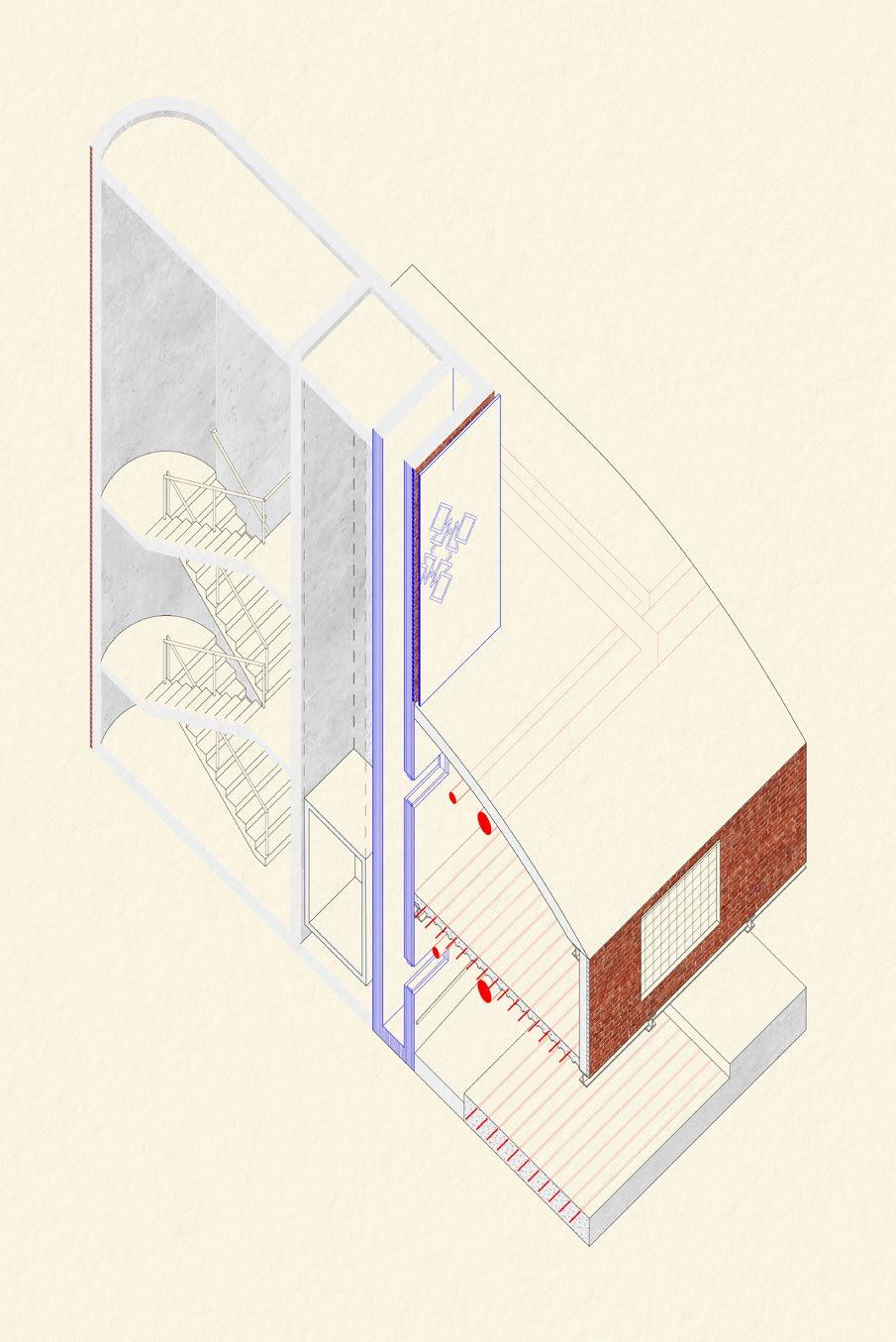
A diverse array of climate control strategies were proposed to generate conversations with the congregation over their preferences. The extruded service core houses a solar chimney, while the proposed active systems include a traditional DOAS system and radiant floor slabs.
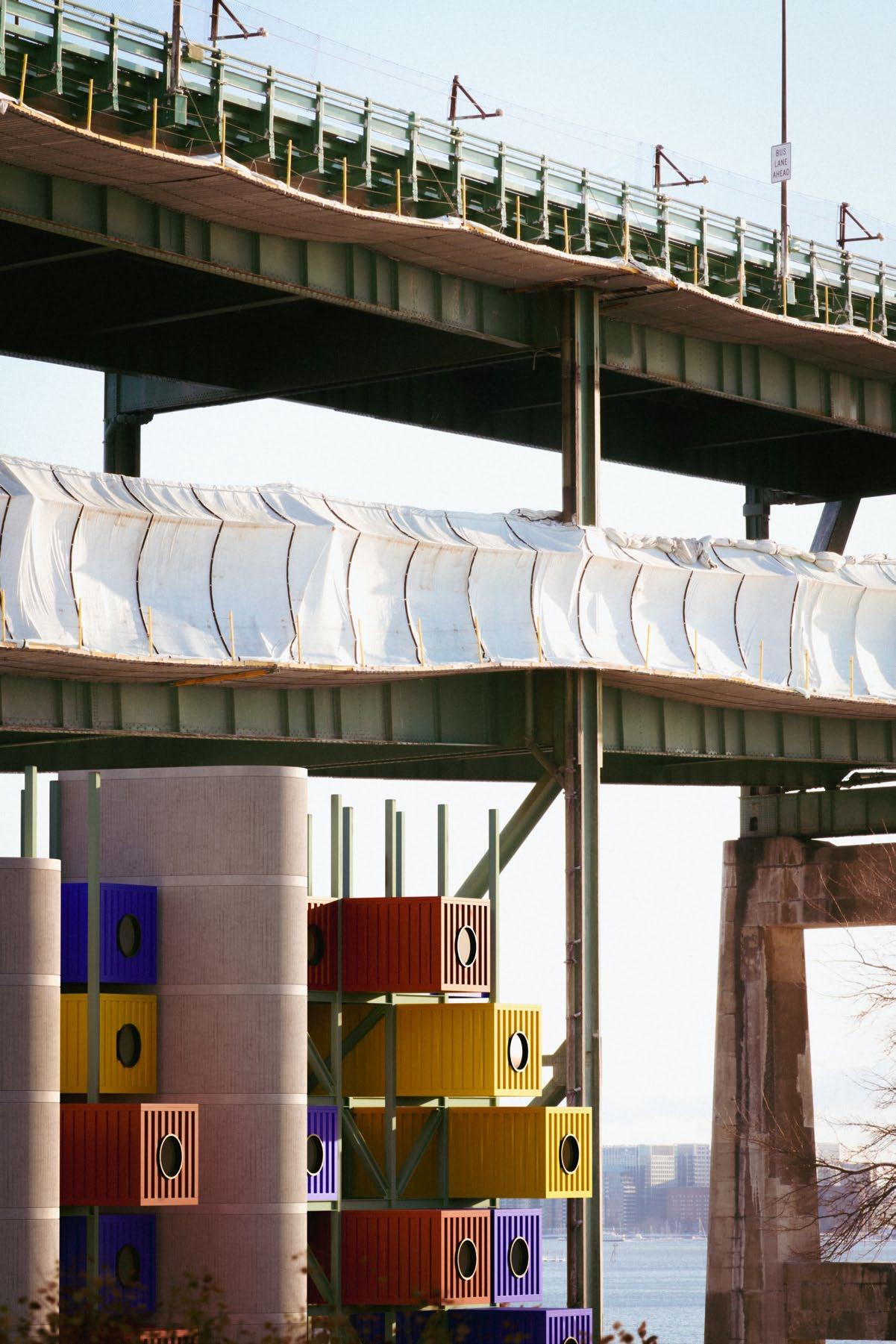
In recent years, the ever-changing economic and geopolitical state of the world has popularized modular and temporary architecture as a means to combat issues such as overpopulation, climate change, and mass displacement. The products of this movement are often intentionally siteless, designed to adapt to multiple locations. Can a temporary architecture exist that leverages specific site conditions to enhance its efficiency and architectural quality, while retaining its adaptability elsewhere?
This project is a proposal for emergency, transitional, and temporary housing located beneath the Tobin Bridge in Chelsea, Massachusetts. Drawing inspiration from the structural forms of the iconic landmark, this project utilizes a flexible framework that allows for the insertion of prefabricated shipping container units, which are delivered directly to the site without additional land transportation. Units are designed to be easily constructible; the materials required for one unit fit within a single shipping container. Each unit utilizes two separate 20-foot shipping containers as its physical envelope, which are partially assembled in a factory before being shipped to the site to be fully installed. All units are designed for compatibility within a greater system, utilizing soundproofing membranes and thoughtful programmatic organization for ease of aggregation and occupant comfort. The modularity of the design enables ease of customization; units may be claimed by single tenants, or grouped together in larger configurations with shared interstitial spaces.
Vertical cores house stairs, elevators, mechanical and plumbing systems, and a small corridor. Using a gridded system, units branch off these cores and are slotted into a framework that wraps around the support structure of the bridge. This system allows for greater adaptability, allowing the project to respond to changes in housing demand, rising sea levels, and to be suitable for many locations.
The framework borrows the iconic pale green trusses supporting the Tobin Bridge to both reinforce the structure and anchor it aesthetically to its context, allowing both systems to appear as one. Crucially, despite their appearance, they remain structurally separate, eliminating additional forces on the bridge’s structural piers and excessive vibrations on the residential units.
By addressing multiple characteristics of the site in its design, from its location at the border between two communities of differing income and demographic backgrounds, to its proximity to water and the corresponding implications of a changing climate, the project asserts itself as site specific, yet appropriately flexible; contemporary, yet visionary.
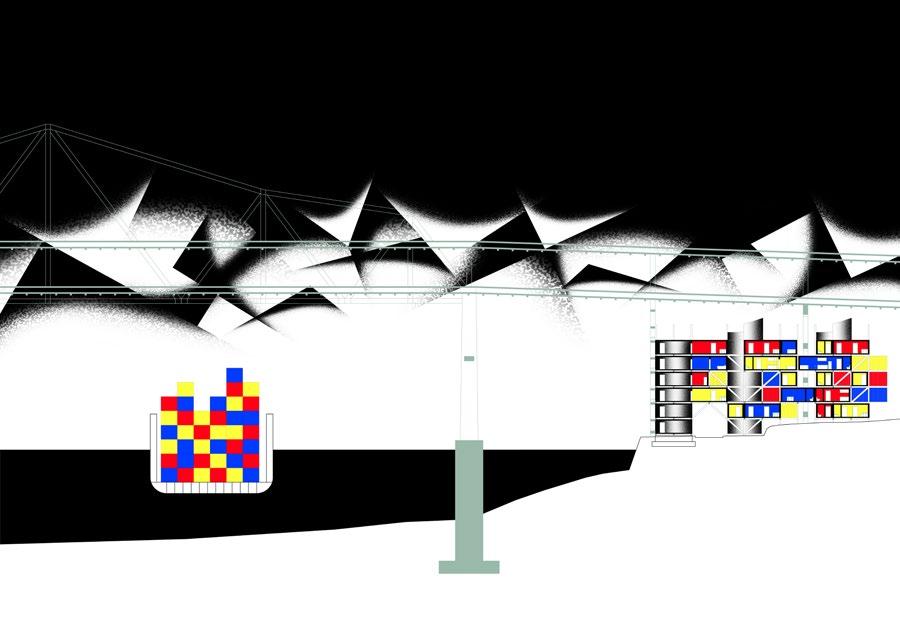

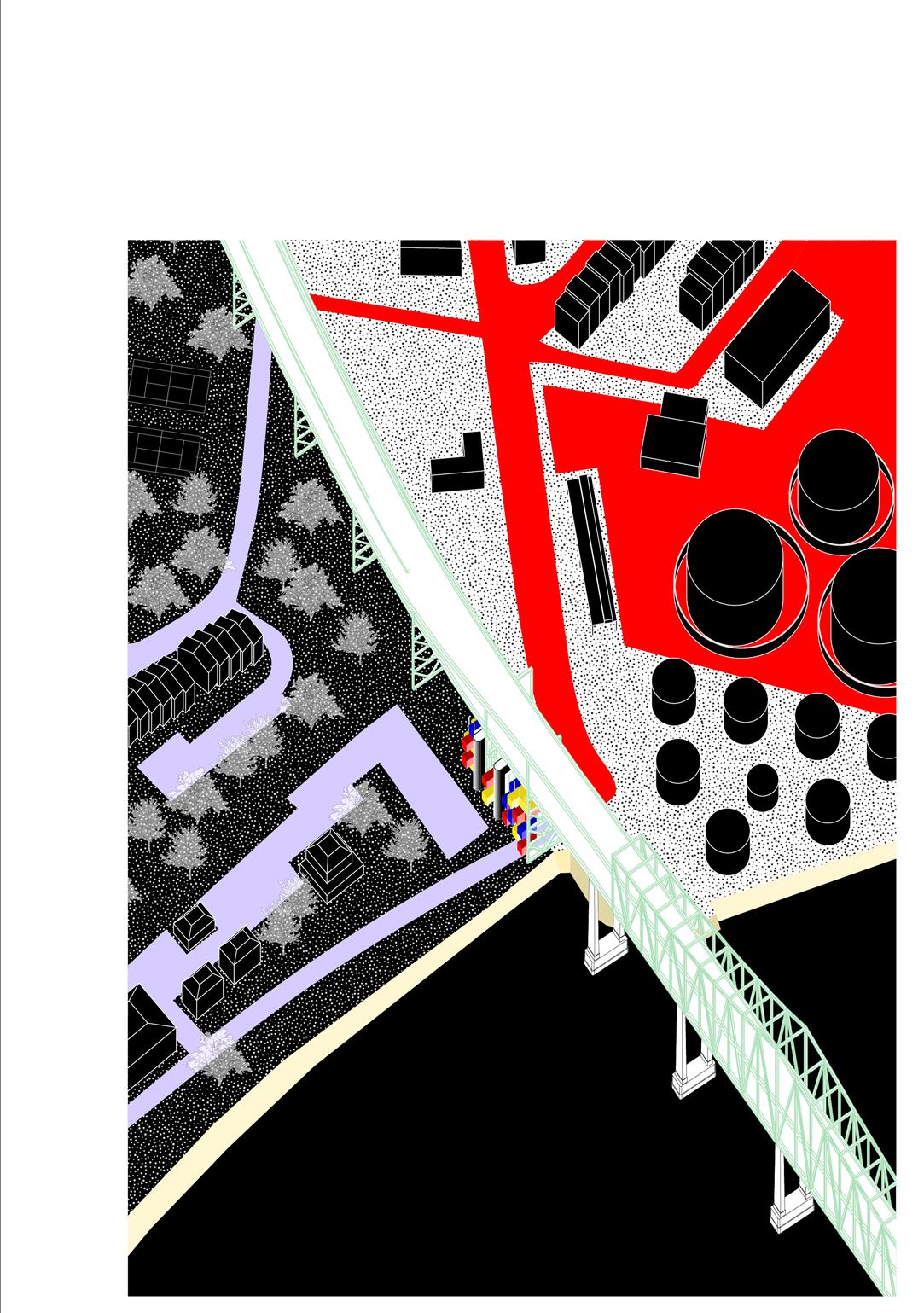
The project leverages its waterfront location and proximity to several major ports to eliminate dependency on land transportation for the prefabricated units.
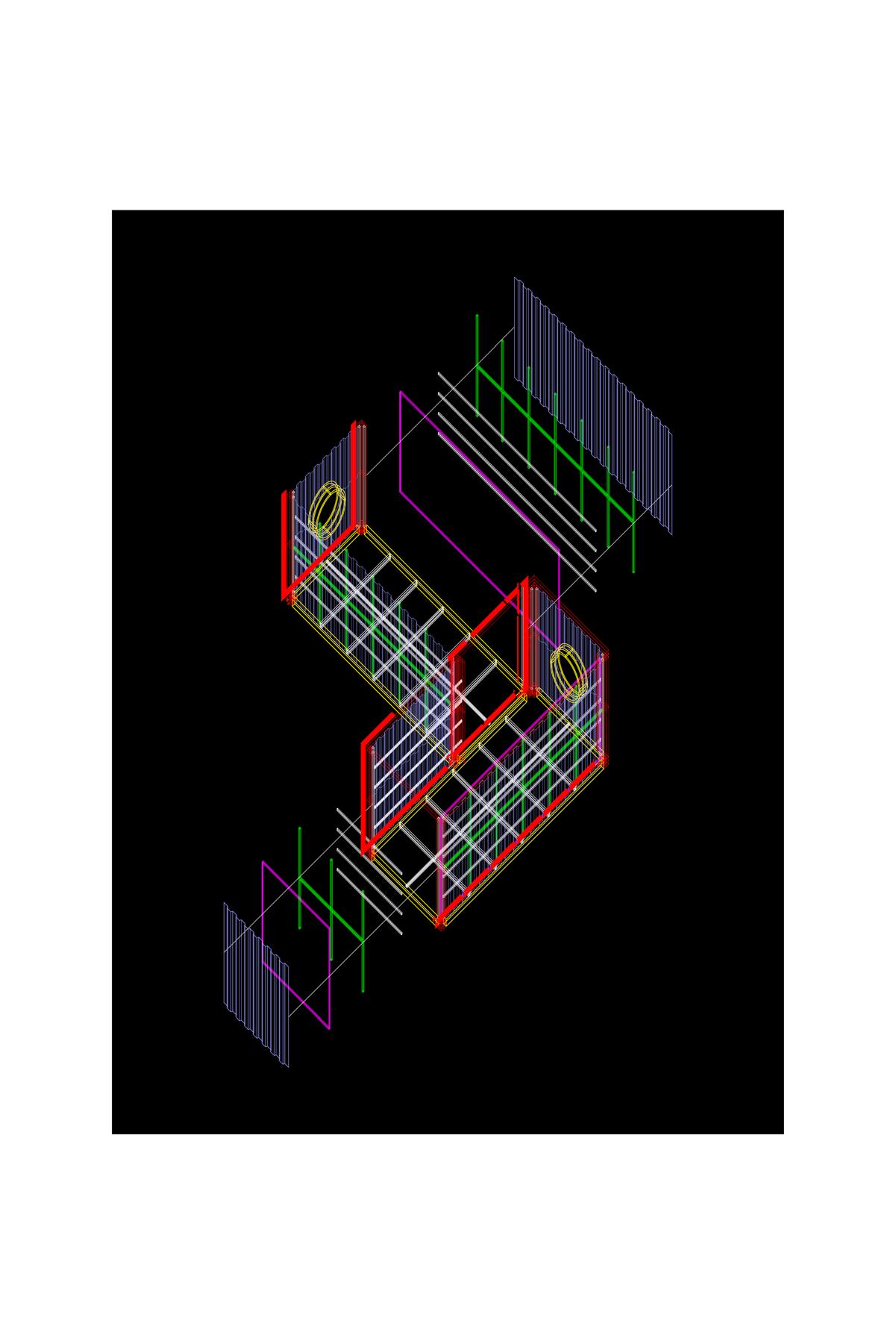

Each unit utilizes two separate 20-foot shipping containers as its physical envelope. Bathroom and storage cores divide interior space, while soundproofing membranes eliminate unwanted noise from outside.
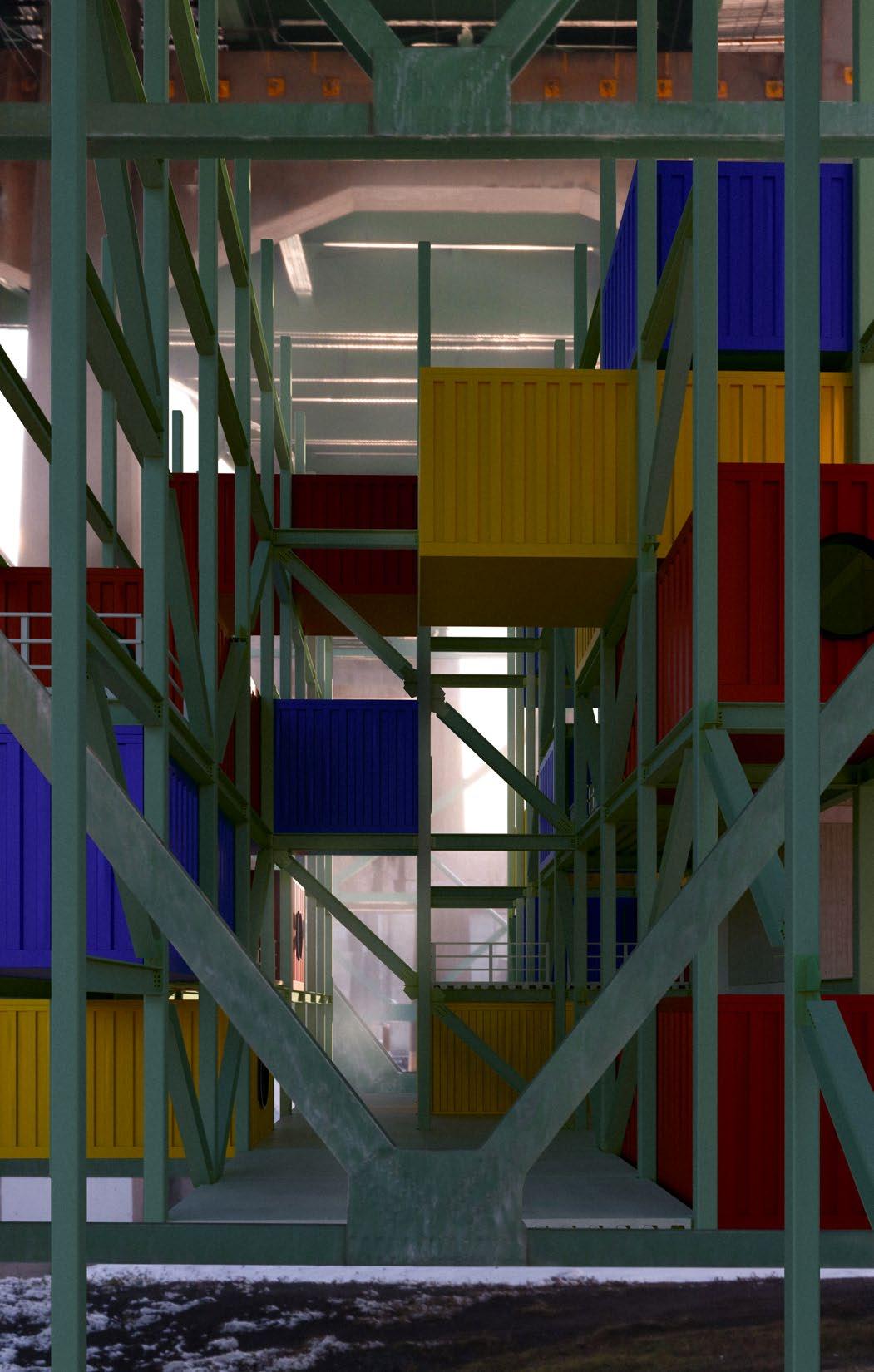
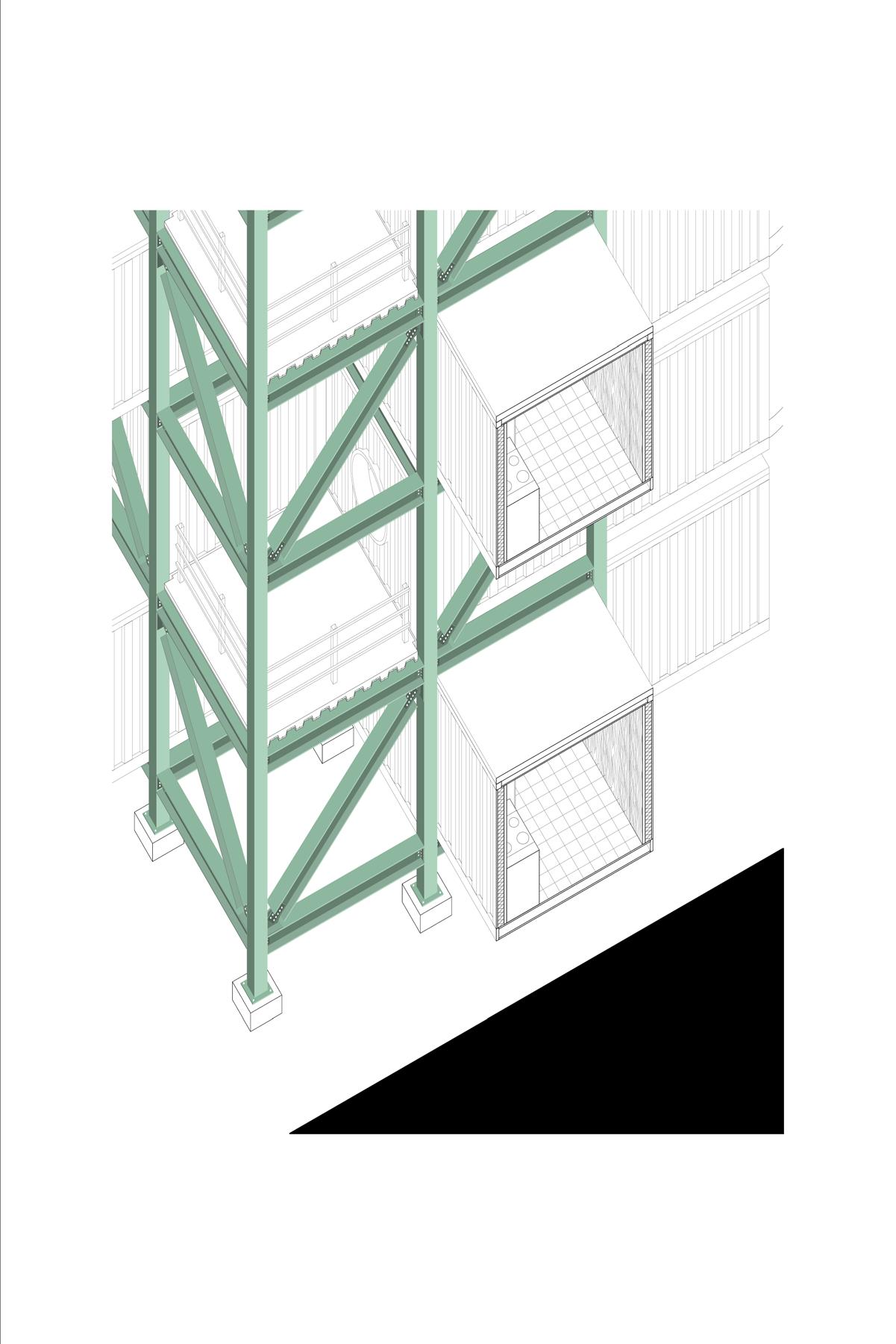
The framework, visually grounded in the structural forms and strategies of the Tobin Bridge, neither attempts to mask its underlying utilitarian nature nor fully disguise itself within the structure.
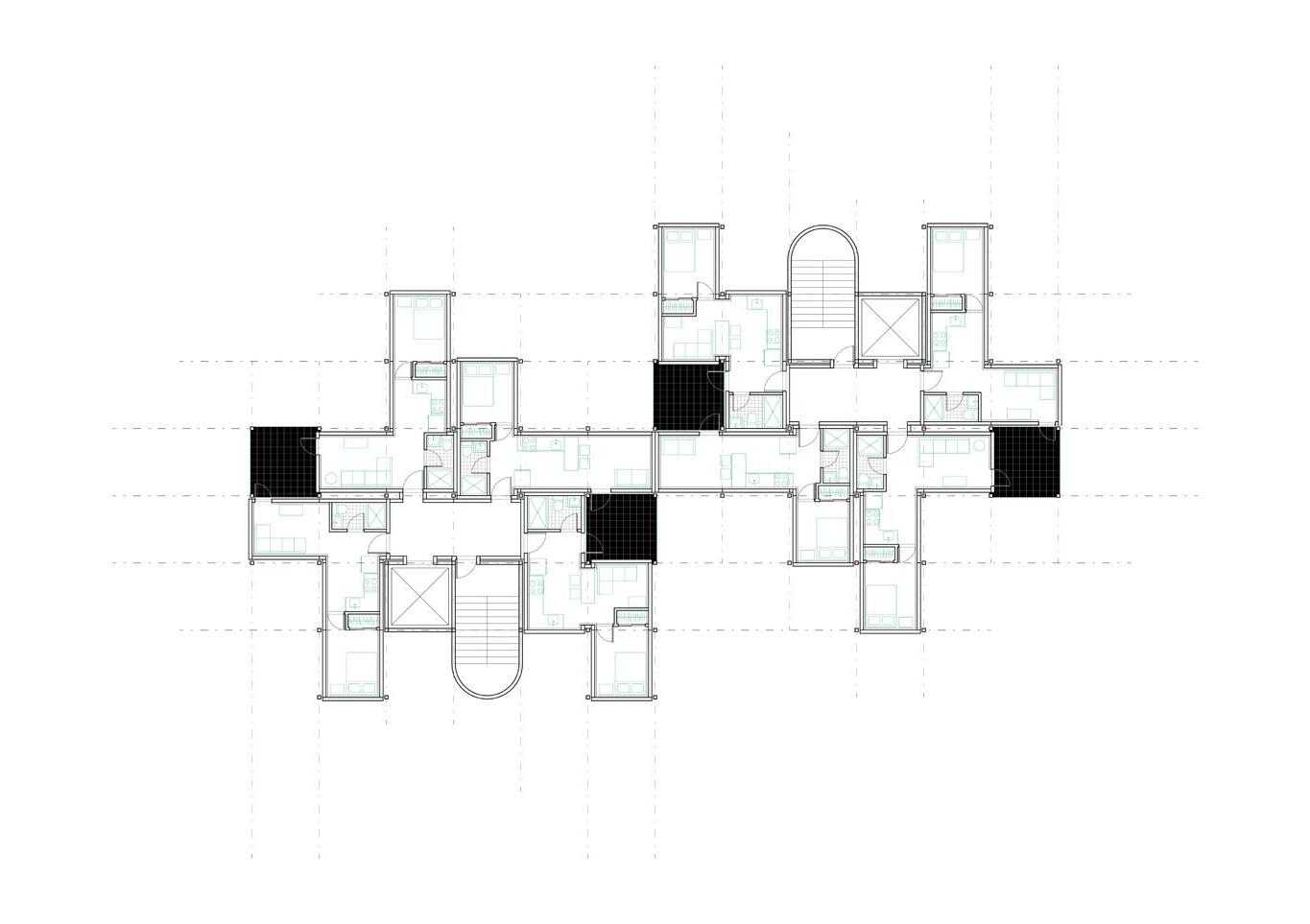

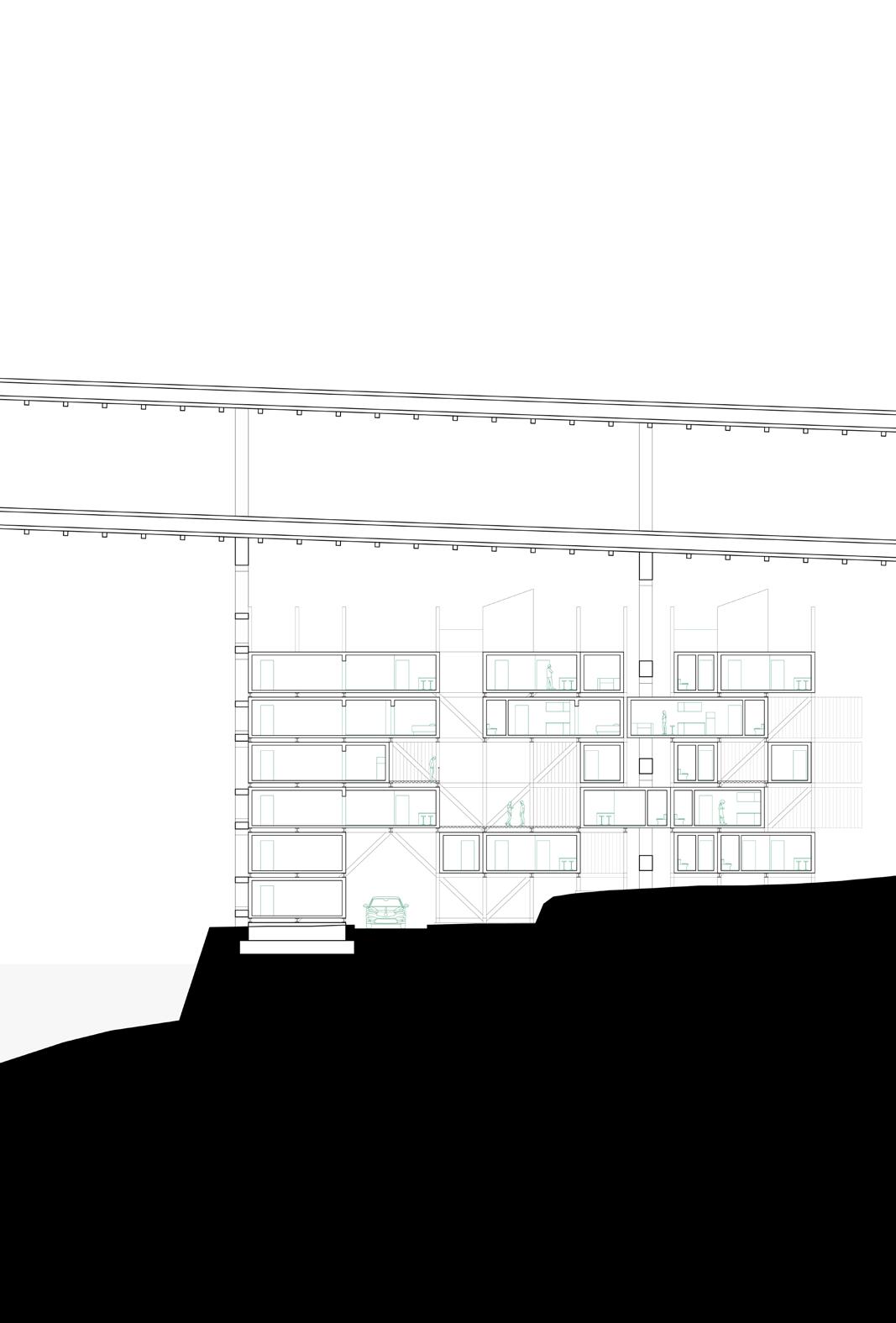
The dynamic configuration of units creates several interstitial outdoor spaces. These can be shared between two units as a means of joining them into one, or between several clusters of units to create larger communal co-lving pockets.
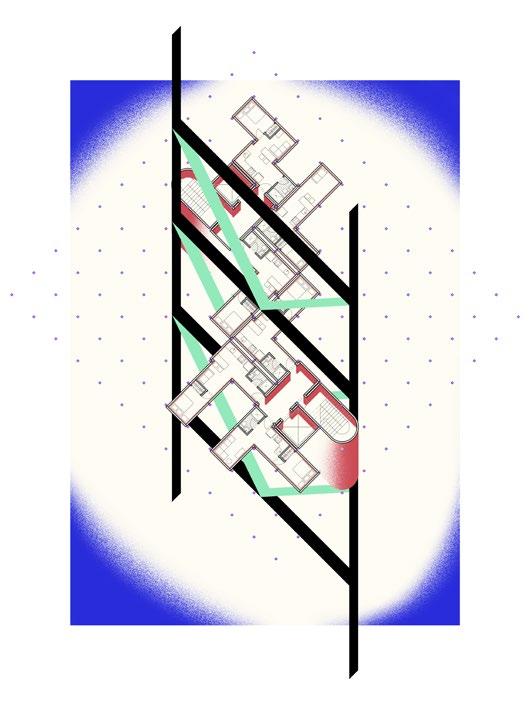

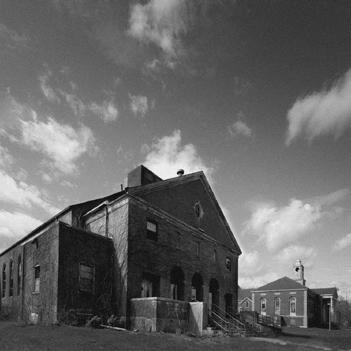
From 1848 to 2014, the Fernald Developmental Center in Waltham, Massachusetts was once the Western Hemisphere’s oldest public institution for the developmentally disabled. After decades of controversy, from spartan living conditions to unethical medical experiments conducted on children, the former mass asylum was closed and abandoned.
Today, a massive new recreational park occupies the upper portion of the former grounds, breathing new life into the once abandoned site. Yet the remainder of the grounds remain untouched, its buildings either left to rot or demolished indiscriminately. Many community leaders, disability rights activists, and families of former Fernald residents, have criticized the city’s handling of the site and their efforts to effectively pave over Fernald’s troubled history. Though there stands a small memorial within the recreational park, there have been calls for a more thoughtful and respectful use of the site, one that gives back to the individuals and groups most affected by the former institution.
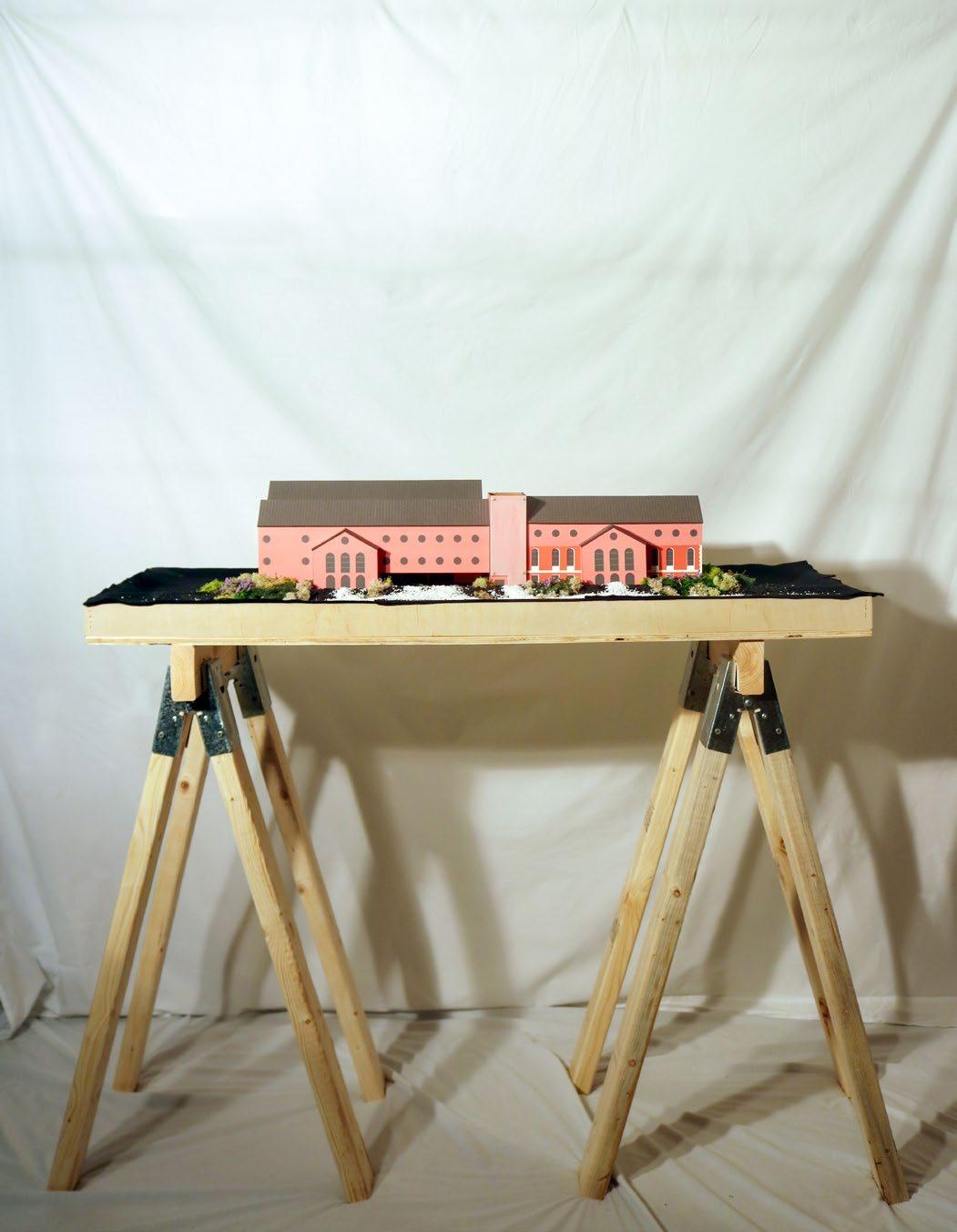
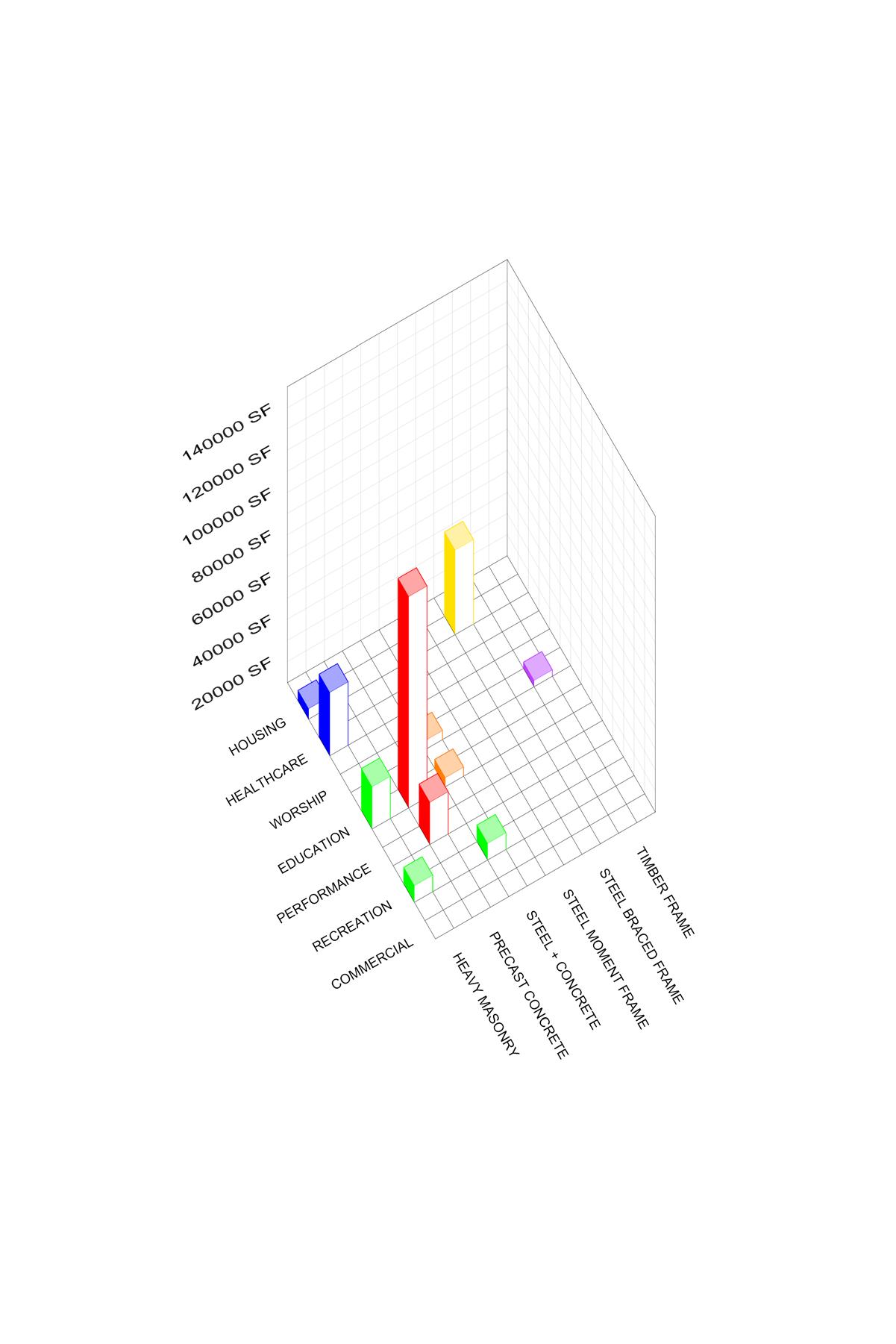
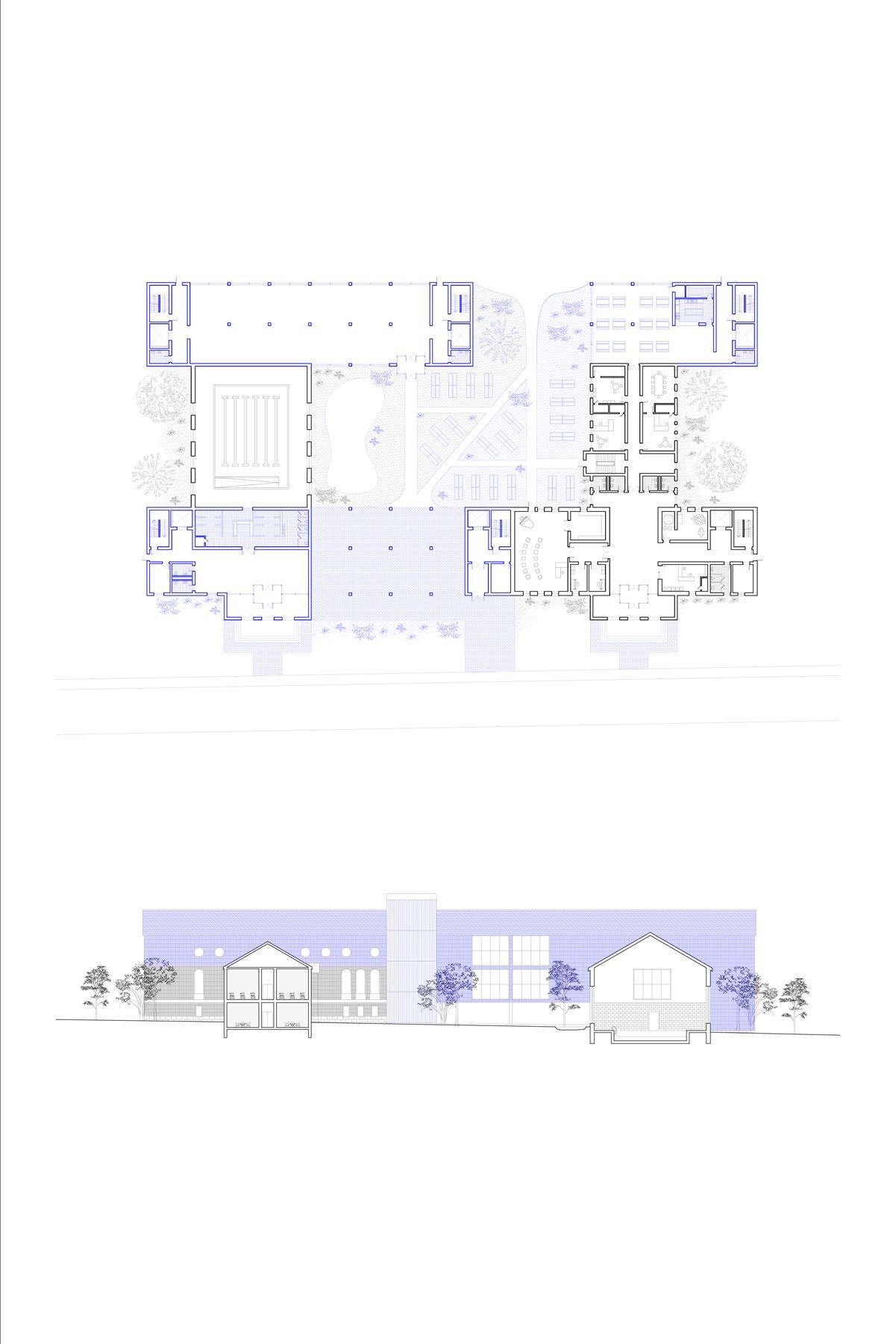
This project inserts itself into the Fernald Center’s final act to speculate an alternate end, one where both the history of the site and the historic buildings themselves can be preserved in a meaningful way. The City of Waltham’s current plans to renovate two of the abandoned buildings, Howe Hall and the Administration Building, serve as the basis for the new design. A new massing unites the two buildings physically and programmatically, while two extruded gabled entrances maintain the original streetscape. Existing heavy masonry walls and plumbing cores are preserved, maintaining the historical presence of the two buildings. A solar chimney rises from the streetfront, acting secondarily as a placemaker and navigational beacon.
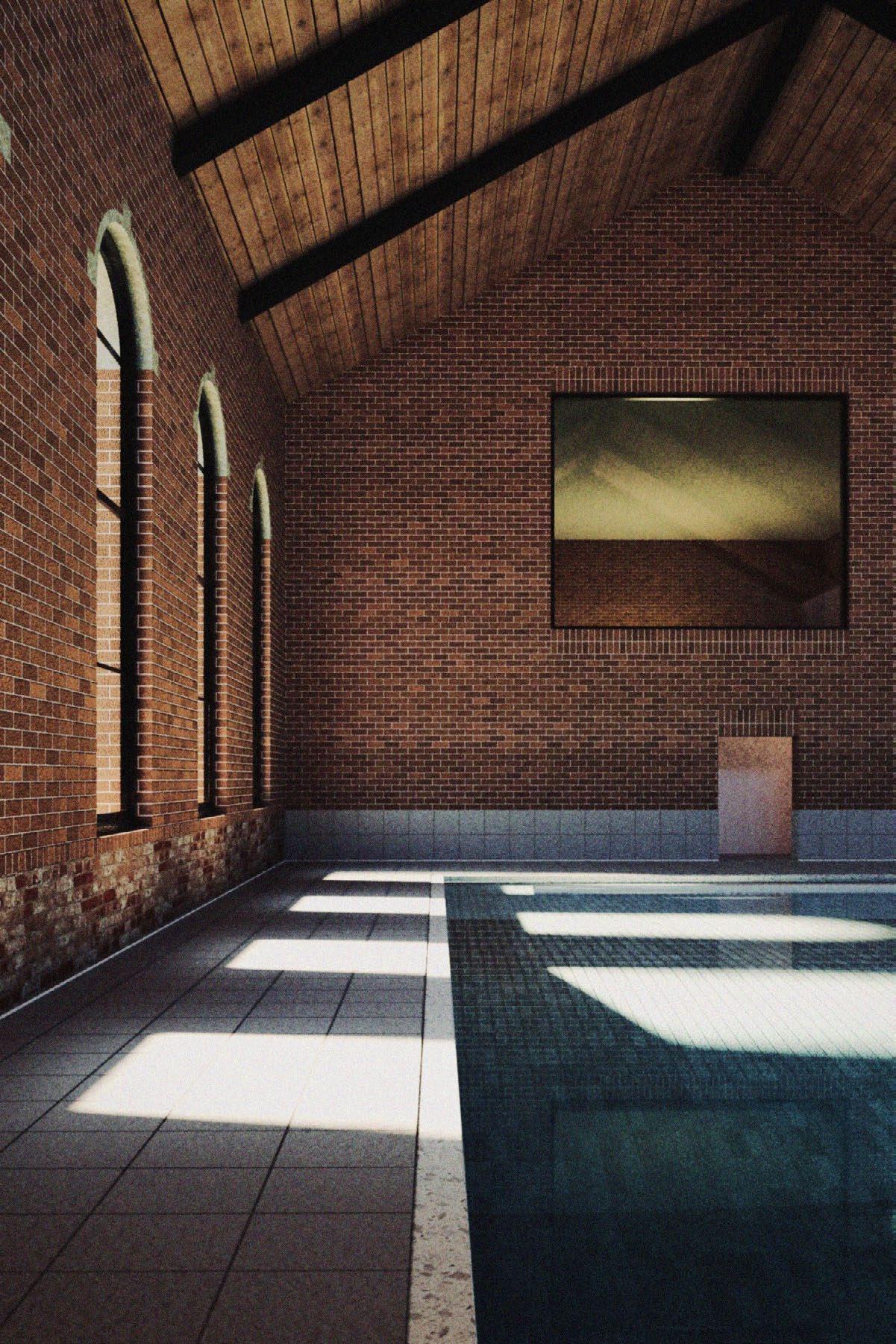
An array of new program is introduced to the site, such as an indoor swimming pool, public workspaces, exhibition space, a gym, and city offices. A lightweight steel assembly allows for flexibility and future changes in use, while permanent program is placed within the historic masonry construction. The preserved Administration Building houses a school for children with developmental disabilities, an homage to Fernald’s original mission and lending a more permanent sense of place to the historically underserved community. The front bar, a physical bridge between the two historic buildings, contains a gradient of program that shifts from education to public recreation. The new volumes create a courtyard space in the center, containing public community gardens, and accessible garden beds for the school. This shared space stimulates interactions between the schoolchildren and a wider range of visitors, asserting the school’s presence within the community.
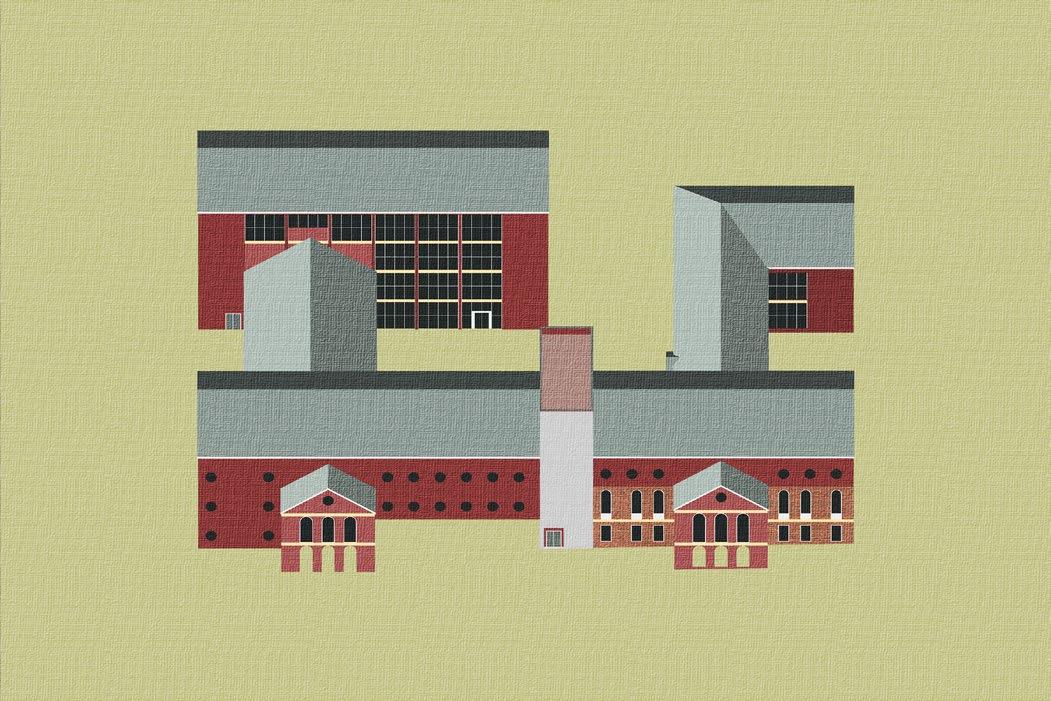
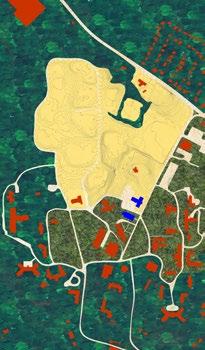
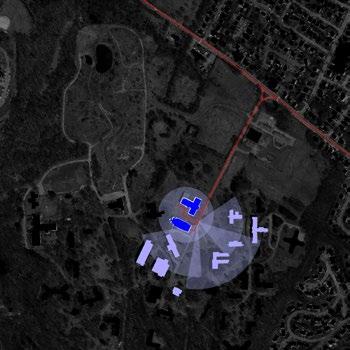
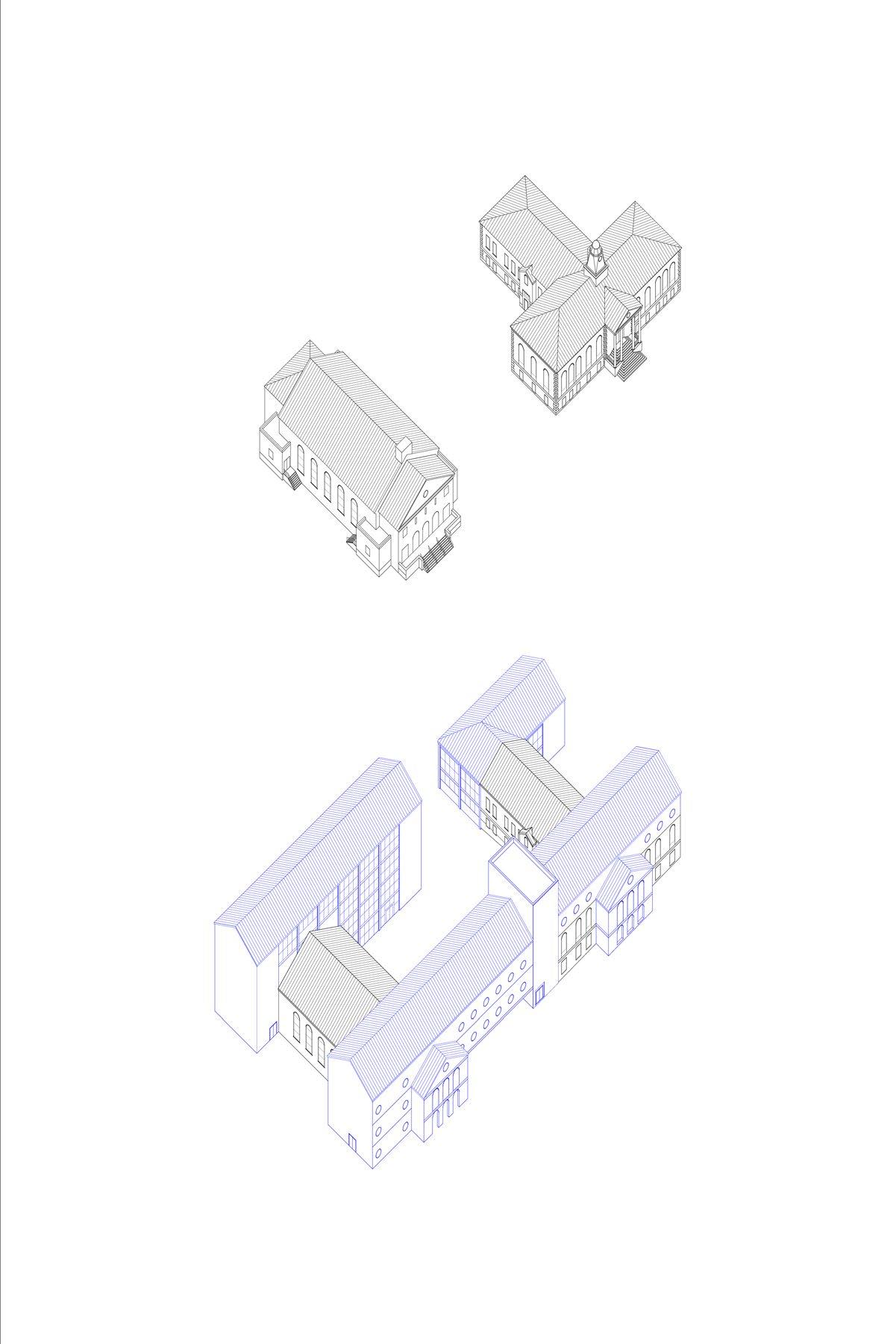
The new construction unites the two buildings physically and programmatically, while two gabled entrances maintain the original streetscape.
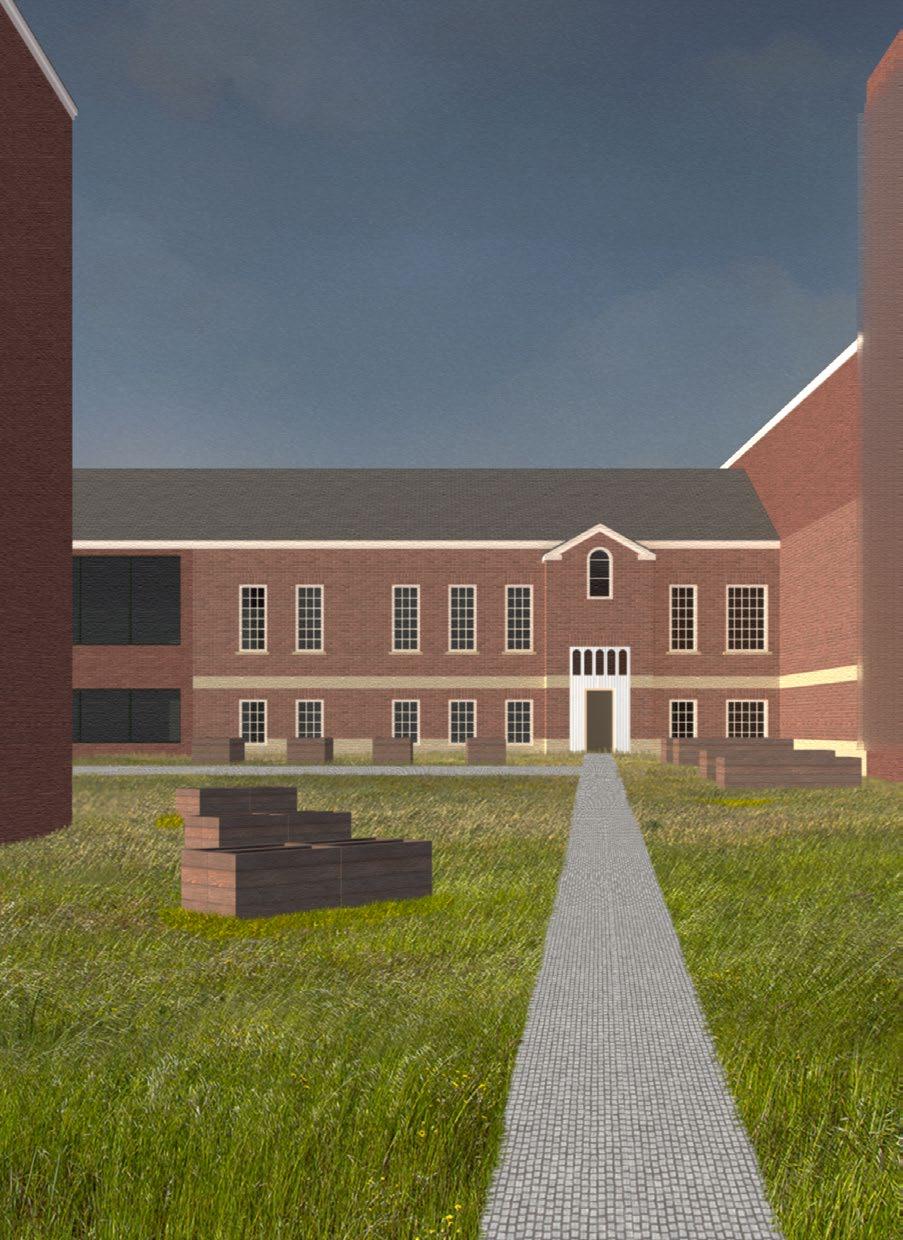
The shared courtyard space stimulates interactions between the schoolchildren and a wider range of visitors, asserting the school’s presence within the community.
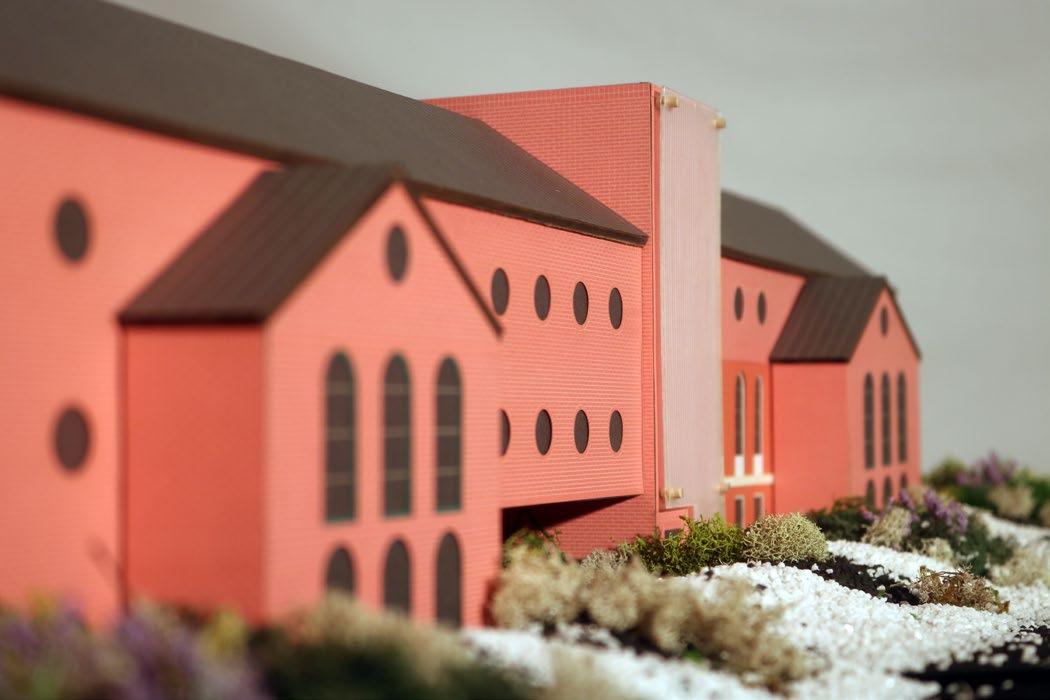
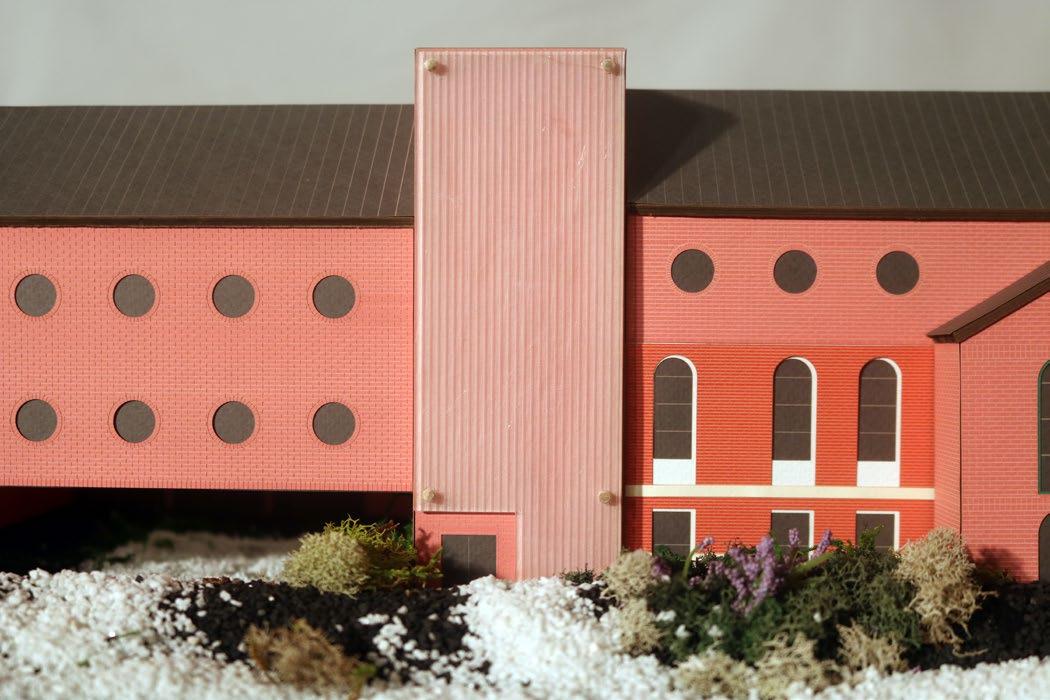
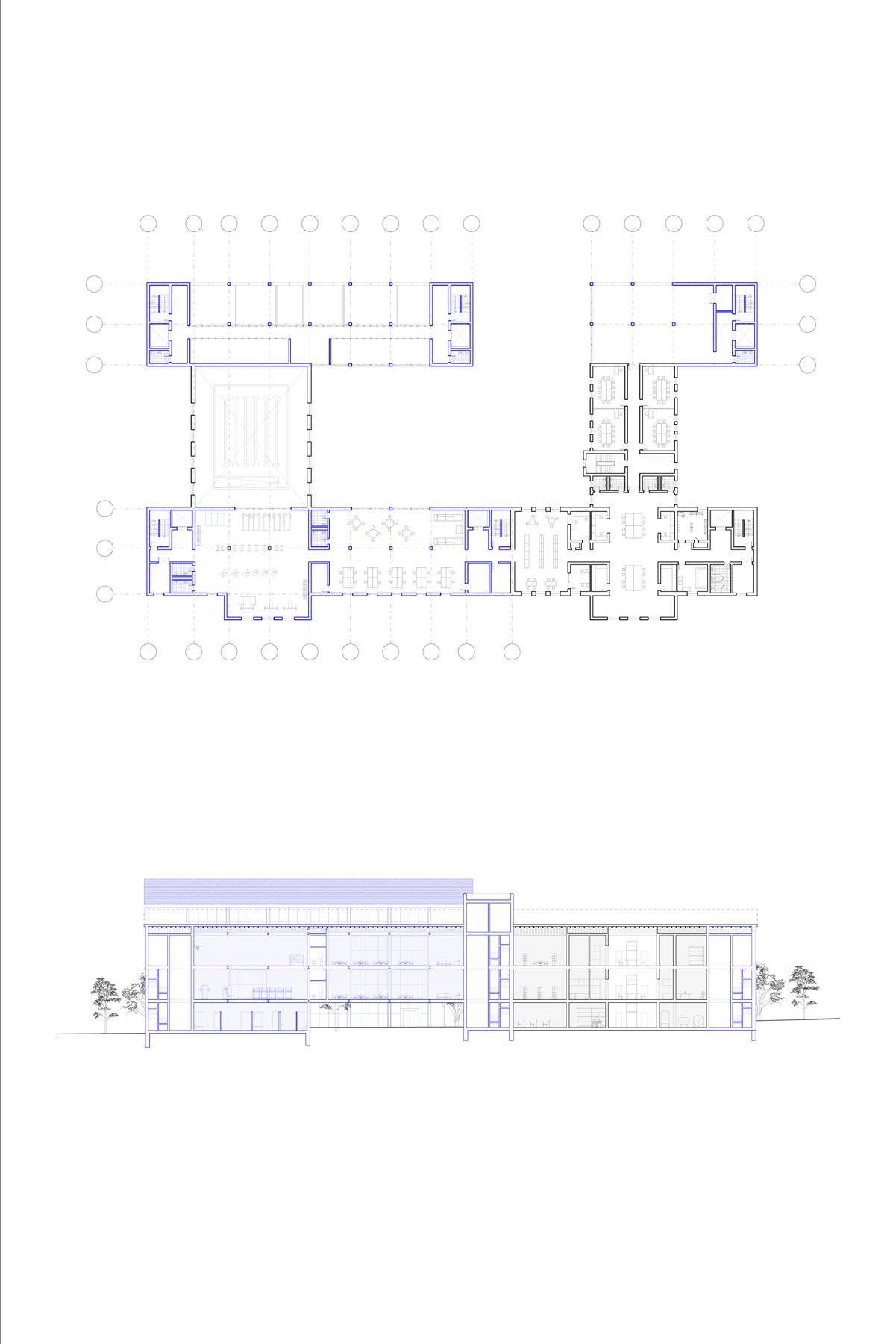
Placing the new school within the historic Administration Building and maintaining the heavy brick masonry ensures its permanence, while a more lightweight material construction throughout the new volumes allows for future changes in use.
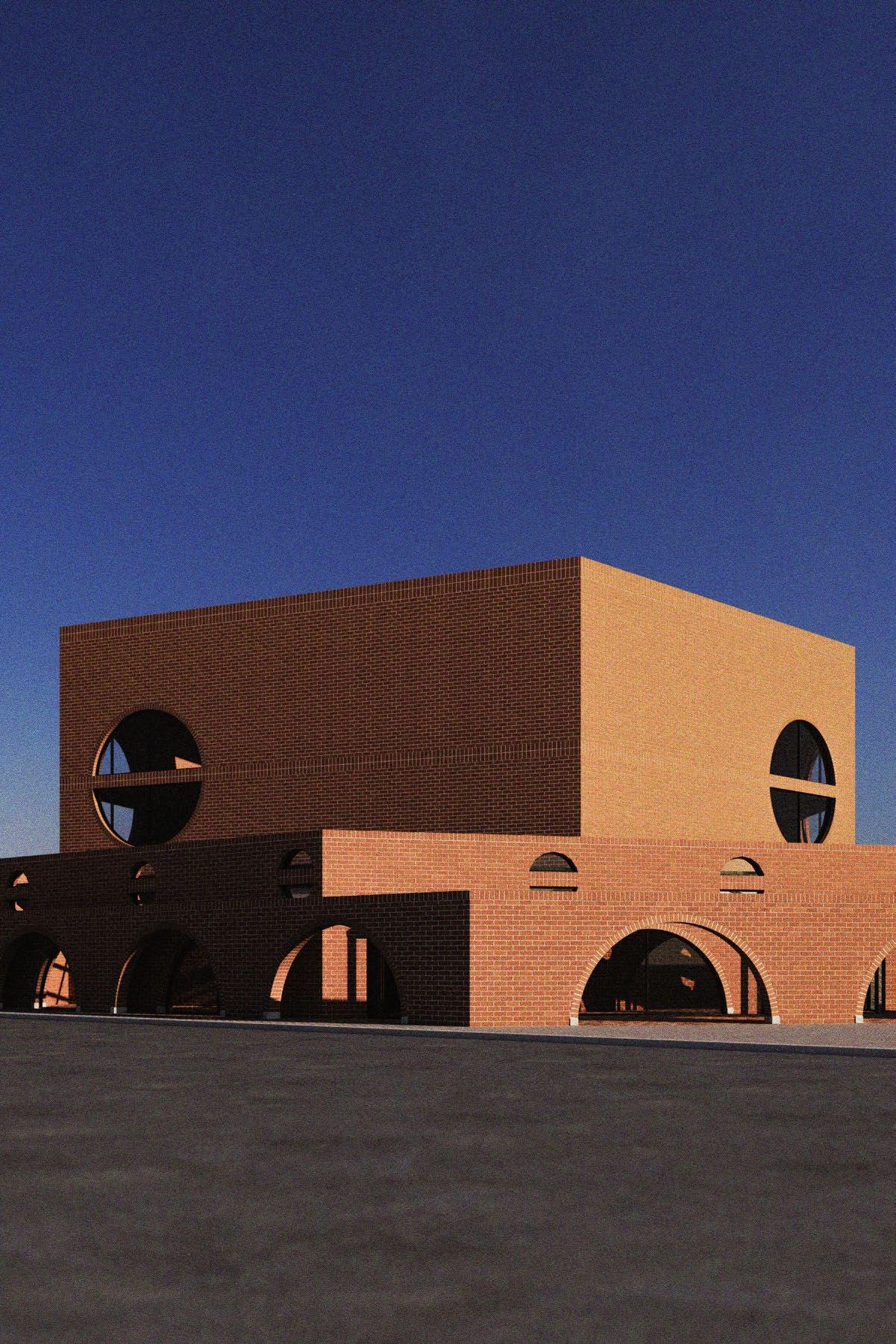

The intersection of Massachusetts Avenue and Melnea Cass Boulevard in Boston’s South End is the epicenter of the largest addiction and homelessness epidemic in the city. Here, dozens of unhoused individuals congregate in bus stops, along sidewalks, and beneath awnings. A lack of resources for these individuals, such as access to short-term crisis care, temporary shelter, and long-term treatment for addiction, exacerbates the issue, while what little resources exist are often difficult to seek out.
This project is a proposed community center that introduces two primary programs to the area; shortterm crisis stabilization, and long-term addiction rehabilitation and recovery. A massing of irregularly angled pentagons create setbacks from the street edge, while also producing subtle divisions of interior space to reduce unnecessary walls. A brick materiality, paired with a language of curved fenestration, imparts a warm, welcoming presence that challenges the clinical nature of the surrounding urban fabric.
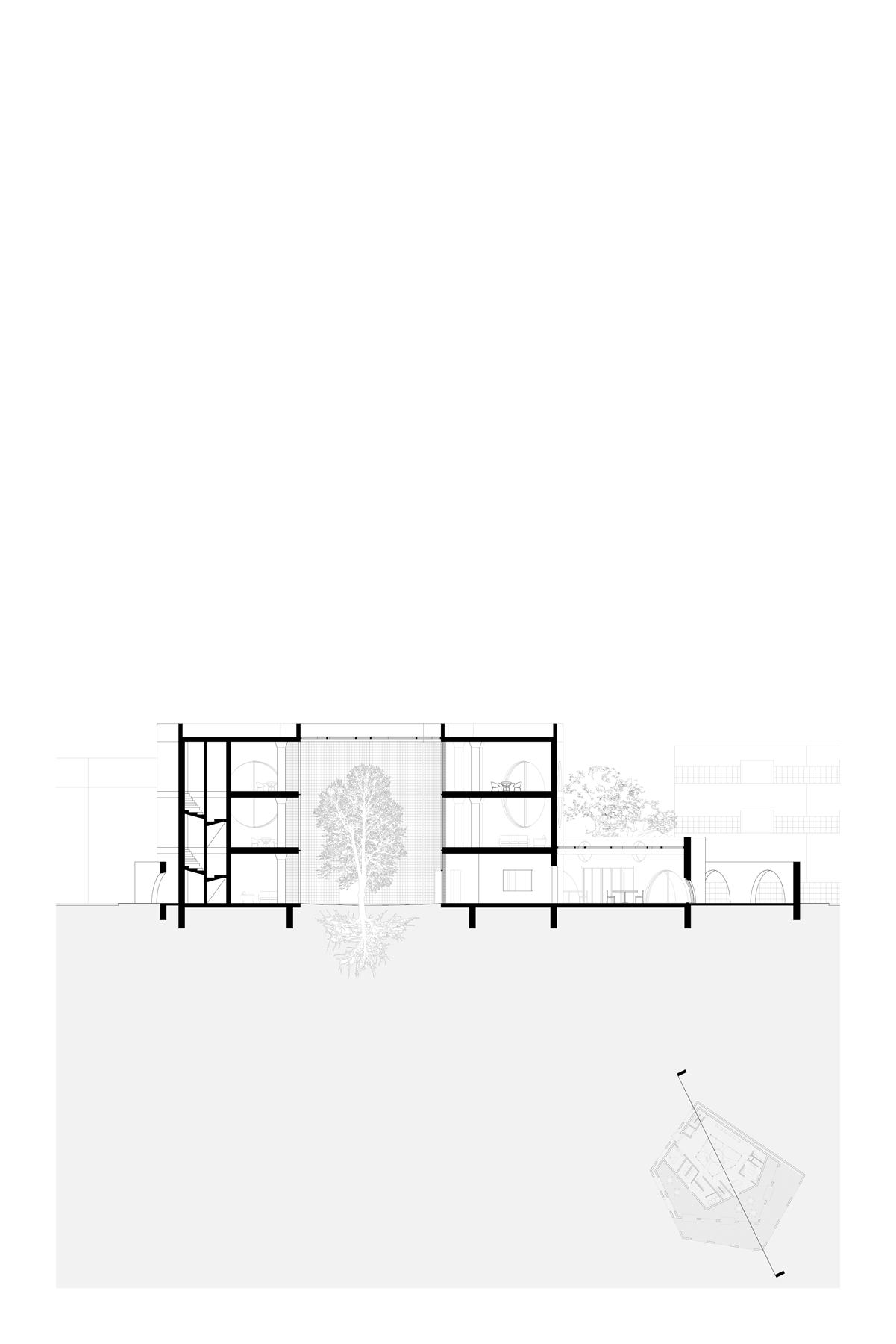
The ground floor houses both basic amenities, such as a public washroom and a cafeteria, as well as safe spaces for individuals in crisis. These programs are organized using a four-layered nesting strategy, leveraging sight lines, sound, smell, and patterns of use to subconsciously invite visitors further inside at each layer. A gradual transition from the public street to the first and second layers is achieved through porosity; the first layer, a permeable barrier, creates an interstitial condition between the public sidewalk and the building itself, while the walls of the enclosed second layer feature large windows and a repeated facade rhythm, enabling a clear sight line from the first layer and softening the barrier between the inner and outer conditions. The third layer contains the most defined program on the ground level, and is accessed through two entry points: the communal kitchen and the public washroom. The innermost layer, consisting of a small garden, provides an intimate space for respite and wellness, which in turn defines the arrangement of the upper two floors. The second floor houses dedicated space for rehabilitation and addiction treatment programs, while the third contains a limited number of inpatient beds. The central layer acts as a light well, allowing views into the garden from each level and bringing natural light into the inner spaces. Utilizing key programs as sequential spatial thresholds provides a natural progression towards recovery at every stage of rehabilitation.
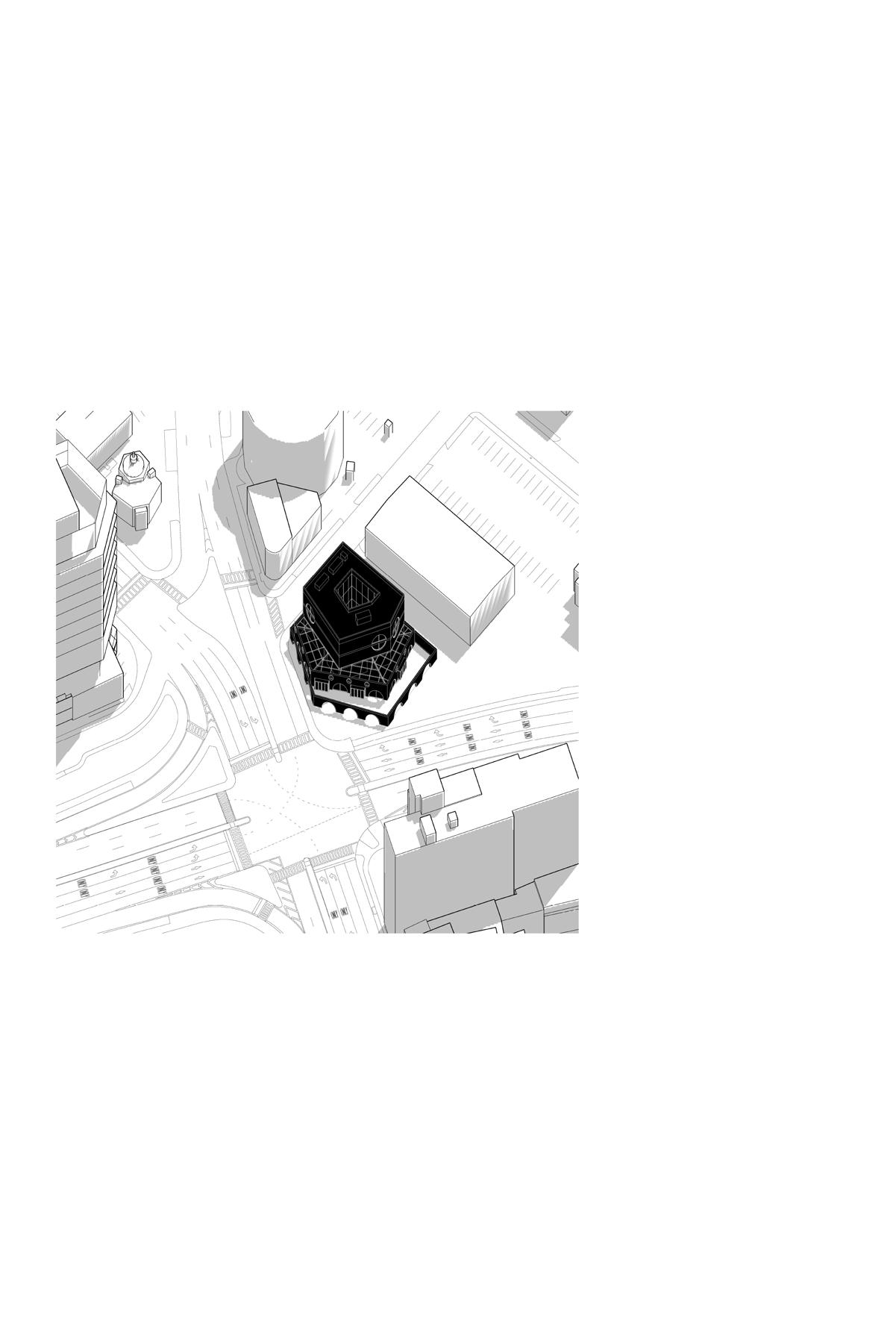
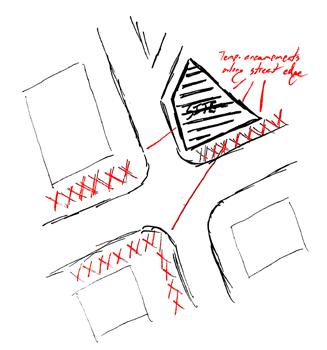
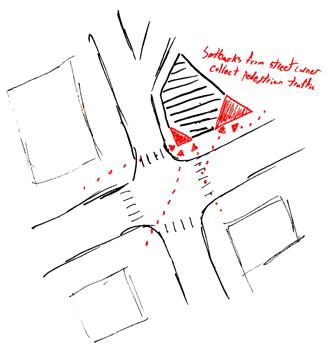
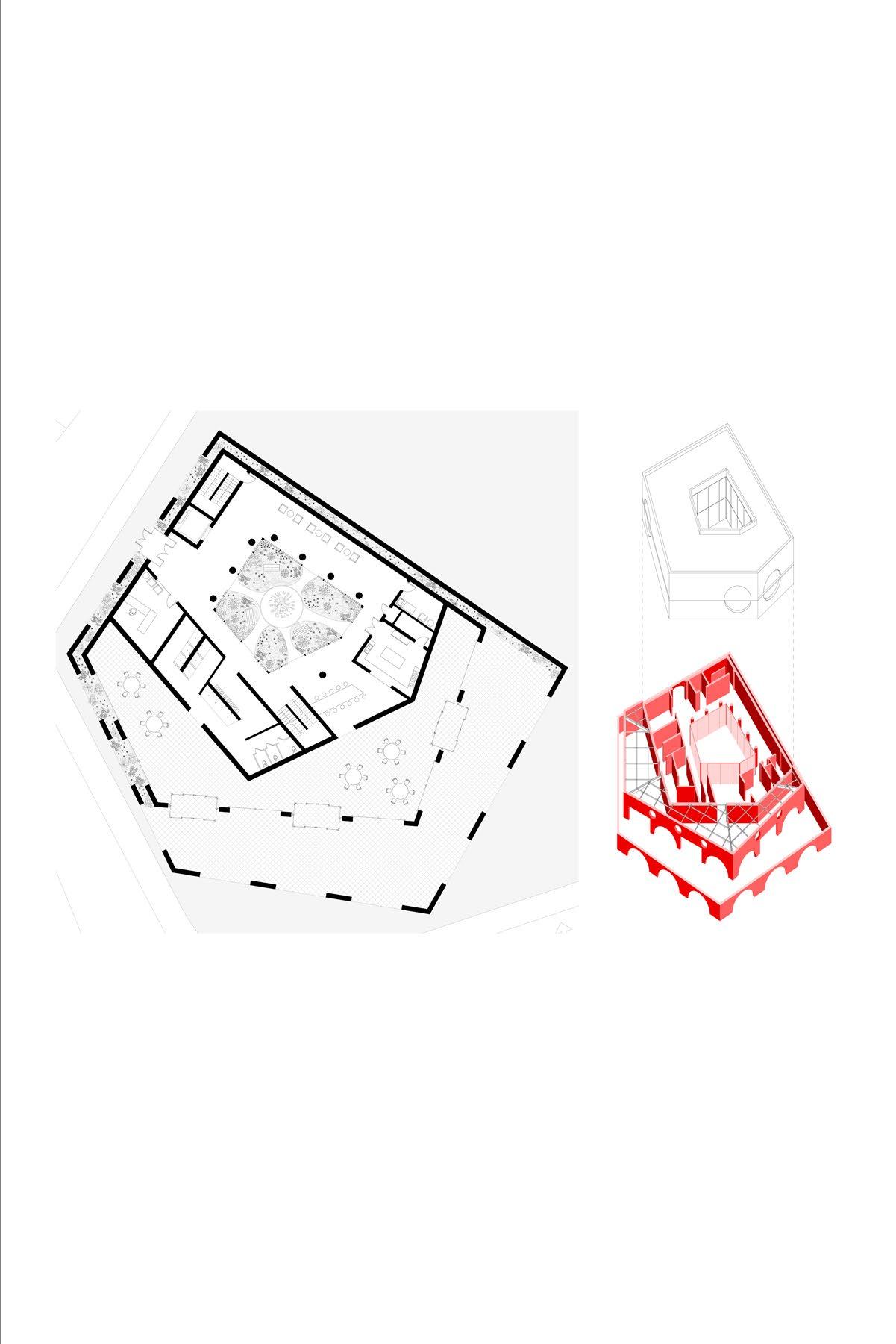
The first layer, a permeable barrier, creates an interstitial condition between the public sidewalk and the building itself, while the walls of the enclosed second layer feature large windows and a repeated facade rhythm, enabling a clear sight line from the first layer and softening the barrier between the inner and outer conditions. The third layer contains the most defined program on the ground level, and is accessed through two entry points: the communal kitchen and the public washroom.
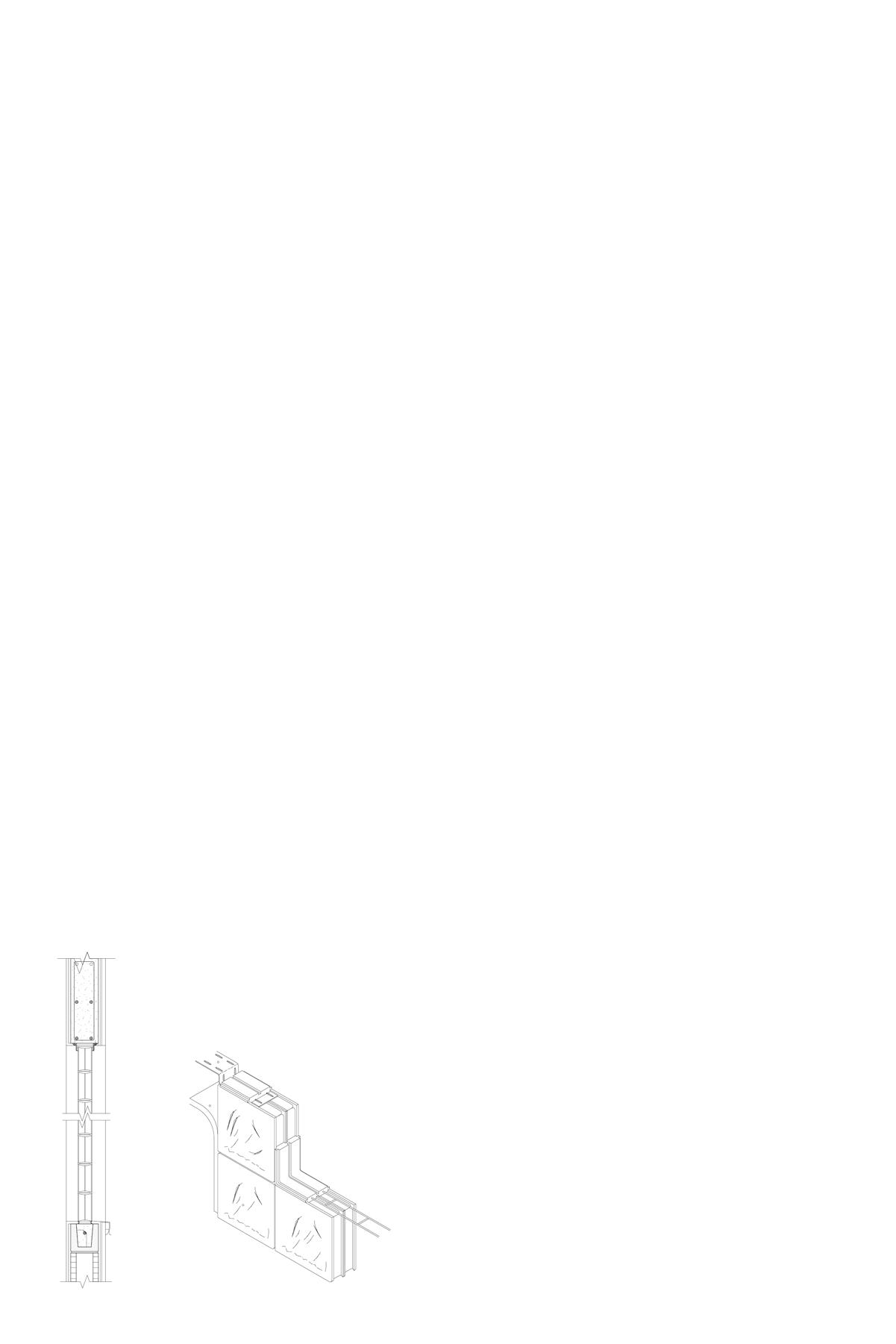
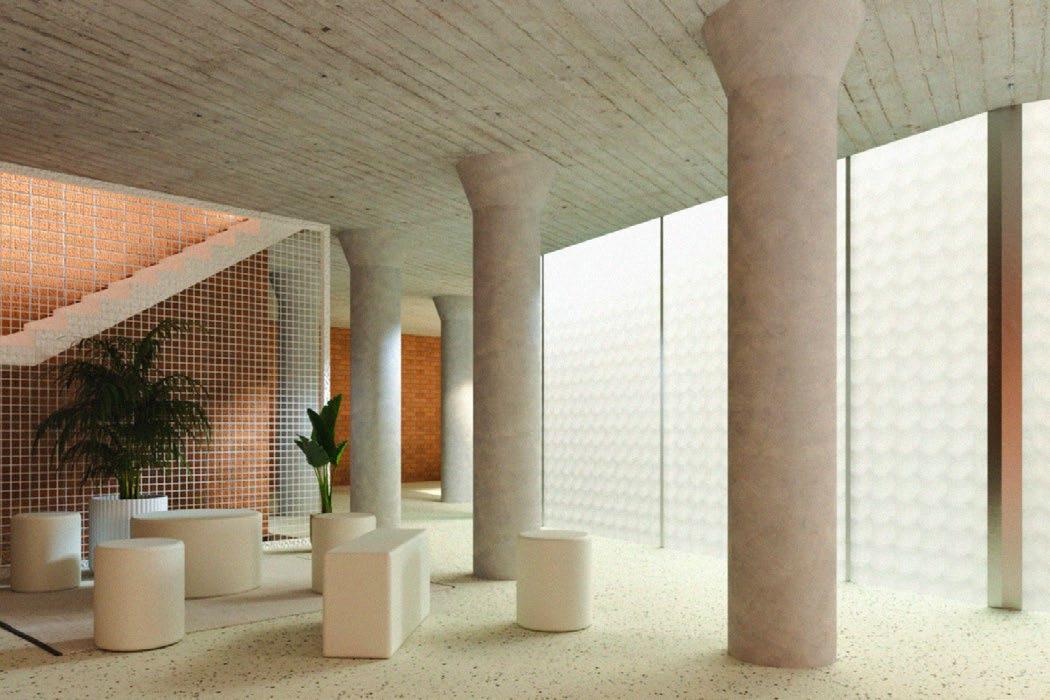
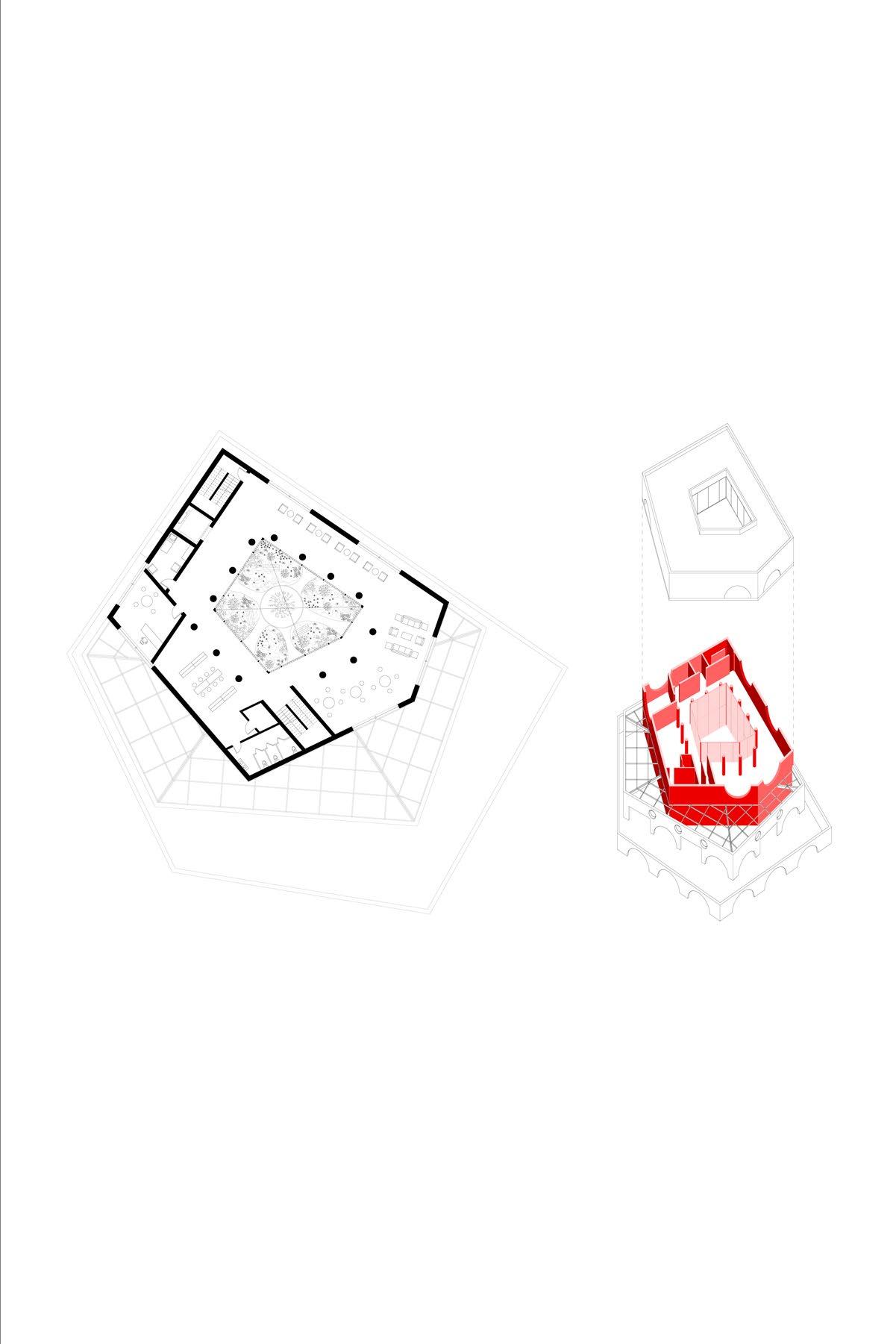
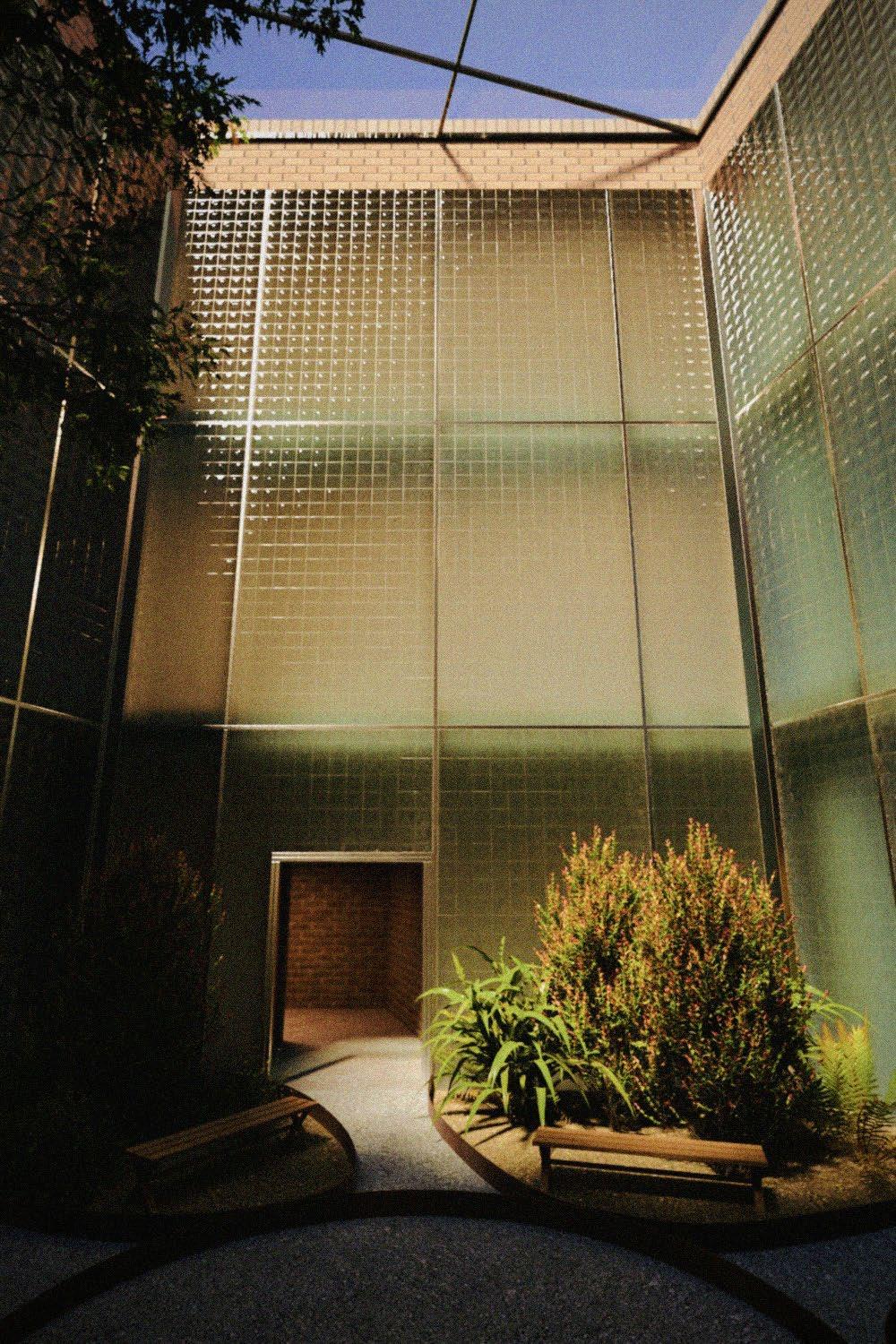
The innermost layer, a small garden, provides an intimate space for respite and wellness, which in turn defines the arrangement of the upper floors. The second floor houses dedicated space for rehabilitation and addiction treatment programs. The central space acts as a light well, allowing views into the garden from each level and bringing natural light into the inner spaces.

The implementation of structure with respect to its visibility carries with it a core duality: to conceal, or to reveal. Systems of bracing and load bearing are often seen as means to an end, and their role as an experiential element in the built environment is either to be perspicuous, or imperceptible.
This project imagines a more nuanced relationship between structure and architecture, where the skeleton is neither blatantly revealed nor entirely concealed. The design aims to imitate the interplay between natural order and chaos; biological and chemical patterns and logic govern the smallest scales of life, yet as complexity increases, order is seemingly lost, hidden within an organic calamity. Taking the form of a simple pavilion for non-denominational reflection, the project considers massing, materiality, structure, and sheathing as symbiotic elements, the amalgamation of which conceal a simple architectural and structural strategy behind layers of experiential complexity.
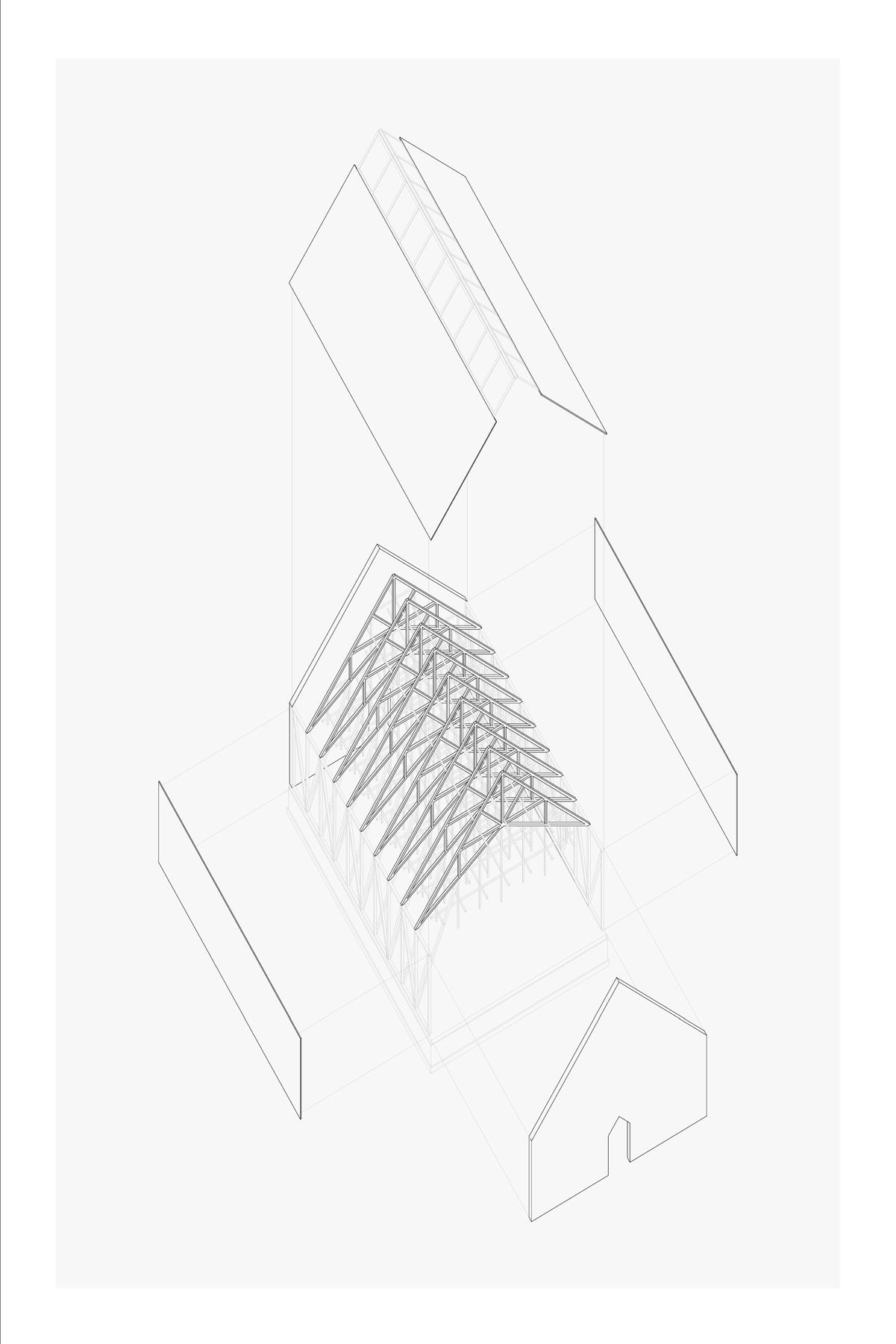
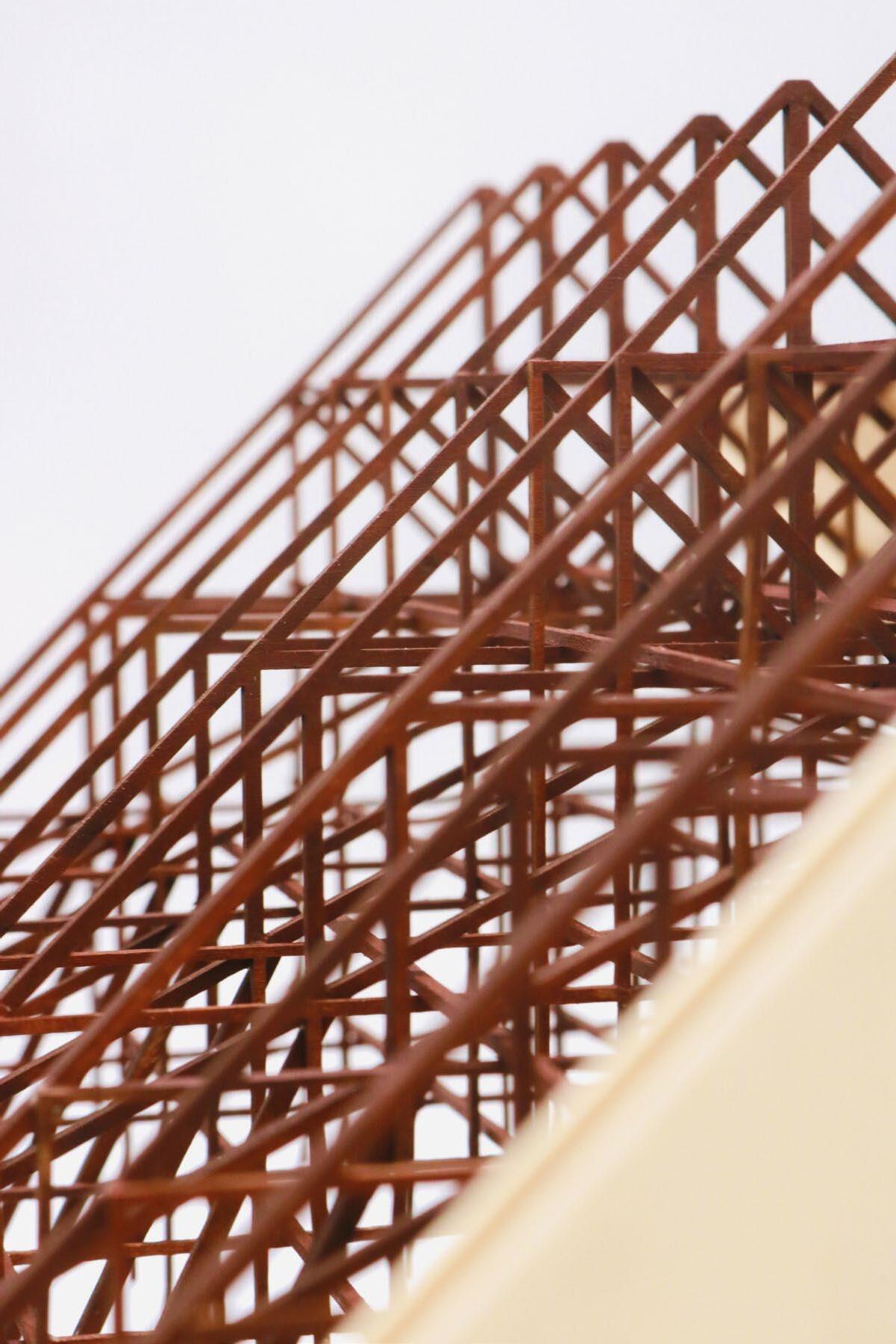
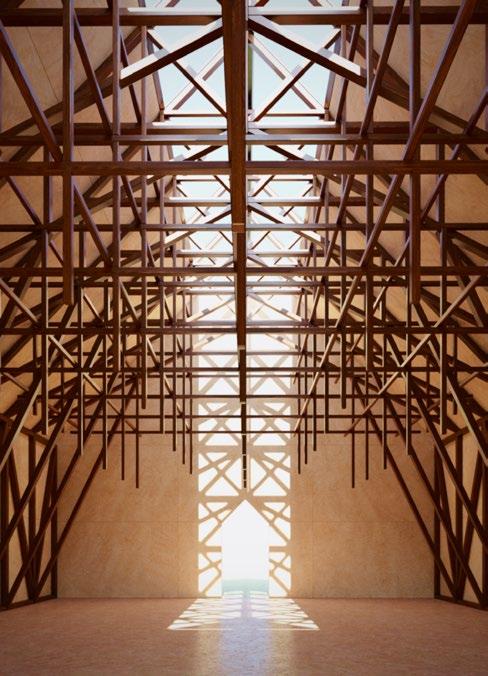
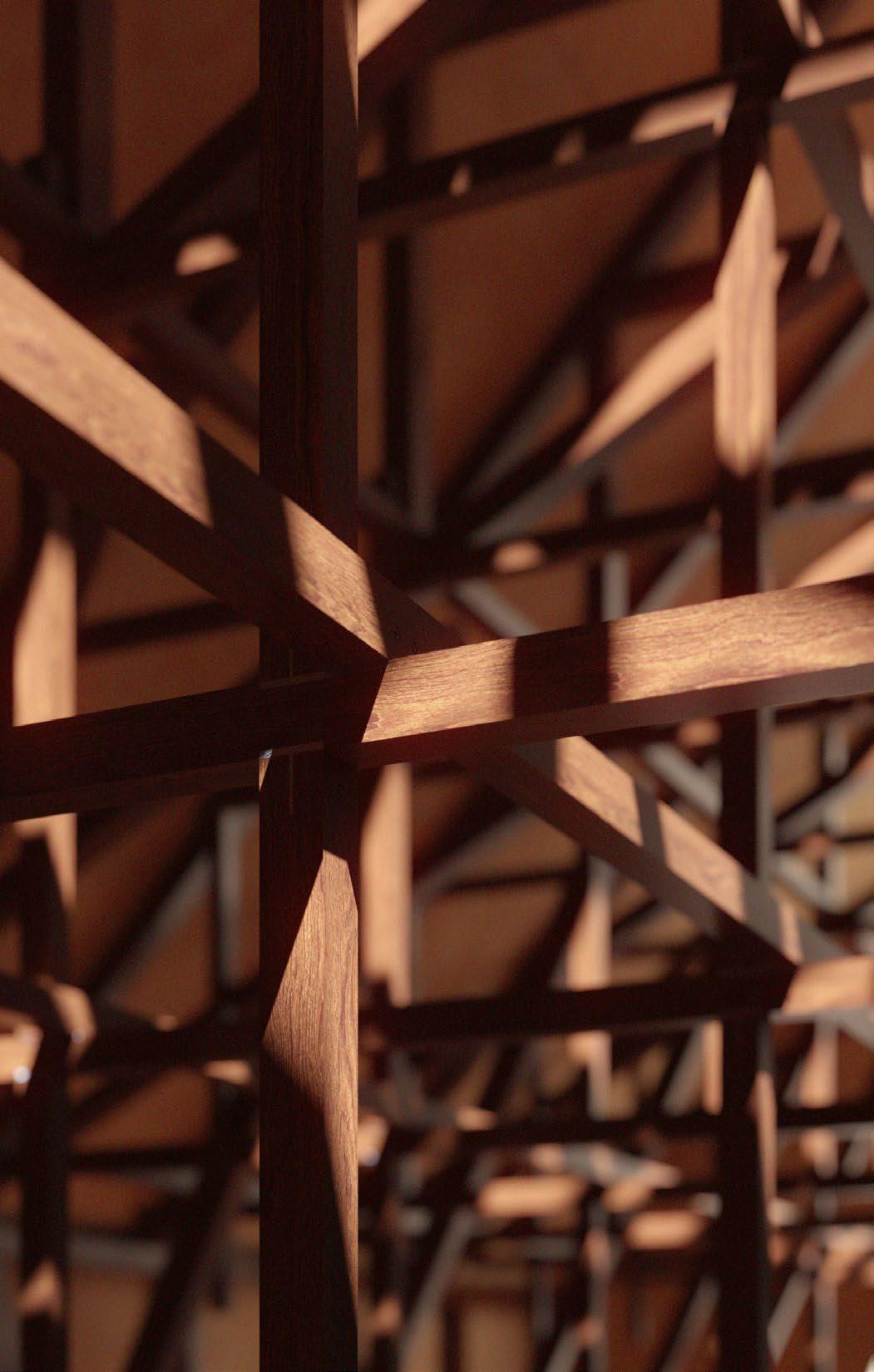
The project utilizes a simple scissor truss as its roof structure, which is then hidden within an additional wooden framework hung from the truss at selected joints. To further obfuscate the true structural components, the new framework is composed of the same wood species as the structure itself. The line between what is structure and what is superficial becomes blurred, the order concealed within the chaos. As one walks the perimeter of the floor area, the angle in which the framework is viewed may reveal the structural logic, or it may obscure it further.
The lateral systems do not conceal themselves as the trusses do, yet they appear as extensions to the system above, bringing the floating canopy down to its earthen roots. The two systems are married as one; no longer a separate upper and lower component, but one single being. The architecture conceals within itself the moment of separation between its structural strategies.
As sunlight filters in from the glazing above, through the tumult of trusses, beams, and ornamental members, the space beneath the artificial canopy becomes an interplay of light and shadow, a place of reflection and meditation, removed from the natural environment yet somehow still reminiscent of it.
Design & fabrication in collaboration with Alana Moon
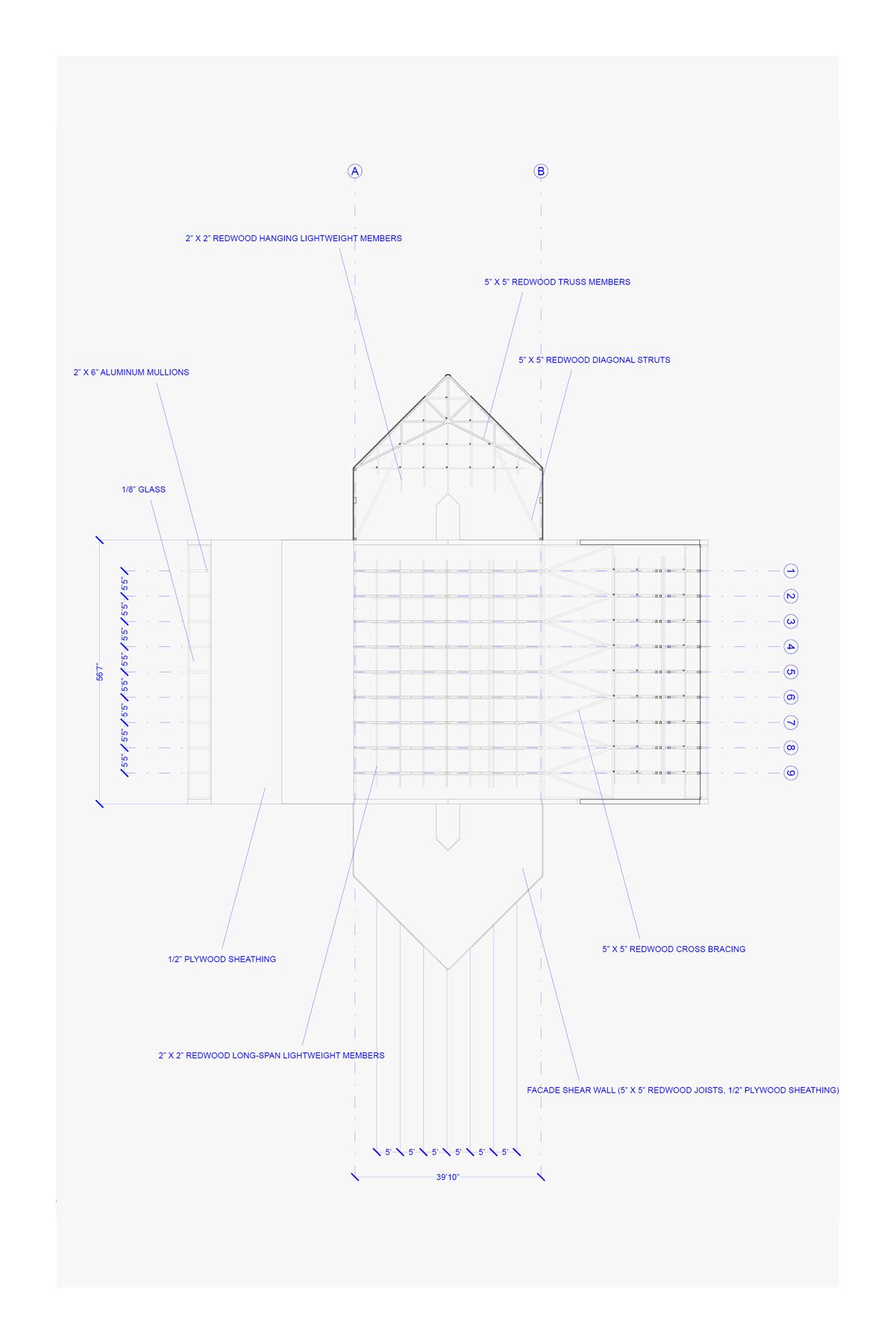

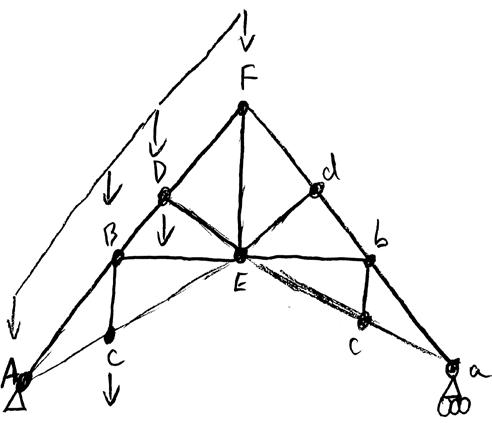
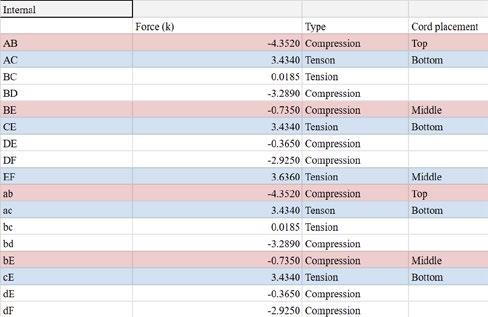
To mask the structural components within the canopy, load-bearing members and ornamental beams are sized to identical cross-sectional dimensions, presenting a unique mathematical dilemma wherein thickening any structural element increases the corresponding load created by the additional members.
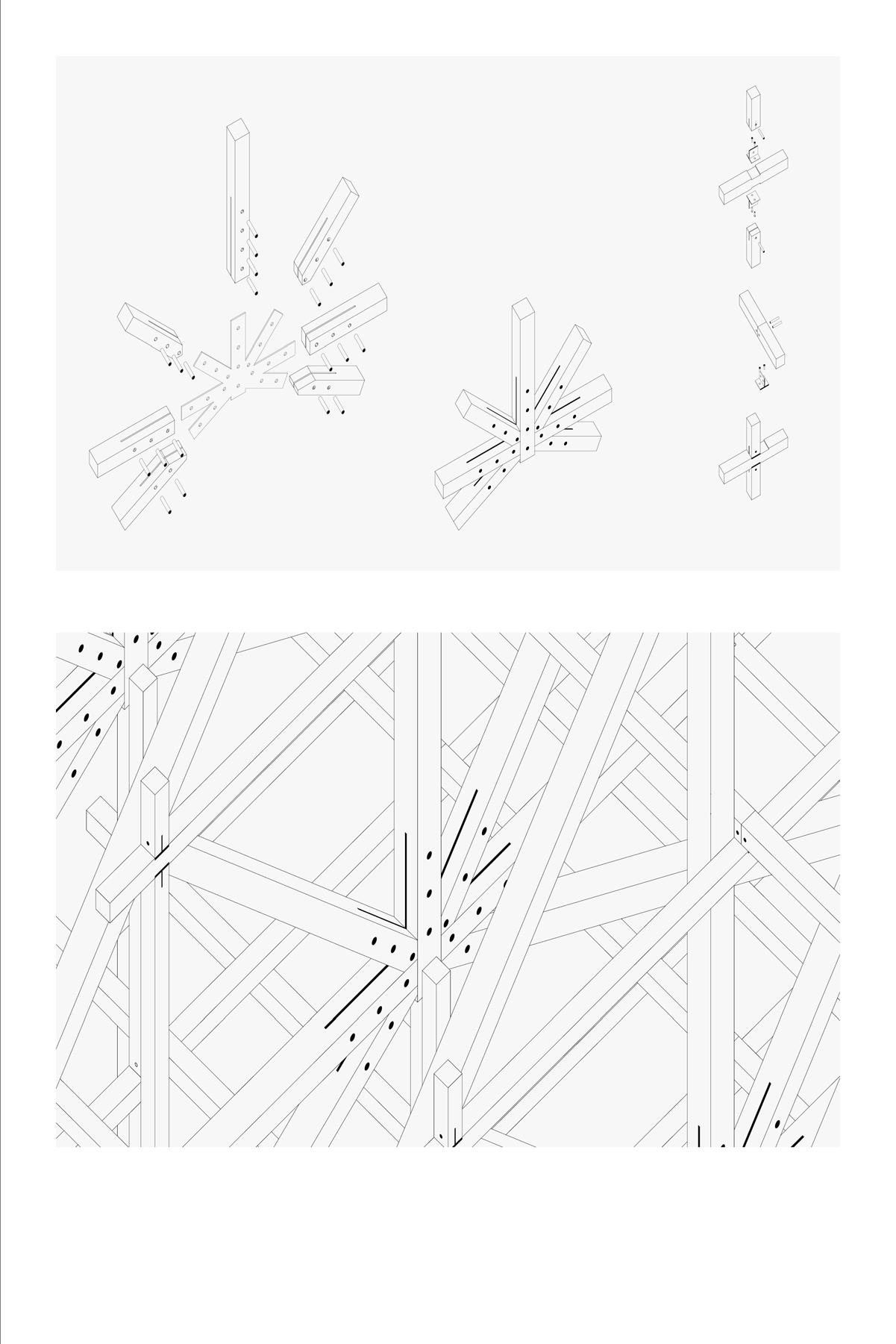
Knife plate connections are used for their combination of strength and subtlety. Trusses and structural elements are assembled using a thicker plate, while non-structural elements utilize a more lightweight joint.