How Reading and Chess Help You Stay Mentally Sharp by
Fletcher Groselcos

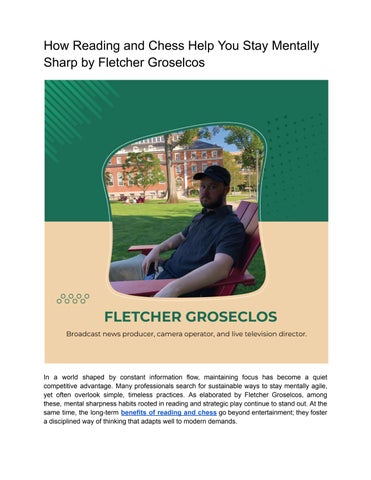
In a world shaped by constant information flow, maintaining focus has become a quiet competitive advantage Many professionals search for sustainable ways to stay mentally agile, yet often overlook simple, timeless practices. As elaborated by Fletcher Groselcos, among these, mental sharpness habits rooted in reading and strategic play continue to stand out At the same time, the long-term benefits of reading and chess go beyond entertainment; they foster a disciplined way of thinking that adapts well to modern demands
Reading builds a structured mental framework that supports clarity and depth When you engage with a well-written book, your mind learns to follow complex ideas without distraction. This process strengthens attention span and improves comprehension over time More importantly, reading trains you to analyze context, detect nuance, and anticipate outcomes These are the same cognitive skills required in decision-making environments where clarity matters
Chess, on the other hand, introduces a dynamic layer of strategic thinking. Every move requires foresight, evaluation, and adaptation Unlike passive activities, chess demands full engagement, forcing the brain to process multiple possibilities at once This constant mental exercise enhances problem-solving ability and sharpens pattern recognition. Over time, players develop a natural ability to think several steps ahead, a skill that translates directly into business and creative strategy.
When combined, reading and chess create a balanced cognitive system Reading expands knowledge and perspective, while chess refines execution and decision-making Together, they build both depth and agility in thinking. This combination helps individuals remain calm under pressure by teaching them to assess situations rather than react impulsively It also supports creative thinking, as exposure to new ideas blends with structured reasoning.
Consistency is what turns these activities into lasting advantages Short, daily reading sessions and regular chess practice can gradually reshape how the brain processes information Instead of feeling overwhelmed by complexity, individuals begin to approach challenges with confidence and precision This shift does not happen overnight, but it becomes evident in how quickly one can analyze, adapt, and respond
In the long run, investing time in mental sharpness habits creates a strong cognitive foundation that supports both personal and professional growth The enduring benefits of reading and chess extend beyond intellectual improvement, shaping a mindset that values patience, clarity, and strategic insight