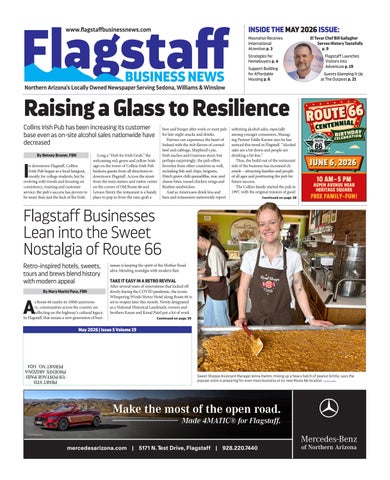
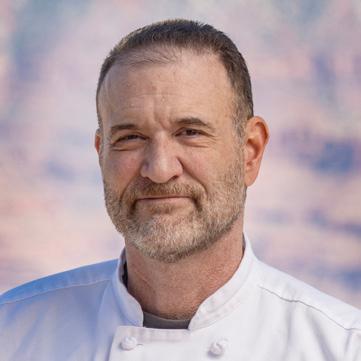
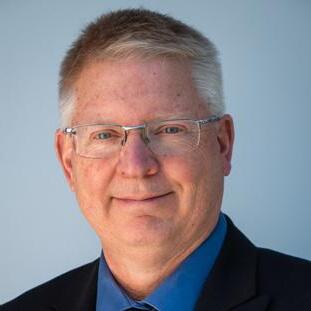
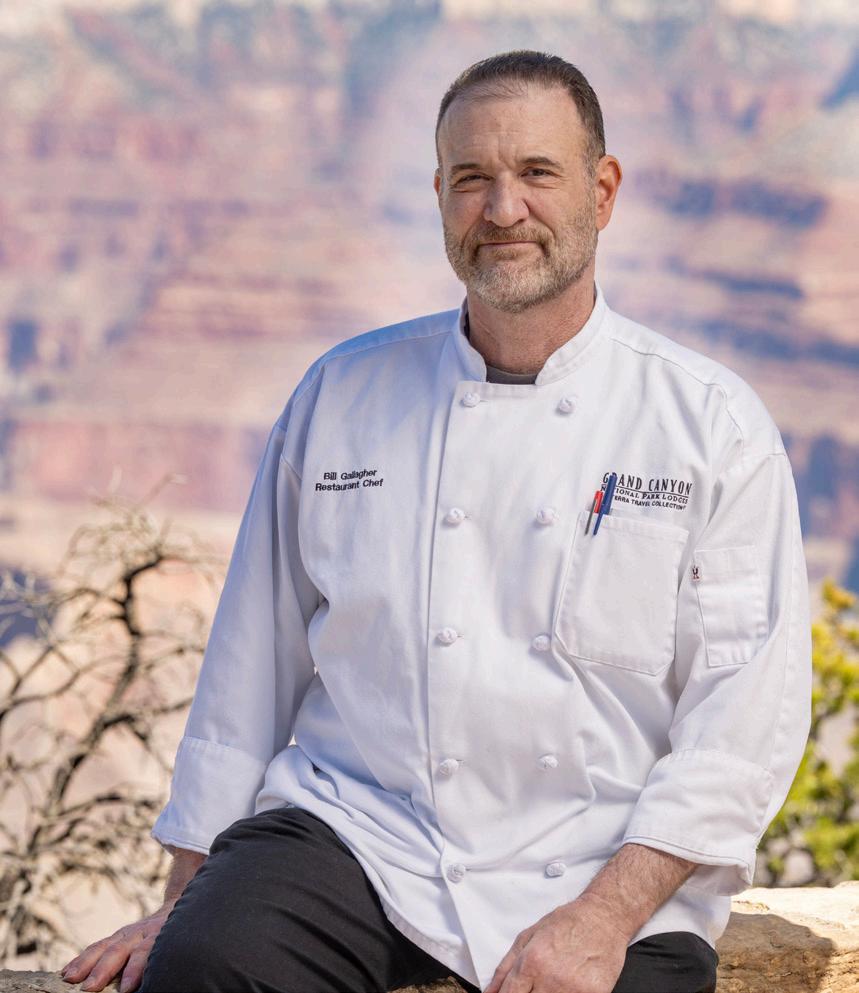
El Tovar Chef Bill Gallagher Serves History Tastefully p. 9
Flagstaff Launches Visitors into Adventure p. 19
Guests Glamping It Up at The Outpost p. 21
Raising a Glass to Resilience
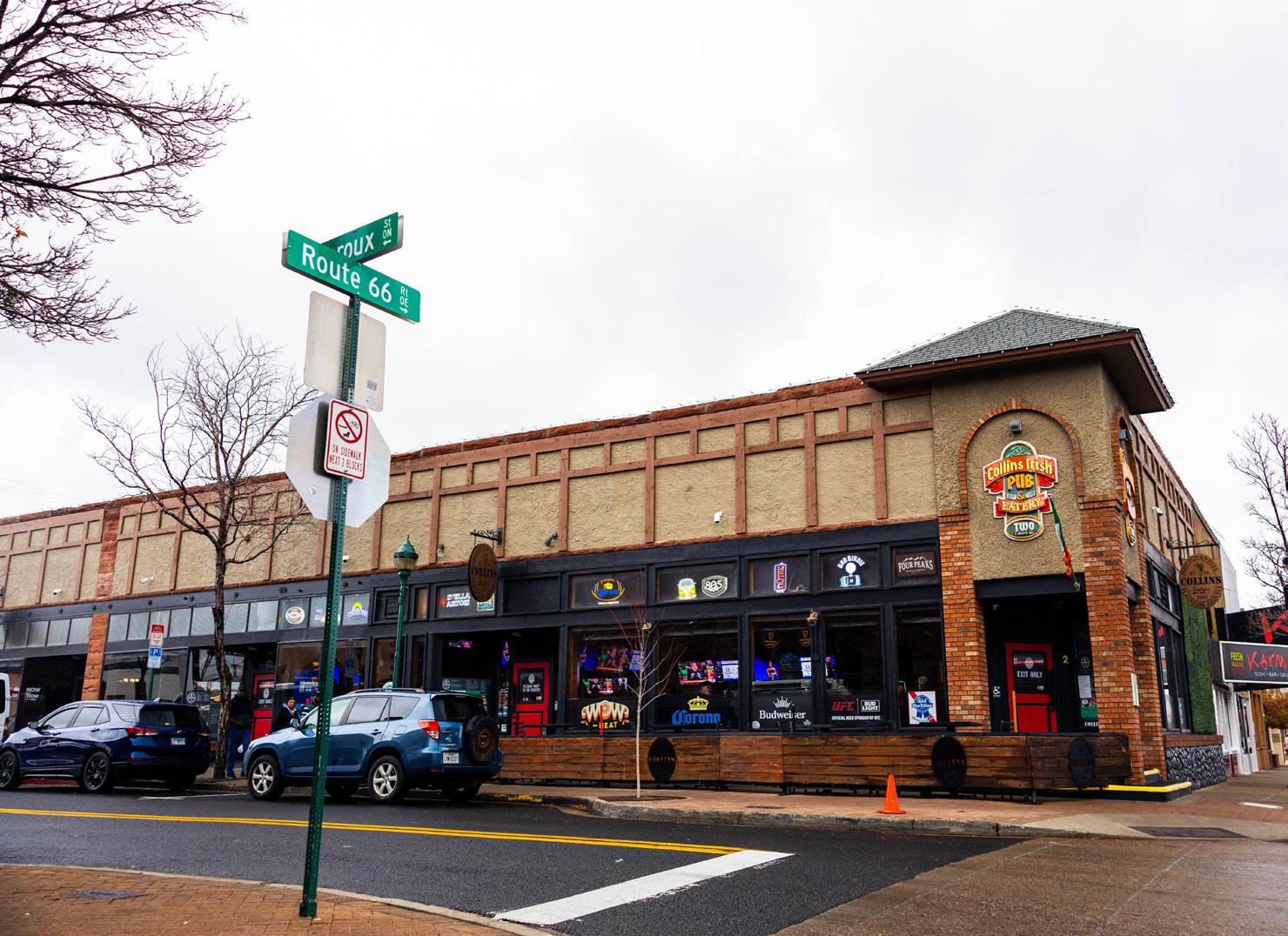
Collins Irish Pub has been increasing its customer base even as on-site alcohol sales nationwide have decreased
By Betsey Bruner, FBN
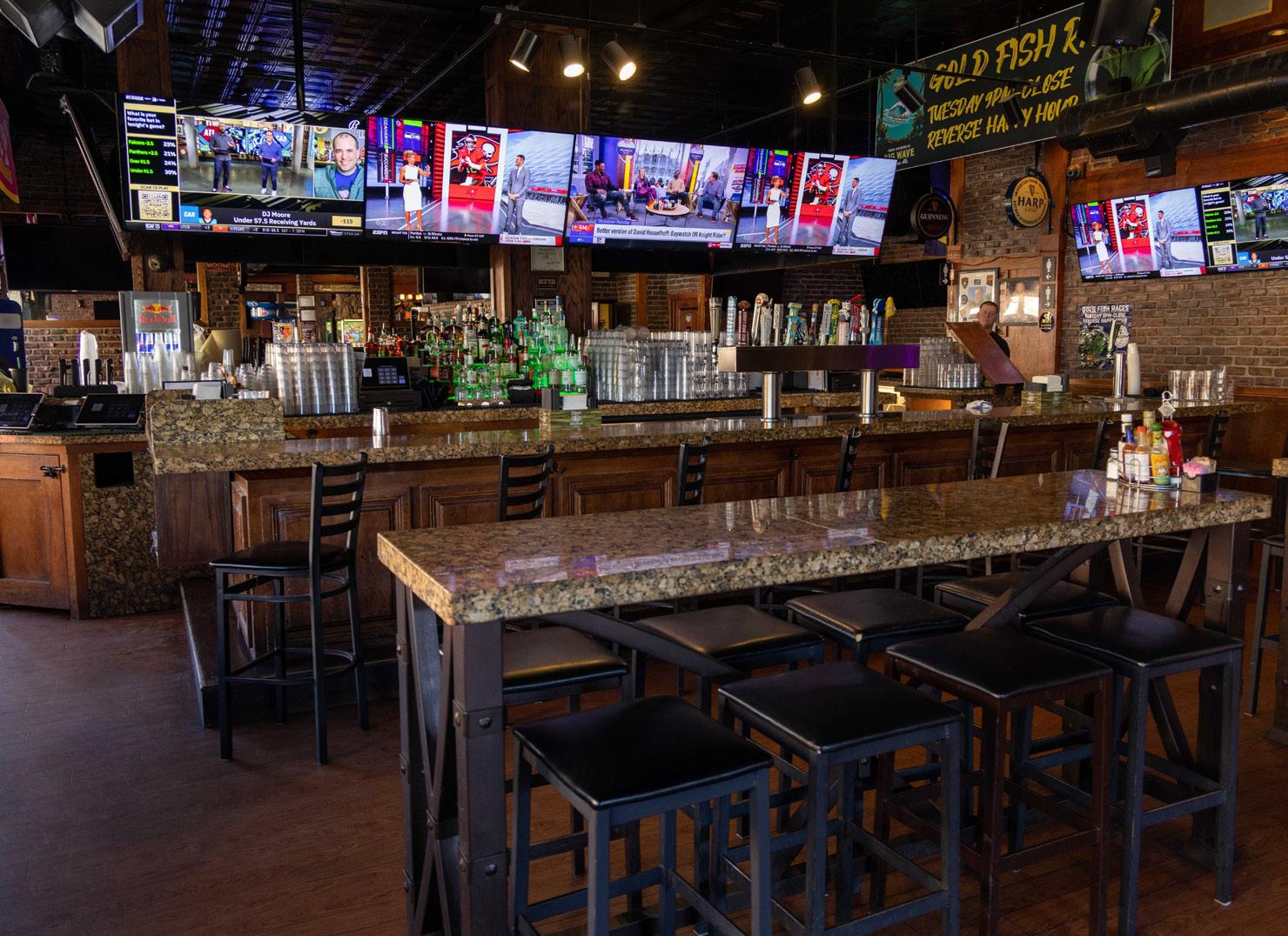
In downtown Flagstaff, Collins Irish Pub began as a local hangout, mostly for college students, but by evolving with trends and focusing on consistency, training and customer service, the pub’s success has proven to be more than just the luck of the Irish.
Long a “Hub for Irish Grub,” the welcoming red, green and yellow Irish sign on the tower of Collins Irish Pub beckons guests from all directions in downtown Flagstaff. Across the street from the train station and visitor center on the corner of Old Route 66 and Leroux Street, the restaurant is a handy place to pop in from the rain, grab a
Flagstaff Businesses
Lean into the Sweet
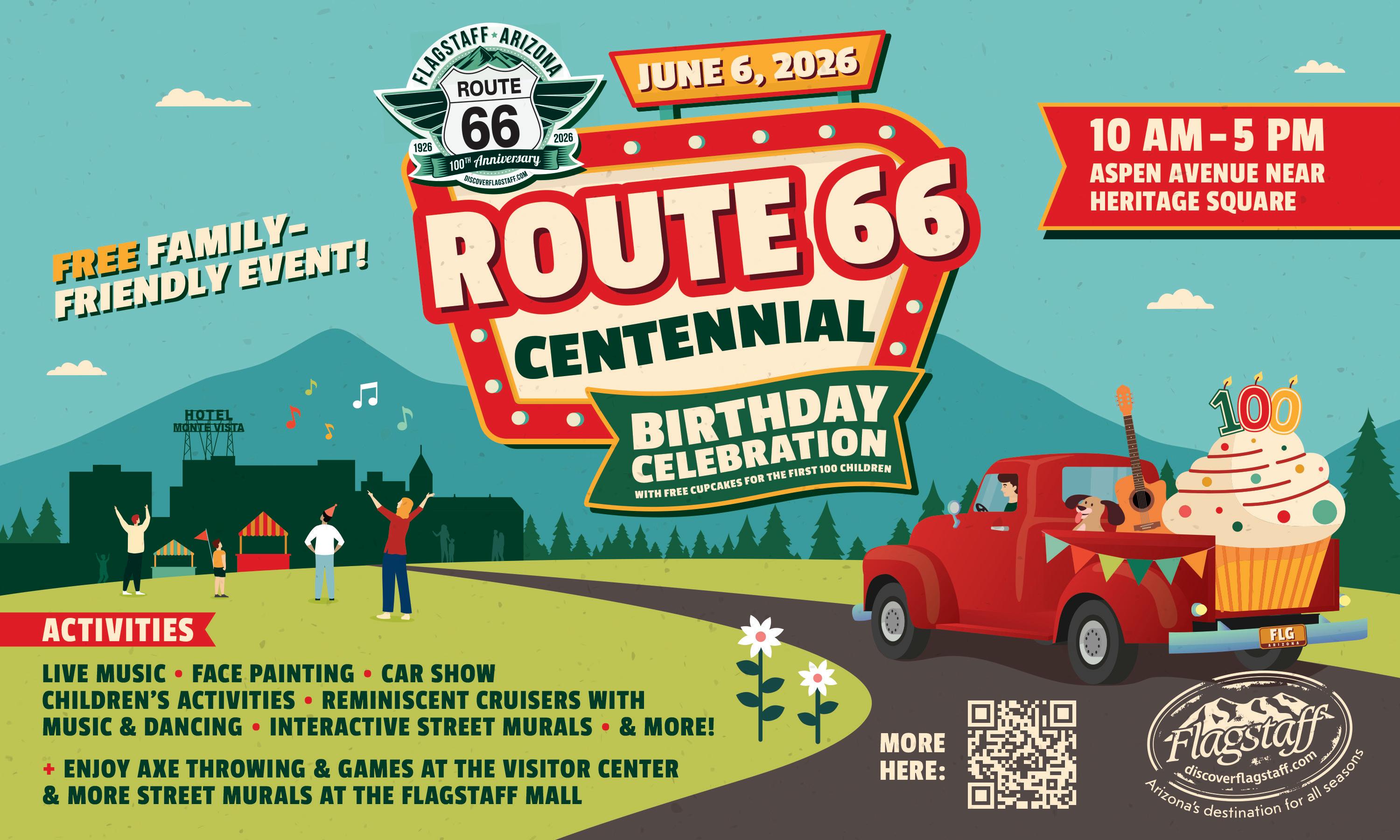
Nostalgia of Route 66
Retro-inspired hotels, sweets, tours and brews blend history with modern appeal
By Mary Marini Para, FBN
As Route 66 marks its 100th anniversary, communities across the country are reflecting on the highway’s cultural legacy. In Flagstaff, that means a new generation of busi-
beer and burger after work or meet pals for late-night snacks and drinks.
Patrons can experience the heart of Ireland with the rich flavors of corned beef and cabbage, Shepherd’s pie, Irish nachos and Guinness stout, but perhaps surprisingly, the pub offers favorites from other countries as well, including fish and chips, beignets, Hatch green chili quesadillas, mac and cheese bites, tossed chicken wings and Reuben sandwiches.
And as Americans drink less and bars and restaurants nationwide report
nesses is keeping the spirit of the Mother Road alive, blending nostalgia with modern flair.
TAKE IT EASY IN A RETRO REVIVAL
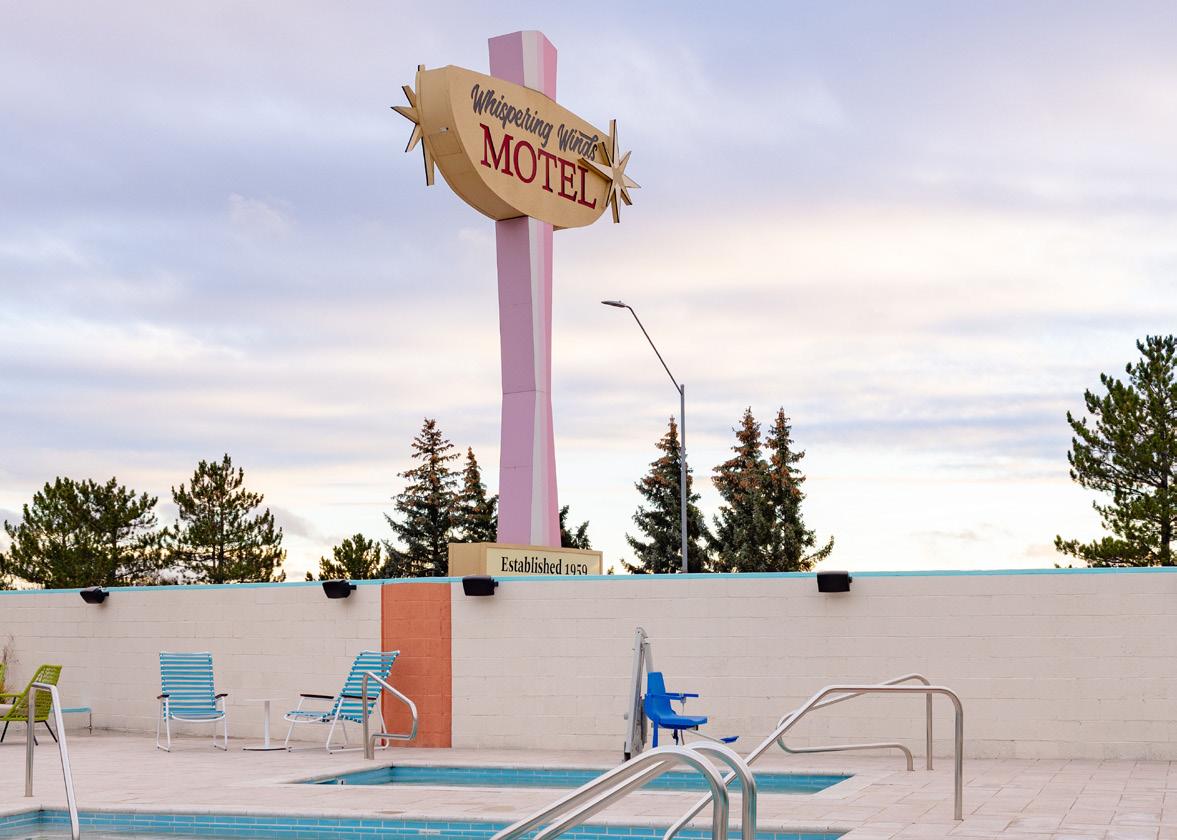
After several years of renovations that kicked off slowly during the COVID pandemic, the iconic Whispering Winds Motor Hotel along Route 66 is set to reopen later this month. Newly designated as a National Historical Landmark, owners and brothers Karan and Kenal Patel put a lot of work
softening alcohol sales, especially among younger consumers, Managing Partner Eddie Karner says he has noticed this trend in Flagstaff. “Alcohol sales are a bit down and people are drinking a bit less.”
Thus, the build-out of the restaurant side of the business has increased clientele – attracting families and people of all ages and positioning the pub for future success.
The Collins family started the pub in
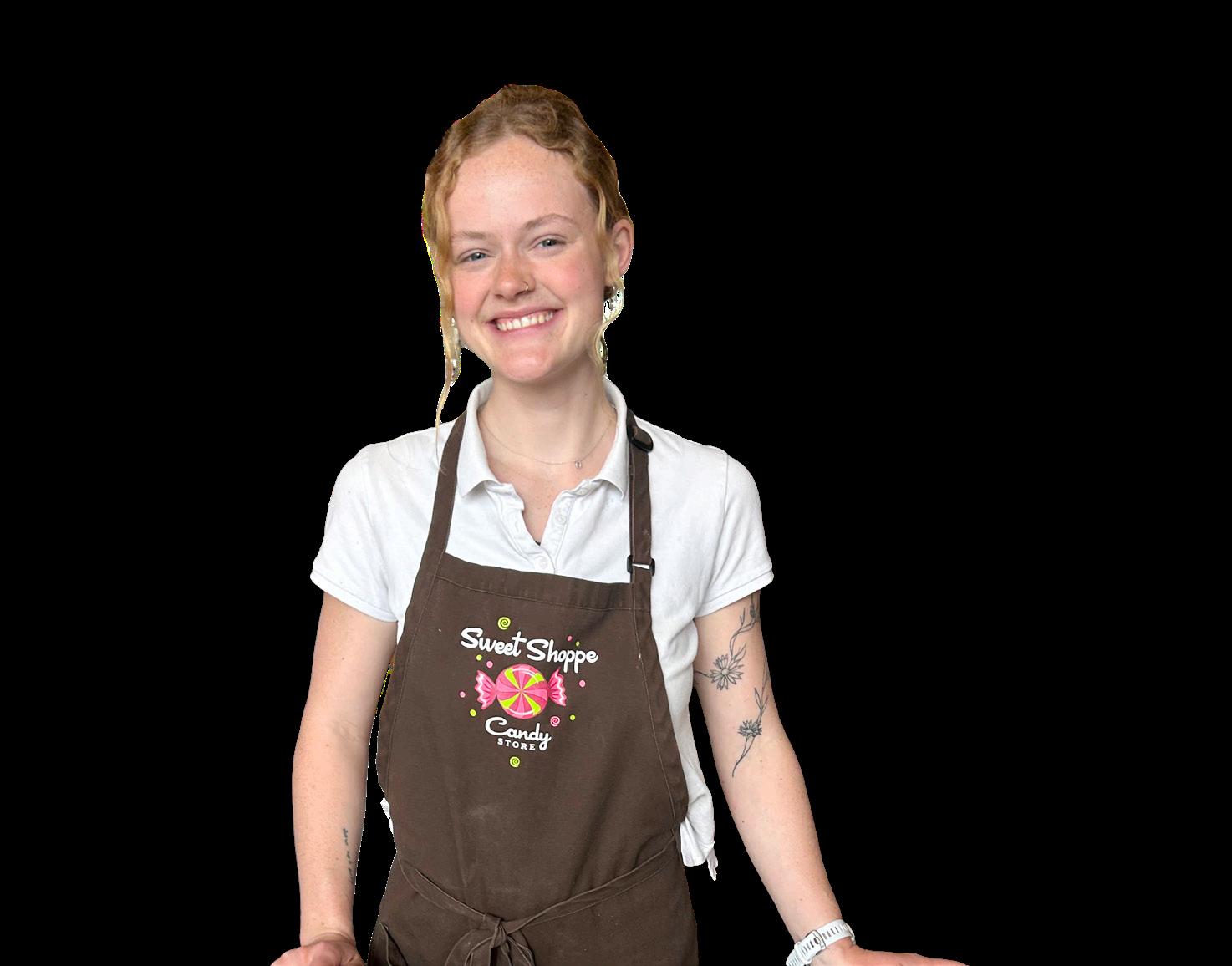
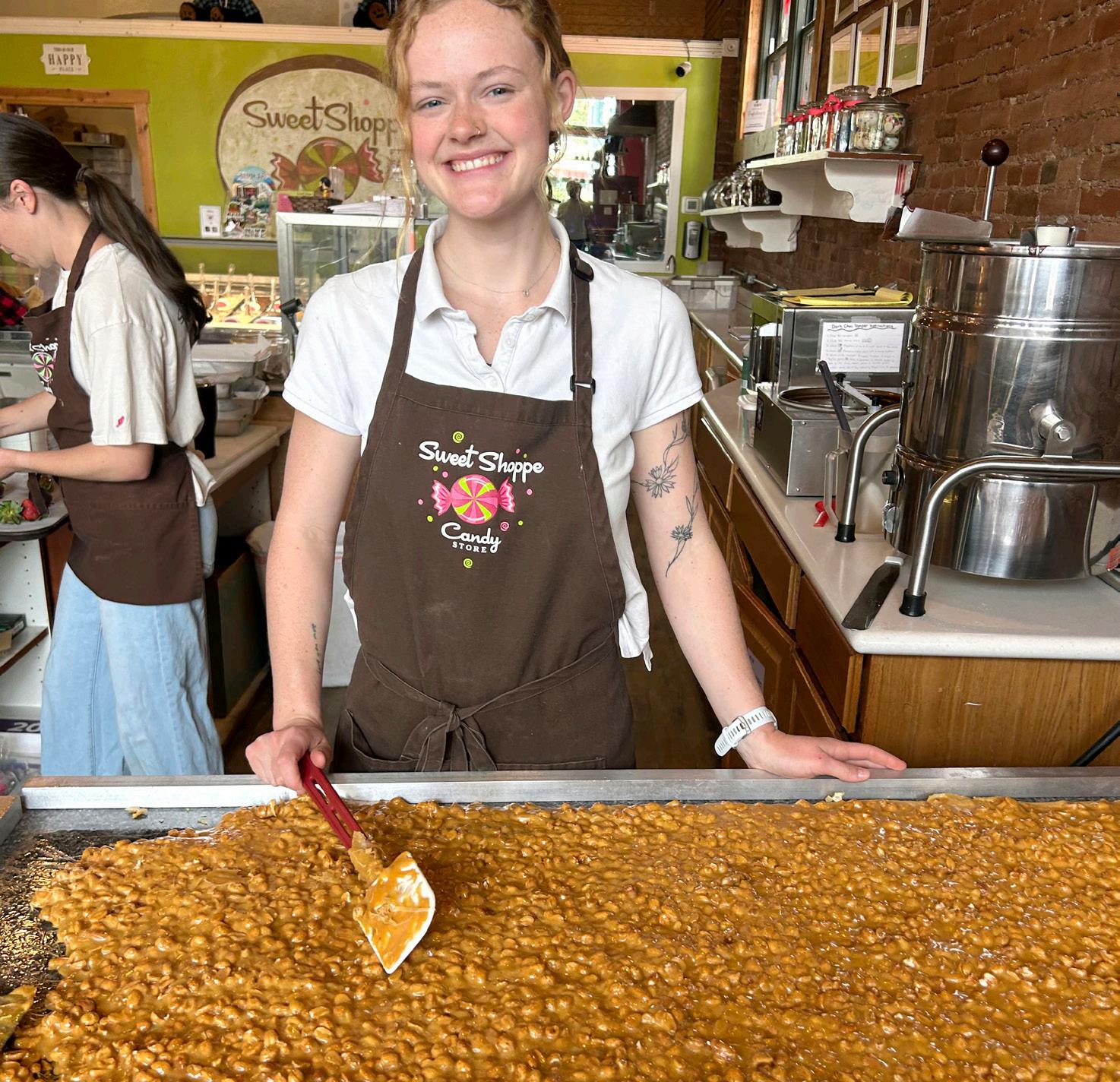
Sweet Shoppe Assistant Manager Jenna Hamm, mixing up a heavy batch of peanut brittle, says the popular store is preparing for even more business at its new Route 66 location. Courtesy photo
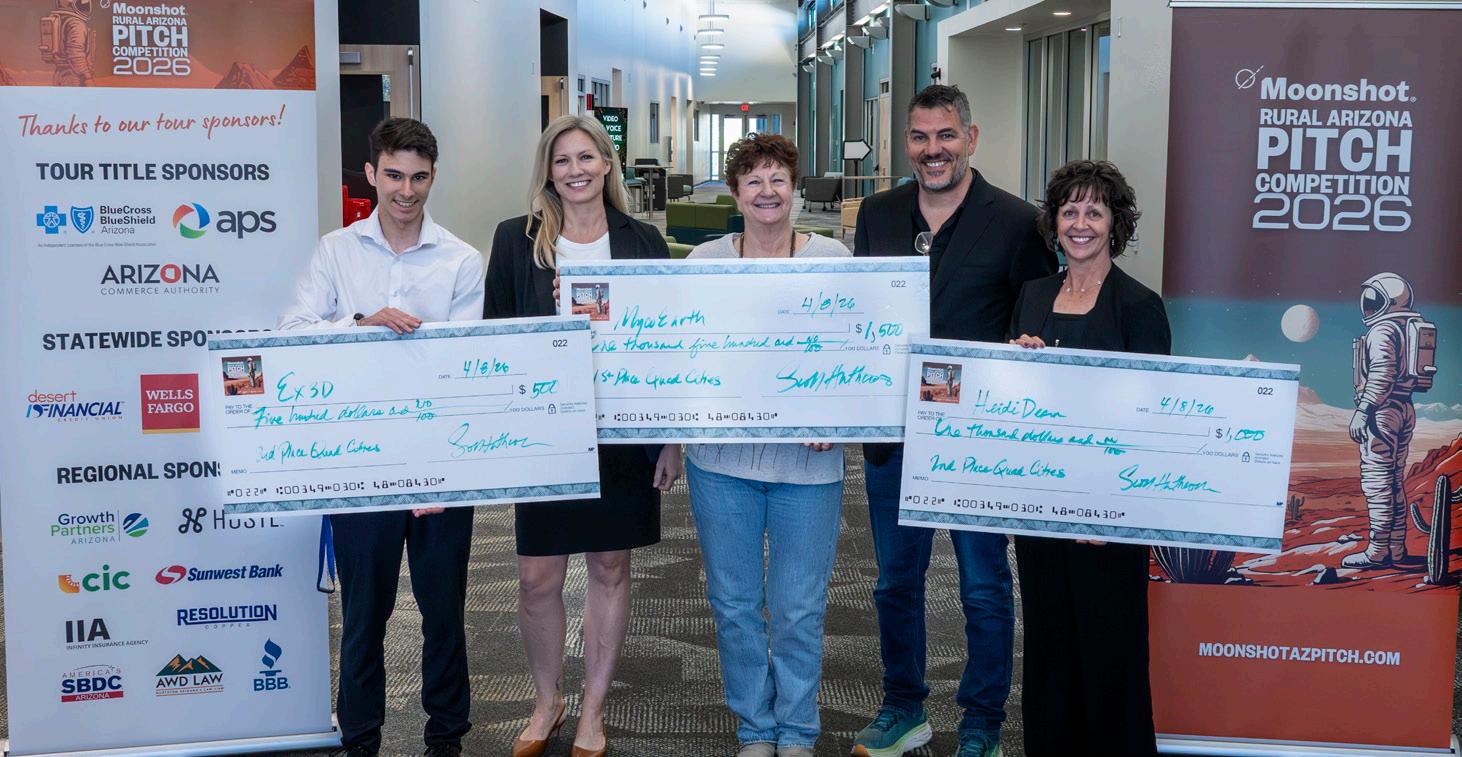
Cultivating Breakthroughs: Mushroom Grower Harvests Win in Moonshot Pitch Competition
Soil-to-supper vision takes root as Moonshot gains global recognition for growing rural innovation ecosystems
By Bonnie Stevens, FBN
Kathryn Crew was energized when she heard her name announced as the winner in Moonshot’s Prescott-area contest during the 2026 Rural Arizona Pitch Competition & Tour event. “Finally, a breakthrough,” she thought. “Here we go. We can make a real difference.”
Crew, a mushroom farmer and former Yavapai College instructor, had been helping others remediate the soil in their gardens and backyards from hard clay to fertile ground for about six years. Her focus, however, expanded and her passion intensified after losing her mother to a form of cancer linked to exposure to agricultural chemicals.
In her Chino Valley home laboratory, she has been sterilizing grain, cultivating spores and growing fungi, developing a proprietary blend that “calls in the other microbes” to regenerate a thriving, nutrient-rich microbiome in the soil.
Along her Moonshot journey, she has teamed up with another scientist who studies the microbiome in the human gut to restore balance there. Believing that the answer to soil, animal and human health is connected and found in the microscopic world, she seeks to work with largescale farmers and ranchers to restore their land.
Last month, she saw her chance and went for it. She shared her research in a Shark Tank-like pitch to Moonshot, a Flagstaff-based nonprofit organization that helps entrepreneurs and startups find resources to grow their ideas. She demonstrated how her startup, MycoEarth, can reverse decades of biological damage caused by synthetic herbicides, fungicides and fertilizers and lead to a healthier food supply, while saving growers a significant amount of money and water.
“This is vital to our future,” she said. “I had tears in my eyes while putting together the PowerPoint presentation for the pitch. I want to make sure my grandchildren have healthy food.”
As the winner of the local competition, she went home with the encouragement she needed to move MycoEarth forward, along with $1,500 –
seed money for a commercial sterilizer to replace the 55-gallon barrels she’s been using on her porch.
That kind of spark is exactly what Moonshot aims to fuel. For six years, the organization has been rocket-boosting entrepreneurial growth across rural Arizona.
“Moonshot has become one of Arizona’s most impactful engines for expanding entrepreneurship and empowering founders in every corner of our state,” said Arizona Commerce Authority President and CEO Sandra Watson.
And now, the Flagstaff-based nonprofit has earned global recognition. In Chicago on Thursday, April 2, Moonshot was named the Rural Entrepreneur Support Organization of the Year by the International Business Innovation Association (InBIA) at the organization’s annual conference.
The honor recognizes Moonshot’s innovative “traveling ecosystem” model and its measurable impact on rural and Indigenous communities across Arizona. InBIA recognizes organizations that advance innovation, strengthen local ecosystems and help entrepreneurs start, grow and thrive across diverse communities and industries.
“What sets these organizations apart is not just what they do, but how intentionally they do it – building systems that consistently produce better outcomes for entrepreneurs,” said InBIA CEO Charles Ross. “Each of this year’s award winners is demonstrating what high-performing ecosystems look like in practice, and their models are shaping the future of entrepreneurship support globally.”
At the heart of Moonshot’s recognition is the Rural Arizona Pitch Competition & Tour, now underway across 20 communities. Rather than requiring rural founders to travel to entrepreneurship resources, Moonshot brings a full day of pitch workshops, expert panels, one-on-one coaching and competitive prize opportunities directly to their communities.
“We’ve always believed that entrepreneurial talent exists everywhere, but access to resources does not,” said Moonshot President and CEO
Prescott Moonshot Pitch winners taking home cash prizes included Kathryn Crew in first place, Heidi Brown in second place and Jacob Labagh in third place, shown here with Moonshot’s Kiersten and Scott Hathcock. Photo courtesy of Ashley Darling
A Tight Market But a Path Forward for Flagstaff Homebuyers
By Mary Marini Para, FBN
Demand for homes in Flagstaff will always be high. It’s one of the region’s most desirable places to live, with its mountain setting, outdoor lifestyle and strong sense of community. But that desirability comes at a cost, and for many first-time homebuyers, that cost is becoming harder to overcome.
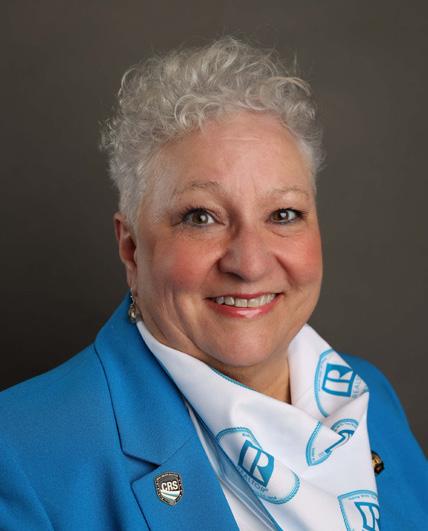
“I feel bad especially for people who are keeping this town going. It’s becoming less realistic for people to own a home here,” said Lisa Paffrath, a longtime Flagstaff-based realtor with Better Homes & Gardens and 2025-26 President of the Arizona Association of Realtors. Paffrath says her passion is helping first-time buyers find a path into homeownership, even as the market grows more challenging.
One of the biggest hurdles is a simple one: there just aren’t enough homes available.
Before the pandemic, Flagstaff typically had between 800 and 1,000 homes on the market at any given time. Today, that number has dropped to fewer than 300. Of those, roughly 100 are priced above $1 million, which is far beyond the reach of most local buyers.
As of April, the median price for a single-family home in Flagstaff sits at
$705,000.
“It’s sad because the demand is there but we have such low inventory, it’s keeping demand high,” Paffrath said.
While homes are taking longer to sell than they did during the peak of the pandemic-era buying frenzy, sellers are still holding firm on price. Paffrath describes the current environment as a stabilized market, not clearly favoring buyers or sellers.
Homes are now typically on the market between 60 and 180 days, a noticeable shift from the rapid sales seen in recent years. Still, price flexibility remains limited.
“Ninety percent of homes sold in the last six months sold at listing price,” she said. “Sellers don’t budge. The whole idea right now is, ‘If you want that house, I’ll wait for the money.’”
High interest rates are adding another layer of difficulty, particularly for first-time buyers trying to make the numbers work. Earlier predictions that rates might dip below 6% have not materialized and broader economic pressures continue to keep borrowing costs elevated.
“If rates were lower, we’d see more movement,” Paffrath said. “But right now, affordability is still a major barrier.”
That slowdown has ripple effects
beyond the housing market. Paffrath notes that when homes aren’t selling, it impacts a wide range of local industries, from contractors and flooring companies to furniture retailers and home improvement businesses.
“If more houses were available and selling, that money goes right back into the economy,” she said. “People remodel, they update, they invest in their homes, and that supports other local businesses.”
Despite the challenges, Paffrath emphasizes that it’s not all bad news, especially for first-time buyers who are willing to think beyond traditional assumptions. “There’s this belief that you have to put 20% down and that’s just not true anymore,” she said. “There are more options than people realize.”
Federal Housing Administration (FHA) loans, for example, allow buyers to purchase a home with as little as 3% down, often with more flexible credit requirements. Conventional loans can require as little as 5% down, while VA loans offer qualified veterans the opportunity to buy with no money down.
For buyers open to living outside
Flagstaff, additional opportunities exist. U.S. Department of Agriculture (USDA) loans, designed to encourage homeownership in rural areas, also offer zero-down financing and more lenient credit standards.
Communities like Williams, about 30 minutes west of Flagstaff, or even Winslow, less than an hour away, can provide significantly more affordable options. In some cases, buyers may save $100,000 to $200,000 compared to Flagstaff prices, often with larger lots or acreage.
“There are trade-offs, like commuting or hauling water in some areas,”
Paffrath said. “But for many people, it’s a way to get into a home when they otherwise couldn’t.” Her advice to prospective buyers is simple: explore every option before assuming homeownership is out of reach. “Talk to a lender, talk to a realtor and look at all the programs available,” she said. “You might be closer than you think.”
In a market defined by limited inventory and persistent demand, creativity and flexibility may be the key to unlocking homeownership in Flagstaff. FBN
Realtor Lisa Paffrath advises first-time buyers to think beyond conventional strategies. Courtesy photos
Helping to protect you and your community from wildfire.
Wildfires are a growing challenge across the country, and it’s important to be prepared. If we need to shut off power for safety, you can stay informed by receiving email and text alerts. Sign in to your aps.com account now to be sure your contact information is current. For your safety, please consider keeping grass, weeds, trees and shrubs trimmed, get emergency alerts through local resources, and visit ein.az.gov to create an emergency preparedness plan.
To prepare and help prevent wildfires in Arizona, our crews:
• Maintain more than 38,000 miles of power lines.
• Create defensible space by reducing vegetation around equipment poles and inside substations.
• Implement a targeted Public Safety Power Shutoff program to be used only in certain high-risk fire conditions.
During high-risk conditions, we take extra steps to reduce the risk of wildfires. This can include taking power lines out of service so first responders can enter the area safely. We may need to take extra time to inspect lines to ensure they are not damaged before restoring power.
Thank you in advance for your patience as we work to help protect first responders, communities, wildlife, the environment and property.
To stay safe and informed during wildfire season, visit aps.com/wildfires
Additional Investment Dollars Contribute to Timber Sky Starter Home Project
The Arizona Community Foundation (ACF) of Flagstaff is celebrating continued momentum in advancing attainable homeownership across Northern Arizona.
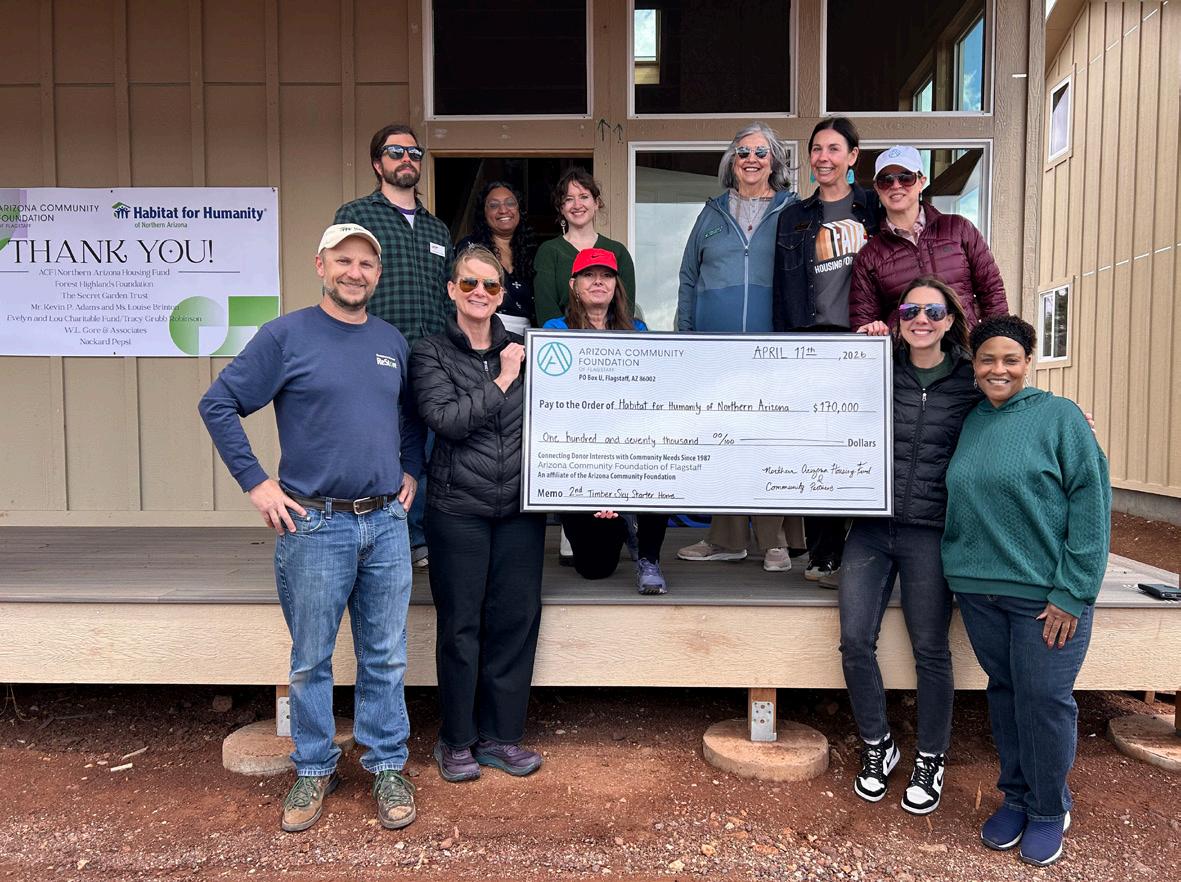
Building on its initial $150,000 grant awarded in August, ACF – through the Northern Arizona Housing Fund – and its generous community of donors, has now raised an additional $170,000 to endow a second Timber Sky Starter Home in partnership with Habitat for Humanity of Northern Arizona.
ACF representatives say this milestone reflects not only strong community support, but deep enthusiasm for an innovative housing model that is redefining what homeownership can look like in high-cost communities like Flagstaff.
The Timber Sky Starter Home model, championed by Habitat for Humanity of Northern Arizona CEO Eric Wolverton, is widely recognized for its forward-thinking approach, states an ACF news release.
“By incorporating a shared equity structure that allows homeowners to build wealth through time – while preserving long-term affordability –
the model responds directly to the realities of today’s housing market and the needs of tomorrow’s workforce.”
“Eric’s leadership and vision have created something truly special,” said ACF of Flagstaff Regional Director Tammy Howell. “This model is not only innovative, it’s practical, scalable and deeply aligned with the future of housing in communities like ours. ACF is proud to support and stand behind this work and it’s clear our donors feel the same.”
Nackard Pepsi, Evelyn & Lou Charitable Fund/Tracy Grubb Robinson, The Secret Garden Trust, Kevin Adams and many others.
ACF states that it is grateful for the support of the Forest Highlands Foundation, W. L. Gore & Associates,
“The strong philanthropic response underscores the project’s appeal – offering donors a tangible, lasting way to invest in both
housing
stability and generational wealth-building for local families,” said Howell. FBN
Representatives from the Arizona Community Foundation of Flagstaff celebrated the contribution with partners from Forest Highlands Foundation, W. L. Gore & Associates and the Northern Arizona Association of Realtors. Courtesy photos
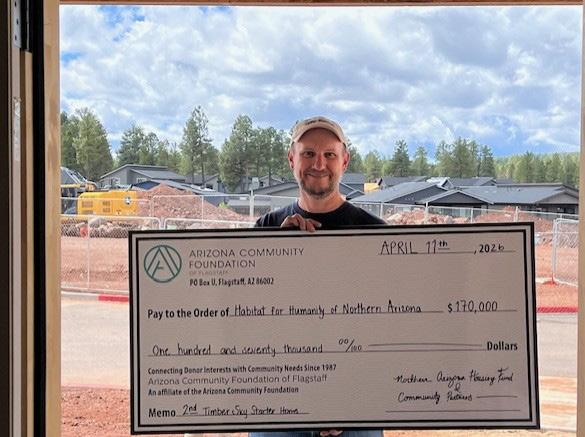
Habitat for Humanity of Northern Arizona Executive Director Eric Wolverton smiles about the giant check for $170,000.
Flagstaff’s future starts in the classroom. From elementary school through college, we energize the places where careers begin — helping to grow talent, create jobs, and fuel the economic success of our region.
Business
of the Month
Suzy Bean Offers a Market Built on Local Connections, Healthy Living
Interdependence Foods spotlights Northern Arizona vendors, rare global finds and a community-first approach
By V. Ronnie Tierney, FBN
Awelcoming surprise in Sedona has nothing to do with the majestic red rocks, but a locally owned natural foods store that depends primarily on Northern Arizona suppliers and offers an array of specialized products.
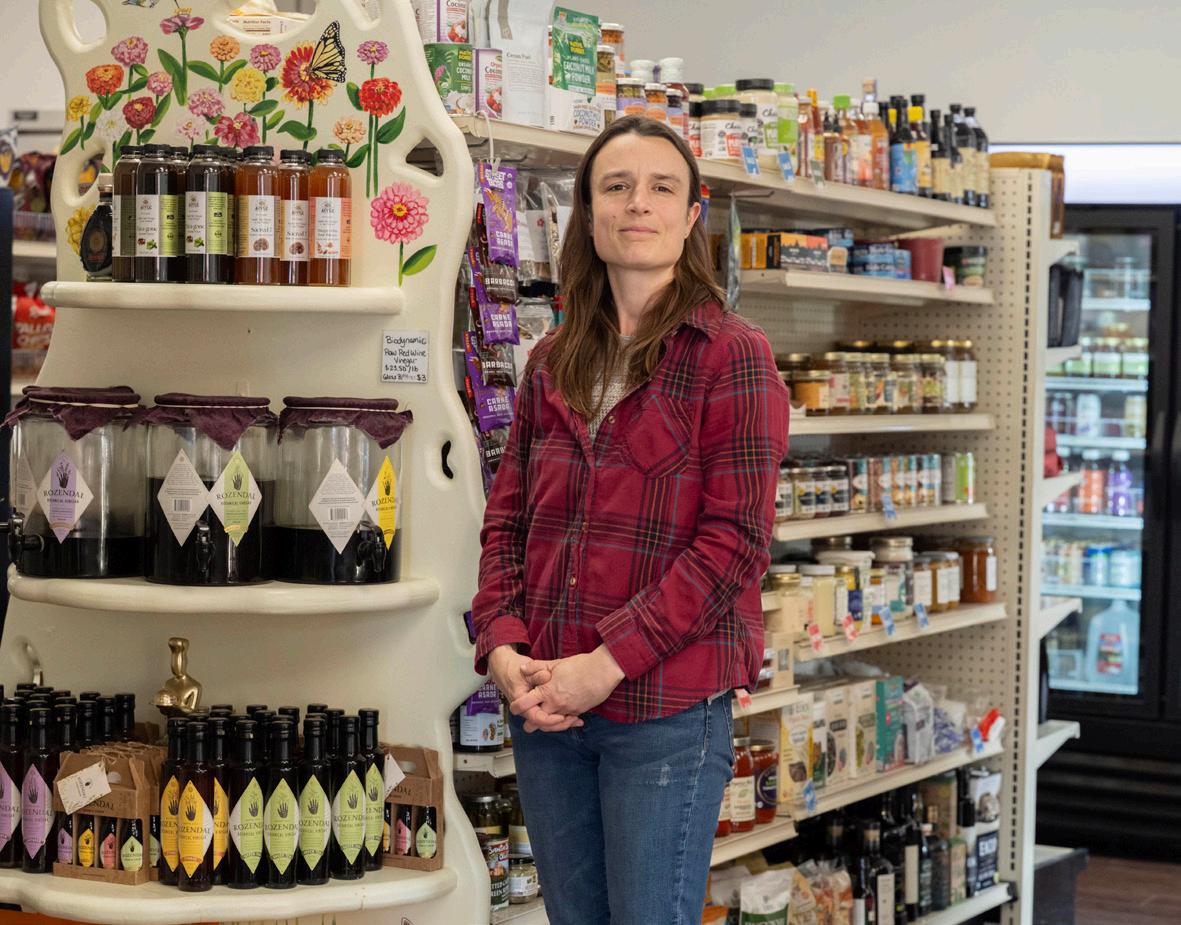
“Our emphasis is buying from small, local vendors as much as possible,” said Interdependence Foods owner Suzy Bean. “We also stock products not found at bigger stores such as our raw herbal and flower infused botanical vinegars that are grown in South Africa. They are alkalizing to the body, add minerals and serve as a digestive aid. It’s also very delicious.” Raw milk is also available.
Bean is originally from Falls Church, Virginia, where she learned the art of gardening. “I grew up watching my mother garden and took an interest in sustainable agriculture. When I was in high school, we both took an interest in alternative health.”
That interest led her to spend two years living on the Hawaiian island of Kauai, where she was involved with community farm work and worked at a Hanalei health food store.
In 2006, Bean moved to Prescott to attend college. She earned her degree in education with an emphasis in eco psychology. She moved to Sedona, where she opened Interdependence Foods nine years ago. Previously, the store was Rinzai’s Market.
“The original location was in the Harkins Shopping Center and about six months ago we relocated our new store to the old Bank of America building. It’s beautiful and we are right next to Jack Jamesen Memorial Park, where our patrons can take advantage of the benches and beautiful landscape.”
“Interdependence Foods is a vital business for Sedona’s health-conscious community,” said Sweetonomy web designer Sheri Staffiery. “I can always find unique items and their lavender balsamic vinegar is my favorite, perfect for spring and summer salads. I also really appreciate the sustainable refill options. The staff are consistently friendly and helpful and Suzy does such a wonderful job of providing fresh, locally grown food. I just love Interdependence Foods.”
The layout of the store reflects Bean’s delightful and easy-going personality –well-lighted, with the sun beaming in, and roomy aisles that invite shoppers to take their time and browse through the
different layers of products.
From pure beeswax candles to a section of personal care and beauty products from local suppliers and an ample organic produce section, Bean also carries sun-dried olives, raw cheeses and vegan cashew-based cheeses that replicate the dairy options. “We have a brie that tastes a lot like the real cheese.”
“One of our specialty items is Sea Moss Gummies and Sea Moss Gels sweetened with coconut sugar, honey and fruits,” said Bean.
A staff of eight part-time employees work at Interdependence Foods. Daniel Vondrak has worked for Bean for more than four years. “Suzy is very down to earth, caring, has a good listening ear and addresses our concerns. It is much like a family work environment. Locals really enjoy the store because we carry a lot of groceries and supplements that other stores do not carry. The new location has been a big upgrade for us. It’s very visible, easy to find and provides a nicer shopping experience.”
Bean says she consults with her customers to determine what they might need. “We’re not doctors but people come in needing help and we provide feedback and offer healthy solutions regarding what might be good for them.”
Bean has had challenges with Lyme disease and mold sickness over the years and says that through the process of tuning in more to her body and cleaning up her diet she has been able to manage it.
“I eat meat and veggies and listen to my body as best I can,” she said. “I’m also a gentle exerciser and jump on a trampoline daily.”
Bean is originally from Falls Church, Virginia, where she learned the art of gardening. “I grew up watching my mother garden and took an interest in sustainable agriculture. When I was in high school, we both took an interest in alternative health.”
Down time for Bean means hanging out with housemates and playing with her cats and rabbits. “I also really enjoy riding with my boyfriend on his motorcycle.” FBN
Interdependence Foods is located at 1771 West State Route 89A, in the same shopping center as Layla’s Bakery Café and Nationwide Pack & Ship.
928-204-2185.
Suzy Bean offers locally sourced products and raw herbal and flower infused botanical vinegars in her Interdependence Foods store in Sedona. Photos by V. Ronnie Tierney, Fresh Focuses Photography
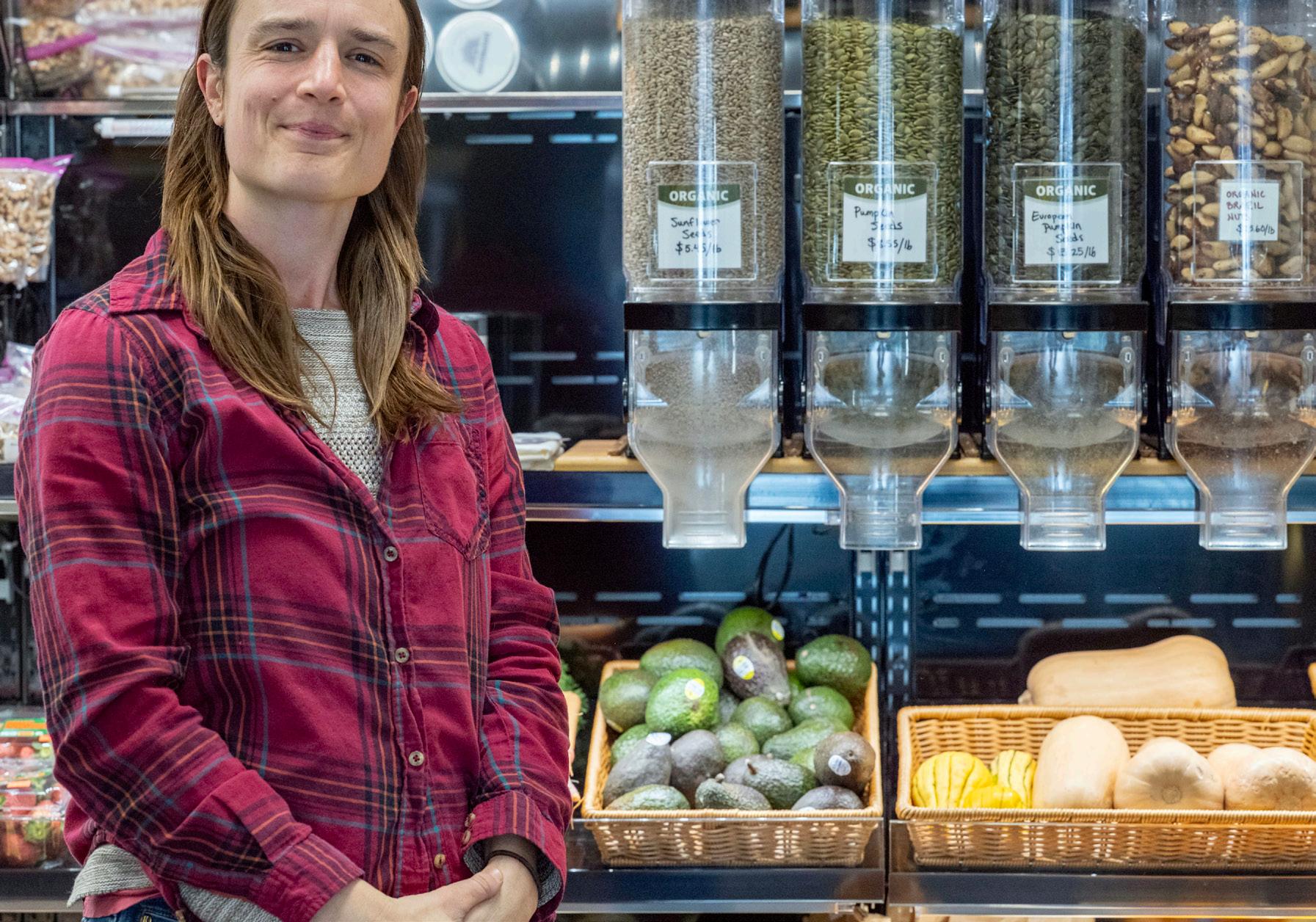
An inviting atmosphere encourages shoppers to explore the many offerings not found in other stores.
// COMMUNITY PROFILE // BY
V. RONNIE TIERNEY, FBN
Savoring History through the El Tovar Dining Experience
Chef Bill Gallagher blends tradition with Arizona’s wild nature at the iconic South Rim lodge
At the edge of the Grand Canyon, where presidents, celebrities and world travelers have gathered for more than a century, Chef Bill Gallagher is keeping culinary history alive.
Since opening in 1905, the El Tovar Hotel has welcomed a long list of notable guests including Theodore Roosevelt and Paul McCartney. Today, Gallagher honors that legacy while continuing to evolve the dining experience.
Gallagher arrived in 1994 as a seasonal dishwasher. He later returned as a cook while also working for the National Park Service, eventually rising to chef. During that time, he earned a bachelor’s degree in anthropology from Northern Arizona University, a background that informs his appreciation for culture and tradition.
Working alongside Senior Sous Chef Ivan Kolarevic, Gallagher helps preserve the El Tovar dining experience, shaped by more than 120 years of history. “From the very beginning, 1905, El Tovar would serve dishes made with ingredients brought in by train from all
over the country.”
That legacy continues with historic offerings like the Harvey Girl special, Little Thin Orange Pancakes. “The original recipe was from 1895 and was served at the Fred Harvey restaurants in St. Louis Union Station,” he said. The Harvey Girls were young women employed by the Fred Harvey Company in the late 19th and early 20th centuries to serve meals along railroad routes in the American West.
In addition to time-honored favorites, Gallagher’s team continues to create. “Along with our Culinary Director Brian von Eggers, we work to incorporate innovative, regional, plant-forward menu items and game dishes. Our Elk Bolognese and our Vegan Forage Bowl are very popular.”
Another guest favorite is the Peppercorn Crusted Strip Steak, paired with John Shaw Smoked Whiskey Sauce from Flagstaff’s Canyon Diablo Distillery. John Shaw was an outlaw in the Old West who became famous after his death when his friends propped up
his body, placed a bottle of whiskey in his hand and took a photograph.
“Chef Bill has also been very active in developing the history of El Tovar and the cuisine that Fred Harvey had at the hotel when it opened over 120 years ago,” said von Eggers. “One of the best examples of this was reimplementing the table d’hôte menu – the Chef Tasting menu – that has been present through most of the years of the restaurant. Additionally, reinventing some the old classics in a modern fashion as well as leaning into wild game cuisine of the old-world hunting lodges that talks to the design and feel of the El Tovar.”
Gallagher said his connection to the Grand Canyon extends beyond the kitchen. “I really enjoy the park living experience, so my wife, Marci, and I returned and established ourselves here. We have three sons, ages 27, 24 and 17, who grew up in the park. They each started their working careers at the Bright Angel Fountain scooping ice cream when they turned 14.”
Marci works as a project administrator for Xanterra Travel Collection.
Von Eggers said Gallagher’s leadership extends throughout the kitchen and beyond. “Bill is also a great team
Continued on page 34
Raised on an Arabian horse ranch in Pennsylvania, Gallagher was 23 when he first came to El Tovar. “It’ a very different and unusual environment here at the Grand Canyon and sometimes it can be challenging. We might have a fire warning or the wind might break a power line or water restrictions or a combination of all those elements at the same time. But we must provide for the guests, and we do.”
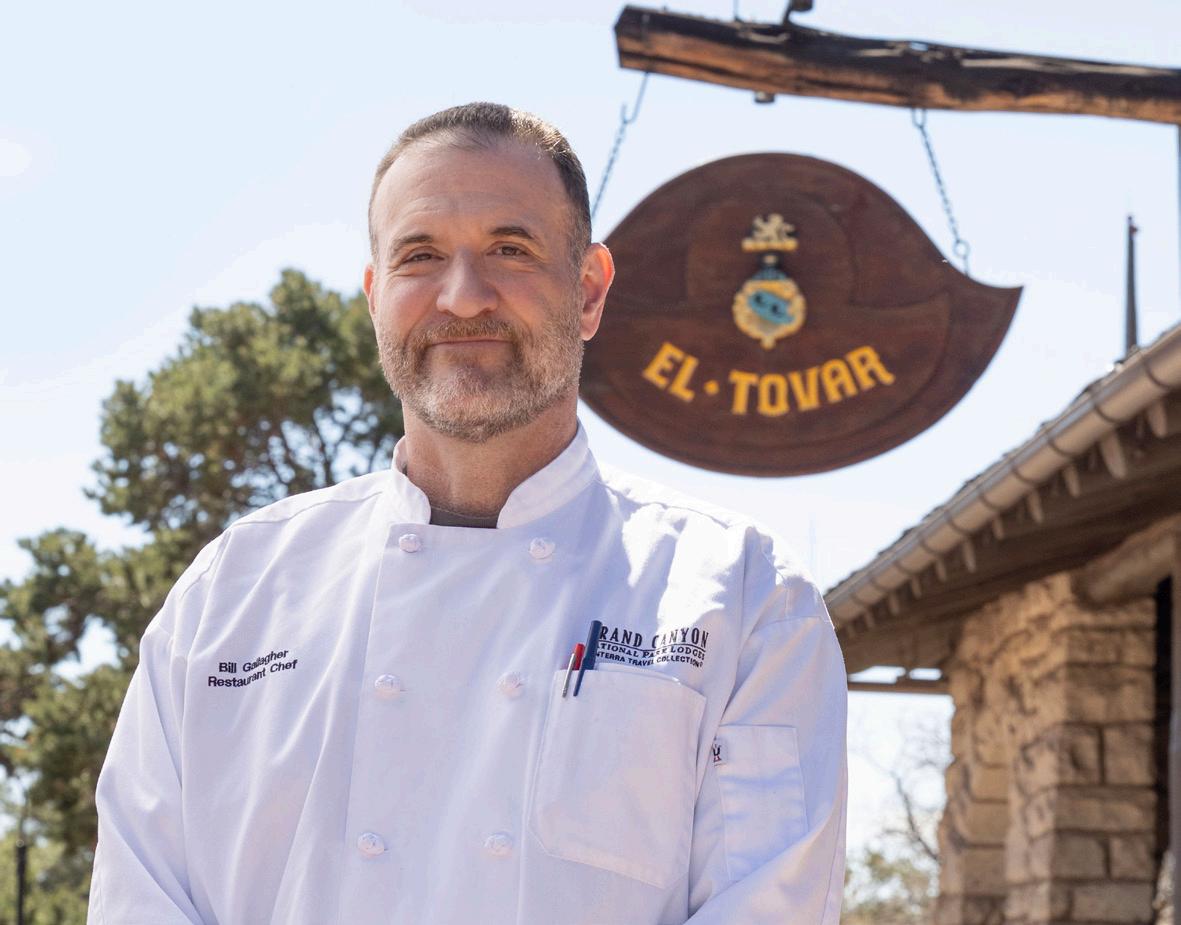
For more than 30 years, Gallagher has been a part of the South Rim legacy, serving guests from all over the world. Photo by V. Ronnie Tierney, Fresh Focuses Photography
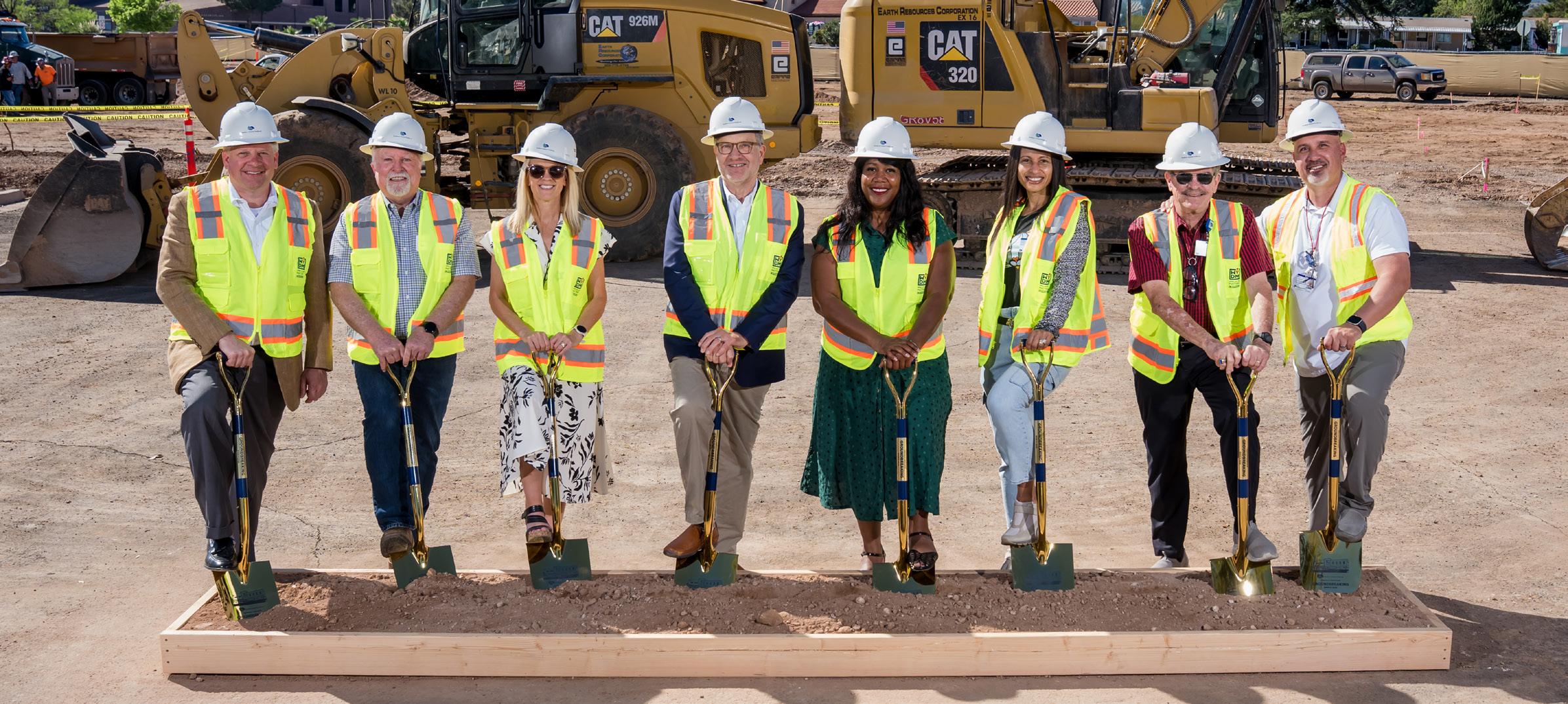
Northern Arizona Healthcare Breaks Ground on New Cancer Center at Verde Valley Medical Center Campus
Construction is underway for the new centralized cancer center on the Verde Valley Medical Center (VVMC) campus in Cottonwood. Last month, more than 200 people attended the official groundbreaking ceremony for the new facility, hosted by Northern Arizona Healthcare Office of Philanthropy.
Speakers included NAH Chief Operating Officer Bo Cofield, Cottonwood Mayor Ann Shaw, former cancer patient Doug Von Gausig, NAH oncologist and hematologist Deborah Lindquist, M.D. and advanced oncology nurse practitioner Tarra Young.
The audience heard impactful stories from the speakers, such as Dr. Lindquist’s journey as the first oncologist in Northern Arizona and her passion for taking care of her patients. Young talked about her grandparents being born in Jerome Hospital 100 years ago and how her brother was diagnosed with cancer and had to travel to Tucson for treatment. Von Gausig spoke about his time as a cancer patient at the Cancer Centers of NAH and expressed gratitude to the medical providers who treated him throughout his toughest times.
The center will include 30,000 square feet for clinical care and will incorporate all cancer services under one roof. NAH recently announced that
the public walking trail on the VVMC campus will stay open during the entire construction process, although it will be shortened during the lifespan of the
project. When the construction is completed, the full walking trail will reopen with the addition of the new Cancer Center gardens. FBN
NAH expects construction will be complete by fall 2027. To learn more about cancer services at NAH, visit https://www. nahealth.com/cancer-centers/.
NAH breaks ground on new, centralized cancer center on the VVMC campus in Cottonwood on March 25, 2026. Left to right: Bo Cofield, NAH Chief Operating Officer joins NAH Board Members – Randall Garrison, Paula Herald, Richard Evnen, Coral Evans, Janina Johnson, John Rivers and Troy Lorents.
The Arizona Commerce Authority is helping our state’s manufacturers grow and prosper through meaningful programs like the Arizona Manufacturing Extension Partnership (Arizona MEP).
Using a proven approach that combines decades of leadership, manufacturing, operational and business expertise, Arizona MEP offers custom, hands-on solutions to help clients achieve their goals. Whether you’re looking for minor improvements or a major transformation, we provide the right knowledge, skill set and fl exibility to support your team. Join the more than 375 manufacturers in Arizona who have chosen Arizona MEP to help enhance their business.
Learn more at azmep.com
THE TOWN OF PRESCOTT VALLEY
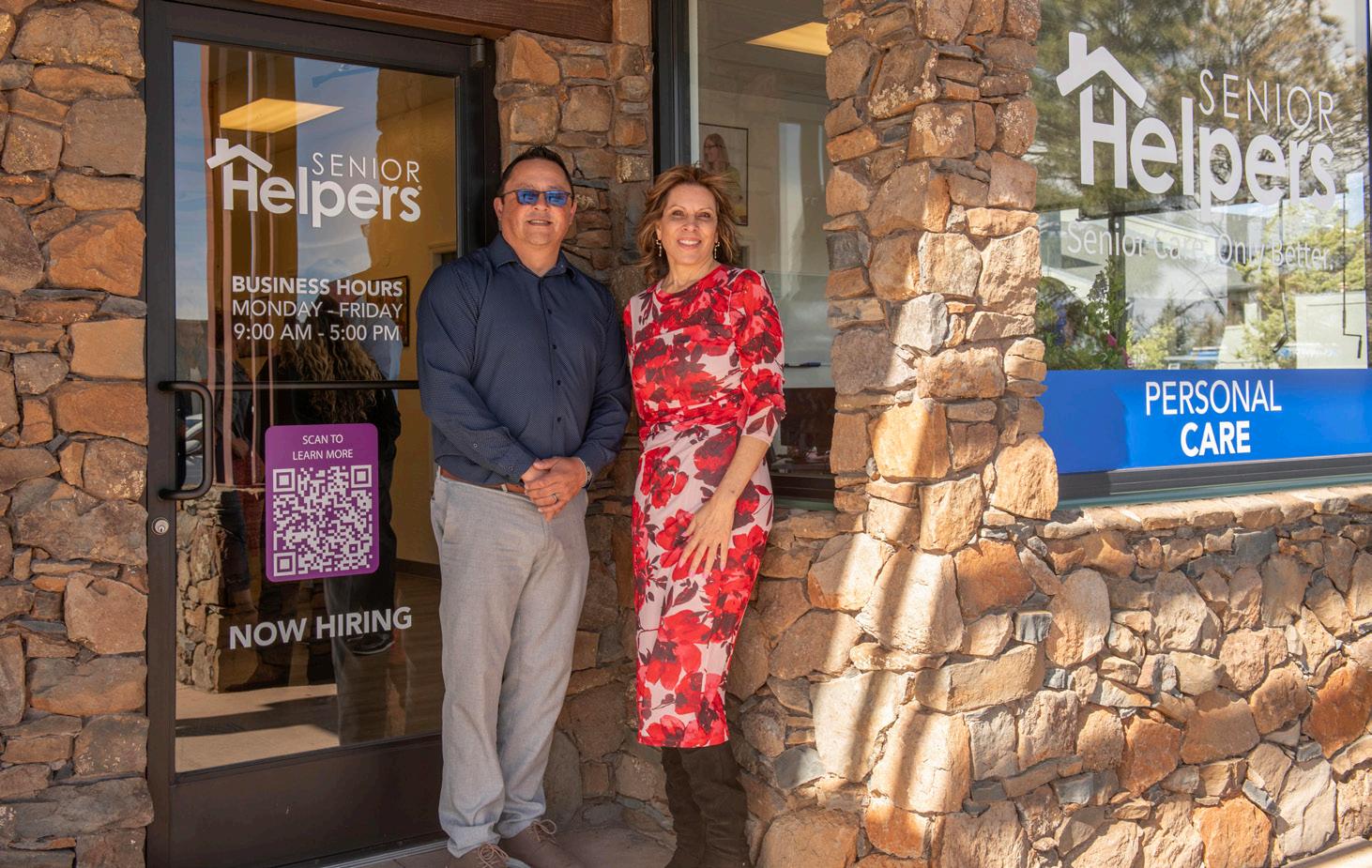
Senior Helpers Expands to Flagstaff, Bringing In-Home Care for Seniors and Veterans
By V. Ronnie Tierney, FBN
From Tucson to Kykotsmovi Village and now Flagstaff, Senior Helpers is expanding its reach to bring relief and assistance to the older adult population, a group that owner Tehjan Prendville says has been “underserved.”
Prendville is a registered nurse who has worked as a home health nurse for 30 years. She purchased a Senior Helpers franchise in 2020.
“Since then, we have opened in Tucson, Prescott Valley, Sierra Vista, Green Valley and now Flagstaff. We are assisting veterans and seniors live a life that matters most to them, and that is aging in their own homes. Our goal is to do everything possible to make their home safe and healthy and provide the assistance they need.”
Celebrating their grand opening in Flagstaff, Senior Helpers Branch Manager Will Hernandez has worked in the elder care industry for 12 years and recognizes the need for home care in Northern Arizona. “I wanted to be part of a solution for
veterans and seniors,” said Hernandez.
Placing a priority on creating a safe, caring and compassionate environment for each client, Senior Helpers also provides ongoing communication and follow-up plans that offer peace of mind for family members.
“My husband passed away and I realized I am not as young as I once was!” said Katie C. of Flagstaff. “I knew Will was opening this company and I explained I couldn’t do things that were normal day-to-day chores, so I called him. Will came and did an assessment and I was able to start services the same day. Senior Helpers allowed me to feel independent and not burdensome.”
Senior Helpers works with those diagnosed with Alzheimer’s, dementia and Parkinson’s and provides companion and respite care, post-surgery assistance, chronic care and end-of-life support. FBN
For more information, call 928-707-6563 or visit https://www.seniorhelpers.com/az/flagstaff/.
Branch Manager Will Hernandez and owner Tehjan Prendville celebrate the grand opening of Senior Helpers in Flagstaff. Photos by V. Ronnie Tierney, Fresh Focuses Photography
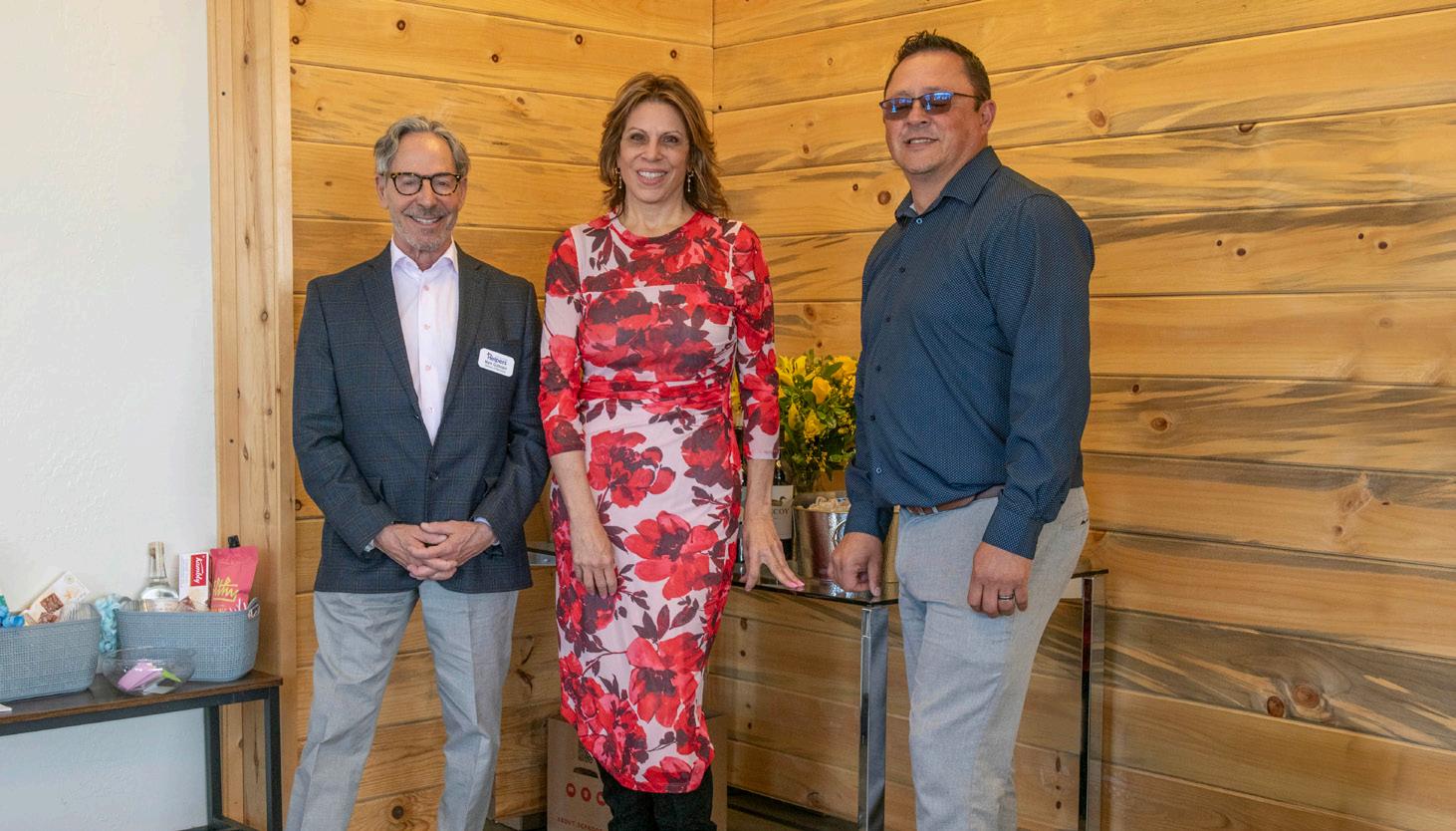
Senior Helpers Director of Marketing Mark Goldstein, along with Tehjan Prendville and Will Hernandez, welcome clients to their new office at 2018 E. Butler Ave., Suite B.
BY BONNIE STEVENS, FBN
What Your Voice is Saying About You: Your Personality, Your Confidence, Your Health
There’s power in your voice. It carries more than words. It delivers tone, quality, energy, authority, experience and enthusiasm. Before anyone processes your words, they are already interpreting your message. A voice can sound confident or uncertain, grounded or scattered, warm or distant. It becomes a signal, often subconscious, about who you are and how you show up.
But think about this: Your voice
leaves a “voiceprint,” perhaps as unique as your fingerprint.
Contemporary jazz saxophonist Mike Phillips describes sound as a kind of signature, a voiceprint. Musicians recognize one another within a few notes, not because of the song, but because of tone, breath and expression. The same is true of the rest of us. Our voice carries the imprint of our experiences, our confidence, our intention. It is uniquely ours. And
//
that’s why those close to us recognize us right away, in just a few words, without seeing our face.
When you think about it, the power of your voice reframes everything. Your voice is not just something to refine; it is something to understand. It reflects your story. Your growth. Your presence in the moment. And now, science is revealingwhat musicians have long understood.
Researchers are discovering that
Contemporary jazz saxophonist Mike Phillips describes sound as a kind of signature, a voiceprint. Musicians recognize one another within a few notes, not because of the song, but because of tone, breath and expression. The same is true of the rest of us. Our voice carries the imprint of our experiences, our confidence, our intention. It is uniquely ours. And that’s why those close to us recognize us right away, in just a few words, without seeing our face. //
the human voice may reveal more than personality and emotion. Subtle changes in pitch, cadence and vocal patterns can signal shifts in physical health. Artificial intelligence is being trained to detect these patterns, often before we are aware of any symptoms. And that can be life-saving.
What we feel intuitively – that our voice carries something deeper – is now being measured.
This is where author Steve Brown breaks down the door to the future to give us a listen. In his new book, “The AI Ultimatum: Preparing for a World of Intelligent Machines and Radical Transformation,” Brown writes about this incredible time to be alive, when AI amplifies human insight. Patterns hidden in plain sight or within earshot become visible through advanced analysis.
In that world, the voice becomes more than expression. It becomes data. Early detection.
Imagine your voice tipping off a robot that some-
thing inside of you is about to go awry before it actually does, flagging early signs of Parkinson’s, depression or cardiovascular disease.
Artificial intelligence excels at noticing small, seemingly imperceptible changes and patterns, imperceptible to humans, that is.
It’s a remarkable shift. And we live in a remarkable time. You can probably pick up on my enthusiasm through my voiceprint. FBN
Cutting-Edge Shoulder Surgery Now Available in Northern Arizona
Northern Arizona Orthopaedics (NAO) and Dr. Yuri Lewicky are among a select few in the world offering an innovative all-arthroscopic shoulder reconstruction using donated bone and cartilage. This advanced procedure—Arthroscopic Distal Tibial Allograft Bone Augmentation with Cerclage Fixation—rebuilds the shoulder socket using the end of a donor shin bone, eliminating the need for metal implants or harvesting the patient’s own bone.
Ideal for patients with severe glenoid bone loss and chronic shoulder instability, this minimally invasive technique uses a tensioned suture-based fixation, preserving natural anatomy while reducing recovery time and complications.
“This groundbreaking procedure offers new hope for patients needing more than traditional surgical options,” says Dr. Lewicky, shoulder specialist at NAO.
Northern Arizona Orthopaedics
With locations in Flagstaff, Prescott Valley, and the White Mountains, NAO provides comprehensive orthopedic care with over 50 years of trusted experience.
Dr. Yuri Lewicky at Northern Arizona Orthopaedics (NAO)
Bonnie Stevens is the editor of FBN. She is a career journalist and public relations consultant. She can be reached at bonnie. stevens@gmail.com.
W.L. Gore & Associates Marks Milestone in I-40 Cleanup
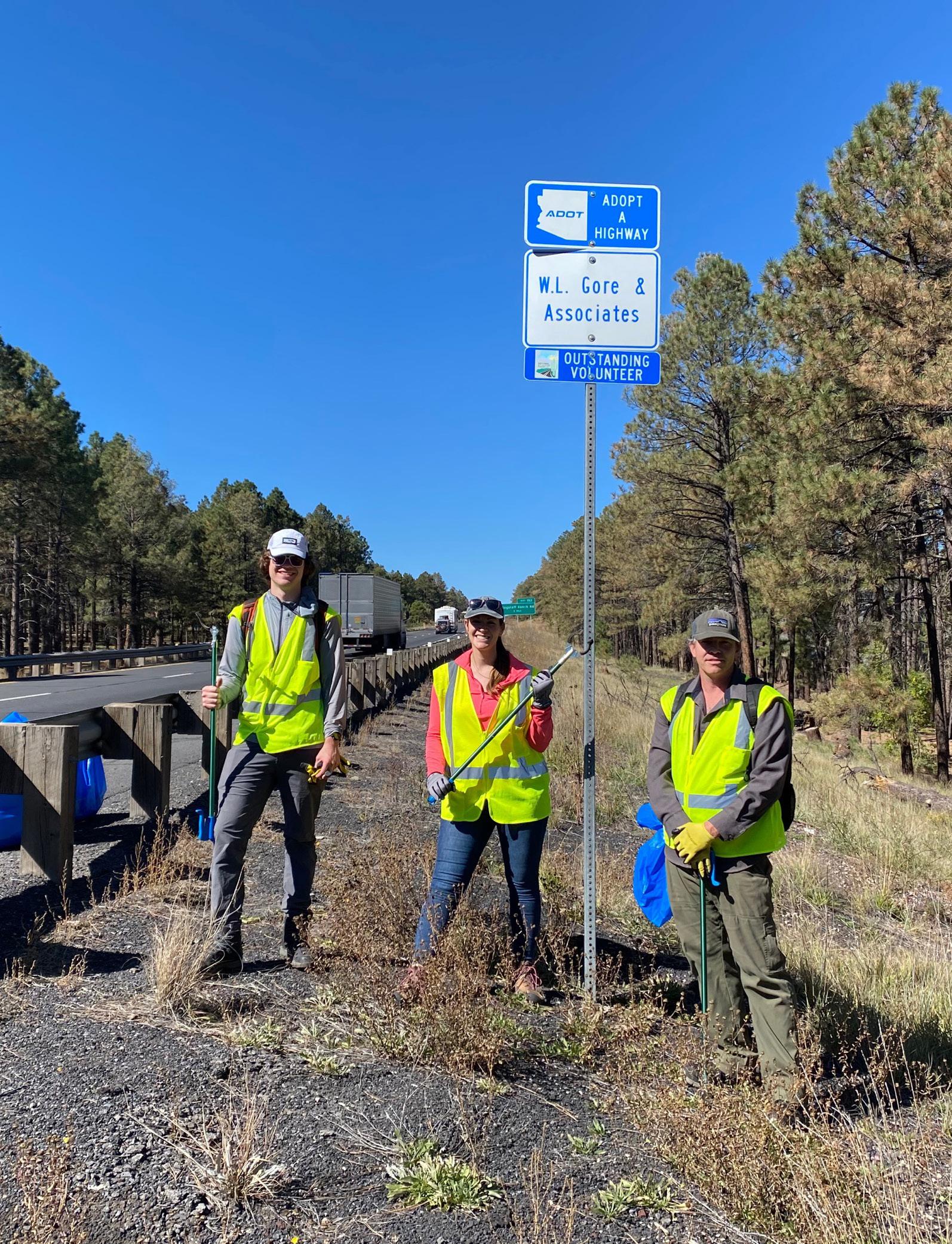
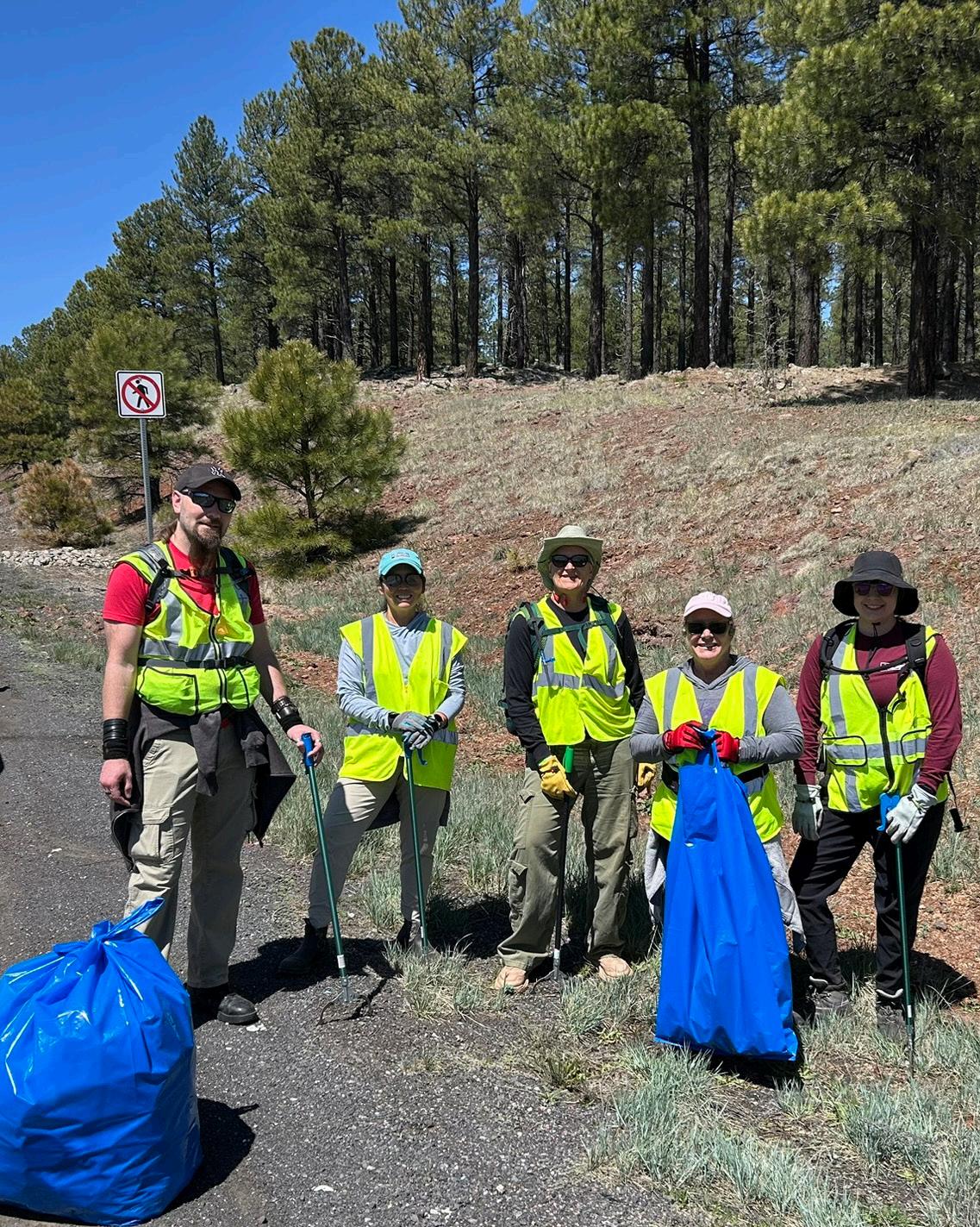
Individuals at W. L. Gore & Associates have filled 1,200 bags with trash collected along a stretch of Interstate 40 near the company’s Kiltie Lane campus, marking a significant milestone in an ongoing highway cleanup effort.
Since fall 2018, about 277 associates have contributed more than 2,200 volunteer hours to keep the corridor clean. Gore’s paid volunteer time program allows associates to participate during the workday in causes they care about while giving back to their community.
“Gore’s commitment to community involvement is rooted in the belief that supporting the places where associates live and work leads to stronger, more connected communities,” said Jessica Moran of W. L. Gore & Associates. “The highway cleanup effort is a good example of an associate-led initiative that enables meaningful, hands-on contributions.
Moran says associates often describe a strong sense of pride in giving back and making a visible difference. “These efforts also create opportunities to connect with colleagues outside of day-to-day work, support team building and create a shared sense of purpose.”
Along with volunteer service, Gore also invests in communities through product donations, grants and sponsorships. FBN
Nearly 300 associates have participated in an on-going cleanup of I-40 near their Kiltie Lane campus. Courtesy photo
How to Keep Your Home Cool and Costs Down
By Luke Goettl
Being born and raised in the Verde Valley and with HVAC running in my veins, I know that when the desert heat starts pushing triple digits, your cooling system isn’t a convenience; it’s what keeps your home livable. We’ve been serving this community since 1987. That kind of history teaches you something important: people don’t just need cool air. They need honesty, reliability and someone looking out for them.
Let me say this upfront: We understand times are tough. Every dollar matters right now. It’s never been our intent to push sales or talk anyone into something they don’t need. Our mission has always been to take care of our community and the families in it. If we do that right, everything else takes care of itself.
So how do you get the most out of your HVAC system this summer without overspending?
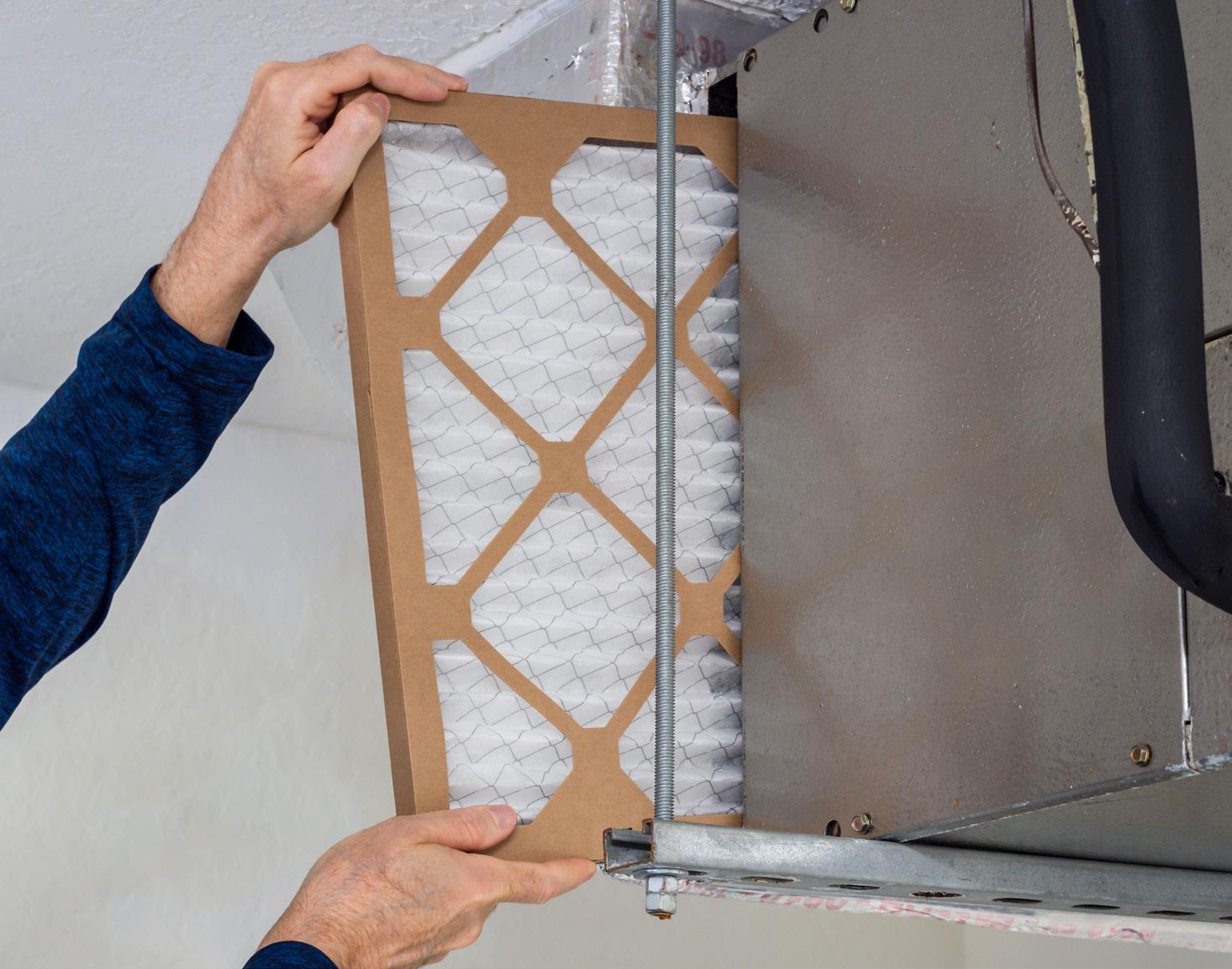
First, don’t underestimate the basics. A clean filter is one of the simplest, most cost-effective ways to improve performance. When airflow is restricted, your system works harder, runs longer, and uses more energy. That’s money out the door. Check your filter monthly during peak use. It’s a small habit that makes a big difference.
Second, be mindful of your thermostat. You don’t need to keep your home ice-cold to stay comfortable in the summer. Setting your thermostat a few degrees higher when you’re away and using a programmable or smart thermostat can significantly reduce strain on your system. It’s about working smarter, not harder. Third, give your system room to breathe. Make sure vents aren’t blocked by furniture and keep the outdoor unit clear of debris. I’ve seen systems struggle simply because they’re suffocating. A little attention here can go a long way toward efficiency and longevity. And finally, don’t ignore the warning signs.
If your system is making unusual noises, cycling on and off constantly or struggling to keep up with the heat, it’s telling you something. Addressing small issues early can prevent bigger, more expensive problems later. Now, let’s talk about the part no one loves, but everyone eventually faces: replacement. The reality is, there are only so many “band aids” you can put on an HVAC system. Repairs can absolutely extend the life of your unit, and we’ll always explore those options with you first. But if your system is 12–15 years old, needs frequent repairs or your energy bills keep climbing despite fixes, it may be time to have an honest conversation and admit that continuing to repair it can end up costing more than investing in something reliable. And when that time comes, you deserve straight answers, not pressure. That’s where we come in.
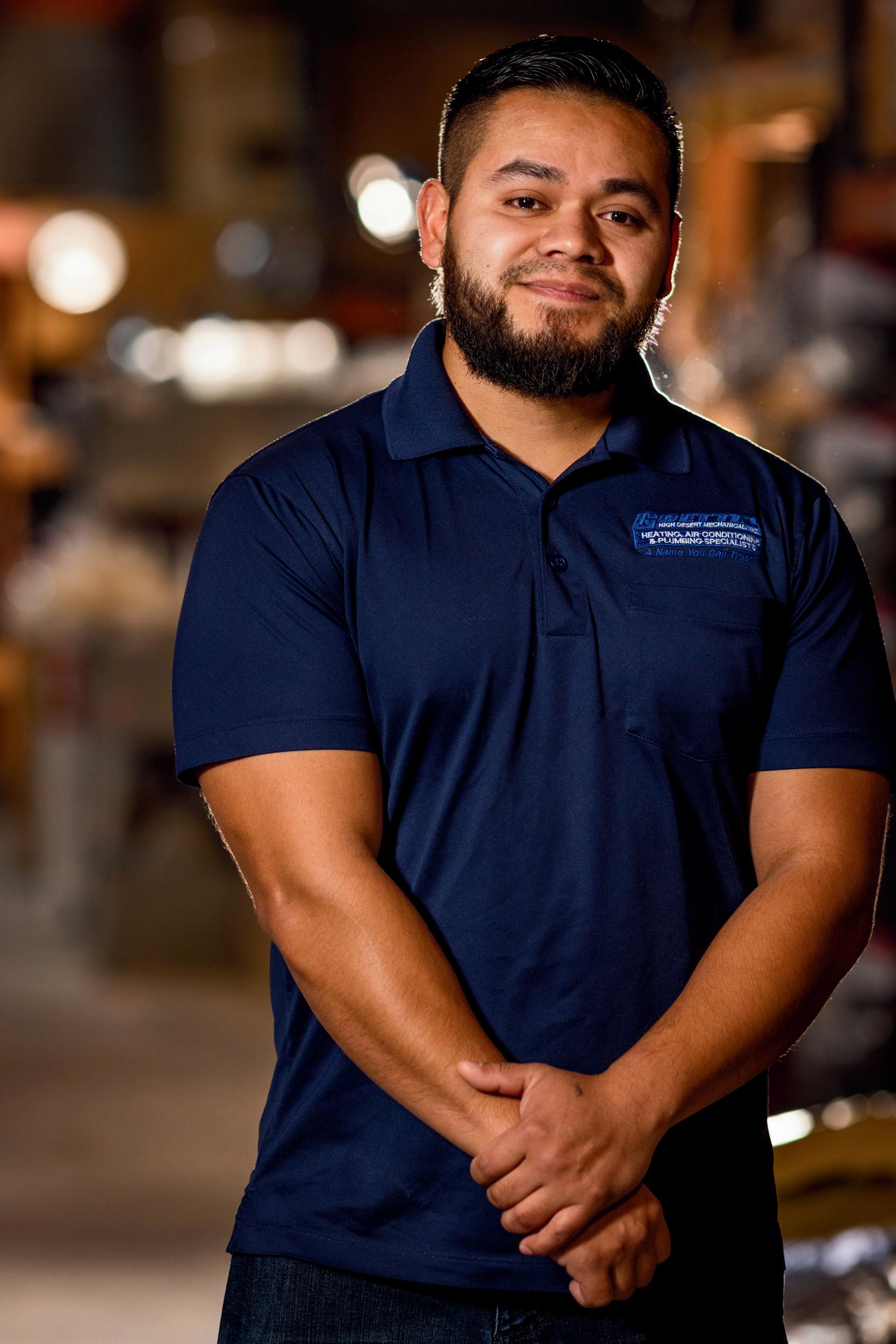
At Goettl’s High Desert Mechanical, we’ve built our reputation on trust. “A Name You Can Trust” isn’t just a tagline; it’s a responsibility. We’re here to help you make the best decision for your home, your comfort and your budget. Whether that means a simple fix or guiding you through a replacement, we’ll meet you where you are.
Because at the end of the day, this isn’t about HVAC systems. It’s about people. It’s about families sitting down to dinner comfortably, kids getting a good night’s sleep and homes feeling like a refuge from the heat outside.
So, this summer, take care of your system, but more importantly, make sure you’re being taken care of too. And remember, you don’t have to settle.
Don’t Settle, Get Goettl’s. FBN
Luke Goettl is the CEO of Goettl’s High Desert Mechanical.
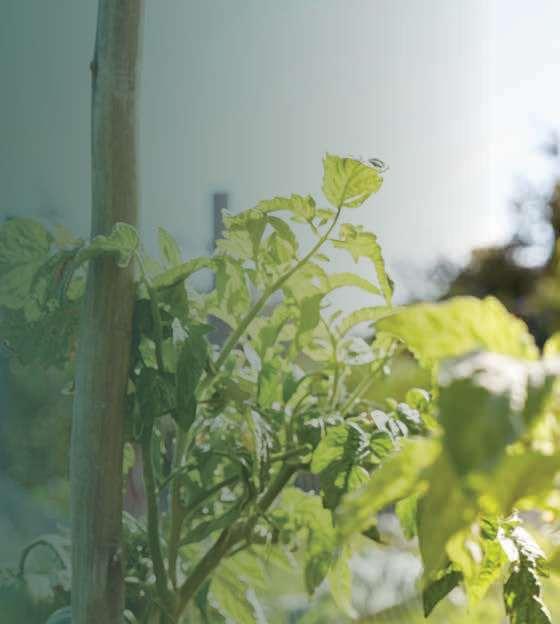
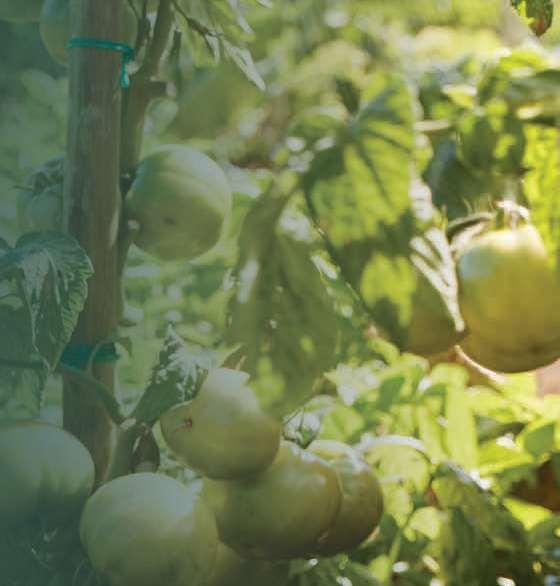
Start Your Tomatoes Now: Just Don’t Plant Them Yet
By Misti Warner-Andersen
After an unseasonably warm winter, Flagstaff greeted spring with an exceptionally warm March (it broke records!) And while it cooled off a little last month, we suspect that some of you are looking at the mercury climbing and the winds dying down and thinking you might get a head start on your tomato planting this year.
If that describes you, we have two words for you: please don’t.
We understand the temptation,
but please hold off just a little longer. Flagstaff’s springs are notoriously unpredictable and the frost typically falls around June 15. A single overnight freeze can undo weeks of carefully tending your tomato plants.
The good news? There’s plenty you can do right now to get your plants going strong while keeping them protected.
This warm weather is perfect for starting seeds or seedlings indoors.
Varieties like Early Girl, Siberian, Better Boy, Celebrity and Stupice are well-suited to our short growing
season, and cherry tomatoes like Sungold and Sweet 100 will reward you with a fast and flavorful harvest once they’re established.
Growing indoors now puts your plants ahead of the curve. They’ll be strong and ready to thrive the moment it’s safe to transplant them outside.
Impatient gardeners take note: If you do choose to transplant outdoors before June 15, season extenders are non-negotiable. The most popular option is a water-filled tube that
// Growing indoors now puts your plants ahead of the curve. They’ll be strong and ready to thrive the moment it’s safe to transplant them outside.
//
surrounds your plant, absorbing heat during the day and releasing it at night. They also warm the soil around the roots, which gets your plants off to a much healthier start. Frost cloth is another reliable layer of protection. Just remember to remove coverings during the day so your plants can breathe and soak up sunlight.
Raised beds help, too. They warm up faster in spring and give your roots a head start.
Just make sure to keep an eye on the forecast and any cold snaps that might occur. Warner’s Nursery offers text messages on frost warnings so you’re never caught off guard. You can sign up for them at the nursery.
And after June 15, it’s full speed ahead. A drip irrigation system will keep your plants deeply and evenly watered while conserving every drop of our precious water supply. Rotate your crops from year to year so disease doesn’t build up in the soil, and watch for common challenges like aphids (insecticidal soap works well), early blight (remove infected plants immediately), or yellowing
leaves from cool-weather phosphorus deficiency – that one usually resolves on its own as the soil warms.
Warner’s Nursery is proud to host Tomatopalooza, our annual Memorial Day weekend celebration of all things tomato. Browse dozens of varieties, talk to our staff and pick up everything you need to make this season your best one yet, including season extenders, drip irrigation supplies and expert advice on timing your transplant just right.
The warm spring is a great sign. Just stay patient for a few more weeks, protect your plants in the meantime and you’ll be biting into a homegrown Flagstaff tomato before you know it.
Happy Gardening! FBN
Misti Warner-Andersen is the manager of Warner’s Nursery & Landscape Co., located at 1101 E. Butler Ave. in Flagstaff.
To contact Warner’s Nursery, call 928-774-1983.
Welcoming
2321 N. Fourth St. Flagstaff, AZ 86004
(928) 526-5691 crestins.com
Commercial Broker Ryan King to our team!
Ryan King Tom Turner
Ryan is a third generation Flagstaff native with countless ties to the community. Tom is a true insurance professional with over 40 years of experience in the industry. Along with Crest, we are set up to help with any insurance need out there.
What We Offer
• We specialize in Commercial Property, General Liability, Workers’ Compensation, and Commercial Auto Insurance.
• We provide access to several specialized and competitive markets.
• Our local office provides the opportunity for in-person consultations and superior customer service
A Legacy of Healing: How Two Father-Son Teams Built a Medical Practice into a Flagstaff Institution
By Annebeth Ahrenholz
Northern Arizona Orthopaedics (NAO) honors the intertwined legacies of two remarkable father-son teams – Dr. Roman and Dr. Yuri Lewicky, and Dr. Merrill and Dr. Mickey Abeshaus – whose generations of care reflect decades of integrity, compassion and excellence that have made NAO a Flagstaff treasure.
The Crest Advantage
• Top 100 P/C Agency for 7 consecutive years
• Dedication to continuing education with changing markets and new programs
• A vast amount of insurance resources with offices in six states.
• Crest gives back to the community and we sponsor countless organizations.
www.crestins.com
Just over 50 years ago, NAO began with a simple dream: to provide exceptional care in a small mountain town. Founded on the humble vision of Dr. Roman Lewicky and his partnership with Dr. Merrill Abeshaus in the 1970s, NAO has grown into one of Arizona’s most trusted orthopaedic practices. Today, that legacy continues through Dr. Lewicky’s son, Dr. Yuri Lewicky, and a dedicated team of specialists who put patients – and people – first.
Dr. Roman Lewicky arrived in Flagstaff in 1975, drawn by the community, the scenery and the opportunity to make a difference. He joined Dr. Abeshaus, who had come to Flagstaff a few years earlier after serving in Tuba City – located in Northern Arizona within the Navajo Nation. Together, they established the foundational values that would define NAO for decades: excellence in care, surgical innovation and, above all, compassion for every patient.
Early on, NAO became known for pioneering efforts in arthroscopic surgery, with patients traveling from across Arizona to receive cutting-edge procedures long before they were common practice. Meanwhile, Dr. Roman Lewicky served as team physician for Northern Arizona University athletics, deepening NAO’s connection to the local community. But more than technical skill, it was the culture of humility, trust and integrity that made NAO different.
“We treated our patients like family,” said Dr. Lewicky. “We explained everything – every
risk, every step. We believed in transparency and doing the right thing, even if it meant writing off the bill.”
That same culture endures today, thanks to the leadership of Dr. Yuri Lewicky, who followed in his father’s footsteps. The two worked side by side for seven years before Dr. Roman Lewicky’s retirement. “I tell people all the time, perfection is unattainable – but the goal is perfection, and I’ll die trying,” said Dr. Yuri Lewicky. “The standard my father set is the standard I aim to uphold every day.”
Today, NAO has grown into a practice of subspecialists who treat everything from spine and joint issues to hand injuries and sports medicine. But even as it has expanded, its mission remains unchanged.
“The people who find us are meant to find us,” Dr. Yuri Lewicky said. “That spirit of care, of doing what’s right, of building something lasting – that came from day one, when my dad and Dr. Abeshaus found each other. And it still lives here today.”
As Northern Arizona Orthopaedics looks to the future, its heart remains rooted in the past: in the belief that great medicine starts with great humanity. FBN
Northern Arizona Orthopaedics is one of the largest orthopedic practices in the region, with clinic locations in Flagstaff, Prescott Valley and the White Mountains/Lakeside. To treat all your musculoskeletal care needs, we have surgeons specializing in multiple sub-specialties of bone and joint care, including spine. As part of the Northern Arizona community for more than 50 years, we have built a reputation for quality care and Experience You Can Trust. For more information, please visit https:// northazortho.com/.
Father and son Dr. Roman Lewicky and Dr. Yuri Lewicky reflect on the values that built Northern Arizona Orthopaedics. Courtesy photo
The Flagstaff Adventure Section
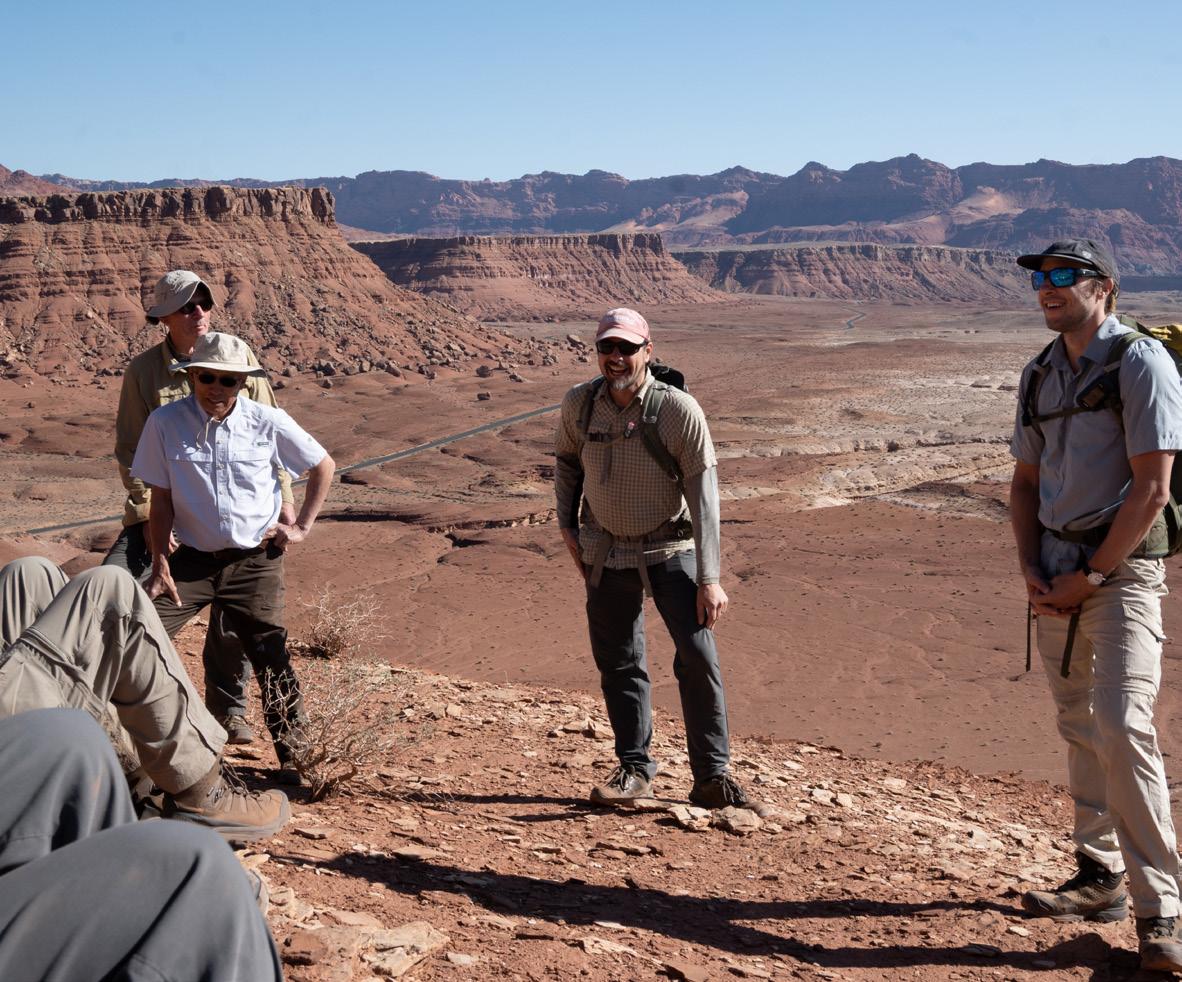
Beyond the Grand Canyon: Adventure Across Northern Arizona Fuels the Economy
Stacey Wittig, FBN
Northern Arizona’s reputation as an adventure destination often begins – and ends –with Grand Canyon National Park. But across the region, a network of places offers experiences that are more varied, more accessible and, in many cases, more personal. Together, they form a landscape where visitors don’t just pass through –they stay, explore and often extend their time in Flagstaff.
In Flagstaff alone, tourism generates more than half a billion dollars annually and supports nearly 8,000 jobs, making it the region’s leading economic driver, according to the Discover Flagstaff FY 2025 Annual Report. Discover Flagstaff is part of the Economic Vitality Division of the City of Flagstaff.
From high-value guided rafting trips to ranger-led hikes through volcanic fields and cliff dwellings, adventure in Northern Arizona unfolds across multiple scales. And while the experiences differ, they tend to do the same thing: give visitors a reason to stay longer – and often, to return.
BEYOND THE RIM: HIGH-VALUE ADVENTURE AT SCALE
At the top end of the adventure spectrum, the Grand Canyon continues to anchor the region’s tourism economy. But more visitors are looking for ways to experience it beyond the overlook.
“Our most adventurous programs in Northern Arizona include hiking the Grand Canyon on and below the South Rim, rafting the Granite Gorge and exploring Marble Canyon and Vermilion Cliffs,” said Chris Eaves, director of Road Scholar at Northern Arizona University.
These are not quick stops. They are structured, multi-day experiences that draw travelers from across the country and abroad.
“Our participants join us from all over the United States and the world,” Eaves said. “The programs highlight open country and unique geography that appeals especially to participants from the East Coast and Midwest.”
“We also see several adventurous participants joining from California and the Pacific Northwest that drive their own vehicles and extend their stays beyond the program,” he added.
That extension – extra nights, extra meals, extra miles driven – adds up across the region.
FLAGSTAFF AS BASECAMP
For many travelers, those experiences begin and end in Flagstaff.
The city works as a natural basecamp, with access in every direction. Visitors can ride the scenic gondola at Arizona Snowbowl, pedal “expert-only” mountain-bike descents featuring steep, rocky switchbacks or spend a day hiking into the San Francisco Peaks. From there, the region opens – north to the Grand Canyon, west along Route 66, east into desert landscapes and south toward red rock country.
It’s a pattern that keeps people moving, but also brings them back at the end of the day.
“Our guests tend to start and end their day in Flagstaff,” said Richard Ullmann, visitor services manager for the Flagstaff Area National Monuments. “They linger in Flagstaff.”
ADVENTURE IN LAYERS: THE FLAGSTAFF AREA NATIONAL MONUMENTS
Just minutes from town, three sites – Sunset Crater Volcano National
Monument, Wupatki National Monument and Walnut Canyon National Monument – offer a different kind of experience.
Together, they draw about half a million visitors each year, according to Ullmann. But unlike larger parks, the pace is different.
“The visitor experience at Flag-
staff Area National Monuments is more intimate, which complements the epic ‘7 Wonders of the World’ experience at Grand Canyon,” Ullmann said. “After the Grand Canyon, they can come and get a more intimate experience that connects both naturally and culturally.
Continued on page 24
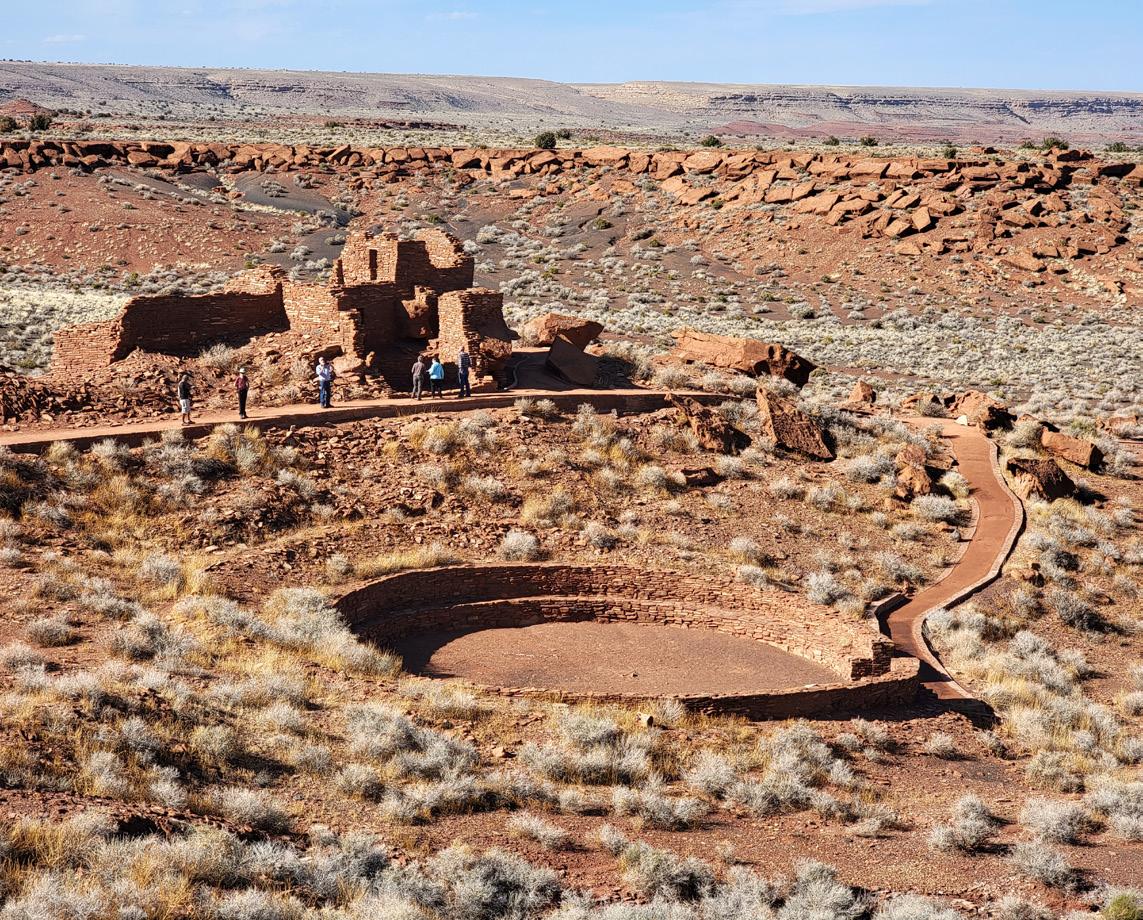
Visitors explore the well-preserved sandstone pueblos at Wupatki National Monument, built more than 800 years ago. Photo by Stacey Wittig
Historic Steam Engines Fired Up for Busy Season
Using recycled vegetable oil from Xanterra kitchens, the railway delivers a memorable ride on a Western relic
By V. Ronnie Tierney, FBN
The arriving whistles and chuffing sounds of the Grand Canyon Railway Steam Train bring excitement to listening ears as it enters the South Rim depot.
“The Grand Canyon Railway steam train is one of those truly special experiences that captures everything people love about the American West,” said Xanterra President and CEO Andrew Todd. “This year we're celebrating an incredible milestone—125 years since that first train pulled into the Grand Canyon South Rim depot on Sept. 17, 1901. We're proud to be the stewards of that legacy and to keep connecting people to one of the world's great natural wonders.”
perating two vintage steam locomotives – Locomotive #4960 and Locomotive #29 – Xanterra is offering expanded departures, new onboard amenities, in-cabin educational programming and
an extended schedule.
“This is an iconic piece of the West that is preserving history," said Xanterra Community Relations Manager Sam Langner. "The steam train brings our guests comfortably and reliably to the South Rim of the Grand Canyon and passes through the Kaibab Forest and open plains near Valle. It's a step back in time.”
GCR steam trains will be making their trek to the Grand Canyon about twice a month through October, adding to the fleet of diesel-powered locomotives greeting passengers during the busy tourism season. Approximately 225,000 passengers travel on the GCR trains annually.
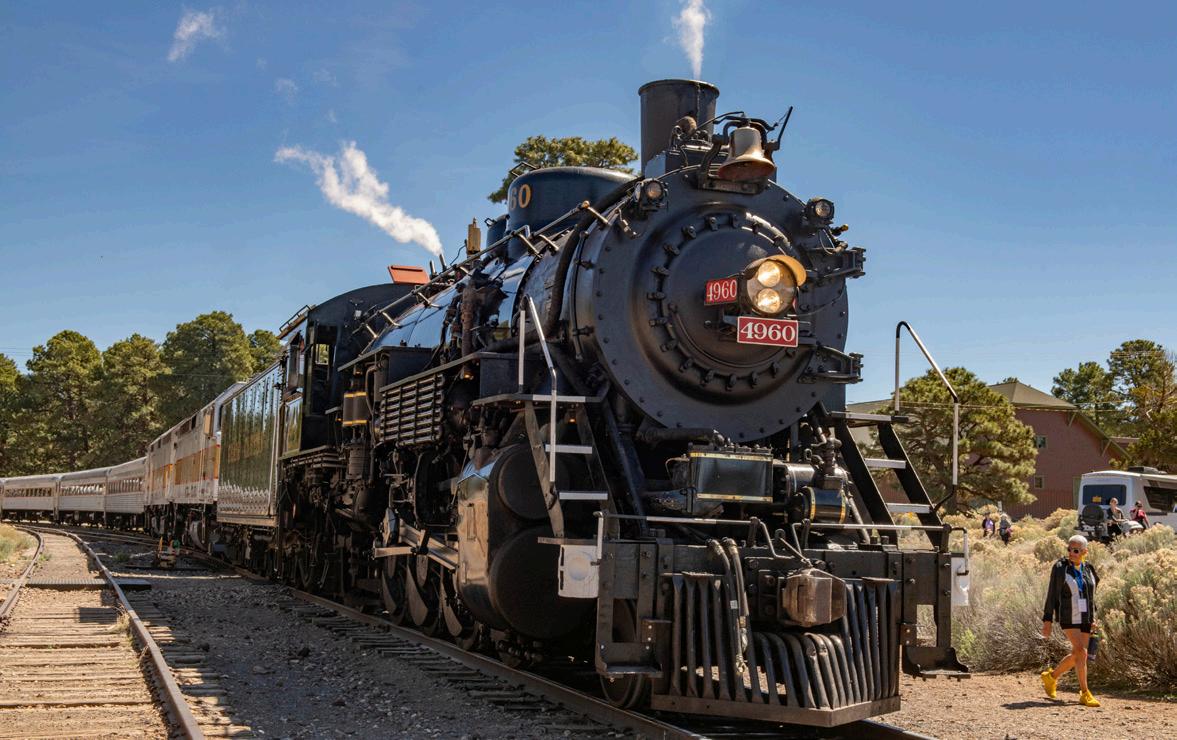
Steam Locomotive #4960 weighs 310 tons and is 94 feet long, said Chief Mechanical Officer Eric Hadder. “It was built in 1923 by Baldwin Locomotive Works. GCR purchased it in 1989. It was then sent to us in parts by train. The wheels came by truck. Restoration took several years and cost about $1.6 million. It made its debut in 1996.” The mechanical facility is located in Williams.
In line with Xanterra Travel Collections’ environmental and sustainable strategies, the engine uses recycled vegetable oil for fuel from the Xanterra
Locomotive Manager Jesse Clark says he feels very lucky to be able to operate such a historic piece of technology. “When I see all the smiling faces looking at the locomotive, I have a sense of pride in being able to take care of this amazing machine, and I’m thankful of all the people that came before me so that we can enjoy it today.” Clark has worked for GCR for 24 years.
The new onboard enhancements include storytelling through the Railway Heritage Artifacts, a hands-on kit used by passenger service attendants to bring the railway’s history to life. Items such as a railroad spike and timetables will
be used to make the experience more interactive and memorable.
“The coach cars will now feature new interior graphics depicting the Grand Canyon, adding visual immersion throughout the trip,” said Xanterra Travel Collections Sales and Marketing Regional Director Jim Stallmack.
Photographer and Grand Canyon School teacher John Segesta says the train whistle helps him stay on schedule. “It’s a reminder that the 3:30 departure is near and it’s the whistle
that allows me to grab my favorite table at the same time every day at El Tovar.”
Xanterra Travel Collections is dedicated to preserving the pristine environment of the Grand Canyon and is a founding contributor to the Grand Canyon National Park Foundation. It has been estimated that the South Rim trains reduce automobile traffic to the Grand Canyon by 55,000 to 60,000 cars a year. FBN
For reservations, call 800-843-8724.
restaurants in Williams and the Grand Canyon.
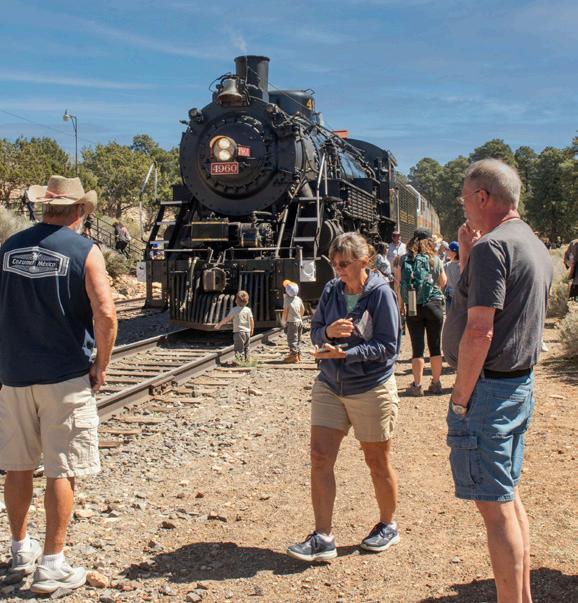
The steam trains are scheduled to carry passengers to the Grand Canyon South Rim about twice a month through October. Photos by V. Ronnie Tierney, Fresh Focuses Photography
No roughing it at The Outpost Grand Canyon
By Peter Corbett, FBN
To camp or glamp. That is the question.
Glamorous camping or glamping has opened up options for travelers who like campfires and stargazing but want to sleep in a comfy bed with other amenities and comfort far beyond a sleeping bag on a foam mat.
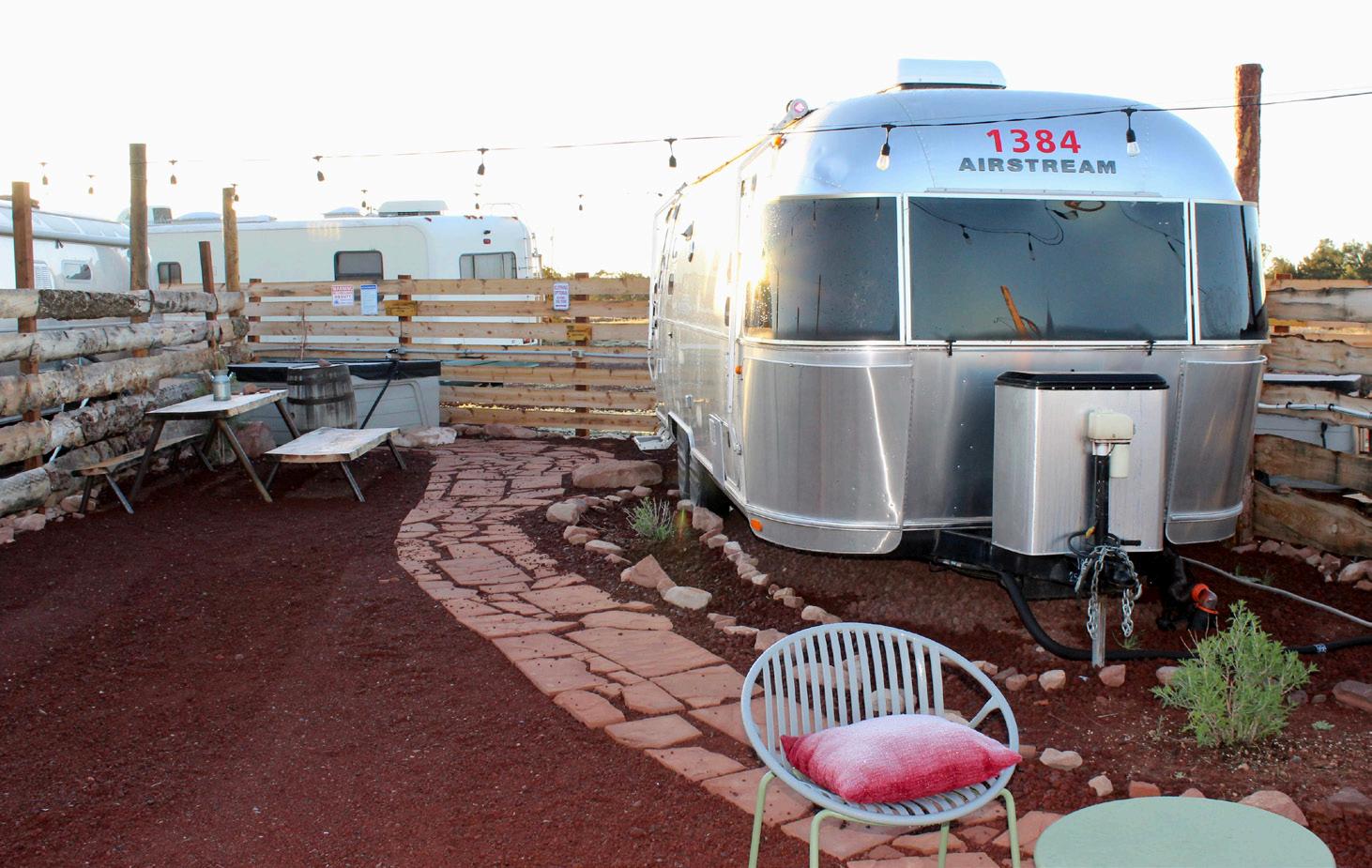
The Outpost at Grand Canyon might be the answer. The Outpost has a dozen Airstream trailers, ranging in size from a 19-foot Bambi to much larger models that sleep up to six guests. All have their own private hot tub. Wood fencing provides some privacy for each trailer and gives the site a rustic feel.
Opened last June, The Outpost occupies a one-acre site at 507 Linger Lane, just southeast of the junction of US 180 and State Route 64. It’s about an hour from Flagstaff and 30 minutes from the South Rim.
The “newish” Airstream trailers range in age from 2013 to 2021, said Chris Martin, Outpost general manager.
A renovated 1959 Spartan trailer is compliant with the Americans for Disabilities Act. It has an entry ramp, roll-in shower, private hot tub and queen-size bed.
The 2019 Bambi Flying Cloud trailer has a full-size bed, stove, microwave, refrigerator, sink, flush toilet, shower and TV with streaming options. The dinette folds into a cozy bed suitable for small children.
With cooling and heating, the Bambi was cozy on a rainy afternoon and overnight when the temperature dipped below 40 degrees. Road noise is barely noticeable even though The Outpost is just off the highway. Very little traffic passes by overnight.
Common areas include a sauna, cold plunge, barbecue grill, fire pit, picnic tables and a fenced dog park.
Martin from Southern California said he has been working with trailers for about 12 years. He moved to Valle in 2018 and started with his own short-term rentals nearby.
“Glamping options have changed so much since 2010,” said Martin, with refurbished trailers off the grid, safari tents and geodesic domes.
“People are moving away from traditional hotels to stay where they can step outside to see the stars and enjoy a campfire,” he said.
Valle, an unincorporated town, has a num ber of glamping options. Under Canvas Grand Canyon features comfortable tents. It is one of 14 sites the company has near national parks.
Wander Camp is another tent-glamping outfit with four other locations.
Clear Sky Resorts Grand Canyon features geodesic domes covered with PVC-coated fabric.
Grand Canyon Glamping Resort is farther away near Grand Canyon Skywalk along the western rim and outside the national park.
Clear Summit Investments, based in Hono lulu, owns The Outpost at Grand Canyon. It has four other outdoor hospitality properties:
Ponderosa Pines Resort in Parks
Desert Reef Hot Springs in Florence, Colorado
Rice Ranch Resort in Quartzsite
Cottonwood Hot Springs in Buena Vista, Colorado
The Outpost at Grand Canyon captures travelers looking for an outdoor experience, Martin said. With 4.43 million Grand Canyon visitors last year, The Outpost has no shortage of potential guests. Plus, glamping is gaining in popularity.
A 2025 Kampgrounds of America report noted that 31% of new campers in 2024 were glampers and glamping appeals to one in six leisure travelers.
The KOA study also showed that the num ber of travelers who prefer glamping in 2024 increased 88% from 2019.
Arizona has responded to that trend with a number of new glamping options featuring vintage trailers.
Bisbee has hosted guests at its Shady Dell trailer court for decades.
Strawberry Inn north of Payson has Airstream trailers as lodging options.
Tin Can Alley in Kingman features a handful of restored Airstream trailers on Route 66.
Prescott’s Air Village near Whiskey Row
The Outpost operates its Airstream trailers like other short-term rentals with self-check-in. But the general manager is usually on site to provide assistance. Photo by Peter Corbett
Snowbowl Extends Season into April With Strategy, Snow and ‘Love of the Sport’
Late storms, snow farming and dedicated crews keep lifts turning for 140 days in a challenging winter
Arizona skiers found extra turns this spring as Arizona Snowbowl stretched its 2025-26 season to 140 days, pushing well into April through a combination of late-season storms and careful snow management.
The resort opened Thursday, Nov. 20, 2025, and operated daily through March 29, 2026, before extending four times in April. In a year marked by lower-than-normal snowfall and a record-breaking March heatwave that forced early closures at resorts from California to Colorado, Snowbowl’s persistence stood out.
Being one of the southernmost ski resorts in the United States, Arizona Snowbowl faces unique challenges each season. This winter, those challenges were met with a strategy known as snow farming, a process that involves stockpiling and relocating snow to preserve coverage on key terrain.
The effort began in late February, as teams anticipated a difficult spring. When temperatures spiked in March, it appeared the season might end early. Instead, colder air returned and storms
followed.
The resort picked up 4 inches by April 1, prompting its first extension from April 3 to 5. Continued cold allowed a second extension April 11 to 12. Another storm dropped 6 inches by April 14, leading to additional operations through April 19.
“It’s not just about how much snow you get this time of year, it’s how well you can preserve it,” said Josh Heydorn, Arizona Snowbowl’s interim director of mountain operations. “The colder temperatures and consistent freeze cycles helped preserve coverage, and then we managed that snow to keep key terrain open.”
Preservation relied on both weather and intensive labor. Crews worked for hours consolidating snow from across the mountain, using snowcats and specialized equipment on steep terrain.
Thousands of feet of snow were stripped from select trails and moved to high traffic areas to maintain skiable conditions.
“This year, we went to extensive lengths to stay open,” said Marketing Manager Angie Grubb. “After late season storms, our teams consolidate snow from across the mountain to keep key terrain open. We do it for the love of
the sport, and every time we extend the season, hundreds of guests come back.”
The extended season reflects both operational commitment and community enthusiasm, said Grubb. “For many Arizonans, Snowbowl remains a central hub for winter recreation and culture.”
She says accessibility continues to drive the resort’s mission. Snowbowl positions itself as a place where beginners can learn the sport, offering expansive entry level terrain and family friendly programs. The Power Kids Pass provides free skiing and snowboarding for children 12 and under, while lift tickets started as low as $1 on select days during the season.
Beyond the slopes, the resort has cultivated a vibrant social scene. Live music filled the weekends for après gatherings, and signature events drew crowds from across the region.
On Saturday, Feb. 28, Snowbowl hosted its first Saturday Night Lights Rail Jam, highlighting Arizona’s freestyle community under the stars. Skiers and riders of all ages showcased tricks in a nighttime setting that energized spectators and participants alike.
The momentum continued the weekend of March 7-8 with the second
annual Snow Jamz Music Festival, featuring 14 performances by bands and DJs across multiple lodges, along with terrain park competitions.
As spring approached, the extended operations became both a technical achievement and a celebration. “We’re proud to have stayed open into midApril this year,” said Grubb. “That reflects the hard work of our team and the support of our guests. We’re grateful to everyone who came out to ski and
ride with us this season.”
In a winter that tested resorts across the West, Snowbowl’s season became a case study in adaptability. Through a mix of timing, technology and tenacity, the mountain delivered weeks of additional skiing when many others could not.
For Arizona’s ski community, that meant more than extra days on the slopes. It meant holding onto winter just a little longer. FBN
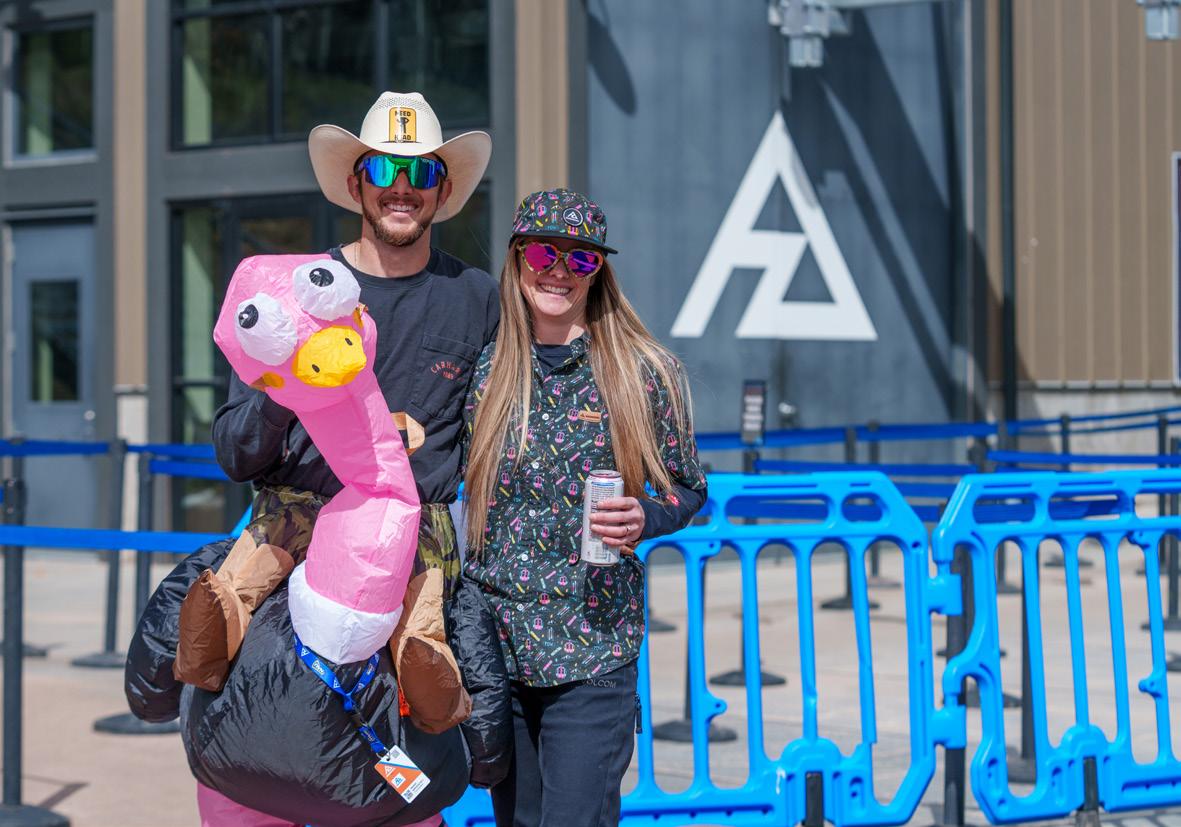
Outdoor enthusiasts celebrate closing day in colorful costumes, marking the end of a challenging 140-day season for Snowbowl. Courtesy photo.
Gazing Upon the Big Dipper: A Celestial Landmark
By Kevin Schindler
The Big Dipper is one of the most recognizable gatherings of stars in the night sky. Though technically only a part of the constellation Ursa Major (the Great Bear), this familiar pattern has inspired stories, guided travelers and appeared on flags and emblems for generations. Its seven bright stars form a shape so distinctive that people across continents and centuries have woven it into their understanding of the heavens.
Astronomers classify the Big Dipper not as a constellation but as an asterism, which is an easily identified pattern that forms part of a larger stellar grouping. In the United States, its name comes from the resemblance to a ladle once used to scoop water from wells. Yet the simple outline of stars has inspired a remarkable diversity of interpretations. Cultures around the world have seen a plow cutting through the fields, a wagon rolling across the sky, a butcher’s cleaver, a coffin accompanied by mourners, a wall guarding a sacred space, a saucepan, a Chinese goddess, a mother bear with her cubs, and other animals such as oxen, camels, hippos and skunks.
In Diné culture, the Big Dipper carries a particularly rich meaning. They identify it as the First Man, eternally circling the North Star alongside the First Woman, represented by the constellation Cassiopeia. Together they revolve around the Home Fire, the celestial center
that anchors the sky. The traditional practice of entering a hogan from the east and moving counterclockwise inside mirrors the apparent motion of the stars around Polaris: rising in the east and sweeping in a slow, counterclockwise arc through the night.
Part of the Big Dipper’s enduring fame comes from its usefulness. Its shape is not only striking but practical. The three stars of the handle curve away from the four stars of the bowl, and the two stars forming the bowl’s outer edge, often called the pointer stars, create an imaginary line that leads directly to the North Star, Polaris. Although Polaris is far from the brightest star in the sky, its position almost exactly above Earth’s northern axis makes it a reliable indicator of true north. Long before compasses became common, travelers used this celestial marker to orient themselves.
For enslaved people in the American South, the Big Dipper became more than a navigational tool; it became a symbol of hope. The folk song “Follow the Drinking Gourd,” familiar to many enslaved families, encoded directions for escape along the Underground Railroad. The “drinking gourd” referred to the Big Dipper, whose pointer stars guided those fleeing northward toward freedom.
Tonight, the Big Dipper rests just above the northern horizon in the early evening. Even from downtown Flagstaff it is easily visible, thanks not only to its brilliant stars but also to Flagstaff’s world-recognized efforts to conserve
the dark skies. As hours pass, it slowly wheels counterclockwise around Polaris, continuing the ancient motion that has inspired stories, offered direction and sparked human imagination for generations. FBN
Information Series
What’s New?
1) It sets priorities!
Climate action and housing attainability are at the core of the Plan with continued and strong support for environmental, economic, and social complementary priorities.
2) No guessing!
Properties are assigned one clear future land use category which helps ensure consistent interpretation of maps and design guidelines for proposals.
3) Streamlined processes!
Land use guidance is separated out into a chapter focused on future land use categories. Goals and policies will be referenced for policy changes in the City and County and any project that requires an amendment to the plan.
Kevin Schindler is the historian and public information officer at Lowell Observatory.
The two stars forming the outer edge of the Big Dipper’s bowl create an imaginary line that leads directly to the North Star, Polaris. For centuries, travelers have used Polaris as a reliable navigational tool.
We can engage in dialogue. We have the opportunity to customize guest experiences that are personal and meaningful.”
Those experiences go beyond self-guided visits. Ranger-led programs take visitors deeper into each site—guided hikes to remote archaeological areas at Wupatki, volcanic-landscape explorations at Sunset Crater and ledge hikes to cliff dwellings at Walnut Canyon.
The result is an experience that doesn’t feel rushed. “We often hear, ‘I stopped to go to the bathroom and stayed all afternoon,’” Ullmann said.
A DIFFERENT PACE, A DIFFERENT EXPERIENCE
“We’re in the shadow of Grand Canyon National Park, but not in a bad way,” Ullmann said. “The Grand Canyon can be hard to take in, while here the related geology and culture are more digestible in a bite-sized way.”
For visitors, that shift in scale can be a relief. The vastness of the canyon gives way to something more tactile: lava underfoot, stone walls at eye level, trails that invite you to slow down.
“Definitely more people visit Walnut Canyon because it’s right off the interstate,” Ullmann noted. “If they add one more monument to their trip, they intend to visit all three.”
The pattern turns separate stops
into a connected experience – one that circles back to Flagstaff.
A Landscape That Encourages Staying Longer
Across Northern Arizona, adventure isn’t confined to one destination. It moves – from jeep tours and trail systems in Sedona to underground explorations at Grand Canyon Caverns to forests and volcanic terrain surrounding Flagstaff.
Each stop adds another layer, and often, another reason to stay.
“The monuments slow people down,” Ullmann said. “They provide a reason to linger an extra night. If people want to dive deeper, we can provide that.”
With added attention this year from the Route 66 Centennial and America’s 250th anniversary, visitation is trending upward. International travelers continue to factor into that mix.
“Globally, people love to come to America, and they love to visit our national parks,” Ullmann said. “We’re getting overwhelming positive energy from local and international visitors – and they’re coming right through Flagstaff.”
THE PLACES THAT POWER THE EXPERIENCE
Taken together, Northern Arizona’s adventure destinations form something larger than a list of stops. They
hosts glampers in a choice of 10 restored Avion trailers, a brand that competed with Airstream.
Nationally, AutoCamp is a leading brand with eight Airstream trailer villages, including sites near Joshua Tree, Yosemite and Zion national parks.
The Outpost operates like other short-term rentals with self-checkin. But Martin is usually on site to provide assistance to guests.
Steven from Brooklyn, N.Y., traveling last month with his wife and young daughter said he was satisfied with the Airstream accommodations at the Outpost.
“We don’t like the hotel experience.”
Staying in the Airstream allowed them to make their own breakfast before traveling to Grand Canyon National Park, he said.
create a network—one that balances iconic, grand experiences with quieter, more accessible ones.
“The monuments play an important role in providing variety and opportunity for visitors to Northern Arizona,” Ullmann said. “We like to think we’re a part of the greater experience by providing enjoyment, education and inspiration while protecting resources.”
Visitors may arrive with one
outdoor adventure in mind. But it’s often the places in between – the ones that invite them to slow down – that shape how long they stay. FBN
Stacey Wittig is a Northern Arizona-based travel writer and publisher of UnstoppableStaceyTravel.com. Her work highlights outdoor adventure, culture and the places that inspire travelers to stay longer and explore deeper.
“Shout out to Chris and the Outpost,” wrote Alyse from Nashville in a guest book. “I had a wonderful and quiet overnight stay. Love everything about this place! I look forward to another stay.” FBN
After being diagnosed with hearing loss, many patients ask, “Can it be fixed?” While the question is simple, the answer can be quite complicated. It depends on multiple factors. For the majority of patients, the answer is, unfortunately, no. However, there are certain situations when medical intervention can help. Being aware of when a hearing loss may or may not be medically treatable, and why, can help you take better care of your auditory system.
CONDUCTIVE HEARING LOSS
The ear can be divided into three sections: outer, middle and inner. The outer ear consists of the pinna, ear canal and eardrum, while the middle ear
//
is comprised of the middle ear cavity and ossicles (bones). Soundwaves are captured by the pinna and filtered to through the ear canal to the eardrum.
The eardrum vibrates, stimulating the ossicles, which in turn act like piston conduct the vibrations to the cochlea.
If a breakdown occurs anywhere along this pathway, it is referred to as a conductive hearing loss. Certain types of conductive losses can be treated.
Perhaps the simplest version of a conductive hearing loss is one caused by an ear infection. The soundwave travels down the ear canal, but meets resistance from the fluid in the middle ear cavity. Thus, the signal becomes weaker and more difficult to hear. A doctor can prescribe medication that clears up the fluid, and hearing returns to normal. Chronic ear infections can
Studies show that steroid treatment can help to reverse the effects of a sudden loss. However, it is only about a 33% chance. And to have the best chance of working, the medication should be administered within 72 hours. If you experience a sudden loss, call an ENT immediately.
//
be addressed with pressure equalization tubes.
In other situations, the ossicles may be affected. They can become weak or fused in certain areas. For these patients, surgery is an option. A surgeon can replace the affected bones with prostheses. Once the bones are moving normally again, the soundwave can resume normal transition. However, it should be noted that some surgeries may not be successful, and that even successful surgeries do not guarantee normal hearing. But they can offer improvement.
In some cases, patients can have a mixed hearing loss. This means the hearing loss affects both the middle and inner ear. Again, there is a chance that the middle ear condition can be treated, but the inner ear condition remains. Thus, there would still be residual hearing loss after treatment of the middle ear, but it would not be as severe.
SENSORINEURAL HEARING LOSS
The inner ear consists of the cochlea and the auditory nerve. The cochlear is filled with fluid, which vibrates when stimulated by the ossicles. This fluid then causes stereocilia, or hair cells, to sway back and forth. Swaying releases chemicals which are converted into
electrical impulses, which travel up the auditory never to the brain. Hearing losses in this area are classified as sensorineural (sensory cells or the nerve). Sensorineural hearing loss is generally untreatable and is managed with a hearing aid or cochlear implant. Why is it untreatable? Stereocilia can become damaged or die due to natural aging, noise exposure or strong medications. Genetics or syndromic conditions can also be a cause. At any rate, once the stereocilia are gone, they cannot regenerate. Thus, while the soundwave travels along the auditory pathway appropriately, it is not able to be transduced into a nerve signal. In essence, the signal hits a dead end.
While research is always being done, scientists have yet to successfully restore hearing in humans. One issue is sustainability. The stereocilia can be artificially grown, but then die off again. Another difficulty is that the auditory system is very intricately designed. The new stereocilia are unable to properly communicate with the auditory nerve, rendering them ineffective.
However, there is a small subset of sensorineural hearing losses that can sometimes be medically
treated: sudden losses. Sudden losses happen very immediately (rather than over time). Studies show that steroid treatment can help to reverse the effects of a sudden loss. However, it is only about a 33% chance. And to have the best chance of working, the medication should be administered within 72 hours. If you experience a sudden loss, call an ENT immediately.
HOPE ON THE HORIZON
As I stated before, research is always being done on hearing loss. Researchers recently developed a test that can detect whether babies have a genetic change that make them more susceptible to hearing loss if treated with the antibiotic Gentamicin. To be clear, they are preventing damage, not repairing it. Still, it offers hope for greater developments in the future. FBN
Trinity Hearing Center is located at 1330 N. Rim Dr., Suite B in Flagstaff. For more information, visit the website at TrinityHearing.net. Jeff Lane is a doctor of audiology with a passion for improving the lives of others. Dr. Lane may be reached at 928-522-0500 or at audio@ trinityhearing.net.
Northern Arizona Healthcare Celebrates Mental Health Awareness Month
By Maraka Oltrogge
May is Mental Health Awareness Month, an annual observance established by Mental Health America in 1949 to emphasize the importance of mental well-being. It was created as a way to educate the public about mental health and reduce the stigma that can be associated with mental illness.
In recognition of Mental Health Awareness Month, Northern Arizona Healthcare (NAH), the NAH Office of Philanthropy and title sponsor Health First Foundation are partnering with local organizations and businesses to host a series of Mental Health Awareness events, as well as a special fundraiser in support of mental health resources for our local first responders. Throughout May, local businesses are donating a portion of their proceeds to NAH’s Mental Health Matters for First Responders program, which supports NAH’s Guardian Air and Guardian Medical Transport first responders in receiving critical mental health support. The program, which launched in 2023, provides confidential counseling, crisis debriefing and
other resources to help these community heroes process the trauma they experience daily on the job and maintain their own mental wellness.
Deals from Local Businesses to Support Mental Health Matters for First Responders:
Please note, the national mental health hotline is 988. When you call or text this number, you are connected with crisis intervention services here in Arizona. Some local businesses are using the 988 number in some of their offerings this month to bring awareness to the hotline.
Allure AZ Med Spa
Offering 15% off the Angela Joy Facial throughout May. The 60-minute treatment is available for $148, with a portion of the proceeds donated to NAH’s Mental Health Matters for First Responders program.
Brightside Bookshop
Donating 20% of proceeds from all journals and mental health books purchased through May.
Mountain Sports Flagstaff Selling Mental Health Matters t-shirts throughout the month.
Pay ‘N Take Beer and Wine Bar Featuring 988 Beer as its Communi-
ty Tap. May is also a time of remembrance for Scott Miller, the former owner of Pay ‘N Take. In his honor, $1 from every Community Tap pour will be donated.
Rainbow’s End Selling Mental Health Matters t-shirts throughout the month.
Shift Kitchen & Bar
For every 988 Mocktail sold, $1 will be donated.
Events:
In recognition of Mental Health Awareness Month, there will be a series of Mental Health Matters events running throughout May. Below is a sample of some of the events, to see the full list, please visit nahealth.care/ mental-health-matters.
Tuesday, May 5:
Native Americans for Community Action (NACA) Wellness Open House Time: 8 a.m.-12 p.m.
Location: NACA Wellness Center, 1500 E. Cedar Ave., Ste. 52, Flagstaff
Description: The Native Americans for Community Action (NACA) Behavioral Health Center prioritizes mental health for the Flagstaff community by offering counseling that honors customs, culture and beliefs. This
book
event is free and open to the public.
Tuesday, May 12:
Mental Health Awareness Month Proclamation Time: 3 p.m.
Location: Flagstaff City Hall, 211 W. Aspen Ave., Flagstaff
Description: The Flagstaff City Council will issue a formal proclamation declaring May as Mental Health Awareness Month. This public announcement recognizes the resilience of those living with mental health conditions and honors the dedication of professionals and loved ones supporting them. This event is free and open to the public.
Thursday, May 28:
Blind AF Screening & First Responder Fundraiser Time: 5-8 p.m.
Location: Cline Library, 1001 S. Knoles Dr., Flagstaff
Description: Join NAH and Redemption Counseling Center for a special screening of Blind AF, a unique cinematic experience and capstone event to raise funds for our local first responders. This gathering highlights the vital importance
of mental health support for those who serve our community. Admission is free, and donations are gratefully accepted to support our local first responders.
The progress we make in mental health is only possible because of the compassion and trust we share in our communities. NAH is thankful for our community partners who have joined us in this effort. We send our gratitude for allowing us to be your partner in building a healthier, more connected community. FBN
To learn more about NAH’s Behavioral Health and Psychiatry services, please visit https://www.nahealth.com/behavioral-health-and-psychiatry/.
Readers can also visit, nahealth.care/ mental-health-matters for more details about Mental Health Awareness Month.
Maraka Oltrogge is the vice president of philanthropy at Northern Arizona Healthcare.
How to Successfully Keep Weight Off: Benefits of Microdosing GLP-1
By Christina Kovalik NMD, Lac
Many people are on Glucagon-Like Peptides (GLP-1) for weight loss, appetite/craving control and blood sugar management. GLP-1s are smaller versions of proteins, about 50 amino acids or less in size, that signal the body to perform various functions related to gut health, cognition, injury healing, metabolism, reducing inflammation, muscle building and cell recovery.
Semaglutide, Liraglutide and Tirzepatide are names of these peptides. They work by slowing the GI process, making you feel fuller faster; lowering insulin resistance, which decreases food and sugar cravings; and decreasing inflammation that aids in weight loss. Studies have shown that there are many body tissues that contain the GLP-1 receptors such as the brain, heart, kidneys, stomach and pancreas, which is why it benefits the cardiovascular system, offering neuroprotection, reducing cravings and maintaining the blood sugar balance.
GLP-1s have become a very hot topic for weight management in the aging community as many people like the convenience of using the medication once a week verses a daily pill. Successful weight loss comes along
with lifestyle changes, a high protein, high fiber diet and reductions in insulin resistance that naturally occurs with aging.
There are a lot of options these days to receive the medications through discounted online clinics that don’t often monitor patients well. They may follow a dosing schedule that can often lead to overdosing a patient. They may also not look at the underlying causes like hormone imbalances associated with aging or may get impure product outsourced from India or China instead of using a regulated U.S. compounding pharmacy.
Although it is a cheaper option for many, I caution people to do their research regarding the online companies to know what product you are injecting into your body and to make sure that you are getting the support you need to manage any side effects or weight plateau. Make sure to ask if there is a maintenance program once you reach your goal weight. If not, you risk increasing weight gain when stopping it abruptly.
It is most beneficial to evaluate all aspects of weight loss success and look at the whole picture: evaluate hormones, behavioral issues and nutrition; seek sufficient weight training to maintain muscle; and get guidance
from a health professional who will look out for your overall health and longevity.
There are things you can do to continue maintaining weight loss and be successful.
1. Continue to eat smaller portions, high protein, veggies, fiber, water.
2. Continue muscle-building weight training three times a week.
3. Use a hunger scale. As you taper down on your peptide, an increase in appetite may occur. If you feel hungry, rate yourself from one to 10 on the hunger scale (10 being ravenous). Make sure you are drinking enough water. Eat some fiber chews to feel full. Peppermint tea or carbonated water may also help. Make sure you are eating enough protein. Distraction techniques may also work.
4. Know that tapering peptides may be different for everyone and it is important to tell your doctor if you are gaining weight. It may take two to six months to maintain weight loss and allow the body to reset. Some people may do microdosing once a month to keep inflammation down.
5. Stay committed and continue open communication with
your doctor. If something is off, we may need to address any underlying issues by getting lab work, looking at inflammation, evaluating behaviors, balancing hormones, reducing stress, etc.
6. Understand that you do not have to be on these peptides forever and the taper maintenance schedule is different for everyone. It may require some time to figure out the best protocol for you to continue to be successful and to keep your weight off.
Once a person obtains their goal weight, there is a maintenance phase that often lasts two to six months of titrating the GLP-1 peptide dose down to help weight stabilize. This often can reset the metabolism, but it is vital to maintain good habits. Continue healthy eating, weight training and behavior changes that support maintaining a healthy weight.
Many people are not successful at maintaining their goal weight when they stop the peptide abruptly or go back to their old ways of eating and behaviors. It is also essential to address the underlying causes of weight challenges.
WHAT IS MICRODOSING?
There are some misconceptions regarding what microdosing really means. When someone is using GLP1s such as semaglutide or tirzepatide for weight loss, they are generally titrating up to the lowest effective dosing to achieve their weight loss goals. Often people can get confused on what microdosing is verses maintaining weight on a normal dose of GLP-1. A microdose is considered ¼ to ½ of a normal weekly dose that is often given once a month. It is also given when a person has maintained their goal weight for several months and wants a boost. This allows for the benefits of reduced cravings, lowered appetite, decreased inflammation and maintained insulin resistance when keeping the GLP-1 receptors active.
FBN
Dr. Christina Kovalik NMD, LAc, The Vitality Doctor, is a naturopathic physician and acupuncturist specializing in hormone optimization, optimal health and vitality. She is a new Flagstaff resident, practicing since 2004, and opened her second location in Doney Park in 2020. For more information, visit thevitalitydoctor.com or call 928-863-6086.
FBN Celebrates 40 Over 40
In a region defined by innovation, discovery, a deep respect for place and an unwavering commitment to people and the environment, Flagstaff Business News celebrates Northern Arizona businesses that possess something increasingly rare: staying power. The 40 Over 40 series honors locally rooted enterprises that have operated for more than four decades, navigating economic cycles, shifting markets and generational change while continuing to serve their communities with consistency and care, and contributing to the quality of life that defines Northern Arizona. From businesses that foster connection to those that build the spaces where locals and visitors live, work and play, this yearlong series explores the values, resilience and leadership that fuel long-term success across the region.
Delivering Generations of Service, Soda, Community Impact
Nackard Pepsi has been a cornerstone of Northern Arizona’s beverage industry for more than 80 years
From supplying local restaurants and retailers to supporting nonprofits and regional events, Nackard Pepsi has built a legacy rooted in family values, community connection and a commitment to quality that spans generations.
THE FOUNDING STORY
Nackard Pepsi was founded in 1943 by Fred and Monica Nackard. “The original mission was to provide high quality products, hire the best people and always give back to the communities we do business in,” said Palmer Nackard, Fred
and Monica’s grandson and president of Nackard Companies. “That’s still the mission that guides our business today.”
TOP ACHIEVEMENTS
“We’re proud to provide jobs for our incredible employees and to support nonprofits in Northern Arizona that match our philanthropic goal of increasing access to arts, science and recreation,” he said. “It is also a great honor to be nominated as North American Pepsi Bottler of the Year four times.”
CORE VALUES
“Just as our mission has remained steady from the start, so have our core values,” said Nackard. “We operate the business with a focus on and commitment to family, service, community and integrity.”
SHIFTS IMPACTING THE BUSINESS
“Over the decades, beverage
innovation and consumer preference have encouraged us to evolve,” he said. “We’ve always been beverage distributors, but 30 years ago we only sold seven or eight different products. Today, we sell over 700 beverages representing carbonated beverages, energy drinks, juice drinks, kombucha, mixers, coffee, tea, sports fuel and water.”
GREATEST CHALLENGES
“One challenge we continually face is the cost of doing business in Northern Arizona,” said Nackard. “The high cost of living is one factor, but there are also logistical challenges that come with serving such a large area. We deliver products to every retail store and restaurant across 41,000 square miles. However, we live in one of the most beautiful cities in the country, so we don’t complain!”
Looking Up for More than a Century
Lowell Observatory: a premier destination for astronomical research and education
Combining research telescopes, interactive exhibits and historical tours, Lowell Observatory is a pioneer in American astronomy and a universal wonder. Its Marley Foundation Astronomy Discovery Center, which opened in November 2024, is a world-class attraction.
THE FOUNDING STORY
Founded on May 28, 1894, by astronomer Percival Lowell, Lowell Observatory’s mission was twofold: to conduct cuttingedge astronomical research on the solar system and beyond, and to share the wonder of the universe with the public. Lowell believed deeply that science should inspire, educate and spark curiosity – a philosophy that
continues to guide the observatory today.
TOP ACHIEVEMENTS
Through 132 years of discovery, the observatory has achieved milestones that have shaped both astronomy and Arizona’s scientific identity. It helped establish Flagstaff – and ultimately the entire state – as a worldclass center for astronomical research. This legacy includes landmark achievements such as the 1930 discovery of Pluto and, more recently, leadership in planetary defense and the study of distant worlds.
Meanwhile, Lowell has grown into one of the world’s premier destinations for astronomy education and astrotourism. The Astronomy Discovery Center has elevated this role, contributing to Lowell’s recognition by Time magazine as one of the 100 Greatest Places in the World in 2025.
CORE VALUES
Five core values guide the observatory: discovery and curiosity, collegiality,
intellectual freedom, community and inclusivity. These principles shape scientific research and public programming.
SHIFTS IMPACTING THE BUSINESS
“Like many scientific institutions, Lowell has faced challenges, particularly in adapting to shifting funding landscapes,” said Lowell historian Kevin Schindler.
“After Percival Lowell’s death, the observatory had to transition from relying solely on his support to securing grants, cultivating donors and investing in capital improvements.”
GREATEST CHALLENGES
To further its role of contributing to the world’s body of astronomical research, the observatory’s greatest challenges continue to be adapting to changing funding patterns and developing sustainable models.
LOOKING AHEAD
The observatory aims to expand its leadership in both scientific discovery and
At the same time, he says, Nackard Pepsi has created efficiencies and worked hard to manage the fleet to be more cost effective, reduce the environmental impact and work smarter to cover a big area. “We’ve introduced initiatives such as our recycling program, which has trucks returning recyclable material to our facility for processing, rather than having empty trucks on the road,” he added.
LOOKING AHEAD
“Consumer preference will continue to guide our business. People get thirsty, and
we’ll always have a product for them.”
THE REASON FOR LONG-TERM SUCCESS
“We’ve always let our mission guide us,” said Nackard. “We have the best products, the best people and support the community. That combination has allowed us to succeed for decades.” FBN
Nackard Pepsi 4900 E Railhead Ave, Flagstaff, AZ 86004 928-774-5231
education, said Schindler. “This includes developing innovative funding strategies, maintaining stateoftheart research tools and educational facilities, and strengthening its role as a global voice for astronomy.”
THE REASON FOR LONG-TERM SUCCESS
Since the days of Percival Lowell, the observatory has embraced a spirit of codiscovery – advancing astronomy while inviting both experts and everyday visitors
to experience the awe of the universe together.
“Lowell Observatory has inspired millions of people to explore the cosmos with both wonder and critical thinking,” said Schindler, “an impact that extends far beyond its telescopes.” FBN
Lowell Observatory 1400 Mars Hill Road, Flagstaff, AZ 86001 928-774-3358
Nurturing Creativity for All
Theatrikos Theatre
Company has long played a leading role in Flagstaff’s arts scene
For more than five decades, Theatrikos Theatre Company has enriched Flagstaff’s cultural landscape by nurturing engaging and innovative theatrical performances while creating space for local talent, audiences and arts education.
THE FOUNDING STORY
“In 1972, Doris Harper-White and a group of her friends met in the basement of the Weatherford Hotel with the goal to create a vibrant, inclusive space where local talent could flourish and the performing arts could thrive,” said Executive Director Jeremy Blunt.
The company found a permanent home in 1989 in a historic 1920s-era building on West Cherry Avenue that had been the Elks Lodge and later Flagstaff’s first library. It was renamed the Doris Harper-White Playhouse in 2002.
“Doris Harper-White spearheaded the organization until her passing,” Blunt said. “She was the one who really had that vision and leadership to sustain it.”
TOP ACHIEVEMENTS
From a small community effort to a cornerstone of Flagstaff’s arts scene, Theatrikos has sustained continuous operation for decades, serving generations of audiences and artists. Blunt said, “A major milestone was securing and transforming the Doris Harper-White Playhouse into a dedicated theatre home,” which provided stability and a recognized venue.
CORE VALUES
Inclusivity, quality, care and fun are core values. “We are committed to inclusivity, diversity, and civility. We develop and draw from our local talent and have a place for all who want to be involved in community theatre.”
Through words and actions, the organization also strives to demonstrate how it values celebrates, encourages and supports employees, volunteers, patrons,
donors and friends, Blunt said, adding, “We have fun!”
SHIFTS IMPACTING THE ORGANIZATION
The company has expanded education into year-round offerings and added a dedicated education studio up Humphreys Street. Another important shift has been the move toward paying artists.
GREATEST CHALLENGES
Inflation has increased costs for utilities, staffing and set building, while grants remain unpredictable. “Together, these factors create a challenging financial environment, requiring us to balance fiscal responsibility with our commitment to artistic excellence and community access.”
LOOKING AHEAD
“Our vision for the next 40 years is to become the premier theatre company in Northern Arizona.”
THE REASON FOR LONG-TERM SUCCESS
“The main reason Theatrikos Theatre Company has succeeded for decades is
Honoring 135 Years of Service, Stewardship, Community Connection
Coconino County reflects a legacy of resilience, public service and commitment to people and landscapes
From its origins as a vast frontier jurisdiction to its role today as a leader in sustainability, conservation and public service, Coconino County continues to evolve while honoring the communities and natural resources that define it.
THE FOUNDING STORY
On February 19, 1891, Coconino County was carved from the northern portion of Yavapai County by the 16th Territorial Assembly and officially established as its own jurisdiction. Now, 135 years later, the county has grown from a frontier
landscape into a vibrant region of rich heritage, resilience and community spirit.
“This milestone highlights the county’s remarkable journey, honoring the diverse peoples, cultures and industries that continue to guide our future,” said Communications Director Melissa Randazzo.
TOP ACHIEVEMENTS
Coconino County provides more than 145,000 residents with public health, parks, open space, public safety, justice services, libraries, education, community development, economic development, sustainability, elections and more. It also protects its dark skies through worldleading outdoor lighting standards and balances conservation, recreation and tourism with a long-term sustainability and access focus.
As the nation’s second largest county with 18,661 square miles, vast public lands
include Grand Canyon National Park, Wupatki, Sunset Crater, Walnut Canyon, Horseshoe Bend and Oak Creek Canyon.
CORE VALUES
Coconino County’s five core values are integrity, collaboration, respect, sustainability and accountability. “These values are expressed in every aspect of Coconino’s government and are the foundation of our success,” she said.
SHIFTS IMPACTING THE ORGANIZATION
The major shift in how Coconino County does business came with COVID-19. “Like all public-facing agencies, we went virtual and to this day have adopted some of those strategies as best practices to deliver services and information to residents.”
GREATEST CHALLENGES
The pandemic, wildfires and post-wildfire flooding have been the
the strength of its people, supported by a clear vision and consistent leadership,” said Blunt. “Our longevity is rooted in strong community support and a deeply engaged base of volunteers who are committed to the organization’s mission.” FBN
Theatrikos Theatre Company 11 W. Cherry Ave. Flagstaff, AZ 86001 928-774-1662
country’s greatest challenges. “We have an exceptional team who can pivot at a moment’s notice to address any emergency and lead recovery efforts. Currently, we are working on the longterm recovery of the Grand Canyon region following the Dragon Bravo and White Sage Fires.”
LOOKING AHEAD
“We will continue to be a resilient, innovative and connected region that protects natural beauty, honors its communities and plans wisely for future generations,” said Randazzo. “Our communities will have grown responsibly
and our economy diversified with education, research, outdoor industries, biomass and energy.”
THE REASON FOR LONG-TERM SUCCESS
“At Coconino County, we stick to our mission: Working together to create a county where we want to live by providing public service that fosters diversity of our people and lands.” FBN
Coconino County 219 E. Cherry Ave. Flagstaff, AZ 86001 928-679-7100
BBB Recognizes National Scam Survivor Day with New Resource to Support Recovery
By Kryistyna Hook
Better Business Bureau serving the Pacific Southwest, Central & Inland California (BBB) is recognizing National Scam Survivor Day with the launch of its Scam Survival Toolkit, an online resource designed to support people as they recover, rebuild confidence and move forward after a scam.
Established by BBB, National Scam Survivor Day is observed on the second Thursday in May. In 2026, it falls on Thursday, May 14. The day is meant to empower victims to report scams, reduce stigma and help others avoid similar experiences.
Many people who experience scams never report them. Some feel embarrassed. Others are unsure what steps to take next. BBB’s Scam Survival Toolkit was created to provide clear, practical guidance during a difficult time.
What is the BBB Scam Survival Toolkit?
The Scam Survival Toolkit connects people with resources to support financial, emotional and personal recovery. It offers step-by-step guidance based on individual situations, whether someone is trying to limit further losses, secure their accounts or regain confidence after a scam.
Users can also access the BBB Scam Prevention Guide, which outlines common tactics and warning signs to help people avoid future scams. Both resources are available through BBB Scam Tracker, BBB’s platform for reporting and staying informed.
Scam Survivors Share Experiences
Scams continue to evolve, reaching people in many different ways, from job offers to online marketplaces to personal relationships.
As part of National Scam Survivor Day, some individuals are choosing to share their stories so others can recognize warning signs earlier.
Susan* believed she had secured a legitimate remote job before unknowingly sending thousands of dollars to a fraudulent employer.
Job scams remain one of the most commonly reported scam types through BBB Scam
Tracker. Her experience is also featured on the Joe Knows Better Podcast, hosted by BBB’s Joe Ducey.
Ann* lost more than $20,000 in a multiyear cryptocurrency and romance scam. What began as a relationship built on trust and shared values gradually turned into financial exploitation. Reflecting on her experience, she shared, “I really believed it was real. I trusted him.” Her story, also featured on the Joe Knows Better Podcast, shows how scammers build emotional connections over time and why it can be so difficult to recognize what’s happening until it’s too late.
John* attempted to purchase a shipping container through Facebook Marketplace, wiring thousands of dollars to a seller who never delivered. Online purchase scams like this consistently rank among the most reported to BBB.
By sharing their experiences, these individuals are helping others recognize risks, ask more questions and make more informed decisions. FBN
About Better Business Bureau Serving the Pacific Southwest, Central & Inland California
Better Business Bureau (BBB) has helped people find businesses, brands, and charities they can trust for more than 110 years. In 2024, consumers turned to BBB.org more than 220 million times for BBB Business Profiles on 5.5 million businesses and more than 725,000 times for BBB charity reports on 12,000 local and national charities.
The International Association of Better Business Bureaus is the umbrella organization for local, independent BBBs across the United States, Canada and Mexico. Incorporated locally in 1938, BBB Pacific Southwest, Central & Inland California serves Greater Arizona and Southern, Central and Inland California, supporting businesses and communities with resources, insights, and connections that help build trust and strengthen the marketplace.
Kryistyna Hook is the senior director of Brand Strategies and Social Impact. She can be reached at kryistyna.hook@bbbcommunity.org or 928-302-3701.
Make a Big Splash This Summer with the ‘Refreshed Kitchen’
By Mark Rothlisberger
What if your kitchen could feel brand new without the cost and disruption of a full remodel? That’s the idea behind the “Refreshed Kitchen,” a smart approach more Northern Arizona homeowners are choosing. It’s a great time to do a refresh, especially this time of year when tax refunds arrive. Instead of starting from scratch, Kitchen Tune-Up Flagstaff focuses on high-impact updates that transform your space quickly and affordably. Cabinets, which make up most of your kitchen’s visual space, are often the best place to start. Replacing cabinet doors, updating hardware, and adding softclose features can instantly modernize the look and feel of your kitchen.
//
Pair those updates with a professional paint or stain in today’s popular tones – like warm whites, natural wood finishes or soft, earthy colors – and your kitchen takes on a completely refreshed appearance.
But this approach isn’t just about looks; it’s about function. Adding rollout shelves, drawer organizers, and smart storage solutions makes your kitchen easier to use every day. It’s a practical upgrade you’ll notice immediately.
Using your tax refund for these improvements is a smart, lasting investment. Instead of spending it on something temporary, you’re putting it into your home, enhancing both your daily living experience and long-term value. It’s an upgrade that makes an impression every time you walk into
Pair those updates with a professional paint or stain in today’s popular tones – like warm whites, natural wood finishes or soft, earthy colors – and your kitchen takes on a completely refreshed appearance.
the room – and one that can stand out to future buyers as well.
Even better, many of these projects can be completed in just a few days and often for less than $20k, so you get maximum impact with minimal disruption and at a great price.
If your kitchen is ready for a refresh
but you’re not looking for a full overhaul, the “Almost New Kitchen” is the perfect solution. Kitchen Tune-Up Flagstaff is here to help you create a space that feels new, functions better, and adds value for many years to come. FBN
Mark Rothlisberger is the owner-operator of Kitchen Tune-Up. He can be reached at 928-707-0315.
Buying a Home this Summer? You’re Likely Doing It Wrong
By Chris Hallows
Dramatic irony – it’s one of my favorite terms to use to describe what I see regularly in the Flagstaff real state market. You know that moment in theater or movie when most people can see the cliff that the protagonist is heading for, but they don’t? Dramatic irony can be entertaining, it can be comedic but, it the real estate world, I’ve seen it be borderline tragic.
When the average person may do five to eight real estate transactions in their life, we’ve helped thousands of buyers in the last almost two decades here in Flagstaff and my goal in
this month’s column is to impart some wisdom to buyers so you’re not leaving your friends, family and real estate professionals slapping their foreheads in awe of your naïveté. Please know, I mean that in the nicest way – the principle applies to us all, you don’t know what you don’t know and you only get experience, with experience. Disclaimers aside, here are my top five home buyer mistakes.
FAIL TO PLAN, PLAN TO FAIL
Impulsive behavior seems to be increasingly prevalent in our “everything now” social and economic environment. I see this play out in real estate all too often. The impulse to maybe
I get that you want to see the finish line before you start the race but statistics show you will be much more efficient and competitive as a buyer if you’ve dialed in your financing plan before you get serious on the house hunt. How the loan fits in your life and empowers your financial future vs. burden is key for this to be a massive steppingstone in your life.
buy a house honestly hits most renters one to two months before their lease expires – for a few, that may be barely enough runway to buy, for most, not even close.
Even if you have a great credit score, some down payment and could buy, let’s project you want to own that home for five-plus years. Would you rather be patiently searching for the best option over a four-to-six-month period of time, or take what you can get in a 30-day rushed window?
This also works for move up buyers when timing a buy and a sale and even with second home buyers and investors. Give yourself time to make a plan and execute that plan, and your chances of optimal decisions and results will drastically increase.
FIND THE LOAN THEN THE HOME
U.S. real estate websites cumulatively get into the billions of visits per month – I know you’re peeking and dreaming about the new house far before you’re thinking, “Can I afford that?” Again, it’s human nature. It’s very rare that I actually find a client who has viewed zero online listings and is building a purely finance-first home purchase strategy. I get that you want to see the finish line before you start the race but statistics show you will be much more efficient and competitive as a buyer if you’ve dialed in your financing plan before you get serious on the house hunt. How the loan fits in your life and empowers your financial future vs. burden is key for this to be a massive steppingstone in your life. Sure, click online a little but consult with a mortgage professional who can talk through your big picture plan and then get out next Saturday to the open houses, not the other way around.
THE HUSBAND’S BROTHER’S SISTER’S COUSIN’S UNCLE
I completely get that they don’t teach this at school, so it’s natural to look to several avenues to try to find resources in how you should go about your options and how to quantify a “good deal.” The National Association of Realtors studies show that approximately 60% of buyers work with realtors that they either directly already know or were referred to by a friend. That’s where the “Hey, my husband’s brother’s sister’s cousin’s uncle is a realtor. You should use them,” is my common joke. I believe that’s based on most folks just trying to find someone they can trust.
I have two simple points here: First, you should do your due diligence on the professionals referred to you and not feel uncomfortable more or less interviewing them for the job. I’ve seen two similarly qualified buyers have two drastically different results – one owning and the other moving towns – just because the one that owns had a top-notch realtor that made things happen and the one that moved out of town got frustrated at the experience with the sub-par representation. Not all professionals are created equal.
The minor second point here is: Be paced with well-intended but non-expert family advice. I’ve seen a proactive parent grenade a great deal for their first-time home buyer kids all because they didn’t under-
stand the dynamics of the Flagstaff market and were imposing beliefs from a distant market and likely another time (when they bought) – a truly tragic dramatic irony on that one!
UNDERSTANDING THE MARKET
Assuming you are then working with an expert loan officer and an expert realtor, I believe you should work to independently understand the rapidly changing dynamics of the local real estate market. How are the mortgage rates trending, how is that impacting other buyer demand? How is that demand shifting and how is that impacting sellers? How is the big picture economy impacting the current market? How is the local seasonality and economy impacting the market?
Last year, we saw so much whip-saw in buyer and seller sentiment it was almost like watching that movie where the parent thinks they’re cool trying to dress and talk like their teenagers. We’d see sellers pricing to a strategy that was “so last month” and their lack of current awareness is both comical and painful. Understand the trends and how you can effectively maneuver your negotiations through them.
DON’T FALL VICTIM TO OVER-ANALYSIS PARALYSIS
All right! We’re looking good, we’ve made a plan, built a financial strategy, connected with an expert realtor and are getting the hang of this house hunt thing – now what? SLAM ON THE BRAKES because none of these homes are lining up with my Pinterest board or I’m overthinking how to make the commute for little Jimmy’s school depending on whether in 10 years he decides to go to public or charter school, etc., etc., etc.
I can fully appreciate really thinking through big decisions, but I do see a fair amount of buyers getting to this point and then falling apart because I believe they’re setting too high a bar for “perfect.” In my experience, there is no perfect home. That doesn’t mean you should carelessly offer on the next listing that your agent sends you, but rather, don’t fall victim to the over analysis and unrealistic expectations. There’s value to owning a home, even if it may actually be smaller or “less nice” than the ones your parents lived in. That probably wasn’t their first home either! FBN
For additional information or to schedule an appointment, visit ChrisHallows.Benchmark.us or call 928-707-8572. The Flagstaff location is 824 W Rte 66 Suite A-3.
From Whelm to Overwhelm: A Mental Health Check-In
By Devon Forrest
Most of us think we know what stress looks like.
It looks like too many emails, a packed schedule, a few restless nights. It looks like juggling responsibilities and pushing through. And over time, it can become so familiar it fades into the background.
You’re still showing up. Still getting things done. Still functioning. But functioning and feeling okay are not the same thing.
As we move through May, recognized as Mental Health Awareness Month, it feels like a good time to pause. Not in a big, dramatic way. Just enough to notice how we’re actually doing underneath everything
//
that’s getting done.
Being functional can be convincing. It can look like productivity, reliability, even success. From the outside, everything appears to be working.
Inside, it can feel a little different.
Your mind doesn’t quite settle. Rest isn’t as effective as it once was. Small things feel heavier than they should.
You move through the day, but not always with a sense of being present in it.
This is a place a lot of people end up staying for a long time. Not because it feels good, but because it feels manageable. Because nothing seems “wrong enough” to justify asking for help.
There isn’t a sharp line where one becomes the other, just a series of small signals that are easy to ignore until they aren’t. Learning to notice those signals, without judging them, is a powerful place to begin. //
But stress doesn’t have to become unmanageable to matter.
At the other end of the spectrum is something many people recognize right away once they’re there.
Flooded can feel like your thoughts moving too fast or not lining up at all. Like emotions arriving all at once, with nowhere to go. Like simple tasks asking more of you than you have to give.
It might look like shutting down. Or spinning out. Or pulling back from things and people you care about.
It’s not a personal failure. It’s a nervous system doing its best with too much.
And while this is often the point where people reach out, support can be just as important long before things reach this level.
Most of us don’t live at one end of the spectrum or the other for very long. We move between functional and flooded in quieter ways throughout the day.
Steady in one moment, stretched thin in the next. Capable at work, overwhelmed at home. Holding it together on the outside while some-
thing inside is asking for a little more care.
There isn’t a sharp line where one becomes the other, just a series of small signals that are easy to ignore until they aren’t. Learning to notice those signals, without judging them, is a powerful place to begin.
A lot of people tell themselves some version of the same story:
“I’m handling it.”
“It’s not that bad.”
“I should be able to deal with this on my own.”
And sometimes you can. Until you can’t.
Support isn’t a last resort. It’s a resource.
Talking with a mental health professional can help you understand your patterns, find steadier footing during overwhelming moments and build ways to move through stress that don’t rely on just pushing through.
At The Guidance Center, support is available across the full spectrum.
Whether you feel mostly functional but stretched thin, or closer to over-
whelmed and unsure where to start, services are designed to meet you where you are.
That may look like counseling, skill-building or simply having a consistent place to check in and be heard. The focus isn’t only on crisis, but on creating steadiness over time.
Mental Health Awareness Month isn’t just about information. It’s about attention.
If you pause for a moment, where are you right now? Holding it together? Somewhere in the middle? Or closer to overwhelmed than you’d like to admit?
There’s no right answer. Just a place to begin. And wherever you land, you don’t have to wait for things to fall apart to be worthy of support. We are here when you need us.
2187 N. Vickey Street Flagstaff, AZ 86004 928-527-1899 / 888-681-1899
tgcaz.org
Devon Forrest is the CEO of The Guidance Center. The Guidance Center
Celebrating Route 66 Centennial in Flagstaff
By Ryan Randazzo
This year marks the Route 66 Centennial, and Flagstaff is ready to welcome locals and domestic and international visitors to celebrate the historic, 100-year milestone with a special event June 6.
Throughout the past 18 months, Discover Flagstaff has been educating and inspiring people to visit Flagstaff as a must-see Route 66 destination. Ahead of the centennial, the organization has been promoting Flagstaff as “the only 7,000foot elevation, pine-fresh, dark-sky city on the Mother Road.”
The primary event Discover Flagstaff is planning is a Route 66 Centennial Celebration on Saturday, June 6. Discover Flagstaff is working with local event planner Rugged Nature Productions to incorporate 3D-illusionary street art, music, dancing, classic cars and other family-friendly elements into the daylong celebration.
The illusionary street art promises to be a showstopper, with artists commissioned to create images on the downtown street that will give visitors the impression the street has come to life.
Aspen Avenue, between Leroux and San Francisco streets, will be closed from the afternoon of Friday, June 5, through Saturday evening, June 6, allowing visitors to enjoy the downtown area on foot. Additional special events are occurring near Gateway Plaza – the patio and walking areas between Rainbow’s End and Flagstaff Brewing Co.
The free event will coincide with the Hullabaloo festival at Wheeler Park, making for a lively, family friendly day of celebration.
Mountain Line is offering free bus service on all routes for
the Route 66 Centennial celebration on June 6, so leave the car behind and tour the Mother Road in style. The Route 66 bus departs the Downtown Connection Center every hour at quarter after, and will offer a tour of the sites along Route 66 from 10 a.m.-5 p.m.
The city also recently launched a new digital passport, providing locals and visitors an opportunity to “check in” at Route 66 landmarks to earn points they can redeem for prizes at the Visitor Center (1 E. Route 66). https://www.flagstaffarizona. org/things-to-do/route-66/
Discover Flagstaff also offers the “Walk this Talk” Route 66 self-guided tour, which begins at the Visitor Center and guides visitors through 10 historic sites within about a half mile of the starting point. https://www.flagstaffarizona.org/blog/walkthis-talk/
The city invites you to rediscover Route 66, enjoy the many experiences and mark your calendar for the June 6 event, 10 a.m.-5 p.m. https://www.flagstaffarizona.org/things-to-do/ route-66/route-66-centennial. FBN
National Eco-Tourism Week in Flagstaff
By Ryan Randazzo
National Travel and Tourism Week is May 3-9, offering an opportunity to reflect on the important role the travel industry plays in the economy and supporting communities.
Discover Flagstaff, the city’s destination marketing organization, takes a more nuanced approach to the event by celebrating it as “Eco-Tourism” Week, reflecting the city’s commitment to environmental protection and sustainability. This commitment has been recognized far beyond our city. Earlier this year the BBC ranked Flagstaff among the 10 most sustainable cities in the United States that are worth a visit.
The British national public service broadcaster cited Flagstaff programs such as Fix-It Clinics, where residents gather on weekends to help one another repair broken or worn-out items to keep them out of the landfill, in its ranking.
Another rationale the BBC provided was the city’s pioneering efforts to protect the night sky from light pollution. This year marks the 25th anniversary of Flagstaff becoming the first International Dark Sky City. With more than 200
Continued on page 36
CHEF continued from page 9
leader of a great group of chefs that all work together very closely to ensure all food quality and consistency are executed at the highest level possible,” he said. “He has also been instrumental in building out training programs for the different culinary staff of interns, foreign and domestic cooks wanting to grow and building strong culinary staff. In the last year we’ve done multiple successful wine dinners and special event menus for holidays, a recent highlight of Chef Bill’s hard work.”
The El Tovar Dining Room reflects the rugged elegance of its setting. Constructed with native stone and Oregon pine, the space offers a refined yet rustic atmosphere overlooking the world-famous canyon.
Inside, murals reflecting Native American heritage – including Hopi, Apache, Navajo and Mojave tribes – line the walls, while two fireplaces provide warmth and create ambiance during the winter months. From spring through fall, the Beer Garden offers a relaxed extension of the dining experience just steps from the South Rim.
WHO INFLUENCED ME
My grandparents for their values like responsibility, integrity and having a strong work ethic.
Operated by Xanterra Travel Collection, the El Tovar Dining Room is open daily. Dinner reservations are accepted up to 60 days in advance at 928-638-2631.
GRATEFUL TO MY YOUNGER SELF
I would thank my younger self for persevering and working hard.
IN MY SPARE TIME
I do a lot of reading: science, history, psychology.
MY SUPERPOWER
I’ve got a mindset that lends itself well to being a chef: a bit of obsession with organization, attention to detail, teamwork and so on. FBN
Flagstaff is the only 7,000-foot high, pine-fresh, dark-sky city on the Mother Road. Photo courtesy of Discover Flagstaff
Chef Gallagher arrived at the Grand Canyon in 1994 as a seasonal dishwasher. He later returned as a cook and rose to become the El Tovar chef. Photo by V. Ronnie Tierney, Fresh Focuses Photography
//
ADDRESS //
BY BECKY DAGGETT
Keeping Our Focus On Forest Health, Watershed Protection, Homeowners Insurance, Federal Funding Help
Rising insurance premiums, canceled policies, concern about Flagstaff’s water supply and quality, and risk of catastrophic wildland fire have been on our minds lately. City of Flagstaff leadership, including its fire department, have been concerned and active in strategies to prevent, or at least lessen the severity, of catastrophic fire since 1997.
In 2012, Flagstaff voters gave these efforts a boost when they approved a $10M bond to create the Flagstaff Watershed Protection Project (FWPP). This investment has attracted more than $40 million from partner organizations and agencies to get significant forest restoration treatment work planned and completed, with more projects in the works. These treatments have focused on critical watersheds to reduce threats including diminished water quality and post-fire flooding. More than 14,000 acres have been restored with ecologically based wildfire risk reduction thinning in FWPP priority areas.
A large part of Flagstaff’s strategy for protection from destructive wildland fire involves many partners engaged in the planning of forest thinning treatments, prescribed fire, and wildfire response. Flagstaff Fire Department’s Wildland Fire Management Program and the Coconino National Forest coordinate
response efforts year-round to keep our community as safe as possible. The coalition of those committed to helping keep our community safe also includes Summit Fire and Medical District, Highlands Fire District, Coconino County, Arizona Department of Forestry and Fire Management, Northern Arizona University, State Land Department, National Park Service, Bureau of Land Management and Arizona Public Service.
By the time you’re reading this, I will have returned from Washington D.C., where my colleagues and I advocated for funding to continue this vital work. I was joined by Councilmembers Anthony Garcia and Lori Matthews, City Manager Joanne Keene and Assistant City Manager Shannon Anderson.
Our requests to Arizona’s delegation and the USDA Forest Service leadership:
Allocate $5M for timber projects within the Flagstaff Watershed Protection Project as part of a $25M Four Forest Restoration Initiative (4FRI) funding commitment.
Pass the Fix our Forests Act (FOFA) with a renewed focus on Community Wildfire Risk Reduction Programs that proactively address wildfire risk reduction actions and increase ignition re-
sistance of the built environment.
Make the Fire Funding Fix (FFF) permanent (it expires at the end of federal FY27). The FFF stabilizes federal fire budgets, eliminating the need to borrow from non-fire programs when they encounter suppression funding shortfalls. These changes mean land management agencies can focus on their mission-related priorities without worrying whether they will have the necessary resources to do so.
Among the local wildfire risk reduction work underway is forest thinning projects in Switzer Canyon, Ponderosa Trails and Rio de Flag/Coconino Estates. Additional (mechanical and hand) thinning is planned for Sinclair Wash and the Jesse Gregg-Observatory Mesa connection. You may have seen smoke in the air from prescribed fire completed at Picture Canyon, Thorpe Park/ Lowell Observatory, Switzer Canyon and Ponderosa Trails. Expect some additional burns at Thorpe Park/ Lowell Observatory, and Observatory Mesa.
Many Flagstaff residents have seen dramatic increases in their homeowner insurance premiums while some have had policies canceled. Flagstaff Fire Department Wildland Fire Battalion Chief Paul Oltrogge
serves on the Fire Insurance Review Task Force – a statewide task force created by Arizona HB2054. On this task force, he brings forth the latest wildfire research and progress Flagstaff has made in reducing our risk of catastrophic fire and in turn is able to help implement the best available science learned from partner task force members in Flagstaff’s effort to reduce risk and maintain a strong insurance market for our residents.
Communities throughout Arizona and across the country are facing similar struggles with homeowners’ insurance as insurance companies make decisions about risk without necessarily possessing the latest onthe-ground data from communities. Flagstaff has an ongoing wildfire research partnership with the Insurance Institute for Business & Home Safety (IBHS). According to their website, “IBHS’s groundbreaking research is closing gaps in building science to strengthen the nation’s resilience against the growing threat of severe weather and wildfire, bringing science to life, educating audiences and driving change.”
Wildland Urban Interface (WUI) codes are being updated to align with the latest wildfire science as the City of Flagstaff also examines it’s building and
zoning codes to align with the same. Governor Hobbs and her staff are also involved – working to bring some financial and wildland fire threat relief to residents.
Reducing the threat of catastrophic wildland fire is a top priority for me, Flagstaff’s City Council, city leadership, and of course, the Flagstaff Fire Department. A day doesn’t go by that we’re not studying, meeting, discussing, planning and working in the forest to ensure that you and your family are as safe as possible. You can help by clearing vegetation within five feet of your home, being careful with fire and by helping your neighbors do the same. As always, I’m available to Flagstaff residents at becky.daggett@ flagstaffaz.gov. FBN
Visit the City of Flagstaff’s “Be Ready Flagstaff” page, a one-stop-shop for resilience and disaster preparedness info: https:// connect.flagstaffaz.gov/be-ready. To inquire about having a home assessment or to find out more about the Wildfire Resilient Homes Initiative (WRHI), visit https://www.flagstaff.az.gov/5136/ Wildfire-Resilient-Homes-Initiative-WRHI.
Watch City Council meetings, search agendas and minutes for keywords and more at https:// www.flagstaff.az.gov/991/ Agendas-Minutes
Radio Advertising Has Real Value for Small Businesses in Northern Arizona
By Mike Jensen
Small business owners in Northern Arizona have never had more ways to advertise. They can spend money on social media, search, streaming, digital display, email, video and more. Yet with all of those options, many are still asking the same basic question: what actually helps a local business get noticed and grow?
My view is simple: local radio still does.
That may not sound trendy, but small businesses do not need trendy. They need effective. They need something that keeps their name in front of real people in the communities
they serve. They need marketing that builds familiarity, trust and consistency over time. In Northern Arizona, radio continues to do exactly that.
This region is different from larger metro markets. Communities like Flagstaff, Prescott, Prescott Valley, Chino Valley, Cottonwood, Sedona and the Verde Valley are built on relationships. People support businesses they recognize. They respond to names they have heard before. They trust businesses that feel local and familiar.
That is where radio still shines.
Radio reaches people in the rhythm of everyday life — in the car, on the way to work, during errands, between appointments and through-
out the workday. In a region spread across multiple communities and driving corridors, that kind of reach still matters. Small businesses are not just trying to be seen once. They are trying to be remembered when a customer is ready to choose a restaurant, call a contractor, visit a retailer, or book a service.
That is what radio helps accomplish. It creates repetition. Repetition creates recall. And recall leads to action.
I also believe small businesses are sometimes pushed too quickly toward an “all-digital” mindset, as if radio and digital cannot work together. In reality, they work best side by side. Radio builds awareness and trust.
Digital helps capture response. One creates familiarity; the other helps convert interest into action.
For many local businesses, that combination is far more powerful than relying on digital alone.
The bigger point is this: small businesses in Northern Arizona need marketing that feels local because this market is local. They need tools that help them stay visible, relevant and connected to the communities around them. Radio still offers that in a way few other platforms can.
In a world full of noise, local radio still gives small businesses something valuable: a familiar voice,
a trusted environment and a real connection to the people they want to reach. FBN
Mike Jensen is the general manager at Yavapai Broadcasting in Central and Northern Arizona, overseeing stations 95.9 KKLD, 105.7 KVRD, 100.1 KVNA, 96.3 KYBC, and ESPN Radio 104.7 in Flagstaff. With more than 25 years of experience in media broadcasting and advertising across the country, Mike is passionate about helping businesses grow through impactful radio advertising and digital marketing. He focuses on delivering results, boosting brand visibility and building strong, lasting partnerships for success.
Elevate Your Summer Drive with a Convertible
By Pamela Quigley
Summer in Northern Arizona brings fresh air, open roads and a slower pace that makes driving feel effortless. It’s the perfect backdrop for the SL AMG 4MATIC Convertible and CLE AMG 4MATIC Convertible. With the top down, both models feel at home on the winding Flagstaff roads or as you cruise through town under wide-open skies. The SL leans into classic composure and refined elegance, while the CLE introduces a more modern, energetic edge, yet both complement the region’s elevated landscapes and scenic drives.
Driving the SL AMG 4MATIC Convertible and CLE AMG 4MATIC Convertible is about more than reaching a destination. With the top down, sunlight, fresh mountain air and the subtle hum of AMG engineering combine to create a sense of freedom that turns every drive into a memorable occasion. The SL offers smooth, effortless grand touring performance, while the CLE brings sharper, more dynamic energy for drivers who want every turn to feel deliberate and exciting. Together, they transform Northern Arizona roads into
an open-air escape.
Both models feature advanced 4MATIC all-wheel drive, providing confidence through every curve and corner. Their responsive engines deliver thrilling acceleration without ever feeling unmanageable. The SL emphasizes a refined, grand touring experience, while the CLE sharpens the focus with athletic handling and modern precision. Every aspect of the suspension, chassis, and powertrain is calibrated to respond instinctively to the Northern Arizona roads.
Safety is central to the design of the SL AMG 4MATIC Convertible and CLE AMG 4MATIC Convertible. Both are equipped with intelligent driver-assistance technologies, including active braking, lane-keeping assist, adaptive cruise control and blind-spot monitoring. Reinforced convertible structures protect occupants, while 4MATIC all-wheel drive enhances stability in variable road conditions. Attention assist and other safety systems anticipate potential hazards so drivers can focus on enjoying the drive. These convertibles prove that high performance and protection can coexist seamlessly.
If you’re ready to follow the curves
of Northern Arizona highways or soak up the sun on Flagstaff streets, the SL AMG 4MATIC Convertible and CLE AMG 4MATIC Convertible is sure to turn every drive into an experience. With precision engineering, thoughtful design and advanced safety, these AMG convertibles are more than vehicles. They are invitations to embrace the road, the season and the freedom of top-down driving in one of Arizona’s most scenic regions.
Visit your local Mercedes-Benz dealership today and take a convertible on a test drive! FBN
TOURISM continued from page 34
locations around the globe following the city’s footsteps, Flagstaff will always be remembered as a leader in this important sustainability movement. And Flagstaff remains the most populous of the dark-sky places to this day.
The city’s efforts to promote sustainability show that such actions can remain compatible with a thriving tourism industry. Flagstaff welcomes about 5 million visitors to the city annually, and travel serves as the foundation for the city’s economy. And this year, many of those visitors are expected to find their way to Flagstaff specifically because of its sustainability efforts. The Flagstaff Dark Skies Coalition continues to educate people about the benefits of protecting the night sky, and has a full lineup of events throughout the year that will inspire travelers to put Flagstaff on their itinerary.
Living in a world-renowned destination like Flagstaff, where people from the world over travel to see attractions such as the Grand Canyon and famous Lowell Observatory, can be a reminder of the treasures among us – some of the most scenic landscapes imaginable are in the city’s backyard.
Discover Flagstaff strives to balance the benefits of visitation with the values held high by the residents of this mountain town. In addition to promoting the city’s sustainability bona fides, the city also works to promote year-round “stay and play responsibly” visitation and is encouraging visitation during softer months.
The DMO also spends a considerable amount of its efforts to remind visitors of important safety messages, such as “Be Fire Aware,” and to “Leave no Trace,” as well as important communications that inform visitors on safe and appropriate places to play in the snow when winter storms bring thousands of families to Arizona’s Winter Wonderland.
All of these efforts support the restaurants, hotels, motels, attractions and other businesses that employ about 8,000 people in the city’s tourism sector. The 2% Bed, Board and Beverage (BBB) tax on accommodations and restaurants also plays an important role in funding recreation facilities (parks, Flagstaff Urban Trails System, school fields, city sports facilities), beautification, arts and sciences, economic development and other highly valued city programs. FBN
By Terry Baker
•
•
•
•
AZ 86001
A Mother’s Role in Recovery: A Son’s Perspective on Healing Relationships
By Roy DuPrez
In honor of Mother’s Day, it’s important to recognize the profound role mothers play in the recovery journey – and how those relationships can evolve over time.
At Back2Basics Outdoor Adventure Recovery, one of the most meaningful transformations we see is not only within the individual, but within the family dynamic – especially between mothers and their sons.
To better understand this, we asked one of our alumni to reflect on how
his relationship with his mother has changed since achieving sobriety.
His experience offers a powerful perspective on what long-term recovery can make possible.
“In the middle of my addiction, my relationship with my mom was strained. I needed help constantly, and that left me feeling stuck and powerless. I knew she loved me, but everything was overshadowed by the chaos I was living in. I was asking for support while also pushing her away.”
This cycle is common. Addiction often creates patterns of dependency,
emotional distance and frustration on both sides, leaving families unsure how to move forward.
However, recovery creates space for something new.
“Now that I’m sober, everything has changed. I’m not just relying on my mom anymore; I’m able to show up differently. I can have real conversations with her, ask for guidance in a healthy way, and actually feel like I’m part of the family again.”
One of the most significant shifts in recovery is the move from dependency to mutual respect. As
“In the middle of my addiction, my relationship with my mom was strained. I needed help constantly, and that left me feeling stuck and powerless. I knew she loved me, but everything was overshadowed by the chaos I was living in. I was asking for support while also pushing her away.”
individuals rebuild their lives, they begin to redefine their roles within their families.
“I don’t feel like a burden anymore. I feel like an equal. I can contribute to our relationship instead of just taking from it. That’s been one of the most rewarding parts of this process.”
This transformation is a critical component of long-term recovery. It reflects not only sobriety, but growth in accountability, communication and self-awareness.
“Now I can be there for her, too. Whether it’s giving advice or just listening, I’m able to support her in ways I never could before. That’s something I don’t take for granted.”
As communication improves and trust is rebuilt, relationships that once felt strained can begin to strengthen in meaningful ways.
“We talk differently now. We’re more open, more honest. We can have conversations we never could before. There’s a level of trust that’s been rebuilt, and that’s everything.”
For many families, this is where true healing begins. Recovery becomes not just an individual journey, but a shared experience – one that
fosters connection, understanding and renewed hope.
“Looking back, I’m just grateful. Recovery didn’t just change my life –it gave me my relationship with my mom back. And now we get to move forward together.”
Stories like this serve as a reminder that recovery is about more than abstinence. It’s about restoring relationships, rebuilding trust and creating a foundation for a healthier future.
This Mother’s Day, it’s worth recognizing the strength, patience and resilience of the mothers who support their sons through this journey – and the possibility of healing that recovery can bring to families as a whole.
FBN
Roy DuPrez, M.Ed., is the CEO and founder of Back2Basics Outdoor Adventure Recovery in Flagstaff. He received his B.S. and M.Ed. from Northern Arizona University. Back2Basics helps men ages 18–35 recover from addiction through a unique combination of structured residential treatment and outdoor adventure therapy. For more information, visit www.back2basicsrecovery.com, call 928-814-2220, or email rduprez@b2badventures.com.
company, good food and good energy.
“It was really meant as just a local hangout,” said Karner, who has become a prominent figure in the downtown hospitality scene.
The Collins family moved on and Ki Won Choi, owner of several downtown restaurants, bought it in 2002. With the development of Heritage Square, the area became more of a destination and
improvements at the pub helped lift its reputation, said Karner.
An investment group, with Karner as managing partner, bought the business five years ago. “We’ve really become a staple of downtown, being known as a destination restaurant for people coming through.”
Karner says the pub’s core values are about offering good service and a com-
fortable, friendly and safe environment, which has allowed the business to reach a wide clientele: “everyone from families to high-energy, late-night patrons.”
In addition, Karner says the pub has had longer hours for quite some time, serving breakfast, lunch and dinner from 11 a.m. to 9 p.m. “Given the clientele shift, we’ve adapted. We’ll always own the fact that this is a college
SignatureStudioTaxidermy
Signature Taxidermy employs some of the world’s best artisans to ensure nothing short of the best for each of our customers, and their specific, one of a kind pieces.
USDA approved facility for receiving sport hunted trophies from around the world. This also includes all deer, and turkey from Mexico.
Trophy Room Design- We can assist you in designing a trophy room display to complement your collection. We can assist with lighting, layout, murals, and dioramas. Custom pedestal and base work available.
Crating and Shipping- We crate and ship around the world, and have discounts with many major trucking companies.
Rush Orders- Rush orders are available on request for an additional fee.
Stock Taxidermy- We have an assortment of legal capes, antlers, and horns that can be mounted in a pose of your choice.
kid hangout. We take pride in the long restaurant hours.”
Maintaining a high level of consistency and “making sure every shift is as good as the last,” Karner focuses on preparation. New employees receive at least 15 shifts of training before they are on their own. Also, the bar staff is trained in high-volume service for late nights.
“Consistency in training has kept us one step ahead,” said Karner. “And I feel we sort of anchored downtown Flagstaff post-COVID, helping people to settle in and get that stable feeling. We’ve been here and continue to improve. A lot of other places have come and gone. We’re still standing.” FBN
Betsey Bruner, Kevin Schindler, Bonnie Stevens, Veronica Tierney, Stacey Wittig, Peter Corbett, Mary Marini, Stan Bindell
Flagstaff Business News is a publication of Flagstaff Business News, LLC and is distributed free each month to residents of Flagstaff, Sedona, Williams and Winslow. Reproduction of any portion of the publication is strictly prohibited without expressed permission. The publisher reserves the right to refuse any advertisements submitted to the newspaper and is not responsible for the claims of its advertisers.
Left: The welcoming red, green and yellow Irish sign on the tower of Collins Irish Pub invites guests into the downtown. Right: The restaurant prides itself on well-trained staff and its long hours to accommodate the late-night crowd. Courtesy photos
and thought into bringing back its original 1960s feel.
From the outside, people will notice the bubblegum pink and electric turquoise colors true to that era and designed to attract travelers’ eyes back in the day. Once inside, a green wall and wood flooring complete the feel of the time period. Guests will be welcomed by a bar section that serves beer and wine, a pool table and a lounge area reminiscent of your grandmother’s living room. Each of the 25 guest rooms has all the necessary modern luxuries with a retro twist, including a Galanz mini-fridge with vintage-inspired curves and color.
To complete the look outside, the original historic neon sign has been fully restored with funding from the Historic Sign and Facade Grant Program through the City of Flagstaff. The sign overlooks a white brick wall bordering a completely renovated pool giving guests privacy from the bustle of passing traffic.
“The whole idea is bringing the retro Route 66 traveler vibe back. We want to bring history back to life,” said Emily Baker, sales manager for Ascend Capital Management, which owns Whispering Winds and six other hotel properties and four restaurants in Northern Arizona.
Those who are curious can check it out and expect big surprises during Flagstaff’s Route 66 100th Anniversary on June 6.
SERVING UP SWEETNESS
Another local business going retro is the newly relocated Sweet Shoppe Candy Store. Moving from downtown Flagstaff to 102 E. Route 66 at the corner of San Francisco Street, the new location has the same footprint, with the addition of a 1950s soda fountain
counter to make shakes, malts, sundaes and floats.
“We’re really trying to bring back the 40s and 50s,” said Blake Rolley, co-owner of The Sweet Shoppe with his wife, Jennifer. “We wanted to tie in Route 66 and thought a soda fountain would be a fun place for everybody to sit down and feel a little nostalgia.”
Vibrant pink LED lighting outlines the soda fountain, and true-to-that-era porcelain jars hold toppings, hot fudge and hot chocolate sauce. Guests can sit on the four stools at the counter and outdoor seating will soon be available.
Instead of black and white checkered tile flooring like in the 50s, Rolley said the floor is a pink and white checkered theme to match the pink in their logo.
The shop’s plate glass windows will reveal more than 200 freshly made caramel apples and a tower of brightly packaged cotton candy.
The location is the former home of the Corner Tavern, where two large signs hang along Route 66. Now the Sweet Shoppe will replace the word “tavern” with “candy” in big neon lighted letters.
“We are excited to be on Route 66,” Rolley said.
He added that one big benefit of the new space is the downstairs, where they can store gelato, which means they no longer expect to run out of this popular dessert on busy weekends.
WALKING FLAGSTAFF’S ROUTE
66 ROOTS
Freaky Foot Tours started 11 years ago as a fun hobby, giving ghost tours around town. In anticipation of the Route 66 Centennial, this mother-andson duo developed the Route 66 Centennial Walking Tour Flagstaff. They secured a grant from the Historic Route 66 Association of Arizona to research
Scott Hathcock. “This recognition affirms what our communities have known for years—that when you meet rural founders where they are, both geographically and developmentally, extraordinary things happen. Winning this award in InBIA’s 40th anniversary year makes it even more meaningful.”
The results are measurable. Last year alone, the pitch program supported 147 businesses across 64 zip codes and 97 industries, generating an estimated $30 million to $35 million in economic impact and supporting hundreds of jobs.
“The journey to this recognition has been one of intentional transformation,” said Moonshot’s Chief Marketing Officer Kiersten Hathcock. She notes that the nonprofit grew from a $584,000 operating deficit in 2016 to a $1.2 million operation with a net surplus in FY2025, achieving an 85% grant success rate and growing corporate sponsorship from near zero to over $184,000 annually.
and map a more complete picture of Route 66 through Flagstaff. The result is a 1.2-mile, two-hour walking tour that uncovers roughly two-thirds of the highway’s original path through town, stretching from the historic Southside to downtown.
The tour highlights the lesser-known story of how Flagstaff, not Phoenix, became a key stop along Route 66. In the early 20th century, three determined figures – Michael (Mike) Riordan, Percival Lowell and Father Cyprian Vabre – raised $1,800 and traveled across Northern Arizona, New Mexico and California, lobbying small towns to support routing the highway through Flagstaff. Their efforts helped secure the city’s place on the national roadway, shaping its economic future.
“What’s evolved is really neat,” said founder and Chief Ghost Officer Nick Jones, a Flagstaff native. “Whether you’re a local or a visitor, you know Flagstaff is on Route 66, but you may not realize how much the town influenced its path.”
Beyond the highway itself, the tour weaves in the layered history of Flagstaff’s Southside, including its late1800s origins, working-class roots and red-light district. Guests explore the social contrasts between the Southside’s brothels and businesses and the Northside’s mill families and churches – adding depth and context to the Route 66 story.
Unlike traditional ghost tours, this experience focuses more on history than hauntings, though it still includes subtle nods to the company’s other themed offerings. Daylight tours also allow for more than a dozen photo stops, including murals, neon signs and historic landmarks, all features often missed after dark.
“We find that people are interested
in history – they just might not realize it yet,” said Jones. “They come for something fun, but leave with a real connection to the place, its people and its past.”
The Tour is offered every day at 4 p.m., with private tours available upon request.
A TOAST TO ROUTE 66
Mother Road Brewing Company created the special release beer Delgadillo Delight in celebration of Route 66 and the couple who helped keep its spirit alive. The crisp lager, infused with blood orange, pays tribute to Angel and Vilma Delgadillo of Seligman. Their efforts to preserve Route 66 in 1987 helped spark a movement that continues to support communities across all eight Route 66 states.
With a 5.0% ABV, Delgadillo Delight is meant to be enjoyed cold and straight from the can. “We wanted to create a beer that honors the people
“Every pitch we’ve coached, every founder we’ve connected, every rural community that has hosted us on tour – they are the reason for this honor,” she said. “This recognition is a reflection of what rural Arizona entrepreneurs are capable of when someone shows up and invests in them. We don’t take that responsibility lightly.”
“Scott, Kiersten and the team at Moonshot are expanding what’s possible for entrepreneurs across rural Arizona,” said Growth Partners Arizona Executive Director and Moonshot Board Chair Andre T. Whittington. “Their work brings visibility to rural founders, amplifies their voices and demonstrates what’s possible when strong platforms for innovation exist in rural communities. It has been an honor to witness this work firsthand, and seeing it recognized nationally is a testament to their hard work and the growing role rural entrepreneurs play in shaping Arizona’s economic future.”
• Plumbing: Test hose bibbs and interior shutoffs for freeze damage and leaks
• Boiler / Hydronics: Evaluate controls and circulation pumps for performance improvements.
6993 N. Columbine, Flagstaff, AZ 86004, Tel (928) 526-7006 | (928) 526-6231 www.intermountainaz.com | admin@intermountainaz.com
who helped keep Route 66 alive,” said Jackson Warner, marketing specialist.
“Angel and Vilma Delgadillo represent the heart of the Mother Road and Delgadillo Delight is our toast to their legacy.”
The beer was released at the Mother Road Beer Garden during the Route 66 Celebration in Seligman last month.
PAST AND PRESENT
Whether you’re local, visiting or hosting guests, these new experiences offer fresh ways to celebrate and rediscover the enduring spirit of Route 66. And don’t forget to stop by the free day-long Route 66 Centennial Celebration on Aspen Avenue at Heritage Square, 10 a.m.-5 p.m., Saturday, June 6, for another special tribute. Highlights include a classic car show, live music, 3D street art and family activities, coinciding with the annual Hullabaloo Festival at Wheeler Park. FBN
“Supporting rural entrepreneurs is core to the ACA’s mission, and we’ve been proud to partner with Moonshot for many years to remove barriers and help rural homegrown businesses thrive,” added Watson. “Congrats to Moonshot on their tremendous impact and success!”
For Crew, the experience has been transformative.
“Without Moonshot, MycoEarth would be expanding nowhere near as fast,” she said. “The timing of their support and the connections have catapulted my company.”
With the local win secured, Crew now advances to compete for the state title and a $10,000 grand prize this fall – continuing to cultivate a vision rooted in healthier soil, stronger harvests and a more resilient future. FBNa
Whispering Winds, a National Historical Landmark, is scheduled to open this month.