I was going to open the batting for England. I was going to win Wimbledon.
I was going to win The Open. I was going to be a professional footballer. Until I realised that they were nothing but dreams. So I went into sports broadcasting. For a while I considered that to be my second-best option, until I realised that was, of course, my only option. It was a natural fit, and one that allowed me to be a part of so many wonderful sports that I wasn’t blessed with the talent to play.
When I had my two boys, I never imagined that either of them would take up this shared passion of sports, let alone try to pursue a career as a professional athlete. It’s a long, old road, a journey that requires
time, determination, commitment and resilience. And that’s just for the parents.
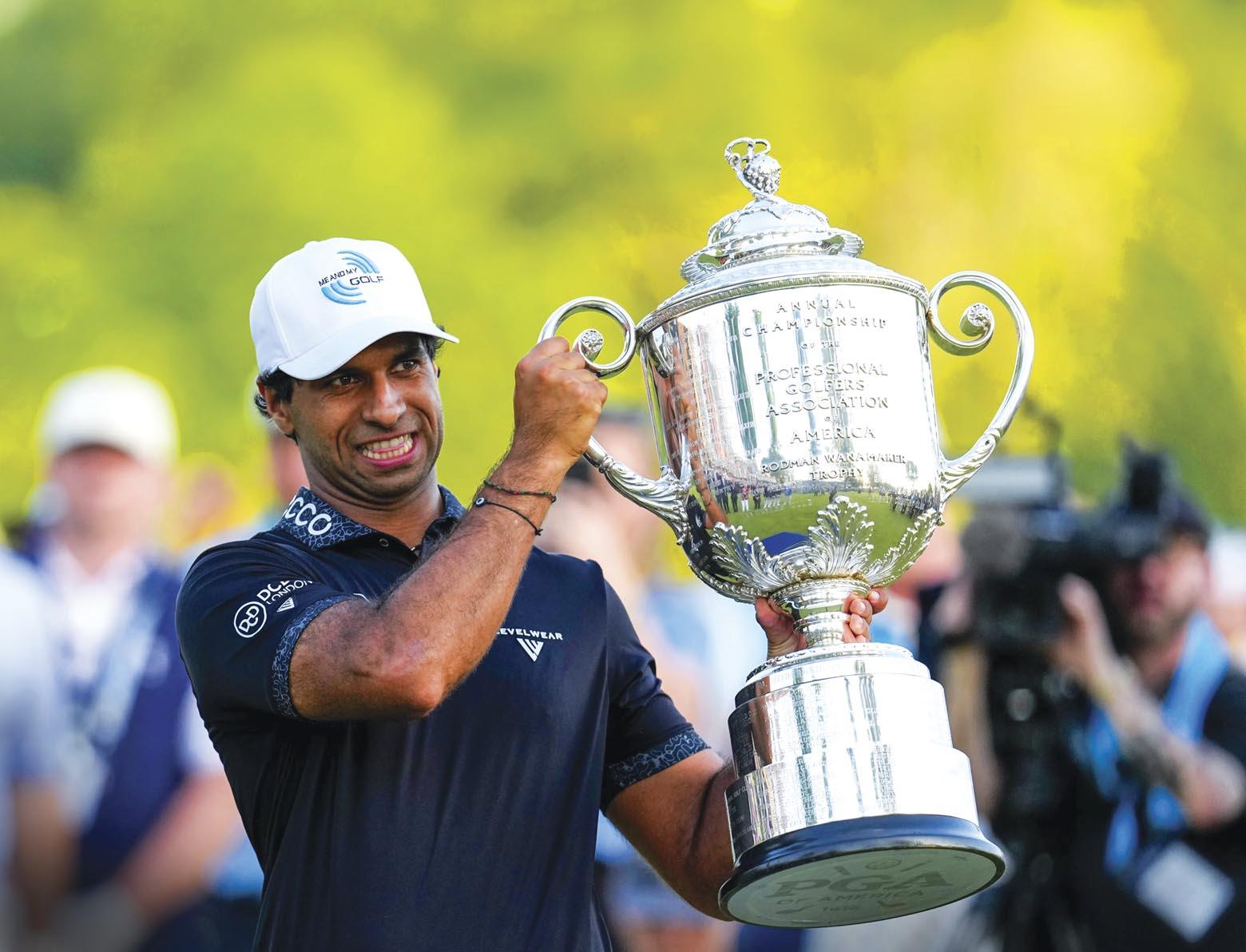
Watching Aaron Rai lift the Wanamaker Trophy after winning the US PGA Championship at Aronimink was a powerful moment to watch, not just as a fan but as a parent. He gave a wonderful speech that paid tribute to his mum and dad, saying, “I can’t put into words how much they’ve done in terms of support, the care and love. I wouldn’t be here without them.”
I love the fact that his dad used to wash his clubs so carefully, get all the dirt out of the grooves in his irons, use baby oil so they wouldn’t rust, put iron covers on them, and tell Aaron: “You’ve got to respect your equipment. You’ve got to value everything.”
Speaking from personal experience, our
Aaron Rai’s US PGA win struck a chord with Marcus Buckland, who has some idea of the sacrifices Rai and his parents had to make along the way
son Luca’s tennis path took over our lives, in ways that we could never have expected. And it all started so randomly. Just by coincidence at a Lawn Tennis Writers’ lunch, I won a raffle prize, which I never, ever do. It was a two-hour coaching session with Jo Durie, and I thought, “I’m too old to have a two-hour coaching session with Jo Durie.” So I sent Jago, my oldest son. That’s how it all began. While Jago just wanted to play for fun, Luca, my youngest,
Our son Luca’s tennis path took over our lives in ways that we could never have expected
was different. Incredibly competitive –overly competitive to a certain extent. I’d be thinking, “This is great, but it’s not great,” because he was just bursting into tears.
But beyond Luca’s passion was an obvious ability, a desire. If you are continually forcing them to do something they don’t really want to do, then it’s time to stop. And there were periods when, for whatever reason – bad results or maybe a coach setup that wasn’t quite working –where you ponder, “Hang on a minute, what is this all about?” But Luca, after every defeat, the next day would say, “When’s the next tournament?”
My wife, Olivia, in the early days, hated the stress. Not just the time, but also the emotional commitment. Watching your →
→ son or daughter play tennis, or any individual sport, is incredibly stressful. Parents need as much coaching as the kids early on.
Annabel Croft, who is a very good friend of mine, always said to me that when she was hugely successful she was vividly aware of every movement her mother made in the crowd. It really affects the player. So, you’ve got to learn that as a parent. Particularly if your son, as was the case with Luca, is very emotional and starts making the wrong decisions because he’s lost his head, it can be infuriating. That’s when your child needs all the pastoral care and emotional support that a parent can offer.
We were determined, from a very young age, to teach him the right values, so that he could go and transfer that into anything else he might do. His education was
IT’S STORY TIME
A World Cup year always carries a certain magic. Memories of past tournaments, iconic moments, and stories that stay with us long after the final whistle. So for Issue 24 of the Fitzdares Times, we wanted to create an edition steeped in storytelling.
You’ll find reflections from some of sport’s biggest names on defining moments from the last two decades, a World Cup wallchart (because everyone needs one of those) and your comprehensive guide to the perfect Wimbledon cocktail combinations, plus much, much more.
2026 has seen the return of some valued partnerships. You may have spotted our reunion with Goodwood racecourse as one of the track’s Presenting Partners. Keep your ear to the ground for invitations, tickets, and more memorable days as we bring back that feeling of Fitzdares magic. Enjoy No. 24 and settle in for one of the best sporting summers in a long time!
Henry Beesley,
Editor
Yes, you need drive and discipline, but you can still do that without being unpleasant. That’s the battle.
battle a parent wrestles with when bringing up an aspiring athlete, and one that the Rai family have navigated superbly.
But I go back to what I said before: if you put the right attributes and values into your children, even if they don’t become Aaron Rai, they are much more likely to become successful somewhere else. Luca is now at Santa Clara University, who recently won the West Coast Conference for the first time in the university’s history. He played his part, but he has seen how good you have to be to ‘make it’. The standard at the very top is frightening.
Bparamount, so if the tennis dream didn’t come true, he could then transfer into any other walk of life.
Looking at Aaron Rai, it’s clear that his parents’ values and support have shaped him into not only an excellent golfer, but also a genuinely good person. You only have to look at the reaction from his fellow pros when he won the US PGA. Rory McIlroy said there wouldn’t be a player on the tour who wouldn’t be pleased for him. Ludvig Åberg and Justin Thomas echoed those comments.
I love that he stayed grounded and humble, seemingly without social media or a massive entourage. That comes from his mum and dad. It did also get me thinking that perhaps Aaron is an outlier; a nice guy swimming in a sea of simmering intensity. You don’t hear these universal compliments on a player’s character very often.
When you think of the challenges a family has to go through to get to the top of a sport, competitiveness has to be at the core – a trait that perhaps doesn’t always foster goodwill. Golf and tennis are individual sports. You cannot begin to compare the pressure on a tennis player or golfer to somebody within a team. If Aaron Rai does well, that means somebody else is doing less well. Naturally there’s more tension.
In individual sports you do have to be selfish to a degree because ultimately, it’s down to you. Most tennis players I’ve met are good people, but some will look after themselves more ruthlessly than others. Roger Taylor once told me a story about Fred Perry saying to another player, “The problem with you is you’re just not enough of a bastard to become a top tennis player.”
And there’s probably some truth in that. You need that fire inside. Aaron Rai clearly has that, on top of an incredible work ethic. There was that extraordinary stat that he once made more than 200 consecutive 10ft putts. You think about how many hours must have gone into that. So yes, you need drive and discipline, but you can still do that without being unpleasant. That’s the
UT EQUALLY , he’s still improving, and importantly, still dreaming. His coaches believe he has a genuine chance of making it as a professional doubles player, which would be a fantastic achievement. After all, Henry Patten graduated from US college tennis and is now a two-time doubles Grand Slam champion. There are other examples. Maybe everything suddenly clicks in the next couple of years and he takes on the singles tour. Even if he doesn’t, I will look back on the whole experience with huge
fondness. There were stressful moments, and huge sacrifices, from Luca missing parties as a growing teenager to a period of homeschooling before he went to university. Not to mention the drives home after losses, and weekends where you questioned your sanity. I would do it again, because despite all the stress, there was also a hell of a lot of fun, laughs and family bonding.
We travelled to some interesting places, got to meet some really lovely parents, and the boys still have close friends now from the tennis world they first met when they were 12 or 13 years old. They’ve both gained something that will stay with them for ever. Tennis will remain part of both of their lives into their seventies, eighties or nineties. Jago now does a little coaching himself. The sport has given them an opportunity to flourish in the world.
Perhaps this was always the best outcome. It’s been one hell of a journey, and maybe Luca wasn’t ‘enough of a bastard to become a top tennis player’. Feels like he’s made it in my eyes. n
Marcus Buckland is a broadcaster who hosted Sky Sports’ tennis coverage for 12 years.
OUR TRIBUTE TO THE BEST BETS, JANUARY TO MAY
WEDNESDAY 30 JULY 2025 INVESTED £20 SELECTION Žan Vipotnik @ 150/1 Championship Top Scorer RETURNED £3,020 – SAT 2 MAY
TUESDAY 18 NOVEMBER INVESTED £5,000 SELECTION Seattle Seahawks @ 12/1 Super Bowl LX RETURNED £65,000 – SUN 8 FEBRUARY
TUESDAY 24 FEBRUARY INVESTED £75 TRIXIE SELECTION Sherlock @ 6/1 14:42 Newcastle Delgany Deadline @ 3/1 14:50 Leicester Rip Wheeler @ 15/8 15:50 Leicester RETURNED £8,560
WEDNESDAY 11 MARCH INVESTED £2,500 EW SELECTION King Rasko Grey @ 12/1 Turners Novices’ Hurdle RETURNED £37,500
TUESDAY 31 MARCH INVESTED £600 YANKEE SELECTION Coumeenoole @ 9/4 WON 14:45 Bangor Palamon @ 3/1 WON 15:50 Bangor Service Minimum @ 4/5 WON 16:50 Bangor Tyson @ 7/4 WON 17:00 Newcastle RETURNED £ 118,342.50
WEDNESDAY 8 APRIL
INVESTED £ 10,000 SELECTION Rory McIlroy @ 11/1 The Masters RETURNED £ 110,000
THURSDAY 9 APRIL
INVESTED £50
SELECTION Scheffler & McIlroy top two finish @ 25/1 The Masters (incl. ties) RETURNED £ 1,300
FRIDAY 1 MAY
INVESTED £36,765 SELECTION Delhi Capitals @ 17/10 vs Rajasthan Royals RETURNED £99,625
TUESDAY 12 MAY INVESTED £250 TRIXIE SELECTION Beir Bua @ 3/1 17:58 Sligo Factual Fact @ 15/8 19:40 Killarney In A Sonnet @ 6/5 20:28 Sligo
FRIDAY 15 MAY
Congratulations on some fantastic picks in 2025, you all know who you are.
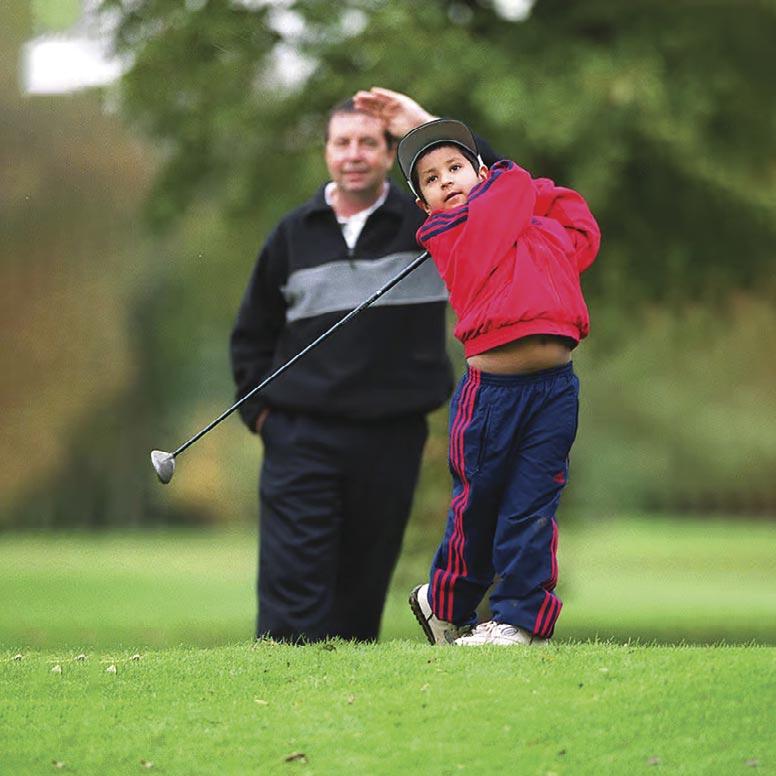
Aaron Rai caught the attention of the BBC at the age of five
OSPEAKER’S CORNER Adrian Clarke
NINETY IS PLENTY
NCE UPON A TIME, GOALKEEPERS were allowed to pick the ball up from any backpass sent their way. Yes, I know, mad, isn’t it? Snoozeinducing and painful to watch. Football rightly decided it was a rubbish rule, so we stuck it in the bin and made keepers use their feet instead. Lying in that very same trash can, you’ll also find the golden goal, silver goal, the draconian away goals rule, FA Cup replays, and more. Top-level football is always evolving. You need to move with the times. So, next up, please let ‘extra time’ be the next of football’s outdated staples to be consigned to the history books. Let’s face it, those 30 minutes usually drift/drag along with barely a whiff of excitement anyway. Head coaches tense up tactically, players are frightened stiff to make a mistake, and crucially, they are also completely knackered. That’s why it’s consistently a non-event half-hour we’ll never get back. Before penalty shoot-outs came into our sphere in the late Seventies, extra time used to be decent fun, with 1.5 extra-time goals averaged between 1938 and 1974. Since 1982, with the spectre of spot kicks on the horizon, the mean is closer to 0.7 goals. And here’s one more stat for you. In the UEFA Champions League knockout stages, there has been a measly average of 0.5 extra-time strikes per match since 2018/19; and that figure is grossly skewed by an astonishing four goals arriving late on when Liverpool met Atletico Madrid in 2020.
There will always be the odd exception like that, but for the most part the quality of football deteriorates miserably in front our sleepy eyes. That’s why most of us wish extra time away so that we can just crack on with the excitement of a penalty shoot-out. Tell me I’m wrong! Didn’t think so…
AT THIS SUMMER’S WORLD CUP in the USA, Mexico and Canada, extra time could also be downright dangerous. At the end of an arduous, physically draining club campaign, international footballers may have to play 130 minutes or more (when you cater for added time) in extreme heat. How FIFA hasn’t at least given this some thought – or at least floated the idea of going straight to penalties – feels like worrying negligence. With players’ bodies struggling to cool down, some may not be able to cope with 30 minutes or so of extra game time in such torturous conditions. It gets worse. To cater for global audiences, FIFA has sanctioned 10 of the 16 last-32 matches to kick off prior to 6pm local time. Seven of the eight last 16 fix-
They say that penalty shoot-outs are cruel, but the real brutality here is extra time itself.
tures will take place before 6pm, and three of the quarter-finals, while both semis and the final itself will all be daytime fixtures too. It’s a disgrace. There should not be extra time at the 2026 World Cup. I sincerely hope it doesn’t take a tragic, devastating outcome, to realise this.
Looking at things from a broader angle, there is medical evidence that players are more likely to suffer injuries when subjected to extra time. Research published in the British Journal of Sports Medicine found that hamstring injuries are disproportionately common late on in games, and that fatigue increases the risk of soft-tissue injuries.
A recent FIFA-supported review of extra time in elite football also found that physical performance drops significantly. Injuries, unsurprisingly, also grow in the final 15-30 minutes of extended matches.
SO, WEIGHING ALL THIS UP, DO WE REALLY THINK PLAYING an extra 30 minutes is worth it? Of course it isn’t. They say penalty shoot-outs are cruel, but the real brutality here is extra time itself, not the spot-kick drama. Going straight to penalties is now commonplace in many competitions, thankfully, and that is a welcome change. We now need the major club and national team tournaments to follow suit.
Often, you’ll see more excitement and intensity during the match when both sides know it’s a shootout after 90 minutes. Also, with extra time providing a clear advantage to ‘bigger teams’ with more quality on the bench, the prospects of a giant-killing are also significantly raised by eradicating extra time. And we all love an upset, don’t we?
Look, times have changed. Top-level footballers, largely through the financial greed of the governing bodies, are being asked for more and more. Physically and mentally, they are at breaking point – and the quality of football/entertainment can only suffer because of it. Banishing extra time to the history books feels like a logical no-brainer. It’s better for the players, more compelling for fans, and on top of that none of us will miss the last train home because of a late finish. Extra time, get in the bin. n
Adrian Clarke played for Arsenal and is now a tactical analyst, broadcaster and writer.
40 Savile Row, London W1S 3QG
THERE ARE OWNERS who enter racing through bloodstock agents, family dynasties and seven-figure sums. And then there’s me. My journey into ownership began, as so many racing stories do, in the bookies. Growing up in Sherborne, Dorset, I would spend school holidays with my grandfather, riding on the back of his BSA motorbike into town.
Mornings were often spent in the Jug and Bottle, the off-licence who didn’t care if we were underage, before we crossed the road to the bookies to watch the afternoon’s racing. While other kids were kicking a football about, I was updating betting boards under the crackle of SIS commentary. National Hunt racing became an obsession. Boxing Days at Wincanton. Trips to the King George at Kempton. Long afternoons punting, usually unsuccessfully, but I kept going. Ownership, though, felt like something other people did. It wasn’t for people like me. That changed one Sunday in Cornwall. We were on holiday in Polperro (a beautiful village where we now have a cottage), when I decided to place a Super Yankee on five horses.
The first was a 20/1 shot at Stratford called Arthington, trained by Seamus Mullins, local to me in the Woodford Valley near Stonehenge.
The remaining four were much shorter prices. By hook or by crook, they all obliged, and by the end of the afternoon, the bet returned six figures. Pretty exciting for a humble punter like me.
The winnings went on practical things: re-thatching the cottage (at great expense, I might add), sorting a few bits, even some long-discussed weight-loss surgery! But once the dust settled, another thought crept in: perhaps I should buy a horse. I called Seamus. He assumed I wanted a leg in something. I said, “No. I want one of my own.” As trainers do, he told me he had “just the thing”.
That horse became Oborne Lady, named after my late mother. She wasn’t the most talented, but she gave us everything and gave me my first real taste of ownership. She even managed to win once, a modest handicap at Salisbury, and we had some brilliant days trying to win races with her. Eventually, we retired her when it became clear she didn’t enjoy it. She’s now doing very well in eventing, which feels right.
Then came Tommie Beau. I bought him for £18,000 during that strange period between Christmas and New Year in the Covid era. He had shown a bit of promise in a bumper, but nothing to suggest what was coming. At the time, I also had the
‘I also had the small task of convincing my wife that a racehorse was a sensible late Christmas present’
small task of convincing my wife that a racehorse was a sensible late Christmas present. She begrudgingly agreed.
We started him over two miles, but he always looked like he wanted further. The penny dropped at Bangoron-Dee when he stepped up to two and a half miles. We’d backed him from 66/1 into 12/1, and while he finished with a rattle we were beaten into third in a photo. No each-way money, but something had changed. Two weeks later we stepped him up to three miles, and Tommie Beau won three handicap hurdles in 10 extraordinary days at Plumpton, Fakenham and Hexham. He travelled around 1,300 miles in the horsebox in that spell and ran over nine miles competitively. It was incredible and slightly exhausting for everyone involved. From there, life with Tommie Beau became one of those rare racing stories you never expect to live: big days, long drives, and a sense we had something special.
There have been mishaps too.
The most memorable came in a crosscountry race at Cheltenham’s November meeting. At the suggestion of my great friend and jockey Micheál Nolan, we went over the banks. We were going well, apparently in front after a few fences, when everything unravelled and we ran out heading out on the second circuit. Not our finest hour, but racing has given us far more
than it has taken. Both my wife and I have been through cancer treatment – prostate cancer for me, breast cancer for her – and during those times, racing, the yard and the people around it became a constant source of support. I’ve always said the camaraderie in racing is what makes it special. At one point I even rode a horse called Frank up the gallops to raise money for children’s cancer charities. He was a giant – he had to be, to carry me at 22 stone! But we raised £19,000, which meant a great deal.
And Tommie Beau kept going too. This spring he returned to the Norfolk National, a race he’d won before, and regained his crown. Another chapter in a story that has given us so much. He recently ran a cracker at Cartmel –one of my favourite tracks, and somewhere he’s already treated us well – finishing a gallant second. Chris Cook of the Racing Post once called him “the nation’s favourite”. I’m not sure about that. But perhaps he’s the working man’s favourite... and maybe that’s enough.
That’s the thing about Tommie Beau. He’s not just a racehorse, he’s proof that one good day, one good bet and one bit of luck can change everything. And crucially, racing still has room for stories like mine. n
Simon Prout is an avid punter and prominent racehorse owner.
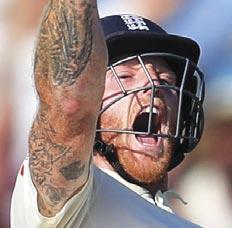
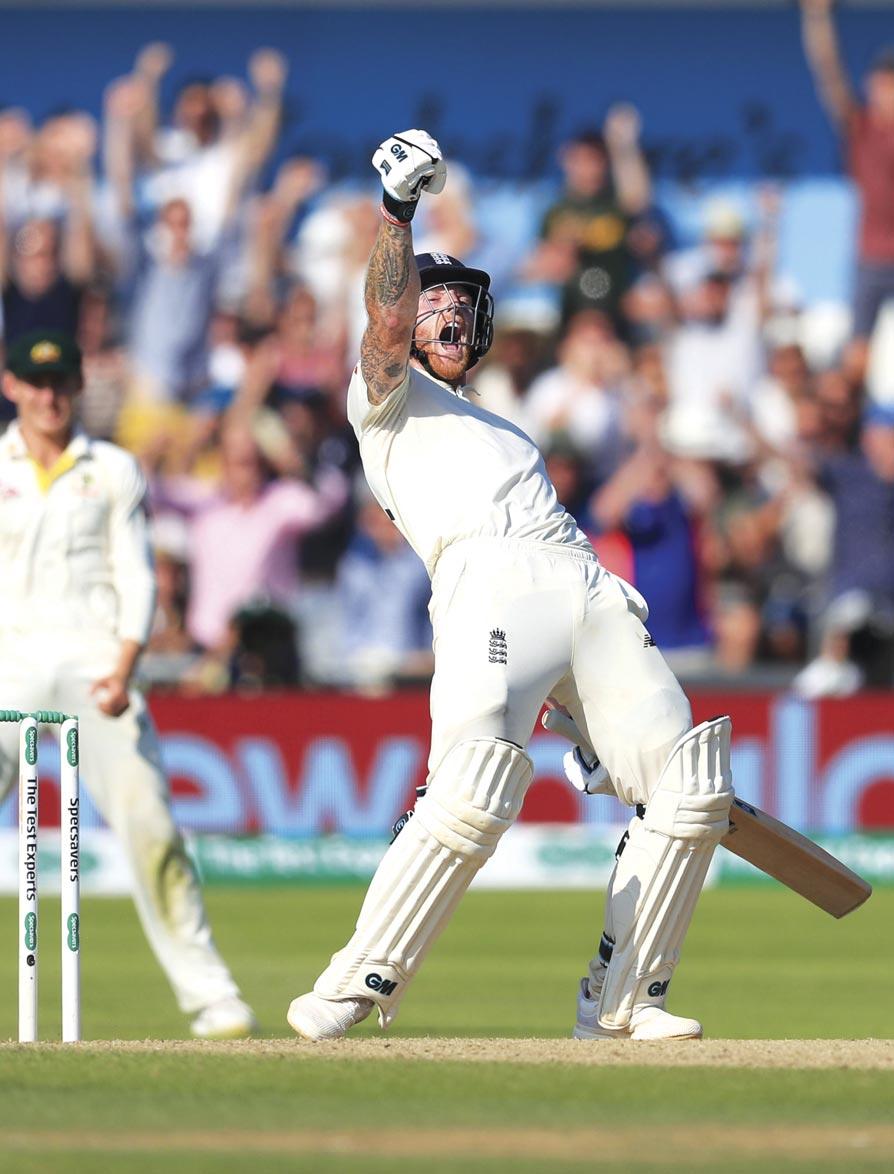
Sunday 25 August 2019. You all remember where you were. Fortunately for me, I had a front-row seat to one of the greatest Test match innings ever played. First, I ought to set the scene. Steve Smith had batted us out of the game in that summer’s first Ashes Test at Edgbaston with two scores of 140odd. There’s a reason I call him the hardest bloke I’ve ever bowled at – every plan, every field, every spell, he just absorbed it all. So we were 1-0 down heading to Lord’s. Stokesy’s second-innings ton nearly dragged us back into the series, but the rain arrived before we could bowl Australia out again. Drawn match. No room for mistakes now, because 2–2 would be enough for them to retain the urn.
So on to Leeds. Bowled out for 67 in the first innings. Sixty-seven. It was one of those dressing rooms where nobody really said much, because there wasn’t much to say. We actually battled back really well in the game, but Australia’s lead still passed 350 in the second innings.
Headingley is a strange ground. If the sun’s out, runs are there to be had. Quick outfield, pace in the pitch, the ball comes nicely onto the bat. But if it clouds over, the ball can move all over the place and it can become a nightmare for batting. It’s that simple. Day four was an absolute scorcher. Perfect batting conditions. We made a decent enough start, but by the time Stokesy
DIARY
by Stuart Broad
Lyon drops the ball and fumbles the run-out.
The crowd erupts. No one knows where to look.
came in we still needed well over 200. It took him 74 balls before he hit his first boundary. He’d only scored three runs at this point. That’s what people sometimes don’t appreciate about Ben: his ability to go through the gears. He can defend for an hour or so if the situation demands it, then suddenly take a game away from you in 20 minutes.
When Jonny Bairstow was caught at second slip, that was probably the moment everything changed. When a flurry of wickets then fell, Stokesy knew there was only one way we were winning the game. (I got a good yorker from Hazlewood, to be fair, and was sent back to the shed without troubling the scorers.) So by the time the last man, Leachy, came to the middle, we still needed 73 runs to win. Ben then started teeing off. He particularly went after Nathan Lyon, getting down on one knee and swatting him down the ground with these flat sixes. It was just incredible.
At Headingley, it used to get a bit claustrophobic. It wasn’t until about 10 years ago that Dickie Bird, the old umpire, funded a balcony to be built outside the dressing rooms. The issue is that it’s quite small. At 6ft 6in, I was sort of crouching as the ball was flying off Stokesy’s bat into the Western Terrace. I remember he didn’t quite middle one of those flat hits. We couldn’t quite see the ball from the tiny balcony, but that roar from the crowd let us know before we’d even seen it that he’d cleared the man. A ridiculous reverse sweep off Lyon took the total required under 50. You could see Lyon’s confidence waning. They’d spread the field, but Ben was still able to farm the strike, not exposing Leachy to too much.
One of the golden rules in a cricket dressing room is that when there’s a partnership building, nobody moves. We’re ridiculously superstitious. I had Jos Buttler on one side of me and Rooty on the other. Nobody was even getting up to go to the toilet.
By the time Cummins came back on, Stokesy was seeing it like a football. He was pulling him to the fence for four at every opportunity. He’d gone past 100 but didn’t even celebrate, he knew the job wasn’t done yet. By the time he pumped Cummins down the ground for another four, we needed just nine to win. Single figures. Just two hits. That’s when I honestly believed, “This is on, we’re going to do this.”
Another swipe down the ground off Lyon… just clears the fielder. Another maximum. Two to win. Stokesy reverse sweeps Lyon but can’t quite beat the infield. Leachy’s running. By the time Stokes sends him back, he’s halfway down the pitch. “Bowlerssss!” You could hear Tim Paine shout from the balcony. Leach is so far out of his ground. Somehow, Lyon drops the ball and fumbles the run-out. The crowd erupts. No one knows where to look. Stokesy goes for the slog sweep – a big swing and a miss, cannons into his front pad. From around the wicket, it has to be sliding down, doesn’t it? Umpire Joel Wilson thought so. Hawkeye shows it was going on to hit the stumps, but the Aussies have burned their reviews. It did feel a bit like it was our moment.
Stokesy can’t get back on strike for the next over from Cummins. Leachy gets behind one and turns it round the corner through square leg. The whole of Headingley screams “YES” as the boys scamper through for a single. It’s probably the most famous single in English Test history. Scores level. Cummins to Stokes. It’s a short, wide one and Ben bludgeons it away through cover as it races to the fence. Astonishing. There’s a great shot that came out in all the papers the next day. Stokesy knew as soon as it left his bat where the ball was going, but from the side-on view you see the whole crowd rise with him a split second after.
We were all sitting in the dressing room with a beer after the game. I’m not the type to get too emotional, but that’s the most intense game I’ve ever been involved in. After that, the boys went out and we all re-enacted that single. Magic. Moments like that live with you for ever. I actually had to watch the highlights when I got home the next day to relive it. He nearly did something similar four years later too… but that’s a story for another day! n
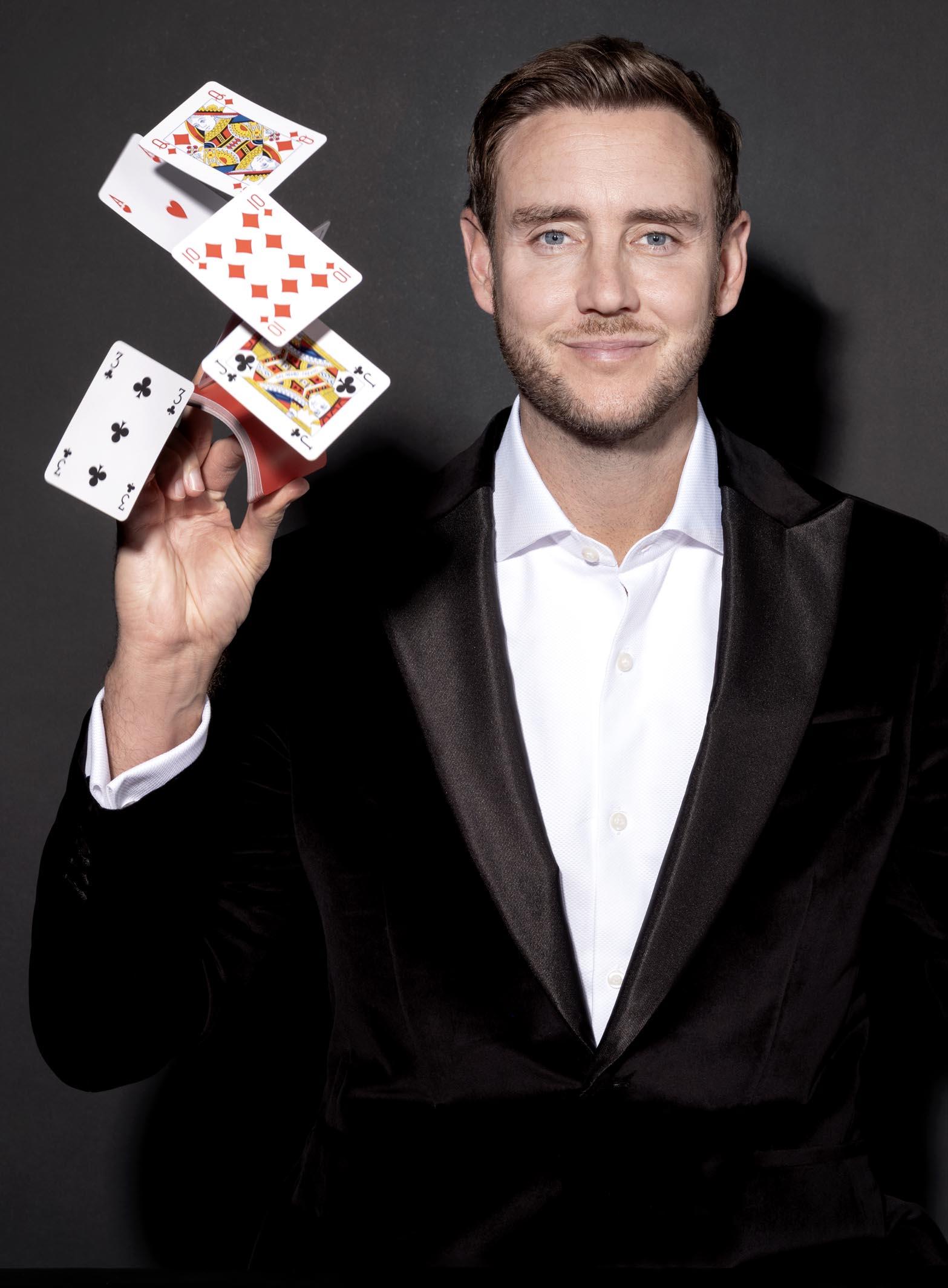
Stuart Broad is England’s second highest Test match wicket taker, and Fitzdares’ Ambassador.
Stuart Broad had a front row seat to Ben Stokes’ magnificient 135* at Headingley as England levelled the 2019 Ashes Series
Britain’s new sports and music station.
TICKET TOUTS FROM THE WORLD OF SPORT? NOT AT ALL,
BUY OR SELL?” “Long or short?” It sounds like the language of a City trading floor. Yet, increasingly, it describes another highstakes marketplace entirely: the murky, fast-moving world of ticket resale. Americans call them “scalpers”. In Britain, we still prefer the old-fashioned term: ticket touts.
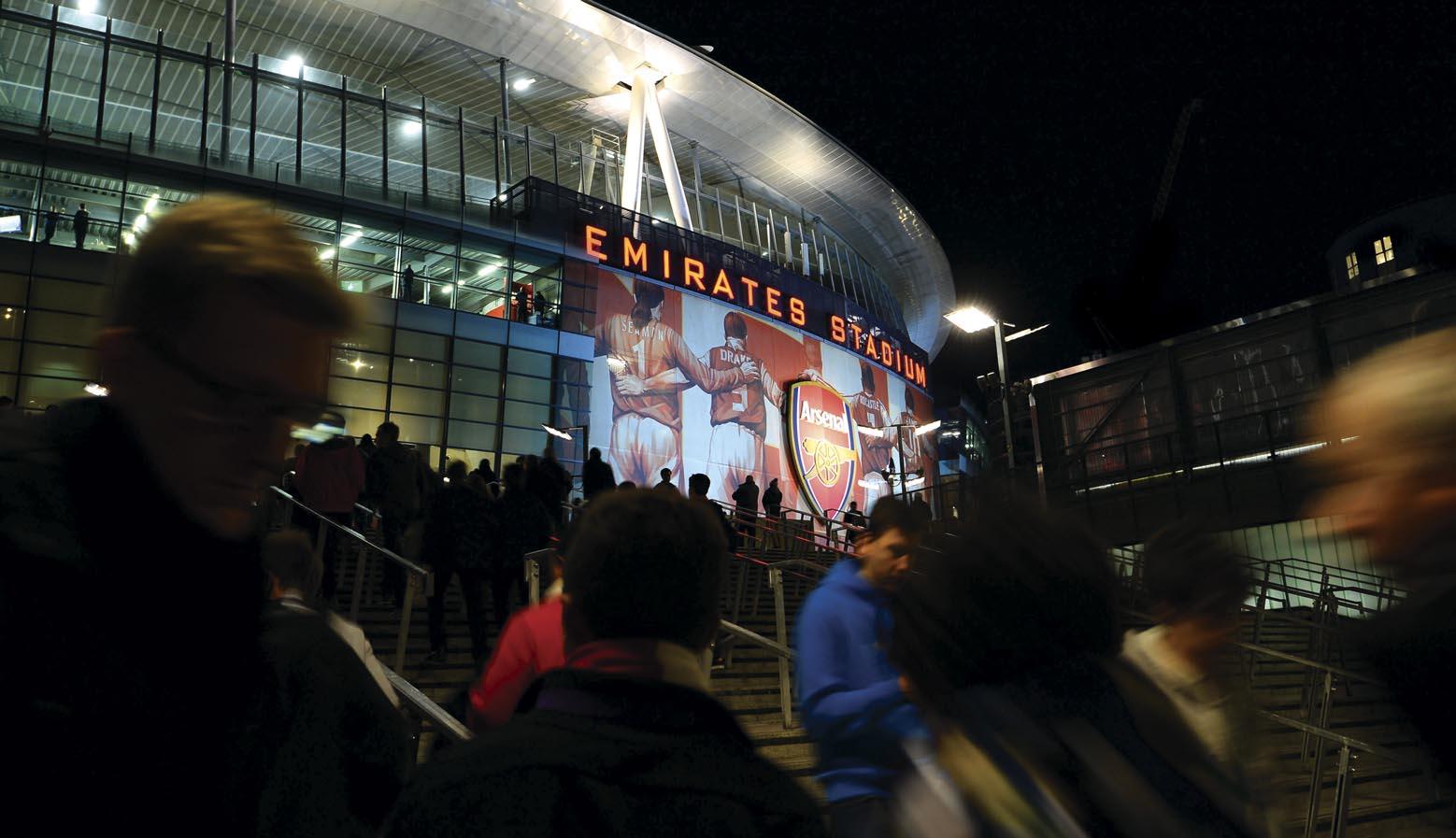
Curiously, the legality of touting in the UK depends almost entirely on what sits behind the turnstiles. Outside Wimbledon, Twickenham, Lord’s or the Royal Albert Hall, a man helping desperate punters into a sold-out event is little more than a nuisance. Outside Stamford Bridge, Anfield or the Emirates, he risks arrest. It is a contradiction that feels increasingly detached from reality.
For all the moral outrage aimed at secondary ticketing, the market has simply evolved rather than disappeared. The old pavement traders have largely been replaced by algorithms, online marketplaces and remote operators working from laptops rather than street corners. The demand, however, remains exactly the same: people desperately want tickets to events that are officially “sold out”. And unlike the stereotype of the
TOP TICKETS
vulnerable punter being pressured into a shady cash deal, the modern online buyer goes through a remarkably deliberate process. They search for the event, compare listings, select seats, enter payment details and actively confirm the purchase. At every stage they can simply close the browser and walk away. Usually, they do not.
A willing buyer meets a willing seller. Transaction complete. Or perhaps not. Because this is where the gambling instinct enters the equation.
A significant portion of today’s ticket resale market operates less like retail and more like speculative trading. Many listings are perfectly legitimate, but a growing number are effectively bets on future prices. Tickets are advertised before the seller even owns them, in the belief they can later be sourced more cheaply elsewhere.
Take July’s World Cup final in New York. Resellers can already list seats across multiple categories and collect payment upfront, and only need to fulfil the order shortly before kick-off. Between now and then, they rely on technology, contacts and market movements to obtain the inventory at a profit.
Bots sweep through onsales in milliseconds. Software tracks resale platforms around the clock, automatically buying underpriced returns from genuine fans no longer able to attend. Entire operations now resemble hedge funds with hospitality packages.
Nine times out of ten, the trade works beautifully. Prices soften closer to the event, inventory emerges through various channels, and both buyer and seller walk away satisfied. But occasionally the market moves violently in the other direction. A cup final run. A surprise artist reunion. A title decider. Suddenly supply tightens and prices soar.
At that point, some online operators retreat
ONE OF THEIR NUMBER TELLS
behind the labyrinthine terms and conditions few customers ever read. Rather than absorb a catastrophic loss fulfilling the order, they simply refund the buyer and cancel the transaction. Technically, the customer gets their money back. In reality, they are stranded days before the event, forced to re-enter the market at vastly inflated prices. It is, in truth, an “upside-only” trade for many sellers. Which perhaps explains why the traditional tout still survives.
The old-school operator offers something the digital marketplace often cannot: accountability. A name. A number. A relationship. Every seasoned sports fan or corporate fixer likes to say: “I know a man who can get them.” And in certain industries, access matters enormously.
Property developers, construction firms and recruiters remain among the biggest consumers of premium event tickets. Relationships are built in hospitality boxes as often as they are in boardrooms. For them, the cost of sourcing impossible seats is trivial compared with the value of winning a contract, securing a client or maintaining goodwill. Naturally, few describe their suppliers as “touts” any more. “Concierge service” sounds considerably more respectable. But the principle remains unchanged.
Whether they operate via encrypted WhatsApp groups, corporate hospitality desks or oldfashioned contacts books, the best operators are relentless. They cultivate agents, players, venue executives, sponsors and insiders. They thrive on obtaining the unobtainable. And while politicians continue debating the morality of secondary ticketing, the market itself has already delivered its verdict. Where there is demand, somebody will always find a way to supply it. n
Tout X spoke anonymously to Fitzdares.
PRESENTING PARTNERS OF
Please play responsibly
The World Cup will feel very different from 1994, when Fifa risked going to a country where ‘soccer’ was a novelty. It would never work… would it? Henry Beesley looks back
TAKE YOURSELF BACK to 1994. Friends, arguably the most popular TV show of all time, aired its first episode; OJ Simpson was charged with the murder of his ex-wife Nicole Brown-Simpson; and the Channel Tunnel opened, acting as a perfectly weighted through ball to allow a seamless passage between the UK and mainland Europe.
It was also the year the World Cup made its first foray outside the traditional ‘football-loving’ nations, landing in the USA. It wasn’t supposed to feel like a proper World Cup. A tournament staged in a country where the sport went by another name, played in stadiums built for a different sport, in sweltering conditions that bordered on the absurd. It shouldn’t have worked. But somehow, it did.
BRAZIL, BUT NOT AS WE KNEW THEM
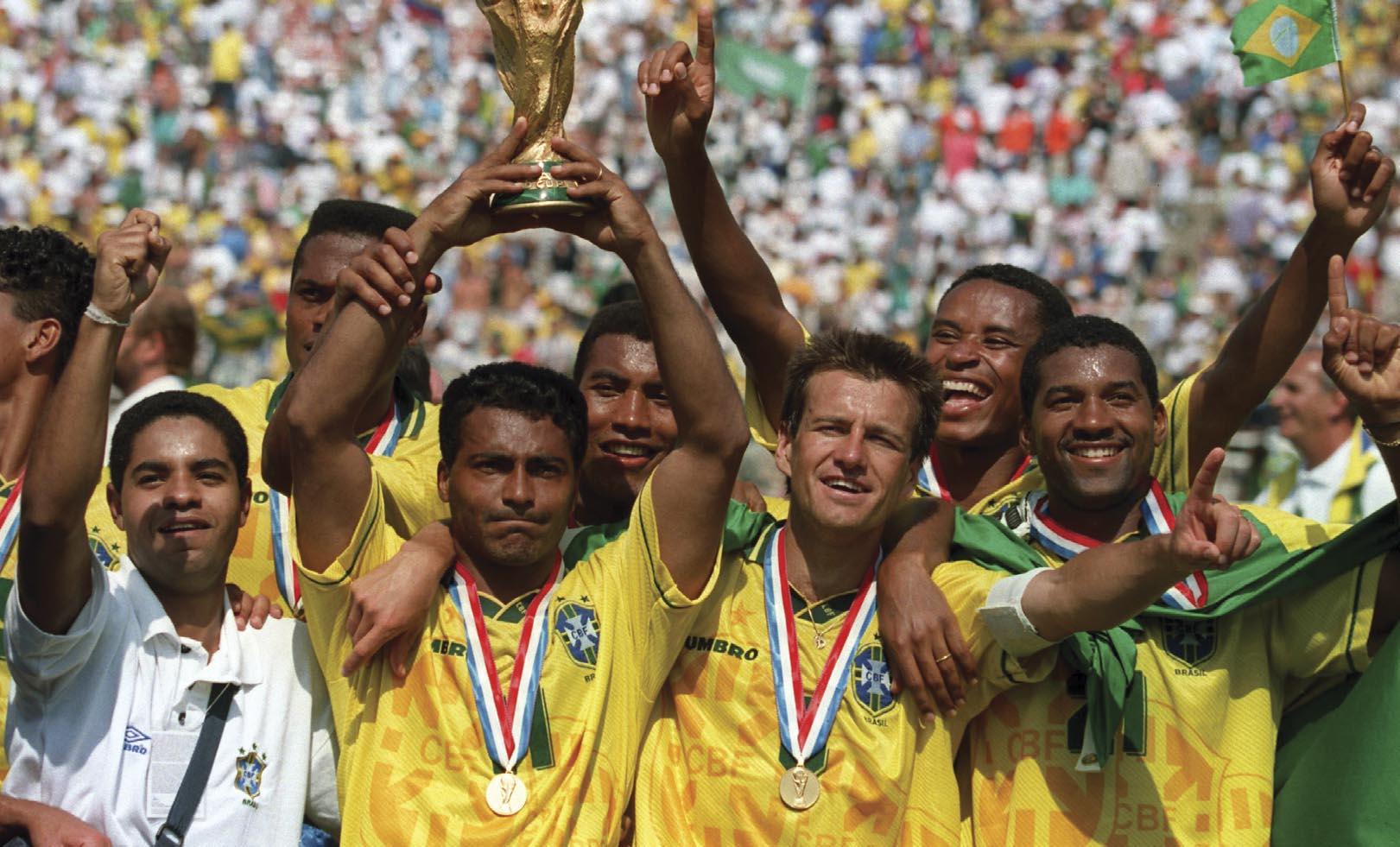
Every great tournament needs an iconic winner. And USA ’94 delivered – although not in the way we’d become accustomed to. This wasn’t the free-flowing, samba stars wowing the world with their talent and trickery. This was Dunga’s Brazil: organised, clinical, disciplined… even businesslike? The winners scored just 11 goals across their seven games. But the strike partnership of Bebeto and Romário still provided just enough jogo bonito to keep the neutrals on the edge of their seats.
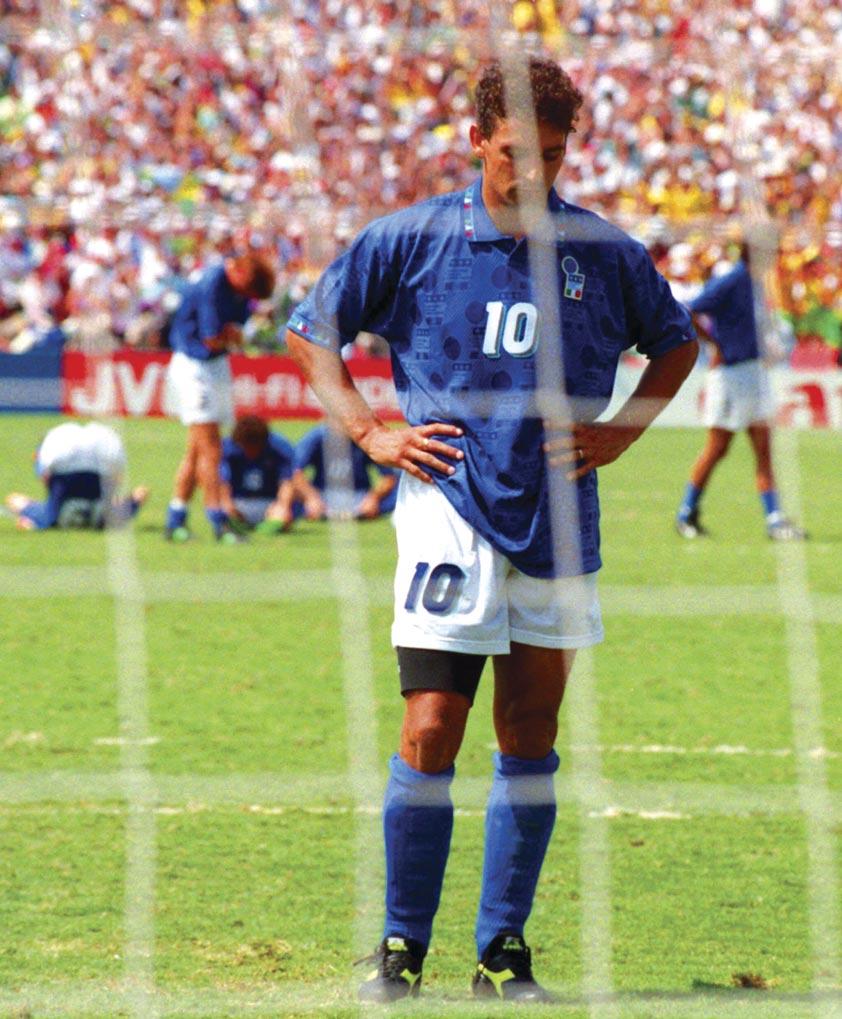
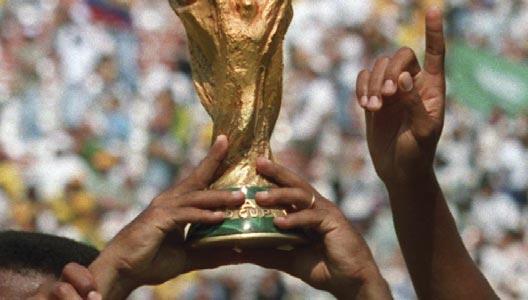
We expected the pragmatic approach from the Azzurri in the final. Like so many of the great Italian sides over the years, they were built on their rock-solid defence. But when Player of the Tournament Roberto Baggio skied his spot kick in the shootout, the World Cup ended as it has done more times than any other, with the men in those inimitable yellow jerseys hoisting the trophy.
BIG STADIUMS, BIGGER TEMPERATURES
Subtlety wasn’t part of the brief when the World Cup came to America. USA ’94 was never going to be quaint or understated. Every single one of the nine host stadiums was either an NFL arena or a college football cathedral, boasting maximum capacities of more than 50,000. Almost 95,000 people flooded the Rose Bowl in Pasadena, California to see the Seleção win their fourth World Cup.
Soaring temperatures were another defining feature of the steamy summer. As games kicked off in the middle of the day to appease European broadcasters, the heat was relentless. Temperatures routinely surpassed 100°F/37ºC, turning the tournament into a test of stamina as much as skill. Brazil coach Carlos Alberto Parreira even said that to give 100 per cent in the conditions, “you’d have to be a robot”. Thankfully, his machine was in full working order.
NEW RULES
In the world of video assistant referee (VAR) and semiautomated offsides, it’s easy to forget just how different the beautiful game looked back in 1994. This was the first World Cup where the backpass rule existed, preventing the keepers from picking the ball up when passed to them by a teammate, instantly speeding the game up.
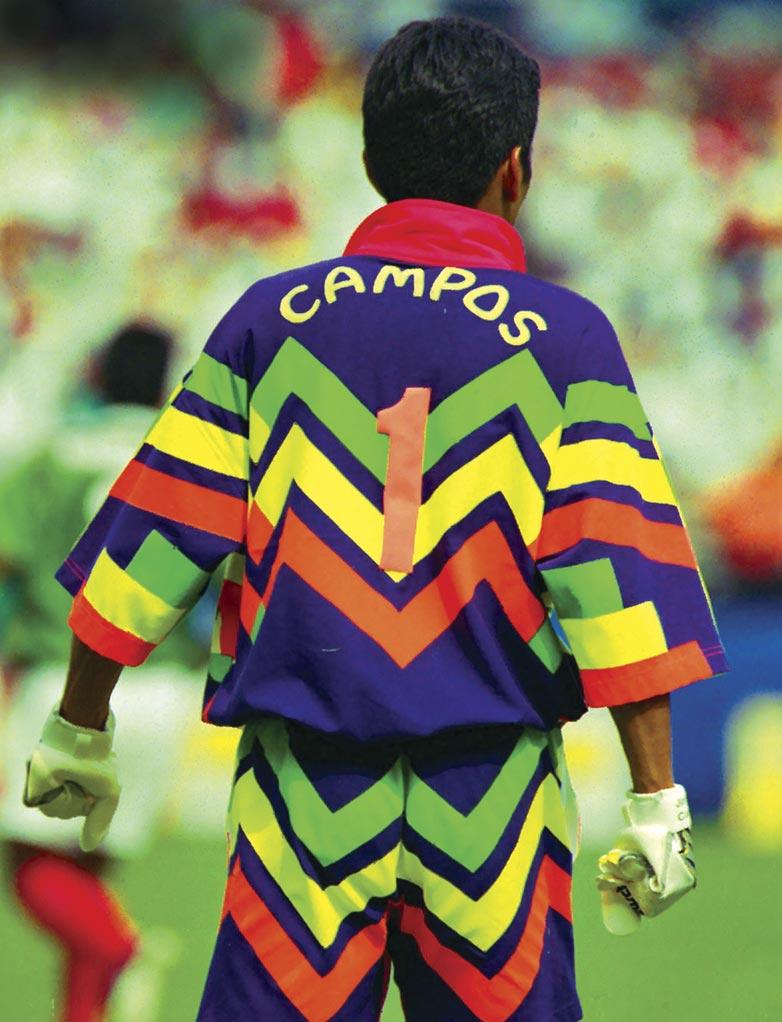
Modern football as we know it took another significant step forwards that summer. In a huge sigh of relief for fans and broadcasters around the world, this was the first tournament where players had their names printed on the back of their shirts. This transformed the stars on the pitch into global brands overnight.
ICONIC KITS
We’re all guilty of getting swept up in the nostalgia of yesteryear. It’s one of football’s favourite indulgences. Every Premier League club these days has a “throwback” collection. Shirts, tracksuits, boots… even the mullet is back in! And you won’t have to look too far to find a retro England shirt, possibly with “Gascoigne 8” on the back, in the pubs this summer.
But the ’94 World Cup is where it all started. The kits were some of the boldest ever made. Out with the heavy, simple cotton designs. Enter vibrant, baggy polyester, characterised
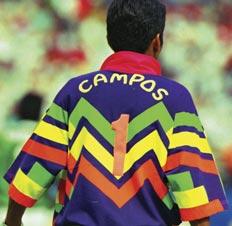
Mexico’s Jorge Campos epitomised the bold fashions of 1994, while Roberto Baggio was the tournament’s focal figure
by bright colours, bold patterns and prominent branding. Keepers’ kits were composed of all sorts of insane colours and combinations that have been adopted and adapted over the years. And who could forget the host nation’s denim kit? The polarising strip carried the USA to the knockout stages, where they were eliminated by the eventual winners. While we won’t be seeing any denim this summer, many of the experimental and outlandish templates have stood the test of time.
THE DARKEST CHAPTER
Not everything about USA ’94 was sunlit and celebratory, however. Colombia’s appearance was already marred by controversy before a ball was even kicked, with whispers of cartel control behind the scenes, betting on games and influence over team selections.
But what followed was far worse. After scoring an own goal against the hosts in the group stages, Andrés Escobar
Despite a population of barely 150,000
became the focal point of national anger. Days after returning home, he was murdered outside a nightclub in Medellín. It remains one of the saddest moments in World Cup history.
HOW WILL 1994 BE REMEMBERED?
The slogan for USA 1994 was “Making Soccer History”. The marketing department didn’t oversell it. The overall attendance of almost 3.5 million and average of 69,000 are records yet to be broken.
Of course, the financial implications were huge. Lucrative sponsorship deals were secured, many of which still stand today. But the greatest success of the tournament was how football embedded itself into the American culture. It provided the foundation for the formation of the MLS, where Lionel Messi now lights up the league. It also helped fuel the rise of the US women’s national side, a dynasty that dominated the global game for almost 20 years.
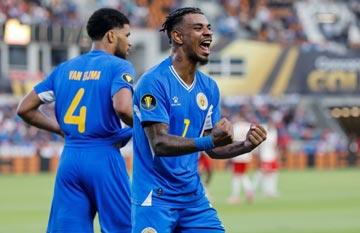
The Caribbean side were undefeated in their qualifying campaign, taking full advantage of the absence of co-hosts Mexico, United States and Canada from the Concacaf qualifiers. Having first attempted to reach the World Cup way back in 1962, the Blue Wave are heading to their first World Cup 64 years later.
The beautiful game will never be known as football in the States. But in 1994, a little like a Roberto Carlos pile-driver, soccer blasted itself into the top corner of the minds of the American public.
SO, WHAT NEXT?
After 32 years, the circus returns. Louder, bigger, brighter, and this time with hosting responsibilities shared with Canada and Mexico. But with 11 of the 16 host stadiums in the States, there’s no doubt who the main character is this summer.
With all the excess and bravado, it isn’t about whether the tournament will be a spectacle. That much is guaranteed. The question is what, exactly, will this summer leave behind. Because if 1994 taught us anything, it’s that the real story only begins once the final whistle blows. n
Henry Beesley is Editor of the Fitzdares Times.
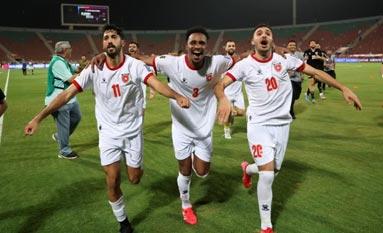
Jordan have been trying since Mexico 1986 to qualify and at long last, they’ve made it. Having only just missed out when losing an intercontinental playoff against Uruguay in 2014, they earned their spot in Mexico, United States and Canada after finishing behind only South Korea in their Asian qualifying group.
Uzbekistan, featuring Manchester City’s speedy centre back Abdukodir Khusanov, lost just once and finished second in their group to comfortably book their westbound trip. Their previous best in qualifying was in the 2014 World Cup, when Jordan eliminated them on penalties in the round that determined who would advance to the intercontinental playoff.
CAPE VERDE
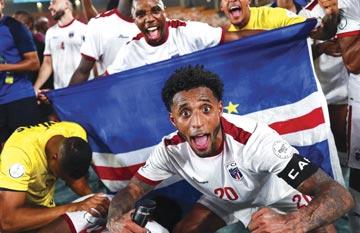
in their Atlantic island nation, the Blue Sharks enjoyed a stunning qualifying campaign, losing just once and finishing above Cameroon in their group to secure a direct ticket to the World Cup.
CURAÇAO
JORDAN
UZBEKISTAN
FOUR NATIONS WILL BE MAKING THEIR DEBUT AT A WORLD CUP THIS SUMMER
QUARTER FINALS ROUND OF 16 ROUND OF 32
18 LIFE ON THE RUN
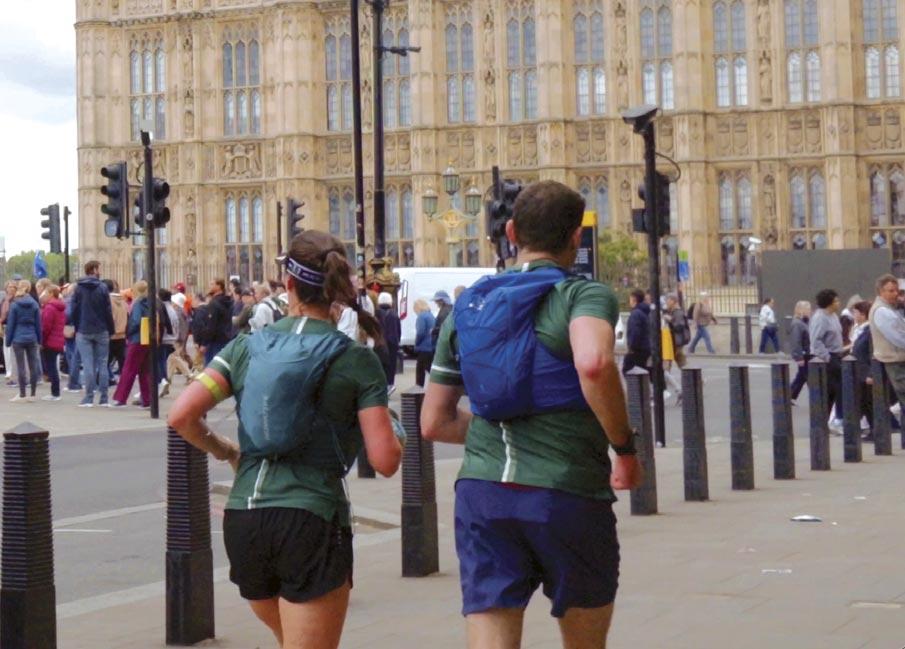
Vassos Alexander only discovered running after the age of 30, but he’s certainly making up for lost time
Do you truly love running? Or do you love the physical challenge it provides?
I love… Look, running is hard. It’s easier to sit here in the warm, talking to you, or just sitting on your sofa watching football, than it is to run even 20 minutes – let alone 10 or 20 hours. I do love the challenge of running. I love the fact that you never regret a run. There’s an implicit acknowledgement that you’re doing something good for yourself.
I ask because a lot of people prefer ball sports, where you don’t necessarily feel like you’re doing exercise. Running, however, is fundamentally just exercise.
Yes, it’s exercise, but we evolved to run. It’s in our DNA to run long distances. There’s some element of doing right by your genes, if you like, when you go for a run. But also, it’s a lovely time to just get some space in your head.
I had a cup of coffee with Roger Bannister and he said to me: “Every day I try to get out of my comfort zone, because then my comfort zone expands, and I expand as a human being.” He also said he doesn’t think his fourminute mile is his greatest achievement, but I disagree.
What is it about getting out of your comfort zone that makes you feel so comfortable?
It makes me feel alive. We only get one life, and I don’t want to spend mine watching Netflix and ordering Deliveroo. I want to spend it testing myself. If life is an orange, let’s suck all the juice out of it. Don’t leave it on the shelf just withering away.
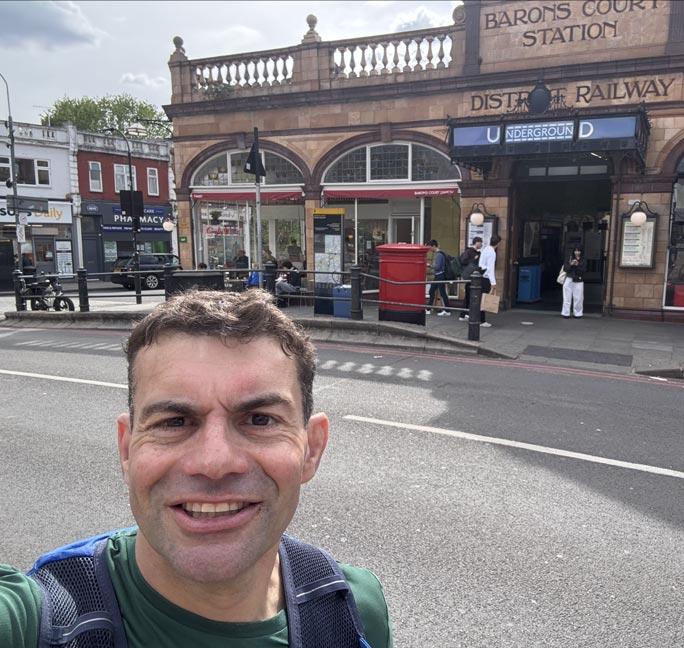
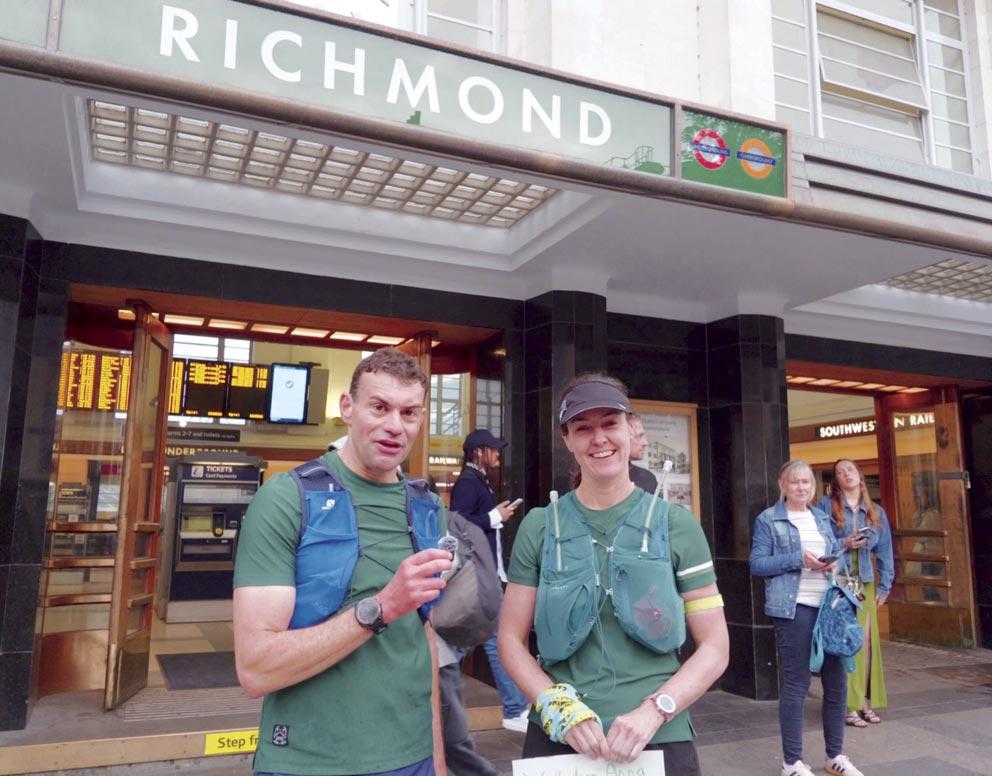
I’ve never felt so alive as when I was training for the marathon. The training is the thing, you know? These city runs that I do, like the ‘District Line’ run, are the cherry on the icing on the cake.
What you’re saying, then, is it’s all about the journey, not the destination?
Oh, yeah. What life is, right? The destination doesn’t end well for any of us. You’ve got to just enjoy the journey along the way. I can count on one hand the number of times I’ve gone for a run and it’s
been thoroughly joyful. It happens sometimes, but not that often – I really have to sort of rouse myself to go for a run.
I’m going to challenge you on that. The District Line run you just did was a secret, right? So, there must be an element of wanting to do these runs because you’d be the first person to do them?
There’s a little bit of explorer in me there. Mainly, I’d have been upset as much as anything because it was my friend Anna’s idea and she wanted to set the fastest known time. Ultimately, we were thrilled to be the first people.
How did you feel while you were doing it?
It was fun to be doing something hard and slightly silly on a Sunday, and lovely to be doing it towards the end of Mental Health Awareness Week. If anybody thought, “I’ll get out of the tube one stop early,” having seen what we were doing, that would make it worth it. Running is just so, so good for your mental health.
Have you got a running bucket list? You’ve done a “Spartathlon”, an Iron Man, various triathlons… The “Spartathlon” [a 153-mile ultramarathon re-creating the run of Pheidippides] is one of the hardest races in the world because of its sheer distance and the strict time cut-offs, so I was delighted to finish it. There are other races high on my bucket list. One I’d love to do is the Badwater, held in Death Valley. It begins in 50°C heat and finishes 135 miles later at the summit of Mount Whitney. I have run in Death Valley in 55°C heat and it is insane –sometimes you run along the centre line of the road just to stop your shoes melting. It is an extraordinary race, and I would love to see how I’d cope with the heat. The cut-offs are much more generous than those in Spartathlon, but then you have to contend with the extreme temperatures.
When you prepare for these things, do you do any training? For the District Line run, for instance?
I didn’t do any bespoke training. I was with my son and the night before and we were thinking about what to eat. There’s an Italian across the road, so I grabbed a bowl of pasta.
Is this because running is now such an intrinsic part of your life that you’re so fit you can do basically anything at the drop of a hat?
No, it sounds stupid that to say I can do 100km without training, because obviously I’ve done about a decade of training.
When you’re getting ready for a race, how meticulous is your preparation? I’m very slapdash.
You wouldn’t think, “I need to do negative splits,” or have specific timings for each kilometre?
I know all that stuff, but it sort of goes out the window. I turned up for my first ultramarathon, the ‘Race to the Stones’, and forgot my running shoes. I had to just use an
No. Nobody enjoys pain. You’re not chasing pain, and you hope it doesn’t hurt. But when it does, you just get on with it, because you’re doing something that’s difficult. You know your 5k was difficult. It hurt. But you did it and you got self-satisfaction afterwards. If it were easy, it wouldn’t be worth doing. What I will say is, the more it hurts, the more worthwhile it is.
Do you allow yourself like a bite of chocolate at the end of a run or something?
Yeah, I’m not that strict. I had a vegan sausage roll from Greggs and a Red Bull halfway through the District Line run.
And dare I ask, did it give you wings?
Yes, it’s insane. I suppose you could start eating healthily and then get into exercise. I got into exercise and then my body just craved food that was healthier. My daughter loves baking and I have loads of her cakes. I’ll eat largely whatever I want. I’m vegetarian because I don’t want to eat meat. But that’s different.
If life is an orange, let’s suck all the juice out of it. Don’t leave it on the shelf just withering away.
old pair of gardening shoes I was wearing at the time! I spent many years trying to get a sub-threehour marathon and succeeded, which took a fair bit of training.
Generally, I’ll sort of know whether I’m on track or not by the fact that my watch keeps ticking over and telling me, but I’m not very good at that. I just go as hard as I can and try to hang on.
I’m trying to improve my 5k time, and ChatGPT gave me detailed prep instructions with specific times to target for each km. It worked wonders. Would you ever lean into that?
As a sports presenter, I know sports science to be exceptional. I’m just not an elite athlete, so it’s not for me. I quite like the slapdash approach, seeing where I am on the day, and whatever happens happens.
An inevitability of doing these long-distance runs is pain, right? Is that something that you enjoy?
Were you a sportsman growing up?
No, no, no! I can play some golf, play some tennis, but I didn’t get into my sport – running – until I reached my thirties.
Right. So you had a bit of a gap between when you left school and you started running. And what were you doing in that period? Not running.
Were you doing any exercise?
Not really. When I hit my thirties, I realised I had to start exercising or I’d get unfit. I tried different sorts of exercise, but once I started, I knew running would click for me. It ticks a lot of boxes for lots of different people, and it ticks all the boxes for me.
I absolutely love it. I’m gonna go to a 5k club run tonight. I’m not going to find it easy – I’ve got 100km in my legs from yesterday – but I love it.
Where’s the club run?
Barnes. I’m Chair of the club. We’ve tried to become more inclusive – less quick, less male. Getting people to come into running is a community thing, and that’s what the lovely thing about sports is. It’s a community.
Are you aware that you might be creating a legacy? Do you want to have an impact on other people’s lives by doing what you’re doing?
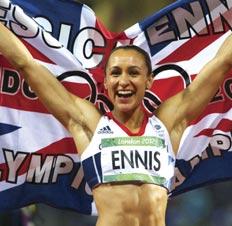
If I can inspire people, through these silly and slightly crazy challenges, to get out of their comfort zone, then that is exactly the point. I am only evangelical about fitness because I know how much better life is with it. I remember interviewing Jessica Ennis-Hill after she won gold in the heptathlon at the 2012 Olympics. Chris Evans, who was presenting with me, asked her: “What’s it like to be so fit?” It was a fair question, because she was arguably the fittest woman in the world. But she said: “I don’t know, because I’ve always been this fit.” And that struck me, because I haven’t always been fit, and now I am objectively quite fit. I know how much better life is with fitness in it than without it. I’m a born-again runner, if you like.
And just in that period of doing no exercise, was it a mental or physical thing that was the catalyst for your running journey? It occurred to me that I needed to start exercising when I caught sight of a roll of fat over my jeans while I was standing at a set of traffic lights. I remember thinking: “This is it.” I suppose vanity was what started it. Once I began running, I quickly realised how good it was for both my physical and mental health. It ticked every box for me.
Then, of course, you begin to challenge yourself. I hesitate to call it an addiction; that is not quite the right word. The better word is joy. There is a genuine joy in finding something you consider difficult and discovering whether you can do it. n
Vassos Alexander presents the Track Radio Breakfast Show with Charlotte Daly, from 7-10am every weekday.
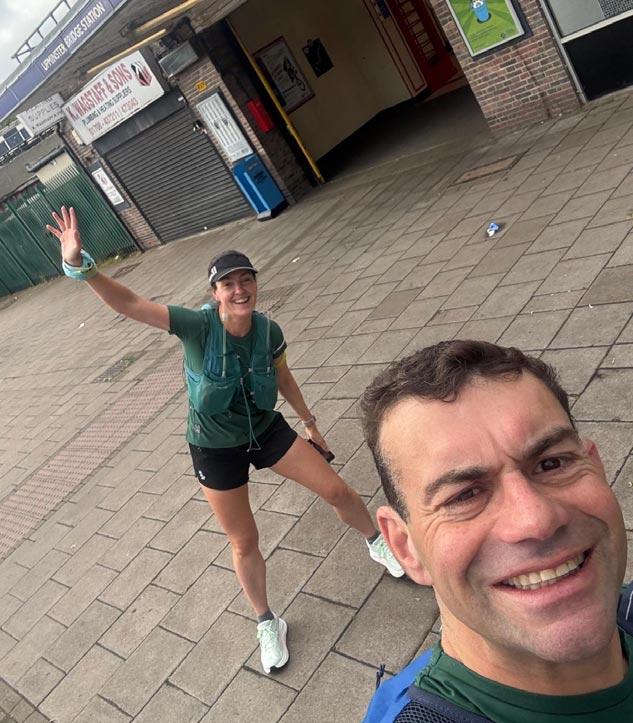
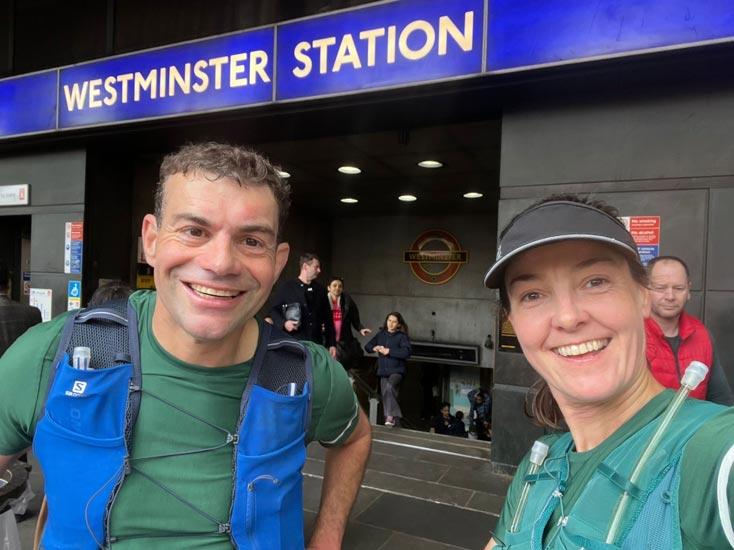
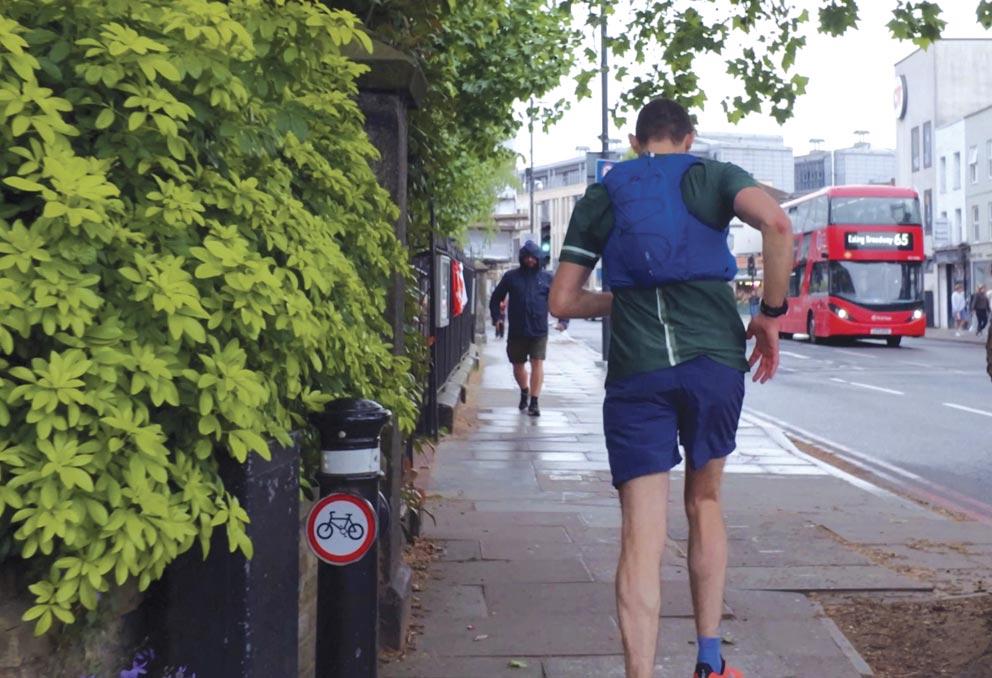
Running the length of the District Line, roughly 100km – all in a day’s work.
TO TREASURE
Mark Pougatch hosts Drive Time on Track Radio, having been BBC Sports Report’s longest standing presenter. Here he picks out the top 10 memories of his broadcasting career to date.
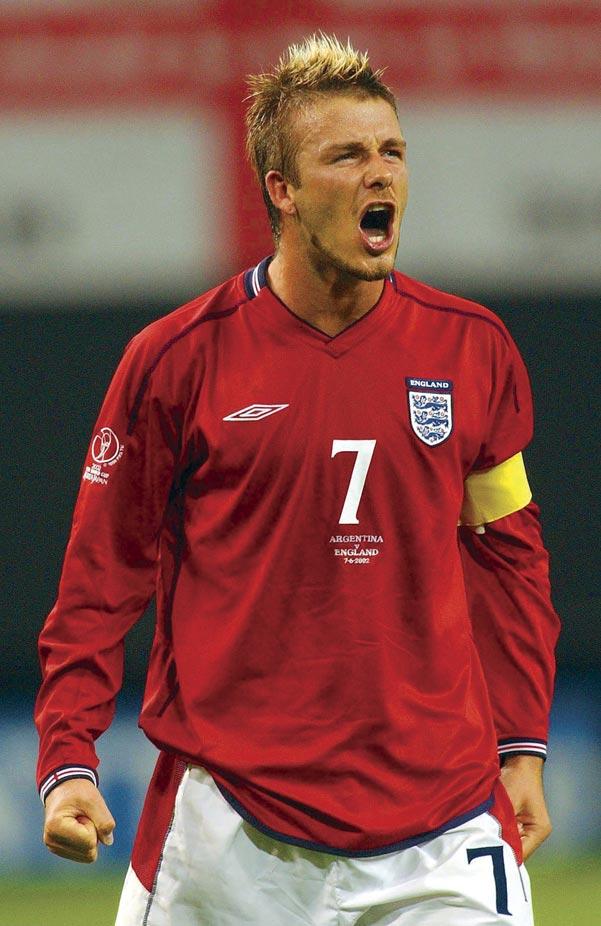
England 1 Argentina 0 World Cup 2002
Thirty-odd thousand England fans inside the Sapporo Dome on Hokkaido, Japan. Four years after his red card against the same opponents, David Beckham got his revenge. That night the hotel pianist struck up “Don’t Cry for Me Argentina”.
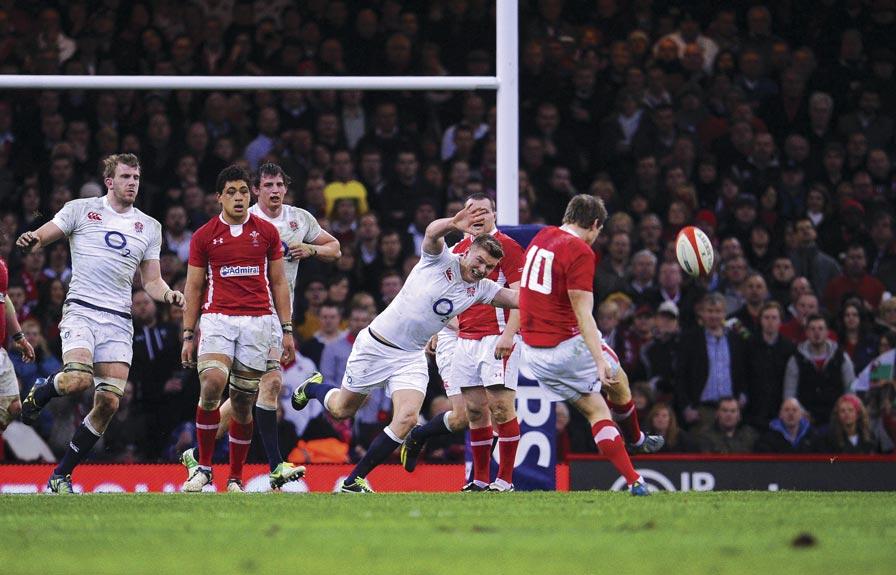
Wales 30 England 3 2013
Principality Stadium. Roof on, Land of My Fathers sung with such emotion it makes you jealous of the Welsh. Wales won the title and denied England the Grand Slam as the crowd celebrated wildly and noisily.
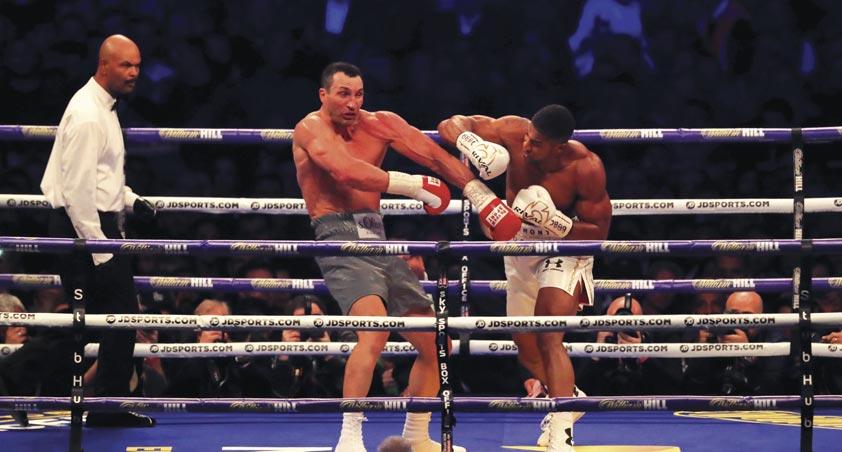
Anthony Joshua beats Wladimir Klitschko 2017 Ringside at boxing is as visceral as it gets: sweat, blood, exertion. Mano a mano. Joshua was at his peak, and a flurry of punches won it in the 11th round in front of 90,000 spectators.
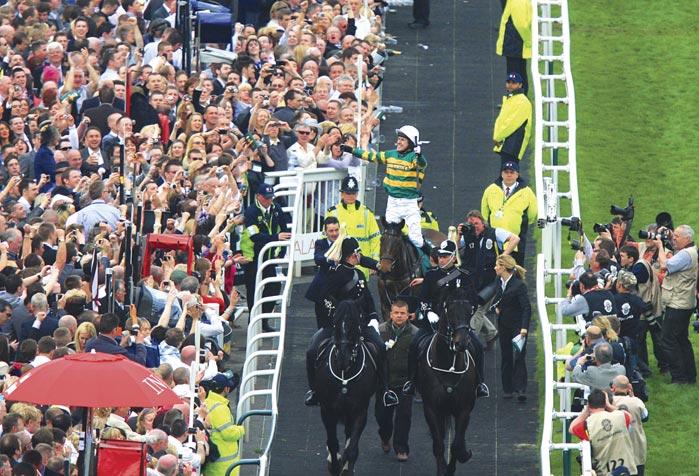
Tony McCoy wins the Grand National 2010 Everyone knew what it meant to the champion jockey. The reception as he came back to the unsaddling enclosure was so overwhelmingly loud, it was hard not to become emotional
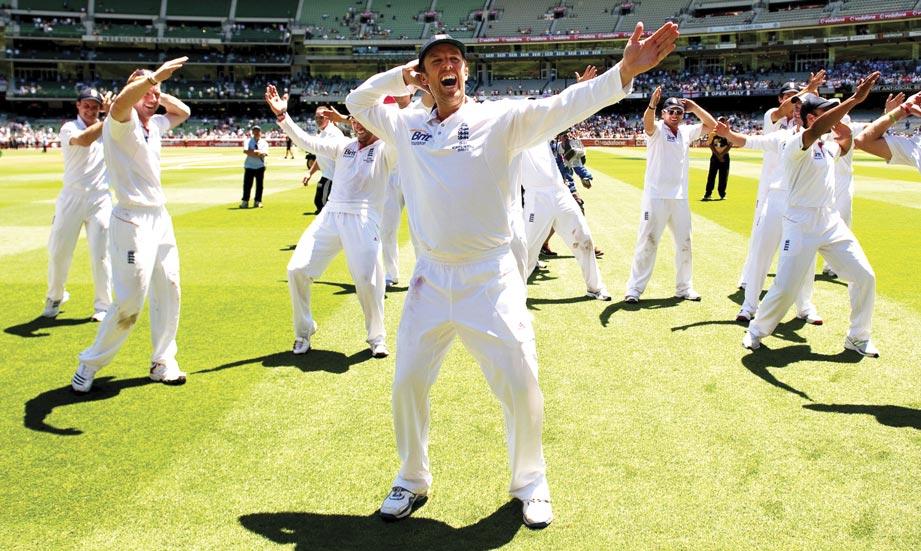
England win the Ashes 2010-11
It’s so hard to win Down Under. Alastair Cook’s runs, Andrew Strauss’s captaincy, skittling the Aussies on Boxing Day at the MCG, the sprinkler dance. Oh, and the Mitchell Johnson song. Memories for a lifetime.
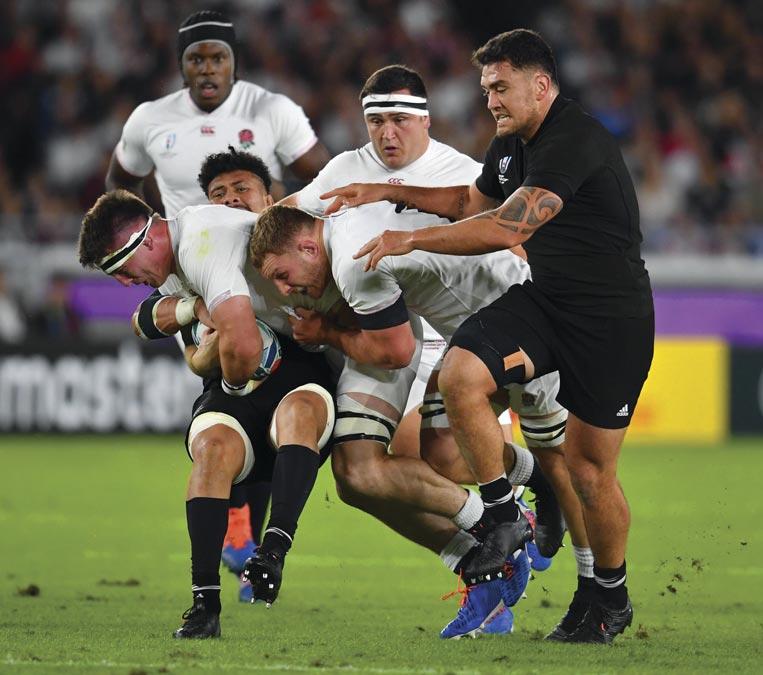
England 19 New Zealand 7 World Cup 2019
“The
performance I have ever
from an
greatest
seen
England side,” said Martin Johnson in the hotel lift that evening. No more questions, Your Honour
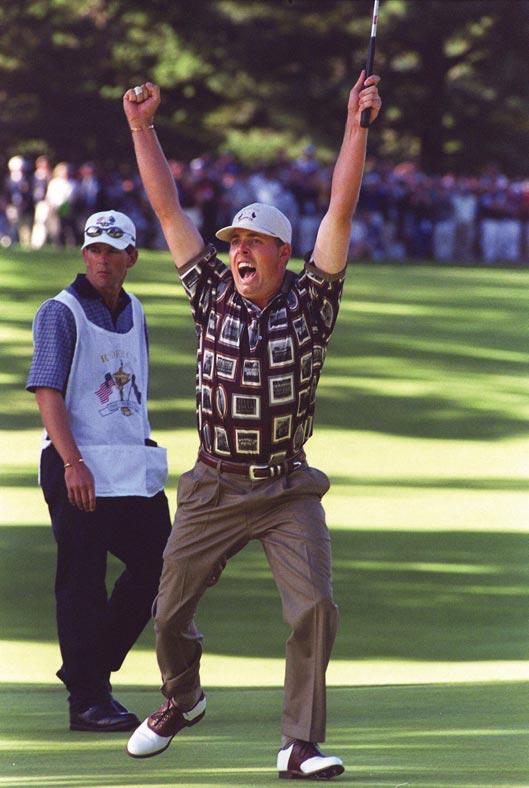
Ryder Cup 1999 America made an astonishing comeback on a beautiful Boston afternoon, and I was by the 17th green when Justin Leonard holed that monster putt leading to bedlam – and a trodden line for José Maria Olazábal.
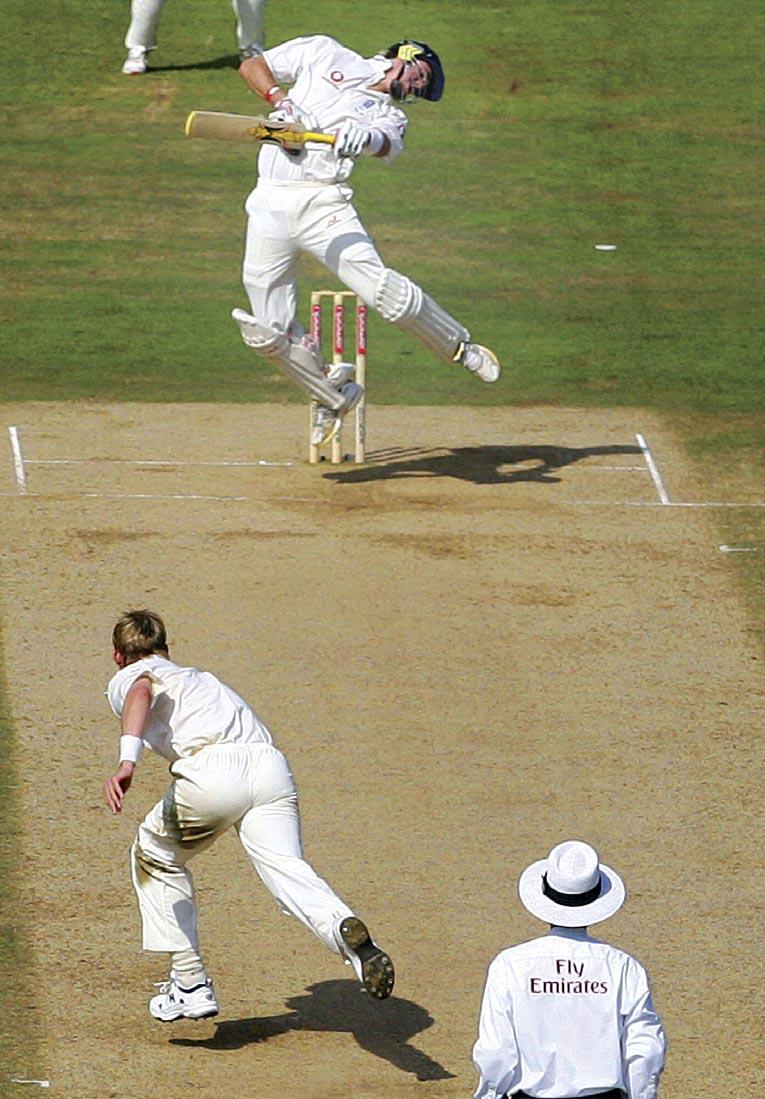
England win the Ashes, the Oval 2005 World-class athletes are at their best when it matters. The faster Brett Lee bowled, the further Kevin Pietersen hit him: towards the gasometer; straight back down the pitch. Spellbinding stuff.
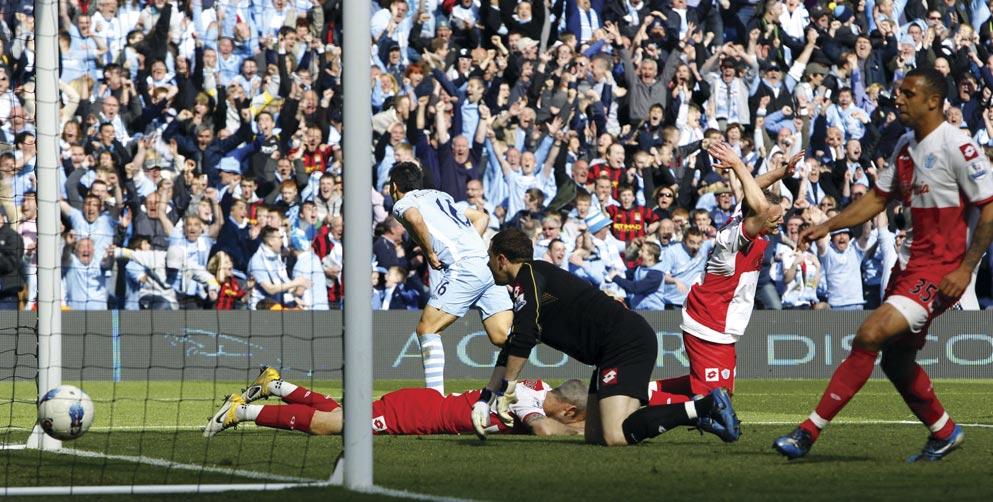
Manchester City win the league 2012 When Sergio Aguero scored against QPR, I grabbed my microphone and ran down to the touchline. Several men grabbed me, shouting: “This is the best day of my life!”
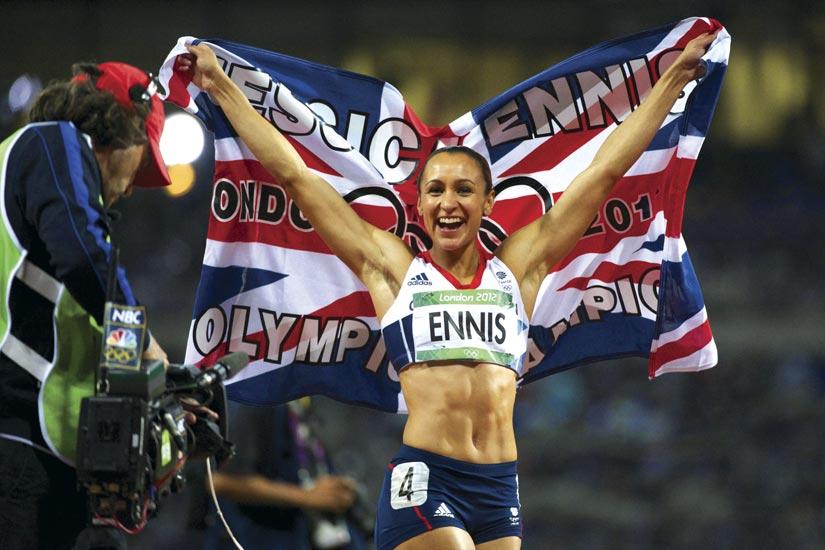
Super Saturday, Olympics 2012 I was sure the country would support every event and every session and every athlete. There was a cacophonous din as Jessica Ennis, Greg Rutherford and Mo Farah won their three gold medals in quick succession.
MEASURING UP
When his football career failed to materialise, Rav Matharu seamlessly transitioned to another passion
YOU MAY THINK elite football and bespoke tailoring are worlds apart and there are easier routes to Savile Row than via Elland Road. But Rav Matharu, founder of clothsurgeon, contradicts that theory.
Obsession, creativity, consistency: the ingredients are largely the same; it’s just that one shapes crosses, the other shapes cloth. “I became obsessed with football after the 1990 World Cup,” Matharu says. “That was it. I told my mum to put my toys away. All I wanted was a football.”
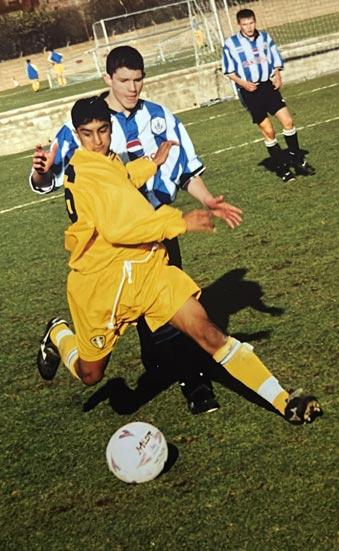
He grew up in Leeds, where sport, and football especially, tends to take centre stage. His father and uncles helped form one of the UK’s earliest South Asian football teams in the 1970s. Leeds United was the backdrop to everything else.
Having shown plenty of ability, he was taken to Beeston Juniors, a Sunday league side within sight of Elland Road. “You could see the stadium from where we trained,” he says. “So the dream was always there in the background.”
That dream accelerated. Leeds City Boys, then trials at Leeds United, where he impressed enough to earn a contract, progressing through the academy during one of the club’s most glittering periods.
“Leeds were in the Champions League semi-final and second in the Premier League,” he recalls. “Rio Ferdinand, Olivier Dacourt… all those players were around the place.” But alongside football, another passion was developing. “I was always drawing. On away trips I’d have a sketch pad. I’d sit there drawing players from Match magazine.”
At first it was players. Then it was boots, kits, fabrics. Before long, the aesthetic became more compelling than the game itself. Still, football remained the plan. Until it didn’t. When Leeds decided not to renew his contract, trials followed at Leyton Orient, York City and Hull City. There were offers, but nothing permanent. “I’d just fallen out of love with it,” he says. “I was probably depressed, if I’m honest. The dream was disappearing.”
For a time, it seemed there was no clear replacement to football. He’s not the first to feel that sense of loss when hanging up his boots, and he won’t be the last. After a foundation course at Loughborough failed, confidence was at an all-time low.
Eventually, something else took hold. Offers arrived from London
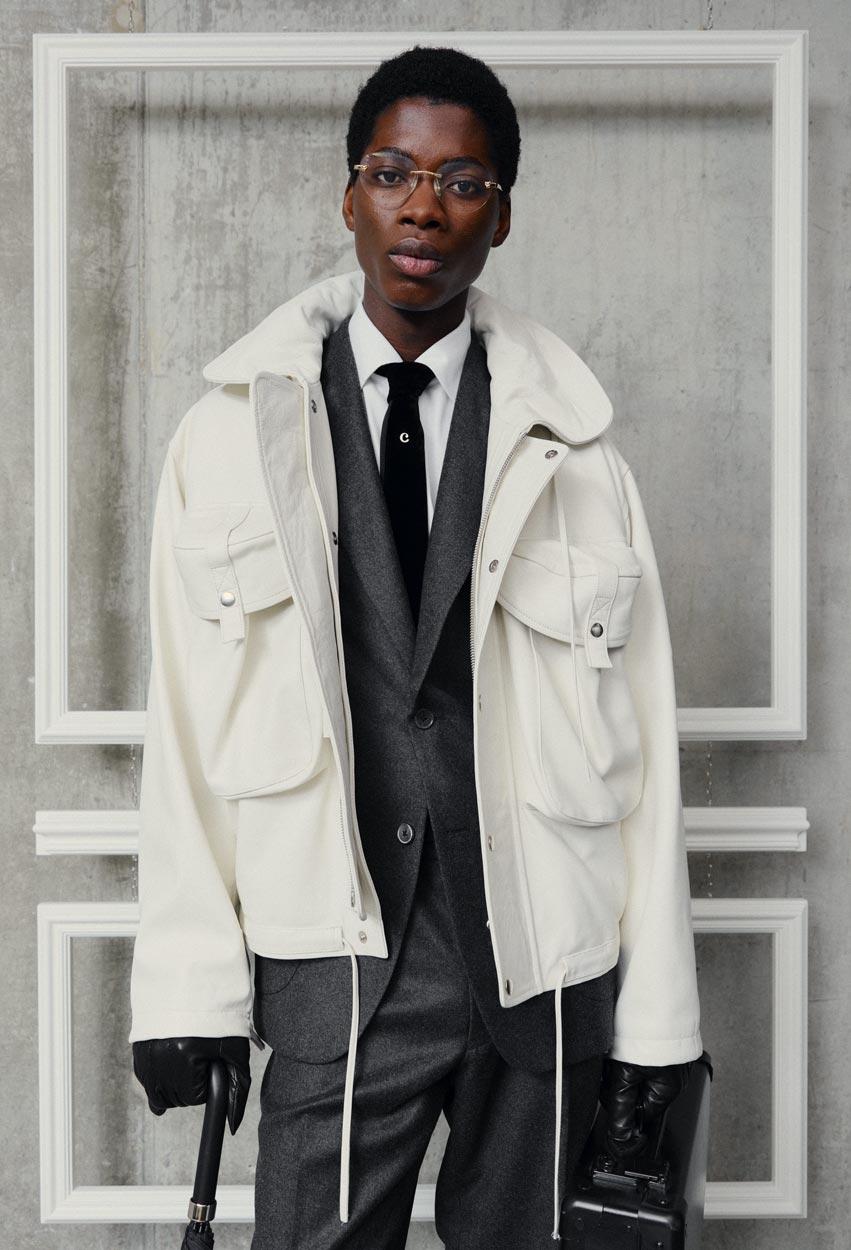
‘For me, that’s the real definition of luxury. Having something made just for you.’
College of Fashion and Central Saint Martins, though financial reality pulled him back north. A stint in retail followed and then a degree at what is now Leeds Arts University.
By the time he returned to London, living off the sales of a carefully assembled trainer collection, something resembling a brand was already forming. The name came at university. While cutting pattern paper with a scalpel, a tutor remarked that he worked “like a surgeon” “I just thought: clothsurgeon. It stuck.”
At first it was little more than a rail of experiments in a studio. Then
A$AP Rocky appeared. “This was around 2012, before he was massive.” he says of the rapper. “He picked three pieces off the rail and wore them everywhere.”
One leather-sleeved sweatshirt began selling rapidly through Instagram and Facebook before the brand even had a website. The profits funded the studio, the site and the business itself. From there, growth became organic. Nike took notice of Matharu’s fusion of sportswear silhouettes and luxury fabrics. His idea of adapting Flyknit (the technology used in Nike’s running shoes) into clothing arrived years before it appeared commercially. Collaborations followed with adidas, Champion, CocaCola and Absolut Vodka.
While Nike fleeces were reimagined into £1,200 suits, for Coca-Cola, 1930s cotton umbrellas became tailored accessories. That unique combination between streetwear and craftsmanship, sport and luxury remains the brand’s defining characteristic.
“The intention was always to amplify British bespoke luxury through the lens of street culture,” he says. “I grew up around football, hiphop, garage music, R&B. I wanted to bring that energy into craftsmanship.”
Savile Row provides the framework, but clothsurgeon works outside its usual rules. Production is kept deliberately restrained. Bespoke or made to order, minimal waste, complete client collaboration.
The idea has found its audience. Lewis Hamilton arrived via a stylist. Drake and J Cole followed. Nas asked to be dressed backstage at the Royal Albert Hall before performing Illmatic. “That was surreal,” he says. “Nas was someone I listened to growing up.”
Yet Matharu doesn’t have time to be starstruck. He’s already thinking about the next piece. “I’ve never wanted to make the same thing over and over again. As soon as I finish something, I’m already thinking about how to improve it.”
It seems a certain Pep Guardiola appreciated that philosophy. “He came into the store and I told him my back story. He went into manager mode and said: ‘Yeah, but look, you did it. Look what you built.’” It may sound like a footballing assessment, but this time the stadium is Savile Row. n
Rav Matharu , Founder of clothsurgeon, spoke to Henry Beesley.
Matharu was a part of the Leeds United academy
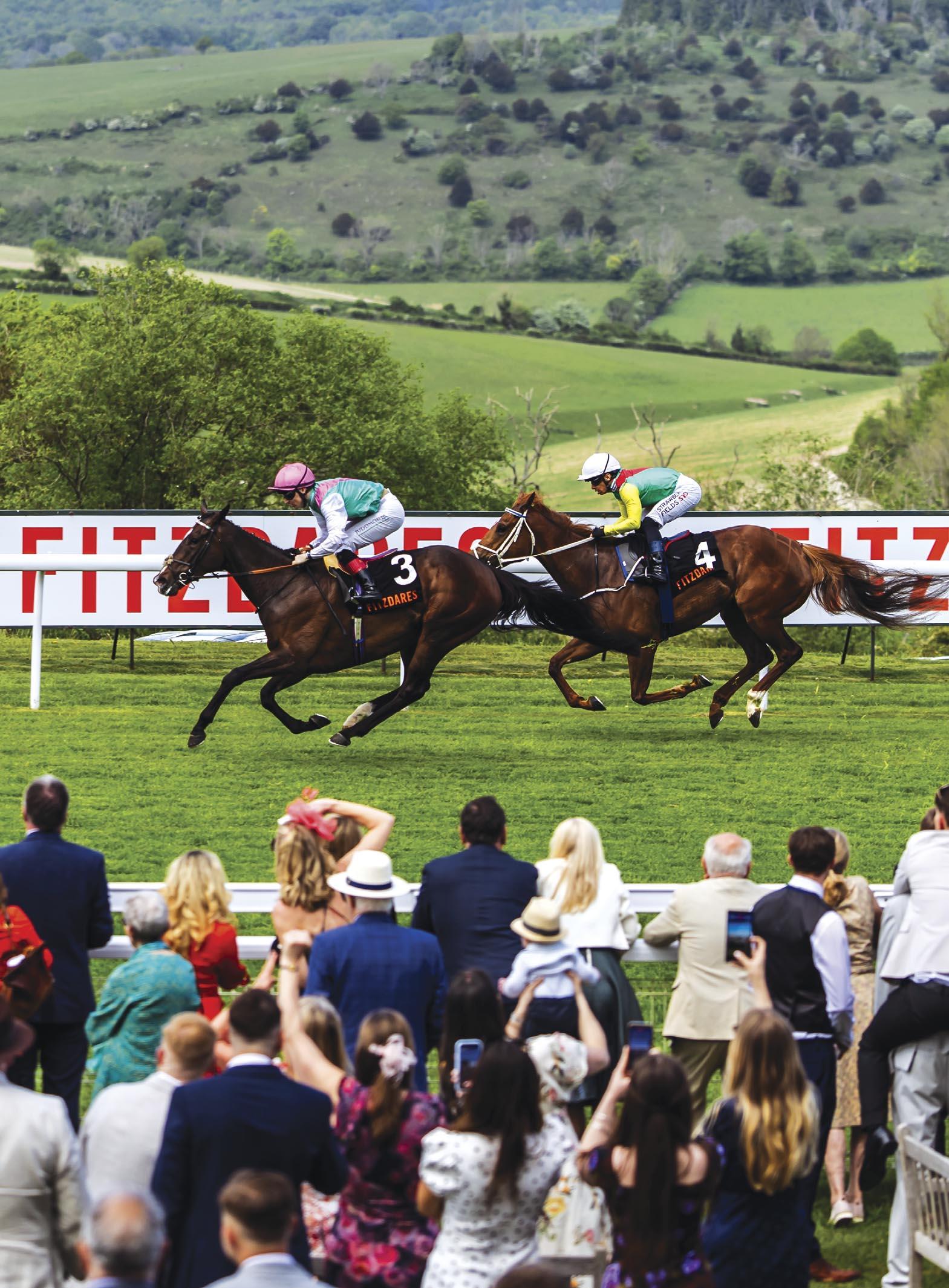
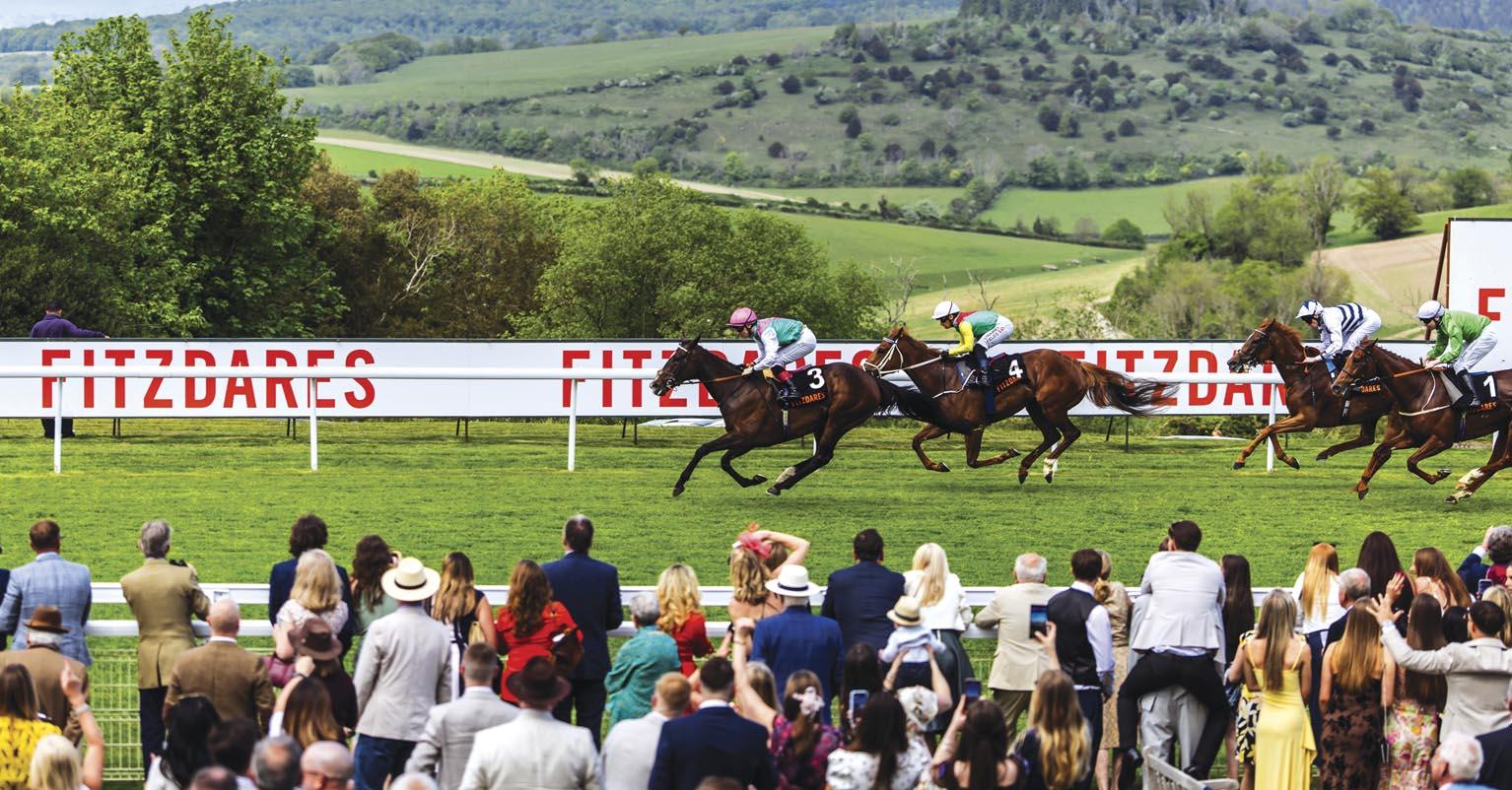
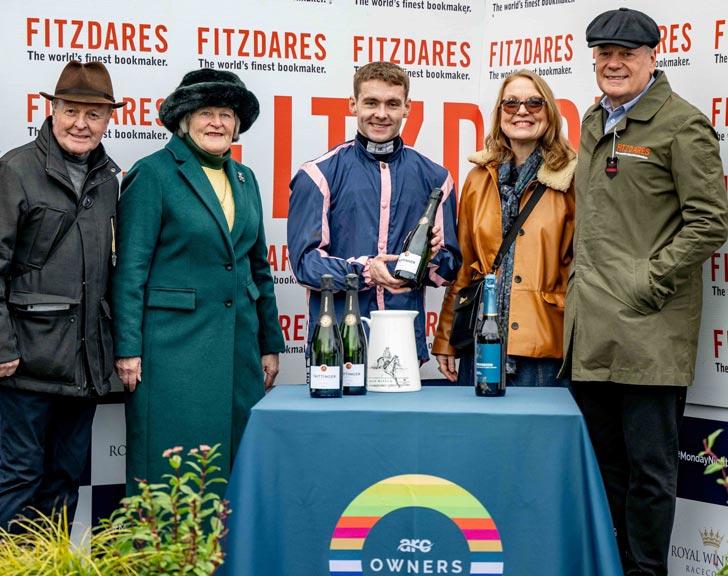
After a couple of years away, the time felt right to renew our long-standing relationship with GOODWOOD RACECOURSE. Returning as a Presenting Partner of the track, we committed to the Season Opener, the May Festival, and three Friday Night fixtures across June. Throughout the season, we’re welcoming members on course to enjoy racing, dining and summer entertaining, set against the backdrop of one of the most picturesque racecourses in the UK.
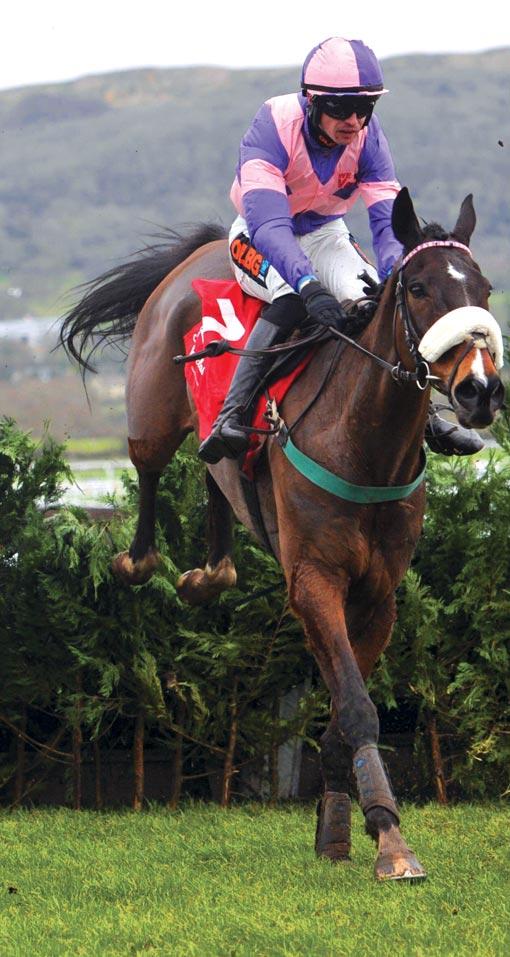
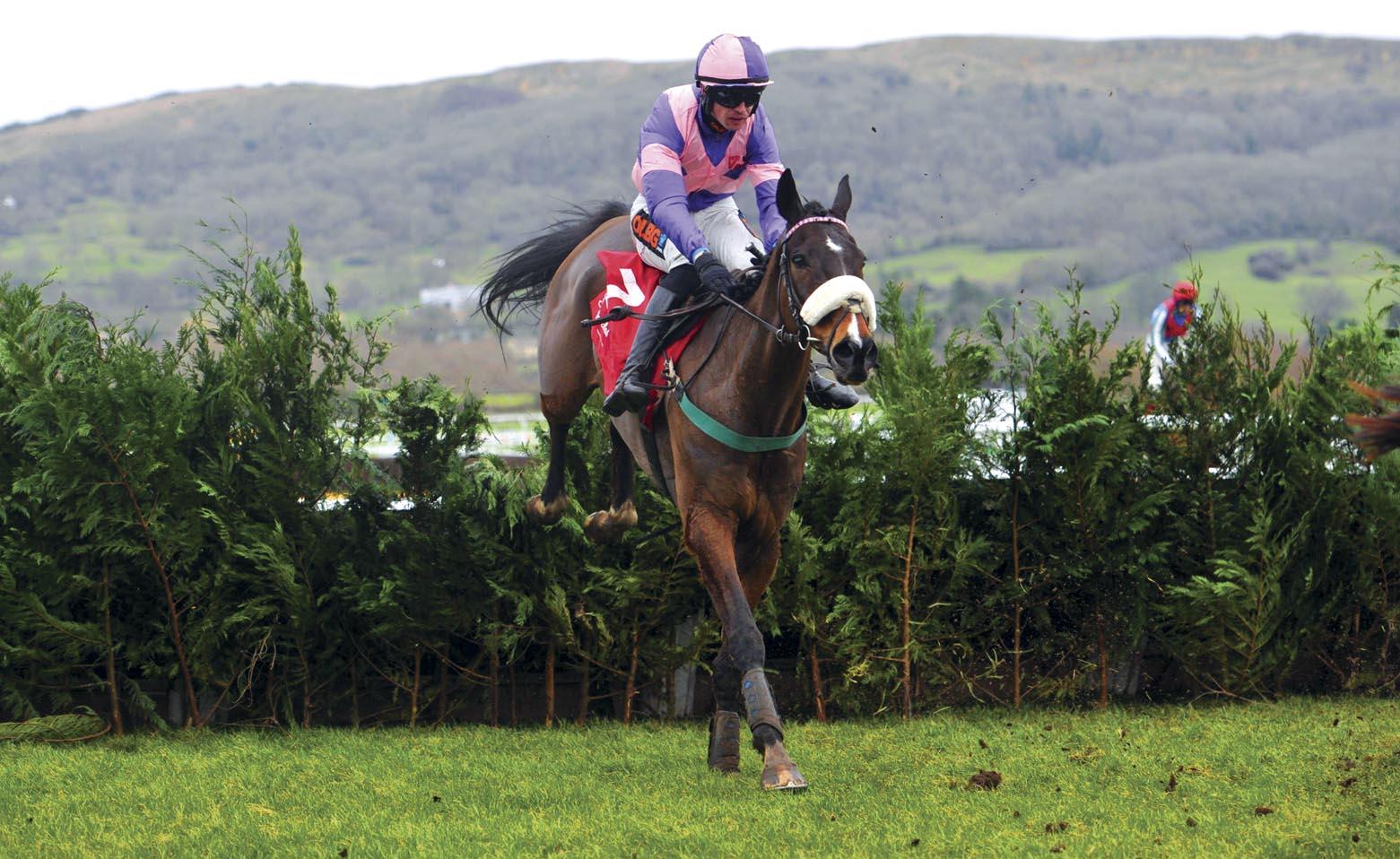
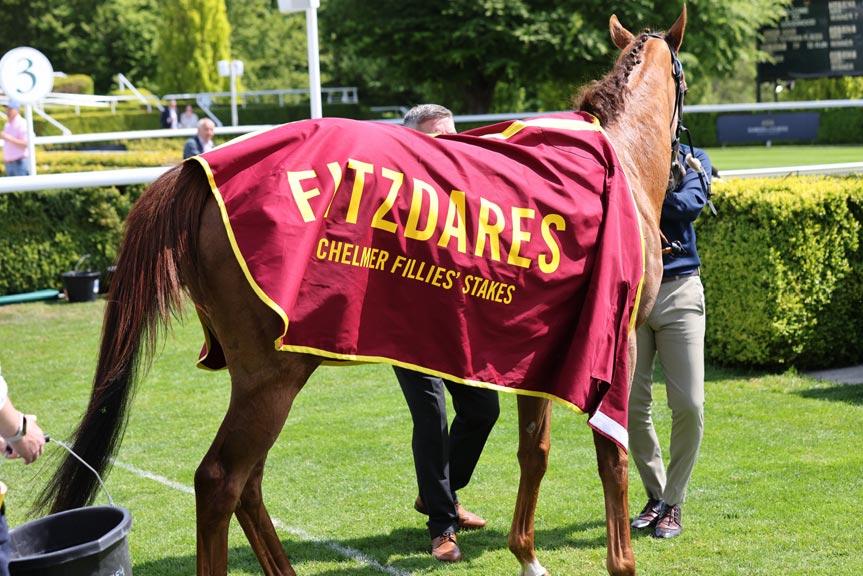
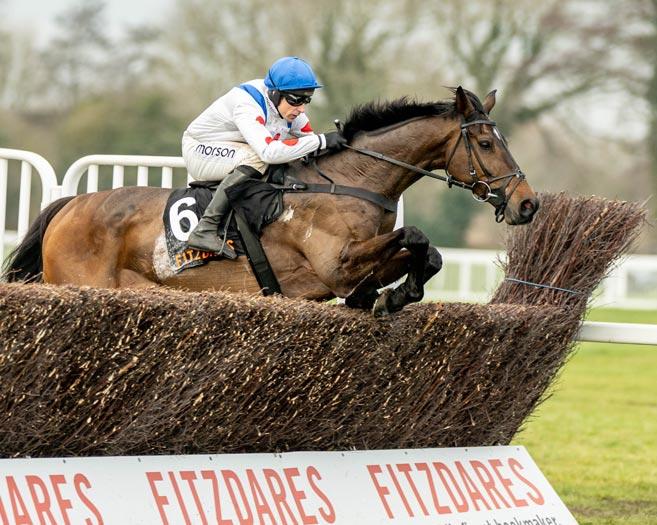
In January, we opened the doors to the Churchill box at WINDSOR RACECOURSE for the Winter Million. Across the two-day meeting, we welcomed around 100 members, serving our curry, claret and canapés to warm the palate on a cold winter’s weekend. Spectators were treated to Protektorat (pictured) surpassing the £1 million prize-money mark with back-to-back wins in the feature Fleur de Lys Chase. We’re looking forward to seeing you all on course at Windsor throughout the summer Sprint Series.
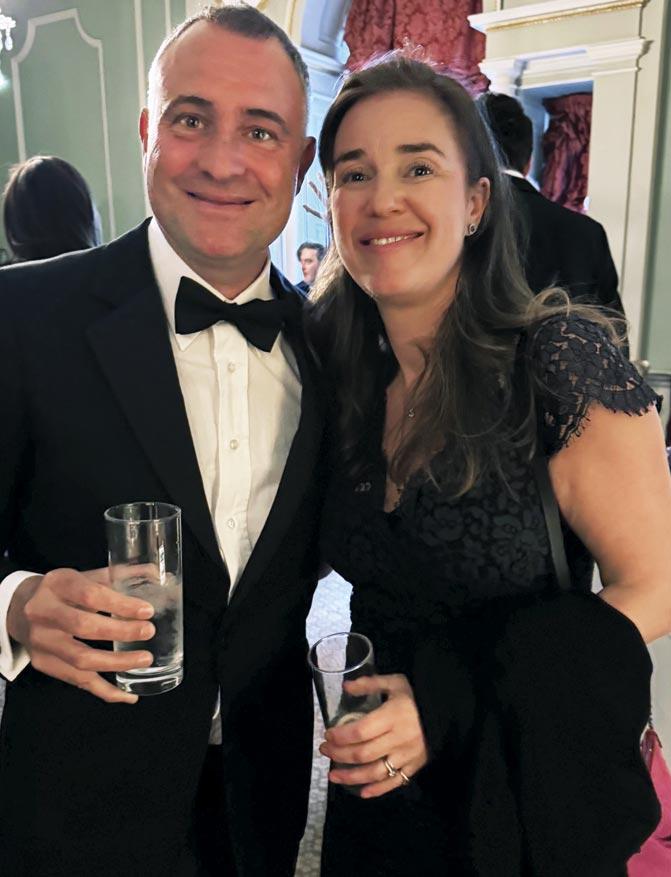
Last month, members gathered for an evening of strategy, skill and spirited competition in the heart of St.
at the BROOKS’S BACKGAMMON CHAMPIONSHIPS
In
with
We
keeping
tradition, we hosted members at our CHELTENHAM EVE party at Ben Pauling’s yard in Naunton Downs, where we previewed the runners and riders ahead of the biggest week in the racing calendar.
also welcomed members to Wild By Tart in Belgravia on Thursday to watch the St Patrick’s Day action, as Meetmebythesea gave our sponsored trainer his fifth Festival winner.
James’s
On Guineas weekend, we made our first foray to SALISBURY RACES, where we sponsored the card, alongside hosting members in the Wiltshire sunshine. As we continue to support the sport of kings, look out for us on British racecourses throughout the summer.
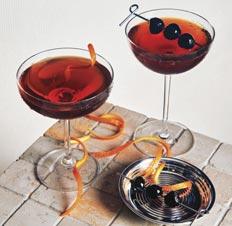
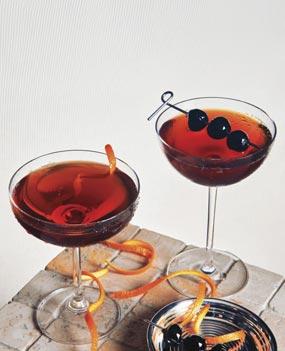
To celebrate Wimbledon, Jay Ditum has picked four cocktails that reflect the century’s Big Four in the men’s game – guaranteed to put Pimm’s in the shade
We’re nearing Wimbledon. Its suburban charm and sun-kissed courts are a prestigious highlight in the British calendar and, despite it coming around every year, there’s always a glint of nostalgia that comes with it. And with nostalgia often comes a drink, so here’s a fusion of the two: the famous big four as a selection of Wimbledon’s favourite cocktails, courtesy of Difford’s guide.
Gin and Tonic
Andy Murray
Let’s just address the one elephant in the room quickly: only one of these things is English. However, both are adored by the English.
This is one of the best mixed drinks ever, and although it might not bear the beauty of a Courtside, the grit of the Game Set Match, or the power of a Honey Deuce – it’s still everyone’s number one pick.
Andy Murray toyed with the heartstrings of tennis fans for years, and it’s fair to assume his name would be scratched on to the board of the All England Club far more times had these three not been around to stymie him. “I’m going to try but this isn’t going to be easy,” he said after 2012 heartbreak. It was much easier for him on Centre Court the following year.
The Courtside
Roger Federer
The straight sets winner. Refreshing, easy on the eye, and certainly easy to drink. This drink has elegance and class and has cemented itself as a fan favourite.
There are few better words to describe Roger Federer than those above. It seemed the man never ran, but floated. His fluttering one-handed backhands just grazing the white lines, a flip of the hair over the sweatband with a swoosh to match. Eight titles.
The Game Set Match
Novak Djokovic
There might have been a time where you’d wince having a sip of one of these, as they have been known to leave quite a bitter taste in the mouth. But once you’re past the rougher edges, there’s a complexity one just has to respect.
Perhaps once a pantomime villain in SW19, the Joker’s tenacity and grit has left us all speechless at times. He arguably annexed the Big Four to a Big Three, and is still challenging in the new era of tennis. This summer he will look to extend his surely unassailable record of grand slam titles.
Honey Deuce
Rafael Nadal
This drink is light on its feet, the vodka is sharp and crisp, and after a couple you’ll start to feel its power. There’s certainly a line to draw with one this strong – or a baseline, if you will.
Arguably the greatest tennis match of all time, the 2008 final was deuce after deuce and tiebreak after tie-break between Federer and Nadal. Nadal prevailed after four hours 48 minutes, clinching the first of his two Wimbledon titles, and the King of Clay had invaded the grass. n
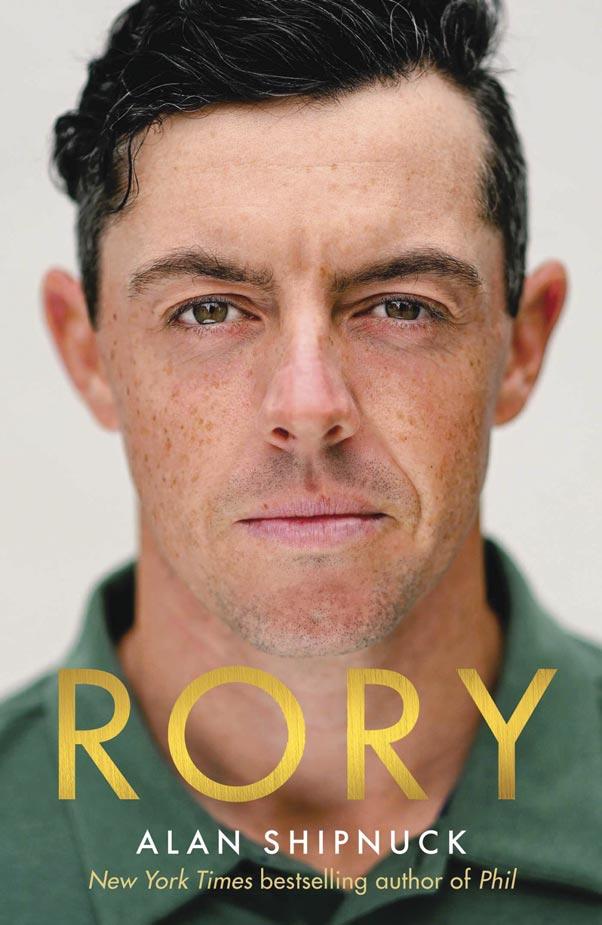
Alan Shipnuck’s biography is a valiant but futile attempt to get inside Rory McIlroy’s mind
Arags-to-riches story is always compelling, and the amphitheatre of sport makes it even more so. Alan Shipnuck’s RORY introduces us to honest parents working late and scarcely seeing each other to support their child prodigy.
Golf tours are not exclusively made up of the higher ends of society, but investment is required. With every pitch, putt and chip, we read how a young Rory McIlroy leverages his eye-catching talent to become an amateur superstar – but still with a fair way to go.
Shipnuck details how that skill makes Rory cocky as a youth, prone to petulance, but only in pursuit of perfection. One story that particularly sticks out is a young McIlroy bursting into tears on the way home from winning a junior tournament. Dissatisfied with the feeling of victory, he questioned if the sacrifice of his boyhood that elite sport required was worth it. It was, and the next day he would ask when the next tournament was.
Shipnuck reveals a thoughtful but conflicted personality behind the veil of sporting splendour – someone who could display such visceral emotion, only to use sport to bury his angst. McIlroy expresses regret about leaving education aged 15, though Shipnuck paints him as an intelligent character regardless.
This paradox would explode in 2011. McIlroy wins his first major championship, the US Open, just two months after blowing a four-stroke lead at the Masters on the final day. This tale of redemption catapults McIlroy into a whirlwind of fame that seems too tantalising to resist. Rory drops his childhood sweetheart with barely a word of goodbye, and follows up with a highly publicised launch of his relationship with tennis world No. 1 Caroline Wozniacki. It’s a sudden switch, and Shipnuck revels in the narrative of the working-class Irishman pursuing the American dream.
Identity struggles are constantly explored. Before the 2020 Olympic Games, a contentious decision awaits McIlroy on whether he will represent Great Britain or Ireland. He is a Catholic, raised in Protestant surroundings; understanding unionism but feeling, as Shipnuck alludes to, ashamedly Irish. It’s hard not to feel that Shipnuck’s (and general) fixations
with Rory’s identity stem from a wider issue of seeing a child star flourish. People feel like they know you, just by knowing of you for such a time, and when your younger innocence in the limelight is challenged by natural questions of growing older. People might feel like you owe them something. Not Rory, though, whose subdued and rather
Shipnuck
reveals a thoughtful but conflicted personality behind the veil of sporting splendour
plain life as he’s matured has been a source of speculation and wonder. It’s a complicated web to untangle, and you can sympathise with McIlroy telling Shipnuck to “fuck off” after he approached him about this book – it’s personal. “A prodigy who never falters doesn’t make for a good tale,” Shipnuck writes. It’s difficult not to wonder if the author feels an agency over this story just for writing it – see Phil Mickelson.
But he can’t own the moments, or the personality. Before recent
history, the previous history around McIlroy was his protestations about the LIV tour, which he felt would compromise the pure sporting competition of golf. In Shipnuck’s mind, this episode is a culmination of his three main conclusions of McIlroy: his working-class defiance, his flashy impatience, but most of all his fierce nature as a competitor.
The recent history is the best. McIlroy finally completed the career Grand Slam at the 2025 Masters, and the iconic image of him dropping to his knees after his final putt shows a man expelling his sporting demons with triumphant relief. Genius.
The Ryder Cup followed, and while Europe won, McIlroy made more headlines for blasting the crowd than he did for his play. And that is the Rory paradox: he will never stay stationary for long enough to allow anyone to pass a full judgement on his character. This book, while incredibly detailed, suffers for trying and implying to do that throughout. Shipnuck says himself that the story for McIlroy is far from over, and slightly undermines his work for saying so n