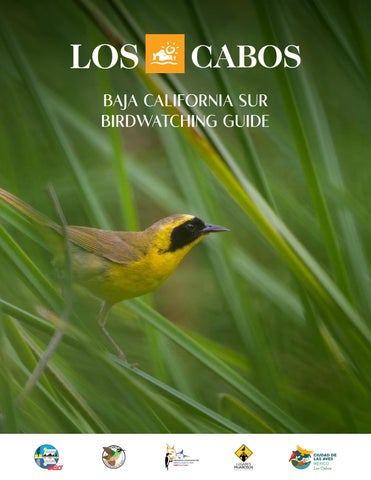
BAJA CALIFORNIA SUR BIRDWATCHING GUIDE


Los Cabos
MÉXICO
San Jose Estuary
Miraflores
Santiago La Ribera
Sierra de La Laguna
San Antonio de la Sierra
San Antonio
Todo Santos
La Paz
Magdalena Bay
Festivals
Christmas Counts
Directory


FROM THE AUTONOMOUS UNIVERSITY OF BAJA CALIFORNIA SUR WE WELCOME YOU
The Autonomous University of Baja California Sur (UABCS) adopts university social responsibility (USR) as its working paradigm, grounded on two fundamental pillars: the construction of fairer societies and the care of the environment. The essential actions of teaching, research, cultural dissemination, extension, and community engagement are articulated from this worldview. Every institutional effort seeks to contribute to this dual aspiration: material and spiritual.
The Birdwatching Guide of Baja California Sur is an example of how scientific knowledge becomes social heritage and serves as a sensitive reminder that nature only asks for respect in order to continue gifting us its wonderful creations.
The Guide brings together the talent of those committed to tourism that respects ecosystems and those dedicated to creating opportunities so more people may have dignified work.
Baja California Sur is an extraordinary place; the fusion of sea and desert and its effective condition as an island have generated circumstances for multiple species to find their habitat—permanent or temporary—within this geography. Especially, Los Cabos is a place where numerous bird species have chosen to exercise their splendid freedom, reminding us that the landscape is our shared heritage, and that balance and harmony have been, since time immemorial, essential conditions for life.
UABCS joins the collective effort to preserve, with utmost detail, the beating of wings that celebrates the possibility of existence.

Dante Salgado Rector of UABCS

ESTIMATED VISITORS:
WE ARE PLEASED TO WELCOME YOU TO THE FIRST BAJA CALIFORNIA SUR
BIRDWATCHING GUIDE
This publication marks an important milestone for our city, which has proudly become the second in the country to earn the international Bird City designation. This recognition reflects our strong commitment to bird conservation, nature tourism, and sustainable development.
Birdwatching tourism has experienced remarkable global growth due to its enormous potential to generate economic, social, and environmental benefits. In this context, this Guide is the result of a year and a half of collaborative work between the Autonomous University of Baja California Sur, several state communities, and the Los Cabos Tourism Trust, which I am honored to lead. Together, we have joined efforts to provide an invaluable tool for both visitors and locals.
In Baja California Sur, birdwatching is more than just a tourist activity — it is an experience that enriches and diversifies our destination’s offerings. Our diverse ecosystems — from estuaries and mangroves to deserts and mountain ranges — host a wide variety of resident and migratory species, positioning this place as a prime reference point for birdwatchers around the world.
With this Guide, we invite both visitors and the local community to discover, appreciate, and protect our valuable natural heritage. Each encounter with these incredible species invites us to reflect on the importance of conservation and responsible tourism — fundamental pillars for the sustainable development of Los Cabos.
We encourage you to enjoy birdwatching and discover this unique facet of our destination that makes it truly special.

Rodrigo Esponda Cascajares Managing Director of Los Cabos Tourism Trust


AUTHORS
Dr. José Emer García de la Puente Orozco
Doctorate in Aquatic Resource Science from the Autonomous University of Sinaloa. Research Professor at the Autonomous University of Baja California Sur and Head of the Habitat and Key Species Conservation Laboratory.
He is the founder of the Birdwatching Club (UABCS). His research focuses on bird conservation through community empowerment, working primarily in northwestern Mexico and in Chilean Patagonia. He is currently recognized throughout Latin America as one of the leading specialists in birdwatching, with numerous publications (reports, manuals, books, quick guides, and workshops).
He has collaborated with various institutions such as Defenders of Wildlife, the Sonoran Joint Venture, the Cornell Lab of Ornithology, and CONAF.
LICAM. Natalia Montes Barrios
Bachelor of Science in Environmental Sciences. She is a member of the Habitat and Key Species Conservation Laboratory at the Autonomous University of Baja California Sur (UABCS), Los Cabos Academic Extension, where she participates in local bird monitoring projects and environmental education programs.
She is the coordinator of the AMAZILIAS Los Cabos Birdwatching Club. She has led and organized events for the Los Cabos Urban Birds Program. In 2024, she wrote a children’s birdwatching guide for the La Playa Community Center, where she currently leads the “Guardians of the Estero” children’s workshop.
Biol. Javier Alcalá Santoyo
He is a Marine Biologist and a passionate birdwatcher. Holding a graduate degree in Marine and Coastal Sciences from the Autonomous University of Baja California Sur (UABCS), he has participated in key research projects focused on the population dynamics of the Mexican Shearwater and the Yellow-footed Gull, collaborating with institutions such as UABCS, CICESE, and CONANP.
As the founder and leader of Birding Expeditions, he combines his scientific background with nature exploration, leading tours that allow visitors and locals alike to discover the rich birdlife of Baja California Sur. In addition, as the general coordinator of the La Paz Urban Birds Program, he promotes environmental education through public activities that foster citizen science and an appreciation of biodiversity in urban environments. His work highlights the importance of bringing scientific knowledge closer to society, creating meaningful experiences that inspire bird conservation within the community.

EN MEMORIA DE


ALEJANDRO MORENO RICARDO MEZA
Esta guía de aviturismo está dedicada a la memoria de Alejandro Moreno, incansable promotor del turismo y firme creyente en el valor de la naturaleza como motor de desarrollo local, y de Ricardo Meza, ranchero y pionero en la observación de aves en la Sierra de la Laguna, cuyo profundo conocimiento del territorio y respeto por la sierra dejaron una huella imborrable.
La realización de esta guía fue uno de sus sueños compartidos: acercar a más personas a la riqueza natural de la Sierra de la Laguna, promover un turismo responsable y poner en valor a las aves como parte fundamental del patrimonio biocultural de la región. Su visión, compromiso y amor por la sierra siguen vivos en cada sendero, en cada ave observada y en el esfuerzo colectivo por conservar este territorio para las futuras generaciones.
CODE OF BEST PRACTICES FOR BIRDWATCHING TOURISM IN BAJA CALIFORNIA SUR
1. RESPECT BIRDS AND THEIR HABITATS.
Avoid disturbing their natural behavior, especially in nesting, feeding, or resting areas. Do not approach nests or use recordings to attract birds, particularly endemic or threatened species.
2. BE QUIET AND DISCREET.
Avoid loud noises, speaking loudly, playing music, or using flashlights and laser devices. Silence helps reduce stress and minimizes disturbance to birds’ natural behavior.
3. STAY ON DESIGNATED TRAILS.
Walk only on established routes and viewpoints to minimize impacts on vegetation, soil, and microhabitats. Use observation structures when available.
4.
COMPLY WITH PROTECTED NATURAL AREA REGULATIONS.
Review the site’s management program, pay access fees, and follow regulations established by CONANP and other competent authorities.
5.
DO NOT SHARE EXACT LOCATIONS OF RARE BIRDS.
Avoid publicly disclosing the locations of vulnerable or sensitive species. When necessary, report sightings to authorities or conservation institutions.
6.
TAKE CARE OF YOUR SAFETY AND THE ENVIRONMENT.
Wear appropriate clothing and gear, carry sufficient water, and respect your physical limits. Do not smoke, consume alcohol, or leave trash on trails or in natural areas.
7.
RESPECT PRIVATE PROPERTY AND LOCAL CULTURE.
Request permission before entering private lands, follow guidance from local residents, and show respect for their culture, customs, and ways of life.
8.
BE AN ETHICAL ROLE MODEL FOR OTHER BIRDWATCHERS.
Share your knowledge and promote these best practices, especially if you are part of a group or have birdwatching experience.
9. ACTIVELY PARTICIPATE IN CONSERVATION.
Contribute to monitoring programs, share records on platforms such as eBird, and support initiatives that protect birds and their habitats.
10.
HIRE LOCAL GUIDES AND SERVICES.
Support the regional economy by purchasing local products, staying in community-based accommodations, and hiring trained local guides from Baja California Sur, thereby strengthening sustainable birdwatching tourism.


CODE OF BEST PRACTICES FOR BIRDWATCHING GUIDES AND SERVICE
PROVIDERS IN BAJA CALIFORNIA SUR
1. PRIORITIZE THE WELL-BEING OF BIRDS AND THEIR HABITATS.
Avoid any actions that alter birds’ natural behavior, especially during nesting periods. Do not use recordings, bait, flashlights, or laser devices, as these practices cause stress and direct disturbance.
2. PROMOTE QUIET AND RESPECTFUL OBSERVATION.
Encourage discreet behavior within groups to minimize environmental disturbance and reduce the likelihood of scaring or stressing birds.
3. FOSTER LOW-IMPACT PRACTICES.
Guide groups along established trails, prevent trampling of vegetation, and promote the responsible use of natural resources.
4. COMPLY WITH CURRENT REGULATIONS.
Stay informed and fully compliant with permits, insurance, Protected Natural Area regulations, and safety protocols. Legal compliance is a minimum and essential foundation of responsible birdwatching tourism.
5. PROTECT SENSITIVE INFORMATION.
Avoid publicly disclosing the locations of rare, endemic, or threatened species. Share such information only with trusted institutions or for conservation purposes.
6. ACT AS A ROLE MODEL FOR BEST PRACTICES.
Your conduct shapes visitor behavior. Promote respect for nature, professional ethics, and recognition of the territory’s biocultural value.
7. EDUCATE AND INSPIRE RESPONSIBLY.
Share accurate information about birds, their ecology, and their regional importance. Each outing should be a formative experience oriented toward conservation.
8. BUILD RESPECTFUL RELATIONSHIPS WITH LOCAL COMMUNITIES.
Coordinate activities with ejidos, ranches, and local stakeholders, seeking shared benefits and strengthening the link between conservation and community well-being.
9. PROVIDE HIGH-QUALITY SERVICES WITH LOCAL IDENTITY.
Integrate local products, gastronomy, and traditional knowledge into the tourism experience, strengthening the regional economy and sense of place.
10. PARTICIPATE IN COLLABORATIVE NETWORKS.
Engage in associations, monitoring programs, and training opportunities. Collaboration among guides, scientists, and communities strengthens birdwatching tourism over the long term.
BAJA CALIFORNIA SUR BIRD PARADISE
AVITOURISM IS A FORM OF NATURE-BASED TOURISM FOCUSED ON OBSERVING, PHOTOGRAPHING, AND ENJOYING BIRDS IN THEIR NATURAL HABITATS. THIS ACTIVITY COMBINES ECOTOURISM, CONSERVATION, AND ENVIRONMENTAL EDUCATION, OFFERING UNIQUE EXPERIENCES BOTH TO SEASONED BIRDWATCHERS AND TO THOSE WHO ARE JUST BEGINNING TO EXPLORE THE FASCINATING WORLD OF BIRDS.
Baja California Sur stands out as one of Mexico’s most privileged destinations for birdwatching. Its geographic location—between the Pacific Ocean and the Gulf of California—gives rise to a remarkable diversity of ecosystems, ranging from wetlands and estuaries to deserts and mountain ranges. This variety of habitats makes the region a strategic refuge for both resident and migratory birds.
Each year, thousands of birds travel along the Pacific Migratory Corridor, stopping in the state’s coastal wetlands and protected natural areas—a breathtaking natural spectacle that offers observers the chance to admire unique species, many of them coming from the United States and Canada. In addition, numerous endemic and iconic species from coastal, desert, and marine ecosystems inhabit the region.
Thanks to its biological richness—with around 340 recorded bird species avitourism has become an activity that not only supports conservation but also generates economic benefits for local communities, provided it is practiced responsibly. By hiring local guides, visiting protected areas, and following birdwatching ethics, visitors directly contribute to sustainable development.
A recognition that underscores the importance of this region for avitourism is that Los Cabos has been designated a Bird City, a distinction that certifies its commitment to protecting birds and their habitats while promoting responsible observation practices. This title places Los Cabos on the international avitourism map, attracting birdwatchers from around the world and reinforcing its role as a leading nature tourism destination.
This guide has been designed to accompany you on that journey, providing information on the best birdwatching sites in Baja California Sur, along with practical tips for enjoying avitourism ethically and safely.


Los Cabos MÉXICO
LOS CABOS, BIRD CITY:
A COMMITMENT TO CONSERVATION AND SUSTAINABLE DEVELOPMENT
Thanks to the joint efforts of conservation specialists, academics, and local authorities, it was announced in 2025 that Los Cabos would be recognized as a Bird City by Environment for the Americas, thus becoming the second destination in Mexico to receive this distinction.
This certification honors cities that have implemented effective policies and actions for the protection of birds and their ecosystems.
Among the key initiatives that made this important recognition possible are the update of the Management Plan for the State Ecological Reserve Estero San José del Cabo, as well as the monitoring and dissemination of information
on priority species for conservation, such as Belding’s Yellowthroat, Yellow-billed Cuckoo and Elf Owl. Also the Celebrating World Migratory Bird Day and implementing long-term monitoring plans such as a Scientific Ring Station.
In addition, initiatives such as Santiago Sostenible and Parque Hundido Pedro Sánchez are actions that were highlighted since they recognize the natural and biocultural value of the municipality.
This certification translates into a commitment that must be renewed year by year and that generates cross-sectoral alliances, thus positioning Los Cabos not only as a destination for aviturism but also as a tourist site committed to conservation.

ESTERO SAN JOSE DEL CABO

The Estero de San Jose del Cabo, a Stuarine-style, surrounded by tular, carnival and palmar.

Its biogeographic location and the presence of fresh water in this coastal oasis causes a very high concentration of biodiversity in relation to its size, forming an environment of great biological diversity in the middle of the desert.
It becomes the last rest station for waterfowl and beach, migrating to areas of southern Mexico, Central or South America, coming from Canada and the United States of America.
In addition, this site has the largest registry of birds in Los Cabos (294 species).
Due to its importance for conservation, it has been recognized and designated as a State Ecological Reserve, as a RAMSAR, AICA and IBA site, because it houses the largest population of Belding’s Yellowthroat, an emblematic and endemic species of the oasis of the Peninsula.
The area has interpretive, guided paths that allow you to enjoy nature.

Photo: Port of Los Cabos
Photo: Cristian Sánchez
OBSERVATION POINTS
To improve the visitor experience, the Estuary features designated trails and interpretive signs that highlight and help identify its most emblematic bird species.
MESQUITE FOREST TRAIL
This access is located in the northern part of the Estero, where a dense forest of mosques extends. It is ideal for quiet walks and sunrise or sunset photo shoots.
On this trail you can see regional species such as the Gray Trasher, Northern Cardinal, Northern Mockingbird, and migratory species such as Mangrove Yellow Warbler, Northern Yellow Warbler, Wilson’s Warbler.

HOTEL AREA TRAIL TO BEACH
This tour begins at the end of the hotel area and extends along the estuary margin, connecting to the coastal strip and the beach. This trail is perfect for those who want to combine bird watching with a walk to the sea.
Near the cavities and tulars, you can see species such as the Belding’s Yellowthroat, and it is also the nesting site of the Least Tern and a variety of beach birds and herons can be observed.

Photo: Natalia Montes
Photo: Cristian Sánchez
TARGET SPECIES
• Belding’s Yellowthroat (E) (Geothlypis beldingi)
• Gray Trasher (E) (Toxostoma cinereum)
• Xantus´s Hummingbird (E) (Basilinna xantusii)
• Least Tern (Sternula antillarum browni)
• Osprey (Pandion haliaetus)
• Bell’s Vireo (Vireo bellii)
• Neotropic Cormorant (Nannopterum brasilianum)
• Blue-winged Teal (Spatula discors)
• Cinnamon Teal (Spatula cyanoptera)
• Belted Kingfisher (Megaceryle alcyon)
• Northern Harrier (Circus hudsonius)
• Ladder-backed Woodpecker (Dryobates scalaris)
• Cinnamon-rumped Seedeater (Sporophila torqueola)
• Groove-billed Ani (Crotophaga sulcirostris)
• Purple Martin (Progne subis)
• Red-necked Phalarope (Phalaropus lobatus)
• Long-billed Dowitcher (Limnodromus scolopaceus)


Belding’s Yellowthroat
Photo: Javier Alcalá Santoyo
Osprey
Photo: Cristian Sánchez
Mangrove Yellow Warbler
Photo: Fanny Noriega Rivera
Least Tern
Photo: Fanny Noriega Rivera


Northern Harrier
Photo: Cristian Sánchez
Blue-winged Teal
Photo: Fanny Noriega Rivera
Harris’s Hawk
Photo: Fanny Noriega Rivera


Violet-green Swallow
Photo: Cristian Sánchez
Yellow-footed Gull
Photo: Cristian Sánchez
Great Blue Heron
Photo: Cristian Sánchez
Snowy Egret
Photo: Cristian Sánchez
Tricolored Heron
Photo: Cristian Sánchez
Reddish Egret
Photo: Cristian Sánchez
COMPLEMENTARY ACTIVITIES
BIRDWATCHING AND HIKING
The Estero is a protected wetland and one of the most important ecosystems in Baja California Sur.
Visitors can walk along its trails to observe birds, palm trees, and native vegetation in a peaceful natural setting. In addition to its biological richness, the Estero San José del Cabo also preserves part of the region’s ecological and cultural history.

SEA TURTLE RELEASE
Between the months of June and November, the release of sea turtles is carried out, the main species is the Golfine Turtle. During this season, thousands of offspring are born in the sand and are released with the support of the Municipal Directorate of Ecology, volunteers and the local community.

Photo: Cristian Sánchez
WHERE TO EAT
BURRITOS EL SACRIFICIO
La Choya, 23403 San José del Cabo, B.C.S. Burritos El Sacrificio +52 624 122 8433

MARISCOS LA MADRINA
Camino Cabo Este, La Choya, 23403 San José del Cabo, B.C.S.
Mariscos “La Madrina” +52 624 155 5101

WHERE TO SLEEP
El Estero is located right at the end of the Tourist Corridor connecting Cabo San Lucas to San Jose del Cabo, making it a strategic area with a wide range of accommodations.
Here are some options for staying:
SIX TWO FOURURBAN BEACH HOTEL
sixtwofourhotel.com +52 624 123 2892

HOTEL PUNTO SOL SAN JOSE
Calle Rtno. Puntagorda 9, Campo de Golf Fonatur, 23405 San José del Cabo, B.C.S.
Punto Sol +52 624 237 6105

GETTING THERE
El Estero is located southeast of the city of San Jose del Cabo, just minutes from historic downtown. From the center, take Transpeninsular Road (Federal Highway 1) south towards the hotel-area hotel.
Upon arrival at the gazebo where Mijares Boulevard and Centenario Avenue are located, turn towards Centenario Avenue, following signs to the beach and the ester.
Continue straight until you reach Paseo San José Street, where you will see signs to the public access of the estero, near the Holiday Inn Hotel and the boardwalk area.
Parking is available near the main entrance.
If you are coming from Los Cabos International Airport, take the Transpeninsular Road towards San Jose del Cabo and follow the same directions when arriving in the city; the route takes approximately 20 minutes.

Photo: Port of Los Cabos
KEY BIRD PEOPLE
Dr.
JOSÉ EMER
GARCÍA DE LA PUENTE OROZCO
HOLDER OF THE HABITAT PRESERVATION LABORATORY AND UABCS KEY SPECIES
+52 612 159 1760
• With more than 15 years dedicated to the conservation of the Estero.
• He focuses on monitoring the Belding’s Yellowthroat and oversees a bird banding station within the area.
• He is also a member of the Scientific and Academic Subcommittee of the Estero San José del Cabo State Ecological Reserve (REEESJC).

Dra. GRACIELA TIBURCIO PINTOS
RESPONSIBLE FOR THE ORGANIZATION FOR SUSTAINABILITY AND THE ENVIRONMENT
+52 624 157 5949
• Specialist dedicated to sea turtle conservation.
• She currently coordinates the monitoring of the Least Tern at the Estero, thereby strengthening the protection and management efforts for this species and its habitat.

MIRAFLORES

Miraflores is a picturesque rural village that retains the traditional essence of Baja California Sur. Surrounded by the Sierra La Laguna and with a climate cooler thanks to its altitude, this place is ideal or those looking for an experience between nature, culture and tranquility.

The village is renowned for its handcrafted leather goods, traditional barbershops, wooden furniture, and regional sweets made from local recipes. Its quiet streets and warm community atmosphere offer visitors a glimpse into the everyday life of families in southern Baja California.
Nearby, visitors can enjoy hiking, horseback riding, and guided tours through oases and canyons that form part of the Sierra La Laguna Biosphere Reserve. The village also serves as a gateway to nearby ecotourism sites such as the Sol de Mayo Ecological Ranch and the Fox Canyon, home to breathtaking waterfalls and crystal-clear pools.

Photo: Osiel Flores
Spotted Sandpiper
Photo: Alfonso Lizárrraga
OBSERVATION POINTS
MIRAFLORES TOWN
Miraflores is a tranquil mountain village that preserves the rural essence of Baja California Sur. Surrounded by palm groves, fruit orchards, and streams descending from the Sierra La Laguna, it offers a fresh and welcoming atmosphere—ideal for visitors seeking to combine local culture with naturebased experiences.
In terms of avitourism, Miraflores serves as an excellent starting point for nearby natural areas such as Boca de la Sierra and Cañón de la Zorra, where bird diversity is particularly appealing to observers. However, within the village itself and its surroundings, visitors can also find a fascinating variety of species associated with riparian habitats, scrublands, and agricultural areas.
To date, 153 bird species have been recorded here. Among the most notable are nocturnal species such as the Great Horned Owl and Cape Elf Owl, flycatchers like the Tropical Kingbird and Thick-billed Kingbird, as well as various migratory warblers and vireos during the season.


Pyrrhuloxia
Photo: Osiel Flores
Lazuli Bunting
Photo: Osiel Flores
Orange-crowned Warbler
Photo: Osiel Flores
Yellow-rumped Warbler
Photo: Osiel Flores
BOCA DE LA SIERRA
Located just 15 minutes from the village of Miraflores, this site combines the natural beauty of canyons, streams, and striking rock formations with a rural setting that reflects the traditional lifestyle of Baja California Sur.
The area is ideal for birdwatching in both riparian and mountain habitats. Among these scenic landscapes, visitors may spot endemic species such as the Xantus’s Hummingbird, along with the Black Phoebe, Great Egret, Spotted Sandpiper, and Cassin’s Kingbird, as well as Blue-winged Teal and riparian birds like the Yellow-billed Cuckoo.


Black Phoebe
Photo: Osiel Flores
Spotted Sandpiper
Photo: Alfonso Lizárrraga
Photo: Osiel Flores
TARGET SPECIES
• Xantus´s Hummingbird (E) (Basilinna xantusii)
• Black Phoebe (Sayornis nigricans)
• Yellow-billed Cuckoo (Coccyzus americanus)
• Spotted Sandpiper (Actitis macularius)
• Least Grebe (Tachybaptus dominicus bangsi)
• Belding’s Yellowthroat (E) (Geothlypis beldingi)
• Lazuli Bunting (Passerina amoena)
• California Quail (Callipepla californica)
• Blue-winged Teal (Spatula discors)
• Thick-billed Kingbird (Tyrannus crassirostris)
• Gray Thrasher (E) (Toxostoma cinereum)
• Cassin’s Vireo (Vireo cassinii)
• California Towhee (Melozone crissalis)
• Black-throated Gray Warbler (Setophaga nigrescens)
• MacGillivray’s Warbler (Geothlypis tolmiei)
• Varied Bunting (Passerina versicolor)
• Elf Owl (Micrathene whitneyi sandfordi)
• Cape Pygmy Owl (Glaucidium gnoma hoskinsii)


Yellow-billed Cuckoo
Photo: Alfonso Lizárraga
California Scrub-Jay Photo: Alfonso Lizárraga
Ash-throated Flycatcher
Photo: Alfonso Lizárraga


Blue-gray Gnatcatcher
Photo: Javier Alcalá Santoyo
Gray Trasher
Photo: Javier Alcalá Santoyo
Cassin’s Kingbird
Photo: Osiel Flores
COMPLEMENTARY ACTIVITIES
HIKING
Rural roads and trails around the village can be explored on self-guided walks, though local guides are also available. They are highly familiar with the best observation points and can share valuable insights about the area’s flora, fauna, and cultural heritage.
The walking routes range from easy to moderate difficulty, making them ideal for visitors seeking an accessible and authentic avitourism experience.
CABO ADVENTURES
The ecotourism center operated by Cabo Adventures offers an experience that combines interpretive hiking and contact with nature.
Activities offered:
• Zipline
• UTV / Off-Road Tours
• Hiking / Natural Hiking

WHERE TO EAT
LOS AGAVES RESTAURANT
C. Carrera sn, 23520 Miraflores, B.C.S.
Restaurant Los Agaves +52 624 161 2234

EL NIDITO RESTAURANT
23520 Miraflores, B.C.S.

WHERE TO SLEEP
CABAÑAS FLOR DE PITAHAYA
23520 Miraflores, B.C.S.
Cabañas Flor de Pitahaya +52 624 151 2507

GETTING THERE
Miraflores is located about 45 kilometers (28 miles) north of San José del Cabo and 100 kilometers (62 miles) south of La Paz, along the Transpeninsular Highway (Mexico 1).
From San José del Cabo: Take the Transpeninsular Highway north toward La Paz. The drive takes approximately 40 minutes.
From Cabo San Lucas: The trip covers about 70 kilometers (43 miles) and takes roughly one hour along the same route.
From La Paz: Drive south on the Transpeninsular Highway; the journey takes nearly two hours.
Access to the village is well signposted, and the route offers scenic views of the semi-desert landscape and the Sierra La Laguna mountain range. For travelers without a private vehicle, regional transportation services— such as colectivos (shared vans) and intercity buses—connect Los Cabos and La Paz, with scheduled stops in Miraflores.

KEY BIRD PEOPLE
PARK RANGER SIERRA LA LAGUNA BIOSPHERE RESERVE
+52 612 107 2926
Originally from the community of San Dionisio, he currently serves as a Park Ranger at the Sierra La Laguna Biosphere Reserve, where he has worked for over 20 years in the conservation of biodiversity and ecosystems. He also promotes community wellbeing through the implementation of restoration and conservation projects with productive purposes carried out within the reserve. Throughout his career, he has developed a strong passion for nature photography, particularly focused on birds.


OSIEL ALEJANDRO FLORES ROSAS
SANTIAGO

The village of Santiago is a destination that combines nature, history, and tradition. Founded in the 18th century as a Jesuit mission, it still preserves its rural and peaceful atmosphere, surrounded by mango, date, and citrus orchards that are an essential part of its identity.

One of Santiago’s main attractions is its proximity to the Sierra La Laguna Biosphere Reserve, a protected natural area that offers spectacular mountain scenery, hiking trails, and the opportunity to experience a wide variety of endemic flora and fauna up close.
The village is also known for its natural hot springs and rustic spas, perfect for relaxing in a serene environment surrounded by nature. From Santiago, visitors can also explore beautiful nearby sites such as Cañón de la Zorra, home to a stunning waterfall with crystal-clear waters and natural pools.

Photo: Edgardo Cortes
Great Egret
Photo: Michzur
OBSERVATION POINTS


SANTIAGO OASIS
The Oasis of Santiago is one of the most iconic places in the Sierra La Laguna and a privileged destination for birdwatching in Baja California Sur. Surrounded by palm groves, traditional orchards, and permanent bodies of water, this oasis serves as a vital refuge amid the peninsula’s arid landscape, attracting both resident and migratory bird species.
In addition to its biological richness, the Santiago Oasis is deeply connected to local history and culture, having served as a source of water and life for nearby communities and ranches since Jesuit mission times. Its proximity to Fox Canyon (Cañón de la Zorra) and the region’s natural hot springs further enriches the visitor experience, offering opportunities for hiking, photography, and other ecotourism activities.
HUERTA LA PALMA
At the heart of Santiago’s oasis lies La Huerta La Palma, a traditional agricultural area that preserves the charm of Baja California Sur’s historic orchards while providing a privileged habitat for birds.
The mosaic of fruit trees, shrubs, and water sources attracts an impressive diversity of species. Here, visitors can observe birds such as the Gila Woodpecker, Xantus’s Hummingbird, Northern Cardinal, Gray Thrasher, and Greater Roadrunner.
During the winter season, the orchards come alive with warblers, flycatchers, and vireos, making it a rewarding site for birdwatching year-round.
SANTIAGO ECO-PARK
This space, managed by the local community, has indoor trails and areas of native vegetation, allowing an immersive experience for those looking to observe birds in their natural habitat.
The permanent presence of water, shade, and diverse vegetation makes the park a gathering point for a wide variety of regional bird species such as Xantus’s Hummingbird, Hooded Oriole, California Scrub-Jay, Gila Woodpecker, Cactus Wren, Verdin, and Pyrrhuloxia.
Photo: Edgardo Cortes
TARGET SPECIES
• Belding’s Yellowthroat (E) (Geothlypis beldingi)
• Xantus´s Hummingbird (E) (Basilinna xantusii)
• Gray Trasher (E) (Toxostoma cinereum)
• Least Grebe (Tachybaptus dominicus bangsi)
• Black-crowned Night Heron (Nycticorax nycticorax)
• White Ibis (Eudocimus albus)
• Pied-billed Grebe (Podiceps nigricollis)
• Eared Grebe (Podilymbus podiceps)
• Belted Kingfisher (Megaceryle alcyon)
• Northern Waterthrush (Parkesia motacilla)
• MacGillivray’s Warbler (Geothlypis tolmiei)
• Northern Pygmy-Owl (Glaucidium gnoma hoskinsii)


White Ibis
Photo: Michzur
Great Blue Heron
Photo: Michzur
Least Grebe
Photo: Michzur


Hooded Oriole
Photo: Adrian de Antoni
Gila Woodpecker
Photo: Javier E. Alcalá Santoyo
Cactus Wren
Photo: Cristian Sánchez
Pied-billed Grebe
Photo: Michzur


Northern Cardinal
Photo: Cristian Sánchez
Greater Roadrunner
Photo: Hugo Santos Redona Gaona
Gray Trasher
Photo: Hugo Santos Redona Gaona
Green Heron
Photo: Michzur
COMPLEMENTARY ACTIVITIES
KAYAK
Surrounded by native vegetation, the kayak ride through this oasis offers a total immersion experience in nature.
The tranquil waters of the pond allow safe and accessible navigation for people of all ages, ideal for beginners and those looking for a more contemplative and photographic experience. The activity can be complemented by interpretative hiking, bird watching, and visits to traditional local community orchards.

RANCHO ECOLÓGICO FLOR DE MAYO
The Rancho Ecológico Sol de Mayo is one of the most iconic destinations for aviturism and ecotourism in the Sierra de la Laguna.
Nestled in the vicinity of the Canyon of the Fox, this community ranch offers access to the famous Sol de Mayo waterfall, a natural landscape surrounded by rock formations, crystal clear water pools and riparian vegetation that creates an ideal habitat for a wide variety of birds.

Photo: Edgardo Cortes
WHERE TO EAT
PERICU RESTAURANT
Independencia, entre padre Carranco y Mutualismo, La loma, 23500 Santiago, B.C.S.
(A un lado de la plaza pública del pueblo)
Rest Pericú +52 624 243 7524

PALOMAR RESTAURANT BAR
MISIONEROS DE 1930, Calz. Maestros Misioneros de 1930 111, 23500 Santiago, B.C.S.
Palomar Restaurant-Bar Santiago bcs +52 624 176 8220

WHERE TO SLEEP
HOTEL DON JULIO
Aquiles Serdan, 23500 Santiago, B.C.S. +52 624 159 1909

MISION 21 HOTEL BOUTIQUE
23500 Santiago, B.C.S. Misión 21 Hotel Boutique

GETTING THERE
From San José del Cabo: Drive north on Federal Highway 1 for approximately 45 minutes (about 45 km / 28 mi).
From Cabo San Lucas: The journey takes around 1 hour and 30 minutes. Drive first to San José del Cabo, then continue north on Highway 1.
From La Paz: Take the same highway south; the trip takes about 2 hours and 30 minutes (approximately 130 km / 81 mi).
Public transportation: Buses and colectivos (shared vans) run between San José del Cabo and La Paz, stopping in Santiago, though schedules are limited.
From the airport: Los Cabos International Airport is located about 55 km (34 mi) away, roughly a 50-minute drive.

KEY BIRD PEOPLE
EDGARDO CORTÉS
HUERTA LA PALMA
BAJA SIERRA ADVENTURES
+52 624 129 1495
edgardo@bajasierradventures.com @bajasierradventures | @huertalapalma
• Ecotourism – Sierra La Laguna Biosphere Reserve & Santiago Oasis

Biol. MARÍA ELENA MARTÍNEZ DELGADO
+52 55 6140 6877
Biol. ANTONIO CANTÚ DÍAZ BARRIGA
+52 612 102 7400
MEXICAN ISLAND TERRITORY CONSERVATION ASSOCIATION (ISLA, A.C.)
Promoters of the protection of coastal and island ecosystems, biodiversity conservation, and sound environmental management of natural areas.


LA RIBERA

La Ribera is a peaceful coastal community located in the eastern part of the municipality of Los Cabos, in Baja California Sur, on the shores of the Sea of Cortes.

Located approximately 60 kilometers (37 miles) from San José del Cabo, La Ribera is part of the East Cape region, renowned for its pristine landscapes, crystal-clear waters, and relaxed atmosphere.
The town preserves the essence of a Baja California Sur coastal village, offering visitors the chance to experience local traditions, regional cuisine, and genuine hospitality. Its light-sand beaches and calm sea make it an ideal spot for nature-based tourism and outdoor recreation.
This destination is perfect for those seeking to escape the bustle of tourist cities and enjoy nature at its finest.
La Ribera also serves as one of the main gateways to Cabo Pulmo National Park, home to the only living coral reef in the Gulf of California and a designated UNESCO World Heritage Site.

Ring-necked Duck
Photo: Cristian Sánchez
Photo: Natalia Montes
OBSERVATION POINTS
EL SURGIDERO ESTUARY
This site is characterized by the presence of riverside vegetation, jungles, tulares (marshes), and open areas with shallow water, making it an ideal habitat for waterfowl such as herons, ducks, grebes, stilts, and skimmers.
In addition, the surrounding estuaries and dry coastal scrubland provide suitable conditions for terrestrial birds.
The Surgidero is a prime birdwatching location yearround, especially between October and March, when the presence of migratory birds is most prominent.
Ideal for both beginners and experienced birdwatchers, it offers exceptional photographic opportunities thanks to its serene landscape and morning light.


Cinnamon Teal
Photo: Cristian Sánchez
American Wigeon
Photo: Cristian Sánchez
Costa’s Hummingbird
Photo: Paul Manuel Osvaldo Morin Torres
TARGET SPECIES
• Belding’s Yellowthroat (E) (Geothlypis beldingi)
• Least Tern (Sternula antillarum browni)
• American Wigeon (Anas crecca)
• Northern Pintail (Anas acuta)
• Northern Shoveler (Spatula clypeata)
• Gadwall (Mareca strepera)
• Lesser Scaup (Aythya affinis)
• Ring-necked Duck (Aythya collaris)
• Redhead (Aythya americana)
• Short-billed Dowitcher (Limnodromus griseus)
• Wilson’s Snipe (Gallinago delicata)
• Willet (Tringa semipalmata)
• Yellow-footed Gull (E) (Larus livens)
• Reddish Egret (Egretta rufescens)
• Heermann’s Gull (Larus heermanni)
• Great Horned Owl (Bubo virginianus)


Short-billed Dowitcher
Photo: Cristian Sánchez
Ruddy Duck
Photo: Cristian Sánchez
Ring-necked Duck
Photo: Cristian Sánchez
COMPLEMENTARY ACTIVITIES
SPORT FISHING
La Ribera is renowned as one of the best sport fishing destinations in Baja California Sur. Its waters are home to iconic species such as marlin, mahi-mahi, tuna, and roosterfish, making it a paradise for sport fishing enthusiasts. Renowned tournaments are held here, and boats fully equipped for an unforgettable fishing experience are available for hire.

DIVING IN THE CABO PULMO NATIONAL PARK
Diving at La Ribera and Cabo Pulmo is one of the most spectacular experiences offered by the Sea of Cortes, known as “The Aquarium of the World.”
This coral reef is home to impressive biodiversity with more than 800 marine species, including shrimp schools, giant groupers, turtles, dolphins, bull sharks and stingrays.

Photo: El Cardumen
Photo: El Cardumen
WHERE TO EAT
PROVIDENCIA RESTAURANTE BAR & GRILL
Calle Josefina Castillo, Entre 05 de Febrero, 23570 La Ribera, B.C.S.
Providencia Restaurante Bar +52 624 130 0161

SANTA MARIA SOCIAL BAR
Santa Maria, 23570 La Ribera, B.C.S.
Santa Maria Social Bar +52 624 265 8885

WHERE TO SLEEP
CABAÑAS VISTA LA RIBERA HOTEL & RESTAURANT
Parque Nacional Cabo Pulmo, Camino Cabo Este
Km. 13.5, 23570 La Ribera, B.C.S.
Hotel Boutique Vista La Ribera + 52 624 157 6146

SAN JORGE HOTEL
Ave. Sta Maria de la Ribera, C. Mar de Cortés Esq, 23570 La Ribera, B.C.S.
Hotel San Jorge +52 624 130 0022

GETTING THERE
From San José del Cabo: Take the Transpeninsular Federal Highway (Highway 1) heading north. After approximately 50 km, in the community of Las Cuevas, take the turnoff east onto the state road leading to La Ribera (paved road). Continue for about 20 km until you reach the town.
Once in La Ribera, follow the main streets toward the coast.
The estuary is located at the southeastern end of the town, near the mouth of the stream. You can drive to a nearby area, then walk a few minutes along a sandy trail to access the wetland.

Magnificent Frigatebird
Photo: Alfonso Lizarraga
KEY BIRD PEOPLE


MAR “WOMEN OF ACTION AND RESILIENCE”
+52 624 132 2032
• A woman of the sea and coastal roots. A native of the community of La Ribera, she is part of the collective MAR, Women of Action and Resilience.
• MAR seeks to contribute to the conservation of the biocultural richness of this piece of land; its mission is to weave hope among neighbors and plant a future for those to come.

DIRECTOR AND CO-FOUNDER OF BUENAFORTUNA GARDENS
+52 624 147 1086
• Buena Fortuna Gardens, Botanical Reserve and Bird Sanctuary since 1999.
• With over 25 years in biodiversity preservation, she integrates ancestral knowledge and organic technologies into conservation and ecotourism projects.
ALVARO SAN JOSÉ
ENVIRONMENTAL SCIENTIST, GRADUATE OF UABC ENSENADA
+52 55 2690 0193
• He later worked as a technician monitoring seabirds and shorebirds in various conservation projects throughout Northwestern Mexico.
• He is currently dedicated to birdwatching tourism, both on land and at sea, along the Peninsula.
• He is also an avid user of eBird and iNaturalist, ranking among the top 100 contributors for species in Mexico.
REINA MACKLIS
KITZIA DANEL
THE SIERRA DE LA LAGUNA BIOSPHERE RESERVE
The Sierra de la Laguna Biosphere Reserve is a Protected Natural Area and one of the most important ecological treasures of the state.

LAGUNA

The Sierra de la Laguna Biosphere Reserve is a Protected Natural Area and constitutes one of the most important ecological jewels of the state, both for its extent and for the biological richness it safeguards. This reserve harbors a remarkable diversity of ecosystems, ranging from tropical dry forest to temperate pine and oak forests in the highest parts of the mountain range.
Within this territory, three key regions stand out for birdwatching: the route to El Picacho, the San Dionisio Canyon, and San Antonio de la Sierra. Each of these regions represents a distinct ecosystem, resulting in a differentiated composition of flora and fauna species, as well as unique environmental and landscape conditions that enhance the ecological and tourism value of the Reserve.

Photo: Adrián de Antoni
Narrow-fronted Acorn Woodpecker
Photo: Osiel Flores
OBSERVATION POINTS

SAN DIONISIO RANCH
Located north of the town of Santiago, this traditional ranch is the gateway to the San Dionisio Canyon, a site known for its spectacular rock formations, deep canyons, and crystal-clear streams.
It represents one of the best examples of rural life in Southern Baja California, where local families keep their traditions alive through livestock ranching, cheese making, and sustainable resource management. Visitors can enjoy ranch hospitality, learn about daily life in the mountains, and immerse themselves in a peaceful, natural environment.
This site is notable for the presence of species such as Xantus’s Hummingbird, the Spotted Towhee, and the California Towhee.

Xantus’s Hummingbird
Photo: Fanny Noriega Rivera
Photo: Rancho San Dionisio
EL REFUGIO ECOLOGICAL RANCH
El Refugio is a space dedicated to nature conservation and lowimpact tourism. Surrounded by mountainous landscapes, streams, and typical desert and tropical dry forest vegetation, this site offers visitors the chance to experience Southern Baja California’s rural life in harmony with the environment.
Here, visitors can enjoy interpretive trails, learn about medicinal plants, taste local products, and take part in activities related to ranch culture.
This site is especially notable for the presence of species such as the Baja Pygmy Owl.


Elf Owl
Photo: Adrian de Antoni
Cape Pygmy Owl
Photo: Osiel Flores
TARGET SPECIES
• Elf Owl (Micrathene whitneyi sandfordi)
• Cape Pygmy Owl (Glaucidium gnoma hoskinsii)
• Narrow-fronted Acorn Woodpecker (Melanerpes formicivorus angustifrons)
• Band-tailed Pigeon (Patagioenas fasciata vioscae)
• White-breasted Nuthatch (Sitta carolinensis lagunae)
• Oak Titmouse (Baeolophus inornatus cineraceus)
• Xantus´s Hummingbird (E) (Basilinna xantusii)
• Western Wood-Pewee (Contopus sordidulus peninsulae)
• Pacifid-slope Flycatcher (Empidonax difficilis cineritius)
• Hutton´s Vireo (Vireo huttoni cognatus)
• Warbling Vireo (Vireo gilvus victoriae)
• Cassin´s Vireo (San Lucas) (Vireo cassinii lucasanus)
• San Lucas Robin (Turdus migratorius confinis)
• Baird´s Junco (E) (Junco bairdi)
• Gray Trasher (E) (Toxostoma cinereum)
• Spotted Towhee (Pipilo maculatus magnirostris)
• Ruffus-crowned Sparrow (Aimophila ruficeps sororia)
• Mexican Whip Poor Will (Antrostomus arizonae)
• Belding’s Yellowthroat (E) (Geothlypis beldingi)
• Least Grebe (Tachybaptus dominicus bangsi)
• Green Heron (Butorides virescens)


White-breasted Nuthatch
Photo: Osiel Flores
Banded-tailed Pigeon
Photo: Osiel Flores
Elf Owl
Photo: Osiel Flores


Oak Titmouse
Photo: Osiel Flores
Pacific-slope Flycatcher
Photo: Osiel Flores
Xantus´s Hummingbird
Photo: Osiel Flores
Cassin´s Vireo (San Lucas)
Photo: Osiel Flores


Spotted Towhee
Photo: Osiel Flores
Lesser Nighthawk
Photo: Osiel Flores
Hutton´s Vireo
Photo: Osiel Flores
Western Wood-Pewee
Photo: Osiel Flores
San Lucas Robin
Photo: Osiel Flores


Baird´s Junco
Photo: Osiel Flores
Gray Trasher
Photo: Osiel Flores
Hutton´s Vireo
Photo: Osiel Flores
Rufus-crowned Sparrow
Photo: Osiel Flores
COMPLEMENTARY ACTIVITIES
HIKING
There are several main access points to begin hiking routes: La Burrera, San Dionisio, Cañón de la Zorra, Santiago, El Portón, among others.
Routes vary in technical difficulty, distance, and elevation gain. There are moderate one- or two-day hikes leading to Segundo Valle, scenic viewpoints, or high points such as El Picacho, as well as longer routes for those seeking more of a challenge.
CAMPING
Camping in the Sierra de la Laguna is one of the best ways to connect with nature, experience the mountains under the stars, and wake up in serenity amidst one of the peninsula’s most diverse ecosystems.
In this protected area, there are designated camping sites along trails such as San Dionisio–Cumbre, Cañón de la Zorra, and other internal routes that allow overnight stays under the clear sky. It is essential to camp only in authorized areas.

WHERE TO EAT AND SLEEP
Because the Sierra la Laguna Biosphere Reserve is a remote site, the food and lodging recommendation is included on the same site.
EL REFUGIO ECOLOGICAL RANCH
Rancho, 23500 El Refugio, B.C.S.
Rancho Ecológico el Refugio +52 624155 5975

SAN DIONISIO RANCHO
Rancho San Dionisio, 23500 Santiago, B.C.S.
Rancho San Dionisio BCS +17 206 608 522


Photo: Rancho San Dionisio
White-breasted Nuthatch
Photo: Osiel Flores
GETTING THERE
The reserve can be accessed from several points:
Santiago: From here, you can reach sites such as Rancho Ecológico Sol de Mayo and the San Dionisio Canyon, with trailheads leading into the Sierra.
Todos Santos: Offers hiking trails that connect to the lower parts of the reserve.
La Burrera: Access road to the pine-oak forest, ideal for birdwatchers looking for highland species.
From La Paz (Recommended Entry Points):
San Antonio and El Triunfo: Historic mining communities that serve as gateways to mountain trails.
Todos Santos: On the quieter side of the peninsula, with access to coastal and transition trails leading into the Sierra.
Within the reserve are Rancho Sierra La Laguna, Cañón de San Dionisio, San Antonio de la Sierra, and El Picacho. These are important birdwatching sites and are described in detail below.
SITES WITHIN THE RESERVE
THE PICACHO ROUTE
El Picacho rises majestically to approximately 1,980 meters above sea level within the Sierra de la Laguna, making it the highest point of the mountain range, where high-mountain ecosystems predominate. In this area, birdwatchers can observe species such as Baird’s Junco, the White-breasted Nuthatch, and the Oak Titmouse, all closely associated with higher elevations and cooler climates.
For those who enjoy hiking, birdwatching, or simply seeking a natural refuge, El Picacho represents a moderate challenge, as the ascent requires good physical condition, prior preparation, and appropriate equipment, including sturdy footwear, sun protection, sufficient water, and warm clothing for the colder temperatures at higher elevations.
SAN DIONISIO CANYON
San Dionisio Canyon is located in the upper part of the Santiago watershed, at the foothills of the Sierra de la Laguna. It is a site of outstanding scenic beauty and high ecological value, characterized by its deep canyon, rocky formations, crystal-clear pools, and lush vegetation that ranges from xerophytic scrub to tropical dry forest, with transitions into gallery forest and riparian vegetation.
The area is distinguished by the presence of tropical deciduous forest, as well as by its abundance of permanent water in the form of streams, waterfalls, and pools. It is the only area within the Sierra de la Laguna where species such as the Belding’s Yellowthroat, Least Grebe, and Green Heron have been recorded, giving it exceptional value for birdwatching.
SAN ANTONIO DE LA SIERRA
Located in the northernmost portion of the reserve, San Antonio de la Sierra features a distinct microclimate and notable elevation, conditions that favor a high concentration of endemic bird species. This region is considered the most recommended area for observing these species, as they occur here in greater densities and abundances, making it a key site for birdwatching and avitourism.
Due to its unique ecological characteristics, this site is treated independently within the present guide, in order to properly highlight its biological importance and its high value for specialized bird observation.

Photo: Rancho Sierra La Laguna
KEY BIRD PEOPLE
OSIEL ALEJANDRO FLORES ROSAS
PARK RANGER SIERRA DE LA LAGUNA BIOSPHERE RESERVE
+52 612 107 2926
Originally from the community of San Dionisio, he is currently a Park Ranger at the Sierra de la Laguna Protected Natural Area (ANP), where he has worked for 20 years in the conservation of biodiversity and ecosystems. He also promotes community well-being.

Dr. JOSÉ EMER GARCÍA DE LA PUNETE OROZCO
HEAD OF THE HABITAT AND KEY SPECIES CONSERVATION
LABORATORY – UABCS
+52 612 159 1760
Author of the Bird Guide of the Sierra de la Laguna Biosphere Reserve (REBIOSLA). He holds academic training in natural resources, biodiversity, conservation, and eco-/birdwatching tourism. He has authored theses, publications, and book chapters on community-based tourism and best practices for birdwatching, notably including the study, design, and characterization of a birdwatching trail in San Antonio de la Sierra.

LIC. ROGELIO ROSAS LÓPEZ (CHUCKY)
MANAGER OF EL REFUGIO ECOLOGICAL RANCH
+52 624 155 5975
• Pioneer in promoting community-based birdwatching tourism in Baja California Sur.
• Dedicated to ecotourism and environmental activities.


Photo: Adrián de Antoni
SAN ANTONIO DE LA SIERRA

Located in the heart of the Sierra de la Laguna Biosphere Reserve in Baja California Sur, the community of San Antonio de la Sierra is a prime example of how birdwatching tourism can be integrated as a tool for conservation and community development.

With over 180 recorded species, including 3 endemic species and 14 endemic subspecies, San Antonio de la Sierra has positioned itself as an emerging destination for nature-based tourism. Despite its geographic isolation and traditional reliance on activities such as livestock ranching, local residents have shown a growing interest in diversifying their economy through sustainable practices.
Along its trails, visitors can observe resident, migratory, rare, and vagrant birds, thanks to the combination of altitude, microclimates, and vegetation. The route also integrates local knowledge about the birds.

Habitat Conservation and Key Species Laboratory UABCS Los Cabos
San Lucas Robin
Photo: Alfonso Lizárraga
OBSERVATION POINTS
ARROYO DE LA CHOYA
Arroyo de La Choya is one of the most spectacular and least explored corners of the Sierra de la Laguna Biosphere Reserve, in southern Baja California Sur.
Originating in the highlands of San Antonio de la Sierra, this crystal-clear stream winds through canyons, pine-oak forests, and tropical deciduous forests, creating a privileged ecosystem for birdwatching.
This permanent watercourse provides shade, moisture, and food throughout the year, making it a natural refuge for dozens of resident and migratory bird species.
LA VICTORIA
Located at the top of the San Antonio de la Sierra watershed, La Victoria is one of the most representative birdwatching sites within the Sierra de la Laguna Biosphere Reserve.
This remote location, though difficult to access, holds great ecological value. It is distinguished by its peacefulness, mountain landscapes, and the presence of temperate pine and oak forests that shelter a rich diversity of endemic and migratory species.

Sierra La Laguna Biosphere Reserve
TARGET SPECIES
• Elf Owl (Micrathene whitneyi sandfordi)
• Cape Pygmy Owl (Glaucidium gnoma hoskinsii)
• Narrow-fronted Acorn Woodpecker (Melanerpes formicivorus angustifrons)
• Band-tailed Pigeon (Patagioenas fasciata vioscae)
• White-breasted Nuthatch (Sitta carolinensis lagunae)
• Oak Titmouse (Baeolophus inornatus cineraceus)
• Xantus´s Hummingbird (E) (Basilinna xantusii)
• Western Wood-Pewee (Contopus sordidulus peninsulae)
• Pacifid-slope Flycatcher (Empidonax difficilis cineritius)
• Hutton´s Vireo (Vireo huttoni cognatus)
• Warbling Vireo (Vireo gilvus victoriae)
• Cassin´s Vireo (San Lucas) (Vireo cassinii lucasanus)
• San Lucas Robin (Turdus migratorius confinis)
• Baird´s Junco (E) (Junco bairdi)
• Gray Trasher (E) (Toxostoma cinereum)
• Spotted Towhee (Pipilo maculatus magnirostris)
• Ruffus-crowned Sparrow (Aimophila ruficeps sororia)
• Mexican Whip Poor Will (Antrostomus arizonae)
• Golden Eagle (Aquila chrysaetos)


Elf Owl
Photo: Javier E. Alcalá Santoyo
Narrow-fronted Acorn Woodpecker
Photo: Osiel Flores
Rufus-crowned Sparrow
Photo: Osiel Flores


Great Horned Owl
Photo: Osiel Flores
Red-napped Sapcucker
Photo: Osiel Flores
Lesser Nighthawk
Photo: Osiel Flores
Spotted Towhee
Photo: Javier E. Alcalá Santoyor
Golden Eagle
Photo: Osiel Flores


Elf Owl
Photo: Osiel Flores
Townsend´s Warbler
Photo: Osiel Flores
Yellow-breasted Chat
Photo: Osiel Flores
Yellow-billed Cuckoo
Photo: Osiel Flores
Xantus Hummingbird
Photo: Osiel Flores


Wilson´s Warbler
Photo: Osiel Flores
Tropical Parula
Photo: Osiel Flores
Yellow-rumpepd Warbler
Photo: Osiel Flores
Black-throated Gray Warbler
Photo: Osiel Flores


MacGillivray’s Warbler
Photo: Osiel Flores
Chestnut-sided Warbler
Photo: Osiel Flores
Nortern Waterthrush
Photo: Osiel Flores
Hooded Warbler
Photo: Osiel Flores


Lincolnn´s Sparrow
Photo: Osiel Flores
Chipping Sparrow
Photo: Osiel Flores
Green-tailed Towhee
Photo: Osiel Flores
White-crowned Sparrow
Photo: Osiel Flores


Cooper’s Hawk
Photo: Osiel Flores
Black-chinned Sparrow
Photo: Osiel Flores
Orange-crowned Warbler
Photo: Osiel Flores
Black and White Warbler
Photo: Osiel Flores


Sharp-shinned Hawk
Photo: Osiel Flores
American Kestrel
Photo: Osiel Flores
Brewer´s Sparrow
Photo: Osiel Flores
Red-tailed Hawk
Photo: Osiel Flores


Zone-tailed Hawk
Photo: Osiel Flores
Merlin
Photo: Osiel Flores
Lazuli Bunting
Photo: Osiel Flores
Summer Tanager
Photo: Osiel Flores


Cedar Waxwing
Photo: Osiel Flores
Varied Bunting
Photo: Osiel Flores
Blue Grosbeack
Photo: Osiel Flores
Lesser Goldfinch
Photo: Osiel Flores
COMPLEMENTARY ACTIVITIES
CAMPING
The clean waters of Arroyo La Choya, flanked by dense oak and pine forests, offer a perfect setting for those seeking an authentic camping experience immersed in nature.
Far from conventional tourist routes, this hidden corner is ideal for those looking to disconnect from urban noise and reconnect with the peace, biodiversity, and star-filled skies of the Sierra.
HIKING
San Antonio de la Sierra offers natural trails ideal for walks through pools, canyons, and lush vegetation.
Along the way, it’s common to observe endemic birds, butterflies, native flora, and traces of wildlife.
Hikes can be done independently or with local guides and are best enjoyed during the dry season (November to May). It is recommended to wear appropriate footwear, bring plenty of water, wear comfortable clothing, and maintain a respectful attitude toward the environment.
WHERE TO EAT AND SLEEP
Because the Sierra la Laguna Biosphere Reserve is a remote site, the food and lodging recommendation is included on the same site.
RANCH SAN JOSE DEL RANCHO
Los Algodones, Mexico B.C.S MX, Camino Rancho Supermanzana Predio, San Jose, 23400 San José del Cabo.
Cristina Cota Trasviño +52 612 160 0758

HOW TO GET THERE
San Antonio de la Sierra is a small mountain community located in the heart of the Sierra de la Laguna, in southern Baja California Sur.
Access is not via a paved road, as it is a remote and mountainous area—ideal for those seeking adventure, nature, and tranquility.
From La Paz, take the Transpeninsular Highway (Mexico 1) heading toward San José del Cabo.
After approximately 50 km, you will reach the town of San Antonio. From there, look for the turnoff onto the dirt road leading to the community of San Juan de los Planes and, further on, to San Antonio de la Sierra.
This dirt road crosses the Sierra de la Laguna.
A four-wheel-drive (4x4) vehicle and experience driving on rural roads are essential.

Habitat Conservation and Key Species Laboratory UABCS Los Cabos
KEY BIRD PEOPLE


CRISTINA COTA TRASVIÑO
COMMUNITY LEADER, ENTREPRENEUR, AND ADVOCATE OF RESPONSIBLE TOURISM
+52 612 160 0758
A community leader committed to the conservation of birdlife in the Sierra de la Laguna.
She has led various local initiatives focused on protecting the natural environment and promoting birdwatching tourism as a sustainable alternative for rural communities.
LUIS ALBERTO COSIO NUÑEZ
RANCHO LA ESCUELA
+52 612 219 7174
A rancher dedicated to traditional livestock farming with extensive knowledge of the trails shares with visitors and observers his experience in locating endemic birds and his connection with the rural landscape of Baja California Sur.
Dr. JOSÉ EMER GARCÍA DE LA PUNETE OROZCO
HEAD OF THE HABITAT AND KEY SPECIES CONSERVATION LABORATORY – UABCS
+52 624 147 1086
With extensive experience in ornithology, sustainable tourism, and community-based conservation, he has served as a community advisor and facilitator in the San Antonio de la Sierra region since 2015, working closely with CONANP and various environmental organizations.
His work in San Antonio has fostered local capacity building, the development of birdwatching trails, and the integration of birdwatching tourism as a strategy for both development and conservation. He is the author of the Quick Bird Guide of the Sierra de la Laguna Biosphere Reserve.
SAN ANTONIO

The picturesque town of San Antonio, nestled in the mountains of the Sierra de la Laguna Biosphere Reserve in Baja California Sur, is an ideal destination for those seeking tranquility, nature, and authenticity.

Surrounded by oak and pine forests, this small rural settlement maintains a slow-paced lifestyle and a deep connection with its natural surroundings. Its inhabitants—guardians of traditional knowledge and local biodiversity—actively participate in conservation and communitybased ecotourism initiatives.
From San Antonio, visitors can explore the Sierra’s trails, streams, and scenic viewpoints, as well as enjoy activities such as birdwatching, camping, interpretive walks, and artisan workshops. The mild climate, fresh air, and warm hospitality make this town an ideal refuge to disconnect from the modern world and reconnect with the land in one of the most biodiverse and protected ecosystems of the peninsula.

Sonoran Joint Venture
Xantus´s Hummingbird
Photo: Osiel Flores
OBSERVATION POINTS
TEXCALAMA
Texcalama is an old ranching settlement located north of the town of San Antonio de la Sierra, nestled in the heart of the Sierra de la Laguna Biosphere Reserve.
Surrounded by deep canyons, pine-oak forests, and permanent springs, this site is one of the region’s richest in biodiversity and a hidden gem for birdwatching, with over 60 bird species recorded.
The ranching community has begun to engage in nature tourism, offering guided tours, traditional meals, and rustic lodging—contributing to local development and the conservation of their environment. The route to Texcalama involves moderate-difficulty hikes, making it recommended for dedicated birdwatchers in good physical condition and with a spirit of exploration.


Rufous-crowned Sparrow
Photo: Osiel Flores
Cape Pigmy Owl
Photo: Osiel Flores
TARGET SPECIES
• Ruffus-crowned Sparrow (Aimophila ruficeps sororia)
• Xantus´s Hummingbird (E) (Basilinna xantusii)
• Hutton´s Vireo (Vireo huttoni cognatus)
• Warbling Vireo (Vireo gilvus victoriae)
• Cassin´s Vireo (San Lucas) (Vireo cassinii lucasanus)
• Turkey Vulture (Cathartes aura)
• American Barn Owl (Tyto furcata)
Narrow-fronted


Northern Cardinal
Photo: Osiel Flores
Acorn Woodpecker Photo: Osiel Flores
COMPLEMENTARY ACTIVITIES
MAQUECHO
El Festival de la Machaca, Queso y Chorizo en San Antonio, es una celebración gastronómica que honra la rica tradición culinaria de las comunidades serranas de Baja California Sur.
Este evento anual reúne a familias locales y visitantes para compartir y disfrutar de tres productos emblemáticos de la vida rural: la machaca de res secada al sol, el queso fresco artesanal y el chorizo casero preparado con recetas heredadas por generaciones.
Durante el festival, los asistentes pueden degustar platillos típicos como burritos, gorditas, quesadillas y salsas serranas, mientras disfrutan de música regional en vivo, bailes folklóricos, concursos, juegos tradicionales y exposiciones de artesanías.

MINES
Visiting the ancient mines of San Antonio in Baja California Sur is a fascinating experience that blends history, nature, and culture in a unique setting. Along with El Triunfo, the town of San Antonio was one of the most important mining centers in the state during the 19th century, experiencing a boom in gold and silver extraction.
Today, remnants of that era can still be found among the hills: ruins of mining estates, abandoned tunnels, brick kilns, and old smelting furnaces, all surrounded by desert and dry forest vegetation.

Real de San Antonio
WHERE TO EAT
“AVES DEL REAL” DINER
Carretera transpeninsular, San Antonio, Baja California Sur, 23200
Loncheria “Aves del Real”

“LOS AMADOR” GRILL
Carr. Transpeninsular, San Antonio, 23200 La Paz, B.C.S. Parrillada “Los Amador” + 52 612 202 3113

WHERE TO SLEEP
REAL DE SAN ANTONIO
Guadalupe Victoria E/ Reforma y, Revolución, 23200 La Paz, B.C.S. Real de San Antonio + 52 612 348 2696

EL TRIUNFO CABAÑAS BOUTIQUE HOTEL
Calle general Márquez, 23210 El Triunfo, B.C.S.
Cabañas El Triunfo +52 624 230 8806

GETTING THERE
There are two main access routes, both via dirt roads that require four-wheel-drive vehicles or high-clearance trucks, especially during the rainy season.
From the town of Santiago: Located on the eastern coast of the state, a rural road gradually ascends through the mountains, crossing ranches and streams before reaching San Antonio in approximately 2.5 to 3 hours.
From the Pacific Coast: Access is possible via a lesser-traveled road that begins in Todos Santos or El Triunfo, climbing through forest paths with panoramic views of the Sierra.
Traveling with a local guide or contacting community residents in advance is recommended, as cell signal is limited and road conditions may vary by season.

Sonoran Joint Venure
KEY BIRD PEOPLE


VALENTIN MANRIQUEZ
LOCAL GUIDE
+52 612 161 6085
A local guide passionate about birds and the culinary traditions of the region. Together with his family, he runs the restaurant Aves del Real, where birdwatchers are also offered the opportunity to enjoy traditional regional dishes.
Dr. MIGUEL ÁNGEL OJEDA RUIZ DE LA PEÑA
FULL-TIME PROFESSOR AND RESEARCHER–AUTONOMOUS UNIVERSITY OF BAJA CALIFORNIA SUR (UABCS) maojeda@uabcs.mx
+52 612 159 7427
• Ph.D. in Marine Sciences with a specialization in Fisheries from IPN.
• Full-time Professor and Researcher at UABCS.
• In 2016, he led an economic revitalization program in San Antonio, which included the creation of a birdwatching trail with community involvement and support from CONANP.
JUAN DE LA PEÑA
PERSON IN CHARGE OF HOTEL REAL DE SAN ANTONIO
+52 612 127 1408
Community leader and key promoter of the San Antonio economic reactivation program, playing an active role in coordinating local efforts to strengthen the community’s social and productive development.
TODOS SANTOS

Todos Santos is a charming Pueblo Mágico located on the Pacific coast of the Baja California Sur peninsula, about 80 kilometers north of Cabo San Lucas.

This destination blends history, art, and nature in a bohemian atmosphere that attracts both travelers seeking peace and those looking for unique cultural and culinary experiences.
Surrounded by oases and agricultural fields, Todos Santos offers a striking contrast between the desert, the Sierra de la Laguna mountains, and the ocean.
Its cobblestone streets, art galleries, artisan workshops, and colonial architecture give the town a distinctive character of its own.

Ring-necked Duck
Photo: Alfonso Lizárraga
Photo: Cristian Sánchez
OBSERVATION POINTS
LA POZA OF TODOS SANTOS
Located in the Pueblo Mágico of Todos Santos, within the municipality of La Paz, La Poza is a unique coastal oasis where the desert meets the ocean.
It is a freshwater lagoon formed by underground runoff from the Sierra de la Laguna, creating a vital habitat for a wide variety of resident and migratory birds.
This site stands out as a key resting and feeding area for shorebirds, waterfowl, and aquatic birds such as herons, pelicans, ducks, and cormorants. During the winter season, La Poza becomes an important refuge for migratory species from North America, making it especially appealing to birdwatchers.
The contrast between the surrounding palm groves and tules, and the sand dunes that separate the lagoon from the Pacific, offers a scenic landscape ideal for nature photography. In addition, its proximity to downtown Todos Santos allows visitors to combine birdwatching with cultural and culinary experiences.


Northern Shoveler
Photo: Alfonso Lizárraga
TARGET SPECIES
• Belding’s Yellowthroat (E) (Geothlypis beldingi)
• Brant (Branta bernicla)
• Cinnamon Teal (Spatula cyanoptera)
• Redhead (Aythya americana)
• Northern Shoveler (Aythya americana)
• American Wigeon (Anas crecca)
• Lesser Scaup (Aythya affinis)
• Greater Scaup (Aythya marila)
• Least Grebe (Tachybaptus dominicus bangsi)
• Costa’s Hummingbird (Calypte costae)
• Xantus’s Hummingbird (E) (Basilinna xantusii)
• Double-crested Cormorant (Nannopterum auritum)
• Eared Grebe (Podiceps nigricollis)
• Purple Martin (Progne subis)
• Bell’s Vireo (Vireo bellii)
• Violet-green Swallow (Tachycineta thalassina)


Tricolored Heron
Photo: Fanny Noriega Rivera
Blue-winged Teal
Photo: Alfonso Lizárraga


Belding’s Yellowthroat
Photo: Alfonso Lizárraga
Gilded Flicker
Photo: Fanny Noriega Rivera
Xantus Hummingbird
Photo: Fanny Noriega Rivera


Northern Mockingbird
Photo: Fanny Noriega Rivera
Black-crowned Night Heron
Photo: Fanny Noriega Rivera
Purple Martin
Photo: Alfonso LIzárraga
COMPLEMENTARY ACTIVITIES
VISIT PUNTA LOBOS
It is an iconic coastal destination located just minutes south of the Magical Town of Todos Santos.
The cliffs and rock formations along the coast provide natural lookouts to admire the ocean and enjoy spectacular sunsets.
Visitors can wander the nearby trails to discover various scenic viewpoints and connect with nature in a safe and peaceful environment.

HISTORICAL CENTER
The historic center of Todos Santos is the cultural heart of this Magical Town, where history, art, and tradition can be felt in every corner. Its cobblestone streets and colorful façades preserve a distinctive colonial charm, offering visitors an immersive journey through local heritage and culture.
Highlights include the Mission of Nuestra Señora del Pilar, built in the 18th century, as well as the historic buildings that now house art galleries, craft shops, and charming cafés.

WHERE TO EAT
LA GENERALA RESTAURANT
C. Cuauhtémoc S/N, Centro, 23300
Todos Santos, B.C.S.
La Generala Restaurant +52 624 134 4918

DOCECUARENTA TODOS SANTOS COFFEE
La Cañada del Diablo, Carretera 19 La PazLos Cabos, km 51, 23300 Todos Santos, B.C.S.
Doce Cuarenta Café +52 612 138 1713

WHERE TO SLEEP
CASITAS LA BAJA
Camino a La Poza, 23300 Todos Santos, B.C.S. +52 811 690 4826

TODOS SANTOS HOSTEL
Calle, Francisco Bojorquer Vidal 112, San Vicente, 23300 Todos Santos, B.C.S.
Todos Santos Hostel +52 646 124 2320

GETTING THERE
Todos Santos is located on the Pacific coast, about 80 km north of Cabo San Lucas and 83 km south of La Paz, in the municipality of La Paz, Baja California Sur. Getting there is easy thanks to the Transpeninsular Highway (Mexico 19), which connects the main cities of the state.
From Cabo San Lucas: Drive north on Federal Highway 19. The trip takes approximately 1 hour by car.
From La Paz: Take the same highway heading south; estimated travel time is about 1 hour and 15 minutes.
Public transportation: Bus and colectivo services connect Todos Santos with Cabo San Lucas and La Paz several times a day, offering an economical option for travelers.
From the airport: Los Cabos International Airport is located about 115 km away. Travelers can rent a car, book a private shuttle, or take a bus to reach Todos Santos.

KEY BIRD PEOPLE
BILL LEVINE
AUTHOR OF THE BOOK “JOY OF PHOTOGRAPHING WILDLIFE”
+52 624 191 2959
• Naturalist interested in photography expeditions, conservation, and science aimed at preserving this unique area with its abundance of flora, fauna, and endemic species.
• He lives in Todos Santos and is willing to support biologists who wish to explore Baja.


LA PAZ

The municipality of La Paz, located in the heart of Baja California Sur, is a region that blends surprising contrasts between the sea and the desert.

Its extensive coastlines along the Gulf of California and the Pacific Ocean, together with mountain ranges, oases, and arid plains, create a mosaic of landscapes that sustain great natural and cultural richness. In addition, La Paz is known as a peaceful and welcoming destination, with a strong identity tied both to the sea and to the traditions of the communities that inhabit it.
The diversity of ecosystems found in the municipality—such as mangroves, estuaries, beaches, islands, dunes, mountain ranges, and arroyos— makes this region a true wildlife sanctuary. These environments support populations of marine mammals, reptiles, fish, and, notably, an exceptional variety of resident and migratory birds that use the area as a place to rest, feed, and reproduce.
Thanks to this natural wealth, La Paz has become a leading destination for birdwatching and nature tourism in Baja California Sur. From urban areas featuring parks and accessible wetlands to natural reserves and sites of international importance, the municipality offers unique opportunities for visitors seeking to connect with biodiversity and understand the ecological relevance of this region within the context of Northwestern Mexico.

Ruddy Duck
Photo: Javier E. Alcalá Santoyo
OBSERVATION
POINTS

ECOPARQUE DE LA JUVENTUD
The Ecoparque de la Juventud is an urban natural area located in the city of La Paz. It features a system of artificial lagoons surrounded by riparian vegetation and open areas, serving as an oasis within the city. Up to 223 species have been recorded here, making it the second most important birdwatching site in Baja California Sur
This artificial oasis is part of the Important Bird Area (IBA 93), a designation granted by CONABIO. In recent years, it has been the focus of restoration projects that have promoted the growth of emergent vegetation around the lagoons, significantly improving habitat conditions for both birdlife and visitors.
Despite being located in an urban zone, it is home to resident species such as the Least Grebe, American Coot, American Wigeon, and White-faced Ibis, as well as migratory species like the Gadwall, Northern Shoveler, and Northern Pintail It is also a reliable site to observe endemic species such as the Belding’s Yellowthroat and the San Lucas Yellowthroat

Least Grebe
Photo: Javier E. Alcalá Santoyo
ENSENADA DE LA PAZ
Defined by the sandy barrier of El Mogote, this bay covers an area of 45 km². Its shores combine sandy stretches with extensive mudflats, especially toward the south and southeast.
The mangroves and salt marshes in the area form floodplains and interior water bodies that give rise to small lagoons— vital habitats for many bird species that depend on them for nesting, feeding, shelter, and resting.
Due to its high ecological value, the bay is recognized as a Ramsar Site and as an Important Bird and Biodiversity Area (IBA), as it supports globally threatened species and significant populations of birds with restricted distribution.
Notable species include the California Least Tern (Sternula antillarum browni), which breeds here in summer; the Belding’s Savannah Sparrow (Anarhynchus wilsonia beldingi); the Reddish Egret (Egretta rufescens dickeyi); and the Mangrove Yellow Warbler (Setophaga petechia castaneiceps), the latter being permanent residents
The Western Hemisphere Shorebird Reserve Network (WHSRN) also recognizes this site as a Regional Reserve, as its floodplains serve as wintering grounds for thousands of shorebirds, including abundant Western Sandpipers
Ensenada de La Paz can be explored from several access points: to the southwest, El Centenario Beach; to the south, the Chametla marshes and the former Grand Plaza Hotel; and to the southeast, the El Conchalito mangrove.


Western Sandpiper
Photo: Javier E. Alcalá Santoyo

ESPÍRITU SANTO ISLAND
Located just off the coast of the city of La Paz, Espíritu Santo Island is one of the most iconic places in the Gulf of California, known both for its scenic beauty and its exceptional natural richness.
San Gabriel Bay hosts one of the most important nesting colonies of the Magnificent Frigatebird in northwestern Mexico.
The island is also home to numerous marine and coastal bird species. Here, it is possible to observe the Blue-footed Booby, the Brown Booby, several species of Terns, different types of Herons, and of course, the Yellow-footed Gull—an endemic species of the Gulf of California that makes every visit a special opportunity for birdwatchers.

Yellow-footed Gull
Photo: Javier E. Alcalá Santoyo
Magnificent Frigatebird
Photo: Javier E. Alcalá Santoyo
TARGET SPECIES
ECOPARQUE DE LA JUVENTUD
• Least Grebe (Tachybaptus dominicus bangsi)
• White-faced Ibis (Plegadis chihi)
• Blue-winged Teal (Oxyura jamaicensis)
• Northern Shoveler (Spatula clypeata)
• Northern Pintail (Anas acuta)
• Tricolored Heron (Egretta tricolor)
• Black-necked Stilt (Himantopus mexicanus)
• American Coot (Fulica americana)
• Belding’s Yellowthroat (E) (Geothlypis beldingi)
• Gray Thrasher (E) (Toxostoma cinereum)
• Black Phoebe (Sayornis nigricans)
• Black-bellied Whistling-Duck (Dendrocygna autumnalis)
• Xantus’s Hummingbird (E) (Basilinna xantusii)
• Green Heron (Butorides virescens)
• Belted Kingfisher (Megaceryle alcyon)


White Ibis
Photo: Javier E. Alcalá Santoyo
Western Sandpiper
Photo: Javier E. Alcalá Santoyo
ENSENADA DE LA PAZ
• Least Tern (Sternula antillarum browni)
• Wilson’s Plover (Anarhynchus wilsonia)
• Reddish Egret (Egretta rufescens)
• Mangrove Yellow Warbler (Setophaga petechia)
• Hudsonian Whimbrel (Numenius hudsonicus)
• Yellow-footed Gull (E) (Larus livens)
• Black Skimmer (Rynchops niger)
• Caspian Tern (Hydroprogne caspia)
• Blue-footed Booby (Sula nebouxii)
• Reddish Egret (Egretta rufescens)
• Bonaparte’s Gull (Chroicocephalus philadelphia)
• Marbled Godwit (Limosa fedoa)
• Black-bellied Plover (Pluvialis squatarola)
• Long-billed Curlew (Numenius americanus)
• American Oystercatcher (Haematopus palliatus)


Northern House Wren
Photo: Javier E. Alcalá Santoyo
Groove-billed Ani
Photo: Javier E. Alcalá Santoyo
Least Sandpiper
Photo: Javier E. Alcalá Santoyo


ISLA ESPIRITU SANTO
• Magnificent Frigatebird (Fregata magnificens)
• Blue-footed Booby (Sula nebouxii)
• Yellow-footed Gull (E) (Larus livens)
• Royal Tern (Thalasseus maximus)
• Doubled-crested Cormorant (Nannopterum auritum)
• Brandt’s Cormorant (Phalacrocorax penicillatus)
• Brown Booby (Sula brewsteri)
• American Oystercatcher (Haematopus palliatus)
• Tricolored Heron (Egretta tricolor)
• Little Blue Heron (Egretta caerulea)
• Wandering Tattler (Tringa incana)
• Whimbrel (Numenius hudsonicus)
• Masked Booby (Sula dactylatra)
• Red-billed Tropicbird (Phaethon aethereus)
• Sooty Shearwater (Ardenna grisea)

Black Phoebe
Photo: Javier E. Alcalá Santoyo
Yellow-crowned Night Heron
Photo: Javier E. Alcalá Santoyo
Red-winged Blackbird
Photo: Javier E. Alcalá Santoyo
COMPLEMENTARY ACTIVITIES
SWIMMING WITH SEA LIONS
Experiencing a swim with California sea lions at Los Islotes or San Rafaelito is one of the most thrilling activities in La Paz.
With snorkeling gear, you can observe their playful behavior and explore the reefs that shelter a great diversity of fish species.
Several local companies offer safe and wildlife-friendly tours, making this activity a unique opportunity to connect with the marine life of the Sea of Cortes

VISIT TO BALANDRA BEACH
Recognized as one of the most beautiful beaches in Mexico, Balandra captivates visitors with its turquoise waters, white sands, and protected mangroves
Here you can relax, swim in calm waters, or go kayaking to explore its natural corners.
Several tour operators offer guided visits that allow you to enjoy this paradise comfortably and responsibly.

Photo: Javier E. Alcalá Santoyo
WHERE TO EAT
EL MAVIRI SEAFOOD
Colima 3788, Barrio Manglito, 23060 La Paz, B.C.S.
El Maviri Mariscos +52 612 136 2255

TACO FISH
Calle Esq. Paseo Álvaro Obregón #710 y Torres Iglesias. Taco Fish La Paz +52 612 198 1194

WHERE TO SLEEP
CATEDRAL LA PAZ HOTEL
Independencia 411, Zona Central, 23000
La Paz, B.C.S. +52 612 690 1000

CASA AL MAR
Paseo Álvaro Obregón 220, Malecon, 23000 La Paz, B.C.S.
Casa al Mar +52 612 157 8255

GETTING THERE
The Ecoparque is located southwest of the city of La Paz, next to the Wastewater Treatment Plant. It is a public space with nearby parking, and entry is free.
From the La Paz waterfront (Malecón): Take Mariano Abasolo Street toward the Transpeninsular Highway/Ciudad Constitución. After passing Plaza Galerías, you will see the Whale Tail monument; the main entrance will be on your left.
From Cabo San Lucas: Drive north on Federal Highway 19. Upon reaching La Paz, turn left onto Universidad Avenue in the El Mezquitito neighborhood. Continue until you reach UABCS Street and turn left. After 200 meters, turn right onto Pino Payas Boulevard and continue for 2.7 km. Use the left lane to make a U-turn and merge onto the Transpeninsular Highway/Ciudad Constitución. Continue for 1.1 km. After passing the Whale Tail monument, you will see the main entrance; make a U-turn to reach your destination.

KEY BIRD PEOPLE

M.C. JAVIER EDUARDO ALCALÁ SANTOYO
DIRECTOR OF LUGARES PAJAROSOS BIRDING EXPEDITIONS
+52 612 234 0259
• Coordinator of the La Paz Urban Birds Program.
• Nature guide specialized in birds.

M.C. VIANNEY BARAJAS CALDERÓN
LEADER OF AMAZILIAS LA PAZ
+52 315 109 0865
• Coordinator of the La Paz Urban Birds Program.
• Nature guide specialized in birds.

Dr. VÍCTOR OMAR AYALA PEREZ
ORNITHOLOGIST, RESEARCHER, AND PROFESSOR AT THE AUTONOMOUS UNIVERSITY OF BAJA CALIFORNIA SUR
+52 612 139 0183
• Member of the UABCS Bird Laboratory.

M.C. NAYELY ARCE
ORNITHOLOGIST, RESEARCHER, AND PROFESSOR AT THE AUTONOMOUS UNIVERSITY OF BAJA CALIFORNIA SUR.
+52 612 139 0183
• Member of the UABCS Bird Laboratory.
BAHÍA MAGDALENA

The Magdalena Bay Lagoon Complex is located along the southern portion of the western coast of the Baja California Peninsula and is made up of three large coastal lagoons: the Santo Domingo Channel, Magdalena Bay, and Almejas Bay.

These lagoons are protected from Pacific Ocean swells by sandy barrier islands such as Las Ánimas, Isla Creciente, Isla Magdalena, and Isla Margarita. Thanks to the influence of the California Current and the high concentration of nutrients brought by coastal upwellings and terrestrial inputs, Magdalena Bay is considered one of the most productive areas of the Mexican Pacific.
This site contains the largest expanse of mangrove forests in Baja California Sur, accompanied by salt marshes, mudflats, active and inactive dunes, seagrass beds, and sandy beaches.
This great diversity of habitats offers shelter, breeding areas, and feeding grounds for marine mammals, turtles, fish, invertebrates, and, of course, a vast variety of birds.
For this reason, Magdalena Bay has been designated a Regional Site of Importance by the Western Hemisphere Shorebird Reserve Network (WHSRN), as well as a Continental Important Area for Ducks, Geese, and Swans by Ducks Unlimited de México A.C.

Reddish Garza
Photo: Javier E. Alcalá Santoyo
Photo: Mariana Velez
OBSERVATION POINTS
DE PATOS ISLAND
This small sandy island, located in the heart of Magdalena Bay, is one of the most spectacular sites for observing large numbers of seabirds. Throughout the year—but especially in winter—the island becomes a hive of activity where Brown Pelicans, cormorants, gulls, and terns gather in flocks that easily exceed a thousand individuals.
From a boat, visitors can observe how the birds use the island as a resting, feeding, and, in some cases, nesting site. The constant movement of flights, dives, and aerial displays makes this a prime location for nature photography
In addition, Isla de Patos is a key point for understanding the importance of Magdalena Bay as a refuge for both migratory and resident birds. The abundance of fish and other marine resources attracts mixed flocks daily, coexisting in a small area and creating a natural spectacle that is hard to find elsewhere along the Mexican Pacific. It is an unmissable site for those seeking to experience the vibrant energy of a seabird colony up close.

Photo: Mariana Velez
LAS TIJERAS
At the southern tip of Isla Margarita, across from Almejas Bay, lies the Las Tijeras mangrove—a wetland of great ecological relevance and one of the most iconic birdwatching points in the entire lagoon complex. In the past, this site hosted the largest nesting colony of Magnificent Frigatebirds in the world, with records of up to 40,000 individuals nesting simultaneously.
Although the colony has declined by more than 90%, significant breeding groups can still be seen soaring continuously over the channels, offering an unmatched aerial spectacle.
In addition to frigatebirds, other species also breed at Las Tijeras, including the Double-crested Cormorant, Great Blue Heron, Tricolored Heron, Reddish Egret, Pacific Coast Rail, and the Mangrove Yellow Warbler

Double-crested Cormorant

Photo: Javier E. Alcalá Santoyo
Magnificent Frigatebird
Photo: Javier E. Alcalá Santoyo
TARGET SPECIES
ISLA PATOS
• Brown Pelican (Pelecanus occidentalis)
• Magnificent Frigatebird (Fregata magnificens)
• Yellow-footed Gull (E) (Larus livens)
• Royal Tern (Thalasseus maximus)
• Double-crested Cormorant (Nannopterum auritum)
• Brandt’s Cormorant (Phalacrocorax penicillatus)
• American Oystercatcher (Haematopus palliatus)
• Bonaparte’s Gull (Chroicocephalus philadelphia)
LAS TIJERAS
• Magnificent Frigatebird (Fregata magnificens)
• Double-crested Cormorant (Nannopterum auritum)
• Tricolored Heron (Egretta tricolor)
• Ridgway’s Rail (Rallus obsoletus)
• Mangrove Yellow Warbler (Setophaga petechia)


American Oystercatcher
Photo: Javier E. Alcalá Santoyo
Neotropical Cormoran
Photo: Javier E. Alcalá Santoyo


Reddish Egret
Photo: Javier E. Alcalá Santoyo
Bald Eagle
Photo: Javier E. Alcalá Santoyo
COMPLEMENTARY ACTIVITIES
GRAY WHALE WATCHING
Every winter, gray whales travel thousands of kilometers from the Arctic to the warm and protected waters of Magdalena Bay, where they complete their breeding and calving cycle
Between January and March, visitors can join guided boat tours to observe these marine giants up close, as they often display curiosity and approach the vessels.

SWIMMING WITH STRIPED MARLIN
Between fall and winter, just off the coast of Magdalena Bay, a unique spectacle takes place: the sardine migration. As the fish gather into impressive bait balls, they attract dolphins, sea lions, seabirds, and the magnificent striped marlin
Several local companies offer snorkeling tours to observe—and in some cases swim alongside—these predators as they hunt, providing an exciting and safe experience that allows visitors to witness one of the ocean’s most dynamic predator–prey interactions up close.

Photo: Javier E. Alcalá Santoyo
Photo: Dive Ninja Expeditions
WHERE TO EAT
EL TIBURÓN DE SAN CARLOS SEAFOOD
Puerto Adolfo Lopez Mateos 75, Polígono Núm. 1, 23740 Puerto San Carlos, B.C.S. +52 613 109 3329

BAJA MAR
Abelardo L. Rodriguez, Infonavit, 23710 Puerto Adolfo López Mateos, B.C.S. +52 613 131 5196

WHERE TO SLEEP
POSADA SAN CARLOS (BUDGET LODGING)
Puerto Vallarta 173, Polígono Núm. 1, 23740
Puerto San Carlos, B.C.S. +52 613 141 2371

HOTEL WHALE NEST CABINS
Calle José María Alfaro, Centro, 23710 Puerto Adolfo López Mateos, B.C.S. +52 612 141 6948

GETTING THERE
Magdalena Bay can be explored from three main ports: Puerto Adolfo López Mateos in the north, Puerto San Carlos in the center, and Puerto Chale in the south
From Los Cabos to Puerto Adolfo López Mateos: Take Highway Mexico 19 toward La Paz, then connect with the Transpeninsular Highway (Mexico 1) toward Ciudad Insurgentes and continue to the turnoff for Adolfo López Mateos. Estimated driving time: 5 hours 30 minutes. From La Paz, the drive takes around 4 hours.
From Los Cabos to Puerto San Carlos: Follow Mexico 19 toward La Paz, connect with the Transpeninsular Highway toward Ciudad Constitución, and take the turnoff for San Carlos. Estimated driving time: 5 hours from Los Cabos, 3 hours from La Paz.
From Los Cabos to Puerto Chale: Follow Mexico 19 toward La Paz, connect with the Transpeninsular Highway toward Ciudad Constitución, and take the turnoff at El Médano toward Puerto Chale. Estimated driving time: 4 hours from Los Cabos, 2 hours from La Paz.

Magnificent Frigatebird
Photo: Javier E. Alcalá Santoyo
KEY BIRD PEOPLE
CAPTAIN MIGUEL
LEADER OF BLUE BAY TOURS AND BIRDWATCHER
+52 613 105 5444

FESTIVALS


INTERNATIONAL BIRD FESTIVAL OF LOS CABOS
ONE OF THE MOST SIGNIFICANT ENVIRONMENTAL GATHERINGS IN THE REGION AND WAS CREATED WITH THE OBJECTIVE OF ESTABLISHING ITSELF AS ONE OF THE LEADING BIRDWATCHING FESTIVALS IN THE COUNTRY.
Since its inception, the festival has been conceived as a strategic platform to position and strengthen Los Cabos as a premier birdwatching destination at both the national and international levels.
The festival brings together academic, community-based, and recreational activities in an integrated manner, including scientific talks, educational workshops, art exhibitions, birdwatching outings, activities for children, as well as an international forum and spaces for dialogue among specialists, students, nature guides, and the general public. This diversity of actions makes it possible to bring scientific knowledge closer to society, promote environmental education, and strengthen the link between biodiversity conservation and community well-being.
Likewise, the Festival helps to strengthen local identity and a sense of belonging to the municipality’s natural heritage by highlighting the richness of birdlife and the ecosystems that sustain it. Through a participatory and inclusive approach, the festival promotes responsible birdwatching as a viable alternative for sustainable local development, encouraging the conservation of birds and their habitats, the development of local capacities, and the diversification of Los Cabos’ tourism offerings beyond conventional tourism.


LOS CABOS
DE AVES UABCS

SHOREBIRD FESTIVAL
THIS ANNUAL EVENT AIMS TO RAISE AWARENESS ABOUT THE IMPORTANCE OF WETLANDS AND WATER CONSERVATION.
It takes place within the context of protecting vital areas such as Ensenada de La Paz, home to protected mangroves and wetlands. Environmental fairs and bird-watching outings are organized in places like the Ecoparque de la Juventud.
LA PAZ


OWL FESTIVAL
THIS FESTIVAL, ORGANIZED BY EL REFUGIO ECOLOGICAL RANCH, IS AN ANNUAL EVENT AIMED AT EDUCATING, RAISING AWARENESS, AND PROMOTING THE CONSERVATION OF OWLS AND THEIR LOCAL ECOSYSTEM.
During the event, participants take part in an interpretive walk and bird-watching activities. The program also includes lectures, talks, photo exhibitions, and recreational activities for both adults and children.
SAN DIONISIO CANYON APRIL
RESERVA DE LA BIOSFERA
Sierra La Laguna Biosphere Reserve
SIERRA LA LAGUNA


El Refugio Ecological Ranch

CADUAÑO BIRD FESTIVAL
THIS FESTIVAL CELEBRATES ONE OF THE REGION’S MOST ICONIC BIRDS: THE YELLOWBILLED CUCKOO, KNOWN LOCALLY AS THE PÁJARO CHUBASQUERO
The event is organized by the community of Caduaño, in collaboration with UABCS and the Government of Los Cabos.
CADUAÑO SEPTEMBER
OBSERVADORES DE AVES UABCS
UABCS Birdwatchers


Sierra La Laguna Biosphere Reserve

CACTUS SANCTUARY BIRD FESTIVAL
DURING THIS FESTIVAL, GUIDED TOURS ARE OFFERED TO OBSERVE AND IDENTIFY BIRDS WITHIN THE SANCTUARY, WITH BIRD GUIDES AVAILABLE FOR VISITORS.
Additionally, members of the El Rosario Ejido sell local handicrafts and traditional regional foods.
CACTUS SANCTUARY OCTOBER
LAB. AVES UABCS
UABCS Bird Laboratory


UABCS Bird Laboratory

HUMMINGBIRD FESTIVAL
THIS FESTIVAL IS DEDICATED TO THE XANTUS’S HUMMINGBIRD.
The event brings together experts, artists, students, regional producers, and the local community with a single purpose: to value and conserve the hummingbird and the Sierra La Laguna Biosphere Reserve.
SAN DIONISIO RANCH NOVEMBER
RESERVA DE LA BIOSFERA
Sierra La Laguna Biosphere Reserve
SIERRA LA LAGUNA


Sierra La Laguna Biosphere Reserve
UABCS Birdwatchers

BELDING’S YELLOWTHROAT FESTIVAL
A COMMUNITY EVENT DEDICATED TO CELEBRATING AND PROMOTING THE CONSERVATION OF ONE OF THE REGION’S MOST ICONIC AND ENDANGERED BIRDS: THE PENINSULAR MASKED WREN. THE FESTIVAL ALSO AIMS TO RAISE AWARENESS ABOUT THE ECOLOGICAL IMPORTANCE OF THE LA RIBERA ESTUARY, ONE OF ITS MAIN HABITATS.
Throughout the day, participants can enjoy birdwatching outings, environmental workshops, art and photography exhibitions, talks by specialists, and cultural activities that blend science, education, and local traditions.
SURGIDERO ESTUARY OCTOBER
MAR “MUJERES DE ACCIÓN Y RESILIENCIA”
Belding’s Yellowthroat
Photo: Alfonso Lizárraga


MAR “Women of Action and Resilience”
CHRISTMAS BIRD COUNT


CHRISTMAS BIRD COUNT
SAN ANTONIO DE LA SIERRA
IT IS HELD ANNUALLY WITH THE PARTICIPATION OF LOCAL VOLUNTEERS AND VISITORS WHO WORK TOGETHER TO SURVEY WINTERING AND RESIDENT BIRDS.
This initiative is led by the Autonomous University of Baja California Sur, Los Cabos Academic Extension, the National Commission of Natural Protected Areas, the Reserve, and the community of San Antonio. It forms part of the historic Christmas Bird Count (CBC) organized by the National Audubon Society.
SAN ANTONIO DE LA SIERRA DECEMBER
OBSERVADORES DE AVES UABCS


Sierra La Laguna Biosphere Reserve
UABCS Birdwatchers
UABCS Birdwatchers
Sierra La Laguna Biosphere Reserve
CHRISTMAS BIRD COUNT LA PAZ
AN EVENT ORGANIZED BY UABCS, LUGARES PAJAROSOS, TOGETHER WITH PAU LA PAZ AND AMAZILLIAS. THIS CITIZEN-SCIENCE INITIATIVE TAKES PLACE AT VARIOUS SITES AROUND LA PAZ, INCLUDING THE YOUTH ECOPARK.
Beyond the scientific data it contributes to the international Audubon Christmas Bird Count program, this activity has become a cherished December tradition that brings together learning, community, and an appreciation for nature.
LA PAZ DECEMBER
LUGARES PAJAROSOS BIRDING EXPEDITIONS

Lugares Pajarosos


Lugares Pajarosos
Lugares Pajarosos
Lugares Pajarosos
CHRISTMAS BIRD COUNT TODOS SANTOS
DURING THE EVENT, PARTICIPANTS EXPLORE A VARIETY OF HABITATS OF GREAT ECOLOGICAL VALUE.
Among dunes, estuaries, marshes, mangroves, and the beautiful Todos Santos Oasis—an iconic site for vegetation and water availability—numerous resident and migratory species can be observed.
This initiative is led by the Autonomous University of Baja California Sur (UABCS), Los Cabos Academic Extension.
TODOS SANTOS
OBSERVADORES DE AVES UABCS

UABCS Birdwatchers


Juan Carlos Soto Olivares
SAN JOSÉ “ESTUARY”
CHRISTMAS BIRD COUNT
DURING THE COUNT, TEAMS WALK THROUGH THE REEDS AND CATTAIL MARSHES OF THE ESTUARY, RECORDING EVERYTHING FROM WATERFOWL AND SHOREBIRDS TO PASSERINES AND RAPTORS.
This activity is part of the international Audubon Christmas Bird Count program, and in Los Cabos it is organized by the Organization for Environmental Sustainability and Conservation.
SAN JOSÉ DEL CABO STUARY DECEMBER
Environmental Conservation and Sustainability Organization
ORGANIZACIÓN PARA LA SUSTENTABILIDAD Y CONSERVACIÓN DEL MEDIO AMBIENTE


Environmental Conservation and Sustainability Organization


Environmental Conservation and Sustainability Organization

DIRECTORY


SERVICE PROVIDERS
Javier Alcalá Santoyo Lugares Pajarosos General
Alvaro San José - Pelágicos +52 55 2690 0193 -
Maria Elena Muriel Cervera Birding Los Cabos General
612 234 0259 lugares.pajarosos@gmail.com
624 129 8701 murielmariaelena@gmail.com
Joanne Moreno Muriel Birding Los Cabos General - birdingloscabos@gmail.com
Sara Alcala Jimenez PAU Guerrero Negro Guerrero Negro
Mauro Butrón García Outdoor Baja Expeditions General
Rogelio Rosas López
Rancho Ecológico El Refugio
615 111 1333 saralaxia@hotmail.com
624 157 6436 mauro@bajaoutdoor.com
Cañón de San Dionisio y Reserva de la Biosfera Sierra de La Laguna - roloro_78@hotmail.com
Luis Alberto Cosio Nuñez Rancho La Escuela San Antonio de la Sierra +52 612 219 7174 -
Cristina Cota Rancho San José del Rancho San Antonio de la Sierra
Valentin Manriquez Aves del Real San Antonio Pueblo
Martín Ortega Geraldo Senderos Nativos
senderosnativos@hotmail.com NAME COMPANY OR ORGANIZATION
612 160 0758 -
612 161 6085 -
AMAZILIAS Los Cabos
Natalia Montes Barrios +52 624 267 2374 nataliam_20@alu.uabcs.mx
Osiel Alejandro Flores Rosas REBIOSLA Reserva de la Biosfera Sierra La Laguna +52 612 107 2926 -
Bill Levine - Todos Santos +52 624 191 2959 -
AMAZILIAS La Paz
Vianney Barajas Calderón +52 315 109 0865
Blue Bay Tours Bahía Magdalena +52 613 105 5444NAME COMPANY OR ORGANIZATION
Capitán Miguel
Alan Eduardo Ramírez Ruiz Baja Birding/ Tropical Kitchen Cabo General +52 984 130 3095 -
Alfonso Lizárraga - Los Cabos +52 624 175 1809 -
Víctor Omar Ayala Pérez Laboratorio de Aves UABCS La Paz y Guerrero Negro +52 612 139 0183 -
Víctor Armando Sánchez González Observatorio de Aves UABCS Los Cabos +55 11 92186 5143 -
Maximiliano Villanueva Vialb Transportation Los Cabos +52 612 160 2677