FIT MAGAZINE & THE HORN GALLERY
by
FIT MAG OFFICERS
Madeleine Oehlers, Co-President
Caton Lee, Co-President
Ireland Bone: Lead Designer
Celia Torino: Lead Editor
Delfina Buonocore: Lead Photographer
Kaitlyn Ingersoll, Social Media
Interviews conducted by Madeleine Oehlers and Bridget Lomax
Photo
Simone Martel
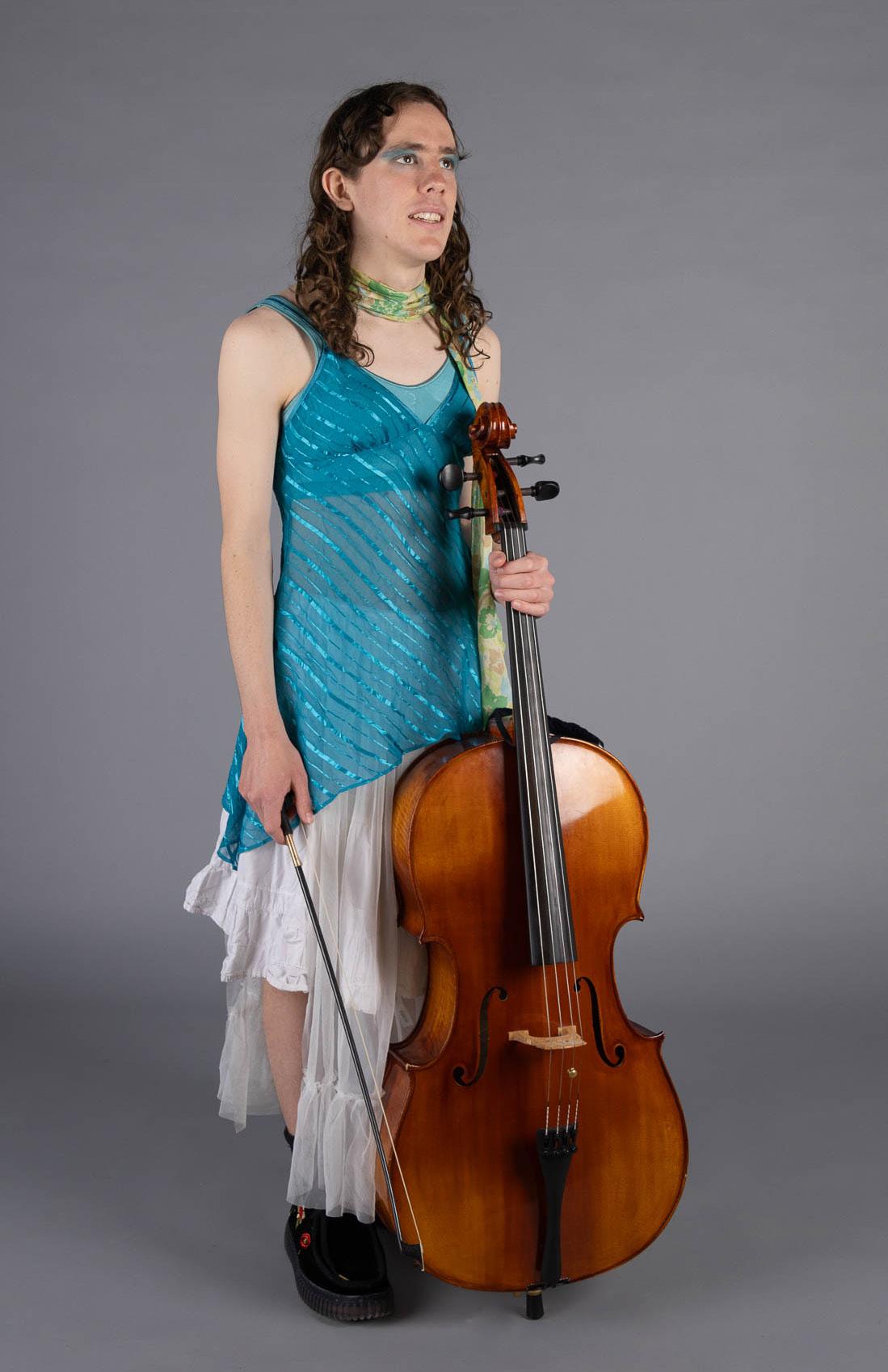
LJ CAVENAUGH AND AUDREY GIBSON
Madeleine: What was the inspiration behind this look?
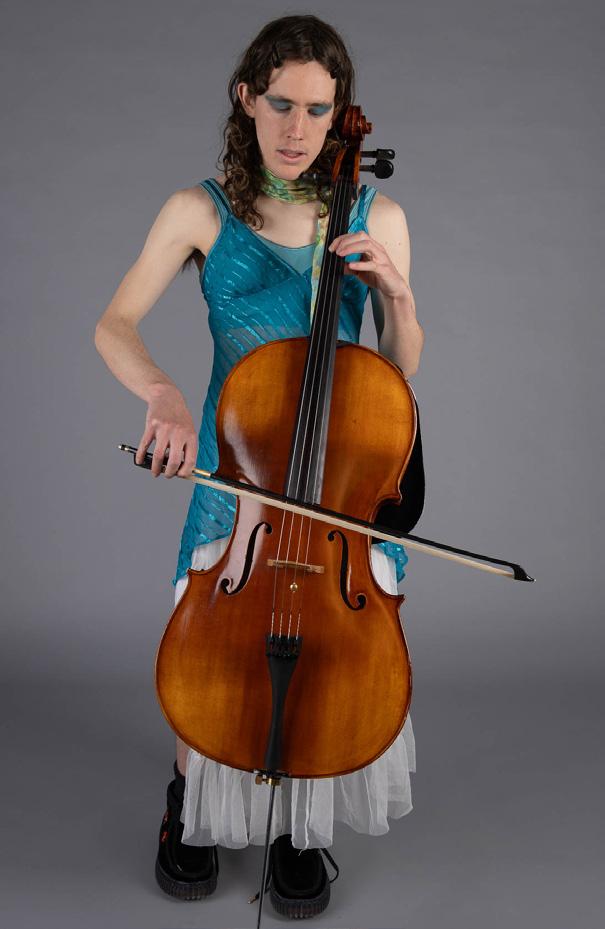
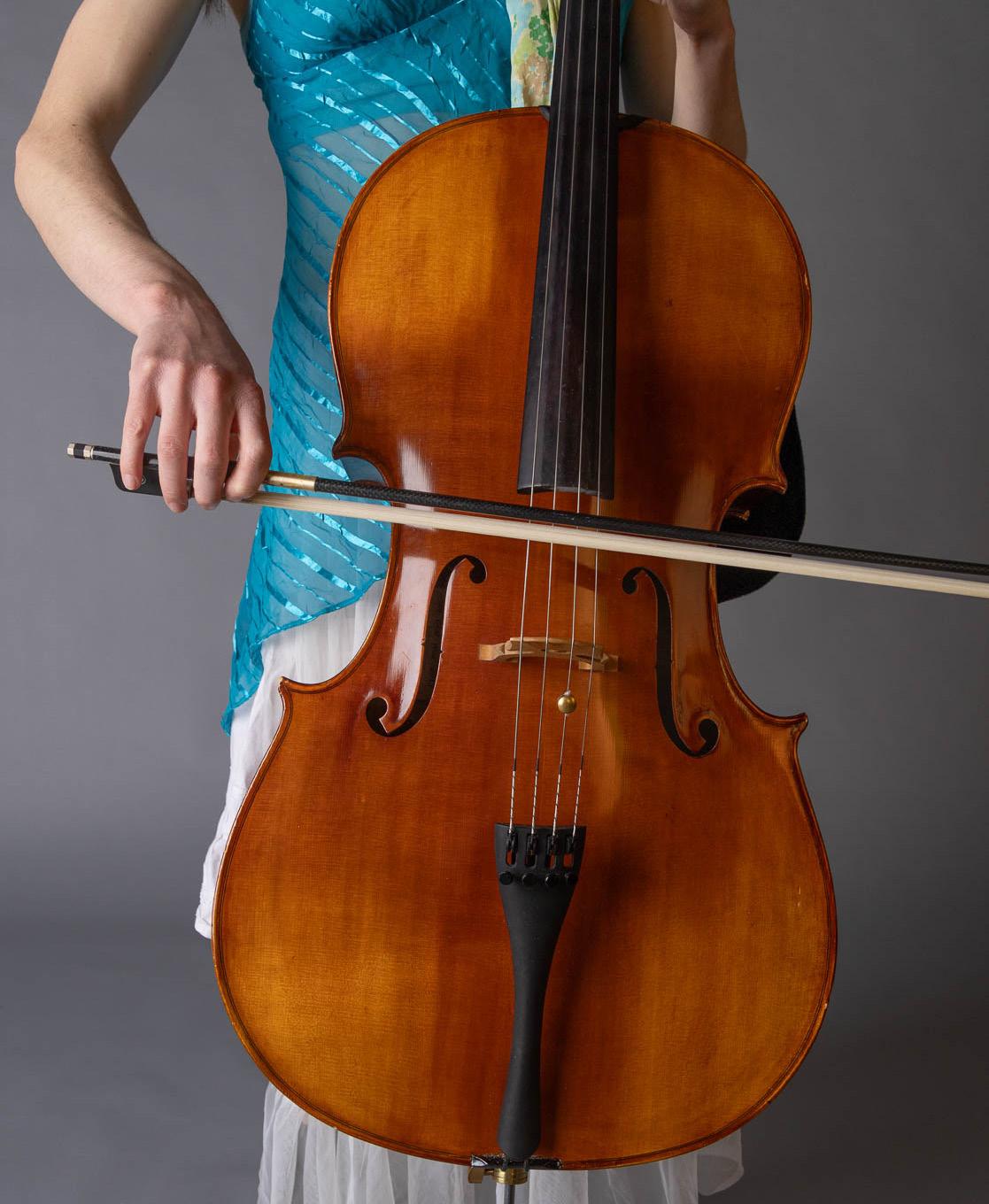
LJ: I am very drawn to magical realism in art of all forms and wanted to try and do that with clothes. I wanted Audrey to take on a character, especially since she will be on stage the whole time, setting a kind of tone for the fashion show.
Madeleine: How did you decide on the styling and accessories for this look?
LJ: My main accessory is the little wooden cat perched on her shoulder. It is not shown in the photos but will be present during the show. This felt like a fun, abnormal accessory that further extended this character’s
story. Maybe this is her sidekick/ friend.
Madeleine: What kind of reaction do you hope this piece gets from the audience?
LJ: I hope they are mesmerized: by the layers of different fabrics, the way the light flows through the mesh fabrics, the vibrant blues and greens.
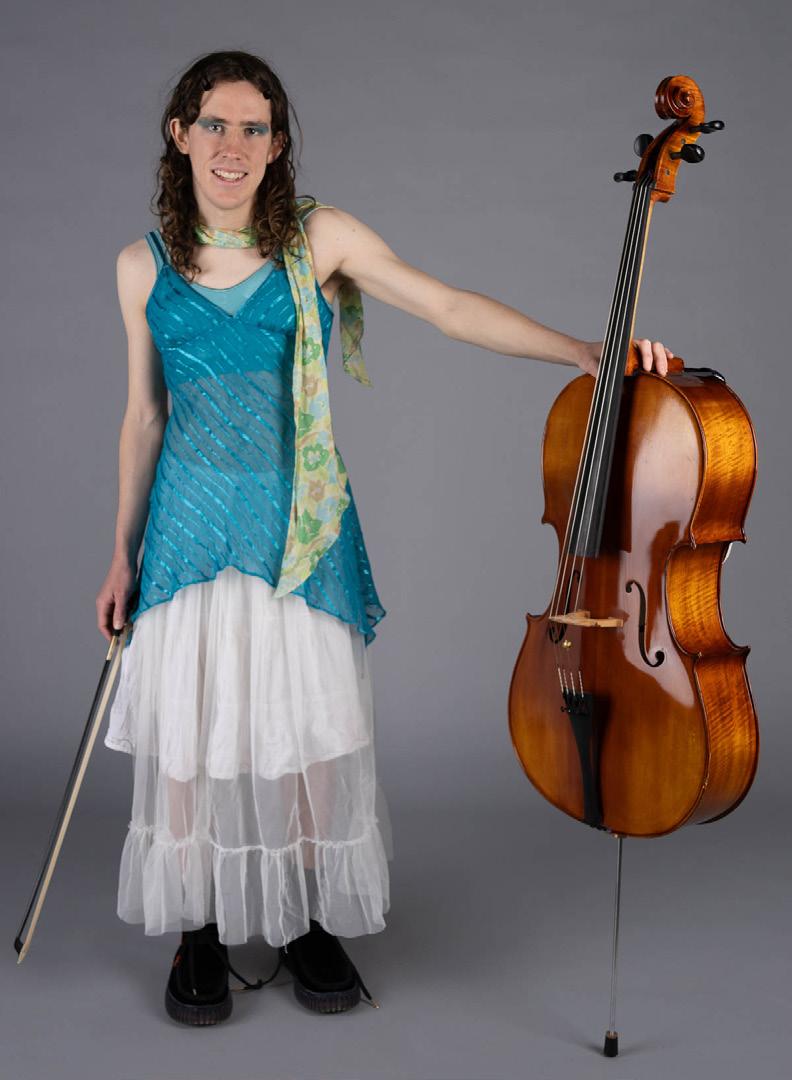
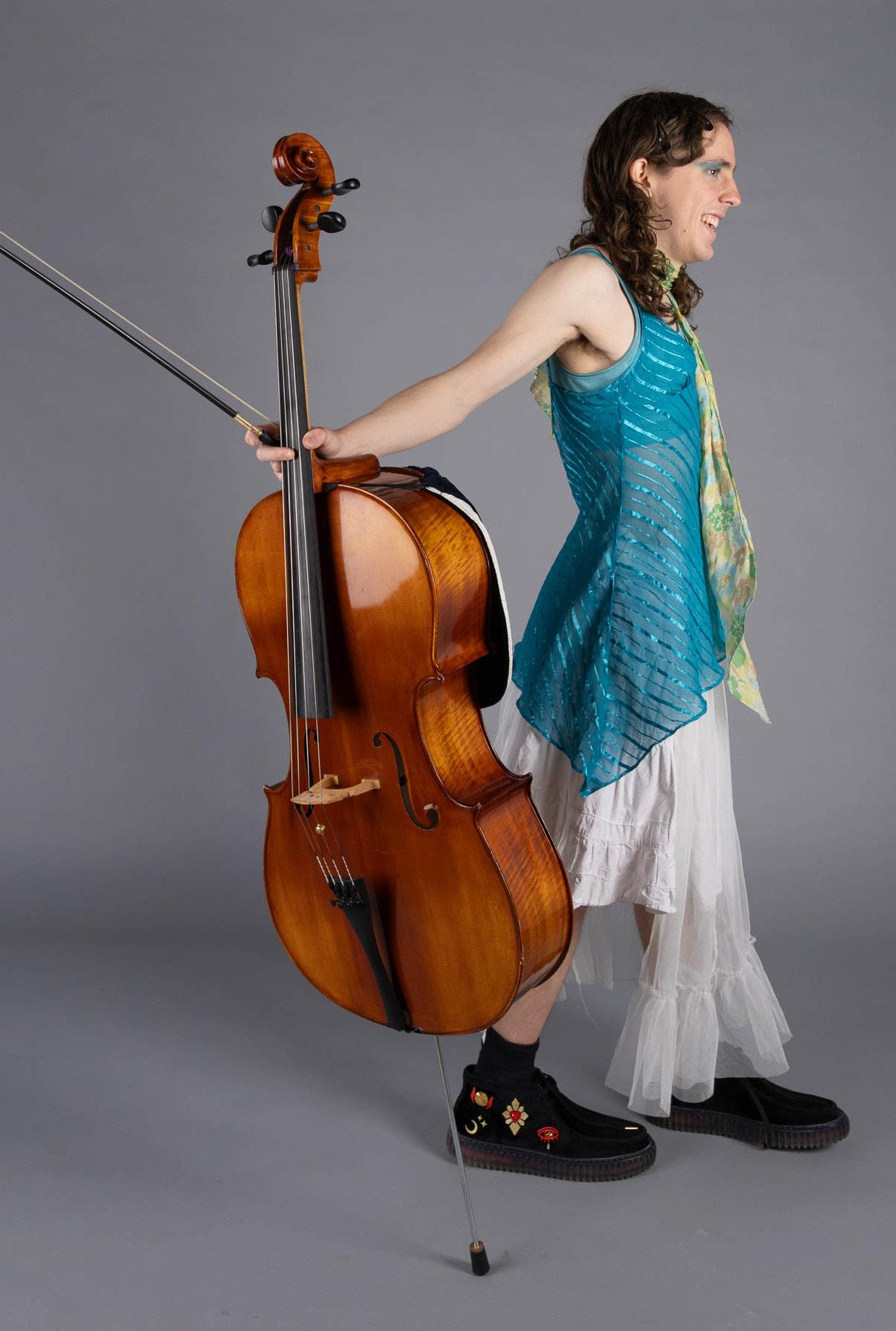
Model: Audrey Gibson
Designer: LJ Cavenaugh Photographer: Lizzy Spira
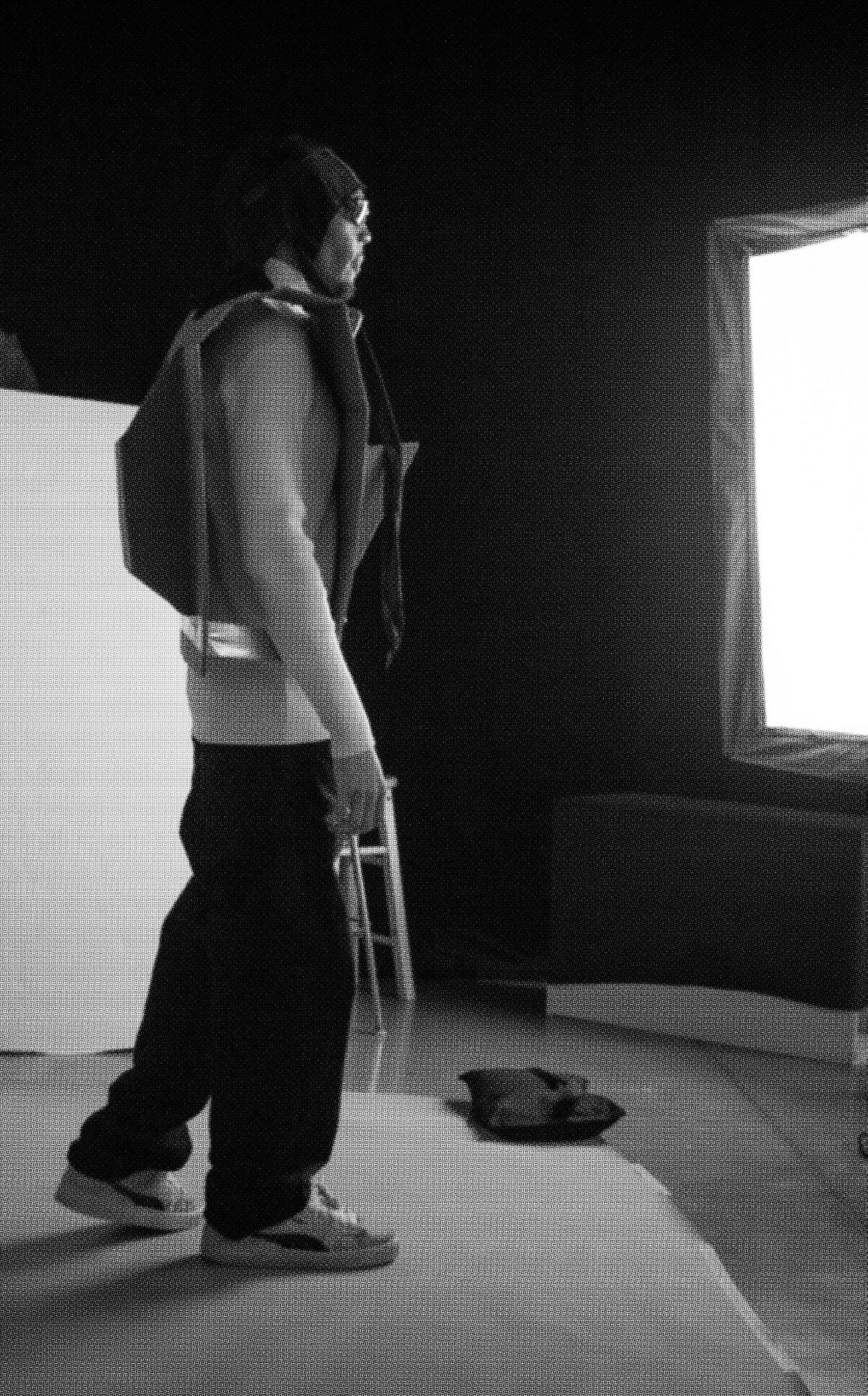
JZ AND LEO BRACKETT
Madeleine: What was the inspiration behind your look?
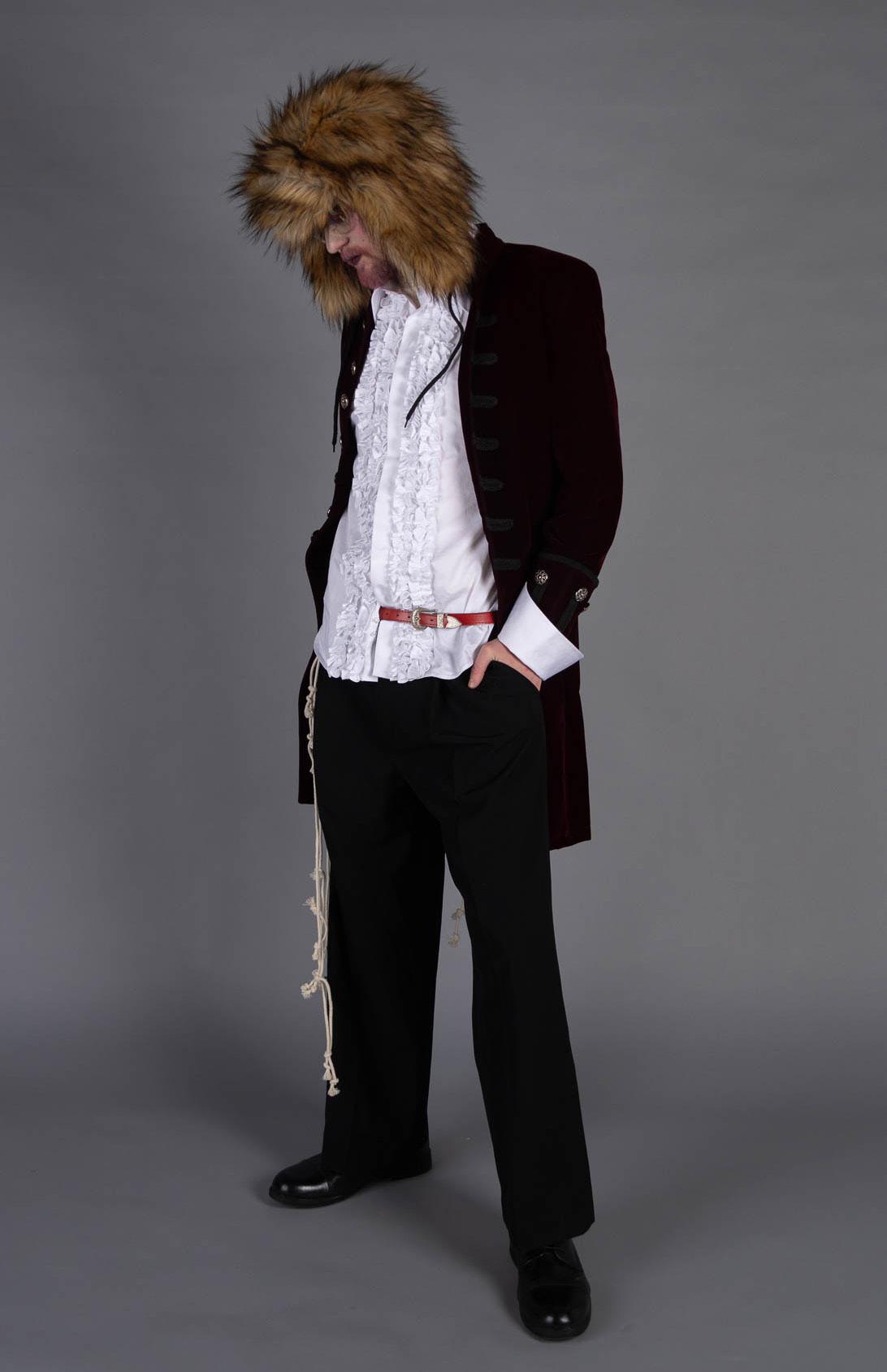
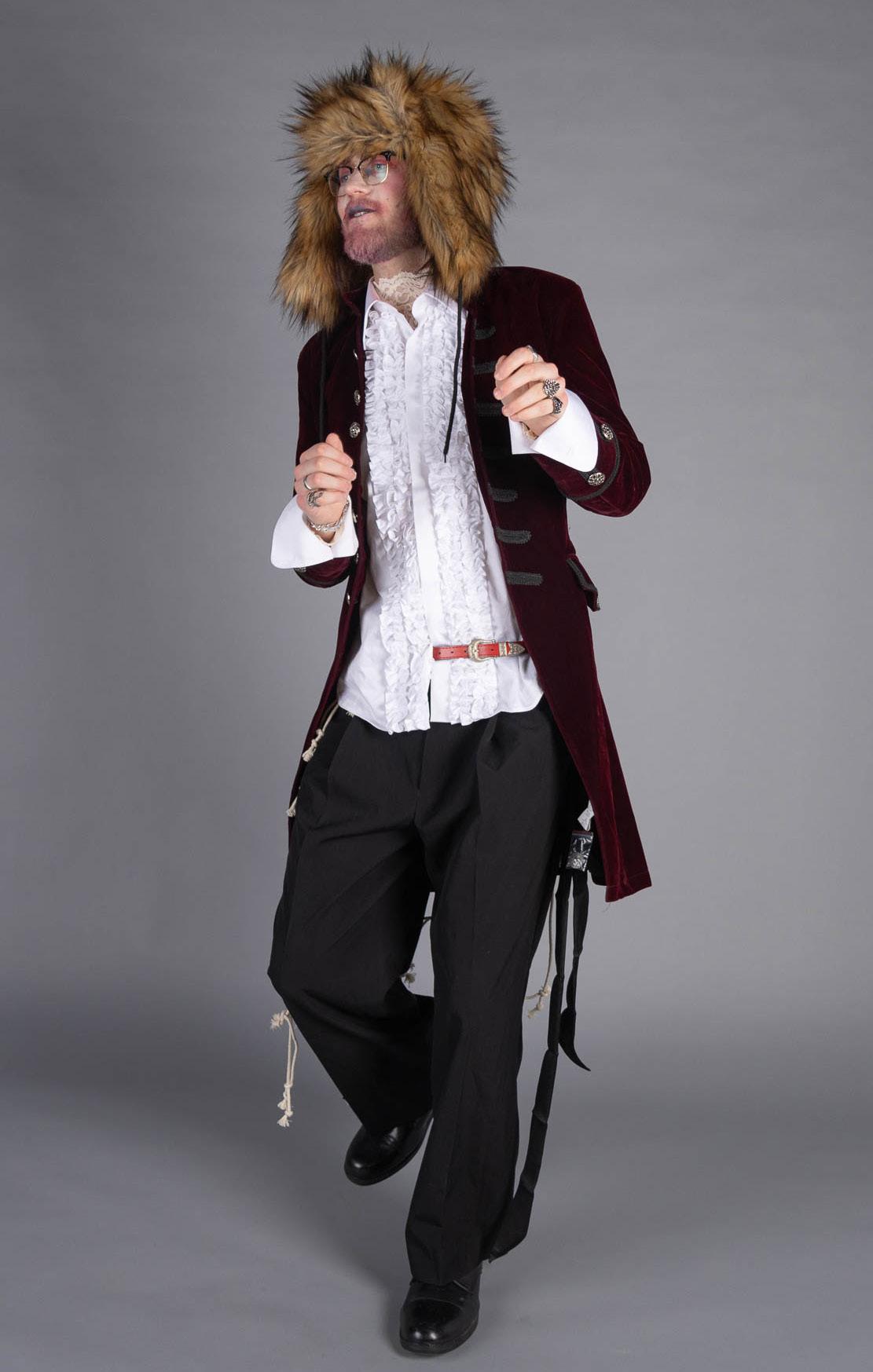
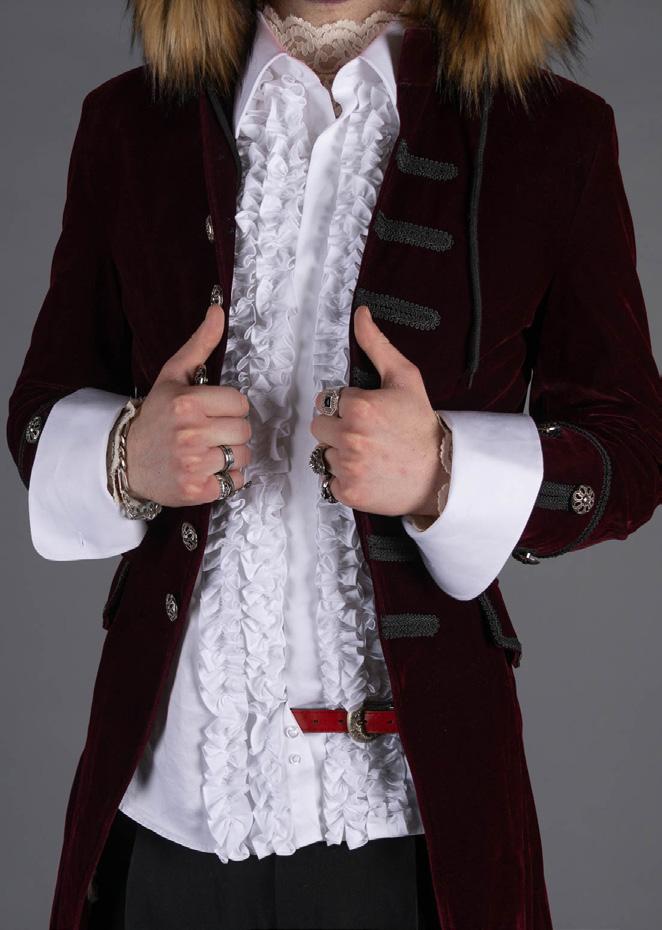
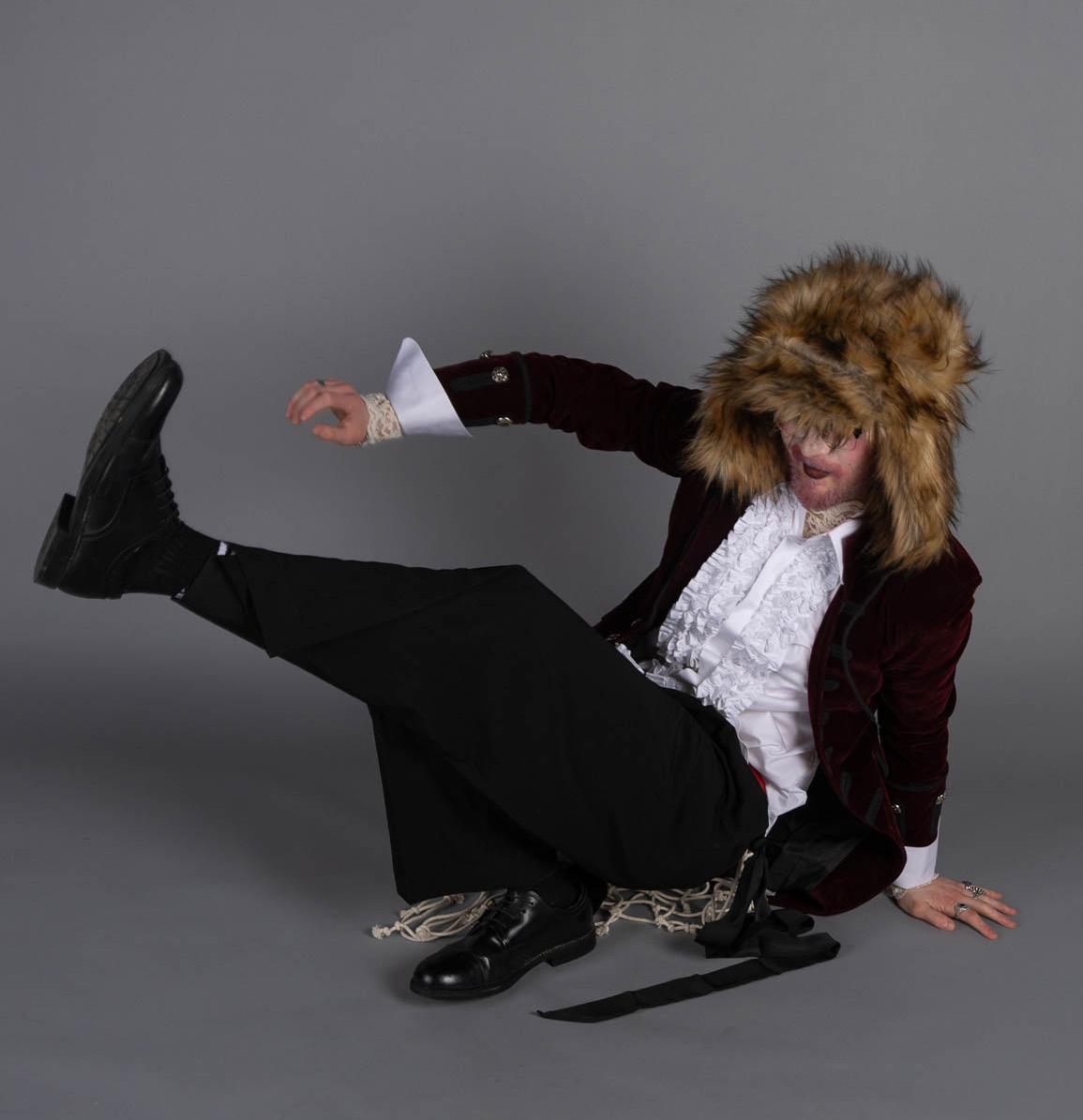
JZ: At first, I was trying to think about something minimalistic, but in the end, I wanted to do something different, because I’m kind of against the current trends. I don’t like things that are too stylish but actually have no material in them, so I want something more complicated and delicate. I’m not sure if that is the right word to describe my look, but at least it looks really courteous to me. So, I started to find out what kind of inspiration I needed; like trying to create a mood board, and I found an Ann Demeulemeester fashion show that just happened a couple of months ago. And they have this really cool look. And I wanted to do something similar to this look, but I eventually didn’t, because my model is a male, so it’s kind of hard to have this silhouette.
Madeleine: How did you decide on the styling and accessories for this look?
JZ: I started to try to look for something for my friend
Leo, something that would fit him, and the first thing that came to my mind was pirates. So, I wanted to do something related to pirates; I tried to find pirate hats or another accessory like that, but the furry hats I had on him also looked really good. So instead, I started with the coat and then tried to add accessories that I had that would go well with the look.
Madeleine: Can I ask you one more question?
JZ: Sure!
Madeleine: Was the most difficult part, or was a particular challenge in bringing this outfit to life?
JZ: The silhouette was definitely a difficult part, but I also tried to make my own accessory for the look, but it didn’t come together in the end. I tried to make this metal necklace; it was going to be a pale necklace that links together. Madeleine: How did you fix the silhouette issue?
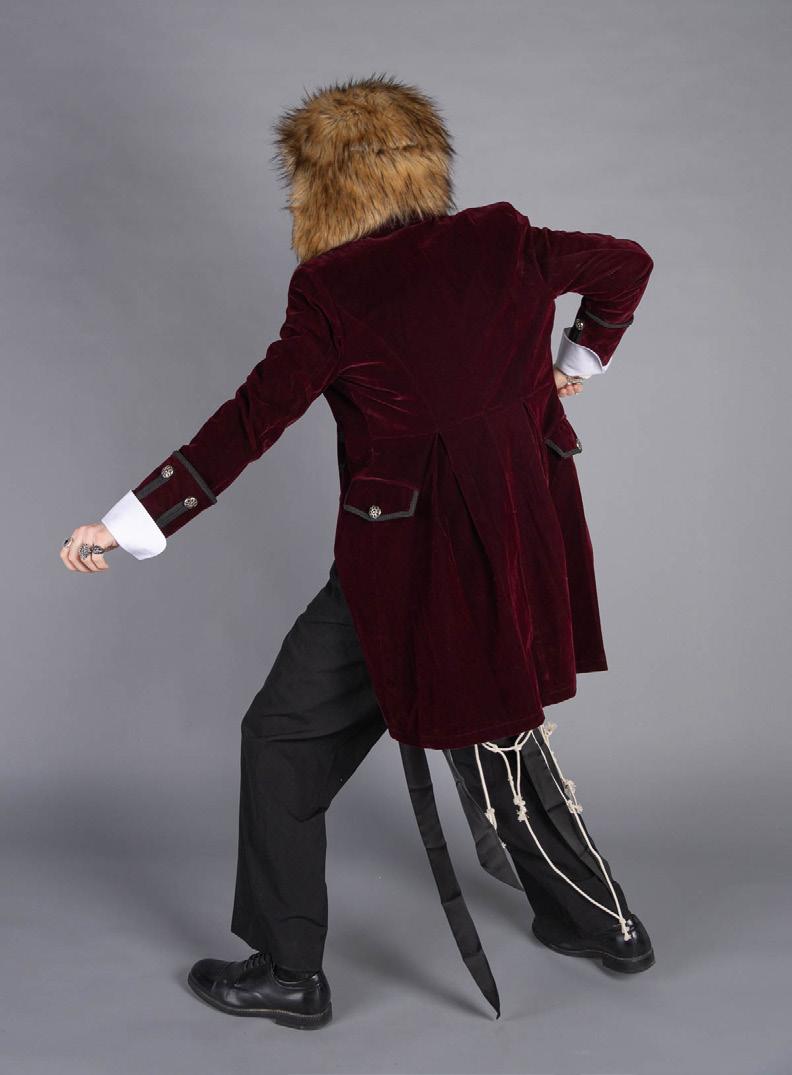
JZ: So, the best part of the coat that I chose is that it had a lot of shape and volume in the back. I think this detail really fits my vision because it fixed the silhouette issue and fit together with the outfit!
Photographer: Lizzy Spira
Model: Leo Brackett
Designer: Zuocheng Jiang (JZ)
TONY GONZALEZ
Bridget: What was the inspiration behind this look?
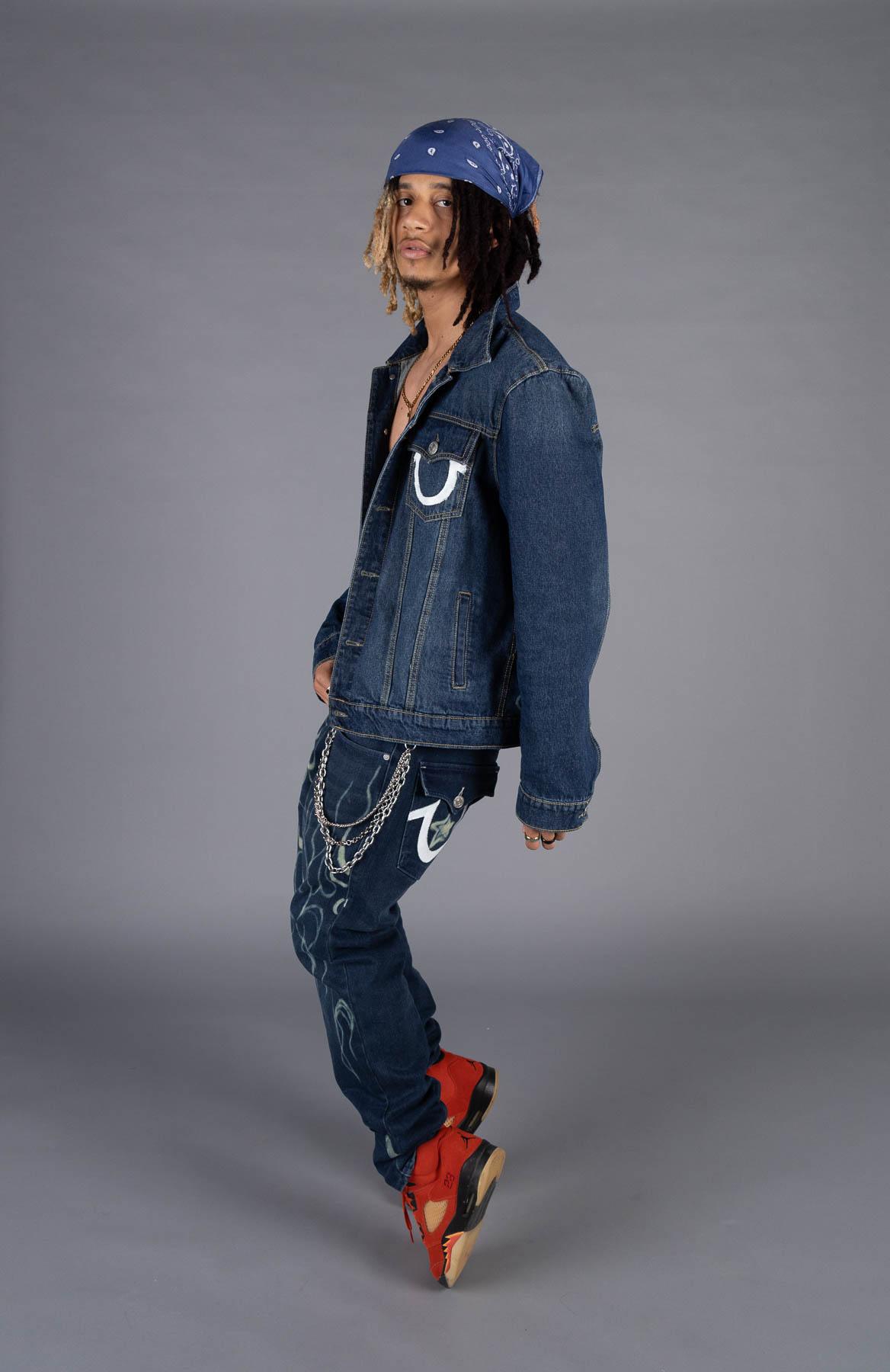
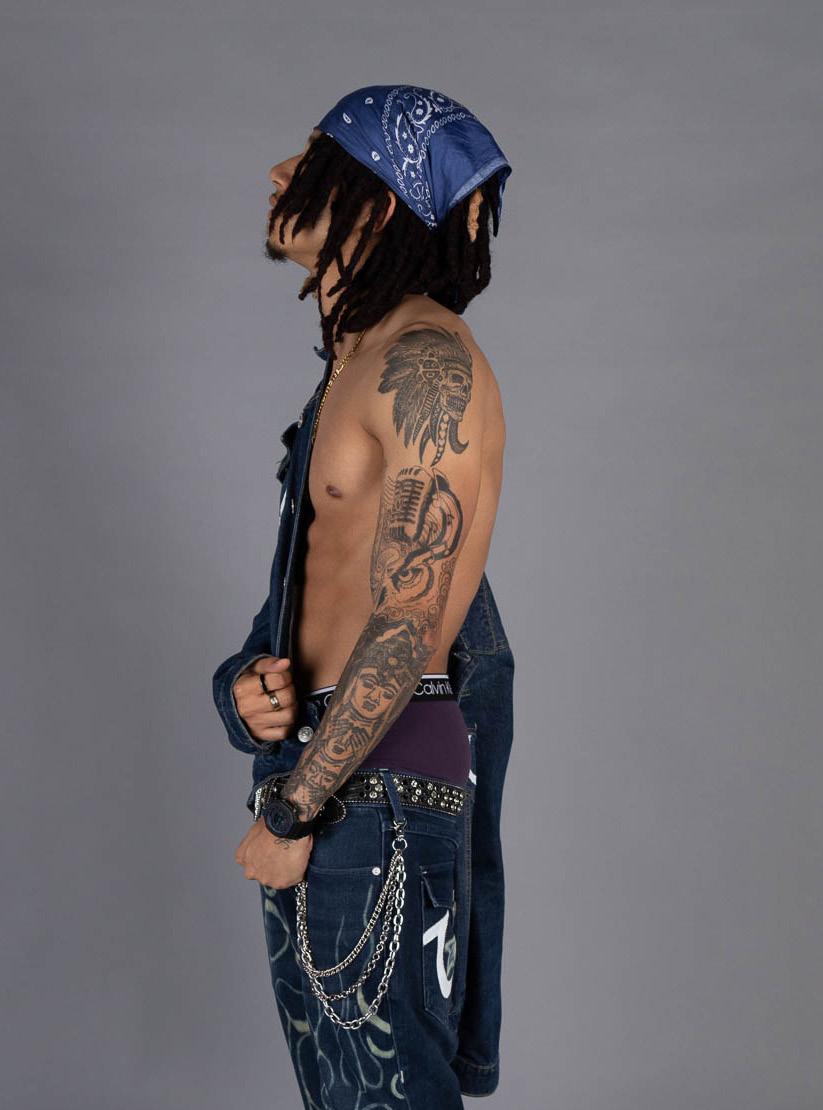
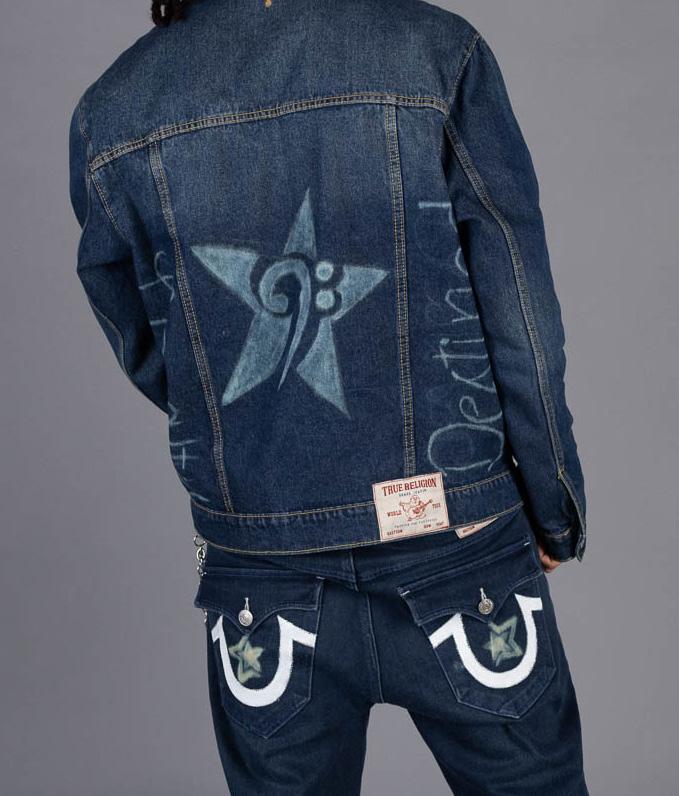
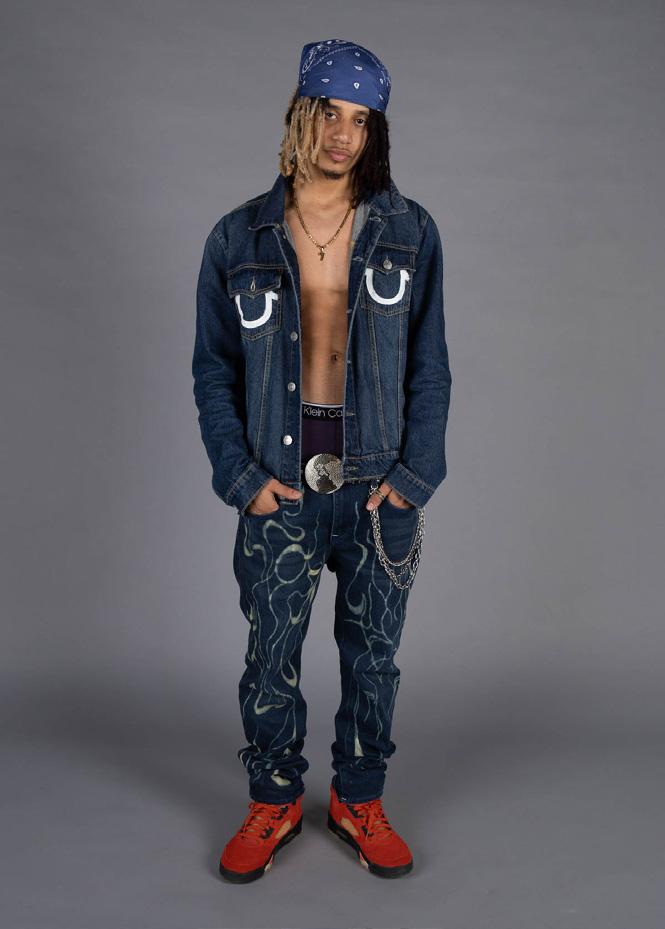
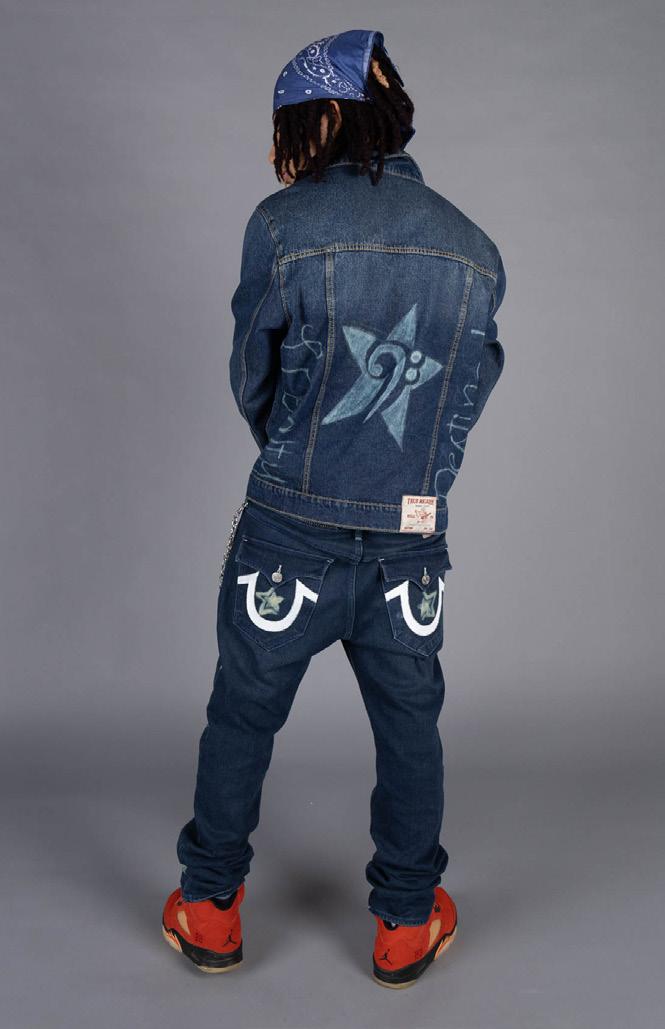
Tony: I’m from Chicago. I grew up and was born in Chicago and a little bit about my inspiration, there’s just this look back in 2012, 2013. There’s this rapper, he goes by Chief Keef He’s a legend. Basically, he brought True Religion to the map when it came to, like, the drill scene and when it comes to just Chicago. The reason why people really wear True Religion in Chicago is because of Chief Keef. So I wanted to bring that back, you know, it’s 2025, but I want to bring that look back. I just like the jean look, and True Religion, what it means to me is basically like, I’m bringing home to another home.
Bridget: That’s cool, like from Chicago to Kenyon?
Tony: Yeah. Chicago to Ohio.
Bridget: How did you decide on the styling and accessories for this look?
Tony: I think I just really sat back and was like, “What’s me? Like, what do I want?” I feel like jewels, like bedazzlin’, gold, silver. I try to like add everything in one, because, y’know, a lot of people would be like, “Uh, you can’t wear gold with silver.” Who says so? You know what I mean? I tried to match the bandanna with the Canadian suit. That’s what they call it.
Bridget: Canadian tuxedo or something, I’ve heard of it.
Tony: Yeah, fo sho. So I just tried to match really. That was my biggest thing. I tried. I think it comes together pretty well.
Bridget: It feels like your process was very natural. You just let things happen.
Tony: Yeah, I try not to force it. I feel like, as a kid, I always, like, put that shit on. That’s my little slogan, just put that shit on. I mean, be you. Really.
Bridget: Would you agree that when you look good, you feel good?
Tony: Yeah, look good, feel good, play good. Y’know what I mean? I was also a football player. I retired, so I kind of translated that into my lifestyle. You got a ball and on and off the field, fo sho.
Bridget: What kind of reaction do you hope this piece gets from the audience?
Tony: You know, I’ve been thinking a lot about this question. I don’t think, I’m here to seek reaction. I’m more just trying to show, like, if you wanna be you and you feel like fashion is you, then just put whatever you feel like is you, really. I’m not here to impress people or anything. If you like it, you clearly have a good taste in fashion, but I’m not ever doing things for a reaction.
Bridget: That’s good, you’re doing it for yourself.
Tony: I feel like, fashion is just me. I feel like I’m always in style and I’m always killin’ with style and killin’ with joy.
Bridget: And hey, maybe if people

Photographer: Lizzy Spira
recognize that, we’ll start seeing people dressed like you around campus.
Tony: I hope so. I would love that. That would be cool. Wearin True Religion.
Designer and Model: Tony Gonzalez
Stylist: Lucia Kornzweig
GRACE NEGRONI AND BEE BARTONBIEGELSON
Bridget: What was the inspiration behind this look?
Grace: Back in high school, my school did something called the Unconventional Materials Fashion Show, which was basically, you could make an outfit out of anything but fabric. I remember there were pennies one year, somebody did a Rainbow Loom suit… and I did it for four years. I came here, and I was really sad because I was like, damn, I’ll never be able to do that again.
Bridget: But wait...
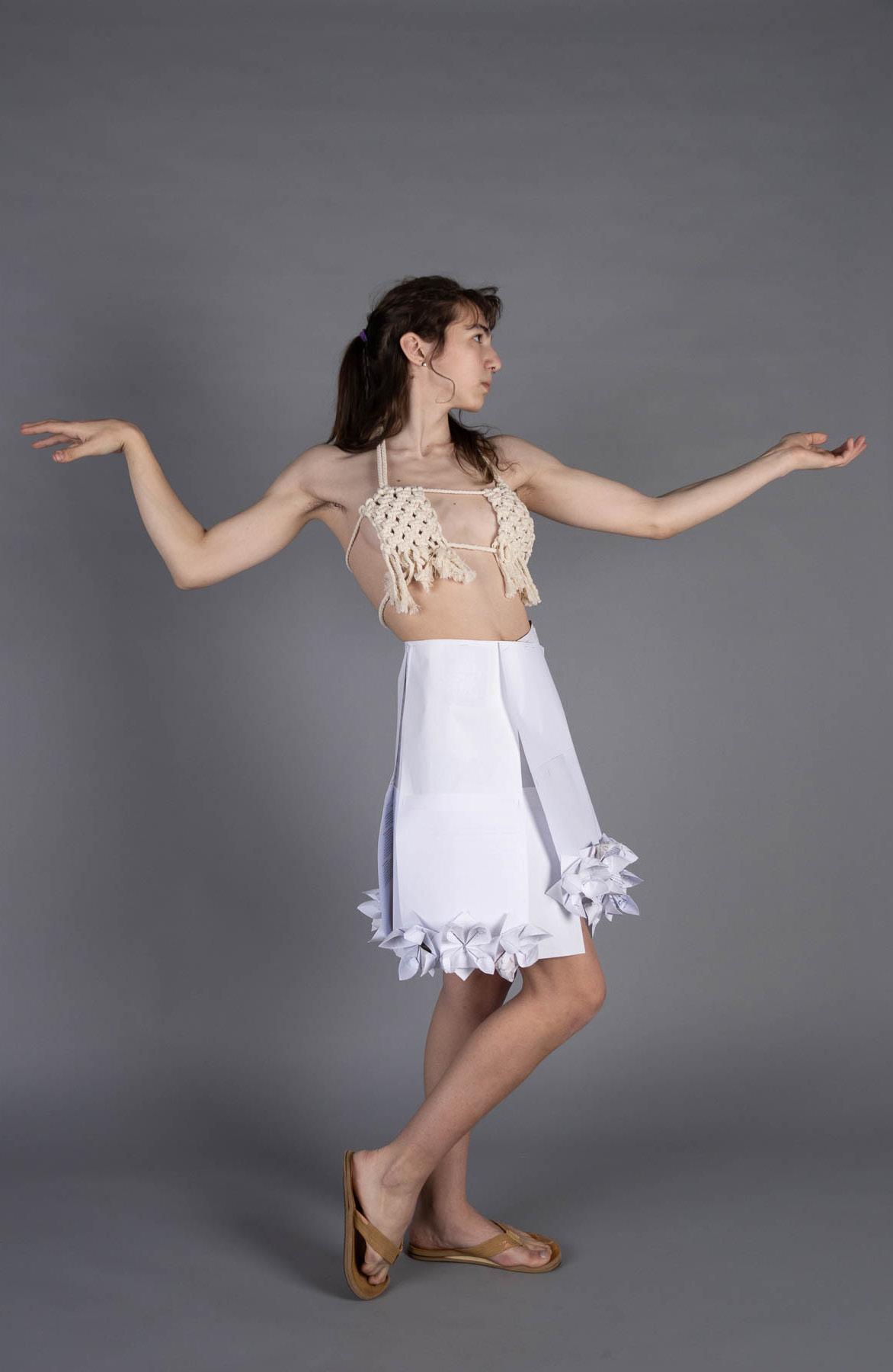
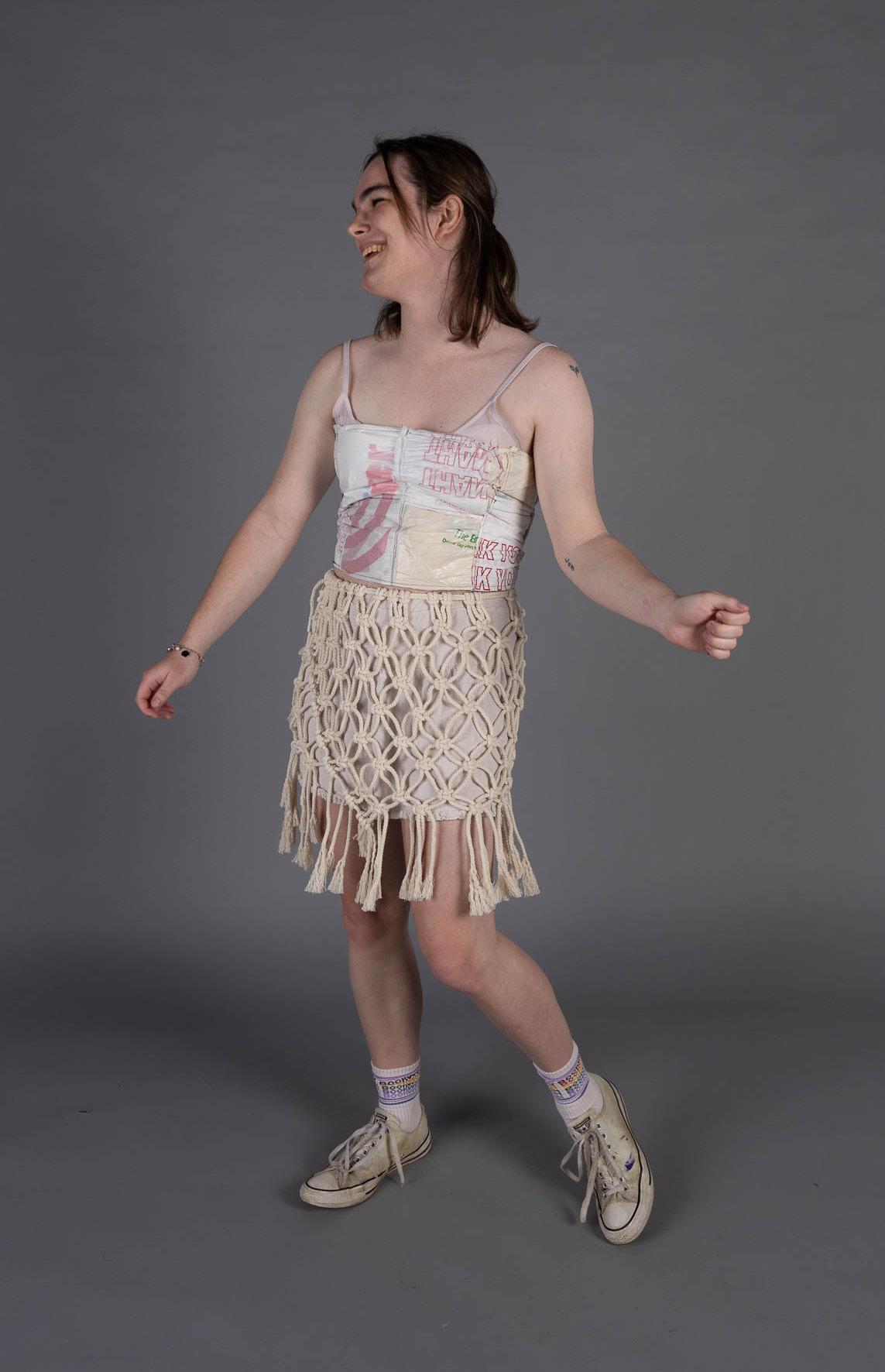
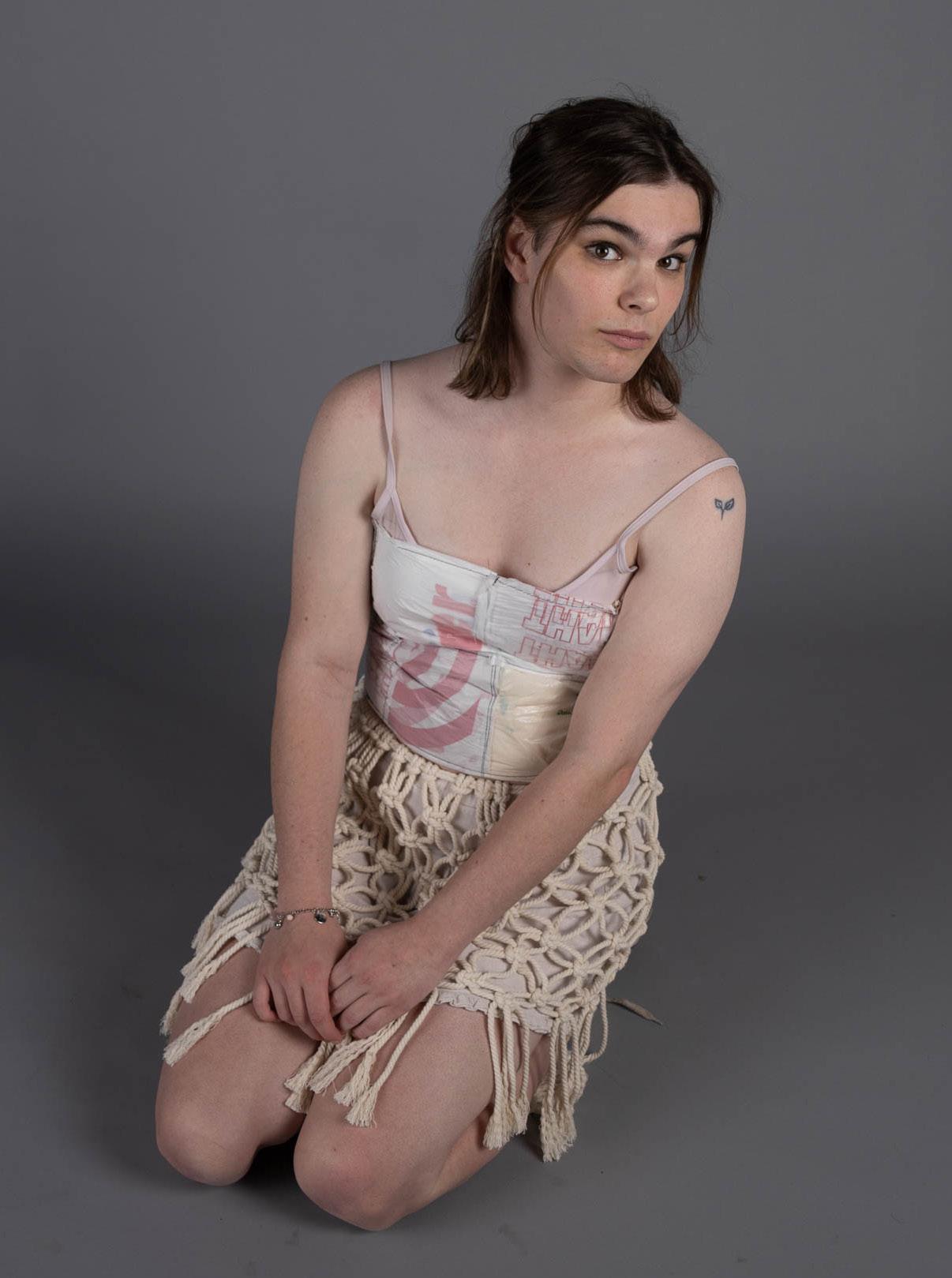
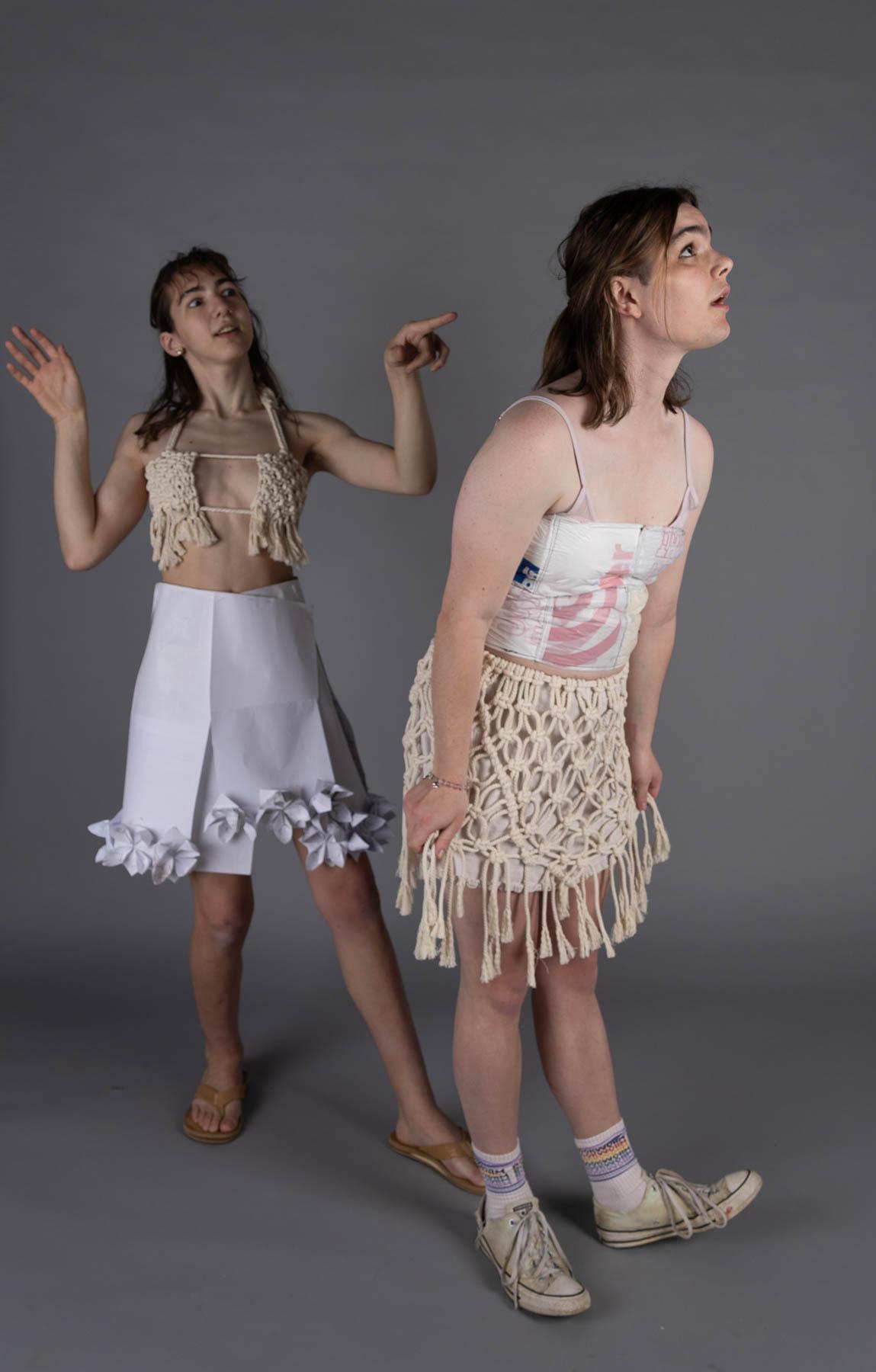
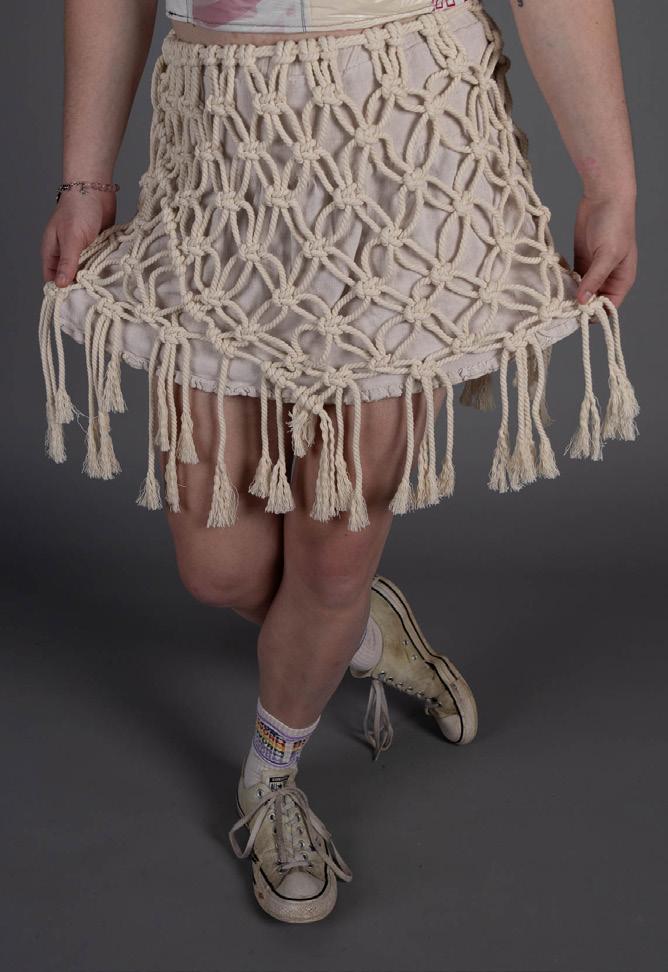
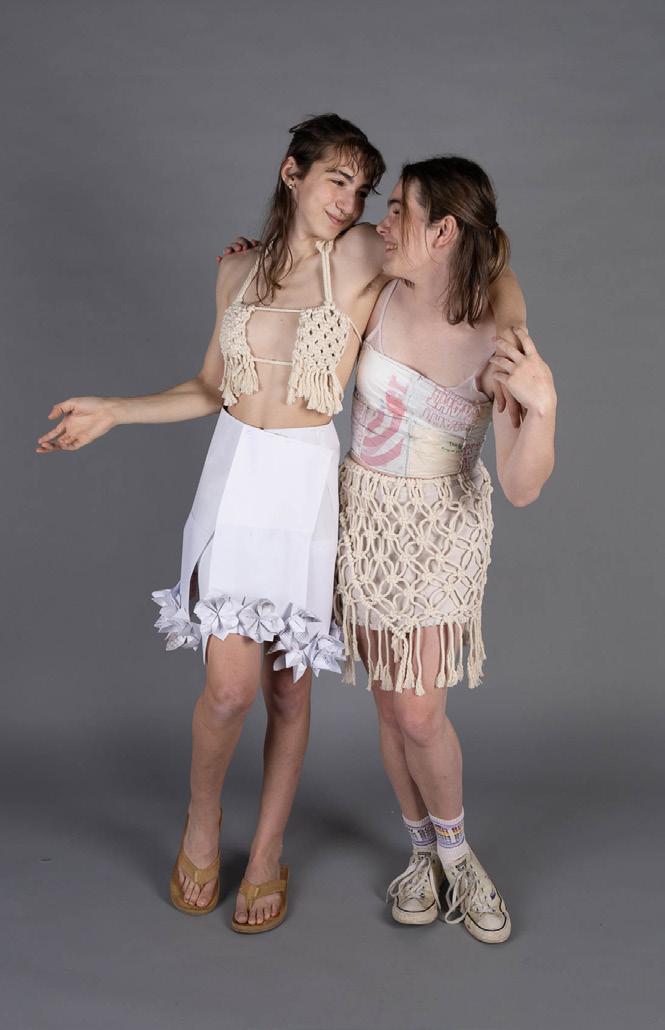
Grace: But yeah, but wait! The Horn Fashion Show, they sent it out, and I was really excited because I was like, wait, I could just do it again. And that could be my own personal, like, spin on it. So that was the original inspiration, and then I kind of had the idea of like wanting to do something to dedicate to trans femininity. I ended up getting two models, and making the outfits and having them interact, we kind of settled on this, like, mermaid beach theme. Cause the vibe of the outfits is kind of giving beachy vibes.
Bridget: I’m seeing it’s made of paper. It’s giving like, to
me, paper bag princess.
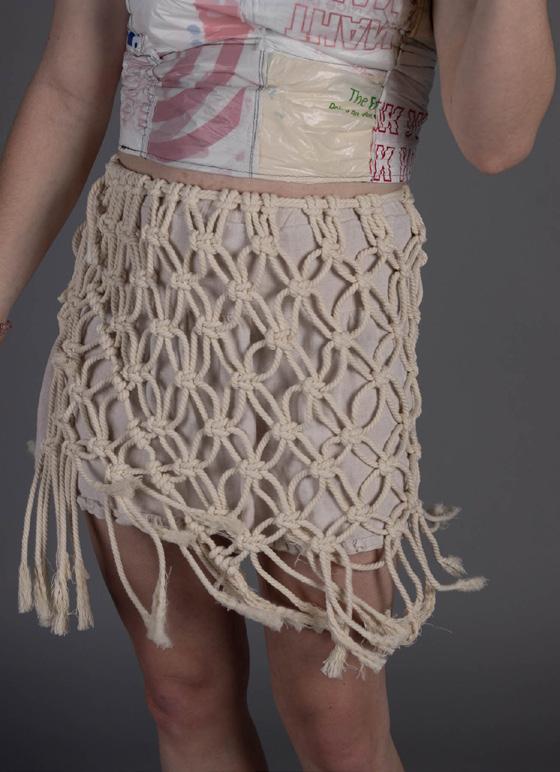
Grace: So Bee’s skirt is paper, Elaine’s skirt is macramé, which is just like rope knotting. Bee’s top is also macramé, and Elaine’s top is plastic bags sewn together.
Bridget: Can I ask what materials you’ve used in the years past at your high school? Your experience.
Grace: My senior year, I also did paper, but it was made entirely out of college brochures. I glued a little Kenyon thing on the inside because two weeks before the show I decided to come to Kenyon, so I was like, that’s cute. I’m going to do that. So it was made completely out of college, like, magazine brochures that they were sending me, cause hell were they sending me a lot! I did macramé one time with origami, so this is kind of a little reprise of that. I’ve done tissue paper and toilet paper rolls. Not like actual toilet paper, but just the cardboard rolls.
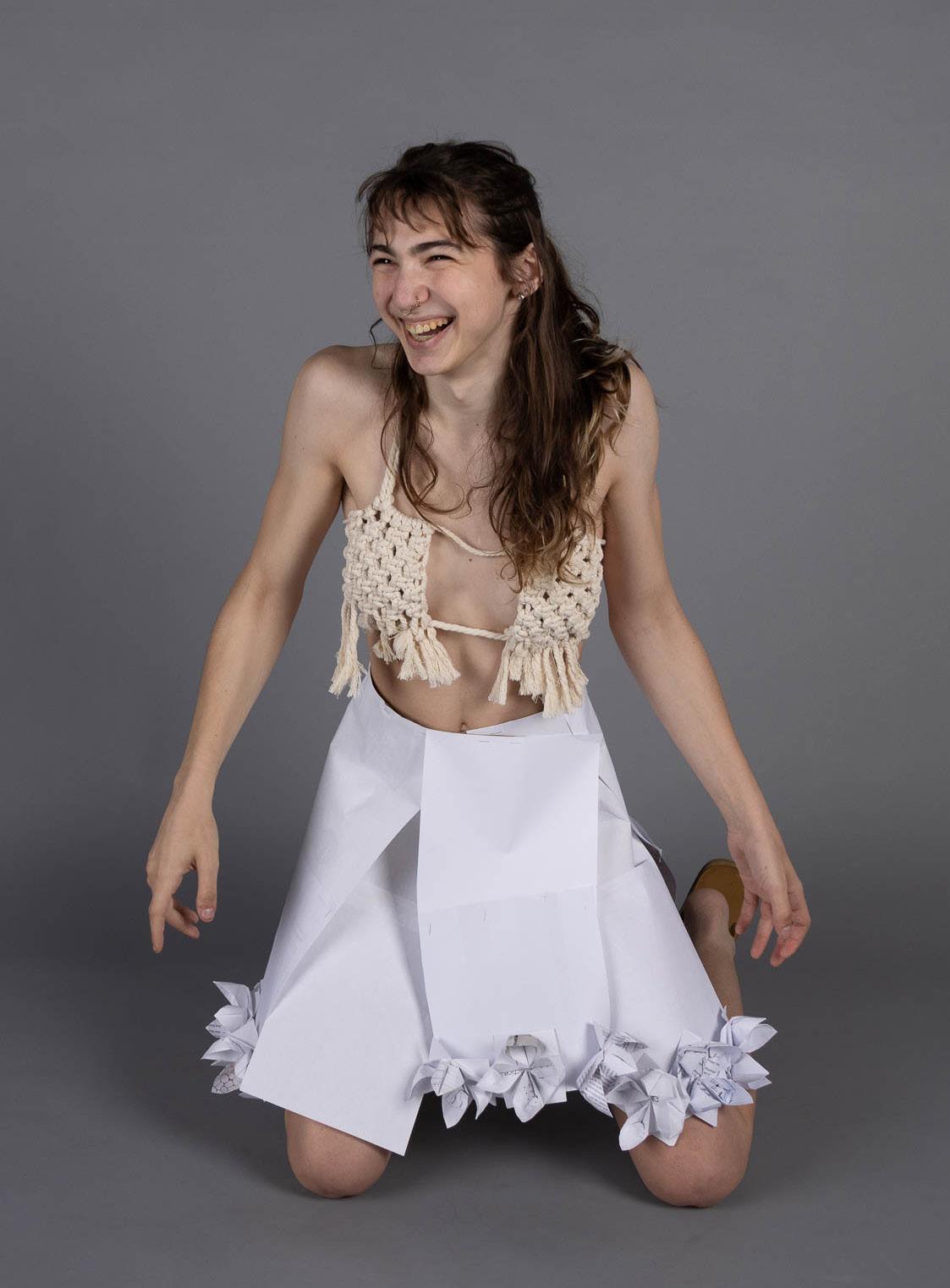
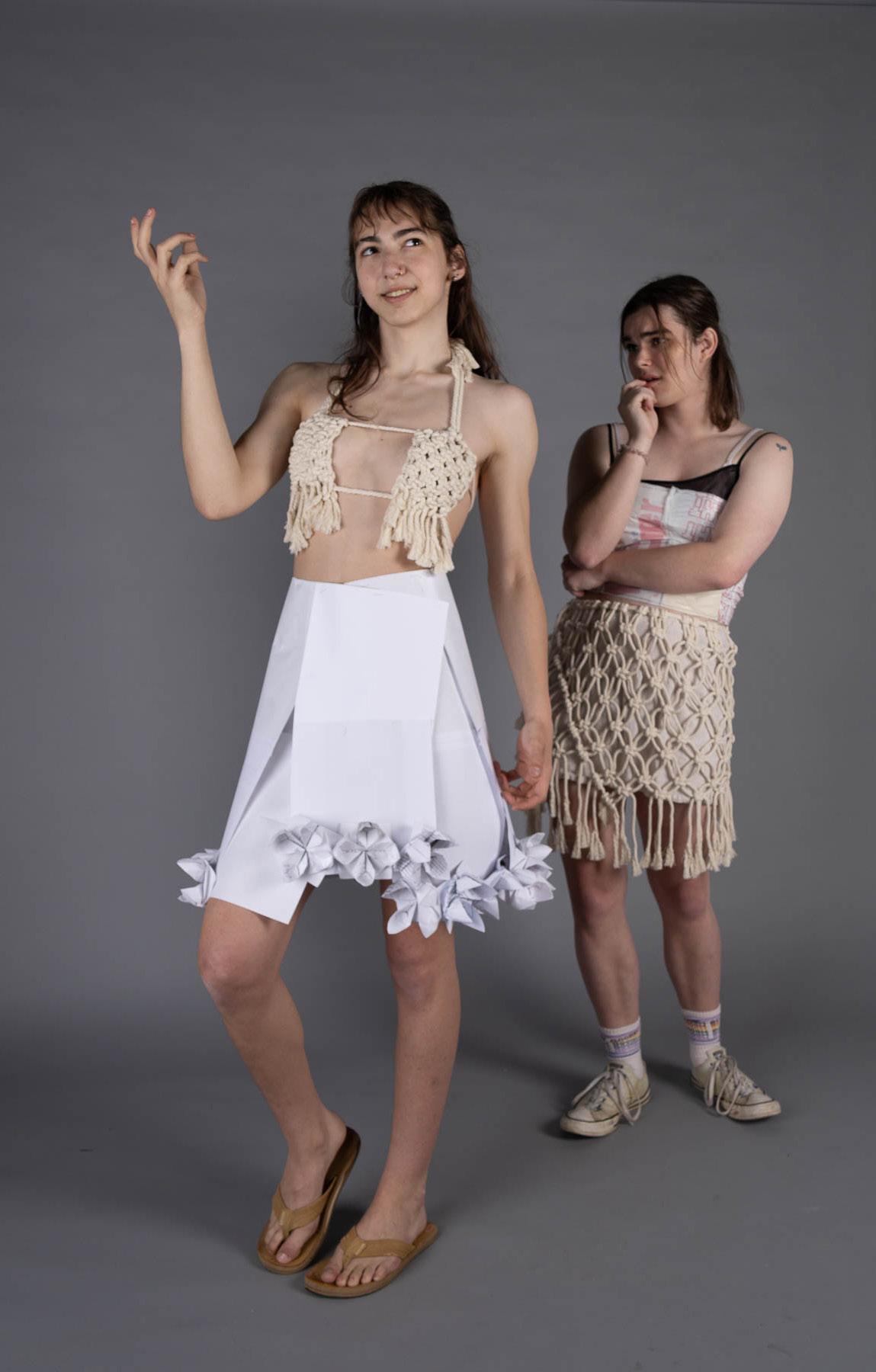
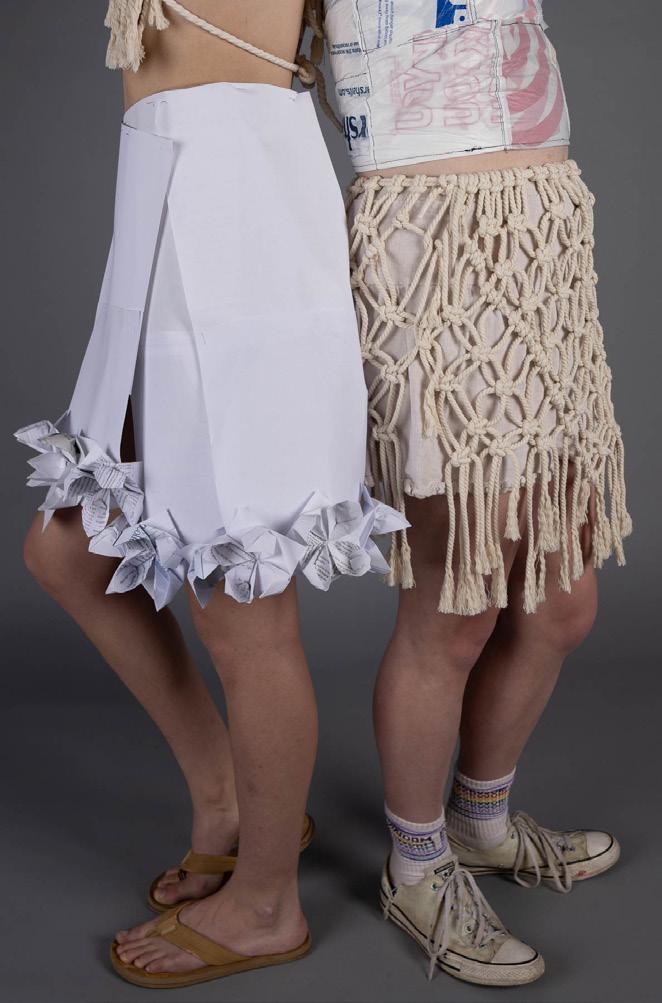
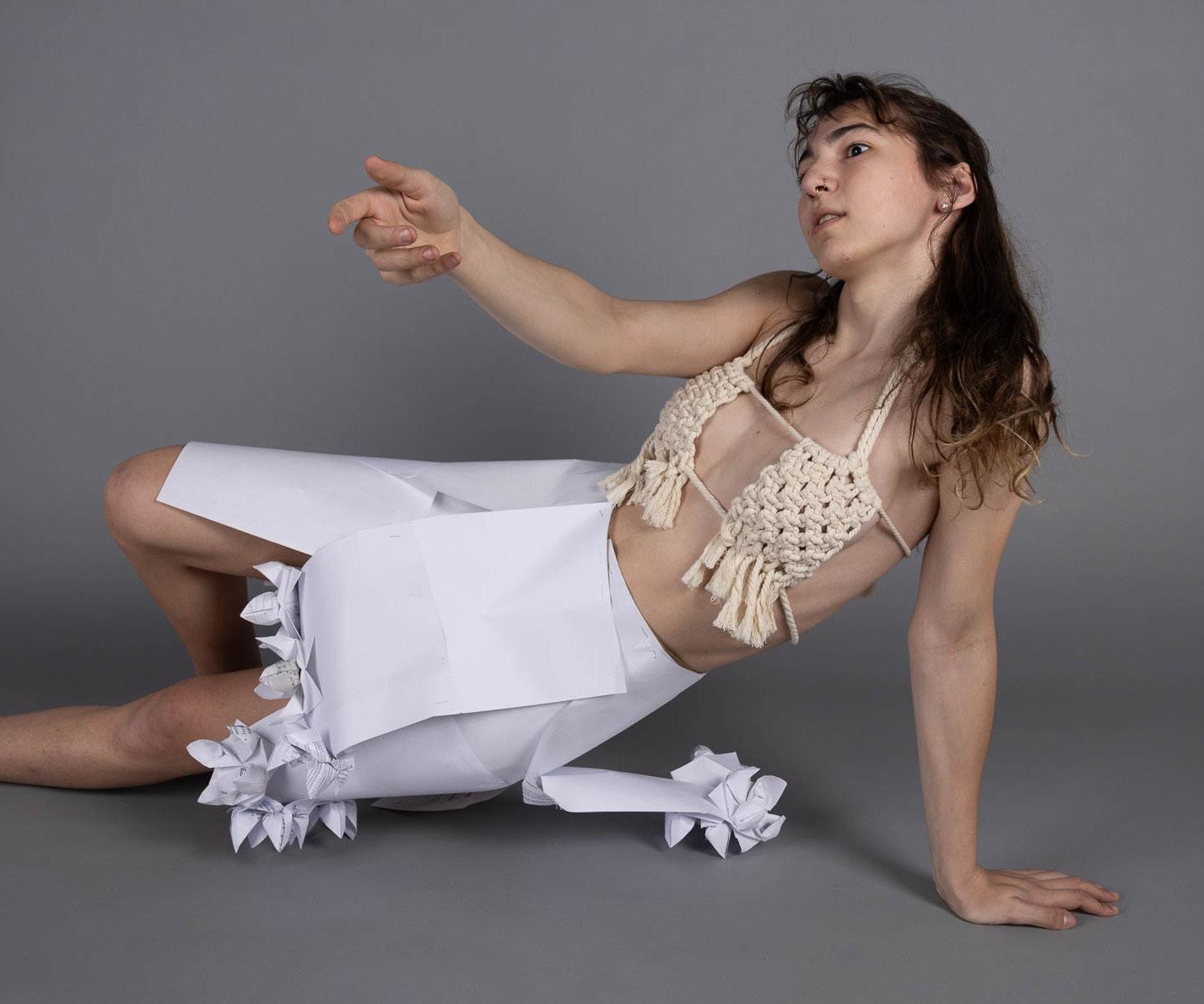
Models: Bee Barton-Biegelson, Elaine Preston
GRACE NEGRONI AND ELAINE PRESTON
Bridget: Would you be interested in branching out? Because I’ve seen people do this sort of thing with like duct tape, chicken feed bags, condoms…
Grace: We had a condom dress every single year. But yes, we’ll see next year if I want to do this same vibe, if I want to use actual fabric and make, like, and show off like how good I can actually sew. Because I can sew! I do possess that skill. But as of right now, I’m just sticking to what I know and what I’ve used before, because it was kind of short notice, and it’s hard for me to make this stuff on short notice.
Bridget: What kind of reaction do you hope this piece gets from the audience?
Grace: I just hope that people look at it and they’re excited to see, like, nonfabric items. I want people to look at it and say, “Oh, I never would have thought to
make an outfit out of paper!” or maybe, “Oh, I’ve always wondered what it would look like to make something out of paper, make something out of plastic bags!” And, like, this is not the most refined I could have made it, but a lot of this is just so fun to sometimes change what you think you can use these sorts of things for. I personally hoard paper because I always do crafts with it. I like getting people to think about the fun things they do in their free time and like how they can translate it into a bunch of different contexts. And then also back to the trans, I want people to think about their trans friends and think about, you know, just love for trans folks.
Bridget: Any last comments?
Grace: If you are interested in macramé, I would highly recommend it. It’s so fun.
Designer: Grace Negroni
Photographer: Lizzy Spira
AUNA MANDAL AND DOROTHY YAQUB
Madeleine: What was your inspiration behind the look?
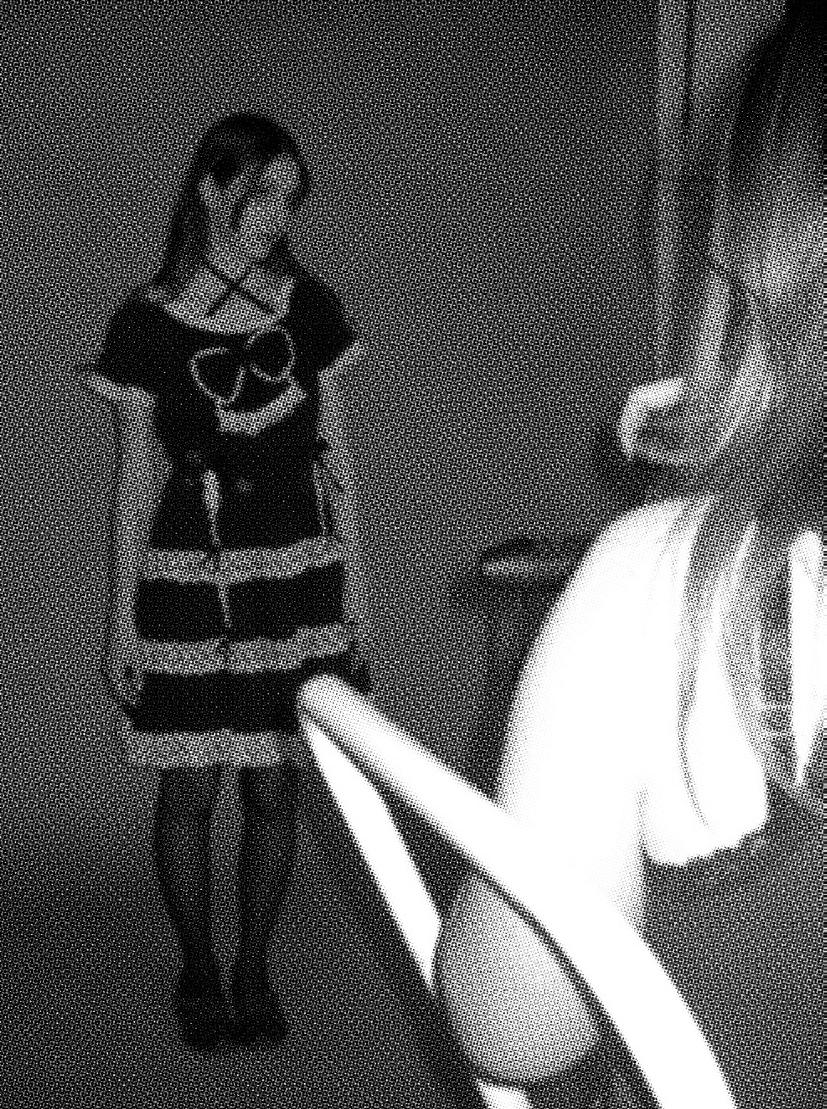
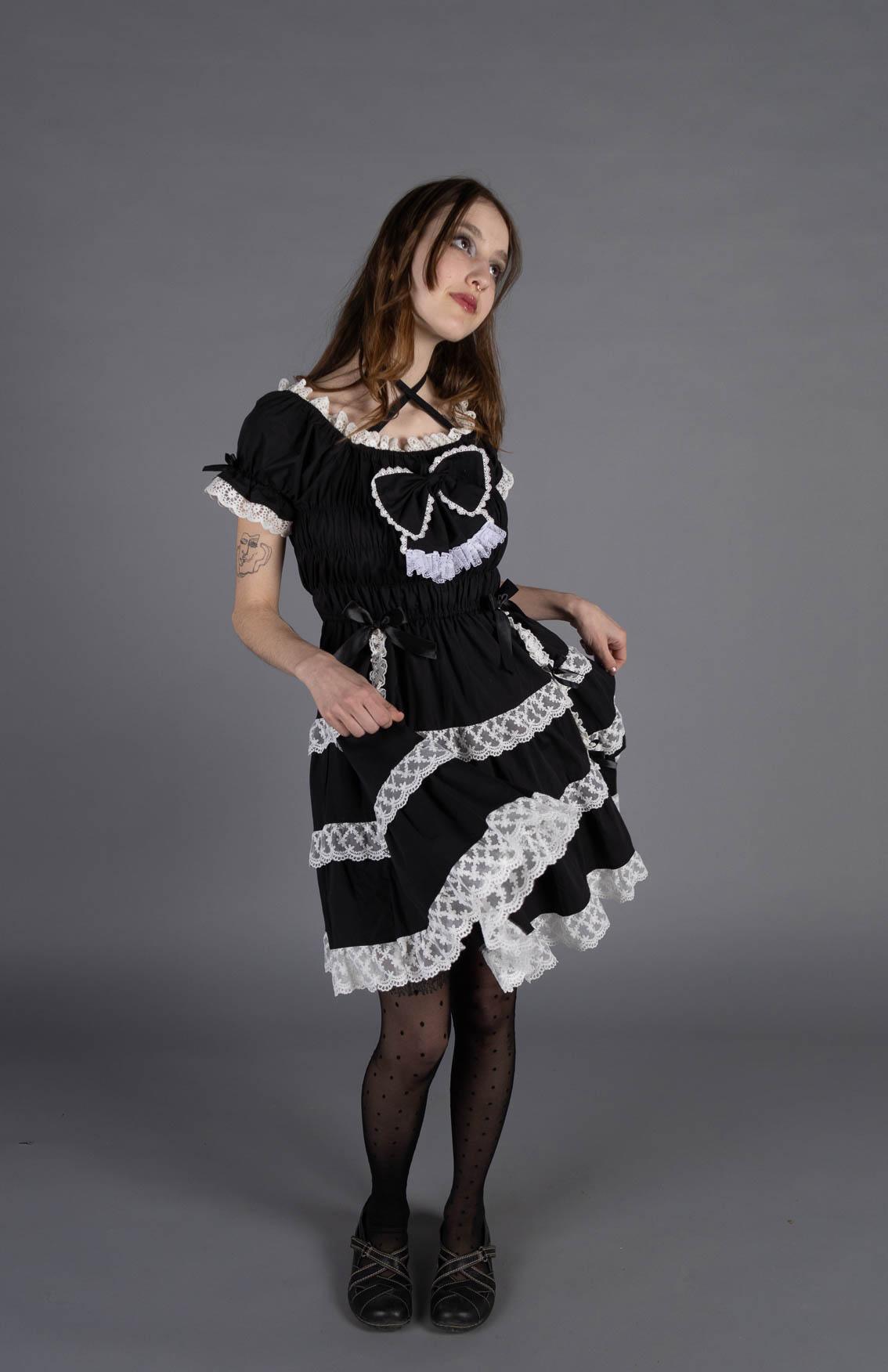
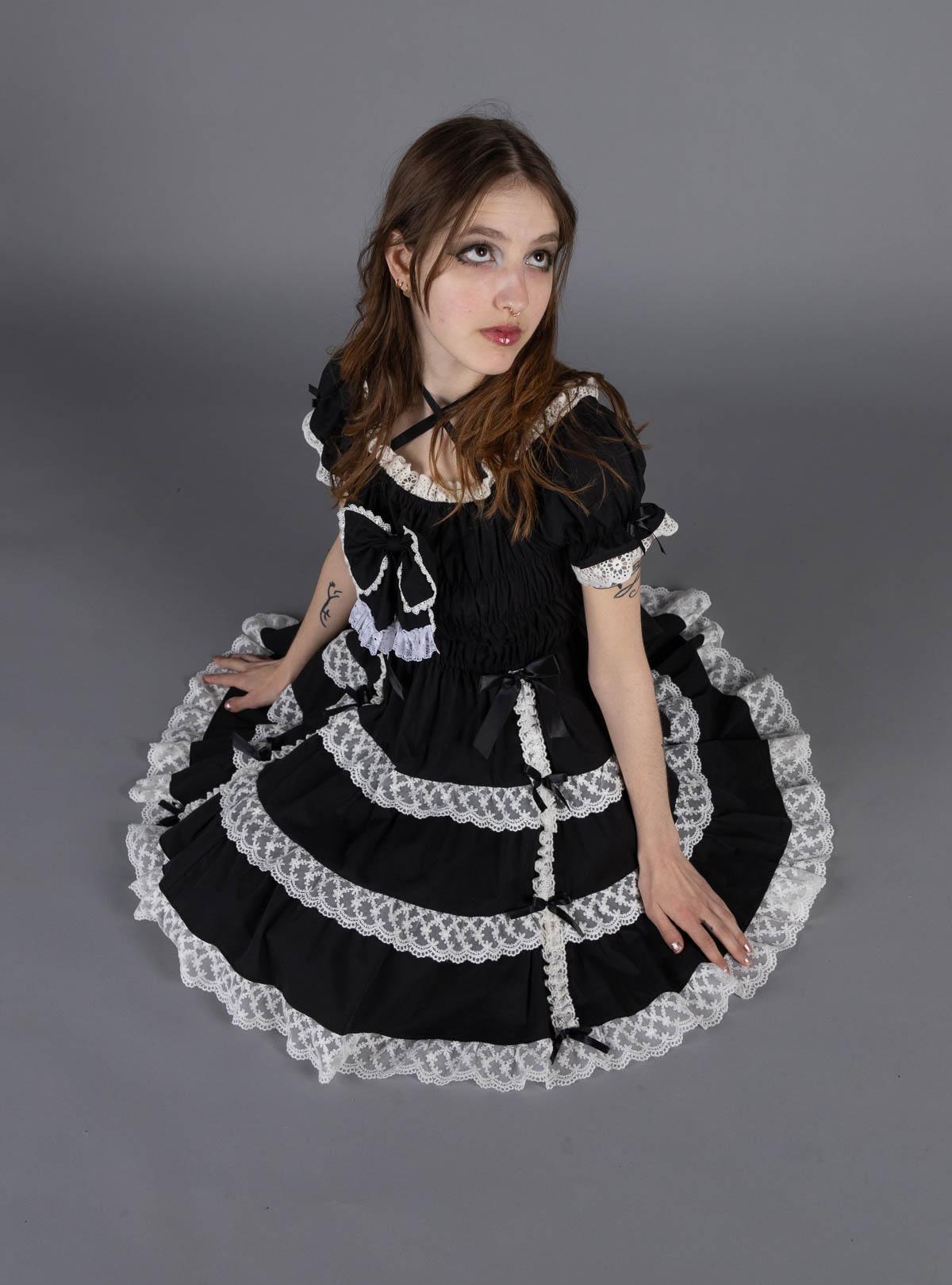
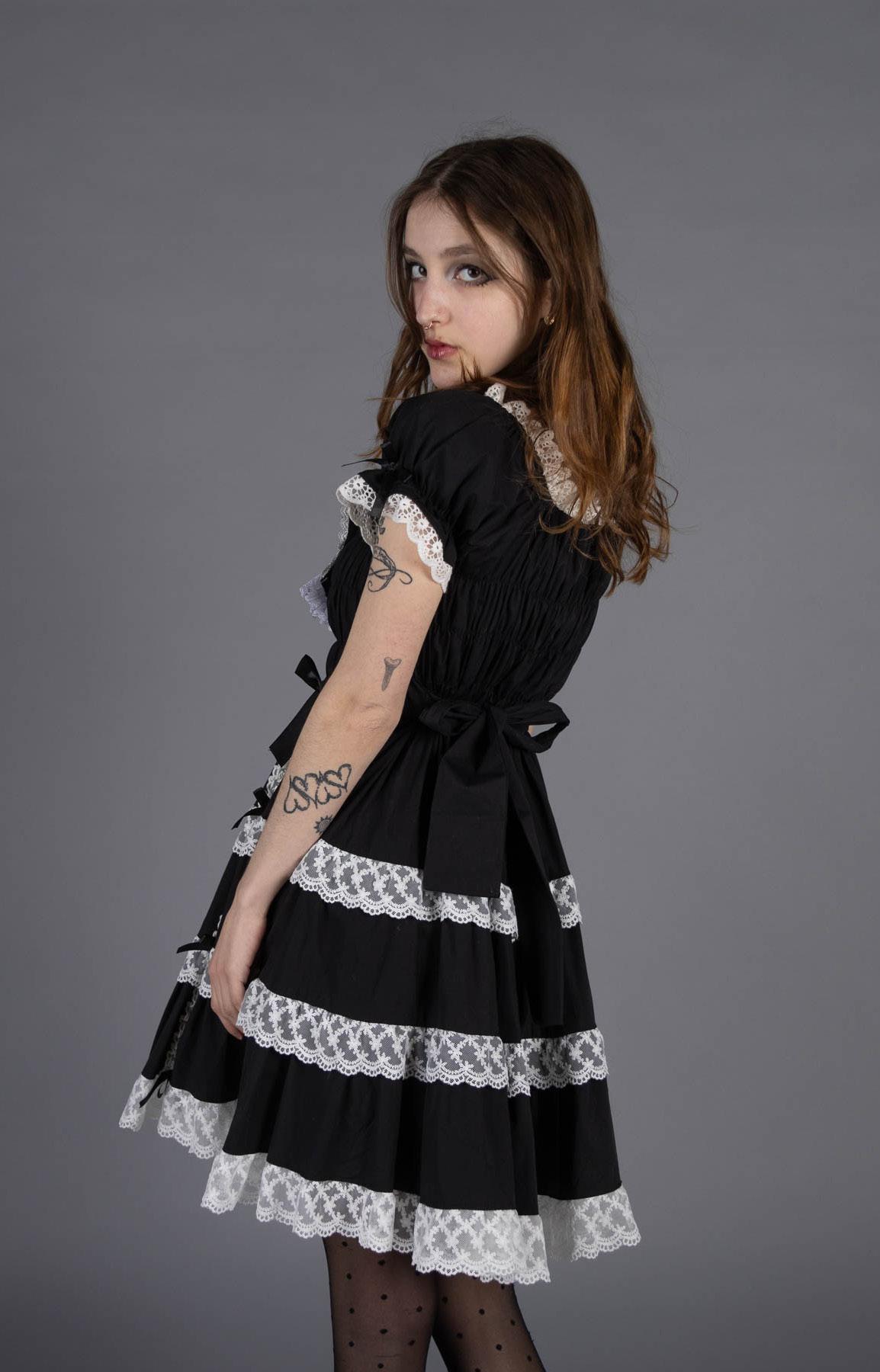
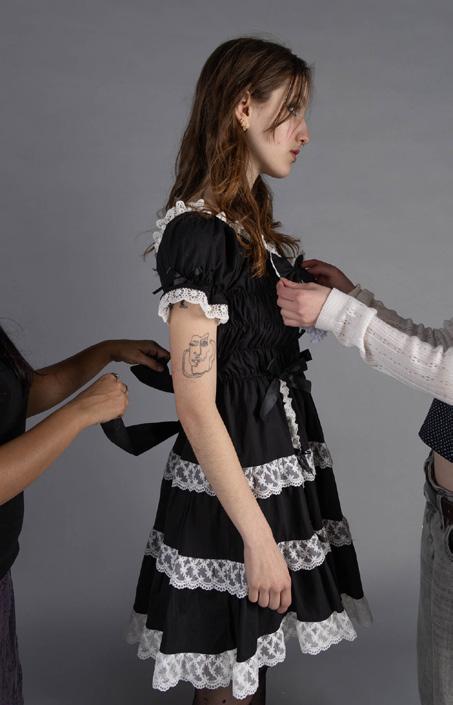
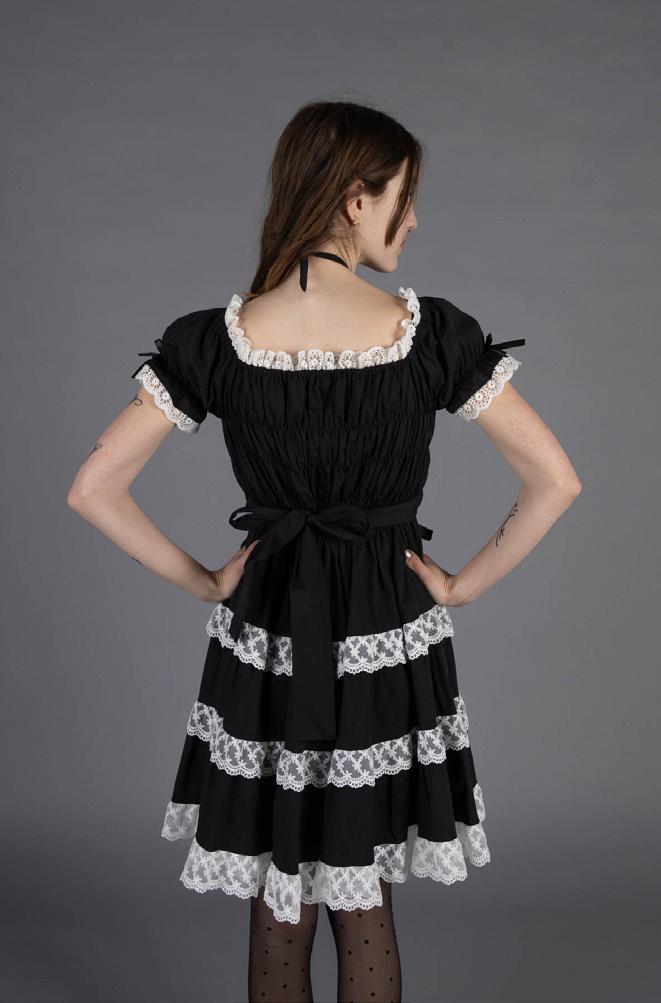
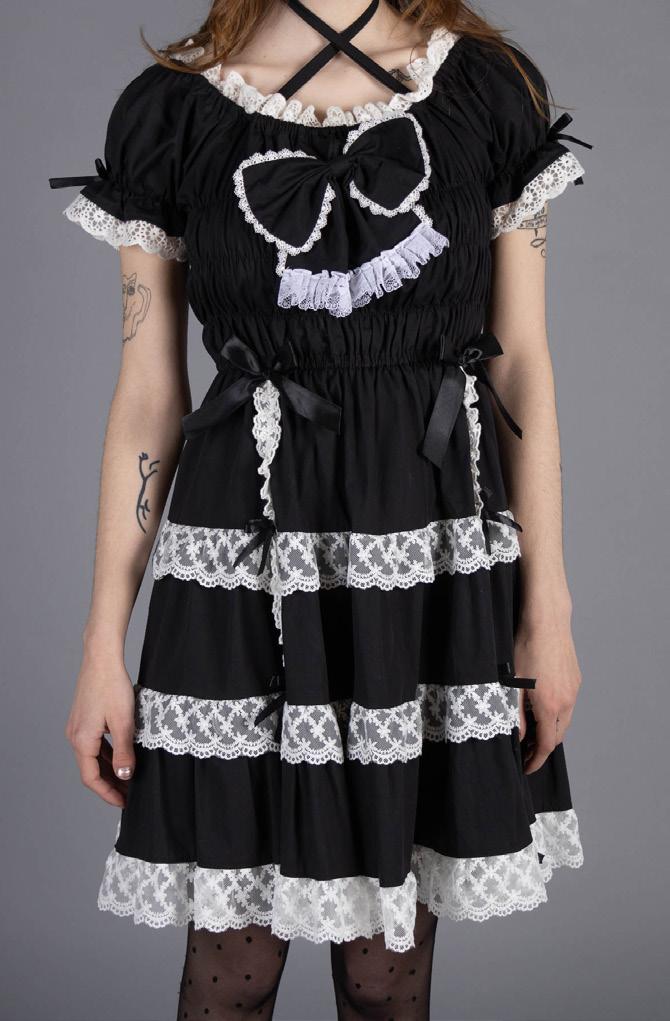
Auna: My inspiration behind the look was a brand called L’École Des Femme. It is a French brand, and they try to do very editorial, but vintage looks that are very feminine, and very delicate. But I was also inspired by the Japanese Lolita fashion, especially with the skirts and just the silhouette of their dresses. Overall, it’s a very doll-like, fashion style, and I really liked that.
Madeleine: As far as sewing goes, how did you construct it?
Auna: I used a sewing machine and I did look at a couple of patterns for the bodice, but I knew I wanted the bodice to be stretchy. I had a ribbon in the sides so I would be able to tie it in the back so it could be stretchy but also cinch in the waist.
Madeleine: What was the most intricate sewing part?
Auna: It was the bodice because using elastic string on a sewing machine is not easy at all. I would just have to do
double stitches so I could pull the threads at the ends to try to make a ruffle effect so that it could plead together. That sewing took me multiple tries because the thread kept breaking; I had to change the stitching a lot of the time, and I definitely freestyled and experimented to see what would work.
Madeleine: Were there any challenges bringing that outfit to life?
Auna: Yeah, I was worried that it would either look too frumpy or too conservative. Again, I did want it to look very doll-like but also mature at the same time. Trying to balance that with fluffy ruffles was pretty hard for me to do. But I think switching the color was a good idea, too.
Madeleine: What color was it going to be originally?
Auna: I was originally going to make it all white, but then I ended up using black.
Madeleine: What kind of reaction would you like this piece to have? What do you want the audience to take away?
Auna: That is a hard question. I never really thought about it that much. I’ve never made a dress for someone else, so I guess my thought process was, “What would look like what I’m imagining?” instead of, “What would look cool, what would people like?” Instead, I’m just thinking, “How can I bring what’s in my head to life?”
Makeup: Ireland Bone
Photographer: Lizzy Spira
Model: Dorothy Yaqub Designer: Auna Mandal
SOMMERS AND SAM ELUEMUNOH
Bridget: What was the inspiration behind this look?
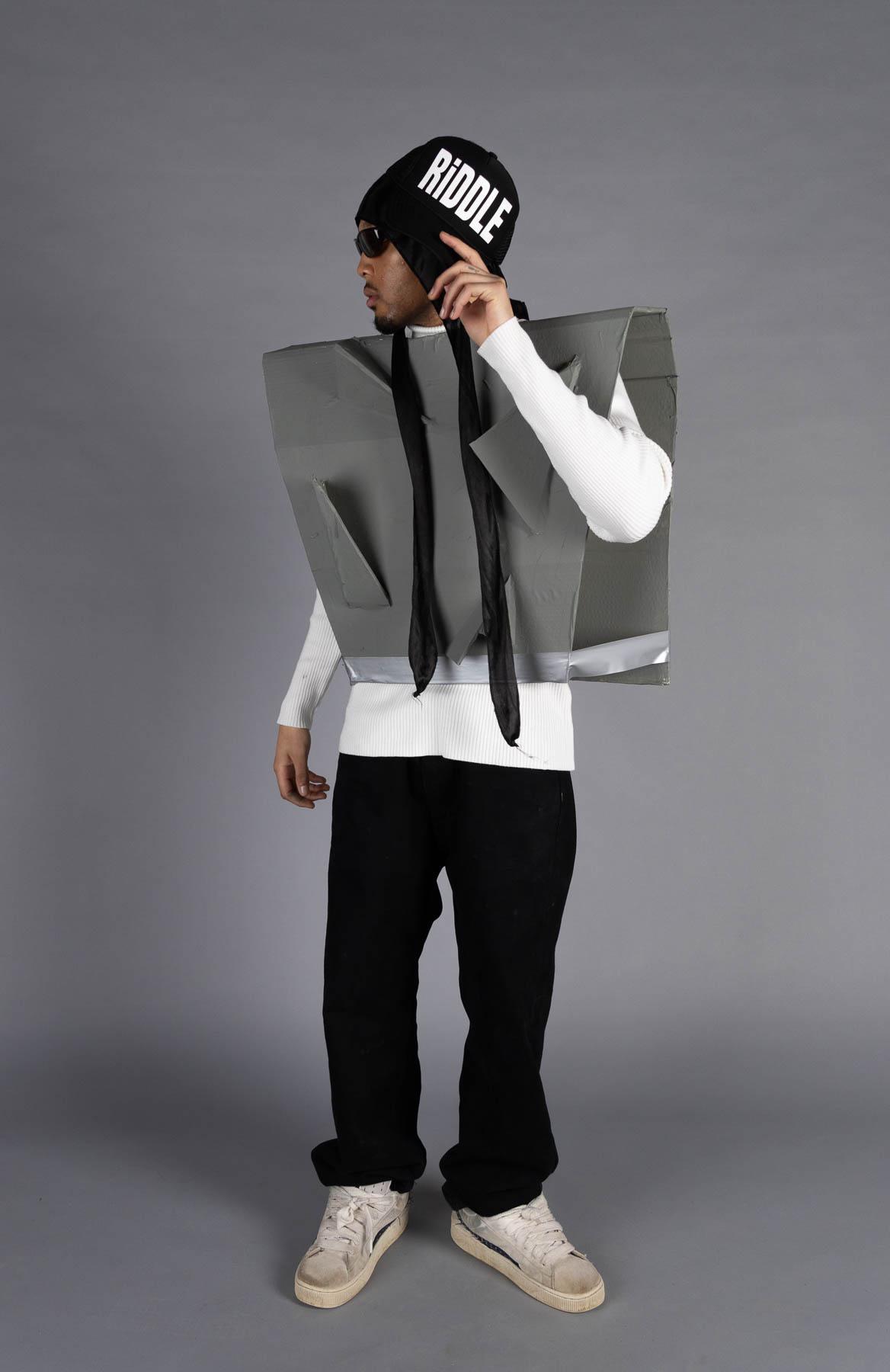
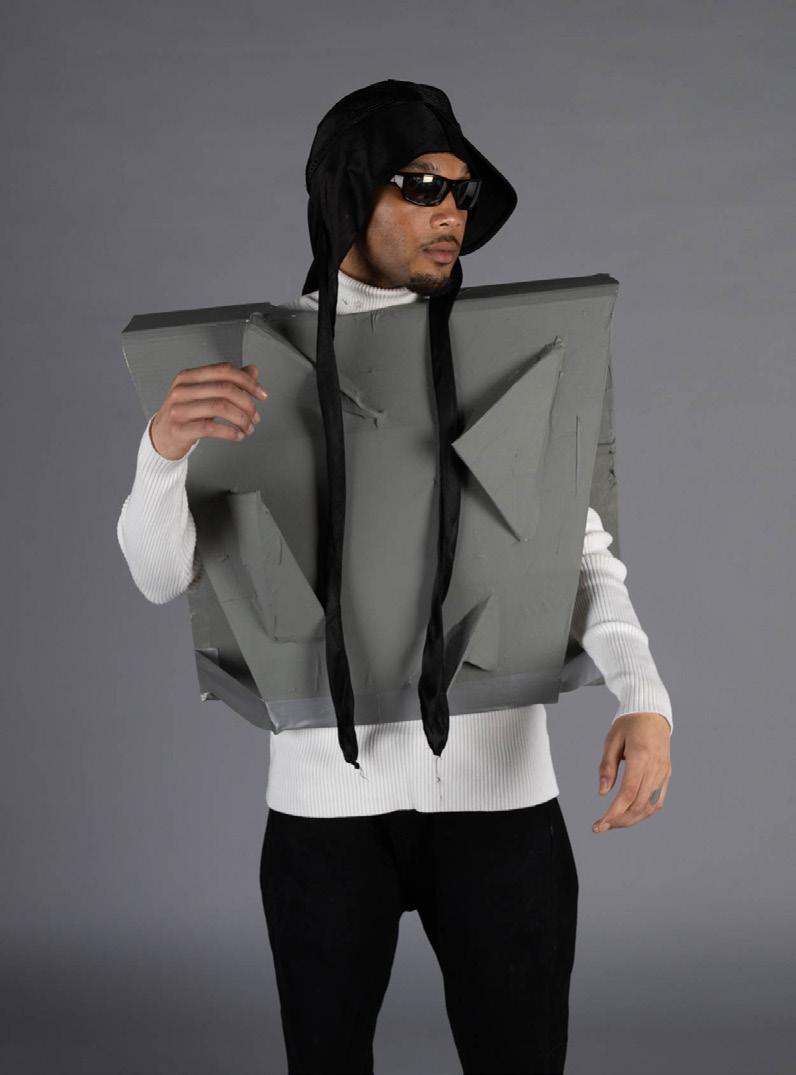
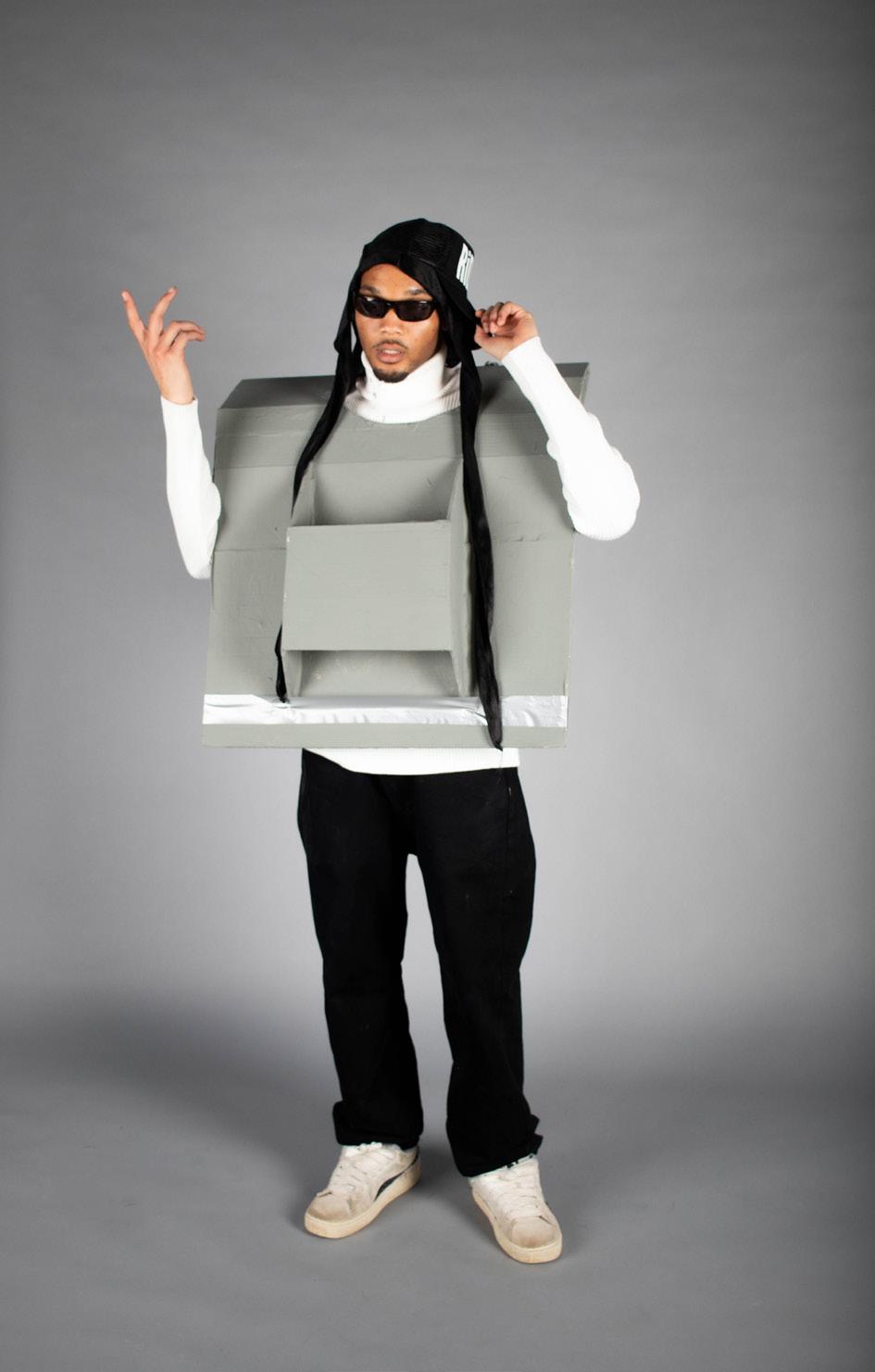
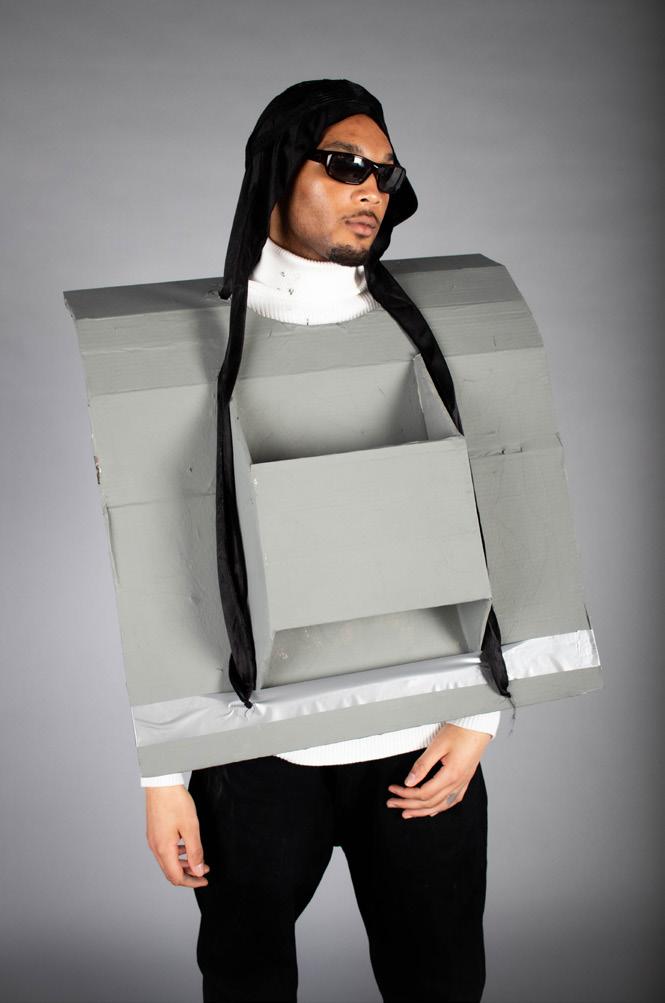
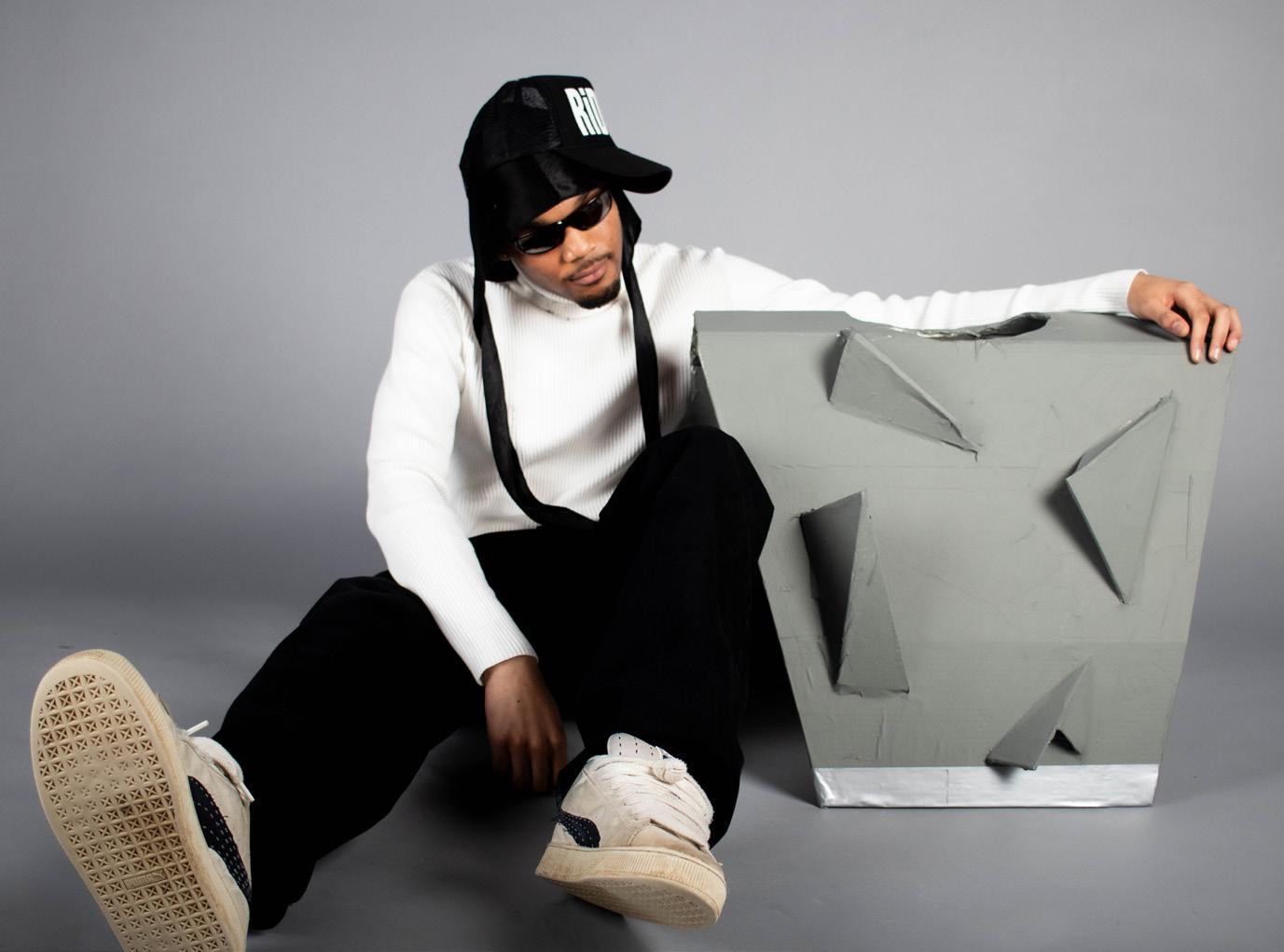
Kendall: As a sculptor, I wanted to challenge myself to make an art piece that is wearable. I worked in collaboration with my model Sam to make something he felt good in that also combined well with my brutalist and minimalist style.
Bridget: Can you talk about the materials or techniques used in this design?
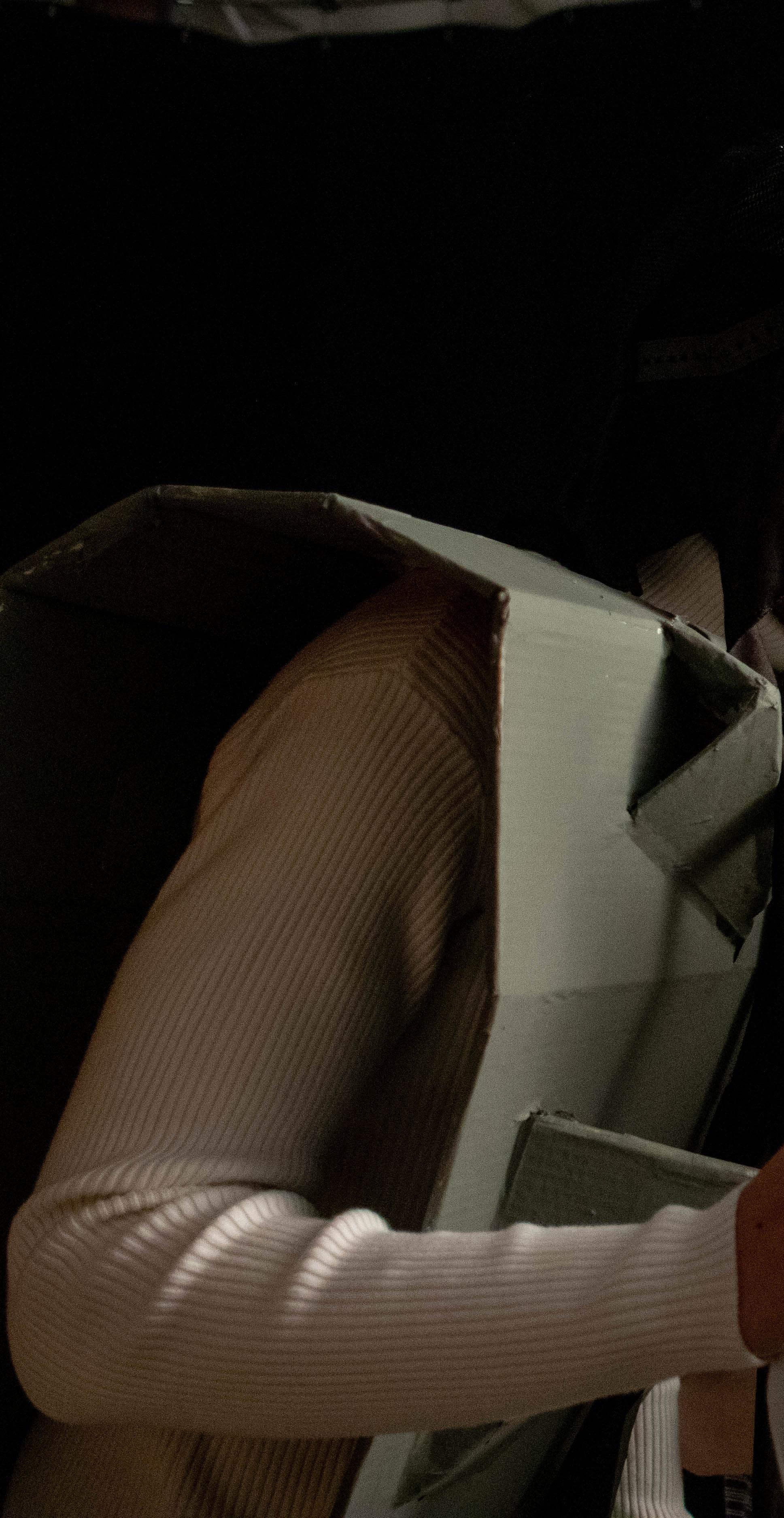
Kendall: I used cardboard, paper-mâché, and paint to make this look. I originally wanted to use metal but the materials were too expensive and I found cardboard to provide a different feeling to the look that I ended up really liking (plus, it’s a lot lighter and easier to walk in).
Bridget: How did you decide on the styling and accessories for this look?
Kendall: Sam and I worked together on the styling of this outfit discussing the colors and pieces we wanted to include. We deliberated a lot of color choices but ended up
going with a simple palette of black and white to go with the gray body piece. I think the white ribbed turtle neck is one of my favorite parts of the look, it gives a backdrop to the body piece and really pops while adding interesting texture. Sam brought in his hat and durag which dangles undone, adding more interesting shape and movement to the look. I am so excited to see how it all flows on the runway.
Bridget: What kind of reaction do you hope this piece gets from the audience?
Kendall: I hope that this look is a surprise to some audience members because it focuses more on shape and sculpture than wearable clothing. I hope it is interesting and makes Sam feel empowered to walk in.
Model: Sam Eluemunoh
Designer: Kendall Sommers
Photographers: Lizzy Spira and Simone Martel
SIMON SAVOYE AND SPENCER ROBINSON
Madeleine: What was the inspiration for your look?
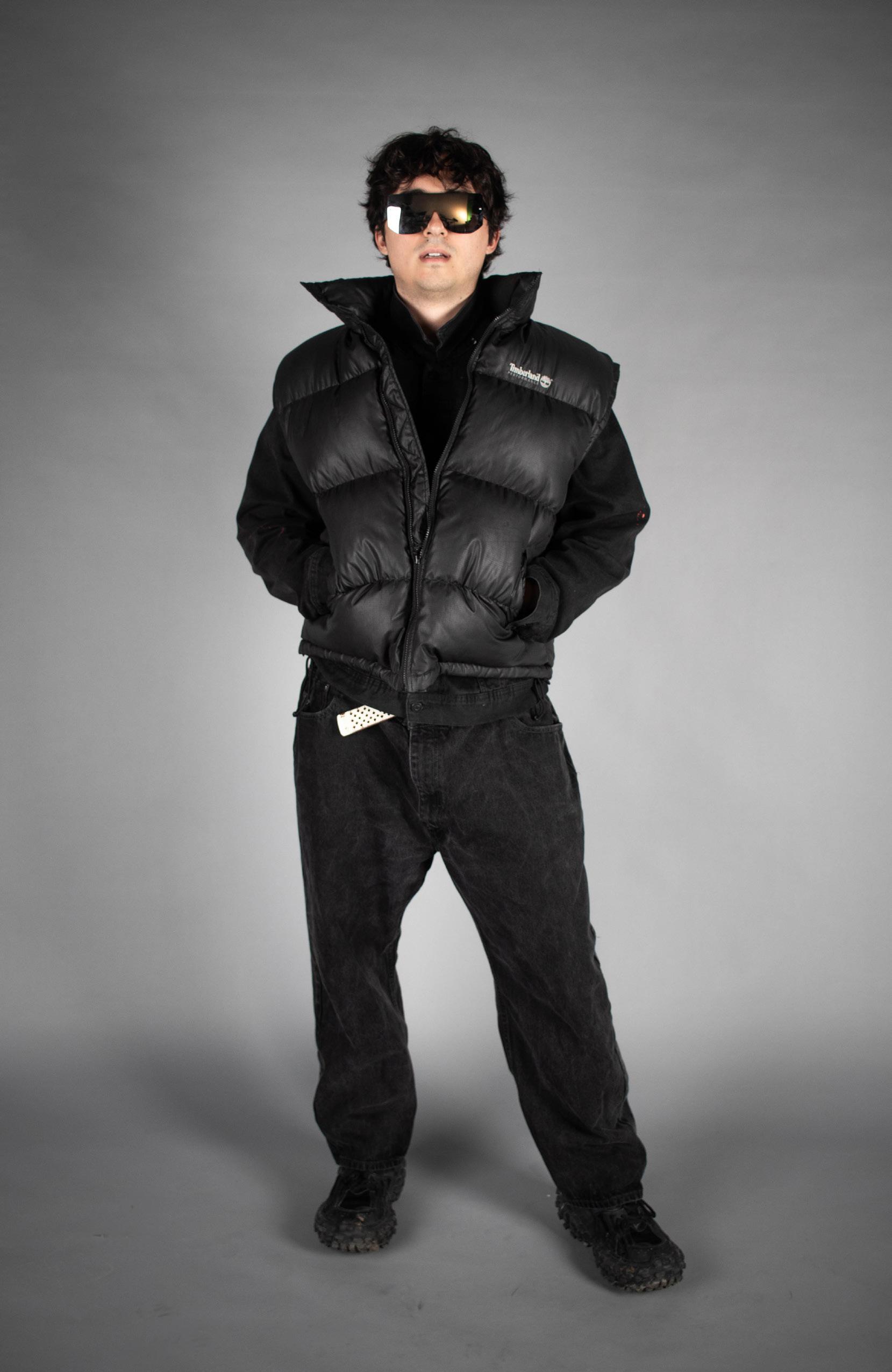
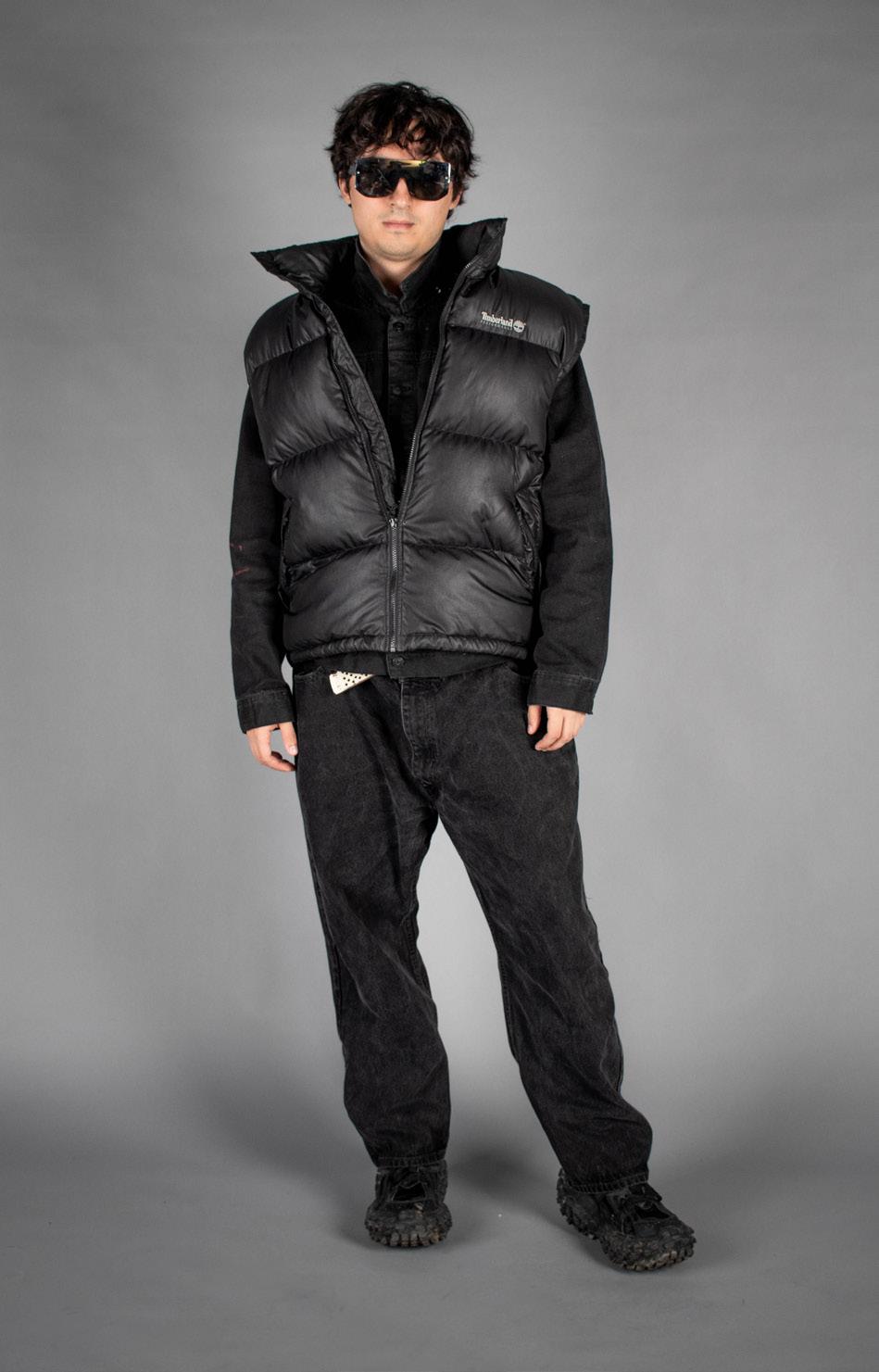
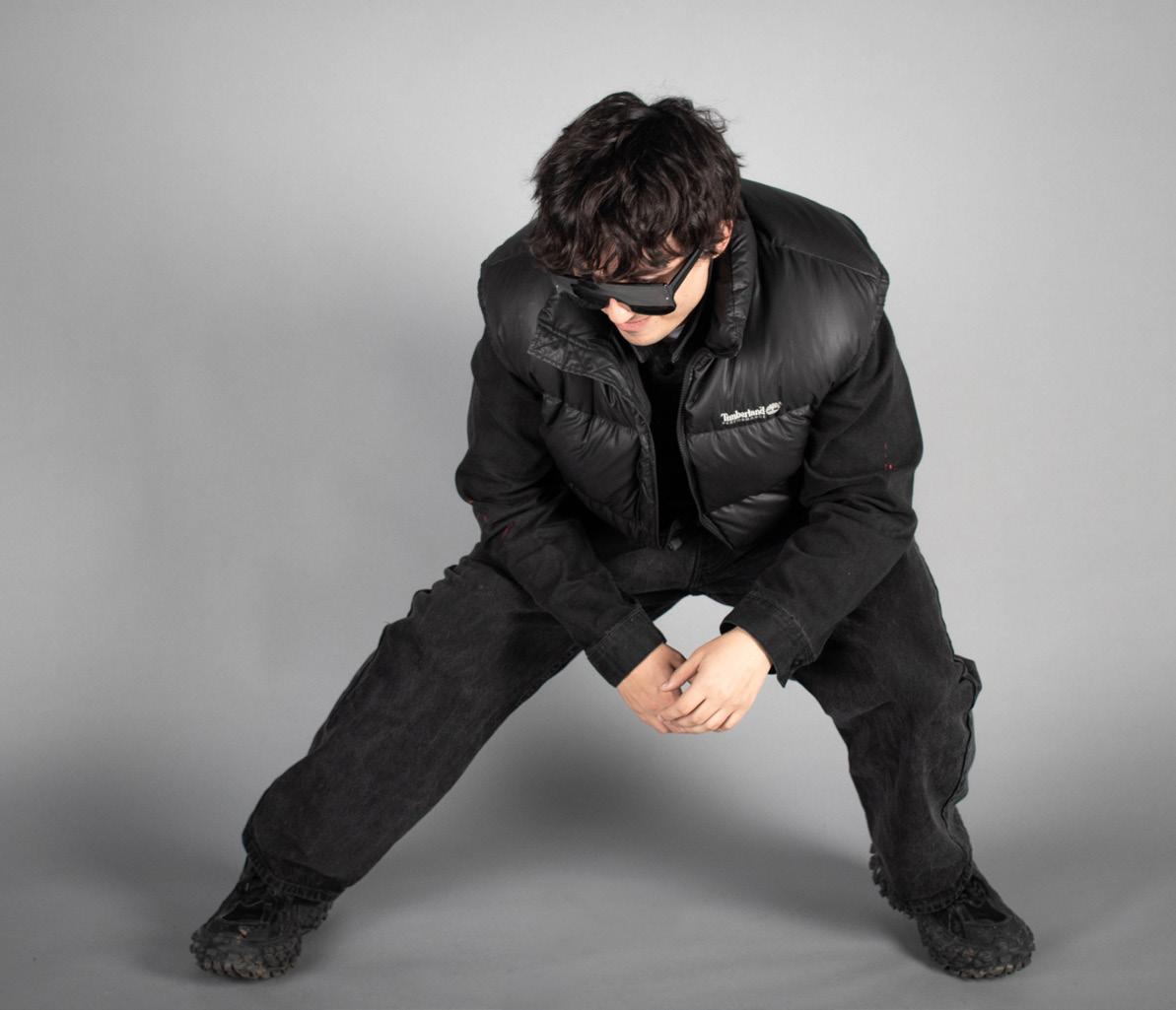
Simon: Part of the main inspiration behind my look was Spencer, who’s my model. He made me do a student film for him, so I wanted to make him model for me for the fashion show. I wanted to put him in something that would take him out of his comfort zone while also allowing me to express myself because I think it’ll make him feel more confident in the day-to-day.
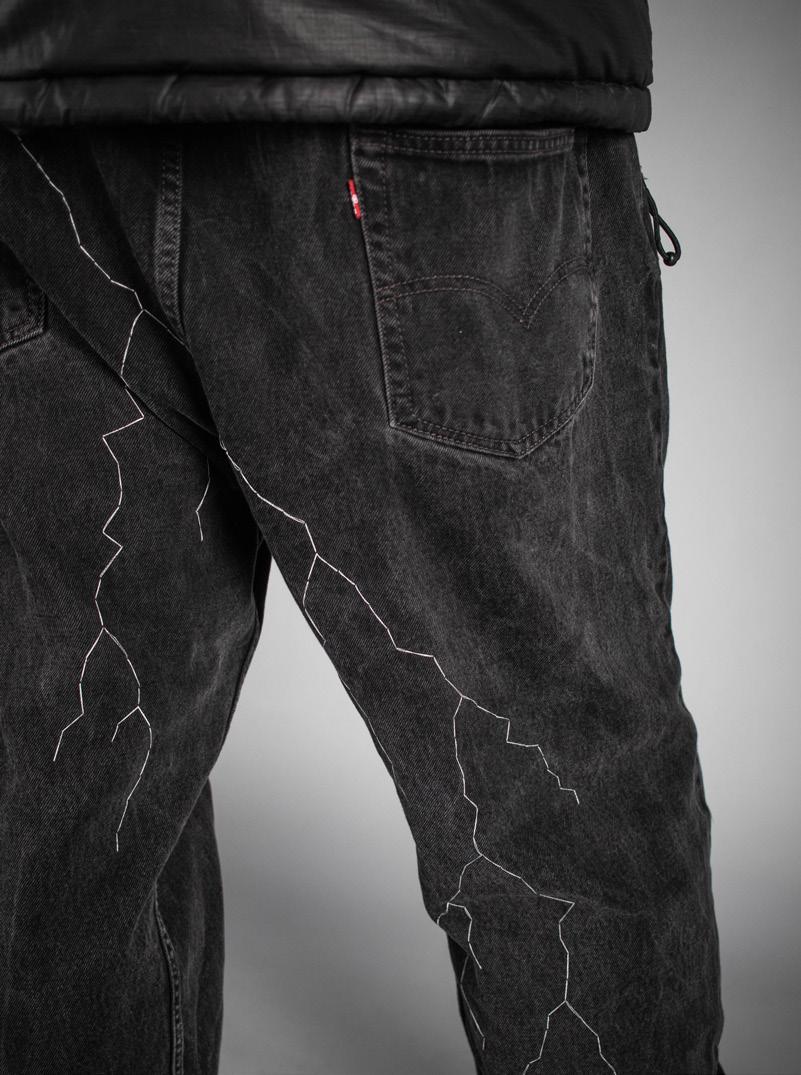
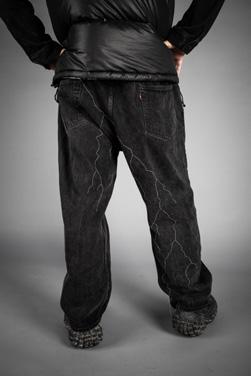
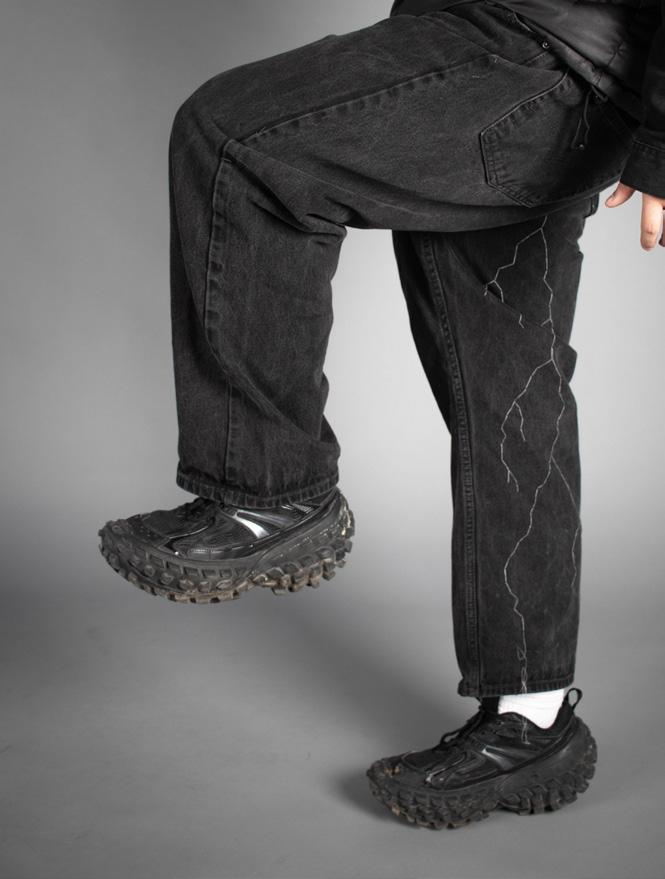
And then, additionally, you’ll notice the lightning pattern on the pants. I’ve been loving reflective materials for a while. I think the way they mess with your eyes is super unique, and nothing else does that; it’s always so noticeable. So I wanted to use a reflective thread and experiment with it because I’ve never used it before, and then also just because I like the way it looks and the way it’s visually unique.
Model: Spencer Robinson
Designer: Simon Savoye
Photographer: Simone Martel
CELIA SCHWARTZ AND MADDIE CHAPMAN
Briget: What was the inspiration behind this look?
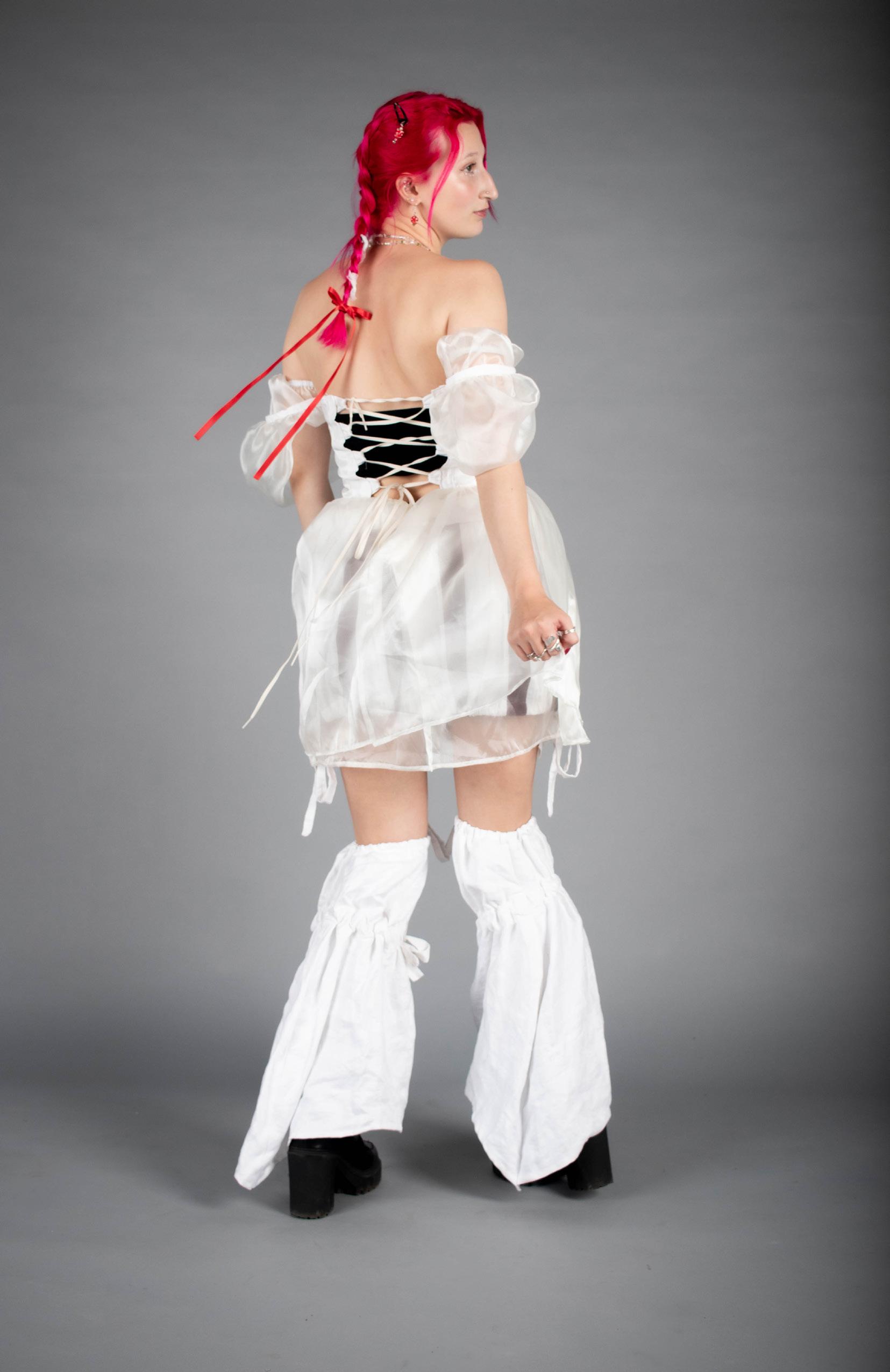
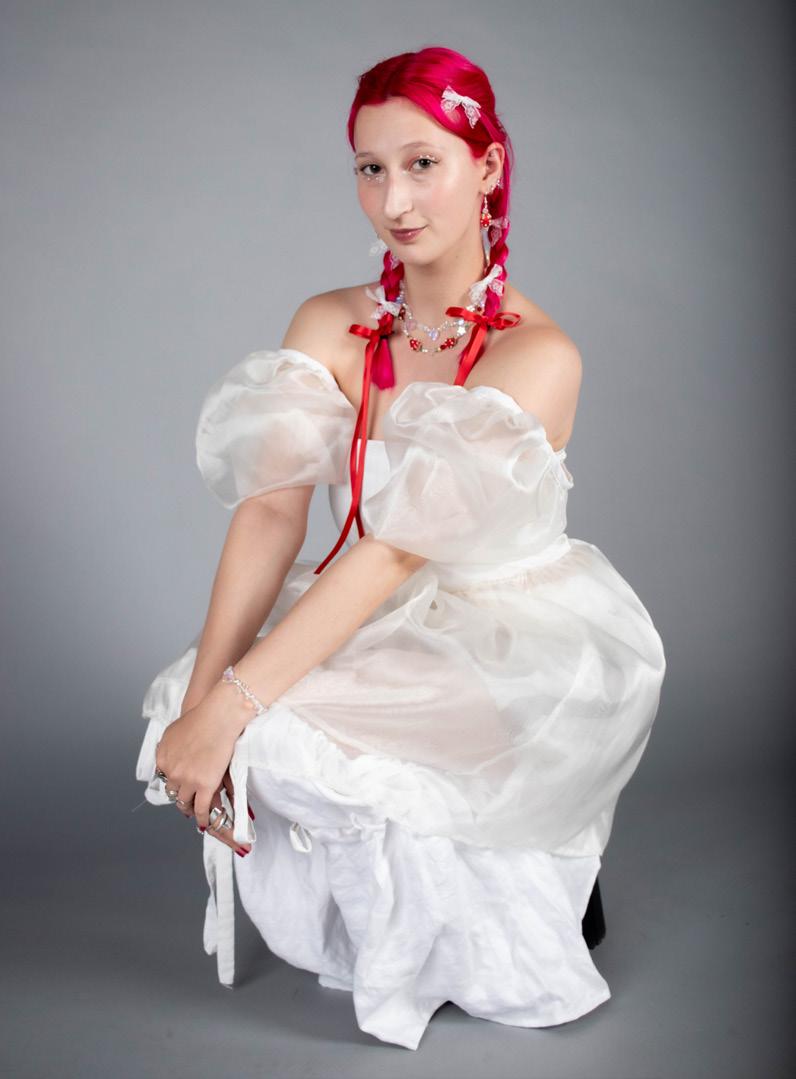
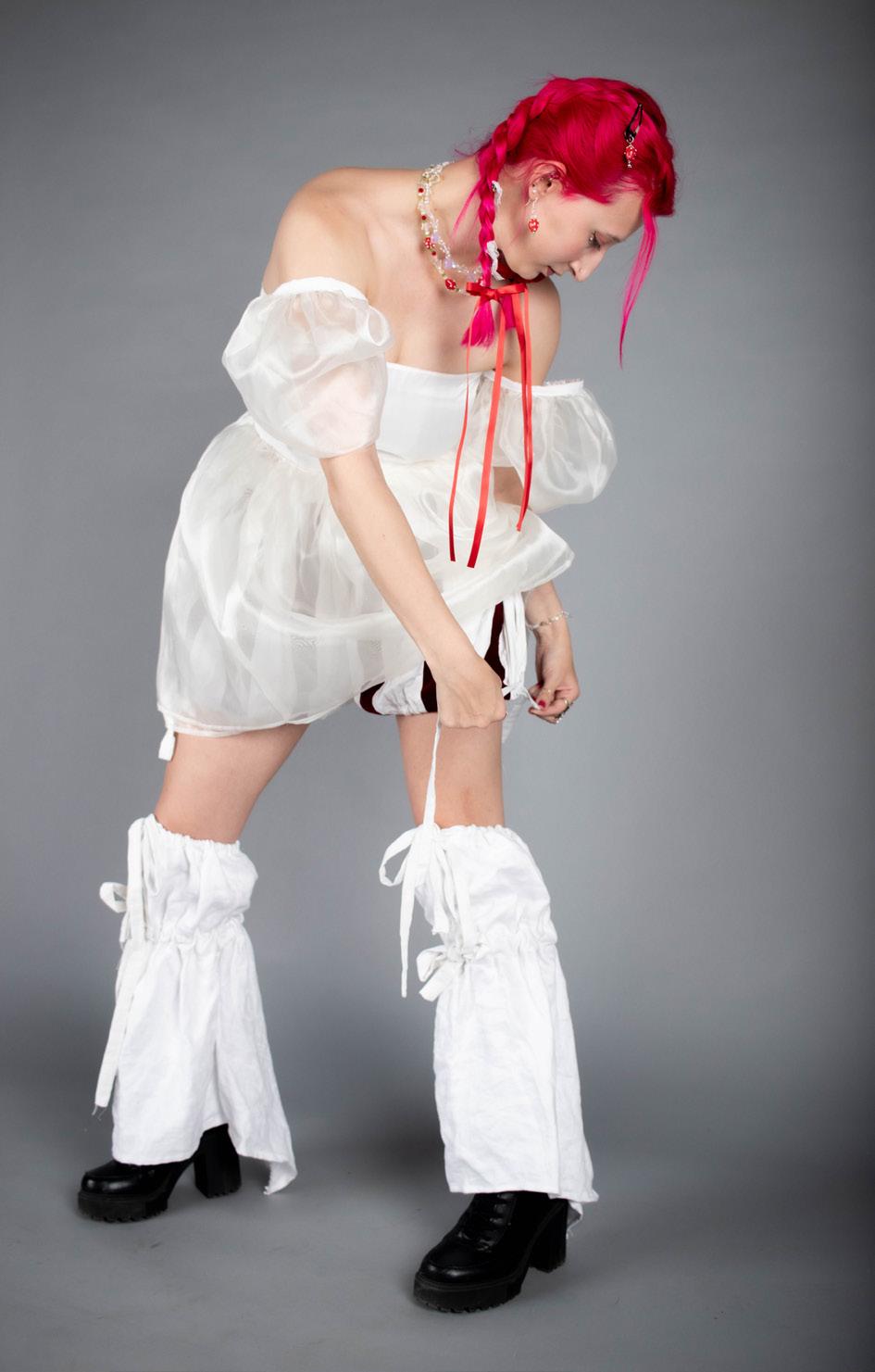
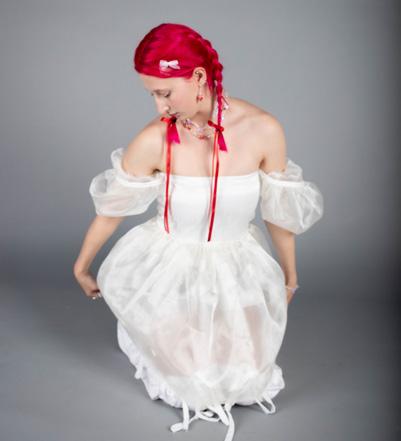
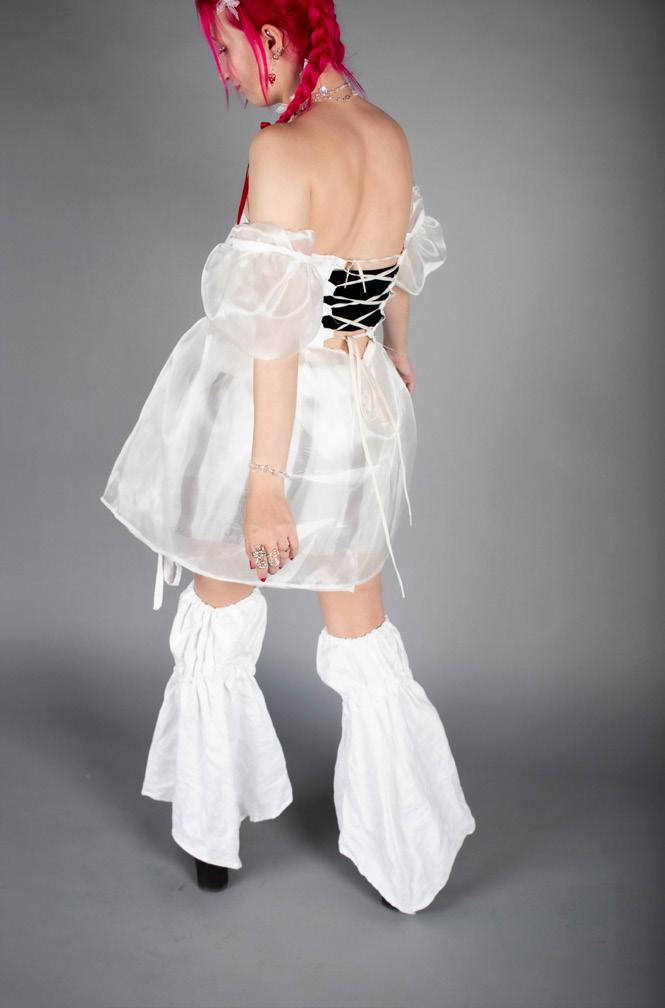
Celia: I was inspired at first by a kind of maximalist baroque aesthetic, similar to the brand Selkie and their dresses. I really love playful silhouettes and the joy of taking up space. Maximalism is really exciting to me because I feel like I can be a little kid playing dress-up again, merging puff dresses with leg warmers and bloomers just because it feels good to wear them all together.
Bridget: Can you talk about the materials or techniques used in this design?
Celia: For the dress I used a polyester I got from my local JoAnns that I thought would gather more nicely than a tulle. I wanted it to be on the more translucent side so you would still be able to see the bloomers underneath, but I still used two layers to make sure the skirt still poofed/ was supported in its poof. For the bloomers, I used a combination of old bed sheets and second-hand corduroy. Additionally for the legwarmers, I used an old tablecloth. Usually in my designs, I use a lot of patchworking tech-
niques with second-hand materials, and I did that here too for the bloomers, which involves making fabric out of both fabrics. Since I was just doing a simple stripe, I just cut my pattern out of the bedsheet material I was using and then cut vertically through the fabric, inserted the corduroy, and finished it off with a top stitch to reinforce on either side since I didn’t have enough time to line the bloomers.
Bridget: What were some of the techniques/skills you used to construct the look?
Celia: I think the biggest technique I used was in gathering. You sew two parallel lines with your widest stitch length (my singer heavy duty (beloved) could do something like 4mm) and then you tug on the bottom strings until you reach the desired amount of gather. For the bloomers, I made the waist something like 2 or 3 times the measurement I had and gathered it to make it to the waist measurement.
Model: Maddie Chapman
Designer: Celia Schwartz
Stylist: Lucia Kornzweig
Photographer: Simone Martel

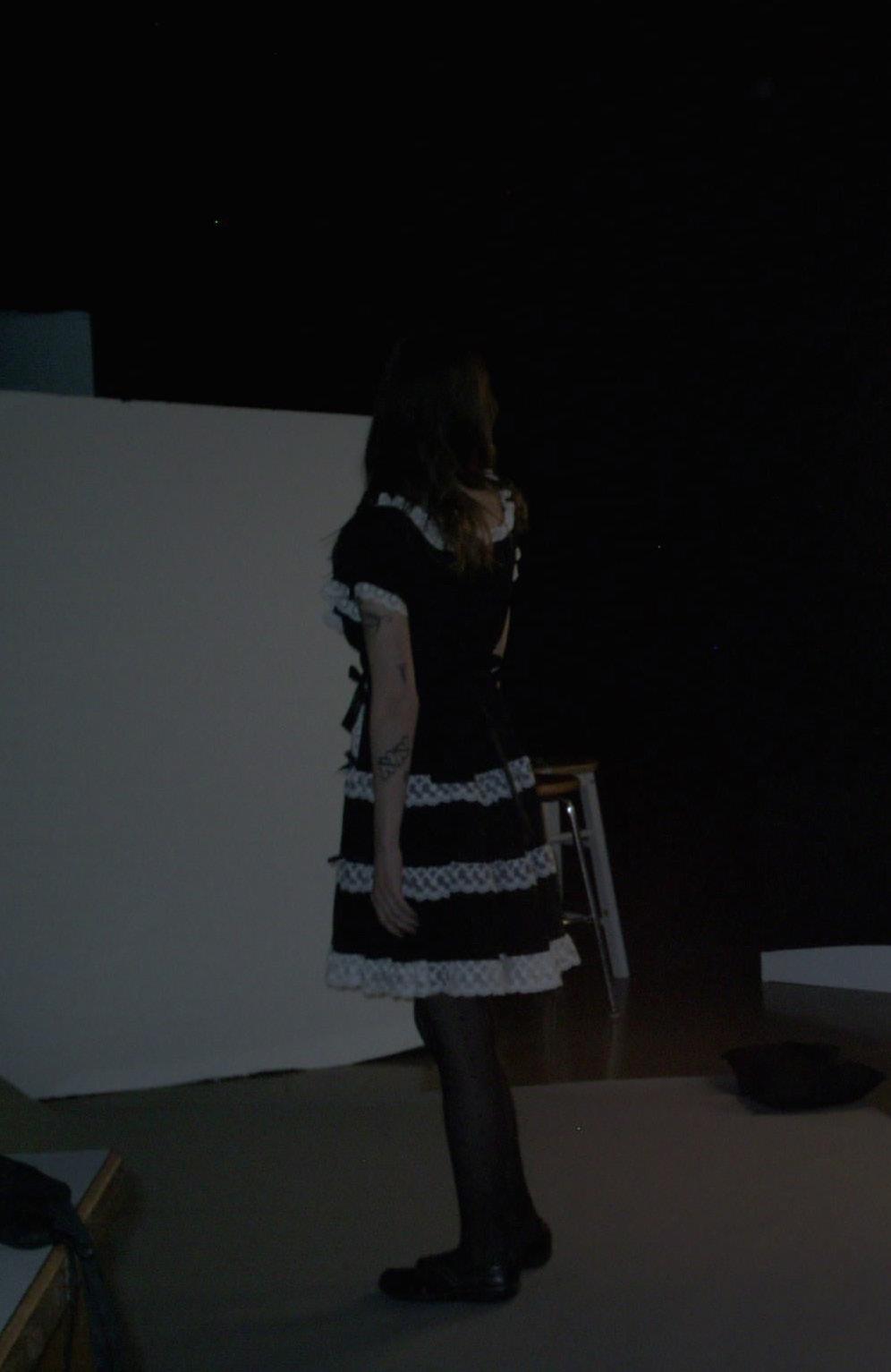
Not pictured:
Two looks by Dylan Gibson, modelled by Ella Newgarden and Melissa Vu.
One look by Simon Savoye, modelled by Catherine Yost.
by Ireland
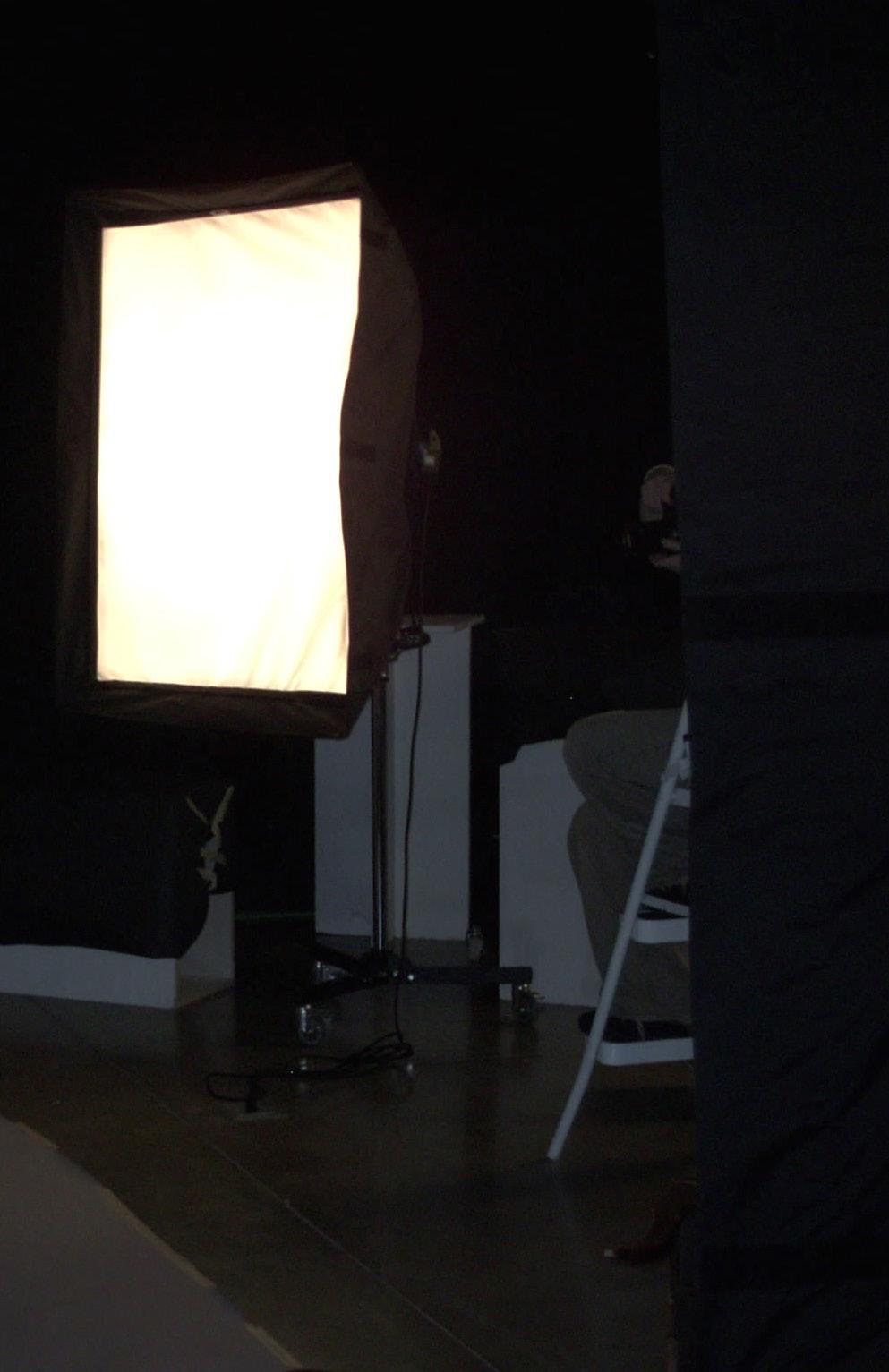
Special thanks to: The Set Design team: Kendall Sommers, Madeleine Reigner, and Kate Grobart. Makeup Artists: Betti-Rose Epistein, Ireland Bone, and Mariah Sooknanan.
Photo
Bone