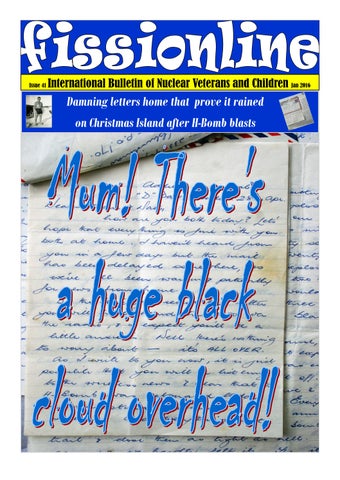
COMPELLING new evidence that troops on Christmas Island were hit by radioactive rain after Hbomb tests on Christmas Island hascometolight
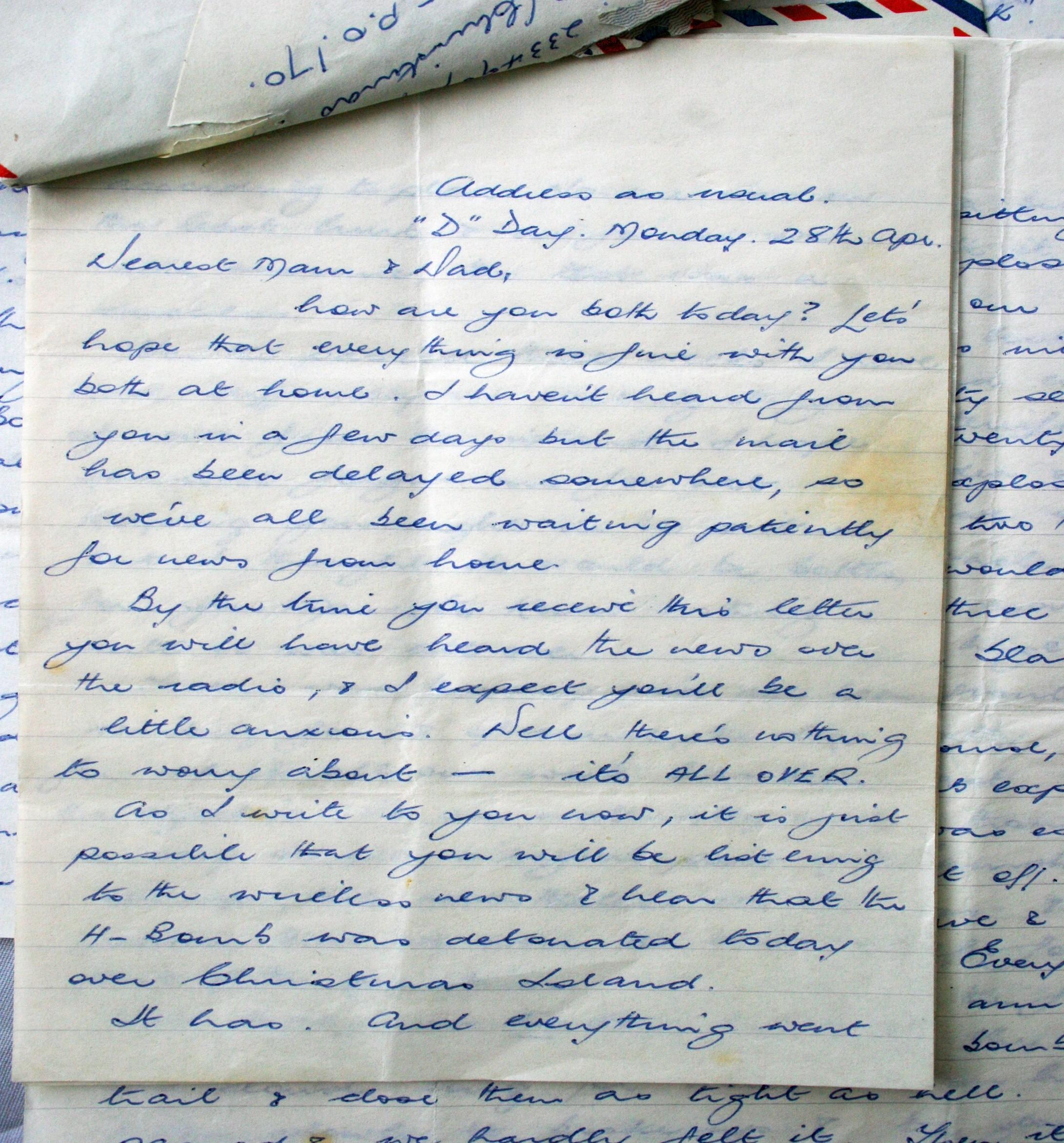
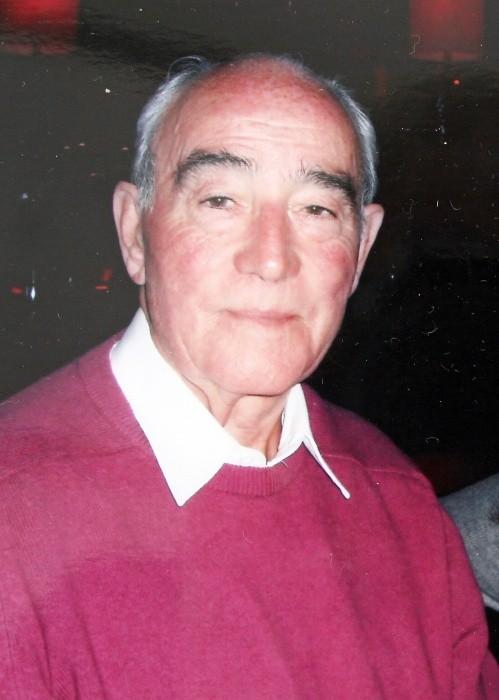
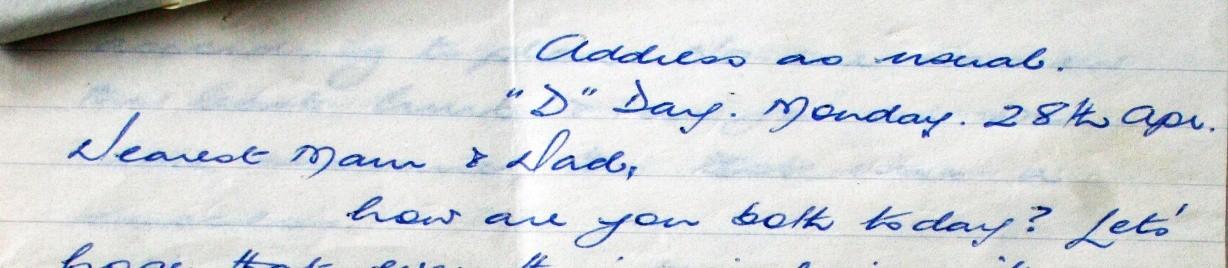
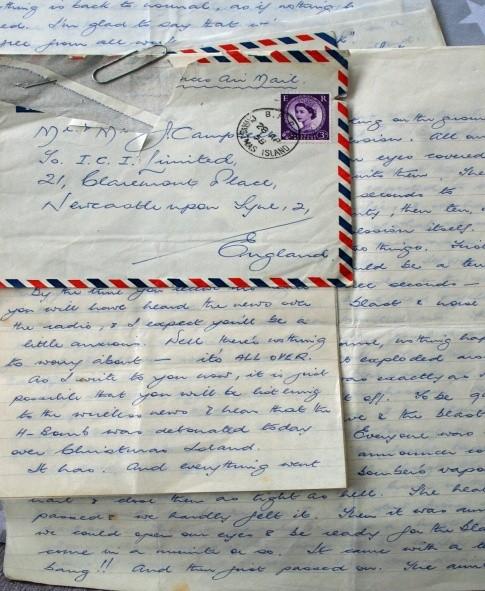
A series of letters from former Royal Engineer Corporal Ronald
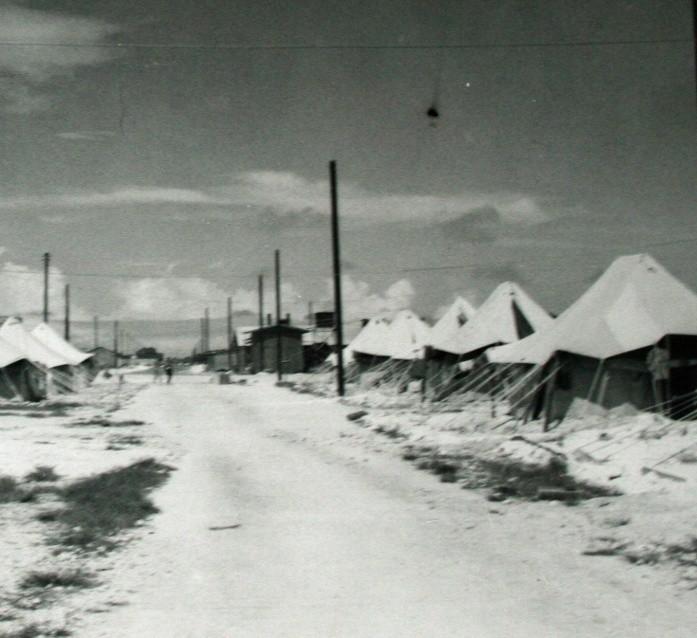
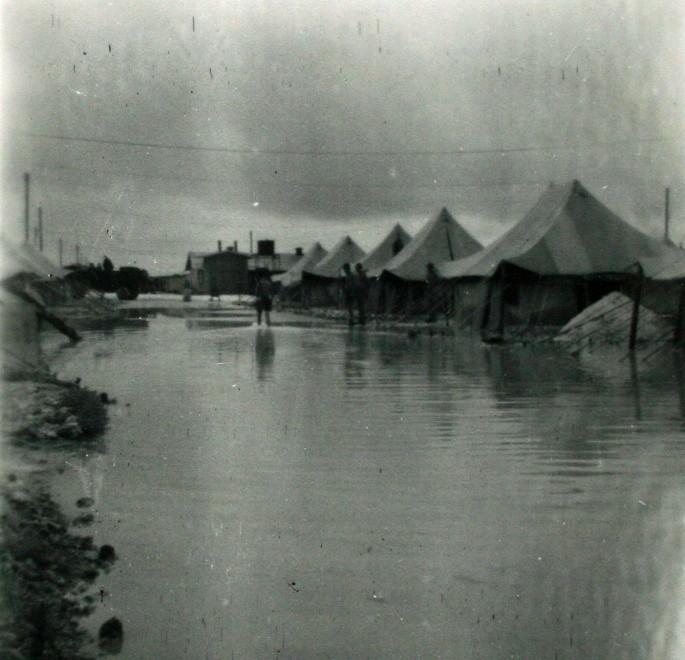
And two remarkable ‘before and after’ photographs he took at the time show the normally dry and dusty road outside his tent awash withfloodwater.
The Ministry of Defence has always denied that it rained after
Taylor who was stationed on the Island in 1958 graphically describe ‘black storm clouds’ and ‘pitching rain’ after the blasts.
were caught in a torrential rainstorm after the cloud passed over head, had ‘fading memories’ of their time on the island. But Mr Taylor’s contemporaneous accounts in letters to his parents provide proof that the men were right about the rainfall all along.
the bombs were detonated just a mile from the south east tip of the island.
And defence ministers accused exservicemen who claimed they
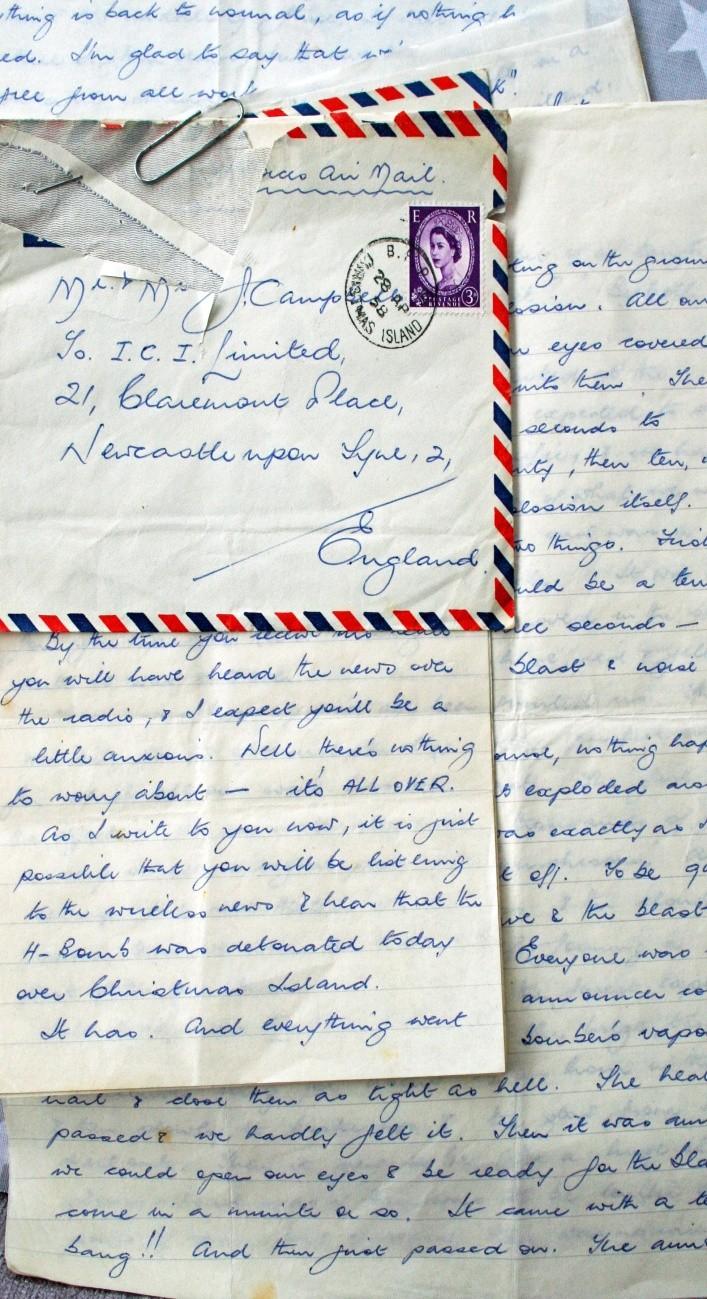
Lovingly preserved by his ‘mam and dad’, the letters from Corporal Taylor at first are full of patriotic enthusiasm for his ‘exciting’ postingonthesun-kissedtropicalisland.
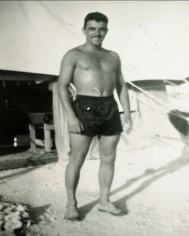
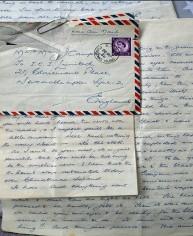
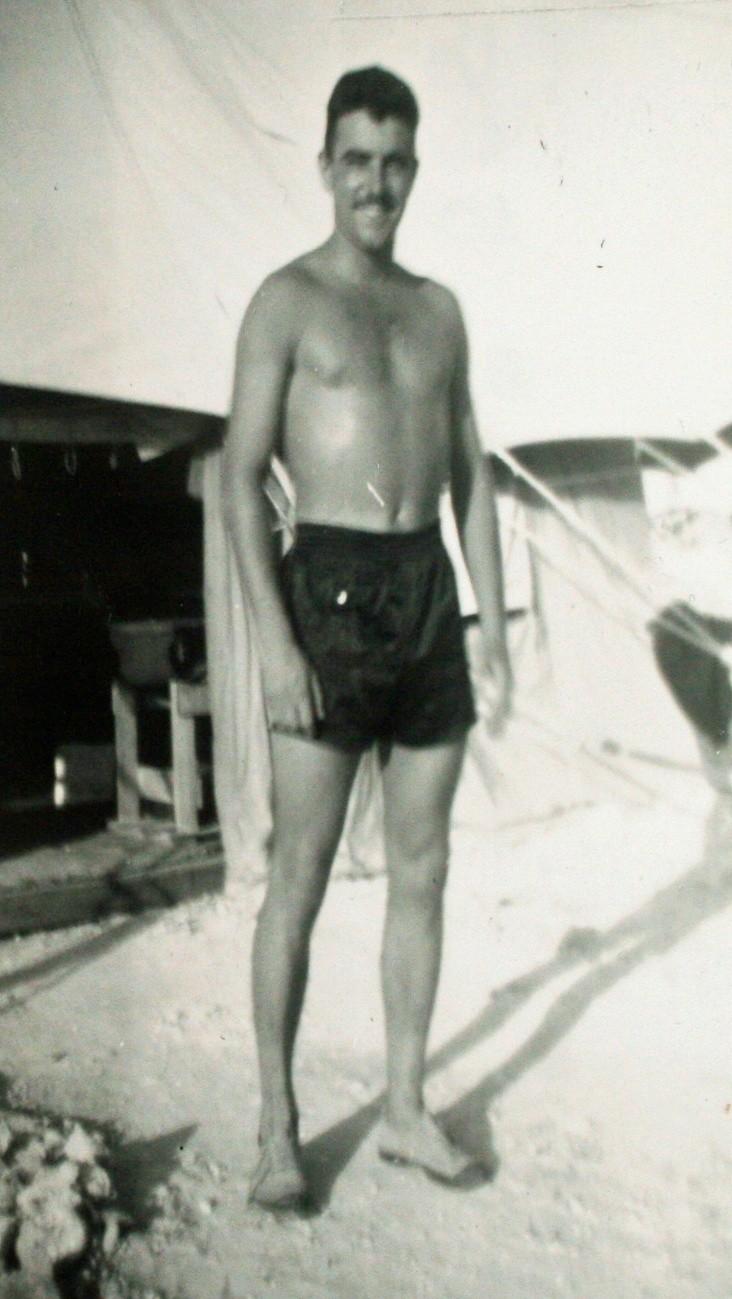
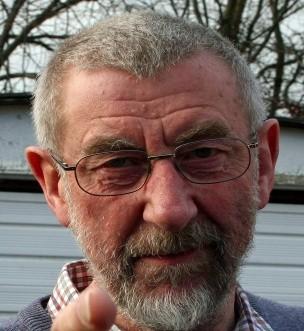
Mr Taylor on the island in 1958; some of his letters home; and the dramatic ‘before and after the bomb’ photos he took of the road outside his tent
But behind the endearments and the entreaties to his parents ‘not to worry’ about him, adarkernarrativeemerges.
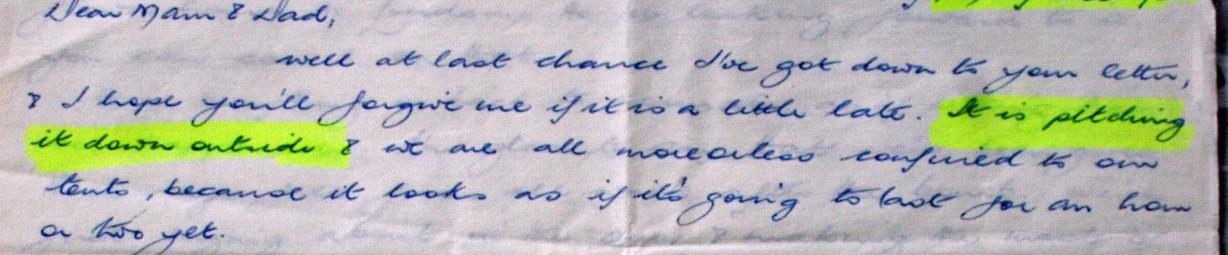
One letter describes ‘a huge black storm cloud’ hovering overhead following a huge 3 -megaton blast, while another describes how it was ‘pitching with rain.’
Mr Taylor, from Newcastle, penned a dramatic account of the explosion for his parents: “When we turned the huge red and yellow fireball confronted us as though the sun had suddenly been moved in the sky. There was a terrific redness as the cloud moved around on itself and formed the huge mushroom. The huge, towering red cloud hung for about half an hour in the sky and then slowly it broke up and the glow from it died out. Then it grew to be like a huge black storm cloud as if there was to be a terrific down-pour of rain.”
were flooded. Mr Taylor took dramatic ‘before and after’ photographs of the road outside his tent, showing the normally dry and dusty road now awash with floodwaters.
his hospital bed. One describes a stay in the camp’s tented hospital on May 11, less than a fortnight after the Grapply Y blast. Army medical records confirm he was treated with penicillin after complaining of ‘lassitude and sore throat.’
‘It’spitchingitdown outsideanditlooks
Another describes a stay in hospital just after another H-Bomb explosion on September 2, 1958. “I’m sorry I didn’t write to you straight after the fireworks, but I was feeling damned tired indeed…”
Hundreds of men, mainly stationed at the port area of Christmas Island were later caught in a torrential downpour. They told how scientists in ‘moonsuits’ drove around urgingeveryonetogetundercover.
At times it was so heavy that large areas
“It’s really pitching it down outside,” he wrote to his mum and dad. “We are all more or less confined to our tents because it looks as if it’s going to last for an hour or two yet.”
Ominously later letters home from Mr Taylor are written from
Aletter dated Sunday 7th September,hasMrTaylor in isolation in a tent reserved for officers. “I’ve got the ‘screamers’ (diarrhoea) again! Don’t worry yourselves, it’s a fairly common complaint out here.” Army records show he was treated for three days in the RAF hospital and that he received homogenisedmilkeveryday.
Mr Taylor later suffered a range of health complaints and after a long battle receives a war pension for hypothyroidism which was deemed ‘attributable to service.’
UNDONE BY LETTERS TO MUM
Slowly but surely the shameful cover-up by the Ministry of Defence over what really happened at Britain’s nuclear bomb tests is unravelling.
Ron Taylor’s letters, published here for the first time, are graphic proof that it rained on Christmas Island followingH-Bombblasts.
Other servicemen, who years later told of a huge rain storm following the Grapple Y blast, were rubbished by the MoD who said they were mistaken, or worse,makingitallup.
Indeed when a Dispatches TV documentary first reported the servicemen’s claims in 1990, the then Tory defence minister Archie Hamilton was apoplectic with rage. “These are irresponsible and misleading allegations,” he raged in a Commons statement, adding: “The allegations (about rainfall) are based on a seriesoffactualinaccuracies.”
Labour defence minister Dr Lewis Moonie was equally dismissive in a written answer in 2003 to an MP’s question about the rain:
“Environmental monitoring for Main Camp on Christmas Island for the date of the trial showed….that there wasnorainfall.”
These are now shown to be hollow statements indeed. Ron Taylor’s eyewitness ac-
By Alan Rimmer
counts cannot be rubbished because they were written on the very daysthatatleast two of the H-bomb blasts tookplace.
At a stroke Mr Taylor has blasted apartacover-up that began60yearsagowhenthe Grapple Y explosion (in the words of a secret Met Office
report obtained by fissionline) caused cumulonimbus(storm)cloudstoform. Those clouds causedadownpour and an untold number of troops were caught up in it. The MoD have known all along that that rain was contaminated with fallout, but correctly calculated that any ill effects on the men would take many years to manifest themselves.
Well many years have now
passed and the dire consequences for hundreds, if not thousands of servicemen and their children are plain foralltosee.
Yet despite the weight of evidence now stacking up against it, the MoD has decided to tough it out and continue to deny any culpability. They have already spent millions of pounds in legal battles to keep a lid on the scandal. But they are planningtospendevenmore by rigorously fighting the claims of a handful of nuclear veterans who are demandingwarpensions.
The two sides are due to go into battlein Julyofthisyear when a judge will finally decide who is right. And this time it is the MoD who are on shaky ground, for the evidence is against them and they will not be allowed to lie their way out as they have done so many times in thepast.
And just to make sure, fissionline has more evidence to present which could tip the balance even more in thenukevetsfavour.
But wouldn’t itbedelicously ironic if it turned out that the mighty Ministry of Defence was finally undone by a simple letter home to mum?
Insidethe‘Dungeon’ COME AND JOIN THE FIGHT FOR JUSTICE
TODAY fissionline launches its ‘LET JUSTICE BE DONE’ campaign.
It has a simple aim: Justice and compensation for the forgotten victims of Britain’s nuclearweapons programme.
More than 20,000 servicemen were sent overseas in the 1950s to witness nuclear bomb tests in Australia and Christmas Island. Many have since died from cancers or are suffering crippling illnesses and other diseases linked to radiation exposure. Generations of their children are suffering asimilarfate.
The British government refuses to accept any responsibility, insisting there is
no evidence to prove nuclear veterans were harmed.
tainable as slowly but surely fissionline and other fellow travelers expose the cover-ups and lies. The damning testimony of Mr Ron Taylor in this edition is butoneexample.But thereis muchelseto be done before the walls of deceit crumble.
This defence is now unsus-
The path to achieving that objective begins in July when a senior judge will decide whether a handful of veterans should get war pensions. Success there would be a major milestone in our campaign. If you want to join the fight and register your supportcontact:fissionline@gmail.com
The Ministry of Defence, (formerly Ministry of War), has a long history of employing deceitful practices in opposing former UK nuclear tests veterans’ claims for radiation inducedcancersandillnesses.
During the proceedings before the former European Commission of Human Rights on access to documents under PAT Rule 6, in McGinley and Egan v. UK, the Commission asked the UK (i) whether contemporaneous radiation level records for ChristmasIslandwereclassified and(ii)ifsowhy?
In denying the veterans were harmed by participating in the experimental nuclear tests, the UK (MOD) falsely replied that:- (i) such radiation records were not classified and that “no information was withheld from the applicants as there was, and is, no reason to do so.”; and further that; (ii) a summary of the information on the Christmas Island radiation level records was in fact contained in a “AWRE” (Atomic Weapons Research Establishment ) report which was placed in the Public domain in 1993. (Technical Note no.16/93- Environmental Monitoring at Christmas Island 19571958)
qualifications and experience were
BY IAN ANDERSON
Attorney, New York
notdivulged.In facttheAWREspecifically denied the report’s author-
But the so called “AWRE” report was notfoundtobeanofficialAWREreport at all, but the private work of four AWRE employees whose expertise,
ship and distanced itself from the views and opinions contained therein. Nor did the so called “AWRE” report contain any details
of the original contemporaneous radiation levels on Christmas Island. Instead it referred to 16 documents, mostly Government records, which theUKdid notrelease to the Commission. (Many of which were in fact later found to be actually classified.)The Commission accordingly rejected the UK’s responses in this regard as “lacking in candour”. (Commission’s November 26th.1996report,para 96)Itfurtherfoundthe UK’ s lack of candour was a factor to be considered to support other “sufficiently strong, clear and concordant inferences” that radiation level records had not been released into the public domain. (ibid para. 96). As a result, all 26 Commissioners found that the UK had violated the nuclear test veterans’ Article 6.1 rights under the European Convention of HumanRights by denying them access to material information in support of their PAT pension appeal claims. The correctness of the Commission’s admonishment of the UK’s conduct as lacking in candour, was confirmed after the UK refused to settle the veterans’ claims and their cases were referred to the European Court of Human Rights.
"During controversialproceedings before that Court, the UK released for the first time bits and pieces of some but not all ofthe16documentsreferred toin theso called “AWRE” report on radiation levels at Christmas Island. Contrary to the UK’s previous false statement to the Commission, it now admitted to the Court that radiation reference documents 10, 11, 12, 13 and 14 to the so called “AWRE” report, were in fact classified. Radiation documents 15 and 16 were not classified but were “withheld” by the UK, making it impossible to trace them as classified documents through the Public Records Office or identifiableunder aPAT Rule6 request. The UK released bits and pieces of radiation documents 1 to 5. But only documents 6, 7 and 8 had in fact been placed in the public domain by publication in journal form.
Government has released only the first 5 references. References [10], [11], [12], [13]and[14]havenotbeen released and remain unavailable, yet these references refer directly to the matter under consideration by the Court, namely the issue of film badges, [10] and [11], the radiation exposure of test participants [12] and [13], and the radiological condition of Christmas Island prior to and
“TheUKGovernmenthas beendisingenuousinmakingthissubmission(ofno harmdone)totheEU Court...inthatitremoved documentslikelytocontain datawhichcouldbeofuse inreconstructingtheApplican’sradiationdose.”
John H. Large, a renowned international nuclear expert and former UK Atomic Energy Authority adviser, analyzed these radiation reference documents in extensive detail for the veterans in his report submitted to the Court. He stated that:- “Whereas I understood that all of the pertinent references cited in AWE 16/93 were to be released to the Court, the UK
Nuclear Expert Dr John Large
following its final decontamination in 1964 [14].” Of the bits and pieces of the radiation reference documents actually released by the UK to the Court for the first time, nuclear expert Large found them to be so in-
complete with pertinent pages, graphs, figures and appendices deliberately removed, that it was impossible to reconstruct the veterans’ radiation dosage. “I am surprised that the UK Government should submit such scant and disconnected setof documents, some of which have text pages, graphs and figures intentionally removed” [that they]”do not provide sufficient information and data to enable these modes of radiation dose receipt to be assessed.” John Large concluded his extensive report by confirming the Commission’s finding of the UK’s lack of candour, by stating as a nuclear expert that:- “I would go so far as to state my opinion that the UK Government has been disingenuous in making this submission” [of no harm done] “to the Court, in that it must know that the information that it had chosen to place before the Court is of no real use. Furthermore, I am very concerned that the UK Government has, apparently, selectively removed sections of the documents and chosen not to present other documents, all of which are likely to contain information and data which could be of use in reconstructing the Applicants’ radiation dose.” Buthowotherwisewas the MOD to cover -up themostnotorious peacetime mass violation of human rights by a Western democracy desperate to retain its politicalinfluence after the Second World War?"
The
THE SOFTENING up process began on 14 August 1956 when Sir William Penney, Britain’s master bomb-maker held a press conference in Australia to announce plans for a series of atomic bomb tests at Maralinga.
Penney went to great lengths to assure the public that the tests would be safe and they posed no risk to military or civilian personnel. Safety was of “outstanding importance”, he said. He spoke of “rigid safety requirements” and “quite harmless” increases in radiation.
At about the same time in the UK, hundreds of urgent signals went out to mainly middleranking officers in the Armed Forces telling them to reportto their commanding officers. On turning up they were asked a simple question: would you like to go to Australia for while?
Colonel Peter Lowe of REME gave a typical answer. He told an Australian Royal Commission convened in London in 1985: “I told them, ‘Of course I would. Who wouldn’t?’” ColonelLoweeventually ended
up in Maralinga, a dusty tented township on a dusty plain in the
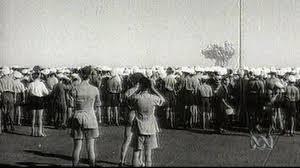
middle of the Australian Outback along with about 250 other ranking servicemen from the UK, Australia and New Zealand. A series of lectures followed, personally supervised by Penney, and his willing deputy Sir Ernest Titterton. It was exiting stuff: they men had been chosen to be in the vanguard of Britain’s nuclear deterrent. To this end they were about to be ‘indoctrinated’ into a special force whose primary aim was to demonstrate that ‘The Bomb’ wasn’t necessarily the monster of myth and legend that had built up around it following the horrors of Hiroshima and Nagasaki.
It was their duty, they were told, to allay public disquiet by demonstrating it was possible to get ‘up close and personal’ with a series of kiloton-range atomic explosions. They were assured by Penney and Titterton there was no danger from radioactivefallout.
guinea pig regiment that was ordered to get ‘up close and personal’
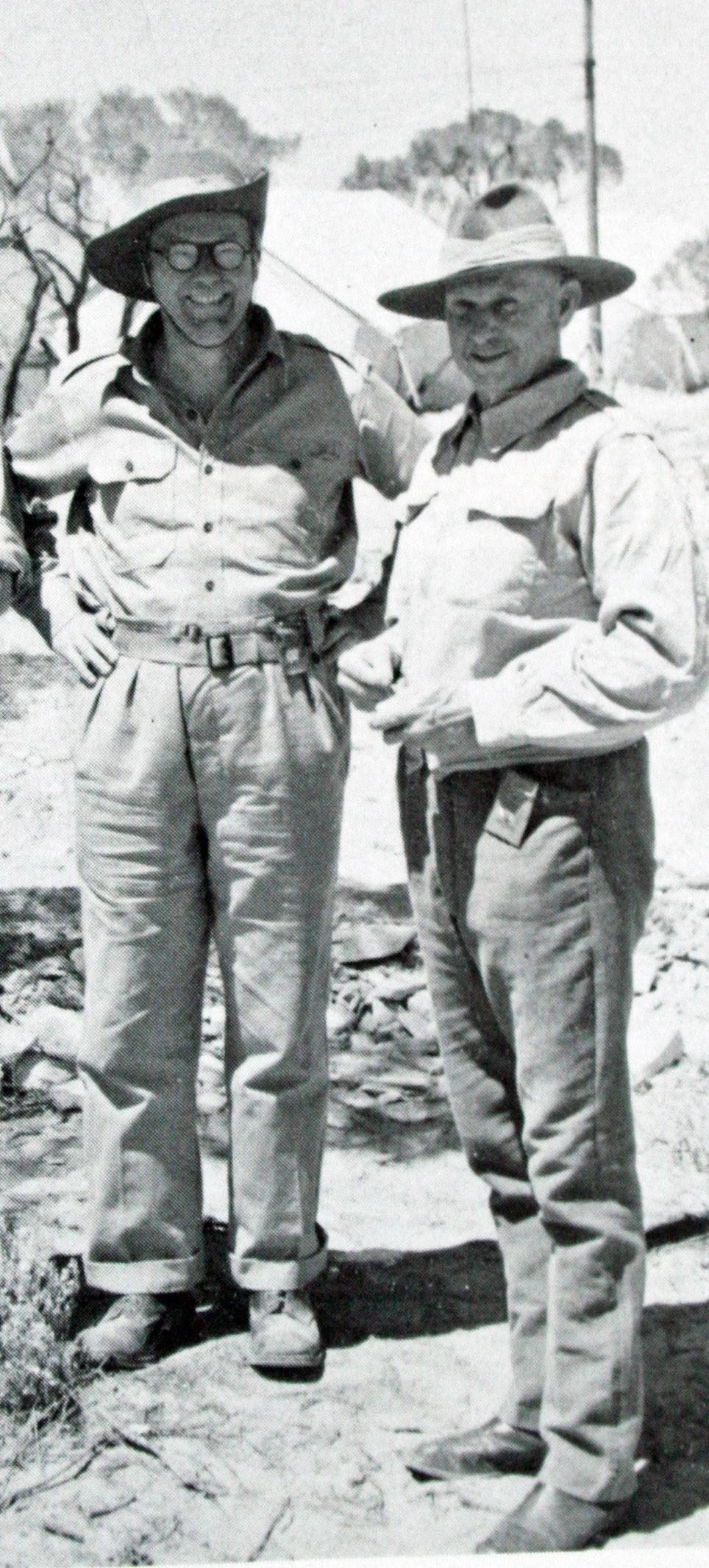
Bush-hat bombers: William Penny & Ernest Titterton
personal’ with the A-bomb to demonstrate to the publiuc that it was safe.
The full strength of the Indoctrinee Force consisted of 283 men; 178 from the UK (172 officers and six civilians); 100 from Australia (74, with 25 from other ranks and one civilian); and five officers from New Zealand. Their terms of reference was set out in a statement from the AWRE at Aldermaston:Serving officers from the armed forces of the UK, Australia and New Zealand will be exposed, at a safe distance, to the flash, heat and blast effects of an atomic explosion. A conducted tour of the firing area will be made before and after the event to enable indoctrinees to observe and appreciate the effects of the explosion on the ground and on items of service equipment, vehicles and structures exposed for the Target Response Trials.
fects on their uniforms! No detailed tests of medical, health or psychological nature were carried outontheIndoctrineeForce.
their units to lecture from firsthand knowledge on the effects of the tests they had witnessed.”
According to Mr E.R.DrakeSeager, the AWRE scientist, who coordinated the Force, the purpose of the whole exercise was:”To get service personnel accustomed to what nuclear war was all about. . In addition to familiarizing with the effects of nuclear explosions, the aim was to ‘spread the word.’
Today there is universal agreement among scientists that the indoctrinees were experimental objects and were seen as valuable parts of the atomic ’experience.’ Their experiences provided valuable information for both the AWRE and the Army Operation Research Group which studied attitudes toward nuclear weapons. These, according to the military planners, were vital to issues relating to morale, the accumulation of personal knowledge about atomic blasts and the assertion that the tests were ‘safe.’ Drake Seager insisted: “These men were not being used as human guinea pigs to test the effects of explosions.”
The Australian Royal Commission later heard evidence that men were ordered to (among other things) to “walk, crawl and run” in contaminated dust to study the ef-
The Indoctrinee Force was chosen from middle-ranking officers who were seen to have good career prospects and who could and would be expected to return to
But what has never been explained is why there was little monitoring of radiation levels, and scant heed paid to radiation risks. These had been done at other tests at Bikini and elsewhere, why notatMaralinga?
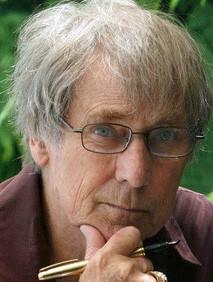
After fourteen years Royal New Zealand Naval service, Operation Grapple veteran Roy Sefton's failing health forced him to leave the Navy.
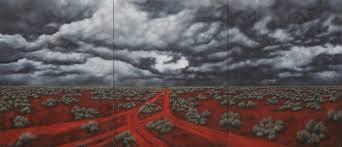
Roy then worked as a Marketing Executive and was involved also in painting, and as a rock and jazz drummer. It was his painting of landscape, still-life and abstraction that gained him recognition. Exhibitions of his paintings were being shown in Europe, USA, Australia, andNZ. HoweverRoy'scareerwas relatively short lived as his poor health increased dramatically. An un-diagnosed auto-immune system condition made life a daily struggle with pain and inability to move. He was forced to give up all socialandworkactivities.
In the 1990's Roy received an Operation Grapple War Disability
Pension for his condition from Veterans Affairs New Zealand.
With fellow Grapple veteran Tere Tahi, they in 1996 set up the New Zealand Nuclear Test Veterans Association, (NZNTVA). Since then Roy has used the periods of lesser pain and better mobility to continue his work as the NZNTVA Chairman.
The battles for nuclear test veterans recognition have been long, hard, and constant, but therehave beensomemajorsuccesses.
During the past decades, despite the nuclear issues, Roy’s mind has also drifted to his love of painting. In an effortto getsomerelief from the stresses and work-load of his nuclear veteran duties, in summer of this year he opened up his studio. It was a time capsule. On the wall was a year planner for
1988. There were exhibitions charted for the entire year. It was also his last year as a professional artist.
Cobwebs hung from the ceiling and everywhere else. Around the walls unfinished paintings and prepared blank boards were stacked. Roy decided to not only put the finishing touches to the uncompleted paintings but to also create new works, especially abstracts.
Too date 23 paintings have been either completed or being created. "I will continue to paint during periods of lesser pain and in between my NZNTVA duties" says Roy who concluded, "I wonder what my life may have been had I not served at Operation Grapple and carried the mark of the bomb withmefortherestofmylife".
VincentVanBomb!fissionlinedirectorRoySeftonrevealshiscolourfulpast
Welcome Aboard!
Presenting: Two valuable new additions to our Editorial Board as we ‘beef up’ for the coming battles
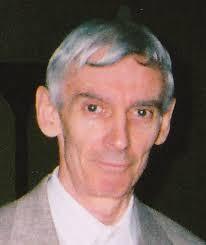
Getting to know you!
Our fantastic new directors reveal themselves.
ROBERT WELLS
Born six months before the outbreak of World War 2, and raised first in Greater London and then the Home counties. I joined the RNVR aged 17, to guarantee callup into the Royal Navy for National Service. I was drafted to the Signal School at St Budeaux in Devonport,
In early February 1958, I was drafted to HMS Scarborough, one of the latest anti-submarine frigates at thetime. After 3months of war games detached Scarborough from the Med Fleet to proceed to Christmas Island for nuclear weapons testing in the South Pacific.
Before we sailed, we had a rapid refit to accommodate several meteorologists who were required to perform weather-reporting duties on board as we patrolled the 600mile exclusion zone around the test sites. So, from the start we knew exactly where we were going, unlike many of our comrades in other services who, in the earlier tests, were never told the intendeddestination.
ALBERT ISAKSEN
I was born in Hull in 1939. My mother was English and my father from the Faroe Islands just north of the UK – hence the name. I left schoolin 1955 to startan electrical apprenticeship. Faced with call-up for National Service, I volunteered for the Regular Army for the usual 22 years with the 3 year option. I
intended to join the RASC but recruiting sergeant lured me into the Royal Engineers to train as a vehicle mechanic. I joined 1 Training Regt Royal Engineers (1TRRE) on 26 Feb 1957 at Malvern and, after initial training, was posted on 20 March 1957 to 405 Party 4TRRE at Gibraltar Barracks, Aldershotforbasictraining.
We embarked on the HMT Dunera on 30 December 1957 bound for Christmas Island, arriving there on 31January1958.Servicetheresaw the Grapple Y & Z series of tests. We flew back to the UK, taking 5 days to do so, arriving 15 December1958.
The remainder of my time was spent with 38 CER at various locations in the UK and I was dischargedon26Feb1960.
fissionline is a crusading journal and sounding board for nuclear veterans everywhere. From nothing it has built up an extremely impressive circulation, and it is starting to make a real impact in the corridors of power. The forthcoming pension appeal tribunals (set up after our successful campaign) are vitally important. Success there could open the door to a full High Court trial as well as other advantages. We will be concentrating on that in the coming months. Any help/advice you can proffer would be appreciated. What do you get in return?: Nothing...except our blood, sweat and tears and the knowledge that you will have the friendship and support of some great people.