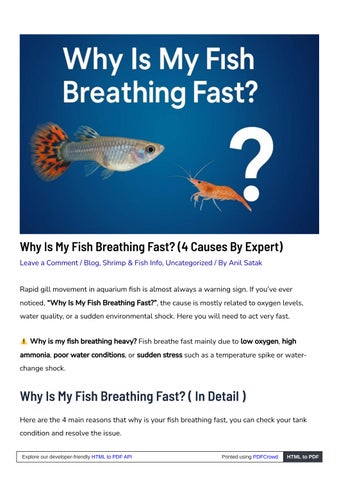

Why Is My Fish Breathing Fast? (4 Causes By Expert)
Leave a Comment / Blog, Shrimp & Fish Info, Uncategorized / By Anil Satak
Rapid gill movement in aquarium sh is almost always a warning sign If you ’ ve ever noticed, “Why Is My Fish Breathing Fast?”, the cause is mostly related to oxygen levels, water quality, or a sudden environmental shock Here you will need to act very fast
Why is my sh breathing heavy? Fish breathe fast mainly due to low oxygen, high ammonia, poor water conditions, or sudden stress such as a temperature spike or waterchange shock.
Why Is My Fish Breathing Fast? ( In Detail )
Here are the 4 main reasons that why is your sh breathing fast, you can check your tank condition and resolve the issue
1. Low Oxygen Levels
This is one of the most common reasons people ask, “Why is my sh breathing heavy?” is that the aquarium doesn’t have enough dissolved oxygen. You must remember that warm water holds less oxygen, overcrowding reduces oxygen levels, and poor surface agitation prevents gas exchange.
Signs include:
Fish breathing rapidly near the surface
Fish gathering near lter outlets
If the cause is oxygen, then your sh may also appear weak or not moving but still breathing, making many hobbyists wonder, “why is my sh not moving but still breathing?”
2. High Ammonia or Nitrite (Toxic Water Conditions)
One of the serious issue can harm sh very badly. Ammonia burns the gills, causing extreme discomfort and rapid breathing. This is especially common in new tanks or overstocked aquariums.
Symptoms:
Red or inamed gills
Lethargy
Sitting at the bottom and breathing heavily
This often makes most aquarists worry, “Why is my sh breathing heavy at the bottom of the tank?” a classic sign of ammonia poisoning.
Action step:
You should carry water test immediately. Any ammonia or nitrite above 0 ppm is dangerous.
3. After Water Change Shock
If you have changed the tank water and your sh is suddenly acting different and you ’ re asking, “why is my sh breathing fast after water change?”, the cause is usually temperature mismatch or chlorine exposure.
Common mistakes:
Adding colder or warmer water
Forgetting dechlorinator
Stirring toxic waste from the substrate
If the breathing is rapid right after a water change, you must act fast.
Tip: Always match temperature and use a water conditioner that detoxies chlorine, chloramine, and heavy metals.
4. Stress or Disease
The nal reason due to sh can breath fast may also occur due to:
Some Parasites (gill ukes)
Bacterial infections
Bullying or aggression
Overcrowding in tank
In these cases, You will need to observe the tank carefully You can see sh often hide, breathe heavily, or stay at the bottom.
How to Save a Fish Breathing Fast (Emergency Steps)

Many shkeepers in a panic search for how to save dying sh after water change or oxygen problems You will require to act very fast to save the sh otherwise it won’t These following 4 things you should check initially. The following emergency checklist will help you take immediate action These steps work even if your sh is breathing heavy or lying at the bottom.
1. Increase Oxygen Immediately
Point lter outlet toward the surface
Add an air stone if available.
Reduce temperature slightly (1–2°C)
2. Test Water Now
Check water parameter:
Temperature
3. Do a Safe Emergency Water Change
Match temperature
Use a good dechlorinator
Change only 20–30%, not too much at once
4. Stop Feeding Temporarily
If you think you have overfed then stop little while. Uneaten food produces ammonia and worsens the problem.
Read More from FishioHub:
Do Crabs Eat Dead Fish?
Can guppies live with shrimp?
Why Is My Mystery Snail Not Moving and How Can I Treat It?
Preventive Tips
How to Prevent Fast Breathing in Fish (Long-Term Care Tips)
Once your sh recovers, preventing the issue from returning in future is the most important step. Follow these long-term care tips to make sure you never have to ask “Why Is My Fish Breathing Fast?” again:
1. Maintain Stable Water Parameters
Keep ammonia & nitrite at 0 ppm
Nitrate under 20–30 ppm
Monitor pH weekly
Match temperature during water changes
2. Improve Tank Oxygenation
Keep good surface agitation
Clean lter regularly
Avoid overcrowding
Add live plants for natural oxygenation
3. Feed Properly
Never overfeed
Remove uneaten food after 2–3 minutes
Feed 1–2 times a day only
4 Quarantine New Fish
Prevent parasites and infections
Keep new sh in a separate tank for 7–14 days
5. Avoid Sudden Changes in tank
Fish get stressed by quick temperature, pH, or lighting changes. Always make adjustments slowly to avoid breathing problems
Expert Tip
Point your lter outlet toward the water surface to improve gas exchange. This simple adjustment prevents most cases of “Why Is My Fish Breathing Fast?” and keeps your aquarium well-oxygenated.