How to RemoveAmmonia from Fish Tank Naturally (Complete Expert Guide)

fishiohub.com/how-to-remove-ammonia-from-fish-tank-naturally
Every aquarist is well aware ofAmmonia. It is one of the most dangerous toxins for aquarium fish.You can imagine it by if there is a little spike in ammonia level, this can lead to stress, fin damage, gill burns, or sudden death. If you’re worried about the same thing and water quality, this insights will show you how to remove ammonia from fish tank naturally, prevent future spikes, and keep your aquarium healthy for long-term.
This post is also going to help in understanding of:
The ways- How to RemoveAmmonia from Fish Tank Naturally and by other methods
Which are natural ammonia control products available in markets
How often can you use ammonia removers to reduce ammonia
How to use live plants to reduce ammonia naturally Preventing ammonia buildup in the future in tank
What CausesAmmonia in Fish Tanks?
Before learning How to RemoveAmmonia from Fish Tank Naturally, it’s very important to understand where it comes from, causes of ammonia in fish tank.
Fish waste including uneaten foods, organic matter
Dead fish or decaying plants in increasing density
Use of Dirty filters, poor oxygen, or disrupted cleaning
Overfeeding causes producing waste which causes ammonia
Overcrowding is also a reason for ammonia spike
New tank without mature beneficial bacteria to process this
Always remember once ammonia levels rise above 0 ppm, fish begin to show stress.
1. How to RemoveAmmonia from Fish Tank Naturally (Best Methods)
Every aquarists whether beginner or experienced should follow these 7 very crucial things carefully to remove ammonia from fish tank naturally These methods also helps how to prevent ammonia in fish tank:
1.1 Do a Partial Water Change (25–50%)
You must know water change is the fastest way to reduce ammonia naturally. Before you do this the ratio is very important, here note that the natural way to reduce ammonia is by doing a 25–50% water change.This is one of the best way.
For this you should make sure to:
Vacuum the substrate
Match the temperature earlier and after
Use a dechlorinator, otherwise chlorine will kills good bacteria
Avoid full water changes—they disrupt the nitrogen cycle and cause later ammonia spikes.
1.2 Stop Feeding for 24–48 Hours
You should also remember, the overfeeding is the #1 cause of ammonia spikes.
If this happens skip feeding for one day
Then feed lightly for the next few days
Fish can go 3–7 days without food, so this is safe and no need to worry about it.
1.3
Clean waste and substrate from the tank
The remaining uneaten food and fish poop decay and converts into ammonia. This is very dangerous and need to be remove.
You should use a gravel vacuum to remove waste also remove visible waste manually and clean dead leaves or snails from surface
Remember not to wash substrate in tap water, this will kills beneficial bacteria.
1.4Add Beneficial Bacteria By Natural Method
You know the beneficial bacteria are always useful for tank. These bacteria convert ammonia into useful proteins.The Natural bacteria boosters i.e. nutrifying bacteria includes:
The nutrifying bacteria like Seachem Stability ,API Quick Start, Fluval Cycle allows instant addition to the fish.
These products are good and safe, natural, and accelerate the nitrogen cycle.
1.5
Add Live Plants (One of the Best NaturalAmmonia Removers)
Live plants will beatify your tank also absorb ammonia as fertilizer. Here you can check the list of the best natural plants to control ammonia in a fish tank:
TopAmmonia-Absorbing Plants
Hornwort
Water sprite
Anacharis
Amazon frogbit
Duckweed
Moneywort
Marimo moss balls
The Floating plants are especially powerful because they grow fast and consume ammonia quickly.
This directly answers:
How can I naturally remove ammonia from my freshwater fish tank?
How to Remove Ammonia from Fish Tank Naturally?
How to use natural plants to control ammonia in a fish tank?
1.6 Clean or Replace Filter Media (But Do Not Destroy Good Bacteria)
To reduce ammonia you should clean and replace filter media without destroying the good bacteria. Rinse filter sponges in old tank water not tap water. Replace any of chemical media one at a time, do not replace all together.Aclogged filter leads to increase ammonia spikes.
1.7 Reduce Stocking or Rehome Fish
The density of fish in the tank should not be very high. It should be limited. If you overcrowd the tank.This overcrowding will increase ammonia production.
You should follow a good rule: For small species 1 inch of fish per gallon
For some fishes like Plecos, goldfish,African cichlids, and catfish, these fish produce a lot of waste, so stocking carefully is very important.
2. WhatAre the Best Natural Products to ReduceAmmonia Levels in Aquariums?
Here are safe, nutrifying natural ammonia removal solutions that you can use:
Top NaturalAmmonia Control Products
Seachem Prime – detoxifies ammonia for 24–48 hrs
Seachem Stability – adds natural bacteria
APIAmmo-Lock – binds ammonia into non-toxic form
Fluval Bio-Enhancer – strengthens the nitrogen cycle
Zeolite (natural mineral) – absorbs ammonia from water
These products help protect fish by stabilizing your tank.
3. How Often Can You UseAmmonia Remover in a Fish Tank?
Most ammonia removers like Prime orAmmo Lock can be used:
During every water change
Daily in emergencies
According to manufacturer’s dosing guidelines
However, do not depend on removers forever
You must fix the root cause—overfeeding, dirty substrate, or weak filtration.
4. How to PreventAmmonia in a Fish Tank (Long-Term Solutions)
Follow the following steps to prevent and also How to RemoveAmmonia from Fish Tank Naturally.
4.1 Regular Water Changes
Change water 25–30% weekly
4.2 Do Not Overfeed
Observe the food in tank and only feed:
What fish finish in 30–60 seconds
Once or twice a day
4.3 Maintain the Filter
Rinse sponge filters monthly
Replace chemical media every 4–6 weeks.
4.4Avoid Overstocking
More fish = more ammonia
Research adult size before buying
4.5 Trim Dead Plants & Remove Carcasses
Dead matter breaks into ammonia within hours so remove it.
4.6Add More Live Plants
Add live plants in tank. They act as natural ammonia-processing machines also gives safe environment to fish.
5.Ammonia Levels Chart (Know When It’s Dangerous)
0 ppm Safe
0.25 ppm Mild stress—fix immediately
0.5 ppm High stress—fish gasping, red gills
1 ppm Dangerous, can kill fish
2+ ppm Emergency
Use a liquidAPI Test Kit, not strips, for accurate testing.
FAQs on How to RemoveAmmonia from Fish Tank Naturally
1. How do I know if my tank has high ammonia?
Look for following signs:
Gasping at the surface
Red or inflamed gills
Lethargy
Loss of appetite
Milky or cloudy water
Testing is the only accurate way to confirm the ammonia level in the tank.
2. Can live plants remove all ammonia naturally?
Yes, fast-growing plants can consume large amounts of ammonia, especially floating plants. But they must be healthy and receive enough light.
3. Should I clean the filter when ammonia spikes?
Yes, Clean the filter gently, only in old tank water.
Do not replace all the media at once.
4. Can I use Prime daily to control ammonia?
Yes, Prime can detoxify ammonia for up to 48 hours, but you must find the cause of the ammonia spike too.
5. Is ammonia more dangerous in warm water?
Yes. Warm water increases ammonia toxicity and reduces oxygen level in tank. In both way it is dangerous.
Final Tips for KeepingAmmonia at 0 ppm
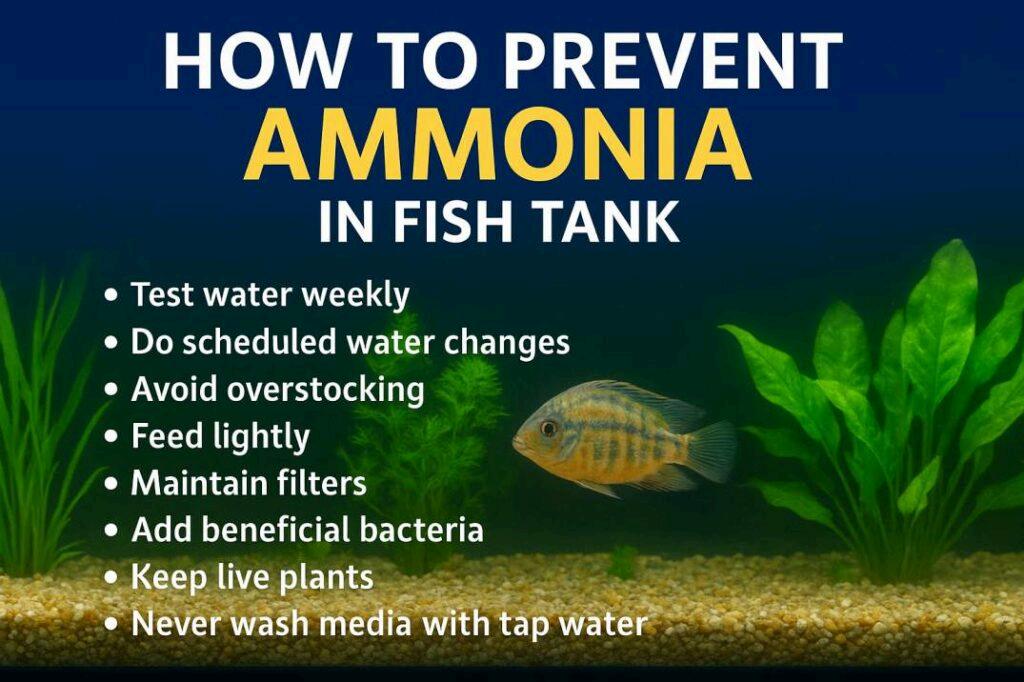
Test water weekly
Do scheduled water changes
Avoid overstocking and overfeeding
Feed lightly
Maintain filters
Add beneficial bacteria
Keep live plants
Never wash media with tap water
If you follow these steps, you’ll naturally maintain 0 ppm ammonia, and your fish will stay healthy and stress-free.
Read More from FishioHub:
Marine fishTank setup
Run Fish tank without filter
Why Is My Fish Breathing Fast?
Conclusion
Now you know how to remove ammonia from fish tank naturally, how to use natural products, how to prevent ammonia long-term, and how to use plants for natural ammonia control.
By combining good maintenance, proper feeding, and a strong biological filter, you’ll create a stable and healthy environment where fish thrive.