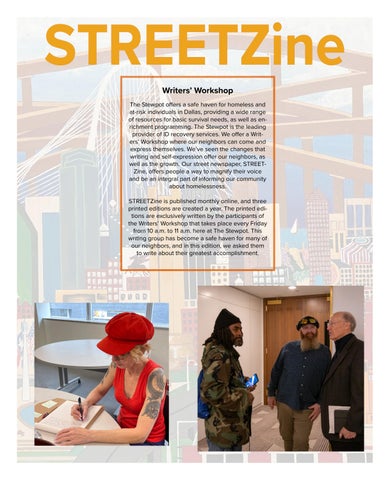
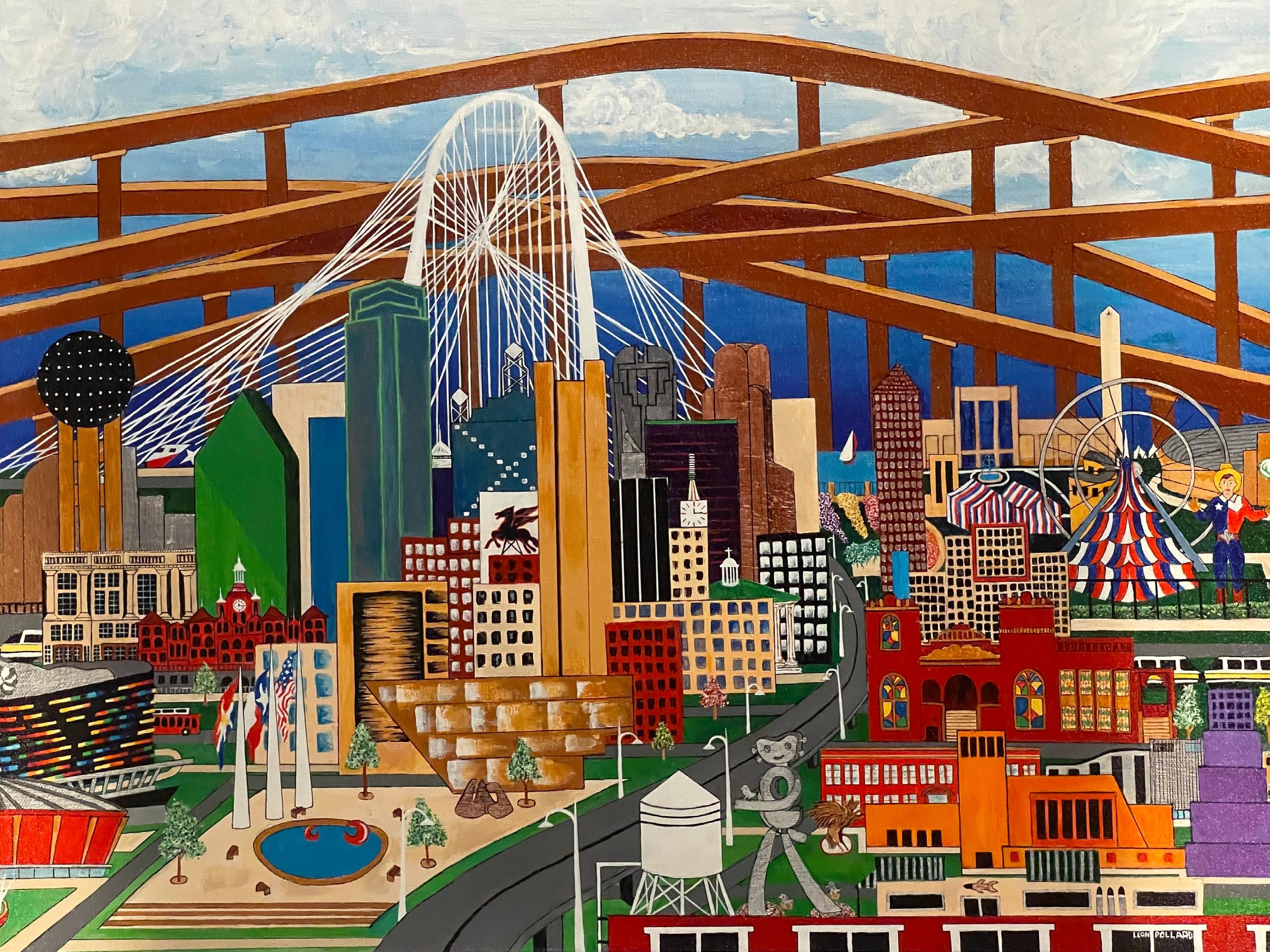
STREETZine
Writers’ Workshop
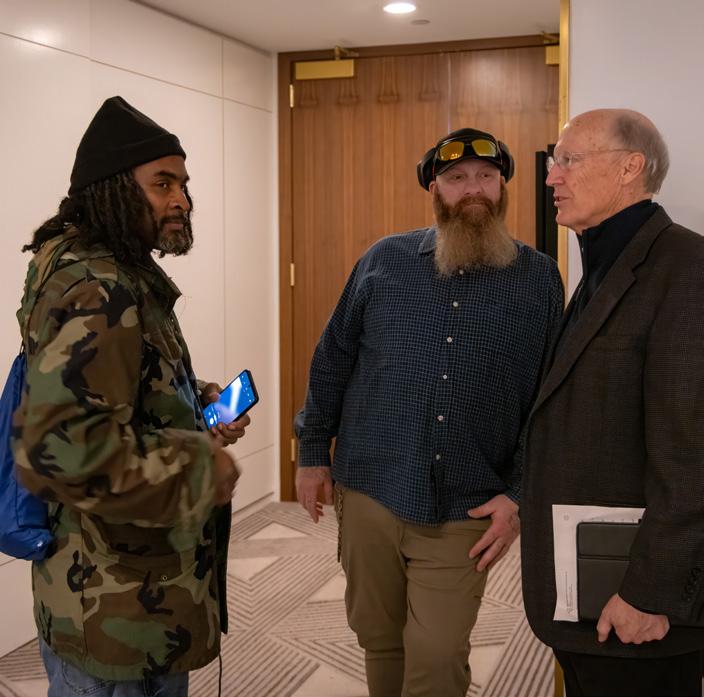
The Stewpot offers a safe haven for homeless and at-risk individuals in Dallas, providing a wide range of resources for basic survival needs, as well as enrichment programming. The Stewpot is the leading provider of ID recovery services. We offer a Writers’ Workshop where our neighbors can come and express themselves. We’ve seen the changes that writing and self-expression offer our neighbors, as well as the growth. Our street newspaper, STREETZine, offers people a way to magnify their voice and be an integral part of informing our community about homelessness.
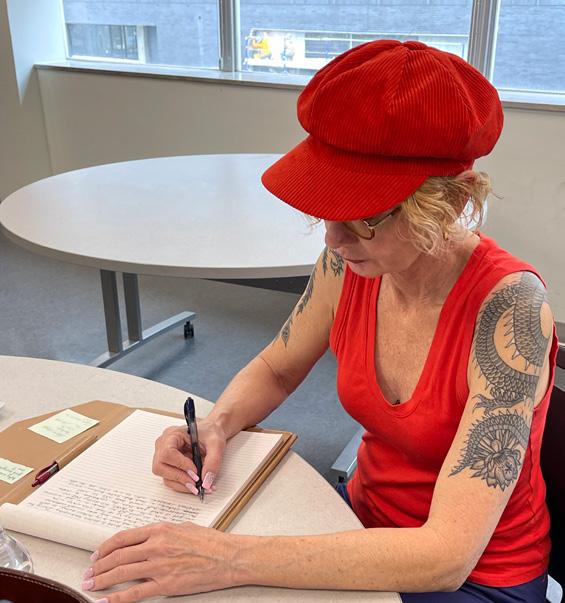
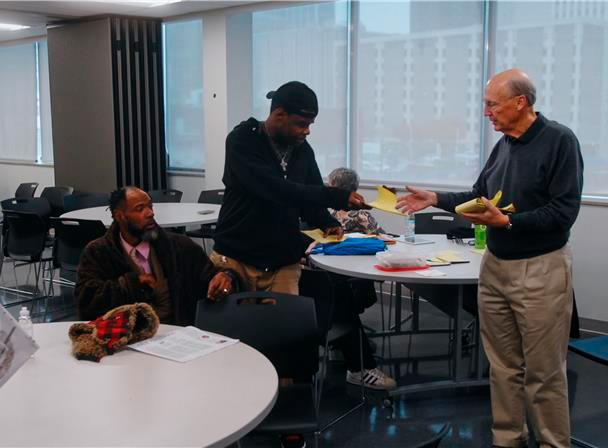
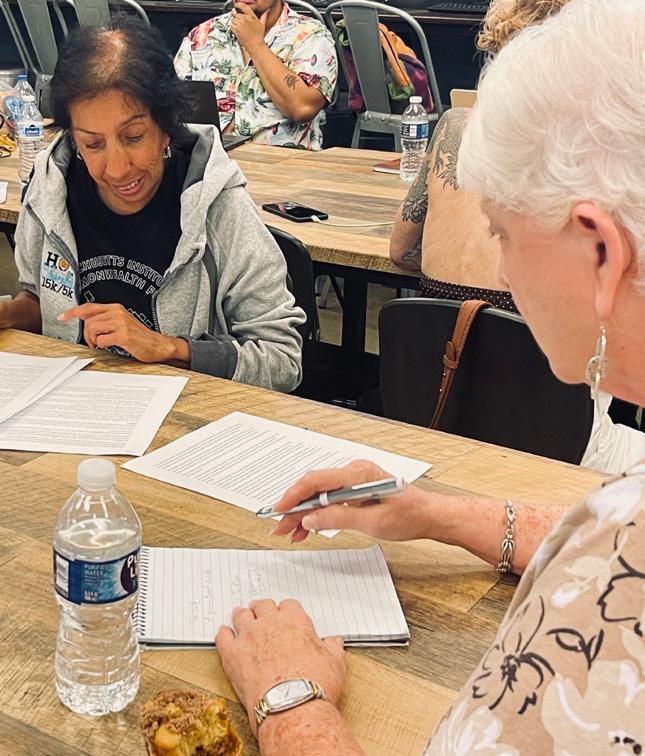
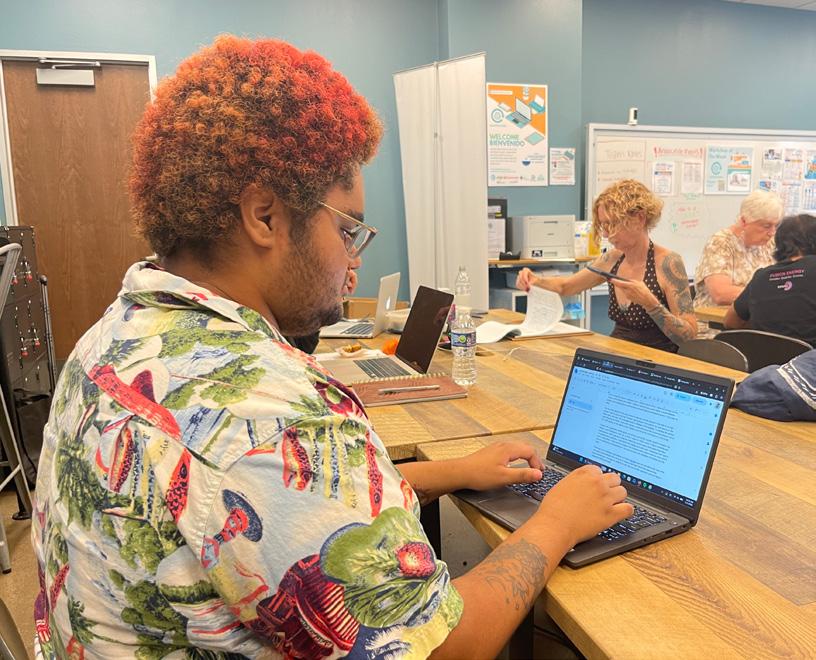
STREETZine is published monthly online, and three printed editions are created a year. The printed editions are exclusively written by the participants of the Writers’ Workshop that takes place every Friday from 10 a.m. to 11 a.m. here at The Stewpot. This writing group has become a safe haven for many of our neighbors, and in this edition, we asked them to write about their greatest accomplishment.
Four Years: “I Think There Is Something Wrong With Me”
By Ezra Gatlin
The first time I wrote a poem I was proud of was during my senior year of high school. The task was to write a narrative for college applications. The narrative could be about anything; it just had to be about ourselves — from a first-person perspective. The truth is, I spent so much energy trying to not look at myself, I couldn’t see a story.
I felt I had nothing to write about. My classmates had survived childhood cancer or immigrated to America. They had culture shock and massive life-threatening illnesses. I had anguish I couldn’t explain — plus food, water, shelter, and daily blowouts with my mom. I failed that narrative three times.
It would take me years to realize I was barely surviving my abusive household. At 16, I hated myself and the body I lived in. I dissociated day in and day out, completely divorced from the fact that I was real. When I met classmates years later, they all told me they almost didn’t recognize me. Not because I had grown up, come out, and transitioned, but because of how much I smiled. They all told me, “You never used to smile. We knew something was wrong but didn’t want to pry.”
Through it all, I daydreamed. I’ve always had stories in my head — massive internal worlds with complex characters. Personalities with traits I wanted, relationships I craved, and flaws more interesting than my own. In hindsight, my life was plenty traumatic, but at the time, it felt invisible. I decided instead to create a story about a girl who had just moved from her small town after her father’s death and needed to write a narrative for high school. It was a free-verse poem called “The Sound of Pain.” When my English teacher read through it, she asked why I hadn’t submitted that instead. I stumbled over the question, trying to explain that this story wasn’t about me. I wasn’t a lesbian (yet). My father hadn’t died (although he’d never been in the picture). I had no words to describe my mother’s grief. She gave me a long, hard look and let me go back to my seat.
When I started writing poems on purpose, trying to put early-twenties mental illness into words, I always came back to “The Sound of Pain.” My goal has always been to take the most visceral emotions, the wild, guttural screams that come from the heart, and to put them into words. My next poems came to me only when the kettle boiled over and the steam whistled out. That is, I wrote sparingly — only when I felt I had no other choice. I was drowning and no one was taking me seriously, so it was only fair that the rest of the world drown with me.
Three years later, at 19, I had 11 poems. I started to think about getting them published, or rather, everyone started asking when I was going to publish them. A publisher reached out to me asking if I had more. They wanted a full collection, so I set my sights on 50 poems, and they promised to wait for me. I learned the company was running a massive scam, so I’m glad I never signed with them, but that promise kept me writing. It took four years to reach 50 poems on December 11, 2024.
My greatest accomplishment thus far has been finishing my very first chapbook,
“I Think There is Something Wrong with Me.” The title comes from a short horror story, “The Strange Things We Become,” from Eric LaRocca’s book, “The Trees Grew Because I Bled There.” The story is about a woman documenting her marriage falling apart after her wife’s terminal cancer diagnosis. It resonated, to say the least. At the end of 2020, my older brother was diagnosed with paranoid schizophrenia. That was my first encounter with “ambiguous grief,” and through my poetry book, it consistently hit home as my early twenties became a whirlwind of love, lust, grief, and this ever-present feeling of loss.
Although the book remains unpublished and needs serious editing, part of me is afraid to touch it. It serves as a reminder of how far I’ve come, of how much my writing has improved, and of how devastating the first years of adulthood feel. Whether it gets picked up by a major publisher or transformed into something else, it will always be a part of my much larger story. It was the first step toward believing in myself enough to continue writing.
Ezra Gatlin is a writer in The Stewpot Writers’ Workshop.
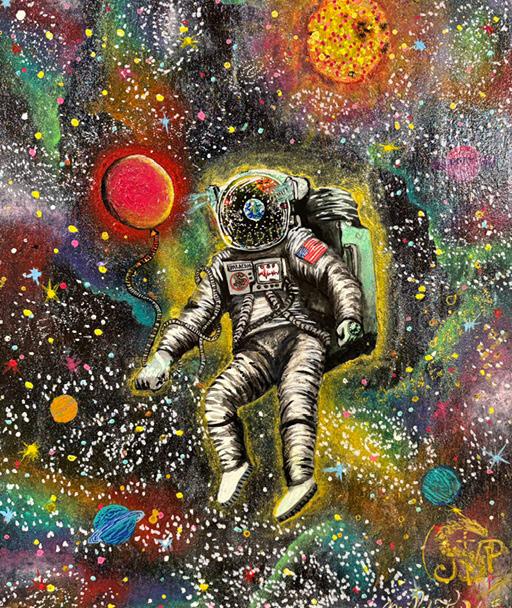
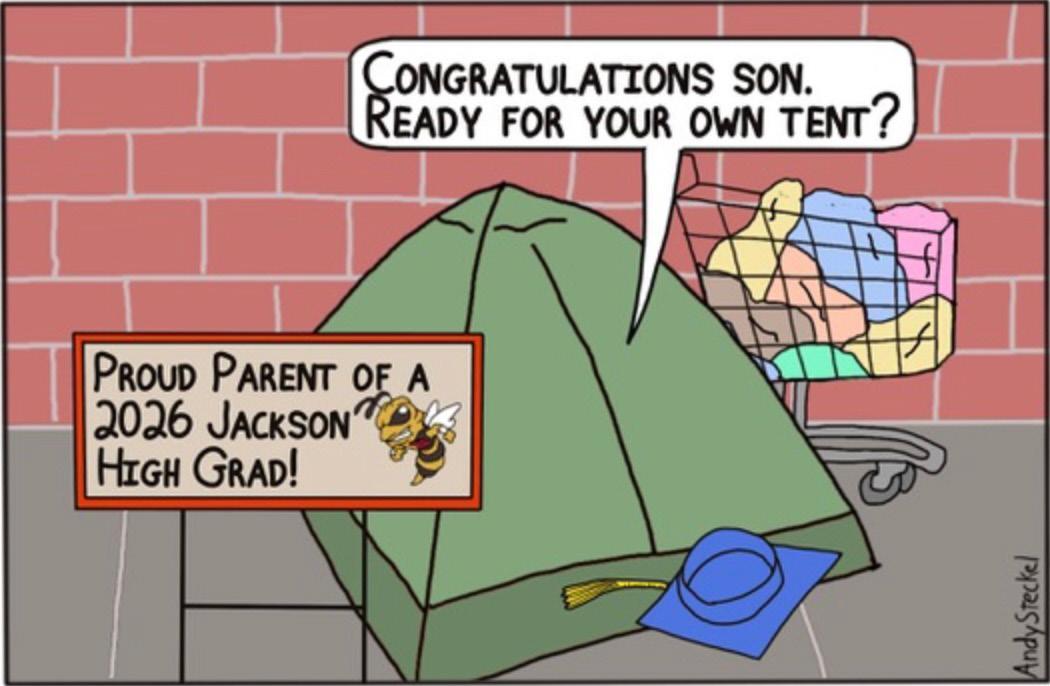
Artwork by Stewpot Artist Jose Palacios.
1.17 Million
Pounds of Food Recovered
Helping fight hunger while reducing food waste across Dallas. Recovered food supports both meals served at The Stewpot’s Second Chance Cafe and groceries distributed through the Food Pantry.
Data collected from the Stewpot Impact report for 2025

Forgiving My Father
By Darin Thomas
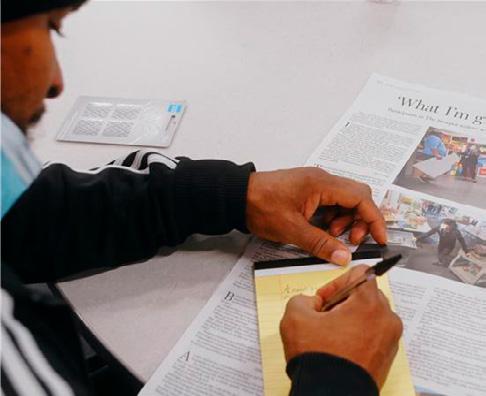
When I was nine years old, my two sisters, brother, and I watched as our father murdered our mother in our house in Missouri. He set her on fire and shot her. Two days later, she died.
Our dad went to prison for 50 years and I spent much of my youth reacting to that horrible day. I didn’t understand why he did that to my mother. I had to live with seeing her burned up. That stayed with me for years.
I have written here in the past about some of my youth. I got involved with gangs, drugs, and stealing. After dropping out of school, I ended up in juvenile detention and then prison. I also was diagnosed with schizoaffective disorder, which took a long time to get treated.
on that cross for my dad, my mother, and me. God is so good.
Some in the family didn’t think it was good for me to go see him. But two friends drove me up to see him in prison in Missouri. My baby sister flew in to go with me. This was in 2010.
I looked like my dad when I was young. But he walked right past me when we were waiting to see him. He didn’t know who I was. We hadn’t seen each other in almost 30 years. The guards told him we were his visitors, and we sat and talked.
I told him I didn’t want to hear too much of what he had to say. I had heard it before. I told him that I forgave him for taking my mother from me and my siblings. And that I wanted to move on.
208 Neighbors Currently Stabilized in Rapid Rehousing
Neighbors Enrolled and Housed in Permanent Supportive
Housing Currently
Neighbors Housed through Coordinated Street Outreach Cur-
collected from the Stewpot Impact for 2025
My grandmother – my mother’s mother –was very supportive throughout my life. She raised my siblings and me in the church. She knew how troubled I was after the murder of my mother. I had been very close to my mom.
Some on my mother’s side had not been treating me so well. But my grandmother knew I wanted closure with my mother’s death and that I wanted to move on and forgive him. She supported me when I decided in 2010 to go visit my father in prison in Missouri. She told me that if that is what I needed to do, go do it.
I did need to go because I was stuck in the past. It was taking me through things. I wanted to get this out of me. I had let God into my heart and come to learn that Jesus had died
So, we talked about some of his people. And I told him that I wanted to write a book about these experiences. He said to wait until he got out of prison.
Years later, I went back and visited him in Kansas City when he got out of prison. I stayed with him in his house for a few days. He was a construction worker and showed me some of his sites. He wanted to move on, too.
None of this was easy. I had to learn to forgive my dad for doing my mother, siblings, and me wrong. But it felt so good when I did forgive him. I am most proud of that accomplishment.
Darin Thomas is a writer in The Stewpot Writers’ Workshop.
Artwork by Stewpot Artist Kimberly Miller.
Homeschooling My Dyslexic Daughter
By Savita Vega
There are several undertakings in my life that have left me feeling accomplished: winning Miss Kirbyville when I was 17, graduating as valedictorian when I received my associate’s degree in fashion merchandising, maintaining a 3.94 GPA when I went on to pursue my bachelor’s degree, receiving the James A. Michener Fellowship in graduate school. However, none of these accomplishments left me as proud as the decision to homeschool my daughter.
From the time she was small, I knew that she was different, as she found tasks that other children easily mastered to be difficult. For example, learning to brush her teeth or tie her shoes presented enormous challenges for her. As well, learning to read had proved insurmountable. It wasn’t until I enrolled her in kindergarten that I realized she had dyslexia.
Despite being very bright, she did not do well in school. She tried hard, but her best efforts met with failure. Regardless of what intervention the school implemented, it seemed that learning to read and write and do basic arithmetic were beyond her grasp.
Because of this, I took her out and enrolled her in a private school, then a better private school. Finally, when she was in sixth grade, we had one last try at public school.
By that time, I had taken her to a child psychologist and had her tested. There we learned that she had not only severe dyslexia but also dysgraphia and dyscalculia. Dysgraphia is a learning disability involving difficulty with fine motor skills. It impacts handwriting, spelling, and organizing thoughts on paper. Dyscalculia is a disorder that impacts the ability to comprehend numbers, learn math facts, and perform calculations. In other words, my daughter had an array of learning challenges.
What I found, however, is that none of the schools we tried had any effective ideas on how to help her. The public school, for example, offered her an accommodation for spelling, but what they offered her was, in my opinion, unacceptable. They merely agreed not to count off for spell-
ing on any of her work all the way until she graduated. But I didn’t want someone to ignore that my daughter couldn’t spell; I wanted them to teach her to spell.
That’s when I started looking into effective interventions for kids like her and decided to withdraw her and homeschool her myself. I would never claim that it was an easy path. Due to her unique needs, I decided not to purchase a curriculum but to formulate one on my own.
So, for the next six years, from sixth through 12th grade, I homeschooled my daughter. The first thing that happened is she began to love to read, and with her interest, her abilities soared. Then we discovered the Singapore math system, and her math abilities began to grow by leaps and bounds. She also learned many coping mechanisms that helped her to overcome her special challenges. So it was that little by little, my daughter’s academic performance improved.
Another advantage of homeschooling was that her self-confidence increased. She wasn’t constantly being asked to compare her performance to that of others, and she was therefore able to concentrate on her own self-improvement.
Lastly, she was able to pursue her interests and take many courses that never would have been offered in public or private schools. For example, she was in-
terested in the arts, so she took not only numerous studio courses but also four full years of art history. She also took four years of Japanese. By the time she was in 11th and 12th grade, I was using college textbooks to formulate her curriculum so that she was adequately challenged.
Thus, upon applying for college, she found herself more prepared. Skip forward several years. She is now in her third year in the art program at Cal State LA, with a full scholarship and a 4.0 GPA. As a member of the honors program, she is now working on her thesis and plans to attend graduate school in Japan.
I often wonder how many other struggling students could follow such a path if they were set up for success with personalized attention and a unique curriculum suited to their needs. In looking back, I am certain that I made the right decision to homeschool my daughter, despite the fact that many people doubted my decision at the time.
On the whole, it is the one decision I am proudest of in my life. I can’t exactly call it an “accomplishment,” because all of the accolades go to my daughter. She is the one to whom the success belongs. It is an undertaking, however, of which I am very proud.
Savita Vega is a writer in The Stewpot Writers’ Workshop.
Artwork by Stewpot Artist Colleen Pryor.
The Turning Point
By Jamuna Krishnan
My proudest accomplishment was as a sister. It was not a single moment, but a quiet battle that resulted in the loudest cheer of my life.
There is something very fulfilling about seeing someone you’ve guided and protected grow into maturity, knowing you played a part in that journey. For an elder sister, helping her younger brother can feel like one of life’s most meaningful achievements.
Sometimes, it’s about big milestones, sometimes the little ones. And sometimes, it is just the quiet joy of spending time with him and giving him support during difficult times.
My only brother, seven years my junior, had struggled with low self-esteem regarding school. In a family of high achievers — our father a chemical engineer and our mother a math teacher — he was an average student mostly passing with B’s and C’s.
When he failed 12th grade, it shocked all of us. For him, it was more than a setback. It meant friends, neighbors, and relatives would know he had failed. He was humiliated. In our family and culture, academic excellence was seen as essential.
The turning point was when our parents and I realized how high our expectations were and how we showed disappointment when they were not met.
I slowly stopped looking at his grades as a report card on his intelligence. What he lacked was confidence. So instead of doing his homework for him, I started sitting with him, teaching him to map out his assignments.
I found that simply spending time with him and showing that I was in his corner helped him immensely.
It also helped me immensely. While I am an introvert, he is the opposite: a whirlwind of energy, charm, always a bundle of laughs.
In his twelfth grade which he had to repeat, he was staring down a list of calculus problems with the same expression
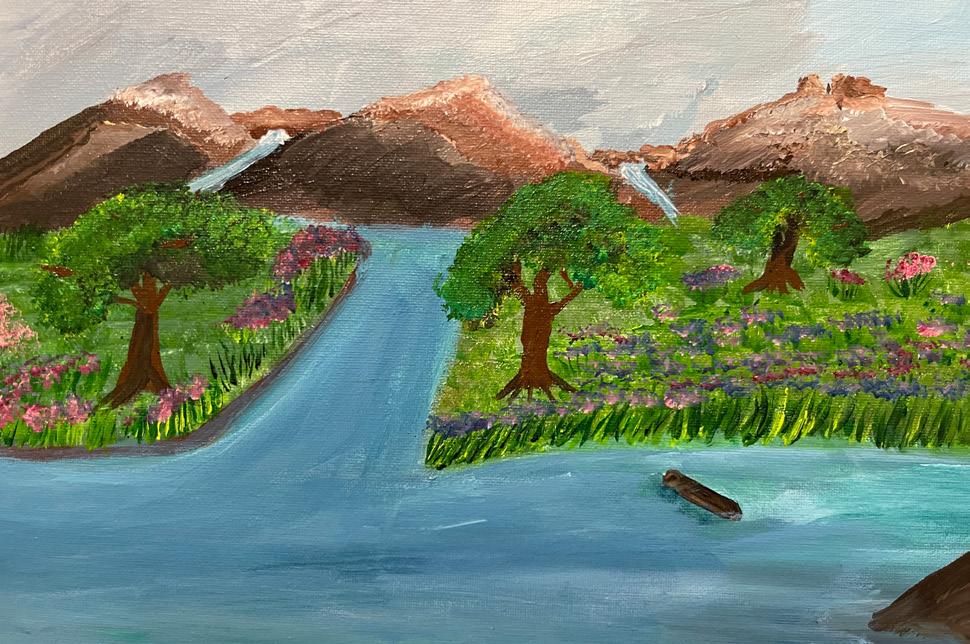
one wears in a dentist’s office.
“Why do they even make us learn this?” he groaned and slumped over the kitchen table. He threw his pencil away, looking thoroughly fed up and defeated.
I put my mug of tea down and looked at the worksheet. “Because” I said. “It’s not just about numbers. It is about learning how to think.”
My brother rolled his eyes, but I saw the flicker of worry. He feared failing again.
I began working through the problems with him, using diagrams and simple analogies that made him laugh and helped the ideas feel less intimidating.
Slowly, he started solving calculus problems on his own. It was past midnight when he put his pencil down and leaned back in his chair. “You know,” he said, “you would make a great teacher.” I smiled, my heart full of warmth and joy.
Later that year, he had to write an essay on a topic he found dull, and he had already accepted that he would earn a low grade. I asked him to explain the topic to me as if I were five years old. As he spoke, he became animated about a conflict he thought was “cool.” I told him to write exactly that.
A week later, he walked into the kitchen
and slid a paper on the table. A big red “A-“was on the top. He had a huge smile on his face that said, “I did this!”
I didn’t care about the grade. I was happy that my little brother was realizing he wasn’t just average and was beginning to feel good about himself. The most important lessons were written in love, patience, and laughter, the things that created an unbreakable bond between us.
Today, my brother is a managing partner in a public relations firm. Although he never cared much about traditional school, his proactive, outgoing personality has helped him thrive both professionally and personally.
Looking back, I realized helping my brother through twelfth grade was also a turning point in our relationship. A bond that was not there before was formed between us. I was there for him when he needed me and watched him begin to believe in himself. Seeing the confident, successful man he has become, fills me with pride.
More than any award or personal success, helping my brother find his strength will always remain one of my proudest achievements.
Jamuna Krishnan is a writer in The Stewpot Writers’ Workshop.
Artwork by Stewpot Artist Leslie Johnson.
My Past Accomplishments and Future Goals
By Kenneth Henry
During my high-school years, I had a few accomplishments. Making the marching band was a big step for me. I had to pass a marching test and a music test. Not being very coordinated made it difficult. I practiced hard and passed the marching test. The next step was memorizing music for the halftime show at football games. I also passed that test.
Another accomplishment related to my band years was making first chair of our section. I played trombone, and being first chair meant I was the leader of the section and got to play harder music than the rest of the section.
I also took ROTC (Reserve Officers’ Training Corps) in high school. I had to learn how to march with a rifle as well as take it apart and clean it. Learning about military life was another part of the program. Again, this was hard for me, because it takes me a while to grasp things.
Taking drama class was another accomplishment. I don’t feel comfortable opening up to people and starting conversations. I had to learn how to open up and gain enough courage to try out for plays. I did get one speaking part, although it was only two lines.
After high school, my first job was working the mailroom of an insurance company. I had to learn how to operate various mailing equipment. Operating machinery is not my forte. It took me a while to grasp everything, but I did and ended up staying there for nine years.
During my working years, I also completed two years of college, taking business courses and eventually earning an associate’s degree. Although I didn’t do anything with my college, I’m proud of my two years.
Another big accomplishment for me was learning how to drive. People may take that for granted, but for me it was a big deal. The written test was not too much of a problem, because all I had to do was study. The driving part was very difficult for me. People make me nervous, especially people on the road that I do not know. Surprisingly, I did pass both the written and the driving test on the first
try. I was proud of that accomplishment. Along that line, I got my first car, a 1967 Mustang. A couple years later I totaled the car.
My next and last regular job was working at a hospital for 17 years. I started out as a transporter, taking patients to different procedures throughout the hospital. Five years later, I applied to be a critical care tech. This required learning different heart patterns and measuring different wavelengths. Studying hard was not a problem for me and passing the test was critical for getting the position. Working in a critical care unit gave me a great chance to use my CPR skills to help save patients, which was very rewarding.
A few years after I left the hospital job, I found myself very depressed. Eventually, I lost my apartment and ended up in a psychiatric hospital for two weeks. After discharge, I went directly into a homeless shelter.
I got a bed the first night I was there and got a case manager to help me through the trying times. For the first eight months, I had to rely solely on the shelter for my support and needs. Receiving food stamps helped a little.
When I turned 62, I applied for my retirement benefits. Getting a check every
month allowed me to save money while at the shelter, which gave me peace of mind. I stayed at the shelter for about a year and a half.
My next step was getting rapid rehousing, which provided me a guaranteed year of affordable housing at reduced rent — about 30% of my income. This was not a permanent solution. After the year was up, I had to find permanent housing.
I eventually applied for a project-based voucher, which will let me stay in my unit permanently. I am very grateful for my situation right now and for the accomplishment of getting out of the shelter and back into my own place and mainstream society.
I have a few more accomplishments ahead. My case manager is helping me get a voucher that will let me pick my own place to live. I hope to eventually get a car, so that I don’t have to rely on bus lines.
Of course, the main accomplishment I hope to achieve is to remain housed and not become homeless again.
Kenneth Henry is a writer in The Stewpot Writers’ Workshop.
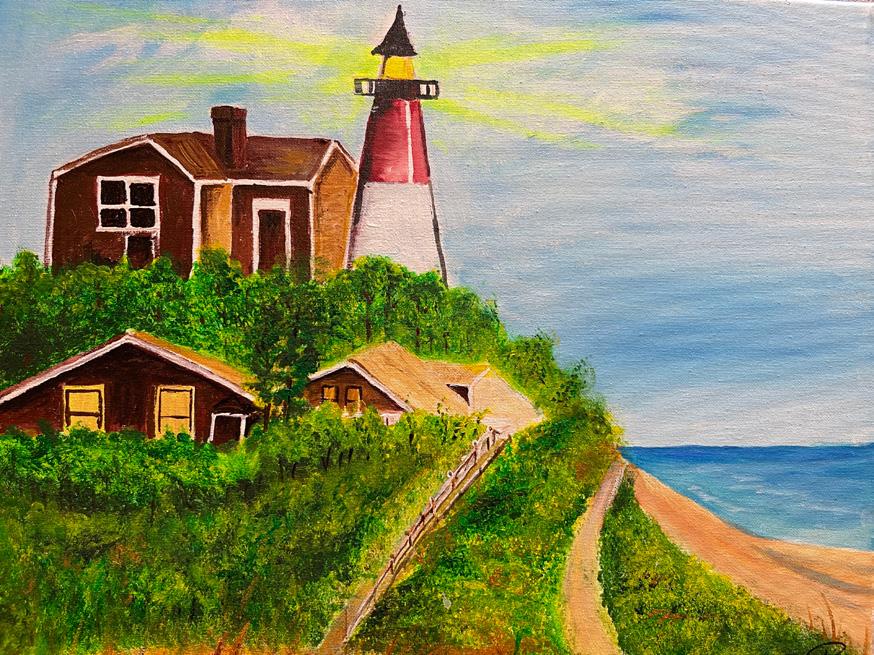
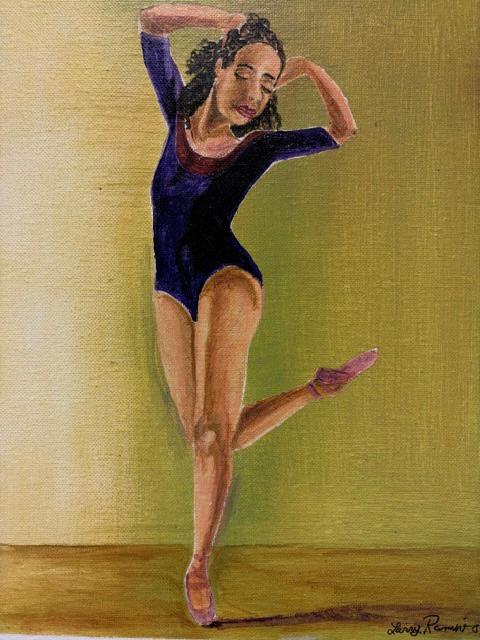
Artwork by Stewpot Artist Larry Ramirez.
Becoming a Father
By Nicolas Williams
Being a father is my most important accomplishment. It’s the greatest because becoming a parent completes a person.
To be a good dad, you need to be a dependable provider, a disciplinarian when needed, and goal-oriented. But shaping the family unit goes beyond rule enforcement or financial backup. It requires oneon-one connection.
Raising an individual is an ongoing learning process. There is no map for this. Fathers must master new sets of skills from routine diaper-changing to explaining different situations.
People seeking financial success or social recognition may miss the most life-changing responsibility one can experience. You’re not born into becoming a father. And it’s not something given to you.
The most important part of this achievement is being around as a child grows
from being an infant into a full-grown adult. A father needs to be there for each landmark the child accomplishes, from their first word to their first step to their first A+ in school.
These are collective achievements. They are proof of a supportive atmosphere that parents have helped establish. The delight from those moments provides an incomparable feeling of dignity and honor, even though parents must confront their own limitations.
That includes learning to deal with your anger, being patient, and sacrificing oneself to prioritize what the child needs. The process of conquering yourself is not an easy road. But caregiving activates regions of the brain associated with empathy and mood management. This necessary internal transformation demands a mindset shift. When this happens, the breakthrough motivates a person from egocentrism to selflessness.
Mastering the challenge of raising a child expands a person’s tenacity that is rarely nurtured in the workplace. Keeping
steady and providing comfort when you are tired and exhausted demonstrates the development demanded of a dad. The process ends up producing a productive human being.
It also reveals fatherly triumphs that go beyond visible achievements. A father discovers patience and empathy they didn’t know they possessed. Being responsible for protecting and guarding your children reveals priorities, too, and requires a better understanding of relationships.
A father also needs to be a role model that children can look up to and learn how to interact with the world around them. That includes learning how to be a blessing to others, dealing with misfortune, and developing perseverance, integrity, and kindness. Witnessing your child display these values and virtues is a humble joy.
Nicolas Williams is a writer in The Stewpot Writers’ Workshop.
My Years as a Runner and Boxer
By James Varas
Last night, I was a warrior again. I dreamed that I was running through a beautiful open field with the explosive, unchecked power of a racehorse. I felt light and invincible, moving with a fluid grace I haven’t experienced in my waking life for a long time.
The bittersweet truth is that I haven’t run in many years. Nowadays, every time I try to push my pace, my knees protest with loud, unsettling popping noises, leaving me with the agonizing fear that I am actively harming my body.
When I look back, I spent the first half of my life moving at Mach speed. As a young boy, I didn’t walk anywhere — I ran like a wild deer, leaping over anything in my path. Today, medical professionals would probably label that untamed surge of electricity as attention deficit hyperactivity disorder. Back then, it was just who I was.
Seeking a channel for that fire, I chose to attend military school at 14. That environment demanded total physical sacrifice. Every morning began with a brutal, twomile run-in strict platoon formation, teaching us endurance and resilience.
By my second year, I joined the academy’s boxing team. If the morning platoon runs were tough, the boxing tryouts were a slaughterhouse designed to filter out the “wannabes.”
Our daily routine started with a mandatory 8-mile run. Dozens of star players from other sports quit by the end of the first week, crushed by the distance, but I thrived. I ran with everything inside my chest, lungs sounding like a steam locomotive.
Eventually, I would lap the entire boxing team around the academy grounds. I will never forget the feeling of passing them on the final long straightaway. My coach would stand at the edge of the road; eyes locked on me as I emptied the tank like an F-15 Eagle blazing down a runway for landing.
That grit earned me a coveted spot on the competitive Golden Gloves team. Yet, that massive run was just the warmup. Afterward, we formed up inside the
gym for a merciless calisthenics’ routine: 100 four-count side-straddle hops, scarecrows, picking carrots, and side-tosides, followed by 50 four-count leg lifts, push-ups, and sit-ups. Remarkably, that was just to get warm before we even hit the jump ropes, heavy bags, and finally stepped into the ring.
My education in survival began in that squared circle. My cousins had given me my first lessons, lacing oversized gloves onto my hands and dropping to their knees to match my height.
That raw foundation was forged into steel by our boxing coach, Sgt. Major “Machine Gun” Robertson — a battle-hardened Marine Corps veteran of the Korean War and my Drill Instructor. When he boomed, “Varas, shoot the jab!” you listened. He drilled me until my hands became lightning, developing a rapid-fire triple jab.
The real world hit hard during my freshman year when I squared off against a junior named Blackwood. Coach Robertson barked, “Light ‘em up, Blackwood.” In the next blink of an eye, Blackwood caught me flush with a devastating jab. A blinding flash of lights exploded behind my retinas, instantly knocking my brain into a stark black-and-white movie.
I quickly realized I didn’t need to be hit by a freight train a second time to learn my lesson. That single punch taught me how to stick and move. From that day on, I snapped my jab and immediately danced out of range.
Because I was young, the coaches usually paired me against heavyweights who outweighed me by 50 pounds. My strategy became simple: smack the bear in the nose and make him chase me all over the canvas. Footwork became my religion.
I grew significantly stronger, eventually turning the tables on my teammates. I went on to fight for four spectacular years in the Golden Gloves tournament. I can still vividly recall standing just outside the ring before my first official bout as a featherweight — exactly 125 pounds, precisely half of what I weigh today.
As the national anthem echoed through the massive Corpus Christi Forum downtown, they called my name. I climbed through the ropes, looking out at a sea of thousands of cheering fans, marveling at
how magnificent it felt to be in such peak, flawless condition.
Which brings me back to this morning. I fully intended to force myself to run today. Instead, I sat down, prayed deeply, and chose to listen to my joints. I stayed inside and tackled my old military calisthenics.
As I sweated through the movements, a sudden realization hit me: Because of the strict four-count structure of those old exercises, doing just 10 repetitions of each meant I had actually completed 400 total movements. My body might not be a flawless machine anymore, and my knees might click like old clockwork, but the warrior who ran those 8 miles is still very much alive inside of me.
I am going to keep doing my calisthenics every single day, building my foundation from the ground up. I am going to rest, I am going to heal, and I will never stop chasing that beautiful, open field.
James Varas is a writer in The Stewpot Writers’ Workshop.

Photograph courtesy of Tom Morbey through Unsplash.
My Milestone: Writing Texts and Editing Machines
By Paul Ranjan Watson
My brother was the first fan of my writing. He was thrilled by reading my account of a fictional road accident in the 1980s. It was titled “Milkman Dies in Road Mishap.” Here’s a snippet: “His body lay motionless, in a pool of milk, blood dripping, as red veins streaked the spill....” The old, small story was graphic.
Recently, my brother still recalled it in a text message.
I did not know his encouragement would arc across decades.
Eventually, I became a technical-writing professor. Nothing much has changed since. I continue writing.
But in 2026, I began to edit high-dimensional spaces, where AI lives! I hold a patent related to this effort.
So, what are high-dimensional spaces, right? They are just a pattern of numbers moving within a cluster of microchips — tiny gadgets that can fit on a fingertip.
One might wonder how my transition from editing language to microchips happened.
There’s nothing unique about it — maybe it’s a pattern. Those who study language might also see patterns within the abstract forms.
Take for example Henry Royce who sold newspapers on the streets of London and mastered machines, eventually founding Rolls-Royce. Or Andy Grove who wrote newspaper columns while designing microchips as the CEO of Intel. It’s likely they saw structures implicit in language.
But then it was George Boole who explicitly expressed language in mathematical structures. His book “An Investigation into The Laws of Thought” (1854) stripped language of its filters and captured it into mathematical structures.
For two millennia, Aristotle’s deductions (through syllogisms) and rhetoric governed language. Boole interrupted the tradition, creating the possibility of calculating a language.
However, the Boolean framework remained a novelty for a century till it was applied to solve real-world problems.
Logic of Language and Reality of Mathematics
In 1938, Claude Shannon used Boole’s framework to contain the complexity of a room-sized computer.
Shannon had studied Boole in a philosophy class taken as an undergraduate requirement. But when asked to maintain a massive computer for his master’s work at MIT, he fused the logic of language and math.
My brush with language and math occurred during my PhD study. My department of philosophy and English sat between the mathematics and architecture buildings in a sprawling West Texas campus. And unintentionally, I combined the fields.
I blurred the fields because a mathematical equation was singled out for starting the 2008 credit crisis, unravelling at that time. The Gaussian Copula Function was blamed for triggering the collapse of stock market, resulting in the economic crisis.
Math as a Metaphor
David Li, the founder of the equation, had introduced a reasoning from the insurance industry to the stock market through his math. Programmed into computers, the math was used to price stocks and eventually crashed the market. In the chaos that followed, David Li’s equation faded into obscurity.
But I could clearly see through the clutter. Math was used as a metaphor, enabling the articulation, calculation, and movement of ideas.
Just so we know: AI does not think; it calculates. When your queries return with a response, remember the AI system had quickly calculated its content and responded to you with the best possible right answer.
Meanwhile, all AI systems operate under a new set of mathematics that is unfamiliar to traditional computers. Under the new math, 2 + 2 is not 4; it is 98% likely to be 4.
My expertise in editing high-dimensional spaces removes the possibilities of arriving at the right answer. It returns responses that sit with the reality of everyday spaces. In other words, I prevent AI from hallucinating.
In my case, when I sought directions for an address in downtown Dallas, the AI sent me to the wrong place.
The operations underlying computers have changed. One could feel the visible shift online with a gradual decrease in search functions and an increase in analytic functions.
The Stewpot Writers’ Workshop
The weekly writing workshop at The Stewpot helped me articulate my thoughts.
For instance, a fellow participant reads the works of the 17th century philosopher Baruch Spinoza, who proposed that it was easy to find facts when information was arranged in a mathematical order.
AI does precisely that.
High-dimensional spaces mathematically order language into a series of numbers (vectors).
But like a raw content, AI systems need editing.
I apply the George-Boole “stylebook” to edit AI.
Paul Ranjan Watson is a writer in The Stewpot Writers’ Workshop.
Overcoming Homelessness
By Sandra Robinson
Becoming homeless did not happen overnight. There were several events that led to it. During my journey, my opinion of three entities changed: the health care system, the Texas Workforce Commission, and homeless shelters.
When COVID-19 hit, I was terminated with severance pay. Before my unemployment ran out, I got a job at a warehouse. Then I was injured. I heard a pop and felt a strong, sharp, stabbing pain in my left leg. I had to use umbrellas to help me walk. That was when I got on workers’ compensation and started using my savings to cover my expenses.
My doctor gave me a cortisone shot, and the pain decreased enough to return to work. Then one morning, I began feeling pain in my other knee. The doctor gave me another shot, but the pain continued. I started requesting work accommodation to keep my job. I took time off without pay and was using my savings. After losing my job, I got marketplace insurance and I was told I had to pay $1,000 out of pocket for an X-ray my doctor ordered.
When I stopped receiving unemployment and was without income, I got on Parkland’s health insurance. It was Parkland Hospital and Dallas County that provided a detailed diagnosis of my condition. My point of view of Dallas County health care changed. They provided the medical treatment and information I needed. When I am able to pay for medical insurance, I will choose Parkland Hospital to be my provider.
TWC (Texas Workforce Commission) told me that I could not challenge the company that terminated me as long as I receive unemployment. Every time I apply for a job, I have to state I was terminated. “Atwill law” allows companies to terminate employees without notice or cause.
When I started receiving unemployment insurance, TWC told me I had to attend their workshops to get a job. I’m now in their Vocational Rehabilitation Program. They analyzed my medical records and are working with me to find a job that I have the physical ability to perform without accommodations. My point of view of TWC has changed from disagreement to accepting their help gaining employment.
I have been informing everyone how they should join the rehabilitation program.
Before I became homeless, I had no knowledge of homeless organizations. I found my first homeless shelter by surfing the internet. I was told I did not qualify for their program. That night, I slept for the first time in a private park sitting on a bench with my two suitcases. I awakened needing to use the restroom. I walked to the DART bus station and the DART police allowed me to use their restroom.
I went to another shelter. Their representative asked me, “Where did you sleep last night?” I told her I slept outdoors, and she gave me a position in their “overflow” dorm. Because of my knee injury, I was not able to kneel to sleep on the floor, so I slept on four chairs that were placed beside each other with a blanket laid out for cushion. I continued to sleep that way even after I was provided a mat. When you get a mat, you get a locker. If you do not have a locker, you have to carry your belongings with you all the time. Unattended belongings are thrown away by the security staff. My case worker notified me that if I could not kneel to use the mat, I would have to leave the shelter and that they couldn’t accommodate me.
receiving “permanent housing.” My point of view of homeless organizations has changed. I now understand that you need to get to know the organizations in your city. Each homeless shelter targets a different homeless circumstance, age, and gender. You need to find which shelters are willing to accept you and will accommodate you as a client.
I tried several times to enter a third shelter. I was in line before 4:30 in the morning, but each time I was told there was no room. I started to focus on the first shelter I had tried and went there every day for their lotto. Finally, there was a bunk bed available but it was an upper bunk. When I lifted my injured left leg onto the ladder, I realized that I wasn’t able to climb it.
Eventually, they had a lower bunk bed available. I stayed there for close to 12 months. I moved out on April 6, after
Currently, I am working with my newly assigned case manager and TWC’s Vocational Rehabilitation Program. My hope is that my permanent housing has ended my homelessness and that my relationship with TWC’s Vocational Rehabilitation Program will allow me to gain employment.
Sandra Robinson is a writer in The Stewpot Writers’ Workshop.
Artwork by Stewpot Artist Larry Ramirez.
My Greatest Accomplishment: Getting Past Homelessness
By Sheila Charles Coheley
My homelessness started when COVID-19 hit. I had a good job and was working with Carter’s Distribution Center in Brasselton, Georgia, making good money and working long hours. Just got me a trailer to live in when COVID-19 hit. I lost everything because the company laid off all the temporary people. I lost my house and car. I had enough money to buy a van to live in.
A friend of mine had a room to rent, so I packed my stuff and my cat and moved in with him and another lady. We stayed there three months. I grew upset because my friend took our money and moved out not telling us, so I had to move out again.
This time I went to Athens and parked in the Walmart parking lot. One night I heard a knock on my window. A guy was wanting money, and I told him I don’t have any, so he left. The next thing I did was cut the van on. I smelled an odor from the exhaust system. I got out and there was a sock in my tailpipe. I said, “OMG!” and moved my van close to Walmart so I would be safe.
The next day I got my check and went to Tennessee to live with my friend Margaret. We were friends for a long time, but it didn’t work out so I moved back to Georgia. It was cold so I put my cat in foster care and went ahead and lived in my van.
COVID-19 messed my life up, not being able to get a job and place to live. I prayed every day for God to help me. The next week I got a job at Walmart as a cleaner. I bought me an old camper to live in. I didn’t want to go hungry and be homeless no more. I moved the camper to my friend’s house but I was still homeless. I had to go to the store and the health spa to take a shower. Homeless is not a good thing to be.
But I made an accomplishment by going to a shelter in Jasper, Georgia. I got a job at Zaxby’s and one at a catering service. Both were washing dishes and cleaning, but they didn’t last long.
I was diagnosed with stage two breast cancer. I was always weak and didn’t feel like working. Both restaurants felt sorry for me and gave me part-time work, but
I couldn’t work on account of the chemo treatment made me sick. I stayed at the shelter for four months. I got tired of the people there. Drugs and alcohol were their lives, so I left and lived in my van.
I met a guy online and we met one another in person. A month later, he got me a free ticket to Dallas, Texas, but when I got here, he was already gone somewhere else. My van broke down and I had to sell it because I couldn’t fix it. So, a lady told me about Austin Street Shelter.
I went there and stayed outside every morning for three days waiting to get a place to live. I got in and was there almost two years. My aim was to get me an apartment or room, which I finally did. I had found a room in the Dallasonian Hotel and it was very nice and clean. But I had to take care of my stepson before he passed away.
So, I took the responsibility for his bills and what he needed. I got behind on my rent and had to go back to Austin Street. They let me come back. As time went along, I applied for rapid rehousing and
got a better place to live. I was homeless no more.
I am very happy about my place of living. The moral of my story is there no such thing as “can’t” but there is a will and way of survival. You just got to figure out what to do.
Homelessness is not as fun as people think. It’s a hard and rocky road to travel on. But I accomplished a lot more than I ever have. I am going to Texas Workforce Vocational Rehabilitation to get a job, get hearing aids and glasses to improve my life, and be with people comfortable and not worry about nothing. Be happy with my life and help others do the same.
I hope you enjoyed my work and that it can help someone. I have been through a lot and have many stories to tell about how people become homeless. Many don’t understand what we go through in this world, but we can always do better. This is a true story I just told you.
Sheila Charles Coheley is a writer in The Stewpot Writers’ Workshop.
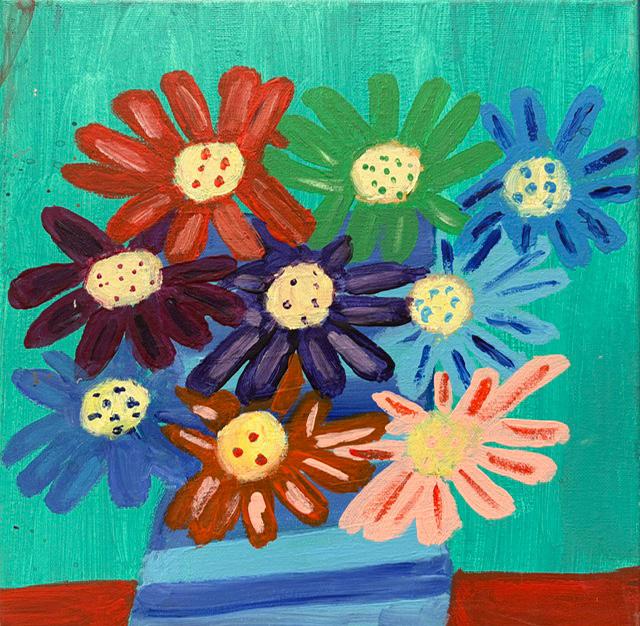
Artwork by Stewpot Artist Cornelious Brackens Jr,.
Moving Ahead
By Jason Turner
My greatest accomplishments can be broken down into a few different categories.
To start, my attitude toward life is getting better and better. I used to be a solitary individual who kept mostly to myself. I am a little bit more sociable these days. I walk around and talk to people longer than I used to do. I once did more in one day than I now do in weeks. But I aim to change that. I miss being agile and mobile.
I’m still in school with a GPA that I never could have imagined. The last time I was in school didn’t work out so well. But I now take off during the summer so that I don’t overwhelm or overexert myself. I’m still the president of the procrastination club but things get done when they need to, most of the time.
Recently I acquired a brand-new bicycle that I treasure maybe a little too much. I don’t often get a whole lot of nice things, and I cherish not having to walk around everywhere. I make up extra reasons to bike down the street for a little exercise and social interactions. I still get short-winded easily because of my tobacco crutch, but I don’t sweat as much or run out of energy as fast as I used to.
I’m turning 39 on the last day of July and I never thought I would or could make it this far in life. Since a young age, but especially in my teens, I had a rough beginning. A few diamonds and gems in the rough kept giving me a glimmer of hope, though. I’m proud to say that I have had a well-needed break from stints in extreme poverty and eerie patches of depression and homelessness. I’ve beaten those for the past three-and-a-half years since I’ve been able to get housing through a government voucher. Supposedly, the housing is to last a lifetime.
Moving forward, I’m going back to school in August and taking a heavier load of classes. I started with one class, then two, now I’m taking three. Maybe I’ll make it to a full-time student by the new year. Wouldn’t that be something?
Jason Turner is a writer in The Stewpot Writers’ Workshop.
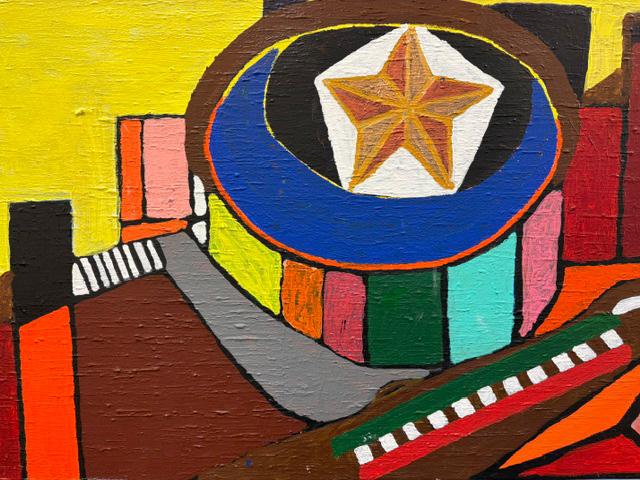
Artwork by Stewpot Artist Fernando Segovia.
Beating the Odds
By Vicki Gies
My greatest accomplishment is my life. I beat the odds of life and death several times during my life, even at the very beginning — birth!
I was born in 1952, when the doctors didn’t do Cesarean births often. My mother had been in labor for two and a half days, and her body wouldn’t dilate enough for me to be born naturally. When they tried to “help” me by pulling me out, the umbilical cord wrapped around my neck. My mother told me in later years that I came very close to death because I was turning blue and being choked. She was almost hysterical from me being so close to death. But I did, in fact, come into life even though I had bruises on my head and neck.
When I was 20 months old, I almost met with death again. After I learned to walk, I insisted on walking everywhere and carrying my own milk bottle. One day, I was going up the front porch stairs when I tripped and fell forward on top of my milk bottle. In those days milk bottles were made of glass. The bottle shattered and cut my right thumb almost completely off. My parents couldn’t wait for an ambulance, so my dad drove us to the emergency room, running every red light in town.
I remember that my mother had on a light blue dress that day, but by the time we got to the hospital, it was maroon because I had lost so much blood. Both my parents begged the doctor to save my thumb, and he miraculously did. But he also said I would always have trouble with my right hand. I had to learn to use my left hand, as my right hand was mostly paralyzed for quite some time.
I had conquered a health scare once again and eventually got used to being left-handed. I’ve never considered myself handicapped, even though I’ve never been able to bend my thumb.
In my fourth year of life, my body developed tumors in my colon, and I required emergency surgery once again. And again, I had emergency surgery for a ruptured appendix when I was seven years.
Sometimes I look back on my childhood and realize that my life was meant to be a
challenge, but I also knew that God had a plan for me. I’m just not sure what it was.
Despite the medical problems early in my life, I had a great childhood and felt very happy and loved. Life was really good through my school years. I graduated seventh in my class in 1970.
In 1971, I developed a tumor in my jaw and back to surgery I went. It took about four weeks to recover. In the meantime, I was working in my first career at Dallas County Government. In 1979, I became a deputy sheriff and was assigned to the county jail.
It was going great until January 7, 1982. I was escorting two inmates back to the jail from court, when they attacked me. I had broken ribs, multiple bruises, and they choked me to unconsciousness. I thought I was going to die. I tried to fight them and prayed hard for them not to kill me. When I came to, I was tied up in a court jail cell. They had tied my hands to my belt and tied one of their socks tight around my mouth and neck. I found out later that it was a planned escape. I was so blessed to have lived through that awful attack.
I lost both of my parents to cancer; my mom died in 1986 and dad in 1990. Most of my family on both sides died of cancer. I was so lost and depressed when my dad died that I turned to drugs to escape the hurt and reality.
Having no brothers or sisters, I turned to my friends for comfort. Unfortunately, they were all into drugs as well. I was involved in that drug world for 35 years and overdosed three times. I should’ve died, but God still had a plan for me.
Against all odds, I beat the addiction and got myself straightened out after rehabilitation. I also started going back to church. I started my life over in 2018 and have been clean ever since.
Looking back over my life, I had a wonderful and caring family, two full-time careers, several part-time jobs, and my faith is stronger now than ever. I’m in my 75th year of life now and have outlived half of my family. I am still cancer-free. To me, this is the greatest accomplishment. I thank God for His plan for me.
Vicki Gies is a writer in The Stewpot Writers’ Workshop.
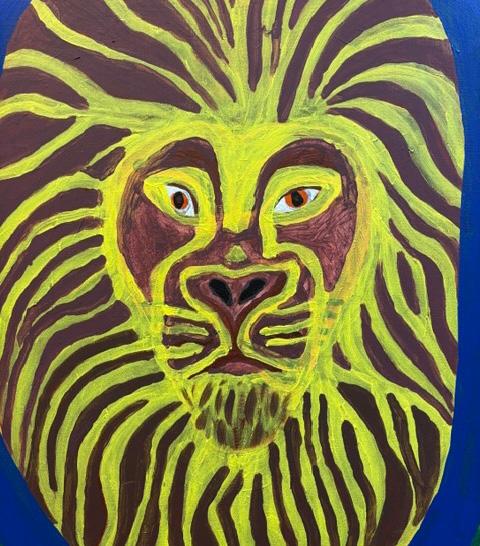
Artwork by Stewpot Artist Fernando Segovia.
My Proudest Achievement? Hard to Choose
By Gershon Trunnell
When I think about the things I have accomplished, it’s hard to choose one greatest thing. They all seem so equal to me. There’s not one better than the next. I have several, to tell the truth. I’m not boasting about my own ability, but about the gifts and talents God gave me to be able to perform in the world of the art.
Most of my art has a spiritual aspect. The songs I sing are about God and the experiences I have to relate. I sing with the Dallas Street Choir. I’ve recorded my music on YouTube. I’ve also sung with other artists on their recordings. My singing has been featured in videos.
As an active participant in The Stewpot Writers’ Workshop, my writings have been published in the book “Thy Neighbor” and in newsletters. Not only am I a writer, I have been an official vendor of The Stewpot STREETZine.
I can relate the experiences I have witnessed through the visual arts I’ve created. I’ve done art shows at Saint Paul Church, and some of my work has been displayed at First Presbyterian Church of Dallas. My work has also been displayed in the Dallas Museum of Art and Dallas Love Field. My very own display is in the Gallery at the Dallas Public Library. I’m a member of The Stewpot Arts program, and I’ve sold lots of my work at their shows. At the 2026 Stewpot Soup’s On luncheon and art show, I sold all the pieces I had on display. The same thing happened at the Dallas Animal Services art show.
I have a hobby of jewelry making that just blew up. I don’t have enough supply for the demand.
As a person who has been affected by the circumstances I’ve been dealing with, it’s hard to complete the tasks I’ve started, because I don’t have a safe place to leave my materials. Just continuing to work on it is an accomplishment.
I also am currently taking on the task of learning videography. I’m learning at The Stewpot from Bart Weiss, a teacher/filmmaker. Our goal is to create videos that have meaning. Now, imagine me mastering something like that! Well, let’s all just see what happens.
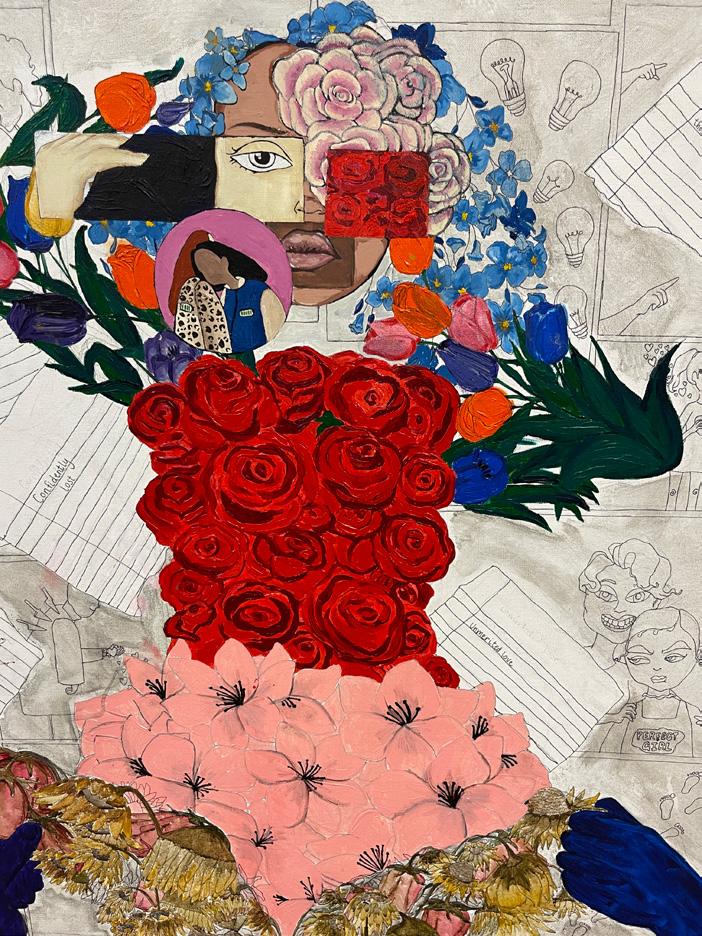
I also have designed and displayed my own clothing, and you wouldn’t believe how many offers I get to buy my clothes right off of me. As a clothing designer, I have made jeans, hats, shirts, and shoes. I’ve designed my own clothes and painted on others. People have commissioned me to create clothing pieces for them.
I have achieved a spiritual life and deep connection and great ability in my physical body. I have also achieved the great accomplishment of delivering my creator’s message he sent me to deliver while enduring great hardships and experiencing homelessness.
I also smoke far less than I have before and find myself going days not smoking at all. When I achieve the goal of not smoking, it will be a great accomplishment.
I was in the top one percent of the busi-
ness cluster when I took classes at a local college. I’ve given helpful advice that made a difference. I’ve planned and organized successful functions. I said this before — I’ve done a lot. Just being in the Book of Life is an honor.
But for me, my greatest achievement would be to be called great in the Kingdom of Heaven. It will be the greatest accomplishment for me to have ever achieved both here in this life in this world. Also, in eternal life.
Gershon Trunnell is a writer in The Stewpot Writers’ Workshop.
Artwork by Stewpot Artist Brie’Anna Scott.
Street Newspapers - A Voice for the Unhoused &
Disadvantaged
What is STREETZine?
STREETZine is a nonprofit newspaper published by The Stewpot of First Presbyterian Church for the benefit of people living in poverty. It includes news, particularly about issues important to those experiencing homelessness. STREETZine creates direct connection between our communities.
Distributing STREETZine is protected by the First Amendment.
CHAPTER 31, SECTION 31-35 of the Dallas City Code PANHANDLING OFFENSES
Solicitation by coercion; solicitation near designated locations and facilities; solicitation anywhere in the city after sunset and before sunrise any day of the week. Exception can be made on private property with advance written permission of the owner, manager, or other person in control of the property.
A person commits an offense if he conducts a solicitation to any person placing or preparing to place money in a parking meter.
The ordinance specifically applies to solicitations at anytime within 25 feet of:
Automatic teller machines, exterior public payphones, public transportation stops, self-service car washes, self-service gas pumps, an entrance or exit of a bank, credit union, or similar financial institution, outdoor dining areas of fixed food establishments.
Offering financial opportunity to the unhoused and economically disadvantaged individuals.
STREETZine is a program of The Stewpot and a member of International Network of Street Papers


Support our book, Thy Neighbor Written by the Writers’ Workshop participants, it celebrates The Stewpot’s 50th anniversary.
Order your copy today with a suggested donation of $30.
Learn what it means to be a neighbor in our community.
www.thestewpot.org/thy-neighbor