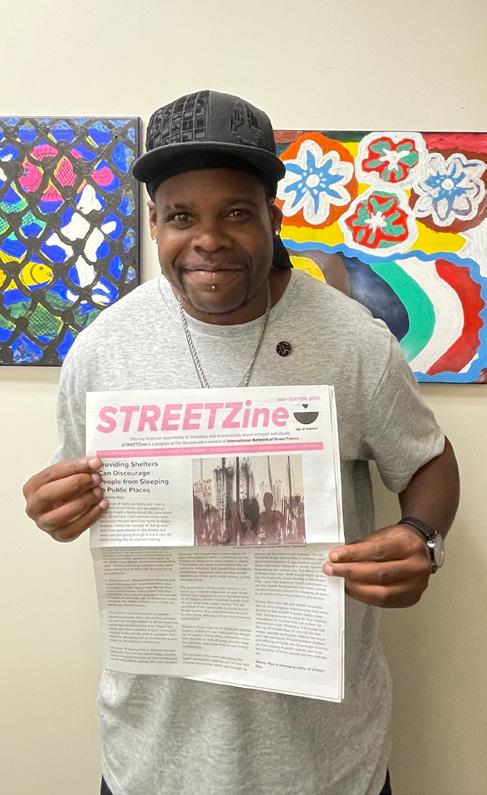
Offering financial opportunity to homeless and economically disadvantaged individuals. STREETZine is a program of The Stewpot and a member of International Network of Street Papers
Suggested donation to a vendor with a badge: $1.00 or more - La donación sugerida a un vendedor con insignia: $1.00 or more
The Realities of Food Insecurity
By Wendy Rojo
Food brings us together, whether we eat with our families, friends, pets, strangers, or significant others. Food is essential for our livelihoods but also for our social lives.
In North Texas, roughly 640,000 people struggle with food insecurity, which means they are unable to attain enough food or afford their food.
United Way Metropolitan Dallas, however, found that as of May 2024, Texas had become the most food-insecure state in America. In North Texas, roughly 640,000 people struggle with food insecurity, which means they are unable to attain enough food or afford their food.
As we approach the holiday season, the cost attributed to the seasons can be harder on those who may already be experiencing a tough time. On top of existing costs, expenses add up during the holiday time, including presents and holiday dinners.
Healthy food options at the grocery store can be expensive and some people turn to fast food because it can be substantial and costeffective. There is nothing wrong with eating at fast-food establishments, but it is better to have access to healthy, affordable food options for yourself and your family.
United Way Metropolitan Dallas also found that one in five children faces hunger in Dallas County. That is the fourth highest rate of food insecure children in America. With fastfood options being so readily available, parents may turn to the more convenient option like a fast-food drive thru for their families.
Luckily, more than 400 food pantries serve North Texas. According to the North Texas Food Bank (NTFB), there are food banks active essentially every day. Also, clients can be reassured that food banks that receive
food from the NTFB should follow the United States Department of Agriculture (USDA) MyPlate guidelines. Your plate should include vegetables, fruits, grains, protein foods, and dairy or fortified soy product.
In addition to food banks, people can apply for the Supplemental Nutrition Assistance Program (SNAP). Eligibility depends upon one’s income. The NTFB offers information on food banks near various zip codes in North Texas and offers resources to help people apply for SNAP.
Feeding America found that there are currently 47 million people in our country who face hunger, including one in five children.
Although food insecurity is a huge problem in Texas, the lack of access to food affects many Americans. Feeding America found that there are currently 47 million people in our country who face hunger, including one in five children.
These numbers reveal a systemic challenge exists, one that disproportionately affects
people of color. Feeding America argued that food insecurity and inequality are deeply intertwined in our country due to our long history of racism and discrimination. Likewise, United Way Metropolitan Dallas reports that systemic challenges result from lower wages, growing expenses, food deserts, and housing costs.
Access to healthy food options should not be a privilege but an expectation.
Food insecurity is a widespread issue that affects everyone, directly or indirectly. If neighbors of yours are experiencing food insecurity, it can lead to increased health care cost for the community as a whole, can deal with economic burdens. We must continue to advocate for healthy and affordable food for all. Access to healthy food options should not be a privilege but an expectation.
Wendy Rojo is managing editor of STREETZine.
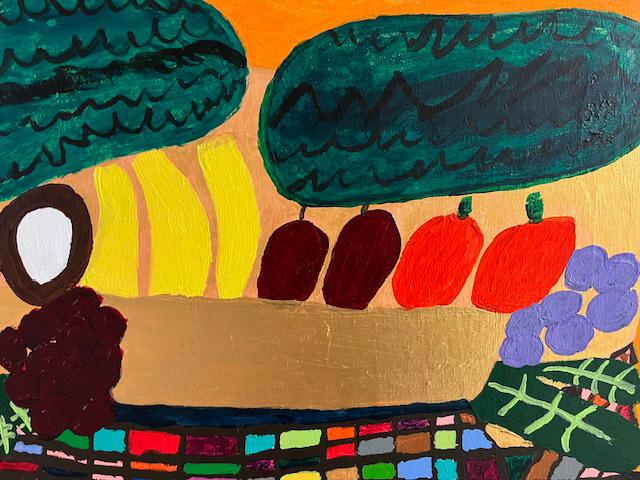
Artwork by Stewpot Artist Luis Arispe.
STREETZine
STREETZine is a program of the Stewpot.
The STREETZine is a monthly newspaper published by The Stewpot, a ministry of the First Presbyterian Church of Dallas. The Stewpot provides services and resources for people experiencing homelessness or who are at risk of being homeless. The organization also offers opportunities for a new life.
As part of this ministry, the STREETZine seeks to raise awareness about the issues surrounding homelessness and poverty. The monthly publication also offers financial opportunity for Stewpot clients who sell the paper to Dallas residents. Vendors are able to move towards economic self-sufficiency by using the money they receive from selling copies to purchase bus passes, food, and necessary living expenses. Clients also receive stipends for contributing articles to STREETZine
The content in STREETZine does not necessarily reflect the views or endorsement of its publisher, editors, contributors, sponsors or advertisers. To learn more about this publication, contact Betty Heckman, Director of Enrichment, 1835 Young Street, Dallas, Texas 75201 or BettyH@thestewpot. org. To read more about STREETZine, a member of the International Network of Street Papers, go to www.thestewpot.org/streetzine
Managing Editor: Wendy Rojo
Editorial Advisory Board:
The Rev. Amos Disasa
Brenda Snitzer
Suzanne Erickson
Russell Coleman
Poppy Sundeen
Sarah Disasa
William McKenzie
Betty Heckman
Dee Leone
Photo Editor: Jesse Hornbuckle
Pastor’s Letter: On Food at Advent
By Reverend Dr. Charlene Jin Lee
Editor’s Note: A portion of this essay was preached in a sermon that Rev. Dr. Charlene Jin Lee delivered at the First Presbyterian Church of Dallas on May 7, 2024.
When my Harold was eight, he was particularly curious about heaven and eternity. He asked, “So, what would I do in heaven?” Maybe you have wondered this, too. Among a collection of children’s letters to God, there is one letter that wanted to be sure that heaven would be better than here. It reads: Dear God, there isn’t a school in heaven, is there?
Growing up, I was unsure about my desire or readiness for Jesus to return and bring God’s reign into my world. I felt as if God’s coming would disrupt what I was working on and what I enjoyed, all that I hoped to do and travel. That is until I met two heavenly people who longed for God’s reign to come, to rule their hearts and the hearts of all people. I learned from them what it means to have an Advent faith and to live waiting for God.
San Simón, Mexico was where I met Pastor Leo and his wife whom we affectionately called, “Señora.” Five college friends and I drove about 30 hours south of the southern U.S. border one August before my junior year in college. We stayed two weeks in a small guest house at Pastor Leo’s home, a simple tin-roofed, wobbly structure standing on dirt floors. We were there to help with children’s ministry and to finish small repair projects in the modest church building, which was right in front of Pastor Leo’s house.
The village called Las Pulgas was on the outskirts of the city. Before the trip, I sewed long gathered skirts for the women on the team to wear, as this was what Christian women wore in the village. By the second day, the fleas had made their way to warm areas around the elastic waistbands, and we each had a line of flea bites around the perimeter of our waists and around our ankles where our socks ended. We were perpetually itchy and miserable. City conveniences like plumbing and electricity were not readily accessible. We were given a basin with water for washing in the morning and would save a portion for the evening.
Every day we would wake up around 4:30 a.m. to the sound of the chicken in the yard that loudly let us know that a new day was beginning, and we would make our way across the small yard to Señora’s kitchen. She would make us tortillas and beans. Pastor Leo would say, “Vamos a orar.” We would bow our heads, and he would pray, “Gracias, gracias gracias, Señor.” We ate breakfast and started early on the building repairs. At noon we would go into Señora’s kitchen and she would make us tortillas and beans. Pastor Leo would say, “Vamos a orar, gracias gracias gracias, Señor.” We ate lunch. Then, we walked three miles to the center of the village where we played soccer with the local children till dusk. We gathered in the quiet sticky evening next to one of two lightbulbs hanging from the ceiling of the main house, and Señora would make us tortillas and beans. Pastor Leo would pray, “Gracias, gracias gracias, Señor,” and we ate dinner.
We woke up at dawn the next morning to the alarm of the loud chicken. We stayed on this daily schedule: Church repair in the morning, afternoon soccer with children from the village, and we did not veer from the daily menu of tortillas and beans — for two weeks.
On the final day of ministry, we brought all the children and families from the village to the church for an evening of worship. That night, the Holy Spirit showed us great and unsearchable things we did not know. It was a night saturated with God’s presence. Under the stars of the dark sky, we dreamed.
We dreamed of a shower. We dreamed of washing the now gooey hairs we had braided away. We dreamed of an icefilled glass of chilled Coke. We dreamed of In-N-Out burgers. We loved this place, but we were too ready to go home to the comforts of our lives.
The next day, we must have been so tired that we slept far into the morning. We woke up and made our way to Señora’s kitchen and stood around the small table for breakfast. Pastor Leo held our hands and he prayed the same prayer: a prayer not of seeking, not of asking, but of thanksgiving. Gracias gracias gracias, Señor. Tears welled and rolled down our
Continued on page 5
Executive Director’s Report
By Brenda Snitzer
Editor’s Note: STREETZine talked with Stewpot Executive Director Brenda Snitzer about her personal interests in food as well as how The Stewpot meets the food needs of its clients. Below is an excerpt of that conversation, which has been edited only for length and clarity.
What are some of your favorite foods?
I am a steak girl! Maybe because my roots are in Texas, I’ve always loved steak – particularly filet mignon. Of course, I can’t afford steak that often and it’s probably not good to eat it every day or week. So, it’s one of those little luxuries. I also love Mexican food … definitely Tex Mex – fajitas and enchiladas and quesadillas. I could easily eat that daily. I am also a seafood lover – almost any kind. Finally, I have a huge sweet tooth but primarily for chocolate. Second are lemon desserts. I eat a little bit of dark chocolate with sea salt daily.
Do you have memories associated with certain foods?
I have a lot of memories around food. My family has always celebrated birthdays with special meals. During holidays and other gatherings, my immediate and large extended family spend time together around food. Even my church family as well as the First Presbyterian Church (FPC) and Stewpot family spend a lot of special events around food. The entire FPC staff, which includes The Stewpot, has a monthly potluck meal, usually around a fun theme. I can think about certain times throughout my childhood and adult life that food was an important part of the associated memory.
Do you like to cook? Not like to cook?
I do enjoy cooking when I have the time to do it. I work a lot of hours, so I don’t have the energy to cook most of the time. During the pandemic, my husband and I were cooking more and gradually it became his “thing.” He found he really enjoyed cooking. Now, he does the cooking almost exclusively because he enjoys it, and I enjoy coming home to his good meals.
Describe Stewpot’s food distribution program and how the organization got into that.
The Stewpot food distribution initiative has been going for many years. It provides shelf-stable food as well as meat, produce, and other items to housed folks. It started in order to help housed families in our Children, Youth and Family program. They were struggling with the living expenses we all face. But on their low wages, they were having to make choices between paying rent to remain housed and feeding themselves and their families.
During the pandemic, however, we immediately opened the program up to anyone needing help with food. We were doing three food distributions a month during the pandemic. Now we do it twice a month.
We serve between 250-300 households each time and try to give enough groceries for about two weeks. Anyone in need of food can go on The Stewpot website and sign up at Grocery Distribution/The Stewpot. We do not provide full meals, so folks still need to purchase some other items from the grocery store. But we give enough items to help reduce grocery store purchases.
And what about food recovery? Where does all that food go?
Since 2014, The Stewpot has worked to become a leader in food recovery efforts in North Texas. This effort prevents the surplus edible food around Dallas from ending up in the dumpster or landfill and shares it with those who are hungry.
This is good food that is either shelf-stable or produce from grocery stores and other partners. Or it might be cooked or prepared food that a commercial kitchen has kept at appropriate temperatures.
The food that we recover is used at our Second Chance Café at The Bridge Homeless Recovery Center as well as through our food distribution program. We also share excess food with other ministry partners around Dallas and Collin Counties.
To date, The Stewpot has reclaimed millions of pounds of food from a variety of community partners. If anyone is wanting to donate food to us for food recovery, they can check our website Donate Food/ The Stewpot to learn more about partnering or call or text our food recovery team at 469-798-9876.
Brenda Snitzer is the executive director of The Stewpot.
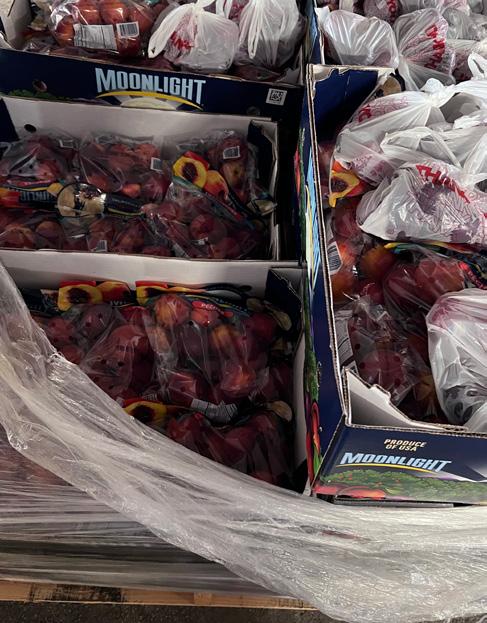
Photo Courtesy of Nikki Thompson.
The Universal Language of Cooking
By Poppy Sundeen
On Saturday mornings, the kitchen in First Presbyterian of Dallas is filled with the aromas of made-from-scratch cooking. It’s the day The Stewpot holds ESL (English as a Second Language) cooking classes at the church.
When I visited the class last month, the instructor was mixing up a quinoa salad with chickpeas, onion, olives, cucumber, and crumbled Feta cheese as roughly 10 students watched. Once the dressing of olive oil, lemon juice, and herbs was mixed in, she ladled it into bowls for everyone to try. Although the comments they made were in Spanish, I didn’t need a translator to understand the mms and enthusiastic nods.
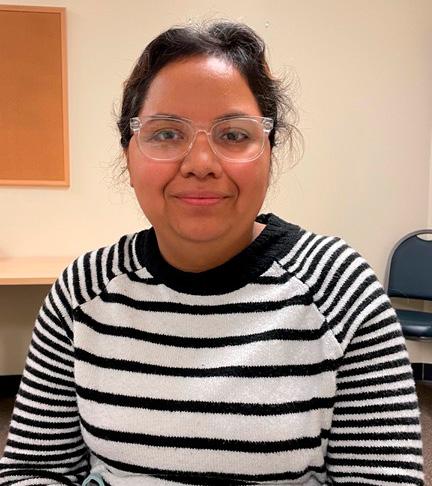
After the class ended, the students, all of them women in their thirties or forties, left with printed copies of the recipe to try at home. Ma de Jesus Espinoza, known to friends as Maria, was kind enough to stick around and talk to me, with translation help from Becky Zamora, The Stewpot’s manager of individual and family stabilization programs.
Treating diabetes with a healthy diet
Maria had a good incentive for starting the health-focused cooking classes. Four years ago, her husband, Enrique, was diagnosed with diabetes. Limiting his carbohydrate intake is an important component in managing his condition. So, when she first read about the cooking classes, she was eager to sign up.
Since then, she’s learned to modify her approach to cooking and has added a variety of recipes to her cooking routine. The new dishes have earned a big thumbs-up from her family.
And her family members aren’t the only ones who are impressed; Enrique’s doctor is too. At his last checkup, Enrique’s blood sugar levels were so much better that the doctor couldn’t hide his surprise. He wanted to know what changed.
Handing down habits from generation to generation
The way we cook and eat has an impact
on our children’s — and grandchildren’s — lives as well as our own. Maria knows this and wants to make sure her three daughters learn healthy habits for themselves and for future generations. She emphasizes the importance of eating something green and healthy every day — advice she reinforces by assigning salad prep duties to the girls.
From her own mother, Maria learned important lessons as well, such as that pork isn’t safe to eat unless it’s cooked correctly. She also learned how to make chicken soup from scratch. In this case “scratch” means that her mother would start the process by killing a live chicken at her home in their small Mexican town. (I could relate to that, because my own grandmother routinely did the same in her back yard near Fair Park in Dallas.)
Healthy can also mean tasty
The ESL cooking classes have helped Maria reduce the amount of carbs in her family’s diet. She’s also reduced their fats by grilling instead of frying. Maria, Enrique, and their three daughters are happy about the change. Their favorite meal? Grilled chicken, quinoa salad with tomatoes, and yellow squash. On special occasions, Maria bends the rules a bit by making a homemade cheesecake for the family.
So far, Maria has taken classes centered on enchiladas, salads, snacks, yogurt, and fruit. (Her daughters are especially fond of the fruit-and-yogurt dishes.) She plans to take more classes whenever they’re offered.
No stranger to The Stewpot
Maria was first introduced to The Stewpot through its food distribution program. While picking up groceries, she learned about The Stewpot’s ESL classes and signed up with an eye toward improving her English. One day at the ESL class,
Becky Zamora passed out flyers about the cooking classes, and Maria signed up for those too.
Maria’s children are also frequent Stewpot visitors. Her youngest daughter belongs to the organization’s Saturday Kids’ Club. On Wednesday evenings, the two older girls go to The Stewpot’s Crew enrichment program for teens, while Maria attends their parent conversation sessions.
Preparing for the future
When you add all of the Espinoza family’s Stewpot activities together, they represent a considerable time commitment. Maria thinks it’s well worth it. Yes, she’s tired when she finishes her workday on the cleaning crew at Nathaniel Hawthorne Elementary School, but she’s determined to put her family’s health and her children’s future first.
I asked her what her hope is for her daughters. She answered, “Que ellas estén preparadas para este mundo.” (That they be prepared for this world.) Isn’t that what every mother hopes?
Poppy Sundeen, a Dallas writer, is a member of The STREETZine editorial board.
Photo of Ma De Jesus Espinoza Courtesy of Poppy Sundeen.
Continued from page 2
faces because before us was a feast, a feast prepared with extravagant love.
Set on the table were seven bowls of chicken soup.
In the midst of so little, they gave so abundantly. In the midst of what we saw as poverty, they offered us the richest of fare. The one chicken this couple owned was their sole source of insurance. When an emergency arose their chicken was the sole asset they could sell. They gave their heart. They gave their love to us as best they could express it, to six college kids from California who could easily stop by a Kentucky Fried Chicken in San Diego on our way home.
In the midst of so little, they gave so abundantly. In the midst of what we saw as poverty, they offered us the richest of fare.
That morning in San Simón, Señora’s chicken soup was the bread of life for me. Eating this love, I knew that God came to feed ordinary people like me with limited vision and little faith. God came to feed people of extraordinary kindness and giant faith like Pastor Leo and Señora. So abundantly fed when Christ left us behind here – commissioning us as his disciples to love and to dwell with, to feed and comfort all God’s children – we have more than enough to love freely and generously without calculating the cost, without measuring the merit of the recipient.
They gave their love to us as best they could express it, to six college kids from California who could easily stop by a Kentucky Fried Chicken in San Diego on our way home.
And as ones left behind to carry Christ’s ministry of love, when we hear Jesus say, “In a little while you will see me again,” we would long for Christ to come to complete the good work he has begun in us and through us.
We would eagerly and prayerfully wait for Christ’s coming, for there are things that only God can fix. There are cures only God can complete. There is life from death that only God can resurrect. There is mending of broken hearts only God can heal.
I asked Pastor Leo about his prayer. What are you thankful for? Why do you say thank you, thank you, thank you? Pastor Leo pointed above and answered: “por la promesa.”
We would eagerly and prayerfully wait for Christ’s coming, for there are things that only God can fix. There are cures only God can complete.
Though there was little in his possession, so little to grasp in this temporal world, here stood a beloved of God lifting his hands, raising his head, gazing upon the sure promise of a new heaven and a new earth where justice and love, goodness and mercy shall follow all the days of eternity. This was his comfort and his hope. So, his prayer was: Gracias por la promesa.
Pastor Leo and Señora are two heavenly people who have convinced me that God’s eternal kingdom is better than any measure of the best life I can create and build for myself here.
I wait in hope. I love in hope.
Amen.
Reverend Dr. Charlene Jin Lee is Associate Pastor for Practice and Formation at the First Presbyterian Church of Dallas.
24/7, 365 DAYS A YEAR 2-1-1 Texas helps connect people with state and local health and human services programs.
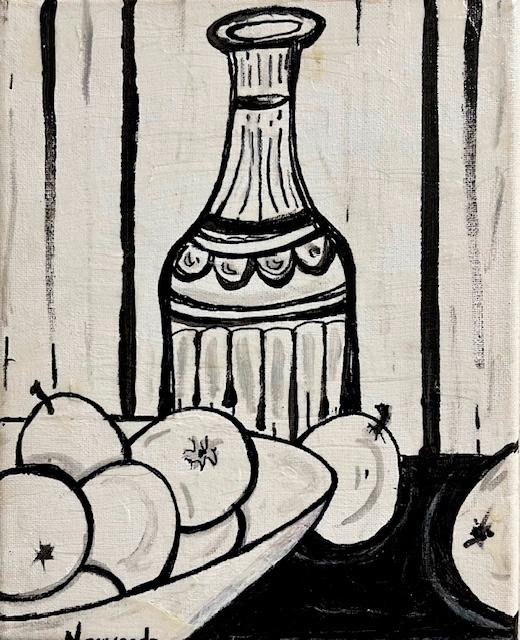
Artwork by Stewpot Artist Michael Norwood.
Writers’ Workshop Essays
Editor’s Note: Each Friday morning at 10 a.m., The Stewpot hosts a Writers’ Workshop. During the sessions, participants address selected topics through prose or poetry. In this edition of STREETZine, we feature the essays of writers that explore the concept of food.
Food Creates Memories
By Jason Turner
Food was a serious subject when I was growing up. I once was told by a family friend that, ever since I was little, our dinner time was extremely important to me.
I can always hear my smart and caring mother break down the mental and emotional cost of junk food consumption rather than focusing on the physical costs of eating so much junk food. One-a-day vitamins and non-processed foods kept our family away from sickness. Rarely did I miss a day of school for illness.
My food memories sometimes are overwhelming. For instance, certain meals remind me of becoming homeless for the first time. Other foods can prompt memories of life events such as the first day of high school or the first mountain-rappelling challenge I completed.
When I was growing up, people would post pictures on social media of meals they prepared or that had been catered. Sometimes people would post food they wanted to try or that they thought looked interesting.
It wasn’t until I was 28 that I finally joined
Foods I Love
By Darin Thomas
I love to cook and eat different foods. My favorites are Mexican food and soul food.
I like to cook my soul food on the weekends: pot roast, red beans, candied yams, cornbread, and banana pudding. My Mexican food consists of steak and chicken, refried beans, rice, tamales, soft tortillas, and salsa.
I also love all kinds of different foods, like hamburgers, nachos, and seafood. I’m incarcerated right now, so I have to come up with meals from the commissary. I buy mackerel, chili with beans, tuna with jalapeño, salmon, rice, noodles, squeeze cheese, chips, seasonings, ranch dressings, beef tips, gravy, and different things.
I learn ways to put some of these foods together and make some good meals.
the social media frenzy and posted some fine dining I had comforted my loneliness with. I had a lot of time to reflect while driving cross-country in an 18-wheeler.
I’ll never forget how I felt when people commented with concerns about my health after I had been homeless for over five years. Some foods, like red velvet cake, never tasted the same after I had eaten them out of dumpsters or not at all. For that reason, I don’t photograph food anymore.
During the holidays, I eat my family’s cooking as I hover around the kitchen preparations. I use that time to reminisce about past times, good or bad. I keep a positive outlook during holidays as I spend time with each member of my family in the kitchen or around the backyard grill.
Also, I’m proud that I was raised to rarely celebrate with fast foods and that restaurants are for special occasions. It helps me to not get caught up in impulsively going to drive-thru restaurants or forming dollar-menu habits. Although I’m not super healthy, I know I’m better off knowing how to cook for myself and take my time.
My favorite food is my little sister’s mac-
I come up with some pretty good ones with the mackerel and rice or tuna with jalapeño and noodle sandwich spread, pickles, and corn chips. We make cakes out of cookies, Snickers, M&Ms, and oatmeal. We put it all together and make a good cake. We use the cream from the cookies to make the icing. We can come up with some really amazing stuff from the commissary.
I can’t wait until I’m released so I can eat my favorite foods, go grocery shopping, and visit my favorite eating places. I can’t wait until I get to my Mexican food and my soul food.
I love to cook all the time and eat my favorite foods. That’s what I like about food: cooking and eating all kind of different foods from around the world.
Darin Thomas is a writer in The Stewpot Writers’ Workshop.
and-cheese with bacon crumble. Then my dad’s ribs, my mom’s home-grown dish, and everything in the dessert section.
Food creates a range of emotions, memories, and excuses that cannot be overlooked. Even now, if I invite company to my house, I’ll have fresh cookies baking upon their arrival. First impressions go far, and the smell of morsel chocolate chips creates common ground for conversation starters. Comfort-food goodie bags and snack packs are a more popular option for small events.
Being open to new tastes leads to acquiring new tastes. I developed a taste for pineapples, brown sugar, and black-eyed peas because my mom would make us “candy beans” when we were little and make a huge deal about it. I still eat them and am one of the few people I know who is nostalgic for an uncommon dish like that.
One last thought: If you are to show up late, bring donuts. That way, you’re not the guy who’s late. You’re the guy who brought donuts!
Jason Turner is a STREETZine vendor and a writer in The Stewpot Writer’s Workshop.
Photo Courtesy of Nikki Thompson.
Rethinking Food Pantries
By Savita Vega
One of the biggest challenges I faced while living in my car with my dog was finding food that I could prepare and eat. Although there are many food pantries in the city, none that I ever came across addressed the fact that some people in need of food have no kitchen in which to prepare it.
Although most of these food pantries had some food that I could have used, often it was inaccessible due to a “take all or nothing” policy. In other words, clients weren’t invited to pick and choose which items they need but were required to accept an entire prepacked bundle of food which always included perishable items such as meat and milk. In fact, at some pantries it was prohibited to accept the bundle unless one had a kitchen.
Why I Want to Master Nutrition
By Mike McCall
My relationship with food has long created a mixed feeling. I’ve always been on the heavy side, and it has been a struggle to lose weight in a heathy manner. One reason is due to all the misinformation out there. Especially nowadays, with so many individuals posting videos online promoting a certain type of diet and supplements when in fact, the video is just a well-orchestrated advertisement.
Fortunately, the start of my fall semester in school came with the opportunity to learn about food and nutrition from a course I was taking. The class was required so, to be honest, I wouldn’t have taken it otherwise. Little did I know that my most dreaded class would be the one that taught me the most.
Within the first few weeks, I came to realize I knew nothing about food and my eating habits were bad. This epiphany explained why I always struggled with my weight. Even when I was cutting back on the amount of food or eating a bunch of salads, my choices of fast and easy meals that looked healthy were off by a mile when I took a closer look at the numbers and ingredients.
We all live busy lives in this fast-paced city so our choice in foods often leads to speed and convenience. This leads to heavily processed foods that are not
Some pantries do offer prepared, readyto-eat items (donated by grocery stores) but they may not reserve them for people with no kitchen — the people who really need them — and instead distribute them indiscriminately to everyone. If the food pantries would solicit more of these types of donations and reserve them only for those who have no way to cook, that would be a great service to the unhoused population.
For me, one of the obstacles was my dog. With her in the car, I couldn’t simply leave and go to a soup kitchen to eat. Much of the year, it was either too hot or too cold to leave her in the car without the AC or heater running. In some places, I was afraid to leave her at all because I was concerned that someone might steal her. At any rate, her presence made it difficult for me to leave my car for any extended period of time to go eat somewhere.
good for us at all. Even the premade salads I was getting from the store were not as healthy as I thought. All this new information I was learning was quite a wake-up call, especially since I knew I could trust the source.
I believe that everyone should take a nutrition class in their lifetime so they can get the evidence-based information we need to take better care of ourselves. Without this class I would have continued with my incorrect view on food and what one should eat.
Four out of the top ten causes of death in the United States can be the result of a poor diet and lack of exercise. I don’t want to be a part of this statistic. I’d much rather be the guy who learned what he was doing was wrong and changed the ending of his life story. I’m already a survivor from addiction. Now, I need to take another step forward and become a master of nutrition.
Then, of course, there was the problem of ice. In the scorching months of summer, ice became so precious that if I was short of money, I would opt to buy ice rather than food. I once took all the money I had and bought a Yeti cooler, but keeping it full of ice was always a challenge. This is something, as well, that the food pantries may not have considered: how much a little ice means to someone living unsheltered in the heat.
In any case, although many food pantries exist throughout the city, in my experience they don’t always address the special needs of the unhoused. With a little more planning and just a few changes, they could make a huge difference in the lives of those who are experiencing homelessness.
Vega is a writer in The Stewpot Writers’ Workshop.
Mike McCall is a writer in The Stewpot Writers’ Workshop.
Savita
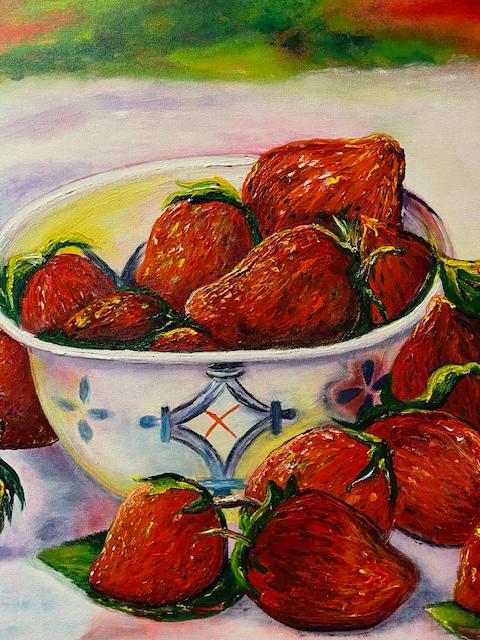
Artwork by Stewpot Artist Teresa Zacarias.
For Milestones, Chai
By Eric Oliver
This month marks a half-year that I’ve been navigating homelessness. During this time, I’ll confess I’ve held quite a low opinion of myself. This has made it all too easy to act as my own worst enemy when I fell short of some standard I’d set. I was reticent, even dismissive of my accomplishments because I carried a useless shame about where I found myself. I mislabeled each win as just the bare minimum, or incremental progress as unworthy of note. So, as I approached this milestone, I didn’t at all feel like celebrating. Or rather, I set about attacking myself for not having anything to celebrate. But that’s not wholly true.
Over the last six months, I have accomplished quite a bit: I went through rehab, secured new housing with help from others, had a number of writings published in STREETZine and other places. And I kept going — sometimes reluctantly, sometimes barely — but I kept going. With this perspective, a sense of accomplishment bubbles up, and the energy I need for my next steps flows.
There’s a well-worn joke that most of the Jewish holidays can be summed up as, “They tried to kill us. We survived. Let’s eat.” Austrian bakers developed the croissant to commemorate the breaking
A Taste of Love
By Cici Guerre
of the Ottoman siege of Vienna. Swedish meatballs came to be, it’s said, because a certain Swedish king (Charles XII, if you’re curious) enjoyed them while in captivity near the Black Sea and brought them home afterward. There is something about food that ushers new perspectives and new possibilities. It allows us to remember in times like these, that there have always been times like these. And if nearly losing a city to siege can result in a delicious pastry, if narrowly escaping a genocide can be celebrated with a cookie and costume play, then why shouldn’t I mark my milestones with a delicacy too?
Anniversaries are an opportunity to reflect and improve. I need to remember my times of want and of plenty, moments of triumph and of barely getting by, because these memories carry struggle and strife and strength. And these are things I can now turn to when impatience and frustration and self-doubt knock at my door.
So, I’m marking my recent milestones. So what if my progress seems mundane? What is a triumph, if not the opportunity for some more mundane? So, cribbing from the holiday joke: My questionable choices nearly killed me. I survived. Let’s eat. In this spirit I’ve shared my Masala Chai recipe. I love to get up early on Saturday mornings, make this tea — the recipe makes 2 mugs — and curl up
Thanksgiving started early for me last year. The first meals started being handed out on the streets in October. The people of Dallas can be very generous. Over the following weeks, it became clear that the Thanksgiving holiday is in many ways the most important of the year. I was truly impressed. No other holiday results in more than a day or two of festive meals. Last year, we feasted for six weeks.
Always my favorite holiday growing up, I have now experienced Thanksgiving in a much more meaningful way than at the family gatherings I recall. So many people went to so much effort to share good food with strangers and continued doing so for over a month.
That is the kind of Thanksgiving experience I will look for now. Perhaps I will buy a pumpkin pie for myself, but otherwise I don’t really crave specific foods. I have always enjoyed buying chocolate and giving it away. Part of that is letting people know what I think is good chocolate. But it’s the sharing of food that I desire. I want to taste the love that is part of shared food and to give that to others. Last year, every meal demonstrated to me how important shared foods and tastes of the holidays are to us all.
Cici Guerre is a writer in The Stewpot Writers’ Workshop.
reading a book before anyone else in the house wakes up. I mark that I have a kitchen again, a quiet space to read, and a favorite mug. And I focus on being present, on new ideas, and new horizons. What better to celebrate than that?
Masala Chai
• 6 whole white peppercorns
• 2 cinnamon sticks
• 6 cloves
• 10 green cardamom pods
• 4 slices of ginger
• 3 tbsp Assam black tea
• 2 tbsp sugar (or honey)
• 2 cups room temp water
• 2 cups room temp milk
First, grind all spices except ginger to a coarse powder in a mortar. Place saucepan over medium heat and add ground spices, toasting until quite aromatic (about 1-2 minutes), then add ginger and continue to toast for 1 minute.
Add water and Assam tea. Bring to a boil. Maintain a boil for 1-2 minutes.
Lower heat and add milk. Simmer up the sides of the pan, occasionally removing from heat, cooling, and returning to heat.
Strain into a mug, serve hot.
Eric Oliver is a writer in The Stewpot Writers’ Workshop.
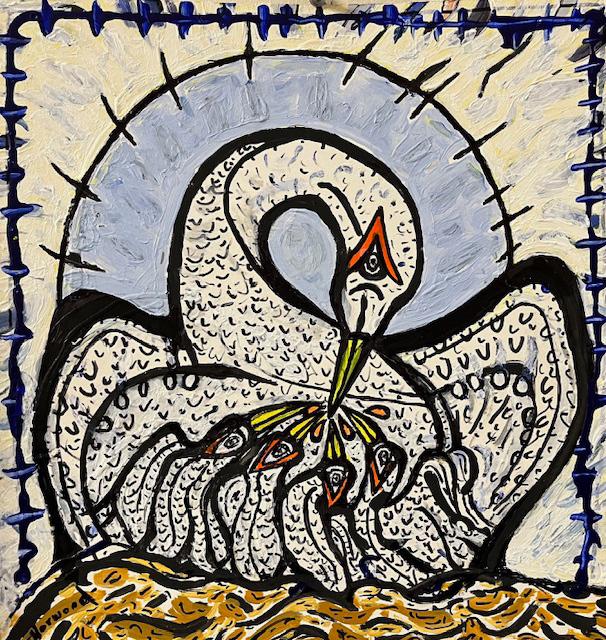
Artwork by Stewpot Artist Teresa Zacarias.
Good Food from the Good Earth
By Gershon Trunnell
When my mom was pregnant with me, my mom and dad felt it was important that the food they ate was nutritious and good for them, like no fast foods — no McDonald’s or Jack in the Box or Dairy Queen. I think that’s why I came out different. I was a little different in what I liked to eat. I didn’t like fast foods. They slowed me down, and sugar made me crash instead of giving me the energy I needed. I chose fresh fruit over candy. That meant I could do better in P.E.
Growing some of our own vegetables was an advantage I had. I didn’t have to wonder where our next meal was going to come from or whether it was good for me or was going to make me sick. I felt the differences between processed food and natural food.
In the Bible it tells us the herbs and plants that are made for our consumption. My family grew cucumbers, squash, okra, greens, cabbage, lettuce, mustard and turnip greens, kale, cherry tomatoes, and little jalapeño peppers. I put the seeds in the ground. The babies, I called them. I put them to bed, and then when they came out of the ground, they were ready to go to work. They’d come out with good food for the day. If I had a bad attitude when I planted them, they wouldn’t come out as good. We put good care into it.
When my grandmother was picking the ripe vegetables and fruits, I would be right there with her gathering them. We had a pear tree and a pomegranate bush. We’d take the food in and wash it. Once my grandmother started frying stuff, she’d kick me out of the kitchen when the heat got too hot. I didn’t cook until I was older.
Once we prepared the meal, she would go through and tell us all the stuff we used and were going to eat and why. And she’d tell us the parts we wouldn’t eat. For greens, cook stalks and leaves but not roots. You can make tea from the roots. She’d tell us why she picked those particular things to grow and eat.
Neighbors would get some too, if they didn’t have any. It taught us how to be self-sufficient and live off the land without having to go to the store and buy it. Grandma knew that if she relied on the grocery store, it could put her in an uncomfortable position economically. She
was smart. She made a great foundation for us.
We give thanks before eating anything to acknowledge where our food is coming from.
I had a discussion with another family member about who eats first in the house. My cousin said that if he provides the food, he eats first. In his house he could do that, but when we had a big family gathering, there was a certain order. We all sat down together. The women would take the plates to the children first but we didn’t eat anything until grace was said. If that food is in front of you and grace hasn’t been said, it’s a violation to start in. We give thanks before eating anything to acknowledge where our food is coming from.
Later, when my dad passed away, I had to cook for myself because my mom was going to night school. That’s when I began using the microwave. I was eight years old. I wasn’t allowed to touch the stove. If you turn the stove on, you get a whopping. I had a little barbeque grill that I kept outside. I grilled my own fish out there. First few times, the fish got stuck and fell through the grooves. Then
I learned how and got good at it. My dad, uncle, and I used to go fishing. It was like church. It was a sacred Sunday. We scaled, deboned, and cooked what we caught. I liked to cook them on the grill.
This earth gives us so much. If you give good, good is going to give back to you.
When I grew older, I worked in culinary as well. I was a sous chef and line cook for a couple of restaurants in Savannah, Georgia, where they take pride in food. I learned how to cook seafood and came up with my own recipes. They had oysters on the half shell, so I made up a recipe for fried oysters. I wasn’t too familiar with seafood, so I learned how to make good dishes and healthy dishes. And I learned how to cook Cajun and Creole as well.
This earth gives us so much. If you give good, good is going to give back to you. We come from the earth, and the earth gives back. It gives me pleasure to think about all the hearts I’ve reached through people’s stomachs.
Gershon Trunnell is a writer in The Stewpot Writers’ Workshop and a STREETZine vendor.
Artwork by Stewpot Artist Michael Norwood.
My Journey as a Chef
By James Varas
Food can be a very deceptive topic. As beautiful as they may be, foods can be used as a lure to deceive people or to make a profit by enticing the senses of the hungry. Esau sold his birthright for a bowl of lentils. And Eve offered Adam a piece of fruit from the Tree of Knowledge of Good and Evil after the serpent lied to her and said she will not die.
Why is food such a temptation? Is it the food or the desire for the food? I don’t know the answers, but I do know that Jesus fasted many of the days He walked the earth. Can you imagine the Son of God, the creator of the Universe, resisting food?
I enjoy food and see the beauty in God’s creation. Birds fly through the wind and glide on their wings. Livestock roam the earth and run in packs, and herds protect the packs when they are on a hunt. The fish of the ocean swim among the waves and are free in the deep blue sea.
We are the ones given dominion over the livestock, the birds of the air, and the fish of the sea. I think of God smelling the sweet aroma as a burnt offering was presented to Him.
I am in a culinary class, and we make food that people could only imagine. We just finished making veal cordon bleu and veal scallopine marsala. It is made with
an Espagnole, which is one of five mother sauces that give birth to thousands of different sauces.
I have learned so much in the year I have studied the culinary arts. I know the risks of different temperatures, foods, and food-borne illnesses. And I know how long to cook each food.
I have written about 200 recipes for my classes and continue to add to my recipe book. I just finished two days of recipes for a total of 20 recipes.
I have studied the human body with a nutrition class and know how the food travels through our organs. I have learned about many nutritious food sources that I never knew about.
I have written about 200 recipes for my classes and continue to add to my recipe book. I just finished two days of recipes for a total of 20 recipes. They range from osso bucco with gremolata sauce sauce to veal piccata with Milanese sauce, to homemade fresh pasta.
We have to make four plates with all the recipes together and make them on time. That is why I put so much time in writing my recipes. I do not want any surprises on the day of presentation for our executive chef.
I have finished my advanced course and now am enrolled in specialty classes. My garde manger class, for instance, was
very interesting because we learned the art of cold smoking, curing meats such as duck, shucking oysters, and deveining huge fresh shrimp and butterflying them to make tempura.
We rolled sushi by hand and ground different meats and animals to make our own sausages. They aged for weeks until we could try them. We also made brines that purify certain foods with ingredients like acids for pickling.
I thank God for all the blessings and all the beautiful opportunities I have had to dine with Him.
I am in the second week of my saucier class. Once I complete it, I go to my international class and cook my own menu. I want to keep my dreams open. Someday I might be cooking at some beach resort in Hawaii or on a tropical island. You might also find me on a cruise ship sailing around the world or maybe I will be on the road trucking, saving up for my own restaurant. Only time will tell.
I thank God for all the blessings and all the beautiful opportunities I have had to dine with Him. He says in the Book of Revelation that He will come and eat with us, so each morning I pray His Spirit is upon me. Every meal I eat is with the Son of God, our Heavenly Father, and the Holy Spirit.
James Varas is a writer in The Stewpot Writers’ Workshop.
Artwork by Stewpot Artist Luis Arispe.
Street Level Blog
Check out our blog that captures stories, events, and moments in the lives of participants in The Stewpot Writers’ Workshop.
Here is a preview of our latest blog post by Eric Oliver: “An all-encompassing neighbor concept is a handy-dandy tool, but its impact depends on the imagination of its wielder. But trust this: The Golden Rule is radical....Standing side by side, energy and attention once directed to exclusion can, with work, repair lives and worlds.”
Read more at www.thestewpot.org/street-level/
Thanksgiving Dinner in Dallas
• Central Market/H-E-B Feast of Sharing will take place November 8 from 3 p.m. to 7 p.m. at Fair Park’s Centennial Hall.
• Metrocrest Thanksgiving program, which provides essentials for the holidays, is open for registration.
• Dallas LIFE will host its ninth annual turkey fry on November 25 from 8 a.m. to 2 p.m. The organization frys about 100 turkeys for its community.
• Operation Turkey is hosting is a warm Thanksgiving meal for anyone November 28 from 8 a.m. to 12 p.m.
• The North Texas Food Bank will host its Thanksgiving food distribution on November 23 from 9 a.m. to 12 p.m. The organization’s distribution takes place at the University of North Texas at Dallas.
• The Statler Dallas will host its 7th Annual Thanksgiving event on November 28 for first responders, veterans, police officers, firefighters, and their families. The event will take place from 11 a.m. to 3 p.m and you must RSVP online.
The Stewpot Food Distribution
The Stewpot will distribute food on November 16 from 11 a.m. to 12:30 p.m. Families need to be registered online
You can register by visiting: www.thestewpot.org/ grocery-distribution Please remember you can dial 211 to find the resources nearest to you
Street Newspapers - A Voice for the Homeless & Impoverished
Distributing STREETZine is protected by the First Amendment.
STREETZine vendors are self-employed and set their own hours. They are required to wear a vendor badge at all times when distributing the paper. In order to distribute STREETZine, vendors agree to comply with Dallas City Ordinances.
If at any time you feel a vendor is in violation of any Dallas City Ordinance please contact us immediately with the vendor name or number at streetzine@thestewpot.org
CHAPTER 31, SECTION 31-35 of the Dallas City Code PANHANDLING OFFENSES
Solicitation by coercion; solicitation near designated locations and facilities; solicitation anywhere in the city after sunset and before sunrise any day of the week. Exception can be made on private property with advance written permission of the owner, manager, or other person in control of the property.
A person commits an offense if he conducts a solicitation to any person placing or preparing to place money in a parking meter.
The ordinance specifically applies to solicitations at anytime within 25 feet of:
Automatic teller machines; exterior public payphones; public transportation stops; self-service car washes; self-service gas pumps; an entrance or exit of a bank, credit union, or similar financial institution; outdoor dining areas of fixed food establishments.