Pastor’s Letter: Garden Obedience
By Reverend Amos Jerman Disasa
Editor’s Note: This essay is excerpted from a sermon Rev. Disasa delivered at the First Presbyterian Church of Dallas on March 22, 2026, as part of a Lenten series on Simone Weil’s book, “Gravity and Grace.”
Mark 14:32-26
32 They went to a place called Gethsemane; and he said to his disciples, “Sit here while I pray.”
33 He took with him Peter and James and John, and began to be distressed and agitated.
34 And he said to them, “I am deeply grieved, even to death; remain here, and keep awake.”
35 And going a little farther, he threw himself on the ground and prayed that, if it were possible, the hour might pass from him.
36 He said, “Abba, Father, for you all things are possible; remove this cup from me; yet, not what I want, but what you want.”
I want to begin with a question that sounds simple but isn’t: What does obedience look like? Not what does it mean. What does it look like?
Most of us, if we are honest, picture something dramatic. Something costly in a way that other people can see. Something that looks, frankly, like a parachute; a leap from a great height into danger, with witnesses below watching us fall.
Hold that image — parachute obedience — at the front of your mind. We’ll come back to it.
The text offers us a different kind of obedience: garden obedience. Quiet. Midnight. Alone. No audience. No applause. No thanks. No reward.
The difference between these two is the difference between faithfulness performed for the world and faithfulness whispered to the God who sees in secret.
Simone Weil wanted to parachute into
occupied France. In 1942, she was living in London, a French exile working for the Free French resistance. She was furious at the distance between herself and the suffering she felt called to share.
Weil drew up a plan that included nurses and trained volunteers dropped behind enemy lines via parachute to tend to the wounded at the front. She would be among them. She begged the Free French leadership to approve it. She was relentless and serious.
The text offers us a different kind of obedience: garden obedience. Quiet. Midnight. Alone. No audience. No applause. No thanks. No reward.
The plan was denied. She was assigned to a desk. Given papers to review, reports to write. The woman who wanted to leap from a plane into the theater of war was told to stay in place.
Now, Weil’s desire was not vanity. It came from the same attentiveness that produced everything she ever wrote — a refusal to look away from suffering, a conviction that solidarity requires proximity.
But the parachute was not given to her. The front line was not given to her. What was given was a desk, a pen, a set of notebooks, and a body that was quietly failing. The obedience she wanted was spectacular. The obedience she received was invisible.
The distinction between the obedience we choose and the obedience that chooses us is the gate through which we walk into the garden of Gethsemane.
We understand parachute obedience instinctively. It is the obedience that leaps. It acts in public. It makes sacrifices that others can see, and, crucially, it knows that others can see.
There is an audience, and the audience is part of the architecture. Not always consciously or cynically. But we obey, and someone notices. We sacrifice, and someone is moved. We give, and there is a receipt.
None of this is necessarily dishonest. But it is obedience with an aim. And Weil says the question is never “What is the aim?” The question is always: “What is the origin?”
The origin of obedience
The disciples in Gethsemane are not villains. They have followed Jesus all week. They were there for the Palm Sunday parade. They were there when he flipped the tables. They have been brave, present, loyal. They have done the parachute version of discipleship. The version that surges with adrenaline.
But when Jesus says sit here while I pray, they fall asleep. When the crisis is narrated quietly instead of out loud, they fall asleep. When obedience looks more like stillness instead of resistance, they fall asleep.
Three times he comes back. Three times they are gone. Their solidarity with his suffering was real, but it was solidarity on their terms. They could stay awake for a confrontation with power, but not a prayer.
Parachute obedience is obedience to force. It conforms to the spectacular and rises to the occasion. But when the occasion is a garden at midnight, when there is no crowd and no enemy and no table to flip, it sleeps.
Weil draws a distinction between obedience to force and obedience to necessity. Force compels from outside. It pushes. You obey because the pressure is unbearable, or because the reward is visible, or because someone is watching.
Parachute obedience is obedience to force. It conforms to the spectacular and rises to the occasion.
Obedience to necessity is different. Necessity is the quiet discovery that a thing must be done, not because you are forced, but because it is possible, and the possibility is the obligation.
Mark tells us that Jesus went a little farther. It’s a tiny detail of verse 35, where it says Jesus went a little farther. He went forward into the inner part of the garden. That tiny detail bears the weight of meaning. To miss it is to have gone to a different garden.
He advances past beyond the reach of human companionship. The disciples are behind him, they are asleep, and the
Continued on page 5
STREETZine
STREETZine is an enrichment program of the Stewpot.
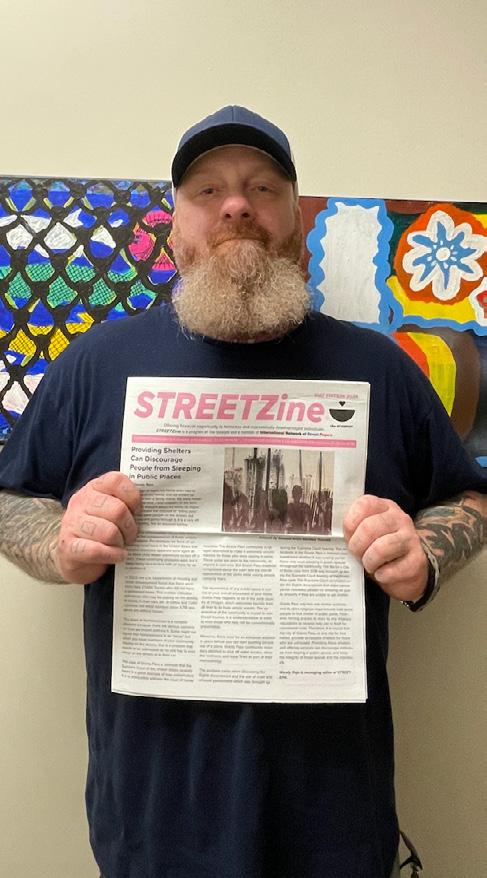
The STREETZine is a monthly newspaper published by The Stewpot, a ministry of the First Presbyterian Church of Dallas. The Stewpot provides services and resources for people experiencing homelessness or who are at risk of being homeless. The organization also offers opportunities for a new life.
As part of this ministry, the STREETZine seeks to raise awareness about the issues surrounding homelessness and poverty. The monthly publication also offers financial opportunity for Stewpot clients who sell the paper to Dallas residents. Vendors are able to move towards economic self-sufficiency by using the money they receive from selling copies to purchase bus passes, food, and necessary living expenses. Clients also receive stipends for contributing articles to STREETZine
The content in STREETZine does not necessarily reflect the views or endorsement of its publisher, editors, contributors, sponsors, or advertisers. To learn more about this publication, contact Betty Heckman, Director of Enrichment, 1610 S Malcolm X Blvd Dallas, TX 75226 or BettyH@thestewpot.org. To read more about STREETZine, a member of the International Network of Street Papers, go to www. thestewpot.org/streetzine
Managing Editor: Wendy Rojo
Editorial Advisory Board: The Rev. Amos Disasa
Brenda Snitzer
Suzanne Erickson
Russell Coleman
Poppy Sundeen
Sarah Disasa
William McKenzie
Betty Heckman
Dee Leone
Nature through the Artist’s Eye
By Poppy Sundeen
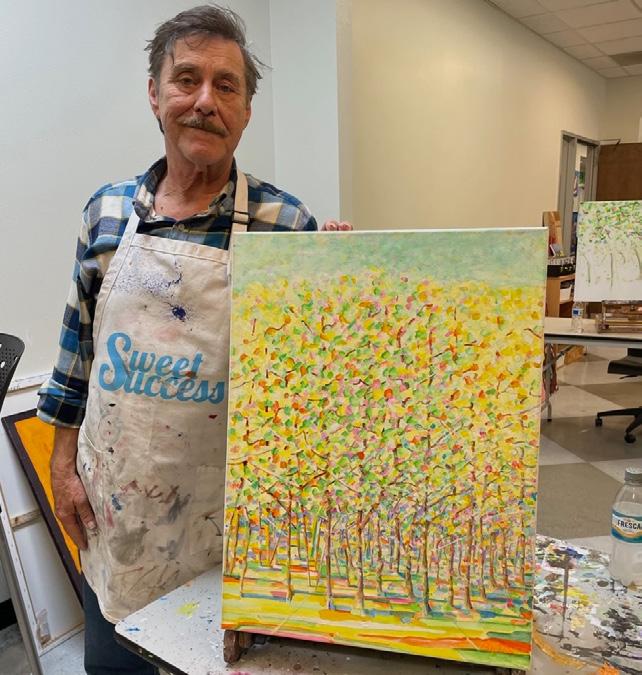
On a work table in The Stewpot Art Studio sits a shard of paper bearing a light pencil sketch of trees — basically a few lines fanning out to fill the scrap. On the easel beside it is a painting that echoes the same pattern filled out with vibrant greens, yellows, and oranges. The transformation is the work of artist Roger Blais. “I did the sketch one day near the Old Parkland building.” He used his sketch, his mind’s eye, and his skilled hands to create the end result. “People like colorful paintings in their homes,” he says.
Roger’s paintings brighten many homes here in the Dallas area and elsewhere. He’s been creating his sun-dappled depictions of trees and plants for decades. “I want to make paintings that people want to buy.” He’s succeeded at that. At The Stewpot Soup’s On luncheon and art show in February, he sold three of his canvases.
Growing up with a brush in his hand
Roger has been painting almost as long as he can remember. “My mother started me off with art lessons when I was six or seven.” He grew up in the Detroit area and got an associate’s degree in commercial art at a nearby community college. After graduation he headed east to attend the prestigious Pratt Institute in New York, a world-renowned art school. But even a Pratt education couldn’t ensure success in his chosen field. “I wanted to teach art, but it was very competitive. There were hundreds of applicants for each position.” To make matters worse, the recession of the 1970s took a serious toll on his income from art.
Double duty as a nightwatchman and an artist
Throughout the 1970s, Roger had to supplement the money he made from his art. “I painted portraits and the like but made my living as a security guard.” Often, he would work on his art during his shifts in New York City office buildings.
In 1980 Roger moved to Dallas, where he found work downtown as a security guard. While Texas has become his home, he tries to spend time each sum-
mer in his native Michigan. “There’s a resort in Michigan where I sell my paintings to the summer tourists.” He also likes the break from Dallas’s summer heat. “When it’s 100 degrees here, it’s 75 degrees there.”
Inspiration in a European dacha
Roger’s travels have extended well beyond U.S. borders. While in Eastern Europe, he visited a dacha — or country house — near the Baltic Sea. “People leave the cities in the summer so they can be closer to nature,” he explains. “They have a plot of land for a garden to grow things — potatoes and maybe a cherry tree.” During one such excursion, an exotic flower caught his eye. A painting of a bloom sits in The Stewpot Art Studio near his bench. “The colors were different. I added color to make the painting more interesting.”
Blossoms, trees, and color, color, color
Color plays a prominent role in all of Roger’s work. “I think of the 1950s as black and white — black-and-white television, black-and-white clothes. Then, in the 60s, things got colorful.”
Many of the colors in Roger’s landscapes didn’t originate in the natural setting but in his mind, where he sifts reality through his unique sense of things. On his canvases, foliage may include dabs of pink or blue as well as green and yellow.
“I work in acrylic now,” he says, explaining that oil paints are no allowed in the studio because of the fumes. It’s taken him a while to get used to the new medium after decades of working in oils. He misses the three-dimensional quality of oil paints. Still, he’s happy for the opportunity to use the studio and be part of The Stewpot Art Program.
A home for his art
Before joining The Stewpot art program, Roger participated in an art program at The Bridge Homeless Recovery Center. “I wanted to get involved with The Stewpot’s program, but then Covid hit, and the art studio was pretty much shut down.”
When the pandemic subsided, Roger met with Stewpot Enrichment Program Director Betty Heckman and presented his portfolio. He was welcomed with open arms and has made the studio his base of operations.
Roger doesn’t know whether he’ll make his annual pilgrimage to Michigan again this summer. But he does know where he’ll be at summer’s end — working happily at his easel in The Stewpot Art Studio.
Poppy Sundeen, a Dallas writer, is a member of the STREETZine editorial board.
Photograph of Roger Blais courtesy of Poppy Sundeen.
Continued from page 2
heavens are silent.
He is doubly alone; alone in body and in his agitated certainty of what is to come. He knows he will be obedient, and he knows what his obedience will cost.
If you have ever been drawn into a place of obedience that nobody else could enter with you, then you know something about what it means to go a little farther. You know the particular loneliness of discovering that the people who love you cannot follow you into every garden. It’s not that they are not unwilling. They are simply asleep. They’ve gone as far as they can.
And you go forward anyway, not because you are brave, but because the way back is no longer available to you.
That is obedience to necessity. It does not look like a parachute falling from on high, right on time to save the day. It looks like grief that has nowhere to go. It looks like Jesus thrown to the ground in an olive grove praying for another way.
Listen to the prayer. Abba, Father. For you all things are possible; remove this cup from me; yet, not what I want, but what you want.
The first half of the prayer is a plea. Remove this cup. Take it away. Let the hour pass. Let the trouble slide past me, let it go by without arriving.
The honesty is often misinterpreted as weakness. The flesh knows what is coming and the flesh says no. The natural movement of every living thing is toward preservation, and Jesus does not override that movement. He speaks it aloud. To the Father. In the dark.
The weight of “yet”
And then the seemingly smallest word in the Greek testament bears the largest weight. The word is alla. Yet. But.
The “yet” is slight. Light as a feather. Almost nothing. Barely there when compared to what it stands between. And “yet,” everything turns on it.
Not what I want, but what you want. The difference between obedience to force and obedience to necessity teeters on
this single pivot.
Jesus does not steel himself. He does not summon courage. He does not muster resolve. He consents. The “yet” sounds just like a decision made from strength. But it is not.
The “yet” is a plain-spoken recognition that the cup will not pass. “Yet” is the unadorned conclusion that the possibility of the cross has already created its necessity and that he is unable not to drink it. Not because he is forced, but because a life of attention to God has so formed him that when the necessity is visible, disobedience is no longer an option.
This is the gospel in all its singularity of purpose. It is not a mere moral example. This is the central point of the Passion of Christ; a human nature, cut off from every comfort, deprived of all consolation, performing the act that supernatural grace would require if supernatural grace were present, instead of being silent. Despite receiving no response, Jesus obeyed.
Weil calls this purity. Mark calls it prayer. Both are pointing to the same midnight in the same garden where the boundary between the possible and the impossible, between staying and turning back was as thin as a single word spoken to a heavenly parent who did not remove the cup, but who saw in secret what was surrendered there.
The “yet” can never improvise. It is cultivated. Long before the crisis, in the ordinary days, in the quiet disciplines, we are being formed into people who can or cannot say it.
“Yet” is spoken without an audience, without a guarantee, without knowing what the Holy Parent who sees in secret will do with what we offer.
We cannot will the “yet” into existence. We can only attend to God, to necessity, to the slow formation of a life that, by practice, is increasingly unable not to obey.
Jesus healed and told people not to speak of it. He silenced demons who knew his name. He was transfigured on top of a mountain and told the only three witnesses to keep it to themselves. He prayed the most important prayer of his life in front of disciples who were asleep.
Whatever Christianity would become, it is not clear from Mark that Jesus was strategically building it. The origin of his obedience was God, not a vision of some future movement that would bear his name.
And if that is true of Jesus, son of God, consider how many acts of garden obedience have vanished without a trace.
We cannot will the “yet” into existence. We can only attend to God, to necessity, to the slow formation of a life that, by practice, is increasingly unable not to obey.
A woman who spent the best years of her life caring for a disabled sibling; not because anyone asked, or was there to marvel at her loyalty, but because her sister was her sister.
A child who forgave the unforgivable thing their parent did, and never mentioned it again. Not to the parent as a bargaining chip, not to a friend as a means to appear interesting, not even to themselves when in need of an excuse.
A parent who showed up every day for 30 years to a job that was killing him because three people at home needed him to, and never once narrated his sacrifice as sacrifice.
A spouse who left an abusive marriage with nothing, rebuilt a life no one would write about, and raised children who will never fully understand what it cost her to stay soft.
Faithful pastors who served churches that never grew. Voices more soulful than Aretha’s who were never heard. Saints who were never honored because no one was ever watching. Their obedience was real.
Their garden was real. Their “yet” was spoken. And the God who sees in secret, was there.
Reverend Amos Jerman Disasa is senior pastor of the First Presbyterian Church of Dallas.
Writers’ Workshop Essays
Editor’s Note: Each Friday morning at 10 a.m., The Stewpot hosts a Writers’ Workshop. During the sessions, participants address selected topics through prose or poetry. In this edition of STREETZine, we feature the essays of writers that discuss the topic of nature.
Beauty, In My Free Time
By Ezra Gatlin
In my free time, I take pictures of flowers. I find so much joy in the liminal. According to the Oxford English Dictionary (OED), to be liminal is to occupy a position at, or on both sides of, a boundary or threshold. A sunset is both behind the clouds and in between them. I found an abandoned shopping cart in an aggregate of berries. On the boundary between nature and humans’ fluorescent reality, a lotus flower blooms. A fuzzy black carpenter bee lands in a bed of pollen, carrying itself between tiger-striped lilies and dragon’s blood sedum stonecrop.
Through my adventures across the United States, I have been privy to so many different types of flowers, of nature, of beauty. There’s a pothole in the Grand Canyon that looks just like an ever-rare javelina. I think of the elk who shed their antlers during mating season and the mothers who become overprotective of their young, charging at any human pos-
When Too Much isn’t Too Much
By Lisa López
Have you ever been told you are too much? You talk too much, smile too much. You’re definitely too positive, way too forward. Can you turn it down a notch or two? That was way too fast. There is no way you can do all of that; it’s far too much. You spend too much. You’re being too quiet. Or even, you’re too pretty.
At some point, all of us have been told we’re too much something. Maybe it was a caregiver, friend, sibling, acquaintance, or therapist. But isn’t that just our nature coming out? The way we were made? Humans, like the rest of nature, are all wildly different, diverse.
My favorite psychospiritual thought leader Carl Jung says there are no coincidences ever. When one attempts to individuate, the herd will quickly rein them in, always under the guise of safety.
Mother Nature and Heavenly Father. They operated under a different set of parameters. Their domains operate under
ing a threat. Look at the sunrise dancing between the trees, siphoning rainbows from the morning dew. The fog settles between mountainous stalagmites carved by the Colorado River throughout this millennium and the next. I stand on the railing where lightning strikes at least three people and find myself in the liminal between here and heaven.
I need to be in nature. I need to breathe it in. My safe space is at the bench resting among the prairie grass in Fort Collins. Picture it: untrampled wildflowers, waist high. The crows steal puffs of flowering cattails for their nests, no cigarette butts to be found. A highway is only acres away, but the air smells clean and fresh. This year-round botanical garden hosts hundreds of different species in an AZA (Association of Zoos and Aquariums) accredited butterfly farm. Grapevines crawl across wooden posts, decaying but far from abandoned, in a fairytale entrance to the vegetable garden. The hardworking employees donate all of their spoils to the local food pantries.
the everlasting abundance timeline. In this embodiment of consciousness, there is no such thing as too much.
It makes sense, after all. As above, so below. As within, so without. Take the spring equinox, for example. The one day when light and dark coexist in equal amounts. On this day of cosmic adjustment, we all feel this recalibration in our physical bodies on way or another. From this point forward, too much is a matter of opinion.
Remember, there are no coincidences, so even our proudest achievements are simply the purest expressions of our nature.
My favorite example of overcoming collective limitations is in competitive running. As soon as one individual is able to do something remarkable, the ceiling is lifted. We all affect each other’s consciousnesses. We are all in this together. So, Roger Bannister, the first person to run a mile in less than four minutes, and Florence Griffith Joyner, who broke world records in the 100- and 200-meter dashes with her trademark dashes of self-expression in her hair and fingernails,
Now, in Dallas, I am at the arboretum. In early April, the Yoshino cherry blossoms explode in a delicate pink. Fields of tulips cast a yellow, purple, pink glow over the meadow near White Rock Lake. In Dallas, I walk the trails next to the highways. I find small purple clovers blooming at the base of wide oak trees. Oh, to be a well-fed squirrel, scampering among the orchids and seasons-past acorns. Dandelions are only weeds to those who do not view them as flowers.
In my free time, I take pictures. If I could, I would buy roses and put them in a vase at the windowsill, so I always have rosecolored cascades in my camera. For as hard as I try, though, I cannot bottle dust bunnies, irate to still be inside. I am a hobby photographer, but I cannot bottle the sun. So, I do not buy roses, I do not take as many pictures as I should, and I let sleeping dogs lie. Some pictures are meant to be memories, instead.
Ezra Gatlin is a writer in The Stewpot Writers’ Workshop.
changed the consciousness of the running world. They changed what people believed was possible. In unlimited potential, there is no such thing as too little or too much; only expressions of what nature has given us.
So, I invite you to sit down and consider where in your life you have been placing unnecessary blocks. Or maybe you have been allowing others to dictate your norms. There is no such thing as investing too much time thinking about your choices and their consequences. Loving yourself in every single context goes a real long way and will shatter any limitations. Just watch nature and God operate their kingdoms.
Lisa López is a writer in The Stewpot Writers’ Workshop.
A Storm of Opportunity
By Savita Vega
Due to the fact that I suffered from untreated schizoaffective disorder for 40plus years, I’ve been homeless several times in my life. Of these experiences, surely the most interesting started in March of 2020, just at the onset of the pandemic.
My daughter was 17 at the time, and I was homeschooling her. We started out camping on a piece of land that belonged to a relative. We set up three tents there: one for us to sleep in, one for our dogs, and one large tent in which we sought shelter from the sun and rain during the day.
Then, as the pandemic hit full force and everyone went into lockdown, an idea occurred to me. We would camp our way out of Southeast Texas and hope for a solution to follow.
What I chose to do may not have been the soundest plan, but I was desperate to get my daughter to a place of opportunity. As well, we were already home-
What I Think About Nature
By Kenneth Henry
I always enjoyed being outdoors as a kid. Scouting was my main outlet. I went on many camping trips and week-long retreats. Smelling the different trees, plants, and greenery awakened my senses.
There were a few times that nature got me into trouble. One camping trip ended up becoming my last. A friend and I decided to explore but got lost. We didn’t pay attention to the trail and went off course. We started going around in circles and became miserable.
Luckily, we were missed and the troop found us. It was a little embarrassing especially since we had not brought a compass.
The next time I got into trouble was trying to climb the face of a rock cliff. I thought I would be bold and try to climb from the base. I was doing pretty well until halfway up the facing. It was getting harder to get a toehold. Panic was starting to set in, and I couldn’t move. I did the only practical thing and yelled for help. My Scoutmaster got me down and scolded me for not having a partner with me and doing it on my own.
less. How could things be made worse by attempting to locate ourselves in an area that had greater resources to help those who were unhoused?
Fast forward to late August of 2020. Staying primarily in state parks, we had camped our way all the way to Austin, a city I was familiar with because I had lived there before. Attempting to live in the city, we were forced then to sleep in our car, as there were no official campsites nearby.
It was also the middle of a heat wave, and during the day the temperatures soared well into the triple digits. I can still remember, even as late as midnight, the temperature being over 100 degrees.
We were suffering immensely from the heat. At night we would have to leave the car windows down, and I would have to stay awake to watch for danger.
It was on one such night that the miracle happened. It was late into the night and I was listening to the radio when an announcement came on about Hurricane
As I grew older, going for walks was a favorite thing to do. I loved walking around the neighborhood, admiring the different scenery. I liked going to different parks and hiking trails.
Laura, which had just made landfall in Cameron, Louisiana, only 180 miles from our hometown. The Category 4 hurricane had affected the entire region and it was just outside Austin that refugees were being processed to be put up in hotels.
Immediately, I started the car and headed toward the processing station as I hoped our IDs, which still had our old address, would be enough to get us in. They were, and within hours we were in a hotel room in the center of Austin.
Within a couple of weeks, we were transferred to a hotel in McKinney and soon found ourselves registered on a waiting list for housing.
It was a long and circuitous route which brought us to fulfill our dream of living in Dallas, but it was worth every curve and bend. Above all, I’ll never cease to be thankful for Hurricane Laura, which brought us to our new home.
Savita Vega is a writer in The Stewpot Writers’ Workshop.
Of course, then I started having my bouts with depression. Going out into the world was the last thing that I wanted to do. All I wanted to do was stay in bed and avoid my problems.
When I eventually became homeless, staying outdoors was the last thing on my mind. I got into a shelter right away and never stayed on the street. I was still depressed so my outdoor activities were limited to different appointments and business errands. The shelter was close to Old City Park near downtown. I went there on occasion to refresh my mind and soul.
I am now in a housing program with my
own apartment. I have the freedom to come and go as I choose. But going out for a walk is a struggle because my place is not in the best neighborhood.
Going out to eat gets me outside and out of the apartment. Attending The Stewpot’s writing class every week gives me pleasure and something to occupy my time.
My nature activities have waned. Still, I try to look for different ways to enjoy nature and being outdoors again.
Kenneth Henry is a writer in The Stewpot Writers’ Workshop.
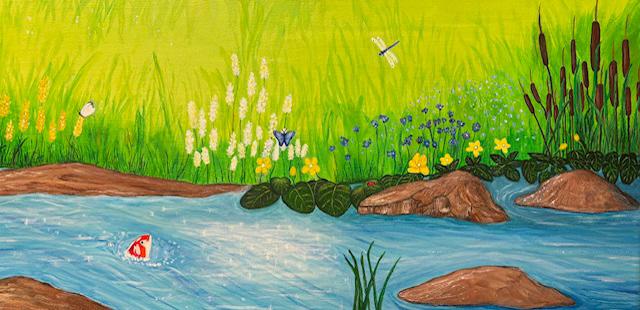
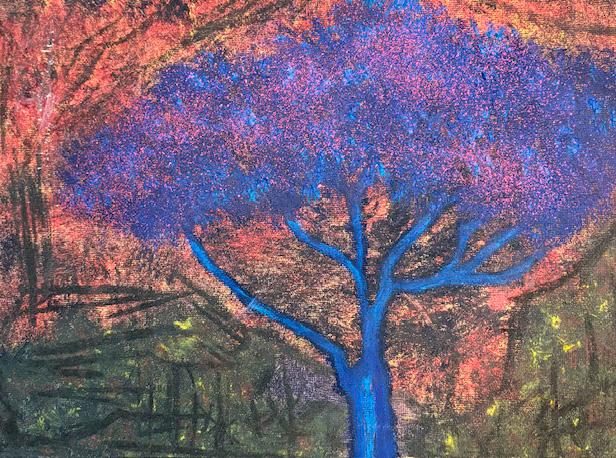
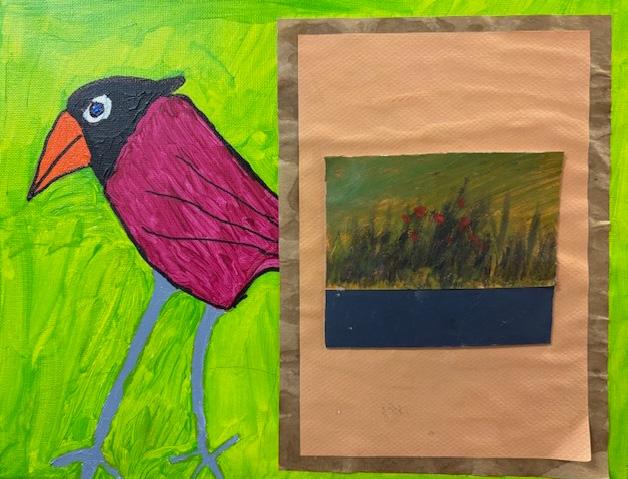
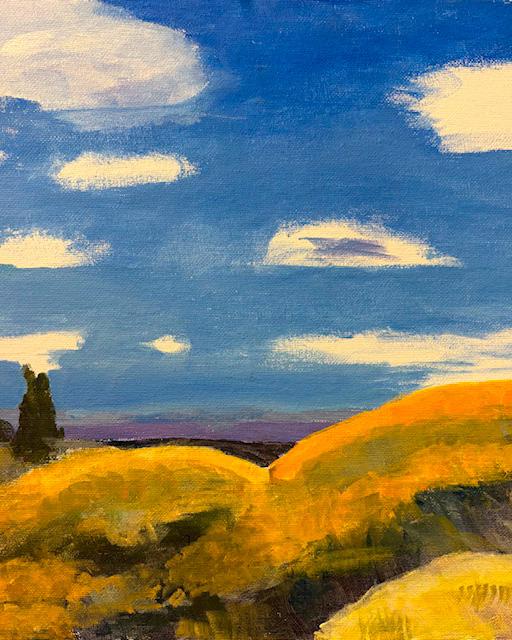
Artwork by Stewpot Artist Colleen Pryor.
Human Nature
By Sandra Robinson
Recently at the shelter where I live, they had their quarterly weighing of clothing and other items. We can have two bags that have a combined weight of fifty pounds. Shelter security stated everyone had to comply. I said to a friend, “I am leaving soon. I am going to get down to the clothing I brought into the shelter.” I placed all the clothing I had gathered on the “giveaway table” located in the dorm. Many people enter the shelter without any clothing, and the clothing on the table is a help to those that need clothing and a blanket. I placed three blankets my friends gave me on the table. I kept the two blankets that I had purchased.
There was a young lady that was having problems with downsizing. She had once lived on the streets for three years. She said, “My suitcases hardly have anything and they weigh 18 pounds,” I told her, “My suitcases weigh 16 pounds.” When it was my first time to downsize, I was a complete mess. I did not know what to do. I told her, “All you have to do is get rid of
Spring Renewal
By Marilu
It’s not daybreak yet. The circadian rhythm has gently roused the early bird in me from slumber. Birds of nature outside my window are already calling to their neighbors, their sing-song voices embedded with exciting messages. It hasn’t been long since the ominous crows ruled the neighborhood. Their bleak crowing rang out from bare tree branches where they perched, casting a mournful spell in the winter sky. As the season turns, their husky croaks yield to an orchestra of newly arrived spring birds with vocals peerless in nature, rivaling the timeless hits of humankind.
I tiptoe to the bathroom, trying hard not to disturb my roommates who are still asleep. My roommates are peculiar people. There is more to find out about their tastes and habits. The microcosm I live in requires curiosity and the appreciation of a unique sense of humor, neither of which I’m lacking.
I need to take a look at myself afresh in the mirror. My eyelids are puffy from perhaps too much salt and sugar I ingested yesterday, but most definitely from the
your denim fabric because denim weighs a lot and decrease your toiletries,” I told her. “How many coats do you have?” I asked her. “Oh, I have about three,” she said. “Before winter you will receive new coats from homeless support organizations and street vendors. Pick one coat you can use during the month of April. April is the beginning of spring,” I told her. She pre-weighed her clothing without the suitcase, and they weighed 23 pounds.
Some ladies decided to lose their beds because they did not want to downsize. Many men hid clothing in restroom stalls. A lot of people that live in homeless shelters maintain storage units to store their clothing. When I was living in my apartment, I had a lot of clothing. The elastic went out, and the whites became yellow after so many years. The funniest thing was when I wore an old pair of shoes to work. The sole of the shoes came off; the sole was lying in front of the elevators. Good thing I had an extra pair at work. That’s when I realized it is a waste to save clothing.
I realized that it is human nature to claim
genetic imprint of my ancestors. There’s a certain aesthetic appeal about thin lids and sunken eyes shared by most nonEast Asian ethnicities. My sallow skin tone brought about by genetics plus health issues is reflecting back at me. I share the same sentiment with the techno-empowered Chinese younger generations on their bleached pearly skin. I love the dark, the brown, and the white. But the carotene that gives rise to the yellow skin tone isn’t an optimal choice on the palette.
Having inspected myself and decided to take a philosophical approach to my appearance, I walk to the front door and linger a bit at the threshold. I haven’t gone outside beyond our doorstep for months. I have spared myself and others the effect of my social handicap and mental disorders by moving everything online. The arrival of spring is a much-needed respite. I feel a relaxation in my body as temperatures stabilize at a comfortable zone. There are plenty of cracks and crannies around the house and its doorways, allowing the spring vibes to reach my consciousness.
I decide to take a rare adventure to the street corner. There, I’m Intoxicated by a
possession of items. It is a part of our individual identity, our culture, and our social norms. I claimed possession of the clothes I brought to the shelter; the young lady claimed possession of the clothes she gathered after entering the shelter — her “one-of-a-kind” items. And others would rather lose a warm roof over their heads, showers, and food to keep possession of their clothes. They had to downsize once they reentered the shelters.
One of my friends said, “I am going out front so I can cry because I just gave up all my old stuff.” My friend chose to keep the clothing her friend had recently purchased. She is associating memory and feeling with her clothing. The remembrance of time, place, and events — cherishing the memory of her friend, the protection of her emotions. For 17 months, I have kept the family photos — the memory of my father’s and mother’s families.
Sandra Robinson is a writer in The Stewpot Writers’ Workshop.
jasmine bush. The sweet and fragrant jasmine flowers have blossomed to the sensory delight of passersby. I go no further and head back indoors, overwhelmed by the fresh spring air scented with nature’s perfume. It’s a brand-new season. Am I prepared for it? Have I new plans? I take a deep breath, mentally registering all the sensory inputs from my environment.
I don’t know how well things will turn out at this point. Nature has a hand in it. And right now, nature is more than generous in putting me at ease to feel that all is well and will be well, no matter what happens later. I can’t and won’t go outside unless absolutely necessary. But I’m enchanted by what I can hear, see, and smell within the confines of my room. I have yet to read a single book so far this year. Alas, what have I been thinking and doing? Everything up until this point seems no longer relevant in light of the celestial phenomenon, where the Earth progresses along its orbit around the Sun, pausing for our benefit, or so it seems, to give us a sneak peek at the eternal spring beyond this journey on Earth.
Marilu is a writer in The Stewpot Writers’ Workshop.
Camping Develops Character, Memories, and Relationships
By Jason Turner
I came up with a useful quote when I was a young Boy Scout: “You never truly know someone until you go camping with them.” When civilization is scarce and boredom isn’t an option, people tend to open up and show you a deeply profound side of themselves.
With all my personal and required outing events, I’m proud to say I’ve gotten around. I’ve treaded, hiked, fished, backpacked, and participated in state and national competitions in many states. Kentucky, Oklahoma, Tennessee, to name a few. My favorite of all my camping endeavors took place in Spanish Peaks, Colorado. That was mostly for the gorgeous mountain range and the face that the shadow of the mountain casts across itself.
It’s been a while since I ventured off by myself to a nice green pasture with a blanket for a picnic. But nature has had a lasting effect on me, my attitude, and most importantly, my peace of mind.
Hanging out, skipping stones by the lakeside, running terrified from giant spider encounters, even being charged by wild bull. Those experiences shape a man who likes to get things done. So can surviving a challenge course. Such experiences build resilience and character.
To be honest, I’m super lucky no one ever got bitten by a poisonous snake, fell from a dangerous height while repelling Enchanted Rock in Central Texas, or was attacked by wild bears or boars. I can name some close calls. Nothing ever too serious happened, short of alligators that ate my fishing bait.
I still enjoy campfire stories and the high, warming flames from the wood we gathered. That way, we could have s’mores or roasted weenies on a stick. Those are incredible for the soul and are part of taking care of the food menu. I remember cobbler made in a Dutch oven, and the thick Kool-Aid we called bug juice.
I’ve made handcrafted arrows with discovered arrowheads and even a massive tomahawk. I use the tomahawk occasionally now to hammer nails just to get a random use out of it and to keep my remembrances.
Oh, and did I mention the stars at night? Whoa, the shooting stars and bright planets are breathtaking within themselves. Even when I drove 18-wheelers across the country, I would make time to pull over in rural areas and give an hour or two to the stars and just be with God and self.
I still speak on an occasional holiday or two with some close connections I made through being in the outdoors. The stories are endless. When I lie down to sleep in my bed, memories resurface that long have been tucked away.
The memory could be as simple as climbing to a high spot so I could get one bar of cell service to text a crush. Or singing songs on endless trails. Or witnessing views painted by God himself. These recollections fill my mind with ease and nostalgia.
I’m pretty sure my whole family loves nature. My mother, for example, is an avid gardener. Even the family pets roam a huge backyard.
My only regret is not maintaining a casual camping routine now that I’m in my 30s. My camping drastically decreased in my 20s, even though I still made time to go to Galveston or at least set up my tent.
I wish I had time to go into greater detail on some stories, but I’ll keep the focus on my quote about not knowing people until you camp with them. If you ever have a question about someone’s effort, heart, trustworthiness, or dependability, I might suggest a weekend on the rocks, and I don’t mean mixed beverages.
You can never tell how much company means unless you camp with people. Hiking with them, sharing techniques on how to make life simpler, playing a new card game, or even keeping sane on long road trips are always interesting. Getting out of school early on a Friday and returning long after church has let out on Sunday is the life I love.
Writing this makes me ponder another camping trip as soon as possible. Living in the city and not being able to really grasp nature and the countryside can get to me after a while, so I’m glad nature was the topic for this month’s writing essay.
Wanna spend quality time with a loved one? Take’em to the beach with a tent!
Jason Turner is a writer in The Stewpot Writers’ Workshop.
Artwork by Stewpot Artist Craig T. Baker.
Health Comes First
By Jeanine Robinson
Walking in sunlight. The sound of rain. Birds chirping and singing. The outdoors makes the world feel so natural.
Everything that we need to grow and heal comes from nature. Vibrant vegetables and fruits keep us alive. The fresh water this planet provides heals us from within.
Nature does not rush and yet everything is accomplished. When it is time, we are provided all we need to live. Nature does not need chemicals because it can accomplish all things.
We need to respect nature because it makes us who we are, and we need to cherish that. Be thankful for all the natural things that come from the physical universe.
Jeanine Robinson is a writer in The Stewpot Writers’ Workshop.
Surviving Nature’s Storms
By Vicki Gies
When God created the earth, He also created nature... beautiful, awesome nature. The oceans, trees, and animals, are all so breathtaking and peaceful. It’s life at its best, in my eyes anyway.
Many years ago, I was able to visit one of the Seven Wonders of the World: the Grand Canyon. Standing on the edge of a cliff and looking out, I felt like I was the only one there, and it took my breath away. I look forward to going back there someday.
In recent times when my husband and I were homeless and living in the woods by White Rock Lake in Dallas, we were surrounded by the most unique and interesting animals in and around the lake and White Rock Creek. Some people used to ask me if I was afraid of living there because of the more dangerous wildlife. My answer was always “No, never afraid, just aware of my surroundings.”
I’ve studied animals all my life, and I know what to do and what not to do. I respect all the wildlife there. Did you know that most animals can sense fear in a person? You just have to know how to handle the situation.
Nature can be so beautiful if man would just leave it alone. What I’m saying here is that the habitats are being destroyed for the sake of progress, and that is so wrong in my book. A lot of people have been worried about coyotes and bobcats (and even wilder animals) coming into their neighborhoods. Why are they com-
ing into their neighborhoods? Because their habitats are being demolished, their families destroyed, and their food supply is diminishing.
I guess I’m just too old-fashioned. I’m more for nature than I am for condos, bigger houses, more businesses, and for what purpose? I believe we need less, not more!
As awesome and peaceful as Mother Nature can be, she can also be lethal. I have experienced severe thunderstorms, ice storms, and tornadoes. The two tornadoes I lived through were only EF-1 level, but very scary nonetheless.
The first one I was living in the country south of Dallas. I slightly opened two small windows in the kitchen and bathroom and kept listening to reports from the National Oceanic and Atmospheric Administration. When it came, I gathered my dog, cat, two pillows and a blanket and wedged us in a doorway in the center of my small house. It only lasted about five to seven minutes.
Afterwards, when it became calm again, I went outside to see the damage. I just lost some shingles (I was blessed), but my neighbor across a small pasture wasn’t so lucky. The huge tree in his front yard was now in his living room!
The second one I experienced was a little more scary. I was at my self-storage unit with my husband. A thunderstorm had been going on, but rain wasn’t going to be a problem. We were waiting on the manager to come back to the office so we could pay our rent, when we heard
the weather sirens go off. I looked up to see the clouds swirling and we ran to the outside bathroom door and wedged ourselves in the door and prayed. It only lasted about two minutes. It came up fast and left fast.
The only other bad thunderstorm we experienced was when we were homeless at White Rock Lake. Huge tree limbs broke and fell next to our camp. The pair of bald eagles lost their nest with two eaglets in it. Sadly, only one of them survived.
As far as the winter storm we lived through, if it hadn’t been for our propane heater and extra tarps on our tent, we wouldn’t have survived. We were blessed again.
Other nature disasters that I’ve seen but not experienced personally are earthquakes and hurricanes. I did, however, know a few people that were in both of those. One of my friends who was in the state of Washington shortly after Mt. St. Helen’s erupted in 1980 brought me a small jar of the ash dust.
Mother Nature can be very unpredictable and beautiful all at the same time. I truly love the nature that surrounds me... the big trees, the wildlife, the spring flowers, the sky, the animals (domestic and wild). If people would just stop for a moment and take it all in, I believe the world would be a more peaceful place. I thank God for all His natural creations.
Vicki Gies is a writer in The Stewpot Writers’ Workshop.
Artwork by Stewpot Artists Stephen Kehr and Luis Arispe.
I Love Being in Nature
By Darin Thomas
I really enjoy being in nature, seeing all the different kind of animals, waterfalls, trees, and lakes. I love fishing, hunting, boating, camping, campfires — you name it.
My father used to take my brother and me camping, hunting, and fishing. We hunted deer, wild hogs, rabbit, squirrel, just about all kind of animals in nature.
That was so much fun. So was fishing. My father taught my brother and me how to cut open fish and take the scale off them. We then would cook the fish and eat them alongside French Fries and salads. The meal was so good.
We would put the boat in the water and enjoy floating. Sometimes, my dad would stop the boat, and we would jump in the water with our lifejackets on. So much fun, I tell you.
This is why I love being in nature. I can’t wait until I’m released from prison so I can enjoy nature once again.
Darin Thomas is a writer in The Stewpot Writers’ Workshop.
Our Responsibility to Care for God’s Creation
By Teresa Zacarias
My dearest readers, when God created Adam, He worked so hard to make Earth’s plants grow healthy and stronger. Mother Nature started working not on its own but with mankind and animals to help. This is when life started its evolution.
Nature’s course sadly was altered forever in the Garden of Eden. Adam and Eve suffered the consequences of disobedience. And mankind is still doing the same, destroying what was meant to be a paradise on Earth.
Think about global warming. I believe it is a warning from our Father in Heaven. We have one last chance to do what is right. And that is to take care of what He entrusted to Adam and Eve and then to us, their descendants.
Modern industrialization carries with it factors that affect God’s creation, too. Pollution is one of them. We need clean air to survive.
There is not a way to justify what mankind was supposed to take care of. Mother Nature is running on its last fuel. It is exhausting and abusing the harmonious way flowers, animals, and men were to live in paradise.
Adam and Eve are long gone, but in order for anyone to survive, we have a huge responsibility to tak care of Mother Nature.
Teresa Zacarias is a writer in The Stewpot Writers’ Workshop.
Concrete Canopies and Nature in Downtown Dallas
By Paul R. Watson
Nature in Dallas is apparent to anyone visiting downtown. My interactions with Dallas’ nature happen during my walks to the library in downtown. My short stroll unwinds the nature of Dallas. The blooms, tree-lined streets, and water fountains whisper to me.
For instance, I stopped by Thanksgiving Square in the heart of downtown recently and the whisper was piercingly loud. Described as a visual metaphor of spiritual ascent, the spiral white structure, built for all faiths is a monument of nature in concrete.
Gushing water sounds, stubborn weeds, wildflowers catch the attention of any casual passerby, walking by the square.
Downtown is a concrete commercial hub. But the whispers of nature, amidst the glass, steel, and concrete, has had an impact on me. The tranquil nature of the city has a way of reaching out. I think the concrete city is a work of nature itself.
Paul R. Watson is a writer in The Stewpot Writers’ Workshop.
Artwork by Unknown Artist.
Street Newspapers - A Voice for the Homeless & Impoverished
What is STREETZine? STREETZine is a nonprofit newspaper published by The Stewpot of First Presbyterian Church for the benefit of people living in poverty. It includes news, particularly about issues important to those experiencing homelessness. STREETZine creates direct economic opportunity. Vendors receive papers to be distributed for a donation of one dollar or more.
For help finding food or housing, child care, crisis counseling or substance abuse treatment.
2-1-1 Texas helps connect people with state and local health and human services programs.
Distributing STREETZine is protected by the First Amendment.
STREETZine vendors are self-employed and set their own hours. They are required to wear a vendor badge at all times when distributing the paper. In order to distribute STREETZine, vendors agree to comply with Dallas City Ordinances.
If at any time you feel a vendor is in violation of any Dallas City Ordinance please contact us immediately with the vendor name or number at streetzine@thestewpot.org
CHAPTER 31, SECTION 31-35 of the Dallas City Code PANHANDLING OFFENSES
Solicitation by coercion; solicitation near designated locations and facilities; solicitation anywhere in the city after sunset and before sunrise any day of the week. Exception can be made on private property with advance written permission of the owner, manager, or other person in control of the property.
A person commits an offense if he conducts a solicitation to any person placing or preparing to place money in a parking meter.
The ordinance specifically applies to solicitations at anytime within 25 feet of:
Automatic teller machines, exterior public payphones, public transportation stops, self-service car washes, self-service gas pumps, an entrance or exit of a bank, credit union, or similar financial institution, outdoor dining areas of fixed food establishments.
Want to help?
Buy a paper from a vendor!
Buying a paper is the best way to support STREETZine and our vendors. Make a donation! thestewpot.org/streetzine
Contact us at streetzine@thestewpot.org
Come visit us at The Stewpot! 1610 S Malcolm X Blvd, Dallas TX 75226 Mondays at 1 p.m. or Friday mornings Call 214-382-5902 for more information