



We say you’re old enough to keep your independence.
Around 80% of customers are able to reduce their renewal quote when they take out black box insurance with us
by Tayia W
mm
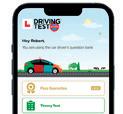
Say hi to Alisha. She presents lots of great learning-to-drive content for the app developer, Driving Test Success. You’ll find her on Instagram, TikTok and Facebook. She has made loads of great videos that will help you to pass your theory and practical tests. Alisha has even worked on some collabs with Keanan, who presents on social media for FirstCar. Between them, they can offer you all sorts of tips on how to tackle tricky manouevres, coping with test nerves, and how to deal with setbacks as you learn. The videos are fun too!
THE TEAM
Publisher James Evans
Editor David Motton
Commercial director Richard Storrs
Art director Dan Hilliard
GET IN TOUCH
to drive TikToker For fun tips on learning, independent driving and more, check out Keanan on social media. tiktok.com/@firstcaruk youtube.com/FIrstCarUK
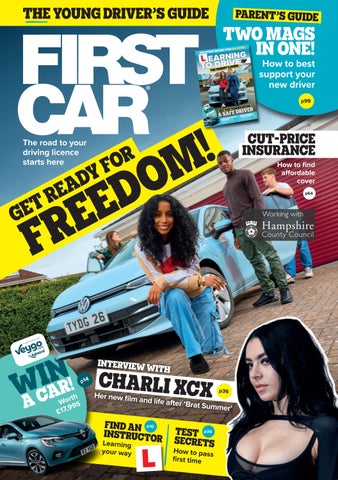
Welcome to The Young Driver’s Guide. Inside you’ll find everything you need to know about learning to drive, buying your first car, and finding affordable insurance.
There’s a lot to take in, but there’s no better feeling than the day you hold your full driving licence in your hands!
The contents of this magazine are copyright © FirstCar Ltd and may not be reproduced or transmitted, in any form in whole or in part, without written consent from the editor. Neither FirstCar Ltd nor its staff can be held responsible for the accuracy of the information herein or for any consequence arising from it. The contents of this magazine are copyright © FirstCar Ltd and may not be reproduced or transmitted, in any form in whole or in part, without written consent from the editor. Neither FirstCar Ltd nor its staff can be held responsible for the accuracy of the information herein or for any consequence arising from it.
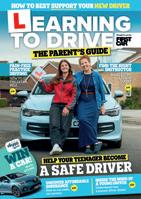
Send your parents back to school! Hand it to them so they can learn how to help you.
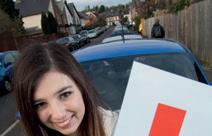
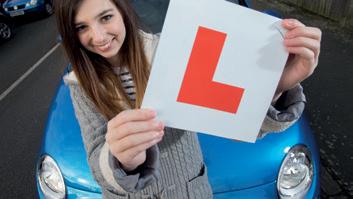


It’s time to start learning to drive! From applying for your licence to passing the practical test, we’re with you all the way with tips and advice.
Charli XCX is swapping music for the movies in her new film. She tells us all about her starring role on the big screen and life after Brat Summer.
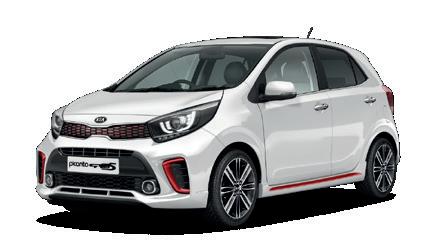
You never forget your first car. Follow our advice to buy a car you’ll be proud of whatever your budget. We’ll help you make a safe choice!
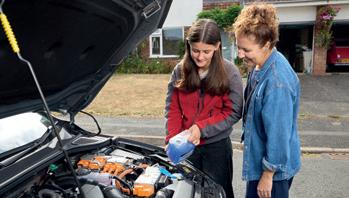
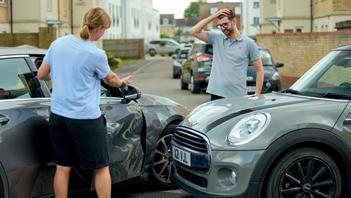
You can’t drive without insurance. We’ll tell you everything you need to know about black box cover, as well as offering money-saving tips.
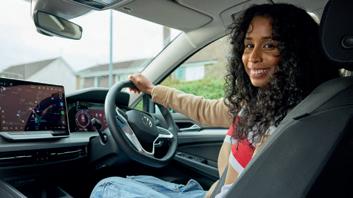
Looking after your first car takes a little time and effort, but it’s worth it to know your car is safe and reliable. Let us talk you through the basics.
This is the fun bit! The day you can drive independently is really exciting, but there are some pitfalls you’ll want to avoid.
There’s no way to sugarcoat it, learning to drive is expensive. Our cost calculator
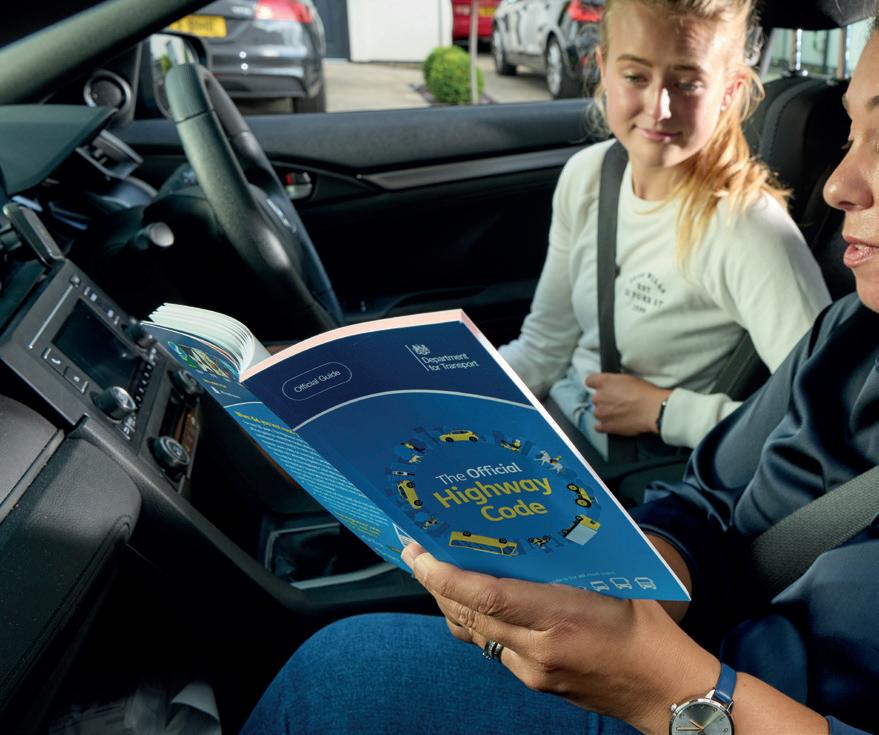
Job one is to apply for your provisional licence.
The easiest way is to apply online through gov.uk/ apply-first-provisional-drivinglicence.
To apply you must:
● be at least 15 years and nine months old
● be able to read a numberplate from 20 metres away
● have been given permission to live in Great Britain for at least 185 days
The provisional licence costs
£34. It should only take a week or so for your licence to arrive. Applying a month or so before your 17th birthday gives plenty of time.
It’s a good idea to start looking for an instructor a few months before your birthday. Some of the best instructors have waiting lists.
The cost of learning varies but reckon on something like £35-£38 per hour. It could be
as much as £50 in a big city like London. Many schools offer discounts for block booking.
There’s no set length of time you need to spend with an instructor before taking your practical test, but around 45 hours of instruction is a good rule of thumb. Assuming £38 per hour, that’s £1710. Ouch.
To reinforce what you learn in your lessons, it’s useful to practise with parents or other experienced drivers. You’ll need
Askdrivingschoolsif theyofferdiscountsfor blockbookinglotsof lessons. You could save a lot of money!
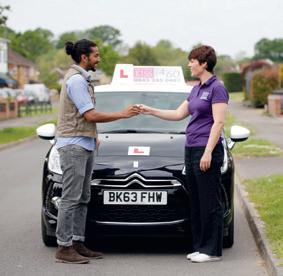
If you have a parttime job, start saving well before your 17th birthday to help cover the cost of learning.
calculator will help you to set your budget
to be insured. A learner driver insurance policy will cover you for practising between lessons. Different insurance will charge different rates, but around £240 for four months is a reasonable estimate. Budget on some learning resources including
a copy of the Highway Code and theory test apps. You’ll also need to pay for the theory test (£23) and practical test (£62£75). There’s a good chance you’ll have to take one or both tests more than once. It all adds up, so start saving!
“It’s a good idea to start looking for an instructor a few months before your birthday. Some of the best instructors have waiting lists”
Use this calculator to budget for learning to drive. We’ve filled in some of the fixed costs for you. Others are blank for you to complete.

“Some drivers just don’t click with their instructor. If your lessons are going nowhere, talk to your instructor about it. If things don’t get better, think about a change.”

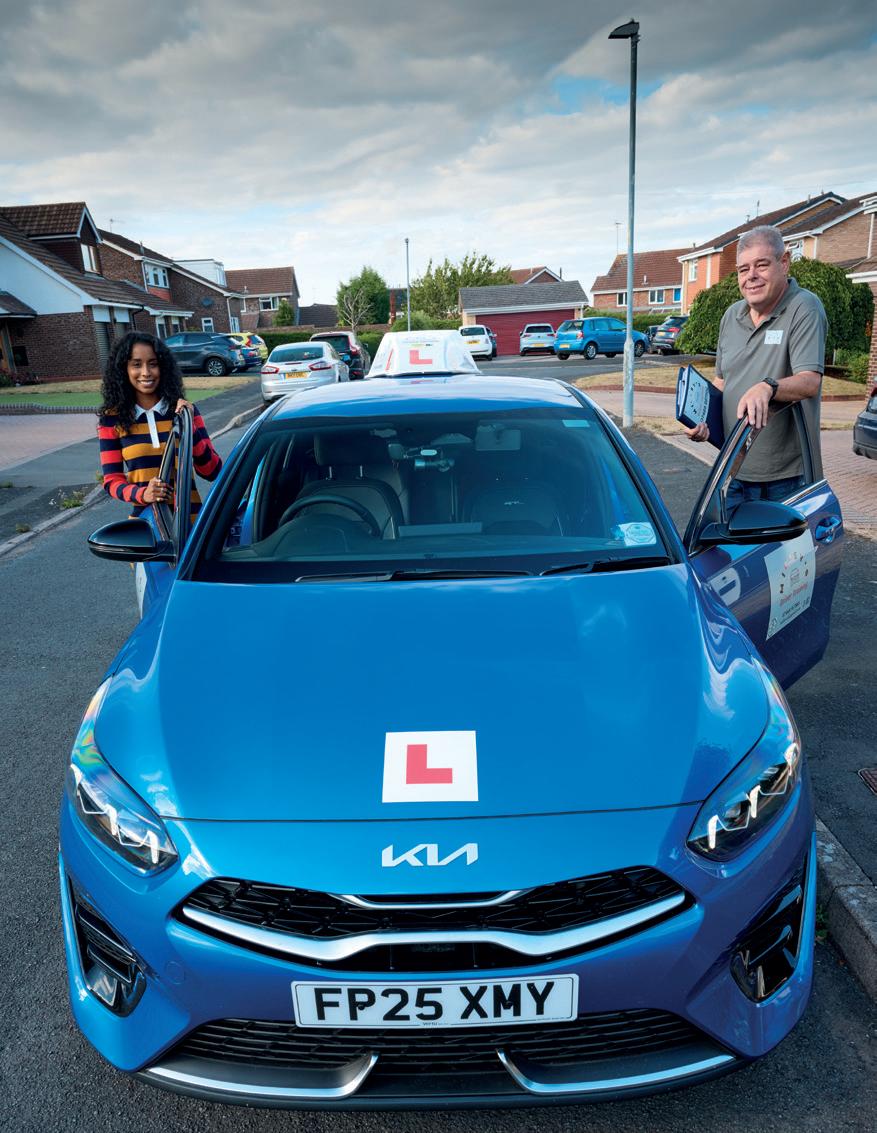
As a learner driver it is really important you find the right driving instructor. To make this easier, the DVSA has improved its ‘find driving schools, lessons and instructors’ service. You can now search the database of more than 43,000 approved instructors by the grade awarded to them by the DVSA. Instructors can add links to their website or Facebook
page. This will help you check things like...
● whether the instructor provides a photo for security ● if lessons are available for learners with a special need ● the instructor’s availability ● the price of lessons. To find the best driving instructor for you go to: gov.uk/find-driving-schoolsand-lessons.
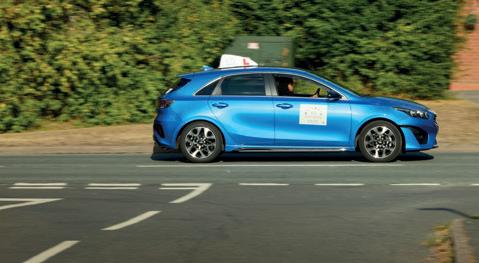
You’re paying a lot for an expert to teach you how to drive, so be sure to make the most of your time.
Always try to get a good night’s rest before a lesson. A big night out with your mates before a morning lesson isn’t a good idea –you need to be fully alert and sober.
Eat and drink before the lesson to boost your energy levels and keep them high.
When you book your lessons, think about 90-minute or two-hour sessions. You’ll have more time to get into a rhythm than if the lesson lasts an hour.
Your instructor knows what they are talking about, so concentrate hard on what they are telling you to do.
If you don’t understand what your instructor is asking you to do, don’t be afraid to say so.
ASK THE DRIVING SCHOOL THESE
1 Is the instructor fully qualified (an ADI)?
2 If I have a PDI (an instructor who is still in training) will I pay less?
3 If I sign up for a course and we don’t get on, can I have my money back? Or change instructor?
4 Will I get the same instructor and car for each of my lessons?
5 How long is each lesson? Can I choose between 60, 90 and 120-minute sessions?
6 Is my instructor CRB checked? Are all the school’s instructor’s checked in this way?
7 Are there apps or online tools included in the price of my lessons?
8 Will I get help passing my theory and hazard perception tests?
9 Do you offer post-test training to improve my skills after I pass?
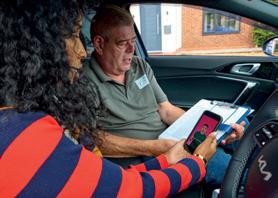
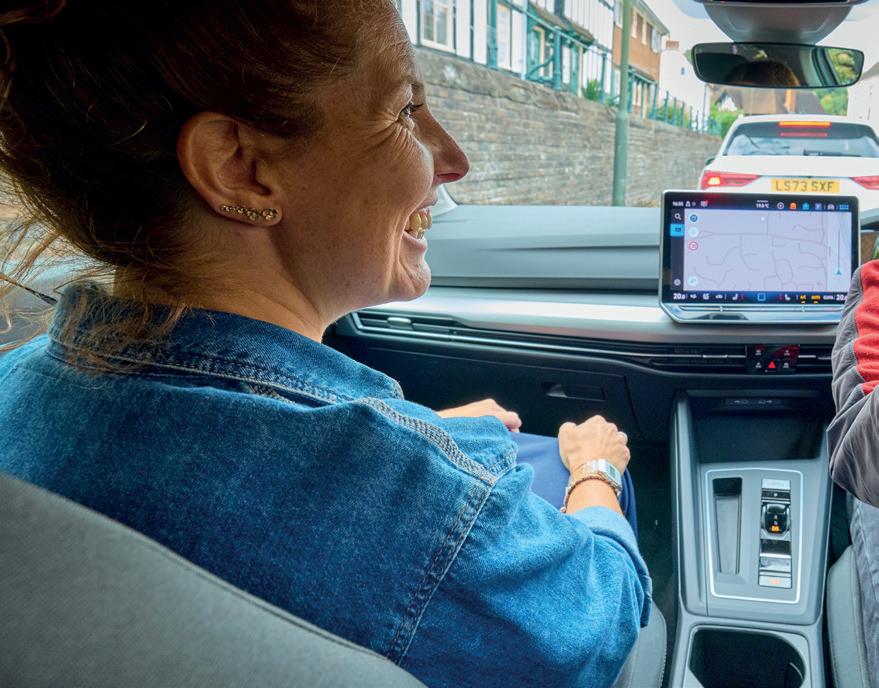
It’s an exciting day, but a nervy one – here’s what will happen
he big day is coming!
TYour provisional licence has arrived, you’ve chosen a driving school, and you are about to get behind the wheel for the first time.
You’re probably excited. Possibly a bit anxious. Maybe both at the same time!
Don’t worry. Your instructor is a professional who is used to guiding nervous first-timers through the techniques needed to drive a car. They’ll start you off with the basics.
A good night’s rest the night before will make sure you are
alert and ready to learn. Have something to eat and drink before the lesson starts to keep your energy levels up. It’s best to wear comfortable clothes and shoes that will allow you to operate the pedals easily.
“Before my first lesson I watched some YouTube videos about how a car’s controls work. It helped me get off to a good start.”
Adi, Birmingham
Don’t forget to have your provisional licence with you, and keep an eye out in case the instructor waits for you outside rather than ringing the doorbell.
Don’t expect to be thrown in at the deep end. Your instructor will take you to a quiet road before swapping seats. Listen to what they tell you as it will be your turn in a minute!
There are some checks you should always make before you set off. Many instructors will use an acronym to help you
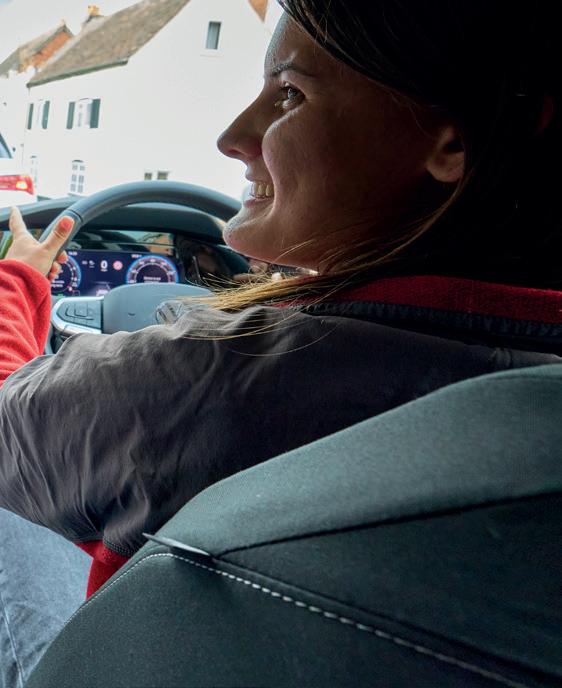

“I was really worried about my first lesson, but I needn’t have been. The instructor was really calm and patient, and the hour-long lesson felt more like 10 minutes!”
Nathalie, Portsmouth
remember. DSSSM is one you may be taught in lesson one.
✔ Doors securely closed
✔ Seat in a comfortable position
✔ Steering wheel positioned correctly
✔ Seatbelt on
✔ Mirrors adjusted
The controls
Next, you’ll learn what the controls do. You probably have a pretty good idea already, but the instructor won’t take anything for granted.
They’ll give you a rundown on steering, what all the pedals
do (three in a manual, two in an automatic) and the gearlever and handbrake. Ask them to repeat anything that isn’t clear to you.
Nobody is born knowing how to drive so they will be expecting you to ask questions during the lesson.
Moving off
You’ll learn how to pull away. Each and every time you move off you have to be safe as well as in control of the car. That means checking in your mirrors, looking over your shoulder to check your blind spot, and signalling before moving off:
It’s not something that will happen on your first lesson(!) but you can learn to drive on the motorway before passing your practical test.
There are some rules to watch out for. You need to be in a car with dual controls, and with an approved driving instructor by your side. So, there’s no practising on motorways with parents between professional lessons.
Ask your instructor if and when they plan to include motorway driving in your lesson plan.
mirror, signal, manoeuvre, or MSM for short.
To pull away smoothly you’ll need to learn how to balance the clutch and throttle and find the ‘biting point’ (you’ll hear the engine note change and the car will want to move forwards). You’ll learn how to stop without stalling and will find out how to use the gears.
It’s going to be okay!
Remember, the instructor has their own pedals so they can stop the car if necessary.
Put your faith in them and believe in yourself too! And don’t forget to enjoy it!
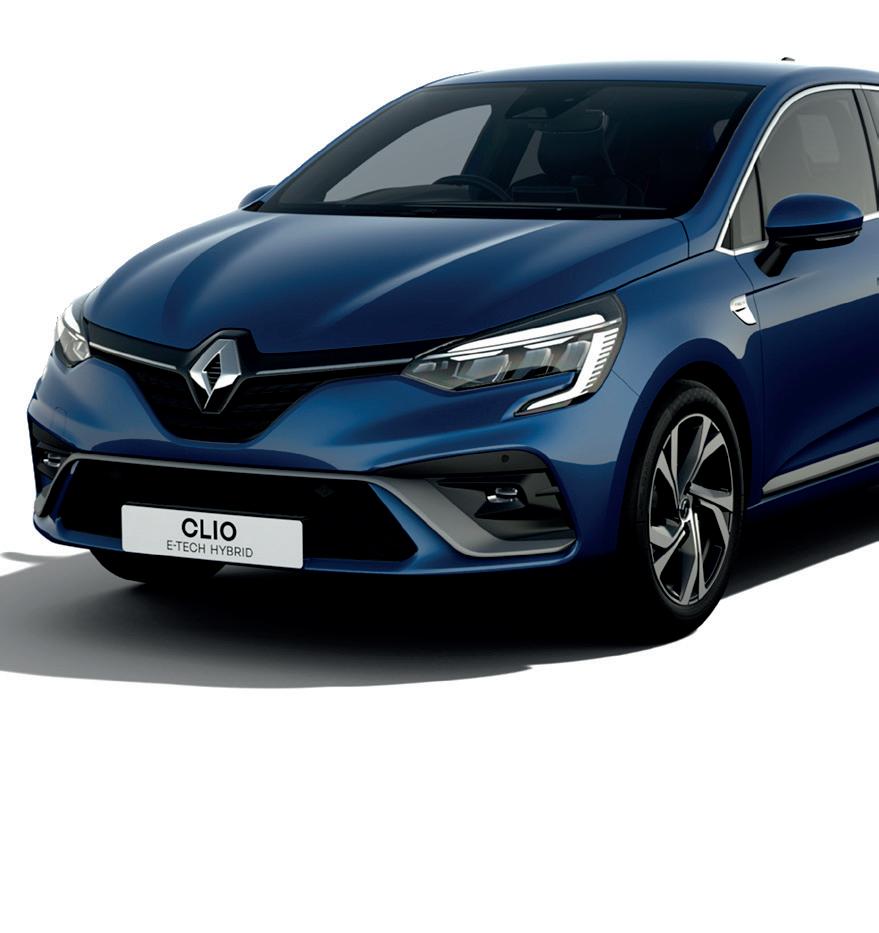
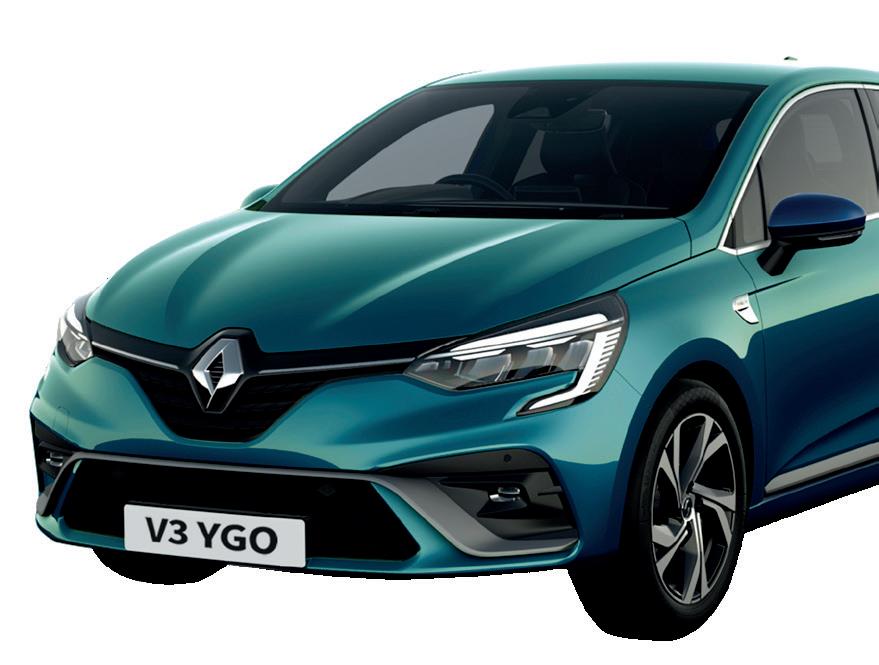

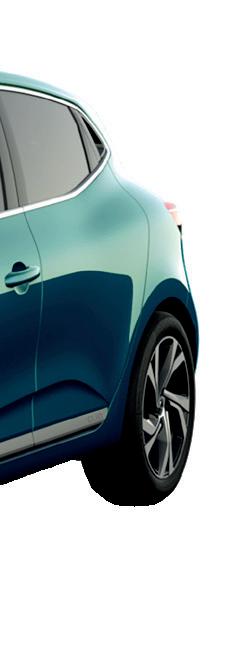
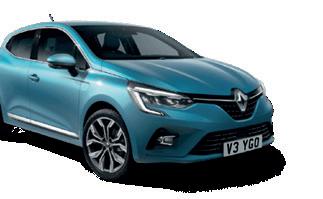
FirstCar’s free prize draw offers you the chance to win one of 1,220 prizes worth over £38,700. Everyone who enters is automatically entered into our annual prize draw to win a brand-new Renault Clio 1.0 TCe generation worth £17,995 in partnership with Veygo . Veygo offers flexible car insurance for learners, newly qualified and experienced drivers. Whether you own your own car or you’re borrowing someone else’s, you can get cover in minutes for as little or as long as you need.
X 360 Official DVSA Theory Test Kit subscriptions
X 1,000 BOTB £5 Vouchers
X 200 annual subscriptions to onlinedrivinglessons.co.uk

Toyo Tires

X 180 Confident Drivers’ Nervous driver’s calming kit
X 18 TomTom sat navs
X 600 Driving Theory Test 4 in 1 apps
X 4 sets of Toyo Tires
X 80 £20, £30 or £40 vouchers towards Road Angel dash cams
X 20 Retroscents assorted car air fresheners






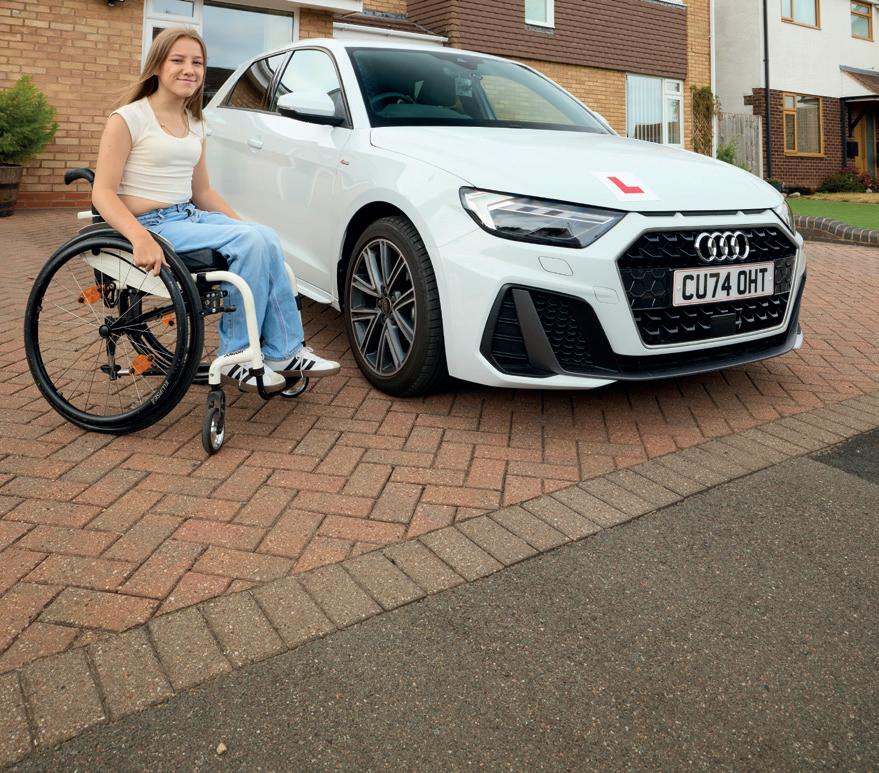
Here’s how to start on the road to independence as a disabled driver
Adisability isn’t necessarily a barrier to learning to drive. In fact, if you receive the enhanced rate of the mobility component of the Personal Independence Payment, you can start learning at 16 – a whole year before everyone else.
Depending on the nature of your disability, driving a car with standard controls could be tricky. Fortunately there are many adaptations out there to
“There are driving instructors who specialise in teaching disabled drivers and have access to adapted vehicles”
make driving more accessible. Across the country, there are driving instructors who specialise in teaching disabled drivers and have access to adapted vehicles. You can find your nearest instructor at disabilitydrivinginstructors.com. Several organisations offer help for disabled drivers. Your family may already have a car or wheelchair accessible vehicle through Motability (motability.co.uk). If that’s the case, you can apply to Motability for help with the cost of up to 40 hours of tuition.
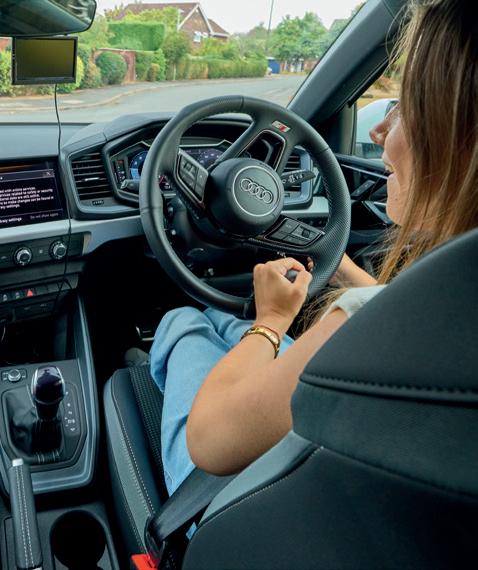
You can also practise between lessons in the Motability car, provided you are listed as a driver on the insurance.
You’ll need to have someone aged 21 or over with you, with at least three years of driving experience. They must be
insured to drive the car too. Disabled Motoring UK (disabledmotoring.org) is also a great source of help and advice. This organisation campaigns for the rights of disabled drivers, passengers, and Blue Badge holders.
Neurodiverse drivers face additional challenges when learning to drive. Those difficulties can be overcome with a knowledgeable and understanding instructor. Whether you are autistic or have an ADHD diagnosis (or both), look for an instructor or driving school
with some experience of teaching neurodiverse drivers. If the instructor doesn’t have this, at the very least they should be keen to learn and up for the challenge. With the right support neurodiversity need not be a barrier to driving.
Nathalie McGloin is passionate about motor racing and determined to make the sport more inclusive. The only female tetraplegic driver in the world to compete at a professional level, Nathalie also campaigns to make racing circuits accessible.
“When I’m racing I leave my wheelchair in the pits. When I’m lining up on that grid with my helmet on, noone knows I’m female or have a spinal injury. I’m just another driver – and that’s the way it should be.”
Find out more at nathaliemcgloin.com.

“When I’m racing I leave my wheelchair in the pits. When I’m lining up on that grid with my helmet on, no-one knows I’m female or have a spinal injury. I’m just another driver – and that’s the way it should be.”
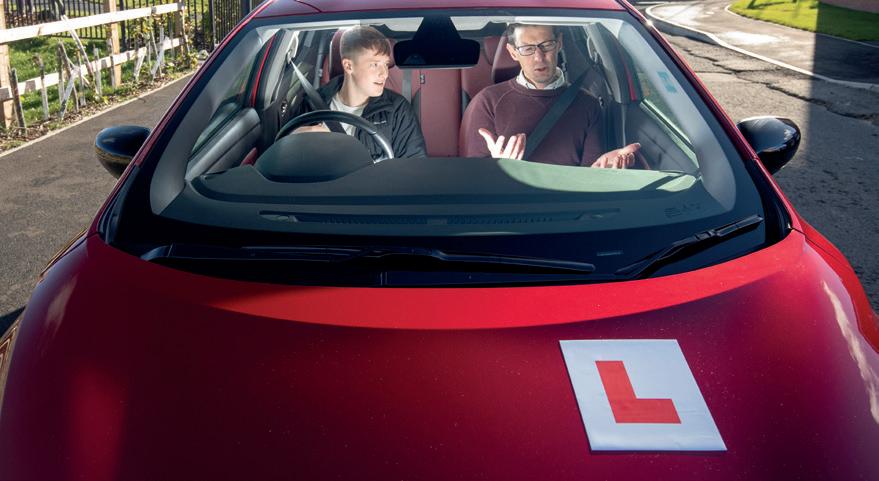
To really make the most of your lessons, it pays to practise regularly.
That means hitting the road in a friend or family member’s car under their supervision.
You can’t just jump in anyone’s car – you’ll need to arrange insurance. Broadly speaking there are two options to consider...
Many learner drivers are added to someone else’s insurance policy as a ‘named driver’. This saves on the need to set up your own policy, but it can be expensive.
As well as bumping up your
parents’ insurance premium, if you have a mishap they could lose their no-claims bonus. And that could make things pretty tense at home!
Alternatively, you could arrange your own learner driver insurance cover. This means that if you do put a dent in mum or dad’s motor, you won’t put a dent in their bank balance –you’ll claim on your own policy. There are usually restrictions on the insurance group and value of the car you can drive, but it’s a simple way to find cover while you learn.
“You can’t just jump in anyone’s car – you’ll need to arrange insurance cover first”
● You’ll need to be supervised by a qualified driver at all times. Some insurers allow that driver to be 21, others insist they are over 25.
● Restrictions will apply to the type of car you can drive, but different insurers will have different rules. For example, Adrian Flux covers cars worth up to £30,000 with an insurance group of up to 45.
● Live in a two-car household? Check if there’s a discount on being insured on a second car.
● As well as comparing premiums, check the policy excess – that’s the amount you’ll have to pay if you make a claim.
Pass the theory and you will be a step closer to your full driving licence
There are lots of apps to help you prep for the theory test, including ones from the DVSA and Driving Success.Test
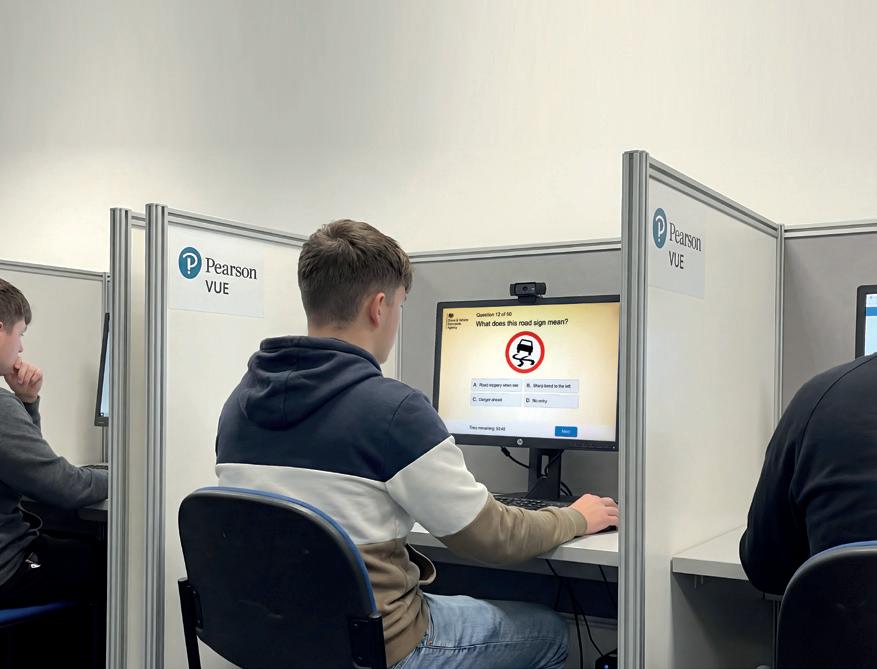
Before you can move on to the practical test, you need to pass the theory exam. Once you have your theory test pass certificate you’ll have taken a big step towards your full licence.
What is the theory test?
You’ll be tested on your knowledge of the rules of the road, to show you understand how to be a safe and responsible driver. The test is in two parts. There’s a multiplechoice test, and a hazard perception test.
How hard is it to pass?
Don’t make the mistake of thinking you can bluff your way through it. It takes a lot of study to fully get to grips with the Highway Code and to learn
how to spot hazards early. You need to score at least 43 out of 50 in the multiple-choice test, and 44 out of 75 for the hazard perception exam.
Where do I take the test and how much does it cost?
You sit the test at a DVSA test centre. The fee is £23. You can book online at gov.uk/booktheory-test.
What can I do to have the best chance of passing?
Good question! Firstly, we’d make full use of any theory test learning aids your driving instructor has. Read the Highway Code and The Official DVSA Theory Test for Car Drivers thoroughly and test yourself on the contents. There
are free practice tests online at gov.uk/take-practice-theory-test and loads of apps which bring the theory of driving to life.
How does the hazard test work?
You’ll watch 14 video clips, all around a minute long. There will be 15 hazards to spot, and at least one in every video. You click on a mouse button when you spot a hazard – the quicker you notice potential danger, the higher the score. Don’t just click like crazy, as you’ll score ‘zero’ if you cheat.
What next?
Fail, and you’ll have to wait at least three working days before taking the test again. Pass, and preparing for the practical test is your next step.

1 When you see a hazard ahead you should use the mirrors. Why is this?
MARK ONE ANSWER
A Because you will need to accelerate out of danger
B To assess how your actions will affect following traffic
C Because you will need to brake sharply to a stop
D To check what is happening on the road ahead
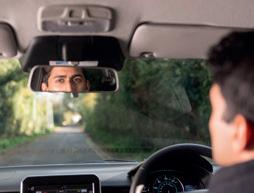
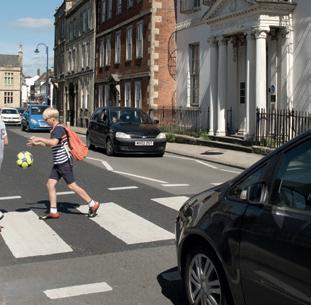
2 You are approaching a zebra crossing. Pedestrians are waiting to cross. You should
A Give way to the elderly and infirm only
B Slow down and prepare to stop
C Use your headlights to indicate they can cross
D Wave at them to cross the road
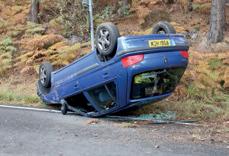
3 Young, inexperienced and newly qualified drivers can often be involved in crashes. This is due to
A Being too cautious at junctions
B Driving in the middle of their lane
C Showing off and being competitive
D Staying within the speed limit
4 What can cause heavy steering?
A Driving on ice
B Badly worn brakes
C Over-inflated tyres
D Under-inflated tyres
5 You are following other vehicles in fog. You have your lights on. what else can you do to reduce the chances of being in a collision?
A Keep close to the vehicle in front
B Use your main beam instead of dipped headlights
C Keep up with the faster vehicles
D Reduce your speed and increase the gap in front
6 You are driving towards a level crossing. What would be the first warning of an approaching train?
A Both half barriers down
B A steady amber light
C One half barrier down
D Twin flashing red lights
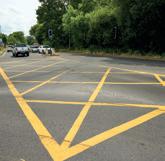
7 When may you wait in a box junction?
A When you are stationary in a queue of traffic
B When approaching a pelican crossing
C When approaching a zebra crossing
D When oncoming traffic prevents you turning right
8 You’re approaching a busy junction with several lanes. At the last moment you realise you’re in the wrong lane. You should
A Continue in that lane
B Force your way across
C Stop until the area has cleared
D Use clear arm signals to cut across
9 A red traffic light means
A You should stop unless turning left
B Stop, if you are able to brake safely
C Stop and wait behind the stop line
D Proceed with caution
10 You should wear suitable shoes when driving. Why?
A To prevent wear on the pedals
B To maintain control of the pedals
C To enable you to adjust your seat
D To enable you to walk for assistance if you break down


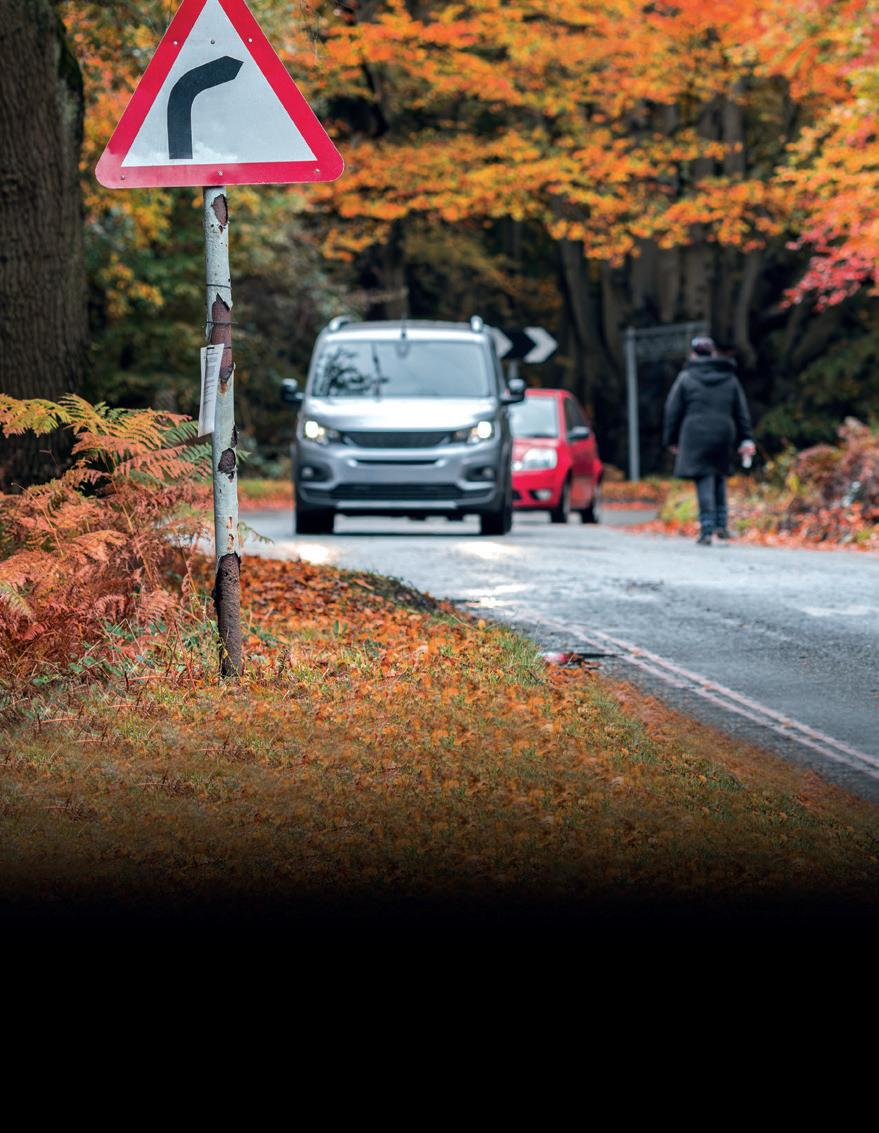

Spotting hazards isn’t just important when you take your theory test, it’s a vital part of safe driving, full stop

Don’t treat hazard perception as something that’s separate to the rest of your learning. Yes, you’re going to be tested on a computer, but you’ll learn more quickly if you practise spotting hazards every time you drive. The goal is to spot danger and stay safe on the road, not just to pass a test.
2
Well, maybe not perfect but good enough to pass the theory test. Take lots of mock hazard perception tests before you tackle the real thing. That way you’ll know what to expect and will be able to sharpen your skills. There are loads of them online and they’re often free.
“I messed up the hazard perception in my first theory test. Taking mock tests helped me pass second time!”
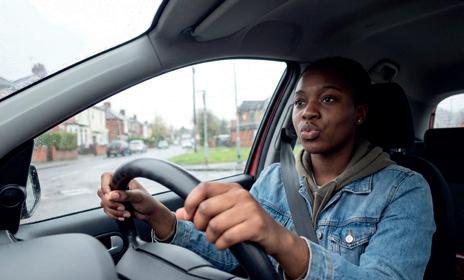
3
The most advanced police drivers are taught to give a running commentary as they drive. Talking about hazards while driving forces you to concentrate on potential dangers, rather than running on autopilot. Saying out loud what you see – and how you
are going to respond – makes sure the brain is fully engaged and helps you learn to process lots of information at once. If you are giving a commentary as you drive there’s no mental capacity left to wonder what’s for dinner or where you will go on Friday night...
Every video in the hazard perception test shows at least one hazard. But just to keep you on your toes, one of the 14 videos has two hazards. So, don’t switch off after you have spotted the first hazard. There could be another one appearing at any moment.
4
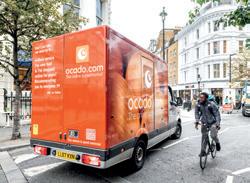
Broadly speaking, there are two kinds of hazards.
‘Static’ hazards are things like roundabouts, traffic lights and junctions. You need to deal with them on every journey, but a roundabout isn’t going to suddenly jump out at you from behind a parked car.
5
‘Developing’ hazards are mobile and tougher to predict. Such hazards include a car pulling out in front of you, a child running into the street, or a cyclist getting ready to turn right. The sooner you spot a developing hazard, the sooner you can respond.
You can do a lot more harm with a lorry than a small hatchback. And a hatchback can do a lot more damage than a child crossing the road. That’s reflected in the Highway Code.
Lots of changes were made in a big update in 2022. Some existing rules were tidied up or clarified, but the guiding principle is the ‘hierarchy of road users’ – those who can do the greatest harm must take the
greatest responsibility.
The likes of lorry and coach drivers have the greatest duty to look out for other road users, because they’re driving the biggest, heaviest vehicles with the most potential to do damage. Pedestrians are at the
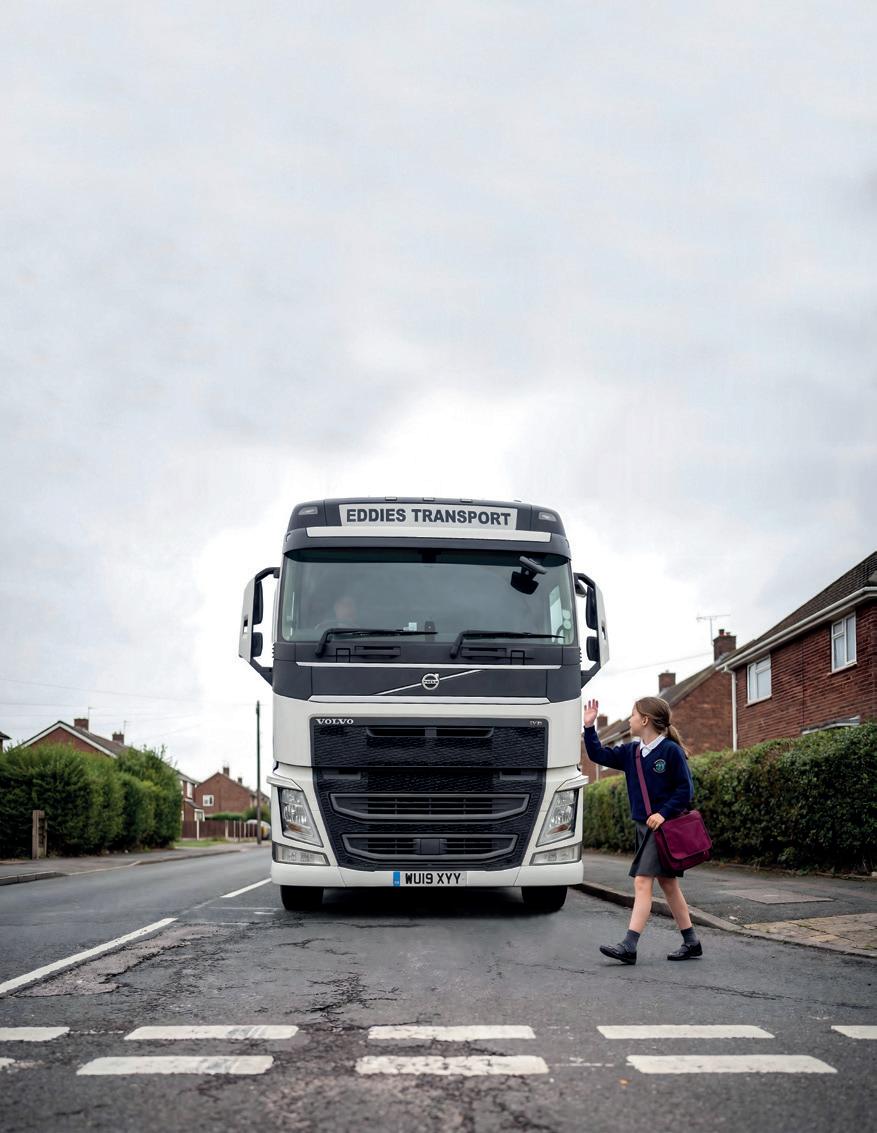
opposite end of the hierarchy, as they’re likely to come off worst in any collision. Car drivers must take a great deal of responsibility, as although we are vulnerable to larger and heavier vehicles, we need to take extra care around horse
“We all need to take care of each other, and especially the most vulnerable people on the road”
“Everyone needs to stick to the rules, and use the roads safely, however they choose to get from A to B”
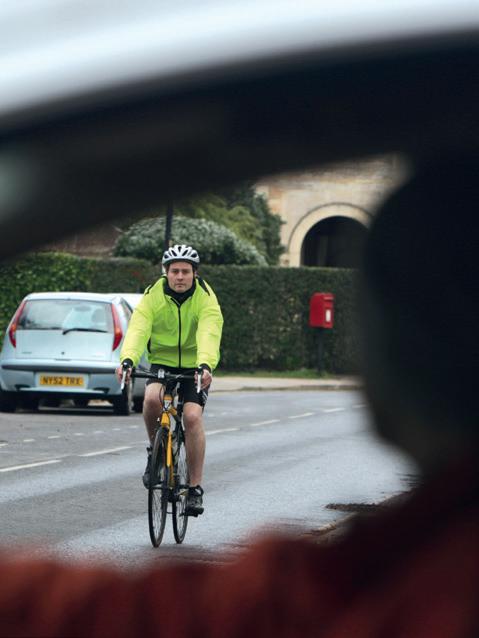
riders, cyclists, and people on foot.
These updated rules are sometimes misrepresented as allowing vulnerable road users, in particular cyclists, to do as they please with the car driver always getting the blame. That’s not what the changes are all about. Everyone needs to stick to the rules, and use the roads safely, however they choose to get from A to B. Rather there’s a shift of emphasis – those with the greatest potential to cause harm shoulder the greatest responsibility.
Just as a lorry driver should remember that car drivers
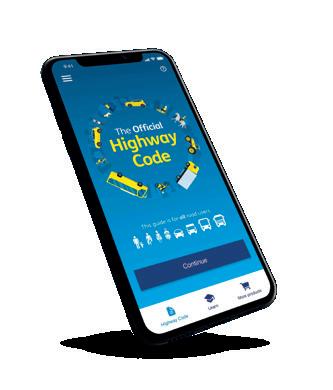
be familiar with the Highway Code – it’s vital for learners but important for anyone. You can buy the Highway Code from a bookshop or download the app:
Whenever you are frustrated by another road user, imagine they are a friend rather than a stranger.
and passengers are more vulnerable than they are in a collision, so car drivers should keep in mind that a horse rider, cyclist, or pedestrian is likely to be badly injured if we hit them. We all need to take care of each other, and especially the most vulnerable people on the road.



Pedestrians have priority when crossing or waiting to cross at a junction. It’s one of the rules from the 2022 Highway Code update which many drivers still forget or ignore. Make sure that you are not one of them.
The roads are for everyone, not just cars and drivers. Here’s how to put the hierarchy of road users into practice as you drive, sharing road space with more vulnerable road users
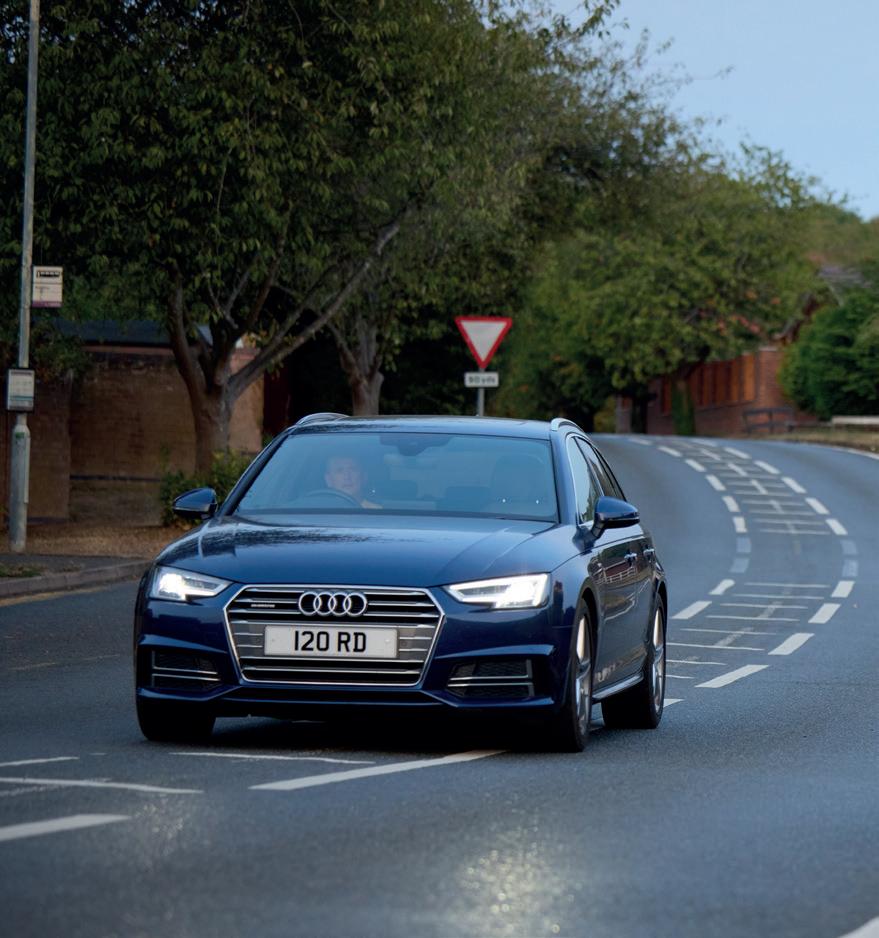
1.5 METRES
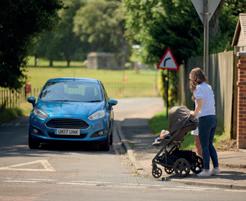
You should give way to pedestrians crossing or waiting to cross at junctions, including wheelchair and mobility scooter users. So, make sure you are checking for pedestrians as you approach a junction. If you spot someone in the road or waiting to step out, wait for them to cross before turning.
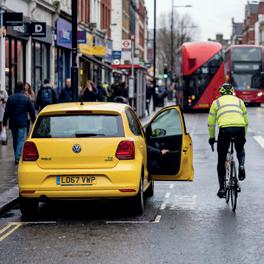
Use the ‘Dutch reach’ when opening a car door. This means using your left hand to open the driver’s door, which encourages you to turn towards the road, giving you a better view of any vulnerable road users such as cyclists who may be passing close to your car.
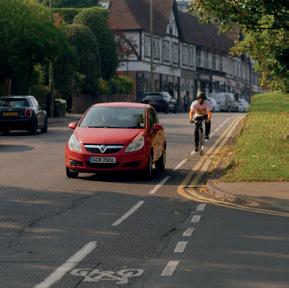
Remember that cyclists are allowed to ride in the centre of the lane, or two abreast, while allowing you to overtake when it’s safe to do so.
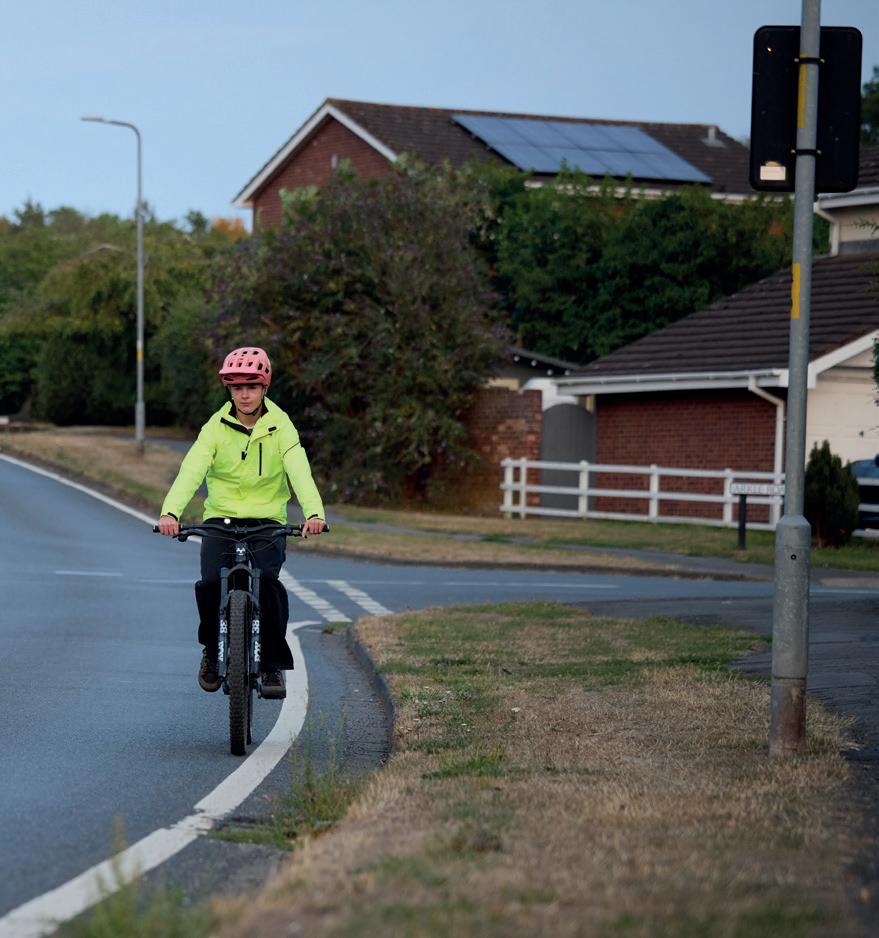
Expect the unexpected. Horses don’t always behave predictably, so be especially careful whenthem.overtaking
When overtaking cyclists, leave at least 1.5 metres when passing at speeds of up to 30mph. Give them more space when overtaking at higher speeds.
Pass horse riders and horse-drawn vehicles at no more than 10mph and leave at least two metres of space.
Be patient and ready to wait if there isn’t space to meet these clearances.
Wait for cyclists to pass a junction before turning left. Stay behind as they continue straight ahead and don’t cut across them. The same applies if turning left would mean cutting across a horse rider or a horsedrawn vehicle.
The practical test’s reversing manoeuvres need the right method and plenty of practice. Here’s how to reverse like a pro!
around for a safe spot
The examiner will ask you to “Pull up on the right where it is safe to do so.” Find a safe spot for the manoeuvre. You shouldn’t stop directly behind a parked vehicle.
Now check your mirrors and over your shoulder. Then indicate right. Look ahead for oncoming traffic, check in your mirrors and over your shoulder once again.
Practise these manoeuvres between lessons. You’ll get the hang of them more quickly. TOP
Make your way over to the right-hand side of the road at a relatively shallow angle. Aim to stop in a straight line and parallel with the kerb, close to it without hitting it.
Select reverse gear. Allow any traffic to pass. Now check to make sure it’s clear behind you. Reverse slowly and stay close to the kerb, continuing to keep a close eye out for traffic.
Look ahead, in your mirrors and over your shoulder to check it’s clear. If there’s a safe gap in both directions signal left and pull away, moving over to the left side of the road.
Don’t get too close
Reversing into a parking bay is much easier if you give yourself a bit of space to work with. So, don’t get too close to the row of bays. Instead, check ahead and behind you, and if traffic allows move out around half a car’s width from the bays. Indicate in the direction you will be turning.
It’s important to take your time rather than rush. Reversing slowly will give you time to adjust the direction of the car, aiming for the middle of the bay. It may help to use your outside mirrors as reference points – think of each mirror ending up just inside the white lines either side of the bay.
Good observation is crucial to reverse parking. While your main focus is behind you, it’s important to keep glancing around. If pedestrians or other vehicles come close, wait until they have passed, unless it’s clear that they are waiting for you to complete your reversing manoeuvre.
Come to a stop just beyond the bay you will be parking in. Select reverse gear, and have a good look around you to check for other cars or anyone on foot. If it’s clear, look out of the rear windscreen and start to reverse backwards, turning towards the bay.
Once in the bay with the car in line with the white lines, straighten the wheel. If you are not quite straight, check for traffic and people on foot and, if it’s clear, pull forward a little, steering the car so it’s parallel with the white lines. Then reverse back again so the car is squarely within the bay.
You’ll be asked to pull up in a space that’s big enough for the car you’re driving. Stop level with the car you are going to reverse behind and no more than one metre out to the side.
Select reverse gear while checking all around you to make sure it is safe to drive back, with no other traffic approaching. If it’s clear, start moving backwards slowly.
Look over your left shoulder. When the corner of the car you are reversing behind appears in your passenger-side window turn the steering wheel one full turn to the left.
Check carefully to be sure there’s nobody walking close to the car or other road users nearby. If it’s safe, continue to reverse back into the space. Turn the steering wheel hard the other way. This will tuck the nose of your car in. Just be careful that the front of your car is
Once you are parallel with the kerb, straighten the wheel. Make sure you’re not sticking out into the road or up on the pavement.


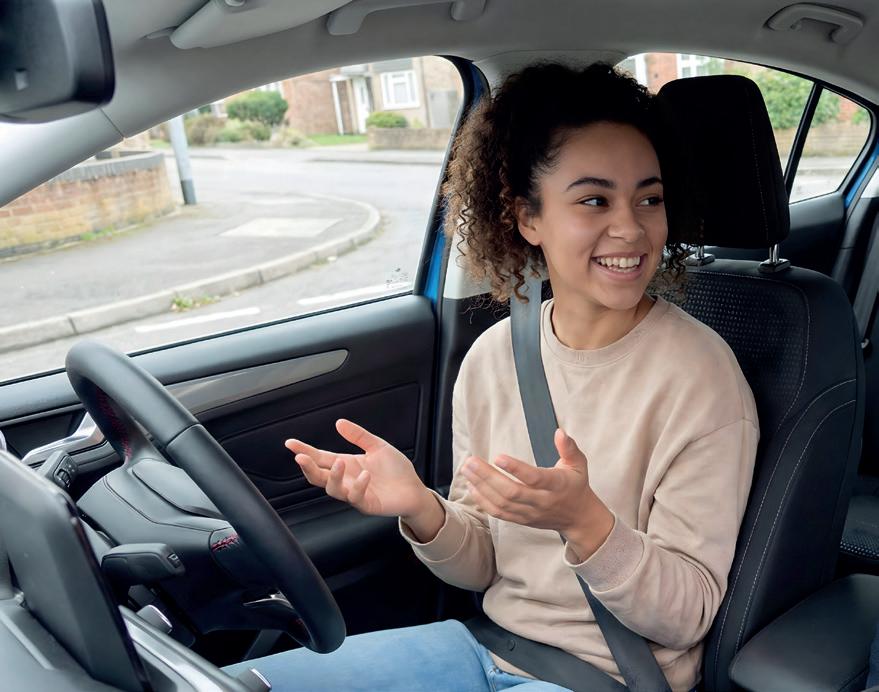
We’ve put some of the most common questions about the practical test to
How long is the driving test?
“You’ll spend at least 30 minutes behind the wheel, driving on a variety of roads.”
What happens before I drive?
“I’ll ask you to read a numberplate from 20 metres away, so don’t forget your glasses or contacts if you need them to see clearly.”
Then what?
“Next comes the ‘tell me’
question, something like ‘How would you check the headlights and tail lights are operating correctly?’”
What happens once we start driving?
“For 20 minutes out of the total you’ll be driving independently, which means following road signs or sat nav to a destination. Taking a wrong turn is no big deal, I want to see that you can drive safely.”
Will I be asked a ‘show me’
question?
“Yes. It could be something as simple as showing how you would turn on the rear demister, or wash and clean the windscreen.”
What manoeuvres will be part of the test?
“As well as making a hill start, pulling out from behind a parked car, and making a normal stop at the side of the road, you may need to make an emergency stop. You’ll also need to carry out one of three
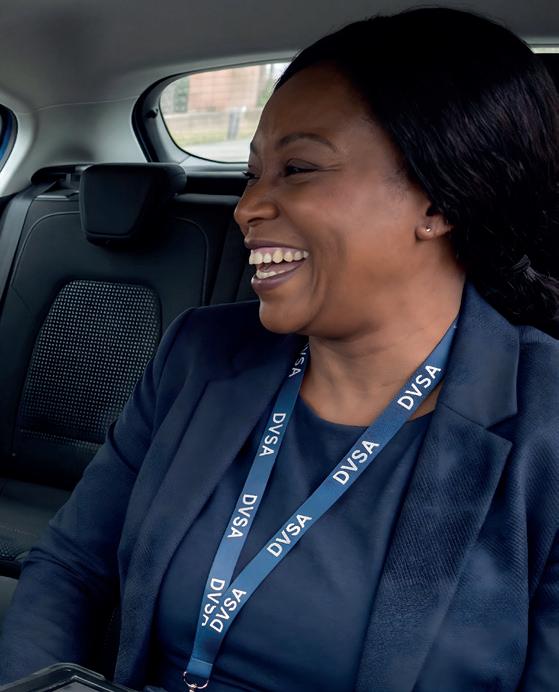
Get an early night before the big day. You want to be as fresh as possible when you take the test.
an examiner. Here’s what they had to say!
reversing manoeuvres.”
How good do I need to be to pass?
“You need to prove you are safe and competent. I’m not expecting perfection! So long as you make no more than 15 driving faults (sometimes called ‘minors’) and no serious or dangerous faults (sometimes called ‘majors’) you’ll be okay.”
What if the examiner doesn’t like me?
“Examiners are professionals,
doing their job. We’re going to judge you on your driving ability, nothing else. Honestly, we’re just regular people!”
And after the test, what happens then?
“Whether you pass or fail, we’ll talk you through any faults. Around half of candidates fail, so don’t be surprised if this happens to you. We’re not trying to catch you out, though. If you make the grade, you’ll pass! And if you don’t, come back stronger!”

YOUR CHECKLIST FOR PRACTICAL
The green light from your instructor
If they say you are ready, you’re ready.
Plenty of practice
Don’t avoid tricky manoeuvres or difficult junctions. Work on any weaknesses before the test.
A positive attitude
Believe in yourself! You can do this!
Strategies for handling pressure
Don’t tell your friends your test is coming up if this will add to your nerves.
Your provisional licence and theory test pass certificate
You’ll need to take both to the test centre.
Sensible clothes and footwear
Wear something comfortable and shoes that make it easy to use the pedals.
Be willing to learn
If you don’t pass, understand why so you can be better prepared for your next test.
FIX Practise ‘eye scanning’. Instead of fixing your eyes directly in front of you, keep looking all around you and in your mirrors. Take particular care to look for other road users who have priority over you at junctions, so you can wait.
These are the 10 most common reasons for failing the practical
FIX Eye scanning can help with this one too. You need 360˚ awareness of what’s going on around you, especially before changing direction. Always look in the mirrors and check your blind spot before making any direction change.
2
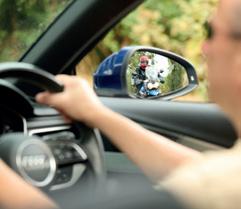
MOVING OFF SAFELY 3
FIX Go by the book every time.
Remember Mirror, Signal, Manoeuvre (MSM). That way you won’t pull away until it is safe, and you will have shown your intentions to other road users. Observation and good judgement are key.
4
FIX Some new drivers hate turning right at a junction, but don’t get anxious, just remember your Mirror, Signal, Position, Speed and Look routine (MSPSL). Be cautious in judging the speed of oncoming traffic and make the turn once you are sure it is completely safe.
FIX To have a strong chance of passing the practical, steering the car should be second nature. If it’s not, keep practising. The push-pull method is best under most circumstances, but the important thing is to keep control of the car.
FIX You must watch for road markings, understand their meaning, and respond appropriately. The Highway Code explains what road markings mean, so make sure you revise this subject before your practical test.
6 8
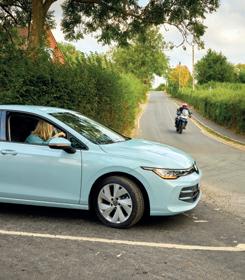
FIX Look ahead to spot traffic lights and prepare to slow down and stop if necessary. Watch the lights as you wait for them to change. Remain at a stop when the lights turn to red and amber. Don’t move until they are green.
5
FIX Continually look for signs and road markings, interpret the information they are giving you, and respond appropriately. Don’t let your theory knowledge slip between your theory and practical tests. Your theory know-how is still important!
7
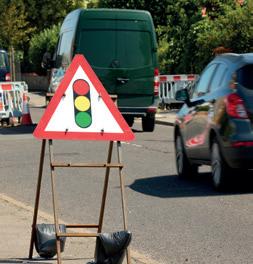
FIX Stay within your lane unless you are changing lanes or pulling out to overtake. Don’t let the car wander towards the lane markings. When overtaking cyclists, always leave at least 1.5 metres of space.
9
10
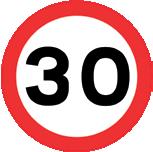
FIX Consider the conditions, traffic, signs, and limit. Choose a speed at which you can stop safely within the distance you can see is clear. You must always drive at a safe and reasonable speed.
Pop superstar Charli XCX makes her first big-screen outing in the brand-new film produced by A24 called ‘The Moment’.
The mockumentary film is directed by Aidan Zamiri, who co-wrote it with Bertie Brandes, based on an original idea by Charli.
Charli XCX plays a fictionalised version of herself in the film, which follows the life of a pop star in the lead-up to her first headline arena tour.
The ‘Boom Clap’ singer says about the film: “The seed of ‘The Moment’ was conceived from this idea of being pressured to make a tour

documentary.”
‘The Moment’ offers an inside look at the music industry’s inner workings and explores how subculture is mutated by commercial success.
The film also stars Rosanna Arquette, Kate Berlant, Jamie Demetriou, Hailey Benton Gates, Isaac Powell and Alexander Skarsgård.
Meanwhile, Charli is eyeing her third No.1 album with ‘Wuthering Heights’, the original soundtrack for Emerald Fennell’s film adaptation of the English classic. If Charli hits No.1, it will mark her third charttopping album in four years, following 2022’s ‘Crash’ and 2024’s ’Brat’.
CONTINUED...

“And after my album ‘Brat’, I kind of got opened up to this entirely new, much larger audience”
TYDG: So Charli, tell us what sparked this idea to make ‘The Moment’?
CHARLI XCX: I think I had been through an extreme transition in my work life, where for years I was sort of known as a kind of pop artist who was sort of on the fringes with a very loyal, exclusively gay fan base. And after my album ‘Brat’, I kind of got opened up to this entirely new, much larger audience, which I was so grateful and thankful for. But with it came this, I don’t know, this sort of feeling of kind of losing control of something that I had really been able to be in control of for so long, you know?
I think when you release art into the world, and it reaches a wide audience, and in my case, this was the widest audience I’d ever reached, their opinions begin to be sort of put on the work, the work begins to sort of morph and change in its meaning. And obviously that’s just what comes with releasing art, period. But I’d never experienced it at this scale before. And it left me sort of thinking a lot about how we communicate art, at what point art sort of leaves your own hands and goes into the audience’s hands, how that makes you feel as a creator. And I just felt that I had a lot of things to say around that subject.
I also think I am quite an
emotional and volatile artist, as I think many artists are. And I found elements of that journey quite difficult. And I just felt that making this film was a way of me not only commenting on art and the longevity and lifespan of art, but also me sort of dealing with my experience, my very personal experience as an artist and how I felt in the industry, the music industry, going through that.
TYDG: You play a fictionalised version of yourself in the film. It’s a character, but is it very close to the real you?
CHARLI XCX: Well, you see, I’ve been sort of training to play this role my entire life in ways. [laughs] I was very ‘method’ from the day I was born, I guess. [laughs] But it’s like the scenarios that we show in the film are not true scenarios that actually happened to me in the year of 2024, but given a
different set of circumstances, they might. And I think I have definitely come close to those circumstances, especially having been in the music industry for so long. I’ve definitely met characters that we sort of touch on, or versions of characters that we sort of touch on within the film. And I’ve definitely reacted in ways close to the way that I react in the film.
Have I had a breakdown in the back of a Viano whilst smoking a million cigarettes? Yes. [laughs] So, yeah, you know, I definitely had a lot to draw upon, let’s say. But I think I am nicer in real life.
TYDG: Was it selfempowering to make this film?
CHARLI XCX: Yeah, of course. I mean, I think in the film, Charli in the film, which sounds crazy, but Charli in the film, she decides to set herself
“I also think I am quite an emotional and volatile artist, as I think many artists are. And I found elements of that journey quite difficult”




“Have
I had a breakdown in the back of a Viano whilst smoking a million cigarettes? Yes. [laughs]”
“Fans are so feverish for the next thing, the next album, the next version of you”
free of ‘Brat’ and kill ‘Brat’. And I think we were aware that this film was probably the sort of full stop at the end of an album campaign in the real world, too. And I think we’re very interested in playing with, interacting with the world around us, and also operating in an insular way within a film. So I think that was something very appealing to us.
And also, I think we’ve always been very interested in the lifespan of art, the idea of the tension of sort of staying too long, overstaying your welcome in a cultural space, you know? And I think especially within pop music, that can really happen, because fans are so feverish for the next thing, the next album, the next version of you. So I think, yes, making this film was quite cathartic in a way, because I was also able to channel a lot of my frustration that I may have felt in the real world into these sort of heightened scenarios that I was experiencing within the film.
TYDG: So is it really over now, the ‘Brat Summer’ is over?
CHARLI XCX: I mean, it’s sort of up to the world, but for me, it’s over, and I guess you can’t dread the end when it’s over. [laughs]
TYDG: Finally, how does it feel to be presenting this film at the Berlinale film festival?
CHARLI XCX: I think we all collectively feel so honoured to have been invited to show our film at both Sundance and here at Berlinale. I think both festivals really do champion a wide variety of filmmakers with really important voices.
This festival in particular is known for not shying away from political films, from films that have a real social angle, from films by directors who really are visionary and have something to say. And I think for me as a
producer, as an actor, for Aidan [Zamiri] as a director, for David [Hinojosa] as a producer, I think those are the kinds of films that we love, those are the films that we want to champion ourselves.
I feel like I’m only just starting out in this industry, but I feel passionate about working within those spaces. And I think we all feel so honoured to be here, and we’re very thankful for this festival because I think it’s very important that it exists.


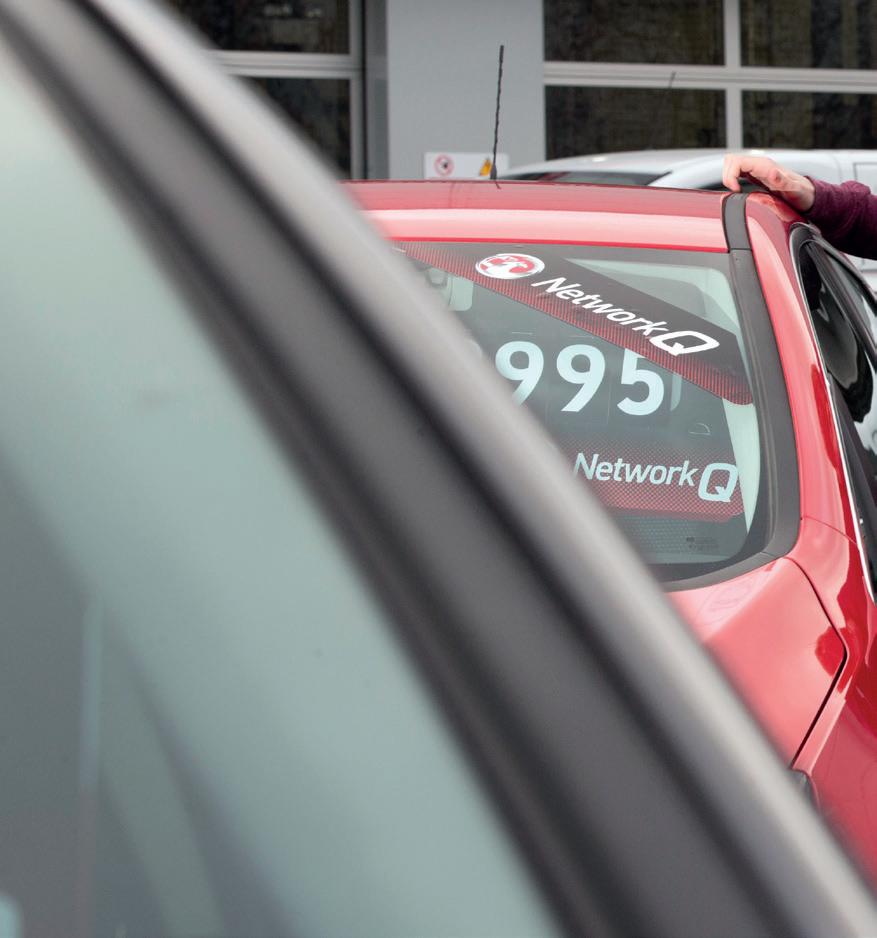
There are lots of highs and lows when learning to drive. Passing the practical is probably the biggest high. If you are lucky enough to buy your first car, that’s another landmark moment to enjoy.
Buying a first car is a balancing act. You need to juggle the things you want, the things you need, and the reality of running a car on a budget. Choose wisely, and you can drive away in a car that’s safe, reliable, and cool.
Okay, safety is boring, but it’s important. At the risk of sounding like your driving instructor, the most important
safety feature is you, the driver. But there are other factors that make one car safer than another.
A good way to check if a car is safe is to look up its rating on EuroNCAP. com. Cars receive an overall score out of five stars. This is then broken down into different categories like adult occupant protection.
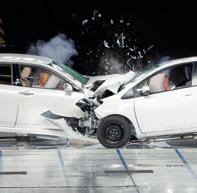
assistance systems have become common over the past decade or so.
Even if you are buying a car that’s several years old there’s a good chance it will come with autonomous emergency braking (AEB). This hits the brakes for you if you don’t notice that a collision is likely and is definitely worth having.
All sorts of clever driver
“A good way to check if a car is safe is to look up its rating on EuroNCAP.com”
Reliability is also boring, until you spend two hours broken down on the hard shoulder in the pouring rain. So, make sure any car you buy has been

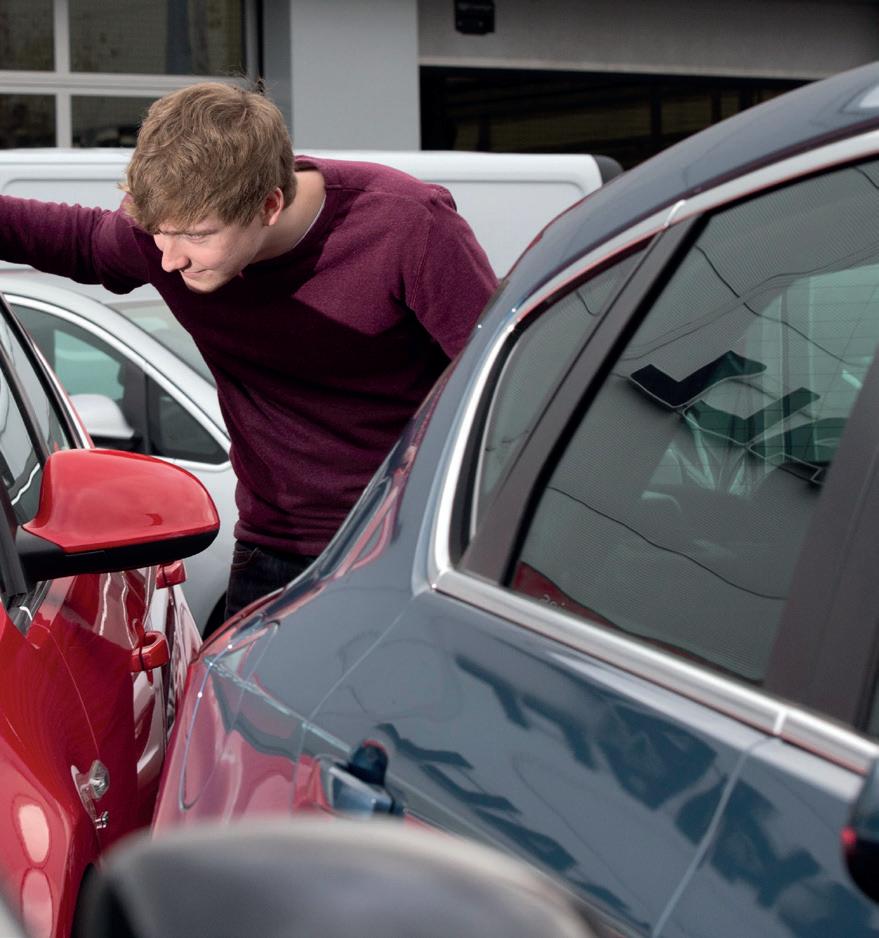
well cared for. A full service history (meaning the car has been serviced on time and in line with the manufacturer’s recommendations) is a good sign. If it’s been on the road three years or more it must also have a valid MOT (an annual safety and emissions check).
You should also look up the results of reliability and owner satisfaction surveys. Cars which do well in such studies usually make sound buys.
If the car you are buying comes with a warranty to cover the cost of repairs if it develops an unexpected fault, even better.
It’s not unheard of for a new driver’s insurance premium to cost more than the car. So, before you buy any vehicle make sure you check the insurance group (Google “insurance group checker”). Groups run from 1-50, the lower the better.
Better still, get some quotes to find out how much you would need to pay for cover before you have bought the car. That way you will know if you can afford the total cost of the car and the insurance premium combined or if you should think again.

Fill this out before you commit to buying your first car.
How much does it cost?
Have I checked the car’s history?
What is the insurance group (1-50)?
How much is insurance for a year?
How many miles per gallon?
Does it have a full service history?
What is the car’s Euro NCAP rating (up to five stars)?
Does the car have autonomous emergency braking?
The most important safety feature in any car is you, the driver. But even the best driver benefits from some help. Modern cars are packed with clever technology to help you
survive a crash – or better still avoid one in the first place. The smartest technologies are sometimes called Advanced Driver Assistance Systems (ADAS for short) and use all kinds of sensors to help

you stay safe. Use the tick and cross boxes to note if any first car you are thinking of buying is fitted with these important safety features.
The more ticks the better!

emergency braking (AEB) What is it?
This clever feature uses sensors (often radar, cameras or both) to detect if a collision is likely. At first it will warn the driver, usually with an audible alarm and often a message on the driver’s display. If the driver doesn’t react, it will apply the
TOP TIP
“One of my friends crashed on a quiet county road at night. Help might not have arrived until too late if their car hadn’t been fitted with eCall.”
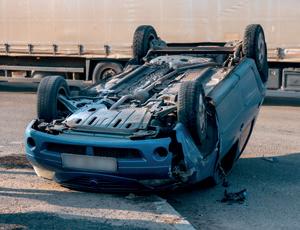
(ESC) What is it?
By easing off the throttle or braking individual wheels, stability control systems help the driver maintain control if they corner too quickly for the conditions, leading to a loss of grip. Different car makers use different names for stability control, including ASC, DSC, DSTC, PSM, VDC, and VSC.
All new cars have been fitted with ESC since 2014, and many
3 eCall What is it?
This brilliant feature will call the emergency services for you if you are involved in a collision. Even if you are unconscious, help will be on the way.
The eCall system also gives the emergency services your location, so they know exactly where help is needed. eCall opens a voice channel so you
brakes. This will either avoid the collision or make it less severe.
Some estimates show that if every car had AEB it would prevent 100,000 rear-end crashes in the UK each year.
Lots of modern cars have AEB, even the smaller and more affordable models that are likely to be bought as first cars. It could be called Active City Brake, City Emergency Braking, or Front Assist.
AEB has been compulsory on new cars since May 2024 but was fitted to many models well before this date too.
Does my first car have it?
Yes No
had it before this date. Most cars on the road will have ESC but check if your first car is an older model.
Does my first car have it?
Yes No

can speak to operators if you are able.
Some research suggests eCall reduces response times by 50%. It really should be high on your list of safety features when shopping for a first car. It’s been compulsory on new vehicles since the spring of 2018.
Does my first car have it?
Yes No
4
Lanedeparture warning (LDW) and lanekeeping assist (LKA) What is it?
If your car starts to drift out of its lane without the driver indicating, LDW will sound a warning. Lane-keeping assist goes a step further and will steer the car back towards the centre of the lane.
Like all these driver assistance systems, LDW and LKA should be thought of as a back-up to an attentive driver.
Does my first car have it?
Yes No
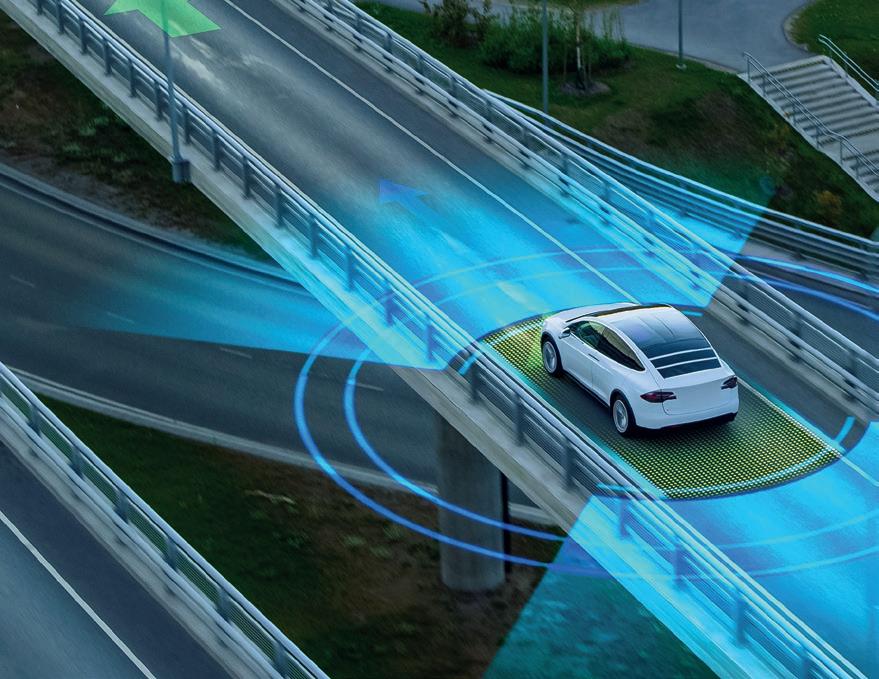
High-beam assist
What is it?
Sometimes called auto high beam, this system switches between dipped and full-beam headlights for the driver. Cameras detect oncoming traffic and will dip the beam to avoid dazzling other road users. Once the other car has passed, high-beam assist
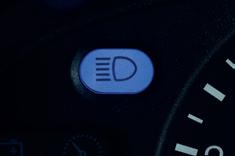
will switch back to full beam to give you the best view of the road ahead.
Adaptive headlights take this feature a step further and adjust the shape and direction of the beam to suit the car’s steering angle, speed, and the road conditions. The beam’s reach and shape alter to give an excellent view of the road without dazzling anyone.
It’s more likely that a first car will have high-beam assist rather than the more sophisticated adaptive lights.
Does my first car have it?
Yes No



What is it?
Using sensors to detect steering patterns and monitor eye movements, driver drowsiness detection systems will spot if a driver is becoming tired. The system will warn the driver with a message on the dashboard.
While these are a great way to spot fatigue, don’t rely on them entirely. On a long drive it’s best to stop for a break every couple of hours so you stay alert.
Does my first car have it?
Yes No
What is it?
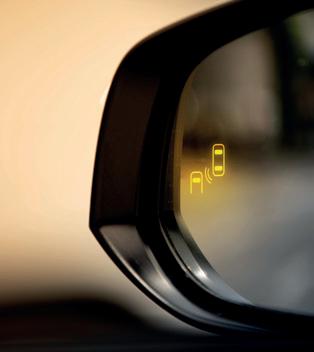
This uses sensors to look for car that’s in a driver’s blind spot (in other words, another vehicle close to the car you are driving but not visible in the mirrors). Often, these systems will use an amber light in the door mirror to warn of another vehicle in the blind spot. If the driver moves towards the other car the light may flash and a warning will sound.
Other names to look out for include blind-spot detection (BSD), blind-spot information system (BLIS) and blind-spot warning (BSW).
This is a really useful feature, but it’s a backstop rather than a replacement for looking over your shoulder. Blind-spot monitoring isn’t required by law, so not all brandnew cars have this feature.
Does my first car have it?
Yes No
As a rule, the more recent the car the more likely it is to be equipped with the latest safety systems. It makes sense to buy the newest car you can afford to benefit from all this clever tech.
Let’s be realistic, though. Many new drivers are on a tight budget. If you are looking at a car that’s many years old, it’s less like to have advanced driver assistance systems (ADAS) fitted.
There are still lots of safety features to look out for…
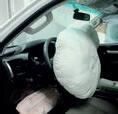
These will inflate in a collision to reduce the risk of injury.
Anti-lock brakes (ABS)
ABS keeps the wheels turning as you make an emergency stop, so you can steer away from danger.
Some drivers don’t apply full force to the brake pedal, even in an emergency. Brake Assist recognises an emergency situation and will apply the brakes with full force even if the driver doesn’t.
From HP to PCP to PCH, there’s a whole alphabet soup of different finance options. The good news is interest rates are relatively low, so financing is surprisingly affordable. In fact, with special schemes aimed at young drivers which include the cost of insurance, a new car might not be as expensive as you’d think.
We’ll talk you through the pros and cons of the different finance options.

PCP is the most popular finance option, and it’s not hard to see why. A PCP makes a new car more affordable by reducing the monthly payments. If you see a car advertised as “from just £149 per month” you can bet it’s a PCP deal.
After stumping up a deposit you pay a set amount per month for, say, three years, but at the end of the loan you’ll need to find a lump sum of several thousand pounds if you want
to own the car. You don’t have to pay up, you can just hand the car back. Or you can part-exchange the car and use the difference between the final payment and the car’s value as a trade-in as the deposit to start a new deal.
Sometimes the cost of servicing is included. Schemes which include the cost of insurance can be especially attractive for young drivers, provided there are no age restrictions.
Just be aware that PCPs will have an annual mileage limit, with penalty charges if you drive too far.
Good Affordable monthly payments; some PCPs include servicing and insurance
Bad You won’t own the car at the end of the loan unless you make a big final payment; watch out for penalties for exceeding mileage limits
2 3 4
You pay a deposit, followed by a series of equal monthly payments (generally over two, three, or four years). At the end of the loan you’ve paid for the car in full, and unlike a PCP or PCH mileage isn’t restricted. The trouble is, without PCP’s big final payment, monthly bills are much higher. However, if you
Rather than borrowing money from whoever is selling you the car, you could take out a personal loan from a bank or finance company. However, lenders will want you to be 18 (or in some cases 21) before they’ll consider loaning you money. It may be easier to find a willing lender if you have a guarantor for the
You’ll need to be 18 or over to have your own credit card. Interest rates are usually high, so a credit card makes most sense as a way to pay for a car if the card has a 0% interest rate for a limited time and you’re
Use a price comparison site to find the best credit card deals. You’re looking for a low rate of interest. If you are eligible for a 0% card you’ve hit the jackpot!
want to own the car at the end of the loan HP can be cheaper when you add up the total cost.
Good Easy to understand; no big final payment
Bad Higher monthly bills than a PCP
loan (usually a parent) but they’ll have to pay up if you don’t, which could make for a frosty atmosphere at the dinner table...
Good No need to find money for a deposit
Bad Can be expensive; not all will qualify
in a position to pay off the car before the interestfree period ends. These 0% deals are usually only available to borrowers with a good credit score, so in practice you may have to lean on mum or dad to use their credit card.
Good 0% special offers; additional legal protection
Bad High standard interest rates; not available to under 18s
Look for a finance offer that comes with insurance or has the cost of servicing included. This can save young drivers a small fortune.
Lenders charge interest on your loan, referred to as the Annual Percentage Rate (APR). Any APRs quoted are usually a guide only; the exact rate is decided on an individual basis. Unlike a flat interest rate, an APR gives you a bigger picture when shopping for the best deal on a loan. Even though lenders are required by law to show a loan’s APR, they don’t all use the same fees in their calculation, skewing the comparison, so always check to make sure any APRs you’re comparing include similar fees.
“Always check to make sure any APRs you’re comparing include similar fees”
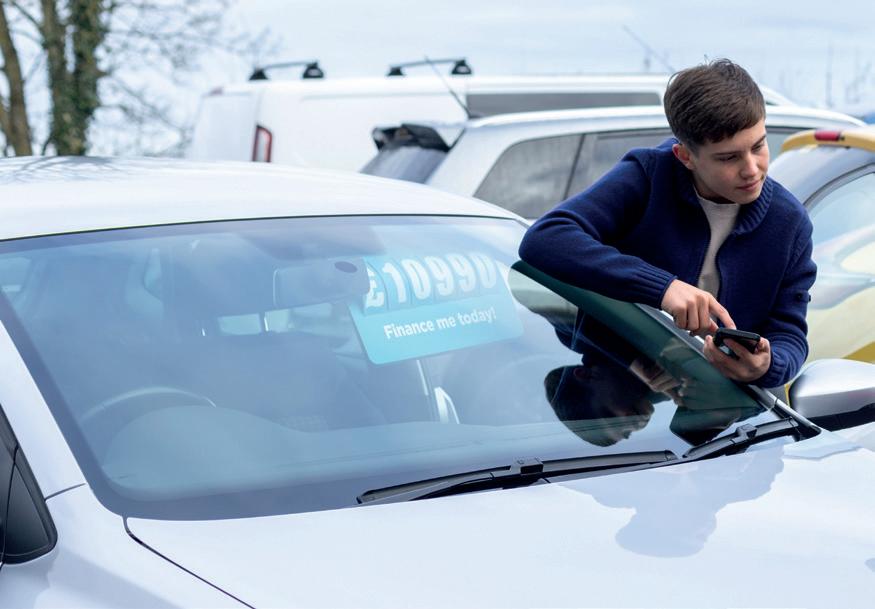
There are loads of different places to buy a used car. From main dealers
Big franchised dealers will have plenty of used cars. As a rule, they’ll mostly stock the make they sell new, but they will also sell other makes if they’ve taken them as part-exchange.
Good
● Expect at least a year’s warranty
● Cars should be well prepared
Bad
● High prices
● Mostly one make
● Unlikely to stock bargainpriced older cars
If you want a wide choice of makes and models, keenly priced, then car supermarkets are a good bet. Many have a no-haggling policy, so the price you see is the price you pay.
Good
● Lots and lots of choice
● Keen prices, often with no-haggling
Bad
● Service can be no-frills
● Warranty cover likely to be shorter than a main dealer’s
Smaller independents won’t offer as much choice as the big dealers, but the best offer a more personal service than a big car supermarket.
Good
● Should be cheaper than a main dealer
● The best small dealers really look after their customers
Bad
● Limited stock compared with a franchised dealer
● Warranties can be short unless you pay extra
private sales, all have their pros and cons
For a real bargain, look through the classifed ads and find a car for sale privately. You should pay less than you would at a dealer, but there are pitfalls.
Good
● Some keenly priced cars
● No hard-sell
Bad
● You won’t have the same legal protection
● Watch out for dealers pretending to be private sellers to dodge their legal obligations

Don’t set your heart on one car. There’s more than one model out there to suit your needs.
Some retailers sell cars over the internet with delivery to your door. You could pick up a bargain, but check the policy on returns.
Some online retailers, like Cinch, will deliver your first car to your door. This can save you a lot of time travelling from place to place to look at different cars. Some regular dealers also offer online sales.
Good
● Lots of choice
● You can return the car if it’s not for you
Bad
● No chance to test drive before you buy
● Standard warranties may be short
If you buy a used car without a warranty, think about arranging one through an independent company such as Warrantydirect.co.uk.
Don’t be put off by a high-mileage car if it has a full service history. High-milers can make good buys.
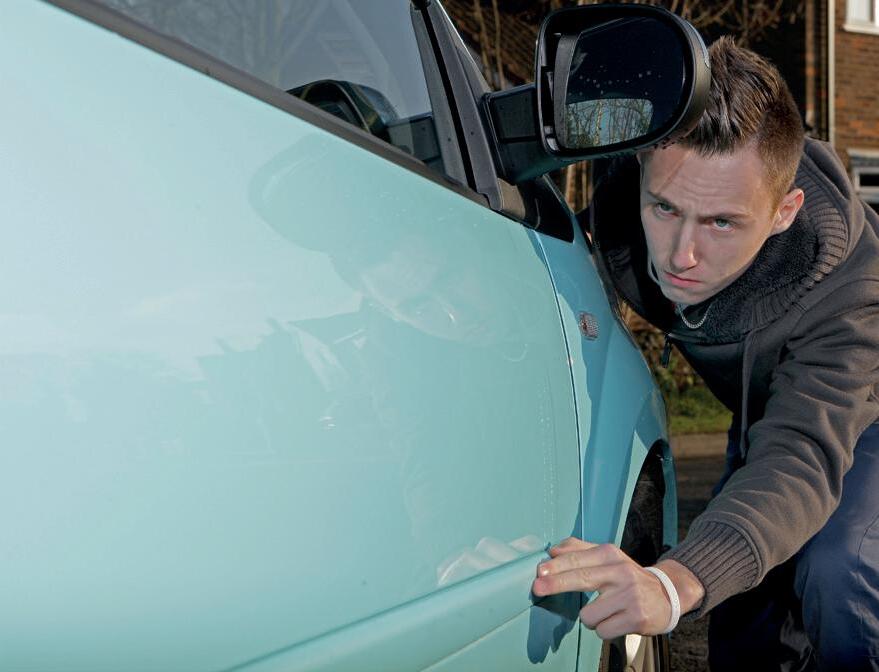
Look for bodywork damage. Poor panel fit suggests crash repairs. Check for rust that’s been painted over, plus filler in the wheelarches.
Have the tyres worn evenly or are they bald? Uneven wear suggests poorly aligned tracking (usually easily sorted) but could be something more serious. You should also check that the chassis number (usually at the base of the windscreen on the passenger side) matches the one on the registration document. Also check the engine number, which is usually
on the top of the block, down one side.
Ask if the car comes with one key or two. Think carefully about buying a car without a spare. Lose the only key and you may have to have everything reprogrammed – which can cost hundreds of pounds.
“Have the tyres worn evenly or are they bald? Uneven wear suggests poorly aligned tracking”
Take a really careful look inside. Is the interior undamaged, along with all the glass? Are there stickers on the windows to cover an old registration number etched into the glass? Have the steering wheel and gearknob been worn smooth? Does this tally with the recorded mileage?
Look at the dash. Do the speedo digits line up properly? Does the mileage on the dashboard display tally with what’s recorded in the service record and the MOT history?
Ensure all the electrics work, including the lights.
Never buy a car without test driving it first, unless you are buying over the internet and you have the legal right to return it if you change your mind. Start the car from cold, and make sure it ticks over happily. Let it warm up then take it for a good run so you can check everything. While you’re driving, look for a smoky exhaust, ensure the engine pulls cleanly, and feel for pulling to one side under braking. Listen out for any odd sounds and weird noises.
It’s a good idea to take someone with you to look at a potential buy. They may spot something you miss.

Make sure all the paperwork is in order. The key documents are:
Service history: for proof of regular servicing and to see if the mileage is correct. Some modern cars will have a digital service history rather than a service book.
Registration document (or V5C): This tells you the basics
Your goal is to pay less than the asking price. Any seller should set the price above what they’re prepared to accept – so
don’t pay a penny more than you have to. Compare the price to what other similar cars are being advertised for.
about the car, such as how many owners it’s had and who it’s currently registered to. The person named on this form isn’t necessarily the legal owner of the car, though. Don’t buy a car without a V5C and make sure it’s genuine by looking for the watermark.
MOT: If a car between three and 40 years old has no MOT it probably isn’t roadworthy.

Rated ‘excellent’ 4.9 out of 5 (as of July 2023)

Their professionalism, expertise, and genuine care for their clients will undoubtedly make your insurance process as smooth and stress-free as possible.
We put parents’ minds at ease...
Tom was exceptionally helpful, explained car insurance for my daughter in an easy to understand manner.
And drivers’ minds on the road!
My experience was amazing they were really lovely and answered all my questions i would a 100% recommend. The prices were amazing too and saved me so much money.
J
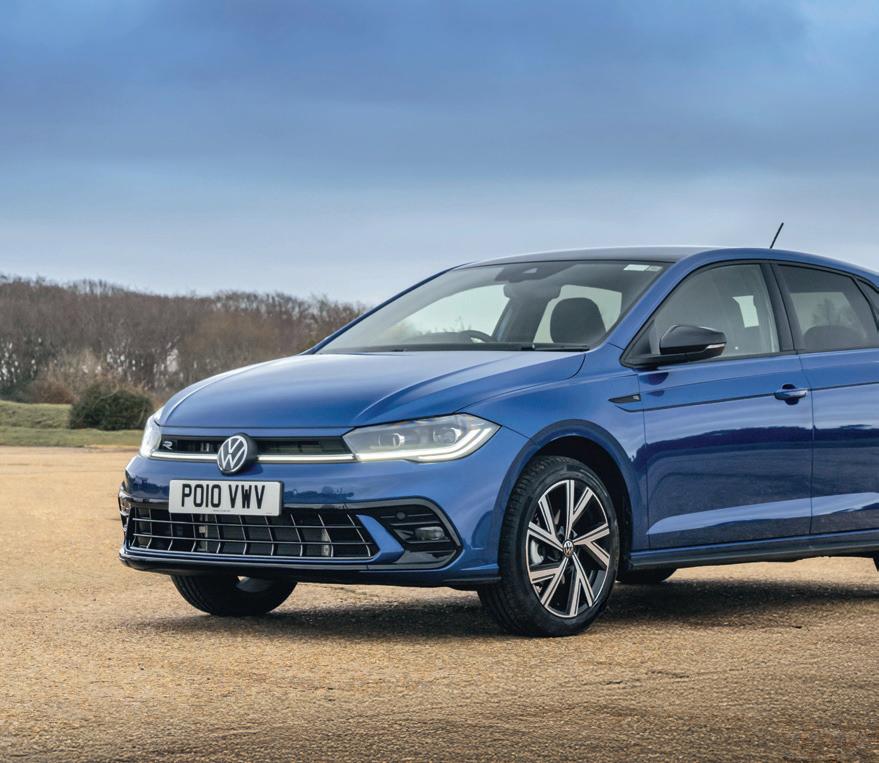
ust a handful of small cars have the maximum five-star rating from the safety experts at Euro NCAP. The VW Polo is one. Its score of 94% for adult occupant protection is right up with the very best.
GWM Ora 3
This cute-looking small car is one of the safest on sale, with five stars from Euro NCAP.
The Polo was last updated back in 2022. Volkswagen included all sorts of safety features and driver aids which are more often found in bigger and more expensive cars. Lane Assist, which steers the car back into lane if it starts to drift,

is standard across the whole range. Autonomous emergency braking (which Volkswagen calls Front Assist) is also included in the price.
Excellent safety isn’t the only reason to choose one. For a car that takes up so little space
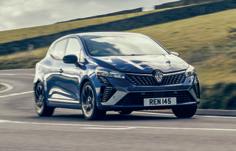
Renault Clio
The Clio scored five stars from Euro NCAP in 2019, and four stars in the tougher tests in 2025.

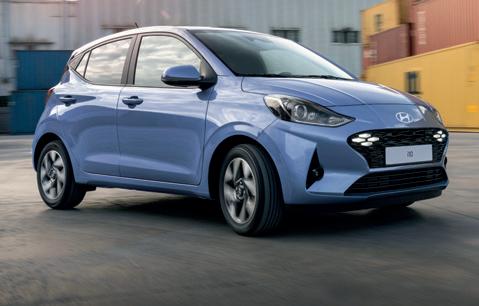
Looking for a small and affordable car that won’t let you down? The Hyundai i10 is hard to beat.
What Car? magazine runs an annual reliability survey, and the i10 was one of just four cars to score 100% in 2026. That means none of the owners who completed the survey had any faults to report.
If they had run into any trouble, Hyundai offers the reassurance of a five-year, 100,000-mile warranty to guard against unexpected bills.
The i10 is one of the smallest cars on sale, which makes it an absolute doddle to park. It’s at home around town, but certainly not out of its depth on A-roads and motorways.
Buyers have the choice of three engines. The 63hp 1.0-litre petrol offers the lowest insurance bills, and it’s the cheapest on fuel according to the official figures.
The current i10 went on sale in 2020. Go for an earlier car and you should still expect excellent reliability.
on the road there’s plenty of room inside. The ride is comfortable and there’s a choice of efficient engines.
If the current Polo costs a bit more than plan to spend, older versions also have very impressive safety.
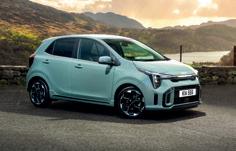
Kia Picanto
The Picanto is closely related to the i10, so it’s no surprise that the little Kia is also reliable.
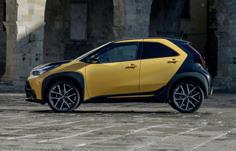
Toyota Aygo X Toyota makes some of the most reliable cars you can buy. The Aygo X is tough and dependable.
Not all electric cars are equally ‘green’. You see, while any electric vehicle (EV) has no exhaust emissions, there’s still an environmental cost to building the car and making the battery.
That’s why the government’s Electric Car Grant isn’t available for all EVs. They must meet minimum sustainability criteria. Plenty of cars receive the
The Citroën is very cheap compared with other electric cars, and super-easy to drive.
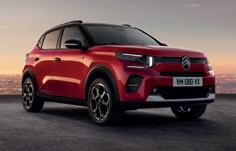
Band 2 grant of £1500, but very few are eligible for the £3750 Band 1 saving.
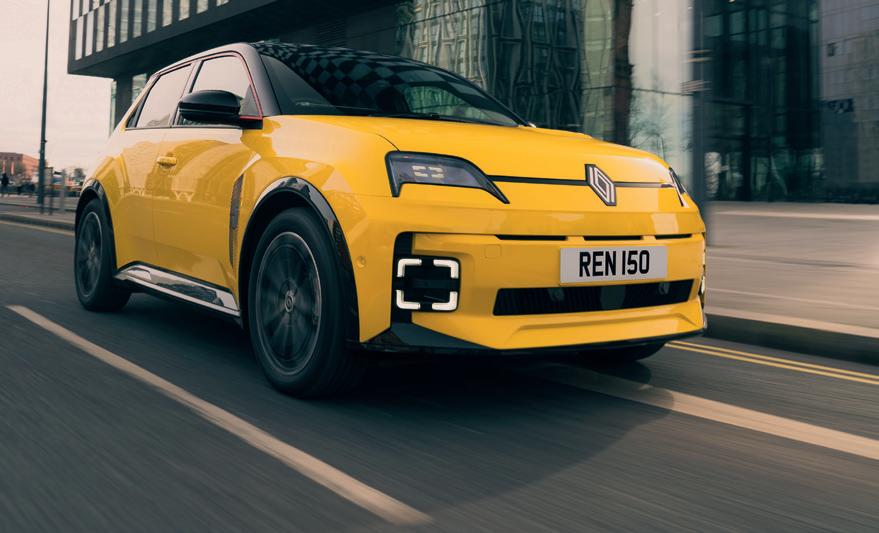
The Renault 5 is one of them. Or at least, it is if you go for the 52kWh model with its Frenchmade battery.
That brings the asking price down to £21,495 once the grant has been applied. Of course, that’s still an awful lot to pay for a first car, but it if you are
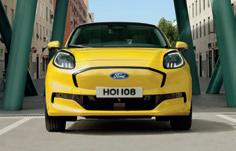
Ford’s electric Puma qualifies for the maximum electric car grant. It’s cheaper than the petrol version!
being insured on a vehicle that’s shared with other family members it’s not necessarily out of reach.
The 5 is a brilliant car, with nippy performance and a fun personality. It looks great, too. Safety standards are high, even if you choose the entry-level specification.
As a very new model, there aren’t many used examples to choose from. However, if you want a more affordable EV, you could do a lot worse than the Renault Zoe, which is the car the 5 replaced.
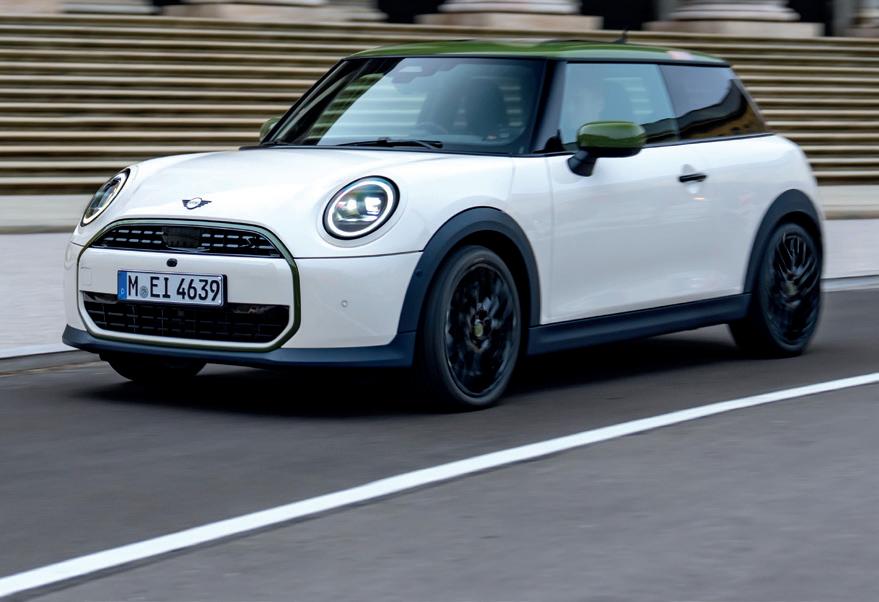
You’ve hit the first-car jackpot if you drive a MINI. The latest Cooper is super-stylish, but every generation of the MINI has been a good-looking car.
Today’s Cooper is available with three or five doors. It’s a handsome car either way.
The MINI’s sense of style continues on the inside, with a funky cabin that’s packed with modern tech. There’s lots
The 500E is small like an espresso and as stylish as anything you’d see on a Milan catwalk.

of room in the front of the car, although it’s pretty cramped in the back.
If the way the MINI looks doesn’t have you hooked, the driving experience will. The Cooper is great fun and easy to drive, although the suspension is a bit stiff over bumpy roads.
Stick with the more basic MINI Cooper C to keep insurance costs reasonable.

Peugeot 208
Chic and eye-catching, the 208 is a safe, well built, and fuel-efficient first car.
It’s also cheaper to fuel than quicker versions.
The price of the Cooper is quite steep compared with other small cars. Even if you go for a used example of the current model, prices begin from around £16,000.
Don’t feel glum if that’s out of reach as earlier models are much cheaper and just as stylish. The MINI Mk3, which went on sale in 2014, is a reliable and well-made car as well as a head-turner. You can pick up one of these for less than £3000.
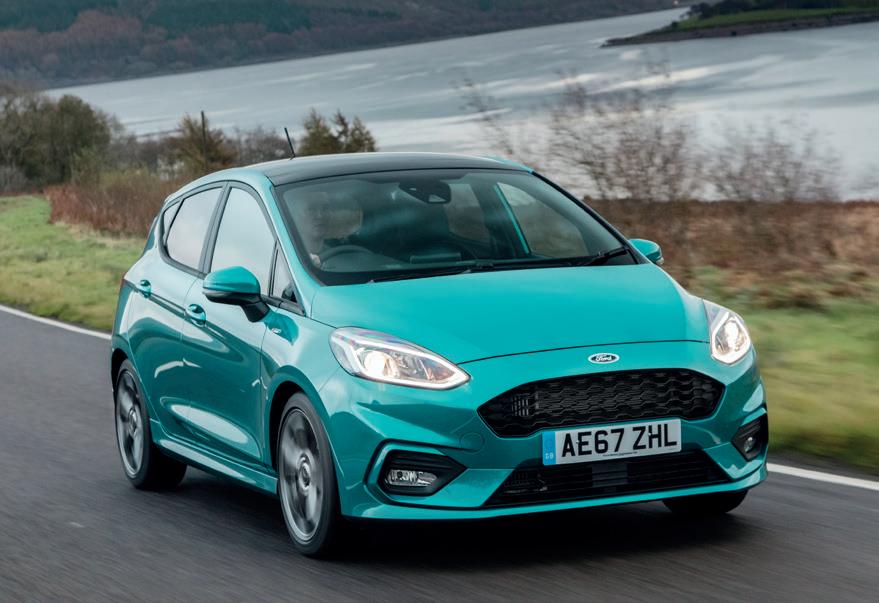
It may not be sold as a new car anymore, but a used Ford Fiesta is a first car you can be proud of.
For generations, the Ford Fiesta has combined a keen price, low running costs, and a fun drive. It ticks just about every box as a used car, as it’s reliable and affordable to fix if something does go wrong.
Skoda Fabia
The Fabia is a reliable buy, and very practical for its size. Buy with confidence!

The last Fiesta was sold from 2017 to 2023. This is the one to go for if its within budget. It has more modern safety technology than earlier models, as well as being roomier. It scored five stars with the safety gurus at Euro NCAP in 2017, although this rating has now expired and shouldn’t be compared with recent test results.
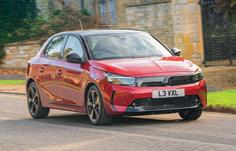
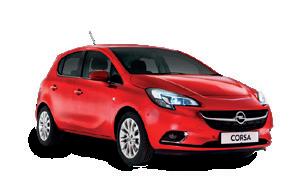
Vauxhall Corsa Cheap, easy to drive, affordable to run – the Corsa offers first-time buyers great value for money.
For a new driver, there’s nothing intimidating about being behind the wheel of a Fiesta. The controls are light and easy to use, and the small size makes it easy to park or thread through busy streets.
The 1.25-litre EcoBoost engines are lively, but the less powerful 1.1-litre is a more insurance-friendly choice, rated as low as Group 5.
Earlier generationss of the Fiesta will cost less, of course, so keep these in mind if you are working to a very tight budget.
Euro NCAP Expired
Insurance group
From Group 5
Price used (2017) From £2695 (approx.)
Priceused(2023) £9,000(approx.)
Being a new driver is all about gaining freedom. While sorting out car insurance can feel boring and complicated, from the moment you sit behind the wheel making sure you are properly insured is your responsibility.
Without the right cover in place, your insurance could be cancelled or void, leading to consequences that no one wants. Here’s a few things you should ask yourself to get it right...
ARE YOUR DETAILS CORRECT?
Moved flat? New job? Made a mistake on your registration or date of birth? Check. Then check again.
WHAT ARE YOU USING YOUR CAR FOR?
Different insurance types exist for different uses. Driving to work requires commuting insurance, while driving for work will require business insurance. Making deliveries will need hire-and-reward cover.
HAVE ALL PAYMENTS BEEN MADE?
Keep an eye on bank statements and insurer notifications to spot missed or bounced payments.
01 05 06 07 02 03 04
WHERE IS YOUR INSURANCE FROM?
Be cautious of cheap deals, especially on social media. Many are ghost broking scams selling fake, worthless policies. Check that your provider is a member of MIB or BIBA.
HAVE YOU MODIFIED YOUR CAR?
Even small changes, such as new wheels or a spoiler, must be declared.
ARE YOU REALLY THE MAIN DRIVER?
Listing a parent as the main driver to save money is a type of fraud, known as fronting. You could end up on the Insurance Fraud Register.
DO YOU NEED TO DRIVE ANOTHER VEHICLE?
Driving a friend’s car isn’t always covered. Most providers don’t allow it for under-25 drivers. Consider a short-term insurance policy instead.
Driving uninsured or with inadequate cover can have long-lasting consequences:
• £300 fine
• Six points on your licence (enough to lose your licence as a new driver)
• Car seized and even crushed
• Potential driving ban and unlimited fine if it goes to court
• Harm to job prospects due to a conviction
• £1,000 increase to average future premiums
Always review your insurance carefully and contact your provider directly if you need to discuss your cover.
SCAN TO RECEIVE insider tips on staying insured

Most things about becoming a new driver are fun. Insurance? Not so much.
The trouble is, there’s no getting away from being properly insured. That applies
whether you are still learning, driving your family’s car, or behind the wheel of your first car. By law, you need to have cover in place.
Here’s what you need to know about car insurance…

“I paid for my insurance in monthly instalments. I didn’t realise I was being charged interest! So paying the full amount in one go would have saved money.”
As a minimum, you need third-party insurance. This covers you for damage done to someone else and their property. Next up is third-party, fire and theft (TPFT). You can probably guess that this adds cover for fire damage and having your car stolen on top of a basic third-party policy.
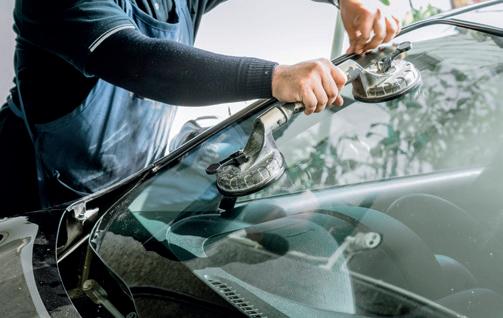
Look out for handy extras like legal protection, a courtesy car while yours is being repaired, and windscreen repair.
Take a good look at any company’s online reviews, too. You want to find an insurer with high-quality service and an efficient claims process.
It’s much better to have fully comprehensive insurance (sometimes shortened to ‘fully comp’). This covers your car if it’s damaged in a collision, not just the other party’s vehicle. Not all fully comp policies offer identical levels of cover, so make sure you compare what you are getting for your money.
“You don’t need cover if you can’t afford it.”
When comparing prices and policies, check the excess. This is the amount you will have to pay towards repairs when making a claim. A higher excess can bring down the yearly premium but make sure you could find the money if you needed to.
Insurers reward drivers who don’t make claims with a noclaims bonus.
This discount will build up over several years of collisionfree driving. It’s one of the advantages of having your own car and insurance rather than being a named driver
on a family car. The discount starts out small, but builds over the years. Usually the bonus reaches its maximum after between five and 10 years of claims-free driving.
You can opt to have your no-claims bonus protected, although this costs extra.
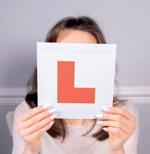
Car insurance is a legal requirement. You could receive six points on your licence and a £300 fine. Six points means back to L-plates for a driver in their first two years on the road.
“Fully comp is too expensive.”
Nope. Fully comp can work out cheaper than third party or TPFT. That’s because drivers who are cutting corners with their insurance cover can be high risk.
“Always choose the cheapest cover.”
Price is a big consideration, but make sure you check what you are getting for your money. Go for the best value, not necessarily the cheapest.
“It’s better to put a policy in a parent’s name, even if they aren’t the main driver.” This is known as fronting. While it may save money in the short term, it’s a form of insurance fraud. Any claim could be refused, and you could even be prosecuted for fraud.

DO... shop around. You might think that entering your details into a price comparison site is enough, but it’s worth contacting young driver specialists like MyFirst as well. It will mean a bit more form filling or time on the telephone, but if you get the right cover at the right price, it has to be worth a little extra effort.
DO... pick up the phone. Getting a quick quote on the internet is easy, but it’s often worthwhile to talk over your options with a real person rather than a computer screen. If you find anything about an insurer’s online form confusing, a phone call should put you straight. It could save you from making a mistake with your details which could come back to bite you if you later need to make a claim.
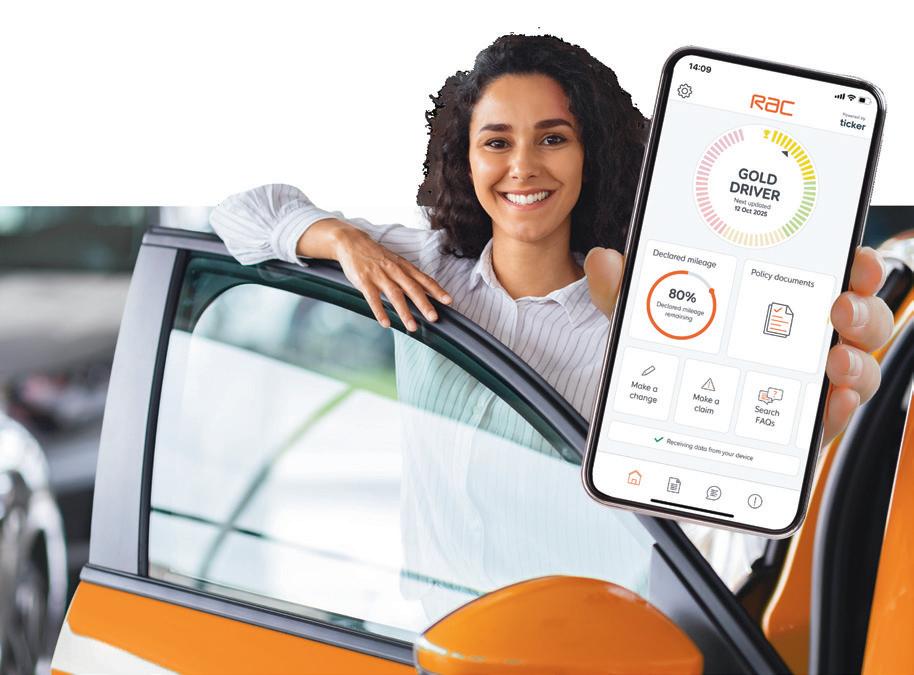
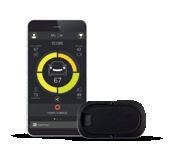
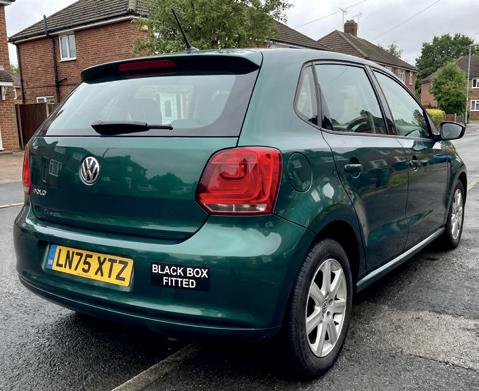
DO... think about black box insurance (also known as telematics insurance). With a black box policy a device is installed in your car to report back to your insurer. Drive well (obey the speed limit, no harsh acceleration or braking) and you can expect to be rewarded with a lower premium. Drive badly and your premium could go up.
Stumping up for insurance is one of the least fun things about becoming a new driver. Here’s what to do – and what not to do – to make insuring your car just that little bit less painful.

TOP TIP
“Be wary of fake insurance ads on social media. Always check for a website and a UK address and phone number.”

DON’T... lie to the insurer. What seems like a little white lie to cut the cost of cover is actually fraud and could mean the insurer won’t pay out if you need to make a claim. So be scrupulously honest about your age, driving history, where the car is kept, and who the main driver is (pretending your car is really mum or dad’s is called fronting, and it’s illegal!).
DON’T... simply choose the cheapest policy. Look closely at the excess (how much you’ll have to pay out yourself if you claim), any limitations on mileage, or other restrictions. Check whether you are entitled to a replacement car while yours is being repaired. Weigh up what you get for your money before deciding which policy is right for you.

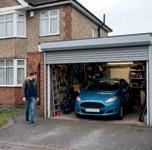
DON’T... modify your car. Bigger alloys, tinted windows, lowered suspension, or an uprated stereo may be very tempting, but many young driver specialists won’t cover modified cars. And if they do, you can bet you’ll have to pay a lot more for the privilege.
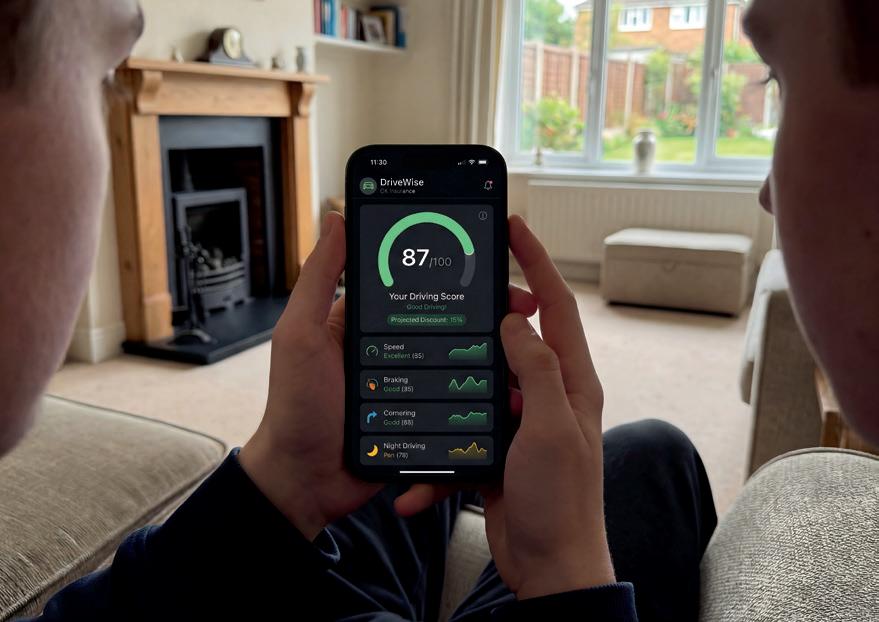
Black box cover could make insurance more affordable – and improve your standard of driving too!
Insurance is one of the most painful things about being a young driver – unfortunately there’s no way around it. According to the Confused.com, the average annual motor insurance bill for an 18-year-old driver is a massive £2434. Ouch.
Telematics (or ‘black box’) insurance is one way to reduce the price of cover and encourage good driving habits at the same time. So if you drive well it should be a win-win.
What is telematics insurance?
If you opt for a telematics policy, a ‘black box’ is fitted to your car. This combines a GPS unit, a motion sensor and a SIM card to transmit data. It detects where the car is, how fast it is being driven, and how violently the car is accelerating, braking and cornering.
How is the data used?
The information the black box collects is fed back to
the insurer, and used to reassess your premium at regular intervals. Obeying the speed limit, avoiding harsh acceleration and braking, and driving at low-risk times of day can all contribute to a reduction in your bill.
In some cases there are other forms of reward or special offers for safe and responsible driving. This could mean extra miles are added to a limited mileage policy, or you will receive vouchers and free gifts.
Can I check up on how well I am driving?
Yes. Telematics insurance providers usually have a portal or app through which drivers can see if their driving is up to scratch. By checking back regularly you can tell if you are improving or slipping into bad habits.
Can my parents have a telematics policy with me as a named driver?
There are plenty of telematics insurance providers who insure older drivers. But don’t be tempted to name your parent as the main driver unless they really are going to do most of the miles. If your insurer finds out that you’ve fibbed about who the main user of the car is, they’ll have caught you committing fraud. It could invalidate your insurance cover.
Also, if you aren’t the main driver on the policy then with most insurers you won’t build up a no-claims discount. So in the long run it’s best for you to be the main driver, even if the car is also sometimes used by a parent.
Some policies set curfews that restrict nighttime driving. Also, just as good driving can be rewarded with a lower premium, so poor driving can lead to a higher insurance cost. That’s not universal, though. Some companies don’t increase premiums for bad driving unless it has led to a claim.
Stick to the limit Your insurer will know if you are driving too fast.
Drive smoothly
Accelerate, brake and corner gently. Don’t be harsh or aggressive with the controls.
Avoid late night driving
“By checking back regularly you can tell if you are improving or slipping into bad habits”
It’s okay to be the designated driver once in a while, but don’t make a habit of driving late at night. This is a dangerous time for new drivers to be on the road.
Keep an eye on your mileage

Most telematics policies have a limit for the miles you can cover. You’ll need to pay extra to drive further.
Use the feedback Don’t ignore feedback from your black box app. Use it to make you a better driver – and save you money.
Imagine your instructor is with you Treat every drive as if your instructor is still next to you. Drive by the book to keep them happy.
Go old school! Fit a steering wheel lock or gear stick lock. They may be low tech but they can be very effective.

Modern cars are packed with security features, but car thieves aren’t daft. Criminals have learned how to exploit technology like remote central locking and keyless entry, so car thefts are on the rise. Here’s how to beat the modern breed of cybersmart car thieves.
Never leave your car unlocked. It doesn’t matter if you are just nipping to the shop for 30 seconds or paying for fuel at a filling station. Always lock your car, or risk coming back to find your phone or other valuables have gone. And never, ever
leave the engine running –it’s an open invitation to an opportunistic thief.
One low-tech way thieves defeat modern security systems is to steal the keys before pinching the car. So, keep keys out of sight rather than leaving them on a table in a café or on display in an open bag, and don’t hang them up in a jacket or coat in any public place. Be wary of leaving keys on a key hook by the front door, too. Thieves have been known to use metal coat
hangers to hook the keys through the letterbox.
If your car is stolen, there’s a much better chance of getting it back if you fit it with a tracking device. Purpose-made car trackers are best but can be expensive for new drivers. If you don’t have the budget, think about hiding a small tracker like an Apple AirTag or a Samsung Galaxy SmartTag inside the car. These connect to other smartphones nearby. While nothing like as effective as proper car tracker they are a worthwhile budget option.

After struggling with setting up car insurance himself, James set out on a mission to build a brand centred around advice and guidance for young people in the same position. So why choose us?

James Noble Founder & CEO

You’ll never forget your first car! Keep on top of maintenance, and you’ll remember it for the right reasons
G etting your first car is a milestone, and a lifechanging one at that. Few things compare with your new-found independence, but when you own a car you need to stay on top of a lot of things. Stuff like your car’s MOT, tax and insurance may seem like hassle, but if you fall behind on
any of these, the long arm of the law will catch up with you eventually.
Over the next few pages we’ll guide you through what you need to know to stay safe and legal with your car. Take our advice and you’ll find car ownership a delight rather than a chore.
Apps like Vehicle Smart help you to keep track of when your car is due a service or MOT so you don’t forget.
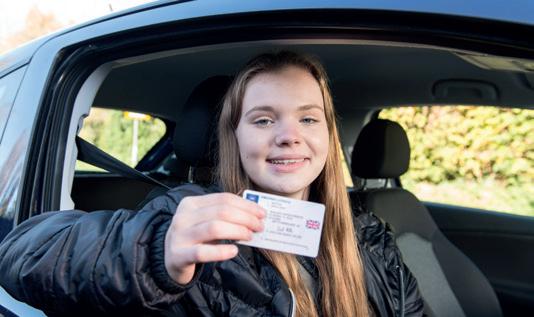
You must renew this every 10 years or if you move. It’s free to change the address on your licence, but if you lose it and need a new one, it’ll cost you £20.
gov.uk/browse/driving/ driving-licences
Your registration document, or V5C, is a record of your car and its owners. It logs the registered keeper – who may be different from the legal owner. When buying a car, the registered keeper should be the person you’re buying from, and the VIN, or chassis number, should match the one on the car. Check the watermark to see if the V5C is genuine. It’s illegal to sell a car without a valid V5C, so don’t accept it’s been lost, as you can easily apply for a replacement.
gov.uk/vehicle-log-book
Any vehicle must be taxed if it’s used or kept on a public road. If you take your car off the road, you must declare it SORN (Statutory Off

Road Notification). Known officially as Vehicle Excise Duty (VED), how much tax you pay depends on either the car’s engine size or CO2 emissions, depending on its date of first registration (shown on the V5C). You can tax a car for six or 12 months, but if you scrap it or take it off the road you can cash in the tax at any time. When your VED is due, the DVLA will send a reminder which explains everything you need to know.
gov.uk/calculatevehicle-tax-rates
Once a car reaches three years old it needs an annual roadworthiness test, the MOT. This checks lots of things to see if they’re worn or working properly. As the test costs up to £54.85, you can save cash by making sure your car passes first time. While you can’t check everything yourself, you can keep on top of basic maintenance by checking your tyres, windscreen wipers and lights are all in good condition.
gov.uk/getting-an-mot
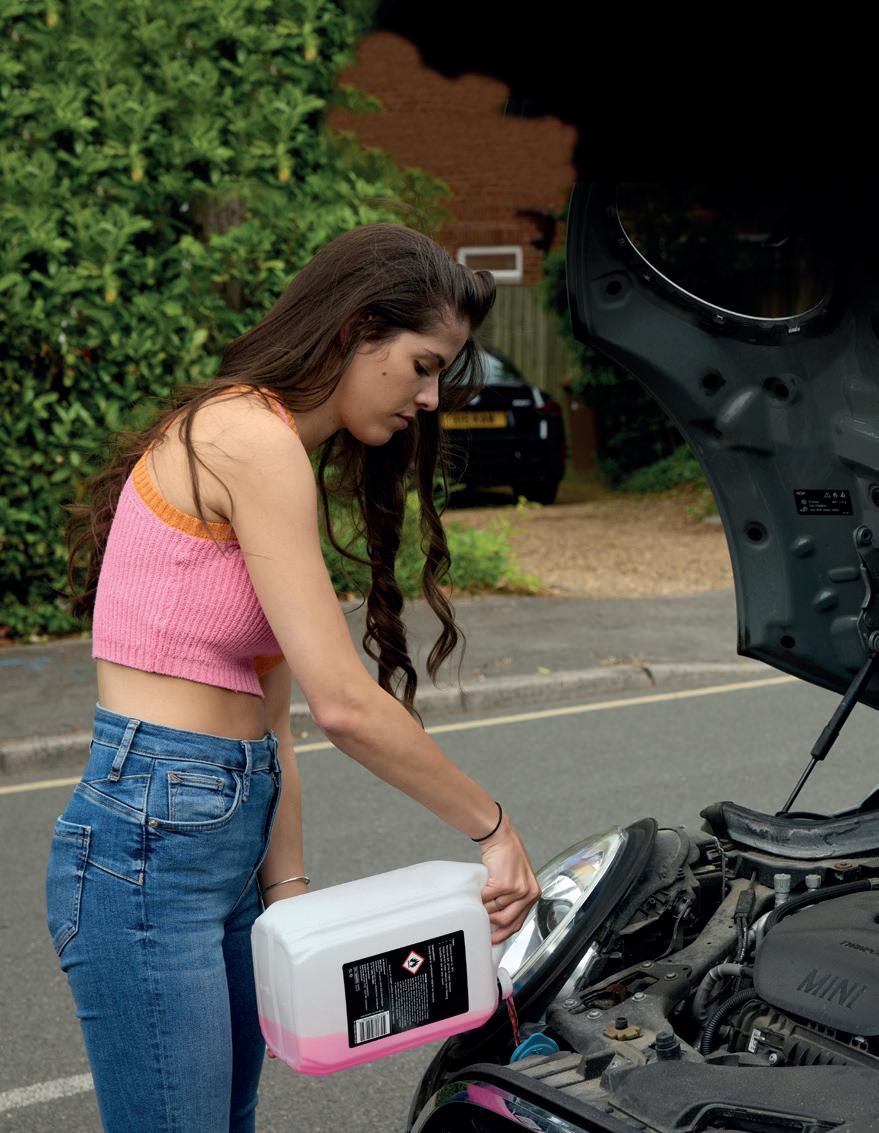
Follow this advice to make owning your first car go more smoothly


“Fuel is so expensive! If you don’t speed, you’ll use less fuel. Your black box insurance score will improve too. It’s a win-win!”
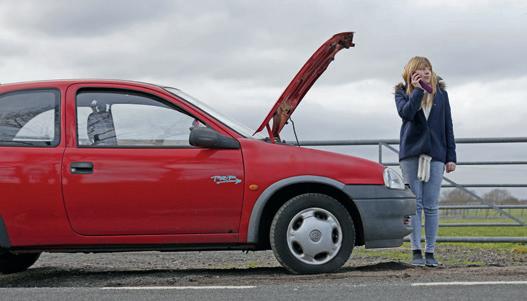
It makes sense to have cover in case your car breaks down, as even simple faults can be costly to fix. Don’t just go for the cheapest breakdown policy, though. Here’s what to look for...
● Make sure the package covers everything you need. Some include home start (fixing the car if it breaks down at home), some don’t.
● On the other hand, don’t pay for something you won’t ever need. There’s no point in having European cover if you never expect to leave the UK.
● If you drive more than one car, consider a breakdown package that covers you personally rather than a specific car.
● Don’t break the speed limit! Not only is speeding unsafe, it is bad for the environment and your bank balance. Driving at 80mph rather than 70mph uses 10% more fuel, according to the Department for Transport.

● Ditch the clutter. Leaving a roof rack, bike carrier or roof box on your car will hit fuel consumption hard.
● Drive smoothly. Be gentle with the accelerator and brake pedals and look ahead to anticipate what other road users are doing.

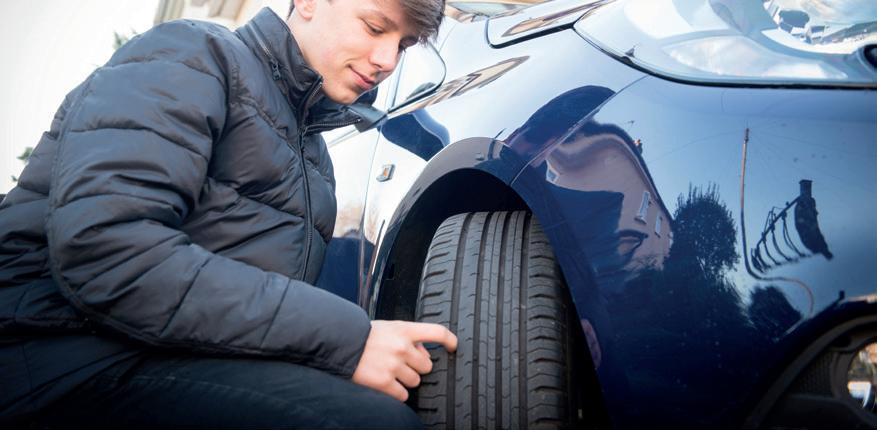
Sooner or later your tyres will wear out. Replace them before they are unsafe and illegal.
● Regularly check your tyres to make sure they still have at least 1.6mm of tread over the central three-quarters around the whole circumference.
● If the tread is low, you’ll need to buy a replacement tyre or tyres. You’ll have to order the correct size.
● You’ll find a series of numbers and letters on the side of the tyre. It will read something like: 195/55 R16 87V.
R
55 The aspect ratio or profile.
195
The tyre’s width in mm.
R stands for radial, which is the tyre’s construction.
16
This is the wheel rim’s diameter in inches.
When you speak to the garage or order online, you’ll need to order the same size.
● Once the new tyre has been fitted, keep it inflated to the correct pressure to reduce wear and maximise grip.
87 The load index. This shows the maximum weight the tyre can carry (87 = 545kg).
195/55 R 16 87V
V
This is the speed rating. In this case, V shows the tyre is certified for 149mph.
“You don’t need to be a mechanic to do basic jobs like change wiper blades. You’ll save time and money if you do some easy maintenance yourself.”
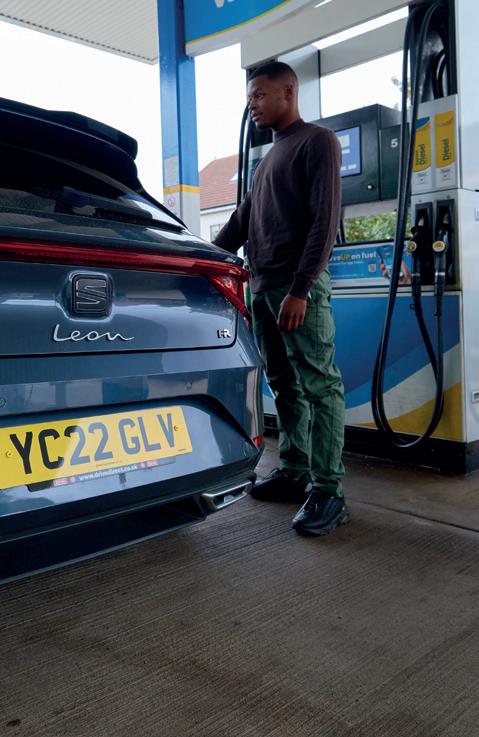
“Don’t panic if you put diesel in a petrol or petrol in a diesel”
Don’t panic if you put diesel in a petrol or petrol in a diesel...
● Don’t start the engine!
● Tell the petrol station what has happened and find someone who can help you push the car to a safe place.
1
Ideally, charge an EV using a home charger. This is cheaper than using the public charging network. A 3kW wallbox charger is generally cheaper to install than one rated at 7kW, but a more powerful charger will take less time to top-up the car’s battery.
2 Make sure you are using a dedicated EV charger. It’s possible to recharge from a domestic three-pin socket, but this will take a very long time, and household sockets aren’t always rated for heavy use over several hours.
3 Don’t fully charge the battery unless you are about to go on a long journey. Charging to 80% is better for the long-term performance of the battery.
4 Look for an electricity tariff that makes charging overnight cheaper than in the day and recharge the car while you sleep.
5 Download a mapping app like Zap-Map to help find nearby chargers.
● If you don’t have breakdown cover, find a local garage who can recover your car and drain and flush the tank. Check with your insurance company if you can claim back the cost. Otherwise you will have to pay.
● If you have breakdown cover, call them to arrange for the tank to be drained, flushed and refuelled.
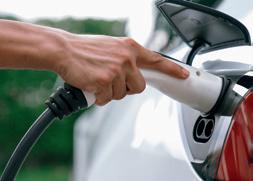
Buy a quality tyre compressor so you can correctly inflate your tyres at home with no need to visit a garage.
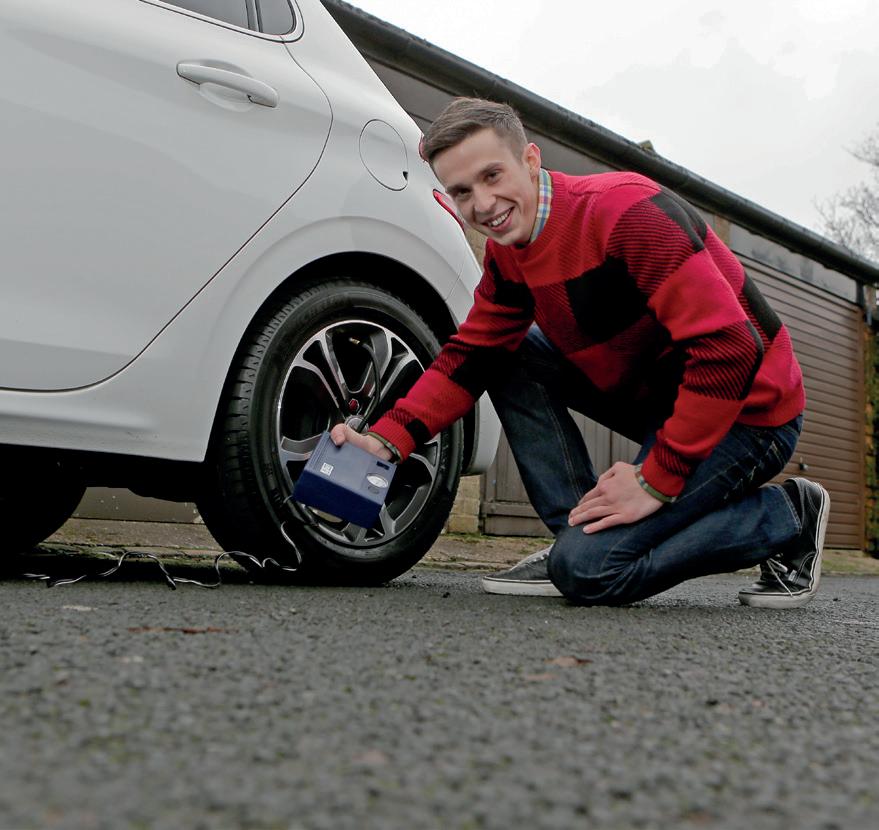
It’s hard to get excited about car tyres. In fact, it’s all too easy to take them for granted. But you know what? Everything your car does depends upon your tyres. Accelerating, braking and cornering all rely on those four patches of rubber in contact with the road surface. That’s why it’s vital that you look
after your tyres. For one thing, correctly inflated tyres will cut your fuel bill, saving you money. What’s more, if you neglect your tyres you could be breaking the law. If the tread is too worn or the tyres have other defects you could be fined £2500 – for each tyre –and receive penalty points on your licence.
Now here’s the really important bit. Taking regular care of your tyres won’t just save you money at the fuel pump and keep you the right side of the law. It’s absolutely vital to keeping you safe. Tyres with plenty of tread can make the difference between a near miss and not making it home in one piece at all.
1
Make sure your tyres are cold before doing these checks. Start by parking the car on level ground and make sure it’s secure. Apply the handbrake for points 3-6, to make sure the car doesn’t roll away.
Check all the way round each tyre for damage such as cuts, bulges and nails or screws. For this it might be easiest to have a friend drive the car slowly backwards and forwards.
2
4
Next, see how much tread is left – if the tyre has worn too much it could be illegal. There should be at least 1.6mm of tread all around and across the central three-quarters of the tyre.
To check a tyre’s tread depth, insert a 20p coin into the tread grooves. If the outer rim of the coin is covered by the tread, your tyres are okay, but if the outer rim is visible, you need fresh rubber.
5
3
Look for uneven tyre wear, which could be a sign of a problem such as a worn part. You can always drop in and ask for advice at a reputable tyre fitter, who will normally give advice for free.
Finish by checking each tyre’s pressure when ‘cold’ – that is, when you’ve driven less than two miles. You’ll need a gauge for this. You can buy one for a tenner or use the air machines at your local garage. The correct pressures will be in the car’s handbook or on a sticker on a door jamb. Don’t forget to check the spare wheel, too.
6
During your first few years on the road, the chances are you’ll be on a tight budget. It can be tempting to cut corners and partworn tyres are one way to save a few quid. Take care, though: an investigation by the Local Government Association found that as many as 83% of second-hand tyres in some areas don’t meet minimum legal standards. Some tyres were 23 years old. What’s more, the industry body TyreSafe found that 58% of part-worn tyres they examined had serious safety defects. Think about it. Do you really want an unsafe tyre someone else has thrown away on your car? And if you fail an MOT because your part-worn tyres are faulty then any saving will quickly disappear.
The minimum legal tread depth may be 1.6mm, but tyres become less safe in wet weather well before the legal minimum. Tests carried out by Continental Tyres and Auto Express magazine compared wet-weather stopping distances for four cars from 70mph with 3mm of tread and with 1.6mm of tread. On average, the cars with 1.6mm of tread left needed another 37 metres to stop and were travelling at 50mph when they would have stopped with 3mm of tread remaining.
70-0mph with 3mm of tread
70-0mph with 1.6mm of tread
Stopped safely
Needed 37 more metres to stop
Drink and drugs | Seat belts | Speeding | Tiredness
Distracted driving | Peer pressure | Mobile phones
Rural roads | Driving at night

Your probablyinstructor spoke about ‘safe driving for life’. Keep this idea in mind whenever you drive.
You’ve worked hard for your licence. Here’s how to keep it and thrive as an independent driver
Drink, drugs and driving don’t mix. Fortunately young people don’t drink as much as older generations. According to a recent survey, just one in ten see getting drunk as “cool”. Four in ten see it as “pathetic” or “embarrassing”.
So, if your mates think you’re an idiot as you stagger home from the pub, imagine how they’ll react if you reach for your car keys? Most drivers, young or old, wouldn’t dream of drinking and driving. But there’s still a core of offenders who think they will get away with it. Their recklessness led
statistics.
Drug driving is just as serious. Driving with more than the specified level of 17 legal and illegal drugs is against the law. Even low doses could interfere with medicines used to try to save your life if you have a crash.

“According to a recent survey, just one in ten see getting drunk as cool. Four in ten see it as pathetic or embarrassing”
One drink driving conviction and you can say goodbye to your licence, whether you are in the first two years after passing or not. You could face…
● Six months in prison
● An unlimited fine
● A driving ban
The maximum permitted level of blood alcohol while driving in England, Wales or Northern Ireland is 80mg of alcohol per 100ml of blood. In Scotland it’s 50mg/100ml.
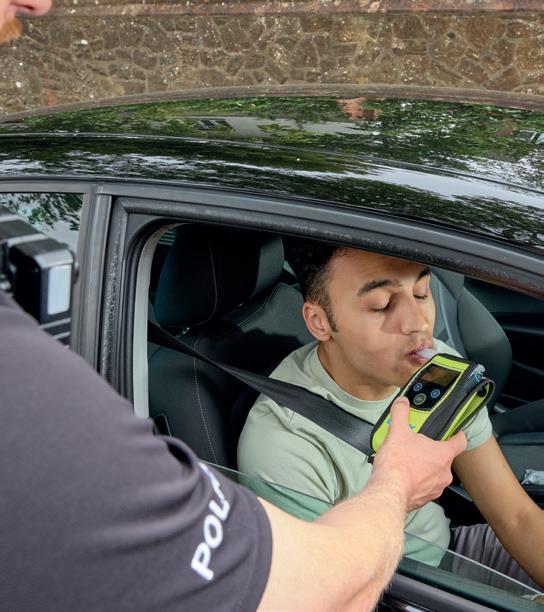
The best advice when driving is to avoid drinking any alcohol at all.

● Never drink or take drugs and drive.
● Have a Plan B for getting home if you drink – public transport, a taxi, or a family member who can give you a lift.
● Avoid alcohol the night before driving.
● Always wear a seat belt.
● Makeitarulethatanyone whoridesinyourcar wears a belt.
● Checkyourpassengers have buckled up before yousetoff.
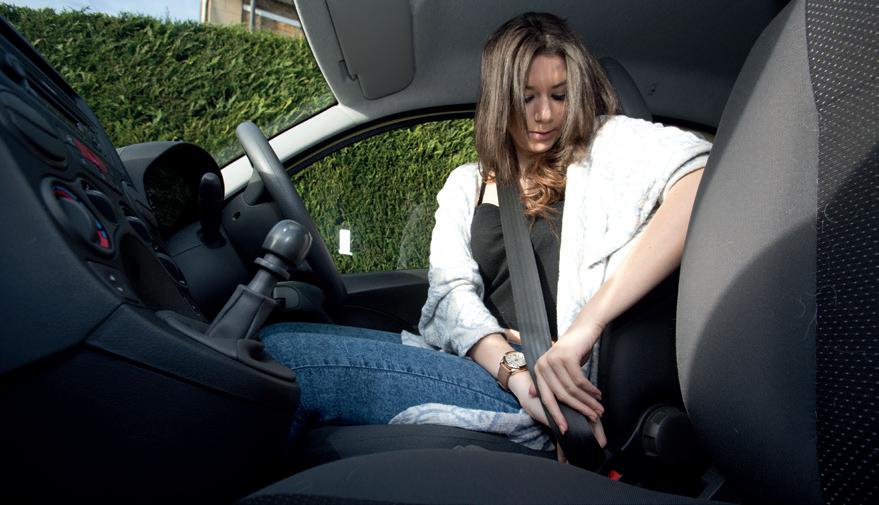
ost of us wear seat belts. It’s a no-brainer, isn’t it? Unsurprisingly, government stats show that most drivers and passengers do belt up.
M98% of us put on belts when we drive
95% of front-seat passengers wear a seat belt
It almost goes without saying that it’s much safer to wear a belt. But did you know that not wearing one could land you with a £500 fine? In Northern Ireland, the fine also comes with three penalty points. So, if you are caught twice without a seat belt in Northern Ireland it’s bye-bye licence.
Even if you live in England, Scotland, or Wales, it will take 58 hours of work to earn enough to pay the fine for an
18-year-old on minimum wage.
If you are in a collision on the road without a belt on the consequences are far more serious. Look at the stats for adult occupant fatalities and you’ll find 21% weren’t wearing a belt when they died. You are much more likely to die or be hurt if you don’t belt up.
It’s not just you who might be injured or killed. As a back-seat passenger in a 30mph crash, you’ll hit the person sitting in front of you with a force of 30-60 times your body weight. Why wouldn’t you wear a belt?
“Look at the stats for adult occupant fatalities and you’ll find 21% weren’t wearing a seat belt when they died. Why wouldn’t you wear one?”
You must wear a seat belt if one is fitted to the seat you are using. There are a handful of exceptions, but they are unlikely to apply. As a driver, you must also make sure any child under 14 is wearing a seat belt or travelling in a suitable child seat.
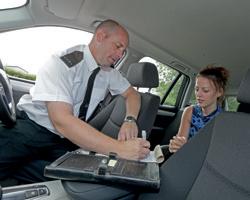
here’s no faster way to lose your licence than speeding. That’s because if you are caught way above the limit you could be
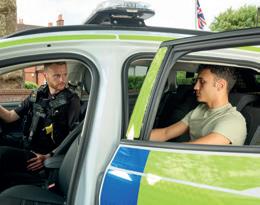
Tfined six points. One conviction in Band C (the most serious speeding offence band) and you’ll be learning to drive all over again.
Any speeding conviction will carry at least three points. So, two convictions will cost you your licence, even for minor offences.
Is there really any such thing as a ‘minor’ speeding offence? At 35mph a driver is twice as likely to kill someone as they are at 30mph. A little bit of extra speed can make a big difference.
“One conviction in Band C (the most serious speeding offence band) and you’ll be learning to drive all over again”
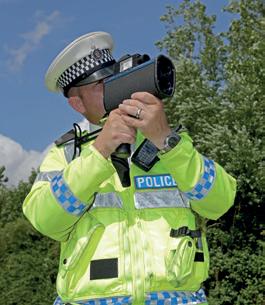
● Stick to the limit – or sometimes below. In poor visibility or when the road is slippery a safe speed could be well below the legal maximum.
Many modern cars havespeedlimitwarning systems. These alert the driver if they go over the maximum.

● Remember that your insurance black box is always watching. Your insurance could go up if you speed.
● Driving at the limit will be cheaper on fuel than speeding. Travelling at 80mph uses 25% more fuel than driving at 70mph.
● Allow plenty of time for every journey so you won’t be in a rush.

● Harsh accelerating and braking mean more wear and tear on your car. Stick to the limit and you won’t need replacement parts such as brake pads as often.
elieve it or not, fatigue is thought to be a bigger contributor to injury and death on the roads than drug-driving. Around 20% of collisions are reckoned to be fatigue-related, and up to a quarter of fatal and serious road traffic incidents.
Beat fatigue by planning ahead. If you have a long drive in the morning, get to bed early for some extra sleep.
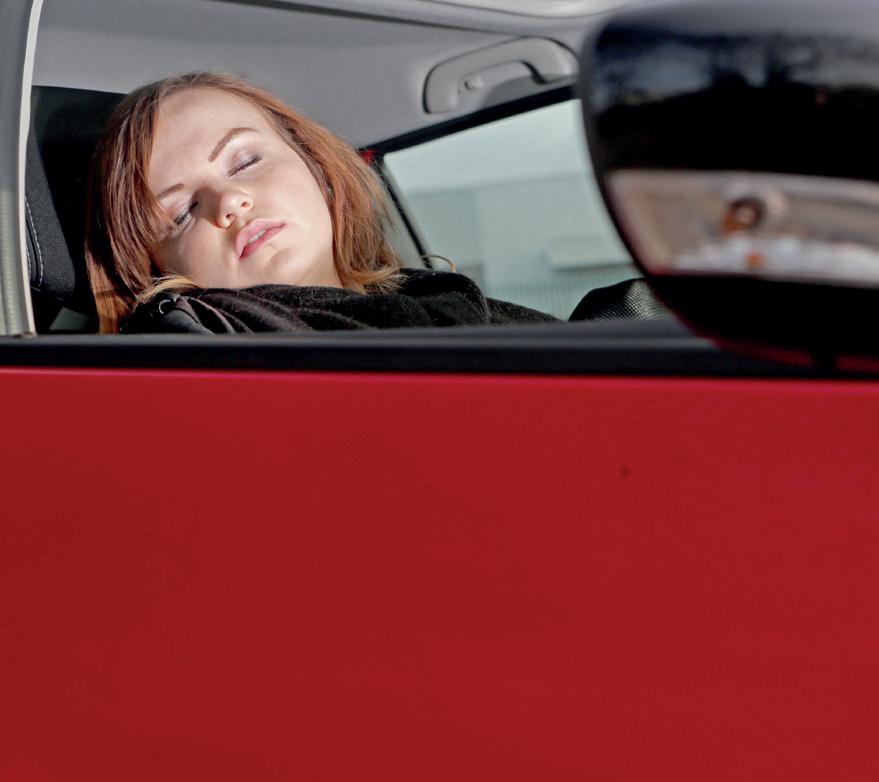
Fall asleep at the wheel, and you won’t brake or steer away from danger. You’ll go on to hit something – another
car, a brick wall, or maybe a pedestrian – without slowing down at all. It only takes a moment. If you nod off on the motorway for just six seconds you’ll have travelled nearly 200 metres.
It’s not just falling asleep completely that can cause a crash. If you are drowsy, you’ll make worse decisions and will react more slowly. Some studies suggest driving while
tired is just as bad as driving while just over the drink-drive limit. You wouldn’t drive drunk, so why drive tired?
A quick energy drink might wake you up for a bit, but when the effect wears off you’ll feel more tired than you did before. So if you are really tired, the safest thing is to stop and rest. A nap of around 10-20 minutes should help. Better to arrive late than not at all.
“Fall asleep at the wheel, and you won’t brake or steer away from danger. You’ll go on to hit something – another car, a brick wall, or maybe a pedestrian”
● Plan regular breaks on a long journey, one every two hours will help you stay alert.
● Stop and take a nap if you notice you are tired.
● Avoid alcohol. Even if it is clear of your system by the time you drive it reduces sleep quality. If it’s still in
your system the combination of drink and fatigue can be deadly.
● Practise good sleep hygiene (no evening caffeine, avoid screens for an hour before bed, etc).
● Don’t drive late at night or in the early hours.

here’s enough to think about when you drive without letting anything else get in the way. When you begin independent driving, there are lots of things that could take your attention from the road.
TEven a small distraction could be a big problem. When you were learning to drive you had an instructor next to you to make sure you stayed focused. Now the responsibility is on your shoulders.
● Fly solo. Every same-age passenger increases the risk of a crash, with a full car of friends increasing the risk of a fatal collision by 44%.
● If you do carry passengers, remember that in your car, you set the rules. A good one is ‘no distracting the driver’. If a mate won’t let you concentrate, drop them off at a bus stop.
Perhaps the biggest distraction is passengers, especially if you have your mates in the car. If they muck around, it could interfere with your concentration. Join in, and things could get very serious very quickly.
Even when you are driving alone, there are many things that could distract you. Eating and drinking will take your hands from the wheel and your
● Eat and drink before you set off. If you are hungry or thirsty, stop for a snack rather than trying to open wrappers while driving.
● Set music playing before you drive away rather than on the move.
● Don’t use your phone or any other electronic device while driving.

mind from the road, so pull over if you need a snack.
Something as simple as changing your music can take your eyes from the road and your hands away from the controls. So, set music playing before you set off and, when possible, use voice controls rather than pressing buttons.
Strong emotions can also be distracting, so don’t drive when angry or upset. Give yourself time to calm down first.
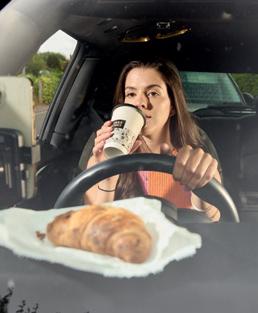
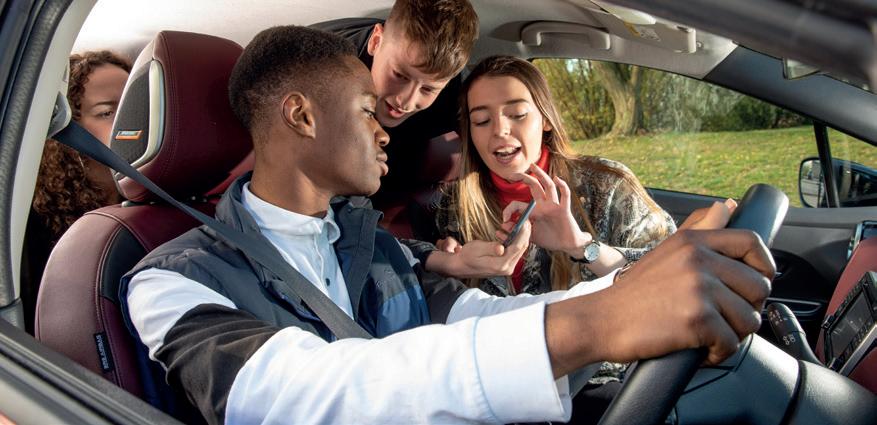
Everyone wants to be popular. So, the opinion of our friends matters, especially when we’re young. Things get tricky if our friends push towards bad decisions. And making the wrong choices behind the wheel can have serious consequences. One way to avoid peer pressure is to stick to driving alone or with family members as passengers. That way there’s nobody pushing you to drive quickly or aggressively.
If you do decide you are ready to drive with friends, remember that you hold all the cards. You are the one with a car and a full licence. If someone wants a lift, they need to follow your rules. It could be that friends have to chip in towards fuel. Or maybe that the driver chooses the music and the volume. No unnecessary talking to the driver is another good rule.
Your friend doesn’t like it? Well then, your friend can forget about a lift.
If you are not comfortable driving with a particular friend or group of friends, then blame your parents. “Dad needs the car tonight” is a good excuse for not being the designated driver.
Maybe a mate wants you to show them how fast your car can go. Just tell them you can’t because you have black box insurance (which you probably do). Or if they laugh at your slow driving, use humour – “I may be slow, but I’m driving a lot quicker than you can walk.” Still feeling pressured? Make an excuse to stop. Pulling over for petrol or to buy a coffee can defuse the situation.
It also helps to choose your friends wisely. If someone wants you to do something unsafe are they really such a good mate?
● Try to avoid giving a lift to friends until you are more experienced.
● If you do carry passengers, set clear rules for anyone who rides in your car.
● Ask friends to be quiet if they are distracting you.
● Remember, a parent is usually happy to play the bad guy if it takes the heat off you.
● Use humour to deflect criticism.

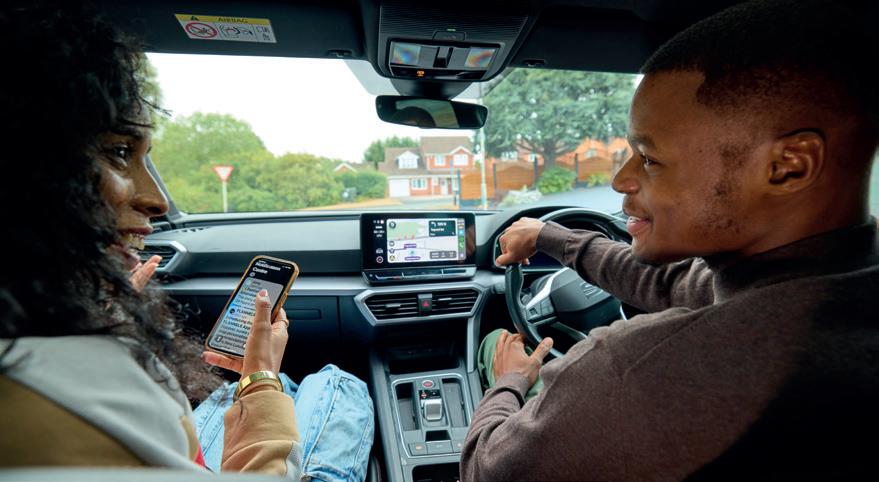
The law treats handheld calls differently from hands-free, but the University of Sussex has found that it’s the conversation rather than holding the phone to your ear that takes your mind away from driving.
So while a hands-free call may be legal, that doesn’t make it safe.
Anything that allows a phone to take your attention away from the road is a no-no. That includes...
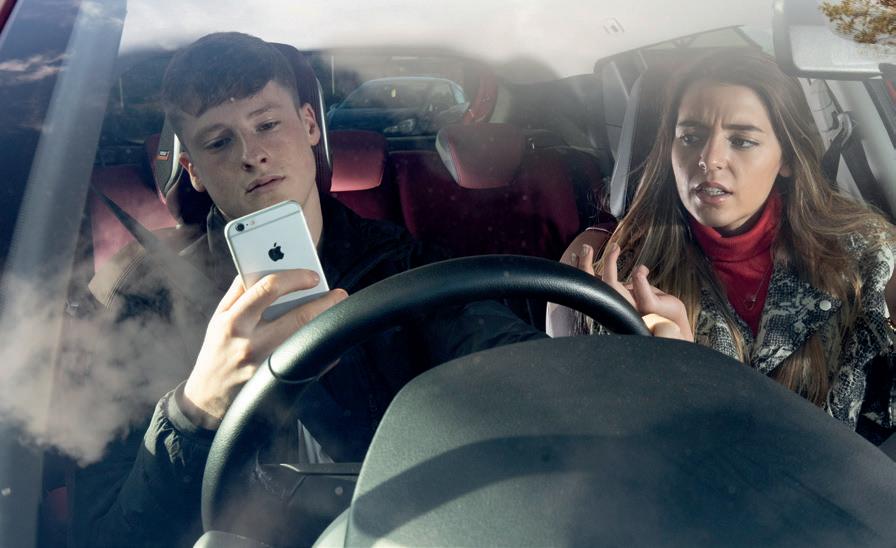
You’re driving when the phone rings. You know you shouldn’t pick it up but it’s your best mate calling. You reach down to answer and... your licence is gone. Get caught using a handheld mobile and you face six points and a £200 fine. For a driver in their first couple of years on the road that’s enough for you to lose your licence.
There’s another scenario that’s even more serious. Maybe it’s a pedestrian rather than a police officer around the next corner. They step out into the road and you don’t see
“Get caught using a handheld mobile and you face six points and a £200 fine”
them in time because you’re on your phone.
Most drivers have the sense to leave their phone alone while driving. According to the RAC Report on Motoring, some 75% don’t make handheld calls (although hands-free calls are also a dangerous distraction).
Smartphones have ‘do not disturb’ modes that allow you to hold calls and texts until you reach your destination. It’s easy to switch this mode on to stay safe.
It’s not just calls and texts that are potentially dangerous. So rather than touching the phone for any reason while you driving, use voice commands. Be part of the safe majority, not the reckless few.
● hands-free calls as well as handheld
● checking a text
● catching up on social media
● playing music
It’s better to put the phone down. When you drive, just drive.
● Use the safe driving mode on your phone to block calls and texts.

● If you want to play music or navigate through your phone, do it before you start driving.
● Avoid hands-free conversations, which may be legal but can be very distracting.
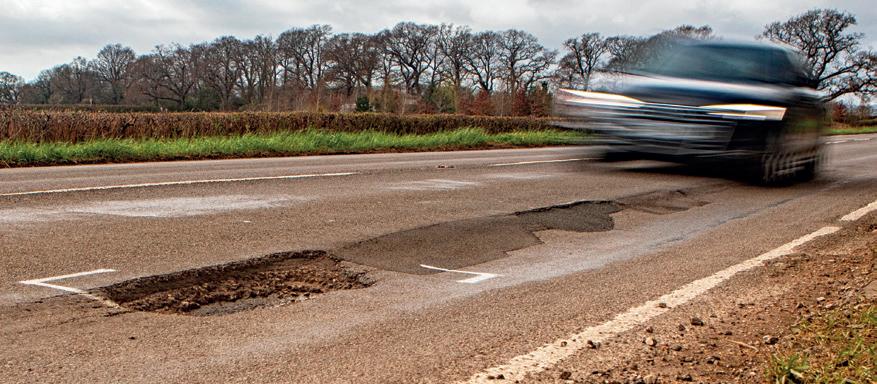
Driving in the countryside comes with its own special set of challenges. Around two-thirds of fatal collisions take place on rural roads.
The trouble is, driving on a country road is trickier than it looks. Around town there is always something to grab your attention – someone crossing the road, some traffic lights up ahead, or a junction to negotiate. By comparison driving on a quiet rural road looks easy, but there are potential hazards around every corner.
These are just some of the things to look out for:
● Always drive at a safe speed. That means taking account of the weather and the road surface, allowing enough time to stop in the distance you can see to be clear and safe. So, a safe speed could be well below the posted speed limit.
Poor road surfaces
Keep your eyes peeled for potholes or uneven Tarmac.
Mud and muck
The road can be dry one moment, then slippery the next, especially around farms.
Tall hedgerows
Can you see what’s around the next bend? You need to be ready to stop in the distance you can see to be safe. On single-track roads make sure you could stop in time if another vehicle came the other way.
ice
When you drive in town or
● Expect the unexpected. One of the big challenges on rural roads is that you never know what’s around the bend.
● Be cautious when overtaking. Make sure you have enough room to complete the manoeuvre
on major routes, the roads are likely to be gritted in cold weather. In the country, you are more likely to hit black ice.
Vulnerable road users
Expect to see motorcyclists, horse riders, cyclists and pedestrians on country roads. Give them plenty of space.
Animals
You may encounter wild animals or livestock on the road. Keep your speed down so you can stop in time if an animal is in your way.

safely and consider whether the road is wide enough to make the overtake safely.
It’s kind of obvious, but we’re going to say it anyway: the big difference between day and night driving is that it’s dark at night. That makes it harder to spot hazards early or to notice vulnerable road users such as cyclists in plenty of time.
To drive well at night, you also need to use your car’s lights appropriately. On well-lit roads or when there’s traffic coming the other way, use dippedbeam headlights. On country
● Use the right lights. Fullbeam headlights should only be used when there are no other road users who might be dazzled.
● Don’t look at oncoming lights. Focus to the left of your lane if a vehicle comes towards you on full beam.
● Choose an appropriate
roads, switch to full beam. This gives you a clear view much further ahead. Be ready to switch back to dipped beam as soon as you see the headlights or taillights of another car in front of you.
When you first start driving in the hours of darkness, it’s easy to fall into the trap of staring at headlights coming the other way. Keep your eyes on your lane rather than looking at oncoming lights.
Not every driver remembers
to dip their headlights when a car is coming the other way. If you are dazzled by oncoming lights, look towards the lefthand edge of your lane and use the white paint markings to help you to steer accurately.
Another hazard of nighttime driving is fatigue. You should never drive tired, so avoid getting behind the wheel late at night or in the early hours if you can avoid it. If you are tired while driving, it’s better to stop and rest than to continue.
speed for the vision your headlights give you. Be ready to stop in the distance you can see to be safe.
● Watch for vulnerable road users. Pedestrians and cyclists can be harder to spot at night.
● Take a break if you are tired.

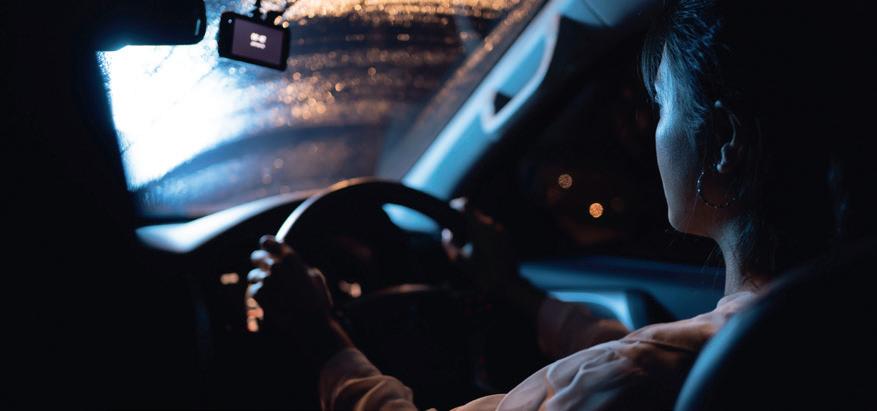
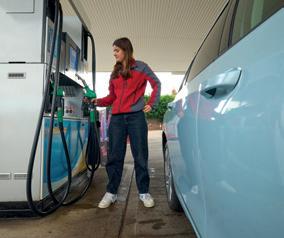
Driving is expensive. The more you drive, the more fuel you use. Extra miles also put wear and tear on the car, so things like tyres and brake pads need replacing sooner.
Short journeys aren’t great for a car. Drive to a mate who lives just a couple of streets away and the engine oil won’t have time to warm up properly, which increases wear to the engine’s components.
Instead of wearing out your car, think about walking or cycling for short trips. It’s better for you than sitting in a car. For short journeys, the time difference won’t be big. Studies show that in big cities like London average car speeds are as low as 9-13mph. Most healthy adults could ride a bicycle at a similar speed. So, you’ll save on fuel, get some exercise, and probably won’t arrive any later than if you’d driven.
Modern cars emit less than ever before. Even so, walking, cycling or public transport are better for the environment than driving a car.
According to government stats, taking the train means emitting 35g of carbon
dioxide per passenger kilometre. For a bus, the figure is 97g per passenger kilometre. Driving a petrol car means 170g/km. That’s nearly double bus emissions and almost five times the emissions of train travel.
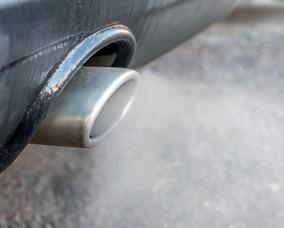
Young drivers often have telematics or ‘black box’ insurance. This type of policy usually sets a limit on the total miles covered. So it pays to use your mileage carefully. All those little journeys add up. If you always drive rather than walking or taking the bus, you may reach the mileage limit before the end of the year’s cover. That’s not the end of the world – you can extend the limit. But it will cost more money to be insured for extra miles.

When you first pass your test, it’s tempting to drive everywhere. Need a pint of milk? You drive to the corner shop. Going to the gym? You grab the car keys. But for many journeys there are cheaper, cleaner alternatives.
“I’ve
started running to the gym rather than driving. That way I’ve already done my cardio!”
If you’re terrified by the prospect of motorway driving, there’s nothing to fear. Motorways are our safest roads. And don’t forget, you can take lessons on the motorway before your practical test so long as you are with your ADI and in a car with dual controls.
As you get to the end of the slip road to join the motorway, match your speed to the traffic in the inside lane. Slot between any vehicles already in the inside lane; they’ll hopefully make room for you but they don’t have to. You don’t want to stop at the end of the slip road; then you’ll have to start off from a standstill. It will be very hard to join safely from a standing start. 1 6 3 4 5
1
Make sure that you’ve got plenty of fuel before you get on the motorway. Service stops can be few and far between and you don’t want to run out of fuel –even if you’ve got breakdown cover. Fuel is also expensive on the motorway, so you don’t want to be forced to shop there as you’ll end up paying more than you need to. Ideally, start a long journey with a full tank.
2
At every junction there are three markers, counting down to the exit. The first is at 300 yards, the second at 200 yards and the third at 100 yards. If you’re leaving the motorway, be in the inside lane before the 300-yard marker, then start signalling as you pass it.

You should treat overtaking on the motorway the same as anywhere else. That means you check it’s clear, signal, then pull out to overtake. There’s no rush to get past, but once you’ve overtaken make sure you pull back in.
2 7
Usually, the first sign for a junction is a mile before it, the next is at the half-mile point. A mile sounds a lot, but if you’re in the outside lane at the half-mile point, you might not be able to get across in time if it’s busy. Miss your junction and you’ll have to go to the next...
You can drive at 70mph on the motorway, but articulated lorries have a lower limit. They can take ages to overtake each other, so if you come up behind one already in lane two, prepare to go into the third lane to pass it. Be very cautious around lorries in high winds.
4
Once you’re on the slip road to join or leave a motorway, you’re committed to keep going. It’s an offence to turn around, so if you’ve made a mistake you’ll have to get back on course later.
5
Reflective markers separate the lanes from each other.
6
Motorways can have anywhere between two and five lanes on each side of the central reservation. Unless overtaking, you should be in the inside lane. Lane hog and you risk a fine.
7
If you break down on a motorway you must move to the hard shoulder. Get as far to the left as possible. Get out of the car and stay away from it, ideally behind a crash barrier and wearing a hi-vis jacket.
3
If you break down, make sure you know where you are. There are emergency phones every mile with markers every 100 yards that give you the direction to the nearest phone. These phones will instantly tell the control centre where you are, including which direction you’re travelling. If you don’t have breakdown cover you’ll have to pay to be recovered.
You’ll have to change lanes correctly if you want to make progress. That means pulling out to overtake then moving back to the inside lane again. Before you make any move, check over your shoulder to ensure you’re not cutting anyone up, and don’t forget to signal before changing lane. Don’t hog the middle lane when you are not overtaking.
4
5
When you come to leave the motorway, ease off the gas before you leave the inside lane. Then start braking gradually as soon as you’re on the slip road. You’ve got a lot of speed to scrub off and you don’t want to get to the end of the slip road still doing 50mph – it’ll suddenly seem very fast! Pay close attention to the speed limit for the road you join.
Keep your insurance details in the glovebox of your car so you can share them easily after a collision.
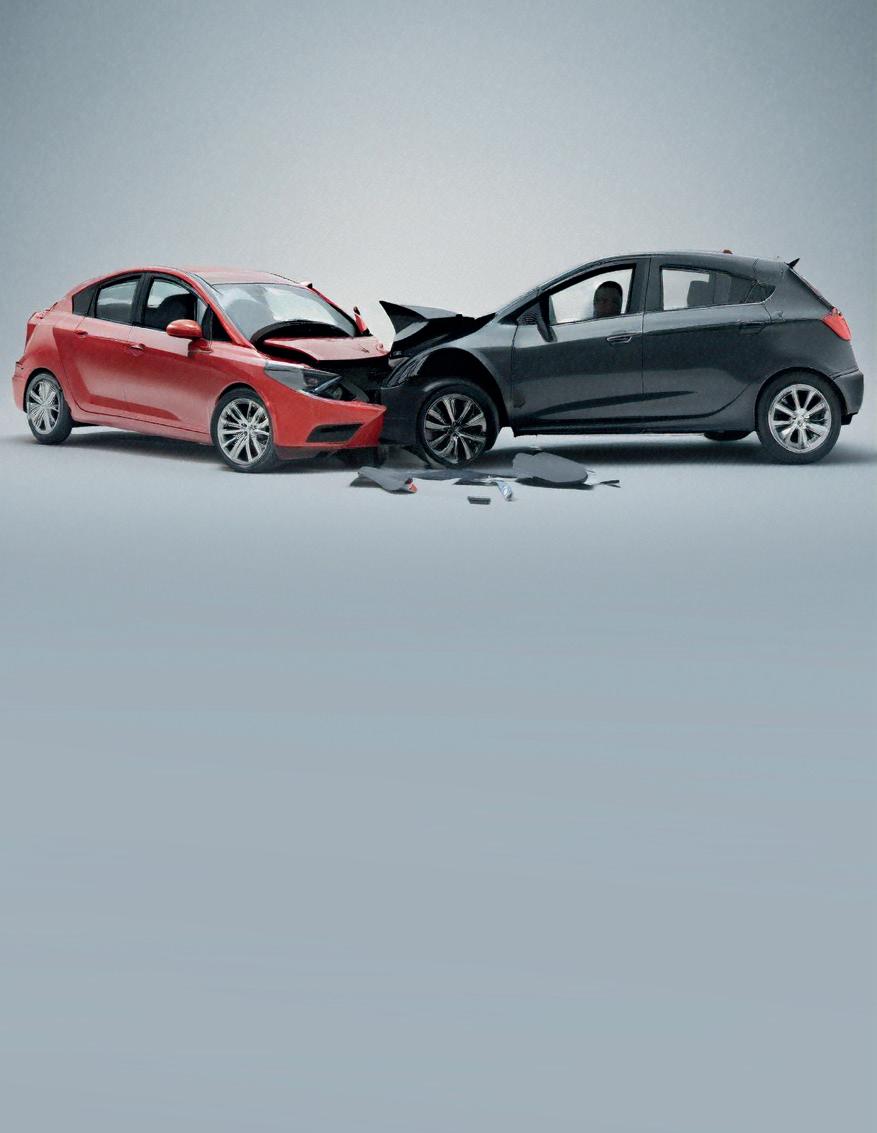
I
t’s an unfortunate fact that young drivers are more likely to crash than those with more experience. Lots of new drivers think it won’t happen to them but find out the hard way.
Touch wood, if you follow the advice in this mag you’ll enjoy a safe start to independent driving. On the other hand, if you are unlucky or make a mistake you need to be ready.
1 Stay safe
In the moments after a collision the heart is pumping and adrenaline is rushing through your body. It’s important that you still make smart decisions.
You need to be sure a bad situation doesn’t become worse. So, stop if you haven’t already. Turn off the engine and put the car’s hazard lights on. You don’t want a second collision to take place.
Check for injuries
2
Are you hurt? Remember, all that adrenaline can mask pain. Check your passengers if you have any, as well as any others involved. Try to stay calm even if those around you are emotional or in pain.
3 Call 999
If someone is hurt, the road is blocked, or you think a crime may have been committed, dial 999. Administer first aid if necessary – ideally one person should help the injured while another calls the emergency services.
4 Move away from the road
It’s not safe to stay in a stricken car or to stand in the middle of the road. Instead, move to the pavement or verge if you are able to do so.
5
Take photos and exchange details
Take photos of the scene but make sure you do so from a safe place. Exchange details with other drivers and anyone who witnessed the collision. We cover this in more detail over the page.
6
Let the emergency services do their job
Once an ambulance or a police car arrives on the scene, follow their instructions and give them space to do their job. Be ready to share your photos of the scene and any dashcam footage if needed. You’ll want to share this with your insurer too. Contact them ASAP, certainly within 24 hours.
TURN OVER FOR A CHECKLIST





Hopefully you’ll never need this!
● Hazard lights on.
● Engine off.
● Check for injuries.
● Call 999 if people are injured, the road is blocked, or a crime has been committed.
Date of collision:
Time:
Weather conditions (low sun, foggy, raining, sunny):
Road conditions (wet, dry, muddy):
Location of collision (road/junction):
Take pictures of the damaged cars involved, but don’t take any risks by standing in the middle of the road. Make a note of the damage here as a back-up.
Brief description of what happened:
Number of passengers:
Name of insurer:
Insurer’s contact number:
Policy number:
DETAILS
Give this information to the others involved in the collision.
Registration:
Make and model:
Collect this info from every driver involved. Make notes on your phone if you run out of space here.
Registration:
Make and model:
Driver’s name:
Driver’s contact number:
Name of insurer:
Policy number:
Get in touch within 24 hours.
● Cooperate with the emergency services.
● Share your photos and any dashcam footage with your insurer, and with the police if they ask for it.
● Don’t admit you were at fault, let the insurer and/or police decide.

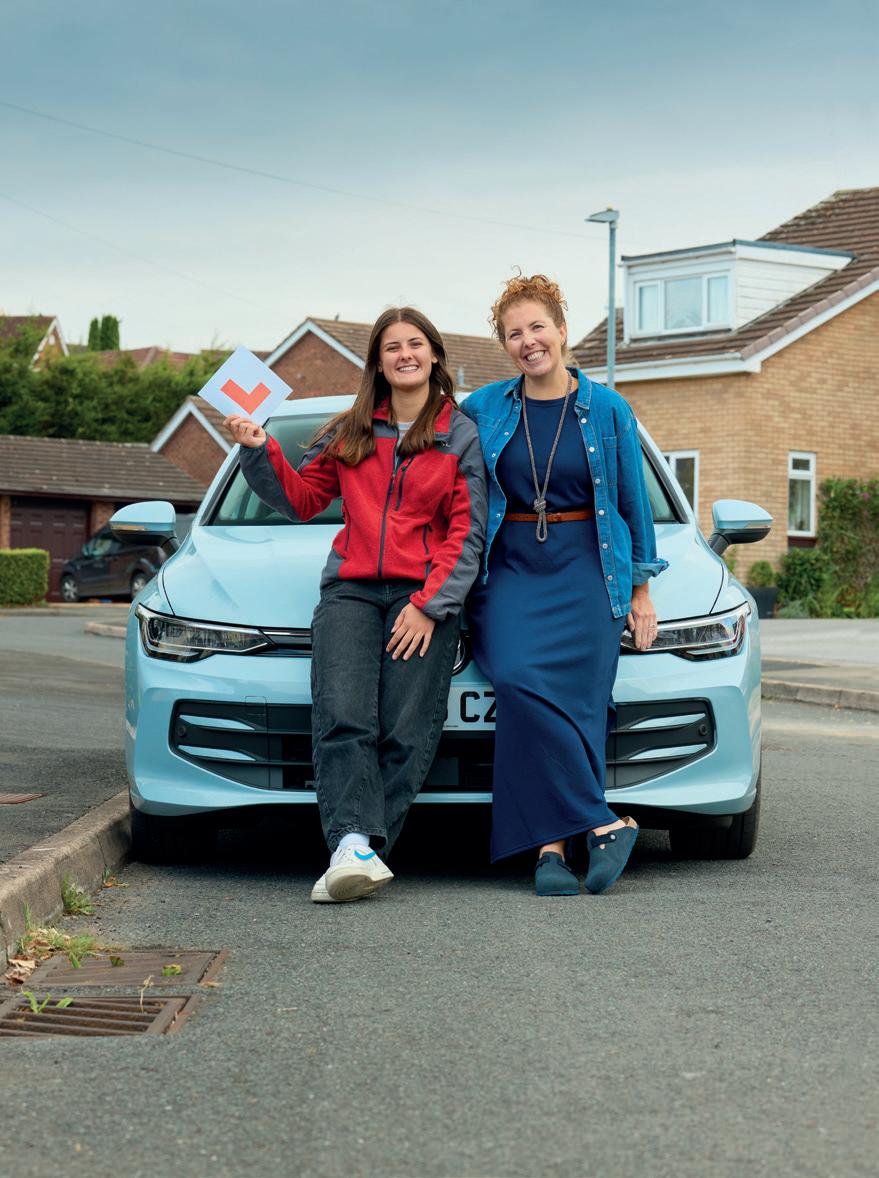
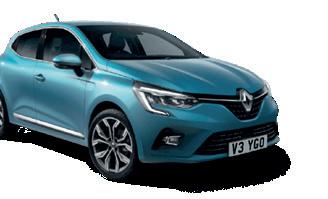
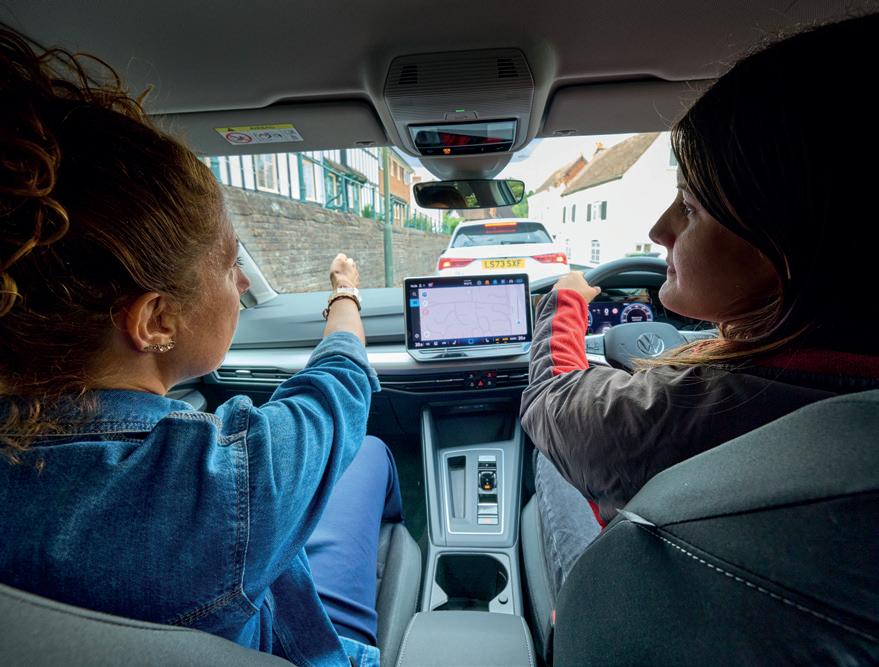
LEARNING TO DRIVE is an exciting but nervous time for teenagers and their parents. If anything, it can be harder on mum and dad (or any adult helping a young driver to learn).
The chances are you’ll foot the bill for lessons, insurance and maybe even a first car. Then there’s the worry of using the family wheels for driving practice. Even the closest parent-child relationship can be put under strain with a teenager behind the wheel and mum or
dad in the passenger seat. Any parent or guardian wants to support their child in learning to drive safely and effectively. That’s where Learning to Drive – The Parent’s Guide comes in. We’ll show you how to help your child become a safe
“Any parent or guardian wants to support their child in learning to drive safely and effectively”
and responsible driver. From choosing the right instructor to making the most of practice to finding affordable insurance cover, this guide is full of practical advice.
So, good luck to you and your learner driver. Here’s to making the start of their driving career a safe and happy one.

David Motton Editor




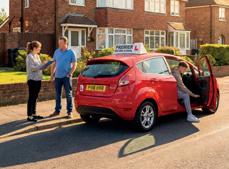
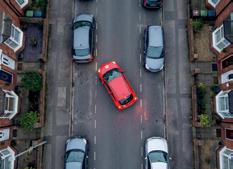



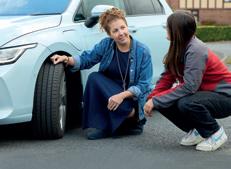

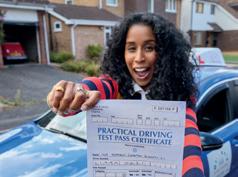

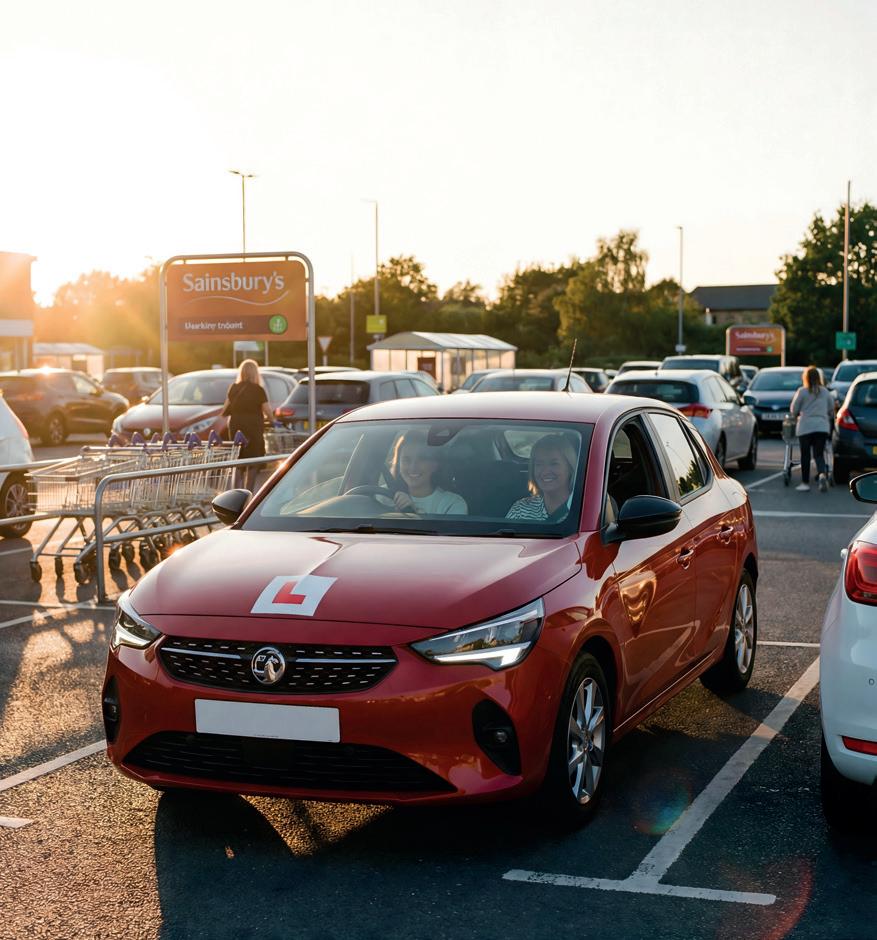
There are some big moments in growing up. Passing the practical driving test must be one of the very biggest. If you are holding this magazine in your hands, then
the chances are your child is starting out on that journey. It’s an exciting but daunting time, and as a parent, guardian, or responsible adult, you’ll want to be with them all the way. Here are the next steps...
Learning to drive is a watershed in anyone’s life. Here’s what’s involved
Learning to drive is expensive. Some driving schools offer discounts of 5-8% for block bookings, which can help to make the cost more manageable. TOP HACK
Before a wheel turns, your child will need their provisional licence. It’s possible for them to apply when they are 15 years and nine months old. There’s no need to apply that early unless your child has a disability and receives the higher rate mobility component of DLA or the enhanced mobility component of PIP, in which case they may be eligible to
Once a young driver has their provisional licence, they can take the theory test. The test is in two parts.
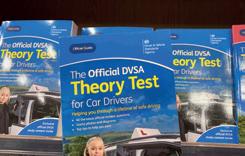
It pays to start looking for an instructor a few months before you plan to start lessons. Some of the best instructors will have waiting lists.
Speaking to friends who have slightly older children is a good way to get a sense of whether there are plenty of instructors locally, or if they are in short supply. Friends can also recommend instructors who helped their child.
If your child is neurodiverse or has special needs, look for an instructor with experience
start lessons at 16 rather than 17. The easiest way to apply is to go online as it’s quicker,
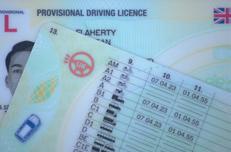
cheaper and easier than applying by post. It costs £34 and your young driver should have their licence within a week or so.
Just go to gov.uk/apply-firstprovisional-driving-licence.
This is an easy one for your kid to do. They’ll probably only need you for your credit card…
There’s a multiple-choice test with a pass mark of 43 out of 50. The other part involves watching 14 videos and pressing a button when a hazard appears. The quicker the hazard is recognised, the better the score. The pass mark for this is 44 out of 75.
Your learner doesn’t need to have passed the theory test before they start lessons, but it will help them get to grips
with driving more quickly if they already have a strong basic understanding of the rules of the road.
Read the latest Highway Code. You can then quiz them on the rules to help them prepare. Encourage them to thoroughly understand the Highway Code themselves and to download theory test apps to their phone.
in this area. Schools will often list any specialisms on their website.
Start researching in plenty of time. Making a few calls a year in advance isn’t a bad move, that way you will know if there are waiting lists in your area or if there are plenty of instructors available. Get some idea of costs, too. You may want to put a bit of money aside for a few months before your child starts their lessons. These could cost
£30-£45 per hour. Around 45 hours of lessons is typical, so that would add up to £1350£2025.
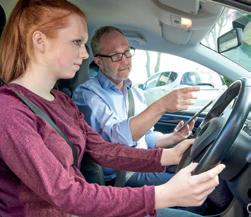
No doubt this is the bit you’ve been looking forward to!
You may have a voice in the back of your head saying: “I’m paying for an instructor to teach my kid – they won’t need to practice with me as well.” Ignore this voice. Practice in between lessons is a really
important part of learning to drive. Without reinforcing what they learn with a professional, the whole process will take longer and will almost certainly cost more.
Even if you are nervous about
private practice, try not to show it. Nerves are contagious! Be willing and patient.
Liaising with the instructor is key to making practice productive and safe. You need to stay below the level reached in lessons and should avoid giving mixed messages.
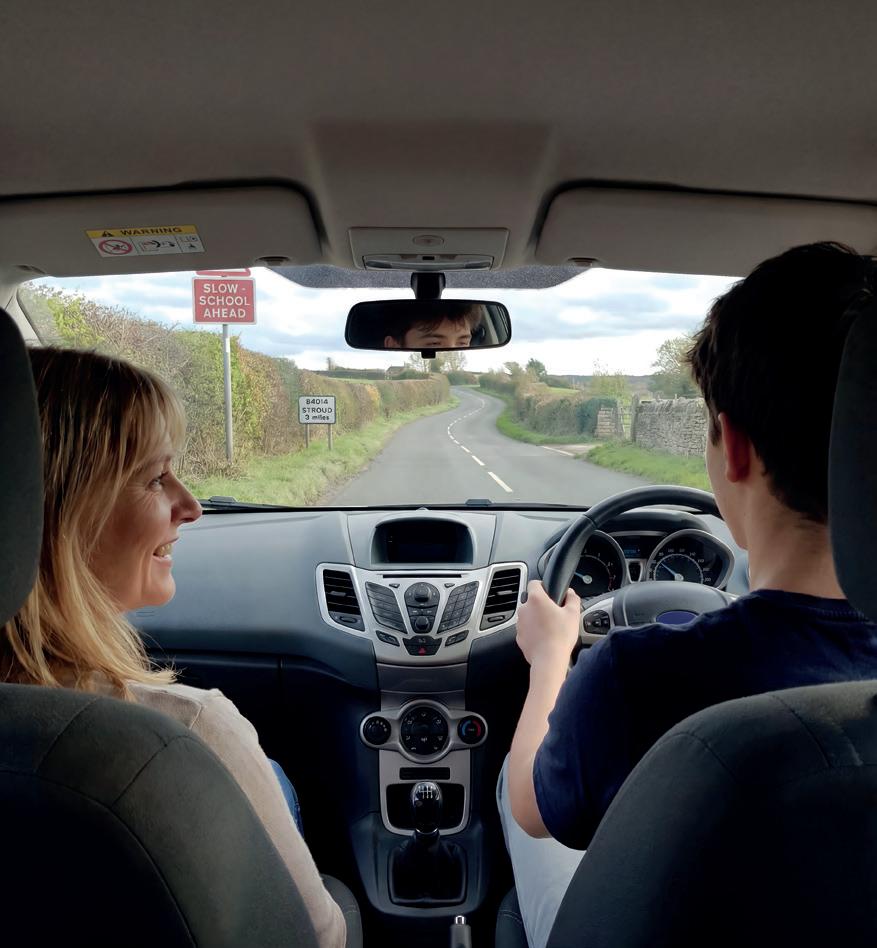
The practical test is the final hurdle before your young driver will be fully qualified and able to drive independently.
As with finding a driving instructor, it’s worth researching the availability of driving test slots. Demand has exceeded supply for several years, but the DVSA has taken steps to redress the balance.
Your child’s driving instructor will be able to guide you as to when to apply for a driving test slot. This can be done online up to 24 weeks before the test date. The test costs £62 on weekdays and £75 on weekends, bank holidays, and weekday evenings.
Go to gov.uk/book-drivingtest.
If you’ve put in the hours of private practice, then you’ve done your bit.
There’s not much you can do when test day arrives other than being supportive and in their corner whether they pass or fail.
When your child passes their test, it might seem like the end of learning to drive. It’s not. They’ve met the minimum standard for a driver to be allowed on the roads unsupervised, but there’s still a lot to learn.
The first few months after passing are crucial. Sometimes those driving-lesson nerves are replaced by over-confidence. Combine that with a lack of
experience and it’s no wonder that so many young drivers have collisions in their first year of independent driving. Young males are particularly at risk, with a crash rate that’s almost double that of females.
There are formal courses that can develop skills post-test, such as Pass Plus (gov.uk/ pass-plus). If they get on well

with their instructor, another lesson or two after the test can introduce them to situations which aren’t covered in the test, such as multi-storey car parks and motorway driving. The important thing is to prepare young adults for a lifetime of safe driving, not just passing a test.
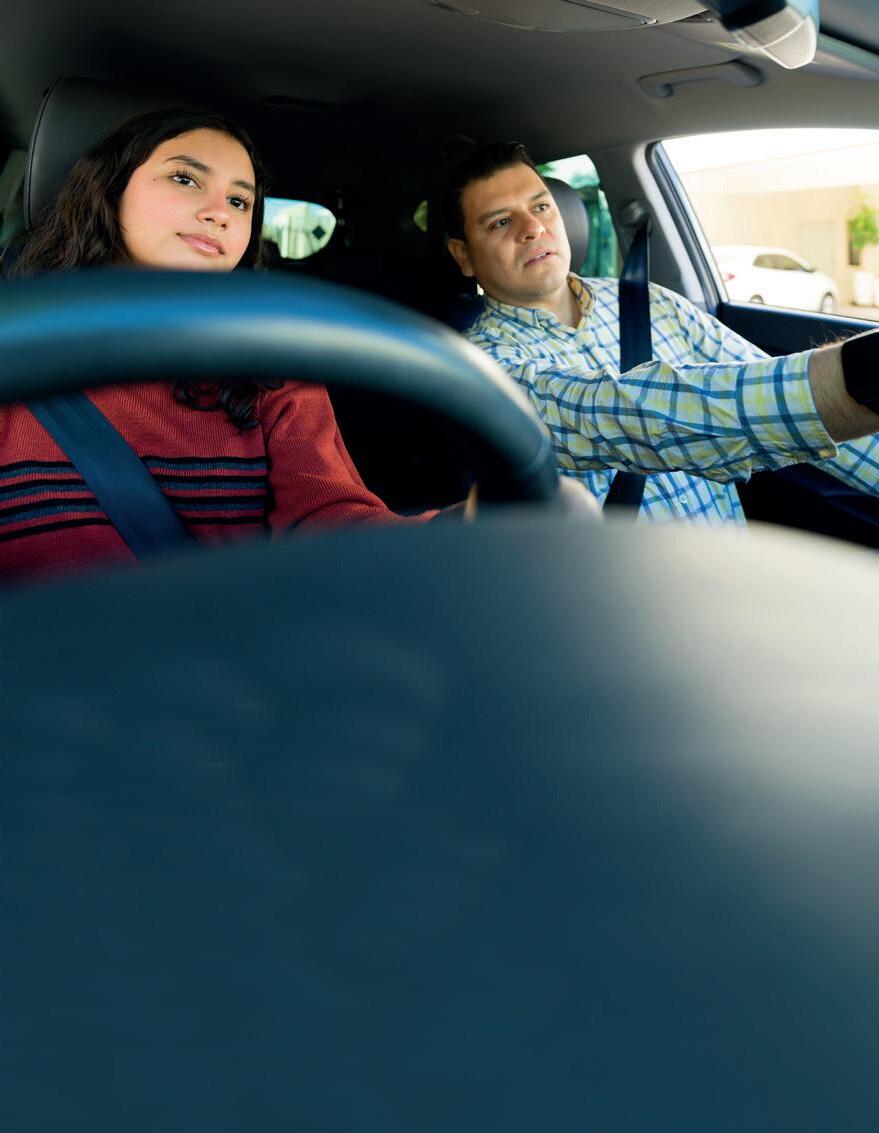
Sorry if this makes you feel old, but it’s probably been 20 or 30 years since you learned to drive – maybe more. A lot has changed over those decades. Here’s what you need to know.
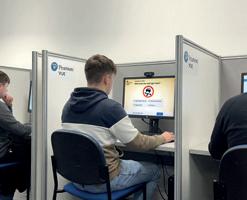
If you passed your test before 1 July 1996, then there was just one driving test and it was on the road.
New drivers must pass a theory test before they can attempt the practical driving test. There are two parts to this, a hazard perception test and a multiplechoice theory quiz. Candidates must pass both parts.
Smartphones were science fiction and a tablet was something you took to cure a headache. If you wanted to understand the rules of the road, you bought a copy of the Highway Code and read it over and over again.
Back in 1995, there were 21 million cars on the roads.
Now, there are more than 36 million cars in the UK. So, learner drivers today must cope with much busier roads than their parents faced.

You will have learned the rules of the road as they stood when you learned to drive. No doubt your copy of the Highway Code was bang up to date in the ’90s or ’00s.
The Highway Code has now reached its 17th major edition. The latest version, launched in 2022, includes some significant updates, including the hierarchy of road users. Under this principle, those who can do the most harm must take the greatest responsibility.

You couldn’t go near a motorway until you had your full licence.
Learner drivers can take lessons on the motorway so long as they are with an ADI in a car with dual controls. Speak to your child and their instructor if this is something you would like to happen.
You can be a lot more help to your young driver if your own knowledge is up to date. Pick up a copy of the current Highway Code so you know the latest rules of the road.
You probably took your test in a car with anti-lock brakes. There’s a good chance it had airbags.
A paper copy of the latest Highway Code is still a great resource, but these days new drivers also rely on apps and online guides. Digital learning aids such as those produced for the DVSA are especially useful when cramming for the theory test, while YouTube is a great resource for finding out how to tackle manoeuvres and complex junctions.
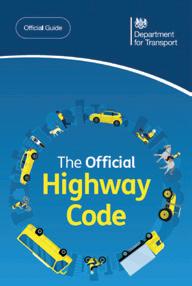
Most modern cars are packed with electronic driver aids. Lane-keeping systems, driver monitoring, and autonomous emergency braking are some of the ways today’s cars help drivers stay safe. You can help your learner better understand these systems if you understand them yourself.

Teacher, mentor, and counsellor all in one – the right instructor has a huge influence over your young driver’s progress
Choosing the best instructor to teach your new driver is one of the most important decisions you can make. They will be teaching your youngster an important life skill. Not only that, but a really good instructor can help your child become a safe driver, with the skills and attitude to go beyond the standard needed to pass the test.
Start looking early
For the past few years, demand has outstripped supply in the driver training market. Things are improving, though, so it’s
not as hard to find an instructor as it used to be.
The very best instructors and schools can still have waiting lists so it pays to begin your search early. It doesn’t hurt to make a few calls a year or so in advance to gauge availability.
Ask for recommendations
Speak to friends and family who have slightly older children. Who did they use? Would they recommend them? If so, what was so good about them?
Once an instructor builds a strong reputation, they tend to be sought after. So, if you
keep hearing the same name or names get in touch to ask about availability nice and early.
Good value is better than cheap
Learning to drive is an expensive business, and prices will vary. For example, if your child is taught by a potential driving instructor (PDI) who is not yet fully qualified you can expect to pay less than if lessons are delivered by an approved driving instructor (ADI), who has successfully completed their training. You need to balance this
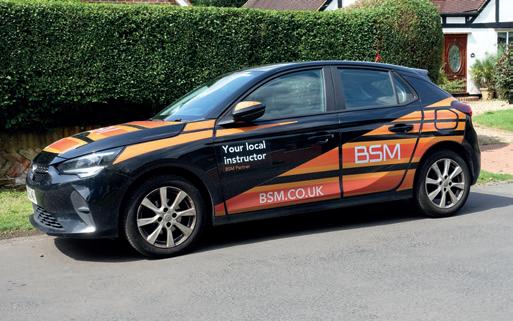

against the reassurance of knowing the instructor is fully qualified. You should also consider if any extras are included in the cost of lessons, such as access to apps and learning aids.
instructor
An instructor who clicks with one learner may not be the perfect fit for another. You or your young person (or even both of you) should talk to the instructor before you commit. Are they direct and efficient? Light-hearted and funny?
Softy spoken? Ideally you are looking for an instructor whose personality is a good match for your learner driver.
That said, the best instructors will be able to adapt their approach to suit the needs of different pupils.
Should you choose a big school or an independent instructor to teach your child?
REASONS TO GO BIG
● Access to online learning aids
Many big schools will have their own apps or digital platforms to help young drivers learn when they’re not behind the wheel.
● Instructor availability
If your instructor is sick, you may be able to arrange lessons with another instructor from the same school.
● Manual and automatic cars
Larger schools usually have both manual and automatic cars, so there’s a choice of which type of car your child learns in.
REASONS TO CHOOSE AN INDEPENDENT
● Experienced teacher
Although it’s not always the case, independent instructors will usually have been in the profession for a few years before choosing to set up on their own.
● Distinctive approach
Every learner is different, and some approaches will work better for your young person than others. An independent instructor will have the elbow room to do things their way without needing to follow a school’s curriculum.
● Could be more affordable
Again, it’s not a hardand-fast rule but independent instructors are sometimes cheaper than the big-name schools.
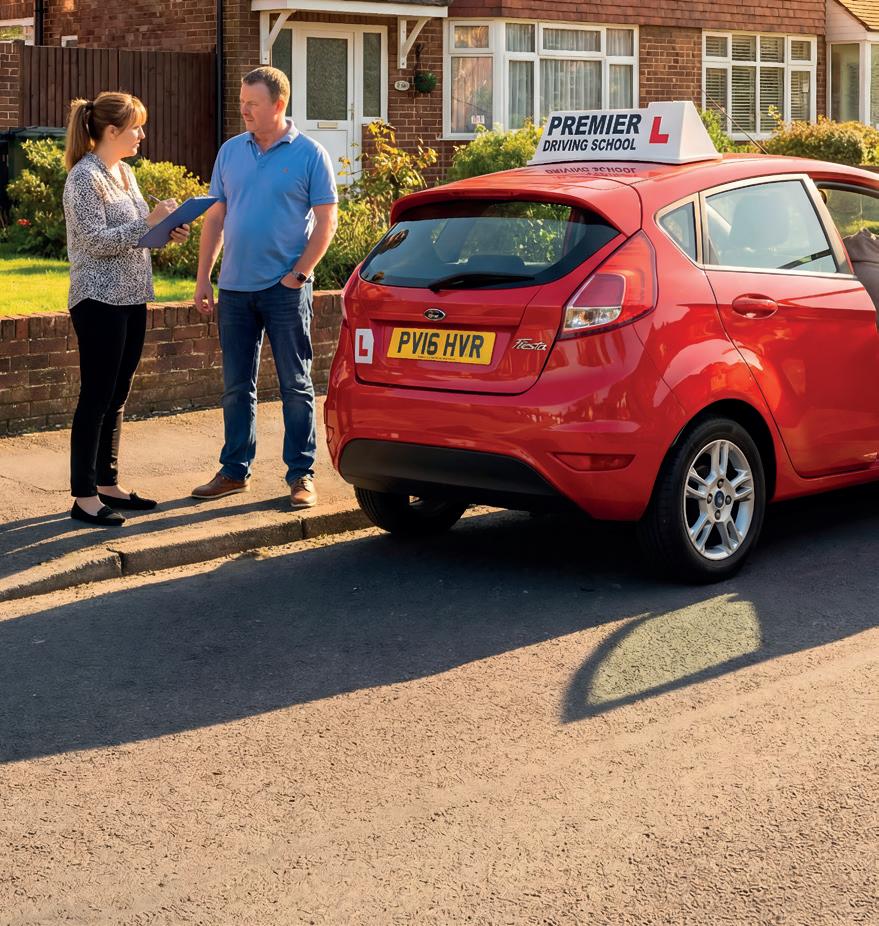
It’s important to work with your instructor to support your learner
Most of us like to think we’re good drivers. Research shows that around 80% of us rate our driving as above average. Basic maths suggests many of us are deluding ourselves.
For the sake of argument, let’s say you are a very good
driver. You’re still not the best person to teach your child to drive a car, as unless you are a driving instructor yourself you don’t have the appropriate training. Even a driving instructor would struggle to teach their own child – the dynamics of a parent and
teenage child relationship are just too hard to navigate. No, the best person to teach your child to drive is a driving instructor. Your job is to help your instructor and learner driver without letting your own bad habits – or ego – get in the way.
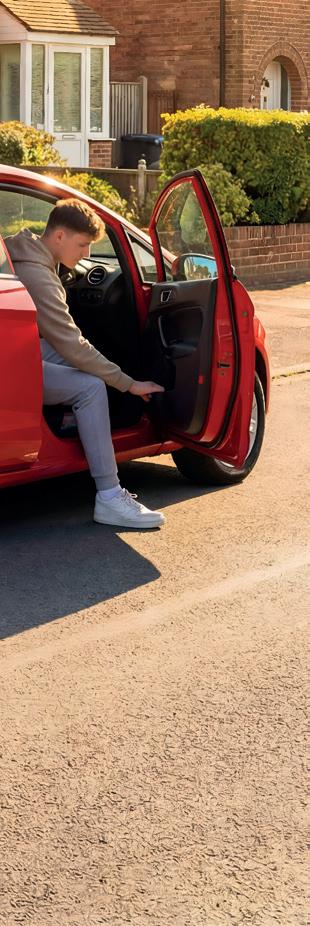
The instructor knows best. If their way of teaching a particular manoeuvre doesn’t match your way of doing it, make sure you don’t confuse your learner by contradicting the professional.
Talk to the instructor. Ask how you can best support the learning process. It could be something as simple as reminding your child to get a good night’s rest the night before a lesson. Or perhaps reminding them to eat and drink before a lesson starts to keep their energy up.
Be guided by the instructor as to when private practice should start and what to work on. Without the safety net of dual controls, it pays to be cautious and work at a level that’s well below the difficulty that’s appropriate with the instructor in the passenger seat.
“You supply the encouragement. Applaud their wins, sympathise with their failures”
the drive safely.
Let the driver instructor focus on the nuts and bolts of driving. You can help by encouraging your child to have a safe attitude and a respectful and careful approach to other road users.
At the risk of sounding like a management consultant, one of the most important roles a parent can take on is teaching soft skills. Instead of trying to explain how clutch control works or how to bay park, talk to your child about vulnerable road users and being patient with others.
It’s easy to see passing the practical test as the ultimate goal, but a better target is to help your child become a safe driver for life. That means someone who is calm behind the wheel, and who sees driving safely as a responsibility. Every single journey, a driver’s top priority should always be to complete
“Be guided by the instructor as to when private practice should start and what to work on”
You’re the cheerleader, not the head coach
If you’ve ever watched a kids’ football match, you’ve probably seen your share of pushy parents. You know the type. They shout advice at their kid from the sidelines, whether it matches what their coach is telling the team or not.
Don’t be that parent while your child is learning to drive. Let the driving instructor give them direction. You supply the encouragement. Applaud their wins, sympathise with their failures. Bring on the half-time oranges. But don’t give mixed messages by trying to coach them in the middle of the game.
Don’t just speak to the instructor once at the start of learning to drive. Communication should continue throughout the process. It doesn’t need to be every week, but check in regularly to understand how your learner is progressing.
The stronger the team around your child, the better they will learn.
Boost your young driver’s chance of passing with practice drives
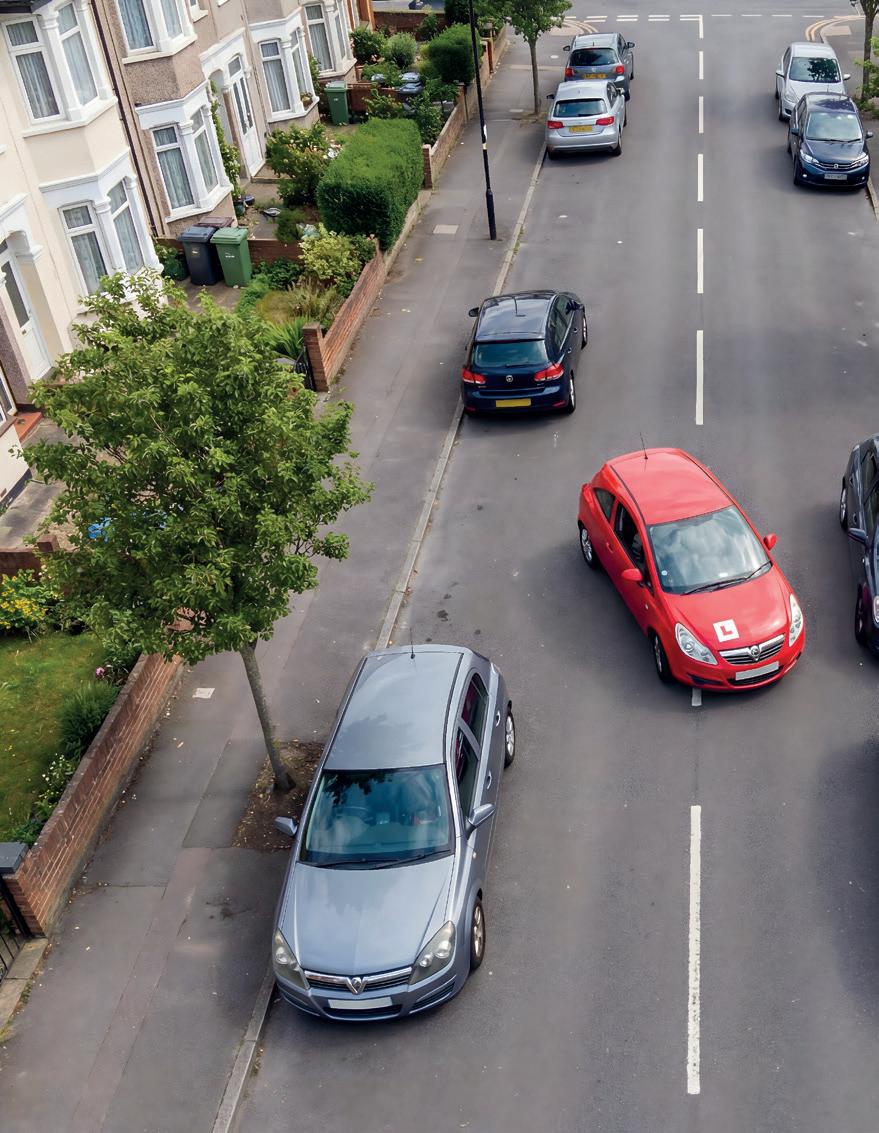
Without dual controls, you need to make sure you are not facing situations that are too difficult for your learner. Practice is about reinforcing lessons, not teaching new skills.
Practice between lessons is a huge part of learning to drive.
The DVSA’s own figures show that new drivers are 1.5 times more likely to pass if they have practised driving outside of professional lessons.
It can be stressful for both the young driver and the responsible adult, but it can really help your learner to pass.
Private practice should start after professional lessons have begun, not before.
You want your child to understand the basics before they head out in a car without dual controls. So, speak to their instructor to ask when you should begin practice drives. Heed their advice and stay well below the level your child has reached in their lessons.
You are almost certainly not a driving instructor. So, put any ego you may have about your driving to one side. You are supervising a practice drive, not teaching.
That means repeating situations and manoeuvres your young driver has already encountered in their lessons. So, the first time your learner tackles roundabouts, hill starts, or bay parking should be with their instructor. Once they know how to deal with a particular type of junction or manoeuvre, it’s your job to facilitate practice. Don’t take your learner into demanding new situations they are not prepared for. It’s much better for them and for your stress levels.
Reinforce, don’t compete
Ideally, speak to the instructor about how they teach a
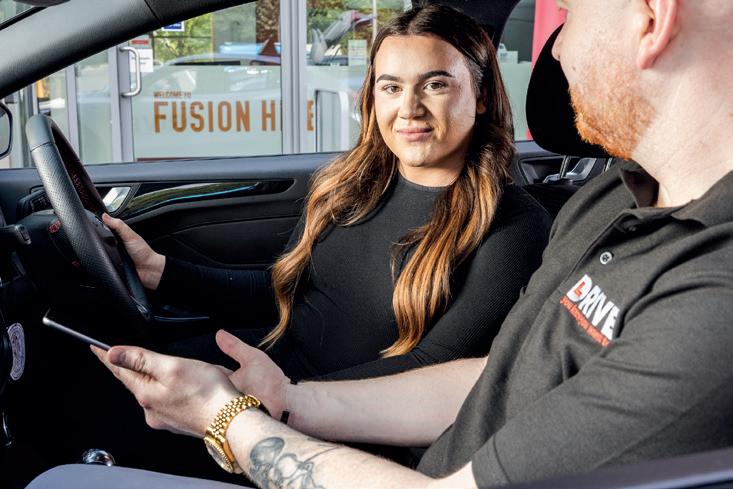


particular manoeuvre. You may even be able to sit in on a lesson, although be conscious of whether this will make your child more nervous.
If you don’t have a chance to talk to the instructor, ask your learner how they have been told to approach a particular driving task.
Follow the instructor’s lead
You are looking to reinforce what they have taught, not provide another way of doing things. Even if your method of parallel parking works for you it’s important that your advice doesn’t compete with the professional instruction your new driver is receiving.
Mirror, signal, manoeuvre, repeat
Driving in and out of bays in a deserted car park is no one’s idea of fun. But it’s the opportunity for repetition that
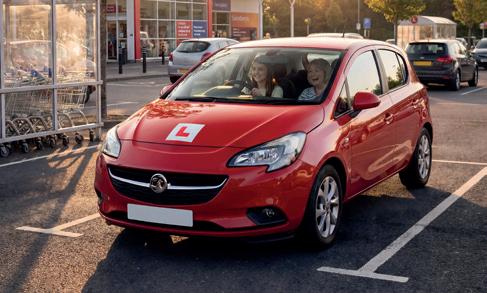
is one of the most important benefits of private practice.
The day a learner nails a tricky manoeuvre three or four times in a row will give them a big confidence boost. Regularly repeating techniques makes them second nature and means there’s a better chance of getting them right under pressure on test day.
Know the rules
The rules of the road do change over time. Take the hierarchy of road users. This principle was behind a raft of
changes to the Highway Code in 2022. The gist is, the greater the capacity to do harm, the greater responsibility a road user must take.
This is reflected in minimum space to be allowed when overtaking vulnerable road users. It’s also behind giving pedestrians priority when crossing or waiting to cross at a junction.
We all know that we should stay familiar with the Highway Code. Make a point of reading the latest edition before you start practice with your learner.
Before you get behind the wheel with your learner driver, think back to when you learned to drive. If you practised with a parent of another responsible adult, you’ll remember how tense it could be.
Nobody likes being criticised. Teenagers positively hate it. You can probably recall how tough it was to take advice from a parent when you were desperate to prove you could be independent. Two or three decades later, now you’ll be in the passenger seat. You can
appreciate why your parents were a bit nervous about being driven by an inexperienced driver without the safety net of dual controls. Just like them, you don’t want a dent in your car, but you want to be

supportive. It’s not easy. The best advice is to behave like the parent you hoped for all those years ago. Be patient and calm. Correct mistakes if you have to, but build confidence. Show your child that you are there for them and on their side.
Things will go wrong. Mentally rehearse keeping an even tone of voice and staying composed. You need to be unflappable. They may not thank you right now, but they will be glad of the support once they have passed.
On the day of the test, encourage your child to stay busy. Going for a walk or taking some other form of exercise can occupy the mind and give them something else to focus on.
There’s no point in pretending your child won’t be nervous as their tests loom. But there are steps you can both take to prevent nerves taking over when it really matters
If having friends asking about their driving test will make your child nervous, encourage them to keep the test date to themself.
Talk to your instructor and your child about the manoeuvres they have been practising, especially the skills they need to improve upon. Then make time so they can practise with you in the passenger seat. Getting a manoeuvre right time after time without the safety net of dual controls will really help their confidence.

3
Remember, worry makes it worse
The trouble with worry is that it interferes with concentration. The mind focuses on what might go wrong instead of what needs to be done next. Encourage your child to block negative
“The mind focuses on what might go wrong instead of what needs to be done next”
thoughts and give driving their full attention every time they get behind the wheel.
This is easier said than done, but there are techniques they can use. Visualising is one. Suggest they picture themselves performing a manoeuvre perfectly before the test. They could think of this as a mental dress rehearsal.
Deep breathing is another method for calming pre-test nerves. They could practice breathing in through the nose for four seconds and out through the mouth for four seconds. Doing this for five minutes before the test starts can help settle their nerves.

The instructor wouldn’t put your teenager in for their test if they didn’t think they were ready. Encourage your child to remember all the times they have successfully tackled tough manoeuvres. If they’ve done these things well before, they can do them again.
5
However well they are driving in lessons, your child could still fail. Make sure they understand this isn’t the end of the world. In fact, it will probably make them a better driver in the long run.
One study compared firstand second-time passers and found that those who needed two attempts to pass were 15% less likely to have a collision. The extra lessons, more practice, and being that little bit older when they pass are all likely to contribute to safer driving after the test.
Don’t make a big deal of the practical test. The day before and on the day itself, be calm about the whole thing. If your child is putting themselves under pressure you need to ease that burden if you can. It’s only natural to care if your child passes or fails but if they pick up on your nerves it will make them more worried.
Parents often know their child better than anyone, so trust your own judgement. But as a rule, a calm and encouraging presence is what they will need. And if they fail? Even good drivers don’t make the grade sometimes, so be their rock and tell them they will come back stronger next time.
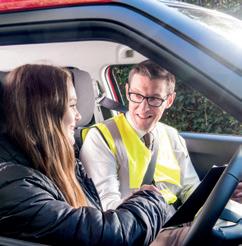

MUST TIDY MY ROOM
FRIDAY NIGHT
WHAT’S FOR DINNER
I f you have ever thought that your teenager’s brain works differently from a regular person’s, you are not alone. In fact, it’s not just an impression
that many parents have – this idea is backed by science. We typically consider someone an adult at the age of 18. However, recent research into the way our brain’s
develop shows that we’re still maturing for much longer. It’s not just about becoming more experienced as we age – the brain of someone in their late teens is still a work in progress.
Dealing with risk is a team effort between two parts of the brain, the amygdala and the prefrontal cortex. The amygdala detects potential threats and reacts impulsively, while the prefrontal cortex is the rational decision-making centre. Touch wood, these two parts of the brain balance each other, providing a rapid reaction when needed but a levelheaded assessment of risk.
a hair-trigger throttle and dodgy brakes.
Bad decisions are not necessarily arrogance or a love of risk. It’s just that the teenage brain is hard-wired to react impulsively.
The prefrontal cortex is the voice that says “Maybe this isn’t such a good idea.” But in the mind of a young adult that voice is just a whisper.
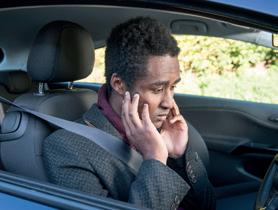

The trouble is the amygdala matures earlier than the pre-frontal cortex. So, the teenage brain has
Short of telling your child they can’t learn to drive until they’re 30, you can’t sidestep a young adult’s limited capacity to assess danger. But there are steps to reduce the risks.
Some countries use a system called graduated driver licensing (GDL). Under GDL, newly qualified drivers face restrictions, such as nighttime curfews and limits on passengers.
It takes until the mid20s or even later for the pre-frontal cortex to fully develop, by which time someone may have been driving for nearly a decade.
restrictions can be difficult, but if you are helping to pay for a car and insurance it seems only fair that you should lay out some ground rules. One could be no driving after 10pm at night. Another could be carrying no more than one friend in the car at a time.
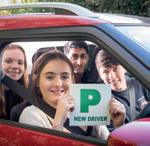
Even if this isn’t law in Britain (although it is being introduced in Northern Ireland from October 2026), but you can apply your own version of GDL.
Persuading young adults to accept boundaries and
Young adults want their independence so rules can be difficult to enforce. As a parent or guardian, you can’t control what they do once the car has disappeared around the corner. However, it is worth the effort to reduce the risk that a young driver faces in the months after passing their test.
Any teenage brain is different from a fully developed adult’s. That goes double for someone with autism, attention deficit hyperactivity disorder (ADHD) or both.
● A neurodiverse teenager may take longer to master the skills of driving. Be prepared for extra lessons.
● Take frequent breaks on practice drives to help maintain attention.
● Drive on familiar routes to help develop confidence.
● Look for an instructor with experience of teaching neurodiverse learners.
For more advice: autism.org.uk/advice-andguidance/transport/driving
gov.uk/adhd-and-driving
TOP HACK
Make it a condition of paying for insurance that you can see your new driver’s black box feedback.
‘Gutted’ probably doesn’t begin to cover it. So be sympathetic. Allow them space to feel disappointed or angry, then gently remind them that a test is just one moment in their lives. They are not a good or bad driver for life after the test, whatever the result.
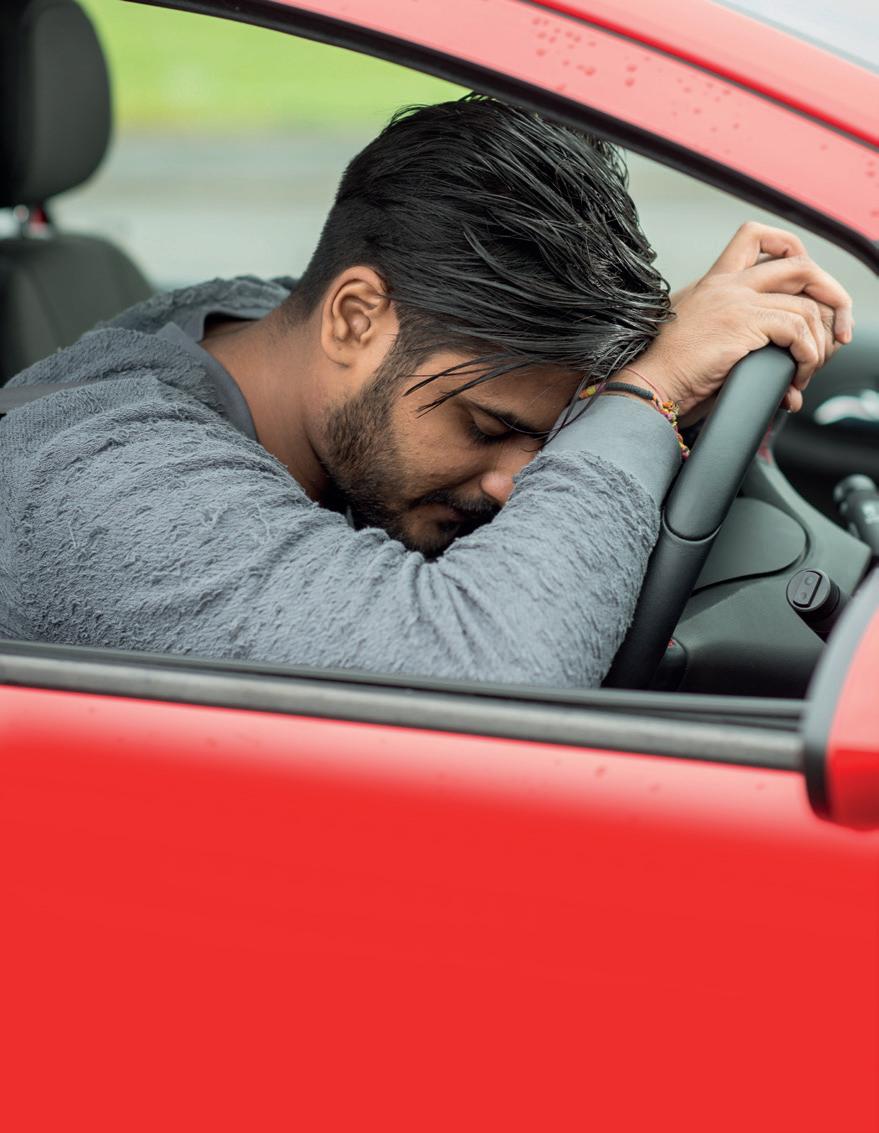
There’s a good chance your learner will fail their theory test or practical test first time, possibly more than once. Here’s how to support them
2
If your child didn’t pass their theory test, help them come back stronger by using learning aids such as apps to improve their knowledge. If they’ve failed the practical, discuss what went wrong and help them improve areas of weakness. Ideally, work with the instructor to understand how you can contribute without stepping on the ADI’s toes.
3

Failing the practical test can be a real blow to a young driver’s confidence, and they may be tempted to take a break from learning. Don’t let them take more than a few days off.
They shouldn’t be allowed to get rusty, or to put off facing their nerves indefinitely. Be supportive and encouraging. It will give them a lift to know you are in their corner.
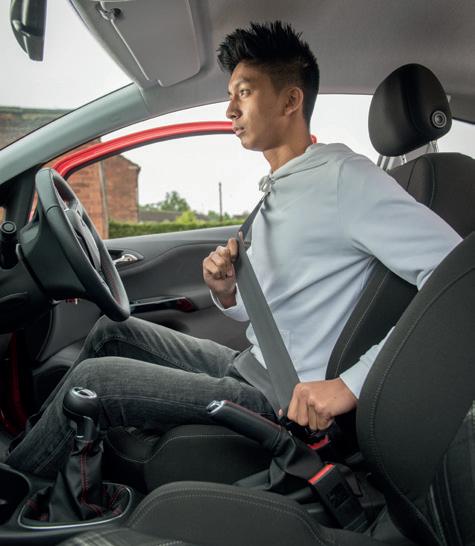
The longer they learn, the better they will become
4
Anyone who passes first time is very proud of the fact. But did you know there’s plenty of evidence that people who fail their first practical test go on to be better, safer drivers? That’s because the extra practice and instruction will improve their skills and delay the moment at which they are exposed to the risks of independent driving. So, failing may seem like a big deal at the time, but help your child understand that, statistically, it’s going to make them a safer driver.
Tell your kid that anyone who fails first time is in good company. F1 drivers Ollie Bearman, George Russell, Jenson Button and Lando Norris all failed their first practical driving test.
Book the next test soon
5
Instructors don’t set their pupils up to fail, so if they felt your child was good enough before they should be ready for a re-test. Encourage them to book another test promptly.
This is something every driver should be able to do. The trouble is, plenty of us know how to check oil and top it up as required but forget to do so regularly. Encourage your new driver to check the oil at least once a month.
1 Explain to your young driver that they should park on level ground and let the engine cool down for 10 minutes or so. This will allow the oil to drain

3 They should pull the dipstick out fully, and wipe it with a rag or paper cloth before putting it all the way back in.
4
Next, they should take the dipstick out again and hold it horizontally. The driver needs to look for two lines on the stick. One marks the minimum level, one the maximum. Oil should show somewhere between the two, ideally close to the maximum.


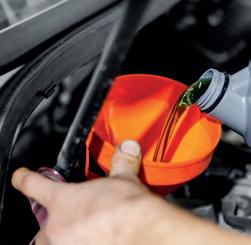
6
Show them how to add oil through a funnel a little at a time and repeat the dipstick check. Keep going until the oil is between the two lines.
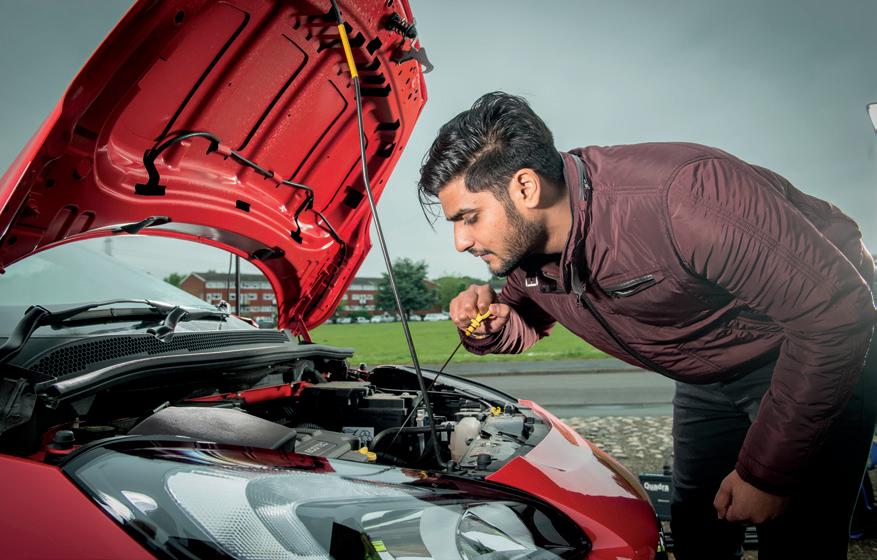
TIP
Some teenagers will rely on mum or dad to take care of their first car. Show them what to do then encourage them to look after
it for themselves.

Usingapre-washand snow foam can lift dirt from the surface and make it easier to clean with less chanceofscratching thepaint.
Everyone loves their first car. Help them keep their pride and joy clean by showing them the right way to get rid of dirt and grime without scratching paintwork or leaving streaky marks.
1 Show them how to rinse off the car with a hose to remove any loose dirt.
2 in a bucket. Don’t use other detergents as they may wash off any wax which is protecting the paintwork.
3 They should dip a soft sponge or a special washing mitt in the soapy water. It’s best for them to begin washing at the top of the car and work their way down.
4 Your young driver should rinse the sponge or mitt with a hose before they put it back in the soapy water. That

5 Once the whole car has been cleaned, it can be rinsed with the hose.
6
Encourage your new driver to dry the car with a clean cloth or chamois leather to prevent any streaky drying

For a professional finish, apply a thin layer of wax and buff to a shine.
If your child finds basic car maintenance boring, remind them that handling simple jobs themselves will save them money to spend on something they do enjoy.
Every new driver should get to grips with basic car maintenance. Here are some of the easy but essential skills you should pass on

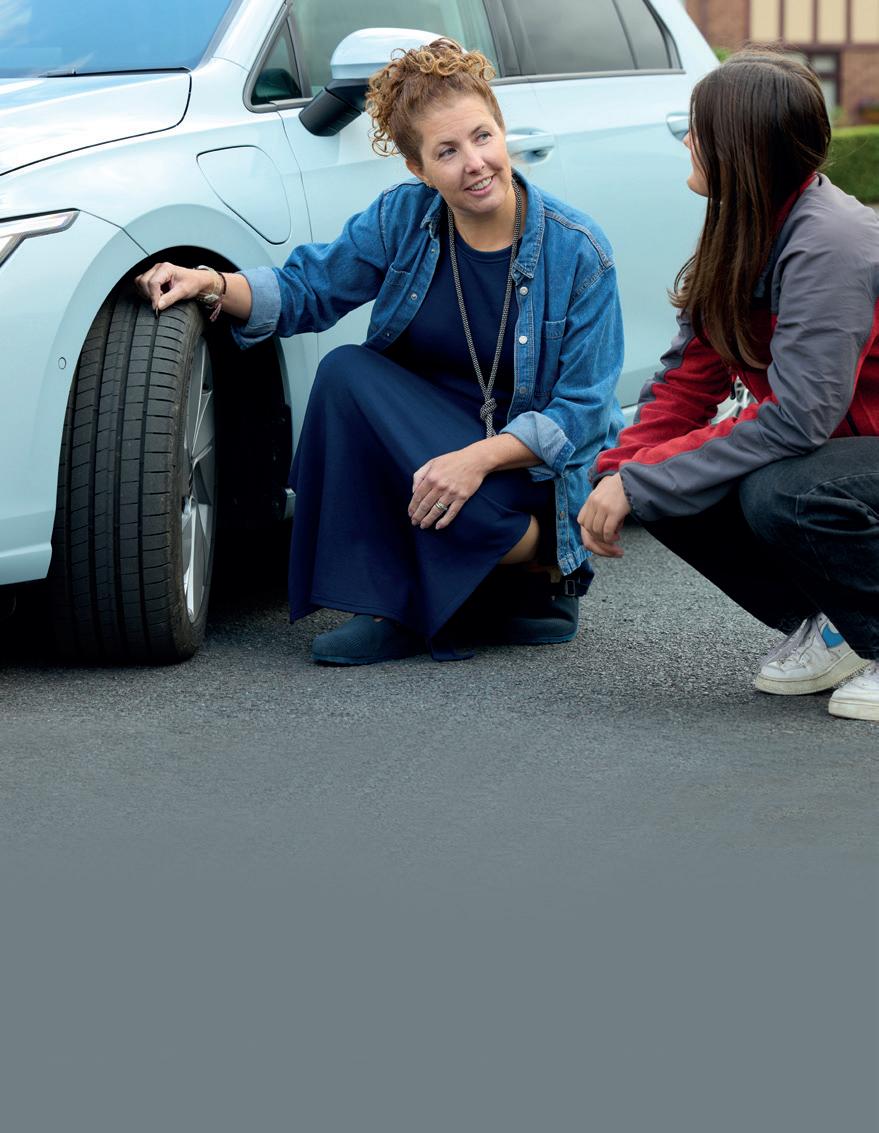

S
ooner or later (hopefully later) your new driver will have a puncture. Teach them how to change the tyre with this guide:
1 The driver should make sure they are in a safe place. It should be off the road and on level ground. If they can’t get away from the road completely, the car’s hazard warning lights should be on.
5
The car’s tool kit will have a jack for lifting the car up. All cars have dedicated jacking points. The driver should look in the handbook to find where they are, then position the jack under the jacking point and use it to raise that corner of the car off the ground by 10 centimetres or so.
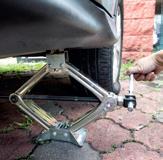
2 The handbrake should be on. The driver should then take the spare wheel and the tools they will need out of the boot.
3
It’s really important that the car doesn’t roll away while they are working on it. So, chock the opposite wheel to the one with the puncture (so, the right-hand rear wheel if the puncture is on the left-front wheel). If they don’t have a chock, a brick or a large rock can do the job.
4 The driver should loosen the wheel nuts, but shouldn’t take them off completely yet.
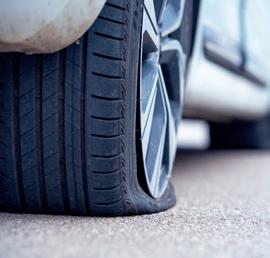
6 Now the driver can unscrew the nuts fully. The wheel should pull off easily. It should be placed flat on the ground so it doesn’t roll away.
7 Next, the driver should slide the spare wheel onto the hub. They will need to line up the bolt holes then replace the nuts and tighten them by hand.
8 Now they should lower the car back to the ground with the jack. Once the tyre reaches the ground all the wheel nuts must be tightened.
9 The jack should be lowered until it is clear of the jacking point. The driver should contact their breakdown provider.
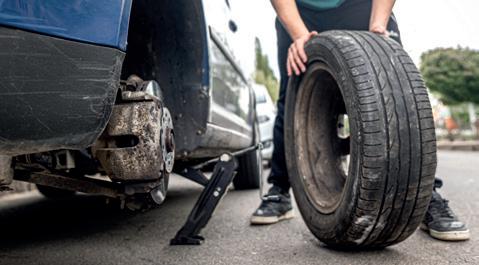


should then give the wheel nuts one last check.
10 Once they have packed the tools away and put the flat tyre where the spare wheel was, they should find a nearby garage and check the tyre pressure is correct.
11 The driver should have the punctured tyre repaired or replaced as soon as possible.
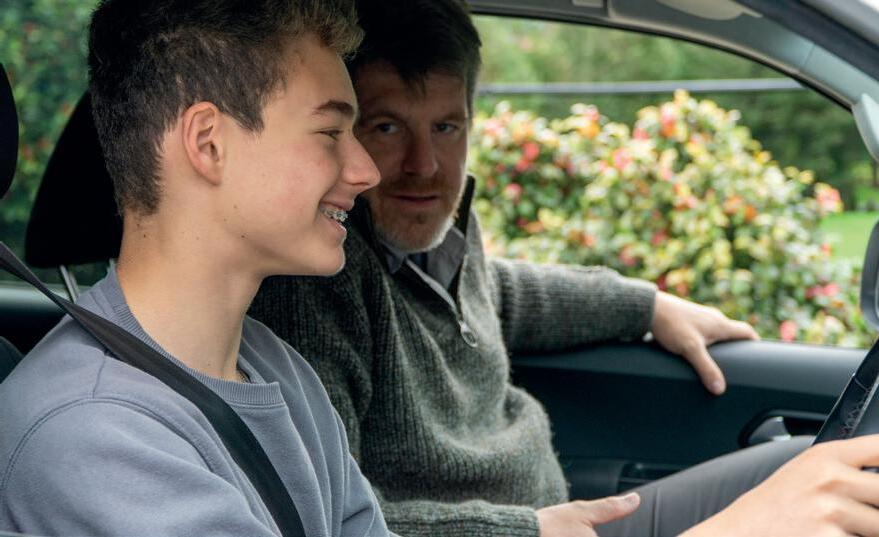
The first year after passing the practical test is an exciting time for your newly qualified driver, but it can also be a dangerous one
It may happen quickly. Or it could take a while. But sooner or later, your learner driver will pass their practical test and will hold their full driving licence in their hands.
The day they pass will be a happy one. It’s a milestone in your young adult’s life, but don’t think this is the end point of learning to drive. The formal process of passing the theory and practical test is really just the start.
The uncomfortable truth is that the first 12 months of independent driving are a dangerous time. Around
one-in-five new drivers have a collision in their first year on the road. Some studies put the percentage even higher.
So, when your child ditches
“Around one-in-five new drivers have a collision in their first year”
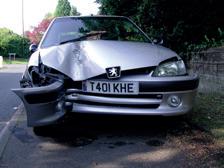
L-plates for P-plates you still have work to do. Young drivers need support and advice as they start driving independently. Influencing a 17 or 18-year-old’s behaviour is not easy, but it’s worth the effort.
Lead by example
“Do as I say, not as I do” won’t cut any ice with a teenager who has just passed their test. You need to show that driving after passing doesn’t mean picking and choosing which rules of the road you follow.
Stick to the limit, leave your mobile alone, and show patience and consideration
around vulnerable road users. If you want your child to be a safe driver for life, not just someone who drives a certain way to pass a test, you need to set a good example. Perhaps you could agree to take advanced driving lessons if your child signs up to a Pass Plus course.
A privilege, not a right
If your child is insured on the family car or if they are lucky enough to have a car of their own, make sure it is understood from day one that using the car comes with certain conditions and expectations.
Some evidence suggests that having access to a family car rather than owning a vehicle reduces the risk of a collision over the first few months. So, it could be better to help fund a car for your new driver as a reward after a collision-free first year on the road rather than immediately after passing.
Limiting the times of day when a new driver gets behind the wheel can also help. Driving home from the pub or club
“A car full of same-age passengers increases the risk of a fatal collision by four times”
is especially risky, even if the young driver hasn’t taken any alcohol or drugs. A lift from mum or dad is safer.
One of the big risk factors is the number of same-age passengers in the car. Driving solo or with an older adult in the passenger seat is far safer than a car full of excited mates. In fact, a car full of same-age passengers increases the risk of a fatal collision by four times. Make access to the car conditional on limiting the number of passengers. The appropriate number is something you’ll need to decide with your child. A lower number is safer, but you will have to conclude what is practical and achievable. This is a tough one to police, which is where a relationship built on mutual trust really helps.
Teenagers don’t like being told what to do. Then again, does anybody? Studies show that a warm, supportive parent-teen relationship leads to better driving than a more remote and inflexible approach. Look for agreement over how driving post-test will work, rather than imposing a rigid framework without their cooperation.
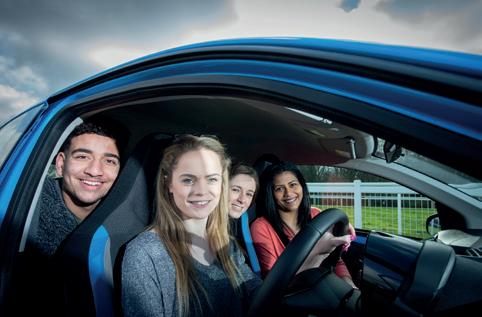
Sit down with your young driver and agree what independent driving will look like. Decide what you will do in return to help your new driver make a safe start.
I will always check before I take the car
I will not drive after pm
I will not carry more than same-age passengers
I will stick to the speed limit
I will never use my phone while driving
I will never drink or take drugs and drive
As a parent or guardian…
I will offer a lift home from the pub or club times a month
I will pay £ towards insurance
I will demonstrate basic maintenance
I won’t set a bad example with my own driving
There’s no getting around it, insurance for young drivers is expensive. With little experience, new drivers are far more likely to be in a collision. Around 1-in-5 crash in their first year of independent driving.
Touch wood, that won’t happen to your new driver, but if it does, you’ll be glad you had the right cover in place. The need for insurance starts long before they pass, as you’ll need to have a policy for practice drives between professional lessons with the instructor.
You can add your young driver as a named driver to the family car. That’s probably what your parents did when you learned to drive. But a neater solution is to take out learner driver insurance.
This is a separate policy
“The great thing about learner driver insurance is that your hard-earned noclaims bonus isn’t at risk”
which covers the learner while practising in someone else’s car. That’s usually a parent or guardian but it could be a willing family friend or relative.
These policies are short term, lasting a day, a month, or perhaps a full year depending on what you need. Compared with the price of a policy once your child passes, learner driver insurance is relatively affordable – for example, cover from Adrian Flux starts from 55p per day.
The great thing about learner driver insurance is that your
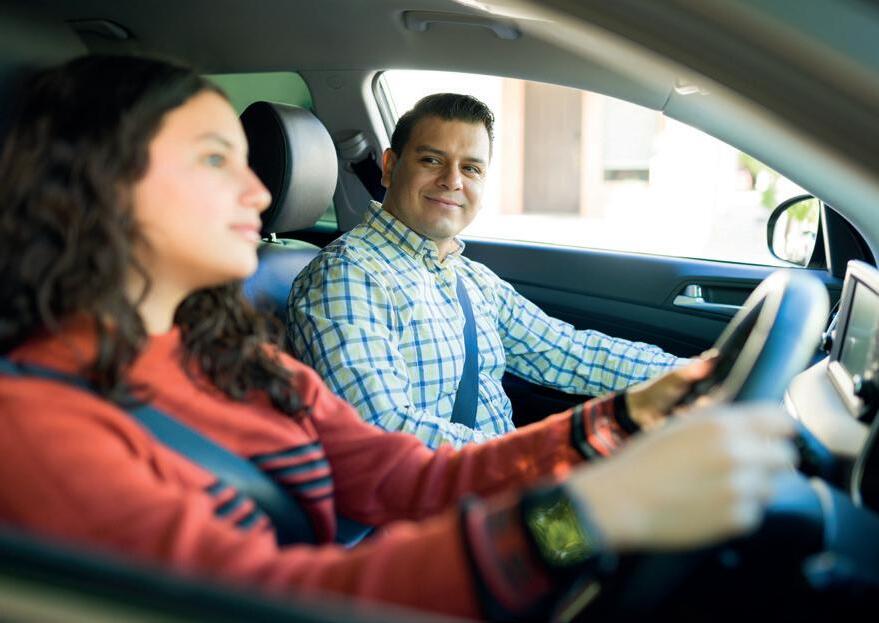
hard-earned no-claims bonus isn’t at risk. If your kid does put a dent in the car while practising parallel parking the claim is made through the learner driver insurance, not your main policy.
Just make sure the car you plan to practice in can be covered, as there are usually restrictions on the price and value of a car your child can drive. Adrian Flux will cover vehicles up to insurance group 45 (of 50) and up to £30,000 in value.
Once your child passes the practical test and bins their L-plates once and for all, they are no longer covered by the learner policy. You will need a different kind of insurance.
Again, you could make your child a named driver on your insurance. This can be very expensive – we’ve known families who were quoted £2000 to add their child for the last couple of months of
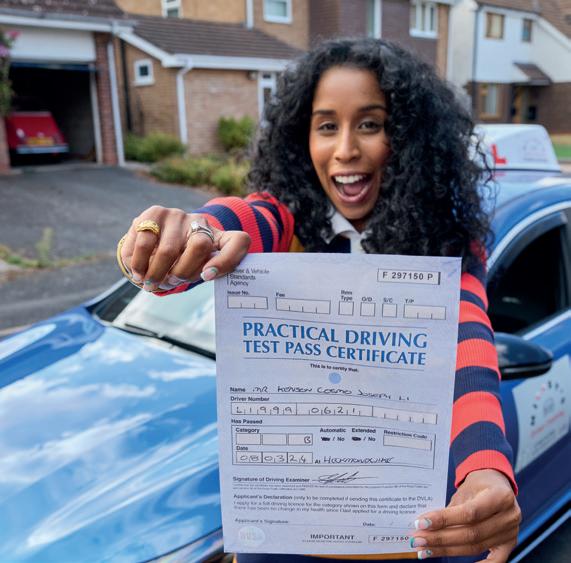
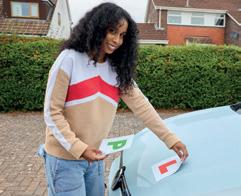
an existing policy. Also, your young driver won’t build up a no-claims bonus.
If your new driver is lucky enough to be the main driver of a car, then they will need their own insurance policy. This will inevitably be expensive. But contacting a specialist such as MyFirst can help you find good cover at a competitive price.
Typically, the most competitive quotes for young drivers will be for a telematics (or ‘black box’) insurance policy.
These use sensors in the car to monitor how the car is being driven, and report back to the insurer. It seems a bit Big Brother, but knowing that their driving is being monitored encourages good habits. Drivers who stick to the speed limit and drive smoothly are rewarded. That could mean a lower cost when the premium is renewed, extra miles on a limited mileage policy, or vouchers and special offers.
An app or web portal gives drivers feedback to help them improve. If you’re a named driver on the policy you’ll be able to see it too…
Making yourself the named driver for a car which is really your child’s could come back to bite you. This is called ‘fronting’ and it’s a type of insurance fraud. Your policy could be invalid and a claim might be refused if you and your child are found out.
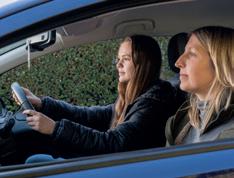
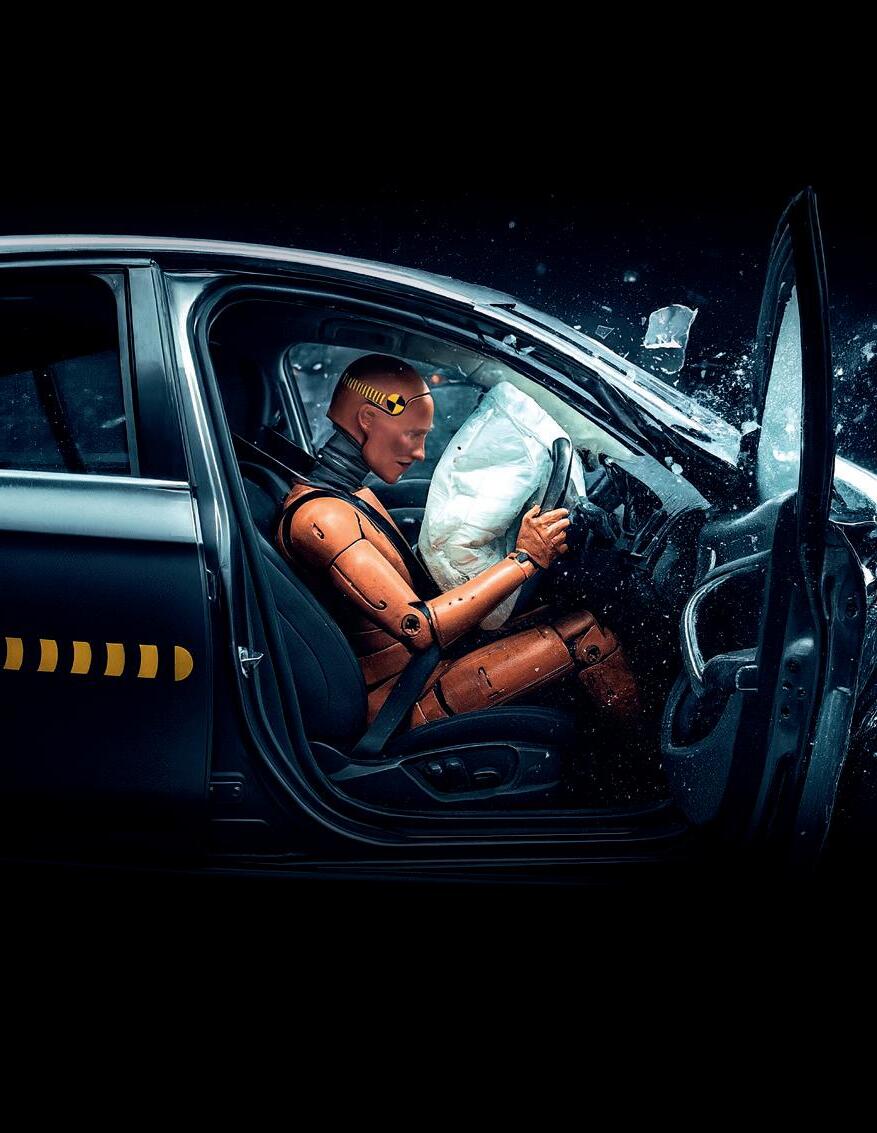
Any parent or guardian wants their child to stay safe when they start out on the road. Choosing a safe first car is a good start
Newer is better As a rule of thumb, the newer the car the safer it will be. Safety standards are improving all the time and driver aids that were science fiction when
you learned to drive are now standard. You’ll need to balance your budget against the age of the car you buy, of course. But newer is better if you can find the money. 1
“The newer the car the safer it will be. Safety standards are improving all the time”
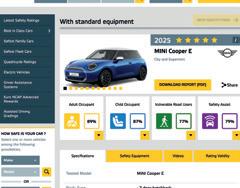
Go to Euroncap.com and check the rating of any make and model you are thinking of buying. There’s an overall rating out of five stars. That’s then broken down into different categories, including occupant protection and safety assist. Just as cars have improved over the past few decades, so Euro NCAP has steadily made its tests tougher. So, you can’t compare a rating from, say, 2016 with a score from 2026. To reflect that Euro NCAP now labels older tests as ‘rating expired’. The old ratings are still useful, but just make sure you are comparing like for like.
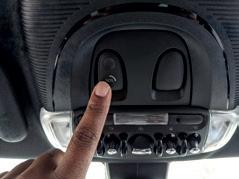
Electronic stability control helps the driver stay on the road if the car begins to slide. It’s been compulsory since November 2014. Autonomous emergency braking (AEB) is a more recent driver aid that warns an inattentive driver if a collision is likely. It even applies the brakes if the driver doesn’t respond. It has been compulsory for all new cars since May 2024.
Finding a safe first car isn’t just about the crash test rating and equipment fitted. When you begin shopping for your child’s first car, make sure any example you are thinking of buying has no outstanding recalls. These are safety-related remedies for known faults. You can check by entering the reg number at gov. uk/check-vehicle-recall.
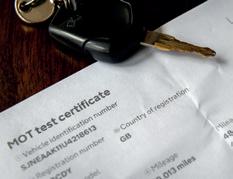
Any car between three and 40 years old must pass the annual MOT. Many of the checks relate to safety, so it goes without saying that you should never buy a used car without a valid MOT.
These models have both scored the maximum five stars in Euro NCAP testing. You can check the star rating of any car you are thinking of buying at Euroncap.com.
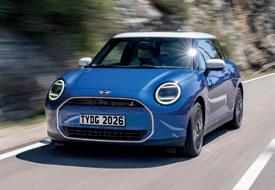
This cool-looking hatchback picked up five stars when tested in 2025.
Check the car’s MOT history online (gov.uk/check-mothistory) and look for advisories. These are issues with the car that aren’t serious yet but could be if ignored, such as low but not illegal tyre tread depth.
You should also check the service history to be sure the car has been serviced on time and to the manufacturer’s instructions. A missed service doesn’t necessarily make a car unsafe, but a clean MOT and a fully stamped service book are all good signs.
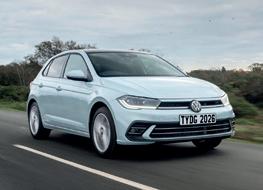
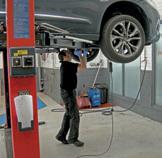
With a score of 94% for adult occupant protection, the Polo is one of the safest small cars.
NB: Ratings apply to current-generation models.
24/7

Name:
This card entitles the holder to one lift home from their parent/guardian/carer (delete as applicable).
The lift can be claimed at any time of day or night, no explanation needed.
Terms and conditions apply:
1 The user of the voucher will express their gratitude. Suitable methods include, but are not limited to, cleaning the parent/ guardian/carer’s car.
2
Collection of the voucher holder’s car will be the sole responsibility of the voucher holder. This task should only be completed when the voucher holder is fully rested and sober.
3
In the event that a parent/guardian/carer collects the voucher holder’s car, even greater gratitude should be expressed (see condition ‘1’).
4 A late night phone call is understood to be preferable to a mistake the voucher holder will always regret.