

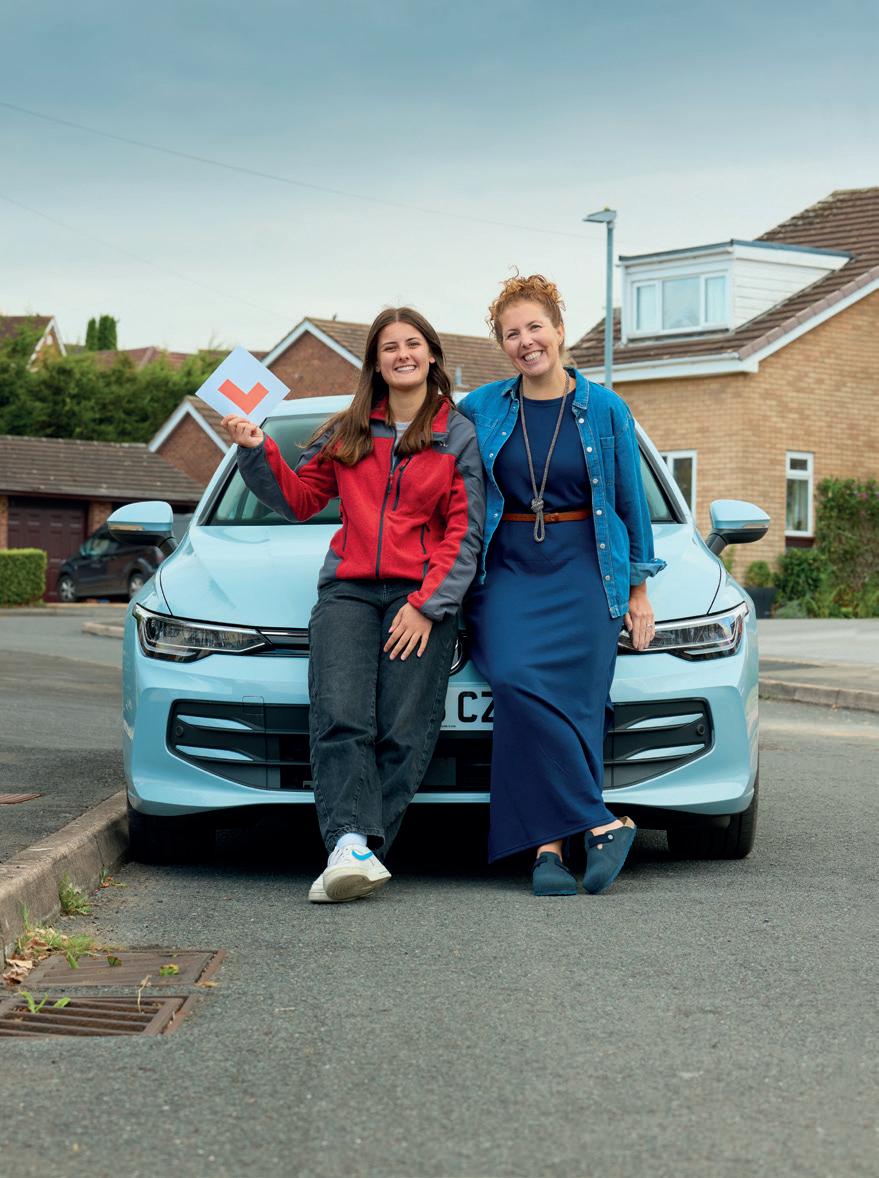
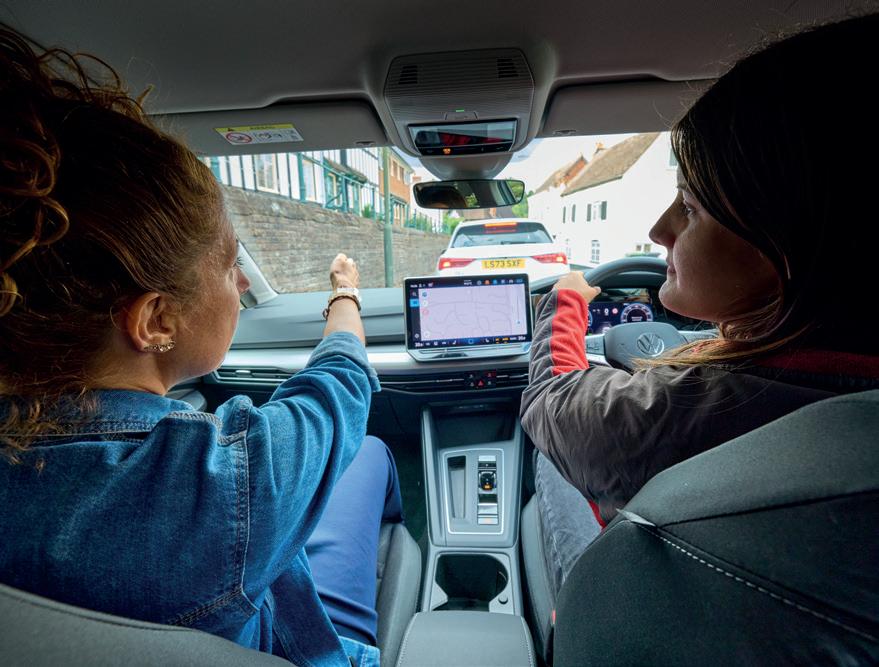
LEARNING TO DRIVE is an exciting but nervous time for teenagers and their parents. If anything, it can be harder on mum and dad (or any adult helping a young driver to learn).
The chances are you’ll foot the bill for lessons, insurance and maybe even a first car. Then there’s the worry of using the family wheels for driving practice. Even the closest parent-child relationship can be put under strain with a teenager behind the wheel and mum or
dad in the passenger seat. Any parent or guardian wants to support their child in learning to drive safely and effectively. That’s where Learning to Drive – The Parent’s Guide comes in. We’ll show you how to help your child become a safe
“Any parent or guardian wants to support their child in learning to drive safely and effectively”
and responsible driver. From choosing the right instructor to making the most of practice to finding affordable insurance cover, this guide is full of practical advice.
So, good luck to you and your learner driver. Here’s to making the start of their driving career a safe and happy one.

David Motton Editor










There are some big moments in growing up. Passing the practical driving test must be one of the very biggest. If you are holding this magazine in your hands, then
the chances are your child is starting out on that journey. It’s an exciting but daunting time, and as a parent, guardian, or responsible adult, you’ll want to be with them all the way. Here are the next steps...
Learning to drive is a watershed in anyone’s life. Here’s what’s involved
Learning to drive is expensive. Some driving schools offer discounts of 5-8% for block bookings, which can help to make the cost more manageable. TOP HACK
Before a wheel turns, your child will need their provisional licence. It’s possible for them to apply when they are 15 years and nine months old. There’s no need to apply that early unless your child has a disability and receives the higher rate mobility component of DLA or the enhanced mobility component of PIP, in which case they may be eligible to
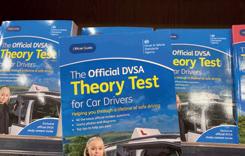
Once a young driver has their provisional licence, they can take the theory test. The test is in two parts.
It pays to start looking for an instructor a few months before you plan to start lessons. Some of the best instructors will have waiting lists.
Speaking to friends who have slightly older children is a good way to get a sense of whether there are plenty of instructors locally, or if they are in short supply. Friends can also recommend instructors who helped their child.
If your child is neurodiverse or has special needs, look for an instructor with experience
start lessons at 16 rather than 17. The easiest way to apply is to go online as it’s quicker,
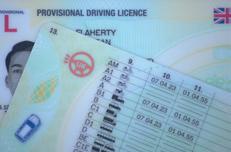
cheaper and easier than applying by post. It costs £34 and your young driver should have their licence within a week or so.
Just go to gov.uk/apply-firstprovisional-driving-licence.
This is an easy one for your kid to do. They’ll probably only need you for your credit card…
There’s a multiple-choice test with a pass mark of 43 out of 50. The other part involves watching 14 videos and pressing a button when a hazard appears. The quicker the hazard is recognised, the better the score. The pass mark for this is 44 out of 75.
Your learner doesn’t need to have passed the theory test before they start lessons, but it will help them get to grips
with driving more quickly if they already have a strong basic understanding of the rules of the road.
Read the latest Highway Code. You can then quiz them on the rules to help them prepare. Encourage them to thoroughly understand the Highway Code themselves and to download theory test apps to their phone.
in this area. Schools will often list any specialisms on their website.
Start researching in plenty of time. Making a few calls a year in advance isn’t a bad move, that way you will know if there are waiting lists in your area or if there are plenty of instructors available. Get some idea of costs, too. You may want to put a bit of money aside for a few months before your child starts their lessons. These could cost
£30-£45 per hour. Around 45 hours of lessons is typical, so that would add up to £1350£2025.
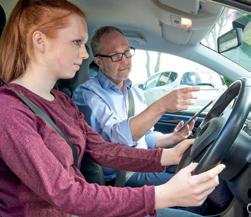
No doubt this is the bit you’ve been looking forward to!
You may have a voice in the back of your head saying: “I’m paying for an instructor to teach my kid – they won’t need to practice with me as well.” Ignore this voice. Practice in between lessons is a really
important part of learning to drive. Without reinforcing what they learn with a professional, the whole process will take longer and will almost certainly cost more.
Even if you are nervous about
private practice, try not to show it. Nerves are contagious! Be willing and patient.
Liaising with the instructor is key to making practice productive and safe. You need to stay below the level reached in lessons and should avoid giving mixed messages.
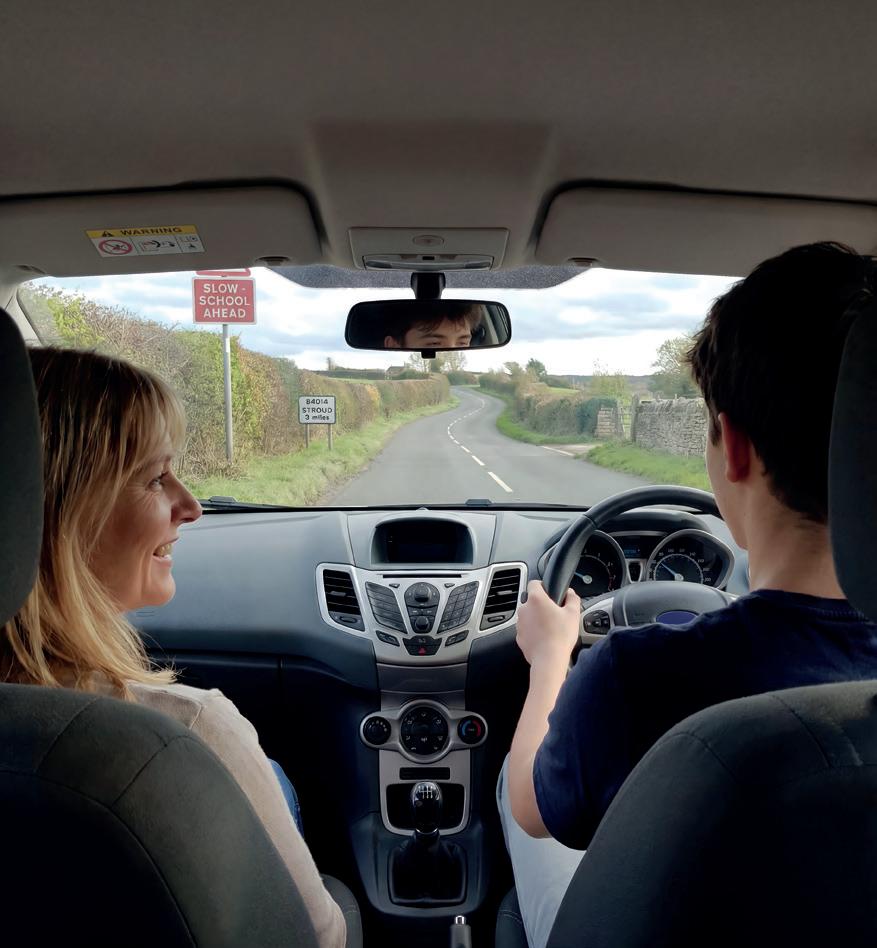
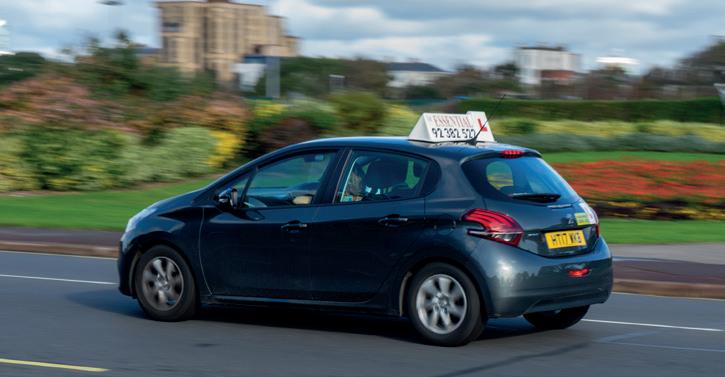
The practical test is the final hurdle before your young driver will be fully qualified and able to drive independently.
As with finding a driving instructor, it’s worth researching the availability of driving test slots. Demand has exceeded supply for several years, but the DVSA has taken steps to redress the balance.
Your child’s driving instructor will be able to guide you as to when to apply for a driving test slot. This can be done online up to 24 weeks before the test date. The test costs £62 on weekdays and £75 on weekends, bank holidays, and weekday evenings.
Go to gov.uk/book-drivingtest.
If you’ve put in the hours of private practice, then you’ve done your bit.
There’s not much you can do when test day arrives other than being supportive and in their corner whether they pass or fail.
When your child passes their test, it might seem like the end of learning to drive. It’s not. They’ve met the minimum standard for a driver to be allowed on the roads unsupervised, but there’s still a lot to learn.
The first few months after passing are crucial. Sometimes those driving-lesson nerves are replaced by over-confidence. Combine that with a lack of
experience and it’s no wonder that so many young drivers have collisions in their first year of independent driving. Young males are particularly at risk, with a crash rate that’s almost double that of females.
There are formal courses that can develop skills post-test, such as Pass Plus (gov.uk/ pass-plus). If they get on well

with their instructor, another lesson or two after the test can introduce them to situations which aren’t covered in the test, such as multi-storey car parks and motorway driving. The important thing is to prepare young adults for a lifetime of safe driving, not just passing a test.
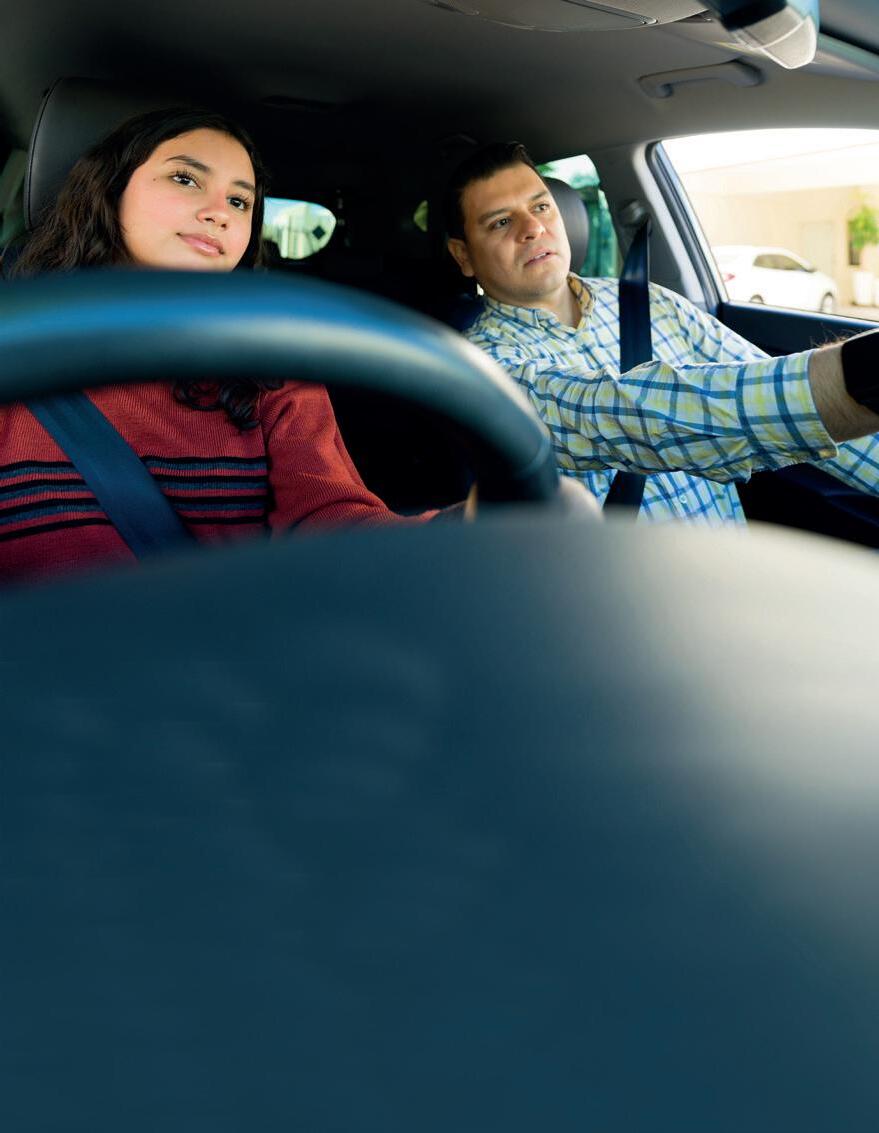
Sorry if this makes you feel old, but it’s probably been 20 or 30 years since you learned to drive – maybe more. A lot has changed over those decades. Here’s what you need to know.
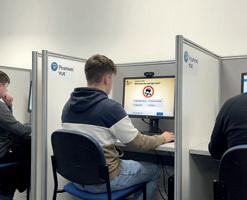
If you passed your test before 1 July 1996, then there was just one driving test and it was on the road.
New drivers must pass a theory test before they can attempt the practical driving test. There are two parts to this, a hazard perception test and a multiplechoice theory quiz. Candidates must pass both parts.
Smartphones were science fiction and a tablet was something you took to cure a headache. If you wanted to understand the rules of the road, you bought a copy of the Highway Code and read it over and over again.
Back in 1995, there were 21 million cars on the roads.
Now, there are more than 36 million cars in the UK. So, learner drivers today must cope with much busier roads than their parents faced.

You will have learned the rules of the road as they stood when you learned to drive. No doubt your copy of the Highway Code was bang up to date in the ’90s or ’00s.

The Highway Code has now reached its 17th major edition. The latest version, launched in 2022, includes some significant updates, including the hierarchy of road users. Under this principle, those who can do the most harm must take the greatest responsibility.

You couldn’t go near a motorway until you had your full licence.
Learner drivers can take lessons on the motorway so long as they are with an ADI in a car with dual controls. Speak to your child and their instructor if this is something you would like to happen.
You can be a lot more help to your young driver if your own knowledge is up to date. Pick up a copy of the current Highway Code so you know the latest rules of the road.
You probably took your test in a car with anti-lock brakes. There’s a good chance it had airbags.
A paper copy of the latest Highway Code is still a great resource, but these days new drivers also rely on apps and online guides. Digital learning aids such as those produced for the DVSA are especially useful when cramming for the theory test, while YouTube is a great resource for finding out how to tackle manoeuvres and complex junctions.
Most modern cars are packed with electronic driver aids. Lane-keeping systems, driver monitoring, and autonomous emergency braking are some of the ways today’s cars help drivers stay safe. You can help your learner better understand these systems if you understand them yourself.

Teacher, mentor, and counsellor all in one – the right instructor has a huge influence over your young driver’s progress
Choosing the best instructor to teach your new driver is one of the most important decisions you can make. They will be teaching your youngster an important life skill. Not only that, but a really good instructor can help your child become a safe driver, with the skills and attitude to go beyond the standard needed to pass the test.
Start looking early
For the past few years, demand has outstripped supply in the driver training market. Things are improving, though, so it’s
not as hard to find an instructor as it used to be.
The very best instructors and schools can still have waiting lists so it pays to begin your search early. It doesn’t hurt to make a few calls a year or so in advance to gauge availability.
Ask for recommendations
Speak to friends and family who have slightly older children. Who did they use? Would they recommend them? If so, what was so good about them?
Once an instructor builds a strong reputation, they tend to be sought after. So, if you
keep hearing the same name or names get in touch to ask about availability nice and early.
Good value is better than cheap
Learning to drive is an expensive business, and prices will vary. For example, if your child is taught by a potential driving instructor (PDI) who is not yet fully qualified you can expect to pay less than if lessons are delivered by an approved driving instructor (ADI), who has successfully completed their training. You need to balance this
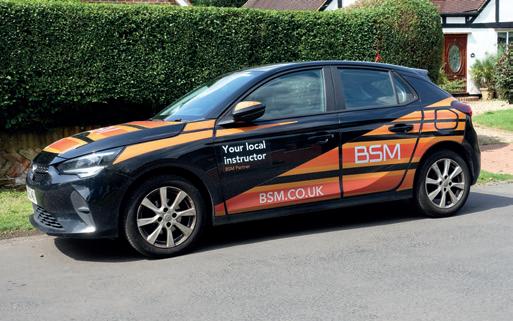

against the reassurance of knowing the instructor is fully qualified. You should also consider if any extras are included in the cost of lessons, such as access to apps and learning aids.
instructor
An instructor who clicks with one learner may not be the perfect fit for another. You or your young person (or even both of you) should talk to the instructor before you commit. Are they direct and efficient? Light-hearted and funny?
Softy spoken? Ideally you are looking for an instructor whose personality is a good match for your learner driver.
That said, the best instructors will be able to adapt their approach to suit the needs of different pupils.
Should you choose a big school or an independent instructor to teach your child?
REASONS TO GO BIG
● Access to online learning aids
Many big schools will have their own apps or digital platforms to help young drivers learn when they’re not behind the wheel.
● Instructor availability
If your instructor is sick, you may be able to arrange lessons with another instructor from the same school.
● Manual and automatic cars
Larger schools usually have both manual and automatic cars, so there’s a choice of which type of car your child learns in.
REASONS TO CHOOSE AN INDEPENDENT
● Experienced teacher
Although it’s not always the case, independent instructors will usually have been in the profession for a few years before choosing to set up on their own.
● Distinctive approach
Every learner is different, and some approaches will work better for your young person than others. An independent instructor will have the elbow room to do things their way without needing to follow a school’s curriculum.
● Could be more affordable
Again, it’s not a hardand-fast rule but independent instructors are sometimes cheaper than the big-name schools.
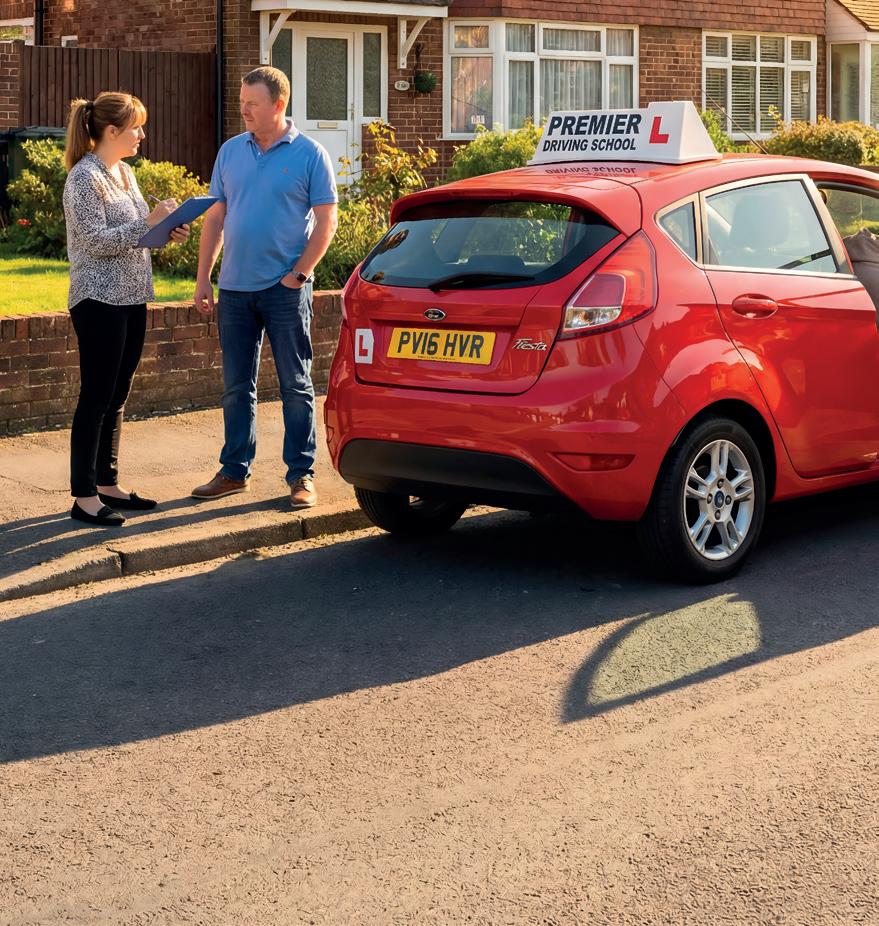
It’s important to work with your instructor to support your learner
Most of us like to think we’re good drivers. Research shows that around 80% of us rate our driving as above average. Basic maths suggests many of us are deluding ourselves.
For the sake of argument, let’s say you are a very good
driver. You’re still not the best person to teach your child to drive a car, as unless you are a driving instructor yourself you don’t have the appropriate training. Even a driving instructor would struggle to teach their own child – the dynamics of a parent and
teenage child relationship are just too hard to navigate. No, the best person to teach your child to drive is a driving instructor. Your job is to help your instructor and learner driver without letting your own bad habits – or ego – get in the way.
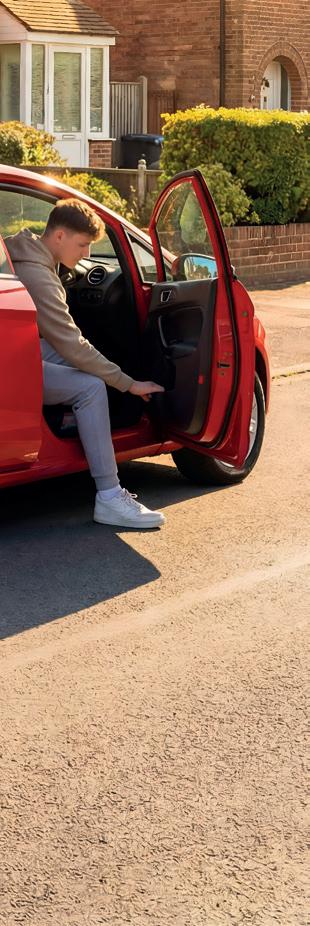
The instructor knows best. If their way of teaching a particular manoeuvre doesn’t match your way of doing it, make sure you don’t confuse your learner by contradicting the professional.
Talk to the instructor. Ask how you can best support the learning process. It could be something as simple as reminding your child to get a good night’s rest the night before a lesson. Or perhaps reminding them to eat and drink before a lesson starts to keep their energy up.
Be guided by the instructor as to when private practice should start and what to work on. Without the safety net of dual controls, it pays to be cautious and work at a level that’s well below the difficulty that’s appropriate with the instructor in the passenger seat.
“You supply the encouragement. Applaud their wins, sympathise with their failures”
the drive safely.
Let the driver instructor focus on the nuts and bolts of driving. You can help by encouraging your child to have a safe attitude and a respectful and careful approach to other road users.

At the risk of sounding like a management consultant, one of the most important roles a parent can take on is teaching soft skills. Instead of trying to explain how clutch control works or how to bay park, talk to your child about vulnerable road users and being patient with others.
It’s easy to see passing the practical test as the ultimate goal, but a better target is to help your child become a safe driver for life. That means someone who is calm behind the wheel, and who sees driving safely as a responsibility. Every single journey, a driver’s top priority should always be to complete
“Be guided by the instructor as to when private practice should start and what to work on”
You’re the cheerleader, not the head coach
If you’ve ever watched a kids’ football match, you’ve probably seen your share of pushy parents. You know the type. They shout advice at their kid from the sidelines, whether it matches what their coach is telling the team or not.
Don’t be that parent while your child is learning to drive. Let the driving instructor give them direction. You supply the encouragement. Applaud their wins, sympathise with their failures. Bring on the half-time oranges. But don’t give mixed messages by trying to coach them in the middle of the game.
Don’t just speak to the instructor once at the start of learning to drive. Communication should continue throughout the process. It doesn’t need to be every week, but check in regularly to understand how your learner is progressing.
The stronger the team around your child, the better they will learn.
Boost your young driver’s chance of passing with practice drives
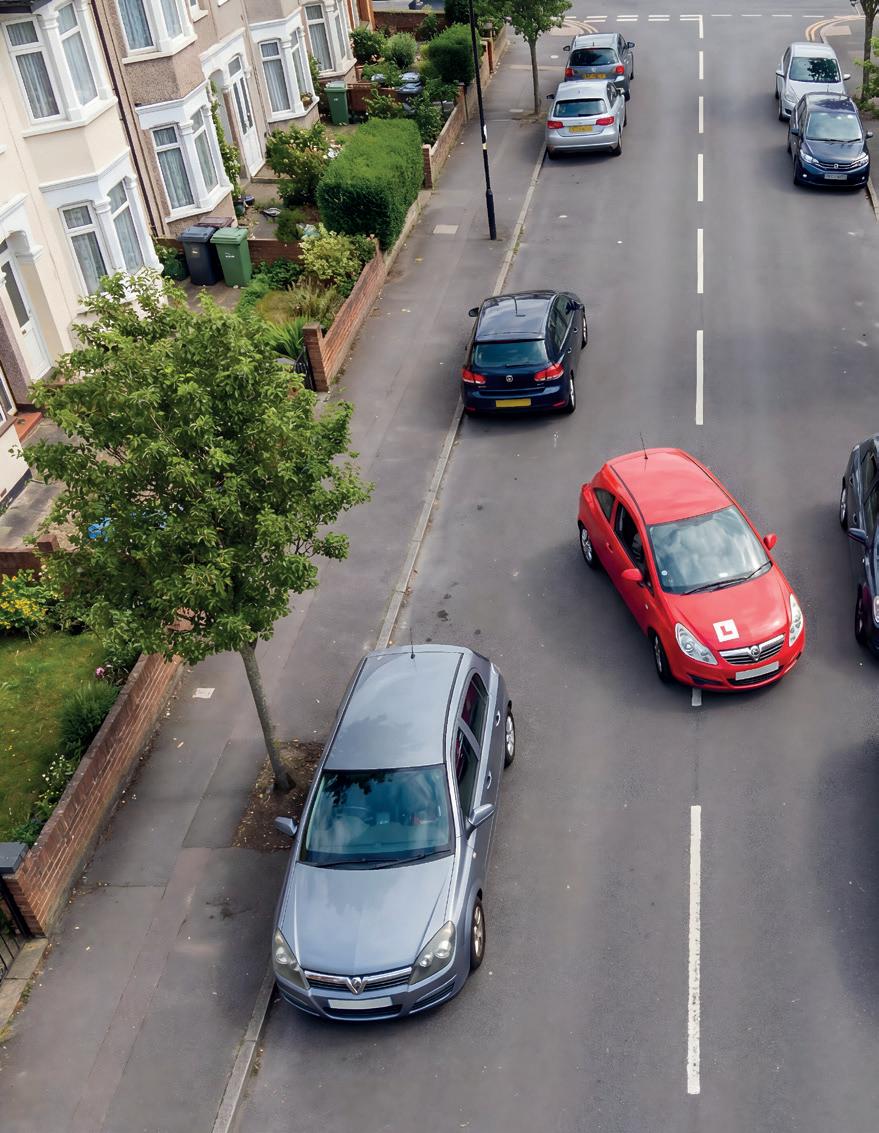
Without dual controls, you need to make sure you are not facing situations that are too difficult for your learner. Practice is about reinforcing lessons, not teaching new skills.
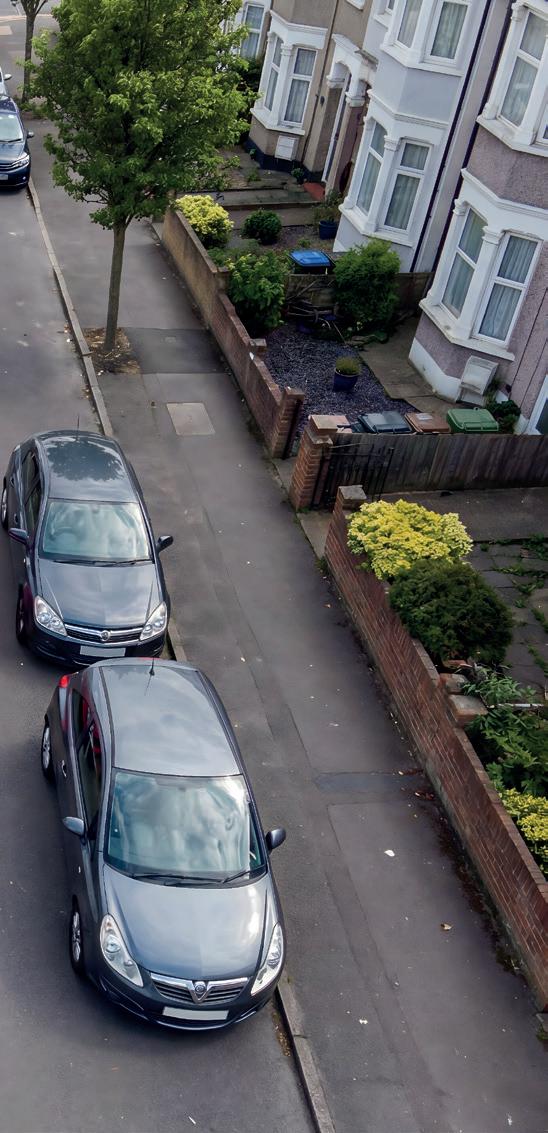
Practice between lessons is a huge part of learning to drive.
The DVSA’s own figures show that new drivers are 1.5 times more likely to pass if they have practised driving outside of professional lessons.
It can be stressful for both the young driver and the responsible adult, but it can really help your learner to pass.
Private practice should start after professional lessons have begun, not before.
You want your child to understand the basics before they head out in a car without dual controls. So, speak to their instructor to ask when you should begin practice drives. Heed their advice and stay well below the level your child has reached in their lessons.
You are almost certainly not a driving instructor. So, put any ego you may have about your driving to one side. You are supervising a practice drive, not teaching.
That means repeating situations and manoeuvres your young driver has already encountered in their lessons. So, the first time your learner tackles roundabouts, hill starts, or bay parking should be with their instructor. Once they know how to deal with a particular type of junction or manoeuvre, it’s your job to facilitate practice. Don’t take your learner into demanding new situations they are not prepared for. It’s much better for them and for your stress levels.
Reinforce, don’t compete
Ideally, speak to the instructor about how they teach a
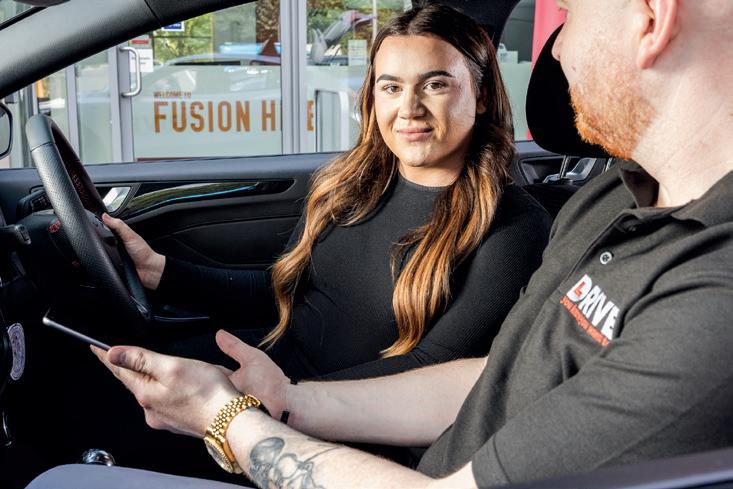


particular manoeuvre. You may even be able to sit in on a lesson, although be conscious of whether this will make your child more nervous.
If you don’t have a chance to talk to the instructor, ask your learner how they have been told to approach a particular driving task.
Follow the instructor’s lead
You are looking to reinforce what they have taught, not provide another way of doing things. Even if your method of parallel parking works for you it’s important that your advice doesn’t compete with the professional instruction your new driver is receiving.
Mirror, signal, manoeuvre, repeat
Driving in and out of bays in a deserted car park is no one’s idea of fun. But it’s the opportunity for repetition that
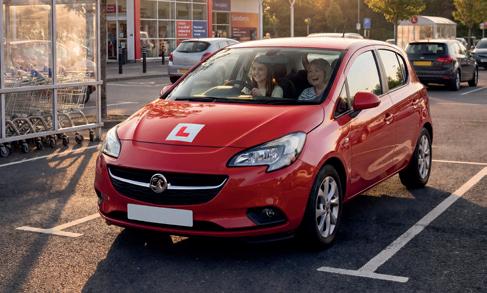
is one of the most important benefits of private practice.
The day a learner nails a tricky manoeuvre three or four times in a row will give them a big confidence boost. Regularly repeating techniques makes them second nature and means there’s a better chance of getting them right under pressure on test day.
Know the rules
The rules of the road do change over time. Take the hierarchy of road users. This principle was behind a raft of
changes to the Highway Code in 2022. The gist is, the greater the capacity to do harm, the greater responsibility a road user must take.
This is reflected in minimum space to be allowed when overtaking vulnerable road users. It’s also behind giving pedestrians priority when crossing or waiting to cross at a junction.
We all know that we should stay familiar with the Highway Code. Make a point of reading the latest edition before you start practice with your learner.
Before you get behind the wheel with your learner driver, think back to when you learned to drive. If you practised with a parent of another responsible adult, you’ll remember how tense it could be.
Nobody likes being criticised. Teenagers positively hate it. You can probably recall how tough it was to take advice from a parent when you were desperate to prove you could be independent. Two or three decades later, now you’ll be in the passenger seat. You can
appreciate why your parents were a bit nervous about being driven by an inexperienced driver without the safety net of dual controls. Just like them, you don’t want a dent in your car, but you want to be

supportive. It’s not easy. The best advice is to behave like the parent you hoped for all those years ago. Be patient and calm. Correct mistakes if you have to, but build confidence. Show your child that you are there for them and on their side.
Things will go wrong. Mentally rehearse keeping an even tone of voice and staying composed. You need to be unflappable. They may not thank you right now, but they will be glad of the support once they have passed.
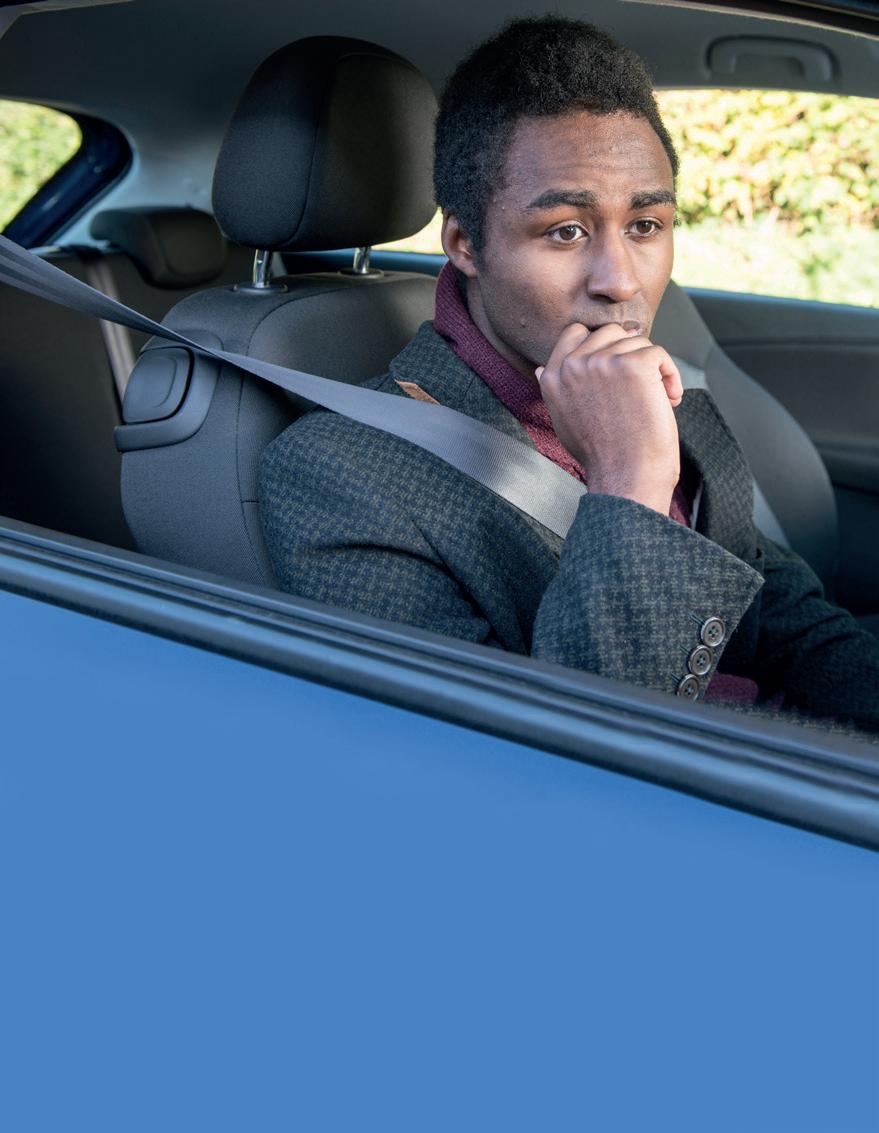
On the day of the test, encourage your child to stay busy. Going for a walk or taking some other form of exercise can occupy the mind and give them something else to focus on.
There’s no point in pretending your child won’t be nervous as their tests loom. But there are steps you can both take to prevent nerves taking over when it really matters
If having friends asking about their driving test will make your child nervous, encourage them to keep the test date to themself.
Talk to your instructor and your child about the manoeuvres they have been practising, especially the skills they need to improve upon. Then make time so they can practise with you in the passenger seat. Getting a manoeuvre right time after time without the safety net of dual controls will really help their confidence.

3
Remember, worry makes it worse
The trouble with worry is that it interferes with concentration. The mind focuses on what might go wrong instead of what needs to be done next. Encourage your child to block negative
“The mind focuses on what might go wrong instead of what needs to be done next”
thoughts and give driving their full attention every time they get behind the wheel.
This is easier said than done, but there are techniques they can use. Visualising is one. Suggest they picture themselves performing a manoeuvre perfectly before the test. They could think of this as a mental dress rehearsal.
Deep breathing is another method for calming pre-test nerves. They could practice breathing in through the nose for four seconds and out through the mouth for four seconds. Doing this for five minutes before the test starts can help settle their nerves.

The instructor wouldn’t put your teenager in for their test if they didn’t think they were ready. Encourage your child to remember all the times they have successfully tackled tough manoeuvres. If they’ve done these things well before, they can do them again.
5
However well they are driving in lessons, your child could still fail. Make sure they understand this isn’t the end of the world. In fact, it will probably make them a better driver in the long run.
One study compared firstand second-time passers and found that those who needed two attempts to pass were 15% less likely to have a collision. The extra lessons, more practice, and being that little bit older when they pass are all likely to contribute to safer driving after the test.
Don’t make a big deal of the practical test. The day before and on the day itself, be calm about the whole thing. If your child is putting themselves under pressure you need to ease that burden if you can. It’s only natural to care if your child passes or fails but if they pick up on your nerves it will make them more worried.
Parents often know their child better than anyone, so trust your own judgement. But as a rule, a calm and encouraging presence is what they will need. And if they fail? Even good drivers don’t make the grade sometimes, so be their rock and tell them they will come back stronger next time.

MUST TIDY MY ROOM
FRIDAY NIGHT
WHAT’S FOR DINNER
I f you have ever thought that your teenager’s brain works differently from a regular person’s, you are not alone. In fact, it’s not just an impression
that many parents have – this idea is backed by science. We typically consider someone an adult at the age of 18. However, recent research into the way our brain’s
develop shows that we’re still maturing for much longer. It’s not just about becoming more experienced as we age – the brain of someone in their late teens is still a work in progress.
Dealing with risk is a team effort between two parts of the brain, the amygdala and the prefrontal cortex. The amygdala detects potential threats and reacts impulsively, while the prefrontal cortex is the rational decision-making centre. Touch wood, these two parts of the brain balance each other, providing a rapid reaction when needed but a levelheaded assessment of risk.
a hair-trigger throttle and dodgy brakes.
Bad decisions are not necessarily arrogance or a love of risk. It’s just that the teenage brain is hard-wired to react impulsively.

The prefrontal cortex is the voice that says “Maybe this isn’t such a good idea.” But in the mind of a young adult that voice is just a whisper.

The trouble is the amygdala matures earlier than the pre-frontal cortex. So, the teenage brain has
Short of telling your child they can’t learn to drive until they’re 30, you can’t sidestep a young adult’s limited capacity to assess danger. But there are steps to reduce the risks.
Some countries use a system called graduated driver licensing (GDL). Under GDL, newly qualified drivers face restrictions, such as nighttime curfews and limits on passengers.
It takes until the mid20s or even later for the pre-frontal cortex to fully develop, by which time someone may have been driving for nearly a decade.
restrictions can be difficult, but if you are helping to pay for a car and insurance it seems only fair that you should lay out some ground rules. One could be no driving after 10pm at night. Another could be carrying no more than one friend in the car at a time.
Even if this isn’t law in Britain (although it is being introduced in Northern Ireland from October 2026), but you can apply your own version of GDL.
Persuading young adults to accept boundaries and
Young adults want their independence so rules can be difficult to enforce. As a parent or guardian, you can’t control what they do once the car has disappeared around the corner. However, it is worth the effort to reduce the risk that a young driver faces in the months after passing their test.
Any teenage brain is different from a fully developed adult’s. That goes double for someone with autism, attention deficit hyperactivity disorder (ADHD) or both.
● A neurodiverse teenager may take longer to master the skills of driving. Be prepared for extra lessons.
● Take frequent breaks on practice drives to help maintain attention.
● Drive on familiar routes to help develop confidence.
● Look for an instructor with experience of teaching neurodiverse learners.
For more advice: autism.org.uk/advice-andguidance/transport/driving
gov.uk/adhd-and-driving
TOP HACK
Make it a condition of paying for insurance that you can see your new driver’s black box feedback.
‘Gutted’ probably doesn’t begin to cover it. So be sympathetic. Allow them space to feel disappointed or angry, then gently remind them that a test is just one moment in their lives. They are not a good or bad driver for life after the test, whatever the result.
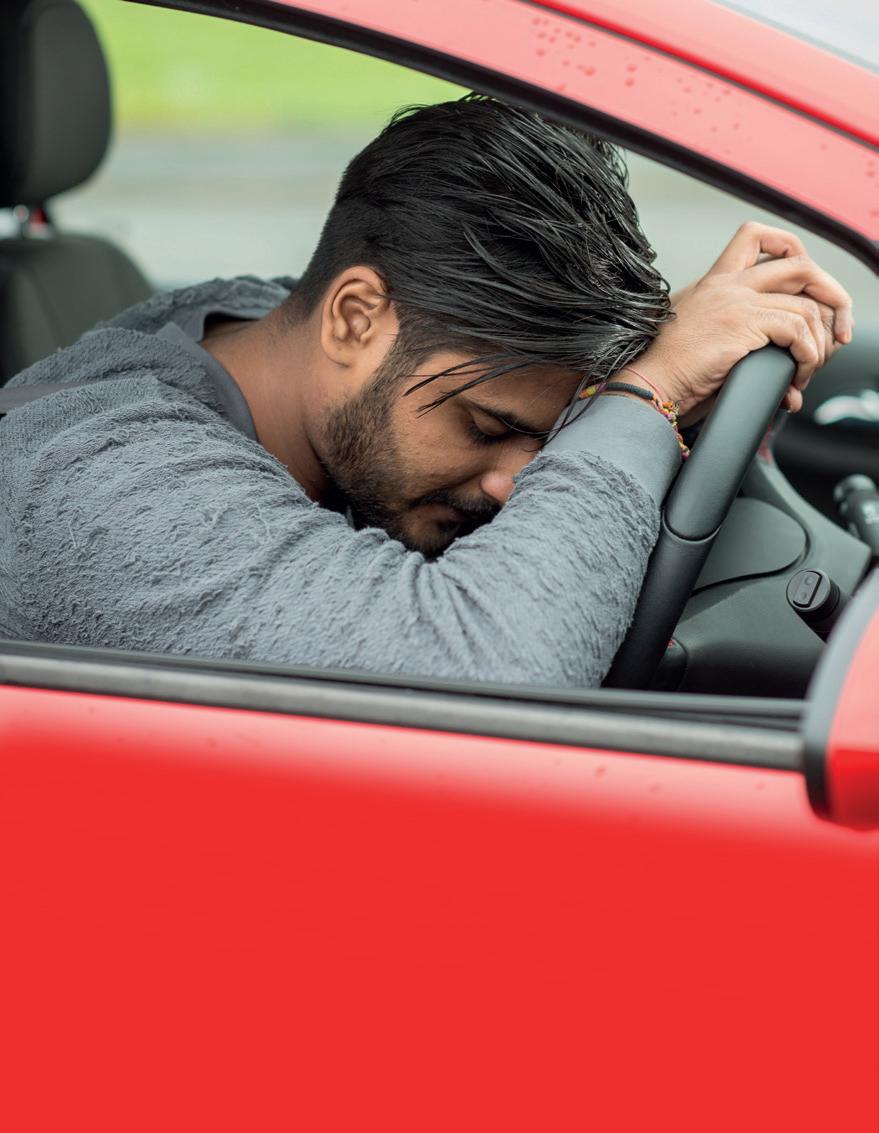
There’s a good chance your learner will fail their theory test or practical test first time, possibly more than once. Here’s how to support them
2
If your child didn’t pass their theory test, help them come back stronger by using learning aids such as apps to improve their knowledge. If they’ve failed the practical, discuss what went wrong and help them improve areas of weakness. Ideally, work with the instructor to understand how you can contribute without stepping on the ADI’s toes.
3

Failing the practical test can be a real blow to a young driver’s confidence, and they may be tempted to take a break from learning. Don’t let them take more than a few days off.
They shouldn’t be allowed to get rusty, or to put off facing their nerves indefinitely. Be supportive and encouraging. It will give them a lift to know you are in their corner.
The longer they learn, the better they will become
4
Anyone who passes first time is very proud of the fact. But did you know there’s plenty of evidence that people who fail their first practical test go on to be better, safer drivers? That’s because the extra practice and instruction will improve their skills and delay the moment at which they are exposed to the risks of independent driving. So, failing may seem like a big deal at the time, but help your child understand that, statistically, it’s going to make them a safer driver.
Tell your kid that anyone who fails first time is in good company. F1 drivers Ollie Bearman, George Russell, Jenson Button and Lando Norris all failed their first practical driving test.
Book the next test soon
5
Instructors don’t set their pupils up to fail, so if they felt your child was good enough before they should be ready for a re-test. Encourage them to book another test promptly.
This is something every driver should be able to do. The trouble is, plenty of us know how to check oil and top it up as required but forget to do so regularly. Encourage your new driver to check the oil at least once a month.
1 Explain to your young driver that they should park on level ground and let the engine cool down for 10 minutes or so. This will allow the oil to drain

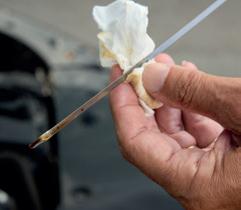
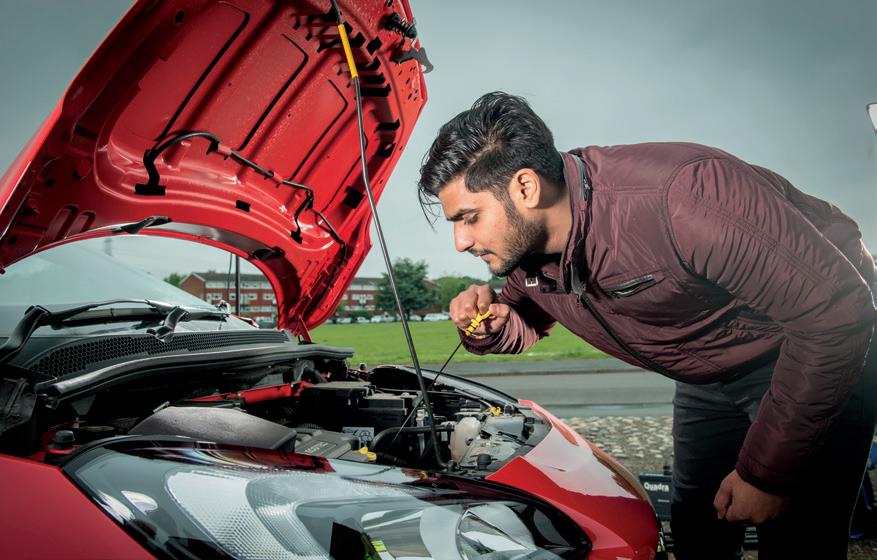
3 They should pull the dipstick out fully, and wipe it with a rag or paper cloth before putting it all the way back in.
4
Next, they should take the dipstick out again and hold it horizontally. The driver needs to look for two lines on the stick. One marks the minimum level, one the maximum. Oil should show somewhere between the two, ideally close to the maximum.

6
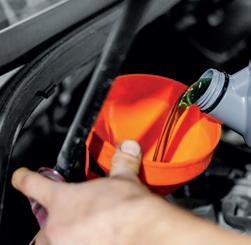
Show them how to add oil through a funnel a little at a time and repeat the dipstick check. Keep going until the oil is between the two lines.
TIP
Some teenagers will rely on mum or dad to take care of their first car. Show them what to do then encourage them to look after
it for themselves.

Usingapre-washand snow foam can lift dirt from the surface and make it easier to clean with less chanceofscratching thepaint.
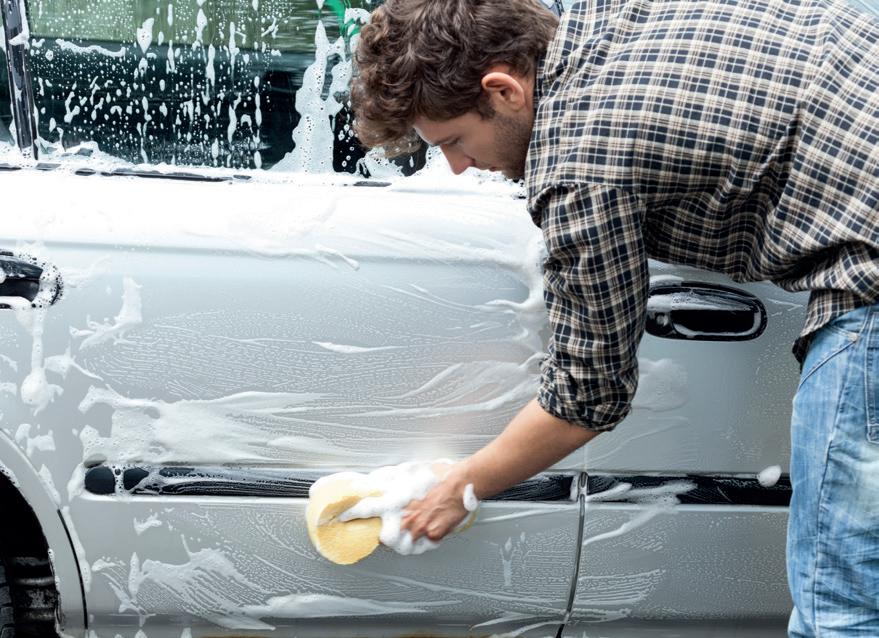
Everyone loves their first car. Help them keep their pride and joy clean by showing them the right way to get rid of dirt and grime without scratching paintwork or leaving streaky marks.
1 Show them how to rinse off the car with a hose to remove any loose dirt.
2 in a bucket. Don’t use other detergents as they may wash off any wax which is protecting the paintwork.
3 They should dip a soft sponge or a special washing mitt in the soapy water. It’s best for them to begin washing at the top of the car and work their way down.
4 Your young driver should rinse the sponge or mitt with a hose before they put it back in the soapy water. That

5 Once the whole car has been cleaned, it can be rinsed with the hose.
6
Encourage your new driver to dry the car with a clean cloth or chamois leather to prevent any streaky drying

For a professional finish, apply a thin layer of wax and buff to a shine.
If your child finds basic car maintenance boring, remind them that handling simple jobs themselves will save them money to spend on something they do enjoy.

Every new driver should get to grips with basic car maintenance. Here are some of the easy but essential skills you should pass on


S
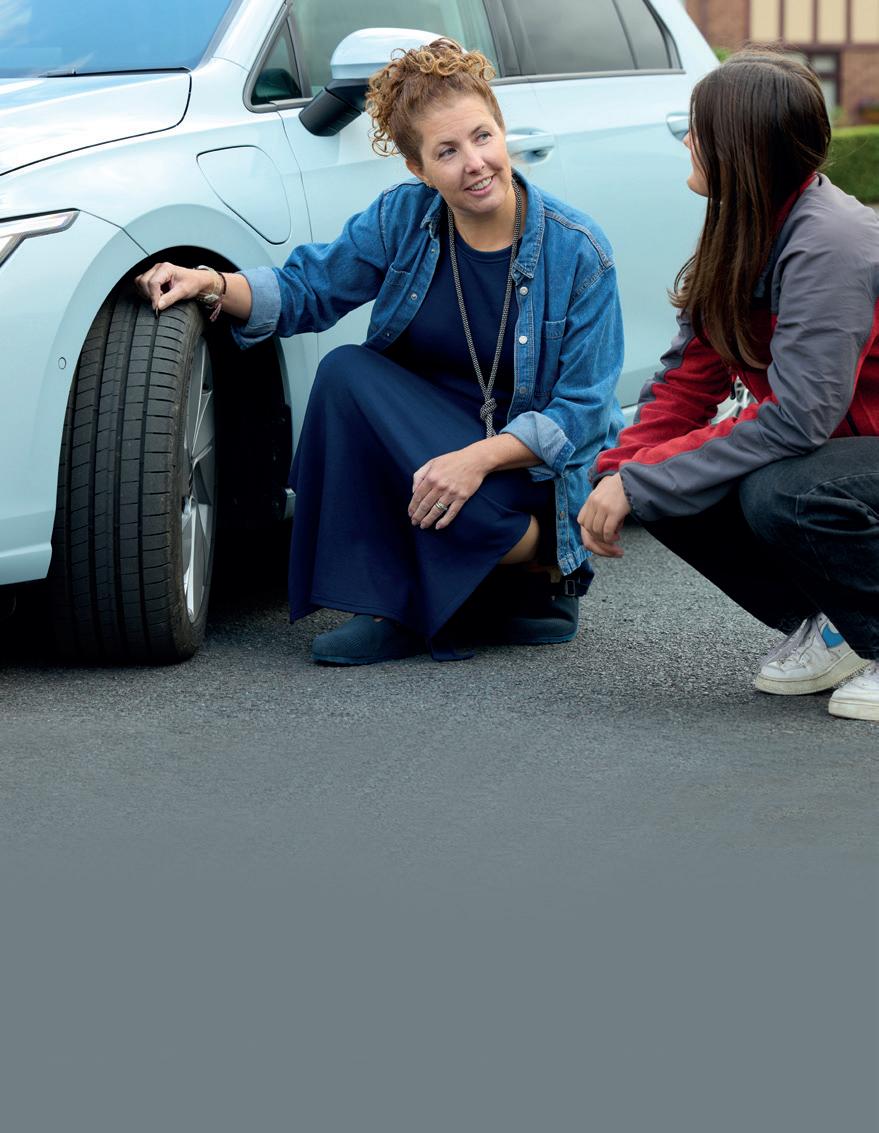
ooner or later (hopefully later) your new driver will have a puncture. Teach them how to change the tyre with this guide:
1 The driver should make sure they are in a safe place. It should be off the road and on level ground. If they can’t get away from the road completely, the car’s hazard warning lights should be on.
5
The car’s tool kit will have a jack for lifting the car up. All cars have dedicated jacking points. The driver should look in the handbook to find where they are, then position the jack under the jacking point and use it to raise that corner of the car off the ground by 10 centimetres or so.
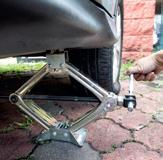
2 The handbrake should be on. The driver should then take the spare wheel and the tools they will need out of the boot.
3
It’s really important that the car doesn’t roll away while they are working on it. So, chock the opposite wheel to the one with the puncture (so, the right-hand rear wheel if the puncture is on the left-front wheel). If they don’t have a chock, a brick or a large rock can do the job.
4 The driver should loosen the wheel nuts, but shouldn’t take them off completely yet.
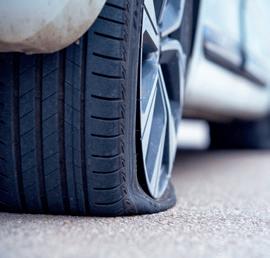
6 Now the driver can unscrew the nuts fully. The wheel should pull off easily. It should be placed flat on the ground so it doesn’t roll away.
7 Next, the driver should slide the spare wheel onto the hub. They will need to line up the bolt holes then replace the nuts and tighten them by hand.
8 Now they should lower the car back to the ground with the jack. Once the tyre reaches the ground all the wheel nuts must be tightened.
9 The jack should be lowered until it is clear of the jacking point. The driver should contact their breakdown provider.
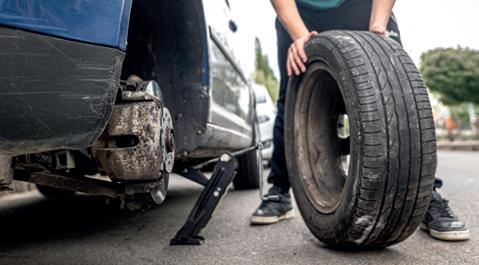


should then give the wheel nuts one last check.
10 Once they have packed the tools away and put the flat tyre where the spare wheel was, they should find a nearby garage and check the tyre pressure is correct.
11 The driver should have the punctured tyre repaired or replaced as soon as possible.
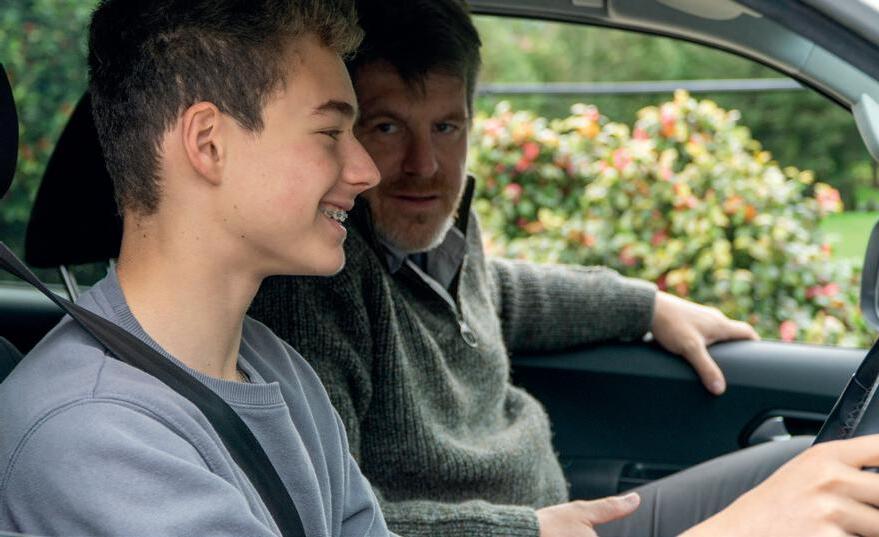
The first year after passing the practical test is an exciting time for your newly qualified driver, but it can also be a dangerous one
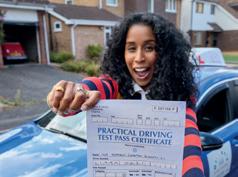
It may happen quickly. Or it could take a while. But sooner or later, your learner driver will pass their practical test and will hold their full driving licence in their hands.
The day they pass will be a happy one. It’s a milestone in your young adult’s life, but don’t think this is the end point of learning to drive. The formal process of passing the theory and practical test is really just the start.
The uncomfortable truth is that the first 12 months of independent driving are a dangerous time. Around
one-in-five new drivers have a collision in their first year on the road. Some studies put the percentage even higher.
So, when your child ditches
“Around one-in-five new drivers have a collision in their first year”
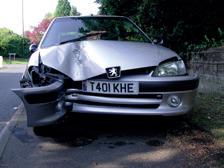
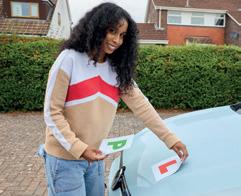
L-plates for P-plates you still have work to do. Young drivers need support and advice as they start driving independently. Influencing a 17 or 18-year-old’s behaviour is not easy, but it’s worth the effort.
Lead by example
“Do as I say, not as I do” won’t cut any ice with a teenager who has just passed their test. You need to show that driving after passing doesn’t mean picking and choosing which rules of the road you follow.
Stick to the limit, leave your mobile alone, and show patience and consideration
around vulnerable road users. If you want your child to be a safe driver for life, not just someone who drives a certain way to pass a test, you need to set a good example. Perhaps you could agree to take advanced driving lessons if your child signs up to a Pass Plus course.
A privilege, not a right
If your child is insured on the family car or if they are lucky enough to have a car of their own, make sure it is understood from day one that using the car comes with certain conditions and expectations.
Some evidence suggests that having access to a family car rather than owning a vehicle reduces the risk of a collision over the first few months. So, it could be better to help fund a car for your new driver as a reward after a collision-free first year on the road rather than immediately after passing.
Limiting the times of day when a new driver gets behind the wheel can also help. Driving home from the pub or club
“A car full of same-age passengers increases the risk of a fatal collision by four times”
is especially risky, even if the young driver hasn’t taken any alcohol or drugs. A lift from mum or dad is safer.
One of the big risk factors is the number of same-age passengers in the car. Driving solo or with an older adult in the passenger seat is far safer than a car full of excited mates. In fact, a car full of same-age passengers increases the risk of a fatal collision by four times. Make access to the car conditional on limiting the number of passengers. The appropriate number is something you’ll need to decide with your child. A lower number is safer, but you will have to conclude what is practical and achievable. This is a tough one to police, which is where a relationship built on mutual trust really helps.
Teenagers don’t like being told what to do. Then again, does anybody? Studies show that a warm, supportive parent-teen relationship leads to better driving than a more remote and inflexible approach. Look for agreement over how driving post-test will work, rather than imposing a rigid framework without their cooperation.
Sit down with your young driver and agree what independent driving will look like. Decide what you will do in return to help your new driver make a safe start.
I will always check before I take the car
I will not drive after pm
I will not carry more than same-age passengers
I will stick to the speed limit
I will never use my phone while driving
I will never drink or take drugs and drive
As a parent or guardian…
I will offer a lift home from the pub or club times a month
I will pay £ towards insurance
I will demonstrate basic maintenance
I won’t set a bad example with my own driving
There’s no getting around it, insurance for young drivers is expensive. With little experience, new drivers are far more likely to be in a collision. Around 1-in-5 crash in their first year of independent driving.
Touch wood, that won’t happen to your new driver, but if it does, you’ll be glad you had the right cover in place. The need for insurance starts long before they pass, as you’ll need to have a policy for practice drives between professional lessons with the instructor.
You can add your young driver as a named driver to the family car. That’s probably what your parents did when you learned to drive. But a neater solution is to take out learner driver insurance.
This is a separate policy
“The great thing about learner driver insurance is that your hard-earned noclaims bonus isn’t at risk”
which covers the learner while practising in someone else’s car. That’s usually a parent or guardian but it could be a willing family friend or relative.
These policies are short term, lasting a day, a month, or perhaps a full year depending on what you need. Compared with the price of a policy once your child passes, learner driver insurance is relatively affordable – for example, cover from Adrian Flux starts from 55p per day.
The great thing about learner driver insurance is that your
hard-earned no-claims bonus isn’t at risk. If your kid does put a dent in the car while practising parallel parking the claim is made through the learner driver insurance, not your main policy.
Just make sure the car you plan to practice in can be covered, as there are usually restrictions on the price and value of a car your child can drive. Adrian Flux will cover vehicles up to insurance group 45 (of 50) and up to £30,000 in value.
Once your child passes the practical test and bins their L-plates once and for all, they are no longer covered by the learner policy. You will need a different kind of insurance.
Again, you could make your child a named driver on your insurance. This can be very expensive – we’ve known families who were quoted £2000 to add their child for the last couple of months of
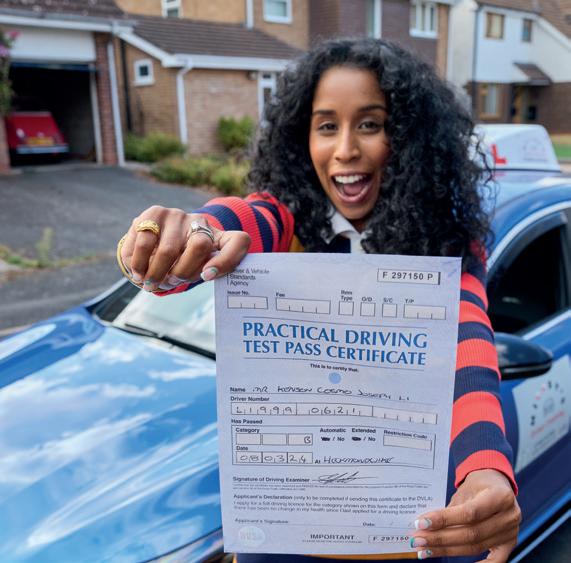
an existing policy. Also, your young driver won’t build up a no-claims bonus.
If your new driver is lucky enough to be the main driver of a car, then they will need their own insurance policy. This will inevitably be expensive. But contacting a specialist such as MyFirst can help you find good cover at a competitive price.
Typically, the most competitive quotes for young drivers will be for a telematics (or ‘black box’) insurance policy.
These use sensors in the car to monitor how the car is being driven, and report back to the insurer. It seems a bit Big Brother, but knowing that their driving is being monitored encourages good habits. Drivers who stick to the speed limit and drive smoothly are rewarded. That could mean a lower cost when the premium is renewed, extra miles on a limited mileage policy, or vouchers and special offers.
An app or web portal gives drivers feedback to help them improve. If you’re a named driver on the policy you’ll be able to see it too…
Making yourself the named driver for a car which is really your child’s could come back to bite you. This is called ‘fronting’ and it’s a type of insurance fraud. Your policy could be invalid and a claim might be refused if you and your child are found out.
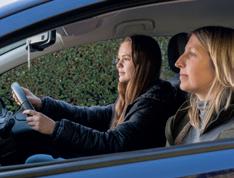
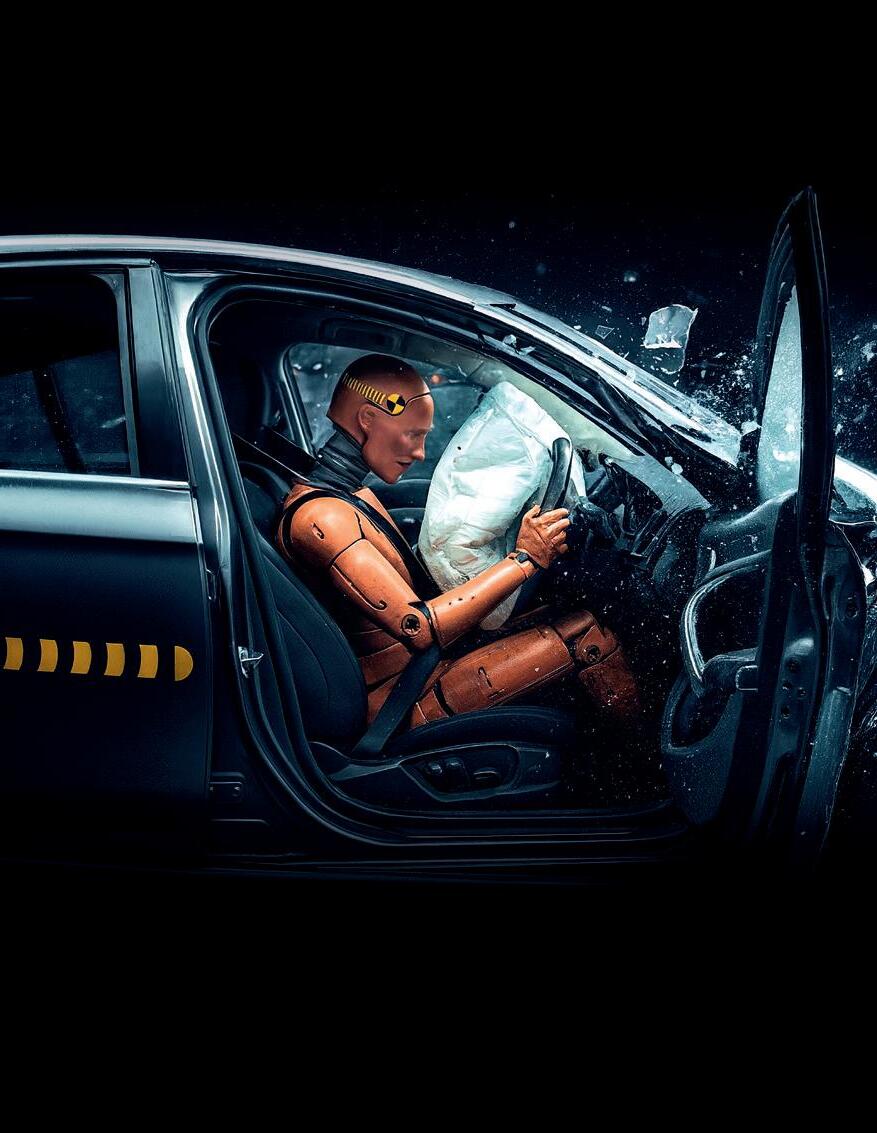
Any parent or guardian wants their child to stay safe when they start out on the road. Choosing a safe first car is a good start
Newer is better As a rule of thumb, the newer the car the safer it will be. Safety standards are improving all the time and driver aids that were science fiction when
you learned to drive are now standard. You’ll need to balance your budget against the age of the car you buy, of course. But newer is better if you can find the money. 1
“The newer the car the safer it will be. Safety standards are improving all the time”
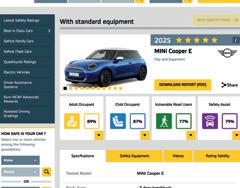
Go to Euroncap.com and check the rating of any make and model you are thinking of buying. There’s an overall rating out of five stars. That’s then broken down into different categories, including occupant protection and safety assist. Just as cars have improved over the past few decades, so Euro NCAP has steadily made its tests tougher. So, you can’t compare a rating from, say, 2016 with a score from 2026. To reflect that Euro NCAP now labels older tests as ‘rating expired’. The old ratings are still useful, but just make sure you are comparing like for like.
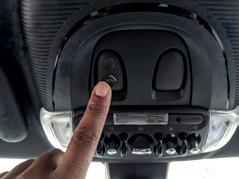
Electronic stability control helps the driver stay on the road if the car begins to slide. It’s been compulsory since November 2014. Autonomous emergency braking (AEB) is a more recent driver aid that warns an inattentive driver if a collision is likely. It even applies the brakes if the driver doesn’t respond. It has been compulsory for all new cars since May 2024.
Finding a safe first car isn’t just about the crash test rating and equipment fitted. When you begin shopping for your child’s first car, make sure any example you are thinking of buying has no outstanding recalls. These are safety-related remedies for known faults. You can check by entering the reg number at gov. uk/check-vehicle-recall.
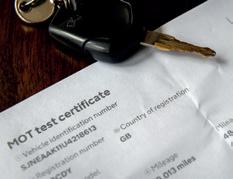
Any car between three and 40 years old must pass the annual MOT. Many of the checks relate to safety, so it goes without saying that you should never buy a used car without a valid MOT.
These models have both scored the maximum five stars in Euro NCAP testing. You can check the star rating of any car you are thinking of buying at Euroncap.com.

This cool-looking hatchback picked up five stars when tested in 2025.
Check the car’s MOT history online (gov.uk/check-mothistory) and look for advisories. These are issues with the car that aren’t serious yet but could be if ignored, such as low but not illegal tyre tread depth.
You should also check the service history to be sure the car has been serviced on time and to the manufacturer’s instructions. A missed service doesn’t necessarily make a car unsafe, but a clean MOT and a fully stamped service book are all good signs.

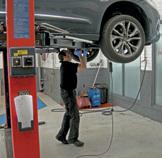
With a score of 94% for adult occupant protection, the Polo is one of the safest small cars.
NB: Ratings apply to current-generation models.