the simple Chinese cookbook
FIRMIANA WANG
INTRODUCTION
Some of my earliest memories of food include steaming bowls of white rice topped with various vegetables and meat These vegetables and meats were each cooked on their own, plated on separate dishes, and these dishes were placed in the center of the table. Everyone joining for lunch or dinner would sit around the table with their own bowl of rice, and we would share the dishes in the center of the table. The resulting aroma of the dishes all placed next to each other was always impeccable, regardless of how many dishes there were
Ten of those dishes are captured in this miniature cookbook. Included in this cookbook are the simpler dishes that require no special techniques and can be created by anyone. Each dish is enough to feed two to six people, depending on the number of other dishes there are Typically, my family makes two or three dishes for each meal, and we serve them with bowls of rice.
2
2
TABLE OF CONTENTS
Introduction
Table of Contents
Pantry
SHREDDED DAIKON SALAD
STIR-FRIED SOUR NAPA CABBAGE
STIR-FRIED SHIITAKE MUSHROOM BOK CHOY
STEAMED CHINESE EGGPLANT
STIR-FRIED SHREDDED POTATOES
STIR-FRIED TOMATOES & SCRAMBLED EGGS
CENTURY EGG SALAD
STEAMED TOFU (with green onions)
MAPO TOFU
STIR-FRIED PORK STRIPS (with green beans)
14 16 18
22 24 3
3 4 6 8 10 12
20
PANTRY
GARLIC + GINGER + GREEN ONIONS
These three ingredients are common in most Chinese dishes, especially the recipes in this cookbook. The garlic and ginger are usually the first to be added into a dish, heated with oil to bring out the flavor The green onions are typically for garnish and the last to be added to a dish.
BLACK VINEGAR + SOY SAUCE
Two of the most common sauces in Chinese cooking, black vinegar and soy sauce enhance a dish better than salt alone can. The black vinegar adds a hint of sourness and the soy sauce provides a richer savory taste to the dish.
SICHUAN PEPPERCORNS
Sichuan peppercorns are slightly different from black peppercorns in that they have a tingling, numbing taste For some recipes, you’ll need to ground the peppercorns into a powder. To do so, fill a plastic bag with the peppercorns and use a rolling pin to crush.
THE STEAMER POT
Some recipes call for a 2- or 3-tiered steamer pot. The bottom layer or compartment of the pot typically holds boiled water, which produces steam. The steam then seeps through the upper one or two compartments, which have holes in the bottom to allow the steam to filter through. This process allows the food to steam. If you don't have a steamer pot, a normal large pot with a small metal rack to put inside works as an alternative.
4
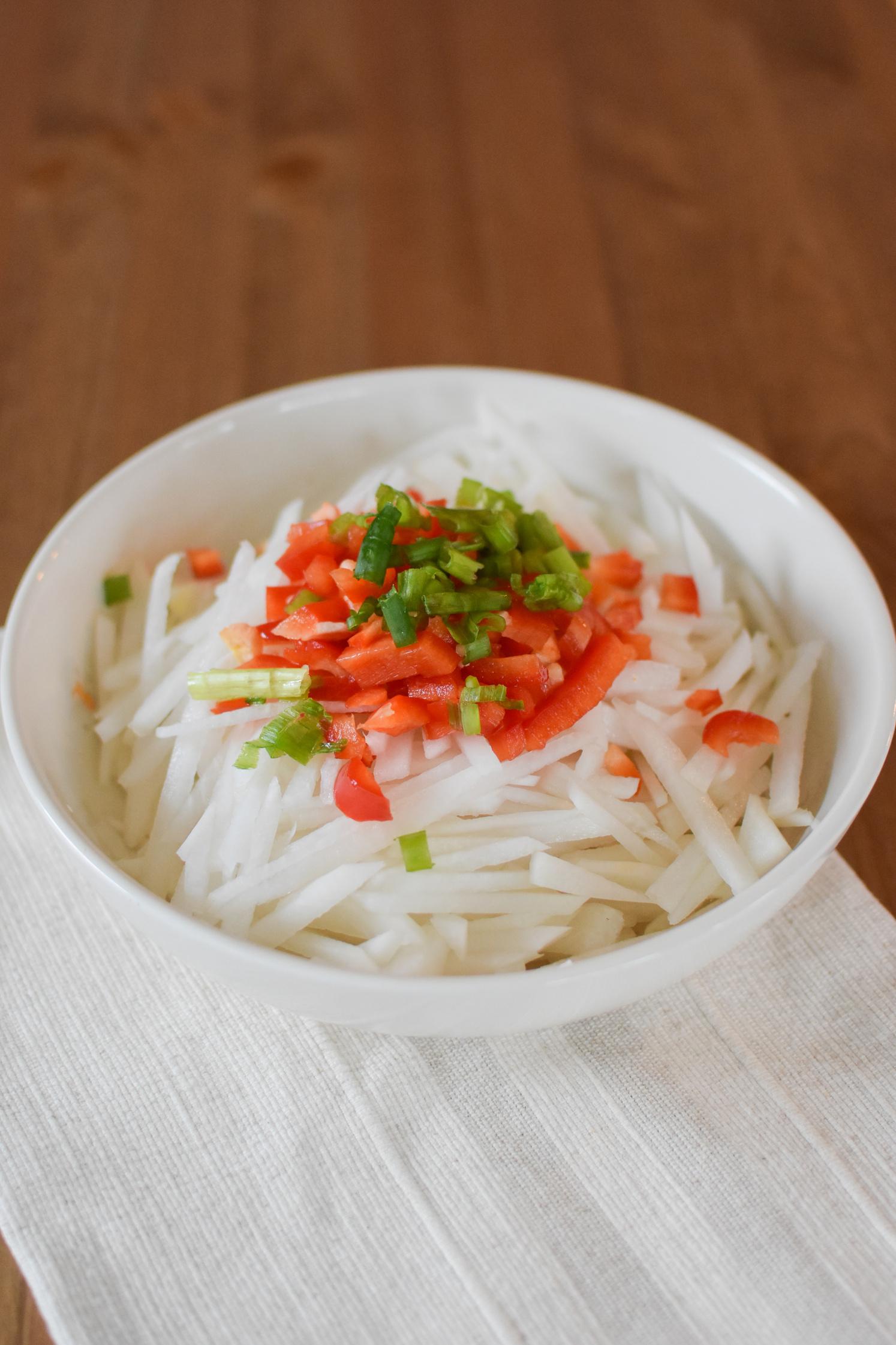
SHREDDED DAIKON SALAD
凉 拌 萝 ⼘ 丝
All the preparation needed for this dish can be done in 5-10 minutes as there’s no heat involved. The dish is centered around daikon, a white radish that can be eaten cooked or raw. When cooked, it can be stir-fried or added to soups and broths. When eaten raw, the daikon can be used as a garnish or served as a simple dish. In this recipe, the daikon is mixed with sauces that bring out the crunchy texture and slightly tangy or bitter taste of the daikon.
I N G R E D I E N T S
½ daikon, peeled
1 green onion, thinly sliced
3 cloves of garlic, minced
1 tablespoon soy sauce
1 tablespoon black vinegar
1 teaspoon honey
½ of a red bell pepper, cut into ½ inch cubes (optional)
Slice daikon into 2 inch long by ½ inch wide by ¼ inch thick strips
Combine soy sauce, black vinegar, honey, and garlic in a small bowl. Mix until the honey dissolves, then set aside.
In a large serving bowl, add the daikon strips, red bell peppers, and green onions
Pour the sauce mixture on top of the vegetables. Mix before eating.
6
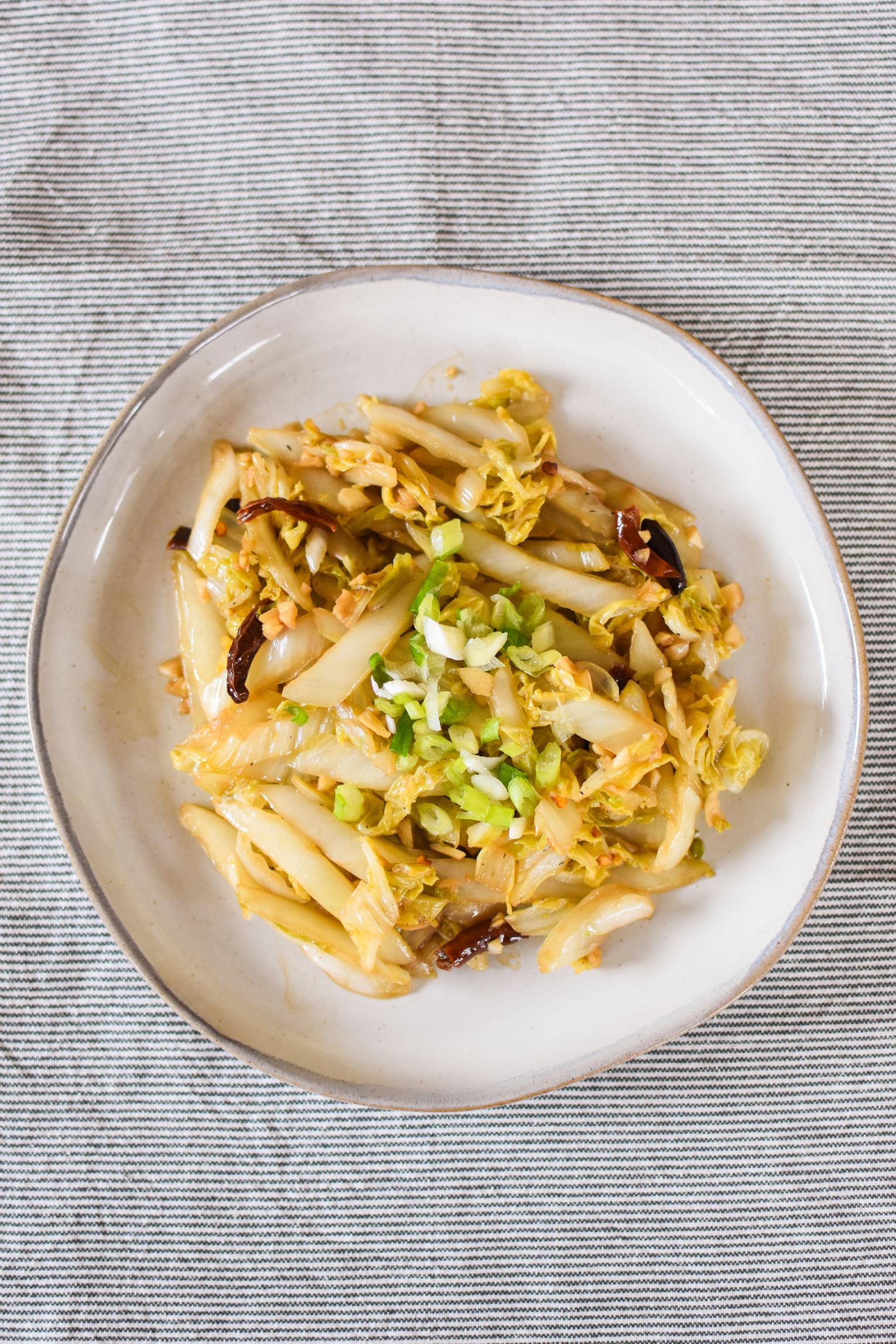
STIR-FRIED SOUR NAPA CABBAGE
Napa cabbage is by far one of my favorite vegetables. It can be used in any type of dish and is still bound to taste good. Unlike regular cabbages, which have leaves that are tucked into a ball, napa cabbages have slightly-crinkly leaves wrapped in an oblong shape. When eaten raw, the leaves are crisp and retain any flavoring from sauces extremely well. In this dish, the leaves are cooked, which allow the leaves to become more tender, but still with a little bit of crunch. When paired with black vinegar, the leaves bring out the sour taste of the vinegar and the vinegar accentuates the crispness of the leaves.
1½ tablespoon vegetable oil
2 dried red chili peppers, chopped into thirds
4 cloves of garlic, minced
10 napa cabbage leaves, cut into ½ inch long strips
2-3 tablespoons black vinegar
1 green onion, thinly sliced
Heat the oil over high heat in a wok or frying pan. If using a wok, swirl the oil around the sides to prevent the vegetables from sticking later on. Add in the chili peppers and fry until the oil becomes fragrant, around 1 minute. Stir occasionally to prevent the peppers from burning. Add in the garlic and cook for another 30 seconds.
Add in the napa cabbage and stir-fry for around 5 minutes until the whites of the leaves become slightly soft or water comes out of the leaves Stir occasionally
Add in the black vinegar and combine Cook for another 2 minutes
Turn off the heat and garnish with green onions.
醋 溜 ⽩ 菜 I N G R E D I E N T S
8
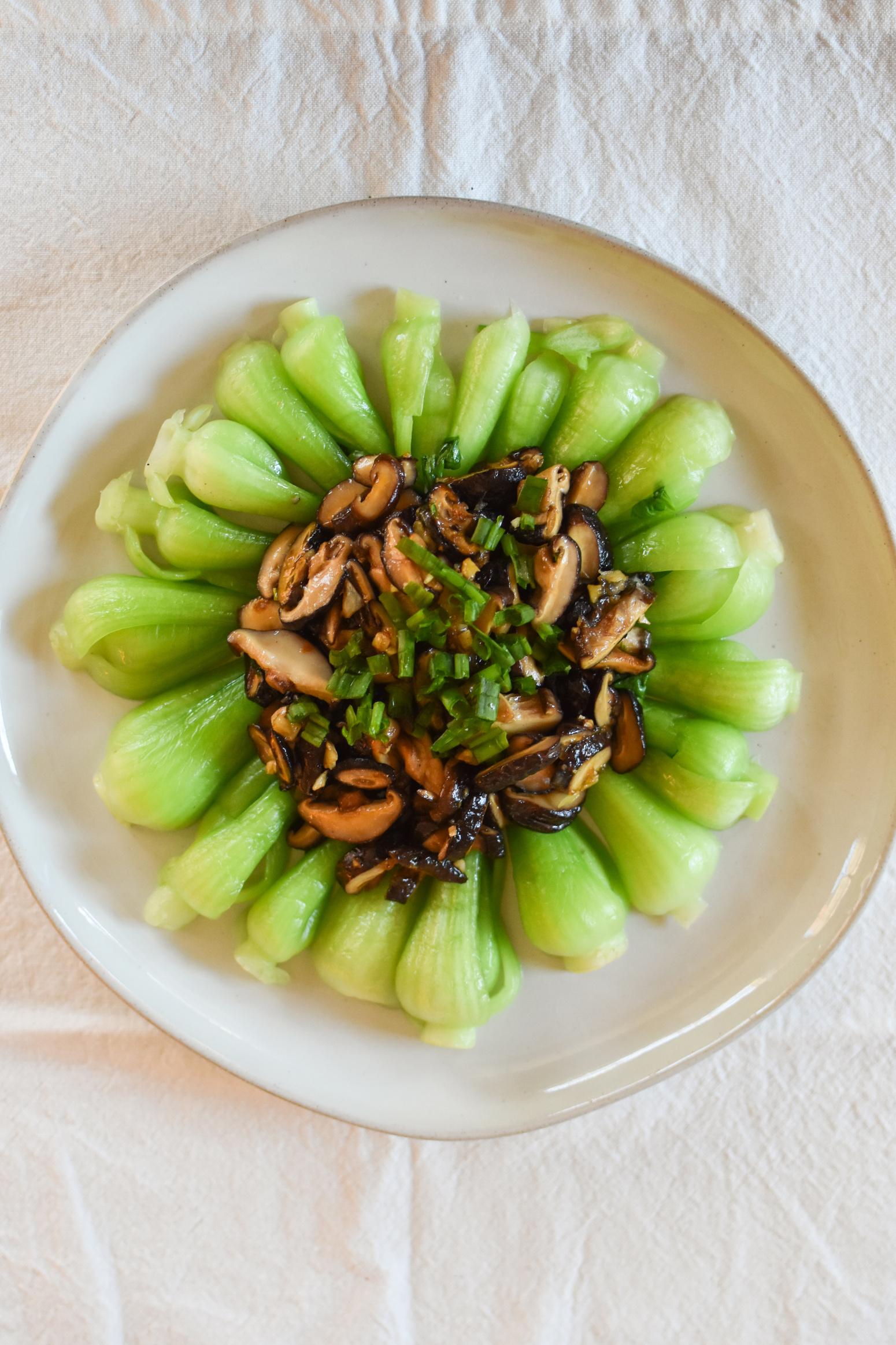
STIR-FRIED SHIITAKE MUSHROOM BOK CHOY
Shiitake mushrooms are commonly used in a variety of dishes, ranging from stir-fried dishes to broths. We typically buy them dried, but a quick soak in warm water gives them back their moisture. Shiitake mushrooms tend to have a meatier texture and more flavor than normal mushrooms, which provides a nice balance to the crisp texture of the bok choys in this dish.
Fill a medium bowl with 2 cups of warm water Soak the mushrooms in the water for around 10 minutes
2 cups warm water
20 Shiitake mushrooms
1 quart water
1 teaspoon salt
1 teaspoon vegetable oil
16 bok choys, sliced into halves
1½ tablespoons vegetable oil
3 cloves of garlic, minced
1 tablespoon of ginger, minced
1 teaspoon soy sauce
1 teaspoon black vinegar
1 tablespoon water
1½ teaspoons cornstarch
1 green onion, thinly sliced
Drain the water and squeeze out as much water as possible without breaking the mushroom. Slice the mushrooms into thin ¼ inch slices.
Boil 1 quart of water in a wok over high heat. Once the water boils, add in the salt and 1 teaspoon of oil. Soak the bok choys for 1-2 minutes in the water until the leaves begin to wilt. Turn off the heat and remove the bok choys from the wok. Place in a bowl and set aside.
Using the same wok, heat 1½ tablespoons of oil over high heat. Add in the garlic and ginger. Fry for 30 seconds, then add in the mushrooms. Cook for 1 minute and then add in the soy sauce and black vinegar. Cook for another 2-3 minutes, stirring occasionally.
Meanwhile in a small bowl, mix the cornstarch with 1 tablespoon of water Once the mushrooms are nearly cooked through, add in the cornstarch mixture and combine
After 30 seconds, turn off the heat Plate the bok choys in a circle and add the mushrooms in the center Garnish with green onions
⾹ 菇
I N G R E D I E N T S
炒 油 菜
10
STEAMED CHINESE EGGPLANT
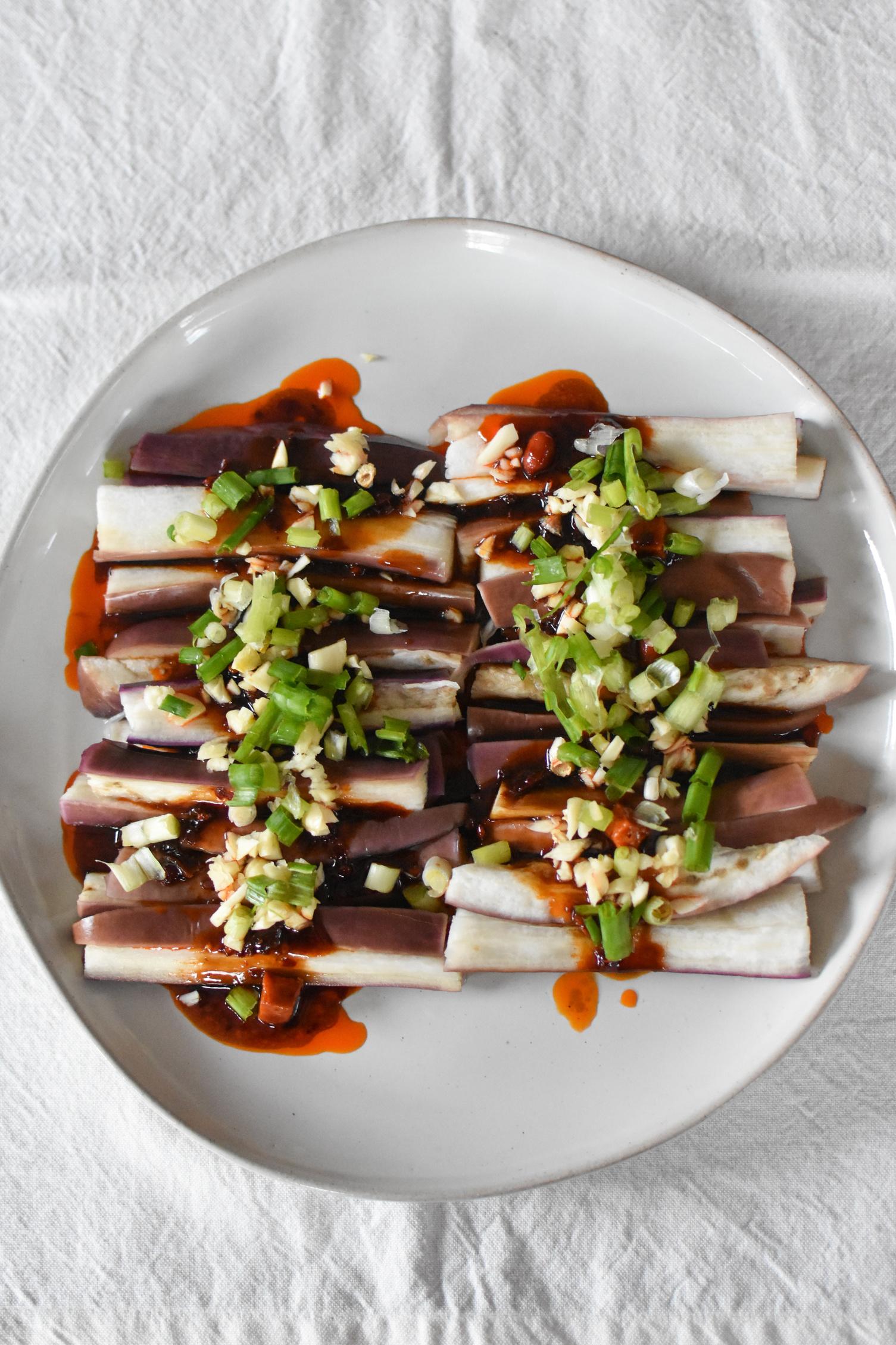
Chinese eggplants, coated in a light purple and containing few seeds, have a much more delicate flavor than typical globe eggplants. To preserve the pale violet color when steaming, the eggplants are soaked in white vinegar and water. In this dish, the texture of the eggplants are brought out by the chili sauce. This dish is simple to make and requires little preparation or hands-on cooking; however, you will need either a steamer pot or a large pot with a small metal rack
2 Chinese eggplants, sliced into eighths lengthwise
4 quarts water
⅓ cup white vinegar
1 tablespoon soy sauce
1 tablespoon black vinegar
1 tablespoon oyster sauce
1½ tablespoons chili oil
6 cloves of garlic, mined
2 green onions, thinly sliced
In the base of the steamer pot, pour around 2 quarts of water. Boil the water on high heat.
In the meantime, soak the eggplant sections in a large bowl filled with 2 quarts of water and the white vinegar for 4 minutes.
Drain the water and squeeze out as much water as possible from each eggplant section. Place all eggplant sections onto a rimmed plate in two columns. Set down the rimmed plate into a compartment of the steamer pot. Once the water boils, place the compartment with the eggplants on top of the steamer pot base Steam for 8-10 minutes
In a small bowl, mix together the soy sauce, black vinegar, oyster sauce, and chili oil
Once the compartment is cool to touch, remove the plate from the compartment and drain the water.
Pour the sauce mixture over the eggplants in two columns. Top each column of sauce with garlic and green onions. Serve hot or cold.
蒸 茄 ⼦ I N G R E D I E N T S
12
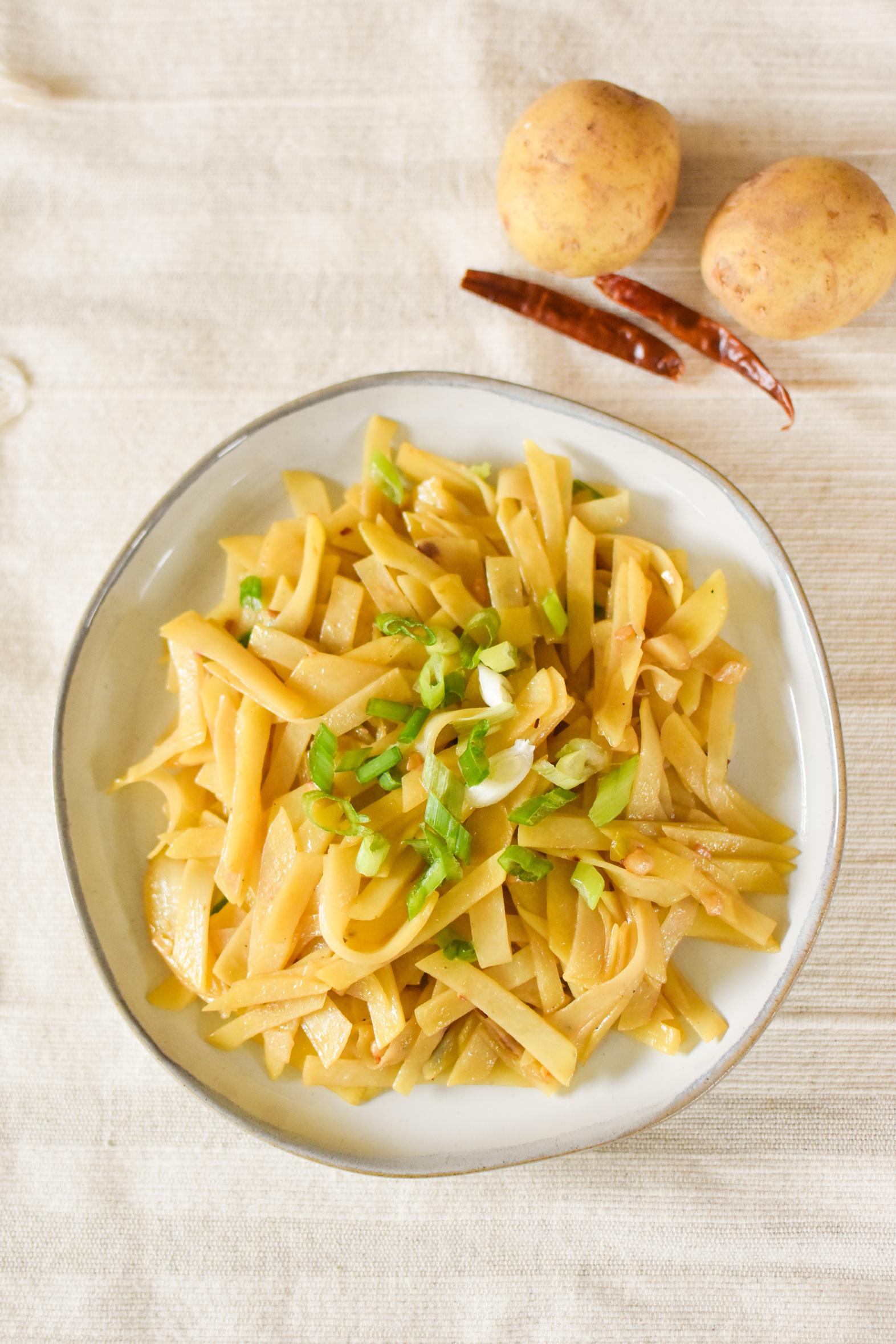
STIR-FRIED SHREDDED POTATOES
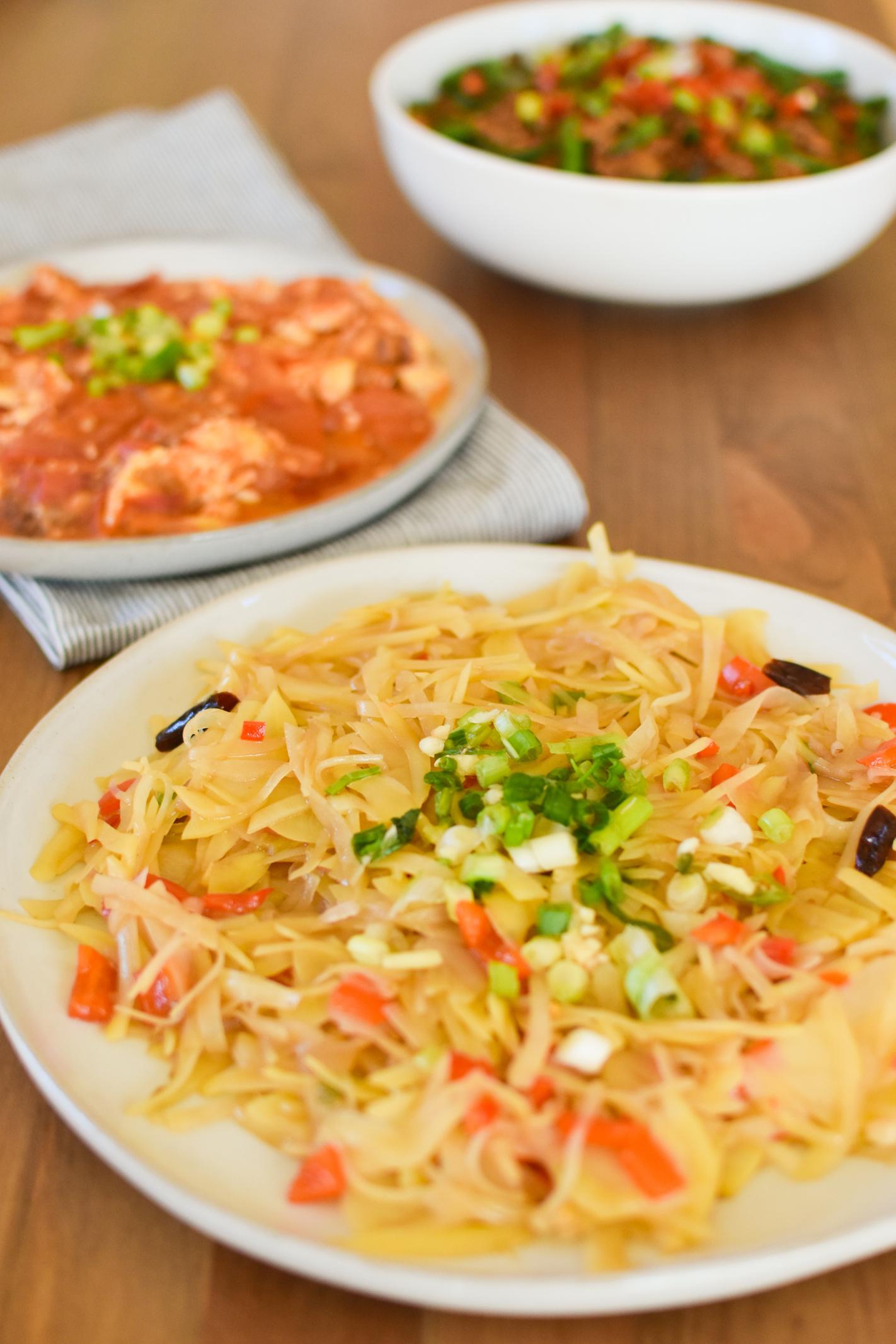
Stir-fried shredded potatoes are just what they sound like: the entire dish is focused on the potatoes, which are sliced into thin strips and then stir-fried. Once you master the skill of slicing the potatoes into strips quickly, the entire dish becomes fast and simple to make. If the potatoes become too hard to chop, a mandoline slicer will slice them thinly just as well.
4 medium-sized potatoes, peeled
1½ tablespoon vegetable oil
3 cloves of garlic, minced
2 dried red chili peppers, roughly chopped
3 tablespoons apple cider vinegar or black vinegar
1 tablespoon soy sauce
3 tablespoons water (optional)
1 green onion, thinly sliced
Chop the potatoes into 2-3 inch long by ½ inch wide by ¼ inch thick strips If the potatoes are too hard to cut by hand, use a mandoline slicer Set aside
Heat the oil over medium heat in a wok or large frying pan. Add in the garlic and chilies, making sure neither of them burns. Once the oil becomes fragrant, add in the potato strips. Cook for 1 minute, stirring occasionally.
Add in the vinegar and soy sauce. If the potato strips start sticking to the sides of the pan, add a tablespoon of water at a time. Cook for another 6-8 minutes, stirring occasionally.
Turn off the heat and garnish with green onions before serving.
⼟ ⾖ 丝 I N G R E D I E N T S
14
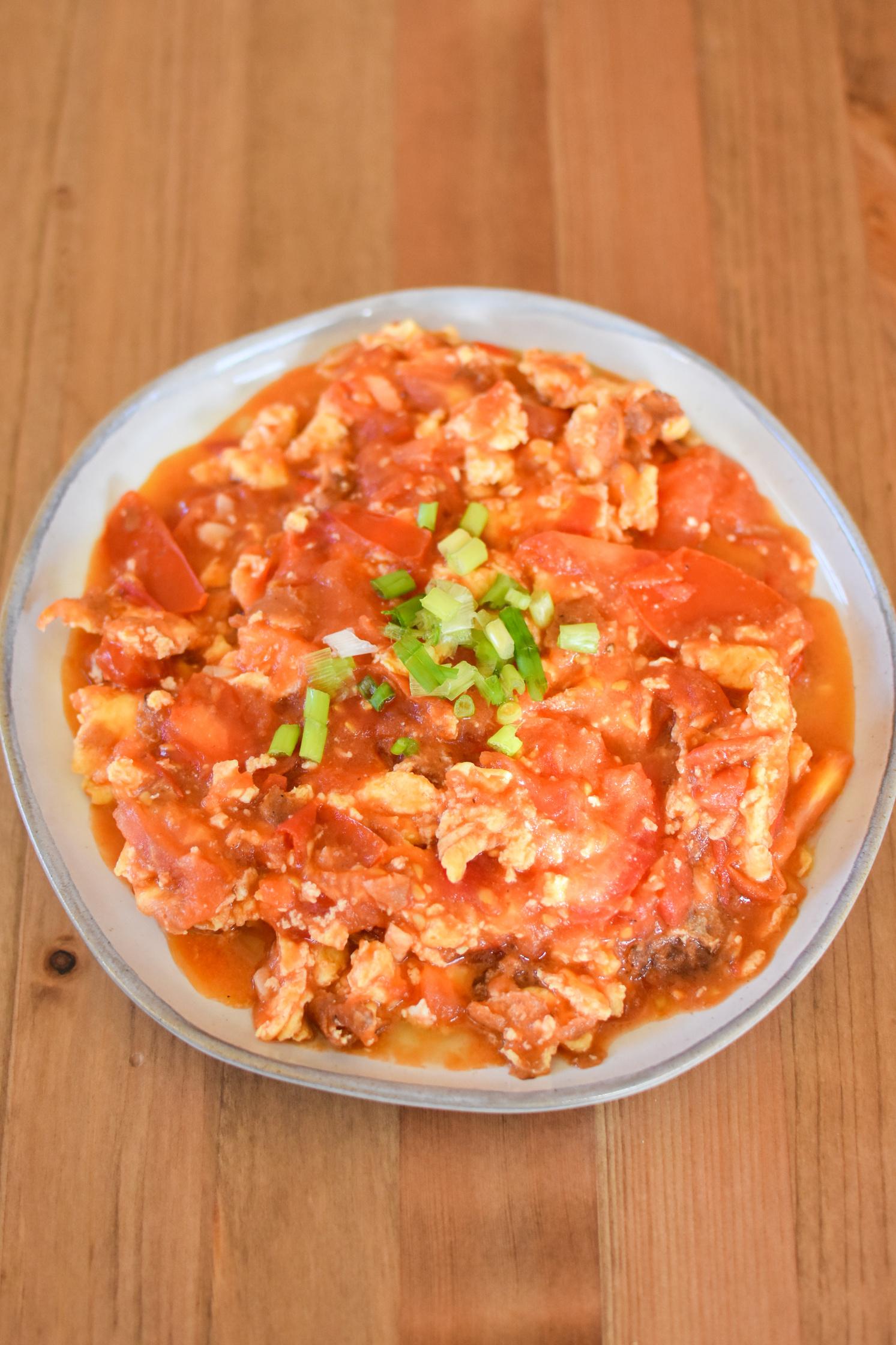
STIR-FRIED TOMATOES & SCRAMBLED EGGS
As I grew up, this dish became a staple of my dinners. It was an easy dish with simple ingredients that took little time to make. Plus, the aroma of the tomatoes and eggs is unbeatable (haha). The fluffy eggs absorb the acidic taste of the tomatoes surprisingly well, maintaining an even balance between the egg to tomato flavors. Simply serve the dish with a bowl of rice and the rice will soak up the tangy tomato sauce.
3 medium eggs
1 teaspoon salt
1 teaspoon rice vinegar
2 tablespoons vegetable oil
3 cloves of garlic, minced
3 medium tomatoes, sliced into wedges
1 green onion, thinly sliced
Beat the eggs in a medium bowl until incorporated. Add in the salt and rice vinegar.
In a wok, heat 1 tablespoon of oil over high heat. Pour in the eggs and scramble for 1-2 minutes. Once cooked, remove from the wok and set aside.
In the same wok, heat another tablespoon of oil over high heat. Add in the garlic and cook for 30 seconds. Add in the tomatoes and half of the green onions. Stir-fry for 2 minutes.
Mix in the eggs and cook for another 2 minutes with the lid on, stirring occasionally.
Once the tomatoes are soft, turn off the heat and garnish with the rest of the green onions.
I N G R E D I E N T S
西 红 柿 炒 鸡 蛋
16
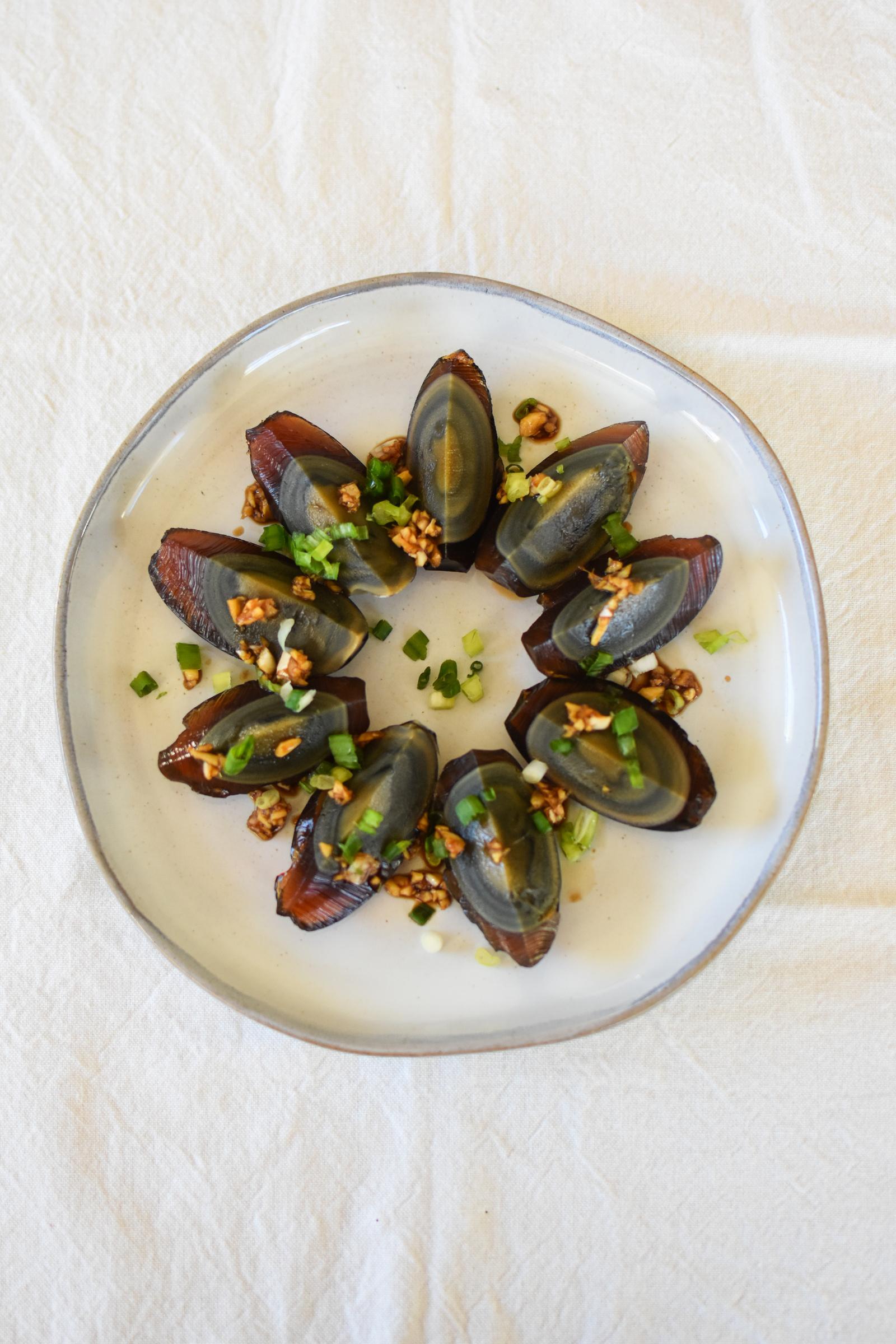
CENTURY EGG SALAD
On the outside, century eggs look somewhat repulsive, but they are actually just normal eggs or duck eggs that have been preserved for weeks to months among a mixture of wood ash, salt, lime, and clay. The yolk becomes a grayish-green color with a creamy consistency and the whites become a semi-sheer, dark brown color with a jelly-like texture. Commonly, these eggs are eaten in congee, a rice porridge, or as a savory, cold side dish like in this recipe. The eggs are sliced into wedges using a piece of string to ensure that the jelly-like egg whites stay intact.
3 century eggs
1 tablespoon soy sauce
1 tablespoon black vinegar
3 cloves of garlic, minced
1 tablespoon ginger, minced
1 green onion, thinly sliced
Use a piece of string to slice the century eggs into fourths. When pulling the string through the eggs, make sure to always pull down. Otherwise, the eggs will break.
In a small bowl, mix together the soy sauce, black vinegar, garlic, and ginger.
Plate the century eggs and coat with the sauce mixture
Serve cold
凉 拌 ⽪ 蛋
N G R E D I E N T S
I
18
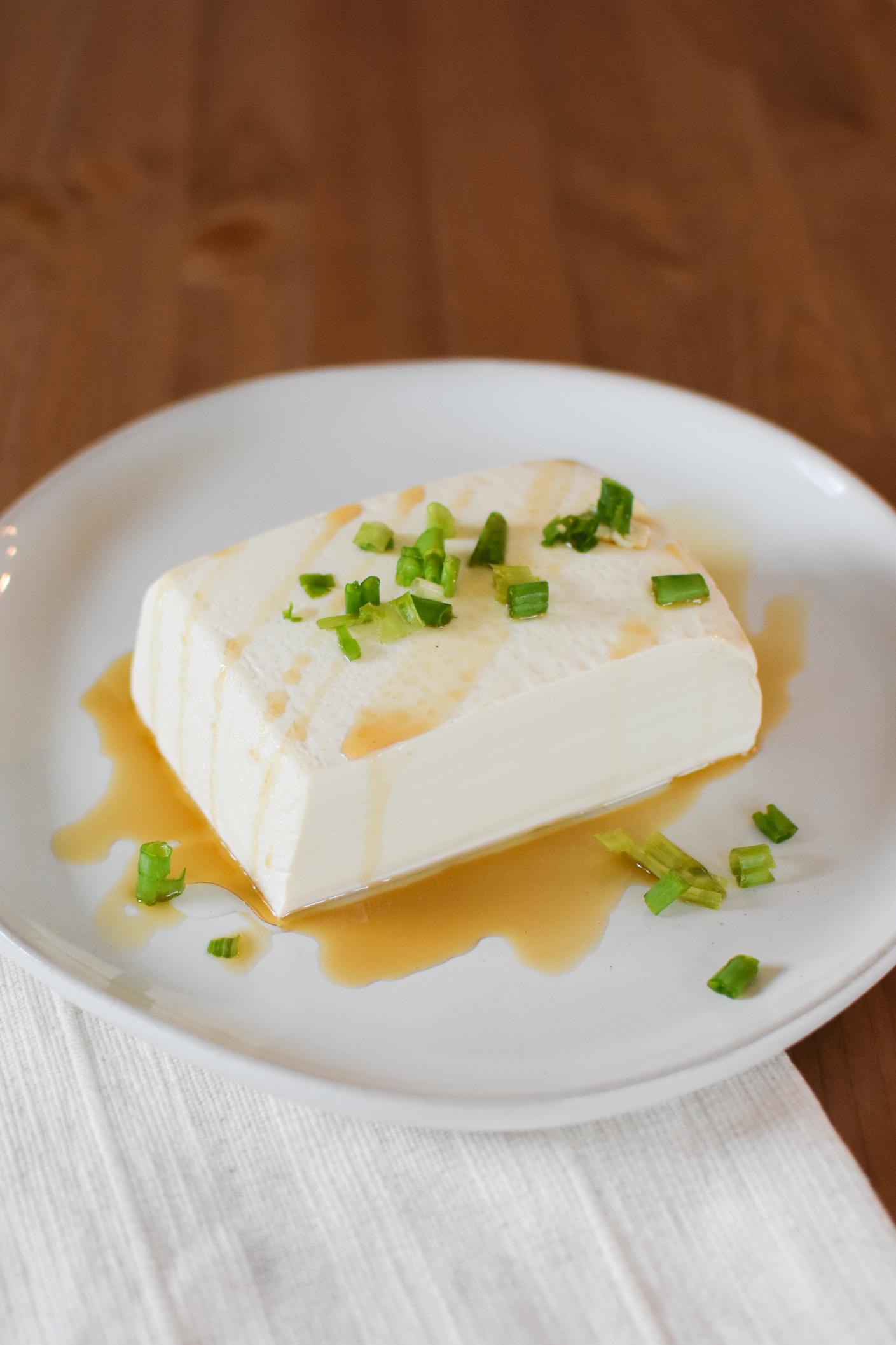
STEAMED TOFU WITH
GREEN ONIONS
Steamed tofu is possibly one of the easiest dishes to prepare and serve In fact, it requires nearly no preparation or hands-on cooking. The soy sauce and sesame oil highlights the silky texture of the tofu, and the green onions add a pop of freshness and crunch to the tofu. This dish is especially soothing when you are sick or have a sore throat.
1 quart water
1 package (about 1 lb, 3 oz) soft tofu
1 green onion, thinly sliced Sesame oil (to taste)
Soy sauce (to taste)
Gently remove the tofu block from its package, making sure not to break the tofu Place the tofu on a rimmed heat-safe plate and set the plate inside one of the compartments of the steamer pot.
In the base of the steamer pot, pour around 1 quart of water. Boil the water on high heat. Once water boils, place the steamer pot compartment with the tofu onto the steamer pot. Close the lid and steam for 10 minutes on high heat.
Turn off the heat and let cool. Once cool to touch, remove the plate from the compartment. Drain excess tofu water from the plate.
Once ready to serve, drizzle sesame oil and soy sauce on top of the tofu block. Garnish with green onions on top.
G
E D I E
⼩ 葱 拌 ⾖ 腐 I N
R
N T S
20
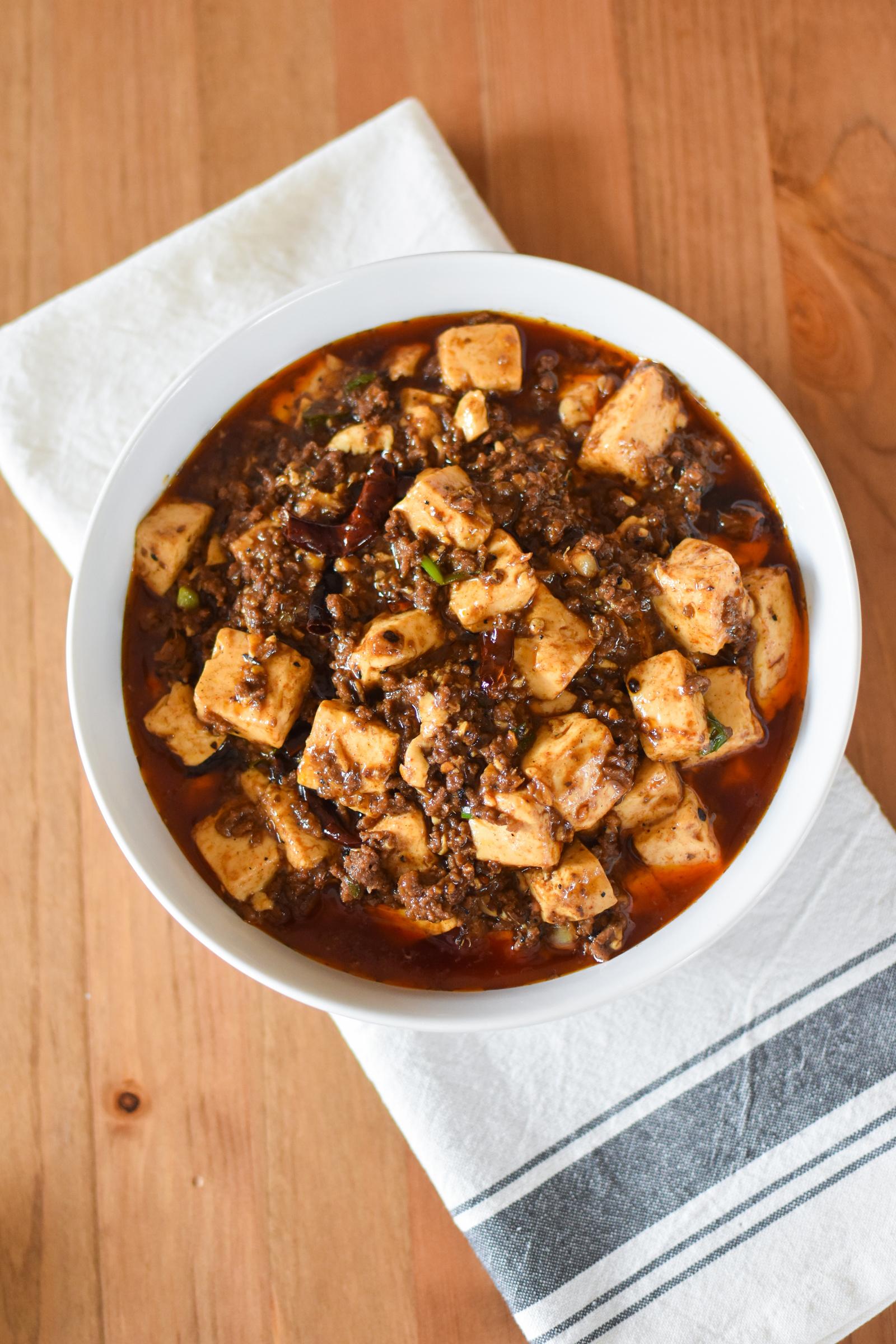
MAPO TOFU
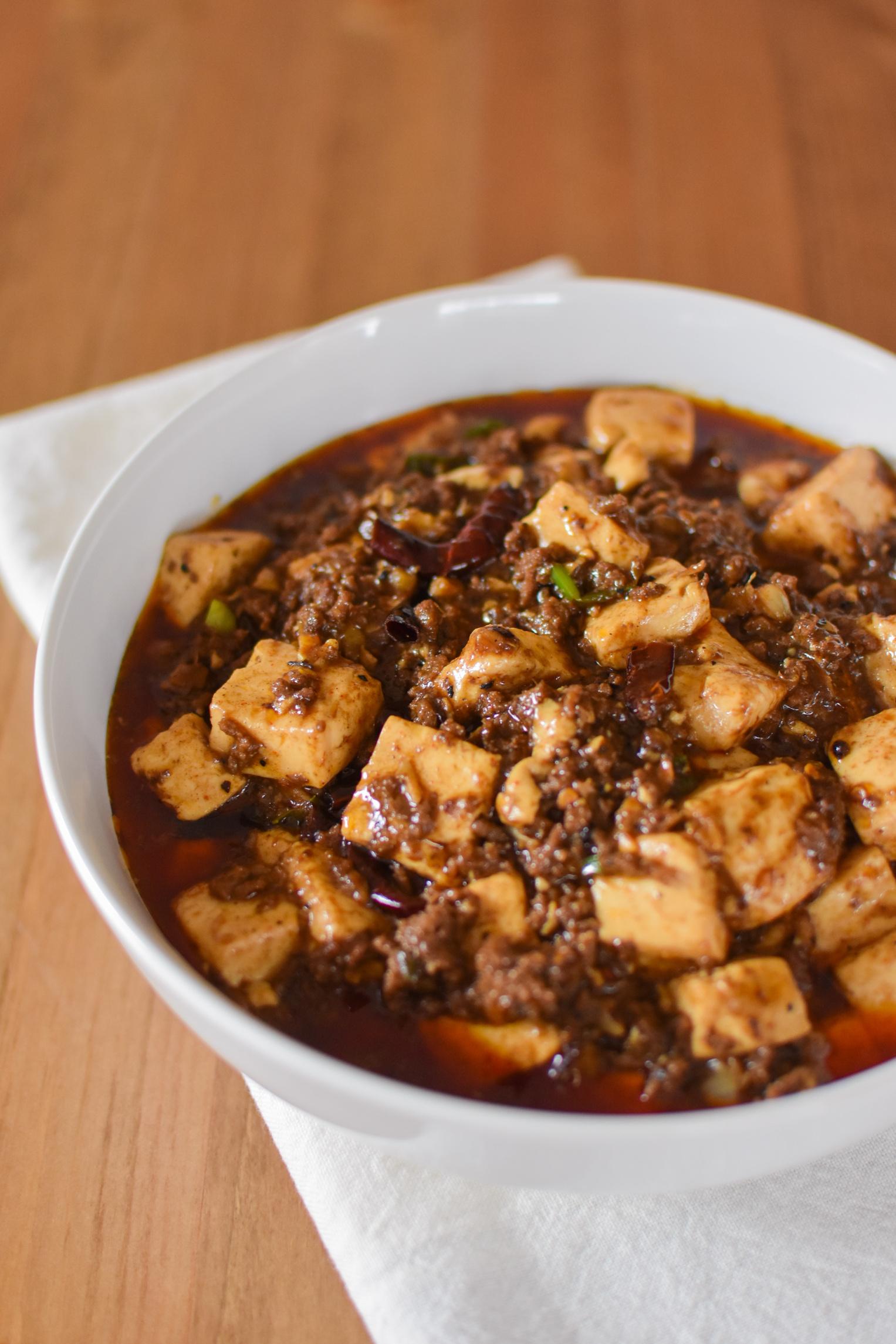
Mapo tofu with its classic layer of bright red chili oil, looks spicy and it is. But this spice is nothing like your average spicy sauce it’s made from red chili peppers, Sichuan peppercorns, and pre-bought spicy sauces. Upon first bite, the dish doesn’t taste spicy, but as you continue eating, the sauce will start burning, creating a numbing sensation. The delicate texture of the tofu is barely enough to absorb all of the spice; you will definitely need a big bowl of rice to pair with this dish
Chili Oil
¼ cup vegetable oil
10 dried red chili peppers, chopped into thirds
Tofu
4 tablespoons vegetable oil
1½ tablespoons Sichuan
peppercorns, finely grounded
3 tablespoons ginger, minced
6 cloves of garlic, minced
8 oz ground beef or pork
1 tablespoon doubanjiang
1½ tablespoon gochujang
⅔ cup broth (or water)
¼ cup water
1½ teaspoons cornstarch
1 package (about 1 lb, 3 oz)
soft tofu, chopped into 1-inch cubes
½ teaspoon sesame oil
1 green onion, thinly sliced
For the chili oil, heat ¼ cup of oil in a wok or small saucepan over medium heat. Add the dried chili peppers and stir occasionally, making sure not to burn the peppers. Once the oil is fragrant, remove the oil and peppers from the heat and pour into a small bowl. Set aside.
For the tofu, heat 4 tablespoons of oil over high heat in the same wok. Add in the ground peppercorns, stirring occasionally for about 30 seconds. Once the oil is fragrant, add in the ginger and fry for 1 minute. Add in the garlic and fry for another minute.
Turn up the heat to high and add in the beef Use a wooden spoon to break up the beef Once the beef has turned brown on all sides, add in the doubanjiang and gochujang
Combine with the beef Once the beef has been coated, add in the broth and let it simmer for 2-3 minutes
In the meantime, mix the cornstarch and water together in a small bowl until the cornstarch completely dissolves. Add the cornstarch mixture into the beef and stir well. Let bubbles form for 2-3 minutes.
Add in the chili oil from before. Stir well. Add in the tofu and gently incorporate with the sauce. Let cook for 5 minutes. Add in the sesame oil and let cook for another minute. Turn off the heat and mix in the green onions.
⿇ 婆
腐 I N G R E D I E N T S
⾖
22
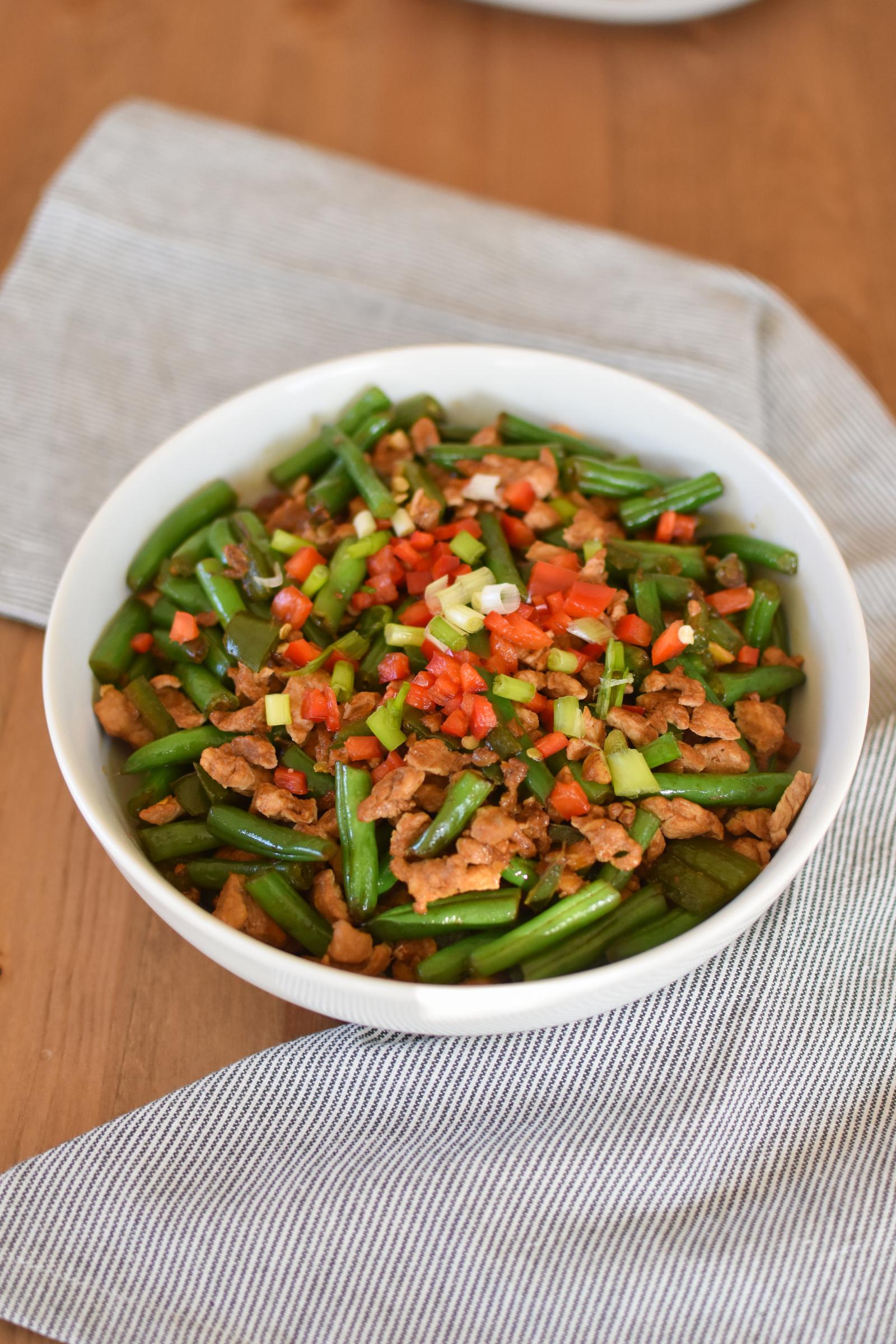
STIR-FRIED PORK STRIPS
WITH GREEN BEANS
This dish, although longer to prepare than the other recipes in this cookbook, was, and still is, one of the most frequent dishes my family eats for dinner. This dish wraps vegetables and meat into one dish and any leftovers can easily be saved for lunch. Pair the dish with a bowl of steaming rice and the flavors of the green beans and pork blend together nicely.
1 quart water
½ lb green beans, chopped into thirds
3 tablespoon vegetable oil
½ lb pork ribs, thawed
1 tablespoon ginger, minced
3 cloves of garlic, minced
1 tablespoon white wine
1 tablespoon soy sauce
1 tablespoon mushroomflavored dark soy sauce
1 teaspoon salt
¼ of a red bell peppers, cubed
1 green onion, thinly sliced
Slice the pork ribs into 2 inch long by ½ inch wide by ½ inch thick strips Set aside
In a small saucepan, boil 1 quart of water over high heat. Once the water starts boiling, add in the green beans. Cover the pan and cook for around 3 minutes.
Turn off the heat, and scoop the green beans into a bowl. Set aside.
In a wok or large frying pan, heat 1½ tablespoons of oil over high heat. Add in the garlic and ginger. Fry for 30 seconds.
Add in the pork strips and cook for 1 minute. Mix in the white wine, soy sauce, and mushroom-flavored dark soy sauce. Continue cooking for 3-4 minutes until the pork browns on all sides, stirring occasionally.
Turn off the heat and scoop the pork into a bowl Set aside
In the same wok, heat another 1½ tablespoons of oil over high heat Add in the green beans and stir-fry for 4 minutes Add in the salt and stir to combine Add in the pork and cook for another 1-2 minutes, stirring occasionally
Turn off the heat. Top with red bell peppers and green onions for garnish.
⾁ 丝 炒
⻆ I N G R E D I E N T S
绿 ⾖
24