BOOK REVIEW & AUTHOR INTERVEW BY VICTOR FORBES, EDITOR IN CHIEF
RISK and COURAGE in DISSENT IN HIS NEW BOOK, NEIL THOMAS PROTO RECLAIMS VERMEER FROM THE “DUTCH GOLDEN AGE” AND REVEALS THE PAINTER AS A VOICE OF CONSCIENCE
In the crowded gallery of Vermeer books, Neil Thomas
This framing immediately shifts the ground beneath our
Proto’s
and
feet. Vermeer, so often isolated in luminous interiors, is
Courage in Dissent stands apart. Where others have
instead situated in the turbulence of a republic defined by
burnished the Dutch master’s reputation as a serene poet
exclusion, slavery, and a narrow theology of the “elect.”
of light, Proto insists that Vermeer was something more
Proto traces how this environment shaped not only the
dangerous, more urgent: a dissenter, a moral voice in a
artist’s subject matter but also his moral choices — what he
society
painted, what he avoided, and why.
Johannes
dominated
Vermeer
by
Provocateur:
Calvinist
Risk
repression,
colonial
violence, and slavery. The book is not only an argument but also an act of recovery — bringing Vermeer out from under
Proto writes with the conviction of someone who has walked
what Proto calls the “fraud” of the “Dutch Golden Age.”
the streets of Delft and studied its archives with fresh eyes.
When I asked Proto in our recent conversation why
Age” — a term, he argues, that varnished over the brutality
Vermeer’s fight mattered, he didn’t hesitate: “Vermeer was not entitled to the same rights and privileges that other citizens or residents of Delft were allowed. He couldn’t practice Catholicism or hold mass. His family faced discrimination. He couldn’t participate in elections, and the area he lived in was restricted to Catholics. When I say he was fighting for citizenship, he was fighting for the fullness of rights and privileges that others — Calvinists — had.”
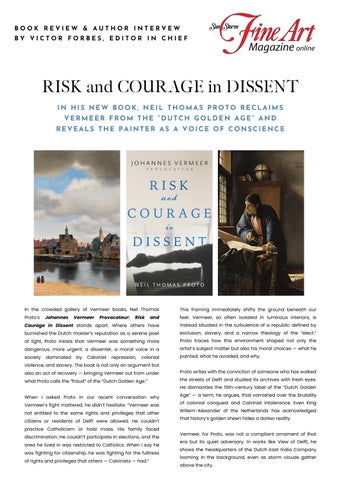
He dismantles the 19th-century label of the “Dutch Golden of colonial conquest and Calvinist intolerance. Even King Willem-Alexander of the Netherlands has acknowledged that history’s golden sheen hides a darker reality. Vermeer, for Proto, was not a compliant ornament of that era but its quiet adversary. In works like View of Delft, he shows the headquarters of the Dutch East India Company looming in the background, even as storm clouds gather above the city.