Field & Game Australia
OUR MISSION
To be the most effective organisation in the promotion of hunting, recreational shooting, and habitat conservation.
WHO WE ARE
FGA was established in 1958 by hunters who were concerned about the loss of wetland habitat for the game birds they loved to observe and hunt. FGA is now the nation’s most progressive firearm hunting and conservation organisation with six decades of service to the association’s membership, including hunters, target shooters and conservationists. We have passed the incredible milestone of 60 years, and FGA represents more than 15,000 members united by interests in target sports, hunting, and the desire to see Australia’s wetlands preserved for future generations.
OUR PATRONS
PROFESSOR GRAHAME WEBB, BSC (HONS), PhwD.
THE HONOURABLE DAVID HAWKER, AO.
MR MAX DOWNES, BSC, PGD.
Guide to the Annual Report
This is the annual report of Field & Game Australia (FGA) Inc. (ABN 79 042 436 123) for the financial year ending June 30, 2024. The report provides information from the Board, branches and stakeholders of FGA about the association’s operations and performance and is presented at the Association’s Annual General Meeting (AGM). FGA cannot be held liable for any printing errors in this document.
ACKNOWLEDGEMENTS
Contributors: Peter Hawker, David Hawker AO; Glenn Falla, Lucas Cooke, David Anderson.
Printed by: Willprint, Shepparton Feedback: We welcome your comments regarding this report. Telephone (03) 5799 0960 with your feedback, or email ceo@fieldandgame.com.au
Field & Game Australia Board Members 2023-24

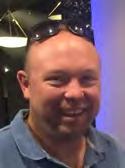

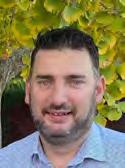

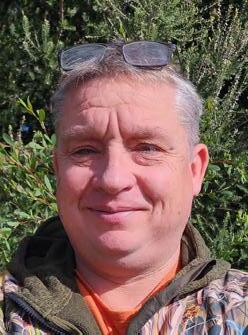

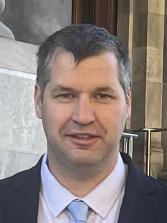
Lucas Cooke Chief Executive Officer lucas.cooke@ fieldandgame. com.au
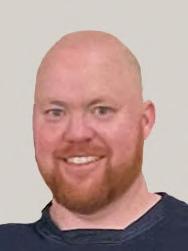
Kane Atkins Branch Liaison Officer kane.atkins@ fieldandgame. com.au

Wendy Russell Media co-ordinator editor@ fieldandgame. com.au

Glenn Falla Conservation & Hunting Manager glenn.falla@ fieldandgame. com.au

Clara Hatch Membership Officer membership@ fieldandgame. com.au
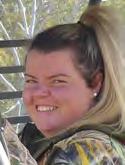
Shelley Pole Office manager

Anne-Marie Blewett Operations Lead am.blewett@ fieldandgame. com.au

Chelsea Skinner Business Accounts Clerk - Finance chelsea.skinner@ fieldandgame. com.au

Kathryn Rohde Membership officer
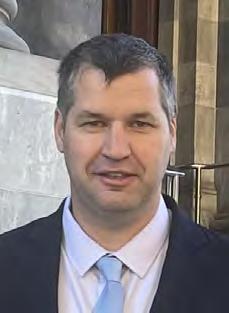
Adam Carson David Anderson Chair
Paul Sharp
Glenda Anderson
Trent Leen Deputy Chair
Vicki Norris
Michaela Shirley
FGA CEO’s report, 2023-24
This past year at Field & Game Australia has been defined by thoughtful, measured growth, and a careful approach to management. Our organisation remains deeply committed to all three of our pillars: Conservation, hunting and target shooting sports. We are invested in driving these pillars through the power of our members.
As CEO, I am proud of the work done in 2023-24 by the current board and staff to foster a culture of responsibility, accountability, and transparency in everything we do. This thorough, deliberate approach is essential to achieving our shared goals — conserving critical habitats, promoting environmental stewardship, and ensuring the future of hunting and target shooting in Australia.
A strategic move: National office relocation to Connewarre
A key development this past year was the relocation of our national office from Seymour to the Connewarre Wetland Centre near Geelong, Victoria. This move presented both challenges and opportunities. While there were logistical hurdles, the benefits have been immense. Having our national headquarters on a conservation wetland aligns directly with FGA’s mission and sends an undeniable message to visitors about who we are and what we stand for.
The move has also allowed us to recruit effectively, drawing on a larger labour market in Geelong and surrounds. In 2024, we strategically added an Operations Lead, an Accounts Clerk, a Branch Liaison Officer, and additional administrative support. These positions, all of which existed in some forms before, have been carefully redefined and structured to strengthen FGA’s operations and provide tailored support to branches across the country. With this expanded team, we are in a stronger position to support branches, promote governance, and ensure that the organisation runs smoothly.
Financial strength and reinvestment
FGA’s financial position has continued to improve in 202324, thanks to careful management and strategic planning. This year, we achieved a $216,654 improvement in our cash position, which is earmarked for reinvestment in the organisation and its future. We remain committed to using these funds to enhance FGA’s programs and support both conservation and membership activities.
Additionally, FGA has upheld its commitment to match member contributions during 2023, with $100,000 committed to our Future Fighting Fund. This amount is held in that fund as an unspent future liability, specifically set aside to address the next major challenge — likely related to lead and plastic pollution. This issue heavily impacts clay target shooters and hunters alike, and having this financial reserve ensures that we are ready to respond without dipping into general revenue.
It’s worth noting that our approach to managing these funds is both strategic and transparent. Our focus has been on improving FGA’s cash position, while responsibly allocating funds to generate passive income that will
benefit all members and ensure the long-term sustainability of the organisation.
The rising cost of insurance, particularly for branch property and contents, remains a significant concern. FGA has been exploring solutions for over two years, but many promising options have not panned out. It is becoming increasingly likely that we will need to set aside substantial funds to secure branch insurance in the future. While we are in a good position to do so, this will require careful financial management moving forward.
Looking ahead, we have major projects on the horizon, including pursuing registration as a Registered Training Organisation to secure the future of hunter training and the development of the Willowmavin shooting complex. These initiatives will require significant capital investments, but we are confident in our ability to manage these challenges responsibly.
Supporting branches: Transparency and governance
This year saw the continued rollout of more transparent processes, specifically around branch rebates and range levies. These measures are designed to ensure that funds flow efficiently and that branches have access to the resources they need. As part of this commitment, we also provided governance training to branch committees, empowering them with the tools necessary to operate effectively and in alignment with FGA’s broader goals. Strong governance and leadership at the branch level are crucial to FGA’s overall success, and we will continue to support these efforts going forward.
A strong, stable board has been crucial in driving this progress. Under the current leadership, we have seen a focus on long-term planning and responsible decisionmaking. I’m confident that the board’s commitment to accountability has set FGA on a stronger, more sustainable path. The clear, steady leadership we now have in place is a key factor in FGA’s ongoing success.
The fight for native game bird hunting
One of the major battles this year has been the fight to retain native game bird hunting, particularly in South Australia and Victoria. In SA, the parliamentary committee approached the issue with a balanced, realistic mindset. While they recommended a few changes to regulations, they ultimately ruled in favour of continuing hunting, a responsible decision that reflects the reality of sustainable environmental and wildlife management.
Victoria, however, was a different story. From the start, we knew it would be an uphill battle. Our members responded with incredible resolve, and FGA led a strong response to the Victorian parliamentary inquiry.
Lucas Cooke
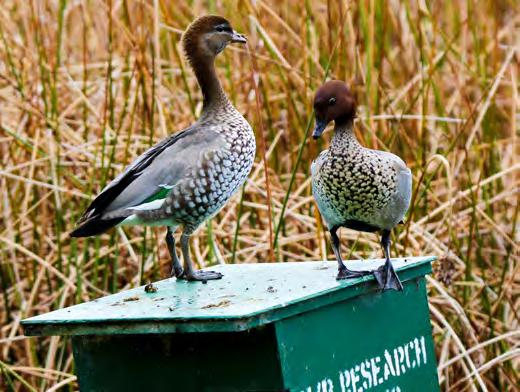
The committee received an unprecedented number of public submissions, with pro-hunting letters surpassing 5000 — a powerful testament to the strength of our community. Unfortunately, the committee’s pre-ordained decision to recommend a ban on native game bird hunting revealed the biased nature of the process.
Nevertheless, FGA’s work, alongside our allies, did not stop. Through diligent advocacy, we achieved a significant victory: the Victorian Government overruled the committee’s recommendation and committed to the continuation of hunting in the state. Additionally, the government pledged approximately $21 million to improve hunting regulations — an important result for hunters across the state.
It’s crucial that our members understand the gravity of this victory. The decision to ban hunting had already been made, and it was only through the concerted efforts of FGA and others that the tide was turned.Those opposed to hunting have not gone away; they are already mounting new attacks, as seen in SA with renewed attacks on bird hunting, following the ban on bow hunting in that state. We must remain vigilant, united, and ready to act whenever necessary. The next major battle is likely to focus on the environmental angle of lead and plastic pollution, which will have a significant impact on clay target shooters as well as hunters.
Looking ahead: Hunting and shooting seasons
The 2025 hunting seasons in Victoria and SA are yet to be announced, but under the revised regulations we expect long seasons and strong bag limits. The Northern Territory remains committed to hunting, and Tasmania continues to quietly excel. The FGA team is looking forward to the upcoming seasons and supporting our members throughout.
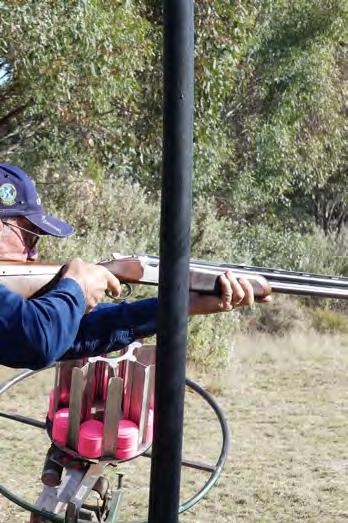
FGA clay target ranges saw a pleasing resurgence in 202324 as we emerged from the shadow of COVID-19. While this growth seems to have levelled off, it’s great to see strong support for our clubs. The 2023 National Carnival at Clunes was a resounding success, with the largest prize pool and the most competitors in our history. As we prepare for the 2024 event, also to be held at Clunes, we are focused on delivering the highest quality of Australian Simulated Field targets and ensuring an exceptional shooting experience for competitors.
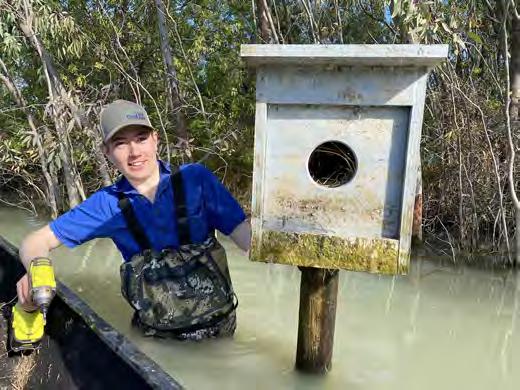
Conservation: Heart Morass, Connewarre, and further afield
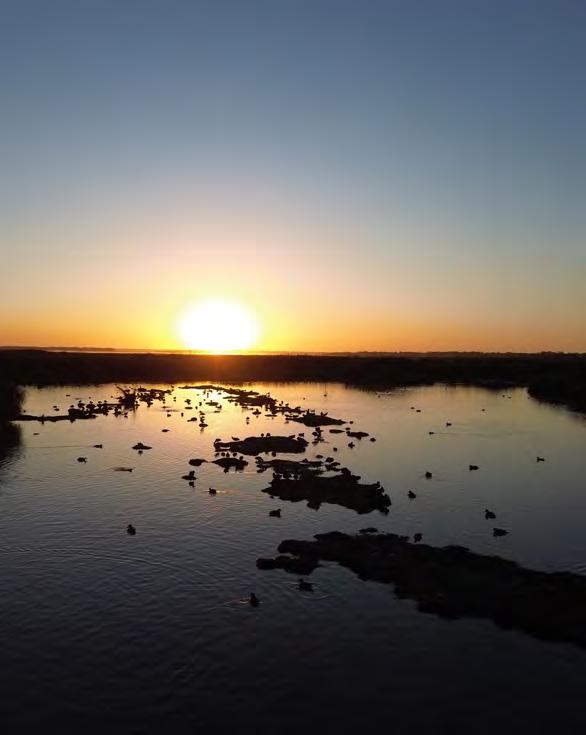
The move to Connewarre has reinvigorated FGA’s conservation efforts. Wetlands Environmental Taskforce has secured a permanent water right for the wetlands, a vital step in our commitment to protecting these critical habitats. Heart Morass continues to thrive, and I had the privilege of visiting it several times this year, including with members of the Victorian Parliament during the Victorian parliamentary review process.
Lesser known but equally impressive are the Loveday wetlands in SA, a testament to the dedication of our branches in Barmera-Morook, and others engaged in that wetland’s restoration and care.
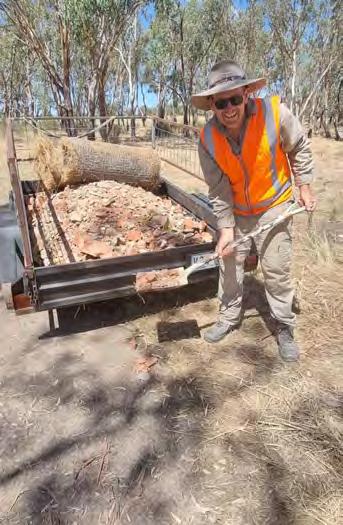
Several branches, notably including Shepparton, Seymour, and Rushworth, have also made significant conservation strides this year, working closely with local land managers to create nesting habitats. These efforts demonstrate that you don’t have to own a wetland to make a difference. There are countless other branches doing great work, and collectively we are a powerful force for conservation.
Looking ahead: 2024 and beyond
As we look ahead, FGA is well-positioned to continue advancing its core goals. Over the next 12 months, my vision for the organisation is one of unity and strength, free from self-interest and infighting. We must remain focused on advancing clay target sports, hunting, and conservation, while continuing to be a trusted advisor to legislators and a voice of reason in government discussions.
At the branch level, we will continue to support grassroots recruitment, retention, and participation in all three of our pillars: conservation, hunting, and target shooting. Strong governance and leadership are key, and we will continue to build on the solid foundation we’ve laid this year.
Thank you to all our members, branches, and partners for your continued support. Together, we will ensure that Field & Game Australia remains a powerful force for conservation, hunting, and target shooting for many years to come.
Sincerely,
Lucas Cooke Field & Game Australia chief executive officer
FGA Chairman’s report, 2023-24
During the past 12 months Field & Game Australia has had many successes, of which we should be proud�
We have made inroads in a range of areas relating to the three pillars of our existence. Achieving a successful outcome for the hunting of waterfowl is just one example; there is also the ongoing strengthening of our relationships and engagement with and support from politicians, regulators and decision-makers who are all helping with shaping our future, with the most important emphasis being engagement and consultation with members and stakeholders along the way.
Our success is built on our membership, an extremely valued volunteer base, and quality leadership at branch committee and national office levels. These successes show what is possible when we are focused and collaborate with all of our stakeholders. Part of being successful is knowing our strengths and weaknesses while having a vision for where we want to be in the next 10 years – and with this comes the realisation of our efforts to retain our identity and grow our membership to achieve the reputation of being the organisation of choice for the support of our members, clay target events, conservation and hunting.
Our people
We exist because of our people, and I have mentioned the value of volunteers who come in all forms and from various backgrounds; and so from a helicopter viewpoint we cannot thank enough those folks who show up regularly for all events, be it target shooting through to conservation and working bees. It is an incredible devotion of time and effort. Our national office team led by our CEO Lucas Cooke,
with some of the team only recently recruited, have made a significant difference in the way we support our organisation and our engagement with branches, members, sponsors and vendors, which is allowing room for us to focus more on our future without diminishing our service across all areas.
I would like to thank our board who have worked hard all year, who have presented themselves every month with feedback and ideas that come from members and who have jumped in to lead some new initiatives, relive some of the past initiatives, champion our sub-committees and lend a hand when times are busy.
Clay targets
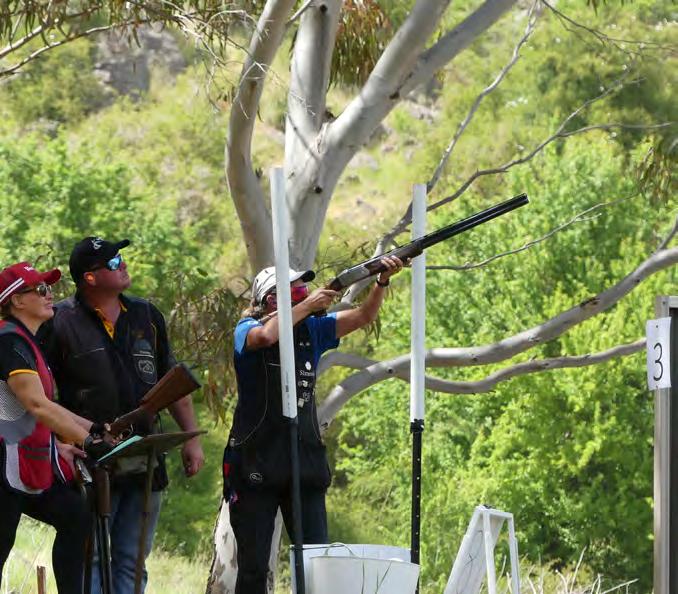
We are moving towards having our clay target committee becoming more visible and to engage on a variety of enhancements including a review and rewrite of the FGA rules, having our safety manual as an evergreen manual with annual updates, and putting forward recommendations from our members to make our monthly and annual events more and more enjoyable.
Last year’s FGA National Carnival, while highly successful, was nevertheless one we leant from while listening to feedback, and this has been captured and incorporated into the 2024 carnival.
There has been much engagement with current and past sponsors that has strengthened relationships and the understanding of what it takes to be a part of our annual event and what it is they require that enables them to show their support and the new and evolving technology that is out there. Sponsors at every level, both locally and nationally, remain an integral element of holding successful monthly and annual events and are well appreciated by all.
Hunting and conservation
Although two very distinct pillars of who we are, hunting and conservation go hand in hand in creating a positive and balanced outcome that ensures we have a robust future ahead of us – despite the lack of understanding in some communities regarding how much we do to grow waterfowl numbers while reducing predator and pest species so that we can all enjoy our passions – from hunting through to bush and wetland walking. The henhouse initiative continues to be a huge success with the addition of the Delta Waterfowl app and the ability to monitor and gather data. We are working closely with universities and scientists on studies around disease and genetics,
David Anderson
and the data we capture adds a huge amount of fact and detail on what effective conservation can do.
The Wetlands Environmental Taskforce Trust, after having some downtime during the COVID-19 period, is functioning very well with quarterly meetings well attended and a number of initiatives in the mill to assist with conservation and supporting conservation branches where needed.
We are in the throes of finalising the Australian National Hunting Archives (ANHA) storage and viewing facility where there is member and public access to the archives, which bring together a wealth of historical information around hunting and conservation that was put together by the Downes family.
Business and looking forward
The national office has been very busy and operating as a very cohesive team covering many areas. There is an ongoing strong membership drive that sees our member numbers steady with a small uptick in the 2023-24 period. There has been strong engagement by our liaison officer to each of our branches offering support and governance training, while an in-depth review of our financials and enhancements to the way do business are just some of the positives that have occurred over recent months.
As we grow and look over the horizon, we must remain conscious of our future and what that potentially has in store for us. Having financial stability and growth will allow us to push forward and expand who we are.
Our 200 hectare asset at Willowmavin is currently being assessed for future growth and our options for holding events there, while the prospect of FGA becoming a Registered Training Organisation (RTO) offers the potential to support our members to a greater level while also offering pathways that can support our communities and other organisations.
In conclusion
Field & Game Australia is in a strong position financially and has a robust and forwardlooking strategy.
Throughout the remainder of 2024 and into mid-2025 not only will we remain focused on growing our membership with the help of our branches, but we will also push forward in our quest to become an RTO and secure Willowmavin’s future as a valuable asset while maturing a business case for both these endeavours that will withstand the tests of time and scrutiny.
David Anderson Field & Game Australia Board chairman
FGA Financials
Expenses
WET Trust Report 2023-24
In February 2024, Field & Game Australia issued another first-class publication, Hunting for Conservation�
In the introduction readers are reminded of the significance of Wetlands Environmental Taskforce (WET) Trust as part of FGA’s rehabilitation and preservation of wetlands, and its achievements since formation.
It reminds us that scientists state that loss of habitat is the single greatest threat to all native water birds. Thirtyseven per cent of Victorian wetlands have already been lost since European settlement – and if not for the tireless work of FGA, WET and countless other volunteers, many more would have been lost.
The Wetlands Environmental Taskforce Committee of Governors continues to meet regularly in its role to oversee Heart Morass at Sale, Connewarre Wetlands south of Geelong, Lake Buloke in Victoria’s west, the BugBlitz Education Program, and the Australian National Hunting Archive collection.
Henhouse manufacture by volunteers continues and is proving a great successor to nesting boxes. Ongoing scientific research directed by Professor Marcel Klaassen, including monitoring ducks for avian flu, continues. An exciting addition is two universities from the United States – University of Texas (El Paso) and University of California (Davis) – now utilising scientific data from Connewarre Wetlands.
Heart Morass
As the team leader for West Gippsland Catchment Management Authority and long-time supporter, Matt Bowler reports that the Heart is full and looking as good as he has ever seen it.
The CMA now has a large grant to upgrade the water inlet control on the river for the nearby Heart Morass and Dowd’s Morass. Work on this major project will start next year. Heart Morass volunteer Gary Howard is enthusiastic about this development as it will help with minimising seawater influx on the south end of Heart Morass
Local FGA members continue to put in many hours of voluntary work, particularly on weed control.
On that note, 2026 brings up the 20th Anniversary of the Heart Morass project, and planning for a celebration is about to begin.
Bug Blitz
Dr John Caldow, the first convener of Bug Blitz, officially signed off on June 30 this year.
For more than 20 years he has been teaching school students about the fascinating world of insects and nature at Heart Morass and more recently at Connewarre Wetlands Centre and Hospital Swamps, south of Geelong. John, with the visionary guidance and support of the late Martin Carlson OAM, Chairman of the Trustees of the Williamson Foundation, grew this unique program into one sought after by many local schools. The Hugh Williamson Foundation has been a generous benefactor of Bug Blitz
and played a major role in the purchase of Heart Morass. During his time at the helm, John has helped 50,000 students and teachers to learn and appreciate the importance of our insects and ecology to the health of our wetlands – an amazing achievement! One student was so inspired he has gone on to do a PhD in arachnology (the study of spiders)!
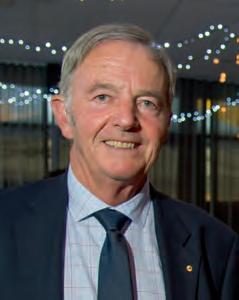
John is proud to note that with the help of his students he has amassed a very large collection of photos of the many insects the students have gathered.
Bug Blitz has also produced a Ducks of Victoria bird trail text for ongoing use at Connewarre Wetlands.
On behalf of all members of Field & Game Australia, we offer our heartfelt thanks to John for his extraordinary efforts to inspire so many young people to appreciate what our wonderful wetlands have to offer.
Efforts are continuing to find a suitable replacement to continue the invaluable work that John has pioneered, and new ways to finance this.
Finance
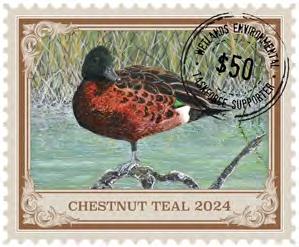
With the winding down of the offset finance from VicRoads, the WET trust is trading at a loss and having to draw on reserves. Other sources of revenue are being explored including the new initiative of sales of “Duck Stamps” and share-farming land attached to Lake Buloke.
Ducks Unlimited and DELTA Waterfowl are offering valuable assistance with developing the use of Duck Stamps as part of fundraising. In the US, Duck Stamps are a major part of hunting licences and many hunters have treasured collections of these stamps.
As always, donations to WET are tax-deductible.
Australian National Hunting Archives
The plan to shift the Australian National Hunting Archives to a dedicated building at CWC is progressing. This remarkable collection, with which the Australian Deer Association has also had a long involvement, will be moved shortly and temporarily stored in Geelong.
Glenn Falla is heading up a steering committee for this project, and the formation of a trust is proceeding.
One can’t overstate the extraordinary foresight of Max Downes in collecting such rare and valuable records. Max was Superintendent of Game Management with the Victorian Department of Fisheries and Game from 1953 to 1968. He worked tirelessly to convince the government that the real risk to game bird populations was changing climate and loss of habitat, not recreational hunting. We all know that challenge continues today.
Public events
World Wetlands Day was recognised at Connewarre
David Hawker
An opportunity for fundraising
An idea for serious consideration in Australia to raise funds for wetland conservation is one that has been used successfully in the United States for 90 years
Duck Stamps and Duck Prints have been used by federal and state wildlife agencies in the US since 1934 as part of licensing, and by 1991 nearly 1000 beautifully illustrated individual duck stamps had been issued� Since the creation of the first duck stamp as part of the Migratory Bird Hunting Stamp Act, this has led to millions of dollars raised for the conservation of wetlands� Stamps for duck hunting licences are based on paintings by America’s foremost waterfowl artists� Each year a birdlife painting is chosen by the judges from the entries submitted�
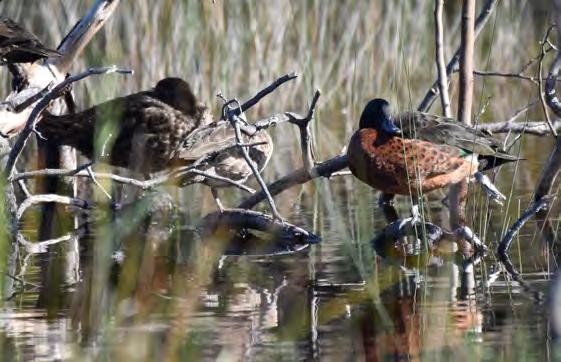
prints that Joe McCaddin and his wife opened a gallery in 1976, and he is recognised as America’s top dealer specialising in these stamps and prints
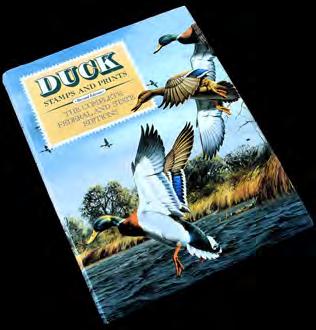
Limited-editions prints of these paintings are also sold, and along with the stamps they now rank among America’s most sought-after collectibles� Prints that originally cost a few dollars are priced in the thousands today, while a collection of federal duck stamps from 1970 to 1986 which cost $1140 can now be sold for $40,000
While the federal collection is the benchmark for duck stamps and print collecting, states and private conservation organisations have created a wider field of collecting with similar increases in value for collections� All this is recorded in the magnificent book, Duck Stamps and Prints, The Complete Federal and State Editions, produced by Joe McCaddin� With over 270 pages, this book includes beautiful illustrations in colour and black and white of almost 1000 individual duck scenes� Each stamp illustration is accompanied by the name of the duck, the number of stamps printed and associated prints, and the name of the artist� There is also a section with more details on every artist and their achievements� Such is the level of interest in the stamps and associated
Wetlands on Sunday, February 11, when visitors were offered the opportunity to see the extensive work done on the wetland, skilled dog retrieving in action, as well as a visual display of Field & Game Australia’s wide-ranging activities.
In April, Field & Game Australia kindly gave Queenscliff charity Cottage by the Sea access to Connewarre Wetland Centre to run a fundraiser.
Cottage by the Sea takes in children in need for a seaside experience. It does not receive government funding – so the Cottage’s committee was most grateful for the support of FGA staff.
A very successful “Music by the Lake” event was held with more than 150 people attending, many of whom took the opportunity to walk around the Hospital Swamp walking
The Australian opportunity
It seems there is a great opportunity here is Australia for a similar system of issuing duck stamps as part of a hunting licence renewal� Over time, a set of stamps and maybe prints could take pride of place in the collection of many hunters� Quite a number would like more than a single stamp each year, and framed sheets could be added�
Enticing talented artists to offer their work would widen the interest� Likewise, the appeal could extend well beyond licensed hunters to others with an interest in waterfowl and conservation�
Field & Game Australia implemented its own duck stamp project in June 2024 in an effort to increase and reward donations to Wetlands Environmental Taskforce� As of June 30, 2024, more than $2500 had been raised within 14 days of the stamp becoming available�
David Hawker AO Wetlands Environmental Trust chairman
track. One comment that was heard several times from people living locally was, “We didn’t know this was here, and we will come again to see it when water returns to the swamp.” Geelong’s best-kept secret, perhaps?
Summing up
In conclusion, the work of the WET Trust continues to be an integral part of FGA’s commitment to conservation by hunters
As always, a big thank you to all members of the Committee of Governors and especially Glenn Falla for his tireless efforts.
David Hawker AO Wetlands Environmental Trust chairman
Wetlands Environmental Taskforce Financials
Branch and Member awards
Since 1958, Field & Game Australia members have been offering dedicated service to the association that has had a positive impact on all facets of the organisation – from hunting to conservaton and clay target participation.
Each year we seek nominations of deserving members from our branch executives as we seek to recognise both branches and individuals for their outstanding contributions to the success of the organistion..
In 2022-23 the board was pleased to receive several nominations.
Blue Wing Trophy
This award recognises the branch that achieves the most significant outcomes for wetlands conservation, and for the 2022-23 year FGA congratulates Geelong Field & Game for its extensive and ongoing work in this space – from henhouse and nesting box installations and maintenance to wetland working bees, bird counts, input with various research activities, and more.
Dr Hugh Martin Medal
No nominations were received for this award in 2022-23.
Member Service Awards
FGA knows the importance of acknowledging the valuable contributions of volunteers within the organization, and the FGA Member Service Award recognizes those members who have provided exceptional service.
Six members were nominated by branches for Member Service Awards in 2022-23, and the board members expressed their appreciation for their significant work.
The six members nominated for branch service awards were all from the Sale branch: Deb Meester, Peter Anderson, Maureen Smith, Glenda Anderson, Kristine MacAlpine, and Graeme Vaux.
Media award
The Media Award acknowledges publicity and media efforts.
In 2022-23 no nominations were received for the award, however the Board decided to present the Media Award to Rushworth Field and Game in recognition of its efforts in publicising its conservation work through both traditional and social media.
The small branch has an extensive following on Facebook, thus promoting the conservation message to a wider audience.
Pest and Vermin Control
No nominations were received for this award in 2022-23.
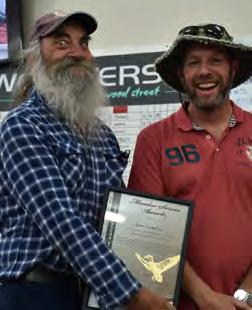
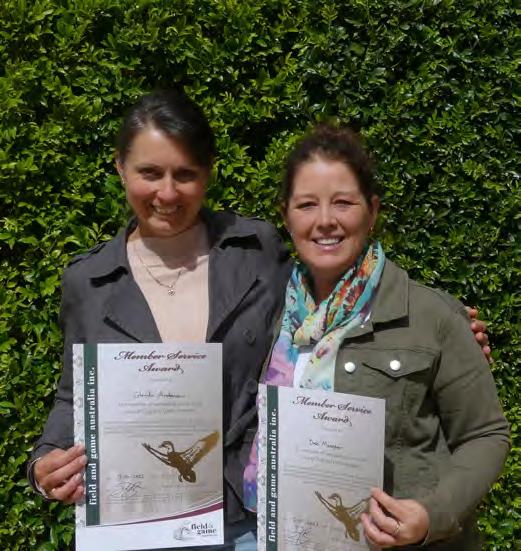
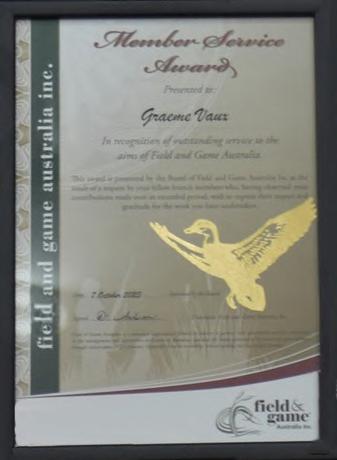
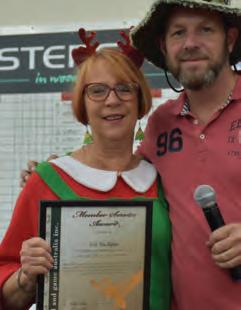
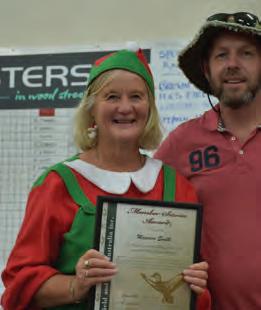
Member Service Award winners Glenda Anderson and Deb Meester from Sale Field & Game with their award certificates at the 2022-23 Annual General Meeting.
Graeme Vaux unfortunately passed away before receiving his Member Service Award.
Peter Anderson, Kristine MacAlpine and Maureen Smith received their Member Service Awards at the Sale Field & Game Christmas celebration in December 2023.
Hunting and game management report
The beginning of the financial year witnessed Field & Game Australia staff, board and members deeply engaged in advocacy and political mayhem, with South Australia and Victoria nearing the end of their respective select committee inquiries into recreational native (game) bird hunting. The battle required international support in the presentation of facts and data, the facilitation of field excursions for committee members, representation at rural and regional hearings, ongoing political advocacy in state parliaments, and ultimately the support of the BIG unions (Building Industry Group) and the formation of ORAG (Outdoor Recreational Advocacy Group).
In August 2023 the select committee inquiry into Victoria’s recreational native bird hunting arrangements recommended that duck hunting be banned in Victoria from 2024. The government then had six months to consider the report’s recommendations and deliver its decision.
With a favourable decision by no means assured, the advocacy by FGA continued until the South Australian government in December 2023 and the Victorian Government in January 2024 announced that recreational native (game) bird hunting would remain with several recommendations.
One thing is clear – all outdoor recreational users should be alarmed by the recommendations of these inquiries and how close we came to losing the traditions we hold dear. While that crisis is now over, there is no time to rest; we must continue to act and lobby for our heritage 365 days a year. For example, the current proposal to create Great Forest National Park in Victoria’s Central Highlands is more than just a threat to hunting – it’s another attack on outdoor recreation and public access to our cherished state forests.
FGA extends our deepest gratitude to our staff, volunteers, members, and branch committees. Your dedication, hard work, and commitment to FGA have been the cornerstone of our success and resilience.
PFAS contamination update
In 2018 the Department of Defence released its Final Human Health and Ecological Risk Assessment (HHERA) of the PFAS contamination site around the RAAF Base East Sale which includes Heart Morass.
This year FGA/WET has been acknowledged as a property owner impacted by this contamination and seeking compensation.
Traditional owner advocacy
FGA was honoured to attend the grand opening of Dunyak Moira (Merrigum Dam) and display proudly the work completed on the two lakes with our WET Hen Houses.
FGA volunteers and supporters of Wetlands Environmental Taskforce were among those who installed duck nesting boxes on both lakes, helping to bring to life this haven for native species.
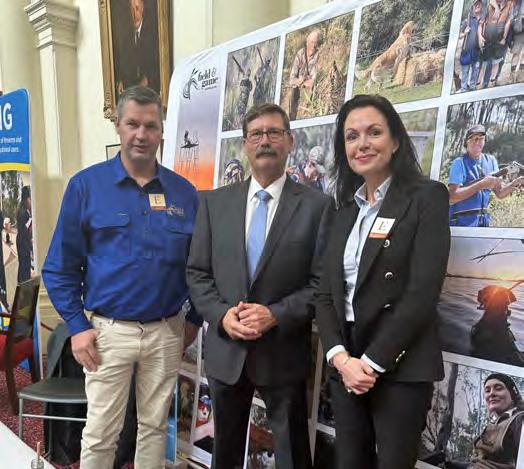
The Responsible Shooting Expo
This Responsible Shooting Expot took the pro-shooting message to the halls of the Victorian Parliament, where representatives of FGA, SSAA, ADA and VAPA led conversations that promoted our safe, legal and sustainable recreational activities.
FGA representatives enjoyed productive conversations with several MPs during the three days of the expo, including Shooters Fishers and Farmers Party’s Jeff Bourman, the Nationals’ Shadow Environment Minister Emma Kealy, and Labor’s Environment and Outdoor Recreation Minister Steve Dimopoulos.
It was fantastic to see bi-partisan support for responsible and sustainable hunting – and for target shooting – and we trust such conversations will continue.
Hen House activity
Professor Marcel Klaassen from Deakin University and Associate Professor Brian Hiller from Bemidji State University in Minnesota continue to support our Hen House program.
Due to the generosity of Delta Waterfowl through its chief conservation officer Joel Brice and program director Mike Buxton, data collected from our hen houses and nesting boxes are being uploaded to our hen house app. We are nearing 500 boxes and hen houses in the system with, hundreds if not thousands to go.
Our valued volunteers have been busy entering GPS coordinates and recording activities to build an efficient database that will be critical to the sustainability of gamebird hunting and seasonal arrangements into the future with the use of adaptive harvest models. Information such as breeding indexes, brood survival and predator
FGA CEO Lucas Cooke with Liberals MP Bill Tilley and FGA opertions lead Anne-Marie Blewett at the Responsible Shooting Expo in Victorian Parliament.
control will form a management plan and data set that will support everything FGA has been contributing since 1958.
Involvement in research
It was an honour during the year for FGA staff and board members to be involved in the collection of samples in Victoria and the Northern Territory for genetic studies led by Dr Andrew Engilis Jr, curator at the Museum of Wildlife and Fish Biology at the University of California, and Dr Philip Lavretsky, Associate Professor of Biological Sciences at the University of Texas (El Paso), around geographic adaption versus alternative selective pressures on Australian waterfowl. The specimens will be exported and utilised in scientific research for the next 100 years. This is just one of the ongoing collaborations for our organisation, as the stakeholder list from universities around the world continues to grow.
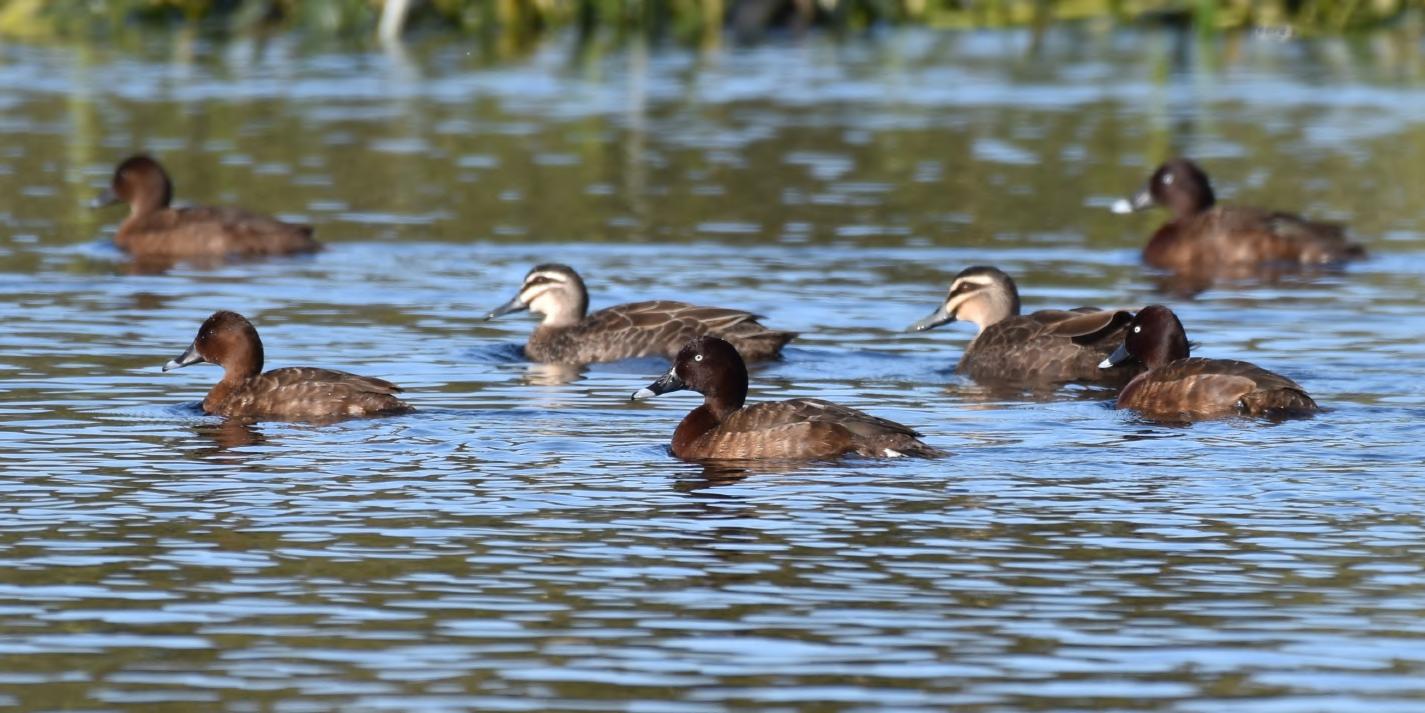
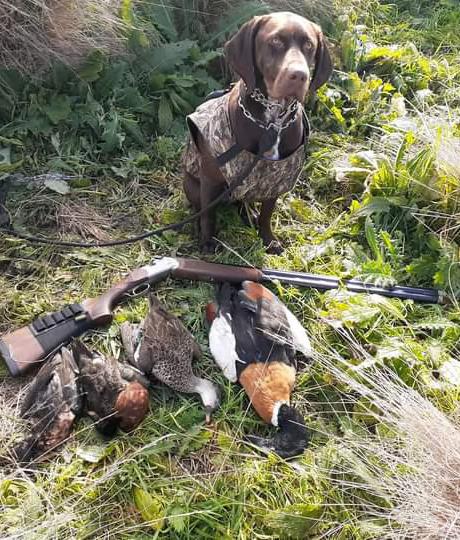
It was also exciting for FGA to be involved with other native duck data collection efforts in 2024, overseen by the Department of Energy, Environment and Climate Action (DEECA) and the Victorian Game Management Authority (GMA). About 50 birds were netted, seven of which were bluewing shovellers. The birds were banded and GPS trackers were fitted to further inform the data we already have on our native species.
Our battle goes worldwide
Heading up the research is Arthur Rylah Institute senior scientist Danny Rogers, along with GMA research principal Dr Jason Flesch and Deakin University’s Professor Marcel Klaassen. FGA vice-chairman Trent Leen and Geelong branch member Ken Farmer, both of whom are trained and qualified to be involved in research activities such as this, were on-site to lend a hand along with other stakeholders.
Also this year, Australia has been dealing with multiple strains of bird flu, including highly pathogenic avian influenza (HPAI) which poses serious risks to poultry and potentially humans. While the devastating HPAI H5N1 strain is not present here, outbreaks of HPAI H7 viruses have affected poultry farms in Victoria and New South Wales.
Understanding these viruses and how they spread is crucial for protecting our wildlife and agricultural sectors; FGA is committed to ensuring our members stay informed of any risks and how they can help to safeguard our community. We will also maintain an awareness of what has occurred elsewhere around the world and advocate for actions required if/when HPAI H5N1 arrives on our shores. It is important to note that no other country has initiated a ban on recreational hunting because of its existence.
In November 2023 in the Northern Territory, a short film was produced to highlight the plight of Australian waterfowlers and the issues they face in defending and retaining their hunting seasons.
Battleground Australia was produced by Ramsey Russell and Justin Mueller and was followed up with multiple podcasts in the United States. These productions brought our cause to the masses and ultimately led to the visit of US magazine Outdoor Life’s executive editor Natalie Krebs.
FGA was proud to host Natalie for the commencement of the 2024 Victorian duck season. Natalie spent much of the first week on the road, and in or around the wetlands with Field & Game Australia’s CEO Lucas Cooke and our conservation and hunting manager Glenn Falla.
A subsequent article written by Natalie and published by Outdoor Life highlighted the ongoing challenges faced by Australian hunters for all the world to see – alerting our international brothers and sisters to the danger posed by anti-hunting activists in particular.
An Outdoor Life podcast titled Australia has an Anti-Hunter Problem, and the U.S. isn’t Far Behind has also been created which provides extensive insight into the ongoing and far-reaching challenges facing hunters both in Australia and in the United States. >>
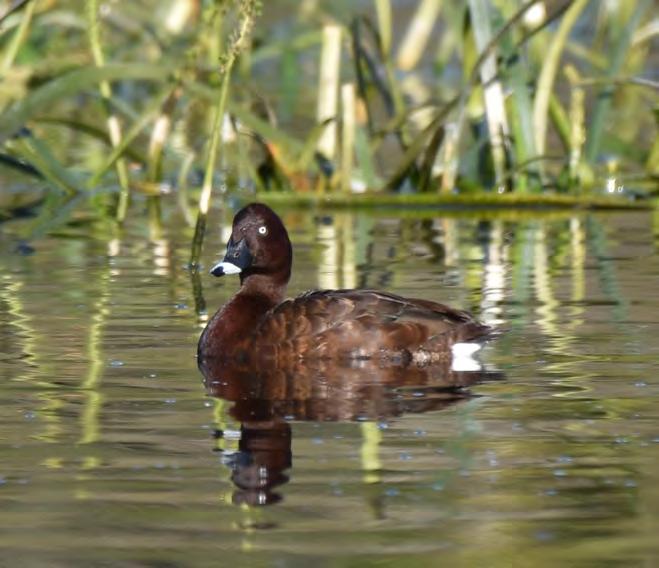
Hardhead removed from the Threatened Species List
Victoria’s Scientific Advisory Committee (SAC) recommended removing hardhead (Aythya australis) from the state’s Threatened Species List in June 2024.
The de-listing has cleared the way for hardhead to return to the list of game ducks that can be hunted in the future. The SAC recommendation was a direct response to SSAA Victoria’s nomination framed up in consultation with FGA throughout the process, and the hard work will continue in advocating for their return to the huntable list for 2025.
Duck stamps made a return
Harking back to the beginnings of the Victorian Field & Game Association, when hunters volunteered to be charged a fee for a game licence – or ‘duck stamp’ – if the money raised would be used for habitat conservation and preservation, FGA and its conservation arm Wetlands Environmental Taskforce are once again offering an annual duck stamp, with the funds raised going directly into conservation projects.
Australian National Hunting Archive relocation
With the knowledge that many of our members would love to contribute in person to conservation efforts but are often time-poor, duck stamps offer the opportunity for them to directly help the work of WET volunteers while also being acknowledged for their contribution.
Gundogs an integral part of retrieval plan
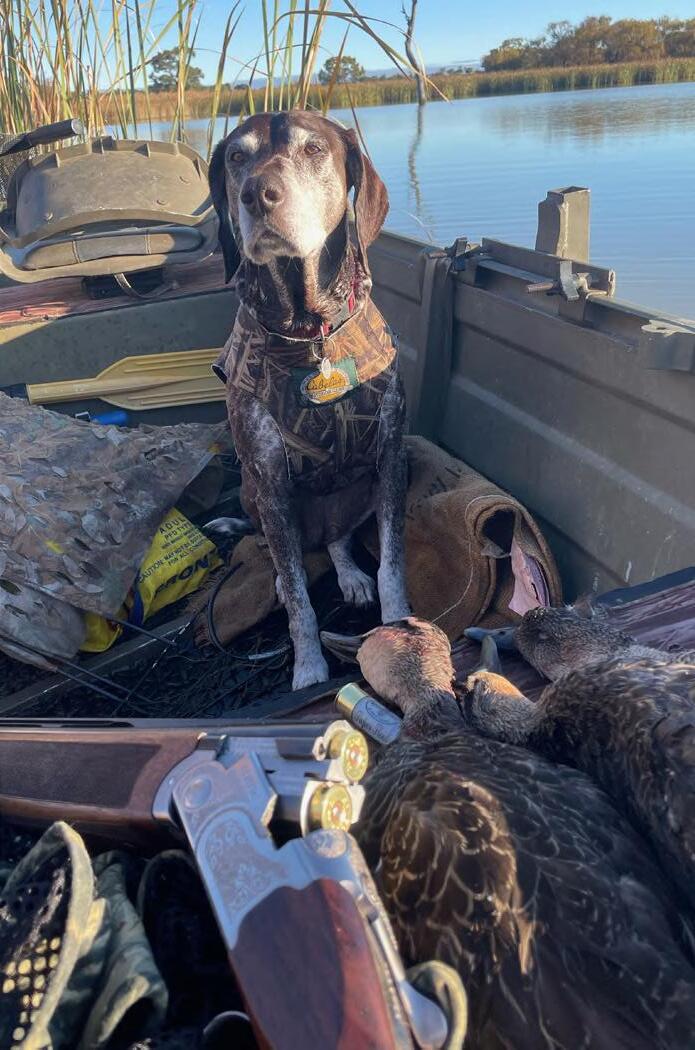
FGA Working Gundog Group continued its advocacy and engagement with various gundog and retrieving groups as part of promoting to members the importance of having a structured retrieval plan when hunting gamebirds within Victoria.
Golden Retriever Club of Victoria’s Helen Pownall – also a member of Geelong FGA – offered training sessions almost weekly throughout the year at Connewarre Wetland Centre, while the Labrador Club of Victoria and the Flatcoat Club of Victoria held a combined competition at the centre.
In Victoria’s east, Greg Playdon – a member of Gippsland Retrieving Club, the Dogs Victoria RAFT Committee, and Sale Field & Game –ran Scurry events during the Easter period in support of Field & Game Australia Working Gundog Group.
Councils seek to overstep the mark
FGA noted a shift within some local Victorian councils with regard to long-established hunting areas. Surf Coast Shire, in particular, sought to end duck hunting on three local lakes within the shire.
A petition was raised in opposition to this plan and attracted hundreds of signatures; it was presented to the council along with an address to the council by myself as both a concerned local resident and as Field & Game
Seeking to make a permanent home for the Australian National Hunting Archive, a steering committee has been formed with Liz Downes appointed as collection manager, and work is underway on a purpose-built structure.
Significant work has progressed on this project during the 2023-24 financial year and we look forward to delivering more in the next 12 months.
ParkConnect group expands
Interest in joining FGA’s ParkConnect group of volunteers and creating projects for approval on Parks Victoriamanaged land has grown during 2023-24 and new participants are regularly adding themselves through the system.
While the requirement to hold a current Working With Children Check was seen as a barrier by some, thankfully we are now seeing a healthy interest and uptake and Parks Victoria is actively working with FGA to build annual activity plans.
Predator control ongoing
FGA’s vermin and pest control report is separate to this report, however it is pleasing to see that the report is more extensive in volunteer hours, dollar value and the number of animals controlled.
There will be a concerted effort to strengthen the relationship between these activities and the Hen House project in the future as the two complement each other regarding brood survival.
Glenn Falla Field & Game Australia hunting and conservation manager
Australia’s hunting and conservation manager.
Pest control and other volunteer hours reports
While the 2023-24 Pest Animal Control Report shows only one more branch active in this space compared to the previous year, there has been a total increase in value of the work undertaken of more than 65%.
Our ParkConnect projects have experienced a large drop in both projects and the number of people involved, however we are expecting these numbers to bounce back significantly in the next 12 months.
Our nesting box / henhouse / conservation projects have shown a robust increase on the previous year, with a 166% increase in the number of projects, and an increase in the value of volunteer hours of 264%.
PARK CONNECT PROJECTS
2023-24
Number of projects 3
Number of people involved 11 Volunteer hours
$ value of volunteer hours
2023-24
Number
Membership report to March 31, 2024
Field & Game Australia has enjoyed a positive 12 months with regard to membership growth up to March 31, 2024.
While the previous year’s figures took a slight dip (down eight members at March 31, 2023 compared to March
21, 2022), the most recent reporting period has seen growth in the Field & Game Australia membership of 133 members or 0.852%
The positive outcomes of the inquiries into duck hunting in Victoria and South Australia that occupied our
Branch membership totals as at March 31, 2024
Ararat & Stawell Field & Game
Association
Bairnsdale Field & Game
Ballarat Field & Game
Balranald Field & Game
Barmera Moorook Field & Game
Bar-rook Sporting Field & Game
Benalla Field & Game
Bendigo Field & Game
Broome Field & Game
Burdekin Field & Game
Canberra International Clay Target Club
Capricornia Field & Game
Casterton Field & Game
Clunes Field & Game
Cobram Field & Game
Colac Field & Game
Coleraine Field & Game
Cranbourne Field & Game
Darlington Field & Game
Deniliquin Field & Game
Donald Field & Game
Dorset Field & Game
Dunolly Field & Game
Echuca-Moama Field & Game
Frankston Field & Game
Furneaux Field & Game
Geelong Field & Game
Goulburn Workers Field & Game
Grampians Field & Game
Huon Field & Game
Keith Field & Game
Kilmore Field & Game
Kingston S.E. Field & Game
Kyabram Field & Game
Mallacoota Field & Game
MCC Clay Target Club
Metropolitan Field & Game
Minyip Field & Game
Moe Field & Game
Mornington Field & Game
Morwell Field & Game
Mt Wycheproof Field & Game
Natimuk Field & Game
Northern Territory Field & Game
Nugent Field & Game
Orbost Field & Game
Pine Grove Field & Game
Port Phillip Field & Game
Portland Heywood Field & Game
Queensland Field & Game
Riverland Field &
Rushworth
Shepparton
South
attention for much of 2023, has seen renewed interest in FGA which has been reflected in the positive upward trend of membership — helped in no small part by a dedicated effort from our staff to reconnect with those whose membership had lapsed and encourage them to rejoin.
Waikerie Field &
Warrnambool Field & Game
Westernport Field & Game
Wodonga-Albury Field & Game
Yarra Valley Field & Game
Total members
15,739
Clay target participation report