WORTH THE DRIVE A Sweet Spring Break Trip to the Dr Pepper Museum
WHO WE ARE
Liberty Hill Digest is more than a magazine—it’s a connector, storyteller, and champion for our community. Since 2020, we’ve shared 550+ stories and mailed 400,000 free copies to keep Liberty Hill informed and inspired. Each issue highlights local people, nonprofits, students, first responders, and city events that define who we are. Our annual Giving Thanks & Giving Back edition and rotating nonprofit column amplify causes that strengthen our city. At our core, we celebrate what’s good, foster connection, and help Liberty Hill thrive—together.
MARCH FEATURES
3 / THE RETURN OF THE HILL COUNTRY ESTATE
8 / HOLOCAUST REMEMBRANCE DAY EXHIBIT
COLUMNS
5 / ASK A PRO • PLATELET-RICH PLASMA
6 / KIDS & EDUCATION • SUPERBRONC ROUGHSTOCK
10 / WORTH THE DRIVE • DR PEPPER MUSEUM
12 / BELLE CHIMES IN • THE CALENDAR I LIVE BY
PUBLISHER
Cathy Payne
WRITERS / COPY
EDITORS
Ann Marie Kennon
Charlotte Kovalchuk
ASK A PRO
FEATURED PROFESSIONALS
Meet our Pros - industry professionals, business owners, and subject matter experts from leading local companies who share their knowledge and expertise to bring readers practical advice, how-to tips, best practices, and current and emerging trends.
To learn more about becoming a Featured Professional, contact info@lhtxdigest.com or 512.746.4545.
Hall's Roofing & Sheet Metal, LLC
Family owned since 1939. Roofing professionals specializing in full-service roof repair, installation, and replacement.
HallsRoofing.net 512-864-7579
Moore Liberty Buildings Chad & Amanda Moore
Thousands of structures built since 2015.
MooreLibertyBuildings.com 512-548-6474
GRAPHICS & DESIGN
Sandra Evans
Ann Marie Kennon
CONTENT
Camy Reynolds
CONSULTANT W. Ben Daniel
ADVERTISING
info@lhtxdigest.com 512-746-4545
Liberty Hill Digest is a Fidelis Publishing Group, LLC publication and a product of AdvocateNewsTX Newspaper.
SCAN THE CODE FOR E-SUBSCRIPTION AND NEVER MISS AN ISSUE.
FOLLOW US ON FACEBOOK FOR FOLLOW-UPS AND OUTTAKES LHDigest
The Return of the Hill Country Estate
SPACE, PRIVACY, AND PANORAMIC VIEWS DEFINE THE NEXT CHAPTER AT THE CANYONS AT HCH RANCH
BY GRAND ENDEAVOR HOMES
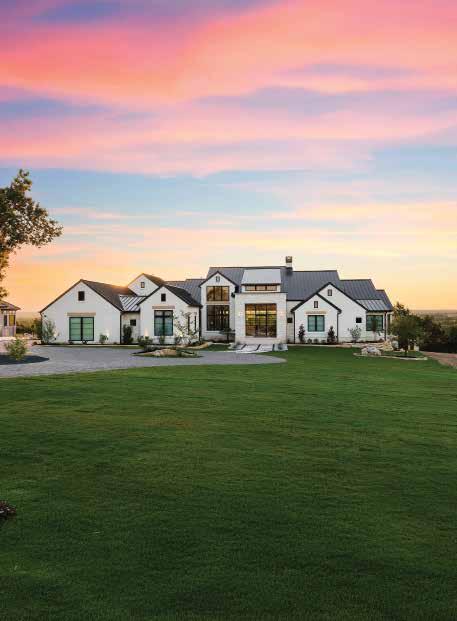
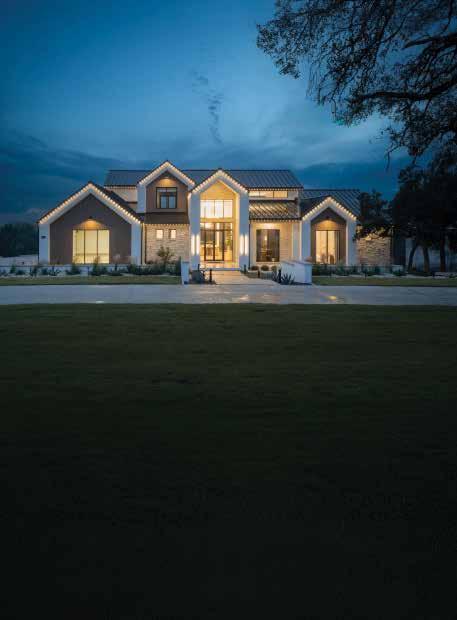
In a housing market defined by tight lots and tall rooftops, The Canyons at HCH Ranch is doing something quietly countercultural: it is offering more space.
Phase II at The Canyons builds on the original vision introduced when Grand Endeavor Homes first broke ground in this west Georgetown enclave, just a few minutes northeast of Liberty Hill—expansive homesites carved into rolling terrain, with panoramic Hill Country views that stretch far beyond a backyard fence line. But if Phase I proved the concept, Phase II refines it.
Who Is the Phase II Buyer?
Buyers drawn to Phase II are not necessarily chasing amenities. Grand Endeavor’s typical Phase II homeowner is looking for acreage, architectural freedom, and permanence. These are often established professionals, business owners, or second-chapter buyers who have already experienced suburban master-planned living and are ready for something quieter and more deliberate.
Grand Endeavor Homes president, Justin Jacobs, says, “Our typical clients seek to secure their own piece of the Hill Country that offers views, space, and privacy in a location that provides convenient access to Austin’s Central Business District, Austin-Bergstrom International Airport, shopping, healthcare, and highly sought-after schools. This is packaged with the flexibility of designing a custom home tailored to each family’s specific wants and needs.”
Unlike high-density developments closer to Austin, The Canyons attracts buyers who are less concerned about walkability and more focused on long-term lifestyle. These are homeowners building for the next 20 years and not the next market cycle.
Lessons from Phase I
Every development reveals its personality over time. Phase I demonstrated buyers weren’t just responding to square footage. They were responding to setting. The topography, elevation changes, preserved trees, and layered views became as important as the floor plan itself.
Rather than rushing construction, many buyers have invested significant time in designing homes tailored precisely to their lot’s orientation and view corridors. That feedback shaped how Phase II was approached.
What’s Changed in Phase II
Grand Endeavor Homes is known for high-end craftsmanship and architectural precision, but even established builders evolve with each project and Phase II reflects refinements informed by buyer behavior and land response. Homesites have been positioned to maximize privacy and preserve view lines so design conversations now begin earlier in the lot selection process, allowing architecture to respond more organically to terrain. ▶
by Ann Marie Kennon • photos courtesy
Justin says, “Grand Endeavor Homes leaned forward and removed many of the topographic challenges in Phase II from the equation for our clients. Select Phase II lots have been prepared for construction through extensive engineering and sitework, as required. Clients now have the ability to easily visualize site-specific characteristics such as house placement and orientation along with the building elevation and footprint.” The company also continues to adapt to broader market dynamics, e.g., material costs, labor timelines, and evolving buyer expectations. Luxury today isn’t just about finishes; it’s about intentionality.
Are Buyers Building Quickly?
In many developments, lot purchases can signal speculation. At The Canyons, that hasn’t been the prevailing pattern. Buyers there tend to move forward with purpose. While some are thoughtful about timing and watch interest rates or market trends, most are purchasing with the intention to build, not hold. Justin adds, “Our typical client represents a seasoned buyer with a firm understanding of the inverse relationship between interest rates and costs. With more interest rate cuts on the horizon, demand will increase and price will follow as it has in previous cycles. So, buyer strategy is centered on the ability to manipulate rates in the future while taking advantage of a lower cost basis at the commencement of the project.”
Responding to Price Volatility
Luxury construction has not been immune to economic shifts over the past several years. Material pricing, labor availability, and land valuation have all influenced home costs across Central Texas and Phase II reflects those broader realities. “Grand Endeavor Homes is uniquely positioned and structured in the custom home building arena," Justin says. "On average, we produce at a higher threshold when compared to industry norms for a custom builder while still delivering the full custom experience for our clients. Purchasing material and sourcing labor in greater volume allows us to pass savings along to our customers.” Yet even with pricing adjustments, demand for acreage living remains strong. In a region where many new communities are trending toward higher density, 1-acre-plus homesites with unobstructed Hill Country views are a limited category.
What Makes The Canyons Difficult to Replicate?
Land like this is finite. The Canyons sits in one of Williamson County's most elevated and naturally contoured areas. The topography, canyon views, tree cover, and sweeping sightlines cannot be engineered into flat ground elsewhere. So while Central Texas continues to grow, developments offering this combination of acreage, elevation, and proximity to Georgetown and Cedar Park amenities are increasingly rare. Justin explains, “Two aspects of The Canyons that consistently stand out to people who make their way to our community are the quality of the views along with accessibility. Many comment that they were unaware of the true Hill Country views while being pleasantly surprised by the convenient access to the major north-south arterials that feed into Austin.”
Unlike amenity-driven neighborhoods that can be recreated through infrastructure investment, The Canyons’ defining feature is the land itself. The views cannot be duplicated, or manufactured and the privacy cannot be retrofitted into a half-acre lot. In that sense, Phase II isn’t simply an expansion. It is a continuation of something increasingly uncommon in Central Texas real estate: the estate mindset.
The Canyons at HCH Ranch reflects a particular vision of luxury and it is not rooted in proximity to urban density, but in thoughtful distance from it.
Prime Wellness and Longevity
Personalized hormone therapy, weight loss, and wellness plans to help clients optimize health, boost energy, and feel their absolute best.
PrimeWellnessandLongevity.com · 512.240.4456
Understanding Platelet-Rich Plasma Therapy
Platelet-Rich Plasma, commonly known as PRP, is part of a growing field called regenerative medicine — treatments designed to support the body’s natural healing processes rather than simply masking symptoms.
PRP begins with a routine blood draw. The sample is placed in a specialized centrifuge that concentrates platelets and the growth factors they contain. These platelets carry biologically active proteins that help regulate inflammation, stimulate tissue repair, and promote collagen and blood vessel formation. When injected into an injured joint, tendon, skin, or scalp, PRP signals the body to amplify its own healing response.
Today, PRP is used in several areas of medicine. In orthopedics and sports care, it is commonly used for tendon injuries such as tennis elbow or Achilles tendinopathy, ligament sprains, mild to moderate osteoarthritis, muscle strains, and chronic overuse injuries. In aesthetics, PRP is often paired with microneedling for facial rejuvenation, acne scars, fine lines, and improved skin texture. It is also used in hair restoration to support thinning hair in both men and women. In select cases, PRP may be incorporated into broader men’s wellness treatment plans.
Unlike steroid injections or anti-inflammatory medications, which primarily reduce pain, PRP aims to stimulate tissue repair at the cellular level. Surgery repairs or replaces damaged tissue through a more invasive approach. PRP, by contrast, is minimally invasive and uses a patient’s own blood, making it well tolerated and appealing to those seeking restorative options.
PRP is not a cure-all. It tends to work best in patients with mild to moderate joint or tendon injuries, early osteoarthritis, or hair thinning where follicles remain active. It may be less effective in advanced arthritis or in individuals with certain blood disorders or active infections. Overall health, age, and how long an injury has been present can all influence results.
A typical PRP appointment lasts about 45 to 75 minutes. After confirming candidacy, blood is drawn and processed. The concentrated PRP is then injected into the targeted area — often with ultrasound guidance for precision. Mild soreness for a few days is common and usually reflects the body’s healing response.
Results vary by condition. Joint and tendon patients often notice improvement within four to six weeks, with
continued gains over several months. Hair restoration patients may see reduced shedding within two months and visible thickening by three to six months. Some individuals benefit from a series of treatments spaced several weeks apart.
As interest in PRP grows, choosing the right provider matters. Patients should look for experienced medical professionals who tailor preparation and technique to the diagnosis rather than using a one-size-fits-all approach. At Prime Wellness & Longevity, PRP therapy is delivered with that precision. The clinic uses advanced dual-spin technology to optimize platelet preparation and integrates PRP within a broader wellness strategy that addresses inflammation, lifestyle, and overall health. For those exploring regenerative options, Prime Wellness & Longevity offers a medically guided setting to determine whether PRP is the right fit.
For more information about PRP locally, visit: PrimeWellnessandLongevity.com 512-240-4456
COURAGE, CHARACTER, and the 8-Second Ride
THE FUTURE OF RODEO GOES RIGHT THROUGH CENTRAL TEXAS!
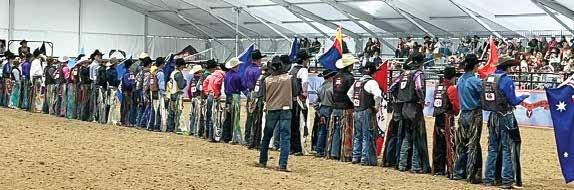
On Saturday, March 21 at 7pm, the Superbronc Roughstock Rodeo Challenge rides into Harvest Ranch Arena in Liberty Hill. This Junior National Finals Rodeo-sanctioned event focuses exclusively on roughstock competition—Saddle Bronc and Bareback Riding—where young athletes compete for a chance to advance to the Junior NFR Cham pionships in Las Vegas during December’s National Finals Rodeo.
Created about a decade ago, the Junior NFR was designed to help develop the next generation of professional rodeo athletes. Many of today’s top Professional Rodeo Cowboys Association competitors began their careers in this very system, including bareback riders Bradlee Miller of Huntsville and Gavin French of Fredericksburg, who now compete at the highest levels of the
Now, that opportunity is riding straight through Central Texas.
Why It Matters Here at Home
Rodeo remains strong nationally, but roughstock competitors are becoming increasingly rare.
Recently, leaders within the Professional Rodeo Cowboys Association shared that only about 75 active bareback riders are competing across more than 800 sanctioned PRCA rodeos. For a sport built on grit and courage, that number is a reminder that the next generation needs places to train, compete, and grow.
In parts of Central Texas, high school rodeo programs have faded over the past decade, and consistent training opportunities are limited. Events like this help rebuild that pathway.
Mike McCloskey, owner of Chisholm Trail Productions, saw that need and stepped in. After connecting with Las Vegas Events, parent company of the Junior NFR, he committed to hosting this local qualifier and expanding opportunities for young riders.
The morning of the event, competitors will participate in a professional rodeo school, receiving instruction and practice rides under the guidance of experienced cowboys, including Liberty Hill’s own Cole Hollen and Saddle Bronc rider Isaac Diaz of Desdemona. Mike is also developing a training arena on his Rodeo Ranch in Gatesville to give young athletes structured opportunities to develop not only skill, but courage, discipline, and character.
It’s more than an event. It’s an investment in the future of rodeo—and in the young people who carry it forward.
How You Can Be Part of It
Whether you come to cheer on local riders, enter a child in Mutton Busting, or simply experience the energy of an 8-second ride under arena lights, the Superbronc Roughstock Rodeo Challenge offers something increasingly meaningful in fast-growing Central Texas: a way to celebrate tradition while helping shape its future.
A special word of appreciation goes to the many sponsors who help make the event possible, including presenting sponsor Mac Haik Ford Lincoln Georgetown, along with Sport Clips, Firefly Aerospace, and the many community leaders and businesses who continue to invest in the future of rodeo.
HARVEST RANCH
ARENA 8355 RR 1869, LIBERTY HILL
Gates open at 6pm. The evening begins with crowd-favorite Mutton Busting for ages 3-7 (sign-ups start at 6:15pm), followed by roughstock competition and special features including a calf scramble and the Fort Hood First Mounted Cavalry Unit.
Adults $20 • 11 and under $10 $49.95 for a family four-pack. Military families receive half-price admission.
SBRRC.com
by Charlotte Kovalchuk
A Reason to Remember
Traveling Holocaust Exhibit Brings Focus to Jewish Families’ Stories
Six million Jews, along with millions of other victims—including people with disabilities, homosexuals, political dissidents, and Black citizens— were murdered during the Holocaust that devastated communities throughout Nazi-occupied Europe. Numbers, however, don’t reveal the personal stories of countless individuals whose lives were drastically changed because of this historical event. That’s why each year, the Georgetown Public Library and local nonprofit Congregation Havurah Shalom of Sun City present a public program commemorating Holocaust Remembrance Day.
This year’s program, A Reason to Remember, narrows the lens from millions to five families in one small German village from 1933 to 1942. “There are many, many accounts of genocide during the Holocaust and many more are lost,” says Hutto librarian Angela Hartman, who has attended many Congregation Havurah Shalom programs focused on Holocaust education.
The program begins Sunday, April 12, from 2 to 4 p.m. in the Hewlett Room at the Georgetown Public Library with featured speaker Deborah Roth-Howe, the daughter of Holocaust refugees who escaped Germany and rebuilt their lives in Chicago. In her talk, she will recount the history of five Jewish families who lived in Roth (pronounced "Rōt"), Germany, a rural village where Jews had been part of community life for generations. They were neighbors, friends, and business owners. The men in these families had served in the German army during World War I.
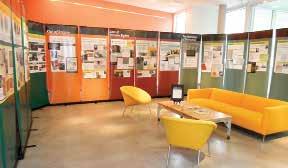
A Reason to Remember’s 28-panel exhibit and accompanying eight-minute video traces the families’ lives from relative stability in 1933 through
Every single story is significant.
A Reason to Remember humanizes this historical event by introducing the individual people in these families.”
the steady tightening of Nazi persecution. Visitors will see how discrimination moved from rhetoric to policy, from social exclusion to systematic destruction.
What happened in Roth was a microcosm of what unfolded across Europe, and serves as a reminder of how easily history could repeat itself.
The goal of the exhibit, Congregation Havurah Shalom member Lenora Hausman says, is “to show the effects of prejudice and racial hate and the need to speak out against injustices. We need to remember history could repeat itself.” Angela agrees. “This exhibit not only explains the history of what happened to these specific families but is a reminder to students
and adults of what can happen when hate is not challenged and cruelty to people considered different or inferior is met with apathy.”
Call To Remember
The Reason to Remember exhibit is free and open to the public, no registration required. Following the talk, the exhibit will remain on display at the library from April 13 through May 21 during regular library hours. Docent-led tours are offered daily for youth groups, private and homeschool students, church groups, and community organizations. The material is recommended for grade levels 6 and up.
BRINGING THE STORY TO WILLIAMSON COUNTY
PHOTOS BY DEBORAH ROTH-HOWE
HISTORICAL CONTEXT
GERMANY 1933 - 1942
1933 - Hitler appointed Chancellor
1935 - Nuremberg Laws strip Jews of their citizenship
1938 - Kristallnacht • Coordinated Nazi attacks destroying Jewish homes, synagogues, businesses, and lives
1941 - Deportations begin
1942 - Mass deportations and extermination camps begin systematically murdering millions
To schedule a tour or learn more about A Reason to Remember, scan the code to visit holocaustexhibitgeorgetown.com.
The Dr Pepper Museum
A Spring Break Win for Texas Families
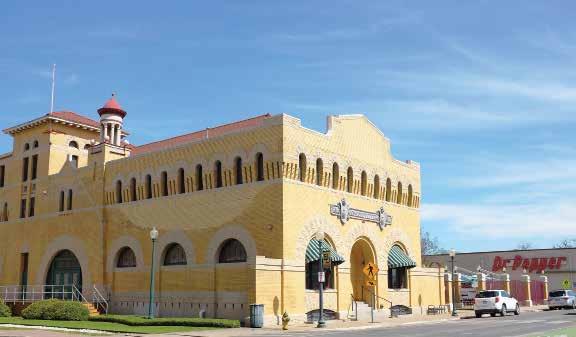
DESPITE THE NAME, THE MUSEUM IS MORE THAN A SINGLE-BRAND ATTRACTION. IT USES DR PEPPER AS A STARTING POINT TO TELL THE BROADER STORY OF THE AMERICAN SOFT DRINK INDUSTRY— ONE THAT HELPED SHAPE ADVERTISING, MANUFACTURING, AND POPULAR CULTURE. THAT BROADER SCOPE IS PART OF WHY THE MUSEUM CONTINUES TO DRAW INTEREST WELL BEYOND WACO, WELCOMING MORE THAN 270,000 VISITORS IN 2025.
Spring break in Texas has “spring” right there in the name, even when the weather hasn’t quite gotten the memo. So, when kids are home for a week and outdoor plans are a maybe at best, it helps to have a destination close by that’s fun, educational, maybe even tasty, and mostly indoors.
That’s where the Dr Pepper Museum comes in.
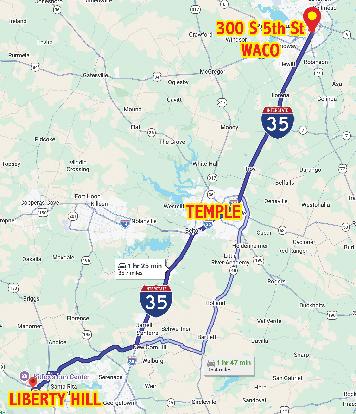
Just 90 minutes from Liberty Hill, this family-friendly destination offers something rare: a place where kids can explore, adults can learn something new, and everyone leaves with a greater appreciation for a Texas original.
A Soft Drink with Lone Star Roots
Dr Pepper is more than just another soft drink, it’s a regional success story. Invented in Waco in the 1880s, it predates Coca-Cola and Pepsi, giving it bragging rights as one of the oldest soft drinks in America. That sense of Texas pride is evident throughout the museum.
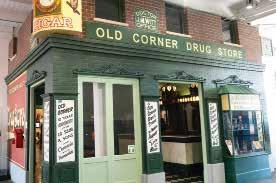
Housed in the original 1906 Artesian Manufacturing and Bottling Company building, the museum operates as an independent nonprofit, not a corporate showplace. This generalized approach to soda history goes well beyond a single product, drawing from what is now the world’s largest collection of soft drink memorabilia. The result is a visit that feels deeper and more interesting than many first-time visitors expect.
Hands-On Fun for All Ages
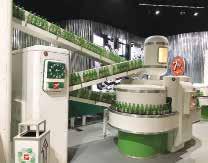
Kids can explore interactive displays that explain carbonation, experiment with scent stations tied to the drink’s famously secret recipe, and watch early bottling machines in action. Older kids and teens often gravitate toward exhibits on advertising and branding, discovering how Dr Pepper carved out its own identity in a crowded beverage market. Along the way, science and history sneak in under the radar.
When You Go
Open 7 days/week, 10am–5:30pm (extended hours in March for Spring Break). Closed Easter, Thanksgiving, Christmas Eve, Christmas Day & New Year’s Day.
General admission is $12 per person (ages 5 and up); purchase only from the museum desk. Includes self-guided access to all exhibits and a free Dr Pepper at the soda fountain or $1 toward an upgrade item.
Street parking is available and there is paid public parking across 5th St.
Kid-friendly activities include visiting the Soda Fountain for Dr Pepper floats, and specialty drinks. There are also Keurig Dr Pepper Liquid Lab demo shows on select days and interactive exhibits and scent stations throughout the museum.
The museum provides sensory-friendly sunglasses and earbuds free of charge at the admissions desk.
The gift shop and Soda Fountain are open to walk-in guests during business hours even without museum admission.
You can also make a reservation for an MVP experience.
Make-A-Soda: ~$20/person; create and bottle your own custom flavor (includes one bottle; extras available to purchase).
VIP Make-ASoda: ~$200 flat rate for up to 20 people; includes museum admission and guided soda making.
Extreme Pepper Experience: Private guided tour plus soda experiences (subject to availability).
Make it a Day
The museum is just the right size— substantial enough to feel worth the drive, yet compact enough to avoid burnout. Most visitors spend one to two hours exploring the exhibits, gift shop, and soda fountain, though museum staff note that peak times like spring break and summer vacation can stretch a visit to two or three hours. Even then, it’s easy to pair the museum with lunch in downtown Waco or a short walk to nearby shops and attractions. And if the weather cooperates later in the day, there’s still time to make a stop at Cameron Park Zoo.
SPOILER ALERT:
IT’S EASY TO OVERLOOK, BUT THERE’S NO PERIOD AFTER “DR” IN DR PEPPER—AND THERE NEVER HAS BEEN. THE MUSEUM POINTS OUT THIS SMALL BUT INTENTIONAL DETAIL, ONE OF MANY REMINDERS THAT EVEN A DRINK TEXANS THINK THEY KNOW BY HEART STILL HAS A FEW SECRETS LEFT.
What makes the Dr Pepper Museum such a strong spring break option is its versatility. It’s educational without being dull, interactive without being overwhelming, and rooted in Texas history without feeling like homework. Kids leave with fun facts and hands-on experiences, while adults gain a renewed appreciation for how a simple idea— served cold and fizzy—and a cool story helped shape American culture.
THE CALENDAR I ACTUALLY LIVE BY
Iam terrible with years. Ask me what happened in 2013 and I’ll stare at you like you’ve asked for my blood type. But ask me about my fifth grade teacher, my junior year of college, or the year Jack had to do school at home, and suddenly I’m fluent. I can tell you where I sat, what shoes I wore, and what the weather was doing because I really don’t remember time by numbers. I remember it by seasons.
Even when I was younger, years were never years. They were grades. They were chapters. They were the year Asia released "Only Time Will Tell," or the year the space shuttle broke apart on live television—the big moments that became "before or after" in life. Everything else floated into a blur of "back in my 30s..."
Motherhood made that even truer. Years became the year he learned to read, or when school got hard, the year he got his braces off for the second time, and when we finally caught our breath. Mothers don’t live in decades. We live in chapters, which is why March feels like a hinge.
Spring isn’t loud about its arrival, but it is persuasive. It’s the season when everything starts to feel like it might be okay again, not because you flipped a calendar page, but because you sense it. I can finally sit on my porch in my special spot again. The sun comes up before I get out of bed, so I’m no longer waking up like an Arctic explorer bracing for survival.
I carry my plants outside and set them down like children released for recess. They stretch their pale arms toward the sun and soak up the sunshine the way nature intended. They don’t worry about melanoma, and I envy that. They just soak it all in and grow accordingly.
Which is more than I can say for me, inside on the couch, trying to read my daily verses during the 15 minutes of the day when actual sunlight manages to beam through the window and land directly on my lap like a benediction. It’s supposed to be a peaceful, holy pause. But without fail, by the seventh verse—God’s number of completion, mind you—my dogs begin their interpretive door dance. One wants out, one wants in, and one stares at me like I’m ruining his life. I open the door like a disgruntled butler, only for them to switch places and repeat the performance. At no point do all three agree on anything. I am being spiritually mugged by a three-headed chaos beast in fur coats.
And even if the dogs gave me a break, I’d still be doing battle with my own squirrel brain, fighting to remember what I just read, circling back to finish a prayer I started with good intentions and abandoned somewhere between “Dear Lord” and “Wait, did I move the laundry?” Inside, I’m trying to conjure presence.
Outside, it arrives. Because in spring, I can go sit on the porch, where the actual squirrels are. The cute, tail-flicking ones. I don’t have to fight my attention span—I just hand it over to the birds and the breeze and the sunrise creeping slowly northward every day. The doors are open, the dogs roam on their own, and for a few minutes, all I have to do is notice.
Sometimes I imagine the calendar I would keep if I were honest. It wouldn’t have months. It would have entries like Season of Looking for Golf Shirt, The Great Stomach Bug Weekend, Fireside During Winter Storm [WHATEVER NAME], and Week We All Ate Breakfast for Dinner and Called It a Win. That’s the time I know by heart. The real stuff
never fits neatly into a grid anyway.
And while we’re being honest: January is not the new year. January is a frozen wasteland full of broken resolutions and unmatched mittens. No one becomes a new person in January. They become a slightly more tired version of the one they were in December, just colder. March is the real beginning. March is when people start opening windows again, remembering the sound of birds, and thinking, maybe I don’t need to retire in Portugal after all.
Of course, some days still fall apart. I try to sit outside with my tea and reflect, and the dogs immediately begin a fence war with the same neighbor dogs they see every day. Someone inside is yelling “Where’s the good charger?” as if Nicholas Cage just spirited it away with the Declaration of Independence. The wind knocks over my mug. I give up and go inside, but I leave the door open and ignore the pollen that settles on the countertops.
March doesn’t fix anything. It doesn’t solve problems or reorder calendars. But it does restore a sense of preferred rhythms. The days lengthen, the air starts to warm, and our moods begin to thaw. Mothers quietly reset the household clocks—not by dates, but by light.
So no, in ten years I probably won’t remember what happened in 2026. But I’ll remember that March was the month I put my plants back outside and started turning my face to the sun again.
And honestly, that’s the kind of time I’m willing to keep. The rest can stay in somebody else’s spreadsheet.