Liberty Hill Digest is more than a magazine—it’s a connector, storyteller, and champion for our community. Since 2020, we’ve shared 550+ stories and mailed 400,000 free copies to keep Liberty Hill informed and inspired. Each issue highlights local people, nonprofits, students, first responders, and city events that define who we are. Our annual Giving Thanks & Giving Back edition and rotating nonprofit column amplify causes that strengthen our city. At our core, we celebrate what’s good, foster connection, and help Liberty Hill thrive—together.
ASK A PRO
FEATURED PROFESSIONALS
Meet our Pros - industry professionals, business owners, and subject matter experts from leading local companies who share their knowledge and expertise to bring readers practical advice, how-to tips, best practices, and current and emerging trends.
To learn more about becoming a Featured Professional, contact info@lhtxdigest.com or 512.746.4545.
COLUMNS
PUBLISHER
Cathy Payne
WRITERS / COPY
EDITORS
Ann Marie Kennon
Charlotte Kovalchuk
GRAPHICS & DESIGN
Sandra Evans
Ann Marie Kennon
CONTENT
Camy Reynolds
CONSULTANT
W. Ben Daniel ADVERTISING
info@lhtxdigest.com 512-746-4545
Liberty Hill Digest is a Fidelis Publishing Group, LLC publication and a product of AdvocateNewsTX Newspaper.
Family owned since 1939. Roofing professionals specializing in full-service roof repair, installation, and replacement.
HallsRoofing.net 512-864-7579
Moore Liberty Buildings Chad & Amanda Moore
Thousands of structures built since 2015.
MooreLibertyBuildings.com 512-548-6474
SCAN THE CODE FOR E-SUBSCRIPTION AND NEVER MISS AN ISSUE.
FOLLOW US ON FACEBOOK FOR FOLLOW-UPS AND OUTTAKES LHDigest
by Charlotte Kovalchuk
Fueling Creativity in the Classroom
Liberty Hill ISD Education Foundation Funds Innovative Classroom Projects
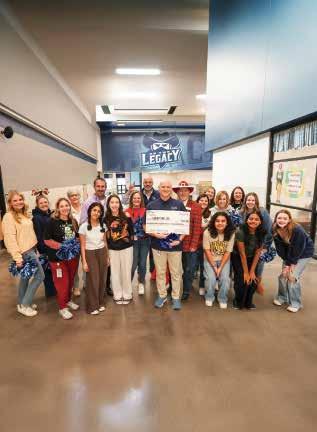
Across Liberty Hill ISD, big ideas are taking shape in classrooms—thanks in part to the support of the Liberty Hill ISD Education Foundation. In December, the foundation awarded a record-breaking 72 teacher grants totaling $127,740, funding projects that range from robotics and entrepreneurship to sensory learning tools and hands-on science experiences. “I’m always impressed with the creativity and passion our teachers have to bring new things to the classroom to inspire learning,” LHEF President Mike Bowles says. “Some projects may be for only one classroom, while others support several classrooms or even multiple campuses. Due to the collaborative nature of some of these projects, it’s great to see how well our teachers and staff all work together to bring their ideas to life.”
Unlike traditional school funding, these grants support programs and materials that often fall outside district budgets—innovative ideas that help teachers bring their vision to life. Awards range from $300 to $5,000, but Mike notes that the excitement is the same no matter the size. “It’s amazing to see how sometimes the simplest things can make such a big difference in the classroom,” he says.
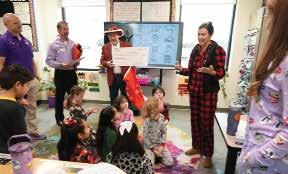
Each year, that excitement culminates in the foundation’s signature “Grant Patrol,” when members of the education foundation, school board, and district leadership visit campuses to surprise teachers with their awards. “It’s great seeing both the teachers and students get so excited,” Mike says.
Those moments reflect a broader mission shared by district leaders. According to LHISD Communications Director Rachel Acosta, the school district remains focused on building champions in academics, character, and community—and innovation in the classroom plays a key role. “Our teachers are constantly seeking innovative ways to enhance learning and create meaningful growth opportunities for students in their classrooms,” Rachel says. “These projects help students develop skills and explore interests that can led to successful careers, while also building the confidence and exploratory mindset needed to become future innovators. Through the grants provided by the education foundation, our teachers’ visions can truly come to life.”
PROJECTS POWERING STUDENT SUCCESS
The following are just a few of the many innovative projects the Liberty Hill ISD Eduction Foundation has funded:
INCUBATOR / ENTREPRENEUR PROGRAM • $5,000
A year-long course where students develop and pitch startup ideas, with funding supporting materials and real-world business experience.
CARNIPOOLZA • $5,000
A sensory-friendly on-campus carnival designed for students with developmental disabilities, providing a safe and inclusive experience.
ADVANCED MATH TOOLS • $4,130
Funds updated graphing calculators to replace worn equipment and help students work with modern math tools.
HOW TO TRAIN YOUR ROBOT • $3,000
Supports a rookie robotics team with essential parts and upgrades needed to build a competitive robot.
BOOKS AND BOTS • $3,000
Expands elementary STEM learning by adding robotics to libraries, giving students hands-on coding and computational thinking experiences.
CLAY MANIKINS • $2,500
Interactive anatomy models that let students build body systems in 3D, strengthening understanding beyond memorization.
CONNECTED COMMUNITIES
• $1,800
A family engagement program offering workshops and resources that connect school and home support for social and emotional learning.
HYDROPONIC GROWING SYSTEMS • $1,000
Introduces indoor gardening to teach STEM concepts, sustainability, and food science through hands-on learning.
BEHAVIORAL & SENSORY SUPPORT TOOLS • $800
Provides sensory tools and reinforcement systems to help special education students improve focus and emotional regulation.
3D PRINTERS • $700
Adds 3D printing to design and animation classes, allowing students to create prototypes and build technology skills.
FROM CATERPILLARS TO BUTTERFLIES • $670
A hands-on butterfly life cycle project that combines science, literacy, and observation through live kits and garden activities.
Learn More
To support the Liberty Hill Education Foundation and its mission of empowering teachers and enriching student learning, visit lhisdeducationfoundation.org.
Equal Questions. Equal Space. Comparing
the Candidates for Liberty Hill ISD School Board of Trustees
To help voters compare the candidates fairly, we asked each Liberty Hill School Board candidate the same questions and provided the same space for responses.
Here’s what they had to say before election day.
CHRIS NEIGHBORS • LHISD PLACE 1 INCUMBENT
Iam a current Liberty Hill ISD School Board Trustee seeking re-election. My wife and I have lived in Liberty Hill ISD for 13 years and are raising our children, currently in 6th and 8th grade, in the district. As a local business owner, I bring a practical, real-world perspective to my service. For 18 years, we have served together in youth ministry, investing in students and families in our community. Over the past three years, I have focused on student success, supporting teachers, and responsible stewardship of taxpayer dollars, while staying actively engaged on our campuses where decisions directly impact students and teachers.
1. What sets me apart is that I don’t just serve from the boardroom—I serve in our schools. I regularly visit campuses, talk with students and teachers, and see firsthand how decisions impact classrooms. That perspective, combined with real results—like helping bring the Teacher Incentive Allotment to LHISD and saving more than $2 million in district costs— means my decisions are grounded in both experience and reality, not theory.
2. Accessibility starts with showing up. I’ve made it a priority to be present on campuses and available to parents, teachers, and community members. I supported the calendar and attendance boundary committees and championed new library safeguards to give families more control over reading materials. As a very active voice in the community, transparency and communication aren’t talking points for me—they’re habits. These practices highlight my approach to accessibility that’s rooted in showing up, welcoming community participation, and ensuring parents and staff genuinely have a voice in the process.
3. My top priorities are academic excellence, supporting teachers, and responsible growth. LHISD is a big part of why
people move to Liberty Hill, and the district has consistently excelled—outperforming the state in 57 of 60 test subjects. We need to keep investing in strong curriculum and meaningful pathways for students. At the same time, keeping great teachers means offering competitive pay and real support. And with enrollment doubling since 2019, it’s more important than ever to focus on responsible budgeting, smart land purchases, and cost efficient construction so we can protect both educational quality and taxpayer resources.
4. The district’s most significant challenge is explosive enrollment growth combined with limited state funding, which strains facilities, staffing, and budgets. LHISD is growing by approximately 1,000 new students/year, while Texas’ per-student funding formula has remained largely stagnant. My focus is on proactive planning—securing land early, making smart financial decisions, and ensuring we continue to meet student needs without overburdening taxpayers.
5. I strongly supported expanding teacher incentives through the Teacher Incentive Allotment. Rewarding and retaining top educators directly benefits students and strengthens our district long-term.
KEVIN WEBER • LHISD PLACE 1 CANDIDATE
Candidate did not respond.
ALBERT KENNEDY- LHISD PLACE 1
Albert Kennedy is a dedicated husband, father of three, and environmental engineer. Like many others in the community, he and his wife Jamie moved to Liberty Hill ISD in 2020 primarily for the great public schools. Albert is running to be a trustee on the Liberty Hill ISD School Board to ensure the best future possible for our next generation. Albert routinely provides innovative solutions to complex challenges through in-depth research, informed and respectful collaboration, and continuous conversation. He hopes to earn the community’s support and do the same on the Liberty Hill ISD School Board.
1. I have attained a significant amount of expertise on public school finance over the last two years while pushing hard for the community to approve additional funding for our schools. I also solve complex challenges for numerous clients every day as an environmental engineer on a collaborative team, and I am offering to do the same for the school district on the school board.
2. I will regularly attend school functions and events when I can. I will also be available by phone, email, or social media for anyone who would like to reach out that way. Continuous feedback is crucial to ensure the board meets the community’s needs.
3. Priority #1 is retention and recruitment of teachers and staff. I would also like to see the district improve its SPED services to be at least comparable to neighboring school districts. I also want to ensure our schools are as safe as possible by implementing the best available security infrastructure and by recruiting and retaining top-notch school resource officers.
4. The biggest challenge facing Liberty Hill ISD and all Texas public school districts is insufficient funding from Austin. While it’s easy to simply ask the state legislature for my money, I’d like to put together “worst-case” budgets assuming continued compression of tax rates and no increases in allotments ahead of each legislative session and show our legislators specifically what programs and services the district is unable to provide compared to years past due solely to insufficient funding. That would make our ask more tangible and actionable.
5. I disagree strongly with the board’s decision to wait until January 25, 2026 to tell the community about TEA’s January 9, 2026 denial of a professional development waiver that resulted in having to add four Fridays back to the 2025-2026 school calendar, especially since a board meeting happened between these dates. Once the district had to inform the community on January 25 due to icy weather requiring sudden changes to the calendar, many in the community felt blindsided by this. Transparency with information like this is crucial to maintaining community trust.
JAMIE ETZKORN • LHISD PLACE 4 INCUMBENT
Jamie Etzkorn is currently sitting as the Place 4 Trustee on the LHISD School Board. Ms. Etzkorn has been involved in many different committees and roles within LHISD since 2015. One of her favorite roles was volunteer and then coordinator for Education Connection at Liberty Hill Elementary. She and her family have resided in the District since 2013, and her only child has attended LHISD since Kindergarten. Ms. Etzkorn passionately seeks to make sure that every child in Texas receives a quality education from K-12. Outside of her work and volunteer roles, she loves to travel with her family.
1. I believe I bring a different perspective into this role as I was raised in Texas by a public-school educator who devoted 42 years of her life to public education. I have experienced and seen firsthand what a teacher up to a school administrator has to handle on a daily basis and I will bring this knowledge into the decision-making process.
2. I can be reached by phone or email by the stakeholders of LHISD, and I am open to receiving communication from all stakeholders. I believe the gift of listening is key to this role on the Board. I will take all conversations I have into consideration with the decisions that I have to make for LHISD.
3. My top 2 to 3 priorities will be education and safety of our children and school finance. I believe that an education is something that no one can take away from you, and I want to make sure that every child has that in Liberty Hill. With that comes making sure that each child is safe at school and that the State of Texas continues to fund public education.
4. The biggest challenge facing LHISD is the unknown and ever-changing issue of state funding for our children and schools. I have been asked to be part of the Raise Your Hand Texas group for LHISD. As part of this group, I will be a voice for advocacy for public education and to bring awareness for public education. I want to educate people on how challenging school finance is to understand and predict a budget when the numbers change every year and sometimes within the year because of legislative decisions.
5. The biggest decision I believe the Board has made was the hiring of Travis Motal as the superintendent of LHISD. I personally voted on the Board to have Mr. Motal as our superintendent. I believe Mr. Motal is the right choice for LHISD. Mr. Motal has navigated the District through some of the most challenging days that I have seen at LHISD since 2015, and he has done so with honor, integrity, and perseverance.
SHARON YAGER • LHISD PLACE 4 CANDIDATE
With 32 years of experience in public education, I bring a deep understanding of school operations and student needs. As a former classified union president, I have advocated for employees while building collaborative relationships. I am committed to supporting teachers, prioritizing student success, and ensuring transparency and accountability to serve the Liberty Hill community effectively.
1. With 32 years in public education, I bring firsthand district experience serving in one of the nation’s largest school districts. I understand how school systems operate, from the classroom to the boardroom. I understand how decisions impact classrooms, budgets, and families. Decisions must be legal, when needed get input from parents and the community to make a decision that works for the success of the students.
2. I will remain accessible through regular listening sessions, campus visits, and clear communication via email and social media. I’ll gather input through surveys and small groups. By closing the loop and explaining outcomes, I’ll ensure parents, teachers, and taxpayers feel heard, respected and represented.
3. Top priorities include retaining high-quality teachers through competitive pay and support, improving student outcomes in literacy, math, and career readiness, and
responsibly managing growth with safe schools, reasonable class sizes, and transparent budgeting to maintain community trust.
4. The biggest challenge is managing rapid growth while maintaining quality. This requires strategic planning for enrollment and facilities, investing in teacher recruitment and retention, maintaining a strong focus on student outcomes, ensuring transparent communication with families, taxpayers, and partnering with the community to support long-term success.
5. I supported the board’s decision not to offer a specific religion class because we already have a policy that allows students to pray freely, ensuring both religious freedom and a respectful learning environment for all.
ANTONIO CANAS • LHISD PLACE 4 CANDIDATE
My name is Antonio Canas, and I have been part of this community since 2019. I’m married to Stacy, an RN, and we have three children: my son, a 2024 LHISD graduate, currently serving as a soldier in Alaska; and two juniors at Liberty Hill High. After retiring from the military in 2019, I volunteered with LHISD, served on the bond committee, attended events, and spoke at meetings. This is my third run; I support staff, teachers, children, and families. I believe that public schools shape future leaders and provide opportunities for all children.
1. Over four years, I have engaged with Liberty Hill ISD, serving on a bond committee and attending board meetings, where I raised issues such as transportation, teacher pay, and education for children with disabilities. I moved to Liberty Hill in 2019 for its small-town charm and community values. I’ve seen the town grow and recognize the need to maintain its small-town spirit while adapting. With my military background and service, I will listen to citizens’ concerns and ensure that issues affecting children, educators, and parents are addressed.
2. To remain accessible to parents, teachers, and taxpayers, I intend to participate in forums discussing district issues. I will also engage and monitor various Facebook and Instagram groups where school-related topics are discussed to understand current concerns. Most importantly, I will be present at school events—from elementary to high school—such as sports, celebrations, and recognition. This will allow me to engage directly with staff, students, and parents face to face.
3. My priority is to anticipate staff and teachers’ needs early to proactively meet the school district’s requirements. Plan for the upcoming school year to support teachers, students, and the community, and ensure educators focus on preparing students academically and fostering future leaders.
4. Liberty Hill ISD faces challenges in attracting and keeping quality teachers due to competitive salaries and changing regulations. It also emphasizes creating a unified environment among staff, parents, and the community to support children and ensure effective communication. Recently, outside groups have politicized public schools, seeking to divide communities and prioritize profit over children’s well-being.
5. I support reversing the five-day school year due to the confusion and difficulty in meeting TEA’s 75,600-minute requirement while maintaining a four-day week with a waiver. Although it appears well-intentioned, it caused chaos among staff, students, and parents. Stability is essential in school districts, and this change disrupts stability without proper planning.
Community Soundtracks
LIVE MUSIC SPRINGS TO LIFE AROUND WILLIAMSON COUNTY
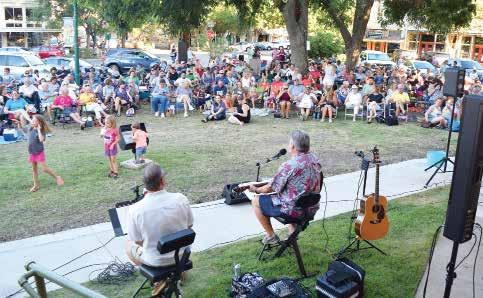
While Austin may be dubbed the Live Music Capital of the World, you don’t have to brave the traffic or fight the crowds to enjoy a great show here in Central Texas. This spring, live music series are returning across Williamson County, with the sounds of local bands and family-friendly tunes filling parks, plazas, and downtown restaurants.
From European Stages to Texas Squares
The tradition of live public music dates back to 18th- and 19th-century Europe, where bandstands were built in town squares to bring music out of elite concert halls and into everyday life. These performances turned central plazas into social hubs where communities gathered not just to listen, but to connect.
The United States embraced—and expanded—that idea. During the 19th and early 20th centuries, towns across the country hosted regular concerts in courthouse squares, parks, and public green spaces. Free performances became part of civic life, bringing together growing and increasingly diverse communities.
In Texas, the tradition took on its own character. Alongside courthouse concerts, live music flourished in dance halls, saloons, and open-air venues, blending community gatherings with regional sounds like country, blues, and folk.
Today’s concerts on courthouse lawns and in community parks across Williamson County carry forward that tradition, proving that live music remains one of the simplest ways to bring people together.
Live Music in Wilco
From historic downtowns to neighborhood parks, several spring and summer concert series are bringing music back to local gathering spaces:
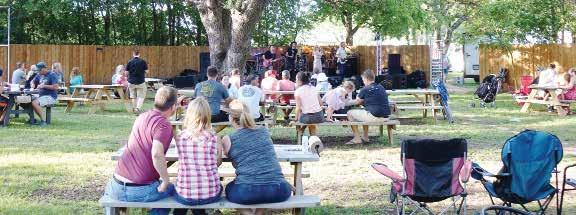
Agape BBQ (Liberty Hill) — live music and authentic Central Texas barbecue come together every Friday and Saturday night. Set beneath 300-year-old oak trees, the backyard stage offers a relaxed place to enjoy great food, local craft drinks, and performances from talented musicians.
First Friday Music on the Square (Georgetown) – On the first Friday of each month from March through November, the historic courthouse lawn comes alive from 6–8 p.m. with live bands, lively crowds, and after-hours shopping.
Music on Main (Round Rock) – This long-running series brings Wednesday evening concerts downtown throughout the spring and summer. Guests are encouraged to bring lawn
chairs or blankets. The city also hosts Hometown Lunchtime Parklet Shows through June 25 on Tuesdays and Thursdays from 11:30 a.m. to 1 p.m.
Music on Main (Taylor) – Held in Heritage Square, this spring series showcases Austin-area bands performing Latin rhythms, fusion styles, and Texas Americana. Concerts run April 16 and May 21 from 7–9 p.m.
Live @ Lakeline (Cedar Park) – Lakeline Park hosts evenings of music, food trucks, lawn games, and family activities. This year’s lineup includes The Capitol (April 17), Lover: A Taylor Swift Tribute Band (May 1), and the WILCO Symphony (May 15).
Tunes Around Liberty Hill
Live music isn’t limited to parks and public venues. Many local restaurants and gathering spots now feature regular performances:
At Dahlia Cafe, live music on Friday and Saturday evenings brings extra energy to the restaurant’s backyard gathering space. Guests can enjoy homemade Southern comfort food while listening to local musicians in a relaxed, family-friendly setting under the oaks. Roots • Wednesday–Sunday, 7–10 p.m.
Liberty Hill Beer Market regularly hosts live music, karaoke, and other entertainment alongside its wide selection of craft beers and casual food. The lively community gathering spot offers a relaxed place to enjoy local musicians while sharing drinks and good conversation with friends.
Downtown Liberty Hill occasionally hosts community concerts and music nights, including performances in the Water Tower parking area on select evenings. These outdoor gatherings invite families to bring lawn chairs and blankets while enjoying live bands in a casual small-town setting.
Dinner with a Soundtrack
For many businesses, live music isn’t just entertainment—it’s part of the atmosphere.
Georgetown's Tony & Luigi’s owner Jamie Cohen has seen how different styles of music can shape the experience from one night to the next. On Tuesdays, guitarist Jack Mason performs relaxed pop and rock favorites from the ’60s, ’70s, and ’80s, creating what Jamie describes as the perfect background vibe for families and date-night diners alike.
“Someone will hear a reworked Beatles song like Penny Lane and suddenly go, ‘Wait a minute—I know that song,’” Jamie says. “It adds warmth and nostalgia to the whole experience.”
By Thursday, the mood shifts. Performer Ken Cruse leans into Rat Pack-era classics, bringing a crooner-style energy to the room. While the music resonates with longtime fans of the genre, Jamie says younger guests often discover it for the first time.
“Tuesday is about comfort and conversation,” he explains. “Thursday is more of a show—people are engaging with the performer and singing along.”
Whether it’s background melodies over dinner or a full outdoor concert under the Texas sky, live music continues to transform everyday spaces into places where community, connection, and lasting memories are made.
Little Free Libraries
BRINGING BOOKS TO THE BLOCK
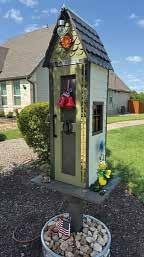
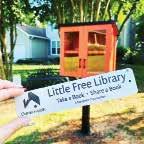
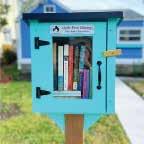
They look like tiny houses on posts—brightly painted boxes in front yards, outside schools, and along park trails—each filled with books waiting for their next reader. These Little Free Libraries turn ordinary spaces into miniature neighborhood book hubs designed to bring libraries even closer to the people they serve. What started as one small project in a Wisconsin yard has since grown into a global network dedicated to sharing stories and expanding access to reading.
LITTLE LIBRARY WITH A BIG IMPACT
The first Little Free Library was built in 2009 by the late Todd Bol, a former teacher in Wisconsin. Todd constructed a small wooden box modeled after a one-room schoolhouse and mounted it on a post in his yard—a tribute to his mother, a teacher and avid reader. He filled the miniature library with books and invited neighbors to borrow them freely. The concept was simple: “take a book, leave a book.” The idea quickly caught on. Todd partnered with Rick Brooks, a local university’s outreach program manager, to expand the concept and encourage others to build their own book-sharing boxes. Inspired in part by philanthropist Andrew Carnegie—who funded more than 2,500 public libraries in the early 1900s—they set a goal of surpassing that number with Little Free Libraries. They reached that goal in 2012 when the organization also became a registered nonprofit.
Today, more than 200,000 Little Free Libraries have been serving bibliophiles in 128 countries. The nonprofit behind the movement works to expand access to books, particularly in communities where reading materials may be scarce. By placing books directly in neighborhoods, Little Free Libraries function as miniature community hubs—encouraging reading, sparking conversations among neighbors, and reminding communities that sharing stories can begin right on their own street.
STORIES ON THE STREET IN LIBERTY HILL
STEPHANIE GRUBBS LIBRARY:
The first official Little Free Library in Liberty Hill, this box was installed in 2015, marking the beginning of the book-sharing movement in the area. 7400 RR 1869, Liberty Hill
HISLE ELEMENTARY: This Little Free Library was established through a Leander Educational Excellence Foundation grant, led by the Leander ISD Reading Wellness Council. Designed to expand access to books, it supports students who may not have books at home or easy access to a public library—especially during summer and school breaks. 1413 Frontenac Street, Leander
MOCKINGBIRD PARK: Tucked into a north Leander neighborhood, this Little Free Library offers a convenient stop for nearby residents to pick up or share a book. 2437 Acoma Lane, Leander
VISIT LITTLEFREELIBRARY. ORG OR DOWNLOAD THE LITTLE FREE LIBRARY APP TO DISCOVER EVEN MORE BOOK-SHARING SPOTS IN 76537.
BUILD YOUR OWN LITTLE FREE LIBRARY
Inspired by the Little Free Library movement? Here’s how to start your own mini neighborhood library:
IDENTIFY A LOCATION AND STEWARD: Choose a spot where you can legally and safely install the library. The location should be visible and have regular foot traffic. You’ll also need at least one steward—a caretaker who helps promote the library and keeps it clean and welcoming.
GET A LIBRARY:
You can build your own, hire someone locally to build one, or purchase a readymade library through the Little Free Library website.
REGISTER YOUR LIBRARY: Registration connects you to a network of support and benefits, including an official charter sign engraved with a unique charter number. Libraries purchased through the Little Free Library online store are automatically registered and include a charter sign.
BUILD SUPPORT: Spread the word in your community. Contact local media, tell friends and neighbors, and use social media to encourage participation. The more people who know about the library, the more it will thrive.
ADD YOUR LIBRARY TO THE WORLD MAP: Celebrate with a grand opening—invite neighbors, hold a ribbon cutting, share snacks, and exchange books. Take photos and add your library to the Little Free Library world map online to connect with the wider network of stewards.
WHAT WE’VE GOT HERE IS A FAILURE TO… CUCUMBER
Last month I voted on a very long ballot that appeared to be mostly judges. Knowing Texas recently added the 512th District Court, I realize there are at least 512 robe-wearers, plus county judges, justices of the peace, and a few dozen appellate and supreme court seats. I'm glad I live in a state that takes justice seriously.
At some point I stopped trying to remember which court handled which kind of dispute and just trusted the Founding Fathers planned for citizens to occasionally say, “Well, that name sounds reasonable.”
Judges do decide important things—constitutional rights to traffic citations—and apparently whether working on a farm qualifies as cruel and unusual punishment.
That one was in the back of my mind. Possibly because I’m married to a judge who believes hard work is character-building, personal responsibility still exists, and nonsense has a short shelf life in his courtroom. When I mentioned the federal ruling that found prison farming unconstitutional, he gave me the same look he gives defendants who explain that the meth in their pocket belonged to “a friend.”
He said Texas prisons once relied heavily on farming and ranching. Inmates grew crops, tended cattle, and produced alot of their own food. It wasn’t glamorous, but it was productive, and the meals were fresh and healthy.
After the Ruiz ruling in the 1980s curtailed many of those operations, the system drifted away from agricultural programs. Today the prison system spends millions each month purchasing food and
running facilities that once helped sustain themselves. According to hubby, the irony lies in the low quality food the inmates now eat.
Which might explain why the debate crossed my mind last summer while I was celebrating the fact that I had successfully grown enough cucumbers to make actual pickles.
Real pickles. In jars. The kind you show off like you personally reinvented agriculture.
To be fair, some prison farms in the past looked less like vocational training and more like a sequel to "Cool Hand Luke" —massive fields, brutal heat, and guards who clearly did not attend the Healthy Workplace Culture seminar. So, perhaps, the concern makes sense.
Still, there’s something deeply satisfying about coaxing food out of the dirt. Humans have enjoyed doing it for roughly 10,000 years, which suggests farming is not universally regarded as a human rights violation.
It’s also the idea behind planned food forests like MatriArk Village— spaces where families learn to grow fruit, vegetables, and herbs right in their own community. Kids see how food grows instead of thinking it comes from the refrigerated aisle at H-E-B, while the soil does what soil was designed to do and humans mostly coax things along with sunlight, water, and a few dollars’ worth of seeds.
Turns out my dirt is surprisingly cooperative with some good gloves, a little patience, and ChatGPT to analyze my many photos of brown leaves.
Growing food is empowering when we teach it to children, admirable when farmers do it for a living, and deeply satisfying when suburban hobby gardeners like me produce an edible pickle.
But when inmates do it, we have a constitutional conversation—which suggests the problem may not be the vegetables.